GENESIS 4:17—Where did Cain get his wife?

GENESIS 4:17—Where did Cain get his wife?

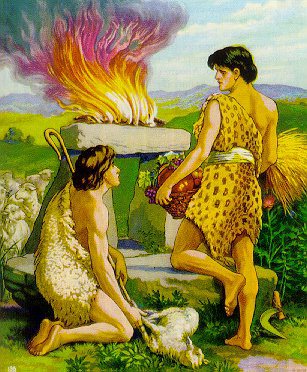
PROBLEM: There were no women for Cain to marry. There was only Adam, Eve (4:1), and his dead brother Abel (4:8). Yet the Bible says Cain married and had children.

SOLUTION: Cain married his sister (or possibly a niece). The Bible says Adam “begot sons and daughters’’ (Gen. 5:4). In fact, since Adam lived 930 years (Gen. 5:5), he had plenty of time for plenty of children! Cain could have married one of his many sisters, or even a niece, if he married after his brothers or sisters had grown daughters. In that case, of course, one of his brothers would have married a sister.

[1]


[1]Geisler, N. L., & Howe, T. A. (1992). When critics ask : A popular handbook on Bible difficulties (37). Wheaton, Ill.: Victor Books.

GENESIS 4:12–13—Why wasn’t Cain given capital punishment for the murder he committed?

GENESIS 4:12–13—Why wasn’t Cain given capital punishment for the murder he committed?

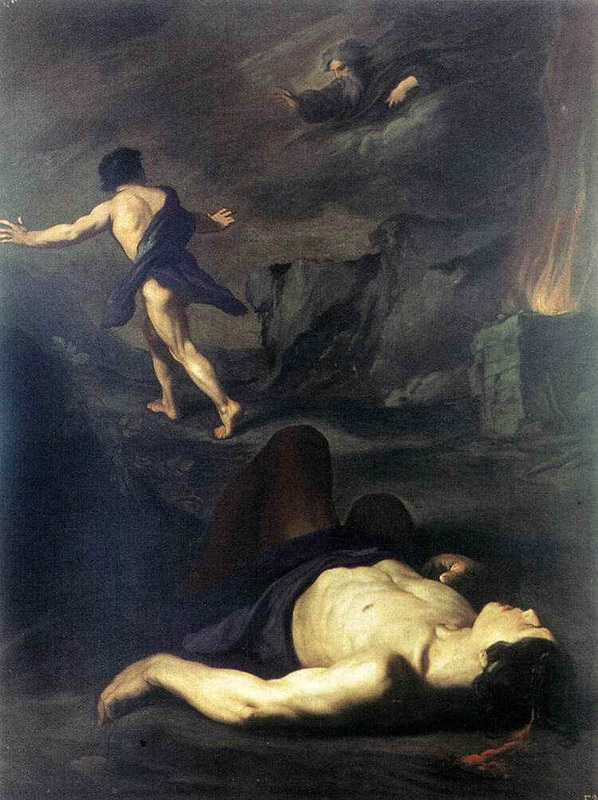
PROBLEM: In the OT, murderers were given capital punishment for their crime (Gen. 9:6; Ex. 21:12). Yet Cain was not only set free after murdering his brother, but he was protected from any avenger (Gen. 4:15).

SOLUTION: There are several reasons why Cain was not executed for his capital crime. First, God had not yet established capital punishment as an instrument of human government (cf. Rom. 13:1–4). Only after violence filled the earth in the days before the flood did God say, “Whoever sheds man’s blood, By man his blood shall be shed; For in the image of God He made man” (Gen. 9:6).

Further, who would have killed Cain? Cain had just killed Abel. At this early stage only Adam and Eve were left. Surely, God would not have called upon the parents to kill their only remaining son. In view of this, God, who alone is sovereign over life and death (Deut. 32:39), personally commuted Cain’s death penalty. However, in so doing, God implied the gravity of Cain’s sin and implied he was worthy of death by declaring that “the voice of your brother’s blood cries out to Me [for vengeance] from the ground” (v. 10). Nonetheless, even Cain seemed to recognize that he was worthy of death, and he asked God for protection (v. 14). Finally, God’s promise to protect Cain from vengeance implies capital punishment would be taken on any who took Cain’s life (cf. v. 15). So, Cain’s case is the exception that proves the rule, and by no means does it argue against capital punishment as established by God (see comments on John 8:3–11).

[1]


[1]Geisler, N. L., & Howe, T. A. (1992). When critics ask : A popular handbook on Bible difficulties (36). Wheaton, Ill.: Victor Books.

GENESIS 4:5—Does God show respect to certain persons?

GENESIS 4:5—Does God show respect to certain persons?

PROBLEM: God is represented in the Scriptures as someone who “is no respect[er] of persons” (Rom. 2:11, kjv), and one who “shows no partiality” (Deut. 10:17). Yet, this verse tells us that God “did not respect Cain and his offering,” which seems contradictory to the other verses.

SOLUTION: First of all, in the fundamental sense of the word, God respects every person for who he or she is, a creature made in His image and likeness (Gen. 1:27). If He didn’t, He would not be respecting Himself. But, when the Bible says God is no respecter of persons, it means that He does not show partiality in meeting out His justice. As Deuteronomy 10 puts it, He “shows no partiality nor takes a bribe” (v. 17). In other words, God is completely fair and even-handed in His dealings.

However, there is a sense in which it can be said that God does not respect some persons because of their evil deeds. God “did not respect Cain and his offering” (Gen. 4:5) because it was not offered in faith (Heb. 11:4). Thus, the Bible also speaks of God hating Esau (Mal. 1:3) and the Nicolaitans (Rev. 2:6), not because of their person, but because of their practice. As John told the believers at Ephesus, they should “hate the deeds of the Nicolaitans” (Rev. 2:6). God loves the sinner, but hates the sin.

[1]


[1]Geisler, N. L., & Howe, T. A. (1992). When critics ask : A popular handbook on Bible difficulties (36). Wheaton, Ill.: Victor Books.

GENESIS 3:8—How could Adam and Eve go from God’s presence if God is everywhere?

GENESIS 3:8—How could Adam and Eve go from God’s presence if God is everywhere?

PROBLEM: The Bible says that God is everywhere present at the same time, that is, He is omnipresent (Ps. 139:7–10; Jer. 23:23). But, if God is everywhere, then how could Adam and Eve be sent out “from the presence of the Lord”?

SOLUTION: This verse is not speaking of God’s omnipresence, but of a visible manifestation of God (cf. v. 24). God is everywhere in His omnipresence, but from time to time He manifested Himself in certain places through certain things, such as a burning bush (Ex. 3), the pillar of fire (Ex. 13:21), smoke in the temple (Isa. 6), and so forth. It is in this latter localized sense that one can go “from the presence of the Lord.”

[1]


[1]Geisler, N. L., & Howe, T. A. (1992). When critics ask : A popular handbook on Bible difficulties (36). Wheaton, Ill.: Victor Books.

GENESIS 3:5—Is man made like God or does he become like God?

GENESIS 3:5—Is man made like God or does he become like God?

PROBLEM: Genesis 1:27 says “God created man in His own image.” But in Genesis 3:22 God said, “the man has become like one of Us, to know good and evil.” The former seems to affirm that humans are made like God, and the latter appears to assert that he becomes like God.

SOLUTION: The two passages are speaking of two different things. Genesis 1 is speaking about a human virtue by creation, while Genesis 3 is referring to what he had by acquisition. The first passage refers to Adam and Eve before the Fall, and the last is referring to them after the Fall. The former refers to their nature and the latter to their state. By creation Adam did not know good and evil. Once he sinned, he knew good and evil. Once these differences are understood, there is no conflict.

[1]


[1]Geisler, N. L., & Howe, T. A. (1992). When critics ask : A popular handbook on Bible difficulties (35). Wheaton, Ill.: Victor Books.

GENESIS 2:19—How can we explain the difference in the order of creation events between Genesis 1 and 2?

GENESIS 2:19—How can we explain the difference in the order of creation events between Genesis 1 and 2?

PROBLEM: Genesis 1 declares that animals were created before humans, but Genesis 2:19 seems to reverse this, saying, “the Lord God formed every beast of the field … and brought them to Adam to see what he would call them,” implying Adam was created before they were.

SOLUTION: Genesis 1 gives the order of events; Genesis 2 provides more content about them. Genesis 2 does not contradict chapter 1, since it does not affirm exactly when God created the animals. He simply says He brought the animals (which He had previously created) to Adam so that he might name them. The focus in chapter 2 is on the naming of the animals, not on creating them. Genesis 1 provides the outline of events, and chapter 2 gives details. Taken together, the two chapters provide a harmonious and more complete picture of the creation events. The differences, then, can be summarized as follows:

GENESIS 1

GENESIS 2

Chronological order

Topical order

Outline

Details

Creating animals

Naming animals

[1]


[1]Geisler, N. L., & Howe, T. A. (1992). When critics ask : A popular handbook on Bible difficulties (35). Wheaton, Ill.: Victor Books.

GENESIS 2:17—Why didn’t Adam die the day he ate the forbidden fruit, as God said he would?

GENESIS 2:17—Why didn’t Adam die the day he ate the forbidden fruit, as God said he would?

PROBLEM: God said to Adam, “in the day that you eat of it you shall surely die” (Gen. 2:17). But Adam lived to be 930 years old after he sinned (Gen. 5:5).

SOLUTION: The word “day” (yom) does not always mean a 24-hour day. For “one day (yom) is as a thousand years” (Ps. 90:4; cf. 2 Peter 3:8). Adam did die within a “day” in this sense. Further, Adam began to die physically the very moment he sinned (Rom. 5:12), and he also died spiritually the exact instant he sinned (Eph. 2:1). So Adam died in several ways, any one of which would fulfill the pronouncement of God (in Gen. 2:17).

[1]


[1]Geisler, N. L., & Howe, T. A. (1992). When critics ask : A popular handbook on Bible difficulties (34). Wheaton, Ill.: Victor Books.
GENESIS 2:8—Was the Garden of Eden a real place or just a myth?

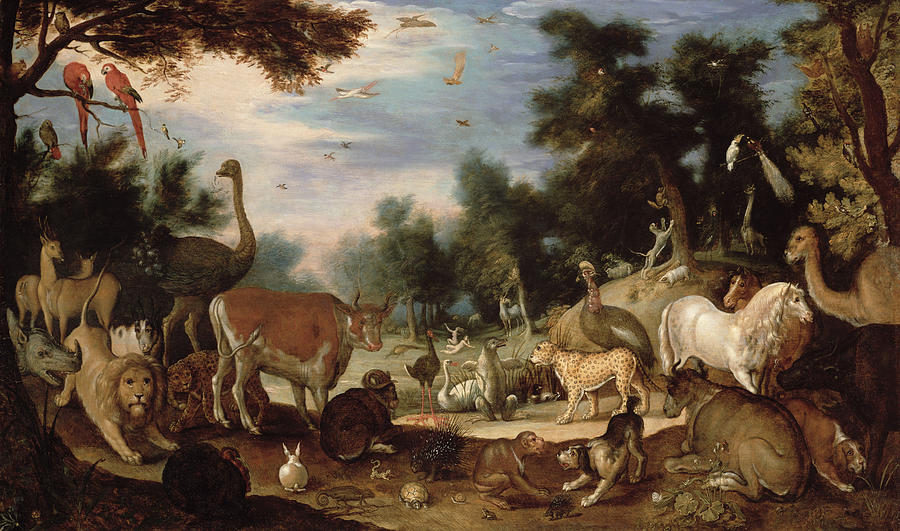
GENESIS 2:8—Was the Garden of Eden a real place or just a myth?

PROBLEM: The Bible declares that God “planted a garden eastward in Eden” (Gen. 2:8), but there is no archaeological evidence that any such place existed. Is this just a myth?

SOLUTION: First of all, we would not expect any archaeological evidence, since there is no indication that Adam and Eve made pottery or built durable buildings. Second, there is geographical evidence of Eden, since two of the rivers mentioned still exist today—the Tigris (Hiddekel) and the Euphrates (Gen. 2:14). Further, the Bible even locates them in “Assyria” (v. 14), which is present day Iraq. Finally, whatever evidence there may have been for the Garden of Eden (Gen. 2–3) was probably destroyed by God at the time of the Flood (Gen. 6–9).

[1]


[1]Geisler, N. L., & Howe, T. A. (1992). When critics ask : A popular handbook on Bible difficulties (34). Wheaton, Ill.: Victor Books.

GENESIS 2:4—Why does this chapter use the term “Lord God” rather than “God” as in chapter one?

GENESIS 2:4—Why does this chapter use the term “Lord God” rather than “God” as in chapter one?

PROBLEM: Many critics insist that Genesis 2 must have been written by someone different from the one who wrote Genesis 1, since Genesis 2 uses a different name for God. However, conservative scholars have always insisted that Moses composed Genesis, as indeed both Jewish and Christian scholars have down through the centuries. Indeed, the first five books of the OT are called “the Books of Moses” (2 Chron. 25:4) or “Law of Moses” (Luke 24:44) by both OT and NT writers.

SOLUTION: Moses did write the first five books of the OT (see comments on Ex. 24:4). The use of a different term for God in the second chapter of Genesis does not prove there was a different author; it simply shows that the same author had a different purpose (see comments on Gen. 2:19). In chapter 1, God is the Creator, whereas in chapter 2 He is the Communicator. First, man is seen in his relation to the Creator (hence, the use of “God” or elohim, the mighty one). Next, God is seen as the Covenant-maker, thus, the use of “Lord God,” the One who makes covenants with man. Different names are used of God since they designate a different aspect of His dealings with man (see Gen. 15:1; Ex. 6:3).

[1]


[1]Geisler, N. L., & Howe, T. A. (1992). When critics ask : A popular handbook on Bible difficulties (33). Wheaton, Ill.: Victor Books.
GENESIS 2:1—How could the world be created in six days?

GENESIS 2:1—How could the world be created in six days?


PROBLEM: The Bible says that God created the world in six days (Ex. 20:11). But modern science declares that it took billions of years. Both cannot be true.

SOLUTION: There are basically two ways to reconcile this difficulty.

First, some scholars argue that modern science is wrong. They insist that the universe is only thousands of years old and that God created everything in six literal 24-hour days (=144 hours). In favor of this view they offer the following:

  1. The days of Genesis each have “evening and the morning,” (cf. Gen. 1:5, 8, 13, 19, 23, 31), something unique to 24-hour days in the Bible.
  2. The days were numbered (first, second, third, etc.), a feature found only with 24-hour days in the Bible.
  3. Exodus 20:11 compares the six days of creation with the six days of a literal work week of 144 hours.
  4. There is scientific evidence to support a young age (of thousands of years) for the earth.
  5. There is no way life could survive millions of years from day three (1:11) to day four (1:14) without light.

Other Bible scholars claim that the universe could be billions of years old without sacrificing a literal understanding of Genesis 1 and 2. They argue that:

  1. The days of Genesis 1 could have a time lapse before the days began (before Gen. 1:3), or a time gap between the days. There are gaps elsewhere in the Bible (cf. Matt. 1:8, where three generations are omitted, with 1 Chron. 3:11–14).
  2. The same Hebrew word “day” (yom) is used in Genesis 1–2 as a period of time longer than 24 hours. For example, Genesis 2:4 uses it of the whole six day period of creation.
  3. Sometimes the Bible uses the word “day” for long periods of time: “One day is as a thousand years” (2 Peter 3:8; cf. Ps. 90:4).
  4. There are some indications in Genesis 1–2 that days could be longer than 24 hours:
  5. a) On the third “day” trees grew from seeds to maturity and they bore like seeds (1:11–12). This process normally takes months or years.
  6. b) On the sixth “day” Adam was created, went to sleep, named all the (thousands of) animals, looked for a helpmeet, went to sleep, and Eve was created from his rib. This looks like more than 24 hours worth of activity.
  7. c) The Bible says God “rested” on the seventh day (2:2), and that He is still in His rest from creation (Heb. 4:4). Thus, the seventh day is thousands of years long already. If so, then other days could be thousands of years too.
  8. Exodus 20:11 could be making a unit-for-unit comparison between the days of Genesis and a work week (of 144 hours), not a minute-by-minute comparison.

Conclusion: There is no demonstrated contradiction of fact between Genesis 1 and science. There is only a conflict of interpretation. Either, most modern scientists are wrong in insisting the world is billions of years old, or else some Bible interpreters are wrong in insisting on only 144 hours of creation some several thousand years before Christ with no gaps allowing millions of years. But, in either case it is not a question of inspiration of Scripture, but of the interpretation of Scripture (and of the scientific data).

[1]


[1]Geisler, N. L., & Howe, T. A. (1992). When critics ask : A popular handbook on Bible difficulties (32). Wheaton, Ill.: Victor Books.

Exit mobile version