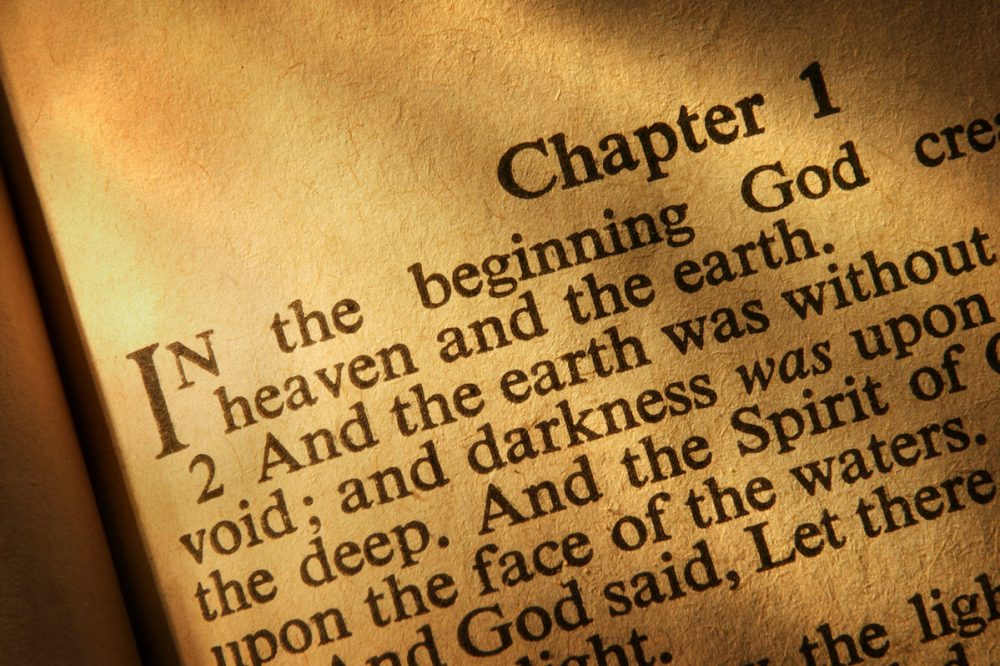
There is no part of the Bible that the more scholarly opponents of its divine origin are more fond of attacking than the very first chapter in the Book of genesis. Time and again have we been assured that the teachings of this chapter are in hopeless conflict with the best-established conclusions of modern science.
Even a prominent theological teacher in a supposedly Christian university has said that “no one who knows what history and science are would think of calling the first chapter of Genesis either historical or scientific.” But in spite of this confident assertion, men who have gained a name as historians beyond anything that this teacher of theology can expect, assure us that it is not only historical but the very foundation of history.
Other men, who have secured for themselves a position in the scientific world to which this teacher can never hope to aspire, assure us that this chapter agrees absolutely with everything that is known scientifically of the origin and early history of the earth. For example, Lord Kelvin, whose name is honored in the scientific world, said in a private letter to a friend of mine, “Physical science has nothing to say against the order of creation as given in Genesis.”
But let us come to the specific difficulties in the first chapter of Genesis.
The objector is fond of telling us that the first chapter of Genesis says that the world was created in six days of twenty-four hours each, when everyone who is familiar with modern science knows that the world as it now stands was millions of years in the making.
This objection sounds good, but the one who makes it displays a hopeless ignorance of the Bible. Anyone who is at all familiar with the Bible and the Bible usage of words knows that the word “day” is not limited to periods of twenty-four hours. It is frequently used for a period of time of an entirely undefined length. For example, in Joel 3:18–20 the millennial period is spoken of as a day.
In Zechariah 2:10–13 the millennial period is again spoken of as a day, and again in Zechariah 13:1–2 and 14:9. Even in Genesis 2 the whole period covered by the six days of the first account is spoken of as a day (Genesis 2:4–5). There is no necessity whatever for interpreting the days of Genesis 1 as solar days of twenty-four hours each. They may be vast periods of undefined length.
But someone may say, “This is twisting the Scriptures to make them fit the conclusions of modern science.”
The one who says so simply displays his ignorance of the history of biblical interpretation. St. Augustine, as far back as the fourth century, centuries before modern science and its conclusions were dreamed of, interpreted the days of Genesis 1 as periods of time, just what the word means in many places elsewhere in the Bible.
Another point urged against the truth and accuracy of the account of creation given in Genesis 1 is that it speaks of “there being light before the sun existed, and it is absurd to think of light before the sun, the source of light.”
The one who says this displays his ignorance of modern science. Anyone who is familiar with the nebular hypothesis, commonly accepted among scientific men today, knows that there was cosmic light ages before the sun became differentiated from the general luminous nebulous mass as a separate body.
But the objector further urges against the scientific accuracy of Genesis 1 that its order of creation is not the order determined by the investigations of modern science.
This is an assertion that cannot be proven. It was the writer’s privilege to study geology under that prince of geologists, who was pronounced by competent authority to be the greatest scientific thinker of the nineteenth century with the exception of Charles Darwin, namely, Professor James Dana of Yale.
Professor Dana once said in my presence that one reason why he believed the Bible to be the Word of God was because of the marvelous accord of the order of creation given in Genesis with that worked out by the best scientific investigation. This agrees with what Lord Kelvin is quoted as saying in the early part of this chapter.
It must be said, however, that men of science are constantly changing their views of what was the exact order of creation. Very recently discoveries have been made that have overthrown theories of the order of creation held by many men of science, which did not seem to some to harmonize with the order as given in the first chapter of Genesis; but these recent discoveries have brought the order into harmony with the order as given in that chapter.
There is no need of going in detail into this order of creation as taught by modern science and Genesis 1. For there is grave reason to doubt if anything in Genesis 1 after verse 1 relates to the original creation of the universe. All the verses after the first seem rather to refer to a refitting of the world that had been created and had afterward been plunged into chaos by the sin of some pre-Adamic race, to be the abode of the present race that inhabits it, the Adamic race.
The reasons for so thinking are, first, that the words translated “without form and void” (“waste and void,” RV) are used everywhere else in the Bible of the state of affairs that God brought upon persons and places as a punishment for sin.
For example, in Isaiah 34:11 we read of the judgment that God shall bring upon Idumea as a punishment for their sins in these words: “He shall stretch over it a line of confusion, and the plummet of emptiness” (RV). The Hebrew words translated “confusion” and “emptiness” are the same that are translated “without form and void” in Genesis 1:2. We read again in Jeremiah 4:23–27: “I beheld the earth, and, lo, it was waste and void.”
In both instances, the words “waste and void” refer to a ruin which God had sent as a punishment for sin, and the assumption is very strong that they have a similar significance in Genesis 1.
The second reason for this interpretation is stronger yet, namely, that the Bible expressly declares that God did not create the earth “in vain” (Isaiah 45:18). But the word translated “in vain” in this passage is precisely the one translated “without form” in Genesis 1:2. In the Revised Version of Genesis 1:2 and Isaiah 45:18 the word is translated in both instances “waste.”
Here then is a plain and specific declaration in the Bible that God did not create the earth “without form” (or rather “waste,” RV), so it is clear that Genesis 1:2 cannot refer to the original creation. The word translated “was” in Genesis 1:2 can with perfect propriety be translated “became.” Then Genesis 1:2 would read: “And the earth became waste and void.” In that case, in Genesis 1:1, we have the actual account of creation.
It is very brief but wonderfully expressive, instructive and suggestive. In Genesis 1:2 we have a brief but suggestive account of how the earth became involved in desolation and emptiness, presumably through the sin of some pre-Adamic race. Then all after verse 2 does not describe the original creation of the earth, but its fitting up anew for the new race God is to bring upon the earth—the Adamic race. Even if we allow the word “was” to stand in Genesis 1:2, and do not substitute the word “became,” it does not materially affect the interpretation.
If this is the true interpretation of the chapter (and the argument for this interpretation seems conclusive), then of course this record cannot by any possibility come into conflict with any discoveries of geology as yet made or to be made, for the geological strata lie back of the period here described. The agreement of the order as set forth in Genesis 1 with the order as discovered by science would be accounted for by the fact that God always works in orderly progress from the lower to the higher.
[1]Torrey, R. (1998, c1996). Difficulties in the Bible : Alleged errors and contradictions. Willow Grove: Woodlawn Electronic Publishing.
قال عالم الفيزياء الذي أصبح فيما بعد لاهوتياً جون بولكينغورن: “إن سؤالاً أساسياً مثل الإيمان بالله (أو عدم الإيمان) لا يمكن إنهائه بمناقشة واحدة. إنه معقد للغاية. وما على الشخص أن يفعله هو التفكير في قضايا مختلفة ويرى ما إذا كانت الإجابات التي سيحصل عليها توضح الصورة التي تعطي للموضوع معنى”[1].
وهذا هو الأسلوب الذي اتبعته في بحثي. وقمت بفحص عميق لأربعة فروع علمية مختلفة لأرى ما إذا كانت تشير إلى أو تبعدني عن المصمم الذكي.
وعندما فتحت ذهني لتفسير غير مبدأ الطبيعة، وجدت أن افتراضية التصميم تفسر بكل وضوح أدلة العلم “فالقوة التفسيرية” لفرضية التصميم تفوقت على نظرية أخرى. وما يلي بعض الحقائق التي وردت في أبحاثي واستفساراتي:
دلـيـل علـم الكـونيـات
إنه بفضل الاكتشافات العلمية في الخمسين سنة الأخيرة، أخذت مجادلة “الكلام Kalam” الكونية القديمة قوة جديدة. وكما وصف ذلك وليم لين كريج فقال: “رغم أن هذه المجادلة بسيطة إلا أنها ممتازة: “تقول أولاً: كل ما هو موجود له سبب”. وحتى الشكاك المشهور ديفيد هيوم لم ينكر هذه الافتراضية. كما قال الملحد كوينتن سميث إن التعبير الذي يقول: “إننا جئنا من لا شيء وبواسطة لا شيء من أجل لا شيء” تعبير سخيف ومثير للسخرية.
“ثانياً: إن الكون له بداية”. وبناء على المعلومات فإن كل علماء الكون يوافقون على أن الكون بدأ بالانفجار الهائل في نقطة محددة في الماضي. كما أكد كريج على القول بأن النظريات البديلة عن أصل الكون تحتاج إلى بداية. فمثلاً، استخدام ستيفن هوكنج “للأرقام الخيالية” يحجب نقطة البداية في نموذجه، والذي يصرح هوكنج عنه بالقول بأنه ليس وصفاً للحقيقة.
ويأتي الاستنتاج بكل وضوح من مقدمتين منطقيتين: “ولهذا فللكون سبباً. وحتى روبرت جاسترو والذي كان سابقاً لا أدري سلم بأن العناصر الأساسية للمسيحية وعلم الكون الحديث يلتقيان: “إن سلسلة الأحداث التي تقود الإنسان بدأت فجأة وبحدة، وفي لحظة محددة من الزمن، في ومضة ضوء وطاقة”.
دلـيـل الفيـزيـاء
إحدى أكثر الاكتشافات المميزة للعلم الحديث هو أن قوانين وثوابت الفيزياء تتعاونان بطريقة غير متوقعة لجعل هذا الكون مكاناً صالحاً للسكن والحياة. فمثلاً، قال عالم الطبيعة والفيلسوف روبن كولنس، إن الجاذبية قد ضبطت بكل دقة على جزء من مائة مليون بليون، بليون، بليون، بليون.
والثابت الكوني، الذي يمثل كثافة طاقة الفضاء، محددة بإحكام مثل إلقاء سهم من الفضاء ليضرب عين ثور بنسبة تريليون تريليون من البوصة في قطر الكرة الأرضية. وقال أحد الخبراء إنه يوجد أكثر من ثلاثين من القوانين الكونية الثابتة تحتاج إلى تقويم محدد حتى ينتج عنها كوناً يمكن أن يكون فيه حياة.
وقال بين كولينس بإن الفرصة لا يمكن أن تفسر “مبدأ أن الإنسان هو حقيقة الكون المركزية” والبديل الذي نوقش – بأنه يوجد الكثير من الأكوان – يحتاج إلى دعم من أي دليل وقد انهار تماماً على ما تحقق من أن هذه العوالم الأخرى يُعزى وجودها إلى عملية مصممة تصميماً عالياً.
وهذا الدليل قوي للغاية حتى أنه هو الذي جعل باتريك جلين يتخلى عن إلحاده ويقول: “إن المعلومات المتناغمة تشير بقوة تجاه فرضية وجود الله. إنه أسهل وأكثر الحلول وضوحاً للغز الإنساني”.
دلـيـل علـم الفـلك
وما يشبه الضبط الدقيق لعلم الفيزياء، هو مركز الأرض في الكون وتعقيداته الجيولوجية والعمليات الكيميائية كلها التي تعمل معاً بكفاءة عظيمة لكي تخلق مكاناً آمناً حتى يمكن للبشر أن يعيشوا.
مثلاً، قال كل من عالم الفلك جيليرمو جونزاليس والفيلسوف جاي ويزلي ريتشاردز حتى يكون نجماً بيئة صالحة للعيش عليه يحتاج إلى أن يكون له الخواص غير العادية لشمسنا – الكتلة الصحيحة، الضوء الصحيح، العمر الصحيح، المسافة الصحيحة، المدار الصحيح، المجرة الصحيحة، الموضع الصحيح. لكي يغذي الكائنات الحية على كوكب دوار. وعوامل كثيرة تجعل نظام مجموعتنا الشمسية وموقعنا في الكون هو الصحيح لكي يكون بيئة صالحة للسكن فيه.
وما هو أكثر من ذلك، الحالة غير العادية التي تجعل الحياة ممكنة هي أيضاً التي تحدث لكي تجعل كوكبنا في موقع جيد لرؤية وتحليل الكون والبيئة. وكل هذا يوضح بأن كوكبنا قد يكون نادراً إن لم يكن فريداً وأن الخالق أرادنا أن نكتشف الكون.
وقال الفيزيائي الفلكي المتعلم في هارفارد جون أ. أوكيف من ناسا “لو لم يكن الكون قد صنع بأقصى دقة ما كنا موجودين فيه. ومن وجهة نظري أن هذه الظروف تبين أن الكون خلق للإنسان ليعيش فيه”.
دلـيـل الكيميـاء الحيـويـة
قال داروين: “إذا أمكن توضيح أن أي عضو معقد موجود ولم يتكون من تعديلات عديدة ومتتابعة وطفيفة، فسوف تنهار نظريتي”. وقد أوضح المتخصص في الكيمياء الحيوية مايكل بيه هذا تماماً من خلال وصفه “للتعقيد المتعذر اختزاله” في مكائن جزيئية.
هذه الأدوات الغريبة الميكروسكوبية المعقدة مثل الهُدب cilia والبكتيريا الشبيهة بالسوط flagella، لا يمكن أن تكون قد وُجدت قطعة قطعة من خلال عمليات داروين لأنها يجب أن توجد كاملة حتى يمكنها أن تؤدي وظيفتها. وأمثلة أخرى تشتمل على النظام الذي يصعب تصديقه عن نقل البروتينات داخل الخلايا والعملية المعقدة لتجلط الدم.
وما هو أكثر من مجرد تحدي مدمر لأصحاب نظرية داروين هي تلك الأنظمة البيولوجية المدهشة – التي تفوق القدرة البشرية في التكنولوجيا وكلها تشير إلى خالق علوي. وقال بيه “ويمكن تلخيص استنتاجي في كلمة واحدة هي: التصميم. وأقول هذا بناء على العلم. وأقول أن نظام “التعقيد المتعذر اختزاله” هو دليل قوي على تصميم هادف بواسطة مصمم ذكي”.
إن مجادلة بيه أثبتت أنه يصعب على الشكاكون تحديها. وإن كان من الواضح أنه ستكون هناك اكتشافات مستقبلية في الكيمياء الحيوية، فقد أشار بيه أنهم لن يستطيعوا مناقشة التعقيد الذي اكتشف وكان أفضل تفسير له هو وجود خالق.
دلـيـل المعلومات البيولوجية
الستة أقدام من حامض DNA في داخل كل خلية في أجسادنا التي بها 100 تريليون خلية تحتوي على أربعة حروف من الرموز الكيميائية التي تقذف تعليمات مجمعة ومحددة لكل البروتينات التي تتكون منها أجسادنا. وقد أوضح ستيفن مير المتعلم في كامبردج أنه ولا فرضية علمية واحدة تمكنت من توضيح كيف يمكن للمعلومات أن تدخل المادة البيولوجية بوسائل طبيعية.
وعلى العكس من ذلك، قال “حينما نجد ترتيبات متتابعة ومعقدة وتتمشى مع نمط أو وظيفة مستقلة، فإن هذا النوع من المعلومات هو دائماً ناتج عن الذكاء. فالكتب، وشفرة الكمبيوتر والحامض النووي كلها تتمتع بهذه الخواص. ونحن نعلم ان الكتب وشفرات الكمبيوتر مصممة بالذكاء، ووجود هذا النوع من المعلومات في الحامض النووي يشير إلى مصدر ذكي”.
وبالإضافة إلى ذلك قال مير: “إن انفجار كامبريان الكوني الذي نتج عنه أشكال جديدة من الحياة، والذي ظهر فجأة مكوناً تكويناً كاملاً في سجل الحفريات، بدون سابق تحول، كان سيحتاج إلى كميات هائلة من المعلومات الحيوية. والمعلومات هي الماركة المسجلة للعقل. ومن دليل الجينات وعلم الأحياء يمكننا أن نستنتج وجود عقل أكبر كثيراً جداً من عقولنا، مصمم ذكي واع، حكيم وله هدف وهو مبدع بدرجة مذهلة”.
دلـيـل الوعــي
توصل الكثير من العلماء إلى أن قوانين الكيمياء والطبيعة لا يمكنها أن تفسر لنا اختبارنا للوعي. وقد عرف البروفيسور جي. بي. مورلاند الوعي على أنه الاستبطان والاحساسات والأفكار والعواطف والرغبات والمعتقدات والاختبارات الحرة التي تبقينا أحياء ومتنبهين. والروح هي التي تحتوي على الوعي وتبعث الحياة في جسدنا.
وطبقاً لما وضحه أحد الباحثين من أن الوعي يمكن أن يستمر بعد أن يقف مخ الإنسان عن العمل، فإن الأبحاث العلمية الحديثة أيدت وجهة النظر التي تقول بأن “العقل” و”الوعي” و”الروح” هي كيان منفصل عن المخ.
وكما قال مورلاند: “لا يمكنك أن تحصل على شيء من لا شيء. فإذا كان الكون نشأ من مادة ميتة لا وعي فيها كيف يمكنك أذاً أن تحصل على شيء مختلف تماماً – وعي، حياة، تفكير، مشاعر، مخلوقات حية – على المادة التي ليست بها مثل هذه الأشياء. ولكن إذا كان كل شيء بدأ من فكر وعقل الله، فليست لدينا مشكلة في تفسير مصدر وأصل عقولنا”.
إن الفيلسوف مايك روس يؤمن بنظرية داروين، اعترف بصراحة: “لا يوجد أحد لديه إجابة على قضية الوعي. وقال جون سي. إلكيس الحاصل على جائزة نوبل “هناك ما يمكن أن نسميه الأصل غير العادي لعقلي الواعي ولروحي المتفردة”.
هـويـة المُصـمم
راجعت سيل المعلومات مما قمت به من بحث وتقصي، ووجدت أن الدليل على وجود مصمم ذكي أمر مصدق ومقنع وقوي. ومن وجهة نظري فإن ربط ما وجدته من علم الكونيات وعلم الطبيعة كافيين تماماً لتأييد افتراضية وجود مصمم لهذا الكون. وكل المعلومات الأخرى التي قد تكون قضية تراكمية قوية انتهت بأنها غمرت كل اعتراضاتي.
ولكن من هو هذا المصمم الأعظم؟ ومثل لعبة توصيل النقط، فإن كل واحدة من الستة فروع العلمية التي بحثها أعطت المفاتيح لإزالة القناع عن هوية الخالق.
وكما شرح كريج أثناء لقائنا، قال إن أدلة علم الكونيات توضح أن سبب هذا الكون يجب ألا يكون لا سبب ولا بداية ولا زمن وغير مادية وله إرادة حرة وقوة هائلة. وفي مجال الفيزياء قال كولنس إن الخالق ذكي واستمرت مشغوليته بخليقته بعد الانفجار الهائل الأولي.
ودليل علم الفلك يوضح أن الخالق كان مبدعاً ودقيقاً في خلق مكان يصلح لمعيشة مخلوقاته التي صممها وأنه يعتني ويهتم بها. كما قدم كل من جونزاليز وريتشاردز الدليل على أن الخالق قد وضع على الأقل هدفاً في مخلوقاته وهو اكتشاف العالم الذي صممه ومن خلال ذلك يكتشفونه هو.
ولا تؤكد الكيمياء الحيوية ووجود المعلومات البيولوجية نشاط الخالق بعد الانفجار الهائل فقط، ولكن أيضاً تظهر مدى ابداعه العظيم. وكما قال مير إن الدليل على وجود الوعي يؤكد أن الخالق كائن عاقل وحكيم، وهذا يساعدنا على فهم هذه القوة كلية القدرة كما توضح أننا يمكن أن نصدق فكرة الحياة بعد الموت.
إن هذه ليست صورة لإله الربوبية* الذي كون هذه الكون ثم تخلى عنه. وكما شرح مير في لقائي الأول معه، إن التخلي عن دليل لوجود نشاط مستمر للخالق في الكون بعد بداية خلقه يكذب مذهب الربوبية كاحتمال يمكن تصديقه.
ومذهب وحدة الوجود، الخالق والكون موجودان معاً، يعجز أيضاً عن تفسير الدليل، لأنه لا يستطيع أن يوضح كيف ظهر الكون للوجود. وإذا كان إله مذهب وحدة الوجود غير موجود قبل الكون المادي فلن يستطيع إحضار الكون للوجود.
كما وضح كريج كيف أن المبدأ العلمي “لشفرة أوكهام” الذي قضى على تعدد الآلهة والشرك بالله، تاركاً إيانا مع إله واحد. وبالإضافة إلى ذلك، فإن الطبيعة الشخصية للخالق تتناقض مع القوة الإلهية غير الشخصية للخالق تتناقض مع القوة الإلهية غير الشخصية التي هي مركز عقائد العصر الجديد.
على النقيض من ذلك، فإن صورة الخالق التي بزغت من المعلومات العلمية تتوافق بقوة مع وصف الله الذي وضحت شخصيته على صفحات الكتاب المقدس:
الخالق: “من قدم أسست الأرض والسموات هي عمل يديك” (مزمور 102: 25)[2].
فريد: “إنك قد أُريت لتعلم أن الرب هو الإله. ليس آخر سواه” (تثنية 4: 35)[3].
موجود بذاته وسرمدي: “من قبل أن تولد الجبال أو أبدأت الأرض والمسكونة منذ الأزل إلى الأبد أنت الله” (مزمور 90: 2)[4].
روحي غير مادي: “الله روح” (يوحنا 4: 24)[5].
شخصي، ذاتي: “…. ظهر الرب لإبراهيم وقال له: “أنا الله القدير سر أمامي وكن كاملاً” (تكوين 17: 1)[6].
له إرادة حرة: “وقال الله ليكن نون فكان نور” (تكوين 1: 3)[7].
ذكي وعقلاني: “ما أعظم أعمالك يا رب. كلها بحكمة صنعت. ملآنة الأرض من غناك” (مزمور 104: 14)[8].
عظيم القوة: “الرب عظيم القدرة” (ناحوم 1: 3)[9].
مبدع: “لأنك قد اقتنيت كليتي نسجتني في بطن أمي. أحمدك من أجل أني قد امتزت عجباً. عجيبة هي أعمالك ونفسي تعرف ذلك يقيناً” (مزمور 139: 13 -14)[10].
يرعى ويهتم: “امتلأت الأرض من رحمة الرب” (مزمور 33: 5)[11].
كلي الوجود: “هو ذا السماوات وسماء السماوات لا تسعك” (ملوك الأول 8: 27)[12].
أعطى البشرية هدفاً: “فإنه فيه خلق الكل ما في السماوات وما على الأرض ما يرى وما لا يرى… الكل به وله قد خلق” (كولوسي 1: 16)[13].
يعطينا حياة بعد الموت: “يبلع الموت إلى الأبد” (أشعياء 25: 8)[14].
وكما كتب الرسول بولس منذ ألفي عام وقال: “لأن أموره غير المنظورة ترى منذ خلق العالم مدركة بالمصنوعات قدرته السرمدية ولاهوته حتى أنه بلا عذر” (رومية 1: 20)[15].
والسؤال عما إذا كانت هذه الصفات قد تصف ألوهية أية ديانة أخرى في العالم أصبحت موضع نقاش عندما أضفت الدليل الذي اكتشفته من خلال دراسة التاريخ القديم والآثار القديمة.
وكما وصفت في كتابي “القضية …. المسيح” إن الدليل المقتنع يقيم أساساً يعول عليه للعهد الجديد، وهذا يوضح تحقيق نبوات العهد القديم في حياة يسوع الناصري ضد كل ما هو غريب ويؤيد قيامة المسيح كحادثة فعلية ظهرت في الزمن المحدد وفي الفضاء. كما أن قيامته من الأموات هو عمل فذ وغير مسبوق وأعطى سلطاناً وقوة وتوثيقاً لقوله إنه ابن الله الوحيد.
وبالنسبة لي فإن المدى والتنوع والعمق والقوة المثيرة والمقنعة للأدلة من العلم والتاريخ أكدت صدق المسيحية إلى الدرجة التي أزالت بها كل شكوكي.
وأنا لست مثل الذين يؤمنون بنظرية داروين، فإن إيماني يسبح ضد تيار قوي من الأدلة المضادة، واضعاً ثقتي في الله إله الكتاب المقدس وهو قرار حكيم وطبيعي وقد اتخذته فعلاً. وكنت فقط أسمح بسيل الحقائق أن تجرفني نحو نتائجها المنطقية.
انصـهار العـلـم والإيمـان
لسوء الحظ هناك الكثير من سوء الفهم حول الإيمان. فالبعض يعتقدون بأن الإيمان يتناقض مع الحقائق. ويقول مايكل شيرمير: “إن هدف الإيمان هو أن تثق بصرف النظر عن الأدلة، وهذا أمر مضاد للعلم”[16]
ومع ذلك، فهذا بالتأكيد ليس هو فهمي لهذا الأمر. فإنني أرى الإيمان على أنه خطوة عاقلة نحو نفس الاتجاه الذي يشير إليه الدليل. أي أن الإيمان يتخطى مجرد الاعتراف بأن حقائق العلم والتاريخ تشير نحو الله. إنه يُجيب على تلك الحقائق بالاستفادة من الثقة في الله، خطوة مضمونة تماماً وذلك لتأييد الدليل لها.
قال أليستر مكجراث من أكسفورد كل وجهات النظر العالمية تحتاج إلى الإيمان. وادعاءات الحقيقة للإلحاديين لا يمكن إثباتها. كيف نعرف أنه لا يوجد إله؟ والحقيقة البسيطة في الأمر كله هو إن الإلحاد هو نوع من الإيمان يصل إلى نتائج تتخطى الأدلة المتاحة”[17].
ومن الناحية الأخرى، فإن الأدلة المتاحة من أحدث الأبحاث العلمية تُقنع مزيداً من العلماء بأن الحقائق تؤيد الإيمان أكثر من أي وقت مضى. ويقول الصحفي جريج إيستروبروك: “إن الفكرة القديمة التي تقول إنه هناك الكثير من الوجوه أكثر مما تراه العين تبدو كما لو أنها فكرة حديثة ظهرت ثانية. وأننا ندخل أعظم مرحلة للتداخل بين العلم والإيمان منذ حركة التنوير التي حاولت أن تُصلح الاثنين معاً”[18].
وبالنسبة لكثير من الناس – بمن فيهم الفيزيائي بول دافيس – هذا تطور غير متوقع وسبب لهم نوع من الصدمة. ويقول: “قد يكون ذلك أمراً غريباً ولكن في وجهة نظري أن العلم يقدم طريقاً مؤكداً نحو الله أكثر من العقيدة”[19].
وقال العالم جيمس تور من جامعة ريز: “الشخص المبتدئ الذي لا يعرف شيئاً عن العلم سيقول إن العلم يقوده بعيداً عن الإيمان. وإذا درست العلم بجدية فسوف يقربك أكثر إلى الله[20]. وقال الفيزيائي الفلكي والقس جورج كوين ” لا شيء نتعلمه عن الكون يهدد إيماننا. إنه يزيده غنى وثراء”[21].
وقال عالم الفيزياء الرياضي ليولكينغورن، من كامبردج:
لم ير أحداً الشحنة الكهربية الموجودة في الجزيء الأصغر من الاليكترون المسماة quark وأعتقد أنه لن يستطيع أحد أن يراها. إنها ترتبط بقوة معا داخل البروتون والنيوترون حتى إنه لا يمكن كسرها. لماذا إذاً أصدق في هذه الشحنات غير المرئية؟ ….. لأنها تعطي معنى لكثير من الأدلة المباشرة في علم الطبيعة. وأود أن ننتقل من هذا إلى حقيقة وجود الله.
فوجود الله يعطي معنى لكثير من جوانب معرفتنا واختباراتنا مثل: نظام وثمار العالم المادي، الوجوه المختلفة للحقيقة، الاختبارات الإنسانية في العبادة والرجاء، ظاهرة يسوع المسيح (بما فيها قيامته. وأعتقد أن عمليات فكرية مشابهة متضمنة في كلا الحالتين. ولا أعتقد أنني انحرفت إلى طريق فكري غريب عندما انتقل من العلم إلى الدين… وفي بحثهم عن الحق يصبح العلم والإيمان أبناء عمومة تحت الجلد”[22].
ومع ذلك فقد أضاف تميزاً هاماً: “إن المعرفة الدينية تتطلب جهداً وعناية أكثر من المعرفة العلمية. فبينما تتطلب انتباهاً دقيقاً للحق، فهي أيضاً تدعو إلى الالتزام بهذا الحق الذي اكتشفته”[23].
وطبقاً لما يقوله ماكجاث: “الكلمة العبرية لكلمة “الحق” تعني “الشيء الذي يمكن أن تستند إليه”. ويقول بأن الحق هو أكثر من مجرد الصواب. إنه الثقة التي تقودنا إلى شخص جدير بأن نطرح فيه كل ثقتنا. وغير مطلوب منا أن نعرف حقيقية أخرى بل ان ندخل في علاقة مع من يستطيع أن يحفظنا ويريحنا”[24].
إن حقائق العلم والتاريخ يمكنها فقط أن تأخذنا بعيداً. فعند نقطة معينة تتطلب الحقيقة إجابة. وعندما نقرر ألا نتأمل فقط في الفكرة المجردة عن مصمم هذا الكون ولكن أيضاً أن نجعله “إلهنا الحقيقي” عندئذ يمكننا أن نلتقي به شخصياً ونتصل به يومياً ونقضي الأبدية معه كما وعدنا بذلك. وهذا يغير كل شيء.
من العـلـم إلى الله
لم يندهش أحد عند سماعه الدليل العلمي على وجود الله مثلما اندهش عالم الطبيعة العجوز الذي يصل عمره إلى 77 عاماً وصاحب الشعر الفني والكلام الطيب والذي كان أمامي في مطعم في جنوب كاليفورنيا.
وقصته مثل تلك التي قصها عليّ كريج سابقاً عن عالم الطبيعة من أوروبا الشرقية الذي وجد الله من خلال علم الكونيات، وهذه شهادة أخرى للعلم لكي يقود الباحثين نحو الله. ومع ذلك فهي شيء آخر، إنها خريطة طريق لمن يريد أن يتقدم إذا كنت مهتماً شخصياً لمعرفة ما إذا كان الإيمان بالله يدعم بالحقائق.
فيجو أولسين هو جراح ذكي انغمست حياته في العلم، وبعد تخرجه من كلية الطب أصبح زميلاً في مجلس الجراحين الأمريكيين. وكان يصحب اسمه العديد من رموز الشهادات التي حصل عليها M.S., M.D., Litt.D., D.H., F.A.C.S., D. T. M.&H., F. I. C. S. وكان يُرجع شكه في الأمور الروحية لمعرفته لعالم العلم.
وقال: “بحثت في المسيحية والكتاب المقدس من خلال نظرة شخص يؤمن بمذهب اللاأدري. وكانت زوجتي جوان أيضاً لا تؤمن بالمسيحية. وكنا نعتقد بعدم وجود برهان مستقل على وجود خالق. وكنا نعتقد أن الحياة وُجدت من خلال عمليات تطورية”[25].
وكانت المشكلة في والدي جوان اللذين كانا مسيحيين أتقياء. وعندما قام بزيارتهما كل من فيجو وجوان في عام 1951 وهم في طريقهم لكي يبدأ فيجو كطبيب مقيم في مستشفى نيويورك لأول مرة، شعروا بتبكيت ديني شديد. وفي مناقشات متأخرة بالليل، بدأ كل من فيجو وجوان أن يشرحا بصبر لماذا تتناقض المسيحية مع العلم المعاصر. وأخيراً، وهم يشعران بنوع من الضيق والتشتت عند الساعة الثانية صباحاً وهم جالسون حول الطاولة بالمطبخ، وافقا على فحص واختبار الإيمان المسيحي بأنفسهم.
وأشار أولسين أن بحثه سيكون مخلصاً وصادقاً، ولكنه في داخله كان هناك خطة أخرى. وقال: “لم يكن قصدي أن أقوم بدراسة موضوعية على الإطلاق. وكما شرح الجراح الصدر، قررنا أن نخترق الكتاب المقدس لنستخرج منه كل الأخطاء العلمية المحيرة”.
وعلى منزلهم الجديد علقوا ورقة وكتبوا عليها “أخطاء علمية في الكتاب المقدس” متخيلين أنهم يستطيعوا ملئها بالأخطاء. ووضعوا نظاماً يناقشون فيه بعضهم البعض ما يتعرفوا عليه من بحثهم وتقصيهم. وبينما كان فيجو يعمل بالمستشفى، تقوم جوان ببحص القضايا المعلقة على الورقة. ثم أثناء ليالي العطلة الأسبوعية في إجازة فيجو، كانا يدرسان معاً ويحللان ويناقشان ويتجادلان.
وبرزت المشاكل بسرعة ولكن ليس تلك التي كانا يفكران فيها. وقال فيجو: “لقد وجدنا صعوبة في إيجاد تلك الأخطاء العلمية. ثم وجدنا شيئاً يبدو أنه خطأ ولكن بعد دراسة أكثر وتأمل، اكتشفنا أن فهمنا كان ضحلاً. وهذا دفعنا لأن نتوقف لتدبر الأمر”.
وفي إحدى المرات أعطاني طالب كتاباً مكتوباً في عام 1948 بعنوان “العلم الحديث والإيمان المسيحي”. وكل فصل من فصوله 13 مكتوبة من قبل عالم مختلف عن الدليل الذي وجدوه في مجاله والذي يشير إلى وجود الله. وبالرغم من أنه كتب قبل ظهور الكثير من الاكتشافات العلمية التي وصفها في هذا الكتاب فإن هذه الأدلة كانت كافية لتوقف فيجو وجوان.
قال أولسين: “لقد عصف الكتاب بأذهاننا! فلأول مرة عرفنا أنه توجد أسباب خلف المسيحية. وتصميمهم على الإيمان لن يكون نوعاً من الانتحار الذهني”.
مغامـرة العـمـر
التهم كل من فيجو وجوان هذا الكتاب والكثير من الكتب الأخرى في نفس الموضوع. وبينما كانوا يحللون الأدلة توصلوا إلى العديد من النتائج.
أولاً، عرفا على أساس علمي أن الكون ليس أزلياً. بل بالحري ظهر في نقطة معينة. وطالما أن هذا الكون ملفوف بالقوة – طاقة حرارية، طاقة ذرية…. إلخ – فبدأوا يفكرون أنه لا بد من وجود قوة هائلة أوجدته.
ثانياً، نظرا إلى الخطة الواضحة للكون، والجسم الإنساني بكل أعضائه وخلاياه، واستنتجوا أن القوة التي خلقت هذه الكون يجب أن تكون قوة ذكية.
ثالثاً، قالا إنه بالرغم من عظمة القوة العقلية لدى الإنسان، فهناك من هو أعظم، القدرة على الحب والتعامل بالمشاعر والعاطفة. ولأن الخالق يجب أن يكون أعظم من خلائقه، فلا بد وأن له نفس هذه الصفات.
وبناء على الأدلة والمنطق المستقل عن الكتاب المقدس، تمكنوا من الإجابة على السؤال الأول من الثلاثة أسئلة التي قام عليهم بحثهما: “هل يوجد إله خلق الكون؟” وأدهشوا أنفسهم بالحكم الذي توصلوا إليه: نعم، خالق شخصي – الله موجود.
بعد اقتناعهم بهذا، بدأ في محاولة استكشاف السؤالان الآخران: “هل كشف الله عن ذاته للبشرية من خلال الكتاب المقدس أو نصوص كتابية مقدسة أخرى؟ وهل يسوع ابن الله – متحداً إلهياً بالبشرية – يستطيع أن يساعدنا كما ادعى ذلك؟”
واستمر البحث في هذين الموضوعين. وفي أحد الأيام، بينما كان فيجو يعمل في المستشفى، كون ما اعتقد أنه مجادلة قوية ضد المسيحية. قال لي وهو يستعيد ذكرى المنظر كما لو أنه حدث الشهر الماضي: “كنت حقيقة فخوراً به وأمضيت طوال اليوم أفكر فيه. ولم أتمكن من الانتظار حتى أخبر زوجتي جوان!”
وفي نهاية فترة العمل بالمستشفى، سار حتى وصل إلى شقته الصغيرة “وفي هذا اليوم أتذكر الفكر الذي تبادر إلى ذهني عندما فتحت زوجتي الباب وقبلتني – يا لها من زوجة رائعة وهي حامل أيضاً”.
دخل وأغلق الباب وشرح لزوجته اعتراضه الجديد على المسيحية. وأخيراً سأل: “ماذا تعتقدين أنت؟”
قال: “ساد السكون المكان لمدة دقيقة. ثم نظرت جوان إليّ بعينيها الزرقاوان الجميلتان وقالت: “ولكن يا فيجو ألم تتوصل بعد كل هذه الدراسات إلى أن المسيح هو ابن الله؟”
قال: “كان هناك شيء ما في الطريقة التي كلمتني بها والتي نظرت بها إليّ والتي في الحال أسقطت كل الحواجز الباقية في ذهني. ولم يعد الدليل أمامه أي عائق. وكل ما تعلمناه اجتمع معاً في صورة رائعة مضيئة وخرافية للرب يسوع.
“ترددت بعض الشيء ثم قلت لها: “نعم، إنني أؤمن بذلك وأعلم أنه حقيقي”. ولم أكن آمنت حتى لحظة كلامي معها – ولكن عندما انهارت الحواجز، علمت أنها على صواب. وتوجهنا نحو غرفة المعيشة وجلسنا على الكنبة. وقلت لها: “ماذا عنك أنت؟”
قالت: “لقد حسمت الأمر كله منذ بضعة أيام، ولكنني خشيت أن أقول لك ذلك. كل الأشياء التي درسناها وتعلمناها أقنعتني أخيراً بما جاء في الكتاب المقدس وعن المسيح وعن حاجتي – بل وحاجتنا – إليه. “ومنذ بضعة أيام كنت مقتنعة تماماً” لقد صلت لكي تقبل غفران الله المجاني لها والحياة الأبدية. وبهذا بدأت أكبر مغامرة في حياتنا.
ولأنهما رغبا في زيادة الأثر الطيب الذي حصلوا عليه، صلى كل من فيجو وجوان صلاة جريئة طلبا فيها من الله أن يرسلهم إلى مكان خال من المسيحيين ومن الرعاية الطبية. وأرسلهم الله إلى بنجلادش حيث قضيا 33 عاماً في هذا البلد الفقير.
وهناك أسسوا مستشفى مسيحي وجعلوه مركزاً للرعاية الطبية والاستنارة الروحية حيث وجدت فيه الجماهير الشفاء والرجاء. وقد قام فيجو وزملاؤه بتأسيس 120 كنيسة. وقد رحب بهم الناس والحكومة ترحيباً حاراً، وقد كرموه بإعطائه الفيزا رقم 1 اعترافاً منهم بما قدموه لبلدهم.
قلت له: “لا بد وأن المعيشة كان صعبة للغاية في بلد متخلف مثل هذا”.
أجابني بابتسامة: “لقد كانت أعظم مغامرة قمنا بها. فعندما تقيم في مكان صعب، وتشعر بثقل المسؤولية أكثر مما تحتمل وتصلي وتسكب نفسك وقلبك أمام الله، عندئذ سترى الله يصل إليك ويلمس حياتك ويحل المشكلة ويتدخل في الموقف بطريقة تفوق كل تصورك.
وأضاءت عيناه وقال: “هذه هي الحياة مع الله، لا يساويها شيء وعلينا أن نختبر هذه مرة ومرات. لقد كنا سنخسر كل ذلك من أجل العالم. وفي رأيي إنك إذا عرفت الهدف الذي خلقك الله من أجله – مهما كان – وتتبعه فستجد أنه هو أفضل طريق وحياة تعيشها”.
وكتب فيجو ثلاثة كتب عن اختباراته. وأحببت عنوا أحد هذه الكتب هو “اللاأدري الذي جرؤ على البحث عن الله”[26]لأنه يقول بوجود مخاطرة مع البحث عن دليل لوجود الله. وعند نقطة معينة فإن الحق الذي تكشف عنه ستطلب إجابة. وهذا يمكنه أن يغير كل شيء.
لقـد صُممـت للاكتشـاف
مع أن فيجو كانت لديه خلفية علمية قوية وأفضل مما لدي أنا، فكانت توجد أشياء متشابهة في الطريقة التي تعاملنا بها مع قضية الإيمان والعلم. لقد قرأنا كتباً، وسألنا أسئلة وبحثنا عن أدلة غير مهتمين إلى أي مكان سيأخذنا ذلك. وبحثنا عن ذلك بطريقة منظمة وحماسية كما لو أن حياتنا متوقفة عليها.
وإذا كنت شكاكاً روحياً أرجو أن تتمكن من اكتشاف الدليل بنفسك. وفي الحقيقة، فإن سلوك أولسين ذي الثلاث جوانب قد يساعدك إذا اتبعته:
أولاً: هل هناك إله خلق هذا الكون؟
ثانياً: هل كشف الله عن ذاته للبشرية من خلال الكتاب المقدس أو أي كتب مقدسة أخرى.
ثالثاً: هل يسوع هو ابن الله – متحداً بالبشرية – ويمكن أن يساعدنا كما ادعى.
وسوف تكتشف أن الكون محكوم بقوانين طبيعية وقوانين روحية. والقوانين الطبيعية تقودنا إلى الخالق، أما القوانين الروحية تعلمنا كيف نعرفه شخصياً اليوم وإلى الأبد.
إنه ليس الخالق فقط بالمعنى الواسع، بل هو خالقك أنت. لقد خلقك لكي تتصل به بطريقة حية ونشطة وقوية. وإذا بحثت عنه بكل قلبك، فهو يعدك بأن يقدم لك كل الوسائل التي تحتاجها لكي تجده[27]. وربما تكون قد شعرت وأنت تقراً هذا الكتاب بأن الله يبحث عنك بطريقة قد تكون غامضة ولكنها حقيقية.
إنك، كما يقول بحث جونزاليز وريتشاردز، خُلقت وصممت للاكتشاف، وأعظم اكتشاف في حياتك ينتظرك. ولهذا فأنا آمل أن تسعى وراء المعرفة العلمية ولكن لا تتوقف هناك. ولا تدع اغرائها يكون مصيرك، وبدلاً من ذلك اسمح لها بأن تقودك لما ورائها من معان متضمنة لا تُصدق والتي تقدمها لحياتك وأبديتك.
واقتراحي هو ما يأتي: اقضي بعض الدقائق الهادئة لكي تنغمس في هذه الكلمات الختامية والتي عبر عنها ببلاغة أليستر مكجراث ودعها تكون قوة دافعة لمغامرة عمرك:
وجد الكثيرون أن المنظر الرهيب للسماء المرصعة بالنجوم يولد احساساً بالإعجاب والسمو المشحون بالمعاني الروحية. ومع ذلك فإن الوميض البعيد للنجوم لا يخلق في حد ذاته هذا الإحساس بالشوق، إنه فقط يعرض ما هو موجود فعلاً هناك. إنها تحفز رؤيتنا الروحية وتكشف فراغنا وتجبرنا لكي نسأل كيف يملأ هذا الفراغ.
يا ليت أصولنا الحقيقية ومصيرنا يكون خلف تلك النجوم. ويا ليت وطننا يكون، ليس ذلك الموجودون فيه حالياً، بل الذي نصبو للعودة إليه. ويا ليت تراكمات أحزاننا وأوجاعنا أثناء وجودنا في هذا العالم تكون مؤشراً لأرض أخرى حيث مصيرنا الحقيقي والذي نشعر به الآن في داخلنا.
ولنفترض أن هذا ليس هو المكان الذي سنكون فيه ولكن ينتظرنا وطناً أفضل. نحن لا ننتمي لهذا العالم. وقد نكون قد فقدنا طريقنا. ألا يجعل هذا وجودنا الحالي أمر غريب ورائع في ذات الوقت؟ غريب، لأن هذا ليس هو مصيرنا ورائع لأنه يشير للأمام إلى حيث رجائنا الحقيقي. إن جمال السماوات بالليل، أو روعة غياب الشمس هي مؤشرات هامة لتلك الأصول وتحقيق كامل لرغبات قلوبنا العميقة. ولكن إذا أخطأنا رؤية العلامة المميزة لتوجيهنا فسوف نربط أشواقنا ورجاؤنا بأهداف ضعيفة لا تطفئ عطشنا لهذه المعاني السامية[28].
[1]John Plokinghorne, Quarks, Chaos, and Christianity (New Youk: Cross-road, 1994), 25.
* مذهب فكري يدعو إلى دين طبيعي مبني على العقل لا على الوحي
[2] Psalm 102: 25.
[3] Deuteronomy 4: 35.
[4] Psalm 90: 2.
[5] John 4: 24.
[6] Genesis 17: 1. According to Theologian Millard J. Erickson, “God is Personal. He is an individual being, with self-consciousness and will, capable of feeling, choosing, and having a reciprocal relationship with other personal and social beings,” Millard J. Erickson, Christian Theology (Grand Rapids, Mich.: Baker, 1985), 269.
[7] Genesis 1: 3.
[8] Psalm 104: 24.
[9] Nahum 1: 3.
[10] Psalm 139: 13-14.
[11] Psalm 33: 5.
[12] 1 Kings 8:27.
[13] Colossians 1: 16 (The Message).
[14] Isaiah 25: 8.
[15] Romans 1:20.
[16] Michael Shermer, How We Believe, 123.
[17] Alister McGrath, Glimpsing the Face of God, 22.
[18] Gregg Easterbrook, “The New Convergence,” Wired (December 2002)
[19] Quoted in John Plokinghorne. Qurks. Chaos and Christianity, 35.
[20] See: Candace Adams, “Leading Nanoscientist Builds Big Faith,” Bap-tist Standard (March 15, 2002).
[21] Quoted in Margaret Wertheim, “The Pope’s Astrophysicist,” Wired (December 2002).
[22] John Polkinghorne, Quarks, Chaos, and Christianity, 98-100.
[23] Ibid., 13.
[24] Alister McGrath, Glimpsing the Face of God, 44.
[25] See: American Scientific Affiliation, Modem Science and Christian Faith (Wheaton, 111.: Van Kampen, 1948).
[26] Viggo Olsen, The Agnostic Who Dared to Search (Chicago: Moody, 1974). His Other Books are Dakter and Daktar II, Both Published by Moody.
[27] God said in Jeremiah 29: 13: “You will seek ne and find me when you seek me with all your heart.”
[28] Alister McGrath, Glimpsing the Face of God, 51, 53.
GENESIS 2:19—How can we explain the difference in the order of creation events between Genesis 1 and 2?
PROBLEM: Genesis 1 declares that animals were created before humans, but Genesis 2:19 seems to reverse this, saying, “the Lord God formed every beast of the field … and brought them to Adam to see what he would call them,” implying Adam was created before they were.
SOLUTION: Genesis 1 gives the order of events; Genesis 2 provides more content about them. Genesis 2 does not contradict chapter 1, since it does not affirm exactly when God created the animals. He simply says He brought the animals (which He had previously created) to Adam so that he might name them. The focus in chapter 2 is on the naming of the animals, not on creating them. Genesis 1 provides the outline of events, and chapter 2 gives details. Taken together, the two chapters provide a harmonious and more complete picture of the creation events. The differences, then, can be summarized as follows:
Do the names for God in Genesis 1 and 2 show a difference in the authorship of the two chapters?
Do the names for God in Genesis 1 and 2 show a difference in the authorship of the two chapters?
It is true that throughout the thirty-one verses of Genesis 1 the only name for God used is Elohim, and that the personal name for God, i.e., Yahweh, becomes prominent in chapter 2. Nevertheless this distinction of usage in the two chapters furnishes no solid evidence of difference in authorship. This theory was first brought into prominence by the French physician Jean Astruc back in 1753. He felt that Genesis 1 must have been taken from some earlier literary source produced by an author who knew of God only by the name Elohim, whereas Genesis 2 came from a different source that knew of God as Yahweh (or “Jehovah”). J. G. Eichhorn of Leipzig extended this Yahwist-Elohist source division to the rest of the chapters of Genesis all the way to Exodus 6:3, which was interpreted by him to mean that according to that “source” the name Yahweh was unknown until Moses’ time. This implied that all the references to Yahweh occurring in Genesis must have come from a different source (J) that supposed that He was known by that name before Moses’ time.
Exodus 6:3 says, “And I appeared to Abraham, Isaac, and Jacob as God Almighty [El Shaddai], but by My name Yahweh I did not make Myself known to them.” This might seem to imply that the name itself was unknown before Moses’ time, but such an interpretation goes against actual Hebrew usage. There is a very special significance to the phrase “to know the name of Yahweh” or “to know that I am Yahweh.” This expression occurs at least twenty-six times in the Old Testament; and in every instance it signifies to learn by actual experience that God Yahweh, the covenant-keeping God who chastens cares for, and delivers His covenant people from their foes. Thus we read in Exodus 6:7, “You shall know that I am Yahweh your God, who brings you out from under the burdens of the Egyptians.” Even the Egyptians were to learn this from bitter experience, according to Exodus 14:4: “And the Egyptians shall know that I am Yahweh”—as a result on of the ten plagues that were to fall on them.
Obviously Pharaoh knew that the name of the God of Moses was Yahweh, for he so referred to Him in Exodus 5:2: “Who is Yahweh that I should obey His voice to let Israel go?” Therefore we are to understand Exodus 6:3 as meaning “I showed Myself to Abraham, Isaac, and Jacob as the all-powerful Ruler of creation and Sovereign over all the forces of nature [i.e., as El Shaddai, God Almighty], but I did not show Myself to them as a covenant-keeping God in the miraculous, redemptive way that I am about to display in the deliverance of the entire nation of Israel from Egyptian bondage.”
“Yahweh” connotes God’s faithfulness and personal care of His covenant people—though this pertains to His dealing with individual believer as well. Thus in His relationships with Abraham and his family all through the Genesis account, God is referred to as Yahweh. But it was reserved for the generation of Moses to behold the wonder-working power of God on their behalf on an epoch-making scale. The Exodus record is marked by one redemptive miracle after another, with chastening judgments visited on Israel as well, in their times of rebellion and apostasy, until finally they were brought safely into the land of Canaan under Joshua, there to establish a new commonwealth under the guidance of the law of Moses. This, then, is the way we are to understand the true intent of Exodus 6:3, rather than in the simplistic way that Eichhorn and his followers of the Documentary (JEDP) school have construed it.
Going back, then, to the explanation for the difference in the name-usage followed in Genesis 2 as opposed to Genesis 1, the reason for this distinction is perfectly evident in the light of the previous discussion. “Elohim” was the only name of God appropriate in a narrative of God’s work of creation as Ruler over all nature and the universe. But in chapter 2 He comes into a personal covenant with Adam and Eve; and therefore to them God (Elohim) displayed Himself as “Yahweh,” the God of grace and covenant. Therefore, throughout the chapter, in all eleven occurrences, Yahweh occurs in combination with Elohim, never alone. This clearly implies that the same God who made the universe in six creative stages is the very same Lord who loved and cared for Adam and His son, created after His own image. The same is true throughout chapter 3: “Yahweh” is never used alone but only in combination with “Elohim.” Not until we come to Eve’s comment in Genesis 4:1 do we encounter the first occurrence of “Yahweh” (or LORD) alone, without Elohim.
In view of this consistent combination of the two names throughout chapters 2 and 3, it is difficult to imagine how Astruc, Eichhorn, or any other scholar could have come up with the theory that there ever was a prior source that knew of God only by the name Yahweh. In view of the constant joining of the two names together, one would have to suppose that some later redactor chose to glue together by dint of scissors and paste a snippet of “J” ending with “Yahweh” with a snippet of “E” or “P” that began with “Elohim.” Such an artificial and bizarre process of combination extending through two entire chapters has never even discovered in the literature of any other nation or time. It calls for an extraordinary degree of naive credulity to suppose that it could have been so in the case of Genesis 2 and 3.
Before closing this discussion, it ought to be pointed out that, on the basis of comparative literature of the Ancient Near East, all of Israel’s neighbors followed the practice of referring to their high gods by at least two different names—or even three or four. In Egypt Osiris (the lord of the netherworld and the judge of the dead) was also referred to as Wennefer (He who is Good), Khent-amentiu (Foremost of the Westerners), and Neb-abdu (Lord of Abydos); and all four titles occur in the Ikhernofer Stela in the Berlin Museum. In Babylonia the god Bel was also know by his Sumerian title of Enlil and by Nunamnir as well (cf. the Prologue of the Lipit-Ishtar Law Code). Similarly the Moon god was both Sin and Nanna, and the great goddess Ishtar was also known as Inanna or Telitum. In the pre-Mosaic Canaanite culture of Ugarit in North Syria, Baal was frequently called Aliyan (and that too in successive stichoi of parallelistic poetry, just as in the Hebrew Psalter), whereas the king-god El was also known as Latpan, and the artificer god Kothar-wa-Khasis was also called Hayyin (cf. Pritchard, ANET, p. 151, in connection with Aqhat).
In Greece the same practice held true: Zeus was also Kronion and Olympius; Athena was Pallas; Apollo was Phoebus and Pythius as well—all of which appear in parallelistic verses of Homer’s epics. To insist that this same phenomenon in Hebrew literature must point to diverse prior sources is to ignore completely this abundant analogy from the literature of all of Israel’s neighbors. It is difficult to see how source division on the basis of divine names can be accepted as intellectually respectable in the light of the known facts of comparative literature.
[1]
[1]Archer, G. L. (1982). New International Encyclopedia of Bible Difficulties. Originally published: Encyclopedia of Bible difficulties. 1982. Zondervan’s Understand the Bible Reference Series (66). Grand Rapids, MI: Zondervan Publishing House.
In the Hebrew original, is the word “earth” used in Genesis 1:1 the same as “earth” in Genesis 1:10?
In the Hebrew original, is the word “earth” used in Genesis 1:1 the same as “earth” in Genesis 1:10? | Gleason L. Archer
Yes, the word is ʾereṣ in both cases. Whether it refers to earth in general or to a more restricted area is something to be determined from context—as is true with many of our English words. For example, John 3:16 uses “world” (Gr. kosmos) in the sense of all the human race, as objects of God’s concern and redeeming love; but in 1 John 2:15 (“Love not the world”) “world” is used in the sense of the organized system of rebellion, self-seeking and enmity toward God, which characterizes the human race in opposition to God.
So also ʾereṣ may be used in the sense of the entire planet Earth in contrast to the heavens (Gen. 1:1). Or it may be the dry land in contrast to the oceans and seas (Gen 1:10). Or it may mean one particular country or geographical-political division, such as “the land of Israel” (2 Kings 5:2) or “the land of Egypt” (Exod 20:2). In Genesis 2:5–9, ʾereṣ refers to the area of Eden, where God prepared a perfect setting for Adam and Eve to dwell. In almost every case the context will lead us to the correct sense in which the word is meant by the author.
While it is reasonable to assume that God’s creation referred to in Genesis 1:1 was “perfect,” this fact is not actually so stated until after v.10 After the separation of water from dry land, it is mentioned that this work of creation was “good” (Heb. 2̣tóḇ, not the Hebrew word for “perfect,” tāmím, which does not occur until Gen. 6:9, where it refers to the “blamelessness” of Noah). The “goodness” of God’s creative work is mentioned again in Genesis 1:12, 18, 21, 25, and Genesis 1:31 (the last of which states, “And God saw all that he had made, and, behold, it was very good,” NASB). In the light of these citations, it would be difficult to maintain that God’s creative work in Genesis 1:2 and thereafter was not really “good”; on the other hand, nowhere is it actually affirmed that it was “perfect”—though the term ṭóḇ may well have implied perfection.
As for the reference to the earth’s being “waste and void” (Heb. ṯōhú wāḇōhú) in Genesis 1:2, it is not altogether clear whether this was a subsequent and resultant condition after a primeval catastrophe, as some scholars understand it (interpreting the verb hāyeṯāh as “became” rather than “was”). It may simply have been that Genesis 1:1 serves as an introduction to the six-stage work of creation that is about to be described in the rest of chapter 1. In that case there is no intervening catastrophe to be accounted for; and the six creative days are to be understood as setting forth the orderly progressive stages in which God first completed his work of creating the planet Earth as we know it today.
Those who construe hāyeṯāh (“was”) as “became” (a meaning more usually associated with this verb when it is followed by the preposition le occurring before the thing or condition into which the subject is turned) understand this to indicate a primeval catastrophe possibly associated with the rebellion of Satan against God, as suggested by Isaiah 14:10–14. That passage seems to imply that behind the arrogant defiance of the king of Babylon against the Lord there stands as his inspiration and support the prince of hell himself, who once said in his heart, “I will raise my throne above the stars of God; I will make myself like the Most High” (Isa. 14:14); this language would hardly have proceeded from the lips of any mortal king).
In 2 Peter 2:4 we read that “God did not spare angels when they sinned, but cast them into hell and committed them to pits of darkness, reserved for judgment.” Those who espouse this interpretation suggest that a major disaster overtook the created heaven and earth mentioned in Genesis 1:1, as a result of which the earth needed to be restored—perhaps even recreated—in the six creative days detailed in the rest of Genesis 1.
It must be understood, however, that there is no explicit statement anywhere in Scripture that the primeval fall of Satan was accompanied by a total ruin of earth itself; it is simply an inference or conjecture, which may seem persuasive to some Bible students but be somewhat unconvincing to others. This, in brief, is the basis for the catastrophe theory.
[1]
[1]Archer, G. L. (1982). New International Encyclopedia of Bible Difficulties. Originally published: Encyclopedia of Bible difficulties. 1982. Zondervan’s Understand the Bible Reference Series (65). Grand Rapids, MI: Zondervan Publishing House.
How can Genesis 1 be reconciled with the immense periods of time indicated by fossil strata?
How can Genesis 1 be reconciled with the immense periods of time indicated by fossil strata? Gleason L. Archer
One of the most frequently argued objections to the trustworthiness of Scripture is found in the apparent discrepancy between the account of creation given in Genesis 1 and the supposed evidence from the fossils and fissionable minerals in the geological strata that indicate Earth is billions of years old. Yet Genesis 1 allegedly teaches that creation took place in six twenty-four-hour days, at the end of which man was already on the earth. But this conflict between Genesis 1 and the factual data of science (in contradistinction to the theories of some scientists who draw inferences from their data that are capable of quite another interpretation by those equally proficient in geology) is only apparent, not real.
To be sure, if we were to understand Genesis 1 in a completely literal fashion—which some suppose to be the only proper principle of interpretation if the Bible is truly inerrant and completely trustworthy—then there would be no possibility of reconciliation between modern scientific theory and the Genesis account. But a true and proper belief in the inerrancy of Scripture involves neither a literal nor a figurative rule of interpretation. What it does require is a belief in whatever the biblical author (human and divine) actually meant by the words he used.
An absolute literalism would, for example, commit us to the proposition that in Matthew 19:24 (and parallel passages) Christ actually meant to teach that a camel could go through the eye of a needle. But it is abundantly clear that Christ was simply using the familiar rhetorical figure of hyperbole in order to emphasize how difficult it is spiritually for a rich man (because of his pride in his material wealth) to come to repentance and saving faith in God. To construe that passage literally would amount to blatant heresy, or at least a perversity that has nothing to do with orthodoxy. Or again, when Jesus said to the multitude that challenged Him to work some miracle, “Destroy this temple, and in three days I will raise it up” (John 2:19), they grievously erred when they interpreted His remarks literally. John 2:21 goes to explain that Jesus did not mean this prediction literally but spiritually: “But He was speaking about the temple of His body. Therefore when He was raised from the dead, His disciples remembered that He said this, and they believed the Scripture.” In this case, then, literal interpretation was dead wrong because that was not what Jesus meant by the language He used; He was actually referring to the far greater miracle of His bodily resurrection.
It thus becomes clear in this present case, as we study the text of Genesis 1, that we must not short-circuit our responsibility of careful exegesis in order to ascertain as clearly as possible what the divine author meant by the language His inspired prophet (in this case probably Moses) was guided to employ. Is the true purpose of Genesis 1 to teach that all creation began just six twenty-four-hour days before Adam was “born”? Or is this just a mistaken inference that overlooks other biblical data having a direct bearing on this passage? To answer this question we must take careful note of what is said in Genesis 1:27 concerning the creation of man as the closing act of the sixth creative day. There it is stated that on that sixth day (apparently toward the end of the day, after all the animals had been fashioned and placed on the earth—therefore not long before sundown at the end of that same day), “God created man in His own image; He created them male and female.” This can only mean that Eve was created in the closing hour of Day Six, along with Adam.
As we turn to Genesis 2, however, we find that a considerable interval of time must have intervened between the creation of Adam and the creation of Eve. In Gen. 2:15 we are told that Yahweh Elohim (i.e., the LORD God) put Adam in the garden of Eden as the idle environment for his development, and there he was to cultivate and keep the enormous park, with all its goodly trees, abundant fruit crop, and four mighty rivers that flowed from Eden to other regions of the Near East. In Gen 2:18 we read, “Then the LORD God said, ‘It is not good for the man to be alone; I will make him a helper suitable for him.’ ” This statement clearly implies that Adam had been diligently occupied in his responsible task of pruning, harvesting fruit, and keeping the ground free of brush and undergrowth for a long enough period to lose his initial excitement and sense of thrill at this wonderful occupation in the beautiful paradise of Eden. He had begun to feel a certain lonesomeness and inward dissatisfaction.
In order to compensate for this lonesomeness, God then gave Adam a major assignment in natural history. He was to classify every species of animal and bird found in the preserve. With its five mighty rivers and broad expanse, the garden must have had hundreds of species of mammal, reptile, insect, and bird, to say nothing of the flying insects that also are indicated by the basic Hebrew term ʿôp̱ (“bird”) (2:19). It took the Swedish scientist Linnaeus several decades to classify all the species known to European scientists in the eighteenth century. Doubtless there were considerably more by that time than in Adam’s day; and, of course, the range of fauna in Eden may have been more limited than those available to Linnaeus. But at the same time it must have taken a good deal of study for Adam to examine each specimen and decide on an appropriate name for it, especially in view of the fact that he had absolutely no human tradition behind him, so far as nomenclature was concerned. It must have required some years, or, at the very least, a considerable number of months for him to complete this comprehensive inventory of all the birds, beasts, and insects that populated the Garden of Eden.
Finally, after this assignment with all its absorbing interest had been completed, Adam felt a renewed sense of emptiness. Genesis 2:20 ends with the words “but for Adam no suitable helper was found.” After this long and unsatisfying experience as a lonely bachelor, God saw that Adam was emotionally prepared for a wife—a “suitable helper.” God, therefore, subjected him to a deep sleep, removed from his body the bone that was closest to his heart, and from that physical core of man fashioned the first woman. Finally God presented woman to Adam in all her fresh, unspoiled beauty, and Adam was ecstatic with joy.
As we have compared Scripture with Scripture (Gen. 1:27 with 2:15–22), it has become very apparent that Genesis 1 was never intended to teach that the sixth creative day, when Adam and Eve were both created, lasted a mere twenty-four hours. In view of the long interval of time between these two, it would seem to border on sheer irrationality to insist that all of Adam’s experiences in Genesis 2:15–22 could have been crowded into the last hour or two of a literal twenty-four-hour day. The only reasonable conclusion to draw is that the purpose of Genesis 1 is not to tell how fast God performed His work of creation (though, of course, some of His acts, such as the creation of light on the first day, must have been instantaneous). Rather, its true purpose was to reveal that the Lord God who had revealed Himself to the Hebrew race and entered into personal covenant relationship with them was indeed the only true God, the Creator of all things that are. This stood in direct opposition to the religious notions of the heathen around them, who assumed the emergence of pantheon of gods in successive stages out of preexistent matter of unknown origin, actuated by forces for which there was no accounting.
Genesis 1 is a sublime manifesto, totally rejecting all the cosmogonies of the pagan cultures of the ancient world as nothing but baseless superstition. The Lord God Almighty existed before all matter, and by His own word of command He brought the entire physical universe into existence, governing all the great forces of wind, rain, sun, and sea according to His sovereign will. This stood in stark contrast to the clashing, quarreling, capricious little deities and godlets spawned by the corrupt imagination of the heathen. The message and purpose of Genesis 1 is the revelation of the one true God who created all things out of nothing and ever keeps the universe under His sovereign control.
The second major aspect of Genesis 1 is the revelation that God brought forth His creation in an orderly and systematic manner. There were six major stages in this work of formation, and these stages are represented by successive days of a week. In this connection it is important to observe that none of the six creative days bears a definite article in the Hebrew text; the translations “the first day,” “the second day,” etc., are in error. The Hebrew says, “And the evening took place, and the morning took place, day one” (Gen. 1:5). Hebrew expresses “the first day” by hayyôm hāriʾšôn, but this text says simply yôm ʾeḥād (“day one”). Again, in v.8 we read not hayyôm haššēnî (“the second day”) but yóm šēní (“a second day”). In Hebrew prose of this genre, the definite article was generally used where the noun was intended to be definite; only in poetic style could it be omitted. The same is true with the rest of the six days; they all lack the definite article. Thus they are well adapted to a sequential pattern, rather than to strictly delimited units of time.
Genesis 1:2–5 thus sets forth the first stage of creation: the formation of light. This must have meant primarily the light of the sun and the other heavenly bodies. Sunlight is a necessary precondition to the development of plant life and animal life, generally speaking (though there are some subterranean forms of life that manage to do without it).
Genesis 1:6–8 presents the second stage: the formation of an “expanse” (rāqíaʿ) that separated between moisture in suspension in the sky and moisture condensed enough to remain on the earth’s surface. The term raqíaʿ does not mean a beaten-out metal canopy, as some writers have alleged—no ancient culture ever taught such a notion in its concept of the sky—but simply means “a stretched-out expanse.” This is quite evident from Isaiah 42:5, where the cognate verb rāqaʿ is used: “Thus says the God Yahweh, the Creator of the heavens, and the one who stretched them out [from the verb nāṭāh, ‘to extend’ curtains or tent cords], the one who extended [rōqaʿ] the earth and that which it produces [the noun ṣeʾeṣāʾím refers always to plants and animals].” Obviously rāqaʿ could not here mean “beat out,” “stamp out” (though it is often used that way in connection with metal working); the parallelism with nāṭāh (noted above) proves that here it has the force of extend or expand. Therefore, the noun rāqîaʿ can mean only “expanse,” without any connotation of a hard metal plate.
Genesis 1:9–13 relates the third stage in God’s creative work, the receding of the waters of the oceans, seas, and lakes to a lower altitude than the masses of land that emerged above them and thus were allowed to become dry. Doubtless the gradual cooling of the planet Earth led to the condensation of water necessary to bring about this result; seismic pressures producing mountains and hills doubtless contributed to this separation between land and sea. Once this dry land (hayyabbāšāh) appeared, it became possible for plant life and trees to spring up on the earth’s surface, aided by photosynthesis from the still beclouded sky.
Genesis 1:14–19 reveals that in the fourth creative stage God parted the cloud cover enough for direct sunlight to fall on the earth and for accurate observation of the movements of the sun, moon, and stars to take place. Verse 16 should not be understood as indicating the creation of the heavenly bodies for the first time on the fourth creative day; rather it informs us that the sun, moon, and stars created on Day One as the source of light had been placed in their appointed places by God with a view to their eventually functioning as indicators of time (“signs, seasons, days, years”) to terrestrial observers. The Hebrew verb wayyaʿaś in v.16 should better be rendered “Now [God] had made the two great luminaries, etc.,” rather than as simple past tense, “[God] made.” (Hebrew has no special form for the pluperfect tense but uses the perfect tense, or the conversive imperfect as here, to express either the English past or the English pluperfect, depending on the context.)
Genesis 1:20–23 relates that on the fifth creative day God fully developed marine life, freshwater life, and introduced flying creatures (whether insects, lizards, or winged birds). It is interesting to observe that the fossil-bearing strata of the Paleozoic era contain the first evidence of invertebrate animal life with startling suddenness in the Cambrian period. There is no indication in the pre-Cambrian strata of how the five thousand species of marine and terrestrial animal life of the Paleozoic era may have developed, for there is no record of them whatever prior to the Cambrian levels (cf. D. Dewar, “The Earliest Known Animals,” Journal of the Transactions of the Victoria Institute 80 [1948]: 22–29).
Genesis 1:24–26 records that in the sixth and final stage of the creative process, God brought forth all the land animals after their various species (lemînāh in v.2 and lemînēhû in v.25 mean “according to its kind,” whether the antecedent was male or female in grammatical gender), culminating finally in the creation of man, as discussed more extensively above.
In this connection, a comment is in order concerning the recurring formula at the end of each creative: “And it was/became evening, and it became/was morning, a second day” (or whatever ordinal it might be). The reason for this closing statement seems to have been twofold. First, it was necessary to make clear whether the symbolic unit involved was a mere sunrise-to-sundown day, or whether it was a twenty-four-hour day. The term yôm (“day”) could mean either. In fact, the first time yôm occurs is in v.5: “And He called the light day, and the darkness He called night.” Therefore, it was necessary to show that each of the creative days was symbolized by a complete twenty-four-hour cycle, beginning at sunset of the previous day (according to our reckoning) and ending with the daylight portion, down to the setting of the sun, on the following day (as we would reckon it).
Second, the twenty-four-hour day serves as a better symbol than a mere daylight day in regard to the commencement and completion of one stage of creation before the next stage began. There were definite and distinct stages in God’s creational procedure. If this be the true intention of the formula, then it serves as no real evidence for a literal twenty-four-hour-day concept on the part of the biblical author.
Some have argued that the reference in the Decalogue (commandment four) to God’s resting on the seventh day as a a basis for honoring the seventh day of each week strongly suggests the literal nature of “day” in Genesis 1. This is not at all compelling, however, in view of the fact that if there was to be any day of the week especially set aside from labor to center on the worship and service of the Lord, then it would have to be a twenty-four-hour day (Saturday) in any event. As a matter of fact, Scripture does not at all teach that Yahweh rested only one twenty-four-hour day at the conclusion of His creative work. No closing formula occurs at the close of the seventh day, referred to in Genesis 2:2–3. And, in fact, the New Testament teaches (in Heb. 4:1–11) that that seventh day, that “Sabbath rest,” in a very definite sense has continued on right into the church age. If so, it would be quite impossible to line up the seventh-day Sabbath with the Seventh Day that concluded God’s original work of creation!
One last observation concerning the word yôm as used in Genesis 2:4. Unlike some of the modern versions, KJV correctly renders this verse “These are the generations of the heavens and of the earth when they were created, in the day that the LORD God made the earth and the heavens.” Since the previous chapter has indicated that there were at least six days involved in creating the heavens and the earth, it is abundantly evident that yôm in Genesis 2:4 cannot possibly be meant as a twenty-four-hour day—unless perchance the Scripture contradicts itself! (For a good discussion of this topic by a Christian professor of geology, see Davis A. Young, Creation and the Flood and Theistic Evolution [Grand Rapids: Baker, 1977]. Some details of his treatment are open to question, and he is not always precise in his terminology; but in the main his work furnishes a solid contribution to this area of debate.)
[1]
[1]Archer, G. L. (1982). New International Encyclopedia of Bible Difficulties. Originally published: Encyclopedia of Bible difficulties. 1982. Zondervan’s Understand the Bible Reference Series (58). Grand Rapids, MI: Zondervan Publishing House.
How can Genesis 1 be reconciled with theistic evolution?
How can Genesis 1 be reconciled with theistic evolution? Gleason L. Archer
In dealing with this question, we must carefully define our terms, for “evolution” is used in various senses by various people. We must distinguish between evolution as a philosophy and evolution as a descriptive mechanism for the development of species from the more primitive to the “higher” or more complex stages in the course of geological history. Furthermore, we must establish what is meant by theistic evolution. Then we will be in a better position to deal with its relationship to the creationism of Genesis 1.
Evolution as a Philosophy
Evolution as a philosophy seeks to explain the physical—and especially the biological—universe as a self-directed development from primeval matter, the origin of which is unknown but which may be regarded as eternally existing without ever having had a beginning. Philosophical evolution rules out any direction or intervention by a personal God and casts doubt on the existence of even an impersonal Higher Power. All reality is governed by unchangeable physical laws, and ultimately it is the product of mere chance. There is no reason for existence nor a real purpose for life. Man has to operate as an end in himself. He is his own ultimate lawgiver and has no moral accountability except to human society. The basis of law and ethics is basically utilitarian—that which produces the greatest good for the greatest number.
Not all these positions were advanced by Charles Darwin himself in his 1859 classic The Origin of Species. And yet the consistent atheism of philosophic evolution was a position he would not espouse, for he believed that a creating God was logically necessary to explain the prior existence of the original primordial ooze out of which the earliest forms of life emerged. It would be more accurate to call him a deist rather than an atheist, even though his system was taken over by those who denied the existence of God. But it should be pointed out that consistent atheism, which represents itself to be the most rational and logical of all approaches to reality, is in actuality completely self-defeating and incapable of logical defense. That is to say, if indeed all matter has combined by mere chance, unguided by any Higher Power or Transcendental Intelligence, then it necessarily follows that the molecules of the human brain are also the product of mere chance. In other words, we think the way we do simply because the atoms and molecules of our brain tissue happen to have combined in the way they have, totally without transcendental guidance or control. So then even the philosophies of men, their systems of logic, and all their approaches to reality are the result of mere fortuity. There is no absolute validity to any argument advanced by the atheist against the position of theism.
On the basis of his own presuppositions, the atheist completely cancels himself out, for on his own premises his arguments are without any absolute validity. By his own confession he thinks the way he does simply because because the atoms in his brain happen to combine the way they do. If this is so, he cannot honestly say that his view is any more valid than the contrary view of his opponent. His basic postulates are self-contradictory and self-defeating; for when he asserts that there are no absolutes, he thereby is asserting a very dogmatic absolute. Nor can he logically disprove the existence of God without resorting to a logic that depends on the existence of God for its validity. Apart from such a transcendent guarantor of the validity of logic, any attempts at logic or argumentation are simply manifestations of the behavior of the collocation of molecules that make up the thinker’s brain.
Evolution as a Descriptive Mechanism
Evolution as a descriptive mechanism refers to that process by which less-advanced forms of life develop into higher forms of greater complexity. This is thought to be brought about by some sort of inner dynamic that, without any outside control or interference, operates according to its own pattern. In Darwin’s day it was believed that this development resulted from the accumulation of chance characteristics and the retention of slight variations that arose during the earlier stages of the species’ career and were genetically handed down to succeeding generations.
Since Darwin’s time, however, this formulation of evolution as a mechanistic process, governed by the principle of the “survival of the fittest,” has, for a variety of reasons, lost support in the twentieth century. G.J. Mendel’s experiments in plant genetics demonstrated quite conclusively that the range of variation possible within a species was strictly limited and offered no possibility of development into a new and different species. After a large number of experiments as to the inheritability of acquired characteristics, it was finally determined by geneticists at the close of the century that there was absolutely no transmission of acquired traits because there was no way of coding them into the genes of the parent who developed those traits (cf. Robert E. D. Clark, Darwin, Before and After [Chicago: Moody, 1967]).
As for the continual series of transitional species that the Darwinian theory posited to mark the ascent from “lower” to “higher” orders on the ladder of biological development, the most extensive research possible has finally led scientists to the conclusion that there never were such “missing links.” Thus Austin H. Clark (The New Evolution [New Haven: Yale, 1930], p. 189) confessed: “If we are willing to accept the facts, we must believe that there never were such intermediates, or in other words, that these major groups have from the very first borne the same relationship to each other that they bear today.” Similarly, G. G. Simpson concluded that each of the thirty-two known orders of mammals appeared quite suddenly in the paleontological record. “The earliest and most primitive known members of every order already have the basic ordinal characters, and in no case is an approximately continuous sequence from one order to another known” (Tempo and Mode in Evolution [New York: Columbia, 1944], p. 106).
Therefore, it was necessary for Clark and Simpson to propose a completely non-Darwinian type of “evolution,” which they called the “quantum theory” or “emergent evolution.” It declares that dramatically new forms arise by mere chance, or else by some sort of creative response to new environmental factors. No suggestion was offered as to the origin for this capacity for “creative response.” From the perspective of Darwinianism, this could hardly be considered evolution at all. As Carl F. H. Henry observed: “Supposition of abrupt emergence falls outside the field of scientific analysis just as fully as the appeal to supernatural creative forces” (R. Mixter, ed.,Evolution and Christian Thought Today [Grand Rapids: Eerdmans, 1959], p. 211).
As for the developmental series customarily exhibited in textbooks and museums to show how evolution worked with horses and men from the earliest stages of Cenozoic until modern times, it should be understood that they prove absolutely nothing about the mechanism that engineered this development. A continuity of basic design furnishes no evidence whatever that any “lower” species phased into the next “higher” species by any sort of internal dynamic, as evolution demands. For if the museum visitor were to go to another part of that museum of science and industry, he would find a completely analogous series of automobiles, commencing with 1900 and extending up until the present decade. Stage by stage, phase by phase, he could trace the development of the Ford from its earliest Model T prototype to the large and luxurious LTD of the 1970s. Everyone knows that there was a continuity of basic design that altered in definite stages, sometimes with dramatically new features. But he would also be aware that it was the engineers at the Ford Motor Company plants who designed these changes and implemented them through craftsmen who followed their blueprints. The ascent from the eohippus to the modern racing horse can be accounted for in exactly the same way—except that in this case the architect and engineer was the Creator Himself.
Theistic Evolution
Theistic evolution posits the existence of God as Creator of all the material substance of the universe and Designer of all processes to be followed by the various botanical and zoological orders in the development of His master plan. Unlike the philosophical evolutionist, the theistic evolutionist insists that matter was not eternal but was created by God out of nothing and was controlled in its development by the plan He had devised. In other words, the whole mechanism of the evolutionary process was and is devised and controlled by God rather than by some mysterious and unaccountable force for which there is no explanation.
As we weigh the question of whether theistic evolution can be reconciled with Genesis 1, we have to analyze very carefully whether we are dealing with a deistic or semi-deistic concept of a God who simply sets up the entire system, programming it in advance like some master computer, and then retires to the sidelines to watch the cosmic mechanism work itself out. Such a God is beyond the reach of prayer and takes no active, continuing interest in the needs of His creatures. There is no communication with Him and no salvation from Him; all is locked up in the framework of a rigid determinism.
Or else we may be dealing with a theistic evolution that allows for prayer and personal relationships between man and God, but which conceives of Him as bringing about the ascending biological orders by some kind of evolutionary mechanism that finds its dynamism and direction within itself. In view of the flimsy basis in scientific data for evolution as propounded by Darwin and its virtual rejection by “emergent” evolutionists (for these two bear as close a resemblance to each other as American democracy and the “democracy” of Iron Curtain nations today), there seems to be very little ground for even a scientifically minded theist to hang on to evolutionism at all. But if he accepts the implications of the integrity of species according to Mendelian limits, it could perhaps be argued that he keeps faith with the successive stages of creation of plant and animal orders and genera and species “after its kind,” as emphasized in Genesis 1:11–12, 21. If he understands the six creative days as intended by the Author to teach a succession of definite stages in the orderly development of the biological world up until the creation of man, then we should concede that this is reconcilable with the basic intent of that chapter.
All this, of course, depends on whether the theistic evolutionist accepts Adam and Eve as literal, historical, created individuals. Many of them do not, but they conceive of Homo sapiens as gradually developing from subhuman hominids and then finally developing a consciousness of God—at which moment, whenever it was, the ape-man became “Adam.” Such, for example, was the view of Lecomte de Noüy in Human Destiny (New York: Longmans, Green & Co., 1947), who suggested that perhaps around 30,000 B.C. the Cro-Magnon became truly man by a sort of spiritual mutation that conferred on him the capacity of responsible moral choice. This type of approach can hardly be reconciled with the presentation of Adam and Eve as historical individuals with personal emotions and responses such as appears in Genesis 2 and 3 (and as certified by 1 Tim. 2:13–14). Any suprahistorical interpretation of Adam, such as is espoused by Neoorthodoxy, is definitely irreconcilable with Holy Scripture and the Evangelical faith.
Helpful Discussions of This General Topic
Anderson, J. K., and Coffin, H. G. Fossils in Focus. Grand Rapids: Zondervan, 1977. Lammerts, W. E., ed. Why Not Creation? Grand Rapids: Baker, 1970. Morris, H. M. The Twilight of Evolution. Grand Rapids: Baker, 1963. Newman, R. C., and Eckelmann, H. J. Genesis One and the Origin of the Earth. Downers Grove, Ill.: InterVarsity, 1977. Young, E. J. Studies in Genesis One. Philadelphia: Presbyterian and Reformed, 1973.
[1]
[1]Archer, G. L. (1982). New International Encyclopedia of Bible Difficulties. Originally published: Encyclopedia of Bible difficulties. 1982. Zondervan’s Understand the Bible Reference Series (55). Grand Rapids, MI: Zondervan Publishing House.