Jehovah’s Witnesses Answered Verse by Verse | Psalm 37:9, 11, 29

Psalm 37:9, 11, 29

For evildoers themselves will be cut off, But those hoping in Jehovah are the ones that will possess the earth.… But the meek ones themselves will possess the earth.… The righteous themselves will possess the earth, And they will reside forever upon it. (nwt)

Jehovah’s Witnesses commonly turn to these verses in their door-to-door preaching to introduce listeners to the hope of life in an earthly paradise, rather than going to heaven. According to the Watchtower Society, the opportunity to go to heaven ended in the year 1935. Instead, Witnesses look forward to surviving the destruction of the rest of mankind at Armageddon and living forever on earth.

When read in context, however, the verses quoted from Psalm 37 paint a different picture. The psalm is not foretelling a future time when God will remove the wicked and turn control of the earth over to good people. Rather, the psalmist was inspired to tell his fellow Israelites what they could expect to see in their won lifetime—good men would prosper under God’s blessing, while wicked men would fare badly. For example, in verse 25, David writes, “A young man I used to be, I have also grown old, And yet I have not seen anyone righteous left entirely, Nor his offspring looking for bread” (nwt). He is speaking of events during his own lifetime. And in verse 37, he adds, “Watch the blameless one and keep the upright one in sight, For the future of that man will be peaceful.” Again, the context concerns the immediate benefits of good conduct. The psalm contains no indication that it should be taken as a prophetic statement about the end of the world.

Other verses used by Jehovah’s Witnesses to teach an earthly hope, instead of heaven, include Psalm 115:16, John 10:16, and Revelation 7:9. See discussions elsewhere in this book.

[1]


[1]Reed, D. A. (1997, c1986). Jehovah’s Witnesses : Answered verse by verse. Includes indexes. (electronic ed.) (33). Grand Rapids: Baker Book House.

Jehovah’s Witnesses Answere | Deuteronomy 18:20–22

Deuteronomy 18:20–22

“However, the prophet who presumes to speak in my name a word that I have not commanded him to speak or who speaks in the name of other gods, that prophet must die. And in case you should say in your heart: ‘How shall we know the word that Jehovah has not spoken?’ when the prophet speaks in the name of Jehovah and the word does not occur or come true, that is the word that Jehovah did not speak. With presumptuousness, the prophet spoke it. You must not get frightened at him.” (nwt).

The Watchtower organization identifies itself as “The Prophet,” saying: “This ‘prophet’ was not one man, but was a body of men and women. It was the small group of footstep followers of Jesus Christ, known at that time as International Bible Students. Today they are known as Jehovah’s Christian witnesses.

They are still proclaiming a warning … ” (The Watchtower, 4/1/72, p. 197). The added claim is made that: “Unless we are in touch with this channel of communication that God is using, we will not progress along the road of life, no matter how much Bible reading we do” (The Watchtower, 12/1/81, p. 27).

Are these claims true? Is the Watchtower organization really the Prophet, the channel of communication from God? Or, is it a false prophet, fitting the description of Deuteronomy 18:20–22? The test is simple: Step #1—We know the organization “spoke in the name of Jehovah”; Step #2—We must determine whether or not the prophecies actually did occur or come true. Let’s examine the facts:

Throughout half of its hundred-year history, the Watchtower Society taught the belief of its founder and first president, Charles Taze Russell, that the Great Pyramid of Egypt was “inspired” of God—just like the Bible (see the Watchtower’s book Thy Kingdom Come, 1903 edition, p. 362). The Society’s publications translated inches of pyramid measurements into calendar years, in attempts to foretell future events. Thus, they predicted that the Battle of Armageddon “will end in A.D. 1914 with the complete overthrow of earth’s present rulership” (The Time Is at Hand, 1904 edition, p. 101). Obviously, this did not occur or come true.

Still determined to act as a prophet, the Watchtower Society went on to predict an earthly resurrection for the year 1925: “They are to be resurrected as perfect men and constitute the princes or rulers in the earth, according to his promise.… Therefore we may confidently expect that 1925 will mark the return of Abraham, Isaac, Jacob and the faithful prophets of old” (Watchtower’s book Millions Now Living Will Never Die, 1920, pp. 89–90). Did this occur or come true? No!

More recently, the organization misled millions into believing that “the end” would come in 1975. They asked: “Why Are You Looking Forward to 1975?” (title of article in The Watchtower, 8/15/68, p. 494):

Are we to assume from this study that the battle of Armageddon will be all over by the autumn of 1975, and the long-looked-for thousand-year reign of Christ will begin by then? Possibly, but we wait to see how closely the seventh thousand-year period of man’s existence coincides with the sabbathlike thousand-year reign of Christ.

If these two periods run parallel with each other as to the calendar year, it will not be by mere chance or accident but will be according to Jehovah’s loving and timely purposes.… It may involve only a difference of weeks or months, not years [p. 499].

Certainly, by now, enough weeks, months, and years have passed to prove that this prophecy concerning 1975 did not occur or come true.

A JW may try to defend the Watchtower Society, saying that those false prophecies were all “mistakes” and that the organization has learned from these mistakes and no longer makes prophetic statements about when the end will come. In that case, ask the Witness to take out a copy of his latest Awake! magazine. Inside the front cover, on the page listing the contents of the magazine, there is a statement of purpose telling why Awake! is published.

Ask the Witness to read it. As of this writing (1986), each issue still says: “Most importantly, this magazine builds confidence in the Creator’s promise of a peaceful and secure New Order before the generation that saw the events of 1914 passes away.” Another prophecy! (See our discussion of Matt. 24:34 in the next chapter.)

The facts are inescapable: The Watchtower Society spoke as a prophet in the name of God, and what was prophesied did not come true. What does it mean for the individual Jehovah’s Witness?

Invite one to read what God’s Word says about false prophets—and then ask what God would have him or her do. The Bible contains these warnings from Jesus Christ: “Beware of false prophets, who come to you in sheep’s clothing but inwardly are ravenous wolves.” “For false Christs and false prophets will arise … ” (Matt. 7:15, and 24:24, rsv).

And the strong words quoted above from Deuteronomy 18:20–22, besides expressing God’s judgment that the false prophet “must die,” also tell listeners, “You must not get frightened at him.” Rather than remain fearfully obedient to Watchtower leaders, the individual Jehovah’s Witness who recognizes the organization as a false prophet should quit following it and start following the true Prophet, Jesus Christ.

[1]

[1]Reed, D. A. (1997, c1986). Jehovah’s Witnesses : Answered verse by verse. Includes indexes. (electronic ed.) (30). Grand Rapids: Baker Book House.

Deuteronomy 18:20–22

Jehovah’s Witnesses Answered Verse by Verse | Leviticus 7:26–27

Leviticus 7:26–27

And you must not eat any blood in any places where you dwell, whether that of fowl or that of beast. Any soul who eats any blood, that soul must be cut off from his people. (nwt)

This text is frequently quoted in support of the Watchtower Society’s ban on blood transfusions. Even though the verse specifically forbade Israelites to eat the blood of fowl or beast, Jehovah’s Witnesses stretch its meaning to include medical administration of human blood to save life—a thought obviously not intended when Moses recorded God’s words. Leviticus discusses at great length the divinely ordained arrangements for animal sacrifice by the Jewish priesthood, and blood played a major role in those sacrifices as a foreshadow of the precious blood of our Savior, the Lamb of God, Jesus Christ. Any attempt to read these verses as a prophetic ruling on the pros and cons of modern medical procedures totally ignores the context of the passage.

When discussing Leviticus 7:26–27 with Jehovah’s Witnesses, you might bring up the fact that Orthodox Jews of today, who still scrupulously observe the regulations for kosher butchering and bleeding of meat, have no religious objection to blood transfusions. Therefore, the original Hebrew text does not even hint at the interpretation that the Watchtower imposes upon it.

If a Jehovah’s Witness still insists that he must refuse blood transfusions on account of Leviticus 7:26–27, the next move would be to show him Leviticus 3:17, which says: “You must not eat any fat or any blood at all” (nwt). Ask him to explain why Watchtower leaders tell him to refuse blood transfusions but allow him to eat fat. Are they not simply pulling words out of context from Jewish dietary laws?

See also the discussions of Genesis 9:4 and Acts 15:28–29.

[1]


[1]Reed, D. A. (1997, c1986). Jehovah’s Witnesses : Answered verse by verse. Includes indexes. (electronic ed.) (29). Grand Rapids: Baker Book House.

Jehovah’s Witnesses Answered Verse by Verse | Exodus 3:15

Exodus 3:15

Then God said once more to Moses: “This is what you are to say to the sons of Israel, ‘Jehovah the God of your forefathers, the God of Abraham, the God of Isaac and the God of Jacob, has sent me to you.’ This is my name to time indefinite, and this is the memorial of me to generation after generation.” (nwt)

Jehovah’s Witnesses use this verse to argue that they are the only true worshipers of God, because they are the only ones who still call God by his name—Jehovah. The above verse, they insist, is God’s command to call him by that sacred name “to time indefinite,” or forever. In the eyes of JWs, Christians who pray to “God” or to “the Lord” are actually praying to the false god, Satan; the true God, Jehovah, does not hear prayers unless they are addressed to him by name. Therefore, Witnesses always use the name Jehovah in their prayers. In fact, they often repeat the name many times during a single prayer, as if God might forget that he is the one being addressed, or as if the Witness might forget to which God he was praying.

Although their own publications admit that “Jehovah” is an Anglicized misrendering and not the correct pronunciation of the original Hebrew Tetragrammaton YHWH, they insist upon using that pronunciation only, rather than the more correct name Yahweh. JWs never pray to “Yahweh.”

A comparison of Exodus 3:15 with verse 14 shows that the name Yahweh, or Jehovah, has meaning: God is the self-existing Eternal One. He is much more than a name, and knowing him involves much more than using a name. Jesus showed that more than just a name is involved, when he said: “On that day many will say to me, ‘Lord, Lord, did we not prophesy in your name, and cast out demons in your name, and do many mighty works in your name?’ And then will I declare to them, ‘I never knew you; depart from me, you evildoers’ ” (Matt. 7:22–23, rsv [italics added]).

Ask a Jehovah’s Witness to examine with you the prayers of Jesus Christ. Point out that Jesus never started out his prayers by saying, “Jehovah God … ”—as JWs do. Rather, Jesus began his prayers by saying, “Father.… ” (See Matt. 11:25, 26:39–42; Mark 14:36; Luke 10:21, 22:42, 23:34, 46; John 11:41, 12:27–28, 17:1–26). And, when teaching his disciples how to pray, Jesus instructed them to address “Our Father … ” (Matt. 6:9; Luke 11:2). Christians, then, are to have an intimate relationship with God as his children who call out to him, “Abba! Father!” (Rom. 8:15; Gal. 4:6).

And, as to the importance of names, the Holy Spirit inspired Peter to stress “ … the name of Jesus Christ … there is no other name under heaven given among men by which we must be saved” (Acts 4:10–12, rsv). Moreover, Jesus is “the name which is above every name, that at the name of Jesus every knee should bow, in heaven and on earth and under the earth, and every tongue confess that Jesus Christ is Lord, to the glory of God the Father” (Phil. 2:9–11, rsv).

See also the discussions on Psalm 83:18 and Isaiah 43:10 in this chapter.

[1]


[1]Reed, D. A. (1997, c1986). Jehovah’s Witnesses : Answered verse by verse. Includes indexes. (electronic ed.) (27). Grand Rapids: Baker Book House.

Jehovah’s Witnesses Answered Verse by Verse | Exodus 3:14

Exodus 3:14

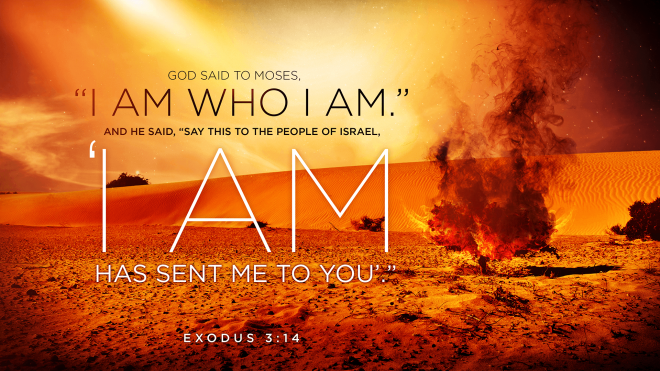
God said to Moses, “I am WHO I am.” And he said, “Say this to the people of Israel, ‘I am has sent me to you.’ ” (rsv)

Christians universally recognize that Jesus Christ was claiming to be the Deity when he referred to himself as the I am: “The Jews then said to him, ‘You are not yet fifty years old, and have you seen Abraham?’ Jesus said to them, ‘Truly, truly, I say to you, before Abraham was, I am’ ” (John 8:57–58, rsv). Even Jesus’ enemies recognized what he was saying. The next verse tells us that, when they heard this, “they took up stones to throw at him … ” (v. 59). The unbelieving Jews viewed Jesus’ claim to be the I am as blasphemy, a crime for which they wanted to stone him to death.

Jehovah’s Witnesses, however, teach that Jesus Christ is really just Michael the archangel and that Christ never claimed to be God. So, to make Scripture agree with their doctrine, they change the reading of both verses in their Bible. The Watchtower Society’s translation says, “This is what you are to say to the sons of Israel, ‘I shall prove to be has sent me to you’ ” (Exod. 3:14, nwt), and “Most truly I say to you, Before Abraham came into existence, I have been” (John 8:58, nwt). So, in the JW Bible, Jesus’ words appear to have no connection with Exodus 3:14.

But you do not have to be a Greek and Hebrew scholar to prove that the Watchtower Society has twisted these verses. Jehovah’s Witnesses’ own study Bibles prove that Jesus was claiming to be the I am. Their 1984 large-print New World Translation of the Holy Scriptures with References has a footnote on Exodus 3:14, admitting that the Hebrew would be rendered into Greek a Ego eimi”—“I am.” And their 1985 Kingdom Interlinear Translation of the Greek Scriptures reveals that Jesus’ words at John 8:58 are the same: ego eimi (footnotes), “I am” (interlinear text).

[1]


[1]Reed, D. A. (1997, c1986). Jehovah’s Witnesses : Answered verse by verse. Includes indexes. (electronic ed.) (26). Grand Rapids: Baker Book House.

Jehovah’s Witnesses Answered Verse by Verse | Genesis 40:20–22

Genesis 40:20–22

And it came to pass the third day, which was Pharaoh’s birthday, that he made a feast unto all his servants.… But he hanged the chief baker.… (kjv)

The Watchtower organization has prohibited birthday celebrations among its adherents, using Genesis 40:20–22 as a key part of the “scriptural basis” for this ruling. Their thought is that the word birthday appears in the Bible only in reference to Pharaoh of Egypt (as above) and King Herod of Galilee (Matt. 14:6 and Mark 6:21). Both of them were pagans, and both men had someone put to death in connection with the celebration. Since no men of faith are recorded in the Bible as having celebrated their birthdays, but only wicked men—so the Watchtower reasoning goes—Jehovah’s Witnesses of today must not be allowed to celebrate birthdays either.

It is worth noting that, as with other teachings, it is not left up to the individual Witness to read the Bible and come up with this conclusion. Rather, the sect’s secretive governing body has promulgated this official interpretation and uses its disciplinary procedures to enforce the policy on all Witnesses. For example, one elderly JW of our acquaintance in Massachusetts decided that he would send a birthday card to his non-Witness son, but his wife reported it to the local elders. They summoned him before a closed-door judicial-committee meeting and put him on trial for this offense. The seventy-year-old gentleman challenged them to show him one Scripture verse prohibiting sending a birthday card, but the committee went ahead and disfellowshiped him on the basis of the Watchtower Society’s ruling. His Witness relatives now refuse him admittance to their home, and Witnesses who encounter him on the street turn away without even saying hello.

In refuting the Watchtower’s so-called scriptural basis for banning birthday celebrations, you can point out that Pharaoh and King Herod were arbitrary rulers and violent men; such monarchs were accustomed to executing people on all sorts of occasions, not just on their birthdays. Moreover, a person sending a birthday card, or a parent providing a cake with candles at a children’s party, can hardly be accused of following the pattern of those murderous men.

Although the actual word birthday appears only in connection with Pharaoh and Herod in most translations, the Bible does contain reference to such celebrations in godly families:

In Job 1:4, it says of the patriarch Job’s family, “And his sons went and held a banquet at the house of each one on his own day; and they sent and invited their three sisters to eat and drink with them” (nwt, italics added). That “his own day” refers to each one’s birthday becomes clear when we read further: “It was after this that Job opened his mouth and began to call down evil upon his day. Job now answered and said: ‘Let the day perish on which I came to be born … ’ ” (Job 3:1–3, nwt, italics added). The Living Bible’s paraphrase of Job 1:4–5 expresses this thought: “Every year when each of Job’s sons had a birthday, he invited his brothers and sisters to his home for a celebration. On these occasions they would eat and drink with great merriment. When these birthday parties ended.… ”

Even the Watchtower Society’s own translation reveals that the birth of John the Baptist was celebrated, when it records this angelic announcement: “And you will have joy and great gladness, and many will rejoice over his birth” (Luke 1:14, nwt).

If the birth of John the Baptist was an occasion for rejoicing and if faithful Job’s children celebrated their birthdays, the fact that Pharaoh and Herod also celebrated theirs cannot logically be used as a basis for banning birthday parties among Bible believers today.

[1]


[1]Reed, D. A. (1997, c1986). Jehovah’s Witnesses : Answered verse by verse. Includes indexes. (electronic ed.) (24). Grand Rapids: Baker Book House.

Jehovah’s Witnesses Answered Verse by Verse | Genesis 18:1–2

Jehovah’s Witnesses Answered Verse by Verse | Genesis 18:1–2
 
Yahweh appeared to him.… He looked up, and there he saw three men.… (jb)
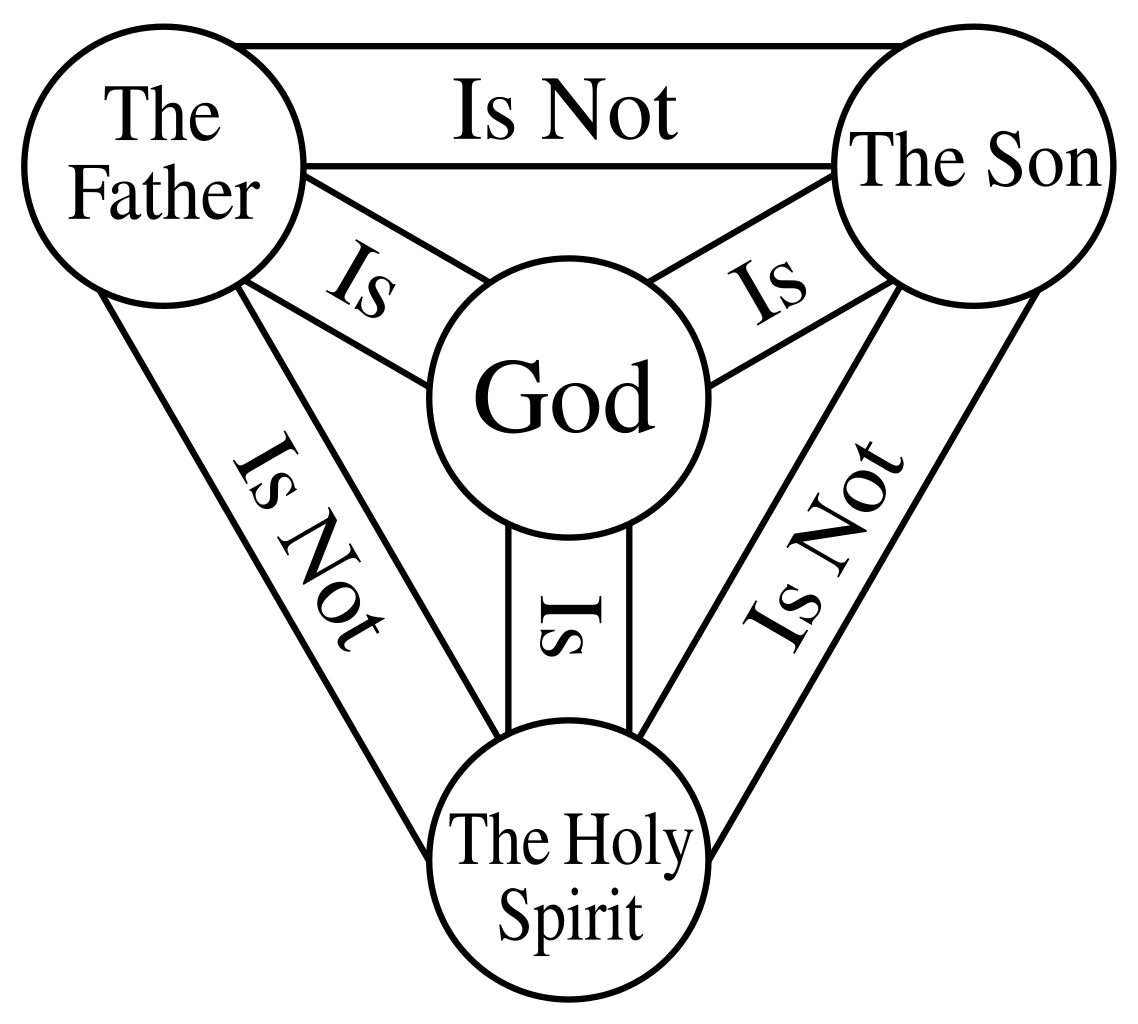
Jehovah’s Witnesses believe that it is impossible for the one true God to exist as three persons: Father, Son, and Holy Spirit. Yet, the Bible, in Genesis 18 and 19, shows God appearing to Abraham as three men. This account can be used to help JWs see that even the impossible (from a human viewpoint) is possible with God. Discuss it with them, as suggested here:
In the Watchtower Society’s own New World Translation, at Genesis 18:1–2, God appears to Abraham as three men (or angels). Abraham addresses the three as “Jehovah” (v. 3). When the three men respond, the episode is described interchangeably as “they” speaking (v. 9) and “Jehovah” speaking (v. 13). When two of the three men depart to visit Lot in Sodom, Abraham continues to call the remaining one “Jehovah,” but Lot addresses the other two as “Jehovah” (Gen. 18:22, 30 and 19:1, 18).
By itself, this account does not prove the Trinity doctrine. But, at the very least, it demonstrates that it is possible for God to manifest himself as three-in-one. The fact that this concept is beyond the full grasp of human intellect should not cause Jehovah’s Witnesses to rule it out. As the apostle Paul wrote: “ … we can see and understand only a little about God now, as if we were peering at his reflection in a poor mirror; but someday we are going to see him in his completeness, face to face. Now all that I know is hazy and blurred, but then I will see everything clearly, just as clearly as God sees into my heart right now” (1 Cor. 13:12, lb).
The discussion above may help a Jehovah’s Witness to reconsider the concept of one God in three persons. For further help, see also Isaiah 9:6; John 1:1; John 16:13; 1 Corinthians 6:19; 1 Corinthians 8:6; Colossians 2:9; and Revelation 1:7–8.

Reed, D. A. (1997, c1986). Jehovah’s Witnesses : Answered verse by verse. Includes indexes. (electronic ed.) (23). Grand Rapids: Baker Book House.

Jehovah’s Witnesses Answered Verse by Verse | Genesis 9:4

Genesis 9:4
 
Only you shall not eat flesh with its life, that is, its blood (rsv).
 
This is the first of several Scripture verses that Jehovah’s Witnesses use to argue in support of the Watchtower Society’s ban on blood transfusions. The organization teaches that a blood transfusion is the same as eating blood, because it resembles intravenous feeding. The Society accordingly prohibits blood transfusions for its followers. A Witness who accepts a transfusion can expect to be summoned before a judicial committee to be put on trial behind closed doors for violation of “God’s law.” The punishment, if found guilty, is “disfellowshiping,” whereby the individual is shunned by family and friends who are forbidden even to greet the offender.
 
Jehovah’s Witnesses feel very strongly about this issue. They will die rather than accept a transfusion to replace blood lost in an operation or accident. And they follow this same course with respect to their minor children. Most Witnesses carry a signed card in their wallet or purse, stating their refusal to accept blood and instructing emergency personnel not to administer a transfusion if the Witness is found unconscious. The card is a legal document, signed by the JW and countersigned by two others.
 
JWs recognize that they are unique among religious people in their stand on blood transfusions, although it does not occur to them that this very fact shows that the doctrine does not really derive from the Bible. No one else who attempts to follow the Bible as a guide in life has come up with a ban on transfusions—and even the Watchtower organization did not promulgate the doctrine until 1944.
 
Most Jehovah’s Witnesses are unaware that their leaders have had a history of introducing other medical prohibitions and then later changing their mind. In 1967, for example, they prohibited organ transplants. Followers were expected to choose blindness rather than accept a cornea transplant, or to die rather than submit to a kidney transplant. But then, in 1980, the leaders reversed the teaching and allowed transplants once again (see The Watchtower, 11/15/67, pp. 702–704; Awake! 6/8/68, p. 21; and The Watchtower, 3/15/80, p. 31). In addition, between the years 1931 and 1952, JWs had to refuse vaccinations for themselves and their children because the organization taught them: “Vaccination is a direct violation of the everlasting covenant that God made … ” (The Golden Age, 2/4/31, p. 293).
 
Even though Witnesses will attempt to quote Scripture to support their position on blood transfusions, the real reason for their stand is blind obedience to the Watchtower Society. If the organization lifted its prohibition tomorrow, Witnesses would freely accept transfusions—just as they did an about-face when the vaccination ban was lifted in 1952 and when the ban on organ transplants was rescinded in 1980.
See also the discussions of Leviticus 7:26–27 and Acts 15:28–29.

Reed, D. A. (1997, c1986). Jehovah’s Witnesses : Answered verse by verse. Includes indexes. (electronic ed.) (22). Grand Rapids: Baker Book House.

Jehovah’s Witnesses Answered Verse by Verse | Genesis 1:1–2

Genesis 1:1–2
In the beginning God created the heavens and the earth. Now the earth proved to be formless and waste and there was darkness upon the surface of the watery deep; and God’s active force was moving to and fro over the surface of the waters. (nwt, emphasis added)
 
Jehovah’s Witnesses use this verse to attack Christian belief in the personality of the Holy Spirit. Most translations of verse 2 state that “the Spirit of God” was moving over the surface of the waters. But the Watchtower organization has taught its followers that the Holy Spirit is merely an impersonal force at God’s disposal. To prove this point to anyone who will listen, Witnesses quote the verse as it appears in their own New World Translation of the Holy Scriptures. This is a situation in which individual JWs do not need to twist Scripture to fit the doctrines they have been taught—the verse comes already pre-twisted in their own Bible. (See chapter two.) In other texts, the Watchtower version speaks of “holy spirit,” not capitalized and without the definite article in English.
To answer the JW claim that the Holy Spirit is a mere impersonal force, emphasize to Witnesses that the Bible repeatedly refers to the Holy Spirit as having personal attributes. For example, even their own New World Translation reveals that the Spirit speaks (Acts 13:2), bears witness (John 15:26), says whatever he hears (John 16:13), feels hurt (Isa. 63:10), and so forth.
For further discussion on the Holy Spirit, see John 16:13; Acts 5:3–4; Romans 8:26–27; 1 Corinthians 6:19; and Subject Index.

Reed, D. A. (1997, c1986). Jehovah’s Witnesses : Answered verse by verse. Includes indexes. (electronic ed.) (21). Grand Rapids: Baker Book House.
Exit mobile version