Is Jesus God? (Jehovah’s Witnesses A Counterfeit Kingdom … or Not?) part 3


Jehovah’s Witnesses A Counterfeit Kingdom … or Not?
Jehovah’s Witnesses
A Counterfeit Kingdom … or Not?

Is Jesus God?

Most critics assume that Jesus never claimed to be God.30 They also assume that the New Testament writers never claimed that Jesus is God. For accurate interpretation, a student of the Bible must look at the whole counsel of God—at Scripture in context of the whole. For example, the first words in Genesis state, “In the beginning God created the heavens and the earth.” Since God was the Creator and since Colossians 1:15–17 presents that Christ created all things, the relationship between God and Jesus must be that of equality. Jesus Christ must be God.

“He is the image of the invisible God, the firstborn over all creation. For by him all things were created: things in heaven and on earth, visible and invisible, whether thrones or powers or rulers or authorities; all things were created by him and for him. He is before all things, and in him all things hold together.”

(Colossians 1:15–17)

What Different People and Books of the Bible Say

  • Paul refers to Jesus as “God” and “Savior.”

      “We wait for the blessed hope—the glorious appearing of our great God and Savior, Jesus Christ.” (Titus 2:13)

  • Peter refers to Jesus as “God” and “Savior.”

      “Simon Peter, a servant and apostle of Jesus Christ, To those who through the righteousness of our God and Savior Jesus Christ have received a faith as precious as ours.” (2 Peter 1:1)

  • Thomas refers to Jesus as “My Lord and my God.”

      “Thomas said to him, ‘My Lord and my God!’ ” (John 20:28)

  • John refers to Jesus as “the Word” and as “God.”

      “In the beginning was the Word, and the Word was with God, and the Word was God.” (John 1:1)

  • Jesus even says that He and God the Father are one.

      “I and the Father are one.” (John 10:30)

  • In Hebrews, Jesus is called “God.”

      “But about the Son he says, ‘Your throne, O God, will last for ever and ever, and righteousness will be the scepter of your kingdom.’ ” (Hebrews 1:8)

  • In the Epistle of 1 John, Jesus is called “the true God and eternal life.”

      “We know also that the Son of God has come and has given us understanding, so that we may know him who is true. And we are in him who is true—even in his Son Jesus Christ. He is the true God and eternal life.” (1 John 5:20)

  • In Philippians, Jesus is described as “in very nature God.”

      “Your attitude should be the same as that of Christ Jesus: Who, being in very nature God, did not consider equality with God something to be grasped.” (Philippians 2:5–6)

  • In Colossians, Jesus is fully God with “all the fullness of Diety.”

      “For in Christ all the fullness of the Deity lives in bodily form, and you have been given fullness in Christ, who is the head over every power and authority.” (Colossians 2:9–10)

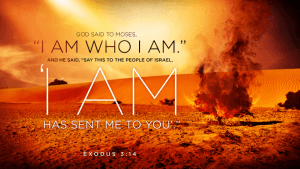
  • In the Gospel of John, Jesus is called the great “I AM.” (See Exodus 3:14.)

Jehovah’s Witnesses: A Counterfeit Kingdom … or Not?

Jehovah’s Witnesses

A Counterfeit Kingdom … or Not?

(by June Hunt)


“They go door to door, proclaiming a curious message of doom, in hope that their hard work will earn them eternal life on earth.”

—Joe Hewitt (former Jehovah’s Witness)

DEFINITION

A. What Is the Organization of Jehovah’s Witnesses?

•     The Organization of Jehovah’s Witnesses is a religious organization that witnesses to others by distributing Watchtower publications door to door and by evangelizing with three primary messages …

•     This religion was founded in Pittsburgh, Pennsylvania, by its first President, Charles Taze Russell, whose followers were called “Russellites.”

•     It was incorporated in 1884 and operated under the name Zion’s Watch Tower Society until 1931, at which time Watchtower Bible and Tract Society became the official title. (Since 1931, followers are referred to as Jehovah’s Witnesses.)

•     From 1955 to 2000, the main legal entity of the corporation was the Watch Tower Bible and Tract Society of Pennsylvania. In 2000 the Society completely reorganized its operations into three related nonprofit organizations: The Christian Congregation of Jehovah’s Witnesses, The Religious Order of Jehovah’s Witnesses, and Kingdom Support Services, Inc. Since 1931, the society has adopted the name Jehovah’s Witnesses for their followers.5 With headquarters in Brooklyn, New York, the movement is seen as the only organization on earth through which God works and speaks.6

B. Who Was the Founding Father?

•     The founding father of the Jehovah’s Witnesses was Charles Taze Russell (1852–1916).

The Founding Father’s Controversies in Court

•     In 1879 Charles Russell married Maria Ackley, who was for years a devoted Watchtower worker. But in 1897, she separated from him. After much litigation, Mrs. Russell’s claims for alimony were settled in 1909 with the payment of $6,036.

•     Charles Russell sold “miracle wheat seeds,” claiming they produced five times more than any other seeds. When this claim was challenged, he sued the Brooklyn Daily Eagle for libel. In January, 1913, not only did he lose the libel suit, but his miracle wheat also was proven inferior—not five times superior.

•     A Canadian pastor published a pamphlet against Charles Russell and his deviant doctrines. As a result, Russell sued Reverend J. J. Ross for libel. On the witness stand, Russell testified to knowing the Greek alphabet. Under further cross-examination, Russell admitted that he “might make a mistake on some of them” and then finally testified that he was not familiar with the Greek language (Russell v. Ross, 1913).

All the moral and legal rulings against the founder of Jehovah’s Witnesses cast a dark shadow on the credibility of Charles Russell and his new religion. This founder in no way meets the biblical standards of a church leader as “above reproach.”

  • C. What Are Their Publications?

    • Zion’s Watch Tower and Herald of Christ’s Presence—first published in 1879 by Charles Taze Russell and later became known as The Watchtower
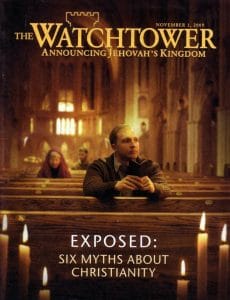
    • The Watchtower—a magazine used to instruct the public in Jehovah’s Witnesses doctrines
    • Awake!—a periodical used to introduce Jehovah’s Witnesses to the public
    • The New World Translation—the Watchtower’s own translation of the Bible, containing numerous mistranslations to support the Society’s doctrines.

    For example, sincere Jehovah’s Witnesses seek to explain John 1:1 by saying that the correct translation is found in the New World Translation: “In [the] beginning the Word was, and the Word was with God, and the Word was a god.” This is an inaccurate translation based on a misunderstanding of Greek grammar.

  • D. What Terminology Is Used by Jehovah’s Witnesses?

    Disfellowshipping or Shunning Punishment for disobedience of Watchtower rules and regulations resulting in excommunication. Baptized members who are disfellowshipped are no longer allowed to talk with current members—including in most cases even family members.

  • Faithful and Wise Servant (Matthew 24:45)Originally referring to Charles Taze Russell, now referring to the remnant of the 144,000 or “anointed class”/“Little Flock” including the “Governing Body” of Jehovah’s Witnesses.

  • Faithful and Discreet Slave Another term for the “Faithful and Wise Servant.”

  • Great Crowd The great crowd are the non-anointed faithful, including those who survive Armageddon. These are also known as the “other sheep,” and they make up the vast majority of Jehovah’s Witnesses who will not live in heaven but hope to be able to inhabit the restored “Paradise Earth.”

  • Governing Body A group of fewer than 25 men of the anointed class or “Faithful and Discreet Slave” who historically established the Watchtower’s policies and beliefs and direct its publications.

  • Jehovah The only true name for God. (The Trinity is considered a false doctrine.)

  • Kingdom Hall The local meeting place where Jehovah’s Witnesses receive instruction.

  • Little Flock” Anointed Class Heavenly Class The elite group of 144,000 who will live in heaven and reign with Christ. This group is believed to be the Spiritual Israel as the prophecies of the Old and New Testaments are being fulfilled through them.

  • Memorial Meal One large, annual meeting scheduled at Passover time (Nisan 14 of the Jewish calendar), which is the only time the Lord’s Supper is observed. Only the remnant of the 144,000 “anointed” can partake of the bread and wine—currently fewer than 9,000.

  • The Society The informal name Jehovah’s Witnesses use for the Watchtower Bible and Tract Society (WTBS), which is directed by the “Governing Body.”

  • The Truth Knowledge available only to Jehovah’s Witnesses and learned only through The Watchtower.

  • Spiritual Israel All of the 144,000 Jehovah’s Witnesses in the Heavenly Class, which first began among Jesus’ disciples. That number was completed in the 1930s. The acting president announced that the enlightenment he received from Jehovah was that “other sheep” that were “not of this fold” would be candidates to inherit “Paradise Earth,” provided they remain faithful and “come to Jehovah’s organization for salvation.”


CHARACTERISTICS

  1. A. Doctrinal Beliefs That Vary from Orthodox Christianity
  2. Virgin Birth: Jehovah’s Witnesses admit that Jesus was born of a virgin, but maintain He is not God. Jesus was born by God’s holy power.

  3. Atonement: Jehovah’s Witnesses admit the penalty for sin was paid by Christ’s blood, but salvation is not by grace alone. It must be accompanied by good works, Bible study, witnessing, and association with the Watchtower. “A person’s final salvation is not determined at the moment that he begins to put faith in Jesus.”

  4. Resurrection: Jehovah’s Witnesses do not believe that Jesus was raised from the dead in His physical body. He was recreated as a spirit that appeared to the disciples in a number of bodily forms. He continued to maintain His original identity, Michael the Archangel.

  5. Incarnation: Jehovah’s Witnesses do not believe that Jesus is God. Instead, He was a created being who is actually Michael the Archangel.

  6. Eschatology: Jehovah’s Witnesses do not believe that Jesus will return in bodily form, but that He already returned in 1914 in invisible form and is ruling as King on earth through the Watchtower Society.24 They do not believe in the existence of an eternal hell. At death, every person is annihilated, except for the 144,000 Jehovah’s Witnesses who go to heaven and the other obedient sheep who remain in “soul sleep” until they inhabit “Paradise Earth.”

  7. Scripture: Jehovah’s Witnesses admit that the Bible is the Word of God, but they claim all orthodox translations are distorted. Thus, they have their own Bible, the New World Translation of Holy Scripture, which they declare to be the only reliable version. It contains approximately 300 mistranslations to support their doctrine. They do not believe the Bible is a sufficient source of authority for Christian doctrine and practice apart from the Watchtower publications.

  8. B. Forbidden Practices Based on Beliefs
    •      Viewed as idolatrous …

    —  belonging to any political party

    —  holding an elected office

    —  pledging allegiance to the flag

    —  serving jury duty

    —  serving in the military

    —  singing the national anthem

    —  voting in elections

    Jehovah’s Witnesses believe that when Satan offered Jesus control of the governments of the world, he had authority over those governments. Yet Romans chapter 13 states that the governing authorities have been established by God Himself.

    “Everyone must submit himself to the governing authorities, for there is no authority except that which God has established. The authorities that exist have been established by God. Consequently, he who rebels against the authority is rebelling against what God has instituted, and those who do so will bring judgment on themselves.”

    (Romans 13:1–2)

    •      Viewed as corrupt …

    —  associating with disfellowshipped Jehovah’s Witnesses, even close relatives

    —  attending church services not conducted by Jehovah’s Witnesses

    —  joining the YMCA/YWCA

    —  close associations with Christians or other false worshippers except for the purpose of winning them over

    •      Viewed as pagan …

    —  celebrating birthdays

    —  celebrating holidays (for instance, Christmas, New Year’s Day)

    —  celebrating Mother’s or Father’s Day

    •      Viewed as eating blood …

    —  giving or receiving blood transfusions.

  9. (to be continued)


How Can One God Be Three?

How Can One God Be Three?

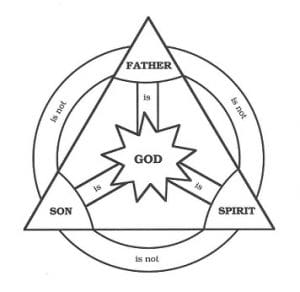
Speaking through the prophet Isaiah, God said, “My thoughts are not your thoughts, / Nor are your ways My ways … / For as the heavens are higher than the earth, / So are My ways higher than your ways, / And My thoughts than your thoughts” (Isa. 55:8–9). God is infinite, man is finite, so there are mysteries about God that man cannot fully understand. One of these mysteries is the Trinity, the tri-personality of God. According to Christian orthodoxy, God is one God in essence, power, and authority, and also eternally exists as three distinct co-equal persons. These three persons are the Father, the Son (Jesus), and the Holy Spirit. This does not mean that Christians believe in three gods (polytheism). Rather, the doctrine of the Trinity is that there is only one God who exists in three distinct persons, and all three share the exact same divine nature or essence.

Understanding this fully is beyond human comprehension and has no human parallels, although various analogies have been offered. One of these analogies is the three physical states of water. Water is not only a liquid but also a solid (ice) and a gas (vapor), yet its chemical composition (substance) never changes in all three forms (two parts hydrogen and one part oxygen—H2O). Although such analogies help us visualize the concept of the Trinity, they all fall short in some way. In the case of the water analogy, although the molecule H2O can be liquid, solid, or gas, it is never all three at one time. The Trinity, on the other hand, is all three persons as one God.

The word Trinity is not used in Scripture, but it has been adopted by theologians to summarize the biblical concept of God. Difficult as it is to understand, the Bible explicitly teaches the doctrine of the Trinity, and it deserves to be explained as clearly as possible, especially to non-Christians who find the concept a stumbling-block to belief. So let’s dig into this topic by addressing four key questions.

IS THE DOCTRINE OF THE TRINITY IRRATIONAL?

The doctrine of the Trinity is certainly a mystery but that doesn’t mean it’s irrational. The concept cannot be known by human reason apart from divine revelation, and, as we’ll soon see, the Bible definitely supports the idea of the Trinity. But for now, I want to demonstrate that the doctrine of the Trinity, although beyond human comprehension, is nevertheless rational. Our acceptance of it is congruous with how we respond to other data about the known world.

There are many things about the universe we don’t understand today and yet accept at face value simply because of the preponderance of evidence supporting their existence. The scientific method demands that empirical evidence be accepted whether or not science understands why it exists or how it operates. The scientific method does not require that all data be explained before it is accepted.

Contemporary physics, for instance, has discovered an apparent paradox in the nature of light. Depending on what kind of test one applies (both of them “equally sound”), light appears as either undulatory (wave-like) or corpuscular (particle-like). This is a problem. Light particles have mass, while light waves do not. How can light have mass and not have it, apparently at the same time? Scientists can’t yet explain this phenomenon, but neither do they reject one form of light in favor of the other, nor do they reject that light exists at all. Instead, they accept what they’ve found based on the evidence and press on.

Like physicists, we are no more able to explain the mechanics of the Trinity than they can explain the apparent paradox in the nature of light. In both cases, the evidence is clear that each exists and harbors mystery. So we must simply accept the facts and move on. Just because we cannot explain the Trinity, how it can exist, or how it operates does not mean that the doctrine must be rejected, so long as sufficient evidence exists for its reality. So let’s now explore this evidence.

HOW DOES THE BIBLE PRESENT THE DOCTRINE OF THE TRINITY?

THE OLD TESTAMENT

Although the doctrine of the Trinity is fully revealed in the New Testament, its roots can be found in the Old Testament.

In several places, God refers to Himself in plural terms. For example, “Then God said, ‘Let Us make man in Our image’” (Gen. 1:26; see 3:22; 11:7; Isa. 6:8).

The Messiah was prophesied in the Old Testament as being divine. Isaiah 9:6 states that the Messiah will be called “Mighty God,” a term applied in the Old Testament specifically to Yahweh (see Mic. 5:2).

Isaiah 48:16 refers to all three members of the Godhead: “Come near to Me, listen to this: From the first I have not spoken in secret, from the time it took place, I was there. And now the Lord God [Father] has sent Me [Jesus], and His Spirit [the Holy Spirit]” (nasv).

The Old Testament also makes numerous references to the Holy Spirit in contexts conveying His deity (Gen. 1:2; Neh. 9:20; Ps. 139:7; Isa. 63:10–14).

THE NEW TESTAMENT

The New Testament provides the most extensive and clear material on the Trinity. Here are just a few of the texts that mention all three members of the Godhead and imply their co-equal status.

•     Matthew 28:19, the baptismal formula: “Go therefore and make disciples of all the nations, baptizing them in the name [not ‘names’] of the Father and of the Son and of the Holy Spirit.”

•     Matthew 3:16, at the baptism of Christ in the Jordan: “And after being baptized, Jesus went up immediately from the water; and behold, the heavens were opened, and He saw the Spirit [Holy Spirit] of God [Father] descending as a dove, and coming upon Him [Jesus]” (nasv).

•     Luke 1:35, the prophetic announcement to Mary of Jesus’ birth: “And the angel answered and said to her, ‘The Holy Spirit will come upon you, and the power of the Highest [Father] will overshadow you; therefore, also, that Holy One who is to be born will be called the Son of God [Jesus].’”

•     The trinitarian formula is also found in 1 Peter 1:2, 2 Corinthians 13:14, and 1 Corinthians 12:4–6.

DIGGING DEEPER

To explain the doctrine of the Trinity, I will take an inductive (scientific) approach. By this I mean I will accumulate general facts in Scripture that lead to a specific conclusion—that the nature of God is triune. The argument will go like this:

1. The Bible teaches that God is one (monotheism) and that He possesses certain attributes that only God can have.

2. Yet when we study the attributes of the Father, the Son, and the Holy Spirit, we discover that all three possess the identical attributes of deity.

3. Thus we can conclude that there is one God eternally existing as three distinct persons.

God Is One (Monotheism)

The Hebrew Shema of the Old Testament is “Hear, O Israel: The Lord our God, the Lord is one!” (Deut. 6:4; see Isa. 43:10; 44:6; 46:9). Some people have argued that this passage actually refutes the concept of the triune nature of God because it states that God is one. But the Hebrew word for “one” in this text is echod, which carries the meaning of unity in plurality. It is the same word used to describe Adam and Eve becoming “one flesh” (Gen. 2:24). Scripture is not affirming that Adam and Eve literally become one person upon marriage. Rather, they are distinct persons who unite in a permanent relationship.

The New Testament confirms the teaching of the Old: “You believe that God is one. You do well; the demons also believe, and shudder” (James 2:19, nasv; see 1 Tim. 2:5; 1 Cor. 8:4; Eph. 4:4–6).

God Has a Certain Nature

Both the Old and New Testaments list the attributes of God. We won’t consider all of them here, but what follows are some of the clearest expressions of what constitutes deity.

•     God is omnipresent (present everywhere at once): Psalm 139:7–10; Jeremiah 23:23–24.

•     God is omniscient (possesses infinite knowledge): Psalms 139:1–4; 147:4–5; Hebrews 4:13; 1 John 3:20.

•     God is omnipotent (all-powerful): Psalm 139:13–18; Jeremiah 32:17; Matthew 19:26.

The Father Is God

To the Jews, who do not accept the Trinity, God is Yahweh. In the Old Testament, Yahweh is to the Hebrews what Father is in the New Testament and to Christians. The attributes of God (Yahweh) listed above are the same for Yahweh and Father because both names apply to the one God. Although the concept of God as Father is not as explicit in the Old Testament as it is in the New, nevertheless, it has its roots in the Old (see Pss. 89:26; 68:5; 103:13; Prov. 3:12).

In the New Testament, the concept of the Father as a distinct person in the Godhead becomes clear (Mark 14:36; 1 Cor. 8:6; Gal. 1:1; Phil. 2:11; 1 Pet. 1:2; 2 Pet. 1:17). God is viewed as Father over creation (Acts 17:24–29), the nation of Israel (Rom. 9:4; see Exod. 4:22), the Lord Jesus Christ (Matt. 3:17), and all who believe in Jesus as Lord and Savior (Gal. 3:26).

The Son Is God

Like the Father, Jesus possesses the attributes of God. He is omnipresent (Matt. 18:20; 28:20). He is also omniscient: He knows people’s thoughts (Matt. 12:25), their secrets (John 4:29), the future (Matt. 24:24–25), indeed all things (John 16:30; 21:17). His omnipotence is also taught. He has all power over creation (John 1:3; Col. 1:16), death (John 5:25–29; 6:39), nature (Mark 4:41; Matt. 21:19), demons (Mark 5:11–15), and diseases (Luke 4:38–41).

In addition to these characteristics, Jesus exhibits other attributes that the Bible acknowledges as belonging only to God. For example, He preexisted with the Father from all eternity (John 1:1–2), accepted worship (Matt. 14:33), forgave sins (Matt. 9:2), and was sinless (John 8:46).

The Holy Spirit Is God

The Holy Spirit is also omnipresent (Ps. 139:7–10), omniscient (1 Cor. 2:10), and omnipotent (Luke 1:35; Job 33:4).

Like Jesus, the Holy Spirit exhibits other divine attributes that the Bible ascribes to God. For instance, He was involved in creation (Gen. 1:2; Ps. 104:30), inspired the authorship of the Bible (2 Pet. 1:21), raised people from the dead (Rom. 8:11), and is called God (Acts 5:3–4).

The upshot of all this is that God is triune. In a formal argument, we can put it this way:

Major Premise:

Only God is omnipresent, omniscient, and omnipotent.

Minor Premise:

The Father, the Son, and the Holy Spirit are omnipresent, omniscient, and omnipotent.

Conclusion:

Therefore, God is triune as Father, Son, and Holy Spirit.

THE TRINITY

HOW DOES JESUS TEACH THE DOCTRINE OF THE TRINITY?

In the Bible, Jesus claims to be God and then demonstrates this claim by displaying the attributes of God and by raising Himself from the dead. So what Jesus has to say about God must be true. And Jesus clearly teaches that God is triune.

Jesus Is Equal with the Father and Holy Spirit

In Matthew 28:19, Jesus tells His followers to “make disciples of all the nations, baptizing them in the name of the Father and of the Son and of the Holy Spirit.” He uses the singular word name but associates it with three persons. The implication is that the one God is eternally three co-equal persons—Father, Son, and Holy Spirit.

Jesus Is One with the Father

In John 14:7 and 9, Jesus identifies Himself with the Father by saying to His disciples, “If you had known Me, you would have known My Father also; and from now on you know Him and have seen Him … He who has seen Me has seen the Father” (see John 5:18). Jesus is not claiming to be the Father; rather, He is saying that He is one with the Father in essence.

Jesus Is One with the Holy Spirit

Continuing in John 14, Jesus tells His disciples that, after He is gone, He will send them “another Helper” who will be with them forever and will indwell them (vv. 16–17). The “Helper” is the Holy Spirit. The trinitarian implication lies with the word another. The apostle John, as he wrote this passage, could have chosen one of two Greek words for another. Heteros denotes “another of a different kind,” while allos denotes “another of the same kind as myself.” The word chosen by John was allos, clearly linking Jesus in substance with the Holy Spirit, just as He is linked in substance with the Father in verses 7 and 9. In other words, the coming Holy Spirit will be a different person than Jesus, but He will be the same with Him in divine essence just as Jesus and the Father are different persons but one in their essential nature. Thus, in this passage, Jesus teaches the doctrine of the Trinity.

So far we have seen that the authors of Scripture and Jesus Christ teach the triune nature of God. Therefore, the only way the doctrine of the Trinity can be rejected is if one refuses to accept the biblical evidence. Some groups, such as the Jehovah’s Witnesses, do this by reinterpreting and altering Scripture. Others, such as the Unitarians (who claim that Jesus is just a man), arbitrarily and without any evidence deny anything supernatural or miraculous in the Bible. Both the Jehovah’s Witnesses and the Unitarians are guilty of the very same thing of which they accuse Christians—irrationality. They refuse to accept the evidence for the Trinity regardless of how legitimate it is. This is unscientific and irrational. If one approaches Scripture without bias, he will clearly discover what the church has maintained for centuries: God is triune—one God in essence but eternally existing in three persons as Father, Son, and Holy Spirit.

A COMMON OBJECTION

Perhaps you’ve wondered or heard someone say, “If Jesus is one in essence with the Father, an equal member of the triune Godhead, why does He say, ‘the Father is greater than I’” (John 14:28)? This question actually moves away from the doctrine of the Trinity and launches us into the doctrine of the incarnation, the process whereby Jesus, as the eternal Son of God, came to earth as man. Nevertheless, because this question is frequently raised as an objection, it needs to be answered.

Numerous passages in Scripture teach that Jesus, although fully God, is also fully man (John 1:14; Rom. 8:3; Col. 2:9; 1 Tim. 3:16). However, Philippians 2:5–8 states that, in the process of taking on humanity, Jesus did not give up any of His divine attributes. Rather, He gave up His divine glory (see John 17:5) and voluntarily chose to withhold or restrain the full use of His divine attributes. There are numerous instances in Scripture where Jesus, although in human form, exhibits the attributes of deity. If Jesus had surrendered any of His divine attributes when He came to earth, He would not have been fully God and thus could not have revealed the Father as He claimed to do (John 14:7, 9).

The key to understanding passages such as John 14:28 is that Jesus, like the Father and the Holy Spirit, has a particular position in the triune Godhead. Jesus is called the Son of God, not as an expression of physical birth, but as an expression of His position in relationship to the Father and Holy Spirit. This in no way distracts from His equality with the Father and the Holy Spirit or with His membership in the Godhead. As man, Jesus submits to the Father and acts in accordance to the Father’s will (see John 5:19, 30; 6:38; 8:28). So when we read passages such as Mark 14:36 where Jesus submits to the Father’s will, His submission has nothing to do with His divine essence, power, or authority, only with His position as the Incarnate Son.

Perhaps an illustration will help to explain this. Three people decide to pool their money equally and start a corporation. Each are equal owners of the corporation, but one owner becomes president, another vice-president, and the third secretary/treasurer. Each are completely equal so far as ownership, yet each has his own particular function to perform within the corporation. The president is the corporate head, and the vice-president and secretary/treasurer are submissive to his authority and carry out his bidding.

So when Jesus the God-man submits to the Father’s will or states that the Father is greater than He or that certain facts are known only by the Father (e.g., Matt. 24:36), it does not mean that He is less than the other members of the Godhead but that in His incarnate state He did and knew only that which was according to the Father’s will. The Father did not will that Jesus have certain knowledge while in human form. Because Jesus voluntarily restrained the full use of His divine attributes, He was submissive to the Father’s will.

Why did Jesus choose to hold back from fully using His divine powers? For our sake. God willed that Jesus feel the full weight of man’s sin and its consequences. Because Jesus was fully man, He could fulfill the requirements of an acceptable sacrifice for our sins. Only a man could die for the sins of mankind. Only a sinless man could be an acceptable sacrifice to God. And it is only because Jesus is an equal member of the triune Godhead, and thus fully God, that He was able to raise Himself from the dead after dying on the cross and thereby guarantee our eternal life.

When all the evidence is accounted for and the verdict read, the Bible clearly teaches that the Father, the Son, and the Holy Spirit are three distinct, co-equal, co-eternal members of the Godhead, yet one in essence, power, and authority. All three are one God. Were this not the case, if the Trinity were not a reality, there would be no Christianity.

[1]


[1]Story, D. (1997). Defending your faith. Originally published: Nashville : T. Nelson, c1992. (99). Grand Rapids, MI: Kregel Publications.

Why Should We Reject Religious Writings Other Than the Bible?

Why Should We Reject Religious Writings Other Than the Bible?

Islam, Hinduism, Mormonism, Jehovah’s Witnesses, the New Age movement, Christian Science, the Unification Church. What do these religious movements, as well as countless others, have in common? They all believe their writings are superior to the Bible. They may sometimes include the Bible in their list of acceptable religious books, but they will hold on to their belief that their writings significantly expand on, if not correct, what the Bible teaches.

Are they right? Is it possible that the writings of non-Christian religions are inspired by God and thus equal in authority to the Bible?

Some of these same religious groups, including some Christian ones, also argue that some God-inspired writings have been lost or that those in the Protestant Bible are only a partial listing of the extant books God inspired. Are they right?

All these claims are common, and if any of them are true, some of what I’ve argued may have to be rejected or at least modified. Let’s carefully consider each one.

ARE OTHER RELIGIOUS WRITINGS EQUAL OR SUPERIOR TO THE BIBLE?

One of the common denominators of non-Christian religions is that the Bible is not God’s final revelation. Many groups teach that their particular prophets have been inspired by God to write new revelation that supersedes Scripture. The Christian response to this claim takes four steps: (1) define the qualifications of a prophet, (2) determine the source of a prophet’s revelation, (3) examine what the Bible says about “new” revelation, and (4) compare the Jesus of Scripture with the Jesus promoted by other prophets.

A PROPHET’S QUALIFICATIONS

We have already established that the Bible is God’s written revelation and is completely inerrant. So we can turn to Scripture to see what it says about the qualifications of a prophet, then we can take that list and match it against those who are held up as prophets. If these prophets don’t meet the qualifications, then they are false prophets and anything they teach contrary to Scripture is also false. In other words, if Joseph Smith of the Mormons, Charles Taze Russell of the Jehovah’s Witnesses, Mary Baker Eddy of Christian Science, Muhammad of Islam, or any other self-proclaimed prophet fails the biblical test, then their so-called revelations are a lie and their followers are being duped into believing a false religion.

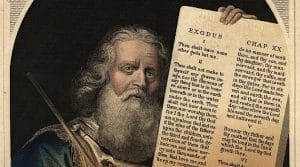
In Deuteronomy 13:1–5 and 18:20–22, God reveals what counts as the use and misuse of prophecy and who shall prophesy. A false prophet could make true predictions but still not be appointed by God. If a prophecy ever failed to come true, even if it was prophesied in the name of the Lord, then the one who uttered it was considered a fraud.

All non-Christian prophets have failed the second test and thereby demonstrated that God was not inspiring them. For example, in Doctrine and Covenants 84:1–5, 31, September 1832, Joseph Smith claimed that “Mount Zion, which shall be the city of New Jerusalem … shall be built, beginning at the temple lot, which is appointed by the finger of the Lord, in the western boundaries of the State of Missouri, and dedicated by the hand of Joseph Smith, Jun., and others with whom the Lord was well pleased. … which temple shall be reared in this generation.”

Likewise, the official writings of the Jehovah’s Witnesses proclaim numerous unfulfilled prophecies. One well-known example is their prediction that the battle of Armageddon would occur between 1874 and 1914: “In view of this strong Bible evidence concerning the Times of the Gentiles, we consider it an established truth that the final end of the kingdoms of this world, and the full establishment of the Kingdom of God, will be accomplished at the end of a.d. 1914.”1

A more recent example of false prophecies concerns “Moses” David Berg, founder of the Children of God, also known as the Family of Love. In 1973, he prophesied that the coming of the comet Kahoutek would result in the destruction of the United States unless America repented: “I believe God means what he says in this shocking revelation above! You in the U.S. have only until January to get out of the States before some kind of disaster, destruction or judgment of God is to fall because of America’s wickedness!”2 Thus, the religious writings of these false prophets and all other “prophets” who have failed prophecies are disqualified as revelations from God.

On the other hand, all biblical prophecies concerning events up to this point in history have come to pass. As we saw in Chapter 3, numerous Old Testament prophecies have been confirmed by archaeology, including not only those pertaining to the Jewish nation and the Messiah but also those dealing with other nations and peoples. Even if we ignored all the Bible’s prophecies except for those more than three hundred concerning the Messiah and recorded in the Old Testament, we would be as assured as possible that God had spoken to us through His chosen prophets. Why? Because the possibility of these prophecies being fulfilled in one person by sheer chance is a tiny fraction of one percent—namely, one over eighty-four followed by 123 zeros.3 Those are odds only God could fulfill!

Another criterion that disqualifies many so-called prophets is the use of objects of divination. Many New Age prophets use crystal balls, mediums, tarot cards, and other “mystically empowered” objects to communicate with spiritual forces. But God plainly warns in Deuteronomy 18:10–12 that no one should use divination, practice witchcraft, interpret omens, or use a sorcerer, medium, or spiritualist. Yet this is exactly what many modern-day prophets do. For example, Joseph Smith used a divining stone and carried an occult Jupiter Talisman around his neck.4 On these grounds alone, many “prophets” could be dismissed as false.

A third test for prophethood revolves around the biblical injunction not to add to or take away from Scripture (Deut. 4:2; Rev. 22:18–19). In other words, the Bible is God’s complete and final revelation, so any other religious writings claiming to have the same or greater authority as Scripture is a false revelation—it is not from God. Again, the message is plain: Any so-called holy book, whether it claims to be additional revelation to Scripture (e.g., the Book of Mormon) or claims to contain spiritual truths contrary to the Bible (e.g., New Age philosophies) must be rejected as divine revelation.

A final test to determine if a prophet is from God is to compare his revelation of Jesus with the Jesus described in Scripture. The cults portray a much different Jesus than the one revealed in the Bible. If God inspired other prophets to write about Jesus, He certainly would not contradict His revelation of Christ in the New Testament. This is the case in Scripture. The Jesus of the New Testament fits perfectly with the Jesus prophesied by various Old Testament prophets. In a similar way, if Jesus revealed Himself in other writings, He would be the same Jesus we find in the Bible.

However, in every case, none of the cults bear witness to the Jesus of Scripture. They all reject Him as part of the triune Godhead—one in essence, power, and authority with the Father and the Holy Spirit. The apostle John warns in 1 John 4:1–2 that many false prophets will go out into the world, but he assures us that we can know if they come from God because they will confess “that Jesus Christ has come in the flesh.” In other words, Jesus is God incarnate (in bodily form). Any alleged prophet who claims to speak new revelation from God but teaches a false Jesus is not from God.

DO OTHER ANCIENT WRITINGS BELONG IN THE BIBLE?

The second question to answer is a little more difficult: How do we know that the books presently in the Bible are the only ones that belong there? This question has to do with the canon, the sixty-six books (thirty-nine in the Old Testament and twenty-seven in the New) officially accepted by the Protestant church as God’s inspired and complete revelation. How do we know there should be just sixty-six books?

Although the Old Testament canon was established by about 400 b.c., the New Testament was not firmly established for nearly three hundred years after the last book (Revelation) was written. Nor, in some people’s minds is the matter settled yet. For instance, in 1945, forty-nine ancient religious books were discovered near Nag Hammadi in upper Egypt. Many people claim that these books, and other ancient writings, contain additional words and deeds of Jesus. Should they be added to the Bible?

The problem of possible missing books becomes even muddier when we read in 1 Corinthians 5:9 about a letter Paul wrote to the Corinthians that is not found in Scripture—a letter that some people think belongs in the Bible but was lost. In Colossians 4:16 Paul mentions a second letter written to the church at Laodicea, which we also don’t have. Even the Old Testament mentions some documents not included in the biblical canon (Num. 21:14; Josh. 10:13). How do we explain the absence of documents written by the authors of Scripture? Why are some books considered canonical while others, perhaps even written by the same authors, are not?

One of the dangers of apologetics is that we can get so involved seeking objective evidence to validate biblical claims that we overlook the faith element. We must never lose sight of the fact that nothing in proclamation (preaching), teaching, or apologetics is done independently of the Holy Spirit. Christianity has a subjective element, and it’s there that truth is vindicated by no other power than that of the Spirit of God. Even if we didn’t have all the objective evidence currently available, the Bible would still be validated by the inner witness of the Holy Spirit (see Rom. 8:16; 1 Cor. 2:6–14).

Furthermore, God has not given clear answers to all of the questions asked by Christians and non-christians. The information Scripture gives is designed to persuade us to trust Jesus Christ for our salvation (see John 20:30–31; 21:25). The author of Hebrews reminds us that “faith is the substance of things hoped for, the evidence of things not seen” (11:1). We are perfectly justified to accept the Bible strictly on faith.

The question of what books belong in Scripture falls largely into the faith category. Ultimately, canonicity is not based on human rationality but on divine inspiration (2 Tim. 3:16). In other words, God determined canonicity by inspiring the writing of certain books, and man discovered through the power of the Holy Spirit which of these writings (books) are canonical or authoritative and which are not.

With this in mind, I can now point you to certain tests the Holy Spirit allowed the church fathers to use in discovering which books belong in the Bible. Two scholars, Norman Geisler and William Nix, list five questions that acted as guides in discovering which books were truly inspired.5

Is it authoritative?”

Throughout the Old Testament, introductory phrases such as “Thus says the Lord,” “The Lord spoke,” and “The Word of the Lord came to me” are used more than two thousand times. The Old Testament authors never claimed authority for themselves, but they did acknowledge the Scripture’s authority. While Jesus, of course, spoke with His own authority (“Truly, I say …”), the authors of the New Testament also maintained that what they wrote came from God. Their words were His words, and vice versa (1 Cor. 14:37; 2 Pet. 1:21).

By comparison, other books were not accepted into canon because they either made no claim to convey God’s spoken word or their claim of divine inspiration faltered when their contents were examined. In many cases, noncanonical books are full of fanciful and magical events that obviously lack the earmarks of historicity.

Is it prophetic?”

Perhaps the most important evidence for the canonicity of the books of the Bible is that they were written either by a prophet, as in the case of the Old Testament, or by an apostle or the companion of an apostle, as in the case of the New Testament. The apostles Matthew, John, and Peter wrote their own books. Mark was an associate of Peter, and Luke was a fellow worker with Paul. Paul was an apostle appointed by Jesus (Gal. 1:1). Tradition claims that James and Jude were half brothers of Jesus. The author of Hebrews puts himself in apostolic company when he says that the gospel was “confirmed to us by those who heard” (Heb. 2:3, emphasis mine).

The importance of apostolic authority is reinforced by the selection of a replacement for Judas. When Judas died, the two qualifications noted for becoming an apostle were being an eyewitness of Jesus from the beginning of His ministry at His baptism by John and being a witness to His resurrection (Acts 1:21–22).

The importance of apostolic authority in the authorship of the New Testament cannot be underestimated. If only an apostle, or a companion of one, writing from an apostle’s personal account, could write a book and have it accepted as canonical, no writings could gain such acceptance if they were composed after the death of the twelve apostles. This automatically renders the Book of Mormon and other cultic writings as noncanonical.

Is it authentic?”

The Bible is the most historically reliable document from antiquity. In every area in which it could be checked out, it has proven itself to contain truthful information. Moreover, the Bible is consistent throughout. The New Testament is in complete harmony with the Old Testament on its views about God, salvation, sin, and all other major doctrines.

But many of the writings that were turned down as canonical are totally out of harmony with Scripture. Some contain moral incongruities, blatantly heretical teachings, and false prophecies. They could never fit with the rest of the Bible.

For example, in the apocryphal book Ecclesiasticus 33:25–28, we read quite a different attitude toward slavery as found in Philemon:

Make your slave work, if you want rest for yourself;

if you leave him idle, he will be looking for his liberty.

The ox is tamed by yoke and harness,

the bad servant by racks and tortures.

Put him to work to keep him from being idle,

for idleness is a great teacher of mischief.

Set him to work, for that is what he is for,

and if he disobeys you, load him with fetters.

In The Prayer of Manasses (vv. 8–9), we read that Abraham, Isaac, and Jacob never sinned against God—quite a different picture from the Genesis accounts.

Other apocryphal books teach false doctrines, such as prayer for the dead (2 Macc. 12:44–45), and give fanciful, unbelievable accounts of alleged historical events (2 Macc. 14:41–46).

Is it dynamic?”

A book was not accepted as Scripture if it lacked the power to change people’s lives (see 2 Tim. 3:16–17; Heb. 4:12). God’s Word moves people away from sin and toward lives of holiness. The Bible contains the perfect recipe for an abundant life (John 10:10). It holds the secret (the love and power of Jesus) for healing broken, wounded lives (Matt. 11:28–30). Throughout the past two thousand years, these promises have been borne out in the experiences of many millions of Christians. No other book in the world can, or has, affected so many lives in such a dramatic and positive fashion as the Bible. The fact that biblical principles have been the guiding moral light of Western civilization for centuries further testifies to its dynamic power.

Was it received?”

Perhaps the major reason the Bible was not fully canonized in its present form until the fourth century is because communication was slow in ancient times. There were no telephones and fax machines, and travel was ponderous and dangerous. The church was scattered throughout most of the known world, and many of the church fathers lived hundreds of miles apart. It was impossible for councils to meet frequently to discuss the scores of books vying for canonicity. Hence, it took nearly three hundred years for the sixty-six books of the Bible to be approved by the church fathers and for them to study and reject contending books. However, in spite of this, all of the books in the Bible were commonly accepted by most of the church fathers long before they were formally approved as canonical.

Aside from these five tests, there are internal validations in Scripture. For example, in Luke 24:44, Jesus said that everything concerning Him in the “Law of Moses and the Prophets and the Psalms” had to be fulfilled. The Law, the Prophets, and the Psalms marked the threefold division of the Hebrew Scriptures. So in this passage, Jesus displayed His acceptance of the entire Old Testament as canonical, as God-inspired. Jesus also referred to many Old Testament books, many times quoting from them—another indication of His belief in their inspiration.

Likewise, the authors of the New Testament quoted and referred to most of the Old Testament books. In fact, of the twenty-two books numbered in the Hebrew Bible (the same books which Christians have divided into 39 books), eighteen are cited by the New Testament authors.

In a similar way, Jesus and the New Testament authors verified the canon of the New Testament. In John 14:26 and 16:13, Jesus prophesied that the New Testament would be revealed through the power of the Holy Spirit. And in 2 Peter 3:16, Peter confirmed that Paul’s letters were part of the “Scriptures.”

DOES THE APOCRYPHA BELONG IN THE BIBLE?

Now we need to deal with an issue that divides Christians. It concerns the apocrypha—the fourteen or fifteen books written between 200 b.c. and a.d. 100 (after the completion of the Old Testament canon and before the establishment of the New Testament canon) that are considered canonical by the Roman Catholic church. When we apply the tests listed above to the apocrypha, we find that these books don’t pass. I’d like to summarize the reasons Protestantism has rejected the apocrypha as Scripture. Together these reasons represent a formidable case.

First, the apocrypha was never included in the Hebrew Bible, and it was not even formally included in the Catholic Bible until the Council of Trent in a.d. 1546. The Catholic church embraced the apocrypha to counter the attacks of Martin Luther and other Reformers who discovered that several aspects of Catholic theology came from the apocrypha, not from the sixty-six books of the Bible. Some of these doctrines concerned mass for the dead, merits acquired through good works, purgatory, penance, and indulgences. In short, the Catholic Church added the apocrypha to Scripture after the fact to give divine authority to already existing doctrines.

Second, neither Jesus nor the New Testament writers quoted from the apocrypha as Scripture, even though they cited passages from the Old Testament nearly three hundred times. Jude quotes the noncanonical book of Enoch, but the prophecy he cites was originally uttered by the Enoch mentioned in the Bible (Gen. 5:19–24). In any event, it is fallacious to assume that just because the Bible quotes a noncanonical book that that implies it is inspired. Paul quotes pagan poets in Acts 17:28. Certainly we should not conclude from this that these poets or their writings were inspired by the Holy Spirit.

The Old Testament Apocrypha

Type of Book

Revised Standard Version

Douay

Didactic

1. The Wisdom of Solomon (c. 30 b.c.)

Book of Wisdom

2. Ecclesiasticus (Sirach) (132 b.c.)

Ecclesiastes

Religious

3. Tobit (c. 20 b.c.)

Tobias

Romance

4. Judith (c. 150 b.c.)

Judith

Historic

5. I Esdras (c. 150–100 b.c.)

III Esdras*

6. I Maccabees (c. 110 b.c.)

I Machabees

7. II Maccabees (c. 170–110 b.c.)

II Machabees

Prophetic

8. Baruch (c. 150–50 b.c.)

Baruch Chaps. 1–5

9. Letter of Jeremiah (c. 300–100 b.c.)

Baruch Chap. 6

10. II Esdras (C. a.d. 100)

IV Esdras*

Legendary

11. Additions to Esther (140–130 b.c.)

Esther 10:4–16; 24

12. Prayer of Azariah (second or first century b.c.) (Song of Three Young Men)

Daniel 3:24–90

13. Susanna (second or first century b.c.)

Daniel 13

14. Bel and the Dragon (c. 100 b.c.)

Daniel 14

15. Prayer of Manasseh (second or first century b.c.)

Prayer of Manasseh*

In Luke 11:51, Jesus accuses the scribes of slaying all the prophets God had sent to Israel from the time of Abel to the time of Zechariah. Abel died in Genesis, and Zachariah’s death is recorded in 2 Chronicles 24:20–21, the last book in the Hebrew Bible (Malachi is the last book in our English Bible). In making this statement, Jesus expresses the extent of the Old Testament canon, omitting completely any of the apocryphal books.

Third, most of the leading church fathers recognized a distinction between the canonical Hebrew Bible and the noncanonical apocryphal books, and many, such as Origen and Athanasius, spoke out against the apocrypha. Moreover, no local synod or canonical listing included the apocryphal books for almost the first four hundred years of the church’s existence.

Fourth, even Jerome, who first translated the Bible from Greek into Latin (the Vulgate—which is the official translation of the Roman Catholic church) rejected the apocrypha as part of canon.

Fifth, while the apocrypha includes some valuable historical information, it contains numerous nonbiblical, fanciful, and heretical doctrines. It also relates numerous historical, geographical, and chronological errors that are totally inconsistent with the inerrancy of canonical Scripture.

Sixth, the apocrypha doesn’t claim to be the inspired Word of God, and it was written well past the era of the Old Testament prophets.

THE BIBLE SUPREME

We can conclude that the church today has the complete, full, and final revelation of God in sixty-six books. Therefore it’s virtually inconceivable that an alleged lost book would be discovered that belongs in the Bible. Nor is there any reason to suspect that any new revelation will come for inclusion in Scripture. God would not inspire a written revelation, guide the church by its mandates for nearly two thousand years, then suddenly reveal additional truths that expand on or contradict His previous revelation. Yet this is exactly the kind of revelation groups such as the Mormons and Jehovah’s Witnesses claim to possess. God is a God of truth, not of confusion (1 Cor. 14:33). He has spoken completely, finally, and supremely in the sixty-six books rightfully called Holy Scripture.

[1]


1 “The Time Is at Hand,” in STUDIES IN THE SCRIPTURES, Series II (Brooklyn, NY: Watchtower Bible and Tract Society, 1909), 99.

2 Quoted in Walter Martin’s THE NEW CULTS (Ventura, CA: Regal, 1980), 147.

3 John H. Gerstner, REASONS FOR FAITH, reprint ed. (Grand Rapids, MI: Baker, 1967), 115.

4 Norman Geisler, CHRISTIAN APOLOGETICS (Grand Rapids, MI: Baker, 1987), 374.

5 Norman Geisler and William Nix. A GENERAL INTRODUCTION TO THE BIBLE (Chicago, IL: Moody Press, 1968), 138–145.

* Books not accepted as canonical at the Council of Trent, 1546. From Norman L. Geisler and William Nix, A General Introduction to the Bible (Chicago, IL: Moody, 1983), 169.

[1]Story, D. (1997). Defending your faith. Originally published: Nashville : T. Nelson, c1992. (63). Grand Rapids, MI: Kregel Publications.

Jehovah’s Witnesses Answered Verse by Verse | Psalm 37:9, 11, 29

Psalm 37:9, 11, 29

For evildoers themselves will be cut off, But those hoping in Jehovah are the ones that will possess the earth.… But the meek ones themselves will possess the earth.… The righteous themselves will possess the earth, And they will reside forever upon it. (nwt)

Jehovah’s Witnesses commonly turn to these verses in their door-to-door preaching to introduce listeners to the hope of life in an earthly paradise, rather than going to heaven. According to the Watchtower Society, the opportunity to go to heaven ended in the year 1935. Instead, Witnesses look forward to surviving the destruction of the rest of mankind at Armageddon and living forever on earth.

When read in context, however, the verses quoted from Psalm 37 paint a different picture. The psalm is not foretelling a future time when God will remove the wicked and turn control of the earth over to good people. Rather, the psalmist was inspired to tell his fellow Israelites what they could expect to see in their won lifetime—good men would prosper under God’s blessing, while wicked men would fare badly. For example, in verse 25, David writes, “A young man I used to be, I have also grown old, And yet I have not seen anyone righteous left entirely, Nor his offspring looking for bread” (nwt). He is speaking of events during his own lifetime. And in verse 37, he adds, “Watch the blameless one and keep the upright one in sight, For the future of that man will be peaceful.” Again, the context concerns the immediate benefits of good conduct. The psalm contains no indication that it should be taken as a prophetic statement about the end of the world.

Other verses used by Jehovah’s Witnesses to teach an earthly hope, instead of heaven, include Psalm 115:16, John 10:16, and Revelation 7:9. See discussions elsewhere in this book.

[1]


[1]Reed, D. A. (1997, c1986). Jehovah’s Witnesses : Answered verse by verse. Includes indexes. (electronic ed.) (33). Grand Rapids: Baker Book House.

Jehovah’s Witnesses Answere | Deuteronomy 18:20–22

Deuteronomy 18:20–22

“However, the prophet who presumes to speak in my name a word that I have not commanded him to speak or who speaks in the name of other gods, that prophet must die. And in case you should say in your heart: ‘How shall we know the word that Jehovah has not spoken?’ when the prophet speaks in the name of Jehovah and the word does not occur or come true, that is the word that Jehovah did not speak. With presumptuousness, the prophet spoke it. You must not get frightened at him.” (nwt).

The Watchtower organization identifies itself as “The Prophet,” saying: “This ‘prophet’ was not one man, but was a body of men and women. It was the small group of footstep followers of Jesus Christ, known at that time as International Bible Students. Today they are known as Jehovah’s Christian witnesses.

They are still proclaiming a warning … ” (The Watchtower, 4/1/72, p. 197). The added claim is made that: “Unless we are in touch with this channel of communication that God is using, we will not progress along the road of life, no matter how much Bible reading we do” (The Watchtower, 12/1/81, p. 27).

Are these claims true? Is the Watchtower organization really the Prophet, the channel of communication from God? Or, is it a false prophet, fitting the description of Deuteronomy 18:20–22? The test is simple: Step #1—We know the organization “spoke in the name of Jehovah”; Step #2—We must determine whether or not the prophecies actually did occur or come true. Let’s examine the facts:

Throughout half of its hundred-year history, the Watchtower Society taught the belief of its founder and first president, Charles Taze Russell, that the Great Pyramid of Egypt was “inspired” of God—just like the Bible (see the Watchtower’s book Thy Kingdom Come, 1903 edition, p. 362). The Society’s publications translated inches of pyramid measurements into calendar years, in attempts to foretell future events. Thus, they predicted that the Battle of Armageddon “will end in A.D. 1914 with the complete overthrow of earth’s present rulership” (The Time Is at Hand, 1904 edition, p. 101). Obviously, this did not occur or come true.

Still determined to act as a prophet, the Watchtower Society went on to predict an earthly resurrection for the year 1925: “They are to be resurrected as perfect men and constitute the princes or rulers in the earth, according to his promise.… Therefore we may confidently expect that 1925 will mark the return of Abraham, Isaac, Jacob and the faithful prophets of old” (Watchtower’s book Millions Now Living Will Never Die, 1920, pp. 89–90). Did this occur or come true? No!

More recently, the organization misled millions into believing that “the end” would come in 1975. They asked: “Why Are You Looking Forward to 1975?” (title of article in The Watchtower, 8/15/68, p. 494):

Are we to assume from this study that the battle of Armageddon will be all over by the autumn of 1975, and the long-looked-for thousand-year reign of Christ will begin by then? Possibly, but we wait to see how closely the seventh thousand-year period of man’s existence coincides with the sabbathlike thousand-year reign of Christ.

If these two periods run parallel with each other as to the calendar year, it will not be by mere chance or accident but will be according to Jehovah’s loving and timely purposes.… It may involve only a difference of weeks or months, not years [p. 499].

Certainly, by now, enough weeks, months, and years have passed to prove that this prophecy concerning 1975 did not occur or come true.

A JW may try to defend the Watchtower Society, saying that those false prophecies were all “mistakes” and that the organization has learned from these mistakes and no longer makes prophetic statements about when the end will come. In that case, ask the Witness to take out a copy of his latest Awake! magazine. Inside the front cover, on the page listing the contents of the magazine, there is a statement of purpose telling why Awake! is published.

Ask the Witness to read it. As of this writing (1986), each issue still says: “Most importantly, this magazine builds confidence in the Creator’s promise of a peaceful and secure New Order before the generation that saw the events of 1914 passes away.” Another prophecy! (See our discussion of Matt. 24:34 in the next chapter.)

The facts are inescapable: The Watchtower Society spoke as a prophet in the name of God, and what was prophesied did not come true. What does it mean for the individual Jehovah’s Witness?

Invite one to read what God’s Word says about false prophets—and then ask what God would have him or her do. The Bible contains these warnings from Jesus Christ: “Beware of false prophets, who come to you in sheep’s clothing but inwardly are ravenous wolves.” “For false Christs and false prophets will arise … ” (Matt. 7:15, and 24:24, rsv).

And the strong words quoted above from Deuteronomy 18:20–22, besides expressing God’s judgment that the false prophet “must die,” also tell listeners, “You must not get frightened at him.” Rather than remain fearfully obedient to Watchtower leaders, the individual Jehovah’s Witness who recognizes the organization as a false prophet should quit following it and start following the true Prophet, Jesus Christ.

[1]

[1]Reed, D. A. (1997, c1986). Jehovah’s Witnesses : Answered verse by verse. Includes indexes. (electronic ed.) (30). Grand Rapids: Baker Book House.

Deuteronomy 18:20–22

Jehovah’s Witnesses Answered Verse by Verse | Leviticus 7:26–27

Leviticus 7:26–27

And you must not eat any blood in any places where you dwell, whether that of fowl or that of beast. Any soul who eats any blood, that soul must be cut off from his people. (nwt)

This text is frequently quoted in support of the Watchtower Society’s ban on blood transfusions. Even though the verse specifically forbade Israelites to eat the blood of fowl or beast, Jehovah’s Witnesses stretch its meaning to include medical administration of human blood to save life—a thought obviously not intended when Moses recorded God’s words. Leviticus discusses at great length the divinely ordained arrangements for animal sacrifice by the Jewish priesthood, and blood played a major role in those sacrifices as a foreshadow of the precious blood of our Savior, the Lamb of God, Jesus Christ. Any attempt to read these verses as a prophetic ruling on the pros and cons of modern medical procedures totally ignores the context of the passage.

When discussing Leviticus 7:26–27 with Jehovah’s Witnesses, you might bring up the fact that Orthodox Jews of today, who still scrupulously observe the regulations for kosher butchering and bleeding of meat, have no religious objection to blood transfusions. Therefore, the original Hebrew text does not even hint at the interpretation that the Watchtower imposes upon it.

If a Jehovah’s Witness still insists that he must refuse blood transfusions on account of Leviticus 7:26–27, the next move would be to show him Leviticus 3:17, which says: “You must not eat any fat or any blood at all” (nwt). Ask him to explain why Watchtower leaders tell him to refuse blood transfusions but allow him to eat fat. Are they not simply pulling words out of context from Jewish dietary laws?

See also the discussions of Genesis 9:4 and Acts 15:28–29.

[1]


[1]Reed, D. A. (1997, c1986). Jehovah’s Witnesses : Answered verse by verse. Includes indexes. (electronic ed.) (29). Grand Rapids: Baker Book House.

Jehovah’s Witnesses Answered Verse by Verse | Exodus 3:15

Exodus 3:15

Then God said once more to Moses: “This is what you are to say to the sons of Israel, ‘Jehovah the God of your forefathers, the God of Abraham, the God of Isaac and the God of Jacob, has sent me to you.’ This is my name to time indefinite, and this is the memorial of me to generation after generation.” (nwt)

Jehovah’s Witnesses use this verse to argue that they are the only true worshipers of God, because they are the only ones who still call God by his name—Jehovah. The above verse, they insist, is God’s command to call him by that sacred name “to time indefinite,” or forever. In the eyes of JWs, Christians who pray to “God” or to “the Lord” are actually praying to the false god, Satan; the true God, Jehovah, does not hear prayers unless they are addressed to him by name. Therefore, Witnesses always use the name Jehovah in their prayers. In fact, they often repeat the name many times during a single prayer, as if God might forget that he is the one being addressed, or as if the Witness might forget to which God he was praying.

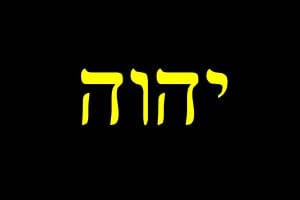
Although their own publications admit that “Jehovah” is an Anglicized misrendering and not the correct pronunciation of the original Hebrew Tetragrammaton YHWH, they insist upon using that pronunciation only, rather than the more correct name Yahweh. JWs never pray to “Yahweh.”

A comparison of Exodus 3:15 with verse 14 shows that the name Yahweh, or Jehovah, has meaning: God is the self-existing Eternal One. He is much more than a name, and knowing him involves much more than using a name. Jesus showed that more than just a name is involved, when he said: “On that day many will say to me, ‘Lord, Lord, did we not prophesy in your name, and cast out demons in your name, and do many mighty works in your name?’ And then will I declare to them, ‘I never knew you; depart from me, you evildoers’ ” (Matt. 7:22–23, rsv [italics added]).

Ask a Jehovah’s Witness to examine with you the prayers of Jesus Christ. Point out that Jesus never started out his prayers by saying, “Jehovah God … ”—as JWs do. Rather, Jesus began his prayers by saying, “Father.… ” (See Matt. 11:25, 26:39–42; Mark 14:36; Luke 10:21, 22:42, 23:34, 46; John 11:41, 12:27–28, 17:1–26). And, when teaching his disciples how to pray, Jesus instructed them to address “Our Father … ” (Matt. 6:9; Luke 11:2). Christians, then, are to have an intimate relationship with God as his children who call out to him, “Abba! Father!” (Rom. 8:15; Gal. 4:6).

And, as to the importance of names, the Holy Spirit inspired Peter to stress “ … the name of Jesus Christ … there is no other name under heaven given among men by which we must be saved” (Acts 4:10–12, rsv). Moreover, Jesus is “the name which is above every name, that at the name of Jesus every knee should bow, in heaven and on earth and under the earth, and every tongue confess that Jesus Christ is Lord, to the glory of God the Father” (Phil. 2:9–11, rsv).

See also the discussions on Psalm 83:18 and Isaiah 43:10 in this chapter.

[1]


[1]Reed, D. A. (1997, c1986). Jehovah’s Witnesses : Answered verse by verse. Includes indexes. (electronic ed.) (27). Grand Rapids: Baker Book House.

Jehovah’s Witnesses Answered Verse by Verse | Exodus 3:14

Exodus 3:14

God said to Moses, “I am WHO I am.” And he said, “Say this to the people of Israel, ‘I am has sent me to you.’ ” (rsv)

Christians universally recognize that Jesus Christ was claiming to be the Deity when he referred to himself as the I am: “The Jews then said to him, ‘You are not yet fifty years old, and have you seen Abraham?’ Jesus said to them, ‘Truly, truly, I say to you, before Abraham was, I am’ ” (John 8:57–58, rsv). Even Jesus’ enemies recognized what he was saying. The next verse tells us that, when they heard this, “they took up stones to throw at him … ” (v. 59). The unbelieving Jews viewed Jesus’ claim to be the I am as blasphemy, a crime for which they wanted to stone him to death.

Jehovah’s Witnesses, however, teach that Jesus Christ is really just Michael the archangel and that Christ never claimed to be God. So, to make Scripture agree with their doctrine, they change the reading of both verses in their Bible. The Watchtower Society’s translation says, “This is what you are to say to the sons of Israel, ‘I shall prove to be has sent me to you’ ” (Exod. 3:14, nwt), and “Most truly I say to you, Before Abraham came into existence, I have been” (John 8:58, nwt). So, in the JW Bible, Jesus’ words appear to have no connection with Exodus 3:14.

But you do not have to be a Greek and Hebrew scholar to prove that the Watchtower Society has twisted these verses. Jehovah’s Witnesses’ own study Bibles prove that Jesus was claiming to be the I am. Their 1984 large-print New World Translation of the Holy Scriptures with References has a footnote on Exodus 3:14, admitting that the Hebrew would be rendered into Greek a Ego eimi”—“I am.” And their 1985 Kingdom Interlinear Translation of the Greek Scriptures reveals that Jesus’ words at John 8:58 are the same: ego eimi (footnotes), “I am” (interlinear text).

[1]


[1]Reed, D. A. (1997, c1986). Jehovah’s Witnesses : Answered verse by verse. Includes indexes. (electronic ed.) (26). Grand Rapids: Baker Book House.

Jehovah’s Witnesses Answered Verse by Verse | Genesis 40:20–22

Genesis 40:20–22

And it came to pass the third day, which was Pharaoh’s birthday, that he made a feast unto all his servants.… But he hanged the chief baker.… (kjv)

The Watchtower organization has prohibited birthday celebrations among its adherents, using Genesis 40:20–22 as a key part of the “scriptural basis” for this ruling. Their thought is that the word birthday appears in the Bible only in reference to Pharaoh of Egypt (as above) and King Herod of Galilee (Matt. 14:6 and Mark 6:21). Both of them were pagans, and both men had someone put to death in connection with the celebration. Since no men of faith are recorded in the Bible as having celebrated their birthdays, but only wicked men—so the Watchtower reasoning goes—Jehovah’s Witnesses of today must not be allowed to celebrate birthdays either.

It is worth noting that, as with other teachings, it is not left up to the individual Witness to read the Bible and come up with this conclusion. Rather, the sect’s secretive governing body has promulgated this official interpretation and uses its disciplinary procedures to enforce the policy on all Witnesses. For example, one elderly JW of our acquaintance in Massachusetts decided that he would send a birthday card to his non-Witness son, but his wife reported it to the local elders. They summoned him before a closed-door judicial-committee meeting and put him on trial for this offense. The seventy-year-old gentleman challenged them to show him one Scripture verse prohibiting sending a birthday card, but the committee went ahead and disfellowshiped him on the basis of the Watchtower Society’s ruling. His Witness relatives now refuse him admittance to their home, and Witnesses who encounter him on the street turn away without even saying hello.

In refuting the Watchtower’s so-called scriptural basis for banning birthday celebrations, you can point out that Pharaoh and King Herod were arbitrary rulers and violent men; such monarchs were accustomed to executing people on all sorts of occasions, not just on their birthdays. Moreover, a person sending a birthday card, or a parent providing a cake with candles at a children’s party, can hardly be accused of following the pattern of those murderous men.

Although the actual word birthday appears only in connection with Pharaoh and Herod in most translations, the Bible does contain reference to such celebrations in godly families:

In Job 1:4, it says of the patriarch Job’s family, “And his sons went and held a banquet at the house of each one on his own day; and they sent and invited their three sisters to eat and drink with them” (nwt, italics added). That “his own day” refers to each one’s birthday becomes clear when we read further: “It was after this that Job opened his mouth and began to call down evil upon his day. Job now answered and said: ‘Let the day perish on which I came to be born … ’ ” (Job 3:1–3, nwt, italics added). The Living Bible’s paraphrase of Job 1:4–5 expresses this thought: “Every year when each of Job’s sons had a birthday, he invited his brothers and sisters to his home for a celebration. On these occasions they would eat and drink with great merriment. When these birthday parties ended.… ”

Even the Watchtower Society’s own translation reveals that the birth of John the Baptist was celebrated, when it records this angelic announcement: “And you will have joy and great gladness, and many will rejoice over his birth” (Luke 1:14, nwt).

If the birth of John the Baptist was an occasion for rejoicing and if faithful Job’s children celebrated their birthdays, the fact that Pharaoh and Herod also celebrated theirs cannot logically be used as a basis for banning birthday parties among Bible believers today.

[1]


[1]Reed, D. A. (1997, c1986). Jehovah’s Witnesses : Answered verse by verse. Includes indexes. (electronic ed.) (24). Grand Rapids: Baker Book House.

Exit mobile version