GENESIS ONE – HISTORICAL AND SCIENTIFIC? [1]

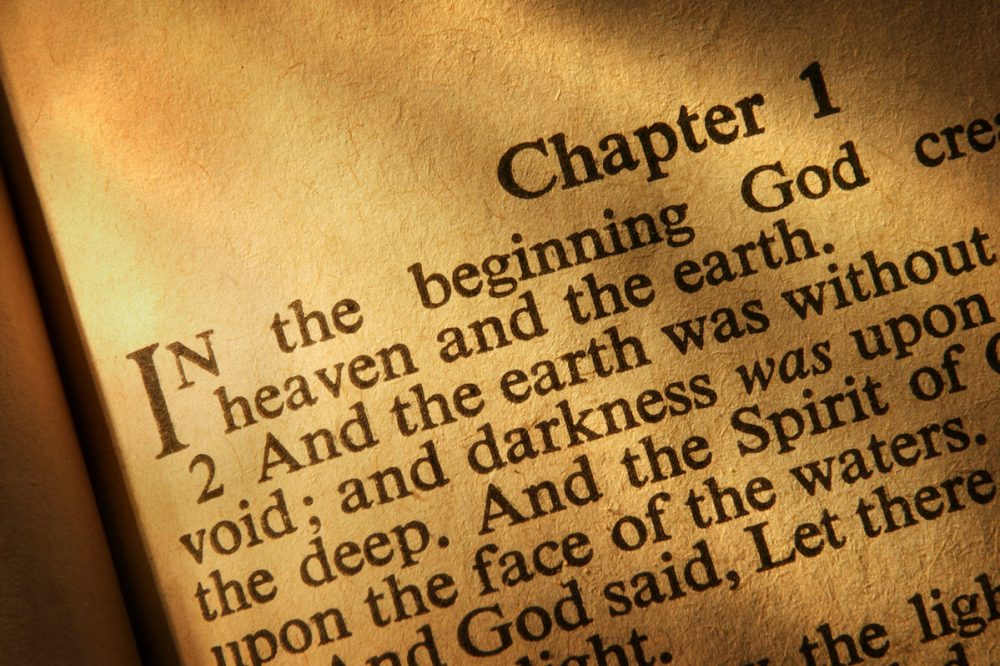
There is no part of the Bible that the more scholarly opponents of its divine origin are more fond of attacking than the very first chapter in the Book of genesis. Time and again have we been assured that the teachings of this chapter are in hopeless conflict with the best-established conclusions of modern science.
Even a prominent theological teacher in a supposedly Christian university has said that “no one who knows what history and science are would think of calling the first chapter of Genesis either historical or scientific.” But in spite of this confident assertion, men who have gained a name as historians beyond anything that this teacher of theology can expect, assure us that it is not only historical but the very foundation of history.
Other men, who have secured for themselves a position in the scientific world to which this teacher can never hope to aspire, assure us that this chapter agrees absolutely with everything that is known scientifically of the origin and early history of the earth. For example, Lord Kelvin, whose name is honored in the scientific world, said in a private letter to a friend of mine, “Physical science has nothing to say against the order of creation as given in Genesis.”
But let us come to the specific difficulties in the first chapter of Genesis.
The objector is fond of telling us that the first chapter of Genesis says that the world was created in six days of twenty-four hours each, when everyone who is familiar with modern science knows that the world as it now stands was millions of years in the making.
This objection sounds good, but the one who makes it displays a hopeless ignorance of the Bible. Anyone who is at all familiar with the Bible and the Bible usage of words knows that the word “day” is not limited to periods of twenty-four hours. It is frequently used for a period of time of an entirely undefined length. For example, in Joel 3:18–20 the millennial period is spoken of as a day.
In Zechariah 2:10–13 the millennial period is again spoken of as a day, and again in Zechariah 13:1–2 and 14:9. Even in Genesis 2 the whole period covered by the six days of the first account is spoken of as a day (Genesis 2:4–5). There is no necessity whatever for interpreting the days of Genesis 1 as solar days of twenty-four hours each. They may be vast periods of undefined length.
But someone may say, “This is twisting the Scriptures to make them fit the conclusions of modern science.”
The one who says so simply displays his ignorance of the history of biblical interpretation. St. Augustine, as far back as the fourth century, centuries before modern science and its conclusions were dreamed of, interpreted the days of Genesis 1 as periods of time, just what the word means in many places elsewhere in the Bible.
Another point urged against the truth and accuracy of the account of creation given in Genesis 1 is that it speaks of “there being light before the sun existed, and it is absurd to think of light before the sun, the source of light.”
The one who says this displays his ignorance of modern science. Anyone who is familiar with the nebular hypothesis, commonly accepted among scientific men today, knows that there was cosmic light ages before the sun became differentiated from the general luminous nebulous mass as a separate body.
But the objector further urges against the scientific accuracy of Genesis 1 that its order of creation is not the order determined by the investigations of modern science.
This is an assertion that cannot be proven. It was the writer’s privilege to study geology under that prince of geologists, who was pronounced by competent authority to be the greatest scientific thinker of the nineteenth century with the exception of Charles Darwin, namely, Professor James Dana of Yale.
Professor Dana once said in my presence that one reason why he believed the Bible to be the Word of God was because of the marvelous accord of the order of creation given in Genesis with that worked out by the best scientific investigation. This agrees with what Lord Kelvin is quoted as saying in the early part of this chapter.
It must be said, however, that men of science are constantly changing their views of what was the exact order of creation. Very recently discoveries have been made that have overthrown theories of the order of creation held by many men of science, which did not seem to some to harmonize with the order as given in the first chapter of Genesis; but these recent discoveries have brought the order into harmony with the order as given in that chapter.
There is no need of going in detail into this order of creation as taught by modern science and Genesis 1. For there is grave reason to doubt if anything in Genesis 1 after verse 1 relates to the original creation of the universe. All the verses after the first seem rather to refer to a refitting of the world that had been created and had afterward been plunged into chaos by the sin of some pre-Adamic race, to be the abode of the present race that inhabits it, the Adamic race.
The reasons for so thinking are, first, that the words translated “without form and void” (“waste and void,” RV) are used everywhere else in the Bible of the state of affairs that God brought upon persons and places as a punishment for sin.
For example, in Isaiah 34:11 we read of the judgment that God shall bring upon Idumea as a punishment for their sins in these words: “He shall stretch over it a line of confusion, and the plummet of emptiness” (RV). The Hebrew words translated “confusion” and “emptiness” are the same that are translated “without form and void” in Genesis 1:2. We read again in Jeremiah 4:23–27: “I beheld the earth, and, lo, it was waste and void.”
In both instances, the words “waste and void” refer to a ruin which God had sent as a punishment for sin, and the assumption is very strong that they have a similar significance in Genesis 1.
The second reason for this interpretation is stronger yet, namely, that the Bible expressly declares that God did not create the earth “in vain” (Isaiah 45:18). But the word translated “in vain” in this passage is precisely the one translated “without form” in Genesis 1:2. In the Revised Version of Genesis 1:2 and Isaiah 45:18 the word is translated in both instances “waste.”
Here then is a plain and specific declaration in the Bible that God did not create the earth “without form” (or rather “waste,” RV), so it is clear that Genesis 1:2 cannot refer to the original creation. The word translated “was” in Genesis 1:2 can with perfect propriety be translated “became.” Then Genesis 1:2 would read: “And the earth became waste and void.” In that case, in Genesis 1:1, we have the actual account of creation.
It is very brief but wonderfully expressive, instructive and suggestive. In Genesis 1:2 we have a brief but suggestive account of how the earth became involved in desolation and emptiness, presumably through the sin of some pre-Adamic race. Then all after verse 2 does not describe the original creation of the earth, but its fitting up anew for the new race God is to bring upon the earth—the Adamic race. Even if we allow the word “was” to stand in Genesis 1:2, and do not substitute the word “became,” it does not materially affect the interpretation.
If this is the true interpretation of the chapter (and the argument for this interpretation seems conclusive), then of course this record cannot by any possibility come into conflict with any discoveries of geology as yet made or to be made, for the geological strata lie back of the period here described. The agreement of the order as set forth in Genesis 1 with the order as discovered by science would be accounted for by the fact that God always works in orderly progress from the lower to the higher.
[1]Torrey, R. (1998, c1996). Difficulties in the Bible : Alleged errors and contradictions. Willow Grove: Woodlawn Electronic Publishing.