A Response To Bart D. Ehrman’s Misquoting Jesus (1)

A Response To Bart D. Ehrman’s Misquoting Jesus (1)

Thomas A. Howe, Ph.D.
Ph.D.

Bart D. Ehrman, Ph.D. is the chairman of the Department of Religious Studies at the University of North Carolina at Chapel Hill. He is touted to be one of North America’s leading textual critics today. His recent book, Misquoting Jesus: The Story Behind Who Changed the Bible and Why, is a popular level text that many reviewers take to be an effort to present the field of New Testament textual criticism to a larger, primarily lay, audience.1

At first the title, Misquoting Jesus, seemed inappropriate. Daniel Wallace said, “The book’s very title is a bit too provocative and misleading though: Almost none of the variants that Ehrman discusses involve sayings by Jesus! The book simply doesn’t deliver what the title promises. But it sells well.”2 However, it soon became clear that the title is very appropriate, if one thinks of it as a how-to manual. Perhaps the title should have been, “Misquoting Jesus: What it is, and how to do it!”

Bart Ehrman claims to be a happy agnostic. He claims once to have been a born again Christian. Only God knows his heart, but we ought to know his assumptions. This attack on the integrity of the New Testament documents is a logical extension of his philosophical assumptions. In his introduction, Ehrman asks, “How does it help us to say that the Bible is the inerrant word of God if in fact we don’t have the words that God inerrantly inspired, but only the words copied by the scribes. . .?”3 Of course this is as absurd a question as, “How does it help me to say that Ehrman said these things since I do not have the words he wrote, but only a copy made by HarperSanFrancisco?” I doubt that Ehrman would tolerate the same standard imposed upon his own writings.

What Ehrman is discussing is the fact that, among the thousands of copies of the New Testament, whether of the whole New Testament, individual books, or portions of books, there are places where the copies differ from each other. For example, in John’s Gospel, chapter 1, verse 4, many manuscripts read, “in Him life was” (ἐν αυτῷ ζωὴ ἦν). Several other manuscripts read, “in Him life is” (ἐν αυτῷ ζωὴ ἐστιν). Instances where manuscripts differ are called variants. There are, in fact, over 200,000 variants among the existing manuscripts. But this does not mean that there are over 200,000 places in the New Testament where there are changes in the text. What this means is that among the 5,750 or so existing manuscripts, there are over 200,000 instances where these manuscripts differ among themselves. So, for any one variant in the New Testament, there can be hundreds of manuscripts that differ among themselves concerning this one passage. So, there are not thousands of places in the New Testament where there are differences. There are hundreds of places in the New Testament in which the manuscripts give evidence of different readings, and many scholars estimate that this constitutes only about 10% of the New Testament text.

Ehrman asserts that the existing mss4 are “error ridden,” and that “we don’t have the originals!”5 and yet time and again throughout his book he argues, based on manuscript evidence, that such and such a reading was not in the original. For example, on page 64 Ehrman argues, “As it turns out, it was not originally in the Gospel of John.”6 On page 157 he argues that in 1 Tim. 3:16, a scribe “had altered theoriginal reading.” On page 159, concerning a variant in Luke 22, Ehrman dogmatically declares, “‘Today I have begotten you’— is indeed the original.”7 A particularly strong assertion about the original text is made by Ehrman concerning one variant: “We have seen one instance already in a variant we considered in chapter 5, Hebrews 2:9, in which Jesus was said, in the original text of the letter, to have died ‘apart from God.’”8 In this instance he even goes so far as confidently to assert, “Most scribes had accepted the variant reading. .. even though that was not the text that the author originally wrote.”9 However, if Ehrman is correct when he says we do not have the originals, then how does he know what is and what is not original? Obviously, it is self-defeating for Ehrman at once to say we do not have the original words and then to claim that the copies we have are incorrect or ridden with errors. How does he know any copies are incorrect if he does not have the original by which to make such a comparison? In fact, the only way he could judge that any copies were copied incorrectly is if he actually possessed the originals or assumed that the original is preserved in the copies, which he could then use as a standard of measure by which to measure specific instances of variation. This is only a sample of the kind of self-contradiction, exaggeration, selective reporting, and misrepresentation found within the book. It seems more accurate to characterize Ehrman’s book as “error ridden” than it is of the New Testament mss.


Theologically Motivated Alterations

In his effort to demonstrate the supposed error-riddenness of the manuscripts of the New Testament, Ehrman embarks on a quest that includes chapters 6 and 7 of his book. He considers various passages and attempts to argue that these are examples of theologically and socially motivated, intentional changes—not merely copyist errors—that call into question the reliability and integrity of the New Testament documents. We will attempt to address representative examples in order to demonstrate that Ehrman’s simply has not proven his case.[1]


1 Bart D. Ehrman, Misquoting Jesus: The Story Behind Who Changed the Bible and Why (San Francisco: HarperSanFrancisco, 2005).

2 Daniel B. Wallace, “A Review of Bart D. Ehrman, Misquoting Jesus: The Story Behind Who Changed the Bible and Why,” Center for the Study of New Testament Manuscripts, [Online], available: [5 June 2006].

3 Ehrman, 7.

4 Throughout this paper, the initials ‘ms’ will be used to mean ‘manuscript’ and ‘mss’ will be used to mean ‘manuscripts’ although the words themselves will often be spelled out.

5 Ehrman, 64.

6 Ibid., 7.

7 Ibid., 159.

8 Ibid., 171, (emphasis added).

9 Ibid., 171-72.

[1]Christian Apologetics Journal Volume 5. 2006 (vnp.5.2.3). Matthews, NC: Southern Evangelical Seminary.

Bart D. Ehrman, Ph.D. is the chairman of the Department of Religious Studies at the University of North Carolina at Chapel Hill. He is touted to be one of North America’s leading textual critics today. His recent book, Misquoting Jesus: The Story Behind Who Changed the Bible and Why, is a popular level text that many reviewers take to be an effort to present the field of New Testament textual criticism to a larger, primarily lay, audience.1

At first the title, Misquoting Jesus, seemed inappropriate. Daniel Wallace said, “The book’s very title is a bit too provocative and misleading though: Almost none of the variants that Ehrman discusses involve sayings by Jesus! The book simply doesn’t deliver what the title promises. But it sells well.”2 However, it soon became clear that the title is very appropriate, if one thinks of it as a how-to manual. Perhaps the title should have been, “Misquoting Jesus: What it is, and how to do it!”

Bart Ehrman claims to be a happy agnostic. He claims once to have been a born again Christian. Only God knows his heart, but we ought to know his assumptions. This attack on the integrity of the New Testament documents is a logical extension of his philosophical assumptions. In his introduction, Ehrman asks, “How does it help us to say that the Bible is the inerrant word of God if in fact we don’t have the words that God inerrantly inspired, but only the words copied by the scribes. . .?”3 Of course this is as absurd a question as, “How does it help me to say that Ehrman said these things since I do not have the words he wrote, but only a copy made by HarperSanFrancisco?” I doubt that Ehrman would tolerate the same standard imposed upon his own writings.

What Ehrman is discussing is the fact that, among the thousands of copies of the New Testament, whether of the whole New Testament, individual books, or portions of books, there are places where the copies differ from each other. For example, in John’s Gospel, chapter 1, verse 4, many manuscripts read, “in Him life was” (ἐν αυτῷ ζωὴ ἦν). Several other manuscripts read, “in Him life is” (ἐν αυτῷ ζωὴ ἐστιν). Instances where manuscripts differ are called variants. There are, in fact, over 200,000 variants among the existing manuscripts. But this does not mean that there are over 200,000 places in the New Testament where there are changes in the text. What this means is that among the 5,750 or so existing manuscripts, there are over 200,000 instances where these manuscripts differ among themselves. So, for any one variant in the New Testament, there can be hundreds of manuscripts that differ among themselves concerning this one passage. So, there are not thousands of places in the New Testament where there are differences. There are hundreds of places in the New Testament in which the manuscripts give evidence of different readings, and many scholars estimate that this constitutes only about 10% of the New Testament text.

Ehrman asserts that the existing mss4 are “error ridden,” and that “we don’t have the originals!”5 and yet time and again throughout his book he argues, based on manuscript evidence, that such and such a reading was not in the original. For example, on page 64 Ehrman argues, “As it turns out, it was not originally in the Gospel of John.”6 On page 157 he argues that in 1 Tim. 3:16, a scribe “had altered theoriginal reading.” On page 159, concerning a variant in Luke 22, Ehrman dogmatically declares, “‘Today I have begotten you’— is indeed the original.”7 A particularly strong assertion about the original text is made by Ehrman concerning one variant: “We have seen one instance already in a variant we considered in chapter 5, Hebrews 2:9, in which Jesus was said, in the original text of the letter, to have died ‘apart from God.’”8 In this instance he even goes so far as confidently to assert, “Most scribes had accepted the variant reading. .. even though that was not the text that the author originally wrote.”9 However, if Ehrman is correct when he says we do not have the originals, then how does he know what is and what is not original? Obviously, it is self-defeating for Ehrman at once to say we do not have the original words and then to claim that the copies we have are incorrect or ridden with errors. How does he know any copies are incorrect if he does not have the original by which to make such a comparison? In fact, the only way he could judge that any copies were copied incorrectly is if he actually possessed the originals or assumed that the original is preserved in the copies, which he could then use as a standard of measure by which to measure specific instances of variation. This is only a sample of the kind of self-contradiction, exaggeration, selective reporting, and misrepresentation found within the book. It seems more accurate to characterize Ehrman’s book as “error ridden” than it is of the New Testament mss.


1 Bart D. Ehrman, Misquoting Jesus: The Story Behind Who Changed the Bible and Why (San Francisco: HarperSanFrancisco, 2005).

2 Daniel B. Wallace, “A Review of Bart D. Ehrman, Misquoting Jesus: The Story Behind Who Changed the Bible and Why,” Center for the Study of New Testament Manuscripts, [Online], available: [5 June 2006].

3 Ehrman, 7.

4 Throughout this paper, the initials ‘ms’ will be used to mean ‘manuscript’ and ‘mss’ will be used to mean ‘manuscripts’ although the words themselves will often be spelled out.

5 Ehrman, 64.

6 Ibid., 7.

7 Ibid., 159.

8 Ibid., 171, (emphasis added).

9 Ibid., 171-72.

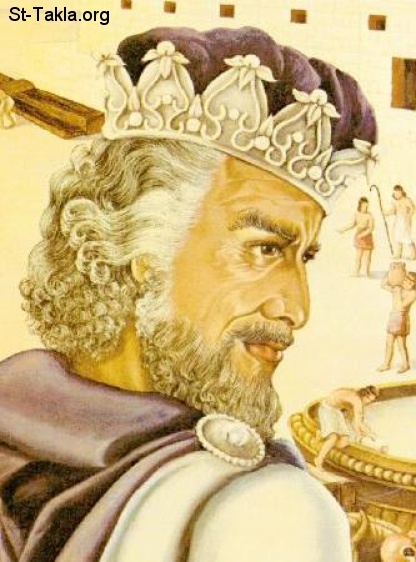
الحوض الخاص بسليمان النحاسي كم سعته ؟

الحوض الخاص بسليمان النحاسي كم سعته ؟ 

الحوض الخاص بسليمان النحاسي كم سعته ؟

الحوض الخاص بسليمان النحاسي كم سعته ؟ 

نص الشبهة :
يذكر سفر الملوك الاول اصحاح 7

23 وَعَمِلَ الْبَحْرَ مَسْبُوكًا. عَشَرَ أَذْرُعٍ مِنْ شَفَتِهِ إِلَى شَفَتِهِ، وَكَانَ مُدَوَّرًا مُسْتَدِيرًا. ارْتِفَاعُهُ خَمْسُ أَذْرُعٍ، وَخَيْطٌ ثَلاَثُونَ ذِرَاعًا يُحِيطُ بِهِ بِدَائِرِهِ.

26 وَغِلَظُهُ شِبْرٌ، وَشَفَتُهُ كَعَمَلِ شَفَةِ كَأْسٍ بِزَهْرِ سُوسَنٍّ. يَسَعُ أَلْفَيْ بَثٍّ

بينما يذكر سفر أخبار الأيام الثاني 4

2 وَعَمِلَ الْبَحْرَ مَسْبُوكًا عَشَرَ أَذْرُعٍ مِنْ شَفَتِهِ إِلَى شَفَتِهِ، وَكَانَ مُدَوَّرًا مُسْتَدِيرًا وَارْتِفَاعُهُ خَمْسُ أَذْرُعٍ، وَخَيْطٌ ثَلاَثُونَ ذِرَاعًا يُحِيطُ بِدَائِرِهِ.

5 وَغِلَظُهُ شِبْرٌ، وَشَفَتُهُ كَعَمَلِ شَفَةِ كَأْسٍ بِزَهْرِ سَوْسَنٍّ. يَأْخُذُ وَيَسَعُ ثَلاَثَةَ آلاَفِ بَثٍّ.

فما السعة الحقيقية لـ الحوض هل هي الفين بث أم ثلاثة اّلاف بث ؟ هل هذا تناقض او خطأ ؟ وإن كان تناقض أو خطأ فكيف تؤمنون بالكتاب المقدس ككتاب إلهي على الرغم من وجود هذه التناقضات والأخطاء ألا يدل ذلك على تحريفه؟ 

الرد على هذا السؤال ببساطة هو :
ببساطة لا يوجد تناقض كلمة بث تعني ايفة وهي تعادل 23 لترا تقريبا … السعة الحقيقية لللحوض هي 3000 بث عندما يكون ممتلئا تماما لكن لا يملأ الحوض باكمله حتي سعته النهائية فيكتفي فقط ب 2000 بث وذلك حتي يكون هناك فراغ غير مملوء ليكون الحوض مناسبا للاغتسال ولا تفيض المياة عن حوافه .. ونستدل علي ذلك مماجاء في في سفر اخبار الايام الثاني لم يذكر فقط لفظ ” يسع ” إنما أضاف ايضا لفظ
” يأخذ ” وهو بالعبرية “شازاك – חזק” وتنطق شازاك châzaq وهو لفظ يعني اقصي سعة او أقصى تحمل .
لذلك فالمعني المقصود ان الحوض او البحر يحتوي 2000 بث لكن سعته القصوي 3000 بث .. وكلا الرقمين صحيح .. ووجود مثل هذا التناقض الظاهري هو دليل علي سلامة الكتاب المقدس من التحريف او التبديل فلو كان تم تحريفه لكان الذي حرفه قام بحذف مثل هذه الامور التي تبدو في الظاهر متناقضة .لكن بقائها كما هي يدل علي اصالة الكتاب المقدس وصدق الوحي الالهي


مائة سؤال وجواب في العقيدة المسيحية الأرثوذكسية – الأنبا بيشوي

مائة سؤال وجواب في العقيدة المسيحية الأرثوذكسية – الأنبا بيشوي

مائة سؤال وجواب في العقيدة المسيحية الأرثوذكسية – الأنبا بيشوي

للتحميل إضغط هنا

مائة سؤال وجواب في العقيدة المسيحية الأرثوذكسية – الأنبا بيشوي

هل كان لسليمان 4000 أم 40000 فارس؟

هل كان لسليمان 4000 أم 40000 فارس؟

هل كان لسليمان 4000 أم 40000 فارس؟

هل كان لسليمان 4000 أم 40000 فارس؟

مثال لأحد التناقضات الظاهرية والرد عليها
ورد في 1ملوك 4: 26
أنه كان لسليمان 40 ألف مذود لخيل مركباته و12 ألف فارس:

وَكَانَ لِسُلَيْمَانَ أَرْبَعُونَ أَلْفَ مِذْوَدٍ لِخَيْلِ مَرْكَبَاتِهِ، وَاثْنَا عَشَرَ أَلْفَ فَارِسٍ.

بينما ورد في 2أخبار 25:9أنه كان لسليمان 4000 مذود خيل ومركبات، و 12 ألف فارس.

وَكَانَ لِسُلَيْمَانَ أَرْبَعَةُ آلاَفِ مِذْوَدِ خَيْل وَمَرْكَبَاتٍ، وَاثْنَا عَشَرَ أَلْفَ فَارِسٍ، فَجَعَلَهَا فِي مُدُنِ الْمَرْكَبَاتِ وَمَعَ الْمَلِكِ فِي أُورُشَلِيمَ.

فما العدد الحقيقي لمذاود الخيل التي يملكها سليمان ؟ هل 4000 أم 40000 ؟ هل هذا تناقض ؟
———————————————-
الرد ببساطة لا يوجد تناقض .. لأن المذود ينقسم لأجزاء ويضم كل مذود عشرة خيول … لذلك ان قلنا 4000 هو صحيح وهو عدد المذاود ، بينما ان قلنا 40000 هو يقصد عدد الخيول الموجودة في المذاود 4000 * 10=40 ألف
,الصورة المرفقة في الموضوع هي صورة أثرية لاكتشاف بقايا مذاود خيول سليمان النبي والصورة توضح ان كل مذود مقسم بأعمدة لصفين ويكفي لاستيعاب عشر خيول .. وبذلك لا يوجد تناقض بين النصين .


هل قتل داود 700ام 7000؟

هل قتل داود 700ام 7000؟

هل قتل داود 700ام 7000؟

يقص سفر صموئيل عن حرب أرام مع بني إسرائيل، فيقول: ” وقتل داود من أرام سبعمائة مركبة ، وأربعين ألف فارس ”
( صموئيل (2) 10/18 )

ثم أعادت التوراة ذكر حرب إسرائيل مع أرام فقال كاتب سفر الأيام: ” وهرب أرام من أمام إسرائيل ، وقتل داود من أرام سبعة آلاف مركبة وأربعين ألف راجل ” (الأيام (1) 19/18 )

وبين السفرين تناقض واضح هل قتل داود 700ام 7000؟

الرد باختصار انه لا يوجد تناقض
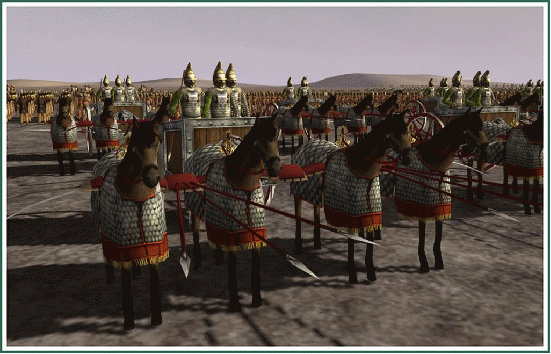
لان تصميم المركبة الحربية كان يجرها البغال وتحمل فوقها عشرة جنود كما في الصورة
وفي النص الاول ذكر 700 مركبة ويقصد بها عدد المركبات الحربية اما النص الاخر يقصد عدد الجنود في كل مركبة 700X10=7000
التناقض الظاهري في مثل هذه الارقام يوضح عدم تحريف التوراة لانها لو حرفت لكان الذي حرفها ازال هذه التناقضات الظاهرية لكن بقائها يشير لعدم وقوع اي تغيير في النص .


ما جئت لأنقض بل لأكمل – ما معنى قول المسيح هذا؟

لا تظنوا أني جئت لأنقض الناموس أو الأنبياء. ما جئت لأنقض بل لأكمل – ما معنى قول المسيح؟

لا تظنوا أني جئت لأنقض الناموس أو الأنبياء. ما جئت لأنقض بل لأكمل – ما معنى قول المسيح؟

ما معنى قول المسيح ” لم آتِ لأنقض الناموس بل لأُكمل”؟
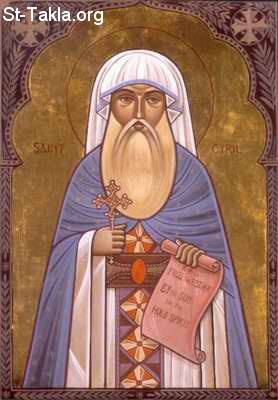
القديس كيرلس عمود الدين – العبادة بالروح والحق – المقالة الأولى
ترجمة د. جورج عوض

بلاديوس: أخبرنى، طالما أُدخل الختان الروحى، وتغيرت الذبائح الناموسية ولن يكون لطريقة الحياة اليهودية أى مكان عندنا، ألا يبدو من المستحيل أن يقول المسيح ” لم آتى لأنقض الناموس بل لأُكمل”؟. لو لم تكن الأمور هكذا، أعتقد أنه سوف لا يعطلنا عن أن نمجد إله الكل بذبائح الثيران والتبخيرات، ونُقدم له يمام وحمام أو أى شئ آخر نعتقد أن الأقدمين قد فعلوه، لكى نفعله نحن أيضًا.

كيرلس: لكنك يا صديقى، قد ابتعدت كثيرًا عما يليق. لأنك تعتقد أن الناموس قد تغير، لدرجة أنه لم يعد لدينا أى منفعة منه، وأنه على أية حال ليست هناك أى منفعة من الأمور التى وضعها. ألا تعتقد أن الناموس قد تحول بالأحرى إلى إشارة نحو الحقيقة، مع أنه بالتأكيد قد كتب الطوباوى بولس ” أفنبطل الناموس بالإيمان حاشا. بل نثبت الناموس”[1].

لأن الناموس هو مُربى ويقود بطريقة حسنة إلى سر المسيح. ونقول إن كل ما شرّعه موسى للأقدمين، ما هو إلا أساسيات بداءة أقوال الله. لكن لو أهملنا المربى، فمَن سيقودنا عندئذ إلى سر المسيح؟. ولو رفضنا أن نتعلم أساسيات بداءة أقوال الله، فكيف سيمكننا الاستمرار؟ أو كيف سنصل إلى الغاية؟ أفليس المسيح هو الذى يُكمل الناموس والأنبياء كما تقول الكتب؟

بلاديوس: نعم

كيرلس: بالفعل. فإنه مكتوب أنه هو مكمل الناموس والأنبياء لأن كل كلمة نبوية وناموسية تخصه وتشير إليه. لقد قال (المسيح) وهو يتوسل إلى اليهود لأجل عصيانهم: ” لا تظنوا إنى أشكوكم إلى الآب. يوجد الذى يشكوكم وهو موسى الذى عليه رجاؤكم . لأنكم لو كنتم تصدقون موسى لكنتم تصدقوننى لأنه قد كتب عنى. فإن كنتم لستم تصدقون كتب ذاك فكيف تصدقون كلامى “[2].

إذن يقول إنه لم يأتِ إطلاقًا لكى يشكو الناموس، بل بالحرى لكى يُكَمله، فلا تُفكر أنه قد تمّ تغيير كامل للشرائع القديمة، بل على الأرجح قد تم تجديدها بطريقة ما. وأستطيع أن أقول هكذا، إنه حدث نقل لنماذج أو أمثلة (من العهد القديم) إلى الحقيقة أى من الظلال إلى الحقيقة .

بلاديوس: بالصواب تتكلم.

كيرلس: سأشرح لك ما كان يجب أن يصير بواسطة المسيح (بالمثال التالى). فأولئك الفنانين الذين يرسمون ويكتبون على الألواح، لا يكتبون مباشرًة بمجرد ما يبدأون الكتابة، بحيث يكون في شكل كامل وغير ناقص ومكتمل تمامًا.

إنهم في البداية يخططون بشكل الرسم ولونه، بحيث يصبح ذا جودة فائقة، ويختارون المواضع التى تحتاج إلى ظلال معينة. وإلى أى الدرجات يجب أن تُبَين وتُوضَحْ حتى يصلوا إلى الشكل المطلوب، والأكثر مناسبة. وهكذا يصلون بنماذجهم إلى الشكل الذى نراه أخيرًا. وهو الأفضل بشكل لا يقارن عما كان في البداية. أليس كذلك؟

بلاديوس: نعم، إنه كذلك.

كيرلس: وهؤلاء أيضًا الذين يمارسون فن صنع التماثيل النحاسية، إن أرادوا صب النحاس السائل في قالب التمثال المعد لذلك، فإنهم يُصورون أولاً شكل التمثال على نموذج شمعى، ويصنع القالب على هذا النموذج، وبعد ذلك يُذيبون النحاس على النار ويسكبونه في القالب. وهكذا يضيفون لتحفتهم ـ بطريقة حسنة ـ كمالاً وجمالاً. وعندما يضيف الصانع الألوان المتنوعة فوق آثار الرسم، وأيضًا عند إحّلال النحاس محل النموذج الشمعى سيُظن في لحظة ما، أنه قد نُقِضَت وأُبطِلت الأشكال الأولى.

لكن الأمر ليس كذلك. لأنه لو كان هذا الاعتقاد حقيقيًا، لقال الرسام والصانع إننا لم نلغِ آثار الكتابة، ولم نسئ إطلاقًا استخدام النماذج، لكن بالحرى قد أكملناها. أى أن ما كان يبدو غير واضح وبدون جمال في الظلال والنماذج الأولى صار الآن أكثر روعةً ووضوحًا.

1) رومية 31:3

2) يوحنا 45:5ـ47

لا تظنوا أني جئت لأنقض الناموس أو الأنبياء. ما جئت لأنقض بل لأكمل – ما معنى قول المسيح؟

لا تظنوا أني جئت لأنقض الناموس أو الأنبياء. ما جئت لأنقض بل لأكمل – ما معنى قول المسيح؟

جيثسماني أم في جبل الزيتون قُبض على يسوع؟

 جيثسماني أم في جبل الزيتون قُبض على يسوع؟ 

جيثسماني أم في جبل الزيتون قُبض على يسوع؟

 جيثسماني أم في جبل الزيتون قُبض على يسوع؟ 

الشبهة

إنجيل مرقس (14: 32–43) أن المسيح ألقي القبض عليه من ضيعة اسمها (جيثسماني)

وإنجيل لوقا (22: 29–47) أن المسيح ألقي القبض عليه من جبل الزيتون!

ولتأكد من اختلاف جغرافية ضيعة (جيثسماني) عن جغرافية جبل الزيتون انظر (مت 26: 30 ومر 14: 26 و 32 ويو 18: 1) وانظر أيضاً خريطة أورشليم في أيام المسيح الموجودة في نهاية العهد الجديد، كي لا يدعي مدع أن ضعية جيثسماني = جبل الزيتون.

فلماذا التناقض فى اسم المكان؟

الرد المختصر :

بستان جيثسماني هو عبارة عن مكان به مجموعة من أشجار الزيتون التي تنموا على المحيط الخارجي لجبل الزيتون وهذا البستان يقع على جبل الزيتون ولكن عند اسفله اي موجود على حافته من الأسفل أثناء الصعود ، كلمة ” جيثسماني ” في اللغة الآرامية تعني ” oil press ” وهذا طبيعي ومنطقي جدا حيث أن جبل الزيتون يخرج لنا هذا النوع من الزيوت وبالتالي فهذا في حد ذاه دليل على قرب المكان كما قلنا أنه على فنس الجبل ولكن من الأسفل ، إذن لا توجد هناك شبهة اللهم الا جهل طارحها بجغرافية فلسطين في هذا الوقت …

الرد التفصيلي :

لقد اجمعت الاناجيل الاربعة على البستان بستان جيثسماني:

1- انجيل متى 26: 36 يقول ثم ذهب يسوع وتلاميذه الى بستان يدعى جثسيمانى
2- مرقس البشير 14: 32 كتب ووصلوا الى بستان اسمه جيثسماني
3- لوقا 22: 39 ثم انطلق وذهب كعادته الى جبل الزيتون وتبعه تلاميذه ايضا
4- انجيل يوحنا 16: 1 كتب بعدما انتهى يسوع من صلاته هذه خرج مع تلاميذه وعبروا الى وادى قدرون وكان هناك بستان

ومن هنا وبعد البحث ورؤية خرائط المكان نجد الاجماع على البستان واسمه
ما عدا لوقا والبحث فى الخرائط وجد ان بستان جيثسماني هو حديقة تدعى بهذا الاسم وهى موجودة فى وادى قدرون فى منطقة جبل الزيتون فالجبل والمنطقة التى تحيط به تسمى منطقة جبل الزيتون

وهذا لا ينفى ولا يثبت اى اختلاف على المكان ويمكن العودة الى مرجع التفسير التطبيقى للكتاب المقدس الذى يحوى المعلومات والخرائط الخاصة بالمنطقة

ونجد ان متى ومرقس قد ذكروا بالحرف بأن الرب يسوع قد خرج الى جيثسماني..!

ولكن لوقا لم يحدد البستان.. ولكنه لم يحدد مكان آخر عند القبض على الرب يسوع

فلوقا لم يفصل الخبر واكتفى بذكر الجبل.. لا سيما بأن البستان هو من ضمن الجبل!!!

وهذا ليس بتناقض.

لأن بستان جيثسماني يقع في سفح جبل الزيتون!

مثال بسيط :

لو قرأت خبراً يقول:

لقد قبض المسلمون على راهب مسيحي وقتلوه في دير سانت كاترين!
ثم قرأت الخبر بصيغة اخرى هكذا:
لقد قبض المسلمون على راهب مسيحي وقتلوه في جبل سيناء ..!
فهل هذا الخبر بمنطقك يعتبر تناقضاً …؟!
مع كون دير سانت كاترين يقع في جبل سيناء..؟


موقع حديقة جيثسماني بالنسبة لجبل الزيتون


صورة ترجع الى الستينات من القرن التاسع عشر و توضح في المقدمة وادي القدرون الذي يفصل جبل الزيتون عن مدينة القدس و من الصورة نجد أن حديقة جيثسماني تقع في سفح جبل الزيتون و من الخلف نرى البلدة القديمة من القدس مع قبة الصخرة


أيضا صورة اخرى من الستينات للقرن التاسع عشر و تظهر منطقة جبل الزيتون و في غضون ذلك العديد من المباني قد بنيت في المنطقة و من بينها ايضا الكنائس.
و على الحافة اليسرى قبر مريم الذي يقع جزئيا تحت الارض حيث يمكن اكتشافه. و إثنين من الطرق المنحدرة تؤدي من وادي قدرون الى قمة جبل الزيتون، حيث يقع برج يسمى الروسي.و على اليمين هناك مجمع الجدران يشير إلى المكان التقليدي لحديقة جيثسماني
(Hebrew: gath = winepress, shemen = oil, translated: oilpress)
و يتواجد هناك اشجار زيتون، بعض منها يرجع الى عدة مئات من السنين


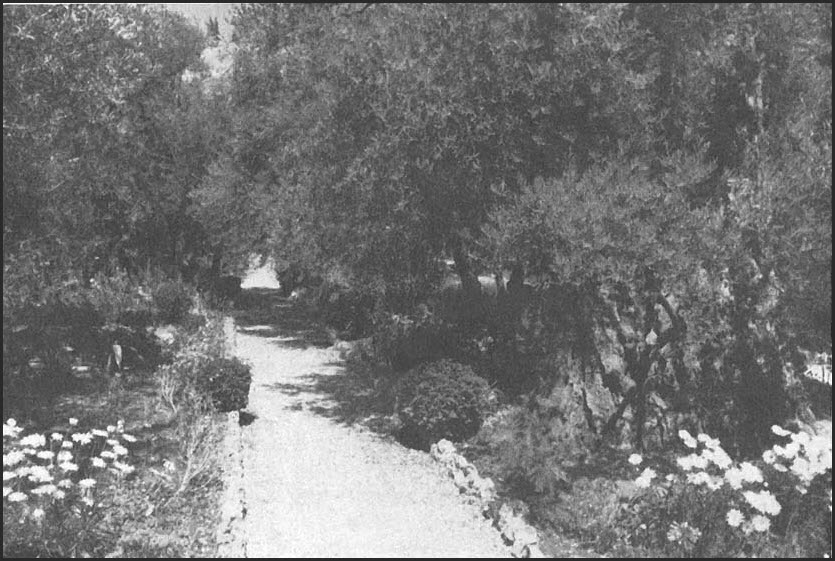
صورة حقيقية لبستان جيثسماني 


منظر باتجاه حديقة جيثسماني يضم معه ” كنيسة كل الأمم ” في الوسط


داخل حديقة جيثسماني، وأشجار الزيتون وأوراق الشجر تقدم مشهد جميل وهادئ


على السفح الغربي لجبل الزيتون، حيث اعطى يسوع العظة على الجبل 


منظر لوادي قدرون الى الشمال الشرقي باتجاه جبل الزيتون


ولنرى الأدلة :


1- Thayer’s Greek Definitions Gethsemane = “an oil press”
1) the name of a place at the foot of the Mount of Olives, beyond the torrent Kidron
Part of Speech: noun proper locative 2- M.G. Easton, Easton’s Bible Dictionary Gethsemane — oil-press, the name of an olive-yard at the foot of the Mount of Olives, to which Jesus was wont to retire (Luke 22:39) with his disciples, and which is specially memorable as being the scene of his agony (Mark 14:32; John 18:1; Luke 22:44). The plot of ground pointed out as Gethsemane is now surrounded by a wall, and is laid out as a modern European flower-garden. It contains eight venerable olive-trees, the age of which cannot, however, be determined. The exact site of Gethsemane is still in question. Dr. Thomson (The Land and the Book) says: “When I first came to Jerusalem, and for many years afterward, this plot of ground was open to all whenever they chose to come and meditate beneath its very old olivetrees. The Latins, however, have within the last few years succeeded in gaining sole possession, and have built a high wall around it … The Greeks have invented another site a little to the north of it … My own impression is that both are wrong. The position is too near the city, and so close to what must have always been the great thoroughfare eastward, that our Lord would scarcely have selected it for retirement on that dangerous and dismal night … I am inclined to place the garden in the secluded vale several hundred yards to the north-east of the present Gethsemane.” 3- Fausset’s Bible Dictionary Gethsemane

(“oil-press”.) Beyond the brook Kedron at the foot of the mount of Olives; where probably oil was made from the olives of the adjoining hill (Luk_22:39; Joh_18:1). Called a “place” or farm (choorion), Mat_26:36, to which probably the “garden” was attached. E. of Jerusalem, from the walls of which it was half a mile distant. It was the favorite resort of our Lord with His disciples (Joh_18:2), the shade of its trees affording shelter from the heat and the privacy so congenial to Him. Bethany lay on the E. of Jerusalem, and toward it our Lord led His disciples before the ascension. In Luk_24:50 the sense is, He led them to the side of the hill where the road strikes downward to Bethany; for Act_1:12 shows He ascended from the mount of Olives.

“Bethany probably includes not only the village but the district and side of the mount adjoining it; even still the adjoining mountain side is called by the same name as the village, el-Azariyeh. This reconciles Luk_24:50 with Act_1:12. Gardens and pleasure grounds abounded then in the suburbs (Josephus, B.J., 6:1, section 1, 5:3, section 32), where now scarcely one is to be seen. In Gethsemane “without the city” Christ “trod the winepress alone” (Isa_63:3; Rev_14:20). In these passages, however, He is the inflicter, not the sufferer, of vengeance; but in righteous retribution the scene of blood shedding of Christ and His people shall be also the scene of God’s avenging His and their blood on the anti-Christian foe (Rev_19:14).
The time of the agony was between 11 and 12 o’clock Thursday night (Friday morning in the Jews’ reckoning), two days before the full moon, about the Vernal equinox. The sites assigned by the Latins and Armenians and Greeks respectively are too near the thoroughfare to the city to be probable. Some hundreds of yards further up the vale and N.E. of Mary’s church may be the true site. The fact that Titus cut down all the trees round about Jerusalem (Josephus, B.J., 6:1, section 1) is against the contemporary ancientness of the eight venerable olive trees now pointed out. The tenth legion, moreover, was posted about the mount of Olives (5:2, section 3, 6:2, section 8); and in the siege a wall was carried along the valley of Kedron to the Siloam fountain (5:10, section 2). The olives of Christ’s time may have reproduced themselves 4- International Standard Bible Encyclopedia Gethsemane
geth-sem´a-nē̇ (Γεθσημανεί, Gethsēmaneı́ (for other spellings and accents see Thayer, under the word); probably from the Aramaic gath shemānı̄m, “oil press”): Mentioned (Mat_26:36; Mar_14:32) as a place (chōnı́on), margin “enclosed piece of ground,” to which Jesus and the disciples retired after the last supper; in Joh_18:1 it is de***ibed as a “garden” (κῆπος, kḗpos), while Lk (Luk_22:40) simply says “place” (τόπος, tópos). From Joh_18:1 it is evident that it was across the Kidron, and from Luk_22:39, that it was on the Mount of Olives. Very possibly (Luk_21:37; Luk_22:39) it was a spot where Jesus habitually lodged when visiting Jerusalem. The owner – whom conjecture suggests as Mary the mother of Mark – must have given Jesus and His disciples special right of entry to the spot.
Tradition, dating from the 4th century, has fixed on a place some 50 yds. East of the bridge across the Kidron as the site. In this walled-in enclosure once of greater extent, now primly laid out with garden beds, by the owners – the Franciscans – are eight old olive trees supposed to date from the time of our Lord. They are certainly old, they appeared venerable to the traveler Maundrell more than two centuries ago, but that they go back to the time claimed is impossible, for Josephus states (BJ, VI, i, 1) that Titus cut down all the trees in the neighborhood of Jerusalem at the time of the siege. Some 100 yards farther North is the “Grotto of the Agony,” a cave or cistern supposed to be the spot “about a stone’s cast” to which our Lord retired (Luk_22:41). The Greeks have a rival garden in the neighborhood, and a little higher up the hill is a large Russian church. The traditional site may be somewhere near the correct one, though one would think too near the public road for retirement, but the contours of the hill slopes must have so much changed their forms in the troubled times of the first and second centuries, and the loose stone walls of such enclosures are of so temporary a character, that it is impossible that the site is exact. Sentiment, repelled by the artificiality of the modern garden, tempts the visitor to look for a more suitable and less artificial spot farther up the valley. There is today a secluded olive grove with a ruined modern olive press amid the trees a half-mile or so farther up the Kidron Valley, which must far more resemble the original Gethsemane than the orthodox site. 5- Smith’s Bible Dictionary by Dr. William Smith (1884) Gethsemane
Gethsem’a-ne. (an oil-press). A small “farm,” Mat_26:36; Mar_14:32, situated across the brook Kedron, Joh_18:1, probably at the foot of Mount Olivet, Luk_22:39, to the northwest and about one-half or three quarters of a mile English from the walls of Jerusalem, and 100 yards east of the bridge over the Kedron.
There was a “garden,” or rather orchard, attached to it, to which the olive, fig and pomegranate doubtless invited resort by their hospitable shade. And we know from the evangelists, Luk_22:39, and Joh_18:2, that our Lord ofttimes resorted thither with his disciples.
But Gethsemane has not come down to us as a scene of mirth; its inexhaustible associations are the offspring of a single event — the agony of the Son of God on the evening preceding his passion.
A garden, with eight venerable olive trees, and a grotto to the north detached from it, and in closer connection with the church of the sepulchre of the Virgin, are pointed out as the Gethsemane.
Against the contemporary antiquity of the olive trees, it has been urged that Titus cut down all the trees about Jerusalem. The probability would seem to be that they were planted by Christian hands to mark the spot unless, like the sacred olive of the Acropolis, they may have reproduced themselves 6- New Living Translation Study Bible Gethsemaneis the name of an olive orchard approximately 250 yards east of Jerusalem’s Golden Gate, overlooking the Kidron Valley on the edge of the Mount of Olives. Jesus and his disciples apparently met there often (Luke 22:39–40; John 18:1–2). 7- G. Jerome Albrecht and Michael J. Albrecht, Matthew, The People’s Bible The name Gethsemane means “olive oil press.” Evidently the garden on the slope of the Mount of Olives was a place where they brought olives to be squeezed so that the oil could be sold. There was a ready market in the temple on the opposite side of the Kidron Valley. 8- John G. Butler, Analytical Bible Expositor The Garden of Gethsemane was the place where Christ made this earnest appeal to God. Gethsemane was a small enclosed spot located at the foot of the Mount of Olives in which an olive press was located along with some olive trees. Gethsemane means “oil press.” 9- Richard B. Gardner, Matthew, Believers church Bible commentary Gethsemane, which means oil press, was presumably a grove of olive trees on the western slope of the Mount of Olives (cf. “garden,” John 18:1). It is there that the final scene of the unit transpires. 10- Warren W. Wiersbe, The Bible Exposition Commentary At the Mount of Olives was a private garden which Jesus often had used as a retreat (John 18:2). Gethsemane means “oil press,” a significant name in the light of our Lord’s agony in that Garden
 

11- Andrew Knowles, The Bible Guide, 1st Augsburg books ed Jesus and his disciples come to Gethsemane. This is an olive grove or garden on the slopes of the Mount of Olives. It is a favourite place with Jesus. At any other Passover they might spend the night there, camping out as pilgrims at the festival. 12- Adam Clarke, Clarke’s Commentary: Matthew, electronic ed., Logos Library System; Clarke’s Commentaries A place called Gethsemane] A garden at the foot of the mount of Olives. The name seems to be formed from גה gath, a press, and סמן shemen, oil; probably the place where the produce of the mount of Olives was prepared for use. The garden of the oilpress, or olive-press. 13- Larry Chouinard, Matthew, The College Press NIV commentary Gethsemane means “oil press” and most likely refers to an olive orchard on the slope of the Mount of Olives.21 The site was probably frequented by Jesus (cf. John 18:2; Luke 22:39–40) since Judas had no difficulty in finding him. In Gethsemane the intensity of Jesus’ resolve to yield to the Father’s will stands in vivid contrast to the disciples’ failure to appreciate the gravity of the situation. 21 J.B. Green, “Gethsemane,” DJG, p. 265. 14- John Lightfoot, A Commentary on the New Testament from the Talmud and Hebraica, Matthew-1 Corinthians: Volume 2, Matthew-Mark Γεθσημανῆ· Gethsemane.] The place of the olivepresses, at the foot of mount Olivet. In Johnf, it is “a garden beyond Cedron.” “Theyg do not make gardens or paradises in Jerusalem, because of the stink, ·משום f Chap. 18:1. g Bava Kama, in the place above. 15- D. A. Carson, “Matthew”, The Expositor’s Bible Commentary, Volume 8: Matthew, Mark, Luke, ed. Frank E. Gaebelein Gethsemane” (v. 36) means “oil press,” and here probably gave the name to the chōrion (“place”), usually a field or an enclosed piece of ground (cf. John 18:4 “went out”) to which it was attached. Jesus and his disciples often frequented this spot (John 18:12) on the western slopes of Mount Olivet, separated from Jerusalem by the Kidron 16- Stuart K. Weber, Matthew, Holman New Testament Commentary; Holman Reference The place called Gethsemane, on the west slope of the Mount of Olives, faced Jerusalem. The name means “olive press,” so it may have been an olive grove with its own press. Jesus left eight disciples in one place, while he and his inner circle of disciples—Peter, James, and John—went a little further for the purpose of prayer 17- Craig S. Keener and InterVarsity Press, The IVP Bible Background Commentary : New Testament They may have arrived at Gethsemane by 10 or 11 p.m. (which was well into the night in that culture). Gethsemane seems to have included an olive grove and probably an olive press (hence its name, which means “oil press”); it was on the western slope or base of the Mount of Olives, facing Jerusalem. Because Passover night had to be spent within the larger boundaries of Jerusalem, which did not include Bethany, they would not return to Bethany that night (21:17). 18- King James Version Study Bible ., electronic ed. Gethsemane means “Olive Press” and was a lush garden east of the city near the slopes of the Mount of Olives. 19- KJV Bible Commentary The scene in the Garden of Gethsemane is one of the most moving in all the New Testament. Gethsemane means “olive press” and was a lush garden east of the city near the slopes of the Mount of Olives. 20- Bruce B. Barton, Matthew, Life application Bible commentary This gardenlike enclosure called Gethsemane, meaning “olive press,” was probably an orchard of olive trees with a press for extracting oil. The garden was in the Kidron Valley just outside the eastern wall of Jerusalem and just below the Mount of Olives. 21- Edward A. Engelbrecht, The Lutheran Study Bible Gethsemane. Walled garden where olives were pressed for oil. On the lower western reaches of the Mount of Olives, across the Kidron Valley to the east of Jerusalem. Jesus and His disciples frequently met here (cf Jn 18:2). 22- Roger L. Hahn, Matthew: A Commentary for Bible Students The inability of the disciples to keep their promise will soon be evident. Jesus went with his disciples to a place called Gethsemane, apparently on the lower western slope of the Mount of Olives (26:36). Gethsemane is Hebrew for olive press and may have been a central oil press used by the many olive farmers who had olive groves on the Mount of Olives. 23- R. T. France, Matthew: An Introduction and Commentary, Tyndale New Testament Commentaries Gethsemane (meaning ‘oil-press’) was a ‘garden’ (John 18:1), perhaps an enclosed olive-orchard, on the slopes of the Mount of Olives 24- John F. Walvoord, Matthew: Thy Kingdom Come Having left the city of Jerusalem, and having crossed the Kidron Valley, Jesus was now at the foot of the Mount of Olives. They had come to a place called Gethsemane, meaning “oil press,” probably located in a grove of olive trees for the purpose of pressing oil from the olives. Visitors today are shown a place called Gethsemane at the foot of the Mount of Olives

المصطلحات الطبية التي استخدمها لوقا الطبيب – موثوقية العهد الجديد

المصطلحات الطبية التي استخدمها لوقا الطبيب – موثوقية العهد الجديد

المصطلحات الطبية التي استخدمها لوقا الطبيب – موثوقية العهد الجديد

المصطلحات الطبية التي استخدمها لوقا الطبيب – موثوقية العهد الجديد


قَدْ تَكَلَّمَنَا فِي عَشِّرْ اجزاء عَنْ الْمَوْثُوقِيَّةِ التَّارِيخِيَّةِ لِلْعَهْدِ الْجَديدِ وَالْيَوْمَ نناقش مَوْثُوقِيَّةً ذكرَ الْعَهِدَ الْجَديدِ وتوصيفة لِلْقِدِّيسِ لُوقَا بِالطَّبِيبِ الْحَبيبِ وَنَرِي رَوْعَةَ الْكِتَابَ الْمُقَدِّسَ وَنُبْحِرُ فِي كَلِمَةٍ اللَّهِ فنتلامس مَعَهَا كَلَمْسِ توما جروح الْمُحِبَّ فَنَصِيحَ باعلي صَوْتَ رِبِّيِّ وَالِهِيِ. اِنْهَ صَوْتَ الايمان بتلامس الْمَسِيحُ شخصياً فَالْعَهِدَ الْجَديدِ هُوَ الْمَسِيحُ ! يَجِبُ ان نُنْظِرُ الي الْكِتَابَ الْمُقَدِّسَ نَظْرَةَ الْفَخْرِ والاعزاز والتقدير مَوْضُوعَ الْيَوْمِ هُوَ المصطلحات الطبية فِي الْعَهِدَ الْجَديدِ لِلْقِدِّيسِ لُوقَا الَّتِي تَثَبُّتَ بِكُلَّ جدارة كَوْنَهُ طَبِيبُ فَهُوَ لَيْسَ طَبِيبُ فَقَطُّ كَمَا قُلَّنَا مسبقاً بَلْ ايضاً مُؤَرِّخَ وَخَادِمِ وَمُعَلِّمُ وَرَسَّامَ شَخْصِ جُمْعِ فية الْكَثِيرَ بِرْكَةَ صَلَوَاتِ الْقِدِّيسِ تَكَوُّنَ مَعَنَا امين.

لُوقَا الطَّبِيبَ وَاِسْتِخْدامَ المصطلحات الطبية فِي الْعَهِدَ الْجَدِيدِ

يُسمِيِ القديٍس بُولسٍ لوقا بِالطَّبِيبِ الْحَبيبِ في رِسَالَةُ كلوسي 4 : 14 يُسْلِمُ عَلَيكُمْ لُوقَا الطَّبِيبَ الحبيب وَعَلَيِي مَا يَبْدُو اِنْهَ اِسْتَعَانَ بلوقا كَمُسَاعِدِ لَهُ لِمَهَارَتِهُ فِي هَذَا الشأن (كَطَبِيبِ) لُوقَا فَعَلًّ خِدْمَةَ مُزْدَوِجَةٍ كَوْنَهُ طَبِيبَ وايضاً كَخَادِمِ للانجيل, قَالُ الْمُؤَرِّخِ الطُّبْي باتمان (Bettmann) يتحدث طَبِيبٍ فِي انْجِيلَ الْقِدِّيسُ لُوقَا.الاكثر ثِقَافَةً مِنْ الانجيليون كَانَ يعَرِّف ان الْقِدِّيسَ لُوقَا الطَّبِيبَ الْحَبيبَ. (1) وَكَانَ يَصِفُ اعمال الْمَسِيحَ بِمَهَارَةِ ادبية وَبَصيرَةً طِبِّيَّةً.الْعَدِيد مِنْ الرِّواياتِ لِمُعْجِزَاتِ الشِّفَاءِ تَخَبَّرَنَا ان الْقِدِّيسَ لُوقَا اُعْطِي صُورَةَ كَامِلَة اُكْثُرْ مِنْ الاناجيل الاخري مَعَ الْفَهْمِ وَبُلْغَةَ لَيْسَ هُنَاكَ سِوَيِي طَبِيبَ يَسْتَخْدِمُهَا.(2)
الْاِهْتِمَامُ بِمُتَابَعَةِ المزاوله الطِّبِّيَّةَ للوقا يَعُودُ الي الْقَرْنَ السَّابِقَ عندما تَمَكُّنَ الْعُلَمَاءِ مثل ادولف هارنك Adolph Harnack ووويليم هوبرت William Kirk Hobart ورامسي W. M. Ramsay مِنْ نَشْرِ كِتَابِ عَنْ هَذَا الْمَوْضُوعِ. وَعَلَيِي الرَّغْمَ مِنْ ان الكتاب قَدْ يَمَيَّلَ الي زِيادَةَ فِي تاكيد الْقَضِيَّةَ وخصوصا هوبارت الى ان الْبَحْثَ مَازَالَ صَالِحٍ.

المصطلحات الطبية الَّتِي اِسْتَخْدَمَهَا لُوقَا

فِي مِثْلُ هذة الْمَقَاطِعَ كَمَا يَلِي نَجِّدْ ادلة عَلَيِي اِسْتِخْدامَ لُوقَا لِـ المصطلحات الطبية نموذَجية فِي وَقْتِهُ, وَيُظْهِرُ تَمْريرَهِِ لِلْمُصْطَلَحَاتِ فِي أنَّ وَالِدِ بوبليوس كَانَ مَطْرُوحًا مَرِيضًا بِالْحَمِّيِ وَتَدَفُّقَ دَمَوِيِّ وَلَمَّا دَخَلَ الْقِدِّيسِ بولس. وُصَلُي لَهُ وَوَضْعَ يَدِيِه عَلَيه فَشَفَاَهُ وعندما حَدَثَ ذالك جَاءَ اليه اخرين مِنْ الَّذِينَ لَدَيهُمْ امراض فِي الْجَزِيرَةِ فَشَفَاَهُمْ. في اعمال الرِّسْلَ 28 : 8 – 9 التعبير اليوناني puretois kai dusenterio sunechomenon اي يُعَانِي مِنْ الْحَمِّيِ وَالزُّحارِ هَذِهِ الْمُصْطَلَحَاتِ كَانَتْ تَسْتَخْدِمُ فِي الادبيات الطِّبِّيَّةَ الْقَدِيمَةَ.(3)بَقِيَتْ كَتَبَةِ الاناجيل اِسْتَخْدَمُوا كَلِمَة َpuretos بِصِيَغَةٍ الْمُفْرَدَ لِلُحَمِيِ لَكُنَّ لُوقَا عَادَتَا مَا يَسْتَخْدِمُهَا فِي صِيَغَةٍ الْجَمْعِ (puretoi, puretois),وَهَذَا كَانَ اِسْتِعْمالُ طِبِّيَّ صَحِيحِ كَمَا وَجَدَتْ فِي كِتَابَاتٍ ابقراط(4).التَّبَايُنِ ايِضاً بَيْنَ الشِّفَاءِcured) iasato)وَبَيْنَ عُولِجُوا etherapeuonto (were treated) في سِفْر الاعمال 28 يَجِبُ ان تَلاحُظَ بولس شِفِيِ cured وَالِدِ بوبليوس والاخرين الَّذِينَ جاءؤا اليه عُولِجُوا were treated.فِي وَصْفِ رَجُلِ يُعَانِي مِنْ مَرَضِ الاستسقاء وظفَ لُوقَا مُصْطَلَحَ طُبْي hudropikos وَالْكَلِمَةُ لَا تُقْعَ فِي اي مَكَانَ اخر فِي الْكِتَابَ الْمُقَدِّسَ. وَلَكُنَّ تَظْهَرْ فِي كَثِيرِ مِنْ الادب الطِّبِّيَّ لَا سِيمَا فِي كِتَابَاتٍ ابيقراط , الْكَلِمَةَ hudropikos مُشْتَقَّةُ مِنْ كَلْمَةَ hudor التي تعني(water) وَتَعَنِّي حرفياً وُجُودَ فَائِضِ مِنْ السَّوَائِلِ فِي انسجة الْجِسْمَ(5)
لُوقَا يَعْرِضْ لَنَا رِوايَةَ شَاهِدِ عِيَانِ مُثِيرَةٍ لِلْاِهْتِمَامِ عَنْ افعي نَشَّبَتْ فِي يَدِ بولس عندما جمعَ بولس كثيرأً مِنْ الْقُضْبَانِ. وَوَضْعُهَا عَلَيِي النَّارِ حَيْثُ خَرَّجَتْ مِنْ الْحَرارَةِ افعي وَنَشَّبَتْ فِي يَدِهُ. فَلَمَّا رَأَّى الْبَرابِرَةُ الْوَحْشُ مُعَلِّقَا بِيدَهُ ، قَالَ بَعْضُهُمْ لَبَعْضُ : لَا بِدْ أَنْ هَذَا الإنسان قَاتِلَ ، لَمْ يَدَعْهُ الْعَدْلَ يَحْيَا وَلَوْ نَجَا مِنْ الْبَحْرِ. فَنَفْضٌ هُوَ الْوَحْشُ إِلَى النَّارِ وَلَمْ يَتَضَرَّرَ بِشَيْءِ رِدِّيِ 6 وَأَمَا هُمْ فَكَانُوا يَنْتَظِرُونَ أَنَّه عَتِيدُ أَنْ يَنْتَفِخَ أَوْ يُسْقِطُ بَغْتَةُ مِيتَا. فَإِذْ اِنْتَظَرُوا كَثِيرَا وَرَأَّوْا أَنَّه لَمْ يُعْرَضْ لَهُ شَيْءَ مُضِرِّ ، تَغَيَّرُوا وَقَالُوا : هُوَ إله


الْكَلِمَةُ kathepsen تَرْجَمَةٌ فِي تَرْجَمَةٌ الْمُلَّكِ جيمس الي fastened فَتُظْهِرُ فِي هذة الرِّوايَةَ الْكَلِمَةُ التِّقْنِيَّةَ الْمُسْتَخْدِمَةَ مِنْ قَبْلَ الاطباء لِوَصَفَ مسئلة السُّمُومَ الَّتِي تَجْتَاحُ الْجِسْمُ وَمِنْ ثَمَّ يَخْتَتِمُ هارناك بُقولَهُ : الثُّعْبَانَ حَقَا عَضَّ ‏ الرَّسُولَ وَالسَّمَّ دَخَلَ فِي يَدِيِهُ وَبِالْتَّالِي الْمِقْطَعِ يَعْتَرِفُ بِصِحَّةِ تَفْسِيرِهُ عِنْدَ رُبُطَةٍ بِاللُّغَةِ الطبيه الْعَادِيَّةَ فِي هَذَا الْوَقْتِ ( 6 )


الْكَلِمَةِ therion وَالَّتِي تُتَرْجِمْ beast هِي مُصْطَلَحُ طُبْي لِلْزَواحِفِ السَّامَّةِ. عَلَيِي الرَّغْمَ ان لُوقَا اِسْتَخْدَمَ ايضاً كَلِمَةَ echidna الَّتِي تُتَرْجِمُ الي viper فِي الاية الثَّالِثَةَ كَمَا اِنْهَ اِسْتَخْدَمَ atopon وَالَّتِي تُتَرْجِمُ الي harm وَهُوَ مُصْطَلَحُ يَدِلُّ عَلَيِي اعراض غَيْرَ عَادِيَّةٍ فِي الادبيات الطِّبِّيَّةَ. جالين اِسْتَخْدِمْ هَذَا الْمُصْطَلَحِ من المصطلحات الطبية فِي هَذَا الصدد مَعَ عضة كَلَبَ مَسْعُورِ ( 7 ) Pimprasthai مُصْطَلَحِ طُبْي من المصطلحات الطبية لَا يُوجِدُ أَلَا فِي كِتَابَاتٍ لُوقَا فِي الْعَهِدَ الْجَديدَ وَيُتَرْجِمُ الي inflammation وَوُجْدَ فِي اعمال ابيقراط وآرتيايوس وجالَيْنِ. ( 8 ) الْكَلِمَةُ الَّتِي تُظْهِرُ فِي اعمال الرِّسْلَ 28 : 6 katapiptein وَتُتَرْجِمُ الي fallen down من جَديدِ هِي خَاصَّةُ بلوقا الطَّبِيبَ وَهُوَ ايضاً مُصْطَلَحَ ابيقراط وآرتيايوس وجالَيْنِ. وَالْكِتَابَاتُ الطُّبْيَةُ الاخري تَسْتَخْدِمُ اللَّفْظُ للدلاله عَلَيِي عندما يُغْشِي عَلَيِي الشَّخْصَ فَجَأَهُ ( 9)


لوقا يوصف المرض والعلاج

وَصِفْ للمرأة الَّتِي بِهَا رَوْحَ ضِعْفِ يَوْضَحُ مراقبتة الدَّقيقَةَ كاحد الَّذِينَ تَمَّ تَدْرِيبِهُمْ فِي مِهْنَةَ الطِّبَّ وَالَّذِي كَانَ عَلَيِي دِرَايَةَ بِـ الْمُصْطَلَحَاتِ الطِّبِّيَّةَ11 وَإِذَا امْرَأَةٌ كَانَ بِهَا رُوحُ ضَعْفٍ ثَمَانِيَ عَشْرَةَ سَنَةً، وَكَانَتْ مُنْحَنِيَةً وَلَمْ تَقْدِرْ أَنْ تَنْتَصِبَ الْبَتَّةَ.
12 فَلَمَّا رَآهَا يَسُوعُ دَعَاهَا وَقَالَ لَهَا: «يَا امْرَأَةُ، إِنَّكِ مَحْلُولَةٌ مِنْ ضَعْفِكِ!».
13 وَوَضَعَ عَلَيْهَا يَدَيْهِ، فَفِي الْحَالِ اسْتَقَامَتْ وَمَجَّدَتِ اللهَ.

الْكَلِمَةِ الْمُسْتَخْدِمَةُ هِي astheneias وَالَّتِي تُتَرْجِمُ الي infirmity وَالَّتِي تَدِلُّ عَلَيِي الضِّعْفَ weakness او الْوَهْنَfrailty
(10)

لُوقَا يُسْجَلْ بِحِرْصِ تَارِيخِ الْمَرِيضَةِ فِي مَلاَحِظَاتٍ مِثْلُ ذكرَهُ ثُمانَي عُشْرَ سَنَةِ اِنْهَ تَشْخِيصَ الحاله كَمَا كَلِمَةَ sugkuptousa مُصْطَلَحَ طُبْي يوناني يُشِيرُ الي اِنْحِناءَ فِي الْعَمُودَ الْفَقْرِيَّ ( 11 )

وهو يَصِفْ الحاله بهذة الْكَلِمَاتِ dunamene anakupsai eis to panteles عَدَمَ الْقدرةِ عَلَيِي الْاِنْتِصابَ بِالتّمامِ وَاِسْتِخْدامَةً لِكَلِمَةٍ apolelusai وَالِي تُتَرْجِمُ الي ” Thou art loosed ,” هُوَ مُصْطَلَحُ طُبْي يوناني قَدِيمَ يُشِيرُ الي اِسْتِرْخَاءَ اوتار الْعَضِلَ الاغشية وازاله الضِّمَادَاتِ ( 12 )
هوبارت يَشْعُرْ ان وَصَفَّ الْمُعْجِزَةِ يُعْكَسْ تَدْرِيبٌ لُوقَا الطِّبِّيَّ وَيَقُولُ ( الْقِدِّيسَ لُوقَا يَذَّكِرُ عَدَّةِ مَرَاحِلِ فِي عَمَلِيَّةً الشِّفَاءَ الاولي اِسْتِرْخَاءَ الْعَضِلَاتِ الْمُتَعَاقِدَيْنِ contracted muscles من الصَّدْرِ(apolelusai) وَلَانَ هَذَا لَمْ يَكِنْ كَافِيَا لِمَنَحَهَا الْوُقُوفَ مُنْتَصِبَةً. وَعَلَيِي حِسَابَ تَشَنُّجِ فِي الْعَضِلَاتِ لِسنواتِ عَدِيدَةً فِي الْجُزْءِ الثَّانِي مِنْ هذة الْعَمَلِيَّةَ يَصِفُ بواسطَةُ كَلِمَةٌ anorthothe ازالة الْاِنْحِناءَ(13)

فِي حادِثَةَ اخري يَكْشِفْ لَنَا لُوقَا علمَهُ بالاسعافات الاوليه الْمَوْجُودَةَ فِي ايامه.

تَنِصُّ قُصَّةُ السَّامِريِّ الصَّالِحِ عَلَيِي: 33 وَلكِنَّ سَامِرِيًّا مُسَافِرًا جَاءَ إِلَيْهِ، وَلَمَّا رَآهُ تَحَنَّنَ،
34 فَتَقَدَّمَ وَضَمَدَ جِرَاحَاتِهِ، وَصَبَّ عَلَيْهَا زَيْتًا وَخَمْرًا، وَأَرْكَبَهُ عَلَى دَابَّتِهِ، وَأَتَى بِهِ إِلَى فُنْدُق وَاعْتَنَى بِهِ. لوقا 10 : 33-34 باتمان يُخْبِرُنَا ان السَّامِريَّ الصَّالِحَ عُولِجَ بِخَبَرَةٍ الْجَرَّاحَ واضاف قَائِلَا الْقِدِّيسَ لُوقَا اُضْفِي عِدَدَ مِنْ لمساتة الطِّبِّيَّةَ يُثْبِتُ بوضوح اِنْهَ طَبِيبَ عَلَيِي دِرَايَةَ جِيدَةٍ بِعِلاَجِ الجروح كَمَا تَمارُسَ فِي وَقَتَّةِ. وَاِسْتِخْدامُ الْخُمُرِ كَتَلْطيفِ للجروح وَالَّتِي اوصي بِهَا ابيقراط وَلَاحَقَا جاليون. وَالْاِعْتِرافُ الْمُبَكِّرُ ان الْكُحُولَ يَسْتَخْدِمُ كَمُطَهِّرِ. وَتَجْرِبَةُ تُدَرِّسُ ايضاً لَدَيِي الْقدماءَ ان غَسْلَ الجروح بِالزَّيْتِ سَيَجْعَلُهَا تَلْتَئِمُ بِشَكْلِ اُفْضُلْ فان طلائها بِالزَّيْتِ يَجْعَلُنَا نَحْمِي الْجُرْحَ مِمَّا نعرفة الان بِالْمُلَوَّثَاتِ الْخَارِجِيَّةِ.(14)

في قصة حماة بطرس 38 وَلَمَّا قَامَ مِنَ الْمَجْمَعِ دَخَلَ بَيْتَ سِمْعَانَ. وَكَانَتْ حَمَاةُ سِمْعَانَ قَدْ أَخَذَتْهَا حُمَّى شَدِيدَةٌ. فَسَأَلُوهُ مِنْ أَجْلِهَا. في رواية مرقص يذكر 30 وكانت حماة سمعان مضطجعة محمومة، فللوقت أخبروه عنها متى يقول 14 وَلَمَّا جَاءَ يَسُوعُ إِلَى بَيْتِ بُطْرُسَ، رَأَى حَمَاتَهُ مَطْرُوحَةً وَمَحْمُومَةً، لوقا استخدم مصطلحين طبين في روايتة لا يظهروا في رواية كل من متى ومرقص في الاية التي تترجم قد اخذتها حمي شديدة باليونانية sunechomene pureto megaloهذة الجملة هي عبارة غالباً استخدمها ابيقراط وجالين وتوجد في اماكن اخري من الكتب الطبية القديمة لكن نجدها مستخدمة في العهد الجديد من قبيل لوقا فقط. (15) جالين يشير الي ان اطباء الحمي القدماء صنفوا الحمي بمصطلحات وهي megas وmicros اي حمي مرتفعة وحمي طفيفة. (16)

ومرقص ومتى لم يكونو يدركون المصطلحات الطبية الدقيقة وذكرو القصة بشكل مشترك من حيث وضع اللغة. في حين ان لوقا كينونته كطبيب تجعلة يستخدم بالدقة التسميات الطبية الصحيحة. وصف لوقا للابرص ويقدمه ايضاً بشكل مثير للاهتمام على نقيض متى ومرقس 12 وَكَانَ فِي إِحْدَى الْمُدُنِ، فَإِذَا رَجُلٌ مَمْلُوءٌ بَرَصًا. فَلَمَّا رَأَى يَسُوعَ خَرَّ عَلَى وَجْهِهِ وَطَلَبَ إِلَيْهِ قَائِلاً: «يَا سَيِّدُ، إِنْ أَرَدْتَ تَقْدِرْ أَنْ تُطَهِّرَنِي». لوقا 5 : 12 مرقص قال ببساطة 40 فأتى إليه أبرص مرقص 1 : 40 ومتى يسجل ان رجل ابرص قد جاء متى 8 : 2 لم يكن سوي وصف لوقا طبياً ومن المرجح ان نلاحظ انه قدم الحاله كمرض. وصف الرجل المشلول حيث كتب لوقا إِنْسَانًا مَفْلُوجًا في لوقا 5 :18 a man who was paralyzed اي اصيب بالشللعوضاً عن ذكر مرقص paralytic مشلول رامسي يعلق قائلاً انه من الصعب على الاطلاق ان تكون مرتكز عن قناعة للغة الشعبية للغير مدربين طبياً المستخدمة للامور الطبية بواسطة مرقص. (17)

في وصف مجنون كورة الجرجسين 27 وَلَمَّا خَرَجَ إِلَى الأَرْضِ اسْتَقْبَلَهُ رَجُلٌ مِنَ الْمَدِينَةِ كَانَ فِيهِ شَيَاطِينُ مُنْذُ زَمَانٍ طَوِيل، وَكَانَ لاَ يَلْبَسُ ثَوْبًا، وَلاَ يُقِيمُ فِي بَيْتٍ، بَلْ فِي الْقُبُورِ. لوقا 8 : 27 متى ومرقص لم يذكرو تفاصيل لاحظها لوقا اقر لوقا ان احد اعراض الجنون في هذا الرجل هو في الحقيقة انه لا يلبس ملابس بسبب ميله الي تمزيق ثيابه. (19)

في عرض تاريخي لحاله المرأة نازفة الدم لوقا يقول 43 وَامْرَأَةٌ بِنَزْفِ دَمٍ مُنْذُ اثْنَتَيْ عَشْرَةَ سَنَةً، وَقَدْ أَنْفَقَتْ كُلَّ مَعِيشَتِهَا لِلأَطِبَّاءِ، وَلَمْ تَقْدِرْ أَنْ تُشْفَى مِنْ أَحَدٍ،
44 جَاءَتْ مِنْ وَرَائِهِ وَلَمَسَتْ هُدْبَ ثَوْبِهِ. فَفِي الْحَالِ وَقَفَ نَزْفُ دَمِهَا. بعد ملاحظة بعنايه مدة مرضها (اثنتي عشرة سنة ) لوقا استخدم كلمة este التي تعني توقف النزف stanched وهذا المصطلح دقيق طبياً لوقف عملية افرازات الجسم (20) المقطع بالكامل يعطينا مصطلحات طبيةعلي نقيض وصف متى ومرقص. باتمان يشير الي شفاء الرجل صاحب اليد اليمني اليابسة,, ويختتم بقولة قائلاً ان بقية الانجلين الاخرين اشارو الي حالات العرج. لوقا اضاف وصف طبي هام حيث وصف الرجل بانه اعرج خلقياً اي من رحم امه. الاجمالية في نصة هو حاول ان يعبر عن المعجزات بفكرة طبية مختصرة وكان حريصاً في صنع الوصف بشكل بتميز جيد.كما فرق بين الضمور atrophy واليد اليابسة the withered hand والسكتة apoplexy والسكتة الدماغية المفاجأة the sudden stroke (21) لوقا لاحظ انها كانت اليد اليمني في لوقا 6: 6 والطبيب يلاحظ التفاصيل. لكن متى ولا مرقص لاحظو هذا (22)

بات مان يبقي على انه كان بالروحاكثر من معرفتة المصطلحات لوقا تناول مصطلحات طبية حديثة, والتعاطف مع المريض يملئ صفحات انجيلة وكان لدية فهم عميق للمراة الضعفويعرف العلاقة بين المرض والالم النفسي. (23)

لَيْسَ هُنَاكَ شَكٍّ فِي ان لُوقَا هُوَ الطَّبِيبُ الْحَبيبُ. لَكِنْه كَانَ اُكْثُرْ مِنْ ذالك بِكَثِيرِ. حَيْثُ قَامَ بُدورَ الْمُبَشِّرِ وَالْوَاعِظِ وَالْمُعَلِّمِ وَالْمُرْشِدِ وَكَانَ طَبِيبَ لِلْنَفْسِ وَالْجَسَدِ كِلَيْهِمَا مِنْ خِلَالَ خِدْمَةَ النَّاسِ لَيْسَ فَقَطُّ مُبَارَكَتَهُمْ بَلْ باعطائهم حَيَاةَ اُكْثُرْ وَفْرَةَ والان يَجِبُ ان نُنْظِرُ الي الامام بِثِقَةِ الي الْحَيَاةِ الابدية فِي الْحَيَاةِ الاخري

Reuben A. Hubbard

ترجمة

اغريغوريوس aghroghorios
ـــــــــ

المراجع

1 Ellen G. White, Evangelism (Washington, D.C., Review
and Herald, 1946), p. 544.2 Otto L. Bettmann, A Pictorial History of Medicine (Springfield, Thomas, 1956), p. 49.

3 Adolf Harnack, Luke the Physician (New York: G. P. Putnam’s Sons, 1907), pp. 176, 177.

4 William Kirk Hobart, The Medical Language of St. Luke (Grand Rapids: Baker Book House, 1956), pp. 52, 53.

5 The SDA Bible Commentary , on Luke 14:2.

6 Harnack, op. cit. , pp. 177, 178.

7 Hobart, op. cit. , p. 289.

8 G. Abbott-Smith, A Manual Greek Lexicon of the New Testament (New York: Charles Scribner’s Sons, 1936), p. 360.

9 Hobart, op. cit, p. 50, 51.

10 Abbott-Smith, op. cit. , p. 64.

11 The SDA Bible Commentary , on Luke 13:11.

12 Hobart, op. cit. , p. 21.

13 Ibid., p. 22.

14 Bettmann, op. cit. , p. 49.

15 Hobart, op. cit. , p. 3, 4.

16 The SDA Bible Commentary , on Luke 4:38.

17 Ibid., p. 740.

18 W. M. Ramsay, Luke the Physician (Grand Rapids: Baker Book House, 1956), p. 57.

19 Hobart, op. cit. , p. 14.

20 Ibid. , PP. 14 of 15

21 Bettmann, op. cit. , p. 49.

22 Matt. 12:10; Mark 3:1.

23 Ibid.

المصطلحات الطبية التي استخدمها لوقا الطبيب – موثوقية العهد الجديد

النقد التاريخى للمسيحية – هل يسوع إبن بانديرا؟ الجزء الثاني

النقد التاريخى للمسيحية – هل يسوع إبن بانديرا؟


ابن بانديرا


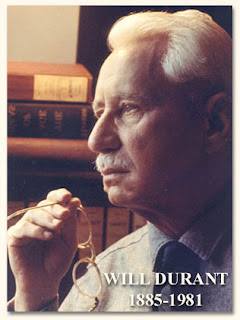
كنتُ قد كتبتُ مقال سابق عن موضوع (ابن بانديرا) ، وقد استشهدت بالموسوعة اليهودية أن القصة التى تقول أن المسيح هو ابن علاقة غير شرعية بين العذراء مريم وجندى رومانى يدعى بانديرا ما هى إلا خرافة ، اليوم مع شهادة جديدة ألا وهو شهادة المؤرخ الأمريكى ويل ديورانت Will Durant فى موسوعته الرائعة “قصة الحضارة” وكلاهما غنى عن التعريف سواء الكاتب أو الكتاب ، يقول الدكتور حسن عثمان عن الموسوعة [ وفى سبيل ذلك طاف المؤلف (يقصد ويل ديورانت) فى صحبة زوجته ( يقصد أريل ديورانت Ariel Durant) كثيراً من أنحاء الأرض مرات عديدة متتالية ، ومضيا معاً باحثين منقبين مشاهدين متأملين مستلهمين معارفهما وخبراتهما من شتى الأصول والمصادر والأفاق ، فجاء الكتاب (يقصد قصة الحضارة) وافياً شاملاً ، مع تميزه بالبساطة والسهولة والوضوح والسلاسة والعمق والذوق الرفيع ، فضلاً عن عنايته بذكر فيض من المصادر والمراجع لمن يرغب فى الاطلاع والبحث مزيداً ] [1] وقد حصل بسبب هذه الموسوعة التى أستغرق تأليفها خمسين عاماً على ميدالية الحرية Medal of Freedom من الرئيس الأمريكى فورد Gerald Ford فى 10 يناير 1977 ، لذلك فهو مؤرخ له مكانته المرموقة بلا شك ، ولذلك فإن أحكامه التاريخية هامة بالنسبة لنا فدعونا نرى ما الذى قاله عن قصة الجندى الرومانى بانديرا

[ أما القصص التى أذاعها سلسس Celsus وغيره فيما بعد عن مريم وجندى رومانى ، فالنقاد مجمعون على أنها افتراء سخيف ] [2]

العهد الجديد

ويل ديورانت مؤرخ لذلك فأحكامه التاريخية لها وزن أما أحكامه اللاهوتية فيجب أن تراجع فهو فى الأول والأخر مؤرخ وليس لاهوتى ، فأنا أقبل حكمه كمؤرخ على انجيل مرقس بأنه [ تاريخ صحيح ] [3] بل وحتى عندما يقول عن الاناجيل [ أن فيها نقطاً تاريخية مشكوكاً فى صحتها ] [4] فهو يقصد أن هناك حوادث تاريخية مذكورة فى العهد الجديد ولا يوجد دليل تاريخى يؤيدها أو ينقضها ولذلك طبقاً لمنهجيات النقد التاريخى فهذه الحوادث مشكوك فيها (أى لا يمكن للمؤرخ أن يستشهد بها كحدث تاريخى لأنه ليس هناك ما يؤيدها أو ينقضها). وتلك المشاكل التاريخية ربما كانت موجودة عام 1936 العام الذى بدأ ديورانت نشر موسوعته ولكن ليست موجودة الآن بعد العديد من الاكتشافات الأثرية التى جاءت لتؤكد دقة العهد الجديد التاريخية ، يقول الدكتور دونالد ويسمان Donald J. Wisemanأستاذ الأشوريات بجامعة لندن [ الكتاب المقدس لا يتغير ولكن علم الآثار هو الذى يتقدم بالتنقيبات الجديدة والوثائق والتفاسير ] [5] وعن مدى توافق علم الآثار مع الكتاب المقدس راجع كتاب جون أرثر (دكتوراة فى الدراسات الشرقية من جامعة كامبردج ومدير معهد علم الأثار باستراليا Australian Institute of Archaeology فى ملبورن)

John A. Thompson: The Bible and archaeology. Includes indexes. (3rd ed., fully rev. 1982)

الصلب والقيامة

يقول عن القيامة [ وبعد يومين من هذا الحادث (يقصد الصلب) زارت مريم المجدلية ـ وكان حبها ليسوع تمتزج به تلك النشوة العصبية التى تمتاز بها عواطفها كلها ـ قبر المسيح مع مريم أم يعقوب وسالومة فوجدنه فارغاً . فامتلأت قلوبهن خوفاً وسروراً معاً ، وجرين لينقلن ذلك النبأ إلى تلاميذه ، والتقين فى الطريق برجل حسبنه يسوع ، فانحنين احتراماً له ، وأمسكن بقدميه . وفى وسعنا أن نتصور الأمل الذى انبعث فى النفوس الساذجة من هذا النبأ وما لقيه من ترحيب ، لقد قهر يسوع الموت ، وأثبت أنه المسيح المنتظر ابن الله ، وملأ ذلك النبأ قلوب “أهل الجليل” بنشوة جعلتهم على استعداد لأن يصدقوا أية معجزة وأى وحى . ويروى الرواة أن المسيح ظهر فى اليوم نفسه إلى تلميذين من تلاميذه فى الطريق الموصل إلى عمواس ، وتحدث إليهم ، وأكل معهم ، ولكن “أمسكت أعينهما عن معرفته” ثم “أخذ خبزاً وبارك وكسر … فانفتحت أعينهما وعرفاه ثم أختفى عنهما” ورجع التلاميذ إلى الجليل فلما “رأوه” بعد قليل “سجدوا له ، ولكن بعضهم شكوا” وبينما كانوا يصطادون السمك رأوا المسيح ينضم إليهم ، فألقوا شباكهم ولم يستطعوا أن يجذبوها من كثرة السمك ] [6]
هو هنا كمؤرخ لم يستطع أن ينكر أن التلاميذ هم الذين أعلنوا قيامة المسيح ، وأن إعلانهم كان يشمل (القبر الفارغ ـ ظهور المسيح لهم ـ صنع المسيح معجزات معهم بعد قيامته) ولذلك يختتم كلامه قائلاً [ ولكن يبدو أن معظم تلاميذه كانوا يعتقدون مخلصين أنه قد وجد معهم بجسمه بعد صلبه ] [7] ما يقولوه عنه ويل ديورانت كمؤرخ هو نفسه ما يقوله العلماء المسيحيين فالعالم وليام لين كريج William Lane Craig يضع لنا أربع حقائق تاريخية عن القيامة هم :
1ـ الحقيقة الأولى: دُفِن يسوع بعد صلبه بواسطة يوسف الرامى فى قبر.
2ـ الحقيقة الثانية: فى صباح الأحد بعد الصلب، وجدت مجموعة من النساء التابعين ليسوع القبر فارغاً.
3ـ الحقيقة الثالثة: فى مواقف متعددة، و تحت ظروف مختلفة، كان هناك أفراد و مجموعات رأوا يسوع حياً بعد موته.
4ـ الحقيقة الرابعة: التلاميذ تحولوا بشكل مفاجىء و مخلص إلى الإعتقاد بأن يسوع قد قام من الموت، بدلاً من أن يكون لديهم إستعداد تام لقبول العكس. ( بخصوص تلك الحقيقة راجع مقالنا ما الذى غيرهم؟ )
تلك الحقائق التاريخية الأربعة لا خلاف بين المؤرخين عليهم ، فحتى بارت إيرمان أعترف بتلك الحقائق حيث قال

]There are certain historical “facts” that one can discuss about what happened after Jesus’s death (his burial; the discovery of his empty tomb by a group of women). [[8]


والسؤال الذى يطرح نفسه ما هو التفسير المنطقى لتلك الحقائق ، يرى العالم كريج أنه لا يوجد تفسير منطقى سوى قيامة المسيح ، لم يظهر إنسان واحد يقول أن المسيح لم يصلب حتى القرن السادس ولم يظهر مؤرخ قال أن المسيحيين أتت لحظة كانوا فيها غير مؤمنين بصلب المسيح وقيامته ، لقراءة معالجة تفصيلية لموضوع القيامة راجع كتاب
لى ستروبل: القضية المسيح ، ترجمة: سعد مقارى ، ص 255 : 366
فرانك موريسون: من دحرج الحجر ، ترجمة: حبيب سعيد
William Lane Craig: Did Jesus Rise fom the Dead, In: Jesus Under Fire.

انتصار المسيحية الأرثوذكسية

كما اسشهدنا سابقاً ببارت إيرمان أن الأرثوذكسية انتصرت على الهرطقات بحججها القوية التى أقنعت الجميع (راجع شهادات إيرمان (1)) يقول ديورانت أن المسيحية انتصرت على الفلسفة الوثنية بحججها القوية المقنعة حيث يقول [ وهنا كسبت الكنيسة طائفة من المؤيدين كانوا أحصف عقول الامبراطورية ، منهم أغناثيوس أسقف أنطاكية الذى أنشأ أسرة قوية من “الآباء” جاءوا بعد الرسل ، ووهبوا المسيحية فلسفة غلبوا أعداءها بحججها القوية ][9] فالمسيحية انتشرت بقوة الفكر لا بقوة السلاح .

تاريخية المسيح

يؤكد ويل ديورانت بصفته مؤرخ أن المسيح شخصية تاريخية حيث يقول [ إن من يطلع على هذه المناظر لا يشك فى أن وراءها شخصية تاريخية حقة . ولو أن عدداً قليلاً من الرجال السذج قد اخترعوا فى مدى جيل واحد هذه الشخصية الجذابة ، وهذه المبادئ الأخلاقية السامية ، وهذه النظرية الأخوية الملهمة ، لكان عملهم هذا معجزة أبعد عن المعقول من أية معجزة تسجلها الاناجيل . وإن الخطوط الرئيسية فى سيرة المسيح ، وأخلاقه ، وتعاليمه لتبقى بعد قرنين من النقد الشديدواضحة معقولة ، لتكون أروع ظاهرة فى تاريخ الغربيين وأعظمها فتنة للألباب ][10]

[1] د. حسن عثمان: منهج البحث التاريخى ، دارالمعارف ، الطبعة الثامنة ، ص 15

[2] ويل ديورانت: قصة الحضارة ، المجلد السادس 11/12 ـ قيصر والمسيح ، ترجمة: محمد بدران ، ص 214

[3] المرجع السابق ، ص 208

[4] المرجع السابق ، ص 210

[5] http://www.logos.com/product/3852/th…nd-archaeology

[6] المرجع السابق ، ص 231 : 240

[7] المرجع السابق ، ص 240

[8] Bart D. Ehrman: From Jesus to Constantine: A History of Early Christianity, lecture:4(Oral and Written Traditions about Jesus)

[9] ويل ديورانت: مرجع سابق ، ص 305

[10] المرجع السابق ، ص 211

نقلا عن مدونة ابن الكلمة

هل يسوع إبن بانديرا؟ الجزء الأول

هل يسوع إبن بانديرا؟ الجزء الأول

كثيراً ما يذكر اليهود المسيح باسم ( ابن بانديرا ) فمن هو هذا البانديرا؟

بعض اليهود يقولون انه جندي روماني كان عشيقاً للعذراء مريم ، وأنتجت تلك العلاقة الغير شرعية الطفل يسوع… ولكن ما هى الحقيقة ؟؟؟


هناك تفسيران للقب (ابن بانديرا) الذى أطلق على المسيح هما:


التفسير الأول:


يقول العلامة بروس ميتزجر Bruce Metzger:

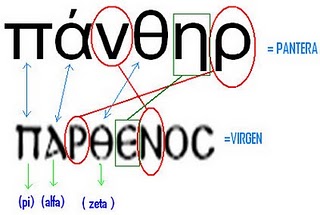
[The defamatory account of his birth seems to reflect a knowledge of the Christian tradition that Jesus was the son of the Virgin Mary, the Greek word for virgin, parthenos, being distorted into the name Pandera]

Bruce Metzger: The New Testament, it’s Background, Growth & Content, p. 92

إذا ابن بانديرا هى تحريف لفظ ابن بارثينوس (أى ابن العذراء) وللتوضيح أضع لكم، هذه الصورة:


التفسير الثانى:

وهناك رأى أخر يقول أن بانديرا هو لقب يعقوب والد يوسف النجار ، وهذا هو رأى يوحنا الدمشقى ، يقول McDowell & Wilson:

[ Jesus being called by his grandfather’s name would also have agreed with a statement in the Talmud permitting this practice. Whereas Christian tradition identified Jesus by his home town, Jewish tradition, having a greater concern for genealogical identification, seems to have preferred this method of identifying Jesus. Goldstein presents more evidence to argue the case convincingly. ]

+ McDowell & Wilson: He Walked Among Us: Evidence For The Historical Jesus, pp. 66-67, Quoted by Sam Shamoun


حقيقة قصة بانديرا الجندى الروماني:

الموسوعة اليهودية تقول أن قصة بانديرا الجندى الروماني الذى زنا مع العذراء مريم ما هو إلا أسطورة وليس حقيقة حيث تقول بالنص:

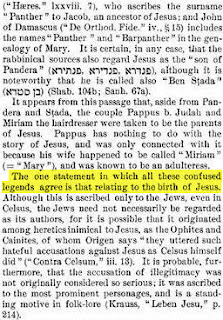
[The one statement in which all these confused legends agree is that relating to the birth of Jesus. Although this is ascribed only to the Jews, even in Celsus, the Jews need not necessarily be regarded as its authors, for it is possible that it originated among heretics inimical to Jesus, as the Ophites and Cainites, of whom Origen says “they uttered such hateful accusations against Jesus as Celsus himself did” (“Contra Celsum,” iii. 13). It is probable, furthermore, that the accusation of illegitimacy was not originally considered so serious; it was ascribed to the most prominent personages, and is a standing motive in folk-lore (Krauss, “Leben Jesu,” p. 214). ]


وصورة النص:


 إذاً قصة الجندى الروماني بانديرا هى أسطورة حاكها اليهود على المسيح.

Exit mobile version