من هم شهود يهوه؟ وما هي نبواتهم الكاذبة؟ – ترجمة: يوسف صفوت
من هم شهود يهوه؟ وما هي نبواتهم الكاذبة؟ – ترجمة: يوسف صفوت
اولاً، شهود يهوه ليسوا كالكاثوليك أو الإنجيليين أو الأرثوذكس الشرقيين لأنهم ليسوا مسيحيين، بل هم لهم مظهر المسيحين. فيبدون كالمسيحيين ولكنهم يرفضون العقائد الأساسية للإيمان المسيحي.
إحدى المجلات التي ينشرونها تذكر أنهم ليسوا بروتستانت، وهم ليسوا كذلك لأن كما يقولون “الإيمان البروتستانتي يرفض سمات معينة للإيمان الكاثوليكي، قادة الإصلاح البروتستانتي احتفظوا بعقائد كاثوليكية معينة مثل الإيمان بالثالوث، نار الجحيم، وخلود الروح البشرية” على الرغم من ذلك، شهود يهوه يؤمنون أن تلك التعاليم لا تخالف الإنجيل فقط، بل تروج لصورة مشوهه عن الله.
لذلك بدلاً من تلك التعاليم، شهود يهوه _الذين هم ليسوا مسيحيين_ يؤمنون أن المسيح ليس هو الله إنما هو رئيس الملائكة ميخائيل، وأن أرواح الأشرار تفنى بدلاً من أن تُرسل للجحيم، وهناك خلاف بينهم حول عدد الأشخاص الذين سوف يذهبون للفردوس، هناك معتقد سائد لديهم أن ١٤٤٠٠٠ شخص فقط سيدخلون الفردوس ولكنهم سيعيشون على جنة أرضية وليس فردوساً.
إذاً فهم يرفضون أشياء، هم أيضاً يرفضون الكثير من الأشياء التي يتقبلها المسيحيون، فهم لا يحتفلون بأعياد الميلاد، لا يحتفلون بالأعياد كعيد الأم مثلاً، وهم أيضا لا يحتفلون بالأعياد الدينية كعيد الميلاد وعيد القيامة! شهود يهوه لا يؤدون اليمين الدستورية، لا يحيون العَلَم، ولا يقبلون نقل الدم، هذه كثير من المعتقدات العجيبة!
والمجموعة التي تقود شهود يهوه _ هي جمعية برج المراقبة للكتاب المقدس والمنشورات_ تبذل الكثير من الجهود للتأكد من أن تابعيهم لا يقرأون كتب نقد لاهوت شهود يهوه أو يخبرونهم ألا يقرأوا مقالات كهذه، وهذا مثير للاهتمام لأن شهود يهوه يريدوننا أن نفكر في عقائدهم ونعطيها القدر الكافي من الاهتمام، ولكن جماعة برج المراقبة تخبرهم أن يخفوا الكتب والأشياء الأخرى التي تظهر الثغرات في إيمانهم من أمامنا.
وسنتكلم عن هذا لاحقاً في المقال ولكن أولاً سأعطيكم خلفية عن هوية شهود يهوه قبل أن أكلمكم عن أشياء أخرى مثيرة للاهتمام متعلقة بهم خصوصاً نبوءاتهم عن نهاية العالم، وذلك سيتضمن أشياء مثل قصر نهاية العالم.
بدأ شهود يهوه في شمال شرق الولايات المتحدة في سبعينيات القرن التاسع عشر ولكنها وقتها كان اسمهم تلاميذ الكتاب المقدس وكان يقودهم رجل اسمه تشارلز راسل، ومثل هذه الحركات كانت شيئاً معتاداً في ذلك الوقت فلدينا أيضا المورمون.
في ١٨٨١، أنشأ راسل شركة طباعة في بروكلن، نيويورك التي سماها باسم برج المراقبة للكتاب المقدس والمنشورات، إذاً هذا هو مكتب قيادة شهود يهوه الذي أعتقد أنه لايزال موجودا في بروكلن حتى هذا اليوم، هم الجهة الشرعية والكنسية لهذه الديانة.
واستخدم راسل شركته لنشر رسالة، لقد قال إن العالم سوف ينتهي في ١٩١٤، وعندما لم ينتهي العالم في ١٩١٤ قال “العالم سوف ينتهي في ١٩١٥” وبعدها مات في ١٩١٦.
وخليفة جوزيف فرانكلين رازرفورد أصبح الرئيس الجديد لبرج المراقبة، كتب كتابا نشره برج المراقبة أسماه “الملايين العائشون الآن لن يموتوا أبدا” إذا فقد أدعى رازرفورد الرئيس الجديد لبرج المراقبة أن الكثير من الناس الذين على قيد الحياة في العام ١٩١٤ سيعيشون ليروا نهاية العالم التي ستكون في ١٩٢٥، وأدعى أيضا أن الآباء إبراهيم واسحق ويعقوب سيقومون من بين الأموات وسيجعل الله الأرض جنة لهم ولأغلبية البشر _أي المؤمنين_ الذين عاشوا في ١٩١٤.
ولاستضافة الآباء القائمين من الموت، بنى رازرفورد قصرا في سان دييجو أسماه “بيث ساريم” وهي الترجمة العبرية لكلمة “بيت الأمراء” وفى اعتقادي أنه بناه بفضل الهدايا التي قدموها له بعض الناس.
وبرغم أن القصر تم بناءه بعد نبوءة ١٩٢٥ بأربع سنوات، ظل رازرفورد مقتنعاً بأنها سوف تحدث، وإذا لم تأتى نهاية العالم بعد قرر رازرفورد أن يعيش في القصر مؤقتا خلال فترة الكساد العظيم. وأيضا في عام ١٩٣١، غير اسم جماعته من تلاميذ الكتاب المقدس إلى شهود يهوه.
بسبب وجود طوائف أخرى من تلاميذ الكتاب لم تعترف ببرج المراقبة كالجهة المتسلطة عليهم، وأدعى أن الله هو القائد الأعظم لشهود يهوه وأن برج المراقبة هو وكيله الرسمي بحسب كلام رازرفورد مات رازرفورد في بيث ساريم عام ١٩٤٢ وخلفه الرئيس الثالث ناثان كنور.
في عام ١٩٥٤ عندما تم سؤاله في محاكمة في سكوتلاند لماذا تم بيع بيث ساريم أجاب فريدريك وليم فرانز _الذي كان نائب رئيس برج المراقبة_ قائلا: “لأن القصر كان موجودا والنبوات لم تتحقق لنستخدمه، لقد تأخرت ٣٠ عاماً وبرج المراقبة لم يعد يحتاجه في الوقت الراهن وكان يكلفنا الكثير من النفقات، بجانب أن فهمنا للمخطوطات انفتح أكثر بخصوص الأمراء، لذلك بعنا القصر لكونه لا يؤدى غرضا في الوقت الحالي.”
وتنتهي المقالة بأن القصر الآن ممتلك خاص وتم تعيينه كمعلم تاريخي برقم ٤٧٤ من قبل مدينة سان دييجو. والآن لنعد لتاريخ شهود يهوه، إذا ناثان كنور غير شهود يهوه حقا ليكونوا كما نعرفهم اليوم، كان هو من اقترح فكرة الزيارات المنزلية لنشر أفكارهم.
أعتقد أن الشهود الأوائل شغلوا تسجيلا صوتيا لناثان كنور يتحدث للناس عبر الفونوغراف، لقد أطلق كتابهم المقدس أيضا “ترجمة العالم الجديد” الذي تم نشره في عام ١٩٦١ لأنهم كانوا يحاولون التعامل مع حقيقة أن الإنجيل الحقيقي المترجم ترجمة صحيحة يتعارض مع تعاليمهم، وهم يحاولون كادحين أن يقنعوا الناس أنه فقط كتاب مترجم ترجمة حرفية ولكنه ليس كذلك.
والعديد من الباحثين اليونانيين ترجموا كتاب شهود يهوه وانتقدوه لأنه تم التلاعب فيه بشكل واضح لا لكى يوضح النص الأصلي، بل ليتوافق مع تعاليم شهود يهوه، أيضا في منتصف ستينيات القرن الماضي، مؤلفات شهود يهوه أشارت بوضوح إلى أن العالم سينتهى في عام ١٩٧٥.
في عام ١٩٦٩، ذكر في مجلتهم نصاً “إذا كنت شابا، يجب عليك أن تواجه حقيقة أنك لن تشيخ في العالم الحالي. لماذا؟ لأن كل الأدلة من نبوات الإنجيل تقول إن هذا العالم الفاسد سوف ينتهي في خلال بضع سنوات”
وبالرغم من هذه النبوءة الفاشلة، استمرت مجلتهم في خلال الثمانينيات أن تكتب في مقدمة الصفحة الأولى “المجلة تملك الثقة في وعد الخالق بعالم آمن ومسالم قبل أن يموت الجيل الذي رأى أحداث ١٩١٤”.
وفقاً لشهود يهوه في ذلك الوقت، أحداث ١٩١٤ كانت عودة المسيح الغير مرئية، وقد أدعوا أن هذا قد تُنبئ به أن يحدث بعد سقوط أورشليم ب٢٥٢٠ سنة، مما سيجعله في العام ١٩١٤، وهذا يجعل تاريخ سقوط أورشليم مغلوطا.
فهم يظنون أنها حدثت في القرن السابع قبل الميلاد بينما هي حدثت عام ٥٨٧ قبل الميلاد، ولكن النقطة في الأمر هي أنهم كانوا يدعون أن العالم سينتهى في ثمانينيات القرن الماضي وهؤلاء الذين عاشوا في ١٩١٤ وعايشوا عودة المسيح الغير مرئية سيرون عودة المسيح المرئية في الثمانينيات أو التسعينيات وتبشيره بنهاية العالم.
والآن بالطبع المشكلة هي أن أعداد الناس الذين عاشوا في ١٩١٤ وهم على قيد الحياة في تلك اللحظة ربما تكون أقل من ألف إنسان، وقريبا سيكونون قد ماتوا كلهم، ولهذا في عام ١٩٩٥ توقفت المجلة عن ذكر جيل ١٩١٤ الذي سيعيش ليرى نهاية العالم، وبدلاً من ذلك غيروها لتوقع أن شيئا سيحدث ليغير العالم الشرير الحالي ولم يعطوا تاريخا لذاك الحدث.
وردا على تلك النبوات الكاذبة قال شهود يهوه أنهم ليسوا معصومين من الخطأ، ولذلك كتبوا على موقعهم الرسمي “لقد كان لدينا بعد التوقعات الخاطئة بخصوص نهاية العالم، ولكننا مهتمون بطاعة المسيح وإنقاذ الأرواح أكثر من اجتناب الانتقاد” وإنه شيء جيد أن تطيع المسيح ولكن هناك مشكلة.
يذكر سفر التثنية إصحاح ١٨ من الآية ٢٠ إلى الآية ٢٢ الآتي “وَأَمَّا النَّبِيُّ الَّذِي يُطْغِي، فَيَتَكَلَّمُ بِاسْمِي كَلاَمًا لَمْ أُوصِهِ أَنْ يَتَكَلَّمَ بِهِ، أو الَّذِي يَتَكَلَّمُ بِاسْمِ آلِهَةٍ أُخْرَى، فَيَمُوتُ ذلِكَ النَّبِيُّ.
وهكذا فإن شهود يهوه قد فشلوا في اختبار النبوة من جهتين، أولا هم يتحدثون باسم إله آخر. لأن الشهود ينكرون الثالوث ويقولون إن المسيح ليس هو الله وأن المسيح هو شخص خلقه الله. وهكذا فقد فشل شهود يهوه في اختبار تثنية ١٨ الأول فهم يقودون الناس بعيدا عن الإله الحقيقي ويريدونهم أن يتبعوا إلهاً مزيفاً.
بالمناسبة، هم يطلقون على إلههم Jehovah لأنهم يدمجون الأحرف المتحركة لاسم “أدوناي” بأحرف اسم “يهوه”. إذا فلدينا يهوه، بدلنا معه الأحرف المتحركة لاسم أدوناي، باللاتينية يصبح لدينا Jehovah، ولكن لم يذكر ذلك الاسم في وقت المسيح أو قبل ذلك.
وثانيا، ما أدعى الشهود مرارا وتكرارا أنه سيحدث لم يحدث إطلاقا، والآن يدعى الشهود عادةً أن برج المراقبة لا يفرض نفسه كنبي بل النبوات الكاذبة ما هي إلا إشارات أن الله يمنح برج المراقبة نوراً جديداً أو فهماً جديداً للعقيدة، ولكن هذا يتعارض مع أقوالهم السابقة أن جمعية برج المراقبة هم أنبياء الله.
وذاك يقود إلى مشكلة أخرى، إن كانت جمعية برج المراقبة لازالت تتعلم، لماذا نثق في أي تعليم يعلمونه الآن؟ إن كان الله فعلا يقود برج المراقبة، لما قد يسمح لهم بأن يدعوا أنفسهم “مجموعة مسيّرة بالروح”، لما قد يسمح لهم بأن يقودوا العديد من الناس إلى الخطأ بخصوص موعد نهاية العالم؟
أبسط إجابة لكل تلك الأسئلة هي أن برج المراقبة غير موثوق. منظمة شهود يهوه لا يجب الوثوق بها لأنها بوضوح شديد يتم قيادتها من إنسان وليس الله، وذاك واضح في تعاليمهم المتعرضة مع كلمة الله وأيضا النبوات التي يروجون لها، التي لم تحدث إطلاقا.
شهود يهوه – ما هي الفروق الرئيسية بين الأرثوذكسية وهرطقة شهود يهوه؟
شهود يهوه – ما هي الفروق الرئيسية بين الأرثوذكسية وهرطقة شهود يهوه؟
ما هي الفروق الرئيسية بين الأرثوذكسية وهرطقة شهود يهوه؟
الفروق كثيرة نذكر بعضها هنا باختصار مع ذكر المراجع العربية للاستزادة:
1 – ينكر شهود يهوه عقيدة الثالوث القدوس المسيحية (كاليهود). فالله اسمه يهوه حصراً، وهو ليس ثلاثة أشخاص في طبيعة إلهية واحدة. المسيح هو ابن الله بالمرتبة وهو خليقة وأقرب خلائق الله له. قبل تجسده كان المسيح رئيس الملائكة ميخائيل، ثم صار إنساناً في تجسده، ثم عاد إلى السماء وصار رئيس الملائكة ميخائيل مرة أخرى! أما الروح القدس فليس شخصاً بل هو روح يهوه وقوته الفاعلة. ويستعمل شهود يهوه أسماء الآب والابن والروح القدس الواردة في الإنجيل إنما يجحدون بالثالوث.
2 – ليس المسيح إلهاً مساوياً ليهوه وإنما يدعى إلهاً مثل آلهة العالم. وهو إله حقيقي ولكنه مخلوق وأدنى من يهوه. بالطبع لا يستطيع شهود يهوه التوفيق بين هذا التعليم وتعليم الكتاب المقدس الذي لا يعترف إلا بإله واحد حقيقي بينما يسمي آلهة العالم أوثاناً.
3 – يدعي شهود يهوه أن ملاكاً قد سرق جسد يسوع من القبر وأخفاه ليظهره في اليوم الأخير[1]! وبأن يسوع كان يظهر لتلاميذه بعد موته منتحلاً “أجساد استعارية”[2]. بالطبع هذا كذب وافتراء على الكتاب المقدس.
4 – بعد صعود المسيح ككائن روحي وجلوسه عن يمين يهوه، وضع يهوه المسيح في الأول من تشرين الأول 1914 على عرشه، فطهر المسيح عرشه الروحي! وهذا هو “عودة” المسيح لدى الشهود. أما في 1918 فإن بعض 144000 قد قاموا من الأموات وبدأوا بالحكم مع المسيح في السماء!
5 – ينكر شهود يهوه خلود الروح البشرية التي تموت بموت الإنسان وتعود إلى العدم. فروح الإنسان هي في دمه مثل الحيوان.
6 – يساوي شهود يهوه بين العهدين القديم والجديد وبين أبرار العهد القديم وقديسي الجديد. ويؤمنون بعودة إبراهيم واسحق ويعقوب الجسدية لتأسيس دولة يهودية في فلسطين وبناء هيكل سليمان. وقد رسموا صورة لهيكل سليمان في كتابهم “لتكن مشيئتك”، النسخة العربية، الصفحات 76، 77[3].
7 – إن 144000 فقط سيرثون ملكوت السماء بينما بقية المؤمنين (مؤمنين من الدرجة الثانية) سيرثون الأرض بأجساد فيزيائية ولا يكونوا كالملائكة في السماء!
8 – تنبأ شهود يهوه بنهاية العالم عدة مرات (1914، 1918، 1925، 1975) بدون جدوى مبرهنين على أنهم “النبي الكذاب”[4].
9 – يحرم شهود يهوه نقل الدم لأتباعهم مهما كان السبب استناداً على الآيات تك 9: 4 ولا 7: 26-27 وأع 15: 28-29، مبرهنين أنهم يهود أكثر من اليهود، لأن اليهود أنفسهم لا يفهمون هذه الآيات على هذا النحو ولا يحرمون نقل الدم. حرم شهود يهوه زرع الأعضاء العام 1967 ثم سمحوا به العام 1980. وحرموا اللقاحات العام 1931 حيث جاء لديهم: «إن التلقيح هو انتهاك مباشر للعهد الأبدي الذي صنعه الله…»[5].
10 – تختلط تعاليم شهود يهوه بالوثنية المفضوحة. فمثلاً: قال مؤسسهم تشارلز راسل إن هرم مصر الأكبر هو “موحي” به من الله مثل الكتاب المقدس[6]. وترجمت منشورات جمعية برج المراقبة مقاييس الهرم إلى سنوات كمحاولة منها للتنبؤ بالحوادث المقبلة، فتنبأت بأن معركة هرمجيدون “ستأتي في سنة 1914”[7]. وقالوا إن يهوه يسكن في الثريا وأن عرشه في نجمتها الصغرى[8].
11 – يستعمل شهود يهوه نسخة محورة مشوهة من الكتاب المقدس هي “نسخة العالم الجديد” قاموا بترجمتها إلى الكثير من اللغات (وقريباً سيترجمونها إلى العربية حتماً إن لم يكونوا قد فعلوا هذا الآن!). قاموا بتحوير النص الأصلي لكي يتفق مع عقائدهم. ففي يو 1: 1 مثلاً، يفرقون بين كلمة “الله” الأولى والثانية، فيكتبون الأولى بحرف كبير God، لأنها تدل على الله الآب، ويكتبون الثانية بحرف صغير god لأنها تدل على المسيح لكي يشيروا إلى أن المسيح هو مجرد إله لا يساوي الآب.
وفي أعمال 20: 28 «كنيسة الله التي اقتناها بدمه» جعلوها في ترجمتهم: «كنيسة الله التي اقتناها بدم ابنه»، حتى لا يجعلون المسيح هو الله الذي بذل دمه على الصليب. وفي كولوسي 2: 9 «فإنه (أي المسيح) يحل فيه كل ملء اللاهوت جسدياً»، جعلوها في ترجمتهم: «فإنه فيه تحل ملء الصفة الإلهية جسدياً»، لكي لا يكون للمسيح ملء اللاهوت، رغم أن الكلمة اليونانية المستعملة لكلمة “اللاهوت” هنا هي Theotetos والتي تعني الألوهية وليس الصفة الإلهية!
ولأن شهود يهوه يؤمنون بأن المسيح قد صلب على مجرد خشبة عمودية دون أخرى معترضة (يرفضون الإيمان بالصليب) فإنهم حذفوا من طول الكتاب وعرضه كلمة الصليب cross واستبدلوها بكلمة the torture stake. ولأنهم لا يؤمنون بألوهية الروح القدس وبأنه شخص، فقد حرفوا بعض المواضع مثل: «وروح الله يرف على وجه المياه» (تك 1: 2) وجعلوها «وقوة الله الفاعلة ترف.» ومن الأمثلة أيضاً رو 9: 5 وفي 2: 6 و2بط 1: 1، وتي 2: 13، ولو 23: 43… الخ. هكذا لا يرتدع شهود يهوه عن تحريف وتزوير النص الكتابي الأصلي لكي يطابق أفكارهم.
وفي النهاية شهود يهوه، حسب إيمانهم، هم هرطقة يهودية – وثنية بصبغة مسيحية كاذبة، تكفر بالثالوث القدوس وبخلود النفس وبقيامة المسيح الجسدية، وتنادي بعودة اليهود إلى فلسطين لتأسيس مملكة أرضية عاصمتها أورشليم[9]. (د. عدنان طرابلسي)
[1] كتاب “قيثارة الله”، النسخة العربية، الصفحة 191.
[2] كتاب “قيثارة الله”، النسخة العربية، الصفحة 203.
[3] راجع كتاب “ملايين من الأحياء” النسخة العربية، الصفحات 31، 94.
[4] كتاب “ملايين من الأحياء” طبعة 1920 الأمريكية، الصفحات 89-90. ومجلة “برج المراقبة” الطبعة الأمريكية، العدد 15 آب، 1968، الصفحة 494.
[8] كتاب “المصالحة” النسخة العربية، الصفحات 15-16.
[9] راجع اسبيرو جبور: “يهوه أم يسوع”، شهود يهوه والسبتيون…، “المغالطات اللاهوتية عند شهود يهوه”. وأيضاً الأب جورج عطية “مناظرة علنية مع شهود يهوه” وكتاب Anthony Hoekema: The Four Major Cults, WB Eedmans Co.
شهود يهوه – ما هي الفروق الرئيسية بين الأرثوذكسية وهرطقة شهود يهوه؟
Isaiah 9:6 does not speak of a divine king (or Messiah).
Isaiah 9:6 does not speak of a divine king (or Messiah).
The most natural, logical, and grammatically sound translation of Isaiah 9:6[5] is: “For a child has been born to us, a son has been given to us, and the government shall be on his shoulder, and his name is called Wonderful Counselor, Mighty God, Father Forever, Prince of Peace” (my translation). This is in harmony with other verses in our Hebrew Scriptures that point toward the divine nature of the Messiah, and the names of the child should be taken as descriptive of the Messiah himself.
Since we have already dealt at length with the subject of the divine nature of the Messiah, including specific discussion of Isaiah 9:6[5] (see vol. 2, 3.1–3.4), we will look at two questions here, returning to the question of the Messiah’s divinity at the end of our discussion. First, What is the proper translation and meaning of the verse? And second, Is it a Messianic prophecy?
The oldest Jewish translation of Isaiah 9:6[5], found in the Septuagint, understands all the names as referring to the king, rendering this verse into Greek as follows: “For a child is born to us, and a son is given to us, whose government is upon his shoulder: and his name is called the Messenger of great counsel [Megalē hē archē]: for I will bring peace upon the princes, and health to him.”84
The Targum, while explicitly identifying this as a Messianic prophecy, renders the verse in Aramaic with an interesting twist, “… and his name will be called from before the One who is wonderful in counsel, the mighty God who exists forever, Messiah, because there will be abundant peace upon us in his days” (translated literally). The problem with this translation, aside from the fact that it is grammatically strained, is that almost all the names are heaped upon God, and only the last two are given to the son—although it is the naming of this royal child that is central to the verse. How odd! Clearly, the names refer to the son, not to the Lord who gave them.
In other words, the Targumic rendering would be like saying, “And God—the great, glorious, holy, wonderful, eternal, unchangeable Redeemer and King and Lord—calls his name Joe.” There is no precedent or parallel to this anywhere in the Bible and no logical explanation for this rendering, nor is it even a natural, grammatical rendering of the Hebrew.
The characteristics of the royal child are central—highlighted here by his names—not the characteristics of the Lord. As the brilliant Hebrew and Rabbinic scholar Franz Delitzsch noted, even Samuel David Luzzatto, one of the greatest of the Italian rabbis, rightly observed that “you do not expect to find attributes of God here, but such as would be characteristic of the child.”85
This agrees with statements in the Talmudic and midrashic writings, along with the comments of Abraham Ibn Ezra, all of which state that the names refer to the child.86
Contemporary Jewish translations have done their best to come up with another solution, but none of the translations improves on the straightforward, obvious rendering found in most Christian versions. The JPSV of 1917 avoids the whole issue, simply transliterating (rather than translating) the Hebrew words.87
The translation in the Stone edition follows the Targum and reads, “For a child [explained in the footnote to be Hezekiah] has been born to us, a son has been given to us, and the dominion will rest on his shoulder; the Wondrous Adviser, Mighty God, Eternal Father, called his name Sar-Shalom [Prince of Peace].” But none of these translations does justice to the clear meaning of the original text, and one could easily argue that once the clear meaning is avoided, the verse becomes difficult to translate.
The most imaginative translation is that of the NJPSV, rendering the whole name as a sentence: “The Mighty God is planning grace; The Eternal Father, a peaceable ruler.”88 This would be similar to—but substantially longer than—the name of Isaiah’s son in Isaiah 8:1–4, “Maher-Shalal-Hash-Baz,” which means “hasten prey, speed plunder.”
The problems with the rendering of the NJPSV are:
(1) This is the very first time in the recorded history of the translation and interpretation of Isaiah that anyone has ever come up with this rendering. If the NJPSV is right, that would mean that in more than twenty-five hundred years of reading and studying the text, no one else ever got it right.89
From the viewpoint of Jewish tradition, that would be almost unfathomable, since traditional Jews believe that the ancient rabbis were far closer to the original meaning of the biblical text, passing down their traditions and interpretations to the later generations who were more removed from the original. How then could a traditional Jew believe that the Targum was wrong, the Talmud was wrong, the medieval commentaries were wrong, all other Jewish interpreters and translators were wrong, while a translation composed in the last third of the twentieth century was right?90
(2) It eliminates the possibility of these four pairs of names being throne names, similar to the custom in ancient Egypt in which the new pharaoh would receive four royal names at his coronation—something many scholars believe to be the case here.91
(3) The length of the name for the child seems completely unwieldy, even compared to the name Maher-Shalal-Hash-Baz in the next chapter.92
For all these reasons, the rendering of the NJPSV should also be rejected, despite its ingenuity, whereas there is no good reason to reject the rendering found in many Christian translations, which gives four double names to the royal child.93 That is why the translations of this passage in two recent commentaries by two highly respected, nonfundamentalist scholars—Brevard S. Childs, long-time professor at Yale University, and the Catholic scholar Joseph Blenkinsopp, a professor at the University of Notre Dame for over thirty years—follow this pattern (respectively): “For a child has been born for us, a son has been given to us, and the government will be on his shoulders, and his name will be called: ‘Wonderful Counselor, Mighty God, Everlasting Father, Prince of Peace.’ ”94; “For a child has been born for us, a son has been given to us, the emblems of sovereignty rest on his shoulders. His titles will be: Marvelous Counselor, Hero Warrior, Eternal Father, Prince of Peace.”95 As we noted above, these translations are in keeping with some important Rabbinic traditions that also understand all the names to be those of the (Messianic) child.
Still, it is fair to ask how a prophecy delivered about a child to be born in the eighth century B.C.E. can be applied to the Messiah. The answer is simple, however, based on widely accepted principles of Messianic prophecy that explain why both Christian sources and a number of traditional Jewish sources also interpret this passage Messianically. First, we must recognize that every prophecy regarding a Davidic king is a potential Messianic prophecy (see vol. 2, 3.3). The glorious promises spoken at the birth or coronation of a king in the line of David may have been partially fulfilled by a given ruler like David or Solomon or Hezekiah, but they reach their complete goal (= “fulfillment”) in the Messiah, both the son of David and the one greater than David (see below, 4.22 and 4.29, which refer to Psalm 2 and Psalm 110, respectively). Second, as a well-educated, Conservative Jewish rabbi once emphasized to me, the prophets saw the Messiah coming on the immediate horizon of history. (For details on this, see the appendix.) Third, it is clear that the prophecy was not fulfilled by Hezekiah or any other Judean king (and therefore, by definition, by any other son of David) until the time of Yeshua. Therefore, it is either a false prophecy or a Messianic prophecy.
We can get greater clarity on all these issues by considering Hezekiah as the possible subject of Isaiah’s prophecy, remembering that it is the birth of the royal son that prompts great joy and celebration and guarantees the defeat of Judah’s oppressive enemies. Beginning in Isaiah 9:1[8:23], the prophet declares:
Nevertheless, there will be no more gloom for those who were in distress. In the past he humbled the land of Zebulun and the land of Naphtali, but in the future he will honor Galilee of the Gentiles, by the way of the sea, along the Jordan—
The people walking in darkness
have seen a great light;
on those living in the land of the shadow of death
a light has dawned.
You have enlarged the nation
and increased their joy;
they rejoice before you
as people rejoice at the harvest,
as men rejoice
when dividing the plunder.
For as in the day of Midian’s defeat,
you have shattered
the yoke that burdens them,
the bar across their shoulders,
the rod of their oppressor.
Every warrior’s boot used in battle
and every garment rolled in blood
will be destined for burning,
will be fuel for the fire.
For to us a child is born,
to us a son is given,
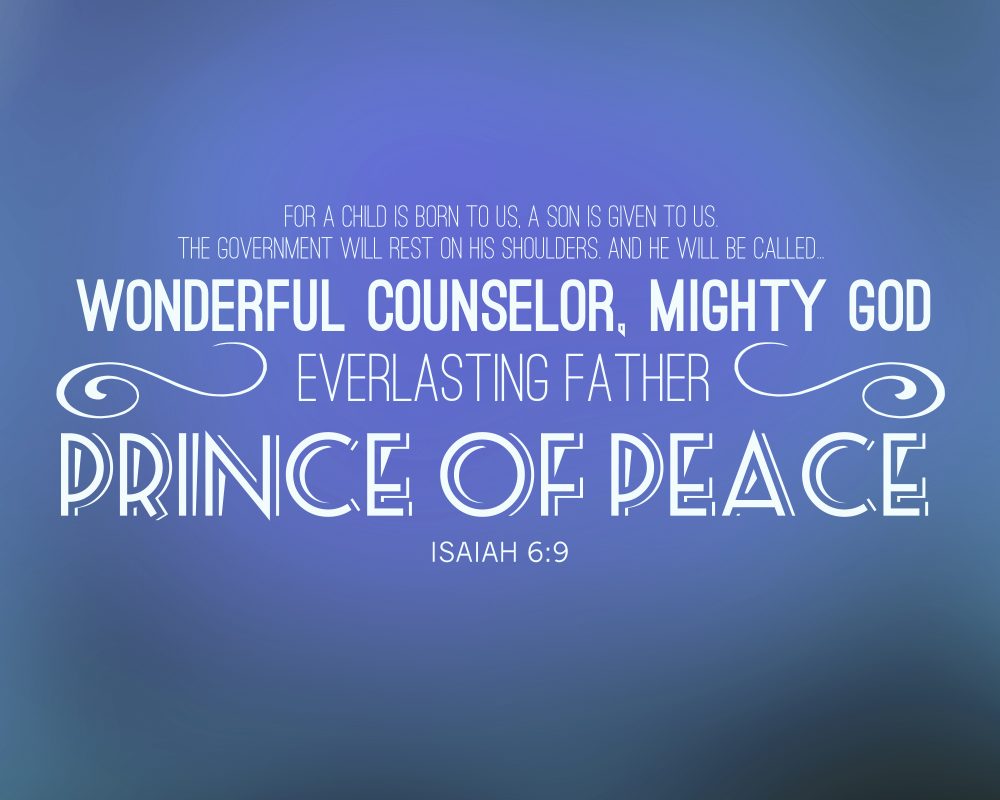
and the government will be on his shoulders.
And he will be called
Wonderful Counselor, Mighty God,
Everlasting Father, Prince of Peace.
Of the increase of his government and peace
there will be no end.
He will reign on David’s throne
and over his kingdom,
establishing and upholding it
with justice and righteousness
from that time on and forever.
The zeal of the Lord Almighty
will accomplish this.
Isaiah 9:1–7
On a certain level, the meaning of these verses is clear: Great deliverance was about to come to the people of God because the glorious son of David was born. The promised child was here! It was this royal son who would establish the worldwide dominion of the Lord, reigning on the throne of his father, David.
Putting aside for a moment the name of the child in Isaiah 9:6[5], Delitzsch is right in stating that it is understandable if Isaiah’s contemporaries thought for a time that Hezekiah might indeed be this promised son of David. The Talmud even states that God wanted to make Hezekiah the Messiah and make Sennacherib, the Assyrian king, Gog and Magog—but Hezekiah was unworthy.96 In reality, it would seem that his birth was heralded with great excitement and anticipation, with a lofty prophetic oracle of glorious proportions. And Hezekiah was mightily used by the Lord, cleansing the Temple, restoring the holy days and feasts, and experiencing God’s supernatural deliverance from the Assyrians (see 2 Kings 18–20; 2 Chron. 29–32). This was quite an impressive résumé, but not impressive enough, since (1) Hezekiah’s reign came nowhere near fulfilling the prophetic word; (2) his son, Manasseh, was the most wicked king in Judah’s history; and (3) within four generations, the nation was in exile in Babylon. Yet Isaiah declared that “of the increase of his government and peace there will be no end. He will reign on David’s throne and over his kingdom, establishing and upholding it with justice and righteousness from that time on and forever.”
The only way the famous medieval refutationist Isaac Troki could argue against this was to claim that the words don’t really mean what they say. He writes first that the words “without end” are “a mere figure of speech,” and then continues:
We find, similarly, in Isaiah 2:7, “And his land was full of silver and gold, and there was no end to his treasures; and his land was full of horses, and there was no end to his chariots.” Thus we also find in Ecclesiastes 4:8, “There is One, and no second, and he has neither son nor brother; and there is no end to all his troubles.”97
Then, concerning the promise that through this royal son the kingdom of David would be established “with justice and righteousness from that time on and forever,” Troki states that this expression “shows that his dominion—that is the dynasty of David—will never perish. And though an interruption occurred during the time of the captivity, the government, nonetheless, will, in the days of the Messiah, return to the scion of David.”98
But neither of Troki’s arguments is compelling in the least. Regarding the expression “without end, no end” (Hebrew, eyn kets), it is clear from the examples he cites that these words refer to something that can hardly be counted or measured because it is so vast and boundless, like the riches of Solomon or the troubles of an afflicted man. How then can this prophecy that states “of the increase of his government and peace there will be no end” apply to Hezekiah? Even granting that the words “without end” do not have to be taken literally in terms of an eternal kingdom—although this would be a perfectly good way of expressing that concept in Hebrew—they simply do not describe Hezekiah’s reign, which was quite limited in international scope and influence. As for Troki’s contention that Isaiah’s prophecy need not refer to an uninterrupted reign of David’s son, I can only ask in reply, How could Isaiah have been more clear? Is there no significance to the words “from that time on and forever”?
Putting all this together, and taking the words at their face value, it would seem that an unbiased reading of the text points to an everlasting, worldwide reign for this son of David, a king whose nature transcended human bounds. We explored this deep, biblical truth in volume 2, 3.2–3.3, discussing at some length the divine nature of the Messiah, explaining how God made himself fully known to man through Yeshua, literally pitching his tent among us and walking in our midst.99 This is a rich scriptural concept that opens up passages such as Zechariah 12–14, beginning with Zechariah 12:10. In this verse God himself says, “They will look on me, the one they have pierced,” although the context makes it clear that it isn’t God himself who was pierced but rather his servant (see below, 4.31), pointing to a deep identification between the two. This is followed by Zechariah 13:7, where the Messiah is called geber amiti, literally, “the man that is God’s fellow” (or “God’s colleague”; the word is always used in the Tanakh with reference to a close companion or neighbor).100 All this culminates with Zechariah 14:3–5, where the text states that the Lord (meaning Yahweh) will go forth and fight against all the nations that come against Jerusalem, and “on that day his feet [meaning Yahweh’s!] will stand on the Mount of Olives, east of Jerusalem, and the Mount of Olives will be split in two from east to west, forming a great valley, with half of the mountain moving north and half moving south. … Then the Lord my God will come, and all the holy ones with him.” Verses such as these present only two choices: Either Yahweh himself—visibly and physically—will descend onto the Mount of Olives, or else Yeshua the Messiah—the very image of God and the fullness of God in bodily form—will come in the clouds with his holy ones and put his feet on the Mount of Olives.101
What about Micah 5:2[1]? Does this text also point to the divine nature and eternal origin of the Messiah? The classic language of the King James Version, reflected in many subsequent Christian versions, affirms the divinity of the Messiah: “But thou, Bethlehem Ephratah, though thou be little among the thousands of Judah, yet out of thee shall he come forth unto me that is to be ruler in Israel; whose goings forth have been from of old, from everlasting.” This rendering is normally interpreted to mean that the Messiah, who is an uncreated, eternal being, would be physically born in the obscure little town of Bethlehem. Most Jewish translations, however, (and a number of Christian translations) read the text very differently. For example, the NJPSV translates, “And you, Bethlehem of Ephrath, least among the clans of Judah, from you shall one come forth to rule Israel for Me—one whose origin is from old, from ancient times.” This would mean the Davidic king (the Messiah?) had his origins in the obscure town of Bethlehem many years ago, back in the ancient time of David (who lived three centuries prior to Micah).
Which translation is right? It comes down to the rendering of the Hebrew phrase describing the nature of the Messiah’s origins, miqedem mi-yemey ʿolam. The first word simply means “from of old” and is used elsewhere in Micah to refer back to God’s promises to the patriarchs, which he made “from days of qedem” (Micah 7:20, rendered in the King James with “from the days of old”). The next two words, however, would most naturally be translated “from eternity” (literally, from “days of eternity”), unless context indicated a translation of “from ancient days” (in other words, way back in the very distant past). In most cases in the Scriptures, ʿolam clearly means eternity, as in Psalm 90:2, where God’s existence is described as meʿolam weʿadʿolam, “from eternity to eternity” (cf. NJPSV).102 There are, however, some cases where ʿolam cannot mean “eternal” but rather “for a long time” (either past or present). How then does Micah use the word?
In Micah 2:9; 4:5, 7, ʿolam clearly means “forever,” as commonly rendered in both Jewish and Christian versions. This would point clearly to a similar rendering just a few verses later in 5:2[1]. In Micah 7:14, however, the expression “as in the days of ʿolam” is used in a non-eternal sense, the whole verse being translated in the King James with, “Feed thy people with thy rod, the flock of thine heritage, which dwell solitarily in the wood, in the midst of Carmel: let them feed in Bashan and Gilead, as in the days of old.” This indicates we cannot be dogmatic about the translation of Micah 5:2[1], since the context allows for an “eternal” or merely “ancient” meaning.
In this light, the commentary of Rashi on Micah 5:2[1] takes on added significance, since (1) he reads it as a clear Messianic prophecy; (2) he makes reference to Psalm 118:22, which says that the stone rejected by the builders has become the chief cornerstone (a verse quoted several times in the New Testament with reference to Yeshua, who was rejected by the leaders of his people but chosen by God); and (3) he interprets the end of the verse as pointing to the preexistence of the Messiah (or, at the least, of his name) rather than as pointing only to Bethlehem as the ancient city of David (which is made clear at the beginning of the verse). Here is Rashi’s commentary (words in bold indicate Scripture text):
1 And you Bethlehem Ephrathah whence David emanated, as it is stated (1 Sam. 17:58): “The son of your bondsman, Jesse the Bethlehemite.” And Bethlehem is called Ephrath, as it is said (Gen. 48:7): “On the road to Ephrath, that is Bethlehem.” you should have been the lowest of the clans of Judah You should have been the lowest of the clans of Judah because of the stigma of Ruth the Moabitess in you. from you shall emerge for Me the Messiah, son of David, and so Scripture says (Ps. 118:22): “The stone the builders had rejected became a cornerstone.” and his origin is from of old “Before the sun his name is Yinnon” (Ps. 72:17).103
This is certainly a noteworthy interpretation. Also noteworthy is the commentary on this verse by two of the most respected contemporary scholars of the Hebrew Bible, David Noel Freedman and Francis Anderson:
… the person spoken of here has some connection with the remote past. “One whose origin is from of old, from ancient times” (NJPS). A legitimate sensus plenior [i.e., fuller meaning in the light of unfolding scriptural revelation] is that this Ruler will be a superhuman being, associated with God from the beginning of time. Psalm 2:7 speaks of the king as the one whom God “sired” (by adoption). Psalm 110 places the king on God’s right hand. At the least the language suggests that the birth of the Messiah has been determined, or predicted in the divine council, in primal days. Micah 4–5 thus has time points in the Beginning and End as well as the Now. Even if mōṣâʾôt means no more than an oracle expressing the divine determination, it does not require a great shift in conceptuality to move to the Son of Man figure of the later apocalypses—the Urmensch—and to the classical Christology of the ecumenical creeds or the heaven-created Adam of the Quran or the Metatron of the Jewish mystics. So Christians did not abuse the text when they found Jesus in it. Or to put it more cautiously in a negative way, this mysterious language relates the mōšēl whose outgoings have been from of the olden days to God (lî) in a special way. He will rule “for” Yahweh.104
So then, Micah 5:2(1) can also be understood as pointing to the Messiah’s eternal nature, undergirding our reading of Isaiah 9:6[5] as pointing to the Messiah’s divinity.
84 As translated by Sir Lancelot C. L. Brenton, The Septuagint with Apocrypha: Greek and English (repr., Peabody, Mass.: Hendrickson, 1986), 844.
85 Origen Against Celsus, in A. Roberts and J. Donaldson, eds., The Ante-Nicene Fathers, CD ROM ed. (Albany, Ore.: AGES Software, 1997), 5:218.
86 Cf. the following Rabbinic statements: “R. Yose the Galilean said: ‘The name of the Messiah is Peace, for it is said, Everlasting Father, Prince Peace’ ” (Midrash Pereq Shalom, p. 101); “The Messiah is called by eight names: Yinnon [see Ps. 72:17], Tzemach [e.g., Jer. 23:5]; Pele’ [Wonderful, Isa. 9:6(5)], Yo’etz [Counselor, Isa. 9:6(5)], Mashiach [Messiah], El [God, Isa. 9:6(5)], Gibbor [Hero, Isa. 9:6(5)], and Avi’ Ad Shalom [Eternal Father of Peace, Isa. 9:6(5)]; see Deuteronomy Rabbah 1:20.
87 The entire verse is rendered there: “For a child is born unto us, A son is given unto us; And the government is upon his shoulder; And his name is called Pele-joez-el-gibbor-Abi-ad-sar shalom.” A footnote adds, “That is, Wonderful in counsel is God the mighty, the everlasting Father, the Ruler of peace.” Similar to this is the rendering of the English text in the Jerusalem Bible, Koren Edition. The translation is a revision by Harold Fisch of the Michael Friedlander version.
88 A footnote supports the rendering of “grace” with reference to Isaiah 25:1.
89 I would gladly stand corrected on this should evidence to the contrary be forthcoming. To date, however, I have seen no evidence that the rendering of the NJPSV was clearly anticipated by previous Rabbinic literature.
90 Perhaps the rendering of Luzatto was closest to that of the NJPSV; see Delitzsch, Isaiah, 218. His comments on Luzatto’s translation are worth noting: “The motive which prompted Luzzatto to adopt this original interpretation is worthy of notice. He had formerly endeavoured, like other commentators, to explain the passage by taking the words from ‘Wonderful’ to ‘Prince of Peace’ as the name of the child; and in doing this he rendered plʾ yʾts ‘one counselling wonderful things,’ thus inverting the object, and regarded ‘mighty God’ as well as ‘eternal Father’ as hyperbolical expressions, like the words applied to the King in Ps 45:7a. But now he cannot help regarding it as absolutely impossible for a human child to be called ʾel gibbor, like God Himself in Isa 10:21.” The careful reader will note the importance of the remarks of Delitzsch; see further vol. 2, 3.3 (for Talmudic treatment of this verse and the hypberbolic expressions).
91 See the Isaiah commentaries cited in the previous notes.
92 According to Delitzsch (Isaiah, 218), such a translation renders the name “sesquipedalian.”
93 For a discussion of the Masoretic accents (which are not part of the original text), cf. ibid., 219–20.
94 Brevard S. Childs, Isaiah, Old Testament Library (Louisville: Westminster/John Knox, 2001), 78, note esp. n. c.
95 Blenkinsopp, Isaiah 1–39, 246. He notes that “Hero Warrior” is “literally, ‘God warrior,’ ” and “is a divine title applied to the ruler, as can be seen from its reuse by a later interpreter in 10:21” (ibid., 250).
96 Delitzsch, Isaiah, 220; 223–24. The statement in the Talmud is found in b. Sanhedrin 94a, from the lips of Bar Kapparah. Contrast this with the sentiment of a certain Rabbi Hillel in b. Sanhedrin 98a (namely, that Israel would have no Messiah because they already enjoyed him in the days of Hezekiah), also cited in Delitzsch, Isaiah, 224. Regarding the comment of Bar Kapparah, Delitzsch states (Isaiah, 223–24), “There is so far some sense in this, that the Messianic hopes really could centre for a certain time in Hezekiah.” Interestingly, the Hebrew text of Isaiah 9:6[5] contains an anomaly, as the letter mem in the word lemarbeh is written in its final (i.e., word ending) form (which is closed) even though in this case, it is found toward the beginning of the word. According to the Talmud (in the comment of Bar Kapparah), it was because Hezekiah fell short of his Messianic calling that the mem was closed. On a related note, cf. the recent study of Marvin A. Sweeney, King Josiah of Judah: TheLost Messiah of Israel (New York: Oxford Univ. Press, 2001).
97 Isaac Troki, Hizzuk Emunah: Faith Strengthened, trans. Moses Mocatta (repr., New York: Sefer Hermon, 1970), 106–7, his emphasis.
99 Because the incarnation of the Son of God has often been thought of in crass terms by the anti-missionaries (see vol. 2, 3.2), with little effort to understand the lofty spiritual truths involved in that incredible divine act, the parallels with Jewish mystical thought have often been missed. For the contemplative reader, however, verses such as John 1:14, 18; Colossians 2:9; and 1 Timothy 3:16 relate well to Hasidic teachings on divine “contraction” and the mystical teaching that God must “adorn himself in a garb that conceals his true nature” (as quoted by Boteach, The Wolf Shall Lie with the Lamb, 24).
100 Interestingly, of the twelve times the noun ʿamit occurs in the Hebrew Bible, eleven are found in Leviticus in legal contexts (e.g., Lev. 5:21; 18:20; 19:11; 25:14), leaving Zechariah 13:7 as the only nonlegal occurrence.
101 For Messianic insights into the relevant texts in Zechariah, cf. David Baron, Commentary on Zechariah: His Visions and Prophecies (repr., Grand Rapids: Kregel, 1988).
102 In Psalm 90:2, the Stone edition renders this phrase as, “from the remotest past to the most distant future,” which actually understates the Hebrew.
103 Note that Psalm 72 is widely recognized as a Messianic psalm (at the least, based on principle 2 in the appendix), giving added weight to the fact that Rashi cites it here, especially since verse 17 seems to speak of eternal origins (“before the sun,” meaning either literal preexistence or conceptual preexistence). Interestingly, Rashi’s actual comment on Psalm 72:17 in his commentary on the Psalms seems to contradict his application of that verse in his commentary on Micah, since he applies it to Solomon and explains, “before the sun, his name will be magnified All the days of the sun, his name will be magnified.” See also above, n. 86, where it is noted that Yinnon is recognized as a name of the Messiah in the Rabbinic writings.
104 Francis I. Anderson and David Noel Freedman, Micah: A New Translation with Introduction and Commentary, Anchor Bible (New York: Doubleday, 2000), 468. Interestingly, Santala points out that David Kimchi actually states that the Messiah is ʾel—God!—in his comments on Micah 5:2[1]. However, since Kimchi did not believe in the Messiah’s divinity, one must wonder what point he was trying to make; see Santala, The Messiah in the Old Testament in Light of Rabbinical Writings, 115. There is also some fascinating, relevant speculation in Pirkey HaMashiach (in Midreshei Geʾulah) on the new Messiah of God and on the Messiah as Yahweh. Most scholars believe that 4 Ezra 7:29, where God says, “My son the Messiah will die,” is probably a later Christian interpolation into an (originally) pre-Christian work. Thus, the text is not germane to our point.
[1]Brown, M. L. (2003). Answering Jewish objections to Jesus, Volume 3: Messianic prophecy objections (32). Grand Rapids, Mich.: Baker Books.