الأعياد المسيحية والأصوام 2025 بحسب التقويم القبطي
مع بداية عام 2025، يتطلع الأقباط في مصر وخارجها إلى معرفة مواعيد الأعياد والمناسبات الروحية التي تشكل حجر الأساس في الحياة الكنسية. فالنتيجة القبطية ليست مجرد تقويم سنوي، بل هي مرآة للعقيدة المسيحية، تعكس مناسبات الفرح والصوم، وتربط المؤمنين بتاريخ إيمانهم.
يعتمد التقويم القبطي على 12 شهرًا كل منها مكوّن من 30 يومًا، بالإضافة إلى شهر صغير يُسمى “نسيء” يحتوي على 5 أو 6 أيام حسب ما إذا كانت السنة كبيسة. ويمثل هذا التقويم المرجع الأساسي في تحديد الأعياد الكبرى والصغرى، بالإضافة إلى مواعيد الصيام والاحتفالات المقدسة.
الأعياد المسيحية والأصوام 2025 بحسب التقويم القبطي
✨ الأعياد السيدية الكبرى في 2025:
عيد الميلاد المجيد: الثلاثاء 7 يناير
عيد الغطاس: الأحد 19 يناير
عيد البشارة: الإثنين 7 أبريل
أحد الشعانين: الأحد 13 أبريل
عيد القيامة المجيد: الأحد 20 أبريل
عيد الصعود: الخميس 29 مايو
عيد العنصرة (حلول الروح القدس): الأحد 8 يونيو
الأعياد المسيحية والأصوام 2025 بحسب التقويم القبطي
🌟 الأعياد السيدية الصغرى في 2025:
عيد الختان: الثلاثاء 14 يناير
عرس قانا الجليل: الثلاثاء 21 يناير
دخول السيد المسيح إلى الهيكل: السبت 15 فبراير
خميس العهد: الخميس 17 أبريل
عيد دخول السيد المسيح إلى أرض مصر: الأحد 1 يونيو
عيد التجلي: الثلاثاء 19 أغسطس
الأعياد المسيحية والأصوام 2025 بحسب التقويم القبطي
🕯️ مناسبات أخرى:
فصح يونان: الخميس 13 فبراير
سبت لعازر: السبت 12 أبريل
الجمعة العظيمة: الجمعة 18 أبريل
سبت الفرح: السبت 19 أبريل
شم النسيم: الإثنين 21 أبريل
أحد توما: الأحد 27 أبريل
عيد استشهاد القديسين بطرس وبولس: السبت 12 يوليو
عيد إظهار صعود جسد السيدة العذراء: الجمعة 22 أغسطس
عيد النيروز (رأس السنة القبطية): الخميس 11 سبتمبر
تذكار ظهور الصليب: السبت 27 سبتمبر
الأصوام في عام 2025:
صوم يونان: 10 – 12 فبراير
الصوم الكبير: 24 فبراير – 11 أبريل
صوم الرسل: يبدأ يوم 9 يونيو
صوم السيدة العذراء: يبدأ الخميس 7 أغسطس
صوم الميلاد المجيد: يبدأ الثلاثاء 25 نوفمبر
الأعياد المسيحية والأصوام 2025 بحسب التقويم القبطي
الأعياد القبطية المسيحية 2024 – أعياد المسيحيين 2024
الاعياد المسيحية 2024 – الأعياد المسيحية القبطية في عام 2024
تتميز السنة القبطية بوجود الكثير من الاعياد والمناسبات المسيحية على مدار العام وهو ما سوف نوضحه بالتفصيل.
التقويم القبطي هو تقويم نجمي، يتبع دورة نجم الشعر اليمانية، وهو سنة الشهداء التي تسير عليها كنيستنا القبطية الأرثوذكسية. وهو امتداد للتقويم المصري القديم الذي يرجع إلى عام 4242 ق. م.؛ أي أن سنة 1739 يقابلها سنة 6263 مصرية (توتية).
الشهر الأول هو توت.
الشهر الثاني هو بابه.
الشهر الثالث هو هاتور.
الشهر الرابع يسمى كيهك.
الشهر الخامس هو طوبة.
الشهر السادس يدعى أمشير.
الشهر السابع برمهات.
الشهر الثامن هو برمودة .
الشهر التاسع يسمى بشنس.
الشهر العاشر يدعى بؤنه.
الشهر الحادي عشر هو أبيب.
الشهر الثاني عشر يدعى مسري.
الشهر الأخير الذي يدعى الشهر الصغير يدعى نسيئ.
هذه النتيجة القبطية Coptic Calendar نافعة ليس فقط للخدمة في معرفة الأعياد والمواسم القبطية، ولكن للجميع(1).. وهي تساعد في الترتيب المقدم للمواعيد الخاصة بالرحلات والخلوات والنهضات الدينية، ومناهج الخدمة.. ومعرفة أوقات الأجازات والأصوام والاحتفالات الكنسية طوال العام القبطي الحالي. كل عام وأنتم بخير.
أخيرًا، يوجد في قسم طقوس الكنيسة القبطية مقالات وبحوث عدة حول الأعياد السيدية الصغرى والكبرى..
وفي الجداول التالية رابط link التاريخ القبطي يذهب على اليوم في السنكسار، أما رابط التاريخ الميلادي فيذهب على هذا اليوم في جدول النتيجة القبطية اليومية.
ستجد أيضًا جداول لنفس الأعياد بأسفل الصفحة متضمنة التاريخ الهجري، حسبما طلب منا البعض من البلاد العربية التي تستخدم هذا التقويم، وذلك لتسهيل مشاركتهم لإخوتهم بالتهاني في الأعياد (الأعياد المسيحية الثابتة بالتقويم الهجري – الأعياد المسيحية المتنقلة بالتقويم الهجري).
رفاع صوم الميلاد: 25 نوفمبر الجاري (بداية صوم الميلاد)
التاريخ
اليوم
التاريخ القبطي
اسم العيد او الاجازة
7 يناير
الأحد
29 كيهك 1740
عيد الميلاد المجيد 2024
15 يناير
الاثنين
6 طوبة 1740
عيد الختان 2024
20 يناير
السبت
11 طوبة 1740
عيد الغطاس 2024
22 يناير
الاثنين
13 طوبة 1740
عرس قانا الجليل 2024
16 فبراير
الجمعة
8 أمشير 1740
دخول السيد المسيح الهيكل 2024
26 فبراير
الإثنين
18 أمشير 1740
بدء صوم يونان 2024
29 فبراير
الخميس
21 أمشير 1740
فصح يونان 2024
11 مارس
الإثنين
2 برمهات 1740
أول الصوم الكبير 2024
19 مارس
الثلاثاء
10 برمهات 1740
عيد ظهور الصليب المقدس 2024
7 أبريل
الأحد
29 برمهات 1740
عيد البشارة المجيد 2024
26 أبريل
الجمعة
18 برمودة 1740
ختام الصوم الأربعيني المقدس 2024
27 أبريل
السبت
19 برمودة 1740
سبت لعازر 2024
29 أبريل
الأحد
20 برمودة 1740
أحد الشعانين 2024
2 مايو
الخميس
24 برمودة 1740
خميس العهد 2024
3 مايو
الجمعة
25 برمودة 1740
الجمعة العظيمة 2024
4 مايو
السبت
26 برمودة 1740
سبت الفرح 2024
5 مايو
الأحد
27 برمودة 1740
عيد القيامة المجيد 2024
6 مايو
الإثنين
28 برمودة 1740
شم النسيم 2024
12 مايو
الأحد
4 بشنس 1740
أحد توما 2024
1 يونيو
السبت
24 بشنس 1740
دخول السيد المسيح مصر 2024
13 يونيو
الخميس
6 بؤونة 1740
عيد الصعود 2024
23 يونيو
الأحد
16 بؤونة 1740
عيد العنصرة 2024
24 يونيو
الإثنين
17 بؤونة 1740
بدء صوم الرسل 2024
12 يوليو
الجمعة
5 أبيب 1740
عيد القديسين بطرس وبولس 2024
7 أغسطس
الأربعاء
1 مسرى 1740
بدء صوم السيدة العذراء 2024
19 أغسطس
الاثنين
13 مسرى 1740
عيد التجلي 2024
22 أغسطس
الخميس
16 مسرى 1740
صعود جسد السيدة العذراء 2024
11 سبتمبر
الأربعاء
1 توت 1741
النيروز – رأس السنة القبطية 2024
27 سبتمبر
الجمعة
17 توت 1741
تذكار ظهور الصليب المقدس 2024
25 نوفمبر
الاثنين
16 هاتور 1741
بدء الصوم الميلادي 2024
اليوم
التاريخ
التاريخ القبطي
العيد
الأحد
7 يناير
29 كيهك 1740
عيد الميلاد المجيد
الاثنين
15 يناير
6 طوبة 1740
عيد الختان
السبت
20 يناير
11 طوبة 1740
عيد الغطاس
الخميس
29 فبراير
21 أمشير 1740
فصح يونان
الإثنين
11 مارس
2 برمهات 1740
أول الصوم الكبير
الأحد
7 أبريل
29 برمهات 1740
عيد البشارة المجيد
الجمعة
26 أبريل
18 برمودة 1740
ختام الصوم الأربعيني المقدس
الأحد
5 مايو
27 برمودة 1740
عيد القيامة المجيد
الأثنين
6 مايو
28 برمودة 1740
شم النسيم
الأثنين
25 نوفمبر
16 هاتور 1741
بدء الصوم الميلادي
عيد القيامة المجيد هو أهم الأعياد القبطية، وهو عيد قيامة السيد المسيح من بين الأموات.
شم النسيم هو عيد قديم يحتفل به المصريون منذ آلاف السنين، ويتزامن مع الاعتدال الربيعي.
عيد دخول السيد المسيح أرض مصر هو عيد تذكاري لعودة العائلة المقدسة إلى مصر هرباً من هيرودس.
عيد الصعود هو عيد تذكاري لصعود السيد المسيح إلى السماء بعد قيامته.
عيد العنصرة هو عيد تذكاري لحلول الروح القدس على التلاميذ بعد صعود السيد المسيح.
عيد دخول السيد المسيح أورشليم هو عيد تذكاري لدخول السيد المسيح إلى أورشليم قبل آلامه.
عيد التجلي هو عيد تذكاري لتجلي السيد المسيح أمام تلاميذه على جبل طابور.
عيد الصليب هو عيد تذكاري لاكتشاف الصليب الذي صلب عليه السيد المسيح.
عيد دخول السيد المسيح مصر هو عيد تذكاري لعودة العائلة المقدسة إلى مصر هرباً من هيرودس.
عيد النيروز هو عيد رأس السنة القبطية.
عيد الميلاد المجيد هو عيد ميلاد السيد المسيح.
عيد الختان هو عيد تذكاري لختان السيد المسيح في اليوم الثامن من ميلاده.
عيد الغطاس هو عيد تذكاري لتعميد السيد المسيح في نهر الأردن.
عرس قانا الجليل هو عيد تذكاري لأول معجزة قام بها السيد المسيح في عرس قانا الجليل.
الاعياد المسيحية 2024 – الأعياد المسيحية القبطية في عام 2024
النتيجة الميلادية
نتيجة سنة 2024 ميلادية
يناير
فبراير
مارس
الأحد
الإثنين
الثلاثاء
الأربعاء
الخميس
الجمعة
السبت
1
2
3
4
5
6
7
8
9
10
11
12
13
14
15
16
17
18
19
20
21
22
23
24
25
26
27
28
29
30
31
الأحد
الإثنين
الثلاثاء
الأربعاء
الخميس
الجمعة
السبت
1
2
3
4
5
6
7
8
9
10
11
12
13
14
15
16
17
18
19
20
21
22
23
24
25
26
27
28
29
الأحد
الإثنين
الثلاثاء
الأربعاء
الخميس
الجمعة
السبت
1
2
3
4
5
6
7
8
9
10
11
12
13
14
15
16
17
18
19
20
21
22
23
24
25
26
27
28
29
30
31
4: 11: 18: 25:
3: 10: 16: 24:
3: 10: 17: 25:
إبريل
مايو
يونيو
الأحد
الإثنين
الثلاثاء
الأربعاء
الخميس
الجمعة
السبت
1
2
3
4
5
6
7
8
9
10
11
12
13
14
15
16
17
18
19
20
21
22
23
24
25
26
27
28
29
30
الأحد
الإثنين
الثلاثاء
الأربعاء
الخميس
الجمعة
السبت
1
2
3
4
5
6
7
8
9
10
11
12
13
14
15
16
17
18
19
20
21
22
23
24
25
26
27
28
29
30
31
الأحد
الإثنين
الثلاثاء
الأربعاء
الخميس
الجمعة
السبت
1
2
3
4
5
6
7
8
9
10
11
12
13
14
15
16
17
18
19
20
21
22
23
24
25
26
27
28
29
30
2: 8: 15: 24:
1: 8: 15: 23: 30:
6: 14: 22: 29:
يوليو
أغسطس
سبتمبر
الأحد
الإثنين
الثلاثاء
الأربعاء
الخميس
الجمعة
السبت
1
2
3
4
5
6
7
8
9
10
11
12
13
14
15
16
17
18
19
20
21
22
23
24
25
26
27
28
29
30
31
الأحد
الإثنين
الثلاثاء
الأربعاء
الخميس
الجمعة
السبت
1
2
3
4
5
6
7
8
9
10
11
12
13
14
15
16
17
18
19
20
21
22
23
24
25
26
27
28
29
30
31
الأحد
الإثنين
الثلاثاء
الأربعاء
الخميس
الجمعة
السبت
1
2
3
4
5
6
7
8
9
10
11
12
13
14
15
16
17
18
19
20
21
22
23
24
25
26
27
28
29
30
6: 14: 21: 28:
4: 12: 19: 26:
3: 11: 18: 24:
أكتوبر
نوفمبر
ديسمبر
الأحد
الإثنين
الثلاثاء
الأربعاء
الخميس
الجمعة
السبت
1
2
3
4
5
6
7
8
9
10
11
12
13
14
15
16
17
18
19
20
21
22
23
24
25
26
27
28
29
30
31
الأحد
الإثنين
الثلاثاء
الأربعاء
الخميس
الجمعة
السبت
1
2
3
4
5
6
7
8
9
10
11
12
13
14
15
16
17
18
19
20
21
22
23
24
25
26
27
28
29
30
الأحد
الإثنين
الثلاثاء
الأربعاء
الخميس
الجمعة
السبت
1
2
3
4
5
6
7
8
9
10
11
12
13
14
15
16
17
18
19
20
21
22
23
24
25
26
27
28
29
30
31
2: 10: 17: 24:
1: 9: 16: 23:
1: 8: 15: 23: 31:
الاعياد المسيحية 2024 – الأعياد المسيحية القبطية في عام 2024
رأس السنة الميلادية*
1 يناير 2024
عيد الميلاد الشرقي*
7 يناير 2024
عيد الغطاس*
20 يناير 2024
العيد القومي للثورة و الشرطة*
25 يناير 2024
عيد الفصح الغربي*
31 مارس 2024
عيد الفطر*
9 – 12 أبريل 2024
عيد تحرير سيناء*
25 أبريل 2024
أحد الشعانين*
28 أبريل 2024
الخميس المقدس وعيد العمال*
2 مايو 2024
عيد الفصح الشرقي*
5 مايو 2024
شم النسيم*
6 مايو 2024
عيد الأضحى*
16 – 20 يونيو 2024
عيد ثورة 30 يونيو*
4 يوليو 2024
رأس السنة الهجرية*
11 يوليو
عيد ثورة 23 يوليو*
25 يوليو
January 2024 Holy Days
January 6 – Epiphany
Known as the Theophany in Eastern Christianity, this feast day commemorates the visit of the Magi, Jesus’ baptism, and the Wedding at Cana. It is also known as Three Kings’ Day or Little Christmas.
January 7 – Coptic Orthodox Christmas
This is the day Orthodox Christians celebrate Jesus’ birth. It corresponds with the date December 25 on the Julian Calendar.
January 13 – Maghi
This Hindu festival of Makar Sankranti is celebrated after the mid-winter celebration of Lohri, where bonfires are lit in Northern India. The following morning Hindus enjoy this festival which involves ritual baths in rivers and ponds.
January 14 – Orthodox New Year
This date marks the beginning of the Julian calendar.
January 21 – World Religion Day
First observed in 1950, this Baháʼí faith day is inspired by their idea of the oneness and evolution of religion. The purpose of this day is to highlight their principles and the role that all world religions play in uniting all humans.
January 24* – Tu Bishvat
This Jewish holiday is celebrated as an ancient Earth Day, where trees are planted annually.
February Religious Holidays Calendar
February 1 – Imbolc
Pagans and Wiccans celebrate this festival as the halfway point between the winter solstice and the spring equinox, which honors light, fire, and the return of life after a long winter.
February 2 – Candlemas
Occurring 40 days after Christmas, Candlemas celebrates the birth of light. It commemorates the presentation of Jesus at the Temple, which occurs in Luke 2:22-40. On this day, all candles to be used in the church for the next year are blessed. Also known as the Feast of the Holy Encounter, the Feast of the Purification of the Blessed Virgin Mary, or the Feast of the Presentation of Jesus Christ.
February 8 – Lailat al Miraj
Muslims remember Prophet Muhammad’s pilgrimage from Mecca to Jerusalem on this holy day. After his arrival, he ascended to Heaven.
February 10 – Chinese New Year
This celebration of the new year on the lunisolar Chinese Calendar is one of the most important holidays in Chinese culture. It also influences the Lunar New Year celebrations of nearly 56 other ethnic groups, including Korea, Vietnam, Indonesia, and Malaysia.
February 14 – Ash Wednesday
This day marks the start of Lent, 40 days of fasting and prayer for Christians before Easter.
February 15 – Parinirvana
Known as Nirvana Day in Mahãyãna Buddhism, this day honours the death of Buddha and his attainment of final nirvana.
February 26-29* – Intercalary / Ayyam-i-ha
This celebration and period of fasting celebrate giving back to the community and giving gifts to loved ones, which honors the Divine Essence of God. This celebration markets the start of the fasting month, where Bahá’ís 15 years and older abstain from food and drink between sunrise and sunset.
March Religious Calendar
March 11* – Ramadan begins
This marks the start of the holy month of fasting for Muslims.
March 21* – Nowruz
Occurring on the vernal equinox, this day celebrates the Persian and the Baha’i New Year.
March 24 – Palm Sunday
Palm Sunday falls on the Sunday before Easter. The crowd waved palm branches to honor Christ’s entry into Jerusalem.
March 25 – Holi
This is one of the most known Hinduism holy days, and it celebrates the arrival of spring and new life. This lasts for a night and a day, starting on the evening of the Full Moon Day.
March 29 – Good Friday
This Christian holiday honors Jesus’ crucifixion and death. Many different Christian denominations observe this holy day. From noon to 3 pm, it is known as the Service of the Great Three Hours’ Agony, where it is believed Jesus died at the cross. Also known as Great Friday, Holy Friday, Great and Holy Friday, and Black Friday.
March 31 – Easter
One of the most important Christian holidays, it memorializes the resurrection of Jesus Christ. It is believed that this occurred on the third day of his burial. The week before Easter is known as Holy Week, which starts on Palm Sunday, Spy Wednesday, Maundy Thursday, Last Supper, and Good Friday, and ends on Easter Sunday. Also known as Resurrection Sunday or Pascha.
April’s Major Religious Holidays
April 6 – Laylat al-Qadr
Laylat al-Qadr is for the holiest night of the year for Muslims as it’s believed it’s the night that the Quran was sent down from Heaven. The last ten nights of Ramadan are dedicated to praying and scripture reading as they believe this night of decree took place in one of those ten nights.
April 9-12 – Eid al-Fitr
On one of the most important Islamic holy days, a big meal is enjoyed to mark the end of Ramadan and celebrations go on for 3 days.
April 21* Ridvan
This Bahá’í 12-day festival commemorates Bahaullah’s declaration that he was a manifestation of God. The name means Paradise and is named after a garden found outside of Baghdad, where he was exiled before traveling to Constantinople.
April 22*-30 – Passover
This 7-day holiday week honors the freeing of Israeli slaves. It is one of three pilgrimage festivals and is a major Jewish holiday celebrated on the 15 days of Nisan, a Hebrew month.
May 2024 Religious Holidays
May 1 – Beltane
This Pagan and Wiccan festival honors and represents the peak time of Spring and the beginning of Summer.
May 9 – Ascension Day
This is precisely 40 days after Easter when Christians believe that Jesus ascended to Heaven.
June 2024 Holy Days
June 7 – Feast of the Sacred Heart
This Roman Catholic feast day memorializes Jesus’ love for all humans.
June 12-13* – Shavuot
This major Jewish festival marks the harvest of wheat in Israel. According to Orthodox Judaism, the date also aligns with the revealing of the Ten Commandments to Moses and the Israelites. Also known as the Feast of Weeks.
June 14-19* – The Hajj
This annual pilgrimage to Mecca is perhaps the most important Muslim holy day. This trip of a lifetime is required of all Muslims if they are physically or financially able to.
June 17-20* – Eid-al-Adha
This Islamic faith holiday ends the Hajj pilgrimage. It celebrates Abraham’s willingness to sacrifice Ishmael, his son, to obey God. Because of this, a lamb is given to him to sacrifice in place of his son. On this day, animals, typically a sheep or a goat, are sacrificed and enjoyed by both the family and those in need. Also known as the Feast of Sacrifice.
June 21 – Litha
This Pagan and Wiccan festival is held on the summer solstice.
July Interfaith Calendar
July 7* – Hijri New Year
The Islamic New Year marks the beginning of the lunar Hijri year.
July 21 – Asalha Puja
For Buddhists, this day is the start of a three-month mandatory retreat for all monks. Buddhists visit temples to give offerings, pray and meditate and listen to sermons. It is intended to be a day of new beginnings and renewal.
July 24 – Pioneer Day
Celebrated in Utah, this day marks the settling of the Church of Latter-Day Saints pioneers along the Great Salt Lake.
August 2024 Religious Festivals Calendar
August 1 – Lughnasadh
This Gaelic festival and Irish holiday honors the first day of the harvest season. It occurs on the halfway point between the summer solstice and the fall equinox. Also known as Lughnasa.
August 13* – Tisha B’Av
This Jewish holiday is an annual fast day that remembers Jewish history and the destruction of Solomon’s Temple and the Second Temple.
August 15 – Assumption of the Blessed Virgin Mary
This Catholic holy day celebrates the day Mary’s body and soul ascended into heaven. Also known as Feast of the Assumption.
August 25* – Arbaeen
This day marks the end of the 40-day mourning period after Ashura for Shia Muslims. It marks the day that God delivered Israelites from the Egyptian Pharaoh by parting the Red Sea where they could safely cross.
August 26 – Krishna Janmashtami
This annual Hindu festival celebrates Krisha, a supreme God in the faith. This celebration includes the reading of religious texts, reenactments of his life, and dance. It is celebrated primarily in India. Also known as Gokulashtami, Janmashtami, or Krishanashtami.
Major Religious Holidays for September
September 21-29 – Mabon
Both Wiccans and Pagans use this day to celebrate the autumnal equinox, a day when the amount of sunlight and darkness is the same. This represents both balance and harmony.
September 15* – Mawlid al-Nabi
Muslims celebrate Prophet Muhammad’s birthday today. They honor this day as they believe he is a messenger of God.
October Interfaith Holy Days
October 3 – Navratri
This ten-day Hindu festival celebrates the Goddess Durga and is a major crop season event. Each day a new goddess is worshiped and changing of Hindu scriptures occurs as well as a period of fasting.
October 3-4* – Rosh Hashanah
These two Jewish holy days remember the time that the world was created. It marks the 10 Days of Awe that focuses on repenting and reflection.
October 12* – Yom Kippur
This is one of the most important Jewish high holy days. The 10 Days of Awe period commemorates Yom Kippur which focuses on asking for forgiveness for your sins. During biblical times, this was the only day that a high priest could enter the most sacred part of the Holy Temple in Jerusalem. Also known as the Day of Atonement.
October 17 – 23 – Sukkot
This 7-day holiday commemorates when Jews journeyed through the desert to the promised land.
October 31 – November 4 – Diwali
This Hindu Festival of Lights symbolizes the fight of good over evil and its victory. It is celebrated by Sikhs, Hindus, Jains, and mostly Newar Buddhists.
November World Religion Calendar
November 1 – All Saints’ Day
This day honors all holy men and women who the Catholic Church has canonized.
November 3 – Birth of Baha’u’llah
This holy day for the Baha’i faith honors its founder’s birthdays. He challenges people to fight back against racial prejudice and to be one human family.
November 25 – Day of the Covenant
This Baha’i Holy Day celebrates the day that Abdu’l-Baha was appointed the Covenant. His role is to safeguard the faith from any division.
November 27 – Ascension of Abdu’l-Baha
This day honors the day that Abdu’l-Baha, the Servant of Baha, died. His funeral was attended by over 10,000 people of different religious backgrounds. He is believed to be an exemplary example of living Baha’i principles to its fullest for its followers.
November 30 – St. Andrew’s Feast Day
This day celebrates the patron saint of Romania, Ukraine, Barbados, Greece, Russia, and Scotland by remembering his accomplishments and canonization in the Catholic Church.
Major Religious Holidays for December
December 8 – Bodhi Day
This Buddhist holiday remembers the day that Gautama Buddha is believed to attain enlightenment. Also celebrated on the lunar date January 18, 2024.
December 21 to January 1 – Yule
Pagans and Wiccans celebrate the winter solstice today.
December 25 – Christmas
Happy Birthday Jesus! This important Christian remembers the birth of their Lord and Savior.
December 26 – January 1 – Kwanzaa
This seven-day cultural celebration focuses on seven main principles, Nguzo Saba. They all correspond to values that they believe help a person, their family, and their community to prosper.
December 26 – January 2* – Hanukkah
The 8-day Jewish celebration of the victory of Jews over Syrian Greeks begins today.
Reminder: All holidays marked with * begin the prior evening.
الاعياد المسيحية 2024 – الأعياد المسيحية القبطية في عام 2024
الاعياد المسيحية 2024 – الأعياد القبطية في عام 2024
يسوع لم يحدّد متى تكون نهاية العالم عندما طرح عليه تلاميذه السؤال على الشكل التالي: “متى يكون هذا وما هي علامة مجيئك وانقضاء الدهر” (مت 24: 3). “متى يكون هذا” أي متى يكون خراب هيكل أورشليم. بالنسبة لنهاية العالم أورد علامات. بالنسبة لهذه العلامات هناك ظواهر عامة لا تسمح بتحديد وقت معيّن.
مثلاً “في تلك الأيام تظلم الشمس والقمر لا يعطي ضوءه والنجوم تسقط من السماء وقوّات السموات تتزعزع”. “حينئذ تظهر علامة ابن الإنسان”. على أنّ هناك ما يُسمَّى في العهد الجديد: “علامات الأزمنة” (مت 16: 3). هل تتضمّن هذه علامات نهاية العالم؟ لا نعرف تماماً.
ولكنْ كلام يسوع يدل على إمكان معرفة علامات الأزمنة هذه. إلاّ أنّ السيّد، في ردّه على سؤال التلاميذ له في شأن متى يردّ الملك إلى إسرائيل، قال لهم: “ليس لكم أن تعرفوا الأزمنة والأوقات التي جعلها الآب في سلطانه” (أع 1: 7). كما قال لهم أن يسهروا لأنّهم لا يعلمون في أية ساعة يأتي ربّهم (مت 24: 42).
وفي إنجيل مرقس، في معرض الكلام على زوال آواخر الدهور هذا القول: “وأما ذلك اليوم وتلك الساعة فلا يعلم بهما أحد ولا الملائكة الذين في السماء ولا الابن إلاّ الآب” (مر 13: 32)
إذا عبثاً نحاول أن نستطلع تاريخ نهاية الدهور، أو متى تكون نهاية العالم. الاهتمام ينبغي أن ينصبّ لا على معرفة متى يحدث ذلك بل على الاستعداد، في كل حين، لمجيء السيّد. “طوبى لأولئك العبيد الذين إذا جاء سيّدهم يجدهم ساهرين” (لو 12: 37). (الأب توما بيطار)
“قال شيخٌ: صوت واحد يجب أن يطنّ على الدوام في أذني الإنسان: اليوم قد تم استدعائي”
“ها هو ذا الختن يأتي في نصف الليل، فطوبى للعبد الذي يجده مستيقظاً، أما الذي يجده غافلاً فهو غير مستحق” (صلاة الختن، الأسبوع العظيم)
علامات نهاية العالم في الكتاب المقدس هل حددها الكتاب المقدس؟ ومتى تكون هذه النهاية؟
Isaiah 9:6 does not speak of a divine king (or Messiah).
Isaiah 9:6 does not speak of a divine king (or Messiah).
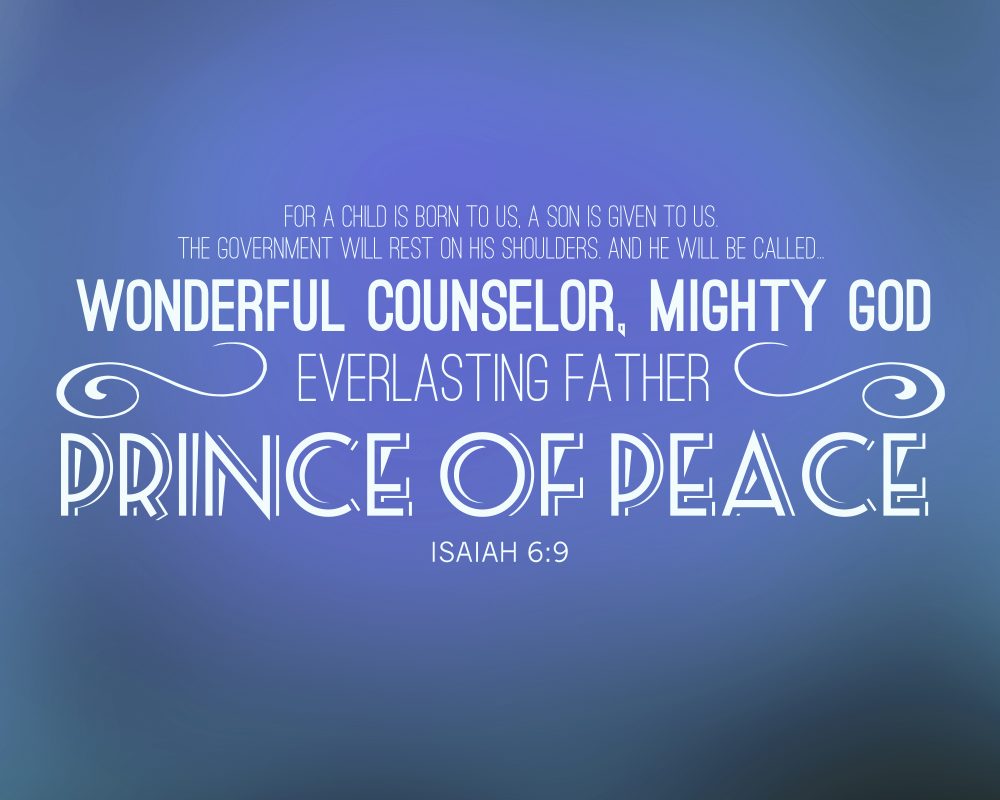
The most natural, logical, and grammatically sound translation of Isaiah 9:6[5] is: “For a child has been born to us, a son has been given to us, and the government shall be on his shoulder, and his name is called Wonderful Counselor, Mighty God, Father Forever, Prince of Peace” (my translation). This is in harmony with other verses in our Hebrew Scriptures that point toward the divine nature of the Messiah, and the names of the child should be taken as descriptive of the Messiah himself.
Since we have already dealt at length with the subject of the divine nature of the Messiah, including specific discussion of Isaiah 9:6[5] (see vol. 2, 3.1–3.4), we will look at two questions here, returning to the question of the Messiah’s divinity at the end of our discussion. First, What is the proper translation and meaning of the verse? And second, Is it a Messianic prophecy?
The oldest Jewish translation of Isaiah 9:6[5], found in the Septuagint, understands all the names as referring to the king, rendering this verse into Greek as follows: “For a child is born to us, and a son is given to us, whose government is upon his shoulder: and his name is called the Messenger of great counsel [Megalē hē archē]: for I will bring peace upon the princes, and health to him.”84
The Targum, while explicitly identifying this as a Messianic prophecy, renders the verse in Aramaic with an interesting twist, “… and his name will be called from before the One who is wonderful in counsel, the mighty God who exists forever, Messiah, because there will be abundant peace upon us in his days” (translated literally). The problem with this translation, aside from the fact that it is grammatically strained, is that almost all the names are heaped upon God, and only the last two are given to the son—although it is the naming of this royal child that is central to the verse. How odd! Clearly, the names refer to the son, not to the Lord who gave them.
In other words, the Targumic rendering would be like saying, “And God—the great, glorious, holy, wonderful, eternal, unchangeable Redeemer and King and Lord—calls his name Joe.” There is no precedent or parallel to this anywhere in the Bible and no logical explanation for this rendering, nor is it even a natural, grammatical rendering of the Hebrew.
The characteristics of the royal child are central—highlighted here by his names—not the characteristics of the Lord. As the brilliant Hebrew and Rabbinic scholar Franz Delitzsch noted, even Samuel David Luzzatto, one of the greatest of the Italian rabbis, rightly observed that “you do not expect to find attributes of God here, but such as would be characteristic of the child.”85
This agrees with statements in the Talmudic and midrashic writings, along with the comments of Abraham Ibn Ezra, all of which state that the names refer to the child.86
Contemporary Jewish translations have done their best to come up with another solution, but none of the translations improves on the straightforward, obvious rendering found in most Christian versions. The JPSV of 1917 avoids the whole issue, simply transliterating (rather than translating) the Hebrew words.87
The translation in the Stone edition follows the Targum and reads, “For a child [explained in the footnote to be Hezekiah] has been born to us, a son has been given to us, and the dominion will rest on his shoulder; the Wondrous Adviser, Mighty God, Eternal Father, called his name Sar-Shalom [Prince of Peace].” But none of these translations does justice to the clear meaning of the original text, and one could easily argue that once the clear meaning is avoided, the verse becomes difficult to translate.
The most imaginative translation is that of the NJPSV, rendering the whole name as a sentence: “The Mighty God is planning grace; The Eternal Father, a peaceable ruler.”88 This would be similar to—but substantially longer than—the name of Isaiah’s son in Isaiah 8:1–4, “Maher-Shalal-Hash-Baz,” which means “hasten prey, speed plunder.”
The problems with the rendering of the NJPSV are:
(1) This is the very first time in the recorded history of the translation and interpretation of Isaiah that anyone has ever come up with this rendering. If the NJPSV is right, that would mean that in more than twenty-five hundred years of reading and studying the text, no one else ever got it right.89
From the viewpoint of Jewish tradition, that would be almost unfathomable, since traditional Jews believe that the ancient rabbis were far closer to the original meaning of the biblical text, passing down their traditions and interpretations to the later generations who were more removed from the original. How then could a traditional Jew believe that the Targum was wrong, the Talmud was wrong, the medieval commentaries were wrong, all other Jewish interpreters and translators were wrong, while a translation composed in the last third of the twentieth century was right?90
(2) It eliminates the possibility of these four pairs of names being throne names, similar to the custom in ancient Egypt in which the new pharaoh would receive four royal names at his coronation—something many scholars believe to be the case here.91
(3) The length of the name for the child seems completely unwieldy, even compared to the name Maher-Shalal-Hash-Baz in the next chapter.92
For all these reasons, the rendering of the NJPSV should also be rejected, despite its ingenuity, whereas there is no good reason to reject the rendering found in many Christian translations, which gives four double names to the royal child.93 That is why the translations of this passage in two recent commentaries by two highly respected, nonfundamentalist scholars—Brevard S. Childs, long-time professor at Yale University, and the Catholic scholar Joseph Blenkinsopp, a professor at the University of Notre Dame for over thirty years—follow this pattern (respectively): “For a child has been born for us, a son has been given to us, and the government will be on his shoulders, and his name will be called: ‘Wonderful Counselor, Mighty God, Everlasting Father, Prince of Peace.’ ”94; “For a child has been born for us, a son has been given to us, the emblems of sovereignty rest on his shoulders. His titles will be: Marvelous Counselor, Hero Warrior, Eternal Father, Prince of Peace.”95 As we noted above, these translations are in keeping with some important Rabbinic traditions that also understand all the names to be those of the (Messianic) child.
Still, it is fair to ask how a prophecy delivered about a child to be born in the eighth century B.C.E. can be applied to the Messiah. The answer is simple, however, based on widely accepted principles of Messianic prophecy that explain why both Christian sources and a number of traditional Jewish sources also interpret this passage Messianically. First, we must recognize that every prophecy regarding a Davidic king is a potential Messianic prophecy (see vol. 2, 3.3). The glorious promises spoken at the birth or coronation of a king in the line of David may have been partially fulfilled by a given ruler like David or Solomon or Hezekiah, but they reach their complete goal (= “fulfillment”) in the Messiah, both the son of David and the one greater than David (see below, 4.22 and 4.29, which refer to Psalm 2 and Psalm 110, respectively). Second, as a well-educated, Conservative Jewish rabbi once emphasized to me, the prophets saw the Messiah coming on the immediate horizon of history. (For details on this, see the appendix.) Third, it is clear that the prophecy was not fulfilled by Hezekiah or any other Judean king (and therefore, by definition, by any other son of David) until the time of Yeshua. Therefore, it is either a false prophecy or a Messianic prophecy.
We can get greater clarity on all these issues by considering Hezekiah as the possible subject of Isaiah’s prophecy, remembering that it is the birth of the royal son that prompts great joy and celebration and guarantees the defeat of Judah’s oppressive enemies. Beginning in Isaiah 9:1[8:23], the prophet declares:
Nevertheless, there will be no more gloom for those who were in distress. In the past he humbled the land of Zebulun and the land of Naphtali, but in the future he will honor Galilee of the Gentiles, by the way of the sea, along the Jordan—
The people walking in darkness
have seen a great light;
on those living in the land of the shadow of death
a light has dawned.
You have enlarged the nation
and increased their joy;
they rejoice before you
as people rejoice at the harvest,
as men rejoice
when dividing the plunder.
For as in the day of Midian’s defeat,
you have shattered
the yoke that burdens them,
the bar across their shoulders,
the rod of their oppressor.
Every warrior’s boot used in battle
and every garment rolled in blood
will be destined for burning,
will be fuel for the fire.
For to us a child is born,
to us a son is given,
and the government will be on his shoulders.
And he will be called
Wonderful Counselor, Mighty God,
Everlasting Father, Prince of Peace.
Of the increase of his government and peace
there will be no end.
He will reign on David’s throne
and over his kingdom,
establishing and upholding it
with justice and righteousness
from that time on and forever.
The zeal of the Lord Almighty
will accomplish this.
Isaiah 9:1–7
On a certain level, the meaning of these verses is clear: Great deliverance was about to come to the people of God because the glorious son of David was born. The promised child was here! It was this royal son who would establish the worldwide dominion of the Lord, reigning on the throne of his father, David.
Putting aside for a moment the name of the child in Isaiah 9:6[5], Delitzsch is right in stating that it is understandable if Isaiah’s contemporaries thought for a time that Hezekiah might indeed be this promised son of David. The Talmud even states that God wanted to make Hezekiah the Messiah and make Sennacherib, the Assyrian king, Gog and Magog—but Hezekiah was unworthy.96 In reality, it would seem that his birth was heralded with great excitement and anticipation, with a lofty prophetic oracle of glorious proportions. And Hezekiah was mightily used by the Lord, cleansing the Temple, restoring the holy days and feasts, and experiencing God’s supernatural deliverance from the Assyrians (see 2 Kings 18–20; 2 Chron. 29–32). This was quite an impressive résumé, but not impressive enough, since (1) Hezekiah’s reign came nowhere near fulfilling the prophetic word; (2) his son, Manasseh, was the most wicked king in Judah’s history; and (3) within four generations, the nation was in exile in Babylon. Yet Isaiah declared that “of the increase of his government and peace there will be no end. He will reign on David’s throne and over his kingdom, establishing and upholding it with justice and righteousness from that time on and forever.”
The only way the famous medieval refutationist Isaac Troki could argue against this was to claim that the words don’t really mean what they say. He writes first that the words “without end” are “a mere figure of speech,” and then continues:
We find, similarly, in Isaiah 2:7, “And his land was full of silver and gold, and there was no end to his treasures; and his land was full of horses, and there was no end to his chariots.” Thus we also find in Ecclesiastes 4:8, “There is One, and no second, and he has neither son nor brother; and there is no end to all his troubles.”97
Then, concerning the promise that through this royal son the kingdom of David would be established “with justice and righteousness from that time on and forever,” Troki states that this expression “shows that his dominion—that is the dynasty of David—will never perish. And though an interruption occurred during the time of the captivity, the government, nonetheless, will, in the days of the Messiah, return to the scion of David.”98
But neither of Troki’s arguments is compelling in the least. Regarding the expression “without end, no end” (Hebrew, eyn kets), it is clear from the examples he cites that these words refer to something that can hardly be counted or measured because it is so vast and boundless, like the riches of Solomon or the troubles of an afflicted man. How then can this prophecy that states “of the increase of his government and peace there will be no end” apply to Hezekiah? Even granting that the words “without end” do not have to be taken literally in terms of an eternal kingdom—although this would be a perfectly good way of expressing that concept in Hebrew—they simply do not describe Hezekiah’s reign, which was quite limited in international scope and influence. As for Troki’s contention that Isaiah’s prophecy need not refer to an uninterrupted reign of David’s son, I can only ask in reply, How could Isaiah have been more clear? Is there no significance to the words “from that time on and forever”?
Putting all this together, and taking the words at their face value, it would seem that an unbiased reading of the text points to an everlasting, worldwide reign for this son of David, a king whose nature transcended human bounds. We explored this deep, biblical truth in volume 2, 3.2–3.3, discussing at some length the divine nature of the Messiah, explaining how God made himself fully known to man through Yeshua, literally pitching his tent among us and walking in our midst.99 This is a rich scriptural concept that opens up passages such as Zechariah 12–14, beginning with Zechariah 12:10. In this verse God himself says, “They will look on me, the one they have pierced,” although the context makes it clear that it isn’t God himself who was pierced but rather his servant (see below, 4.31), pointing to a deep identification between the two. This is followed by Zechariah 13:7, where the Messiah is called geber amiti, literally, “the man that is God’s fellow” (or “God’s colleague”; the word is always used in the Tanakh with reference to a close companion or neighbor).100 All this culminates with Zechariah 14:3–5, where the text states that the Lord (meaning Yahweh) will go forth and fight against all the nations that come against Jerusalem, and “on that day his feet [meaning Yahweh’s!] will stand on the Mount of Olives, east of Jerusalem, and the Mount of Olives will be split in two from east to west, forming a great valley, with half of the mountain moving north and half moving south. … Then the Lord my God will come, and all the holy ones with him.” Verses such as these present only two choices: Either Yahweh himself—visibly and physically—will descend onto the Mount of Olives, or else Yeshua the Messiah—the very image of God and the fullness of God in bodily form—will come in the clouds with his holy ones and put his feet on the Mount of Olives.101
What about Micah 5:2[1]? Does this text also point to the divine nature and eternal origin of the Messiah? The classic language of the King James Version, reflected in many subsequent Christian versions, affirms the divinity of the Messiah: “But thou, Bethlehem Ephratah, though thou be little among the thousands of Judah, yet out of thee shall he come forth unto me that is to be ruler in Israel; whose goings forth have been from of old, from everlasting.” This rendering is normally interpreted to mean that the Messiah, who is an uncreated, eternal being, would be physically born in the obscure little town of Bethlehem. Most Jewish translations, however, (and a number of Christian translations) read the text very differently. For example, the NJPSV translates, “And you, Bethlehem of Ephrath, least among the clans of Judah, from you shall one come forth to rule Israel for Me—one whose origin is from old, from ancient times.” This would mean the Davidic king (the Messiah?) had his origins in the obscure town of Bethlehem many years ago, back in the ancient time of David (who lived three centuries prior to Micah).
Which translation is right? It comes down to the rendering of the Hebrew phrase describing the nature of the Messiah’s origins, miqedem mi-yemey ʿolam. The first word simply means “from of old” and is used elsewhere in Micah to refer back to God’s promises to the patriarchs, which he made “from days of qedem” (Micah 7:20, rendered in the King James with “from the days of old”). The next two words, however, would most naturally be translated “from eternity” (literally, from “days of eternity”), unless context indicated a translation of “from ancient days” (in other words, way back in the very distant past). In most cases in the Scriptures, ʿolam clearly means eternity, as in Psalm 90:2, where God’s existence is described as meʿolam weʿadʿolam, “from eternity to eternity” (cf. NJPSV).102 There are, however, some cases where ʿolam cannot mean “eternal” but rather “for a long time” (either past or present). How then does Micah use the word?
In Micah 2:9; 4:5, 7, ʿolam clearly means “forever,” as commonly rendered in both Jewish and Christian versions. This would point clearly to a similar rendering just a few verses later in 5:2[1]. In Micah 7:14, however, the expression “as in the days of ʿolam” is used in a non-eternal sense, the whole verse being translated in the King James with, “Feed thy people with thy rod, the flock of thine heritage, which dwell solitarily in the wood, in the midst of Carmel: let them feed in Bashan and Gilead, as in the days of old.” This indicates we cannot be dogmatic about the translation of Micah 5:2[1], since the context allows for an “eternal” or merely “ancient” meaning.
In this light, the commentary of Rashi on Micah 5:2[1] takes on added significance, since (1) he reads it as a clear Messianic prophecy; (2) he makes reference to Psalm 118:22, which says that the stone rejected by the builders has become the chief cornerstone (a verse quoted several times in the New Testament with reference to Yeshua, who was rejected by the leaders of his people but chosen by God); and (3) he interprets the end of the verse as pointing to the preexistence of the Messiah (or, at the least, of his name) rather than as pointing only to Bethlehem as the ancient city of David (which is made clear at the beginning of the verse). Here is Rashi’s commentary (words in bold indicate Scripture text):
1 And you Bethlehem Ephrathah whence David emanated, as it is stated (1 Sam. 17:58): “The son of your bondsman, Jesse the Bethlehemite.” And Bethlehem is called Ephrath, as it is said (Gen. 48:7): “On the road to Ephrath, that is Bethlehem.” you should have been the lowest of the clans of Judah You should have been the lowest of the clans of Judah because of the stigma of Ruth the Moabitess in you. from you shall emerge for Me the Messiah, son of David, and so Scripture says (Ps. 118:22): “The stone the builders had rejected became a cornerstone.” and his origin is from of old “Before the sun his name is Yinnon” (Ps. 72:17).103
This is certainly a noteworthy interpretation. Also noteworthy is the commentary on this verse by two of the most respected contemporary scholars of the Hebrew Bible, David Noel Freedman and Francis Anderson:
… the person spoken of here has some connection with the remote past. “One whose origin is from of old, from ancient times” (NJPS). A legitimate sensus plenior [i.e., fuller meaning in the light of unfolding scriptural revelation] is that this Ruler will be a superhuman being, associated with God from the beginning of time. Psalm 2:7 speaks of the king as the one whom God “sired” (by adoption). Psalm 110 places the king on God’s right hand. At the least the language suggests that the birth of the Messiah has been determined, or predicted in the divine council, in primal days. Micah 4–5 thus has time points in the Beginning and End as well as the Now. Even if mōṣâʾôt means no more than an oracle expressing the divine determination, it does not require a great shift in conceptuality to move to the Son of Man figure of the later apocalypses—the Urmensch—and to the classical Christology of the ecumenical creeds or the heaven-created Adam of the Quran or the Metatron of the Jewish mystics. So Christians did not abuse the text when they found Jesus in it. Or to put it more cautiously in a negative way, this mysterious language relates the mōšēl whose outgoings have been from of the olden days to God (lî) in a special way. He will rule “for” Yahweh.104
So then, Micah 5:2(1) can also be understood as pointing to the Messiah’s eternal nature, undergirding our reading of Isaiah 9:6[5] as pointing to the Messiah’s divinity.
84 As translated by Sir Lancelot C. L. Brenton, The Septuagint with Apocrypha: Greek and English (repr., Peabody, Mass.: Hendrickson, 1986), 844.
85 Origen Against Celsus, in A. Roberts and J. Donaldson, eds., The Ante-Nicene Fathers, CD ROM ed. (Albany, Ore.: AGES Software, 1997), 5:218.
86 Cf. the following Rabbinic statements: “R. Yose the Galilean said: ‘The name of the Messiah is Peace, for it is said, Everlasting Father, Prince Peace’ ” (Midrash Pereq Shalom, p. 101); “The Messiah is called by eight names: Yinnon [see Ps. 72:17], Tzemach [e.g., Jer. 23:5]; Pele’ [Wonderful, Isa. 9:6(5)], Yo’etz [Counselor, Isa. 9:6(5)], Mashiach [Messiah], El [God, Isa. 9:6(5)], Gibbor [Hero, Isa. 9:6(5)], and Avi’ Ad Shalom [Eternal Father of Peace, Isa. 9:6(5)]; see Deuteronomy Rabbah 1:20.
87 The entire verse is rendered there: “For a child is born unto us, A son is given unto us; And the government is upon his shoulder; And his name is called Pele-joez-el-gibbor-Abi-ad-sar shalom.” A footnote adds, “That is, Wonderful in counsel is God the mighty, the everlasting Father, the Ruler of peace.” Similar to this is the rendering of the English text in the Jerusalem Bible, Koren Edition. The translation is a revision by Harold Fisch of the Michael Friedlander version.
88 A footnote supports the rendering of “grace” with reference to Isaiah 25:1.
89 I would gladly stand corrected on this should evidence to the contrary be forthcoming. To date, however, I have seen no evidence that the rendering of the NJPSV was clearly anticipated by previous Rabbinic literature.
90 Perhaps the rendering of Luzatto was closest to that of the NJPSV; see Delitzsch, Isaiah, 218. His comments on Luzatto’s translation are worth noting: “The motive which prompted Luzzatto to adopt this original interpretation is worthy of notice. He had formerly endeavoured, like other commentators, to explain the passage by taking the words from ‘Wonderful’ to ‘Prince of Peace’ as the name of the child; and in doing this he rendered plʾ yʾts ‘one counselling wonderful things,’ thus inverting the object, and regarded ‘mighty God’ as well as ‘eternal Father’ as hyperbolical expressions, like the words applied to the King in Ps 45:7a. But now he cannot help regarding it as absolutely impossible for a human child to be called ʾel gibbor, like God Himself in Isa 10:21.” The careful reader will note the importance of the remarks of Delitzsch; see further vol. 2, 3.3 (for Talmudic treatment of this verse and the hypberbolic expressions).
91 See the Isaiah commentaries cited in the previous notes.
92 According to Delitzsch (Isaiah, 218), such a translation renders the name “sesquipedalian.”
93 For a discussion of the Masoretic accents (which are not part of the original text), cf. ibid., 219–20.
94 Brevard S. Childs, Isaiah, Old Testament Library (Louisville: Westminster/John Knox, 2001), 78, note esp. n. c.
95 Blenkinsopp, Isaiah 1–39, 246. He notes that “Hero Warrior” is “literally, ‘God warrior,’ ” and “is a divine title applied to the ruler, as can be seen from its reuse by a later interpreter in 10:21” (ibid., 250).
96 Delitzsch, Isaiah, 220; 223–24. The statement in the Talmud is found in b. Sanhedrin 94a, from the lips of Bar Kapparah. Contrast this with the sentiment of a certain Rabbi Hillel in b. Sanhedrin 98a (namely, that Israel would have no Messiah because they already enjoyed him in the days of Hezekiah), also cited in Delitzsch, Isaiah, 224. Regarding the comment of Bar Kapparah, Delitzsch states (Isaiah, 223–24), “There is so far some sense in this, that the Messianic hopes really could centre for a certain time in Hezekiah.” Interestingly, the Hebrew text of Isaiah 9:6[5] contains an anomaly, as the letter mem in the word lemarbeh is written in its final (i.e., word ending) form (which is closed) even though in this case, it is found toward the beginning of the word. According to the Talmud (in the comment of Bar Kapparah), it was because Hezekiah fell short of his Messianic calling that the mem was closed. On a related note, cf. the recent study of Marvin A. Sweeney, King Josiah of Judah: TheLost Messiah of Israel (New York: Oxford Univ. Press, 2001).
97 Isaac Troki, Hizzuk Emunah: Faith Strengthened, trans. Moses Mocatta (repr., New York: Sefer Hermon, 1970), 106–7, his emphasis.
99 Because the incarnation of the Son of God has often been thought of in crass terms by the anti-missionaries (see vol. 2, 3.2), with little effort to understand the lofty spiritual truths involved in that incredible divine act, the parallels with Jewish mystical thought have often been missed. For the contemplative reader, however, verses such as John 1:14, 18; Colossians 2:9; and 1 Timothy 3:16 relate well to Hasidic teachings on divine “contraction” and the mystical teaching that God must “adorn himself in a garb that conceals his true nature” (as quoted by Boteach, The Wolf Shall Lie with the Lamb, 24).
100 Interestingly, of the twelve times the noun ʿamit occurs in the Hebrew Bible, eleven are found in Leviticus in legal contexts (e.g., Lev. 5:21; 18:20; 19:11; 25:14), leaving Zechariah 13:7 as the only nonlegal occurrence.
101 For Messianic insights into the relevant texts in Zechariah, cf. David Baron, Commentary on Zechariah: His Visions and Prophecies (repr., Grand Rapids: Kregel, 1988).
102 In Psalm 90:2, the Stone edition renders this phrase as, “from the remotest past to the most distant future,” which actually understates the Hebrew.
103 Note that Psalm 72 is widely recognized as a Messianic psalm (at the least, based on principle 2 in the appendix), giving added weight to the fact that Rashi cites it here, especially since verse 17 seems to speak of eternal origins (“before the sun,” meaning either literal preexistence or conceptual preexistence). Interestingly, Rashi’s actual comment on Psalm 72:17 in his commentary on the Psalms seems to contradict his application of that verse in his commentary on Micah, since he applies it to Solomon and explains, “before the sun, his name will be magnified All the days of the sun, his name will be magnified.” See also above, n. 86, where it is noted that Yinnon is recognized as a name of the Messiah in the Rabbinic writings.
104 Francis I. Anderson and David Noel Freedman, Micah: A New Translation with Introduction and Commentary, Anchor Bible (New York: Doubleday, 2000), 468. Interestingly, Santala points out that David Kimchi actually states that the Messiah is ʾel—God!—in his comments on Micah 5:2[1]. However, since Kimchi did not believe in the Messiah’s divinity, one must wonder what point he was trying to make; see Santala, The Messiah in the Old Testament in Light of Rabbinical Writings, 115. There is also some fascinating, relevant speculation in Pirkey HaMashiach (in Midreshei Geʾulah) on the new Messiah of God and on the Messiah as Yahweh. Most scholars believe that 4 Ezra 7:29, where God says, “My son the Messiah will die,” is probably a later Christian interpolation into an (originally) pre-Christian work. Thus, the text is not germane to our point.
[1]Brown, M. L. (2003). Answering Jewish objections to Jesus, Volume 3: Messianic prophecy objections (32). Grand Rapids, Mich.: Baker Books.