النبوات تحدد أنساب المسيح ومكان ميلاده وزمن تجسده وصلبه جـ2 – القمص عبد المسيح بسيط
القمص عبد المسيح بسيط
النبوات تحدد أنساب المسيح ومكان ميلاده وزمن تجسده وصلبه جـ2 – القمص عبد المسيح بسيط
3 – عمانوئيل، الله معنا:
النبوّة
إتمامها
” ولكن يعطيكم السيد نفسه آية ها العذراء تحبل وتلد ابناً وتدعو اسمه عمانوئيل (עמּנוּאל – עמנו אל) ” (أش7:14). وعمانو (עמנו) = معنا، و (إيل- אל) = الله، وفي اليونانية (Εμμανουηλ = Immanuel). (اش7 :14).
” فستلد ابنا وتدعو اسمه يسوع لأنه يخلّص شعبه من خطاياهم. وهذا كله كان لكي يتم ما قيل من الرب بالنبي القائل. هوذا العذراء (παρθενος -Parthenos) تحبل وتلد ابنا ويدعون اسمه عمانوئيل الذي تفسيره الله معنا ” (مت1 :21-23).
وقد كان الرب يسوع المسيح هو الله معنا كقول الكتاب: ” والكلمة صار جسدا وحلّ بيننا ورأينا مجده مجدا كما لوحيد من الآب مملوءا نعمة وحقا ” (يو1 :14). وقد يعترض البعض ويقول أن الرب يسوع المسيح دعي ” يسوع ” وليس ” عمانوئيل “! والإجابة هي أن اسم يسوع يعبر عن كينونته ” كيهوه المخلص ” والذي يحمل اسم يهوه والذي هو اسم الله الوحيد الدال على كينونته كالموجود خالق كل وجود، بينما عمانوئيل هو لقب للمسيح ” الله معنا = عمانو (עמנו) = معنا، و (إيل– אל) = الله “، ويتكون من لقب يعبر عن كون الله إله ليعني الخالق والمعبود والذي سيكون معنا بحلوله وسطنا. اسم يسوع يدل على لاهوته كالموجود الدائم الوجود والواجب الوجود وعمله الخلاصي، واسم عمانوئيل يدل على كونه المعبود الذي حل وسط شعبه.
4 – دعي باسمه وهو في بطن أمه:
النبوّة
” اسمعي لي أيتها الجزائر وأصغوا أيها الأمم من بعيد. الرب من البطن دعاني من أحشاء أمي ذكر اسمي ” (اش49 :1). والذي يذكره الرب من أحشاء أمه يكون قد تسمى قبل أن حبل به في البطن. وهذا ما حدث مع المسيح.
إتمامها
” ولكن فيما هو متفكر في هذه الأمور إذا ملاك الرب قد ظهر له في حلم قائلا يا يوسف ابن داود لا تخف أن تأخذ مريم امرأتك. لأن الذي حبل به فيها هو من الروح القدس. فستلد ابنا وتدعو اسمه يسوع لأنه يخلّص شعبه من خطاياهم ” (مت1 :20و21).
وهنا تعلن لنا النبوّة أن المسيح المنتظر والآتي سيدعى باسمه من البطن، ويقول الإنجيل للقديس لوقا: ” ولما تمت ثمانية أيام ليختنوا الصبي سمي يسوع كما تسمى من الملاك قبل أن حبل به في البطن ” (لو2 :21). وكان الملاك قد بشر العذراء قائلاً: ” فقال لها الملاك لا تخافي يا مريم لأنك قد وجدت نعمة عند الله. وها أنت ستحبلين وتلدين ابنا وتسمينه يسوع ” (لو1 :30و31).
5 – سيكون من نسل سام:
النبوّة
إتمامها
” وقال مبارك الرب اله سام. وليكن كنعان عبدا لهم. ليفتح الله ليافث فيسكن في مساكن سام ” (تك9 :26و27).
” يسوع 000 بن إبراهيم 000 بن سام بن نوح ” (لو3 :36).
لم يبق بعد الطوفان على الأرض سوى نوح وأولاده الثلاثة سام وحام ويافث، وحددت النبوّة أن نسل المرأة الآتي سيأتي من نسل سام بن نوح: ” وقال مبارك الرب اله سام. وليكن كنعان عبدا لهم. ليفتح الله ليافث فيسكن في مساكن سام ” (تك9 :26و27). وكان سام جدا لإبراهيم الذي جاء المسيح من نسله، كما يقول الكتاب: ” هذه مواليد سام. لما كان سام ابن مئة سنة ولد ارفكشاد بعد الطوفان بسنتين. وعاش سام بعدما ولد ارفكشاد خمس مئة سنة وولد بنين وبنات 000 وعاش تارح سبعين سنة وولد إبرام وناحور وهاران ” (تك11 :9-26)، وإبرام هو إبراهيم: ” إبرام وهو إبراهيم ” (1أخ1 :27)، لأن الله غير اسمه من إبرام إلى إبراهيم ” فلا يدعى اسمك بعد إبرام بل يكون اسمك إبراهيم. لأني أجعلك أبا لجمهور من الأمم ” (تك17 :5).
6 – نسل إبراهيم:
النبوّة
إتمامها
” وقال الرب لإبرام اذهب من أرضك ومن عشيرتك ومن بيت أبيك إلى الأرض التي اريك. فأجعلك امة عظيمة وأباركك وأعظم اسمك وتكون بركة. وأبارك مباركيك ولاعنك العنه. وتتبارك فيك جميع قبائل الأرض ” (تك12 :1-3)، وحدد الله الوعد لإبراهيم بقوله: ” ويتبارك في نسلك جميع أمم الأرض ” (تك22:18)
” والكتاب إذ سبق فرأى أن الله بالإيمان يبرر الأمم سبق فبشر إبراهيم أن فيك تتبارك جميع الأمم 000 لتصير بركة إبراهيم للأمم في المسيح يسوع لننال بالإيمان موعد الروح 000 وأما المواعيد فقيلت في إبراهيم وفي نسله. لا يقول وفي الانسال كأنه عن كثيرين بل كأنه عن واحد وفي نسلك الذي هو المسيح ” (غل3 :8و14و16).
طلب الله من إبراهيم أبي الآباء أن يترك أرضه وعشيرته، في أور الكلدانيين فيما بين النهرين، ويذهب إلى أرض كنعان ليكوّن فيها أمة ويأتي منه نسل تتبارك به جميع الأمم ويرد العالم إلى عبادة الله الحي ويعود به إلى الفردوس الذي سبق أن خرج منه ” وقال الرب لإبرام اذهب من أرضك ومن عشيرتك ومن بيت أبيك إلى الأرض التي أريك. فأجعلك أمة عظيمة وأباركك وأعظم اسمك وتكون بركة. وأبارك مباركيك ولاعنك العنه. وتتبارك فيك جميع قبائل الأرض ” (تك1:12-3).
وكان مرتبا في علم الله السابق ومشورته الأزلية أن يأتي النسل الآتي والمسيح المنتظر من ابن وعد الله به إبراهيم وفي الوقت المعين، ولكن لما شاخ إبراهيم وسارة دون أن ينجبا أشارت سارة على إبراهيم أن ينجب من هاجر فأنجب إسماعيل، ولكن هذا كان رأي سارة ومشورتها البشرية وليس ترتيب المشورة الإلهية الأزلي، وفي الوقت المعين قال الله لإبراهيم: ” سارة امرأتك تلد لك ابنا وتدعو اسمه اسحق. وأقيم عهدي معه عهدا أبديا لنسله من بعده. وأما إسماعيل فقد سمعت لك فيه. ها أنا أباركه وأثمره وأكثره كثيرا جدا. اثني عشر رئيسا يلد واجعله أمة كبيرة. ولكن عهدي أقيمه مع اسحق الذي تلده لك سارة في هذا الوقت في السنة الآتية ” (تك19:17-21).
ثم أمتحن الله إبراهيم وطلب منه أن يصعد ابنه اسحق محرقة على جبل المريا وأطاع إبراهيم الله ومد يده وأخذ السكين ليذبح أبنهُ اسحق ظهر له ملاك الرب وقال له لا تمد يدك إلى الغلام وقدم له كبشا فدية عن اسحق ” وقال بذاتي أقسمت يقول الرب. أني من اجل انك فعلت هذا الأمر ولم تمسك ابنك وحيدك أباركك مباركة وأكثر نسلك تكثيرا كنجوم السماء وكالرمل الذي على شاطئ البحر. ويرث نسلك باب أعدائه. ويتبارك في نسلك جميع أمم الأرض. من اجل انك سمعت لقولي ” (تك15:22-18). وهنا يتكلم الله عن اسحق باعتباره ابن الموعد وحامل مواعيد الله: ” بالإيمان قدم إبراهيم اسحق وهو مجرب. قدم الذي قبل المواعيد وحيده الذي قيل له انه باسحق يدعى لك نسل ” (عب17:11و18).
وأكد العهد الجديد أن هذا النسل الآتي هو الرب يسوع المسيح فقال القديس بطرس بالروح لشيوخ وعامة اليهود: ” انتم أبناء الأنبياء والعهد الذي عاهد به الله آباءنا قائلا لإبراهيم وبنسلك تتبارك جميع قبائل الأرض. إليكم أولا إذ أقام الله فتاه يسوع أرسله يبارككم برد كل واحد منكم عن شروره ” (اع25:3و26).
وقال القديس بولس بالروح ” والكتاب إذ سبق فرأى أن الله بالإيمان يبرر الأمم سبق فبشر إبراهيم أن فيك تتبارك جميع الأمم. إذا الذين هم من الإيمان يتباركون مع إبراهيم المؤمن 000 لتصير بركة إبراهيم للأمم في المسيح يسوع لننال بالإيمان موعد الروح. أيها الأخوة بحسب الإنسان أقول ليس أحد يبطّل عهدا قد تمكن ولو من إنسان أو يزيد عليه. وأما المواعيد فقيلت في إبراهيم وفي نسله. لا يقول وفي الانسال كأنه عن كثيرين بل كأنه عن واحد وفي نسلك الذي هو المسيح. وإنما أقول هذا أن الناموس الذي صار بعد أربع مئة وثلاثين سنة لا ينسخ عهدا قد سبق فتمكن من الله نحو المسيح حتى يبطّل الموعد ” (غل8:3-17).
7 – نسل اسحق:
” ولكن عهدي اقيمه مع اسحق الذي تلده لك سارة ” (تك17 :21).
النبوّة
إتمامها
” فقال الله بل سارة امرأتك تلد لك ابنا وتدعو اسمه اسحق. واقيم عهدي معه عهدا ابديا لنسله من بعده ” (تك17 :19). وقال لإسحق: ” وتتبارك في نسلك جميع أمم الأرض ” (تك2:26 – 4).
” يسوع 000 ابن اسحق ” (لوقا 3: 23و34). ما أنطبق على إبراهيم من جهة النسل الموعود أنطبق على إسحق ومن بعده يعقوب.
كان الوعد وكانت المواعيد الإلهية، بحسب ترتيب الله الإلهي ومشورته الأزلية وعلمه السابق، خاصة بإسحق ابن الموعد والذي أعطاه الله لإبراهيم في سن وزمن لم يتوقع فيه الإنجاب وليس لابن الجسد والمشورة الإنسانية التي ظنت أن الله لن يحقق وعوده!! يقول الكتاب: ” فانه مكتوب انه كان لإبراهيم ابنان واحد من الجارية والآخر من الحرة. لكن الذي من الجارية ولد حسب الجسد وأما الذي من الحرة فبالموعد. وكل ذلك رمز لان هاتين هما العهدان إحداهما من جبل سيناء الوالد للعبودية الذي هو هاجر. لأن هاجر جبل سيناء في العربية. ولكنه يقابل أورشليم الحاضرة فإنها مستعبدة مع بنيها. وأما أورشليم العليا التي هي أمنا جميعا فهي حرة. لأنه مكتوب افرحي أيتها العاقر التي لم تلد. اهتفي واصرخي أيتها التي لم تتمخض فان أولاد الموحشة أكثر من التي لها زوج. وأما نحن أيها الأخوة فنظير اسحق أولاد الموعد ” (غل4 :22-28).
وبعد وفاة إبراهيم أكد الله هذا الوعد عينه لإسحق حيث يقول الكتاب: ” وكان بعد موت إبراهيم أن الله بارك اسحق ابنه ” (تك11:25)، وأكد له الوعد من جديد: ” وظهر له الرب وقال لا تنزل إلى مصر اسكن في الأرض التي أقول لك. تغرب في هذه الأرض فأكون معك وأباركك لأني لك ولنسلك أعطي جميع هذه البلاد وأفي بالقسم الذي أقسمت لإبراهيم أبيك وأكثر نسلك كنجوم السماء وأعطينسلك جميع هذه البلادوتتبارك في نسلك جميع أمم الأرض ” (تك2:26-4).
8 – نسل يعقوب:
ومن نسل إسحق اختار الله يعقوب:
النبوّة
إتمامها
وقد جدد الله الوعد ليعقوب قائلاً: ” أنا الرب اله إبراهيم أبيك واله اسحق 000 ويتبارك فيك وفي نسلك جميع قبائل الأرض ” (تك 28 :13و14).
قال الملاك للعذراء: ” هذا يكون عظيما وابن العلي يدعى ويعطيه الرب الإله كرسي داود أبيه. ويملك على بيت يعقوب إلى الأبد ولا يكون لملكه نهاية ” (لو1:32و33).
وأنجب أسحق يعقوب وعيسو من رفقة في بطن واحدة وكان الله في سابق علمه ومشورته الأزلية قد أختار يعقوب وحدة ليأتي منه النسل الموعود وتمتد في ذريته النبوة، ومن ثم قال لرفقة وهي حامل بيعقوب وعيسو: ” في بطنك أمّتان. ومن أحشائك يفترق شعبان. شعب يقوى على شعب. وكبير يستعبد لصغير ” (تك25 :23)، وأيضا يقول الكتاب: ” أليس عيسو أخا ليعقوب يقول الرب وأحببت يعقوب وأبغضت عيسو ” (ملا1 :2و3)، ” رفقة أيضا وهي حبلى من واحد وهو اسحق أبونا. لأنه وهما لم يولدا بعد ولا فعلا خيرا أو شرا لكي يثبت قصد الله حسب الاختيار ليس من الأعمال بل من الذي يدعو. قيل لها أن الكبير يستعبد للصغير. كما هو مكتوب أحببت يعقوب وأبغضت عيسو ” (رو9 :10-13). ومن ثم فقد جدد الله الوعد ليعقوب قائلاً: ” أنا الرب اله إبراهيم أبيك واله اسحق الأرض التي أنت مضطجع عليها أعطيها لك ولنسلك. ويكون نسلك كتراب الأرض وتمتد غربا وشرقا وشمالا وجنوبا ويتبارك فيك وفي نسلك جميع قبائل الأرض ” (تك28 :13، 14).
9 – كوكب يعقوب:
وبعد يعقوب بعدة أجيال تنبأ بلعام بن بعور عن هذا النسل الموعود والفادي المنتظر قائلاً بالروح القدس: ” أراه ولكن ليس الآن أبصره ولكن ليس قريبا يبرز كوكب من يعقوب ويقوم قضيب من إسرائيل فيحطم طرفي موآب ويهلك كل بني الوغى ” (عد17:24). ورأى علماء اليهود أن هذا الكوكب هو المسيح المنتظر، فيقول ترجوم أونكيلوس: ” أراه وليس الآن، أنظره ولكن ليس قريباً. يبرز ملك من يعقوب، ويقوم
المسيح من إسرائيل “.
النبوّة
إتمامها
ثم قالت البنوة عن مجيء المسيح من يعقوب أيضاً: ” أراه ولكن ليس الآن. أبصره ولكن ليس قريبا. يبرز كوكب من يعقوب ويقوم قضيب من إسرائيل فيحطم طرفي موآب ويهلك كل بني الوغى ” (عدد24 :17).
” وعندنا الكلمة النبوية وهي اثبت التي تفعلون حسنا أن انتبهتم إليها كما إلى سراج منير في موضع مظلم إلى أن ينفجر النهار ويطلع كوكب الصبح في قلوبكم ” (2بط1 :19).
ويؤكد لنا العهد الجديد أن المسيح هو هذا الكوكب: ” وعندنا الكلمة النبوية وهي اثبت التي تفعلون حسنا أن انتبهتم إليها كما إلى سراج منير في موضع مظلم إلى أن ينفجر النهار ويطلع كوكب الصبح في قلوبكم ” (2بط1 :19)، ” أنا يسوع أرسلت ملاكي لأشهد لكم بهذه الأمور عن الكنائس. أنا أصل وذرية داود. كوكب الصبح المنير ” (رؤ22 :16).
10– نسل يهوذا الذي تخضع له الشعوب:
النبوّة
إتمامها
” لا يزول قضيب من يهوذا ومشترع من بين رجليه حتى يأتي شيلوه وله يكون خضوع شعوب ” (تك49 :10).
” ربنا قد طلع من سبط يهوذا ” (عب7 :14)، ووصف في سفر الرؤيا بـ ” الأسد الذي من سبط يهوذا أصل داود ” (رؤ5 :5).
في نهاية أيام يعقوب أجتمع بأبنائه الأثني عشر وباركهم وتنبأ عن مستقبل نسل كل واحد منهم وعندما جاء إلى يهوذا قال: ” يهوذا إياك يحمد إخوتك. يدك على قفا أعدائك يسجد لك بنو أبيك. يهوذا جرو أسد. من فريسة صعدت يا ابني. جثا وربض كاسد وكلبوة. من ينهضه. لا يزول قضيب من يهوذا ومشترع من بين رجليه حتى يأتي شيلوه وله يكون خضوع شعوب ” (تك49 :8-10). وتعني النبوّة هنا أن الحكم والتشريع سيستمران في يهوذا وفي إسرائيل إلى أن يأتي المسيح المنتظر، فكلمة القضيب هنا هو الصولجان، عصا الحكم، والمشترع هو الذي يطبق الشريعة، ومن بين رجليه أي من صلبه، صلب يهوذا، وشيلوه هو الذي له، أي الذي له الصولجان والتشريع والحكم. وقد تم ذلك حرفيا بعد ميلاد المسيح بسبع سنوات (أنظر الفصل التالي). وقد بدأ الإتمام الحرفي لهذه النبوة منذ أيام داود النبي والملك كأول حاكم وملك لبني إسرائيل من سبط يهوذا فقد ” رفض (الله) خيمة يوسف ولم يختر سبط افرايم. بل اختار سبط يهوذا جبل صهيون الذي أحبه ” (مز78 :67 و68)، ومن ثم فقد بدأ تطبيق هذه النبوة من داود النبي الذي هو من سبط يهوذا ” وداود هو ابن ذلك الرجل الافراتي من بيت لحم يهوذا الذي اسمه يسّى ” (1صم17 :12). واستمر بعد ذلك حتى جاء المسيح وانتهى الحكم من يهوذا وإسرائيل نهائيا منذ ذلك الوقت.
وقد أعتقد كل علماء اليهود الرابيين القدماء أن شيلوه هو لقب المسيا الآتي: وعلى سبيل المثال قال ترجوم أونكيلوس تفسيرا لهذه النبوّة: ” أن انتقال الحكم من يهوذا لن يتوقف من بيت يهوذاولا الكاتب من أبناء أبنائهم حتى يأتي المسيا “(3). وقال ترجوم يوناثان المنحول ” الملك والحكام لن يتوقفوا من بيت يهوذا 000 حتى يأتي الملك المسيا “(5). ويقول ترجوم أورشليم: ” لن يتوقف الملوك من بيت يهوذا 000 حتى مجيء الملك المسيا 000 الذي ستخضع له كل سيادات الأرض “(6).
وأكد العهد الجديد أن الرب يسوع المسيح هو هذا الآتي من سبط يهوذا: ” ولما ابتدأ يسوع كان له نحو ثلاثين سنة وهو على ما كان يظن ابن يوسف بن هالي 000 بن داود بن يسّى 000 بن فارص بن يهوذا بن يعقوب بن اسحق بن إبراهيم ” (لو3 :23-34)، ” فانه واضح أن ربنا قد طلع من سبط يهوذا ” (عب7 :14)، ” هوذا قد غلب الأسد الذي من سبط يهوذا أصل داود ” (رؤ5 :5).
(3) Chuck Missler, The Creator Beyond Time and Space , Until Shiloh Come .
(5) Chuck Missler, The Creator Beyond Time and Space , Until Shiloh Come .
(6) Ibid.
النبوات تحدد أنساب المسيح ومكان ميلاده وزمن تجسده وصلبه جـ2 – القمص عبد المسيح بسيط
MATTHEW 26:52—Is Jesus advocating pacifism and denouncing capital punishment in this passage?
PROBLEM: When the soldiers came to arrest Jesus, Peter took out his sword and cut off the ear of the high priest’s servant. Jesus told Peter to put back the sword because those who take up the sword will die by the sword. Some use this verse to support pacifism and to oppose capital punishment, which the Bible affirms elsewhere (Gen. 9:6).
SOLUTION: Total pacifism is not taught in this Scripture. Indeed, Abraham was blessed by the Most High God (Gen 14:19) after engaging in a war against the unjust aggression of the kings who had captured his nephew Lot. In Luke 3:14, soldiers come to inquire of John the Baptist about what they should do. John never told them to leave the army. Likewise, Cornelius, in Acts 10, was a centurion. He was called a devout man (v. 2), and the Scriptures say that the Lord heard the prayers of Cornelius (v. 4). When Cornelius becomes a Christian, Peter does not tell him to leave the army. Also, in Luke 22:36–38, Christ says that the one who has no sword should sell his robe and buy one. The apostles responded saying that they had two swords. Jesus responded saying that “it was enough.” In other words, they did not need to get rid of their swords. The Apostle Paul accepted the protection of the Roman army to save his life from unjust aggressors (Acts 23). Indeed, he reminded the Roman Christians that God had given the sword to the king who did not bear it in vain (Rom. 13:1–4). When Jesus returns to earth, He will come with the armies of heaven and will war against the kings of the earth (Rev. 19:11–19). So, from the beginning to the end, the Bible is filled with examples of the justification of war against evil aggressors.
What, then, did Jesus mean when He commanded Peter to put away his sword? Peter was making two mistakes in using his sword. First, while the Bible permits the sword by the government for civil purposes (Rom. 13:1–4), it does not endorse its use for spiritual ends. It is to be used by the state, not by the church. Second, Peter’s use was aggressive, not purely defensive. His life was not being unjustly threatened. That is, it was not clearly an act of self-defense (Ex. 22:2). Jesus appears to have endorsed the use of the sword in civil self-defense (Luke 22:36), as did the Apostle Paul (Acts 23).
Likewise, capital punishment is not forbidden in Scripture, but rather was established by God. Genesis 9:6 affirms that whoever sheds man’s blood, the blood of the killer will also be shed. Numbers 35:31 makes a similar statement. In the NT, Jesus recognized that Rome had capital authority and submitted to it (John 19:11). The Apostle Paul informed the Romans that governing authorities are ministers of God and that they still possessed the God-given sword of capital authority (13:1, 4). So Jesus in no way did away with the just use of the sword by civil authorities. He simply noted that those who live lives of aggression often die by the same means.
MATTHEW 24:34—Did Jesus err by affirming that the signs of the end time would be fulfilled in His era?
PROBLEM: Jesus spoke of signs and wonders regarding His second coming. But Jesus said “this generation” would not end before all these events took place. Did this mean that these events would occur in the lifetime of His hearers?
SOLUTION: These events (e.g., the Great Tribulation, the sign of Christ’s return, and the end of the age) did not occur in the lifetime of Christ’s hearers. Therefore, it is reasonable to understand their fulfillment as something yet to come. This calls for a closer examination of the meaning of “generation” for meanings other than that of Jesus’ contemporaries.
First, “generation” in Greek (genea) can mean “race.” In this particular instance, Jesus’ statement could mean that the Jewish race would not pass away until all things are fulfilled. Since there were many promises to Israel, including the eternal inheritance of the land of Palestine (Gen. 12; 14–15; 17) and the Davidic kingdom (2 Sam. 7), then Jesus could be referring to God’s preservation of the nation of Israel in order to fulfill His promises to them. Indeed, Paul speaks of a future of the nation of Israel when they will be reinstated in God’s covenantal promises (Rom. 11:11–26). And Jesus’ response to His disciples’ last question implied there would yet be a future kingdom for Israel, when they asked: “Lord, will You at this time restore the kingdom to Israel?” Rather than rebuking them for their misunderstanding, He replied that “It is not for you to know times or seasons which the Father has put in His own authority” (Acts 1:6–7). Indeed, Paul in Romans 11 speaks of the nation of Israel being restored to God’s promised blessings (cf. vv. 25–26).
Second, “generation” could also refer to a generation in its commonly understood sense of the people alive at the time indicated. In this case, “generation” would refer to the group of people who are alive when these things come to pass in the future. In other words, the generation alive when these things (the abomination of desolation [v.15], the great tribulation such as has never been seen before [v. 21], the sign of the Son of Man in heaven [v. 30], etc.) begin to come to pass will still be alive when these judgments are completed. Since it is commonly believed that the tribulation is a period of some seven years (Dan. 9:27; cf. Rev. 11:2) at the end of the age, then Jesus would be saying that “this generation” alive at the beginning of the tribulation will still be alive at the end of it. In any event, there is no reason to assume that Jesus made the obviously false assertion that the world would come to an end within the lifetime of His contemporaries.
MATTHEW 24:29—Did Christ come to earth immediately following the Tribulation or sometime later?
PROBLEM: In Matthew, Jesus represents His coming as “immediately after” (24:29) the Great Tribulation. But Luke seems to separate it by the “times of the Gentiles” (Luke 21:24, 27).
SOLUTION: The interval referred to by Luke is the time between the destruction of Jerusalem (a.d. 70), which began God’s judgment on Jerusalem (cf. Matt. 24:2), and the return of Christ to earth “with power and great glory” (Matt. 24:30). So, when Matthew affirms that Christ’s coming is “immediately after the tribulation of those days” (24:29), he is referring to the end of the “times of the Gentiles” mentioned by Luke (21:24). Hence, there is no irresolvable conflict between the two accounts.
Geisler, N. L., & Howe, T. A. (1992). When critics ask : A popular handbook on Bible difficulties (358). Wheaton, Ill.: Victor Books.
MATTHEW 16:28—Did Jesus make a mistake about His disciples seeing the kingdom come in their lifetimes?
PROBLEM: Jesus told His disciples that some of them would not see death until they saw Him coming in His kingdom. Yet during the life of the apostles, Jesus never returned to set up His kingdom.
SOLUTION: This is a question of when this was going to take place, not whether it would. There are three possible solutions.
First, some have suggested that this may be a reference to the Day of Pentecost where Christ’s Helper, the Holy Spirit, came to descend upon the apostles. In John’s Gospel (14:26), Jesus promised to send the Holy Spirit, and, in the beginning of Acts (1:4–8), He tells them not to leave Jerusalem until they have received the Holy Spirit. But this hardly seems to fit the description of seeing Christ coming in His kingdom (Matt. 16:28).
Second, others believe this might be a reference to the destruction of Jerusalem and the temple in a.d. 70. This would mean that He would return to bring judgment upon the city that rejected Him and crucified Him. While this is a possible explanation, it does not seem to account for the fact that Jesus appears to be coming for believers (those “standing there” with Him), not simply coming in judgment on unbelievers. Nor does the judgment on Jerusalem in a.d. 70 adequately express seeing the “Son of Man coming in His kingdom” (v. 28), a phrase reminiscent of His second coming (cf. 26:64). Nor does it explain why Jesus never appeared in a.d. 70.
A third and more plausible explanation is that this is a reference to the appearance of Christ in His glory on the Mount of Transfiguration which begins in the very next verse (17:1). Here Christ does literally appear in a glorified form, and some of His apostles are there to witness the occasion, namely Peter, James, and John. This transfiguration experience, of course, was only a foretaste of His Second Coming when all believers will see Him come in power and great glory (cf. Acts 1:11; Rev. 1:7).
MATTHEW 2:6—How can we explain Matthew’s apparent misquotation of Micah 5:2?
PROBLEM: Matthew 2:6 quotes Micah 5:2. However, the words Matthew uses are different than those used by Micah.
SOLUTION: Although Matthew seems to have changed some of the words from the passage in Micah, there is no real deviation in the meaning of the text. Matthew, in some instances, seems to have paraphrased.
First, Matthew inserts the phrase “land of Judah” for the word “Ephrathah.” This does not really change the meaning of the verse. There is no difference between the land of Judah and Ephrathah, except one is more specific than the other. In fact, Ephrathah refers to Bethlehem in the Micah passage, and Bethlehem is located in the land of Judah. However, this does not change the basic meaning of this verse. He is speaking of the same area of land. Interestingly, when Herod asked the chief priests and the scribes where the child was to be born, they said, “in Bethlehem of Judea” (Matt. 2:5, nasb).
Second, Matthew describes the land of Judah as “not the least” but Micah states that it is “little.” Here, Matthew may be saying that since the Messiah is to come from this region, it is by no means least among the other areas of land in Judah. The phrase in Micah only says that Bethlehem is too little or small, as compared to the other areas of land in Judah. The verse does not say it is the least among them, only very little. Matthew is saying the same thing in different words, namely, that Bethlehem is little in size, but by no means the least in significance, since the Messiah was born there.
Finally, Matthew uses the phrase “who will shepherd My people Israel” and Micah does not. Micah 5:2 recognizes that there will be a ruler in Israel, and Matthew recognizes this as well. However, the phrase that is not mentioned in Micah is actually taken from 2 Samuel 5:2. The combining of verses does not take away what is being said, but it strengthens the point that the author is making. There are other instances where an author combines one Scripture with another. For example, Matthew 27:9–10 combines some of Zechariah 11:12–13 with Jeremiah 19:2, 11 and 32:6–9. Also, Mark 1:2–3 combines some of Isaiah 40:3 with Malachi 3:1. Only the first passage is mentioned, since it is the main passage being cited.
In brief, Matthew is not misrepresenting any information in his quotation of Micah 5:2 and 2 Samuel 5:2. Matthew’s quote is still accurate even though he paraphrases part of it and combines another portion of Scripture with it.
You claim that Haggai 2 points to the fact that the Messiah had to come before the Second Temple was destroyed, since it says in verse 9 that the glory of the Second Temple would be greater than the glory of Solomon’s Temple. Actually, Haggai is speaking about only the physical splendor of the Second Temple, which surpassed Solomon’s Temple in the days of Herod.
Although there are some clear references in Haggai 2 to an abundance of gold and silver that would be used in rebuilding the Temple, there can be no doubt that the phrase “to fill with glory” refers to the manifest presence of God and not to physical splendor. We can therefore ask, In what way did the glory of the Second Temple surpass that of the First Temple? The answer is inescapable: The Messiah, the King of Glory, the very embodiment of the presence and power of God, visited that Temple.
We dealt with this objection in a different context in vol. 1, 2.1, pointing out several compelling reasons that the references to the Temple being filled with glory could not be explained with primary reference to the physical rebuilding of the Temple with massive amounts of silver and gold. Rather, Haggai’s prophecy must ultimately be understood as meaning that the Temple would be filled with the splendor of God’s glorious presence. Before expanding on this in more depth, let’s read the relevant verses in Haggai’s prophecy:
This is what the Lord Almighty says: “In a little while I will once more shake the heavens and the earth, the sea and the dry land. I will shake all nations, and the desired of all nations will come, and I will fill this house with glory,” says the Lord Almighty. “The silver is mine and the gold is mine,” declares the Lord Almighty. “The glory of this present house will be greater than the glory of the former house,” says the Lord Almighty. “And in this place I will grant peace,” declares the Lord Almighty.
Haggai 2:6–9
How can we be sure the prophet is not simply declaring that the Second Temple would be built more beautifully than Solomon’s Temple? After all, the Hebrew word kavod can sometimes refer to wealth and riches, as in Genesis 31:1: “Jacob heard that Laban’s sons were saying, ‘Jacob has taken everything our father owned and has gained all this wealth [kavod] from what belonged to our father.’ ” And the context in Haggai 2 makes reference to the abundance of silver and gold that God would send for the rebuilding of the Temple. What then gives me the right to insist on a primarily spiritual interpretation to this passage?
First, the Lord is making a specific comparison between the glory of the First Temple and the glory of the Second Temple, and the Scriptures are very clear about the nature of the glory of the First Temple: The supernatural presence of God was there. The fire of God was there. That was the glory of the First Temple (see 2 Chron. 7:1–4). Second, God promises to “fill this house with glory,” and the expression “fill with glory” always refers to the divine manifestation in the Bible (see vol. 1, 2.1). Third, the Talmud and later Rabbinic literature noted that some of the most important elements found in the First Temple—some of the very symbols of the glory of God, I might add—were not found in the Second Temple, namely, the ark of the covenant, the divine fire, the Holy Spirit, the Shekhinah, the Urim and Thummim.297 How then could it be said that the glory of the Second Temple would surpass that of the First when the Second Temple was devoid of the very manifest presence of God that defined the First Temple’s glory? Fourth, the ancient Jewish sages could not agree on the meaning of the passage, some claiming that the glory would consist in the longer duration of the Second Temple (i.e., it lasted longer than the First Temple did; cf. b. Baba Bathra 3a). This argument, however, is so weak that even the sixteenth-century refutationist Isaac Troki—an arch opponent of Christianity—decisively refuted it, stating,
Nor can we admit that the glory of the second temple consisted in its longer duration—a point discussed in the Talmud (Baba Bathra), for the Scripture makes no mention of the glory being attributable to the length of the time during which the temple was constructed or lasted. And even if the duration of the second temple had exceeded by double the time that of the first temple, the word glory could not have been assigned to this distinction.298
And if the promise was merely one of physical glory and splendor—which, as we have noted, falls far short of the description of being filled with God’s glory—why then is an additional promise offered in Haggai 2:9, namely, that in the Second Temple God would appoint peace?299 It is because the Lord is promising several things for the Second Temple: (1) It would be built with the riches of the nations; (2) it would be filled with the glory of God; and (3) the Lord would appoint peace there. So clear was this last word that Ibn Ezra actually raised the possibility that the promise of peace in Haggai 2:9 was conditional, the conditions being “if they will be completely righteous, as Zechariah said, and if they will diligently hearken and obey.”
Ibn Ezra’s interpretation reminds us of the interpretative problems faced by Rabbinic Judaism, since there are prophecies that were supposed to be fulfilled in the days of the Second Temple—Messianic prophecies of fundamental importance—but that were never fulfilled, according to the ancient rabbis (see vol. 1, esp. 2.1). Other prophecies were read as possibilities, since the Scriptures predicted that the Messiah would come on the clouds of heaven, exalted and glorious (Dan. 7:13), and also declared that he would come riding on a donkey, meek and lowly (Zech. 9:9). According to the Talmud, if Israel was righteous and worthy, he would come on the clouds; if Israel was sinful and unworthy, he would come riding on a donkey. But the Bible did not say these were mere possibilities and only one of them would prove true; rather, they were inspired prophecies, both of which would prove true. First the Messiah came riding on a donkey (in point of fact, we were not worthy of his coming then); when we repent and welcome him back (thus becoming worthy to receive him as King), he will return in the clouds of heaven.
And it is Messiah’s coming to the Second Temple that explains Haggai’s prophecy. Something more wonderful than the divine fire would visit that place; something greater than the cloud of glory would be manifest there. The Son of God himself, King Messiah, the glorious Word made flesh, would come to that Temple, teaching, preaching, cleansing, refining, and working miracles. It would be the ultimate divine visitation, far greater than anything that took place in Solomon’s Temple. The Second Temple was also the place of the outpouring of the Holy Spirit on Shavuot (the Feast of Weeks, or Pentecost), as recorded in Acts 2, as well as the place of miraculous healings through the Messiah’s emissaries (see Acts 3; and note especially Acts 2:43; 5:12). Surely that Temple was filled with glory! And it was in the Second Temple that the one who gave his life as an offering to make peace between God and man, and between Jew and Gentile, came and offered peace (cf. also Luke 1:79; 2:14; 19:42; Acts 10:36).300
297 Another Rabbinic list omits the Shekhinah and separates the ark of the covenant from the mercy seat with the cherubim, thus making five missing items.
298 Troki, Faith Strengthened, 170. For the comparison between the First and Second Temples, cf. esp. b. Yoma 21b and 52b; see further H. N. Bilalik and Y. H. Ravnitzky, eds., The Book of Legends: Sefer Ha-Aggadah, trans. W. G. Braude (New York: Schocken, 1992), 161, #11; cf. also ibid., 165–66, #28, for b. Yoma 9b and Eyn Yaakov.
299 For Troki, this promise also excluded the possibility of fulfillment in the days of the Second Temple; see vol. 1, p, 223, nn. 12–13. Troki’s own answer was a counsel of despair: The prophecy referred to the Third Temple! See vol. 1, ibid.
300 Cf. vol. 1, 2.6 (explaining Matt. 10:34); regarding the greater glory of the Second Temple, cf. Batei Midrashot 2, 24:11, listing the five elements missing from the Second Temple that will return to the final Temple, based on Haggai 2: the fire of the Shekhinah, the ark, the kapporet and cherubim, the Holy Spirit, and the Urim and Thummim.
[1]Brown, M. L. (2003). Answering Jewish objections to Jesus, Volume 3: Messianic prophecy objections (145). Grand Rapids, Mich.: Baker Books.
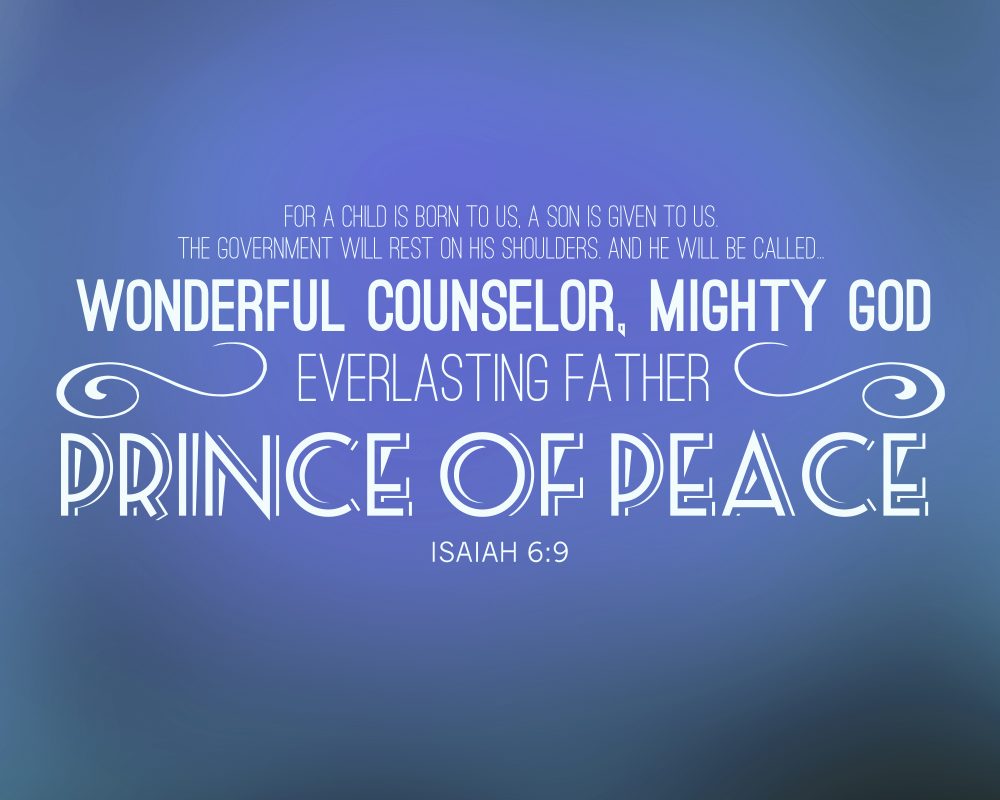
Isaiah 9:6 does not speak of a divine king (or Messiah).
Isaiah 9:6 does not speak of a divine king (or Messiah).
The most natural, logical, and grammatically sound translation of Isaiah 9:6[5] is: “For a child has been born to us, a son has been given to us, and the government shall be on his shoulder, and his name is called Wonderful Counselor, Mighty God, Father Forever, Prince of Peace” (my translation). This is in harmony with other verses in our Hebrew Scriptures that point toward the divine nature of the Messiah, and the names of the child should be taken as descriptive of the Messiah himself.
Since we have already dealt at length with the subject of the divine nature of the Messiah, including specific discussion of Isaiah 9:6[5] (see vol. 2, 3.1–3.4), we will look at two questions here, returning to the question of the Messiah’s divinity at the end of our discussion. First, What is the proper translation and meaning of the verse? And second, Is it a Messianic prophecy?
The oldest Jewish translation of Isaiah 9:6[5], found in the Septuagint, understands all the names as referring to the king, rendering this verse into Greek as follows: “For a child is born to us, and a son is given to us, whose government is upon his shoulder: and his name is called the Messenger of great counsel [Megalē hē archē]: for I will bring peace upon the princes, and health to him.”84
The Targum, while explicitly identifying this as a Messianic prophecy, renders the verse in Aramaic with an interesting twist, “… and his name will be called from before the One who is wonderful in counsel, the mighty God who exists forever, Messiah, because there will be abundant peace upon us in his days” (translated literally). The problem with this translation, aside from the fact that it is grammatically strained, is that almost all the names are heaped upon God, and only the last two are given to the son—although it is the naming of this royal child that is central to the verse. How odd! Clearly, the names refer to the son, not to the Lord who gave them.
In other words, the Targumic rendering would be like saying, “And God—the great, glorious, holy, wonderful, eternal, unchangeable Redeemer and King and Lord—calls his name Joe.” There is no precedent or parallel to this anywhere in the Bible and no logical explanation for this rendering, nor is it even a natural, grammatical rendering of the Hebrew.
The characteristics of the royal child are central—highlighted here by his names—not the characteristics of the Lord. As the brilliant Hebrew and Rabbinic scholar Franz Delitzsch noted, even Samuel David Luzzatto, one of the greatest of the Italian rabbis, rightly observed that “you do not expect to find attributes of God here, but such as would be characteristic of the child.”85
This agrees with statements in the Talmudic and midrashic writings, along with the comments of Abraham Ibn Ezra, all of which state that the names refer to the child.86
Contemporary Jewish translations have done their best to come up with another solution, but none of the translations improves on the straightforward, obvious rendering found in most Christian versions. The JPSV of 1917 avoids the whole issue, simply transliterating (rather than translating) the Hebrew words.87
The translation in the Stone edition follows the Targum and reads, “For a child [explained in the footnote to be Hezekiah] has been born to us, a son has been given to us, and the dominion will rest on his shoulder; the Wondrous Adviser, Mighty God, Eternal Father, called his name Sar-Shalom [Prince of Peace].” But none of these translations does justice to the clear meaning of the original text, and one could easily argue that once the clear meaning is avoided, the verse becomes difficult to translate.
The most imaginative translation is that of the NJPSV, rendering the whole name as a sentence: “The Mighty God is planning grace; The Eternal Father, a peaceable ruler.”88 This would be similar to—but substantially longer than—the name of Isaiah’s son in Isaiah 8:1–4, “Maher-Shalal-Hash-Baz,” which means “hasten prey, speed plunder.”
The problems with the rendering of the NJPSV are:
(1) This is the very first time in the recorded history of the translation and interpretation of Isaiah that anyone has ever come up with this rendering. If the NJPSV is right, that would mean that in more than twenty-five hundred years of reading and studying the text, no one else ever got it right.89
From the viewpoint of Jewish tradition, that would be almost unfathomable, since traditional Jews believe that the ancient rabbis were far closer to the original meaning of the biblical text, passing down their traditions and interpretations to the later generations who were more removed from the original. How then could a traditional Jew believe that the Targum was wrong, the Talmud was wrong, the medieval commentaries were wrong, all other Jewish interpreters and translators were wrong, while a translation composed in the last third of the twentieth century was right?90
(2) It eliminates the possibility of these four pairs of names being throne names, similar to the custom in ancient Egypt in which the new pharaoh would receive four royal names at his coronation—something many scholars believe to be the case here.91
(3) The length of the name for the child seems completely unwieldy, even compared to the name Maher-Shalal-Hash-Baz in the next chapter.92
For all these reasons, the rendering of the NJPSV should also be rejected, despite its ingenuity, whereas there is no good reason to reject the rendering found in many Christian translations, which gives four double names to the royal child.93 That is why the translations of this passage in two recent commentaries by two highly respected, nonfundamentalist scholars—Brevard S. Childs, long-time professor at Yale University, and the Catholic scholar Joseph Blenkinsopp, a professor at the University of Notre Dame for over thirty years—follow this pattern (respectively): “For a child has been born for us, a son has been given to us, and the government will be on his shoulders, and his name will be called: ‘Wonderful Counselor, Mighty God, Everlasting Father, Prince of Peace.’ ”94; “For a child has been born for us, a son has been given to us, the emblems of sovereignty rest on his shoulders. His titles will be: Marvelous Counselor, Hero Warrior, Eternal Father, Prince of Peace.”95 As we noted above, these translations are in keeping with some important Rabbinic traditions that also understand all the names to be those of the (Messianic) child.
Still, it is fair to ask how a prophecy delivered about a child to be born in the eighth century B.C.E. can be applied to the Messiah. The answer is simple, however, based on widely accepted principles of Messianic prophecy that explain why both Christian sources and a number of traditional Jewish sources also interpret this passage Messianically. First, we must recognize that every prophecy regarding a Davidic king is a potential Messianic prophecy (see vol. 2, 3.3). The glorious promises spoken at the birth or coronation of a king in the line of David may have been partially fulfilled by a given ruler like David or Solomon or Hezekiah, but they reach their complete goal (= “fulfillment”) in the Messiah, both the son of David and the one greater than David (see below, 4.22 and 4.29, which refer to Psalm 2 and Psalm 110, respectively). Second, as a well-educated, Conservative Jewish rabbi once emphasized to me, the prophets saw the Messiah coming on the immediate horizon of history. (For details on this, see the appendix.) Third, it is clear that the prophecy was not fulfilled by Hezekiah or any other Judean king (and therefore, by definition, by any other son of David) until the time of Yeshua. Therefore, it is either a false prophecy or a Messianic prophecy.
We can get greater clarity on all these issues by considering Hezekiah as the possible subject of Isaiah’s prophecy, remembering that it is the birth of the royal son that prompts great joy and celebration and guarantees the defeat of Judah’s oppressive enemies. Beginning in Isaiah 9:1[8:23], the prophet declares:
Nevertheless, there will be no more gloom for those who were in distress. In the past he humbled the land of Zebulun and the land of Naphtali, but in the future he will honor Galilee of the Gentiles, by the way of the sea, along the Jordan—
The people walking in darkness
have seen a great light;
on those living in the land of the shadow of death
a light has dawned.
You have enlarged the nation
and increased their joy;
they rejoice before you
as people rejoice at the harvest,
as men rejoice
when dividing the plunder.
For as in the day of Midian’s defeat,
you have shattered
the yoke that burdens them,
the bar across their shoulders,
the rod of their oppressor.
Every warrior’s boot used in battle
and every garment rolled in blood
will be destined for burning,
will be fuel for the fire.
For to us a child is born,
to us a son is given,
and the government will be on his shoulders.
And he will be called
Wonderful Counselor, Mighty God,
Everlasting Father, Prince of Peace.
Of the increase of his government and peace
there will be no end.
He will reign on David’s throne
and over his kingdom,
establishing and upholding it
with justice and righteousness
from that time on and forever.
The zeal of the Lord Almighty
will accomplish this.
Isaiah 9:1–7
On a certain level, the meaning of these verses is clear: Great deliverance was about to come to the people of God because the glorious son of David was born. The promised child was here! It was this royal son who would establish the worldwide dominion of the Lord, reigning on the throne of his father, David.
Putting aside for a moment the name of the child in Isaiah 9:6[5], Delitzsch is right in stating that it is understandable if Isaiah’s contemporaries thought for a time that Hezekiah might indeed be this promised son of David. The Talmud even states that God wanted to make Hezekiah the Messiah and make Sennacherib, the Assyrian king, Gog and Magog—but Hezekiah was unworthy.96 In reality, it would seem that his birth was heralded with great excitement and anticipation, with a lofty prophetic oracle of glorious proportions. And Hezekiah was mightily used by the Lord, cleansing the Temple, restoring the holy days and feasts, and experiencing God’s supernatural deliverance from the Assyrians (see 2 Kings 18–20; 2 Chron. 29–32). This was quite an impressive résumé, but not impressive enough, since (1) Hezekiah’s reign came nowhere near fulfilling the prophetic word; (2) his son, Manasseh, was the most wicked king in Judah’s history; and (3) within four generations, the nation was in exile in Babylon. Yet Isaiah declared that “of the increase of his government and peace there will be no end. He will reign on David’s throne and over his kingdom, establishing and upholding it with justice and righteousness from that time on and forever.”
The only way the famous medieval refutationist Isaac Troki could argue against this was to claim that the words don’t really mean what they say. He writes first that the words “without end” are “a mere figure of speech,” and then continues:
We find, similarly, in Isaiah 2:7, “And his land was full of silver and gold, and there was no end to his treasures; and his land was full of horses, and there was no end to his chariots.” Thus we also find in Ecclesiastes 4:8, “There is One, and no second, and he has neither son nor brother; and there is no end to all his troubles.”97
Then, concerning the promise that through this royal son the kingdom of David would be established “with justice and righteousness from that time on and forever,” Troki states that this expression “shows that his dominion—that is the dynasty of David—will never perish. And though an interruption occurred during the time of the captivity, the government, nonetheless, will, in the days of the Messiah, return to the scion of David.”98
But neither of Troki’s arguments is compelling in the least. Regarding the expression “without end, no end” (Hebrew, eyn kets), it is clear from the examples he cites that these words refer to something that can hardly be counted or measured because it is so vast and boundless, like the riches of Solomon or the troubles of an afflicted man. How then can this prophecy that states “of the increase of his government and peace there will be no end” apply to Hezekiah? Even granting that the words “without end” do not have to be taken literally in terms of an eternal kingdom—although this would be a perfectly good way of expressing that concept in Hebrew—they simply do not describe Hezekiah’s reign, which was quite limited in international scope and influence. As for Troki’s contention that Isaiah’s prophecy need not refer to an uninterrupted reign of David’s son, I can only ask in reply, How could Isaiah have been more clear? Is there no significance to the words “from that time on and forever”?
Putting all this together, and taking the words at their face value, it would seem that an unbiased reading of the text points to an everlasting, worldwide reign for this son of David, a king whose nature transcended human bounds. We explored this deep, biblical truth in volume 2, 3.2–3.3, discussing at some length the divine nature of the Messiah, explaining how God made himself fully known to man through Yeshua, literally pitching his tent among us and walking in our midst.99 This is a rich scriptural concept that opens up passages such as Zechariah 12–14, beginning with Zechariah 12:10. In this verse God himself says, “They will look on me, the one they have pierced,” although the context makes it clear that it isn’t God himself who was pierced but rather his servant (see below, 4.31), pointing to a deep identification between the two. This is followed by Zechariah 13:7, where the Messiah is called geber amiti, literally, “the man that is God’s fellow” (or “God’s colleague”; the word is always used in the Tanakh with reference to a close companion or neighbor).100 All this culminates with Zechariah 14:3–5, where the text states that the Lord (meaning Yahweh) will go forth and fight against all the nations that come against Jerusalem, and “on that day his feet [meaning Yahweh’s!] will stand on the Mount of Olives, east of Jerusalem, and the Mount of Olives will be split in two from east to west, forming a great valley, with half of the mountain moving north and half moving south. … Then the Lord my God will come, and all the holy ones with him.” Verses such as these present only two choices: Either Yahweh himself—visibly and physically—will descend onto the Mount of Olives, or else Yeshua the Messiah—the very image of God and the fullness of God in bodily form—will come in the clouds with his holy ones and put his feet on the Mount of Olives.101
What about Micah 5:2[1]? Does this text also point to the divine nature and eternal origin of the Messiah? The classic language of the King James Version, reflected in many subsequent Christian versions, affirms the divinity of the Messiah: “But thou, Bethlehem Ephratah, though thou be little among the thousands of Judah, yet out of thee shall he come forth unto me that is to be ruler in Israel; whose goings forth have been from of old, from everlasting.” This rendering is normally interpreted to mean that the Messiah, who is an uncreated, eternal being, would be physically born in the obscure little town of Bethlehem. Most Jewish translations, however, (and a number of Christian translations) read the text very differently. For example, the NJPSV translates, “And you, Bethlehem of Ephrath, least among the clans of Judah, from you shall one come forth to rule Israel for Me—one whose origin is from old, from ancient times.” This would mean the Davidic king (the Messiah?) had his origins in the obscure town of Bethlehem many years ago, back in the ancient time of David (who lived three centuries prior to Micah).
Which translation is right? It comes down to the rendering of the Hebrew phrase describing the nature of the Messiah’s origins, miqedem mi-yemey ʿolam. The first word simply means “from of old” and is used elsewhere in Micah to refer back to God’s promises to the patriarchs, which he made “from days of qedem” (Micah 7:20, rendered in the King James with “from the days of old”). The next two words, however, would most naturally be translated “from eternity” (literally, from “days of eternity”), unless context indicated a translation of “from ancient days” (in other words, way back in the very distant past). In most cases in the Scriptures, ʿolam clearly means eternity, as in Psalm 90:2, where God’s existence is described as meʿolam weʿadʿolam, “from eternity to eternity” (cf. NJPSV).102 There are, however, some cases where ʿolam cannot mean “eternal” but rather “for a long time” (either past or present). How then does Micah use the word?
In Micah 2:9; 4:5, 7, ʿolam clearly means “forever,” as commonly rendered in both Jewish and Christian versions. This would point clearly to a similar rendering just a few verses later in 5:2[1]. In Micah 7:14, however, the expression “as in the days of ʿolam” is used in a non-eternal sense, the whole verse being translated in the King James with, “Feed thy people with thy rod, the flock of thine heritage, which dwell solitarily in the wood, in the midst of Carmel: let them feed in Bashan and Gilead, as in the days of old.” This indicates we cannot be dogmatic about the translation of Micah 5:2[1], since the context allows for an “eternal” or merely “ancient” meaning.
In this light, the commentary of Rashi on Micah 5:2[1] takes on added significance, since (1) he reads it as a clear Messianic prophecy; (2) he makes reference to Psalm 118:22, which says that the stone rejected by the builders has become the chief cornerstone (a verse quoted several times in the New Testament with reference to Yeshua, who was rejected by the leaders of his people but chosen by God); and (3) he interprets the end of the verse as pointing to the preexistence of the Messiah (or, at the least, of his name) rather than as pointing only to Bethlehem as the ancient city of David (which is made clear at the beginning of the verse). Here is Rashi’s commentary (words in bold indicate Scripture text):
1 And you Bethlehem Ephrathah whence David emanated, as it is stated (1 Sam. 17:58): “The son of your bondsman, Jesse the Bethlehemite.” And Bethlehem is called Ephrath, as it is said (Gen. 48:7): “On the road to Ephrath, that is Bethlehem.” you should have been the lowest of the clans of Judah You should have been the lowest of the clans of Judah because of the stigma of Ruth the Moabitess in you. from you shall emerge for Me the Messiah, son of David, and so Scripture says (Ps. 118:22): “The stone the builders had rejected became a cornerstone.” and his origin is from of old “Before the sun his name is Yinnon” (Ps. 72:17).103
This is certainly a noteworthy interpretation. Also noteworthy is the commentary on this verse by two of the most respected contemporary scholars of the Hebrew Bible, David Noel Freedman and Francis Anderson:
… the person spoken of here has some connection with the remote past. “One whose origin is from of old, from ancient times” (NJPS). A legitimate sensus plenior [i.e., fuller meaning in the light of unfolding scriptural revelation] is that this Ruler will be a superhuman being, associated with God from the beginning of time. Psalm 2:7 speaks of the king as the one whom God “sired” (by adoption). Psalm 110 places the king on God’s right hand. At the least the language suggests that the birth of the Messiah has been determined, or predicted in the divine council, in primal days. Micah 4–5 thus has time points in the Beginning and End as well as the Now. Even if mōṣâʾôt means no more than an oracle expressing the divine determination, it does not require a great shift in conceptuality to move to the Son of Man figure of the later apocalypses—the Urmensch—and to the classical Christology of the ecumenical creeds or the heaven-created Adam of the Quran or the Metatron of the Jewish mystics. So Christians did not abuse the text when they found Jesus in it. Or to put it more cautiously in a negative way, this mysterious language relates the mōšēl whose outgoings have been from of the olden days to God (lî) in a special way. He will rule “for” Yahweh.104
So then, Micah 5:2(1) can also be understood as pointing to the Messiah’s eternal nature, undergirding our reading of Isaiah 9:6[5] as pointing to the Messiah’s divinity.
84 As translated by Sir Lancelot C. L. Brenton, The Septuagint with Apocrypha: Greek and English (repr., Peabody, Mass.: Hendrickson, 1986), 844.
85 Origen Against Celsus, in A. Roberts and J. Donaldson, eds., The Ante-Nicene Fathers, CD ROM ed. (Albany, Ore.: AGES Software, 1997), 5:218.
86 Cf. the following Rabbinic statements: “R. Yose the Galilean said: ‘The name of the Messiah is Peace, for it is said, Everlasting Father, Prince Peace’ ” (Midrash Pereq Shalom, p. 101); “The Messiah is called by eight names: Yinnon [see Ps. 72:17], Tzemach [e.g., Jer. 23:5]; Pele’ [Wonderful, Isa. 9:6(5)], Yo’etz [Counselor, Isa. 9:6(5)], Mashiach [Messiah], El [God, Isa. 9:6(5)], Gibbor [Hero, Isa. 9:6(5)], and Avi’ Ad Shalom [Eternal Father of Peace, Isa. 9:6(5)]; see Deuteronomy Rabbah 1:20.
87 The entire verse is rendered there: “For a child is born unto us, A son is given unto us; And the government is upon his shoulder; And his name is called Pele-joez-el-gibbor-Abi-ad-sar shalom.” A footnote adds, “That is, Wonderful in counsel is God the mighty, the everlasting Father, the Ruler of peace.” Similar to this is the rendering of the English text in the Jerusalem Bible, Koren Edition. The translation is a revision by Harold Fisch of the Michael Friedlander version.
88 A footnote supports the rendering of “grace” with reference to Isaiah 25:1.
89 I would gladly stand corrected on this should evidence to the contrary be forthcoming. To date, however, I have seen no evidence that the rendering of the NJPSV was clearly anticipated by previous Rabbinic literature.
90 Perhaps the rendering of Luzatto was closest to that of the NJPSV; see Delitzsch, Isaiah, 218. His comments on Luzatto’s translation are worth noting: “The motive which prompted Luzzatto to adopt this original interpretation is worthy of notice. He had formerly endeavoured, like other commentators, to explain the passage by taking the words from ‘Wonderful’ to ‘Prince of Peace’ as the name of the child; and in doing this he rendered plʾ yʾts ‘one counselling wonderful things,’ thus inverting the object, and regarded ‘mighty God’ as well as ‘eternal Father’ as hyperbolical expressions, like the words applied to the King in Ps 45:7a. But now he cannot help regarding it as absolutely impossible for a human child to be called ʾel gibbor, like God Himself in Isa 10:21.” The careful reader will note the importance of the remarks of Delitzsch; see further vol. 2, 3.3 (for Talmudic treatment of this verse and the hypberbolic expressions).
91 See the Isaiah commentaries cited in the previous notes.
92 According to Delitzsch (Isaiah, 218), such a translation renders the name “sesquipedalian.”
93 For a discussion of the Masoretic accents (which are not part of the original text), cf. ibid., 219–20.
94 Brevard S. Childs, Isaiah, Old Testament Library (Louisville: Westminster/John Knox, 2001), 78, note esp. n. c.
95 Blenkinsopp, Isaiah 1–39, 246. He notes that “Hero Warrior” is “literally, ‘God warrior,’ ” and “is a divine title applied to the ruler, as can be seen from its reuse by a later interpreter in 10:21” (ibid., 250).
96 Delitzsch, Isaiah, 220; 223–24. The statement in the Talmud is found in b. Sanhedrin 94a, from the lips of Bar Kapparah. Contrast this with the sentiment of a certain Rabbi Hillel in b. Sanhedrin 98a (namely, that Israel would have no Messiah because they already enjoyed him in the days of Hezekiah), also cited in Delitzsch, Isaiah, 224. Regarding the comment of Bar Kapparah, Delitzsch states (Isaiah, 223–24), “There is so far some sense in this, that the Messianic hopes really could centre for a certain time in Hezekiah.” Interestingly, the Hebrew text of Isaiah 9:6[5] contains an anomaly, as the letter mem in the word lemarbeh is written in its final (i.e., word ending) form (which is closed) even though in this case, it is found toward the beginning of the word. According to the Talmud (in the comment of Bar Kapparah), it was because Hezekiah fell short of his Messianic calling that the mem was closed. On a related note, cf. the recent study of Marvin A. Sweeney, King Josiah of Judah: TheLost Messiah of Israel (New York: Oxford Univ. Press, 2001).
97 Isaac Troki, Hizzuk Emunah: Faith Strengthened, trans. Moses Mocatta (repr., New York: Sefer Hermon, 1970), 106–7, his emphasis.
99 Because the incarnation of the Son of God has often been thought of in crass terms by the anti-missionaries (see vol. 2, 3.2), with little effort to understand the lofty spiritual truths involved in that incredible divine act, the parallels with Jewish mystical thought have often been missed. For the contemplative reader, however, verses such as John 1:14, 18; Colossians 2:9; and 1 Timothy 3:16 relate well to Hasidic teachings on divine “contraction” and the mystical teaching that God must “adorn himself in a garb that conceals his true nature” (as quoted by Boteach, The Wolf Shall Lie with the Lamb, 24).
100 Interestingly, of the twelve times the noun ʿamit occurs in the Hebrew Bible, eleven are found in Leviticus in legal contexts (e.g., Lev. 5:21; 18:20; 19:11; 25:14), leaving Zechariah 13:7 as the only nonlegal occurrence.
101 For Messianic insights into the relevant texts in Zechariah, cf. David Baron, Commentary on Zechariah: His Visions and Prophecies (repr., Grand Rapids: Kregel, 1988).
102 In Psalm 90:2, the Stone edition renders this phrase as, “from the remotest past to the most distant future,” which actually understates the Hebrew.
103 Note that Psalm 72 is widely recognized as a Messianic psalm (at the least, based on principle 2 in the appendix), giving added weight to the fact that Rashi cites it here, especially since verse 17 seems to speak of eternal origins (“before the sun,” meaning either literal preexistence or conceptual preexistence). Interestingly, Rashi’s actual comment on Psalm 72:17 in his commentary on the Psalms seems to contradict his application of that verse in his commentary on Micah, since he applies it to Solomon and explains, “before the sun, his name will be magnified All the days of the sun, his name will be magnified.” See also above, n. 86, where it is noted that Yinnon is recognized as a name of the Messiah in the Rabbinic writings.
104 Francis I. Anderson and David Noel Freedman, Micah: A New Translation with Introduction and Commentary, Anchor Bible (New York: Doubleday, 2000), 468. Interestingly, Santala points out that David Kimchi actually states that the Messiah is ʾel—God!—in his comments on Micah 5:2[1]. However, since Kimchi did not believe in the Messiah’s divinity, one must wonder what point he was trying to make; see Santala, The Messiah in the Old Testament in Light of Rabbinical Writings, 115. There is also some fascinating, relevant speculation in Pirkey HaMashiach (in Midreshei Geʾulah) on the new Messiah of God and on the Messiah as Yahweh. Most scholars believe that 4 Ezra 7:29, where God says, “My son the Messiah will die,” is probably a later Christian interpolation into an (originally) pre-Christian work. Thus, the text is not germane to our point.
[1]Brown, M. L. (2003). Answering Jewish objections to Jesus, Volume 3: Messianic prophecy objections (32). Grand Rapids, Mich.: Baker Books.
If Jesus is the Jewish Messiah, why don’t more Jews believe in him?
Actually, there are tens of thousands of Jews who have believed and do believe in him. The problem is that most Jews have not bothered to check into the facts about Jesus, and the only Jesus most of them know is either the baby Jesus of Christmas, an emaciated figure hanging on a cross in churches, or the Jesus of the Crusades and Inquisitions. The question is, Why don’t you believe Jesus is the Messiah? Do you really know who he is?
I encourage you to consider the following points.
1. Most Jews have never seriously studied the issue. Many of those who have decided to find out who Jesus is have been quite surprised by what they have learned. The greatest scholars and scientists in the world once believed the earth was flat—until firsthand investigation and discovery altered their outlook. It’s the exact same thing with Jews who honestly investigate the Messianic claims of Jesus. Everything changes—to put it mildly.
2. If most religious Jews learn anything about Jesus in their traditional studies, it is quite biased and negative. 22 Thus, they do not entertain even the possibility of the messiahship of Jesus.
3. Many so-called Christians have committed atrocities against Jews in the name of Jesus, helping to drive Jews away from their true Messiah. (See below, 2.7, for more on this, along with my book Our Hands Are Stained with Blood.)
4. These same Christians have often put forth a distorted picture of Jesus that bears little resemblance to the real Messiah who walked the earth two thousand years ago. Can Jews be blamed for thinking that Christians worshiped idols when the churches were filled with worshipers bowing before large, beautiful statues depicting Jesus as a babe in his mother’s lap?
5. There is often great pressure on those Jews—especially religious Jews—who put their faith in Jesus the Messiah. Some succumb to the fear, the pressure, the intimidation, the separation, and the loneliness, and they deny with their lips what they know to be true in their hearts.
6. Traditional Jewish teaching gives a slanted portrayal of who the Messiah is and what he will do. Since the description is faulty, people are looking in the wrong direction for the wrong person. No wonder relatively few have found him.
7. Once a learned Jew does believe in Yeshua, he is discredited, and so his name is virtually removed from the rolls of history. It’s almost as if such people ceased to exist. (Do you remember reading the novel Animal Farm in school? Revisionist history goes on to this day—even in traditional Jewish circles.) The story of Max Wertheimer provides one case in point. In the last century, Wertheimer came to the States as an Orthodox Jew, but over the course of time, he became a Reform Jew and was ordained a rabbi upon graduating from Hebrew Union College in Cincinnati in 1889. (He also received a Ph.D. from the University of Cincinnati the same year.) He then served as the greatly loved rabbi of B’Nai Yeshurun synagogue in Dayton, Ohio, for the next ten years. When he became a fervent believer in Jesus, however, pastoring a church as well, his name was literally removed from the rolls of the school—a school of alleged tolerance at that. Why was his name dropped? According to Alfred A. Isaacs, cited in the November 25, 1955, edition of the National Jewish Post, Wertheimer was disowned by Hebrew Union College solely because of his Christian faith. 23 And to think, this happened in a “liberal” Reform Jewish institution!
8. Although this may be hard for you to accept, because our leadership rejected Jesus the Messiah when he came, God judged us as a people (just as he judged us as a people for rejecting his law and his prophets in previous generations), and as a result, our hearts have become especially hardened toward the concept of Jesus as Messiah. 24 Paul explained this in his important letter to the believers in Rome: “What Israel sought so earnestly it did not obtain, but the elect did. The others were hardened, as it is written: ‘God gave them a spirit of stupor, eyes so that they could not see and ears so that they could not hear, to this very day’ ” (Rom. 11:7–8; the quote here is taken from Deut. 29:4 in our Torah and Isa. 29:10 in our Prophets).
If you stop to think about it, isn’t it strange that as a people we have almost totally lost sight of the fact that Jesus-Yeshua is one of us, actually, the most influential Jew ever to walk the earth? 25 Yet most of us think of him as if he were some fair-skinned, blue-eyed European. The good news is that Israel’s hardening was only partial: There have always been Jews who followed Jesus the Messiah, and in the end, our people will turn back to him on a national scale. Paul explains this a few verses later:
I do not want you [Gentiles] to be ignorant of this mystery, brothers, so that you may not be conceited: Israel has experienced a hardening in part until the full number of the Gentiles has come in. And so all Israel will be saved, as it is written: “The deliverer will come from Zion; he will turn godlessness away from Jacob. And this is my covenant with them when I take away their sins.”
Romans 11:25–27; the quote is taken from Isaiah 59:20–21; 27:9; and Jeremiah 31:33–34, all in our Prophets
Hopefully, you will be one of those Jews who is determined to find out the truth about the Messiah right now, determining to follow him at any cost. In the end, you must decide for yourself, and the bottom line question is one that only you can answer: Why don’t you believe Jesus is our promised Messiah?
What if more Jews—including your rabbi—did believe in him? Would you? Of course, that wouldn’t change the facts. Either Jesus is or is not the Messiah of Israel. Public opinion can’t affect the truth. But many times, when people find out that it’s okay to hold to a certain opinion, they come out of the closet.
Maybe it would help you to know that many of us in Jewish work have spoken with Orthodox and even ultra-Orthodox Jews who have told us in private that they believe Jesus is the Messiah, but they are afraid to go public for fear of what could happen to them. Maybe if a number of these religious Jews—some of whom are rabbis—showed up one day on your doorstep and told you their views, it would get you to think seriously about the matter.
As we grow and mature—from infants to children to teens to adults—we find out that not everything we have been told is true. Sometimes we just have to learn for ourselves. And even as adults, we often have skewed perspectives on many things. Just look at what Democrats believe about Republicans (and vice versa) or what Palestinians believe about Israelis (and vice versa) or what Black Muslims believe about Jews (and vice versa). Our perspectives, opinions, and convictions are not always right—no matter how strenuously we argue for our position. Common sense tells us that all of us can’t be right about everything all the time.
Even on an interpersonal level, how often have you met someone only to find out that all the bad things you heard about that person were greatly exaggerated or false? It happens all the time. As for the matter at hand, I assure you in the strongest possible terms: As a Jew, most everything you have heard about Jesus has been untrue. You owe it to yourself to find out just who this Jesus really is—and I say this to you whether you are an ultra-Orthodox rabbi reading this book in secret or you are a thoroughly secular, wealthy Jewish businessman who was given this book by a friend.
This much is certain: We have carefully investigated the claims of Jesus and can testify firsthand that Yeshua is who he said he was. What do you say?
[1]
22 The infamous Rabbinic collection of anti-Jesus fables, called Toledot Yeshu, is still studied in some ultra-Orthodox circles, although virtually all other Jewish scholars have long since repudiated the Toledot. These scurrilous writings, based in part on some Talmudic references, accusing Mary of fathering Jesus through a Roman soldier (or by rape), and portraying Jesus as an idolater, magician, and Israel’s arch-deceiver, were the primary source of information about Jesus for many traditional Jews, especially in the Middle Ages. Of course, as noted by the Oxford Dictionary of Jewish Religion, ed. Geoffrey Wigoder (New York: Oxford, 1997), 695, “the work is an expression of vulgar polemics written in reaction to the no less vulgar attacks on Judaism in popular Christian teaching and writing.” But as I have stated before, just as many Gentiles around the world have had a biased and inaccurate view of the Jewish people, so also have many Jews had a biased and inaccurate view of Jesus, the Jewish Messiah. For a representative sampling from the Toledot, see the excellent study of Walter Riggans, Yeshua ben David: Why Do the Jewish People Reject Jesus as Their Messiah? (Crowborough, England: Marc, 1995), 127–32. Interested readers of this present volume would do well to read Riggans as well.
23 For more on this, see Nahum Brodt, “The Truth about the Rabbi,” in Would I? Would You?, ed. Henry and Marie Einspruch (Baltimore: Lederer, 1970), 8–10. For a fuller account of Wertheimer’s faith, see Jacob Gartenhaus, Famous Hebrew Christians (Grand Rapids: Baker, 1979), 191–97.
24 This is not the first time in our history that God has hardened our hearts because we sinned against him. This is what God said to the prophet Isaiah more than twenty-five hundred years ago: “Go and tell this people: ‘Be ever hearing, but never understanding; be ever seeing, but never perceiving.’ Make the heart of this people calloused; make their ears dull and close their eyes. Otherwise they might see with their eyes, hear with their ears, understand with their hearts, and turn and be healed” (Isa. 6:9–10). The prophet was actually called to a ministry of hardening his people’s hearts! It was as if God were saying, “Fine. If you want to be hard-hearted, refusing to believe me or obey me, I will give you over to your hardness and make you even harder.” This is exactly what has happened to us regarding the Messiah: When so many of our people refused to follow him, God gave us over to our unbelief and obduracy to the point that through the centuries, we have become especially resistant to Jesus.
25 This well-known, anonymous tribute to Jesus, known as “One Solitary Life,” puts things in perspective: “He was born in an obscure village. He worked in a carpenter shop until He was thirty. He then became an itinerant preacher. He never held an office. He never had a family or owned a house. He didn’t go to college. He had no credentials but himself. He was only thirty-three when the public turned against him. His friends ran away. He was turned over to his enemies and went through the mockery of a trail. He was nailed to a cross between two thieves. While he was dying, his executioners gambled for his clothing, the only property he had on earth. He was laid in a borrowed grave. Nineteen centuries have come and gone, and today he is the central figure of the human race. All the armies that ever marched, all the navies that ever sailed, all the parliaments that ever sat, and all the kings that ever reigned have not affected the life of man on this earth as much as that one solitary life.”
[1]Brown, M. L. (2000). Answering Jewish objections to Jesus, Volume 1: General and historical objections. (21). Grand Rapids, Mich.: Baker Books.
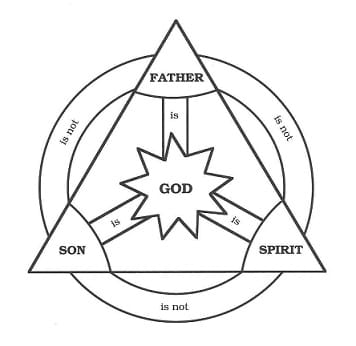
Speaking through the prophet Isaiah, God said, “My thoughts are not your thoughts, / Nor are your ways My ways … / For as the heavens are higher than the earth, / So are My ways higher than your ways, / And My thoughts than your thoughts” (Isa. 55:8–9). God is infinite, man is finite, so there are mysteries about God that man cannot fully understand. One of these mysteries is the Trinity, the tri-personality of God. According to Christian orthodoxy, God is one God in essence, power, and authority, and also eternally exists as three distinct co-equal persons. These three persons are the Father, the Son (Jesus), and the Holy Spirit. This does not mean that Christians believe in three gods (polytheism). Rather, the doctrine of the Trinity is that there is only one God who exists in three distinct persons, and all three share the exact same divine nature or essence.
Understanding this fully is beyond human comprehension and has no human parallels, although various analogies have been offered. One of these analogies is the three physical states of water. Water is not only a liquid but also a solid (ice) and a gas (vapor), yet its chemical composition (substance) never changes in all three forms (two parts hydrogen and one part oxygen—H2O). Although such analogies help us visualize the concept of the Trinity, they all fall short in some way. In the case of the water analogy, although the molecule H2O can be liquid, solid, or gas, it is never all three at one time. The Trinity, on the other hand, is all three persons as one God.
The word Trinity is not used in Scripture, but it has been adopted by theologians to summarize the biblical concept of God. Difficult as it is to understand, the Bible explicitly teaches the doctrine of the Trinity, and it deserves to be explained as clearly as possible, especially to non-Christians who find the concept a stumbling-block to belief. So let’s dig into this topic by addressing four key questions.
IS THE DOCTRINE OF THE TRINITY IRRATIONAL?
The doctrine of the Trinity is certainly a mystery but that doesn’t mean it’s irrational. The concept cannot be known by human reason apart from divine revelation, and, as we’ll soon see, the Bible definitely supports the idea of the Trinity. But for now, I want to demonstrate that the doctrine of the Trinity, although beyond human comprehension, is nevertheless rational. Our acceptance of it is congruous with how we respond to other data about the known world.
There are many things about the universe we don’t understand today and yet accept at face value simply because of the preponderance of evidence supporting their existence. The scientific method demands that empirical evidence be accepted whether or not science understands why it exists or how it operates. The scientific method does not require that all data be explained before it is accepted.
Contemporary physics, for instance, has discovered an apparent paradox in the nature of light. Depending on what kind of test one applies (both of them “equally sound”), light appears as either undulatory (wave-like) or corpuscular (particle-like). This is a problem. Light particles have mass, while light waves do not. How can light have mass and not have it, apparently at the same time? Scientists can’t yet explain this phenomenon, but neither do they reject one form of light in favor of the other, nor do they reject that light exists at all. Instead, they accept what they’ve found based on the evidence and press on.
Like physicists, we are no more able to explain the mechanics of the Trinity than they can explain the apparent paradox in the nature of light. In both cases, the evidence is clear that each exists and harbors mystery. So we must simply accept the facts and move on. Just because we cannot explain the Trinity, how it can exist, or how it operates does not mean that the doctrine must be rejected, so long as sufficient evidence exists for its reality. So let’s now explore this evidence.
HOW DOES THE BIBLE PRESENT THE DOCTRINE OF THE TRINITY?
THE OLD TESTAMENT
Although the doctrine of the Trinity is fully revealed in the New Testament, its roots can be found in the Old Testament.
In several places, God refers to Himself in plural terms. For example, “Then God said, ‘Let Us make man in Our image’” (Gen. 1:26; see 3:22; 11:7; Isa. 6:8).
The Messiah was prophesied in the Old Testament as being divine. Isaiah 9:6 states that the Messiah will be called “Mighty God,” a term applied in the Old Testament specifically to Yahweh (see Mic. 5:2).
Isaiah 48:16 refers to all three members of the Godhead: “Come near to Me, listen to this: From the first I have not spoken in secret, from the time it took place, I was there. And now the Lord God [Father] has sent Me [Jesus], and His Spirit [the Holy Spirit]” (nasv).
The Old Testament also makes numerous references to the Holy Spirit in contexts conveying His deity (Gen. 1:2; Neh. 9:20; Ps. 139:7; Isa. 63:10–14).
THE NEW TESTAMENT
The New Testament provides the most extensive and clear material on the Trinity. Here are just a few of the texts that mention all three members of the Godhead and imply their co-equal status.
• Matthew 28:19, the baptismal formula: “Go therefore and make disciples of all the nations, baptizing them in the name [not ‘names’] of the Father and of the Son and of the Holy Spirit.”
• Matthew 3:16, at the baptism of Christ in the Jordan: “And after being baptized, Jesus went up immediately from the water; and behold, the heavens were opened, and He saw the Spirit [Holy Spirit] of God [Father] descending as a dove, and coming upon Him [Jesus]” (nasv).
• Luke 1:35, the prophetic announcement to Mary of Jesus’ birth: “And the angel answered and said to her, ‘The Holy Spirit will come upon you, and the power of the Highest [Father] will overshadow you; therefore, also, that Holy One who is to be born will be called the Son of God [Jesus].’”
• The trinitarian formula is also found in 1 Peter 1:2, 2 Corinthians 13:14, and 1 Corinthians 12:4–6.
DIGGING DEEPER
To explain the doctrine of the Trinity, I will take an inductive (scientific) approach. By this I mean I will accumulate general facts in Scripture that lead to a specific conclusion—that the nature of God is triune. The argument will go like this:
1. The Bible teaches that God is one (monotheism) and that He possesses certain attributes that only God can have.
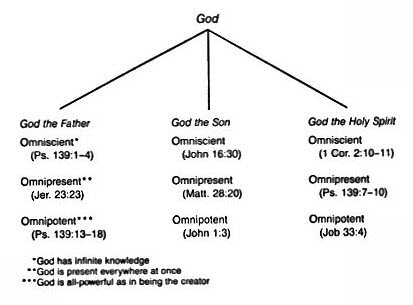
2. Yet when we study the attributes of the Father, the Son, and the Holy Spirit, we discover that all three possess the identical attributes of deity.
3. Thus we can conclude that there is one God eternally existing as three distinct persons.
God Is One (Monotheism)
The Hebrew Shema of the Old Testament is “Hear, O Israel: The Lord our God, the Lord is one!” (Deut. 6:4; see Isa. 43:10; 44:6; 46:9). Some people have argued that this passage actually refutes the concept of the triune nature of God because it states that God is one. But the Hebrew word for “one” in this text is echod, which carries the meaning of unity in plurality. It is the same word used to describe Adam and Eve becoming “one flesh” (Gen. 2:24). Scripture is not affirming that Adam and Eve literally become one person upon marriage. Rather, they are distinct persons who unite in a permanent relationship.
The New Testament confirms the teaching of the Old: “You believe that God is one. You do well; the demons also believe, and shudder” (James 2:19, nasv; see 1 Tim. 2:5; 1 Cor. 8:4; Eph. 4:4–6).
God Has a Certain Nature
Both the Old and New Testaments list the attributes of God. We won’t consider all of them here, but what follows are some of the clearest expressions of what constitutes deity.
• God is omnipresent (present everywhere at once): Psalm 139:7–10; Jeremiah 23:23–24.
• God is omniscient (possesses infinite knowledge): Psalms 139:1–4; 147:4–5; Hebrews 4:13; 1 John 3:20.
• God is omnipotent (all-powerful): Psalm 139:13–18; Jeremiah 32:17; Matthew 19:26.
The Father Is God
To the Jews, who do not accept the Trinity, God is Yahweh. In the Old Testament, Yahweh is to the Hebrews what Father is in the New Testament and to Christians. The attributes of God (Yahweh) listed above are the same for Yahweh and Father because both names apply to the one God. Although the concept of God as Father is not as explicit in the Old Testament as it is in the New, nevertheless, it has its roots in the Old (see Pss. 89:26; 68:5; 103:13; Prov. 3:12).
In the New Testament, the concept of the Father as a distinct person in the Godhead becomes clear (Mark 14:36; 1 Cor. 8:6; Gal. 1:1; Phil. 2:11; 1 Pet. 1:2; 2 Pet. 1:17). God is viewed as Father over creation (Acts 17:24–29), the nation of Israel (Rom. 9:4; see Exod. 4:22), the Lord Jesus Christ (Matt. 3:17), and all who believe in Jesus as Lord and Savior (Gal. 3:26).
The Son Is God
Like the Father, Jesus possesses the attributes of God. He is omnipresent (Matt. 18:20; 28:20). He is also omniscient: He knows people’s thoughts (Matt. 12:25), their secrets (John 4:29), the future (Matt. 24:24–25), indeed all things (John 16:30; 21:17). His omnipotence is also taught. He has all power over creation (John 1:3; Col. 1:16), death (John 5:25–29; 6:39), nature (Mark 4:41; Matt. 21:19), demons (Mark 5:11–15), and diseases (Luke 4:38–41).
In addition to these characteristics, Jesus exhibits other attributes that the Bible acknowledges as belonging only to God. For example, He preexisted with the Father from all eternity (John 1:1–2), accepted worship (Matt. 14:33), forgave sins (Matt. 9:2), and was sinless (John 8:46).
The Holy Spirit Is God
The Holy Spirit is also omnipresent (Ps. 139:7–10), omniscient (1 Cor. 2:10), and omnipotent (Luke 1:35; Job 33:4).
Like Jesus, the Holy Spirit exhibits other divine attributes that the Bible ascribes to God. For instance, He was involved in creation (Gen. 1:2; Ps. 104:30), inspired the authorship of the Bible (2 Pet. 1:21), raised people from the dead (Rom. 8:11), and is called God (Acts 5:3–4).
The upshot of all this is that God is triune. In a formal argument, we can put it this way:
Major Premise:
Only God is omnipresent, omniscient, and omnipotent.
Minor Premise:
The Father, the Son, and the Holy Spirit are omnipresent, omniscient, and omnipotent.
Conclusion:
Therefore, God is triune as Father, Son, and Holy Spirit.
THE TRINITY
HOW DOES JESUS TEACH THE DOCTRINE OF THE TRINITY?
In the Bible, Jesus claims to be God and then demonstrates this claim by displaying the attributes of God and by raising Himself from the dead. So what Jesus has to say about God must be true. And Jesus clearly teaches that God is triune.
Jesus Is Equal with the Father and Holy Spirit
In Matthew 28:19, Jesus tells His followers to “make disciples of all the nations, baptizing them in the name of the Father and of the Son and of the Holy Spirit.” He uses the singular word name but associates it with three persons. The implication is that the one God is eternally three co-equal persons—Father, Son, and Holy Spirit.
Jesus Is One with the Father
In John 14:7 and 9, Jesus identifies Himself with the Father by saying to His disciples, “If you had known Me, you would have known My Father also; and from now on you know Him and have seen Him … He who has seen Me has seen the Father” (see John 5:18). Jesus is not claiming to be the Father; rather, He is saying that He is one with the Father in essence.
Jesus Is One with the Holy Spirit
Continuing in John 14, Jesus tells His disciples that, after He is gone, He will send them “another Helper” who will be with them forever and will indwell them (vv. 16–17). The “Helper” is the Holy Spirit. The trinitarian implication lies with the word another. The apostle John, as he wrote this passage, could have chosen one of two Greek words for another. Heteros denotes “another of a different kind,” while allos denotes “another of the same kind as myself.” The word chosen by John was allos, clearly linking Jesus in substance with the Holy Spirit, just as He is linked in substance with the Father in verses 7 and 9. In other words, the coming Holy Spirit will be a different person than Jesus, but He will be the same with Him in divine essence just as Jesus and the Father are different persons but one in their essential nature. Thus, in this passage, Jesus teaches the doctrine of the Trinity.
So far we have seen that the authors of Scripture and Jesus Christ teach the triune nature of God. Therefore, the only way the doctrine of the Trinity can be rejected is if one refuses to accept the biblical evidence. Some groups, such as the Jehovah’s Witnesses, do this by reinterpreting and altering Scripture. Others, such as the Unitarians (who claim that Jesus is just a man), arbitrarily and without any evidence deny anything supernatural or miraculous in the Bible. Both the Jehovah’s Witnesses and the Unitarians are guilty of the very same thing of which they accuse Christians—irrationality. They refuse to accept the evidence for the Trinity regardless of how legitimate it is. This is unscientific and irrational. If one approaches Scripture without bias, he will clearly discover what the church has maintained for centuries: God is triune—one God in essence but eternally existing in three persons as Father, Son, and Holy Spirit.
A COMMON OBJECTION
Perhaps you’ve wondered or heard someone say, “If Jesus is one in essence with the Father, an equal member of the triune Godhead, why does He say, ‘the Father is greater than I’” (John 14:28)? This question actually moves away from the doctrine of the Trinity and launches us into the doctrine of the incarnation, the process whereby Jesus, as the eternal Son of God, came to earth as man. Nevertheless, because this question is frequently raised as an objection, it needs to be answered.
Numerous passages in Scripture teach that Jesus, although fully God, is also fully man (John 1:14; Rom. 8:3; Col. 2:9; 1 Tim. 3:16). However, Philippians 2:5–8 states that, in the process of taking on humanity, Jesus did not give up any of His divine attributes. Rather, He gave up His divine glory (see John 17:5) and voluntarily chose to withhold or restrain the full use of His divine attributes. There are numerous instances in Scripture where Jesus, although in human form, exhibits the attributes of deity. If Jesus had surrendered any of His divine attributes when He came to earth, He would not have been fully God and thus could not have revealed the Father as He claimed to do (John 14:7, 9).
The key to understanding passages such as John 14:28 is that Jesus, like the Father and the Holy Spirit, has a particular position in the triune Godhead. Jesus is called the Son of God, not as an expression of physical birth, but as an expression of His position in relationship to the Father and Holy Spirit. This in no way distracts from His equality with the Father and the Holy Spirit or with His membership in the Godhead. As man, Jesus submits to the Father and acts in accordance to the Father’s will (see John 5:19, 30; 6:38; 8:28). So when we read passages such as Mark 14:36 where Jesus submits to the Father’s will, His submission has nothing to do with His divine essence, power, or authority, only with His position as the Incarnate Son.
Perhaps an illustration will help to explain this. Three people decide to pool their money equally and start a corporation. Each are equal owners of the corporation, but one owner becomes president, another vice-president, and the third secretary/treasurer. Each are completely equal so far as ownership, yet each has his own particular function to perform within the corporation. The president is the corporate head, and the vice-president and secretary/treasurer are submissive to his authority and carry out his bidding.
So when Jesus the God-man submits to the Father’s will or states that the Father is greater than He or that certain facts are known only by the Father (e.g., Matt. 24:36), it does not mean that He is less than the other members of the Godhead but that in His incarnate state He did and knew only that which was according to the Father’s will. The Father did not will that Jesus have certain knowledge while in human form. Because Jesus voluntarily restrained the full use of His divine attributes, He was submissive to the Father’s will.
Why did Jesus choose to hold back from fully using His divine powers? For our sake. God willed that Jesus feel the full weight of man’s sin and its consequences. Because Jesus was fully man, He could fulfill the requirements of an acceptable sacrifice for our sins. Only a man could die for the sins of mankind. Only a sinless man could be an acceptable sacrifice to God. And it is only because Jesus is an equal member of the triune Godhead, and thus fully God, that He was able to raise Himself from the dead after dying on the cross and thereby guarantee our eternal life.
When all the evidence is accounted for and the verdict read, the Bible clearly teaches that the Father, the Son, and the Holy Spirit are three distinct, co-equal, co-eternal members of the Godhead, yet one in essence, power, and authority. All three are one God. Were this not the case, if the Trinity were not a reality, there would be no Christianity.
[1]
[1]Story, D. (1997). Defending your faith. Originally published: Nashville : T. Nelson, c1992. (99). Grand Rapids, MI: Kregel Publications.