The Birth of Jesus Christ | Daniel B. Wallace


by
Daniel B. Wallace, Th.M., Ph.D.
Associate Professor of New Testament Studies
Dallas Theological Seminary
wallace@bible.org
Preface
The following is part of a short series of devotional items related to the birth of Christ. For some, such material is hardly devotional because it primarily focuses on history. But we must keep in mind that the Jesus we worship was truly born in time-space history. And that babe in the manger was truly crucified–and just as surely rose from the dead. The Bible is different from the sacred books of other religions because it invites historical investigation. And when it has met the test–as it surely always, inevitably does–it inculcates a greater devotion in the heart of the believer for the one we call the Son of God.
The Year Jesus Was Born
In the western hemisphere, we split time by the birth of Jesus Christ. But did he really even live? If so, when was he born?
Sometime ago, I struck up a conversation with a man who claimed that God did not exist. He was an atheist. But not just a run-of-the-mill atheist, you understand. He also insisted that Jesus Christ never existed! This fellow was hard core.
Now my atheist friend had incredible faith–blind faith, I might add. His religious fervor, in fact, would put many evangelists to shame. But the evidence that Jesus Christ invaded history is not just shut up to the testimony of the New Testament–as irrefutable as that might be! The very enemies of Christianity claimed that he lived–and that he performed miracles! Early Jewish documents such as the Mishnah and even Josephus–as well as first-century Gentile historians–such as Thallus, Serapion, and Tacitus–all testify that the one called Christ lived in Palestine and died under Pontius Pilate. As the British scholar, F. F. Bruce put it, “The historicity of Christ is as [certain]. . . as the historicity of Julius Caesar” (NT Documents, 119).
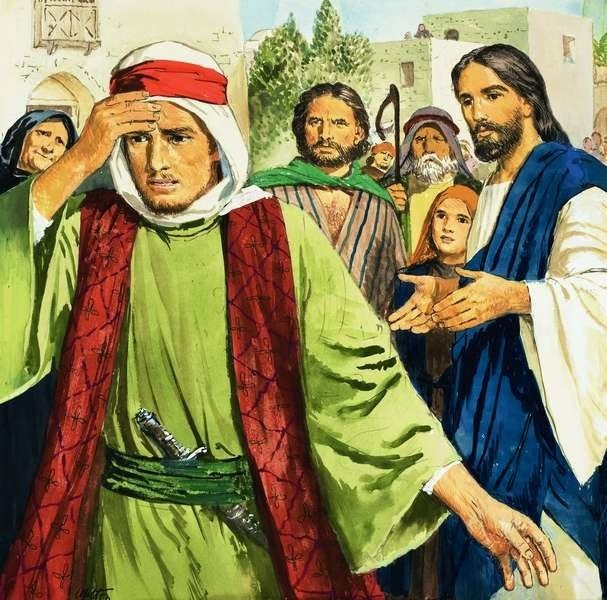
Now it logically follows that if Jesus Christ lived (need it be said?), he must have been born. The Gospels tell us that his birth was shortly before Herod the Great died. Herod’s death can be fixed with certainty.
Josephus records an eclipse of the moon just before Herod passed on. This occurred on March 12th or 13th in 4 B.C. Josephus also tells us that Herod expired just before Passover. This feast took place on April 11th, in the same year, 4 B.C. From other details supplied by Josephus, we can pinpoint Herod the Great’s demise as occurring between March 29th and April 4th in 4 B.C.
It might sound strange to suggest that Jesus Christ was born no later than 4 B.C. since B.C. means ‘before Christ.’ But our modern calendar which splits time between B.C. and A.D. was not invented until A.D. 525. At that time, Pope John the First asked a monk named Dionysius to prepare a standardized calendar for the western Church. Unfortunately, poor Dionysius missed the real B.C./A.D. division by at least four years!
Now Matthew tells us that Herod killed Bethlehem’s babies two years old and under. The earliest Jesus could have been born, therefore, is 6 B.C. Through a variety of other time indicators, we can be relatively confident that the one called Messiah was born in either late 5 or early 4 B.C.
My atheist friend scoffs at such flexibility. He says, “If you don’t know exactly when Jesus was born, how do you know that he really lived?” That is hardly a reasonable question! The other day I called my mother to wish her a happy birthday. “Mom, how many candles on this birthday cake?” I inquired. “I don’t know, son–I don’t keep track any more,” she sighed. After a few minutes of pleasant conversation, we hung up.
Now, of course, I can’t be certain, but I do believe that that was my mother on the other end of the phone. She can’t remember how old she is (and she’s neither senile nor very old), but that doesn’t make her a figment of my imagination, does it? Because if she’s just a phantom, then for the last three minutes, you’ve been reading absolutely nothing!

The Day Jesus Was Born
This coming December 25th most parents will be lying to their children about old St. Nick. Some of us will be celebrating the birth of our Savior. But was he really born on this day?
Was Jesus really born on December 25th? Virtually every month on the calendar has been proposed by biblical scholars. So why do we celebrate his birth in December?
The tradition for December 25th is actually quite ancient. Hippolytus, in the second century A.D., argued that this was Christ’s birthday. Meanwhile, in the eastern Church, January 6th was the date followed.
But in the fourth century, John Chrysostom argued that December 25th was the correct date and from that day till now, the Church in the East, as well as the West, has observed the 25th of December as the official date of Christ’s birth.
In modern times, the traditional date has been challenged. Modern scholars point out that when Jesus was born, shepherds were watching their sheep in the hills around Bethlehem. Luke tells us that an angel appeared to “some shepherds staying out in the fields [who were] keeping watch over their flock by night” (2:8).
Some scholars feel that the sheep were usually brought under cover from November to March; as well, they were not normally in the field at night. But there is no hard evidence for this. In fact, early Jewish sources suggest that the sheep around Bethlehem were outside year-round. So you can see, December 25th fits both tradition and the biblical narrative well. There is no sound objection to it.
Now admittedly, the sheep around Bethlehem were the exception, not the rule. But these were no ordinary sheep. They were sacrificial lambs. In the early spring they would be slaughtered at the Passover.
And God first revealed the Messiah’s birth to these shepherds–shepherds who protected harmless lambs which would soon die on behalf of sinful men. Whey they saw the baby, could they have known? Might they have whispered in their hearts what John the Baptist later thundered, “Behold, the Lamb of God who takes away the sin of the world!”
Now, of course, we can’t be absolutely certain of the day of Christ’s birth. At least, not this side of heaven. But an early winter date seems as reasonable a guess as any. And December 25th has been the frontrunner for eighteen centuries. Without more evidence, there seems no good reason to change the celebration date now.
We can blame the ancient church for a large part of our uncertainty. You see, they did not celebrate Christ’s birth. At all. To them, it was insignificant. They were far more concerned with his death . . . and resurrection.
But modern man has turned that around. A baby lying in a manger is harmless, non-threatening. But a man dying on a cross–a man who claims to be God–that man is a threat! He demands our allegiance! We cannot ignore him. We must either accept him or reject him. He leaves us no middle ground.
This Christmas season, take a close look at a nativity scene once again. Remove your rose-colored glasses–smell the foul air, see the cold, shivering animals. They represent the Old Testament sacrificial system. They are emblems of death. But they are mere shadows of the Babe in their midst. He was born to die . . . that all who believe in him might live.
The Visit of the Magi
When Jesus Christ was born, men–known as magi–came from the east to worship him. Were they wise men . . . or astrologers?
Matthew begins his second chapter with these words: “Now after Jesus was born in Bethlehem of Judea in the days of Herod the king, behold, magi from the east arrived in Jerusalem, saying, ‘Where is he who has been born king of the Jews? For we saw his star in the east, and have come to worship him.'”
Who were these wise men from the east? Matthew tells us next to nothing about them–he doesn’t mention their names, nor how many there were–not even which country they came from. As mysteriously as they come on the scene, they disappear. . .
Though Matthew doesn’t tell us much, over-zealous Christians throughout church history have dogmatically filled in the blanks. By the 6th century A.D., these dark strangers were given thrones and names: Gaspar, Melchior, and Balthazar were the alleged names of these alleged kings.
But this has nothing to do with the biblical story: we really have no idea what their names were–nor even their number. There could have been 3 or 300 as far as we know! But one thing we do know for sure: they were not royalty. The ancient magi were reilgious and political advisors to eastern kings–but there wasn’t a drop of blue blood among them.
But isn’t it true that the magi were astrologers? And didn’t God prescribe death to astrologers in the Old Testament? ‘Not always’ and ‘yes’ are the answers. In Deuteronomy 17, God commands his people to execute all astrologers by stoning. Jean Dixon wouldn’t stand a chance in such a theocracy! The fact that she–and others like her–are so comfortably tolerated–even well respected!–in modern America ought to show us that the U.S.A. is a post-Christian country–at best . . .
But what about these ancient magi? Were they astrologers? After all, they followed a star to Bethlehem.
We might answer this in three ways: First, not all magi were astrologers, for Daniel the prophet was the chief of the magi in Nebuchadnezzar’s court. Through his influence, undoubtedly many of the magi carried on their religious and political duties as worshippers of the One true God.
Second, there are some biblical scholars who believe that Isaiah predicted that a star would appear when the Messiah was born. If this interpretation is correct, then the magi who worshipped the newborn king were clearly following in Daniel’s train, for he almost surely taught them from Isaiah.
Third, although a few believe that the ‘star’ they saw was a natural phenomenon–such as a conjunction of Saturn and Jupiter–this cannot explain how the star stood right over Bethlehem. Clearly, the ‘star’ was completely of supernatural origin. If so, it probably had nothing to do with astrology.
Therefore, the magi most likely did not subscribe to such superstitious folly. If so, they were truly wise men . . .
I saw a bumper sticker the other day, which read, “Wise men still seek him.” Actually, that’s not quite accurate. The Bible tells us that “no one seeks God, not even one.” But if he has led us to himself, then we have become wise. For it is true that “wise men still worship him.”
The Boys from Bethlehem
One of the most heinous atrocities in human history was the murder of Bethlehem’s babies by Herod the Great. But did it really happen?
In the second chapter of Matthew’s gospel, we read that when Herod the Great heard of the Messiah’s birth, “he was troubled–and all Jerusalem with him.” Later, when the wise men did not report back to him, he became furious and ordered all the baby boys up to two years old in and around Bethlehem to be slaughtered!
Three questions come to mind as we consider this cruel incident: First, how many babies did Herod actually kill? Second, how old was Jesus when this happened? And finally, why does no other ancient historian record this outrage? In other words, did it really happen?
How many babies did Herod murder? Some scholars have suggested as many as 200! But most reject such a figure. Bethlehem was a small community–almost a suburb of Jerusalem. The village itself–and the surrounding countryside–would hardly have more than 30 male infants under two. Most scholars today place the number between 20 and 30.
But that’s if only the boy babies were killed. Actually, the Greek text of Matthew 2:16 could mean ‘babies’–not just ‘boy babies.’ And psychologically, Herod’s henchmen might not have bothered to check the gender of their victims. The number might be as high as 50 or 60.
Second, how old was Jesus when this occurred? According to the best chronological evidence, he could not have been more than three or four months old. He was more than likely born in the winter of 5 or 4 B.C.–Herod died in the early spring of 4 B.C. So why did Herod slay all children up to two years old? The answer to the third question might help to answer this one. . .
Third, why is this event not recorded outside the Bible? Specifically, why did Josephus, the first-century Jewish historian, fail to mention it?
Josephus tells us much about Herod. The best word to describe his reign is ‘overkill.’ He murdered his favorite wife’s father, drowned her brother–and even killed her! He executed one of his most trusted friends, his barber, and 300 military leaders–all in a day’s work! Then he slew three of his sons, allegedly suspecting them of treason. Josephus tells us that “Herod inflicted such outrages upon (the Jews) as not even a beast could have done if it possessed the power to rule over men” (Antiquities of the Jews 17:310). Killing babies was not out of character for this cruel king. And killing them up to two years old–to make sure he got the baby Jesus lines up with his insane jealousy for power.
Josephus might have omitted the slaying of the babies for one of two reasons: first, he was no friend of Christianity and he left it out intentionally; or second, just before Herod died he locked up 3000 of the nation’s leading citizens and gave orders that they were to be executed at the hour of his death. He wanted to make sure that there would be mourning when he died. . . Israel was so preoccupied with this that the clandestine murder of a few babies might have gone unnoticed. . .
Herod thought that he had gained a victory over the king of the Jews. Yet this was a mere foreshadowing of the victory Satan thought he had when Jesus lay dead on a Roman cross. But the empty tomb proved that that dark Friday was Satan’s worst defeat!
Conclusion
We’ve been looking at several aspects of the birth of Jesus Christ in this short study. Now, we want to put it all together.
In the winter of 5 or 4 B.C., God invaded history by taking on the form of a man. He was born in a small town just south of Jerusalem. Bethlehem, which means ‘the house of bread,’ indeed became worthy of its name one lonely winter night. For there, in that town, was born the Bread of Life . . .
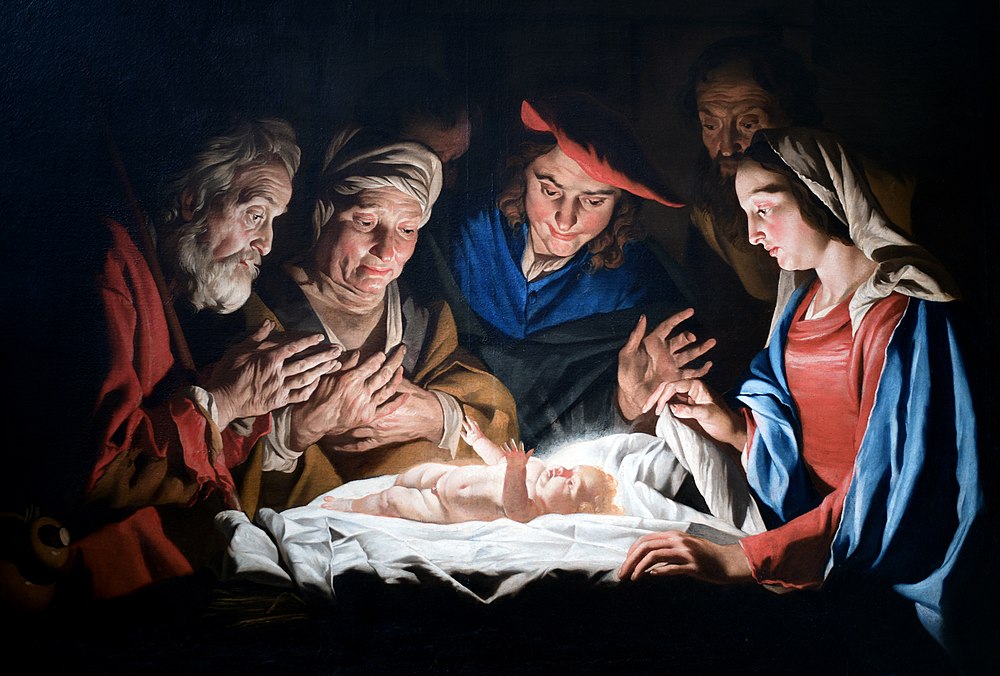
His mother placed the infant king in a manger–or feeding trough–because the guest room where they were to stay was occupied. The birth of this king was celebrated that night only by his mother, her husband, and a handful of shepherds.
The shepherds had been in the fields around Bethlehem, guarding the lambs which would die at the next Passover. An angel appeared to them and gave them the birth announcement: “today in the city of David there has been born for you a Savior, who is Christ the Lord” (Luke 2:11). In their simple faith, they rushed to see their newborn king.
Shortly after the birth of the Messiah, magi from the east arrived in Jerusalem and inquired of king Herod where the real king of the Jews was to be born. The theologians of Herod’s court knew the Scriptures well–in ‘Bethlehem’ they recited. Ironically, though they knew the Scriptures, they did not believe them! They did not even bother to travel the five or six miles to Bethlehem to see their Messiah.
But Herod believed the Scriptures! That is why he sent a corps of butchers to Bethlehem to slaughter innocent children, in hopes of destroying this rival to his throne. But he was too late. The magi had come and gone and Jesus was by now safe in Egypt.
And the magi believed the Scriptures. They had traveled several hundred miles to worship this Babe. They were guided to Bethlehem by a supernatural celestial phenomenon–and by the Scriptures. Apparently, their ancestors had been instructed by Daniel the prophet about the coming Messiah. . . When they saw the child, they fell down and worshiped him. This was God in the flesh. They could do no other.
And they gave him gifts–gold, frankincense, and myrrh. This was an unusual present–by any standards. The gold, of course, we all can understand–but the frankincense and myrrh were odd. Perhaps they had read Isaiah’s prophecy that “nations will come to your light, and kings to your rising . . . They will bring gold and frankincense, and will bear good news. . . ” (Isa. 60:3, 6). This explains the frankincense, but not the myrrh.
Now myrrh, like frankincense, was a perfume. But unlike frankincense, myrrh smelled of death. In the ancient world, it was used to embalm a corpse. Jesus himself would be embalmed with this very perfume (cf. John 19:39).
If the magi were thinking of Jesus’ death when they brought the myrrh, they no doubt knew of it from Daniel’s prophecy (9:24-27). In the ninth chapter of Daniel we read that the ‘Messiah will be cut off’ and this ‘will make atonement for iniquity’ and ultimately ‘bring in everlasting righteousness’ (9:26, 24).
Even at the birth of our Savior, the shadow of the cross is already falling over his face. . .
The theologians of Herod’s court did not believe the Scriptures. They were fools. Herod believed, but disobeyed. He was a madman. The simple shepherds and the majestic magi believed in this infant Savior–and it was reckoned to them as righteousness. May we follow in their train.