Is Jesus advocating pacifism and denouncing capital punishment in this passage? MATTHEW 26:52

MATTHEW 26:52—Is Jesus advocating pacifism and denouncing capital punishment in this passage?

PROBLEM: When the soldiers came to arrest Jesus, Peter took out his sword and cut off the ear of the high priest’s servant. Jesus told Peter to put back the sword because those who take up the sword will die by the sword. Some use this verse to support pacifism and to oppose capital punishment, which the Bible affirms elsewhere (Gen. 9:6).

SOLUTION: Total pacifism is not taught in this Scripture. Indeed, Abraham was blessed by the Most High God (Gen 14:19) after engaging in a war against the unjust aggression of the kings who had captured his nephew Lot. In Luke 3:14, soldiers come to inquire of John the Baptist about what they should do. John never told them to leave the army. Likewise, Cornelius, in Acts 10, was a centurion. He was called a devout man (v. 2), and the Scriptures say that the Lord heard the prayers of Cornelius (v. 4). When Cornelius becomes a Christian, Peter does not tell him to leave the army. Also, in Luke 22:36–38, Christ says that the one who has no sword should sell his robe and buy one. The apostles responded saying that they had two swords. Jesus responded saying that “it was enough.” In other words, they did not need to get rid of their swords. The Apostle Paul accepted the protection of the Roman army to save his life from unjust aggressors (Acts 23). Indeed, he reminded the Roman Christians that God had given the sword to the king who did not bear it in vain (Rom. 13:1–4). When Jesus returns to earth, He will come with the armies of heaven and will war against the kings of the earth (Rev. 19:11–19). So, from the beginning to the end, the Bible is filled with examples of the justification of war against evil aggressors.

What, then, did Jesus mean when He commanded Peter to put away his sword? Peter was making two mistakes in using his sword. First, while the Bible permits the sword by the government for civil purposes (Rom. 13:1–4), it does not endorse its use for spiritual ends. It is to be used by the state, not by the church. Second, Peter’s use was aggressive, not purely defensive. His life was not being unjustly threatened. That is, it was not clearly an act of self-defense (Ex. 22:2). Jesus appears to have endorsed the use of the sword in civil self-defense (Luke 22:36), as did the Apostle Paul (Acts 23).

Likewise, capital punishment is not forbidden in Scripture, but rather was established by God. Genesis 9:6 affirms that whoever sheds man’s blood, the blood of the killer will also be shed. Numbers 35:31 makes a similar statement. In the NT, Jesus recognized that Rome had capital authority and submitted to it (John 19:11). The Apostle Paul informed the Romans that governing authorities are ministers of God and that they still possessed the God-given sword of capital authority (13:1, 4). So Jesus in no way did away with the just use of the sword by civil authorities. He simply noted that those who live lives of aggression often die by the same means.

[1]


[1]Geisler, N. L., & Howe, T. A. (1992). When critics ask : A popular handbook on Bible difficulties (360). Wheaton, Ill.: Victor Books.

Does Jesus want us to love ourself first or others? MATTHEW 22:39

MATTHEW 22:39—Does Jesus want us to love ourself first or others?


PROBLEM: Jesus says in Matthew that we are to love our neighbor as ourselves. But, if we love ourselves first, before we love our neighbor, then this would be putting self before neighbor. Is Jesus teaching that we should be selfish?

SOLUTION: Loving others as we love ourselves can be understood in different ways, but in no way is Jesus implying that we should be selfish. The Bible condemns “lovers of themselves” (2 Tim. 3:2). It exhorts us not to consider only our own interests, but also the interest of others (Phil. 2:4). There are three ways to understand the phrase, “love others as yourself.”

First, some believe that Jesus is saying that we ought to love others as we ought to love ourselves, namely, unselfishly. This, however, seems far too subtle and dialectical for Jesus’ normally straight-forward moral assertions. It would have been more forthright to simply say do not be selfish than the tangled command of loving oneself unselfishly.

Second, Jesus could have meant that we should love others as we ought to love ourselves, namely, properly. There is a legitimate self-respect or self-love. Ephesians tells us to care for our own bodies, “for no one ever hated his own flesh, but nourishes and cherishes it” (5:28–29). There is nothing wrong with a legitimate self-care and self-respect. The Bible condemns someone for “thinking of himself more highly than he ought,” but urges him to think “soberly” (Rom. 12:3). In this sense, Jesus may be saying love others as you ought to love yourselves.

Third, Jesus could have meant that we should love others as much as we do love ourselves. That is, He might have been saying that we should measure how we ought to love others by how we actually do love ourselves without implying that the way we love ourselves is correct. Rather, God may be simply pointing to love for self as the standard by which we should judge how much to love others. In this way, there would be an automatic check on our selfish love, since we would have to love others this much too.

Geisler, N. L., & Howe, T. A. (1992). When critics ask : A popular handbook on Bible difficulties (355). Wheaton, Ill.: Victor Books.

Did Jesus heal the blind man coming into or going out of Jericho? MATTHEW 20:29–34 (cf. Mark 10:46–52; Luke 18:35–43)

MATTHEW 20:29–34 (cf. Mark 10:46–52; Luke 18:35–43)—Did Jesus heal the blind man coming into or going out of Jericho?

PROBLEM: According to Luke, a blind man was healed as Jesus entered the city of Jericho (18:35), but Matthew and Mark declare that the healing took place as Jesus left the city of Jericho. Again, the accounts do not seem to be harmonious.

SOLUTION: Some believe that the healing in Luke may have actually taken place as Jesus left Jericho, claiming that it was only the initial contact that took place as “He was coming near Jericho” (Luke 18:35) and the blind man may have followed Him through the city, since he was continually begging Jesus to heal him (vv. 38–39). But this seems unlikely, since even after the healing (v. 43) the very next verse (19:1) says, “then Jesus entered and passed through Jericho.”

Others respond by noting there were two Jerichos, the old and the new, so that as He went out of one He came into the other.

Still others suggest that these are two different events. Matthew and Mark clearly affirm the healing occurred as Jesus left the city (Matt. 20:29; Mark 10:46). But Luke speaks of healing one blind man as He entered the city. This is supported by the fact that Luke refers only to a “multitude” of people being present as Jesus entered the city (18:36), but both Matthew (20:29) and Mark (10:46) make a point to say there was a “great multitude” of people there by the time Jesus left the city. If the word spread of the miraculous healing on the way into the city, this would account for the swelling of the crowd. It might also explain why two blind men were waiting on the other side of the city to plead for Jesus to heal them. Perhaps the first blind man who was healed went quickly to tell his blind friends what happened to him. Or maybe the other blind men were already stationed at the other end of the city in their customary begging position. At any rate, there is no irresolvable difficulty in the passage. The two accounts can be understood in a completely compatible way.

Geisler, N. L., & Howe, T. A. (1992). When critics ask : A popular handbook on Bible difficulties (353). Wheaton, Ill.: Victor Books.

How can we explain Matthew’s apparent misquotation of Micah 5:2? MATTHEW 2:6

MATTHEW 2:6—How can we explain Matthew’s apparent misquotation of Micah 5:2?

PROBLEM: Matthew 2:6 quotes Micah 5:2. However, the words Matthew uses are different than those used by Micah.

SOLUTION: Although Matthew seems to have changed some of the words from the passage in Micah, there is no real deviation in the meaning of the text. Matthew, in some instances, seems to have paraphrased.

First, Matthew inserts the phrase “land of Judah” for the word “Ephrathah.” This does not really change the meaning of the verse. There is no difference between the land of Judah and Ephrathah, except one is more specific than the other. In fact, Ephrathah refers to Bethlehem in the Micah passage, and Bethlehem is located in the land of Judah. However, this does not change the basic meaning of this verse. He is speaking of the same area of land. Interestingly, when Herod asked the chief priests and the scribes where the child was to be born, they said, “in Bethlehem of Judea” (Matt. 2:5, nasb).

Second, Matthew describes the land of Judah as “not the least” but Micah states that it is “little.” Here, Matthew may be saying that since the Messiah is to come from this region, it is by no means least among the other areas of land in Judah. The phrase in Micah only says that Bethlehem is too little or small, as compared to the other areas of land in Judah. The verse does not say it is the least among them, only very little. Matthew is saying the same thing in different words, namely, that Bethlehem is little in size, but by no means the least in significance, since the Messiah was born there.

Finally, Matthew uses the phrase “who will shepherd My people Israel” and Micah does not. Micah 5:2 recognizes that there will be a ruler in Israel, and Matthew recognizes this as well. However, the phrase that is not mentioned in Micah is actually taken from 2 Samuel 5:2. The combining of verses does not take away what is being said, but it strengthens the point that the author is making. There are other instances where an author combines one Scripture with another. For example, Matthew 27:9–10 combines some of Zechariah 11:12–13 with Jeremiah 19:2, 11 and 32:6–9. Also, Mark 1:2–3 combines some of Isaiah 40:3 with Malachi 3:1. Only the first passage is mentioned, since it is the main passage being cited.

In brief, Matthew is not misrepresenting any information in his quotation of Micah 5:2 and 2 Samuel 5:2. Matthew’s quote is still accurate even though he paraphrases part of it and combines another portion of Scripture with it.

[1]


[1]Geisler, N. L., & Howe, T. A. (1992). When critics ask : A popular handbook on Bible difficulties (327). Wheaton, Ill.: Victor Books.

Psalm 110 does not say the Messiah is Lord.

Psalm 110 does not say the Messiah is Lord


Also, the psalm is not written by David about the Messiah. Our traditions indicate it may have been written by Eliezer about his master, Abraham, and then added to the collection of the Psalms by David many years later. Or David wrote it for the Levites to recite about him (or a court poet wrote it about David). This much is sure: It does not teach that the Messiah is God!

Psalm 110 is an important Messianic psalm pointing to the highly exalted status of the Messiah (to the right hand of God!) and to his priestly and royal nature. For these reasons, it is quoted frequently in the New Testament with reference to Yeshua. Yeshua even quotes it himself, pointing out how the Messiah was greater than David, since David called him “my lord.” However, you are mistaken in thinking that the New Testament (or Christian translations of the Hebrew Bible) makes the claim that the opening verse of this psalm means that Jesus is Lord (Yahweh).

According to anti-missionary rabbi Tovia Singer,

Psalm 110 represents one of the New Testament’s most stunning, yet clever mistranslations of the Jewish scriptures. Moreover, the confusion created by the Christianization of this verse was further perpetuated and promulgated by numerous Christian translators of the Bible as well.…

The story of the church’s tampering with Psalm 110 is so old that it begins in the Christian canon itself.265

These are startling claims indeed. On what basis does Singer make such serious charges? On the basis of Yeshua’s use of this psalm to point to his own exalted status, and on the basis of subsequent Christian translations that allegedly perpetuate this misunderstanding of the text.What is startling is not the wrongness of the “Christian” interpretation but the wrongness of Singer’s arguments, in particular his claim that the New Testament’s usage of this psalm represents one of its “most stunning, yet clever mistranslations of the Jewish scriptures.”266 This claim is absolutely without foundation.

Let’s take a look at the words of Jesus himself as recorded by one of his disciples:

While the Pharisees were gathered together, Jesus asked them, “What do you think about the [Messiah]? Whose son is he?”

“The son of David,” they replied.

He said to them, “How is it then that David, speaking by the Spirit, calls him ‘Lord’? For he says,

“ ‘The Lord said to my Lord:

“Sit at my right hand

until I put your enemies

under your feet.” ’

If then David calls him ‘Lord,’ how can he be his son?” No one could say a word in reply, and from that day on no one dared to ask him any more questions.

Matthew 22:41–46

Rabbi Singer is confident that this event not only reflects a wrong interpretation of the text but that it never even took place:

Although the above conversation could never have occurred, I am certain this narrative has been replayed over and over again in the imagination of countless Christians for nearly 1,900 years.

It’s an inspiring story to the Christian believer. Jesus really showed those Pharisees how little they knew! Yet, this is precisely why this story could never have transpired. No Jew who had even a superficial knowledge of the Jewish scriptures would have ever found Jesus’ argument compelling, let alone a conversation stopper. The depth of knowledge that the Pharisees possessed of Tanach was astounding.267

Notice carefully Singer’s words: “No Jew who had even a superficial knowledge of the Jewish scriptures would have ever found Jesus’ argument compelling, let alone a conversation stopper.” To the contrary, it is because Jesus knew that his hearers were so familiar with the Scriptures that he raised this compelling argument. Of course, they had no answer. You see, some of the earliest Rabbinic interpretation of Psalm 110 understood the psalm to be speaking of the Messiah, and if David in fact wrote the psalm, then Yeshua’s question is well taken: If the Messiah is merely David’s son—and it was universally agreed that the Messiah was the son of David—how can David call him his lord?

“But that’s the whole problem,” you object. “The Christian translations claim that the Messiah is Lord—meaning God himself—whereas the Hebrew Bible says no such thing.” This, in fact, is another of Rabbi Singer’s points, and he argues that the second “Lord” in the text “never refers to God anywhere in the Bible. It is only used for the profane, never the sacred.”268

But where did Jesus say “Lord” was referring to God? He simply stated that the text indicated David called the Messiah his lord—which is exactly what Singer claims that laʾdoni means: “The correct translation… is ‘to my master’ or ‘to my lord.’ ”269 Precisely. That was Yeshua’s whole point.

Unfortunately, Singer has gotten his information completely wrong, failing to read correctly the Christian translation he cites and completely ignoring well-known Jewish translation customs. Simply stated, a tradition developed among the Jewish people that the Hebrew name for God, yhwh, was too sacred to pronounce.270 Thus, whenever a Jew would read this name in the Bible, he would not say Yahweh (which is the most likely original pronunciation; the more common Jehovah is not correct). Rather, he would say, ʾadonai, meaning “Lord.”271 Thus, the opening verse of Psalm 110 would have been recited out loud as “ʾadonay (or ʾadonai) said to ʾadoni” (ʾadoni meaning “my lord” or “my Lord”).272

When Jesus quoted this verse to the Pharisees, this would have been the way he said it, referring to Yahweh as ʾadonai. There were no tricks here, no sleight of hand, no cover-up, no deception, no mistranslation. Just a straightforward recitation of the Hebrew text. No one would have thought that Jesus was claiming to be Yahweh, since his hearers certainly knew the text by heart as well, and since they distinctly heard two different words for Lord and lord: ʾadonai, meaning Yahweh, and ʾadoni, meaning “my Lord” or “my lord.”273 And that was Jesus’ whole point: How can the Messiah be merely a son of David if David calls him his lord?274 He must not only be David’s son; he must also be greater than David.

How then does Singer claim that the New Testament and later Christian translations of Psalm 110 are guilty of intentional mistranslation? It is simply because (1) he has not handled the Christian translations fairly, and (2) he has not realized how the very first Jewish translation of the Tanakh into Greek rendered Psalm 110:1.

Using the King James Version as an example, we see that Psalm 110:1 was rendered: “The Lord said unto my Lord, Sit thou at my right hand, until I make thine enemies thy footstool.” Virtually all modern Christian translations follow a similar translation pattern, rendering the opening Hebrew word yhwh as “Lord” and then rendering the second Hebrew word ʾadoni as “my Lord” or “my lord.” As we have seen, the custom of translating the Hebrew yhwh as “Lord” goes back to Jewish practice, not Christian practice. And just as Jewish readers distinguished between ʾadonai and ʾadon (meaning Yahweh, as opposed to any lord or the Lord), so also Christian translations into English distinguished between Lord (Hebrew, yhwh) and Lord (Hebrew, ʾadon). This is also the custom most commonly followed by Jewish translations of the Bible into English: Whenever yhwh occurs in the original text, it is written as Lord (all uppercase).

In keeping with this practice, Christian translations (and many Jewish translations as well) distinguish between yhwh and ʾadoni in Psalm 110:1 by rendering these words as Lord and my Lord (or my lord). Amazingly, Singer claims that the NASB (a twentieth-century Christian translation that also renders Psalm 110:1 with Lord and Lord) fails to distinguish between the two words, inviting the readers to “look at the first word ‘Lord’ in the verse. Now look at the second word ‘Lord’ (they are only three words apart). Did you notice any difference between them? You didn’t because the Christian translator carefully masked what it actually says in the text of the original Hebrew.” Thus, he claims, “the two English words in the NASB translation are carefully made to appear identical, in the original Hebrew text they are entirely different.”275 Absolutely not! These two words are not the same, as you would immediately see even at first glance: The first is all uppercase letters (you’ll find this in just about any Christian translation); the second is lowercase after the initial capital L.

Rabbi Singer, however, takes serious issue with the fact that many Christian versions translate the second ʾadon (ʾadoni, representing the noun followed by the first-person pronominal suffix) as “my Lord” instead of “my lord,” arguing that every single time ʾadoni is found in the Tanakh, it is speaking of a human being, not God (who would always be referred to as ʾadonai rather than ʾadoni). He states:

The Hebrew word adonee [a phonetic spelling of adoni] never refers to God anywhere in the Bible. It is only used for the profane, never the sacred. That is to say, God, the Creator of the universe, is never called adonee in the Bible. There are many words reserved for God in the Bible; adonee, however, is not one of them.276

There are at least three problems with his argument: First, he is incorrect in stating that “my lord” is reserved “for the profane, never the sacred.” Just look in Joshua 5:14, where Joshua addresses the angel of the Lord as “my lord” (ʾadoni). Yet this divine messenger is so holy that Joshua is commanded to remove the shoes from his feet because he is standing on holy ground, just as Moses was commanded when the angel of the Lord—representing Yahweh himself—appeared to him (Exod. 3:1–6). This is hardly a “profane” rather than “sacred” usage! Similar examples can be found in Judges 6:13 and Zechariah 1:9, among other places. In each of these, angels are addressed as “my lord,” and in some of these cases, the angels bear the divine presence. Second, Singer’s whole argument hinges on the Masoretic vocalization, which did not reach its final form until the Middle Ages. As every student of Hebrew knows, biblical Hebrew was written with consonants and “vowel letters” only; the vowel signs were added hundreds of years later. Yet both ʾadonai (used only for Yahweh) and ʾadoni (used for men and angels, as we just noted) are spelled identically in Hebrew, consisting of the four consonants ʾ-d-n-y. How then can Rabbi Singer make such a dogmatic statement about the differences between these two forms in the Bible? His argument stands only if we accept the absolute authority of the Masoretic vocalization, which in some cases follows the original writing by almost two thousand years.277 Third, it is not really important whether we translate with “my Lord” or “my lord,” since Yeshua’s whole argument was simply that David called the Messiah “lord,” meaning that the Messiah had to be more than David’s son. While many Christian translations do render ʾadoni as “my Lord” in Psalm 110:1, they are careful to distinguish between the first Lord (i.e., Lord) and the second.

“But,” you say, “I understand that the New Testament is written in Greek. Are you telling me that the writers of the New Testament followed Jewish practice and spelled the two words differently? That was not the custom in Greek, and therefore readers of the Gospels would be misled into thinking that the two ‘Lords’ were the same person, both referring to God.”

That’s a good observation. But once again, this is not a “Christian” problem but rather a “Jewish” problem dating back to the Septuagint, which was completed more than two hundred years before the writing of the New Testament. The New Testament only follows the practice of the Jewish Septuagint. It is the Greek Septuagint that first rendered yhwh with the Greek word kyrios, “Lord” or “lord.” Thus, Psalm 110:1 is rendered by the Septuagint as, “The kyrios said to my kyrios,278 and the writers of the New Testament—themselves almost all Jews—merely quoted the Jewish translation of their day into Greek. It’s that simple!279

To review: (1) When Jesus quoted this verse in Hebrew, he would have said, neʾum ʾadonai laʾadoni. He would not have spoken the name Yahweh, but he would have distinguished between the Lord God and David’s Lord/lord. (The same would apply to Aramaic if Yeshua quoted the verse in a Targumic form.) (2) Christian translations of Psalm 110:1 into English also distinguish between Yahweh and David’s Lord/lord, representing the former with Lord and the latter with Lord/lord. (3) The Septuagint, not the New Testament, was the first example of a translation in which yhwh and ʾadon were both translated with kyrios. From this we can see that Singer’s charges are totally erroneous and without any support in the text. We need not trouble ourselves with this for another moment.

The real questions that deserve attention are, Is this really a Messianic psalm, and, Was Yeshua correct in referring it to himself? Let’s look at the whole psalm as rendered in the NIV:

Of David. A psalm.

The Lord says to my Lord:

“Sit at my right hand

until I make your enemies

a footstool for your feet.”

The Lord will extend your mighty scepter from Zion;

you will rule in the midst of your enemies.

Your troops will be willing

on your day of battle.

Arrayed in holy majesty,

from the womb of the dawn

you will receive the dew of your youth.

The Lord has sworn

and will not change his mind:

“You are a priest forever,

in the order of Melchizedek.”

The Lord is at your right hand;

he will crush kings on the day of his wrath.

He will judge the nations, heaping up the dead

and crushing the rulers of the whole earth.

He will drink from a brook beside the way;

therefore he will lift up his head.

Psalm 110

It is clear that this is a royal psalm, spoken to a Judean king about his promised worldwide reign. But what is meant by “Of David. A psalm.”? We know that these opening words (called the superscription) are not necessarily part of the original text. But we also know that Jewish readers in Yeshua’s day accepted this as a psalm of David. What then does this mean? Was the psalm written by David or for David (or for the Davidic king)?

An ancient Jewish interpretation, as fascinating as it is far-fetched, claims that this psalm was originally written by Eliezer, the servant of Abraham, and that David added this psalm to his collection centuries later. According to this view, the psalm was written after Abraham returned from his victorious battle with the four kings of the plain (see Genesis 14) and Melchizedek, king of Salem (Jerusalem) came out to meet him. As written in Genesis 14:19–20, Melchizedek, the priest-king of Jerusalem, greeted Abraham (still called Abram at that time) with the words: “Blessed be Abram by God Most High, Creator of heaven and earth. And blessed be God Most High, who delivered your enemies into your hand.” Abraham then gave a tithe of the spoils to Melchizedek, a definite sign of honor and respect (Gen. 14:20a).

Surprisingly, some of the ancient rabbis had a problem with Melchizedek’s greeting, saying that God was displeased with Melchizedek since he blessed Abram before he blessed the Lord, as a result of which the priesthood was taken from Melchizedek and given to Abram (meaning to his descendants; see b. Nedarim 32b). This is how Psalm 110:4 is explained: “The Lord has sworn and will not change his mind: ‘You are a priest forever, in the order of Melchizedek.’ ” There is little, however, to commend this interpretation and several serious objections that can be raised against it: (1) As Ibn Ezra notes, after giving due regard to the ancient midrash just cited, it is quite difficult to explain the reference to Zion in verse 2 (“The Lord will extend your mighty scepter from Zion”) with reference to Abraham. Zion is the city of David!280 (2) Abraham himself was not called a priest by the Lord, even if the priesthood ultimately came through the tribe of his great-grandson Levi. (3) Abraham was not a royal figure in the Torah, nor was he primarily a triumphant ruler; yet that is what Psalm 110 explicitly describes and promises. (4) There is not a shred of evidence to support the midrashic interpretation. It is simply a creative reading of the text, apparently inspired by the reference to Melchizedek in Genesis 14 and Psalm 110, the only two times his name appears in the Hebrew Bible. (5) Even some midrashic evidence is against this interpretation, since elsewhere it is said that Abraham sits at the left hand of God, while it is the Messiah who sits at the Lord’s right hand.281

Some scholars have even argued that the interpretation of this psalm with reference to Abraham is a direct reaction to Christian interpretations that pointed to the Messiah.282 This is certainly possible, although it is far from certain. But the extreme unlikelihood of the Abrahamic interpretation is beyond dispute.

A much more likely view is that a court poet wrote this psalm for David, perhaps when he moved his throne to Jerusalem (2 Sam. 5–6).283 Thus, speaking prophetically, this poet declared that Yahweh said to his lord (David), “Sit at my right hand.…” And, as we learned previously (vol. 1, 2.1), David served as a prototype of the priestly king, a Messianic figure who himself was both priest and king. The fact that David ruled out of Jerusalem would associate him with Melchizedek, the priest-king of Salem (= Jerusalem) spoken of in Genesis 14.

There are, however, serious problems with this view as well: (1) Was David actually called a priest by the Lord? It is one thing to say that David was a priestly king; it is another thing to say that he was called “a priest forever” by God himself. Clearly, David was not.284 (2) When was David told to sit at God’s right hand until his enemies were made a footstool for his feet? It is true that the Lord granted David victory over his enemies while he was alive. But this psalm presents a call from God to sit at his right hand (i.e., by his heavenly throne) until all of David’s enemies were defeated. When did this happen? (3) The closing verses of this psalm seem to indicate that the king spoken of here would have a worldwide reign. This cannot apply to David.285

Not surprisingly, a number of the ancient rabbis applied this psalm to the Messiah,286 and it is this Messianic interpretation that is actually presupposed by Jesus in the New Testament. As Franz Delitzsch rightly observed:

… if those who were interrogated [meaning the Pharisees and other Jewish teachers] had been able to reply that David does not there speak of the future Messiah, but puts into the mouth of the people words concerning himself, or … concerning the Davidic king in a general way, then the question would lack the background of cogency as an argument. Since, however, the prophetico-Messianic character of the Psalm was acknowledged at that time (even as the later synagogue, in spite of the dilemma into which this Psalm brought it in opposition to the church, has never been able entirely to avoid this confession), the conclusion to be drawn from this Psalm must have been felt by the Pharisees themselves, that the Messiah, because the Son of David and Lord at the same time, was of human and at the same time of superhuman nature; that it was therefore in accordance with Scripture if this Jesus, who represented Himself to be the predicted Christ [Messiah], should as such profess to be the Son of God and of divine nature.287

Simply stated, if the most common interpretation of the day did not understand this psalm to speak of the Messiah, then any of the Jewish leaders with whom Yeshua spoke could have simply said, “But this doesn’t speak of the Messiah! It speaks of David.” The fact that no such reply was given indicates just how widely the psalm was understood to be Messianic.

“But you’re not being fair,” you say. “You’re basing everything on the New Testament account. How do we know that it is true?”

First, the very nature of Jesus’ question points to the widespread Messianic understanding of the psalm. After all, Matthew (whom we cited above) wrote his book of good news (= Gospel) to his own Jewish people, many of whom were thoroughly versed in the Scriptures, and if Jesus’ point had no relevance at all—if, indeed, it was as ludicrous and impossible as Rabbi Singer claims—then Matthew (not to mention Mark and Luke) would not have put the wool over anyone’s eyes. Rather, the question posed by Yeshua would be like someone asking, “Do you believe that President Kennedy’s assassination was the work of one man or part of a larger conspiracy?” The fact of his assassination is not in dispute, only the details. In the same way, the fact of the Messianic interpretation of the psalm was not in dispute, only the specific meaning of the verses. Second, despite the fact that the New Testament refers to Psalm 110 more than any other portion of Scripture in the Hebrew Bible, Talmudic rabbis still interpreted the psalm messianically. In other words (as noted above by Delitzsch), since followers of Jesus were so quick to point to Psalm 110 with reference to him as Messiah, it would only be natural to think that the later rabbis would not interpret this psalm as Messianic. And yet they did, with frequency. There can be no doubt, then, that this Messianic interpretation was not only ancient; it was also natural. Third, as far as we can tell, for a first-century Jewish reader “A psalm of David” would most naturally be taken to mean “A psalm written by David” unless there were good reasons to interpret it as a psalm written for David. This would mean that David wrote this psalm about the Messianic King rather than about himself.288 Fourth, even if the psalm was originally written by a court poet for his lord, King David, it would still point to David’s priestly calling (as a prototype of the Messiah) as well as to his worldwide reign, fulfilled only through David’s greater descendant, King Messiah. This would mean, then, that Jesus was pointing to Jewish interpretation of the day, interpretation that attributed the authorship of this psalm to David, thereby proving that Messiah had to be greater than David, but without making a definitive statement about the authorship of the psalm.

These observations, coupled with the reasons listed above, argue for the Messianic interpretation of Psalm 110. At the least, such an interpretation makes very good sense, and therefore the New Testament writers were not out of line in frequently citing this psalm with reference to Jesus.289

In support of this Messianic interpretation we can also point to the comments on Daniel 7:13 attributed to the influential medieval Jewish leader, Rabbi Sa‘adiah Gaon. Explaining the words “And behold, [coming] with the clouds of heaven, one like a son of man,” he stated, “This is Messiah our righteousness,” contrasting this description with the Messianic prophecy found in Zechariah 9:9, where it is written that the Messiah will come meek and lowly, riding on a donkey.290 He interpreted the clouds of heaven to mean the host of heavenly angels, noting that this is the glorious splendor that the Creator will grant to the Messiah. And how does Gaon explain the end of verse 13, where it is stated that they will bring the Messiah to the Ancient of Days (a title for the Lord)? He simply quotes the opening line of Psalm 110, “The utterance of the Lord to my lord, ‘Sit at My right hand’ ” (translated literally). He got that exactly right!

There is one final point to be made, and it is extremely significant. We noted in vol. 1, 2.1, that two thousand years ago, many Jews were looking for two Messiahs, one priestly and one royal. This is reflected in the Dead Sea Scrolls in the references to the Messiahs of Aaron and David. It is also reflected in what is called the Testament of the Twelve Patriarchs, a writing of great importance in the ancient Jewish world. Reference is made there to a Messiah from the tribe of Judah and a Messiah from the tribe of Levi. The concept of a priestly and royal Messiah came directly from the Hebrew Scriptures, but it was misunderstood by the Jewish teachers in Yeshua’s day. Some of these teachers were expecting two Messianic figures, one priestly and one royal, whereas the Tanakh only spoke of one Messianic figure, descended from David, who was both priestly (in function) and royal (in function and lineage).

After Yeshua’s death and resurrection, his first followers, all of them Jews, began to understand his priestly role, and an important letter to these Jewish believers (called the Letter to the Hebrews in the New Testament) speaks of his priestly work at length (see above, 4.1). They understood that the divine son of David was, like David, a royal priest. Perhaps it was in reaction to this that Rabbinic literature, which postdates the writing of the New Testament, makes virtually no reference to the Messiah’s priestly role. That’s right: In literally millions of words of teaching and instruction, thousands of which discuss the Messiah, there is not a single reference to the priestly Messiah. Yet the scriptural hints—really, they are more than hints—were totally clear. In the person of the Messiah, identified as “the Branch” in the Tanakh, priest and king would be combined as one.

Along with Psalm 110, Zechariah 3–6 provides the clearest references to this, and some of the Rabbinic comments to these passages are striking, especially when you consider that the obvious deduction was not made, namely, if these passages are Messianic in content, then the Messiah should be both a priest and king. Let’s focus in on Zechariah 3:8, “Listen, O high priest Joshua and your associates seated before you, who are men symbolic of things to come: I am going to bring my servant, the Branch.” The Targum renders this closing phrase as, “Behold I bring my servant the Messiah.” The Branch—understood to be the Branch of David—is the Messiah.

Abraham Ibn Ezra provides an interesting interpretation on the identity of the Branch:

He is Zerubbabel, as it is said, “His name is branch” [Zech. 6:12], and the end of the passage proves it, [stating] “before Zerubbabel” [Zech. 4:7]. And many interpreters say that this branch is the Messiah, and he is called Zerubbabel because he is from his seed, as in, “and David my servant will be their prince forever” [Ezek. 37:25]. And I too can interpret this homiletically [derek derash], for tsemach [branch] by Gematria [i.e., numerically interpreted] equals Menachem, that is, Ben Ammiel [in the Talmud, Menachem Ben Ammiel is a name for the Messiah; see b. Sanhedrin 99b, and notes of Ibn Ezra that the numeric values for the Hebrew words branch and Menachem are identical, both equal to 138].291

One question, however, was not adequately addressed in this interpretation: Why was Joshua the high priest, along with his companions, singled out immediately before reference was made to the Branch? Why not single out Zerubbabel, the Davidic governor, rather than single out the high priest? Many interpreters believe that Zechariah 4:14 points to Zerubbabel and Joshua as the two anointed ones who will serve in this world, but no reference is made to the Branch in this passage. Zechariah 6:9–15, however, is explicit: Joshua the high priest is to be crowned—remember that only kings were crowned—and it is he who symbolizes the Branch: “Take the silver and gold and make a crown, and set it on the head of the high priest, Joshua son of Jehozadak. Tell him this is what the Lord Almighty says: ‘Here is the man whose name is the Branch [once again, the Targum calls him the Messiah], and he will branch out from his place and build the temple of the Lord’ ” (Zech. 6:11–12).292 So, it is Joshua, not Zerubbabel, who is called the Branch, a high priest, wearing the crown, representing the Davidic Messiah.293

Why then did both Rashi and Ibn Ezra state that the Branch here was actually Zerubbabel? It was because they missed the priestly role of the Messiah.294 Otherwise, the passage is perfectly clear: Joshua the high priest, not Zerubbabel the governor, is identified with the Branch. In fact, the text is so clear that some liberal interpreters actually believe that the text was changed and that it originally referred to Zerubbabel being crowned, not Joshua.295 This, however, is similar to the claim of the PLO in 2002 when the Israeli forces discovered documents directly linking Yasser Arafat to terrorist activities: PLO officials claimed that the documents were forged! There is no forgery here, nor has the text been altered: It is the high priest Joshua, crowned and sitting on a throne, who is symbolic of the Branch, thus emphasizing the priestly role of the Messiah—making atonement for Israel and the nations—who is elsewhere known in the Scriptures as the royal son of David.

What makes this all the more interesting is that this man Joshua is normally known by a shortened name in the Tanakh, just as someone named Michael could be called Mike. And what is that shortened name? Yeshua! And so, the one and only man directly singled out in the Bible as a symbol of the Messiah was called Yeshua. The Lord knew exactly what he was doing when he laid this all out in advance, giving enough clues along the way that, once discovered, the evidence would be indisputable. Is the picture becoming clearer to you?296

[1]

265 Singer, ;

266 Rabbi Singer also claims that “the original Hebrew text was masked” in Christian translations, ibid.

267 Ibid.

268 Singer, as posted on his web site (see n. 265, above).

269 Ibid.

270 This (yhwh) is the so-called tetragrammaton, which occurs more than six thousand times in the Tanakh.

271 Literally, “my lords”; see vol. 2, 2.1.

272 The Hebrew is literally, “The utterance of YHWH to my lord.”

273 If Jesus quoted the verse in Aramaic, he could well have said marya (meaning Yahweh) said to mari (“my lord/Lord”), following the exact same custom as in Hebrew. The Targum to Psalm 110 is more paraphrastic and expansive.

274 Although anti-missionaries strenuously object to the translation of ʾadoni in Psalm 110:1 as “my Lord” instead of “my lord,” this matter is actually of no importance at all in Yeshua’s argument. He is simply stressing that David, the greatest king in Israel’s history, calls the Messiah his lord.

275 Singer, as posted on his web site (see n. 265, above). Oddly enough, Rabbi Singer later reverses himself on this point, noting that “the King James Version and a few other Bibles still render the second ‘Lord’ as if it were sacred; however, they translate the first ‘Lord’ in upper case. This is a helpful hint to the keen observer that there is a distinction between them. Of course, it’s up to the curious Bible student to then look up the second ‘Lord’ in a Hebrew Bible. Only such a deliberate and thorough investigation would uncover how the text was doctored.” Needless to say, any biblical scholar—Jewish or Christian—could not countenance the possibility of intentionally mistranslating a text or “doctoring” it to hide its true meaning. Rather, different translations arise from different translational convictions.

276 Singer, ibid.

277 Genesis 18 provides the classic example of interpretive issues arising because of the varying Masoretic vocalizations for the two words ʾadonai (with the short vowel patah, which could mean “my lords”) and ʾadoni (with the long vowel qametz, which refers to Yahweh), both of which are spelled with the identical consonants (see vol. 2, 3.1). Interestingly, ʾadonai (with qametz) in Judg. 6:15 is rendered with “my lord” in the LXX (kyrie mou) as opposed to simply Lord (kyrie, as it is usually rendered with reference to Yahweh), a rendering possibly reinforced by Judg. 6:13, with ʾadoni. This, then, could point to a change in the Masoretic vocalization of ʾadoni.

278 To repeat, there is no such ambiguity in English translations, since the English custom for more than five hundred years has been to render yhwh with Lord (all uppercase) and ʾadon with lord or Lord.

279 Once again, Rabbi Singer completely misses this point, claiming that it was the New Testament that started this translation custom: “If we look at the original Greek of Matthew 22:44 we find the same doctoring of the text in later Christian translations of the Book of Psalms. When Matthew has Jesus quote Psalm 110:1 to the Pharisees, the identical Greek word kyrios (pronounced koo-re-os) is used both times the word ‘Lord’ appears in Matthew 22:44” (as posted on his web site [see n. 265, above]).

280 Rashi’s explanation here, following the midrash, is weak (namely, that “from Zion” means that Melchizedek came from Zion/Jerusalem with bread and wine for Abram and his men when they returned from battle).

281 Cf. Midrash Tehillim (Psalms) 18:29.

282 Cf. Hermann L. Strack and Paul Billerbeck, Kommentar zum Neuen Testament aus Talmud und Midrasch (München: C. H. Beck, 1922–1961), Vol. 4/1:452–465; see also David M. Hay, Glory at the Right Hand: Psalm 110 in Early Christianity (Nashville: Abingdon, 1973).

283 According to Ibn Ezra, it was written when David’s men swore to him, “You will not go out with us in battle.”

284 Both Ibn Ezra and Radak claim that priest here simply means “servant,” pointing to 2 Samuel 8:18, where David’s sons are called “priests.” This strained interpretation (see vol. 1, 2.1), provides eloquent testimony to the difficulties presented by this verse when it is applied to David rather than the Messiah.

285 According to D. A. Carson, “Psalm 110 uses language so reckless and extravagant (“forever,” v. 4; the mysterious Melchizedek reference, v. 4; the scope of the king’s victory, v. 6) that one must either say the psalm is using hyperbole or that it points beyond David. That is exactly the sort of argument Peter uses in Acts 2:25–31 concerning another Davidic psalm (Ps 16),” “Matthew,” EBC, 8:467.

286 Although some rabbinic commentaries dispute that David wrote this about the Messiah, other rabbinic sources (e.g., Midrash Tehillim 2:9; 18:29) follow the Messianic interpretation, indicating that they had no trouble with David calling the Messiah “lord” (this interpretation was so common that it is presupposed by the New Testament). There are also rabbinic traditions that speak of the Messiah’s preexistence and his heavenly dialogs with God, indicating again that he was not merely a physical descendant of David. Cf. Patai, Messiah Texts, 17–22.

287 Delitzsch, Psalms, 1664–65.

288 Very farfetched is the view of Nachmanides (in his classic Barcelona debate of 1263), followed recently by Tovia Singer, namely, that David wrote this psalm for his court poets to recite about him. This not only sounds strange, it could well be called egotistical. Still, Singer argues, “King David composed Psalm 110 for liturgical recitation by the Levites in the Temple years after his death. Therefore, the Levites would read this lyric, The Lord [God] said to my master [King David] ‘Sit thou at my right hand… .’ For the church, however, the Psalmist’s original intent was superseded by its interest in Christianizing this verse. Thus, the opening verse in Psalm 110 was altered in order to paint Jesus into the Jewish scriptures,” <http://www.outreachjudaism.org/psalm110.html>

289 Carson, “Matthew,” EBC, 8:468, makes a good point for the historicity of the New Testament interpretation: “Even the fact that Jesus’ use of Psalm 110:1 was susceptible to an interpretation denying that the Messiah must be of Davidic descent argues strongly for the authenticity of this exegesis of the psalm, for it is unlikely that Christians would have placed this psalm on Jesus’ lips when his Davidic sonship is taught throughout the NT (in addition to Matthew, cf. Mark 10:47–48; 11:10; Luke 1:32; 18:38–39; Rom 1:3; 2 Tim 2:8; Rev 3:7; 5:5; 22:16). Jesus’ question (v. 45) is not a denial of Messiah’s Davidic sonship but a demand for recognizing how Scripture itself teaches that Messiah is more than David’s son.”

290 For more on this, including the Talmudic explanation for these two apparently contradictory descriptions, see vol. 1, 2.1. The answer, of course, is that the prophecies are not either/or, but both/and. The Messiah first came riding on a donkey; he will return in the clouds of heaven.

291 Remember that Zerubbabel was of Davidic descent.

292 According to Kenneth L. Barker, “Zechariah,” EBC, 7:639–40, this is Messianically applied in the Targum, the Jerusalem Talmud, and the Midrash.

293 Cf. the insightful comments of Barker (ibid., 7:638–39) on Zechariah 6:9–10: “The position of this actual ceremony after the eight visions is significant. The fourth and fifth visions, at the center of the series, were concerned with the high priest and the civil governor in the Davidic line. Zechariah here linked the message of those two visions to the messianic King-Priest. In the fourth vision (chap. 3), Joshua was priest; here (v. 13) the Branch was to officiate as priest. In the fifth vision (chap. 4), Zerubbabel was the governing civil official; here (v. 13) the Branch was to rule the government. In 4:9 Zerubbabel was to complete the rebuilding of the temple; here (v. 12) the Branch would build the temple. In 4:14 Zerubbabel and Joshua represented two separate offices; here the Branch was to hold both offices (v. 13). Thus restored Israel is seen in the future under the glorious reign of the messianic King Priest. The passage is typical-prophetical. Joshua served as a type of the Messiah, but at certain points the language transcends the experience of the type and becomes more directly prophetical of the antitype.”

294 Commenting on Zechariah 6:12, Rashi states, “And some interpret [the passage] with reference to King Messiah, but all the content speaks [only] of the Second Temple.”

295 Cf. Barker, “Zechariah,”EBC, 7:639, “Some interpreters argue that the original reading at the end of the verse was ‘Zerubbabel son of Shealtiel’ instead of ‘Joshua son of Jehozadak.’ But Eichrodt ([Theology of the Old Testament] 2:343, n.1) rightly considers ‘that the interpretation of this passage in terms of Zerubbabel, which can only be secured at the cost of hazardous conjecture, is mistaken and that a reference to a hoped-for messianic ruler after Zerubbabel’s disappearance is more in accordance with the evidence.’ Furthermore, no Hebrew MSS or ancient versions have the Zerubbabel reading.”

296 There are a number of relevant articles in John Day, ed., King and Messiah in Israel and the Ancient Near East: Proceedings of the Oxford Old Testament Seminar (JSOTSup 270; Sheffield, England: Sheffield Academic Press, 1998).

[1]Brown, M. L. (2003). Answering Jewish objections to Jesus, Volume 3: Messianic prophecy objections (133). Grand Rapids, Mich.: Baker Books.

Psalm 110 does not say the Messiah is Lord

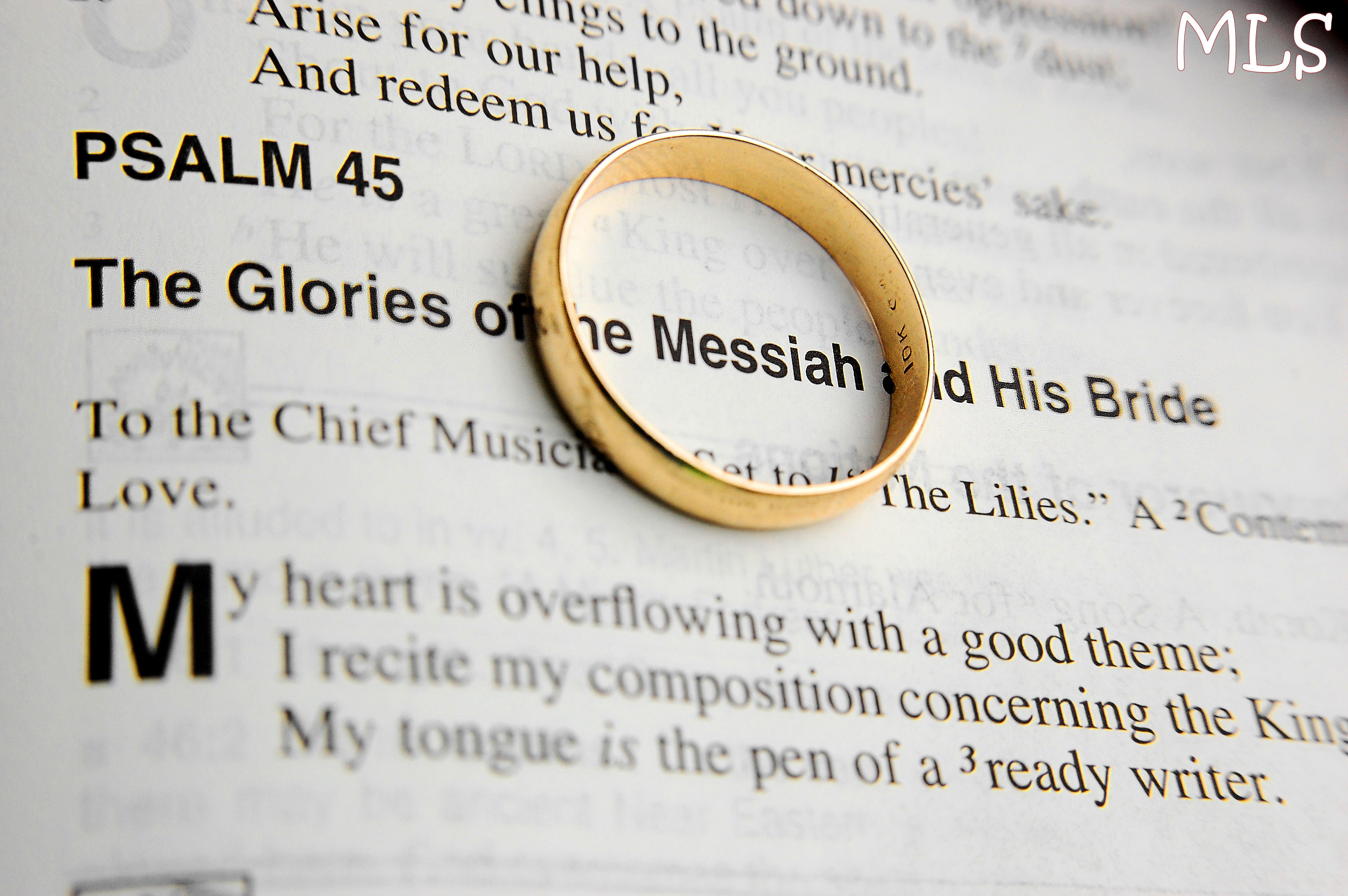
Psalm 45:6 does not say the Messiah is God

Psalm 45:6 does not say the Messiah is God

Try this simple test: Write out this verse in Hebrew by itself, give it to anyone who is fluent in biblical Hebrew, and ask him or her to translate the verse. They will say that the meaning of the Hebrew is “Your throne, O God, is forever and ever.” The Hebrew is quite clear. The problem is that the verse refers in context to Israel’s king, who was human. So, the real question is, How can an earthly king be called ’elohim? The answer is simple: This passage ultimately points to the Messiah, the divine King!

We addressed this issue at some length in vol. 2 (3.3; see also above, 4.4), and the interested reader will find much relevant information there. It will be sufficient here to summarize what we learned in our previous discussions: Psalm 45 is a royal psalm, hailing the Davidic king in highly exalted terms, even referring to him as “God” (or “divine one”).

While it is stretching the limits of the Hebrew language to refer to any human king in such lofty terms, it is altogether fitting to speak of Yeshua in such terms, since he is the Word made flesh, the Son of God clothed in earthly, human garments. Thus, this psalm can only be rightly understood when it is interpreted in terms of the Messiah.

As we have explained elsewhere (vol. 2, 3.3; principle 2 in the appendix), Psalm 45 is a royal psalm, written in honor of Israel’s king, which means that we should not be surprised to see it filled with Messianic imagery.257 In keeping with this, Risto Santala, a Finnish Christian scholar of Hebrew and Rabbinic literature, points out that the rabbis commonly interpret royal psalms with reference to the Messiah, noting, “The Jews see the Messiah in the Psalms in more or less the same contexts as do the Christians.

But since they communicate in the Psalms’ own language they find there secret references which they can then apply to their own conception of the Messiah.”258 As a typical example he points to Psalm 21, observing, “In Christian circles Psalm 21 is not usually considered Messianic. The Midrash, on the other hand, see the Messiah-King in its first and fourth verses.

Rashi attaches the same interpretation to verse 7, and the Targum to verse 8.”259 All this is justified by the fact that the Davidic king is the subject of the psalm (see also the related comments of Rashi and Ibn Ezra to Psalm 2, 4.22). With reference to Psalm 45, Santala writes, “The most celebrated Jewish exegetes agree that this psalm speaks of the ‘Messiah-King.’260

How then is verse 6[7] interpreted in the classic Rabbinic commentaries? Commenting on the opening clause, Rashi’s explanation is translated by A. J. Rosenberg as follows: “Your throne O judge Your throne O prince and judge shall exist forever and ever as the matter that is stated (Exod. 7:1): ‘I have made you a judge… over Pharaoh.’ And why? Because ‘a scepter of equity is the scepter of your kingdom’ that your judgments are true and you are fit to govern.”

This is highly significant, since Rashi understands ʾelohim to be the description of the king, following the most natural sense of the Hebrew. According to this understanding, the phrase would be rendered, “Your throne, O ʾelohim, is forever and ever.” The question, then, is the meaning of ʾelohim, which Rashi interprets in light of Exodus 7:1, where Moses is appointed by the Lord to be ʾelohim to Pharaoh.

This leads to two important observations: (1) Even though we can assume Rashi knew that Christians used this text to point to the divine nature of the Messiah, he still interpreted it along the same grammatical lines as did the Christians; (2) Rashi’s interpretation, although highly unlikely and generally not widely followed by later Jewish interpreters and translators, reminds us that ʾelohim can have varied nuances of meaning.261

This is in keeping with Christian scholars who have rendered the clause as “Your throne, O divine one,” so as to emphasize the Messiah’s divinity without suggesting that his divinity caused God in heaven to cease to be God.262

The Targum renders this passage as, “Your throne of honor, Yahweh [abbreviated in the Targum], is forever and ever,” reminding us that the meaning of the original text is clear and straightforward. Other classical Rabbinic commentaries, such as Ibn Ezra and Metsudat David, argue that the text means, “Your throne is the throne of God,” or, “Your throne is given by God” (cf. also the rendering in the Stone edition; see further vol. 2, 3.3).

In their recent Psalms commentary, Rozenberg and Zlotowitz translate this clause as “Your throne from God is everlasting,” explaining, “The sense is that the king’s throne has God’s approval because he renders justice from it in accordance with God’s will. Ibn Ezra translates ‘your throne is the throne of God,’ adding another ‘throne.’ ”263 More interesting, however, is their next comment: “The Hebrew could also be rendered ‘Your throne, O God, is everlasting.’

This would not fit the context, which requires the king to be the subject.”264 So, if not for the contextual difficulty, the translation would be fairly straightforward. And what is the primary difficulty? It is impossible for these commentators to conceive that the human king could be called ʾelohim. But if that human king is the Messiah, and if the Messiah is divine, then there is no valid reason to reject the obvious, clear rendering.

We can therefore repeat without hesitation what we stated at the outset: Psalm 45 proclaims the divine nature of the Messianic King, and we do best to take the Scriptures in their most obvious, basic sense, allowing the Bible to dictate our theology, rather than imposing our theology on the Word of God.

[1]

257 See 4.28; note also principle 2 in the appendix, along with vol. 2, 3.2.

258 Santala, The Messiah in Light of the Rabbinical Writings, 111, his emphasis.

259 Ibid.

260 Ibid., 113. According to Edersheim, “Ps. 45. is throughout regarded as Messianic. To begin with; the Targum renders verse 2 (3 in the Hebrew): ‘Thy beauty, O King Messiah, is greater than that of the sons of men.’ ” See Alfred Edersheim, Life and Times of Jesus the Messiah (repr., Peabody, Mass.: Hendrickson, 1993), 918 (2.788 in other editions).

261 Actually, in Exodus 7:1, ʾelohim does not mean “judge” contrary to Rashi’s explanation; rather, as indicated by the related passage in Exodus 4:16, and as rendered in the NJPSV, ʾelohim in these passages means “in the role of God.” The Stone edition renders ʾelohim in Exodus 4:16 as “leader” and in 7:1 as “master,” both of which fall short of the mark.

262 Cf. further vol. 2, 3.3, with special reference to the rendering of H. J. Kraus.

263 Rozenberg and Zlotowitz, The Book of Psalms, 274, 277.

264 Ibid., 277.

[1]Brown, M. L. (2003). Answering Jewish objections to Jesus, Volume 3: Messianic prophecy objections (131). Grand Rapids, Mich.: Baker Books.

Psalm 45:6 does not say the Messiah is God

Isaiah 53 does not say the servant will rise from the dead.

Isaiah 53 does not say the servant will rise from the dead.

If, as we have demonstrated, Isaiah 53 speaks of the servant’s death, then it must be accepted that the text speaks just as clearly of his continued activities after his death. Thus, there is only one possible explanation: The servant rises from the dead!

According to Hebrew University Professor David Flusser,

Although no Jewish interpretation of this passage, which would explain that the Servant will be the prophet or the Messiah who will be killed, is preserved, such an interpretation could have existed. If an interpretation of Isa. 53 in this vein ever existed in Judaism, this would have been important for the concept that the prophet will again come to life. Though the Servant “was pierced for our transgressions, tortured for our iniquities” (v. 5), he “shall enjoy long life and see his children’s children” (v. 10). So Isa. 53 could be understood not only as speaking about the death of the Servant (see also v. 8 and 9), but implicitly also about his resurrection.154

Professor Flusser has raised an important point: The text clearly speaks of the continued ministry of the servant of the Lord, and since his death is also clearly foretold, his resurrection is also implied.

As we observed previously (see above, 4.13), Isaiah 53 uses almost every possible description to communicate to us that the servant would die, saying explicitly that he would be cut off from the land of the living (v. 8) and making reference to his grave and his violent death (v. 9). Yet in verse 10 we read, “he will see his offspring and prolong his days.” How does someone die and yet prolong his days? There is only one way: resurrection! It is written that the servant of the Lord would be offered up as a guilt offering (v. 10) and pour out his life unto death (v. 12), yet the Lord says of him, “I will give him a portion among the great, and he will divide the spoils with the strong” (v. 12). This can only happen if he is raised from the dead.

Such an interpretation is self-evident, providing the most natural and obvious reading of the text. The wonderful truth is that Yeshua did indeed die and rise from the dead, paying for our sins, bearing our transgressions, and carrying our pains. By his wounds we can be healed (Isa. 53:5). And because he is risen, death can no longer touch him. “Therefore he is able to save completely those who come to God through him, because he always lives to intercede for them” (Heb. 7:25).

[1]


154 David Flusser, Judaism and the Origins of Christianity (Jerusalem: Magnes, 1988), 423.

[1]Brown, M. L. (2003). Answering Jewish objections to Jesus, Volume 3: Messianic prophecy objections (76). Grand Rapids, Mich.: Baker Books.

Isaiah 53 does not actually say the servant would die.

Isaiah 53 does not actually say the servant would die.

This objection actually contradicts two of the previous objections (specifically, 4.10 and 4.12), both of which understand that according to Isaiah 53, the servant of the Lord would die. Many standard Rabbinic interpretations recognize this, either interpreting the text with reference to Israel’s suffering and death at the hands of their enemies or with reference to the suffering and death of the Messiah (either Messiah ben Joseph or Messiah ben David).

Some years ago, I was invited by Christian students at Yale University to speak at an open forum titled “Will the Real Messiah Please Rise?” The object of the forum was to have me compare the Messianic qualifications of Yeshua with those of the Lubavitcher Rebbe, Menachem Schneerson. (The forum took place in 1993, when many of Rabbi Schneerson’s followers were expecting him to miraculously rise up from his paralysis, caused by a stroke he suffered in 1992. At such time, they believed he would declare himself to be the Messiah.) When I finished my presentation, I opened the floor for questions and arguments. Leading the way in this discussion and debate were representatives of the Lubavitch community, including the campus Lubavitch rabbi, who was quite aggressive in his presentation.

At some point in the evening, the discussion turned to Isaiah 53, and the Lubavitch leader and I engaged in a lively debate, going back and forth on the interpretation of the text until something fascinating became apparent to the listening audience: When I argued that Isaiah 53 spoke of the death of Jesus the Messiah, the Lubavitch leader adamantly denied that the text spoke of the death of the servant of the Lord. Then he turned around and argued that the text should be applied to the many deaths suffered by the Jewish people at the hands of their adversaries. How revealing! (Of course, I immediately pointed out this contradiction, and no defense was offered.)

This incident reminds us of the obvious: The text of Isaiah 53 explicitly speaks of the death of the servant of the Lord, using numerous expressions to make this perfectly clear, and there is no valid reason to deny this unless one is trying to evade the obvious sense of the chapter. In addition to the clear expressions describing the servant’s suffering (see above, 4.10 and 4.12), note the following: 53:7 says he was brought as a lamb to the slaughter; 53:8 says he was cut off from the land of the living; 53:9 speaks of his grave and death(!); 53:10 says he will be offered up as a guilt offering; 53:12 says he poured out his life unto death. What could be clearer?

Not surprisingly, when reading the text in terms of Israel, the three most respected Rabbinic commentators, Rashi, Ibn Ezra, and Radak, saw numerous references to the servant’s death(s). Radak, for example, claimed that 53:8 spoke of the fact that the people of Israel “used to be put to death in many ways: Some were burnt, some were slain, and others were stoned—they gave themselves over to any form of death for the sake of the unity of the Godhead.”152 This again reminds us that the text points explicitly to the death of the servant of the Lord, not only to his suffering and pain.

It’s also interesting to note that after the Lubavitcher Rebbe’s death, his followers pointed to Isaiah 53, claiming that it spoke of his death, which is not surprising, given the clear sense of the original Hebrew. Thus, they rightly interpreted it as a prophecy of the death of the Messiah but wrongly interpreted the identity of the Messiah.153

[1]


152 As rendered in Driver and Neubauer, Fifty-Third Chapter of Isaiah, 2:53–54.

153 See the relevant discussion about Messiah son of Joseph in vol. 2, 3.23.

[1]Brown, M. L. (2003). Answering Jewish objections to Jesus, Volume 3: Messianic prophecy objections (74). Grand Rapids, Mich.: Baker Books.

If Jesus is the Jewish Messiah, why don’t more Jews believe in him? | Brown, M. L

If Jesus is the Jewish Messiah, why don’t more Jews believe in him?

Actually, there are tens of thousands of Jews who have believed and do believe in him. The problem is that most Jews have not bothered to check into the facts about Jesus, and the only Jesus most of them know is either the baby Jesus of Christmas, an emaciated figure hanging on a cross in churches, or the Jesus of the Crusades and Inquisitions. The question is, Why don’t you believe Jesus is the Messiah? Do you really know who he is?

I encourage you to consider the following points.

1. Most Jews have never seriously studied the issue. Many of those who have decided to find out who Jesus is have been quite surprised by what they have learned. The greatest scholars and scientists in the world once believed the earth was flat—until firsthand investigation and discovery altered their outlook. It’s the exact same thing with Jews who honestly investigate the Messianic claims of Jesus. Everything changes—to put it mildly.

2. If most religious Jews learn anything about Jesus in their traditional studies, it is quite biased and negative. 22 Thus, they do not entertain even the possibility of the messiahship of Jesus.

3. Many so-called Christians have committed atrocities against Jews in the name of Jesus, helping to drive Jews away from their true Messiah. (See below, 2.7, for more on this, along with my book Our Hands Are Stained with Blood.)

4. These same Christians have often put forth a distorted picture of Jesus that bears little resemblance to the real Messiah who walked the earth two thousand years ago. Can Jews be blamed for thinking that Christians worshiped idols when the churches were filled with worshipers bowing before large, beautiful statues depicting Jesus as a babe in his mother’s lap?

5. There is often great pressure on those Jews—especially religious Jews—who put their faith in Jesus the Messiah. Some succumb to the fear, the pressure, the intimidation, the separation, and the loneliness, and they deny with their lips what they know to be true in their hearts.

6. Traditional Jewish teaching gives a slanted portrayal of who the Messiah is and what he will do. Since the description is faulty, people are looking in the wrong direction for the wrong person. No wonder relatively few have found him.

7. Once a learned Jew does believe in Yeshua, he is discredited, and so his name is virtually removed from the rolls of history. It’s almost as if such people ceased to exist. (Do you remember reading the novel Animal Farm in school? Revisionist history goes on to this day—even in traditional Jewish circles.) The story of Max Wertheimer provides one case in point. In the last century, Wertheimer came to the States as an Orthodox Jew, but over the course of time, he became a Reform Jew and was ordained a rabbi upon graduating from Hebrew Union College in Cincinnati in 1889. (He also received a Ph.D. from the University of Cincinnati the same year.) He then served as the greatly loved rabbi of B’Nai Yeshurun synagogue in Dayton, Ohio, for the next ten years. When he became a fervent believer in Jesus, however, pastoring a church as well, his name was literally removed from the rolls of the school—a school of alleged tolerance at that. Why was his name dropped? According to Alfred A. Isaacs, cited in the November 25, 1955, edition of the National Jewish Post, Wertheimer was disowned by Hebrew Union College solely because of his Christian faith. 23 And to think, this happened in a “liberal” Reform Jewish institution!

8. Although this may be hard for you to accept, because our leadership rejected Jesus the Messiah when he came, God judged us as a people (just as he judged us as a people for rejecting his law and his prophets in previous generations), and as a result, our hearts have become especially hardened toward the concept of Jesus as Messiah. 24 Paul explained this in his important letter to the believers in Rome: “What Israel sought so earnestly it did not obtain, but the elect did. The others were hardened, as it is written: ‘God gave them a spirit of stupor, eyes so that they could not see and ears so that they could not hear, to this very day’ ” (Rom. 11:7–8; the quote here is taken from Deut. 29:4 in our Torah and Isa. 29:10 in our Prophets).

If you stop to think about it, isn’t it strange that as a people we have almost totally lost sight of the fact that Jesus-Yeshua is one of us, actually, the most influential Jew ever to walk the earth? 25 Yet most of us think of him as if he were some fair-skinned, blue-eyed European. The good news is that Israel’s hardening was only partial: There have always been Jews who followed Jesus the Messiah, and in the end, our people will turn back to him on a national scale. Paul explains this a few verses later:

I do not want you [Gentiles] to be ignorant of this mystery, brothers, so that you may not be conceited: Israel has experienced a hardening in part until the full number of the Gentiles has come in. And so all Israel will be saved, as it is written: “The deliverer will come from Zion; he will turn godlessness away from Jacob. And this is my covenant with them when I take away their sins.”

Romans 11:25–27; the quote is taken from Isaiah 59:20–21; 27:9; and Jeremiah 31:33–34, all in our Prophets

Hopefully, you will be one of those Jews who is determined to find out the truth about the Messiah right now, determining to follow him at any cost. In the end, you must decide for yourself, and the bottom line question is one that only you can answer: Why don’t you believe Jesus is our promised Messiah?

What if more Jews—including your rabbi—did believe in him? Would you? Of course, that wouldn’t change the facts. Either Jesus is or is not the Messiah of Israel. Public opinion can’t affect the truth. But many times, when people find out that it’s okay to hold to a certain opinion, they come out of the closet.

Maybe it would help you to know that many of us in Jewish work have spoken with Orthodox and even ultra-Orthodox Jews who have told us in private that they believe Jesus is the Messiah, but they are afraid to go public for fear of what could happen to them. Maybe if a number of these religious Jews—some of whom are rabbis—showed up one day on your doorstep and told you their views, it would get you to think seriously about the matter.

As we grow and mature—from infants to children to teens to adults—we find out that not everything we have been told is true. Sometimes we just have to learn for ourselves. And even as adults, we often have skewed perspectives on many things. Just look at what Democrats believe about Republicans (and vice versa) or what Palestinians believe about Israelis (and vice versa) or what Black Muslims believe about Jews (and vice versa). Our perspectives, opinions, and convictions are not always right—no matter how strenuously we argue for our position. Common sense tells us that all of us can’t be right about everything all the time.

Even on an interpersonal level, how often have you met someone only to find out that all the bad things you heard about that person were greatly exaggerated or false? It happens all the time. As for the matter at hand, I assure you in the strongest possible terms: As a Jew, most everything you have heard about Jesus has been untrue. You owe it to yourself to find out just who this Jesus really is—and I say this to you whether you are an ultra-Orthodox rabbi reading this book in secret or you are a thoroughly secular, wealthy Jewish businessman who was given this book by a friend.

This much is certain: We have carefully investigated the claims of Jesus and can testify firsthand that Yeshua is who he said he was. What do you say?

[1]


22 The infamous Rabbinic collection of anti-Jesus fables, called Toledot Yeshu, is still studied in some ultra-Orthodox circles, although virtually all other Jewish scholars have long since repudiated the Toledot. These scurrilous writings, based in part on some Talmudic references, accusing Mary of fathering Jesus through a Roman soldier (or by rape), and portraying Jesus as an idolater, magician, and Israel’s arch-deceiver, were the primary source of information about Jesus for many traditional Jews, especially in the Middle Ages. Of course, as noted by the Oxford Dictionary of Jewish Religion, ed. Geoffrey Wigoder (New York: Oxford, 1997), 695, “the work is an expression of vulgar polemics written in reaction to the no less vulgar attacks on Judaism in popular Christian teaching and writing.” But as I have stated before, just as many Gentiles around the world have had a biased and inaccurate view of the Jewish people, so also have many Jews had a biased and inaccurate view of Jesus, the Jewish Messiah. For a representative sampling from the Toledot, see the excellent study of Walter Riggans, Yeshua ben David: Why Do the Jewish People Reject Jesus as Their Messiah? (Crowborough, England: Marc, 1995), 127–32. Interested readers of this present volume would do well to read Riggans as well.

23 For more on this, see Nahum Brodt, “The Truth about the Rabbi,” in Would I? Would You?, ed. Henry and Marie Einspruch (Baltimore: Lederer, 1970), 8–10. For a fuller account of Wertheimer’s faith, see Jacob Gartenhaus, Famous Hebrew Christians (Grand Rapids: Baker, 1979), 191–97.

24 This is not the first time in our history that God has hardened our hearts because we sinned against him. This is what God said to the prophet Isaiah more than twenty-five hundred years ago: “Go and tell this people: ‘Be ever hearing, but never understanding; be ever seeing, but never perceiving.’ Make the heart of this people calloused; make their ears dull and close their eyes. Otherwise they might see with their eyes, hear with their ears, understand with their hearts, and turn and be healed” (Isa. 6:9–10). The prophet was actually called to a ministry of hardening his people’s hearts! It was as if God were saying, “Fine. If you want to be hard-hearted, refusing to believe me or obey me, I will give you over to your hardness and make you even harder.” This is exactly what has happened to us regarding the Messiah: When so many of our people refused to follow him, God gave us over to our unbelief and obduracy to the point that through the centuries, we have become especially resistant to Jesus.

25 This well-known, anonymous tribute to Jesus, known as “One Solitary Life,” puts things in perspective: “He was born in an obscure village. He worked in a carpenter shop until He was thirty. He then became an itinerant preacher. He never held an office. He never had a family or owned a house. He didn’t go to college. He had no credentials but himself. He was only thirty-three when the public turned against him. His friends ran away. He was turned over to his enemies and went through the mockery of a trail. He was nailed to a cross between two thieves. While he was dying, his executioners gambled for his clothing, the only property he had on earth. He was laid in a borrowed grave. Nineteen centuries have come and gone, and today he is the central figure of the human race. All the armies that ever marched, all the navies that ever sailed, all the parliaments that ever sat, and all the kings that ever reigned have not affected the life of man on this earth as much as that one solitary life.”

[1]Brown, M. L. (2000). Answering Jewish objections to Jesus, Volume 1: General and historical objections. (21). Grand Rapids, Mich.: Baker Books.

How Can One God Be Three?

How Can One God Be Three?

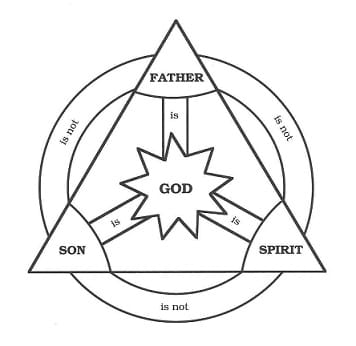
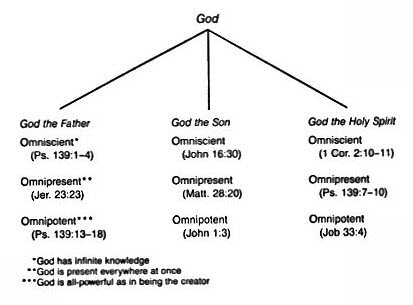
Speaking through the prophet Isaiah, God said, “My thoughts are not your thoughts, / Nor are your ways My ways … / For as the heavens are higher than the earth, / So are My ways higher than your ways, / And My thoughts than your thoughts” (Isa. 55:8–9). God is infinite, man is finite, so there are mysteries about God that man cannot fully understand. One of these mysteries is the Trinity, the tri-personality of God. According to Christian orthodoxy, God is one God in essence, power, and authority, and also eternally exists as three distinct co-equal persons. These three persons are the Father, the Son (Jesus), and the Holy Spirit. This does not mean that Christians believe in three gods (polytheism). Rather, the doctrine of the Trinity is that there is only one God who exists in three distinct persons, and all three share the exact same divine nature or essence.

Understanding this fully is beyond human comprehension and has no human parallels, although various analogies have been offered. One of these analogies is the three physical states of water. Water is not only a liquid but also a solid (ice) and a gas (vapor), yet its chemical composition (substance) never changes in all three forms (two parts hydrogen and one part oxygen—H2O). Although such analogies help us visualize the concept of the Trinity, they all fall short in some way. In the case of the water analogy, although the molecule H2O can be liquid, solid, or gas, it is never all three at one time. The Trinity, on the other hand, is all three persons as one God.

The word Trinity is not used in Scripture, but it has been adopted by theologians to summarize the biblical concept of God. Difficult as it is to understand, the Bible explicitly teaches the doctrine of the Trinity, and it deserves to be explained as clearly as possible, especially to non-Christians who find the concept a stumbling-block to belief. So let’s dig into this topic by addressing four key questions.

IS THE DOCTRINE OF THE TRINITY IRRATIONAL?

The doctrine of the Trinity is certainly a mystery but that doesn’t mean it’s irrational. The concept cannot be known by human reason apart from divine revelation, and, as we’ll soon see, the Bible definitely supports the idea of the Trinity. But for now, I want to demonstrate that the doctrine of the Trinity, although beyond human comprehension, is nevertheless rational. Our acceptance of it is congruous with how we respond to other data about the known world.

There are many things about the universe we don’t understand today and yet accept at face value simply because of the preponderance of evidence supporting their existence. The scientific method demands that empirical evidence be accepted whether or not science understands why it exists or how it operates. The scientific method does not require that all data be explained before it is accepted.

Contemporary physics, for instance, has discovered an apparent paradox in the nature of light. Depending on what kind of test one applies (both of them “equally sound”), light appears as either undulatory (wave-like) or corpuscular (particle-like). This is a problem. Light particles have mass, while light waves do not. How can light have mass and not have it, apparently at the same time? Scientists can’t yet explain this phenomenon, but neither do they reject one form of light in favor of the other, nor do they reject that light exists at all. Instead, they accept what they’ve found based on the evidence and press on.

Like physicists, we are no more able to explain the mechanics of the Trinity than they can explain the apparent paradox in the nature of light. In both cases, the evidence is clear that each exists and harbors mystery. So we must simply accept the facts and move on. Just because we cannot explain the Trinity, how it can exist, or how it operates does not mean that the doctrine must be rejected, so long as sufficient evidence exists for its reality. So let’s now explore this evidence.

HOW DOES THE BIBLE PRESENT THE DOCTRINE OF THE TRINITY?

THE OLD TESTAMENT

Although the doctrine of the Trinity is fully revealed in the New Testament, its roots can be found in the Old Testament.

In several places, God refers to Himself in plural terms. For example, “Then God said, ‘Let Us make man in Our image’” (Gen. 1:26; see 3:22; 11:7; Isa. 6:8).

The Messiah was prophesied in the Old Testament as being divine. Isaiah 9:6 states that the Messiah will be called “Mighty God,” a term applied in the Old Testament specifically to Yahweh (see Mic. 5:2).

Isaiah 48:16 refers to all three members of the Godhead: “Come near to Me, listen to this: From the first I have not spoken in secret, from the time it took place, I was there. And now the Lord God [Father] has sent Me [Jesus], and His Spirit [the Holy Spirit]” (nasv).

The Old Testament also makes numerous references to the Holy Spirit in contexts conveying His deity (Gen. 1:2; Neh. 9:20; Ps. 139:7; Isa. 63:10–14).

THE NEW TESTAMENT

The New Testament provides the most extensive and clear material on the Trinity. Here are just a few of the texts that mention all three members of the Godhead and imply their co-equal status.

•     Matthew 28:19, the baptismal formula: “Go therefore and make disciples of all the nations, baptizing them in the name [not ‘names’] of the Father and of the Son and of the Holy Spirit.”

•     Matthew 3:16, at the baptism of Christ in the Jordan: “And after being baptized, Jesus went up immediately from the water; and behold, the heavens were opened, and He saw the Spirit [Holy Spirit] of God [Father] descending as a dove, and coming upon Him [Jesus]” (nasv).

•     Luke 1:35, the prophetic announcement to Mary of Jesus’ birth: “And the angel answered and said to her, ‘The Holy Spirit will come upon you, and the power of the Highest [Father] will overshadow you; therefore, also, that Holy One who is to be born will be called the Son of God [Jesus].’”

•     The trinitarian formula is also found in 1 Peter 1:2, 2 Corinthians 13:14, and 1 Corinthians 12:4–6.

DIGGING DEEPER

To explain the doctrine of the Trinity, I will take an inductive (scientific) approach. By this I mean I will accumulate general facts in Scripture that lead to a specific conclusion—that the nature of God is triune. The argument will go like this:

1. The Bible teaches that God is one (monotheism) and that He possesses certain attributes that only God can have.

2. Yet when we study the attributes of the Father, the Son, and the Holy Spirit, we discover that all three possess the identical attributes of deity.

3. Thus we can conclude that there is one God eternally existing as three distinct persons.

God Is One (Monotheism)

The Hebrew Shema of the Old Testament is “Hear, O Israel: The Lord our God, the Lord is one!” (Deut. 6:4; see Isa. 43:10; 44:6; 46:9). Some people have argued that this passage actually refutes the concept of the triune nature of God because it states that God is one. But the Hebrew word for “one” in this text is echod, which carries the meaning of unity in plurality. It is the same word used to describe Adam and Eve becoming “one flesh” (Gen. 2:24). Scripture is not affirming that Adam and Eve literally become one person upon marriage. Rather, they are distinct persons who unite in a permanent relationship.

The New Testament confirms the teaching of the Old: “You believe that God is one. You do well; the demons also believe, and shudder” (James 2:19, nasv; see 1 Tim. 2:5; 1 Cor. 8:4; Eph. 4:4–6).

God Has a Certain Nature

Both the Old and New Testaments list the attributes of God. We won’t consider all of them here, but what follows are some of the clearest expressions of what constitutes deity.

•     God is omnipresent (present everywhere at once): Psalm 139:7–10; Jeremiah 23:23–24.

•     God is omniscient (possesses infinite knowledge): Psalms 139:1–4; 147:4–5; Hebrews 4:13; 1 John 3:20.

•     God is omnipotent (all-powerful): Psalm 139:13–18; Jeremiah 32:17; Matthew 19:26.

The Father Is God

To the Jews, who do not accept the Trinity, God is Yahweh. In the Old Testament, Yahweh is to the Hebrews what Father is in the New Testament and to Christians. The attributes of God (Yahweh) listed above are the same for Yahweh and Father because both names apply to the one God. Although the concept of God as Father is not as explicit in the Old Testament as it is in the New, nevertheless, it has its roots in the Old (see Pss. 89:26; 68:5; 103:13; Prov. 3:12).

In the New Testament, the concept of the Father as a distinct person in the Godhead becomes clear (Mark 14:36; 1 Cor. 8:6; Gal. 1:1; Phil. 2:11; 1 Pet. 1:2; 2 Pet. 1:17). God is viewed as Father over creation (Acts 17:24–29), the nation of Israel (Rom. 9:4; see Exod. 4:22), the Lord Jesus Christ (Matt. 3:17), and all who believe in Jesus as Lord and Savior (Gal. 3:26).

The Son Is God

Like the Father, Jesus possesses the attributes of God. He is omnipresent (Matt. 18:20; 28:20). He is also omniscient: He knows people’s thoughts (Matt. 12:25), their secrets (John 4:29), the future (Matt. 24:24–25), indeed all things (John 16:30; 21:17). His omnipotence is also taught. He has all power over creation (John 1:3; Col. 1:16), death (John 5:25–29; 6:39), nature (Mark 4:41; Matt. 21:19), demons (Mark 5:11–15), and diseases (Luke 4:38–41).

In addition to these characteristics, Jesus exhibits other attributes that the Bible acknowledges as belonging only to God. For example, He preexisted with the Father from all eternity (John 1:1–2), accepted worship (Matt. 14:33), forgave sins (Matt. 9:2), and was sinless (John 8:46).

The Holy Spirit Is God

The Holy Spirit is also omnipresent (Ps. 139:7–10), omniscient (1 Cor. 2:10), and omnipotent (Luke 1:35; Job 33:4).

Like Jesus, the Holy Spirit exhibits other divine attributes that the Bible ascribes to God. For instance, He was involved in creation (Gen. 1:2; Ps. 104:30), inspired the authorship of the Bible (2 Pet. 1:21), raised people from the dead (Rom. 8:11), and is called God (Acts 5:3–4).

The upshot of all this is that God is triune. In a formal argument, we can put it this way:

Major Premise:

Only God is omnipresent, omniscient, and omnipotent.

Minor Premise:

The Father, the Son, and the Holy Spirit are omnipresent, omniscient, and omnipotent.

Conclusion:

Therefore, God is triune as Father, Son, and Holy Spirit.

THE TRINITY

HOW DOES JESUS TEACH THE DOCTRINE OF THE TRINITY?

In the Bible, Jesus claims to be God and then demonstrates this claim by displaying the attributes of God and by raising Himself from the dead. So what Jesus has to say about God must be true. And Jesus clearly teaches that God is triune.

Jesus Is Equal with the Father and Holy Spirit

In Matthew 28:19, Jesus tells His followers to “make disciples of all the nations, baptizing them in the name of the Father and of the Son and of the Holy Spirit.” He uses the singular word name but associates it with three persons. The implication is that the one God is eternally three co-equal persons—Father, Son, and Holy Spirit.

Jesus Is One with the Father

In John 14:7 and 9, Jesus identifies Himself with the Father by saying to His disciples, “If you had known Me, you would have known My Father also; and from now on you know Him and have seen Him … He who has seen Me has seen the Father” (see John 5:18). Jesus is not claiming to be the Father; rather, He is saying that He is one with the Father in essence.

Jesus Is One with the Holy Spirit

Continuing in John 14, Jesus tells His disciples that, after He is gone, He will send them “another Helper” who will be with them forever and will indwell them (vv. 16–17). The “Helper” is the Holy Spirit. The trinitarian implication lies with the word another. The apostle John, as he wrote this passage, could have chosen one of two Greek words for another. Heteros denotes “another of a different kind,” while allos denotes “another of the same kind as myself.” The word chosen by John was allos, clearly linking Jesus in substance with the Holy Spirit, just as He is linked in substance with the Father in verses 7 and 9. In other words, the coming Holy Spirit will be a different person than Jesus, but He will be the same with Him in divine essence just as Jesus and the Father are different persons but one in their essential nature. Thus, in this passage, Jesus teaches the doctrine of the Trinity.

So far we have seen that the authors of Scripture and Jesus Christ teach the triune nature of God. Therefore, the only way the doctrine of the Trinity can be rejected is if one refuses to accept the biblical evidence. Some groups, such as the Jehovah’s Witnesses, do this by reinterpreting and altering Scripture. Others, such as the Unitarians (who claim that Jesus is just a man), arbitrarily and without any evidence deny anything supernatural or miraculous in the Bible. Both the Jehovah’s Witnesses and the Unitarians are guilty of the very same thing of which they accuse Christians—irrationality. They refuse to accept the evidence for the Trinity regardless of how legitimate it is. This is unscientific and irrational. If one approaches Scripture without bias, he will clearly discover what the church has maintained for centuries: God is triune—one God in essence but eternally existing in three persons as Father, Son, and Holy Spirit.

A COMMON OBJECTION

Perhaps you’ve wondered or heard someone say, “If Jesus is one in essence with the Father, an equal member of the triune Godhead, why does He say, ‘the Father is greater than I’” (John 14:28)? This question actually moves away from the doctrine of the Trinity and launches us into the doctrine of the incarnation, the process whereby Jesus, as the eternal Son of God, came to earth as man. Nevertheless, because this question is frequently raised as an objection, it needs to be answered.

Numerous passages in Scripture teach that Jesus, although fully God, is also fully man (John 1:14; Rom. 8:3; Col. 2:9; 1 Tim. 3:16). However, Philippians 2:5–8 states that, in the process of taking on humanity, Jesus did not give up any of His divine attributes. Rather, He gave up His divine glory (see John 17:5) and voluntarily chose to withhold or restrain the full use of His divine attributes. There are numerous instances in Scripture where Jesus, although in human form, exhibits the attributes of deity. If Jesus had surrendered any of His divine attributes when He came to earth, He would not have been fully God and thus could not have revealed the Father as He claimed to do (John 14:7, 9).

The key to understanding passages such as John 14:28 is that Jesus, like the Father and the Holy Spirit, has a particular position in the triune Godhead. Jesus is called the Son of God, not as an expression of physical birth, but as an expression of His position in relationship to the Father and Holy Spirit. This in no way distracts from His equality with the Father and the Holy Spirit or with His membership in the Godhead. As man, Jesus submits to the Father and acts in accordance to the Father’s will (see John 5:19, 30; 6:38; 8:28). So when we read passages such as Mark 14:36 where Jesus submits to the Father’s will, His submission has nothing to do with His divine essence, power, or authority, only with His position as the Incarnate Son.

Perhaps an illustration will help to explain this. Three people decide to pool their money equally and start a corporation. Each are equal owners of the corporation, but one owner becomes president, another vice-president, and the third secretary/treasurer. Each are completely equal so far as ownership, yet each has his own particular function to perform within the corporation. The president is the corporate head, and the vice-president and secretary/treasurer are submissive to his authority and carry out his bidding.

So when Jesus the God-man submits to the Father’s will or states that the Father is greater than He or that certain facts are known only by the Father (e.g., Matt. 24:36), it does not mean that He is less than the other members of the Godhead but that in His incarnate state He did and knew only that which was according to the Father’s will. The Father did not will that Jesus have certain knowledge while in human form. Because Jesus voluntarily restrained the full use of His divine attributes, He was submissive to the Father’s will.

Why did Jesus choose to hold back from fully using His divine powers? For our sake. God willed that Jesus feel the full weight of man’s sin and its consequences. Because Jesus was fully man, He could fulfill the requirements of an acceptable sacrifice for our sins. Only a man could die for the sins of mankind. Only a sinless man could be an acceptable sacrifice to God. And it is only because Jesus is an equal member of the triune Godhead, and thus fully God, that He was able to raise Himself from the dead after dying on the cross and thereby guarantee our eternal life.

When all the evidence is accounted for and the verdict read, the Bible clearly teaches that the Father, the Son, and the Holy Spirit are three distinct, co-equal, co-eternal members of the Godhead, yet one in essence, power, and authority. All three are one God. Were this not the case, if the Trinity were not a reality, there would be no Christianity.

[1]


[1]Story, D. (1997). Defending your faith. Originally published: Nashville : T. Nelson, c1992. (99). Grand Rapids, MI: Kregel Publications.

Exit mobile version