محمود حسين يعتذر للمسيحيين ويقول: مش لاقي مبرر

محمود حسين يعتذر للمسيحيين ويقول: مش لاقي مبرر

محمود حسين يعتذر للمسيحيين ويقول: مش لاقي مبرر

محمود حسين يعتذر للمسيحيين ويقول: مش لاقي مبرر

بقلم / محمود حسين 
أصدقائي و أهلي المسيحيين المصريين , أهل مصر الطيبين , اللي على راسي من فوق .
.
صح اتظلمتو كتير , قوانين دور عباده بالتيله على ما تتعمل , تراخيص بناء كنيسه أصعب من تراخيص بناء كباريه , زمان لما كانت بتحصل حادثه بين عربيتين و كان يبقى طرف فيهم مسيحي كانت بتروح أمن دوله !! , الطالب المسيحي المجتهد لما يخلص جامعه و يطلع الأول كان سهل جدا يطيّروه و يعينو التاني , عشان الأول مسيحي , ولو عايز يتعين معيد يبقى يرفع قضيه !! , و لما واحد يحب ينصح مريض بدكتور , يقوله الدكتور الفلاني ده هو صحيح مسيحي بس شاطر , دي كلمة تدبح , كلمة بنت كلب .
.
اتظلمتو اكتر من كده لما كنتو كل يوم جمعه تسمعو خطباء الجهل و الضلاله و هما عالمنابر بيدعو عليكو , يعني تبقى قاعد في بيتك مع عيالك كيرلس و ماريانا و تلاقي الخطيب في الميكروفون بيدعي عليك , و انت تبص لعيالك و مش عارف تقول لهم ايه او تشرح لهم ازاي .
.
اتظلمتو كتير اوي , لازم نعترف , سنين طويله , خليط من وهابيه على جهل على تخلف على اخوان على زفت , و انتو اللي بتدفعو التمن , هانت يا طيبين .
.
بس مش لاقي مبرر , رغم كل الظلم ده مش لاقي مبرر كافي :
.
– لما الله يرحمه عم مجدي مكين يتعرض للتعذيب و الموت على إيد ظابط بلطجي , صرخنا و قولنا مصري اتعذب و اتقتل , مش مسيحي , كلمة مسيحي و مسلم ملهاش مكان هنا , واحد مصري اتعرض للتعذيب , و ظابط بلطجي اتقدم للمحاكمه , الحكايه ملهاش مسمى تاني .
.
– لما ناس يتقتلو في سينا على إيد شوية ارهابيين ولاد حرام , ماسمهاش مسيحيين مسالمين اتقتلو , اسمها مصريين , اسمهم جرجس ولا مصطفى مش هتفرق , في كل حوادث الارهاب و القتل عمري ما ركزت في الأسماء ولا الديانات , شهداء مصر إسمهم المصريين , بلاش تبلعو طعم سخيف , انتو شربتو البحر , لو سمحتو اشربو البحيره , يعني هانت , و مصر من 1400 سنه و هي زي الأوفه اللي لها ودنين , لازم يشيلها اتنين .
.
أول مره اكتب بوست و ابقى مش عارف اختمه ازاي , مش عارف انا عايز اقولكو ايه , يمكن أكون عايز باختصار , ابوس راسكو و أقول لكو عيب .
 

Did Jesus make a mistake in referring to Zechariah the son of Jehoiada rather than to Zechariah the son of Berechiah? MATTHEW 23:34–35

MATTHEW 23:34–35—Did Jesus make a mistake in referring to Zechariah the son of Jehoiada rather than to Zechariah the son of Berechiah?

[button color=”red” size=”big” link=”https://www.facebook.com/difa3iat” target=”blank” ]إضغط هنا[/button]

PROBLEM: Jesus said to the scribes and Pharisees that the guilt of all the righteous blood from Abel to Zechariah will fall on them. Concerning Zechariah, Jesus said he was killed between the sanctuary and the altar. Some conclude that the Zechariah referred to by Christ is the son of Jehoiada (2 Chron. 24:20–22).

SOLUTION: The Zechariah referred to has to be the son of Berechiah. This Zechariah is one of the minor prophets, and his father is listed as Berechiah (Zech. 1:1). He would be the most likely candidate because the other Zechariah (son of Jehoiada) died about 800 b.c. If one thinks Christ referred to this Zechariah, then the time span from Abel to this Zechariah would not cover the OT period, which extended to 400 b.c. Abel to Zechariah the son of Berechiah would make a much better sweep of the OT period than would the period from Abel to Zechariah the son of Jehoiada. Since many Zechariahs are mentioned in the OT, it would not be too difficult to imagine two Zechariahs dying from similar circumstances.

[1]


[1]Geisler, N. L., & Howe, T. A. (1992). When critics ask : A popular handbook on Bible difficulties (357). Wheaton, Ill.: Victor Books.

Does Jesus want us to love ourself first or others? MATTHEW 22:39

MATTHEW 22:39—Does Jesus want us to love ourself first or others?


PROBLEM: Jesus says in Matthew that we are to love our neighbor as ourselves. But, if we love ourselves first, before we love our neighbor, then this would be putting self before neighbor. Is Jesus teaching that we should be selfish?

SOLUTION: Loving others as we love ourselves can be understood in different ways, but in no way is Jesus implying that we should be selfish. The Bible condemns “lovers of themselves” (2 Tim. 3:2). It exhorts us not to consider only our own interests, but also the interest of others (Phil. 2:4). There are three ways to understand the phrase, “love others as yourself.”

First, some believe that Jesus is saying that we ought to love others as we ought to love ourselves, namely, unselfishly. This, however, seems far too subtle and dialectical for Jesus’ normally straight-forward moral assertions. It would have been more forthright to simply say do not be selfish than the tangled command of loving oneself unselfishly.

Second, Jesus could have meant that we should love others as we ought to love ourselves, namely, properly. There is a legitimate self-respect or self-love. Ephesians tells us to care for our own bodies, “for no one ever hated his own flesh, but nourishes and cherishes it” (5:28–29). There is nothing wrong with a legitimate self-care and self-respect. The Bible condemns someone for “thinking of himself more highly than he ought,” but urges him to think “soberly” (Rom. 12:3). In this sense, Jesus may be saying love others as you ought to love yourselves.

Third, Jesus could have meant that we should love others as much as we do love ourselves. That is, He might have been saying that we should measure how we ought to love others by how we actually do love ourselves without implying that the way we love ourselves is correct. Rather, God may be simply pointing to love for self as the standard by which we should judge how much to love others. In this way, there would be an automatic check on our selfish love, since we would have to love others this much too.

Geisler, N. L., & Howe, T. A. (1992). When critics ask : A popular handbook on Bible difficulties (355). Wheaton, Ill.: Victor Books.

Did Jesus heal the blind man coming into or going out of Jericho? MATTHEW 20:29–34 (cf. Mark 10:46–52; Luke 18:35–43)

MATTHEW 20:29–34 (cf. Mark 10:46–52; Luke 18:35–43)—Did Jesus heal the blind man coming into or going out of Jericho?

PROBLEM: According to Luke, a blind man was healed as Jesus entered the city of Jericho (18:35), but Matthew and Mark declare that the healing took place as Jesus left the city of Jericho. Again, the accounts do not seem to be harmonious.

SOLUTION: Some believe that the healing in Luke may have actually taken place as Jesus left Jericho, claiming that it was only the initial contact that took place as “He was coming near Jericho” (Luke 18:35) and the blind man may have followed Him through the city, since he was continually begging Jesus to heal him (vv. 38–39). But this seems unlikely, since even after the healing (v. 43) the very next verse (19:1) says, “then Jesus entered and passed through Jericho.”

Others respond by noting there were two Jerichos, the old and the new, so that as He went out of one He came into the other.

Still others suggest that these are two different events. Matthew and Mark clearly affirm the healing occurred as Jesus left the city (Matt. 20:29; Mark 10:46). But Luke speaks of healing one blind man as He entered the city. This is supported by the fact that Luke refers only to a “multitude” of people being present as Jesus entered the city (18:36), but both Matthew (20:29) and Mark (10:46) make a point to say there was a “great multitude” of people there by the time Jesus left the city. If the word spread of the miraculous healing on the way into the city, this would account for the swelling of the crowd. It might also explain why two blind men were waiting on the other side of the city to plead for Jesus to heal them. Perhaps the first blind man who was healed went quickly to tell his blind friends what happened to him. Or maybe the other blind men were already stationed at the other end of the city in their customary begging position. At any rate, there is no irresolvable difficulty in the passage. The two accounts can be understood in a completely compatible way.

Geisler, N. L., & Howe, T. A. (1992). When critics ask : A popular handbook on Bible difficulties (353). Wheaton, Ill.: Victor Books.

Are rewards the same for all, or do they differ in degree? MATTHEW 20:1ff

MATTHEW 20:1ff—Are rewards the same for all, or do they differ in degree?

PROBLEM: Jesus told a parable of His kingdom in which each servant got the same pay even though each had worked a different number of hours. Yet in other places, the Bible speaks of different degrees of reward for working in God’s kingdom (cf. 1 Cor. 3:11–15; 2 Cor. 5:10; Rev. 22:12).

SOLUTION: There are different degrees of reward in heaven, depending on our faithfulness to Christ on earth. Jesus said, “I am coming quickly, and My reward is with Me, to give to every one according to his work” (Rev. 22:12). Paul said each believer’s work will be tried by fire and “if anyone’s work which he has built on it endures, he will receive a reward” (1 Cor. 3:14). In 2 Corinthians 5, he says we must all appear before the judgment seat of Christ “that each one may receive the things done in the body, according to what he has done, whether good or bad” (v. 10, emphasis added).

The point of the parable in Matthew 20 is not that all rewards will be the same, but that all rewards are by grace. It is to show that God rewards on the basis of opportunity, not simply on accomplishment. Not all the servants had the opportunity to work for the master the same amount of time, but all, nevertheless, were given the same pay. God looks at our disposition as well as our actions and judges accordingly.

Geisler, N. L., & Howe, T. A. (1992). When critics ask : A popular handbook on Bible difficulties (351). Wheaton, Ill.: Victor Books.

Is Peter the rock on which the church is built? MATTHEW 16:18

MATTHEW 16:18—Is Peter the rock on which the church is built?

PROBLEM: Roman Catholics use this passage to support their belief in the primacy of Peter, that is, that he is the rock on which the church is built. But Paul said the church is built on Christ, not Peter (1 Cor. 3:11). Is Peter the “rock” in this passage?

SOLUTION: There are different ways to understand this passage, but none of them support the Roman Catholic view that the church is built on St. Peter, who became the first Pope—infallible in all his official pronouncements on faith and doctrine. This is evident for many reasons.

First of all, Peter was married (Matt. 8:14), and Popes do not marry. If the first Pope could marry, why later pronounce that no priest (or Pope) can marry.

Second, Peter was not infallible in his views on the Christian life. Even Paul had to rebuke him for his hypocrisy, because he was not “straightforward about the truth of the Gospel” (Gal. 2:14).

Third, the Bible clearly declares that Christ is the foundation of the Christian church, insisting that “no other foundation can anyone lay than that which is laid, which is Jesus Christ” (1 Cor. 3:11).

Fourth, the only sense in which Peter had a foundational role in the church, all the other apostles shared in the same way. Peter was not unique in this respect. For Paul declared that in this sense the church is “built on the foundation of the apostles and prophets, Jesus Christ Himself being the chief cornerstone” (Eph. 2:20). Indeed, the early church continued steadfastly in the apostles’ doctrine [not just Peter’s]” (Acts 2:42). Even “keys of the kingdom” given to Peter (Matt. 16:19) were also given to all the apostles (cf. Matt. 18:18).

Fifth, there is no indication that Peter was the head of the early church. When the first council was held at Jerusalem, Peter played only an introductory role (Acts 15:6–11). James seems to have a more significant position, summing up the conference and making the final pronouncement (cf. Acts 15:13–21). In any event, Peter is never referred to as the “pillar” in the church. Rather, Paul speaks of “pillars” (plural), such as, “James, Cephas, and John” (Gal. 2:9). Peter (Cephas) is not even listed first among the pillars.

Sixth, many Protestant interpreters believe that Jesus’ reference to “this rock” (Matt. 16:18) upon which His church would be built was to Peter’s solid (rock-like) testimony that Jesus was “the Christ, the son of the living God” (Matt. 16:16). But even if this rock has reference to Peter (Petros, rock), which is certainly a possible interpretation, he was only a rock in the apostolic foundation of the church (Matt. 16:18), not the rock. Nor is he the only apostolic rock. Even Peter himself admitted that Christ is the chief rock (“cornerstone,” 1 Peter 2:7). And Paul notes that the other apostles are all part of the “foundation” (Eph. 2:20).

[1]


[1]Geisler, N. L., & Howe, T. A. (1992). When critics ask : A popular handbook on Bible difficulties (347). Wheaton, Ill.: Victor Books.

If you want to know what Isaiah 53 is talking about, just read Isaiah 52 and 54. The context is the return of the Jewish people from Babylonian exile, 550 years before Jesus.

If you want to know what Isaiah 53 is talking about, just read Isaiah 52 and 54. The context is the return of the Jewish people from Babylonian exile, 550 years before Jesus.
There is some truth to what you are saying. The prophet saw the future glory of Israel and the work of the Messiah against the backdrop of the end of the exile. But the context is larger—beginning in Isaiah 40. It spells a new beginning for Israel, a new creation and a new exodus, a time when all the world will ultimately see the glory of the Lord. The events predicted in Isaiah 53 are far greater than the return of about forty-five thousand Jews from Babylon in the sixth century B.C.E. Rather, in these passages in Isaiah, the exile serves as a symbol of the spiritual bondage of the Jewish people, while the return from exile serves as a figure of their redemption. These prophecies of redemption culminate in the glorious Messianic prophecy found in Isaiah 52:13–53:12.
Isaiah 52:13–53:12 is one of the most important Messianic prophecies in the entire Hebrew Bible, and I would not be exaggerating to say that more Jews have put their faith in Jesus as Messiah after reading this passage of Scripture than after reading any other passage in the Tanakh. To the unbiased reader, it clearly speaks about the death and resurrection of the righteous servant of the Lord on behalf of his sinful people. It speaks of Yeshua! Not surprisingly, anti-missionaries have raised numerous arguments to this interpretation, frequently claiming that the passage speaks of the people of Israel as opposed to the Messiah (that is to say, they argue for a national interpretation rather than an individual interpretation).
Interestingly, the national interpretation is not found once in the Talmuds, the Targums, or the midrashim (in other words, not once in all the classical, foundational, authoritative Jewish writings). In fact, it is not found in any traditional Jewish source until the time of Rashi, who lived in the eleventh century C.E.105 That is saying something! For almost one thousand years after the birth of Yeshua, not one rabbi, not one Talmudic teacher, not one Jewish sage, left us an interpretation showing that Isaiah 53 should be interpreted with reference to the nation of Israel (as opposed to a righteous individual, or righteous individuals, within Israel), despite the fact that these verses from Isaiah are quoted in the New Testament and were often used in Jewish-Christian debate.
We will take up the subject of the national interpretation of this passage more fully when we deal with the next objection, below, 4.6. For now, we will answer two important questions: (1) In the preceding chapters of Isaiah (namely, 40–51), is “the servant of the Lord” always speaking of thenation of Israel as opposed to an individual who represents Israel? (2) Does the surrounding context speak only of the exile of the Jewish people from Babylon?
The servant of the Lord (Hebrew, ʿebed) is mentioned a total of seventeen times in Isaiah 40–51, sometimes with reference to the nation of Israel as a whole (41:8–9; twice in 42:19; 43:10; twice in 44:21; 45:4; 48:20), and sometimes with reference to a righteous individual within the nation (49:3, 5–7; 50:10). In several verses, it is not clear whether an individual or the nation (or a righteous remnant within the nation) is referred to, although a good case can be made for the individual interpretation (42:1; 44:1–2).106 Significantly, the most personal, specific, individual language is found in Isaiah 52:13 and 53:11, roughly the beginning and the end of this glorious prophetic passage. Reviewing the data just presented, we can see something very important: The references to the servant as a people actually end with Isaiah 48:20, while the references to the servant as an individual come into indisputable focus beginning with Isaiah 49 and continuing through the end of chapter 53. Thus, by the time we reach Isaiah 52:13, the spotlight is on a person, not a people. The picture is becoming clearer! (We will take up this discussion again in the next objection.)
Let’s look at the evidence in a little more depth. There are some unmistakable national references to the servant in Isaiah 41–48. In the following verses, the “servant” refers to the Jewish people:
     “But you, O Israel, my servant, Jacob, whom I have chosen, you descendants of Abraham my friend, I took you from the ends of the earth, from its farthest corners I called you. I said, ‘You are my servant’; I have chosen you and have not rejected you” (Isa. 41:8–9). Notice that here the servant consists of the descendants (plural) of Abraham.
     “ ‘You are my witnesses,’ declares the Lord, ‘and my servant whom I have chosen, so that you may know and believe me and understand that I am he. Before me no god was formed, nor will there be one after me’ ” (Isa. 43:10). God clearly identifies his servant as his witnesses (plural).
At times, however, this servant is nonresponsive to the purposes of God:
     “Hear, you deaf; look, you blind, and see! Who is blind but my servant, and deaf like the messenger I send? Who is blind like the one committed to me, blind like the servant of the Lord? You have seen many things, but have paid no attention; your ears are open, but you hear nothing” (Isa. 42:18–20).
In fact, even as God’s servant—the Jewish people—is being led out of Babylonian exile, the servant is still deaf and blind: “Lead out those who have eyes but are blind, who have ears but are deaf” (Isa. 43:8). This hardly sounds like the righteous servant of the Lord who elsewhere opens the eyes of the blind. The contrast is quite stark:
     “Here is my servant, whom I uphold, my chosen one in whom I delight; I will put my Spirit on him and he will bring justice to the nations.… I, the Lord, have called you in righteousness; I will take hold of your hand. I will keep you and will make you to be a covenant for the people and a light for the Gentiles, to open eyes that are blind, to free captives from prison and to release from the dungeon those who sit in darkness” (Isa. 42:1, 6–7).
This servant is obedient and righteous, setting captives free, and according to the Targum, this servant is none other than the Messiah.107 This is confirmed by Rabbi David Kimchi—one of the so-called “big three” medieval Rabbinic commentators—who also interpreted the words “Behold my servant” in Isaiah 42:1 with specific reference to “King Messiah.”108 And this image occurs even more plainly in Isaiah 49, where the servant is called Israel and yet is sent on a mission to redeem Israel. The servant is a righteous individual who represents the nation.109 The servant, as in Isaiah 42, is the Messiah!110
Listen to me, you islands; hear this, you distant nations: Before I was born the Lord called me; from my birth he has made mention of my name. He made my mouth like a sharpened sword, in the shadow of his hand he hid me; he made me into a polished arrow and concealed me in his quiver. He said to me, “You are my servant, Israel, in whom I will display my splendor.” But I said, “I have labored to no purpose; I have spent my strength in vain and for nothing. Yet what is due me is in the Lord’s hand, and my reward is with my God.” And now the Lord says—he who formed me in the womb to be his servant to bring Jacob back to him and gather Israel to himself, for I am honored in the eyes of the Lord and my God has been my strength—he says: “It is too small a thing for you to be my servant to restore the tribes of Jacob and bring back those of Israel I have kept. I will also make you a light for the Gentiles, that you may bring my salvation to the ends of the earth.” This is what the Lord says—the Redeemer and Holy One of Israel—to him who was despised and abhorred by the nation, to the servant of rulers: “Kings will see you and rise up, princes will see and bow down, because of the Lord, who is faithful, the Holy One of Israel, who has chosen you.”111
Isaiah 49:1–7
According to the next verses, it is the servant who actually leads the people out of captivity—quite supernaturally. This is because the Babylonian captivity is a type and symbol of the nation’s spiritual captivity and exile from God. Their return from exile typifies their deliverance from all bondage, a time of new creation, a new—and in some ways, greater—exodus, and the servant who leads the way functions in some ways as a new Moses.112
How do we explain the fact that the servant is called Israel in Isaiah 49:3 if, in fact, the text is speaking of an individual rather than the nation? This is actually not just a “Christian” problem, since (as stated in n. 110) the three leading medieval Jewish commentators interpret the servant of Isaiah 49 as referring to an individual (namely, the prophet) rather than to the nation. Thus, they too must explain why the servant (a person) is called Israel. But this is really not an obstacle at all, as indicated by the interpretation offered by Metsudat David, another leading medieval Jewish commentator: “Behold, before Me, you [meaning the prophet] are like the entire multitude of Israel [hamon yisraʾel], and I glory in you as in all of them.” If this could be said about a prophet of Israel (as interpreted by these medieval rabbis), how much more could it be said about the Messiah of Israel, who both represents and fulfills the destiny of the people of Israel? It simply means that Israel realizes its goals through her greatest King and Leader, the Messiah; therefore it should come as no surprise to us if, at times, the Messiah is referred to as “Israel.” This presents no problem at all. In fact, it reinforces the connection between the Messiah and his people.
How then do we put this all together in the immediate scriptural context, which constantly refers to the Babylonian exile? If the prophet was announcing the end of the exile and the release of the Jewish people from bondage, then in some of these passages the national interpretation makes good sense, as if to say, “Behold God’s servant, Israel, marching out of exile and back to the Promised Land.” But if the prophet was only speaking of an individual—either himself or the Messiah—in some passages, the reference to the exile seems to make less sense. Yet this is clearly the backdrop to several of the chapters in Isaiah under discussion here (e.g., Isa. 48:20).
This also seems to be the context in the verses immediately preceding Isaiah 52:13, namely, 52:11–12: “Depart, depart, go out from there! Touch no unclean thing! Come out from it and be pure, you who carry the vessels of the Lord. But you will not leave in haste or go in flight; for the Lord will go before you, the God of Israel will be your rear guard.” Wouldn’t this suggest that the very next verse would be speaking about the same time frame, namely, the deliverance of the Jewish people from Babylonian exile more than five hundred years before the time of Jesus? Not necessarily!
First, we must remember that many traditional Jewish interpreters—from the Targum until today—had no problem reading Isaiah 52:13–53:12 with reference to the Messiah, thus reading this section of Isaiah as a distinct passage in its own right. In other words, the passage was interpreted independent of the preceding context of the return from the Babylonian exile. Otherwise, how could followers of the Lubavitcher Rebbe in our day interpret this passage with reference to their leader who lived and died twenty-five hundred years after the return from exile? Or how could the Targum paraphrase this passage to reflect the events of the Bar Kochba War, which took place more than six hundred years after the return of the exiles?113 And why did Rashi begin his comments on Isaiah 52:13 by stating that the passage applied to the righteous remnant within Jacob who would prosper at the end of days?114
Second, those traditional Jewish commentators—from Rashi, Ibn Ezra, and Radak to contemporary Orthodox commentators—who interpret the passage with reference to Israel as a whole (as opposed to the Messiah as the chief representative of Israel) generally do so with reference to Israel’s sufferings through the ages, right up to the Holocaust in the twentieth century. Therefore, the context of the exile from Babylon has long since been forgotten.
Third, the universal glory that was to follow Israel’s release from Babylonian captivity simply did not take place as a result of Israel coming out of captivity. Consider what Isaiah prophesied:
A voice of one calling:
“In the desert prepare
the way for the Lord;
make straight in the wilderness
a highway for our God.
Every valley shall be raised up,
every mountain and hill made low;
the rough ground shall become level,
the rugged places a plain.
And the glory of the Lord will be revealed,
and all mankind together will see it.
For the mouth of the Lord has spoken.”
Isaiah 40:3–5
The Lord will lay bare his holy arm
in the sight of all the nations,
and all the ends of the earth will see
the salvation of our God.
Isaiah 52:10
Many similar verses in Isaiah could be cited (see, e.g., Isa. 41:17–20; 43:16–21; 51:9–11), but there is no avoiding the obvious conclusion: The return from exile of less than forty-five thousand Jews (see Nehemiah 7) was hardly an earth-shattering, heaven-opening, miraculous event of cosmic proportions. It did not reveal the glory of the Lord and all the earth did not witness his salvation. Therefore, being true to the larger context and carefully interpreting the specific verses, the following picture emerges with clarity: It is the Messiah as the servant of the Lord who leads the way for his people, the Messiah as the new Moses who liberates them in a new exodus, but this time it is not from Egypt or even from Babylon. Rather, he leads his people out of spiritual bondage—symbolized here by the Babylonian exile—and into the fulfillment of their spiritual destiny. As stated above, the exile serves as the backdrop for these Messianic prophecies, and marching out of the exile, fulfilling the mission of God’s servant Israel, is God’s servant the Messiah, the ideal representative of the people, setting the captives free and bringing salvation to the ends of the earth.
It is with good reason, therefore, that the New Testament authors cited Isaiah 40 with reference to John the Immerser, who came to prepare the way for the Messiah (see Matt. 3:1–3). This means that the Lordhimself in the person of Yeshua the Messiah would come to Zion, as Isaiah also prophesied in chapter 52: “Listen! Your watchmen lift up their voices; together they shout for joy. When the Lord returns to Zion, they will see it with their own eyes” (Isa. 52:8)—and this would be the cause of great rejoicing and victory. God would come to deliver his people!
You could picture it like this: Out of the Babylonian exile the prophet sees a mighty deliverance, as Yahweh makes a way in the desert, a highway for the redeemed (Isaiah 35), a new exodus. In prophetic vision, a people marches out from the exile, and as this people draws closer, it becomes clear that it is actually a person, not a nation; an ideal Israelite, not the people as a whole; the Messiah and true Redeemer, not a sinful brood who always falls short of the mark (Isa. 57:3–13a; 59:1–8). Out of the shadows of the exile, the light of God’s redemption begins to dawn, and as the sun reaches its zenith, we can see clearly that Israel’s salvation does not center on a partial, national deliverance from exile but on a true and lasting deliverance from sin. The Messianic interpretation makes perfect sense!
The Messiah, the righteous servant of the Lord, fulfills the destiny of his people and nation. In his triumph, Israel triumphs; in his obedience, Israel—along with the nations—becomes obedient. In fact, this is the only fair, logical, and consistent way to interpret Isaiah 52:13–53:12 in context.115 If it is not Messianic, then Isaiah prophesied falsely, since the glorious salvation and deliverance he prophesied did not come to pass. If it is Messianic, then we see how the Messiah—a Jew, an Israelite, one of his own people—enables Israel to fulfill its calling. Just consider how literally these verses have come to pass (or continue in their process of coming to pass):
     According to Isaiah 42:4, “he will not falter or be discouraged till he establishes justice on earth. In his law [torah] the islands will put their hope.” We can watch this progressive prophecy being fulfilled before our eyes, as Yeshua the Messiah, through his followers on earth and by the power of the Spirit, continues to bring justice and liberty and equality to more and more peoples of the earth (see vol. 1, 2.1). And at this very hour, in the most distant, formerly godforsaken places on the earth, on scattered islands in the middle of vast oceans, multitudes of people eagerly await and embrace Yeshua’s teaching, revealing the one true God, the God of Israel.
     According to Isaiah 49:1–7, the servant of the Lord would first be rejected by his own people, Israel, before bringing salvation to the nations. As proclaimed by the Lord himself in verse 6: “It is too small a thing for you to be my servant to restore the tribes of Jacob and bring back those of Israel I have kept. I will also make you a light for the Gentiles, that you may bring my salvation to the ends of the earth.” How perfectly this speaks of Jesus!
     According to Isaiah 50:4–10, the servant of the Lord, most definitely an individual,116 would suffer rejection and beating. This is how the servant described his sufferings (because of his obedience to God): “I offered my back to those who beat me, my cheeks to those who pulled out my beard; I did not hide my face from mocking and spitting” (v. 6). This accurately describes some of the sufferings endured by Jesus because of his obedience to God.
     Finally, Isaiah 52:13–53:12 describes in great detail the glorious exaltation of the servant of the Lord after suffering rejection and death at the hands of his people. Yet his very death provided atonement and redemption for the world! (Because of the importance of this passage, the next twelve objections will deal with specific points raised against the standard Christian and Messianic Jewish interpretation, which applies the prophecy to Yeshua.)
Israel, as the national servant of the Lord, failed in its mission, often being unrighteous. But through the Messiah—the ideal Israelite and the righteous servant of the Lord—the servant’s mission was fulfilled, culminating in the grand announcement of Isaiah 53:12, where God says: “Therefore I will give him a portion among the great, and he will divide the spoils with the strong, because he poured out his life unto death, and was numbered with the transgressors. For he bore the sin of many, and made intercession for the transgressors.” What a wonderful Savior! And this leads right into the joyful proclamation of Isaiah 54, where the salvation and blessing and prosperity of Jerusalem are announced.
If Isaiah 54 was interpreted in terms of Israel’s coming out of exile (as claimed in this objection), we can safely say that the prophecies of this chapter of Isaiah were not fulfilled. Many of the Jewish people did indeed return from exile, but Jerusalem was not gloriously rebuilt (see vv. 11–12), nor was it established in righteousness and peace (vv. 13–14), nor was it supernaturally protected from its enemies (see vv. 15–17 in light of the wars with Rome in 67–70 and 132–135 C.E. that devastated Jerusalem, just to mention two major examples of bloody conflicts endured by the city and its people). Once again, the salvation and glory depicted here are far greater than that which the exiles experienced when they returned to their land more than twenty-five hundred years ago. There really is no comparison. But when we read the text rightly—in other words, in light of the Messianic prophecies of the preceding chapters—everything becomes clear: Salvation has come! For a time, Israel has rejected her Messiah, but soon her day will come and Jerusalem will be delivered and established as the praise of all the earth (see Isa. 62:1–7), the center of God’s kingdom (see Isa. 2:1–4), the place of Messiah’s return (see Zech. 14:1–4).
We can see, then, that it is the Messianic interpretation of these critically important “servant of the Lord” passages that is in harmony with the larger context and true to both the letter and spirit of the words. Those interpreting these prophecies with reference to Jesus have every reason to be totally confident in the soundness of their interpretation.

105 As we will see in 4.8, the Christian scholar Origen in the second century made reference to Jewish leaders who interpreted Isaiah 53 with regard to the people of Israel as a whole, and there is one midrashic reference to Isaiah 53:10 being applied to the righteous in general.
106 Regarding Isaiah 42:1–7, note that the servant is given as a covenant to/for the people (meaning the people of Israel) and as a light for the nations (meaning the Gentiles). This would clearly point to the servant as an individual. A further “servant” reference is found in Isaiah 44:26, which seems to refer to God’s prophetic servants in general, not to one particular servant or to the nation of Israel as a whole.
107 The Aramaic reads, “Behold my servant the Messiah.”
108 Note also that Metsudat David interprets Isaiah 42:1 with reference to King Messiah.
109 Craig Keener’s comments on Mark 10:45 (“For even the Son of Man did not come to be served, but to serve, and to give his life as a ransom for many”) are simple, to the point, and relevant to our discussion: “By calling himself a ‘servant’ and defining his mission as ‘giving his life a ransom for the many,’ Jesus identifies himself with the suffering servant of Isaiah 53:10–12 (despite the contrary view of some interpreters today). Although the servant’s mission had been given to Israel as a whole (Isaiah 41:8; 43:10; 44:2, 21; 49:3), Israel through disobedience could not fulfill it (42:19), so that the one who would fulfill it had to restore Israel as well as bring light to the Gentiles (49:5–7; 52:13–53:12). Because hardly anyone else had yet applied this passage to the Messiah, Jesus is trying to redefine their expectation about his messianic mission.” See Craig S. Keener, IVP Bible Background Commentary (Downers Grove, Ill.: InterVarsity Press, 1993), 163–64.
110 According to Rashi, Ibn Ezra, Radak, and some of the other classic commentaries, the servant here is the prophet, rather than the Messiah or Israel. This means that these important Rabbinic commentaries do not interpret this passage in a national sense, recognizing the individual nature of the servant. This completely undercuts the whole anti-missionary argument—a major argument of the anti-missionaries, given the importance of Isaiah 53—that the servant in Isaiah 40–55 is always Israel. This is simply not so!
111 The marginal rendering suggested in the NJPSV footnotes is possible but highly unlikely.
112 Cf. Klaus Baltzer, Deutero–Isaiah: A Commentary on Isaiah 40–55, trans. Margaret Kohl, Hermeneia (Philadelphia: Fortress, 2001).
113 See Samson H. Levey, The Messiah, an Aramaic Interpretation: The Messianic Exegesis of the Targum (Cincinnati: Hebrew Union College/Jewish Institute of Religion, 1974), 63–67.
114 Note also Rashi’s comment on Isaiah 53:8: “For because of the transgression of my people [this is allegedly a Gentile king speaking] this plague came to the righteous among them.”
115 It is clear that the text cannot be speaking of a still future deliverance from exile, since, in particular, masses of Jews are not in exile in Babylon today.
116 Rashi interprets the clear, noncollective language of Isaiah 50:4–8 with reference to Isaiah himself (he explains verses 10–11 with reference to the prophets in general—specifically, the reference to “the word of his servant” in verse 10—and therefore not as pertaining to the nation as a whole). Joseph Blenkinsopp, Isaiah 40–55: A New Translation with Introduction and Commentary, Anchor Bible (New York: Doubleday, 2002), 82, commenting on the Septuagint’s translation of some key servant passages in Isaiah 40–55, noted that “maintaining the collective interpretation of the Servant became more difficult with the detailed allusions to rejection, physical abuse, disfigurement, and eventually death, in 50:4–9 and 52:13–53:12.”
Brown, M. L. (2003). Answering Jewish objections to Jesus, Volume 3: Messianic prophecy objections (40). Grand Rapids, Mich.: Baker Books.

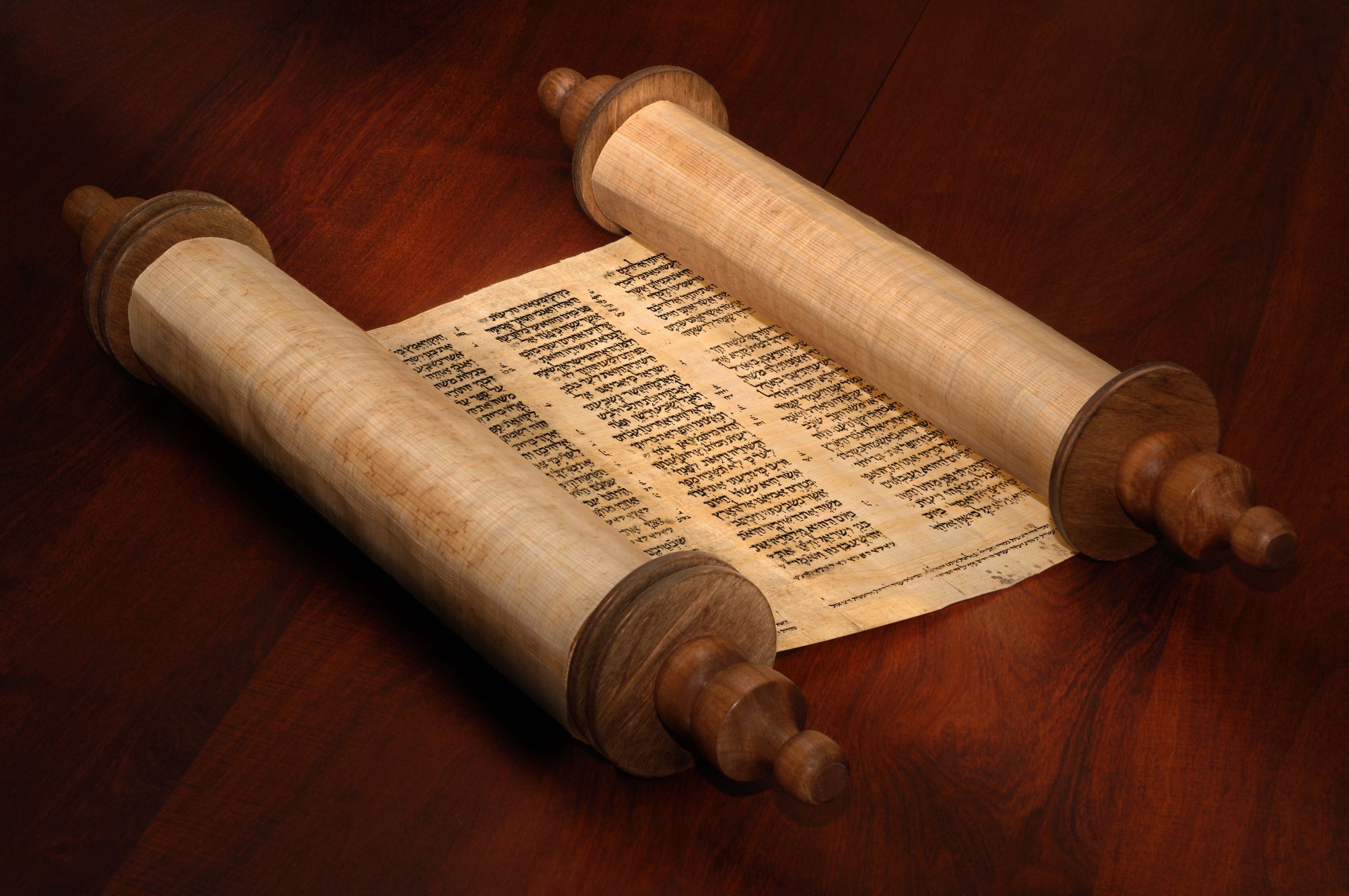
If Jesus is really the Messiah, and if he is so important, why doesn’t the Torah speak of him at all?

If Jesus is really the Messiah, and if he is so important, why doesn’t the Torah speak of him at all?

You would be surprised to see how many passages and concepts actually point to Jesus the Messiah in the Torah. But before you question my beliefs, are you aware that the Torah doesn’t say much about the “traditional” Jewish Messiah? Does this mean the Messiah is unimportant to traditional Judaism? And the Torah says nothing about the oral law. What does this imply? You might want to think twice about your argument.

In the Torah (i.e., the Five Books of Moses), the four times the word mashiach is found (Lev. 4:3, 5, 16; 6:15), it refers to the anointed high priest (hakohen hamashiach), not the Messiah. In fact, with few possible exceptions, the term mashiach is almost never used with reference to the Messiah in the Hebrew Scriptures. Also, there is no concept of the Messiah as the son of David in the Torah, since David was not born until many years later. So, we are not looking primarily for direct references to “the Messiah” (and certainly not to the “son of David”) as such in the Torah.1 Rather, we are looking for foreshadowings, general predictions, and “pre-illustrations” of the Messiah in the Torah. Here are just a few.

The Akedah (also known as the binding of Isaac), the story of Abraham’s willingness to sacrifice his own son in obedience to God (Genesis 22), points to the Messiah in several ways, particularly as this story was developed in Rabbinic tradition. You will remember from our earlier discussion (vol. 2, 3.15) that in the Akedah, the rabbis stressed both Abraham’s obedience and Isaac’s willing participation, also teaching that although Isaac was not actually sacrificed, it was counted as if he were. So, for the rabbis, the actions of both the father and the son were of great significance in this biblical account, an account referred to daily in the traditional Jewish prayer service. As we look back at Genesis 22, bearing in mind the importance of the Akedah in Rabbinic thought, we can draw a few parallels between the Akedah and the Messiah.2

  1. We see that Abraham proved his total dedication to God through his sacrificial actions: “Now I know that you fear God, because you have not withheld from me your son, your only son” (Gen. 22:12). In the same way, God demonstrated his love and commitment to us by giving us his own Son: “He who did not spare his own Son, but gave him up for us all—how will he not also, along with him, graciously give us all things?” (Rom. 8:32).
  2. Isaac is referred to in Genesis 22 as Abraham’s only son (yachid): “Take your son, your only son, Isaac, whom you love, and go to the region of Moriah. Sacrifice him there as a burnt offering on one of the mountains I will tell you about” (Gen. 22:2; see also 22:12, just cited).3 In the same way, the New Testament describes Jesus in his sacrificial death as God’s only Son: “For God so loved the world that he gave his one and only Son, that whoever believes in him shall not perish but have eternal life” (John 3:16).
  3. Isaac’s willingness to be sacrificed illustrates the Messiah’s obedience, even to the point of death. (The difference, of course, is clear: Isaac died only in the mind of Rabbinic tradition; the Messiah literally gave his life. For more on this, see vol. 2, 3.15.)
  4. Abraham was confident that even though he was about to sacrifice his son on the mountain, he would somehow return from the mountain with his son: “He said to his servants, ‘Stay here with the donkey while I and the boy go over there. We will worship and then we will come back to you’ ” (Gen. 22:5). The writer to the Hebrews comments: “By faith Abraham, when God tested him, offered Isaac as a sacrifice. He who had received the promises was about to sacrifice his one and only son, even though God had said to him, ‘It is through Isaac that your offspring will be reckoned.’ Abraham reasoned that God could raise the dead, and figuratively speaking, he did receive Isaac back from death” (Heb. 11:17–19). Thus, Isaac’s return from virtual death prefigures the Messiah’s return from literal death.

Genesis records, “As the two of them went on together, Isaac spoke up and said to his father Abraham, ‘Father?’ ‘Yes, my son?’ Abraham replied. ‘The fire and wood are here,’ Isaac said, ‘but where is the lamb for the burnt offering?’ ” (Gen. 22:6–8).

Yes, God himself did provide the lamb for the burnt offering to take Isaac’s place on that fateful day on Mount Moriah. Centuries later, God provided the final sacrificial Lamb, when the Messiah took our place on Mount Calvary. As John the Immerser (known to Christians as John the Baptist) said, “Look, the Lamb of God, who takes away the sin of the world!” (John 1:29). You can see that the account of the binding of Isaac is rich with Messianic imagery!4

Moving to another prefigurement of the Messiah in the Torah, we see that the life of Joseph also points to several unique aspects of the ministry of Jesus. (Remember that events and people that foreshadow the Messiah are not meant to be specific in every detail but rather illustrative in broad, sweeping ways. The parallels in the lives of Jesus and Joseph, however, are really quite striking.) Joseph was rejected by his own brothers (Genesis 37), suffered because of false accusations and slander even though he himself was righteous (Genesis 39), but was then exalted to become the savior of Egypt and the world (Genesis 41). And during the entire time that he was respected and revered by these Gentiles, he was unknown to his own brothers, considered as good as dead. In fact, the first time they saw him in his exalted position in Egypt, they did not recognize him (Gen. 42:7–8). It was only the second time that he revealed himself to them: “So there was no one with Joseph when he made himself known to his brothers” (Gen. 45:1). Ironically, it was his brothers’ betrayal of him when he was only a teenager that caused Joseph to go to Egypt, resulting in the saving of the lives of many Gentiles and then, ultimately, of his own flesh-and-blood family: “God sent me ahead of you to preserve for you a remnant on earth and to save your lives by a great deliverance” (Gen. 45:7).

So also, Yeshua was betrayed by his own people, slandered and falsely accused (though he was perfectly righteous), delivered over to death, and then exalted to be the Savior of the Gentile world—precisely because his own nation rejected him. In the end, in what is commonly called his second coming, he will make himself known to his brothers, and the weeping will be great (Zech. 12:10–14; note also Gen. 45:2). Even traditional Jewish scholars have noted the pattern of a rejected, then hidden, then revealed, Messiah.5 It is certainly apt!

Let’s turn now to the sacrificial system, a subject that receives far more emphasis in the Torah than the dietary laws or even the laws governing human relationships and conduct (see vol. 2, 3.9). This sacrificial system was undeniably important to the biblical Jew, and it points to the ultimate sacrifice for our sins, Yeshua the Messiah. It was Rashi who said the heart of the sacrificial system was “life for life,” an innocent victim taking the place of the guilty party. That’s why it was the blood that made atonement, since the life of the flesh is in the blood (Lev. 17:11; for more on this, see vol. 2, 3.10). But was God primarily interested in the blood of bulls and goats? Could their blood really take away sins? Certainly not. Rather, the rivers of blood that flowed from the countless thousands of sacrificial animals served to point the way to the truly innocent one who would lay down his life on our behalf.

These truths are most fully spelled out in the Day of Atonement (Yom Kippur) rituals, as outlined in Leviticus 16. Two goats played a central role in these rituals. One was slain, and its blood was brought into the Most Holy Place to cleanse it from the defiling sins of the nation.

In this way [the high priest] will make atonement [kipper] for the Most Holy Place because of the uncleanness and rebellion of the Israelites, whatever their sins have been. He is to do the same for the Tent of Meeting, which is among them in the midst of their uncleanness.

Leviticus 16:16

The other goat, commonly known as the “scapegoat,”6 was to be kept alive, and the high priest was to

lay both hands on the head of the live goat and confess over it all the wickedness and rebellion of the Israelites—all their sins—and put them on the goat’s head. He shall send the goat away into the desert in the care of a man appointed for the task. The goat will carry on itself all their sins to a solitary place; and the man shall release it in the desert.

Leviticus 16:21–22

These two goats, the sacrificial center of the central day of Israel’s calendar, ultimately point to the twofold role of the Messiah: (1) His blood makes atonement for our sins, breaking down the barrier of defilement that stood between us and God, and (2) as we confess our sins, he carries away all our rebellion and wickedness.

These insights lead to an important observation. The anti-missionaries (see vol. 1, xvi) claim that Christianity overemphasizes the issue of atonement for sin, arguing that the Rabbinic approach is better, which emphasizes study of the law and observance of the law. Yet the fact of the matter is that Christianity derives its theology of atonement from the law. Therefore, because the New Testament faith recognized the centrality of the sacrificial system in the Bible, it also built its Messianic beliefs on that very foundation. It’s hard to get more Torah-centered than that! Yes, belief in Jesus the Messiah is totally grounded in the Torah, even more so than the traditional Jewish beliefs about the Messiah.

Even the high priest points to the Messiah, since his main role—a tremendously important, God-ordained role in ancient Israel—was to make intercession and atonement for the nation. Indeed, as he wore his priestly garments, whenever he would enter the Holy Place, he would “bear the names of the sons of Israel over his heart,” and the turban on his head signified that he would “bear the guilt involved in the sacred gifts the Israelites consecrate, whatever their gifts may be” (Exod. 28:29, 38). So important was his role as mediator of the people that his very death brought atonement (see vol. 2, 3.15 for this crucial topic). Later Rabbinic tradition even taught that the garments of the high priest atoned (see b. Zevahim 68b; cf. also b. Moed Katan 28a).7 How powerfully this points to the high-priestly role of Yeshua our Messiah!

Here is just a sample of this rich teaching as found in the Letter to the Hebrews. Jesus became like one of us so as to atone for our sins (see below, 4.35), and he was (and is) the greatest high priest we have ever had:

Now there have been many of those [earthly] priests, since death prevented them from continuing in office; but because Jesus lives forever, he has a permanent priesthood. Therefore he is able to save completely those who come to God through him, because he always lives to intercede for them.

Such a high priest meets our need—one who is holy, blameless, pure, set apart from sinners, exalted above the heavens. Unlike the other high priests, he does not need to offer sacrifices day after day, first for his own sins, and then for the sins of the people. He sacrificed for their sins once for all when he offered himself. For the law appoints as high priests men who are weak; but the oath, which came after the law, appointed the Son, who has been made perfect forever.

Hebrews 7:23–28

When [Messiah] came as high priest of the good things that are already here, he went through the greater and more perfect tabernacle that is not man-made, that is to say, not a part of this creation. He did not enter by means of the blood of goats and calves; but he entered the Most Holy Place once for all by his own blood, having obtained eternal redemption. The blood of goats and bulls and the ashes of a heifer sprinkled on those who are ceremonially unclean sanctify them so that they are outwardly clean. How much more, then, will the blood of [Messiah], who through the eternal Spirit offered himself unblemished to God, cleanse our consciences from acts that lead to death, so that we may serve the living God!

For this reason [Messiah] is the mediator of a new covenant, that those who are called may receive the promised eternal inheritance—now that he has died as a ransom to set them free from the sins committed under the first covenant.

Hebrews 9:11–15

What a high priest we now have! In every way, through his life and death, he fulfilled that which the biblical high priests could only point toward. They were the shadow; he is the very substance. In fact, he fulfills the images of both the sacrifice of atonement and the priest who offers that atoning sacrifice to God. The Torah does point to Yeshua, without doubt. He even pointed this out himself, informing his disciples after his resurrection: “This is what I told you while I was still with you: Everything must be fulfilled that is written about me in the Law of Moses, the Prophets and the Psalms” (Luke 24:44).8

The New Covenant Scriptures record a conversation between Jesus and a member of the Sanhedrin named Nicodemus in which our righteous Messiah pointed to the Torah to explain his impending death for the sins of his people, saying, “Just as Moses lifted up the snake in the desert, so the Son of Man must be lifted up [meaning, in crucifixion], that everyone who believes in him may have eternal life” (John 3:14–15). Yeshua was referring to the account in Numbers 21:4–9, when the Israelites who sinned against God were bitten by poisonous snakes and then found healing and relief when they looked to the bronze snake Moses erected on a pole (in obedience to divine command). In similar fashion, all humanity, guilty of sin and smitten with deadly spiritual poison, has only one antidote for this mortal condition: the cross of the Messiah. As one commentator pointed out, in both cases “the object elevated before them was the emblem of their judgment,”9 the snake being a symbol of the judgment that came against the Israelites for their sin in Numbers 21, and the cross being the symbol of terrible judgment and death in Jesus’ day. What a fitting analogy!10

But Jesus was not the first to draw attention to the symbolism of the lifted-up snake in the desert. In the intertestamental work known as The Wisdom of Solomon (probably composed between 120–100 B.C.E.), it is written:

For when the terrible rage of wild animals came upon your people

and they were being destroyed by the bites of writhing serpents,

your wrath did not continue to the end;

they were troubled for a little while as a warning,

and received a symbol of deliverance to remind them of your law’s command.

For the one who turned toward it was saved, not by the thing that was beheld,

but by you, the Savior of all.

And by this also you convinced our enemies

that it is you who deliver from every evil.

The Wisdom of Solomon 16:5–8 NRSV11

So, by looking at the symbol of deliverance—the snake raised up on a pole—the people of Israel put their hope in God their Savior and were healed and set free. How much more can this be said of Yeshua, the Savior himself, the fullness of God incarnate!

The Book of Acts also records a sermon by Peter—one of Yeshua’s first twelve disciples and therefore a man taught by the Messiah himself—in which he too claims that Moses pointed to Jesus, specifically as the divinely sent prophet par excellence (see Acts 3:22–23). Although the passage to which Peter referred (Deut. 18:15) is not exclusively a Messianic prophecy, Peter was right on target in applying it to Yeshua. We read in Deuteronomy 18:9–22 that God promised his people he would raise up for them a prophet like Moses, someone who would hear God’s words and declare them to the people so that they would not be dependent on the superstitious practices of the surrounding nations (the ancient equivalents of things like astrology, sorcery, and séances). This prophet was to be of great importance, and God strictly warned Israel, “If anyone does not listen to my words that the prophet speaks in my name, I myself will call him to account” (Deut. 18:19).

You might say, “But doesn’t this refer to a key prophet being raised up in every generation in Israel?” I believe so. And Jesus was the last and greatest national prophet among our people, the preeminent prophet of his generation or of any other generation, the Prophet with a capital P. He predicted the terrible destruction of Jerusalem and the Temple, warning of the consequences of rejecting his words. Also, because there was a conspicuous lack of prophetic voices in the centuries immediately preceding the coming of the Messiah into the world,12 the people began to look more and more for a great end-time prophet, a forerunner of the Messianic kingdom they were expecting. We know this from the Dead Sea Scrolls (4QTestimonia; cf. also 1QS 9:1) as well as from the New Testament (e.g., John 1:19–21; 7:40; see also Luke 7:16; Acts 7:37).13

When Jesus ministered on the earth, people recognized him to be a great prophet (see Luke 7:16, “ ‘A great prophet has appeared among us,’ they said. ‘God has come to help his people.’ ”). After his death and resurrection—there was no arguing with the resurrection!—Peter did not hesitate to proclaim that Yeshua was the ultimate prophet spoken of by Moses (see Acts 3:22–23). To this day, we still have not fully recovered from the destruction of the Temple and the devastation of Jerusalem, which Yeshua foretold in graphic detail (see esp. Luke 19:41–44; see also vol. 4, 5.22). And he was the prophet who foretold his own death, resurrection, and ultimate return, also assuring his followers that his message (called “the good news of the kingdom”) would spread throughout the whole world before his return, something that is being rapidly and remarkably fulfilled (see vol. 1, 2.2). We would do well to heed that prophet’s words!14

But the story doesn’t end there. Let’s take a closer look at the passage in Deuteronomy 18. Moses said to the people, “The Lord your God will raise up for you a prophet like me from among your own brothers.… The Lord said to me: ‘… I will raise up for them a prophet like you from among their brothers’ ” (Deut. 18:15a, 17a–18a). The meaning, it seems, is fairly straightforward: Just as God raised up Moses to hear God’s words and declare them to the people of Israel, so also in the future (or in every generation), God would raise up a prophet like Moses who would also hear God’s words and declare them to the people. The problem is that according to Deuteronomy 34:10–11, “… no prophet has risen in Israel like Moses, whom the Lord knew face to face, who did all those miraculous signs and wonders the Lord sent him to do in Egypt—to Pharaoh and to all his officials and to his whole land.” The identical phrase is used in both passages (namely, raising up a prophet like Moses), but we are told explicitly that no such prophet arose again in Israel’s history.15

So, Deuteronomy 18 tells us that the Lord would raise up such a prophet for his people, but Deuteronomy 34 tells us that, in the fullest sense, no such prophet arose. It is quite natural, then, that Jewish people reflecting on these Torah passages would begin to ask, “Where, then, is that prophet like Moses? Where is that leader to whom the Lord will speak face-to-face, who will work signs and wonders and deliver us from bondage?” And this passage helps to explain why there is clear evidence that the Jewish people in the first century of this era expected that there would be a great prophet associated with the Messiah or identical to the Messiah. This hope is grounded in the Torah of Moses itself.16

Finally, we should look at Genesis 49:10, a prophetic promise to Judah, often pointed to as a key Messianic prediction.17 Before examining this specific passage, however, some background from the Torah is necessary. When God called Abram in Genesis 12, he promised him that through his offspring the entire world would be blessed (Gen. 12:1–3).18 This promise was reiterated several times in Genesis, to Abram/Abraham himself, as well as to his son Isaac and to his son Jacob (see Gen. 18:18; 22:18; 26:4). Over the course of these generations, there was a process of selection: Abraham had two sons—Ishmael and Isaac—but the promise of worldwide blessing came through Isaac. Isaac in turn had two sons (twins)—Esau and Jacob—but the promise of worldwide blessing came through Jacob (later called Israel). Jacob had twelve sons, all of whom, as descendants and then tribes of Israel, would be heir to the promise in a limited sense. But the specific Messianic promise would come through only one son. Which son would that be?

All of us know the Tanakh teaches that the Messiah will be a descendant of King David, who was a descendant of Judah (1 Chron. 2:3–15). But Genesis 49:10 indicates that the kingship coming to Judah was actually prophesied by Jacob on his deathbed, hundreds of years before David was ever born. This important verse has been translated several different ways, in both Jewish and Christian versions. The overall meaning is clear, however, as will be seen by comparing a number of key modern translations (the first two quotations are from Christian translations, the second two, Jewish):

The scepter shall not depart from Judah,

Nor a lawgiver from between his feet,

Until Shiloh comes;

And to Him shall be the obedience of the people. (NASB)

The scepter will not depart from Judah,

nor the ruler’s staff from between his feet,

until he comes to whom it belongs

and the obedience of the nations is his. (NIV)19

The scepter shall not depart from Judah,

Nor the ruler’s staff from between his feet;

So that tribute shall come to him

And the homage of peoples be his. (NJPSV)20

The scepter shall not depart from Judah nor a scholar from among his descendants until Shiloh arrives and his will be the assemblage of nations. (Stone)21

The differences in translation arise primarily because of the Hebrew word shiloh in the second half of the verse. Is it a person’s name or title (Shiloh), perhaps meaning “man of rest”? If so, to whom does it refer? The Messiah? Is it the name of a place (again, Shiloh), mentioned elsewhere in the Bible (e.g., Josh. 18:1; Judg. 18:31; Jer. 7:12)? If so, it is difficult to understand exactly what the prophecy means. Should the Hebrew be divided into two words, shai lo, meaning “tribute to him,” in which case the translation would be “until tribute comes to him” (from the nations of the world, cf. Ps. 72:10), or should it be read as she-lo, meaning “to whom it belongs”? Both of these renderings could well refer to the Messiah.

Is Genesis 49:10 a Messianic prophecy? I believe a good case can be made for this, since (1) it points to Israel’s legitimate kingship coming through Judah; (2) David, the first king in the Judean dynasty, became the prototype of the Messiah; and (3) the obedience of the nations is promised to that royal leader.

Does this verse, then, point specifically to Jesus? If the passage clearly indicates that the Messiah had to come before a certain time in history—namely, before the scepter departed from Judah and the ruler’s staff from between his feet—and if that time in history ended shortly after Yeshua’s death and resurrection, then we could say the passage pointed specifically to him. However, as Dr. Walter Riggans has explained, it is difficult to be dogmatic about this, since the Hebrew can legitimately be translated in several different ways. His conclusion is that “although there must be a genuine modesty about the presentation of the Messianic interpretation of this verse vis-à-vis Jesus, nevertheless, Christians can be confident that their reading of it has integrity and perhaps even probability.”22

This much is sure: (1) There is nothing in Genesis 49:10 that would rule out Yeshua from being the one who fulfilled the prophecy, especially since hundreds of millions of people around the world obey him and follow him (see below, 4.32–4.33). (2) If it is Messianic and points to a king who had come more than nineteen hundred years ago, then it must be Yeshua, in which case the day will come when his Jewish people will also acknowledge him as king. (3) If it is not Messianic, then quite obviously it does not apply to the “traditional” Jewish Messiah either.

This leads to an important closing observation: While our traditional Jewish friends challenge us and question why the Torah doesn’t speak of Jesus, it is really the Messiah of Jewish tradition who is hardly mentioned at all,23 while Yeshua is pointed to in many different ways—as the promised seed through whom the entire world would be blessed by the God of Israel; in the binding of Isaac; in the figure of Joseph; in the sacrificial system; in the priestly order; as the prophet greater than Moses. Yeshua is there! I encourage you to pray as the psalmist did in Psalm 119:18: “Uncover my eyes, and I will behold wonders in your Torah.”24

[1]


1 Maimonides follows the traditional Jewish interpretation of Numbers 24:17–18, understanding the text to refer to both David and the Messiah: “ ‘I see him, but not now’—this refers to David; ‘I perceive him, but not in the near future’—this refers to the Messianic King; ‘A star shall go forth from Jacob,’—this refers to David; ‘and a staff shall arise in Israel’—this refers to the Messianic King; ‘crushing all Moab’s princes’—this refers to David, as [2 Sam. 8:2] relates: ‘He smote Moab and measured them with a line;’ ‘dominating all of Seth’s descendants’—this refers to the Messianic King regarding whom [Zech. 9:10] prophesies: ‘He will rule from sea to sea.’ ‘Edom will be demolished’—this refers to David, as [2 Sam. 8:6] states ‘Edom became the servants of David;’ ‘[Seir] will be destroyed’—this refers to the Messianic King, as [Obad. 1:21] prophesies: ‘Saviors will ascend Mount Zion [to judge the mountain of Esau].’ ” See Rabbi Eliyahu Touger, ed. and trans., Maimonides, Mishneh Torah: Hilchot Melachim U’Milchamoteihem, Laws of Kings and Their Wars (Brooklyn: Maznaim, 1987), 226–28, rendering Maimonides’ Laws of Kings and Their Wars 11:1. Although the commentary supplied by Touger points to David as “the epitome of a Jewish king [who] led the Jewish people to a much more complete observance of Torah and Mitzvot” (226), it is clear that the text in Numbers 24 speaks only of the military triumphs of the prophesied leader, not his qualities as a Torah teacher. Thus, we see a twofold Rabbinic eisegesis here (that is, reading one’s own ideas into the biblical text): (1) the reference to two leaders (David and the Messiah) rather than one (who could well be a prototype of the Messiah), and (2) the reference to David as a Torah leader rather than as a military leader. Targum Onkelos uses the term meshichaʾ (the Aramaic equivalent to Hebrew mashiach) twice in the entire Torah, Genesis 49:10 and Numbers 24:17; for Genesis 49:10, see below, end of 4.1.

2 If as a Jew you have a problem with this comparison, seeing that the Akedah is “your story” and I am using it to point to Jesus, I remind you that the Akedah in the Bible is my story too—as a Jewish follower of Yeshua the Jew and as one reading my sacred Scriptures. In applying it to the Messiah, I am only doing what the ancient rabbis also did: taking an important account from our Scriptures and using it to illustrate a central theological truth. With regard to the significance of the Akedah in traditional Judaism, note the following petition, recited daily (except on the Sabbaths and festivals) by Rabbinic Jews: “Remember on our behalf—O Lord, our God—the love of the Patriarchs, Abraham, Isaac and Israel, Your servants; the covenant, the kindness, and the oath that You swore to our father Abraham at Mount Moriah, and the Akeidah, when he bound his son Isaac atop the altar, as it is written in Your Torah” (Genesis 22:1–19 follows and is also read on the Sabbaths and festivals, when the preceding petition is omitted; see The Complete Art Scroll Siddur, translated with an anthologized commentary by Rabbi Nosson Scherman [Brooklyn: Mesorah, 1987], 23). After the reading from Genesis 22, the following petition is offered up (reproduced only in part here because of its length): “Master of the universe! … Just as Abraham our forefather suppressed his mercy for his only son and wished to slaughter him in order to do Your will, so may Your mercy suppress Your anger from upon us and may Your mercy overwhelm Your attributes. May You overstep with us the line of Your law and deal with us—O Lord, our God—with the attribute of kindness and the attribute of mercy” (ibid., 25).

3 A well-known midrash in the Talmud (b. Sanhedrin 89b) amplifies God’s dialogue with Abraham, heightening the tension of the narrative. When God told Abraham to take his son, he replied, “I have two sons” (meaning Isaac and Ishmael). The Lord then said, “Your only one,” to which Abraham countered, “This one is the only son of his mother and that one is the only son of his mother.” God then clarified further, explaining, “Whom you love,” and Abraham replied, “I love them both!” It was then that the Lord said, “Isaac,” putting an end to the interaction. The ensuing dialogue between Satan and Abraham (an insightful Talmudic fiction; b. Sanhedrin 89b) has some acute spiritual insights, brought out by the later commentators (conveniently collected in the Schottenstein edition of Art Scroll [Brooklyn: Mesorah, 1995], 89b3-4).

4 For relevant literature on the Akedah and the Messiah, see Louis A. Berman, The Akedah: The Binding of Isaac (Northvale, N.J.: Aronson, 1997); and Aharon (Ronald E.) Agus, The Binding of Isaac and Messiah: Law, Martyrdom, and Deliverance in Early Rabbinic Religiosity (Albany: State Univ. of New York Press, 1988). See also the classic work of Shalom Spiegel, The Last Trial: On the Legends and Lore of the Command to Abraham to Offer Isaac as a Sacrifice: The Akedah, translated with an introduction by Judah Goldin (repr., Woodstock, Vt.: Jewish Lights, 1993).

5 Some scholars have also pointed out that Moses was not recognized the first time he sought to deliver his people Israel from Egypt but only the second time, after many years (Exod. 2:11–14; see also Acts 7:25: “Moses thought that his own people would realize that God was using him to rescue them, but they did not.”). For more on the concept of a rejected-hidden-revealed Messiah, cf. Raphael Patai, The Messiah Texts (Detroit: Wayne State Univ., 1979), xxx–xxxv. For additional thoughts on the parallels between Joseph and Jesus, see vol. 2, 3.24.

6 The term scapegoat is derived from the words “escape goat,” since it escaped into the wilderness. For recent studies on the Hebrew phrase laʿazʾazel, which lies behind the scapegoat concept, cf. Jacob Milgrom, Leviticus 1–16: A New Translation with Introduction and Commentary, Anchor Bible (New York: Doubleday, 1991), 1020–21.

7 See b. Zevahim 68b for additional, relevant discussion; cf. also b. Moed Katan 28a.

8 The word Tanakh, which is an acronym for Torah (= Law of Moses), Neviʾim (= Prophets), and Ketuvim (= Writings, the most prominent part of which is the Psalms), reflects this same threefold division of the Hebrew Scriptures.

9 Merrill C. Tenney, “John,” in the Expositor’s Bible Commentary (Grand Rapids: Zondervan, 1979), 9:48 (henceforth cited as EBC). See also Ronald B. Allen, “Numbers,” EBC, 2:878–79. For a different perspective, cf. Baruch A. Levine, Numbers 21–36: A New Translation with Introduction and Commentary, Anchor Bible (New York: Doubleday, 2000), 85–90.

10 According to Albert Barnes, “The points of resemblance between his being lifted up and that of the brass serpent seem to be these: (1) In each case those who are to be benefited can be aided in no other way. The bite of the serpent was deadly, and could be healed only by looking on the brass serpent; and sin is deadly in its nature, and can be removed only by looking on the cross. (2) The mode of their being lifted up. The brass serpent was in the sight of the people. So Jesus was exalted from the earth raised on a tree or cross. (3) The design was similar. The one was to save the life, the other the soul; the one to save from temporal, the other from eternal death. (4) The manner of the cure was similar. The people of Israel were to look on the serpent and be healed, and so sinners are to look on the Lord Jesus that they may be saved” (commenting on John 3:14; see Barnes’ Notes on the New Testament (Electronic Edition, STEP Files, Copyright 1999, Parsons Technology).

11 Cited by Risto Santala, The Messiah in the New Testament in the Light of the Rabbinical Writings, trans. William Kinnaird (Jerusalem: Keren Ahvah Meshihit, 1992), 133.

12 Scholars have debated for years whether prophecy completely ceased in the years between the Hebrew Bible and the New Testament writings or whether it simply decreased and played a less prominent role. For recent discussion and relevant bibliography, cf. the following two articles: Frederick E. Greenspahn, “Why Prophecy Ceased,” Journal of Biblical Literature 108 (1989): 37–49; and Benjamin Sommer, “Did Prophecy Cease? Evaluating a Reevaluation,” Journal of Biblical Literature 115 (1996): 31–37.

13 For discussion of relevant sources from the Dead Sea Scrolls and early Samaritan literature, cf. N. A. Dahl, “Messianic Ideas and the Crucifixion of Jesus,” in James H. Charlesworth, ed., The Messiah (Minneapolis: Fortress, 1992), 386–87, 400–401. Speaking of ancient Jewish Messianic expectations, Dahl notes (386), “The expectation of another such person [in addition to a royal Messianic figure and an eschatological priestly figure], that of a prophet like Moses, was based upon Deut 18:15–19 and/or upon the expanded text of Ex 20:19–22 in the Samaritan Pentateuch and 4QBibParaph (= 4Q158).” For a more comprehensive study, cf. John J. Collins, The Scepter and the Star: The Messiahs of the Dead Sea Scrolls and Other Ancient Literature (New York: Doubleday, 1995), 116–22. According to Collins (116), “The eschatological prophet is a shadowy figure, not only in the Scrolls, but generally in the Judaism of the time,” with reference to H. M. Teeple, The Mosaic Eschatological Prophet, Society of Biblical Literature Monograph Series, 10 (Philadelphia: Society of Biblical Literature, 1957). Collins suggests, however, that according to some key texts from the Dead Sea Scrolls, “the Messiah, whom heaven and earth will obey, is an anointed eschatological prophet, either Elijah or a prophet like Elijah” (120). See further Peter C. Craigie, Deuteronomy, New International Commentary on the Old Testament (Grand Rapids: Eerdmans, 1976), 263, n. 20, with reference to R. M. Grant, Gnosticism and Early Christianity, 2d ed. (New York: Columbia Univ. Press, 1966), 91, for Samaritan speculation about the identity of “the prophet.”

14 Some irenic Jewish scholars (such as Pinchas Lapide) have suggested that if Jesus actually does return as Messianic King, then at that time the Jewish people will know that he was truly the Messiah. (For a relevant study by Lapide, cf. idem, The Resurrection of Jesus: A Jewish Perspective [Minneapolis: Augsburg, 1983]; see also idem, Israeli Jews and Jesus, trans. Peter Heinegg [Garden City, N.Y.: Doubleday, 1979].) But does Scripture give us the right—let alone the leisure—to simply wait and see? Is this God’s primary way of calling his people to obedience? And who says that you or I will be alive when Yeshua returns? What if we pass away first? It is in this life that we must make up our minds about what we will do with this one called Jesus.

15 For representative Rabbinic discussion on the concept that there has never been another prophet like Moses, cf. Abraham Hirsch Rabinowitz, The Study of Talmud: Understanding the Halachic Mind (Northvale, N.J.: Aronson, 1996), 91.

16 Cf. further Michael Rydelnik, “Inner-Biblical Perspectives on Messianic Prophecy,” in Mishkan 27 (1997): 43–57.

17 For an excellent treatment of Genesis 49:10, see Walter Riggans, Yeshua ben David: Why Do the Jewish People Reject Jesus as Their Messiah? (Crowborough, England: Marc, 1995), 308–30.

18 Genesis 3:15 has often been pointed to as the first Messianic prophecy in the Bible (thus, it is called the protoevangelium) and has an interpretive history dating back to the second century (see Claus Westermann, 1–11, trans. J. J. Scullion, S.J. [Minneapolis: Augsburg, 1984], 260–61, for details). Some Jewish traditions also speak of an ultimate fulfillment of this passage in Messianic times (see the Targums). However, I do not see this as a direct prophecy of Yeshua; rather, I understand it on two levels: (1) the immediate, contextual—and wholly natural—level (enmity between humans and snakes; humans killing the snakes, and snakes biting their heels); and (2) the larger, contextual—and more spiritual—level, reflected in Romans 16:20 (mankind’s ultimate, but costly, triumph over Satan; this, of course, comes through the cross but cannot be limited to a prophecy of the cross); cf. further Joseph Shulam with Hilary LeCornu, A Commentary on the Jewish Roots of Romans (Baltimore: Messianic Jewish Publishers, 1998), 522–23. For a defense of the Messianic interpretation with reference to the Rabbinic sources, cf. Santala, The Messiah in the Old Testament in the Light of Rabbinical Writings, trans. William Kinnaird (Jerusalem: Keren Ahvah Meshihit, 1992), 37–42; see also Walter C. Kaiser Jr., The Messiah in the Old Testament (Grand Rapids: Zondervan, 1995), 37–42; Arnold G. Fruchtenbaum, Messianic Christology (Tustin, Calif.: Ariel, 1998), 14–15. For a fair discussion of the Messianic use (and abuse) of Genesis 3:15, cf. Riggans, Yeshua ben David, 287–307.

19 The NIV text notes offer the following alternative translations: “until Shiloh comes”; “until he comes to whom tribute belongs.”

20 The footnote to this passage reads, “Shiloh, understood as shai loh, ‘tribute to him,’ following Midrash; cf. Isa. 18:7. Meaning of Heb. uncertain; lit., ‘Until he comes to Shiloh.’ ”

21 Note that only the Stone edition, reflecting exclusively Orthodox Jewish scholarship, renders Hebrew mehoqeq (“lawgiver” or “ruler’s staff”) as “scholar.” However, the translators indicate in the brief commentary included in the footnotes that Shiloh refers to the Messiah, and “all nations will acknowledge him and pay homage to him.” For more detailed discussion of some of the history of these varied interpretations, cf. Riggans, Yeshua ben David, 311–14.

22 Ibid., 330.

23 Generally speaking, Numbers 24:17–18 is the primary passage pointed to by later Jewish tradition (see above, n. 1). I would point out again that the oral law—the foundation of traditional Judaism—is not explicitly mentioned once in the entire Torah. See vol. 4, 6.1–4.

24 My translation; the NIV renders, “Open my eyes that I may see wonderful things in your law.”

[1]Brown, M. L. (2003). Answering Jewish objections to Jesus, Volume 3: Messianic prophecy objections (3). Grand Rapids, Mich.: Baker Books.


If Jesus is the Jewish Messiah, why don’t more Jews believe in him? | Brown, M. L

If Jesus is the Jewish Messiah, why don’t more Jews believe in him?

Actually, there are tens of thousands of Jews who have believed and do believe in him. The problem is that most Jews have not bothered to check into the facts about Jesus, and the only Jesus most of them know is either the baby Jesus of Christmas, an emaciated figure hanging on a cross in churches, or the Jesus of the Crusades and Inquisitions. The question is, Why don’t you believe Jesus is the Messiah? Do you really know who he is?

I encourage you to consider the following points.

1. Most Jews have never seriously studied the issue. Many of those who have decided to find out who Jesus is have been quite surprised by what they have learned. The greatest scholars and scientists in the world once believed the earth was flat—until firsthand investigation and discovery altered their outlook. It’s the exact same thing with Jews who honestly investigate the Messianic claims of Jesus. Everything changes—to put it mildly.

2. If most religious Jews learn anything about Jesus in their traditional studies, it is quite biased and negative. 22 Thus, they do not entertain even the possibility of the messiahship of Jesus.

3. Many so-called Christians have committed atrocities against Jews in the name of Jesus, helping to drive Jews away from their true Messiah. (See below, 2.7, for more on this, along with my book Our Hands Are Stained with Blood.)

4. These same Christians have often put forth a distorted picture of Jesus that bears little resemblance to the real Messiah who walked the earth two thousand years ago. Can Jews be blamed for thinking that Christians worshiped idols when the churches were filled with worshipers bowing before large, beautiful statues depicting Jesus as a babe in his mother’s lap?

5. There is often great pressure on those Jews—especially religious Jews—who put their faith in Jesus the Messiah. Some succumb to the fear, the pressure, the intimidation, the separation, and the loneliness, and they deny with their lips what they know to be true in their hearts.

6. Traditional Jewish teaching gives a slanted portrayal of who the Messiah is and what he will do. Since the description is faulty, people are looking in the wrong direction for the wrong person. No wonder relatively few have found him.

7. Once a learned Jew does believe in Yeshua, he is discredited, and so his name is virtually removed from the rolls of history. It’s almost as if such people ceased to exist. (Do you remember reading the novel Animal Farm in school? Revisionist history goes on to this day—even in traditional Jewish circles.) The story of Max Wertheimer provides one case in point. In the last century, Wertheimer came to the States as an Orthodox Jew, but over the course of time, he became a Reform Jew and was ordained a rabbi upon graduating from Hebrew Union College in Cincinnati in 1889. (He also received a Ph.D. from the University of Cincinnati the same year.) He then served as the greatly loved rabbi of B’Nai Yeshurun synagogue in Dayton, Ohio, for the next ten years. When he became a fervent believer in Jesus, however, pastoring a church as well, his name was literally removed from the rolls of the school—a school of alleged tolerance at that. Why was his name dropped? According to Alfred A. Isaacs, cited in the November 25, 1955, edition of the National Jewish Post, Wertheimer was disowned by Hebrew Union College solely because of his Christian faith. 23 And to think, this happened in a “liberal” Reform Jewish institution!

8. Although this may be hard for you to accept, because our leadership rejected Jesus the Messiah when he came, God judged us as a people (just as he judged us as a people for rejecting his law and his prophets in previous generations), and as a result, our hearts have become especially hardened toward the concept of Jesus as Messiah. 24 Paul explained this in his important letter to the believers in Rome: “What Israel sought so earnestly it did not obtain, but the elect did. The others were hardened, as it is written: ‘God gave them a spirit of stupor, eyes so that they could not see and ears so that they could not hear, to this very day’ ” (Rom. 11:7–8; the quote here is taken from Deut. 29:4 in our Torah and Isa. 29:10 in our Prophets).

If you stop to think about it, isn’t it strange that as a people we have almost totally lost sight of the fact that Jesus-Yeshua is one of us, actually, the most influential Jew ever to walk the earth? 25 Yet most of us think of him as if he were some fair-skinned, blue-eyed European. The good news is that Israel’s hardening was only partial: There have always been Jews who followed Jesus the Messiah, and in the end, our people will turn back to him on a national scale. Paul explains this a few verses later:

I do not want you [Gentiles] to be ignorant of this mystery, brothers, so that you may not be conceited: Israel has experienced a hardening in part until the full number of the Gentiles has come in. And so all Israel will be saved, as it is written: “The deliverer will come from Zion; he will turn godlessness away from Jacob. And this is my covenant with them when I take away their sins.”

Romans 11:25–27; the quote is taken from Isaiah 59:20–21; 27:9; and Jeremiah 31:33–34, all in our Prophets

Hopefully, you will be one of those Jews who is determined to find out the truth about the Messiah right now, determining to follow him at any cost. In the end, you must decide for yourself, and the bottom line question is one that only you can answer: Why don’t you believe Jesus is our promised Messiah?

What if more Jews—including your rabbi—did believe in him? Would you? Of course, that wouldn’t change the facts. Either Jesus is or is not the Messiah of Israel. Public opinion can’t affect the truth. But many times, when people find out that it’s okay to hold to a certain opinion, they come out of the closet.

Maybe it would help you to know that many of us in Jewish work have spoken with Orthodox and even ultra-Orthodox Jews who have told us in private that they believe Jesus is the Messiah, but they are afraid to go public for fear of what could happen to them. Maybe if a number of these religious Jews—some of whom are rabbis—showed up one day on your doorstep and told you their views, it would get you to think seriously about the matter.

As we grow and mature—from infants to children to teens to adults—we find out that not everything we have been told is true. Sometimes we just have to learn for ourselves. And even as adults, we often have skewed perspectives on many things. Just look at what Democrats believe about Republicans (and vice versa) or what Palestinians believe about Israelis (and vice versa) or what Black Muslims believe about Jews (and vice versa). Our perspectives, opinions, and convictions are not always right—no matter how strenuously we argue for our position. Common sense tells us that all of us can’t be right about everything all the time.

Even on an interpersonal level, how often have you met someone only to find out that all the bad things you heard about that person were greatly exaggerated or false? It happens all the time. As for the matter at hand, I assure you in the strongest possible terms: As a Jew, most everything you have heard about Jesus has been untrue. You owe it to yourself to find out just who this Jesus really is—and I say this to you whether you are an ultra-Orthodox rabbi reading this book in secret or you are a thoroughly secular, wealthy Jewish businessman who was given this book by a friend.

This much is certain: We have carefully investigated the claims of Jesus and can testify firsthand that Yeshua is who he said he was. What do you say?

[1]


22 The infamous Rabbinic collection of anti-Jesus fables, called Toledot Yeshu, is still studied in some ultra-Orthodox circles, although virtually all other Jewish scholars have long since repudiated the Toledot. These scurrilous writings, based in part on some Talmudic references, accusing Mary of fathering Jesus through a Roman soldier (or by rape), and portraying Jesus as an idolater, magician, and Israel’s arch-deceiver, were the primary source of information about Jesus for many traditional Jews, especially in the Middle Ages. Of course, as noted by the Oxford Dictionary of Jewish Religion, ed. Geoffrey Wigoder (New York: Oxford, 1997), 695, “the work is an expression of vulgar polemics written in reaction to the no less vulgar attacks on Judaism in popular Christian teaching and writing.” But as I have stated before, just as many Gentiles around the world have had a biased and inaccurate view of the Jewish people, so also have many Jews had a biased and inaccurate view of Jesus, the Jewish Messiah. For a representative sampling from the Toledot, see the excellent study of Walter Riggans, Yeshua ben David: Why Do the Jewish People Reject Jesus as Their Messiah? (Crowborough, England: Marc, 1995), 127–32. Interested readers of this present volume would do well to read Riggans as well.

23 For more on this, see Nahum Brodt, “The Truth about the Rabbi,” in Would I? Would You?, ed. Henry and Marie Einspruch (Baltimore: Lederer, 1970), 8–10. For a fuller account of Wertheimer’s faith, see Jacob Gartenhaus, Famous Hebrew Christians (Grand Rapids: Baker, 1979), 191–97.

24 This is not the first time in our history that God has hardened our hearts because we sinned against him. This is what God said to the prophet Isaiah more than twenty-five hundred years ago: “Go and tell this people: ‘Be ever hearing, but never understanding; be ever seeing, but never perceiving.’ Make the heart of this people calloused; make their ears dull and close their eyes. Otherwise they might see with their eyes, hear with their ears, understand with their hearts, and turn and be healed” (Isa. 6:9–10). The prophet was actually called to a ministry of hardening his people’s hearts! It was as if God were saying, “Fine. If you want to be hard-hearted, refusing to believe me or obey me, I will give you over to your hardness and make you even harder.” This is exactly what has happened to us regarding the Messiah: When so many of our people refused to follow him, God gave us over to our unbelief and obduracy to the point that through the centuries, we have become especially resistant to Jesus.

25 This well-known, anonymous tribute to Jesus, known as “One Solitary Life,” puts things in perspective: “He was born in an obscure village. He worked in a carpenter shop until He was thirty. He then became an itinerant preacher. He never held an office. He never had a family or owned a house. He didn’t go to college. He had no credentials but himself. He was only thirty-three when the public turned against him. His friends ran away. He was turned over to his enemies and went through the mockery of a trail. He was nailed to a cross between two thieves. While he was dying, his executioners gambled for his clothing, the only property he had on earth. He was laid in a borrowed grave. Nineteen centuries have come and gone, and today he is the central figure of the human race. All the armies that ever marched, all the navies that ever sailed, all the parliaments that ever sat, and all the kings that ever reigned have not affected the life of man on this earth as much as that one solitary life.”

[1]Brown, M. L. (2000). Answering Jewish objections to Jesus, Volume 1: General and historical objections. (21). Grand Rapids, Mich.: Baker Books.

How Can One God Be Three?

How Can One God Be Three?

Speaking through the prophet Isaiah, God said, “My thoughts are not your thoughts, / Nor are your ways My ways … / For as the heavens are higher than the earth, / So are My ways higher than your ways, / And My thoughts than your thoughts” (Isa. 55:8–9). God is infinite, man is finite, so there are mysteries about God that man cannot fully understand. One of these mysteries is the Trinity, the tri-personality of God. According to Christian orthodoxy, God is one God in essence, power, and authority, and also eternally exists as three distinct co-equal persons. These three persons are the Father, the Son (Jesus), and the Holy Spirit. This does not mean that Christians believe in three gods (polytheism). Rather, the doctrine of the Trinity is that there is only one God who exists in three distinct persons, and all three share the exact same divine nature or essence.

Understanding this fully is beyond human comprehension and has no human parallels, although various analogies have been offered. One of these analogies is the three physical states of water. Water is not only a liquid but also a solid (ice) and a gas (vapor), yet its chemical composition (substance) never changes in all three forms (two parts hydrogen and one part oxygen—H2O). Although such analogies help us visualize the concept of the Trinity, they all fall short in some way. In the case of the water analogy, although the molecule H2O can be liquid, solid, or gas, it is never all three at one time. The Trinity, on the other hand, is all three persons as one God.

The word Trinity is not used in Scripture, but it has been adopted by theologians to summarize the biblical concept of God. Difficult as it is to understand, the Bible explicitly teaches the doctrine of the Trinity, and it deserves to be explained as clearly as possible, especially to non-Christians who find the concept a stumbling-block to belief. So let’s dig into this topic by addressing four key questions.

IS THE DOCTRINE OF THE TRINITY IRRATIONAL?

The doctrine of the Trinity is certainly a mystery but that doesn’t mean it’s irrational. The concept cannot be known by human reason apart from divine revelation, and, as we’ll soon see, the Bible definitely supports the idea of the Trinity. But for now, I want to demonstrate that the doctrine of the Trinity, although beyond human comprehension, is nevertheless rational. Our acceptance of it is congruous with how we respond to other data about the known world.

There are many things about the universe we don’t understand today and yet accept at face value simply because of the preponderance of evidence supporting their existence. The scientific method demands that empirical evidence be accepted whether or not science understands why it exists or how it operates. The scientific method does not require that all data be explained before it is accepted.

Contemporary physics, for instance, has discovered an apparent paradox in the nature of light. Depending on what kind of test one applies (both of them “equally sound”), light appears as either undulatory (wave-like) or corpuscular (particle-like). This is a problem. Light particles have mass, while light waves do not. How can light have mass and not have it, apparently at the same time? Scientists can’t yet explain this phenomenon, but neither do they reject one form of light in favor of the other, nor do they reject that light exists at all. Instead, they accept what they’ve found based on the evidence and press on.

Like physicists, we are no more able to explain the mechanics of the Trinity than they can explain the apparent paradox in the nature of light. In both cases, the evidence is clear that each exists and harbors mystery. So we must simply accept the facts and move on. Just because we cannot explain the Trinity, how it can exist, or how it operates does not mean that the doctrine must be rejected, so long as sufficient evidence exists for its reality. So let’s now explore this evidence.

HOW DOES THE BIBLE PRESENT THE DOCTRINE OF THE TRINITY?

THE OLD TESTAMENT

Although the doctrine of the Trinity is fully revealed in the New Testament, its roots can be found in the Old Testament.

In several places, God refers to Himself in plural terms. For example, “Then God said, ‘Let Us make man in Our image’” (Gen. 1:26; see 3:22; 11:7; Isa. 6:8).

The Messiah was prophesied in the Old Testament as being divine. Isaiah 9:6 states that the Messiah will be called “Mighty God,” a term applied in the Old Testament specifically to Yahweh (see Mic. 5:2).

Isaiah 48:16 refers to all three members of the Godhead: “Come near to Me, listen to this: From the first I have not spoken in secret, from the time it took place, I was there. And now the Lord God [Father] has sent Me [Jesus], and His Spirit [the Holy Spirit]” (nasv).

The Old Testament also makes numerous references to the Holy Spirit in contexts conveying His deity (Gen. 1:2; Neh. 9:20; Ps. 139:7; Isa. 63:10–14).

THE NEW TESTAMENT

The New Testament provides the most extensive and clear material on the Trinity. Here are just a few of the texts that mention all three members of the Godhead and imply their co-equal status.

•     Matthew 28:19, the baptismal formula: “Go therefore and make disciples of all the nations, baptizing them in the name [not ‘names’] of the Father and of the Son and of the Holy Spirit.”

•     Matthew 3:16, at the baptism of Christ in the Jordan: “And after being baptized, Jesus went up immediately from the water; and behold, the heavens were opened, and He saw the Spirit [Holy Spirit] of God [Father] descending as a dove, and coming upon Him [Jesus]” (nasv).

•     Luke 1:35, the prophetic announcement to Mary of Jesus’ birth: “And the angel answered and said to her, ‘The Holy Spirit will come upon you, and the power of the Highest [Father] will overshadow you; therefore, also, that Holy One who is to be born will be called the Son of God [Jesus].’”

•     The trinitarian formula is also found in 1 Peter 1:2, 2 Corinthians 13:14, and 1 Corinthians 12:4–6.

DIGGING DEEPER

To explain the doctrine of the Trinity, I will take an inductive (scientific) approach. By this I mean I will accumulate general facts in Scripture that lead to a specific conclusion—that the nature of God is triune. The argument will go like this:

1. The Bible teaches that God is one (monotheism) and that He possesses certain attributes that only God can have.

2. Yet when we study the attributes of the Father, the Son, and the Holy Spirit, we discover that all three possess the identical attributes of deity.

3. Thus we can conclude that there is one God eternally existing as three distinct persons.

God Is One (Monotheism)

The Hebrew Shema of the Old Testament is “Hear, O Israel: The Lord our God, the Lord is one!” (Deut. 6:4; see Isa. 43:10; 44:6; 46:9). Some people have argued that this passage actually refutes the concept of the triune nature of God because it states that God is one. But the Hebrew word for “one” in this text is echod, which carries the meaning of unity in plurality. It is the same word used to describe Adam and Eve becoming “one flesh” (Gen. 2:24). Scripture is not affirming that Adam and Eve literally become one person upon marriage. Rather, they are distinct persons who unite in a permanent relationship.

The New Testament confirms the teaching of the Old: “You believe that God is one. You do well; the demons also believe, and shudder” (James 2:19, nasv; see 1 Tim. 2:5; 1 Cor. 8:4; Eph. 4:4–6).

God Has a Certain Nature

Both the Old and New Testaments list the attributes of God. We won’t consider all of them here, but what follows are some of the clearest expressions of what constitutes deity.

•     God is omnipresent (present everywhere at once): Psalm 139:7–10; Jeremiah 23:23–24.

•     God is omniscient (possesses infinite knowledge): Psalms 139:1–4; 147:4–5; Hebrews 4:13; 1 John 3:20.

•     God is omnipotent (all-powerful): Psalm 139:13–18; Jeremiah 32:17; Matthew 19:26.

The Father Is God

To the Jews, who do not accept the Trinity, God is Yahweh. In the Old Testament, Yahweh is to the Hebrews what Father is in the New Testament and to Christians. The attributes of God (Yahweh) listed above are the same for Yahweh and Father because both names apply to the one God. Although the concept of God as Father is not as explicit in the Old Testament as it is in the New, nevertheless, it has its roots in the Old (see Pss. 89:26; 68:5; 103:13; Prov. 3:12).

In the New Testament, the concept of the Father as a distinct person in the Godhead becomes clear (Mark 14:36; 1 Cor. 8:6; Gal. 1:1; Phil. 2:11; 1 Pet. 1:2; 2 Pet. 1:17). God is viewed as Father over creation (Acts 17:24–29), the nation of Israel (Rom. 9:4; see Exod. 4:22), the Lord Jesus Christ (Matt. 3:17), and all who believe in Jesus as Lord and Savior (Gal. 3:26).

The Son Is God

Like the Father, Jesus possesses the attributes of God. He is omnipresent (Matt. 18:20; 28:20). He is also omniscient: He knows people’s thoughts (Matt. 12:25), their secrets (John 4:29), the future (Matt. 24:24–25), indeed all things (John 16:30; 21:17). His omnipotence is also taught. He has all power over creation (John 1:3; Col. 1:16), death (John 5:25–29; 6:39), nature (Mark 4:41; Matt. 21:19), demons (Mark 5:11–15), and diseases (Luke 4:38–41).

In addition to these characteristics, Jesus exhibits other attributes that the Bible acknowledges as belonging only to God. For example, He preexisted with the Father from all eternity (John 1:1–2), accepted worship (Matt. 14:33), forgave sins (Matt. 9:2), and was sinless (John 8:46).

The Holy Spirit Is God

The Holy Spirit is also omnipresent (Ps. 139:7–10), omniscient (1 Cor. 2:10), and omnipotent (Luke 1:35; Job 33:4).

Like Jesus, the Holy Spirit exhibits other divine attributes that the Bible ascribes to God. For instance, He was involved in creation (Gen. 1:2; Ps. 104:30), inspired the authorship of the Bible (2 Pet. 1:21), raised people from the dead (Rom. 8:11), and is called God (Acts 5:3–4).

The upshot of all this is that God is triune. In a formal argument, we can put it this way:

Major Premise:

Only God is omnipresent, omniscient, and omnipotent.

Minor Premise:

The Father, the Son, and the Holy Spirit are omnipresent, omniscient, and omnipotent.

Conclusion:

Therefore, God is triune as Father, Son, and Holy Spirit.

THE TRINITY

HOW DOES JESUS TEACH THE DOCTRINE OF THE TRINITY?

In the Bible, Jesus claims to be God and then demonstrates this claim by displaying the attributes of God and by raising Himself from the dead. So what Jesus has to say about God must be true. And Jesus clearly teaches that God is triune.

Jesus Is Equal with the Father and Holy Spirit

In Matthew 28:19, Jesus tells His followers to “make disciples of all the nations, baptizing them in the name of the Father and of the Son and of the Holy Spirit.” He uses the singular word name but associates it with three persons. The implication is that the one God is eternally three co-equal persons—Father, Son, and Holy Spirit.

Jesus Is One with the Father

In John 14:7 and 9, Jesus identifies Himself with the Father by saying to His disciples, “If you had known Me, you would have known My Father also; and from now on you know Him and have seen Him … He who has seen Me has seen the Father” (see John 5:18). Jesus is not claiming to be the Father; rather, He is saying that He is one with the Father in essence.

Jesus Is One with the Holy Spirit

Continuing in John 14, Jesus tells His disciples that, after He is gone, He will send them “another Helper” who will be with them forever and will indwell them (vv. 16–17). The “Helper” is the Holy Spirit. The trinitarian implication lies with the word another. The apostle John, as he wrote this passage, could have chosen one of two Greek words for another. Heteros denotes “another of a different kind,” while allos denotes “another of the same kind as myself.” The word chosen by John was allos, clearly linking Jesus in substance with the Holy Spirit, just as He is linked in substance with the Father in verses 7 and 9. In other words, the coming Holy Spirit will be a different person than Jesus, but He will be the same with Him in divine essence just as Jesus and the Father are different persons but one in their essential nature. Thus, in this passage, Jesus teaches the doctrine of the Trinity.

So far we have seen that the authors of Scripture and Jesus Christ teach the triune nature of God. Therefore, the only way the doctrine of the Trinity can be rejected is if one refuses to accept the biblical evidence. Some groups, such as the Jehovah’s Witnesses, do this by reinterpreting and altering Scripture. Others, such as the Unitarians (who claim that Jesus is just a man), arbitrarily and without any evidence deny anything supernatural or miraculous in the Bible. Both the Jehovah’s Witnesses and the Unitarians are guilty of the very same thing of which they accuse Christians—irrationality. They refuse to accept the evidence for the Trinity regardless of how legitimate it is. This is unscientific and irrational. If one approaches Scripture without bias, he will clearly discover what the church has maintained for centuries: God is triune—one God in essence but eternally existing in three persons as Father, Son, and Holy Spirit.

A COMMON OBJECTION

Perhaps you’ve wondered or heard someone say, “If Jesus is one in essence with the Father, an equal member of the triune Godhead, why does He say, ‘the Father is greater than I’” (John 14:28)? This question actually moves away from the doctrine of the Trinity and launches us into the doctrine of the incarnation, the process whereby Jesus, as the eternal Son of God, came to earth as man. Nevertheless, because this question is frequently raised as an objection, it needs to be answered.

Numerous passages in Scripture teach that Jesus, although fully God, is also fully man (John 1:14; Rom. 8:3; Col. 2:9; 1 Tim. 3:16). However, Philippians 2:5–8 states that, in the process of taking on humanity, Jesus did not give up any of His divine attributes. Rather, He gave up His divine glory (see John 17:5) and voluntarily chose to withhold or restrain the full use of His divine attributes. There are numerous instances in Scripture where Jesus, although in human form, exhibits the attributes of deity. If Jesus had surrendered any of His divine attributes when He came to earth, He would not have been fully God and thus could not have revealed the Father as He claimed to do (John 14:7, 9).

The key to understanding passages such as John 14:28 is that Jesus, like the Father and the Holy Spirit, has a particular position in the triune Godhead. Jesus is called the Son of God, not as an expression of physical birth, but as an expression of His position in relationship to the Father and Holy Spirit. This in no way distracts from His equality with the Father and the Holy Spirit or with His membership in the Godhead. As man, Jesus submits to the Father and acts in accordance to the Father’s will (see John 5:19, 30; 6:38; 8:28). So when we read passages such as Mark 14:36 where Jesus submits to the Father’s will, His submission has nothing to do with His divine essence, power, or authority, only with His position as the Incarnate Son.

Perhaps an illustration will help to explain this. Three people decide to pool their money equally and start a corporation. Each are equal owners of the corporation, but one owner becomes president, another vice-president, and the third secretary/treasurer. Each are completely equal so far as ownership, yet each has his own particular function to perform within the corporation. The president is the corporate head, and the vice-president and secretary/treasurer are submissive to his authority and carry out his bidding.

So when Jesus the God-man submits to the Father’s will or states that the Father is greater than He or that certain facts are known only by the Father (e.g., Matt. 24:36), it does not mean that He is less than the other members of the Godhead but that in His incarnate state He did and knew only that which was according to the Father’s will. The Father did not will that Jesus have certain knowledge while in human form. Because Jesus voluntarily restrained the full use of His divine attributes, He was submissive to the Father’s will.

Why did Jesus choose to hold back from fully using His divine powers? For our sake. God willed that Jesus feel the full weight of man’s sin and its consequences. Because Jesus was fully man, He could fulfill the requirements of an acceptable sacrifice for our sins. Only a man could die for the sins of mankind. Only a sinless man could be an acceptable sacrifice to God. And it is only because Jesus is an equal member of the triune Godhead, and thus fully God, that He was able to raise Himself from the dead after dying on the cross and thereby guarantee our eternal life.

When all the evidence is accounted for and the verdict read, the Bible clearly teaches that the Father, the Son, and the Holy Spirit are three distinct, co-equal, co-eternal members of the Godhead, yet one in essence, power, and authority. All three are one God. Were this not the case, if the Trinity were not a reality, there would be no Christianity.

[1]


[1]Story, D. (1997). Defending your faith. Originally published: Nashville : T. Nelson, c1992. (99). Grand Rapids, MI: Kregel Publications.

Exit mobile version