MATTHEW 26:52—Is Jesus advocating pacifism and denouncing capital punishment in this passage?
PROBLEM: When the soldiers came to arrest Jesus, Peter took out his sword and cut off the ear of the high priest’s servant. Jesus told Peter to put back the sword because those who take up the sword will die by the sword. Some use this verse to support pacifism and to oppose capital punishment, which the Bible affirms elsewhere (Gen. 9:6).
SOLUTION: Total pacifism is not taught in this Scripture. Indeed, Abraham was blessed by the Most High God (Gen 14:19) after engaging in a war against the unjust aggression of the kings who had captured his nephew Lot. In Luke 3:14, soldiers come to inquire of John the Baptist about what they should do. John never told them to leave the army. Likewise, Cornelius, in Acts 10, was a centurion. He was called a devout man (v. 2), and the Scriptures say that the Lord heard the prayers of Cornelius (v. 4). When Cornelius becomes a Christian, Peter does not tell him to leave the army. Also, in Luke 22:36–38, Christ says that the one who has no sword should sell his robe and buy one. The apostles responded saying that they had two swords. Jesus responded saying that “it was enough.” In other words, they did not need to get rid of their swords. The Apostle Paul accepted the protection of the Roman army to save his life from unjust aggressors (Acts 23). Indeed, he reminded the Roman Christians that God had given the sword to the king who did not bear it in vain (Rom. 13:1–4). When Jesus returns to earth, He will come with the armies of heaven and will war against the kings of the earth (Rev. 19:11–19). So, from the beginning to the end, the Bible is filled with examples of the justification of war against evil aggressors.
What, then, did Jesus mean when He commanded Peter to put away his sword? Peter was making two mistakes in using his sword. First, while the Bible permits the sword by the government for civil purposes (Rom. 13:1–4), it does not endorse its use for spiritual ends. It is to be used by the state, not by the church. Second, Peter’s use was aggressive, not purely defensive. His life was not being unjustly threatened. That is, it was not clearly an act of self-defense (Ex. 22:2). Jesus appears to have endorsed the use of the sword in civil self-defense (Luke 22:36), as did the Apostle Paul (Acts 23).
Likewise, capital punishment is not forbidden in Scripture, but rather was established by God. Genesis 9:6 affirms that whoever sheds man’s blood, the blood of the killer will also be shed. Numbers 35:31 makes a similar statement. In the NT, Jesus recognized that Rome had capital authority and submitted to it (John 19:11). The Apostle Paul informed the Romans that governing authorities are ministers of God and that they still possessed the God-given sword of capital authority (13:1, 4). So Jesus in no way did away with the just use of the sword by civil authorities. He simply noted that those who live lives of aggression often die by the same means.
MATTHEW 21:12–19 (cf. Mark 11:12–14, 20–24)—When was the fig tree cursed by Jesus, before or after the temple was cleansed?
PROBLEM: Matthew places the cursing of the fig tree after the cleansing of the temple. But Mark places the cursing before the temple was cleansed. But, it cannot be both. Did one Gospel writer make a mistake?
SOLUTION: Jesus actually cursed the fig tree on His way to the temple as Mark said, but this does not mean that Matthew’s account is mistaken. Christ made two trips to the temple, and He cursed the fig tree on His second trip.
Mark 11:11 says that Christ entered the temple the day of His triumphal entry. When Christ enters the temple, Mark does not mention Christ making any proclamations against any wrongdoing. Verse 12 says “Now the next day,” referring to the trip to the fig tree on the way to the temple on the second day. On this day, Christ threw out those buying and selling in the temple. Matthew, however, addresses the two trips of Christ to the temple as though they were one event. This gives the impression that the first day Christ entered the temple He drove out the buyers and sellers as well. Mark’s account, however, gives more detail to the events, revealing that there were actually two trips to the temple. In view of this, we have no reason to believe that there is a discrepancy in the accounts.
MATTHEW 20:29–34 (cf. Mark 10:46–52; Luke 18:35–43)—Did Jesus heal the blind man coming into or going out of Jericho?
PROBLEM: According to Luke, a blind man was healed as Jesus entered the city of Jericho (18:35), but Matthew and Mark declare that the healing took place as Jesus left the city of Jericho. Again, the accounts do not seem to be harmonious.
SOLUTION: Some believe that the healing in Luke may have actually taken place as Jesus left Jericho, claiming that it was only the initial contact that took place as “He was coming near Jericho” (Luke 18:35) and the blind man may have followed Him through the city, since he was continually begging Jesus to heal him (vv. 38–39). But this seems unlikely, since even after the healing (v. 43) the very next verse (19:1) says, “then Jesus entered and passed through Jericho.”
Others respond by noting there were two Jerichos, the old and the new, so that as He went out of one He came into the other.
Still others suggest that these are two different events. Matthew and Mark clearly affirm the healing occurred as Jesus left the city (Matt. 20:29; Mark 10:46). But Luke speaks of healing one blind man as He entered the city. This is supported by the fact that Luke refers only to a “multitude” of people being present as Jesus entered the city (18:36), but both Matthew (20:29) and Mark (10:46) make a point to say there was a “great multitude” of people there by the time Jesus left the city. If the word spread of the miraculous healing on the way into the city, this would account for the swelling of the crowd. It might also explain why two blind men were waiting on the other side of the city to plead for Jesus to heal them. Perhaps the first blind man who was healed went quickly to tell his blind friends what happened to him. Or maybe the other blind men were already stationed at the other end of the city in their customary begging position. At any rate, there is no irresolvable difficulty in the passage. The two accounts can be understood in a completely compatible way.
Geisler, N. L., & Howe, T. A. (1992). When critics ask : A popular handbook on Bible difficulties (353). Wheaton, Ill.: Victor Books.
MATTHEW 16:28—Did Jesus make a mistake about His disciples seeing the kingdom come in their lifetimes?
PROBLEM: Jesus told His disciples that some of them would not see death until they saw Him coming in His kingdom. Yet during the life of the apostles, Jesus never returned to set up His kingdom.
SOLUTION: This is a question of when this was going to take place, not whether it would. There are three possible solutions.
First, some have suggested that this may be a reference to the Day of Pentecost where Christ’s Helper, the Holy Spirit, came to descend upon the apostles. In John’s Gospel (14:26), Jesus promised to send the Holy Spirit, and, in the beginning of Acts (1:4–8), He tells them not to leave Jerusalem until they have received the Holy Spirit. But this hardly seems to fit the description of seeing Christ coming in His kingdom (Matt. 16:28).
Second, others believe this might be a reference to the destruction of Jerusalem and the temple in a.d. 70. This would mean that He would return to bring judgment upon the city that rejected Him and crucified Him. While this is a possible explanation, it does not seem to account for the fact that Jesus appears to be coming for believers (those “standing there” with Him), not simply coming in judgment on unbelievers. Nor does the judgment on Jerusalem in a.d. 70 adequately express seeing the “Son of Man coming in His kingdom” (v. 28), a phrase reminiscent of His second coming (cf. 26:64). Nor does it explain why Jesus never appeared in a.d. 70.
A third and more plausible explanation is that this is a reference to the appearance of Christ in His glory on the Mount of Transfiguration which begins in the very next verse (17:1). Here Christ does literally appear in a glorified form, and some of His apostles are there to witness the occasion, namely Peter, James, and John. This transfiguration experience, of course, was only a foretaste of His Second Coming when all believers will see Him come in power and great glory (cf. Acts 1:11; Rev. 1:7).
MATTHEW 4:5–10 (cf. Luke 4:5–12)—Is there a mistake in recording the wilderness temptation of Christ by Matthew or Luke?
PROBLEM: According to both Matthew and Luke, the first temptation was to turn stones into bread to satisfy Jesus’ hunger. The second temptation listed by Matthew took place at the pinnacle of the temple. The third temptation listed by Matthew involved all the kingdoms of the world. However, although Luke mentions these same two events, he lists them in reverse order—the kingdoms of the world are mentioned second and the pinnacle of the temple is mentioned third. Which is the correct order?
SOLUTION: It may be that Matthew describes these temptations chronologically while Luke lists them climactically, that is, topically. This may be to express the climax he desired to emphasize. Matthew 4:5 begins with the word “then” while verse 8 begins with the word “again.” In Greek, these words suggest a more sequential order of the events. In Luke’s account, however, verses 5 and 9 each begins with a simple “and” (see nasb). The Greek in the case of Luke’s account does not necessarily indicate a sequential order of events. Furthermore, there is no disagreement on the fact that these temptations actually happened.
MATTHEW 2:6—How can we explain Matthew’s apparent misquotation of Micah 5:2?
PROBLEM: Matthew 2:6 quotes Micah 5:2. However, the words Matthew uses are different than those used by Micah.
SOLUTION: Although Matthew seems to have changed some of the words from the passage in Micah, there is no real deviation in the meaning of the text. Matthew, in some instances, seems to have paraphrased.
First, Matthew inserts the phrase “land of Judah” for the word “Ephrathah.” This does not really change the meaning of the verse. There is no difference between the land of Judah and Ephrathah, except one is more specific than the other. In fact, Ephrathah refers to Bethlehem in the Micah passage, and Bethlehem is located in the land of Judah. However, this does not change the basic meaning of this verse. He is speaking of the same area of land. Interestingly, when Herod asked the chief priests and the scribes where the child was to be born, they said, “in Bethlehem of Judea” (Matt. 2:5, nasb).
Second, Matthew describes the land of Judah as “not the least” but Micah states that it is “little.” Here, Matthew may be saying that since the Messiah is to come from this region, it is by no means least among the other areas of land in Judah. The phrase in Micah only says that Bethlehem is too little or small, as compared to the other areas of land in Judah. The verse does not say it is the least among them, only very little. Matthew is saying the same thing in different words, namely, that Bethlehem is little in size, but by no means the least in significance, since the Messiah was born there.
Finally, Matthew uses the phrase “who will shepherd My people Israel” and Micah does not. Micah 5:2 recognizes that there will be a ruler in Israel, and Matthew recognizes this as well. However, the phrase that is not mentioned in Micah is actually taken from 2 Samuel 5:2. The combining of verses does not take away what is being said, but it strengthens the point that the author is making. There are other instances where an author combines one Scripture with another. For example, Matthew 27:9–10 combines some of Zechariah 11:12–13 with Jeremiah 19:2, 11 and 32:6–9. Also, Mark 1:2–3 combines some of Isaiah 40:3 with Malachi 3:1. Only the first passage is mentioned, since it is the main passage being cited.
In brief, Matthew is not misrepresenting any information in his quotation of Micah 5:2 and 2 Samuel 5:2. Matthew’s quote is still accurate even though he paraphrases part of it and combines another portion of Scripture with it.
You claim that Haggai 2 points to the fact that the Messiah had to come before the Second Temple was destroyed, since it says in verse 9 that the glory of the Second Temple would be greater than the glory of Solomon’s Temple. Actually, Haggai is speaking about only the physical splendor of the Second Temple, which surpassed Solomon’s Temple in the days of Herod.
Although there are some clear references in Haggai 2 to an abundance of gold and silver that would be used in rebuilding the Temple, there can be no doubt that the phrase “to fill with glory” refers to the manifest presence of God and not to physical splendor. We can therefore ask, In what way did the glory of the Second Temple surpass that of the First Temple? The answer is inescapable: The Messiah, the King of Glory, the very embodiment of the presence and power of God, visited that Temple.
We dealt with this objection in a different context in vol. 1, 2.1, pointing out several compelling reasons that the references to the Temple being filled with glory could not be explained with primary reference to the physical rebuilding of the Temple with massive amounts of silver and gold. Rather, Haggai’s prophecy must ultimately be understood as meaning that the Temple would be filled with the splendor of God’s glorious presence. Before expanding on this in more depth, let’s read the relevant verses in Haggai’s prophecy:
This is what the Lord Almighty says: “In a little while I will once more shake the heavens and the earth, the sea and the dry land. I will shake all nations, and the desired of all nations will come, and I will fill this house with glory,” says the Lord Almighty. “The silver is mine and the gold is mine,” declares the Lord Almighty. “The glory of this present house will be greater than the glory of the former house,” says the Lord Almighty. “And in this place I will grant peace,” declares the Lord Almighty.
Haggai 2:6–9
How can we be sure the prophet is not simply declaring that the Second Temple would be built more beautifully than Solomon’s Temple? After all, the Hebrew word kavod can sometimes refer to wealth and riches, as in Genesis 31:1: “Jacob heard that Laban’s sons were saying, ‘Jacob has taken everything our father owned and has gained all this wealth [kavod] from what belonged to our father.’ ” And the context in Haggai 2 makes reference to the abundance of silver and gold that God would send for the rebuilding of the Temple. What then gives me the right to insist on a primarily spiritual interpretation to this passage?
First, the Lord is making a specific comparison between the glory of the First Temple and the glory of the Second Temple, and the Scriptures are very clear about the nature of the glory of the First Temple: The supernatural presence of God was there. The fire of God was there. That was the glory of the First Temple (see 2 Chron. 7:1–4). Second, God promises to “fill this house with glory,” and the expression “fill with glory” always refers to the divine manifestation in the Bible (see vol. 1, 2.1). Third, the Talmud and later Rabbinic literature noted that some of the most important elements found in the First Temple—some of the very symbols of the glory of God, I might add—were not found in the Second Temple, namely, the ark of the covenant, the divine fire, the Holy Spirit, the Shekhinah, the Urim and Thummim.297 How then could it be said that the glory of the Second Temple would surpass that of the First when the Second Temple was devoid of the very manifest presence of God that defined the First Temple’s glory? Fourth, the ancient Jewish sages could not agree on the meaning of the passage, some claiming that the glory would consist in the longer duration of the Second Temple (i.e., it lasted longer than the First Temple did; cf. b. Baba Bathra 3a). This argument, however, is so weak that even the sixteenth-century refutationist Isaac Troki—an arch opponent of Christianity—decisively refuted it, stating,
Nor can we admit that the glory of the second temple consisted in its longer duration—a point discussed in the Talmud (Baba Bathra), for the Scripture makes no mention of the glory being attributable to the length of the time during which the temple was constructed or lasted. And even if the duration of the second temple had exceeded by double the time that of the first temple, the word glory could not have been assigned to this distinction.298
And if the promise was merely one of physical glory and splendor—which, as we have noted, falls far short of the description of being filled with God’s glory—why then is an additional promise offered in Haggai 2:9, namely, that in the Second Temple God would appoint peace?299 It is because the Lord is promising several things for the Second Temple: (1) It would be built with the riches of the nations; (2) it would be filled with the glory of God; and (3) the Lord would appoint peace there. So clear was this last word that Ibn Ezra actually raised the possibility that the promise of peace in Haggai 2:9 was conditional, the conditions being “if they will be completely righteous, as Zechariah said, and if they will diligently hearken and obey.”
Ibn Ezra’s interpretation reminds us of the interpretative problems faced by Rabbinic Judaism, since there are prophecies that were supposed to be fulfilled in the days of the Second Temple—Messianic prophecies of fundamental importance—but that were never fulfilled, according to the ancient rabbis (see vol. 1, esp. 2.1). Other prophecies were read as possibilities, since the Scriptures predicted that the Messiah would come on the clouds of heaven, exalted and glorious (Dan. 7:13), and also declared that he would come riding on a donkey, meek and lowly (Zech. 9:9). According to the Talmud, if Israel was righteous and worthy, he would come on the clouds; if Israel was sinful and unworthy, he would come riding on a donkey. But the Bible did not say these were mere possibilities and only one of them would prove true; rather, they were inspired prophecies, both of which would prove true. First the Messiah came riding on a donkey (in point of fact, we were not worthy of his coming then); when we repent and welcome him back (thus becoming worthy to receive him as King), he will return in the clouds of heaven.
And it is Messiah’s coming to the Second Temple that explains Haggai’s prophecy. Something more wonderful than the divine fire would visit that place; something greater than the cloud of glory would be manifest there. The Son of God himself, King Messiah, the glorious Word made flesh, would come to that Temple, teaching, preaching, cleansing, refining, and working miracles. It would be the ultimate divine visitation, far greater than anything that took place in Solomon’s Temple. The Second Temple was also the place of the outpouring of the Holy Spirit on Shavuot (the Feast of Weeks, or Pentecost), as recorded in Acts 2, as well as the place of miraculous healings through the Messiah’s emissaries (see Acts 3; and note especially Acts 2:43; 5:12). Surely that Temple was filled with glory! And it was in the Second Temple that the one who gave his life as an offering to make peace between God and man, and between Jew and Gentile, came and offered peace (cf. also Luke 1:79; 2:14; 19:42; Acts 10:36).300
297 Another Rabbinic list omits the Shekhinah and separates the ark of the covenant from the mercy seat with the cherubim, thus making five missing items.
298 Troki, Faith Strengthened, 170. For the comparison between the First and Second Temples, cf. esp. b. Yoma 21b and 52b; see further H. N. Bilalik and Y. H. Ravnitzky, eds., The Book of Legends: Sefer Ha-Aggadah, trans. W. G. Braude (New York: Schocken, 1992), 161, #11; cf. also ibid., 165–66, #28, for b. Yoma 9b and Eyn Yaakov.
299 For Troki, this promise also excluded the possibility of fulfillment in the days of the Second Temple; see vol. 1, p, 223, nn. 12–13. Troki’s own answer was a counsel of despair: The prophecy referred to the Third Temple! See vol. 1, ibid.
300 Cf. vol. 1, 2.6 (explaining Matt. 10:34); regarding the greater glory of the Second Temple, cf. Batei Midrashot 2, 24:11, listing the five elements missing from the Second Temple that will return to the final Temple, based on Haggai 2: the fire of the Shekhinah, the ark, the kapporet and cherubim, the Holy Spirit, and the Urim and Thummim.
[1]Brown, M. L. (2003). Answering Jewish objections to Jesus, Volume 3: Messianic prophecy objections (145). Grand Rapids, Mich.: Baker Books.
Psalm 22 does not speak of death by crucifixion. In fact, the King James translators changed the words of verse 16[17] to speak of “piercing” the sufferer’s hands and feet, whereas the Hebrew text actually says, “Like a lion they are at my hands and feet.”
It is interesting to note that verse 16[17] is not quoted in the New Testament even though other verses from Psalm 22 are cited in the Gospels. This means that verse 16[17] was not the primary verse on which the New Testament authors focused. As to the allegation that the King James translators intentionally changed the meaning of the Hebrew text, their translation (“they pierced my hands and feet” versus “like a lion [they are at] my hands and feet”) actually reflects an ancient Jewish interpretation along with some important variations in the medieval Masoretic manuscripts. In other words, it’s as much of a Jewish issue as it is a Christian one! In any case, there really is no problem. With either rendering, the imagery is one of extreme bodily violence done to the sufferer’s hands and feet, corresponding to the realities of crucifixion.
Psalm 22 is the great psalm of the righteous sufferer, publicly mocked and shamed, brought down to the jaws of death in the midst of terrible suffering and humiliation, and miraculously delivered by God, to the praise of his name (see above, 4.24). It was quoted in the Gospels with reference to the Messiah’s crucifixion (see Matt. 27:35 KJV; John 19:24). In fact, Jesus himself drew our attention to Psalm 22 while hanging on the cross, using the familiar words of verse 1[2] in his prayer to his heavenly Father, “My God, my God, why have you forsaken me?” (Matt. 27:46 and parallels).
Interestingly, the very verse that is the subject of so much controversy (namely, verse 16[17]) is a verse that the New Testament never quotes. Not once! Still, the charge is made that later Christian translators—specifically, the translators of the King James Version, the most influential and widely used English version in history—intentionally altered the meaning of the Hebrew text of this verse, introducing the word “pierced” in place of the Hebrew “like a lion.” To quote anti-missionary rabbi Tovia Singer once again:
Needless to say, the phrase “they pierced my hands and my feet” is a Christian contrivance that appears nowhere in the Jewish scriptures.
Bear in mind, this stunning mistranslation in the 22nd Psalm did not occur because Christian translators were unaware of the correct meaning of this Hebrew word. Clearly, this was not the case.242
Rabbi Singer does, however, note that this alleged “Christian contrivance,” this so-called stunning mistranslation, does not go back to the New Testament itself. He asserts,
It must be noted that the authors of the New Testament were not responsible for inserting the word “pierced” into the text of Psalm 22:17. This verse was undoubtedly tampered with years after the Christian canon was completed.
… The insertion of the word “pierced” into the last clause of this verse is a not-too-ingenious Christian interpolation that was created by deliberately mistranslating the Hebrew word kaari [the word found in Psalm 22:16(17) in most Masoretic manuscripts]… as “pierced.”243
Once again, Rabbi Singer is typical of the anti-missionaries, who not only take issue with quotations of Hebrew Scriptures in the New Testament and with later Christian translations of the Bible but also claim that there has been willful mistranslation and premeditated, purposeful duplicity—accusations that are quite serious indeed.244 How should we respond to such charges? It is best to answer these charges in a dispassionate and calm spirit, simply weighing the evidence and asking the question, What is the verdict of honest, nonbiased scholarship? Following this method, it will quickly be seen that there is no substance to the anti-missionary polemic here.
We must also bear in mind that there is actually no need to try to defend or vindicate the translators of the King James Version or other Christian versions. The truth of the New Testament surely doesn’t rise or fall on the accuracy of translations completed more than fifteen hundred years later! That would be like questioning the reliability of the Hebrew Bible based on an alleged mistranslation of a particular passage made by a panel of rabbis centuries later. How does a mistranslation by later translators affect the accuracy or reliability of the original? Obviously, it does not.
“But that’s where I differ,” you say. “This type of falsification is common in Christianity. It’s the only way the New Testament authors can support their case, and it’s the only way later translators can support the whole argument.”
Hardly! The reason so many scholars, intellectuals, educated Jews, and thinking people of all faiths have put their faith in Jesus the Messiah is because the truth about Yeshua can withstand every kind of scholastic or emotional attack. In keeping with this, we will clearly demonstrate (see vol. 4, 5.1–5.5) that the New Testament authors showed great understanding and sensitivity in their use of the Tanakh. As for the honesty and integrity of later translators, I have no question that Christian translators display a Christian bias, while Jewish translators display a Jewish bias. It’s easy to document this practice on numerous occasions, and it has nothing to do with dishonesty or lack of integrity. Rather, it has to do with human beings trying to grapple honestly with textual and translation difficulties. Thus, if manuscript evidence for a certain reading is equally divided between two possible variants, and one reading is in harmony with “Christian” interpretation and the other reading is in harmony with “Jewish” interpretation, it is quite natural for the decision of the translators to reflect their particular religious background.
As for 22:16[17], almost all of the standard medieval Hebrew manuscripts (known as Masoretic) read kaʾari, followed by the words “my hands and my feet.” According to Rashi, the meaning is “as though they are crushed in a lion’s mouth,” while the commentary of Metsudat David states, “They crush my hands and my feet as the lion which crushes the bones of the prey in its mouth.” Thus, the imagery is clear: These lions are not licking the psalmist’s feet! They are tearing and ripping at them.245 Given the metaphorical language of the surrounding verses (cf. vv. 12–21[13–22]), this vivid image of mauling lions graphically conveys the great physical agony of the sufferer. Would this in any way contradict the picture of a crucified victim, his bones out of joint, mockers surrounding him and jeering at him, his garments stripped off of him and divided among his enemies, his feet and hands torn with nails, and his body hung on pieces of wood?246
“But you’re avoiding something here,” you argue. “Where did the King James translators come up with this idea of ‘piercing’ the hands and feet? That’s not what the Hebrew says.”
Actually, the Septuagint, the oldest existing Jewish translation of the Tanakh, was the first to translate the Hebrew as “they pierced my hands and feet” (using the verb oruxan in Greek), followed by the Syriac Peshitta version two or three centuries later (rendering with bazʾu). Not only so, but the oldest Hebrew copy of the Psalms we possess (from the Dead Sea Scrolls, dating to the century before Yeshua) reads the verb in this verse as kaʾaru (not kaʾari, “like a lion”),247 a reading also found in about a dozen medieval Masoretic manuscripts—recognized as the authoritative texts in traditional Jewish thought—where instead of kaʾari (found in almost all other Masoretic manuscripts) the texts say either kaʾaru or karu.248 (Hebrew scholars believe this comes from a root meaning “to dig out” or “to bore through.” ) So, the oldestJewish translation (the Septuagint) translates “they pierced”; the oldestJewish manuscript (from the Dead Sea Scrolls) reads kaʾaru, not kaʾari; and several Masoretic manuscripts read kaʾaru or karu rather than kaʾari. This is not a Christian fabrication. I have copies of the manuscript evidence in front of my eyes as I write these words.249
There is also an interesting notation made by the Masoretic scholars in the margin to Isaiah 38:13, where the Hebrew word kaʾari, “like a lion,” also occurs—the only other time in the Tanakh that kaʾari is found with the preposition k–, “like,” joined to this form of the word.250 In this instance, however, kaʾari occurs with a verb explaining the lion’s activity (“break”), whereas in Psalm 22:16[17] the meaning is ambiguous. As noted by Franz Delitzsch, “Perceiving this, the Masora [i.e., the marginal system of notation of the Masoretic scholars to the Hebrew biblical text] on Isaiah 38:13 observes, that kʾry in the two passages in which it occurs (Ps. 22:17, Isa. 38:13), occurs in two different meanings [Aramaic lyshny btry], just as the Midrash then also understands kʾry in the Psalm as a verb used of marking with conjuring, magic characters.”251 So, the Masoretes indicated that kʾry in Psalm 22 was to be understood differently than kʾry in Isaiah 38, where it certainly meant “like a lion.”
In light of this, Singer’s charges of deliberate and deceitful alteration of the text by Christians become all the more outrageous. Listen again to his words:
Notice that when the original words of the Psalmist are read, any allusion to a crucifixion disappears. The insertion of the word “pierced” into the last clause of this verse is a not-too-ingenious Christian interpolation that was created by deliberately mistranslating the Hebrew word kaari… as “pierced.” The word kaari, however, does not mean “pierced,” it means “like a lion.” The end of Psalm 22:17, therefore, properly reads “like a lion they are at my hands and my feet.” Had King David wished to write the word “pierced,” he would never use the Hebrew word kaari. Instead, he would have written either daqar or ratza, which are common Hebrew words in the Jewish scriptures. Needless to say, the phrase “they pierced my hands and my feet” is a Christian contrivance that appears nowhere in the Jewish scriptures.
Bear in mind, this stunning mistranslation in the 22nd Psalm did not occur because Christian translators were unaware of the correct meaning of this Hebrew word. Clearly, this was not the case.252
In reality, there is no stunning mistranslation, no Christian interpolation, no Christian contrivance to be found. Rather, the Christian translations vilified by the anti-missionaries simply reflect an extremely honest and valid attempt to accurately translate the Hebrew text based on ancient Jewish manuscripts and translations. Those are the facts.
244 As pointed out in the very useful Internet article mentioned in n. 241, above, Singer is especially vitriolic in his attacks. The following verbiage is noted from Singer’s article on Psalm 22 (there is some overlap here with my citations in the text, but I list them again in full for impact: “1. Christian translators rewrote the words of King David; 2. The insertion of the word ‘pierced’ into the last clause of this verse is a not-too-ingenious Christian interpolation that was created by deliberately mistranslating the Hebrew word kaari as ‘pierced’; 3. the phrase ‘they pierced my hands and my feet’ is a Christian contrivance that appears nowhere in the Jewish scriptures. 4. …this stunning mistranslation in the 22nd Psalm … 5. This verse was undoubtedly tampered with years after the Christian canon was completed. 6. The Bible tampering … 7. Why then did [the Christian translators] specifically target Psalm 22 for such Bible tampering? 8. This church revision of the 22nd Psalm … 9. The church, therefore, did not hesitate to tamper with the words of the 22nd Psalm.…10… . the stunning mistranslation in this chapter …” Sadly, such charges expose the serious lack of scholarship that is rampant in Rabbi Singer’s articles and tapes, as can be readily seen by comparing his comments with those of contemporary Jewish and Christian scholars who have written commentaries on Psalm 22.
245 It should be noted that the reading kaʾari, “like a lion,” is not without problems, since there is no verb in this clause. In other words, the Hebrew literally reads, “like a lion my hands and feet,” necessitating the addition of the words “they are at” in most contemporary Jewish translations. Thus, the NJPSV translates, “Like lions [they maul] my hands and feet” (with reference to Rashi and Isaiah 38:13 in the footnote). Cf. Rozenberg and Zlotowitz, The Book of Psalms, 122, 127. Stone translates, “Like [the prey of] a lion are my hands and my feet.”
246 This observation undermines the claim of Rabbi Singer that “when the original words of the Psalmist are read, any allusion to a crucifixion disappears” (<http://www.outreachjudaism.org/like-a-lion.htm#4ret>).
247 Cf. Martin Abegg Jr., Peter Flint, and Eugene Ulrich, eds. and trans., The Dead Sea Scrolls Bible: The Oldest Known Bible (San Francisco: HarperSan Francisco, 1999), 519: “Psalm 22 is a favorite among Christians since it is often linked in the New Testament with the suffering and death of Jesus. A well-known and controversial reading is found in verse 16, where the Masoretic text has ‘Like a lion are my hands and feet,’ whereas the Septuagint has ‘They have pierced my hands and feet.’ Among the scrolls the reading in question is found only in the Psalms scroll found at Nahal Hever (abbreviated 5/6HevPs), which reads, ‘They have pierced my hands and my feet’!”
248 In contrast with this, only one Masoretic manuscript reads kaʾaryeh (“like a lion”; ʾaryeh is a variant spelling for ʾari, “lion”). Delitzsch (Psalms, 1039) points out that the Masoretic scholars were aware of a textual variation in two occurrences of this same form, and he notes that “perceiving this [difficulty of the translation ‘like a lion’ in the context], the Masora on Isa 38:13 observes, that kʾari in the two passages in which it occurs (Ps. 22:17, Isa. 38:13), occurs in two different meanings, just as the Midrash then also undestands kʾri in the Psalm as a verb used of marking with conjuring, magic characters.”
249 The exact evidence as documented in the standard edition of Kennicot and de Rossi lists seven Masoretic manuscripts reading kʾrw, while three other manuscripts have the readingkrw in the margins. It has also been pointed out by some scholars that the Hebrew word used for “lion” in Psalm 22:13[14] is the more common ʾaryeh, making it more doubtful that a different form of the word, namely, ʾari, would be used just two verses later. Yet this is what the normative reading in the Masoretic manuscripts would call for.
250 Note that Rashi pointed to this very verse in Isaiah to explain Psalm 22:17.
251 Delitzsch, Psalms, 1039; cf. also Glen Miller, “The Isaiah 7:14 Passage.”
252 Singer, <http://www.outreachjudaism.org/like-a-lion.htm#4ret>, my emphasis. His attack on the Septuagint is perhaps even more remarkable. Cf. the following selections, which either completely contradict the verdict of modern scholarship or drastically overstate the evidence: “It is universally conceded and beyond any question that the rabbis who created the original Septuagint only translated the Five Books of Moses and nothing more” (actually, there was no such thing as a “rabbi” at the time the Torah was translated into Greek). “This undisputed point is well attested to by the Letter of Aristeas, the Talmud, Josephus, the church fathers, and numerous other critical sources” (he fails to note that some of these sources preserve the legendary account of the origins of the Septuagint!). “… even the current Septuagint covering the Five Books of Moses is an almost complete corruption of the original Greek translation that was compiled by the 72 rabbis more than 2,200 years ago for King Ptolemy II of Egypt. … The Septuagint that is currently in our hands—especially the sections that are of the Prophets and Writings—is a Christian work, amended and edited exclusively by Christian hands. There is therefore little wonder that the Septuagint is esteemed in Christendom alone. In fact, in the Greek Orthodox Church, the Septuagint is regarded as Sacred Scripture.” (He closes by noting, “I have addressed the subject of the Septuagint more thoroughly in a previous article entitled ‘A Christian Defends Matthew by Insisting That the Author of the First Gospel Used the Septuagint in His Quote of Isaiah to Support the Virgin Birth.’”) For a detailed introduction to the whole issue of the text’s critical use of the Septuagint and other ancient versions, written by a leading authority in the field (currently a professor at the Hebrew University in Jerusalem), cf. Emanuel Tov, Textual Criticism of the Hebrew Bible, rev. ed. (Philadelphia: Fortress, 2001).
[1]Brown, M. L. (2003). Answering Jewish objections to Jesus, Volume 3: Messianic prophecy objections (122). Grand Rapids, Mich.: Baker Books.
Jehovah’s Witnesses Answered Verse by Verse_Parts 5,6,7
Jehovah’s Witnesses Answered Verse by Verse_Parts 5,6,7
5
A Capsule History of Jehovah’s Witnesses
1879Charles Taze Russell begins publishing his magazine, Zion’s Watch Tower and Herald of Christ’s Presence
1881 Zion’s Watch Tower Tract Society formed
1885 Society reports 300 “colporteurs” distributing literature
1886 Russell publishes his book, The Divine Plan of the Ages
1914 Armageddon fails to occur as prophesied
1916 Charles T. Russell dies
1917 “Judge” J. F. Rutherford assumes control of organization
1920 Society proclaims “Millions now living will never die!” and prophesies earthly resurrection to occur in 1925
1920 Organization reports 8,402 volunteers distributing Watchtower literature
1925 Earthly resurrection of Abraham, Isaac, Jacob, et al., fails to occur as prophesied
1927 Watchtower factory is constructed in Brooklyn, New York
1930 “Beth Sarim” built in San Diego to house soon-to-be-resurrected prophets; “Judge” Rutherford lives there
1931 The name “Jehovah’s Witnesses” officially adopted
1935 Watchtower Society begins gathering “great crowd”; teaches them earthly hope, no share in communion
1938 Local JW congregations end democratic church government; submit to “theocratic” appointment of all local congregation officials by Brooklyn headquarters
Techniques for Sharing the Gospel with Jehovah’s Witnesses
“I was gunning for the next JW to darken my doorstep. As soon as he came, I fired one Scripture verse after another at him. You should have seen him dance! Then I let him have John 1:1 right between the eyes and blew him away!” Do you know someone who had an encounter like that with the Witnesses? If so, he may have won the battle but lost the war.
After a scriptural shoot-out like the above, the wounded and bleeding Witness runs back to his “elders” for protection and comfort. They patch him up by explaining away the damaging verses and warn him not to listen to “argumentative” householders again in the door-to-door preaching work. “Don’t worry!” he replies. “I never want to go through something like that again.”
This volume contains plenty of ammunition for waging spiritual warfare against the Watchtower fortress. But if the Christian warrior corners an individual Jehovah’s Witness and lets him have it with both barrels in rapid-fire succession, the result is likely to be disappointing. Since even the JW leaders know that the human mind can absorb only so much information at one time, they instruct Witnesses to plan on at least a six-month “study” with people they are trying to convert. Only the inexperienced Witness will bombard a householder with an Adam-to-Armageddon sermon on the first visit. The JWs are correct in their techniques, and that’s one reason for the amazing growth of their organization. So, we do well to learn from them—not their false doctrines, of course, but their effective methods.
However, the best example we can turn to for techniques is our Lord Jesus Christ. As the Master Teacher, he used well-chosen words as well as miracles to draw men to himself. Since he had to teach some startling new concepts to the Jews who became his disciples, we can learn much from his example, in our efforts to share the true gospel with Jehovah’s Witnesses.
Jesus knew how much his listeners would be able to absorb at one time, and he didn’t try to overfeed them. Even after he had spent many months with the apostles, he told them: “I still have many things to say to you, but you cannot bear them now” (John 16:12, nkjv). The gospel consists of both “milk” and “solid food” (Heb. 5:12–14). If you give solid food to a baby too soon, he will choke on it and spit it out. Realizing that it may take a long time for a Jehovah’s Witness to un-learn false Watchtower doctrines and re-learn Bible truth, we should not give him too much to digest at one time.
Jesus could leave much of what he had to say until later, because he knew that the Holy Spirit would continue to teach the disciples—that “when He, the Spirit of truth, has come, He will guide you into all truth… ” (John 16:13, nkjv). We, too, should trust that the Holy Spirit will teach new believers today, just as in the first century. We need not take it upon ourselves to correct every notion that a Witness has in his head. The Holy Spirit will take over where we leave off.
Moreover, Jesus was a shepherd—not a cowboy! He did not ride herd on the sheep, shooting guns and cracking whips like cowboys do in a cattle drive. No. He gently led the flock. Jesus called, and his sheep heard his voice and followed him. We can do the same by kindly presenting the gospel from the Word of God, confident that the sheep will hear and follow without our having to bully them into it. Jehovah’s Witnesses are accustomed to being bullied by their elders; we should stand out in contrast.
Notice, too, the teaching methods that Jesus used. Glancing quickly over any one of the four Gospel accounts, you will observe that many of his sentences had question marks at the end. Question marks are shaped like hooks—“ ? ”—and they function much the same way in hooking on to answers and pulling them out through the other person’s mouth. Jesus was highly skilled at using these fishing hooks. Rather than shower his listeners with information, he used questions to draw answers out of them. A person can close his ears to facts he doesn’t want to hear, but if a pointed question causes him to form the answer in his own mind, he cannot escape the conclusion—because it’s a conclusion that he reached himself.
On the other hand, if we provide the answers, the effect can be quite different. For example, we can tell a Jehovah’s Witness: “You have been deceived!” “The Watchtower organization is a false prophet!” “You need to get saved!” But, if the Witness has not yet reached those conclusions in his own mind, he is likely to become offended and reject whatever else we have to say. So, if we want him to reach those conclusions, we must lead his thinking in that direction. Rather than comment, “Look what that verse says! It says Jesus is God!” we could ask the Witness to read the verse aloud and then ask him, “Whom do you think the writer was referring to in this verse? … What did he say about him?” and so on. The JW may not say the right answer out loud, but you will see his facial expression change when he gets the point.
Empathy is so very important when reaching out to these misled individuals. Try to think of how you would want others to speak to you, if you were the one who was misled. Then remember that “all things whatsoever ye would that men should do to you, do ye even so to them … ” (Matt. 7:12, kjv). The apostle Paul demonstrated that sort of empathy in the sermon that he presented to the men of Athens (Acts 17:16–34). Scripture tells us that “his spirit was provoked within him as he saw that the city was full of idols” (v. 16, rsv). But, instead of letting that provocation spill out in a strong rebuke to these idolaters, Paul restrained himself and sought common ground for an appeal to them. He said, “Men of Athens, I perceive that in every way you are very religious. For as I passed along, and observed the objects of your worship, I found also an altar with this inscription, ‘To an unknown god.’ What therefore you worship as unknown, this I proclaim to you” (vv. 22–23, rsv). We can do the same by acknowledging to a Jehovah’s Witness that we appreciate his zeal and his desire to serve God.
A few years ago two young Mormon missionaries contacted me wife, and she made an appointment for them to visit us. In the course of the discussion that evening, I “laid all our cards on the table” and strongly challenged them on the authenticity of the Book of Mormon. They were visibly shaken by the time they left, but we never heard from them again. More recently, two different Mormon boys contacted us, and we set up another appointment. But this time I applied some of the principles outlined in this chapter, feeding them information gently, a little bit at a time. As a result, we had a whole series of visits with them, giving us opportunity to plant much more seed, which we pray will be watered and will grow under God’s direction (1 Cor. 3:6–7).
Our more successful approach the second time around reminds me of the story of a young boy whom others in the neighborhood used to tease, calling him retarded. Knowing that the boy was really quite intelligent, an elderly neighbor inquired of the other boys why they teased him so. “Oh, we have fun with him because he’s so dumb,” one youngster replied. “If you hold a nickel in one hand and a dime in the other, and offer them both to him, he will take the nickel because it looks bigger. He’ll do it every time!” Later on, the elderly gentleman called the “retarded” boy over and asked him why he took the nickel. “That’s easy,” the child replied. “Some weeks I end up with a pocket full of nickels. But, if I took the dime, that would be the end of the game!”
So, whether it’s a matter of slowly collecting nickels, or finding common ground, or using probing questions, or saving some points for another time—or even a combination of all of these techniques when appropriate—we should give prayerful thought to our approach, so as to smooth the way for our message to reach the hearts and minds of our listeners.
And, above all, our hope for success should rest in the Lord rather than in ourselves, no matter how much preparation and study we may have done.
For the weapons of our warfare are not physical, but they are powerful with God’s help for the tearing down of fortresses, inasmuch as we tear down reasonings and every proud barrier that is raised up against the knowledge of God and lead every thought into subjection to Christ. (2 Cor. 10:4–5, mlb)
7
The Author’s Testimony
My early religious training was in a big, white Unitarian church in rural New England, just south of Boston. I still remember the time when, in my boyish innocence, I expressed to the pastor my belief that God had actually parted the Red Sea to let Moses and the Israelites pass through. He turned to the assistant pastor and said with a laugh, “This boy has a lot to learn.” As I grew older I did, in fact, learn what this church taught. Encountering their pamphlet, What Unitarians Believe, I read that “Some Unitarians believe in God, and some do not”—and quickly realized the ministers must have been among those who did not believe.
By the time I was fourteen years old, I had reached my own conclusion that religion was “the opium of the people,” a convenient thought for an adolescent who preferred not to have God watching him all the time. And when I went on to Harvard University, I found that atheism and agnosticism flourished there, too. So, between the Unitarian church and my Ivy League schooling, I seldom encountered any strong pressure to believe in God.
By the time I was twenty-two, though, I had thought through atheistic evolution to its ultimate end: a pointless existence, followed by death. After all, if humans were nothing more than the last in a series of chemical and biological accidents, then any meaning or purpose we might try to find in life would just be a self-deceptive fiction produced in our own minds. It would have no real connection with the harsh, cold reality of a universe where nothing really mattered. So, I saw myself faced with two choices: God or suicide. Since suicide would be an easy way out for me (I believed there was nothing after death) but would leave those who cared about me to face the pain I would cause, I began to think about God.
Coincidentally (perhaps?), a Jehovah’s Witness was assigned to work alongside me at my job. Since God was on my mind, I began asking him questions about his beliefs. His answers amazed me. It was the first time that I had ever heard religious thoughts presented in a tight-knit logical framework. Everything that he said fit together. Since he had an answer for every question, I kept coming up with more questions. Before long, he was conducting a study with me twice a week in the Watchtower Society’s new (1968) book The Truth That Leads to Eternal Life.
In no time I became a very zealous Witness. After receiving my initial indoctrination and getting baptized, I served as a full-time “pioneer minister.” This required that I spend at least one hundred hours each month preaching from house to house and conducting home Bible studies—actually a commitment of much more than a hundred hours, since travel time could not be included in my monthly field-service report. I kept on “pioneering” until 1971, when I married Penni, who had been raised in the organization and who also “pioneered.”
My zeal for Jehovah and my proficiency in preaching were rewarded after a few years with appointment as an elder. In that capacity I taught the 150-odd people in my home congregation on a regular basis and made frequent visits to other congregations as a Sunday-morning speaker. Occasionally, I also received assignments to speak to audiences ranging in the thousands at Jehovah’s Witness assemblies.
Other responsibilities I carried included presiding over the other local elders, handling correspondence between the local congregation and the Society’s Brooklyn headquarters, and serving on judicial committees set up to deal with cases of wrongdoing in the congregation. (I can recall disfellowshiping people for such varied offenses as selling drugs at Kingdom Hall, smoking cigarettes, wife swapping, and having a Christmas decoration in the home.)
Although we were not able to continue “pioneering” after our marriage, Penni and I remained very zealous for the preaching work. Between the two of us, we conducted home Bible studies with dozens of people and brought well over twenty of them into the organization as baptized Jehovah’s Witnesses. We also put “the Kingdom” first in our personal lives by keeping our secular employment to a minimum and living in an inexpensive three-room apartment in order to be able to devote more time to the door-to-door preaching activity.
What interrupted this life of full dedication to the Watchtower organization and caused us to enter a path that would lead us out? In one word, it was Jesus. Let me explain:
When Penni and I were at a large Witness convention, we saw a handful of opposers picketing outside. One of them carried a sign that said, “read the bible, not the watchtower.” We had no sympathy for the picketers, but we did feel convicted by this sign, because we knew that we had been reading Watchtower publications to the exclusion of reading the Bible (Later on, we actually counted up all the material that the organization expected Witnesses to read. The books, magazines, lessons, and so on, added up to over three thousand pages each year, compared with less than two hundred pages of Bible reading assigned—and most of that was in the Old Testament. The majority of Witnesses were so bogged down by the three thousand pages of the organization’s literature that they never got around to doing the Bible reading.)
After seeing the picket sign, Penni turned to me and said, “We should be reading the Bible and the Watchtower material.” I agreed, and we began doing regular personal Bible reading.
That’s when we began to think about Jesus. Not that we began to question the Watchtower’s teaching that Christ was just Michael the archangel in human flesh—it didn’t even occur to us to question that. But we were really impressed with Jesus as a person: what he said and did, how he treated people. We wanted to be his followers. Especially, we were struck with how Jesus responded to the hypocritical religious leaders of the day, the Scribes and Pharisees. I remember reading, over and over again, the accounts relating how the Pharisees objected to Jesus’ healing on the Sabbath, his disciples’ eating with unwashed hands, and other details of behavior that violated their traditions. How I loved Jesus’ response: “You hypocrites, Isaiah aptly prophesied about you, when he said, ‘This people honors me with their lips, yet their heart is far removed from me. It is in vain that they keep worshiping me, because they teach commands of men as doctrines’ ” (Matt. 15:7–9, nwt).
Commands of men as doctrines! That thought stuck in my mind. And I began to realize that, in fulfilling my role as an elder, I was acting more like a Pharisee than a follower of Jesus. For example, the elders were the enforcers of all sorts of petty rules about dress and grooming. We told “sisters” how long they could wear their dresses, and we told “brothers” how to comb their hair, how to trim their sideburns, and what sort of flare or taper they could wear in their pants. We actually told people that they could not please God unless they conformed. It reminded me of the Pharisees who condemned Jesus’ disciples for eating with unwashed hands.
My own dress and grooming conformed to the letter. But I ran into problems with newly interested young men whom I brought to Kingdom Hall. Instead of telling them to buy a white shirt and sport coat and to cut their hair short, I told them, “Don’t be disturbed if people at Kingdom Hall dress and groom a little on the old-fashioned side. You can continue as you are. God doesn’t judge people by their haircut or their clothing.” But that didn’t work. Someone else would tell them to get a haircut or offer to give them a white shirt—or they would simply feel so out of place that they left, never to return.
This upset me, because I believed their life depended on joining “God’s organization.” If we Witnesses acted like Pharisees to the point of driving young people away from the only way to salvation, their innocent blood would be on our hands. Talking to the other elders about it didn’t help. They felt that the old styles were inherently righteous. But then Jesus’ example came to mind:
And he went on from there, and entered their synagogue. And behold, there was a man with a withered hand. And they asked him, “Is it lawful to heal on the sabbath?” so that they might accuse him. He said to them, “What man of you, if he has one sheep and it falls into a pit on the sabbath, will not lay hold of it and lift it out? Of how much more value is a man than a sheep! So it is lawful to do good on the sabbath.” Then he said to the man, “Stretch out your hand”.… (Matt. 12:9–13, rsv)
If I were truly to follow Jesus, instead of men, I saw only one course open to me. I personally violated the tradition of the elders by letting my hair grow a half-inch over my ears. My reasoning was: How can they pressure a newcomer to get a haircut, now, with one of the elders wearing the same style?
Well, the other elders reacted the same way the Pharisees did when Jesus told the man to stretch out his hand. Scripture says they “went out and took counsel against him, how to destroy him” (Matt. 12:14, rsv). It took them a while to react, but the elders actually put me on trial, called in witnesses to testify, and spent dozens of hours discussing half an inch of hair.
Grooming was not the real issue, however. For me it was a question of whose disciple I was. Was I a follower of Jesus or an obedient servant to a human hierarchy? The elders who put me on trial knew that that was the real issue, too. They kept asking, “Do you believe that the Watchtower Society is God’s organization? Do you believe that the Society speaks as Jehovah’s mouthpiece?” At that time I answered Yes because I still did believe it was God’s organization—but that it had become corrupt, like the Jewish religious system at the time when Jesus was opposed by the Pharisees.
It was what I said at the congregation meetings that got me into real trouble, though. I was still an elder, so—when I was assigned to give a fifteen-minute talk on the Book of Zechariah at the Thursday night Theocratic Ministry School meeting—I took advantage of the opportunity to encourage the audience to read the Bible. In fact, I told them that if their time was limited and they had to choose between reading the Bible and reading The Watchtower magazine, they should choose the Bible, because it was inspired by God while The Watchtower was not inspired and often taught errors that had to be corrected later.
Not surprisingly, that was the last time they allowed me to give a talk. But I could still speak from my seat during question-and-answer periods at the meetings. We were all expected to answer in our own words, but not in our own thoughts. You were to give the thought found in the paragraph of the lesson being discussed. But, after I said a few things they did not like, they stopped giving me the microphone.
With the new perspective that I was gaining from Bible reading, it upset me to see the organization elevate itself above Scripture, as it did when the December 1, 1981, Watchtower said: “Jehovah God has also provided his visible organization.… Unless we are in touch with this channel of communication that God is using, we will not progress along the road to life, no matter how much Bible reading we do” (p. 27, §4). It really disturbed me to see those men elevate themselves above God’s Word. Since I could not speak out at the meetings, I decided to try writing.
That’s when I started publishing the newsletter Comments from the Friends. I wrote articles questioning what the organization was teaching and signed them with the pen name “Bill Tyndale, Jr.”—a reference to sixteenth century English Bible translator William Tyndale, who was burned at the stake for what he wrote. To avoid getting caught, Penni and I drove across the state line at night to an out-of-state post office and mailed the articles in unmarked envelopes. We sent them to local Witnesses and also to hundreds of Kingdom Halls all across the country, whose addresses we had obtained from telephone books at the town library.
Penni and I knew that we had to leave the Jehovah’s Witnesses. But, to us, it was similar to the question of what to do in a burning apartment building. Do you escape through the nearest exit? Or do you bang on doors first, waking the neighbors and helping them escape, too? We felt an obligation to help others get out—especially our families and our “students” whom we had brought into the organization. If we had just walked out, our families left behind would have been forbidden to associate with us.
But, after a few weeks, a friend discovered what I was doing and turned me in. So, one night when Penni and I were returned home from conducting a Bible study, two elders stepped out of a parked car, accosted us in the street, and questioned us about the newsletter. They wanted to put us on trial for publishing it, but we simply stopped going to the Kingdom Hall. By that time most of our former friends there had become quite hostile toward us. One young man called on the phone and threatened to “come over and take care of” me if he got another one of our newsletters. And another Witness actually left a couple of death threats on our answering machine. The elders went ahead and tried us in absentia and disfellowshiped us.
Although it was a great relief to be out from under the oppressive yoke of that organization, we now had to face the immediate challenge of where to go and what to believe. It takes some time to re-think your entire religious outlook on life. Before leaving the Watchtower, we had rejected the claims that the organization was God’s “channel of communication,” that Christ returned invisibly in the year 1914, and that the “great crowd” of believers since 1935 should not partake of the communion loaf and cup. But we were only beginning to re-examine other doctrines. And we had not yet come into fellowship with Christians outside the JW organization.
All Penni and I knew was that we wanted to follow Jesus and that the Bible contained all the information we needed. So we really devoted ourselves to reading the Bible and to prayer. We also invited our families and remaining friends to meet in our apartment on Sunday mornings. While the Witnesses gathered at Kingdom Hall to hear a lecture and study the Watchtower magazine, we met to read the Bible. As many as fifteen attended—mostly family but also some friends.
We were just amazed at what we found in prayerfully reading the New Testament over and over again—things that we had never appreciated before, such as the closeness that the early disciples had with the risen Lord, the activity of the Holy Spirit in the early church, and Jesus’ words about being “born again.”
All those years as Jehovah’s Witnesses, the Watchtower organization had taken us on a guided tour through the Bible. We gained a lot of knowledge about the Old Testament, and we could quote a lot of Scripture, but we never heard the gospel of salvation in Christ. We never learned to depend on Jesus for our salvation and to look to him personally as our Lord. Everything centered around the Watchtower’s works program, and people were expected to come to Jehovah God through the organization.
When I realized from reading Romans 8 and John 3 that I needed to be “born of the Spirit,” I was afraid at first. Jehovah’s Witnesses believe that born-again people, who claim to have the Holy Spirit, are actually possessed by demons. And so I feared that if I prayed out loud to turn my life over to Jesus Christ, some demon might be listening; and the demon might jump in and possess me, pretending to be the Holy Spirit. (Many Jehovah’s Witnesses live in constant fear of the demons. Some of our friends would even throw out furniture and clothing, fearing that the demons could enter their homes through these articles.) But then I read Jesus’ words at Luke 11:9–13. In a context where he was teaching about prayer and casting out unclean spirits, Jesus said:
And I say to you, ask, and it will be given to you; seek, and you will find; knock, and it will be opened to you. For everyone who asks receives, and he who seeks finds, and to him who knocks it will be opened. If a son asks for bread from any father among you, will he give him a stone? Or if he asks for a fish, will he give him a serpent instead of a fish? Or if he asks for an egg, will he offer him a scorpion? If you then, being evil, know how to give good gifts to your children, how much more will your heavenly Father give the Holy Spirit to those who ask Him! (nkjv).
I knew, after reading those words, that I could safely ask for Christ’s Spirit (Rom. 8:9), without fearing that I would receive a demon. So, in the early morning privacy of our kitchen, I proceeded to confess my need for salvation and to commit my life to Christ.
About a half hour later, I was on my way to work, and I was about to pray again. It had been my custom for many years to start out my prayers by saying, “Jehovah God.… ” But this time, when I opened my mouth to pray, I started out by praying, “Father.… ” It was not because I had reasoned on the subject and reached the conclusion that I should address God differently; the word Father just came out, without my even thinking about it. Immediately, I understood why: “God has sent forth the Spirit of His Son into your hearts, crying out, ‘Abba, Father!’ ” (Gal. 4:6, nkjv). I wept with joy at God’s confirmation of this new and more intimate relationship with him.
Penni and I soon developed the desire to worship and praise the Lord in a congregation of believers and to benefit from the wisdom of mature Christians. Since the small group of ex-Witnesses was still meeting in our apartment on Sunday mornings for Bible reading, and most of them were not yet ready to venture into a church, we began visiting churches that had evening services. One church we attended was so legalistic that we almost felt as though we were back in the Kingdom Hall. Another was so liberal that the sermon always seemed to be on philosophy or politics—instead of on Jesus. Finally, though, the Lord led us to a congregation where we felt comfortable, and were the focus was on Jesus Christ and his gospel, rather than on side issues.
Penni now teaches fifth grade in a Christian school that has students from about seventeen different churches. She really enjoys it, because she can tie in the Scriptures with all sorts of subjects. And, besides my secular job, I continue publishing Comments from the Friends as a quarterly newsletter aimed at reaching Jehovah’s Witnesses with the gospel and helping Christians who are talking to JWs. It also contains articles of special interest to ex-Witnesses. Subscribers are found in a dozen foreign countries, as well as all across the United States and Canada. Besides writing on the subject, I speak occasionally to church groups interested in learning how to answer Jehovah’s Witnesses so as to lead them to Christ.
We also provide a weekly phone-in recorded message for Jehovah’s Witnesses. Twenty-four hours a day, JWs can call 508–584-4467 and hear a brief message directing them to the Bible and helping them to disprove Watchtower teachings. Some Witnesses even call during the middle of the night, so that their family members will not observe and report them to the elders. So far, we have received over six thousand calls. At the end of each message the caller is invited to leave his or her name and address so as to receive free literature in the mail—and many do.
The thrust of our outreach ministry is to help Jehovah’s Witnesses break free from deception and put faith in the original gospel of Christ as it is presented in the Bible. The most important lesson Penni and I learned since leaving the Jehovah’s Witnesses is that Jesus is not just a historical figure whom we read about. He is alive and is actively involved with Christians today, just as he was back in the first century. He personally saves us, teaches us, and leads us. This personal relationship with God through his Son, Jesus Christ, is so wonderful! The individual who knows Jesus and follows him will not even think about following anyone else:
“A stranger they will not follow, but they will flee from him, for they do not know the voice of strangers.… My sheep hear my voice, and I know them, and they follow me, and I give them eternal life, and they shall never perish, and no one shall snatch them out of my hand.” (John 10:5, 27–28, rsv)
The author is interested in your questions and observations on the material found in this book. You may write him c/o Comments from the Friends, P.O. Box 840, Stoughton, MA 02072.
Jehovah’s Witnesses Answered Verse by Verse_Parts 5,6,7
Jehovah’s Witnesses Answered Verse by Verse_Part 4
Verse-by-Verse Answers for JWs—New Testament
Matthew
Matthew 3:11
[John the Baptist said:] “He will baptize you with the Holy Spirit and fire.” (nkjv)
According to the Watchtower Society’s 1982 book You Can Live Forever in Paradise on Earth (p. 40), “John the Baptizer said that Jesus would baptize with holy spirit, even as John had been baptizing with water. Hence, in the same way that water is not a person, holy spirit is not a person. (Matthew 3:11)”
How valid is this Jehovah’s Witness reasoning against the personality of the Holy Spirit? Not valid at all!—because the same “baptism argument” could be used against the personality of Jesus Christ, who obviously walked the earth as a person. For example, Romans 6:3 says: “Do you not know that all of us who have been baptized into Christ Jesus were baptized into his death?” (rsv, italics added). “Hence, in the same way that death is not a person, Jesus Christ is not a person,” the parallel argument would run. And Galatians 3:27 says, that “all of you who were baptized into Christ have been clothed with Christ” (niv). Here the line of thought would be: “Since people can be baptized into Christ and clothed with Christ, he must not be a person.” Do these comparisons disprove the personality of Christ? No! Then, neither does the “baptism argument” disprove the personality of the Holy Spirit.
See the discussion of the “pouring out” and “filling” with the Holy Spirit, under Acts 2:4. For further proof of the personality and deity of the Holy Spirit, see also John 16:13; Acts 5:3–4; Romans 8:26–27; and 1 Corinthians 6:19.
Matthew 6:9
“You must pray, then, this way: ‘Our Father in the heavens, let your name be sanctified.’ ” (nwt)
Jehovah’s Witnesses point out that God’s name must be sanctified, and thus they “prove” that we must use the name Jehovah, in order for our prayers to be heard by God. But is that what Jesus taught? Did he begin his own prayers with the expression “Jehovah God,” as the Witnesses do?
Not at all! While expressing concern in the prayer that God’s name be sanctified or hallowed (treated as sacred or holy), Jesus taught his disciples to pray to “our Father,” not to “Jehovah God.” He said, “You must pray, then, this way: ‘Our Father.…’ ”
Many of Jesus’ own personal prayers are also recorded in the Bible, and in these he sets the same example:
“Father, I thank you … ” (John 11:41, nwt).
“Abba, Father, all things are possible to you … ” (Mark 14:36, nwt).
“Father, the hour has come … ” (John 17:1, nwt).
Witnesses might object by saying, “Jesus had a close, special relationship with the Father. That’s why he did not address him as ‘Jehovah.’ ” We might acknowledge that there is some truth to that, but Jesus’ purpose was to bring all of his disciples into a close, special relationship with God, too. “No one comes to the Father except through me,” Jesus taught (John 14:6, nwt). Of Christians who come to the Father through Jesus, the Bible says: “ … you have received the Spirit of adoption by whom we cry out, ‘Abba, Father.’ The Spirit Himself bears witness with our spirit that we are children of God” (Rom. 8:15–16, nkjv).
It is obvious that Jesus’ words at Matthew 6:9 definitely do not teach a need to use the name Jehovah in prayer.
Matthew 14:6–10
But when Herod’s birthday came.… he sent and had John beheaded in the prison. (rsv)
This verse is cited frequently by Jehovah’s Witnesses in connection with their organization’s prohibition against birthday celebrations. See the discussion of Genesis 40:20–22.
Matthew 24:3
Now as He sat on the Mount of Olives, the disciples came to Him privately, saying, “Tell us, when will these things be? And what will be the sign of Your coming, and of the end of the age?” And Jesus answered and said to them: “Take heed that no one deceives you.” (nkjv)
Unfortunately, someone has already deceived Jehovah’s Witnesses, and we must take care that they do not deceive us. The Watchtower Society substitutes “presence” for “coming” in their translation, using this as a basis for teaching followers that Jesus returned invisibly in the year 1914 and has been present ever since. Doing what? Why, directing the Watchtower organization, naturally!
In the same context, Jesus warned against just such a deception: “Then many false prophets will rise up and deceive many.… Then if anyone says to you, ‘Look, here is the Christ!’ or ‘There!’ do not believe it. For false christs and false prophets will arise and show great signs and wonders, so as to deceive, if possible, even the elect. See, I have told you beforehand. Therefore if they say to you, ‘Look, He is in the desert!’ do not go out; or ‘Look, He is in the inner rooms!’ do not believe it” (vv. 11, 23–26, nkjv).
In effect, the Watchtower leaders claim that Christ is “in the inner rooms” of their organization. You must come to them, in order to receive instructions from him. Happily, though, there is an abundance of evidence to help an individual Jehovah’s Witness to see through this deception.
First of all, there is the matter of prophecy. The Watchtower Society has such a long history of failed prophecies that it qualifies for the label “false prophet” many times over. (See our discussion of Deut. 18:20–22 for specific examples of what the organization prophesied for the years 1914, 1925, and 1975).
There is also the fact that their story keeps changing. It is one thing to claim that Christ returned invisibly in 1914, but another thing to make that claim after you have already spent fifty years telling people that he returned invisibly in 1874—and then changed your mind. Yet the JW organization has done just that. When The Watchtower magazine began publication back in 1879, it was originally titled Zion’s Watch Tower and Herald of Christ’s Presence. And, fifty years later, in the book Prophecy by J. F. Rutherford, this 1874 “presence” was still being heralded: “The Scriptural proof is that the second presence of the Lord Jesus Christ began in 1874 a.d.” (p. 65). Now the Society says that he returned in 1914. So, by their own admission, they were false heralds, announcing the presence of a Christ who was not there, from 1874 until 1914.
Claiming that Christ is invisibly present and ruling on earth through them, the JW leaders tell their followers, “In the first century, Jerusalem was the place from which direction was given the Christian organization (Acts 15:1, 2). But today such direction is provided from Brooklyn, New York” (The Watchtower, 12/1/82, p. 23). In view of the evidence, though, should an individual Jehovah’s Witness continue in fearful obedience to these men? Let Scripture answer: “If a prophet speaks in the name of the Lord and what he says does not come true, then it is not the Lord’s message. That prophet has spoken on his own authority, and you are not to fear him.” (Deut. 18:22, tev).
See also the discussions of Exodus 3:15; Deuteronomy 18:20–22; Isaiah 43:10; Matthew 24:14; and Matthew 24:45.
Matthew 24:14
“And this good news of the kingdom will be preached in all the inhabited earth for a witness to all the nations; and then the end will come.” (nwt)
This verse is one of Jehovah’s Witnesses’ all-time favorites. But they read into it a number of thoughts that go beyond what it says. They believe that Jesus Christ returned invisibly in the year a.d. 1914 and “established” God’s kingdom in heaven at that time, with the Watchtower Society as his visible agency on earth. So, in order to receive everlasting life, people need to “come to Jehovah’s organization for salvation” (The Watchtower, 11/15/81, p. 21).
When Jehovah’s Witnesses preach their “gospel” or “good news” of the kingdom, they are actually preaching the doctrine of Christ’s invisible return in 1914. They freely acknowledge that the “good news” they preach is not the same as the gospel or Good News preached by Christians down through the centuries. But they think it is wonderful that they have a different good news:
… the Kingdom witnessing of Jehovah’s Witnesses since 1914 has been something far different from what Christendom’s missionaries have published both before and since 1914. “Different”—how so? … What Jehovah’s Witnesses have preached world wide since 1918 is something unique … the preaching of this good news of the Messianic kingdom as having been established in the heavens in 1914.… (The Watchtower, 10/1/80, pp. 28–29)
But the Bible plainly warns against the preaching of another gospel:
However, even if we or an angel out of heaven were to declare to you as good news something beyond what we declared to you as good news, let him be accursed. As we have said above, I also now say again, Whoever it is that is declaring to you as good news something beyond what you accepted, let him be accursed. (Gal. 1:8–9, nwt)
Ask the Jehovah’s Witness, “Did the apostle Paul teach the disciples in Galatia that Christ would return in 1914 and set up a visible organization with headquarters in Brooklyn, New York?” If not, then the Watchtower leaders’ “good news” is “something beyond” what the Galatians accepted—placing them under God’s curse for teaching other gospel.
See also the discussions of Deuteronomy 18:20–22; Matthew 24:3; and Matthew 24:34.
Matthew 24:34
“Assuredly, I say to you, this generation will by no means pass away till all these things are fulfilled.” (nkjv)
Which generation? The subject is a matter of debate among Christian Bible readers—but not among Jehovah’s Witnesses, because their organization has told them specifically that “the evidence points to the 1914 generation as the generation spoken of by Jesus. Thus, ‘this generation will by no means pass away until all these things (including the apocalypse) occur’ ” (The Watchtower, 2/15/86, p. 5).
For many years, each issue of their Awake! magazine has featured this statement of purpose on page 2: “Most importantly, this magazine builds confidence in the Creator’s promise of a peaceful and secure New Order before the generation that saw the events of 1914 passes away.” The Awake! issue of October 8, 1968, defined the generation even more precisely by saying, “Jesus was obviously speaking about those who were old enough to witness with understanding what took place,” suggesting that these would be “youngsters 15 years of age” (p. 13, italics theirs). They said most definitely that “the ‘generation’ logically would not apply to babies born during World War I” (The Watchtower, 10/1/78, p. 31).
One need only calculate that someone fifteen years old in 1914 would be twenty-five years old in 1924, thirty-five years old in 1934—and eighty-five years old in 1984—to realize that the Watchtower’s “generation that will not pass away” was almost gone by the mid-1980s. The prophecy was about to fail. But, rather than change the prophecy, JW leaders simply stretched the generation. Instead of fifteen-year-olds, who could witness “with understanding” what took place in 1914, they began to indicate instead that the generation would be made up of “those born around the time” (the very babies that they had earlier excluded!), saying: “If Jesus used ‘generation’ in that sense and we apply it to 1914, then the babies of that generation are now 70 years old or older” (The Watchtower, 5/15/84, p. 5).
Genuine Christians pray eagerly for the Lord to come again. And we wait and watch for his coming. But persons who make false prophecies fall into the categories of those the Lord warned us to watch out for: “For false christs and false prophets will arise and show great signs and wonders, so as to deceive, if possible, even the elect” (Matt. 24:24, nkjv).
For information on the Watchtower organization’s hundred-year history of false prophesying, see our discussion of Deuteronomy 18:20–22.
Matthew 24:45–47
“Who really is the faithful and discreet slave whom his master appointed over his domestics, to give them their food at the proper time? Happy is that slave if his master on arriving finds him doing so. Truly I say to you, He will appoint him over all his belongings.” (nwt)
This is a key text for Jehovah’s Witnesses. They attach a unique interpretation to the parable. Instead of seeing it as an exhortation to each Christian to be a faithful and diligent “slave” for Christ, they believe that their organization represents the faithful and discreet slave, divinely appointed to dispense “spiritual food” to the household of faith. This interpretation gives Watchtower headquarters tremendous power and authority in the eyes of the average Witness.
For example, note how The Watchtower of December 1, 1981, elevates the organization above the Bible and makes gaining everlasting life contingent on following the Watchtower Society:
Jehovah God has also provided his visible organization, his “faithful and discreet slave,” made up of spirit-anointed ones, to help Christians in all nations to understand and apply properly the Bible in their lives. Unless we are in touch with this channel of communication that God is using, we will not progress along the road to life, no matter how much Bible reading we do [p. 27].
Favored indeed are all those who serve loyally with the “faithful and discreet slave” organization, Jehovah’s visible agent of communication! Theirs is the wise choice, for their pathway leads on to the precious goal of everlasting life … [p. 31].
Perhaps I should mention here, as a personal aside, that the above statements, especially the one on page 27, which elevates the organization above the Bible, became “the last straw”—the straw that broke the camel’s back—in my relationship with the Watchtower Society. It was after reading this that I began speaking out, questioning the organization’s claims publicly at Kingdom Hall meetings and secretly publishing my newsletter, Comments from the Friends, the first issue of which dealt with the above quote. (See chapter seven, “The Author’s Testimony,” for further details.) Unfortunately, the vast majority of Jehovah’s Witnesses remain conditioned to the extent that they applaud such statements and blindly follow the Society wherever it leads.
Originally, it was Charles Taze Russell, the founder and first president of the Watchtower Society, who was viewed personally and individually as the “faithful and wise servant” of Matthew 24:45. After his death, there occurred a major split in the organization, with supporters of the new president, Joseph F. Rutherford, seizing complete control, and members loyal to Pastor Russell leaving to form other sects, some of which continue to exist today. These modern-day Russellite groups continue to print the pastor’s books and to view him as God’s special messenger to the church. “Judge” Rutherford’s followers insisted that Russell never claimed to be the “faithful and wise servant,” but that the Watchtower corporation as a whole was God’s chosen instrument.
It is very difficult to disabuse Jehovah’s Witnesses of this belief. They accept whatever the Society tells them because the Society is God’s channel of communication, which, in turn, they believe because it is the only religious organization on earth teaching the truth—a conclusion they defend because they accept everything the Society tells them. Although this is circular reasoning, it is the way that Jehovah’s Witnesses think. At some point after the so-called Bible study, or indoctrination program, that originally brings an individual into the organization, his or her chain of reasoning is twisted about and connected together end-to-end, so that the JW thinks in circles instead of in a straight line. That’s why you can go ’round and ’round with a Witness and get nowhere. It could be called brainwashing.
The key to breaking that vicious circle is to give the individual some information that will jar his thinking enough to get his mind off the well-worn track that it has learned to function in. This can be a long, slow process. Much prayer and persistence is required. But it can be done.
For help, see chapter six on techniques for sharing the gospel.
Matthew 26:27
And he took a cup, and when he had given thanks he gave it to them, saying, “Drink of it, all of you.” (rsv)
The Watchtower Society has taught its followers not to obey these clear instructions from Jesus Christ. When Jehovah’s Witnesses hold their annual communion celebration, the loaf and the cup are passed from hand to hand with hardly anyone partaking. (Statistics reported in the January 1, 1986, Watchtower magazine revealed that, of 7,792,109 in attendance at the celebration in 1985, only 9,051 partook. So, most of the 49,716 worldwide congregations of Jehovah’s Witnesses had no partakers at all in their midst.)
In failing to “drink of it, all of you” as Jesus commanded, the Witnesses are responding instead to instructions from their leaders, who have taught them that new believers since the year 1935 cannot share in the New Covenant mediated by Jesus Christ (Heb. 12:24); “Those of the ‘other sheep’ class are not in the new covenant and so do not partake” (The Watchtower, 2/15/86, p. 15).
But, speaking of the lifesaving covenant represented in the communion loaf and cup, Jesus said, “Unless you eat the flesh of the Son of man and drink his blood, you have no life in yourselves” (John 6:53, nwt). If Witnesses exclude themselves from the New Covenant, they exclude themselves from eternal life.
Ask a Jehovah’s Witness to show you a Bible verse where Jesus set the year 1935 as an expiration date for his instructions regarding communion. There is no such verse. Rather, he said, “Keep doing this in remembrance of me” (Luke 22:19, nwt).
See also the discussion at Revelation 7:9 for more information on the “1935 doctrine,” and John 10:16 regarding the “other sheep.”
Mark
Mark 1:8
“I have baptized you with water; but he will baptize you with the Holy Spirit.” (rsv)
See discussion of the same quote at Matthew 3:11.
Mark 6:21–25
… Herod on his birthday gave a banquet.… And she came in immediately with haste to the king, and asked, saying, “I want you to give me at once the head of John the Baptist on a platter.” (rsv)
This is one of the three passages that Jehovah’s Witnesses use to argue against celebrating birthdays. See our discussion of Genesis 40:20–22.
Mark 12:29
And Jesus answered him, The first of all the commandments is, Hear, O Israel; The Lord our God is one Lord. (kjv)
This is a text that Jehovah’s Witnesses cite in presenting their case against the doctrine of the Trinity. They focus on the statement that God is one. But what they fail to understand is that the New Testament reveals this as a composite oneness.
There is a good reason why the pre-Christian Jews did not grasp the composite oneness of God: it had not yet been revealed. But, in the case of Jehovah’s Witnesses, the revealed truth of Scripture has been hidden from their eyes by their leaders.
Let the Witness know that you agree with him that God is one God. Tell the JW that you do not believe in three Gods. Then ask a few questions to stimulate the JWs reasoning on the matter: Can the one True God listen to different people praying at the same time? Could he speak to more than one person at the same time, if he chose to do so? Can he do things in more than one place at the same time?
Tell the Witness that you would like him to consider a hypothetical question: “Suppose God decided to personally visit the earth? Would he have to leave heaven in order to do so? Or could he visit the earth, while still remaining in heaven to run the universe?” (The Witness will not want to answer.) Go on to say: “I’m not asking you to agree that God did do such a thing. But do you think that he could do that, if he wanted to?” Without attempting an accurate description or definition of the Trinity, help the Witness to open his mind to the possibility that God’s oneness might be composite.
Then proceed to look up and read these passages with the JW: Genesis 18:1–2; 1 Corinthians 6:19; Colossians 2:9; and Revelation 1:7–8. (See discussions of these verses.)
Luke
Luke 3:16
John answered them all, “I baptize you with water … he will baptize you with the Holy Spirit and with fire.” (rsv)
See discussion of the same quote at Matthew 3:11.
Luke 16:22–24, 27–28
Now in course of time the beggar died and he was carried off by the angles to the bosom [position] of Abraham. Also, the rich man died and was buried. And in Hades he lifted up his eyes, he existing in torments, and he saw Abraham afar off and Lazarus in the bosom [position] with him. So he called and said, “Father Abraham, have mercy on me and send Lazarus to dip the tip of his finger in water and cool my tongue, because I am in anguish in this blazing fire.… send him to the house of my father, for I have five brothers, in order that he may give them a thorough witness, that they also should not get into this place of torment.” (nwt)
Jehovah’s Witnesses believe their organization’s teachings that hades is simply the grave and that there is no conscious existence for the dead until a future resurrection. But, since Jesus’ words in the verses above do speak of such conscious existence, the Watchtower Society has to do something to negate those words. So they point out that the account is a parable, or illustration, and apply a purely symbolic meaning to everything in the story.
In the Watchtower’s interpretation, Lazarus pictures Jesus’ disciples, the rich man pictures the Jewish religious leaders, Abraham pictures Jehovah God, the death of each pictures a change of conditions for each group while here on earth, and the torments of the rich man picture the public exposure of Jewish religious leaders by the Apostles’ preaching. Therefore, Jesus was not really talking about the condition of the dead in Luke 16, according to the Watchtower Society.
Christians, too, will generally agree that the story of the rich man and Lazarus is one of Jesus’ many parables. But an examination of the Lord’s other parables reveals that all of them were illustrations based on real-life situations. For example, a prodigal son returned home after squandering his money; a man found a buried treasure in a field, hid it again, and sold everything he had in order to buy that field; a king put on a wedding feast for his son; a slaveowner traveled abroad and then returned home to his slaves; a man constructed a vineyard, leased it out to others, but had difficulty collecting what they owed him; and so on.
Young men really did leave home and squander their inheritance, and Jesus used his audience’s familiarity with such circumstances to illustrate things relating to the kingdom. People really did find buried treasure, put on wedding feasts, leave slaves in charge while traveling abroad, lease vineyards, and so on, and Jesus used his listeners’ familiarity with these situations to illustrate spiritual things. So, if the story of the rich man and Lazarus is like all the rest of Jesus’ parables, it also must use a real situation to illustrate spiritual things. People must really have a conscious existence after death, and some of them must really be “in torments,” deeply regretting their past life. Regardless of what the parable illustrates, the basic story, like the other stories Jesus told, must be taken from real life.
Remember what the Bible reveals to us about Jesus’ mercy and compassion and love, we know that God is not a cruel, unfeeling monster who delights in tormenting people. If we truly know him, we realize that he is more kind and loving than we are. So, if we are unable to reconcile God’s goodness with Jesus’ teaching on the condition of the dead, the problem must lie with us, in our limited comprehension, rather than with God. Abraham faced a similar problem when he learned that God was about to rain fire and brimstone on Sodom and Gomorrah. He questioned God, even asking, “Shall not the Judge of all the earth do right?” (Gen. 18:25). Therefore, a person who is upset by Jesus’ teaching should follow Abraham’s example by taking the matter to God in prayer and asking for help to trust in him fully, even in matters that are beyond human understanding.
But the solution is not to be found in denying what the Bible plainly says. Although Jesus Christ was by far the most loving and compassionate person ever to walk the earth, he also had the most to say about the unpleasantness facing people after death. He said, for example:
“The Son of man will send his angels, and they will gather out of his kingdom all causes of sin and all evildoers, and throw them into the furnace of fire; there men will weep and gnash their teeth.” (Matt. 13:41–42, rsv)
“But he will say, ‘I tell you, I do not know where you come from; depart from me, all you workers of iniquity!’ There you will weep and gnash your teeth, when you see Abraham and Isaac and Jacob and all the prophets in the kingdom of God and you yourselves thrust out.” (Luke 13:27–28, rsv)
“So it will be at the end of the age. The angels will come out and separate the evil from the righteous, and throw them into the furnace of fire; there men will weep and gnash their teeth.” (Matt. 13:49–50, rsv)
“Then the king said to the attendants, ‘Bind him hand and foot, and cast him into the outer darkness; there men will weep and gnash their teeth’ ” (Matt. 22:13, rsv)
“The master of that servant will come on a day when he does not expect him and at an hour he is not aware of. He will cut him to pieces and assign him a place with the hypocrites, where there will be weeping and gnashing of teeth.” (Matt. 24:50–51, niv)
“The master of that servant will come on a day when he does not expect him and at an hour he is not aware of. He will cut him to pieces and assign him a place with the unbelievers. That servant who knows his master’s will and does not get ready or does not do what his master wants will be beaten with many blows. But the one who does not know and does things deserving punishment will be beaten with few blows.… ” (Luke 12:46–48, niv)
“ ‘And throw the good-for-nothing slave out into the darkness outside. There is where his weeping and the gnashing of his teeth will be.’ ” (Matt. 25:30, nwt)
“ … but woe to that man by whom the Son of man is betrayed! It would have been better for that man if he had not been born.” [Author’s note: If he had not been born, the betrayer would have been nonexistent. But nonexistence was better than the punishment now in store for him. So, the Watchtower must be wrong in its teaching that Judas’ death plunged him into eternal nonexistence.] (Matt. 26:24, rsv)
“ … it is finer for you to enter one-eyed into the kingdom of God than with two eyes to be pitched into Gehenna, where their maggot does not die and the fire is not put out.” (Mark 9:47–48, nwt)
“Rejoice in that day and leap, for, look! your reward is great in heaven.… But woe to you rich persons, because you are having your consolation in full. Woe to you who are filled up now, because you will go hungry. Woe, you who are laughing now, because you will mourn and weep.” (Luke 6:23–25, nwt)
“Moreover, I say to you, my friends, Do not fear those who kill the body and after this are not able to do anything more. But I will indicate to you whom to fear: Fear him who after killing has authority to throw into Gehenna. Yes, I tell you, fear this One.” (Luke 12:4–5, nwt)
And in the revelation that Jesus gave to the aged apostle John, the Lord’s angelic messenger says,
“If anyone worships the wild beast and its image, and receives a mark on his forehead or upon his hand, he will also drink of the wine of the anger of God that is poured out undiluted into the cup of his wrath, and he shall be tormented with fire and sulphur in the sight of the holy angels and in the sight of the Lamb. And the smoke of their torment ascends forever and ever, and day and night they have no rest.… ” (Rev. 14:9–11, nwt)
Conclude by asking the Jehovah’s Witness, “If someone never read any Watchtower Society publications, but only read Jesus’ words, what would he believe on this subject? What did Bible readers believe for centuries before Watchtower founder ‘Pastor’ Russell came along in the late 1800s and taught his no-hell doctrine?”
The Lord used figurative language—darkness, fire, torment, exclusion—but the point is clear: Jesus taught that disobedient mankind faces some sort of unpleasantness after death, and that he came as Savior to rescue us from such a fate.
Luke 22:19
Also, he took a loaf, gave thanks, broke it, and gave it to them, saying: “This means my body which is to be given in your behalf. Keep doing this in remembrance of me.” (nwt)
The Watchtower organization teaches that new converts since the year 1935 do not become part of the Christian congregation, the body of Christ, and therefore that such individuals “do not partake of the emblems” at communion (The Truth that Leads to Eternal Life, Watchtower Society, 1968, p. 80). So, even though their own Bible says to “keep doing this,” the vast majority of Jehovah’s Witnesses do not.
For further details, see the discussions at Matthew 26:27 and Revelation 7:9.
Luke 23:43
And he said to him, “Truly, I say to you, today you will be with me in Paradise.” (rsv)
Compare the above with how the same verse is rendered in the Jehovah’s Witnesses New World Translation: “And he said to him: ‘Truly I tell you today, You will be with me in Paradise.’ ”
Do you notice the difference? It is a very small change, but very significant. The Watchtower Society’s translators have moved the comma from before the word “today” to after it. This moves the adverb “today” from the second half of the sentence to the first half. So, instead of “today” identifying the time when the repentant evildoer on the cross will be with the Lord “in Paradise,” the text is changed so that “today” appears to identify simply the time when Jesus was speaking.
This is another case in which JW leaders have changed the Bible to fit their doctrines. They teach that the man who turned to the Lord on the cross and said, “Jesus, remember me when you come into your kingdom” (v. 42), did not go to be with Christ in Paradise that day. Rather, they claim that he was annihilated at death, has not existed anywhere at all for the past two thousand years, and will eventually get to be with the Lord in Paradise at some time during the future millennium. It was difficult for Jehovah’s Witnesses to teach this doctrine in view of Jesus’ words to the dying man. Therefore, when they produced their own Bible, they changed his words—or at least the punctuation, which changes the meaning of the words.
If you challenge Witnesses on this point, they will likely defend the change by reading from the footnote to verse 43 in the 1984 reference edition of their New World Translation: “Although WH [the Westcott and Hort Greek text] puts a comma in the Gr. text before the word for ‘today,’ commas were not used in Gr. uncial mss. In keeping with the context, we omit the comma before ‘today.’ ” However, what the JW translators should really say is that “in keeping with their doctrine,” they move the comma.
However, since they mention context, it would be useful to look at the rest of the Book of Luke and the other three Gospels. Jesus used the expression “truly I tell you,” or “truly I say to you,” on many different occasions. (The same Greek word is rendered both “tell” and “say.”) How did the New World Bible Translation Committee punctuate the same expression in every other place where it appears? Where did all the commas go?
There is a very easy way to find out. Ask the Jehovah’s Witness you are speaking with to show you Comprehensive Concordance that the Watchtower Society published in 1973 for the New World Translation. Since the concordance is arranged alphabetically, have the Witness look up the word “truly.” There you will find a convenient listing of the six verses where the Lord used this same expression in the Gospel of Luke, as well as all seventy-one passages where he used it in the four Gospels. In addition to the chapter-and-verse numbers, the concordance shows the words immediately before and after “truly” in each text. Just glance at the list: the commas all line up, except for Luke 23:43. This is the only verse that they punctuated differently, so as to include the time element in the first half of the sentence—obvious proof that Watchtower translators altered this verse to fit the sect’s doctrines.
For further discussion on what happens to people when they die, see Psalm 146:3–4 and Luke 16:22–28.
For additional examples of distortions in the New World Translation, see our chapter two, “The Bible That Jehovah’s Witnesses Use,” as well as the discussions of Romans 14:7–9 and Hebrews 1:6.
Luke 24:36–39
While they were speaking of these things he himself stood in their midst.… But because they were terrified, and had become frightened, they were imagining they beheld a spirit. So he said to them: “Why are you troubled, and why is it doubts come up in your hearts? See my hands and my feet, that it is I myself; feel me and see, because a spirit does not have flesh and bones just as you behold that I have.” (nwt)
In contrast to the above words in their own Bible, Jehovah’s Witness leaders teach that the resurrected Christ is a spirit and that: “The human body of flesh, which Jesus Christ laid down forever as a ransom sacrifice, was disposed of by God’s power, but not by fire on the altar of the temple in Jerusalem. The flesh of a sacrifice is always disposed of and put out of existence, so not corrupting” (Watchtower book Things in Which It Is Impossible for God to Lie, 1965, p. 354). They also say: “Following his resurrection, Jesus did not always appear in the same body of flesh [perhaps to reinforce in their minds the fact that he was then a spirit]” (Watchtower book Reasoning from the Scriptures, 1985, p. 335).
Obviously, the Jehovah’s Witness organization would have us believe the opposite of what Scripture teaches on this point. They insist that Christ’s body was not resurrected but disposed of, and that he became a spirit. If that were true, then his statements at Luke 24:36–39 would have been lies; and his showing the disciples the nail scars in his hands and feet, and inviting them to feel his flesh and bones, would have been a clever trick to deceive them.
Besides discussing the above, you might also ask Jehovah’s Witnesses to read the verses where Jesus had originally foretold what would happen to his body: “In answer Jesus said to them: ‘Break down this temple, and in three days I will raise it up.’ Therefore the Jews said: ‘This temple was built in forty-six years, and will you raise it up in three days?’ But he was talking about the temple of his body” (John 2:19–21, nwt).
The Witnesses have a choice to make—to believe what Jesus said about his bodily resurrection, or to believe what the Watchtower says.
John
John 1:1
In the beginning was the Word, and the Word was with God, and the Word was God. (asv)
Until around 1950, Jehovah’s Witnesses carried with them a copy of the American Standard Version of the Bible (because it features the name Jehovah throughout the Old Testament). But they faced the embarrassing problem of trying to deny the deity of Christ, while the very Bible they held in their hand said plainly that “the Word was God.” This problem was solved when the Watchtower Society published its own New World Translation of the Holy Scriptures.
Now, when Christians refer JWs to John 1:1, the Witnesses can answer, “That’s not in my Bible!” They can turn to John 1:1 in their own translation, and read “… the Word was a god.”
By reducing Jesus Christ to “a god,” the Watchtower places him among the “many ‘gods’ and many ‘lords’ ” of 1 Corinthians 8:5—on the same level as Satan, “the god of this system of things” (2 Cor. 4:4, nwt).
The Watchtower Society presents the New World Translation as the anonymous work of the New World Bible Translation Committee—and resists all efforts to identify the members of the committee. They say they do this in order that all credit for the work will go to God. But an unbiased observer will quickly note that such anonymity also shields the translators from any blame for errors or distortions in their renderings. And it prevents scholars from checking their credentials. In fact, defectors who have quit Watchtower headquarters in recent years have identified the alleged members of the committee, revealing that none of them was expert in Hebrew, Greek, or Aramaic—the original languages from which the Bible must be translated.
For many years Jehovah’s Witnesses turned for support of their “a god” rendering to The New Testament (1937) by Johannes Greber, since Greber also translated it as “ … the Word was a god.” Watchtower Society publications quote or cite Greber in support of this and other renderings, as follows:
Aid to Bible Understanding (1969), pages 1134 and 1669
“Make Sure of All Things—Hold Fast to What Is Fine” (1965), page 489
The Watchtower, 9/15/62, page 554
The Watchtower, 10/15/75, page 640
The Watchtower, 4/15/76, page 231
“The Word”—Who Is He? According to John (1962), page 5
However, after ex-Witnesses gave considerable publicity to the fact that Greber was a spiritist who claimed that spirits showed him what words to use in his translation, The Watchtower (4/1/83) said on page 31:
This translation was used occasionally in support of renderings of Matthew 27:52, 53 and John 1:1, as given in the New World Translation and other authoritative Bible versions. But as indicated in a foreword to the 1980 edition of The New Testament by Johannes Greber, this translator relied on “God’s Spirit World” to clarify for him how he should translate difficult passages. It is stated: “His wife, a medium of God’s Spirit world was often instrumental in conveying the correct answers from God’s Messengers to Pastor Greber.” The Watchtower has deemed it improper to make use of a translation that has such a close rapport with spiritism. (Deuteronomy 18:10–12) The scholarship that forms the basis for the rendering of the above-cited texts in the New World Translation is sound and for this reason does not depend at all on Greber’s translation for authority. Nothing is lost, therefore, by ceasing to use his New Testament.
Thus, it appeared that the Society had only just then discovered Greber’s spiritistic connections and immediately repented of using him for support. However, this, too, was yet another deception—because the JW organization already knew of Greber’s spiritism back in 1956. The Watchtower of February 15, 1956, contains nearly a full page devoted to warning readers against Johannes Greber and his translation. It refers to his book titled Communication with the Spirit-World: Its Laws and Its Purpose and states, “Very plainly the spirits in which ex-priest Greber believes helped him in his translation” (The Watchtower, 2/15/56, p. 111).
Aside from Greber’s New Testament and the Watchtower Society’s slanted version, other English-language Bible translations are nearly unanimous in rendering John 1:1 as “ … the Word was God.” And this is consistent with the declaration by the apostle Thomas, also found in John’s Gospel, calling Jesus “My Lord and my God!” (John 20:28). The JW New World Translation still calls Jesus “God” in John 20:28 and Isaiah 9:6. In fact, their 1985 Kingdom Interlinear version reveals that the Greek literally says Jesus is “the God” (HO THEOS) in John 20:28.
Anyone who believes that the Father is God, while the Son is “a god” should read Isaiah 43 and 44, where the inspired Word dismisses such a notion: “Before Me no God was formed, nor shall there be after Me. I, even I, am the LORD, and beside Me there is no saviour.… is there a god beside me? There is no other Rock; I know of none!” (Isa. 43:10–11; 44:8, mlb italics added).
For additional information on the deity of Christ and attempts by Watchtower translators to hide it in their Bible, see the discussions of Genesis 18:1–2; Exodus 3:14; Psalm 110:1; Isaiah 9:6; Daniel 10:13, 21; John 8:57–58; John 20:28; and Hebrews 1:6.
John 3:3, 7
In answer Jesus said to him: “Most truly I say to you, Unless anyone is born again, he cannot see the kingdom of God.… You people must be born again.” (nwt)
Even though these words appear in their own Bible, Jehovah’s Witnesses do not believe that they must be born again. “That doesn’t apply to me. It’s only for the hundred and forty-four thousand anointed ones. I belong to the ‘great crowd’ who will live on the earth under Kingdom rule” is the typical answer a JW will give when asked if he has been born again. (See the discussions of John 10:16 and Revelation 7:4 and 7:9, for information about their beliefs on the 144,000 and the “great crowd” of “other sheep.”) The organization has specifically taught them: “The ‘other sheep’ do not need any such rebirth, for their goal is life everlasting in the restored earthly paradise as subjects of the Kingdom” (The Watchtower, 2/15/86, p. 14).
The first step to take is to ask the Witness to read with you in the Watchtower’s own translation what the Bible actually says about being born again at John 3:3–15. Emphasize that Jesus did not allow for exceptions when he said, “Unless anyone is born again, he cannot see the kingdom of God” (v. 3).
Then turn to 1 John 5:1, where the New World Translation says, “Everyone believing that Jesus is the Christ has been born from God.… ” Ask the JW whether the expression “everyone believing” leaves anyone out.
Next have the Witness go to Galatians 4:5–6, where the Bible explains that Christ came in order “that we, in turn, might receive the adoption as sons. Now because you are sons, God has sent forth the spirit of his Son into our hearts and it cries out: ‘Abba, Father!’ ” (nwt). Ask him if he has been adopted as a child of God by personally receiving the Spirit of the Son of God, Jesus Christ, into his heart, as described there. In harmony with Watchtower doctrine, he will answer, “No!”
Finally, turn to Romans 8. First direct the JW to verses 14 through 16, showing him that the chapter is discussing the same subject: receiving the “spirit of adoption” and crying out “Abba, Father!”—which the Witness says does not apply to him. And then go back to the beginning of Romans 8 and read with him verses 1 through 7, commenting on the contrast between walking in the flesh and walking “in the spirit.” Now you are ready to drive home the crucial point of verses 8 and 9:
So those who are in harmony with the flesh cannot please God. However, you are in harmony, not with the flesh, but with the spirit, if God’s spirit truly dwells in you. But if anyone does not have Christ’s spirit, this one does not belong to him. (nwt, italics added)
Remind the Witness that he has admitted that he has not received Christ’s Spirit to dwell in his heart by being born again through adoption as a child of God. In the light of verses 8 and 9, therefore, can he reach any conclusion other than that he cannot please God, and he does not belong to Christ?
At this point, you will probably have to re-read Romans 8 with him. Since the passage is one seldom covered in Kingdom Hall Bible-study classes, the average Jehovah’s Witness is unaware of what it says. But, when a Witness finally grasps its meaning, it can have a devastating effect. I know that firsthand—because, when I finally encountered those verses after thirteen years in the Watchtower organization, they nearly knocked me off my feet. Within a short time I was confessing my need of the Savior and praying to receive Christ’s Spirit into my heart. And—Praise God!—he answered my prayer.
But don’t be disappointed if the Jehovah’s Witness you are talking to responds with an argument instead of a prayer. In my own case, I read Romans 8 at a time when several weeks of soul-searching and intense Bible reading had already led me to leave the organization. It usually takes a considerable period of time—perhaps even months or years—for the needed information to sink in and produce change in a JW. Plant carefully and water patiently—then God will make it grow! (1 Cor. 3:6).
John 4:23
“Nevertheless, the hour is coming, and it is now, when the true worshipers will worship the Father with spirit and truth, for indeed, the Father is looking for suchlike ones to worship him.” (nwt)
Jehovah’s Witnesses often use this verse in their house-to-house preaching work. After greeting the householder, they ask, “Whom do you worship as God? What is his name?” If the answer given is “the Lord,” or “God,” the JW will respond, “That’s a title. What is God’s name?” Many people will then answer, “Jesus!” whereupon the Witness will read John 4:23 and then comment, “You are not a true worshiper, because you are worshiping the Son. The Bible says here that the true worshipers will worship ‘the Father.’ Do you know the Father’s name?” Then JWs proceed to present their standard argument about the name Jehovah.
Much of the Witnesses’ preaching activity follows this same theme: denying the deity of Christ, while teaching that only the Father (Jehovah) must be worshiped. To establish this doctrine, they take their new students on a guided tour through the Bible, studiously avoiding such passages as Isaiah 9:6; Matthew 28:9; John 1:1; John 8:58–59; John 20:28; Colossians 2:9; Hebrews 1:6; and so on—all of which reveal the deity of Christ and the propriety of worshiping him.
In fact, Watchtower Society translators, in preparing their New World Translation, were careful to translate the Greek word proskuneo (worship, reverence, do obeisance to) in a very selective manner. Wherever the word is used of the Father, they translate it as “worship,” but wherever it refers to the Son, they render it as “do obeisance to.” (See discussion of Heb. 1:6 for further details.)
After agreeing that the Father should be worshiped, ask the Jehovah’s Witness if he respects the Father’s wishes in other matters, too. Naturally, he will answer, “Yes!” Then direct him in his own Bible to John 5:23, where it says that the Father requires “that all may honor the Son just as they honor the Father.… ” If the Witness does not give worshipful honor to the Son, then his worship of the Father is in vain, because the same verse goes on to read: “He that does not honor the Son does not honor the Father who sent him.”
See also Genesis 18:1–2; Exodus 3:14; Psalm 110:1; Isaiah 9:6; Daniel 10:13, 21; and Hebrews 1:6.
John 6:53
Accordingly Jesus said to them: “Most truly I say to you, Unless you eat the flesh of the Son of man and drink his blood, you have no life in yourselves.” (nwt)
This is an important verse to bring up in a discussion with Jehovah’s Witnesses. They have been taught not only to reject taking communion but also to reject the new life that comes to all who put faith in the shed blood and crucified body of our Lord. They exclude themselves from the New Covenant ratified by the blood of Christ.
For suggestions on how to discuss this with them, see Matthew 26:27 and Revelation 7:9.
John 8:58
Jesus said to them, “Truly, truly, I say to you, before Abraham was, I am.” (rsv)
To avoid the obvious implication regarding the deity of Christ, Watchtower translators changed Jesus’ words in the New World Translation to read: “Before Abraham came into existence, I have been.”
See our discussion of Exodus 3:14, where God revealed himself to Moses as the “I am.”
John 10:16
“And other sheep I have which are not of this fold; them also I must bring, and they will hear My voice; and there will be one flock and one shepherd.” (nkjv)
If Jesus was here calling the future Gentile believers his “other sheep,” as is commonly understood, then he was hinting to his Jewish disciples about the time when his flock would embrace a worldwide body of believers from all nationalities. But the Watchtower Society attaches a different meaning to this text. They contrast the “other sheep” with the “little flock” mentioned at Luke 12:32, where the Lord said, “Do not fear, little flock, for it is your Father’s good pleasure to give you the kingdom” (nkjv). The “little flock,” Witnesses say, are 144,000 spirit-anointed believers who make up the body of Christ and will go to heaven, while the “other sheep” include all other believers—those who will receive everlasting life on earth. The opportunity to become part of the “little flock” ended back in the year 1935, so their story goes; thus, better than 99 percent of the Jehovah’s Witnesses today consider themselves to be of the “other sheep” class.
This matter might almost seem academic, except for the fact that those who see themselves as “other sheep” thereby exclude themselves not only from heaven, but also from the New Covenant mediated by Christ and from all that the Bible promises to members of the body of Christ.
To refute the doctrine that Christians are divided into heavenly and earthly classes, see the discussions at Revelation 7:4 (about the “little flock” of 144,000) and Revelation 7:9 (about the “great crowd” of “other sheep”).
Besides the vast majority of JWs, the Watchtower Society also throws all pre-Christian believers into the “other sheep” class with an earthly hope. Thus, Witnesses believe that Abraham, Isaac, Jacob, the prophets, and so on, do not go to heaven. The best response to this is to read the eleventh chapter of Hebrews, which refers to several faithful pre-Christian men and women (including the patriarchs and the prophets) and then says of them that “they were strangers and exiles on the earth.… But as it is, they desire a better country, that is, a heavenly one. Therefore God … has prepared for them a city” (Heb. 11:13, 16, rsv). What city in a heavenly country? Evidently, the “city of the living God, the heavenly Jerusalem” (Heb. 12:22, rsv).
See also the discussions of Psalm 37:9, 11, 29; Psalm 115:16; Luke 23:43; and Revelation 7:9.
John 14:28
“ … If ye loved me, ye would rejoice, because I said, I go unto the Father: for my Father is greater than I.” (kjv)
This is a favorite verse for Jehovah’s Witnesses arguing against the deity of Christ. They begin by quoting from the Athanasian Creed: “And in this Trinity none is afore, or after an other; none is greater, or less than another. But the whole three persons are co-eternal, and co-equal.” Then they will read Jesus’ words about the Father being greater than the Son, rather than “equal,” as that creed says.
Don’t let JWs lure you into this trap. Remind them that Jesus was speaking at a time when he had done as stated at Philippians 2:6–7: “Who, being in the form of God, thought it not robbery to be equal with God: But made himself of no reputation, and took upon him the form of a servant, and was made in the likeness of men” (kjv). Naturally, then, Christ could speak of the Father as being “greater than I.” The Son had even become “lower than the angels,” in order to act as the Savior of mankind (Heb. 2:9).
See also the discussions of Isaiah 9:6; John 1:1; John 20:28; and Revelation 1:7–8.
John 16:13
“However, when He, the Spirit of truth, has come, He will guide you into all truth; for He will not speak on His own authority, but whatever He hears He will speak; and He will tell you things to come.” (nkjv)
The whole series of verses at John 16:7–15 is an excellent passage to turn to when discussing the Holy Spirit with Jehovah’s Witnesses. The JWs deny both the deity and the personality of the Holy Spirit, claiming instead that “it” is simply an impersonal “active force.” But here Jesus plainly referred to the Holy Spirit as “He” (a personal pronoun) and described the Spirit as speaking, hearing, telling, and so on—activities of a clearly personal nature.
See also Genesis 1:1–2; Matthew 3:11; Acts 2:4; Acts 5:3–4; and 1 Corinthians 6:19.
John 17:3
“This means everlasting life, their taking in knowledge of you, the only true God, and of the one whom you sent forth, Jesus Christ.” (nwt)
One of the verses most frequently quoted by door-knocking Jehovah’s Witnesses is John 17:3. They use it in two different ways:
First, although most translations render the Greek as “to know” God, the Watchtower version says “taking in knowledge.” This enables Witnesses to use the verse in offering listeners a “free home Bible study” in order to take in this so-called knowledge of God. Those who accept the offer are quickly switched from the Bible to one of the many books published by the Watchtower Bible and Tract Society.
After that, the persons studying with the Witnesses are “Ever learning, and never able to come to the knowledge of the truth” (2 Tim. 3:7, kjv). Jesus Christ himself revealed that he is “the Way and the Truth and the Life,” and that “no one comes to the Father except through Me” (John 14:6, mlb). The “facts” that keep filling Witnesses’ heads never make up for the lack of actually knowing Jesus, the living Truth.
It is like the situation of a young fan of a famous movie star who has seen all the start’s movies, read volumes of biographical material, and decorated his walls with the star’s pictures. Yet all of this knowledge can never add up to the sort of relationship enjoyed by the star’s adopted son, who lives in a close relationship with him. Real Christianity involves being adopted by God as his child, and really coming to know him (see Gal. 4:5–9; Rom. 8:14–39). Watchtower-supplied “knowledge” can never equal that.
The second way that Jehovah’s Witnesses use John 17:3 is to deny the deity of Christ. They point out that Jesus called the Father “the only true God” and made a distinction between “you, the only true God” and “the one whom you sent forth, Jesus Christ.” Of course, the relationship of Father, Son, and Holy Spirit within the Godhead is a matter that even orthodox Christians can at best “see through a glass, darkly,” while we look forward to going home to be with the Lord and, only then, seeing him “face to face” (1 Cor. 13:12, kjv). But, we can see clearly enough right now to know that the Watchtower Society is twisting John 17:3.
If Jesus’ reference to the Father as “the only true God” were meant to exclude the Son from deity, then the same principle of interpretation would have to apply to Jude 4, where Jesus Christ is called “our only Owner and Lord” (nwt, italics added). This would have to exclude the Father from Lordship and Ownership. Yet, Witnesses speak of the Father as “the Lord Jehovah,” even though Jude 4 calls Jesus our “only” Lord. And the Holy Spirit is called “Lord” at 2 Corinthians 3:17. Obviously, then, neither use of the word only is exclusive with reference to the Father, the Son, and the Holy Spirit. Jesus’ being called our “only” Lord does not rule out the Lordship of the Father and the Holy Spirit, and the Father’s being called the “only” true God does not exclude the Son and the Holy Spirit from deity.
See also the discussions of Genesis 18:1–2; Exodus 3:14; Psalm 110:1; Isaiah 9:6; John 1:1; John 20:28; and Revelation 1:7–8.
John 20:25
Consequently the other disciples would say to him: “We have seen the Lord!” But he said to them: “Unless I see in his hands the print of the nails and stick my finger into the print of the nails and stick my hands into his side, I will certainly not believe.” (nwt)
Christians do well to discuss this passage with Jehovah’s Witnesses who deny that Jesus died on a cross.
That Jesus did not die on a cross is a basic JW doctrine. In fact, Witnesses consider anyone who believes in the cross to be a “pagan false religionist.” Instead, the Watchtower Society teaches that Jesus was nailed to a “torture stake”—an upright pole, like a flagpole, without any cross beam. Wherever other Bibles have the word cross, the New World Translation substitutes the expression torture stake.
Illustrations of the Lord’s death in their books show Jesus with his arms brought together straight above his head, with a single nail pinning both hands to the stake. For years, all the Watchtower Society’s publications have depicted Jesus’ death in this way—with a single nail pinning his hands to a “torture stake.” But, what does Scripture say? Did one nail fasten Jesus’ hands above his head, or did two nails hold his hands to the opposite ends of a cross beam? At John 20:25, the Bible tells us that the apostle Thomas said the above. Even in the Watchtower Bible, Thomas spoke of the “nails” (plural) in Jesus’ hands—not a single nail, as in Watchtower illustrations.
So, although JW leaders took out the word cross from their Bible, they neglected to take out the second nail in Jesus’ hands—thus retaining evidence that he died by crucifixion, rather than the stake-fiction that they teach.
John 20:28
In answer Thomas said to him: “My Lord and my God!” (nwt)
Yes, this verse actually appears in the Jehovah’s Witness Bible! Perhaps it will be changed in a future edition, but, while it is still there, we can point it out to JWs in conversations about the deity of Christ. Thomas, although doubting longer than the other apostles, finally came to accept Christ as Lord and God—not “a god” as Watchtower leaders have mistranslated John 1:1 to read in their Bible, but “God,” as his words show.
Jehovah’s Witnesses find this verse very difficult to deal with because they do not want to admit the simple fact that it declares Christ’s deity. Typically, they try to cope with it in one of two ways:
First, the less knowledgeable JW may try to brush it off by saying, “Thomas was just exclaiming his surprise. If we saw a friend return from the dead, we, too, might say, ‘Oh! My God!’ out of sheer surprise. Thomas didn’t mean anything by it.”
If a Witness takes this approach, we should ask him, “Do you mean that Thomas was using God’s name in vain? That would be blasphemy! Thomas certainly wouldn’t do that.” Then point out that in the next verse Jesus commented on what Thomas has said. If Thomas had said “God” in vain, Jesus would surely have rebuked him for it, but, instead, he acknowledged that Thomas had finally “believed.” Believed what? That Jesus Christ is both Lord and God!
Second, the more sophisticated Witness will follow the approach suggested on page 213 of the Watchtower Society’s 1985 book Reasoning from the Scriptures. He will point out that the twentieth chapter of John ends by saying that “these have been written down that you may believe that Jesus is the Christ the Son of God … ” (v. 31). To the JW, the fact that the Father is God, and Jesus is the Son of the Father, automatically rules out the Son’s deity. But this is not what Scripture teaches. (See verses listed below.) The Witness may also quote John 20:17, where Jesus refer to the Father as “my God,” as so-called proof that Jesus is not God. Yet, at Hebrews 1:10, the Father calls the Son “Lord”—obviously without casting doubt on the fact that the Father, too, is “Lord.”
Since the Witnesses refer to Jesus as “a god” in contrast with the Father, whom they call “the God,” you may wish to have the JW look up John 20:28 in his own Kingdom Interlinear (1985) Bible. The word-for-word English under the Greek text shows that Thomas literally called Jesus, “The Lord of me and the God of me!”
See also Genesis 18:1–2; Isaiah 9:6; Daniel 10:13, 21; 12:1; John 1:1; Revelation 1:7–8; and other pertinent verses listed in the Subject-Matter Index.
Acts
Acts 1:5
“For John baptized with water, but in a few days you will be baptized with the Holy Spirit.” (niv)
See discussion of the same thought at Matthew 3:11.
Acts 2:4
… they all became filled with holy spirit.… (nwt)
The Watchtower’s 1982 book You Can Life Forever in Paradise on Earth says: “ ‘They all became filled with holy spirit.’ (Acts 2:4) Were they ‘filled’ with a person? No, but they were filled with God’s active force. Thus the facts make clear that the Trinity is not a Bible teaching.… How could the holy spirit be a person, when it filled about 120 disciples at the same time?” (pp. 40–41). And the study question at the bottom of page 41 asks, “How does the pouring out of holy spirit on Jesus’ followers prove that it is not a person?”
These Jehovah’s Witnesses arguments do not prove anything of the sort. If the pouring out of the Holy Spirit (Acts 2:33; 10:45; and so on) were evidence against personality, then the apostle Paul would not be a person either, because Paul wrote concerning himself: “I am being poured out … ” (Phil. 2:17, nwt) and: “ … I am already being poured out … ” (2 Tim. 4:6, nwt). Since the apostle Paul, obviously a real person, could be spoken of in the Bible as being “poured out,” then the use of the same expression with regard to the Holy Spirit could hardly be used as a proof against the Spirit’s personality.
Likewise, the Old Testament prophecy says of Jesus Christ, “like water I have been poured out” (Ps. 22:14, nwt). Therefore, applying the Watchtower argument would make him a mere impersonal force also. Clearly, the argument is a fallacy.
But what about the matter of the disciples being “filled” with the Holy Spirit? Rather than supporting what Jehovah’s Witnesses believe, this verse actually proves the opposite: namely, that the Holy Spirit is the Lord God himself. He is the One who “fills all in all” (Eph. 1:23, rsv), “Him who fills all in all” (nkjv). Even the JW New World Translation refers to “him who fills up all things in all” at Ephesians 1:23. Ask the Jehovah’s Witness if this “him” who fills all the disciples is not a divine person.
Next show the Witness that the Holy Spirit can speak (Acts 13:2), bear witness (John 15:26), “say whatever He hears” (John 16:13, mlb), and “feel hurt” (Isa. 63:10, nwt).
Finally, ask the Witness to read 2 Corinthians 3:17. Most translations of that verse say, “the Lord is the Spirit.” The Watchtower’s Bible says, “Jehovah is the Spirit.” Clearly the Scriptures teach that the Holy Spirit is a divine person—none other than God himself.
See also the discussions of Matthew 3:11; John 16:13; Acts 5:3–4; and 1 Corinthians 6:19.
Acts 5:3–4
But Peter said, “Ananias, why has Satan filled your heart to lie to the Holy Spirit and keep back part of the price of the land for yourself? … You have lied not to me but God.” (nkjv)
Invite a Jehovah’s Witness to read this passage; then ask him to whom it was that Ananias lied. Peter mentions it twice: he lied to the Holy Spirit; he lied to God. This reveals that the Holy Spirit is a person—(How could someone lie to a “force”?)—and that this person is God.
You may have to read this passage a couple of times with the Witness before he even begins to grasp the point. JWs are so accustomed to thinking of the Holy Spirit as an “it”—“Jehovah’s active force”—that their minds have difficulty even formulating the thought of the Holy Spirit as a person.
One passage will not be enough to convince the Witness of the personality and deity of the Holy Spirit. See also our discussions of John 16:13; Romans 8:26–27; and 1 Corinthians 6:19. The Witness may still object to the Spirit’s personality, saying that the Holy Spirit can be “poured out,” and that people can be “filled” and “baptized” with the Holy Spirit. If those objections are raised, please see our discussions of Matthew 3:11 and Acts 2:4.
Acts 7:59–60
While they were stoning him, Stephen prayed, “Lord Jesus, receive my spirit.” Then he fell on his knees and cried out, “Lord, do not hold this sin against them.… ” (niv)
Jehovah’s Witnesses never address Jesus in prayer. They have been taught that their prayers must be directed only to the Father and that they must call him “Jehovah.” If a Witness were overheard praying to Jesus, he would be put on trial by a judicial committee and would be disfellowshiped unless he repented of his “sin.”
But the Scripture passage above clearly shows Stephen praying to Jesus Christ, the risen Lord. (The JW Bible changes “Lord” in v. 60 to “Jehovah,” but v. 59 still says “Jesus.”)
A Witness may try to claim that Stephen was not praying to Jesus; he was merely speaking to him face to face, because he saw him in a vision. In that case, ask the JW to read the context. The vision in verse 56 took place when Stephen was in Jerusalem, standing trial before the Jewish Sanhedrin court. When he told the Jews that he saw a vision of Christ in heaven at the right hand of the Father, they were filled with fury. They ended the trial, dragged Stephen out of the court chamber, led him through the city streets, took him all the way out of the city (v. 57), and then stoned him. This naturally took a considerable amount of time. There is no indication that Stephen’s vision as repeated again outside the city at the time of his stoning. Rather, he was, as the Scripture states, praying to Jesus.
Acts 15:28–29
For it seemed good to the Holy Ghost, and to us, to lay upon you no greater burden than these necessary things; That ye abstain from meats offered to idols, and from blood, and from things strangled, and from fornication: for which if ye keep yourselves, ye shall do well. (kjv)
Jehovah’s Witnesses use this verse, along with Old Testament dietary regulations, to support their organization’s ban on blood transfusions.
They see the above passage as a law from God, extending the Jewish dietary prohibition on blood to the Christian congregation for all time to come. But did the early church treat this apostolic letter as a permanent injunction? Obviously, fornication is permanently forbidden, but what about the other things mentioned in the letter? What about meats offered to idols? Paul discussed this subject at greater length in his first letter to the Corinthians, pointing out that “an idol is nothing” and that “neither, if we eat, are we the better; neither, if we eat not, are we the worse.” He urged against eating such meat in cases where it might become a stumbling block to new believers who had only recently abandoned idolatrous worship. (See 1 Cor. 8:1–13, kjv.) But, in general, Christians were free to “Eat whatever is sold in the [pagan] meat market without raising any question on the ground of conscience” and to “eat whatever is set before you” in a pagan neighbor’s home (1 Cor. 10:25, 27, rsv).
Therefore, the part of the letter of Acts 15 that refers to meats offered to idols must not have been viewed as a permanent injunction for the church. There is no basis, then, for claiming that the statement about blood has force today either.
But, even if it did, the Scripture is still taking about diet, not blood transfusions. To take a dietary regulation and stretch it to the point of denying a lifesaving medical procedure to a dying man is reminiscent of the Jewish Pharisees who were furious when Jesus healed a man on the Sabbath (Luke 6:6–11). A letter published in the December 8, 1984, issue of The Concord Monitor (New Hampshire) tells of Jehovah’s Witness elders interrogating a terminal cancer patient in a hospital and then disfellowshiping him on his deathbed because he accepted a blood transfusion. We could easily picture the Pharisees doing the same thing—but would Jesus act like that?
See also the discussions at Genesis 9:4 and Leviticus 7:26–27.
Romans
Romans 8:8–9
… and those who are in the flesh cannot please God. But you are not in the flesh, you are in the Spirit, if the Spirit of God really dwells in you. Any one who does not have the Spirit of Christ does not belong to him. (rsv)
This passage is very helpful in showing Jehovah’s Witnesses their need to be born again as children of God. They hope to please God by the works that they are busy doing. But they are still in the flesh, and, therefore, “cannot please God,” no matter how many good works they do.
Beginning at verse one, read through Romans 8 with the JW, especially up to and including verse seventeen. For help in doing this, see our discussion of John 3:3.
Romans 8:26–27
Likewise the Spirit also helps in our weaknesses. For we do not know what we should pray for as we ought, but the Spirit Himself makes intercession for us with groanings which cannot be uttered. And He who searches the hearts knows what the mind of the Spirit is, because He makes intercession for the saints according to the will of God. (nkjv)
Jehovah’s Witnesses seldom encounter this passage in their organized “Bible studies” because their leaders prefer to skip over or ignore it. It just does not fit in with their conception of the Holy Spirit as an “it”—an impersonal “active force.”
Invite the JW to read these verses with you, and then ask him some pointed questions: Can a “force” make intercession for us? Does a “force” have a mind? The Witnesses’ own New World Translation says that the Spirit “pleads for us” (v. 26). Can an impersonal force plead for people?
To help the Witness reason further on the personality and deity of the Holy Spirit, invite him to consider also John 16:13; Acts 5:3–4; and 1 Corinthians 6:19. (See discussions of those verses.)
Romans 14:7–9
None of us lives to himself, and none of us dies to himself. If we live, we live to the Lord, and if we die, we die to the Lord, so then, whether we live or whether we die, we are the Lord’s. For to this end Christ died and lived again, that he might be Lord both of the dead and of the living. (rsv)
This is an excellent example to cite when demonstrating that the Jehovah’s Witnesses’ New World Translation of the Bible is a twisted translation, containing numerous verses that have been changed to fit Watchtower doctrines.
As it reads in the above Revised Standard Version and in virtually every other translation, this passage shows our relationship to Christ both in life and in death. Verse 9 is logically connected to what precedes it in verses 7 and 8. But, now, note how Watchtower translators have changed the verse in their Bible:
None of us, in fact, lives with regard to himself only, and no one dies with regard to himself only; for both if we live, we live to Jehovah, and if we die, we die to Jehovah. Therefore both if we live and if we die, we belong to Jehovah. For to this end Christ died and came to life again, that he might be Lord over both the dead and the living (Rom. 14:7–9, nwt).
By rendering the same Greek root Kyrios as “Jehovah” in verses 7 and 8, and as “Lord” in verse 9, the Watchtower has created a logical non sequitur—verse 9 no longer follows logically from the preceding thought. Remembering that the JW leaders teach that “Jehovah” is the name of God the Father only, and that Jesus Christ is a mere created being (an angel), we see that they have totally changed the thought of this passage. In their rendering, the subject of the discussion changes from God to one of his creatures as you read from verse 8 to verse 9, and so verse 9 is no longer logically tied in with what precedes it. You don’t have to be a Greek scholar to see that something is wrong with the Watchtower Society’s rendering of this passage.
In the Jehovah’s Witness Bible it appears that two different persons are spoken of in Romans 14:7–9. Yet a quick glance at the Watchtower’s own Kingdom Interlinear Translation shows that the same root word, Kyrios (“Lord”), appears in all three verses. In order to be consistent, the English rendering should reflect this by using “Lord” throughout the discussion.
But why did the Watchtower Society’s translators not render Kyrios as “Jehovah” in all three verses? Because then it would read: “None of us, in fact, lives with regard to himself only, and no one dies with regard to himself only; for both if we live, we live to Jehovah, and if we die, we die to Jehovah. Therefore both if we live and if we die, we belong to Jehovah. For to this end Christ died and came to life again, that he might be Jehovah over both the dead and the living”—a thought totally unacceptable in Watchtower theology!
In many other ways, too, the New World Translation twists verses to fit the organization’s doctrines. Instead of being called the Watchtower’s version of the Bible, it should be called their perversion of the Bible.
See also our chapter two, “The Bible That Jehovah’s Witnesses Use.”
First Corinthians
1 Corinthians 1:10
Now I beseech you, brethren, by the name of our Lord Jesus Christ, that ye all speak the same thing, and that there be no division among you; but that ye be perfectly joined together in the same mind and in the same judgment. (kjv)
The Watchtower Society uses this verse to impose upon its followers a degree of lockstep conformity that is incredible to outsiders. And, rather than chafe under it, Witnesses actually boast of their total obedience to the Society as evidence that they are the only true Christians, because they alone “all speak in agreement” and are “united in the same mind and in the same line of thought” (1 Cor. 1:10, nwt).
They are specifically instructed not to accept or read “the religious literature of people they meet” (The Watchtower, 5/1/84, p. 31), not to listen to “criticism of Jehovah’s organization” (The Watchtower, 5/15/84, p. 17), and not to speak words “expressing criticism of the way the appointed elders are handling matters” (The Watchtower, 1/15/84, p. 16). The Witnesses are even told to “Avoid independent thinking … questioning the counsel that is provided by God’s visible organization,” and to “Fight against independent thinking” (The Watchtower, 1/15/83, pp. 22, 27).
But did the apostle Paul, in writing to the Corinthians, mean that they should not only end their schismatic divisions but should also submit themselves to some human leader in total, unquestioning obedience—like mindless robots? Hardly! Paul’s further writings to the Romans reveal that there was plenty of room for individual freedom in the early church:
People range from those who believe they may eat any sort of meat to those whose faith is so weak they dare not eat anything except vegetables. Meat-eaters must not condemn the scrupulous. On the other hand, the scrupulous must not condemn those who feel free to eat anything they choose, since God as welcomed them.… If one man keeps certain days as holier than others, and another considers all days to be equally holy, each must be left free to hold his own opinion (Rom. 14:2–5, jb).
As Christians, we should certainly be united on the basics of our faith, all of us joining together in following Christ as Lord and looking to him as our Savior, but there is also room for diversity. We might even disagree on matters that would necessitate meeting separately from those of another opinion. For example, it would be difficult for meat-eaters and vegetarians to share a banquet together, and those who do not observe a particular “holy day” would normally not attend a service that others held to celebrate it. But such disagreements should not be allowed to break the bond of love that unites us as brothers and sisters in Christ. Even if our brother feels differently on such matters, we should “welcome him all the same without starting an argument” (Rom. 14:1, jb). Point out to the Jehovah’s Witness that it is not lockstep conformity, but love, that is “a perfect bond of union” (Col. 3:14, nwt).
In reasoning on the matter with a Witness, you might freely admit that Christians regret the divisions that plague the church. Some of these are due to traditions that developed over the centuries in different localities due to geographical separation and language barriers. Others are the result of sincere differences of opinion among men who equally respect the Bible and accept the Lordship of Christ, but who have reached different conclusions in areas where Scripture speaks ambiguously or not at all. The solution, however, does not lie in one organization’s leaders standing up and announcing to the world: “Everyone must agree with us! Then we will all be of ‘one mind’ as true Christians.” That approach has been tried many times, and it leads only to deeper divisions. In fact, there are numerous exclusivist religious groups that claim to be “the only true Christians,” the Watchtower Society being only one among many. Finding those who agree with you, and then disfellowshiping the rest of the world, is not the way to true Christian unity.
The Jehovah’s Witness should also be asked to look at one area in which the Watchtower Society specifically violates scriptural admonition. This is the matter of holidays, or holy days. As we noted above, Romans 14:5–6 makes allowance for individual Christians to observe special days that other Christians may choose not to observe. Yet the JW who dares to celebrate Christmas or Easter or Thanksgiving Day (or even Mother’s Day!) is immediately put on trial by a judicial committee and disfellowshiped—totally cut off from friends and family.
For further discussion of Jehovah’s Witness’ conformity to instructions from the Watchtower organization, see Matthew 24:45 and Revelation 19:1.
1 Corinthians 6:19
Do you not know that your body is a temple of the Holy Spirit, who is in you, whom you have received from God? …
Here is a line of reasoning to use with a Jehovah’s Witness, when presenting the deity of the Holy Spirit:
Besides the temple of the True God in ancient Jerusalem, the Scriptures mention many other temples—for example: the temple of Dagon (1 Sam. 5:2), the temple of Zeus (Acts 14:13), the temple of Artemis (Acts 19:35), and so on. Each one was someone’s temple, either the True God’s or a false God’s. But the Bible also shows that the physical body of each individual Christian becomes a temple. Whose temple? A “temple of the Holy Spirit” (1 Cor. 6:19).
Not recognizing the Holy Spirit as a person, namely God himself, followers of the Watchtower find it impossible to grasp this teaching of Scripture: that God becomes personally present within each believer. Yet, their own Kingdom Interlinear Translation’s literal word-for-word rendering of the Greek at 1 Corinthians 6:19 says: “… the body of you divine habitation of the in you holy spirit is.… ” Obviously, these words indicate that the Holy Spirit is divine and that he inhabits Christians.
The promise of this wonderful, close relationship with God was given by Jesus, when he said: “ … I shall ask the Father and He will give you another Helper to stay with you forever, the Spirit of Truth.… You know Him, for He remains with you and will be within you” (John 14:16, 17, mlb). Pray that the Jehovah’s Witnesses may come to know God in this intimate way.
See also the discussions of John 16:13 and Acts 5:3–4.
1 Corinthians 8:6
But to us there is but one God, the Father, of whom are all things, and we in him; and one Lord Jesus Christ, by whom are all things, and we by him. (kjv)
“There is but one God,” says the Jehovah’s Witness in applying this verse, “and who is he? The Father! So, Jesus is not God.” However, there is a flaw in his line of reasoning. Don’t let him stop there; make him apply the same line of reasoning to the rest of the verse. Then he will have to say, “There is but one Lord, and who is he? Jesus Christ! So, the Father is not Lord.” Of course, the JW does not want to reach this conclusion, because he always speaks of Jehovah as “Lord.” Point out to him that he cannot have the one without the other. He cannot make the first half of the verse exclude Jesus from being God, without making the second half exclude the Father from being Lord.
The fact is that Scripture uses the terms God and Lord virtually interchangeably. The various false gods are called both “gods” and “lords.” The Father is called both “God” and “Lord,” and the Son is referred to by both terms. The apostle Thomas addressed Jesus as “my Lord and my God” (John 20:28). Watchtower leaders have taught their disciples to see in 1 Corinthians 8:6 a contrast that does not exist.
See also the discussions of Isaiah 9:6; John 1:1; John 17:3; John 20:28; and Revelation 1:7–8.
1 Corinthians 11:3
But I would have you know, that the head of every man is Christ; and the head of the woman is the man; and the head of Christ is God. (kjv)
Jehovah’s Witnesses use this verse, too, in their attempt to deny the deity of Christ. But this passage does not support Watchtower doctrine that Christ was an angel created by God. It simply shows that the principle of headship applies.
Within the human family, the head of the woman is the man. Does that mean that women are a lower form of life than men? Are women somehow inferior to men? Not at all! It is simply God’s arrangement that someone act as head, and he assigned that role to the man. Likewise within the Godhead—the Father acts as head without diminishing the full deity of the Son.
See also our discussion of Isaiah 9:6; John 1:1; John 20:28; Colossians 2:9; and Revelation 1:7–8.
Colossians
Colossians 1:15
He is the image of the invisible God, the first-born of all creation. (rsv)
Jehovah’s Witnesses cite this verse as “proof” that Jesus Christ is not God, but rather the first angel that God created. However, does the word first-born in the Bible necessarily mean the first one who was born or created? Not at all! The term is often used in Scripture to signify priority in importance or rank, rather than actual birth order.
For example, ask the Witness to turn to Psalm 89:27. This verse speaks about King David, who was the youngest, or last-born son of Jesse—as far away as he could be from being literally first-born. But note what God says about him in the psalm: “Also, I myself shall place him as firstborn … ” (nwt). Clearly, God did not reverse the order of David’s birth; he was not speaking about birth order. What the psalm meant was that King David would be elevated in rank, above the others, to the preeminent position.
Now, to demonstrate that the term is used in this sense when speaking about Christ at Colossians 1:15, ask the Witness to look at the context. Point out, particularly, verse 18, which identifies Christ as “the head” and “the first-born” and says that this is for the purpose “that in everything he might be pre-eminent” (rsv).
While you are right there in the Book of Colossians, clinch the point about the deity of Christ by reading chapter 2, verse 9: “For in Christ all the fullness of the Deity lives in bodily form” (niv).
See also the discussions of Isaiah 9:6; Daniel 10:13, 21; 12:1; John 1:1; John 20:28; Revelation 1:7–8; and other verses listed in the Subject-Matter Index.
Colossians 2:9
For in Christ all the fullness of the Deity lives in bodily form. (niv)
This is a text that should definitely be included when sharing with a Jehovah’s Witness the abundant scriptural evidence that Jesus Christ is God. Reading it in a number of translations may prove helpful: “For in him dwelleth all the fulness of the Godhead bodily” (kjv). “For in Christ there is all of God in a human body” (lb) and “in him all the fullness of deity is resident in bodily form” (The Bible in Living English, translated by Steven T. Byington, published by the Watchtower Society, 1972).
The Watchtower’s New World Translation attempts to water down the message of this verse by rendering it: “because it is in him that all the fullness of the divine quality dwells bodily.” But the reference edition (footnote) and the interlinear version of their Bible both admit that the Greek word they translate as “divine quality” literally means “godship.”
See also the discussions of Isaiah 9:6; John 1:1; John 20:28; Revelation 1:7–8; and other related references listed in the Subject-Matter Index.
2 Timothy 3:16–17
All Scripture is inspired of God and beneficial for teaching, for reproving, for setting things straight, for disciplining in righteousness, that the man of God may be fully competent, completely equipped for every good work. (nwt)
Jehovah’s Witnesses will express strong agreement with this passage. In fact, they quote it quite often. But, in practice, they don’t really believe the latter half of it. They don’t believe that a man of God is fully competent and completely equipped, unless he has their organization’s books and magazines. The Bible alone is not enough.
We Christians also have Christian magazines, books, concordances, Bible dictionaries, and so on. We see this literature as helpful and instructive, but we don’t feel that we need these supplements in order to understand the gospel message, come into God’s favor, and gain eternal life. In fact, testimonies are often told of individuals who—through reading the Bible alone—have come into a saving relationship with Jesus Christ.
Jehovah’s Witnesses, on the other hand, believe that one must have their organization’s literature in order to be saved. In commenting on the Society’s own Scripture Studies books, The Watch Tower (9/15/10, p. 298) said:
Furthermore, not only do we find that people cannot see the divine plan in studying the Bible by itself, but we see, also, that if anyone lays the Scripture Studies aside … and goes to the Bible alone, though he has understood his Bible for ten years, our experience shows that within two years he goes into darkness. On the other hand, if he had merely read the Scripture Studies with their references, and had not read a page of the Bible, as such, he would be in the light at the end of the two years.
Have Jehovah’s Witnesses of today abandoned that view expressed in the words of their organization’s founder, Charles Taze Russell, back in 1910? Compare that quote with this more recent statement in The Watchtower (12/1/81, p. 27):
But Jehovah God has also provided his visible organization, his “faithful and discreet slave,” made up of spirit-anointed ones, to help Christians in all nations to understand and apply properly the Bible in their lives. Unless we are in touch with this channel of communication that God is using, we will not progress along the road to life, no matter how much Bible reading we do.
The thought is the same! The inspired Scriptures alone do not make a person “fully competent and completely equipped” (2 Tim. 3:17) in the eyes of Jehovah’s Witnesses.
What happens if a JW does read the Bible alone, without Watchtower Society books and magazines? The organization made an amazing admission about this, when it stated the following about ex-members:
They say that it is insufficient to read the Bible exclusively, either alone or in small groups at home. But, strangely, through such “Bible reading,” they have reverted right back to the apostate doctrines that commentaries by Christendom’s clergy were teaching 100 years ago… [The Watchtower, 8/15/81, pp. 28–29].
So, the Watchtower Society itself admits that Jehovah’s Witnesses who begin reading the Bible alone stop believing Watchtower doctrines and return to the doctrines taught in Christian churches. Whose doctrines, then, are the ones that are truly based on the Bible? The answer is obvious, by the Society’s own admission.
Hebrews 1:6
But when he again brings his First-born into the inhabited earth, he says: “And let all God’s angels worship him.” (nwt, editions of 1953, 1960, 1961, and 1970)
When the editions of the Watchtower Bible cited above were printed, somehow this reference to worshiping Jesus Christ managed to escape the censor’s knife. Every other mention of worshiping him was removed from the New World Translation, except this one that remained—but not for long! Beginning with the 1971 revision, all future editions were changed to read: “And let all God’s angels do obeisance to him.”
The context of this verse is most significant. The entire first chapter of Hebrews is devoted to contrasting Jesus Christ with the angels—showing the superiority of the Son of God over the angelic creation. But the Watchtower Society teaches that Jesus Christ is an angel. No wonder they changed verse six to eliminate the thought of worshiping him!
The Greek root here is proskuneo, which can properly be translated either “worship” or “obeisance,” depending on the context and, in this case, the translator’s bias. Invite the JW to turn to Revelation 22:8–9 in his own Kingdom Interlinear Translation, where the same word proskuneo is used in the original Greek. There the apostle John says, “I fell down to worship [root: proskuneo] before the feet of the angel.… But he tells me: ‘Be careful! Do not do that! … Worship [root: proskuneo] God.’ ” Point out to the Jehovah’s Witness that the worship that the angel refused to accept, but told John to give to God, is the same proskuneo that the Father commanded to be given to his Son Jesus at Hebrews 1:6. So, the Son is certainly not an angel.
Would it be appropriate to give the Son the same worshipful honor that is given to the Father? Let John 5:23 answer the question: “in order that all may honor the Son just as they honor the Father. He that does not honor the Son does not honor the Father who sent him” (nwt).
For further information on the deity of Christ and the propriety of worshiping him, see the discussions of Isaiah 9:6; Daniel 10:13, 21, 12:1; John 1:1; John 20:28; and other verses listed in the Subject-Matter Index.
Revelation
Revelation 1:7–8
Look! He is coming with the clouds, and every eye will see him, and those who pierced him; and all the tribes of the earth will beat themselves in grief because of him. Yes, Amen. “I am the Alpha and the Omega,” says Jehovah God, “the One who is and who was and who is coming, the Almighty.” (nwt)
If Jesus Christ is shown to be “the Alpha and the Omega” and “the First and the Last,” while the JW Bible also says that Jehovah God is “the Alpha and the Omega” and “the First and the Last,” the Jehovah’s Witness must either admit that Jesus Christ is the Almighty God—or else close his eyes to the Word.
You might discuss these verses with a Witness as follows, using his own New World Translation:
Revelation 1:7–8, quoted above, says that someone “is coming.” Who? Verse 7 says it is someone who was “pierced.” Who was it that was pierced when he was nailed up to die? Jesus! But verse 8 says that it is Jehovah God who “is coming.” Could it be that there are two who are coming? No! Verse 8 refers to “the One who … is coming.”
Revelation 1:8 states clearly that Jehovah God is the Alpha and the Omega. Now note what he says at Revelation 22:12–13: “ ‘Look! I am coming quickly … I am the Alpha and the Omega, the first and the last.… ’ ” So, Jehovah God is coming quickly. But notice the response when he says it again: “ ‘ “Yes; I am coming quickly.” Amen! Come, Lord Jesus’ ” (22:20, nwt).
At this point you might mention that Alpha is the first letter of the Greek alphabet, while Omega is the last letter. Therefore, “the Alpha and the Omega” means the same thing as “the First and the Last.” Then, again referring to the New World Translation, continue like this:
Who is speaking in Revelation 2:8? “These are the things that he says, ‘the First and the Last,’ who became dead and came to life again.… ” Obviously, it is Jesus. Who was Jesus identifying himself as being, when he called himself “the First and the Last”? This is how Almighty God described himself in the Old Testament. Jesus knew that the apostle John, who wrote the Revelation, and later Bible readers would all remember these verses: “ ‘… I am the same One. I am the first. Moreover, I am the last. Moreover, my own hand laid the foundation of the earth, and my own right hand extended out the heavens … ’ ” (Isa. 48:12–13). And: “ … I am the same One. Before me there was no God formed, and after me there continued to be none. I—I am Jehovah, and besides me there is no savior” (Isa. 43:10–11).
Note, too, that the expression the first and the last is used this way to refer to the Jehovah God in Revelation 22:13: “ ‘I am the Alpha and the Omega, the first and the last, the beginning and the end.’ ” Yet John also records: “.… And he laid his right hand upon me and said: ‘Do not be fearful. I am the First and the Last, and the living one; and I became dead, but look! I am living forever and ever … ’ ” (Rev. 1:17–18).
Remind the Jehovah’s Witness that he has read in his own Bible that Jehovah God is the One who is coming, the One who is coming quickly, the Alpha and the Omega, the First and the Last, and the only Savior. He has also read that our Savior Jesus Christ is the one who is coming, the One who is coming quickly, the Alpha and the Omega, the First and the Last.
If the Witness has difficulty reaching the right conclusion, namely that Jesus Christ is Almighty God, ask him to read Colossians 2:9: “it is in him that all the fullness of the divine quality dwells bodily” (nwt). Or, according to the New International Version, “For in Christ all the fullness of the Deity lives in bodily form.”
See also the discussions of Genesis 18:1–2; Exodus 3:14; Isaiah 9:6; and John 1:1.
Revelation 3:14
And unto the angel of the church of the Laodiceans write; These things saith the Amen, the faithful and true witness, the beginning of the creation of God. (kjv)
This verse is one of the Jehovah’s Witnesses’ favorites, in their attempt to “prove” that Jesus Christ is a mere created being, the first angel that God made. “Look!” they say. “Jesus is ‘the beginning of the creation.’ ” But they should be careful. They will tell you that God the Father is the speaker at Revelation 21:6 and 22:13, yet in both verses he calls himself “the beginning.” Therefore, “the beginning” must mean something else other than the first thing created.
Actually, in each of these cases, the Greek text says archem, a word listed in Vine’s Expository Dictionary of New Testament Words as having such varied meanings as “beginning,” “power,” “magistrate,” and “ruler.” The Watchtower Bible translates the plural of the same word as “government officials” at Luke 12:11. It is the root of our words archbishop, architect, and other words referring to someone who is chief over others. Thus, the New International Version at Revelation 3:14 says that Christ is “the ruler of God’s creation.” So there is no basis for claiming that Revelation 3:14 makes Jesus Christ a created being.
See also Isaiah 9:6; John 1:1; John 20:28; and other verses cited in the Subject-Matter Index under “Jesus Christ.”
Revelation 7:4
And I heard the number of those who were sealed, a hundred a forty-four thousand, sealed out of every tribe of the sons of Israel. (nwt)
The Watchtower Society teaches that the Christian church, or body of Christ, is limited to a literal number of 144,000 individuals. This gathering of the 144,000 began at Pentecost in the first century and continued through the year 1935—at which time the number was completed and the door was closed. New believers since 1935 are not part of the congregation of 144,000, but form a secondary class called the “great crowd” of “other sheep.” (See the discussion of Rev. 7:9 for further information on the “great crowd” and the 1935 date.) Since 1935, most of the remaining ones of the 144,000 have died off, leaving only about 9,000 alive on earth today—all of whom are Jehovah’s Witnesses. Among the millions of JWs, only the remnant of the 144,000 have the hope of heaven, and only they may partake of the communion loaf and cup.
As with many of the symbolic word-pictures in the Book of Revelation, there is some debate even among true Christians as to just who the 144,000 may be. We can freely admit that to the Witnesses, while showing them that the Watchtower Society’s interpretation is obviously wrong.
Revelation 7:4 says that the 144,000 are “of the sons of Israel,” but the Watchtower Society teaches that the Christian congregation is here symbolically portrayed as “spiritual Israel,” and that the 144,000 are therefore drawn from among all nations. We need only read the next few verses to discredit their interpretation: “Out of the tribe of Judah twelve thousand sealed; out of the tribe of Reuben twelve thousand; out of the tribe of Gad twelve thousand; out of the tribe of Asher twelve thousand; out of the tribe of Naphtali twelve thousand; out of the tribe of Manasseh twelve thousand; out of the tribe of Simeon twelve thousand; out of the tribe of Levi twelve thousand; out of the tribe of Issachar twelve thousand; out of the tribe of Zebulun twelve thousand; out of the tribe of Joseph twelve thousand; out of the tribe of Benjamin twelve thousand sealed” (Rev. 7:5–8, nwt). How more clearly could Israel be specified than by listing the twelve tribes making up that nation?
The Witnesses may respond by insisting that the references to 12,000 from each tribe are purely symbolic. But, if that is true, then the twelve symbolic numbers (12,000 + 12,000 + 12,000 + 12,000 + 12,000 + 12,000 + 12,000 + 12,000 + 12,000 + 12,000 + 12,000 + 12,000 = 144,000) must add up to a total that is also symbolic. Yet the Witnesses believe the 144,000 to be a literal number. So, again, their interpretation leads to a contradiction.
Revelation 7:9
After these things I saw, and, look! a great crowd, which no man was able to number, out of all nations and tribes and peoples and tongues, standing before the throne and before the Lamb, dressed in white robes; and there were palm branches in their hands. (nwt)
The Watchtower Society teaches that in the year 1935 God stopped calling people to a heavenly hope in union with Christ. They say that in that year he began gathering a secondary class of believers, outside the body of Christ, whose hope would be to live forever on earth in the flesh. This class of people, they claim, is the “great crowd” of Revelation 7:9–17.
This is one of the most significant doctrines taught by the Watchtower Society. It forms the basis for convincing millions of Jehovah’s Witnesses that:
1. They cannot become members of the body of Christ (1 Cor. 12:27).
2. They cannot be “born again” (John 3:3)
3. They cannot share in Christ’s heavenly kingdom (2 Tim. 4:18).
4. They cannot receive the baptism of the Holy Spirit (1 Cor. 12:13).
5. They are not entitled to share in the communion loaf and cup (1 Cor. 10:16–17).
6. They are not in the New Covenant mediated by Christ (Heb. 12:24).
7. They cannot be fully justified through faith in Jesus Christ (Rom. 3:26).
Thus, the Society uses this “1935 doctrine” to deprive its followers of the relationship with God outlined in the New Testament for all believers.
Where does the Bible teach that entrance to the Christian congregation would be closed in the year 1935, with a secondary “great crowd” being gathered after that? Nowhere! Watchtower leaders claim that “light flashed up”—that Watchtower president J. F. Rutherford received a special “revelation of divine truth”—to introduce this change in 1935. They can produce no scriptural support at all for the 1935 date. Instead of turning to the Bible, they say,
These flashes of prophetic light prepared the ground for the historic discourse on “The Great Multitude,” given May 31, 1935, by the president of the Watch Tower Society, J. F. Rutherford, at the Washington, D.C., convention of Jehovah’s Witnesses. What a revelation of divine truth that was! (The Watchtower, 3/1/85, p. 14, §12)
… the heavenly hope was held out, highlighted and stressed until about the year 1935. Then as “light flashed up” to reveal clearly the identity of the “great crowd” of Revelation 7:9, the emphasis began to be placed on the earthly hope (The Watchtower, 2/1/82, p. 28, §16).
There is no biblical basis whatsoever for this teaching. Scripture discusses in detail the Old Covenant for the Jews and the New Covenant for Christians. But it makes no mention of any third arrangement for gathering a “great crowd” with an earthly hope after the year 1935.
Moreover, the verses the Witnesses cite in Revelation actually locate the “great crowd” as “before the throne and before the Lamb” (7:9, nwt), “before the throne of God” (7:15, nwt) and “in his temple” (7:15, nwt)—all heavenly locations, rather than on earth as the Watchtower Society teaches.
In fact, the reference to “a great crowd … crying with a loud voice, saying: ‘Salvation we owe to our God … ’ ” (7:9–10) is quite similar to the wording of the only other mention of “a great crowd” in the Watchtower’s New World Translation of the Book of Revelation. This is in chapter 19, where the invitation to “Be praising our God, all you his slaves, who fear him, the small ones and the great” is responded to by “a voice of a great crowd” (19:5–6). Yet the Scripture specifically says that it is “a loud voice of a great crowd in heaven” (v. 1, italics added).
Once the Watchtower Society’s interpretation has been proved wrong, it is not necessary (or advisable) to get into a discussion with Jehovah’s Witnesses about the true identity of the “great crowd.” Rather, the fact that the Society has taught them wrongly on this important point should be used to open their ears to a presentation of the real gospel of Christ.
This may be introduced by reading Jesus’ prayer to the Father at John 17:20–24—“I make request, not concerning these only, but also concerning those putting faith in me through their word.… Father, as to what you have given me, I wish that, where I am, they also may be with me, in order to behold my glory … ” (nwt). Jesus’ prayer is that all of his present and future disciples would end up with him, where he is, to behold his glory. Show the Witnesses that the prayer applies to all future disciples who would put faith in Christ through the writings left behind by the early disciples (v. 20). Tell them that, if they will put faith in him, Jesus wants them to end up with him in the heavenly kingdom—regardless of whether they became believers before or after the year 1935.
See also the discussions of heaven versus earth at Psalms 37:9, 115:16, and John 10:16; the discussion of communion at Matthew 26:27; and an actual encounter with Jehovah’s Witnesses over this issue at Revelation 19:1.
Revelation 19:1
After these things I heard what was as a loud voice of a great crowd in heaven. (nwt)
Watchtower brainwashing is so powerful that those under its spell can look at black and see white—if the Society says that black is white. That this is no exaggeration was demonstrated in an encounter that I had with a Jehovah’s Witness lady who knocked at my door in the summer of 1983. (She did not realize that I was a former member. Otherwise, she would not have spoken a word to me.) The discussion went like this:
David Reed: “I’ve heard that you people believe that you are part of a ‘great crowd’ who will receive everlasting life on earth, instead of going to heaven. Is that true! Can you show me the ‘great crowd’ in the Bible?”
Mrs. Jehovah’s Witness: “Yes, that is what the Bible says. See, here it is at Revelation 7:9. [She reads the verse discussed above, at Rev. 7:9.] I hope to be part of that ‘great crowd’ that will live on earth forever.”
David Reed: “But Revelation 7:15 places the ‘great crowd’ before the throne of God in heaven, doesn’t it?”
Mrs. Jehovah’s Witness: “Well, the throne of God is in heaven, but the ‘great crowd’ is on the earth. All creation stands before the throne of God.”
David Reed: “I don’t think the verse would mention their location before the throne if it meant it in such a general sense. But there is one other place where Revelation talks about the ‘great crowd.’ Would you please read Revelation 19:1 in your own Bible to see where it locates the ‘great crowd’?”
Mrs. Jehovah’s Witness: “Certainly! It says, ‘After these things I heard what was as a loud voice of a great crowd in heaven.’ ”
David Reed: “A ‘great crowd’ where?”
Mrs. Jehovah’s Witness: “The ‘great crowd’ is on earth!”
David Reed: “Is that what the verse says? Read it again.”
Mrs. Jehovah’s Witness: “It says heaven, but the ‘great crowd’ is on earth.”
David Reed: “How can you say that the ‘great crowd’ is on earth, when the Bible plainly says ‘a great crowd in heaven’?”
Mrs. Jehovah’s Witness: “You don’t understand. We have men at our headquarters in Brooklyn, New York, who explain the Bible to us. And they can prove that the ‘great crowd’ is on earth; I just can’t explain it that well. Wait just a moment.”
At that point she ran out into the street and shouted to another Witness woman, who was a few houses away, to come help her. This woman recognized me as an ex-Witness, and that ended the conversation. But the point had already been illustrated: A JW can look at the word heaven in the Bible but see earth instead, if the organization says so.
As the two ladies walked away from my doorstep, my mind raced back to memories of George Orwell’s novel Nineteen Eighty-Four. I recalled the frightening portrayal of a totalitarian state where everyone knows that “Big Brother is watching you!”—and so, “Whatever the Party holds to be truth is truth,” and “Two plus two equals five, instead of four, if the Party says so.” Truly, the Watchtower Society imposes that same sort of “double-think” on Jehovah’s Witnesses.
(A number of other parallels between the JWs and the fictional society of Nineteen Eighty-Four are highlighted in Gary and Heather Botting’s book The Orwellian World of Jehovah’s Witnesses, 1984, University of Toronto Press).
For further information on the question of heaven versus earth, see the discussions of John 10:16 and Revelation 7:9. For other examples of brainwashing, see the discussions of Matthew 24:45; 1 Corinthians 1:10; and “The Author’s Testimony.”




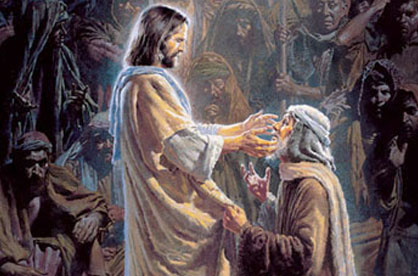





![Psalm 22 does not speak of death by crucifixion. In fact, the King James translators changed the words of verse 16[17] to speak of “piercing” the sufferer’s hands and feet, whereas the Hebrew text actually says, “Like a lion they are at my hands and feet.”](https://www.difa3iat.com/wp-content/uploads/2014/09/psalms_2-1.jpg "Psalm 22 does not speak of death by crucifixion. In fact, the King James translators changed the words of verse 16[17] to speak of “piercing” the sufferer’s hands and feet, whereas the Hebrew text actually says, “Like a lion they are at my hands and feet.” 6")