Was Jesus God – Richard Swinburne


Was Jesus God 1st Edition by Richard Swinburne
Was Jesus God 1st Edition by Richard Swinburne
The Evolution of the Soul Revised Edition by Richard Swinburne
The Christian God 1st Edition by Richard Swinburne
Providence and the Problem of Evil by Richard Swinburne
The Coherence of Theism – Richard Swinburne

تُعنى الدفاعيات بإقناع الناس بأن المسيحية تخلق للحياة معنى، حتى إن “سي.إس.لويس” الذي قد يُعتبر أعظم مدافع مسيحي في القرن العشرين يصف قدرة الإيمان المسيحي على خلق معنى للأشياء بفصاحة بليغة وبإيجاز قاطع قائلاً: “إني أؤمن بالمسيحية كما أؤمن بأن الشمس قد أشرقت، لا لأني أراها فحسب، ولكن لأني أرى كل الأشياء الأخرى بواستطها.”[1] وما يقوله “لويس” أساسي في الدفاعيات المسيحية: فالمسيحية لها معنى في حد ذاتها وهي قادرة على إضفاء المعنى على سائر الأشياء أيضًا.
ويعرض “لويس” في كل أعماله، حتى الخالي منها، نظرة المسيحية للأمور باعتبارها نظرة منطقية، ومقنعة، ومتصلة بحياة البشر. فما أن ننظر للعالم من منظار مسيحي حتى يتضح قصور وجهات النظر الأخرى. وقد أشار أحد زملاء “لويس” في جامعة أكسفورد، وهو اللاهوتي وأستاذ العهد الجديد “أوستين فارِر” Austin Farrer إلي أن تفوق “لويس” في الدفاعيات يرجع إلى قدرته على إظهار الإيمان بالله منطقي وطبيعي.
لم تكمن قوة “لويس” الحقيقية في البرهان، بل في التصوير. فقد سكن في كتاباته عالَمٌ مسيحي يمكن للقارئ أن يفكر فيه ويشعر به. وكان يشعر في هذا العالم بارتياح تام، وقد تمكن من نقل الشعور ذاته لقرائه. كان يقدم القضايا الأخلاقية بمنتهى الوضوح ويبين ارتباطها بالإرادة الإلهية، وعندما يتمكن المرء من رؤيتها على هذا النحو، لا يمكنه أن يراها غير ذلك أبدًا.[2]
يُعتبر الاتساع الفكري الذي يتميز به الإيمان المسيحي من أعظم نقاط قوته، ويمكن استخدامه بكل قوة في الدفاعيات كما سنرى في هذا الفصل. وعندما اقول إن المسيحية قادرة على خلق معنى أعمق للواقع أكثر من غيرها لا أقصد أن وجهات النظر الأخرى غير منطقية.
فمعظم أشكال الإلحاد مثلاً لها منطقها الذي يفترض بعض الملحدين مثل “ريتشارد دوكينز” Richard Dawkins وكذلك “كرستوفر هيتشنز” Christopher Hitchens أنه الشكل الوحيد للعقلانية، وهو افتراض طفولي ساذج. إلا أن المسيحية تتفوق على غيرها من حيث قدرتها على إضفاء معنى أكثر عمقًا ومنطقية على الأمور، كما يرى معظم المدافعين.
والروائي الإنجليزي “إفيلين وُه” Evelyn Waugh (1903-1966) الذي اشتهر بروايته ” العودة إلى برايدزهد” Brideshead Revisited (1945) يشير إلى نقطة مشابهة. فبعد أن آمن بالمسيحية سنة 1930 كتب لأحد أصدقائه يشرح له كيف مَكًنه إيمانه الجديد من رؤية الأشياء بوضوح لأول مرة.
الاهتداء إلى الإيمان يشبه الخروج من عالم “أليس في بلاد العجائب”، حيث يبدو كل شيء كاريكاتيريًا وعبثيًا، والدخول إلى العالم الحقيقي الذي صنعه الله، ثم تبدأ بعد ذلك رحلةٌ بهيجة لا نهائية لاستكشاف هذا العالم.[3]
فقبل الإيمان لم يرَ “وُه” إلا عالمًا مشوهًا وهميًا، ولكنه بعد إيمانه رأى الأمور على حقيقتها. وبدأ رحلة اكتشاف هذا العالم الجديد تملؤه مشاعر الحماس والدهشة والإثارة كما يتضح من كتاباته بعد الإيمان.
فكيف نفهم منطقية الإيمان؟ يمكن توضح منطقية الإيمان المسيحي بطريقتين مختلفتين، ولكنهما تكملان بعضهما البعض:
هذان المنهجان لا يلغي أحدهما الآخر، بل يمكن استخدامها معًا في الدفاعيات. سنتناول الآن بعض الأفكار والخطوط المنهجية التي تمثل قيمة محورية في الدفاعيات بوصفها أداة تُظهر لثقافتنا ما يتميز به الإيمان المسيحي من عقلانية ومنطقية.
أدى صعود تيار”الإلحاد الجديد” سنة 2006 إلى خلق اهتمام جديد بطبيعة الإيمان، وأصبح السؤال المطروح: لماذا نؤمن بالله إن كنا لا نستطيع إثبات هذا الإيمان بيقين مطلق؟ ومن أشد انتقادات الإلحاد الجديد وأكثرها شيوعًا هو القول بأن “الإمان بالله غير منطقي”، حتى إن “ريتشارد دوكينز”، ذلك الملحد الذي يعتمد أسلوب المواجهات في دعم قضاياه ، يرى أن الإيمان هروب من الأدلة بدفن الرؤوس في الرمال، ورفض التفكير.
وبالرغم من أن الكثير من المراقبين الإعلاميين أظهروا نوعًا من القبول لهذه الانتقادات في بادئ الأمر، فقد أظهر الفحص الدقيق مدى ضحالتها، لأن هذا الإلحاد الجديد نفسه له معتقداته وتعاليمه غير المثبَتة، وغير القابلة للإثبات، مثل غيره من الأفكار.
يقول نقاد حركة التنوير من الفلاسفة، مثل “ألاسدير ماكينتاير” Alasdair Maclntyre أو “جون جري” John Gray إن محاولة حركة التنوير أن تضع أساسًا ومعيارًا واحدًا وشاملاً للمعرفة قد ضعُف حتى انهار تمامًا تحت وطأة كمية ضخمة من الأدلة المضادة.[4] فالنظرة القائلة بوجود عقل وحيد شامل لا يمكن الدفاع عنها ولا يمكن تحقيقها. وذلك، لأننا باعتبارنا بشرًا محدودين ليس أمامنا خيار سوى أن ندرك أننا لابد أن نعيش في غياب بعض الحقائق العقلانية الصرفة، الواضحة، المطلقة التي لا تتحمل أي لبس.
فمؤكد طبعًا أنه علينا أن نضع معايير تثبت صحة معتقداتنا، وعلينا أن ندافع عن هذه المعايير، ولكننا في الوقت نفسه لابد أن ندرك أن تلك المعتقدات قد تستعصي على الإثبات. إلا أنها، على حد التعبير الذي أطلقه “وليم جيمز” William James أحد علماء النفس بجامعة “هارفارد” Harvard ، وتُفهم على أنها “فرضيات مقبولة” ” Working hypotheses”.[5]
وسوف أضرب مثالاً لتوضيح هذه النقطة. بعض العبارات الأخلاقية مثل “الاغتصاب فعل خاطئ” لا يمكن إثباتها لا بالمنطق ولا بالعِلم، وهو ما ينطبق على بعض العبارات السياسية أيضًا، مثل “الديمقراطية أفضل من الفاشية.” ولكن هذا لا يمنعنا من الإيمان بهذه المعتقدات السياسية والأخلاقية والتصرف وفقًا لها. ولا يقتصر ذلك على الأخلاقيات الشخصية والآراء السياسية فحسب، بل يمتد أيضًا إلى المعتقدات الاجتماعية، وأهمها العدالة. فما من أمة أو مجتمع يمكنه أن يبقى على قيد الحياة دون أن يكون عنده مفهوم للعدالة. ومع ذلك، لا يمكننا أن نثبت بالمنطق البشري المحض صحة مفهوم بعينه من مفاهيم العدالة.
ومؤخرًا أكد “مايكل ساندل” Michael Sandel أستاذ الحكومة في جامعة “هارفارد” أن أي فكرة للعدالة تقوم على مفهوم ما للحياة الطيبة بما يتضمنه من شبكة معتقدات عن الطبيعة البشرية وقيمها وغرضها.[6] وقد أشار إلى أن هذه المعتقدات لا يمكن إثباتها، وهو محق في ذلك. صحيح أن بعض مفكري عصر التنوير، تلك الفترة العظيمة في الثقافة الغربية التي قالت بالمرجعية العليا للعقل البشري، آمنوا بأن العقل قادر على تقديم إجابات قاطعة لهذه الأسئلة.
فلا يمكن العثور على إجابات ذات معنى للأسئلة المتعلقة بالعدالة دون الاعتماد على معتقدات لا يمكن إثباتها بشكل نهائي. وقد تلاشى حلم التنوير بتأسيس العدالة على المنطق البحت، لأن فكرة “المنطق الخالص” هي فكرة خيالية، لأن مفاهيم العقلانية تتشكل وفقًا للبيئة الثقافية، كما أشار “ستيفن تولمين” Stephen Toulmin في ملاحظة صائبة قائلاً:
إن ممارسة الحكم العقلاني في حد ذاتها تتم في إطار معين وتعتمد عليه في الأساس، والحجج التي نواجهها توجد في زمان معين وفي طروف معينة، وعندما نُقَيٍّمها لابد أن نحكم عليها في ظل هذه الخلفية.[7]
يبدو أن الكثير من مفكري التنوير نجوا من هذه الحقيقة التي تقوض بناءهم الفكري، وذلك بفضل محدودياتهم الأكاديمية التي كانت شديدة الارتباط آنذاك بالتقليد الغربي الكلاسيكي، ولكن هذا الوهم قد تلاشى، حتى إن “ألاسدير ماكينتاير” يختم تحليله العبقري للتناول العقلاني لكلٍّ من المعرفة والأخلاق بأن التنوع الكبير في طريق التناول “العقلاني” للعدالة والأخلاق لابد أن يؤادي للاستنتاج بأن “الإرث الذي خَلَّفته حركة التنوير هو نموذج مثالي للتفسير العقلاني الذي ثبتت استحالة تحقيقه.”[8]
فالعقل يعد بالكثير ولكنه يعجز عن الوفاء بكل ما يعد به.
ويمكننا في هذا الصدد أن نسوق الكثير من الأمثلة التي تصل جميعها إلى الاستنتاج ذاته الذي أشار إليه منذ عدة سنوات فيلسوف أكسفورد العظيم والمؤرخ الفذ السير “أيزيا برلين”” Sir Isaiah Berlin (1909 – 1997 ) عندما قال بأن القناعات البشرية يمكن تقسيمها إلى ثلاث فئات:
تتمثل الفئتان الأولى والثانية فيما يمكن التحقق منه بالعلوم الطبيعية، وما يمكن إثباته بالمنطق والرياضيات. وبذالك، ينحصر”البرهان” في نوعية محدودة من العبارات التقريرية، مثل:
2+2= 4
الكل أكبر من الجزء.
التركيبة الكيميائية للماء هي H₂O.
العبارة الأولى والعبارة الثانية يمكن إثباتهما منطقيًا، والأخيرة يمكن إثباتهما علميًا. أما الفئة الثالثة فهي التي تضم القيم والأفكار التي تشكل الثقافة البشرية وتُعَرِّف الوجود الإنساني، أي أنها المعتقدات التي تعطي للحياة الإنسانية سببًا، واتجاهًا، وغرضًا، ولا يمكن إثباتها بالمنطق أو العلم.
ما الذي يندرج تحت هذه الفئة؟ سنة 1948 أكدت الأمم المتحدة “إيمانـ]ها[ بحقوق الإنسان الأساسية.” ورغم أهمية هذا المعتقد، فبنود الإعلان العالمي لحقوق الإنسان لا يمكن إثباتها منطقيًا ولا علميًا، كما لا يمكن إثبات الاعتقاد بأن الظلم شر أو أن الاغتصاب خطأ. فهذه أمور مستحيلة الإثبات. ومع ذلك يتخذ الناس منها عملاً لهم طيلة حياتهم انطلاقًا من اعتقادهم بأنها، أولاً صحيحة، وثانيًا مهمة.
وقد أشار الناقد الأدبي البريطاني “تِري إيجلتون” Terry Eagleton في نقد قوي لكتاب “وهم الإله” the God Delusion لمؤلفه “ريتشارد دوكينز” قائلاً: “إننا نؤمن بالكثير من المعتقدات التي ليس لها مبرر عقلاني يفوق مستوى الشبهات، ومع ذلك هذه المعتقدات منطقية إلى الدرجة التي تجبرنا على أخذها بعين الاعتبار.”[10] والإيمان بالله واحد من هذه المعتقدات.
وقد أكد الفيلسوف “ألفين بلانتيجا” Alvin Plabtinga هذه النقطة منذ سنوات بالإشارة إلى مشكلة دائمة وهي مشكلة “العقول الأخرى”[11] التي تقول بأنه لا يمكنك أن تبرهن برهانًا مطلقًا على أن اللآخرين عندهم عقول. ومع ذلك لم يشغل أحد نفسه بهذا الأمر، لأنه افتراض مقبول ويتفق مع طبيعة الأمور. ثم يقول “بلانتينجا” بوجود توازٍ بين إثبات وجود “عقول أخرى” وإثبات وجود الله.
ويستطرد قائلاً إنه لا يمكن إثبات أي منهما، ويمكن تقديم حججٍ قوية ضد كلٍّ منهما، ولكن مؤيدي هاتين النظرتين يرون أنهما منطقيتان جدًا.
إن “ريتشارد رورتي” Richard Rorty (1931- 2007 ) الذي قد يُعتبر أعظم فيلسوف أمريكي في القرن العشرين عرض نقطة مشابهة في خطابه الرئاسي أمام “الجمعية الفلسفية الأمريكية” American Philosophical Society منذ عدة سنوات أشار إلى أنه
إذا كان أي شخص يؤمن بالفعل أن قيمة أي نظرية تتوقف على أساسها الفلسفي، عندئذٍ لابد أن يشك في أشياء مثل الفيزياء والديمقراطية إلى أن نتغلب على نسبية النظريات الفلسفية، ونجعل منها نظريات مطلقة. ولكن من حسن الحظ أنه ما من أحد يؤمن بشيء كهذا.[12]
ماذا يقصد “رورتي” بهذا الكلام؟ يقصد أننا يمكن أن نؤمن بالمفاهيم الجوهرية في عصرنا دون أن يتوفر لدينا إثبات مطلق.
إن الكل يؤمن منطقيًا بصحة معتقدات معينة رغم إدراكه أن هذه المعتقدات لا يمكن إثباتها، بالمعنى الضيق لكلمة إثبات. ألا أن نقاد العقائد الدينية غالبًا ما يرجحون أن “الإيمان” نوع من المرض العقلي لا يصيب إلا المتدينين. ولكن هذا خطأ لأن الإيمان جزء من إنسانيتنا.
وقد عبَّرت الفيلسوفة “جوليا كريستفا” Julia Kristeva عن ذلك مؤخرًا بالقول: “سواءً أكنت أنتمي إلى دين، أو كنت لاأدرية، أو ملحدة، فعندما أقول “أنا أؤمن” فهذا يعني أني أقول “أنا أعتبر ]ما أؤمن به [ صحيحًا.”[13] فالإيمان بالله، وبالعدالة، وبحقوق الإنسان تعاني جميعًا من هذه المشكلة المزعومة، وهذه ليست إلا ثلاثة أمثلة، ولكن القائمة تطول.
وعادةً ما يعجز الكُتاب الملحدون عن أن يأخذوا في الاعتبار محدودية العقل البشري، ويرون أن قناعتهم تتميز بالصلابة والمصداقية والقدرة على التحدي. وهم يقولون إنهم لا يؤمنون بأي شئ، ويقتصرون على ما هو صواب، حتى إن المدافع الملحد “كريستوفر هيتشنز” أعلن بكل جرأة أن الملحدين الجدد من أمثاله لا يأخذون العقائد في حسبانهم قائلاً إن “عقيدتنا هي اللاعقيدة.”[14]
هذا خطأ، وأخشى أن “هيتشنز” يضلل نفسه، لأنه يتضح أن تحليله للدين يقوم على معتقدات جوهرية معينة لا يمكن إثباتها، حيث إن نقده العنيف للدين يقوم على قيم أخلاقية معينة (كما في القول بأن “الدين شر” أو ” الله غير صالح” لا يمكن إثباتها، وهو ما يمثل في النهاية نوعًا من التسليم القائم على مجرد شعور بالثقة في في صحة هذه الأفكار. ومادام تقييم “هيتشنز” للدين أخلاقيًا في المقام الأول، فهو مجبر على افتراض قيم أخلاقية معينة لا يمكنه إثباتها. وكل القيم الأخلاقية تقوم في النهاية على معتقدات.
ونقد”هيتشنز” للمسيحية يقوم في نهاية الأمر على معتقداته ويُعبر عنها، أي أنه يقوم على ما يعتقد أنه صواب ويفترض أن أناسًا أخرين يعتقدون أنه صواب، ولكنه لا يستطيع إثباته فعليًا لا بالمنطق ولا بالعلم.
إلا أن مفهوم الإيمان في المسيحية أعمق بكثير من مجرد الاعتقاد بصحة بعض الأفكار. لأن الإيمان عند المسيحيين ليس معرفيًا (“أنا أعتقد أنا هذا صواب”) فحسب، ولكنه في الوقت نفسه يحمل بعدًا علاقتيًا ووجوديًا (“أنا اثق في هذا الشخص”). فالأمر لا يتوقف عند الاعتقاد بوجود الله، بل يمتد إلى أكتشاف حكمة هذا الإله ومحبته وصلاحه، مما ينتج عنه قرار إرادي بتسليم الحياة لهذا الإله. وهو ما عبَّر عنه “سي.إس.لويس” عندما قال إنك لا تواجه “حجة تطالبك بأن توافق عليها، بل شخصًا يطالبك بأن تثق فيه.”[15]
ولذا، فالإيمان يعني الثقة في شخص، وليس مجرد الاعتقاد في وجوده. وقد أشار الكاتب الدنماركي “سورن كيركجارد” Soren Kierkegaard (1813 – 1855) إلى هذه الفكرة عندما أكد أن الايمان الحقيقي بالله هو “قفزة نوعية” من وجود إلى وجود مختلف. فالايمان المسيحي ليس مجرد إضافة بند الايمان بالله لما نختزنه من أفكار عن العالم. ولكنه يعني إدراك واعتناق “النظام الوجودي” mode of existence” ” الجديد الذي تتيحه هذه الثقة.
وتجدر الإشارة إلى أن الفيلسوف النمساوي “لودفيج فيتجنشتاين” Ludwig Wittgenstein الذي يُعتبر عند الأغلبية من عباقرة القرن العشرين العظماء، كان يعاني من شكوك مضنية في فكرة “إثبات” وجود الله. وقد صرح بأنه لم يلتقِ بشخص واحد آمن بالله نتيجةً للحجة العقلية!
وقد تنبأ “جوناثان إدواردز” Jonathan Edwards (1703- 1785 ) عالمِ اللاهوت البيوريتاني الأمريكي العظيم بهذا الموضوع في كتاباته حيث رأى أن الحجة العقلية لها قيمتها وأهميتها في الدفاعيات المسيحية، ولكنها قد تؤدي إلى مجرد الايمان بوجود الله دون أي تأثير يغير الحياة. وكما يشير ” إدوردز”، البعض “يخضع لحق الديانة المسيحية بناءً على البراهين أو الحجج العقلية التي تثبت صحته.”[16] إلا أن هذا لا يؤدي بالضرورة إلى تغيير الحياة أو “الإيمان الحقيقي.”
وما يقصده “إدواردز” أن الشخص قد يؤمن بوجود إله دون أن يؤمن بهذا الإله. وهو موقف معروف من العهد الجديد. “أَنتَ تُؤمِنُ أَنَّ الله وَاحِدٌ. حَسَنًا تَفعَلُ. وَالشَّيَاطِينُ يُؤمِنُونَ وَيَقشَعِرُّونَ!” (يع19:2). فالفرق شاسع بين القبول العقلاني والتغير الشخصي. ويصرح “إدواردز” بأن ما يغير الناس ليس الحجة بل “إدراك” مجد الله، أي التقدير الواعي لهذا المجد، أو لقاء مباشر أو اختبار شخصي مع الله.
قد تلعب [الحجج] دورًا فعالاً في تنبيه غير المؤمنين وحثهم على التفكير بجدية، وفي تثبيت إيمان القديسين الحقيقيين. ولكنها لا تتمتع بالأهمية ذاتها في خلق الإيمان الخلاصي لدي الأشخاص. فالاقتناع الروحي لا ينتج عن الحكم العقلاني، بل من إدراك مجد الأمور الإلهية وجمالها الروحي.[17]
ولكن قيادة الناس للتحول إلى الإيمان هي في النهاية مهمة الكرازة. فالدفاعيات تمهد الطريق لهذا التحول بإظهار أن الإيمان بالله منطقي. إنها تزيل الأحجار والركام من طريق الكرازة. وقد لا يمكننا أن نثبت وجود الله بالمعنى الجامد والمطلق لكلمة إثبات. ولكن مؤكد أنه يمكننا أن نبين أن الإيمان بوجود هذا الإله منطقي تمامًا من حيث أنه يعطي معنى أعمق للحياة وللتاريخ وللخبرة الإنسانية على نحو يتفوق على غيره من البدائل، وبعدها يمكننا أن ندعو الشخص ليتجاوب مع هذا الإله المحب ويثق في مواعيده.
لماذا تمثل هذه النقطة أهمية كبرى؟ لماذا يجب علينا أن نظهر أن العقيدة المسيحية منطقية؟ لماذا لا نكتفي بإعلان هذه الفكرة وحسب؟ من النقاط الدفاعية التي يجب تأكيدها هنا أنه من الصعب أن ندافع عن الأفكار التي تسير في اتجاه مضاد لطريق التفكير السائدة في الثقافة.
وقد أشار “أوستين فارر” إلى أن نجاح “سي. إس. لويس” المبهر في عمله بالدفاعيات يرجع في جانب منه لقدرته على “عرض قوة الأفكار المسيحية على المستوى الأخلاقي، والخيالي، والعقلاني عرضًا إيجابيًا.”[18] ويرى “فارر” أن منهج “لويس” في الدفاعيات أظهر أن المسيحية تعطي معنى لأعمق انطباعات العقل البشري والقلب والخيال.
إلا أن “فارر” كان معنيًا بوجه خاص بتأكيد أهمية إظهار منطقية الإيمان. ولكنه لم يقصد بذلك أن المنطق يخلق الإيمان، أو أن الناس يؤمنون بالله بفضل الحجج العقلانية. إلا أنه أراد أن يؤكد مدى صعوبة الدفاع عن الايمان المسيحي علنًا إن كان المجتمع يراه غير منطقي. ولذلك، فإن أعظم إنجاازات “لويس”، من وجهة نظر “فارر”، أنه أظهر منطقية الإيمان بشكل يَسَّر قبوله على المستوى الثقافي.
رغم أن الحجة لا تخلق قناعة، غيابها يضرب الإيمان في مقتل. فما يُثبَت، قد لا يُعتنق، ولكن ما لا يستطيع أحد أن يدافع عنه سرعان ما يتخلى الناس عنه. وإن كانت الحجة العقلانية لا تخلق الإيمان، فهي تحفظ على مناخ ملائم يسمح له بالنمو.[19]
وإظهار منطقية الإيمان لا يعني إثبات كل عنصر فيه، بل يعني القدرة على إظهار أن الاعتقاد في مصداقية هذه العناصر وصحتها يقف على أسس سليمة. ومثال ذلك تبيان أن الإيمان المسيحي يعطي معنى لملاحظاتنا وخبراتنا. ومن ثم، يمكن تشبيهه بعدسة تضع كل شئ في البؤرة، أو بضوء يسمح لنا بالرؤية على مسافات أبعد وبشكل أوضح مما تتيحه لنا قدرتنا العادية.
وقد أكدت هذه الفكرة الفيلسوفية والناشطة الاجتماعية الفرنسية “سيمون فيّ” Simone Weil ، وهي مفكرة يهودية آمنت بالمسيحية في شبابها. فقد استخلصت بعد إمعان النظر فيها يتضمنه إيمانها الجديد من معانٍ أن الإيمان بالله ينير الواقع على نحو أفضل من البدائل العلمانية الأخرى بكثير. وإن كانت طريقة تفكير بعينها قادرة على وضع الأشياء في البؤرة أو إنارة ما هو مظلم وملتبس، فهذا يعد دليلاً على مصداقيتها.
إن أنرتُ كشافًا كهربائيًا في شارع مظلم، لن أحكم على قوته بالنظر إلى المصباح الموجود بداخله، بل بعدد الأشياء التي يسلطه على الأجسام المظلمة. وقيمة أي منهج ديني، أو روحي، بوجه عام، تقَيَّم بكمية النور الذي يُسلِّطه على ما في هذا العالم من أمور.[20]
إن قدرة النظرية على إنارة الواقع ووضعه في بؤرة التركيز تُعتبر في حد ذاتها مقياسًا مهمًا لمصداقيتها. وهنا ترى موضوعًا جوهريًا في الدفاعيات المسيحية، ألا وهو أن الإيمان بصحة المسيحية له أسباب وجيهة، ومنها مدى قدرته على خلق معنى منطقي لما نراه حولنا وبداخلنا. وقد علًّق “برايان لفتو” Brian Leftow الفيلسوف بجامعة أكسفورد على اختباره المسيحي الذي مكنه من رؤية الأشياء على حقيقتها قائلاً: “إن كنت ترى الأشياء على حقيقتها من الموقع الذي تقف فيه، فأنت في المكان الصحيح.”[21]
فماذا عن العلوم؟ إن “جون بولكينجهورن” John Polkinghorne (المولود سنة 1930 ) الفيزيائي الذي ترك المجال العلمي وتخصص في اللاهوت يثير نقطة وثيقة الصلة بموضوع هذا الفصل:
إن البحث عن الحق مهما كان شكله لا يمكنه الوصول إلى استنتاجات يقينية مطلقة. ولكن الشخص الواقعي في تطلعاته هو من يطمح إلى الوصول لأفضل شرح ممكن للظواهر المعقدة، وهو هدف يمكن تحقيقه بالبحث عن فهم شامل مدفوع بدوافع طيبة ليوفر أساسًا للقبول العقلاني. فلا العلم ولا الدين يمكنه أن يأمل في بناء برهان قاطع تجبر منطقيتُه علي قبوله حتى إنه لا ينكره إلا الحمقى.[22]
إن كلاً من العلم والعقيدة المسيحية ملتزمان بإيجاد أفضل تفسير مدعوم بالدليل لما نلاحظه ونواجهه فعليًا في هذا العالم. ومن وجهة نظر المسيحي، تمثل الدفاعيات في جزء منها تأكيدًا للتوافق المفاهيمي بين الإطار النظري للمسيحية والأنظمة العميقة للعالم كما تكشفها العلوم الطبيعية.
فهل الإيمان بالله منطقي؟ أم أنه مجرد وهم، ونموذج أليم للتفكير الرغبوي عند بشر يعانون مشاعر الوحدة والتعطش؟ لقد قال “لويس” نفسه معلِّقًا على معتقداته الإلحادية قبل الإيمان” “كنت أؤمن أن كل ما أحبه تقريبًا وهم، وتقريبًا كل ما آمنت بأنه حقيقي رأيته منفرًا وبلا معنى.”[23] لقد اكتسبَت هذه القضية أهمية في الآونة الأخيرة نتيجةً للمناقشات السائدة حاليًا في ثقافتنا.
وبالرغم من أن الإلحاد الجديد الذي انفجر سنة 2006 فقدَ الكثير من الجاذبية التي تكسو أي شيء جديد، فالأسئلة التي يطرحها مازالت موضع مناقشة، ومنها هل الإيمان بالله يُعبر عن حالة من التجاوب العقلاني مع الواقع، أم أنه ضلالة قديمة الطراز تتفشى بين الجماهير بفعل فيروسات عقلية تعيش على منطق هش ساذج وتفرضها مؤسسات وأفراد سلطويون؟
وهنالك طبعًا نظرة أكثر تشددًا تقول: إن المحاولات البشرية لتكوين معنى أو تأسيس قيم تتساوى في أنها جمعيًا ضلالات سواءً أكانت تؤمن بوجود الله أم كانت إلحادية. وهي نظرة للواقع شديد التشاؤم وتنعكس بكثرة في كتابات “ريتشارد دوكينز” كما في تصريحه الشهير بأن “خواص هذا الكون الذي نراه هي ذات الخواص التي يمكن أن نتوقعها في كون هو أساسًا بلا تصميم ولا غرض ولا شر ولا خير، ولا أي شيء سوى حالة من الحياد القاسي الأعمى حيث يكون كل شيء عاديًا، لا هو بالجيد ولا بالرديء.”[24]
وترى هذه النظرية أننا نفرض معنى وقيمة على عالم بلا معنى، فيصبح المعنى مخترعًا، وليس شيئًا أصيلاً يكتشفه الإنسان. وهذه الفكرة على قدرة اتساقها، إلا أنها شديدة القسوة على نحو يجعل الكثيرين يرونها لا تطاق.
ونحن في هذا الفصل نبحث قدرة الإيمان المسيحي على إضفاء معنى على الأشياء.
وتركيزي على مسألة منطقيته لا يعني اختزال المسيحية إلى تفسير عقلاني للأمور، ولا يعني أنه القيمة العليا في اللاهوت المسيحي. ولكن الغرض من ذلك توضيح أن المحيط الثقافي الحالي تَشَكَّل بصعود تيارات عدائية يؤكد أن الإيمان في الأساس غير عقلاني، ومن ثم وجب الرد على هذه الادعاءات بشكل واعٍ ومحسوب.
وقد شهد القرن العشرين طاقة فكرية جديدة تم حقنها في الدراسات الفلسفية للأدلة العقلية والتجريبية التي تتعلق بالله، وكان ظهور تفاسير علمية جديدة لنشأة الكون من العوامل التي حفزت هذه الطاقة الجديدة. وقد أكد فلاسفة الأديان مثل “ألفين بلانتينجا” وكذلك “ريتشارد سوينبرن” Richard Swinburne مجددًا على منطقية الإيمان وأحيوا الحجج القديمة التي تشرح اساب الإيمان بالله، وهنالك تزيد في الاتفاق على أن الإيمان بالله عقلاني تمامًا، إلا إذا عرَّفت “العقلانية” على نحو يتعمد إقصاء هذا الإيمان.[25]
والأمر الذي يزداد وضوحًا أن العقلانية يمكنها فعليًا أن تسجن البشرية في نظرة جامدة متحجرة تحصر الواقع فيما يمكن إثباته عقلانيًا وحسب. وكما أشار “أيزيا برلين” أنه من اللافت للانتباه أن التيار السائد في الثقافة الغربية منذ أواخر القرن التاسع عشر وما بعده يتمثل في “رفض العقل والنظام باعتبارهما سجنًا للروح.”[26] فحصر الإنسان لنفسه فيما يمكن إثباته بالعقل والعِلم هو عبارة عن الأخذ بالقشرة السطحية للواقع والعجز عن اكتشاف ما يمكن تحتها من أعماق.
أما الكتُاب المسيحيون يرون أن الإيمان الديني ليس تمردًا على العقل بل ثورة على سَجن البشرية بين جدران الجمود العقلاني الباردة. فالمنطق والحقائق لا يمكنهما إلا أن “يصلا بنا إلى نقطة معينة في الرحلة، بعدها يجب علينا أن نكمل المسيرة حتى نصل للإيمان.”[27]
فقد يكون المنطق البشري كافيًا على المستوى العقلاني ولكنه قاصر على المستوى الوجودي. والإيمان يعلن عما هو أعمق من العقل، ولا يتعارض معه، بل يفوقه. فالإيمان يستخلص الموافقة العقلانية، ويدعو إليها، ولكنه لا يفرضها، وهو يصل إلى حيث يصل العقل ولكنه لا يحد نفسه عند نقطة تَوقُّف العقل بل يتجاوزها.
يوضح “سي.إس.لويس” في روايته لقصة إيمانه بالمسيحية في كتاب “مندهش من الفرح” أن إيمانه بالله لم يأتِ نتيجةً لحجة استدلالية، بل نتيجةً لإمعان التأمل في خبرته، وهو ما يبين أنه يمكننا الاستفادة من منهجيات العلوم الطبيعية في الدفاعيات.
إن العلم يعتمد على الاستدلال inference لا على استنباط براهين رياضية deduction of mathematical proof ، ويتم ذلك بتراكم سلسلة من الملاحظات التي تطرح السؤال الأعمق: كيف نقدم تفسيرًا حقيقيًا صحيحًا لما نلاحظه؟ ما “الصورة الكبرى” الأكثر توافقًا مع ما نلاحظه فعليًا في خبرتنا الواقعية؟ وقد استخدم العالم والفيلسوف الأمريكي “تشارلز إس.بيرس” Charles S. Peirce مصطلح “الاستدلال الاحتمالي” “abduction“ للإشارة إلى الطريقة التي يتبعها العلماء لتوليد النظريات التي من شأنها تقديم أفضل تفسير للأشياء.
إلا أن هذه الطريقة أصبح يشار إليها الآن باسم “الاستدلال القائم على أفضل التفسيرات” “inference to the best explanation”. وهنالك اتفاق عام الآن على أن هذا الأسلوب هو الفلسفة المميِّزة للعلوم الطبيعية في تقصيها للعالم. فكيف تتم؟
يُعبر “بيرس” عن عملية التفكير التي تؤدي إلى تكوين نظريات علمية جديدة أو طرق تفكير في الواقع كما يلي:
فالاستدلال الاحتمالي هو عملية ملاحظة أشياء معينة ومحاولة اكتشاف الإطار الفكري الذي يمكن أن يفسرها. وقد كان “شرلوك هولمز” Sherlock Holmes ، المخبر الشهر بطل الروايات البوليسية، يستخدم هذه الطريقة رغم أنه كان يطلق عليها خطأ مصطلح “الاستنباط.” ويرجح “بيرس” أن الاستدلال الاحتمالي أحيانًا ما “يعبر بعقولنا كومضة خاطفة سريعة كأنه “فعل استبصار”.”[29] ولكنه أحيانًا ما يحدث عن طريق عملية بطيئة من التفكير المنهجي العميق أثنا محاولتنا لتوليد كل الاحتمالات التي من شأنها تفسير ما نلاحظه.
وقد فحص “بيرس” بدقة كيفية تكوين العلماء لأفكارهم، وهو يعتبر أن هذه العملية هي التي تكمن وراء المنهج العلمي. فالعلم يبدأ بجمع سلسلة من الملاحظات ثم يبحث عن إطار تفسيري يقدم أفضل شرح لهذه الملاحظات. وقد يكون هذا الإطار نظرية موروثة من عصر سابق، وقد يكون أسلوب تفكير جديد تمامًا.
والسؤال الذي يتطلب إجابه هنا هو: ما مدى الاتساق بين النظرية والملاحظة؟ وغالبًا ما يُستخدم مصطلح “الاتساق التجريبي” “empirical fit” للإشارة إلى هذا التوافق بين ما يُرى في العالم وما تقدمه النظرية.
خذ مثلاً حركة الكواكب التي خضعت للملاحظة على مدى آلاف السنين. ما أفضل تفسير لها؟ في العصور الوسطى كان يُعتقد أن أفضل تفسير لهذه الملاحظات هو النظام “البطلمي” الذي قال بمركزية الأرض، وهو ما يعني أن الشمس والقمر والكواكب تدور جميعها حول الأرض. إلا أنه في نهاية العصور الوسطى اتضح أن الملاحظات لم تكون في اتساق تام مع النظرية، وبدأ النظام البطلمي يتراجع ويضعف لعجزه عن تقديم أدلة أكثر دقة وتفصيلاً بناءً على ملاحظته لحركة الكواكب. وأصبح واضحًا أن العالم في حاجة لأسلوب جيد.
وفي القرن السادس عشر قال كلٌ من نيكولاس كوبرنيكس Nicolas Copernicus ويوهانس كِبلر Johannes Kepler إن كل الكواكب بما فيها الأرض تدور حول الشمس. وقد أثبت هذا النظام “الشمس مركزي” “heliocentric” أنه أكثر قدرة على شرح حركة الكواكب كما تُرى ليلاً في السماء. وهكذا كان الاتساق التجريبي الكبير بين النظرية والملاحظة علاقة قوية على صحة النظرية، ومازال هذا النظام هو النموذج القياسي الذي يتبعه علماء الفلك حتى اليوم.
ولكن ليس العلم فقط هو الذي يسير على هذا المنوال، بل إن “بيرس” نفسه أوضح أن المحامين أيضًا يعتمدون على الاستدلال الاحتمالي لكسب قضاياهم، فهم يصنعون عدسةً نظريةً تنير الأدلة وتضعها في البؤرة. ونظام القضاء الجنائي يستلزم الوصول إلى اتفاق على أفضل تفسير للأدلة المقدَّمة للمحكمة التي تبحث عن إجابة للسؤال: ماهي “الصورة الكبرى” التي تقدم أفضل تفسير للأدلة؟ ففي نهاية الأمر النظرية التي ستقنع هيئة المحلفين هي تلك التي تنسج أكبر عدد ممكن من الأدلة في قصة واحدة مترابطة.
وهذا ما يعكس السعي لإيجاد الصورة الكبرى التي تعطي معنى للقطات المتناثرة، والرواية الكبرى التي تعطي معنى للقصص المنفردة، والنظرية الكبرى التي تربط الأدلة معًا في كلٍ مترابط مُرضٍ. وما ينطبق على النظريات العلمية والقانونية ينتطبق على محاولاتنا لإيجاد معنى الحياة ككل، بل معنى مسألة الله والإنسان. فكيف يمكن أن تساعد هذه المنهجيات في العمل الدفاعي؟
للتفسير العلمي ثلاثة أنماط رئيسية، وكلٌّ منها له قيمة كبرى في الدفاعيات: التفسير السببي أو العِلِّي causal explanation ، والاستدلال القائم على أفضل التفسيرات، والتفسير الترابطي الذي يتضمن عدة تفسيراتexplanation unificatory. وسنتناول فيما يلي إمكانية استخدام كلٍّ منها في الدفاعيات.
أول نمط في التفسير هو التفسير السببي الذي قد يُعتبر أكثر طرق التفسير العلمي شيوعًا. ويقول بأن (أ) تفسر (ب) إن تمكنَّا من إثبات أن (أ) تسبب (ب).[30] فهل هذا يعني أن المسيحيين يؤمنون أن الله يجول في الطبيعة ويخبط التفاح برفق ليسقط من الشجر فيجذبه إلى الأرض؟ لا. ولكن الله يفوض فاعلاً مسببًا في هذا النظام المخلوق.
وقد قال توما الأكويني Thomas Aquinas بفكرة “السببية الثانوية” “secondary causality” باعتبارها امتدادًا للسببية الأولية primary causality أي الله نفسه وليست بديلاً لها. أي أن ما يتم من أحداث في النظام المخلوق يتم عن طريق علاقات سببية معقدة دون أي إخلال باعتمادها النهائي على الله باعتباره العلة النهائية.[31]
والنقطة الجوهرية التي يجب إدراكها أن النظام المخلوق إذَن يعكس علاقات سببية يمكن للعلوم الطبيعية أن تبحث فيها. وتلك العلاقات السببية يمكن تقصيها وربطها معًا على هيئة “قوانين الطبيعية” مثلاً دون أن يعني ذلك مطلقًا أو يستلزم تبني نظرة إلحادية. ولتبسيط هذه الفكرة قدر المستطاع نقول: إن الله خلق العالم بأنظمة وعمليات خاصة تُسيره.
ولكن ماذا عن نشأة الكون؟ ظهر ميل بين العلماء في أواخر القرن التاسع عشر نحو الاعتقاد بأن الكون موجود أزلاً. إلا أنه في القرن العشرين بات واضحًا أن الكون دخل حيز الوجود بفعل انفجار ضخم يُعرف عادةً باسم “الانفجار الكبير” “the big bang”.[32] ومنذ أدرك العلماء أن الكون له بداية سعت فلسفة العلوم لإيجاد تفسير لكيفية وجود شيء من العدم. فكيف نقول إن العدم سبَّب شيئًا؟ ولكن انتشار فكرة أن الكون نشأ في الزمن وأنه ليس ازليًا أحدث تحولاً كبيرًا لصالح الاعتقاد في وجود “علة أولى” “first cause” وصانع عاقل intelligent designer.
فما الذي تسبب في ظهور الكون؟ محتمل أنه خلق نفسه، أو أنه وُجد بالصدفة، أو أنه خُلق بفعل فاعل، وليكن الله مثلاً. وإن كان هذا طبعًا لا يُثبت شيئًا بالمعنى المنطقي الجامد للكلمة، إلا أنه يعطي مصداقية جديدة لحجة من أشهر الحجج التقليدية المختصة بوجود الله التي يمكن التعبير عنها كما يلي:
منذ حوالي سنة 1970 تكوَّن شبه اتفاق على أن الفلسفة الأساسية للعلوم الطبيعية تتمثل في النهج المعروف عمومًا باسم “الاستدلال القائم على أفضل التفسيرات.”[33] “البطلمي” الذي قال بمركزية الأرض، وهو ما يعني أن الشمس والقمر والكواكب تدور جميعها حول الأرض. إلا أنه في نهاية العصور الوسطى اتضح أن الملاحظات لم تكون في اتساق تامٍ مع النظرية، وبدأ النظام البطلمي يتراجع ويضعف لعجزه عن تقديم أدلة أكثر دقة وتفصيلاً بناءً على ملاحظته لحركة الكواكب. وأصبح واضحًا ان العالم في حاجة لأسلوب جديد.
وفي القرن السادس عشر قال كلٌ من نيكولاس كوبرنيكس Nicolas Copernicus ويوهانس كِبلرJohannes Kepler إن كل الكواكب بما فيها الأرض تدور حول الشمس. وقد أثبت هذا النظام “الشمس مركزي” “heliocentric” أنه أكثر قدرة على شرح حركة الكواكب كما تُرى ليلاً في المساء. وهكذا كان الاتساق التجريبي الكبير بين النظرية والملاحظة علامة قوية على صحة النظرية، ومازال هذا النظام هو النموذج القياسي الذي يتبعه علماء الفلك حتى اليوم.
ولكن ليس العلم فقط هو الذي يسير على هذا المنوال، بل إن “بيرس” نفسه أوضح أن المحامين أيضًا يعتمدون على الاستدلال الاحتمالي لكسب قضاياهم، فهم يصنعون عدسةً نظريةً تنير الأدلة وتضعها في البؤرة. ونظام القضاء الجنائي يستلزم الوصول إلى اتفاق على أفضل تفسير للأدلة المقدَّمة للمحكمة التي تبحث عن إجابة للسؤال: ما هي “الصورة الكبرى” التي تقدم أفضل تفسير للأدلة؟ ففي نهاية الأمر النظرية التي ستقنع هيئة المحلفين هي تلك التي تنسج أكبر عدد ممكن من الأدلة في قصة واحدة مترابطة.
وهذا ما يعكس السعي لإيجاد الصورة الكبرى التي تعطي معنى للقطات المتناثرة،
والرواية الكبرى التي تعطي معنى للقصص المنفردة، والنظرية الكبرى التي تربط الأدلة معًا في كلٍ مترابط مُرضٍ. وما ينطبق على النظريات العلمية والقانونية ينطبق على محاولاتنا لإيجاد معنى الحياة ككل، بل معنى مسألة الله والإنسان. فكيف يمكن أن تساعد هذه المنهجيات في العمل الدفاعي؟
للتفسير العلمي ثلاثة أنماط رئيسية، وكلٌّ منها له قيمة كبرى في الدفاعيات: التفسير السببي أو العِلِّي causal explanation، والاستدلال القائم على أفضل التفسيرات، والتفسير الترابطي الذي يتضمن عدة تفسيرات unificatory explanation. وسنتناول فيما يلي إمكانية استخدام كلًّ منها في الدفاعيات.
أول نمط في التفسير هو التفسير السببي الذي قد يُعتبر أكثر طرق التفسير العلمي ويتلخص أساسًا في طرح السؤال: أي النظريات تقدم أفضل تفسير لما نلاحظه فعليًا في الطبيعة؟ وتطرح الكتابات الفلسفية الكثير من الآراء المهمة حول كيفية تحديد أفضل تفسير: هل هو الأبسط؟ أم الأفخم؟ أم الأكثر قدرة على توليد أفكار جديدة؟ ما “الصورة الكبرى” الأكثر توافقًا مع الأدلة؟ والطريقة التي اعتمدها “تشارلز داروين” Charles Darwinفي وضع نظرية “الانتخاب الطبيعي” “natural selection” تُعتبر حاليًا نموذجًا لهذا المنهج.
وتبرز هنا نقطتان في غاية الأهمية. الأولى، أن هذا المنهج يدرك أنه لا يمكن أن نثبت أي تفسير يُعتبر الأفضل، فهي مسألة تتوقف على حالة من الثقة والارتياح، أو القدرة على التمييز لدى أفراد المجتمع العلمي. وهذا ما نراه فيما يدور حاليًا من جدل حول “الأكوان المتعددة” “multiverse” حيث نجد تفسيرين مختلفين اختلافًا جذريًا للملاحظات نفسها، ومع ذلك نجح كلٌ منهما في حشد التأييد اللازم من المجتمع العلمي. ولكن لا أحد يعرف على وجه الدقة أيهما صحيح.
لذلك، فأنت تختار ما يعتقد في صحته على أساس الأدلة المتاحة، مع الأخذ في الاعتبار أن الأدلة ليست قاطعة بما يكفي لإثبات تفسير دون الأخر. (وقد يكون هذا المنهج غير مريح ولكنه على الأقل يضمن لك أن تعامل خصومك بالحسنى بدلاً من أن تتهمهم بأنهم مضلَّلون).
والنقطة الثانية أن “الاستدلال القائم على أفضل التفسيرات” يدرك احتمالية وجود تفاسير عديدة للأشياء، ويحاول أن يتوصل لإطار يؤدي إلى حل النزاع بين الآراء المتصارعة، ونادرًا ما يمكن إثبات صحة نظرية، ولكن هذا ليس ضروريًا، لأن المهم أن نتأكد أن نظريةً ما أفضل من منافساتها، بمعنى أن الكثير من النظريات العلمية لها ما يدعمها أو يبررها (أي أنها تستند على أدلة قوية) دون أن يعني ذلك أنها مثبَتة.
ومسألة الله تتلاءم تمامًا مع هذا المنهج، حتى إن “ريتشارد سوينبرن” فيلسوف الأديان بجامعة أكسفورد يقول إن الإيمان بالله يقدم أفضل تفسير لمجموعة ضخمة من الأشياء التي نلاحظها في العالم.[34] ويشير الفيزيائي “جون بولكينجهورن” في ذات الصدد إلى أن الإيمان بالله يقدم تفسيرًا لأسئلة “ما وراء النظرية” “metatheoretical” التي تبحث في أساس النظرية، وهي المعتقدات التي ينبغي على العلم أن يعتمد عليها رغم أنه لا يستطيع أن يثبت صحتها.
منذ حوالي عام 1990 ازداد الاهتمام في مجال فلسفة العلوم بفكرة “التجميع التفسيري” “explanatory unification” وقد نشأ هذا الأسلوب في التفسير العلمي إبان السبعينات من القرن العشرين، وهو يحاول تكوين إطار مشترك يجمع الأحداث التي كان يُنظر إليها باعتبارها لا تمت بصلة بعضها لبعض.[35] ومنذ ذلك الحين تطور هذا الأسلوب تطورًا كبيرًا واستُخدم لتفسير بعض السمات الجوهرية في تكوين المنهج العلمي الحديث.[36] وموضوعه الأساسي بسيط يتلخص في ضرورة إيجاد إطار يتسع لأكبر عدد ممكن من العناصر.
ويقوم هذا الأسلوب في فهم التفسير العلمي على فكرة أن أَوجُه الواقع التي كان يُعتقد أنها تتطلب تفسيرات مختلفة يمكن أن تدخل ضمن إطار تفسيري واحد. ويُعَد التفسير الشهير الذي قدمه “جيمز كلرك ماكسويل” James Clerk Maxwell للترابط بين الكهرباء والمغناطيسية مثالا واضحًا على هذا المنهج الذي كان له الفضل في اعتبار الكهرباء والمغناطيسية وجهين لعملة واحدة بعد أن كان يُظن أنهما متمايزتان تمامًا.
وهكذا يعني تفسير الشيء، وفقًا لهذا المنهج، أن يوضع في إطار أكبر يسمح بفهم علاقاته المتداخلة مع أوجه الواقع الأخرى. ويصبح السؤال هو: أي شبكة من الأفكار توفر أقصى درجة ممكنة من الترابط بين مختلف المجالات والنظريات العلمية؟
ولا يصعب علينا أن نرى التوافق الكبير بين هذا الفكر وأحد الموضوعات الجوهرية في الإيمان المسيحي. فقد رأى القديس أغسطينوس أن الله مثل شمس فكرية تنير أرض الواقع وتتيح لنا رؤية أعمق أنظمته واكتشاف مكاننا فيها. وكتابات “سي. إس. لويس” تشير إلى معانٍ مشابهة.
معنى الأشياء: دراسة حالة:
لمزيد من التعمق في هذا الأمر سنتناول مدى فاعلية النظرة المسيحية للأشياء في إضفاء معنى على ما نلاحظه. وسنحاول أن نجيب على سؤال: ما مدى الاتساق بين النظرية والملاحظة؟
كيف يمكننا إذَن أن نفهم معنى التاريخ والخصائص المميِّزة للثقافة البشرية؟ قد تم طرح عدد من القصص التفسيرية لشرح هذه الأمر. تقول إحداها، وهي المفضلة لدى الإلحاد الجديد، بحدوث تطور تقدمي للوضع البشري نتيجةً لتآكل خرافة الدين، وتحرر البشرية من كل المحرَّمات والقيود الاعتباطية.
إلا أنه أصبح من الصعب الاستمرار في اعتناق هذه القصة في الغرب نظرًا لما مُنيت به اللبرالية الغربية من إخفاقات واضحة. ومن اللافت للانتباه أن هذه القصة التفسيرية الكبرى تمثل واحدًا من الموضوعات الرئيسية التي يستهدفها “إيجلتون” بتحليله الذي أجراه مؤخرًا للإلحاد الجديد الذي يواجه فيه انتقادات عنيفة لهذا الفكر.
فهو يصف “حلم التقدم البشري الذي لا يقف أمامه عائق” بأنه “خرافة متجسدة”، قصة خيالية من قصص الجنيات تفتقرِ لأي نوع من الأدلة. “إن وُجِدَت أسطورة دينية وخرافة ساذجة، فإنها ذلك الاعتقاد الليبرالي العقلاني بأننا نسير قدمًا على الطريق إلى عالم أفضل، باستثناء بعض الانتكاسات القلية.”[37] ومن اللافت للنظر أن “كريستوفر هيتشنز” ينهي هجومه على الدين بدعوة للرجوع إلى فكر التنوير ولاسيما للشكل الذي اتخذه في القرن الثامن عشر.
وهكذا يبدو أن أسطورة العصر الذهبي المفقود لا تزال قائمة في هذا الفكر بعيد المنال. ولكن لا شك أننا مدعوون لفحص الخيالات المتعلقة بكلٍّ من الفرد والمجتمع حتى لو كانت هذه الخيالات متأصلة في العقل الغربي العلماني.
وتتحدث القصة الشاملة (أو القصة الكبرى) للإلحاد الجديد عما عانته البشرية من عبودية للخرافات البدائية. ولكن تطبيق المنطق والعلم تطبيقًا ذكيًا في القرون الأخيرة مَكنَّها أن تتحرر من هذا القهر الطويل وتدخل عالمًا جديدًا مشرقًا بالحرية والاستنارة. عالم جديد مشرق يواجه حاليًا خطر عودة ما يشار إليه باسم “الخرافة” وباسم “اللاعقلانية.” فالدين عاد لمكانته وكانت عودته متوقعة ولكن غير مرغوب فيها. لذلك لابد من إنقاذ الموقف قبل فوات الأوان!
وكأي قصة جديدة، تتميز هذه القصة بالبساطة، ولكنها سرعان ما تفقد قيمتها عندما يثبت عجزها عن شمول التاريخ ككل، وليس فقط مجرد بضعة مقتطفات منتقاة بعناية. ووفقًا لهذه القصة يُفرض أن يكون الدين قد مات في الغرب منذ سنوات، ففي الستينات من القرن العشرين تنبأ علماء الاجتماع الأوربيون بقرب حلول نظام عالمي علماني وكانوا واثقين من ذلك كثافة الجيل السابق من المُنَظِّرين السياسيين السوفييت عندما أعلنوا أن سيادة الماركسية – اللينينية حتمية تاريخية.
وقد أجمع “أكبر علماء الاجتماع والأنثروبولوجي وعلم النفس” أن “أبناءهم، وإن لم يكن فأحفادهم، سيشهدون بزوغ عصر جديد تنضج فيه البشرية فتتخلى عن أوهام الدين الطفولية على حد تعبير “فرويد”.”[38]
إلا أن الدين لم يختفِ، بل إن الكثيرين الآن يقولون إنه أصبح أكثر تأثيرًا من أي وقت مضى، بالرغم مما يُفرض من ضوابط اجتماعية للحج من تأثيره الاجتماعي في الكثير من بلدان أوروبا الغربية. فالاتحاد السوفيتي انهار، وعلمانيته التي كانت تُفرض بالقوة حلَّت مكانها حالة من النشاط والحماس الدينيين اللذين اجتاحا الأمم التي كانت تحت سيطرته. وهذا ما يخيف الملحدين الجدد لأن قصتهم الكبرى تواجه تحديًا خطيرًا، مما يبين أنها غير صالحة للاستخدام.
والقصة الكبرى لعصر التنوير تعجز عن تفسير أي شئ ذي قيمة. وكما أشار “ريتشارد شودَر” Richard Shweder مؤخرًا أن “قدرتها التنبؤية تكاد تساوي صِفرًا.”[39] وهو يقول في ملاحظة فكاهية إن الدين قد يتضح في نهاية الأمر أنه ضلالة، ولكنه ضلالة لها مستقبل. “إن شعبية الهجوم على الدين حاليًا تخفي وراءها حالة من القلق الشديد الذي عاد مجددًا للمجتمع العلماني لا لأن قصة الدين وهمية بل لأن قصة التنوير هي الوهمية.”[40]
والقصة التي يتبناها التنوير ويعتمد عليها الإلحاد الجديد اعتمادًا كبيرًا لا تحمل ذرة واحدة من الواقع، وهي تشبه في ذلك تأكيد الماركسية على الحتمية التاريخية لسيادة الاشتراكية. فالصحوة الدينية في الكثير من مناطق العالم التي تم قمع الدين فيها على يد الحكومات الإلحادية مؤشر واضح على ضعف هذه القصة وهشاشتها. وفي كل الأحوال تُعَد فكرة “الحتمية التاريخية” حكمًا يصدره علم الاجتماع. ومن ثم، فهو لا يتصل كثيرًا بالصواب والخطأ من الناحية الفكرية أو الأخلاقية.[41]
فسواءً أكان أحد التطورات الاجتماعية “حتميًا” أم لا ، فهذا لا يعني صحته أوخطأه. وأحد التطورات الثقافية أو التاريخية قد يكون حتميًا بوصفه مرحلة تاريخية عابرة وليس تطورًا مستديمًا.
غالبًا ما يتهم الإلحاد الجديد من يؤمنون بالله بأنهم يتمسكون “بعقائد بلا دليل” عكس حقائق الملحدين “المستنيرين” التي لها إثباتات قوية. ولكن هل ينطبق هذا الكلام على اعتقاد الإلحاد الجديد بالتقدم البشري؟ يرى “إيجلتون” أن هذه الأسطورة ليست جديرة بأي اهتمام لأنها كالعمل الفني المزيَّف وأنها مثال صارخ على “الإيمان الأعمى.”[42]
فهل من شخص عاقل يقبل أسطورة علمانية كهذه تتعامل مع الكوارث التي صنعها البشر مثل هيروشيما، وأوشفتز Auschwitz أكبر معسكرات الاعتقال النازية، والتفرقة العنصرية في جنوب أفريقيا باعتبارها “بضع انتكاسات محلية بسيطة” لا تنفي التقدم المستمر للتاريخ ولا تعطله على الإطلاق؟ إن الفرق بين المسيحية والإلحاد الجديد يكمن في اختيارهما لما يطلق عليه المعتقدات التي لا تقوم على دليل والأساطير الكبرى الشاملة، ورغم أن كليهما غير قابل للإثبات، فهذا لا يمنعنا من تمييز أيهما أكثر مصداقية وجاذبية.
فماذا عن القراءة المسيحية للثقافة والتاريخ؟ يحكم هذه القضية موضوعان أساسيان أولهما أن الإنسان مخلوق على “صورة الله”، وثانيهما أنه خاطئ. وبالرغم من اختلاف اللاهوتيين والمدارس الفكرية الدينية فيما يولونه من أهمية لهذين العنصرين في الفهم المسيحي للطبيعة البشرية، فهما القطبان التوأمان اللذان يُكونان أي محاولة مسيحية لفهم لغز السلوك البشري على مستوى الأفراد والمجتمعات وحل طلاسمه.
ووفقًا لهذه النظرية فإننا نمتلئ حماسًا وإلهامًا بفضل رؤيتنا لله التي تجذبنا لأعلى، ولكننا في الوقت نفسه ننجذب لأسفل بسبب ضعف الطبيعة البشرية وسقوطها. وهو مأزق مألوف عَبَّر عنه بولس في إحدى فقرات الكتاب المقدس الشهيرة قائلاً: “لَستُ أَفعَلُ الصَّالِحَ الَّذِي أُرِيدُهُ بَلِ الشَّرَّ الَّذِي لَستُ أُرِيدُهُ فَإِيَاهُ أَفعَلُ.” (رو 19:7).
ومن هنا يتضح أننا من وجهة النظر المسيحية ندرك أن البشرية تتمتع بتطلعات وقدرات تفوق بكثير ما تسمح به معظم الأنظمة السياسية أو الفلسفية، وندرك في الوقت نفسه أنها تملكُ قدرة متساوية على العجز عن تحقيق هذه التطلعات.
وتساعدنا هذه النظرة على وضع إطار للصورة المعقدة للثقافة والتاريخ التي تتسم بالتطلع نحو العظمة والصلاح من ناحية، والظلم والعنف من ناحية أخرى. وقد علق الكثيرون على الغموض الرهيب الذي يكتنف التاريخ وتفنيده للنظريات الساذجة التي تقول بصلاح البشرية. وقد أشار الكثيرون أمثال “تِري إيجلتون” مؤخرًا إلى الجانب المظلم في الثقافة والتاريخ المعاصرين.
إن البشر باعتبارهم من المخلوقات يتمتعون بقدرة على فعل الصلاح، ولكن هذه القدرة تعادلها قدرة أخرى على فعل الشر. وإدراك هذا الغموض الشديد هو ما يساعدنا على التخلص من احلام المدينة الفاضلة المثالية في المجالات السياسية والاجتماعية التي تقوم على أحكام قيمية أيدولوجية ساذجة لم تخضع للتجربة. فالنظرة الساذجة للبشرية تُوَلد يوتوبيا سياسية حيث يفضي “التقدم” إلى كارثة، “ج.ر.ر. تولكين” J.R.R Tolkien في نظرة ثاقبة للمستقبل سنة 1931 ليلة صعود النازية:
لن أسير مع عصوركم التقدمية
مع المغرورين والحكماء الذين يقودهم تقدمهم
إلى هوة مظلمة سحيقة تفتح فمها لاستقبالهم.[43]
خطوة للأمام:
درسنا في هذا الفصل أهمية إظهار “منطقية” الإيمان في العمل بالدفاعيات. فما من أحد يحب أن يعتنق إيمانًا غير منطقي. إلا أن بعض المسيحيين يرجحون أنه مادام بولس يتحدث عن الإنجيل باعتباره نوعًا من “الجهالة” التي تخزي معرفة العالَم وحكمته (كما في 1كو 18:1 مثلاً) فلا داعي لاستخدام الوسائل العقلانية للدفاع عن الإنجيل. إلا أنه من الواضح أن هذه النظرة تعكس خطأً في قراءة ما يشغل بولس في كنيسة كورنثوس من ناحية، وفهمهِ لدور “العقل” في الحياة المسيحية من ناحية أخرى.
لقد كانت المسائل التي تشغل بولس في كنيسة كورنثوس معقدة.[44] فالكنيسة كانت عرضة للتأثر بأشكال سابقة من الغنوصية التي كانت تقول بأن الأفراد يخلصون عن طريق معرفة سرية باطنية لا تتاح إلا للقلة. وكان البعض في كورنثوس يمجدون التحزلق الفكري ولم يكونوا مستعدين لقبول أي شئ يخلو منه أو أي نوع آخر من المعرفة الثقافية.
وبولس يرفض هذه الأفكار تمامًا ويصر أن الإنجيل لابد أن يؤخذ كما هو حتى لو كان يتعارض مع الفكر الثقافي السائد والمقبول في كورنثوس. فهو هنا يتحدى النظرية العلمانية للحكمة ولكنه لا يدعو للتخلي عن المنطق البشري.
وبولس يؤكد أننا نحن المسيحيين “لَنَا فِكرُ المَسِيحِ” “have the mind of Christ” (1كو 16:2) مميزًا بينه وبين غيره من منهجيات الحكمة التي سادت كورنثوس قبل دخول المسيحية. ويُعتبر “العقل المسيحي” “Christian mind” تركيبة عقلية متميزة من حيث إنه طريقة تفكير تتشكل وتزدهر بالإيمان المسيحي. فهو ليس سعيًا نحو الوصول إلى معرفة غريبة أو باطنية، ولا حالة من الغرور الإكاديمي، ولا انتكاسًا إلى عقلانية حركة التنوير التي سادت القرن الثامن عشر وفقدت مصداقيتها.
ولكنه السماح لنور المسيح أن يشرق على عقولنا حتى تتمكن قوة الله المغَيرة أن تجدد أذهاننا كما تجدد أرواحنا. إنه النتيجة التي يستحثها الله ويبغيها ونحن نسعى لخدمته في هذا العالم.
فكيف يعطي الإنجيل معنى للأشياء؟ كيف نفهم خطابه العميق الموجَّه لعقولنا ومشاعرنا وخيالنا وبحثنا عن المعنى وكيف نطبقه؟ سنستعرض في الفصل القادم ثمانية اتجاهات رئيسية في الدفاعيات يسهم كلٌّ منها بدور خاص في إفساح مجال للإنجيل في الثقافة المعاصرة.
لمزيد من الاطلاع:
Evans, C .Stephen. Natural Signs and Knowledge of God: A New Look at Theistic Arguments. New York: Oxford University Press, 2010
McGrathm, Alister E. Surprised by Meaning: Science, Faith, and How We Make Sense of Things. Louisville, Westminster John Knox, 2011
Morris, Thomas V., ed. God and the Philosophers: The Reconciliation of Faith and Reason. Oxford University Press, 1994.
Wright, N. T. Simply Christian: Why Christianity Makes Sense. San Francisco: Harper San Francisco, 2006.
[1] C. S. Lewis, “Is Theology Poetry?” C. S. Lewis: Essay Collection (London: Harper-Collins, 2000), 21.
[2] Austin Farrer, “In His Image,” Remembering C. S. Lewis, ed. James T. Como (San Francisco: Ignatius Press, 2005), 344-45.
[3] Letter of 1949 to Edward Sackville-West, cited in Michael de-la-Noy, Eddy: The Life of Edward Sackville-West (London: Bodley Head, 1988), 237.
[4] See, for example, Alasdair MacIntyre, Whose Justice? Which Rationality? (London: Duckworth, 1988); Stephan Toulmin, Cosmopolis: The Hidden Agenda of Modernity New York: Free Press, 1990); John Gray, Enlightenment’s Wake: Politics and Culture at the Close of the Modern Age (London: Routledge, 1995).
[5] William James, “The Sentiment of Rationality,” The Will to Believe and Other Essays in Popular Philosophy (New York: Longmans, Green, and Co., 1897), 63-110.
[6] See Michael J. Sandel, Justice: What’s the Right Thing to Do? New York: Farrer, Straus and Giroux, 2010).
[7] Stephan Toulmin, The Uses of Argument (Cambridge: Cambridge University Press, 1958), 183.
[8] MacIntyre, Whose Justice?, 6.
[9] Isaiah Berlin, Concepts and Categories: Philosophical Essays New York: Viking Press, 1979), 2-5, 161-62.
[10] Terry Eagleton, “Lunging Flailing, Mispunching: A Review of Richard Dawkins’s The God Delusion,” London Review of Books, October 19, 2006.
[11] Alvin Plantinga, God and Other Minds: A Study of the Rational Justification of Belief in God (Ithaca, NY: Cornell University Press, 1990).
[12] Richard Rorty, “Pragmatism, Relativism, and Irrationalism,” Proceedings and Addresses of the American Philosophical Association 53 (1980): 719-38, quote at 730.
[13] Julia Kristeva, The Incredible Need to Believe (New York: Columbia University Press, 2009), 3.
[14] Christopher Hitchens, God Is Not Great: How Religion Poisons Everything (New York: Twelve, 2007), 5. For criticism of this approach, see Aloster McGrath, Why God Won’t Go Away: Is the New Atheism Running on Empty? Nashville: Thomas Nelson, 2011).
[15] C. S. Lewis, “On Obstinancy in Belief,” C. S. Essay Collection (London: Harper-
[16] Collins, 2000), 213-14. Jonathan Edwards, The Works of Jonathan Edwards, vol. (Edinburgh: Banner of Truth Trust, 1974), 290.
[17] Ibid.
[18] Austin Farrer, “The Christian Apologist,” Light on C. S. Lewis, ed. Jocelyn Gibb (London: Geoffrey Bles, 1965), 26.
[19] Ibid.
[20] Simone Weil, First and Last Notebooks London: Oxford University Press, 1970), 147.
[21] Brian Leftow, “From Jerusalem to Athens,” God and the Philosophers, ed. Thomas V. Morris (Oxford: Oxford University Press, 1994), 191.
[22] John Polkinghorne, Theology in the Context of Science (London: SPCK, 2008), 85-86.
[23] C. S. Lewis, Surprised by Joy (London: HarperCollins, 2002), 197.
[24] Richard Dawkins, River out Eden: A Darwinian View of Life London: Phoenix, 1995), 133.
[25] See, for example, Alvin Plantinga, “Reason and Belief in God,” Faith and Philosophy: Reason and Belief in God, ed. Alvin Plantinga and Nicholas Wolterstorff (Notre Dame, IN: University of Notre Dame Press, 1983), 16-93.
[26] Isaiah Berlin, The Cooked Timber of Humanity: Chapters in the History of Ideas (London: Pimkico, 2003), 208-13. The curious title of this important collection of essays reflect a famous dictum of Immanuel Kant: “Nothing straight was ever made out of the crooked timber of humanity.”
[27] See M. Neil Browne and Stuart M. Keeley, Asking the Right Questions: A Guide to Critical Thinking, 8th ed. (Upper Saddle River, NJ: Pearson Prentice Hall, 2007), 196.
[28] Charles S. Peirce, Collected Papers, vol. 5, ed. Charles Hartshome and Paul Weiss (Cambridge, MA: Harvard University Press, 1960), 189. I reflect further on the importance of this approach in Alister E. McGrath, Surprised by Meaning: Science, Faith, and How We Make Sense of Things (Louisville: Westminster John Knox), 2011.
[29] Ibid.
[30] The best studies are Paul Humphreys, The Chances of Explanation: Casual Explanation in the Social, Medical, and Physical Sciences (Princeton: Princeton University Press, 1989); and James Woodward, Making Things Happen: A Theory of Casual Explanation (Oxford: Oxford University Press, 2003).
[31] For a good discussion of Aquinas of this point, see William E. Carroll, “Divine Agency, Contemporary Physics, and the Autonomy of Nature,” Heythrop Journal 49 (2008): 582-602.
[32] Helge S. Kragh, Conceptions of Cosmos: From Myths to the Accelerating Universe: A History of Cosmology (Oxford: Oxford University Press, 2006).
[33] See especially Peter Lipton, Inference to the Best Explanation, 2nd ed. (Oxford: Clarendon Press, 2004).
[34] Routledge, 2004). Richard Swinburne, The Existence of God, 2nd ed. (Oxford: Clarendon Press, 2004).
[35] Michael Friedman, “Explanation and Scientific Understanding,” Journal of Philosophy 71 (1974): 5-19; Paul Kitcher, “Explanatory Unification and the Causal Structure of the World,” Scientific Explanation, ed. P. Kitcher and W. Salmon (Minneapolis: University of Minnesota Press, 1989), 410-505.
[36] For example, Margaret Morrison, Unifying Scientific Theories: Physical Concepts and Mathematical Structures (Cambridge: Cambridge University Press, 2000).
[37] Terry Eagleton, Reason, Faith, and Revolution: Reflections on the God Debate (New Haven: Yale University Press, 2009), 28.
[38] William S. Bainbridge and Rodney Stark, The Future of Religion: Secularization, Revival, and Cult Formation (Berkeley: University of California Press, 1985), 1.
[39] Richard Shweder, “Atheists Agonistes,” New York Times. November 27, 2006.
[40] Ibid.
[41] A point famously emphasized by Karl R. Popper, The Poverty of Historicism (London: Routledge & Kegan Paul, 1957).
[42] Eagleton, Reason, Faith, and Revolution, 87-98.
[43] J. R. R. Tolkien, “Mythopoeia,” Tree and Leaf (London: HarperCollins, 1992), 85-90; quote at p. 89.
[44] See especially Walter Schmithals, The Theology of the First Christians (Louisville: Westminster John Knox, 1997), 122-23, 146-51. See further Raymond Pickett, The Cross in Corinth: The Social Significance of the Death of Jesus (Sheffield, England: Sheffield Academic Press, 1997), 213-16; and Edward Adams and David G. Horrell, esd., Christianity at Corinth: The Quest for the Pauline Church (Louisville: Westminster John Knox, 2004).
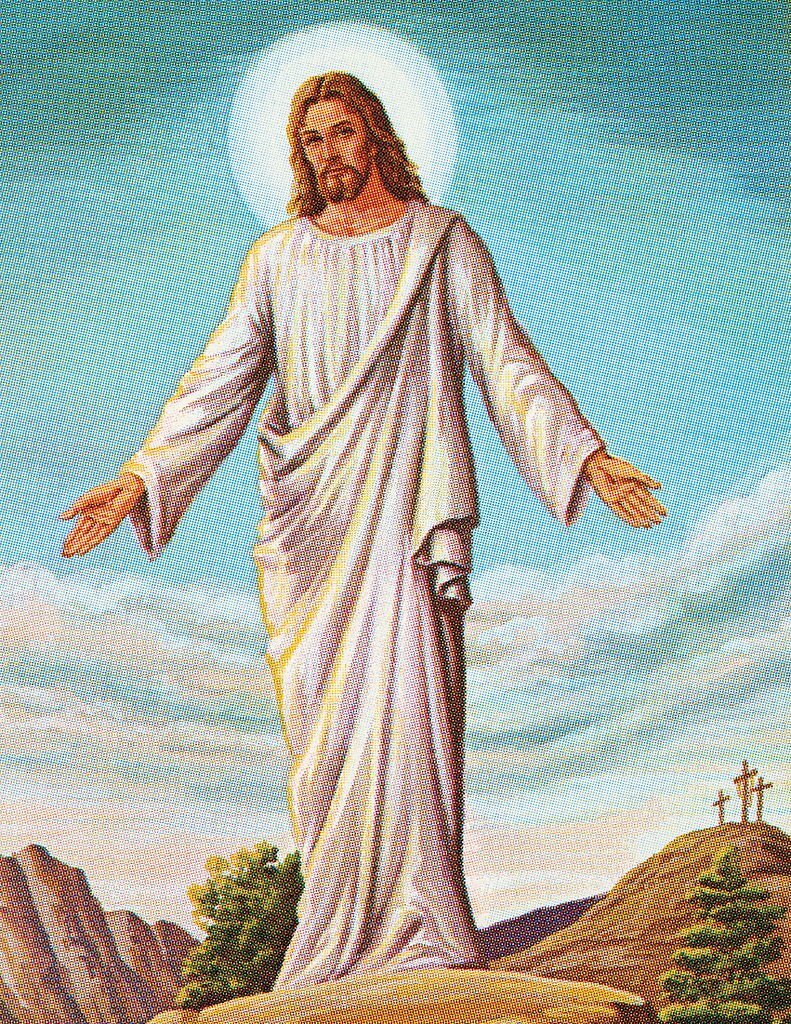
The Probability of the Resurrection of Jesus
Richard Swinburne
( This paper was published in Philosophia Christi*)
In this paper I shall seek to summarize an argument contained in my recent book Was Jesus God? (as well as more fully in my book The Resurrection of God Incarnate)1 arguing for the high probability that Jesus rose bodily from the dead on the first Easter Day.
In assessing any historical hypothesis we have to take into account three kinds of evidence. The first kind is the most obvious kind – the testimony of witnesses about and the physical data caused by what happened at the time and place in question.
If it is suggested that John robbed a certain safe, then our obvious historical evidence is what witnesses said (about who was near the safe at the time in question, and where John was at that time), and physical data such as fingerprints on the safe, money found in John’s garage etc. I shall call such evidence the posterior historical evidence.
In so far as the hypothesis is a simple one, and the posterior historical evidence is such as you would expect to find if the hypothesis at stake is true but not otherwise, that is evidence that the hypothesis is true.
For example, if John robbed the safe, you would expect to find his fingerprints on it but would not expect to find them if he didn’t; and in the absence of evidence for a hypothesis of the unreliability of witnesses, if John robbed the safe you would expect that any people who saw John at the time or were near the safe at the time, to say that they saw John there, but would not expect them to say this if they didn’t.
I stress here, as elsewhere else in this paper and in everything else I have written, the crucial importance of its simplicity in assessing the truth of a theory. There are always an infinite number of possible theories in science, history, or any other sphere of inquiry, which are such that if they were true, you would expect to find the evidence that you do.
John’s fingerprints being on the safe, and the testimony of George to John’s presence at the scene of the theft at the time of its occurrence, and John having a lot of money hidden in his garage, could easily be explained by Harry having planted John’s fingerprints there for a joke, George telling a lie because he disliked John, and Jim having put the proceeds of a quite different robbery into John’s garage.
But, in the absence of further evidence, the theory that John did the crime is that most likely to be true (that is, most probably true), because it is the simplest in postulating that one person (John) doing one action (robbing the safe) caused in different ways the three pieces of evidence.
As well as the posterior historical evidence, we need to take into account general background evidence of how likely the hypothesis is to be true, independently of the detailed historical evidence.
In my humble example this evidence will be evidence of John’s past behaviour, and the past behaviour of other suspects which might, for example, support strongly (as its simplest explanation) a theory that John is not the sort of person to rob a safe, whereas George is just that sort of person.
In that case, even if the posterior historical evidence is exactly what we would expect if John robbed the safe, but not quite what we could expect if George had robbed the safe, nevertheless we may rightly conclude that George is the most probable culprit.
In this example, the background evidence was fairly narrow – John or George’s past behaviour. But the joint influence of background evidence and posterior historical evidence operates where the background evidence is far more general. Suppose an astronomer observes through his telescope a certain pattern of bright dots which is exactly what you would find if these dots were the debris of a supernova explosion.
It is right so to interpret them if your theory of physics, as best supported by all the other evidence available to the physicist – that is, the general background evidence – allows that supernovae can explode. But if your theory of physics says that supernovae cannot explode, then the hypothesis that one did on this occasion will need an enormous amount of detailed historical evidence (itself vastly improbable on any hypothesis of equal simplicity other than the hypothesis that it was caused by a supernova explosion), before we can regard that as probable – and if we do so regard it, we will have to regard the whole theory of physics which rules it out, as itself improbable, given our new detailed historical evidence.
The general background evidence may indicate not simply that the postulated hypothesis is or is not likely to be true, but that it is likely to be true only under certain conditions – for example, that John is likely to rob safes when and only when financially broke, or that supernovae are likely to explode when, and only when, they reach a certain age.
In that case another kind of historical evidence will enter the equation, evidence showing that those conducive conditions (what I shall call the prior requirements) were or were not present. That again will be strong in so far as it is such as you would expect to find if those conditions were present, and not otherwise (and in so far as the supposition of these conditions is a simple one). I shall call such evidence the prior historical evidence.
When we are dealing with a hypothesis H which would be not too improbable on one world-view T but would be immensely improbable on a rival world-view, the general background evidence will be all the evidence which is relevant to the probability of the different world views; and to the extent to which it supports most strongly the world-view T which makes H not too improbable, we need less by way of detailed historical evidence in order for the claim that H is true, to be probable overall.
The hypothesis that Jesus rose from the dead is of just this kind. For if there is no God, the ultimate determinant of what happens in the world is laws of nature, and for someone dead for 36 hours to come to life again is (with immense probability) a clear violation of those laws and so impossible.
This is for the reason which Hume gave – that all the evidence that some regularity operated on very many known past occasions is evidence that it is a law of nature and so operated on this occasion too, and so that Jesus did not rise. But if there is a God of the traditional kind, laws of nature only operate because he makes them operate, and he has the power to set them aside for a moment or forever.
Hence, if Jesus rose from the dead, God raised him up. So I shall treat the hypothesis that Jesus rose as equivalent to God raised Jesus. But if there is a God with the power to raise Jesus, he will only do so in so far as he has reason to do so; and, if he doesn’t this Resurrection is not to be expected.
So to determine whether Jesus rose from the dead, it is not enough to investigate whether what I have called the posterior historical evidence (what St. Paul and the Gospel writers wrote about what witnesses said that they saw from three to forty days after the crucifixion) is the kind of evidence to be expected if Jesus rose, but not otherwise.
One must also investigate whether general background evidence supports the world-view that there is a God of a kind able and likely to intervene in human history in this kind of way in this kind of situation, or whether there is no such God. And we must also investigate the prior historical evidence – that is, whether the nature and circumstances of the life of Jesus were such that if there is a God, he would be likely to raise this person from the dead.
In so far as our general background and prior historical evidence supports the view that there is a God who would be likely to raise Jesus from the dead, we shall need a lot less by way of detailed historical evidence in order for it to be overall probable on our total evidence that Jesus rose from the dead.
Conversely, in so far as our prior evidence (background or historical) supports a rival world-view that there is no God (of the traditional kind) or that if there is such a God he has no reason to intervene in human history in this kind of way, or that even if God does have such reason, Jesus was not the sort of person whom he would have brought to life again, we would need an immense amount of posterior historical evidence in order for our total evidence to make it probable that Jesus ros
e. It is the total failure of almost all New Testament scholarship to take this crucially relevant kind of evidence into account, which may make its conclusions about the probability of the Resurrection and other New Testament events seriously erroneous.
I have argued at considerable length over many years2 in favour of the view that the existence of a universe, its almost total conformity to natural laws, those laws being such as to lead to the evolution of human beings, those human beings having souls (a continuing mental life whose continuity is separate from the continuity of their physical life), the occurrence of various events in history, and millions of humans having experiences which seem to them to be of God, is evidence which (despite the occurrence of evil) makes probable the existence of God.
Now there is no time to reargue that here. So let’s suppose for the moment, in order to proceed further merely that on this kind of evidence (the evidence of ‘natural theology’ as it is called) it is as likely as not that there is a God. If there is a God, clearly he could, if he so chose, raise Jesus from the dead.
Hence, to the extent to which, in virtue of his goodness, he has reason to do so, it is probable that he will. God very seldom raises the dead (in their original bodies while others on Earth continue their normal life). Jesus would therefore need to be a very special sort of person for God to have reason to raise him.
There might be various reasons why God would choose to raise Jesus, but I shall consider here only the reasons which God would have if Jesus was God Incarnate (that is, God who had acquired a human nature) – because, as we shall see later, given the evidence of the kind of life Jesus lived, he would only have raised him if he was God Incarnate.
That is, I shall argue that in virtue of God’s goodness, he had reason to become incarnate and live a certain sort of life, and that if he did so, God has reason to raise him from the dead.
Theologians have always claimed that a major reason why God would choose to become incarnate was to make atonement for human sins. All humans have wronged God seriously (that is, sinned seriously), because they have failed to show gratitude and obedience to their creator who made them from nothing and keeps them in being from moment to moment.
When we do wrong to someone, we must repent and apologize, but we must also try to provide reparation for the wrong we have done. And it is good that someone wronged seriously (in this case God) should require the wrongdoer to make some serious attempt at reparation before forgiving him – for that forces the wrongdoer to take his wrongdoing seriously.
But alas we who owe much to God already are in no position to provide reparation for our past sins. Yet while the wrongdoer must himself repent and apologize, someone else can provide him with the reparation for him to offer back to the person wronged. God incarnate could provide a perfect human life for us to offer back to God as our reparation for the life we ought to have led.
One who lives a perfect life in typical human circumstances may well be killed for it; and such a death would complete a perfect life. We can then say ‘please accept this life and death instead of the life we ought to have led’. This reparation is then a sacrifice offered to God, and a Resurrection would constitute God’s demonstration to us that the sacrifice had been accepted and that forgiveness is available.3
For the resurrection of someone dead for thirty six hours would, as I have noted, be a violation of laws of nature, and this could only be done by him who keeps the laws of nature operative – God.
The second reason why God would choose to become incarnate is a reason which would operate even if humans had not sinned. God made humans subject to pain and suffering of various kinds caused by natural processes. God, being perfectly good, would only have permitted this subjection if it served some greater goods.
Theodicy seeks to explain what are the relevant greater goods4 – for example, the great good of humans having the significant free choice of whether to cope bravely with their own suffering and show compassion to others who suffer.
We humans sometimes rightly subject our own children to suffering for the sake of some greater good (to themselves or others) – for instance, make them eat a plain diet or take some special exercise for the sake of their health, or make them attend a ‘difficult’ neighbourhood school for the sake of good community relations.
Under these circumstances we judge it a good thing to manifest solidarity with our children by putting ourselves in somewhat the same situation – share their diet or their exercise, or become involved in the parent/teacher organization of the neighbourhood school.
Indeed, if we subject our children to serious suffering for the sake of a greater good to others, there comes a point at which it is not merely good but obligatory to identify with the sufferer and show him that we have done so.
A perfectly good God would judge it a good thing to share the pain and suffering to which he subjects us for the sake of greater goods -by becoming incarnate. Living a holy life protesting against injustice under difficult conditions, is liable to lead to execution.
God needs to have told or shown us that he is God Incarnate. In that case his Resurrection would constitute God’s signature on that teaching, and so show us that God has identified with our suffering.
And finally, we need better information about how to lead good lives in future, and encouragement and help to do so. Humans can, and to some extent in the centuries B.C. did, find out for themselves what is right and wrong.
But although the outlines may be discoverable, the details are not easy to discover – are abortion and euthanasia always wrong, or only wrong under certain conditions; are homosexual relationships sometimes permissible, or never, etc. – and in all these matters, humans are prone not to face the deliverances of their consciences.
They need information. True, this could be provided through a revelation to some prophet without any need for incarnation. But moral information needs to be filled out by moral example – we need to be shown what a perfect life consists in, and that God has no right to tell anyone else to do for him.
It would be good for this information to include encouraging information, e.g. that God will take us to Heaven if we trust him and fulfil his commandments. And it would be good if God gave us some extra help in leading the moral life – a community of encouragement, for example a church.
Again, God raising someone killed for certain teaching and living a certain life constitutes his signature on that teaching.
We have now three reasons of why a good God might choose to become incarnate in such a way as to suffer and probably die, and how he would need to show us that it was he who had done this – which would be achieved by a super-miracle such as a Resurrection.
In my view, while it is quite probable that in virtue of his goodness God might choose to become incarnate for the first and third reasons, he has no obligation to do so and there are other ways (perhaps less satisfactory ways) of dealing with the problems to which his incarnation for these reasons would provide a solution.
But in my view, given the extent of human suffering, our creator has an obligation to share it with us and so it is necessary that he will become incarnate for the second reason.
So, if God did become incarnate in some human (let us call him a prophet) for the second reason and one or both of the other reasons, he would need to live a certain sort of life. To identify with our suffering and to provide an example for us God Incarnate needs to live a good life in difficult circumstances, and a good but hard life ending in a judicial execution would certainly be that.
To show us that he is God who has done this, he needs to show us that he believes himself to be God. To enable us to use his life and death as atonement for our sins, he needs to tell us that he is leading his life for this purpose. In order to make it plausible that he is preaching a revelation, he needs to give us good and deep moral teaching on how to live.
And to make all this available to generations and cultures other than that in which he lived, he needs to found a church to teach humans what he has done and to apply to them his atoning life. So we have prior reason for expecting a resurrection, not of any human, but of a human about whose life our evidence is what we would expect if he had led a life of the above kind.
The stronger the background evidence that there is a God whose goodness would lead him to become incarnate for the stated reasons, and the stronger the prior historical evidence that Jesus led the sort of life described above, the stronger reason we have for supposing that God would put his signature it by a super-miracle such as his Resurrection.
My assessment of the balance of New Testament scholarship is that it holds that the evidence is such as we would expect if Jesus led a good and holy life, gave us good and deep moral teaching, and founded a church, which did teach that he was God Incarnate who atoned for our sins.
It is, I suggest, impossible to understand his forming a community of twelve leaders except as forming a new Israel, whether in the end he intended it to become independent from or merge back into the old Israel.
New Testament scholarship is, however, divided about whether the evidence is such as one would expect if and only if Jesus proclaimed that his life and death was an atonement for sin; and on the whole it claims that the evidence is not such as would be expected if Jesus believed himself divine.
So let us now turn to these more disputed issues about life of Jesus. I suggest that on balance the evidence shows that Jesus did believe that he was divine.
If God was to become incarnate for the purposes I’ve discussed, he needed to take a human nature (a human way of thinking and acting) and a human body in addition to his divine nature (in the way that the council of Chalcedon defined in 451 A.D.) This is a pretty complicated concept to get hold of.
If Jesus had announced during his earthly ministry ‘I am God’, this would have been understood as a claim to be a pagan god, a powerful and lustful being who had temporarily occupied a human body (not the all-good source of all being).
The well known Jewish scholar Geza Vermes writes that ‘it is no exaggeration to contend that the identification of a contemporary historical figure with God would have been inconceivable to a first-century AD Palestinian Jew.’5
So the failure of Jesus to say ‘I am God’ during his lifetime is not evidence that he did not believe himself to be God. This is a message which Jesus could begin to proclaim openly only after his crucifixion had made very plainly the reality of his humanity and so the kind of god he would have to have been; and after his Resurrection had provided evidence of his unique status.
And there is evidence that he did begin to proclaim this more openly then. St Matthew’s Gospel ends with Jesus commanding the Eleven to baptize ‘in the name of the Father, and of the Son, and of the Holy Spirit’.6 This saying puts ‘the Son’ (Jesus) on a level with God the Father.
Critics, rightly ever on the watch for later interpolations, have, of course, cast grave doubt on the authenticity of this verse; but the manuscript tradition is unanimous and thus early. Then St John records the explicit confession by the formerly doubting, now convinced, Thomas, of Jesus as ‘My Lord and my God’7, a confession which Jesus did not reject.
On two post-Resurrection occasions St Matthew’s Gospel8 records that disciples ‘worshipped’ Jesus; and many ancient manuscripts record a similar ‘worship’ by the Eleven at the end of St Luke’s Gospel9. The New Testament writers regarded ‘worship’ as appropriate only to divinity. It is so regarded in several distinct New Testament passages.
In Matthew 4:10 (parallelled in Luke 4:8) Jesus quotes Deuteronomy 6:13, ‘Worship the Lord your God and serve only him’, in response to the Devil’s invitation to worship him (the Devil). In Acts 10:26 Peter stops Cornelius worshipping him with the words ‘Stand up: I am only a mortal’.
And twice in Revelation the angel commands ‘John’ not to worship him with the words ‘You must not do that! I am a fellow-servant with you … Worship God’10.
Jesus on the other hand never rejected worship; and St. Matthew does record also pre-Resurrection occurrences of worship of Jesus. This evidence is such as we would expect if Jesus was God Incarnate, even if liberal critics claim that it can be accounted by the Gospel writers reading such claims back into history in the light of the Church’s later beliefs.
As Jesus could only confess his divinity after his Resurrection, and as even then it might not be easily comprehensible by his followers, he would need also to leave plenty of clues in his life, reflection on which could give his followers after his life was finished the understanding of who he was.
And I think that he did that; and I shall consider one important example of that, a piece of evidence which critics are much less willing to regard as a later construction. This is the claim that the Jews regarded Jesus as ‘blasphemous’.
The synopists (that is, Matthew, Mark and Luke) explicitly connect a comment by the scribes who heard Jesus’s words of forgiveness to the paralytic man that ‘It is blasphemy! Who can forgive sins, but God alone?’11 Mark and Matthew report that the charge against Jesus before the Sanhedrin was ‘blasphemy’12.
Now clearly Jesus did not curse God, and so his blasphemy must involve his claiming divine prerogatives. And where or not you think St John actually records a Jewish comment, he clearly understood their accusation of blasphemy in this way. In John 10 the Jews attempt to stone Jesus, saying ‘It is not for a good work that we are going to stone you, but for blasphemy, because you, though only a human being, are making yourself God.’13
Now, according to the synoptic Gospels, two issues were raised at the trial of Jesus before Caiaphas, both relevant to the accusation of blasphemy. Jesus was asked whether he was the Messiah.
Claiming to be the Messiah would in itself hardly be arrogating divine prerogatives. But Jesus’s quoted response developing the theme of his being Messiah by quoting Daniel 7, ‘You will see the Son of Man, seated at the right hand of power’, and ‘coming with the clouds of Heaven’ was claiming a very high kind of Messiahship; and it was to that comment that, according to Mark, Caiaphas responded with ‘You have heard his blasphemy.’14
Now again it is not obvious that even this remark of Jesus is claiming divinity; and critics have claimed that even Jesus’s explicit confession of Messiahship at this time was an invention of St Mark.
But the other issue raised at the trial is more interesting, because Mark claims that the witness testimony was false and so it is hardly his invention. Mark (and Matthew) record the charge that Jesus would or could destroy the (sanctuary of the) Temple and build it again in three days.
To quote very liberal biblical scholar E.P. Sanders: ‘It is hard to imagine a purely fictional origin for the accusation that [Jesus] threatened to destroy the Temple.’ Mark described this accusation as ‘false’16.
But probably Mark, and certainly Matthew, who has the same passage, believed that the Temple was destroyed (for they wrote after the time of its destruction in 70 A.D.); and, like the other synoptists, Mark reports elsewhere a further prediction by Jesus of its destruction 17.
So the falsity of the accusation (in their view) must lie in one of two things: Jesus did not threaten himself to destroy the Temple, but merely predicted that it would be destroyed; and/or he did not promise to build another in three days.
But since both Mark and Matthew believed that he did build in three days something else which had been destroyed ‘not made with hands’ that is, himself which, when the Temple was destroyed, they came to regard as a replacement for it; the falsity in their view is more likely to consist in the fact that Jesus did not threaten to destroy the Temple but merely predicted that it would be destroyed.
Luke describes Jesus as warning, at the time of the Passion, the ‘daughters of Jerusalem’ of a time of disaster18, and Mark, in the chapter preceding the Passion narrative, records Jesus as predicting the destruction of the Temple19.
So Jesus indeed predicted the destruction of the Temple; but by another rather than himself. John too quotes Jesus as saying ‘destroy this temple, and in three days I will raise it up.’20
To replace the divinely instituted worship of the Temple with another kind of worship was clearly God’s privilege; and Jesus is not reported as saying that God had commissioned him to do this – he is reported as saying that he would do it himself. And that is a claim to divinity.
And it leads me on quickly to the issue of whether Jesus claimed that his life was an atonement. The above quotation which, as we have seen, can hardly be regarded as an invention, constitutes Jesus’s claim that he will provide a substitute for Temple sacrifices, which were made in order to achieve atonement for sin.
And then there is the Last Supper, a solemn meal at Passover time, in which Jesus gave to his disciples bread and wine with the words ‘This is my body’, and ‘This is my blood’. Body and blood are the elements of sacrifice.
Jesus is telling his disciples that his life is a sacrifice; and so that he is himself the substitute for the Temple. All the New Testament accounts for the Last Supper regard it as a ‘new’ covenant, and they knew that Jeremiah has prophesied a ‘new covenant’ which he connected with ‘the forgiveness of sins.’21
And then of course there is the widespread unanimous New Testament consensus, so widespread that it would be unreasonable to suppose that it had no origin in the teaching of Jesus, that Jesus died for our sins.
So I suggest that in all respects the historical evidence is such as you would expect if Jesus satisfied the prior requirements for being God Incarnate.
In the light of all our reasons for supposing that there is a God who would become incarnate and live a certain sort of life, we have good reason in advance for expecting an event such as the Resurrection to culminate the life of Jesus who did live of the requisite kind. So we don’t need too much detailed posterior historical evidence to suppose that the resurrection actually happened.
But there is significant posterior evidence to be expected if Jesus rose (and not otherwise); and so finally let us look at it. If Jesus rose bodily from the dead on the first Easter Day, we would expect two sorts of witness – evidence: witnesses who talked with a person whom they took to be Jesus, and witness who saw the empty tomb.
On the first, Matthew, Luke, John, I Corinthians provide lists of witnesses who, they claim, talked with Jesus. Acts twice records that Jesus appeared to his disciples for many days. The earliest text of Mark’s Gospel is generally thought to have ended at 16.8 with the story of the women finding the empty tomb, and before anyone met the risen Jesus.
16.9-16.20 is a later addition summarising what is recorded in other Gospels, primarily Luke. But the earlier parts of Mark contain three separate predictions of the Resurrection, and Mark 16.7 reports a young man in white predicting an appearance of Jesus to the disciples in Galilee.
So Mark certainly believed that Jesus appeared to his disciples after his Resurrection, and to my mind the most probable explanation of why the earliest text we have of the Gospel ended at 16.8 is that there is a lost ending. The last part of the manuscript was lost, and so what we have in today’s Bible was added by some later scribe to summarize some main appearances of Jesus which the other Gospels recorded.
So there are a lot of reports of individuals and above all of groups of individuals seemingly talking to the risen Jesus; and while individuals might imagine things, it would be massively improbable to have joint illusions of Jesus saying the same thing in the course of conversations.
You could suppose that the whole Christian community had a programme of deliberate deceit, when giving these reports. But not even the average agnostic or atheist would suggest that – in view of what we know about the characters of those involved.
Our main sources do however give somewhat different lists of who saw Jesus where and when; and this is often thought to be a major discrepancy casting doubt on the whole story. There is however a reason for some of the discrepancy, that the writers had different purposes in producing their lists.
Priority must go to the list in I Corinthians. I Corinthians is the earliest of these sources, written by Paul in about 55 A.D. (This would be agreed by all serious scholars). The text22 has the form of a credal statement, a church – recognized list of ‘witnesses’.
Paul repeats it to the Corinthians as what he had told them previously, and what he himself had ‘received’ (apart, that is, presumably, from Christ’s appearance to himself).
This was that Jesus appeared first to Peter, then to the Twelve, then to the ‘above five hundred brothers and sisters at one time, most of whom are still alive, though some have died’, then to James, and then to all the apostles, and finally to Paul himself ‘as to one untimely born’.
The implication of the latter phrase is that the appearance to Paul was much later than the other appearances. The ‘then’s’ imply a temporal sequence of appearances.
Paul tells us in Galatians23 that, soon after his conversion, he spent fifteen days with Peter in Jerusalem, where he also met ‘James, the Lord’s brother’, and where he must have heard what Peter and James had to say about the basis of this central Christian message; what he records in I Corinthians must have been sensitive to those conversations.
The Gospels however all include appearances earlier than the first appearance listed by Paul – Matthew and John include an appearance to Mary Magdalen, and Luke includes an appearance to Cleopas and another disciple. So why don’t these occur in the official list? There is an obvious answer. The official list contains people whom the Jews would take seriously.
They would not take women witnesses seriously. (The contemporary Jewish writer Josephus states that Moses prohibited recognizing women as witnesses.
Cleopas was not a senior church leader ,and his companion may well have been his wife apparently mentioned in John 19:25 as being present at the Crucifixion.)The Gospels being written later (when Jewish attitudes had hardened) and being more interested in the historical sequence put things differently.
And then the empty tomb. All four Gospels begin their accounts of the Resurrection with the visit by the women to the tomb which they found empty. It used to be said that as I Corinthians, the earliest source, does not mention the empty tomb, this visit and the tomb being empty was a later invention of the Gospel writers. But even the Jews acknowledged that the tomb was empty.
For Matthew 28.15 records that they claimed that the disciples had stolen the body, which they would not have claimed if they did not believe that the tomb was empty. Why Paul didn’t mention it is because he didn’t need to. Resurrection for a Jew meant bodily resurrection.
And there is one crucial largely unrecognized piece of evidence in favour of the women having visited the tomb on the first Easter Day and having found it empty. Christian communities spread out from Jerusalem very quickly – within three or four years of events of the Passion.
They took with them their customs, including the custom of celebrating a eucharist; and all the evidence we have suggests that there was a universal custom of celebrating the eucharist on a Sunday, the first day of the week.
This must have antedated the scattering; otherwise we would have heard of disputes about when to celebrate, and some instructions being given from on high (analogous to the way in which disputes about circumcision and eating sacrificial meat were purportedly resolved by the ‘Council of Jerusalem’ described in Acts 15).
All references in early Christian literature to when the eucharist was celebrated refer to a weekly Sunday celebration. And the one apparent explicit reference in the New Testament to a particular post-Ascension celebration of the Eucharist also describes a Sunday celebration. Acts 20:7 records a ‘breaking of bread’ on a ‘first day of the week’.
‘To break bread’ was the expression used by St Paul (I Cor.) for what Jesus did at the Last Supper, and was always used later as a description of the common Christian meal which included the eucharist.
This verse is one of the ‘we’ passages in Acts. These are the passages in which Paul’s journeys are described in terms of what ‘we’ did and what happened to ‘us’; and so probably reflect the participation of the author of Acts (Luke) or his immediate source. I Corinthians 16.2 implies that Christian communities met together on Sundays; and Rev 1.10 calls Sunday ‘the Lord’s day’.
There are other days on which it might have been more natural for Christians to celebrate the eucharist (e.g. on the day of the original Last Supper – probably a Thursday and certainly not a Sunday – or annually rather than weekly). No such customs are known. There is no plausible origin of the sacredness of Sunday from outside Christianity.
There is only one simple explanation of this universal custom, which, I argued, must derive at the latest from the first two or three post-Resurrection years. The eucharist was celebrated on a Sunday (and Sunday had theological significance) from the first years of Christianity because Christians believed that the central Christian event of the Resurrection occurred on a Sunday.
Yet such early practice would have included that the Eleven themselves, and so could only go with a belief of theirs that Christians had seen either the empty tomb or the risen Jesus on the first Easter Sunday. This shows that the visit to the tomb on Easter Sunday was not a late invention read back into history to make sense of the appearances but a separately authenticated incident.
I conclude that there is one person in human history who satisfied quite well the prior and posterior requirements for being God Incarnate (that is for living the kind of life which we would expect a God, if there is a God, to live on earth); and that is Jesus.
By the prior requirements, to repeat I mean living a good and holy life, giving us good deep moral teaching, showing us that he believed himself to be God Incarnate and that he was making atonement for our sins and founding a Church which taught the latter things.
By the posterior requirements I mean his life being culminated by a super-miracle, such as a Resurrection from the dead. And there is no other plausible candidate in human history for satisfying either of these sets of requirements. Other founders of great religions did, of course, live good lives, give deep moral teaching and founded churches – the Buddha, for example.
But manifestly the Buddha did not teach his own divinity, nor did Mohammad. And manifestly neither of them taught that their lives atoned for our sins.
There have been many modern Messiahs who claimed to be God, but they have not satisfied the other requirements – in particular their lives have not been holy. And no great religion other than Christianity has made a claim to be founded on a super-miracle for which there is in any way the kind of detailed testimony that there is for the foundation miracle of Christianity (inadequate though that might seem to some).
Yet the non-existence of any other plausible candidate for satisfying either the prior or the posterior requirements shows that the coincidence of the prior and posterior evidence (even if weak) in one candidate is an extremely unlikely event in the normal course of things – i.e unless God brought it about.
But if God did not become incarnate for the stated reasons in Jesus but became incarnate in some other prophet or plans to do so in future, it would be deceptive of him to bring about the existence of the amount and kind of prior evidence of his incarnation in Jesus together with the amount and kind of posterior historical evidence that there is of his Resurrection.
It would be like leaving someone’s fingerprints at the murder scene when they had not committed the murder. In virtue of his perfect goodness God would not do that sort of thing. If God planned the coincidence in Jesus of the two kinds of evidence, then Jesus was God Incarnate; and it is very improbable that there would be this coincidence unless God planned it.
So if there is a modest amount of evidence of natural theology that there is a God of the traditional kind who might with modest probability be expected to become incarnate for the stated reasons and to have his life culminated by a super miracle such as the Resurrection, and there is only one plausible candidate (Jesus) who satisfied at all well the prior requirements for such an incarnation, you don’t need too much posterior historical evidence to make it probable that Jesus rose.
For it would be most improbable that there would be this combination of prior and posterior evidence unless God arranged it, and it would be deceptive of him to arrange it unless Jesus was indeed God Incarnate.
So even if it is only as probable at not that there is a God (that is, a probability of ½ ), and a probability of ½ that such a God would become incarnate; and even if the historical evidence were only such as it is not very probable that you would find if Jesus was God Incarnate who rose from the dead – let’s call it a probability of 1/10, then on balance it is still overall probable that Jesus was God Incarnate and that he rose from the dead – because it is so improbable that you would have that evidence if he was not.
If we suppose that the probability that we would have this combination of prior and posterior evidence if Jesus was not God Incarnate is 1/1000, then it can be shown24 that the total evidence gives a probability of 97/100 that Jesus was God Incarnate who rose from the dead.
To take an analogy – if the background evidence gives a significant probability, say 1/4, that John would commit a certain crime; and so 3/4 that he wouldn’t; and the clues are on balance not such as it is probable you would find if he did commit the crime (although there is a lesser probability that they might still occur if he committed the crime), but are such that it is very improbable indeed that you would find them if he did not commit the crime, then they make it probable that he committed the crime24.
I conclude that unless my assessment of how probable the evidence of natural theology makes the existence of God is very badly mistaken, it is very probable that Jesus was God Incarnate and that he rose from the dead.
NOTES
1. The Resurrection of God Incarnate, Oxford University Press, 2003; and Was Jesus God?, Oxford University Press, 2008.
24. For a mathematical exposition of the points of this paragraph and their application to the Resurrection, see The Resurrection of God Incarnate, Appendix, ‘Formalizing the Argument’.


