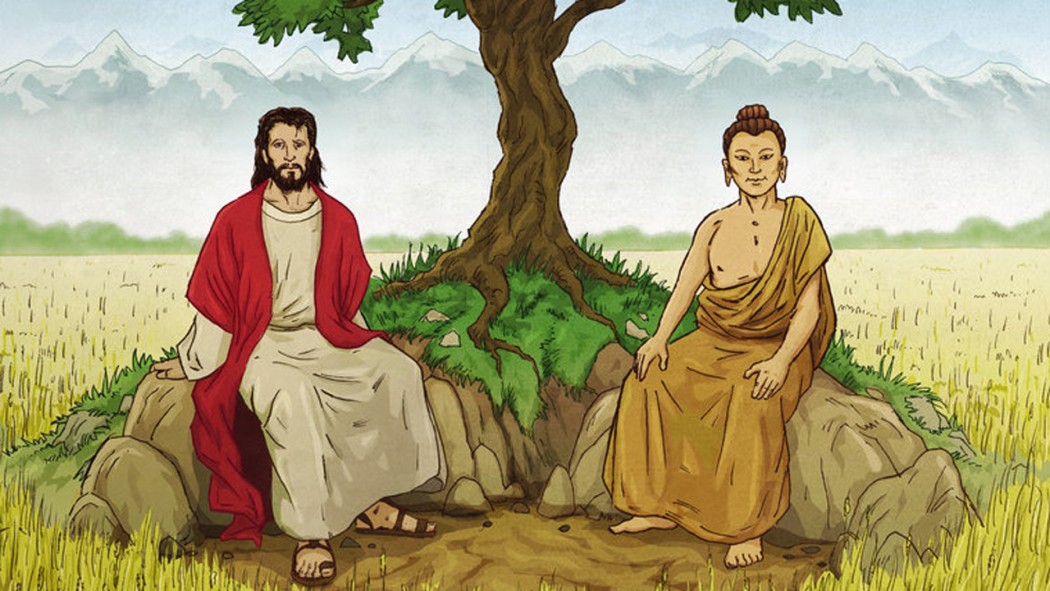
يلجأ بعض الكتاب من الأخوة المسلمين لما يكتبه بعض الملحدين، الذين لا يؤمنون بإله ولا بحياة أخرى بعد الموت أو بعالم الروح ولا بوحي أو كتب من السماء، في الغرب والذين يحاولون تصوير المسيحية، بل وكل دين يقول إنه دين سماوي بأنه مجرد أساطير وخرافات!! ومن هنا يعملون مقارنات غير حقيقة بل ووهمية، كما سنرى، بين ما جاء في الكتاب المقدس وما جاء في أساطير الديانات الوضعية كالبوذية والزردشتية والديانات اليونانية والمصرية… إلخ.
وقد قرأنا هذه المقارنات سواء مكتوبة أو بأسلوب مصور لإغواء وتضليل السذج والبسطاء من المؤمنين!! كما قرأنا ورجعنا لمصادر هذه الديانات الوضعية، فقد سبق أن درست مادة الدين المقارن، لمدة ثلاث سنوات، وكانت هذه الأديان هي الموضوع الرئيسي لهذه المادة، ولذا عندما أقرأ هذه المقارنات الكاذبة والمضللة أصاب بالدهشة والعجب لهذا الكذب والدجل والتضليل والتدليس الواضح بل والفاضح الذي يقوم به هؤلاء الملحدين لخداع البسطاء والسذج من المؤمنين وغير المؤمنين!!
وللأسف نجد بعض الكتاب من الأخوة المسلمين يلجؤون لهذا الكتب الإلحادية المضللة والكاذبة وكأنها أتت بالحق اليقين متجاهلين ما كتبه هؤلاء الكتاب أنفسهم عن الإسلام نفسه!! فكيف يكيل هؤلاء الكتاب بمكيالين؟! يعتبرون هؤلاء الملحدين علماء فيما يختص بالمسيحية ويتجاهلون ما يكتبونه عن الإسلام؟؟!!
ونظراً لانتشار هذه الخرافات والخزعبلات في الكثير من الكتب المنشورة ومواقع النت واستخدام البعض لها لتضليل بسطاء المؤمنين لذا رأينا أن نشرح محتوى هذه الديانات الوضعية كما جاءت في كتبها وما كتبه عنها العلماء الجادين المحايدين وما جاء في مواقعها على النت وتفنيد هذه الأكاذيب والمزاعم والتي ألفها ولفقها هؤلاء الكتاب الملحدين ومن اعتمدوا على كتبهم والرد عليها رداً علمياً ليستد كل فم ويخرس كل لسان كما يقول الكتاب المقدس لكنيسته: “كل آلة صورت ضدك لا تنجح، ولك لسان يقوم عليك في القضاء تحكمين عليه” (أش 54: 17). وسنبدأ أولاً بما أدعوه من تماثل بين المسيحية والبوذية.
هل هناك تماثل أو تشابه بين المسيحية والبوذية؟؟
وقبل أن نبدأ الحديث عن البوذية نقدم ما جاء عنها في الموسوعة الماركسية، حيث تقول: “ديانة عالمية تبشر بالخلاص من الألم عن طريق ترك الرغبة وتحقيق التنوير الأعلى الذي يعرف باسم النيرفانا. وقد نشأت البوذية في الهند في القرن السادس قبل الميلاد. وهي واسعة الانتشار في الأزمنة الحديثة في اليابان والصين ونيبال وبورما وغيرها من البلاد، حيث يوجد لها نحو 500 مليون معتنق.
ففي الفترة التي كان فيها النظام المشاعي البدائي ينهار وتظهر الدول الطبقية، عبر سيدهارتا مؤسس البوذية، الذي يطلق عليه اسم بوذا (أي الرجل المستنير) عن احتجاج عامة الشعب على الديانة البراهمانية بسبب فوارقها القبلية المقدسة وطقوسها المعقدة في عبادة الآلهة والتضحية لها. وسعى إلى التحرر من الألم، لا عن طريق التغيير الاجتماعي، ولا عن طريق مقاتلة قوى الطبيعة، وإنما عن طريق الكمال الأخلاقي الذي يكون بلوغه بالانسحاب من الحياة (الانعتاق الجميل) وانغماس المرء في النيرفانا.
وقد أنكر بوذا وجود الله الخالق، وأنكر أيضاً ديانة الفيدا ولكنه قبل تعاليمها عن دورة الميلاد والممات (السانسارا) وعن الجزء (الكارما) التي تشير فقط إلى أن تناسخ الأرواح لا يتوقف على القبيلة التي ينتمي إليها إنسان ما، ولا على التضحيات التي قدمها، وإنما يتوقف على حسناته وسيئاته. وكانت فكرة بوذا عن الخلاص في البداية (من القرن الثالث إلى القرن الأول ق.م) تقوم على المذهب الفلسفي القائل بأن العالم والشخصية الإنسانية شكلا تياراً من عناصر المادة والوعي – يسمى الدهارما – يحل الواحد منها محل الآخر باستمرار. ويكمن الطريق إلى الخلاص وفقاً لهذا المذهب في قمع أي “إثارة” للدهارما.
وفي القرون الأولى من الميلاد اتخذت الديانة البوذية طابعاً مختلفاً تماماً. فاستبدل التبجيل البسيط لذكرى المعلم بتأليه بوذا، وصار خلاص الإنسان يتوقف على فضل الآلهة الذي يمكن السعي إليه عن طريق ترديد السوترا أو الأسفار المقدسة. وأصبحت هذه الديانة الجديدة تعرف باسم الماهايانا، تمييزاً لها عن الاتجاه التقليدي، اتجاه الهنيايانا الذي نبع من بوذا نفسه. كذلك فقد تغيرت فلسفة بوذا.
فعلى غير ما كان يراه فلاسفة الهنيايانا من أن الدهارما المادية والنفسية حقيقة، فإن فلاسفة الماهايانا أفتوا بأن الدهارما غير حقيقية وأن العالم كله غير حقيقي. وقد وضح ناجاريونا (القرن الثاني بعد الميلاد) الأساس المنطقي لمذهب لا واقعية الدهارما، أو السنوياتا (الخواء) وتميز وسائل ناجاريونا بين كل الماهايانا سوترا، بمنطقها وتماسكها. وقد أصبح مذهبه الفعلي نقطة انطلاق للمنطق البوذي الذي عرضه ويحتاجا وهارما كيرتي (500-700 بعد الميلاد).
وأصبحت تعاليم ناجاريونا عن لا واقعية الفكر التصوري، وعن المعرفة الحدسية المطلقة، أساساً للمدارس المثالية اللاحقة (المادهياماكا والفيجانافادا) في المذهب البوذي التنتري (التنترا هي كل واحد من الأعمال الدينية السنسكريتية التي تتعلق أساساً بالسحر) وفي المذهب البوذي الاسبطاني (يمكن تسميته بالمذهب البوذي الاستبطاني لأنه الاتجاه من البوذية الذي ينبذ الكتب المقدسة للديانة البوذية، ويقول بالاستبطان الذاتي وسيلة مثلى لبلوغ المعرفة).
ويؤكد المنادون الآن بالبوذية طابعها “العقلي” و”الإلحادي” وهذه النعوت الجديدة جزء من محاولة نشر شكل متطور على نحو حديث من الديانة البوذية. وينادي البوذيون تحت زعامة منظمة “الزمالة البوذية العالمية”، بنزع السلاح والتعايش السلمي”.
والخلاصة هنا أن الديانة البوذية ديانة متطورة في فكرها وعقائدها ولم يؤله بوذا في اساطيرهم إلا ابتداء من القرن الأول الميلادي، أما قبل ذلك فلم يكن ينظر إليه إلا كمجرد حكيم كان يبحث عن النيرفانا أي سلامه النفسي.
كما أحب أن أؤكد على حقيقة علمية هامة وهي أن التعاليم البوذية كتبت ابتداء من القرن الأول الميلادي، أما الأساطير البوذية ومنها الخاص ببوذا نفسه فقد كتبت فيما بين القرن الثاني والقرن الخامس بعد الميلاد!! أي أن أول أسطورة بوذية كتبت في القرن الثاني الميلادي وليس قبل ذلك.
وتتكلم عنه كمجرد بشر عادي لا مميزات له إلا في كونه مجرد مصلح ديني للديانات الهندوسية وليس إله ولا ابن إله ولا شبه ذلك!! فقد أنكر هو نفسه وجود إله للكون!! وقد كتبت بقية الأساطير والتي بالغت في شخصه بصورة أسطورية مبالغ فيها بعد ذلك بكثير وعلى سبعة مراحل!! ولو افترضنا، جدلاً، وجود أي تشابه بين البوذية والمسيحية فهذا لا يعني أن البوذية أثرت على المسيحية بل العكس لأن الكتابة المسيحية هي الأقدم.
كما كانت البوذية قاصرة على بلاد شرق آسيا، في حين أن المسيحية انتشرت في كل بلاد ودول حوض البحر المتوسط وشبه الجزيرة العربية وبلاد ما بين النهرين وسوريا وفارس وما جاورها من بلاد الهند، وقد كتبت جميع أسفار العهد الجديد القانونية في فلسطين وروما وبلاد اليونان وآسيا الصغرى (تركيا)، وكتب منها 22 سفراً قبل سنة 67م، وكتب كتابات القديس يوحنا فيما بين سنة 75، و95م، ولم يكن هناك أي صلة لتلاميذ المسيح بالمناطق التي وجدت فيها البوذية على الإطلاق وعندما ذهب القديس توما إلى الهند كان يحمل مع الإنجيل للقديس متى.
كما أن البوذية كما قلنا لم يبدأ الكتابة لتعاليمها وأساطيرها إلى فيما بعد، وعلى سبيل المثال، تقول داءة المعارف الويكيبيديا: “كانت التعاليم التي دونت أثناء المجامع البوذية الأولى يتم تناقلها بطريقة شفهية، حتى تقرر في القرن الأول قبل الميلاد تدوينها بطريقة نهائية. اختارت كل مدرسة لغة معينة لتدون بها هذه التعاليم، وكانت اللغة السنسكريتية (بلهجاتها العديدة) اللغة الطاغية. ولم يتبق اليوم إلى بعض القطع المتناثرة من المخطوطات الأولى”.
أما ما يختص بجوهر العقيدة البوذية فقد بدأت الكتابة فيما بين القرن الثاني والخامس للميلاد. “ويرجع إلى القرن الثاني للميلاد، وتمت صياغته في شكل أسئلة وأجوبتها، تتعلق بجوهر العقيدة البوذية. ثاني هذه الكتابات والمعروف باسم (Visuddhimagga)، قام بكتابته الراهب بوداغويا (Buddhaghosa) في القرن الخامس للميلاد، ولخص فيها الأفكار البوذية بالإضافة إلى شرحه إلى كيفية ممارسة التأمل”.
هل هناك علاقة أو تشابه أو تماثل بين شخصية المسيح وبوذا؟!!
يزعم هؤلاء الكتاب ومن اتبع خطاهم على طريق التضليل والتدليس أن البوذيين يؤمنون أن بوذا هو ابن الله، وهو المخلص للبشرية من مآسيها وآلامها، وأنه يتحمل عنهم جميع خطاياهم!! والغريب أنهم يقولون هذا الكلام دون أن يستشهدوا بأية كتب أو مواقع بوذية على الاطلاق!! هكذا يقولون ما يصوره لهم خيالهم.
وعند الرجوع للمصادر البوذية من كتب ومواقع على النت لا نرى أي أثر لهذه الأكاذيب والافتراءات على الاطلاق بل نجد العكس تماماً!! فالبوذية لا تقول بأن بوذا إله أو ابن إله بل ولا تهتم من الأساس بموضوع الألوهية ولا تتكلم عنها، حيث تقول دائرة معارف ويكيبيديا تحت كلمة بوذا: “لم يدعي بوذا لنفسه أي حالة إلهية ولا ادعى أنه يوحى إليه من إله أو آلهة. فبوذا هو أحد الذي استيقظ كلية على الطبيعة الحقيقية للوجود فتحرر من دائرة الولادة والموت وإعادة الميلاد.
راح يستأصل كل الصفات السالبة وطور كل الصفات الموجبة التي يمكن أن تضم العلم الكلي (بوذا ليس كلي القدرة كإله المسيحية والإسلام واليهودية)”.
هل كان بوذا مخلصاً للبشرية؟
زعم هؤلاء الكتاب الملحدين ومن سار ورائهم وعلى دربهم وأتبع أكاذيبهم أن بوذا والبوذية تقول ‘ن بوذا هو مخلص البشرية وحامل خطاياها!! وأنه تحمل عنهم جميع خطاياهم!! هكذا بدون برهان أو دليل!!
مجرد كلام في كلام، وكذب في كذب، وتضليل في تضليل!!
فالعقيدة البوذية كما تقول دائرة معارف ويكيبيديا، تقوم العقيدة الأصلية على مبدأين: يتنقل الأحياء أثناء دورة كينونتهم من حياة إلى أخرى، ومن هيئة إلى أخرى: إنسان، إله، حيوان، شخص منبوذ وغير ذلك. تتحدد طبيعة الحياة المقبلة تبعاً للأعمال التي أنجرها الكائن الحي في حياته السابقة. ينبعث الذين أدوا أعمال جليلة إلى حياة أفضل، فيما يعيش الذين أدوا أعمال خبيثة حياة بائسة وشاقة. عرف المبدأ الأول بين الهنود حتى قبل مقدم بوذا، فيما يرجح أن يكون هو من قام بوضع المبدأ الثاني”.
فلا بوذا ولا البوذية قالت بأنه إله أو ابن الله، بل وقد رفض بوذا من الأساس فكرة وجود إله بذلك على الإطلاق فالبوذية تنادي بفكرة النيرفانا والتي هي “الانطفاء أو الخمود وهي مصطلح تقني يطلق على حالة الفناء الصوفي والتي يصل إليها الإنسان بعد التحرر والاستنارة بعد الموت ويستخدم Janis هذه الكلمة للإشارة إلى المكان الذي تنجح فيه الأرواح المحررة في سماء الكون، ويؤمن البوذيون بأن هذه الكلمة تعني الفناء ولكن ليس بالمعنى الذي يتضمن تدمير الإنسان.
ما يتخلص منه هو الرغبة والتي من غيرها يعود الإنسان إلى الأرض ويقوم بدورته في الترحال عبر أرجائها. وتصف النصوص البوذية النيرفانا بالهدوء الذي في قمة الجبل أو قطعة الجواهر النفيسة”. (قاموس أديان ومعتقدات شــــعوب العالم ص 514 مكتبة دار الكلمة). وهي أيضاً: “نص عام للاستنارة، هـدف البوذية” (The International Dictionary of Religion p,132) أو كما تقول دائرة المعارف الويكيبيديا: “النيرفانا الهدف الأسمى حسب البوذية هو التحرر التام عبر كسر دورة الحياة والانبعاث، والتخلص من الآلام والمعاناة التي تحملها. وبما أن الكارما هي عواقب الأفعال التي يقوم الأشخاص، فلا خلاص للكائن ما دامت الكارما موجودة.
يستعمل لفظ “نيرفانا” لوصف حالة التيقظ التي تخمد معها نيران العوامل التي تسبب الآلام (الشهوة، الحقد والجهل). لا يحدث التبدد الكلي للكارما عند بلوغ النيرفانا، يمكن وصف هذه الحالة بأنها بداية النهاية في طريق الخلاص. النيرفانا حالة من الوعي والإدراك لا يمكن تعريفها ولا حتى فهمها، بعد أن يصلها الكائن الحي، ويصبح متيقظاً، يستمر في العيش ومع الوقت يقوم بتبديد كل الكارما الخاصة به، حتى يبلغ عند مماته “النيرفانا الكاملة” (parinirvana) – (التبدد الكلي للكارما). عندما يموت هؤلاء الأشخاص فإنهم لا يبعثون – فقد استنفذت الكارما – ولا يمكن لأي كان أن يستوعب حالة الطوبى الأزلية التي يبلغونها (حسب أقوال بوذا نفسه).
كما أن الكارما هي “الأفعال التي يقوم بها الكائن الحي، والعواقب الأخلاقية الناتجة عنها. إن أي عمل، خيراً كان أم شراً، وأي كان مصدره، فعل، قول، أو مجرد إعمال فكرة، لا بد أن تترتب عنه عواقب، ما دام قد نتج عن وعي وإدراك مسبوق، وتأخذ هذه العواقب شكل ثمار، تنموا وبمجرد أن تنضج تسقط على صاحبها، فيكون جزائه إما الثواب أو العقاب. فقد تطول أو تقصر المدة التي تتطلبها عملية نضوج الثمار (أو عواقب الأعمال)، غير أنها تتجاوز في الأغلب فترة حياة الإنسان، فيتحتم على صاحبها الانبعاث مرة أخرى لينال الذي يستحقه”.
وكان بوذا يعلم أتباعه أن يعتمدوا على أنفسهم للوصول على حالة النيرفانا للخلاص من الخطايا والشرور، ولم يقل أبداً ولم يؤمن مطلقاً بفكرة المخلص الذي يخلص آخرين من خطاياهم، وبالتالي فالبوذية ليس لديها أي فكرة عن الفداء والكفارة والخلاص الذين هم جوهر المسيحية، فقط على الإنسان أن يعتمد على نفسه وعلى أعماله. ويقول تاريخ بوذا أنه نادى بأن: “كل شيء خلق خاضع للفساد والموت، كل شيء زائل. حقق خلاصك بالاجتهاد بعد المرور من خلال حالات التوسط، يموت البوذي للوصول للبارانيرفانا (التوقف عن الإدراك والإحساس”.
أما المسيحية فتقوم على أساس أن الخطية والموت دخلا إلى العالم عن طريق سقوط الإنسان الأول آدم بغواية ابليس ولا بد للتبرير من الخطية والعودة إلى الحالة الأولى التي كان عليها الإنسان أن يقدم المسيح ذاته نيابة عن البشرية: “لأن المسيح إذ كنا ضعفاء مات في الوقت المعين لأجل الفجار. فإنه بالجهد يموت أحد لأجل بار. ربما لأجل الصالح يجسر أحد أيضاً أن يموت. ولكن الله بين محبته لنا لأنه ونحن بعد خطاة مات المسيح لأجلنا. فبالأولى كثيراً ونحن متبررون الآن بدمه نخلص به من الغضب.
لأنه إن كنا ونحن أعداء قد صولحنا مع الله بموت ابنه فبالأولى كثيراً ونحن صالحون نخلص بحياته. وليس ذلك فقط بل نفتخر أيضاً بالله بربنا يسوع المسيح الذي نلنا به الآن المصالحة من أجل ذلك كأنما بإنسان واحد دخلت الخطية إلى العالم وبالخطية الموت وهكذا اجتاز الموت إلى جميع الناس إذ أخطأ الجميع” (رومية 5: 6-12). بالخلاص الأبدي بدم المسيح الذي سفكه على الصليب: “لأنه هكذا أحب الله العالم حتى بذل ابنه الوحيد لكي لا يهلك كل من يؤمن به بل تكون له الحياة الأبدية” (يو 3: 16)، “لأن ابن الإنسان أيضاً لم يأت ليُخدم بل ليِخدم وليبذل نفسه فدية عن كثيرين”. (مر 10: 45).
وهذا يعني أنه لا بوذا ولا البوذيين قالوا بهذا الكلام الذي يدعيه هؤلاء الملحدين ولا من سار على خطاهم. ولم يكن بوذا فادياً ولا مخلصاً بل كان مجرد مصلحاً دينياً للديانات الهندوسية كما يقول أحد الدارسين للبوذية (Wulf Metz): “جاء بوذا من العالم الديني للهندوسية …. كان بوذا مصلحاً للبوذية كما كان لوثر مصلحاً للكاثوليكية الرومانية. فقط مثل لوثر اجتهد في كيفية غفران الخطايا، جوتاما (بوذا) اجتهد في السؤال عن كيف تتحرر من بؤس إعادة الميلاد (التناسخ) المتكرر بلا نهاية”. (The wprlds Religions p226).
هل تجسد بوذا بحلول الروح القدس على العذراء مايا؟!
يزعم هؤلاء الملحدين ومن سار على دربهم ومن اهتدى بهديهم، أن بوذا مثل المسيح ولد بحلول الروح القدس على العذراء مايا!! وهنا نجد قمة العجب والكذب والتضليل فلا يعرف البوذيين فلم تهتم البوذية لا بوجود إله أو خالق للكون من الأساس وإن كانت في أصلها الهندوسي الذي خرجت منه تؤمن بعشرات الآلهة وليس من ضمن عقائدها ما يسمى بالروح القدس ولا يؤمنون بما تؤمن به المسيحية أو الإسلام عن الروح القدس لا بمفهومه المسيحي ولا بمفهومه الإسلامي، ولا بأي مفهوم آخر وليس لديهم ما يسمى بالروح القدس على الإطلاق!! تقول دائرة المعارف الويكيبيديا: “كما جردت البوذية الموجودات من مفهوم الأنا فقد جرت الكون من مفهوم الخالق الأزلي – مصدر خلاص الجميع – لا تعارض في البوذية مع فكرة وجود آلهات عدة، إلا أنها رفضت أن تخصص لها مكانة في عقيدتها.
تعيش الآلهات حياة طويلة وسعيدة في الفردوس، ومع هذا فيه معرضة للمواقف صعبة، على غرار ما يحصل للكائنات الأخرى. يمكن لها أن تخوض تجربة الممات ثم الانبعاث من جديد في كينونة أقل شأناً. ليس للآلهة يد في خلق الكون، كما لا يمكنها التحكم في مصير الكائنات الحية”.
فمن أين أتى هؤلاء المدلسين بهذه الأكاذيب!! فبوذا بحسب ما جاء في الكتب البوذية ولد من أب وأم كسائر البشر، وكان أبيه ملكاً هندوسياً اسمه سودهودانا (Shuddhodana) وزوجته اسمها مايا، أي لم تكن عذراء بل زوجة للملك سودهودانا الذي كان ملكاً وزعيماً لإحدى القبائل المشهورة في نيبال، وعندما ولد بوذا أسموه سيدهارتا وقد لقب ببوذا والتي تعني في اللغة السنسكريتية “المستنير أو المتنور” (قاموس أديان ومعتقدات شعوب العالم ص 152 مكتبة دار الكلمة). وتقول أول أسطورة بوذية كتبت في القرن الأول، كما يقول أحد الذين تخصصوا في البوذية:
“تظهر أقدم روايات أسلاف بوذا ولا تقدم أي شيء غير عادي عن ميلاده، فهي تتكلم بصورة محضة عن ميلاده من نهاية أمه وجانب والده لسبعة أجيال للخلف. وبحسب آخر أسطورة فهو لم يلد مثل الكائنات الأخرى ولكن في نفس الوقت كان ملكاُ كونياً نزل من سماء توسيتا (Tusita) باختياره وبهذا فلا اعتبار لوالده ولكن هذا لا يعني ولادته من عذراء بل يمكن أن يسمى parthogenetic، أي أن سودهودانا ليس منجيه”.
(The Life of Buddha as Legend and History. Edward J. Thomas. Dover: 1949. P36)
ويجب أن نضع في الاعتبار هنا عقيدة تناسخ الأرواح (إعادة الميلاد) والتي تقول أنه عندما يموت الإنسان تنزل روحه في جسد آخر وتولد من جديد كإنسان آخر أو جسد حيوان …إلخ. ثم يموت ثانية ويعاد ميلاده هكذا إلى أن يصل إلى مرحلة التطهير والنيرفانا!! ومن هنا يقول Wulf Metz “إنه أثناء تجسده الأول والأخير نظر من سماء توشيتا (Tushita)، كرسي الآلهة المتنافسة، ليجد الوقت المناسب والمكان والوالدان الذين سيتناسخ منهما (أي يولد من جديد منهما) فاختار الفترة من التاريخ عندما يمكن أن تستمر حياة الإنسان لمئة سنة لا أطول بكثير ولا أقل بكثير لينشر تعليمه.
وكمكان اختار الهند الشمالية باعتبارها الأرض المركزية، واختار الفاضلة مايا لتكون أمه زوجة سودهودانا التي بينت طهارة وسمو أثناء حيواتها السابقة في 100,000 عمر العالم”!! أي أثناء ميلادها على الأرض وتناسخها آلاف المرات!!
وكانت أول وأفضل سيرة ذاتية عن بوذا هي التي كتبها Ashvaghosha في القرن الأول وتسمى Buddhacarita (أي أعمال بوذا) والتي تقدم صورة واضحة عن عدم ميلاده لا من عذراء بل من امرأة متزوجة، حيث تقول: “وكان له [ملك ساكياس (the Sadyas)] ملكة رائعة وجميلة ومخلصة وكانت تسمى مايا من تشابهها مع مايا الإلهة. وتذوق الاثنان بهجة الحب ويوم ما حبلت هي بثمرة بطنها ولكن دون دنس بنفس الطريقة التي ترتبط بها المعرفة بالنشوة فتحمل ثمرة”.
The Translation of the Meanings of Sahih Al-Bukhari: Arabic-English 9 Vol Set. Muhammed Mushsin Khan (trans). Darussalam: 1997.p36.
وهنا التأكيد على أنها زوجة لا عذراء ولكن الأسطورة تعطي للميلاد لمحة أسطورية وتؤكد أن له أباً. ويقول الموقت البوذي: “ولد سيدهرتا (بوذا) حوالي سنة 563 ق.م في مدينة كابيلافاستو (Kapliavastu) التي تقع الآن في نيبال، وكان والدا سيدهارتا هما الملك سودهودانا والملكة مايا الذين حكموا ساكياس (The Sakyas)”.
وتقول دائرة معارف ويكيبيديا: “تقول أسطورة أنه ولد حوالي القرن السادس قبل الميلاد ويقال أن مكان ميلاده لوميني (Lumbini) في ولاية ساكياس (The Sakyas). وكان أبيه ملك ساكياس وعاش سيدهارتا (بوذا) في رفاهية”.
أما الحبل بالرب يسوع المسيح فقد كان من الروح القدس ومن مريم العذراء “تجسد من الروح القدس ومن مريم العذراء تأنس”، يقول الكتاب: “وفي الشهر السادس أرسل جبرائيل الملاك من الله إلى مدينة من الجليل اسمها ناصرة إلى عذراء مخطوبة لرجل من بيت داود اسمه يوسف. واسم العذراء مريم. فدخل إليها الملاك وقال: سلام لك أيتها المنعم عليها. الرب معك مباركة أنت في النساء.
فلما رأته اضطربت من كلامه وفكرت ما عسى أن تكون هذه التحية. فقال لها الملاك لا تخافي يا مريم لأنك قد وجدت نعمة عن الله. وها أنت ستحبلين وتلدين ابناً وتسمينه يسوع. هذا يكون عظيماً وابن العلي يدعى ويعطيه الرب الإله كرسي داود أبيه. ويملك على بيت يعقوب إلى الأبد ولا يكون لملكه نهاية. فقالت مريم للملاك: كيف يكون هذا وأنا لست أعرف رجلاً. فأجاب الملاك وقال لها. الروح القدس يحل عليك وقوة العلي تظللك، فلذلك أيضاً القدوس المولود منك يدعى ابن الله” (لو 1: 26-35).
والخلاصة أنه لم تقل أسطورة بوذية واحدة أنه ولد من عذراء ولا جاءت بسيرة للروح القدس التي لم يعرف عنها البوذيين أي شيء ولا يوجد أي تشابه بين الحبل به وميلاده، وبين الرب يسوع المسيح، وأن وجد شيء من التشابه في ناحية من النواحي فهذا يرجع إلى أن كل الأساطير هي التي أخذت عن المسيحية وليس العكس.
هل دل نجم على ميلاده؟
يزعم هؤلاء الملحدين ومن سار على دربهم وأكاذيبهم وتدليسهم أنه عندما ولد بوذا ظهر نجم في السماء ليدل على مكان ميلاده يدعونه نجم بوذا!! وهذا غير صحيح على الإطلاق لأن البوذية لا تذكر شيء عن ذلك.
كما يقولون: “لما ولد بوذا فرحت جنود السماء ورتلت الملائكة أناشيد المحبة للمولوج المبارك”!! وهنا نقول لهم أن الأساطير التي كتبت بعد ميلاد المسيح بمئات السنين قد تأثرت بما جاء في المسيحية عن المسيح وخاصة الكتب الأبوكريفية التي كتبت بعد القرن الثاني والتي تحكي أساطير عن ميلاد المسيح وطفولته!! ولذا تقول هذه الأساطير المتأخرة حسب ما جاس في كتاب قصة الديانات لسليمان مظهر أن الملكة حلمت حلماً قصته على زوجها رأت فيه:
“فيل أبيض يهبط من فوق جبل ذهبي ويتقدم منها، وفي خرطومه غصن نبات البشنين، ويدور حلو الفراش دورات ثلاث… ثم يمس جانب الملكة الأيمن ويدخل رحمها… واضطرب الملك وهو ينصت إلى زوجته… وكان هناك شيء عجيب فقد كان الجنين يبدو واضحاً وهو يجلس القرفصاء في رحم امه، وظل على هذه الصورة حتى اقترب موضع الوضع، وفي ذلك اليوم طلبت الملكة مايا من الملك أن تسافر إلى أهلها لتضع مولوها هناك، وإذ هي في الطريق فوجئت بالمخاض وهي تحت شجرة سال في بستان يسمى “لومبيني”.
وتحت الشجرة الوارفة الظلال جلست الملكة القرفصاء، بعد أن حجبها الخدم بستار خاص، ولما أرادت النهوض مدت يدها إلى غصن الشجرة فانتحت من تلقاء نفسها حتى قاربت كفها، ولم تكد تنهض حتى كان تحتها طفلاً تلقفته أيدي أربعة من البراهما في شبكة نسجت خيوطها من أسلاك الذهب.
ووقف المولود فجأة، وتقدم إلى الأمام سبع خطوات ثم صاح في صوت عذب: أنا سيد هذا العالم، وهذه الحياة هي آخر حياة لي، وفي نفس اللحظة ظهرت اثنتان وثلاثون علامة في السماء وعلى الأرض، فحدث زلزال شديد، وانتشر النور في كل مكان، وسقط مطر خفيف غير معتاد، وتفتحت برعم الزهور وأكمام الثمار، وانتشرت ريح زكية طيبة عمت كل الأرجاء واستعاد الأعمى البصر واسترد الأصم السمع، وعاد الأبكم ينطق ويغني، وانطلقت أنباء مولد الأمير لتعم كل مملكة “السكيا”، ومن كل مكان جاءت الأفواج لتهنئة الملك، مشاة وعلى ظهور الخيل والفيلة، وإلى القصر حاملين الهدايا”.
ثم يتكلم عن زاهد اسمه “أسيتا” ويحكي قصته بشكل أسطوري يقول إنه ذهب ليرى الطفل وعندما رآه قال لأبيه: “هذا الطفل أيها الملك سيصل إلى درجة التنوير السامية، إنه سيدخل النيرفانا، ويهدي العالم على طريق الحق والصواب”. (قصة الديانات ص 88-90).
ونلاحظ هنا أن الكاتب، سليمان مظهر يكتب بأسلوب أدبي راقي أقرب منه إلى الشعر فزاد الأسطورة من عنده وحولها إلى اسطورة جديدة أكثر أسطورية من الأسطورة الأصلية!! وهذا عكس ما ينقله كتاب آخرين عن نفس الأسطورة مثل Wulf Metz الذي يقدم الأسطورة في شكل أقل أسطورية من سليمان مظهر (أنظر The Worlds Religions p.222-223).
وهنا لنا عدة ملاحظات هي:
على الرغم من أن هذه الأساطير كتبت بعد الميلاد بكثير إلا أنها لا تتشابه أو تتماثل مع قصة ميلاد وطفولة المسيح كما جاءت في الأناجيل القانونية الموحى بها على الإطلاق، ولكن تتشابه في بعض أجزائها مع الكتب الأبوكريفية المسماة بأناجيل الميلاد الأسطوري والتي كتبت بعد الميلاد بأكثر من مائتي عام. في حين تقول قصة ميلاد المسيح كما جاءت في الإنجيل للقديس لوق: “فولدت (العذراء القديسة مريم) ابنها البكر وقمطته وأضعته في المذود إذ لم يكن لهما موضع في المنزل وكان في تلك الكورة رعاة يحرسون حراسات الليل على رعيتهم. وإذا ملاك الرب وقف بهم ومجد الرب أضاء حولهم فخافوا خوفاً عظيماً.
فقال لهم الملاك: لا تخافوا، فها أنا أبشركم بفرح عظيم يكون لجميع الشعب، أنه ولد لكم اليوم في مدينة داود مخلص هو المسيح الرب. وهذه لكم العلامة، تجدون طفلاً مقمطاً مضجعاً في مذود. وظهر بغتة مع الملاك جمهور من الجند السماوي مسبحين الله وقائلين المجد لله في الأعالي وعلى الأرض السلام وفي الناس المسرة. ولما مضت عنهم الملائكة إلى السماء قال الرجال الرعاة بعضهم لبعض، لنذهب الآن إلى بيت لحم وننظر هذا الأمر الواقع الذي أعلمنا به الرب.
فجاءوا مسرعين ووجدوا مريم ويوسف والطفل مضجعاً في المذود. فلما رأوه أخبروا بالكلام الذي قيل لهم عن هذا الصبي. وكل الذين سمعوا تعجبوا مما قيل لهم من الرعاة” (لوقا 2: 7-18).
وهنا نرى القصة في بساطتها كما حدثت بعيداً عن الخيال والأسطورة.
إن هذه الروايات تتشابه مع بعض مما جاء في القرآن عن مولد العذراء للمسيح تحت نخلة وأكل العذراء من النخلة: “فجاءها المخاض إلى جذع النخلة قالت يا ليتين مت قبل هذا وكنت نسياً منسياً” (مريم 23)، “وهزي إليك بجذع النخلة تساقط عليك رطباً جنيا” (مريم 25). حيث تقول الأسطورة كما نقلها سليمان مظهر: “وإذ هي في الطريق فوجئت بالمخاض وهي تحت الشجرة”، “ولما أرادت النهوض مدت يدها إلى غصن الشجرة فانحنت من تلقاء نفسها حتى قارب كفها”، وكذلك حديث المولود لحظة ميلاده “فناداها من تحتها ألا تحزني قد جعل ربك تحتك سريا” (مريم 24)!! “ووقف المولود فجأة، وتقدم إلى الأمام سبع خطوات ثم صاح في صوت عذب: أنا سيد هذا العالم”!! فهل نقول لهم أن ما جاء في القرآن مأخوذ عن هذه الأساطير؟؟!!
لم تقل الأساطير البوذية مطلقاً أن نجم دل على ميلاد بوذا، مع ملاحظة أن الوثنين كانوا يؤمنون أن لكل إنسان نجمه الخاص به الذي يولد بميلاده ويموت بموته بل ولا يزال البسطاء في الريف يؤمنون بذلك!! فعندما كنا أطفال صغار وكنا نرى شهباً يتساقط من السماء في هيئة نحم كان الكبار يقولن لنا أن إنسان مات وها نجمه قد سقط!! ونجد ما يقرب من ذلك في سيرة ابن هشام حديث عن “نجم أحمد الذي ظهر في السماء” حيث تقول في [رواية حسان بن ثابت عن مولد صلعم]، قال ابن إسحاق: وحدثني صالح بن إبراهيم بن عبد الرحمن بن عوف، عن يحيي بن عبد الله بن عبد الرحمن بن سعد بن زرارة الأنصاري.
قال حدثني من شئت من رجال قومي عن حسان بن ثابت، قال والله إن لغلام يفعة ابن سبع سنين أو ثمان، أعقل كل ما سمعت، إذا يهودياً يصرخ بأعلى صوته على أكمة بيثرب، يا معشر يهود، حتى إذا اجتمعوا إليه قالوا له ويلك ما لك؟ قال طلع الليلة نجم أحمد الذي ولد به. قال محمد بن إسحاق فسألت سعيد بن عبد الرحمن بن حسان ين ثابت فقلت: ابن كم كان حسان بن ثابت مقدم رسول الله صلعم المدينة؟ فقال ابن ستين (سنة)، وقدمها رسول الله صلى الله عليه وسلم وهو ابن ثلاث وخمسين سنة فسمع حسان ما سمع وهو اين سبع سنين”.
راجع: سيرة ابن هشام – الجزء الأول.
فهل يمكن لنا أن نسأل الأخوة المسلمين الذين يقولون بما قاله الملحدين عن المسيح وبوذا هذا السؤال؟
من أين اقتبس كاتب السيرة ورواة الحديث فكرة هذا النجم “نجم أحمد” من البوذي كما زعموا عن بوذا؟ أم من هذا الفكر الذي يتحدث عن أن لكل إنسان نجمه؟؟!!
الله والإنسان والألم – معالجة لمشكلة الألم – سي إس لويس
الله والإنسان والألم – معالجة لمشكلة الألم – سي إس لويس
الله والإنسان والألم – معالجة لمشكلة الألم – سي إس لويس
لقد تألم ابن الله حتى الموت. ليس لكيلا يتألم البشر، بل لتكون آلامهم مشابهة لآلامه.”
The Son Of God Suffered Unto Death,”
Not That Men Might Not Suffer, But
That Their Sufferings Might Be Like His”
جورج ماكدونالد
“أشعر أنني أبعد كثيراً عن الشعور الحقيقي بما أتكلم عنه. وأنني لا أستطيع سوى أن أصرخ طلباً للرحمة وأتوق إليها كما يجوز لي. عندما يكون من اللازم احتمال الألم، فإن قليلاً من الشجاعة تفيد أكثر من المعرفة الكثيرة، وقليلاً من التعاطف الإنساني أكثر من الشجاعة الكثيرة. وأقل لمحة من محبة الله تفيد أكثر من الكل.”
سي إس لويس S. Lewis
مقدمة
“إنني أتعجب من الوقاحة التي يقوم بها مثل هؤلاء الأشخاص بالحديث عن الله. ففي مقالة موجهة إلى الملحدين، بدأوا بفصل يثبت وجود الله من خلال أعمال الطبيعة Works of Nature… وقد أعطى هذا فقط أساساً لقرائهم للاعتقاد بأن براهين ديانتنا (المسيحية) ضعيفة للغالة… إنها حقيقة جديرة بالملاحظة أنه لا يوجد كاتب للوحي المقدس قد استخدم من قبل “الطبيعة” Nature لكي يثبت وجود الله.”
باسكال Pascal , Pensees. IV 292. 293
منذ سنوات ليست بكثيرة عندما كنت ملحداً، لو كان أي إنسان قد سألني: “لماذا لا تؤمن بالله؟” لكانت إجابتي ستشبه التالي: “انظر إلى الكون الذي نعيش فيه. يتكون أكبر جزء فيه إلى حد بعيد من فضاء فارغ Empty Space، مظلم تماماً وبارد بصورة لا يمكن تخيلها. الأجسام Bodies التي تتحرك في هذا الفضاء قليلة وصغيرة للغاية بالمقارنة بالفضاء Space نفسه بحيث أنه حتى إذا عُرف عن كل واحد من هذه الأجسام أنه مكتظ بقدر ما يسع، بكائنات سعيدة تماماً، لكان لا يزال من الصعب تصديق أن الحياة والسعادة هما أكثر من مجرد منتج ثانوي للقوة التي صنعت الكون. لكن حيث أن الأمر كذلك، يعتقد العلماء أنه من المحتمل أن القليل جداً من شموس الفضاء – ربما ولا واحد فيها سوى شمسنا – لديها أية كواكب تابعة؛ وفي نظامنا الشمسي الخاص من غير المرجح أن يكون هناك أي كوكب آخر سوى الأرض يحوي حياة.
بل إن الأرض نفسها كانت موجودة بدون حياة على مدى ملايين السنين وقد توجد لملايين أخرى عندما تغادرها الحياة. فكيف يكون شكلها أثناء بقائها؟ إنها منظمة ومرتبة بحيث أن كل صورها تستطيع أن تعيش فقط عن طريق افتراسها لبعضها البعض. في الصور الأدنى للحياة، يستتبع هذه العملية فقط الموت، لكن في الصور العليا للحياة تظهر سمة جديدة يُطلق عليها ” الوعي” Consciousness والتي تمكنها من اختبار الألم. فالكائنات تسبب ألماً بأن تولد، وتعيش بأن توقع ألماً على آخرين.
كما أنها في ألم تموت في معظم الأحيان. أما في أكثر الكائنات تعقيداً على الإطلاق، الإنسان، فتظهر سمة أخرى، والتي نطلق عليها العقل أو المنطق Reason، حيث يتمكن الإنسان من أن يتوقع ألمه الشخصي الذي يتبعه منذ تلك اللحظة فصاعداً معاناة فكرية حادة، كما يستطيع أن يتوقع موته الشخصي رغم أنه يرغب بشدة في البقاء. هذه السمة تمكن البشر كذلك، عن طريق مئات الاختراعات البارعة، من أن يوقعوا قدراً كبيراً من الألم على أحدهم الآخر وعلى الكائنات غير العاقلة أكثر مما كان يمكنهم أن يفعلوا لولا وجود تلك السمة. وقد استغل البشر هذه القوة إلى أقصى درجة ممكنة. فتاريخهم يعد سجلاً ضخماً للجريمة، والحروب، والمرض، والإرهاب. مع وجود مجرد قد كاف من السعادة يتخلل كل هذا لكي يعطيهم، أثناء وجودها، ترقب وخوف من فقدها يعذبهم. وعندما يفقدون تلك السعادة يشعرون بالبؤس والتعاسة الشديدة بتذكرها.
إلا أنه من وقت إلى آخر، يقوم البشر بتحسين أحوالهم وظروفهم نوعاً ما، ويظهر ما نطلق عليه “حضارة”. لكن كل الحضارات تمضي وتنتهي، وحتى أثناء وجودها، تسبب آلاماً خاصة بها. قد تصل إلى درجة أنها تفوق التسكينات التي ربما تكون قد جلبتها إلى الآلام الطبيعية للبشر. لا يستطيع أحد أن يجادل في أن حضارتنا الخاصة قد فعلت هذا؛ أما إذا كانت سوف تمضي وتنتهي مثل جميع سابقاتها، فهذا أمر محتمل بالتأكيد. لكن حتى إذا كان لا يجب أن يحدث ذلك، ماذا بعد؟ الجنس البشري محكوم عليه بالفناء.
فكل سلالة تأتي إلى الوجود في أي جزء من الكون محكوم عليها بالفناء؛ لأن الكون، كما يقال لنا، يتهاوى، وفي وقت ما سوف يصبح لا نهائية موحدة Uniform Infinity من مادة متجانسة Homogeneous Matter عند درجة حرارة منخفضة. كل الروايات سوف تنتهي إلى لا شيء: كل حياة سيتضح في النهاية أنها كانت تجاعيد عابرة وزائلة بلا معنى على الوجه الأحمق للمادة اللانهائية Infinite Matter. فإذا طلبت مني أن أؤمن أن هذا هو عمل روح خيّر وكلي القدرة، سأرد بأن كل الدلائل تشير في الاتجاه المضاد لذلك. فإما أنه لا توجد روح وراء خلق الكون، أو أنها روح حيادية غير مبالية بالخير أو الشر، أو أنها روح شريرة.
هناك سؤال واحد لم أكن أحلم أن أطرحه. فأنا لم أكن قد لاحظت أن قوة وبراعة قضية المتشائمين نفسها تمثل لنا مشكلة مباشرة. وهذا السؤال هو: إذا كان الكون بمثل هذا السوء، أو حتى بمنتصف هذا السوء، كيف استطاع البشر في أي وقت مضى أن ينسبوه لنشاط خالق حكيم وصالح؟ ربما يكون البشر أغبياء؛ ولكنهم لن يصلوا إلى مثل هذا الغباء. إن الاستدلال المباشر من الأسود إلى الأبيض، من زهرة الشر إلى جذر الفضيلة.
من عمل أخرق إلى عمل حكيم بلا حدود، يزعزع هذا الاعتقاد. لذلك فرؤية الكون كما تكشفها الخبرة ما كان يمكن أبداً أن تكون أساساً للدين، بل لا بد من وجود سبب آخر غير رؤية الكون هو الذي رسخ الإيمان بالدين (يقصد الكاتب أن رؤية وتحليل الكون كما هو قائم لا يمكن في حد ذاته أن يقود إلى الوصول الفكري إلى وجود إله بار وصالح وعاقل خالق لهذا الكون. ولذلك فينبغي من وجود سبب آخر هو الذي جعل البشر عبر العصور يتيقنون من وجود إله خالق – المحرر).
سيكون من الخطأ أن نجيب بأن أسلافنا كانوا جهلة وبالتالي فقد استمتعوا بخيالات وأوهام مبهجة بشأن الطبيعة، التي بددها التقدم العلمي منذ الحين. فعلى مدى قرون، كان خلالها البشر جميعاً يؤمنون (بالله كخالق). كان حجم الخبرة المروعة بحماقة وبطل الكون معروف بالفعل. ستقرأ في بعض الكتب أن البشر في العصور الوسطى كانوا يعتقدون أن الأرض مسطحة وأن النجوم قريب، لكن هذه كذبة. لقد أخبرهم بطليموس Ptolemy أن الأرض هي نقطة رياضية بدون حجم بالنسبة للمسافة بينها وبين النجوم الثابتة، وهي مسافة كانت إحدى النصوص الشعبية في العصور الوسطى تقدرها بحوالي مائة وسبعة عشر مليون ميلاً. بل أنه في أزمنة أقدم من ذلك، حتى منذ بدايات التاريخ، لا بد أن البشر كان لديهم نفس هذا الإحساس بالضخامة غير المتناسبة من مصدر أكثر وضوحاً من ذلك.
بالنسبة لإنسان ما قبل التاريخ، لا بد أن الغابة المجاورة له كانت كبيرة بلا حصر بما يكفي، والأمور الغريبة والمزعجة تماماً التي يجب علينا الآن أن نجلبها من التفكير في الأشعة الكونية وشموس التبريد، قد أتت إليه تشمشم وتعوي ليلاً أمام أبوابه. الأمر الأكيد أنه في كل الحقب كان الألم وفقد الحياة البشرية أمراً واضحاً بالمثل. ديانتنا نفسها بدأت بين اليهود، وهم شعب تم اعتصاره بين امبراطوريتين عظيمتين مولعتين بالحرب، وكان يعرض باستمرار للهزيمة والسبي، وكان يألف، مثل بولندا أو أرمينيا، القصة المأساوية للشعوب المحتلة. لذلك يعد أمر لا معنى له أن نضع الألم من بين مكتشفات العلم. ضع هذا الكتاب جانباً وفكر لمدة خمس دقائق في حقيقة أن كل الديانات العظيمة كان يتم التبشير بها منذ البداية، وتتم ممارستها منذ أمد بعيد، في عالم بدون مادة الكلوروفورم (يقصد قبل اكتشاف مادة الكلوروفورم اليت يتم استخدمها في التخدير لتخفيف الألم – المترجم).
وهكذا في كل الأزمنة، يكون بالمثل الاستدلال من سير الأحداث في هذا العالم على صلاح وحكمة الخالق أمراً منافياً للعقل؛ كما أنه لم يحدث أبداً. (ملحوظة: لم يحدث أبداً في بدايات وجود دين. لكن بعد أن تم قبول الإيمان بالله فإن الدراسات اللاهوتية التي تقوم بتبرير صلاح الله وعدله في مقابل وجود الشر “Theodicies” والتي تشرح أو تفسر مآسي الحياة. كانت بالطبع ستظهر كثيراً بما يكفي فيما بعد.) الدين له أصل مختلف. لذلك، فيما يتبع لا بد من فهم أنني لا أبرهن في الأساس على الحق المسيحي بل أصف أصله ومنشأه، وهي مهمة، في رأيي، ضرورية إذا كنا نريد أن نضع معضلة الألم في إطارها الصحيح.
في كل الديانات التي تم تطويرها نجد ثلاث أفرع أو عناصر، أما في المسيحية فنجد عنصراً واحداً إضافياً. أول هذه العناصر هو ما يطلق عليه البروفيسور أوتو Otto خبر “الشعور بالرهبة لأمور إلهية أو فوق طبيعية”، “Numinous”. أولئك الذين لم يلتقوا بهذا المصطلح من قبل، ربما يمكن أن يتعرفوا عليه بالطريقة التالية. افترض أنك أخبرت أن هناك نمر في الغرفة المقابلة: فإنك ستعرف أنك في خطر وربما تشعر بالخوف. لكن إذا أخبرت أن هناك “شبح في الغرفة المجاورة”، وصدقت ذلك، فإنك ستشعر بالتأكيد بما يطلق عليه كثيراً خوف. لكنه من نوع مختلف. فهو لن يكون مبنياً على معرفة الخطر، لأنه لا أحد في الأساس يخاف مما يمكن لشبح أن يفعله به؛ بل من مجرد حقيقة أن هناك شبح. إنه شعور بشيء غريب “خارق للطبيعة” Uncanny، أكثر منه شعور بالخطر، وهذا النوع الخاص من الخوف الذي يثيره يمكن أن يطلق عليه “رهبة” أو فزع Dread.
بواسطة هذا الأمر الخارق للطبيعة يكون الفرد قد وصل إلى أطراف الشعور بالرهبة “Numinous”. والآن افترض أنك أخبرت ببساطة “أن هناك روحاً قديرة في الغرفة”، وصدقت ذلك. فإن مشاعرك عندها لن تكون مجرد شعور بالخوف من الخطر: بل أن اضطرابك وانزعاجك سيكون عميقاً. ستشعر بالتعجب وبنوع من الانقباض – شعور بعدم الأهلية للتعامل مع مثل هذا الزائر وبالدونية والحقارة والانبطاح أمامه – وهي مشاعر يمكن التعبير عنها بكلمات شكسبير Shakespeare، بأنه “تحت تأثيرها عبقريتي تُوبّخ”. يمكن وصف هذا الشعور “بالرهبة”، ووصف الشيء الذي يثير هذه الشعور بأنه “روحي أو خارق للطبيعة”.
لا شيء أكثر يقيناً من أن الإنسان، منذ حقبة مبكرة للغاية، بدأ في الاعتقاد بأن الكون مسكون بالأرواح. وربما يفترض البروفيسور أوتو Otto بسهولة شديدة أنه منذ البداية كان الإنسان ينظر إلى هذه الأرواح برهبة من حيث أنها خارقة للطبيعة. لكنه من المستحيل إثبات ذلك لسبب وجيه هو أن الكلمات التي تعبر عن الرهبة من الأمور الخارقة للطبيعة والكلمات التي تعبر عن مجرد الخوف المعتاد من الخطر قد تستخدم لغة وتعبيرات متماثلة، كما نستطيع نحن حتى الآن أن نقول إننا “خائفون” من شبح أو “خائفون” من حدوث ارتفاع في الأسعار. لذلك من الممكن نظرياُ أنه كان هناك وقت يعتبر البشر فيه ببساطة أن هذه الأرواح خطرة ويشعرون تجاهها كما يشعرون تجاه النمور. إلا أن الأمر الأكيد هو أنه الآن. على أي حال، توجد خبرة بالأمور الخارقة للطبيعة، وأننا إذا بدأنا من أنفسنا يمكننا أن نتتبعها حتى مدى طويل في الماضي.
يمكن العثور على نموذج حديث لهذا الشعور (إذا لم نكن شديدي الفخر بالبحث عنه في الماضي) في رواية The Wind In The Willows، حيث يقترب الفأر وحيوان الخلد من “بان” (الإله) على الجزيرة.
فيقول الخلد، وقد استجمع أنفاسه لكي يهمس مرتجفاً، “يا فأر، هل أنت خائف؟” فيتمتم الفأر، وعيناه تلمعان بحب لا يوصف: “خائف منه؟ كلا، أبداً، على الإطلاق، ومع ذلك، مع ذلك، آه يا خلد، إنني خائف.”
بالعودة إلى حوالي قرن مضى. نجد أمثلة وافرة على ذلك في كتابات ووردزوورث Wordswoth، ربما كان أفضلها ذلك المقطع الموجود في الفصل الأول من “The Prelude”، حيث يصف خبرته أثناء تجديفه في البحيرة في القارب المسروق. بالعودة إلى الوراء أكثر. نحصل على مثال شديد النقاء والقوة في مالوري Malory. عندما بدأ Galagad “في الارتجاف بشدة إذ بدأ الجسد المائت في رؤية الكائنات الروحية” (يشير الكاتب إلى كتب لا نألفها في الشرق الأوسط – المحرر).
أما في بداية عصرنا المسيحي فقد وجدت هذه الرهبة تعبيراً عن نفسها في سفر الرؤيا Apocalypse حيث سقط الكاتب “كميت” عند قدمي المسيح المقام. في الأدب الوثني نجد صورة أوفيد Ovid في البستان المظلم في أفنتين Aventine، والتي يمكن أن نقول عنها بلمحة سريعة Numen inest أن المكان مسكون، أو أن هناك كائن ما موجود فيه؛ ويقدم لنا فيرجيل Virgil لاتيناس Latinus باعتباره “مكان مفزع (Horrendum) وبه غابات وهيبة وورع الأيام القديمة”. وهناك نبذة يونانية نُسبت، لكن بصورة غير مرجحة. إلى أسخيليوس Awxchylus، تخبرنا عن أرض وبحر وحبل تهتز “العين المفزعة لسيدها” وفي ماض أبعد من ذلك نجد حزقيال يخبرنا في نبوته عن “بكرات”، بأن أطرها عالية ومخيفة”؛ ويعقوب، إذ قام من نومه قال: “ما أرهب هذه المكان!”
إننا لا نعرف إلى أي مدى في تاريخ البشرية ترجع هذه الأحاسيس. كان البشر الأوائل يعتقدون فيما يشبه التأكيد بأشياء كان ستثير المشاعر فينا لو كنا قد آمنا بها، ولذلك يبدو من المرجح أن الرهبة تجاه الأمور الخارقة للطبيعة هي في مثل قدم البشر نفسها. لكن اهتمامنا الأساسي هنا ليس بتاريخ تواجدها وتوقيته. فالأمر المهم هو أنه بطريقة أو بأخرى قد جاءت هذه المشاعر إلى الوجود، وأنها واسعة الانتشار، ولا تختفي من العقل بنمو المعرفة والحضارة.
هذه الرهبة ليست نتيجة استدلال من الكون المرئي. فلا توجد إمكانية للجدال من مجرد الشعور بالخطر حتى الوصول إلى الشعور الغريب بالرهبة، والذي لا يزال أقل من الشعور الكامل بالرهبة لشيء روحي خارق للطبيعة. قد نقول إنه يبدو لك أمر طبيعي للغاية أن الإنسان الأول، حيث أنه كان محاطاً بأخطار حقيقية، وبالتالي كان خائفاً، كان يجب أن يخترع الأمر الخارق للطبيعة والشعور بالرهبة تجاهه. من ناحية ما هذا صحيح، لكن دعونا نفهم ما أقصده، أنت تشعر أن هذا طبيعي لأنه حيث أنك تشارك الطبيعة البشرية مع أسلافك البعيدين في الماضي، تستطيع أن تتخيل نفسك وأنت تستجيب إلى عزلة محفوفة بالمخاطر بنفس الطريقة؛ وهذه الاستجابة في الحقيقة “طبيعية” من ناحية كونها تتفق مع الطبيعة الإنسانية.
ولكنها ليست في أقل تقدير “طبيعية” من ناحية أن فكرة الشيء الغريب أو الخارق للطبيعة محتواة بالفعل في فكرة الأمور الخطيرة، أو أن أي فهم للخطر أو أي نفوز من الجروح والموت الذي يمكن أن يستتبعه يمكن أن يعطي أقل إدراك للفزع من الأشباح أو مما هو روحي وخارق للطبيعة بالنسبة لعقل لم يفهم هذه الأمور بالفعل. عندما يجتاز الإنسان من الخوف المادي Physical إلى الفزع والرهبة، فإنه يقوم بقفزة كاملة، ويعي شيئاً ما كان يمكن أبداً أن يتم افتراضه، مثل الخطر، عن طريق الحقائق المادية والاستدلالات المنطقية منها.
معظم المحاولات المبذولة لشرح الرهبة تجاه الأمور الخارقة للطبيعة تفترض مسبقاً أن يتم تفسير هذه الرهبة أولاً. كما يحدث عندما يقوم علماء الأنثروبولوجيا باستنتاج أن هذه الرهبة تنبع من الخوف من الموتى، بدون أن يفسروا لماذا يجب أن يثير الموتى (وهم بالتأكيد أقل البشر خطورة) مثل هذه المشاعر الغريبة. تجاه كل مثل هذه المحاولات لا بد أن نصر على أن الفزع والرهبة يمثلان بعداً مختلفاً من الخوف.
لأنهما يكمنان في طبيعة التفسير الذي يعطيه الإنسان للكون، أو الانطباع الذي يحصل عليه منه؛ وكما أنه لا يمكن أبداً أن يوجد في سرد السمات المادية لشيء جميل سمة جماله، أو أن نقدم أقل تلميح عما نعنيه بالجمال لكائن بدون تجربة وخبرة جمالية مسبقة، هكذا أيضاً لا يوجد وصف فعلي لأية بيئة بشرية يمكن أن تحوي ما هو خارق للطبيعة وللرهبة التي تصحبه، أو حتى أي تلميح عنهما (يقصد الكاتب أن الإنسان لا يمكنه أن يدرك ما هو خارق للطبيعة إلا إذا كان قد اختبره من قبل في أعماق كيانه الفكري والروحي. وهذا يشبه معرفة الإنسان بالجمال وذلك لأنه يدرك في أعماق كيانه ما هو الجمال – المحرر)
يبدو في الحقيقة، أن هناك نظرتان فقط يمكننا أن نعتنقهما بشأن تلك الرهبة. فإما أن تكون مجرد انحراف في العقل البشري، لا يتفق مع أي شيء موضوعي ولا يخدم أية وظيفة بيولوجية، ومع ذلك لا يُظهر اتجاهاً لأن يختفي من ذلك العقل في أكمل تطوره، لدى الشاعر، أو الفيلسوف، أو القديس: وإما أن تكون خبرة مباشرة بشيء بالفعل خارق للطبيعة، والذي يمكن أن نطلق عليه بصورة صحيحة اسم إلهام أو كشف أو وحي Revelation.
(هذه العبارة تعتبر نتيجة تلخيصية لما حاول الكاتب إثباته في الفقرات السابقة – المحرر).
الأمر الخارق للطبيعة لي هو نفسه الشيء الجيد أخلاقياً، والإنسان الذي تغمره الرهبة من المرجح، إذا ترك لنفسه، أن يفكر أن الشيء الخارق للطبيعة “يتجاوز أو أبعد مما هو خير وشر. هذا يأتي بنا إلى الفرع أو العنصر الثاني في الدين. كل البشر الذين عرفهم التاريخ يقرون بنوع من الأخلاق؛ بمعنى، إنهم يشعرون تجاه أفعال افتراضية معينة بخبرات يعبرون عنها بالكلمات، “يجب عليّ” و “لا يجب عليّ”. هذه الخبرات تشبه الرهبة من ناحية واحدة فقط، وهي أنها لا يمكن استنتاجها منطقياً من البيئة والخبرات المادية للإنسان الذي يجتاز فيها.
يمكنك أن تخلط بين “أنا أريد” و”أنا مجبر”، وبين “من المستصوب أن أفعل ذلك” و “لا أجرؤ على القيام بذلك” على قدر ما ترغب، بدون أن تفهم من هذه التعبيرات أقل تلميح بما “يجب” وما “لا يجب”. ومرة أخرى. فإن المحاولات التي تبذل لتحليل التجربة الأخلاقية إلى شيء آخر تفترض مسبقاً دائماً نفس الشيء الذي تحاول أن تفسره، كما يحدث عندما يقوم محلل نفسي شهير باستنتاج ما من خلال قتل الأب أو الأم (Parricide) في عصور ما قبل التاريخ. فيستنتج انه إذا كان قتل الأب أو الأم قد أنتج شعوراً بالذنب. فهذا لأن البشر شعروا أنه ما كان يجب عليهم أن يرتكبوا ذلك؛ أما إذا لم يشعروا هكذا، فلا يمكن أن ينتج ذلك فيهم شعوراً بالذنب.
وهكذا فالأخلاق، مثل الرهبة من الأمور الخارقة للطبيعة، هي قفزة؛ فيها يذهب الإنسان إلى ما هو أبعد من أي شيء يمكن “إعطاؤه” (كمعطيات) أو افتراضه في حقائق التجربة الاختبار. كما أن بها خاصية واحدة ملحوظة جداً بحيث لا يمكن تجاهلها. الأخلاقيات المقبولة بين البشر قد تختلف – رغم أنها لا تختلف في أساسها بطريقة شديدة الاتساع كما يزعم كثيراً – ولكنها تتفق جميعاً في تحديد سلوك يفشل معتنقوها في ممارسته.
وهكذا كل البشر على حد سواء يقفون مدانين، ليس بواسطة قواعد أخلاقية غيرية عنهم، بل بواسطة قواعدهم هم أنفسهم الأخلاقية، ولذلك فكل البشر يدركون ويعون الشعور بالذنب.
العنصر الثاني في الدين: هو الوعي ليس فقط بقانون أخلاقي، بل بقانون أخلاقي تم تأييده وعصيانه في آن واحد. هذا الوعي لا هو استدلال منطقي ولا استدلال غير منطقي من حقائق الاختبار؛ فإننا لو لم نكن قد أتينا به إلى تجربتنا لم نكن قد استطعنا أن نجده هناك. فهو إما إن يكون وهماً لا يمكن تفسيره، أو أن يكون كشفاً أو وحياً Revelation.
التجربة الأخلاقية والتجربة الخارقة للطبيعة يبعدان كثيراً عن أن يكونا هما نفس الشيء حتى أنهما ربما يتواجدان لفترات طويلة بدون إقامة اتصال متبادل بينهما. في الكثير من أشكال الوثنية Paganism، لا يكون هناك علاقة إلا ضئيلة للغاية بين عبادة الآلهة والمناقشات الأخلاقية للفلاسفة.
ومن هنا تنشأ المرحلة الثالثة في التطور الديني عندما يتطابق الأمران معاً، أي عندما تصبح القوة الخارقة للطبيعية التي يشعرون إزاءها بالرهبة هي الوصي للأخلاق التي يشعرون أنهم ملتزمون بها.
مرة أخرى، قد يبدو هذا بالنسبة لك أمراً “طبيعياً” جداً. ماذا يمكن ان يكون أكثر طبيعية بالنسبة لإنسان همجي يطارده في آن واحد الشعور بالرهبة والشعور بالذنب. من أن يفكر أن القوة التي ترهبه هي أيضاً السلطة التي تدين ذنبه؟ وهذا بالتأكيد طبيعي بالنسبة للبشرية. ولكنه في أقل تقدير ليس واضحاً. فالسلوك الفعلي لذلك الكون الذي تطارده الرهبة من الأشياء الخارقة للطبيعة لا يحمل أي شبه بالسلوك الذي تطالبنا به الأخلاق. يبدو أحدهما مدمراً، قاسياً، وغير عادل؛ بينما يوعز إلينا الآخر بسمات مضادة.
كما أنه لا يمكن أن يتم تفسير التطابق بين الاثنين بأنه تحقيق لرغبة، حيث أنه لا يحقق رغبات أي إنسان. إننا لا نرغب في أقل من أن نرى ذلك القانون الذي لا يمكن بالفعل دعم سلطته المجردة، مدعوماً بالمطالب التي لا تحصى لما هو خارق للطبيعة. لذلك، من بين كل القفزات التب تقوم بها البشرية في تاريخها الديني، تعتبر هذه بالتأكيد القفزة الأكثر غرابة.
وهكذا ليس من غير الطبيعي أن قطاعات كثيرة من الجنس البشري رفضتها. فالديانة غير الأخلاقية Nonmoral Religion، والأخلاقية غير الدينية Non Religious Morality، كانا ولا يزالان موجودين. ربما شعب وحيد فقط، كشعب، هو الذي أخذ تلك الخطوة الجديدة بتصميم كامل – أعني اليهود؛ لكن أفراداً عظماء في كل الأزمنة والأماكن قد أخذوها أيضاً. وفقط أولئك الذين يأخذونها يكونون في أمان من مجون ووحشية العبادة غير الأخلاقية، أو من برودة وشقاء البر الذاتي للنزعة الأخلاقية Moralism المحضة. وحيث أنها تعرف من ثمارها، فإن هذه الخطوة هي خطوة نحو صحة متنامية. ورغم أن المنطق لا يجبرنا على أخذها، فإن من الصعب للغاية أن نقاومها – فحتى في الوثنية Paganism ومذهب وحدة الوجود Pantheism نجد الأخلاق تقتحم المشهد. بل وحتى الرواقية Stoicism.
تجد نفسها طوعاً أو كرهاً تحني الركبة لله. مرة أخرى. قد يكون هذا جنوناً – جنوناً فطرياً في الإنسان وذو نتائج حسنة الحظ على نحو غريب – أو قد يكون كشفاً أو وحياً. وإذا كان وحياً. فإنه حقاً وبالحقيقة في إبراهيم ستتبارك كل الأمم، لأن اليهود هم الذين تعرفوا بالكامل وبصورة لا لبس فيها على الحضور الرهيب الذي حل على قمم الجبال السوداء والغيوم الرعدية “للرب البار” الذي “يحب البر”.
أما الفرع أو العنصر الرابع فهو حدث تاريخي. “فهناك رجل ولد بين هؤلاء اليهود يزعم أنه “أو هو بالفعل ابن، أو “واحد مع”، “الكيان” الذي هو في نفس الوقت الساكن الرهيب للطبيعة ومعطي القانون الأخلاقي. هذا الزعم صادم للغاية – إنها مفارقة، بل أنه رعب، والذي قد ننخدع بسهولة بالحديث عنه باستخفاف شديد – وهو أن هناك وجهتي نظر فقط يمكن بهما التفكير في هذا الرجل. فهو إما أنه كان مجنوناً من نوع مكروه بطريقة غير عادية يهذي، او أنه كان بالفعل، بالتحديد ما قاله عن نفسه. لا يوجد شيء في المنتصف. فإذا كان السجلات تجعل الفرضية الأولى غير مقبولة، فلا بد لك من أن تخضع للفرضية الثانية. وإذا فعلت ذلك، فإن كل شيء آخر يزعمه المسيحيون يصبح ذا مصداقية. إن هذا الرجل، رغم أنه قتل، إلا أنه حي، وأن موته، بطريقة ما غير مفهومة للفكر البشري، قد أحدث تغييراً حقيقياً في علاقاتنا بذلك الرب “الرهيب” و”البار”، وهذا التغيير لصالحنا.
أن نسأل ما إذا كان الكون كما نراه يبدو أكثر أنه عمل لخالق حكيم وصالح، أو أنه من عمل الصدفة، أو العبث، أو الشر، فهذا معناه أن نلغي من البداية جميع العوامل ذات الصلة في المعضلة الدينية.
فالمسيحية ليست نتيجة لمجادلة فلسفية عن أصول الكون: بل هي حدث جوهري تاريخي هائل جاء بعد الإعداد الروحي الطويل للبشرية، الذي وصفته من قبل. فالمسيحية ليس نظاماً يجب أن نجعله يتفق مع الحقيقة المربكة للألم؛ بل هي في حد ذاتها واحدة من الحقائق المربكة التي يجب أن يتم توفيقها مع أي نظام نصنعه. من ناحية ما، إنها تخلق، أكثر منها تحل، معضلة الألم، لأن الألم لم يكن ليصبح مشكلة لولا أننا، جنباً إلى جنب مع تجربتنا اليومية في هذا العالم المؤلم، قد تلقينا ما نعتقد أنه قناعة مؤكدة بأن الواقع الحقيقي المطلق Ultimate Reality هو بار ومحب.
لماذا تبدو لي هذه القناعة جيدة ومؤكدة. لقد أوضحت ذلك بصورة أو بأخرى. لا يرقى الأمر إلى الإلزام المنطقي. ففي كل مراحل التطور الديني قد يتمرد الإنسان. إن لم يكن بدون تشويه لطبيعته الخاصة، لكن بدون عبثية. يمكنه أن يغلق عينيه الروحية ضد ما هو خارق للطبيعة. إذا كان على استعداد لمفارقة نصف الشعراء والأنبياء العظام في جنسه، بل لمفارقته طفولته نفسها، بثراء وعمق التجربة المتفردة المتحررة من التقاليد الاجتماعية. يمكنه أن ينظر إلى القانون الأخلاقي باعتباره وهم، وبالتالي يفصل ويقطع نفسه من الأساس المشترك للإنسانية.
يمكنه أن يرفض أن يطابق ما هو خارق للطبيعة بالأبرار، ويظل همجياً، يعبد الجنس، أو الموتى، أو قوة الحياة، أو المستقبل. لكن التكلفة ستكون باهظة. لكننا عندما نأتي إلى الخطوة النهائية الأخيرة، التجسد التاريخي The Historical Incarnation، يكون لدينا أقوى قناعة على الإطلاق، تشبه القصة بشكل غريب الكثير من الأساطير التي سكنت الدين منذ البداية، ومع ذلك فهي ليست مثلها، إنها لا تعبر بشفافية عن العقل؛ فلا يمكن أن نكون قد ابتدعناها من أنفسنا. فهي لا تحوي وضوح البداهة a Priori Lucidity المشبوه مثل الذي يوجد في مبدأ وحدة الوجود Pantheism أو الفيزياء النيوتونية Newtonian Physics.
بل أن بها السمة البادية للتميز النوعي العشوائي Arbitrary والغرابة والخصوصية Idiosyncratic الذي يعلمنا العلم الحديث ببطء أن نحتملها في هذا الكون، حيث تتكون الطاقة Energy في أجزاء صغيرة من الكمية Quantity لا يمكن لأحد أن ينبأ بها، وحيث السرعة ليس غير محدودة، وحيث الأنتروبيا التي لا رجعة فيها Irreversible Entropy (هذه وحدة طاقة في علم الفيزياء تقيس نظام طاقة حراري غير منتظم وغير مفهوم الأبعاد – المحرر) تعطي الزمن اتجاهاً حقيقاً، والكون Cosmos، الذي لم يعد ثابتاًStatic أو دورياً Cyclic، يتحرك مثل الدراما من بداية حقيقة إلى نهاية حقيقية.
إن كان يمكن لأية رسالة على الإطلاق أن تصل إلينا من قلب الواقع، فإننا يجب أن نتوقع أن نجد فيها مثل هذا الشيء الفجائي الرائع. ذلك التعقيد Anfractuosity الدارمي الجامح الذي نجده في الإيمان المسيحي. ففيه اللمسة السيادية الأصيلة، مذاق الحقيقة القوي والشجاع، الذي لم يُصنع بواسطتنا، او في الواقع، لأجلنا، ولكنه يصدمنا في وجوهنا.
إذا كنا على مثل هذه الأسس، أو على أسس أفضل، نتبع المسار الذي تم اقتياد البشرية فيه. ونصبح مسيحيين، عندها سيكون لدينا “معضلة” الألم.
الله والإنسان والألم – معالجة لمشكلة الألم – سي إس لويس
تُعنى الدفاعيات بإقناع الناس بأن المسيحية تخلق للحياة معنى، حتى إن “سي.إس.لويس” الذي قد يُعتبر أعظم مدافع مسيحي في القرن العشرين يصف قدرة الإيمان المسيحي على خلق معنى للأشياء بفصاحة بليغة وبإيجاز قاطع قائلاً: “إني أؤمن بالمسيحية كما أؤمن بأن الشمس قد أشرقت، لا لأني أراها فحسب، ولكن لأني أرى كل الأشياء الأخرى بواستطها.”[1] وما يقوله “لويس” أساسي في الدفاعيات المسيحية: فالمسيحية لها معنى في حد ذاتها وهي قادرة على إضفاء المعنى على سائر الأشياء أيضًا.
ويعرض “لويس” في كل أعماله، حتى الخالي منها، نظرة المسيحية للأمور باعتبارها نظرة منطقية، ومقنعة، ومتصلة بحياة البشر. فما أن ننظر للعالم من منظار مسيحي حتى يتضح قصور وجهات النظر الأخرى. وقد أشار أحد زملاء “لويس” في جامعة أكسفورد، وهو اللاهوتي وأستاذ العهد الجديد “أوستين فارِر” Austin Farrer إلي أن تفوق “لويس” في الدفاعيات يرجع إلى قدرته على إظهار الإيمان بالله منطقي وطبيعي.
لم تكمن قوة “لويس” الحقيقية في البرهان، بل في التصوير. فقد سكن في كتاباته عالَمٌ مسيحي يمكن للقارئ أن يفكر فيه ويشعر به. وكان يشعر في هذا العالم بارتياح تام، وقد تمكن من نقل الشعور ذاته لقرائه. كان يقدم القضايا الأخلاقية بمنتهى الوضوح ويبين ارتباطها بالإرادة الإلهية، وعندما يتمكن المرء من رؤيتها على هذا النحو، لا يمكنه أن يراها غير ذلك أبدًا.[2]
يُعتبر الاتساع الفكري الذي يتميز به الإيمان المسيحي من أعظم نقاط قوته، ويمكن استخدامه بكل قوة في الدفاعيات كما سنرى في هذا الفصل. وعندما اقول إن المسيحية قادرة على خلق معنى أعمق للواقع أكثر من غيرها لا أقصد أن وجهات النظر الأخرى غير منطقية.
فمعظم أشكال الإلحاد مثلاً لها منطقها الذي يفترض بعض الملحدين مثل “ريتشارد دوكينز” Richard Dawkins وكذلك “كرستوفر هيتشنز” Christopher Hitchens أنه الشكل الوحيد للعقلانية، وهو افتراض طفولي ساذج. إلا أن المسيحية تتفوق على غيرها من حيث قدرتها على إضفاء معنى أكثر عمقًا ومنطقية على الأمور، كما يرى معظم المدافعين.
والروائي الإنجليزي “إفيلين وُه” Evelyn Waugh (1903-1966) الذي اشتهر بروايته ” العودة إلى برايدزهد” Brideshead Revisited (1945) يشير إلى نقطة مشابهة. فبعد أن آمن بالمسيحية سنة 1930 كتب لأحد أصدقائه يشرح له كيف مَكًنه إيمانه الجديد من رؤية الأشياء بوضوح لأول مرة.
الاهتداء إلى الإيمان يشبه الخروج من عالم “أليس في بلاد العجائب”، حيث يبدو كل شيء كاريكاتيريًا وعبثيًا، والدخول إلى العالم الحقيقي الذي صنعه الله، ثم تبدأ بعد ذلك رحلةٌ بهيجة لا نهائية لاستكشاف هذا العالم.[3]
فقبل الإيمان لم يرَ “وُه” إلا عالمًا مشوهًا وهميًا، ولكنه بعد إيمانه رأى الأمور على حقيقتها. وبدأ رحلة اكتشاف هذا العالم الجديد تملؤه مشاعر الحماس والدهشة والإثارة كما يتضح من كتاباته بعد الإيمان.
بإظهار القاعدة القوية من الحجج والأدلة المؤيِّدة للعقائد الجوهرية في المسيحية: يتضمن هذا المنهج بناء حجج عقلانية تثبت وجود الله، أو حجج تاريخية تثبت قيامة يسوع الناصري. في هذا المنهج يتم الدفاع بشكل مباشر عن مصداقية العناصر الأساسية للأمان المسيحي.
بإظهار أنه إذا كان الإيمان المسيحي صحيحًا، فهو يخلق للواقع معنى أعمق وأكثر منطقية من البدائل الأخرى: تتفوق المسيحية على البدائل الاخرى من حيث توافقها مع ملاحظاتنا وخبرتنا على نحو أكثر منطقية. وهي بذلك تشبه اختبار النظريات العلمية للتأكد من اتساقها مع الملاحظات أو قدرتها على تفسير هذه الملاحظات.
هذان المنهجان لا يلغي أحدهما الآخر، بل يمكن استخدامها معًا في الدفاعيات. سنتناول الآن بعض الأفكار والخطوط المنهجية التي تمثل قيمة محورية في الدفاعيات بوصفها أداة تُظهر لثقافتنا ما يتميز به الإيمان المسيحي من عقلانية ومنطقية.
وسنبدأ دراستنا بالنظر إلى طبيعة الإيمان. طبيعة الإيمان:
أدى صعود تيار”الإلحاد الجديد” سنة 2006 إلى خلق اهتمام جديد بطبيعة الإيمان، وأصبح السؤال المطروح: لماذا نؤمن بالله إن كنا لا نستطيع إثبات هذا الإيمان بيقين مطلق؟ ومن أشد انتقادات الإلحاد الجديد وأكثرها شيوعًا هو القول بأن “الإمان بالله غير منطقي”، حتى إن “ريتشارد دوكينز”، ذلك الملحد الذي يعتمد أسلوب المواجهات في دعم قضاياه ، يرى أن الإيمان هروب من الأدلة بدفن الرؤوس في الرمال، ورفض التفكير.
وبالرغم من أن الكثير من المراقبين الإعلاميين أظهروا نوعًا من القبول لهذه الانتقادات في بادئ الأمر، فقد أظهر الفحص الدقيق مدى ضحالتها، لأن هذا الإلحاد الجديد نفسه له معتقداته وتعاليمه غير المثبَتة، وغير القابلة للإثبات، مثل غيره من الأفكار.
يقول نقاد حركة التنوير من الفلاسفة، مثل “ألاسدير ماكينتاير” Alasdair Maclntyre أو “جون جري” John Gray إن محاولة حركة التنوير أن تضع أساسًا ومعيارًا واحدًا وشاملاً للمعرفة قد ضعُف حتى انهار تمامًا تحت وطأة كمية ضخمة من الأدلة المضادة.[4] فالنظرة القائلة بوجود عقل وحيد شامل لا يمكن الدفاع عنها ولا يمكن تحقيقها. وذلك، لأننا باعتبارنا بشرًا محدودين ليس أمامنا خيار سوى أن ندرك أننا لابد أن نعيش في غياب بعض الحقائق العقلانية الصرفة، الواضحة، المطلقة التي لا تتحمل أي لبس.
فمؤكد طبعًا أنه علينا أن نضع معايير تثبت صحة معتقداتنا، وعلينا أن ندافع عن هذه المعايير، ولكننا في الوقت نفسه لابد أن ندرك أن تلك المعتقدات قد تستعصي على الإثبات. إلا أنها، على حد التعبير الذي أطلقه “وليم جيمز” William James أحد علماء النفس بجامعة “هارفارد” Harvard ، وتُفهم على أنها “فرضيات مقبولة” ” Working hypotheses”.[5]
وسوف أضرب مثالاً لتوضيح هذه النقطة. بعض العبارات الأخلاقية مثل “الاغتصاب فعل خاطئ” لا يمكن إثباتها لا بالمنطق ولا بالعِلم، وهو ما ينطبق على بعض العبارات السياسية أيضًا، مثل “الديمقراطية أفضل من الفاشية.” ولكن هذا لا يمنعنا من الإيمان بهذه المعتقدات السياسية والأخلاقية والتصرف وفقًا لها. ولا يقتصر ذلك على الأخلاقيات الشخصية والآراء السياسية فحسب، بل يمتد أيضًا إلى المعتقدات الاجتماعية، وأهمها العدالة. فما من أمة أو مجتمع يمكنه أن يبقى على قيد الحياة دون أن يكون عنده مفهوم للعدالة. ومع ذلك، لا يمكننا أن نثبت بالمنطق البشري المحض صحة مفهوم بعينه من مفاهيم العدالة.
ومؤخرًا أكد “مايكل ساندل” Michael Sandel أستاذ الحكومة في جامعة “هارفارد” أن أي فكرة للعدالة تقوم على مفهوم ما للحياة الطيبة بما يتضمنه من شبكة معتقدات عن الطبيعة البشرية وقيمها وغرضها.[6] وقد أشار إلى أن هذه المعتقدات لا يمكن إثباتها، وهو محق في ذلك. صحيح أن بعض مفكري عصر التنوير، تلك الفترة العظيمة في الثقافة الغربية التي قالت بالمرجعية العليا للعقل البشري، آمنوا بأن العقل قادر على تقديم إجابات قاطعة لهذه الأسئلة.
فلا يمكن العثور على إجابات ذات معنى للأسئلة المتعلقة بالعدالة دون الاعتماد على معتقدات لا يمكن إثباتها بشكل نهائي. وقد تلاشى حلم التنوير بتأسيس العدالة على المنطق البحت، لأن فكرة “المنطق الخالص” هي فكرة خيالية، لأن مفاهيم العقلانية تتشكل وفقًا للبيئة الثقافية، كما أشار “ستيفن تولمين” Stephen Toulmin في ملاحظة صائبة قائلاً:
إن ممارسة الحكم العقلاني في حد ذاتها تتم في إطار معين وتعتمد عليه في الأساس، والحجج التي نواجهها توجد في زمان معين وفي طروف معينة، وعندما نُقَيٍّمها لابد أن نحكم عليها في ظل هذه الخلفية.[7]
يبدو أن الكثير من مفكري التنوير نجوا من هذه الحقيقة التي تقوض بناءهم الفكري، وذلك بفضل محدودياتهم الأكاديمية التي كانت شديدة الارتباط آنذاك بالتقليد الغربي الكلاسيكي، ولكن هذا الوهم قد تلاشى، حتى إن “ألاسدير ماكينتاير” يختم تحليله العبقري للتناول العقلاني لكلٍّ من المعرفة والأخلاق بأن التنوع الكبير في طريق التناول “العقلاني” للعدالة والأخلاق لابد أن يؤادي للاستنتاج بأن “الإرث الذي خَلَّفته حركة التنوير هو نموذج مثالي للتفسير العقلاني الذي ثبتت استحالة تحقيقه.”[8]
فالعقل يعد بالكثير ولكنه يعجز عن الوفاء بكل ما يعد به.
ويمكننا في هذا الصدد أن نسوق الكثير من الأمثلة التي تصل جميعها إلى الاستنتاج ذاته الذي أشار إليه منذ عدة سنوات فيلسوف أكسفورد العظيم والمؤرخ الفذ السير “أيزيا برلين”” Sir Isaiah Berlin (1909 – 1997 ) عندما قال بأن القناعات البشرية يمكن تقسيمها إلى ثلاث فئات:
قناعات يمكن إثباتها بالملاحظة التجريبية.
قناعات يمكن إثباتها بالاستنباط المنطقي.
قناعات لا يمكن إثباتها بأي من الطريقتين السابقتين.[9]
تتمثل الفئتان الأولى والثانية فيما يمكن التحقق منه بالعلوم الطبيعية، وما يمكن إثباته بالمنطق والرياضيات. وبذالك، ينحصر”البرهان” في نوعية محدودة من العبارات التقريرية، مثل: 2+2= 4 الكل أكبر من الجزء. التركيبة الكيميائية للماء هي H₂O.
العبارة الأولى والعبارة الثانية يمكن إثباتهما منطقيًا، والأخيرة يمكن إثباتهما علميًا. أما الفئة الثالثة فهي التي تضم القيم والأفكار التي تشكل الثقافة البشرية وتُعَرِّف الوجود الإنساني، أي أنها المعتقدات التي تعطي للحياة الإنسانية سببًا، واتجاهًا، وغرضًا، ولا يمكن إثباتها بالمنطق أو العلم.
ما الذي يندرج تحت هذه الفئة؟ سنة 1948 أكدت الأمم المتحدة “إيمانـ]ها[ بحقوق الإنسان الأساسية.” ورغم أهمية هذا المعتقد، فبنود الإعلان العالمي لحقوق الإنسان لا يمكن إثباتها منطقيًا ولا علميًا، كما لا يمكن إثبات الاعتقاد بأن الظلم شر أو أن الاغتصاب خطأ. فهذه أمور مستحيلة الإثبات. ومع ذلك يتخذ الناس منها عملاً لهم طيلة حياتهم انطلاقًا من اعتقادهم بأنها، أولاً صحيحة، وثانيًا مهمة.
وقد أشار الناقد الأدبي البريطاني “تِري إيجلتون” Terry Eagleton في نقد قوي لكتاب “وهم الإله” the God Delusion لمؤلفه “ريتشارد دوكينز” قائلاً: “إننا نؤمن بالكثير من المعتقدات التي ليس لها مبرر عقلاني يفوق مستوى الشبهات، ومع ذلك هذه المعتقدات منطقية إلى الدرجة التي تجبرنا على أخذها بعين الاعتبار.”[10] والإيمان بالله واحد من هذه المعتقدات.
وقد أكد الفيلسوف “ألفين بلانتيجا” Alvin Plabtinga هذه النقطة منذ سنوات بالإشارة إلى مشكلة دائمة وهي مشكلة “العقول الأخرى”[11] التي تقول بأنه لا يمكنك أن تبرهن برهانًا مطلقًا على أن اللآخرين عندهم عقول. ومع ذلك لم يشغل أحد نفسه بهذا الأمر، لأنه افتراض مقبول ويتفق مع طبيعة الأمور. ثم يقول “بلانتينجا” بوجود توازٍ بين إثبات وجود “عقول أخرى” وإثبات وجود الله.
ويستطرد قائلاً إنه لا يمكن إثبات أي منهما، ويمكن تقديم حججٍ قوية ضد كلٍّ منهما، ولكن مؤيدي هاتين النظرتين يرون أنهما منطقيتان جدًا.
إن “ريتشارد رورتي” Richard Rorty (1931- 2007 ) الذي قد يُعتبر أعظم فيلسوف أمريكي في القرن العشرين عرض نقطة مشابهة في خطابه الرئاسي أمام “الجمعية الفلسفية الأمريكية” American Philosophical Society منذ عدة سنوات أشار إلى أنه
إذا كان أي شخص يؤمن بالفعل أن قيمة أي نظرية تتوقف على أساسها الفلسفي، عندئذٍ لابد أن يشك في أشياء مثل الفيزياء والديمقراطية إلى أن نتغلب على نسبية النظريات الفلسفية، ونجعل منها نظريات مطلقة. ولكن من حسن الحظ أنه ما من أحد يؤمن بشيء كهذا.[12]
ماذا يقصد “رورتي” بهذا الكلام؟ يقصد أننا يمكن أن نؤمن بالمفاهيم الجوهرية في عصرنا دون أن يتوفر لدينا إثبات مطلق.
إن الكل يؤمن منطقيًا بصحة معتقدات معينة رغم إدراكه أن هذه المعتقدات لا يمكن إثباتها، بالمعنى الضيق لكلمة إثبات. ألا أن نقاد العقائد الدينية غالبًا ما يرجحون أن “الإيمان” نوع من المرض العقلي لا يصيب إلا المتدينين. ولكن هذا خطأ لأن الإيمان جزء من إنسانيتنا.
وقد عبَّرت الفيلسوفة “جوليا كريستفا” Julia Kristeva عن ذلك مؤخرًا بالقول: “سواءً أكنت أنتمي إلى دين، أو كنت لاأدرية، أو ملحدة، فعندما أقول “أنا أؤمن” فهذا يعني أني أقول “أنا أعتبر ]ما أؤمن به [ صحيحًا.”[13] فالإيمان بالله، وبالعدالة، وبحقوق الإنسان تعاني جميعًا من هذه المشكلة المزعومة، وهذه ليست إلا ثلاثة أمثلة، ولكن القائمة تطول.
وعادةً ما يعجز الكُتاب الملحدون عن أن يأخذوا في الاعتبار محدودية العقل البشري، ويرون أن قناعتهم تتميز بالصلابة والمصداقية والقدرة على التحدي. وهم يقولون إنهم لا يؤمنون بأي شئ، ويقتصرون على ما هو صواب، حتى إن المدافع الملحد “كريستوفر هيتشنز” أعلن بكل جرأة أن الملحدين الجدد من أمثاله لا يأخذون العقائد في حسبانهم قائلاً إن “عقيدتنا هي اللاعقيدة.”[14]
هذا خطأ، وأخشى أن “هيتشنز” يضلل نفسه، لأنه يتضح أن تحليله للدين يقوم على معتقدات جوهرية معينة لا يمكن إثباتها، حيث إن نقده العنيف للدين يقوم على قيم أخلاقية معينة (كما في القول بأن “الدين شر” أو ” الله غير صالح” لا يمكن إثباتها، وهو ما يمثل في النهاية نوعًا من التسليم القائم على مجرد شعور بالثقة في في صحة هذه الأفكار. ومادام تقييم “هيتشنز” للدين أخلاقيًا في المقام الأول، فهو مجبر على افتراض قيم أخلاقية معينة لا يمكنه إثباتها. وكل القيم الأخلاقية تقوم في النهاية على معتقدات.
ونقد”هيتشنز” للمسيحية يقوم في نهاية الأمر على معتقداته ويُعبر عنها، أي أنه يقوم على ما يعتقد أنه صواب ويفترض أن أناسًا أخرين يعتقدون أنه صواب، ولكنه لا يستطيع إثباته فعليًا لا بالمنطق ولا بالعلم.
إلا أن مفهوم الإيمان في المسيحية أعمق بكثير من مجرد الاعتقاد بصحة بعض الأفكار. لأن الإيمان عند المسيحيين ليس معرفيًا (“أنا أعتقد أنا هذا صواب”) فحسب، ولكنه في الوقت نفسه يحمل بعدًا علاقتيًا ووجوديًا (“أنا اثق في هذا الشخص”). فالأمر لا يتوقف عند الاعتقاد بوجود الله، بل يمتد إلى أكتشاف حكمة هذا الإله ومحبته وصلاحه، مما ينتج عنه قرار إرادي بتسليم الحياة لهذا الإله. وهو ما عبَّر عنه “سي.إس.لويس” عندما قال إنك لا تواجه “حجة تطالبك بأن توافق عليها، بل شخصًا يطالبك بأن تثق فيه.”[15]
ولذا، فالإيمان يعني الثقة في شخص، وليس مجرد الاعتقاد في وجوده. وقد أشار الكاتب الدنماركي “سورن كيركجارد” Soren Kierkegaard (1813 – 1855) إلى هذه الفكرة عندما أكد أن الايمان الحقيقي بالله هو “قفزة نوعية” من وجود إلى وجود مختلف. فالايمان المسيحي ليس مجرد إضافة بند الايمان بالله لما نختزنه من أفكار عن العالم. ولكنه يعني إدراك واعتناق “النظام الوجودي” mode of existence” ” الجديد الذي تتيحه هذه الثقة.
وتجدر الإشارة إلى أن الفيلسوف النمساوي “لودفيج فيتجنشتاين” Ludwig Wittgenstein الذي يُعتبر عند الأغلبية من عباقرة القرن العشرين العظماء، كان يعاني من شكوك مضنية في فكرة “إثبات” وجود الله. وقد صرح بأنه لم يلتقِ بشخص واحد آمن بالله نتيجةً للحجة العقلية!
وقد تنبأ “جوناثان إدواردز” Jonathan Edwards (1703- 1785 ) عالمِ اللاهوت البيوريتاني الأمريكي العظيم بهذا الموضوع في كتاباته حيث رأى أن الحجة العقلية لها قيمتها وأهميتها في الدفاعيات المسيحية، ولكنها قد تؤدي إلى مجرد الايمان بوجود الله دون أي تأثير يغير الحياة. وكما يشير ” إدوردز”، البعض “يخضع لحق الديانة المسيحية بناءً على البراهين أو الحجج العقلية التي تثبت صحته.”[16] إلا أن هذا لا يؤدي بالضرورة إلى تغيير الحياة أو “الإيمان الحقيقي.”
وما يقصده “إدواردز” أن الشخص قد يؤمن بوجود إله دون أن يؤمن بهذا الإله. وهو موقف معروف من العهد الجديد. “أَنتَ تُؤمِنُ أَنَّ الله وَاحِدٌ. حَسَنًا تَفعَلُ. وَالشَّيَاطِينُ يُؤمِنُونَ وَيَقشَعِرُّونَ!” (يع19:2). فالفرق شاسع بين القبول العقلاني والتغير الشخصي. ويصرح “إدواردز” بأن ما يغير الناس ليس الحجة بل “إدراك” مجد الله، أي التقدير الواعي لهذا المجد، أو لقاء مباشر أو اختبار شخصي مع الله.
قد تلعب [الحجج] دورًا فعالاً في تنبيه غير المؤمنين وحثهم على التفكير بجدية، وفي تثبيت إيمان القديسين الحقيقيين. ولكنها لا تتمتع بالأهمية ذاتها في خلق الإيمان الخلاصي لدي الأشخاص. فالاقتناع الروحي لا ينتج عن الحكم العقلاني، بل من إدراك مجد الأمور الإلهية وجمالها الروحي.[17]
ولكن قيادة الناس للتحول إلى الإيمان هي في النهاية مهمة الكرازة. فالدفاعيات تمهد الطريق لهذا التحول بإظهار أن الإيمان بالله منطقي. إنها تزيل الأحجار والركام من طريق الكرازة. وقد لا يمكننا أن نثبت وجود الله بالمعنى الجامد والمطلق لكلمة إثبات. ولكن مؤكد أنه يمكننا أن نبين أن الإيمان بوجود هذا الإله منطقي تمامًا من حيث أنه يعطي معنى أعمق للحياة وللتاريخ وللخبرة الإنسانية على نحو يتفوق على غيره من البدائل، وبعدها يمكننا أن ندعو الشخص ليتجاوب مع هذا الإله المحب ويثق في مواعيده.
ما أهمية منطقية الإيمان المسيحي؟
لماذا تمثل هذه النقطة أهمية كبرى؟ لماذا يجب علينا أن نظهر أن العقيدة المسيحية منطقية؟ لماذا لا نكتفي بإعلان هذه الفكرة وحسب؟ من النقاط الدفاعية التي يجب تأكيدها هنا أنه من الصعب أن ندافع عن الأفكار التي تسير في اتجاه مضاد لطريق التفكير السائدة في الثقافة.
وقد أشار “أوستين فارر” إلى أن نجاح “سي. إس. لويس” المبهر في عمله بالدفاعيات يرجع في جانب منه لقدرته على “عرض قوة الأفكار المسيحية على المستوى الأخلاقي، والخيالي، والعقلاني عرضًا إيجابيًا.”[18] ويرى “فارر” أن منهج “لويس” في الدفاعيات أظهر أن المسيحية تعطي معنى لأعمق انطباعات العقل البشري والقلب والخيال.
إلا أن “فارر” كان معنيًا بوجه خاص بتأكيد أهمية إظهار منطقية الإيمان. ولكنه لم يقصد بذلك أن المنطق يخلق الإيمان، أو أن الناس يؤمنون بالله بفضل الحجج العقلانية. إلا أنه أراد أن يؤكد مدى صعوبة الدفاع عن الايمان المسيحي علنًا إن كان المجتمع يراه غير منطقي. ولذلك، فإن أعظم إنجاازات “لويس”، من وجهة نظر “فارر”، أنه أظهر منطقية الإيمان بشكل يَسَّر قبوله على المستوى الثقافي.
رغم أن الحجة لا تخلق قناعة، غيابها يضرب الإيمان في مقتل. فما يُثبَت، قد لا يُعتنق، ولكن ما لا يستطيع أحد أن يدافع عنه سرعان ما يتخلى الناس عنه. وإن كانت الحجة العقلانية لا تخلق الإيمان، فهي تحفظ على مناخ ملائم يسمح له بالنمو.[19]
وإظهار منطقية الإيمان لا يعني إثبات كل عنصر فيه، بل يعني القدرة على إظهار أن الاعتقاد في مصداقية هذه العناصر وصحتها يقف على أسس سليمة. ومثال ذلك تبيان أن الإيمان المسيحي يعطي معنى لملاحظاتنا وخبراتنا. ومن ثم، يمكن تشبيهه بعدسة تضع كل شئ في البؤرة، أو بضوء يسمح لنا بالرؤية على مسافات أبعد وبشكل أوضح مما تتيحه لنا قدرتنا العادية.
وقد أكدت هذه الفكرة الفيلسوفية والناشطة الاجتماعية الفرنسية “سيمون فيّ” Simone Weil ، وهي مفكرة يهودية آمنت بالمسيحية في شبابها. فقد استخلصت بعد إمعان النظر فيها يتضمنه إيمانها الجديد من معانٍ أن الإيمان بالله ينير الواقع على نحو أفضل من البدائل العلمانية الأخرى بكثير. وإن كانت طريقة تفكير بعينها قادرة على وضع الأشياء في البؤرة أو إنارة ما هو مظلم وملتبس، فهذا يعد دليلاً على مصداقيتها.
إن أنرتُ كشافًا كهربائيًا في شارع مظلم، لن أحكم على قوته بالنظر إلى المصباح الموجود بداخله، بل بعدد الأشياء التي يسلطه على الأجسام المظلمة. وقيمة أي منهج ديني، أو روحي، بوجه عام، تقَيَّم بكمية النور الذي يُسلِّطه على ما في هذا العالم من أمور.[20]
إن قدرة النظرية على إنارة الواقع ووضعه في بؤرة التركيز تُعتبر في حد ذاتها مقياسًا مهمًا لمصداقيتها. وهنا ترى موضوعًا جوهريًا في الدفاعيات المسيحية، ألا وهو أن الإيمان بصحة المسيحية له أسباب وجيهة، ومنها مدى قدرته على خلق معنى منطقي لما نراه حولنا وبداخلنا. وقد علًّق “برايان لفتو” Brian Leftow الفيلسوف بجامعة أكسفورد على اختباره المسيحي الذي مكنه من رؤية الأشياء على حقيقتها قائلاً: “إن كنت ترى الأشياء على حقيقتها من الموقع الذي تقف فيه، فأنت في المكان الصحيح.”[21]
فماذا عن العلوم؟ إن “جون بولكينجهورن” John Polkinghorne (المولود سنة 1930 ) الفيزيائي الذي ترك المجال العلمي وتخصص في اللاهوت يثير نقطة وثيقة الصلة بموضوع هذا الفصل:
إن البحث عن الحق مهما كان شكله لا يمكنه الوصول إلى استنتاجات يقينية مطلقة. ولكن الشخص الواقعي في تطلعاته هو من يطمح إلى الوصول لأفضل شرح ممكن للظواهر المعقدة، وهو هدف يمكن تحقيقه بالبحث عن فهم شامل مدفوع بدوافع طيبة ليوفر أساسًا للقبول العقلاني. فلا العلم ولا الدين يمكنه أن يأمل في بناء برهان قاطع تجبر منطقيتُه علي قبوله حتى إنه لا ينكره إلا الحمقى.[22]
إن كلاً من العلم والعقيدة المسيحية ملتزمان بإيجاد أفضل تفسير مدعوم بالدليل لما نلاحظه ونواجهه فعليًا في هذا العالم. ومن وجهة نظر المسيحي، تمثل الدفاعيات في جزء منها تأكيدًا للتوافق المفاهيمي بين الإطار النظري للمسيحية والأنظمة العميقة للعالم كما تكشفها العلوم الطبيعية.
فهل الإيمان بالله منطقي؟ أم أنه مجرد وهم، ونموذج أليم للتفكير الرغبوي عند بشر يعانون مشاعر الوحدة والتعطش؟ لقد قال “لويس” نفسه معلِّقًا على معتقداته الإلحادية قبل الإيمان” “كنت أؤمن أن كل ما أحبه تقريبًا وهم، وتقريبًا كل ما آمنت بأنه حقيقي رأيته منفرًا وبلا معنى.”[23] لقد اكتسبَت هذه القضية أهمية في الآونة الأخيرة نتيجةً للمناقشات السائدة حاليًا في ثقافتنا.
وبالرغم من أن الإلحاد الجديد الذي انفجر سنة 2006 فقدَ الكثير من الجاذبية التي تكسو أي شيء جديد، فالأسئلة التي يطرحها مازالت موضع مناقشة، ومنها هل الإيمان بالله يُعبر عن حالة من التجاوب العقلاني مع الواقع، أم أنه ضلالة قديمة الطراز تتفشى بين الجماهير بفعل فيروسات عقلية تعيش على منطق هش ساذج وتفرضها مؤسسات وأفراد سلطويون؟
وهنالك طبعًا نظرة أكثر تشددًا تقول: إن المحاولات البشرية لتكوين معنى أو تأسيس قيم تتساوى في أنها جمعيًا ضلالات سواءً أكانت تؤمن بوجود الله أم كانت إلحادية. وهي نظرة للواقع شديد التشاؤم وتنعكس بكثرة في كتابات “ريتشارد دوكينز” كما في تصريحه الشهير بأن “خواص هذا الكون الذي نراه هي ذات الخواص التي يمكن أن نتوقعها في كون هو أساسًا بلا تصميم ولا غرض ولا شر ولا خير، ولا أي شيء سوى حالة من الحياد القاسي الأعمى حيث يكون كل شيء عاديًا، لا هو بالجيد ولا بالرديء.”[24]
وترى هذه النظرية أننا نفرض معنى وقيمة على عالم بلا معنى، فيصبح المعنى مخترعًا، وليس شيئًا أصيلاً يكتشفه الإنسان. وهذه الفكرة على قدرة اتساقها، إلا أنها شديدة القسوة على نحو يجعل الكثيرين يرونها لا تطاق.
ونحن في هذا الفصل نبحث قدرة الإيمان المسيحي على إضفاء معنى على الأشياء. وتركيزي على مسألة منطقيته لا يعني اختزال المسيحية إلى تفسير عقلاني للأمور، ولا يعني أنه القيمة العليا في اللاهوت المسيحي. ولكن الغرض من ذلك توضيح أن المحيط الثقافي الحالي تَشَكَّل بصعود تيارات عدائية يؤكد أن الإيمان في الأساس غير عقلاني، ومن ثم وجب الرد على هذه الادعاءات بشكل واعٍ ومحسوب.
وقد شهد القرن العشرين طاقة فكرية جديدة تم حقنها في الدراسات الفلسفية للأدلة العقلية والتجريبية التي تتعلق بالله، وكان ظهور تفاسير علمية جديدة لنشأة الكون من العوامل التي حفزت هذه الطاقة الجديدة. وقد أكد فلاسفة الأديان مثل “ألفين بلانتينجا” وكذلك “ريتشارد سوينبرن” Richard Swinburne مجددًا على منطقية الإيمان وأحيوا الحجج القديمة التي تشرح اساب الإيمان بالله، وهنالك تزيد في الاتفاق على أن الإيمان بالله عقلاني تمامًا، إلا إذا عرَّفت “العقلانية” على نحو يتعمد إقصاء هذا الإيمان.[25]
والأمر الذي يزداد وضوحًا أن العقلانية يمكنها فعليًا أن تسجن البشرية في نظرة جامدة متحجرة تحصر الواقع فيما يمكن إثباته عقلانيًا وحسب. وكما أشار “أيزيا برلين” أنه من اللافت للانتباه أن التيار السائد في الثقافة الغربية منذ أواخر القرن التاسع عشر وما بعده يتمثل في “رفض العقل والنظام باعتبارهما سجنًا للروح.”[26] فحصر الإنسان لنفسه فيما يمكن إثباته بالعقل والعِلم هو عبارة عن الأخذ بالقشرة السطحية للواقع والعجز عن اكتشاف ما يمكن تحتها من أعماق.
أما الكتُاب المسيحيون يرون أن الإيمان الديني ليس تمردًا على العقل بل ثورة على سَجن البشرية بين جدران الجمود العقلاني الباردة. فالمنطق والحقائق لا يمكنهما إلا أن “يصلا بنا إلى نقطة معينة في الرحلة، بعدها يجب علينا أن نكمل المسيرة حتى نصل للإيمان.”[27]
فقد يكون المنطق البشري كافيًا على المستوى العقلاني ولكنه قاصر على المستوى الوجودي. والإيمان يعلن عما هو أعمق من العقل، ولا يتعارض معه، بل يفوقه. فالإيمان يستخلص الموافقة العقلانية، ويدعو إليها، ولكنه لا يفرضها، وهو يصل إلى حيث يصل العقل ولكنه لا يحد نفسه عند نقطة تَوقُّف العقل بل يتجاوزها.
فلسفة العلوم باعتبارها أحد الموارد التي تعتمد عليها الدفاعيات:
يوضح “سي.إس.لويس” في روايته لقصة إيمانه بالمسيحية في كتاب “مندهش من الفرح” أن إيمانه بالله لم يأتِ نتيجةً لحجة استدلالية، بل نتيجةً لإمعان التأمل في خبرته، وهو ما يبين أنه يمكننا الاستفادة من منهجيات العلوم الطبيعية في الدفاعيات.
إن العلم يعتمد على الاستدلال inference لا على استنباط براهين رياضية deduction of mathematical proof ، ويتم ذلك بتراكم سلسلة من الملاحظات التي تطرح السؤال الأعمق: كيف نقدم تفسيرًا حقيقيًا صحيحًا لما نلاحظه؟ ما “الصورة الكبرى” الأكثر توافقًا مع ما نلاحظه فعليًا في خبرتنا الواقعية؟ وقد استخدم العالم والفيلسوف الأمريكي “تشارلز إس.بيرس” Charles S. Peirce مصطلح “الاستدلال الاحتمالي” “abduction“ للإشارة إلى الطريقة التي يتبعها العلماء لتوليد النظريات التي من شأنها تقديم أفضل تفسير للأشياء.
إلا أن هذه الطريقة أصبح يشار إليها الآن باسم “الاستدلال القائم على أفضل التفسيرات” “inference to the best explanation”. وهنالك اتفاق عام الآن على أن هذا الأسلوب هو الفلسفة المميِّزة للعلوم الطبيعية في تقصيها للعالم. فكيف تتم؟
يُعبر “بيرس” عن عملية التفكير التي تؤدي إلى تكوين نظريات علمية جديدة أو طرق تفكير في الواقع كما يلي:
لاحظنا واقعة مفاجئة سنرمز لها بالرمز (ج).
ولكن إذا كانت الواقعة (أ) حقيقية يمكن أن تكون الواقعة (ج) متوقعة.
إذَن هناك سبب يدعو إلى الشك في أن الواقعة (أ) حقيقية.[28]
فالاستدلال الاحتمالي هو عملية ملاحظة أشياء معينة ومحاولة اكتشاف الإطار الفكري الذي يمكن أن يفسرها. وقد كان “شرلوك هولمز” Sherlock Holmes ، المخبر الشهر بطل الروايات البوليسية، يستخدم هذه الطريقة رغم أنه كان يطلق عليها خطأ مصطلح “الاستنباط.” ويرجح “بيرس” أن الاستدلال الاحتمالي أحيانًا ما “يعبر بعقولنا كومضة خاطفة سريعة كأنه “فعل استبصار”.”[29] ولكنه أحيانًا ما يحدث عن طريق عملية بطيئة من التفكير المنهجي العميق أثنا محاولتنا لتوليد كل الاحتمالات التي من شأنها تفسير ما نلاحظه.
وقد فحص “بيرس” بدقة كيفية تكوين العلماء لأفكارهم، وهو يعتبر أن هذه العملية هي التي تكمن وراء المنهج العلمي. فالعلم يبدأ بجمع سلسلة من الملاحظات ثم يبحث عن إطار تفسيري يقدم أفضل شرح لهذه الملاحظات. وقد يكون هذا الإطار نظرية موروثة من عصر سابق، وقد يكون أسلوب تفكير جديد تمامًا.
والسؤال الذي يتطلب إجابه هنا هو: ما مدى الاتساق بين النظرية والملاحظة؟ وغالبًا ما يُستخدم مصطلح “الاتساق التجريبي” “empirical fit” للإشارة إلى هذا التوافق بين ما يُرى في العالم وما تقدمه النظرية.
خذ مثلاً حركة الكواكب التي خضعت للملاحظة على مدى آلاف السنين. ما أفضل تفسير لها؟ في العصور الوسطى كان يُعتقد أن أفضل تفسير لهذه الملاحظات هو النظام “البطلمي” الذي قال بمركزية الأرض، وهو ما يعني أن الشمس والقمر والكواكب تدور جميعها حول الأرض. إلا أنه في نهاية العصور الوسطى اتضح أن الملاحظات لم تكون في اتساق تام مع النظرية، وبدأ النظام البطلمي يتراجع ويضعف لعجزه عن تقديم أدلة أكثر دقة وتفصيلاً بناءً على ملاحظته لحركة الكواكب. وأصبح واضحًا أن العالم في حاجة لأسلوب جيد.
وفي القرن السادس عشر قال كلٌ من نيكولاس كوبرنيكس Nicolas Copernicus ويوهانس كِبلر Johannes Kepler إن كل الكواكب بما فيها الأرض تدور حول الشمس. وقد أثبت هذا النظام “الشمس مركزي” “heliocentric” أنه أكثر قدرة على شرح حركة الكواكب كما تُرى ليلاً في السماء. وهكذا كان الاتساق التجريبي الكبير بين النظرية والملاحظة علاقة قوية على صحة النظرية، ومازال هذا النظام هو النموذج القياسي الذي يتبعه علماء الفلك حتى اليوم.
ولكن ليس العلم فقط هو الذي يسير على هذا المنوال، بل إن “بيرس” نفسه أوضح أن المحامين أيضًا يعتمدون على الاستدلال الاحتمالي لكسب قضاياهم، فهم يصنعون عدسةً نظريةً تنير الأدلة وتضعها في البؤرة. ونظام القضاء الجنائي يستلزم الوصول إلى اتفاق على أفضل تفسير للأدلة المقدَّمة للمحكمة التي تبحث عن إجابة للسؤال: ماهي “الصورة الكبرى” التي تقدم أفضل تفسير للأدلة؟ ففي نهاية الأمر النظرية التي ستقنع هيئة المحلفين هي تلك التي تنسج أكبر عدد ممكن من الأدلة في قصة واحدة مترابطة.
وهذا ما يعكس السعي لإيجاد الصورة الكبرى التي تعطي معنى للقطات المتناثرة، والرواية الكبرى التي تعطي معنى للقصص المنفردة، والنظرية الكبرى التي تربط الأدلة معًا في كلٍ مترابط مُرضٍ. وما ينطبق على النظريات العلمية والقانونية ينتطبق على محاولاتنا لإيجاد معنى الحياة ككل، بل معنى مسألة الله والإنسان. فكيف يمكن أن تساعد هذه المنهجيات في العمل الدفاعي؟
للتفسير العلمي ثلاثة أنماط رئيسية، وكلٌّ منها له قيمة كبرى في الدفاعيات: التفسير السببي أو العِلِّي causal explanation ، والاستدلال القائم على أفضل التفسيرات، والتفسير الترابطي الذي يتضمن عدة تفسيراتexplanation unificatory. وسنتناول فيما يلي إمكانية استخدام كلٍّ منها في الدفاعيات.
التفسير بتحديد المسببات:
أول نمط في التفسير هو التفسير السببي الذي قد يُعتبر أكثر طرق التفسير العلمي شيوعًا. ويقول بأن (أ) تفسر (ب) إن تمكنَّا من إثبات أن (أ) تسبب (ب).[30] فهل هذا يعني أن المسيحيين يؤمنون أن الله يجول في الطبيعة ويخبط التفاح برفق ليسقط من الشجر فيجذبه إلى الأرض؟ لا. ولكن الله يفوض فاعلاً مسببًا في هذا النظام المخلوق.
وقد قال توما الأكويني Thomas Aquinas بفكرة “السببية الثانوية” “secondary causality” باعتبارها امتدادًا للسببية الأولية primary causality أي الله نفسه وليست بديلاً لها. أي أن ما يتم من أحداث في النظام المخلوق يتم عن طريق علاقات سببية معقدة دون أي إخلال باعتمادها النهائي على الله باعتباره العلة النهائية.[31]
والنقطة الجوهرية التي يجب إدراكها أن النظام المخلوق إذَن يعكس علاقات سببية يمكن للعلوم الطبيعية أن تبحث فيها. وتلك العلاقات السببية يمكن تقصيها وربطها معًا على هيئة “قوانين الطبيعية” مثلاً دون أن يعني ذلك مطلقًا أو يستلزم تبني نظرة إلحادية. ولتبسيط هذه الفكرة قدر المستطاع نقول: إن الله خلق العالم بأنظمة وعمليات خاصة تُسيره.
ولكن ماذا عن نشأة الكون؟ ظهر ميل بين العلماء في أواخر القرن التاسع عشر نحو الاعتقاد بأن الكون موجود أزلاً. إلا أنه في القرن العشرين بات واضحًا أن الكون دخل حيز الوجود بفعل انفجار ضخم يُعرف عادةً باسم “الانفجار الكبير” “the big bang”.[32] ومنذ أدرك العلماء أن الكون له بداية سعت فلسفة العلوم لإيجاد تفسير لكيفية وجود شيء من العدم. فكيف نقول إن العدم سبَّب شيئًا؟ ولكن انتشار فكرة أن الكون نشأ في الزمن وأنه ليس ازليًا أحدث تحولاً كبيرًا لصالح الاعتقاد في وجود “علة أولى” “first cause” وصانع عاقل intelligent designer.
فما الذي تسبب في ظهور الكون؟ محتمل أنه خلق نفسه، أو أنه وُجد بالصدفة، أو أنه خُلق بفعل فاعل، وليكن الله مثلاً. وإن كان هذا طبعًا لا يُثبت شيئًا بالمعنى المنطقي الجامد للكلمة، إلا أنه يعطي مصداقية جديدة لحجة من أشهر الحجج التقليدية المختصة بوجود الله التي يمكن التعبير عنها كما يلي:
كل ما يظهر إلى الوجود له سبب.
العالم ظهر إلى الوجود.
إذَن العالم له سبب.
البحث عن أفضل تفسير:
منذ حوالي سنة 1970 تكوَّن شبه اتفاق على أن الفلسفة الأساسية للعلوم الطبيعية تتمثل في النهج المعروف عمومًا باسم “الاستدلال القائم على أفضل التفسيرات.”[33] “البطلمي” الذي قال بمركزية الأرض، وهو ما يعني أن الشمس والقمر والكواكب تدور جميعها حول الأرض. إلا أنه في نهاية العصور الوسطى اتضح أن الملاحظات لم تكون في اتساق تامٍ مع النظرية، وبدأ النظام البطلمي يتراجع ويضعف لعجزه عن تقديم أدلة أكثر دقة وتفصيلاً بناءً على ملاحظته لحركة الكواكب. وأصبح واضحًا ان العالم في حاجة لأسلوب جديد.
وفي القرن السادس عشر قال كلٌ من نيكولاس كوبرنيكس Nicolas Copernicus ويوهانس كِبلرJohannes Kepler إن كل الكواكب بما فيها الأرض تدور حول الشمس. وقد أثبت هذا النظام “الشمس مركزي” “heliocentric” أنه أكثر قدرة على شرح حركة الكواكب كما تُرى ليلاً في المساء. وهكذا كان الاتساق التجريبي الكبير بين النظرية والملاحظة علامة قوية على صحة النظرية، ومازال هذا النظام هو النموذج القياسي الذي يتبعه علماء الفلك حتى اليوم.
ولكن ليس العلم فقط هو الذي يسير على هذا المنوال، بل إن “بيرس” نفسه أوضح أن المحامين أيضًا يعتمدون على الاستدلال الاحتمالي لكسب قضاياهم، فهم يصنعون عدسةً نظريةً تنير الأدلة وتضعها في البؤرة. ونظام القضاء الجنائي يستلزم الوصول إلى اتفاق على أفضل تفسير للأدلة المقدَّمة للمحكمة التي تبحث عن إجابة للسؤال: ما هي “الصورة الكبرى” التي تقدم أفضل تفسير للأدلة؟ ففي نهاية الأمر النظرية التي ستقنع هيئة المحلفين هي تلك التي تنسج أكبر عدد ممكن من الأدلة في قصة واحدة مترابطة.
وهذا ما يعكس السعي لإيجاد الصورة الكبرى التي تعطي معنى للقطات المتناثرة، والرواية الكبرى التي تعطي معنى للقصص المنفردة، والنظرية الكبرى التي تربط الأدلة معًا في كلٍ مترابط مُرضٍ. وما ينطبق على النظريات العلمية والقانونية ينطبق على محاولاتنا لإيجاد معنى الحياة ككل، بل معنى مسألة الله والإنسان. فكيف يمكن أن تساعد هذه المنهجيات في العمل الدفاعي؟
للتفسير العلمي ثلاثة أنماط رئيسية، وكلٌّ منها له قيمة كبرى في الدفاعيات: التفسير السببي أو العِلِّي causal explanation، والاستدلال القائم على أفضل التفسيرات، والتفسير الترابطي الذي يتضمن عدة تفسيرات unificatory explanation. وسنتناول فيما يلي إمكانية استخدام كلًّ منها في الدفاعيات.
التفسير بتحديد المسببات:
أول نمط في التفسير هو التفسير السببي الذي قد يُعتبر أكثر طرق التفسير العلمي ويتلخص أساسًا في طرح السؤال: أي النظريات تقدم أفضل تفسير لما نلاحظه فعليًا في الطبيعة؟ وتطرح الكتابات الفلسفية الكثير من الآراء المهمة حول كيفية تحديد أفضل تفسير: هل هو الأبسط؟ أم الأفخم؟ أم الأكثر قدرة على توليد أفكار جديدة؟ ما “الصورة الكبرى” الأكثر توافقًا مع الأدلة؟ والطريقة التي اعتمدها “تشارلز داروين” Charles Darwinفي وضع نظرية “الانتخاب الطبيعي” “natural selection” تُعتبر حاليًا نموذجًا لهذا المنهج.
وتبرز هنا نقطتان في غاية الأهمية. الأولى، أن هذا المنهج يدرك أنه لا يمكن أن نثبت أي تفسير يُعتبر الأفضل، فهي مسألة تتوقف على حالة من الثقة والارتياح، أو القدرة على التمييز لدى أفراد المجتمع العلمي. وهذا ما نراه فيما يدور حاليًا من جدل حول “الأكوان المتعددة” “multiverse” حيث نجد تفسيرين مختلفين اختلافًا جذريًا للملاحظات نفسها، ومع ذلك نجح كلٌ منهما في حشد التأييد اللازم من المجتمع العلمي. ولكن لا أحد يعرف على وجه الدقة أيهما صحيح.
لذلك، فأنت تختار ما يعتقد في صحته على أساس الأدلة المتاحة، مع الأخذ في الاعتبار أن الأدلة ليست قاطعة بما يكفي لإثبات تفسير دون الأخر. (وقد يكون هذا المنهج غير مريح ولكنه على الأقل يضمن لك أن تعامل خصومك بالحسنى بدلاً من أن تتهمهم بأنهم مضلَّلون).
والنقطة الثانية أن “الاستدلال القائم على أفضل التفسيرات” يدرك احتمالية وجود تفاسير عديدة للأشياء، ويحاول أن يتوصل لإطار يؤدي إلى حل النزاع بين الآراء المتصارعة، ونادرًا ما يمكن إثبات صحة نظرية، ولكن هذا ليس ضروريًا، لأن المهم أن نتأكد أن نظريةً ما أفضل من منافساتها، بمعنى أن الكثير من النظريات العلمية لها ما يدعمها أو يبررها (أي أنها تستند على أدلة قوية) دون أن يعني ذلك أنها مثبَتة.
ومسألة الله تتلاءم تمامًا مع هذا المنهج، حتى إن “ريتشارد سوينبرن” فيلسوف الأديان بجامعة أكسفورد يقول إن الإيمان بالله يقدم أفضل تفسير لمجموعة ضخمة من الأشياء التي نلاحظها في العالم.[34] ويشير الفيزيائي “جون بولكينجهورن” في ذات الصدد إلى أن الإيمان بالله يقدم تفسيرًا لأسئلة “ما وراء النظرية” “metatheoretical” التي تبحث في أساس النظرية، وهي المعتقدات التي ينبغي على العلم أن يعتمد عليها رغم أنه لا يستطيع أن يثبت صحتها.
التفسير بتجميع عناصر رؤيتنا للواقع:
منذ حوالي عام 1990 ازداد الاهتمام في مجال فلسفة العلوم بفكرة “التجميع التفسيري” “explanatory unification” وقد نشأ هذا الأسلوب في التفسير العلمي إبان السبعينات من القرن العشرين، وهو يحاول تكوين إطار مشترك يجمع الأحداث التي كان يُنظر إليها باعتبارها لا تمت بصلة بعضها لبعض.[35] ومنذ ذلك الحين تطور هذا الأسلوب تطورًا كبيرًا واستُخدم لتفسير بعض السمات الجوهرية في تكوين المنهج العلمي الحديث.[36] وموضوعه الأساسي بسيط يتلخص في ضرورة إيجاد إطار يتسع لأكبر عدد ممكن من العناصر.
ويقوم هذا الأسلوب في فهم التفسير العلمي على فكرة أن أَوجُه الواقع التي كان يُعتقد أنها تتطلب تفسيرات مختلفة يمكن أن تدخل ضمن إطار تفسيري واحد. ويُعَد التفسير الشهير الذي قدمه “جيمز كلرك ماكسويل” James Clerk Maxwell للترابط بين الكهرباء والمغناطيسية مثالا واضحًا على هذا المنهج الذي كان له الفضل في اعتبار الكهرباء والمغناطيسية وجهين لعملة واحدة بعد أن كان يُظن أنهما متمايزتان تمامًا.
وهكذا يعني تفسير الشيء، وفقًا لهذا المنهج، أن يوضع في إطار أكبر يسمح بفهم علاقاته المتداخلة مع أوجه الواقع الأخرى. ويصبح السؤال هو: أي شبكة من الأفكار توفر أقصى درجة ممكنة من الترابط بين مختلف المجالات والنظريات العلمية؟
ولا يصعب علينا أن نرى التوافق الكبير بين هذا الفكر وأحد الموضوعات الجوهرية في الإيمان المسيحي. فقد رأى القديس أغسطينوس أن الله مثل شمس فكرية تنير أرض الواقع وتتيح لنا رؤية أعمق أنظمته واكتشاف مكاننا فيها. وكتابات “سي. إس. لويس” تشير إلى معانٍ مشابهة.
معنى الأشياء: دراسة حالة:
لمزيد من التعمق في هذا الأمر سنتناول مدى فاعلية النظرة المسيحية للأشياء في إضفاء معنى على ما نلاحظه. وسنحاول أن نجيب على سؤال: ما مدى الاتساق بين النظرية والملاحظة؟
كيف يمكننا إذَن أن نفهم معنى التاريخ والخصائص المميِّزة للثقافة البشرية؟ قد تم طرح عدد من القصص التفسيرية لشرح هذه الأمر. تقول إحداها، وهي المفضلة لدى الإلحاد الجديد، بحدوث تطور تقدمي للوضع البشري نتيجةً لتآكل خرافة الدين، وتحرر البشرية من كل المحرَّمات والقيود الاعتباطية.
إلا أنه أصبح من الصعب الاستمرار في اعتناق هذه القصة في الغرب نظرًا لما مُنيت به اللبرالية الغربية من إخفاقات واضحة. ومن اللافت للانتباه أن هذه القصة التفسيرية الكبرى تمثل واحدًا من الموضوعات الرئيسية التي يستهدفها “إيجلتون” بتحليله الذي أجراه مؤخرًا للإلحاد الجديد الذي يواجه فيه انتقادات عنيفة لهذا الفكر.
فهو يصف “حلم التقدم البشري الذي لا يقف أمامه عائق” بأنه “خرافة متجسدة”، قصة خيالية من قصص الجنيات تفتقرِ لأي نوع من الأدلة. “إن وُجِدَت أسطورة دينية وخرافة ساذجة، فإنها ذلك الاعتقاد الليبرالي العقلاني بأننا نسير قدمًا على الطريق إلى عالم أفضل، باستثناء بعض الانتكاسات القلية.”[37] ومن اللافت للنظر أن “كريستوفر هيتشنز” ينهي هجومه على الدين بدعوة للرجوع إلى فكر التنوير ولاسيما للشكل الذي اتخذه في القرن الثامن عشر.
وهكذا يبدو أن أسطورة العصر الذهبي المفقود لا تزال قائمة في هذا الفكر بعيد المنال. ولكن لا شك أننا مدعوون لفحص الخيالات المتعلقة بكلٍّ من الفرد والمجتمع حتى لو كانت هذه الخيالات متأصلة في العقل الغربي العلماني.
وتتحدث القصة الشاملة (أو القصة الكبرى) للإلحاد الجديد عما عانته البشرية من عبودية للخرافات البدائية. ولكن تطبيق المنطق والعلم تطبيقًا ذكيًا في القرون الأخيرة مَكنَّها أن تتحرر من هذا القهر الطويل وتدخل عالمًا جديدًا مشرقًا بالحرية والاستنارة. عالم جديد مشرق يواجه حاليًا خطر عودة ما يشار إليه باسم “الخرافة” وباسم “اللاعقلانية.” فالدين عاد لمكانته وكانت عودته متوقعة ولكن غير مرغوب فيها. لذلك لابد من إنقاذ الموقف قبل فوات الأوان!
وكأي قصة جديدة، تتميز هذه القصة بالبساطة، ولكنها سرعان ما تفقد قيمتها عندما يثبت عجزها عن شمول التاريخ ككل، وليس فقط مجرد بضعة مقتطفات منتقاة بعناية. ووفقًا لهذه القصة يُفرض أن يكون الدين قد مات في الغرب منذ سنوات، ففي الستينات من القرن العشرين تنبأ علماء الاجتماع الأوربيون بقرب حلول نظام عالمي علماني وكانوا واثقين من ذلك كثافة الجيل السابق من المُنَظِّرين السياسيين السوفييت عندما أعلنوا أن سيادة الماركسية – اللينينية حتمية تاريخية.
وقد أجمع “أكبر علماء الاجتماع والأنثروبولوجي وعلم النفس” أن “أبناءهم، وإن لم يكن فأحفادهم، سيشهدون بزوغ عصر جديد تنضج فيه البشرية فتتخلى عن أوهام الدين الطفولية على حد تعبير “فرويد”.”[38]
إلا أن الدين لم يختفِ، بل إن الكثيرين الآن يقولون إنه أصبح أكثر تأثيرًا من أي وقت مضى، بالرغم مما يُفرض من ضوابط اجتماعية للحج من تأثيره الاجتماعي في الكثير من بلدان أوروبا الغربية. فالاتحاد السوفيتي انهار، وعلمانيته التي كانت تُفرض بالقوة حلَّت مكانها حالة من النشاط والحماس الدينيين اللذين اجتاحا الأمم التي كانت تحت سيطرته. وهذا ما يخيف الملحدين الجدد لأن قصتهم الكبرى تواجه تحديًا خطيرًا، مما يبين أنها غير صالحة للاستخدام.
والقصة الكبرى لعصر التنوير تعجز عن تفسير أي شئ ذي قيمة. وكما أشار “ريتشارد شودَر” Richard Shweder مؤخرًا أن “قدرتها التنبؤية تكاد تساوي صِفرًا.”[39] وهو يقول في ملاحظة فكاهية إن الدين قد يتضح في نهاية الأمر أنه ضلالة، ولكنه ضلالة لها مستقبل. “إن شعبية الهجوم على الدين حاليًا تخفي وراءها حالة من القلق الشديد الذي عاد مجددًا للمجتمع العلماني لا لأن قصة الدين وهمية بل لأن قصة التنوير هي الوهمية.”[40]
والقصة التي يتبناها التنوير ويعتمد عليها الإلحاد الجديد اعتمادًا كبيرًا لا تحمل ذرة واحدة من الواقع، وهي تشبه في ذلك تأكيد الماركسية على الحتمية التاريخية لسيادة الاشتراكية. فالصحوة الدينية في الكثير من مناطق العالم التي تم قمع الدين فيها على يد الحكومات الإلحادية مؤشر واضح على ضعف هذه القصة وهشاشتها. وفي كل الأحوال تُعَد فكرة “الحتمية التاريخية” حكمًا يصدره علم الاجتماع. ومن ثم، فهو لا يتصل كثيرًا بالصواب والخطأ من الناحية الفكرية أو الأخلاقية.[41]
فسواءً أكان أحد التطورات الاجتماعية “حتميًا” أم لا ، فهذا لا يعني صحته أوخطأه. وأحد التطورات الثقافية أو التاريخية قد يكون حتميًا بوصفه مرحلة تاريخية عابرة وليس تطورًا مستديمًا.
غالبًا ما يتهم الإلحاد الجديد من يؤمنون بالله بأنهم يتمسكون “بعقائد بلا دليل” عكس حقائق الملحدين “المستنيرين” التي لها إثباتات قوية. ولكن هل ينطبق هذا الكلام على اعتقاد الإلحاد الجديد بالتقدم البشري؟ يرى “إيجلتون” أن هذه الأسطورة ليست جديرة بأي اهتمام لأنها كالعمل الفني المزيَّف وأنها مثال صارخ على “الإيمان الأعمى.”[42]
فهل من شخص عاقل يقبل أسطورة علمانية كهذه تتعامل مع الكوارث التي صنعها البشر مثل هيروشيما، وأوشفتز Auschwitz أكبر معسكرات الاعتقال النازية، والتفرقة العنصرية في جنوب أفريقيا باعتبارها “بضع انتكاسات محلية بسيطة” لا تنفي التقدم المستمر للتاريخ ولا تعطله على الإطلاق؟ إن الفرق بين المسيحية والإلحاد الجديد يكمن في اختيارهما لما يطلق عليه المعتقدات التي لا تقوم على دليل والأساطير الكبرى الشاملة، ورغم أن كليهما غير قابل للإثبات، فهذا لا يمنعنا من تمييز أيهما أكثر مصداقية وجاذبية.
فماذا عن القراءة المسيحية للثقافة والتاريخ؟ يحكم هذه القضية موضوعان أساسيان أولهما أن الإنسان مخلوق على “صورة الله”، وثانيهما أنه خاطئ. وبالرغم من اختلاف اللاهوتيين والمدارس الفكرية الدينية فيما يولونه من أهمية لهذين العنصرين في الفهم المسيحي للطبيعة البشرية، فهما القطبان التوأمان اللذان يُكونان أي محاولة مسيحية لفهم لغز السلوك البشري على مستوى الأفراد والمجتمعات وحل طلاسمه.
ووفقًا لهذه النظرية فإننا نمتلئ حماسًا وإلهامًا بفضل رؤيتنا لله التي تجذبنا لأعلى، ولكننا في الوقت نفسه ننجذب لأسفل بسبب ضعف الطبيعة البشرية وسقوطها. وهو مأزق مألوف عَبَّر عنه بولس في إحدى فقرات الكتاب المقدس الشهيرة قائلاً: “لَستُ أَفعَلُ الصَّالِحَ الَّذِي أُرِيدُهُ بَلِ الشَّرَّ الَّذِي لَستُ أُرِيدُهُ فَإِيَاهُ أَفعَلُ.” (رو 19:7).
ومن هنا يتضح أننا من وجهة النظر المسيحية ندرك أن البشرية تتمتع بتطلعات وقدرات تفوق بكثير ما تسمح به معظم الأنظمة السياسية أو الفلسفية، وندرك في الوقت نفسه أنها تملكُ قدرة متساوية على العجز عن تحقيق هذه التطلعات.
وتساعدنا هذه النظرة على وضع إطار للصورة المعقدة للثقافة والتاريخ التي تتسم بالتطلع نحو العظمة والصلاح من ناحية، والظلم والعنف من ناحية أخرى. وقد علق الكثيرون على الغموض الرهيب الذي يكتنف التاريخ وتفنيده للنظريات الساذجة التي تقول بصلاح البشرية. وقد أشار الكثيرون أمثال “تِري إيجلتون” مؤخرًا إلى الجانب المظلم في الثقافة والتاريخ المعاصرين.
إن البشر باعتبارهم من المخلوقات يتمتعون بقدرة على فعل الصلاح، ولكن هذه القدرة تعادلها قدرة أخرى على فعل الشر. وإدراك هذا الغموض الشديد هو ما يساعدنا على التخلص من احلام المدينة الفاضلة المثالية في المجالات السياسية والاجتماعية التي تقوم على أحكام قيمية أيدولوجية ساذجة لم تخضع للتجربة. فالنظرة الساذجة للبشرية تُوَلد يوتوبيا سياسية حيث يفضي “التقدم” إلى كارثة، “ج.ر.ر. تولكين” J.R.R Tolkien في نظرة ثاقبة للمستقبل سنة 1931 ليلة صعود النازية:
درسنا في هذا الفصل أهمية إظهار “منطقية” الإيمان في العمل بالدفاعيات. فما من أحد يحب أن يعتنق إيمانًا غير منطقي. إلا أن بعض المسيحيين يرجحون أنه مادام بولس يتحدث عن الإنجيل باعتباره نوعًا من “الجهالة” التي تخزي معرفة العالَم وحكمته (كما في 1كو 18:1 مثلاً) فلا داعي لاستخدام الوسائل العقلانية للدفاع عن الإنجيل. إلا أنه من الواضح أن هذه النظرة تعكس خطأً في قراءة ما يشغل بولس في كنيسة كورنثوس من ناحية، وفهمهِ لدور “العقل” في الحياة المسيحية من ناحية أخرى.
لقد كانت المسائل التي تشغل بولس في كنيسة كورنثوس معقدة.[44] فالكنيسة كانت عرضة للتأثر بأشكال سابقة من الغنوصية التي كانت تقول بأن الأفراد يخلصون عن طريق معرفة سرية باطنية لا تتاح إلا للقلة. وكان البعض في كورنثوس يمجدون التحزلق الفكري ولم يكونوا مستعدين لقبول أي شئ يخلو منه أو أي نوع آخر من المعرفة الثقافية.
وبولس يرفض هذه الأفكار تمامًا ويصر أن الإنجيل لابد أن يؤخذ كما هو حتى لو كان يتعارض مع الفكر الثقافي السائد والمقبول في كورنثوس. فهو هنا يتحدى النظرية العلمانية للحكمة ولكنه لا يدعو للتخلي عن المنطق البشري.
وبولس يؤكد أننا نحن المسيحيين “لَنَا فِكرُ المَسِيحِ” “have the mind of Christ” (1كو 16:2) مميزًا بينه وبين غيره من منهجيات الحكمة التي سادت كورنثوس قبل دخول المسيحية. ويُعتبر “العقل المسيحي” “Christian mind” تركيبة عقلية متميزة من حيث إنه طريقة تفكير تتشكل وتزدهر بالإيمان المسيحي. فهو ليس سعيًا نحو الوصول إلى معرفة غريبة أو باطنية، ولا حالة من الغرور الإكاديمي، ولا انتكاسًا إلى عقلانية حركة التنوير التي سادت القرن الثامن عشر وفقدت مصداقيتها.
ولكنه السماح لنور المسيح أن يشرق على عقولنا حتى تتمكن قوة الله المغَيرة أن تجدد أذهاننا كما تجدد أرواحنا. إنه النتيجة التي يستحثها الله ويبغيها ونحن نسعى لخدمته في هذا العالم.
فكيف يعطي الإنجيل معنى للأشياء؟ كيف نفهم خطابه العميق الموجَّه لعقولنا ومشاعرنا وخيالنا وبحثنا عن المعنى وكيف نطبقه؟ سنستعرض في الفصل القادم ثمانية اتجاهات رئيسية في الدفاعيات يسهم كلٌّ منها بدور خاص في إفساح مجال للإنجيل في الثقافة المعاصرة.
لمزيد من الاطلاع:
Evans, C .Stephen. Natural Signs and Knowledge of God: A New Look at Theistic Arguments. New York: Oxford University Press, 2010
McGrathm, Alister E. Surprised by Meaning: Science, Faith, and How We Make Sense of Things. Louisville, Westminster John Knox, 2011
Morris, Thomas V., ed. God and the Philosophers: The Reconciliation of Faith and Reason. Oxford University Press, 1994.
Wright, N. T. Simply Christian: Why Christianity Makes Sense. San Francisco: Harper San Francisco, 2006.
[1] C. S. Lewis, “Is Theology Poetry?” C. S. Lewis: Essay Collection (London: Harper-Collins, 2000), 21.
[2] Austin Farrer, “In His Image,” Remembering C. S. Lewis, ed. James T. Como (San Francisco: Ignatius Press, 2005), 344-45.
[3] Letter of 1949 to Edward Sackville-West, cited in Michael de-la-Noy, Eddy: The Life of Edward Sackville-West (London: Bodley Head, 1988), 237.
[4] See, for example, Alasdair MacIntyre, Whose Justice? Which Rationality? (London: Duckworth, 1988); Stephan Toulmin, Cosmopolis: The Hidden Agenda of Modernity New York: Free Press, 1990); John Gray, Enlightenment’s Wake: Politics and Culture at the Close of the Modern Age (London: Routledge, 1995).
[5] William James, “The Sentiment of Rationality,” The Will to Believe and Other Essays in Popular Philosophy (New York: Longmans, Green, and Co., 1897), 63-110.
[6] See Michael J. Sandel, Justice: What’s the Right Thing to Do? New York: Farrer, Straus and Giroux, 2010).
[7] Stephan Toulmin, The Uses of Argument (Cambridge: Cambridge University Press, 1958), 183.
[9] Isaiah Berlin, Concepts and Categories: Philosophical Essays New York: Viking Press, 1979), 2-5, 161-62.
[10] Terry Eagleton, “Lunging Flailing, Mispunching: A Review of Richard Dawkins’s The God Delusion,” London Review of Books, October 19, 2006.
[11] Alvin Plantinga, God and Other Minds: A Study of the Rational Justification of Belief in God (Ithaca, NY: Cornell University Press, 1990).
[12] Richard Rorty, “Pragmatism, Relativism, and Irrationalism,” Proceedings and Addresses of the American Philosophical Association 53 (1980): 719-38, quote at 730.
[13] Julia Kristeva, The Incredible Need to Believe (New York: Columbia University Press, 2009), 3.
[14] Christopher Hitchens, God Is Not Great: How Religion Poisons Everything (New York: Twelve, 2007), 5. For criticism of this approach, see Aloster McGrath, Why God Won’t Go Away: Is the New Atheism Running on Empty? Nashville: Thomas Nelson, 2011).
[15] C. S. Lewis, “On Obstinancy in Belief,” C. S. Essay Collection (London: Harper-
[16] Collins, 2000), 213-14. Jonathan Edwards, The Works of Jonathan Edwards, vol. (Edinburgh: Banner of Truth Trust, 1974), 290.
[20] Simone Weil, First and Last Notebooks London: Oxford University Press, 1970), 147.
[21] Brian Leftow, “From Jerusalem to Athens,” God and the Philosophers, ed. Thomas V. Morris (Oxford: Oxford University Press, 1994), 191.
[22] John Polkinghorne, Theology in the Context of Science (London: SPCK, 2008), 85-86.
[23] C. S. Lewis, Surprised by Joy (London: HarperCollins, 2002), 197.
[24] Richard Dawkins, River out Eden: A Darwinian View of Life London: Phoenix, 1995), 133.
[25] See, for example, Alvin Plantinga, “Reason and Belief in God,” Faith and Philosophy: Reason and Belief in God, ed. Alvin Plantinga and Nicholas Wolterstorff (Notre Dame, IN: University of Notre Dame Press, 1983), 16-93.
[26] Isaiah Berlin, The Cooked Timber of Humanity: Chapters in the History of Ideas (London: Pimkico, 2003), 208-13. The curious title of this important collection of essays reflect a famous dictum of Immanuel Kant: “Nothing straight was ever made out of the crooked timber of humanity.”
[27] See M. Neil Browne and Stuart M. Keeley, Asking the Right Questions: A Guide to Critical Thinking, 8th ed. (Upper Saddle River, NJ: Pearson Prentice Hall, 2007), 196.
[28] Charles S. Peirce, Collected Papers, vol. 5, ed. Charles Hartshome and Paul Weiss (Cambridge, MA: Harvard University Press, 1960), 189. I reflect further on the importance of this approach in Alister E. McGrath, Surprised by Meaning: Science, Faith, and How We Make Sense of Things (Louisville: Westminster John Knox), 2011.
[30] The best studies are Paul Humphreys, The Chances of Explanation: Casual Explanation in the Social, Medical, and Physical Sciences (Princeton: Princeton University Press, 1989); and James Woodward, Making Things Happen: A Theory of Casual Explanation (Oxford: Oxford University Press, 2003).
[31] For a good discussion of Aquinas of this point, see William E. Carroll, “Divine Agency, Contemporary Physics, and the Autonomy of Nature,” Heythrop Journal 49 (2008): 582-602.
[32] Helge S. Kragh, Conceptions of Cosmos: From Myths to the Accelerating Universe: A History of Cosmology (Oxford: Oxford University Press, 2006).
[33] See especially Peter Lipton, Inference to the Best Explanation, 2nd ed. (Oxford: Clarendon Press, 2004).
[34] Routledge, 2004). Richard Swinburne, The Existence of God, 2nd ed. (Oxford: Clarendon Press, 2004).
[35] Michael Friedman, “Explanation and Scientific Understanding,” Journal of Philosophy 71 (1974): 5-19; Paul Kitcher, “Explanatory Unification and the Causal Structure of the World,” Scientific Explanation, ed. P. Kitcher and W. Salmon (Minneapolis: University of Minnesota Press, 1989), 410-505.
[36] For example, Margaret Morrison, Unifying Scientific Theories: Physical Concepts and Mathematical Structures (Cambridge: Cambridge University Press, 2000).
[37] Terry Eagleton, Reason, Faith, and Revolution: Reflections on the God Debate (New Haven: Yale University Press, 2009), 28.
[38] William S. Bainbridge and Rodney Stark, The Future of Religion: Secularization, Revival, and Cult Formation (Berkeley: University of California Press, 1985), 1.
[39] Richard Shweder, “Atheists Agonistes,” New York Times. November 27, 2006.
[41] A point famously emphasized by Karl R. Popper, The Poverty of Historicism (London: Routledge & Kegan Paul, 1957).
[42] Eagleton, Reason, Faith, and Revolution, 87-98.
[43] J. R. R. Tolkien, “Mythopoeia,” Tree and Leaf (London: HarperCollins, 1992), 85-90; quote at p. 89.
[44] See especially Walter Schmithals, The Theology of the First Christians (Louisville: Westminster John Knox, 1997), 122-23, 146-51. See further Raymond Pickett, The Cross in Corinth: The Social Significance of the Death of Jesus (Sheffield, England: Sheffield Academic Press, 1997), 213-16; and Edward Adams and David G. Horrell, esd., Christianity at Corinth: The Quest for the Pauline Church (Louisville: Westminster John Knox, 2004).
If Jesus is the Jewish Messiah, why don’t more Jews believe in him?
Actually, there are tens of thousands of Jews who have believed and do believe in him. The problem is that most Jews have not bothered to check into the facts about Jesus, and the only Jesus most of them know is either the baby Jesus of Christmas, an emaciated figure hanging on a cross in churches, or the Jesus of the Crusades and Inquisitions. The question is, Why don’t you believe Jesus is the Messiah? Do you really know who he is?
I encourage you to consider the following points.
1. Most Jews have never seriously studied the issue. Many of those who have decided to find out who Jesus is have been quite surprised by what they have learned. The greatest scholars and scientists in the world once believed the earth was flat—until firsthand investigation and discovery altered their outlook. It’s the exact same thing with Jews who honestly investigate the Messianic claims of Jesus. Everything changes—to put it mildly.
2. If most religious Jews learn anything about Jesus in their traditional studies, it is quite biased and negative. 22 Thus, they do not entertain even the possibility of the messiahship of Jesus.
3. Many so-called Christians have committed atrocities against Jews in the name of Jesus, helping to drive Jews away from their true Messiah. (See below, 2.7, for more on this, along with my book Our Hands Are Stained with Blood.)
4. These same Christians have often put forth a distorted picture of Jesus that bears little resemblance to the real Messiah who walked the earth two thousand years ago. Can Jews be blamed for thinking that Christians worshiped idols when the churches were filled with worshipers bowing before large, beautiful statues depicting Jesus as a babe in his mother’s lap?
5. There is often great pressure on those Jews—especially religious Jews—who put their faith in Jesus the Messiah. Some succumb to the fear, the pressure, the intimidation, the separation, and the loneliness, and they deny with their lips what they know to be true in their hearts.
6. Traditional Jewish teaching gives a slanted portrayal of who the Messiah is and what he will do. Since the description is faulty, people are looking in the wrong direction for the wrong person. No wonder relatively few have found him.
7. Once a learned Jew does believe in Yeshua, he is discredited, and so his name is virtually removed from the rolls of history. It’s almost as if such people ceased to exist. (Do you remember reading the novel Animal Farm in school? Revisionist history goes on to this day—even in traditional Jewish circles.) The story of Max Wertheimer provides one case in point. In the last century, Wertheimer came to the States as an Orthodox Jew, but over the course of time, he became a Reform Jew and was ordained a rabbi upon graduating from Hebrew Union College in Cincinnati in 1889. (He also received a Ph.D. from the University of Cincinnati the same year.) He then served as the greatly loved rabbi of B’Nai Yeshurun synagogue in Dayton, Ohio, for the next ten years. When he became a fervent believer in Jesus, however, pastoring a church as well, his name was literally removed from the rolls of the school—a school of alleged tolerance at that. Why was his name dropped? According to Alfred A. Isaacs, cited in the November 25, 1955, edition of the National Jewish Post, Wertheimer was disowned by Hebrew Union College solely because of his Christian faith. 23 And to think, this happened in a “liberal” Reform Jewish institution!
8. Although this may be hard for you to accept, because our leadership rejected Jesus the Messiah when he came, God judged us as a people (just as he judged us as a people for rejecting his law and his prophets in previous generations), and as a result, our hearts have become especially hardened toward the concept of Jesus as Messiah. 24 Paul explained this in his important letter to the believers in Rome: “What Israel sought so earnestly it did not obtain, but the elect did. The others were hardened, as it is written: ‘God gave them a spirit of stupor, eyes so that they could not see and ears so that they could not hear, to this very day’ ” (Rom. 11:7–8; the quote here is taken from Deut. 29:4 in our Torah and Isa. 29:10 in our Prophets).
If you stop to think about it, isn’t it strange that as a people we have almost totally lost sight of the fact that Jesus-Yeshua is one of us, actually, the most influential Jew ever to walk the earth? 25 Yet most of us think of him as if he were some fair-skinned, blue-eyed European. The good news is that Israel’s hardening was only partial: There have always been Jews who followed Jesus the Messiah, and in the end, our people will turn back to him on a national scale. Paul explains this a few verses later:
I do not want you [Gentiles] to be ignorant of this mystery, brothers, so that you may not be conceited: Israel has experienced a hardening in part until the full number of the Gentiles has come in. And so all Israel will be saved, as it is written: “The deliverer will come from Zion; he will turn godlessness away from Jacob. And this is my covenant with them when I take away their sins.”
Romans 11:25–27; the quote is taken from Isaiah 59:20–21; 27:9; and Jeremiah 31:33–34, all in our Prophets
Hopefully, you will be one of those Jews who is determined to find out the truth about the Messiah right now, determining to follow him at any cost. In the end, you must decide for yourself, and the bottom line question is one that only you can answer: Why don’t you believe Jesus is our promised Messiah?
What if more Jews—including your rabbi—did believe in him? Would you? Of course, that wouldn’t change the facts. Either Jesus is or is not the Messiah of Israel. Public opinion can’t affect the truth. But many times, when people find out that it’s okay to hold to a certain opinion, they come out of the closet.
Maybe it would help you to know that many of us in Jewish work have spoken with Orthodox and even ultra-Orthodox Jews who have told us in private that they believe Jesus is the Messiah, but they are afraid to go public for fear of what could happen to them. Maybe if a number of these religious Jews—some of whom are rabbis—showed up one day on your doorstep and told you their views, it would get you to think seriously about the matter.
As we grow and mature—from infants to children to teens to adults—we find out that not everything we have been told is true. Sometimes we just have to learn for ourselves. And even as adults, we often have skewed perspectives on many things. Just look at what Democrats believe about Republicans (and vice versa) or what Palestinians believe about Israelis (and vice versa) or what Black Muslims believe about Jews (and vice versa). Our perspectives, opinions, and convictions are not always right—no matter how strenuously we argue for our position. Common sense tells us that all of us can’t be right about everything all the time.
Even on an interpersonal level, how often have you met someone only to find out that all the bad things you heard about that person were greatly exaggerated or false? It happens all the time. As for the matter at hand, I assure you in the strongest possible terms: As a Jew, most everything you have heard about Jesus has been untrue. You owe it to yourself to find out just who this Jesus really is—and I say this to you whether you are an ultra-Orthodox rabbi reading this book in secret or you are a thoroughly secular, wealthy Jewish businessman who was given this book by a friend.
This much is certain: We have carefully investigated the claims of Jesus and can testify firsthand that Yeshua is who he said he was. What do you say?
[1]
22 The infamous Rabbinic collection of anti-Jesus fables, called Toledot Yeshu, is still studied in some ultra-Orthodox circles, although virtually all other Jewish scholars have long since repudiated the Toledot. These scurrilous writings, based in part on some Talmudic references, accusing Mary of fathering Jesus through a Roman soldier (or by rape), and portraying Jesus as an idolater, magician, and Israel’s arch-deceiver, were the primary source of information about Jesus for many traditional Jews, especially in the Middle Ages. Of course, as noted by the Oxford Dictionary of Jewish Religion, ed. Geoffrey Wigoder (New York: Oxford, 1997), 695, “the work is an expression of vulgar polemics written in reaction to the no less vulgar attacks on Judaism in popular Christian teaching and writing.” But as I have stated before, just as many Gentiles around the world have had a biased and inaccurate view of the Jewish people, so also have many Jews had a biased and inaccurate view of Jesus, the Jewish Messiah. For a representative sampling from the Toledot, see the excellent study of Walter Riggans, Yeshua ben David: Why Do the Jewish People Reject Jesus as Their Messiah? (Crowborough, England: Marc, 1995), 127–32. Interested readers of this present volume would do well to read Riggans as well.
23 For more on this, see Nahum Brodt, “The Truth about the Rabbi,” in Would I? Would You?, ed. Henry and Marie Einspruch (Baltimore: Lederer, 1970), 8–10. For a fuller account of Wertheimer’s faith, see Jacob Gartenhaus, Famous Hebrew Christians (Grand Rapids: Baker, 1979), 191–97.
24 This is not the first time in our history that God has hardened our hearts because we sinned against him. This is what God said to the prophet Isaiah more than twenty-five hundred years ago: “Go and tell this people: ‘Be ever hearing, but never understanding; be ever seeing, but never perceiving.’ Make the heart of this people calloused; make their ears dull and close their eyes. Otherwise they might see with their eyes, hear with their ears, understand with their hearts, and turn and be healed” (Isa. 6:9–10). The prophet was actually called to a ministry of hardening his people’s hearts! It was as if God were saying, “Fine. If you want to be hard-hearted, refusing to believe me or obey me, I will give you over to your hardness and make you even harder.” This is exactly what has happened to us regarding the Messiah: When so many of our people refused to follow him, God gave us over to our unbelief and obduracy to the point that through the centuries, we have become especially resistant to Jesus.
25 This well-known, anonymous tribute to Jesus, known as “One Solitary Life,” puts things in perspective: “He was born in an obscure village. He worked in a carpenter shop until He was thirty. He then became an itinerant preacher. He never held an office. He never had a family or owned a house. He didn’t go to college. He had no credentials but himself. He was only thirty-three when the public turned against him. His friends ran away. He was turned over to his enemies and went through the mockery of a trail. He was nailed to a cross between two thieves. While he was dying, his executioners gambled for his clothing, the only property he had on earth. He was laid in a borrowed grave. Nineteen centuries have come and gone, and today he is the central figure of the human race. All the armies that ever marched, all the navies that ever sailed, all the parliaments that ever sat, and all the kings that ever reigned have not affected the life of man on this earth as much as that one solitary life.”
[1]Brown, M. L. (2000). Answering Jewish objections to Jesus, Volume 1: General and historical objections. (21). Grand Rapids, Mich.: Baker Books.
Galileo Goes to Jail and Other Myths about Science and Religion | Ronald L. Numbers
Galileo Goes to Jail and Other Myths about Science and Religion | Ronald L. Numbers
If we want nonscientists and opinion-makers in the press, the lab, and the pulpit to take a fresh look at the relationship between science and religion, Ronald Numbers suggests that we must first dispense with the hoary myths that have masqueraded too long as historical truths. Until about the 1970s, the dominant narrative in the history of science had long been that of science triumphant, and science at war with religion. But a new generation of historians both of science and of the church began to examine episodes in the history of science and religion through the values and knowledge of the actors themselves. Now Ronald Numbers has recruited the leading scholars in this new history of science to puncture the myths, from Galileo’s incarceration to Darwin’s deathbed conversion to Einstein’s belief in a personal God who “didn’t play dice with the universe.” The picture of science and religion at each other’s throats persists in mainstream media and scholarly journals, but each chapter in Galileo Goes to Jail shows how much we have to gain by seeing beyond the myths. (20090515)
Year:2009
Edition:1
Language:English
Pages:320
Galileo Goes to Jail and Other Myths about Science and Religion | Ronald L. Numbers
This essay has been reprinted from: Cosmic Beginnings & Human Ends: Where Science & Religion Meet From Open Court Publishing Co., 1995
This essay is John Dobson’s answers to a Questionnaire from the 1993 Parliament of Religions
QUESTION #1: What are your views on cosmic beginnings, particularly with reference to the origins of the universe, of life, and of homo sapiens?
THE ORIGIN OF THE UNIVERSE
For one who feels that the Big Bang cosmology is not well supported by the observational evidence, and for one who suspects that the Universe may not have had a beginning at all, any discussion of “cosmic beginnings” with respect to the “origin” of the Universe must take on a rather odd look. If the Universe could be “actual”, i.e. if it could have arisen through some process of physics, then its beginning could be considered to be a “happening in time” and a discussion of “origins” would be in order. But if, as I have suggested, the Universe might be apparitional, rather than actual, then the discussion of origins must take the form of an investigation into the nature of the apparition. We must know what might be behind the apparition, what are the consequences of such an apparition, and whether they correspond to what we see. Also, we should see whether or not the notion that the Universe is apparitional might help to explain some of the things which heretofore we have had to take for granted.
For instance, Newton’s laws of motion take inertia for granted. Special relativity takes space and time for granted. General relativity takes gravity for granted. Quantum electrodynamics takes electricity for granted as well as Heisenberg’s uncertainty principle and Pauli’s Verbot (Pauli’s exclusion principle). But must we take all this for granted? Or can we, with the Advaita Vedantins, put an apparitional first cause under our physics?
Although in the Big Bang models everything we see must be traced back to the original fireball, in a Steady State model everything must be traced back to the primordial hydrogen, made of electricity and inertia, and falling together by gravity to galaxies and stars. And the question is: can we understand that this primordial hydrogen with its gravity, electricity, and inertia could arise apparitionally from what underlies the apparition? And can we, in the light of this apparitional model, understand why the electron doesn’t sit down on the proton in a hydrogen atom (in spite of the enormous electrical attraction between them), and why the spin-one-half particles obey Fermi-Dirac statistics? (i.e. why they obey Pauli’s Verbot?)
To ask what might exist behind such an apparition is to ask what might exist in the absence of matter, energy, space and time, and it is easy to get an answer to that question in terms of negation. In the absence of time we are left with the changeless, since change can take place only in time. And since smallness and dividedness can exist only in space, in the absence of space we are left with the infinite, the undivided.
So what I am suggesting is that by seeing what we see as if in space and time, we might have mistaken the changeless, the infinite, the undivided for something else. And the question is whether that something else could be expected to take the form of the Universe as we see it. I am suggesting that the nature of the apparition is seeing what we see as if in space and time, and that what’s behind the apparition is the changeless, the infinite, the undivided. So our remaining question is: what would be the consequences of such an apparition, and do these consequences correspond to what we see?
Now this apparitional causation, as I call it, was analyzed a long time ago in India by the Advaita Vedantins and the Buddhists, and they came to some very interesting conclusions. They pointed out that in order to mistake a rope for a snake you must fail to see the rope rightly (as in the twilight). This they called the veiling power of tamas. Then you must jump to the wrong conclusion (that it’s a snake). This they called the projecting power of rajas . But also they pointed out that you must have seen the rope to start with (in the partial light of twilight) or the mistake might have taken some more arbitrary form. This they called the revealing power of sattva. The length and diameter of the rope are simply misinterpreted as the length and diameter of a snake.
This apparitional causation was referred to by the Vedantins as vivarta , and it was contrasted with parinama , transformational causation, (as when milk is transformed into buttermilk, or as when gravitational energy is transformed into kinetic energy in the downward swing of a pendulum). What we ordinarily think of nowadays as causation is what the Vedantins called parinama . It involves the transformation of energy from one form to another without any change in the amount. And it is governed by the conservation laws. The energy that goes into a process at the beginning comes out at the end. The form may change but not the amount. Now, since the Universe is made out of energy, it cannot have arisen by transformation, except from energy. It cannot arise from nothing. You can get a Universe out of a Universe by transformational causation, but you can’t get it out of nothing. However, it can arise from the underlying existence by apparition.
So if the “origin” of the Universe is apparitional, and if the nature of the apparition is seeing what we see as if in space and time, and if what’s behind the apparition is the changeless, the infinite, the undivided, then the consequences of such an apparition would be that we would see the changeless as if changing, the infinite as if finite, and the undivided as if divided. But, because of the revealing power, we must have seen the changeless in the changing, and that is what I see as inertia; we must have seen the infinite in the finite, and that is what I see as the electrical charge of the minuscule particles; and we must have seen the undivided in the divided, and that is what I see as gravity. And thus far these consequences do correspond to what we see. And they also provide a possible explanation for gravity, electricity and inertia, which heretofore we have had to take for granted.
As I see it, the only reason the Universe is energetically wound up is because it is apparitional. (In an apparition the underlying existence must show through.) Otherwise the dispersed particles could stay dispersed. What would be the need for gravity if the undivided didn’t have to show through in the apparition? And the minuscule particles could remain uncharged. What would be the need for the electrical charge if the infinite didn’t have to show through in the apparition? And why should matter show inertia? Why should it fight every change in its state of motion except for the fact that the changeless has to show in the changes of the apparition? As I see it, gravity, electricity, and inertia are simply the nature of the underlying existence showing through in the apparition through what the Vedantins call the revealing power.
We see (as a pair of opposites) a gravitational “plurality” against an electrical “duality”. That is, the gravitational rest energy of the proton is related to its separation in the gravitational field from all the rest of the matter in the observable Universe, whereas its electrical rest energy is related only to its smallness in the electrical field and to its separation from a single electron. But if the Universe is apparitional, something must prevent the demise of the electrical duality in the presence of the gravitational plurality. As I see it, that is why matter obeys Heisenberg’s uncertainty principle. And likewise, something must prevent the demise of the gravitational plurality in the presence of the duality. And that, as I see it, is why spin-one-half particles obey Fermi-Dirac statistics, or Pauli’s Verbot. (The demise of the electrical duality is not prevented for an electron and a positron or for a proton and an anti-proton. But in the presence of the gravitational dissimilarity of the electron and the proton in the primordial hydrogen, it is prevented by Heisenberg’s uncertainty principle.) Similarly, two spin-one-half particles (i.e. protons, electrons, and neutrons) in the presence of that spin-duality cannot occupy the same energy state. (That is, they obey Fermi-Dirac statistics, i.e. Pauli’s Verbot.) That’s what prevents the gravitational collapse of a neutron star.
As I see it, the reason we had to take space and time, gravity, electricity and inertia, as well as Heisenberg’s uncertainly principle and Pauli’s exclusion principle for granted is simply because they all arise by apparition and not by any transformation. So in the absence of an understanding of the “first cause” we had no model on the basis of which we could understand them.
If there is anything to this suggestion, i.e. that the Universe might have arisen by apparition–that the first cause might be apparitional (and it’s certainly counter- intuitive), then it would seem to me that in order to avoid representing any change in the changeless it must have arisen as pairs of opposites so that the total linear momentum, the total angular momentum and the total electrical charge of the observable Universe should be zero. If it could be shown that there is an overall residual momentum or electrical charge, I should deem this suggestion to have failed. And if, as this suggestion seems to imply, hydrogen is the primordial apparition, then it would seem that neither the proton nor the electron should decay. If they arise by apparition, how could they decay by transformation within that apparition? If it can be shown that the proton does indeed decay, then I should suspect that this suggestion may have failed.
It will be of no use to suggest that this is metaphysics and need not be taken seriously. Anything which influences the existence or behavior of what we see as matter is within the domain of physics.
——————————————————————————–
STEADY STATE vs. BIG BANG
Since this apparitional cosmology rather favors a Steady State model over the Big Bang Models, perhaps I should say something about what drives the cosmic expansion. Perhaps, also, I should discuss the source of the microwave background radiation and the “new hydrogen” needed to keep up the cosmic density. Then, too, I should say something about the helium abundance and about what has come to be called the “dark matter”.
Cosmic Expansion
Observationally, what we see is that all the distant galaxies seem to be running away from us. And the simplest and most straightforward explanation is that long ago there was this Big Bang explosion and that that is what drives the cosmic expansion. (In the Big Bang models, this explosion stands without explanation.) In this Steady State model, on the other hand, the energy which drives the cosmic expansion is simply the energy of the radiation which is lost in the expansion. As the galaxies and stars condense, their gravitational energy is transformed to radiation and radiated away into the expanding spaces of the Universe. If the energy of the radiation is lost in the expansion, then it must drive the expansion.
Background Radiation
In this Steady State model it is the conditions at the border of the observable Universe imposed by the expansion that are the source of both the background radiation and the “new hydrogen”. As seen by us, the radiation from matter seen to be approaching the border is red-shifted approaching zero energy. But if the radiation energy approaches zero, so does the particle energy and the particle mass. Then, since radiation going through a field of low-mass particles would be thermalized to 3° Kelvin, it would appear to us as the background radiation. The amount of 3° Kelvin radiation predicted by this model matches what we measure. The amount predicted by the Big Bang model is at least one order of magnitude too high.
“New Hydrogen”
Also, near the border, where the mass approaches zero, the momentum of the particles must also approach zero, and with it, our uncertainty in that momentum. (You can’t have a big uncertainty about a very small momentum.) Then, by Heisenberg’s uncertainty principle, if our uncertainty in the momentum approaches zero, our uncertainty in where the particles are must approach infinity. The hydrogen simply “tunnels” back in.
Helium Abundance
For the Big Bang models, the observed helium abundance is far too low unless most of the matter of the Universe involved in the fireball explosion was of such a nature that it could not be made into helium. It has therefore been suggested by some proponents of the Big Bang model that some 90% to 99% of the matter in the Universe is of such a nature that it responds only to gravity, and not to any of the other forces such as electricity and magnetism which might allow us to detect it. This “dark matter”, as it is called, is thought to surround the visible galaxies, but not to reside within them. And the problem is, that if it responds only to gravity, why doesn’t it all fall in?
Dark Matter
For a Steady State model, there is no problem about the dark matter being ordinary matter, because the visible galaxies could be expected to be surrounded by what I call “hovering layers” of ordinary matter blown out by the stellar winds. When a cluster of stars condenses from a cloud of gas, some 90% to 99% of the material in the cloud could be expected to be blown away by the stellar winds of the cluster. Since the diameters of these hovering layers may be five to ten times the diameters of the associated galaxies, their densities might be well below one percent of the densities of the associated galaxies. The detection of this material might be rendered problematical simply by its low density.
——————————————————————————–
THE ORIGIN OF LIFE
For a Big Bang cosmology, in which the early Universe was extremely hot, a discussion of the origin of life is of course appropriate, since life could not have been with us from the beginning. But for a Steady State model, in which the Universe is without beginning, perhaps life itself could be without beginning. However, the question then arises: how could it spread from solar system to solar system or from galaxy to galaxy? Somehow it seems that life must have had a start, that somehow life must arise spontaneously from non-living matter. Yet thus far there is no evidence for this.
Pasteur thought that he had shown that life does not arise from non-living matter but only from previous life. Darwin seems to have taken the other view, namely, that it might have arisen from “some warm pool”. The evidence, of course, is simply that life does exist on this planet, which presumably had a beginning; so if life didn’t come from elsewhere, it must have arisen here. But how? What could pull non-living matter across the border into life?
Natural selection as Darwin sketched it is a very good mechanism for selecting between two or more genetic programmings, but it makes no suggestion as to the origin of the programs. And as yet this is an unsolved problem. But how about the origin of sentiency and intelligence? Could they have arisen from inert matter?
Sentiency
For any cosmological model in which the Universe is considered to be “actual”, the problem of the origin of sentiency and intelligence is insoluble. But if the Universe is apparitional, sentiency is in it from the word “go”. Even the atoms are “sentient”. We have senses for the perception of gravity, kinetic energy, radiation, electricity and magnetism, because the individual protoplasmic cells can respond to these same five kinds of energy. And the cells can respond to them because the atoms respond to them. The atoms themselves respond to gravity, kinetic energy, radiation, electricity and magnetism. The plumb bob “knows” where the Earth is, and the electron “knows” where the proton is. Sentiency is in this from the word “go”, because the underlying existence is “involved” in what we see and must show through.
It is hopeless to expect that something like sentiency or intelligence, or anything, for that matter, could arise by “evolution” (as a rose evolves from a bud), unless it was first put in by “involution”. The reason the oak tree can “evolve” from the acorn is because it was first put in the acorn through “involution” by the parent trees. But in the case of the tree and the acorn, the involution is by transformational causation, parinama. Whereas, in the case of the underlying existence and the Universe, the involution is by apparitional causation, or vivarta . What underlies the Universe is involved by apparition in us and what we see. And since what underlies all this is infinite, there is no knowing what may evolve. (1)
The expectation that sentiency and intelligence might arise from “inert matter” is contrary to all the experience of our race. But matter is not inert. It is “ert”, (it moves by itself) because what underlies the apparition shows through. And the notion that what is more might evolve from what is less is beyond the domain of reason. ________________________ 1: c.f. Teilhard de Chardin: “In the world, nothing could ever burst forth as final across the different thresholds successively traversed by evolution (however critical they be) which has not already existed in an obscure and primordial way…” (Phenomenon of Man. New York: Harper and Row,1955. Book One, Chapter Three, Section I B.)
Intelligence
So sentiency arises by apparition and is with us from the word “go”. But how about intelligence? Intelligence, as we know it, is associated with the egos of poly-celled organisms, like ourselves, who have brains. And brains come down through a long transformational past. Even our individual brains have a transformational past from a single cell, to where we are now. Each of our bodies is made up of a very great number of cells, and we have no awareness of the egos of the individual cells. Yet each of us, at the time of conception, was a one-celled organism without a brain. However, that single cell had a complete human form transformationally involved in its gene code through the grace of our parents.
So, although sentiency might arise apparitionally, it looks as though intelligence arises transformationally. It looks as though intelligence arises from sentiency as a genetic invention of the ego. It looks as though intelligence, like egotism, is a genetic invention which favors survival. And it looks as though what we proudly think of as our advanced state of intelligence was forced upon us by the use of tools and language.
So the underlying existence shows through in what we see. What difference does it make whether you think of it as The Formless, or call it Mother, or Father? The question that remains is this: does the pull of the underlying existence (the changeless, the undivided, the infinite) pull matter across the border from the non-living to the living? Does it pull sentiency to intelligence? And does it pull the saints to final beatitude?
Through the discrimination between plus and minus in the electrical duality, that oneness holds the electrons near the protons in the hydrogen. Through the discrimination between up and down in the gravitational plurality, that oneness falls the hydrogen together into clouds. And through the discrimination between spin-up and spin-down, it pulls the particles together in pairs to make molecules and the entire atomic table.
Does that oneness, through molecular discrimination, pull what we see as matter into life? Does it, through the discriminations of the ego, pull sentiency to intelligence? And does it, through the discrimination between the real and the make-believe, pull the emotions of the saints to the goal?
We are like Xerox machines looking for Xerox machines to copy. And because the underlying existence shows through in us, we are pulled toward peace and love and freedom, and we look for them in others. If we see a special manifestation of peace and serenity, or of love and happiness, or of strength and freedom, or of compassion, our hearts open and we are drawn to it. All animals, when they mate, pick out species characteristics, and so do we. It is probably our tendency to breed in this direction that has separated us so far from other animals. And in this tendency, I see the hope for our future.
——————————————————————————–
THE ORIGIN OF HOMO SAPIENS
About the origin of Homo sapiens, it should be said that although formerly it was considered a great mystery, and there was a great deal of talk about the missing link, (that is, what happened between the chimps and ourselves), by now this mystery has been largely cleared up. And what happened between the chimps and us has been fairly well investigated by Sir Alister Hardy, Desmond Morris, Elaine Morgan, Leon P. La Lumiere, Jr., and others. (2) It now seems more than likely that a few of our chimp-like ancestors, dwelling in a mountainous area of northeast Africa some ten or fifteen million years ago, were cut off from the mainland by a rise in sea level which reduced our homeland to an island. Gradually, as our local jungles dwindled, we were forced more and more to forage at the beach. And what I should like to say here is that it is what happened at that beach that led up to this Parliament of Religions. It is what happened at that beach that separated us from the chimpanzees and led to our propensity for science and religion.
Often in my youth it was suggested by the anthropologists that first we somehow (miraculously?) developed this big brain and then invented language and the use of tools. But no one thinks like that now. Nowadays it is more or less taken for granted that we were forced by our situation to the use of tools and language and that that is what imposed on us the need for a bigger brain. ________________________ 2: Morgan, Elaine. The Aquatic Ape . New York: Stein and Day, 1982.
Tools
Anyone who has foraged at the beach knows that the easily available protein supply comes mostly packaged in calcium carbonate shells which require to be broken open with a stone. Any chimp could see that. Louis Leaky found that the early stone tools of our ancestors in Olduvai Gorge were made of “stream-rounded boulders”. Why? Because we came from the beach, where all the stones were rounded and where we used them for procuring food.
Language
And surely it was there at that beach, where our body language failed in the surf, that we were forced to use speech. Elaine Morgan, in The Aquatic Ape , rightly points out that speech cannot arise until breath control arises, and breath control arises in the water. We already had our body-language, which, as Desmond Morris points out in The Naked Ape, is easily understood by the chimps, the gorillas, the orangs and ourselves. But what good is dancing in the sea? We needed another means of communication more suitable in the water. All the other animals on this planet who talk (namely the dolphins and the whales), do it in the sea.
Aquatic Adaptations
Although the temperature of the water at our beach was nearly 90° F, the shift from the jungle to the beach must have imposed on us a severe pressure to change. We needed feet instead of hands on our lower extremities for paddling sand and water. We needed a cushion on our buttocks for sitting on the sand. We needed fat under the skin for buoyancy and streamlining in the water, and we didn’t need our fur. We grew hair on our heads for the sake of children in the water, and learned to fight with our fists to protect them from the sharks. It is fortunate for us that the dolphins beat us back to the sea and reprogrammed the sharks against blunt punches. No land animal will yield to your fists.
Neoteny
Now one of the genetic mechanisms which we used in our forced adjustment to the beach is what is called neoteny , the retaining into later life of juvenile characteristics. We delayed the invasion of our childhood by our more adult point of view. House cats, like most animals, reach the adult stage in about a year, and the insatiable curiosity of the kitten dies away. But not for us. Our brain continues to grow, and our insatiable curiosity lingers on. Out of that lingering curiosity arose science and religion. It is our lingering curiosity that led up to this Parliament.
Science and Religion
We are the children of children who never grow up. And it is the lingering wonder of childhood which gave rise to Newton’s Principia, to relativity, to quantum mechanics, and to all the religions of the world. It was there at that beach that we learned the breath control of the yogis. It was there at that beach that we learned to talk and to sing. Our hymns and our prayers and our yearning to know arose at that beach and follow us still. And the beauty and freedom of childhood follow us still. But in order that our childhood could be free, the responsibility for our upkeep has been thrown on our parents. The prolonging of our youth has imposed on us the prolonging of our parenting. Our youth and our parenting are not like those of other animals. Like them, we have genetic programming to see us through our adult phase and to persuade us to pass on the genetic line. But unlike them we have genetic programming to see us through a prolonged childhood and a prolonged period of parenting which is required to support it. Children don’t fulfill the prime directives of the genetic programming, namely, to keep ourselves alive and well, and to pass on the genetic code. Our parents do it for us. Out of this beauty and freedom of our childhood, monasticism arose. “…Turned from home and toil and kindred, leaving all for His dear sake.” The monks and nuns neither earn their keep, nor pass on the genetic line, but continue instead in the wonder of childhood: “What or Who is beyond what I see?”
QUESTION #3: What do you think should be the relationship between religion and science?
I feel that religion and science should meet and shake hands. But it won’t happen until the first cause is put under our physics. If some important (well known) physicist, say John Archibald Wheeler or Stephen Hawking, were to notice that relativity and quantum mechanics are evidence that the Universe is apparitional rather than actual, then the news would spread world wide in a week. I used to hope that Richard Feynman would notice it, but he is gone.
The mystics already see that the world is apparitional. Regardless of what they say from the pulpit or what they write in their books, they all see the Universe as apparitional because they all agree that faith is at the root of spiritual practice. And if the world were actual, faith would have no part in it. When milk has been made into buttermilk, faith that it’s milk will get you nowhere. But if you have mistaken a rope for a snake, faith that it’s a rope ends the problem.
Fritjof Capra wrote a very interesting book called the Tao of Physics in which he points out similarities in the language of the mystics and the physicists. Now as I see it, the reason for these similarities is that they are both describing an apparitional world. In an actual transformation, like milk into buttermilk, there is no confusion of language. First there is milk, then there is a process, and finally there is buttermilk. But if one has mistaken a rope for a snake and I ask, “Is there a snake?”, and you answer, “Yes”, then I say, “Show me!” If you answer, “No”, I say, “Kick it!” This sort of confusion runs all through the writings of the mystics and the scientists simply because the world is apparitional. If the mystics and the scientists could agree that the first cause behind what we see is apparitional, we could all sit down together and have a talk–we could meet and shake hands.
The mystics take existence for granted and want to get from “here to there”, (to see behind the apparition), and that is possible. But for the most part the scientists take non-existence for granted and want to get from “there to here”, and that is not possible. Nothing does not become something. And even if you accept Swami Vivekananda’s point of view that the Universe is the Absolute seen through the screen of time, space and causation, still you cannot ask how that became this. The Absolute does not become the Universe. It is only an appearance, a misinterpretation. “When will they ever learn?”
The question is not, “How did that become this?”, but, “Why do I continue to see it this way?” And that comes down through a long line of ancestry as a genetic predilection. The undividedness which shows in matter as gravity shows in us as love, but the genes have us chase it in ways that give rise to offspring. This doesn’t require an explanation. The infinite which shows in matter as electrical charge shows in us as our yearning for freedom, but the genes have us chase it by eating and breathing and keeping the body strong and well. And the changeless which shows in matter as inertia shows in us as our yearning for peace and security for the body. These are prime directives of our genetic programming which have come down to us from a distant past through a long line of ancestors who followed the dictates of the genes. But because of our long sojourn at the beach in Africa a few million years ago, our children don’t follow the prime directives of the genetic programming. They neither procure their own food nor pass on the genetic code, and neither do monks and nuns.
Science is a map to tell us where we are and how we got there. Religion is a journey. But there needn’t be a conflict between the cartographer and the pilgrim.
QUESTION #2: What are your views on human ends, especially as this relates to the framework of cosmic beginnings?
The aim of science is to make a better map, and what is needed is a better understanding of the first cause. The aim of religion is to help the pilgrims on their way, to help them see beyond the screen, and what is needed is a better map by which to chart the journey. Both science and religion are investigations into the nature of the world and our place in it. How did we get here, and where do we go? What is also needed it the simple recognition that we are all pilgrims on whatever paths, headed for the same goal. Our problem now is to get beyond the thralldom of the genes, to discriminate between the underlying existence and the apparition, between the real and the make-believe, and to let the make believe go. Individually, we can do it even now. Can we do it as a race? Will our genetic programming ever reach a point where this is easier?
Not surprisingly, one of the major tenets in Ehrman’s argument is that Jesus never considered himself to be God, nor ever claimed to be God. In order to make his case, Ehrman summarizes his arguments from his book, Jesus: Apocalyptic Prophet of the New Millennium (Oxford, 2001), and says that Jesus just viewed himself as an apocalyptic prophet who was ushering in the Kingdom of God (basically Albert Schweitzerredivivus).
Here Ehrman adopts what he regards as the standard methodologies of modern critical scholarship, including the criteria of authenticity (and even the controversial and oft-debated criteria of dissimilarity). Of course, the upshot of Ehrman’s reconstruction of the historical Jesus is that any statements that might sound like a claim to divinity are conveniently dismissed as unhistorical. So, not surprisingly, the claims of Jesus in the Gospel of John are considered “not part of the historical record of what Jesus actually said” (125). In addition, Ehrman refuses to allow any statement where Jesus identifies himself as the “Son of Man.”
Needless to say, this all works out a little too neatly. Ehrman portrays his critical methods not only as something that all scholars agree upon, but as something that leads to clear cut, unambiguous results. Left unsaid is the fact that the criteria of authenticity themselves have come under tremendous fire from scholars of all stripes (e.g., see Chris Keith and Anthony Le Donne, Jesus, Criteria, and the Demise of Authenticity [T&T Clark, 2012]). Even more, the specific criterion of dissimilarity (which fuels much of Ehrman’s reconstruction) has been vigorously debated and, in the minds of many, is fundamentally flawed. On top of all of this, even scholars who agree on the criteria reach radically different conclusions about how those criteria should be applied.
Given that Ehrman has spent much of his academic career lamenting reconstructions of early Christianity which portray it as neat and tidy, and given that he is quick to point out that early Christianity was, in reality, full of debate and disagreement, it is ironic that he seems so unwilling to point out those same challenges within his own discipline. The truth of the matter is that reconstructions of the historical Jesus do not give us some clear and simple division of sayings where the human Jesus is on one side and the divine Jesus is on the other. It is much more complex than this, and Ehrman owes it to the reader to make that plain.
Take as an example Ehrman’s dismissal of the sayings where Jesus identifies himself as the Son of Man. This move is not at all consistent with much of modern scholarship, as can be seen by the collection of essays in the recent volume, Who Is This Son of Man?(eds. Larry Hurtado and Paul Owen; T&T Clark, 2011). If Jesus did see himself as the Son of Man, and the evidence suggests that he did, then there are numerous places in the Synoptics where Jesus sees himself in what is arguably a divine role. For instance, in Matt 26:63-65 (cf. Mark 14:62/Luke 22:67-71) Jesus not only identifies himself as the Son of God, but then also identifies himself as the Son of Man coming to judge the world on the clouds of heaven—an identity that the chief priests regard as worthy of the charge of blasphemy. So, even if one were to discount the Gospel of John, there is ample evidence elsewhere for Jesus’ divine self-understanding.
But, there is another problematic aspect to Ehrman’s methodology. Slipped into the discussion (rather subtly) is the expectation that if Jesus really thought he was God he would go around talking about it all the time. Indeed, this is the very point of Ehrman’s argument when comparing John and the Synoptics: “If Jesus really went around calling himself God [in John], wouldn’t the other Gospels at least mention the fact?” (87, emphasis mine). There are several problems with the way Ehrman frames the question. For one, Jesus doesn’t always go around calling himself God even in John’s Gospel. There are only a handful of times where Jesus explicitly claims to be God in John—not nearly as out of sync with the Synoptics as Ehrman would claim.
Beyond this, Ehrman’s statement presents an expectation that if Jesus were God he would always say it directly, something like, “Good to meet you, I am God.” But could Jesus not present himself as the God of Israel in other ways? For instance, is it not relevant that Jesus presents himself as the judge of the world, who will sit on God’s glorious throne, who reigns over the angels, and is the key to people’s eternal destinies in heaven or hell (Matt 25:31-46)? Is it not relevant that Jesus forgives sins, a prerogative that the scribes regard as solely belonging to God and thus worthy of the charge of blasphemy (Mark 2:5-6)? Is it not relevant that Jesus claims to have such a special relationship with the Father that “all things have been handed over to me” and that a person cannot know the Father unless “the Son chooses to reveal Him” (Matt 11:27)? And more examples could be given.
We can agree that John’s Gospel makes such claims to divinity even more direct—as the last Gospel it is not surprising that it offers a more sustained theological reflection on the person of Jesus. But, we should not confuse the directness of a claim with the existence of a claim. The historical evidence suggests the Synoptic Jesus and the Johannine Jesus both claimed to be the God of Israel.
“You can’t say everything.” This is one of the refrains I often cite to my students as we discuss historical documents. When ancient authors put quill to papyrus (or parchment), we need to remember that they had a limited amount of space, a limited amount of time, a limited number of goals, and often a very specific purpose for which they wrote.
Inevitably, therefore, an historical account will include some things that other historical accounts (of the same event) might omit, and they might omit some things that other historical accounts might include.
This reality is particularly important to remember when the Gospel accounts are analyzed and compared with one another. Differences aren’t (necessarily) the same as contradictions. Each author inevitability gives a limited perspective on the whole. They can’t say everything.
Unfortunately, in Bart Ehrman’s recent book, How Jesus Became God–The Exaltation of a Jewish Preacher from Galilee (HarperOne, 2014), this particular principle goes unheeded. In order to demonstrate contradictory Christologies in the New Testament (particularly amongst the Gospels) Ehrman leans heavily on what the Gospel authors don’t say. Put directly, Ehrman uses anargumentum ex silentio (argument from silence).
This discussion of Ehrman’s use of the argument from silence will be the final installment of a series of posts interacting with and responding to his new book (for the prior post see here,here, and here).
For Ehrman, a central example of contradictory Christologies comes from comparing Mark with Matthew and Luke. Mark, he argues, believes Jesus became divine only at his baptism, and was a mere man prior to that point. Matthew and Luke, in contrast, present Jesus as divine even from birth (since he was born to a virgin).
But, how does Ehrman know that Mark rejects the virgin birth, and therefore rejects the higher Christology that goes with it? Simple: Mark doesn’t mention it. Ehrman states,
[Jesus] was already adopted to be God’s Son at the very outset of his ministry, when John the Baptist baptized him. This appears to be the view of the Gospel of Mark, in which there is no word of Jesus’s pre-existence or of his birth to a virgin. Surely if this author believed in either view, he would have mentioned it (238).
Here is where we see the clear use of the argument from silence. Ehrman assumes that if a New Testament author doesn’t mention something then they must not believe it. But, there is a reason why arguments from silence are regarded as fallacious. As noted above, we simply do not know why an author included some things and not others; and it is very dangerous to suppose that we do.
Think, for example, of Paul’s discussion of Jesus instituting the Lord’s Supper in 1 Cor 11:23-26—a topic he never discusses anywhere else. Now imagine for a moment that (for some reason) we didn’t have 1 Corinthians. We might conclude that Paul didn’t know about Jesus instituting the Lord’s Supper; indeed we might even conclude that Paul didn’t believe in the institution of the Lord’s Supper. And we would be flat out wrong.
Likewise, to suppose that Mark’s omission of the virgin birth means he doesn’t believe in the virgin birth (and thus must not share Matthew and Luke’s Christology) is an unsustainable line of reasoning. After all, Mark doesn’t even include a birth account! Should we conclude from that fact that he didn’t believe Jesus was born at all? Indeed, Mark omits many other stories that the other Gospels include; shall we conclude that he did not know any of them? Historical records are inevitably limited in scope; an author cannot say everything. Thus, we cannot draw hard and fast conclusions about things an author did not include.
Later, Ehrman makes the same argument from silence again. This time, he wants to show that Matthew and Luke don’t share John’s view of Jesus as pre-existent. He states:
I should stress that these virginal conception narratives of Matthew and Luke are by no stretch of the imagination embracing the view that later became the orthodox teaching of Christianity. According to this later view, Christ was a pre-existent divine being who ‘became incarnate through the Virgin Mary.’ But not according to Matthew and Luke. If you read their accounts closely, you will see that they have nothing to do with the idea that Christ existed before he was conceived. In these two Gospels, Jesus comes into existence at the moment of his conception. He did not exist before (243).
Notice particularly the last line: “He did not exist before.” But, how does Ehrman know that Matthew and Luke don’t believe Jesus existed before? Do they state such a thing anywhere? No. Ehrman is simply assuming this because they don’t directly mention Jesus’ pre-existence. In other words, he assumes this because Matthew and Luke are silent on the matter.
In the end, the repeated use of the argument from silence suggests that Ehrman is more intent on finding contradictions than he is on simply exploring the Christology of the New Testament authors. But, if one gives historical documents the benefit of the doubt, and doesn’t assume that omissions of a fact equal rejection of a fact, then the Gospel accounts actually prove to be quite complementary in regard to their understanding of Jesus as the divine Son of God.
Was Jesus an apologist? As we read through the Gospels it could not be more evident that we see Jesus utilize a variety of methodologies to communicate spiritual truths. Since there was no New Testament canon at that time, it is not as if Jesus was cognizant of 1 Peter 3:15-16 where we read, “But sanctify Christ as Lord in your hearts, always being ready to make a defense to everyone who asks you to give an account for the hope that is in you, yet with gentleness and reverence; and keep a good conscience so that in the thing in which you are slandered, those who revile your good behavior in Christ will be put to shame. So I doubt that Jesus walked around saying, “ I have been called to be an apologist and I need to carry out my task in a faithful manner.” However, Jesus offered reasons on several occasions as to why He is the Jewish Messiah and God incarnate. So let’s take a look at some of these and try to learn some things.
1. Jesus asked questions
For starters, if you read through the Gospels, you will see Jesus asked 153 questions. This is something that needs to be practiced by all Christians. As Christians we tend to be great talkers but poor listeners. If you read through the rabbinical literature, you will see that asking questions is a common occurrence. In all my discussions with my friends that are skeptics, I tend to ask the following questions:
1. If Christianity is true, would you want to be a Christian? 2. If the God of the Bible exists, would you want to know that? 3. If the God of the Bible does exist, would you be interested in looking at the evidence?
In some cases, asking questions helps to cut to the real issue at hand. When I ask these questions, many people realize they really have no intention of surrendering to God. In the end, no evidence will really convince them. And in one case, I even had one skeptic tell me they didn’t want Christianity to be true. It is true that Biblical faith involves the entire person—-the intellect, the emotions, and the will. And this is why we generally see there are three barriers to belief:
#1 Emotional Barriers: Many people have emotional issues with the claims of Yeshua or the claims of the Bible. Perhaps they have been hurt or their present circumstances have caused barriers to being able to trust that there really is a loving Creator. We need to be sensitive to these issues.
#2 Intellectual Barriers: There are always skeptical barriers. What kind of evidence to do have for God? What about science? Miracles are not possible! There are many more intellectual objections. They have been around for a long time.
#3 Volitional Barriers: In this case, the will is in the way. We trust the Spirit of God to work in this area. While can’t give life to the spiritually dead, the Spirit of God can use our words to remove barriers.
2. Jesus Appealed to Evidence
Jesus knew He could not show up on the scene and not offer any evidence for His Messiahship. In his book On Jesus, Douglas Groothuis notes that Jesus appealed to evidence to confirm His claims. John the Baptist, who was languishing in prison after challenging Herod, sent messengers to ask Jesus the question: “Are you the one who was to come, or should we expect someone else?” (Matt. 11:3). This may seem an odd question from a man the Gospels present as the prophetic forerunner of Jesus and as the one who had proclaimed Jesus to be the Messiah. Jesus, however, did not rebuke John’s question. He did not say, “You must have faith; suppress your doubts.” Instead, Jesus recounted the distinctive features of His ministry:
“Go back and report to John what you hear and see: The blind receive sight, the lame walk, those who have leprosy are cured, the deaf hear, the dead are raised, and the good news is preached to the poor. Blessed is the man who does not fall away on account of me.” (Matt. 11:4-6; see also Luke 7:22).
Even in the Messiah Apocalypse, which is dated between 100 and 80 B.C.E mentions a similar theme as seen in Matt.11: 4-6: “He [God] frees the captives, makes the blind see, and makes the bent over stand straight…for he will heal the sick, revive the dead, and give good news to the humble and the poor he will satisfy, the abandoned he will lead, and the hungry he will make rich.”
Jesus’ works of healing and teaching are meant to serve as positive evidence of His messianic identity, because they fulfill the messianic predictions of the Hebrew Scriptures. What Jesus claimed is this:
1. If one does certain kinds of actions (the acts cited above), then one is the Messiah. 2. I am doing those kinds of actions. 3. Therefore, I am the Messiah.
3. Jesus Appealed to Testimony and Witness
Because Jesus was Jewish, he was well aware of the principles of the Torah. The Baker’s Evangelical Dictionary of Theology notes that the Biblical concept of testimony or witness is closely allied with the conventional Old Testament legal sense of testimony given in a court of law. In both Testaments, it appears as the primary standard for establishing and testing truth claims. Uncertifiable subjective claims, opinions, and beliefs, on the contrary, appear in Scripture as inadmissible testimony.
Even the testimony of one witness is insufficient—for testimony to be acceptable, it must be established by two or three witnesses (Deut 19:15). In John Ch 5:31-39, Jesus says,” If I alone bear witness of Myself, My testimony is not true.” Far from the verification, Jesus declares that singular self-attestation does not verify, it falsifies. We see in this passage that Jesus says the witness of John the Baptist, the witness of the Father, the witness of the Word (the Hebrew Bible), and the witness of His works, testify to His Messiahship. (1)
4. Ontology: Being and Doing-The Actions of Jesus
Ontology is defined as the branch of philosophy that examines the study of being or existence. For example, when Jesus says, “If you have seen Me, you have seen the Father” (John 14:9), ontology asks questions such as, “Is Jesus saying He has the same substance or essence of the Father?” Ontology is especially relevant in relation to the Trinity since Orthodox Christians are required to articulate how the Father, the Son, and the Holy Spirit are all the same substance or essence. In relation to ontology, the late Jewish scholar Abraham J. Heschel said, “Biblical ontology does not separate being from doing.” Heshel went on to say, “What is acts. The God of Israel is a God who acts, a God of mighty deeds.” (2) Jesus continually appeals to His “deeds” that testify to His Messiahship. We see this in the following Scriptures:
But I have a testimony greater than that from John. For the deeds that the Father has assigned me to complete the deeds I am now doing testify about me that the Father has sent me (John 5:36-5:36).
If I do not perform the deeds of my Father, do not believe me (John 10:37).
But if I do them, even if you do not believe me, believe the deeds, so that you may come to know and understand that I am in the Father and the Father is in me. (John 10:38).
Do you not believe that I am in the Father, and the Father is in me? The words that I say to you, I do not speak on my own initiative, but the Father residing in me performs his miraculous deeds (John 14:10).
The New Testament authors show that Jesus performs the same “deeds,” or “acts,” as the God of Israel. For example, Jesus imparts eternal life (Acts 4:12; Rom. 10:12-14), raises the dead (Luke 7:11-17; John 5:21; 6:40), and shows the ability to exercise judgment (Matt. 25:31-46;John 5:19-29; Acts 10:42; 1 Cor 4:4-5). Jesus also has the authority to forgive sins (Mark 2:1-12; Luke 24:47; Acts 5:31; Col. 3:13). Just as the God of Israel, Jesus is identified as eternally existent (John 1:1; 8:58; 12:41; 17:5; 1 Cor. 10:4; Phil. 2:6; Heb. 11:26; 13:8; Jude 5); the object of saving faith (John 14:1; Acts 10:43; 16:31; Rom. 10:8-13), and the object of worship (Matt 14:33; 28:9,17; John 5:23; 20:28; Phil 2:10-11; Heb. 1:6; Rev. 5:8-12).
5. The Miracles of Jesus
In the Bible, miracles have a distinctive purpose: they are used for three reasons: 1. To glorify the nature of God (John 2:11; 11:40) 2. To accredit certain persons as the spokesmen for God (Acts 2:22; Heb. 2:3–4) 3. To provide evidence for belief in God (John 6:2, 14; 20:30–31). (3)
Nicodemus, a member of the Jewish ruling council, the Sanhedrin, told Jesus, “‘Rabbi, we know you are a teacher who has come from God. For no one could perform the miraculous signs you are doing if God were not with him’ ” (Jn. 3:1–2). In Acts, Peter told the crowd that Jesus had been “accredited by God to you by miracles, wonders and signs, which God did among you through him” (Acts 2:22).
In Matthew 12:38-39, Jesus says, “A wicked and adulterous generation asks for a miraculous sign! But none will be given it except the sign of Jonah the prophet.” In this Scripture, God confirmed the Messianic claim when Jesus said the sign that would confirm his Messiahship was to be the resurrection.
It is important to note that not all witnesses to a miracle believe. Jesus did not do His miracles for entertainment. They were done to evoke a response. So perhaps Paul Moser is right on target in what he calls “kardiatheology” – a theology that is aimed at one’s motivational heart (including one’s will) rather than just at one’s mind or one’s emotions. In other words, God is very interested in moral transformation.
We see Jesus’ frustration when His miracles did not bring the correct response from his audience. “Even after Jesus had done all these miraculous signs in their presence, they still would not believe in him” (John 12:37). Jesus himself said of some, “They will not be convinced even if someone rises from the dead” (Luke 16:31). One result, though not the purpose, of miracles is condemnation of the unbeliever (cf. John 12:31, 37). (4) So the Biblical pattern of miracles is the following:
Sign/Miracle—–Knowledge is Imparted—–Should Result in Obedience/Active Participation 6. Jesus Appealed to the Imagination
Since the parables appealed to the imagination, Jesus made use of the parables to illustrate his message. Parables were used to explain the kingdom and character of God. The Greek word “parabole” means “a comparison.” The two most common forms of comparison are simile and metaphor. In comparing simile and metaphor, a metaphor suggests a comparison while a simile explicitly states such a comparison. The Hebrew word for parable is “mashal.” In the Tanakh, there is a wide range of meaning of the word mashal. In some cases it is referred to as a Proverb (1 Sam: 24:13; Ezek. 12:22-23; 16:44; 18:2-3). Mashal is also seen as Riddle (Ps. 49:4; 78:2; Prov. 1:6; Ezek.17:2), and Allegory (Ezek. 24:2-5). (6)
7. Jesus Appealed to His Own Authority
Another way Jesus appealed to those around Him was by His own speaking authority. The rabbis could speak of taking upon oneself the yoke of Torah or the yoke of the kingdom; Jesus said, “Take my yoke upon you, and learn from me.” (Mt 11:29). Also, the rabbis could say that if two or three men sat together, having the words of Torah among them, the shekhina (God’s own presence) would dwell on them (M Avot 3:2). But Jesus said, “Where two or three are gathered in my name, I will be among them” (Matt 18:20). The rabbis could speak about being persecuted for God’s sake, or in his Name’s sake, or for the Torah’s sake; Jesus spoke about being persecuted for and even losing one’s life for his sake. Remember, the prophets could ask people to turn to God, to come to God for rest and help. Jesus spoke with a new prophetic authority by stating, “Come to me, all you that are weary and are carrying heavy burdens, and I will give you rest” (Mt 11:28). (5)
8. Jesus appealed to the authority of the Hebrew Bible
Jesus was raised on the Hebrew Bible. It could not be more evident that He had a very high view of Scripture. We see the following:
1. Jesus viewed himself as being revealed in the Torah, the Prophets and the Psalms, (Lk. 24:44); (Jn. 5:39) 2. Jesus taught Scripture was authoritative: Jesus quotes passages from the Torah in the temptation in the wilderness (Matt. 4:1-11). 3. Jesus discussed how Scripture (The Hebrew Bible) is imperishable in the Sermon on the Mount (Matt. 5:2-48). 4. Jesus also discussed how Scripture is infallible: (Jn. 10:35)
So we can ask two things: What is your view of the Hebrew Bible? Do you read it?
9. Jesus as the Embodiment of Wisdom
Israel’s Wisdom literature includes books such as Proverbs, Job, Ecclesiastes. Yeshua most certainly fulfilled the role of a sage by attributing the Wisdom literature to Himself. In the recent book called The Messiah Mystery: Toward A Perfect World, Rabbi Jacob Immanuel Schochet (who thinks the Messiah has not come), says the following about one of the expectations of the Messiah. He says:
His wisdom shall exceed even that of King Solomon; he shall be greater than all the patriarchs, greater than all the prophets after Moses, and in many respects even more exalted than Moses. His stature and honor shall exceed that of all the kings before him. He will be an extraordinary prophet, second only to Moses, with all the spiritual and mental qualities that are prerequisites to be endowed with the gift of prophecy. (7)
It is interesting that Jesus spoke about this messianic qualification 2,000 years ago. As it says in Matt. 12:42; Lk. 11:31: “The Queen of the South will rise at the judgment with the men of this generation and condemn them; for she came from the ends of the earth to listen to Solomon’s wisdom, and now one greater than Solomon is here.”
10. Jesus is the agent to bring someone out of epistemic darkness
Biblically speaking, revelation is needed because of sin. People do not find God, rather God finds us. He has to take the initiative to reveal His plans and intentions for humanity. The reason He is the one to do this is because sin has dampened the cognitive faculties that God has given us to find Him. In other words, sin affects the whole person—mind, emotions, and will. People can and do harden their hearts towards God. And sadly, sometimes people can reach the point where they are desensitized towards the ways of God. Another way to say this is that they are extensively affected by sin. One of the main themes of John’s Gospel is people’s epistemic darkness and how an encounter with the revelation of Jesus can transfer a person from darkness to light. These main epistemic themes occur throughout John’s Gospel:
1. Epistemic darkness
2. Illumination/Enlightenment
3. Jesus as the revelation of God/ His teaching
4. Saving truth
5. Sensory Perception
6. Cognitive perception
7. The Spirit as a cognitive agent
8. People’s response
9. The relationship between the Father and the Son
10. The relationship between the believer with the Father and the Son (8)
For Judaism the Torah had been the main source of knowledge of God. But now we see that with the coming of the Messiah that the entire epistemic foundation for knowing God has now become the person and work of Jesus the Messiah (John 1:17-18; 5:39, 46). (9)
Conclusion:
So as we have looked at some of the apologetic methods of Jesus, perhaps we can concur with Douglas Groothuis when he says the following:
“Our sampling of Jesus’ reasoning, however, brings into serious question the indictment that Jesus praised uncritical faith over rational arguments and that He had no truck with logical consistency. On the contrary, Jesus never demeaned the proper and rigorous functioning of our God-given minds. His teaching appealed to the whole person: the imagination (parables), the will, and reasoning abilities. For all their honesty in reporting the foibles of the disciples, the Gospel writers never narrated a situation in which Jesus was intellectually stymied or bettered in an argument; neither did Jesus ever encourage an irrational or ill-informed faith on the part of His disciples.”
Sources:
1. Sproul, R.C, Gerstner, J. and A. Lindsey. Classical Apologetics: A Rational Defense of the Christian Faith and a Critique of Presuppositional Apologetics. Grand Rapids, MI: Zondervan Publishing. 1984, 19. 2. Heschel., A.J. The Prophets. New York, N.Y: 1962 Reprint. Peabody MA: Hendrickson Publishers. 2003, 44. 3. Geisler, N. L., BECA, Grand Rapids, MI: Baker Book. 1999, 481. 4. Ibid. 5. Skarsaune, O., In The Shadow Of The Temple: Jewish Influences On Early Christianity. Downers Grove, ILL: Intervarsity Press. 2002, 331.
6. Stein, Robert H, The Method And Message of Jesus’ Teachings. Philadelphia, PA: Westminster Press, 1978, 34-35.
7. The Jewish Learning Institute, The Messiah Mystery: Toward a Perfect World. Canada: The Jewish Learning Institute. 2000, 56.
8. Mary Healy and Robin Parry, The Bible And Epistemology: Biblical Soundings On The Knowledge of God. Colorado Springs, CO: Paternoster
Apologetics is a branch of Christian theology that helps give reasons for the truthfulness of the Christian faith/worldview. The word “Apologia” means “to give reasons, make a legal defense” (Acts 26:2; 2 Tim. 4:16; 1 Pet 3:15). The apostles approach to spreading the message of the Gospel is characterized by such terms as “apologeomai/apologia” which means “to give reasons, make a legal defense” (Acts 26:2; 2 Tim. 4:16; 1 Pet 3:15); “dialegomai” which means “to reason, speak boldly” (Acts 17:2; 17; 18:4; 19:8), “peíthō” which means to persuade, argue persuasively” (Acts 18:4; 19:8), and “bebaioō ” which means “to confirm, establish,” (Phil 1:7; Heb. 2:3). (1)
The Gospel of John records: “This is the disciple who testifies to these things and who wrote them down. We know that his testimony is true” (John 21:24).
In this post, I will highlight some of the different ways John utilizes apologetics in his testimony of who Jesus is.
1.Jesus Appealed to Testimony and Witness
Because Jesus was Jewish, he was well aware of the principles of the Torah. The Baker’s Evangelical Dictionary of Theology notes that the Biblical concept of testimony or witness is closely allied with the conventional Old Testament legal sense of testimony given in a court of law. In both Testaments, it appears as the primary standard for establishing and testing truth claims. Uncertifiable subjective claims, opinions, and beliefs, on the contrary, appear in Scripture as inadmissible testimony.
Even the testimony of one witness is insufficient—for testimony to be acceptable, it must be established by two or three witnesses (Deut 19:15). In John Ch 5:31-39, Jesus says,” If I alone bear witness of Myself, My testimony is not true.” Far from the verification, Jesus declares that singular self-attestation does not verify, it falsifies. We see in this passage that Jesus says the witness of John the Baptist, the witness of the Father, the witness of the Word (the Hebrew Bible), and the witness of His works, testify to His Messiahship. (2)
2. Moses and Jesus both claim to speak the words of God
John emphasizes the relationship between Jesus and Moses.
“ The Lord your God will raise up for you a prophet like me from among you, from your brothers—it is to him you shall listen— just as you desired of the Lord your God at Horeb on the day of the assembly, when you said, ‘Let me not hear again the voice of the Lord my God or see this great fire any more, lest I die.’ And the Lord said to me, ‘They are right in what they have spoken. will raise up for them a prophet like you from among their brothers. And I will put my words in his mouth, and he shall speak to them all that I command him.”– Deut 18: 15-18
Here, we can notice the emphasis, “And I will put my words in his mouth, and he shall speak to them all that I command him.” The prophet only respeaks the words of God (cf. Jer 1:9: Isa. 59: 21). God said to Moses “Now therefore go, and I will be with your mouth and teach you what you shall speak” (Exod. 4:12).
We see in the context of Numbers 16, Moses faced his opposition in that they challenged his headship and authority. Hence, they challenge the idea that Moses has a special mission and that he was sent from God. In response, Moses defends his mission in that he has never “acted on his own,” i.e., claiming for himself an authority which he did not have. Moses says, ” Hereby you shall know that the LORD has sent me to do all these works, and that it has not been of my own accord” (Num.16:28).
As far as Jesus being like Moses, we see a similar pattern in that Jesus doesn’t claim to speak or act on his own authority:
So Jesus answered them and said, “My teaching is not Mine, but His who sent Me. If anyone is willing to do His will, he will know of the teaching, whether it is of God or whether I speak from Myself. He who speaks from himself seeks his own glory; but He who is seeking the glory of the One who sent Him, He is true, and there is no unrighteousness in Him” (John 7: 16-18)
So Jesus said to them, “When you have lifted up the Son of Man, then you will know that I am he, and that I do nothing on my own authority, but speak just as the Father taught me. And he who sent me is with me. He has not left me alone, for I always do the things that are pleasing to him.”-(John 8:28)
I have many things to speak and to judge concerning you, but He who sent Me is true; and the things which I heard from Him, these I speak to the world. (John 8:26)
For I did not speak on My own initiative, but the Father Himself who sent Me has given Me a commandment as to what to say and what to speak.I know that His commandment is eternal life; therefore the things I speak, I speak just as the Father has told Me” (John 12: 49-50).
Do you not believe that I am in the Father and the Father is in me? The words that I say to you I do not speak on my own authority, but the Father who dwells in me does his works (John 14:10).
Whoever does not love me does not keep my words. And the word that you hear is not mine but the Father’s who sent me(John 14:24).
For I have given them the words that you gave me, and they have received them and have come to know in truth that I came from you; and they have believed that you sent me (John 17:8).
3.Signs and Miracles
While actions by other prophets such as Ezekiel and Jeremiah etc. show some significant parallels to Jesus, Jesus is closer to the actions of the Jewish sign prophetssuch as Moses. “Signs” have a specific apologetic function in that they are used to provide evidence for people to believe the message of God through a prophet of God. Hence, the signs Moses does proves he is truly sent from God. Moses had struggled with his prophetic call when he said “ But they will not believe me or listen to my voice, for they will say ‘The Lord did not appear to you.’ (Exod. 4:1). God assures Moses that the “signs” will confirm his call:
God says, “I will be with you. And this will be אוֹת “the sign”to you that it is I who have sent you” (Exod. 3:12).
“If they will not believe you,” God said, “or listen to the first sign, they may believe the latter sign. If they will not believe even these two signs or listen to your voice, you shall take some water from the Nile and pour it on the dry ground, and the water that you shall take from the Nile will become blood on the dry ground.” (Exod 4: 8-9).
We see the signs are used to help people believe.
Moses “performed the “signs” before the people, and they believed; … they bowed down and worshiped” (Exod. 4:30–31)
The Works of Jesus
“Works” are directly related to the miracles of Jesus (Jn. 5:20; 36;10:25; 32-28; 14:10-12; 15:24) and is synonymous with “signs.” Interestingly enough, when Jesus speaks of miracles and he calls them “works” he doesn’t refer to Exod. 4:1-9, but to Num. 16:28, “Hereby you shall know that the LORD has sent me to do allthese works, and that it has not been of my own accord.” For example:
Jesus answered them, “I told you, and you do not believe. The works that I do in my Father’s name bear witness about me” (John 10:25).
If I am not doing the works of my Father, then do not believe me; but if I do them, even though you do not believe me, believe the works, that you may know and understand that the Father is in me and I am in the Father.” (John 10:37-38).
But the testimony that I have is greater than that of John. For the works that the Father has given me to accomplish, the very works that I am doing, bear witness about me that the Father has sent me (John 5: 36)
“Sign”(sēmeion) is used seventy-seven times (forty-eight times in the Gospels). As far as the “signs’ Jesus does, 29:18-19; 35:5-6; 42:18; 61:1). In John’s Gospel, Jesus performs three “signs,” at the beginning of his ministry; the water turned into wine at Cana at Galilee (2:1-12), the healing of the son of the royal official at Capernaum (4:46-64), and catching of the fish in the sea of Galilee (21:1-14). The link between the first two signs in Jn 2:12 while the link between the last two are seen in Jn 7:1, 3-4, 6, 9. Jesus follows the pattern of Moses in that he reveals himself as the new Moses because Moses also had to perform three “signs” so that he could be recognized by his brothers as truly being sent by God (Exod 4: 1-9). In the exchange between Nicodemus said to Jesus, Nicodemus said, We know you are a teacher who has come from God. For no one could perform the miraculous signsyou are doing if God were not with him” (John 3:2
Also, regarding miracles, in some cases the miracle is a witness against those who reject this evidence. John grieved: “Even after Jesus had done all these miraculous signs in their presence, they still would not believe in him” (John 12:37). One result, though not the purpose, of miracles is condemnation of the unbeliever (cf. John 12:31, 37).
4. Jesus as the Shechinah
In the Bible, the Shechinah is the visible manifestation of the presence of God in which He descends to dwell among men. While the Hebrew form of the glory of the Lord is Kvod Adonai, the Greek title is Doxa Kurion. The Hebrew form Schechinah, from the root “shachan,” means “dwelling” while the Greek word “Skeinei” means to tabernacle.
The Shechinah glory is seen in the Tankah in places such as Gen.3:8; 23-24; Ex.3;1-5; 13:21-22; 14;19-20; 24; 16:6-12; 33:17-23; 34:5-9. In these Scriptures, the Shechinah is seen in a variety of visible manifestations such as light, fire, cloud, the Angel of the Lord, or a combination of all of these. The ultimate manifestation of the Shechinah was seen in the giving of the Torah at Mt. Sinai (Ex.19:16-20).
The Shechinah continued to dwell in the holy of holies in Tabernacle and the Temple (Ex.29:42-46; 40:34-38; 1 Kin.8:10-13). Upon the return of the Jewish people from the Babylonian captivity, the second temple was finished. However, the Shechinah was not present in this temple. Haggai 2:39 is a critical passage since it discusses that the Shechinah would return in an even different and more profound way. Therefore, in relation to the incarnation, the Shechinah takes on greater significance in John 1: 1-14. As John says, “And the Word became flesh, and dwelt among us, and we saw His glory, glory as of the only begotten from the Father, full of grace and truth.” As already stated, the Greek word “Skeinei” means to tabernacle. John 1:14 literally says,” the Word became flesh and tabernacled among us.” (3)
As the Shechinah, Jesus is the agent to bring someone out of epistemic darkness
Biblically speaking, revelation is needed because of sin. People do not find God, rather God finds us. He has to take the initiative to reveal His plans and intentions for humanity. The reason He is the one to do this is because sin has dampened the cognitive faculties that God has given us to find Him. In other words, sin affects the whole person—mind, emotions, and will. People can and do harden their hearts towards God. And sadly, sometimes people can reach the point where they are desensitized towards the ways of God. Another way to say this is that they are extensively affected by sin. One of the main themes of John’s Gospel is people’s epistemic darkness and how an encounter with the revelation of Jesus can transfer a person from darkness to light. These main epistemic themes occur throughout John’s Gospel:
1. Epistemic darkness
2. Illumination/Enlightenment
3. Jesus as the revelation of God/ His teaching
4. Saving truth
5. Sensory Perception
6. Cognitive perception
7. The Spirit as a cognitive agent
8. People’s response
9. The relationship between the Father and the Son
10. The relationship between the believer with the Father and the Son (4)
For Judaism the Torah had been the main source of knowledge of God. But now we see that with the coming of the Messiah that the entire epistemic foundation for knowing God has now become the person and work of Jesus the Messiah (John 1:17-18; 5:39, 46).
Sources
Garrett J. Deweese, Doing Philosophy as a Christian (Downers Grove, ILL: IVP Publishers, 2012), 78-79.
Sproul, R.C, Gerstner, J. and A. Lindsey. Classical Apologetics: A Rational Defense of the Christian Faith and a Critique of Presuppositional Apologetics. Grand Rapids, MI: Zondervan Publishing. 1984, 19.
These points were laid out systematically in Fruchtenbaum, A.G, The Footsteps of Messiah: A Study of Prophetic Events. Tustin CA: Ariel Press, 1977, 409-432.
Mary Healy and Robin Parry, The Bible And Epistemology: Biblical Soundings On The Knowledge of God Colorado Springs, CO: Paternoster).