بقلم / محمود حسين أصدقائي و أهلي المسيحيين المصريين , أهل مصر الطيبين , اللي على راسي من فوق . . صح اتظلمتو كتير , قوانين دور عباده بالتيله على ما تتعمل , تراخيص بناء كنيسه أصعب من تراخيص بناء كباريه , زمان لما كانت بتحصل حادثه بين عربيتين و كان يبقى طرف فيهم مسيحي كانت بتروح أمن دوله !! , الطالب المسيحي المجتهد لما يخلص جامعه و يطلع الأول كان سهل جدا يطيّروه و يعينو التاني , عشان الأول مسيحي , ولو عايز يتعين معيد يبقى يرفع قضيه !! , و لما واحد يحب ينصح مريض بدكتور , يقوله الدكتور الفلاني ده هو صحيح مسيحي بس شاطر , دي كلمة تدبح , كلمة بنت كلب . . اتظلمتو اكتر من كده لما كنتو كل يوم جمعه تسمعو خطباء الجهل و الضلاله و هما عالمنابر بيدعو عليكو , يعني تبقى قاعد في بيتك مع عيالك كيرلس و ماريانا و تلاقي الخطيب في الميكروفون بيدعي عليك , و انت تبص لعيالك و مش عارف تقول لهم ايه او تشرح لهم ازاي . . اتظلمتو كتير اوي , لازم نعترف , سنين طويله , خليط من وهابيه على جهل على تخلف على اخوان على زفت , و انتو اللي بتدفعو التمن , هانت يا طيبين . . بس مش لاقي مبرر , رغم كل الظلم ده مش لاقي مبرر كافي : . – لما الله يرحمه عم مجدي مكين يتعرض للتعذيب و الموت على إيد ظابط بلطجي , صرخنا و قولنا مصري اتعذب و اتقتل , مش مسيحي , كلمة مسيحي و مسلم ملهاش مكان هنا , واحد مصري اتعرض للتعذيب , و ظابط بلطجي اتقدم للمحاكمه , الحكايه ملهاش مسمى تاني . . – لما ناس يتقتلو في سينا على إيد شوية ارهابيين ولاد حرام , ماسمهاش مسيحيين مسالمين اتقتلو , اسمها مصريين , اسمهم جرجس ولا مصطفى مش هتفرق , في كل حوادث الارهاب و القتل عمري ما ركزت في الأسماء ولا الديانات , شهداء مصر إسمهم المصريين , بلاش تبلعو طعم سخيف , انتو شربتو البحر , لو سمحتو اشربو البحيره , يعني هانت , و مصر من 1400 سنه و هي زي الأوفه اللي لها ودنين , لازم يشيلها اتنين . . أول مره اكتب بوست و ابقى مش عارف اختمه ازاي , مش عارف انا عايز اقولكو ايه , يمكن أكون عايز باختصار , ابوس راسكو و أقول لكو عيب .
“لو لم يحرّكني سلطان الكنيسة الجامعة لما أمنت بالإنجيل”
(أوغسطين، ضد الرسائل المانيّة، 1، 1)
القديس فكنديوس والتقليد
كان قول القديس فكنديوس الليرنسي الشهير: “يجب أن نحفظ ما آمن الجميع به دائماً وفي كل مكان” (Commonitorium،2) ميزة رئيسة في موقف الكنيسة القديمة من الأمور الإِيمانيَّة. وهذا القول كان مقياساً مبدأ في الوقت نفسه. وكان التشديد الحاسم يقع هنا على استمرار التعليم المسيحي. والحق، أن القديس فكنديوس احتكم إلى “المسكونية” المزدوجة في الإيمان المسيحي -في المكان والزمان. فهذا الرؤية الكبيرة هي التي ألهمت القديس إيريناوس في أيامه: لقد انتشرت الكنيسة الواحدة في أرجاء العالم، لكنَّها تتكلَّم بصوت واحد وتحفظ الإيمان نفسه في كلّ مكان، كما سلَّمه الرسل الأطهار وحفظه وتعاقب الشهود، هذا الإيمان “الذي حُفظ في الكنيسة من أيام الرسل بواسطة تعاقب القسوس”.
هذان الوجهان للإيمان، بل بعدهما، لن ينفصلا، لأن “المسكونية” (universitas) و”القِدَم” (antiquitas) و”الإجماع في الرأي” (consensios) أمور متكاملة وليس أحد منها مقياساً صالحاً في حدِّ ذاته. لم يكن “القِدَم” في حدِّ ذاته ضمانة كافية للحقيقة إذا لم يثبِّته “الإجماع في الرأي” عند “القدماء”. و”الإجماع” في حد ذاته لم يكن باتّاً ما لم ترجع جذوره بشكل مستمر إلى الرسل. يقول القديس فكنديوس: نحن نعترف بالإيمان الحقيقي عن طريق الالتجاء إلى الكتاب المقدَّس والتقليد، “عن طريقين… أولاً عن طريق سلطان الكتاب المقدس، ومن ثمّ عن طريق تقليد الكنيسة الجامعة”.
لكن هذا الأمر لا يشير إلى وجود مصدرين للعقيدة المسيحية، لأن قانون الكتاب كان “تاماً” و”كافياً” في حدِّ ذاته ولأن “كل الأشياء (في الكتاب) كاملة وأكثر من كافية”. فماذا يجب أن يُكمَّل “بسلطان” آخر؟ ولماذا كان الرجوع إلى سلطان “الفهم الكنسي” ضرورياً؟ لقد كان السبب واضحاً وهو أن كلّ مسيحي شرع في تفسير الكتاب بشكل مختلف، “لدرجة أن المرء يكاد يصل إلى الانطباع بأن هناك معاني مختلفة بمقدار عدد الناس”.
ولذلك قاوم القديس فكنديوس تعدّد الأفكار “الخاصة” بفكر الكنيسة “الواحد”، فكر الكنيسة الجامعة، فقال إنه يجب أن “نوجِّه تفسير كتب الأنبياء والكتابات الرسولية وفق قاعدة التفسير الكنسي الجامع”. فلم يكن للتقليد عنده وجود مستقل، ولم يكن مصدراً مكمِّلاً للإيمان. “فالفهم الكنسي” لا يضيف شيئاً إلى الكتاب المقدَّس، لكنه كان الوسيلة الواحدة للتحقق من المعنى الصحيح للكتاب ولكشفه. كان التقليد التفسير الموثوق به، وبهذا المعنى يمتد امتداد الكتاب. وكان التقليد “الكتاب المفهوم بشكل صحيح”. وكان الكتاب، عند القديس فكنديوس، القانون الأوحد والرئيسي والنهائي للحقيقة المسيحية (Commonitoriun الإصحاح 2 و28).
المسألة التفسيرية في الكنيسة القديمة
في هذا المجال وافق القديس فكنديوس كلياً التقليد القائم في الكنيسة. فعبارة القديس إيلاريون واتيه الرائعة التي تقول : “إن الكتاب ليس في قراءته، بل في فهمه” (إلى كونستانس، 2، 9، مجموعة الآباء اللاتين، مين 10، 570) كرَّرها القديس إيرونيموس “جيروم” (الحوار ضد لوكيفاروس، 28، مجموعة الآباء اللاتين مين 23، 190-191). ولقد ظلّت مشكلة التفسير الصحيح للكتاب المقدس حادّة حتى القرن الرابع أثناء صراع الكنيسة مع الآريوسيين، وما خفَّت حدَّتها عماّ كانت عليه في القرن الثاني أثناء مقاومة العرفانيين والصباليوسيين والمونتانيين.
فكلّ أطراف النزاع احتكمت إلى الكتاب، حتى إن الهراطقة والعرافايين والمانويين استشهدوا بفصوله وآياته واحتكوا إلى سلطانه. وكان التفسير في تلك الفترة أهمّ منهج لاهوتي ولعلَّه كان المنهج الأوحد، وكان سلطان الكتاب مطلقاً وسامياً. وكان الأرثوذكسيون يتّجهون إلى طرح السؤال التفسيري الحاسم: ما هو مبدأ تفسير الكتاب؟ لكنَّ لفظة “الكتاب المقدس” أشارت في القرن الثاني بصورة أساسية إلى العهد القديم، ولذلك اعترض مركيون (مرقيون) بقوة على سلطان أسفار العهد القديم رفض الاعتراف بها. بناء عليه أصبح برهان وحدة العهدين ضرورية. ما هو أساس الفهم المسيحي والخريستولوجي “للنبوءة”، أي للعهد القديم وما هو مبرِّره؟ ففي تلك الحقبة أُثير أولاً سلطان التقليد.
فالكتاب ينتمي إلى الكنيسة ولذلك يُفهم بشكل وافٍ ويُفسَّر بشكل صحيح فيها وضمن جماعة الإيمان القويم فقط. أمَّا الهراطقة، أي الذين خارج الكنيسة، فلم يملكوا مفتاح فكر الكتاب، لأنه لم يكن الاستشهاد بكلام الكتاب كافياً إذ يجب على الإنسان أن يَشرح معنى الكتاب الحقيقي والقصد منه بشكل كليّ وأن يُدرك مسبقاً نموذج الإِعلان الكتابي ومخطط عناية الله المخلِّصة. وهذا لن يتحقَّق إلاَّ بالرؤية الإيمانية. فبالإيمان كان “الإقرار بالمسيح” (Christiuszeugniss) في العهد القديم مفهوماً. فبالإيمان أُكِّدت بشكل صحيح وحدة الأناجيل ذات الأشكال الأربعة لكنَّ هذا الإيمان لم يكن تأملاً فردياً كيفياً، بل كان إيمان الكنيسة المتأصل في البشارة الرسولية وفي الكرازة (kerygma) أمَّا الذين خارج الكنيسة فتعوزهم هذه الرسالة الأساسية، التي هي قلب الإنجيل.
فالكتاب عندهم حرف ميت ومجموعة من النصوص والسير غير المترابطة. إنهم حاولوا ترتيبها وفق طريقتهم الخاصة التي استقوها من مصادر غريبة. فأتى إيمانها مختلفاً. هذه هي حجة ترتليان في مبحثه “معارضة الهرطقة” (De praescriptione). فهو لم يشأ أن يبحث الكتاب مع الهراطقة، إذ لا حقّ لهم في استعماله لأنه لا يخصّهم. الكتاب ملك الكنيسة. ولذلك أكّد ترتليان بشدة على أولوية “قانون الإيمان” (regula fidie) الذي هو المفتاح الأوحد لفهم معاني الكتاب. وهذا “القانون” كان رسولياً ومتأصّلاً في تعليم الرسل ومستمداً منه.
وصف تُرنير (C.H.Turner) بشكل صحيح معنى هذا الاحتكام إلى “قانون الإيمان” وغاية الرجوع إليه في الكنيسة الأولى، فقال: “عندما تحدَّث المسيحيون عن “قانون الإيمان”بكونه قانوناً “رسولياً”… لم يعنوا به أن الرسل اجتمعوا لصياغته… بل عنوا به أن الاعتراف بالإيمان الذي علَّمه الرسل وأودعوه تلاميذهم ليعلِّموه هم من بعدهم”. كان هذا الاعتراف هو هو في كل مكان، رغم أن أسلوب التعبير قد يتغيَّر من مكان إلى مكان وكان دوماً وثيق الصلة بدستور المعمودية. وخارج هذا “القانون” لا يمكن إلاَّ أن يفسَّر الكتاب تفسيراً خاطئاً.
فالكتاب والتقليد، عند ترتليان، متلازمان دون انفصال: “حيثما يتّضح التعليم المسيح الحقّ والإيمان المسيح القويم نجد الكتاب المقدَّس الحقيقي والتفسير القويم والتقليد المسيحي الحقيقي”. فتقليد الإيمان الرسولي كان المرشد الضروري لفهم الكتاب والضمانة الأساسية للتفسير الصحيح. لكنَّ الكنيسة لم تكن سلطة خارجية مهمتها أن تحكم على الكتاب، بل أن تحفظ الحقيقة الإلهية المودعة فيه. (E.Flesseman وأنظر مقدمة R.F.Refoulé وملاحظاته في كتاب”في المبادئ”).
القديس إيريناوس و”قانون الحقيقة”
عند دحض القديس إيريناوس سوء استعمال العرفانيين الغنوصيين للكتاب المقدَّس أورد تشبيهاً رائعاً، فقال: صنع فنَّان موهوب صورة جميلة لأحد الملوك من الجوهر الثمينة، لكنَّ شخصاً آخر فكَّ هذه الحجارة وأعاد ترتيبها بأسلوب آخر ليقدِّم صورة كلب وثعلب. ثم زعم أن هذه الصورة هي الصورة الأصلية التي صنعها الفنَّان الأول، وتعلَّل قائلاً إن الحجارة (أو الفسيفساء psiphides) أصلية. والحق أن التصميم الأصلي قد تهدَّم و “صاع نموذج الإنسان الموضوع”. هذا بالضبط ما يفعله الهراطقة بالكتاب المقدس.
فهم يتجاهلون ويمزِّقون “الترابط والترتيب” الموجودين في الكتاب المقدس، “ويقطعون أوصال الحقيقة”. إن كلماتهم وتعابيرهم وأمثالهم أصيلة، لكنَّ قياسهم (أو تصميمهم) (hypothesis) كيفيّ وخاطئ (ضد الهرطقة 1، 8، 1). ثمّ أورد هذا القديس تشبيهاً آخر. كانت مختارات من شعر هوميروس متداولة في تلك الأيام، لكنها استخدمت جزافاً وبعيداً عن سياقها وأُعيد ترتيبها بشكل كيفيّ. فكانت الأبيات كلُّها هوميروسية، لكنَّ القصة الجديدة التي اخترعها الناس بسبب إعادة ترتيب الأبيات لم تعد هوميروسية أبداً.
وكذلك ينخدع الإنسان بسهولة بهذا الأسلوب الذي يبدوا هوميروسياً (1، 9، 4). ويجدر بنا أن نشير إلى أن ترتليان ذكر أيضاً هذه المختارات الشعرية (centones) من أبيات هوميروسية وفرجيلية (معارضة الهراطقة 39). ويبدو أن هذا الأسلوب كان مألوفاً في الأدب الدفاعي آنذاك. أمَّا النقطة التي أراد القديس إيريناوس أن يوضحها فهي أن للكتاب نموذجه وبنيته الداخلية وتآلفه، لكنَّ الهراطقة ينكرون هذا النموذج وبالأحرى يستبدلونه بنموذجهم الخاص. وبكلام آخر، إنهم يعيدون ترتيب الشواهد الكتابية على أسس غريبة عن الكتاب نفسه.
فأكد القديس إيريناوس أن الذين يحفظون بقوة “قانون الحقّ” الذي تسلَّموه في المعمودية لن يجدوا صعوبة في “إعادة كلّ عبارة إلى مكانها الصحيح”، ولن يعجزوا عن مشاهدة الصورة الحقيقية. إن العبارة الواقعية التي استعملها القديس إيريناوس فريدة وخاصة به وهي “الملائم لجسم الحقيقة” (prosarmosas tis alithias somation) وترجمتها اللاتينية القديمة غير المتقنة: (corpusculum veritatis) أمَّا معناها فواضح جداً، لأن لفظة (Somation) “جسم” ليس تصغيراً، بل تشير إلى “الجسم” (corpus) إلى السياق الصحيح والبنية الأصلية و”الصورة الصحيحة” والترتيب الأولى للحجارة (أو الفسيفساء) والأبيات. ولذلك يجب أن يرشدنا “قانون” الإيمان، في رأيه، إلى قراءة الكتاب المقدَّس، لأن المؤمنين يلتزمونه باعترافهم به في المعمودية، ولأن هوية الرسالة الأساسية و”حقيقة” الكتاب تعيّنان به بصورة صحيحة.
أم العبارة الفضَّلة لدى القديس إيريناوس فكانت “قانون الحقّ” (Kanon tis alitheias، Regula veritatis). والواقع أن هذا “القانون” لم يكن سوى شهادة الرسل وكرازتهم وبشارتهم، التي “أودعت” في الكنيسة وعُهد بها إليها من الرسل وحُفظت بصدق وسُلِّمت بإجماع عام في كلّ الأمكنة عبر تعاقب الرعاة “الذين تسلَّموا موهبة الحقيقة الثابتة إلى جانب التعاقب الرسولي”. ومهما كان المدلول الدقيق والمباشر لهذه العبارة التي تزخر بالمعاني (أكد البعض أن “موهبة الحقيقة” كانت العقيدة الرسولية الحقيقة الرسولية في الإعلان الإلهي، حتى أن إيريناوس لم يشر إلى أية موهبة كهنوتية خاصة بالأساقفة. راجع Karl Müller) فلن يعترينا الشك في أن هذه الحفظ الدائم للإيمان المودَع ونقله تحققا، عند القديس إيريناوس، بحضور الروح القدس في الكنيسة. لقد كان مفهوم الكنيسة عنده قائماً على “المواهب” و”المؤسسة” بآن واحد.
وكان “التقليد”، في مفهومه، “وديعة حيَّة” (Juvenescens depositum) أعطيت للكنيسة لتكون نسمة جديدة للحياة، مثل نسمة الحياة التي أُسبغت على الإنسان الأول (aspiration plasmationis quemadmodum 1، 24، 3). والأساقفة وو “القسوس” كانوا حرَّاساً مفوَّضين في الكنيسة وخدَّاماً للحقيقة التي أُدعت فيها. “حيثما تودع posita sunt” مواهب (charismata) الرب يحسن تعلّم الحقيقة ممن عندهم التعاقب الكنسي الآتي من الرسل (successio apud quos est ea quae est ab apostolis ecclesiae) وممن عندهم التصرف اللائق الذي لا عيب فيه وممن ينطقون بكلام طاهر لا غش فيه. فهؤلاء يحفظون أيضاً إيماننا هذا بالإله الواحد الذي خلق كلّ شيء، ويكثرون محبتنا لابن الله الذي أتمَّ تدبيراً عظيماً كهذا من أجلنا، ويفسرون لنا الكتاب من دون خطر ولا يجدِّفون على الله ولا يزدرون البطاركة ولا يحتقرون الأنبياء” (5، 26، 4).
قانون الإيمان (Regula fidei)
كان التقليد في الكنيسة الأولى مبدأ تفسيرياً ومنهجاً تفسيرياً أيضاً، لأننا لا نقدر أن نفهم الكتاب فهماً صحيحاً وكاملاً إلاَّ على ضوء التقليد الرسولي الحيّ وفي إطاره. وهذا التقليد كان عاملاً أساسياً في الوجود المسيحي، لا لأنه يقدر أن يضيف شيئاً إلى ما أعلن في الكتاب، بل لأن يزوِّد بالإطار الحيّ وبالمنظور الواسع اللذين يُكتشف ويُفهم بهما “القصد” الحقيقي من الكتاب والإعلان الإلهي و”تصميمهما” الكامل.
كانت الحقيقة عند القديس إيريناوس “منهجاً راسخ الأساس” و”جسماً حيّاً” (corpus) (ضد الهراطقة 2، 27، 1) “ولحناً متآلف النغمات” (3، 38، 2). لكننا لا ندرك هذا “التآلف” إلاَّ بالرؤية الإيمانية. الحق، أن التقليد لم يكن مجرَّد نقل لعقائد متوارثة “على الطريقة اليهودية”، بل كان الحياة المستمرة في الحقيقة (5). ولم يكن قلباً بلا حراك ومُركباً من القضايا الملزمة، بل كان تبصرا في معنى الأحداث المعلَنة وتأثيرها في كشف “الإله الفاعل”.لقد كان هذا الأمر حاسماً في حقل التفسير الكتابي.
إن ج.ل.برستيج أحسن في قوله: “إن صوت الكتاب يُسمع بوضوح إذا ما فُسِّرت نصوصه برؤية واسعة وبطريقة منطقية وباتفاق مع الإيمان الرسولي ومع دليل الممارسة التاريخيَّة للمسيحية. فالهراطقة هم الذين عوَّلوا على نصوص منعزلة والمسيحيون الأصيلون تنبَّهوا أكثر من المبادئ الكتابية”. وعندما لخَّصت الدكتورة إلين فليسيمانفان لير تحليلها الدقيق لاستعمال التقليد في الكنيسة الأولى، قالت: “إن الكتاب من دون تفسير ليس كتاباً على الإطلاق، وعندما نستخدمه ويصير حياًّ يكون كتاباً مفسَّراً”. فيجب أن نفسِّر الكتاب وفقاً “لمضمونه الأساسي” المعلَن في “قانون الإيمان” (Regula fidei). وهكذا يكون هذا “القانون” مَثَلاً يوجّه تفسير الكتاب. “فالتفسير الحقيقي للكتاب هو التقليد وبشارة الكنيسة”
القديس أثناسيوس و”غاية الإيمان”
في القرن الرابع لم تتبدَّل الأحوال، لأن الصراع مع الآريوسيين دار أيضاً حول مسألة تفسير الكتاب، على الأقل في المرحلة الأولى من هذا الصراع. فجاء الآريوسيون وأنصارهم بمجموعة كبيرة من النصوص الكتابية ليدافعوا عن موقفهم العقيدي، وأرادوا حصر البحث اللاهوتي في المجال الكتابي وحده. ولذلك كانت مواجهتهم في هذا الإطار ضرورية في بادئ الأمر.
ومهجهم التفسيري أي طريقة معالجتهم للنص، كان مطابقاً لمنهج الذين انشقوا عن الكنيسة في القرون الأولى. فهم اهتموا بالنصوص التي اختاروها لتأييد موقفهم، من غير أن يلتفتوا إلى السياق العام للإعلان. ولذلك اضطر الأرثوذكسيون إلى الاحتكام إلى فكر الكنيسة، إلى “الإيمان” الذي أُعلن مرة وحُفظ بصدق. وهذا كان اهتمام القديس أثناسيوس الأساسي ومنهجه الاعتيادي.
لقد استشهد الآريوسيون بمقاطع كثيرة من الكتاب ليقيموا الدليل على ما ناضلوا من أجله وهو أن المخلِّص مخلوق. في جواب القديس أثناسيوس كان الاحتكام إلى “قانون الإيمان” واضحاً في قوله: “لنصلح، نحن الذين اقتنينا غاية الإيمان (to Skopon tis pisteos) المعنى الصحيح (orthisn tin dianian) لما فسَّروه بشكل خاطئ” (ضد الأريوسيين 3، 35). وأكَّد القديس أثناسيوس أن التفسير “الصحيح” لنصوص معيَّنة يصبح ممكناً من خلال المنظور الإيماني كله فقط: “ما يتعلَّلون به من الأناجيل يفِّسرونه بشكل خاطئ، إذا ما قبلنا نحن المسيحيين غاية الإيمان (Himas tous christianous pisteos ton skopon tis Kath) وقرأنا الكتاب مستعملين هذه الغاية قانوناً (osper Kanoni chrisameni)”.
من جهة ثانية يجب أن نهتمّ اهتماماً شديداً بالسياق المباشر لكلّ جملة وتعبير وبإبراز قصد الكاتب الصحيح بدقة (1، 54). وعندما كتب القديس أثناسيوس إلى الأسقف سرابيون عن الروح القدس أكَّد له أن الآريوسيين يجهلون “غاية الكتاب المقدس” (إلى سرابيون 2، 7 وإلى أساقفة مصر، 4) “لأنهم يهتمون بما يُقال ويتجاهلون معناه”. كانت لفظة (skopos) “لغاية” عند أثناسيوس موازنة لفظة (hypothesis) عند إيريناوس للإشارة إلى “الفكرة” الأساسية والتصميم الصحيح والمعنى المقصود (راجع Guido Müller، lexicon Athanasianum) وكانت لفظة (skopos) مألوفة في اللغة التفسيرية عند عدد من المدارس الفلسفية، وخاصة عند الأفلاطونية الحديثة.
إن التفسير قام بدورٍ كبير في المحاولات الفلسفية في ذلك الوقت ولذلك كان إثارة السؤال عن المبدأ التفسيري ضرورياً. فالفيلسوف إيامفليخوس كان نموذجياً في هذه النقطة. لقد كان من واجب الإنسان أن يكتشف “النقطة الرئيسية” والموضوع الأساسي في البحث الذي يدرسه وأن يحفظها في ذهنه دائماً (9). ومن الجائز أن يكون القديس أثناسيوس ملماً بالاستخدام التقني لهذه اللفظة، ولذلك أكَّد أن الاستشهاد بفصول ومقاطع معزولة من الكتاب المقدَّس بعيداً عن قصد الكتاب الإجمالي أمر مضلِّل. ونخطئ إذا فسَّرنا لفظة (skopos) عند أثناسيوس بأنها “المعنى العام” للكتاب. “فغاية” الإيمان و “غاية” الكتاب هي الفحوى العقيدي الموجود بكثافة في “قانون الإيمان”، كما حفظته الكنيسة وكما “انتقال من “أب إلى أب” في وقت لا نجد فيه “آباء” عند الآريوسيين (في قوانين مجمع نيقية، 27)”.
ولاحظ الكاردينال نيومان (Newman) أن القديس أثناسيوس عدَّ “قانون الإيمان” المبدأ الأسمى للتفسير و”عارض أفكار الهراطقة الخاصة في طريق الفكر الكنسي” (ضد الآريوسيين 1، 44). فكان يوجز المرة تلو المرة معتقدات الإيمان المسيحي الأساسية عند تدقيقه في الحجج الآريوسية قبل أن يمتحن النصوص التي يتعللون بها في براهينهم، حتى يعيد النصوص إلى منظورها الصحيح، أمَّا تُرنير (H.E.W.Turner) فوضف طريقة أثناسيوس التفسيرية فقال : “أصرَّ (أثناسيوس) على اتخاذ مرمى إيمان الكنيسة العام قانوناً للتفسير ضد التقنية الآريوسية المفضَّلة التي يؤكد المعنى المنطبق على قواعد اللغة من غير أن تنظر إلى سياق الكلام وإلى الإطار العام لتعليم الكتاب بكلِّيته.
فتعامى الآريوسيون عن المدى الواسع الذي يتمتع به اللاهوت الكتابي. ولذلك اخفقوا في النظر إلى سياق الكلام الذي تقع فيه نصوصهم الإثباتية. فيجب أن يُحسب معنى الكتاب نفسه كتاباً (مقدَّساً). وهذا المبدأ عُدَّ تخلِّياً عن الاحتكام إلى الكتاب واستبداله ببرهان مأخوذ من التقليد. ومن الأكيد أنه اذا وُضع في أيدِ لا تحرص عليه، فإنه يؤدي إلى تقييد كليّ للكتاب المقدس، كما حاولت عَقَديّة (دوغماتيّة) الآريوسيين والعرفانيين أن تفعل. ولكن هذا الأمر لم يكن قصد القديس أثناسيوس نفسه، الذي حسب الاحتكام إلى التقليد انتقالاً من تفسير ثمِل إلى تفسير صاح، ومن تشديد حرفي قصير النظر إلى معنى غاية الكتاب”
ولكن يبدو أن البروفسور تُرنير (Turner) ضخم الخطر، لأن. البرهان كان كتابياً، فالقديس أثناسيوس قبل مبدئياً كفاية الكتاب المقدس الموحى به للدفاع عن الحقيقة (ضد الوثنيين 1). إن الكتاب يجب تفسير في إطار التقليد الإيماني الحيّ، بتوجيه من “قانون الإيمان”. أمَّا هذا “القانون” فلم يكن أبداً سلطة “غريبة” “تُفرض” على الكتاب المقدس. فهو “البشارة الرسولية” نفسها، المدوَّنة باختصار (in epitome) في أسفار العهد الجديد.
كتب القديس أثناسيوس إلى الأسقف سرابيون : “لننظرنّ إلى تقليد الكنيسة الجامعة وتعليمها وإيمانها، الذي أعطاه الرب وبشَّر به الرسل وحفظه الآباء، لأن الكنيسة أسِّست عليه” (إلى سرابيون 1، 28). هذا المقطع هو من ميزات القديس أثناسيوس، فهناك ثلاث ألفاظ متطابقة فيه “التقليد” (Paradosis) هو من المسيح نفسه، و”التعليم” (Didascalia) هو بواسطة الرسل، و”الإيمان” (Pistis) هو من الكنيسة الجامعة. وهذا هو أساس الكنيسة -الأساس الأوحد والفريد (12). الكتاب نفسه ينتمي إلى هذا “التقليد” الذي يأتي من الرب. وفي الفصل الختامي من رسالته الأولى إلى سرابيون يعود القديس أثناسيوس مرة ثانية إلى النقطة نفسها فيقول: “إنني سلَّمت التقليد وفق الإيمان الرسولي الذي تسلَّمته من الآباء، من غير أن أبتدع شيئاً من الخارج. فسلّمته مثلما تعلّمته من الكتب المقدسة” (1، 33).
وأشار مرة القديس أثناسيوس إلى الكتاب نفسه هو “التقليد” (paradosis) رسولي (إلى أدلفيون 6). والشيء المميَّز هو أنه لم يذكر أبداً لفظة التقليد بصبغة الجمع في نقاشه مع الآريوسيين. فكان يرجع دائماً إلى لفظة “تقليد” – أي “التقليد”، التقليد الرسولي، الذي يحوي كلّ فحوى البشارة الرسولية، والذي كان موجزاً في “قانون الإيمان”. وكانت وحدة التقليد وتماسكه النقطة الأساسية والحاسمة في كلّ البرهان الذي قدَّمه.
هدف التفسير و”قانون العبادة”
كان الاحتكام إلى التقليد احتكاماً إلى فكر الكنيسة، لأنه افتُرض أن الكنيسة كانت تملك معرفة الحقيقة وفهمها، إي حقيقة الإعلان و”معناه”. فالكنيسة كان عندها السلطان لنشر الإنجيل وتفسيره. لكن هذا لا يدلّ على أن الكنيسة كانت “فوق” الكتاب، فهي كانت تقف بجانبه مؤيِّدة إياه من دون أن تتقيَّد “بحرفه”. فالهدف الأول للتفسير كان في إظهار معنى الكتاب المقدس وغايته وبالأحرى معنى الإعلان و”تاريخ الخلاص” (Heilsgeschichte). كان واجب الكنيسة أن تبشِّر بالمسيح لا “بالكتاب” فقط.
ولذلك لا نقدر أن نفهم استعمال التقليد في الكنيسة القديمة بشكل صحيح إلاَّ في إطار الاستعمال الفعلي للكتاب. فالكلمة حُفظت بشكل حيّ في الكنيسة فانعكست على حياتها وبنيتها، لأن الإيمان والحياة تلاحما عضوياً. ويحسن أن نذكر في هذا المجال مقطعاً شهيراً من “النعمة الإلهية” (de gratia Dei Indiculus) المنسوب خطأً إلى البابا كلستينوس، لأن وضعه الحقيقي هو القديس بروسبر من أكويتانيا : “هذه هي قرارات الكرسي الرسولي المقدس التي لا يمكن نقدها، والتي قضى بها آباؤنا على الابتداع المهلك… لننظر إلى الصلوات المقدسة التي يرفعها كهنتنا بتماثل في كل كنيسة جامعة في العالم كلّه وفقاً للتقليد الرسولي. وليؤكد قانون العبادة قانون الإيمان”.
ويصحّ القول أن هذه العبارة في سياقها المباشر لم تكن صبغة لمبدأ عام، لأن القصد المباشر منها كان محصوراً في نقطة أساسية واحدة وهي أن معمودية الأطفال شاهد يدلّ على حقيقة الخطيئة الجدية. والحق أنه ما كان إعلاناً بابوياً جازماً، بل رأي خاص للاهوتي صرح به في جو من الصراع الحار. لكن لم تؤخذ هذه العبارة خارج سياقها المباشر ولم تغيَّر قليلاً، غفو ونتيجة لسؤ فهم، لتعبر عن المبدأ التالي: “يجب أن يبنى قانون العبادة قانون الإيمان” (crededi statuat lex orandi ut legem). “فالإيمان” وجد تعبيره الأول في الصِيغ الليتوجية والأسرارية والطقسية، و”دساتير الإيمان” برزت أولاً كجزء أساسي من خدمة إدخال المؤمنين الجدد إلى الكنيسة. يقول كيلي (J.N.D.Kelly): “إن الملخصات العقيدية الخاصة بالإيمان، تصريحيَّة كانت أم استفهامية، هي حصيلة الليتوجيا، ولذلك عكست ثباته وطواعيتها”. لقد كانت “الليتورجيا” بمعناها الواسع الشامل القاعدة الأولى للتقليد الكنيسي. أمَّا البرهان الواسع الشامل القاعدة الأولى للتقليد الكنسي.
أمَّا البرهان المتخذ من “قانون الصلاة” (Lex orandi) فكان يُستخدم دائماً في النقاشات التي دارت في أواخر القرن الثاني. فعبادة الكنيسة كانت تعبيراً احتفالياً عن إيمانها. ولعلَّ استدعاء اسم الله في المعمودية كان الصبغة الثالوثية المبكِّرة، مثلما كان سرّ الشكر الشاهد الأول لسرّ الخلاص في مثله. والعهد الجديد نفسه برز إلى حيِّز الوجود “ككتاب مقدس” في الكنيسة المصلية، لأنه كان يُقرأ أولاً في جو العبادة والتأمل.
القديس باسيليوس و”التقليد غير المدوَّن”
اعتاد القديس إيريناوس أن يرجع دائماً إلى “الإيمان” كما سُلّم في المعمودية. وكان ترتليان والقديس كبريان يستخدمان البراهين الليتورجية. والقديس أثناسيوس والكبادوكيون استخدموا البرهان نفسه. لكن توسيع هذا البرهان القائم على التقليد الليتورجي نجده عند القديس باسيليوس. ففي مواجهته للآريوسيين بصدد الروح القدس بنى برهانه الأساسي على تحليله للمجدلات كما كانت تُستخدم في الكنائس. وكتابه “في الروح القدس” دوِّن بشكل اقتضائي، أي في نار الصراع اليائس، فخاطب ظرفاً تاريخياً خاصاً، لكنه عُني بمبادئ البحث اللاهوتي ومناهجه.
في مبحثه هذا سعى القديس باسيليوس إلى البرهنة على نقطة حاسمة في عقيدة الثالوث الأقدس وهي مساواة الروح القدس في القيمة والكرامة (Homotimia) للأقنومين الأخرين. أمَّا مرجعه الأساسي فكان الشهادة الليتورجية في أي المجادلة التي تحوي عبارة “مع الروح” والتي برهن أنها استُخدمت كثيراً في الكنائس. هذه العبارة غير موجدة في الكتاب المقدس لكنَّ التقليد صدَّق عليها.
أمَّا أخصامه فلم يقبلوا إلاَّ بسلطان الكتاب المقدس، ولذلك حاول أن يبرهن شرعية الاحتكام إلى التقليد. فهو أراد أن يثبت مساواة الروح القدس في القيمة والكرامة، أي ألوهيته التي آمنت بها الكنيسة دائماً والتي كانت جزءاً من الاعتراف بالإيمان أثناء المعمودية. وكما أشار بحق الأب ب. بروش (Benoit Pruche)، كانت لفظة (homotimos)، عند القديس باسيليوس، معادلة للفظة “الواحد في الجوهر” (homoousios). ولم يكن هناك الكثير من الجدة في هذا المفهوم للتقليد، إذا استثنينا الدقة واتساق الكلام. ولكنَّ للعبارة ميزة خاصة. يقول : “إن العقائد والتعاليم التي حُفظت في الكنيسة حصلنا على بعض منها من التعليم المكتوب وعلى بعض الآخر في سرّ (en mystirio) سُلّم إلينا من تقليد الرسل. ولهما نفس الفاعلية بالنسبة إلى التقوى” (في الروح القدس 66).
يظن المرء في النظرة الأولى أن القديس باسيليوس أدخل هنا سلطتين وقاعدتين أي الكتاب والتقليد. والحق، أنه كان بعيداً كلّ البعد عن هذا الأمر، لأن استخدامه للألفاظ كان خاصاً. فلفظة (kerygmata) تشير عنده إلى ما يسمَّى اليوم “بالعقائد” أي التعليم الرسمي الذي يُعتمد عليه في أمور الإيمان، والتعليم العلني. ولفظة (domata) كانت عنده مجموعة الأعراف و”العادات غير المدوَّنة” وبنية الحياة الليتورجية والأسرارية. لا ننسى مفهوم لفظة (dogma) لم يكن ثابتاً وأن هذه اللفظة لم تكن قد أخذت مدلولاً ثابتاً ودقيقاً في أيامه. في أي حال يجب أن لا نرتبك في رأي القديس باسيليوس الذي يقول إن الـ (dogmata) سلَّمها الرسل “في سرّ” (en mystirion).
ونخطئ إذا ترجمناها بلفظة “الخفية”. فالترجمة الصحيحة هي “عن طريق الأسرار”، أي تحت شكل الاستخدامات الليتورجية والطقوس و”العادات” الليتورجية. هذا ما قاله بالضبط باسيليوس الكبير نفسه عندما كتب أن “معظم الأسرار وصلتنا بطريقة غير مكتوبة”. أمَّا لفظة “الأسرار” (ta mystica) فتشير هنا بالتأكيد إلى سرَّي المعمودية والشكر الذين يرجعان، في رأي القديس باسيليوس، إلى أصل “رسولي”. في هذا الصدد يستشهد باسيليوس بالرسول بولس عندما يذكر “التسليم” التي تسلَّمها المؤمنون “مشافهة وكتابةً إليهم” (2 تسا2 : 15، كور 11: 2). فالمجدلة التي تحدثنا عنها هي الواحدة من هذه “التقاليد” (71، أنظر أيضاً 66): “شرع الرسل والآباء منذ البدء في الاهتمام بكل ما يختص بالكنائس، فحفظوا في السّر والصمت هيبة الأسرار”).
والحق، أن كل المقاطع التي يستشهد بها القديس باسيليوس في هذا المجال لها طبيعة ليتورجية وطقسية، كرسم إشارة الصليب في خدمة قبول الموعوظين والاتجاه إلى الشرق أثناء الصلاة، وعادة الوقوف المستمر أثناء صلاة الآحاد، واستدعاء الروح القدس في القداس الإلهي، وتبريك الماء والزيت، ورفض الشيطان وكلّ مجده، والتغطيس في الماء ثلاث مرَّات في خدمة المعمودية. ويقول باسيليوس إن هناك العديد من “أسرار الكنيسة غير المدوَّنة” (66 و67) لم تُذكر في الكتاب، لكنها ذات أهمية وسلطة كبيرتين، وهي وسائل ضرورية للشهادة والاتحاد وأمور لا بدَّ منها لحفظ الإيمان الصحيح، وتأتي، كما يشير، من التقليد “الصامت” و”الخاص” : “من التقليد الصامت والصوفي ومن التعليم الذي لا يُعلن ولا يُقال”.
لم يكن هذا التقليد “الصامت والسرّي (mystical) وغير المعلَن” عقيدة باطنية مخصَّصة للنخبة، لأن “النُخبة” كانت الكنيسة. “فالتقليد” الذي يحتكم إليه القديس باسيليوس هو الممارسة الليتورجية في الكنيسة. إن القديس باسيليوس يلجأ هنا إلى ما نسمِّيه اليوم “نظام الكتمان” (disciplina aracni) الذي كان سائداً في القرن الرابع والذي دافعت عنه الكنيسة ودعمته. فكان ذا صلة بتأسيس رتبة الموعوظين وذا هدف تعليمي وتثقيفي. وهناك، على حدّ قول القديس باسيليوس، بعض “التقاليد” التي يجب أن تُحفظ بشكل “غير مدوَّن” لئلا تدنسها أيادي الهراطقة. هذه الإشارة تعود بوضوح إلى الطقوس والممارسات، ويجب أن نذكِّر هنا أن “دستور الإيمان” و”الصلاة الربَّانية” كانا في القرن الرابع جزئين من “نظام الكتمان” هذا، وأنه لم يكن جائزاً أن يعرضا لمن هم خارج الإيمان. كان دستور الإيمان مدخَّراً للذين يقبلون إلى المعمودية، في آخر مرحلة التعليم، أي بعد أن توافق الكنيسة عليهم وتدرجهم بكل إجلال في عداد “المستعدِّين للاستنارة”.
وكان الأسقف يقوم “بنقل” دستور الإيمان إليهم مشافهة، وكانوا هم يتلونه غيباً أمامه في خدمة “نقل” (traditio) و”ترداد دستور الإيمان” (redditio symboli). وكان يحثّ الموعوظين على عدم إفشاء دستور الإيمان لغير المؤمنين وعلى عدم تدوينه. فهو يجب أن يُحفر في قلوبهم. وهنا يكفي أن نستشهد “بمقدمة التعليم الديني” (Procatechesis) للقديس كيرلّس الأورشليمي في الفصلين 12و 17. وفي الغرب أيضاً أحسَّ روفينوس وأغوسطين بأنه لا يليق بالمسيحيين أن يدونوا دستور الإيمان على الورق.
ولذلك لم يذكر سوزمنوس في تاريخه نص الدستور النيقاوي “الذي كان يحق للمتنصرين وللمسارين (mystagogues) تلاوته وسماعه” (التاريخ الكنسي 1: 20). أمام هذه الخلفية وضمن هذا المحتوى التاريخي يجب أن نقوِّم ونفسر برهان القديس باسيليوس. فهذا أكد بقوة أهمية الاعتراف بالإيمان في المعمودية، الذي يتضمن التزام الإيمان بالثالوث الأقداس، الآب والابن والروح القدس (67 و26). كان هذا الاعتراف “تقليداً” يُسلم “في سرّ” إلى الذين تنصروا حديثاً ويُحفظ “بصمت”. ويتعرض المرء إلى خطر زعزعة “أساس الإيمان بالمسيح” إذا رفض وتجاهل هذا “التقليد غير المكتوب” (25).
فالفارق الأوحد بين العقيدة (dogma) و”التعليم” (kerygma) كان في طريقة نقلها: العقيدة تُحفظ “بصمت” أمَّا التعاليم “فتُنشر وتُعلن”. لكنَّ هدفها واحد، لأنهما يقدمان الإيمان نفسه ولو بطرق مختلفة. لكن هذه العادة الخاصة لم تكن مجرد تقاليد الآباء – لأن تقليداً كهذا لا يكون كافياً. فالآباء استقوا مبادئهم من “قصد الكتاب وغايته”. “إنهم اتبعوا رأي الكتاب واستقوا مبادئهم من شواهده”. إذن، لا يضيف “التقليد غير المكتوب” في طقوسه ورموزه، شيئاً إلى محتوى الإيمان الكتابي: فهو يكتفي بالتركيز على الإيمان في بعده المحرقي.
كان احتكام القديس باسيليوس إلى “التقليد غير المكتوب” احتكاماً إلى إيمان الكنيسة وإلى “المعنى الجامع” (sensus catholicus) وإلى “الفكر الكنسي”. لذلك اضطر إلى أن يزيل المأزق الذي خلقه أعداؤه الآريوسيون، الضيِّقو الأفق والمتمسكون تمسكاً كاذباً بحرف الكتاب المقدس. فرد على زعمهم قائلاً اننا لا نقدر أن نفهم قصد الكتاب وتعليمه بعيداً عن قانون الإيمان “غير المكتوب”. لقد كان القديس باسيليوس كتابياً في لاهوته بكلّ ما في الكلمة من معنى. فالكتاب عنده كان المقياس الأسمى للعقيدة (الرسالة 189، 3).
وتفسيره للكتاب كان رصيناً ومتَّزناً. إن الكتاب نفسه سر “للتدبير” الإلهي وسر للخلاص الإنساني، عمقه لا يُسبر غوره، لأنه كتاب “مُلهَم”، كتاب من الروح القدس. ولذلك يجب أن يكون تفسيره الصحيح روحياً ونبوياً. فموهبة التمييز الروحي ضرورية لفهم صحيح للكلمة المقدسة، “لأن ناقد الكلمات يجب أن ينطلق من الإستعداد الذي ينطلق منه المؤلف نفسه… وأرى أنه من المستحيل على كلّ إنسان أن يأخذ على نفسه التدقيق في كلمات الرب، ما لم يملك الروح الذي يهب قوة التمييز” (الرسالة 204).
ويُعطَى الروح في أسرار الكنيسة، لذلك يجب أن يُقرأ الكتاب تحت ضوء الإيمان وسط جماعة المؤمنين. ولهذا السبب كان تقليد الإيمان، كما سُلِّم من جيل إلى جيل، بالنسبة للقديس باسيليوس، المرشد الضروري والدليل في دراسة الكتاب المقدس وتفسيره. إذن حذا القديس باسيليوس حذو القديس إيريناوس وأثناسيوس في هذا المجال. وكذلك أغسطين استخدم التقليد بطريقة مشابهة ولا سيما الشاهد الليتورجي.
الكنيسة مفسِّر للكتاب
كان للكنيسة سلطان تفسير الكتاب، لأنها المستودع الحقيقي الأوحد للتعليم الرسولي (Kerygma). فهذا التعليم حُفظ بطريقة حية في الكنيسة، لأن الروح أعطي لها. والكنيسة كانت تعلِّم “مشافهة” (viva voca) مودعة كلمة الله وموطدة إياها في النفوس “فصوت الإنجيل الحيّ” (viva vox Evangelu) لم يكن مجرد تلاوة لكلمات الكتاب، بل كان إعلاناً لكلمة الله كما سُمعت وحُفظت في الكنيسة بقوة الروح الذي يفعل فيها دائماً ويحييها. أمَّا خارج الكنيسة وخارج خدمتها الكهنوتية القانونية “المتعاقبة” من أيام الرسل فلم يتمّ إعلان صحيح للإنجيل ولا تبشير قويم ولا فهم حقيقي لكلمة الله. إذن إن التفتيش عن الحقيقة في مكان آخر، أي خارج الكنيسة الجامعة الرسولية، سيكون بلا فائدة. هذا كان الإيمان المشترك في الكنيسة القديمة، من أيام القديس إيريناوس وحتى مجمع خلقيدونية وما بعده.
فالقديس إيريناوس كان نوذجياً في هذا المضمار، لأن الرسل، في رأيه، هم الذين حملوا ملء الحقيقة في الكنيسة : “فكل ما يتصل بالحقيقة أودع في أيديهم بأكثر وفرة” (ضد الهراطقة 3، 4، 1). والحق، أن الكتاب ألَّف القسم الأكبر من هذه “الوديعة” الرسولية، مثلما ألَّفت الكنيسة. فالكنيسة والكتاب لا ينفصلان ولا يتناقضان. فالكتاب، أي فهمه الصحيح، موجود في الكنيسة فقط، لأن الروح القدس يوجهها ويرشدها. ولذلك أكد أوريجنس وحدة الكنيسة والكتاب. وكانت مهمة المفسر، عنده، الإعلان عن كلمة الروح: “يجب أن ننتبه عندما نعلم لئلاّ نقدم تفسيرنا الخاص بدلاً من تفسير الروح القدس” (في تفسير رومية 1، 3، 1). هذا الأمر يبقى مستحيلاً خارج التقليد الرسولي المحفوظ في الكنيسة.
فأوريجنس شدد على التفسير “الجامع” للكتاب، كما هو مقدم في الكنيسة: “لنصغ في الكنيسة إلى كلمة الله التي تقدم على نحو جامع” (في تفسير اللاويين، العظة 4، 5). أما الهراطقة فيتجاهلون في تفسيرهن “قصد” الكتاب الحقيقي: “فالذين يقدمون كلام الله من دون أن يقرنوه بقصد الكتاب وبحقيقة الإيمان ويزرعون قمحاً ويحصدون شوكاً” (في تفسير إرميا العظة 7، 3). إن “قصد” الكتاب المقدس يرتبط بقوة “بقانون الإيمان”.
هذا هو موقف الآباء في القرن الرابع والقرون اللاحقة الذي ينسجم كلّياً مع تعليم الأقدمين. فالقديس إيرونيموس، رجل الكتاب العظيم، أورد الفكرة نفسها بأسلوبه القوي الحاد، فقال: “إن ماركيون وفاسيليدس وهراطقة آخرين… لا يملكون إنجيل الله، لأنهم لا يمكلون الروح القدس، الذي من دونه يصبح الإنجيل المبشَّر به إنسانياً. فنحن لا نعتبر أن الإنجيل (أي البشارة) يتألَّف من كلام الكتاب المقدس فغايته في معناه، لا في سطحه، في لبِّه وجوهره، لا في أوراق العظات، بل في أصل معناه. في هذا الحال يصحب الكتاب نافعاً حقاً للسامعين عندما يُبشَّر به مع المسيح وعندما يُقدم ويُعرض مع الآباء وعندما يُقدِّمه المبشِّرون به مع الروح… كبير هو خطر التكلم في الكنيسة، لأن التفسير المنحرف يحول إنجيل المسيح إلى إنجيل إنساني” (في تفسير غلاطية 1، 1، 2، مجموعة الآباء اللاتين، مين 26، 386).
نجد هنا الاهتمام نفسه بالفهم الصحيح لكلمة الله مثلما نجده في أيام إيريناوس وترتليان وأوريجنس. وبما كان إيرونيموس يقوم بإعادة صياغة كلام أوريجنس عندما قال إن “الإنجيل الإلهي” لا يوجد خارج الكنيسة، بل يوجد بديل إنساني منه. إننا لا نقدر أن نستقصي المعنى الحقيقي للكتاب (sensus Scripturae) أي الرسالة الإلهية، إلاَّ في ارتباطه بحقيقة الإيمان (veritatem juxta fidei)، وتحت توجيه قانون الإيمان. و”حقيقة الإيمان” (verias fidei) هي الاعتراف الإيماني بالثالوث. وهذه هي طريقة القديس باسيليوس. فالقديس إيرونيموس يتحدث هنا أولاً عن إعلان الكلمة في الكنيسة “لمن يصغي إليها” (andientibus utilis est)
أوغسطين والسلطان الجامع
بهذا المعنى يجب أن نفسر قول أوغسطين الشهير والمدهش حقاً : “لو لم يحركني سلطان الكنيسة الجامعة لما آمنت بالإنجيل” (V.f.epistolum fundaminti 6). يجب علينا أن نقرأ هذا العبارة ضمن سياقها. فأوغسطين لم ينطق بهذه العبارة بالأصالة عن نفسه، إنما بالأصالة عن الموقف الذي كان على المؤمن العادي أن يتخذه عندما يواجه الهراطقة، الذين يزعمون أنهم أصحاب السلطان. في هذا الحال، يليق بالمؤمن البسيط أن يحتكم إلى سلطان الكنيسة، التي تلقى فيها ومنها الإنجيل نفسه (أي البشارة) : “إنني آمنت بالإنجيل نفسه، لأن مبشرين “جامعيين بشروني”.
فالإنجيل وتعليم الكنيسة الجامعة لا يفصلان. وأوغسطين لم يسمع إلى “إخضاع” الإنجيل للكنيسة، بل أراد أن يشدد على أننا نتلقى “الإنجيل” في إطار التبشير الجامع في الكنيسة، لأنه لا ينفصل عنها. في هذا الإطار وحده يأخذ الإنجيل مكانه ويُفهم فهماً صحيحاً.
والحق، أن شهادة الكتاب بينة وواضحة كل الوضوح عند المؤمن الذي وصل إلى نضج “روحي”، وهذا ممكن في الكنيسة فقط. لذلك قاوم أوغسطين الأوهام التي يتعلل بها التفسير المانوي عبر هذا التعليم وعبر سلطان (auctoritas) البشارة اللذين يتصلان بالكنيسة الجامعة. فالإنجيل لا يخص المانويين. أما “سلطان الكنيسة الجامعة” فلم يكن مصدراً مستقلاً للإيمان، بل كان مبدأً ضرورياً للتفسير الصحيح. إننا نقدر أن نقلب هذه العبارة فنقول: يجب أن لا يؤمن المرء بالكنيسة ما لم يحركه الإنجيل. فالعلاقة متبادلة بنيهما بشكل تام.(Luis de Montadon <Bible et Eglise dans l Apologetique de Saint Augustin>a).
________________________________________
(5) راجع:
Dom Odo Casel, O.S.B., Benedict von Nursia als Pnermatiker, in “Heilege Uberlieferung” Münster 1938, pp. 100-101.
إذن، منذ البدء لم يكن التقليد المقدس في الكنيسة مجرد انتقال من العقيدة إلى اليهودية المتأخّرة ليكون نموذجاً من دون إزدهار حيّ للحياة الإلهية. وفي الحاشية يُرجع Dom Casel القارئ على John Adam Möhler.
(9) راجع:
Karl Pächter, Richtungen und schulen im Neuplatonismus, in “Genethliakon” (Carl Roberts zum 8. März 1910), Berlin, 1910.
يترجم Prächter لفظة “العناية” باللفظتين Grundthema أو Zielpunct (ص 128). ويصف بطريقة إيامفليخوس بأنها “تفسير مسكوني” (ص 138). وبروكلوس في تفسيره للرسالة إلى تيموثاوس يضع تضادّاً بين بورفيريوس وإيامفليخوس. فبورفيريوس يفسِّر النصوص بشكل جزئي أمّا إيامفليخوس فبشكل أشمل وأعمّ (في الرسالة الأولى إلى تيموثاوس، ص 204، 24 المذكورة عند Prächter، ص 136).
(12) (أشار C. R, B, Shapland بحق إلى أن “الأساس” في هذا النص يدلّ بالتحديد عند القديس اثناثيوس على اسم الثالوث الأقدس كما يستدعى في المعمودية. ويذكر القديس أثناثيوس هذا الأمر الإلهي فيما بعد في رسالته مستهلاً كلامه هكذا: “أمرهم السيّد أن يضعوا هذا الأساس للكنيسة قائلاً: …فذهب الرسل وعلّموا هكذا”). راجع:
The Letters of saint Athanasius concerning the Holy Spirit, C. R. B. Shapland, London 1951, 132.
البرية والمجتمع فى حياة الأنبا شنودة رئيس المتوحدين – د. سعيد حكيم
البرية والمجتمع فى حياة الأنبا شنودة رئيس المتوحدين – د. سعيد حكيم
البرية والمجتمع فى حياة الأنبا شنودة رئيس المتوحدين – د. سعيد حكيم
مقدمة
إن تاريخ الرهبنة المصرية كان ولا يزال ساحة واسعة للبحث والدراسة اللاهوتية فى العالم كله. فلقد شكَّل مجتمع الصحراء مجالاً لهذا البحث، ورأى الباحثين فى حياة هؤلاء الرهبان المتجردين عن كل شئ صورة حقيقية لإنكار الذات ومحبة حقيقية تعكس التعاليم الكتابية.
فقاموا بدراسة الدوافع والأسباب التى دفعت لظهور الرهبنة، ومراحلها وأهدافها، وعلاقتها بالكنيسة والمجتمع و البرية، كما بحثوا نُظم وقوانين الرهبنة وأفكار مؤسسيها فيما يخص طبيعة الحياة الرهبانية وطرق معيشتها، أيضًا بحثوا رؤية آباء البرية الرهبان لمفهوم القداسة ومكانة التقليد الكتابى فى الحياة الرهبانية، ثم بحثوا البعد الاجتماعى للحياة الرهبانية.
لقد سلك آباء البرية طريقًا قاد إلى مجتمع جديد يستند فى قوانينه إلى الحياة الروحية الحقيقية كما يعلمها التقليد الكتابى. إن حياة هذا المجتمع المسيحى المثالى تتطلب تجاوز الزمن والدخول فى الأبدية ويقول عنها Rol. Walls: [ تمامًا مثل يوحنا المعمدان الذى عاش منعزلاً بعيدًا عن عادات الناس لكى يُهيئ لمملكة، لم تكن امتدادًا أو تكميلاً لأى مملكة أخرى للناس، لكنها كانت تعنى انفصالاً جذريًا عن النظام والسلطة الزمنية. هكذا فإن الراهب هو شاهد لهذا الاختلاف الأساسى لملكوت الله عن الممالك الأخرى ][1].
وأيضًا يقول البروفيسور D. Ts£mej [ بالروح القدس يستطيع الراهب الناسك أن يتذوق من الآن وبأسلوب اسخاتولوجى خيرات ملكوت الله ][2].
ويؤكد القديس غريغوريوس اللاهوتى على أن [ الرحيل إلى الصحراء هو امتداد طبيعى لتلك الرغبة القوية للهدوء والاختلاء] .
إن الرغبة الصادقة والملحة فى طلب الكمال والاشتياق لسكنى المحبة فى نفوس الناس ومحاولة صنع جسور بين الحياة السمائية والحياة الأرضية، دفعت هؤلاء الرهبان للرحيل للصحراء و البرية وتأسيس مجتمع البرية الجديد الذي يسوده الحب وإنكار الذات .
الأنبا شنودة وثقافة عصره :
لقد كان الأنبا شنودة من بين هؤلاء النساك الذين سعوا إلى تأصيل هذه المفاهيم الروحية العميقة فى نفوس رهبانه، ولم يكن الأنبا شنودة ناسكًا في البرية مدققًا ومجاهدًا روحيًا عظيمًا، ومعلمًا واعيًا وراعيًا أمينًا لأبنائه فقط، بل كان أيضًا وبنفس القدر الأب الواعي بقضايا كنيسته وقضايا وطنه .
فلقد تثقف بثقافة عصره بطريقة عميقة، وكان قارئًا مدققًا للفلسفة بما له من دراية كاملة باللغة اليونانية وقواعدها وأصولها، كما سنرى لاحقًا، مما مكنه من قراءة كثير من كتب الفلاسفة والشعراء اليونانيين، ونقد منها ما استحق النقد وأثنى على ما استحق الثناء . فنجده يرفض نظرية أفلاطون عن النفس حيث يقول أفلاطون إن النفس سقطت وعندما سقطت حُبست فى الجسد، وصاغ رفضه فى النقاط التالية:
1 ـ أين أخطأت النفوس قبل أن تُحبس فى الجسد؟
2 ـ من أى جزء دخلت النفوس إلى الأجساد؟
3 ـ هل الأجساد وجدت بدون نفوس والنفوس بدون أجساد؟
4 ـ هل من المقبول والمعقول أن تخطأ الأجساد بدون نفوس والنفوس بدون أجساد؟
5 ـ الإنسان الكامل هل هو نفس بلا خطية؟
6ـ كيف يمكن أن تخطئ النفوس قبل أن تأتى داخل الجسد؟
7 ـ كيف يمكن للنفوس أن تتجنب الخطية قبل أن تدخل فى الجسد؟
8 ـ لو أن الإنسان من وقت ميلاده وحتى وفاته هو خاطئ (بسبب أن نفسه حُبست فى الجسد)، فكيف يحدث أن البعض هم أشرار والبعض أبرار؟
9 ـ لو أن النفوس أخطأت فى مكان ما، كيف يمكن أن تصير نقية فى العالم المملوء بالشرور؟
ولهذا فقد استطاع برؤيته اللاهوتية المتميزة أن يستخدم بعضًا من الفكر الفلسفى لكى يكشف عمق الحقيقة . فنجده فى وصفه للنفس ـ بالرأى والمعرفة ـ يقترب من الرؤية الأفلاطونية فى وصف النفس بذات التعبير ـ الرأى والمعرفة ـ وهو فى هذا لم يبتعد عن خط آباء الكنيسة فى وصف النفس .
فقد قال كليمنضس الأسكندرى [… أن المعرفة هى خاصية النفس التى تتحقق عن طريق التدريب الذهنى ..] [3]. ويضيف [ هناك جانبان لقدرات النفس هما المعرفة والإقدام]. ويسجل فى موضع آخر [النفس تنمو بالإيمان والمعرفة ] [4].
ويؤكد مكسيموس المعترف على أن [ نور النفس هو المعرفة ][5]. ويضيف [ إن كمال النشاط الذهنى للنفس هو المعرفة الحقيقية][6].
لكن يُعتبر الأنبا شنودة هو الوحيد من آباء الكنيسة الذى أضاف إلى وصف النفس بالمعرفة تعبير “الرأى” وهو الوصف الذى أعطى للنفس أيضًا من قبل الفلسفة الأفلاطونية [7].
وهكذا يؤكد اطلاعه الواسع على الفلسفة اليونانية وقد أكد Herbert Thomson أن الأنبا شنودة كان يعرف اليونانية مُشيرًا إلى الرسالة التى وجهها البابا ديوسقورس بطريرك الأسكندرية آنذاك إلى الأنبا شنودة ـ لأن لغة الرسالة كانت اليونانية ـ وكما يبين محتوى الرسالة أنها تُرجمت منه هو نفسه أو من شخص آخر تحت إشرافه المباشر[8].
وأيضًا يقول Adolf Erman فى مقاله ” شنودة وأريستوفانيس” إن الأنبا شنودة كان لديه معرفة كبيرة باللغة اليونانية وهذا واضح من النقد الذى وجهه إلى أريستوفانيس عن روايته “الطيور” ـ معتبرًا أن استخدام لغة الطيور وعنوان الرواية Orinqej أى ” الطيور” يشكلان أسوأ نموذج للأدب اليونانى [9].
أما العالم الألمانى Leipoldt فقد قدم الأنبا شنودة بهذا الوصف [ أنه أكثر ثقافة من كثيرين من أبناء وطنه ولا أعرف إن كان قد درس فى مدرسة يونانية أم لا، لكنه من وقت لآخر يُظهر لنا ويوضح الأسلوب اليونانى الشيق ومواطن الجمال فى معنى الكلمات بأسلوب لا يقل عن أسلوب يوسابيوس القيصرى وباسيليوس الكبير] [10].
ويقول H. F. Weiss: [ يجب أن نقبل أن شنودة قد عرف الثقافة اليونانية واللغة اليونانية جيدًا ولهذا فقد توفر لديه القواعد الأساسية التى تمكنه من أن يكون مطلعًا على المشكلات اللاهوتية لعصره ][11].
ومع كل هذه المعرفة للغة اليونانية ودرايته الكاملة بها فقد رفض استخدامها فى أديرته وتبنى استخدام اللغة القبطية كلغة حديث ولغة كتابة، وكان لهذا الحدث بُعد قومى أيضًا لأن اللغة تمثل أسلوب تواصل بين الناس. إذ أن رفض استخدام اللغة الأوسع انتشارًا فى هذا العصر كان يعنى وبشكل مباشر رفض التواصل مع العنصر الأجبنى المحتل لوطنه والذى مارس كثيرًا من المظالم ضد أبناء هذا الوطن. فنشاطه الاجتماعى كان له بُعد قومى.
وتوجهه القومى كان له نتائج اجتماعية متعددة. كان الأنبا شنودة ينتمى إلى عائلة لها علاقة وثيقة بالرهبنة، فقد كان خاله الأنبا بيجول هو مؤسس دير أتريب وعندما وصل عدد رهبانه إلى ثلاثين راهبًا حدد لهم أعمالاً ووضع لهم قوانينًا، وإن كانت أكثر شدة من القوانين الخاصة بجماعات رهبانية تعيش بنظام الشركة التى كانت توجد فى نفس المنطقة.
انضمامه للرهبنة ورئاسته للدير الأبيض:
وفى سن تسع سنوات انضم إلى دير خاله وهناك تعلّم المبادئ الصحيحة للإيمان المسيحى. ولقد ساعدت إقامته الطويلة بالدير وعلاقته المباشرة بحياة الرهبان اليومية والتزامه بحفظ قوانين الدير على أن ينمو ويتقدم فى الحياة النُسكية.
غير أنه لا توجد لدينا معلومات كثيرة عن والديه، ربما تكون والدته قد تنيحت فى سن مبكرة، وبعدها انضم والده إلى أحد الأديرة الخاضعة لإشراف الأنبا شنودة حيث صار إيغومينوس.
وهنا تجدر الإشارة إلى أن والدىّ الأنبا شنودة كانا مصريين أصليين وهذا واضح من أسمائهما، فاسم والده ” أبجوش ” ويعنى بالمصرى القديم ” الراعى “، واسم والدته ” داروبة ” وتعنى ” آلهة الحصاد “.
قد ظل الأنبا شنودة ـ لفترة طويلة ـ تلميذًا لخاله الأنبا بيجول. تعلم خلالها الكثير عن الحياة النُسكية، ثم بعد ذلك شارك بفاعلية فى إدارة الدير الأبيض اعتبارًا من سنة 383ـ385 ، كما يتضح من الرسائل المتبادلة مع بابا الأسكندرية آنذاك (البابا تيموثاوس).
وظل فى رئاسته للدير في البرية حتى تنيح سنة 451 عن عمر يناهز 118 عام وساهم خلال هذه الفترة فى إذكاء روح جديدة فى الحياة الرهبانية، إذ رأى أن الدير له دور اجتماعي هام ولهذا عمل على ازدياد نشاط الدير الاجتماعي والروحي من أجل خدمة المظلومين والفقراء والمحرومين ومقاومة الهرطقات والوثنية.
ولهذا فقد ارتفع عدد رهبان الدير إلى 2200 راهبًا و1800 راهبة. وبطبيعة الحال كل هذا تطلب جهاد طويل على المستوى الروحى والاجتماعى والقومى، الأمر الذى جعل المؤرخون ينظرون إلى القديس الأنبا شنودة، كأول من ساهم فى تحرير وطنه من التواجد الأجنبى.
لقد كان الأنبا شنودة رئيس المتوحدين نموذجًا لكاهن الله المتنوع المواهب ـ أب روحى مختبر يقود بحكمة روحية جموع المؤمنين وراعٍ يقدم خدماته للمجتمع الذى ينتمى إليه. وفى هذا الأمر يقول البروفيسور D. Ts£mej [ إن كاهن الله هو الراعى الذى يقود النفوس نحو الله، ولكى ينجح فى عمله الصعب يجب أن يمتلك بالإضافة إلى إيمانه العميق ودعوته من الله جوانب أخرى؛ أن يكون له علاقة شخصيةمع المؤمنين ليساعدهم فى حل مشاكلهم. ولهذا يجب أن يكون هو أيضًا ـ على قدر الإمكان ـ شخصًا يعرف كيف يتعامل مع الآخرين، وأن يقدم لهم تعليمًا مناسبًا ومفيدًا ] [12].
لم يكن اهتمام الأنبا شنودة منصبًا على الاهتمامات الروحية لأبنائه داخل الأديرة وخارجها فقط، بل إنه اهتم أيضًا بقضايا وطنه وكذلك بقضايا كنيسته العقائدية، وكانت له كتابات لاهوتية عميقة ساهم بها مع آباء كنيستنا العظام فى مواجهة الهرطقات التى هددت حياة الكنيسة وسلام المؤمنين، مثل:
1ـ أزلية الله الكلمة.
2 ـ سر تأنس كلمة الله من العذراء.
3 ـ دقة مصطلح والدة الإله (ضد نسطور).
4 ـ حقيقة تحول الخبز والخمر (ضد الأوريجانيون).
ولقد اعتمد فى كتابة موضوعاته هذه على نصوص الكتاب المقدس مفسرًا إياها تفسيرًا صحيحًا، وأيضًا على كتابات آباء الكنيسة وخاصة كتابات القديس أثناسيوس والقديس كيرلس الكبير.
ويقول LEFORT أن هذه الموضوعات كشفت عن جانب هام للأنبا شنودة كمفسر دقيق للكتاب المقدس من خلال اختياره للنصوص بعناية وبشكل أساسى من خلال الربط الدقيق بين مقدمة إنجيل يوحنا والإصحاحات الأولى من سفر التكوين. وفى هذا يكون سابقًا للشراح المعاصرين الذين يرون فى مقدمة إنجيل يوحنا شرح لهذا الجزء من سفر التكوين [13].
ويؤكد LEFORT أن هذه الكتابات تُكذّب تلك المقولة التى تَدّعى أن الأنبا شنودة ـ فى اهتمامه بالحياة العملية والاجتماعية ـ لم يهتم بالتفاصيل اللاهوتية التى تخص الموضوعات الخريستولوجية.
وبسبب العلاقات الوثيقة بين الأنبا شنودة والقديس كيرلس الكبير، فقد استعان ببعض ردود القديس كيرلس على نسطور، وهذا واضح من استخدامه لنفس المصادر التى استخدمها القديس كيرلس فيما يتعلق بموضوع أزلية الابن.
ولقد احتل اهتمامه باستقامة الإيمان ونقاوة العقيدة، مكانة أساسية فى عظاته، وكان يؤكد باستمرار على أن هؤلاء الذين يفكرون بأسلوب غير مستقيم، هم أشر من أولئك الذين يجهلون الله.
تُظهر كتاباته أيضًا اهتمامه الكبير بمشاكل المجتمع كما أشرنا، وارتبط جهاده فى الدفاع عن حقوق الفقراء بشكل مباشر بجهاده ضد الوثنيين، لأنه فى ذلك الوقت كانت الطبقات اليونانية والرومانية الغنية فى مصر هى السند القوى للديانات القديمة.
وبسبب ممارسات القهر والعنف من قِبل الحكام الأجانب فقد رفض استقبال غير المصريين فى أديرته وهو الأمر الذى يشرح غياب المعلومات الخاصة بالمراكز الرهبانية للقديس أنبا شنودة من المصادر اليونانية، ولذلك ظلت أعماله مجهولة لفترة طويلة فى العالمين اليونانى والرومانى.
اهتمامه بقضايا مجتمعه :
وخلال القرنين الرابع والخامس تزايد التواجد العسكرى للإمبراطورية الرومانية فى منطقة جنوب مصر، ولذا انحصر الإنتاج الزراعى وزادت الضرائب، مما أدى إلى زيادة الأعباء على جموع المواطنين الفقراء. هذا الوضع، مع انتشار العبادات الوثنية وظهور الهرطقات كان سببًا فى إثارة حالة من القلق والتشكيك بين المؤمنين.
فى هذا المناخ كانت أديرة الأنبا شنودة تمثل الرجاء لتغيير اجتماعى، وهذا التغيير كان تغييرًا نوعيًا للمجتمع كله، إذ كان من ثمار خدمة الرهبان الروحية للمجتمع بكل طبقاته. هذا البعد الاجتماعى للرهبنة، خلق آمالاً جديدة لحياة أفضل ليس فقط فى الدهر الآتى ولكن أيضًا فى الحياة الحاضرة.
فمن البداية وبسبب عوامل أثرت فى بنية المجتمع مثل الاضطهادات والهرطقات والعبادات الوثنية وفرض الضرائب وازدياد حالة الفقر، أدرك الأنبا شنودة ضرورة خروج الرهبنة إلى المجتمع لتشاركه مشكلاته وتساهم فى تقديم حلول لها. لأن الديانات القديمة حتى ذلك الحين إما أنها كانت تبرر عدم المساواة، إما أنها كانت لا تبالى بعدم المساواة.
لذلك كانت نشاطات وخدمات أديرة الأنبا شنودة هامة جدًا، حيث لم تكن مشاكل المجتمع فقط سببًا فى إضعاف المناخ الروحى والأخلاقى للمجتمع بل أيضًا وضعت حياة الناس أنفسهم فى خطر. لهذا فإن القديس الأنبا شنودة أعطى للدير بُعدًا آخر تجاوز ما وضعه من نظم تهدف لتتميم القوانين الروحية الخاصة بالرهبان.
فلقد أحس بالدور الاجتماعى للأديرة واهتم برعاية الفقراء والمحرومين والأيتام ورأى فى الدير ملجأ لكل هؤلاء.
كتب R. Walls [ الراهب يعيش بمفرده ولكنه ليس وحده، بل يسعى نحو جميع المتألمين والخطاة واليائسين، كما يسعى نحو المبتهجين ونحو الإنسانية التى تهمس بصلواته السرية][14].
ويخبرنا تاريخ الرهبنة المصرية أن آباء البرية لم يهملوا قط رعاية الفقراء والاهتمام بهم وكانوا باستمرار يرسلون قمح وملابس لفقراء الأسكندرية، فقد [ كان أمرًا نادرًا أن نرى فقير يعيش بجوار الأديرة] وهذا يعكس المستوى الروحى والإنسانى، ويظهر الدور الذى لعبته الرهبنة فى هذا المجال .
ويؤكد المؤرخون على أن مؤسسات الخدمة الإنسانية للعالم المسيحى كانت لفترات طويلة موجودة داخل الأديرة. لقد كانت خدمة المجتمع من قِبل الأنبا شنودة تنبع من إيمانه العميق ورغبته الأكيدة لتتميم الوصية الإنجيلية نحو محبة القريب.
لقد أشار Tim Vivian إلى أن [ الحياة الروحية للرهبنة أدركت أن التأمل والعمل هو ثوب واحد ينسجه الراهب من حياته الخاصة ] [15].
إن الهدوء الروحى لم يكن حلاً بديلاً عن العمل والخدمة، لكنه كان أفضل سند للخدمة والعمل، بمعنى خدمة الآخرين وتغطية احتياجاتهم. وهكذا استطاع الدير الأبيض أن يحقق هذا الحضور المتوازن بين الحياة الروحية والحياة الاجتماعية. فتح أبوابه لإطعام الشعب وتسديد احتياجاته ، وكانت لديه الإمكانية لرعاية 20 ألف شخص، وصار ملجأً لكل المظلومين والضعفاء وللذين هم بلا مورد.
من هذا الدور الاجتماعى لأديرة الأنبا شنودة يستطيع المرء أن يستنتج أن القديس الأنبا شنودة سعى نحو حضور اجتماعى فعّال ومنتج، حتى يستطيع مواجهة التأثيرات اليونانية والرومانية على سكان المنطقة، وأيضًا مواجهة المشكلات التى خلقها النظام الإدارى الرومانى بسبب سياسة التمييز العنصرى بين طبقات الشعب.
وفى نفس الوقت فقد مارس نشاطه الروحى لتأمين الشعب من خطر التعاليم المُضلة، حيث إن هذه المنطقة كانت مركزًا للعبادات الوثنية القديمة، وكانت المعابد الوثنية منتشرة فى كل مكان، وممارسة هذه العبادة كانت علانية مما كان له تأثير على الإنسان المسيحى غير الحَذِر والبسيط فى إيمانه مما جعلت حياته الروحية فى خطر. وبسبب عدم النضج اللاهوتى لدى الشعب وجد آباء الأديرة لزامًا عليهم تكثيف الخدمة الروحية لحماية المؤمنين البسطاء من هذه الأخطار.
هكذا تنوع النشاط الروحى للأنبا شنودة فاهتم بأمور الكنيسة وأمور الرهبان والراهبات، وكتب رسائل روحية، منها رسالة للبابا تيموثاوس ورسالة للإمبراطور ثيؤدوسيوس والبعض الآخر لعلمانيين والبعض لإكليروس . مجموعة كبيرة من عظاته كانت ضد الوثنيين ، عظات أخرى كانت فى مجال العقيدة والإيمان والأخلاق. اهتم أن ينقى اللغة القبطية والأدب الدينى من التأثيرات اليونانية.
ونمت اللغة القبطية والأدب القبطى فى عصره، ورغم هذا فإننا لا نستطيع أن نتحدث بنفس القدر عن نمو الشعور القومى ولكن نستطيع أن نؤكد على بداية استعلان الضمير القومى. ولهذا فإن الأنبا شنودة لم يكن فقط الأب الروحى الساهر على رعاية أبنائه ولكنه أيضًا كان وطنيًا صميمًا، هاجم كل أشكال الظلم التى كانت تقع على أبناء وطنه.
اهتمامه بالراهبات ودورهن فى الخدمة :
وبقدر اهتمامه بأديرة الرهبان فقد اهتم أيضًا بأديرة الراهبات وخدمتهن الروحية والاجتماعية. إن إحساس الراهبات بأن الحياة الرهبانية تتطلب تكريس كامل لله، قاد كثيرات منهن نحو هذه الحياة الصعبة . وبحثهن عن الكمال الروحى والرغبة فى النُسك لم يقف عند حدود القرى لكن تمامًا ـ مثلما فعل الرهبان ـ ذهبوا إلى عمق الصحراء دون خوف من قسوة الطبيعة أو هجمات للإنسان أو للشيطان.
لقد قالت الأم سارة لبعض الرهبان : [ .. أنا امرأة بحسب الجسد وليس بحسب الفكر ] .
وبصفة عامة يتحدث القديس غريغوريوس النيسى عن طبيعة المرأة وجهادها الروحى مشيرًا إلى حياة ماكرينا البارة : [ لا أعرف إن كانت طبيعتها تعطينا الحق أن ندعوها امرأة تلك التى هزمت طبيعتها الخاصة].
ومن المبادئ الأساسية عند القديس الأنبا شنودة هى مبدأ، المساواة بين الرجال والنساء وهذا واضح من أن كثير من الأمور الخاصة بالجماعات الرهبانية النسائية لم تختلف عن تلك الخاصة بأديرة الرهبان. ولذلك كانت القوانين المُطبقة فى أديرة الرجال هى ذاتها المُطبقة فى أديرة النساء، وكانت فترة الاختبار واحدة للرجال والنساء. وعندما تكتمل فترة الاختبار كان يجب على طالبى الرهبنة أن يتمموا مطلبين آخرين لكى يصيروا بشكل رسمى مقبولين بالدير:
1 ـ هجرة ثرواتهم وتقديم قَسم الطاعة أمام المائدة المقدسة معلنين بهذا الخضوع للقوانين التى وضعها الأنبا شنودة لكل الأديرة التى تحت قيادته ورعايته.
2 ـ أن يحفظوا أجسادهم عفيفة وأن يتجنبوا السرقات والكذب.
وقد أعطى الأنبا شنودة دورًا أساسيًا لرئيسة الدير فى توجيه أمور الدير، وكان يطلب منها أن تزورـ بشكل منتظم ـ التجمعات الرهبانية النسائية لتعرف احتياجاتها، كما كانت منوطة أيضًا بحفظ النظام فى هذه التجمعات بالاشتراك مع الأب المعيّن من قِبل الأنبا شنودة لرعاية هذه التجمعات الرهبانية روحيًا. وأكد مرارًا فى عظاته على مساواة الرجل والمرأة فيما يتعلق بخلاص النفس والتمتع بخيرات ملكوت الله. وأيضًا أن وراثة الملكوت ليس امتيازًا فقط، ولكنه ثمار جهاد روحى طويل يستطيع الجميع أن يخرجوا منه منتصرين رجالاً ونساءً وأولادًا.
طريقة إدارته لأديرته في البرية :
بعض الباحثين قد أشاروا إلى أن الأنبا شنودة كان يتسم بالشدة فى معاملة رهبانه وراهباته وأن قوانينه كانت تشبه قوانين العقوبات. وفى الواقع هذا الرأى ينافى الحقيقة، لأنه كان مُحبًا للجميع وراعيًا أمينًا لكل أبنائه، وكان يسعى باستمرار لتسديد احتياجات الكل. وفى نفس الوقت كان يتسم بالجدية ـ لأنه كان يريد أن يحفظ النظام فى أديرته التى كانت تضم هذا العدد الكبير من الرهبان والراهبات (2200 راهب و1800 راهبة)، هذا الكم يتطلب رعاية خاصة ونظام خاص من أجل قيادة روحية أفضل، وأن يُؤّمن معاملة متساوية تجاه الجميع ، رهبانًا وراهبات .
وجدير بالذكر أن كثير من آباء الكنيسة وآباء البرية الرهبان وضعوا قوانين شديدة ، لا بهدف عقاب الجسد ولكن لخلاص النفس.
وهكذا نجد القانون رقم 18 من قوانين القديس باسيليوس يشير إلى أنه [ يعاقب أى نقض لنذر العذراوية من قِبل أى راهبة، وذلك لأنها تعتبر إناء قد كُرّس للرب ] .
والقانون رقم 19 يؤكد على أنه [ يُفضل أخذ الوعد واضحًا من هؤلاء الذين ينذرون حياتهم لله، فلو أنهم عادوا لحب الجسد وحياة الشهوة يوقع عليهم عقوبة الزنا ] [16].
هكذا أيضًا وضع الأنبا شنودة قوانينه لتنظيم الحياة الرهبانية وتأمين مسيرتها من أى انحراف، ومن أجل قيادة روحية منضبطة وصحيحة. ولهذا كان قاسٍ فيما يتعلق بالخطايا الروحية مثل عدم الطاعة والكذب والمجد الباطل أكثر من قسوته فيما يخص الخطايا الجسدية.
ولقد أكَّد الأب أفلوجيوس على هذا البعد قائلاً [ إن لم تُنقوا أولاً داخلكم لن تستطيعوا أن تقتربوا من نعمة الله ] [17].
وهناك إشارة لمثل هذه المخالفات وهى عدم الطاعة من قبل رئيسة إحدى التجمعات الرهبانية وتدعى الأم تاخوم والتى تجاهلت وجود الأب الشيخ الذى كان يقيم هناك لرعاية شئون الراهبات واحتياجاتهم وقيادتهم الروحية وممارسة الأسرار. وقد أرسل لها الأنبا شنودة الرسالة رقم 7 والتى قال فيها: [ عندما لا تُظهر الايغومانى (الأم الرئيسة) طاعة للأب الشيخ المنوط به أعمال كثيرة هناك ستوجد راهبات ليس لديهم نية الخضوع والطاعة لكِ ] [18].
وكان للكتاب المقدس مكانة أساسية فى الحياة الروحية لرهبنة الأنبا شنودة تمامًا مثل بقية الأنظمة الرهبانية، لأن قوانين الرهبنة كانت تُلزم كل من يريد أن يدخل الحياة البرية الرهبانية أن يعرف القراءة وإن لم يعرفها كان عليه أن يتعلمها.
الكتاب المقدس والحياة الديرية في البرية :
وكان على الراهب أن يحفظ ويردد أجزاء مختلفة من الكتاب المقدس، وكان على الراهب الجديد أن يحفظ 20 مزمورًا ورسالتين من العهد الجديد[19].
وقد أكد D. Burton على أن [ القداسة فى البرية قد أُختبرت من خلال الأسلوب الذى به يسمح الراهب لنفسه أن تؤثر فيه كلمات الكتاب المقدس بعمق ] [20].
إن اهتمام آباء البرية بأهمية ومكانة الكتاب المقدس فى الحياة اليومية للرهبان والتأثير الذى يمكن أن يمارسه النص المكتوب على حياتهم الروحية، قاد إلى ظهور ما يسمى “مختصرات الكتاب المقدس” التى كانت تحوى أجزاء مختلفة من الكتاب المقدس. وهذه المختصرات قد ساهمت بشكل فعال فى دراسة وفهم الكتاب المقدس.
وبسبب صغر حجمها (15×11سم ، 7×5سم) كان لها انتشارًا واسعًا بين الرهبان، وكان يسهل حملها معهم سواء فى الكنيسة أو القلاية أو فى العمل.
لقد كان الكتاب المقدس بالنسبة للأنبا شنودة هو المصدر الدائم الذى استقى منه تعاليمه. ولقد أشار W.E. Crum إلى أن [ الدارسون للعهد الجديد سيجدون فى إشارات الأنبا شنودة التى لا تنتهى من العهد الجديد، شهادة لا تقدر بثمن والتى لا زالت خارج نطاق البحث..][21].
واستخدام الأنبا شنودة للكتاب المقدس وطرق تفسيره، يرجع إلى تفضيله نمطًا للتعليم له علاقة مباشرة بالحياة اليومية للإنسان داخل أو خارج الدير.
ولقد اختبر آباء البرية ما نسميه اليوم بالإنجيل المُعاش، إذ لدينا شهادة من القرن الخامس يقول فيها القديس مرقس الناسك [ إن أهمية الكتاب المقدس توجد فى التطبيق العملى لمحتواه][22].
ووفقًا لذلك نجد الأنبا باخوميوس، على الرغم من أنه كان الأب الروحى لمؤسسة رهبانية كبيرة، نجده ينتقل إلى أسقفية دندرة ويتجاوب مع رغبة أسقفها لبناء كنيسة لأبناء هذه المنطقة، ويذهب إلى هناك كل سبت وأحد ويخدم كقارئ بسيط للإنجيل حتى يتم رسامة كاهن لها.
فعندما تقدم بعض الرهبان إلى الأنبا أنطونيوس وقالوا له: ” قل لنا كيف نخلص”، أجابهم: [ اسمعوا الكتاب المقدس وهذا يكفيكم ] [23].
ولهذا يقول البروفيسور D. Tsamhj [ إن أعمال وأقوال آباء البرية تبين أن كلمة الله يمكن أن يُعبر عنها، وأن تُعاش داخل مشاكل وتفصيلات الحياة اليومية. وهكذا يُستعلن ملكوت الله ليس بشكل مجرد ونظرى، ولكن داخل مكان وزمان محدد ] [24].
وهكذا استطاع الأنبا شنودة أن يحقق التوازن بين العمل الروحى وتتميم القوانين الرهبانية، وبين العمل الاجتماعى والاهتمام بقضايا الوطن .
لقد كانت حياة آباء البرية صدى لتعاليم المسيحية الحقيقية التى تحمل روح الرغبة فى التغيير من أجل حياة أفضل، والبرية كانت ساحة لهذا الروح الذى لم يخبو نوره حتى الآن. إن الحاجة ماسة لهذه القلوب الطيبة الوديعة والثائرة على الظلم والقهر الاجتماعى ومصادرة حق الإنسان فى الحياة . هذه الخبرات هى أفضل ما يُقدم اليوم على موائد الأحداث الأسرية والاجتماعية والعملية والعلمية . هى الرائحة الطيبة والنغم المريح لكل الناس.
ـــــــــــــــــــــــــــــ
[1] Roland. Walls “THE BIBLICAL BACKGROUND TO THE SOLITARY LIFE” Solitude and communion, papers on the Hermit Life, Oxford 1975.
[2] D. Tsamhj, “Eisagwgh Sth Skeyh Twn Paterwn” Qessa\on…kh 1992, p. 221.
[3] Strwmateij, P.G. 9, 289C.
[4] Strwmateij, P.G. 8, 1132A.
[5] Maximoj o Omologht»j, P.G. 91, 1432D.
[6] Maximoj o Omologht»j, P.G. 91, 625A.
[7] Megalh Ellhnkh Egkuklopaideia, vol. 20, p. 309.
[8] Her. Thomsn “DIOSCORUS AND SHENOUTE”, Bibliotheque de l’Ecole Hautes Etudes, vol.234, 422, P.367-376.
[9] AD. Erman “SCHENUTE UND ARISTOPHANES” 1894, Z.A.SA, P. 134-135.
[10] “Dictionnaire De Spiritualite Ascetique et Mystique”, vol. XIV, Paris. 1990, P. 801.
[11] H.F.Weiss “CHRISTOLOGIE DES SCHENUTE VON ATRIPE” B.S.A.C, vol.20, 1969-1970, P.177-204.
[12] D. Tsamhj, “Eisagwgh Sth Skeyh Twn Paterwn” Qessa\on…kh 1992, p. 249.
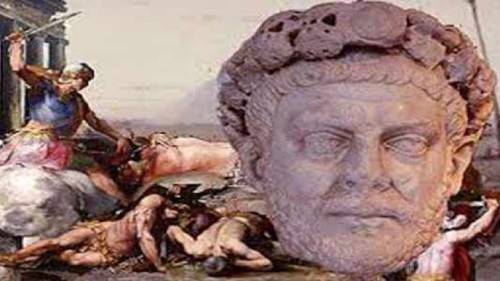
الغالبية العظمى لشهداء الكنيسة القبطية تعود إلى عصر دقلديانوس ومعاونيه، ومن خلفوه أيضًا، في الفترة ما بين سنة 303 إلى 313 ميلادية. ولذلك تعتبر كنيستنا القبطية بداية التقويم القبطي، والذي يُطلق عليه تقويم الشهداء، من العام 284 ميلادية، وهى السنة التي اعتلى فيها دقلديانوس عرش الحُكم. ويرجع ذلك لاعتبار أن عصره هو الأكثر دموية وصعوبة بين بقية فترات الاضطهاد في القرون الأولى للمسيحية. كما أن هذه الفترة قد أغنت تاريخ الكنيسة القبطية بالكثير من سير الشهداء القديسين.
يمكننا أن نتتبع في تقويم الكنيسة القبطية أربعة مجموعات من الشهداء: شهداء مصريين استشهدوا في مصر، وآخرين استشهدوا في بلدان أخرى، ومجموعة ثالثة وهم شهداء ليسوا مصريين استشهدوا في مصر، وأخيرًا مجموعة أخرى من الشهداء لم يعيشوا في مصر ولا استشهدوا على أرضها مثل الشهيد ديمتريوس من تسالونيكي. وسيختص حديثنا هنا فقط على الثلاثة مجموعات الأولى التي ذكرناها.
لقد كان المؤرخ يوسابيوس القيصري شاهد عيان لبعض هذه الأحداث القاسية والظروف الصعبة التي مرت على هؤلاء الشهداء، نجده يعقد مقارنة بين المصريين الذين استشهدوا في مصر وأولئك الذين استشهدوا خارج وطنهم. وبرغم أنه يصف العذابات المؤلمة، ويعبر عن إعجابه بشجاعة وثبات هؤلاء الشهداء على الإيمان المسيحي، إلاّ أنه لم يذكر لنا أسماء هؤلاء الشهداء الذين شاهد عذاباتهم. لقد عبّر عن انبهاره لثبات وصبر هؤلاء الأبطال، وقوة احتمالهم العجيب، الذين استشهدوا في صور بفنيقية[1]. الوحوش لم تلمس أجساد هؤلاء الشهداء، بل هاجمت الآخرين الذين كانوا يستحثونها من الخارج ويحفزونها (أى الوثنيين). وأيضًا نجد أن شبابًا صغيرًا في السن وأجسادهم غضة، برهنوا على ثباتهم وصلابة إيمانهم. لقد وقف أحدهم غير مرتعب، ثابتًا دون أن يتراجع على الإطلاق عن المكان الذي وقف فيه، منشغلاً في صلاة حارة لله، بينما تقترب منه جدًا النمور والدبب المتوحشة تكاد تلمس جسده، دون أن تفتح أفواهها[2]. وحينما تأكدوا بأن هذه الوحوش لم تقترب من هؤلاء الشهداء قتلوهم جميعًا بالسيف، وألقوهم في أعماق البحر[3].
أعداد الشهداء وأنواع العذابات في مدن مصر:
لا يوجد رقم محدد لأعداد الشهداء، بل أن الأعداد تختلف في كتابات الباحثين ما بين أرقام صغيرة وكبيرة جدًا[4]. ومع ذلك يمكننا أن نستنتج عن طريق البيانات التي بين أيدينا والمتعلقة بسير الاستشهاد المختلفة، وأيضًا من المصادر الأخرى المتنوعة أن أعداد الشهداء في الكنيسة القبطية هى عشرات الآلاف. فلقد اجتازت آلام هذه الأحداث مدن كاملة. فمثلاً قتل الوالي أريانوس كل المسيحيين في مدينة اسنا (Λατόπολη)، وهؤلاء كانوا مع أسقفهم أمونيوس في الدير الذي أقامه في أحد الجبال خارج المدينة، وفيه كان يختلي للعبادة عدة أيام في كل أسبوع. وحينما قاد أريانوس حملة على هذه المدينة كان مسيحيوها مجتمعين كلهم هناك لأجل تكريم أحد القديسين. وفي الطريق إلى الدير كان الجنود يقتلون أى مسيحي يقابلهم. وحينما رأى المسيحيون أريانوس كانوا يعلنون إيمانهم وكان نتيجة ذلك هو قتل كل المسيحيين، الأطفال والكبار، الرجال والنساء. لقد حاول أريانوس دون جدوى أن يثني الأسقف عن الإيمان المسيحي وأن يقدم التكريم للأوثان. وفي نهاية الأمر ألقى الجنود الأسقف في النيران، دون أن يحترق جسده على الإطلاق[5].
ونفس المصدر الذي قدم لنا تفصيلاً عن الأحداث التي جرت لشعب مدينة اسنا وأسقفها أنبا أمونيوس يحدثنا عن إعداد وتجديد المواضع الخاصة برفات هؤلاء الشهداء، والذي تم على يد الملكة هيلانة أم قسطنطين الكبير. يتكلم المصدر عن أن هذا المكان الذي يحوي رفاتهم يُقدر بنحو ثمانين فدانًا، وأن رفات الشهداء التي وُضعت فيه كانت بلا حصر، وذلك حين قارن هؤلاء الشهداء مع شهداء مدينة أخميم (Πανόπολη)، والتي كان عدد شهدائها ثمانية آلاف وأربعة وأربعون[6]. ومن هنا يتضح كيف أن عدد الشهداء في مدينة اسنا كان كبيرًا جدًا.
وفي مدينة إنصنا (Αντινοόπολη) استشهد خمسة آلاف وثمانمائة شهيد مع أسقفهم أباديون[7]. وفي مدينة أسيوط (Λυκόπολη) نجد أن عددًا كبيرًا من المسيحيين جاهروا بالإيمان وكان نتيجة ذلك أنهم نالوا إكليل الشهادة[8]. لقد حاول يوسابيوس أن يقترب من أعداد الشهداء المصريين فكتب بأنهم كانوا ألوف من الرجال والنساء والأطفال[9].
في وصفه لشهداء مصر يتعجب يوسابيوس من صبرهم على العذابات، مؤكدًا على أن ذلك هو من أجل تعاليم مخلّصنا. ومن ضمن هذه العذابات المتنوعة نجد أن البعض قد أُلقوا في النيران بعد كشط أجسادهم وجلدهم. والبعض الآخر أُغرقوا في البحر، والبعض ماتوا من شدة هذه العذابات ولم تتحملها أجسادهم. لقد قدم البعض رؤوسهم بشجاعة والبعض مات جوعًا. لقد صُلب بعضهم بالطريقة المعتادة وبعضهم الآخر بطريقة عكسية أى أن رؤوسهم منكسة إلى أسفل، وبدون طعام حتى الموت[10].
لقد خص يوسابيوس أيضًا شهداء طيبة بشرح منفصل، بعدما تكلّم عن نضال المصريين. وكانت طيبة هى أحد الأقاليم الثلاثة التي تتكون منها مصر. يجد يوسابيوس أن الكلمات عاجزة عن وصف العذابات التي تكبدها الشهداء في طيبة[11]. فبدلاً من المناجل كانت تستخدم المحار في كشط الأجساد وهو ما كان يسبب ألمًا أشد. وكانت النساء تُمتهن كرامتهن أثناء تعذيبهن مما كان يسبب الخجل الشديد لهن. هناك أيضًا طرق قاسية جدًا كانت تستخدم مع بعض الشهداء، إذ كانوا يوثقون أطراف أجسادهم مع بعض فروع لأشجار ضخمة، بعدما يقربونها لبعضها البعض عن طريق ماكينات خاصة، ثم بعد ذلك يتركون هذه الفروع كي تعود إلى وضعها الأصلي، بهذه الطريقة تتمزق أعضاء الجسد في الحال. وهنا يجب أن ننتبه إلى أن أعداد الشهداء يجب أن يكون كبيرًا أيضًا في طيبة، لأن هذه الأحداث كانت تستمر لأعوام طويلة، كما أن أعداد الشهداء في كل يوم كان يتراوح بين عشرة ومائة رجل، غير أعداد الأطفال والنساء. ولقد أورد المؤرخ يوسابيوس أحد التفاصيل التي تبين لنا أعداد هؤلاء الشهداء الذين كانوا ينفذون فيهم الحكم كل يوم في طيبة. يذكر يوسابيوس أن حدّ السيف قد ضعف من كثرة استخدامه، وإذ ضعف انكسر، كما أن قوى منفذي الأحكام قد وهنت فكانوا يتبادلون الواحد مكان الآخر لكي يستريحوا من شدة التعب[12].
لقد كان من العجيب حقًا أنه برغم كل هذه العذابات المرعبة واللا إنسانية فإن مسيحيي طيبة كانوا في شدة الحماس والنشاط والغيرة[13]. فبمجرد أن يتم الاعلان عن القرار النهائي بإعدام أحد هؤلاء، كان يندفع الباقون نحو كرسي القضاء مقدّمين اعترافهم بالإيمان المسيحي بدون خوف من الموت، بل أكثر من هذا نجدهم يتقبلون الحكم بالموت وهم فرحين مترنمين ومتهللين ومقدمين الشكر والتسبيح لله[14].
كان محتوى إيمانهم واعترافهم يتم التعبير عنه بكلمتين “أنا مسيحي”. وهاتين الكلمتين القصيرتين كانتا تلخصان وتشرحان كل شئ، لقد كانوا يجيبون حينما يسألونهم عن أسماءهم بأنهم مسيحيين، فلقد كانوا يسرعون بذكر إيمانهم بالمسيح، مفضلين ذلك على أن يذكروا أسماءهم الخاصة. فلقد كان إيمانهم هذا محل فخرهم ومجدهم، وفي نفس الوقت هو السبب الرئيسي لإتهامهم بأبشع الإتهامات والوشاية بهم، وبالتالي تعرضهم للعذابات والآلام المتنوعة.
لقد كان الوثنيون يُظهرون أو يتظاهرون بالأسف من أجل حياة الشهداء، على الرغم من أنهم كانوا يعتبرونهم مجانين، لأنهم يقدمون حياتهم غير مبالين بالموت. لقد كانوا أيضًا متعجبين جدًا بسبب شجاعة الشهداء وإقدامهم[15]. من بين الشهداء نجد أسماء كثيرة لأشخاص كانوا في مواقع عليا أو من أصول نبيلة، والذين لم يبالوا بموقعهم الاجتماعي، ولا بثروتهم أو علمهم. كمثال لهؤلاء نذكر فيلوروموس والذي يقال عنه إنه كان يشغل مركزًا عاليًا في الحكومة الإمبراطورية بالأسكندرية. كذلك فيلياس أسقف كنيسة تمى[16]، والقديسة كاترينة[17]، والقديسة دميانة، وغيرهم الكثير. ولأجل هذا فإن كثيرين من الوثنيين تأثروا بهؤلاء وبسيرتهم وبسلوكهم، ولذا انضموا للمسيحية. ولذلك فإننا نجد أن كل السجلات والنصوص تقريبًا التي تخبرنا عن الشهداء وسيرتهم تتكلم عن اعتناق المسيحية من جانب مشاهدين وثنيين تأثروا بمعجزات حدثت أثناء الاستشهاد وبشجاعة الشهداء وثبات إيمانهم.
إن تاريخ الاستشهاد في فترة دقلديانوس لا يبدأ من وقت تطبيق منشورات أو قرارات الإمبراطورية ضد المسيحية أى من عام 303م، ولكن قبل هذا التاريخ بوقت كافٍ. ربما يعود ذلك مثلاً إلى عام 295م حينما بدأت بعض الإجراءات والمضايقات ضد جنود مسيحيين في الجيش[18]. ولهذا فإن أول ضحايا الاضطهاد كانوا من قادة الجيش، مثل الشهيد العظيم مارمينا العجائبي[19]. كذلك لدينا مثال الكتيبة الطيبية، وقد أُرسِلَت هذه الكتيبة لكي تساعد ماكسيميانوس في حملة لقمع اضطرابات كانت قد نشبت في فرنسا. وقبل القيام بمهامها طُلب من أفرادها طاعة الإمبراطور، وتقديم البخور للآلهة قبل حملته المرتقبة، وبعدما رفض هؤلاء الجنود هذه الأوامر ابتدأ الإمبراطور في التخلص من الجندى العاشر في الترتيب، كي يخيف الآخرين، ولكن عبثًا لم يستطع أن يثنيهم عن عزمهم وتمسكهم بإيمانهم. وهكذا استمر في قتلهم واحد تلو الآخر حتى أتى على هذه الكتيبة كلها.. ومن هذه الكتيبة هناك أسماء لامعة مثل القديس موريس وأسماء أخرى منتشرة في دول أوربا كسويسرا وألمانيا وفرنسا وإيطاليا[20].
لقد أرسل الأسقف فيلياس رسالة إلى رعيته في تمى من داخل سجنه بالأسكندرية. من هذه الرسالة يتضح العمل الرعائي للأسقف تجاه رعيته في ظروف وأيام الاضطهاد الصعبة، ولقد كان هو نفسه ينتظر الاستشهاد في ذلك الوقت. لقد كتب لرعيته كلمات ممتلئة تشجيعًا، يصف فيها ثبات المسيحيين في الأسكندرية أمام تهديدات حراسهم المتعددة.
لقد واجهوا بكل بسالة وعزم، وفضيلة أيضًا، هذه الأهوال التي واجهتهم، وألوان التعذيب التي تفنن المضطهدين في استخدامها معهم، وأيضًا سخط المشاهدين وهياجهم واعتداءاتهم. وبعد العذابات الشديدة التي كان يجتازها هؤلاء الأبطال، كانوا يتركونهم بدون أى رعاية كما لو كانوا غير موجودين.
والبعض منهم كانوا ينالون جرعات أخرى من العذابات، بعدما يكونوا قد أمضوا النهار كله وهم يقاسون الكثير منها. فيمددون أرجلهم على آلة خشبية، ويضعونها في ثقوب، وهم عاجزون عن أن يقوموا عن هذا الوضع، نظرًا لجراحاتهم التي تكون قد امتلأت بها أجسادهم، نتيجة لجلدهم على كل الجسد[21]. لقد كانت لديهم الفرصة أن يتخلصوا من الآلام والموت، إن شاركوا في الذبائح، أو حتى لمسوا فقط هذه الذبائح، ولكنهم كانوا يرفضون هذه الحرية البغيضة الزائفة، مفضَّلين أن يركضوا للموت فرحين، كي لا يعبدوا إلهًا آخر. لقد أوجز يوسابيوس، بعد نهاية هذه الرسالة، القانون الذي كان يُطبَّق على هؤلاء الشهداء، وهو أنهم كانوا يُعتبرون كأعداء في حرب[22].
1 تاريخ الكنيسة، يوسابيوس القيصري، ترجمة القمص مرقس داود 7:8.
2 تاريخ الكنيسة 4:7:8
3 نلاحظ أن كثير من أجساد الشهداء في اضطهاد دقلديانوس وأعوانه كانوا يُلقون في البحر أو في النار أو كانوا يتركونها للوحوش المفترسة كي تأكلها. نعتقد أن السبب في ذلك، بحسب دراستنا لهذه السير، يرجع إلى أن المضطهدين كانوا يخشون القوة المعجزية التي كانت بداخل هؤلاء الشهداء (والتي كانوا يطلقون عليها سحرًا) والتي ظهرت في حالات التعذيب، لقد كانوا يريدون أن تُمحى هذه الأجساد معتقدين أنه بذلك لا يستطيع هؤلاء الشهداء أن يجذبوا الوثنيين إلى المسيحية ولا أن يكونوا هم أنفسهم محل تكريم من المؤمنين. راجع أيضًا تاريخ الكنيسة 7:6:8
4 عن الاختلافات في أعداد الشهداء في هذه الفترة عامة انظر ديمتري تسامس، سجل شهداء سيناء، تسالونيكي 1989، ص17ـ18 (باللغة اليونانية).
5 عن الاستشهاد في مدينة اسنا، استخدمنا المخطوط 638 البطريركية القبطية، تاريخ 44، ورقة 90 وجه ـ 103 ظهر. وقد صدر هذا المخطوط كاملاً ونشر مع ثلاثة مخطوطات أخرى في طبعة علمية مع ترجمة فرنسية في كتاب شهداء مدينة اسنا، د. أنطون خاطر، القاهرة، أورشليم 1981. انظر أيضًا :
Delacy O’leary, The Saints of Egypt, London, New yourk 1937, pp 68-70.
6 مخطوط 638، تاريخ 44، 117 ظهر ـ 118 وجه (إصدار د. أنطون خاطر كما سبق).
7 انظر Coptic Encyclopedia, New Yourk, Toronto 5, 1551,
[8] R.Graffin, F. Nau, Patrologia Orientalis, 11, 762.
9 تاريخ الكنيسة1:8:8
10 تاريخ الكنيسة 8:8
11 تاريخ الكنيسة 9:8.
12 نفس المرجع السابق.
13 عن حماس الشهداء هناك دراسة قيّمة: Ι. κοτσώνη, Το ενθόυσιαστικόν στοιχείον εις την εκκλησία των μαρτύρων, Αθήνα 1952.
14 تاريخ الكنيسة 5:9:8.
15 يرى Dodds أن المسيحية استحقت أن تحيا وتستمر لأنها أعتبرت مستحقة لأن يموت أحد من أجلها. كذلك يرى أنه بالرغم من آراء ماركوس أوريليوس ولوكيانوس وجالينوس وكلسس إلاّ أنهم كانوا مبهورين من شجاعة المسيحيين أمام الموت والاستشهاد D E R. Dodds, Εθνικοί και χριστιανοί σε μια εποχή αγωνίας (ترجمة يونانية) 1995, p.203
16 استشهاد فيلياس إما أنه قد حدث في أواخر عصر دقلديانوس أو بعد اعتزاله بوقت قصير. انظر H. Musurillo, The Acts of the Christian Martyrs, Oxford 1979, p.x/vii. Π. χρήστου, Τα Μαρτύρια των αρχαίων χριστιανών, ΕΠΕ 30, 83
17 استشهدت في فترة إدارة ماكسيمينوس في الأسكندرية. ديمترى تسامس، سجل شهداء سيناء، ص46 الخ.
18 Γλαβίνα ، تاريخ الكنيسة جزء أول، تسالونيكي 1993، ص208 (باللغة اليونانية). تاريخ الكنيسة 1:4:8ـ4
19 غالبًا استشهد عام 296 Δετοράκης, Μηνάς ο Μεγαλομάρτυς ο άγιος του Μεγάλου Κάστρου, Ηράκλειον 1995, p.29
لقد كانت الإجراءات الأولية التي اتخذت من قِبَل الولاة تهدف إلى المساس بالكيان الكنسي كتنظيم. لهذا بدأت هذه الإجراءات بهدم الكنائس، والتخلص من الكتب المقدسة، وكذلك التخلص من الأكليروس ورؤساء الكنائس. لقد طلبوا من تيموثاؤس وهو قارئ في الكنيسة[1]، أن يسلم الكتب المقدسة التي لديه، وذلك بحجة من أريانوس الوالي أنه يريد أن يَعْلم ما بها من قوة. بالطبع رفض تيموثاؤس ذلك معتبرًا هذه الكتب إنها أبناؤه كمثل يجب أن يحافظ عليهم من الموت[2].
برغم أن الإضطهاد كان يسود كل أرجاء الأمبراطورية، إلا أن الشرق قد اجتاز آلامًا أكبر بكثير مما أجتازه الغرب[3]. لقد كانت المنشورات المطبَّقة واحدة في كل الأمبراطورية. لكن الاضطهادات كانت أخف في مكان عن مكان آخر، وذلك تبعًا للقادة الذين كانوا يشغلون إمارة هذه المقاطعات. ففي الشرق كانت تطبق القوانين بطريقة حرفية، بينما في الغرب كان يُطبق فيها روح القانون. لقد وقعت مصر في أيدي قاسية في فترة دقلديانوس، وأيضًا في فترة إمارة ماكسيمينوس. لقد عُرفت أسماء ارتبطت بعصر الإستشهاد في هذه الفترة مثل ارمانيوس، كولسيانوس، سوسيانوس، هيروكليس وبالطبع ساتريوس اريانوس[4]، وهم أشخاص طبقوا المنشورات الصادرة بحذافيرها. لهذا فإن مصر، وخاصة مصر العليا، كانت مكانًا مشهورًا ومعروفًا بالنسبة للإستشهاد ليس للمصريين فقط، وإنما أيضًا للمعترفين الذين أرسلهم الحكام من خارج مصر لكي تُنفذ فيهم الأحكام وتُمارس ضدهم العذابات المختلفة.
لقد أقترح رومانوس، وهو أب الشهيد بقطر، أن يُرسَل كلوديوس ابن بتولماوس، وهو من عائلة ملكية إلى أريانوس في أنصنا لكي يحاكم فيها بدلاً من أن يُرسل إلى بلده الأصلي أنطاكية[5]. ومن أنطاكية نعرف شخصية أخرى وهو باسيليدس، شخص ذو مكانة عالية في بلده، مع مجموعة من عائلته وأصدقائه الذين كانوا يرتبطون به[6]. لقد أُرسل هؤلاء إلى مصر للمحاكمة بناء على أوامر من الحكام. كما إننا نعرف حالات أخرى مختلفة مثل الشهيد أبادير والذي قاده السيد المسيح نفسه أن يذهب إلى مصر لينال إكليل الشهادة، كما جاء في المخطوطات القبطية والعربية[7].
بالرغم من القسوة التي كانت ظاهرة للعيان في معاملة الشهداء القديسين، إلا أنه كان يوجد رغبة من المضطّهِدين كي يرجع المسيحيون ويقبلوا مشاركتهم في الديانة الرسمية للدولة. ولهذا بذل القضاة كل ما بوسعهم كي يجذبوا هؤلاء المعترفين ويربحوهم. لذا فإننا نلاحظ من سجلات الإستشهاد وسير الشهداء ومحاكماتهم أن الحوار الذي جرى معهم من جانب القضاة كان طويلاً، وخاصة مع هؤلاء الذين كانوا في مكانة إجتماعية مرموقة أو في وظيفة من الوظائف العليا في الإدارة، كما هو في حالة الشهيد فيلياس[8]. لقد كانت الضغوط والعذابات النفسية عليهم أقسى من عذابات الجسد التي رأها المشاهدين. فلا يجب أن ننسى الضغوط التي كانت تلحق بهم من جراء التأثير على مشاعرهم نحو عائلاتهم والتي كانت تُستَخْدَم كوسائل للضغط عليهم، حتى يتركوا إيمانهم. لقد حاولوا مثلاً الضغط على تيموثاؤس عن طريق زوجته الشابة مورا[9]. وبالنسبة للأساقفة كانوا يستخدمون علاقة الأسقف ومحبته نحو رعيته كوسيلة للضغط. حتى الكتاب المقدس كانوا يستخدمونه بصورة خاطئة حتى يؤثروا على المعترفين؛ فيتساءلون مثلاً أليس المسيح هو الله، فكيف له أن يُصلب[10]؟ لقد أرسل ماكسيمينوس دايا رسالة ينصح فيها القضاة بأن يستخدموا التملق والنصح كوسيلة حتى يعرف المسيحيون إهتمام آلهة الدولة ورعايتها، وبذلك يعودوا إليها[11]. ومن هنا ندرك كيف يكون القرار بالنسبة لهؤلاء القديسين في ظل هذه الظروف الصعبة والجو المشحون وتحت كل هذه الضغوط. والأمر يكون أكثر صعوبة حينما يتعلق بمن هم في سن صغيرة، كما هو الحال بالنسبة للثلاثة عذارى الأخوات ثيؤكتيستا 15عامًا، ثيؤذوسيا 13عامًا، وأدوكسيا 11عامًا واللاتي استشهدن مع أمهن أثناسيا . لقد شعر القديس أباكير بالخوف لربما تتراجع الصغيرات ولا يتحملن العذابات بسبب سنهن الصغيرة. ولكنهن أبدين شجاعة كبيرة، كما لو كانوا يعذبون أجسادًا أخرى وليس أجسادهن[12].
أضطهاد ماكسيمينوس دايا:
لقد كان جاليريوس عدوًا دائمًا للمسيحية، ووجد هذا الإمبراطور من يساندونه في تنفيذ سياسته ضد المسيحيين في الشرق، وذلك في الفترة التي أعقبت اعتزال دقلديانوس العرش. وكان ماكسيمينوس دايا واحدًا من هؤلاء، والذي جعل صفحة الإضطهاد في مصر أكثر قتامة. قال عنه لاكتانتيوس، إنه لكي يشبع رغباته الشهوانية جعل إرادته الخاصة هي مقياس الحق[13]. لقد حكم مصر في الفترة من عام 305 وحتى هزيمته عام 313. وبحسب ما روى يوسابيوس القيصري فقد جعل هذا الطاغية الإضطهاد أكثر شدة وتحول بصورة أكبر ضد المسيحيين[14]. لقد وصف يوسابيوس بالتفصيل سلوكه المشين، فلقد فعل كل ما بوسعه لكي يجدد العبادة الوثنية في المقاطعات، ولقد طبق سياسات متشددة وظالمة. استخدم ماكسيمينوس كل وسائل التعذيب ضد الرجال وقادته شهواته إلى أفعال مشينة ضد النساء، ولكن هؤلاء فضلن أن يسلمن حياتهن للموت على أن يسلمن أجسادهن للنجاسة. لقد أرسل ماكسيمينوس بعض الشهداء إلى المحاجر والمناجم في أعمال اضطرارية، ولكن قبل أن يرسلهم كان يقطع إحدى أرجلهم ويقلع إحدى عينيهم[15]. وإذ لم تكفِ المحاجر في طيبة، كانوا يُرسلون إلى مناجم النحاس في فلسطين. ولدينا من هؤلاء سبعة وتسعون شهيدًا ممن قاسوا هذه الآلام. وهم أيضًا كانوا قد فقدوا العين اليمنى والرجل اليسرى قبل ذهابهم لتأدية هذه الأعمال الإجبارية[16]. وهناك أيضًا مائة وثلاثون نُقلوا إلى مناجم فلسطين وكليكية[17]. في عام 308 أرسل ماكسيمينوس رسائل إلى حكام المقاطعات وللقادة العسكريين، وأمرهم بإعادة بناء الهياكل الوثنية المتهدمة، لكي يجبروا الجميع رجالاً ونساءًا وأطفالاً أن يذبحوا للآلهة الوثنية. كما أمر أن يأكل الجميع من هذه الذبائح، وأيضًا أن يتم رش دماء هذه الذبائح على الأطعمة الموجودة بالأسواق. لقد وصل إصراره على عبادة الأوثان إلى درجة الأمر بأن يُرش هؤلاء الذين يستعملون الحمامات الشعبية العامة بدماء الذبائح أو بالبخور المستخدم في الهيكل. مثل هذه الأوامر لم يرض عنها الوثنيون أنفسهم بسبب تطرفها[18]. وبمرور الوقت كانت تزداد القسوة والشدة. لقد أستشهد ثلاثة مصريون وهؤلاء كانوا في البداية متطوعين ذهبوا إلى كليكية بإرداتهم لخدمة المعترفين هناك. هكذا أيضًا فإن الكثيرين ممن يُذكرون مع الشهداء الفلسطينيين كانوا مصريين[19]. قُتل من هؤلاء المعترفين أيضًا تسعة وثلاثون لم يقدروا أن يعملوا في المحاجر بسبب أعمارهم الكبيرة أو بسبب مرضهم، ومن الواضح أن هؤلاء كانوا أيضًا مصريين[20].
منشور ميلان وعودة السلام:
قبل أن ينتهي هذا الإضطهاد الذي لماكسيمينوس، تخلل عام 311 إصدار منشور جديد، وبحسب هذا المنشور توقف جاليريوس بصورة مفاجئة عن الإضطهاد. ينادي هذا المنشور بتطبيق سياسة التسامح مع الديانات الأخرى[21]، وفيه يطلب من المسيحيين أن يتضرعوا لإلههم لأجل سلامة الأباطرة والإمبراطورية نفسها، وألا يفعلوا شيئًا ضد النظام[22]. وهذا المنشور يُعد برهانًا على فشل الإضطهاد في تحقيق أهدافه، ويُعد هزيمة للوثنية نفسها، وأنتصارًا للمسيحية، وإنتصارًا لشهداء المسيح في الوقت ذاته.
لقد توافق ماكسيمينوس، ولكن ظاهريًا فقط مع هذا المنشور، مما يبين عداوته وشعوره الداخلي ضد المسيحية. فلم يستخدم أي وسيلة رسمية من شأنها أن تنقل هذا المنشور، وإنما اكتفى بالتوصية بذلك[23]. على أية حال تُرك المقيدون في الحبس أحرارًا، كذلك أيضًا عاد المعترفون من المحاجر مرة أخرى. بذلك تنسَّم المسيحيون الحرية وزال الضيق ولو لفترة زمنية قصيرة.
ولعل استشهاد القديس بطرس الملَّقب بخاتم الشهداء، وهو رئيس أساقفة الأسكندرية في ذلك الوقت، يؤكد ما قلناه بخصوص عداوة ماكسيمينوس ضد المسيحية وضد إله المسيحيين، كما يشير إلى المحاولة الأخيرة والجريئة له كي يقضي على المسيحية في مصر، والتي كانت غالبيتها في ذلك الوقت من المسيحيين[24]. لا يوجد من الأسباب ما كان يتطلب القبض على ق. بطرس والتخلص منه[25]. ربما تكون الأسباب هي تعاليمه وإهتمامه برعيته، ومقاومته للشعائر الوثنية، وهو ما يكون بذلك سببًا لغضب دقلديانوس[26]. ولكننا نعرف أن هذا القديس لم ينل الشهادة حينما كان دقلديانوس إمبراطورًا، ولكن في وقت متأخر في إدارة ماكسيمينوس. كما أن التقليد يربط بين إستشهاد ق. بطرس ونهاية الإضطهاد. وبالرغم من وجود اختلافات بين روايات الإستشهاد في النصوص التي تتكلم عن القديس بطرس[27]، إلا إنها تتفق على إنه كان يريد ألا يتعرض شعبه لأي مكروه بسببه، ولذلك ضحى بنفسه حتى ينجي شعبه، والذي كان مجتمعًا محيطًا بسجنه يريد أن ينقذه من أيدي منفذي الحكم. ومن أجل هذا سلَّم نفسه بصورة خفية إلى منفذي الحكم دون أن يراه الشعب[28].
من الواضح أن الإسترخاء في الأضطهاد من جانب ماكسيمينوس في شتاء عام312ـ313م ضد المسيحية لم يكن محل ثقة من جانب المسيحيين[29]. ولكن هزيمة ماكسيمينوس ومنشور ميلان كانا قد جلبا السلام للكنيسة بصورة نهائية. وبهذا أنطوت صفحة المضايقات الخارجية للكنيسة، وبدأت صفحة أخرى وهي الخاصة بشئونها الداخلية.
نستطيع أن نلّخص ملامح هذا العصر الجديد: لقد عادت حرية العبادة، وعادت اجتماعات المسيحيين دون خوف، كما عادت أيضًا ممتلكات الكنائس المغتَّصَبة[30]. وهكذا بدأت المسيحية رويدًا رويدًا تجد السلام، كما ساعد ذلك على نمو الكنيسة وإزدهارها. وإن كان ليسينيوس في وقت لاحق لم يحافظ على الإتفاق مع قسطنطين فخرج عليه محاولاً تجديد المضايقات مرة أخرى ضد المسيحيين في الشرق عام 322ـ323، ولكن لم تستمر هذه الإجراءات بسبب هزيمته من قسطنطين.
+++++++
[1] Acta Sanctorum, Mai I, 741.
2 لقد كان تيموثاؤس حينما قبضوا عليه وعذبوه متزوجًا حديثًا بمورا وكان قد مر على زواجه عشرون يومًا فقط.
3 قارن T.D. Barnas, Constantine and Eusebius, London 1981, pp.14, 28
4 لقد تحول أريانوس فيما بعد للمسيحية وقد تم ذلك بعدما حدثت معه معجزة ذُكرت في قصة إستشهاد فليمون وأبوللونيوس ( انظر Acta Sanctorum, Mart. I, 895-899).
[5] R. Graffin, F. Nau, Patrologia Orientalis, 17, 552-555.
[6] Delacy O’Leary, The Saints of Egypt, London, New Yourk 1937, P.18.
7 مخطوط سير قديسين 43 ص91 “Passion des ss. Abadir et Irai, P62
بكتالوج(Ugo Zanetti, Les Manuscrits de Dair Abu Maqar, Geneve 1989).
أنظر أيضًا Patrologia Orientalis 1,303
[8] ΕΠΕ, (سلسلة آباء الكنيسة باللغة اليونانية) 30,336-357.
[9] Acta Sanctorum, Mai I, 741-744.
[10] ΕΠΕ 30, 340, 344, 346.
11 تاريخ الكنيسة 9:9: 15.
[12] Bibliotheca Hagiographica Greace (BHG). 469, PG 87, 3677-3689.
13 لاكتانتيوس، موت المُضطهِدين، إصدار مطرانية بني مزار والبهنسا 2006، الفصل39، صـ98.
[14] Περί των εν Παλαιστίνη μαρτυρησάντων 4.1, PG 20, 1472c. تاريخ الكنيسة 14:8: 9
15 يعتقد المُضطهِدون أن هذه العقوبة عمل إنساني وأخف قسوة بالمقارنة بعقوبة الموت، أنظر تاريخ الكنيسة 12:8: 10.
21 سبب تطبيق هذه السياسة إما الفشل في الاضطهاد أو مرضه الشديد. أنظر
Α. Γλαβίνα, Ιστορία της Εκκλησίας , Ά, Θεσσαλονίκη 1995, P221.
22 تاريخ الكنيسة 17:8
Lactantius, De Mortibus Persecutorum, 34 (Ante- Nicene Fathers, vol. VII).
23أنظر تاريخ الكنيسة 2:9ـ6 ومنها يظهر كيف أن تطبيق سياسة جاليريوس الجديدة لم تتوافق مع كره ماكسيمينوس للمسيحية.
[24] W.H.C.Frend, Martyrdom and Persecution in the early church, Oxford 1965, P452.
25 يوسابيوس، تاريخ الكنيسة 6:9: 2.
26 يذكر ساويرس بن المقفع قصة عماد أم لطفليها في الأسكندرية، وأن هذا ما سبب غضب دقلديانوس ضد القديس بطرس. أنظر:
Corpus Scriptorum Christianorum Orientalium, Scriptores Arabica, IX (1906), 55-58.
27 في رواية قصيرة باللغة اللاتينية نجد إستشهاد القديس بطرس في السجن، بينما في رواية أخرى باللغة العربية نجد أن الاستشهاد تم خارج السجن. تتضمن النسخة العربية للإستشهاد أيضًا السماح للقديس بطرس بأن يخرج من حبسه قبل إستشهاده للصلاة عند قبر الشهيد القديس مارمرقس. أنظر:
Coptic Encylopedia, 6,1945.BHG. 1502. J.Viteau, Passions des Saints Ecaterine et Pierre d’Alexandrie, Barbara et Anysia, Paris 1897, PP 68-85.
[28] BHG. 1502. J.Viteau, 75-76 قارن T.vivian, St. Peter of Alexandria Bishop and Martyr, Philadelphia 1988, PP 44-45.
29 يوسابيوس، تاريخ الكنيسة 9:9: 13ـ15.
30 لقد حاول ماكسيمينوس بعد هزيمته أن يصدر منشورًا يمنح فيه الحرية الكاملة للمسيحيين، ولكن الوقت كان قد تأخر على ذلك المنشور وواضح انه لم يستفد أي شيء من ذلك. تاريخ الكنيسة 10:9: 7ـ15.
يبدو عند المقارنة بين تعليم الرسول بولس وتعاليم الرسول يعقوب عن الإيمان كما لو أن هناك شيئًا من التناقض بينهما. يقول الرسول بولس: ” الإنسان يتبرر بالإيمان بدون أعمال الناموس ” (رو28:3). ويقول أيضًا ” الإنسان لا يتبرر بأعمال الناموس بل بإيمان يسوع المسيح ” (غلا16:2). وأما الرسول يعقوب فيقول ” ترون إذًا أنه بالأعمال يتبرر الإنسان لا بالإيمان وحده ” (يع24:2). ومن ناحية أخرى فإن كلا الرسولين يقيم تعليمه على نفس الأساس الكتابي وعلى نفس النص، كما جاء في سفر التكوين ” فآمن إبراهيم بالرب فحسب له برًا ” (تك6:15).
وفي تعليق الرسول بولس على هذا النص يقول ” لأنه إن كان إبراهيم قد تبرر بالأعمال فله فخر ولكن ليس لدى الله ” (رو2:4).
وأما الرسول يعقوب فيعلّق على نفس النص ويقول: ” ألم يتبرر إبراهيم أبونا بالأعمال إذ قدم اسحق ابنه على المذبح، فنرى أن الإيمان عمل مع أعماله، وبالأعمال أكمل الإيمان ” (يع21:2ـ22).
أليس في هذا عدم توافق بين الرأيين؟ بل أليس في هذا تناقض بين الرأيين؟
وقد أكد لوثر وجود تناقض بين الرسالتين واعتبر رسالة يعقوب رسالة ضحلة، لا تتضمن مادة تليق بالسيد المسيح. ولكننا نقول إن الفحص الدقيق لعبارات الرسولين بولس ويعقوب يوضح لنا أن الرسولين وإن كانا يستعملان نفس الكلمات، إلاّ أنهما لا يتكلمان على نفس الشئ. إن الإيمان الذي يتكلم عنه الرسول بولس هو إيمان حقيقي غير معنوي، فاعل، يأخذ من المحبة دافعه ونموذجه؛ أما الإيمان الذي يقول به الرسول يعقوب فهو تسليم (مصادفة) بسيط للعقل شبه بهذا الإيمان الذي تأخذه الشياطين بالنسبة للحقائق الواضحة ” أنت تؤمن أن الله واحد حسنًا تفعل، والشياطين يؤمنون ويقشعرون ” (يع19:2) (أى أنت تؤمن أن الله واحد، ولكن هذا لا يكفي، فالشياطين يؤمنون ويقشعرون).
ومن الواضح أن هذا العمل، الذي هو بالضرورة عمل عقلي خالص، لا يمكن أن يعمل على تبرير الإنسان. إن الأعمال التي يتكلم عنها الرسول بولس هى الأعمال التي تسبق الإيمان والتبرير، وبالذات أعمال الناموس التي هى موضع النقاش مع اليهود، أما الأعمال التي يتكلم عنها الرسول يعقوب فهى الأعمال التي تتبع الإيمان والتبرير، حيث أنه هنا يخاطب المسيحيين الذين لهم إمكانيات الحياة فوق الطبيعة. إن التبرير الذي يتكلم عنه الرسول بولس هو التبرير الأول أى الانتقال من حالة الخطية إلى حالة القداسة، بينما التبرير الذي يتكلم عنه الرسول يعقوب هو النمو في حالة البر، النمو المطرد للحياة المسيحية. وفي كلمات مختصرة، فإن الرسول بولس يضع نفسه قبل حالة تبرير الإنسان، وأما الرسول يعقوب فيضع نفسه في حالة ما بعد تبرير الإنسان. الأول يتكلم عن الإيمان الحيّ، والرسول يعقوب يتكلم عن الإيمان المائت غير الفاعل. الرسول يتكلم لغير المؤمنين، موضحًا أنه بدون إيمان لا يمكن نوال حالة التبرير، بينما يتكلم الرسول يعقوب للمؤمن موضحًا له أن أعماله يجب أن تتلائم وتنسجم مع إيمانه، لأن الإيمان بمفرده ليس كافيًا.
إن تعليم الرسول بولس ينبع من عمق فكره اللاهوتي، فهو يتجاوز مدركات العقل العادي. إنه من السهل أن يساء فهم تعاليم الرسول بولس وتفسيرها تفسيرًا مضادًا لما هو يقصده، وبذلك لا تتحقق الحياة الروحية الفاضلة التي قصدها الرسول بولس. وأحيانًا كان يحتج الرسول بولس نفسه بسبب فهم تعاليمه فهمًا خاطئًا. ولعله يمكن أن نقول إن الرسول يعقوب، وهو يلاحظ كيف أساء البعض فهم تعاليم الرسول بولس فظنوا أنه لا يقيم وزنًا للأفعال ويسقط قيمة العمل البشري في الحصول على التبرير، لعله أراد أن يصحح الفهم الخاطئ لتعاليم الرسول بولس، فأظهر قيمة الأفعال، وبين أن الإيمان بدون أفعال يعتبر ميتًا. والخلاصة أن الرسول يعقوب لم يكتب تعليمًا مضادًا لتعاليم الرسول بولس ولكنه كتب ضد هؤلاء الذين يفهمون هذه التعاليم فهمًا خاطئًا. وعلى ذلك يمكن بلورة مفهوم التبرير عند الرسول بولس على النحو التالي[1]:
وردت كلمة “البر” عند الرسول بولس 65 مرة بينها 35 مرة في رسالة رومية وحدها، ومرة واحدة في الرسالة الأولى إلى كورنثوس وفي الرسالة الأولى إلى تيموثاوس وفي الرسالة إلى تيطس. ووردت 7 مرات في الرسالة الثانية إلى كورنثوس، وأربع مرات في رسالة غلاطية، و3 مرات في رسالة أفسس، وأربع مرات في رسالة فيلبي و 3 مرات في الرسالة الثانية إلى تيموثيؤس، وست مرات في رسالة العبرانيين.
وأما كلمة “يبرر” فقد وردت 14 مرة في رسالة رومية، و 8 مرات في رسالة غلاطية، ومرتين في الرسالة الأولى إلى كورنثوس، ومرة في الرسالة الأولى إلى تيموثيؤس، ومرة واحدة في رسالة تيطس.
ووردت الكلمة كصفة “بار” 7 مرات في رسالة رومية، ومرة واحدة في رسالة غلاطية ومرة في رسالة أفسس، ومرتين في رسالة فيلبي، ومرة في رسالة كولوسي، ومرتين في رسالة تسالونيكي الثانية، ومرة واحدة في الرسالة الأولى إلى تيموثيؤس ومرة في الرسالة الثانية إلى تيموثيؤس، ومرة في رسالة تيطس، وثلاث مرات في رسالة العبرانيين.
وهكذا يمكن القول إن هذه الكلمة (سواء كاسم أو فعل أو صفة) هى من الكلمات الكثيرة الاستعمال في رسائل بولس الرسول، وهى تمثل واحدة من أهم الموضوعات اللاهوتية.
ولعل مفهوم كلمة “بر” dikaiosyny يبدو في الكلمات الموازية لها في المعنى، وكذلك في الكلمات المضادة لها. ومن الكلمات المضادة في المعنى كلمة “فجور” asebeia وكلمة اثم adikia والكلمات ظلم وخطية amartia وموت thanatos و نجاسة akarthia وتعدي الناموس anomia. وأما بالنسبة للكلمات الموازية لكلمة “بر” نذكر “ملكوت الله” و “قداسة” و “تعفف” و “سلام” و “فرح” و “حكمة” و “صلاح” و “حق” و “تقوى” و “إيمان” و “محبة” و “صبر” و “وداعة”.
وهكذا يبدو أن الكلمة لها جانبان واضحان، فهى من ناحية مفهوم ثيولوجي للخلاص، ومن ناحية أخرى تعبّر عن مفهوم للسلوك الأخلاقي القويم.
وبالنسبة للرسول بولس، فإن كلمة “بر” تقف في مركز الحدث الخلاصي الذي تحقق في التاريخ بموت المسيح وقيامته، ولا يجيء البر ثمرة للناموس أو ثمرة لتنفيذ وصاياه، كما هو في الفكر اليهودي، ولكن التبرير هبة من الله، هبة الذبيحة المقدمة على الصليب لفدائنا وغفران خطايانا ” إن كان بالناموس بر فالمسيح مات بلا سبب ” (غلا21:2).
وهكذا يبدو واضحًا أن مفهوم التبرير عند الرسول بولس، يقوم على الإيمان وليس على تنفيذ وصايا الناموس ” لأنه لو أُعطى ناموس قادر أن يحيي لكان بالحقيقة البر بالناموس، لكن الكتاب أغلق على الكل تحت الخطية ليعطي الموعد من إيمان يسوع المسيح للذين يؤمنون .. لكي نتبرر بالإيمان ” (غلا21:3ـ24).
على أن عطية البر التي توهب للمؤمنين تتطلب عملاً وفعلاً من قبل المؤمن ” ولا تقدموا أعضاءكم آلات اثم للخطية بل قدموا ذواتكم لله كأحياء من الأموات وأعضاءكم آلات بر لله ” (رو12:6ـ23). إن هبة التبرير (رو17:5) تحدث تغييرًا في المؤمن وتنقله إلى حالة جديدة وإلى علاقة جديدة من الطاعة نحو الله ” وإذ أُعتقتم من الخطية صرتم عبيدًا للبر ” (رو18:6).
وفي مقارنة مجازية، فإن الرسول بولس يصف خدمة البر، كما لو أن المؤمن يدخل في معركة فتتحول أعضاؤه فيه إلى آلات تحارب الخطية لتكون “آلات بر لله” (رو13:6) ” بسلاح البر لليمين ولليسار ” (2كو8:6). وكلمة “البر” هنا في هذه العبارة الأخيرة، تعني تحديد الغرض من استعمال السلاح الروحي في المعركة الروحية. فالسلاح هنا من أجل خدمة البر ومن أجل نفعه، ومن أجل انتصار البر على الخطية.
منذ بداية الكرازة، حين جاء يسوع من الجليل إلى يوحنا ليعتمد منه، كانت رسالة المسيح تتجه نحو “البر” الذي يجب أن يُكمل ” هكذا يليق بنا أن نكمل كل بر ” (مت15:3).
فالبر صار هو “برنامج المسيح الخلاصي”. إنه مطلب الإرادة الإلهية. إن السيد المسيح يطلب البر الذي به يتحقق خلاص البشرية. وكان هذا هو مضمون تعاليم السيد المسيح ومضمون خدمته. فالبر من ناحية تعبير عن خلاص الله الذي تجوع إليه البشرية وتعطش ” طوبى إلى الجياع والعطاش إلى البر ” (مت6:5)، ومن ناحية أخرى يظهر كمطلب لله من البشر (كما كان الحال في العهد القديم وفي الفكر اليهودي) وكشرط لتحقق الخلاص ” إن لم يزد بركم على الكتبة والفريسيين لن تدخلوا ملكوت الله ” (مت20:5). وقال السيد المسيح أيضًا ” اطلبوا أولاً ملكوت الله وبره ” (مت23:6).
ويذكر الرسول بولس كلمة “البر” كصفة وخاصية لله ” إن كان اثمنا يبين بر الله ” (رو5:3). وعبارة “بر الله” هنا تعني أمانة الله وصدقه الذي يتفق مع طبيعة الله وعهوده. وفي (رو25:3ـ26) ” الذي قدمه الله كفارة بالإيمان بدمه لإظهار بره من أجل الصفح عن الخطايا السالفة بإمهال الله، لإظهار بره في الزمان الحاضر ليكون بارًا ويبرر “هو من الإيمان بيسوع” فإنه واضح هنا أنه يتكلم عن البر كما هو يتحقق بموت المسيح على الصليب. وهو ما يعني أن الله لا يستخف بالخطية ولا تفوت اهتمامه بل على العكس فإن بر الله يشير إلى ما يتصف به الله من قداسة، والتي يجب أن تجد تعبيرًا لها في إدانة الخطية.
إن النقطة الأساسية في مفهوم التبرير، هى كفارة المسيح وآلامه وموته على الصليب. أى أن الموت على الصليب كان هو الوسيلة الوحيدة لتشييد طريق البر، والسبيل الوحيد لمعاملة الله مع الخطية والخطاة. وبدون الإيمان بكفارة المسيح، فلا يمكن لنا الحصول على التبرير ولا يمكن نوال الخلاص. وكان هذا يمثل صلب كرازة الرسل. يقول الرسول بولس ” وأما الآن فقد ظهر بر الله بدون الناموس مشهودًا له من الناموس والأنبياء. بر الله بالإيمان بيسوع المسيح. إلى كل وعلى كل الذين يؤمنون، لأنه لا فرق، إذ الجميع أخطأوا وأعوزهم مجد الله، متبررين مجانًا بنعمته بالفداء الذي بيسوع المسيح ” (رو21:3ـ249).
وضع الناموس في خطة الخلاص الإلهي:
قد يبدو للوهلة الأولى أن نظرة الرسول بولس إلى الناموس نظرة غامضة، بل وتبدو في بعض الأحيان كما لو أنها متناقضة، فهو في بعض الأحيان يمجد الناموس ويرتفع به إلى درجة عالية من السمو، وفي أحيان أخرى يهبط بالناموس.
يقول الرسول بولس عن الناموس:
” إذ الناموس مقدس والوصية مقدسة وعادلة وصالحة ” (رو12:7)، ” الناموس روحي” (رو14:7). وهدف الناموس أن يعطي الحياة (رو10:7) ” والذين يعلمون بالناموس هم يبررون ” (رو13:2، وانظر رو5:10). لقد رتب الناموس بملائكة وأعطى بيد موسى ” غلا19:3). إن الناموس يقود بني إسرائيل إلى المسيح ” قد كان الناموس مؤدبنا إلى المسيح لكي نتبرر بالإيمان ” (انظر غلا24:3، وانظر كو16:2).
هذه الآيات وغيرها تكشف عن الجانب المجيد للناموس على أن الرسول بولس يعطي أيضًا صورة عكسية للناموس ” فإنه يصير إبطال الوصية السابقة من أجل ضعفها وعدم نفعها، إذ الناموس لم يكمل شيئًا ” (عب18:7، 19). ” لأن الناموس ينشئ غضبًا، إذ حيث ليس ناموسًا ليس أيضًا تعدٍ ” (رو15:4)، ” لأنه بأعمال الناموس كل ذي جسد لا يتبرر أمامه لأن بالناموس معرفة الخطية ” (رو20:3). ” بل لم أعرف الخطية إلاّ بالناموس، فإنني لم أعرف الشهوة لو لم يقل الناموس لا تشته ” (رو7:7). ” لأن جميع الذين هم من أعمال الناموس هم تحت لعنة لأنه مكتوب ملعون كل من لا يثبت في جميع ما هو مكتوب في كتاب الناموس ليعمل به ” (غلا10:3)، ” وأما شوكة الموت فهى الخطية، وقوة الخطية هى الناموس ” (1كو56:15).
وهكذا يبدو الناموس بهذين الوجهين المتناقضين، فمن ناحية يعبر عن صلاح الله، ومن ناحية أخرى هو نذير غضب الله. إن الناموس الذي أعطى ليهب الحياة، يُعبر في نفس الوقت عن قوة الخطية. إنه لا يهب التبرير ومع ذلك فإن الذين يعملون بالناموس يتبررون، فكيف يحل هذا التناقض؟
والآن نحاول أن نجابه هذه المشكلة ونحل هذا اللغز، بربط رسالة غلاطية برسالة رومية. إن القضية الأساسية هنا تدور حول ماهية الناموس. لقد أشار الرسول بولس أنه لا رابطة بين الناموس وبين التبرير أو أن التبرير لا يقوم على أعمال الناموس، وأشار إلى أنه ليس بالناموس كان الوعد لإبراهيم أو لنسله أن يكون وارثًا للعالم بل ببر الإيمان، لأنه إن كان الذين من الناموس هم ورثة فقد تعطل الإيمان وبطل الوعد (رو13:4ـ14). ثم يتساءل الرسول بولس ” فلماذا الناموس، قد زيد بسبب التعديات إلى أن يأتي النسل الذي قد وعد له ” (غلا19:3).
إن تساؤل الرسول بولس هنا “لماذا الناموس”؟ يعني: لماذا يضاف الناموس إلى الموعد، طالما أن الميراث بالوعد وليس بالناموس. والإجابة أن الناموس سوف يكشف تعدياتنا وذنوبنا، وسوف يكشف ضعفنا عن أن نحقق الخلاص حتى يأتي النسل الموعود به، أى المسيح، فيكون هو لنا الخلاص والبر. وهكذا يقودنا الناموس إلى الإيمان بالمسيح فنجد فيه طبيبنا ومخلّصنا الشافي ” ليُعطي الموعد من إيمان يسوع المسيح للذين يؤمنون ” (غلا22:3).
الواقع، إن ما يبدو تناقض في تعاليم الرسول بولس عن الناموس هو عدم فهم الغاية التي من أجلها أعطى الناموس. الناموس صالح في حدود الغاية التي من أجله قد أعطى. لقد أعطى الناموس ليمهد للإيمان بالمسيح وفي هذا يحقق الناموس غايته الصالحة … ولكن اليهود كانوا يفتخرون بالناموس ويعتقدون أن مجرد حصولهم على الناموس يكفل لهم حياة التبرير والخلاص، بينما أن الناموس نفسه لم يعط لكي يهب البر كما يقول الرسول نفسه في رسالته إلى غلاطية ” لو أعطى ناموس قادرًا أن يحيي لكان بالحقيقة البر بالناموس. ولكن قبلما جاء الإيمان كنا محروسين تحت الناموس مغلقًا علينا إلى الإيمان العتيد أن يعلن. إذًا قد كان الناموس مؤدبنا إلى المسيح لكي نتبرر بالإيمان. ولكن بعد أن جاء الإيمان لسنا بعد تحت مؤدب لأنكم جميعًا أبناء الله بالإيمان بالمسيح يسوع ” (غلا21:3ـ26).
وإذا كان الناموس قد ارتبط بظاهرة “تكاثر الخطية” فليس معنى ذلك أن الناموس هو علة الخطيئة أو هو السبب في تكاثر الخطيئة، بل بمعنى أن الناموس كان أشبه بالمرآه التي تكشف خطايا البشر وأظهرتها.
وإذا كان الرسول قد قال إن الذين يعملون بالناموس يتبررون، فإن معنى ذلك أن الناموس يمهد للإيمان بالمسيح، وبهذا الإيمان نحصل على التبرير.
للناموس إذًا عمل تمهيدي فاضل لقيادة اليهودي إلى الإيمان بالمسيح ومن ثم الحصول على التبرير.
من كل هذا يتضح أن الناموس لم يعط لكي يبقى إلى النهاية، ولكنه يمثل حلقة متوسطة في دراما الحياة الإنسانية. فعندما تتحقق الوعود التي يتضمنها هذا الناموس، فإن النظرة إلى الناموس سوف تختلف. إن الطريقة التي أعطى بها الناموس تنبئ أو تنذر بذلك.
لقد كان موسى هو وسيط الناموس ولكن حضور الوسيط يشير إلى طرفين متعاقدين. والعمل الذي ينتج عن هذا التعاقد هو عمل ثنائي يفرض على الطرفين حقوقًا وواجبات، يظل بقاؤها مشروطًا، لأنه من الممكن أن تبطل هذه الحقوق والواجبات برضى الطرفين أو بتعدي أحد الطرفين المتعاقدين. هذا هو ما أراده الرسول بولس عندما قال عن الناموس ” مرتبًا بملائكة في يد وسيط. وأما الوسيط فلا يكون لواحد، ولكن الله واحد ” (غلا19:3ـ20).
إذا كان هذا هو وضع الناموس، فإن الأمر ليس كذلك بالنسبة للوعد هنا (في الوعد) فالأمر يختص بالله وحده، وليس هناك من جانب الله أى تخوف، فهو لن يخلف وعده ولن يتغير فيه ولن ينساه ولن يكون غير أمين من ناحية الإلتزام به. لقد ربط نفسه بقسم حتى يعطي للإنسان الثقة في هذا الوعد. إن وعد الله لا يعتمد على اتفاق أو استحقاق أى شخص. وحيث إنه وعد مطلق وحر من كل شرط، فليس هناك تخوف في أن يندم الله في وعوده.
ولكن تبدو هذه الشروح كأنها تحل تعارضًا. فإذا كان الوعد الإلهي ـ الذي أعطى قبل الناموس ـ وعدًا مطلقًا ومجانيًا، فلماذا أضيف على الوعد ناموسًا يثقل كاهل اليهود؟ وهنا يبرز هذا التساؤل: هل الناموس ضد مواعيد الله؟ ويجيب الرسول بولس: حاشا لو أعطى ناموس قادر أن يحيي لكان بالحقيقة البر بالناموس (غلا21:3).
إن إجابة الرسول تبدو هنا غامضة، ولكنها تتضح لو أضفنا عليها هذه العبارة (لأجل توضيح المعنى): ” وعند ذلك يكون الناموس مضادًا لمواعيد الله الذي وعد أن يهبنا التبرير مجانًا “، أو يكون مضادًا لمواعيد الله إذا استمر حتى اللحظة التي تتحقق فيها مواعيد الله. ولكن الأمر ليس كذلك. إن الناموس غير قادر على أن يهب الحياة. إنه لا يقوى على أن يهب تبرير فوق طبيعي. ومن ناحية أخرى، فهو فقط حالة عبور. إنه مكان للتوقف قبل آخر الخط أو آخر الطريق. إنه حادثة هامة قبل النهاية. إنه لم يسترجع إمبراطورية الخطية، بل بالأحرى قواها، ولكن يتم هذا الأمر من خلال التدبير الإلهي ” لكن الكتاب أغلق على الكل تحت الخطية ليعطي الموعد من إيمان يسوع المسيح للذين يؤمنون (غلا22:3).
وحتى تجيء النهاية أى تحقيق المواعيد، فإن المرء سواء رغب أو لم يرغب، لابد أن يتحرك نحو أبواب الإيمان. وهذه هى الخدمة التي قدمها الناموس لليهود ” ولكن قبلما جاء الإيمان كنا محروسين تحت الناموس مغلقًا علينا إلى الإيمان العتيد أن يُعلن ” (غلا23:3). إن الإيمان يعلن عند ملء الزمان. إنه يمثل مرحلة النضج في تاريخ الإنسانية. وفترة الناموس تمثل فترة الطفولة. قبل مجيء المسيح كان المرء في وضع القاصر. وكان الناموس يقوم بعمل الوصي عليه ” وإنما أقول ما دام الوارث قاصرًا لا يفترق شيئًا عن العبد مع كونه صاحب الجميع، بل هو تحت أوصياء ووكلاء إلى الوقت المؤجل من أبيه. هكذا نحن لما كنا قاصرين كنا مستعبدين تحت أركان العالم. ولكن لما جاء ملء الزمان أرسل الله أبيه مولودًا من امرأة مولودًا تحت الناموس ليفتدي الذين تحت الناموس لننال التبني. ثم بما أنكم أبناء أرسل الله روح ابنه إلى قلوبكم صارخًا يا أبا الآب. إذًا لست بعد عبدًا بل ابنًا، وإن كنت ابنًا فوارث لله بالمسيح ” (غلا1:3ـ7).
إن القرون التي سبقت مجيء السيد المسيح كانت تمثل للبشر عصر قصورها، كان الناس ورثة بفضل المواعيد المسيانية، وذلك لأن هذه المواعيد كانت عهدًا يخص الأمميين كما يخص اليهود، والإنجيل هو ميراثهم المشترك. ولكن لكي يحصل البشر على هذا الميراث كان عليهم أن ينتظروا حتى عصر النضوج أو حتى يبلغ العالم “سن الرشد”. وحتى هذا العصر أو هذا السن كانت البشرية تخضع لنظم فطرية، تعدها لحالة أفضل وتقودهم إلى ذلك بالتدريج. وبالنسبة لليهود فقد أعطوا الناموس الموسوي كمؤدب يمهد إلى مجيء السيد المسيح. ومن أجل ذلك فإن الرسول بولس يتحدث عن الناموس الطبيعي بالنسبة إلى الأمميين. وعد الناموس الموسوي بالنسبة إلى اليهود. أما بالنسبة لعصر النضوج أو سن الرشد، فقد تحدد من قبل الله في “ملء الزمان”.
والأمر أيضًا يحتاج لأن نفهم عبارة “أركان العالم” التي قيل إن البشرية كانت في عصر قصورها مستعبدة ” تحت أركان العالم ” حتى مجيء السيد المسيح. وبمقابلة تعاليم الرسول بعضهم ببعض، يتبين لنا أنه يقصد بأركان العالم ” النظم الفطرية” التي هى نتاج إعلان غير كامل أو نتاج الغريزة الدينية، التي حكمت اليهود والأمميين قبل إعلان الإنجيل. إن ظهور المسيح قد قدَّم الخلاص للعالم أجمع ولكن بطرق مختلفة. بالنسبة إلى اليهود، فقد خلصهم من نير الناموس، ووهب الجميع نعمة التبني التي وُعدت لكل أبناء إبراهيم الروحيين دون تمييز في الجنس وليس هناك اختلاف بين اليهود والأمميين من حيث إن كليهما ينتظران “ملء الزمن” وكلاهما مدعوين لنوال حقوقهم في الميراث.
وهناك رمز روحي يقدمه الرسول بولس ليشرح به هذا الأمر. إنه يرى في زوجتى إبراهيم رمزًا للعهدين. هاجر الجارية، تمثل المجمع، وسارة المرأة الحرة تمثل الكنيسة. هاجر تلد (حسب الجسد وتتطابق مع قوانين الطبيعة) ابنًا عبدًا مثلها، أما سارة فهى تلد (حسب الروح وحسب وعد معجزي) ابنًا حرًا مثلها. إنه من المبادئ العامة أن الأبناء يشاركون في حالة أو وضع أمهاتهم. وعلى ذلك، فإن سيناء، التي تعتبر هاجر رمزًا لها، تلد فقط عبيدًا، وأما أورشليم السمائية، الكنيسة، المرموز لها بسارة، سوف تلد فقط أبناء أحرارًا. والرمز واضح في عبارات الرسول بولس حيث يقول: ” قولوا لي أنتم الذين تريدون أن تكونوا تحت الناموس. ألستم تسمعون الناموس فإنه مكتوب أنه كان لإبراهيم ابنان واحد من الجارية والآخر من الحرة. لكن الذي من الجارية ولد حسب الجسد، وأما الذي من الحرة فبالوعد. وكل ذلك رمز لأن هاتين هما العهدان. أحدهما من جبل سيناء الوالد للعبودية الذي هو هاجر، لأن هاجر جبل سيناء في العربية. ولكن يقابل أورشليم الحاضرة فإنها مستعبدة مع بنيها. وأما أورشليم العليا التي هى أمنا جميعًا فهى حرة. لأنه مكتوب افرحي أيتها العاقر التي لم تلد. اهتفي واصرخي أيتها التي لم تتمخض فإن أولاد الموحشة أكثر من التي لها زوج. وأما نحن أيها الإخوة فنظير اسحق أولاد الموعد. ولكن كما كان حينئذٍ الذي ولد حسب الجسد يضطهد الذي حسب الروح هكذا الآن أيضًا. لكن ماذا يقول الكتاب: اطرد الجارية وابنها لأنه لا يرث ابن الجارية مع ابن الحرة. إذًا أيها الإخوة لسنا أولاد جارية بل أولاد حرّة (غلا21:4ـ31).
ومن هذا النص يظهر لنا أن أبناء إبراهيم ليسوا على مستوى واحد. البعض من أبناء إبراهيم ينتسبون إلى هاجر الجارية، والبعض الآخر ينتسب إلى سارة الحرة. البعض من أبناء إبراهيم ولد حسب الجسد أو حسب الطبيعة، والبعض الآخر ولد حسب الوعد. سارة وهاجر يرمزان إلى عهدين متباينين في خطة التدبير الإلهي.
عهد يشير إلى الناموس وعهد يشير إلى النعمة.
عهد يشير إلى العبودية اليهودية للناموس، وعهد يشير إلى الحرية المسيحية.
عهد يشير إلى مجمع اليهود وعهد يشير إلى الكنيسة المسيحية.
عهد يشير إلى أورشليم الأرضية، وعهد يشير إلى أورشليم السماوية.
عهد يشير إلى اسماعيل المولود حسب النظام الطبيعي، وعهد يشير إلى اسحق الذي ولد حسب الموعد، فإن ابراهيم ” إذ لم يكن ضعيفًا في الإيمان لم يعتبر جسده وهو قد صار مماتًا، إذ كان ابن نحو مائة سنة ولا مماتية مستودع سارة، ولا بعدم إيمان ارتاب في وعد الله بل تقوى بالإيمان معطيًا مجدًا لله، وتيقن أن ما وعد به هو قادر أن يفعله أيضًا ” (رو19:4ـ21). لقد كان ميلاد اسحق ثمرة الوعد الإلهي ولم يكن ثمرة الميلاد الطبيعي بسبب تجاوز السن المناسب وبسبب مماتية رحم سارة.
إن اليهود، مثل اسماعيل، هم بالحقيقة أبناء لإبراهيم حسب الجسد، ولكنهم ليسوا الورثة الحقيقيين أكثر مما يكون عليه اسماعيل. أما المسيحيون فهم مثل اسحق. هم أبناء إبراهيم حسب الروح، ومثل اسحق فإنهم يرثون المواعيد والبركات الروحية. وينتج من ذلك أن المتهودين في غلاطية، الذين يريدون أن يكونوا تحت الناموس، هم يعرضون أنفسهم ليطردوا من بنوة أبيهم ابراهيم، مثل رمزهم اسماعيل.
وهكذا نلاحظ أن الرسول بولس يتخذ من شخصيات العهد القديم نموذجًا أو مثالاً يشرح به تعاليمه. وهو بدل أن يستعمل كلمة Tupos (التي تعني: نموذج أو مثال أو نمط) استعمل كلمة (allygoroumena) التي تعني: رمز. وهو بلا شك لا يقصد كلمة رمز في المعنى الضيق لها والذي يكتفي من الحقيقة إلى ذكر ما تتضمنه من مجاز أو تشبيه أو استعارة. إنه أراد أن يقدم نموذجًا كتابيًا أوحى به الروح القدس، فاتخذ من قصص العهد القديم أحداثًا تؤخذ كنموذج ومثال لشرح القضايا الإيمانية في العهد الجديد.
والخلاصة أن الناموس لا يلد أبناء متحررين من سلطان الخطية، ولكن بالإيمان بالمسيح الذي يهبنا الميلاد الروحي نتحرر من الخطية ونحصل على حياة التبرير، بدم المسيح المسفوك على الصليب.
[1] انظر Vine (W.E), An Expository Dictionary of New Testament Words (u.S.A Fleming Revell Company) 1966. وكذلك انظر كتابنا: دراسات لاهوتية ولغوية في كتاب العهد الجديد ـ الجزء الثاني 2002 ص121، 142.
Biblical Authority in the Sixteenth and Seventeenth Centuries: A Question of Transition
W. Robert Godfrey
Sola Scriptura was one of the ringing cries of the Protestant Reformation. This affirmation spoke to the issue of religious authority and summarized the Protestant conviction that religious truth could be known with certainty, not from popes and councils, but from the Bible alone. As the declarations sola fide (by faith alone), sola gratia (by grace alone), and solus Christus (Christ alone) summarized the essence of the gospel, sola Scriptura pointed to the reliable source for all knowledge of that gospel.
Both historians and theologians have sought to understand the meaning of sola Scriptura for Protestants in the sixteenth and seventeenth centuries. Recently they have given special attention to change and development in the understanding of the nature and authority of the Bible in this period. Most interpreters have seen a basic agreement and continuity between sixteenth-century Reformers and seventeenth-century orthodox theologians that the Bible was God’s Word and was absolutely reliable in all it said.1
Some theologians and historians in the past fifty years, often influenced by neoorthodoxy,2 have stressed the discontinuity between the Reformation and the following period of Protestant orthodoxy. This scholarship has argued that the contemporary evangelical belief in the absolute reliability or inerrancy of the Bible is a betrayal of the position of the early Reformers and grows instead from an innovation of seventeenth-century orthodoxy.
In the past decade, however, the stress on the discontinuity between the Reformation and the period of orthodoxy has been increasingly challenged. New studies have demonstrated that the lines of continuity between the Reformation and the period of orthodoxy are very strong and that the processes of change were much more gradual than had previously been seen.3 There were indeed changes: new enemies to be answered, old theological debates to be refined in ever more meticulous terms, and the perceived need for the more precise language of dialectics. But the fundamental theological direction remained the same.
This chapter will demonstrate that the continuity between sixteenth- and seventeenth-century theologies presented in recent scholarship applies to the question of biblical authority and that the period of orthodoxy faithfully received and maintained the basic position of the Reformation. While there were shifting emphases in the transition from Reformation to orthodoxy and while both eras may warrant criticism for some particular conclusions, Reformers and orthodox were one in their basic conviction about the Scriptures. For both the Bible is the only ultimate authority for Christians, and it is inerrant.
Examining in a single chapter the attitudes about biblical authority in two centuries requires that sharp limits be established. For this reason it will be useful for me to develop this chapter as a critique of one book that represents the position of those who deny that the Reformers accepted inerrancy and who see a belief in inerrancy as one of the bad products of orthodoxy. This recent book, Jack B. Rogers and Donald K. McKim, The Authority and Interpretation of the Bible: An Historical Approach,4 is an important one that demands careful evaluation. Rogers and McKim present a clear statement of the thesis that the Reformers did not accept the inerrancy of the Bible, a contention that must be tested against the primary and other secondary literature that reveals attitudes in the sixteenth and seventeenth centuries toward biblical authority.
Rogers and McKim develop their thesis on the foundation of a strict distinction between the function and the form of Scripture. They argue that church history bears eloquent testimony that the Bible is unfailing and absolutely reliable as it fulfills its function of presenting the message of salvation in Christ. They deny, however, that that infallible function is linked to an inerrant form. Indeed they insist that the greatest Christian thinkers, including the early Reformers, fully recognized errors in the form of the Bible while maintaining the faithful fulfillment of its function. They insist that by focusing on the function of the Bible the early Reformers (and the English Puritans until the time of John Owen) made Christ central and kept theology practical. The Reformers maintained Augustine’s view that one must believe in order to understand. They achieved this by recognizing that God had accommodated Himself to man. God’s Word is incarnated in man’s words. Errors are inevitable in such a process, Rogers and McKim maintain, but in no way detract from the saving function of the Bible.
According to Rogers and McKim, concern about an inerrant form is a serious departure from the position of the Reformers. Such concern reflects a loss of concern for the function of Scripture. In particular it means a loss of Christcenteredness, an exaltation of abstract theology, a failure to understand God’s act of accommodation in Scripture, and a return to the Aristotelian scholasticism that insists that one must understand in order to believe.
This chapter will demonstrate the inadequacy of the Rogers-McKim thesis in the light of the evidence in five key areas: (1) Luther’s thought, (2) Calvin’s thought, (3) the Reformed confessions and catechisms, (4) English Puritanism, and (5) continental Reformed orthodoxy.
LUTHER
Martin Luther (1483–1546) is one of the most heroic and fascinating figures of history. His reforming message radiated far beyond the pulpit and classroom of Wittenberg in electoral Saxony and continues to attract and stimulate students of his thought. There can be no doubt that his theology was profoundly centered in Christ and that he stressed that Christ was the message of the Scriptures. As Luther declared, “Christians receive Christ, the Son of God, as the central content of Holy Scripture. Having learned to know him, the remainder becomes meaningful to them and all scripture becomes transparent.”5 Thus Luther undeniably does stress the saving function of Scripture.
Luther does not accept, however, a dichotomy between the function and the form of the Bible as Rogers and McKim and others have suggested. Luther is concerned about questions relating to the form of Scripture, and his position on the form of Scripture is stated clearly: The Bible is inerrant. The following statements from Luther show his concern about inerrancy in matters of form: “But everyone, indeed, knows that at times they [the Fathers] have erred as men will; therefore, I am ready to trust them only when they prove their opinions from Scripture, which has never erred.”6 Also, “The Word of God is perfect: it is precious and pure: it is truth itself. There is no falsehood in it.”7 His concern for form is also expressed in terms of particulars: “Not only the words but also the expressions used by the Holy Spirit and Scripture are divine.”8 Luther argues further that “one letter, even a single tittle of Scripture means more to us than heaven and earth. Therefore we cannot permit even the most minute change.”9
Even in his most famous words Luther bore testimony to his concern for the form of Scripture. When Luther appeared at the Diet of Worms in 1521 before Emperor Charles V and the powers of this world, he pointed to the Bible as the religious authority that formed the foundation of the gospel that he preached. He declared, “Unless I am convinced by testimony from Scripture or evident reason—for I believe neither the Pope nor the Councils alone, since it is established that they have often erred and contradicted themselves—I am conquered by the writings cited by me, and my conscience is captive to the Word of God; I cannot and I will not recant anything, since it is neither safe nor honest to do aught against conscience.”10 Inherent in this statement is Luther’s conviction that the Word of God, which holds him captive, does not contradict itself and does not err.
Luther also used his commitment to the absolutely reliable form of Scripture in his theology. Particularly in defending his eucharistic theology Luther showed his trust in the precise words of Scripture. In answering the Zwinglians he pressed the form as well as the function of the words of Scripture:
Therefore you can joyfully say to Christ, both at your death and in the Last Judgment: My dear Lord Jesus, there has arisen a strife about Thy words at the Last Supper. Some want them to be understood differently from what they say. However, since they cannot teach me anything certain, but only lead me into confusion and uncertainty … I have remained with Thy text as the words stand. If there should be an obscurity in them, Thou wilt bear with me if I do not completely understand them, just as Thou didst forbear with Thine apostles when they did not understand Thee in many things—for instance, when Thou didst speak to them about Thy suffering and resurrection, and yet they retained Thy words and did not alter them. As also Thy dear mother did not understand when Thou didst tell her, Luke 2, “I must be about my Father’s business,” and yet she kept these words in her heart and did not alter them: Thus, I also have remained with these Thy words: This is my body, etc. Lo, no enthusiast will dare to speak thus with Christ.11
Luther was quite willing to rest one of his major theological concerns on the precise form of the little word is because he believed that every word of the Bible is God’s Word.
The analysis of Luther’s theology by Rogers and McKim argues, contrary to Luther’s own testimony, that the great Reformer was not concerned about the form of Scripture. They point to Luther’s stress that God has accommodated Himself in speaking to man in the Scriptures. The Scriptures are accommodated to man in a way analogous to the incarnation of the Eternal Word. For Rogers and McKim this accommodation means that the Bible is written in “weak and imperfect human speech.”12 They cite Luther’s words, “Holy Scripture possesses no external glory, attracts no attention, lacks all beauty and adornment.”13
Rogers and McKim, however, seriously misuse the concept of accommodation in regard to Luther and others in their book. They assume, without real examination, the absolute truth of Seneca’s maxim: “To err is human.” If God accommodated Himself to human language in the Bible, then, they assume, it must contain errors. But is error absolutely inevitable in all things human? This question comes to sharpest focus when the principle of accommodation is related to the Incarnation. Is the incarnate form of Jesus Christ irrelevant to His saving function? Is not Jesus’ person (His form) foundational to His work (His function)? Is not the human speech of Jesus Christ without error? There is nothing in the principle of accommodation as used by Luther that conflicts with biblical inerrancy. In fact just the opposite is true.
Luther’s comments on the lack of beauty in the Scriptures also are in harmony with a doctrine of inerrancy. Luther wrote in the context of the Renaissance’s revived knowledge of ancient literature. Luther like others noted the Scripture’s commonness and lack of beauty when compared to Ciceronian eloquence. But Luther denied that the plainness and simplicity of the Bible detracted from the clarity, efficacy, or authority of its revelation of Jesus Christ. Luther’s recognition that Scripture does not speak with the eloquence of this world was not at all a recognition of error in the Bible. Lack of stylistic grandeur is not an error.
Further, Rogers and McKim refer to specific instances in which Luther supposedly recognized errors in the details of the Bible. Their list of errors is taken from the one-page discussion of this subject in Reinhold Seeberg’s History of Doctrines.14 Curiously they do not take serious account of several important secondary sources that argue a position very different from their own.15 For example, Paul Althaus in his highly respected work The Theology of Martin Luther summarizes Luther’s position: “Scripture never errs. Therefore it alone has unconditional authority.”16 A. Skevington Wood in Captive to the Word, Martin Luther: Doctor of Sacred Scripture concludes that “Luther’s doctrine of inspiration is inseparably linked with that of inerrancy.”17 M. Reu in his very careful study Luther and the Scriptures reaches the same conclusion.18
Those who try to deny inerrancy in Luther use other arguments as well. Often they refer to Luther’s questions on the canonicity of certain books. But such an argument is not relevant. Canonicity and inerrancy are quite separate theological subjects. However, Luther’s concern with questions of canonicity does show his concern for the form of Scripture, indeed it shows that he ties form and function (canon and the gospel message) closely together.
Sometimes Luther’s recognition of problems in harmonizing Gospel accounts is cited as evidence of his rejection of inerrancy. One notable example is Jesus’ cleansing of the Temple, which Matthew places at the end of Jesus’ ministry and John places near the beginning.19 Several scholars refer to Luther’s statement that the failure to harmonize this difference between Matthew and John cannot undermine one’s faith in Christ.20 In the context, however, Luther’s statement does not show either an indifference to form or a recognition of error in the Bible. Luther in this instance first suggested different possibilities of harmonization. He then suggested his own preferred solution to the problem. Yet he did not insist on his solution, acknowledging, “These are problems and will remain problems. I shall not venture to settle them. Nor are they essential.”21 He explained that such problems remain, in part, because the Evangelists do not necessarily intend to give a chronological order and because Christian faith does not require full knowledge of chronological details: “All the evangelists agree on this, that Christ died for our sins. But in their accounts of Christ’s deeds and miracles they do not observe a uniform order and often ignore the proper chronological sequence.”22 But the lack of chronological order is not an error for Luther as he shows in another place where he dealt with a problem of harmonization: “St. Luke testifies at the beginning of his Gospel that he wanted to record all things from the beginning in order.… Therefore there is no question that Matthew did not retain the exact order, but Luke has obligated himself to do so and does so in fact.”23 It is clear that Luther, in facing his problems of harmonizing certain texts and in recognizing different methodologies used by different Gospel writers, was indeed concerned about the form of the Scriptures and was not ascribing error to the Bible.
In concluding this brief look at Luther’s view of biblical authority, one must remember that Luther was influenced by Renaissance humanist study of literature. He recognized differences of style and was sensitive to the context in studying Scripture. He applied the best scholarly tools to the study of the Bible. But his commitment to scholarship was not based on a separation of function and form as Rogers and McKim suggest: “Luther’s faith, therefore, was in the subject matter of Scripture, not its form, which was the object of scholarly investigation.”24 Luther rejected any such dualism. Reason and scholarship are helpful tools in understanding the Scripture, but must be used with true faith and must ultimately submit to the form as well as the function of Scripture: “Believing and reading scripture means that we hear the Word from Christ’s mouth. When that happens to you, you know that this is no mere human word, but truly God’s.”25
CALVIN
John Calvin (1509–1564) was the most brilliant light of the second generation of the Reformers. He came from quite a different background from that of Martin Luther. He was raised in an upper-middle-class family in northern France. He received a fine humanist education in the classics and in the law. He was not steeped in scholastic theology as Luther had been. His life’s work was done largely in a Swiss city-state. While Luther wrote largely on specific theological topics or detailed and extended commentaries, Calvin was more a systematic theologian (as shown by his Institutes of the Christian Religion) and a commentator on many biblical books in his style of “lucid brevity.”
Despite such divergent personal histories, Calvin saw his own theology as very similar to that of Luther. While there were differences, especially on the Lord’s Supper, Calvin saw himself as part of the theological movement that Luther had pioneered. This unity certainly existed in their theology of biblical authority. Calvin, like Luther, stressed the primary importance of the Bible’s saving function: “This is what we should in short seek in the whole Scripture: truly to know Jesus Christ, and the infinite riches that are comprised in him and are offered to us by him from God the Father.”26
Calvin, again like Luther, did not separate function from form in his doctrine of Scripture. The form as well as the function were from God Himself, as Calvin’s famous words in the Institutes show: “Hence the Scriptures obtain full authority among believers only when men regard them as having sprung from heaven, as if there the living words of God were heard.”27 He could speak of the apostles as “sure and genuine scribes of the Holy Spirit, and their writings are therefore to be considered oracles of God.”28 In another clear statement Calvin linked the certainty of faith and the saving message of Scripture to the absolute truthfulness of its form:
Now, therefore, we hold faith to be a knowledge of God’s will toward us, perceived from His Word. But the foundation of this is a preconceived conviction of God’s truth. As for its certainty, so long as your mind is at war with itself, the Word will be of doubtful and weak authority, or rather of none. And it is not even enough to believe that God is trustworthy, who can neither deceive nor lie, unless you hold to be beyond doubt that whatever proceeds from Him is sacred and inviolable truth.29
In his commentaries Calvin also gave testimony to his belief in the truthfulness of Scripture in words that show a confidence in the inerrancy of its form. In speaking of the praise of the law in Psalm 119:105, Calvin noted, “Let us, then, be assured that an unerring light is to be found there, provided we open our eyes to behold it.”30 In commenting on 2 Timothy 3:16 Calvin distinguished yet bound together the form and function of the Bible as he spoke of its authority and its profit:
First he [Paul] commends the Scripture because of its authority, and then because of the profit that comes from it. To assert its authority he teaches that it is inspired of God, for, if that is so, it is beyond all question that men should receive it with reverence.… This is the meaning of the first clause, that we owe to Scripture the same reverence as we owe to God, since it has its only source in Him and has nothing of human origin mixed with it.31
His absolute confidence in the form of Scripture is shown in his reliance on the details of the Bible. After noting the differences of style between 1 Peter and 2 Peter and acknowledging that some in the ancient church denied the canonicity of 2 Peter, Calvin concluded, “If it [2 Peter] be received as canonical, we must allow Peter to be the author, since it has his name inscribed, and he also testifies that he lived with Christ: and it would have been a fiction unworthy of a minister of Christ, to have personated another individual.”32 Indeed Calvin judged that those who find fault with God’s Word have a serious moral problem:
And he affirms that his love to God’s word was not a rash, or a blind and inconsiderate affection, but that he loved it, because like gold or silver which has been refined, it was pure and free from all dregs and dross.… How few are there who are not guilty, either by their distrust, or waywardness, or pride, or voluptuousness, of casting upon God’s word some spot or stain! The flesh then being so rebellious, it is no small commendation of revealed truth, when it is compared to gold well refined, so that it shines pure from all defilement.33
Against such evidence as that cited above, Rogers and McKim, like others, have sought to show that Calvin did not accept the inerrancy of Scripture. Their procedure is to present various kinds of evidence that they believe shows that Calvin did not hold to inerrancy. Some of this material is similar to that cited from Luther. They note that Calvin saw God accommodating Himself to man in Scripture and they assume, without demonstration, that Calvin believed that the Bible was written in “imperfect language.”34 As argued above in reference to Luther, the principle of accommodation does not entail error.
Rogers and McKim also note Calvin’s recognition that the Bible was not always written in an exalted style,35 but they wrongly infer that this shows Calvin’s lack of concern for Scripture’s form. Calvin, like Luther, referred to the common style of Scripture, not to accuse it of error, but to defend it from Ciceronian humanist critics.
Rogers and McKim also present new lines of argument and evidence from what was discussed in relation to Luther. They point out that Calvin recognized that some New Testament quotations from the Old Testament were paraphrases rather than exact quotes. They infer that Calvin saw these as “imperfect” and as “inaccuracies.”36 But Calvin did not say that, and it is far from self-evident that a paraphrase is an error. Indeed Calvin recognized the legitimacy of the paraphrases precisely to vindicate the form the apostolic writings took and to preserve them from the charge of error. So too when Calvin noted that some New Testament uses of Old Testament texts were not full expositions but were rather allusions to or applications of those texts, Rogers and McKim believe that Calvin was recognizing an error. But in Calvin’s words, cited by Rogers and McKim, he made such observations to show that “there is nothing improper”37 in that apostolic practice. Calvin did not regard such practices as erroneous.
Another kind of error recognized by Calvin, Rogers and McKim argue, is in the area of science. They refer to Calvin’s argument that Moses wrote in Genesis not as a scientist, but as a theologian.38 Calvin was arguing the propriety of a theologian talking of scientific matters in popular language, oriented to human observation of natural phenomena (e.g., “The sun rises”) rather than in the language of scientific exactness. Calvin was arguing that such a procedure was proper and involved no misrepresentation of the truth. Calvin was not accepting a dualism by which “scientific” truth could be set in opposition to revealed statements of Scripture. While the vocabulary, purpose, perspective, and fullness of the discussion of natural phenomena would differ for the theologian and for the scientist, both were teaching the same truth, according to Calvin. In this area too, there is no evidence that Calvin perceived errors in the Bible.
Still Rogers and McKim offer one more piece of evidence that seems decisive: “In his commentary on Acts 7:16, Calvin declared that Luke had ‘made a manifest error.’ …”39 In this instance, however, the error is that of Rogers and McKim. Calvin actually said, “But when he [Luke] goes on to say that they were buried in the sepulchre which Abraham had bought from the sons of Hamor, it is obvious that an error has been made in the name of Abraham.… This verse must be amended accordingly.”40 Calvin did indeed recognize an error in the text at Acts 7:16 and insisted that the text be changed. But he did not explicitly attribute the error to Luke. Indeed in the context it is likely that Calvin meant something quite different. Two paragraphs earlier Calvin wrote on Acts 7:14:
In saying that Jacob came into Egypt with seventy-five people, Stephen does not agree with Moses, whose reckoning is only seventy.… Therefore I conclude that this discrepancy arose by an error on the part of copyists [of the Septuagint]. But this was not such an important matter that Luke should have confused the Gentiles over it, when they were used to the Greek reading. And it is possible that he himself did write down the true number, but somebody erroneously changed it from the verse of Moses.… If anyone is to persist in disputing this, let us allow him a superiority of wisdom. Let us remember that it is not for nothing that Paul forbids us to be troubled and curious about genealogies (Titus 3:9).41
Several points emerge from these quotations. First, Calvin did not believe that one should be unduly troubled by problems of harmonization. Vain curiosity is a danger to the spiritual life. Second, in recognizing his problem in harmonizing the text, he did not conclude that Luke had made an error in his writing. Calvin was not indifferent to the form of the text but on Acts 7:14 he spent a long paragraph investigating various ways of accounting for and understanding the form of the text. Third, his own solution in Acts 7:14 was that copyists had made an error. It is most probable therefore that he assumed the same origin for the error in Acts 7:16. Indeed his insistence that the text of Acts 7:16 should be amended almost certainly means that he attributed the error to a copyist. Rogers and McKim want to conclude from such evidence that Calvin acknowledged “historical inaccuracies”42 in the text. But that simply is not the case.43
In concluding this brief look at Calvin’s doctrine of biblical authority, it is useful to reflect on John Leith’s stimulating observation: “Scholars disagree whether Calvin believed in verbal inerrancy. The evidence seems to point to a more liberal understanding than verbal inerrancy connotes today, though Calvin did certainly insist that the words of Scripture are the very words of God. The question can probably never be answered, for Calvin never faced the question in the way in which any man who has encounted critical historical studies must ask it.… For this reason it is futile to find answers in Calvin’s writings to new questions raised by modern historical consciousness.”44 Leith is right to insist that Calvin did not face modern criticism of the Bible. He may be right that some modern inerrantists would have problems occasionally with Calvin’s approach to a problem of harmonization.45 And Calvin certainly cannot be expected to have anticipated all specific questions raised by modern critics of the Bible. But when the “modern historical consciousness” rejects the Bible in part or wholly as God’s Word, when it stands in judgment of the Bible’s complete truthfulness and reliability, the position of Calvin is clear and relevant. The “words of Scripture are the very words of God.” Calvin would insist that the modern Christian as well as the sixteenth-century Christian must submit every thought to the Word of God and allow the Bible to stand as judge of man’s truth and even of man’s historical consciousness. Calvin was committed to the best of scholarship, but rejected all dualism between a saving function of the Bible, which is the concern of the pastor, and the form of Scripture, which is the concern of independent scholars.46 Calvin believed that every word of the Bible was God’s Word and that every word was true in all that it says. In Calvin then is clearly found a belief in biblical inerrancy.
REFORMED CONFESSIONS AND CATECHISMS
The Reformed confessions and catechisms stress the saving message of the Scripture, for that was a principal distinctive of Protestants over against the Roman Catholic church. The Reformers maintained that the Bible contained the complete and clear message of salvation and that Christians did not need the additions of tradition or the authoritative interpretations of the church. The Reformers had no dispute with Rome over the truthfulness of the whole Bible. Thus defense of the Scripture’s reliability does not figure prominently in the confessions and catechisms. Still the confessions do assert a commitment to the full truthfulness of the Scripture. A few examples serve to demonstrate this commitment to an inerrant Bible.
Calvin’s Catechism of the Church of Geneva (1545) declared that one profits from Scripture when “we lay hold on it with complete heartfelt conviction as nothing less than certain truth come down from heaven.”47 The French Confession of 1559, which Calvin helped write, declared that the Word of God is “the rule of all truth.”48 The Belgic Confession (1561) is more extensive in its statements. It confessed that the Scriptures, “against which nothing can be alleged,”49 are the “infallible rule”50 of Christians who believe “without doubt, all things contained in them.”51
The Heidelberg Catechism makes the same confession in its definition of faith (A. 21): “I hold for truth all that God has revealed to us in his Word.” Zacharias Ursinus, one of the authors of the Catechism, in commenting on this statement, wrote that an essential element of faith “is to yield assent to every word of God delivered to the church.”52 He insisted that the faithful Christian “believes that every thing which the Scriptures contain is true, and from God.”53
ENGLISH PURITANISM
English Puritanism has attracted many interpreters because of its great formative influence, particularly because of its place in the development of American church history. Puritanism was a theological movement with its own distinctive characteristics because of the unique environment in which it developed. Puritanism grew up within the Church of England, a church that was Reformed in doctrine, but according to the Puritans, not fully Reformed in practice. As a result the Puritans often focused their theological interests on matters of ecclesiastical and personal practice. Puritan theology had a distinctively practical cast to it.
Rogers and McKim emphasize the distinctiveness of Puritan theology as the foundation for their thesis that English Puritanism represents an exception to the early triumph of scholasticism in seventeenth-century Reformed theology. They argue that the practical, nonscholastic character of Puritan theology, flowing out of the unique ecclesiastical politics and philosophical orientation of England,54 preserved Puritanism from excessive concern about the form of Scripture and from the doctrine of inerrancy.
The distinctive interaction of Puritan theology with its environment, however, does not actually provide a foundation for the approach Rogers and McKim take.55 Both Puritans and continental Reformed theologians saw themselves as members of a cooperative international Reformed community. The English, for example, participated fully in the Synod of Dort,56 and Puritans like William Ames hailed Dort’s theological statements. English Puritans and continental Reformed theologians shared most theological viewpoints, including a belief in inerrancy.
Even more important than the unique ecclesiastical politics in England, Rogers and McKim argue, were the unique philosophical conditions. Among English Puritans the philosophy of Peter Ramus was dominant. This philosophical approach retained more of the Augustinian, rhetorical tradition and claimed to reject Aristotle. Rogers and McKim maintain that it was Ramus who kept English Puritanism focused on the message of the Scripture and free of concern about an inerrant form of Scripture.
Ramism, however, was not as theologically determinative as Rogers and McKim claim. The methodology of Ramism often yielded the same theological conclusions as the methodology of Aristotle. For example, the Ramist Arminius sharply attacked the Ramist Perkins for his strong supralapsarian views, while the Aristotelian Gomarus defended Perkins. Neither did Ramism necessarily keep one from rationalism as Rogers and McKim imply. For example, Moise Amyraut was very much influenced by the Ramist tradition,57 but he was at the same time a rationalist: “Amyraut was a rationalist in the sense that he submitted all truths to the test of reason.”58
William Ames is the strongest example of the inadequacy of Rogers and McKim’s efforts to show that the Puritans did not accept inerrancy. Ames was a militant Puritan (a nonconformist) and a Ramist. He wrote one of the most influential Puritan handbooks of theology, The Marrow of Theology (third edition, 1629). Yet in his Marrow, contrary to what one would have expected according to Rogers and McKim, Ames clearly teaches inerrancy. Writing of the manner in which the authors of the Bible were inspired, Ames stated:
Some things were known by a natural knowledge and some by a supernatural. In those things that were hidden and unknown, divine inspiration was a work by itself. In those things which were known, or where the knowledge was obtained by ordinary means, there was added the writers’ devout zeal so that (God assisting them) they might not err in writing.
In all those things made known by supernatural inspiration, whether matters of right or fact, God inspired not only the subjects to be written about but dictated and suggested the very words in which they should be set forth. But this was done with a subtle tempering so that every writer might use the manner of speaking which most suited his person and condition.59
This statement shows that Ames was indeed concerned about the form of Scripture and that he did explicitly proclaim the inerrancy of the Bible.
REFORMED ORTHODOXY
Reformed orthodoxy, as noted in the introduction to this study, has been the object of considerable scholarly investigation and debate. Many more thorough studies will be needed before more exact lines of continuity and discontinuity can be established between the early Reformers and the period of orthodoxy. Such investigation must be attentive to the new historical situation that seventeenth-century orthodox theologians faced. The particulars of orthodox theology cannot be examined in the abstract. Nor can the adequacy of its constructs be fully determined without considering the historical context that produced seventeenth-century orthodoxy.
Rogers and McKim enter this scholarly discussion with their chapter on Protestant orthodoxy.60 The first part of that chapter examines various stages and elements in the development of Protestant orthodoxy and the second part examines Francis Turretin, who epitomizes Reformed scholasticism. Rogers and McKim insist that the development of orthodoxy represents a steady erosion of the Reformation teaching on the centrality of Christ, faith, and the saving message of the Scripture. They argue that orthodoxy represents the progressive triumph of matters of form over the saving function of the Bible. In this era of decline, they argue, the doctrine of the inerrancy of Scripture arose in Protestantism.
Within the brief scope of this study it is impossible to examine all of the assertions of Rogers and McKim in this area.61 What should emerge from this study, however, is clear evidence that the orthodox remained concerned for the centrality of the saving message of the Scripture just as the early Reformers had been concerned about the inerrant form of the Scriptures. Also it should be clear that the orthodox discussion of the formal authority of Scripture retained most, if not all, of the emphases of the early Reformers. In this chapter I will discuss orthodoxy with a brief methodological observation first and then with a more extensive analysis of the work of Francis Turretin.
Methodologically Rogers and McKim begin by rightly recognizing the important new threats to Protestantism posed by the rise of Socinianism and of a revived Roman Catholicism in the late sixteenth century.62 But they fail to appreciate the seriousness of these threats. They seem quickly to forget that these heirs of the Reformation had new challenges to answer that necessitated theological development. Those new challenges were often in the area of formal authority of the Scripture: the Socinians insisting on a determinative role for reason and the Roman Catholics pressing the refined arguments of Robert Bellarmine and others for an authoritative church. The orthodox Protestants necessarily responded by refining and elaborating their arguments for the sole authority of a completely reliable Bible. But in their legitimate, scholarly concern for the form of Scripture the orthodox were only continuing the work begun by the early Reformers. The evidence also shows that the orthodox continued to insist on the importance of the saving message of the gospel.63
Francis Turretin (1623–1687) was born in Geneva to a Reformed family of Italian refugee stock. His father was a minister and a professor of theology. He received an education in Geneva from orthodox theologians and himself became a pastor and served as a professor of theology in Geneva from 1653 to 1687. His most noted work was his great systematic theology, Institutio Theologiae Elencticae.
For Rogers and McKim, Turretin epitomizes the deadly interest of Reformed scholasticism in the inerrant form of Scripture. They maintain that “Turretin apparently realized that Calvin’s approach to Scripture was antithetical to his own.”64 They particularly focus on Turretin’s understanding of the role of the Holy Spirit and of reason in attesting to the authority of Scripture. They also critique his scholarly approach to the Scripture and the role of the concept of accommodation in his theology of the Bible. While this study cannot offer a complete study of the historical forces bearing on Turretin or an exhaustive study of Turretin’s views of Scripture, it can demonstrate serious deficiencies in Rogers and McKim’s line of approach.65
Rogers and McKim criticize Turretin for not resting the authority of the Bible’s message—its saving function—on the internal witness of the Spirit. They see Turretin limiting the Spirit to the realm of belief in the inerrant form of Scripture.66 But Turretin could speak strongly of the role of the Spirit:
The Holy Spirit, the supplier, by whom believers should be God-taught, Jer. 31:34, John 1:43, 1 John 2:27, does not render the Scripture less necessary; because he is not given to us in order to introduce new revelations, but to impress the written word on our hearts; So that here the word must never be separated from the Spirit, Isa. 59:21. The former works objectively, the latter efficiently; the former strikes the ears from without, the latter opens the heart within: The Spirit is the Teacher, Scripture is the doctrine which he teaches us.67
The doctrine or message of Scripture to which Turretin referred is not some formal matter but the content of the Bible, which he could summarize elsewhere as
the wonderful sublimity of the mysteries, which could have been discovered by no sharp sightedness of reason; such as the Trinity, Incarnation, the Satisfaction of Christ, the Resurrection of the dead and the like. The holiness and purity of the precepts, regulating even the thoughts, and the internal affects of the heart, and adapted to render man perfect in every kind of virtue and worthy of his maker.…68
Contrary to Rogers and McKim,69 it is also clear that Turretin did not derive the authority of the Bible from its inerrant form. He did indeed argue that a Bible with errors would not be authoritative and labored at length to demonstrate the inerrancy of the Bible. But he was clear that its inerrant form was a result of its divine authority and origin: “Upon the Origin of Scriptures, which we have just discussed, depends their authority, for just because they are from God, they must be authentic and divine.” And further, “When the Divinity of the Scriptures is proved, as in the preceding question, its infallibility necessarily follows.”70
Turretin also discussed in some detail how man could know that the Bible was God’s Word. He said clearly that only the Spirit could convince a person of the Bible’s divine origin. In harmony with Calvin, Turretin argued that the Spirit does this convincing, not by the testimony of the church, but by the Scripture itself: “But concerning the Argument or principle motive which the Spirit uses in persuading us of its truth,” it is not “the inartificial argument of the testimony of the church, as the Papists say,” but it is “the artificial, derived from the marks of the Scripture itself, which we hold.”71 Turretin further claimed that not only the Bible’s claims about itself (its autopistic character) established its authority, but also the marks of the Scripture establish it:
The Bible proves itself divine, not only authoritatively and in the manner of an inartificial argument or of testimony, when it proclaims itself God-inspired: which although it may be well used against those Christians who profess to believe it, yet cannot be employed against those who reject it. But ratiocinatively, by an artificial argument, from the marks which God has impressed upon the Scriptures and which furnish indubitable proofs of divinity. For as the works of God exhibit visibly to our eyes by certain marks the incomparable excellence of the Artificer himself, and as the sun makes himself known by his own light; so he wished in the Bible, which is an emanation from the Father of lights and the Sun of righteousness, to send forth different rays of divinity, by which he might make himself known.72
Turretin in his discussion of the marks of the Bible distinguished between the external and the internal marks, of which the internal are the more persuasive.73 The external marks include the antiquity and survival of the Bible, the weakness of the authors who produced such a work, and the witness of the martyrs and all people.74 The internal marks are the matter of Scripture (Christ and the gospel), the style, the form (the harmony of the doctrine), and the end (the glory of God and the salvation of men).75
Turretin’s discussion of the possibility of proving the Bible by its marks is wholly in harmony with Calvin. Calvin insisted, “True, if we wished to proceed by arguments, we might advance many things that would easily prove—if there is a god in heaven—that the law, the prophets, and the gospel come from him.”76 Calvin even listed some such evidence: “What wonderful confirmation ensues when, with keener study, we ponder the economy of the divine wisdom, so well ordered and disposed; the completely heavenly character of its doctrine, savoring of nothing earthly; the beautiful agreement of all the parts with one another—as well as such other qualities as can gain majesty for the writings.”77 Calvin also discussed other confirmations such as the antiquity of the Scriptures, the miracles that accompanied the revelation, and the testimony of the whole church and the martyrs.78 Calvin’s list of confirmations is very similar to Turretin’s list of marks.
There is one significant difference, however, between Calvin and Turretin on the usefulness of these marks. Calvin insisted that one believes the Bible without marks or proofs. He declared passionately:
For even if it [the Bible] wins reverence for itself by its own majesty, it seriously affects us only when it is sealed upon our hearts through the Spirit. Therefore, illumined by his power, we believe neither by our own nor by anyone else’s judgment that Scripture is from God; but above human judgment we affirm with utter certainty (just as if we were gazing upon the majesty of God himself) that it has flowed to us from the very mouth of God by the ministry of men. We seek no proofs, no marks of genuineness upon which our judgment may lean; but we subject our judgment and wit to it as to a thing far beyond any guesswork! This we do, not as persons accustomed to seize upon some unknown thing, which under close scrutiny displeases them, but fully conscious that we hold the unassailable truth!… we feel that the undoubted power of his divine majesty lives and breathes there. By this power we are drawn and inflamed, knowingly and willingly, to obey him, yet also more vitally and more effectively than by mere willing or knowing.79
While Calvin was not speaking of some irrational mysticism here, he did claim that acceptance of the Bible’s authority is more profound than knowing: it is feeling. He seems to be speaking of a direct intuition of the Bible’s truth: “As to their question—How can we be assured that this has sprung from God unless we have recourse to the decree of the church?—it is as if someone asked: Whence will we learn to distinguish light from darkness, white from black, sweet from bitter?”80 For Calvin proofs were “very useful aids,”81 but only to those already accepting the Bible.
Turretin went beyond and to some extent against Calvin in arguing that marks or proofs can (but do not have to) be useful in coming to an acceptance of the Bible. He maintained:
Although faith may be founded upon the authority of testimony, and not upon scientific demonstration, it does not thence follow that it cannot be assisted by artificial arguments, especially in erecting the principles of faith: because before faith can believe, it must have the divinity of the witness to whom faith is to be given, clearly established, from certain true marks which are apprehended in it, otherwise it cannot believe. For where suitable reasons of believing anyone are wanting the testimony of such a witness cannot be worthy of credence.82
Turretin said, as Calvin would have, that faith must have something to believe before it can believe, but further Turretin argued, as Calvin would not have, that rational demonstration can be used to support what needs to be believed.
While there is a difference between Calvin and Turretin here, this difference is not directly relevant to the subject of inerrancy. Both Calvin and Turretin agree with the doctrine of inerrancy and disagree only on the usefulness of the proofs of the Bible’s authority in bringing one to trust the Bible. This disagreement may represent a greater role for reason and for Aristotle in Turretin than in Calvin, but does not represent some fundamental betrayal of the Reformation perspective as Rogers and McKim seem to suggest.83
Further Turretin’s orthodoxy did not lead him away from the humanistic principles of interpretation developed in the early Reformation. He did not treat the Scripture simply as a series of propositions or proof texts laid out for the convenience of systematic theologians.84 He insisted on taking the context of any Scriptural text seriously:
To ascertain the true sense of the Scriptures, Interpretation is needed, not only of the words, which are contained in the versions, but also of the things.… But for this, after fervent prayer to God, there is need of an inspection of the sources, the knowledge of languages, the distinction between proper and figurative words, attention to the scope and circumstances, collation of passages, connexion of what precedes and follows, removal of prejudices, and confirmation of the interpretation of the analogy of faith.85
He also fully recognized that the authors of Scripture selected and ordered their material in various ways: “For these histories are not written so in detail as to contain every circumstance; many things were undoubtedly brought into a narrow compass, other things which did not appear to be so important, omitted.”86
Turretin also accepted the legitimacy of other scholarly opinions than his own in dealing with apparent errors in the Bible. He certainly did not hang faith on only one theory in this matter.87 He taught:
Others again think that a few very slight errors have crept into the Scriptures, and even now exist, which cannot be corrected by any collation of Manuscripts, not to be imputed, however, to the sacred writers themselves, but partly to the injuries of time, partly to the fault of copyists and librarians.… Thus Scaliger, Cappellus, Amamus, Vossius and others think. Finally others defend the integrity of the Scriptures and say that these various contradictions are only apparent.88
Turretin held to the latter opinion and argued vigorously for it, but recognized the former as orthodox.
In a related area, many have criticized Turretin for his prominent role in the preparation and propagation of the Formula Consensus Helvetica (1675). They point especially to these words of the Consensus: “But, in particular, the Hebrew Original of the Old Testament, which we have received and to this day do retain as handed down by the Jewish Church, … is, not only in its consonants, but in its vowels—either the vowel points themselves, or at least the power of the points—not only in its matter, but in its words, inspired by God.…”89 They claim that these words demonstrate the intellectual absurdities into which proponents of inerrancy are led. Two observations are important here. First, in Turretin’s day the position of the Consensus was not absurd and was one defensible scholarly theory.90 Turretin and other supporters of the Consensus reasserted their conviction that they possessed the true text of the Scripture both in its consonants and in the force of the vowels. They were continuing a humanistic emphasis on the importance of the original sources. They believed that they had a reliable copy of the original Hebrew text and so rejected emendations of that text by an appeal to translations.91 They believed that the Masoretic vowel pointing faithfully presented the force of the vowels for the original text and so rejected criticism of that vocalization.
The second observation is that modern scholarship has indeed shown that the position of the Consensus on these matters of text is wrong. Turretin’s belief that he possessed a fully reliable copy of the Hebrew original cannot be maintained. But modern rejection of Turretin’s view of the Hebrew text does not demonstrate that his commitment to biblical authority was absurd. Turretin did regard his views on the Hebrew text as an element in his defense of the Bible’s inerrant authority. He argued that Christians possessed inerrant copies of the inerrant original. But the collapse of that one element of his defense, does not make the doctrine of the inerrancy of the original autographs untenable either for Turretin or for those who continued to share his concerns.
For Rogers and McKim Turretin’s formalization of Scripture’s authority climaxes in his abandoning the idea of accommodation. They declare that accommodation “was entirely absent from Turretin.”92 But here again Turretin is misrepresented. He declared clearly, “When God understands, he understands himself, as he is infinite, and so infinitely; but when he speaks, he speaks not to himself, but to us, i.e., in accommodation to our capacity, which is finite, and cannot take in many senses.”93 He also recognized this principle in other ways: “God is called the Ancient of days.… Days, therefore, and years are not ascribed to him properly, but after the manner of men, because we, who live in time, can conceive nothing unless by a relation to time, in which we are,”94 and: “Repentance is attributed to God after the manner of men, but must be understood after the manner of God.”95
Rogers and McKim criticize Protestant scholasticism in general because the practical concerns of theology are swallowed up in an excessive concern for an abstract and speculative theology: “Precision replaced piety as the goal of theology.”96 Here again Turretin does not fit such a description. Turretin defined theology as a mixed discipline partly theoretical and partly practical, concluding that “it is more practical than theoretical.”97 He insisted on theoretical elements (which he defined as the knowledge of matters like the Trinity and the Incarnation) in theology in opposition to the Socinians and Remonstrants. He believed that a purely practical theology was moralism. He warned “that Socinians and Remonstrants … say that Theology is so strictly practical, that nothing in it is positively necessary to salvation, unless what pertains to moral precepts and promises.… Their object is evidently to take away the necessity of the knowledge of the doctrines of the Trinity, Incarnation, etc.”98 But his commitment to theology as mixed did not lead him away from piety. Rather he had a vision of a vital theology in both its theoretical and practical elements, as the following statement demonstrates:
That theology is mixed, that is, partly theoretical and partly practical, the following proofs may be given. 1. The object, God to be known and worshipped, as the first truth and the highest good. 2. The subject, man to be made perfect in the knowledge of the truth, by which his understanding may be enlightened, and in love of good, by which the will may be adorned, in faith, which is extended to credible, and in love, to practical things. 3. The principle, both external, the word of God, which embraces the Law and the Gospel, the former setting forth the things to be done, the latter those to be known and believed, hence called the mystery of godliness and the word of life; and internal, the spirit, who is a spirit of truth and sanctification, of knowledge and of the fear of the Lord.99
The preceding discussion of Turretin is by no means definitive. There are doubtless other elements in his thought that represent differences with the early Reformers than what have been highlighted here. What is clear, however, is the striking agreement of Calvin and Turretin on the basics of the doctrine of Scripture. Both stress the work of the Spirit in establishing the authority of Scripture. Both believe that the majesty and divinity of Scripture can be proved. Both recognize the accommodated, historical nature of Scripture. Both see the message of Scripture as central. For neither Calvin nor Turretin do concerns for the form of Scripture undermine the gospel message. Both teach the inerrancy of Scripture.
CONCLUSION
Exegesis and theology form the center of the battleline for champions of the inerrancy of the Bible. The strength of that center will ultimately determine the outcome of the struggle to understand the nature of the Scriptures. Yet in this conflict the history of the church’s attitudes toward the Bible has become an important flank of the battleline. Various skirmishes have contested whether inerrantists can legitimately claim the history of the church as one of their allies. Hopefully the foray represented by this study of the sixteenth and seventeenth centuries will advance the discussion and help reassert the conviction that inerrancy is a vital element of historic Christianity.
1 See, for example, Richard Lovelace, “Inerrancy: Some Historical Perspectives,” in Inerrancy and Common Sense, ed. Roger R. Nicole and J. Ramsey Michaels (Grand Rapids: Baker, 1980), pp. 21–25; Geoffrey W. Bromiley, Historical Theology: An Introduction (Grand Rapids: Eerdmans, 1978), pp. 327–28; Edward A. Dowey, Jr., The Knowledge of God in Calvin’s Theology (New York: Columbia University Press, 1952), pp. 99ff.; see also studies by Robert Preus and John Robinson.
2 See, for example, John Warwick Montgomery, “Lessons from Luther on the Inerrancy of Holy Writ,” in God’s Inerrant Word, ed. John Warwick Montgomery (Minneapolis: Bethany, 1974), p. 69.
3 See, for example, Jill Raitt, The Eucharistic Theology of Theodore Beza (Chambersburg: Pa., American Academy of Religion, 1972); John S. Bray, Theodore Beza’s Doctrine of Predestination (Nieuwkoop: De Graff, 1975); W. Robert Godfrey, “Tensions Within International Calvinism: The Debate on the Atonement at the Synod of Dort, 1618–1619,” Ph.D. dissertation, Stanford University, 1974.
4 Jack B. Rogers and Donald K. McKim, The Authority and Interpretation of the Bible: An Historical Approach, (San Francisco: Harper & Row, 1979).
5 D. Martin Luthers Werke, kritische Gesamtausgabe, ed. J. F. K. Knaake et al. (Weimar, 1883–) (hereafter cited as WA), vol. 44, p. 510, cited by Willem Jan Kooiman, Luther and the Bible, (Philadelphia: Muhlenberg, 1961), pp. 235–36.
6 Luther’s Works, edited by Jaroslav J. Pelikan and Helmut T. Lehmann, vol. 32 (Philadelphia: Fortress, and St. Louis: Concordia, 1955–) (hereafter cited as LW), p. 11, cited by Paul Althaus, The Theology of Martin Luther (Philadelphia: Fortress, 1966), p. 6.
7 LW, 23, 236 cited by A. Skevington Wood Captive to the Word (Grand Rapids: Eerdmans, 1969), p. 144.
8 WA, 40, iii, 254, cited by Wood, Captive to the Word, p. 143.
9 Ibid., ii, 52, cited by Wood, Captive to the Word, p. 145.
10 Cited by M. Reu, Luther and the Scriptures (Columbus, Ohio: Wartburg, 1944), p. 28.
11 Cited by Herman Sasse, This Is My Body: Luther’s Contention for the Real Presence in the Sacrament of the Altar (Minneapolis: Augsburg, 1959), pp. 109–10.
12 Rogers and McKim, Authority and Interpretation, p. 79.
13 Ibid., p. 78.
14 Reinhold Seeberg, The History of Doctrines, vol. 2 (Grand Rapids: Baker, 1977), p. 300.
15 Rogers and McKim, in a footnote (p. 133, n. 115), dismiss some of this secondary literature, particularly the work of M. Reu, by citing Otto Heick’s brief discussion of Luther on inerrancy in A History of Christian Thought, vol. 2 (Philadelphia: Fortress, 1965), pp. 347–48. Heick’s list of errors parallels that of Seeberg. Heick does not offer any evidence for his rejection of Reu’s work. Reu was a recognized Luther scholar who carefully analyzed the context of Luther’s statements which allegedly ascribe errors to the Bible. Reu very convincingly shows that in context the kinds of references cited by Seeberg, Heick, and Rogers and McKim do not in fact show Luther ascribing any error to the Bible.
16 Althaus, Theology of Martin Luther, p. 6.
17 Wood, Captive to the Word, p. 144.
18 Reu, Luther and the Scriptures, pp. 65–76, 103. See also Montgomery, “Lessons from Luther,” pp. 88–90, for a review of Kooiman’s work; he generally praises it, but warns against some of his conclusions on the question of inerrancy.
19 LW, 22, 218–19.
20 Rogers and McKim, Authority and Interpretation, p. 87; Kooiman, Luther and the Bible, p. 228; Althaus, Theology of Martin Luther, p. 82.
21 LW, 22, 218.
22 Ibid., 219.
23 Cited by Reu, Luther and the Scriptures, p. 85.
24 Rogers and McKim, Authority and Interpretation, p. 88.
25 WA, 33, 144, cited by Kooiman, Luther and the Bible, p. 235.
26 John Calvin in Library of Christian Classics, vol. 23, p. 70 as cited by John H. Leith, “John Calvin—Theologian of the Bible,” Interpretation 25 (1971): p. 341.
27 John Calvin, Institutes of the Christian Religion, ed. John T. McNeill, trans. Ford Lewis Battles, Library of Christian Classics, vols. 20 and 21 (Philadelphia: Westminster, 1960) (hereafter cited as Inst.), I, vii, 1.
28 Inst. IV, viii, 9.
29 Ibid., III, ii, 6.
30 John Calvin, Commentary on the Book of Psalms, vol. 4 (Grand Rapids: Baker, 1979), p. 480.
31 John Calvin, New Testament Commentaries, ed. D. W. and T. F. Torrance, vol. 10 (Grand Rapids: Eerdmans, 1964), pp. 329–30. Calvin is not denying here the use of human authors of Scripture nor is he teaching a mechanical dictation theory of inspiration. He is saying that every part of Scripture is ultimately of divine origin and that every part is to be received as one would receive God Himself. He is rejecting any notion of human error in the Bible.
32 Corpus Reformatorum: Joannis Calvini Opera Quae Supersunt Omnia, ed. Guilielmus Baum et al., vol. 55 (Brunsvigae: Schwetschke, 1863–1897) (hereafter cited as CR), col. 441, cited by Leith, “John Calvin …,” p. 343.
33 Calvin, Comm. on Psalms, vol. 5, p. 20.
34 Rogers and McKim, Authority and Interpretation, p. 99.
35 Ibid., p. 108.
36 Ibid., p. 109
37 Ibid., p. 110.
38 Ibid., p. 112.
39 Ibid., p. 110.
40 Calvin, New Testament Commentaries, vol. 6, p. 182. That Luke cannot be the subject of the crucial clause is obvious from the Latin: “in nomine Abrahae erratum esse palam est” (CR, 26, Acts 7:16 ad loc.). The older translation also makes this clear: “It is manifest that there is a fault [mistake] in the word Abraham” (John Calvin, Commentary upon the Acts of the Apostles, vol. 1 [Grand Rapids: Baker, 1979], p. 265). The source of Rogers and McKim’s quotation is unclear, since neither the newer nor the older English translations have it as they have cited it. Perhaps Rogers and McKim are depending on John T. McNeill’s statement, “In Acts 7:16 Luke has ‘made a manifest error’ …” (J. T. McNeill, “The Significance of the Word of God for Calvin,” Church History 28 [1959]: 143) although they do not cite that work at this place. If this is their source, Rogers and McKim have just repeated McNeill’s error.
41 Ibid., pp. 181–82.
42 Rogers and McKim, Authority and Interpretation, p. 116.
43 For other discussions of Calvin’s view of Scripture, see Kenneth Kantzer, “Calvin and the Holy Scriptures,” in Inspiration and Interpretation, ed. John F. Walvoord (Grand Rapids: Eerdmans, 1957); John Murray, Calvin on Scripture and Divine Sovereignty (Grand Rapids: Baker, 1960); J. I. Packer, “Calvin’s View of Scripture,” in God’s Inerrant Word, ed. J. W. Montgomery.
44 Leith, “John Calvin—Theologian,” pp. 337–38.
45 It is not clear what Leith has in mind when he refers to modern views of inerrancy. It is amazing how otherwise learned men can misunderstand the doctrine of inerrancy. John T. McNeill, an eminent Calvin scholar, is an example. He assumes that the doctrine of inerrancy is equivalent to an extreme, mechanical dictation theory of inspiration that allows no significant role for the human authors of Scripture. (See McNeill, “Significance,” pp. 139–40, and Inst. IV, viii, 9, n. 9.) But very few if any proponents of inerrancy have ever held such a view.
46 As in the case of Luther, Rogers and McKim wrongly attribute this dualism to Calvin (p. 111). Charles Partee shows how Calvin bound the pastoral and the scholarly, the functional and the formal, together in a quotation from Calvin: “None will ever be a good minister of the word of God except that he be a first-rate scholar” (cited by Partee, Calvin and Classical Philosophy [Leiden: Brill, 1977], p. 146).
47 John Calvin, Theological Treatises, trans. J. K. S. Reid (Philadelphia: Westminster, 1954), p. 130.
48 The French Confession of 1559, Article 5. This and all the following quotations from confessions or catechisms are from Philip Schaff, Creeds of Christendom, vol. 3 (Grand Rapids: Baker, 1977).
49 Belgic Confession, Article 4.
50 Ibid., Article 7.
51 Ibid., Article 5.
52 Zacharias Ursinus, The Commentary on the Heidelberg Catechism, trans. G. W. Williard (Grand Rapids: Eerdmans, 1954), p. 108.
53 Ibid., p. 111.
54 Rogers and McKim, The Authority and Interpretation, pp. 200–202.
55 Rogers and McKim betray a fundamental misunderstanding when they simply say that “The Church of England stood between Roman Catholic and Protestant” (p. 200), an assessment that does not reflect the real Protestant theology of the Anglican church expressed in the Thirty-nine Articles, for example. So too they argue curiously that the English civil war retarded the growth of scholasticism (p. 247) when on the other hand they assert that scholasticism was triumphant on the continent long before the civil war.
56 At the Synod of Dort the English delegate Samuel Ward represented a Puritan perspective.
57 David Sabean, “The Theological Rationalism of Moise Amyraut,” Archiv für Reformationsgeschichte 55 (1964): 213.
58 Ibid., p. 204.
59 William Ames, The Marrow of Theology, 3rd ed. and trans. J. D. Eusden (Boston: Pilgrim, 1968), p. 186.
60 Rogers and McKim, Authority and Interpretation, chap. 3: “Concern for Literary Form in the Post-Reformation Period,” pp. 147–99.
61 This entire chapter of Rogers and McKim’s book needs a thorough review because it is not at all reliable as a guide in the matters it discusses. For example, their three paragraphs on the Synod of Dort (pp. 164–65) contain several errors. They speak of Dort producing a “confession,” but the Synod actually adopted only certain canons as the authoritative interpretation of some of the articles of the Belgic Confession and the Heidelberg Catechism. They claim that Dort “purported to define the essential elements of Calvinism,” but the Canons were never conceived of as more than specific Reformed answers to the five errors of Arminianism. They were never intended to be a summary of Calvinism in its essential elements. Rogers and McKim call the Synod hyper-Calvinist and scholastic, though even they admit that the moderate Calvinism of infralapsarianism was dominant at the Synod. Also the Canons were written clearly in pastoral and not scholastic language. Rogers and McKim assert that Dort fixed continental Reformed theology in a “scholastic mold” and offer as one piece of evidence the claim that Dort taught eternal reprobation while Calvin did not. But Calvin clearly teaches eternal reprobation, see Institutes, III, xxii, 11 and III, xxiii, 1, 3.
62 Rogers and McKim, Authority and Interpretation, p. 147.
63 Rogers and McKim have a strange insensitivity to the reality of historical threats to the authority of the Bible. This naïveté is also manifested in the remarkable judgments that they make in the introduction to their book. There (p. xxiii) they seem to underestimate the threat posed by modernism to biblical Christianity and see scholasticism as the principal threat to the Reformed tradition in America.
64 Rogers and McKim, Authority and Interpretation, pp. 174–75. The only evidence offered to support this statement is that Turretin did not quote Calvin in his section on Scripture.
65 Rogers and McKim do not show any first-hand knowledge of Turretin’s Institutio. They appear to depend entirely on Leon McDill Allison, “The Doctrine of Scripture in the Theology of John Calvin and Francis Turretin,” a 1958 Th.M. thesis written at Princeton Theological Seminary. But even a cursory look at Turretin demonstrates serious problems with their characterization of Turretin.
66Rogers and McKim, Authority and Interpretation, pp. 176, 179, 182.
67 Francis Turretin, Institutio Theologiae Elenctiae, 1674, trans. George M. Griger, in a manuscript at Princeton Theological Seminary (hereafter cited as Inst. Theo.), II, 2, 9. (Since this chapter was written, an English translation on Scripture has been published: Francis Turretin, The Doctrine of Scripture, ed. and trans. John W. Beardslee III (Grand Rapids: Baker, 1981).
68 Ibid., 4, 9.
69 Rogers and McKim, Authority and Interpretation, p. 176.
70 Inst. Theo., II, 4, 1 and II, 5, 1.
71 Ibid., 6, 5.
72 Ibid., 4, 6.
73 Ibid., 4, 7.
74 Ibid., 4, 8.
75 Ibid., 4, 9.
76 Inst., I, vii, 4.
77 Ibid, viii, 1.
78 Ibid., 3, 5, 12, 13.
79 Ibid., vii, 5.
80 Ibid., 2.
81 Ibid., viii, 1.
82 Inst. Theo., II, 4, 13. Rogers and McKim (p. 177) quote only part of this statement and give a distorted picture of Turretin’s position here.
83 Rogers and McKim, Authority and Interpretation, pp. 176–77.
84 Ibid., pp. 174, 177.
85 Inst. Theo., II, 19, 18.
86 Ibid., 5, 11.
87 Rogers and McKim allege this in Authority and Interpretation, pp. 180–81.
88 Inst. Theo., II, 5, 3.
89 From Canon II of the Formula Consensus Helvetica as printed in A. A. Hodge, Outlines of Theology, enlarged ed. (Grand Rapids: Zondervan, 1972), p. 656.
90 John Bowman, “A Forgotten Controversy,” The Evangelical Quarterly 20 (1948): 55.
91 Canon III, Formula Consensus Helvetica, in A. A. Hodge, p. 657.
92 Rogers and McKim, Authority and Interpretation, p. 177.
93 Inst. Theo., II, 19, 8.
94 Ibid., III, 10, 14.
95 Ibid., III, 11, 11.
96 Rogers and McKim, Authority and Interpretation, p. 187.
The Church Fathers and the Holy ScriptureGeoffrey W. Bromiley
THE FACT OF SCRIPTURE
THE OLD TESTAMENT
The early church arose in a situation in which Holy Scripture already existed as a fact. Jesus and the apostles belonged to the people through whom and to whom God had given the Old Testament in what became the threefold form of the Law, the Prophets, and the Writings. Not only had they no reason to dispute the divine uniqueness of this literary legacy; they also perceived in Christ’s own life and ministry its culmination and fulfillment. From the very beginning, then, they gave Holy Scripture to the infant church and taught the first believers, both Jews and Gentiles, to accept, read, study, revere, quote, and commend it as the written Word of God. Innumerable examples could be culled from the writings of the apostolic fathers and the second-century apologists to show how well the Christians learned this basic lesson.
The only uncertainty concerned the compass of the Old Testament. This had come down in two forms. In the original Hebrew it consisted of twenty-two (or twenty-four) books usually grouped in the three traditional divisions. It had also been translated into Greek (the Septuagint) for the Jews of the Dispersion. In this form it included the additional works commonly known as the Apocrypha. When the church underwent its rapid expansion outside the borders of Palestine, the Greek Translation very naturally became the most widely known and used version of the Old Testament. Hence it is no surprise that writers like Barnabas quoted the book of Wisdom as Scripture1 and that Irenaeus,2 Tertullian, Clement of Alexandria, and Origen all used the Apocrypha in the same way as they did the Law, the Prophets, and the Writings of the narrower Hebrew canon.
Nevertheless, even in the second century a sense of distinction may be observed. Melito of Sardis contended firmly that only the Hebrew original constitutes the true canon.3 Origen, with his Hebrew scholarship, moved in the same direction4 even though he did not scruple to quote the Apocrypha. The later Eastern Fathers, represented by Athanasius,5 Cyril of Jerusalem,6 and John of Damascus,7 rejected the full authority of the Apocrypha, although rather oddly the Antiochenes Theodoret and Chrysostom took a different path and all the Fathers continued to use and quote the Apocrypha for its edificatory value. In the Western church Hilary,8 Rufinus,9 and especially Jerome10 restricted the canon to the Hebrew works, from which alone they believed the church may derive its authoritative teaching. By and large, however, the West took the broader position, which found an able advocate in Augustine.11 A synod held at Carthage in 397 recognized the enlarged canon, and Innocent I added Roman endorsement to this view in a letter dated 405. From that point onward the canonical status of the Apocrypha went virtually unchallenged in the West until the Reformation, and even then, although the Reformers sided with the early Eastern church and Jerome, the Council of Trent, followed by modern Roman Catholicism, continued to sponsor the addition of the Greek works to the original Hebrew.
Four points may be noted in relation to this issue. Historically, it may reflect a difference between Palestinian and Dispersion Judaism in their approach to the whole concept of the canon (although scholars differ on this point).12 Intellectually, it brings to light a deficiency in the scholarship of the West from which even the great Augustine suffered and which it could ill afford, namely, a lack of linguistic expertise and a resultant dependence on translations. Doctrinally, not a great deal is at stake, although support has been found in the Apocrypha for prayers for the dead and a measure of justification by works. Pragmatically, division in the matter has tended to lead to an overuse of the Apocrypha on the one side and its undue disparagement on the other in place of the healthy balance whereby it is excluded from canonical rank but its merits as religious literature are properly appreciated and exploited.
THE NEW TESTAMENT
If the church inherited the Old Testament from Judaism by way of Jesus and His first disciples, the same cannot be said about the New Testament. No ready-made canon of the New Testament existed when the earliest Christian communities came into being. Not for many years, in fact, would there be a set number of books that could be listed alongside the works of the Old Testament and accorded the same status and authority. Nevertheless, as the writings that we now know as the New Testament were being composed and circulated, the church was again confronted with a fact. Epistles and gospels either deriving directly from the apostles or having apostolic associations and bearing the apostolic message became part of the life and legacy of the first believers. They began to quote these writings in their own oral and written communications and they soon realized, subconsciously perhaps at first but then with rapidly increasing consciousness, that they had to reckon with the normative ranking of these writings no less than with that of the familiar Old Testament canon.
Already in Clement of Rome and Polycarp one may find extensive quotations from works that now belong to the New Testament. The first generation, it is true, did not introduce these quotations with the type of formula (“It is written …”) that they had inherited for Old Testament citations. But the apostolic works quickly received even this formal recognition, as one may see in the well-known “another scripture saith” of 2 Clement13 and similar statements in Justin Martyr.14 By the end of the second century Irenaeus plainly accorded to the New Testament (or at least the Gospels) the same authority as he did to the Old Testament,15 Clement of Alexandria began to speak of “the new Testament,”16 and Tertullian balanced the evangelical and apostolic books (the Gospels and Epistles) over against the Law and the Prophets.17
In the case of the New Testament, too, an issue of expansion arose. Some groups, as may be seen from the so-called Muratorian Canon, attributed the Shepherd of Hermas to the New Testament Hermas and were ready to recognize and quote it as an apostolic writing. Others were promoting and using pseudepigraphical works (e.g., the Gospel of Thomas), usually in the interests of the Gnostic versions of the gospel that invaded the churches during the second century. Even a writing of the status of 2 Clement could adduce supposedly dominical sayings that are generally thought to come from the noncanonical Gospel of the Egyptians.18 If the church confronted the fact of authoritative apostolic literature, it soon had to face the problem of differentiating the true New Testament canon from the false.
The problem was one of illegitimate restriction as well as expansion. Marcion, in Tertullian’s famous phrase,19 was using the knife and not the pen, and the result of his activity was the elimination of the whole of the Old Testament, of all the Gospels apart from certain portions of Luke, and of all the rest of the New Testament apart from ten expurgated epistles of Paul. This radical reduction of the canon did not rest, of course, on historical or literary considerations but on the theological principle of an antithesis of law and grace. Yet it combined with the unwarranted expansion of the canon to force the church of the later second century to wrestle with the question of authentic apostolicity and to seek an agreed consensus on what should be acknowledged and commended as the true New Testament canon.
The church responded forcefully to the challenge. Irenaeus not only defended the four Gospels but gave some (admittedly strange) reasons why there should be no more and no fewer than four.20 Tertullian, writing against Marcion, included in his list of authoritative works the four Gospels, the thirteen epistles of Paul, Acts, Hebrews, 1 John, and Revelation.21 The Muratorian Canon, usually thought to be a Roman list of the same date, recognized all the books of the present New Testament apart from Hebrews, James, 1 and 2 Peter, and 3 John, although it also included Wisdom and the Apocalypse of Peter.22 In the period that followed, three groups of writings tended to emerge: first, those of whose canonicity the church entertained no doubts; second, writings like Hebrews and the smaller General Epistles, which some groups treated with suspicion but which were gradually receiving universal recognition; and third, fringe writings like the Didache, the Shepherd, and the Apocalypse of Peter, which enjoyed some initial support, which might still be quoted by many authors, but which the church could not finally include in the canonical list.23 Athanasius, who had a habit of making history, took a step whose significance, perhaps, was not at first realized when in his Easter Letter of 367 he became, so far as we know, the first to endorse officially the canonicity of twenty-seven New Testament books. His lead was followed in the next centuries by every church and father until a consensus was achieved that not even the doubts of Martin Luther or the revised datings of liberal scholarship could seriously disturb.
Face to face with the New Testament canon and the slow and tortuous story of its recognition by the Fathers, can we speak accurately about a fact that confronted the church? Do we not have instead a fact that the church itself created? From one standpoint, of course, this is a circular question and therefore a pointless one. The authors of the New Testament undoubtedly belonged to the church and to that extent the church undoubtedly created the fact of the canon. Yet inasmuch as these authors played a unique role in composing their writings, the church at large found itself confronted by a quasi-extraneous fact in its encounter with these writings. It gave evidence of this in its awareness that the definition of the canon was not just a matter of giving some of its own productions the preference over others, but rather of the recognition of an authoritative status that some works enjoyed by objective and inherent right. The church had no authority to make its own canon. It had to recognize, endorse, and proclaim a canon that was already there.
It could do this, of course, only if it had a criterion by which to do it. Apostolicity provided this criterion. Apostolicity had two related aspects: a historical and a doctrinal. The aspects were related because the early church wanted to know (1) in what works the apostles had transmitted their message and (2) what this apostolic message was in order that it might itself transmit it faithfully. Historically, apostolicity meant credible authorship either by an apostle (e.g., Peter, Paul, or John) or by someone closely associated with an apostle (e.g., Mark or Luke). Doctrinally, it meant conformity to the emergent consensus of apostolic teaching.
The historical aspect obviously involved the early church in a measure of scientific investigation. Its members did not enjoy, of course, the skills and resources of modern scholarship in pursuing this task. On the other hand, they were closer to the sources than we are and they could not afford to be too credulous in the face of the flood of pseudepigraphical works that might have been acceptable as a literary genre but that could only cause confusion in view of their divergent teachings. The reserve with which the early church treated even many of the pieces that were finally approved bears testimony, not to a readiness to attach an apostle’s name to any or every writing, but to a desire for certainty that ought to cause many modern scholars to take more seriously than they do the external testimony to New Testament authorship.
The doctrinal aspect supplemented historical inquiry by focusing on apostolicity of content. Works of whose apostolic derivation little or no doubt existed provided a body of teaching—coincident with what was also taught orally in the churches—that could serve as a check on writings that were circulated as apostolic or proposed for acceptance into the canon. In this regard, of course, the danger of moving in a circle arises. A work, it might be believed, is or is not apostolic merely because it does or does not teach what the other apostolic writings teach. Yet there are safeguards against this, for the doctrinal aspect does not rule out historical inquiry nor does a consensus in essentials preclude a certain variety in detail.24 Furthermore, the early church very obviously did not fall into the trap of first deciding what the apostolic message ought to be and then evaluating the early literature in accordance with this preconception. While it was undoubtedly influenced by what was traditionally preached and taught in the churches, it also made a sincere effort to discern the apostolic message by objective study, to take into account the historical credentials of supposedly apostolic works,25 and only then to apply the test whether a particular work spoke with an authentic apostolic voice.
In the last resort the early church had to deal with the fact of a New Testament as well as an Old Testament canon because it had no real power—and it realized that it had no real power—either to make or to unmake the canon. Irrespective of its judgment, the writings that came down in and to it were either apostolic or not, and, like the church in every age, it could only try to reach a judgment that would correspond to the objective reality. In this regard it functioned in much the same world as the artistic world that, when confronted by the alleged painting of a great master, can neither make a false work authentic nor an authentic work false but can only come to considered (and usually reliable) judgment according to the external and internal evidence available and its own experience in assessing it. As the early church perceived it, certain works had been written to give the apostolic message a more permanent form in writing. These works constituted the fact of the New Testament canon. The church’s task was to recognize these works, to differentiate them from others, and to give them the public endorsement that would mean their agreed use and authority in the churches.
THE ORIGIN OF SCRIPTURE
THE DIVINE ORIGIN
Awareness of the facticity of the canon was linked in the early church to a very definite recognition of the divine origin of the canonical literature. The Old Testament, it is true, was inherited historically from Judaism, yet here, too, a special act of God had led to the creation of this particular body of literature. Israel could not be regarded as its true author any more than the church could be regarded as the true author of the New Testament. Scripture, as a fact, was also a gift. It was not a gift from one human being to another, or from one group of human beings to another. It was a gift from God made primarily to the people of God but to be passed on by this people to the world. If it confronted the early church as a fact, it did so ultimately because it had its origin, not just in the prophets and apostles, but in God.
That the Fathers accepted the divine inspiration of Holy Scripture, whether as the Old Testament or the New, may be demonstrated with the greatest of ease. Irenaeus was not surprised that the Bible could sometimes be obscure—he found the explanation in its “wholly spiritual” nature.26 Theodore of Mopsuestia, while differentiating various types of inspiration, attributed all Scripture to the operation of the one Spirit.27 Gregory of Nyssa, following the apostle Paul, descried the hand of the Holy Spirit in every statement of the Bible.28 Augustine found in both the Old and the New Testaments the gift of the Holy Spirit by way of the sacred writers.29
Even the problems that readers encountered in Holy Scripture did not deter the Fathers from a strong belief in its inspiration. Origen was convinced that a divine purpose lay behind passages that the intelligence might have initial difficulty in accepting.30 Chrysostom deduced from the inspiration of Scripture, and regarded as evidence of it, the fact that even the most trivial biblical statements have more than superficial value.31 Jerome argued that only the ignorant fail to see the wisdom in a simple letter like Philemon.32 Augustine did not allow textual or historical difficulties to affect in the least his belief in divine inspiration.33
Emphasis on the divine authorship of Holy Scripture could lead sometimes to a certain depreciation of the role of the human writers. Athenagoras is perhaps the best-known representative of this tendency with his reference to the ecstatic nature of prophesying and his comparison of the Holy Spirit to a flutist.34 The passivity of the Montanist prophets and prophetesses, who claimed that they spoke directly in the name of God, accorded with the same understanding.35 In spite of the rejection of Montanism, Irenaeus offered something of a parallel to it with his statement that Scripture is dictated by the Spirit.36 Chrysostom spoke of the Holy Spirit stroking the lyre of the work written by John, the humble fisherman, although in this instance the reference seems to be to the present ministry of the Holy Spirit in the hearers rather than to His initial ministry in the writer.37 Augustine in a famous passage stated that Christ has in fact given us written materials Himself, since He used His disciples for this purpose as if they were His own hands.38 Gregory the Great summed up this whole line of thought when he bluntly affirmed that the question of human authorship is of little relevance. If we know who is the true author of each work and we understand what He says to us, why should we be curious to learn what pen imprinted the divine words on the page?39
THE HUMAN ORIGIN
Nevertheless, the early church hesitated to commit itself to a theory of divine inspiration by ecstasy or dictation. If Hippolytus on occasion could use a musical comparison, he also claimed that an important part of the ministry of the Holy Spirit was to teach and illumine the human authors.40 Origen, too, believed that the Holy Spirit, far from transporting the mind into an ecstatic state, gave instead a fuller and clearer apprehension of truth.41 Epiphanius differentiated sharply between the experiences of the Old and New Testament writers and those of the inauthentic Montanist ecstatics.42 Chrysostom, while looking for more than human wisdom, keenly appreciated the way in which the individual writers made their own contributions.43 Jerome engaged in some historical and literary research into the settings of the various books.44 Augustine did not allow his description of the disciples as the hands of Christ to reduce their role to one of pure passivity, for he argued that under the superintendence of the Holy Spirit, the writers of the Gospels used materials of which they themselves had personal knowledge.45 Even Gregory the Great, when he uttered his famous dictum, was referring in fact to the Book of Job, a work whose authorship is unknown and cannot, therefore, be of any relevance in objective interpretation. With the Fathers, as with other theologians, one has to be on guard against taking a saying out of context and elevating it to the level of a dogmatic axiom or all-controlling principle. The Fathers realized plainly enough that God had not caused Holy Scripture to come down directly from heaven nor used the human writers merely as automatic instruments for the recording of the divine words. The Holy Spirit had taken selected human beings and given the prophetic and apostolic testimony through their human gifts in the historical circumstances in which they were set. In some instances our knowledge of the human aspect might be scanty and in any case investigation of the human aspect could never yield the fullness of truth that Scripture was intended to convey. This did not entail, however, an elimination or even a serious disparagement of the human element either in principle or in general practice.
The Fathers did not, of course, probe deeply into the difficult question of the relationship between the divine author and the human authors. As previously noted, Theodore of Mopsuestia, who had a keen interest in the historical aspect of Scripture, attempted a distinction between the modes of inspiration discernible, as he thought, in the Prophets and the Writings.46 Augustine, too, found a clarification of the mind in some instances and an immediacy of vision in others.47 Origen had earlier engaged in some literary criticism in trying to establish the similarities and differences between Hebrews and the epistles of Paul.48 He had also noted the variety of genres in the biblical writings, especially the mixing together of literal and figurative elements.49 Behind this, however, he discerned a divine rather than a human purpose.
Whatever the mode of operation, for all the Fathers the use of human writers by the Holy Spirit did not entail any loss of infallibility in the finished products. On the contrary, the ministry of the Spirit guaranteed the freedom of the authors from ordinary human error.50 If the Fathers did not give any particular emphasis to the term inerrancy, they undoubtedly expressed the content denoted by the word. To be sure, they were not so interested in technical historical accuracy as modern readers tend to be. On the other hand, they were plainly aware of apparent discrepancies and difficulties. Even so, they were still convinced, as Augustine put it, that truth is present in Scripture “absolutely.”51 The Scripture cannot lie.52 It may be described as “sacred, and infallible, and absolutely trustworthy.”53 Although the exact nature of the relation between the Holy Spirit and the human author could not be understood or stated in detail, they confidently assumed that the Holy Spirit overruled human imperfection in such a way that what was written could be accepted as in every sense true and reliable.54
Not incorrectly, patristic discussion focused on the divine origin of Scripture. This, after all, is its unique feature. Other books are all of human derivation. They may contain valuable features. In some respects they may be compared to Scripture. One might even claim that all of them—or all that are of worth—owe their origin in the last resort to the general inspiration of the divine Spirit. Yet Scripture alone of all human books enjoys the special inspiration whereby it comes to us as the Word of God with all the force of divine truth and all the promise of grace and life from God. It was right, then, that the Fathers should give priority to this aspect. To have directed attention primarily to the human elements would have been to miss the distinctiveness of Scripture and to fail to grasp its final significance.
At the same time, it would be hard to deny that in general the Fathers tended to minimize unduly the human factors that the Holy Spirit used in producing the works that constitute the written Word. One can hardly complain, or course, that they did not solve the mystery of the divine and human operation. God Himself has not explained the process of inspiration to us and all attempts to elucidate it have thus far proved to be unsatisfactory in some respect. Nevertheless, the Fathers incontestably tilted the balance far too much in favor of the divine element, were attracted unduly by the mantic concepts of inspiration current in their day, and displayed neither the interest nor the skills necessary for a full appreciation of the human factors. The consequences, which are serious but not fatal, come to light most vividly in their attempts at exposition and interpretation.
Yet the patristic emphasis had its positive side. It produced a strong concept of the status of Scripture. It also initiated the church into an understanding of its central meaning.
THE STATUS OF SCRIPTURE
BIBLICAL AUTHORITY
As the Word of God given by the Spirit of God, Scripture had for the Fathers the status of a primary authority in the life, teaching, and mission of the church. Deriving from God and enshrining the truth of God, it had indeed the authority of God Himself. This applied to the Old Testament in virtue of its prophetic testimony to the Christ who was still to come. It applied to the New Testament in virtue of its apostolic witness to the Christ who had already come in fulfillment of the promises.
From an early date, but especially with the emergence of the New Testament canon, the Fathers clearly affirmed the authoritative status of Scripture. Irenaeus described it as the foundation and pillar of our faith.55 Tertullian argued that whatever it teaches is true and we must accept its teachings and abide by them.56 Clement of Alexandria called it the first principle of instruction, which is first apprehended by faith and then gives demonstration of itself, since in it we hear the voice of the Lord, which is more to be relied on than any demonstration.57 Origen, for all his speculative bent, regarded the Bible as the norm of doctrine and tried to find a biblical starting point for even his wildest flights of fancy.58 Cyril of Jerusalem refused to countenance any teaching that did not have biblical support; he based his instruction on the creed because he regarded the creed as a summary of biblical truth.59 Chrysostom constantly directed his congregations to Scripture and urged the people to get their own copies and read and ponder them frequently at home.60 Hilary of Poitiers exerted himself to refute Arianism on a biblical basis, the problem being not only to expound correctly the texts adduced by the Arians but also to show that the term homoousion, while not itself biblical, does in fact embody a biblical concept.61 Augustine described Scripture as founded on “the highest pinnacle of divine authority.”62 John Cassian argued for the normativity of the creed only because he regarded the creed as an epitome of the biblical message, which was itself more than adequate for every purpose.63
SECONDARY AUTHORITIES
Without reducing the status of Scripture, the Fathers referred to other authorities that might suitably be described as the context of biblical authority. Chief among these was the apostolic tradition. By tradition they did not mean, of course, the unwritten practices (e.g., using the sign of the cross) to which Tertullian made reference64 and which he himself did not equate directly with the tradition.65 When Irenaeus appealed to tradition in his controversy with the Gnostics,66 he obviously had in view the testimony of the apostles as it was being openly and unanimously handed down in the proclamation of the churches. In the middle of the second century, prior to the more precise definition and endorsement of the New Testament canon, the oral and written forms of the apostolic testimony stood in greater equipoise than they would later, when the written form would increasingly come to serve as a check on the more fluid and therefore the more easily corrupted oral form. In face of the Gnostic reinterpretation of Scripture, and its associated claim to a secret tradition deriving from the apostles,67 the proponents of apostolic orthodoxy found it helpful and effective to adduce the common teaching of the apostolic churches—the tradition—not to oppose or correct or supplement Holy Scripture, but to bring its true message into focus. The appeal to tradition was in fact an appeal to the very apostolicity that formed the main criterion of New Testament canonicity. Tradition and Scripture were two forms of one and the same thing, as indeed they should be in every age if the church faithfully discharges its commission to proclaim God’s Word. They were the Word preached on the one side and the Word written on the other. Irenaeus himself made this clear both formally when he described the New Testament as written tradition68 and materially when he did in fact make considerable use of the New Testament as well as the Old (cf. his exposition of John 1:1ff.)69 in his refutation of the Gnostics.
What may be said of tradition may be said also of the so-called canon of truth (Irenaeus)70 or rule of faith (Tertullian).71 If this can hardly be identified as an early creed, its contents undoubtedly resemble the developing creeds inasmuch as they epitomize the gospel and thus constitute a summary of the living tradition of the church. For Tertullian the rule of faith performed an important hermeneutical function.72 To engage in simple exegetical debate with Marcion and the Gnostics was useless. They simply misinterpreted Scripture to their own advantage.73 What was needed was an interpretative key, and Tertullian found this in the rule of faith, which contained all the important teachings found in each and all the apostolic churches. Superficially this might seem to exalt the authority of the rule above the authority of Scripture itself. Plainly, however, Tertullian did not intend to do this, for as he saw it the rule was a compendium of what the Bible also taught, so that the Bible was being interpreted in terms of its own essential message. The central point here is that, while the rule might have developed in the ongoing ministry of the church, it had not developed in independence of the New Testament or in competition with it. Behind the twofoldness of the form lay a unity of content, so that in its hermeneutical role the rule functioned only as the analogy of faith did for the Reformers of the sixteenth century. Everything depended, or course, on the identity of Scripture and the rule, on the correctness of their equation, but if the rule served as a key to the interpretation of Scripture, Scripture also acted as an important check on the content of the rule.
In the later patristic period less was said about the canon or rule of faith, except for a period in the Alexandrian school. Instead, the church itself increasingly emerged as a distinctive authority in the totality of its apostolic testimony. The Arian controversy of the fourth century helped to give contours to this amorphous phenomenon, for at this period the church began to take form in ecumenical synods and their rulings, and in defense of the essential deity of the Son and the Holy Spirit the Nicene Fathers appealed not merely to Holy Scripture but also to the creeds, to the prior teaching of the churches, and even to liturgical practices such as baptizing in the triune name.74 Later, of course, the Fathers appealed to the Nicene formulae themselves, and Cyril of Alexandria, in his condemnation of Nestorius, quoted from earlier Fathers as well as from Holy Scripture.75 Behind this procedure lay the conviction that, while the Bible itself constitutes the primary rule of teaching, the church and its formulated dogma offer an authoritative interpretation. This line of thinking received a particular twist in Rome, where forceful bishops like Damasus, Innocent I, and Leo the Great argued for the Petrine supremacy, for the resultant primacy of the Roman See, and for the hermeneutical authority not merely of the church at large but more specifically of the Roman pontiff as its temporal head. Augustine advanced a different though not unrelated concept when he stated bluntly that the church, too, possesses the crown of authority,76 that it guarantees Holy Scripture,77 and that we should even not believe Holy Scripture except as we are moved to do so by this authority.78 It is no surprise, then, that Augustine also contended for the established interpretation of Scripture, for the canonical rules laid down by the church’s exegetes, and for a rejection of all expositions that are not compatible with the catholic faith.79
In passing it may be noted that many of the Fathers also found a place for reason in their discussion of authority. The whole enterprise of the second-century apologists depended in part on an appeal to reason. So, too, did the work of the Alexandrians, as may be seen from Clement’s decision to attempt a commendation of the gospel in non-biblical terms and concepts.80 Nor did Tertullian abandon reason, as is often supposed, for his authorities included nature and discipline as well as Scripture,81 and reason, although probably in a more specialized legal sense,82 played an important part in his interrelating of the three. Augustine, of course, made a more direct apologetic plea for the use of such natural reason as would influence unbelievers and help believers in their evaluation of beliefs.83 In patristic theology as a whole, however, the secondary status of reason is everywhere apparent. Even the Alexandrians realized that there can be no attaining to the knowledge of God apart from the gracious revelation to which God has given a written form in holy Scripture. Clement might surmise that Greek philosophy had also served as a preparation for the gospel, but it could never have done so had not God Himself ordained and used it for this purpose,84 and it could not itself supply the truth that comes through the divine work of revelation and reconciliation.
If the authority of reason did little to affect the normative status of Scripture, the same cannot be said so easily for the developing appeal to the church. In this respect, however, one must be particularly on guard against facile or polemical judgments. Historically, no doubt, the decisions made by the Fathers and the patterns of thought that they established contributed in the long run to the crisis of authority that led to the Reformation and evoked the reaffirmation of the uniqueness of biblical authority that this entailed. The supremacy of the authority of Scripture did indeed tend to be weakened, not so much perhaps by the tumult of conflicting voices, but by the increasing development of the hermeneutical authority of the church, whether in terms of its established dogma or in terms of its ongoing mission and ministry. The point would be reached when some Fathers (e.g., Jerome) defended doctrines that had no biblical basis at all.85 Nevertheless, two compensating factors must also be considered.
First, the Fathers clearly did not intend to deprive Scripture of its authoritative status. No less than the most vociferous proponents of sola scriptura, they realized that the gospel comes from God by revelation and that God has caused the Old and New Testaments to be written as the normative prophetic and apostolic witness to it. They desired neither to shape Scripture to their own ends nor to depart from it, nor indeed to impose ecclesiastical authority on it in the form of normative dogmatic interpretation. As they perceived it, they were championing Scripture itself when they championed the correct understanding either proclaimed in the churches or agreed on in their synods. The possibility of a conflict between Scripture and church might have been a real one, but it was not a possibility that they themselves envisioned, except as a temporary phenomenon as in the semi-Arian years, when various segments of the church might try to enforce dubious statements that were rightly resisted and finally had to be abandoned. In these circumstances, they could view with equanimity the rise of a dogmatic tradition, look confidently to the church of past and present for authentic biblical interpretation, and still believe that they were magnifying rather than impugning the primary authority of Holy Scripture. Even the grounding of secondary doctrines on nonbiblical foundations did not seem to institute a direct challenge to biblical authority, though in fact it would finally come to be this.
It should be remembered, too, that the Fathers were dealing with real problems of authority—problems that arise in every communion and cannot be dismissed by the mere mouthing of slogans. In the age of Irenaeus and Tertullian the Gnostics quoted Scripture, just as the orthodox did, and they did not stop doing so merely because Tertullian rhetorically informed them that they were trespassers to whom Scripture did not rightly belong.86 During the same period the New Testament canon, while not nonexistent, had not yet come to full recognition, so that even in the formulation of the canon itself the apostolic tradition necessarily played a role of enhanced importance. Even when the canon received more explicit and ecumenical recognition, the proclamation of the gospel continued to be a task of the church alongside the publication of Scripture, so that the question of the relationship between oral and written testimony persisted either openly or tacitly, as it has in fact persisted in every age and every communion. At the same time Scripture did not regulate, or intend to regulate, everything that might be said and done in the church. Inevitably, therefore, the church developed customs and verbal patterns for which no written authority could be found, and though they might not be of absolute authority for all time, a certain normative status might well be claimed for them. At an even deeper level, successive waves of heresy beat upon the shores of the church as it wrestled with the problems of interpretation and attempted to put its teaching in the language and thought forms of the world around it. The hermeneutical and dogmatic task could hardly be left to individual believers to pursue in isolation. For all the differences that might arise in detail, the common body worked out a general line of understanding that it regarded (on good grounds) as the correct interpretation of Scripture and the orthodox mode of presentation. The church had to uphold this in order to safeguard Scripture itself, even it it unavoidably conferred on the church a measure of hermeneutical and dogmatic authority. No communion—not even one that deliberately avoids explicit secondary standards—can in fact evade the problem the Fathers faced thus in paradigmatic fashion. As questions and differences arise, every communion is forced into some measure of at least implicit interpretative and doctrinal consensus that will salutarily exclude a chaos of conflicting exegesis and opinion. Confronting the question of the meaning of Scripture and the proper way to express that meaning in a contemporary setting, the church must certainly make every effort to avoid imposing its own authority on the authority of Scripture. It must always be prepared for a fresh scrutiny of the most ancient and hallowed of its exegetical and dogmatic traditions. It must recognize that its own relative expression of biblical truth does not have the same normativity as biblical truth itself. It must resist the temptation to consider itself of equal authority with Scripture. Nevertheless, it cannot evade the responsibility of assuming and upholding a measure of hermeneutical and dogmatic authority, not for the purpose of rivaling or restricting the authority of Scripture, but for the purpose of upholding and enhancing it.
THE MEANING OF SCRIPTURE
CHRISTOLOGICAL EXEGESIS
The hermeneutical problem, of course, was not solved by the early church without a good deal of discussion and dissension. A continuing series of heresies and schisms tested out the patristic interpretation, and within orthodoxy itself different groups tried different approaches. One should not, however, confuse the external and internal controversies. At issue in relation to heresies and schisms was the differentiation of an agreed interpretation of Scripture from conflicting and competing understandings. At issue in relation to the varied approaches were differences within the agreed interpretation.
In presentations of patristic hermeneutics attention is often focused so sharply on the inner differences that the strong element of agreed understanding, while not, of course, denied, does not receive its proper due. Yet a cursory acquaintance with the Fathers quickly reveals that for all the exegetical variations, they undoubtedly shared the same basic understanding. Relative to both the Old Testament and the New, this understanding might very well be summarized under the rubric of prophecy (or promise) and fulfillment. Taught by Christ and the apostles, the church found in the gospel of Christ’s life and death and resurrection and in the outpouring of the Holy Spirit a striking fulfillment of the Old Testament Scriptures, so that not only was a distinctive meaning found for these Scriptures, but the Old Testament and the New Testament were seen together in indissoluble unity as the one book of the one God inspired by the one Spirit and testifying to the one Son.
The Christian interpretation of the Old Testament and the concept of the unity of the Old Testament and the New found frequent expression during the patristic period. Justin Martyr told Trypho the Jew that Scripture belongs more to Christians than to Jews because the latter read it but do not understand it.87 Justin himself was particularly impressed in his reading by the way in which detailed prophecies had found fulfillment in Christ, but beyond that he also discerned a broader pattern as in the witness of Isaiah 53 to the vicarious suffering of Jesus as the Lord’s true Servant.88 Under pressure from Marcion and the Gnostics, who either rejected the Old Testament or divided it into different categories and if necessary resorted to allegory, Irenaeus recognized a certain progression in the divine revelation, but the hand of the same God was over it all.89 Many passages that caused superficial difficulty carried a deeper meaning that the fullness of revelation disclosed, and the prophets in particular gave a full account of the teaching and ministry of Christ in a symbolical form that the events themselves had finally elucidated.90 Tertullian used the metaphor of the seed and its fruit,91 and Origen that of a symphony,92 to illustrate the relation between the Testaments, and both insisted that, while the mode of presentation changed, the content remained substantially the same.93 Augustine summed up this whole line of patristic thinking in his famous dictum that the New Testament is latent in the Old and the Old Testament is patent in the New.94 This implied, on the one hand, that the prophetic word of the Old Testament came to clear fulfillment in the teaching and events recorded in the New Testament. It implied, on the other hand, that while the New Testament cannot be understood apart from the Old, the converse also holds good and one must not only read the New Testament but also begin with it95 if one is to attain to a proper understanding of the Old.
The themes of unity and fulfillment found their focus for the Fathers in the conviction that Christ Himself is the true and final subject of Scripture. Whether they looked at the individual prophecies of the Old Testament or at the themes and factors that figured prominently in its history and message, the Fathers saw all the lines converging on the incarnate Son who, with the Father and the Holy Spirit, formed the core of Christian faith and proclamation. The Epistle of Barnabas, in its more restrained typology, discerned in Christ and His work both the true temple and the true Sabbath.96 Irenaeus found in Christ the higher righteousness intimated but not yet declared in the law.97 Origen pointed to the sacrifice of Christ as a fulfillment of the ceremonial sacrifices of the Mosaic system.98 Chrysostom saw a need to dig deeply into Scripture because the meaning is not expressed on the surface and it is only as we attain to the profounder sense that we can see and appreciate the christological testimony.99 Augustine pointed out that Christ Himself had shown His disciples how He had fulfilled all the prophecies.100 The fact that this christological interpretation is a commonplace of patristic hermeneutics should not blind us to its significance. As Judaism perceived, it formed the very heart of Christianity itself. It explained why the church so easily adopted the Old Testament canon. It also constituted in a sense the justification of the canonizing of the New Testament, which so patently involved this christological interpretation of the Old. Furthermore, it ruled out the dissolution of the unity of Scripture, which Marcion thought to be necessary in the interests of grace.101 Christ in fact provided the hermeneutical key that enabled patristic exegetes to see the whole of Scripture in its divinely given unity and to achieve a convincingly integrated understanding.
The Fathers realized plainly enough that not all readers of the Old Testament, nor indeed of the New, enjoyed the same understanding as they did. Jews on the one side and pagans on the other either failed to see the Bible as the book of Christ or obstinately refused to do so. Difficult though individual portions of Scripture might be, this could hardly be ascribed to an ultimate obscurity of the divinely inspired message. The Fathers, then, were led to another important hermeneutical principle, namely, that only as people read the Bible in the enlightening power of the Holy Spirit, with faith and a spiritual understanding, can they come to a true appreciation of its meaning. Justin had something of this in mind—though he put it in more “Pelagian” form—when he told Trypho that Christians let themselves be persuaded as they read.102 Clement of Alexandria combined the ideas of the attraction of the Holy Spirit103 and a necessary openness of mind to the totality of the biblical message.104 Chrysostom pleaded for faith in the reading of Scripture so that one may hear the voice of the Spirit and thus be enabled to perceive heavenly things.105 Augustine saw a need for the spiritual understanding that only the Holy Spirit can give.106 The letter kills; the spirit gives life,107 but to find the spirit we must come with prayer and piety as well as reason and intelligence.108 When we do this, we not only find the way of salvation plain but we can also pierce through to the deeper mysteries that constantly remind us that we are only beginners in biblical study.109
ALLEGORICAL AND HISTORICAL EXEGESIS
Consensus reigned among the Fathers that Holy Scripture, inspired and illumined by the Spirit, is in its unity and totality the book of Christ. Not the christological principle, but the details of its out-working, gave rise to the main disagreement in patristic exegesis, namely, the disagreement between the Alexandrians and their successors, who favored a more allegorical line, and the Antiochenes and their supporters, who pleaded for a more strictly historical interpretation. The depth of the division between the two schools can hardly be concealed, but it should be emphasized again that fundamentally they shared a common christological understanding in the face of Jewish opposition and pagan blindness or ridicule. To differing degrees the theologians of Antioch as well as those of Alexandria found a place for typology as the New Testament itself obviously demanded. The difference, then, did not relate to the general christological understanding of the Bible but in part to the legitimate compass of typology and in part to its supplementation or replacement by a broader and more arbitrary allegorizing.
The wilder possibilities opened up by a Christian reading of the Old Testament found early realization in the Epistle of Barnabas when its author managed to discern a testimony to Christ and His work on the cross in the number of the servants of Abraham (318) who helped him in his fight with the five kings.110 Along similar lines the letter of the Gnostic Ptolemaus to Flora was prepared to salvage some parts of the Mosaic Law by giving to it a purely spiritual significance.111 Influenced by Plato, and following the example of Philo, Origen adopted allegorizing for various reasons. First, the New Testament interpretation of the Old Testament seemed to offer a model. Second, many passages in the Bible demanded a figurative sense.112 Third, Scripture had been given by God not merely to the simple but also to the more intellectual and spiritual, so that it carried three senses—the historical, typological, and devotional—corresponding, as it were, to the human body, mind, and spirit.113 Fourth, Scripture must be understood in a way that is in keeping with the Holy Spirit who inspired and interprets it.114 Displaying an enviable ingenuity in practice, Origen established a mode of approach that appealed to many who succeeded him. Even the scholarly Jerome did not reject the threefold method,115 while Augustine, who in his early Christian period achieved an inventiveness comparable to that of Origen, expanded the threefold sense into a fourfold: the historical, etiological, analogical, and figurative.116 Yet Augustine recognized the danger of unchecked speculation. He thus advanced some important safeguards. All allegorical interpretation needs the support of other plain passages of Scripture.117 It must also correspond to the rules of faith and love.118 Within these limits, however, allegorizing could still flourish as Augustine’s fourfold division developed into the familiar historical, allegorical, moral, and anagogical senses of the Middle Ages. In passing it may be noted that not even the Antiochenes avoided allegorization completely, at least in their homiletical practice, as may be seen from some of the less sober interpretations of Chrysostom.
Nevertheless, the exegetes of the Antioch school—Diodore of Tarsus, Theodore of Mopsuestia, and Theodoret—offered an important theoretical and practical alternative to the Alexandrian excesses. They agreed that Scripture has a spiritual message and that the aim of exposition is to perceive this behind the historical expression.119 They accepted, then, the validity of typology, the type being for them a form of prophecy.120 They insisted, however, on strict adherence to the historical form in biblical exposition, even in the discernment and unfolding of the type.121 Nor would they accept an arbitrary imposition of types where none seemed to exist. Some passages must be taken solely in their historical sense. Allegory meant the introduction of a supposedly hidden meaning to the detriment of the natural sense and was thus to be differentiated from the authentic typology of, e.g., the brazen serpent or the story of Jonah.122 In their commentaries—e.g., on the Minor Prophets, the Psalms, and the Song of Songs—the Antiochenes made a serious effort to put the various pieces in their historical settings, to explain the primary meanings of the texts, and to bring out their prophetic significance only where it was plainly indicated either by direct reference in the New Testament or by the general tenor of the Christian message.
While the tension between allegorical and historical exegesis rightly stands in the foreground in a depiction of patristic hermeneutics, it should not be forgotten that all patristic theologians indulged in a good deal of “proof-texting” in the great doctrinal controversies that afflicted the church in this whole era. The Arians in particular made this use of Scripture almost unavoidable with their marshaling of favorite verses and their attempts to deduce the Arian propositions from them by logical inference. Allegorizing itself could be pressed in the service of “proof-texting.” Origen showed this when he discovered the eternal generation of the Son in Jeremiah.123 The common equation of Christ with Wisdom initiated a violent debate in the light of Proverbs 8:22. Hilary, who dealt patiently with all the Arian verses as well as adducing a set of his own in favor of the Nicene position,124 regarded the verse from Proverbs as “the most powerful wave of their storm.”125 Confronted by isolated texts, the Fathers did not think that they could simply appeal to tradition or ask for a broader hermeneutical approach. They might do these things too, but they also felt some constraint to meet the challenge of heresy head-on in a direct battle of conflicting verses. The redeeming feature in this procedure was that behind the tedious “proof-texting” lay a broader theological understanding drawn from the totality of Old and New Testament history and teaching.
In similar vein the early church, notwithstanding its taste for allegory, could sometimes be surprisingly literal in its reading of Scripture. The Didache, for example, recommended fasting on Wednesday and Friday on the ground that Christians should not fast in the same way (on the same days!) as the hypocrites.126 The Didache also supported the restriction of communion to believers by the saying that we are not to give what is holy to the dogs.127 The young Origen in his zeal not only went about barefoot but reportedly emasculated himself in order to make himself a eunuch for the kingdom’s sake—does this in part explain his later enthusiasm for allegory? The whole monastic movement, which became so powerful in the fourth century, rested on a literal acceptance of the counsels of chastity and poverty, and in its corporate form on the model set by the primitive community in Jerusalem. Under the Benedictine rule the practice of holding a midnight service and then observing the seven liturgical hours derived from the texts in the Psalms that refer to praising God at midnight and then seven times a day.128 Nor did a literal reading of Scripture influence only the monastic side of life in the early church, for many canons, e.g., those forbidding usury,129 had a basis in biblical injunctions. The Fathers realized, of course, that they could not adopt the legislation of Scripture in its totality, either for individuals or for churches. Yet they were not prepared for a complete elimination or evasion of the text by spiritualization. Where verses or passages seemed to be applicable, they brought them to bear with full force, and in the strictest possible sense, on Christian problems and practices.
CONCLUSION
Perhaps the main weakness of the Fathers in their doctrine and use of Scripture was their failure to give full weight to its human and historical aspect. One cannot attribute this to a simple lack of opportunity, for linguistically, intellectually, and temporally the Fathers were much closer to the Bible than we are. Their age had, of course, less of a historical and scientific interest and the techniques of literary and historical research had yet to be developed in a way that would make fuller investigation possible. Yet antiquity had its own interest in humanity and its affairs, so that responsibility for the weakness cannot be assigned simply to the more general background of patristic thinking. The truth is that the Fathers seem not to have appreciated the real significance of the human dimension nor to have grasped the possibilities of a better exegesis that lexical, literary, and historical inquiry would present. They made some beginnings along these lines, but these were modest indeed compared to the achievements they might have made. The tide of allegorizing, to which an emphasis on the suprahuman aspect of Scripture contributed, not only overpowered the less exciting historical activity, but virtually obliterated its influence and results for long periods in the church’s later history.
Second only to the depreciation of the human aspect of Scripture was the incontestable tendency of the Fathers to let the authority of Scripture be merged into that of tradition and the church. This tendency, as we have seen, should not be attributed to a deliberate intention to reduce the status of Scripture. It developed out of the original coexistence of oral and written forms of the tradition and the use of an epitome of apostolic teaching not only for instruction but also for the rebuttal of heresy. The Fathers realized clearly enough that prophetic and apostolic Scripture has a normative function in the church, and the experience of the semi-Arian period showed incontestably that councils could reach erroneous or ambiguous conclusions on important doctrinal issues. Yet the concept emerged and persisted that in and through every deviation the church will finally reach a right decision, so that the church’s teaching office may be relied on in its interpretation of Scripture and a body of doctrine is established that is so true to Scripture that it has itself what is tantamount to the same authority. To the extent that the early church did in fact achieve a true understanding, the development had some justification. Yet it carried with it four dangerous challenges to the supremacy of Holy Scripture: first, the confidence that the church would always be right; second, the assumption that doctrinal decisions, which put biblical truth in a particular historical setting, are virtually equivalent to biblical truth itself and never need to be resubmitted to biblical scrutiny; third, the acceptance in principle as well as practice of the ongoing expository normativeness of oral proclamation; and fourth, the readiness to accept dogmas that had only the backing of tradition and not of Scripture.
Compensating the weaknesses of the Fathers are their corresponding positive qualities. Over against the lack of appreciation of the human aspect of Scripture one may set a full commitment to its divine derivation and authority. The Fathers believed without hesitation that God had caused the Bible to be written. They accepted without cavil both its inspiration and its reliability. Where they encountered individual difficulties, they either suspended judgment or sought explanation in a way that would preserve biblical infallibility. Believing that Scripture came from God, they construed it as a coherent and consistent divine message, not abstractly, but in relation to the work of God that had begun in the Old Testament and in accordance with prophetic intimation had reached its climax in the New. They achieved a good sense of the unity of the Bible with Christ as the focus and center. They learned to interpret it, not as a source-book that might advance historical knowledge and promote academic careers, but as a message from God that, centered in Christ and applied by the Holy Spirit, could bring salvation and renewal to individuals and society. They understand that, while the statements of Scripture are for the most part plain, penetration to its deeper message comes only by the Holy Spirit to people of faith and prayer. If their concern for a spiritual meaning led sometimes to extremes of allegorizing, they avoided the sterile inquiry that produces only an unsatisfactory history of Israel and its religion or a bafflingly incomplete biography of Jesus or a fanciful reconstruction of the primitive community and its problems. In all essential matters of biblical understanding the Fathers went to the heart of the matter. It is no mean tribute to their insight that some of the more recent movements in biblical theology and exegesis have led back at important points to the themes of patristic presentation.
Nor should it be forgotten that the Fathers were far from wrong, either in fact or in principle, when they refused to isolate Holy Scripture from its churchly context. God had in fact given the Old Testament in and through Israel to be used, expounded, and applied in the life of the divine community. Similarly, He had caused the New Testament to be written from within the infant church, in concert with the apostolic preaching, for use in the church’s own life and for commendation to the pagan world. Accepting the primary status of Scripture, the Fathers rightly perceived its context too, neither isolating it from other factors nor bringing it into open competition with them, but facing the problems of authority as they arose with the fulfillment of their mission of proclamation and their settling of dogmatic and practical issues. Naturally the existence of the listening, teaching, and preaching church, also under the Holy Spirit, poses a potential threat to the authority of Scripture. But no less dangerous is the illusion that Scripture can reign in isolation—an illusion that avenges itself when this isolated Scripture is shackled either by unrecognized tradition on the one side or unbridled individualism on the other. The Fathers confronted the facts. Scripture had come forth out of the church and was committed into its hands. The church in particular has the task of expounding it and passing on its message. Discharging this ministry, the church necessarily builds up a structure of agreed interpretation. In no sense can it avoid either its divinely given commission or the responsible development of its own thinking and teaching in fulfillment of it. The Fathers show us that there can be no theology of Holy Scripture in a vacuum. Sola scriptura is true enough inasmuch as the Bible is the supreme court of appeal, but it does not remove or invalidate all other authorities. Every church in every age has to face up to the existence of these other authorities and both in its life and thought to relate them properly, not only to Holy Scripture but also in the last resort to God Himself, the ultimate authority from whom every other authority derives its authorization.
In this regard four final points may be made that the Fathers sensed but did not always formulate as explicitly as one could desire. First, the coexistence of the oral and written Word or tradition must not mean their equation, for the two must be differentiated as well as identified and the former subordinated to the latter. Second, the presence of the Holy Spirit in the life and work of the church does not imply the church’s exemption from the control of Holy Scripture, for it is by the latter that the Holy Spirit rules the church and discharges His ministry. Third, although Christianity cannot abandon its constitutive understanding of Scripture without abandoning itself, no agreed interpretation, however ancient or assured, can be described as definitive, for under the Spirit the new investigation that is demanded may necessitate important modifications, especially in detail. Fourth, the dogmas of the church do not form, even at the hermeneutical level, a body of teaching comparable in status to Holy Scripture, for while they may stand up to rigorous biblical scrutiny and commend themselves to successive generations of believers, they are always historical interpretations and as such they can have only a relative normativeness and not the absolute normativeness that, under God, Holy Scripture itself enjoys.
A SELECTED BIBLIOGRAPHY
Barth, K. Church Dogmatics, I,2 (Edinburgh: T. and T. Clark, 1956). Sections 19–21.
Berkhof, H. Christian Faith (Grand Rapids: Eerdmans, 1979). P. 16.
Bray, G.L., Holiness and the Will of God (London: Marshall, Morgan and Scott, 1979). Chap. 4.
Bromiley, G. W. An Introduction to Historical Theology (Grand Rapids: Eerdmans, 1978). Part I.
Farrar, F. W. History of Interpretation (Grand Rapids: Baker, 1961).
Grant, R. A Short History of the Interpretation of the Bible. Rev. ed. (New York: Macmillan, 1966).
Kelly, J. N. D. Early Christian Doctrines (New York: Harper and Row, 1959). Chaps. 2–3.
Polman, A. D. R. The Word of God According to St. Augustine (Grand Rapids: Eerdmans, 1961).
Ramm, B. Protestant Biblical Interpretation (Boston: W. A. Wilde, 1950). Chap. 2.
Stevenson, J. A New Eusebius (London: SPCK, 1960).
Vawter, B. Biblical Inspiration (Philadelphia: Westminster, 1972).
Wilkinson, J. Principles of Biblical Interpretation (London: Epworth, 1960).
1 Epistle 6, 7.
2 Cf. Heres. 4, 26, 3.
3 Cf. Eusebius Eccles. Hist. 4, 26, 13f.
4 Cf. Epist. to Afric. 4f.
5 Ep. heort. 39.
6 Catechet. Lect. 4, 33f.
7 Orthodox Faith 4, 17.
8 Psalms Prol. 15.
9 Comm. on Creed 38.
10 Epist. 53, 8; 107, 12
11 Christ. Instruction 2, 13.
12 On this question see G. L. Robinson and R. K. Harrison, Art. “Canon of the OT,” ISBE I (1979), pp. 591ff.; N. H. Ridderbos, Art. “Canon of the OT,” NBD (1962), pp. 186ff.
13 2 Cl. 2, 4.
14 E.g., Dial, Trypho 49, 5
15 Heres. 4, 9, 1.
16 Pedagogue 1, 59, 1.
17 Prescription 36.
18 2 Cl. 4, 5; 5, 2ff.; 12, 2ff.
19 Prescription 40.
20 Heres. 3, 11, 11.
21 c. Marcion 4–5.
22 See J. Stevenson, A New Eusebius (London, 1960), pp. 144ff.
23 In Origen’s threefold classification spurious works were put in the third category. Eusebius refined this system by dividing the disputed books into those that were accepted and those that were not.
24 See the passage on the agreement and differences of the Gospels in the Muratorian Canon.
25 See the Muratorian Canon on the date of The Shepherd: “It was written quite lately in our times by Hermas, while his brother Pius, the bishop, was sitting in the chair of the church of the city of Rome.”
26 Heres. 2, 28, 2.
27 Comm. on Nah. 1, 1.
28 c. Eunom. 7.
29 Cf. City of God 20, 230.
30 Cf. Princ. 4, 3, 1; Hom. on Jerem. 39, 1.
31 In illud, Vidi dom.hom. 2, 2.
32 In Philem. Prol.
33 Faith and Creed 2.
34 Leg. 7.
35 Epiphanius Heres. 48, 1ff.
36 Heres. 2, 28, 2.
37 Hom. on John 1.
38 Harmony 1, 35, 54.
39 Morals Pref. 2.
40 Christ and Antichrist 2.
41 c. Cels. 7, 3–4.
42 Heres. 48, 1ff.
43 Hom. on Gen. 7, 4; 12, 1.
44 Prol. to Is.; Jer.; Amos.
45 Serm. 246, 1.
46 Comm. on Job.
47 On Gen. 12:1ff.
48 Cf. Eusebius Eccl. Hist. 6, 25, 11–12.
49 Princ. 4, 3, 1.
50 Cf. Augustine Instruction 1.
51 Believing 6.
52 Sermon 257.
53 City of God, 2, 6; 15, 23.
54 Cf. Augustine Letters 82.
55 Heres. 3, 1, 1.
56 Flesh of Christ 6.
57 Strom. 7, 16, 95ff.
58 Princ. 1 Pref. Cf. his basing of universalism on the “this day” of the Lord’s Prayer in Prayer 26, 13ff.
59 Catechetical Lectures 4, 17; 5, 12.
60 Hom, on John 11.
61 Trinity 9f.
62 Letters 82.
63 Incarn. 6, 3; Common. 2.
64 Soldier’s Crown, 3, 4
65 I.e., “the one tradition of the selfsame rule of faith,” Prescription 20.
66 Heres. 3, 3, 1ff.
67 Ibid. 3, 3, 1; Tertullian Prescription 25.
68 Heres. 3, 1, 1.
69 Ibid. 3, 11, 1.
70 Ibid. 1, 2–3.
71 Prescription 13.
72 Ibid. 13ff.
73 Ibid. 40.
74 Basil of Caesarea argued for the deity of the Holy Spirit on this basis (Holy Spirit 26; 28), though it should be noted that the practice rests on the baptismal command of Matthew 28:19.
75 Adv. Nestor. 4, 2.
76 Believing 17.
77 Confessions 7, 7.
78 c. Manich. 5, 6.
79 City of God, 15, 26; cf. Athanasius c. Arian, 3, 58.
80 Strom. 7, 1, 1.
81 Veiling of Virgins 16, 1–2.
82 Cf. G. L. Bray, Holiness and the Will of God (London: Marshall, Morgan and Scott, 1979), pp. 113ff.
83 Sermon 212.
84 Strom. 1, 5, 28ff.
85 c. Lucif. 8
86 Prescription 37.
87 Dial. Trypho 29.
88 Cf. Apol. 153.
89 Heres. 3, 12, 14; 4, 13.
90 Ibid. 1, 10, 1.
91 c. Marcion 4, 11.
92 On John 5:8.
93 c. Marcion 4, 39; Comm. on Matt 14, 4.
94 Quest, on the Hept. 2 qu. 73; cf. City of God 20, 4.
95 City of God 20, 4.
96 Ep. Barn, 15–16.
97 Heres. 4, 12–13.
98 Hom. on Lev. 1, 4–6.
99 Hom. on John 11.
100 Jews 7.
101 Cf. Irenaeus Heres. 1, 25, 1ff.
102 Dial. Trypho 29.
103 Strom. 7, 29.
104 Ibid. 7, 16, 93ff.
105 Hom. on John 1.
106 Conf. 5, 14.
107 Ibid. 6, 4.
108 Instruction 2, 42.
109 Letters 137, 1, 3.
110 Ep. Barn. 9.
111 Cf. Epiphanius Heres. 33, 3ff.
112 Princ. 4, 3, 1.
113 Ibid. 4, 2, 4.
114 Ibid. 4, 2, 2.
115 Ep. 120.
116 Cf. Instruction 3, 27, 38, etc.
117 Loc. cit.
118 R. Grant, A Short History of the Interpretation of the Bible (New York: Macmillan, 1966), p. 111.