“لو لم يحرّكني سلطان الكنيسة الجامعة لما أمنت بالإنجيل”
(أوغسطين، ضد الرسائل المانيّة، 1، 1)
القديس فكنديوس والتقليد
كان قول القديس فكنديوس الليرنسي الشهير: “يجب أن نحفظ ما آمن الجميع به دائماً وفي كل مكان” (Commonitorium،2) ميزة رئيسة في موقف الكنيسة القديمة من الأمور الإِيمانيَّة. وهذا القول كان مقياساً مبدأ في الوقت نفسه. وكان التشديد الحاسم يقع هنا على استمرار التعليم المسيحي. والحق، أن القديس فكنديوس احتكم إلى “المسكونية” المزدوجة في الإيمان المسيحي -في المكان والزمان. فهذا الرؤية الكبيرة هي التي ألهمت القديس إيريناوس في أيامه: لقد انتشرت الكنيسة الواحدة في أرجاء العالم، لكنَّها تتكلَّم بصوت واحد وتحفظ الإيمان نفسه في كلّ مكان، كما سلَّمه الرسل الأطهار وحفظه وتعاقب الشهود، هذا الإيمان “الذي حُفظ في الكنيسة من أيام الرسل بواسطة تعاقب القسوس”.
هذان الوجهان للإيمان، بل بعدهما، لن ينفصلا، لأن “المسكونية” (universitas) و”القِدَم” (antiquitas) و”الإجماع في الرأي” (consensios) أمور متكاملة وليس أحد منها مقياساً صالحاً في حدِّ ذاته. لم يكن “القِدَم” في حدِّ ذاته ضمانة كافية للحقيقة إذا لم يثبِّته “الإجماع في الرأي” عند “القدماء”. و”الإجماع” في حد ذاته لم يكن باتّاً ما لم ترجع جذوره بشكل مستمر إلى الرسل. يقول القديس فكنديوس: نحن نعترف بالإيمان الحقيقي عن طريق الالتجاء إلى الكتاب المقدَّس والتقليد، “عن طريقين… أولاً عن طريق سلطان الكتاب المقدس، ومن ثمّ عن طريق تقليد الكنيسة الجامعة”.
لكن هذا الأمر لا يشير إلى وجود مصدرين للعقيدة المسيحية، لأن قانون الكتاب كان “تاماً” و”كافياً” في حدِّ ذاته ولأن “كل الأشياء (في الكتاب) كاملة وأكثر من كافية”. فماذا يجب أن يُكمَّل “بسلطان” آخر؟ ولماذا كان الرجوع إلى سلطان “الفهم الكنسي” ضرورياً؟ لقد كان السبب واضحاً وهو أن كلّ مسيحي شرع في تفسير الكتاب بشكل مختلف، “لدرجة أن المرء يكاد يصل إلى الانطباع بأن هناك معاني مختلفة بمقدار عدد الناس”.
ولذلك قاوم القديس فكنديوس تعدّد الأفكار “الخاصة” بفكر الكنيسة “الواحد”، فكر الكنيسة الجامعة، فقال إنه يجب أن “نوجِّه تفسير كتب الأنبياء والكتابات الرسولية وفق قاعدة التفسير الكنسي الجامع”. فلم يكن للتقليد عنده وجود مستقل، ولم يكن مصدراً مكمِّلاً للإيمان. “فالفهم الكنسي” لا يضيف شيئاً إلى الكتاب المقدَّس، لكنه كان الوسيلة الواحدة للتحقق من المعنى الصحيح للكتاب ولكشفه. كان التقليد التفسير الموثوق به، وبهذا المعنى يمتد امتداد الكتاب. وكان التقليد “الكتاب المفهوم بشكل صحيح”. وكان الكتاب، عند القديس فكنديوس، القانون الأوحد والرئيسي والنهائي للحقيقة المسيحية (Commonitoriun الإصحاح 2 و28).
المسألة التفسيرية في الكنيسة القديمة
في هذا المجال وافق القديس فكنديوس كلياً التقليد القائم في الكنيسة. فعبارة القديس إيلاريون واتيه الرائعة التي تقول : “إن الكتاب ليس في قراءته، بل في فهمه” (إلى كونستانس، 2، 9، مجموعة الآباء اللاتين، مين 10، 570) كرَّرها القديس إيرونيموس “جيروم” (الحوار ضد لوكيفاروس، 28، مجموعة الآباء اللاتين مين 23، 190-191). ولقد ظلّت مشكلة التفسير الصحيح للكتاب المقدس حادّة حتى القرن الرابع أثناء صراع الكنيسة مع الآريوسيين، وما خفَّت حدَّتها عماّ كانت عليه في القرن الثاني أثناء مقاومة العرفانيين والصباليوسيين والمونتانيين.
فكلّ أطراف النزاع احتكمت إلى الكتاب، حتى إن الهراطقة والعرافايين والمانويين استشهدوا بفصوله وآياته واحتكوا إلى سلطانه. وكان التفسير في تلك الفترة أهمّ منهج لاهوتي ولعلَّه كان المنهج الأوحد، وكان سلطان الكتاب مطلقاً وسامياً. وكان الأرثوذكسيون يتّجهون إلى طرح السؤال التفسيري الحاسم: ما هو مبدأ تفسير الكتاب؟ لكنَّ لفظة “الكتاب المقدس” أشارت في القرن الثاني بصورة أساسية إلى العهد القديم، ولذلك اعترض مركيون (مرقيون) بقوة على سلطان أسفار العهد القديم رفض الاعتراف بها. بناء عليه أصبح برهان وحدة العهدين ضرورية. ما هو أساس الفهم المسيحي والخريستولوجي “للنبوءة”، أي للعهد القديم وما هو مبرِّره؟ ففي تلك الحقبة أُثير أولاً سلطان التقليد.
فالكتاب ينتمي إلى الكنيسة ولذلك يُفهم بشكل وافٍ ويُفسَّر بشكل صحيح فيها وضمن جماعة الإيمان القويم فقط. أمَّا الهراطقة، أي الذين خارج الكنيسة، فلم يملكوا مفتاح فكر الكتاب، لأنه لم يكن الاستشهاد بكلام الكتاب كافياً إذ يجب على الإنسان أن يَشرح معنى الكتاب الحقيقي والقصد منه بشكل كليّ وأن يُدرك مسبقاً نموذج الإِعلان الكتابي ومخطط عناية الله المخلِّصة. وهذا لن يتحقَّق إلاَّ بالرؤية الإيمانية. فبالإيمان كان “الإقرار بالمسيح” (Christiuszeugniss) في العهد القديم مفهوماً. فبالإيمان أُكِّدت بشكل صحيح وحدة الأناجيل ذات الأشكال الأربعة لكنَّ هذا الإيمان لم يكن تأملاً فردياً كيفياً، بل كان إيمان الكنيسة المتأصل في البشارة الرسولية وفي الكرازة (kerygma) أمَّا الذين خارج الكنيسة فتعوزهم هذه الرسالة الأساسية، التي هي قلب الإنجيل.
فالكتاب عندهم حرف ميت ومجموعة من النصوص والسير غير المترابطة. إنهم حاولوا ترتيبها وفق طريقتهم الخاصة التي استقوها من مصادر غريبة. فأتى إيمانها مختلفاً. هذه هي حجة ترتليان في مبحثه “معارضة الهرطقة” (De praescriptione). فهو لم يشأ أن يبحث الكتاب مع الهراطقة، إذ لا حقّ لهم في استعماله لأنه لا يخصّهم. الكتاب ملك الكنيسة. ولذلك أكّد ترتليان بشدة على أولوية “قانون الإيمان” (regula fidie) الذي هو المفتاح الأوحد لفهم معاني الكتاب. وهذا “القانون” كان رسولياً ومتأصّلاً في تعليم الرسل ومستمداً منه.
وصف تُرنير (C.H.Turner) بشكل صحيح معنى هذا الاحتكام إلى “قانون الإيمان” وغاية الرجوع إليه في الكنيسة الأولى، فقال: “عندما تحدَّث المسيحيون عن “قانون الإيمان”بكونه قانوناً “رسولياً”… لم يعنوا به أن الرسل اجتمعوا لصياغته… بل عنوا به أن الاعتراف بالإيمان الذي علَّمه الرسل وأودعوه تلاميذهم ليعلِّموه هم من بعدهم”. كان هذا الاعتراف هو هو في كل مكان، رغم أن أسلوب التعبير قد يتغيَّر من مكان إلى مكان وكان دوماً وثيق الصلة بدستور المعمودية. وخارج هذا “القانون” لا يمكن إلاَّ أن يفسَّر الكتاب تفسيراً خاطئاً.
فالكتاب والتقليد، عند ترتليان، متلازمان دون انفصال: “حيثما يتّضح التعليم المسيح الحقّ والإيمان المسيح القويم نجد الكتاب المقدَّس الحقيقي والتفسير القويم والتقليد المسيحي الحقيقي”. فتقليد الإيمان الرسولي كان المرشد الضروري لفهم الكتاب والضمانة الأساسية للتفسير الصحيح. لكنَّ الكنيسة لم تكن سلطة خارجية مهمتها أن تحكم على الكتاب، بل أن تحفظ الحقيقة الإلهية المودعة فيه. (E.Flesseman وأنظر مقدمة R.F.Refoulé وملاحظاته في كتاب”في المبادئ”).
القديس إيريناوس و”قانون الحقيقة”
عند دحض القديس إيريناوس سوء استعمال العرفانيين الغنوصيين للكتاب المقدَّس أورد تشبيهاً رائعاً، فقال: صنع فنَّان موهوب صورة جميلة لأحد الملوك من الجوهر الثمينة، لكنَّ شخصاً آخر فكَّ هذه الحجارة وأعاد ترتيبها بأسلوب آخر ليقدِّم صورة كلب وثعلب. ثم زعم أن هذه الصورة هي الصورة الأصلية التي صنعها الفنَّان الأول، وتعلَّل قائلاً إن الحجارة (أو الفسيفساء psiphides) أصلية. والحق أن التصميم الأصلي قد تهدَّم و “صاع نموذج الإنسان الموضوع”. هذا بالضبط ما يفعله الهراطقة بالكتاب المقدس.
فهم يتجاهلون ويمزِّقون “الترابط والترتيب” الموجودين في الكتاب المقدس، “ويقطعون أوصال الحقيقة”. إن كلماتهم وتعابيرهم وأمثالهم أصيلة، لكنَّ قياسهم (أو تصميمهم) (hypothesis) كيفيّ وخاطئ (ضد الهرطقة 1، 8، 1). ثمّ أورد هذا القديس تشبيهاً آخر. كانت مختارات من شعر هوميروس متداولة في تلك الأيام، لكنها استخدمت جزافاً وبعيداً عن سياقها وأُعيد ترتيبها بشكل كيفيّ. فكانت الأبيات كلُّها هوميروسية، لكنَّ القصة الجديدة التي اخترعها الناس بسبب إعادة ترتيب الأبيات لم تعد هوميروسية أبداً.
وكذلك ينخدع الإنسان بسهولة بهذا الأسلوب الذي يبدوا هوميروسياً (1، 9، 4). ويجدر بنا أن نشير إلى أن ترتليان ذكر أيضاً هذه المختارات الشعرية (centones) من أبيات هوميروسية وفرجيلية (معارضة الهراطقة 39). ويبدو أن هذا الأسلوب كان مألوفاً في الأدب الدفاعي آنذاك. أمَّا النقطة التي أراد القديس إيريناوس أن يوضحها فهي أن للكتاب نموذجه وبنيته الداخلية وتآلفه، لكنَّ الهراطقة ينكرون هذا النموذج وبالأحرى يستبدلونه بنموذجهم الخاص. وبكلام آخر، إنهم يعيدون ترتيب الشواهد الكتابية على أسس غريبة عن الكتاب نفسه.
فأكد القديس إيريناوس أن الذين يحفظون بقوة “قانون الحقّ” الذي تسلَّموه في المعمودية لن يجدوا صعوبة في “إعادة كلّ عبارة إلى مكانها الصحيح”، ولن يعجزوا عن مشاهدة الصورة الحقيقية. إن العبارة الواقعية التي استعملها القديس إيريناوس فريدة وخاصة به وهي “الملائم لجسم الحقيقة” (prosarmosas tis alithias somation) وترجمتها اللاتينية القديمة غير المتقنة: (corpusculum veritatis) أمَّا معناها فواضح جداً، لأن لفظة (Somation) “جسم” ليس تصغيراً، بل تشير إلى “الجسم” (corpus) إلى السياق الصحيح والبنية الأصلية و”الصورة الصحيحة” والترتيب الأولى للحجارة (أو الفسيفساء) والأبيات. ولذلك يجب أن يرشدنا “قانون” الإيمان، في رأيه، إلى قراءة الكتاب المقدَّس، لأن المؤمنين يلتزمونه باعترافهم به في المعمودية، ولأن هوية الرسالة الأساسية و”حقيقة” الكتاب تعيّنان به بصورة صحيحة.
أم العبارة الفضَّلة لدى القديس إيريناوس فكانت “قانون الحقّ” (Kanon tis alitheias، Regula veritatis). والواقع أن هذا “القانون” لم يكن سوى شهادة الرسل وكرازتهم وبشارتهم، التي “أودعت” في الكنيسة وعُهد بها إليها من الرسل وحُفظت بصدق وسُلِّمت بإجماع عام في كلّ الأمكنة عبر تعاقب الرعاة “الذين تسلَّموا موهبة الحقيقة الثابتة إلى جانب التعاقب الرسولي”. ومهما كان المدلول الدقيق والمباشر لهذه العبارة التي تزخر بالمعاني (أكد البعض أن “موهبة الحقيقة” كانت العقيدة الرسولية الحقيقة الرسولية في الإعلان الإلهي، حتى أن إيريناوس لم يشر إلى أية موهبة كهنوتية خاصة بالأساقفة. راجع Karl Müller) فلن يعترينا الشك في أن هذه الحفظ الدائم للإيمان المودَع ونقله تحققا، عند القديس إيريناوس، بحضور الروح القدس في الكنيسة. لقد كان مفهوم الكنيسة عنده قائماً على “المواهب” و”المؤسسة” بآن واحد.
وكان “التقليد”، في مفهومه، “وديعة حيَّة” (Juvenescens depositum) أعطيت للكنيسة لتكون نسمة جديدة للحياة، مثل نسمة الحياة التي أُسبغت على الإنسان الأول (aspiration plasmationis quemadmodum 1، 24، 3). والأساقفة وو “القسوس” كانوا حرَّاساً مفوَّضين في الكنيسة وخدَّاماً للحقيقة التي أُدعت فيها. “حيثما تودع posita sunt” مواهب (charismata) الرب يحسن تعلّم الحقيقة ممن عندهم التعاقب الكنسي الآتي من الرسل (successio apud quos est ea quae est ab apostolis ecclesiae) وممن عندهم التصرف اللائق الذي لا عيب فيه وممن ينطقون بكلام طاهر لا غش فيه. فهؤلاء يحفظون أيضاً إيماننا هذا بالإله الواحد الذي خلق كلّ شيء، ويكثرون محبتنا لابن الله الذي أتمَّ تدبيراً عظيماً كهذا من أجلنا، ويفسرون لنا الكتاب من دون خطر ولا يجدِّفون على الله ولا يزدرون البطاركة ولا يحتقرون الأنبياء” (5، 26، 4).
قانون الإيمان (Regula fidei)
كان التقليد في الكنيسة الأولى مبدأ تفسيرياً ومنهجاً تفسيرياً أيضاً، لأننا لا نقدر أن نفهم الكتاب فهماً صحيحاً وكاملاً إلاَّ على ضوء التقليد الرسولي الحيّ وفي إطاره. وهذا التقليد كان عاملاً أساسياً في الوجود المسيحي، لا لأنه يقدر أن يضيف شيئاً إلى ما أعلن في الكتاب، بل لأن يزوِّد بالإطار الحيّ وبالمنظور الواسع اللذين يُكتشف ويُفهم بهما “القصد” الحقيقي من الكتاب والإعلان الإلهي و”تصميمهما” الكامل.
كانت الحقيقة عند القديس إيريناوس “منهجاً راسخ الأساس” و”جسماً حيّاً” (corpus) (ضد الهراطقة 2، 27، 1) “ولحناً متآلف النغمات” (3، 38، 2). لكننا لا ندرك هذا “التآلف” إلاَّ بالرؤية الإيمانية. الحق، أن التقليد لم يكن مجرَّد نقل لعقائد متوارثة “على الطريقة اليهودية”، بل كان الحياة المستمرة في الحقيقة (5). ولم يكن قلباً بلا حراك ومُركباً من القضايا الملزمة، بل كان تبصرا في معنى الأحداث المعلَنة وتأثيرها في كشف “الإله الفاعل”.لقد كان هذا الأمر حاسماً في حقل التفسير الكتابي.
إن ج.ل.برستيج أحسن في قوله: “إن صوت الكتاب يُسمع بوضوح إذا ما فُسِّرت نصوصه برؤية واسعة وبطريقة منطقية وباتفاق مع الإيمان الرسولي ومع دليل الممارسة التاريخيَّة للمسيحية. فالهراطقة هم الذين عوَّلوا على نصوص منعزلة والمسيحيون الأصيلون تنبَّهوا أكثر من المبادئ الكتابية”. وعندما لخَّصت الدكتورة إلين فليسيمانفان لير تحليلها الدقيق لاستعمال التقليد في الكنيسة الأولى، قالت: “إن الكتاب من دون تفسير ليس كتاباً على الإطلاق، وعندما نستخدمه ويصير حياًّ يكون كتاباً مفسَّراً”. فيجب أن نفسِّر الكتاب وفقاً “لمضمونه الأساسي” المعلَن في “قانون الإيمان” (Regula fidei). وهكذا يكون هذا “القانون” مَثَلاً يوجّه تفسير الكتاب. “فالتفسير الحقيقي للكتاب هو التقليد وبشارة الكنيسة”
القديس أثناسيوس و”غاية الإيمان”
في القرن الرابع لم تتبدَّل الأحوال، لأن الصراع مع الآريوسيين دار أيضاً حول مسألة تفسير الكتاب، على الأقل في المرحلة الأولى من هذا الصراع. فجاء الآريوسيون وأنصارهم بمجموعة كبيرة من النصوص الكتابية ليدافعوا عن موقفهم العقيدي، وأرادوا حصر البحث اللاهوتي في المجال الكتابي وحده. ولذلك كانت مواجهتهم في هذا الإطار ضرورية في بادئ الأمر.
ومهجهم التفسيري أي طريقة معالجتهم للنص، كان مطابقاً لمنهج الذين انشقوا عن الكنيسة في القرون الأولى. فهم اهتموا بالنصوص التي اختاروها لتأييد موقفهم، من غير أن يلتفتوا إلى السياق العام للإعلان. ولذلك اضطر الأرثوذكسيون إلى الاحتكام إلى فكر الكنيسة، إلى “الإيمان” الذي أُعلن مرة وحُفظ بصدق. وهذا كان اهتمام القديس أثناسيوس الأساسي ومنهجه الاعتيادي.
لقد استشهد الآريوسيون بمقاطع كثيرة من الكتاب ليقيموا الدليل على ما ناضلوا من أجله وهو أن المخلِّص مخلوق. في جواب القديس أثناسيوس كان الاحتكام إلى “قانون الإيمان” واضحاً في قوله: “لنصلح، نحن الذين اقتنينا غاية الإيمان (to Skopon tis pisteos) المعنى الصحيح (orthisn tin dianian) لما فسَّروه بشكل خاطئ” (ضد الأريوسيين 3، 35). وأكَّد القديس أثناسيوس أن التفسير “الصحيح” لنصوص معيَّنة يصبح ممكناً من خلال المنظور الإيماني كله فقط: “ما يتعلَّلون به من الأناجيل يفِّسرونه بشكل خاطئ، إذا ما قبلنا نحن المسيحيين غاية الإيمان (Himas tous christianous pisteos ton skopon tis Kath) وقرأنا الكتاب مستعملين هذه الغاية قانوناً (osper Kanoni chrisameni)”.
من جهة ثانية يجب أن نهتمّ اهتماماً شديداً بالسياق المباشر لكلّ جملة وتعبير وبإبراز قصد الكاتب الصحيح بدقة (1، 54). وعندما كتب القديس أثناسيوس إلى الأسقف سرابيون عن الروح القدس أكَّد له أن الآريوسيين يجهلون “غاية الكتاب المقدس” (إلى سرابيون 2، 7 وإلى أساقفة مصر، 4) “لأنهم يهتمون بما يُقال ويتجاهلون معناه”. كانت لفظة (skopos) “لغاية” عند أثناسيوس موازنة لفظة (hypothesis) عند إيريناوس للإشارة إلى “الفكرة” الأساسية والتصميم الصحيح والمعنى المقصود (راجع Guido Müller، lexicon Athanasianum) وكانت لفظة (skopos) مألوفة في اللغة التفسيرية عند عدد من المدارس الفلسفية، وخاصة عند الأفلاطونية الحديثة.
إن التفسير قام بدورٍ كبير في المحاولات الفلسفية في ذلك الوقت ولذلك كان إثارة السؤال عن المبدأ التفسيري ضرورياً. فالفيلسوف إيامفليخوس كان نموذجياً في هذه النقطة. لقد كان من واجب الإنسان أن يكتشف “النقطة الرئيسية” والموضوع الأساسي في البحث الذي يدرسه وأن يحفظها في ذهنه دائماً (9). ومن الجائز أن يكون القديس أثناسيوس ملماً بالاستخدام التقني لهذه اللفظة، ولذلك أكَّد أن الاستشهاد بفصول ومقاطع معزولة من الكتاب المقدَّس بعيداً عن قصد الكتاب الإجمالي أمر مضلِّل. ونخطئ إذا فسَّرنا لفظة (skopos) عند أثناسيوس بأنها “المعنى العام” للكتاب. “فغاية” الإيمان و “غاية” الكتاب هي الفحوى العقيدي الموجود بكثافة في “قانون الإيمان”، كما حفظته الكنيسة وكما “انتقال من “أب إلى أب” في وقت لا نجد فيه “آباء” عند الآريوسيين (في قوانين مجمع نيقية، 27)”.
ولاحظ الكاردينال نيومان (Newman) أن القديس أثناسيوس عدَّ “قانون الإيمان” المبدأ الأسمى للتفسير و”عارض أفكار الهراطقة الخاصة في طريق الفكر الكنسي” (ضد الآريوسيين 1، 44). فكان يوجز المرة تلو المرة معتقدات الإيمان المسيحي الأساسية عند تدقيقه في الحجج الآريوسية قبل أن يمتحن النصوص التي يتعللون بها في براهينهم، حتى يعيد النصوص إلى منظورها الصحيح، أمَّا تُرنير (H.E.W.Turner) فوضف طريقة أثناسيوس التفسيرية فقال : “أصرَّ (أثناسيوس) على اتخاذ مرمى إيمان الكنيسة العام قانوناً للتفسير ضد التقنية الآريوسية المفضَّلة التي يؤكد المعنى المنطبق على قواعد اللغة من غير أن تنظر إلى سياق الكلام وإلى الإطار العام لتعليم الكتاب بكلِّيته.
فتعامى الآريوسيون عن المدى الواسع الذي يتمتع به اللاهوت الكتابي. ولذلك اخفقوا في النظر إلى سياق الكلام الذي تقع فيه نصوصهم الإثباتية. فيجب أن يُحسب معنى الكتاب نفسه كتاباً (مقدَّساً). وهذا المبدأ عُدَّ تخلِّياً عن الاحتكام إلى الكتاب واستبداله ببرهان مأخوذ من التقليد. ومن الأكيد أنه اذا وُضع في أيدِ لا تحرص عليه، فإنه يؤدي إلى تقييد كليّ للكتاب المقدس، كما حاولت عَقَديّة (دوغماتيّة) الآريوسيين والعرفانيين أن تفعل. ولكن هذا الأمر لم يكن قصد القديس أثناسيوس نفسه، الذي حسب الاحتكام إلى التقليد انتقالاً من تفسير ثمِل إلى تفسير صاح، ومن تشديد حرفي قصير النظر إلى معنى غاية الكتاب”
ولكن يبدو أن البروفسور تُرنير (Turner) ضخم الخطر، لأن. البرهان كان كتابياً، فالقديس أثناسيوس قبل مبدئياً كفاية الكتاب المقدس الموحى به للدفاع عن الحقيقة (ضد الوثنيين 1). إن الكتاب يجب تفسير في إطار التقليد الإيماني الحيّ، بتوجيه من “قانون الإيمان”. أمَّا هذا “القانون” فلم يكن أبداً سلطة “غريبة” “تُفرض” على الكتاب المقدس. فهو “البشارة الرسولية” نفسها، المدوَّنة باختصار (in epitome) في أسفار العهد الجديد.
كتب القديس أثناسيوس إلى الأسقف سرابيون : “لننظرنّ إلى تقليد الكنيسة الجامعة وتعليمها وإيمانها، الذي أعطاه الرب وبشَّر به الرسل وحفظه الآباء، لأن الكنيسة أسِّست عليه” (إلى سرابيون 1، 28). هذا المقطع هو من ميزات القديس أثناسيوس، فهناك ثلاث ألفاظ متطابقة فيه “التقليد” (Paradosis) هو من المسيح نفسه، و”التعليم” (Didascalia) هو بواسطة الرسل، و”الإيمان” (Pistis) هو من الكنيسة الجامعة. وهذا هو أساس الكنيسة -الأساس الأوحد والفريد (12). الكتاب نفسه ينتمي إلى هذا “التقليد” الذي يأتي من الرب. وفي الفصل الختامي من رسالته الأولى إلى سرابيون يعود القديس أثناسيوس مرة ثانية إلى النقطة نفسها فيقول: “إنني سلَّمت التقليد وفق الإيمان الرسولي الذي تسلَّمته من الآباء، من غير أن أبتدع شيئاً من الخارج. فسلّمته مثلما تعلّمته من الكتب المقدسة” (1، 33).
وأشار مرة القديس أثناسيوس إلى الكتاب نفسه هو “التقليد” (paradosis) رسولي (إلى أدلفيون 6). والشيء المميَّز هو أنه لم يذكر أبداً لفظة التقليد بصبغة الجمع في نقاشه مع الآريوسيين. فكان يرجع دائماً إلى لفظة “تقليد” – أي “التقليد”، التقليد الرسولي، الذي يحوي كلّ فحوى البشارة الرسولية، والذي كان موجزاً في “قانون الإيمان”. وكانت وحدة التقليد وتماسكه النقطة الأساسية والحاسمة في كلّ البرهان الذي قدَّمه.
هدف التفسير و”قانون العبادة”
كان الاحتكام إلى التقليد احتكاماً إلى فكر الكنيسة، لأنه افتُرض أن الكنيسة كانت تملك معرفة الحقيقة وفهمها، إي حقيقة الإعلان و”معناه”. فالكنيسة كان عندها السلطان لنشر الإنجيل وتفسيره. لكن هذا لا يدلّ على أن الكنيسة كانت “فوق” الكتاب، فهي كانت تقف بجانبه مؤيِّدة إياه من دون أن تتقيَّد “بحرفه”. فالهدف الأول للتفسير كان في إظهار معنى الكتاب المقدس وغايته وبالأحرى معنى الإعلان و”تاريخ الخلاص” (Heilsgeschichte). كان واجب الكنيسة أن تبشِّر بالمسيح لا “بالكتاب” فقط.
ولذلك لا نقدر أن نفهم استعمال التقليد في الكنيسة القديمة بشكل صحيح إلاَّ في إطار الاستعمال الفعلي للكتاب. فالكلمة حُفظت بشكل حيّ في الكنيسة فانعكست على حياتها وبنيتها، لأن الإيمان والحياة تلاحما عضوياً. ويحسن أن نذكر في هذا المجال مقطعاً شهيراً من “النعمة الإلهية” (de gratia Dei Indiculus) المنسوب خطأً إلى البابا كلستينوس، لأن وضعه الحقيقي هو القديس بروسبر من أكويتانيا : “هذه هي قرارات الكرسي الرسولي المقدس التي لا يمكن نقدها، والتي قضى بها آباؤنا على الابتداع المهلك… لننظر إلى الصلوات المقدسة التي يرفعها كهنتنا بتماثل في كل كنيسة جامعة في العالم كلّه وفقاً للتقليد الرسولي. وليؤكد قانون العبادة قانون الإيمان”.
ويصحّ القول أن هذه العبارة في سياقها المباشر لم تكن صبغة لمبدأ عام، لأن القصد المباشر منها كان محصوراً في نقطة أساسية واحدة وهي أن معمودية الأطفال شاهد يدلّ على حقيقة الخطيئة الجدية. والحق أنه ما كان إعلاناً بابوياً جازماً، بل رأي خاص للاهوتي صرح به في جو من الصراع الحار. لكن لم تؤخذ هذه العبارة خارج سياقها المباشر ولم تغيَّر قليلاً، غفو ونتيجة لسؤ فهم، لتعبر عن المبدأ التالي: “يجب أن يبنى قانون العبادة قانون الإيمان” (crededi statuat lex orandi ut legem). “فالإيمان” وجد تعبيره الأول في الصِيغ الليتوجية والأسرارية والطقسية، و”دساتير الإيمان” برزت أولاً كجزء أساسي من خدمة إدخال المؤمنين الجدد إلى الكنيسة. يقول كيلي (J.N.D.Kelly): “إن الملخصات العقيدية الخاصة بالإيمان، تصريحيَّة كانت أم استفهامية، هي حصيلة الليتوجيا، ولذلك عكست ثباته وطواعيتها”. لقد كانت “الليتورجيا” بمعناها الواسع الشامل القاعدة الأولى للتقليد الكنيسي. أمَّا البرهان الواسع الشامل القاعدة الأولى للتقليد الكنسي.
أمَّا البرهان المتخذ من “قانون الصلاة” (Lex orandi) فكان يُستخدم دائماً في النقاشات التي دارت في أواخر القرن الثاني. فعبادة الكنيسة كانت تعبيراً احتفالياً عن إيمانها. ولعلَّ استدعاء اسم الله في المعمودية كان الصبغة الثالوثية المبكِّرة، مثلما كان سرّ الشكر الشاهد الأول لسرّ الخلاص في مثله. والعهد الجديد نفسه برز إلى حيِّز الوجود “ككتاب مقدس” في الكنيسة المصلية، لأنه كان يُقرأ أولاً في جو العبادة والتأمل.
القديس باسيليوس و”التقليد غير المدوَّن”
اعتاد القديس إيريناوس أن يرجع دائماً إلى “الإيمان” كما سُلّم في المعمودية. وكان ترتليان والقديس كبريان يستخدمان البراهين الليتورجية. والقديس أثناسيوس والكبادوكيون استخدموا البرهان نفسه. لكن توسيع هذا البرهان القائم على التقليد الليتورجي نجده عند القديس باسيليوس. ففي مواجهته للآريوسيين بصدد الروح القدس بنى برهانه الأساسي على تحليله للمجدلات كما كانت تُستخدم في الكنائس. وكتابه “في الروح القدس” دوِّن بشكل اقتضائي، أي في نار الصراع اليائس، فخاطب ظرفاً تاريخياً خاصاً، لكنه عُني بمبادئ البحث اللاهوتي ومناهجه.
في مبحثه هذا سعى القديس باسيليوس إلى البرهنة على نقطة حاسمة في عقيدة الثالوث الأقدس وهي مساواة الروح القدس في القيمة والكرامة (Homotimia) للأقنومين الأخرين. أمَّا مرجعه الأساسي فكان الشهادة الليتورجية في أي المجادلة التي تحوي عبارة “مع الروح” والتي برهن أنها استُخدمت كثيراً في الكنائس. هذه العبارة غير موجدة في الكتاب المقدس لكنَّ التقليد صدَّق عليها.
أمَّا أخصامه فلم يقبلوا إلاَّ بسلطان الكتاب المقدس، ولذلك حاول أن يبرهن شرعية الاحتكام إلى التقليد. فهو أراد أن يثبت مساواة الروح القدس في القيمة والكرامة، أي ألوهيته التي آمنت بها الكنيسة دائماً والتي كانت جزءاً من الاعتراف بالإيمان أثناء المعمودية. وكما أشار بحق الأب ب. بروش (Benoit Pruche)، كانت لفظة (homotimos)، عند القديس باسيليوس، معادلة للفظة “الواحد في الجوهر” (homoousios). ولم يكن هناك الكثير من الجدة في هذا المفهوم للتقليد، إذا استثنينا الدقة واتساق الكلام. ولكنَّ للعبارة ميزة خاصة. يقول : “إن العقائد والتعاليم التي حُفظت في الكنيسة حصلنا على بعض منها من التعليم المكتوب وعلى بعض الآخر في سرّ (en mystirio) سُلّم إلينا من تقليد الرسل. ولهما نفس الفاعلية بالنسبة إلى التقوى” (في الروح القدس 66).
يظن المرء في النظرة الأولى أن القديس باسيليوس أدخل هنا سلطتين وقاعدتين أي الكتاب والتقليد. والحق، أنه كان بعيداً كلّ البعد عن هذا الأمر، لأن استخدامه للألفاظ كان خاصاً. فلفظة (kerygmata) تشير عنده إلى ما يسمَّى اليوم “بالعقائد” أي التعليم الرسمي الذي يُعتمد عليه في أمور الإيمان، والتعليم العلني. ولفظة (domata) كانت عنده مجموعة الأعراف و”العادات غير المدوَّنة” وبنية الحياة الليتورجية والأسرارية. لا ننسى مفهوم لفظة (dogma) لم يكن ثابتاً وأن هذه اللفظة لم تكن قد أخذت مدلولاً ثابتاً ودقيقاً في أيامه. في أي حال يجب أن لا نرتبك في رأي القديس باسيليوس الذي يقول إن الـ (dogmata) سلَّمها الرسل “في سرّ” (en mystirion).
ونخطئ إذا ترجمناها بلفظة “الخفية”. فالترجمة الصحيحة هي “عن طريق الأسرار”، أي تحت شكل الاستخدامات الليتورجية والطقوس و”العادات” الليتورجية. هذا ما قاله بالضبط باسيليوس الكبير نفسه عندما كتب أن “معظم الأسرار وصلتنا بطريقة غير مكتوبة”. أمَّا لفظة “الأسرار” (ta mystica) فتشير هنا بالتأكيد إلى سرَّي المعمودية والشكر الذين يرجعان، في رأي القديس باسيليوس، إلى أصل “رسولي”. في هذا الصدد يستشهد باسيليوس بالرسول بولس عندما يذكر “التسليم” التي تسلَّمها المؤمنون “مشافهة وكتابةً إليهم” (2 تسا2 : 15، كور 11: 2). فالمجدلة التي تحدثنا عنها هي الواحدة من هذه “التقاليد” (71، أنظر أيضاً 66): “شرع الرسل والآباء منذ البدء في الاهتمام بكل ما يختص بالكنائس، فحفظوا في السّر والصمت هيبة الأسرار”).
والحق، أن كل المقاطع التي يستشهد بها القديس باسيليوس في هذا المجال لها طبيعة ليتورجية وطقسية، كرسم إشارة الصليب في خدمة قبول الموعوظين والاتجاه إلى الشرق أثناء الصلاة، وعادة الوقوف المستمر أثناء صلاة الآحاد، واستدعاء الروح القدس في القداس الإلهي، وتبريك الماء والزيت، ورفض الشيطان وكلّ مجده، والتغطيس في الماء ثلاث مرَّات في خدمة المعمودية. ويقول باسيليوس إن هناك العديد من “أسرار الكنيسة غير المدوَّنة” (66 و67) لم تُذكر في الكتاب، لكنها ذات أهمية وسلطة كبيرتين، وهي وسائل ضرورية للشهادة والاتحاد وأمور لا بدَّ منها لحفظ الإيمان الصحيح، وتأتي، كما يشير، من التقليد “الصامت” و”الخاص” : “من التقليد الصامت والصوفي ومن التعليم الذي لا يُعلن ولا يُقال”.
لم يكن هذا التقليد “الصامت والسرّي (mystical) وغير المعلَن” عقيدة باطنية مخصَّصة للنخبة، لأن “النُخبة” كانت الكنيسة. “فالتقليد” الذي يحتكم إليه القديس باسيليوس هو الممارسة الليتورجية في الكنيسة. إن القديس باسيليوس يلجأ هنا إلى ما نسمِّيه اليوم “نظام الكتمان” (disciplina aracni) الذي كان سائداً في القرن الرابع والذي دافعت عنه الكنيسة ودعمته. فكان ذا صلة بتأسيس رتبة الموعوظين وذا هدف تعليمي وتثقيفي. وهناك، على حدّ قول القديس باسيليوس، بعض “التقاليد” التي يجب أن تُحفظ بشكل “غير مدوَّن” لئلا تدنسها أيادي الهراطقة. هذه الإشارة تعود بوضوح إلى الطقوس والممارسات، ويجب أن نذكِّر هنا أن “دستور الإيمان” و”الصلاة الربَّانية” كانا في القرن الرابع جزئين من “نظام الكتمان” هذا، وأنه لم يكن جائزاً أن يعرضا لمن هم خارج الإيمان. كان دستور الإيمان مدخَّراً للذين يقبلون إلى المعمودية، في آخر مرحلة التعليم، أي بعد أن توافق الكنيسة عليهم وتدرجهم بكل إجلال في عداد “المستعدِّين للاستنارة”.
وكان الأسقف يقوم “بنقل” دستور الإيمان إليهم مشافهة، وكانوا هم يتلونه غيباً أمامه في خدمة “نقل” (traditio) و”ترداد دستور الإيمان” (redditio symboli). وكان يحثّ الموعوظين على عدم إفشاء دستور الإيمان لغير المؤمنين وعلى عدم تدوينه. فهو يجب أن يُحفر في قلوبهم. وهنا يكفي أن نستشهد “بمقدمة التعليم الديني” (Procatechesis) للقديس كيرلّس الأورشليمي في الفصلين 12و 17. وفي الغرب أيضاً أحسَّ روفينوس وأغوسطين بأنه لا يليق بالمسيحيين أن يدونوا دستور الإيمان على الورق.
ولذلك لم يذكر سوزمنوس في تاريخه نص الدستور النيقاوي “الذي كان يحق للمتنصرين وللمسارين (mystagogues) تلاوته وسماعه” (التاريخ الكنسي 1: 20). أمام هذه الخلفية وضمن هذا المحتوى التاريخي يجب أن نقوِّم ونفسر برهان القديس باسيليوس. فهذا أكد بقوة أهمية الاعتراف بالإيمان في المعمودية، الذي يتضمن التزام الإيمان بالثالوث الأقداس، الآب والابن والروح القدس (67 و26). كان هذا الاعتراف “تقليداً” يُسلم “في سرّ” إلى الذين تنصروا حديثاً ويُحفظ “بصمت”. ويتعرض المرء إلى خطر زعزعة “أساس الإيمان بالمسيح” إذا رفض وتجاهل هذا “التقليد غير المكتوب” (25).
فالفارق الأوحد بين العقيدة (dogma) و”التعليم” (kerygma) كان في طريقة نقلها: العقيدة تُحفظ “بصمت” أمَّا التعاليم “فتُنشر وتُعلن”. لكنَّ هدفها واحد، لأنهما يقدمان الإيمان نفسه ولو بطرق مختلفة. لكن هذه العادة الخاصة لم تكن مجرد تقاليد الآباء – لأن تقليداً كهذا لا يكون كافياً. فالآباء استقوا مبادئهم من “قصد الكتاب وغايته”. “إنهم اتبعوا رأي الكتاب واستقوا مبادئهم من شواهده”. إذن، لا يضيف “التقليد غير المكتوب” في طقوسه ورموزه، شيئاً إلى محتوى الإيمان الكتابي: فهو يكتفي بالتركيز على الإيمان في بعده المحرقي.
كان احتكام القديس باسيليوس إلى “التقليد غير المكتوب” احتكاماً إلى إيمان الكنيسة وإلى “المعنى الجامع” (sensus catholicus) وإلى “الفكر الكنسي”. لذلك اضطر إلى أن يزيل المأزق الذي خلقه أعداؤه الآريوسيون، الضيِّقو الأفق والمتمسكون تمسكاً كاذباً بحرف الكتاب المقدس. فرد على زعمهم قائلاً اننا لا نقدر أن نفهم قصد الكتاب وتعليمه بعيداً عن قانون الإيمان “غير المكتوب”. لقد كان القديس باسيليوس كتابياً في لاهوته بكلّ ما في الكلمة من معنى. فالكتاب عنده كان المقياس الأسمى للعقيدة (الرسالة 189، 3).
وتفسيره للكتاب كان رصيناً ومتَّزناً. إن الكتاب نفسه سر “للتدبير” الإلهي وسر للخلاص الإنساني، عمقه لا يُسبر غوره، لأنه كتاب “مُلهَم”، كتاب من الروح القدس. ولذلك يجب أن يكون تفسيره الصحيح روحياً ونبوياً. فموهبة التمييز الروحي ضرورية لفهم صحيح للكلمة المقدسة، “لأن ناقد الكلمات يجب أن ينطلق من الإستعداد الذي ينطلق منه المؤلف نفسه… وأرى أنه من المستحيل على كلّ إنسان أن يأخذ على نفسه التدقيق في كلمات الرب، ما لم يملك الروح الذي يهب قوة التمييز” (الرسالة 204).
ويُعطَى الروح في أسرار الكنيسة، لذلك يجب أن يُقرأ الكتاب تحت ضوء الإيمان وسط جماعة المؤمنين. ولهذا السبب كان تقليد الإيمان، كما سُلِّم من جيل إلى جيل، بالنسبة للقديس باسيليوس، المرشد الضروري والدليل في دراسة الكتاب المقدس وتفسيره. إذن حذا القديس باسيليوس حذو القديس إيريناوس وأثناسيوس في هذا المجال. وكذلك أغسطين استخدم التقليد بطريقة مشابهة ولا سيما الشاهد الليتورجي.
الكنيسة مفسِّر للكتاب
كان للكنيسة سلطان تفسير الكتاب، لأنها المستودع الحقيقي الأوحد للتعليم الرسولي (Kerygma). فهذا التعليم حُفظ بطريقة حية في الكنيسة، لأن الروح أعطي لها. والكنيسة كانت تعلِّم “مشافهة” (viva voca) مودعة كلمة الله وموطدة إياها في النفوس “فصوت الإنجيل الحيّ” (viva vox Evangelu) لم يكن مجرد تلاوة لكلمات الكتاب، بل كان إعلاناً لكلمة الله كما سُمعت وحُفظت في الكنيسة بقوة الروح الذي يفعل فيها دائماً ويحييها. أمَّا خارج الكنيسة وخارج خدمتها الكهنوتية القانونية “المتعاقبة” من أيام الرسل فلم يتمّ إعلان صحيح للإنجيل ولا تبشير قويم ولا فهم حقيقي لكلمة الله. إذن إن التفتيش عن الحقيقة في مكان آخر، أي خارج الكنيسة الجامعة الرسولية، سيكون بلا فائدة. هذا كان الإيمان المشترك في الكنيسة القديمة، من أيام القديس إيريناوس وحتى مجمع خلقيدونية وما بعده.
فالقديس إيريناوس كان نوذجياً في هذا المضمار، لأن الرسل، في رأيه، هم الذين حملوا ملء الحقيقة في الكنيسة : “فكل ما يتصل بالحقيقة أودع في أيديهم بأكثر وفرة” (ضد الهراطقة 3، 4، 1). والحق، أن الكتاب ألَّف القسم الأكبر من هذه “الوديعة” الرسولية، مثلما ألَّفت الكنيسة. فالكنيسة والكتاب لا ينفصلان ولا يتناقضان. فالكتاب، أي فهمه الصحيح، موجود في الكنيسة فقط، لأن الروح القدس يوجهها ويرشدها. ولذلك أكد أوريجنس وحدة الكنيسة والكتاب. وكانت مهمة المفسر، عنده، الإعلان عن كلمة الروح: “يجب أن ننتبه عندما نعلم لئلاّ نقدم تفسيرنا الخاص بدلاً من تفسير الروح القدس” (في تفسير رومية 1، 3، 1). هذا الأمر يبقى مستحيلاً خارج التقليد الرسولي المحفوظ في الكنيسة.
فأوريجنس شدد على التفسير “الجامع” للكتاب، كما هو مقدم في الكنيسة: “لنصغ في الكنيسة إلى كلمة الله التي تقدم على نحو جامع” (في تفسير اللاويين، العظة 4، 5). أما الهراطقة فيتجاهلون في تفسيرهن “قصد” الكتاب الحقيقي: “فالذين يقدمون كلام الله من دون أن يقرنوه بقصد الكتاب وبحقيقة الإيمان ويزرعون قمحاً ويحصدون شوكاً” (في تفسير إرميا العظة 7، 3). إن “قصد” الكتاب المقدس يرتبط بقوة “بقانون الإيمان”.
هذا هو موقف الآباء في القرن الرابع والقرون اللاحقة الذي ينسجم كلّياً مع تعليم الأقدمين. فالقديس إيرونيموس، رجل الكتاب العظيم، أورد الفكرة نفسها بأسلوبه القوي الحاد، فقال: “إن ماركيون وفاسيليدس وهراطقة آخرين… لا يملكون إنجيل الله، لأنهم لا يمكلون الروح القدس، الذي من دونه يصبح الإنجيل المبشَّر به إنسانياً. فنحن لا نعتبر أن الإنجيل (أي البشارة) يتألَّف من كلام الكتاب المقدس فغايته في معناه، لا في سطحه، في لبِّه وجوهره، لا في أوراق العظات، بل في أصل معناه. في هذا الحال يصحب الكتاب نافعاً حقاً للسامعين عندما يُبشَّر به مع المسيح وعندما يُقدم ويُعرض مع الآباء وعندما يُقدِّمه المبشِّرون به مع الروح… كبير هو خطر التكلم في الكنيسة، لأن التفسير المنحرف يحول إنجيل المسيح إلى إنجيل إنساني” (في تفسير غلاطية 1، 1، 2، مجموعة الآباء اللاتين، مين 26، 386).
نجد هنا الاهتمام نفسه بالفهم الصحيح لكلمة الله مثلما نجده في أيام إيريناوس وترتليان وأوريجنس. وبما كان إيرونيموس يقوم بإعادة صياغة كلام أوريجنس عندما قال إن “الإنجيل الإلهي” لا يوجد خارج الكنيسة، بل يوجد بديل إنساني منه. إننا لا نقدر أن نستقصي المعنى الحقيقي للكتاب (sensus Scripturae) أي الرسالة الإلهية، إلاَّ في ارتباطه بحقيقة الإيمان (veritatem juxta fidei)، وتحت توجيه قانون الإيمان. و”حقيقة الإيمان” (verias fidei) هي الاعتراف الإيماني بالثالوث. وهذه هي طريقة القديس باسيليوس. فالقديس إيرونيموس يتحدث هنا أولاً عن إعلان الكلمة في الكنيسة “لمن يصغي إليها” (andientibus utilis est)
أوغسطين والسلطان الجامع
بهذا المعنى يجب أن نفسر قول أوغسطين الشهير والمدهش حقاً : “لو لم يحركني سلطان الكنيسة الجامعة لما آمنت بالإنجيل” (V.f.epistolum fundaminti 6). يجب علينا أن نقرأ هذا العبارة ضمن سياقها. فأوغسطين لم ينطق بهذه العبارة بالأصالة عن نفسه، إنما بالأصالة عن الموقف الذي كان على المؤمن العادي أن يتخذه عندما يواجه الهراطقة، الذين يزعمون أنهم أصحاب السلطان. في هذا الحال، يليق بالمؤمن البسيط أن يحتكم إلى سلطان الكنيسة، التي تلقى فيها ومنها الإنجيل نفسه (أي البشارة) : “إنني آمنت بالإنجيل نفسه، لأن مبشرين “جامعيين بشروني”.
فالإنجيل وتعليم الكنيسة الجامعة لا يفصلان. وأوغسطين لم يسمع إلى “إخضاع” الإنجيل للكنيسة، بل أراد أن يشدد على أننا نتلقى “الإنجيل” في إطار التبشير الجامع في الكنيسة، لأنه لا ينفصل عنها. في هذا الإطار وحده يأخذ الإنجيل مكانه ويُفهم فهماً صحيحاً.
والحق، أن شهادة الكتاب بينة وواضحة كل الوضوح عند المؤمن الذي وصل إلى نضج “روحي”، وهذا ممكن في الكنيسة فقط. لذلك قاوم أوغسطين الأوهام التي يتعلل بها التفسير المانوي عبر هذا التعليم وعبر سلطان (auctoritas) البشارة اللذين يتصلان بالكنيسة الجامعة. فالإنجيل لا يخص المانويين. أما “سلطان الكنيسة الجامعة” فلم يكن مصدراً مستقلاً للإيمان، بل كان مبدأً ضرورياً للتفسير الصحيح. إننا نقدر أن نقلب هذه العبارة فنقول: يجب أن لا يؤمن المرء بالكنيسة ما لم يحركه الإنجيل. فالعلاقة متبادلة بنيهما بشكل تام.(Luis de Montadon <Bible et Eglise dans l Apologetique de Saint Augustin>a).
________________________________________
(5) راجع:
Dom Odo Casel, O.S.B., Benedict von Nursia als Pnermatiker, in “Heilege Uberlieferung” Münster 1938, pp. 100-101.
إذن، منذ البدء لم يكن التقليد المقدس في الكنيسة مجرد انتقال من العقيدة إلى اليهودية المتأخّرة ليكون نموذجاً من دون إزدهار حيّ للحياة الإلهية. وفي الحاشية يُرجع Dom Casel القارئ على John Adam Möhler.
(9) راجع:
Karl Pächter, Richtungen und schulen im Neuplatonismus, in “Genethliakon” (Carl Roberts zum 8. März 1910), Berlin, 1910.
يترجم Prächter لفظة “العناية” باللفظتين Grundthema أو Zielpunct (ص 128). ويصف بطريقة إيامفليخوس بأنها “تفسير مسكوني” (ص 138). وبروكلوس في تفسيره للرسالة إلى تيموثاوس يضع تضادّاً بين بورفيريوس وإيامفليخوس. فبورفيريوس يفسِّر النصوص بشكل جزئي أمّا إيامفليخوس فبشكل أشمل وأعمّ (في الرسالة الأولى إلى تيموثاوس، ص 204، 24 المذكورة عند Prächter، ص 136).
(12) (أشار C. R, B, Shapland بحق إلى أن “الأساس” في هذا النص يدلّ بالتحديد عند القديس اثناثيوس على اسم الثالوث الأقدس كما يستدعى في المعمودية. ويذكر القديس أثناثيوس هذا الأمر الإلهي فيما بعد في رسالته مستهلاً كلامه هكذا: “أمرهم السيّد أن يضعوا هذا الأساس للكنيسة قائلاً: …فذهب الرسل وعلّموا هكذا”). راجع:
The Letters of saint Athanasius concerning the Holy Spirit, C. R. B. Shapland, London 1951, 132.
الكلمة (Logos) كما جاء في الإنجيل للقديس يوحنا – القمص عبد المسيح بسيط
الكلمة (Logos) كما جاء في الإنجيل للقديس يوحنا – القمص عبد المسيح بسيط
الكلمة (Logos) كما جاء في الإنجيل للقديس يوحنا – القمص عبد المسيح بسيط
وعلى عكس ما جاء في الفلسفة اليونانية وفلسفة فيلو عن اللوجوس فقد كتب القديس يوحنا بالروح القدس عن اللوجوس الإلهي، كلمة الله الذي من ذات الله وفي ذات الله، نطق الله العاقل وعقله الناطق. فقد كان القديس يوحنا هو التلميذ الحبيب ” التلميذ الذي كان يسوع يحبه ” (يو19 :26؛ 20 :2؛ 21 :7)، وهو الذي اتكأ على صدر المخلص ” التلميذ الذي كان يسوع يحبه وهو أيضا الذي اتكأ على صدره وقت العشاء ” (يو21 :29)، ” فاتكأ ذاك على صدر يسوع ” (يو13 :25)، ومن ثم فقد كان هو التلميذ المحبوب القريب من قلب الرب يسوع المسيح والذي ركز على حوارات الرب يسوع المسيح مع الكتبة والكهنة والفريسيين والتي أشار فيها كثيرا إلى لاهوته وتجسده.
وقد عرف القديس يوحنا من خلال أحاديث الرب يسوع المسيح وحواراته مع هؤلاء في الهيكل أنه، الرب يسوع، هو ” الكلمة ” ، ” كلمة الله الأزلي الذي لا بداية له ولا نهاية “، وأنه ” الله ” أو ” الكائن الإلهي “، و ” الابن الذي من نفس جوهر الله الآب “، وأنه ” الحياة “؛ ” فيه كانت الحياة والحياة كانت نور الناس ” (يو1 :4)، و ” معطي الحياة “؛ ” الذي يؤمن بالابن له حياة أبدية ” (يو3 :36)، ” الحق الحق أقول لكم من يؤمن بي فله حياة أبدية ” (يو6 :47)، وأنه ” نور العالم ” (يو8 :12)، ” النور الذي يضيء في الظلمة ” (يو1 :5)، ” أنا قد جئت نورا إلى العالم حتى كل من يؤمن بي لا يمكث في الظلمة ” (يو12 :46)، و ” الابن الوحيد الجنس الذي في حضن الآب ” (يو1 :18)، والذي ” من الآب “؛ ” كما لوحيد من الآب ” (يو1 :14)، وأنه ” ابن الله “؛ ” ونحن قد آمنّا وعرفنا انك أنت المسيح ابن الله الحي ” (يو6 :69)، و ” ابن الله الوحيد “؛ ” الابن الوحيد الذي هو في حضن الآب ” (يو1 :18)، ” بهذا أظهرت محبة الله فينا أن الله قد أرسل ابنه الوحيد إلى العالم لكي نحيا به ” (1يو4 :9)، الموجود قبل يوحنا المعمدان ” هذا هو الذي قلت عنه يأتي بعدي رجل صار قدامي لأنه كان قبلي ” (يو1 :30)، والموجود قبل إبراهيم: ” قبل أن يكون إبراهيم أنا كائن ” (يو8 :58)، والموجود ” قبل الخليقة كالخالق “؛ ” كان في العالم وكوّن العالم به ولم يعرفه العالم ” (يو1 :10)، والموجود في الذات الإلهية، في ذات الآب ” أنا في الآب والآب فيّ ” (يو14 :10و11)، والذي يتبادل المجد المتساوي مع الآب ” والآن مجدني أنت أيها الآب عند ذاتك بالمجد الذي كان لي عندك قبل كون العالم ” (يو17 :5)، والذي يتبادل الحب الإلهي مع الآب في الذات الإلهية ” لأنك أحببتني قبل أنشاء (كون – تأسيس) العالم ” (يو17 :24)، والذي يرسل الروح القدس من ذات الآب ” ومتى جاء المعزي الذي سأرسله أنا إليكم من الآب روح الحق الذي من عند الآب ينبثق فهو يشهد لي ” (يو15 :26)، والذي يعمل كل أعمال الله الآب ” .لان مهما عمل ذاك (الآب) فهذا يعمله الابن كذلك ” (يو5 :19)، ” أبي يعمل حتى الآن وأنا اعمل ” (يو5 :17)، وبالتالي فهو المساوي للآب في الجوهر بل ومن نفس الجوهر عينه الذي للآب ” قال أيضا أن الله أبوه معادلاً (مساوياً) نفسه بالله ” (يو5 :18)، والذي ناداه توما ” ربي وإلهي ” (يو20 :28).
كما أدرك القديس يوحنا بالروح أنه ” الإله الحق والحياة الأبدية ” (1يو5 :20)، وأنه الذي كان من البدء ولكنه تجسد وظهر لنا على الأرض كإنسان ” والكلمة صار جسدا وحلّ بيننا ورأينا مجده مجدا كما لوحيد من الآب مملوءا نعمة وحقا ” (يو1 :14)، ” الذي كان من البدء الذي سمعناه الذي رأيناه بعيوننا الذي شاهدناه ولمسته أيدينا من جهة كلمة الحياة. فان الحياة أظهرت وقد رأينا ونشهد ونخبركم بالحياة الأبدية التي كانت عند الآب وأظهرت لنا. الذي رأيناه وسمعناه نخبركم به لكي يكون لكم أيضا شركة معنا. وأما شركتنا نحن فهي مع الآب ومع ابنه يسوع المسيح ” (1يو1 :1-3).
وأنه جاء إلى العالم ليبذل نفسه فدية عن حياة العالم ” هكذا أحب الله العالم حتى بذل ابنه الوحيد لكي لا يهلك كل من يؤمن به بل تكون له الحياة الأبدية. لأنه لم يرسل الله ابنه إلى العالم ليدين العالم بل ليخلّص به العالم ” (يو3 :16و17)، فقد كان ” هو بالحقيقة المسيح مخلّص العالم ” (يو4 :42)، ومن ثم فقد كتب القديس يوحنا بالروح: ” يا أولادي اكتب إليكم هذا لكي لا تخطئوا. وان اخطأ احد فلنا شفيع عند الآب يسوع المسيح البار وهو كفارة لخطايانا.ليس لخطايانا فقط بل لخطايا كل العالم أيضا ” (1يو1 :1و2).
كما وصف نفسه بالاسم الإلهي الذي عرّف الله به ذاته وكشف فيه عن كينونته ووجوده الدائم الأزلي الأبدي لموسى النبي عندما سأله، موسى، عن اسمه ومعناه ومغزاه: ” فقال الله لموسى أهيه الذي أهيه. وقال هكذا تقول لبني إسرائيل أهيه (hy<ßh.a,( – o` w’n = الكائن) أرسلني إليكم وقال الله أيضا لموسى هكذا تقول لبني إسرائيل يهوه (hw”ùhy> – ku,rioj) اله آبائكم اله إبراهيم واله اسحق واله يعقوب أرسلني إليكم. هذا اسمي إلى الأبد وهذا ذكري إلى دور فدور ” (خر3 :13-15). و تعني عبارة ” أهيه الذي أهيه – hy<+h.a,( rv<åa] hy<ßh.a,( “، ” أكون الذي أكون ” أو ” الكائن الذي يكون “، وترجمت في اليونانية ” أنا هو الكائن – evgw, eivmi o` w;n – إيجو إيمي هو أوُن “، ومنها اسم الفاعل ” يهوه – hw”ùhy> ” والذي ترجم في اليونانية ” ku,rioj = رب = Lord “. واسم ” يهوه ” هذا لم يستخدم لغير الله كما يقول الكتاب بلسان الله ذاته: ” أنا الرب (يهوه) هذا اسمي ومجدي لا أعطيه لآخر ” (اش42 :8).
وقد عرف جميع الأنبياء بالروح وآمنوا أن ” يهوه ” هو اسم الله وحده: ” ويعلموا انك اسمك يهوه ” (مز83 :18)، ” فيعرفون أن اسمي يهوه ” (ار16 :21)، ” يهوه اسمه ” (ار33 :2)، ” والرب اله الجنود يهوه اسمه ” (هو12 :5)، ” يهوه اله الجنود اسمه ” (عا4 :13)، ” يهوه اسمه ” (عا5 :8؛ 9 :6).
وقد أعطى الرب يسوع المسيح لنفسه هذا الاسم مؤكدا أنه هو نفسه ” يهوه ” الرب الإله ” كلمة يهوه: ” قال لهم يسوع الحق الحق أقول لكم قبل أن يكون إبراهيم أنا كائن ” (يو8 :58). وقد استخدم هنا نفس التعبير ” evgw. eivmi, (ego eimi) = أنا كائن أو أكون “، والذي استخدمته الترجمة اليونانية لقول الله عن نفسه: ” أنا كائن = evgw, eivmi o` w;n “. وقد كرر الرب يسوع المسيح هذا التعبير أو هذا الاسم مرات كثيرة مرتبطا بكونه الإله وكلمة الله: ” أنا هو (evgw. eivmi) الألف والياء البداية والنهاية ” (رؤ21 :6).
كما تكلم عن كونه الابن من الآب، الذي من الآب والذي في الآب، في حضن الآب والواحد مع الآب في الجوهر، وفي ذات الآب قبل كل خليقة، وعن حقيقة كونه ابن الله، الابن من الآب، هذه الحقيقة التي لا يعرفها أحد ولا يقدر أن يعلن عنها أحد غير الابن ذاته فقال مؤكداً: ” كل شيء قد دفع إليّ من أبي. وليس احد يعرف من هو الابن إلا الآب ولا من هو الآب إلا الابن ومن أراد الابن أن يعلن له ” (لو10:22)، أي أن معرفة الآب والابن لا تتم إلا عن طريق الابن، لماذا؟ يعلل هو ذلك بأنه يعرف الآب لأنه منه ” أنا أعرفه لأني منه ” (يو7:29)، فهو الذي ” من الآب ” و ” في الآب “؛ ” أني أنا في الآب والآب فيّ … أني في الآب والآب فيّ ” (يو14:10و11)، ” الابن الوحيد الذي في حضن الآب هو خبر ” (يو1:18)، والكائن في ذات الآب: ” والآن مجدني أنت أيها الآب عند ذاتك بالمجد الذي كان لي عندك قبل كون العالم… أيها الآب أريد أن هؤلاء الذين أعطيتني يكونون معي حيث أكون أنا لينظروا مجدي الذي أعطيتني لأنك أحببتني قبل إنشاء العالم ” (يو5:17و24)، والموجود قبل كل وجود ” قبل أن يكون إبراهيم أنا أكون (كائن) ” (يو8:58)، وكما أعلن عن نفسه: ” أنا هو الألف والياء البداية والنهاية ” (رؤ21:6 )، ” أنا الألف والياء. البداية والنهاية. الأول والآخر ” (رؤ22:13).
كما تكلم عن الآب باعتباره الآتي منه، من الآب، من عند الآب، من ذاته، وغير المنفصل عنه، الواحد معه، والمساوي له في كل شيء، بل واستخدم كلمة ” الآب ” باستمرار سواء في حديثه عن الله أو في حديثه مع الله بطريقة تؤكد العلاقة الفريدة بين الآب والابن؛ ففي الإنجيل للقديس مرقس (36:14) ينادي الآب بالتعبير الآرامي ” أبا “؛ ” يا أبا الآب ” الذي يعني ” daddy”،أي أباه بصفة خاصة، أبيه الذي هو منه، وهو لقب لم ينادي به أحد الله من قبل (رو15:8وغل6:4). ودائما يقول ” أبي وأبيكم ” (يو17:20) ولم يقل قط ” أبانا “.
وقد فهم اليهود من أحاديثه عن علاقته الخاصة بالله الآب: ” فأجابهم يسوع أبي يعمل حتى الآن وأنا اعمل. فمن اجل هذا كان اليهود يطلبون أكثر أن يقتلوه. لأنه لم ينقض السبت فقط بل قال أيضا أن الله أبوه معادلاً (مساوياً) نفسه بالله. فأجاب يسوع وقال لهم الحق الحق أقول لكم لا يقدر الابن أن يعمل من نفسه شيئا إلا ما ينظر الآب يعمل. لان مهما عمل ذاك فهذا يعمله الابن كذلك. لان الآب يحب الابن ويريه جميع ما هو يعمله. وسيريه أعمالا أعظم من هذه لتتعجبوا انتم. لأنه كما أن الآب يقيم الأموات ويحيي كذلك الابن أيضا يحيي من يشاء. لان الآب لا يدين أحدا بل قد أعطى كل الدينونة للابن ” (يو17:5-22)، ” لأنه كما أن الآب له حياة في ذاته كذلك أعطى الابن أيضا أن تكون له حياة في ذاته ” (يو26:5)، ولما قال لهم: ” أنا والآب واحد فتناول اليهود أيضا حجارة ليرجموه.
أجابهم يسوع أعمالا كثيرة حسنة أريتكم من عند أبي. بسبب أي عمل منها ترجمونني. أجابه اليهود قائلين لسنا نرجمك لأجل عمل حسن بل لأجل تجديف. فانك وأنت إنسان تجعل نفسك إلها ” (يو30:10-33)، ” ولكن أن كنت اعمل فان لم تؤمنوا بي فآمنوا بالأعمال لكي تعرفوا وتؤمنوا أن الآب فيّ وأنا فيه ” (يو38:10).
وكان يقول لهم: ” لو كنتم قد عرفتموني لعرفتم أبي أيضا. ومن الآن تعرفونه وقد رأيتموه. قال له فيلبس يا سيد أرنا الآب وكفانا. قال له يسوع أنا معكم زمانا هذه مدته ولم تعرفني يا فيلبس. الذي رآني فقد رأي الآب فكيف تقول أنت أرنا الآب. ألست تؤمن أني أنا في الآب والآب فيّ. الكلام الذي أكلمكم به لست أتكلم به من نفسي لكن الآب الحال فيّ هو يعمل الأعمال ” (يو7:14-10)، ” الذي يبغضني يبغض أبي أيضا ” (يو23:15). كما يؤكد أن كل ما للآب هو له: ” كل ما للآب هو لي ” (يو15:16)، ويخاطب الآب بقوله: ” وكل ما هو لي فهو لك. وما هو لك فهو لي ” (يو10:17و11).
ومن ثم فقد عرف القديس يوحنا، التلميذ الذي كان الرب يحبه والذي اتكأ على صدر الرب يسوع المسيح بالروح القدس، وعرف حقيقة لاهوته، وحقيقة كونه الكلمة، اللوجوس، كلمة الله، الذي في ذات الله والذي من نفس طبيعته وجوهره وواحد معه في الجوهر، أي له نفس الجوهر عينه الذي لله الآب، وكشف عنه بالروح القدس لذا لم يتأثر لا بالفلسفة اليونانية ولا بفلسفة فيلو بل بروح الله، روح الرب يسوع المسيح (في1 :19)، فقد عاش بنفسه ورأى وسمع ولمس ” الكلمة “، ” كلمة الحياة “؛ ” الذي كان من البدء الذي سمعناه الذي رأيناه بعيوننا الذي شاهدناه ولمسته أيدينا من جهة كلمة الحياة. فان الحياة أظهرت وقد رأينا ونشهد ونخبركم بالحياة الأبدية التي كانت عند الآب وأظهرت لنا ” (1يو1 :1و2).
وقد بدأ القديس يوحنا بالروح القدس مقدمة الإنجيل بقول الوحي الإلهي: ” في البدء كان الكلمة والكلمة كان عند الله وكان الكلمة الله. هذا كان في البدء عند الله. كل شيء به كان وبغيره لم يكن شيء مما كان. فيه كانت الحياة ” (يو1:1-3). والكلمة هنا هو الرب يسوع المسيح نفسه حيث يقول في نفس الفقرة ” والكلمة صار جسدا وحل بيننا ورأينا مجده مجدا كما لوحيد من الآب مملوء نعمة وحقاً ” (يو1 :14)، كما جاء عنه في سفر الرؤيا ” ويدعى اسمه كلمة الله ” (رؤ19 :13).
والكلمة هنا، في حقيقته وجوهره، يختلف تماما عن الكلمة عند فلاسفة اليونان وعند فيلو اليهودي، كما بينّا أعلاه، فالكلمة عند هؤلاء الفلاسفة، غير واضحة المعالم سواء في تعريفها أو كينونتها. ولكن الكلمة هنا هو الذي كان أصلا مع الله، في ذات الله، بلا بداية، وكان هو الله، والواحد معه في الجوهر والطبيعة، ومع ذلك فهو كأقنوم مميز عن الله الآب. هو مُعلن الله الآب؛ ” الله لم يره أحد قط الابن الوحيد الذي في حضن الآب هو خبر” (يو1 :18)، وصورة الله الآب غير المرئي ” صورة الله غير المنظور ” (كو1 :15)، وهو بهاء مجد الله وصورة جوهره ” الذي وهو بهاء مجده ورسم جوهره ” (عب1 :2)، والذي كلمنا الله به ” كلمنا في هذه الأيام الأخيرة في أبنه ” (عب1 :1)، هو الذي خلق كل شيء ” الله خالق الجميع بيسوع المسيح ” (أف3 :9)، كالمولود من الآب ” الابن الوحيد الذي في حضن الآب “، والذي صار جسدا ” والكلمة صار جسدا وحلّ بيننا ورأينا مجده مجدا كما لوحيد من الآب مملوءا نعمة وحقا ” (يو1 :14). أنه ” الكلمة الإلهي الذي في ذات الآب ومن ذات الآب، الكلمة الذي هو الله الابن “.
وتعبر الآية الأولى من هذه الفقرة ” في البدء كان الكلمة – Ven avrch/| h=n o` Lo,goj ” عن وجود، الكلمة، الرب يسوع المسيح السابق وأزليته بصورة رائعة، ويتركز جوهر هذه الأزلية، وهذا الوجود الأزلي الأبدي في ثلاثة عناصر هي: ” في البدء ” و ” كان ” و ” كل شيء به كان ” إلى جانب كونه الحياة ” فيه كانت الحياة ” فهو معطي الحياة ومانحها. ويأتي اسم الكلمة هنا كفاعل ويتكرر كاسم الفاعل في هذه الفقرة ثلاث مرات، كما يستخدم الفعل ” كان ” أربع مرات للتعبير عن الكينونة أكثر من التعبير عن الزمن؛ ” كان في البدء “، ” كان مع الله “، ” كان هو الله “، و ” هذا كان في البدء عند الله “.
(1) في البدء كان – Ven avrch/| h=n – en archee een “: والبدء هنا ليس بدءاً زمنياً، إنما هو بدء ما قبل البدء، أي البدء السابق للخليقة، البدء السابق لعملية الخلق ووجود المخلوقات. فالذي كان في البدء هو الخالق الذي خلق الخليقة ” كل شيء به كان ” (يو1 :3)، والذي كان قبل الكون، والذي قال عن نفسه أنه كان ” قبل كون العالم ” (يو17 :5). فهو الخالق الذي كان موجودا قبل الخليقة ” الكل به وله قد خلق. الذي هو قبل كل شيء وفيه يقوم الكل ” (كو1 :16و17)، ” من قبل أن تولد الجبال أو أبدأت الأرض والمسكونة منذ الأزل إلى الأبد أنت الله ” (مز90 :2).
وبالرغم أن البدء هنا يلمح إلى البدء في سفر التكوين ” في البدء (tyviÞarEB. – براشيت – والذي هو مترجم في اليونانية evn avrch/|) خلق الله السموات والأرض ” (تك1 :1)، وبرغم أنه وضع الكلمة (lo,goj) بدلاً من الله (~yhiÞla/ – إيلوهيم) كالخالق، مؤكداً أن الكلمة هو الخالق، فقد خلق الله الخليقة بكلمته ” بكلمة الرب خلقت السموات ” (مز33 :6)، إلا أن هذا ” البدء ” هنا، في هذه الآيات، يذهب إلى ما وراء، إلى ما قبل الزمن والخليقة(47)، البدء الذي يسبق بدء التكوين، بدء الخلق. ويستخدم هنا الفعل (كان – h=n – een) من فعل الكينونة (أكون – eivmi,) في الزمن الماضي الناقص، غير التام، والذي يفيد الاستمرار في الماضي إلى الوراء، إلى اللازمن والأبدية، البدء الذي لا يوصل لأي بداية لله أو الكلمة (الابن)، لأن الله لا بدء له.
البدء في سفر التكوين هو؛ بدء التكوين، بدء الخلق، بدء عملية الخلق ذاتها، والذي يبدأ من هذه النقطة، الخلق، نازلاً إلى ما بعد ذلك في دورة الزمن. و ” البدء ” هنا، البدء الذي كان فيه الكلمة موجوداً، هو ” بدء ” ما قبل البدء، البدء الذي لا بداية له، لا بدء له، الأزل. أنه البدء الذي يذكر وجود الكلمة قبل الخليقة ويرجع للوراء إلى ما قبل الزمن، إلى الأزل الذي لا بداية له، إلى الأبدية. في هذا البدء كان الكلمة موجوداً ” في البدء كان الكلمة “، أي أنه هو كائن وموجود وخالق الوجود قبل هذا البدء كما يقول الكتاب: ” فانه فيه خلق الكل ما في السموات وما على الأرض ما يرى وما لا يرى سواء كان عروشا أم سيادات أم رياسات أم سلاطين. الكل به وله قد خلق. الذي هو قبل كل شيء وفيه يقوم الكل ” (كو1 :16و17).
والكلمة الذي كان في البدء هو الكائن الأزلي الأبدي بلا بداية والذي وصف نفسه بالأول الذي ليس له قبل ولا بداية، قبله لا يوجد شيء، والبداية الذي بلا بداية لها ولا زمن: ” أنا الألف والياء. البداية والنهاية. الأول والآخر ” (رؤ22 :13)، أو كما نصلي في القداس الغريغوري: ” غير المبتدئ الأبدي. غير الزمني. الذي لا يحد “. وكما يقول عنه ميخا النبي بالروح القدس ” ومخارجه منذ القديم منذ أيام الأزل ” (مي5 :2).
(2) و ” كان الكلمة – h=n o` lo,goj – een ho logos “، والفعل ” كان – ἦν – een ” جاء في الزمن الماضي الناقص، غير التام، الدال على حالة كانت مستمرة في الماضي، ويتضمن هنا في هذه الآيات استمرار الوجود، الوجود المستمر في الماضي. إلا أن الفعل هنا لا يركز على الزمن بقدر ما يركز على كينونة الكلمة الدائمة في ذات الله الآب، فهو في كينونة دائمة خارج الزمن. وهذا يعنى أنه قبل أن يبدأ البدء كان الكلمة موجوداً، ويمكن أن تترجم الآية حرفياً ” عندما بدأ البدء كان الكلمة موجوداً هناك “(48)، وهذا يعادل ويساوى القول ” الكلمة يسبق الزمن أو الخليقة “(49). فكان هنا تشير إلى الوجود المطلق لارتباطها بالبدء وبالخالق.
ومعنى نص الآية كاملاً: أنه في البدء، وقبل الخلق، كان الكلمة موجوداً وهو الخالق ذاته، الذي كان موجوداً من الأزل بلا بداية قبل أن يقوم بعملية الخلق، كان موجوداً، وكان هو العنصر الفعال، الخالق، بدء البدء. وقد بين الرب يسوع المسيح نفسه ذلك عندما خاطب الآب قائلاً: ” والآن مجدني أنت أيها الآب عند ذاتك بالمجد الذي كان لي عندك قبل كون العالم… لأنك أحببتني قبل إنشاء العالم ” (يو17 :3و24). وهنا يتكلم عن وجوده السابق لتكوين وخلق العالم والمجد المتبادل بينه وبين الآب، في الذات الإلهية. ويتكرر الفعل ” كان – ἦν – een ” في هذه الآية، عن الكلمة، أربع مرات: ” في البدء كان (ἦν) … الكلمة كان (ἦν) … وكان (ἦν) الكلمة… هذا كان (ἦν) في البدء -ou-toj h=n evn avrch/| “، ” عند الله pro.j to.n qeo,n “.
وفي هذه المرات الأربع تشير إلى ما قبل الخلق والزمن إلى الأزل الذي لا بدء له، إلى الأبدية، فقد ” كان – ἦν ” هو في البدء عند الله، و ” كان – ἦν ” هو الله، و ” كان – ἦν ” قبل وجود الخليقة و ” كان – ἦν ” هو الخالق، ” كل شيء به كان – pa,nta diV auvtou/ evge,neto “، أي بالكلمة، الرب يسوع المسيح، وكل شيء هنا تعني كل شيء بمفرده واحداً واحداً كقوله : فأنه فيه خلق الكل ” (كو1 :15)، و ” كان ” في هذه الآية ” كل شيء به كان ” في أصلها اليوناني ” evge,neto – egeneto – صار “، وحرفياً ” جاء إلى الوجود “، ” وبغيره لم يكن شيء مما كان (صار – جاء إلى الوجود – egeneto)؛ أي كل شيء به جاء إلى الوجود ” به تكون كل شيء، وبغيره لم يتكون أي شيء مما تكون “. إذاً، فهو الذي كان ” موجوداً “، والخليقة لم تكن قد جاءت إلى الوجود، فهو الخالق، الذي خلق الخليقة؛ ” كل شيء به كان (صار – جاء إلى الوجود) “، و ” بغيره لم يكن شيء مما كان – صار (جاء إلى الوجود) “.
و ” الكلمة – lo,goj “؛ هنا كما يؤكد الوحي الإلهي هو الرب يسوع المسيح، نبع الحياة ومصدرها بقوله ” فيه الحياةكانت – evn auvtw/| zwh. h=n. ” (يو1 :4)، فهو معطى الحياة للخليقة سواء كانت مادية (جسمانية) أو أخلاقية، وهو معطى الحياة الأبدية لكل من يؤمن به.
هو مصدر ونبع الحياة ومبدأها. وهذا ما عبر عنه القديس يوحنا الرسول بالروح القدس بقوله: ” الذي كان من البدء (O h=n avpV avrch/j – ho een apo’ archis arxis)، الذي سمعناه الذي رأيناه بعيوننا الذي شاهدناه ولمسته أيدينا من جهة كلمة الحياة. فان الحياة أظهرت ونشهد ونخبركم بالحياة الأبدية التي كانت عند الآب وأظهرت لنا ” (1يو1 :1و2).
(3) ” وكان الكلمة عند الله – kai.. o` lo,goj h=n pro.j to.n qeo,n “: وهنا يستخدم تعبيران ” وكان الكلمة – kai.. o` lo,goj h=n ” و ” عند الله – Θεόν τὸν πρὸς “؛ فيستخدم نفس الفعل ” كان – h=n – een ” الناقص، أي أنه كان عند الآب أو مع الآب بلا بداية، كما يستخدم حرف الجر ” عند – pro.j – pros “، وهذا الحرف المستخدم هنا ” pro.j – pros ” لا يعني مجرد قرب بل علاقة شخصية حميمة، فيقول أحد العلماء ” pro.j… تعني أكثر من مجرد ” مع “، وهي مستخدمة بانتظام للتعبير عن حضور شخص مع أخر(50). أي أن المعنى هنا هو أن الكلمة كان ” عند ” الله وهذا يؤكد المساواة بين الآب والابن في الوجود والجوهر.
والذي يعني مع الله، في ذات الله، فالكلمة، كلمة الله، الرب يسوع المسيح ” كان – h=n – een ” عند الله الآب، كان من البدء عند الله الآب، كان بلا بداية، من الأزل، كان أبداً، فهو الحياة الأبدية، الذي كان قبل كل شيء وهو الذي كون، خلق أوجد كل شيء هو الذي جاء بكل شيء إلى الوجود، خلق كل شيء(51).
(4) ثم يقول ” وكان الكلمة الله – kai. qeo.j h=n o` lo,goj “، أي أن الكلمة هو نفسه الله. وقد أفترض البعض بناء على ما زعمه آريوس وما ترجمه شهود يهوه لقوله في هذه العبارة، والتي ترجموها ” وكان الكلمة إلهاً ” على أساس أن كلمة ” الله – qeo.j ” هنا لا تسبقها أداة تعريف “، أي أن الكلمة هو إله بمعنى أنه ليس من جوهر الله بل أقل من الله وتالي له!! وهنا يقول العلماء، علماء اللغة واللاهوت:
تأتي كلمة ” الله – qeo.j – theos ” الأولى في هذه الآية ” وكان الكلمة عند الله ” معرفة بأداة التعريف ” to.n qeo,n “، والتي تجعل الاسم يشير إلى الشخص، إلى شخصيته، وهذا غير موجود أمام Theos الثانية الخاصة بالكلمة ” وكان الكلمة الله – kai. qeo.j h=n o` lo,goj “، وهذا صحيح، ولكن يقول العلماء: ” عندما وضعت أداة التعريف أمام كلمة ثيؤس (qeo.j – Theos “؛ ” to.n qeo,n “، الأولى قصد بها شخص الآب، وعندما لم توضع أداة التعريف أمام كلمة ثيؤس ” qeo.j – Theos ” الخاصة بالكلمة ” وكان الكلمة الله – kai. qeo.j h=n o` lo,goj ” قصد الجوهر الإلهي ذاته “(52).
أي أنه هنا يقصد أن الكلمة هو من نفس جوهر الله الآب ذاته، فهو الله، الكلمة. وهنا فرق بين أنه قصد الشخصية في الأولى وقصد الجوهر في الثانية، فالكلمة، الابن، في الذات الإلهية ليس هو الآب، بل هو في حضن الآب ” الابن الوحيد الذي في حضن الآب ” (يو1 :18)، وواحد مع الآب ” أنا والآب واحد ” (يو30 :10)، ومن ذات الآب ” أنا في الآب والآب فيّ ” (يو14 :10)، وفي ذات الآب ومن جوهر الآب، من نفس جوهر الآب، إذا فعندما يقول ” وكان الكلمة الله ” يركز على جوهره الإلهي وأنه من نفس جوهر الآب.
كما أن في قوله ” وكان الكلمة الله – kai. qeo.j h=n o` lo,goj “، يقول علماء اللغة أن الفاعل هنا ليس هو ” الله qeo.j – qeo.j ” بل ” الكلمة – o` lo,goj ” لذا وضع أداة التعريف أما الكلمة ” o` lo,goj ” لأنه الفاعل، فالكلمة مبتدأ والله خبر الجملة، ومن هنا فقد كان يعني أنه في لاهوته مثل الله الآب ومن نفس جوهره ” He was the same as God “، وأيضا: ” the Word was fully God “(53).
ومن هنا فقد وردت في الترجمات اللاهوتية كالآتي:
In the beginning, the Word was existing. And the Word was in fellowship with God the Father. And the Word was as to His essence absolute deity.
” في البدء كان الكلمة موجوداً. وكان الكلمة عند الله الآب. وكان للكلمة نفس جوهر لاهوته المطلق “.
In the beginning the Word already existed.
The Word was with God, and the Word was God.
” في البدء كان الكلمة موجودا، وكان الكلمة عند الله، وكان الكلمة الله “.
In the beginning was the one who is called the Word. The Word was with God and was truly God.
في البدء كان الذي يدعى الكلمة، وكان الكلمة عند الله وكان (الكلمة) إلها حقيقياً.
At the beginning God expressed himself. That personal expression, that word, was with God, and was God, and he existed with God from the beginning.
في البدء عبر الله عن نفسه، وهذا التعبير الذاتي، الكلمة، كان عند الله، وكان الله، وكان موجودا مع الله منذ البدء.
In the beginning was the Word, and the Word was with God and the Word was fully God.
في البدء كان الكلمة، وكان الكلمة عند الله، وكان الكلمة كاملاً في لاهوته.
THE Logos existed in the very beginning, the Logos was with God, the Logos was divine.
كان الكلمة موجودا منذ البدء الباكر، وكان الكلمة عند الله، وكان الكلمة إلهياً.
(47) Robertson New Testament Word pictures. John. 1.1.
(48) Vencent’s W. S. NT P. 29.
(49) Ibid.
(50) The Gospel of St. John,” The Expositor’s Greek Testament 1:684.
(51) يقول العالم شناكنبرج: إن ” عند = pro.j ” لا تفيد هنا الحركة تجاه هدف ما بل إن pro.j تأتي معادلة والتبادل أحياناً مع para. tw/ qew/|/| كما قالها المسيح في صلاته: ” والآن مجدني أنت أيها الآب عند ذاتك = para. seautw/| بالمجد الذي كان لي عندك = para. Soi قبل كون العالم ” (يو17 :5). الآب متى المسكين شرح إنجيل القديس يوحنا. ص 33.
(52) H.E. Dana and Julius Mantey, in their A Manual Grammar of the Greek New Testament,
(53) أنظر كتابنا ” وكان الكلمة الله، هل كان الكلمة إله أم الله؟ ” ص 60- 79.
الكلمة (Logos) كما جاء في الإنجيل للقديس يوحنا – القمص عبد المسيح بسيط
البرية والمجتمع فى حياة الأنبا شنودة رئيس المتوحدين – د. سعيد حكيم
البرية والمجتمع فى حياة الأنبا شنودة رئيس المتوحدين – د. سعيد حكيم
البرية والمجتمع فى حياة الأنبا شنودة رئيس المتوحدين – د. سعيد حكيم
مقدمة
إن تاريخ الرهبنة المصرية كان ولا يزال ساحة واسعة للبحث والدراسة اللاهوتية فى العالم كله. فلقد شكَّل مجتمع الصحراء مجالاً لهذا البحث، ورأى الباحثين فى حياة هؤلاء الرهبان المتجردين عن كل شئ صورة حقيقية لإنكار الذات ومحبة حقيقية تعكس التعاليم الكتابية.
فقاموا بدراسة الدوافع والأسباب التى دفعت لظهور الرهبنة، ومراحلها وأهدافها، وعلاقتها بالكنيسة والمجتمع و البرية، كما بحثوا نُظم وقوانين الرهبنة وأفكار مؤسسيها فيما يخص طبيعة الحياة الرهبانية وطرق معيشتها، أيضًا بحثوا رؤية آباء البرية الرهبان لمفهوم القداسة ومكانة التقليد الكتابى فى الحياة الرهبانية، ثم بحثوا البعد الاجتماعى للحياة الرهبانية.
لقد سلك آباء البرية طريقًا قاد إلى مجتمع جديد يستند فى قوانينه إلى الحياة الروحية الحقيقية كما يعلمها التقليد الكتابى. إن حياة هذا المجتمع المسيحى المثالى تتطلب تجاوز الزمن والدخول فى الأبدية ويقول عنها Rol. Walls: [ تمامًا مثل يوحنا المعمدان الذى عاش منعزلاً بعيدًا عن عادات الناس لكى يُهيئ لمملكة، لم تكن امتدادًا أو تكميلاً لأى مملكة أخرى للناس، لكنها كانت تعنى انفصالاً جذريًا عن النظام والسلطة الزمنية. هكذا فإن الراهب هو شاهد لهذا الاختلاف الأساسى لملكوت الله عن الممالك الأخرى ][1].
وأيضًا يقول البروفيسور D. Ts£mej [ بالروح القدس يستطيع الراهب الناسك أن يتذوق من الآن وبأسلوب اسخاتولوجى خيرات ملكوت الله ][2].
ويؤكد القديس غريغوريوس اللاهوتى على أن [ الرحيل إلى الصحراء هو امتداد طبيعى لتلك الرغبة القوية للهدوء والاختلاء] .
إن الرغبة الصادقة والملحة فى طلب الكمال والاشتياق لسكنى المحبة فى نفوس الناس ومحاولة صنع جسور بين الحياة السمائية والحياة الأرضية، دفعت هؤلاء الرهبان للرحيل للصحراء و البرية وتأسيس مجتمع البرية الجديد الذي يسوده الحب وإنكار الذات .
الأنبا شنودة وثقافة عصره :
لقد كان الأنبا شنودة من بين هؤلاء النساك الذين سعوا إلى تأصيل هذه المفاهيم الروحية العميقة فى نفوس رهبانه، ولم يكن الأنبا شنودة ناسكًا في البرية مدققًا ومجاهدًا روحيًا عظيمًا، ومعلمًا واعيًا وراعيًا أمينًا لأبنائه فقط، بل كان أيضًا وبنفس القدر الأب الواعي بقضايا كنيسته وقضايا وطنه .
فلقد تثقف بثقافة عصره بطريقة عميقة، وكان قارئًا مدققًا للفلسفة بما له من دراية كاملة باللغة اليونانية وقواعدها وأصولها، كما سنرى لاحقًا، مما مكنه من قراءة كثير من كتب الفلاسفة والشعراء اليونانيين، ونقد منها ما استحق النقد وأثنى على ما استحق الثناء . فنجده يرفض نظرية أفلاطون عن النفس حيث يقول أفلاطون إن النفس سقطت وعندما سقطت حُبست فى الجسد، وصاغ رفضه فى النقاط التالية:
1 ـ أين أخطأت النفوس قبل أن تُحبس فى الجسد؟
2 ـ من أى جزء دخلت النفوس إلى الأجساد؟
3 ـ هل الأجساد وجدت بدون نفوس والنفوس بدون أجساد؟
4 ـ هل من المقبول والمعقول أن تخطأ الأجساد بدون نفوس والنفوس بدون أجساد؟
5 ـ الإنسان الكامل هل هو نفس بلا خطية؟
6ـ كيف يمكن أن تخطئ النفوس قبل أن تأتى داخل الجسد؟
7 ـ كيف يمكن للنفوس أن تتجنب الخطية قبل أن تدخل فى الجسد؟
8 ـ لو أن الإنسان من وقت ميلاده وحتى وفاته هو خاطئ (بسبب أن نفسه حُبست فى الجسد)، فكيف يحدث أن البعض هم أشرار والبعض أبرار؟
9 ـ لو أن النفوس أخطأت فى مكان ما، كيف يمكن أن تصير نقية فى العالم المملوء بالشرور؟
ولهذا فقد استطاع برؤيته اللاهوتية المتميزة أن يستخدم بعضًا من الفكر الفلسفى لكى يكشف عمق الحقيقة . فنجده فى وصفه للنفس ـ بالرأى والمعرفة ـ يقترب من الرؤية الأفلاطونية فى وصف النفس بذات التعبير ـ الرأى والمعرفة ـ وهو فى هذا لم يبتعد عن خط آباء الكنيسة فى وصف النفس .
فقد قال كليمنضس الأسكندرى [… أن المعرفة هى خاصية النفس التى تتحقق عن طريق التدريب الذهنى ..] [3]. ويضيف [ هناك جانبان لقدرات النفس هما المعرفة والإقدام]. ويسجل فى موضع آخر [النفس تنمو بالإيمان والمعرفة ] [4].
ويؤكد مكسيموس المعترف على أن [ نور النفس هو المعرفة ][5]. ويضيف [ إن كمال النشاط الذهنى للنفس هو المعرفة الحقيقية][6].
لكن يُعتبر الأنبا شنودة هو الوحيد من آباء الكنيسة الذى أضاف إلى وصف النفس بالمعرفة تعبير “الرأى” وهو الوصف الذى أعطى للنفس أيضًا من قبل الفلسفة الأفلاطونية [7].
وهكذا يؤكد اطلاعه الواسع على الفلسفة اليونانية وقد أكد Herbert Thomson أن الأنبا شنودة كان يعرف اليونانية مُشيرًا إلى الرسالة التى وجهها البابا ديوسقورس بطريرك الأسكندرية آنذاك إلى الأنبا شنودة ـ لأن لغة الرسالة كانت اليونانية ـ وكما يبين محتوى الرسالة أنها تُرجمت منه هو نفسه أو من شخص آخر تحت إشرافه المباشر[8].
وأيضًا يقول Adolf Erman فى مقاله ” شنودة وأريستوفانيس” إن الأنبا شنودة كان لديه معرفة كبيرة باللغة اليونانية وهذا واضح من النقد الذى وجهه إلى أريستوفانيس عن روايته “الطيور” ـ معتبرًا أن استخدام لغة الطيور وعنوان الرواية Orinqej أى ” الطيور” يشكلان أسوأ نموذج للأدب اليونانى [9].
أما العالم الألمانى Leipoldt فقد قدم الأنبا شنودة بهذا الوصف [ أنه أكثر ثقافة من كثيرين من أبناء وطنه ولا أعرف إن كان قد درس فى مدرسة يونانية أم لا، لكنه من وقت لآخر يُظهر لنا ويوضح الأسلوب اليونانى الشيق ومواطن الجمال فى معنى الكلمات بأسلوب لا يقل عن أسلوب يوسابيوس القيصرى وباسيليوس الكبير] [10].
ويقول H. F. Weiss: [ يجب أن نقبل أن شنودة قد عرف الثقافة اليونانية واللغة اليونانية جيدًا ولهذا فقد توفر لديه القواعد الأساسية التى تمكنه من أن يكون مطلعًا على المشكلات اللاهوتية لعصره ][11].
ومع كل هذه المعرفة للغة اليونانية ودرايته الكاملة بها فقد رفض استخدامها فى أديرته وتبنى استخدام اللغة القبطية كلغة حديث ولغة كتابة، وكان لهذا الحدث بُعد قومى أيضًا لأن اللغة تمثل أسلوب تواصل بين الناس. إذ أن رفض استخدام اللغة الأوسع انتشارًا فى هذا العصر كان يعنى وبشكل مباشر رفض التواصل مع العنصر الأجبنى المحتل لوطنه والذى مارس كثيرًا من المظالم ضد أبناء هذا الوطن. فنشاطه الاجتماعى كان له بُعد قومى.
وتوجهه القومى كان له نتائج اجتماعية متعددة. كان الأنبا شنودة ينتمى إلى عائلة لها علاقة وثيقة بالرهبنة، فقد كان خاله الأنبا بيجول هو مؤسس دير أتريب وعندما وصل عدد رهبانه إلى ثلاثين راهبًا حدد لهم أعمالاً ووضع لهم قوانينًا، وإن كانت أكثر شدة من القوانين الخاصة بجماعات رهبانية تعيش بنظام الشركة التى كانت توجد فى نفس المنطقة.
انضمامه للرهبنة ورئاسته للدير الأبيض:
وفى سن تسع سنوات انضم إلى دير خاله وهناك تعلّم المبادئ الصحيحة للإيمان المسيحى. ولقد ساعدت إقامته الطويلة بالدير وعلاقته المباشرة بحياة الرهبان اليومية والتزامه بحفظ قوانين الدير على أن ينمو ويتقدم فى الحياة النُسكية.
غير أنه لا توجد لدينا معلومات كثيرة عن والديه، ربما تكون والدته قد تنيحت فى سن مبكرة، وبعدها انضم والده إلى أحد الأديرة الخاضعة لإشراف الأنبا شنودة حيث صار إيغومينوس.
وهنا تجدر الإشارة إلى أن والدىّ الأنبا شنودة كانا مصريين أصليين وهذا واضح من أسمائهما، فاسم والده ” أبجوش ” ويعنى بالمصرى القديم ” الراعى “، واسم والدته ” داروبة ” وتعنى ” آلهة الحصاد “.
قد ظل الأنبا شنودة ـ لفترة طويلة ـ تلميذًا لخاله الأنبا بيجول. تعلم خلالها الكثير عن الحياة النُسكية، ثم بعد ذلك شارك بفاعلية فى إدارة الدير الأبيض اعتبارًا من سنة 383ـ385 ، كما يتضح من الرسائل المتبادلة مع بابا الأسكندرية آنذاك (البابا تيموثاوس).
وظل فى رئاسته للدير في البرية حتى تنيح سنة 451 عن عمر يناهز 118 عام وساهم خلال هذه الفترة فى إذكاء روح جديدة فى الحياة الرهبانية، إذ رأى أن الدير له دور اجتماعي هام ولهذا عمل على ازدياد نشاط الدير الاجتماعي والروحي من أجل خدمة المظلومين والفقراء والمحرومين ومقاومة الهرطقات والوثنية.
ولهذا فقد ارتفع عدد رهبان الدير إلى 2200 راهبًا و1800 راهبة. وبطبيعة الحال كل هذا تطلب جهاد طويل على المستوى الروحى والاجتماعى والقومى، الأمر الذى جعل المؤرخون ينظرون إلى القديس الأنبا شنودة، كأول من ساهم فى تحرير وطنه من التواجد الأجنبى.
لقد كان الأنبا شنودة رئيس المتوحدين نموذجًا لكاهن الله المتنوع المواهب ـ أب روحى مختبر يقود بحكمة روحية جموع المؤمنين وراعٍ يقدم خدماته للمجتمع الذى ينتمى إليه. وفى هذا الأمر يقول البروفيسور D. Ts£mej [ إن كاهن الله هو الراعى الذى يقود النفوس نحو الله، ولكى ينجح فى عمله الصعب يجب أن يمتلك بالإضافة إلى إيمانه العميق ودعوته من الله جوانب أخرى؛ أن يكون له علاقة شخصيةمع المؤمنين ليساعدهم فى حل مشاكلهم. ولهذا يجب أن يكون هو أيضًا ـ على قدر الإمكان ـ شخصًا يعرف كيف يتعامل مع الآخرين، وأن يقدم لهم تعليمًا مناسبًا ومفيدًا ] [12].
لم يكن اهتمام الأنبا شنودة منصبًا على الاهتمامات الروحية لأبنائه داخل الأديرة وخارجها فقط، بل إنه اهتم أيضًا بقضايا وطنه وكذلك بقضايا كنيسته العقائدية، وكانت له كتابات لاهوتية عميقة ساهم بها مع آباء كنيستنا العظام فى مواجهة الهرطقات التى هددت حياة الكنيسة وسلام المؤمنين، مثل:
1ـ أزلية الله الكلمة.
2 ـ سر تأنس كلمة الله من العذراء.
3 ـ دقة مصطلح والدة الإله (ضد نسطور).
4 ـ حقيقة تحول الخبز والخمر (ضد الأوريجانيون).
ولقد اعتمد فى كتابة موضوعاته هذه على نصوص الكتاب المقدس مفسرًا إياها تفسيرًا صحيحًا، وأيضًا على كتابات آباء الكنيسة وخاصة كتابات القديس أثناسيوس والقديس كيرلس الكبير.
ويقول LEFORT أن هذه الموضوعات كشفت عن جانب هام للأنبا شنودة كمفسر دقيق للكتاب المقدس من خلال اختياره للنصوص بعناية وبشكل أساسى من خلال الربط الدقيق بين مقدمة إنجيل يوحنا والإصحاحات الأولى من سفر التكوين. وفى هذا يكون سابقًا للشراح المعاصرين الذين يرون فى مقدمة إنجيل يوحنا شرح لهذا الجزء من سفر التكوين [13].
ويؤكد LEFORT أن هذه الكتابات تُكذّب تلك المقولة التى تَدّعى أن الأنبا شنودة ـ فى اهتمامه بالحياة العملية والاجتماعية ـ لم يهتم بالتفاصيل اللاهوتية التى تخص الموضوعات الخريستولوجية.
وبسبب العلاقات الوثيقة بين الأنبا شنودة والقديس كيرلس الكبير، فقد استعان ببعض ردود القديس كيرلس على نسطور، وهذا واضح من استخدامه لنفس المصادر التى استخدمها القديس كيرلس فيما يتعلق بموضوع أزلية الابن.
ولقد احتل اهتمامه باستقامة الإيمان ونقاوة العقيدة، مكانة أساسية فى عظاته، وكان يؤكد باستمرار على أن هؤلاء الذين يفكرون بأسلوب غير مستقيم، هم أشر من أولئك الذين يجهلون الله.
تُظهر كتاباته أيضًا اهتمامه الكبير بمشاكل المجتمع كما أشرنا، وارتبط جهاده فى الدفاع عن حقوق الفقراء بشكل مباشر بجهاده ضد الوثنيين، لأنه فى ذلك الوقت كانت الطبقات اليونانية والرومانية الغنية فى مصر هى السند القوى للديانات القديمة.
وبسبب ممارسات القهر والعنف من قِبل الحكام الأجانب فقد رفض استقبال غير المصريين فى أديرته وهو الأمر الذى يشرح غياب المعلومات الخاصة بالمراكز الرهبانية للقديس أنبا شنودة من المصادر اليونانية، ولذلك ظلت أعماله مجهولة لفترة طويلة فى العالمين اليونانى والرومانى.
اهتمامه بقضايا مجتمعه :
وخلال القرنين الرابع والخامس تزايد التواجد العسكرى للإمبراطورية الرومانية فى منطقة جنوب مصر، ولذا انحصر الإنتاج الزراعى وزادت الضرائب، مما أدى إلى زيادة الأعباء على جموع المواطنين الفقراء. هذا الوضع، مع انتشار العبادات الوثنية وظهور الهرطقات كان سببًا فى إثارة حالة من القلق والتشكيك بين المؤمنين.
فى هذا المناخ كانت أديرة الأنبا شنودة تمثل الرجاء لتغيير اجتماعى، وهذا التغيير كان تغييرًا نوعيًا للمجتمع كله، إذ كان من ثمار خدمة الرهبان الروحية للمجتمع بكل طبقاته. هذا البعد الاجتماعى للرهبنة، خلق آمالاً جديدة لحياة أفضل ليس فقط فى الدهر الآتى ولكن أيضًا فى الحياة الحاضرة.
فمن البداية وبسبب عوامل أثرت فى بنية المجتمع مثل الاضطهادات والهرطقات والعبادات الوثنية وفرض الضرائب وازدياد حالة الفقر، أدرك الأنبا شنودة ضرورة خروج الرهبنة إلى المجتمع لتشاركه مشكلاته وتساهم فى تقديم حلول لها. لأن الديانات القديمة حتى ذلك الحين إما أنها كانت تبرر عدم المساواة، إما أنها كانت لا تبالى بعدم المساواة.
لذلك كانت نشاطات وخدمات أديرة الأنبا شنودة هامة جدًا، حيث لم تكن مشاكل المجتمع فقط سببًا فى إضعاف المناخ الروحى والأخلاقى للمجتمع بل أيضًا وضعت حياة الناس أنفسهم فى خطر. لهذا فإن القديس الأنبا شنودة أعطى للدير بُعدًا آخر تجاوز ما وضعه من نظم تهدف لتتميم القوانين الروحية الخاصة بالرهبان.
فلقد أحس بالدور الاجتماعى للأديرة واهتم برعاية الفقراء والمحرومين والأيتام ورأى فى الدير ملجأ لكل هؤلاء.
كتب R. Walls [ الراهب يعيش بمفرده ولكنه ليس وحده، بل يسعى نحو جميع المتألمين والخطاة واليائسين، كما يسعى نحو المبتهجين ونحو الإنسانية التى تهمس بصلواته السرية][14].
ويخبرنا تاريخ الرهبنة المصرية أن آباء البرية لم يهملوا قط رعاية الفقراء والاهتمام بهم وكانوا باستمرار يرسلون قمح وملابس لفقراء الأسكندرية، فقد [ كان أمرًا نادرًا أن نرى فقير يعيش بجوار الأديرة] وهذا يعكس المستوى الروحى والإنسانى، ويظهر الدور الذى لعبته الرهبنة فى هذا المجال .
ويؤكد المؤرخون على أن مؤسسات الخدمة الإنسانية للعالم المسيحى كانت لفترات طويلة موجودة داخل الأديرة. لقد كانت خدمة المجتمع من قِبل الأنبا شنودة تنبع من إيمانه العميق ورغبته الأكيدة لتتميم الوصية الإنجيلية نحو محبة القريب.
لقد أشار Tim Vivian إلى أن [ الحياة الروحية للرهبنة أدركت أن التأمل والعمل هو ثوب واحد ينسجه الراهب من حياته الخاصة ] [15].
إن الهدوء الروحى لم يكن حلاً بديلاً عن العمل والخدمة، لكنه كان أفضل سند للخدمة والعمل، بمعنى خدمة الآخرين وتغطية احتياجاتهم. وهكذا استطاع الدير الأبيض أن يحقق هذا الحضور المتوازن بين الحياة الروحية والحياة الاجتماعية. فتح أبوابه لإطعام الشعب وتسديد احتياجاته ، وكانت لديه الإمكانية لرعاية 20 ألف شخص، وصار ملجأً لكل المظلومين والضعفاء وللذين هم بلا مورد.
من هذا الدور الاجتماعى لأديرة الأنبا شنودة يستطيع المرء أن يستنتج أن القديس الأنبا شنودة سعى نحو حضور اجتماعى فعّال ومنتج، حتى يستطيع مواجهة التأثيرات اليونانية والرومانية على سكان المنطقة، وأيضًا مواجهة المشكلات التى خلقها النظام الإدارى الرومانى بسبب سياسة التمييز العنصرى بين طبقات الشعب.
وفى نفس الوقت فقد مارس نشاطه الروحى لتأمين الشعب من خطر التعاليم المُضلة، حيث إن هذه المنطقة كانت مركزًا للعبادات الوثنية القديمة، وكانت المعابد الوثنية منتشرة فى كل مكان، وممارسة هذه العبادة كانت علانية مما كان له تأثير على الإنسان المسيحى غير الحَذِر والبسيط فى إيمانه مما جعلت حياته الروحية فى خطر. وبسبب عدم النضج اللاهوتى لدى الشعب وجد آباء الأديرة لزامًا عليهم تكثيف الخدمة الروحية لحماية المؤمنين البسطاء من هذه الأخطار.
هكذا تنوع النشاط الروحى للأنبا شنودة فاهتم بأمور الكنيسة وأمور الرهبان والراهبات، وكتب رسائل روحية، منها رسالة للبابا تيموثاوس ورسالة للإمبراطور ثيؤدوسيوس والبعض الآخر لعلمانيين والبعض لإكليروس . مجموعة كبيرة من عظاته كانت ضد الوثنيين ، عظات أخرى كانت فى مجال العقيدة والإيمان والأخلاق. اهتم أن ينقى اللغة القبطية والأدب الدينى من التأثيرات اليونانية.
ونمت اللغة القبطية والأدب القبطى فى عصره، ورغم هذا فإننا لا نستطيع أن نتحدث بنفس القدر عن نمو الشعور القومى ولكن نستطيع أن نؤكد على بداية استعلان الضمير القومى. ولهذا فإن الأنبا شنودة لم يكن فقط الأب الروحى الساهر على رعاية أبنائه ولكنه أيضًا كان وطنيًا صميمًا، هاجم كل أشكال الظلم التى كانت تقع على أبناء وطنه.
اهتمامه بالراهبات ودورهن فى الخدمة :
وبقدر اهتمامه بأديرة الرهبان فقد اهتم أيضًا بأديرة الراهبات وخدمتهن الروحية والاجتماعية. إن إحساس الراهبات بأن الحياة الرهبانية تتطلب تكريس كامل لله، قاد كثيرات منهن نحو هذه الحياة الصعبة . وبحثهن عن الكمال الروحى والرغبة فى النُسك لم يقف عند حدود القرى لكن تمامًا ـ مثلما فعل الرهبان ـ ذهبوا إلى عمق الصحراء دون خوف من قسوة الطبيعة أو هجمات للإنسان أو للشيطان.
لقد قالت الأم سارة لبعض الرهبان : [ .. أنا امرأة بحسب الجسد وليس بحسب الفكر ] .
وبصفة عامة يتحدث القديس غريغوريوس النيسى عن طبيعة المرأة وجهادها الروحى مشيرًا إلى حياة ماكرينا البارة : [ لا أعرف إن كانت طبيعتها تعطينا الحق أن ندعوها امرأة تلك التى هزمت طبيعتها الخاصة].
ومن المبادئ الأساسية عند القديس الأنبا شنودة هى مبدأ، المساواة بين الرجال والنساء وهذا واضح من أن كثير من الأمور الخاصة بالجماعات الرهبانية النسائية لم تختلف عن تلك الخاصة بأديرة الرهبان. ولذلك كانت القوانين المُطبقة فى أديرة الرجال هى ذاتها المُطبقة فى أديرة النساء، وكانت فترة الاختبار واحدة للرجال والنساء. وعندما تكتمل فترة الاختبار كان يجب على طالبى الرهبنة أن يتمموا مطلبين آخرين لكى يصيروا بشكل رسمى مقبولين بالدير:
1 ـ هجرة ثرواتهم وتقديم قَسم الطاعة أمام المائدة المقدسة معلنين بهذا الخضوع للقوانين التى وضعها الأنبا شنودة لكل الأديرة التى تحت قيادته ورعايته.
2 ـ أن يحفظوا أجسادهم عفيفة وأن يتجنبوا السرقات والكذب.
وقد أعطى الأنبا شنودة دورًا أساسيًا لرئيسة الدير فى توجيه أمور الدير، وكان يطلب منها أن تزورـ بشكل منتظم ـ التجمعات الرهبانية النسائية لتعرف احتياجاتها، كما كانت منوطة أيضًا بحفظ النظام فى هذه التجمعات بالاشتراك مع الأب المعيّن من قِبل الأنبا شنودة لرعاية هذه التجمعات الرهبانية روحيًا. وأكد مرارًا فى عظاته على مساواة الرجل والمرأة فيما يتعلق بخلاص النفس والتمتع بخيرات ملكوت الله. وأيضًا أن وراثة الملكوت ليس امتيازًا فقط، ولكنه ثمار جهاد روحى طويل يستطيع الجميع أن يخرجوا منه منتصرين رجالاً ونساءً وأولادًا.
طريقة إدارته لأديرته في البرية :
بعض الباحثين قد أشاروا إلى أن الأنبا شنودة كان يتسم بالشدة فى معاملة رهبانه وراهباته وأن قوانينه كانت تشبه قوانين العقوبات. وفى الواقع هذا الرأى ينافى الحقيقة، لأنه كان مُحبًا للجميع وراعيًا أمينًا لكل أبنائه، وكان يسعى باستمرار لتسديد احتياجات الكل. وفى نفس الوقت كان يتسم بالجدية ـ لأنه كان يريد أن يحفظ النظام فى أديرته التى كانت تضم هذا العدد الكبير من الرهبان والراهبات (2200 راهب و1800 راهبة)، هذا الكم يتطلب رعاية خاصة ونظام خاص من أجل قيادة روحية أفضل، وأن يُؤّمن معاملة متساوية تجاه الجميع ، رهبانًا وراهبات .
وجدير بالذكر أن كثير من آباء الكنيسة وآباء البرية الرهبان وضعوا قوانين شديدة ، لا بهدف عقاب الجسد ولكن لخلاص النفس.
وهكذا نجد القانون رقم 18 من قوانين القديس باسيليوس يشير إلى أنه [ يعاقب أى نقض لنذر العذراوية من قِبل أى راهبة، وذلك لأنها تعتبر إناء قد كُرّس للرب ] .
والقانون رقم 19 يؤكد على أنه [ يُفضل أخذ الوعد واضحًا من هؤلاء الذين ينذرون حياتهم لله، فلو أنهم عادوا لحب الجسد وحياة الشهوة يوقع عليهم عقوبة الزنا ] [16].
هكذا أيضًا وضع الأنبا شنودة قوانينه لتنظيم الحياة الرهبانية وتأمين مسيرتها من أى انحراف، ومن أجل قيادة روحية منضبطة وصحيحة. ولهذا كان قاسٍ فيما يتعلق بالخطايا الروحية مثل عدم الطاعة والكذب والمجد الباطل أكثر من قسوته فيما يخص الخطايا الجسدية.
ولقد أكَّد الأب أفلوجيوس على هذا البعد قائلاً [ إن لم تُنقوا أولاً داخلكم لن تستطيعوا أن تقتربوا من نعمة الله ] [17].
وهناك إشارة لمثل هذه المخالفات وهى عدم الطاعة من قبل رئيسة إحدى التجمعات الرهبانية وتدعى الأم تاخوم والتى تجاهلت وجود الأب الشيخ الذى كان يقيم هناك لرعاية شئون الراهبات واحتياجاتهم وقيادتهم الروحية وممارسة الأسرار. وقد أرسل لها الأنبا شنودة الرسالة رقم 7 والتى قال فيها: [ عندما لا تُظهر الايغومانى (الأم الرئيسة) طاعة للأب الشيخ المنوط به أعمال كثيرة هناك ستوجد راهبات ليس لديهم نية الخضوع والطاعة لكِ ] [18].
وكان للكتاب المقدس مكانة أساسية فى الحياة الروحية لرهبنة الأنبا شنودة تمامًا مثل بقية الأنظمة الرهبانية، لأن قوانين الرهبنة كانت تُلزم كل من يريد أن يدخل الحياة البرية الرهبانية أن يعرف القراءة وإن لم يعرفها كان عليه أن يتعلمها.
الكتاب المقدس والحياة الديرية في البرية :
وكان على الراهب أن يحفظ ويردد أجزاء مختلفة من الكتاب المقدس، وكان على الراهب الجديد أن يحفظ 20 مزمورًا ورسالتين من العهد الجديد[19].
وقد أكد D. Burton على أن [ القداسة فى البرية قد أُختبرت من خلال الأسلوب الذى به يسمح الراهب لنفسه أن تؤثر فيه كلمات الكتاب المقدس بعمق ] [20].
إن اهتمام آباء البرية بأهمية ومكانة الكتاب المقدس فى الحياة اليومية للرهبان والتأثير الذى يمكن أن يمارسه النص المكتوب على حياتهم الروحية، قاد إلى ظهور ما يسمى “مختصرات الكتاب المقدس” التى كانت تحوى أجزاء مختلفة من الكتاب المقدس. وهذه المختصرات قد ساهمت بشكل فعال فى دراسة وفهم الكتاب المقدس.
وبسبب صغر حجمها (15×11سم ، 7×5سم) كان لها انتشارًا واسعًا بين الرهبان، وكان يسهل حملها معهم سواء فى الكنيسة أو القلاية أو فى العمل.
لقد كان الكتاب المقدس بالنسبة للأنبا شنودة هو المصدر الدائم الذى استقى منه تعاليمه. ولقد أشار W.E. Crum إلى أن [ الدارسون للعهد الجديد سيجدون فى إشارات الأنبا شنودة التى لا تنتهى من العهد الجديد، شهادة لا تقدر بثمن والتى لا زالت خارج نطاق البحث..][21].
واستخدام الأنبا شنودة للكتاب المقدس وطرق تفسيره، يرجع إلى تفضيله نمطًا للتعليم له علاقة مباشرة بالحياة اليومية للإنسان داخل أو خارج الدير.
ولقد اختبر آباء البرية ما نسميه اليوم بالإنجيل المُعاش، إذ لدينا شهادة من القرن الخامس يقول فيها القديس مرقس الناسك [ إن أهمية الكتاب المقدس توجد فى التطبيق العملى لمحتواه][22].
ووفقًا لذلك نجد الأنبا باخوميوس، على الرغم من أنه كان الأب الروحى لمؤسسة رهبانية كبيرة، نجده ينتقل إلى أسقفية دندرة ويتجاوب مع رغبة أسقفها لبناء كنيسة لأبناء هذه المنطقة، ويذهب إلى هناك كل سبت وأحد ويخدم كقارئ بسيط للإنجيل حتى يتم رسامة كاهن لها.
فعندما تقدم بعض الرهبان إلى الأنبا أنطونيوس وقالوا له: ” قل لنا كيف نخلص”، أجابهم: [ اسمعوا الكتاب المقدس وهذا يكفيكم ] [23].
ولهذا يقول البروفيسور D. Tsamhj [ إن أعمال وأقوال آباء البرية تبين أن كلمة الله يمكن أن يُعبر عنها، وأن تُعاش داخل مشاكل وتفصيلات الحياة اليومية. وهكذا يُستعلن ملكوت الله ليس بشكل مجرد ونظرى، ولكن داخل مكان وزمان محدد ] [24].
وهكذا استطاع الأنبا شنودة أن يحقق التوازن بين العمل الروحى وتتميم القوانين الرهبانية، وبين العمل الاجتماعى والاهتمام بقضايا الوطن .
لقد كانت حياة آباء البرية صدى لتعاليم المسيحية الحقيقية التى تحمل روح الرغبة فى التغيير من أجل حياة أفضل، والبرية كانت ساحة لهذا الروح الذى لم يخبو نوره حتى الآن. إن الحاجة ماسة لهذه القلوب الطيبة الوديعة والثائرة على الظلم والقهر الاجتماعى ومصادرة حق الإنسان فى الحياة . هذه الخبرات هى أفضل ما يُقدم اليوم على موائد الأحداث الأسرية والاجتماعية والعملية والعلمية . هى الرائحة الطيبة والنغم المريح لكل الناس.
ـــــــــــــــــــــــــــــ
[1] Roland. Walls “THE BIBLICAL BACKGROUND TO THE SOLITARY LIFE” Solitude and communion, papers on the Hermit Life, Oxford 1975.
[2] D. Tsamhj, “Eisagwgh Sth Skeyh Twn Paterwn” Qessa\on…kh 1992, p. 221.
[3] Strwmateij, P.G. 9, 289C.
[4] Strwmateij, P.G. 8, 1132A.
[5] Maximoj o Omologht»j, P.G. 91, 1432D.
[6] Maximoj o Omologht»j, P.G. 91, 625A.
[7] Megalh Ellhnkh Egkuklopaideia, vol. 20, p. 309.
[8] Her. Thomsn “DIOSCORUS AND SHENOUTE”, Bibliotheque de l’Ecole Hautes Etudes, vol.234, 422, P.367-376.
[9] AD. Erman “SCHENUTE UND ARISTOPHANES” 1894, Z.A.SA, P. 134-135.
[10] “Dictionnaire De Spiritualite Ascetique et Mystique”, vol. XIV, Paris. 1990, P. 801.
[11] H.F.Weiss “CHRISTOLOGIE DES SCHENUTE VON ATRIPE” B.S.A.C, vol.20, 1969-1970, P.177-204.
[12] D. Tsamhj, “Eisagwgh Sth Skeyh Twn Paterwn” Qessa\on…kh 1992, p. 249.
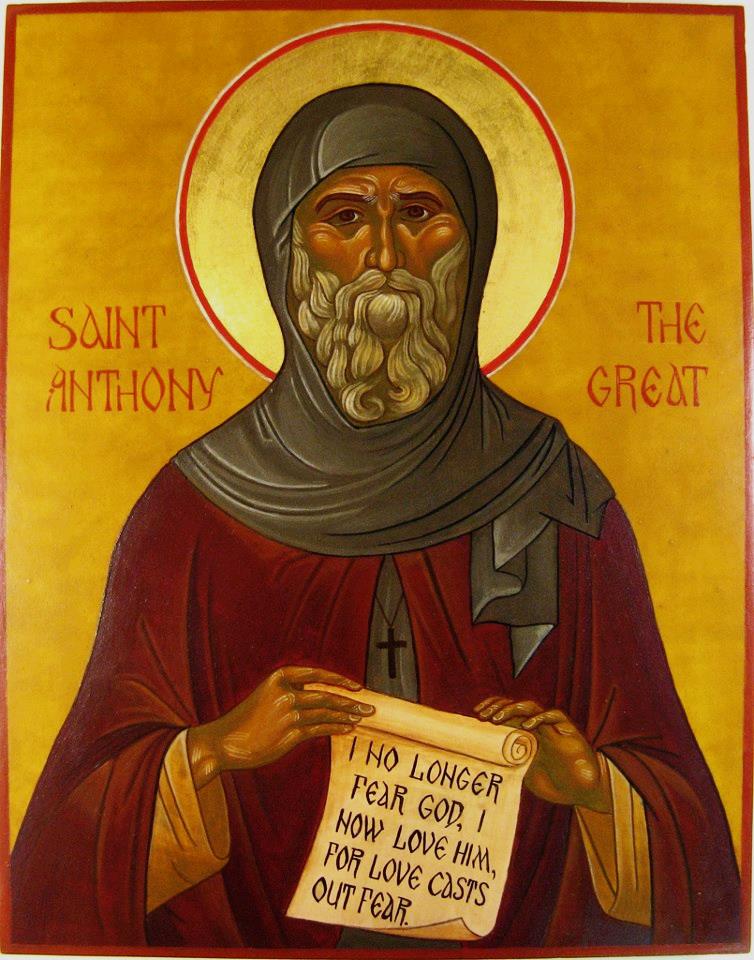
إن ظهور الحياة الرهبانية في مصر يُعد من أهم أحداث كنيسة الإسكندرية خاصة والكنيسة الجامعة عامة, ويعتبره بعض الباحثين ” أعظم هبات مصر للعالم”[3]. وإن لم يكن القديس أنطونيوس هو أول الرهبان ولا أول النساك, إذ سبقه إلى هذه السيرة القديس بولا الطيبى, الذي يشير إليه القديس أنطونيوس نفسه كمرشده إلى الحياة النسكية, إلاَّ أن أنطونيوس يُعتبر أب الرهبان ومؤسس الحياة الرهبانية[4].
ولا يُعتبر القديس أنطونيوس أشهر قديسي مصر فقط, بل وأيضًا واحد من أهم الشخصيات التي ساهمت في تطوير الرهبنة ونشرها في العالم أجمع. وحتى أثناء حياته كان يُعتبر أب كل الرهبان وأهم وجهة للزائرين سواء من داخل القطر المصري أو من خارجه. ولكن شهرته وأهميته للحياة الرهبانية يعودان في المقام الأول إلى كتاب سيرة “حياة وتدبير أبينا القديس أنطونيوس”:
التي كتبها القديس أثناسيوس الرسولي في شكل رسالة وأرسلها إلى الرهبان الذين في خارج مصر بعد سنوات قليلة من نياحة القديس أنطونيوس[6], إذ أنهم كانوا يبدون اهتمامًا صالحًا نحو الرهبان الذين يعيشون في مصر.
هذا العمل كتبه القديس أثناسيوس بناءً على رغبة هؤلاء الرهبان, ليس فقط لكي يظهر الاحترام اللائق بالقديس أنطونيوس, بل و أيضاً لكي يقدّم لهم سيرة القديس أنطونيوس كنموذج: “لأن حياة القديس أنطونيوس بالنسبة للرهبان تُعتبر نموذجُا يُحتذى في النسك”.
وهذه السيرة لا تتضمن فقط حياة القديس أنطونيوس, بل أيضًا بداية ظهور الرهبنة. ورغم أنه لا يمكن تحديد زمن معين لكتابة هذه السيرة, إلا أن الدراسات الحديثة تضعها بين عامي 356 و362م[8].
وعن مكانة سيرة القديس أنطونيوس في مجال كتابة سير القديسين يقول أستاذ الدراسات البيزنطيةHerbert Hunger هيربرت هونجر “إن سيرة القديس أنطونيوس لأثناسيوس الرسولي تُعتبر النموذج الأول من نوعه”[9], و يقول عنها كذلك الأستاذMarshall مارشال: “إن سيرة القديس أنطونيوس التي كتبها القديس أثناسيوس تعد عملاً كلاسيكيًا دينيًا, الذي قرأه كل من الشرق وكذاك الغرب الأوربي في ترجمة لاتينية. هذه الفلسفة المسيحية (يقصد بالفلسفة هنا سيرة القديس أنطونيوس) دفعت الكثيرين إلى التوجه إلى وادي النيل والصحارى, ونشرت الرهبنة في الولايات الغربية للإمبراطورية البيزنطية. إن حياة القديس أنطونيوس للقديس أثناسيوس تُعد النموذج الأول الذي اتبعه كُتاب سير القديسين اليونانيون بعد ذلك”[10].
وباستثناء عمل القديس أثناسيوس هذا فثمة مصادر أخرى تحمل أخبارًا عن حياة القديس أنطونيوس, نذكر منها على سبيل المثال: سيرة القديس بولا الطيبى وسيرة القديس هيلاريون اللتان دونهما القديس ﭽيروم, التاريخ اللوزاكى لبلاديوس أسقف هيلينوبوليس, تاريخ رهبان مصر المكتوب أواخر القرن الرابع الميلادي وكذلك التاريخ الكنسي للمؤرخ اللاتيني روفينوس[11].
وبالنسبة إلى عبارة القديس أثناسيوس عن أنطونيوس الكبير أنه ” لم يكن متعلمًا”:
“gr£mmata mn maqe‹n oÙk ºnšsceto”[12]
يعلّق المؤرخ الانجليزى E. Gibbon قائلاً “إن التأكيد على أمية أنطونيوس التامة قد قبلها كل من الكُتّاب القدامى والمحدثين, إلا أن تيلمونت Tillemont[13] يرجح أن القديس أنطونيوس كان يستطيع القراءة والكتابة باللغة القبطية, لغته الأم[14], وأنه كان يجهل فقط اللغة اليونانية”[15]. ويتفق معه في الرأي الأستاذ Gerard Garitte جيرار جاريت الذي يرى أن أنطونيوس لم يكن أميًا, وذلك ضد تقليد طالما تثبّت[16]. وحتى جهل أنطونيوس باللغة اليونانية لم يمنعه من تبنى الحجج الدامغة ضد الأريوسية أي الدفاع عن عقيدة التجسد بنفس منهج وطريقة القديس أثناسيوس. فسيرته التي كتبها القديس أثناسيوس تظهر رجلاً ذا عقل راجح, وحكمة إلهية, ونعمة ولطف[17], قادراً على مناقشة أمور عصره المختلفة, الفلسفية واللاهوتية والعقائدية[18], حتى ولو كان غير متعلّم. وكان إذا سأله أحد المتعلّمين عن ذلك يجيبه متسائلاً “ماذا تقول في العقل والآداب, أيهما أولاً, وأيهما سبب الآخر؟”, هل العقل سبب الآداب أم الآداب سبب العقل؟”. وكان إذا أجابه محدثه بأن العقل هو الأول, وأنه هو مبتدع الآداب, كان أنطونيوس يجيب: “إذن من لديه عقل راجح ليس في حاجة إلى الآداب”[19]. ويقول القديس أثناسيوس فى ذلك: “إن أنطونيوس وإن كان قد نال شهرةً فذلك ليس لأجل كتاباته, ولا لأجل حكمة عالمية, ولا لأجل فنه, بل لأجل طاعته لله”[20].
2 ـ رسائل القديس أنطونيوس:
إن مجموعة كبيرة من الكتابات المعروفة بنسبتها إلى القديس أنطونيوس نُشرت مرات عديدة منذ القرنين السادس عشر والسابع عشر, ولكن الغريب أن هذه الكتابات لم تجذب تقريبًا الانتباه إليها, والسبب في ذلك هو أن جزءً كبيرًا منها موجود فقط باللغة العربية, أو مُترجم إلى اللاتينية عن العربية, على حين أنه تُنسب إلى القديس أنطونيوس سبعة رسائل, محفوظة في مخطوطة من الدير الأبيض بسوهاج, ولها عدة نسخ باليونانية واللاتينية والجيورجية والسريانية, بالإضافة إلى ذلك توجد أقوال لأنطونيوس وتعاليمه في بستان الرهبان[21].
إن صحة وأصالة هذه الرسائل السبعة لم تصبح يومًا مثار اتفاق الجميع, والسبب في ذلك هو المخطوطات التي تضعنا في هذه المشكلة. فمن النسخة القبطية تبقت فقط شذرات, ومن السريانية الرسالة الأولى, والترجمة اللاتينية, التي قام بها Valerius de Sarasio، بها كثير من الغموض, وكذلك اليونانية بها الكثير من النقص. وأكمل نسختين هما العربية والجيورجية[22].
والمصادر التي تتحدث عن سيرة القديس أنطونيوس تشير إلى هذه الرسائل التي كتبها القديس إلى جهات كثيرة, منها رسالة إلى قسطنطين الكبير وأولاده, وأخرى إلى الأسقف الأريوسي غريغوريوس الكبادوكى, وثالثة إلى أديرة القديس باخوميوس, ورابعة إلى فلاكيوس أحد موظفي الإمبراطور وأحد مؤيدي بدعة أريوس[23] وأخيرة إلى القديس أثناسيوس الرسولي[24].
وقد نشر Valerius de Sarasio في “الباترولوجيا جريكا” مجلد 40 رسائل القديس أنطونيوس السبعة في ترجمة لاتينية على أساس النص اليوناني, وعنوانيها كالتالي:
إلى أخوتي
Epistula I, ad fraters suos
إلى رهبان أرسينوى
Epistula II, ad Arsinoitas
إلى رهبان الأسقيط
Epistula III, Scitis
إلى المنعم عليهم المُكرّمين
Epistula IV, Charissimis et honorabilibus
إلى أبنائي الأعزاء الإسرائيليين
Epistula V, Delictissimis natis, filiis Israelitis[25]
غير مشار إلى من كُتبت
Epistula VI
إلى جميع أخوتنا الأعزاء
Epistula VII, Omnibus delictissimis fratribus[26]
وثمة رسالة أخرى تُنسب إلى القديس أنطونيوس موجهة إلى ثيؤدوروس رئيس رهبان طابينيسا, وقد حُفظت هذه الرسالة ضمن كتابات القديس أمونيوس, مؤداها هو أن الله يظهر رحمة لعابدي يسوع الحقيقيين حتى وإن سقطوا, طالما أنهم يتوبون عن خطاياهم بصدق[27].
نُشرت فى الباترولوجيا جريكا مجلد 40، عشرون رسالة تُنسب إلى القديس أنطونيوس, نُشرت جميعها باللاتينية وبعض هذه الرسائل يُشتبه في صحة نسبتها إلى القديس أنطونيوس[28]، وقد تُرجمت هذه الرسائل إلى العربية عن الإنجليزية ونشرها مركز دراسات الآباء بالقاهرة على جزأين[29].
3ـ أدلة من عدة مصادر على صحة نسب الرسائل للقديس انطونيوس
إن صحة نسب هذه الرسائل وأصالتها إلى القديس أنطونيوس ـ مثل غيرها من كتابات الكُتّاب المسيحيين القدامى ـ قد فحصها الكثيرون من المهتمين بالدراسات الآبائية في القرن الأخير. فالبعض يراها نظرية جدًا لأن يكتبها واحد مثل أنطونيوس, وآخرون يعتبرونها أصيلة جدًا ويستخدمونها كمصادر لحياة وأعمال القديس أنطونيوس[30]. ولكن على أساس عدة مصادر أخرى نستطيع أن نبرهن على أن رسائل القديس أنطونيوس أصيلة, وأن المعلومات التي تشير في سيرة القديس أنطونيوس إلى أنه لم يتلق أي نوع من التعليم يتيح له كتابة مثل هذه الرسائل, ليست ذات قيمة.
والأدلة على أن القديس أنطونيوس قد كتب بالفعل هذه الرسائل نجدها في عدة مصادر قديمة نذكر منها:
1ـ ”عن مشاهير الرجال” De Viris Illustribus
في كتابه المؤرخ له بعام 392م, يشير القديس ﭽيروم إلى أن ” الراهب أنطونيوس, الذي دون سيرته أثناسيوس أسقف مدينة الإسكندرية, في كتاب ضخم, قد أرسل إلى عدة أديرة في مصر سبعة رسائل مكتوبة باللغة المصرية (القبطية), وقد تُرجمت إلى اللغة اليونانية”:
«Antonius monachus, cujus vitam Athanasius, Alexamdrinae urbis episcopus, insigni volumine prosecutus est, misit Aegyptiace ad diversa monasteria apostolici sensus sermonisque epistolas septem, quae in Graeciam linguam translatae sunt »[31].
ويُعتبر القديس ﭽيروم هو الكاتب الوحيد الذي أشار حرفيًا إلى هذه الرسائل, على أساس أنه كانت له علاقات حميمة مع رهبان مصر الشيء الذي يرجح أنه استقى منهم هذه المعلومات مباشرةً[32]، أو كما يشير كواستنQuasten، يبدو أنه قد قرأها ليس بالطبع في لغتها التي كُتبت بها أو أملاها فيها القديس أنطونيوس, بل باللغة اليونانية[33].
2ـ ” حياة أنطونيوس ” Vita Antonii
يقول القديس أثناسيوس عن أنطونيوس: “إن شهرته قد وصلت إلى الملوك أيضًا, لأن الأوغسطس قسطنطين وأولاده الأوغسطس قسطنطيوس والأوغسطس قنسطانس عندما علموا بأخباره كتبوا إليه كأب, وكانوا يتمنّون لو تصلهم رسائل منه[34], أما هو فكان لا يريد أن يقبل هذه الخطابات منهم, قائلاً إنه لا يعرف بماذا يرد على مثل هذه الرسائل. ولكن عندما حثه الرهبان على ذلك قائلين إن الملوك مسيحيون، سمح بأن تقرأ الرسائل عليه, ورد عليها”[35].
3ـ تاريخ الأريوسيين لأثناسيوس الرسولىHistoria Arianorum Athanasii :
” ذات مرة كتب الأنبا أنطونيوس من الجبل هكذا….[36].
أما فيما يتعلق بزمن كتابة هذه الرسائل فانه يُؤرخ لها بعامي 340 و 350م[37], ولم يكتبها هو بنفسه بل أملاها على آخرين باللغة المصرية[38].
4 ـ تعليم القديس انطونيوس من خلال رسائله
أحد الباحثين القلائل الذين اهتموا بدراسة رسائل القديس أانطونيوس الكبير هو د.صموئيل روبنسون أستاذ التاريخ بجامعة لوند بالسويد, الذي قام بتحليل الرسائل ودراسة نسخها المختلفة وخلص إلى أن:
1 ـ الرسائل كتبت باللغة القبطية, وبهذا ’يعد أنطونيوس أول كاتب قبطي.
2 ـ أصالة الرسائل وصحة نسبها إلى القديس أنطونيوس قد اعترف بها الكثيرون, وهذا كافٍ لدحض الرأي القائل بأن أنطونيوس, الراهب المصري, كانت تنقصه الثقافة.
3 ـ محتوى الرسائل يوضح أن أنطونيوس كان حقًا عارفًا بالأفلاطونية, ومتأثرًا بتقاليد مدرسة الأسكندرية وعلى رأسه كليمندس وأوريجينوس[39].
وطبقا لدراسة د. روبنسون فإن محتوى رسائل القديس أنطونيوس هو كالتالي:
الرسالة الأولى تختلف عن باقي الرسائل السبعة, فهي ليست رسالة تقليدية بل يمكن أن نطلق عليها ” مقدمة في الحياة الرهبانية”. فيها يركز القديس أنطونيوس على نقاوة العقل والنفس والجسد, ويقدم توجيهات دقيقة إلى الرهبان المبتدئين[40]. وما نجده في هذه الرسالة يعد حقًا مقالاً منظمًا عن التوبة والنقاوة. فبعد وصف الطريقة التي بها يدعو الله الناس إلى التوبة يصف القديس أنطونيوس عمل روح التوبة في الإنسان, وكيفية التأثير على عقل الإنسان ونفسه وجسده. هذا التعليم يخص التوبة العملية لكل عضو من أعضاء الجسد. وليس ثمة إشارة فى هذه الرسالة إلى تاريخ الخلاص, ولا إلى إلوهية المسيح ولا إلى الأخرويات.
قبل تحليل نقاوة كل عضو من أعضاء الجسد الذي يُعد الموضوع الرئيسي للرسالة, يقدّم القديس أنطونيوس رأيه بخصوص “حركات الجسد” مقسمًا إياها إلى ثلاثة أنواع:
1 ـ حركات طبيعية, وهى التي تتحكم فيها النفس, وهى غير ضارة في ذاتها.
2 ـ حركات تنتج عن الطمع والشراهة.
3 ـ وحركات تنتج عن الشرور والأرواح الشريرة[41].
ثمة تقارب شديد بين تعليم أنطونيوس هذا وما ورد في كتاب “عن المبادئ ” لأوريجينوس III.2.2-3, حيث يؤكد الأخير أن الشياطين ليست دائما هي المسئولة عن جميع الأوجاع والشهوات.
في الجزء الأخير من الرسالة يعلّم أنطونيوس كيف أن الإنسان يستطيع أن يطّهر أعضاء جسده, مبتدئًا من العين, ثم اللسان, فالبطن, فالأعضاء التناسلية, ثم أخيرًا الرجلين.
أما الرسائل من7:2 نجد أنه تربطهم معًا نفس البنية ونفس النصوص والاقتباسات. والتفسير الوحيد المقنع لذلك هو أن جميعها كتبها نفس الكاتب في نفس الزمن لنفس الغرض إلى نفس الأشخاص.
الموضوع الرئيسي لهذه الرسائل من 7:2 ما عدا الرسالة الرابعة هو ” تاريخ الخلاص” وحاجة الإنسان الماسة إلى المعرفة. والإرشادات الدقيقة إلى النسك والطهارة التي في الرسالة الأولى لا نجدها في الرسائل الستة الأخيرة. بعد التحية[42] يصف القديس أنطونيوس “تاريخ الخلاص” كتاريخ محاولات الله المستمرة لرعاية الإنسان. فالله أرسل موسى النبي بالناموس المكتوب ومن خلاله أسس “بيت الحق” أي الكنيسة. ولكن لا موسى ولا من جاء بعده من الأنبياء استطاعوا أن يتمّموا الخلاص. وإرسال الابن, طبقا لرأى القديس أنطونيوس, هو نتيجة عدم مقدرة كل هؤلاء على شفاء جُرح البشرية.
في الجزء الأول من “تاريخ الخلاص” هذا نجد أن نص الرسائل تقريبًا واحد, وكل الرسائل تحتوى على نفس العبارات. وإن كانت الفكرة العامة للرسائل الستة الأخيرة متطابقة فإن ثمة اختلافات في شكل الرسالة.
في الرسالة الثالثة يشير القديس أنطونيوس إلى معرفة النفس كطريق يؤدى إلى معرفة الله، وبالتالي إلى معرفة تدابيره في الخليقة. ويعبّر أنطونيوس عن فرحه بالرهبان الذين أعدوا أنفسهم للخلاص بمجيء يسوع, وكذلك عن عميق حزنه على الرهبان الذين يتاجرون باسم يسوع, هؤلاء الذين خارت قواهم فركلوا ميراثهم ومضوا.
الرسالة الرابعة تختلف كثيرًا عن الأخريات, حيث لا توجد أي إشارة إلى “تاريخ الخلاص”, بل تُعد مقالاً مختصرًا عن الفرق بين العبودية والتبني.
في الرسالة الخامسة ـ بعد الإشارة إلى افتقاد الله لخلائقه بواسطة خلاص المسيح ـ يحث أنطونيوس أبنائه على تقديم أنفسهم ذبيحة لله في كل قداسة, وعلى الجهاد والسهر لكي ما ينعشوا القديسين ويعطوا بهجة للملائكة وفرحًا ليسوع المسيح.
الرسالة السادسة بها جزء صغير عن الشياطين وحيلهم لإهلاك البشر, الشيء الذي لا نجده في بقية الرسائل. ولكن نفس العبارات المستخدمة في الرسائل الأخيرة والاقتباسات الكتابية نجدها هناك.
في الرسالة السابعة يحث أنطونيوس على إعداد النفس لملاقاة الخالق في قداسة, لأجل أن ابنه المحبوب قد مات لأجلنا أجمعين. أما عن الحرية فيقول أنطونيوس إن أول ما يحتاج إليه الإنسان العاقل هو أن يعرف أولا نفسه ثم يعرف أمور الله وهباته السخية, ثم أن يعرف أن كل خطية إنما هي غريبة عن طبيعة جوهره العقلي (الروحي). هذه الرسالة هي الوحيدة التي يشير فيها القديس أنطونيوس إلى الاضطرابات التي أحدثتها بدعة أريوس, و هذا يعد دليلا على أن القديس أنطونيوس قد كتب إلى جماعات رهبانية مختلفة يحثهم على الثبات فى مواجهة بدعة آريوس[43].
هذا وقد حلّل د.جيرارد جاريت[44] ما تحت يديه من تفاصيل, وكذلك النسخ المختلفة لرسائل القديس أنطونيوس, ولحياته التي كتبها أثناسيوس, ولأقوال الآباء, وكذلك للمعلومات التي تحويها برديات من القرن الرابع الميلادي عن الحياة اليومية في صعيد مصر, وكذلك أيضًا المعلومات الهامة التي تحويها النصوص الغنوسية, وأثبّت أن رسائل القديس أنطونيوس في نسختها الجيورجية ليست فقط أصلية بل وأيضا تُظهر لنا صورة شخصٍ مثقفٍ, على اتفاق تام مع اللاهوت الأسكندري في عصره[45].
وتعليقًا على عبارة القديس أنطونيوس: “الله واحد, والجوهر الروحاني واحد أيضًا”[46]
” Sed quoniam Deus unus exsistit,
et secundum sensualem essentiam in idipsum est unitas”
والتي تلخص المفهوم الأفلاطوني عن الله كأصل جميع الأشياء, يقول د. روبنسون إنها ترتبط في رسائل القديس أنطونيوس مع تعاليم الكتاب المقدس بخصوص فكرة “الخلق من العدم”Creatio ex nihilo[47]. فأنطونيوس يعترف بوضوح أن كل الأشياء وُجدت من العدم, فالشمس, والقمر, والنجوم, والسماوات, والرجال والنساء, جميعها صدرت عن أصل واحد[48].
وكأفلاطون و أوريجينيس كذلك أيضا أنطونيوس يرفض أي فكرة عن الإثنَيْنية Δυϊσμός فيما يتعلّق بفكرة أصل وطبيعة الخليقة. وحتى بالنسبة إلى المخلوقات الشريرة (الشياطين) فليس ثمة مصدرٌ آخر للوجود سوى الله. فالإنسان والملائكة والشياطين الذين خُلقوا ملائكة ثم سقطوا وصاروا شياطينًا، هذه المخلوقات كلها من مصدر واحد في جوهرها الروحى[49].
وعند أنطونيوس نجد أن أصل الشر هو الحرية التي وهبها الله لكل المخلوقات الروحية. في هذا نجده يتفق مع أوريجينوس الذي يرى أن لا شيء خُلق من البدء حسنًا أو شريرًا[50]. وحتى وإن لم يقدم أنطونيوس شرحًا وافيًا لآرائه فيما يخص نتائج السقوط الأول, وخلق العالم المادي, فإن التقارب الشديد بينه وبين أوريجينوس يمكن أن يُرى كخلفية لأفكاره. فطبقًا لرأى أنطونيوس عن العالم, نجد أن الإنسان لا يوجد وحده مع الله, بل يشاركه الوجود كل من الملائكة والشياطين. فهذه الخلفية لتعاليم أنطونيوس هي تعاليم أوريجينوس بخصوص الشياطين مع تأثره بالتقاليد اليهودية – المسيحية. فكل من أوريجينوس وأنطونيوس يرى أن الشياطين كمخلوقات روحية خلقها الله ككل الطبيعة العاقلة, وتتشارك في نفس الجوهر الروحي. وفى السقوط الأول أى السقوط الذى سبق سقوط الإنسان, فإن الأرواح التي ظلت مُطيعة لله هم الملائكة, والأخرى التي تمردت عليه صارت شياطينًا[51].
ــــــــــــــــــــــــــــــــــــــ
[1] أود أن أشكر السادة الأجلاء أعضاء مؤسسة القديس أنطونيوس للدراسات الآبائية لتفضلهم بنشر هذا المقال، و بما أنه أول بحث ينشر لى فإنى أهديه إلى الأستاذ ستاڤروس يؤانيس كوروسيس أستاذ الأدب البيزنطى بكلية الفلسفة – جامعة أثينا(اليونان) بصفته المشرف على رسالة الماجستير خاصتي و التى يعتبر هذا المقال جزءًا منها.
Τῷ ἀγαπητῷ μου Κυρίῳ Σταύρῳ Ἰώαννῃ Κουρούσῃ.
[2] الأستاذ سامح فاروق، هو مدرس مساعد بقسم الدراسات اليونانية واللاتينية بآداب القاهرة.
[3] N. H. Baynes – L. B. Moss, Βυζάντιο: Εἰσαγωγή στό Βυζαντινό Πολιτισμό, Ἑλληνική μετάφραση, Ἀθήναι 2001, P. 38
[10] N. H. Baynes – L. B. Moss, Βυζάντιο: (Ἡ Βυζαντινή Φιλολογία) P. 318.
[11] Nicene and Post- Nicene Fathers, 2nd Ser. Vol. 4, P. 556.
[12] Vita Antonii, PG 26, C. 841.
[13] L.S. Le Nain De Tillemont, Mémoires pour servir à l’Histoire Ecclésiastique des six premiers Siècles, Vol. VII. Paris, 1693-1712, P. 666.
[14] القديس أنطونيوس كان يتكلم اللغة القبطية, و كل الكتابات التي حُفظت له مترجمة ٌ عن القبطية, ويسميها أثناسيوس أيضًا اللغة المصرية قائلاً هكذا: ” ذات يوم جاء القديس أنطونيوس, و جاء إليه جميع الرهبان ليسمعوا منه كلمة, فقال لهم باللغة المصرية هكذا…”
[15] Ε. Gibbon, The History of the decline and fall of the Roman Empire, vol. 3, Pp. 589, 599.
[16] G. Garitte, Lettres de saint Antoine. Version Georgienne et fragments Copte, CSCO 148-149, Louvain 1955. vid. U. Zanetti, Du nouveau sur S. Antoine et ses Lettres, AnBoll 108 (1990) P. 278.
[17] Vita Antonii, NPNF, 2nd Ser. Vol. 72f, P. 607.
[18] NPNF. 2nd Ser. Vol. 4. Pp. 562, 563.
[19] Vita Antonii, NPNF, 2nd Ser. Vol. 72f, P. 607.
[20] Op. cit. 93f, P. 618.
[21] تراث الأدب القبطي, القس شنودة ماهر و د. يوحنا نسيم, مؤسسة القديس مرقس لدراسات التاريخ القبطي, القاهرة 2003, ص 180, 181. والرسائل السبعة هذه هي الكتابات الوحيدة لأنطونيوس التي’تعتبر أصلية وانظر كذلك:
Samuel Rubenson, The letters of St. Antony, Origenist Theology, Monastic Tradition and the Making of a Saint, Lund University Press, 1990, P. 20.
[22] V.Poggi, Recensiones: Samuel Rubenson, The letters of St. Antony, OCP 57 (1991) Pp. 247-248.
[23] J. Quasten, Patrology, vol. 3, Christian Classics, Inc., Westminster, Maryland, 1992, P. 150.
[25] كثيرا ما يطلق القديس أنطونيوس على الذين يراسلهم ” أولاد إسرائيل” أو” رجال إسرائيل القديسين” وذلك لأنهم يتبعون كلمات الرب التي قالها لإبراهيم exi de terra et de cognatione tua ” ” أي ” اخرج من أرضك ومن عشيرتك” (تك1:12), وذلك لأن المراسل إليهم كانوا من الرهبان. Vid. J. Quasten, Patrology, vol. 3, P. 151.
[26] Patris Antonii Epistolae VII, ex Graeco Latine redditae, interprete Valerio de Sarasio. PG 40, Epis. II, Ad Arsinoitas, C. 981.
[27] Ex epistola Ammonis Episcopi, PG 40, CC. 1065-1066.
[28] وهذه الرسائل العشرون التي تُنسب للقديس أنطونيوس لم يكتبها هو نفسه ولم يملها, بل جزء منها كتبه أحد تلاميذه وهو القديس أمونيوس, والجزء الآخر كاتبه مجهول.
Quasten, Patrology, vol. 3, P.151 انظر: ὉΜέγαςἈντώνιος, ΒίοςκαὶΠολιτείαὑπὸΜ. ἈθανασίουΠατριάρχουἈλεξανδρείας, 6η εκ. Ἐκδόσεις Β. Ῥηγοπούλου, Θεσσαλονίκη 1971, σ. 13. انظر أيضًا Antonii Magni Monachorum omnium Parentis Epistolae viginti, PG 40, CC. 999- 1066.
[29] المركز الأرثوذكسي للدراسات الآبائية, رسائل القديس أنطونيوس الجزءان معا (1-19) القاهرة 2004.
[30] Samuel Rubenson, The letters of St. Antony, Origenist Theology, Monastic Tradition and the Making of a Saint, Lund University Press, 1990, P. 35.
[32] Samuel Rubenson, The letters of St. Antony, P. 36.
[33] J. Quasten, Patrology, vol.3, P. 151.
[34] Vita Antonii, PG 26: 835-976b, C. 959, line 14ff.
[35] Idem, P. 956, line 26f.
[36]Historia Arianorum Athanasii, ed. H.G. Opitz, vol.2.1. Berlin: De Gruyter, 1940, ch.14, sec.1, line 1f.
[37] V. Poggi, Recensiones: Samuel Rubenson, The letters of St. Antony, OCP 57 (1991) Pp. 247-248.
[38] Ὁ Μέγας Ἀντώνιος, Βίος καὶ Πολιτεία, σ. 13.
[39] V. Poggi, The letters, OCP 57 (1991) Pp. 247-248. καὶ βλ. Samuel Rubenson, Origen in the Egyptian monastic tradition of the fourth century, Origeniana Septima, Leuven University press, 1999, Pp. 321, 323.
[40] Samuel Rubenson, The letters of St. Antony, P. 51.
[41] Ep. Ant. I.35-41. PG 40.
[42] رسائل القديس أنطونيوس من 2-7 تنقسم, بعد التحية, إلى قسمين, الأول مختصر عن تاريخ الخلاص, والثاني مجموعة من الإرشادات. من هذه الوجهة تتشابه رسائل القديس أنطونيوس مع رسائل القديس بولس الرسول وخاصة رسائله إلى رومية وأفسس والعبرانيين Vid. Samuel Rubenson, The letters of St. Antony, P. 55.
[43] J. Quasten, Patrology, vol.3, P. 151.
[44] G. Garitte, Lettres de saint Antoine. Version Georgienne et fragments Copte, CSCO 148-149, Louvain 1955.
[45] U. Zanetti, Du nouveau sur S. Antoine et ses Lettres, AnBoll 108 (1990) P. 278.
[46] PG 40, Ep. Ant. III, I, c. 997.
[47] De Principiis, I.1.6. و قارن كذلك Samuel Rubenson, The letters of St. Antony, P. 64.
[48] PG 40, Ep. Ant. V, IV, c. 996.
[49] Samuel Rubenson, The letters of St. Antony, P. 51.
[50] Idem, P. 67. n. 3, καὶ βλ. De Principiis I.5.3.
الغالبية العظمى لشهداء الكنيسة القبطية تعود إلى عصر دقلديانوس ومعاونيه، ومن خلفوه أيضًا، في الفترة ما بين سنة 303 إلى 313 ميلادية. ولذلك تعتبر كنيستنا القبطية بداية التقويم القبطي، والذي يُطلق عليه تقويم الشهداء، من العام 284 ميلادية، وهى السنة التي اعتلى فيها دقلديانوس عرش الحُكم. ويرجع ذلك لاعتبار أن عصره هو الأكثر دموية وصعوبة بين بقية فترات الاضطهاد في القرون الأولى للمسيحية. كما أن هذه الفترة قد أغنت تاريخ الكنيسة القبطية بالكثير من سير الشهداء القديسين.
يمكننا أن نتتبع في تقويم الكنيسة القبطية أربعة مجموعات من الشهداء: شهداء مصريين استشهدوا في مصر، وآخرين استشهدوا في بلدان أخرى، ومجموعة ثالثة وهم شهداء ليسوا مصريين استشهدوا في مصر، وأخيرًا مجموعة أخرى من الشهداء لم يعيشوا في مصر ولا استشهدوا على أرضها مثل الشهيد ديمتريوس من تسالونيكي. وسيختص حديثنا هنا فقط على الثلاثة مجموعات الأولى التي ذكرناها.
لقد كان المؤرخ يوسابيوس القيصري شاهد عيان لبعض هذه الأحداث القاسية والظروف الصعبة التي مرت على هؤلاء الشهداء، نجده يعقد مقارنة بين المصريين الذين استشهدوا في مصر وأولئك الذين استشهدوا خارج وطنهم. وبرغم أنه يصف العذابات المؤلمة، ويعبر عن إعجابه بشجاعة وثبات هؤلاء الشهداء على الإيمان المسيحي، إلاّ أنه لم يذكر لنا أسماء هؤلاء الشهداء الذين شاهد عذاباتهم. لقد عبّر عن انبهاره لثبات وصبر هؤلاء الأبطال، وقوة احتمالهم العجيب، الذين استشهدوا في صور بفنيقية[1]. الوحوش لم تلمس أجساد هؤلاء الشهداء، بل هاجمت الآخرين الذين كانوا يستحثونها من الخارج ويحفزونها (أى الوثنيين). وأيضًا نجد أن شبابًا صغيرًا في السن وأجسادهم غضة، برهنوا على ثباتهم وصلابة إيمانهم. لقد وقف أحدهم غير مرتعب، ثابتًا دون أن يتراجع على الإطلاق عن المكان الذي وقف فيه، منشغلاً في صلاة حارة لله، بينما تقترب منه جدًا النمور والدبب المتوحشة تكاد تلمس جسده، دون أن تفتح أفواهها[2]. وحينما تأكدوا بأن هذه الوحوش لم تقترب من هؤلاء الشهداء قتلوهم جميعًا بالسيف، وألقوهم في أعماق البحر[3].
أعداد الشهداء وأنواع العذابات في مدن مصر:
لا يوجد رقم محدد لأعداد الشهداء، بل أن الأعداد تختلف في كتابات الباحثين ما بين أرقام صغيرة وكبيرة جدًا[4]. ومع ذلك يمكننا أن نستنتج عن طريق البيانات التي بين أيدينا والمتعلقة بسير الاستشهاد المختلفة، وأيضًا من المصادر الأخرى المتنوعة أن أعداد الشهداء في الكنيسة القبطية هى عشرات الآلاف. فلقد اجتازت آلام هذه الأحداث مدن كاملة. فمثلاً قتل الوالي أريانوس كل المسيحيين في مدينة اسنا (Λατόπολη)، وهؤلاء كانوا مع أسقفهم أمونيوس في الدير الذي أقامه في أحد الجبال خارج المدينة، وفيه كان يختلي للعبادة عدة أيام في كل أسبوع. وحينما قاد أريانوس حملة على هذه المدينة كان مسيحيوها مجتمعين كلهم هناك لأجل تكريم أحد القديسين. وفي الطريق إلى الدير كان الجنود يقتلون أى مسيحي يقابلهم. وحينما رأى المسيحيون أريانوس كانوا يعلنون إيمانهم وكان نتيجة ذلك هو قتل كل المسيحيين، الأطفال والكبار، الرجال والنساء. لقد حاول أريانوس دون جدوى أن يثني الأسقف عن الإيمان المسيحي وأن يقدم التكريم للأوثان. وفي نهاية الأمر ألقى الجنود الأسقف في النيران، دون أن يحترق جسده على الإطلاق[5].
ونفس المصدر الذي قدم لنا تفصيلاً عن الأحداث التي جرت لشعب مدينة اسنا وأسقفها أنبا أمونيوس يحدثنا عن إعداد وتجديد المواضع الخاصة برفات هؤلاء الشهداء، والذي تم على يد الملكة هيلانة أم قسطنطين الكبير. يتكلم المصدر عن أن هذا المكان الذي يحوي رفاتهم يُقدر بنحو ثمانين فدانًا، وأن رفات الشهداء التي وُضعت فيه كانت بلا حصر، وذلك حين قارن هؤلاء الشهداء مع شهداء مدينة أخميم (Πανόπολη)، والتي كان عدد شهدائها ثمانية آلاف وأربعة وأربعون[6]. ومن هنا يتضح كيف أن عدد الشهداء في مدينة اسنا كان كبيرًا جدًا.
وفي مدينة إنصنا (Αντινοόπολη) استشهد خمسة آلاف وثمانمائة شهيد مع أسقفهم أباديون[7]. وفي مدينة أسيوط (Λυκόπολη) نجد أن عددًا كبيرًا من المسيحيين جاهروا بالإيمان وكان نتيجة ذلك أنهم نالوا إكليل الشهادة[8]. لقد حاول يوسابيوس أن يقترب من أعداد الشهداء المصريين فكتب بأنهم كانوا ألوف من الرجال والنساء والأطفال[9].
في وصفه لشهداء مصر يتعجب يوسابيوس من صبرهم على العذابات، مؤكدًا على أن ذلك هو من أجل تعاليم مخلّصنا. ومن ضمن هذه العذابات المتنوعة نجد أن البعض قد أُلقوا في النيران بعد كشط أجسادهم وجلدهم. والبعض الآخر أُغرقوا في البحر، والبعض ماتوا من شدة هذه العذابات ولم تتحملها أجسادهم. لقد قدم البعض رؤوسهم بشجاعة والبعض مات جوعًا. لقد صُلب بعضهم بالطريقة المعتادة وبعضهم الآخر بطريقة عكسية أى أن رؤوسهم منكسة إلى أسفل، وبدون طعام حتى الموت[10].
لقد خص يوسابيوس أيضًا شهداء طيبة بشرح منفصل، بعدما تكلّم عن نضال المصريين. وكانت طيبة هى أحد الأقاليم الثلاثة التي تتكون منها مصر. يجد يوسابيوس أن الكلمات عاجزة عن وصف العذابات التي تكبدها الشهداء في طيبة[11]. فبدلاً من المناجل كانت تستخدم المحار في كشط الأجساد وهو ما كان يسبب ألمًا أشد. وكانت النساء تُمتهن كرامتهن أثناء تعذيبهن مما كان يسبب الخجل الشديد لهن. هناك أيضًا طرق قاسية جدًا كانت تستخدم مع بعض الشهداء، إذ كانوا يوثقون أطراف أجسادهم مع بعض فروع لأشجار ضخمة، بعدما يقربونها لبعضها البعض عن طريق ماكينات خاصة، ثم بعد ذلك يتركون هذه الفروع كي تعود إلى وضعها الأصلي، بهذه الطريقة تتمزق أعضاء الجسد في الحال. وهنا يجب أن ننتبه إلى أن أعداد الشهداء يجب أن يكون كبيرًا أيضًا في طيبة، لأن هذه الأحداث كانت تستمر لأعوام طويلة، كما أن أعداد الشهداء في كل يوم كان يتراوح بين عشرة ومائة رجل، غير أعداد الأطفال والنساء. ولقد أورد المؤرخ يوسابيوس أحد التفاصيل التي تبين لنا أعداد هؤلاء الشهداء الذين كانوا ينفذون فيهم الحكم كل يوم في طيبة. يذكر يوسابيوس أن حدّ السيف قد ضعف من كثرة استخدامه، وإذ ضعف انكسر، كما أن قوى منفذي الأحكام قد وهنت فكانوا يتبادلون الواحد مكان الآخر لكي يستريحوا من شدة التعب[12].
لقد كان من العجيب حقًا أنه برغم كل هذه العذابات المرعبة واللا إنسانية فإن مسيحيي طيبة كانوا في شدة الحماس والنشاط والغيرة[13]. فبمجرد أن يتم الاعلان عن القرار النهائي بإعدام أحد هؤلاء، كان يندفع الباقون نحو كرسي القضاء مقدّمين اعترافهم بالإيمان المسيحي بدون خوف من الموت، بل أكثر من هذا نجدهم يتقبلون الحكم بالموت وهم فرحين مترنمين ومتهللين ومقدمين الشكر والتسبيح لله[14].
كان محتوى إيمانهم واعترافهم يتم التعبير عنه بكلمتين “أنا مسيحي”. وهاتين الكلمتين القصيرتين كانتا تلخصان وتشرحان كل شئ، لقد كانوا يجيبون حينما يسألونهم عن أسماءهم بأنهم مسيحيين، فلقد كانوا يسرعون بذكر إيمانهم بالمسيح، مفضلين ذلك على أن يذكروا أسماءهم الخاصة. فلقد كان إيمانهم هذا محل فخرهم ومجدهم، وفي نفس الوقت هو السبب الرئيسي لإتهامهم بأبشع الإتهامات والوشاية بهم، وبالتالي تعرضهم للعذابات والآلام المتنوعة.
لقد كان الوثنيون يُظهرون أو يتظاهرون بالأسف من أجل حياة الشهداء، على الرغم من أنهم كانوا يعتبرونهم مجانين، لأنهم يقدمون حياتهم غير مبالين بالموت. لقد كانوا أيضًا متعجبين جدًا بسبب شجاعة الشهداء وإقدامهم[15]. من بين الشهداء نجد أسماء كثيرة لأشخاص كانوا في مواقع عليا أو من أصول نبيلة، والذين لم يبالوا بموقعهم الاجتماعي، ولا بثروتهم أو علمهم. كمثال لهؤلاء نذكر فيلوروموس والذي يقال عنه إنه كان يشغل مركزًا عاليًا في الحكومة الإمبراطورية بالأسكندرية. كذلك فيلياس أسقف كنيسة تمى[16]، والقديسة كاترينة[17]، والقديسة دميانة، وغيرهم الكثير. ولأجل هذا فإن كثيرين من الوثنيين تأثروا بهؤلاء وبسيرتهم وبسلوكهم، ولذا انضموا للمسيحية. ولذلك فإننا نجد أن كل السجلات والنصوص تقريبًا التي تخبرنا عن الشهداء وسيرتهم تتكلم عن اعتناق المسيحية من جانب مشاهدين وثنيين تأثروا بمعجزات حدثت أثناء الاستشهاد وبشجاعة الشهداء وثبات إيمانهم.
إن تاريخ الاستشهاد في فترة دقلديانوس لا يبدأ من وقت تطبيق منشورات أو قرارات الإمبراطورية ضد المسيحية أى من عام 303م، ولكن قبل هذا التاريخ بوقت كافٍ. ربما يعود ذلك مثلاً إلى عام 295م حينما بدأت بعض الإجراءات والمضايقات ضد جنود مسيحيين في الجيش[18]. ولهذا فإن أول ضحايا الاضطهاد كانوا من قادة الجيش، مثل الشهيد العظيم مارمينا العجائبي[19]. كذلك لدينا مثال الكتيبة الطيبية، وقد أُرسِلَت هذه الكتيبة لكي تساعد ماكسيميانوس في حملة لقمع اضطرابات كانت قد نشبت في فرنسا. وقبل القيام بمهامها طُلب من أفرادها طاعة الإمبراطور، وتقديم البخور للآلهة قبل حملته المرتقبة، وبعدما رفض هؤلاء الجنود هذه الأوامر ابتدأ الإمبراطور في التخلص من الجندى العاشر في الترتيب، كي يخيف الآخرين، ولكن عبثًا لم يستطع أن يثنيهم عن عزمهم وتمسكهم بإيمانهم. وهكذا استمر في قتلهم واحد تلو الآخر حتى أتى على هذه الكتيبة كلها.. ومن هذه الكتيبة هناك أسماء لامعة مثل القديس موريس وأسماء أخرى منتشرة في دول أوربا كسويسرا وألمانيا وفرنسا وإيطاليا[20].
لقد أرسل الأسقف فيلياس رسالة إلى رعيته في تمى من داخل سجنه بالأسكندرية. من هذه الرسالة يتضح العمل الرعائي للأسقف تجاه رعيته في ظروف وأيام الاضطهاد الصعبة، ولقد كان هو نفسه ينتظر الاستشهاد في ذلك الوقت. لقد كتب لرعيته كلمات ممتلئة تشجيعًا، يصف فيها ثبات المسيحيين في الأسكندرية أمام تهديدات حراسهم المتعددة.
لقد واجهوا بكل بسالة وعزم، وفضيلة أيضًا، هذه الأهوال التي واجهتهم، وألوان التعذيب التي تفنن المضطهدين في استخدامها معهم، وأيضًا سخط المشاهدين وهياجهم واعتداءاتهم. وبعد العذابات الشديدة التي كان يجتازها هؤلاء الأبطال، كانوا يتركونهم بدون أى رعاية كما لو كانوا غير موجودين.
والبعض منهم كانوا ينالون جرعات أخرى من العذابات، بعدما يكونوا قد أمضوا النهار كله وهم يقاسون الكثير منها. فيمددون أرجلهم على آلة خشبية، ويضعونها في ثقوب، وهم عاجزون عن أن يقوموا عن هذا الوضع، نظرًا لجراحاتهم التي تكون قد امتلأت بها أجسادهم، نتيجة لجلدهم على كل الجسد[21]. لقد كانت لديهم الفرصة أن يتخلصوا من الآلام والموت، إن شاركوا في الذبائح، أو حتى لمسوا فقط هذه الذبائح، ولكنهم كانوا يرفضون هذه الحرية البغيضة الزائفة، مفضَّلين أن يركضوا للموت فرحين، كي لا يعبدوا إلهًا آخر. لقد أوجز يوسابيوس، بعد نهاية هذه الرسالة، القانون الذي كان يُطبَّق على هؤلاء الشهداء، وهو أنهم كانوا يُعتبرون كأعداء في حرب[22].
1 تاريخ الكنيسة، يوسابيوس القيصري، ترجمة القمص مرقس داود 7:8.
2 تاريخ الكنيسة 4:7:8
3 نلاحظ أن كثير من أجساد الشهداء في اضطهاد دقلديانوس وأعوانه كانوا يُلقون في البحر أو في النار أو كانوا يتركونها للوحوش المفترسة كي تأكلها. نعتقد أن السبب في ذلك، بحسب دراستنا لهذه السير، يرجع إلى أن المضطهدين كانوا يخشون القوة المعجزية التي كانت بداخل هؤلاء الشهداء (والتي كانوا يطلقون عليها سحرًا) والتي ظهرت في حالات التعذيب، لقد كانوا يريدون أن تُمحى هذه الأجساد معتقدين أنه بذلك لا يستطيع هؤلاء الشهداء أن يجذبوا الوثنيين إلى المسيحية ولا أن يكونوا هم أنفسهم محل تكريم من المؤمنين. راجع أيضًا تاريخ الكنيسة 7:6:8
4 عن الاختلافات في أعداد الشهداء في هذه الفترة عامة انظر ديمتري تسامس، سجل شهداء سيناء، تسالونيكي 1989، ص17ـ18 (باللغة اليونانية).
5 عن الاستشهاد في مدينة اسنا، استخدمنا المخطوط 638 البطريركية القبطية، تاريخ 44، ورقة 90 وجه ـ 103 ظهر. وقد صدر هذا المخطوط كاملاً ونشر مع ثلاثة مخطوطات أخرى في طبعة علمية مع ترجمة فرنسية في كتاب شهداء مدينة اسنا، د. أنطون خاطر، القاهرة، أورشليم 1981. انظر أيضًا :
Delacy O’leary, The Saints of Egypt, London, New yourk 1937, pp 68-70.
6 مخطوط 638، تاريخ 44، 117 ظهر ـ 118 وجه (إصدار د. أنطون خاطر كما سبق).
7 انظر Coptic Encyclopedia, New Yourk, Toronto 5, 1551,
[8] R.Graffin, F. Nau, Patrologia Orientalis, 11, 762.
9 تاريخ الكنيسة1:8:8
10 تاريخ الكنيسة 8:8
11 تاريخ الكنيسة 9:8.
12 نفس المرجع السابق.
13 عن حماس الشهداء هناك دراسة قيّمة: Ι. κοτσώνη, Το ενθόυσιαστικόν στοιχείον εις την εκκλησία των μαρτύρων, Αθήνα 1952.
14 تاريخ الكنيسة 5:9:8.
15 يرى Dodds أن المسيحية استحقت أن تحيا وتستمر لأنها أعتبرت مستحقة لأن يموت أحد من أجلها. كذلك يرى أنه بالرغم من آراء ماركوس أوريليوس ولوكيانوس وجالينوس وكلسس إلاّ أنهم كانوا مبهورين من شجاعة المسيحيين أمام الموت والاستشهاد D E R. Dodds, Εθνικοί και χριστιανοί σε μια εποχή αγωνίας (ترجمة يونانية) 1995, p.203
16 استشهاد فيلياس إما أنه قد حدث في أواخر عصر دقلديانوس أو بعد اعتزاله بوقت قصير. انظر H. Musurillo, The Acts of the Christian Martyrs, Oxford 1979, p.x/vii. Π. χρήστου, Τα Μαρτύρια των αρχαίων χριστιανών, ΕΠΕ 30, 83
17 استشهدت في فترة إدارة ماكسيمينوس في الأسكندرية. ديمترى تسامس، سجل شهداء سيناء، ص46 الخ.
18 Γλαβίνα ، تاريخ الكنيسة جزء أول، تسالونيكي 1993، ص208 (باللغة اليونانية). تاريخ الكنيسة 1:4:8ـ4
19 غالبًا استشهد عام 296 Δετοράκης, Μηνάς ο Μεγαλομάρτυς ο άγιος του Μεγάλου Κάστρου, Ηράκλειον 1995, p.29
لقد كانت الإجراءات الأولية التي اتخذت من قِبَل الولاة تهدف إلى المساس بالكيان الكنسي كتنظيم. لهذا بدأت هذه الإجراءات بهدم الكنائس، والتخلص من الكتب المقدسة، وكذلك التخلص من الأكليروس ورؤساء الكنائس. لقد طلبوا من تيموثاؤس وهو قارئ في الكنيسة[1]، أن يسلم الكتب المقدسة التي لديه، وذلك بحجة من أريانوس الوالي أنه يريد أن يَعْلم ما بها من قوة. بالطبع رفض تيموثاؤس ذلك معتبرًا هذه الكتب إنها أبناؤه كمثل يجب أن يحافظ عليهم من الموت[2].
برغم أن الإضطهاد كان يسود كل أرجاء الأمبراطورية، إلا أن الشرق قد اجتاز آلامًا أكبر بكثير مما أجتازه الغرب[3]. لقد كانت المنشورات المطبَّقة واحدة في كل الأمبراطورية. لكن الاضطهادات كانت أخف في مكان عن مكان آخر، وذلك تبعًا للقادة الذين كانوا يشغلون إمارة هذه المقاطعات. ففي الشرق كانت تطبق القوانين بطريقة حرفية، بينما في الغرب كان يُطبق فيها روح القانون. لقد وقعت مصر في أيدي قاسية في فترة دقلديانوس، وأيضًا في فترة إمارة ماكسيمينوس. لقد عُرفت أسماء ارتبطت بعصر الإستشهاد في هذه الفترة مثل ارمانيوس، كولسيانوس، سوسيانوس، هيروكليس وبالطبع ساتريوس اريانوس[4]، وهم أشخاص طبقوا المنشورات الصادرة بحذافيرها. لهذا فإن مصر، وخاصة مصر العليا، كانت مكانًا مشهورًا ومعروفًا بالنسبة للإستشهاد ليس للمصريين فقط، وإنما أيضًا للمعترفين الذين أرسلهم الحكام من خارج مصر لكي تُنفذ فيهم الأحكام وتُمارس ضدهم العذابات المختلفة.
لقد أقترح رومانوس، وهو أب الشهيد بقطر، أن يُرسَل كلوديوس ابن بتولماوس، وهو من عائلة ملكية إلى أريانوس في أنصنا لكي يحاكم فيها بدلاً من أن يُرسل إلى بلده الأصلي أنطاكية[5]. ومن أنطاكية نعرف شخصية أخرى وهو باسيليدس، شخص ذو مكانة عالية في بلده، مع مجموعة من عائلته وأصدقائه الذين كانوا يرتبطون به[6]. لقد أُرسل هؤلاء إلى مصر للمحاكمة بناء على أوامر من الحكام. كما إننا نعرف حالات أخرى مختلفة مثل الشهيد أبادير والذي قاده السيد المسيح نفسه أن يذهب إلى مصر لينال إكليل الشهادة، كما جاء في المخطوطات القبطية والعربية[7].
بالرغم من القسوة التي كانت ظاهرة للعيان في معاملة الشهداء القديسين، إلا أنه كان يوجد رغبة من المضطّهِدين كي يرجع المسيحيون ويقبلوا مشاركتهم في الديانة الرسمية للدولة. ولهذا بذل القضاة كل ما بوسعهم كي يجذبوا هؤلاء المعترفين ويربحوهم. لذا فإننا نلاحظ من سجلات الإستشهاد وسير الشهداء ومحاكماتهم أن الحوار الذي جرى معهم من جانب القضاة كان طويلاً، وخاصة مع هؤلاء الذين كانوا في مكانة إجتماعية مرموقة أو في وظيفة من الوظائف العليا في الإدارة، كما هو في حالة الشهيد فيلياس[8]. لقد كانت الضغوط والعذابات النفسية عليهم أقسى من عذابات الجسد التي رأها المشاهدين. فلا يجب أن ننسى الضغوط التي كانت تلحق بهم من جراء التأثير على مشاعرهم نحو عائلاتهم والتي كانت تُستَخْدَم كوسائل للضغط عليهم، حتى يتركوا إيمانهم. لقد حاولوا مثلاً الضغط على تيموثاؤس عن طريق زوجته الشابة مورا[9]. وبالنسبة للأساقفة كانوا يستخدمون علاقة الأسقف ومحبته نحو رعيته كوسيلة للضغط. حتى الكتاب المقدس كانوا يستخدمونه بصورة خاطئة حتى يؤثروا على المعترفين؛ فيتساءلون مثلاً أليس المسيح هو الله، فكيف له أن يُصلب[10]؟ لقد أرسل ماكسيمينوس دايا رسالة ينصح فيها القضاة بأن يستخدموا التملق والنصح كوسيلة حتى يعرف المسيحيون إهتمام آلهة الدولة ورعايتها، وبذلك يعودوا إليها[11]. ومن هنا ندرك كيف يكون القرار بالنسبة لهؤلاء القديسين في ظل هذه الظروف الصعبة والجو المشحون وتحت كل هذه الضغوط. والأمر يكون أكثر صعوبة حينما يتعلق بمن هم في سن صغيرة، كما هو الحال بالنسبة للثلاثة عذارى الأخوات ثيؤكتيستا 15عامًا، ثيؤذوسيا 13عامًا، وأدوكسيا 11عامًا واللاتي استشهدن مع أمهن أثناسيا . لقد شعر القديس أباكير بالخوف لربما تتراجع الصغيرات ولا يتحملن العذابات بسبب سنهن الصغيرة. ولكنهن أبدين شجاعة كبيرة، كما لو كانوا يعذبون أجسادًا أخرى وليس أجسادهن[12].
أضطهاد ماكسيمينوس دايا:
لقد كان جاليريوس عدوًا دائمًا للمسيحية، ووجد هذا الإمبراطور من يساندونه في تنفيذ سياسته ضد المسيحيين في الشرق، وذلك في الفترة التي أعقبت اعتزال دقلديانوس العرش. وكان ماكسيمينوس دايا واحدًا من هؤلاء، والذي جعل صفحة الإضطهاد في مصر أكثر قتامة. قال عنه لاكتانتيوس، إنه لكي يشبع رغباته الشهوانية جعل إرادته الخاصة هي مقياس الحق[13]. لقد حكم مصر في الفترة من عام 305 وحتى هزيمته عام 313. وبحسب ما روى يوسابيوس القيصري فقد جعل هذا الطاغية الإضطهاد أكثر شدة وتحول بصورة أكبر ضد المسيحيين[14]. لقد وصف يوسابيوس بالتفصيل سلوكه المشين، فلقد فعل كل ما بوسعه لكي يجدد العبادة الوثنية في المقاطعات، ولقد طبق سياسات متشددة وظالمة. استخدم ماكسيمينوس كل وسائل التعذيب ضد الرجال وقادته شهواته إلى أفعال مشينة ضد النساء، ولكن هؤلاء فضلن أن يسلمن حياتهن للموت على أن يسلمن أجسادهن للنجاسة. لقد أرسل ماكسيمينوس بعض الشهداء إلى المحاجر والمناجم في أعمال اضطرارية، ولكن قبل أن يرسلهم كان يقطع إحدى أرجلهم ويقلع إحدى عينيهم[15]. وإذ لم تكفِ المحاجر في طيبة، كانوا يُرسلون إلى مناجم النحاس في فلسطين. ولدينا من هؤلاء سبعة وتسعون شهيدًا ممن قاسوا هذه الآلام. وهم أيضًا كانوا قد فقدوا العين اليمنى والرجل اليسرى قبل ذهابهم لتأدية هذه الأعمال الإجبارية[16]. وهناك أيضًا مائة وثلاثون نُقلوا إلى مناجم فلسطين وكليكية[17]. في عام 308 أرسل ماكسيمينوس رسائل إلى حكام المقاطعات وللقادة العسكريين، وأمرهم بإعادة بناء الهياكل الوثنية المتهدمة، لكي يجبروا الجميع رجالاً ونساءًا وأطفالاً أن يذبحوا للآلهة الوثنية. كما أمر أن يأكل الجميع من هذه الذبائح، وأيضًا أن يتم رش دماء هذه الذبائح على الأطعمة الموجودة بالأسواق. لقد وصل إصراره على عبادة الأوثان إلى درجة الأمر بأن يُرش هؤلاء الذين يستعملون الحمامات الشعبية العامة بدماء الذبائح أو بالبخور المستخدم في الهيكل. مثل هذه الأوامر لم يرض عنها الوثنيون أنفسهم بسبب تطرفها[18]. وبمرور الوقت كانت تزداد القسوة والشدة. لقد أستشهد ثلاثة مصريون وهؤلاء كانوا في البداية متطوعين ذهبوا إلى كليكية بإرداتهم لخدمة المعترفين هناك. هكذا أيضًا فإن الكثيرين ممن يُذكرون مع الشهداء الفلسطينيين كانوا مصريين[19]. قُتل من هؤلاء المعترفين أيضًا تسعة وثلاثون لم يقدروا أن يعملوا في المحاجر بسبب أعمارهم الكبيرة أو بسبب مرضهم، ومن الواضح أن هؤلاء كانوا أيضًا مصريين[20].
منشور ميلان وعودة السلام:
قبل أن ينتهي هذا الإضطهاد الذي لماكسيمينوس، تخلل عام 311 إصدار منشور جديد، وبحسب هذا المنشور توقف جاليريوس بصورة مفاجئة عن الإضطهاد. ينادي هذا المنشور بتطبيق سياسة التسامح مع الديانات الأخرى[21]، وفيه يطلب من المسيحيين أن يتضرعوا لإلههم لأجل سلامة الأباطرة والإمبراطورية نفسها، وألا يفعلوا شيئًا ضد النظام[22]. وهذا المنشور يُعد برهانًا على فشل الإضطهاد في تحقيق أهدافه، ويُعد هزيمة للوثنية نفسها، وأنتصارًا للمسيحية، وإنتصارًا لشهداء المسيح في الوقت ذاته.
لقد توافق ماكسيمينوس، ولكن ظاهريًا فقط مع هذا المنشور، مما يبين عداوته وشعوره الداخلي ضد المسيحية. فلم يستخدم أي وسيلة رسمية من شأنها أن تنقل هذا المنشور، وإنما اكتفى بالتوصية بذلك[23]. على أية حال تُرك المقيدون في الحبس أحرارًا، كذلك أيضًا عاد المعترفون من المحاجر مرة أخرى. بذلك تنسَّم المسيحيون الحرية وزال الضيق ولو لفترة زمنية قصيرة.
ولعل استشهاد القديس بطرس الملَّقب بخاتم الشهداء، وهو رئيس أساقفة الأسكندرية في ذلك الوقت، يؤكد ما قلناه بخصوص عداوة ماكسيمينوس ضد المسيحية وضد إله المسيحيين، كما يشير إلى المحاولة الأخيرة والجريئة له كي يقضي على المسيحية في مصر، والتي كانت غالبيتها في ذلك الوقت من المسيحيين[24]. لا يوجد من الأسباب ما كان يتطلب القبض على ق. بطرس والتخلص منه[25]. ربما تكون الأسباب هي تعاليمه وإهتمامه برعيته، ومقاومته للشعائر الوثنية، وهو ما يكون بذلك سببًا لغضب دقلديانوس[26]. ولكننا نعرف أن هذا القديس لم ينل الشهادة حينما كان دقلديانوس إمبراطورًا، ولكن في وقت متأخر في إدارة ماكسيمينوس. كما أن التقليد يربط بين إستشهاد ق. بطرس ونهاية الإضطهاد. وبالرغم من وجود اختلافات بين روايات الإستشهاد في النصوص التي تتكلم عن القديس بطرس[27]، إلا إنها تتفق على إنه كان يريد ألا يتعرض شعبه لأي مكروه بسببه، ولذلك ضحى بنفسه حتى ينجي شعبه، والذي كان مجتمعًا محيطًا بسجنه يريد أن ينقذه من أيدي منفذي الحكم. ومن أجل هذا سلَّم نفسه بصورة خفية إلى منفذي الحكم دون أن يراه الشعب[28].
من الواضح أن الإسترخاء في الأضطهاد من جانب ماكسيمينوس في شتاء عام312ـ313م ضد المسيحية لم يكن محل ثقة من جانب المسيحيين[29]. ولكن هزيمة ماكسيمينوس ومنشور ميلان كانا قد جلبا السلام للكنيسة بصورة نهائية. وبهذا أنطوت صفحة المضايقات الخارجية للكنيسة، وبدأت صفحة أخرى وهي الخاصة بشئونها الداخلية.
نستطيع أن نلّخص ملامح هذا العصر الجديد: لقد عادت حرية العبادة، وعادت اجتماعات المسيحيين دون خوف، كما عادت أيضًا ممتلكات الكنائس المغتَّصَبة[30]. وهكذا بدأت المسيحية رويدًا رويدًا تجد السلام، كما ساعد ذلك على نمو الكنيسة وإزدهارها. وإن كان ليسينيوس في وقت لاحق لم يحافظ على الإتفاق مع قسطنطين فخرج عليه محاولاً تجديد المضايقات مرة أخرى ضد المسيحيين في الشرق عام 322ـ323، ولكن لم تستمر هذه الإجراءات بسبب هزيمته من قسطنطين.
+++++++
[1] Acta Sanctorum, Mai I, 741.
2 لقد كان تيموثاؤس حينما قبضوا عليه وعذبوه متزوجًا حديثًا بمورا وكان قد مر على زواجه عشرون يومًا فقط.
3 قارن T.D. Barnas, Constantine and Eusebius, London 1981, pp.14, 28
4 لقد تحول أريانوس فيما بعد للمسيحية وقد تم ذلك بعدما حدثت معه معجزة ذُكرت في قصة إستشهاد فليمون وأبوللونيوس ( انظر Acta Sanctorum, Mart. I, 895-899).
[5] R. Graffin, F. Nau, Patrologia Orientalis, 17, 552-555.
[6] Delacy O’Leary, The Saints of Egypt, London, New Yourk 1937, P.18.
7 مخطوط سير قديسين 43 ص91 “Passion des ss. Abadir et Irai, P62
بكتالوج(Ugo Zanetti, Les Manuscrits de Dair Abu Maqar, Geneve 1989).
أنظر أيضًا Patrologia Orientalis 1,303
[8] ΕΠΕ, (سلسلة آباء الكنيسة باللغة اليونانية) 30,336-357.
[9] Acta Sanctorum, Mai I, 741-744.
[10] ΕΠΕ 30, 340, 344, 346.
11 تاريخ الكنيسة 9:9: 15.
[12] Bibliotheca Hagiographica Greace (BHG). 469, PG 87, 3677-3689.
13 لاكتانتيوس، موت المُضطهِدين، إصدار مطرانية بني مزار والبهنسا 2006، الفصل39، صـ98.
[14] Περί των εν Παλαιστίνη μαρτυρησάντων 4.1, PG 20, 1472c. تاريخ الكنيسة 14:8: 9
15 يعتقد المُضطهِدون أن هذه العقوبة عمل إنساني وأخف قسوة بالمقارنة بعقوبة الموت، أنظر تاريخ الكنيسة 12:8: 10.
21 سبب تطبيق هذه السياسة إما الفشل في الاضطهاد أو مرضه الشديد. أنظر
Α. Γλαβίνα, Ιστορία της Εκκλησίας , Ά, Θεσσαλονίκη 1995, P221.
22 تاريخ الكنيسة 17:8
Lactantius, De Mortibus Persecutorum, 34 (Ante- Nicene Fathers, vol. VII).
23أنظر تاريخ الكنيسة 2:9ـ6 ومنها يظهر كيف أن تطبيق سياسة جاليريوس الجديدة لم تتوافق مع كره ماكسيمينوس للمسيحية.
[24] W.H.C.Frend, Martyrdom and Persecution in the early church, Oxford 1965, P452.
25 يوسابيوس، تاريخ الكنيسة 6:9: 2.
26 يذكر ساويرس بن المقفع قصة عماد أم لطفليها في الأسكندرية، وأن هذا ما سبب غضب دقلديانوس ضد القديس بطرس. أنظر:
Corpus Scriptorum Christianorum Orientalium, Scriptores Arabica, IX (1906), 55-58.
27 في رواية قصيرة باللغة اللاتينية نجد إستشهاد القديس بطرس في السجن، بينما في رواية أخرى باللغة العربية نجد أن الاستشهاد تم خارج السجن. تتضمن النسخة العربية للإستشهاد أيضًا السماح للقديس بطرس بأن يخرج من حبسه قبل إستشهاده للصلاة عند قبر الشهيد القديس مارمرقس. أنظر:
Coptic Encylopedia, 6,1945.BHG. 1502. J.Viteau, Passions des Saints Ecaterine et Pierre d’Alexandrie, Barbara et Anysia, Paris 1897, PP 68-85.
[28] BHG. 1502. J.Viteau, 75-76 قارن T.vivian, St. Peter of Alexandria Bishop and Martyr, Philadelphia 1988, PP 44-45.
29 يوسابيوس، تاريخ الكنيسة 9:9: 13ـ15.
30 لقد حاول ماكسيمينوس بعد هزيمته أن يصدر منشورًا يمنح فيه الحرية الكاملة للمسيحيين، ولكن الوقت كان قد تأخر على ذلك المنشور وواضح انه لم يستفد أي شيء من ذلك. تاريخ الكنيسة 10:9: 7ـ15.
The Princetonians and Biblical Authority: An Assessment of the Ernest Sandeen Proposal
John D. Woodbridge and Randall H. Balmer
For some years now students of American religion have sought to understand better that elusive movement known as Fundamentalism.1 The publication of Ernest Sandeen’s Roots of Fundamentalism: British and American Millenarianism 1800–1930 (1970; reprint ed., Grand Rapids: Baker, 1978) constituted an important milestone in their enterprise. It provided the scholarly community with one of its most provocative and instructive interpretations of that movement’s origins.2 According to Professor Sandeen, the primary nineteenth-century roots of Fundamentalism were planted in the teachings of millenarianism (especially John Darby’s Dispensationalism) and in the instruction dispensed by the Old School Presbyterian teachers at Princeton Theological Seminary. In the second half of the century, Dispensationalists and Princetonians joined in a common cause: the desire to defend a high view of biblical authority against those who in their opinion were advocating inferior or defective perspectives.3 From contacts between these two parties, the Fundamentalist movement was born, having its numerical strength in the northeast.4
Sandeen’s interpretation of the origins of Fundamentalism prompted at least some commentators on American religion to abandon stereotypic evaluations. Authors of texts in American history had frequently described Fundamentalists in sociological terms, with scant reference to their theological concerns. Fundamentalists were portrayed as rural Americans who rejected “urban values.” They could not adjust to the significant social and intellectual changes that the twentieth century brought to the United States. In his well-known college text The American Nation: A History of the United States, John Garraty wrote, “Educated persons had been able to resolve apparent contradictions between Darwin’s theory and religious teachings easily enough, but in rural backwaters, especially in the southern and border states, this was never the case. Partly, Fundamentalism resulted from simple ignorance; where educational standards were low and culture relatively static, old ideas remained unchallenged.”5 In a certain measure Sandeen’s study disputed such appraisals.6 It summoned scholars to do more careful research concerning the theological factors that helped shape the Fundamentalist movement.
Several of the principal theses in Sandeen’s work have gained particular notice. While appreciating the richness of Sandeen’s fine-textured interpretation, Professor George Marsden of Duke Divinity School has engaged in polite debate with him. Marsden believes that Sandeen has overemphasized the importance of millenarian thought for the Fundamentalist movement.7 Marsden suggests that many roots nourished the tree that became Fundamentalism.8 Moreover he proposes that a correct methodology for analyzing Fundamentalism begins with an assessment of its manifestations in the 1920s; only when the 1920s trunk is carefully examined can one sort out the movement’s tangled roots.9 According to Marsden, Sandeen did not follow this procedure in his research; rather, he isolated the root of millenarianism from the history of nineteenth-century Evangelicalism without sufficient regard to what Fundamentalism represented in the 1920s.
While Marsden has critiqued these aspects of Sandeen’s work, many scholars have accepted without serious scrutiny another one of Sandeen’s interpretations: his analysis of the attitudes of nineteenth-century professors at Princeton Theological Seminary toward Holy Scripture.10 Professor Sandeen suggests that the Princetonians A. A. Hodge and B. B. Warfield engaged in doctrinal innovation by elevating the belief in the “inerrancy of Scriptures in the original documents” to the rank of a doctrinal commitment for some Presbyterians. They did so in a joint essay, “Inspiration,” published in 1881. Eventually their formulation spread through the ranks of Fundamentalists.11 The belief eventually took on great importance for conservative Evangelicals who did not comprehend that this “doctrine” they defended so stoutly was not only a doctrinal innovation of relatively recent vintage but also a betrayal of the teachings of Reformed Christians ranging from the Westminster divines to John Calvin himself. Given the import of Sandeen’s proposal, it is indeed odd that the interpretation has not come under closer scrutiny.
Scholars ranging from James Barr in his book Fundamentalism (1977) to Jack Rogers and Donald McKim in their study The Authority and Interpretation of the Bible (1979) have incorporated much of Sandeen’s discussion about the Princetonians in their broad criticism of conservative Evangelicals and “Fundamentalists.”12 Other members of the academic community at large have accepted Sandeen’s analysis.
Because his study did not receive what Sandeen evidently considered to be telling rebuttals, the author published the 1978 Baker edition without serious revisions: “The text of this edition is identical with that of the first except that typographical and factual errors in eight passages have been corrected” (from the preface).13 In the preface to the new edition Sandeen expressed the hope that a large group of “Fundamentalist pastors, seminary students, and laymen” might become acquainted with his book and therefore understand better their own backgrounds.14 His writing, then, did not lack for a missionary impulse.
In this chapter we will examine Sandeen’s contentions concerning the Princetonians’ alleged innovation of creating the doctrine of inerrancy in the original autographs. By focusing our attention on this one aspect of his interpretation, our task becomes more modest and more manageable. And yet it retains a certain significance, for the credibility of Sandeen’s basic interpretation depends in some measure on the accuracy of his analysis of the Princetonians’ views of Scripture. In the first section we set forth in broad strokes Sandeen’s proposal concerning the Old Princetonians’ views of Scripture. In the second section we present some specific criticisms of his proposal. And finally, in the third, we make some remarks about why a revision of his important interpretation might be appropriate. We contend that the subject of biblical authority in nineteenth-century America has not yet found its historian.
THE SANDEEN PROPOSAL
Professor Sandeen’s proposal is based on the premise that American Protestants did not have a well-considered doctrine of biblical authority before the second half of the nineteenth century. Writes Sandeen:
A systematic theology of biblical authority which defended the common evangelical faith in the infallibility of the Bible had to be created in the midst of the nineteenth century controversy. The formation of this theology in association with the growth of the millenarian movement determined the character of Fundamentalism.15
In this light Sandeen sees the emergence of one such well-defined doctrine of biblical authority at Princeton. He argues that Archibald Alexander (1772–1851), the first professor at Princeton Seminary, had not dogmatically stated that the Bible’s inspiration extends to words.16 Archibald Alexander’s student Charles Hodge (1797–1878) began to stress verbal inspiration, but still remained reticent about affirming biblical inerrancy dogmatically.17 In his Systematic Theology (1871) Charles Hodge minimized what import little errors might have on biblical authority by presenting his famous “flecks in the Parthenon” illustration.18 A. A. Hodge, Charles Hodge’s son, did not maintain this flexible stance. Buffeted by the findings of higher criticism and developmental science, A. A. Hodge (1823–1886), along with B. B. Warfield (1851–1921), advocated the doctrine of inerrancy in the original autographs in their joint article, “Inspiration” (1881).19 Writes Sandeen: “One could no longer dismiss them [errors] as had Charles Hodge—as flecks of sandstone in the Parthenon marble. Hodge and Warfield retreated.”20 Sandeen scored this retreat to “lost and completely useless autographs” as a calculated dodge.21 No one could ever demonstrate that the Bible was errant, because the original autographs had long since been lost. The Princetonians’ apologetic was constructed to be impregnable. In reality, it was built on shifting sands.
For Sandeen, the Princetonians’ formulation “inerrancy in the original autographs” represents a doctrinal innovation. Neither Calvin nor the divines at the Westminster Assembly, who were the standard bearers of the Reformed tradition, defended this formulation. Sandeen insists, “This doctrine [inerrancy in the original autographs] did not exist in either Europe or America prior to its formulation in the last half of the nineteenth century.”22 B. B. Warfield in particular departed from Reformed teachings by emphasizing the “external evidences” for the Bible’s authority rather than accenting the witness of the Holy Spirit within the believer to confirm that authority.23 Innovative though it was, this doctrine became a benchmark for Northern Presbyterians until the 1920s. It also became the essential ingredient of Fundamentalism’s teaching about biblical authority.24
A CRITIQUE OF PROFESSOR SANDEEN’S PROPOSAL
Professor Sandeen’s proposal, bold and trenchant as it is, falters at several points: (1) it presupposes a misconstrued version of the history of biblical authority in the Reformed tradition, (2) it presents a misleading portrait of the development of the doctrine of biblical authority at Princeton Theological Seminary during the nineteenth century, and (3) it tends to separate the Princetonians’ teachings about the infallibility of the original autographs from the wider context of American and European evangelical thought. Each one of these points deserves further elaboration.
TWO REPRESENTATIVES OF THE REFORMED TRADITION OR BIBLICAL AUTHORITY: WILLIAM WHITAKER AND WILLIAM AMES
To review the intricacies of Reformed thought concerning biblical authority in brief compass is a perilous if not impossible task.25 Perhaps we would be better served if we sample the thinking of two individuals who greatly influenced the theology of Anglo-Saxon Protestants concerning biblical authority. They are William Whitaker (1547–1595) and William Ames (1576–1633). By studying Whitaker and Ames, we will observe that the concept of complete biblical infallibility, what we today call biblical inerrancy, was no new creation of the late nineteenth century and that earlier Protestants who were not so-called scholastics advocated the position.26
Roman Catholic apologists acknowledged that William Whitaker’s Disputation on Holy Scripture (1588) constituted one of the seminal Protestant books about biblical authority. Nearly a century after its publication, the famous biblical critic Richard Simon (1638–1712) remarked in his Histoire critique du Vieux Testament (1678):
In addition, I have gone into more detail about the sentiments which Whitaker had of Bellarmine and other Jesuits, because that ought to serve as a key for understanding countless books which have been written thereafter by Protestants of France, England, and Germany against the books of Bellarmine.27
In the second half of the sixteenth century Bellarmine was the most influential Roman Catholic who disputed Protestant claims about sola Scriptura, and Whitaker was his chief opponent.28 Bellarmine apparently admired Whitaker so much that he kept the Englishman’s portrait in his study.29 Not well known to us today, Whitaker, a Cambridge professor, crafted the most extensive Protestant book on biblical authority in Elizabeth’s England.30 Moreover he was a very godly man, held in high esteem by his contemporaries.31
In his Disputation on Holy Scripture, Whitaker, who was known for his Puritan sympathies, affirmed his belief in complete biblical infallibility. He cited Augustine as an authority who had earlier maintained this same stance:
We cannot but wholly disapprove the opinion of those, who think that the sacred writers have in some places, fallen into mistakes. That some of the ancients were of this opinion appears from the testimony of Augustine, who maintains, in opposition to them, “that the evangelists are free from all falsehood, both from that which proceeds from deliberate deceit, and that which is the result of forgetfulness.”32
Whitaker suggested that, whereas Erasmus and perhaps even Saint Jerome had allowed for small errors due to “slips of memory,” “it becomes us to be so scrupulous as not to allow that any such slip can be found in scripture.”33 Whitaker continued:
For, whatever Erasmus may think, it is a solid answer which Augustine gives to Jerome: “If any, even the smallest, lie be admitted in the scriptures, the whole authority of scripture is presently invalidated and destroyed.”34
Whitaker denied specifically, for example, that Stephen had made an error in Acts 7:16:
Stephen, therefore, could no more have been mistaken than Luke; because the Holy Ghost was the same in Luke and in Stephen.… Therefore we must maintain intact the authority of Scripture in such a sense as not to allow that anything is therein delivered otherwise than the most perfect truth required.35
Whitaker, like Augustine, believed that “errors” in the biblical texts would constitute a telling blow against biblical authority. His own advocacy of complete biblical infallibility was straightforward indeed.
Nor was Whitaker a “scholastic,” basing his commitment to biblical authority on the cumulative impact of a well-structured rational apologetic. Certainly, Whitaker did set forth a detailed defense of sola Scriptura, against the claims of Bellarmine and Stapleton, who appealed to the added authority of the church’s “Tradition.” But like Calvin, Whitaker ultimately based his own commitment to biblical authority on the confirming work of the Holy Spirit:
These topics may prove that these books are divine, yet will never be sufficient to bring conviction to our souls so as to make us assent, unless the testimony of the Holy Spirit be added. When this is added, it fills our minds with a wonderful plenitude of assurance, confirms them, and causes us most gladly to embrace the scriptures, giving force to the preceding arguments. Those previous arguments may indeed urge and constrain us: but this (I mean the internal testimony of the Holy Spirit) is the only argument which can persuade us.36
Whitaker viewed himself as a Reformed theologian, faithful to Augustine and Calvin.
The Cambridge professor also argued that only those Scriptures that were immediately inspired by the Holy Spirit were truly “authentic”:
For authentic scripture must proceed immediately from the Holy Ghost himself … (2 Tim. 3:16); now Jerome’s translation is not divinely inspired: therefore it is not authentic scripture.37
Any conceivable error that found its way into the extant biblical text was due to the negligence of copyists:
These then are the passages which Bellarmine was able to find fault with in the originals; and yet in these there is really nothing to require either blame or correction. But, even though we should allow (which we are so far from doing, that we have proved the contrary) that these were faulty in the original, what could our adversaries conclude from such an admission? Would it follow that the Hebrew fountain was more corrupt than the Latin streamlets, or that the Latin edition was authentic? Not, surely, unless it were previously assumed, either that canonical books of scripture cannot be erroneously copied sometimes by transcribers.…38
The Cambridge professor held a position that could be fairly categorized as “complete biblical infallibility in the original documents.”
The Puritan William Ames, a philosophical Ramist, believed much the same way as did William Whitaker.39 In his Marrow of Sacred Divinity (1624, 1627, 1629), an influential text used at Harvard College in the seventeenth century, Ames set forth his stand about complete biblical infallibility:
Only those could set down the rule of faith and conduct in writing who in that matter were free from all error because of the direct and infallible direction they had from God.…
They also wrote by the inspiration and guidance of the Holy Spirit so that the men themselves were at that point, so to speak, instruments of the Spirit.…
But divine inspiration was present among those writers in different ways. Some things were altogether unknown to the writer in advance, as appears in the history of past creation, or in the foretelling of things to come. But some things were previously known to the writer, as appears in the history of Christ written by the apostles. Some things were known by a natural knowledge and some by a supernatural. In those things that were hidden and unknown, divine inspiration was at work by itself. In those things which were known, or where the knowledge was obtained by ordinary means, there was added the writers’ devout zeal so that (God assisting them) they might not err in writing.
In all those things made known by supernatural inspiration, whether matters of right or fact, God inspired not only the subjects to be written about but dictated and suggested the very words in which they should be set forth. But this was done with a subtle tempering so that every writer might use the manner of speaking which most suited his person and condition.40
Moreover Ames believed that the truly authentic Scriptures were the original “sources.”
The Scriptures are not so tied to these first languages that they cannot and ought not to be translated into other languages for common use in the church.
But, among interpreters, neither the seventy who turned them into Greek, nor Jerome, nor any other such held the office of a prophet; they were not free from errors in interpretation.
Hence no versions are fully authentic except as they express the sources, by which they are also to be weighed.…
God’s providence in preserving the sources is notable and glorious, for neither have they wholly perished nor have they been injured by the loss of any book or blemished by any serious defect—though today not one of the earlier versions remains intact.41
The Puritan Ames also held a position that could be categorized without essential distortion as complete biblical infallibility in the original autographs.
The stance of William Whitaker and William Ames on this matter is important. Both men predate the Westminster Assembly.42 Neither was apparently a so-called scholastic.43 Both saw themselves as faithful followers of Calvin, St. Augustine, and the teachings of Scripture about its own authority.
When Professor Sandeen claims that the concept of inerrancy in the original documents had not been entertained by Reformed or other theologians before the mid-nineteenth century, he apparently failed to consider the beliefs of Whitaker and Ames or, more generally, the intense debates between Roman Catholics and Protestants in the sixteenth century over the “authenticity” of the Vulgate and the authenticity of the biblical “originals.”44 He apparently overlooked the commitment of many of the early church fathers (see chapter 7 by Geoffrey Bromiley) and Reformers (see chapter 8 by Robert Godfrey) to complete biblical infallibility.45 It appears that Sandeen’s contention concerning the innovative character of the Princetonians’ beliefs needs serious qualification, if not recasting. Even these brief comments about members of the “Reformed tradition” allow us to affirm this.
THE NINETEENTH-CENTURY PRINCETONIANS AND BIBLICAL AUTHORITY
Sandeen’s proposal that the Princetonians as a group played a determinative role in promoting the doctrine of inerrancy in the original autographs also lacks persuasive force.46 Extensive research in nineteenth-century books and periodicals on the subject of biblical infallibility yields relatively little evidence of exceptional Princetonian influence on this point (save in Presbyterian circles). As we will see, the belief in the “infallibility of the originals” was commonly advocated by spokesmen of various communions. Non-Presbyterian Christians did not need to look to the Princetonians for particular guidance concerning this teaching.
It is further to be questioned why Sandeen places so much emphasis on the joint 1881 “Inspiration” article by A. A. Hodge and B. B. Warfield as a culminating point in the Princetonians’ doctrinal development.47 By his own account the clause about the autographs, a supposed innovation, had been introduced earlier by A. A. Hodge in the 1879 edition of his Outlines of Theology.
Citing a study by Presbyterian historian Lefferts Loetscher, Sandeen argues that the article “Inspiration” was the first occasion in which the “new views” were expressed and that “after this date the Princeton Theology took a much firmer position on the inerrancy of Scriptures.”48 If indeed Sandeen is correct, it is perplexing that A. A. Hodge and B. B. Warfield did not sense that they were embarking on some major doctrinal adventure. One searches in vain through their correspondence during this period for clear indications that the authors believed they were offering to the theological world, in Sandeen’s words, “a new formulation of the doctrine of the Scriptures.” The attacks on Scripture, particularly by Robertson Smith, are what they regarded as new, not their own theological posture.49
Sandeen sets the stage for the purported doctrinal innovation by making the following claim: “The problems raised by biblical criticism demanded a new formulation of the doctrine of the Scriptures” and that
the pressure of biblical criticism after 1870 became so strong that later Princeton scholars in reaction to that pressure made important modifications which moved the Princeton Theology still further from the reformed tradition.50
This leads him to the conclusion that “the Princeton doctrine of the Scriptures was refined and tightened in the face of growing critical opposition.”51 In a word, biblical criticism provoked the creation of the inerrancy-of-the-original-autographs hypothesis.
Attacks against Biblical Infallibility before 1870
Like several other studies, Sandeen’s analysis suffers because it does not adequately take note of the serious and diverse kinds of attacks against complete biblical infallibility (inerrancy) before the 1870s.52 From reading his proposal one might suppose that the Princetonians either did not keep abreast of these attacks taking place in Germany, England, and elsewhere or that they chose to ignore them until 1870 or so. Only when they awoke to this menace did they modify their theology to counter the pressures of higher criticism. This interpretation, however, runs counter to the Princetonians’ perceptions of their changing theological world. The very charter of Princeton Theological Seminary, adopted by the General Assembly of 1811 and reprinted at least five times throughout the century, includes the following statement under Article IV, “Of Study and Attainments”:
Every student, at the close of his course, must have made the following attainments, viz: He must be well skilled in the original languages of the Holy Scriptures. He must be able to explain the principal difficulties which arise in the perusal of the Scriptures, either from erroneous translations, apparent inconsistencies, real obscurities, or objections arising from history, reason, or argument.… Thus he will have laid the foundation for becoming a sound biblical critic.53
This statement summoned students to prepare themselves to defend the authority of the Bible against detractors in the second decade of the nineteenth century.54
Charles Hodge took leave of his responsibilities at the seminary from 1826 to 1828 to continue his studies in Germany. He became familiar—indeed conversant—with the critical theories circulating on the Continent.55 Back in Princeton, Archibald Alexander was only too aware of the trend of German scholarship. At the conclusion of a letter to Hodge, who was then studying in Europe, he penned the following:
My dear sir, I hope while you [are apart] from your earthly friends you will take care to keep the communication with heaven open! Remember that you breathe a poisoned atmosphere. If you lose the lively and deep impression of divine truth—If you fall into scepticism, or even into coldness, you will lose more than you gain from all the German professors and libraries. May the Lord preserve you from error, and all evil! You may depend upon any aid which my feeble prayers can afford. Write as often as you can! Do not be afraid of troubling me.56
A lecture by Hodge, entitled “Inspiration” and dated September 23, 1850, includes extensive refutations of the inspiration views of Samuel Coleridge, J.D. Morell, Thomas Arnold, and Schleiermacher. Special reference is made to the latter, whom Hodge refers to as “the Plato of modern Germany.”57 The writings of these thinkers worried the Princetonians and other American Evangelicals decades before they experienced discomfiture over Darwin’s Origin of Species and the Graf-Wellhausen hypothesis.58 And yet nowhere do we find in Sandeen’s study extended discussions devoted to Samuel Coleridge, J. D. Morell, and Thomas Arnold. These three thinkers, among others, caused considerable consternation for churchmen in Britain by their attacks against complete biblical infallibility in the first half of the nineteenth century.59 In his posthumously published Confessions of an Inquiring Mind (1841), Coleridge acknowledged that a commitment to complete biblical infallibility was widespread in England. He noted the remark of a “well-disposed” skeptic:
I have frequently attended meetings of the British and Foreign Bible Society, where I have heard speakers of every denomination, Calvinist and Arminian, Quaker and Methodist, Dissenting Ministers and Clergymen, nay, dignitaries of the Established Church—and still I have heard the same doctrine,—that the Bible was not to be regarded or reasoned about in the way that other good books are or may be.… What is more, their principal arguments were grounded on the position that the Bible throughout was dictated by Omniscience, and therefore in all its parts infallibly true and obligatory, and that the men, whose names are prefixed to the several books or chapters, were in fact but as different pens in the hand of one and the same Writer, and the words the words of God himself.60
Coleridge continued, “What could I reply to this?—I could neither deny the fact, nor evade the conclusion,—namely that such is at present the popular belief.”61 The author himself wanted to argue for a faith that comes through hearing—a living faith. This faith did not need to be bound to the letter of the Scriptures and its complete infallibility.62 For the Bible contains “all truths necessary to salvation.” It is not in every way the Word of God.63 Coleridge specifically criticized “bibliolatry” and the dictation theory of inspiration.64 He believed that many of his contemporaries advocated the latter view.
In a letter dated January 24, 1835, to Justice Coleridge (Samuel’s nephew), Thomas Arnold of Rugby commented about the explosive character of Coleridge’s writings on Scripture:
Have you seen your uncle’s “Letters on Inspiration,” which I believe are to be published? They are well fitted to break ground in the approaches to that momentous question which involves in it so great a shock to existing notions; the greatest, probably, that has ever been given since the discovery of the falsehood of the doctrine of the Pope’s infallibility.65
In this letter Arnold was referring to Coleridge’s criticisms of complete biblical infallibility.
In the 1840s several American theologians commented on the large following that Coleridge was attracting in this country. Noah Porter (1811–1892), professor of metaphysics at Yale College, penned a lengthy article entitled “Coleridge and his American Disciples” for the 1847 Bibliotheca Sacra. Porter noted the contemporaneity of Coleridge’s provocative analysis of biblical inspiration as spelled out in Letters of an Inquiring Spirit:
The questions involved in these Letters, are the great questions of the day. The whispers of thousands and tens of thousands of “inquiring spirits” plead with earnest intreaties, that they shall be fairly considered and fairly answered.66
Porter generally approved Coleridge’s theory of biblical inspiration but disputed some of his theological proposals. Moreover Porter devoted five pages of his essay to a taxonomical analysis of Coleridge’s many disciples.67
As late as a Princeton Review article of 1881, Charles Elliott struggled with the import of Coleridge’s Letters of an Inquiring Spirit for “absolute biblical infallibility.”
Thomas Arnold, whose son Matthew Arnold became a major personage in the world of letters during the Victorian era, also troubled certain Protestant spokesmen. Arnold did much to propagate Coleridge’s thinking about Scripture. Evangelicals found it difficult to criticize him because his own Christian piety could not be gainsaid.68 Matthew Arnold commented later on his father’s role in making Coleridge more palatable to Englishmen:
In papa’s time the exploding of the old notions of literal inspiration in Scripture, and the introducing of a truer method of interpretation, were the changes for which, here in England, the moment had come. Stiff people could not receive this change, and my dear old Methodist friend, Mr. Scott, used to say to the day of his death that papa and Coleridge might be excellent men, but that they had found and shown the rat-hole in the temple.69
Thomas Arnold, then, helped to undermine confidence in complete biblical infallibility.70
Some churchmen also balked at J. D. Morell’s Philosophy of Religion, in which the author attempted to introduce to his English readers the theology of Schleiermacher, including the German’s teachings about Scripture. Morell defined revelation as “the act of God, presenting to us the realities of the spiritual world.”71 He declared, “Inspiration is the especial influence wrought upon the faculties of the subject, by virtue of which he is able to grasp these realities in their fullness and integrity.”72 Morell’s definition of inspiration shifted its focus to an influence whereby the apostles were able to grasp revelation. Henry B. Smith observed that in this theory “the specific divine agency in respect to the production of the Scriptures is lost from view.”73 From the point of view of many Evangelicals, Morell’s perception of biblical inspiration was deficient.
So concerned were some American and English authors about the works of Coleridge, Arnold, Morell, and Schleiermacher that they specifically singled out their writings as foils for their own studies. Theodore Bozeman takes note of the crisis that Coleridge, Morell, and others provoked for Old School Presbyterians and particularly their “Baconian” presuppositions:
Then, during the 1830s, a fresh sense of intellectual emergency was created within Old School ranks by the emergence of an emphatically non-Baconian philosophical movement. Quickly replacing Unitarianism as the leading challenge to traditional belief was the new Transcendentalism, which troubled conservatives associated with J. G. Fichte, G. W. F. Hegel, Friedrich Schleiermacher, Samuel Taylor Coleridge, Ralph Waldo Emerson, J. D. Morell, and other figures. Presbyterian literature from the late 1830s teems with anxious and scathing references, book reviews, and full-scale attacks against what was called variously, “Pantheism,” “Rationalism,” and “Transcendentalism.”74
Bozeman could well have added that Old School Presbyterians were also concerned about these thinkers’ attacks on complete biblical infallibility.75
In his influential Inspiration of Holy Scriptures, Its Nature and Proof (1854) William Lee of Trinity College, Dublin, argued that a good number of Christians were uneasy about their views of inspiration and biblical infallibility because they identified their perspective with a mechanical dictation theory.76 He noted that Coleridge’s Letters of an Inquiring Spirit “has done more than any modern work to unsettle the public mind, in these countries, with respect to the authority of the Bible considered as a whole.”77 He complained that even “well-informed persons” were accepting the teachings of Morell about inspiration.78 In his own discussion of “inspiration” the author sought to allow for a greater element of human participation in the writing of Scripture. He believed that the arguments of Coleridge, Morell, and Schleiermacher would lose their force if complete biblical infallibility were associated with his concept of inspiration as “dynamic inspiration.”79
Charles Hodge of Princeton Seminary reviewed Lee’s volume favorably in two reviews in the Biblical Repertory (1857).80 Like Lee, he roundly criticized Coleridge, Morell, Schleiermacher, and others whose views concerning the Bible and biblical inspiration he found wanting. Speaking of Lee’s view of inspiration, Hodge commented:
This is the old orthodox doctrine of plenary inspiration. This is what the German writers and their followers in England and America stigmatize as “the mechanical theory.” This is the doctrine which Coleridge ridicules, and which Morell endeavors to refute. This is the doctrine which the whole school of Schleiermacher, in both its great divisions, the religious and the sceptical, represent as unphilosophical and untenable.81
At this date, Hodge apparently did not sense any overwhelming challenges stemming from ongoing “scientific studies.”82
In his Systematic Theology (1871) Charles Hodge argued that Coleridge simply did not understand what the church believes about inspiration:
Even a man so distinguished for knowledge and ability as Coleridge, speaks with contempt of what he regards as the common theory of inspiration, when he utterly misunderstands the real doctrine which he opposes.83
And Hodge critiqued Schleiermacher, Morell, and others on the same count.84
In his posthumously published study, The Human Element in the Inspiration of the Sacred Scriptures (1867), the American theologian T. F. Curtis echoed Lee’s analysis on several points. He viewed Coleridge and Arnold as those among others who had prompted much debate about biblical infallibility. Curtis wrote about Coleridge’s general influence:
Coleridge may be said to have broken ground in this subject in England, and his Confessions of an Inquiring Spirit, published after his death, have produced a greater effect morally among thinking Christians, than all he had published during his life.85
Curtis observed that Arnold of Rugby, “the Apostle of Christian culture in Young England in its best form”
openly exhibited a freedom from, and dislike to the current belief in the infallibility of the Inspiration of the Bible; while he foresaw in this, as he said, as great a shock to the feelings of Protestant Christendom as Roman Catholic Christianity had received three hundred years ago, from the downfall of the belief in the infallibility of the Church.86
Whereas Lee had discussed the human element in the inspiration of the Scriptures with a view to bolstering the concept of complete biblical infallibility, Curtis stressed the human element to demonstrate that the Bible was errant. He was very sensitive to the fact that his study challenged the common belief in complete biblical infallibility:
But the Protestant world must now open its eyes upon another Reformation, and learn not only that the Church is fallible, but that the Scriptures, especially of the Old Testament, though truly and properly to be venerated as holy, inspired and sacred documents of the Christian faith, are not therefore to be esteemed, especially in matters of current opinion, as science and history, absolutely infallible, but as having partly received their color from the ages in which they were produced, and from the sincere yet fallible opinions of holy men, moved by the Holy Ghost, who wrote them.87
Like Coleridge, Curtis believed that Christians could abandon an infallible Bible without overthrowing the faith.88 In fact their faith could withstand modern critics better if it were dissociated from an outmoded concept.
Professor Sandeen’s hypothesis that American Protestants had no “systematic theology of biblical authority which defended the common evangelical faith in the infallibility of the Bible” in the first half of the nineteenth century needs certain qualifications. Evangelicals did debate the mode of inspiration as they attempted to skirt the inconveniences of the dictation theory that Coleridge, Morell, and others had successfully exploited.89 But most Evangelicals did generally agree on the effects of inspiration: the Bible was completely infallible.90 In the Union Bible Dictionary (1839) prepared for a popular audience by the American Sunday School Union, the article “Inspiration (2 Tim. 3:16)” reads:
Nor is it necessary that the particular style and method of the writer should be abandoned. God may have wise purposes to answer in preserving this, while he secures, through his agency, an infallible declaration of his will. So that style, manner, etc., may be of the author’s own choice, provided the facts stated and the doctrines taught as of divine authority, are stated and taught under an immediate divine influence, without the possibility of error. And even if it should appear that the copies of such a book now in the world have suffered from the injuries of time, and the carelessness of transcribers and printers, so that inaccuracies and discrepancies of unessential importance might be detected, still if the substance of the book, if the grand system of truth of duty revealed, is evidently, as a whole, the result of such divine inspiration, it is to be received, and may be entirely credited as an inspired book.91
This description resembles William Ames’s discussion of inspiration in several ways. In addition, the article includes definitions of “inspiration of elevation” and “inspiration of suggestion,” pointing out that “all these various degrees or kinds of inspiration are supposed to occur in our Scriptures.” Interestingly enough, the editors of the Union Bible Dictionary claimed that “whatever could be regarded as sectarian by any denomination of evangelical Christians is, of course, scrupulously excluded.”92 That is, they assumed that Evangelicals generally concurred with this definition of inspiration as well as their other comments about doctrinal matters. Sandeen’s hypothesis that Evangelicals had “no systematic theology” of biblical authority before 1850 is a substantial exaggeration.93 It is his perception of their viewpoints based on his definition of systematic theology.94 Many (but not all) Evangelicals believed that these nineteenth-century Evangelicals did possess a satisfactory theology, even if they differed with other Christians about the mode of inspiration.
Moreover Sandeen’s contention that the Princetonians developed the doctrine of biblical inerrancy in the 1870s and 1880s to meet the challenge of biblical criticism simply does not accord with their earlier grave misgivings about various attacks against complete biblical infallibility (inerrancy) associated with what Charles Elliott called in 1881, the “subjective theory of inspiration” and linked to the names of Coleridge, Arnold, Morell, and Schleiermacher.95
Biblical Infallibility at Princeton Seminary: A Question of Development
In light of the above discussion we should study Sandeen’s supposition that the earlier Princetonians such as Archibald Alexander and Charles Hodge did not believe in the complete infallibility of the original autographs. We recall that Sandeen declares that Archibald Alexander, the first professor at Princeton Theological Seminary, did not dogmatically affirm verbal inspiration:
First, the Princeton theologians agreed that the “inspiration of the Scriptures extends to the words.” Archibald Alexander did not feel obliged to be dogmatic about the point, but after Charles Hodge adopted the position, no change occurred at Princeton regarding verbal inspiration.96
In truth, Archibald Alexander was quite dogmatic about his commitment to verbal inspiration and to complete biblical infallibility. He defined inspiration as
such a divine influence upon the minds of the sacred writers as rendered them exempt from error, both in regard to the ideas and words.
This is properly called plenary inspiration. Nothing can be conceived more satisfactory. Certainty, infallible certainty, is the utmost that can be desired in any narrative; and if we have this in the sacred Scriptures, there is nothing more to be wished in regard to this matter.97
Moreover Alexander was a proponent of biblical infallibility for the original autographs. In his 1836 Evidences he conceded that “some slight inaccuracies have crept into the copies of the New Testament, through the carelessness of transcribers.”98 Continuing this same line of reasoning, he claimed that “the Scriptures of the New Testament have come down to us in their original integrity, save those errors which arose from the carelessness or ignorance of transcribers.”99 In his 1831 review of Leonard Woods’s Lectures on the Inspiration of the Scriptures he was even more explicit in his allowance for copyists’ errors:
There are in the Bible apparent discrepancies which can easily be reconciled by a little explanation; and there may be real contradictions in our copies, which may be owing to the mistakes of transcribers. Now, when such things are observed, there should not be a hasty conclusion that the book was not written by inspiration, but a careful and candid examination of the passages, and even when we cannot reconcile them, we should consider the circumstances under which these books have been transmitted to us, and the almost absolute certainty, that in so many ages, and in the process of such numerous transcriptions, mistakes must necessarily have occurred, and may have passed into all the copies extant.100
For Alexander, therefore, inaccuracies of copies or versions in no way blemished the infallibility of the original texts of Scripture. Although he does not specifically use the phrase “original autographs” in his definition of inspiration, it is clear that Alexander’s theory encompassed that idea.101
Charles Hodge, Alexander’s student, also recognized the presence of errors in available biblical texts. In a discussion of discrepancies in the Bible he notes, “Many of them may fairly be ascribed to errors of transcribers” and adds that “they furnish no rational ground for denying [Scripture’s] infallibility.”102 Hodge also acknowledges the errors of transcribers (or “interpreters”) in his lecture notes on biblical criticism:
That the interpreters were not inspired is abundantly evident from the errors into which they frequently fell; evidently mistaking one word for another, and often not giving a sense consistent with the true meaning of the original Hebrew.103
A fuller elucidation of Hodge’s thoughts on the matter is found in his manuscript notes for a biblical criticism course. The introductory lecture, dated November 1822, contains the following:
When we remember the period which has elapsed since the Sacred writings were originally penned, the number of transcriptions to which they must have been subjected, the impossibility of transcribers avoiding many mistakes, and the probability that interested persons would intentionally alter the sacred text, it really becomes a matter of considerable concern to enquire how the Bible has sustained these dangers and in what state it has survived to the present day. It is vain to fold our arms in security and take it for granted that it has not been materially affected by these and similar causes, that a kind Providence has carefully preserved it. This assumption will neither satisfy the enemies of the truth nor its enlightened friends.104
In the first volume of the Biblical Repertory (1825), an influential journal that he edited, Hodge published an essay by C. Beck entitled “Monogrammata Hermeneutices N.T.” Beck, who cited the authority of previous German authors, pointed out the distinction between original autographs and copies and described the role of copyists’ errors:
The autographs appear to have perished early, and the copies which were taken, became more or less subject to those errors, which arise from the mistakes of transcribers, the false corrections of commentators and critics, from marginal notes, and from other sources.105
In a word, Charles Hodge was fully acquainted with the proposition that there were errors in the copies of the Scriptures and that the original autographs had been lost, as European scholars had also stated.106
Moreover Sandeen’s suggestion that Charles Hodge treated lightly alleged “errors” in the Scriptures is not an accurate appraisal of the Princetonian’s beliefs. Sandeen attempts to sustain his contention by citing Hodge’s “flecks in the Parthenon marble” illustration:
The errors in matter of fact which skeptics search out bear no proportion to the whole. No sane man would deny that the Parthenon was built of marble, even if here and there a speck of sandstone should be detected in its structure. Not less unreasonable is it to deny the inspiration of such a book as the Bible, because one sacred writer says that on a given occasion twenty-four thousand, and another says twenty-three thousand, men were slain. Surely a Christian may be allowed to tread such objections under his feet.107
This one statement is the only documentation Sandeen proffers to demonstrate Hodge’s laxness. According to Sandeen, A. A. Hodge, and B. B. Warfield could not maintain this “flexible” attitude of Charles Hodge, and thus they retreated to the “inerrancy in the original autographs” defense.108
Sandeen, regrettably, does not cite Charles Hodge’s next lines following the Parthenon illustration.
Admitting that the Scriptures do contain, in a few instances, discrepancies which with our present means of knowledge, we are unable satisfactorily to explain, they furnish no rational ground for denying their infallibility.109
Elsewhere in his theology text, Charles Hodge declares:
The whole Bible was written under such an influence as preserved its human authors from all error, and makes it for the Church the infallible rule of faith and practice.110
In other words, Charles Hodge did not accept the possibility that the “errors” were genuine ones.
It is interesting to note that Charles Hodge had earlier discussed his attitude toward “alleged errors” in an important review of William Lee’s “Inspiration of Holy Scripture, Its Nature and Proof,” Biblical Repertory 29 (1857): 686–87. With regard to alleged contradictions that cannot be satisfactorily explained, he declared, “It is rational to confess our ignorance, but irrational to assume that what we cannot explain is inexplicable.”111 In his review Hodge gave a lengthy exposition of his belief in complete biblical infallibility.
As early as the 1880s some commentators cited Charles Hodge’s Parthenon illustration as evidence that the well-known theologian, now deceased, had not believed in biblical infallibility. To this suggestion, B. B. Warfield responded in a categorical fashion:
Dr. Charles Hodge justly characterizes those [alleged errors] that have been adduced by disbelievers in the plenary inspiration of the Scriptures, as “for the most part trivial,” “only apparent,” and marvelously few “of any real importance.” They bear, he adds, about the same relation to the whole that a speck of sandstone detected here and there in the marble of the Parthenon would bear to the building.
[To this he adds in a footnote:] We have purposely adduced this passage here to enable us to protest against the misuse of it, which in the exigencies of the present controversy, has been made, as if Dr. Hodge was in this passage admitting the reality of the alleged errors.… How far Dr. Hodge was from admitting the reality of error in the original Biblical text may be estimated from the frequency with which he asserts its freedom from error in the immediately preceding context.112
Sandeen’s presentation of Charles Hodge as one who entertained a flexible attitude toward alleged errors in the biblical text is not well substantiated by the Princetonian’s writings.
Like his mentor Archibald Alexander, Charles Hodge acknowledged errors of transcription in present-day versions of the Bible, but these discrepancies in no way weakened his faith in the infallibility of the original autographs.113
Still another Princetonian who shared this view was Francis L. Patton. In 1869, four years after his graduation from the seminary and (according to Sandeen) fully ten years before A. A. Hodge first articulated the original-autographs theory, Patton published The Inspiration of the Scriptures. The chapter entitled “Explication of the Doctrine of Inspiration” opens with the following italicized statement: “When it is claimed that the Scriptures are inspired, it must be understood that we refer to the original manuscripts.”114 Patton explains:
This remark is necessary in view of the objections which are based on the various readings of MSS. and on differences in translations. The books of the Bible as they came from the hands of their writers were infallible. The autographs were penned under divine guidance. It is not claimed that a perpetual miracle has preserved the sacred text from the errors of copyists. The inspired character of our Bible depends, of course, upon its correspondence with the original inspired manuscripts. These autographs are not in existence, and we must determine the correct text of Scripture in the same way that we determine the text of any of the ancient classics.115
Thus a third Princetonian—a graduate of the seminary who would later become a professor (1881) and president at Princeton (1902)—plainly argued that the inerrancy of the Bible extends only to the original autographs.116
When this background is taken into consideration, we can understand better why A. A. Hodge and B. B. Warfield did not view themselves as special innovators when they crafted their 1881 article on inspiration. They understood that their predecessors at Princeton held the doctrine of biblical infallibility in the original autographs as did Christians from other communions and other centuries.117 Moreover, despite a modern-day assumption to the contrary, A. A. Hodge and B. B. Warfield did not use the word inerrancy in that article, but used the more traditional word infallibility and expressions like “without error.”118 And, irony of ironies given Sandeen’s perspective, they were accused by a few conservative critics of having probably “let down the claims of inspiration too low.”119 Sandeen’s suggestion that “the first reference to the original autographs in the Princeton Theology occurs in 1879” and his suggestion that the 1881 inspiration article represented the “formulation of a new doctrine” have a very definite misleading character.120
The Princetonians and the Witness of the Holy Spirit
Sandeen makes rather categorical claims about the role of the Holy Spirit in the theology of the Princetonians:
The witness of the Spirit, though not overlooked, cannot be said to play any important role in Princeton thought. It is with the external not the internal, the objective not the subjective, that they deal.121
The Princetonians departed from Reformed thought by deemphasizing the Holy Spirit. They attempted to “adapt theology to the methodology of Newtonian science.”122
Theodore Bozeman, who has studied the Old School Princetonians with care, cautions us concerning Sandeen’s assessment:
Ernest R. Sandeen’s comment that “it is with the external not the internal” that Princetonian Old Schoolers dealt is a substantial exaggeration, as applied to the antebellum development.123
Sandeen’s analysis is particularly misleading in its treatment of Charles Hodge. Sandeen rightfully proposes that the Westminster Confession insists that only the witness of the Holy Spirit can convince a person that the Scriptures are authoritative and come from God. But then he declares that Charles Hodge substituted a doctrine of inspiration for Westminster’s witness of the Spirit.124 For Hodge had written:
The infallibility and divine authority of the Scriptures are due to the fact that they are the word of God; and they are the word of God because they were given by the inspiration of the Holy Spirit.125
Unfortunately, Sandeen has misunderstood both the Westminster Confession and Charles Hodge. The Confession does acknowledge that the Bible has its authority because it is the inspired Word of God, but it also proposes that we recognize the Bible’s authority because of the confirming witness of the Holy Spirit within us. Chapter I, section IV of the Westminster Confession contains a statement that Sandeen fails to cite in his discussion of this matter:
The authority of the holy Scripture, for which it ought to be believed and obeyed, dependeth not upon the testimony of any man or church, but wholly upon God (who is truth itself), the Author thereof; and therefore it is to be received, because it is the Word of God.126
Then chapter I, section V explains that our full persuasion and assurance of the infallible truths and authority of the Scripture are ultimately founded on the inward work of the Holy Spirit.127 In brief, the Bible receives its authority from God Himself (it is God’s Word); it does not become God’s Word because we recognize its authority.
Charles Hodge understood the work of the Holy Spirit well. In his writings are pertinent discussions about the role of the Holy Spirit in confirming biblical authority. In his important article “Inspiration” (1857) Hodge declares:
Faith therefore in Christ involves faith in the Scriptures as the word of God, and faith in the Scriptures as the word of God, is faith in their plenary inspiration. That is, it is the persuasion that they are not the product of the fallible intellect of man, but of the infallible intellect of God. This faith, as the apostle teaches us, is not founded on reason, i.e. on arguments addressed to the understanding, nor is it induced by persuasive words addressed to the feelings, but it rests in the demonstration of the Spirit. This demonstration is internal. It does not consist in the outward array of evidence, but in a supernatural illumination imparting spiritual discernment, so that its subjects have no need of external teaching, but this anointing teacheth them what is truth.128
In his Systematic Theology Hodge describes the role of the Holy Spirit in determining our theology:
The effort is not to make the assertions of the Bible harmonize with the speculative reason, but to subject our feeble reason to the mind of God as revealed in his Word, and by his Spirit in our inner life.129
In a Sunday afternoon discussion with the students at Princeton Seminary (December 18, 1858), Hodge proposed that “faith is the conviction of the truth contained in the word of God founded on the testimony of the Holy Ghost.”130 Charles Hodge was well aware of the Holy Spirit’s role in confirming the authority of the Scriptures to the believer. He emphasized this teaching in his instruction concerning spiritual illumination, a doctrine that Archibald Alexander also accented.131
A. Hodge, Charles Hodge’s son, was committed to the same belief. Like John Calvin and the Westminster divines, A. A. Hodge took note of the external evidences for the Scripture’s authority. But, also like his predecessors, Hodge argued that the witness of the Holy Spirit ultimately leads the believer to accept the Bible’s authority:
Yet … the highest and most influential faith in the truth and authority of the Scriptures is the direct work of the Holy Spirit on our hearts. The Scriptures to the unregenerate man are like light to the blind. They may be felt as the rays of the sun are felt by the blind, but they cannot be fully seen. The Holy Spirit opens the blinded eyes and gives due sensibility to the diseased heart, and thus assurance comes with the evidence of spiritual experience.132
As judged by this forthright statement, A. A. Hodge does not appear to have minimized the import of the Holy Spirit in confirming the Bible’s authority to the believer.
Built on a misreading of the Westminster Confession and of the Princetonians’ own writings, Sandeen’s discussion of their teachings about the witness of the Holy Spirit and Holy Scripture does not accurately reflect their viewpoints. However, Sandeen points out correctly that B. B. Warfield did tend to emphasize the external evidences for the Bible’s authority.133
THE “INERRANCY OF THE ORIGINAL AUTOGRAPHS” IN THE WIDER CONTEXT OF AMERICAN AND EUROPEAN EVANGELICAL THOUGHT
Professor Sandeen’s presentation of the Princetonians generally portrays them as innovators, theologically quite removed from “the Reformed tradition” and from other Christian communions. We have proposed earlier that in reality their commitment to biblical infallibility echoed the teachings of various Christians, from St. Augustine to Calvin to William Whitaker to William Ames. Moreover their emphasis on the infallibility of the original autographs was shared by other Evangelicals in the nineteenth century. These Evangelicals, like earlier Christian humanists, assumed that the textual critic should attempt to recover the originals to whatever extent it is possible to do so, and that the Bible’s claims about its own inspiration applied only to the original writings.134
The Original-Autograph Hypothesis in England and America
Lest the impression be conveyed that only Princetonians held the doctrine of the complete infallibility of the original autographs, a brief examination of the views of their contemporaries is in order. An extensive—albeit incomplete—survey of books and periodical articles published between 1800 and 1880 in the United States and Great Britain reveals that no fewer than thirty-five writers expressed a view resembling the one articulated by the Princetonians.135 Limitations of space prohibit the inclusion of references to all of these; nevertheless a representative sampling follows. These statements should be studied in their full contexts.
One of the earliest nineteenth-century articulations of this view was found in An Essay on the Inspiration of the Holy Scriptures of the Old and New Testament, published in 1800 by Scottish divine John Dick. He wrote:
While we admire the care of divine providence in the preservation of the Scriptures, we do not affirm that all the transcribers of them were miraculously guarded against error. Various motives, among which a veneration for the sacred books may be considered as having exerted the chief influence, contributed to render them scrupulously careful; but that they were under no infallible guidance, is evident from the different readings, which are discovered by a collation of manuscripts, and the mistakes in matters of greater or less importance, observable in them all.
A contradiction, which would not be imputed to the blunder of a transcriber, but was fairly chargeable on the sacred writers themselves, would completely disprove their inspiration.136
In a subsequent two-volume work, published posthumously in 1836, Dick warns that “no single manuscript can be supposed to exhibit the original text, without the slightest variation; it is to be presumed that in all manuscripts, errors more or fewer in number are to be found.”137
In December 1803, the Connecticut Evangelical Magazine published an article entitled “On Inspiration” in which the author concludes “that the words of scripture are from God as well as the matter.” He adds that because
the scriptures were designed to be translated into different languages, this made it more necessary that they should be written, at first, with peculiar accuracy and precision. Men always write with exactness when they expect their writings will be translated into various languages. And upon this ground, we may reasonably suppose, that the Divine Spirit dictated every thought and word to the sacred penmen, to prevent, as much as possible, errors and mistakes from finally creeping into their writings by the translation of them into other languages.138
Thus was the importance of a perfect and error-free original underscored.
A short-lived periodical entitled Spirit of the Pilgrims and published in Boston from 1828 to 1833 carried an extended serialization called “The Inspiration of the Scriptures.” The author, identified simply as “Pastor,” was unequivocal in his belief that inspiration extends only to the original autographs of Scripture:139
Instances of incorrectness in the present copies of the Scriptures, cannot be objected to the inspiration of the writers.
How can the fact, that God has not infallibly guided all who have transcribed his word, prove that he did not infallibly guide those who originally wrote it?… And if, in some instances, we find it necessary to admit, that in the present copy of the Scriptures there are real contradictions; even this cannot be relied on as a proof, that the original writers were not divinely inspired; because these contradictions may be owing to the mistakes of transcribers.140
Similarly an article in the Christian Review (1844) posits that
the objection to the plenary inspiration of the Scriptures, from the inaccuracy of the translations, and the various readings of the ancient manuscript copies, is totally irrelevant. For what we assert is, the inspiration of the original Scriptures, not of the translations, or the ancient copies. The fact, that the Scriptures were divinely inspired, cannot be expunged or altered by any subsequent event.… The integrity of the copies has nothing to do with the inspiration of the original.141
The author then adds the disclaimer frequently found in these other references as well: “It is, however, well known that the variations are hardly worthy to be mentioned.”142
One of the more popular nineteenth-century works on inspiration was translated from the French as early as 1841. Theopneusty, or, the Plenary Inspiration of the Holy Scriptures by Louis Gaussen was reprinted many times, and the Methodist Quarterly Review’s description of Gaussen as “the ablest writer of our age on this subject” characterizes the esteem in which this work and its author were held by some, but not all, Evangelicals.143 In his definition of inspiration, Gaussen says that the sacred books “contain no errors; all their writings are inspired of God” and the Holy Spirit guided the authors “even in the employment of the words they were to use, and to preserve them from all error, as well as from every omission.”144 As to the relative purity of translations, he asks:
Who does not there perceive, at what an immense distance all these considerations place the original text from the translation, in respect to the importance of verbal inspiration! Between the translation of the divine thoughts into human words, and the simple version of these words into other words, the distance is as great as that between heaven and earth.145
For Gaussen, as for the Princetonians (who were familiar with his work), the Scriptures taught their own infallibility, which extended to the originals, not to translations or copies.146
A Bibliotheca Sacra review (1858) of William Lee’s volume on inspiration includes the following clarifying statement regarding the divine originals:
It should be understood, however, that when speaking of the inspiration of the sacred writings, we refer only to the original copies. We refer to them as they were when they came from the hands of the inspired penmen. We do not believe in the inspiration of transcribers, or translators, or interpreters.… We do not hold to the perfection of the Septuagint, or of our English version, or of any other version.147
In his Inspiration of the Scriptures, Alexander Carson argues that one can believe in the inspiration of the original and deny the inspiration of every translation.148 David Dyer in his book The Plenary Inspiration of the Old and New Testaments (1849) writes:
It is not a sound objection to this doctrine [of inspiration] that there are found occasional inaccuracies in the statements of Scripture, or instances of apparent disagreement among its writers. For these inaccuracies are, at best, but slight. They never refer to predictions, doctrines, or precepts, but to matters of limited application, and of comparatively little moment, and should be attributed to transcribers, and not to the original writers.149
Bishop J. C. Ryle’s preface to the first volume of his Expository Thoughts on the Gospels is devoted to his convictions on the matter of inspiration. He writes:
I feel no hesitation in avowing that I believe in the “plenary inspiration” of every word of the original text of Holy Scripture.… I grant the existence of occasional difficulties, and apparent discrepancies, in Scripture. They are traceable, in some cases, I believe, to the errors of early transcribers; and in others to our ignorance of explanatory circumstances and minute links and details.150
Ryle’s preface was deemed important enough to be reprinted in the 1875 volume of a St. Louis—based periodical called The Truth: or Testimony for Christ.151
A final sampling illustrates that the currency of this view of inspiration extended across denominational and confessional barriers. An 1868 reviewer in the Baptist Quarterly states:
Of course inspiration can be predicated only of the original Scriptures, because they only are the writings of inspired men. There is no evidence that these books have been miraculously preserved from errors of transmission.… Nor can translators and interpreters, or their work, claim exemption from human infirmity.152
The Baptist Alvah Hovey claims infallibility for the original autographs in his Manual of Systematic Theology and Christian Ethics published in 1877.153 Concerning the present copies of Scripture, A. H. Kremer, writing in the Reformed Quarterly Review (1879), asks:
Admitting some defects in the translations from the original, or some omissions, and even interpolations in the transcribing, is it not of infinite moment to have had a true and perfect original text?154
A treatise in the Methodist Quarterly Review (1868) defines the role of biblical criticism as “ascertaining the precise words of Holy Scripture as they stood in the original autographs of the sacred writers.”155 In 1855 Henry Boynton Smith delivered a sermon before the Presbyterian Synod of New York and New Jersey in which he gave this explication of the doctrine of inspiration as taught in 2 Timothy 3:16:
We are to adduce the evidence that this position [on inspiration] holds true of the original, canonical Scriptures, that they are given by a divine inspiration, that they are the word of God, and, as such, an infallible and final authority for faith and life.156
Another Presbyterian opinion on the matter was expressed in the July 1851 issue of the Southern Presbyterian Review. The author affirms that the canonical books of Scripture are
really inspired, and to such a degree that the writers were, by divine influence, infallibly secured from committing mistakes and errors in regard to their ideas and words, while they were discharging the duties of their office.157
Such influence, of course, extended only to the originals, and although
various readings may be found, on comparing different manuscripts and translations; though alterations of letters and vowel-points may have been made; and though some interpolations and errors, in consequence of the ignorance and carelessness of transcribers, or of their too scrupulous regard to calligraphy, may have been perpetrated; yet it is the decisive opinion of the most judicious, that the worst manuscript extant would not pervert a single article of faith, weaken the force of one moral precept, nor impair the credibility of any history, prophecy or miracle which these books record.158
The author notes, as did so many of his contemporaries, that what is truly remarkable is not the incidence of error in present-day copies, but that there are so few discrepancies after centuries of transmission.
The paragraphs above typify conservative views of inspiration in the nineteenth century. They cast serious doubt on Sandeen’s assertion that the Princetonians created a “unique apologetic” by contending that the Scriptures were infallible in the original autographs.159 Whatever else the Princeton doctrine of inspiration might have been—and Sandeen lays a number of charges at its feet—it clearly was not unique.
The Significance of Complete Biblical Infallibility: A Reconsideration
Sandeen argues that the article on inspiration (1881) by A. A. Hodge and B. B. Warfield marked still another innovation at Princeton: “Princeton in this article took its stand upon the absolute inerrancy of the Bible and, in a sense, seemed to risk the whole Christian faith upon one proved error.”160 By implication this stance was an obvious departure from those of earlier Princetonians and an aberration from the beliefs of other Christians.
A closer examination of Archibald Alexander’s writings and those of other Evangelicals belies Sandeen’s interpretation. Alexander, a Princeton founder and first professor, certainly did not take lightly the possibility of error in the Bible. In his review of Leonard Woods’s “Lectures on the Inspiration of the Scriptures” published in the Biblical Repertory, Alexander writes:
While it is evident, that contradictions merely apparent prove nothing against inspiration, it is equally certain, that real contradictions would furnish the strongest evidence against the inspiration of the words in which they were found.161
In his Evidences of Authenticity, Inspiration, and Canonical Authority of the Holy Scriptures, Alexander objects to the view of inspiration that posits
that, while, in all matters of real importance, the penmen of the Scriptures were guided by a plenary inspiration, they were left to their own unassisted powers in trivial matters, and the relation of unimportant circumstances; and in such matters have, therefore, fallen into mistakes in regard to trivial circumstances.162
To this view Alexander responds that “it is in itself an improbable supposition, that the Spirit of God should infallibly guide a writer in some parts of his discourse, and forsake him in other parts.”163 He concludes:
If we find a witness mistaken in some particulars, it weakens our confidence in his general testimony. And could it be shown that the evangelists had fallen into palpable mistakes in facts of minor importance, it would be impossible to demonstrate that they wrote any thing by inspiration.164
Princeton’s founder, then, did not take lightly the possibility of error in the Scriptures, for the presence of such error would impugn the integrity of the entire text.
Other Evangelical Protestants had earlier expressed sentiments similar to those of A. A. Hodge and B. B. Warfield in their works. The influential Methodist theologian Samuel Wakefield wrote in his Complete System of Christian Thought (1869):
But if it is once granted that they [the Scriptures] are in the least degree alloyed with error, an opening is made for every imaginable corruption. And to admit that the sacred writers were only occasionally inspired, would involve us in the greatest perplexity; because, not knowing when they were or were not inspired, we could not determine what parts of their writings should be regarded as the infallible word of God.165
The Lutheran C. F. W. Walther put the matter this way in 1858:
He who imagines that he finds in Holy Scripture even only one error, believes not in Scripture, but in himself; for even if he accepted everything else as truth, he would believe it not because Scripture says so, but because it agrees with his reason or with his heart.166
Charles Finney, the famous evangelist, criticized an author who denied the infallibility of historical sections in the Bible:
The ground taken by him is that the doctrinal parts of the New Testament are inspired, but the historical parts, or the mere narrative, are uninspired.
Who will not see at first blush, if the writers were mistaken in recording the acts of Christ, there is equal reason to believe they were mistaken in recording the doctrines of Christ?167
Then again, we recall the sentiments of William Whitaker (1588), who cited Augustine:
For, whatever Erasmus may think, it is a solid answer which Augustine gives to Jerome: “If any, even the smallest lie be admitted in the scriptures, the whole authority of scripture is presently invalidated and destroyed.”168
To perceive a close relationship between complete biblical infallibility and biblical authority was not an innovative inference of A. A. Hodge and B. B. Warfield.169
SANDEEN’S INTERPRETATION OF THE PRINCETONIANS: THE NEED FOR A REVISION
Our reservations about Professor Sandeen’s interpretation of the Princetonians’ attitudes toward Holy Scripture are admittedly serious ones. Regrettably, they lead us to the conclusion that his interpretation should be thoroughly revised. First, it depends too much on the author’s misconstrued perception of the history of Reformed theology. Second, the interpretation misleadingly posits the premise that the word inerrancy signified connotations for contemporaries different from connotations that they associated with the word infallibility. But Sandeen never fully explains how the meaning of the word inerrancy differed from the meaning of infallibility, nor does he explain his principles for evaluating the alleged doctrinal developments the use of inerrancy provoked.170 Moreover we know that a contemporary such as the liberal Protestant William Newton Clarke apparently viewed the two words as synonymous.171 Third, the interpretation unfairly paints the Princetonians into a corner. It does not situate them well in the broad sweep of Protestant discussions of the Bible in nineteenth-century America and England. The Princetonians’ viewpoints and those of dispensationalists about complete biblical infallibility are made to appear parochial, whereas in fact Christians from diverse communions shared their perspective. And finally, it does not do justice to the Princetonians’ teachings about the subjective character of truth as apprehended by the Christian believer through the witness of the Holy Spirit. Several of the Princetonians did strongly emphasize the “external” evidences for biblical authority, but they did not slight the witness of the Holy Spirit.
This brief study, itself more a sketch than a rich painting, points to the genuine need for historians to do well-considered studies concerning the complex question of biblical authority in nineteenth-century America. George Marsden’s admirable volume Fundamentalism and American Culture (1980) points the way in this regard. Marsden suggests that other writers besides the Princetonians may have stimulated the commitment of many Fundamentalists to biblical inerrancy.172 But he unadvisedly explains the nineteenth-century Princetonians’ own concern for the infallible words of Scripture by arguing that “Baconianism” and Common Sense philosophy greatly conditioned this interest.173 We should recall, however, that some Christians from Augustine to Calvin, who had not experienced these influences, viewed the very words of Scripture as important, while at the same time they acknowledged the great “truths” of the Bible (many becoming caught up in complex allegorical interpretations). And like John Vander Stelt, Marsden does not give adequate play to the Princetonians’ teaching about the Holy Spirit, the doctrine of illumination (through A. A. Hodge), and the subjective character of truth.174 His insightful study, then, makes its most significant contributions in sorting out the wide-ranging factors that prompted “Fundamentalists” from diverse denominations to live out their faith in the ways that they did. It does not advance our knowledge greatly concerning the Princetonians and truth.175 Moreover with its wide-angle scope and its focus on other subjects it does not afford us a detailed analysis of biblical authority in the nineteenth century. That subject still awaits its historian or historians.
In this paragraph let us suggest several questions that may be suitable for exploration in any future comprehensive study of biblical authority as it relates to the Princetonians and other American Protestants. Is it possible, using the techniques now available to historians of the book trade, to determine the reading clientele of such popular works as William Lee’s Inspiration of Holy Scriptures: Its Nature and Proof (1854), Louis Gaussen’s Theopneusty, or, the Plenary Inspiration of the Holy Scriptures (1841; multiple editions), Samuel Wakefield’s Complete System of Christian Thought (1869), and the theology texts and articles written by other European and American writers? If we determine the general nature of those who read these works, we might understand more fully the theological and denominational contexts for the Fundamentalists’ and other Christians’ commitment to biblical inerrancy. It would be helpful to learn also about the readership of works that were opposed to this doctrine.176 We recall that A. J. Gordon advocated a doctrine of biblical inerrancy, citing Lee’s and Gaussen’s works and doing so with the “almost complete lack of references to the Princeton men.”177 How did the Princetonians (and other Evangelicals) reconcile their commitments to Common Sense philosophy and aspects of Baconian thought with their very real emphasis on the work of the Holy Spirit in confirming biblical authority and with their announced commitment to Reformed anthropology? How did their idea that theology was a science relate to their concern for personal religious experience?178 What does research in the correspondence, books, and reviews of nineteenth-century Protestants from diverse communions reveal about their perceptions of the Princetonians? Did contemporaries perceive them as isolated loners, quite removed from the “mainstream” of evangelical Christianity, or is that an estimation placed on them by recent commentators? By finding answers to these questions, historians may help take the speculative edge off studies of the nineteenth-century Princetonians and their relationship to other nineteenth-century Christians and twentieth-century Fundamentalists. There is no lack of room for innovative question-framing and dispassionate analysis (using many tools) in this field of study.179
Although we are genuinely impressed by certain aspects of Professor Sandeen’s study and applaud its ground-breaking character concerning the origins of “Fundamentalism,” we do find very real weaknesses in the author’s treatment of the Princetonians’ attitudes toward Scripture. Even our preliminary investigations lead us to this evaluation. It might be argued that this assessment stems from our own biases on this subject. Historians do have their biases, more or less discreetly displayed. We have ours. It is our hope that those segments of this chapter that are obviously slanted by blind-sided prejudice or marred by simple ignorance will be dismissed as dross. But it is also our hope that open-minded scholars will be prepared to rethink their commitment to several of the categories of Sandeen’s influential interpretation should our presentation be compelling at points. The academic community at large loses some of its credibility if it is not prepared to enter into the uncomfortable but important enterprise of reassessing its “assured givens,” particularly if there is a good reason to suspect their accuracy.180 And Christians suffer if they lessen their commitment to a doctrine because they incorrectly assume that it is an innovation of late-nineteenth-century vintage.
1 A few segments of this chapter appeared originally in John Woodbridge, “Biblical Authority: Towards an Evaluation of the Rogers and McKim Proposal,” Trinity Journal 1 (Fall 1980): 165–236. Reprinted with permission of the editor, D. A. Carson. Several segments of this chapter also appeared in John Woodbridge, Biblical Authority: A Critique of the Rogers and McKim Proposal (Grand Rapids: Zondervan, 1982).
2 George Marsden’s study Fundamentalism and American Culture: The Shaping of Twentieth Century Evangelicalism 1870–1925 (New York: Oxford University Press, 1980) also constitutes a very significant milestone in the study of Fundamentalism. Marsden apparently views his work as supplanting Sandeen’s study. Thus he interacts with Sandeen’s arguments at length, sometimes in an approving way and sometimes in a critical fashion. We refer to Marsden’s study later in this chapter. Other important interpretations of Fundamentalism include Stewart G. Cole, The History of Fundamentalism (1931; reprint, Hamden, Conn.: Archon, 1963); Norman Furniss, The Fundamentalist Controversy, 1918–1931 (New Haven: Yale University Press, 1954); Louis Gasper, The Fundamentalist Movement (The Hague: Mouton, 1963); George Dollar, A History of Fundamentalism (Greenville, S.C.: Bob Jones University Press, 1973); C. Allen Russell, Voices of American Fundamentalism (Philadelphia: Westminster, 1976).
3 Sandeen writes, “Fundamentalism of the late nineteenth and early twentieth centuries in America was comprised of an alliance between dispensationalists and Princeton-oriented Calvinists, who were not wholly compatible but who managed to maintain a united front against Modernism until about 1918” (The Origins of Fundamentalism: Toward a Historical Interpretation (Philadelphia: Fortress, 1968), p. 24; consult also Ernest Sandeen, The Roots of Fundamentalism (Grand Rapids: Baker, 1978), pp. 130–31). See also his “Fundamentalism and American Identity,” The Annals of the American Academy of Political and Social Science 387 (January 1970): 57–65.
4 Ibid., p. 25. Basing his analysis on a study by Elwood Wenger (1973), Marsden notes that the greatest concentration of Fundamentalists in the 1920s was found in the Middle Atlantic and East-North-Central states (Marsden, Fundamentalism and American Culture), p. 258, n. 2.
5 John Garraty, The American Nation: A History of the United States (New York: Harper and Row, 1966), p. 703.
6 Sandeen writes: “Fundamentalism originated in the metropolitan areas of the northeastern part of the continent, and it cannot be explained as a part of the Populist movement, agrarian protest or the Southern mentality” (Origins of Fundamentalism, p. 26).
7 Marsden, Fundamentalism and American Culture, p. 5.
8 George Marsden, “Defining Fundamentalism,” Christian Scholar’s Review 1 (Winter 1971): 141–51; see also Sandeen’s reply in Christian Scholar’s Review 1 (Spring 1971): 227–32.
10 For worthwhile criticisms of Sandeen’s earlier work, see Le Roy Moore, Jr., “Another Look at Fundamentalism: A Response to Ernest R. Sandeen,” Church History 37 (June 1968): 195–202. George Marsden offers few correctives to Sandeen’s treatment of the nineteenth-century Princetonians’ attitudes concerning biblical authority. His own work on that subject appears quite indebted to an uncompleted doctoral dissertation by John W. Stewart, “The Princeton Theologians: The Tethered Theology” (Marsden, Fundamentalism and American Culture, p. 260, n. 3). Marsden does point out that sources other than the Princetonians’ writings may have contributed to the belief in inerrancy among some Fundamentalists.
11 Sandeen suggests that millenarians’ sentiments about the interpretation of the Bible accorded with the emerging theory of inspiration at Princeton Seminary (Roots of Fundamentalism, pp. 111–14).
12 James Barr, Fundamentalism (Philadelphia: Westminster, 1978), p. 274. Barr particularly recognizes his debt to Sandeen on page 354, note 9. Jack Rogers and Donald McKim refer to Sandeen in The Authority and Interpretation of the Bible: An Historical Approach (New York: Harper and Row, 1979), notes on pp. 311–12, 314–15, 376, 401. Rogers and McKim modify some of Sandeen’s judgments in their exposition. Nonetheless they follow him closely on others.
16 Ibid., p. 123. Sandeen bases this judgment on this statement of Archibald Alexander: “In the narrative of well-known facts, the writer did not need a continual suggestion of every idea, but only to be so superintended, as to be preserved from error; so in the use of language in recording such familiar things, there existed no necessity that every word should be inspired; but there was the same need of a directing and superintending influence, as in regards to the things themselves” (Evidences of Authenticity, Inspiration and Canonical Authority of the Holy Scriptures [Philadelphia: Presbyterian Board of Publications, n.d.], pp. 226–27). But Alexander clarifies this position a few pages later in his “true definition of inspiration” (p. 230). Sandeen’s interpretation of Alexander is understandable if one refers only to the passage he cites, without looking at the broader context for the statement.
21 Ibid. A touch of inappropriate sarcasm unfortunately bestirs Sandeen’s prose as he discusses the Princetonians’ views of Scripture.
22 Sandeen, Origins of Fundamentalism, p. 14. Sandeen attempts to moderate this claim in note 39: “I am not ignoring the Lutheran and Reformed dogmatic tradition of the sixteenth and seventeenth centuries. I have shown in my article in Church History … that Princeton began as the offspring of that tradition and developed from that point, in the course of the nineteenth century creating something unique.” The article to which Sandeen alludes is his “Princeton Theology: One Source of Biblical Literalism in American Protestantism,” Church History 31 (September 1962): 307–21. Given his references to the Lutheran and Reformed dogmatic tradition of the sixteenth and seventeenth centuries, one would expect to find a detailed exposition of that “tradition” in the article. In fact, the article contains only a few comments that have any bearing on that topic. Sandeen’s claim, “I have shown …” i an overstatement of considerable magnitude.
25 The problem of selecting representative spokesmen emerges when one treats so broad an expression as “Reformed thought” or the “Reformed tradition.” Rogers and McKim’s study The Authority and Interpretation of the Bible (1979) contains a serious conceptual flaw because the authors do not elucidate the criteria by which they select representatives of the “historic position of the Church” concerning biblical authority. For bibliographical background on the history of biblical authority, see Woodbridge, Biblical Authority: A Critique.
26 We have selected William Whitaker and William Ames as viable representatives of the “Reformed tradition” because their contemporaries viewed them as influential spokesmen for that tradition, because they saw themselves as disciples of Calvin and Augustine, and because few modern commentators have deemed them to be “scholastics.” They belonged to a pre-Westminster strain of Reformed thought that cannot be discounted because it was allegedly overwhelmed by “Aristotelian” tendencies (although Whitaker did not dismiss Aristotle). Sandeen rules out so-called scholastics as legitimate representatives of the Reformed tradition, as do Rogers and McKim. Like Robert Godfrey in this volume, we hare argued elsewhere that Rogers and McKim misunderstand in a significant fasion the relationship between the Reformers’ attitudes and those of the “Orthodox” toward Holy Scripture (see Woodbridge, Biblical Authority: A Critique, pp. 177–200). Sandeen makes relatively few comments about what he means by the word scholastic. And yet he freights the word with negative connotations as he applies it to the Princetonians. It is interesting that Charles Hodge himself criticized “the tincture of scholasticism” on occasion.
27 Richard Simon, Histoire critique du Vieux Testament (Rotterdam: Reinier Leers, 1685 [1678]), p. 472.
28 On the dispute concerning biblical authority between Roman Catholics and Protestants in the latter half of the sixteenth century, see Richard Popkin, The History of Scepticism: From Erasmus to Descartes (New York: Harper and Row, 1968), pp. 67–68; Woodbridge, Biblical Authority: A Critique, pp. 188–92.
29 William Whitaker, A Disputation on Holy Scripture, ed., William Fitzgerald (1588; reprint, Cambridge: Cambridge University Press, 1849), p. x. This edition includes both Whitaker’s 1588 and 1594 apologetic works on Scripture.
30 Philip Edgcumbe Hughes, Theology of the English Reformers (Grand Rapids: Eerdmans, 1966), p. 16.
31 On William Whitaker, see Sidney Lee, ed., Dictionary of National Biography (New York: Macmillan, 1900), 6131–23; H. C. Porter, Reformation and Reaction in Tudor Cambridge (Hamden, Conn.: Archon, 1972).
32 Whitaker, Disputation on Holy Scripture, pp. 36–37. The passage Whitaker cites is drawn from Augustine’s De Cons. Ev. Lib. II. c. 12. It should be pointed out that Whitaker, a theologian with Puritan sympathies, believed that Augustine advocated complete biblical infallibility. The thesis that Rogers and McKim attempt to establish—namely, that both Augustine and the English Puritans were committed to limited biblical infallibility—does not appear convincing in view of both Augustine’s comments and those of Whitaker. On Augustine’s stance concerning biblical infallibility, see Woodbridge, Biblical Authority: A Critique, chap. 2; A.D.R. Polman, Word of God According to St. Augustine (Grand Rapids: Eerdmans, 1961), pp. 56, 66. In discussing Augustine, Warfield approvingly cites Whitaker’s Disputation on Scriptures (Calvin and Augustine, ed. Samuel Craig [Philadelphia: Presbyterian and Reformed, 1956], pp. 461–62).
33 Whitaker, Disputation on Holy Scripture, p. 37.
34 Ibid. To track down the attitudes of Erasmus and Jerome toward biblical infallibility is a difficult task. Jacques Chomaret suggests that Erasmus did not believe in biblical inerrancy (“Les Annotations de Valla, celles d’Erasme et la grammaire,” Histoire de l’exégèse au XVIe siècle, ed., Olivier Fatio and Pierre Fraenkel [Genève: Droz, 1978], pp. 209–10). However, when some Spanish monks accused Erasmus of destroying biblical authority by admitting that the authors of Scriptures could err, Erasmus apparently retorted that his admission had been “per fictionem.” He wanted to defend the Bible in such a way that, if small errors were discovered within it, its entire authority would not be undone. As for himself, said Erasmus, he believed in complete biblical infallibility. The case of Jerome is just as complex. Augustine challenged Jerome’s supposition that the apostle Paul “did not speak the truth” when he found fault with Peter (Letter 28). Augustine, the younger man, sparred with Jerome on this point for several years. Jerome apparently conceded some years later that Augustine’s position was correct (J.N.D. Kelly, Jerome: His Life, Writings, and Controversies [New York: Harper and Row, 1975], p. 272, n. 41).
35 Whitaker, Disputation on Holy Scripture, p. 38. See Robert Godfrey’s discussion of Calvin’s comment about this difficult passage (Acts 7:16). It is remarkable that scholars as knowledgeable as John McNeill, Jack Rogers, Donald McKim, and R. Hooykaas have assumed that Calvin believed an error existed in the original text of this passage of Scripture.
39 On the career of William Ames consult Keith Sprunger, The Learned Doctor William Ames: Dutch Backgrounds of English and American Puritanism (Urbana: University of Illinois Press, 1972) and the many books of Perry Miller.
40 William Ames, The Marrow of Sacred Theology, ed. John Eusden (Boston: Pilgrim, 1968), pp. 185–86. John Eusden describes Ames’s influence in these words: “Despite his array of personal misfortune, Ames’s voice was still one of the most influential in the theological development of the Puritan and Reformed churches in England and the Netherlands” (ibid., p. 6). Ames’s thought was also very well received in New England.
41 Ibid., pp. 188–89. On the concept of “originals” in the sixteenth- and seventeenth-century disputes between Roman Catholics and Protestants, see Jacques Le Brun, “Sens et portée du retour aux origines dans l’oeuvre de Richard Simon,” XVIIe Siècle 131 (Avril-Juin 1981): 185–98; Don C. Allen, The Legend of Noah: Renaissance Rationalism in Art, Science, and Letters (Urbana: University of Illinois Press, 1949), pp. 41–65.
42 In his Scripture in the Westminster Confession (Grand Rapids: Eerdmans, 1967), pp. 90–95, Jack Rogers argues that the thought of William Ames helped set the stage for the work of the Westminster divines. If this is so, then it is difficult to understand how Rogers can posit the hypothesis that the Westminster divines did not believe in complete biblical infallibility and did not make a distinction between the original autographs and the Hebrew and Greek texts that they possessed. See Roger Nicole’s comments about Jack Rogers’s interpretation of the Westminster Assembly: Archibald A. Hodge and Benjamin B. Warfield, Inspiration, ed. Roger Nicole (Grand Rapids: Baker, 1979), Appendix 6, pp. 97–100. Consult also Woodbridge, Biblical Authority: A Critique, chap. 6, for a lengthy discussion of these issues.
43 Ernest Sandeen, Jack Rogers, and Donald McKim label many Protestant theologians “scholastics” and thereby disqualify them as authentic representatives of the Reformed tradition. For this reason it is important to speak about Whitaker and Ames, who were not scholastics and yet advocated complete biblical infallibility.
44 William Whitaker described the debates between Roman Catholics and Protestants in this fashion: “But our adversaries allow what the fathers write of the authority of the originals was true indeed formerly; and they would not deny that we ought to do the same, if the Hebrew and Greek originals were still uncontaminated. But they maintain that those originals are now corrupted, and that therefore the Latin streamlet is deserving of more regard than the ancient well-spring. Hence it is now the earnest effort of the popish theologians, and the champions of the Council of Trent, to persuade us of the depravation of the original scriptures” (Disputation on Scripture, p. 157). As we saw, Whitaker did not exclude the possibility that the canonical books of Scripture had been erroneously copied on occasion. The biblical critic Richard Simon (1638–1712) assumed that Augustine held to the original documents’ premise: “But because men were the depositories of the Sacred Books, as well as the other books, and because the first originals have been lost, it was in some regards impossible to avoid several changes, due more to the passage of time, than to the negligence of copyists. It is for this reason that St. Augustine above all recommends to those who wish to study the Scripture, to apply themselves to the Criticism of the Bible, and to correct the mistakes in their copies” (Histoire critique du Vieux Testament, p. 1). In their fideistic apologetic for the church’s authority, some Roman Catholics argued that because the originals had been lost, Protestants could never recreate a completely infallible text. Concerning Augustine’s stance see Letter 82 and Doct. Christ., lib. 2. Augustine was prepared to correct the Latin text with the Septuagint, so taken was he by its supposed divine inspiration. Later he moderated his commitment to the Septuagint’s inspiration. Bruce Metzger suggests that the quest to establish “the original text of the New Testament” began in the late second century (The Text of the New Testament: Its Transmission, Corruption, and Restoration [New York: Oxford University Press, 1968], p. 150).
45 Patristic scholars generally agree that the church fathers believed in biblical inerrancy. Bruce Vawter, no friendly partisan of the belief, writes, “It would be pointless to call into question that biblical inerrancy in a rather absolute form was a common persuasion from the beginning of Christian times, and from Jewish times before that. For both the Fathers and the rabbis generally, the ascription of any error to the Bible was unthinkable; … if the word was God’s it must be true, regardless of whether it made known a mystery of divine revelation or commented on a datum of natural science, whether it derived from human observation or chronicled an event of history” (Vawter, Biblical Inspiration [Philadelphia: Westminster, 1972], pp. 132–33). J. N. D. Kelly concurs, although he does not favor the concept of inerrancy. Speaking of the Latin fathers, he writes, “First, they were hampered by an altogether too narrow, too mechanical conception of inspiration; and they drew from it the fatal corollary of the absolute inerrancy of Scripture in all its parts” (The Church’s Use of the Bible Past and Present, ed. D. E. Nineham [London: SPCK, 1963], p. 53). See also Jaroslav Pelikan, The Christian Tradition: A History of the Development of Doctrine (Chicago: University of Chicago Press, 1971), vol. 3: The Growth of Medieval Theology (600–1300) (1978), pp. 40–42, 121–24, 221–23. For a critique of Rogers and McKim’s analysis of this topic, see Woodbridge, Biblical Authority: A Critique, pp. 172–92.
46 Sandeen believes that the emphasis of the Dispensationalists on a “literal” interpretation of Scripture made them susceptible to the doctrine of inerrancy. But it was the Princetonians who particularly innovated by defining the teaching with care.
47 We are not denying that this article received much commentary, particularly some ten years after its publication. We are taking issue with Sandeen’s contention that it represented an essentially “new formulation of the doctrine of the Scriptures.”
48 Sandeen, Roots of Fundamentalism, p. 126. Sandeen refers to the analysis by Lefferts Loetscher, The Broadening Church: A Study of Theological Issues in the Presbyterian Church Since 1869 (Philadelphia: University of Pennsylvania Press, 1954), p. 30. Loetscher notes that Charles Hodge did intimate “a distinction between the existing text of Scripture and the original text or autographs” (ibid., p. 24).
49 Randall Balmer has surveyed some of the correspondence of A. A. Hodge and B. B. Warfield in the 1870s and 1880s in an attempt to determine their perceptions of the article “Inspiration.” Concerning Robertson Smith, see Donald Nelson, “The Theological Development of the Young Robertson Smith,” The Evangelical Quarterly 45 (1973): 81–99; Warner Bailey, “William Robertson Smith and American Biblical Studies,” Journal of Presbyterian History 51 (1973): 285–308. In 1875 Smith wrote for the Encyclopaedia Britannica an important article (“Bible”), which provoked a series of heresy trials in the Free Church of Scotland. Smith and Charles Briggs began to correspond with each other in the late 1870s. A. A. Hodge and B. B. Warfield did indicate that they had a better grasp on the concept of inspiration than some of their predecessors. A key letter (October 22, 1880) in which Warfield describes to Hodge his thinking about the essay is unfortunately difficult to decipher at points.
52 We are not denying that Evangelical Protestants perceived threats to biblical authority in the 1870s and 1880s stemming from higher criticism and “science.” Rather we are questioning Sandeen’s proposal that these threats provoked a significant modification of the Princetonians’ attitudes toward biblical authority. They had faced serious challenges to complete biblical infallibility in the first half of the nineteenth century. Even such a notable work as Jerry Wayne Brown’s Rise of Biblical Criticism in America, 1800–1870: The New England Scholars (Middletown, Conn.: Wesleyan University Press, 1969) is deficient in its treatment of several of the serious attacks against biblical authority in the antebellum period. For example, Brown makes no mention of Coleridge’s Letters of an Inquiring Spirit, a volume that directly attacked complete biblical infallibility. His only reference to Coleridge concerns the “important influence” of the Englishman on certain aspects of Horace Bushnell’s thought (p. 177). It is true that pressures on the faith of evangelical Christians did mount in the second half of the nineteenth century. Consult Paul Carter, The Spiritual Crisis of the Gilded Age (DeKalb: Northern Illinois University Press, 1971); Owen Chadwick, The Secularisation of the European Mind in the Nineteenth Century (London: Cambridge University Press, 1977); James Moore, The Post-Darwinian Controversies (Cambridge: Cambridge University Press, 1979).
53 Plan of the Theological Seminary of the Presbyterian Church in the United States, Located at Princeton, New Jersey (Philadelphia: William S. Martien, 1850), p. 14. On the founding of Princeton Seminary, see Mark Noll, “The Founding of Princeton Seminary,” The Westminster Theological Journal 42 (1979): 72–110. It is difficult to know what form of biblical criticism the charter was specifically targeting.
54 The initial detractors were apparently “deists,” some unitarians, “infidels,” neologians, and particularly David Hume. See Noll, “Founding of Princeton Seminary,” pp. 93–94, about the deep concerns of Samuel Miller, Ashbel Green, and Archibald Alexander.
55 See Leonard Trinterud, “Charles Hodge (1797–1878),” in Sons of the Prophets: Leaders in Protestantism From Princeton Seminary, ed. Hugh Kerr (Princeton: Princeton University Press, 1963), p. 24.
56 Letter from Archibald Alexander to Charles Hodge, 24 March 1827, File D. Princeton Theological Seminary, Princeton, New Jersey. This letter has been cited in several secondary sources.
57 Charles Hodge, “Inspiration,” 23 September 1850, Alumni Alcove, Princeton Theological Seminary, Princeton, New Jersey.
58 In his Sixty Years With the Bible: A Record of Experience (New York: Scribner, 1910) William Newton Clarke described the multiple factors that led him to give up biblical inerrancy in the 1870s, the decade before Sandeen indicates that the doctrine came into vogue: “I have dated this conviction against the inerrancy of the Bible here in the Seventies, and here it belongs” (ibid., p. 108). Clarke’s doubts stemmed from many issues, not simply from teachings concerning human origins and textual criticism. He assumed that the standard belief in his youth was what he called “the ancient theory of dictation, or verbal inspiration” (ibid., pp. 41–42).
59 In the writings of American Evangelicals one also finds complaints about “deists,” German “neologians,” the disciples of Coleridge or of Schleiermacher, many of whom denied the absolute infallibility of Holy Scripture. On German and English literature in America, see Philip Schaff, “German Literature in America,” Bibliotheca Sacra and Theological Review 4 (1847): 503–21.
60 Samuel Taylor Coleridge, Confessions of an Inquiring Spirit (Boston: James Monroe, 1841), pp. 79–80.
61 Ibid., p. 81. In 1893, the Englishman Thomas Huxley declared, “The doctrine of biblical infallibility … was widely held by my countrymen within my recollection” (cited in John C. Greene, “Darwin and Religion,” in European Intellectual History, ed. W. Warren Wagar [New York: Harper and Row, 1966], pp. 15–16).
64 Ibid., p. 69. On Coleridge’s religious beliefs, consult David Pym, The Religious Thought of Samuel Taylor Coleridge (New York: Barnes and Noble, 1979).
65 Cited in William Lee, Inspiration of Holy Scripture, p. vii.
66 Noah Porter, “Coleridge and his American Disciples,” Bibliotheca Sacra and Theological Review 4 (1847): 156. See also another lengthy article devoted to Coleridge: Lyman Atwater, “Coleridge,” Biblical Repertory and Princeton Review 20 (1848): 143–86. James Marsh published the first American edition of Coleridge’s Aids to Reflection in 1828 (Herbert Hovenkamp, Science and Religion in America 1800–1860 [Philadelphia: University of Pennsylvania Press, 1978], pp. 50–52).
67 Porter, “Coleridge and His American Disciples,” pp. 167–71.
68 Noah Porter, later a president at Yale, described Thomas Arnold in this way: “Such a man was the late Dr. Arnold, an eminent and inspiring example to all scholars and all teachers, the record of whose life should be held in the memory of all such, till a brighter example shall arise” (“The Youth of the Scholar,” Bibliotheca Sacra and Theological Review 3 [1846]: 121).
69 Cited in Basil Willey, Nineteenth Century Studies: Coleridge to Matthew Arnold (New York: Harper and Row, 1966), p. 264.
70 On Thomas Arnold and biblical authority, see Willey, Nineteenth Century Studies, pp. 64–69.
71 J. D. Morell, The Philosophy of Religion (New York: D. Appleton, 1849), p. 149. (English edition: London: Longman, Brown, 1849).
73 Henry B. Smith, Introduction to Christian Theology (New York: A. C. Armstrong, 1882), p. 208. On the theology of Henry B. Smith, see George Marsden, The Evangelical Mind and the New School Presbyterian Experience: A Case Study of Thought and Theology in Nineteenth Century America (New Haven: Yale University Press, 1970), pp. 157–81. Smith, a respected leader of the New School Presbyterians, believed in complete biblical infallibility (ibid., pp. 169–72). Sandeen does not observe that other Presbyterians besides Old Schoolers held that position.
74 Theodore Dwight Bozeman, Protestants in an Age of Science: The Baconian Ideal and Antebellum American Religious Thought (Chapel Hill: University of North Carolina Press, 1977), p. 135. See, for example, “Transcendentalism,” The Biblical Repertory and Princeton Review 11 (1839): 37–101.
75 The author of the article “Transcendentalism” was also worried about attacks against the Scriptures issuing from these writers (ibid., pp. 81, 95). Professor John Vander Stelt distinguishes between the influence of German philosophical and theological thought before the Civil War (Philosophy and Scripture: A Study in Old Princeton and Westminster Theology [Marlton, N.J.: Mack, 1978], p. 151). At least Old School Presbyterians sensed theological dangers to be associated with certain German and English “philosophical” writings.
80 Charles Hodge, “Short Notices,” Biblical Repertory and Princeton Review 29 (1857): 328–29; “Inspiration,” pp. 660–98.
81 Hodge, “Short Notices,” 329. Ironically, Lee was associated with the very theory that he was trying to modify.
82 Hodge wrote, “Geology has of late asserted her claims and there are the same exultations and the same alarms. But any one who has attended to the progress of this new science, must be blind indeed not to see that geology will soon be found side by side with astronomy in obsequiously bearing up the queenly train of God’s majestic word” (Hodge, “Inspiration,” p. 683). Theodore Bozeman’s excellent study Protestants in an Age of Science (1977) describes the concord Old School Presbyterians believed existed between scriptural teachings and diverse “sciences” during the antebellum period. See also E. Brooks Holifield, The Gentlemen Theologians: American Theology in Southern Culture 1795–1860 (Durham, N.C.: Duke University Press, 1978), pp. 96–100. In a similar fashion early “scientists” in the sixteenth and seventeenth centuries frequently sought to demonstrate an accord between biblical infallibility and the findings of their investigations (see Richard Popkin, “Scepticism, Theology and the Scientific Revolution in the Seventeenth Century,” in Problems in the Philosophy of Science, ed. I. Lakatos and Alan Musgrave [Amsterdam: North Holland, 1968], 3:21–25). See also Walter Schatzberg, Scientific Themes in the Popular Literature and the Poetry of the German Enlightenment (Berne: Herbert Lang, 1973), pp. 64–86.
85 T. F. Curtis, The Human Element in the Inspiration of the Sacred Scriptures (New York: D. Appleton, 1867), p. 20. Curtis discusses Coleridge’s Letters of an Inquiring Spirit at length.
86 Ibid., p. 19. Noted Curtis: “Few men have been more influential in forming the present state of religious thought in England, than the late Dr. Arnold, of Rugby” (ibid., p. 103).
89 In his Plenary Inspiration of the Holy Scriptures (New York: Randolph, 1858), Eleazar Lord put the state of the question in this way: “No question concerning Revealed Religion is of higher importance in itself, or in its bearings at the present time, than that which immediately respects the plenary Inspiration of the Holy Scriptures. What is the nature of that Inspiration by which the Divine thoughts are so conveyed to man and so expressed in human language, that the words of the sacred Text are the words of God?” (p. 9). Lord disliked the distinction several theologians (e.g., Horne, Doddridge, Pye Smith, Dick, Daniel Wilson) were making when they spoke of different kinds and degrees of inspiration (ibid., pp. 10–12).
90 These Evangelicals generally defined biblical infallibility in a similar fashion as later Evangelicals defined inerrancy: the Bible does not wander from the truth in anything it affirms or says when properly interpreted. They did enter into sharp debate over the issue of plenary inspiration. Consult Ian Rennie, “Mixed Metaphors, Misunderstood Models and Puzzling Paradigms” (an unpublished response to Jack Rogers’s essay, delivered at the conference “Interpreting an Authoritative Scripture,” June 22, 1981, held in Toronto, Canada).
91 The Union Bible Dictionary (Philadelphia: American Sunday-School Union, 1839), p. 256. See also the article “Inspiration” in A Dictionary of the Holy Bible (New York: American Tract Society, 1859), pp. 208–9. For England, consult “Inspiration,” Berton’s Bible Dictionary (London: Ward, Lock, n.d.), p. 117: “When this influence is so exerted as absolutely to exclude uncertainty and all mixture of error in a declaration of doctrines or facts, it is called a plenary or full inspiration.” The editor of this popular work claimed that he had excluded anything “approaching sectarianism by any denomination of Evangelical Christians” (from the preface).
93 Sandeen uses unnuanced dichotomies in his analysis. He plays the lack of a “fully integrated theology of biblical authority” against the existence of a “great deal of popular reverence for the Bible” (Roots of Fundamentalism, p. 106).
94 Sandeen on occasion confuses his own judgment of a volume’s worth with the judgment contemporaries made of the same volume. For example, he dismisses the value of Louis Gaussen’s Theopneustia as a competent defense of verbal inspiration (Roots of Fundamentalism, pp. 113–14). Because Sandeen does not appreciate its arguments, he apparently assumes that nineteenth-century Evangelicals had the same opinion and turned to the Princetonians to find a better defense. In point of fact many Evangelicals, ranging from Baptists to Methodists, cited Gaussen’s work and William Lee’s Inspiration of Holy Scripture as those theology texts that sustained their commitment to complete biblical infallibility, without referring to the Princetonians (see, for example, Bruce Shelley, “A. J. Gordon and Biblical Criticism,” Foundations 14 (January–March 1971): 77, n. 33). In 1868 the Methodist Quarterly Review described Gaussen as “the ablest writer of our age on the subject.” The Princetonians also read many authors on the Scriptures including the same Louis Gaussen and William Lee. Their thinking was not determined in a monocausational way by the writings of Francis Turretin, as several historians have argued in a surprisingly reductionist fashion.
95 Charles Elliott, “The Subjective Theory of Inspiration,” The Princeton Review (July–December 1881), pp. 193–94. Elliott commented about the longstanding commitment of the church to the absolute infallibility of the Holy Scriptures: “From the Reformation until that time [the days of Jean Le Clerc, 1657–1736] distinct theories of inspiration were scarcely known in the church. The assertion of the absolute infallibility of the Holy Scriptures and the denial of all error in them rendered any theory except that of plenary inspiration unnecessary” (ibid., p. 192). Concerning Jean Le Clerc, consult Annie Barnes, Jean Le Clerc (1657–1736) et la République des Lettres (Paris: Droz, 1938). See the 1981 M.A. thesis in church history by Martin Klauber (Trinity Evangelical Divinity School) about Jean Le Clerc’s debate with Richard Simon (1638–1712) over questions of biblical authority. As late as the early eighteenth century Oxford professor Jonathan Edwards claimed that all Protestants held to a position of complete biblical infallibility (see his Preservative against Socinianism [Oxford: Henry Clement, 1703], part 4, p. 19). In the colonies the American Jonathan Edwards held just that stance. Concerning John Wesley’s viewpoints on religious authority, see the forthcoming M.A. thesis in church history by Timothy Wadkins (Trinity Evangelical Divinity School). Sandeen has few remarks about the issue of biblical authority in the thirteen colonies. But this American context should not be neglected.
96 Ernest Sandeen, “The Princeton Theology: One Source of Biblical Literalism in American Protestantism,” Church History 31 (1962): 314; also cited in Sandeen, Roots of Fundamentalism, p. 123.
97 Alexander, Evidences of Authenticity, p. 230. For the context of this definition, see note 16 above.
98 Ibid., p. 112. Alexander continued, “It is impossible for men [transcribers] to write the whole of a book without making mistakes; and if there be some small discrepancies in the gospels with respect to names and numbers, they ought to be attributed to this cause.”
100 Archibald Alexander, “Review of Woods on Inspiration,” Biblical Repertory and Theological Review 3 (January 1831): 10.
101 Alexander, Evidences of Authenticity, p. 230. See also Dennis Okholm, “Biblical Inspiration and Infallibility in the Writings of Archibald Alexander,” Trinity Journal 5 (1976): 79–89.
103 Charles Hodge, Lecture Notes, File D, Princeton Theological Seminary, Princeton, New Jersey.
104 Charles Hodge, Lecture on “Biblical Criticism,” November 1822, File D, Princeton Theological Seminary, Princeton, New Jersey. In another lecture entitled “Integrity of the Hebrew Text” he advanced the view that the present Hebrew text “has neither been entirely preserved from errors …” (Hodge, Lecture Notes, File D, Princeton Theological Seminary, Princeton, New Jersey). Hodge continued, “That the present Heb. text is not immaculate is proved by the following arguments: 1. From the nature of the case and human imbecility it is impossible without a perpetual miracle that the Old Testament should have been transcribed so frequently without some mistakes occurring; 2. All experience shows that every ancient work is more or less injured in its transcription from one age to another” (ibid.).
105 C. Beck, “Monogrammata Hermeneutics N.T.,” Biblical Repertory and Theological Review 1 (1825): 27.
106 As we indicated earlier, the concept that only the biblical autographs were infallible was a familiar piece of European theological furniture, particularly for textual critics. It is true that in the seventeenth century a good number of Christians esteemed that the Bibles they had in their hands were infallible.
111 Hodge, “Inspiration,” The Biblical Repertory and Princeton Review 29 (1857): 687. In this article Hodge refers to the very same objection concerning the “twenty-three thousand versus the twenty-four thousand slain” accounts used in the “flecks in the Parthenon marble illustration.” And once again Hodge discusses the objection in the context of his commitment to complete biblical infallibility.
112 B. B. Warfield, The Inspiration and Authority of the Bible, ed. Samuel Craig (Philadelphia: Presbyterian and Reformed, 1964), pp. 220–21.
113 John C. Vander Stelt argues that Charles Hodge began to stress the biblical infallibility of the original autographs in 1878, but that in the 1820s he had believed that the Bible “as we have it now” was infallible (Philosophy and Scripture [Marlton, N.J.: Mack, 1978] p. 141, n. 353). Vander Stelt is apparently unfamiliar with the sources we cited earlier in this chapter (see, for example, note 104 above).
114 Francis L. Patton, The Inspiration of the Scriptures (Philadelphia: Presbyterian Board of Publication, 1869), p. 112.
116 L. Loetscher indicates that Patton’s “defense of Scripture” followed the same pattern as that of A. A. Hodge (Broadening Church, p. 25). In fact Patton’s discussion of the infallibility of the biblical autographs predated A. A. Hodge’s 1879 edition of Outlines of Theology by ten years.
117 Our contention that other nineteenth-century Protestants spoke about the infallibility of the original autographs is discussed in the next section of the present essay.
118 It would be interesting to determine if the promulgation of the doctrine of the pope’s infallibility in the early 1870s had any bearing on some Protestants’ use of the word inerrancy.
119 See B. B. Warfield’s reply to his conservative critics in this regard (Hodge and Warfield, Inspiration, Appendix 1, Appendix 2, pp. 73–82).
120 Sandeen, Origins of Fundamentalism, p. 14, n. 40; Sandeen, Roots of Fundamentalism, p. 130.
122 Sandeen describes the results of this adaptation as “a wooden, mechanical discipline as well as a rigorously logical one” (ibid.). It is true that Charles Hodge spoke of theology as a “science.” Mark Noll and George Marsden have studied the complex relationships between the Princetonians’ Baconianism and their perceptions of doing theology.
123 Bozeman, Protestants in an Age of Science, p. 209, n. 12.
126 Philip Schaff, ed., The Creeds of Christendom (reprint ed., Grand Rapids: Baker, 1969), 3:602.
127 Chapter I, section V of the Westminster Confession (which Sandeen does cite) reads, “… yet, notwithstanding, our full persuasion and assurance of the infallible truth, and divine authority thereof, is from the inward work of the Holy Spirit, bearing witness by and with the Word in our hearts” (ibid., p. 603).
128 Hodge, “Inspiration,” p. 661. Hodge’s essay on inspiration should be studied with care.
130 Hodge, Conference Papers, ed. A. A. Hodge (New York: Scribner, 1879), p. 159.
131 Charles Hodge distinguished between the inspiration of the biblical writers and the spiritual illumination that allows Christians to grasp the Bible’s authority and to understand biblical truths. See Hodge’s discussion, “Spiritual Discernment,” delivered on April 8, 1855 (Conference Papers, pp. 176–77) and his Systematic Theology, vol. I, pp. 154–55. See also Archibald Alexander’s discussion of illumination and inspiration (Evidences of Authenticity, pp. 223–24).
132 A. A. Hodge, The Confession of Faith … (1869; reprint ed., London: Banner of Truth Trust, 1958), pp. 36–37.
133 On the other hand Warfield did not neglect the importance of the Holy Spirit as Sandeen and others have proposed. The Princetonian declared, “It lies more fundamentally still in the postulate that these Scriptures are accredited to us as the revelation of God solely by the testimony of the Holy Spirit—that without this testimony they lie before us inert and without effect on our hearts and minds, while with it they become not merely the power of God unto salvation, but also the vitalizing source of our knowledge of God.” (Calvin and Augustine, ed. Samuel Craig [Philadelphia: Presbyterian and Reformed, 1956], p. 115). See also: John Gerstner, “Warfield’s Case for Biblical Inerrancy,” God’s Inerrant Word, ed. John W. Montgomery (Minneapolis: Bethany, 1974), pp. 115–42.
134 Basil Hall describes the quest for the “originals” during Calvin’s day: “The desire of the biblical humanists had been to arrive at an authentic text of the Hebrew and Greek originals, which they believed to have greater authority than the Vulgate since it was taken for granted that this version came later in time than the others” (“Biblical Scholarship: Editions and Commentaries,” The Cambridge History of the Bible: The West From the Reformation to the Present Day, ed. S. L. Greenslade [Cambridge: Cambridge University Press, 1976], 1:63).
135 An extensive listing is available in Randall Balmer, “The Princeton Doctrine of Original Autographs in the Context of Nineteenth Century Theology” (M.A. thesis in church history, Trinity Evangelical Divinity School, 1981). For a general background on the doctrine of Scripture in the nineteenth century, see, among others, Hans Frei, The Eclipse of Biblical Narrative: A Study in Eighteenth and Nineteenth Century Hermeneutics (New Haven: Yale University Press, 1974); H. D. McDonald, Ideas of Revelation: An Historical Study, A.D. 1700 to A.D. 1860 (London: Macmillan, 1959); J. T. Burtchaell, Catholic Theories of Inspiration Since 1810 (Cambridge: The University Press, 1969). For the impact of historical criticism on biblical studies see Klaus Scholder, Ursprünge und Probleme der Bibelkritik im 17 Jahrhundert … (München: Kaiser, 1966); Peter H. Reill, The German Enlightenment and the Rise of Historicism (Berkeley: University of California Press, 1975); Edgar Krentz, The Historical-Critical Method (Philadelphia: Fortress, 1975); Gerhard Maier, The End of the Historical-Critical Method (St. Louis: Concordia, 1977); Peter Stuhlmacher, Vom Verstehen des Neuen Testaments (Göttingen: Vandenhoeck und Ruprecht, 1979), pp. 134–49.
136 John Dick, An Essay in the Inspiration of the Holy Scriptures of the Old and New Testament (Edinburgh: J. Richie, 1800), p. 239.
137 John Dick, Lectures on Theology, 2 vols. (Philadelphia: Desilver, Thomas & Co., 1836), vol. I, p. 124.
143 Gilbert Haven, “The Divine Element in Inspiration,” Methodist Quarterly Review 50 (April 1868): 183.
144 Louis Gaussen, Theopneusty, or, the Plenary Inspiration of the Holy Scriptures, trans. Edward N. Kirk, 3rd ed. (New York: John S. Taylor, 1845), pp. 44–45.
146 See our discussion of Sandeen’s treatment of Gaussen’s volume (note 94 above).
147 “Lee on Inspiration,” Bibliotheca Sacra 15 (January 1858): 34.
148 Alexander Carson, The Inspiration of the Scriptures (New York: Fletcher, 1853 [1830]), p. 136.
149 David Dyer, The Plenary Inspiration of the Old and New Testaments (Boston: Tappan, Whittmore & Mason, 1849), p. 57.
150 J. C. Ryle, Expository Thoughts on the Gospels, 7 vols. (New York: Robert Carter & Brothers, 1866 [1856–1869]), 1: v, viii.
151 “Ryle on Inspiration,” The Truth: or Testimony for Christ 1 (1875): 246–48.
152 Lemuel Moss, “Dr. Curtis on Inspiration,” Baptist Quarterly 2 (1868): 106. This review concerns T. F. Curtis, The Human Element in the Inspiration of the Sacred Scriptures (1867). See notes 85–88 above.
153 Alvah Hovey, Manual of Systematic Theology and Christian Ethics (Philadelphia: American Baptist Publication Society, 1877), pp. 77–84. An article in the January 1855 issue of the Freewill Baptist Quarterly notes, “The inspiration of the Scriptures relates to the original production of the books of Scripture, and denotes the divine superintendence of their production which secured them from error” (“Inspiration of the Scriptures,” Freewill Baptist Quarterly 3 [January 1855]: 34). A subsequent article in the same journal reviews some of the numerical discrepancies found in surviving Old Testament manuscripts and concludes, “These examples are enough to show how the numbers of the Bible might become confused by the copyist during the ages which have passed since they were written, and by frequent transcribing, cease to stand in perfect agreement with the original or its own several parts” (“The Word of God,” Freewill Baptist Quarterly 14 [July 1866]: 294). Norman Maring observes, “In the 1860’s Baptists shared a predominant belief in the inerrancy of the Bible” (“Baptists and Changing Views of the Bible, 1865–1918,” Foundations I [October 1958]: 52). See also the New Hampshire Confession (1833), an important Baptist document.
154 A. H. Kremer, “The Plenary Inspiration of the Bible,” Reformed Quarterly Review 26 (October 1879): 569. See also “On the Correctness of the Common Bible,” Utica Christian Repository 3 (1824): 294, reprinted in the Calvinistic Magazine 1 (November 1827): 323.
155 D. A. Whedon, “Greek Text of the New Testament,” Methodist Quarterly Review 50 (April 1868): 325.
156 Henry Boynton Smith, Inspiration of the Holy Scriptures (Cincinnati: Herald and Presbyter, 1891), p. 1.
157 “Inspiration of the Scriptures,” Southern Presbyterian Review 5 (July 1851): 75.
161 Archibald Alexander, “Review of Woods on Inspiration,” Biblical Repertory and Theological Review 3 (January 1831): 10. The careful reader will note the similarity between Alexander’s statement and the following one that appeared in the 1881 article on inspiration and is quoted by Sandeen: “A proved error in Scripture contradicts not only our doctrine, but the Scripture claims and, therefore, its inspiration in making these claims” (Roots of Fundamentalism, p. 126).
162 Alexander, Evidences for Authenticity, p. 228. Alexander continues, “No evil or inconvenience would result from this hypothesis, if the line could be definitely drawn between the parts of the book written by inspiration and those in which the writers were left to themselves. But as no human wisdom is sufficient to draw this line, the effect of this opinion is to introduce uncertainty and doubt in a matter concerning which assurance is of the utmost importance” (pp. 228–29).
165 Samuel Wakefield, A Complete System of Christian Theology (Cincinnati: Cranston and Stowe, 1869), p. 77. Wakefield designed his study as an introductory theological text to supplement “Watson’s Theological Institutes” used by “mature theologians” (from the preface). It is remarkable how several current-day Wesleyan scholars ignore Wakefield and earlier Methodist authors in their attempt to demonstrate that Methodists have not held a belief in complete biblical infallibility. Paul M. Bassett begins his analysis of Methodist theologies in the 1870s (the works of Miner Raymond and W. B. Pope) rather than with earlier Methodist authors such as Watson and Wakefield (“The Fundamentalist Leavening of the Holiness Movement, 1914–1940; The Church of the Nazarene: A Case Study,” Wesleyan Theological Journal 13 [Spring 1978]: 68). Following Sandeen’s argument, Bassett speaks of the “Princeton mutation” concerning the doctrine of Scripture. Wesley himself made comments like these, and Timothy Wadkins is attempting to study them in their contexts: “Nay, will not allowing there is any error in Scripture, shake the authority of the whole way?”. “Nay, if there be any mistakes in the Bible, there may as well be a thousand.”
166 Cited in Kurt Marquart, Anatomy of an Explosion: A Theological Analysis of the Missouri Synod Controversy (Grand Rapids: Baker, 1978), p. 45. On Walther, see Robert Preus, “Walther and the Scriptures,” Concordia Theological Monthly 32 (November 1961): 669–91. For criticism of Sandeen’s analysis from a Lutheran perspective, see Leigh Jordahl, “The Theology of Franz Pieper: A Resource for Fundamentalists Thought Modes Among American Lutherans,” The Lutheran Quarterly 23 (May 1971): 127–32.
167 Cited in G. F. Wright, Charles Grandison Finney (Boston: Houghton Mifflin, 1891), pp. 182–83. Finney affirmed complete biblical infallibility: “There is a real substantial agreement among all the writers, and that when rightly understood they do not in any thing contradict each other. It implies, that the several writers always wrote under such a degree of divine illumination and guidance, whether of suggestion, elevation, or superintendence as to be infallibly secured from all error” (Finney, Skeleton Lectures [1840; published in 1841], p. 52). The authors are indebted to David Callen for the Finney materials.
169 It should be pointed out that B. B. Warfield flatly denied that he founded the “whole Christian System” on the doctrine of plenary inspiration: “We found the whole Christian system on the doctrine of plenary inspiration as little as we found it upon the doctrine of angelic existences” (See B. B. Warfield, The Inspiration and Authority of the Bible, 2nd ed. [Nutley, N.J.: Presbyterian and Reformed, 1948], p. 210).
170 Professor Sandeen’s study contains few intimations of the author’s methodology for ascertaining “doctrinal developments.”
171 Clarke wrote, “I have dated this conviction against the inerrancy of the Bible here in the Seventies, and here it belongs …” (Sixty Years with the Bible, p. 108).
172 See, for example, Marsden, Fundamentalism and American Culture, pp. 242–43, n. 7.
173 Ibid., pp. 113–14. Marsden’s understanding of the Princetonians tends to be monocausational in orientation (e.g., the impact of Common Sense Realism). It does not do full justice to the complex factors that influenced their attitudes toward Scripture. This is a surprising feature of Marsden’s brilliant analysis. As we suggested earlier, Christians throughout the ages had emphasized the importance of the words of Scripture, thinking that the Bible itself underscores the significance of its own words. Moreover, the fact that Christians did understand the words of Scripture to be important did not necessarily lead them to minimize the importance of the Holy Spirit in confirming the authority of the Bible (Westminster Confession I, v.) or to deny the validity of understanding its authority through spiritual illumination (rightly defined). Marsden attempts to explain the attitudes that developed in the Holiness tradition toward women partially on the basis of what he calls “Baconian Biblicism,” an infelicitous and reductionistic expression (ibid., p. 250, n. 40). For insightful criticisms and appraisals of Thomas S. Kuhn’s Structure of Scientific Revolutions, a book whose “paradigm” motif apparently undergirds a portion of Marsden’s analysis, see Gary Gutting, ed., Paradigms and Revolutions, Appraisals and Applications of Thomas Kuhn’s Philosophy of Science (Notre Dame: University of Notre Dame Press, 1980). For an important critique of Kuhn’s work see Frederick Suppe, The Structure of Scientific Theories (Urbana: University of Illinois, 1977), p. 648. On Common Sense Realism, consult Sydney Ahlstrom, “The Scottish Philosophy and American Theology,” Church History 24 (September 1955): 257–72.
174 John Vander Stelt, George Marsden, and Ernest Sandeen could well have profited from a reconsideration of Charles Hodge’s pusthumous Conference Papers (1879) in which the Princetonian made statements about the Holy Spirit, “truth,” the fallibility of reason, and conscience. These statements do not accord easily with their perception of the effects of Common Sense Realism on this Princetonian. Marsden and Vander Stelt do take note of the important studies by Andrew Hoffecker concerning the Princetonians and piety. See Steve Martin’s forthcoming M.A. thesis in church history (Trinity Evangelical Divinity School) on Charles Hodge’s concept of religious authority.
175 For more background on the clash between Coleridge’s conception of truth (as it influenced Bushnell and Protestant liberalism) and Evangelicals’ conceptions of Scriptural authority, see the older study by Walter Horton, Theology in Transition (New York: Harper and Brothers, 1943), part 2, pp. 26–32.
176 Many Evangelicals assumed that their belief in biblical infallibility was based on the Scripture’s witness to its own authority, not on the teachings of theologians either past or present. Their understanding also needs to be evaluated in that light (see chapter 1 by Wayne Grudem). Washington Gladden, no friend of biblical inerrancy, noted in the 1890s that most American Protestants believed that the Bible was “free from all error, whether of doctrine, of fact, or of precept” (Charles Hodge’s expression). He wrote, “Such is the doctrine now held by the great majority of Christians. Intelligent pastors do not hold it, but the body of the laity have no other conception” (Who Wrote the Bible? A Book for the People [Boston and New York: Houghton, Mifflin, 1891], p. 357).
177 Shelley, “A. J. Gordon and Biblical Criticism,” p. 77, n. 33.
178 A. A. Hodge intimated that the Princetonians believed some form of reconciliation was possible. In the preface to his father’s Conference Papers, A. A. Hodge described the Sunday afternoon sessions between students and faculty at Princeton: “The dry and cold attributes of scientific theology, moving in the sphere of the intellect gave place to the warmth of personal religious experience, and to the spiritual light of divinely illuminated intuition” (preface, p. iii).
179 Several tools should be considered: (1) those developed by historians of the book trade (consult the studies of Robert Darnton, Henri-Jean Martin, and Raymon Birn, among others) and (2) those developed by historians of popular religion, of “secularism” and “dechristianization” (see the studies of Andrew Greeley, David Martin, Michel Vovelle, and Gabriel Le Bras, among others). See also the studies of Timothy Smith’s students concerning the Bible and American culture. Technical analyses are needed on individual Princetonians. Their published and unpublished volumes and correspondence should be carefully assessed as the backdrop for these analyses. Several older theses on the Princetonians have become outdated.
180 In this essay we are not attempting to defend every emphasis of the Princetonians’ thought about Holy Scripture. Their discussion of theology as a science is unnerving. We do want, however, to counter misrepresentations of their views and of themselves.
The Princetonians and Biblical Authority: An Assessment of the Ernest Sandeen Proposal
John D. Woodbridge and Randall H. Balmer
For some years now students of American religion have sought to understand better that elusive movement known as Fundamentalism.1 The publication of Ernest Sandeen’s Roots of Fundamentalism: British and American Millenarianism 1800–1930 (1970; reprint ed., Grand Rapids: Baker, 1978) constituted an important milestone in their enterprise. It provided the scholarly community with one of its most provocative and instructive interpretations of that movement’s origins.2 According to Professor Sandeen, the primary nineteenth-century roots of Fundamentalism were planted in the teachings of millenarianism (especially John Darby’s Dispensationalism) and in the instruction dispensed by the Old School Presbyterian teachers at Princeton Theological Seminary. In the second half of the century, Dispensationalists and Princetonians joined in a common cause: the desire to defend a high view of biblical authority against those who in their opinion were advocating inferior or defective perspectives.3 From contacts between these two parties, the Fundamentalist movement was born, having its numerical strength in the northeast.4
Sandeen’s interpretation of the origins of Fundamentalism prompted at least some commentators on American religion to abandon stereotypic evaluations. Authors of texts in American history had frequently described Fundamentalists in sociological terms, with scant reference to their theological concerns. Fundamentalists were portrayed as rural Americans who rejected “urban values.” They could not adjust to the significant social and intellectual changes that the twentieth century brought to the United States. In his well-known college text The American Nation: A History of the United States, John Garraty wrote, “Educated persons had been able to resolve apparent contradictions between Darwin’s theory and religious teachings easily enough, but in rural backwaters, especially in the southern and border states, this was never the case. Partly, Fundamentalism resulted from simple ignorance; where educational standards were low and culture relatively static, old ideas remained unchallenged.”5 In a certain measure Sandeen’s study disputed such appraisals.6 It summoned scholars to do more careful research concerning the theological factors that helped shape the Fundamentalist movement.
Several of the principal theses in Sandeen’s work have gained particular notice. While appreciating the richness of Sandeen’s fine-textured interpretation, Professor George Marsden of Duke Divinity School has engaged in polite debate with him. Marsden believes that Sandeen has overemphasized the importance of millenarian thought for the Fundamentalist movement.7 Marsden suggests that many roots nourished the tree that became Fundamentalism.8 Moreover he proposes that a correct methodology for analyzing Fundamentalism begins with an assessment of its manifestations in the 1920s; only when the 1920s trunk is carefully examined can one sort out the movement’s tangled roots.9 According to Marsden, Sandeen did not follow this procedure in his research; rather, he isolated the root of millenarianism from the history of nineteenth-century Evangelicalism without sufficient regard to what Fundamentalism represented in the 1920s.
While Marsden has critiqued these aspects of Sandeen’s work, many scholars have accepted without serious scrutiny another one of Sandeen’s interpretations: his analysis of the attitudes of nineteenth-century professors at Princeton Theological Seminary toward Holy Scripture.10 Professor Sandeen suggests that the Princetonians A. A. Hodge and B. B. Warfield engaged in doctrinal innovation by elevating the belief in the “inerrancy of Scriptures in the original documents” to the rank of a doctrinal commitment for some Presbyterians. They did so in a joint essay, “Inspiration,” published in 1881. Eventually their formulation spread through the ranks of Fundamentalists.11 The belief eventually took on great importance for conservative Evangelicals who did not comprehend that this “doctrine” they defended so stoutly was not only a doctrinal innovation of relatively recent vintage but also a betrayal of the teachings of Reformed Christians ranging from the Westminster divines to John Calvin himself. Given the import of Sandeen’s proposal, it is indeed odd that the interpretation has not come under closer scrutiny.
Scholars ranging from James Barr in his book Fundamentalism (1977) to Jack Rogers and Donald McKim in their study The Authority and Interpretation of the Bible (1979) have incorporated much of Sandeen’s discussion about the Princetonians in their broad criticism of conservative Evangelicals and “Fundamentalists.”12 Other members of the academic community at large have accepted Sandeen’s analysis.
Because his study did not receive what Sandeen evidently considered to be telling rebuttals, the author published the 1978 Baker edition without serious revisions: “The text of this edition is identical with that of the first except that typographical and factual errors in eight passages have been corrected” (from the preface).13 In the preface to the new edition Sandeen expressed the hope that a large group of “Fundamentalist pastors, seminary students, and laymen” might become acquainted with his book and therefore understand better their own backgrounds.14 His writing, then, did not lack for a missionary impulse.
In this chapter we will examine Sandeen’s contentions concerning the Princetonians’ alleged innovation of creating the doctrine of inerrancy in the original autographs. By focusing our attention on this one aspect of his interpretation, our task becomes more modest and more manageable. And yet it retains a certain significance, for the credibility of Sandeen’s basic interpretation depends in some measure on the accuracy of his analysis of the Princetonians’ views of Scripture. In the first section we set forth in broad strokes Sandeen’s proposal concerning the Old Princetonians’ views of Scripture. In the second section we present some specific criticisms of his proposal. And finally, in the third, we make some remarks about why a revision of his important interpretation might be appropriate. We contend that the subject of biblical authority in nineteenth-century America has not yet found its historian.
THE SANDEEN PROPOSAL
Professor Sandeen’s proposal is based on the premise that American Protestants did not have a well-considered doctrine of biblical authority before the second half of the nineteenth century. Writes Sandeen:
A systematic theology of biblical authority which defended the common evangelical faith in the infallibility of the Bible had to be created in the midst of the nineteenth century controversy. The formation of this theology in association with the growth of the millenarian movement determined the character of Fundamentalism.15
In this light Sandeen sees the emergence of one such well-defined doctrine of biblical authority at Princeton. He argues that Archibald Alexander (1772–1851), the first professor at Princeton Seminary, had not dogmatically stated that the Bible’s inspiration extends to words.16 Archibald Alexander’s student Charles Hodge (1797–1878) began to stress verbal inspiration, but still remained reticent about affirming biblical inerrancy dogmatically.17 In his Systematic Theology (1871) Charles Hodge minimized what import little errors might have on biblical authority by presenting his famous “flecks in the Parthenon” illustration.18 A. A. Hodge, Charles Hodge’s son, did not maintain this flexible stance. Buffeted by the findings of higher criticism and developmental science, A. A. Hodge (1823–1886), along with B. B. Warfield (1851–1921), advocated the doctrine of inerrancy in the original autographs in their joint article, “Inspiration” (1881).19 Writes Sandeen: “One could no longer dismiss them [errors] as had Charles Hodge—as flecks of sandstone in the Parthenon marble. Hodge and Warfield retreated.”20 Sandeen scored this retreat to “lost and completely useless autographs” as a calculated dodge.21 No one could ever demonstrate that the Bible was errant, because the original autographs had long since been lost. The Princetonians’ apologetic was constructed to be impregnable. In reality, it was built on shifting sands.
For Sandeen, the Princetonians’ formulation “inerrancy in the original autographs” represents a doctrinal innovation. Neither Calvin nor the divines at the Westminster Assembly, who were the standard bearers of the Reformed tradition, defended this formulation. Sandeen insists, “This doctrine [inerrancy in the original autographs] did not exist in either Europe or America prior to its formulation in the last half of the nineteenth century.”22 B. B. Warfield in particular departed from Reformed teachings by emphasizing the “external evidences” for the Bible’s authority rather than accenting the witness of the Holy Spirit within the believer to confirm that authority.23 Innovative though it was, this doctrine became a benchmark for Northern Presbyterians until the 1920s. It also became the essential ingredient of Fundamentalism’s teaching about biblical authority.24
A CRITIQUE OF PROFESSOR SANDEEN’S PROPOSAL
Professor Sandeen’s proposal, bold and trenchant as it is, falters at several points: (1) it presupposes a misconstrued version of the history of biblical authority in the Reformed tradition, (2) it presents a misleading portrait of the development of the doctrine of biblical authority at Princeton Theological Seminary during the nineteenth century, and (3) it tends to separate the Princetonians’ teachings about the infallibility of the original autographs from the wider context of American and European evangelical thought. Each one of these points deserves further elaboration.
TWO REPRESENTATIVES OF THE REFORMED TRADITION OR BIBLICAL AUTHORITY: WILLIAM WHITAKER AND WILLIAM AMES
To review the intricacies of Reformed thought concerning biblical authority in brief compass is a perilous if not impossible task.25 Perhaps we would be better served if we sample the thinking of two individuals who greatly influenced the theology of Anglo-Saxon Protestants concerning biblical authority. They are William Whitaker (1547–1595) and William Ames (1576–1633). By studying Whitaker and Ames, we will observe that the concept of complete biblical infallibility, what we today call biblical inerrancy, was no new creation of the late nineteenth century and that earlier Protestants who were not so-called scholastics advocated the position.26
Roman Catholic apologists acknowledged that William Whitaker’s Disputation on Holy Scripture (1588) constituted one of the seminal Protestant books about biblical authority. Nearly a century after its publication, the famous biblical critic Richard Simon (1638–1712) remarked in his Histoire critique du Vieux Testament (1678):
In addition, I have gone into more detail about the sentiments which Whitaker had of Bellarmine and other Jesuits, because that ought to serve as a key for understanding countless books which have been written thereafter by Protestants of France, England, and Germany against the books of Bellarmine.27
In the second half of the sixteenth century Bellarmine was the most influential Roman Catholic who disputed Protestant claims about sola Scriptura, and Whitaker was his chief opponent.28 Bellarmine apparently admired Whitaker so much that he kept the Englishman’s portrait in his study.29 Not well known to us today, Whitaker, a Cambridge professor, crafted the most extensive Protestant book on biblical authority in Elizabeth’s England.30 Moreover he was a very godly man, held in high esteem by his contemporaries.31
In his Disputation on Holy Scripture, Whitaker, who was known for his Puritan sympathies, affirmed his belief in complete biblical infallibility. He cited Augustine as an authority who had earlier maintained this same stance:
We cannot but wholly disapprove the opinion of those, who think that the sacred writers have in some places, fallen into mistakes. That some of the ancients were of this opinion appears from the testimony of Augustine, who maintains, in opposition to them, “that the evangelists are free from all falsehood, both from that which proceeds from deliberate deceit, and that which is the result of forgetfulness.”32
Whitaker suggested that, whereas Erasmus and perhaps even Saint Jerome had allowed for small errors due to “slips of memory,” “it becomes us to be so scrupulous as not to allow that any such slip can be found in scripture.”33 Whitaker continued:
For, whatever Erasmus may think, it is a solid answer which Augustine gives to Jerome: “If any, even the smallest, lie be admitted in the scriptures, the whole authority of scripture is presently invalidated and destroyed.”34
Whitaker denied specifically, for example, that Stephen had made an error in Acts 7:16:
Stephen, therefore, could no more have been mistaken than Luke; because the Holy Ghost was the same in Luke and in Stephen.… Therefore we must maintain intact the authority of Scripture in such a sense as not to allow that anything is therein delivered otherwise than the most perfect truth required.35
Whitaker, like Augustine, believed that “errors” in the biblical texts would constitute a telling blow against biblical authority. His own advocacy of complete biblical infallibility was straightforward indeed.
Nor was Whitaker a “scholastic,” basing his commitment to biblical authority on the cumulative impact of a well-structured rational apologetic. Certainly, Whitaker did set forth a detailed defense of sola Scriptura, against the claims of Bellarmine and Stapleton, who appealed to the added authority of the church’s “Tradition.” But like Calvin, Whitaker ultimately based his own commitment to biblical authority on the confirming work of the Holy Spirit:
These topics may prove that these books are divine, yet will never be sufficient to bring conviction to our souls so as to make us assent, unless the testimony of the Holy Spirit be added. When this is added, it fills our minds with a wonderful plenitude of assurance, confirms them, and causes us most gladly to embrace the scriptures, giving force to the preceding arguments. Those previous arguments may indeed urge and constrain us: but this (I mean the internal testimony of the Holy Spirit) is the only argument which can persuade us.36
Whitaker viewed himself as a Reformed theologian, faithful to Augustine and Calvin.
The Cambridge professor also argued that only those Scriptures that were immediately inspired by the Holy Spirit were truly “authentic”:
For authentic scripture must proceed immediately from the Holy Ghost himself … (2 Tim. 3:16); now Jerome’s translation is not divinely inspired: therefore it is not authentic scripture.37
Any conceivable error that found its way into the extant biblical text was due to the negligence of copyists:
These then are the passages which Bellarmine was able to find fault with in the originals; and yet in these there is really nothing to require either blame or correction. But, even though we should allow (which we are so far from doing, that we have proved the contrary) that these were faulty in the original, what could our adversaries conclude from such an admission? Would it follow that the Hebrew fountain was more corrupt than the Latin streamlets, or that the Latin edition was authentic? Not, surely, unless it were previously assumed, either that canonical books of scripture cannot be erroneously copied sometimes by transcribers.…38
The Cambridge professor held a position that could be fairly categorized as “complete biblical infallibility in the original documents.”
The Puritan William Ames, a philosophical Ramist, believed much the same way as did William Whitaker.39 In his Marrow of Sacred Divinity (1624, 1627, 1629), an influential text used at Harvard College in the seventeenth century, Ames set forth his stand about complete biblical infallibility:
2. Only those could set down the rule of faith and conduct in writing who in that matter were free from all error because of the direct and infallible direction they had from God.…
4. They also wrote by the inspiration and guidance of the Holy Spirit so that the men themselves were at that point, so to speak, instruments of the Spirit.…
5. But divine inspiration was present among those writers in different ways. Some things were altogether unknown to the writer in advance, as appears in the history of past creation, or in the foretelling of things to come. But some things were previously known to the writer, as appears in the history of Christ written by the apostles. Some things were known by a natural knowledge and some by a supernatural. In those things that were hidden and unknown, divine inspiration was at work by itself. In those things which were known, or where the knowledge was obtained by ordinary means, there was added the writers’ devout zeal so that (God assisting them) they might not err in writing.
6. In all those things made known by supernatural inspiration, whether matters of right or fact, God inspired not only the subjects to be written about but dictated and suggested the very words in which they should be set forth. But this was done with a subtle tempering so that every writer might use the manner of speaking which most suited his person and condition.40
Moreover Ames believed that the truly authentic Scriptures were the original “sources.”
27. The Scriptures are not so tied to these first languages that they cannot and ought not to be translated into other languages for common use in the church.
28. But, among interpreters, neither the seventy who turned them into Greek, nor Jerome, nor any other such held the office of a prophet; they were not free from errors in interpretation.
29. Hence no versions are fully authentic except as they express the sources, by which they are also to be weighed.…
31. God’s providence in preserving the sources is notable and glorious, for neither have they wholly perished nor have they been injured by the loss of any book or blemished by any serious defect—though today not one of the earlier versions remains intact.41
The Puritan Ames also held a position that could be categorized without essential distortion as complete biblical infallibility in the original autographs.
The stance of William Whitaker and William Ames on this matter is important. Both men predate the Westminster Assembly.42 Neither was apparently a so-called scholastic.43 Both saw themselves as faithful followers of Calvin, St. Augustine, and the teachings of Scripture about its own authority.
When Professor Sandeen claims that the concept of inerrancy in the original documents had not been entertained by Reformed or other theologians before the mid-nineteenth century, he apparently failed to consider the beliefs of Whitaker and Ames or, more generally, the intense debates between Roman Catholics and Protestants in the sixteenth century over the “authenticity” of the Vulgate and the authenticity of the biblical “originals.”44 He apparently overlooked the commitment of many of the early church fathers (see chapter 7 by Geoffrey Bromiley) and Reformers (see chapter 8 by Robert Godfrey) to complete biblical infallibility.45 It appears that Sandeen’s contention concerning the innovative character of the Princetonians’ beliefs needs serious qualification, if not recasting. Even these brief comments about members of the “Reformed tradition” allow us to affirm this.
THE NINETEENTH-CENTURY PRINCETONIANS AND BIBLICAL AUTHORITY
Sandeen’s proposal that the Princetonians as a group played a determinative role in promoting the doctrine of inerrancy in the original autographs also lacks persuasive force.46 Extensive research in nineteenth-century books and periodicals on the subject of biblical infallibility yields relatively little evidence of exceptional Princetonian influence on this point (save in Presbyterian circles). As we will see, the belief in the “infallibility of the originals” was commonly advocated by spokesmen of various communions. Non-Presbyterian Christians did not need to look to the Princetonians for particular guidance concerning this teaching.
It is further to be questioned why Sandeen places so much emphasis on the joint 1881 “Inspiration” article by A. A. Hodge and B. B. Warfield as a culminating point in the Princetonians’ doctrinal development.47 By his own account the clause about the autographs, a supposed innovation, had been introduced earlier by A. A. Hodge in the 1879 edition of his Outlines of Theology.
Citing a study by Presbyterian historian Lefferts Loetscher, Sandeen argues that the article “Inspiration” was the first occasion in which the “new views” were expressed and that “after this date the Princeton Theology took a much firmer position on the inerrancy of Scriptures.”48 If indeed Sandeen is correct, it is perplexing that A. A. Hodge and B. B. Warfield did not sense that they were embarking on some major doctrinal adventure. One searches in vain through their correspondence during this period for clear indications that the authors believed they were offering to the theological world, in Sandeen’s words, “a new formulation of the doctrine of the Scriptures.” The attacks on Scripture, particularly by Robertson Smith, are what they regarded as new, not their own theological posture.49
Sandeen sets the stage for the purported doctrinal innovation by making the following claim: “The problems raised by biblical criticism demanded a new formulation of the doctrine of the Scriptures” and that
the pressure of biblical criticism after 1870 became so strong that later Princeton scholars in reaction to that pressure made important modifications which moved the Princeton Theology still further from the reformed tradition.50
This leads him to the conclusion that “the Princeton doctrine of the Scriptures was refined and tightened in the face of growing critical opposition.”51 In a word, biblical criticism provoked the creation of the inerrancy-of-the-original-autographs hypothesis.
Attacks against Biblical Infallibility before 1870
Like several other studies, Sandeen’s analysis suffers because it does not adequately take note of the serious and diverse kinds of attacks against complete biblical infallibility (inerrancy) before the 1870s.52 From reading his proposal one might suppose that the Princetonians either did not keep abreast of these attacks taking place in Germany, England, and elsewhere or that they chose to ignore them until 1870 or so. Only when they awoke to this menace did they modify their theology to counter the pressures of higher criticism. This interpretation, however, runs counter to the Princetonians’ perceptions of their changing theological world. The very charter of Princeton Theological Seminary, adopted by the General Assembly of 1811 and reprinted at least five times throughout the century, includes the following statement under Article IV, “Of Study and Attainments”:
Every student, at the close of his course, must have made the following attainments, viz: He must be well skilled in the original languages of the Holy Scriptures. He must be able to explain the principal difficulties which arise in the perusal of the Scriptures, either from erroneous translations, apparent inconsistencies, real obscurities, or objections arising from history, reason, or argument.… Thus he will have laid the foundation for becoming a sound biblical critic.53
This statement summoned students to prepare themselves to defend the authority of the Bible against detractors in the second decade of the nineteenth century.54
Charles Hodge took leave of his responsibilities at the seminary from 1826 to 1828 to continue his studies in Germany. He became familiar—indeed conversant—with the critical theories circulating on the Continent.55 Back in Princeton, Archibald Alexander was only too aware of the trend of German scholarship. At the conclusion of a letter to Hodge, who was then studying in Europe, he penned the following:
My dear sir, I hope while you [are apart] from your earthly friends you will take care to keep the communication with heaven open! Remember that you breathe a poisoned atmosphere. If you lose the lively and deep impression of divine truth—If you fall into scepticism, or even into coldness, you will lose more than you gain from all the German professors and libraries. May the Lord preserve you from error, and all evil! You may depend upon any aid which my feeble prayers can afford. Write as often as you can! Do not be afraid of troubling me.56
A lecture by Hodge, entitled “Inspiration” and dated September 23, 1850, includes extensive refutations of the inspiration views of Samuel Coleridge, J.D. Morell, Thomas Arnold, and Schleiermacher. Special reference is made to the latter, whom Hodge refers to as “the Plato of modern Germany.”57 The writings of these thinkers worried the Princetonians and other American Evangelicals decades before they experienced discomfiture over Darwin’s Origin of Species and the Graf-Wellhausen hypothesis.58 And yet nowhere do we find in Sandeen’s study extended discussions devoted to Samuel Coleridge, J. D. Morell, and Thomas Arnold. These three thinkers, among others, caused considerable consternation for churchmen in Britain by their attacks against complete biblical infallibility in the first half of the nineteenth century.59 In his posthumously published Confessions of an Inquiring Mind (1841), Coleridge acknowledged that a commitment to complete biblical infallibility was widespread in England. He noted the remark of a “well-disposed” skeptic:
I have frequently attended meetings of the British and Foreign Bible Society, where I have heard speakers of every denomination, Calvinist and Arminian, Quaker and Methodist, Dissenting Ministers and Clergymen, nay, dignitaries of the Established Church—and still I have heard the same doctrine,—that the Bible was not to be regarded or reasoned about in the way that other good books are or may be.… What is more, their principal arguments were grounded on the position that the Bible throughout was dictated by Omniscience, and therefore in all its parts infallibly true and obligatory, and that the men, whose names are prefixed to the several books or chapters, were in fact but as different pens in the hand of one and the same Writer, and the words the words of God himself.60
Coleridge continued, “What could I reply to this?—I could neither deny the fact, nor evade the conclusion,—namely that such is at present the popular belief.”61 The author himself wanted to argue for a faith that comes through hearing—a living faith. This faith did not need to be bound to the letter of the Scriptures and its complete infallibility.62 For the Bible contains “all truths necessary to salvation.” It is not in every way the Word of God.63 Coleridge specifically criticized “bibliolatry” and the dictation theory of inspiration.64 He believed that many of his contemporaries advocated the latter view.
In a letter dated January 24, 1835, to Justice Coleridge (Samuel’s nephew), Thomas Arnold of Rugby commented about the explosive character of Coleridge’s writings on Scripture:
Have you seen your uncle’s “Letters on Inspiration,” which I believe are to be published? They are well fitted to break ground in the approaches to that momentous question which involves in it so great a shock to existing notions; the greatest, probably, that has ever been given since the discovery of the falsehood of the doctrine of the Pope’s infallibility.65
In this letter Arnold was referring to Coleridge’s criticisms of complete biblical infallibility.
In the 1840s several American theologians commented on the large following that Coleridge was attracting in this country. Noah Porter (1811–1892), professor of metaphysics at Yale College, penned a lengthy article entitled “Coleridge and his American Disciples” for the 1847 Bibliotheca Sacra. Porter noted the contemporaneity of Coleridge’s provocative analysis of biblical inspiration as spelled out in Letters of an Inquiring Spirit:
The questions involved in these Letters, are the great questions of the day. The whispers of thousands and tens of thousands of “inquiring spirits” plead with earnest intreaties, that they shall be fairly considered and fairly answered.66
Porter generally approved Coleridge’s theory of biblical inspiration but disputed some of his theological proposals. Moreover Porter devoted five pages of his essay to a taxonomical analysis of Coleridge’s many disciples.67
As late as a Princeton Review article of 1881, Charles Elliott struggled with the import of Coleridge’s Letters of an Inquiring Spirit for “absolute biblical infallibility.”
Thomas Arnold, whose son Matthew Arnold became a major personage in the world of letters during the Victorian era, also troubled certain Protestant spokesmen. Arnold did much to propagate Coleridge’s thinking about Scripture. Evangelicals found it difficult to criticize him because his own Christian piety could not be gainsaid.68 Matthew Arnold commented later on his father’s role in making Coleridge more palatable to Englishmen:
In papa’s time the exploding of the old notions of literal inspiration in Scripture, and the introducing of a truer method of interpretation, were the changes for which, here in England, the moment had come. Stiff people could not receive this change, and my dear old Methodist friend, Mr. Scott, used to say to the day of his death that papa and Coleridge might be excellent men, but that they had found and shown the rat-hole in the temple.69
Thomas Arnold, then, helped to undermine confidence in complete biblical infallibility.70
Some churchmen also balked at J. D. Morell’s Philosophy of Religion, in which the author attempted to introduce to his English readers the theology of Schleiermacher, including the German’s teachings about Scripture. Morell defined revelation as “the act of God, presenting to us the realities of the spiritual world.”71 He declared, “Inspiration is the especial influence wrought upon the faculties of the subject, by virtue of which he is able to grasp these realities in their fullness and integrity.”72 Morell’s definition of inspiration shifted its focus to an influence whereby the apostles were able to grasp revelation. Henry B. Smith observed that in this theory “the specific divine agency in respect to the production of the Scriptures is lost from view.”73 From the point of view of many Evangelicals, Morell’s perception of biblical inspiration was deficient.
So concerned were some American and English authors about the works of Coleridge, Arnold, Morell, and Schleiermacher that they specifically singled out their writings as foils for their own studies. Theodore Bozeman takes note of the crisis that Coleridge, Morell, and others provoked for Old School Presbyterians and particularly their “Baconian” presuppositions:
Then, during the 1830s, a fresh sense of intellectual emergency was created within Old School ranks by the emergence of an emphatically non-Baconian philosophical movement. Quickly replacing Unitarianism as the leading challenge to traditional belief was the new Transcendentalism, which troubled conservatives associated with J. G. Fichte, G. W. F. Hegel, Friedrich Schleiermacher, Samuel Taylor Coleridge, Ralph Waldo Emerson, J. D. Morell, and other figures. Presbyterian literature from the late 1830s teems with anxious and scathing references, book reviews, and full-scale attacks against what was called variously, “Pantheism,” “Rationalism,” and “Transcendentalism.”74
Bozeman could well have added that Old School Presbyterians were also concerned about these thinkers’ attacks on complete biblical infallibility.75
In his influential Inspiration of Holy Scriptures, Its Nature and Proof (1854) William Lee of Trinity College, Dublin, argued that a good number of Christians were uneasy about their views of inspiration and biblical infallibility because they identified their perspective with a mechanical dictation theory.76 He noted that Coleridge’s Letters of an Inquiring Spirit “has done more than any modern work to unsettle the public mind, in these countries, with respect to the authority of the Bible considered as a whole.”77 He complained that even “well-informed persons” were accepting the teachings of Morell about inspiration.78 In his own discussion of “inspiration” the author sought to allow for a greater element of human participation in the writing of Scripture. He believed that the arguments of Coleridge, Morell, and Schleiermacher would lose their force if complete biblical infallibility were associated with his concept of inspiration as “dynamic inspiration.”79
Charles Hodge of Princeton Seminary reviewed Lee’s volume favorably in two reviews in the Biblical Repertory (1857).80 Like Lee, he roundly criticized Coleridge, Morell, Schleiermacher, and others whose views concerning the Bible and biblical inspiration he found wanting. Speaking of Lee’s view of inspiration, Hodge commented:
This is the old orthodox doctrine of plenary inspiration. This is what the German writers and their followers in England and America stigmatize as “the mechanical theory.” This is the doctrine which Coleridge ridicules, and which Morell endeavors to refute. This is the doctrine which the whole school of Schleiermacher, in both its great divisions, the religious and the sceptical, represent as unphilosophical and untenable.81
At this date, Hodge apparently did not sense any overwhelming challenges stemming from ongoing “scientific studies.”82
In his Systematic Theology (1871) Charles Hodge argued that Coleridge simply did not understand what the church believes about inspiration:
Even a man so distinguished for knowledge and ability as Coleridge, speaks with contempt of what he regards as the common theory of inspiration, when he utterly misunderstands the real doctrine which he opposes.83
And Hodge critiqued Schleiermacher, Morell, and others on the same count.84
In his posthumously published study, The Human Element in the Inspiration of the Sacred Scriptures (1867), the American theologian T. F. Curtis echoed Lee’s analysis on several points. He viewed Coleridge and Arnold as those among others who had prompted much debate about biblical infallibility. Curtis wrote about Coleridge’s general influence:
Coleridge may be said to have broken ground in this subject in England, and his Confessions of an Inquiring Spirit, published after his death, have produced a greater effect morally among thinking Christians, than all he had published during his life.85
Curtis observed that Arnold of Rugby, “the Apostle of Christian culture in Young England in its best form”
openly exhibited a freedom from, and dislike to the current belief in the infallibility of the Inspiration of the Bible; while he foresaw in this, as he said, as great a shock to the feelings of Protestant Christendom as Roman Catholic Christianity had received three hundred years ago, from the downfall of the belief in the infallibility of the Church.86
Whereas Lee had discussed the human element in the inspiration of the Scriptures with a view to bolstering the concept of complete biblical infallibility, Curtis stressed the human element to demonstrate that the Bible was errant. He was very sensitive to the fact that his study challenged the common belief in complete biblical infallibility:
But the Protestant world must now open its eyes upon another Reformation, and learn not only that the Church is fallible, but that the Scriptures, especially of the Old Testament, though truly and properly to be venerated as holy, inspired and sacred documents of the Christian faith, are not therefore to be esteemed, especially in matters of current opinion, as science and history, absolutely infallible, but as having partly received their color from the ages in which they were produced, and from the sincere yet fallible opinions of holy men, moved by the Holy Ghost, who wrote them.87
Like Coleridge, Curtis believed that Christians could abandon an infallible Bible without overthrowing the faith.88 In fact their faith could withstand modern critics better if it were dissociated from an outmoded concept.
Professor Sandeen’s hypothesis that American Protestants had no “systematic theology of biblical authority which defended the common evangelical faith in the infallibility of the Bible” in the first half of the nineteenth century needs certain qualifications. Evangelicals did debate the mode of inspiration as they attempted to skirt the inconveniences of the dictation theory that Coleridge, Morell, and others had successfully exploited.89 But most Evangelicals did generally agree on the effects of inspiration: the Bible was completely infallible.90 In the Union Bible Dictionary (1839) prepared for a popular audience by the American Sunday School Union, the article “Inspiration (2 Tim. 3:16)” reads:
Nor is it necessary that the particular style and method of the writer should be abandoned. God may have wise purposes to answer in preserving this, while he secures, through his agency, an infallible declaration of his will. So that style, manner, etc., may be of the author’s own choice, provided the facts stated and the doctrines taught as of divine authority, are stated and taught under an immediate divine influence, without the possibility of error. And even if it should appear that the copies of such a book now in the world have suffered from the injuries of time, and the carelessness of transcribers and printers, so that inaccuracies and discrepancies of unessential importance might be detected, still if the substance of the book, if the grand system of truth of duty revealed, is evidently, as a whole, the result of such divine inspiration, it is to be received, and may be entirely credited as an inspired book.91
This description resembles William Ames’s discussion of inspiration in several ways. In addition, the article includes definitions of “inspiration of elevation” and “inspiration of suggestion,” pointing out that “all these various degrees or kinds of inspiration are supposed to occur in our Scriptures.” Interestingly enough, the editors of the Union Bible Dictionary claimed that “whatever could be regarded as sectarian by any denomination of evangelical Christians is, of course, scrupulously excluded.”92 That is, they assumed that Evangelicals generally concurred with this definition of inspiration as well as their other comments about doctrinal matters. Sandeen’s hypothesis that Evangelicals had “no systematic theology” of biblical authority before 1850 is a substantial exaggeration.93 It is his perception of their viewpoints based on his definition of systematic theology.94 Many (but not all) Evangelicals believed that these nineteenth-century Evangelicals did possess a satisfactory theology, even if they differed with other Christians about the mode of inspiration.
Moreover Sandeen’s contention that the Princetonians developed the doctrine of biblical inerrancy in the 1870s and 1880s to meet the challenge of biblical criticism simply does not accord with their earlier grave misgivings about various attacks against complete biblical infallibility (inerrancy) associated with what Charles Elliott called in 1881, the “subjective theory of inspiration” and linked to the names of Coleridge, Arnold, Morell, and Schleiermacher.95
Biblical Infallibility at Princeton Seminary: A Question of Development
In light of the above discussion we should study Sandeen’s supposition that the earlier Princetonians such as Archibald Alexander and Charles Hodge did not believe in the complete infallibility of the original autographs. We recall that Sandeen declares that Archibald Alexander, the first professor at Princeton Theological Seminary, did not dogmatically affirm verbal inspiration:
First, the Princeton theologians agreed that the “inspiration of the Scriptures extends to the words.” Archibald Alexander did not feel obliged to be dogmatic about the point, but after Charles Hodge adopted the position, no change occurred at Princeton regarding verbal inspiration.96
In truth, Archibald Alexander was quite dogmatic about his commitment to verbal inspiration and to complete biblical infallibility. He defined inspiration as
such a divine influence upon the minds of the sacred writers as rendered them exempt from error, both in regard to the ideas and words.
This is properly called plenary inspiration. Nothing can be conceived more satisfactory. Certainty, infallible certainty, is the utmost that can be desired in any narrative; and if we have this in the sacred Scriptures, there is nothing more to be wished in regard to this matter.97
Moreover Alexander was a proponent of biblical infallibility for the original autographs. In his 1836 Evidences he conceded that “some slight inaccuracies have crept into the copies of the New Testament, through the carelessness of transcribers.”98 Continuing this same line of reasoning, he claimed that “the Scriptures of the New Testament have come down to us in their original integrity, save those errors which arose from the carelessness or ignorance of transcribers.”99 In his 1831 review of Leonard Woods’s Lectures on the Inspiration of the Scriptures he was even more explicit in his allowance for copyists’ errors:
There are in the Bible apparent discrepancies which can easily be reconciled by a little explanation; and there may be real contradictions in our copies, which may be owing to the mistakes of transcribers. Now, when such things are observed, there should not be a hasty conclusion that the book was not written by inspiration, but a careful and candid examination of the passages, and even when we cannot reconcile them, we should consider the circumstances under which these books have been transmitted to us, and the almost absolute certainty, that in so many ages, and in the process of such numerous transcriptions, mistakes must necessarily have occurred, and may have passed into all the copies extant.100
For Alexander, therefore, inaccuracies of copies or versions in no way blemished the infallibility of the original texts of Scripture. Although he does not specifically use the phrase “original autographs” in his definition of inspiration, it is clear that Alexander’s theory encompassed that idea.101
Charles Hodge, Alexander’s student, also recognized the presence of errors in available biblical texts. In a discussion of discrepancies in the Bible he notes, “Many of them may fairly be ascribed to errors of transcribers” and adds that “they furnish no rational ground for denying [Scripture’s] infallibility.”102 Hodge also acknowledges the errors of transcribers (or “interpreters”) in his lecture notes on biblical criticism:
That the interpreters were not inspired is abundantly evident from the errors into which they frequently fell; evidently mistaking one word for another, and often not giving a sense consistent with the true meaning of the original Hebrew.103
A fuller elucidation of Hodge’s thoughts on the matter is found in his manuscript notes for a biblical criticism course. The introductory lecture, dated November 1822, contains the following:
When we remember the period which has elapsed since the Sacred writings were originally penned, the number of transcriptions to which they must have been subjected, the impossibility of transcribers avoiding many mistakes, and the probability that interested persons would intentionally alter the sacred text, it really becomes a matter of considerable concern to enquire how the Bible has sustained these dangers and in what state it has survived to the present day. It is vain to fold our arms in security and take it for granted that it has not been materially affected by these and similar causes, that a kind Providence has carefully preserved it. This assumption will neither satisfy the enemies of the truth nor its enlightened friends.104
In the first volume of the Biblical Repertory (1825), an influential journal that he edited, Hodge published an essay by C. Beck entitled “Monogrammata Hermeneutices N.T.” Beck, who cited the authority of previous German authors, pointed out the distinction between original autographs and copies and described the role of copyists’ errors:
The autographs appear to have perished early, and the copies which were taken, became more or less subject to those errors, which arise from the mistakes of transcribers, the false corrections of commentators and critics, from marginal notes, and from other sources.105
In a word, Charles Hodge was fully acquainted with the proposition that there were errors in the copies of the Scriptures and that the original autographs had been lost, as European scholars had also stated.106
Moreover Sandeen’s suggestion that Charles Hodge treated lightly alleged “errors” in the Scriptures is not an accurate appraisal of the Princetonian’s beliefs. Sandeen attempts to sustain his contention by citing Hodge’s “flecks in the Parthenon marble” illustration:
The errors in matter of fact which skeptics search out bear no proportion to the whole. No sane man would deny that the Parthenon was built of marble, even if here and there a speck of sandstone should be detected in its structure. Not less unreasonable is it to deny the inspiration of such a book as the Bible, because one sacred writer says that on a given occasion twenty-four thousand, and another says twenty-three thousand, men were slain. Surely a Christian may be allowed to tread such objections under his feet.107
This one statement is the only documentation Sandeen proffers to demonstrate Hodge’s laxness. According to Sandeen, A. A. Hodge, and B. B. Warfield could not maintain this “flexible” attitude of Charles Hodge, and thus they retreated to the “inerrancy in the original autographs” defense.108
Sandeen, regrettably, does not cite Charles Hodge’s next lines following the Parthenon illustration.
Admitting that the Scriptures do contain, in a few instances, discrepancies which with our present means of knowledge, we are unable satisfactorily to explain, they furnish no rational ground for denying their infallibility.109
Elsewhere in his theology text, Charles Hodge declares:
The whole Bible was written under such an influence as preserved its human authors from all error, and makes it for the Church the infallible rule of faith and practice.110
In other words, Charles Hodge did not accept the possibility that the “errors” were genuine ones.
It is interesting to note that Charles Hodge had earlier discussed his attitude toward “alleged errors” in an important review of William Lee’s “Inspiration of Holy Scripture, Its Nature and Proof,” Biblical Repertory 29 (1857): 686–87. With regard to alleged contradictions that cannot be satisfactorily explained, he declared, “It is rational to confess our ignorance, but irrational to assume that what we cannot explain is inexplicable.”111 In his review Hodge gave a lengthy exposition of his belief in complete biblical infallibility.
As early as the 1880s some commentators cited Charles Hodge’s Parthenon illustration as evidence that the well-known theologian, now deceased, had not believed in biblical infallibility. To this suggestion, B. B. Warfield responded in a categorical fashion:
Dr. Charles Hodge justly characterizes those [alleged errors] that have been adduced by disbelievers in the plenary inspiration of the Scriptures, as “for the most part trivial,” “only apparent,” and marvelously few “of any real importance.” They bear, he adds, about the same relation to the whole that a speck of sandstone detected here and there in the marble of the Parthenon would bear to the building.
[To this he adds in a footnote:] We have purposely adduced this passage here to enable us to protest against the misuse of it, which in the exigencies of the present controversy, has been made, as if Dr. Hodge was in this passage admitting the reality of the alleged errors.… How far Dr. Hodge was from admitting the reality of error in the original Biblical text may be estimated from the frequency with which he asserts its freedom from error in the immediately preceding context.112
Sandeen’s presentation of Charles Hodge as one who entertained a flexible attitude toward alleged errors in the biblical text is not well substantiated by the Princetonian’s writings.
Like his mentor Archibald Alexander, Charles Hodge acknowledged errors of transcription in present-day versions of the Bible, but these discrepancies in no way weakened his faith in the infallibility of the original autographs.113
Still another Princetonian who shared this view was Francis L. Patton. In 1869, four years after his graduation from the seminary and (according to Sandeen) fully ten years before A. A. Hodge first articulated the original-autographs theory, Patton published The Inspiration of the Scriptures. The chapter entitled “Explication of the Doctrine of Inspiration” opens with the following italicized statement: “When it is claimed that the Scriptures are inspired, it must be understood that we refer to the original manuscripts.”114 Patton explains:
This remark is necessary in view of the objections which are based on the various readings of MSS. and on differences in translations. The books of the Bible as they came from the hands of their writers were infallible. The autographs were penned under divine guidance. It is not claimed that a perpetual miracle has preserved the sacred text from the errors of copyists. The inspired character of our Bible depends, of course, upon its correspondence with the original inspired manuscripts. These autographs are not in existence, and we must determine the correct text of Scripture in the same way that we determine the text of any of the ancient classics.115
Thus a third Princetonian—a graduate of the seminary who would later become a professor (1881) and president at Princeton (1902)—plainly argued that the inerrancy of the Bible extends only to the original autographs.116
When this background is taken into consideration, we can understand better why A. A. Hodge and B. B. Warfield did not view themselves as special innovators when they crafted their 1881 article on inspiration. They understood that their predecessors at Princeton held the doctrine of biblical infallibility in the original autographs as did Christians from other communions and other centuries.117 Moreover, despite a modern-day assumption to the contrary, A. A. Hodge and B. B. Warfield did not use the word inerrancy in that article, but used the more traditional word infallibility and expressions like “without error.”118 And, irony of ironies given Sandeen’s perspective, they were accused by a few conservative critics of having probably “let down the claims of inspiration too low.”119 Sandeen’s suggestion that “the first reference to the original autographs in the Princeton Theology occurs in 1879” and his suggestion that the 1881 inspiration article represented the “formulation of a new doctrine” have a very definite misleading character.120
The Princetonians and the Witness of the Holy Spirit
Sandeen makes rather categorical claims about the role of the Holy Spirit in the theology of the Princetonians:
The witness of the Spirit, though not overlooked, cannot be said to play any important role in Princeton thought. It is with the external not the internal, the objective not the subjective, that they deal.121
The Princetonians departed from Reformed thought by deemphasizing the Holy Spirit. They attempted to “adapt theology to the methodology of Newtonian science.”122
Theodore Bozeman, who has studied the Old School Princetonians with care, cautions us concerning Sandeen’s assessment:
Ernest R. Sandeen’s comment that “it is with the external not the internal” that Princetonian Old Schoolers dealt is a substantial exaggeration, as applied to the antebellum development.123
Sandeen’s analysis is particularly misleading in its treatment of Charles Hodge. Sandeen rightfully proposes that the Westminster Confession insists that only the witness of the Holy Spirit can convince a person that the Scriptures are authoritative and come from God. But then he declares that Charles Hodge substituted a doctrine of inspiration for Westminster’s witness of the Spirit.124 For Hodge had written:
The infallibility and divine authority of the Scriptures are due to the fact that they are the word of God; and they are the word of God because they were given by the inspiration of the Holy Spirit.125
Unfortunately, Sandeen has misunderstood both the Westminster Confession and Charles Hodge. The Confession does acknowledge that the Bible has its authority because it is the inspired Word of God, but it also proposes that we recognize the Bible’s authority because of the confirming witness of the Holy Spirit within us. Chapter I, section IV of the Westminster Confession contains a statement that Sandeen fails to cite in his discussion of this matter:
The authority of the holy Scripture, for which it ought to be believed and obeyed, dependeth not upon the testimony of any man or church, but wholly upon God (who is truth itself), the Author thereof; and therefore it is to be received, because it is the Word of God.126
Then chapter I, section V explains that our full persuasion and assurance of the infallible truths and authority of the Scripture are ultimately founded on the inward work of the Holy Spirit.127 In brief, the Bible receives its authority from God Himself (it is God’s Word); it does not become God’s Word because we recognize its authority.
Charles Hodge understood the work of the Holy Spirit well. In his writings are pertinent discussions about the role of the Holy Spirit in confirming biblical authority. In his important article “Inspiration” (1857) Hodge declares:
Faith therefore in Christ involves faith in the Scriptures as the word of God, and faith in the Scriptures as the word of God, is faith in their plenary inspiration. That is, it is the persuasion that they are not the product of the fallible intellect of man, but of the infallible intellect of God. This faith, as the apostle teaches us, is not founded on reason, i.e. on arguments addressed to the understanding, nor is it induced by persuasive words addressed to the feelings, but it rests in the demonstration of the Spirit. This demonstration is internal. It does not consist in the outward array of evidence, but in a supernatural illumination imparting spiritual discernment, so that its subjects have no need of external teaching, but this anointing teacheth them what is truth.128
In his Systematic Theology Hodge describes the role of the Holy Spirit in determining our theology:
The effort is not to make the assertions of the Bible harmonize with the speculative reason, but to subject our feeble reason to the mind of God as revealed in his Word, and by his Spirit in our inner life.129
In a Sunday afternoon discussion with the students at Princeton Seminary (December 18, 1858), Hodge proposed that “faith is the conviction of the truth contained in the word of God founded on the testimony of the Holy Ghost.”130 Charles Hodge was well aware of the Holy Spirit’s role in confirming the authority of the Scriptures to the believer. He emphasized this teaching in his instruction concerning spiritual illumination, a doctrine that Archibald Alexander also accented.131
A. A. Hodge, Charles Hodge’s son, was committed to the same belief. Like John Calvin and the Westminster divines, A. A. Hodge took note of the external evidences for the Scripture’s authority. But, also like his predecessors, Hodge argued that the witness of the Holy Spirit ultimately leads the believer to accept the Bible’s authority:
Yet … the highest and most influential faith in the truth and authority of the Scriptures is the direct work of the Holy Spirit on our hearts. The Scriptures to the unregenerate man are like light to the blind. They may be felt as the rays of the sun are felt by the blind, but they cannot be fully seen. The Holy Spirit opens the blinded eyes and gives due sensibility to the diseased heart, and thus assurance comes with the evidence of spiritual experience.132
As judged by this forthright statement, A. A. Hodge does not appear to have minimized the import of the Holy Spirit in confirming the Bible’s authority to the believer.
Built on a misreading of the Westminster Confession and of the Princetonians’ own writings, Sandeen’s discussion of their teachings about the witness of the Holy Spirit and Holy Scripture does not accurately reflect their viewpoints. However, Sandeen points out correctly that B. B. Warfield did tend to emphasize the external evidences for the Bible’s authority.133
THE “INERRANCY OF THE ORIGINAL AUTOGRAPHS” IN THE WIDER CONTEXT OF AMERICAN AND EUROPEAN EVANGELICAL THOUGHT
Professor Sandeen’s presentation of the Princetonians generally portrays them as innovators, theologically quite removed from “the Reformed tradition” and from other Christian communions. We have proposed earlier that in reality their commitment to biblical infallibility echoed the teachings of various Christians, from St. Augustine to Calvin to William Whitaker to William Ames. Moreover their emphasis on the infallibility of the original autographs was shared by other Evangelicals in the nineteenth century. These Evangelicals, like earlier Christian humanists, assumed that the textual critic should attempt to recover the originals to whatever extent it is possible to do so, and that the Bible’s claims about its own inspiration applied only to the original writings.134
The Original-Autograph Hypothesis in England and America
Lest the impression be conveyed that only Princetonians held the doctrine of the complete infallibility of the original autographs, a brief examination of the views of their contemporaries is in order. An extensive—albeit incomplete—survey of books and periodical articles published between 1800 and 1880 in the United States and Great Britain reveals that no fewer than thirty-five writers expressed a view resembling the one articulated by the Princetonians.135 Limitations of space prohibit the inclusion of references to all of these; nevertheless a representative sampling follows. These statements should be studied in their full contexts.
One of the earliest nineteenth-century articulations of this view was found in An Essay on the Inspiration of the Holy Scriptures of the Old and New Testament, published in 1800 by Scottish divine John Dick. He wrote:
While we admire the care of divine providence in the preservation of the Scriptures, we do not affirm that all the transcribers of them were miraculously guarded against error. Various motives, among which a veneration for the sacred books may be considered as having exerted the chief influence, contributed to render them scrupulously careful; but that they were under no infallible guidance, is evident from the different readings, which are discovered by a collation of manuscripts, and the mistakes in matters of greater or less importance, observable in them all.
A contradiction, which would not be imputed to the blunder of a transcriber, but was fairly chargeable on the sacred writers themselves, would completely disprove their inspiration.136
In a subsequent two-volume work, published posthumously in 1836, Dick warns that “no single manuscript can be supposed to exhibit the original text, without the slightest variation; it is to be presumed that in all manuscripts, errors more or fewer in number are to be found.”137
In December 1803, the Connecticut Evangelical Magazine published an article entitled “On Inspiration” in which the author concludes “that the words of scripture are from God as well as the matter.” He adds that because
the scriptures were designed to be translated into different languages, this made it more necessary that they should be written, at first, with peculiar accuracy and precision. Men always write with exactness when they expect their writings will be translated into various languages. And upon this ground, we may reasonably suppose, that the Divine Spirit dictated every thought and word to the sacred penmen, to prevent, as much as possible, errors and mistakes from finally creeping into their writings by the translation of them into other languages.138
Thus was the importance of a perfect and error-free original underscored.
A short-lived periodical entitled Spirit of the Pilgrims and published in Boston from 1828 to 1833 carried an extended serialization called “The Inspiration of the Scriptures.” The author, identified simply as “Pastor,” was unequivocal in his belief that inspiration extends only to the original autographs of Scripture:139
Instances of incorrectness in the present copies of the Scriptures, cannot be objected to the inspiration of the writers.
How can the fact, that God has not infallibly guided all who have transcribed his word, prove that he did not infallibly guide those who originally wrote it?… And if, in some instances, we find it necessary to admit, that in the present copy of the Scriptures there are real contradictions; even this cannot be relied on as a proof, that the original writers were not divinely inspired; because these contradictions may be owing to the mistakes of transcribers.140
Similarly an article in the Christian Review (1844) posits that
the objection to the plenary inspiration of the Scriptures, from the inaccuracy of the translations, and the various readings of the ancient manuscript copies, is totally irrelevant. For what we assert is, the inspiration of the original Scriptures, not of the translations, or the ancient copies. The fact, that the Scriptures were divinely inspired, cannot be expunged or altered by any subsequent event.… The integrity of the copies has nothing to do with the inspiration of the original.141
The author then adds the disclaimer frequently found in these other references as well: “It is, however, well known that the variations are hardly worthy to be mentioned.”142
One of the more popular nineteenth-century works on inspiration was translated from the French as early as 1841. Theopneusty, or, the Plenary Inspiration of the Holy Scriptures by Louis Gaussen was reprinted many times, and the Methodist Quarterly Review’s description of Gaussen as “the ablest writer of our age on this subject” characterizes the esteem in which this work and its author were held by some, but not all, Evangelicals.143 In his definition of inspiration, Gaussen says that the sacred books “contain no errors; all their writings are inspired of God” and the Holy Spirit guided the authors “even in the employment of the words they were to use, and to preserve them from all error, as well as from every omission.”144 As to the relative purity of translations, he asks:
Who does not there perceive, at what an immense distance all these considerations place the original text from the translation, in respect to the importance of verbal inspiration! Between the translation of the divine thoughts into human words, and the simple version of these words into other words, the distance is as great as that between heaven and earth.145
For Gaussen, as for the Princetonians (who were familiar with his work), the Scriptures taught their own infallibility, which extended to the originals, not to translations or copies.146
A Bibliotheca Sacra review (1858) of William Lee’s volume on inspiration includes the following clarifying statement regarding the divine originals:
It should be understood, however, that when speaking of the inspiration of the sacred writings, we refer only to the original copies. We refer to them as they were when they came from the hands of the inspired penmen. We do not believe in the inspiration of transcribers, or translators, or interpreters.… We do not hold to the perfection of the Septuagint, or of our English version, or of any other version.147
In his Inspiration of the Scriptures, Alexander Carson argues that one can believe in the inspiration of the original and deny the inspiration of every translation.148 David Dyer in his book The Plenary Inspiration of the Old and New Testaments (1849) writes:
It is not a sound objection to this doctrine [of inspiration] that there are found occasional inaccuracies in the statements of Scripture, or instances of apparent disagreement among its writers. For these inaccuracies are, at best, but slight. They never refer to predictions, doctrines, or precepts, but to matters of limited application, and of comparatively little moment, and should be attributed to transcribers, and not to the original writers.149
Bishop J. C. Ryle’s preface to the first volume of his Expository Thoughts on the Gospels is devoted to his convictions on the matter of inspiration. He writes:
I feel no hesitation in avowing that I believe in the “plenary inspiration” of every word of the original text of Holy Scripture.… I grant the existence of occasional difficulties, and apparent discrepancies, in Scripture. They are traceable, in some cases, I believe, to the errors of early transcribers; and in others to our ignorance of explanatory circumstances and minute links and details.150
Ryle’s preface was deemed important enough to be reprinted in the 1875 volume of a St. Louis—based periodical called The Truth: or Testimony for Christ.151
A final sampling illustrates that the currency of this view of inspiration extended across denominational and confessional barriers. An 1868 reviewer in the Baptist Quarterly states:
Of course inspiration can be predicated only of the original Scriptures, because they only are the writings of inspired men. There is no evidence that these books have been miraculously preserved from errors of transmission.… Nor can translators and interpreters, or their work, claim exemption from human infirmity.152
The Baptist Alvah Hovey claims infallibility for the original autographs in his Manual of Systematic Theology and Christian Ethics published in 1877.153 Concerning the present copies of Scripture, A. H. Kremer, writing in the Reformed Quarterly Review (1879), asks:
Admitting some defects in the translations from the original, or some omissions, and even interpolations in the transcribing, is it not of infinite moment to have had a true and perfect original text?154
A treatise in the Methodist Quarterly Review (1868) defines the role of biblical criticism as “ascertaining the precise words of Holy Scripture as they stood in the original autographs of the sacred writers.”155 In 1855 Henry Boynton Smith delivered a sermon before the Presbyterian Synod of New York and New Jersey in which he gave this explication of the doctrine of inspiration as taught in 2 Timothy 3:16:
We are to adduce the evidence that this position [on inspiration] holds true of the original, canonical Scriptures, that they are given by a divine inspiration, that they are the word of God, and, as such, an infallible and final authority for faith and life.156
Another Presbyterian opinion on the matter was expressed in the July 1851 issue of the Southern Presbyterian Review. The author affirms that the canonical books of Scripture are
really inspired, and to such a degree that the writers were, by divine influence, infallibly secured from committing mistakes and errors in regard to their ideas and words, while they were discharging the duties of their office.157
Such influence, of course, extended only to the originals, and although
various readings may be found, on comparing different manuscripts and translations; though alterations of letters and vowel-points may have been made; and though some interpolations and errors, in consequence of the ignorance and carelessness of transcribers, or of their too scrupulous regard to calligraphy, may have been perpetrated; yet it is the decisive opinion of the most judicious, that the worst manuscript extant would not pervert a single article of faith, weaken the force of one moral precept, nor impair the credibility of any history, prophecy or miracle which these books record.158
The author notes, as did so many of his contemporaries, that what is truly remarkable is not the incidence of error in present-day copies, but that there are so few discrepancies after centuries of transmission.
The paragraphs above typify conservative views of inspiration in the nineteenth century. They cast serious doubt on Sandeen’s assertion that the Princetonians created a “unique apologetic” by contending that the Scriptures were infallible in the original autographs.159 Whatever else the Princeton doctrine of inspiration might have been—and Sandeen lays a number of charges at its feet—it clearly was not unique.
The Significance of Complete Biblical Infallibility: A Reconsideration
Sandeen argues that the article on inspiration (1881) by A. A. Hodge and B. B. Warfield marked still another innovation at Princeton: “Princeton in this article took its stand upon the absolute inerrancy of the Bible and, in a sense, seemed to risk the whole Christian faith upon one proved error.”160 By implication this stance was an obvious departure from those of earlier Princetonians and an aberration from the beliefs of other Christians.
A closer examination of Archibald Alexander’s writings and those of other Evangelicals belies Sandeen’s interpretation. Alexander, a Princeton founder and first professor, certainly did not take lightly the possibility of error in the Bible. In his review of Leonard Woods’s “Lectures on the Inspiration of the Scriptures” published in the Biblical Repertory, Alexander writes:
While it is evident, that contradictions merely apparent prove nothing against inspiration, it is equally certain, that real contradictions would furnish the strongest evidence against the inspiration of the words in which they were found.161
In his Evidences of Authenticity, Inspiration, and Canonical Authority of the Holy Scriptures, Alexander objects to the view of inspiration that posits
that, while, in all matters of real importance, the penmen of the Scriptures were guided by a plenary inspiration, they were left to their own unassisted powers in trivial matters, and the relation of unimportant circumstances; and in such matters have, therefore, fallen into mistakes in regard to trivial circumstances.162
To this view Alexander responds that “it is in itself an improbable supposition, that the Spirit of God should infallibly guide a writer in some parts of his discourse, and forsake him in other parts.”163 He concludes:
If we find a witness mistaken in some particulars, it weakens our confidence in his general testimony. And could it be shown that the evangelists had fallen into palpable mistakes in facts of minor importance, it would be impossible to demonstrate that they wrote any thing by inspiration.164
Princeton’s founder, then, did not take lightly the possibility of error in the Scriptures, for the presence of such error would impugn the integrity of the entire text.
Other Evangelical Protestants had earlier expressed sentiments similar to those of A. A. Hodge and B. B. Warfield in their works. The influential Methodist theologian Samuel Wakefield wrote in his Complete System of Christian Thought (1869):
But if it is once granted that they [the Scriptures] are in the least degree alloyed with error, an opening is made for every imaginable corruption. And to admit that the sacred writers were only occasionally inspired, would involve us in the greatest perplexity; because, not knowing when they were or were not inspired, we could not determine what parts of their writings should be regarded as the infallible word of God.165
The Lutheran C. F. W. Walther put the matter this way in 1858:
He who imagines that he finds in Holy Scripture even only one error, believes not in Scripture, but in himself; for even if he accepted everything else as truth, he would believe it not because Scripture says so, but because it agrees with his reason or with his heart.166
Charles Finney, the famous evangelist, criticized an author who denied the infallibility of historical sections in the Bible:
The ground taken by him is that the doctrinal parts of the New Testament are inspired, but the historical parts, or the mere narrative, are uninspired.
Who will not see at first blush, if the writers were mistaken in recording the acts of Christ, there is equal reason to believe they were mistaken in recording the doctrines of Christ?167
Then again, we recall the sentiments of William Whitaker (1588), who cited Augustine:
For, whatever Erasmus may think, it is a solid answer which Augustine gives to Jerome: “If any, even the smallest lie be admitted in the scriptures, the whole authority of scripture is presently invalidated and destroyed.”168
To perceive a close relationship between complete biblical infallibility and biblical authority was not an innovative inference of A. A. Hodge and B. B. Warfield.169
SANDEEN’S INTERPRETATION OF THE PRINCETONIANS: THE NEED FOR A REVISION
Our reservations about Professor Sandeen’s interpretation of the Princetonians’ attitudes toward Holy Scripture are admittedly serious ones. Regrettably, they lead us to the conclusion that his interpretation should be thoroughly revised. First, it depends too much on the author’s misconstrued perception of the history of Reformed theology. Second, the interpretation misleadingly posits the premise that the word inerrancy signified connotations for contemporaries different from connotations that they associated with the word infallibility. But Sandeen never fully explains how the meaning of the word inerrancy differed from the meaning of infallibility, nor does he explain his principles for evaluating the alleged doctrinal developments the use of inerrancy provoked.170 Moreover we know that a contemporary such as the liberal Protestant William Newton Clarke apparently viewed the two words as synonymous.171 Third, the interpretation unfairly paints the Princetonians into a corner. It does not situate them well in the broad sweep of Protestant discussions of the Bible in nineteenth-century America and England. The Princetonians’ viewpoints and those of dispensationalists about complete biblical infallibility are made to appear parochial, whereas in fact Christians from diverse communions shared their perspective. And finally, it does not do justice to the Princetonians’ teachings about the subjective character of truth as apprehended by the Christian believer through the witness of the Holy Spirit. Several of the Princetonians did strongly emphasize the “external” evidences for biblical authority, but they did not slight the witness of the Holy Spirit.
This brief study, itself more a sketch than a rich painting, points to the genuine need for historians to do well-considered studies concerning the complex question of biblical authority in nineteenth-century America. George Marsden’s admirable volume Fundamentalism and American Culture (1980) points the way in this regard. Marsden suggests that other writers besides the Princetonians may have stimulated the commitment of many Fundamentalists to biblical inerrancy.172 But he unadvisedly explains the nineteenth-century Princetonians’ own concern for the infallible words of Scripture by arguing that “Baconianism” and Common Sense philosophy greatly conditioned this interest.173 We should recall, however, that some Christians from Augustine to Calvin, who had not experienced these influences, viewed the very words of Scripture as important, while at the same time they acknowledged the great “truths” of the Bible (many becoming caught up in complex allegorical interpretations). And like John Vander Stelt, Marsden does not give adequate play to the Princetonians’ teaching about the Holy Spirit, the doctrine of illumination (through A. A. Hodge), and the subjective character of truth.174 His insightful study, then, makes its most significant contributions in sorting out the wide-ranging factors that prompted “Fundamentalists” from diverse denominations to live out their faith in the ways that they did. It does not advance our knowledge greatly concerning the Princetonians and truth.175 Moreover with its wide-angle scope and its focus on other subjects it does not afford us a detailed analysis of biblical authority in the nineteenth century. That subject still awaits its historian or historians.
In this paragraph let us suggest several questions that may be suitable for exploration in any future comprehensive study of biblical authority as it relates to the Princetonians and other American Protestants. Is it possible, using the techniques now available to historians of the book trade, to determine the reading clientele of such popular works as William Lee’s Inspiration of Holy Scriptures: Its Nature and Proof (1854), Louis Gaussen’s Theopneusty, or, the Plenary Inspiration of the Holy Scriptures (1841; multiple editions), Samuel Wakefield’s Complete System of Christian Thought (1869), and the theology texts and articles written by other European and American writers? If we determine the general nature of those who read these works, we might understand more fully the theological and denominational contexts for the Fundamentalists’ and other Christians’ commitment to biblical inerrancy. It would be helpful to learn also about the readership of works that were opposed to this doctrine.176 We recall that A. J. Gordon advocated a doctrine of biblical inerrancy, citing Lee’s and Gaussen’s works and doing so with the “almost complete lack of references to the Princeton men.”177 How did the Princetonians (and other Evangelicals) reconcile their commitments to Common Sense philosophy and aspects of Baconian thought with their very real emphasis on the work of the Holy Spirit in confirming biblical authority and with their announced commitment to Reformed anthropology? How did their idea that theology was a science relate to their concern for personal religious experience?178 What does research in the correspondence, books, and reviews of nineteenth-century Protestants from diverse communions reveal about their perceptions of the Princetonians? Did contemporaries perceive them as isolated loners, quite removed from the “mainstream” of evangelical Christianity, or is that an estimation placed on them by recent commentators? By finding answers to these questions, historians may help take the speculative edge off studies of the nineteenth-century Princetonians and their relationship to other nineteenth-century Christians and twentieth-century Fundamentalists. There is no lack of room for innovative question-framing and dispassionate analysis (using many tools) in this field of study.179
Although we are genuinely impressed by certain aspects of Professor Sandeen’s study and applaud its ground-breaking character concerning the origins of “Fundamentalism,” we do find very real weaknesses in the author’s treatment of the Princetonians’ attitudes toward Scripture. Even our preliminary investigations lead us to this evaluation. It might be argued that this assessment stems from our own biases on this subject. Historians do have their biases, more or less discreetly displayed. We have ours. It is our hope that those segments of this chapter that are obviously slanted by blind-sided prejudice or marred by simple ignorance will be dismissed as dross. But it is also our hope that open-minded scholars will be prepared to rethink their commitment to several of the categories of Sandeen’s influential interpretation should our presentation be compelling at points. The academic community at large loses some of its credibility if it is not prepared to enter into the uncomfortable but important enterprise of reassessing its “assured givens,” particularly if there is a good reason to suspect their accuracy.180 And Christians suffer if they lessen their commitment to a doctrine because they incorrectly assume that it is an innovation of late-nineteenth-century vintage.
1 A few segments of this chapter appeared originally in John Woodbridge, “Biblical Authority: Towards an Evaluation of the Rogers and McKim Proposal,” Trinity Journal 1 (Fall 1980): 165–236. Reprinted with permission of the editor, D. A. Carson. Several segments of this chapter also appeared in John Woodbridge, Biblical Authority: A Critique of the Rogers and McKim Proposal (Grand Rapids: Zondervan, 1982).
2 George Marsden’s study Fundamentalism and American Culture: The Shaping of Twentieth Century Evangelicalism 1870–1925 (New York: Oxford University Press, 1980) also constitutes a very significant milestone in the study of Fundamentalism. Marsden apparently views his work as supplanting Sandeen’s study. Thus he interacts with Sandeen’s arguments at length, sometimes in an approving way and sometimes in a critical fashion. We refer to Marsden’s study later in this chapter. Other important interpretations of Fundamentalism include Stewart G. Cole, The History of Fundamentalism (1931; reprint, Hamden, Conn.: Archon, 1963); Norman Furniss, The Fundamentalist Controversy, 1918–1931 (New Haven: Yale University Press, 1954); Louis Gasper, The Fundamentalist Movement (The Hague: Mouton, 1963); George Dollar, A History of Fundamentalism (Greenville, S.C.: Bob Jones University Press, 1973); C. Allen Russell, Voices of American Fundamentalism (Philadelphia: Westminster, 1976).
3 Sandeen writes, “Fundamentalism of the late nineteenth and early twentieth centuries in America was comprised of an alliance between dispensationalists and Princeton-oriented Calvinists, who were not wholly compatible but who managed to maintain a united front against Modernism until about 1918” (The Origins of Fundamentalism: Toward a Historical Interpretation (Philadelphia: Fortress, 1968), p. 24; consult also Ernest Sandeen, The Roots of Fundamentalism (Grand Rapids: Baker, 1978), pp. 130–31). See also his “Fundamentalism and American Identity,” The Annals of the American Academy of Political and Social Science 387 (January 1970): 57–65.
4 Ibid., p. 25. Basing his analysis on a study by Elwood Wenger (1973), Marsden notes that the greatest concentration of Fundamentalists in the 1920s was found in the Middle Atlantic and East-North-Central states (Marsden, Fundamentalism and American Culture), p. 258, n. 2.
5 John Garraty, The American Nation: A History of the United States (New York: Harper and Row, 1966), p. 703.
6 Sandeen writes: “Fundamentalism originated in the metropolitan areas of the northeastern part of the continent, and it cannot be explained as a part of the Populist movement, agrarian protest or the Southern mentality” (Origins of Fundamentalism, p. 26).
7 Marsden, Fundamentalism and American Culture, p. 5.
8 George Marsden, “Defining Fundamentalism,” Christian Scholar’s Review 1 (Winter 1971): 141–51; see also Sandeen’s reply in Christian Scholar’s Review 1 (Spring 1971): 227–32.
9 Marsden, “Defining Fundamentalism,” 144–45.
10 For worthwhile criticisms of Sandeen’s earlier work, see Le Roy Moore, Jr., “Another Look at Fundamentalism: A Response to Ernest R. Sandeen,” Church History 37 (June 1968): 195–202. George Marsden offers few correctives to Sandeen’s treatment of the nineteenth-century Princetonians’ attitudes concerning biblical authority. His own work on that subject appears quite indebted to an uncompleted doctoral dissertation by John W. Stewart, “The Princeton Theologians: The Tethered Theology” (Marsden, Fundamentalism and American Culture, p. 260, n. 3). Marsden does point out that sources other than the Princetonians’ writings may have contributed to the belief in inerrancy among some Fundamentalists.
11 Sandeen suggests that millenarians’ sentiments about the interpretation of the Bible accorded with the emerging theory of inspiration at Princeton Seminary (Roots of Fundamentalism, pp. 111–14).
12 James Barr, Fundamentalism (Philadelphia: Westminster, 1978), p. 274. Barr particularly recognizes his debt to Sandeen on page 354, note 9. Jack Rogers and Donald McKim refer to Sandeen in The Authority and Interpretation of the Bible: An Historical Approach (New York: Harper and Row, 1979), notes on pp. 311–12, 314–15, 376, 401. Rogers and McKim modify some of Sandeen’s judgments in their exposition. Nonetheless they follow him closely on others.
13 Sandeen, Roots of Fundamentalism, p. x.
14 Ibid.
15 Ibid., p. 106.
16 Ibid., p. 123. Sandeen bases this judgment on this statement of Archibald Alexander: “In the narrative of well-known facts, the writer did not need a continual suggestion of every idea, but only to be so superintended, as to be preserved from error; so in the use of language in recording such familiar things, there existed no necessity that every word should be inspired; but there was the same need of a directing and superintending influence, as in regards to the things themselves” (Evidences of Authenticity, Inspiration and Canonical Authority of the Holy Scriptures [Philadelphia: Presbyterian Board of Publications, n.d.], pp. 226–27). But Alexander clarifies this position a few pages later in his “true definition of inspiration” (p. 230). Sandeen’s interpretation of Alexander is understandable if one refers only to the passage he cites, without looking at the broader context for the statement.
17 Sandeen, Roots of Fundamentalism, pp. 125–26.
18 Charles Hodge, Systematic Theology (New York: Scribner, 1871), 1: 170.
19 Sandeen, Roots of Fundamentalism, p. 128.
20 Ibid.
21 Ibid. A touch of inappropriate sarcasm unfortunately bestirs Sandeen’s prose as he discusses the Princetonians’ views of Scripture.
22 Sandeen, Origins of Fundamentalism, p. 14. Sandeen attempts to moderate this claim in note 39: “I am not ignoring the Lutheran and Reformed dogmatic tradition of the sixteenth and seventeenth centuries. I have shown in my article in Church History … that Princeton began as the offspring of that tradition and developed from that point, in the course of the nineteenth century creating something unique.” The article to which Sandeen alludes is his “Princeton Theology: One Source of Biblical Literalism in American Protestantism,” Church History 31 (September 1962): 307–21. Given his references to the Lutheran and Reformed dogmatic tradition of the sixteenth and seventeenth centuries, one would expect to find a detailed exposition of that “tradition” in the article. In fact, the article contains only a few comments that have any bearing on that topic. Sandeen’s claim, “I have shown …” i an overstatement of considerable magnitude.
23 Sandeen, Roots of Fundamentalism, pp. 120–21.
24 Sandeen, Origins of Fundamentalism, p. 13.
25 The problem of selecting representative spokesmen emerges when one treats so broad an expression as “Reformed thought” or the “Reformed tradition.” Rogers and McKim’s study The Authority and Interpretation of the Bible (1979) contains a serious conceptual flaw because the authors do not elucidate the criteria by which they select representatives of the “historic position of the Church” concerning biblical authority. For bibliographical background on the history of biblical authority, see Woodbridge, Biblical Authority: A Critique.
26 We have selected William Whitaker and William Ames as viable representatives of the “Reformed tradition” because their contemporaries viewed them as influential spokesmen for that tradition, because they saw themselves as disciples of Calvin and Augustine, and because few modern commentators have deemed them to be “scholastics.” They belonged to a pre-Westminster strain of Reformed thought that cannot be discounted because it was allegedly overwhelmed by “Aristotelian” tendencies (although Whitaker did not dismiss Aristotle). Sandeen rules out so-called scholastics as legitimate representatives of the Reformed tradition, as do Rogers and McKim. Like Robert Godfrey in this volume, we hare argued elsewhere that Rogers and McKim misunderstand in a significant fasion the relationship between the Reformers’ attitudes and those of the “Orthodox” toward Holy Scripture (see Woodbridge, Biblical Authority: A Critique, pp. 177–200). Sandeen makes relatively few comments about what he means by the word scholastic. And yet he freights the word with negative connotations as he applies it to the Princetonians. It is interesting that Charles Hodge himself criticized “the tincture of scholasticism” on occasion.
27 Richard Simon, Histoire critique du Vieux Testament (Rotterdam: Reinier Leers, 1685 [1678]), p. 472.
28 On the dispute concerning biblical authority between Roman Catholics and Protestants in the latter half of the sixteenth century, see Richard Popkin, The History of Scepticism: From Erasmus to Descartes (New York: Harper and Row, 1968), pp. 67–68; Woodbridge, Biblical Authority: A Critique, pp. 188–92.
29 William Whitaker, A Disputation on Holy Scripture, ed., William Fitzgerald (1588; reprint, Cambridge: Cambridge University Press, 1849), p. x. This edition includes both Whitaker’s 1588 and 1594 apologetic works on Scripture.
30 Philip Edgcumbe Hughes, Theology of the English Reformers (Grand Rapids: Eerdmans, 1966), p. 16.
31 On William Whitaker, see Sidney Lee, ed., Dictionary of National Biography (New York: Macmillan, 1900), 6131–23; H. C. Porter, Reformation and Reaction in Tudor Cambridge (Hamden, Conn.: Archon, 1972).
32 Whitaker, Disputation on Holy Scripture, pp. 36–37. The passage Whitaker cites is drawn from Augustine’s De Cons. Ev. Lib. II. c. 12. It should be pointed out that Whitaker, a theologian with Puritan sympathies, believed that Augustine advocated complete biblical infallibility. The thesis that Rogers and McKim attempt to establish—namely, that both Augustine and the English Puritans were committed to limited biblical infallibility—does not appear convincing in view of both Augustine’s comments and those of Whitaker. On Augustine’s stance concerning biblical infallibility, see Woodbridge, Biblical Authority: A Critique, chap. 2; A.D.R. Polman, Word of God According to St. Augustine (Grand Rapids: Eerdmans, 1961), pp. 56, 66. In discussing Augustine, Warfield approvingly cites Whitaker’s Disputation on Scriptures (Calvin and Augustine, ed. Samuel Craig [Philadelphia: Presbyterian and Reformed, 1956], pp. 461–62).
33 Whitaker, Disputation on Holy Scripture, p. 37.
34 Ibid. To track down the attitudes of Erasmus and Jerome toward biblical infallibility is a difficult task. Jacques Chomaret suggests that Erasmus did not believe in biblical inerrancy (“Les Annotations de Valla, celles d’Erasme et la grammaire,” Histoire de l’exégèse au XVIe siècle, ed., Olivier Fatio and Pierre Fraenkel [Genève: Droz, 1978], pp. 209–10). However, when some Spanish monks accused Erasmus of destroying biblical authority by admitting that the authors of Scriptures could err, Erasmus apparently retorted that his admission had been “per fictionem.” He wanted to defend the Bible in such a way that, if small errors were discovered within it, its entire authority would not be undone. As for himself, said Erasmus, he believed in complete biblical infallibility. The case of Jerome is just as complex. Augustine challenged Jerome’s supposition that the apostle Paul “did not speak the truth” when he found fault with Peter (Letter 28). Augustine, the younger man, sparred with Jerome on this point for several years. Jerome apparently conceded some years later that Augustine’s position was correct (J.N.D. Kelly, Jerome: His Life, Writings, and Controversies [New York: Harper and Row, 1975], p. 272, n. 41).
35 Whitaker, Disputation on Holy Scripture, p. 38. See Robert Godfrey’s discussion of Calvin’s comment about this difficult passage (Acts 7:16). It is remarkable that scholars as knowledgeable as John McNeill, Jack Rogers, Donald McKim, and R. Hooykaas have assumed that Calvin believed an error existed in the original text of this passage of Scripture.
36 Ibid., pp. 294–95.
37 Ibid., p. 148.
38 Ibid., p. 160.
39 On the career of William Ames consult Keith Sprunger, The Learned Doctor William Ames: Dutch Backgrounds of English and American Puritanism (Urbana: University of Illinois Press, 1972) and the many books of Perry Miller.
40 William Ames, The Marrow of Sacred Theology, ed. John Eusden (Boston: Pilgrim, 1968), pp. 185–86. John Eusden describes Ames’s influence in these words: “Despite his array of personal misfortune, Ames’s voice was still one of the most influential in the theological development of the Puritan and Reformed churches in England and the Netherlands” (ibid., p. 6). Ames’s thought was also very well received in New England.
41 Ibid., pp. 188–89. On the concept of “originals” in the sixteenth- and seventeenth-century disputes between Roman Catholics and Protestants, see Jacques Le Brun, “Sens et portée du retour aux origines dans l’oeuvre de Richard Simon,” XVIIe Siècle 131 (Avril-Juin 1981): 185–98; Don C. Allen, The Legend of Noah: Renaissance Rationalism in Art, Science, and Letters (Urbana: University of Illinois Press, 1949), pp. 41–65.
42 In his Scripture in the Westminster Confession (Grand Rapids: Eerdmans, 1967), pp. 90–95, Jack Rogers argues that the thought of William Ames helped set the stage for the work of the Westminster divines. If this is so, then it is difficult to understand how Rogers can posit the hypothesis that the Westminster divines did not believe in complete biblical infallibility and did not make a distinction between the original autographs and the Hebrew and Greek texts that they possessed. See Roger Nicole’s comments about Jack Rogers’s interpretation of the Westminster Assembly: Archibald A. Hodge and Benjamin B. Warfield, Inspiration, ed. Roger Nicole (Grand Rapids: Baker, 1979), Appendix 6, pp. 97–100. Consult also Woodbridge, Biblical Authority: A Critique, chap. 6, for a lengthy discussion of these issues.
43 Ernest Sandeen, Jack Rogers, and Donald McKim label many Protestant theologians “scholastics” and thereby disqualify them as authentic representatives of the Reformed tradition. For this reason it is important to speak about Whitaker and Ames, who were not scholastics and yet advocated complete biblical infallibility.
44 William Whitaker described the debates between Roman Catholics and Protestants in this fashion: “But our adversaries allow what the fathers write of the authority of the originals was true indeed formerly; and they would not deny that we ought to do the same, if the Hebrew and Greek originals were still uncontaminated. But they maintain that those originals are now corrupted, and that therefore the Latin streamlet is deserving of more regard than the ancient well-spring. Hence it is now the earnest effort of the popish theologians, and the champions of the Council of Trent, to persuade us of the depravation of the original scriptures” (Disputation on Scripture, p. 157). As we saw, Whitaker did not exclude the possibility that the canonical books of Scripture had been erroneously copied on occasion. The biblical critic Richard Simon (1638–1712) assumed that Augustine held to the original documents’ premise: “But because men were the depositories of the Sacred Books, as well as the other books, and because the first originals have been lost, it was in some regards impossible to avoid several changes, due more to the passage of time, than to the negligence of copyists. It is for this reason that St. Augustine above all recommends to those who wish to study the Scripture, to apply themselves to the Criticism of the Bible, and to correct the mistakes in their copies” (Histoire critique du Vieux Testament, p. 1). In their fideistic apologetic for the church’s authority, some Roman Catholics argued that because the originals had been lost, Protestants could never recreate a completely infallible text. Concerning Augustine’s stance see Letter 82 and Doct. Christ., lib. 2. Augustine was prepared to correct the Latin text with the Septuagint, so taken was he by its supposed divine inspiration. Later he moderated his commitment to the Septuagint’s inspiration. Bruce Metzger suggests that the quest to establish “the original text of the New Testament” began in the late second century (The Text of the New Testament: Its Transmission, Corruption, and Restoration [New York: Oxford University Press, 1968], p. 150).
45 Patristic scholars generally agree that the church fathers believed in biblical inerrancy. Bruce Vawter, no friendly partisan of the belief, writes, “It would be pointless to call into question that biblical inerrancy in a rather absolute form was a common persuasion from the beginning of Christian times, and from Jewish times before that. For both the Fathers and the rabbis generally, the ascription of any error to the Bible was unthinkable; … if the word was God’s it must be true, regardless of whether it made known a mystery of divine revelation or commented on a datum of natural science, whether it derived from human observation or chronicled an event of history” (Vawter, Biblical Inspiration [Philadelphia: Westminster, 1972], pp. 132–33). J. N. D. Kelly concurs, although he does not favor the concept of inerrancy. Speaking of the Latin fathers, he writes, “First, they were hampered by an altogether too narrow, too mechanical conception of inspiration; and they drew from it the fatal corollary of the absolute inerrancy of Scripture in all its parts” (The Church’s Use of the Bible Past and Present, ed. D. E. Nineham [London: SPCK, 1963], p. 53). See also Jaroslav Pelikan, The Christian Tradition: A History of the Development of Doctrine (Chicago: University of Chicago Press, 1971), vol. 3: The Growth of Medieval Theology (600–1300) (1978), pp. 40–42, 121–24, 221–23. For a critique of Rogers and McKim’s analysis of this topic, see Woodbridge, Biblical Authority: A Critique, pp. 172–92.
46 Sandeen believes that the emphasis of the Dispensationalists on a “literal” interpretation of Scripture made them susceptible to the doctrine of inerrancy. But it was the Princetonians who particularly innovated by defining the teaching with care.
47 We are not denying that this article received much commentary, particularly some ten years after its publication. We are taking issue with Sandeen’s contention that it represented an essentially “new formulation of the doctrine of the Scriptures.”
48 Sandeen, Roots of Fundamentalism, p. 126. Sandeen refers to the analysis by Lefferts Loetscher, The Broadening Church: A Study of Theological Issues in the Presbyterian Church Since 1869 (Philadelphia: University of Pennsylvania Press, 1954), p. 30. Loetscher notes that Charles Hodge did intimate “a distinction between the existing text of Scripture and the original text or autographs” (ibid., p. 24).
49 Randall Balmer has surveyed some of the correspondence of A. A. Hodge and B. B. Warfield in the 1870s and 1880s in an attempt to determine their perceptions of the article “Inspiration.” Concerning Robertson Smith, see Donald Nelson, “The Theological Development of the Young Robertson Smith,” The Evangelical Quarterly 45 (1973): 81–99; Warner Bailey, “William Robertson Smith and American Biblical Studies,” Journal of Presbyterian History 51 (1973): 285–308. In 1875 Smith wrote for the Encyclopaedia Britannica an important article (“Bible”), which provoked a series of heresy trials in the Free Church of Scotland. Smith and Charles Briggs began to correspond with each other in the late 1870s. A. A. Hodge and B. B. Warfield did indicate that they had a better grasp on the concept of inspiration than some of their predecessors. A key letter (October 22, 1880) in which Warfield describes to Hodge his thinking about the essay is unfortunately difficult to decipher at points.
50 Sandeen, Roots of Fundamentalism, p. 120.
51 Ibid., p. 127.
52 We are not denying that Evangelical Protestants perceived threats to biblical authority in the 1870s and 1880s stemming from higher criticism and “science.” Rather we are questioning Sandeen’s proposal that these threats provoked a significant modification of the Princetonians’ attitudes toward biblical authority. They had faced serious challenges to complete biblical infallibility in the first half of the nineteenth century. Even such a notable work as Jerry Wayne Brown’s Rise of Biblical Criticism in America, 1800–1870: The New England Scholars (Middletown, Conn.: Wesleyan University Press, 1969) is deficient in its treatment of several of the serious attacks against biblical authority in the antebellum period. For example, Brown makes no mention of Coleridge’s Letters of an Inquiring Spirit, a volume that directly attacked complete biblical infallibility. His only reference to Coleridge concerns the “important influence” of the Englishman on certain aspects of Horace Bushnell’s thought (p. 177). It is true that pressures on the faith of evangelical Christians did mount in the second half of the nineteenth century. Consult Paul Carter, The Spiritual Crisis of the Gilded Age (DeKalb: Northern Illinois University Press, 1971); Owen Chadwick, The Secularisation of the European Mind in the Nineteenth Century (London: Cambridge University Press, 1977); James Moore, The Post-Darwinian Controversies (Cambridge: Cambridge University Press, 1979).
53 Plan of the Theological Seminary of the Presbyterian Church in the United States, Located at Princeton, New Jersey (Philadelphia: William S. Martien, 1850), p. 14. On the founding of Princeton Seminary, see Mark Noll, “The Founding of Princeton Seminary,” The Westminster Theological Journal 42 (1979): 72–110. It is difficult to know what form of biblical criticism the charter was specifically targeting.
54 The initial detractors were apparently “deists,” some unitarians, “infidels,” neologians, and particularly David Hume. See Noll, “Founding of Princeton Seminary,” pp. 93–94, about the deep concerns of Samuel Miller, Ashbel Green, and Archibald Alexander.
55 See Leonard Trinterud, “Charles Hodge (1797–1878),” in Sons of the Prophets: Leaders in Protestantism From Princeton Seminary, ed. Hugh Kerr (Princeton: Princeton University Press, 1963), p. 24.
56 Letter from Archibald Alexander to Charles Hodge, 24 March 1827, File D. Princeton Theological Seminary, Princeton, New Jersey. This letter has been cited in several secondary sources.
57 Charles Hodge, “Inspiration,” 23 September 1850, Alumni Alcove, Princeton Theological Seminary, Princeton, New Jersey.
58 In his Sixty Years With the Bible: A Record of Experience (New York: Scribner, 1910) William Newton Clarke described the multiple factors that led him to give up biblical inerrancy in the 1870s, the decade before Sandeen indicates that the doctrine came into vogue: “I have dated this conviction against the inerrancy of the Bible here in the Seventies, and here it belongs” (ibid., p. 108). Clarke’s doubts stemmed from many issues, not simply from teachings concerning human origins and textual criticism. He assumed that the standard belief in his youth was what he called “the ancient theory of dictation, or verbal inspiration” (ibid., pp. 41–42).
59 In the writings of American Evangelicals one also finds complaints about “deists,” German “neologians,” the disciples of Coleridge or of Schleiermacher, many of whom denied the absolute infallibility of Holy Scripture. On German and English literature in America, see Philip Schaff, “German Literature in America,” Bibliotheca Sacra and Theological Review 4 (1847): 503–21.
60 Samuel Taylor Coleridge, Confessions of an Inquiring Spirit (Boston: James Monroe, 1841), pp. 79–80.
61 Ibid., p. 81. In 1893, the Englishman Thomas Huxley declared, “The doctrine of biblical infallibility … was widely held by my countrymen within my recollection” (cited in John C. Greene, “Darwin and Religion,” in European Intellectual History, ed. W. Warren Wagar [New York: Harper and Row, 1966], pp. 15–16).
62 Coleridge, Confessions, p. 51.
63 Ibid., p. 113.
64 Ibid., p. 69. On Coleridge’s religious beliefs, consult David Pym, The Religious Thought of Samuel Taylor Coleridge (New York: Barnes and Noble, 1979).
65 Cited in William Lee, Inspiration of Holy Scripture, p. vii.
66 Noah Porter, “Coleridge and his American Disciples,” Bibliotheca Sacra and Theological Review 4 (1847): 156. See also another lengthy article devoted to Coleridge: Lyman Atwater, “Coleridge,” Biblical Repertory and Princeton Review 20 (1848): 143–86. James Marsh published the first American edition of Coleridge’s Aids to Reflection in 1828 (Herbert Hovenkamp, Science and Religion in America 1800–1860 [Philadelphia: University of Pennsylvania Press, 1978], pp. 50–52).
67 Porter, “Coleridge and His American Disciples,” pp. 167–71.
68 Noah Porter, later a president at Yale, described Thomas Arnold in this way: “Such a man was the late Dr. Arnold, an eminent and inspiring example to all scholars and all teachers, the record of whose life should be held in the memory of all such, till a brighter example shall arise” (“The Youth of the Scholar,” Bibliotheca Sacra and Theological Review 3 [1846]: 121).
69 Cited in Basil Willey, Nineteenth Century Studies: Coleridge to Matthew Arnold (New York: Harper and Row, 1966), p. 264.
70 On Thomas Arnold and biblical authority, see Willey, Nineteenth Century Studies, pp. 64–69.
71 J. D. Morell, The Philosophy of Religion (New York: D. Appleton, 1849), p. 149. (English edition: London: Longman, Brown, 1849).
72 Ibid., p. 167 (American edition).
73 Henry B. Smith, Introduction to Christian Theology (New York: A. C. Armstrong, 1882), p. 208. On the theology of Henry B. Smith, see George Marsden, The Evangelical Mind and the New School Presbyterian Experience: A Case Study of Thought and Theology in Nineteenth Century America (New Haven: Yale University Press, 1970), pp. 157–81. Smith, a respected leader of the New School Presbyterians, believed in complete biblical infallibility (ibid., pp. 169–72). Sandeen does not observe that other Presbyterians besides Old Schoolers held that position.
74 Theodore Dwight Bozeman, Protestants in an Age of Science: The Baconian Ideal and Antebellum American Religious Thought (Chapel Hill: University of North Carolina Press, 1977), p. 135. See, for example, “Transcendentalism,” The Biblical Repertory and Princeton Review 11 (1839): 37–101.
75 The author of the article “Transcendentalism” was also worried about attacks against the Scriptures issuing from these writers (ibid., pp. 81, 95). Professor John Vander Stelt distinguishes between the influence of German philosophical and theological thought before the Civil War (Philosophy and Scripture: A Study in Old Princeton and Westminster Theology [Marlton, N.J.: Mack, 1978], p. 151). At least Old School Presbyterians sensed theological dangers to be associated with certain German and English “philosophical” writings.
76 Lee, Inspiration of Holy Scripture, p. iv.
77 Ibid., p. viii.
78 Ibid., p. ix.
79 Ibid., pp. ix, 35–41.
80 Charles Hodge, “Short Notices,” Biblical Repertory and Princeton Review 29 (1857): 328–29; “Inspiration,” pp. 660–98.
81 Hodge, “Short Notices,” 329. Ironically, Lee was associated with the very theory that he was trying to modify.
82 Hodge wrote, “Geology has of late asserted her claims and there are the same exultations and the same alarms. But any one who has attended to the progress of this new science, must be blind indeed not to see that geology will soon be found side by side with astronomy in obsequiously bearing up the queenly train of God’s majestic word” (Hodge, “Inspiration,” p. 683). Theodore Bozeman’s excellent study Protestants in an Age of Science (1977) describes the concord Old School Presbyterians believed existed between scriptural teachings and diverse “sciences” during the antebellum period. See also E. Brooks Holifield, The Gentlemen Theologians: American Theology in Southern Culture 1795–1860 (Durham, N.C.: Duke University Press, 1978), pp. 96–100. In a similar fashion early “scientists” in the sixteenth and seventeenth centuries frequently sought to demonstrate an accord between biblical infallibility and the findings of their investigations (see Richard Popkin, “Scepticism, Theology and the Scientific Revolution in the Seventeenth Century,” in Problems in the Philosophy of Science, ed. I. Lakatos and Alan Musgrave [Amsterdam: North Holland, 1968], 3:21–25). See also Walter Schatzberg, Scientific Themes in the Popular Literature and the Poetry of the German Enlightenment (Berne: Herbert Lang, 1973), pp. 64–86.
83 Hodge, Systematic Theology, 1:168.
84 Ibid., pp. 173–80.
85 T. F. Curtis, The Human Element in the Inspiration of the Sacred Scriptures (New York: D. Appleton, 1867), p. 20. Curtis discusses Coleridge’s Letters of an Inquiring Spirit at length.
86 Ibid., p. 19. Noted Curtis: “Few men have been more influential in forming the present state of religious thought in England, than the late Dr. Arnold, of Rugby” (ibid., p. 103).
87 Ibid., p. 37.
88 Ibid., p. 13.
89 In his Plenary Inspiration of the Holy Scriptures (New York: Randolph, 1858), Eleazar Lord put the state of the question in this way: “No question concerning Revealed Religion is of higher importance in itself, or in its bearings at the present time, than that which immediately respects the plenary Inspiration of the Holy Scriptures. What is the nature of that Inspiration by which the Divine thoughts are so conveyed to man and so expressed in human language, that the words of the sacred Text are the words of God?” (p. 9). Lord disliked the distinction several theologians (e.g., Horne, Doddridge, Pye Smith, Dick, Daniel Wilson) were making when they spoke of different kinds and degrees of inspiration (ibid., pp. 10–12).
90 These Evangelicals generally defined biblical infallibility in a similar fashion as later Evangelicals defined inerrancy: the Bible does not wander from the truth in anything it affirms or says when properly interpreted. They did enter into sharp debate over the issue of plenary inspiration. Consult Ian Rennie, “Mixed Metaphors, Misunderstood Models and Puzzling Paradigms” (an unpublished response to Jack Rogers’s essay, delivered at the conference “Interpreting an Authoritative Scripture,” June 22, 1981, held in Toronto, Canada).
91 The Union Bible Dictionary (Philadelphia: American Sunday-School Union, 1839), p. 256. See also the article “Inspiration” in A Dictionary of the Holy Bible (New York: American Tract Society, 1859), pp. 208–9. For England, consult “Inspiration,” Berton’s Bible Dictionary (London: Ward, Lock, n.d.), p. 117: “When this influence is so exerted as absolutely to exclude uncertainty and all mixture of error in a declaration of doctrines or facts, it is called a plenary or full inspiration.” The editor of this popular work claimed that he had excluded anything “approaching sectarianism by any denomination of Evangelical Christians” (from the preface).
92 Union Bible Dictionary, p. 4.
93 Sandeen uses unnuanced dichotomies in his analysis. He plays the lack of a “fully integrated theology of biblical authority” against the existence of a “great deal of popular reverence for the Bible” (Roots of Fundamentalism, p. 106).
94 Sandeen on occasion confuses his own judgment of a volume’s worth with the judgment contemporaries made of the same volume. For example, he dismisses the value of Louis Gaussen’s Theopneustia as a competent defense of verbal inspiration (Roots of Fundamentalism, pp. 113–14). Because Sandeen does not appreciate its arguments, he apparently assumes that nineteenth-century Evangelicals had the same opinion and turned to the Princetonians to find a better defense. In point of fact many Evangelicals, ranging from Baptists to Methodists, cited Gaussen’s work and William Lee’s Inspiration of Holy Scripture as those theology texts that sustained their commitment to complete biblical infallibility, without referring to the Princetonians (see, for example, Bruce Shelley, “A. J. Gordon and Biblical Criticism,” Foundations 14 (January–March 1971): 77, n. 33). In 1868 the Methodist Quarterly Review described Gaussen as “the ablest writer of our age on the subject.” The Princetonians also read many authors on the Scriptures including the same Louis Gaussen and William Lee. Their thinking was not determined in a monocausational way by the writings of Francis Turretin, as several historians have argued in a surprisingly reductionist fashion.
95 Charles Elliott, “The Subjective Theory of Inspiration,” The Princeton Review (July–December 1881), pp. 193–94. Elliott commented about the longstanding commitment of the church to the absolute infallibility of the Holy Scriptures: “From the Reformation until that time [the days of Jean Le Clerc, 1657–1736] distinct theories of inspiration were scarcely known in the church. The assertion of the absolute infallibility of the Holy Scriptures and the denial of all error in them rendered any theory except that of plenary inspiration unnecessary” (ibid., p. 192). Concerning Jean Le Clerc, consult Annie Barnes, Jean Le Clerc (1657–1736) et la République des Lettres (Paris: Droz, 1938). See the 1981 M.A. thesis in church history by Martin Klauber (Trinity Evangelical Divinity School) about Jean Le Clerc’s debate with Richard Simon (1638–1712) over questions of biblical authority. As late as the early eighteenth century Oxford professor Jonathan Edwards claimed that all Protestants held to a position of complete biblical infallibility (see his Preservative against Socinianism [Oxford: Henry Clement, 1703], part 4, p. 19). In the colonies the American Jonathan Edwards held just that stance. Concerning John Wesley’s viewpoints on religious authority, see the forthcoming M.A. thesis in church history by Timothy Wadkins (Trinity Evangelical Divinity School). Sandeen has few remarks about the issue of biblical authority in the thirteen colonies. But this American context should not be neglected.
96 Ernest Sandeen, “The Princeton Theology: One Source of Biblical Literalism in American Protestantism,” Church History 31 (1962): 314; also cited in Sandeen, Roots of Fundamentalism, p. 123.
97 Alexander, Evidences of Authenticity, p. 230. For the context of this definition, see note 16 above.
98 Ibid., p. 112. Alexander continued, “It is impossible for men [transcribers] to write the whole of a book without making mistakes; and if there be some small discrepancies in the gospels with respect to names and numbers, they ought to be attributed to this cause.”
99 Ibid., p. 306.
100 Archibald Alexander, “Review of Woods on Inspiration,” Biblical Repertory and Theological Review 3 (January 1831): 10.
101 Alexander, Evidences of Authenticity, p. 230. See also Dennis Okholm, “Biblical Inspiration and Infallibility in the Writings of Archibald Alexander,” Trinity Journal 5 (1976): 79–89.
102 Hodge, Systematic Theology, 1:169–70.
103 Charles Hodge, Lecture Notes, File D, Princeton Theological Seminary, Princeton, New Jersey.
104 Charles Hodge, Lecture on “Biblical Criticism,” November 1822, File D, Princeton Theological Seminary, Princeton, New Jersey. In another lecture entitled “Integrity of the Hebrew Text” he advanced the view that the present Hebrew text “has neither been entirely preserved from errors …” (Hodge, Lecture Notes, File D, Princeton Theological Seminary, Princeton, New Jersey). Hodge continued, “That the present Heb. text is not immaculate is proved by the following arguments: 1. From the nature of the case and human imbecility it is impossible without a perpetual miracle that the Old Testament should have been transcribed so frequently without some mistakes occurring; 2. All experience shows that every ancient work is more or less injured in its transcription from one age to another” (ibid.).
105 C. Beck, “Monogrammata Hermeneutics N.T.,” Biblical Repertory and Theological Review 1 (1825): 27.
106 As we indicated earlier, the concept that only the biblical autographs were infallible was a familiar piece of European theological furniture, particularly for textual critics. It is true that in the seventeenth century a good number of Christians esteemed that the Bibles they had in their hands were infallible.
107 Hodge, Systematic Theology, 1:170.
108 Sandeen, Roots of Fundamentalism, p. 128.
109 Hodge, Systematic Theology, 1:170.
110 Ibid., p. 182.
111 Hodge, “Inspiration,” The Biblical Repertory and Princeton Review 29 (1857): 687. In this article Hodge refers to the very same objection concerning the “twenty-three thousand versus the twenty-four thousand slain” accounts used in the “flecks in the Parthenon marble illustration.” And once again Hodge discusses the objection in the context of his commitment to complete biblical infallibility.
112 B. B. Warfield, The Inspiration and Authority of the Bible, ed. Samuel Craig (Philadelphia: Presbyterian and Reformed, 1964), pp. 220–21.
113 John C. Vander Stelt argues that Charles Hodge began to stress the biblical infallibility of the original autographs in 1878, but that in the 1820s he had believed that the Bible “as we have it now” was infallible (Philosophy and Scripture [Marlton, N.J.: Mack, 1978] p. 141, n. 353). Vander Stelt is apparently unfamiliar with the sources we cited earlier in this chapter (see, for example, note 104 above).
114 Francis L. Patton, The Inspiration of the Scriptures (Philadelphia: Presbyterian Board of Publication, 1869), p. 112.
115 Ibid., pp. 112–13.
116 L. Loetscher indicates that Patton’s “defense of Scripture” followed the same pattern as that of A. A. Hodge (Broadening Church, p. 25). In fact Patton’s discussion of the infallibility of the biblical autographs predated A. A. Hodge’s 1879 edition of Outlines of Theology by ten years.
117 Our contention that other nineteenth-century Protestants spoke about the infallibility of the original autographs is discussed in the next section of the present essay.
118 It would be interesting to determine if the promulgation of the doctrine of the pope’s infallibility in the early 1870s had any bearing on some Protestants’ use of the word inerrancy.
119 See B. B. Warfield’s reply to his conservative critics in this regard (Hodge and Warfield, Inspiration, Appendix 1, Appendix 2, pp. 73–82).
120 Sandeen, Origins of Fundamentalism, p. 14, n. 40; Sandeen, Roots of Fundamentalism, p. 130.
121 Sandeen, Roots of Fundamentalism, p. 118.
122 Sandeen describes the results of this adaptation as “a wooden, mechanical discipline as well as a rigorously logical one” (ibid.). It is true that Charles Hodge spoke of theology as a “science.” Mark Noll and George Marsden have studied the complex relationships between the Princetonians’ Baconianism and their perceptions of doing theology.
123 Bozeman, Protestants in an Age of Science, p. 209, n. 12.
124 Sandeen, Roots of Fundamentalism, p. 119.
125 Hodge, Systematic Theology, 1:153.
126 Philip Schaff, ed., The Creeds of Christendom (reprint ed., Grand Rapids: Baker, 1969), 3:602.
127 Chapter I, section V of the Westminster Confession (which Sandeen does cite) reads, “… yet, notwithstanding, our full persuasion and assurance of the infallible truth, and divine authority thereof, is from the inward work of the Holy Spirit, bearing witness by and with the Word in our hearts” (ibid., p. 603).
128 Hodge, “Inspiration,” p. 661. Hodge’s essay on inspiration should be studied with care.
129 Hodge, Systematic Theology, 1:16.
130 Hodge, Conference Papers, ed. A. A. Hodge (New York: Scribner, 1879), p. 159.
131 Charles Hodge distinguished between the inspiration of the biblical writers and the spiritual illumination that allows Christians to grasp the Bible’s authority and to understand biblical truths. See Hodge’s discussion, “Spiritual Discernment,” delivered on April 8, 1855 (Conference Papers, pp. 176–77) and his Systematic Theology, vol. I, pp. 154–55. See also Archibald Alexander’s discussion of illumination and inspiration (Evidences of Authenticity, pp. 223–24).
132 A. A. Hodge, The Confession of Faith … (1869; reprint ed., London: Banner of Truth Trust, 1958), pp. 36–37.
133 On the other hand Warfield did not neglect the importance of the Holy Spirit as Sandeen and others have proposed. The Princetonian declared, “It lies more fundamentally still in the postulate that these Scriptures are accredited to us as the revelation of God solely by the testimony of the Holy Spirit—that without this testimony they lie before us inert and without effect on our hearts and minds, while with it they become not merely the power of God unto salvation, but also the vitalizing source of our knowledge of God.” (Calvin and Augustine, ed. Samuel Craig [Philadelphia: Presbyterian and Reformed, 1956], p. 115). See also: John Gerstner, “Warfield’s Case for Biblical Inerrancy,” God’s Inerrant Word, ed. John W. Montgomery (Minneapolis: Bethany, 1974), pp. 115–42.
134 Basil Hall describes the quest for the “originals” during Calvin’s day: “The desire of the biblical humanists had been to arrive at an authentic text of the Hebrew and Greek originals, which they believed to have greater authority than the Vulgate since it was taken for granted that this version came later in time than the others” (“Biblical Scholarship: Editions and Commentaries,” The Cambridge History of the Bible: The West From the Reformation to the Present Day, ed. S. L. Greenslade [Cambridge: Cambridge University Press, 1976], 1:63).
135 An extensive listing is available in Randall Balmer, “The Princeton Doctrine of Original Autographs in the Context of Nineteenth Century Theology” (M.A. thesis in church history, Trinity Evangelical Divinity School, 1981). For a general background on the doctrine of Scripture in the nineteenth century, see, among others, Hans Frei, The Eclipse of Biblical Narrative: A Study in Eighteenth and Nineteenth Century Hermeneutics (New Haven: Yale University Press, 1974); H. D. McDonald, Ideas of Revelation: An Historical Study, A.D. 1700 to A.D. 1860 (London: Macmillan, 1959); J. T. Burtchaell, Catholic Theories of Inspiration Since 1810 (Cambridge: The University Press, 1969). For the impact of historical criticism on biblical studies see Klaus Scholder, Ursprünge und Probleme der Bibelkritik im 17 Jahrhundert … (München: Kaiser, 1966); Peter H. Reill, The German Enlightenment and the Rise of Historicism (Berkeley: University of California Press, 1975); Edgar Krentz, The Historical-Critical Method (Philadelphia: Fortress, 1975); Gerhard Maier, The End of the Historical-Critical Method (St. Louis: Concordia, 1977); Peter Stuhlmacher, Vom Verstehen des Neuen Testaments (Göttingen: Vandenhoeck und Ruprecht, 1979), pp. 134–49.
136 John Dick, An Essay in the Inspiration of the Holy Scriptures of the Old and New Testament (Edinburgh: J. Richie, 1800), p. 239.
137 John Dick, Lectures on Theology, 2 vols. (Philadelphia: Desilver, Thomas & Co., 1836), vol. I, p. 124.
138 Ibid., p. 234.
139 There is reason to believe that the author of the articles is Leonard Wood (cf., Biblical Repertory 3 [January 1831]: 5).
140 “The Inspiration of the Scriptures,” Spirit of the Pilgrims 1 (December 1828): 628–29.
141 “Inspiration of the Scriptures,” Christian Review 9 (March 1844): 16.
142 Ibid.
143 Gilbert Haven, “The Divine Element in Inspiration,” Methodist Quarterly Review 50 (April 1868): 183.
144 Louis Gaussen, Theopneusty, or, the Plenary Inspiration of the Holy Scriptures, trans. Edward N. Kirk, 3rd ed. (New York: John S. Taylor, 1845), pp. 44–45.
145 Ibid., p. 80.
146 See our discussion of Sandeen’s treatment of Gaussen’s volume (note 94 above).
147 “Lee on Inspiration,” Bibliotheca Sacra 15 (January 1858): 34.
148 Alexander Carson, The Inspiration of the Scriptures (New York: Fletcher, 1853 [1830]), p. 136.
149 David Dyer, The Plenary Inspiration of the Old and New Testaments (Boston: Tappan, Whittmore & Mason, 1849), p. 57.
150 J. C. Ryle, Expository Thoughts on the Gospels, 7 vols. (New York: Robert Carter & Brothers, 1866 [1856–1869]), 1: v, viii.
151 “Ryle on Inspiration,” The Truth: or Testimony for Christ 1 (1875): 246–48.
152 Lemuel Moss, “Dr. Curtis on Inspiration,” Baptist Quarterly 2 (1868): 106. This review concerns T. F. Curtis, The Human Element in the Inspiration of the Sacred Scriptures (1867). See notes 85–88 above.
153 Alvah Hovey, Manual of Systematic Theology and Christian Ethics (Philadelphia: American Baptist Publication Society, 1877), pp. 77–84. An article in the January 1855 issue of the Freewill Baptist Quarterly notes, “The inspiration of the Scriptures relates to the original production of the books of Scripture, and denotes the divine superintendence of their production which secured them from error” (“Inspiration of the Scriptures,” Freewill Baptist Quarterly 3 [January 1855]: 34). A subsequent article in the same journal reviews some of the numerical discrepancies found in surviving Old Testament manuscripts and concludes, “These examples are enough to show how the numbers of the Bible might become confused by the copyist during the ages which have passed since they were written, and by frequent transcribing, cease to stand in perfect agreement with the original or its own several parts” (“The Word of God,” Freewill Baptist Quarterly 14 [July 1866]: 294). Norman Maring observes, “In the 1860’s Baptists shared a predominant belief in the inerrancy of the Bible” (“Baptists and Changing Views of the Bible, 1865–1918,” Foundations I [October 1958]: 52). See also the New Hampshire Confession (1833), an important Baptist document.
154 A. H. Kremer, “The Plenary Inspiration of the Bible,” Reformed Quarterly Review 26 (October 1879): 569. See also “On the Correctness of the Common Bible,” Utica Christian Repository 3 (1824): 294, reprinted in the Calvinistic Magazine 1 (November 1827): 323.
155 D. A. Whedon, “Greek Text of the New Testament,” Methodist Quarterly Review 50 (April 1868): 325.
156 Henry Boynton Smith, Inspiration of the Holy Scriptures (Cincinnati: Herald and Presbyter, 1891), p. 1.
157 “Inspiration of the Scriptures,” Southern Presbyterian Review 5 (July 1851): 75.
158 Ibid., p. 79.
159 Sandeen, Roots of Fundamentalism, p. 130.
160 Ibid., p. 126.
161 Archibald Alexander, “Review of Woods on Inspiration,” Biblical Repertory and Theological Review 3 (January 1831): 10. The careful reader will note the similarity between Alexander’s statement and the following one that appeared in the 1881 article on inspiration and is quoted by Sandeen: “A proved error in Scripture contradicts not only our doctrine, but the Scripture claims and, therefore, its inspiration in making these claims” (Roots of Fundamentalism, p. 126).
162 Alexander, Evidences for Authenticity, p. 228. Alexander continues, “No evil or inconvenience would result from this hypothesis, if the line could be definitely drawn between the parts of the book written by inspiration and those in which the writers were left to themselves. But as no human wisdom is sufficient to draw this line, the effect of this opinion is to introduce uncertainty and doubt in a matter concerning which assurance is of the utmost importance” (pp. 228–29).
163 Ibid., p. 229.
164 Ibid.
165 Samuel Wakefield, A Complete System of Christian Theology (Cincinnati: Cranston and Stowe, 1869), p. 77. Wakefield designed his study as an introductory theological text to supplement “Watson’s Theological Institutes” used by “mature theologians” (from the preface). It is remarkable how several current-day Wesleyan scholars ignore Wakefield and earlier Methodist authors in their attempt to demonstrate that Methodists have not held a belief in complete biblical infallibility. Paul M. Bassett begins his analysis of Methodist theologies in the 1870s (the works of Miner Raymond and W. B. Pope) rather than with earlier Methodist authors such as Watson and Wakefield (“The Fundamentalist Leavening of the Holiness Movement, 1914–1940; The Church of the Nazarene: A Case Study,” Wesleyan Theological Journal 13 [Spring 1978]: 68). Following Sandeen’s argument, Bassett speaks of the “Princeton mutation” concerning the doctrine of Scripture. Wesley himself made comments like these, and Timothy Wadkins is attempting to study them in their contexts: “Nay, will not allowing there is any error in Scripture, shake the authority of the whole way?”. “Nay, if there be any mistakes in the Bible, there may as well be a thousand.”
166 Cited in Kurt Marquart, Anatomy of an Explosion: A Theological Analysis of the Missouri Synod Controversy (Grand Rapids: Baker, 1978), p. 45. On Walther, see Robert Preus, “Walther and the Scriptures,” Concordia Theological Monthly 32 (November 1961): 669–91. For criticism of Sandeen’s analysis from a Lutheran perspective, see Leigh Jordahl, “The Theology of Franz Pieper: A Resource for Fundamentalists Thought Modes Among American Lutherans,” The Lutheran Quarterly 23 (May 1971): 127–32.
167 Cited in G. F. Wright, Charles Grandison Finney (Boston: Houghton Mifflin, 1891), pp. 182–83. Finney affirmed complete biblical infallibility: “There is a real substantial agreement among all the writers, and that when rightly understood they do not in any thing contradict each other. It implies, that the several writers always wrote under such a degree of divine illumination and guidance, whether of suggestion, elevation, or superintendence as to be infallibly secured from all error” (Finney, Skeleton Lectures [1840; published in 1841], p. 52). The authors are indebted to David Callen for the Finney materials.
168 See note 34 above.
169 It should be pointed out that B. B. Warfield flatly denied that he founded the “whole Christian System” on the doctrine of plenary inspiration: “We found the whole Christian system on the doctrine of plenary inspiration as little as we found it upon the doctrine of angelic existences” (See B. B. Warfield, The Inspiration and Authority of the Bible, 2nd ed. [Nutley, N.J.: Presbyterian and Reformed, 1948], p. 210).
170 Professor Sandeen’s study contains few intimations of the author’s methodology for ascertaining “doctrinal developments.”
171 Clarke wrote, “I have dated this conviction against the inerrancy of the Bible here in the Seventies, and here it belongs …” (Sixty Years with the Bible, p. 108).
172 See, for example, Marsden, Fundamentalism and American Culture, pp. 242–43, n. 7.
173 Ibid., pp. 113–14. Marsden’s understanding of the Princetonians tends to be monocausational in orientation (e.g., the impact of Common Sense Realism). It does not do full justice to the complex factors that influenced their attitudes toward Scripture. This is a surprising feature of Marsden’s brilliant analysis. As we suggested earlier, Christians throughout the ages had emphasized the importance of the words of Scripture, thinking that the Bible itself underscores the significance of its own words. Moreover, the fact that Christians did understand the words of Scripture to be important did not necessarily lead them to minimize the importance of the Holy Spirit in confirming the authority of the Bible (Westminster Confession I, v.) or to deny the validity of understanding its authority through spiritual illumination (rightly defined). Marsden attempts to explain the attitudes that developed in the Holiness tradition toward women partially on the basis of what he calls “Baconian Biblicism,” an infelicitous and reductionistic expression (ibid., p. 250, n. 40). For insightful criticisms and appraisals of Thomas S. Kuhn’s Structure of Scientific Revolutions, a book whose “paradigm” motif apparently undergirds a portion of Marsden’s analysis, see Gary Gutting, ed., Paradigms and Revolutions, Appraisals and Applications of Thomas Kuhn’s Philosophy of Science (Notre Dame: University of Notre Dame Press, 1980). For an important critique of Kuhn’s work see Frederick Suppe, The Structure of Scientific Theories (Urbana: University of Illinois, 1977), p. 648. On Common Sense Realism, consult Sydney Ahlstrom, “The Scottish Philosophy and American Theology,” Church History 24 (September 1955): 257–72.
174 John Vander Stelt, George Marsden, and Ernest Sandeen could well have profited from a reconsideration of Charles Hodge’s pusthumous Conference Papers (1879) in which the Princetonian made statements about the Holy Spirit, “truth,” the fallibility of reason, and conscience. These statements do not accord easily with their perception of the effects of Common Sense Realism on this Princetonian. Marsden and Vander Stelt do take note of the important studies by Andrew Hoffecker concerning the Princetonians and piety. See Steve Martin’s forthcoming M.A. thesis in church history (Trinity Evangelical Divinity School) on Charles Hodge’s concept of religious authority.
175 For more background on the clash between Coleridge’s conception of truth (as it influenced Bushnell and Protestant liberalism) and Evangelicals’ conceptions of Scriptural authority, see the older study by Walter Horton, Theology in Transition (New York: Harper and Brothers, 1943), part 2, pp. 26–32.
176 Many Evangelicals assumed that their belief in biblical infallibility was based on the Scripture’s witness to its own authority, not on the teachings of theologians either past or present. Their understanding also needs to be evaluated in that light (see chapter 1 by Wayne Grudem). Washington Gladden, no friend of biblical inerrancy, noted in the 1890s that most American Protestants believed that the Bible was “free from all error, whether of doctrine, of fact, or of precept” (Charles Hodge’s expression). He wrote, “Such is the doctrine now held by the great majority of Christians. Intelligent pastors do not hold it, but the body of the laity have no other conception” (Who Wrote the Bible? A Book for the People [Boston and New York: Houghton, Mifflin, 1891], p. 357).
177 Shelley, “A. J. Gordon and Biblical Criticism,” p. 77, n. 33.
178 A. A. Hodge intimated that the Princetonians believed some form of reconciliation was possible. In the preface to his father’s Conference Papers, A. A. Hodge described the Sunday afternoon sessions between students and faculty at Princeton: “The dry and cold attributes of scientific theology, moving in the sphere of the intellect gave place to the warmth of personal religious experience, and to the spiritual light of divinely illuminated intuition” (preface, p. iii).
179 Several tools should be considered: (1) those developed by historians of the book trade (consult the studies of Robert Darnton, Henri-Jean Martin, and Raymon Birn, among others) and (2) those developed by historians of popular religion, of “secularism” and “dechristianization” (see the studies of Andrew Greeley, David Martin, Michel Vovelle, and Gabriel Le Bras, among others). See also the studies of Timothy Smith’s students concerning the Bible and American culture. Technical analyses are needed on individual Princetonians. Their published and unpublished volumes and correspondence should be carefully assessed as the backdrop for these analyses. Several older theses on the Princetonians have become outdated.
180 In this essay we are not attempting to defend every emphasis of the Princetonians’ thought about Holy Scripture. Their discussion of theology as a science is unnerving. We do want, however, to counter misrepresentations of their views and of themselves.