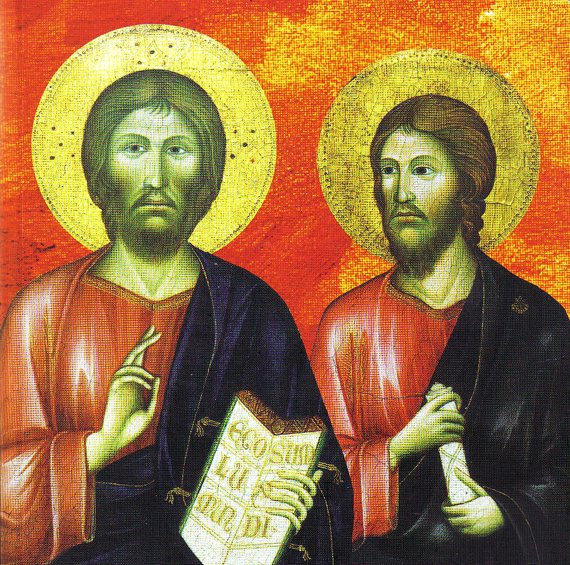
الكلمة (Logos) كما جاء في الإنجيل للقديس يوحنا – القمص عبد المسيح بسيط

الكلمة (Logos) كما جاء في الإنجيل للقديس يوحنا – القمص عبد المسيح بسيط

الكلمة (Logos) كما جاء في الإنجيل للقديس يوحنا – القمص عبد المسيح بسيط

الكلمة (Logos) كما جاء في الإنجيل للقديس يوحنا – القمص عبد المسيح بسيط

وعلى عكس ما جاء في الفلسفة اليونانية وفلسفة فيلو عن اللوجوس فقد كتب القديس يوحنا بالروح القدس عن اللوجوس الإلهي، كلمة الله الذي من ذات الله وفي ذات الله، نطق الله العاقل وعقله الناطق. فقد كان القديس يوحنا هو التلميذ الحبيب ” التلميذ الذي كان يسوع يحبه ” (يو19 :26؛ 20 :2؛ 21 :7)، وهو الذي اتكأ على صدر المخلص ” التلميذ الذي كان يسوع يحبه وهو أيضا الذي اتكأ على صدره وقت العشاء ” (يو21 :29)، ” فاتكأ ذاك على صدر يسوع ” (يو13 :25)، ومن ثم فقد كان هو التلميذ المحبوب القريب من قلب الرب يسوع المسيح والذي ركز على حوارات الرب يسوع المسيح مع الكتبة والكهنة والفريسيين والتي أشار فيها كثيرا إلى لاهوته وتجسده.

وقد عرف القديس يوحنا من خلال أحاديث الرب يسوع المسيح وحواراته مع هؤلاء في الهيكل أنه، الرب يسوع، هو ” الكلمة ” ، ” كلمة الله الأزلي الذي لا بداية له ولا نهاية “، وأنه ” الله ” أو ” الكائن الإلهي “، و ” الابن الذي من نفس جوهر الله الآب “، وأنه ” الحياة “؛ ” فيه كانت الحياة والحياة كانت نور الناس ” (يو1 :4)، و ” معطي الحياة “؛ ” الذي يؤمن بالابن له حياة أبدية ” (يو3 :36)، ” الحق الحق أقول لكم من يؤمن بي فله حياة أبدية ” (يو6 :47)، وأنه ” نور العالم ” (يو8 :12)، ” النور الذي يضيء في الظلمة ” (يو1 :5)، ” أنا قد جئت نورا إلى العالم حتى كل من يؤمن بي لا يمكث في الظلمة ” (يو12 :46)، و ” الابن الوحيد الجنس الذي في حضن الآب ” (يو1 :18)، والذي ” من الآب “؛ ” كما لوحيد من الآب ” (يو1 :14)، وأنه ” ابن الله “؛ ” ونحن قد آمنّا وعرفنا انك أنت المسيح ابن الله الحي ” (يو6 :69)، و ” ابن الله الوحيد “؛ ” الابن الوحيد الذي هو في حضن الآب ” (يو1 :18)، ” بهذا أظهرت محبة الله فينا أن الله قد أرسل ابنه الوحيد إلى العالم لكي نحيا به ” (1يو4 :9)، الموجود قبل يوحنا المعمدان ” هذا هو الذي قلت عنه يأتي بعدي رجل صار قدامي لأنه كان قبلي ” (يو1 :30)، والموجود قبل إبراهيم: ” قبل أن يكون إبراهيم أنا كائن ” (يو8 :58)، والموجود ” قبل الخليقة كالخالق “؛ ” كان في العالم وكوّن العالم به ولم يعرفه العالم ” (يو1 :10)، والموجود في الذات الإلهية، في ذات الآب ” أنا في الآب والآب فيّ ” (يو14 :10و11)، والذي يتبادل المجد المتساوي مع الآب ” والآن مجدني أنت أيها الآب عند ذاتك بالمجد الذي كان لي عندك قبل كون العالم ” (يو17 :5)، والذي يتبادل الحب الإلهي مع الآب في الذات الإلهية ” لأنك أحببتني قبل أنشاء (كون – تأسيس) العالم ” (يو17 :24)، والذي يرسل الروح القدس من ذات الآب ” ومتى جاء المعزي الذي سأرسله أنا إليكم من الآب روح الحق الذي من عند الآب ينبثق فهو يشهد لي ” (يو15 :26)، والذي يعمل كل أعمال الله الآب ” .لان مهما عمل ذاك (الآب) فهذا يعمله الابن كذلك ” (يو5 :19)، ” أبي يعمل حتى الآن وأنا اعمل ” (يو5 :17)، وبالتالي فهو المساوي للآب في الجوهر بل ومن نفس الجوهر عينه الذي للآب ” قال أيضا أن الله أبوه معادلاً (مساوياً) نفسه بالله ” (يو5 :18)، والذي ناداه توما ” ربي وإلهي ” (يو20 :28).

كما أدرك القديس يوحنا بالروح أنه ” الإله الحق والحياة الأبدية ” (1يو5 :20)، وأنه الذي كان من البدء ولكنه تجسد وظهر لنا على الأرض كإنسان ” والكلمة صار جسدا وحلّ بيننا ورأينا مجده مجدا كما لوحيد من الآب مملوءا نعمة وحقا ” (يو1 :14)، ” الذي كان من البدء الذي سمعناه الذي رأيناه بعيوننا الذي شاهدناه ولمسته أيدينا من جهة كلمة الحياة. فان الحياة أظهرت وقد رأينا ونشهد ونخبركم بالحياة الأبدية التي كانت عند الآب وأظهرت لنا. الذي رأيناه وسمعناه نخبركم به لكي يكون لكم أيضا شركة معنا. وأما شركتنا نحن فهي مع الآب ومع ابنه يسوع المسيح ” (1يو1 :1-3).

وأنه جاء إلى العالم ليبذل نفسه فدية عن حياة العالم ” هكذا أحب الله العالم حتى بذل ابنه الوحيد لكي لا يهلك كل من يؤمن به بل تكون له الحياة الأبدية. لأنه لم يرسل الله ابنه إلى العالم ليدين العالم بل ليخلّص به العالم ” (يو3 :16و17)، فقد كان ” هو بالحقيقة المسيح مخلّص العالم ” (يو4 :42)، ومن ثم فقد كتب القديس يوحنا بالروح: ” يا أولادي اكتب إليكم هذا لكي لا تخطئوا. وان اخطأ احد فلنا شفيع عند الآب يسوع المسيح البار وهو كفارة لخطايانا.ليس لخطايانا فقط بل لخطايا كل العالم أيضا ” (1يو1 :1و2).

كما وصف نفسه بالاسم الإلهي الذي عرّف الله به ذاته وكشف فيه عن كينونته ووجوده الدائم الأزلي الأبدي لموسى النبي عندما سأله، موسى، عن اسمه ومعناه ومغزاه: ” فقال الله لموسى أهيه الذي أهيه. وقال هكذا تقول لبني إسرائيل أهيه (hy<ßh.a,( – o` w’n = الكائن) أرسلني إليكم وقال الله أيضا لموسى هكذا تقول لبني إسرائيل يهوه (hw”ùhy> – ku,rioj) اله آبائكم اله إبراهيم واله اسحق واله يعقوب أرسلني إليكم. هذا اسمي إلى الأبد وهذا ذكري إلى دور فدور ” (خر3 :13-15). و تعني عبارة ” أهيه الذي أهيه – hy<+h.a,( rv<åa] hy<ßh.a,( “، ” أكون الذي أكون ” أو ” الكائن الذي يكون “، وترجمت في اليونانية ” أنا هو الكائن – evgw, eivmi o` w;n – إيجو إيمي هو أوُن “، ومنها اسم الفاعل ” يهوه – hw”ùhy> ” والذي ترجم في اليونانية ” ku,rioj = رب = Lord “. واسم ” يهوه ” هذا لم يستخدم لغير الله كما يقول الكتاب بلسان الله ذاته: ” أنا الرب (يهوه) هذا اسمي ومجدي لا أعطيه لآخر ” (اش42 :8).

وقد عرف جميع الأنبياء بالروح وآمنوا أن ” يهوه ” هو اسم الله وحده: ” ويعلموا انك اسمك يهوه ” (مز83 :18)، ” فيعرفون أن اسمي يهوه ” (ار16 :21)، ” يهوه اسمه ” (ار33 :2)، ” والرب اله الجنود يهوه اسمه ” (هو12 :5)، ” يهوه اله الجنود اسمه ” (عا4 :13)، ” يهوه اسمه ” (عا5 :8؛ 9 :6).

وقد أعطى الرب يسوع المسيح لنفسه هذا الاسم مؤكدا أنه هو نفسه ” يهوه ” الرب الإله ” كلمة يهوه: ” قال لهم يسوع الحق الحق أقول لكم قبل أن يكون إبراهيم أنا كائن ” (يو8 :58). وقد استخدم هنا نفس التعبير ” evgw. eivmi, (ego eimi) = أنا كائن أو أكون “، والذي استخدمته الترجمة اليونانية لقول الله عن نفسه: ” أنا كائن = evgw, eivmi o` w;n “. وقد كرر الرب يسوع المسيح هذا التعبير أو هذا الاسم مرات كثيرة مرتبطا بكونه الإله وكلمة الله: ” أنا هو (evgw. eivmi) الألف والياء البداية والنهاية ” (رؤ21 :6).

كما تكلم عن كونه الابن من الآب، الذي من الآب والذي في الآب، في حضن الآب والواحد مع الآب في الجوهر، وفي ذات الآب قبل كل خليقة، وعن حقيقة كونه ابن الله، الابن من الآب، هذه الحقيقة التي لا يعرفها أحد ولا يقدر أن يعلن عنها أحد غير الابن ذاته فقال مؤكداً: ” كل شيء قد دفع إليّ من أبي. وليس احد يعرف من هو الابن إلا الآب ولا من هو الآب إلا الابن ومن أراد الابن أن يعلن له(لو10:22)، أي أن معرفة الآب والابن لا تتم إلا عن طريق الابن، لماذا؟ يعلل هو ذلك بأنه يعرف الآب لأنه منه ” أنا أعرفه لأني منه ” (يو7:29)، فهو الذي ” من الآب ” و ” في الآب “؛ ” أني أنا في الآب والآب فيّ … أني في الآب والآب فيّ ” (يو14:10و11)، ” الابن الوحيد الذي في حضن الآب هو خبر ” (يو1:18)، والكائن في ذات الآب: ” والآن مجدني أنت أيها الآب عند ذاتك بالمجد الذي كان لي عندك قبل كون العالم … أيها الآب أريد أن هؤلاء الذين أعطيتني يكونون معي حيث أكون أنا لينظروا مجدي الذي أعطيتني لأنك أحببتني قبل إنشاء العالم ” (يو5:17و24)، والموجود قبل كل وجود ” قبل أن يكون إبراهيم أنا أكون (كائن) ” (يو8:58)، وكما أعلن عن نفسه:أنا هو الألف والياء البداية والنهاية ” (رؤ21:6 )، ” أنا الألف والياء. البداية والنهاية. الأول والآخر ” (رؤ22:13). 

كما تكلم عن الآب باعتباره الآتي منه، من الآب، من عند الآب، من ذاته، وغير المنفصل عنه، الواحد معه، والمساوي له في كل شيء، بل واستخدم كلمة ” الآب ” باستمرار سواء في حديثه عن الله أو في حديثه مع الله بطريقة تؤكد العلاقة الفريدة بين الآب والابن؛ ففي الإنجيل للقديس مرقس (36:14) ينادي الآب بالتعبير الآرامي ” أبا “؛ ” يا أبا الآب ” الذي يعني ” daddy”،أي أباه بصفة خاصة، أبيه الذي هو منه، وهو لقب لم ينادي به أحد الله من قبل (رو15:8وغل6:4). ودائما يقول ” أبي وأبيكم ” (يو17:20) ولم يقل قط ” أبانا “.

وقد فهم اليهود من أحاديثه عن علاقته الخاصة بالله الآب: ” فأجابهم يسوع أبي يعمل حتى الآن وأنا اعمل. فمن اجل هذا كان اليهود يطلبون أكثر أن يقتلوه. لأنه لم ينقض السبت فقط بل قال أيضا أن الله أبوه معادلاً (مساوياً) نفسه بالله. فأجاب يسوع وقال لهم الحق الحق أقول لكم لا يقدر الابن أن يعمل من نفسه شيئا إلا ما ينظر الآب يعمل. لان مهما عمل ذاك فهذا يعمله الابن كذلك. لان الآب يحب الابن ويريه جميع ما هو يعمله. وسيريه أعمالا أعظم من هذه لتتعجبوا انتم. لأنه كما أن الآب يقيم الأموات ويحيي كذلك الابن أيضا يحيي من يشاء. لان الآب لا يدين أحدا بل قد أعطى كل الدينونة للابن ” (يو17:5-22)، ” لأنه كما أن الآب له حياة في ذاته كذلك أعطى الابن أيضا أن تكون له حياة في ذاته ” (يو26:5)، ولما قال لهم: ” أنا والآب واحد فتناول اليهود أيضا حجارة ليرجموه.

أجابهم يسوع أعمالا كثيرة حسنة أريتكم من عند أبي. بسبب أي عمل منها ترجمونني. أجابه اليهود قائلين لسنا نرجمك لأجل عمل حسن بل لأجل تجديف. فانك وأنت إنسان تجعل نفسك إلها ” (يو30:10-33)، ” ولكن أن كنت اعمل فان لم تؤمنوا بي فآمنوا بالأعمال لكي تعرفوا وتؤمنوا أن الآب فيّ وأنا فيه ” (يو38:10).

وكان يقول لهم: ” لو كنتم قد عرفتموني لعرفتم أبي أيضا. ومن الآن تعرفونه وقد رأيتموه. قال له فيلبس يا سيد أرنا الآب وكفانا. قال له يسوع أنا معكم زمانا هذه مدته ولم تعرفني يا فيلبس. الذي رآني فقد رأي الآب فكيف تقول أنت أرنا الآب. ألست تؤمن أني أنا في الآب والآب فيّ. الكلام الذي أكلمكم به لست أتكلم به من نفسي لكن الآب الحال فيّ هو يعمل الأعمال ” (يو7:14-10)، ” الذي يبغضني يبغض أبي أيضا ” (يو23:15). كما يؤكد أن كل ما للآب هو له: ” كل ما للآب هو لي ” (يو15:16)، ويخاطب الآب بقوله: ” وكل ما هو لي فهو لك. وما هو لك فهو لي ” (يو10:17و11).

ومن ثم فقد عرف القديس يوحنا، التلميذ الذي كان الرب يحبه والذي اتكأ على صدر الرب يسوع المسيح بالروح القدس، وعرف حقيقة لاهوته، وحقيقة كونه الكلمة، اللوجوس، كلمة الله، الذي في ذات الله والذي من نفس طبيعته وجوهره وواحد معه في الجوهر، أي له نفس الجوهر عينه الذي لله الآب، وكشف عنه بالروح القدس لذا لم يتأثر لا بالفلسفة اليونانية ولا بفلسفة فيلو بل بروح الله، روح الرب يسوع المسيح (في1 :19)، فقد عاش بنفسه ورأى وسمع ولمس ” الكلمة “، ” كلمة الحياة “؛ ” الذي كان من البدء الذي سمعناه الذي رأيناه بعيوننا الذي شاهدناه ولمسته أيدينا من جهة كلمة الحياة. فان الحياة أظهرت وقد رأينا ونشهد ونخبركم بالحياة الأبدية التي كانت عند الآب وأظهرت لنا ” (1يو1 :1و2).

وقد بدأ القديس يوحنا بالروح القدس مقدمة الإنجيل بقول الوحي الإلهي: ” في البدء كان الكلمة والكلمة كان عند الله وكان الكلمة الله. هذا كان في البدء عند الله. كل شيء به كان وبغيره لم يكن شيء مما كان. فيه كانت الحياة ” (يو1:1-3). والكلمة هنا هو الرب يسوع المسيح نفسه حيث يقول في نفس الفقرة ” والكلمة صار جسدا وحل بيننا ورأينا مجده مجدا كما لوحيد من الآب مملوء نعمة وحقاً ” (يو1 :14)، كما جاء عنه في سفر الرؤيا ” ويدعى اسمه كلمة الله ” (رؤ19 :13).

والكلمة هنا، في حقيقته وجوهره، يختلف تماما عن الكلمة عند فلاسفة اليونان وعند فيلو اليهودي، كما بينّا أعلاه، فالكلمة عند هؤلاء الفلاسفة، غير واضحة المعالم سواء في تعريفها أو كينونتها. ولكن الكلمة هنا هو الذي كان أصلا مع الله، في ذات الله، بلا بداية، وكان هو الله، والواحد معه في الجوهر والطبيعة، ومع ذلك فهو كأقنوم مميز عن الله الآب. هو مُعلن الله الآب؛ ” الله لم يره أحد قط الابن الوحيد الذي في حضن الآب هو خبر” (يو1 :18)، وصورة الله الآب غير المرئي ” صورة الله غير المنظور ” (كو1 :15)، وهو بهاء مجد الله وصورة جوهره ” الذي وهو بهاء مجده ورسم جوهره ” (عب1 :2)، والذي كلمنا الله به ” كلمنا في هذه الأيام الأخيرة في أبنه ” (عب1 :1)، هو الذي خلق كل شيء ” الله خالق الجميع بيسوع المسيح ” (أف3 :9)، كالمولود من الآب ” الابن الوحيد الذي في حضن الآب “، والذي صار جسدا ” والكلمة صار جسدا وحلّ بيننا ورأينا مجده مجدا كما لوحيد من الآب مملوءا نعمة وحقا ” (يو1 :14). أنه ” الكلمة الإلهي الذي في ذات الآب ومن ذات الآب، الكلمة الذي هو الله الابن “.

وتعبر الآية الأولى من هذه الفقرة ” في البدء كان الكلمة – Ven avrch/| h=n o` Lo,goj ” عن وجود، الكلمة، الرب يسوع المسيح السابق وأزليته بصورة رائعة، ويتركز جوهر هذه الأزلية، وهذا الوجود الأزلي الأبدي في ثلاثة عناصر هي: ” في البدء ” و ” كان ” و ” كل شيء به كان ” إلى جانب كونه الحياة ” فيه كانت الحياة ” فهو معطي الحياة ومانحها. ويأتي اسم الكلمة هنا كفاعل ويتكرر كاسم الفاعل في هذه الفقرة ثلاث مرات، كما يستخدم الفعل ” كان ” أربع مرات للتعبير عن الكينونة أكثر من التعبير عن الزمن؛ ” كان في البدء “، ” كان مع الله “، ” كان هو الله “، و ” هذا كان في البدء عند الله “.

(1) في البدء كان – Ven avrch/| h=nen archee een “: والبدء هنا ليس بدءاً زمنياً، إنما هو بدء ما قبل البدء، أي البدء السابق للخليقة، البدء السابق لعملية الخلق ووجود المخلوقات. فالذي كان في البدء هو الخالق الذي خلق الخليقة ” كل شيء به كان ” (يو1 :3)، والذي كان قبل الكون، والذي قال عن نفسه أنه كان ” قبل كون العالم ” (يو17 :5). فهو الخالق الذي كان موجودا قبل الخليقة ” الكل به وله قد خلق. الذي هو قبل كل شيء وفيه يقوم الكل ” (كو1 :16و17)، ” من قبل أن تولد الجبال أو أبدأت الأرض والمسكونة منذ الأزل إلى الأبد أنت الله ” (مز90 :2).

وبالرغم أن البدء هنا يلمح إلى البدء في سفر التكوين ” في البدء (tyviÞarEB. – براشيت – والذي هو مترجم في اليونانية evn avrch/|) خلق الله السموات والأرض ” (تك1 :1)، وبرغم أنه وضع الكلمة (lo,goj) بدلاً من الله (~yhiÞla/ – إيلوهيم) كالخالق، مؤكداً أن الكلمة هو الخالق، فقد خلق الله الخليقة بكلمته ” بكلمة الرب خلقت السموات ” (مز33 :6)، إلا أن هذا ” البدء ” هنا، في هذه الآيات، يذهب إلى ما وراء، إلى ما قبل الزمن والخليقة(47)، البدء الذي يسبق بدء التكوين، بدء الخلق. ويستخدم هنا الفعل (كان – h=n – een) من فعل الكينونة (أكون – eivmi,) في الزمن الماضي الناقص، غير التام، والذي يفيد الاستمرار في الماضي إلى الوراء، إلى اللازمن والأبدية، البدء الذي لا يوصل لأي بداية لله أو الكلمة (الابن)، لأن الله لا بدء له.

البدء في سفر التكوين هو؛ بدء التكوين، بدء الخلق، بدء عملية الخلق ذاتها، والذي يبدأ من هذه النقطة، الخلق، نازلاً إلى ما بعد ذلك في دورة الزمن. و ” البدء ” هنا، البدء الذي كان فيه الكلمة موجوداً، هو ” بدء ” ما قبل البدء، البدء الذي لا بداية له، لا بدء له، الأزل. أنه البدء الذي يذكر وجود الكلمة قبل الخليقة ويرجع للوراء إلى ما قبل الزمن، إلى الأزل الذي لا بداية له، إلى الأبدية. في هذا البدء كان الكلمة موجوداً ” في البدء كان الكلمة “، أي أنه هو كائن وموجود وخالق الوجود قبل هذا البدء كما يقول الكتاب: ” فانه فيه خلق الكل ما في السموات وما على الأرض ما يرى وما لا يرى سواء كان عروشا أم سيادات أم رياسات أم سلاطين. الكل به وله قد خلق. الذي هو قبل كل شيء وفيه يقوم الكل ” (كو1 :16و17).

والكلمة الذي كان في البدء هو الكائن الأزلي الأبدي بلا بداية والذي وصف نفسه بالأول الذي ليس له قبل ولا بداية، قبله لا يوجد شيء، والبداية الذي بلا بداية لها ولا زمن: ” أنا الألف والياء. البداية والنهاية. الأول والآخر ” (رؤ22 :13)، أو كما نصلي في القداس الغريغوري: ” غير المبتدئ الأبدي. غير الزمني. الذي لا يحد “. وكما يقول عنه ميخا النبي بالروح القدس ” ومخارجه منذ القديم منذ أيام الأزل ” (مي5 :2).

(2) و ” كان الكلمة – h=n o` lo,goj – een ho logos “، والفعل ” كان – ἦν – een ” جاء في الزمن الماضي الناقص، غير التام، الدال على حالة كانت مستمرة في الماضي، ويتضمن هنا في هذه الآيات استمرار الوجود، الوجود المستمر في الماضي. إلا أن الفعل هنا لا يركز على الزمن بقدر ما يركز على كينونة الكلمة الدائمة في ذات الله الآب، فهو في كينونة دائمة خارج الزمن. وهذا يعنى أنه قبل أن يبدأ البدء كان الكلمة موجوداً، ويمكن أن تترجم الآية حرفياً ” عندما بدأ البدء كان الكلمة موجوداً هناك “(48)، وهذا يعادل ويساوى القول ” الكلمة يسبق الزمن أو الخليقة “(49). فكان هنا تشير إلى الوجود المطلق لارتباطها بالبدء وبالخالق.

ومعنى نص الآية كاملاً: أنه في البدء، وقبل الخلق، كان الكلمة موجوداً وهو الخالق ذاته، الذي كان موجوداً من الأزل بلا بداية قبل أن يقوم بعملية الخلق، كان موجوداً، وكان هو العنصر الفعال، الخالق، بدء البدء. وقد بين الرب يسوع المسيح نفسه ذلك عندما خاطب الآب قائلاً: ” والآن مجدني أنت أيها الآب عند ذاتك بالمجد الذي كان لي عندك قبل كون العالم … لأنك أحببتني قبل إنشاء العالم ” (يو17 :3و24). وهنا يتكلم عن وجوده السابق لتكوين وخلق العالم والمجد المتبادل بينه وبين الآب، في الذات الإلهية. ويتكرر الفعل ” كان – ἦν – een ” في هذه الآية، عن الكلمة، أربع مرات: ” في البدء كان (ἦν) الكلمة كان (ἦν) … وكان (ἦν) الكلمة … هذا كان (ἦν) في البدء -ou-toj h=n evn avrch/| “، ” عند الله pro.j to.n qeo,n “.

وفي هذه المرات الأربع تشير إلى ما قبل الخلق والزمن إلى الأزل الذي لا بدء له، إلى الأبدية، فقد ” كان – ἦν ” هو في البدء عند الله، و ” كان – ἦν ” هو الله، و ” كان – ἦν ” قبل وجود الخليقة و ” كان – ἦν ” هو الخالق، ” كل شيء به كان – pa,nta diV auvtou/ evge,neto “، أي بالكلمة، الرب يسوع المسيح، وكل شيء هنا تعني كل شيء بمفرده واحداً واحداً كقوله : فأنه فيه خلق الكل ” (كو1 :15)، و ” كان ” في هذه الآية ” كل شيء به كان ” في أصلها اليوناني ” evge,neto – egeneto – صار “، وحرفياً ” جاء إلى الوجود “، ” وبغيره لم يكن شيء مما كان (صار – جاء إلى الوجود – egeneto)؛ أي كل شيء به جاء إلى الوجود ” به تكون كل شيء، وبغيره لم يتكون أي شيء مما تكون “. إذاً، فهو الذي كان ” موجوداً “، والخليقة لم تكن قد جاءت إلى الوجود، فهو الخالق، الذي خلق الخليقة؛ ” كل شيء به كان (صار – جاء إلى الوجود) “، و ” بغيره لم يكن شيء مما كان – صار (جاء إلى الوجود) “.

و ” الكلمة – lo,goj “؛ هنا كما يؤكد الوحي الإلهي هو الرب يسوع المسيح، نبع الحياة ومصدرها بقوله ” فيه الحياة كانت – evn auvtw/| zwh. h=n. ” (يو1 :4)، فهو معطى الحياة للخليقة سواء كانت مادية (جسمانية) أو أخلاقية، وهو معطى الحياة الأبدية لكل من يؤمن به.

هو مصدر ونبع الحياة ومبدأها. وهذا ما عبر عنه القديس يوحنا الرسول بالروح القدس بقوله: ” الذي كان من البدء (O h=n avpV avrch/jho een apo’ archis arxis)، الذي سمعناه الذي رأيناه بعيوننا الذي شاهدناه ولمسته أيدينا من جهة كلمة الحياة. فان الحياة أظهرت ونشهد ونخبركم بالحياة الأبدية التي كانت عند الآب وأظهرت لنا ” (1يو1 :1و2).

(3) ” وكان الكلمة عند الله – kai.. o` lo,goj h=n pro.j to.n qeo,n “: وهنا يستخدم تعبيران ” وكان الكلمة – kai.. o` lo,goj h=n ” و ” عند الله – Θεόν τὸν πρὸς “؛ فيستخدم نفس الفعل ” كان – h=n – een ” الناقص، أي أنه كان عند الآب أو مع الآب بلا بداية، كما يستخدم حرف الجر ” عند – pro.j – pros “، وهذا الحرف المستخدم هنا ” pro.j – pros ” لا يعني مجرد قرب بل علاقة شخصية حميمة، فيقول أحد العلماء ” pro.j … تعني أكثر من مجرد ” مع “، وهي مستخدمة بانتظام للتعبير عن حضور شخص مع أخر(50). أي أن المعنى هنا هو أن الكلمة كان ” عند ” الله وهذا يؤكد المساواة بين الآب والابن في الوجود والجوهر.

والذي يعني مع الله، في ذات الله، فالكلمة، كلمة الله، الرب يسوع المسيح ” كان – h=n – een ” عند الله الآب، كان من البدء عند الله الآب، كان بلا بداية، من الأزل، كان أبداً، فهو الحياة الأبدية، الذي كان قبل كل شيء وهو الذي كون، خلق أوجد كل شيء هو الذي جاء بكل شيء إلى الوجود، خلق كل شيء(51).

(4) ثم يقول ” وكان الكلمة الله – kai. qeo.j h=n o` lo,goj “، أي أن الكلمة هو نفسه الله. وقد أفترض البعض بناء على ما زعمه آريوس وما ترجمه شهود يهوه لقوله في هذه العبارة، والتي ترجموها ” وكان الكلمة إلهاً ” على أساس أن كلمة ” الله – qeo.j ” هنا لا تسبقها أداة تعريف “، أي أن الكلمة هو إله بمعنى أنه ليس من جوهر الله بل أقل من الله وتالي له!! وهنا يقول العلماء، علماء اللغة واللاهوت:

تأتي كلمة ” الله – qeo.jtheos ” الأولى في هذه الآية ” وكان الكلمة عند الله ” معرفة بأداة التعريف ” to.n qeo,n “، والتي تجعل الاسم يشير إلى الشخص، إلى شخصيته، وهذا غير موجود أمام Theos الثانية الخاصة بالكلمة ” وكان الكلمة الله – kai. qeo.j h=n o` lo,goj “، وهذا صحيح، ولكن يقول العلماء: ” عندما وضعت أداة التعريف أمام كلمة ثيؤس (qeo.jTheos “؛ ” to.n qeo,n “، الأولى قصد بها شخص الآب، وعندما لم توضع أداة التعريف أمام كلمة ثيؤس ” qeo.jTheos ” الخاصة بالكلمة ” وكان الكلمة الله – kai. qeo.j h=n o` lo,goj ” قصد الجوهر الإلهي ذاته “(52).

أي أنه هنا يقصد أن الكلمة هو من نفس جوهر الله الآب ذاته، فهو الله، الكلمة. وهنا فرق بين أنه قصد الشخصية في الأولى وقصد الجوهر في الثانية، فالكلمة، الابن، في الذات الإلهية ليس هو الآب، بل هو في حضن الآب ” الابن الوحيد الذي في حضن الآب ” (يو1 :18)، وواحد مع الآب ” أنا والآب واحد ” (يو30 :10)، ومن ذات الآب ” أنا في الآب والآب فيّ ” (يو14 :10)، وفي ذات الآب ومن جوهر الآب، من نفس جوهر الآب، إذا فعندما يقول ” وكان الكلمة الله ” يركز على جوهره الإلهي وأنه من نفس جوهر الآب.

كما أن في قوله ” وكان الكلمة الله – kai. qeo.j h=n o` lo,goj “، يقول علماء اللغة أن الفاعل هنا ليس هو ” الله qeo.jqeo.j ” بل ” الكلمة – o` lo,goj ” لذا وضع أداة التعريف أما الكلمة ” o` lo,goj ” لأنه الفاعل، فالكلمة مبتدأ والله خبر الجملة، ومن هنا فقد كان يعني أنه في لاهوته مثل الله الآب ومن نفس جوهره ” He was the same as God “، وأيضا: ” the Word was fully God “(53).

ومن هنا فقد وردت في الترجمات اللاهوتية كالآتي:

In the beginning, the Word was existing.
And the Word was in fellowship with God the Father.
And the Word was as to His essence absolute deity.

” في البدء كان الكلمة موجوداً. وكان الكلمة عند الله الآب. وكان للكلمة نفس جوهر لاهوته المطلق “.

In the beginning the Word already existed.

The Word was with God, and the Word was God.

” في البدء كان الكلمة موجودا، وكان الكلمة عند الله، وكان الكلمة الله “.

In the beginning was the one who is called the Word. The Word was with God and was truly God.

في البدء كان الذي يدعى الكلمة، وكان الكلمة عند الله وكان (الكلمة) إلها حقيقياً.

At the beginning God expressed himself. That personal expression, that word, was with God, and was God, and he existed with God from the beginning.

في البدء عبر الله عن نفسه، وهذا التعبير الذاتي، الكلمة، كان عند الله، وكان الله، وكان موجودا مع الله منذ البدء.

In the beginning was the Word, and the Word was with God and the Word was fully God.

في البدء كان الكلمة، وكان الكلمة عند الله، وكان الكلمة كاملاً في لاهوته. 

THE Logos existed in the very beginning, the Logos was with God, the Logos was divine.

كان الكلمة موجودا منذ البدء الباكر، وكان الكلمة عند الله، وكان الكلمة إلهياً.

(47) Robertson New Testament Word pictures. John. 1.1.

(48) Vencent’s W. S. NT P. 29.

(49) Ibid.

(50) The Gospel of St. John,” The Expositor’s Greek Testament 1:684.

(51) يقول العالم شناكنبرج: إن ” عند = pro.j ” لا تفيد هنا الحركة تجاه هدف ما بل إن pro.j تأتي معادلة والتبادل أحياناً مع para. tw/ qew/|/| كما قالها المسيح في صلاته: ” والآن مجدني أنت أيها الآب عند ذاتك = para. seautw/| بالمجد الذي كان لي عندك = para. Soi قبل كون العالم ” (يو17 :5). الآب متى المسكين شرح إنجيل القديس يوحنا. ص 33.

(52) H.E. Dana and Julius Mantey, in their A Manual Grammar of the Greek New Testament,

(53) أنظر كتابنا ” وكان الكلمة الله، هل كان الكلمة إله أم الله؟ ” ص 60- 79.

الكلمة (Logos) كما جاء في الإنجيل للقديس يوحنا – القمص عبد المسيح بسيط

Is Jesus advocating pacifism and denouncing capital punishment in this passage? MATTHEW 26:52

MATTHEW 26:52—Is Jesus advocating pacifism and denouncing capital punishment in this passage?

PROBLEM: When the soldiers came to arrest Jesus, Peter took out his sword and cut off the ear of the high priest’s servant. Jesus told Peter to put back the sword because those who take up the sword will die by the sword. Some use this verse to support pacifism and to oppose capital punishment, which the Bible affirms elsewhere (Gen. 9:6).

SOLUTION: Total pacifism is not taught in this Scripture. Indeed, Abraham was blessed by the Most High God (Gen 14:19) after engaging in a war against the unjust aggression of the kings who had captured his nephew Lot. In Luke 3:14, soldiers come to inquire of John the Baptist about what they should do. John never told them to leave the army. Likewise, Cornelius, in Acts 10, was a centurion. He was called a devout man (v. 2), and the Scriptures say that the Lord heard the prayers of Cornelius (v. 4). When Cornelius becomes a Christian, Peter does not tell him to leave the army. Also, in Luke 22:36–38, Christ says that the one who has no sword should sell his robe and buy one. The apostles responded saying that they had two swords. Jesus responded saying that “it was enough.” In other words, they did not need to get rid of their swords. The Apostle Paul accepted the protection of the Roman army to save his life from unjust aggressors (Acts 23). Indeed, he reminded the Roman Christians that God had given the sword to the king who did not bear it in vain (Rom. 13:1–4). When Jesus returns to earth, He will come with the armies of heaven and will war against the kings of the earth (Rev. 19:11–19). So, from the beginning to the end, the Bible is filled with examples of the justification of war against evil aggressors.

What, then, did Jesus mean when He commanded Peter to put away his sword? Peter was making two mistakes in using his sword. First, while the Bible permits the sword by the government for civil purposes (Rom. 13:1–4), it does not endorse its use for spiritual ends. It is to be used by the state, not by the church. Second, Peter’s use was aggressive, not purely defensive. His life was not being unjustly threatened. That is, it was not clearly an act of self-defense (Ex. 22:2). Jesus appears to have endorsed the use of the sword in civil self-defense (Luke 22:36), as did the Apostle Paul (Acts 23).

Likewise, capital punishment is not forbidden in Scripture, but rather was established by God. Genesis 9:6 affirms that whoever sheds man’s blood, the blood of the killer will also be shed. Numbers 35:31 makes a similar statement. In the NT, Jesus recognized that Rome had capital authority and submitted to it (John 19:11). The Apostle Paul informed the Romans that governing authorities are ministers of God and that they still possessed the God-given sword of capital authority (13:1, 4). So Jesus in no way did away with the just use of the sword by civil authorities. He simply noted that those who live lives of aggression often die by the same means.

[1]


[1]Geisler, N. L., & Howe, T. A. (1992). When critics ask : A popular handbook on Bible difficulties (360). Wheaton, Ill.: Victor Books.

Why did Jesus call people fools and yet condemn others for doing the same thing? MATTHEW 23:17

MATTHEW 23:17—Why did Jesus call people fools and yet condemn others for doing the same thing?

PROBLEM: Jesus said, “whoever says [to his brother], `You fool!’ shall be in danger of hell fire” (Matt. 5:22). Yet He Himself said to the scribes and Pharisees, “Fools and blind!” (Matt. 23:17) The Apostle Paul, following suit, said, “O foolish Galatians” (Gal. 3:1; cf. 1 Cor. 15:36).

SOLUTION: There are good reasons why there is a strong difference between the two uses of the term “fool.” First, this is another example of the principle that the same word can be used with different meanings in different contexts (see Introduction). For instance, the word “dog” can be used of a canine animal or a detested person.

Second, in Matthew 5, it is used in the context of someone who is “angry” with his brother, indicating a hatred. Neither Jesus nor Paul harbored hatred toward those to whom they applied the term. Thus, their use of the term “fool” does not violate Jesus’ prohibition against calling others a fool.

Third, technically speaking, Jesus only commanded that a “brother” (Matt. 5:22) not be called a “fool,” not an unbeliever. In fact the scriptural description of a fool is one who “has said in his heart, `There is no God’ ” (Ps. 14:1). In view of this, one can see the seriousness of calling a brother a fool; it is tantamount to calling him an unbeliever. Hence, when He who “knew what was in man” (cf. John 2:25) called unbelievers “fools,” it was a most appropriate description of what they really were.

[1]


[1]Geisler, N. L., & Howe, T. A. (1992). When critics ask : A popular handbook on Bible difficulties (357). Wheaton, Ill.: Victor Books.

Even modern Christian scholars reject the so-called Old Testament proof texts about Jesus. Just check most modern Christian Bible commentaries and translations.

Even modern Christian scholars reject the so-called Old Testament proof texts about Jesus. Just check most modern Christian Bible commentaries and translations.

Those “Christian” scholars who reject the so-called proof texts to which you refer are the very same scholars who reject any clear expectation of a Messiah of any kind—Jewish or Christian—in the Hebrew Scriptures. Their findings are just as incompatible with traditional Judaism as they are with traditional Christianity. On the other hand—and you might find this interesting—most of these very same scholars fully recognize the New Testament methods of interpreting the Hebrew Scriptures as thoroughly Jewish, in keeping with the style of the Dead Sea Scrolls and later Rabbinic writings, except often more sober! In any case, the real issue is not whether these scholars believe that Jesus is the prophesied Messiah of the Tanakh. The issue is: Is Jesus, in fact, that prophesied Messiah?

The point of this objection is not whether or not Jesus is the Messiah spoken of in the Hebrew Bible; the point is whether or not Christian scholars believe that he is. The answer is really quite simple: Christian scholars who accept the New Testament as the inspired, infallible Word of God believe that Jesus fulfilled the Messianic prophecies; Christian scholars who reject the New Testament as the inspired, infallible Word of God are not in agreement on this. But they are not in agreement on many other issues that most Christians consider to be fundamentals of the faith (such as the Messiah’s virgin birth, his literal resurrection from the dead, salvation being found only in him, etc.), and thus they separate themselves from the vast majority of Christian believers through the centuries. Some would say that in a certain sense, they are “Christian” in name only, since they deny the foundations of “Christianity.”

It’s also interesting to note that these same scholars who reject the New Testament as the inspired, infallible Word of God also reject the Hebrew Scriptures as the inspired, infallible Word of God. And many of them reject the idea that Jesus fulfilled the Messianic prophecies simply because they don’t believe the prophets actually prophesied about a Messiah! So, their problem is not necessarily with Yeshua; their problem is with a whole different set of beliefs.

A similar situation can be found in Judaism. Reform Jews deny the binding authority of the Torah; they deny the verbal inspiration of the Five Books of Moses; they deny that Moses wrote the Five Books; they deny that there was an oral law going back to Moses; they deny that there will be a literal Messiah who will reign on the earth. The list could easily be multiplied, but the bottom line is this: Jewish scholars who are fundamentalist believers—representing the minority of those who teach at Jewish seminaries and institutes of higher learning in America—literally believe all these things which liberal Jewish scholars—representing the majority of Jewish professors in America—reject.

What does this prove? Simply that “believers” hold to one set of beliefs and “nonbelievers” don’t hold to those beliefs. So, believing Christian scholars believe that Jesus fulfilled the prophecies, and liberal (or nonbelieving) Christian scholars don’t. Therefore, the objection raised here is factually untrue and really proves nothing.

More importantly, there are many learned Christian scholars, some of whom are recognized authorities in the Hebrew Bible, the Hebrew language, biblical interpretation, Semitic studies, and even Rabbinic literature, who believe that Yeshua fulfilled the Messianic prophecies and that the New Testament authors rightly interpreted the prophecies of the Tanakh. This is true of the current generation of scholars, and it has been true for hundreds of years. Again, this does not prove that Yeshua is our promised Messiah, but it does prove that your objection is untrue and that many sincere, learned people find ample evidence to support their faith in Jesus (see vol. 1, 1.12).

Thus, it is not surprising that conservative Christian and Messianic Jewish commentaries on the Bible continue to hold to the view that Yeshua fulfilled the Messianic prophecies; conservative Christian and Messianic Jewish studies on the Messianic prophecies themselves continue to support that same view; and the most widely used modern Christian translations of the Bible continue to translate the original texts in harmony with the view that Jesus fulfilled the prophetic Scriptures. (The most widely used modern Christian versions of the Bible are the New International Version, the New American Standard Bible, and the New King James Version, all of which support the position I am taking here.) Of course, this does not prove that these commentaries, special studies, or Bible translations are correct. It simply proves that the objection raised here is not true.

What is interesting is that many of the same liberal scholars who deny the verbal inspiration of the Bible do recognize the Jewishness of the New Testament texts and the need to interpret these texts against the Jewish background of the day. Thus, while they may not actually believe that a given prophet delivered a specific prophecy about the Messiah—and consequently, they do not believe that Yeshua specifically fulfilled that prophecy—they often feel that the New Testament author who cited that prophecy was following normal Jewish/Rabbinic patterns of interpretation, as reflected in the Talmud, Targums, and Midrash. In other words, just as the Talmudic rabbis interpreted the Hebrew Bible, so also did the authors of the New Testament, almost all of whom were Jews. What is even more interesting is that some recent scholarly studies have demonstrated that the (Jewish) methods of interpretation reflected in the New Testament are more sober and biblically consistent than those of the (Jewish) Dead Sea Scrolls and later Jewish literature (meaning classical Rabbinic literature). (For more on this, see vol. 4, 5.1.)

So, we return to where we started. The question is not, Which scholars believe Jesus is the promised Jewish Messiah? The question is, What do the prophecies say? As we have indicated clearly in answering the objections in this volume, the prophecies point to him.

[1]


[1]Brown, M. L. (2003). Answering Jewish objections to Jesus, Volume 3: Messianic prophecy objections (164). Grand Rapids, Mich.: Baker Books.

Some of the so-called Messianic prophecies in the Psalms actually speak of the psalmist’s sin and folly. How can you apply this to Jesus?

Some of the so-called Messianic prophecies in the Psalms actually speak of the psalmist’s sin and folly. How can you apply this to Jesus?

No one tries to apply every verse in each “prophetic” psalm to the Messiah. Rather, there is a simple principle behind the Messianic interpretation of these important psalms: As it was with David, so it is with the Messiah. In other words, there are striking parallels between the life of King David and the life of King Messiah, and it is these parallels that are highlighted in the New Testament’s quotation of certain psalms. For example, just as David was betrayed by one of his closest friends, so also the Messiah was betrayed by one of his closest friends, as noted by Jesus himself (see Psalm 41 and John 13:18). But it is obvious that the details of the betrayal don’t have to be the same (e.g., David was betrayed by Ahithopel, Jesus was betrayed by Judas; David’s betrayal led to his temporary exile, Yeshua’s betrayal led to his death).

If you are familiar at all with the Talmud and the Midrash, you will know that the rabbis applied all kinds of obscure verses to the Messiah and to the Messianic era, often taking them totally out of context (for a representative sampling, see below, 4.34). For the most part, these Jewish sages clearly were not looking at an entire portion of Scripture—a whole psalm or chapter—when they cited the verses in question. Rather, what got their attention was a word association, or an association of ideas, or an even more distant link connecting the given verse or phrase with the Messiah. This was quite common in Rabbinic interpretation during the first thousand years of this era, but it was not limited to the Rabbinic writings, especially two thousand years ago. At that time it was common in other, non-Rabbinic Jewish circles to cite verses atomistically (i.e., without relation to the larger context). This is especially common in the Talmudic and midrashic writings, and while the New Testament authors sometimes engage in this practice, for the most part their method was more sober and systematic than this. It should not surprise us, then, if the New Testament sometimes applies just one relevant verse from a larger context that is not relevant. This was normal Jewish interpretation for the day.253

At other times, there were specific principles that fueled the New Testament citations of passages from the Tanakh: As it was with David (or, more broadly, with the righteous psalmist), so it was with the Messiah. That explains why the New Testament can cite Psalm 41:9[10] with reference to Jesus (“Even my close friend, whom I trusted, he who shared my bread, has lifted up his heel against me”), when several verses earlier the psalmist had exclaimed, “O Lord, have mercy on me; heal me, for I have sinned against you” (v. 4[5]).

Anti-missionaries will point to this and say, “Either the New Testament quoted a psalm that cannot apply to Jesus or else Jesus must have sinned!” Not at all. Instead, we must remember that there were certain events in the life of David that stood out above the others, such as his betrayal by a close friend or his being hunted and treated like a criminal. When these striking events occurred again in the life of Yeshua, he was quick to point out these parallels (see, e.g., Matt. 21:33–42, quoting Ps. 118:22–33). In this very tangible sense, “the scripture was fulfilled” (e.g., John 19:36–37).

When you consider that David was the prototype of the Messiah, and the Tanakh was both the record of the past and the witness of the future, it is quite fitting that such an interpretative method was used, making us remember how wonderfully the Messiah’s life was laid out in advance in the Scriptures. Once he came to earth and died and then rose from the dead, opening the eyes of his followers to the truth of the biblical prophecies (Luke 24:44–45), it became very clear that (1) the Tanakh laid out the details of the Messiah’s coming, both in history and in prophecy, and (2) Jesus was the promised Messiah.

Let me close this discussion with a personal anecdote. In the early 1990s, I was teaching a course on Messianic prophecy in Maryland and an Orthodox rabbi from Israel, who had come to faith in Yeshua a few years earlier, sat in on the class one day. It was amazing to hear him explain how passage after passage in the Tanakh applied to Yeshua—including verses that I would never have thought of applying to him. I can still remember him sitting there, with his Hebrew Bible in hand, raising his hand enthusiastically and saying in Hebrew, “In my opinion, this is Yeshua.” Yes, it seemed he found Jesus everywhere in the Tanakh. This was because his Rabbinic upbringing led him to find references to Torah everywhere in the Tanakh—I literally mean everywhere—and now that he understood that Jesus was the Messiah, he began to find references to him everywhere in the text.254

In comparison with this rabbi’s passionate but unscientific approach to the Scriptures, the interpretation of the New Testament writers makes a lot of sense.

[1]

253 See the references cited above, n. 70; note also the Romans commentary of Shulam and LeCornu, cited below, n. 356.

254 For a typical example, see, conveniently, the footnotes to the Stone edition of Proverbs 5, following Rashi’s commentary.

[1]Brown, M. L. (2003). Answering Jewish objections to Jesus, Volume 3: Messianic prophecy objections (127). Grand Rapids, Mich.: Baker Books.

If Jesus is the Jewish Messiah, why don’t more Jews believe in him? | Brown, M. L

If Jesus is the Jewish Messiah, why don’t more Jews believe in him?

Actually, there are tens of thousands of Jews who have believed and do believe in him. The problem is that most Jews have not bothered to check into the facts about Jesus, and the only Jesus most of them know is either the baby Jesus of Christmas, an emaciated figure hanging on a cross in churches, or the Jesus of the Crusades and Inquisitions. The question is, Why don’t you believe Jesus is the Messiah? Do you really know who he is?

I encourage you to consider the following points.

1. Most Jews have never seriously studied the issue. Many of those who have decided to find out who Jesus is have been quite surprised by what they have learned. The greatest scholars and scientists in the world once believed the earth was flat—until firsthand investigation and discovery altered their outlook. It’s the exact same thing with Jews who honestly investigate the Messianic claims of Jesus. Everything changes—to put it mildly.

2. If most religious Jews learn anything about Jesus in their traditional studies, it is quite biased and negative. 22 Thus, they do not entertain even the possibility of the messiahship of Jesus.

3. Many so-called Christians have committed atrocities against Jews in the name of Jesus, helping to drive Jews away from their true Messiah. (See below, 2.7, for more on this, along with my book Our Hands Are Stained with Blood.)

4. These same Christians have often put forth a distorted picture of Jesus that bears little resemblance to the real Messiah who walked the earth two thousand years ago. Can Jews be blamed for thinking that Christians worshiped idols when the churches were filled with worshipers bowing before large, beautiful statues depicting Jesus as a babe in his mother’s lap?

5. There is often great pressure on those Jews—especially religious Jews—who put their faith in Jesus the Messiah. Some succumb to the fear, the pressure, the intimidation, the separation, and the loneliness, and they deny with their lips what they know to be true in their hearts.

6. Traditional Jewish teaching gives a slanted portrayal of who the Messiah is and what he will do. Since the description is faulty, people are looking in the wrong direction for the wrong person. No wonder relatively few have found him.

7. Once a learned Jew does believe in Yeshua, he is discredited, and so his name is virtually removed from the rolls of history. It’s almost as if such people ceased to exist. (Do you remember reading the novel Animal Farm in school? Revisionist history goes on to this day—even in traditional Jewish circles.) The story of Max Wertheimer provides one case in point. In the last century, Wertheimer came to the States as an Orthodox Jew, but over the course of time, he became a Reform Jew and was ordained a rabbi upon graduating from Hebrew Union College in Cincinnati in 1889. (He also received a Ph.D. from the University of Cincinnati the same year.) He then served as the greatly loved rabbi of B’Nai Yeshurun synagogue in Dayton, Ohio, for the next ten years. When he became a fervent believer in Jesus, however, pastoring a church as well, his name was literally removed from the rolls of the school—a school of alleged tolerance at that. Why was his name dropped? According to Alfred A. Isaacs, cited in the November 25, 1955, edition of the National Jewish Post, Wertheimer was disowned by Hebrew Union College solely because of his Christian faith. 23 And to think, this happened in a “liberal” Reform Jewish institution!

8. Although this may be hard for you to accept, because our leadership rejected Jesus the Messiah when he came, God judged us as a people (just as he judged us as a people for rejecting his law and his prophets in previous generations), and as a result, our hearts have become especially hardened toward the concept of Jesus as Messiah. 24 Paul explained this in his important letter to the believers in Rome: “What Israel sought so earnestly it did not obtain, but the elect did. The others were hardened, as it is written: ‘God gave them a spirit of stupor, eyes so that they could not see and ears so that they could not hear, to this very day’ ” (Rom. 11:7–8; the quote here is taken from Deut. 29:4 in our Torah and Isa. 29:10 in our Prophets).

If you stop to think about it, isn’t it strange that as a people we have almost totally lost sight of the fact that Jesus-Yeshua is one of us, actually, the most influential Jew ever to walk the earth? 25 Yet most of us think of him as if he were some fair-skinned, blue-eyed European. The good news is that Israel’s hardening was only partial: There have always been Jews who followed Jesus the Messiah, and in the end, our people will turn back to him on a national scale. Paul explains this a few verses later:

I do not want you [Gentiles] to be ignorant of this mystery, brothers, so that you may not be conceited: Israel has experienced a hardening in part until the full number of the Gentiles has come in. And so all Israel will be saved, as it is written: “The deliverer will come from Zion; he will turn godlessness away from Jacob. And this is my covenant with them when I take away their sins.”

Romans 11:25–27; the quote is taken from Isaiah 59:20–21; 27:9; and Jeremiah 31:33–34, all in our Prophets

Hopefully, you will be one of those Jews who is determined to find out the truth about the Messiah right now, determining to follow him at any cost. In the end, you must decide for yourself, and the bottom line question is one that only you can answer: Why don’t you believe Jesus is our promised Messiah?

What if more Jews—including your rabbi—did believe in him? Would you? Of course, that wouldn’t change the facts. Either Jesus is or is not the Messiah of Israel. Public opinion can’t affect the truth. But many times, when people find out that it’s okay to hold to a certain opinion, they come out of the closet.

Maybe it would help you to know that many of us in Jewish work have spoken with Orthodox and even ultra-Orthodox Jews who have told us in private that they believe Jesus is the Messiah, but they are afraid to go public for fear of what could happen to them. Maybe if a number of these religious Jews—some of whom are rabbis—showed up one day on your doorstep and told you their views, it would get you to think seriously about the matter.

As we grow and mature—from infants to children to teens to adults—we find out that not everything we have been told is true. Sometimes we just have to learn for ourselves. And even as adults, we often have skewed perspectives on many things. Just look at what Democrats believe about Republicans (and vice versa) or what Palestinians believe about Israelis (and vice versa) or what Black Muslims believe about Jews (and vice versa). Our perspectives, opinions, and convictions are not always right—no matter how strenuously we argue for our position. Common sense tells us that all of us can’t be right about everything all the time.

Even on an interpersonal level, how often have you met someone only to find out that all the bad things you heard about that person were greatly exaggerated or false? It happens all the time. As for the matter at hand, I assure you in the strongest possible terms: As a Jew, most everything you have heard about Jesus has been untrue. You owe it to yourself to find out just who this Jesus really is—and I say this to you whether you are an ultra-Orthodox rabbi reading this book in secret or you are a thoroughly secular, wealthy Jewish businessman who was given this book by a friend.

This much is certain: We have carefully investigated the claims of Jesus and can testify firsthand that Yeshua is who he said he was. What do you say?

[1]


22 The infamous Rabbinic collection of anti-Jesus fables, called Toledot Yeshu, is still studied in some ultra-Orthodox circles, although virtually all other Jewish scholars have long since repudiated the Toledot. These scurrilous writings, based in part on some Talmudic references, accusing Mary of fathering Jesus through a Roman soldier (or by rape), and portraying Jesus as an idolater, magician, and Israel’s arch-deceiver, were the primary source of information about Jesus for many traditional Jews, especially in the Middle Ages. Of course, as noted by the Oxford Dictionary of Jewish Religion, ed. Geoffrey Wigoder (New York: Oxford, 1997), 695, “the work is an expression of vulgar polemics written in reaction to the no less vulgar attacks on Judaism in popular Christian teaching and writing.” But as I have stated before, just as many Gentiles around the world have had a biased and inaccurate view of the Jewish people, so also have many Jews had a biased and inaccurate view of Jesus, the Jewish Messiah. For a representative sampling from the Toledot, see the excellent study of Walter Riggans, Yeshua ben David: Why Do the Jewish People Reject Jesus as Their Messiah? (Crowborough, England: Marc, 1995), 127–32. Interested readers of this present volume would do well to read Riggans as well.

23 For more on this, see Nahum Brodt, “The Truth about the Rabbi,” in Would I? Would You?, ed. Henry and Marie Einspruch (Baltimore: Lederer, 1970), 8–10. For a fuller account of Wertheimer’s faith, see Jacob Gartenhaus, Famous Hebrew Christians (Grand Rapids: Baker, 1979), 191–97.

24 This is not the first time in our history that God has hardened our hearts because we sinned against him. This is what God said to the prophet Isaiah more than twenty-five hundred years ago: “Go and tell this people: ‘Be ever hearing, but never understanding; be ever seeing, but never perceiving.’ Make the heart of this people calloused; make their ears dull and close their eyes. Otherwise they might see with their eyes, hear with their ears, understand with their hearts, and turn and be healed” (Isa. 6:9–10). The prophet was actually called to a ministry of hardening his people’s hearts! It was as if God were saying, “Fine. If you want to be hard-hearted, refusing to believe me or obey me, I will give you over to your hardness and make you even harder.” This is exactly what has happened to us regarding the Messiah: When so many of our people refused to follow him, God gave us over to our unbelief and obduracy to the point that through the centuries, we have become especially resistant to Jesus.

25 This well-known, anonymous tribute to Jesus, known as “One Solitary Life,” puts things in perspective: “He was born in an obscure village. He worked in a carpenter shop until He was thirty. He then became an itinerant preacher. He never held an office. He never had a family or owned a house. He didn’t go to college. He had no credentials but himself. He was only thirty-three when the public turned against him. His friends ran away. He was turned over to his enemies and went through the mockery of a trail. He was nailed to a cross between two thieves. While he was dying, his executioners gambled for his clothing, the only property he had on earth. He was laid in a borrowed grave. Nineteen centuries have come and gone, and today he is the central figure of the human race. All the armies that ever marched, all the navies that ever sailed, all the parliaments that ever sat, and all the kings that ever reigned have not affected the life of man on this earth as much as that one solitary life.”

[1]Brown, M. L. (2000). Answering Jewish objections to Jesus, Volume 1: General and historical objections. (21). Grand Rapids, Mich.: Baker Books.

How Can One God Be Three?

How Can One God Be Three?

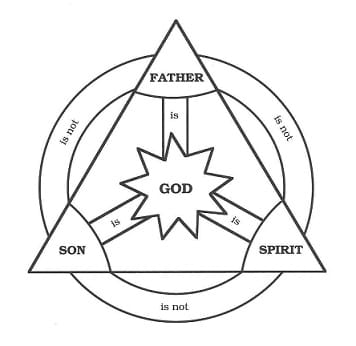
Speaking through the prophet Isaiah, God said, “My thoughts are not your thoughts, / Nor are your ways My ways … / For as the heavens are higher than the earth, / So are My ways higher than your ways, / And My thoughts than your thoughts” (Isa. 55:8–9). God is infinite, man is finite, so there are mysteries about God that man cannot fully understand. One of these mysteries is the Trinity, the tri-personality of God. According to Christian orthodoxy, God is one God in essence, power, and authority, and also eternally exists as three distinct co-equal persons. These three persons are the Father, the Son (Jesus), and the Holy Spirit. This does not mean that Christians believe in three gods (polytheism). Rather, the doctrine of the Trinity is that there is only one God who exists in three distinct persons, and all three share the exact same divine nature or essence.

Understanding this fully is beyond human comprehension and has no human parallels, although various analogies have been offered. One of these analogies is the three physical states of water. Water is not only a liquid but also a solid (ice) and a gas (vapor), yet its chemical composition (substance) never changes in all three forms (two parts hydrogen and one part oxygen—H2O). Although such analogies help us visualize the concept of the Trinity, they all fall short in some way. In the case of the water analogy, although the molecule H2O can be liquid, solid, or gas, it is never all three at one time. The Trinity, on the other hand, is all three persons as one God.

The word Trinity is not used in Scripture, but it has been adopted by theologians to summarize the biblical concept of God. Difficult as it is to understand, the Bible explicitly teaches the doctrine of the Trinity, and it deserves to be explained as clearly as possible, especially to non-Christians who find the concept a stumbling-block to belief. So let’s dig into this topic by addressing four key questions.

IS THE DOCTRINE OF THE TRINITY IRRATIONAL?

The doctrine of the Trinity is certainly a mystery but that doesn’t mean it’s irrational. The concept cannot be known by human reason apart from divine revelation, and, as we’ll soon see, the Bible definitely supports the idea of the Trinity. But for now, I want to demonstrate that the doctrine of the Trinity, although beyond human comprehension, is nevertheless rational. Our acceptance of it is congruous with how we respond to other data about the known world.

There are many things about the universe we don’t understand today and yet accept at face value simply because of the preponderance of evidence supporting their existence. The scientific method demands that empirical evidence be accepted whether or not science understands why it exists or how it operates. The scientific method does not require that all data be explained before it is accepted.

Contemporary physics, for instance, has discovered an apparent paradox in the nature of light. Depending on what kind of test one applies (both of them “equally sound”), light appears as either undulatory (wave-like) or corpuscular (particle-like). This is a problem. Light particles have mass, while light waves do not. How can light have mass and not have it, apparently at the same time? Scientists can’t yet explain this phenomenon, but neither do they reject one form of light in favor of the other, nor do they reject that light exists at all. Instead, they accept what they’ve found based on the evidence and press on.

Like physicists, we are no more able to explain the mechanics of the Trinity than they can explain the apparent paradox in the nature of light. In both cases, the evidence is clear that each exists and harbors mystery. So we must simply accept the facts and move on. Just because we cannot explain the Trinity, how it can exist, or how it operates does not mean that the doctrine must be rejected, so long as sufficient evidence exists for its reality. So let’s now explore this evidence.

HOW DOES THE BIBLE PRESENT THE DOCTRINE OF THE TRINITY?

THE OLD TESTAMENT

Although the doctrine of the Trinity is fully revealed in the New Testament, its roots can be found in the Old Testament.

In several places, God refers to Himself in plural terms. For example, “Then God said, ‘Let Us make man in Our image’” (Gen. 1:26; see 3:22; 11:7; Isa. 6:8).

The Messiah was prophesied in the Old Testament as being divine. Isaiah 9:6 states that the Messiah will be called “Mighty God,” a term applied in the Old Testament specifically to Yahweh (see Mic. 5:2).

Isaiah 48:16 refers to all three members of the Godhead: “Come near to Me, listen to this: From the first I have not spoken in secret, from the time it took place, I was there. And now the Lord God [Father] has sent Me [Jesus], and His Spirit [the Holy Spirit]” (nasv).

The Old Testament also makes numerous references to the Holy Spirit in contexts conveying His deity (Gen. 1:2; Neh. 9:20; Ps. 139:7; Isa. 63:10–14).

THE NEW TESTAMENT

The New Testament provides the most extensive and clear material on the Trinity. Here are just a few of the texts that mention all three members of the Godhead and imply their co-equal status.

•     Matthew 28:19, the baptismal formula: “Go therefore and make disciples of all the nations, baptizing them in the name [not ‘names’] of the Father and of the Son and of the Holy Spirit.”

•     Matthew 3:16, at the baptism of Christ in the Jordan: “And after being baptized, Jesus went up immediately from the water; and behold, the heavens were opened, and He saw the Spirit [Holy Spirit] of God [Father] descending as a dove, and coming upon Him [Jesus]” (nasv).

•     Luke 1:35, the prophetic announcement to Mary of Jesus’ birth: “And the angel answered and said to her, ‘The Holy Spirit will come upon you, and the power of the Highest [Father] will overshadow you; therefore, also, that Holy One who is to be born will be called the Son of God [Jesus].’”

•     The trinitarian formula is also found in 1 Peter 1:2, 2 Corinthians 13:14, and 1 Corinthians 12:4–6.

DIGGING DEEPER

To explain the doctrine of the Trinity, I will take an inductive (scientific) approach. By this I mean I will accumulate general facts in Scripture that lead to a specific conclusion—that the nature of God is triune. The argument will go like this:

1. The Bible teaches that God is one (monotheism) and that He possesses certain attributes that only God can have.

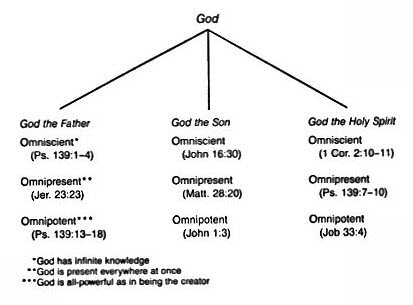
2. Yet when we study the attributes of the Father, the Son, and the Holy Spirit, we discover that all three possess the identical attributes of deity.

3. Thus we can conclude that there is one God eternally existing as three distinct persons.

God Is One (Monotheism)

The Hebrew Shema of the Old Testament is “Hear, O Israel: The Lord our God, the Lord is one!” (Deut. 6:4; see Isa. 43:10; 44:6; 46:9). Some people have argued that this passage actually refutes the concept of the triune nature of God because it states that God is one. But the Hebrew word for “one” in this text is echod, which carries the meaning of unity in plurality. It is the same word used to describe Adam and Eve becoming “one flesh” (Gen. 2:24). Scripture is not affirming that Adam and Eve literally become one person upon marriage. Rather, they are distinct persons who unite in a permanent relationship.

The New Testament confirms the teaching of the Old: “You believe that God is one. You do well; the demons also believe, and shudder” (James 2:19, nasv; see 1 Tim. 2:5; 1 Cor. 8:4; Eph. 4:4–6).

God Has a Certain Nature

Both the Old and New Testaments list the attributes of God. We won’t consider all of them here, but what follows are some of the clearest expressions of what constitutes deity.

•     God is omnipresent (present everywhere at once): Psalm 139:7–10; Jeremiah 23:23–24.

•     God is omniscient (possesses infinite knowledge): Psalms 139:1–4; 147:4–5; Hebrews 4:13; 1 John 3:20.

•     God is omnipotent (all-powerful): Psalm 139:13–18; Jeremiah 32:17; Matthew 19:26.

The Father Is God

To the Jews, who do not accept the Trinity, God is Yahweh. In the Old Testament, Yahweh is to the Hebrews what Father is in the New Testament and to Christians. The attributes of God (Yahweh) listed above are the same for Yahweh and Father because both names apply to the one God. Although the concept of God as Father is not as explicit in the Old Testament as it is in the New, nevertheless, it has its roots in the Old (see Pss. 89:26; 68:5; 103:13; Prov. 3:12).

In the New Testament, the concept of the Father as a distinct person in the Godhead becomes clear (Mark 14:36; 1 Cor. 8:6; Gal. 1:1; Phil. 2:11; 1 Pet. 1:2; 2 Pet. 1:17). God is viewed as Father over creation (Acts 17:24–29), the nation of Israel (Rom. 9:4; see Exod. 4:22), the Lord Jesus Christ (Matt. 3:17), and all who believe in Jesus as Lord and Savior (Gal. 3:26).

The Son Is God

Like the Father, Jesus possesses the attributes of God. He is omnipresent (Matt. 18:20; 28:20). He is also omniscient: He knows people’s thoughts (Matt. 12:25), their secrets (John 4:29), the future (Matt. 24:24–25), indeed all things (John 16:30; 21:17). His omnipotence is also taught. He has all power over creation (John 1:3; Col. 1:16), death (John 5:25–29; 6:39), nature (Mark 4:41; Matt. 21:19), demons (Mark 5:11–15), and diseases (Luke 4:38–41).

In addition to these characteristics, Jesus exhibits other attributes that the Bible acknowledges as belonging only to God. For example, He preexisted with the Father from all eternity (John 1:1–2), accepted worship (Matt. 14:33), forgave sins (Matt. 9:2), and was sinless (John 8:46).

The Holy Spirit Is God

The Holy Spirit is also omnipresent (Ps. 139:7–10), omniscient (1 Cor. 2:10), and omnipotent (Luke 1:35; Job 33:4).

Like Jesus, the Holy Spirit exhibits other divine attributes that the Bible ascribes to God. For instance, He was involved in creation (Gen. 1:2; Ps. 104:30), inspired the authorship of the Bible (2 Pet. 1:21), raised people from the dead (Rom. 8:11), and is called God (Acts 5:3–4).

The upshot of all this is that God is triune. In a formal argument, we can put it this way:

Major Premise:

Only God is omnipresent, omniscient, and omnipotent.

Minor Premise:

The Father, the Son, and the Holy Spirit are omnipresent, omniscient, and omnipotent.

Conclusion:

Therefore, God is triune as Father, Son, and Holy Spirit.

THE TRINITY

HOW DOES JESUS TEACH THE DOCTRINE OF THE TRINITY?

In the Bible, Jesus claims to be God and then demonstrates this claim by displaying the attributes of God and by raising Himself from the dead. So what Jesus has to say about God must be true. And Jesus clearly teaches that God is triune.

Jesus Is Equal with the Father and Holy Spirit

In Matthew 28:19, Jesus tells His followers to “make disciples of all the nations, baptizing them in the name of the Father and of the Son and of the Holy Spirit.” He uses the singular word name but associates it with three persons. The implication is that the one God is eternally three co-equal persons—Father, Son, and Holy Spirit.

Jesus Is One with the Father

In John 14:7 and 9, Jesus identifies Himself with the Father by saying to His disciples, “If you had known Me, you would have known My Father also; and from now on you know Him and have seen Him … He who has seen Me has seen the Father” (see John 5:18). Jesus is not claiming to be the Father; rather, He is saying that He is one with the Father in essence.

Jesus Is One with the Holy Spirit

Continuing in John 14, Jesus tells His disciples that, after He is gone, He will send them “another Helper” who will be with them forever and will indwell them (vv. 16–17). The “Helper” is the Holy Spirit. The trinitarian implication lies with the word another. The apostle John, as he wrote this passage, could have chosen one of two Greek words for another. Heteros denotes “another of a different kind,” while allos denotes “another of the same kind as myself.” The word chosen by John was allos, clearly linking Jesus in substance with the Holy Spirit, just as He is linked in substance with the Father in verses 7 and 9. In other words, the coming Holy Spirit will be a different person than Jesus, but He will be the same with Him in divine essence just as Jesus and the Father are different persons but one in their essential nature. Thus, in this passage, Jesus teaches the doctrine of the Trinity.

So far we have seen that the authors of Scripture and Jesus Christ teach the triune nature of God. Therefore, the only way the doctrine of the Trinity can be rejected is if one refuses to accept the biblical evidence. Some groups, such as the Jehovah’s Witnesses, do this by reinterpreting and altering Scripture. Others, such as the Unitarians (who claim that Jesus is just a man), arbitrarily and without any evidence deny anything supernatural or miraculous in the Bible. Both the Jehovah’s Witnesses and the Unitarians are guilty of the very same thing of which they accuse Christians—irrationality. They refuse to accept the evidence for the Trinity regardless of how legitimate it is. This is unscientific and irrational. If one approaches Scripture without bias, he will clearly discover what the church has maintained for centuries: God is triune—one God in essence but eternally existing in three persons as Father, Son, and Holy Spirit.

A COMMON OBJECTION

Perhaps you’ve wondered or heard someone say, “If Jesus is one in essence with the Father, an equal member of the triune Godhead, why does He say, ‘the Father is greater than I’” (John 14:28)? This question actually moves away from the doctrine of the Trinity and launches us into the doctrine of the incarnation, the process whereby Jesus, as the eternal Son of God, came to earth as man. Nevertheless, because this question is frequently raised as an objection, it needs to be answered.

Numerous passages in Scripture teach that Jesus, although fully God, is also fully man (John 1:14; Rom. 8:3; Col. 2:9; 1 Tim. 3:16). However, Philippians 2:5–8 states that, in the process of taking on humanity, Jesus did not give up any of His divine attributes. Rather, He gave up His divine glory (see John 17:5) and voluntarily chose to withhold or restrain the full use of His divine attributes. There are numerous instances in Scripture where Jesus, although in human form, exhibits the attributes of deity. If Jesus had surrendered any of His divine attributes when He came to earth, He would not have been fully God and thus could not have revealed the Father as He claimed to do (John 14:7, 9).

The key to understanding passages such as John 14:28 is that Jesus, like the Father and the Holy Spirit, has a particular position in the triune Godhead. Jesus is called the Son of God, not as an expression of physical birth, but as an expression of His position in relationship to the Father and Holy Spirit. This in no way distracts from His equality with the Father and the Holy Spirit or with His membership in the Godhead. As man, Jesus submits to the Father and acts in accordance to the Father’s will (see John 5:19, 30; 6:38; 8:28). So when we read passages such as Mark 14:36 where Jesus submits to the Father’s will, His submission has nothing to do with His divine essence, power, or authority, only with His position as the Incarnate Son.

Perhaps an illustration will help to explain this. Three people decide to pool their money equally and start a corporation. Each are equal owners of the corporation, but one owner becomes president, another vice-president, and the third secretary/treasurer. Each are completely equal so far as ownership, yet each has his own particular function to perform within the corporation. The president is the corporate head, and the vice-president and secretary/treasurer are submissive to his authority and carry out his bidding.

So when Jesus the God-man submits to the Father’s will or states that the Father is greater than He or that certain facts are known only by the Father (e.g., Matt. 24:36), it does not mean that He is less than the other members of the Godhead but that in His incarnate state He did and knew only that which was according to the Father’s will. The Father did not will that Jesus have certain knowledge while in human form. Because Jesus voluntarily restrained the full use of His divine attributes, He was submissive to the Father’s will.

Why did Jesus choose to hold back from fully using His divine powers? For our sake. God willed that Jesus feel the full weight of man’s sin and its consequences. Because Jesus was fully man, He could fulfill the requirements of an acceptable sacrifice for our sins. Only a man could die for the sins of mankind. Only a sinless man could be an acceptable sacrifice to God. And it is only because Jesus is an equal member of the triune Godhead, and thus fully God, that He was able to raise Himself from the dead after dying on the cross and thereby guarantee our eternal life.

When all the evidence is accounted for and the verdict read, the Bible clearly teaches that the Father, the Son, and the Holy Spirit are three distinct, co-equal, co-eternal members of the Godhead, yet one in essence, power, and authority. All three are one God. Were this not the case, if the Trinity were not a reality, there would be no Christianity.

[1]


[1]Story, D. (1997). Defending your faith. Originally published: Nashville : T. Nelson, c1992. (99). Grand Rapids, MI: Kregel Publications.

Handling an Objection: “I love the moral teachings of Jesus but I don’t think He is divine.”

Handling an Objection: “I love the moral teachings of Jesus but I don’t think He is divine.”

 
This past week I was doing some outreach on a major college campus. When it came time to talk about the identity of Jesus, I heard two similar responses. Granted, I have heard this objection many, many, times. It goes like this:

“I really like the moral teachings of Jesus, but I don’t think he is divine.”

I could respond to this by using the C.S. Lewis argument that Jesus is either Lord, Lunatic, or Liar. I tend to not use that one a lot. While it still has some value it generally begs the question of the reliability of the New Testament. After all, some skeptics assume the deity of Jesus is a later invention of the Church. As I have noted elsewhere, this is incorrect. The Christology is Jesus was at the very start of the formation of the early Jesus movement.

Jesus is the Message

Anyway, how do I respond to this? First, since the person already admires the teachings of Jesus, I point to the blind spot in their thinking. First, it is not the moral teachings of Jesus that is the message. Rather, Jesus is the message!

Probably the most pertinent examples of how Jesus in the message is in the Gospel of John where we see the “I AM” (Gk. ego eimi,) statements. I am well aware that all these passages need to be studied in context. But we see clearly that Jesus is emphasizing He is the message. For example:

Then Jesus declared, “I am the bread of life. He who comes to me will never go hungry, and he who believes in me will never be thirsty. (John 6:35)

When Jesus spoke again to the people, he said, “I am the light of the world. Whoever follows me will never walk in darkness, but will have the light of life.” (John 8:12)

I am the gate; whoever enters through me will be saved. He will come in and go out, and find pasture. (John 10:9)

“I am the good shepherd. The good shepherd lays down his life for the sheep.” (John 10:11)

Jesus said to her, “I am the resurrection and the life. He who believes in me will live, even though he dies; and whoever lives and believes in me will never die.” (John 11:25-26)

Jesus answered, “I am the way and the truth and the life. No one comes to the Father except through me.” (John 14:6)

“I am the vine; you are the branches. If a man remains in me and I in him, he will bear much fruit; apart from me you can do nothing.” (John 15:5)

From a tactical perspective, when people say they only like the teachings of Jesus, it can allow you the opportunity to share these passages from John and ask them if they might rethink their position.

Why Was Jesus Crucified?

Second, I ask the person is why was Jesus crucified? One issue that can tend to be overlooked is that we can minimize the issue of blasphemy in a Jewish setting. by the way, none of the above figures were accused of blasphemy. According to Jewish law, the claim to be the Messiah was not a criminal, nor capital offense. Therefore, the claim to be the Messiah was not even a blasphemous claim. (1)

If this is true, why was Jesus accused of blasphemy? According to Mark 14:62, Jesus affirmed the chief priests question that He is the Messiah, the Son of God, and the Coming Son of Man who would judge the world. This was considered a claim for deity since the eschatological authority of judgment was for God alone. Jesus provoked the indignation of his opponents because of His application of Daniel 7:13 and Psalm 110:1 to himself.

Also, many parables, which are universally acknowledged by critical scholars to be authentic to the historical Jesus, show that Jesus believed himself to be able to forgive sins against God (Matt. 9:2; Mark 2: 1-12). Forgiving sins was something that was designated for God alone (Exod. 34: 6-7; Neh.9:17; Dan. 9:9) and it was something that was done only in the Temple along with the proper sacrifice. So it can be seen that Jesus acts as if He is the Temple in person. In Mark 14:58, it says, “We heard him say, ‘I will destroy this man-made temple and in three days will build another, not made by man.’ The Jewish leadership knew that God was the one who was responsible for building the temple (Ex. 15:17; 1 En. 90:28-29).(2)

Also, God is the only one that is permitted to announce and threaten the destruction of the temple (Jer. 7:12-13; 26:4-6, 9;1 En.90:28-29). (3) It is also evident that one reasons Jesus was accused of blasphemy was because He usurped God’s authority by making himself to actually be God (Jn. 10:33, 36). Not only was this considered by the Jews to be blasphemous, it was worthy of the death penalty (Matt. 26:63-66; Mk. 14:61-65; Lk. 22:66-71; Jn. 10:31-39; 19:7)

As the late Martin Hengal said:

“Jesus’ claim to authority goes far beyond anything that can be adduced as prophetic prototypes or parallels from the field of the Old Testament and from the New Testament period. [Jesus] remains in the last resort incommensurable, and so basically confounds every attempt to fit him into categories suggested by the phenomenology of sociology of religion.” (4)

Remember that there was a Jewish leader named Bar Kohba who made an open proclamation to be the real Messiah who would take over Rome and enable the Jewish people to regain their self-rule (A.D. 132-135). Even a prominent rabbi called Rabbi Akiba affirmed him as the Messiah. Unfortunately, the revolt led by Bar Kohba failed and as a result and both he and Rabbi Akiba were slain. And remember, Bar Kohba was not accused of blasphemy. He never claimed to have the authority to forgive sins or claim to be the Son of Man (as referring to Daniel 7).

Conclusion

In the end, I think the reason some people like the moral teachings of Jesus and avoid the divinity issue is an issue of autonomy. A non- divine Jesus is really not very threatening and doesn’t ask much of us.

Sources:

1. See Darrell L. Bock. Blasphemy and Exaltation in Judaism: The Charge Against Jesus in Mark 14:53-65. Grand Rapids, MI: Baker Books, 1998.
2. William Lane Craig. Reasonable Faith: Third Edition. Wheaton, Illinois: Crossway Books, 2008, 307.
3. Martin Hengel, The Charismatic Leader and His Followers. New York: Crossroad, 1981. 68-69; Cited in Edwards, 96.
4. Jacob Immanuel Schochet. Mashiach: The Principle of Mashiach and the Messianic Era in Jewish Law and Tradition. New York: S.I.E. 1992, 93-101.
5. Ibid.

Using Inference to the Best Explantion: What Caused the Birth of Christology?

Using Inference to the Best Explantion: What Caused the Birth of Christology?

Using Inference to the Best Explantion: What Caused the Birth of Christology?
 
Anyone who studies historical method is familiar with what is called historical causation. Historians seek out the causes of a certain events. As historian Paul Barnett says, “The birth of Christianity and the birth of Christology are inseparable both as to time and essence.” (1) One thing for sure: the birth of Christology was very early and not something that was invented much later in Church history.

We must not forget that within Judaism there is a term called “avodah zara” which is defined as the formal recognition or worship as God of an entity that is in fact not God i.e., idolatry. In other words, the acceptance of a non-divine entity as your deity is a form of avodah zara. (2) As of today, traditional or Orthodox Judaism still upholds the position that Jewish people are forbidden to pray and worship anyone other than the God of Israel (Ex. 20:1–5; Deut. 5:6–9).

Paul’s Letters are the earliest records we have for the life of Jesus. We know that from about AD 48 until his death (60 to 65 AD) Paul wrote at least 13 of the New Testament’s books. They are also the earliest letters we have for the Christology of Jesus. To read any objections to Paul’s Letters, see here.

As pointed out by Richard Bauckham in his work on this topic, Paul believed that Jesus was God by attributing attributes to him that were distinctly reserved for God. And he did so in a distinctly Jewish manner while also preserving monotheism. There were three attributes that first century Jews uniquely assigned to God:

1. God is the Sole Ruler of all things

2. God is the Sole Creator of all things

3. God is the only being deserving of worship

So let’s look at how Paul matches up the data here:

1. Jesus participates in God’s sole rule over all things

Phil: 3:20-21: “For our citizenship is in heaven, from which also we eagerly wait for a Savior, the Lord Jesus Christ; who will transform the body of our humble state into conformity with the body of His glory, by the exertion of the power that He has even to subject all things to Himself.”

Eph. 1:21-22: Paul speaks of Jesus being ”far above all rule and authority and power and dominion, and every name that is named, not only in this age but also in the one to come. And He put all things in subjection under His feet…”

Here, Jesus is clearly given the authority to rule above every one of God’s created beings.

2. Jesus as the Creator of all things

Jesus is clearly thought by Paul to have been the creator of the universe. This attribute is reserved only to God in Second Temple Judaism. Paul makes it clear that Jesus created all things.

Col. 1:15-16: “He is the image of the invisible God, the firstborn over all creation. For by him all things were created: things in heaven and on earth, visible and invisible, whether thrones or powers or rulers or authorities; all things were created by him and for him.”

3. Jesus as worthy of worship

As discussed above, only God was worthy of worship in Second Temple Judaism. Nevertheless, Paul discusses the worship of Jesus. Since God is the sole Creator and Ruler of all things He alone should be worshiped. Even within the Roman Empire, Jews worshiped God alone. No other entity was worthy of worship. Here is one of the earliest Christological texts:

Philippians 2:6-11: “Who, being in very nature God, did not consider equality with God something to be grasped, but made himself nothing, taking the very nature of a servant, being made in human likeness. And being found in appearance as a man, he humbled himself and became obedient to death even death on a cross! Therefore God exalted him to the highest place and gave him the name that is above every name, that at the name of Jesus every knee should bow, in heaven and on earth and under the earth, and every tongue confess that Jesus Christ is Lord, to the glory of God the Father.”

In their book The Jesus Legend, The: A Case for the Historical Reliability of the Synoptic Jesus Tradition, Gregory Boyd and Paul Eddy say,

“During the reign of Pilate and Herod, when Caiaphas was high priest, we find a Jewish movement arising that worships a recent contemporary alongside and in a similar manner as Yahweh-God. To call this development “novel” is a significant understatement. In truth, it constitutes nothing less than a massive paradigm shift in the first century Palestinian Jewish religious worldview.” (3)

Explanations try to show how something happened. That is, what is the cause for something that has happened. So let’s weight the options on the table and see if we can come up with an explanation that explains the data at hand:

#1: Religious Syncretism

While there were various Jewish sects during the time of Jesus, religious syncretism is a form of idolatry. First, the Jewish Scriptures forbids worshiping anyone other than the God of Israel (Ex. 20:1–5; Deut. 5:6–9). Following the exile and subsequent intertestamental struggles, it can asked whether Jews still fell prey to physical idolatry. Some skeptics assert that since Israel always had problems with idolatry in their early formation, it would not be a challenge to assert they could fall into idolatry again by worshiping one of their own countrymen as God. But this is problematic; To assert that Israel’s previous problems with idolatry which would lead to further into idolatry in the Second Temple period leads me to cry “anachronism.” Remember, idolatry is rarely mentioned in the Gospels. But there are warnings about idolatry in other portions of the New Testament( 1 Cor. 6:9-10 ; Gal 5:20 ; Eph. 5:5 ; Col 3:5 ; 1 Peter 4:3 ; Rev 21:8). Paul instructs believers not to associate with idolaters ( 1 Cor .5:11 ; 10:14 ) and even commends the Thessalonian for their turning from the service of idols “to serve the living and true God” ( 1 Thess1:9) (see Walter A. Elwell’s Baker’s Evangelical Dictionary of Biblical Theology, pgs 364-365). So I guess my question is the following: Why would Paul or the early disciples commit an idolatrous act (by saying Jesus is divine) and but then later speak against idolatry? It seems rather inconsistent.

#2 Hellenism or Polytheism?

The syncretism objection is related to the Hellenism/Polytheism possibility. The first followers of Jesus were exclusively Jews. The book of Acts gives a reference to the early followers of Jesus as “the sect of Nazarenes” (Acts 24:5). However, it is asserted that as the Christian faith spread, it became a predominately Gentile based religion. By the time of Jesus, Jews had encountered the impact of Hellenistic culture for three hundred years. The word “Hellenistic” was given to describe the period of history that started with the death of Alexander the Great in 323 B.C. and ended when Rome conquered Alexander’s empire in 30 B.C .It is also safe to say that several forms of Jewish culture during the Roman period were somewhat Hellenized. This is why it is often argued that the incarnation grew out of Hellenistic presuppositions. But as Paul Eddy points out in his articleWas Christianity Corrupted by Hellenism? from the middle of the third century BC, while Jewish Palestine had already experienced the effects of Hellenism we need to remember that Hellenism did not tend to infiltrate and ‘corrupt’ the local religious traditions of the ancient world. Rather, people maintained their religious traditions in spite of Hellenistic influence in other areas of their lives. Also, there are also references to the negative views of gentile polytheism (Acts 17: 22-23; 1 Cor 8:5). Gentiles were regarded as both sinful (Gal 2:5) and idolatrous (Rom 1:23).

#3: The Deity of Jesus is Legend?

As I already said, the earliest documents for the Christology of Jesus are Paul’s Letters. In them, we have one of the earliest confessions of the deity of Jesus in 1 Corinthians 8: 5-6:

“For though there are things that are called gods, whether in the heavens or on earth; as there are many gods and many lords; yet to us there is one God, the Father, of whom are all things, and we for him; and one Lord, Jesus Christ, through whom are all things, and we live through him.”

Here is a distinct echo of the Shema, a creed that every Jew would have memorized from a very early age. When we read Deuteronomy 6:4-9, which says, “Hear O Israel! The Lord our God is our God, the Lord is one,” Paul ends up doing something extremely significant in the history of Judaism.

A glance at the entire context of the passage in 1 Corinthians 8:5-6 shows that according to Paul’s inspired understanding, Jesus receives the “name above all names,” the name God revealed as his own, the name of the Lord. In giving a reformulation of the Shema, Paul still affirms the existence of the one God, but what is unique is that somehow this one God now includes the one Lord, Jesus the Messiah. Therefore, Paul’s understanding of this passage begets no indication of abandoning Jewish monotheism in place of paganism.

For a Jewish person, when the title “Lord” (Heb. Adonai) was used in place of the divine name YHWH, this was the highest designation a Jewish person could use for deity. Furthermore, it would have been no problem to confess Jesus as prophet, priest, or king since these offices already existed in the Hebrew Bible. After all, these titles were used for a human being. There was nothing divine about them.

#4: The Christology of Jesus can be explained by the disciples experience with Jesus before the resurrection and the post-resurrection appearances

I have already pointed out that the resurrection of Jesus is the best explanation for many historical issues within the New Testament.. So at this point, I would have to assume that skeptics can only say that the birth of Christology is simply false because of their metaphysical starting points (e.g., Jesus can’t be divine because the natural world is all there is, etc).

For those that are still hung up on the reliability of the New Testament, see our resource page.

Sources:
1. 1. Paul Barnett, The Birth of Christianity: The First Twenty Years (Grand Rapids: Wm. B. Eerdmans Publishing Co. 2005), 8.

2. David Berger, The Rebbe, The Messiah And The Scandal Of Orthodox Difference, 160-174.

3. Gregory A. Boyd and Paul R. Eddy, The Jesus Legend: A Case For The Historical Reliability of the Synoptic Tradition (Grand Rapids: MI: Baker Books, 2007), 132.

Exit mobile version