Are rewards the same for all, or do they differ in degree? MATTHEW 20:1ff

MATTHEW 20:1ff—Are rewards the same for all, or do they differ in degree?

PROBLEM: Jesus told a parable of His kingdom in which each servant got the same pay even though each had worked a different number of hours. Yet in other places, the Bible speaks of different degrees of reward for working in God’s kingdom (cf. 1 Cor. 3:11–15; 2 Cor. 5:10; Rev. 22:12).

SOLUTION: There are different degrees of reward in heaven, depending on our faithfulness to Christ on earth. Jesus said, “I am coming quickly, and My reward is with Me, to give to every one according to his work” (Rev. 22:12). Paul said each believer’s work will be tried by fire and “if anyone’s work which he has built on it endures, he will receive a reward” (1 Cor. 3:14). In 2 Corinthians 5, he says we must all appear before the judgment seat of Christ “that each one may receive the things done in the body, according to what he has done, whether good or bad” (v. 10, emphasis added).

The point of the parable in Matthew 20 is not that all rewards will be the same, but that all rewards are by grace. It is to show that God rewards on the basis of opportunity, not simply on accomplishment. Not all the servants had the opportunity to work for the master the same amount of time, but all, nevertheless, were given the same pay. God looks at our disposition as well as our actions and judges accordingly.

Geisler, N. L., & Howe, T. A. (1992). When critics ask : A popular handbook on Bible difficulties (351). Wheaton, Ill.: Victor Books.

Is Peter the rock on which the church is built? MATTHEW 16:18

MATTHEW 16:18—Is Peter the rock on which the church is built?

PROBLEM: Roman Catholics use this passage to support their belief in the primacy of Peter, that is, that he is the rock on which the church is built. But Paul said the church is built on Christ, not Peter (1 Cor. 3:11). Is Peter the “rock” in this passage?

SOLUTION: There are different ways to understand this passage, but none of them support the Roman Catholic view that the church is built on St. Peter, who became the first Pope—infallible in all his official pronouncements on faith and doctrine. This is evident for many reasons.

First of all, Peter was married (Matt. 8:14), and Popes do not marry. If the first Pope could marry, why later pronounce that no priest (or Pope) can marry.

Second, Peter was not infallible in his views on the Christian life. Even Paul had to rebuke him for his hypocrisy, because he was not “straightforward about the truth of the Gospel” (Gal. 2:14).

Third, the Bible clearly declares that Christ is the foundation of the Christian church, insisting that “no other foundation can anyone lay than that which is laid, which is Jesus Christ” (1 Cor. 3:11).

Fourth, the only sense in which Peter had a foundational role in the church, all the other apostles shared in the same way. Peter was not unique in this respect. For Paul declared that in this sense the church is “built on the foundation of the apostles and prophets, Jesus Christ Himself being the chief cornerstone” (Eph. 2:20). Indeed, the early church continued steadfastly in the apostles’ doctrine [not just Peter’s]” (Acts 2:42). Even “keys of the kingdom” given to Peter (Matt. 16:19) were also given to all the apostles (cf. Matt. 18:18).

Fifth, there is no indication that Peter was the head of the early church. When the first council was held at Jerusalem, Peter played only an introductory role (Acts 15:6–11). James seems to have a more significant position, summing up the conference and making the final pronouncement (cf. Acts 15:13–21). In any event, Peter is never referred to as the “pillar” in the church. Rather, Paul speaks of “pillars” (plural), such as, “James, Cephas, and John” (Gal. 2:9). Peter (Cephas) is not even listed first among the pillars.

Sixth, many Protestant interpreters believe that Jesus’ reference to “this rock” (Matt. 16:18) upon which His church would be built was to Peter’s solid (rock-like) testimony that Jesus was “the Christ, the son of the living God” (Matt. 16:16). But even if this rock has reference to Peter (Petros, rock), which is certainly a possible interpretation, he was only a rock in the apostolic foundation of the church (Matt. 16:18), not the rock. Nor is he the only apostolic rock. Even Peter himself admitted that Christ is the chief rock (“cornerstone,” 1 Peter 2:7). And Paul notes that the other apostles are all part of the “foundation” (Eph. 2:20).

[1]


[1]Geisler, N. L., & Howe, T. A. (1992). When critics ask : A popular handbook on Bible difficulties (347). Wheaton, Ill.: Victor Books.

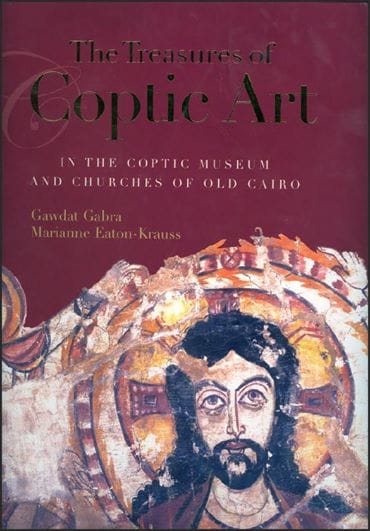
The Treasures of Coptic Art in the Coptic Museum and Churches of Old Cairo Hardcover – Dr. Gawdat Gabra

The Treasures of Coptic Art in the Coptic Museum and Churches of Old Cairo Hardcover – Dr. Gawdat Gabra


Egypt’s Coptic Church is one of the oldest in the world, with a cultural tradition dating back two millennia, during which time churches have been built and a variety of distinctive art forms have flourished. The world’s largest and most exquisite collection of Coptic artifacts is now housed in the Coptic Museum, founded in Old Cairo in 1908. Here for the first time, in this lavishly illustrated book, more than one hundred of the greatest treasures of the Coptic Museum have been beautifully photographed to present an overview of this rich artistic heritage. Objects from churches and monasteries across Egypt include some of the finest examples of Coptic icons, stelae, sculptures, wall paintings, wooden altar screens, metal crosses, censers, liturgical implements and vestments, chandeliers, and bible caskets. Besides being objects of great craftsmanship and beauty, these artifacts, which range in date from the third to the nineteenth centuries, represent indispensable material for the study of the origins and development of Coptic art, as well as its relations with the ancient Egyptian, Byzantine, and Islamic traditions. Textiles, ceramics, terracotta, ivory and bone carvings, and documents (including the famous Nag Hammadi Gnostic library from the fourth century, one of the most valuable collections of papyri in the world) provide invaluable insights into the economic and social life of Egypt over the past two thousand years. In addition to objects from the Coptic Museum, this book also includes photographs of surrounding churches, some of Egypt’s oldest, that illustrate the architectural legacy of the Copts. The accompanying text and captions provide a description of Coptic civilization in general and Coptic art in particular.


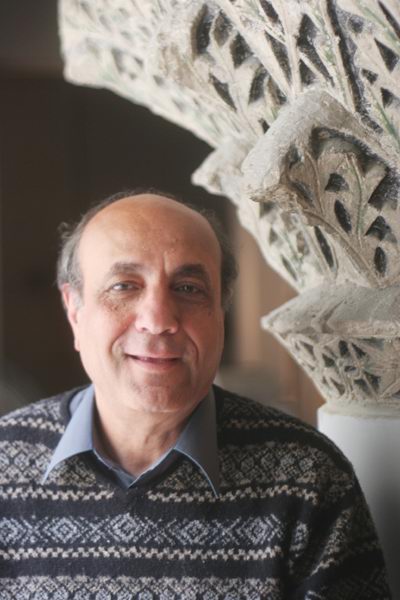
Dr. Gawdat Gabra

Dr. Gawdat Gabra is an independent scholar specializing in Coptic studies, and former director of the Coptic Museum in Cairo (1985). He is also a member of the board of the Society of Coptic Archaeology and chief editor for the St. Mark Foundation for Coptic History Studies 

He is the author and editor of numerous books related to the literary and material culture of Egyptian Christianity, including Coptic Monasteries: Egypt’s Monastic Art and Architecture and Christian Egypt: Coptic Art and Monuments through Two Millennia (both AUC Press 2002). He is also the co-editor of the three volumes of The Popes of Egypt (vol. I: AUC Press, 2004
 
Dr Gabra was born in Luxor, Egypt, but spend a great deal of his childhood in Aswan. He subsequently gained his LIC in Egyptian Antiquities at Cairo University in 1967, obtaining his PhD in Coptic Antiquities at Munster University, Germany.

Gawdat is currently resident in Southern California and a visiting lecturer at Claremont Graduate University.


Click Here To Download

Exit mobile version