ما قصة الوثيقة المتداولة عن شراء كنيسة أجيا صوفيا – د. هشام حسن
ما قصة الوثيقة المتداولة عن شراء كنيسة أجيا صوفيا – د. هشام حسن
ما قصة الوثيقة المتداولة عن شراء كنيسة أجيا صوفيا – د. هشام حسن
– أستهل تدوينتي هذه “بالسلام عليكم – Ειρήνη Υμίν” وهو سلام الانجيل الذي نستخدمه نحن المسلمون منذ فجر الاسلام حتى وقتنا هذا في مشارق الأرض ومغاربها…
– أما بالنسبة للوثيقة التي يتم تداولها في وسائل التواصل الاجتماعي ونراها تتأرجح يميناً ويساراً وتتعلق بموضوع شراء محمد الفاتح من ماله الخاص لكنيسة أغيا صوفيا من القساوسة البيزنطيين بعد سقوط القسطنطينية (ولن أستخدم اصطلاح فتح) في يديه في 25 مايو 1435 فهذا أمر سوف أقوم بتفنيده من خلال النقاط التالية:
(1) هذه الوثيقة لا يوجد لها أي ذكر في وسائل الاعلام الأجنبية على الاطلاق !! ومن الممكن البحث عنها بأي لغة أجنبية قد يعرفها كل منكم ليتأكد أن الأمر برمته مفبرك وللاستخدام الشرقي فقط لأن من يروجون لهذا الهراء يعرفون تمام المعرفة أن الغرب لا يتسم بالعاطفة ولا تقوده المشاعر وأن المعيار دائماً عند الغرب هو العلم وتقصي الحقائق ولو كان وجود مثل هذه الوثيقة صحيحاً لوجدنا المتخصصين الأجانب هم أول من تكالبوا عليها لنشر كتب وأبحاث تتعلق بهذا الأمر … وحسم الأمر سهل للغاية في عصرنا الحديث عن طريق استخدام “الكربون المشع” لمعرفة عما إذا كانت الوثيقة “مضروبة” أم لا !!!
// إذن دعونا نتفق أن تداول الوثيقة الملفقة هو أمر متعمد بين المسلمين والمتأسلمين للعب على الوتر الحساس والهاب مشاعرهم بحلم الخلافة المنتظر !!!
// سيقول البعض منكم ولكن قناة الجزيرة “القطرية” تناقلت هذا الخبر !! وهنا أرد عليكم وأقول إلى متى ستظلون منساقين وراء أي شيء دون إعمال العقل فيه ؟!! ألا تعلمون مدى تعضيد قطر لتركيا في الوقت الراهن ؟ أنسيتم أن تركيا – أردوغان هو من أرسل قوات عسكرية تركية لقطر لحمياتهم من بطش دول التعاون الخليجي بعد العزل ؟!!
(2) دعونا نفند الحيثيات التاريخية وفقاً للمصادر البيزنطية والعربية والعثمانية التي كتبت عن سقوط القسطنطينة … المتخصصون يعلمون أنه لم يتم ذكر بيع للكنيسة تحت أي مسمى كان !!! وحتى المصادر العثمانية والعربية بعد السقوط بمئات السنين لم تتحدث خلال هذه الفترة عن وجود عقد بيع وشراء يتعلق بنقل ملكية الكنيسة !!! هل كل المؤرخين متواطئين ضد الإمبراطورية العثمانية حتى المؤرخون العثمانيون أنفسهم ؟!! طبعاً لا ..
(3) كما أن سقوط القسطنطينية في يد محمد الفاتح كان بعد حصار ومعركة كبيرة إذن لم يكن هناك صلح ؟؟ أو حتى مهادنة … البيزنطيون هُزموا وقُتلوا والمدينة أُخذت عنوة إذن كان بوسع محمد الفاتح أن يفعل فيهم ما يشاء ولا يوجد منطق يقول أنني كمغتصب للمدينة سأقوم بشراء شيء أصبح ملكي أنا وملك امبراطوريتي التي أرسي دعائمها !!!
#الفرق_بين_المسلمين_الأوائل_وأتراك_الأناضول
دعونا ننبش في مقبرة التاريخ للبحث عن حادث مماثل يتمثل في شراء دار عبادة من مسيحيي الشرق أثناء فترة الفتوحات/الغزوات الاسلامية لجعلها مسجداً للمسلمين ….
/// لن نجد اية اشارة لحدث مثل هذا في المصادر العربية ولن أقول البيزنطية على اعتبار ان العرب المسلمون هم من خطوا تاريخهم بأنفسهم دون وجود ضغوط خارجية كفاتحين أو غزاة
/// ولكنا سنجد اشارة جميلة جداً تتعلق ببناء مسجد في مدينة الرصافة – الأردن لصيقاً بكنيسة القديس سيرغيوس (في القرن الأول الهجري-السابع الميلادي) وأطلق العرب المسلمون على هذا المسجد “مسجد القديس سيرغيوس ولم يشعروا بالخزي والعار من تسمية المسجد على اسم القديس أنظر المرجع التالي:
Fowden K. E., “The Cult of St. Sergius after the Islamic Conquest”, in The Barbarian Plain: Saint Sergius between Rome and Iran, University of California 1999, pp. 174-183 here p. 179.
//// في عهد الوليد بن عبد الملك (705-715) اراد الوليد -وهو الخليفة بجلالة قدره وأمير المؤنين وهو الآمر الناهي في تحقيق مصير الشعوب التي تعيش في كنفه- أن يلحق كنيسة يوحنا المعمدان للمسجد الأموي !!! يعني يا مؤمن كان عاوز ياخد الكنيسة ويلحقها بالمسجد الأموي ومش أي كنيسة معاليك دي كنيسة يوحنا المعمدان نفسه !!!
//// أيوه سيادتك وهنزل لك بالمصادر والمراجع حالاً …. طيب الخليفة بجلالة قدره كان ممكن ياخد الكنيسة ويضرب كرسي في الكلوب ويقول للمسحيين اضربوا راسكم في الحيط !!! صح ؟ إنما الخليفة لم يفعل هذا وحدثت مفاوضات مع الطوائف المسيحية وعلى الأخص اليعاقبة السريان وبعد المفاوضات والمناقشات والحوارات وافق الجانب المسيحي على ترك كنيسة يوحنا المعمدان مقابل بناء أربع كنائس أخرى كتعويضٍ لهم !! والخليفة وافق معاليك وبنى لهم من بيت مال المسلمين أربع كنائس بالاضافة إلى صرف مبالغ مالي كمان عشان يبقوا مبسوطين…. إيه الجمال ده حضرتك … أنا نفسي سعيد والله ومبسوط … وخدوا المصدر كمان أهو : إبن عساكر (ت. 1175)، تاريخ مدينة دمشق، ج 2، ص ص: 245-255.
– طبعاً أنا لا أستطيع أن أعقد مقارنة بين تصرف الوليد ومحمد الفاتح لأن بينهما ثمانية قرون كما أن الأناضولي يختلف اختلافا كبيراً مع العربي من حيث الصفات ؛ ولكني أقول أن الوليد كان يمثل لي روح الإسلام الحقة والنقية وهو أقرب إلى عصر النبوة وخصال الاسلام الحقيقة وكان في أيديه سلطة وبامكانه أن يبطش بمن يبدي المعارضة أو المقارمة ولكنه لم يفعل ذلك … وشكراً
#الخلاصة:
الخلاصة سيادتك إنك لا تعمل العقل ولا تفكر ولست بقاريء لمصادرك العربية ولا للمصادر البيزنطية والسريانية وكمان الأرمينية .. وعندما تتشدق بصورة وثيقة واهنة طالعة من تحت السلم أول إمبارح ويبدو وكأن شخص تبول عليها ليصبغ عليها ملامح القدم يبقى إنت ممنوع من الصرف … ولا أتكلم هنا عن الصرف النحوي ولكنني أتحدث عن الصرف الصحي … وفي الواقع المرير هذا تشوف لك أي هواية على الفيس سواء التيك والتوك أو أغاني المهرجانات
يسوع كان من المخضرمين الذي يقدر قيمة الادله. ويدعم الادله بامثله.قال لي صديقي الملحد ان يسوع في الحقيقة ذكي وهو يقدر قيمة الحقيقة والادله.ونجد ان هذا الامر واضح جداً في السياق الداخلي للاناجيل.الكنيسة تركز علي يسوع المتواضع والمحب .لكن لا تركز علي يسوع الاكثر ذكاءاً.
في كتاب The Apologetics of Jesus للكاتب نورمان جيسلر وباتريك زيكيران .تحدثوا عن يسوع كمعلم يتكلم بمنطقية يستخدم الحجج ببراعة شديده.فاشاروا الي ان يسوع استخدم امثال مذكوره في الاناجيل باستخدام حجة تسمي برهان الخلف” reductio ad absurdum ” هي برهنة أساسها إثبات صحة المطلوب بإبطال نقيضه أو فساد المطلوب بإثبات نقيضه .
في متي 12
22 حينئذ أحضر إليه مجنون أعمى وأخرس فشفاه، حتى إن الأعمى الأخرس تكلم وأبصر. 23 فبهت كل الجموع وقالوا: «ألعل هذا هو ابن داود؟» 24 أما الفريسيون فلما سمعوا قالوا: «هذا لا يخرج الشياطين إلا ببعلزبول رئيس الشياطين». 25 فعلم يسوع أفكارهم، وقال لهم: «كل مملكة منقسمة على ذاتها تخرب، وكل مدينة أو بيت منقسم على ذاته لا يثبت. 26 فإن كان الشيطان يخرج الشيطان فقد انقسم على ذاته. فكيف تثبت مملكته؟ 27 وإن كنت أنا ببعلزبول أخرج الشياطين، فأبناؤكم بمن يخرجون؟ لذلك هم يكونون قضاتكم! 28 ولكن إن كنت أنا بروح الله أخرج الشياطين، فقد أقبل عليكم ملكوت الله!
استخدم يسوع حجة برهان الخلف reductio ad absurdum في الرد علي اتهام الفريسيين له بانه يخرج الشياطين بقوه الشيطان نفسه.يسوع يبرهن لهم ان كلامهم منقسم وبه تناقض .فقال ” فعلم يسوع أفكارهم، وقال لهم: «كل مملكة منقسمة على ذاتها تخرب، وكل مدينة أو بيت منقسم على ذاته لا يثبت. فإن كان الشيطان يخرج الشيطان فقد انقسم على ذاته. فكيف تثبت مملكته؟ وإن كنت أنا ببعلزبول أخرج الشياطين، فأبناؤكم بمن يخرجون؟ لذلك هم يكونون قضاتكم!
فنجد ان يسوع اخذ فرضية الفريسيين انه يخرج الشياطين بقوه الشيطان. وقال انه لو كان هو يفعل هذا بقوه الشيطان لطرد شياطين.اذا يوجد شياطين يخرجون شياطين.اذا المملكة منقسمة علي ذاتها وضد نفسها.وأي مملكة او مدينة منقسمه علي ذاتها صراعها الداخلي يؤدي الي تدميرها.وايضاً اشار يسوع الي اشخاص يهود معاصرين له يخرجون الشياطين .فان كانوا يعتقدون ان هؤلاء يخرجون الشياطين بقوه الله .فلماذا لا يعتقدون ان يسوع يفعل هذا الامر؟ فنجد هنا ان يسوع استخدم حجة برهان الخلف لاعلان ان ادعائهم بانه يخرج الشياطين ببعلزبول هو مجرد اختلاق لتناقض سخيف ” (1)
وايضاً في مقاله بعنوان يسوع الفيلسوف والمدافع اشار المفكر Doug Groothuis علي مثال اخر لاستخدام يسوع حجة برهان الخلف reductio ad absurdum :
“عندما سال يسوع الفريسيين قائلاً “ ماذا تظنون في المسيح؟ ابن من هو؟» فكان رد الفريسيين انه ابن داود فقال يسوع فكيف يدعوه داود بالروح ربا؟ قائلاً ” قال الرب لربي: اجلس عن يميني حتى أضع أعداءك موطئا لقدميك. مقتبساً من مزمور 110 : 1 نجد ان يسوع استخدم مصدر مقبولاً لدي الفريسيين. واختتم بسؤال كيف يدعوه داود بالروح رباً .وان كان داود دعاه رباً فكيف يكون ابنه ..! ونجد ان ما طرحه يسوع ابكم به الفريسيين فقال الكتاب فلم يستطع احد ان يجيبه بكلمة . ( متي 22 : 41 – 46 ) فيمكننا ان نبسط حجة يسوع كالاتي :-
ان كان المسيح هو مجرد ابن لداود “من نسله “فداود لا يمكن ان يدعوه رباً .
لما اذا دعاه داود رباً في مزمور 110
لتعتقد بالمسيح لابد ان تراه كداود كرب وليس مجرد انه من نسل داود .
بالتالي المسيح هو ليس مجرد انساناً فقط ابن لداود.
فيسوع لم ينفي ارتباطه بنسل داود .فهو ابن لداود واشار انجيل متي 1 : 1 الي هذا .وقبل يسوع هذا اللقب دون اعتراض في متي 20 : 30 – 31 لكن ما اراد يسوع اثباته انه ليس مجرد من نسل داود بل هو الرب باستشهاد من داود نفسه.واستخدم يسوع حجة برهان الخلف لاعلان هذا.فسعي يسوع للتوضيح لمستمعيه من هو المسيح الذي هو نفسه المسيح ” (2)
كان يسوع قوي جداً في استخدام المنطق والحجج السليمة .لذلك يجب ان يتحلي اتباعه والمؤمنين به بالبراعة وروعة استخدام البراهين والمنطق والحجج السليمة.
المراجع
The Apologetics of Jesus by Norman L. Geisler and Patrick Zukeran, p. 75-76.
2. Doug Groothuis, Jesus: Philosopher and Apologist, see here.
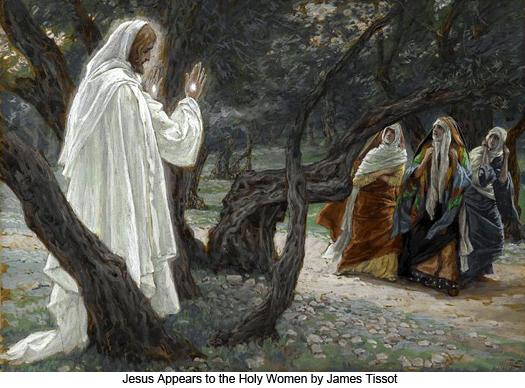
MATTHEW 28:9—To whom did Christ appear first, the women or His disciples?
PROBLEM: Both Matthew and Mark list women as the first ones to see the resurrected Christ. Mark says, “He appeared first to Mary Magdalene” (16:9). But Paul lists Peter (Cephas) as the first one to see Christ after His resurrection (1 Cor. 15:5).
SOLUTION: Jesus appeared first to Mary Magdalene, then to the other women, and then to Peter. The order of the twelve appearances of Christ goes as follows:
Paul was not giving a complete list, but only the important one for his purpose. Since only men’s testimony was considered legal or official in the 1st century, it is understandable that the apostle would not list the women in his defense of the resurrection here.
MATTHEW 26:11—Was Jesus always present with His disciples?
PROBLEM: According to Jesus’ statement here, He would not always be with the disciples, for He said: “but Me you do not have always” with you. On the other hand, in Matthew 28:20 Jesus said, “Lo, I am with you always, even to the end of the age.”
SOLUTION: In the first passage, Jesus was speaking of His physical presence (which would not be with them between His ascension and second coming), and, in the later text, He is referring to His spiritual presence with them as they preached the Gospel in all the world. There is no contradiction here whatsoever.
Geisler, N. L., & Howe, T. A. (1992). When critics ask : A popular handbook on Bible difficulties (359). Wheaton, Ill.: Victor Books.
MATTHEW 20:20 (cf. Mark 10:35)—Who came to talk with Jesus, the mother of James and John or James and John?
PROBLEM: In Matthew, the mother of James and John made a request of Jesus. However, Mark states that it was James and John who came to Jesus to make their request.
SOLUTION: It is clear that both the mother and her sons came to Jesus to make the request, since the text declares “the mother … came to Him with her sons” (v. 20). It is possible that the mother spoke first with the two sons closely following to reiterate the request. This is supported by Matthew’s account because when Jesus responds “are you able to drink the cup that I am about to drink?” the Bible says “they said to Him, `we are able’ ” (v.22). So, there is no unsolvable conflict here. The two accounts are harmonious.
MATTHEW 16:28—Did Jesus make a mistake about His disciples seeing the kingdom come in their lifetimes?
PROBLEM: Jesus told His disciples that some of them would not see death until they saw Him coming in His kingdom. Yet during the life of the apostles, Jesus never returned to set up His kingdom.
SOLUTION: This is a question of when this was going to take place, not whether it would. There are three possible solutions.
First, some have suggested that this may be a reference to the Day of Pentecost where Christ’s Helper, the Holy Spirit, came to descend upon the apostles. In John’s Gospel (14:26), Jesus promised to send the Holy Spirit, and, in the beginning of Acts (1:4–8), He tells them not to leave Jerusalem until they have received the Holy Spirit. But this hardly seems to fit the description of seeing Christ coming in His kingdom (Matt. 16:28).
Second, others believe this might be a reference to the destruction of Jerusalem and the temple in a.d. 70. This would mean that He would return to bring judgment upon the city that rejected Him and crucified Him. While this is a possible explanation, it does not seem to account for the fact that Jesus appears to be coming for believers (those “standing there” with Him), not simply coming in judgment on unbelievers. Nor does the judgment on Jerusalem in a.d. 70 adequately express seeing the “Son of Man coming in His kingdom” (v. 28), a phrase reminiscent of His second coming (cf. 26:64). Nor does it explain why Jesus never appeared in a.d. 70.
A third and more plausible explanation is that this is a reference to the appearance of Christ in His glory on the Mount of Transfiguration which begins in the very next verse (17:1). Here Christ does literally appear in a glorified form, and some of His apostles are there to witness the occasion, namely Peter, James, and John. This transfiguration experience, of course, was only a foretaste of His Second Coming when all believers will see Him come in power and great glory (cf. Acts 1:11; Rev. 1:7).
MATTHEW 5:14—Are believers the light of the world, or is Jesus?
PROBLEM: In this passage, Jesus said to His disciples, “You are the light of the world.” However, in John 9:5, Jesus declared, “I am the light of the world.” Who is the light of the world, Jesus or His disciples?
SOLUTION: Both. Jesus is the primary light, and we are the secondary light. As the light of the sun is to the moon, so Jesus is the source of the light, and we are the reflectors of the light. Jesus said, “as long as I am in the world, I am the light of the world” (John 9:5). Now that He is no longer here, we are His reflected light in the world.
MATTHEW 2:6—How can we explain Matthew’s apparent misquotation of Micah 5:2?
PROBLEM: Matthew 2:6 quotes Micah 5:2. However, the words Matthew uses are different than those used by Micah.
SOLUTION: Although Matthew seems to have changed some of the words from the passage in Micah, there is no real deviation in the meaning of the text. Matthew, in some instances, seems to have paraphrased.
First, Matthew inserts the phrase “land of Judah” for the word “Ephrathah.” This does not really change the meaning of the verse. There is no difference between the land of Judah and Ephrathah, except one is more specific than the other. In fact, Ephrathah refers to Bethlehem in the Micah passage, and Bethlehem is located in the land of Judah. However, this does not change the basic meaning of this verse. He is speaking of the same area of land. Interestingly, when Herod asked the chief priests and the scribes where the child was to be born, they said, “in Bethlehem of Judea” (Matt. 2:5, nasb).
Second, Matthew describes the land of Judah as “not the least” but Micah states that it is “little.” Here, Matthew may be saying that since the Messiah is to come from this region, it is by no means least among the other areas of land in Judah. The phrase in Micah only says that Bethlehem is too little or small, as compared to the other areas of land in Judah. The verse does not say it is the least among them, only very little. Matthew is saying the same thing in different words, namely, that Bethlehem is little in size, but by no means the least in significance, since the Messiah was born there.
Finally, Matthew uses the phrase “who will shepherd My people Israel” and Micah does not. Micah 5:2 recognizes that there will be a ruler in Israel, and Matthew recognizes this as well. However, the phrase that is not mentioned in Micah is actually taken from 2 Samuel 5:2. The combining of verses does not take away what is being said, but it strengthens the point that the author is making. There are other instances where an author combines one Scripture with another. For example, Matthew 27:9–10 combines some of Zechariah 11:12–13 with Jeremiah 19:2, 11 and 32:6–9. Also, Mark 1:2–3 combines some of Isaiah 40:3 with Malachi 3:1. Only the first passage is mentioned, since it is the main passage being cited.
In brief, Matthew is not misrepresenting any information in his quotation of Micah 5:2 and 2 Samuel 5:2. Matthew’s quote is still accurate even though he paraphrases part of it and combines another portion of Scripture with it.
If Jesus is the Jewish Messiah, why don’t more Jews believe in him?
Actually, there are tens of thousands of Jews who have believed and do believe in him. The problem is that most Jews have not bothered to check into the facts about Jesus, and the only Jesus most of them know is either the baby Jesus of Christmas, an emaciated figure hanging on a cross in churches, or the Jesus of the Crusades and Inquisitions. The question is, Why don’t you believe Jesus is the Messiah? Do you really know who he is?
I encourage you to consider the following points.
1. Most Jews have never seriously studied the issue. Many of those who have decided to find out who Jesus is have been quite surprised by what they have learned. The greatest scholars and scientists in the world once believed the earth was flat—until firsthand investigation and discovery altered their outlook. It’s the exact same thing with Jews who honestly investigate the Messianic claims of Jesus. Everything changes—to put it mildly.
2. If most religious Jews learn anything about Jesus in their traditional studies, it is quite biased and negative. 22 Thus, they do not entertain even the possibility of the messiahship of Jesus.
3. Many so-called Christians have committed atrocities against Jews in the name of Jesus, helping to drive Jews away from their true Messiah. (See below, 2.7, for more on this, along with my book Our Hands Are Stained with Blood.)
4. These same Christians have often put forth a distorted picture of Jesus that bears little resemblance to the real Messiah who walked the earth two thousand years ago. Can Jews be blamed for thinking that Christians worshiped idols when the churches were filled with worshipers bowing before large, beautiful statues depicting Jesus as a babe in his mother’s lap?
5. There is often great pressure on those Jews—especially religious Jews—who put their faith in Jesus the Messiah. Some succumb to the fear, the pressure, the intimidation, the separation, and the loneliness, and they deny with their lips what they know to be true in their hearts.
6. Traditional Jewish teaching gives a slanted portrayal of who the Messiah is and what he will do. Since the description is faulty, people are looking in the wrong direction for the wrong person. No wonder relatively few have found him.
7. Once a learned Jew does believe in Yeshua, he is discredited, and so his name is virtually removed from the rolls of history. It’s almost as if such people ceased to exist. (Do you remember reading the novel Animal Farm in school? Revisionist history goes on to this day—even in traditional Jewish circles.) The story of Max Wertheimer provides one case in point. In the last century, Wertheimer came to the States as an Orthodox Jew, but over the course of time, he became a Reform Jew and was ordained a rabbi upon graduating from Hebrew Union College in Cincinnati in 1889. (He also received a Ph.D. from the University of Cincinnati the same year.) He then served as the greatly loved rabbi of B’Nai Yeshurun synagogue in Dayton, Ohio, for the next ten years. When he became a fervent believer in Jesus, however, pastoring a church as well, his name was literally removed from the rolls of the school—a school of alleged tolerance at that. Why was his name dropped? According to Alfred A. Isaacs, cited in the November 25, 1955, edition of the National Jewish Post, Wertheimer was disowned by Hebrew Union College solely because of his Christian faith. 23 And to think, this happened in a “liberal” Reform Jewish institution!
8. Although this may be hard for you to accept, because our leadership rejected Jesus the Messiah when he came, God judged us as a people (just as he judged us as a people for rejecting his law and his prophets in previous generations), and as a result, our hearts have become especially hardened toward the concept of Jesus as Messiah. 24 Paul explained this in his important letter to the believers in Rome: “What Israel sought so earnestly it did not obtain, but the elect did. The others were hardened, as it is written: ‘God gave them a spirit of stupor, eyes so that they could not see and ears so that they could not hear, to this very day’ ” (Rom. 11:7–8; the quote here is taken from Deut. 29:4 in our Torah and Isa. 29:10 in our Prophets).
If you stop to think about it, isn’t it strange that as a people we have almost totally lost sight of the fact that Jesus-Yeshua is one of us, actually, the most influential Jew ever to walk the earth? 25 Yet most of us think of him as if he were some fair-skinned, blue-eyed European. The good news is that Israel’s hardening was only partial: There have always been Jews who followed Jesus the Messiah, and in the end, our people will turn back to him on a national scale. Paul explains this a few verses later:
I do not want you [Gentiles] to be ignorant of this mystery, brothers, so that you may not be conceited: Israel has experienced a hardening in part until the full number of the Gentiles has come in. And so all Israel will be saved, as it is written: “The deliverer will come from Zion; he will turn godlessness away from Jacob. And this is my covenant with them when I take away their sins.”
Romans 11:25–27; the quote is taken from Isaiah 59:20–21; 27:9; and Jeremiah 31:33–34, all in our Prophets
Hopefully, you will be one of those Jews who is determined to find out the truth about the Messiah right now, determining to follow him at any cost. In the end, you must decide for yourself, and the bottom line question is one that only you can answer: Why don’t you believe Jesus is our promised Messiah?
What if more Jews—including your rabbi—did believe in him? Would you? Of course, that wouldn’t change the facts. Either Jesus is or is not the Messiah of Israel. Public opinion can’t affect the truth. But many times, when people find out that it’s okay to hold to a certain opinion, they come out of the closet.
Maybe it would help you to know that many of us in Jewish work have spoken with Orthodox and even ultra-Orthodox Jews who have told us in private that they believe Jesus is the Messiah, but they are afraid to go public for fear of what could happen to them. Maybe if a number of these religious Jews—some of whom are rabbis—showed up one day on your doorstep and told you their views, it would get you to think seriously about the matter.
As we grow and mature—from infants to children to teens to adults—we find out that not everything we have been told is true. Sometimes we just have to learn for ourselves. And even as adults, we often have skewed perspectives on many things. Just look at what Democrats believe about Republicans (and vice versa) or what Palestinians believe about Israelis (and vice versa) or what Black Muslims believe about Jews (and vice versa). Our perspectives, opinions, and convictions are not always right—no matter how strenuously we argue for our position. Common sense tells us that all of us can’t be right about everything all the time.
Even on an interpersonal level, how often have you met someone only to find out that all the bad things you heard about that person were greatly exaggerated or false? It happens all the time. As for the matter at hand, I assure you in the strongest possible terms: As a Jew, most everything you have heard about Jesus has been untrue. You owe it to yourself to find out just who this Jesus really is—and I say this to you whether you are an ultra-Orthodox rabbi reading this book in secret or you are a thoroughly secular, wealthy Jewish businessman who was given this book by a friend.
This much is certain: We have carefully investigated the claims of Jesus and can testify firsthand that Yeshua is who he said he was. What do you say?
[1]
22 The infamous Rabbinic collection of anti-Jesus fables, called Toledot Yeshu, is still studied in some ultra-Orthodox circles, although virtually all other Jewish scholars have long since repudiated the Toledot. These scurrilous writings, based in part on some Talmudic references, accusing Mary of fathering Jesus through a Roman soldier (or by rape), and portraying Jesus as an idolater, magician, and Israel’s arch-deceiver, were the primary source of information about Jesus for many traditional Jews, especially in the Middle Ages. Of course, as noted by the Oxford Dictionary of Jewish Religion, ed. Geoffrey Wigoder (New York: Oxford, 1997), 695, “the work is an expression of vulgar polemics written in reaction to the no less vulgar attacks on Judaism in popular Christian teaching and writing.” But as I have stated before, just as many Gentiles around the world have had a biased and inaccurate view of the Jewish people, so also have many Jews had a biased and inaccurate view of Jesus, the Jewish Messiah. For a representative sampling from the Toledot, see the excellent study of Walter Riggans, Yeshua ben David: Why Do the Jewish People Reject Jesus as Their Messiah? (Crowborough, England: Marc, 1995), 127–32. Interested readers of this present volume would do well to read Riggans as well.
23 For more on this, see Nahum Brodt, “The Truth about the Rabbi,” in Would I? Would You?, ed. Henry and Marie Einspruch (Baltimore: Lederer, 1970), 8–10. For a fuller account of Wertheimer’s faith, see Jacob Gartenhaus, Famous Hebrew Christians (Grand Rapids: Baker, 1979), 191–97.
24 This is not the first time in our history that God has hardened our hearts because we sinned against him. This is what God said to the prophet Isaiah more than twenty-five hundred years ago: “Go and tell this people: ‘Be ever hearing, but never understanding; be ever seeing, but never perceiving.’ Make the heart of this people calloused; make their ears dull and close their eyes. Otherwise they might see with their eyes, hear with their ears, understand with their hearts, and turn and be healed” (Isa. 6:9–10). The prophet was actually called to a ministry of hardening his people’s hearts! It was as if God were saying, “Fine. If you want to be hard-hearted, refusing to believe me or obey me, I will give you over to your hardness and make you even harder.” This is exactly what has happened to us regarding the Messiah: When so many of our people refused to follow him, God gave us over to our unbelief and obduracy to the point that through the centuries, we have become especially resistant to Jesus.
25 This well-known, anonymous tribute to Jesus, known as “One Solitary Life,” puts things in perspective: “He was born in an obscure village. He worked in a carpenter shop until He was thirty. He then became an itinerant preacher. He never held an office. He never had a family or owned a house. He didn’t go to college. He had no credentials but himself. He was only thirty-three when the public turned against him. His friends ran away. He was turned over to his enemies and went through the mockery of a trail. He was nailed to a cross between two thieves. While he was dying, his executioners gambled for his clothing, the only property he had on earth. He was laid in a borrowed grave. Nineteen centuries have come and gone, and today he is the central figure of the human race. All the armies that ever marched, all the navies that ever sailed, all the parliaments that ever sat, and all the kings that ever reigned have not affected the life of man on this earth as much as that one solitary life.”
[1]Brown, M. L. (2000). Answering Jewish objections to Jesus, Volume 1: General and historical objections. (21). Grand Rapids, Mich.: Baker Books.
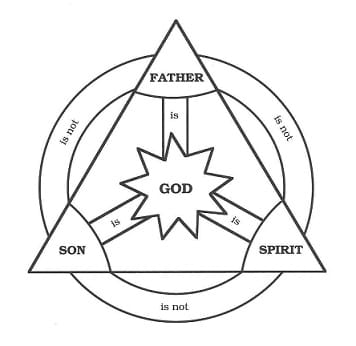
Speaking through the prophet Isaiah, God said, “My thoughts are not your thoughts, / Nor are your ways My ways … / For as the heavens are higher than the earth, / So are My ways higher than your ways, / And My thoughts than your thoughts” (Isa. 55:8–9). God is infinite, man is finite, so there are mysteries about God that man cannot fully understand. One of these mysteries is the Trinity, the tri-personality of God. According to Christian orthodoxy, God is one God in essence, power, and authority, and also eternally exists as three distinct co-equal persons. These three persons are the Father, the Son (Jesus), and the Holy Spirit. This does not mean that Christians believe in three gods (polytheism). Rather, the doctrine of the Trinity is that there is only one God who exists in three distinct persons, and all three share the exact same divine nature or essence.
Understanding this fully is beyond human comprehension and has no human parallels, although various analogies have been offered. One of these analogies is the three physical states of water. Water is not only a liquid but also a solid (ice) and a gas (vapor), yet its chemical composition (substance) never changes in all three forms (two parts hydrogen and one part oxygen—H2O). Although such analogies help us visualize the concept of the Trinity, they all fall short in some way. In the case of the water analogy, although the molecule H2O can be liquid, solid, or gas, it is never all three at one time. The Trinity, on the other hand, is all three persons as one God.
The word Trinity is not used in Scripture, but it has been adopted by theologians to summarize the biblical concept of God. Difficult as it is to understand, the Bible explicitly teaches the doctrine of the Trinity, and it deserves to be explained as clearly as possible, especially to non-Christians who find the concept a stumbling-block to belief. So let’s dig into this topic by addressing four key questions.
IS THE DOCTRINE OF THE TRINITY IRRATIONAL?
The doctrine of the Trinity is certainly a mystery but that doesn’t mean it’s irrational. The concept cannot be known by human reason apart from divine revelation, and, as we’ll soon see, the Bible definitely supports the idea of the Trinity. But for now, I want to demonstrate that the doctrine of the Trinity, although beyond human comprehension, is nevertheless rational. Our acceptance of it is congruous with how we respond to other data about the known world.
There are many things about the universe we don’t understand today and yet accept at face value simply because of the preponderance of evidence supporting their existence. The scientific method demands that empirical evidence be accepted whether or not science understands why it exists or how it operates. The scientific method does not require that all data be explained before it is accepted.
Contemporary physics, for instance, has discovered an apparent paradox in the nature of light. Depending on what kind of test one applies (both of them “equally sound”), light appears as either undulatory (wave-like) or corpuscular (particle-like). This is a problem. Light particles have mass, while light waves do not. How can light have mass and not have it, apparently at the same time? Scientists can’t yet explain this phenomenon, but neither do they reject one form of light in favor of the other, nor do they reject that light exists at all. Instead, they accept what they’ve found based on the evidence and press on.
Like physicists, we are no more able to explain the mechanics of the Trinity than they can explain the apparent paradox in the nature of light. In both cases, the evidence is clear that each exists and harbors mystery. So we must simply accept the facts and move on. Just because we cannot explain the Trinity, how it can exist, or how it operates does not mean that the doctrine must be rejected, so long as sufficient evidence exists for its reality. So let’s now explore this evidence.
HOW DOES THE BIBLE PRESENT THE DOCTRINE OF THE TRINITY?
THE OLD TESTAMENT
Although the doctrine of the Trinity is fully revealed in the New Testament, its roots can be found in the Old Testament.
In several places, God refers to Himself in plural terms. For example, “Then God said, ‘Let Us make man in Our image’” (Gen. 1:26; see 3:22; 11:7; Isa. 6:8).
The Messiah was prophesied in the Old Testament as being divine. Isaiah 9:6 states that the Messiah will be called “Mighty God,” a term applied in the Old Testament specifically to Yahweh (see Mic. 5:2).
Isaiah 48:16 refers to all three members of the Godhead: “Come near to Me, listen to this: From the first I have not spoken in secret, from the time it took place, I was there. And now the Lord God [Father] has sent Me [Jesus], and His Spirit [the Holy Spirit]” (nasv).
The Old Testament also makes numerous references to the Holy Spirit in contexts conveying His deity (Gen. 1:2; Neh. 9:20; Ps. 139:7; Isa. 63:10–14).
THE NEW TESTAMENT
The New Testament provides the most extensive and clear material on the Trinity. Here are just a few of the texts that mention all three members of the Godhead and imply their co-equal status.
• Matthew 28:19, the baptismal formula: “Go therefore and make disciples of all the nations, baptizing them in the name [not ‘names’] of the Father and of the Son and of the Holy Spirit.”
• Matthew 3:16, at the baptism of Christ in the Jordan: “And after being baptized, Jesus went up immediately from the water; and behold, the heavens were opened, and He saw the Spirit [Holy Spirit] of God [Father] descending as a dove, and coming upon Him [Jesus]” (nasv).
• Luke 1:35, the prophetic announcement to Mary of Jesus’ birth: “And the angel answered and said to her, ‘The Holy Spirit will come upon you, and the power of the Highest [Father] will overshadow you; therefore, also, that Holy One who is to be born will be called the Son of God [Jesus].’”
• The trinitarian formula is also found in 1 Peter 1:2, 2 Corinthians 13:14, and 1 Corinthians 12:4–6.
DIGGING DEEPER
To explain the doctrine of the Trinity, I will take an inductive (scientific) approach. By this I mean I will accumulate general facts in Scripture that lead to a specific conclusion—that the nature of God is triune. The argument will go like this:
1. The Bible teaches that God is one (monotheism) and that He possesses certain attributes that only God can have.
2. Yet when we study the attributes of the Father, the Son, and the Holy Spirit, we discover that all three possess the identical attributes of deity.
3. Thus we can conclude that there is one God eternally existing as three distinct persons.
God Is One (Monotheism)
The Hebrew Shema of the Old Testament is “Hear, O Israel: The Lord our God, the Lord is one!” (Deut. 6:4; see Isa. 43:10; 44:6; 46:9). Some people have argued that this passage actually refutes the concept of the triune nature of God because it states that God is one. But the Hebrew word for “one” in this text is echod, which carries the meaning of unity in plurality. It is the same word used to describe Adam and Eve becoming “one flesh” (Gen. 2:24). Scripture is not affirming that Adam and Eve literally become one person upon marriage. Rather, they are distinct persons who unite in a permanent relationship.
The New Testament confirms the teaching of the Old: “You believe that God is one. You do well; the demons also believe, and shudder” (James 2:19, nasv; see 1 Tim. 2:5; 1 Cor. 8:4; Eph. 4:4–6).
God Has a Certain Nature
Both the Old and New Testaments list the attributes of God. We won’t consider all of them here, but what follows are some of the clearest expressions of what constitutes deity.
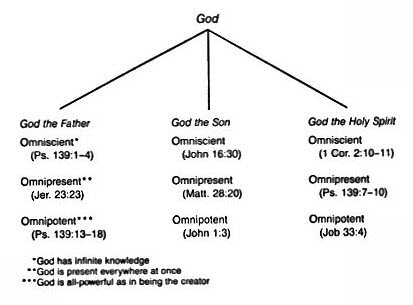
• God is omnipresent (present everywhere at once): Psalm 139:7–10; Jeremiah 23:23–24.
• God is omniscient (possesses infinite knowledge): Psalms 139:1–4; 147:4–5; Hebrews 4:13; 1 John 3:20.
• God is omnipotent (all-powerful): Psalm 139:13–18; Jeremiah 32:17; Matthew 19:26.
The Father Is God
To the Jews, who do not accept the Trinity, God is Yahweh. In the Old Testament, Yahweh is to the Hebrews what Father is in the New Testament and to Christians. The attributes of God (Yahweh) listed above are the same for Yahweh and Father because both names apply to the one God. Although the concept of God as Father is not as explicit in the Old Testament as it is in the New, nevertheless, it has its roots in the Old (see Pss. 89:26; 68:5; 103:13; Prov. 3:12).
In the New Testament, the concept of the Father as a distinct person in the Godhead becomes clear (Mark 14:36; 1 Cor. 8:6; Gal. 1:1; Phil. 2:11; 1 Pet. 1:2; 2 Pet. 1:17). God is viewed as Father over creation (Acts 17:24–29), the nation of Israel (Rom. 9:4; see Exod. 4:22), the Lord Jesus Christ (Matt. 3:17), and all who believe in Jesus as Lord and Savior (Gal. 3:26).
The Son Is God
Like the Father, Jesus possesses the attributes of God. He is omnipresent (Matt. 18:20; 28:20). He is also omniscient: He knows people’s thoughts (Matt. 12:25), their secrets (John 4:29), the future (Matt. 24:24–25), indeed all things (John 16:30; 21:17). His omnipotence is also taught. He has all power over creation (John 1:3; Col. 1:16), death (John 5:25–29; 6:39), nature (Mark 4:41; Matt. 21:19), demons (Mark 5:11–15), and diseases (Luke 4:38–41).
In addition to these characteristics, Jesus exhibits other attributes that the Bible acknowledges as belonging only to God. For example, He preexisted with the Father from all eternity (John 1:1–2), accepted worship (Matt. 14:33), forgave sins (Matt. 9:2), and was sinless (John 8:46).
The Holy Spirit Is God
The Holy Spirit is also omnipresent (Ps. 139:7–10), omniscient (1 Cor. 2:10), and omnipotent (Luke 1:35; Job 33:4).
Like Jesus, the Holy Spirit exhibits other divine attributes that the Bible ascribes to God. For instance, He was involved in creation (Gen. 1:2; Ps. 104:30), inspired the authorship of the Bible (2 Pet. 1:21), raised people from the dead (Rom. 8:11), and is called God (Acts 5:3–4).
The upshot of all this is that God is triune. In a formal argument, we can put it this way:
Major Premise:
Only God is omnipresent, omniscient, and omnipotent.
Minor Premise:
The Father, the Son, and the Holy Spirit are omnipresent, omniscient, and omnipotent.
Conclusion:
Therefore, God is triune as Father, Son, and Holy Spirit.
THE TRINITY
HOW DOES JESUS TEACH THE DOCTRINE OF THE TRINITY?
In the Bible, Jesus claims to be God and then demonstrates this claim by displaying the attributes of God and by raising Himself from the dead. So what Jesus has to say about God must be true. And Jesus clearly teaches that God is triune.
Jesus Is Equal with the Father and Holy Spirit
In Matthew 28:19, Jesus tells His followers to “make disciples of all the nations, baptizing them in the name of the Father and of the Son and of the Holy Spirit.” He uses the singular word name but associates it with three persons. The implication is that the one God is eternally three co-equal persons—Father, Son, and Holy Spirit.
Jesus Is One with the Father
In John 14:7 and 9, Jesus identifies Himself with the Father by saying to His disciples, “If you had known Me, you would have known My Father also; and from now on you know Him and have seen Him … He who has seen Me has seen the Father” (see John 5:18). Jesus is not claiming to be the Father; rather, He is saying that He is one with the Father in essence.
Jesus Is One with the Holy Spirit
Continuing in John 14, Jesus tells His disciples that, after He is gone, He will send them “another Helper” who will be with them forever and will indwell them (vv. 16–17). The “Helper” is the Holy Spirit. The trinitarian implication lies with the word another. The apostle John, as he wrote this passage, could have chosen one of two Greek words for another. Heteros denotes “another of a different kind,” while allos denotes “another of the same kind as myself.” The word chosen by John was allos, clearly linking Jesus in substance with the Holy Spirit, just as He is linked in substance with the Father in verses 7 and 9. In other words, the coming Holy Spirit will be a different person than Jesus, but He will be the same with Him in divine essence just as Jesus and the Father are different persons but one in their essential nature. Thus, in this passage, Jesus teaches the doctrine of the Trinity.
So far we have seen that the authors of Scripture and Jesus Christ teach the triune nature of God. Therefore, the only way the doctrine of the Trinity can be rejected is if one refuses to accept the biblical evidence. Some groups, such as the Jehovah’s Witnesses, do this by reinterpreting and altering Scripture. Others, such as the Unitarians (who claim that Jesus is just a man), arbitrarily and without any evidence deny anything supernatural or miraculous in the Bible. Both the Jehovah’s Witnesses and the Unitarians are guilty of the very same thing of which they accuse Christians—irrationality. They refuse to accept the evidence for the Trinity regardless of how legitimate it is. This is unscientific and irrational. If one approaches Scripture without bias, he will clearly discover what the church has maintained for centuries: God is triune—one God in essence but eternally existing in three persons as Father, Son, and Holy Spirit.
A COMMON OBJECTION
Perhaps you’ve wondered or heard someone say, “If Jesus is one in essence with the Father, an equal member of the triune Godhead, why does He say, ‘the Father is greater than I’” (John 14:28)? This question actually moves away from the doctrine of the Trinity and launches us into the doctrine of the incarnation, the process whereby Jesus, as the eternal Son of God, came to earth as man. Nevertheless, because this question is frequently raised as an objection, it needs to be answered.
Numerous passages in Scripture teach that Jesus, although fully God, is also fully man (John 1:14; Rom. 8:3; Col. 2:9; 1 Tim. 3:16). However, Philippians 2:5–8 states that, in the process of taking on humanity, Jesus did not give up any of His divine attributes. Rather, He gave up His divine glory (see John 17:5) and voluntarily chose to withhold or restrain the full use of His divine attributes. There are numerous instances in Scripture where Jesus, although in human form, exhibits the attributes of deity. If Jesus had surrendered any of His divine attributes when He came to earth, He would not have been fully God and thus could not have revealed the Father as He claimed to do (John 14:7, 9).
The key to understanding passages such as John 14:28 is that Jesus, like the Father and the Holy Spirit, has a particular position in the triune Godhead. Jesus is called the Son of God, not as an expression of physical birth, but as an expression of His position in relationship to the Father and Holy Spirit. This in no way distracts from His equality with the Father and the Holy Spirit or with His membership in the Godhead. As man, Jesus submits to the Father and acts in accordance to the Father’s will (see John 5:19, 30; 6:38; 8:28). So when we read passages such as Mark 14:36 where Jesus submits to the Father’s will, His submission has nothing to do with His divine essence, power, or authority, only with His position as the Incarnate Son.
Perhaps an illustration will help to explain this. Three people decide to pool their money equally and start a corporation. Each are equal owners of the corporation, but one owner becomes president, another vice-president, and the third secretary/treasurer. Each are completely equal so far as ownership, yet each has his own particular function to perform within the corporation. The president is the corporate head, and the vice-president and secretary/treasurer are submissive to his authority and carry out his bidding.
So when Jesus the God-man submits to the Father’s will or states that the Father is greater than He or that certain facts are known only by the Father (e.g., Matt. 24:36), it does not mean that He is less than the other members of the Godhead but that in His incarnate state He did and knew only that which was according to the Father’s will. The Father did not will that Jesus have certain knowledge while in human form. Because Jesus voluntarily restrained the full use of His divine attributes, He was submissive to the Father’s will.
Why did Jesus choose to hold back from fully using His divine powers? For our sake. God willed that Jesus feel the full weight of man’s sin and its consequences. Because Jesus was fully man, He could fulfill the requirements of an acceptable sacrifice for our sins. Only a man could die for the sins of mankind. Only a sinless man could be an acceptable sacrifice to God. And it is only because Jesus is an equal member of the triune Godhead, and thus fully God, that He was able to raise Himself from the dead after dying on the cross and thereby guarantee our eternal life.
When all the evidence is accounted for and the verdict read, the Bible clearly teaches that the Father, the Son, and the Holy Spirit are three distinct, co-equal, co-eternal members of the Godhead, yet one in essence, power, and authority. All three are one God. Were this not the case, if the Trinity were not a reality, there would be no Christianity.
[1]
[1]Story, D. (1997). Defending your faith. Originally published: Nashville : T. Nelson, c1992. (99). Grand Rapids, MI: Kregel Publications.