تناقضات القيامة كم عدد زيارات القبر؟ وكم عدد النساء؟ ويرنر والاس – ترجمة: ايمن نادي
الرد على شبهة: تناقضات القيامة كم عدد زيارات القبر؟ وكم عدد النساء؟ ويرنر والاس – ترجمة: ايمن نادي
الرد على شبهة: تناقضات القيامة كم عدد زيارات القبر؟ وكم عدد النساء؟ ويرنر والاس – ترجمة: ايمن نادي
تتحرى الكثير من مقالاتي القضايا والمواضيع التي تتحدث عن التناقض المزعوم بين أصحاحات الانجيل. وواحد من هذه التناقضات المزعوم وجودها: وصف النساء اللواتي اكتشفن قبر السيد المسيح فارغًا. ويثر هذا السؤال الكثير من التكهنات عن كم عدد النساء اللواتي زرن القبر؟ واحدة ام اثنتان ام ثلاثة!!! وهل هدا العدد متساوي في البشارات الاربع !!وهل كتبة الانجيل أخطأوا في هذا الامر!! ام محاولة لاختلاق قصة ما معا؟ انا لا اعتقد ذلك.. ولكن دعنا نذكر وصف النساء في كل اصحاح على حدة قبل ان نذهب للعمق في هذه الروايات.
متى 28 :1-10
و بعد السبت عند فجر اول الاسبوع جاءت مريم المجدلية ومريم الاخرى لتنظرا القبر وإذا زلزلة عظيمة حدثت لان ملاك الرب نزل من السماء وجاء ودحرج الحجر عن الباب وجلس عليه وكان منظره كالبرق ولباسه ابيض كالثلج فمن خوفه ارتعد الحراس وصاروا كأموات فأجاب الملاك وقال للمرأتين لا تخافا انتما فاني اعلم انكما تطلبان يسوع المصلوب ليس هو ههنا لأنه قام كما قال هلم انظرا الموضع الذي كان الرب مضطجعا فيه
واذهبا سريعا قولا لتلاميذه انه قد قام من الاموات ها هو يسبقكم إلى الجليل هناك ترونه ها أنا قد قلت لكما فخرجتا سريعا من القبر بخوف وفرح عظيم راكضتين لتخبرا تلاميذه وفيما هما منطلقتان لتخبرا تلاميذه إذا يسوع لاقاهما وقال سلام لكما فتقدمتا وامسكتا بقدميه وسجدتا له فقال لهما يسوع لا تخافا اذهبا قولا لإخوتي ان يذهبوا إلى الجليل وهناك يرونني.
مرقس 16 :1-10
وبعدما مضى السبت، اشترت مريم المجدلية ومريم أم يعقوب وسالومة، حنوطا ليأتين ويدهنه وباكرا جدا في أول الأسبوع أتين إلى القبر إذ طلعت الشمس وكن يقلن فيما بينهن: من يدحرج لنا الحجر عن باب القبر فتطلعن ورأين أن الحجر قد دحرج لأنه كان عظيما جدا ولما دخلن القبر رأين شابا جالسا عن اليمين لابسا حلة بيضاء، فاندهشن فقال لهن: لا تندهشن أنتن تطلبن يسوع الناصري المصلوب. قد قام ليس هو ههنا.
هوذا الموضع الذي وضعوه فيه لكن اذهبن وقلن لتلاميذه ولبطرس: إنه يسبقكم إلى الجليل. هناك ترونه كما قال لكم فخرجن سريعا وهربن من القبر، لأن الرعدة والحيرة أخذتاهن. ولم يقلن لأحد شيئا لأنهن كن خائفات وبعدما قام باكرا في أول الأسبوع ظهر أولا لمريم المجدلية، التي كان قد أخرج منها سبعة شياطين فذهبت هذه وأخبرت الذين كانوا معه وهم ينوحون ويبكون.
لوقا 23: 27 -28
وفى طريقة الى الصلب وتبعه جمهور كثير من الشعب والنساء اللواتي كن يلطمن أيضا وينحن عليه فالتفت اليهن يسوع وقال يا بنات أورشليم لا تبكين على بل ابكين على انفسكن وعلى اولادكن.
لوقا 23: 48-49
وكل الجموع الذين كانوا مجتمعين لهذا المنظر لما أبصروا ما كان رجعوا وهم يقرعون صدورهم وكان جميع معارفه ونساء كن قد تبعنه من الجليل واقفين من بعيد ينظرون ذلك.
لوقا 23: 55-56
وتبعته نساء كن قد اتين معه من الجليل ونظرن القبر وكيف وضع جسده فرجعن واعددن حنوطا وأطايبا وفي السبت استرحن حسب الوصية.
لوقا 24: 1-10
ثم في اول الاسبوع اول الفجر اتين إلى القبر حاملات الحنوط الذي اعددنه ومعهن اناس فوجدن الحجر مدحرجا عن القبر فدخلن ولم يجدن جسد الرب يسوع وفيما هن محتارات في ذلك إذا رجلان وقفا بهن بثياب براقة وإذ كن خائفات ومنكسات وجوههن إلى الأرض قالا لهن لماذا تطلبن الحي بين الاموات ليس هو ههنا لكنه قام اذكرن كيف كلمكن وهو بعد في الجليل قائلا انه ينبغي ان يسلم ابن الانسان في ايدي اناس خطاة ويصلب وفي اليوم الثالث يقوم فتذكرن كلامه ورجعن من القبر واخبرن الاحد عشر وجميع الباقين بهذا كله وكانت مريم المجدلية ويونا ومريم ام يعقوب والباقيات معهن اللواتي قلن هذا للرسل.
يوحنا 20: 1-3
و في اول الاسبوع جاءت مريم المجدلية إلى القبر باكرا والظلام باق فنظرت الحجر مرفوعا عن القبر فركضت وجاءت إلى سمعان بطرس وإلى التلميذ الاخر الذي كان يسوع يحبه وقالت لهما اخذوا السيد من القبر ولسنا نعلم أين وضعوه فخرج بطرس والتلميذ الاخر واتيا إلى القبر وكان الاثنان يركضان معا فسبق التلميذ الاخر بطرس وجاء اولا إلى القبر وانحنى فنظر الاكفان موضوعة ولكنه لم يدخل ثم جاء سمعان بطرس يتبعه ودخل القبر ونظر الاكفان موضوعة والمنديل الذي كان على رأسه ليس موضوعا مع الاكفان بل ملفوفا في موضع وحده فحينئذ دخل أيضا التلميذ الاخر الذي جاء اولا إلى القبر ورأى فامن لانهم لم يكونوا بعد يعرفون الكتاب انه ينبغي ان يقوم من الاموات فمضى التلميذان أيضا إلى موضعهما.
وفى اختصار شديد من خلال قراءة هذه النصوص: يبدو كما ان يوجد تناقض بين أصحاحات البشارات الاربع، حيت قد ذكر معلمنا متى اثنتان من المريمات بأسمائهم وايضا معلمنا مرقس ثلاثة من النساء بأسمائهم ومعلمنا لوقا قد ذكر على الاقل ثلاثة من النساء بأسمائهم ولكنة ذكر كثير من النساء بينما معلمنا يوحنا قد ذكر مريم المجدلية فقط.
وقد يلجا البعض الى اثارة الشكوك من خلال هذه النصوص في محاولة لتشوية صورة الروايات التي ذكرت بشأن عدد النساء اللواتي ذهبن الى القبر. ولماذا كل هذا الاختلاف بين الأصحاحات!! وقبل ان نفحص هذه النصوص بشكل أكثر تفصيلا دعنا نعيد النظر في بعض المبادئ الذى استخدمها عند تقييم واعتماد اقوال شهود العيان، كما ذكرت في مواضع اخرى في كتابي الاول. مع انى اجزم واؤكد على عصمة الكتاب المقدس من الخطأ.
والعصمة من الخطأ ليست مطلوبة مع شهود العيان. وفى الحقيقة لم أجد ابدا شاهد عيان معصوم تماما من الخطأ طيلة السنوات التي عملت بها كمخبر سرى ولم أجد ابدا اثنان من شهود عيان اتفقا تماما في تفاصيل قضية ما عملت بها. ولا تعتمد واقعية شهادة العيان على الكمال ولكن على تأسيس ووصف وتصوير لأربع جوانب لقالب ما يراها كل واحد من جانب معين لتمثيل كل الجوانب لتصوير اوضح وأكثر تفصيلا. كما وصفت مرارا في كتابي.
وعلى موقعي الإلكتروني. وبعد التكلم بشكل عام يمكننا الخوض بشكل أكثر دقة عن الاختلافات في وصف النساء عند قبر السيد المسيح ودعني اعيد النظر في بعض المبادئ التي استخدمها لتقييم الروايات المختلفة المتعلقة بالإشارة على صليب المسيح.
تحديد التفاصيل المشتركة
استمع بعناية الى التفاصيل المشتركة عندما يدلى أكثر من شخص بشهادته وفى كل مرة نلاحظ الاتي: تكون بعض التفاصيل أكثر اهمية من اخرى وقد تظل بعض التفاصيل عالقة بذهن شاهد العيان أكثر من تفاصيل اخرى. ومن هذا المنطلق نلاحظ ان كل التلاميذ في الاربع بشارات أكدوا على شي واحد وهو. . المريمات هم اول من ذهبن الى القبر ووجدوه فارغا. . حب النساء اللواتي تبعن السيد المسيح اثناء حياته على الارض بدرجة كبيرة لذلك ذهبن الى القبر بعد الصلب والموت وفقا لما ذكر في انجيل مرقس وذهبن الى قبر السيد المسيح بغرض دهن جسده بالطيب وهذا ليس غريبا على المريمات ولا على تلاميذ السيد المسيح بسبب حبهم الشديد واهتمامهم بالسيد المسيح.
وتتفق كل النصوص في الكتاب المقدس على ان النساء هم اول من ذهبن الى القبر ووجدوه فارغا وقد اشاد والاباء ومفسري الكتاب المقدس بهذه الجزئية. وعلى الرغم من الثقافة المترددة في قبول شهادة النساء وفى جلسات الاستماع المدني والجنائي الا ان التلاميذ أصروا على ما شاهدوه. وان كانت النصوص المقدسة من وحي خيالهم كما يتراءى البعض..
فقد يتساءل المرء لماذا لم يذكر التلاميذ نيقوديموس ويوسف الرامي بدلا من المريمات في هذا الدور مما يجعل شهادتهم أكثر قبولا وواقعية الا انهم كتبوا الحقيقة بان المريمات كانوا اول شهود عيان. ويجعل كل هذا الوفاق نصوص الكتاب المقدس أكثر واقعية ومصداقية. ولم يذكر المريمات هنا لكي يجعل السرد أكثر اقناعا بل بالعكس ولكن تم ذكرهم لأنها الحقيقة وهم اول من ذهبن الى القبر ووجدوه فارغا.
التفرقة بين التناقض وطريقه السرد المختلفة من كاتب لآخر
اشعر بالقلق اتجاه التناقض أكثر من طريقه السرد الخاصة بكل تلميذ عند المقارنة بين سرد رواية لأكثر من شاهد عيان في الاناجيل الأربعة. في الحقيقة اصبحت اتوقع قدرا من التباين القابل للحل في روايات شهود عيان معينه ومتوقعه عند فحص عدد النساء الموجودات عند قبر السيد المسيح في الاناجيل الاربع. حيث قدمت البشارات الأربعة تصوير دقيق لما حدث بالفعل حيث ذكرت البشارات الاربع كلا من مريم المجدلية والعذراء مريم ومريم ام يعقوب ويونا ويتحدث التلاميذ في كل بشارة الى مجموعات مختلفة من الناس وقد يذكر بعض من النساء المذكورة اعلاه بناء على منظورهم الشخصي او خلفيات المجموعة التي يتحدث اليها.
جزم فرصه التواطؤ والتناقض
عندما يتم استدعائي الى مسرح الجريمة كمحقق، فأطلب فورا من المراسل أن يقوم بفصل شهود العيان قبل وصولي الى مسرح الجريمة. اقوم بعمل هذا لتقليل احتماليه التشاور بين الشهود العيان والاتفاق فيما بينهم عما سوف يقولونه، لا اريدهم أن يفعلوا هذا، انها وظيفتي بل أريد ان اسمع كل واحد على حده؟ اريد التخبط والارتباك والتناقض لكي أصل الى الحقيقة.
وبالرجوع الى البشارات نجد أن انهم كان لديهم الوقت الكافي للتشاور، وعلى الرغم من ذلك نجد الاختلاف من زاوية عدد المريمات في كل بشارة وهذا ما يجعلني أكثر ثقة في مصداقيه البشارات الأربعة. عندما تتاح الفرصة للاتفاق فيما بينهم ومواءمة بياناتهم ومع ذلك لا يزالون يرفضون القائم بذلك فاني على يقين باني أتلقي الملاحظات الدقيقة التي احتاجها بشكل صحيح بصدد هذا الموضوع.
ومن المؤكد ان الفرصة اتيحت لكاتب الكتاب المقدس والكنيسة الاولي لتغير اوصاف النساء للتأكيد من تطابقهم في كل البشارات. ولكنهم رفضوا القيام بذلك ونتيجة لذلك يمكننا ان نثق بدرجه أكبر في مصداقيه هذه البشارات التي تعرض مستوي من التباين متوقع يؤكد على مصداقيه اوصاف شهود العيان.
How Many Women Visited the Tomb of Jesus? J. Warner Wallace
تناقضات القيامة كم عدد زيارات القبر؟ وكم عدد النساء؟ ويرنر والاس – ترجمة: ايمن نادي
MATTHEW 24:34—Did Jesus err by affirming that the signs of the end time would be fulfilled in His era?
PROBLEM: Jesus spoke of signs and wonders regarding His second coming. But Jesus said “this generation” would not end before all these events took place. Did this mean that these events would occur in the lifetime of His hearers?
SOLUTION: These events (e.g., the Great Tribulation, the sign of Christ’s return, and the end of the age) did not occur in the lifetime of Christ’s hearers. Therefore, it is reasonable to understand their fulfillment as something yet to come. This calls for a closer examination of the meaning of “generation” for meanings other than that of Jesus’ contemporaries.
First, “generation” in Greek (genea) can mean “race.” In this particular instance, Jesus’ statement could mean that the Jewish race would not pass away until all things are fulfilled. Since there were many promises to Israel, including the eternal inheritance of the land of Palestine (Gen. 12; 14–15; 17) and the Davidic kingdom (2 Sam. 7), then Jesus could be referring to God’s preservation of the nation of Israel in order to fulfill His promises to them. Indeed, Paul speaks of a future of the nation of Israel when they will be reinstated in God’s covenantal promises (Rom. 11:11–26). And Jesus’ response to His disciples’ last question implied there would yet be a future kingdom for Israel, when they asked: “Lord, will You at this time restore the kingdom to Israel?” Rather than rebuking them for their misunderstanding, He replied that “It is not for you to know times or seasons which the Father has put in His own authority” (Acts 1:6–7). Indeed, Paul in Romans 11 speaks of the nation of Israel being restored to God’s promised blessings (cf. vv. 25–26).
Second, “generation” could also refer to a generation in its commonly understood sense of the people alive at the time indicated. In this case, “generation” would refer to the group of people who are alive when these things come to pass in the future. In other words, the generation alive when these things (the abomination of desolation [v.15], the great tribulation such as has never been seen before [v. 21], the sign of the Son of Man in heaven [v. 30], etc.) begin to come to pass will still be alive when these judgments are completed. Since it is commonly believed that the tribulation is a period of some seven years (Dan. 9:27; cf. Rev. 11:2) at the end of the age, then Jesus would be saying that “this generation” alive at the beginning of the tribulation will still be alive at the end of it. In any event, there is no reason to assume that Jesus made the obviously false assertion that the world would come to an end within the lifetime of His contemporaries.
PROBLEM: Jesus said to the scribes and Pharisees that the guilt of all the righteous blood from Abel to Zechariah will fall on them. Concerning Zechariah, Jesus said he was killed between the sanctuary and the altar. Some conclude that the Zechariah referred to by Christ is the son of Jehoiada (2 Chron. 24:20–22).
SOLUTION: The Zechariah referred to has to be the son of Berechiah. This Zechariah is one of the minor prophets, and his father is listed as Berechiah (Zech. 1:1). He would be the most likely candidate because the other Zechariah (son of Jehoiada) died about 800 b.c. If one thinks Christ referred to this Zechariah, then the time span from Abel to this Zechariah would not cover the OT period, which extended to 400 b.c. Abel to Zechariah the son of Berechiah would make a much better sweep of the OT period than would the period from Abel to Zechariah the son of Jehoiada. Since many Zechariahs are mentioned in the OT, it would not be too difficult to imagine two Zechariahs dying from similar circumstances.
MATTHEW 16:18—Is Peter the rock on which the church is built?
PROBLEM: Roman Catholics use this passage to support their belief in the primacy of Peter, that is, that he is the rock on which the church is built. But Paul said the church is built on Christ, not Peter (1 Cor. 3:11). Is Peter the “rock” in this passage?
SOLUTION: There are different ways to understand this passage, but none of them support the Roman Catholic view that the church is built on St. Peter, who became the first Pope—infallible in all his official pronouncements on faith and doctrine. This is evident for many reasons.
First of all, Peter was married (Matt. 8:14), and Popes do not marry. If the first Pope could marry, why later pronounce that no priest (or Pope) can marry.
Second, Peter was not infallible in his views on the Christian life. Even Paul had to rebuke him for his hypocrisy, because he was not “straightforward about the truth of the Gospel” (Gal. 2:14).
Third, the Bible clearly declares that Christ is the foundation of the Christian church, insisting that “no other foundation can anyone lay than that which is laid, which is Jesus Christ” (1 Cor. 3:11).
Fourth, the only sense in which Peter had a foundational role in the church, all the other apostles shared in the same way. Peter was not unique in this respect. For Paul declared that in this sense the church is “built on the foundation of the apostles and prophets, Jesus Christ Himself being the chief cornerstone” (Eph. 2:20). Indeed, the early church continued steadfastly in the apostles’ doctrine [not just Peter’s]” (Acts 2:42). Even “keys of the kingdom” given to Peter (Matt. 16:19) were also given to all the apostles (cf. Matt. 18:18).
Fifth, there is no indication that Peter was the head of the early church. When the first council was held at Jerusalem, Peter played only an introductory role (Acts 15:6–11). James seems to have a more significant position, summing up the conference and making the final pronouncement (cf. Acts 15:13–21). In any event, Peter is never referred to as the “pillar” in the church. Rather, Paul speaks of “pillars” (plural), such as, “James, Cephas, and John” (Gal. 2:9). Peter (Cephas) is not even listed first among the pillars.
Sixth, many Protestant interpreters believe that Jesus’ reference to “this rock” (Matt. 16:18) upon which His church would be built was to Peter’s solid (rock-like) testimony that Jesus was “the Christ, the son of the living God” (Matt. 16:16). But even if this rock has reference to Peter (Petros, rock), which is certainly a possible interpretation, he was only a rock in the apostolic foundation of the church (Matt. 16:18), not the rock. Nor is he the only apostolic rock. Even Peter himself admitted that Christ is the chief rock (“cornerstone,” 1 Peter 2:7). And Paul notes that the other apostles are all part of the “foundation” (Eph. 2:20).
Also, the psalm is not written by David about the Messiah. Our traditions indicate it may have been written by Eliezer about his master, Abraham, and then added to the collection of the Psalms by David many years later. Or David wrote it for the Levites to recite about him (or a court poet wrote it about David). This much is sure: It does not teach that the Messiah is God!
Psalm 110 is an important Messianic psalm pointing to the highly exalted status of the Messiah (to the right hand of God!) and to his priestly and royal nature. For these reasons, it is quoted frequently in the New Testament with reference to Yeshua. Yeshua even quotes it himself, pointing out how the Messiah was greater than David, since David called him “my lord.” However, you are mistaken in thinking that the New Testament (or Christian translations of the Hebrew Bible) makes the claim that the opening verse of this psalm means that Jesus is Lord (Yahweh).
According to anti-missionary rabbi Tovia Singer,
Psalm 110 represents one of the New Testament’s most stunning, yet clever mistranslations of the Jewish scriptures. Moreover, the confusion created by the Christianization of this verse was further perpetuated and promulgated by numerous Christian translators of the Bible as well.…
The story of the church’s tampering with Psalm 110 is so old that it begins in the Christian canon itself.265
These are startling claims indeed. On what basis does Singer make such serious charges? On the basis of Yeshua’s use of this psalm to point to his own exalted status, and on the basis of subsequent Christian translations that allegedly perpetuate this misunderstanding of the text.What is startling is not the wrongness of the “Christian” interpretation but the wrongness of Singer’s arguments, in particular his claim that the New Testament’s usage of this psalm represents one of its “most stunning, yet clever mistranslations of the Jewish scriptures.”266 This claim is absolutely without foundation.
Let’s take a look at the words of Jesus himself as recorded by one of his disciples:
While the Pharisees were gathered together, Jesus asked them, “What do you think about the [Messiah]? Whose son is he?”
“The son of David,” they replied.
He said to them, “How is it then that David, speaking by the Spirit, calls him ‘Lord’? For he says,
“ ‘The Lord said to my Lord:
“Sit at my right hand
until I put your enemies
under your feet.” ’
If then David calls him ‘Lord,’ how can he be his son?” No one could say a word in reply, and from that day on no one dared to ask him any more questions.
Matthew 22:41–46
Rabbi Singer is confident that this event not only reflects a wrong interpretation of the text but that it never even took place:
Although the above conversation could never have occurred, I am certain this narrative has been replayed over and over again in the imagination of countless Christians for nearly 1,900 years.
It’s an inspiring story to the Christian believer. Jesus really showed those Pharisees how little they knew! Yet, this is precisely why this story could never have transpired. No Jew who had even a superficial knowledge of the Jewish scriptures would have ever found Jesus’ argument compelling, let alone a conversation stopper. The depth of knowledge that the Pharisees possessed of Tanach was astounding.267
Notice carefully Singer’s words: “No Jew who had even a superficial knowledge of the Jewish scriptures would have ever found Jesus’ argument compelling, let alone a conversation stopper.” To the contrary, it is because Jesus knew that his hearers were so familiar with the Scriptures that he raised this compelling argument. Of course, they had no answer. You see, some of the earliest Rabbinic interpretation of Psalm 110 understood the psalm to be speaking of the Messiah, and if David in fact wrote the psalm, then Yeshua’s question is well taken: If the Messiah is merely David’s son—and it was universally agreed that the Messiah was the son of David—how can David call him his lord?
“But that’s the whole problem,” you object. “The Christian translations claim that the Messiah is Lord—meaning God himself—whereas the Hebrew Bible says no such thing.” This, in fact, is another of Rabbi Singer’s points, and he argues that the second “Lord” in the text “never refers to God anywhere in the Bible. It is only used for the profane, never the sacred.”268
But where did Jesus say “Lord” was referring to God? He simply stated that the text indicated David called the Messiah his lord—which is exactly what Singer claims that laʾdoni means: “The correct translation… is ‘to my master’ or ‘to my lord.’ ”269 Precisely. That was Yeshua’s whole point.
Unfortunately, Singer has gotten his information completely wrong, failing to read correctly the Christian translation he cites and completely ignoring well-known Jewish translation customs. Simply stated, a tradition developed among the Jewish people that the Hebrew name for God, yhwh, was too sacred to pronounce.270 Thus, whenever a Jew would read this name in the Bible, he would not say Yahweh (which is the most likely original pronunciation; the more common Jehovah is not correct). Rather, he would say, ʾadonai, meaning “Lord.”271 Thus, the opening verse of Psalm 110 would have been recited out loud as “ʾadonay (or ʾadonai) said to ʾadoni” (ʾadoni meaning “my lord” or “my Lord”).272
When Jesus quoted this verse to the Pharisees, this would have been the way he said it, referring to Yahweh as ʾadonai. There were no tricks here, no sleight of hand, no cover-up, no deception, no mistranslation. Just a straightforward recitation of the Hebrew text. No one would have thought that Jesus was claiming to be Yahweh, since his hearers certainly knew the text by heart as well, and since they distinctly heard two different words for Lord and lord: ʾadonai, meaning Yahweh, and ʾadoni, meaning “my Lord” or “my lord.”273 And that was Jesus’ whole point: How can the Messiah be merely a son of David if David calls him his lord?274 He must not only be David’s son; he must also be greater than David.
How then does Singer claim that the New Testament and later Christian translations of Psalm 110 are guilty of intentional mistranslation? It is simply because (1) he has not handled the Christian translations fairly, and (2) he has not realized how the very first Jewish translation of the Tanakh into Greek rendered Psalm 110:1.
Using the King James Version as an example, we see that Psalm 110:1 was rendered: “The Lord said unto my Lord, Sit thou at my right hand, until I make thine enemies thy footstool.” Virtually all modern Christian translations follow a similar translation pattern, rendering the opening Hebrew word yhwh as “Lord” and then rendering the second Hebrew word ʾadoni as “my Lord” or “my lord.” As we have seen, the custom of translating the Hebrew yhwh as “Lord” goes back to Jewish practice, not Christian practice. And just as Jewish readers distinguished between ʾadonai and ʾadon (meaning Yahweh, as opposed to any lord or the Lord), so also Christian translations into English distinguished between Lord (Hebrew, yhwh) and Lord (Hebrew, ʾadon). This is also the custom most commonly followed by Jewish translations of the Bible into English: Whenever yhwh occurs in the original text, it is written as Lord (all uppercase).
In keeping with this practice, Christian translations (and many Jewish translations as well) distinguish between yhwh and ʾadoni in Psalm 110:1 by rendering these words as Lord and my Lord (or my lord). Amazingly, Singer claims that the NASB (a twentieth-century Christian translation that also renders Psalm 110:1 with Lord and Lord) fails to distinguish between the two words, inviting the readers to “look at the first word ‘Lord’ in the verse. Now look at the second word ‘Lord’ (they are only three words apart). Did you notice any difference between them? You didn’t because the Christian translator carefully masked what it actually says in the text of the original Hebrew.” Thus, he claims, “the two English words in the NASB translation are carefully made to appear identical, in the original Hebrew text they are entirely different.”275 Absolutely not! These two words are not the same, as you would immediately see even at first glance: The first is all uppercase letters (you’ll find this in just about any Christian translation); the second is lowercase after the initial capital L.
Rabbi Singer, however, takes serious issue with the fact that many Christian versions translate the second ʾadon (ʾadoni, representing the noun followed by the first-person pronominal suffix) as “my Lord” instead of “my lord,” arguing that every single time ʾadoni is found in the Tanakh, it is speaking of a human being, not God (who would always be referred to as ʾadonai rather than ʾadoni). He states:
The Hebrew word adonee [a phonetic spelling of adoni] never refers to God anywhere in the Bible. It is only used for the profane, never the sacred. That is to say, God, the Creator of the universe, is never called adonee in the Bible. There are many words reserved for God in the Bible; adonee, however, is not one of them.276
There are at least three problems with his argument: First, he is incorrect in stating that “my lord” is reserved “for the profane, never the sacred.” Just look in Joshua 5:14, where Joshua addresses the angel of the Lord as “my lord” (ʾadoni). Yet this divine messenger is so holy that Joshua is commanded to remove the shoes from his feet because he is standing on holy ground, just as Moses was commanded when the angel of the Lord—representing Yahweh himself—appeared to him (Exod. 3:1–6). This is hardly a “profane” rather than “sacred” usage! Similar examples can be found in Judges 6:13 and Zechariah 1:9, among other places. In each of these, angels are addressed as “my lord,” and in some of these cases, the angels bear the divine presence. Second, Singer’s whole argument hinges on the Masoretic vocalization, which did not reach its final form until the Middle Ages. As every student of Hebrew knows, biblical Hebrew was written with consonants and “vowel letters” only; the vowel signs were added hundreds of years later. Yet both ʾadonai (used only for Yahweh) and ʾadoni (used for men and angels, as we just noted) are spelled identically in Hebrew, consisting of the four consonants ʾ-d-n-y. How then can Rabbi Singer make such a dogmatic statement about the differences between these two forms in the Bible? His argument stands only if we accept the absolute authority of the Masoretic vocalization, which in some cases follows the original writing by almost two thousand years.277 Third, it is not really important whether we translate with “my Lord” or “my lord,” since Yeshua’s whole argument was simply that David called the Messiah “lord,” meaning that the Messiah had to be more than David’s son. While many Christian translations do render ʾadoni as “my Lord” in Psalm 110:1, they are careful to distinguish between the first Lord (i.e., Lord) and the second.
“But,” you say, “I understand that the New Testament is written in Greek. Are you telling me that the writers of the New Testament followed Jewish practice and spelled the two words differently? That was not the custom in Greek, and therefore readers of the Gospels would be misled into thinking that the two ‘Lords’ were the same person, both referring to God.”
That’s a good observation. But once again, this is not a “Christian” problem but rather a “Jewish” problem dating back to the Septuagint, which was completed more than two hundred years before the writing of the New Testament. The New Testament only follows the practice of the Jewish Septuagint. It is the Greek Septuagint that first rendered yhwh with the Greek word kyrios, “Lord” or “lord.” Thus, Psalm 110:1 is rendered by the Septuagint as, “The kyrios said to my kyrios,”278 and the writers of the New Testament—themselves almost all Jews—merely quoted the Jewish translation of their day into Greek. It’s that simple!279
To review: (1) When Jesus quoted this verse in Hebrew, he would have said, neʾum ʾadonai laʾadoni. He would not have spoken the name Yahweh, but he would have distinguished between the Lord God and David’s Lord/lord. (The same would apply to Aramaic if Yeshua quoted the verse in a Targumic form.) (2) Christian translations of Psalm 110:1 into English also distinguish between Yahweh and David’s Lord/lord, representing the former with Lord and the latter with Lord/lord. (3) The Septuagint, not the New Testament, was the first example of a translation in which yhwh and ʾadon were both translated with kyrios. From this we can see that Singer’s charges are totally erroneous and without any support in the text. We need not trouble ourselves with this for another moment.
The real questions that deserve attention are, Is this really a Messianic psalm, and, Was Yeshua correct in referring it to himself? Let’s look at the whole psalm as rendered in the NIV:
Of David. A psalm.
The Lord says to my Lord:
“Sit at my right hand
until I make your enemies
a footstool for your feet.”
The Lord will extend your mighty scepter from Zion;
you will rule in the midst of your enemies.
Your troops will be willing
on your day of battle.
Arrayed in holy majesty,
from the womb of the dawn
you will receive the dew of your youth.
The Lord has sworn
and will not change his mind:
“You are a priest forever,
in the order of Melchizedek.”
The Lord is at your right hand;
he will crush kings on the day of his wrath.
He will judge the nations, heaping up the dead
and crushing the rulers of the whole earth.
He will drink from a brook beside the way;
therefore he will lift up his head.
Psalm 110
It is clear that this is a royal psalm, spoken to a Judean king about his promised worldwide reign. But what is meant by “Of David. A psalm.”? We know that these opening words (called the superscription) are not necessarily part of the original text. But we also know that Jewish readers in Yeshua’s day accepted this as a psalm of David. What then does this mean? Was the psalm written by David or for David (or for the Davidic king)?
An ancient Jewish interpretation, as fascinating as it is far-fetched, claims that this psalm was originally written by Eliezer, the servant of Abraham, and that David added this psalm to his collection centuries later. According to this view, the psalm was written after Abraham returned from his victorious battle with the four kings of the plain (see Genesis 14) and Melchizedek, king of Salem (Jerusalem) came out to meet him. As written in Genesis 14:19–20, Melchizedek, the priest-king of Jerusalem, greeted Abraham (still called Abram at that time) with the words: “Blessed be Abram by God Most High, Creator of heaven and earth. And blessed be God Most High, who delivered your enemies into your hand.” Abraham then gave a tithe of the spoils to Melchizedek, a definite sign of honor and respect (Gen. 14:20a).
Surprisingly, some of the ancient rabbis had a problem with Melchizedek’s greeting, saying that God was displeased with Melchizedek since he blessed Abram before he blessed the Lord, as a result of which the priesthood was taken from Melchizedek and given to Abram (meaning to his descendants; see b. Nedarim 32b). This is how Psalm 110:4 is explained: “The Lord has sworn and will not change his mind: ‘You are a priest forever, in the order of Melchizedek.’ ” There is little, however, to commend this interpretation and several serious objections that can be raised against it: (1) As Ibn Ezra notes, after giving due regard to the ancient midrash just cited, it is quite difficult to explain the reference to Zion in verse 2 (“The Lord will extend your mighty scepter from Zion”) with reference to Abraham. Zion is the city of David!280 (2) Abraham himself was not called a priest by the Lord, even if the priesthood ultimately came through the tribe of his great-grandson Levi. (3) Abraham was not a royal figure in the Torah, nor was he primarily a triumphant ruler; yet that is what Psalm 110 explicitly describes and promises. (4) There is not a shred of evidence to support the midrashic interpretation. It is simply a creative reading of the text, apparently inspired by the reference to Melchizedek in Genesis 14 and Psalm 110, the only two times his name appears in the Hebrew Bible. (5) Even some midrashic evidence is against this interpretation, since elsewhere it is said that Abraham sits at the left hand of God, while it is the Messiah who sits at the Lord’s right hand.281
Some scholars have even argued that the interpretation of this psalm with reference to Abraham is a direct reaction to Christian interpretations that pointed to the Messiah.282 This is certainly possible, although it is far from certain. But the extreme unlikelihood of the Abrahamic interpretation is beyond dispute.
A much more likely view is that a court poet wrote this psalm for David, perhaps when he moved his throne to Jerusalem (2 Sam. 5–6).283 Thus, speaking prophetically, this poet declared that Yahweh said to his lord (David), “Sit at my right hand.…” And, as we learned previously (vol. 1, 2.1), David served as a prototype of the priestly king, a Messianic figure who himself was both priest and king. The fact that David ruled out of Jerusalem would associate him with Melchizedek, the priest-king of Salem (= Jerusalem) spoken of in Genesis 14.
There are, however, serious problems with this view as well: (1) Was David actually called a priest by the Lord? It is one thing to say that David was a priestly king; it is another thing to say that he was called “a priest forever” by God himself. Clearly, David was not.284 (2) When was David told to sit at God’s right hand until his enemies were made a footstool for his feet? It is true that the Lord granted David victory over his enemies while he was alive. But this psalm presents a call from God to sit at his right hand (i.e., by his heavenly throne) until all of David’s enemies were defeated. When did this happen? (3) The closing verses of this psalm seem to indicate that the king spoken of here would have a worldwide reign. This cannot apply to David.285
Not surprisingly, a number of the ancient rabbis applied this psalm to the Messiah,286 and it is this Messianic interpretation that is actually presupposed by Jesus in the New Testament. As Franz Delitzsch rightly observed:
… if those who were interrogated [meaning the Pharisees and other Jewish teachers] had been able to reply that David does not there speak of the future Messiah, but puts into the mouth of the people words concerning himself, or … concerning the Davidic king in a general way, then the question would lack the background of cogency as an argument. Since, however, the prophetico-Messianic character of the Psalm was acknowledged at that time (even as the later synagogue, in spite of the dilemma into which this Psalm brought it in opposition to the church, has never been able entirely to avoid this confession), the conclusion to be drawn from this Psalm must have been felt by the Pharisees themselves, that the Messiah, because the Son of David and Lord at the same time, was of human and at the same time of superhuman nature; that it was therefore in accordance with Scripture if this Jesus, who represented Himself to be the predicted Christ [Messiah], should as such profess to be the Son of God and of divine nature.287
Simply stated, if the most common interpretation of the day did not understand this psalm to speak of the Messiah, then any of the Jewish leaders with whom Yeshua spoke could have simply said, “But this doesn’t speak of the Messiah! It speaks of David.” The fact that no such reply was given indicates just how widely the psalm was understood to be Messianic.
“But you’re not being fair,” you say. “You’re basing everything on the New Testament account. How do we know that it is true?”
First, the very nature of Jesus’ question points to the widespread Messianic understanding of the psalm. After all, Matthew (whom we cited above) wrote his book of good news (= Gospel) to his own Jewish people, many of whom were thoroughly versed in the Scriptures, and if Jesus’ point had no relevance at all—if, indeed, it was as ludicrous and impossible as Rabbi Singer claims—then Matthew (not to mention Mark and Luke) would not have put the wool over anyone’s eyes. Rather, the question posed by Yeshua would be like someone asking, “Do you believe that President Kennedy’s assassination was the work of one man or part of a larger conspiracy?” The fact of his assassination is not in dispute, only the details. In the same way, the fact of the Messianic interpretation of the psalm was not in dispute, only the specific meaning of the verses. Second, despite the fact that the New Testament refers to Psalm 110 more than any other portion of Scripture in the Hebrew Bible, Talmudic rabbis still interpreted the psalm messianically. In other words (as noted above by Delitzsch), since followers of Jesus were so quick to point to Psalm 110 with reference to him as Messiah, it would only be natural to think that the later rabbis would not interpret this psalm as Messianic. And yet they did, with frequency. There can be no doubt, then, that this Messianic interpretation was not only ancient; it was also natural. Third, as far as we can tell, for a first-century Jewish reader “A psalm of David” would most naturally be taken to mean “A psalm written by David” unless there were good reasons to interpret it as a psalm written for David. This would mean that David wrote this psalm about the Messianic King rather than about himself.288 Fourth, even if the psalm was originally written by a court poet for his lord, King David, it would still point to David’s priestly calling (as a prototype of the Messiah) as well as to his worldwide reign, fulfilled only through David’s greater descendant, King Messiah. This would mean, then, that Jesus was pointing to Jewish interpretation of the day, interpretation that attributed the authorship of this psalm to David, thereby proving that Messiah had to be greater than David, but without making a definitive statement about the authorship of the psalm.
These observations, coupled with the reasons listed above, argue for the Messianic interpretation of Psalm 110. At the least, such an interpretation makes very good sense, and therefore the New Testament writers were not out of line in frequently citing this psalm with reference to Jesus.289
In support of this Messianic interpretation we can also point to the comments on Daniel 7:13 attributed to the influential medieval Jewish leader, Rabbi Sa‘adiah Gaon. Explaining the words “And behold, [coming] with the clouds of heaven, one like a son of man,” he stated, “This is Messiah our righteousness,” contrasting this description with the Messianic prophecy found in Zechariah 9:9, where it is written that the Messiah will come meek and lowly, riding on a donkey.290 He interpreted the clouds of heaven to mean the host of heavenly angels, noting that this is the glorious splendor that the Creator will grant to the Messiah. And how does Gaon explain the end of verse 13, where it is stated that they will bring the Messiah to the Ancient of Days (a title for the Lord)? He simply quotes the opening line of Psalm 110, “The utterance of the Lord to my lord, ‘Sit at My right hand’ ” (translated literally). He got that exactly right!
There is one final point to be made, and it is extremely significant. We noted in vol. 1, 2.1, that two thousand years ago, many Jews were looking for two Messiahs, one priestly and one royal. This is reflected in the Dead Sea Scrolls in the references to the Messiahs of Aaron and David. It is also reflected in what is called the Testament of the Twelve Patriarchs, a writing of great importance in the ancient Jewish world. Reference is made there to a Messiah from the tribe of Judah and a Messiah from the tribe of Levi. The concept of a priestly and royal Messiah came directly from the Hebrew Scriptures, but it was misunderstood by the Jewish teachers in Yeshua’s day. Some of these teachers were expecting two Messianic figures, one priestly and one royal, whereas the Tanakh only spoke of one Messianic figure, descended from David, who was both priestly (in function) and royal (in function and lineage).
After Yeshua’s death and resurrection, his first followers, all of them Jews, began to understand his priestly role, and an important letter to these Jewish believers (called the Letter to the Hebrews in the New Testament) speaks of his priestly work at length (see above, 4.1). They understood that the divine son of David was, like David, a royal priest. Perhaps it was in reaction to this that Rabbinic literature, which postdates the writing of the New Testament, makes virtually no reference to the Messiah’s priestly role. That’s right: In literally millions of words of teaching and instruction, thousands of which discuss the Messiah, there is not a single reference to the priestly Messiah. Yet the scriptural hints—really, they are more than hints—were totally clear. In the person of the Messiah, identified as “the Branch” in the Tanakh, priest and king would be combined as one.
Along with Psalm 110, Zechariah 3–6 provides the clearest references to this, and some of the Rabbinic comments to these passages are striking, especially when you consider that the obvious deduction was not made, namely, if these passages are Messianic in content, then the Messiah should be both a priest and king. Let’s focus in on Zechariah 3:8, “Listen, O high priest Joshua and your associates seated before you, who are men symbolic of things to come: I am going to bring my servant, the Branch.” The Targum renders this closing phrase as, “Behold I bring my servant the Messiah.” The Branch—understood to be the Branch of David—is the Messiah.
Abraham Ibn Ezra provides an interesting interpretation on the identity of the Branch:
He is Zerubbabel, as it is said, “His name is branch” [Zech. 6:12], and the end of the passage proves it, [stating] “before Zerubbabel” [Zech. 4:7]. And many interpreters say that this branch is the Messiah, and he is called Zerubbabel because he is from his seed, as in, “and David my servant will be their prince forever” [Ezek. 37:25]. And I too can interpret this homiletically [derek derash], for tsemach [branch] by Gematria [i.e., numerically interpreted] equals Menachem, that is, Ben Ammiel [in the Talmud, Menachem Ben Ammiel is a name for the Messiah; see b. Sanhedrin 99b, and notes of Ibn Ezra that the numeric values for the Hebrew words branch and Menachem are identical, both equal to 138].291
One question, however, was not adequately addressed in this interpretation: Why was Joshua the high priest, along with his companions, singled out immediately before reference was made to the Branch? Why not single out Zerubbabel, the Davidic governor, rather than single out the high priest? Many interpreters believe that Zechariah 4:14 points to Zerubbabel and Joshua as the two anointed ones who will serve in this world, but no reference is made to the Branch in this passage. Zechariah 6:9–15, however, is explicit: Joshua the high priest is to be crowned—remember that only kings were crowned—and it is he who symbolizes the Branch: “Take the silver and gold and make a crown, and set it on the head of the high priest, Joshua son of Jehozadak. Tell him this is what the Lord Almighty says: ‘Here is the man whose name is the Branch [once again, the Targum calls him the Messiah], and he will branch out from his place and build the temple of the Lord’ ” (Zech. 6:11–12).292 So, it is Joshua, not Zerubbabel, who is called the Branch, a high priest, wearing the crown, representing the Davidic Messiah.293
Why then did both Rashi and Ibn Ezra state that the Branch here was actually Zerubbabel? It was because they missed the priestly role of the Messiah.294 Otherwise, the passage is perfectly clear: Joshua the high priest, not Zerubbabel the governor, is identified with the Branch. In fact, the text is so clear that some liberal interpreters actually believe that the text was changed and that it originally referred to Zerubbabel being crowned, not Joshua.295 This, however, is similar to the claim of the PLO in 2002 when the Israeli forces discovered documents directly linking Yasser Arafat to terrorist activities: PLO officials claimed that the documents were forged! There is no forgery here, nor has the text been altered: It is the high priest Joshua, crowned and sitting on a throne, who is symbolic of the Branch, thus emphasizing the priestly role of the Messiah—making atonement for Israel and the nations—who is elsewhere known in the Scriptures as the royal son of David.
What makes this all the more interesting is that this man Joshua is normally known by a shortened name in the Tanakh, just as someone named Michael could be called Mike. And what is that shortened name? Yeshua! And so, the one and only man directly singled out in the Bible as a symbol of the Messiah was called Yeshua. The Lord knew exactly what he was doing when he laid this all out in advance, giving enough clues along the way that, once discovered, the evidence would be indisputable. Is the picture becoming clearer to you?296
272 The Hebrew is literally, “The utterance of YHWH to my lord.”
273 If Jesus quoted the verse in Aramaic, he could well have said marya (meaning Yahweh) said to mari (“my lord/Lord”), following the exact same custom as in Hebrew. The Targum to Psalm 110 is more paraphrastic and expansive.
274 Although anti-missionaries strenuously object to the translation of ʾadoni in Psalm 110:1 as “my Lord” instead of “my lord,” this matter is actually of no importance at all in Yeshua’s argument. He is simply stressing that David, the greatest king in Israel’s history, calls the Messiah his lord.
275 Singer, as posted on his web site (see n. 265, above). Oddly enough, Rabbi Singer later reverses himself on this point, noting that “the King James Version and a few other Bibles still render the second ‘Lord’ as if it were sacred; however, they translate the first ‘Lord’ in upper case. This is a helpful hint to the keen observer that there is a distinction between them. Of course, it’s up to the curious Bible student to then look up the second ‘Lord’ in a Hebrew Bible. Only such a deliberate and thorough investigation would uncover how the text was doctored.” Needless to say, any biblical scholar—Jewish or Christian—could not countenance the possibility of intentionally mistranslating a text or “doctoring” it to hide its true meaning. Rather, different translations arise from different translational convictions.
277 Genesis 18 provides the classic example of interpretive issues arising because of the varying Masoretic vocalizations for the two words ʾadonai (with the short vowel patah, which could mean “my lords”) and ʾadoni (with the long vowel qametz, which refers to Yahweh), both of which are spelled with the identical consonants (see vol. 2, 3.1). Interestingly, ʾadonai (with qametz) in Judg. 6:15 is rendered with “my lord” in the LXX (kyrie mou) as opposed to simply Lord (kyrie, as it is usually rendered with reference to Yahweh), a rendering possibly reinforced by Judg. 6:13, with ʾadoni. This, then, could point to a change in the Masoretic vocalization of ʾadoni.
278 To repeat, there is no such ambiguity in English translations, since the English custom for more than five hundred years has been to render yhwh with Lord (all uppercase) and ʾadon with lord or Lord.
279 Once again, Rabbi Singer completely misses this point, claiming that it was the New Testament that started this translation custom: “If we look at the original Greek of Matthew 22:44 we find the same doctoring of the text in later Christian translations of the Book of Psalms. When Matthew has Jesus quote Psalm 110:1 to the Pharisees, the identical Greek word kyrios (pronounced koo-re-os) is used both times the word ‘Lord’ appears in Matthew 22:44” (as posted on his web site [see n. 265, above]).
280 Rashi’s explanation here, following the midrash, is weak (namely, that “from Zion” means that Melchizedek came from Zion/Jerusalem with bread and wine for Abram and his men when they returned from battle).
282 Cf. Hermann L. Strack and Paul Billerbeck, Kommentar zum Neuen Testament aus Talmud und Midrasch (München: C. H. Beck, 1922–1961), Vol. 4/1:452–465; see also David M. Hay, Glory at the Right Hand: Psalm 110 in Early Christianity (Nashville: Abingdon, 1973).
283 According to Ibn Ezra, it was written when David’s men swore to him, “You will not go out with us in battle.”
284 Both Ibn Ezra and Radak claim that priest here simply means “servant,” pointing to 2 Samuel 8:18, where David’s sons are called “priests.” This strained interpretation (see vol. 1, 2.1), provides eloquent testimony to the difficulties presented by this verse when it is applied to David rather than the Messiah.
285 According to D. A. Carson, “Psalm 110 uses language so reckless and extravagant (“forever,” v. 4; the mysterious Melchizedek reference, v. 4; the scope of the king’s victory, v. 6) that one must either say the psalm is using hyperbole or that it points beyond David. That is exactly the sort of argument Peter uses in Acts 2:25–31 concerning another Davidic psalm (Ps 16),” “Matthew,” EBC, 8:467.
286 Although some rabbinic commentaries dispute that David wrote this about the Messiah, other rabbinic sources (e.g., Midrash Tehillim 2:9; 18:29) follow the Messianic interpretation, indicating that they had no trouble with David calling the Messiah “lord” (this interpretation was so common that it is presupposed by the New Testament). There are also rabbinic traditions that speak of the Messiah’s preexistence and his heavenly dialogs with God, indicating again that he was not merely a physical descendant of David. Cf. Patai, Messiah Texts, 17–22.
288 Very farfetched is the view of Nachmanides (in his classic Barcelona debate of 1263), followed recently by Tovia Singer, namely, that David wrote this psalm for his court poets to recite about him. This not only sounds strange, it could well be called egotistical. Still, Singer argues, “King David composed Psalm 110 for liturgical recitation by the Levites in the Temple years after his death. Therefore, the Levites would read this lyric, The Lord [God] said to my master [King David] ‘Sit thou at my right hand… .’ For the church, however, the Psalmist’s original intent was superseded by its interest in Christianizing this verse. Thus, the opening verse in Psalm 110 was altered in order to paint Jesus into the Jewish scriptures,” <http://www.outreachjudaism.org/psalm110.html>
289 Carson, “Matthew,” EBC, 8:468, makes a good point for the historicity of the New Testament interpretation: “Even the fact that Jesus’ use of Psalm 110:1 was susceptible to an interpretation denying that the Messiah must be of Davidic descent argues strongly for the authenticity of this exegesis of the psalm, for it is unlikely that Christians would have placed this psalm on Jesus’ lips when his Davidic sonship is taught throughout the NT (in addition to Matthew, cf. Mark 10:47–48; 11:10; Luke 1:32; 18:38–39; Rom 1:3; 2 Tim 2:8; Rev 3:7; 5:5; 22:16). Jesus’ question (v. 45) is not a denial of Messiah’s Davidic sonship but a demand for recognizing how Scripture itself teaches that Messiah is more than David’s son.”
290 For more on this, including the Talmudic explanation for these two apparently contradictory descriptions, see vol. 1, 2.1. The answer, of course, is that the prophecies are not either/or, but both/and. The Messiah first came riding on a donkey; he will return in the clouds of heaven.
291 Remember that Zerubbabel was of Davidic descent.
292 According to Kenneth L. Barker, “Zechariah,” EBC, 7:639–40, this is Messianically applied in the Targum, the Jerusalem Talmud, and the Midrash.
293 Cf. the insightful comments of Barker (ibid., 7:638–39) on Zechariah 6:9–10: “The position of this actual ceremony after the eight visions is significant. The fourth and fifth visions, at the center of the series, were concerned with the high priest and the civil governor in the Davidic line. Zechariah here linked the message of those two visions to the messianic King-Priest. In the fourth vision (chap. 3), Joshua was priest; here (v. 13) the Branch was to officiate as priest. In the fifth vision (chap. 4), Zerubbabel was the governing civil official; here (v. 13) the Branch was to rule the government. In 4:9 Zerubbabel was to complete the rebuilding of the temple; here (v. 12) the Branch would build the temple. In 4:14 Zerubbabel and Joshua represented two separate offices; here the Branch was to hold both offices (v. 13). Thus restored Israel is seen in the future under the glorious reign of the messianic King Priest. The passage is typical-prophetical. Joshua served as a type of the Messiah, but at certain points the language transcends the experience of the type and becomes more directly prophetical of the antitype.”
294 Commenting on Zechariah 6:12, Rashi states, “And some interpret [the passage] with reference to King Messiah, but all the content speaks [only] of the Second Temple.”
295 Cf. Barker, “Zechariah,”EBC, 7:639, “Some interpreters argue that the original reading at the end of the verse was ‘Zerubbabel son of Shealtiel’ instead of ‘Joshua son of Jehozadak.’ But Eichrodt ([Theology of the Old Testament] 2:343, n.1) rightly considers ‘that the interpretation of this passage in terms of Zerubbabel, which can only be secured at the cost of hazardous conjecture, is mistaken and that a reference to a hoped-for messianic ruler after Zerubbabel’s disappearance is more in accordance with the evidence.’ Furthermore, no Hebrew MSS or ancient versions have the Zerubbabel reading.”
296 There are a number of relevant articles in John Day, ed., King and Messiah in Israel and the Ancient Near East: Proceedings of the Oxford Old Testament Seminar (JSOTSup 270; Sheffield, England: Sheffield Academic Press, 1998).
[1]Brown, M. L. (2003). Answering Jewish objections to Jesus, Volume 3: Messianic prophecy objections (133). Grand Rapids, Mich.: Baker Books.
If Jesus is the Jewish Messiah, why don’t more Jews believe in him?
Actually, there are tens of thousands of Jews who have believed and do believe in him. The problem is that most Jews have not bothered to check into the facts about Jesus, and the only Jesus most of them know is either the baby Jesus of Christmas, an emaciated figure hanging on a cross in churches, or the Jesus of the Crusades and Inquisitions. The question is, Why don’t you believe Jesus is the Messiah? Do you really know who he is?
I encourage you to consider the following points.
1. Most Jews have never seriously studied the issue. Many of those who have decided to find out who Jesus is have been quite surprised by what they have learned. The greatest scholars and scientists in the world once believed the earth was flat—until firsthand investigation and discovery altered their outlook. It’s the exact same thing with Jews who honestly investigate the Messianic claims of Jesus. Everything changes—to put it mildly.
2. If most religious Jews learn anything about Jesus in their traditional studies, it is quite biased and negative. 22 Thus, they do not entertain even the possibility of the messiahship of Jesus.
3. Many so-called Christians have committed atrocities against Jews in the name of Jesus, helping to drive Jews away from their true Messiah. (See below, 2.7, for more on this, along with my book Our Hands Are Stained with Blood.)
4. These same Christians have often put forth a distorted picture of Jesus that bears little resemblance to the real Messiah who walked the earth two thousand years ago. Can Jews be blamed for thinking that Christians worshiped idols when the churches were filled with worshipers bowing before large, beautiful statues depicting Jesus as a babe in his mother’s lap?
5. There is often great pressure on those Jews—especially religious Jews—who put their faith in Jesus the Messiah. Some succumb to the fear, the pressure, the intimidation, the separation, and the loneliness, and they deny with their lips what they know to be true in their hearts.
6. Traditional Jewish teaching gives a slanted portrayal of who the Messiah is and what he will do. Since the description is faulty, people are looking in the wrong direction for the wrong person. No wonder relatively few have found him.
7. Once a learned Jew does believe in Yeshua, he is discredited, and so his name is virtually removed from the rolls of history. It’s almost as if such people ceased to exist. (Do you remember reading the novel Animal Farm in school? Revisionist history goes on to this day—even in traditional Jewish circles.) The story of Max Wertheimer provides one case in point. In the last century, Wertheimer came to the States as an Orthodox Jew, but over the course of time, he became a Reform Jew and was ordained a rabbi upon graduating from Hebrew Union College in Cincinnati in 1889. (He also received a Ph.D. from the University of Cincinnati the same year.) He then served as the greatly loved rabbi of B’Nai Yeshurun synagogue in Dayton, Ohio, for the next ten years. When he became a fervent believer in Jesus, however, pastoring a church as well, his name was literally removed from the rolls of the school—a school of alleged tolerance at that. Why was his name dropped? According to Alfred A. Isaacs, cited in the November 25, 1955, edition of the National Jewish Post, Wertheimer was disowned by Hebrew Union College solely because of his Christian faith. 23 And to think, this happened in a “liberal” Reform Jewish institution!
8. Although this may be hard for you to accept, because our leadership rejected Jesus the Messiah when he came, God judged us as a people (just as he judged us as a people for rejecting his law and his prophets in previous generations), and as a result, our hearts have become especially hardened toward the concept of Jesus as Messiah. 24 Paul explained this in his important letter to the believers in Rome: “What Israel sought so earnestly it did not obtain, but the elect did. The others were hardened, as it is written: ‘God gave them a spirit of stupor, eyes so that they could not see and ears so that they could not hear, to this very day’ ” (Rom. 11:7–8; the quote here is taken from Deut. 29:4 in our Torah and Isa. 29:10 in our Prophets).
If you stop to think about it, isn’t it strange that as a people we have almost totally lost sight of the fact that Jesus-Yeshua is one of us, actually, the most influential Jew ever to walk the earth? 25 Yet most of us think of him as if he were some fair-skinned, blue-eyed European. The good news is that Israel’s hardening was only partial: There have always been Jews who followed Jesus the Messiah, and in the end, our people will turn back to him on a national scale. Paul explains this a few verses later:
I do not want you [Gentiles] to be ignorant of this mystery, brothers, so that you may not be conceited: Israel has experienced a hardening in part until the full number of the Gentiles has come in. And so all Israel will be saved, as it is written: “The deliverer will come from Zion; he will turn godlessness away from Jacob. And this is my covenant with them when I take away their sins.”
Romans 11:25–27; the quote is taken from Isaiah 59:20–21; 27:9; and Jeremiah 31:33–34, all in our Prophets
Hopefully, you will be one of those Jews who is determined to find out the truth about the Messiah right now, determining to follow him at any cost. In the end, you must decide for yourself, and the bottom line question is one that only you can answer: Why don’t you believe Jesus is our promised Messiah?
What if more Jews—including your rabbi—did believe in him? Would you? Of course, that wouldn’t change the facts. Either Jesus is or is not the Messiah of Israel. Public opinion can’t affect the truth. But many times, when people find out that it’s okay to hold to a certain opinion, they come out of the closet.
Maybe it would help you to know that many of us in Jewish work have spoken with Orthodox and even ultra-Orthodox Jews who have told us in private that they believe Jesus is the Messiah, but they are afraid to go public for fear of what could happen to them. Maybe if a number of these religious Jews—some of whom are rabbis—showed up one day on your doorstep and told you their views, it would get you to think seriously about the matter.
As we grow and mature—from infants to children to teens to adults—we find out that not everything we have been told is true. Sometimes we just have to learn for ourselves. And even as adults, we often have skewed perspectives on many things. Just look at what Democrats believe about Republicans (and vice versa) or what Palestinians believe about Israelis (and vice versa) or what Black Muslims believe about Jews (and vice versa). Our perspectives, opinions, and convictions are not always right—no matter how strenuously we argue for our position. Common sense tells us that all of us can’t be right about everything all the time.
Even on an interpersonal level, how often have you met someone only to find out that all the bad things you heard about that person were greatly exaggerated or false? It happens all the time. As for the matter at hand, I assure you in the strongest possible terms: As a Jew, most everything you have heard about Jesus has been untrue. You owe it to yourself to find out just who this Jesus really is—and I say this to you whether you are an ultra-Orthodox rabbi reading this book in secret or you are a thoroughly secular, wealthy Jewish businessman who was given this book by a friend.
This much is certain: We have carefully investigated the claims of Jesus and can testify firsthand that Yeshua is who he said he was. What do you say?
[1]
22 The infamous Rabbinic collection of anti-Jesus fables, called Toledot Yeshu, is still studied in some ultra-Orthodox circles, although virtually all other Jewish scholars have long since repudiated the Toledot. These scurrilous writings, based in part on some Talmudic references, accusing Mary of fathering Jesus through a Roman soldier (or by rape), and portraying Jesus as an idolater, magician, and Israel’s arch-deceiver, were the primary source of information about Jesus for many traditional Jews, especially in the Middle Ages. Of course, as noted by the Oxford Dictionary of Jewish Religion, ed. Geoffrey Wigoder (New York: Oxford, 1997), 695, “the work is an expression of vulgar polemics written in reaction to the no less vulgar attacks on Judaism in popular Christian teaching and writing.” But as I have stated before, just as many Gentiles around the world have had a biased and inaccurate view of the Jewish people, so also have many Jews had a biased and inaccurate view of Jesus, the Jewish Messiah. For a representative sampling from the Toledot, see the excellent study of Walter Riggans, Yeshua ben David: Why Do the Jewish People Reject Jesus as Their Messiah? (Crowborough, England: Marc, 1995), 127–32. Interested readers of this present volume would do well to read Riggans as well.
23 For more on this, see Nahum Brodt, “The Truth about the Rabbi,” in Would I? Would You?, ed. Henry and Marie Einspruch (Baltimore: Lederer, 1970), 8–10. For a fuller account of Wertheimer’s faith, see Jacob Gartenhaus, Famous Hebrew Christians (Grand Rapids: Baker, 1979), 191–97.
24 This is not the first time in our history that God has hardened our hearts because we sinned against him. This is what God said to the prophet Isaiah more than twenty-five hundred years ago: “Go and tell this people: ‘Be ever hearing, but never understanding; be ever seeing, but never perceiving.’ Make the heart of this people calloused; make their ears dull and close their eyes. Otherwise they might see with their eyes, hear with their ears, understand with their hearts, and turn and be healed” (Isa. 6:9–10). The prophet was actually called to a ministry of hardening his people’s hearts! It was as if God were saying, “Fine. If you want to be hard-hearted, refusing to believe me or obey me, I will give you over to your hardness and make you even harder.” This is exactly what has happened to us regarding the Messiah: When so many of our people refused to follow him, God gave us over to our unbelief and obduracy to the point that through the centuries, we have become especially resistant to Jesus.
25 This well-known, anonymous tribute to Jesus, known as “One Solitary Life,” puts things in perspective: “He was born in an obscure village. He worked in a carpenter shop until He was thirty. He then became an itinerant preacher. He never held an office. He never had a family or owned a house. He didn’t go to college. He had no credentials but himself. He was only thirty-three when the public turned against him. His friends ran away. He was turned over to his enemies and went through the mockery of a trail. He was nailed to a cross between two thieves. While he was dying, his executioners gambled for his clothing, the only property he had on earth. He was laid in a borrowed grave. Nineteen centuries have come and gone, and today he is the central figure of the human race. All the armies that ever marched, all the navies that ever sailed, all the parliaments that ever sat, and all the kings that ever reigned have not affected the life of man on this earth as much as that one solitary life.”
[1]Brown, M. L. (2000). Answering Jewish objections to Jesus, Volume 1: General and historical objections. (21). Grand Rapids, Mich.: Baker Books.
Speaking through the prophet Isaiah, God said, “My thoughts are not your thoughts, / Nor are your ways My ways … / For as the heavens are higher than the earth, / So are My ways higher than your ways, / And My thoughts than your thoughts” (Isa. 55:8–9). God is infinite, man is finite, so there are mysteries about God that man cannot fully understand. One of these mysteries is the Trinity, the tri-personality of God. According to Christian orthodoxy, God is one God in essence, power, and authority, and also eternally exists as three distinct co-equal persons. These three persons are the Father, the Son (Jesus), and the Holy Spirit. This does not mean that Christians believe in three gods (polytheism). Rather, the doctrine of the Trinity is that there is only one God who exists in three distinct persons, and all three share the exact same divine nature or essence.
Understanding this fully is beyond human comprehension and has no human parallels, although various analogies have been offered. One of these analogies is the three physical states of water. Water is not only a liquid but also a solid (ice) and a gas (vapor), yet its chemical composition (substance) never changes in all three forms (two parts hydrogen and one part oxygen—H2O). Although such analogies help us visualize the concept of the Trinity, they all fall short in some way. In the case of the water analogy, although the molecule H2O can be liquid, solid, or gas, it is never all three at one time. The Trinity, on the other hand, is all three persons as one God.
The word Trinity is not used in Scripture, but it has been adopted by theologians to summarize the biblical concept of God. Difficult as it is to understand, the Bible explicitly teaches the doctrine of the Trinity, and it deserves to be explained as clearly as possible, especially to non-Christians who find the concept a stumbling-block to belief. So let’s dig into this topic by addressing four key questions.
IS THE DOCTRINE OF THE TRINITY IRRATIONAL?
The doctrine of the Trinity is certainly a mystery but that doesn’t mean it’s irrational. The concept cannot be known by human reason apart from divine revelation, and, as we’ll soon see, the Bible definitely supports the idea of the Trinity. But for now, I want to demonstrate that the doctrine of the Trinity, although beyond human comprehension, is nevertheless rational. Our acceptance of it is congruous with how we respond to other data about the known world.
There are many things about the universe we don’t understand today and yet accept at face value simply because of the preponderance of evidence supporting their existence. The scientific method demands that empirical evidence be accepted whether or not science understands why it exists or how it operates. The scientific method does not require that all data be explained before it is accepted.
Contemporary physics, for instance, has discovered an apparent paradox in the nature of light. Depending on what kind of test one applies (both of them “equally sound”), light appears as either undulatory (wave-like) or corpuscular (particle-like). This is a problem. Light particles have mass, while light waves do not. How can light have mass and not have it, apparently at the same time? Scientists can’t yet explain this phenomenon, but neither do they reject one form of light in favor of the other, nor do they reject that light exists at all. Instead, they accept what they’ve found based on the evidence and press on.
Like physicists, we are no more able to explain the mechanics of the Trinity than they can explain the apparent paradox in the nature of light. In both cases, the evidence is clear that each exists and harbors mystery. So we must simply accept the facts and move on. Just because we cannot explain the Trinity, how it can exist, or how it operates does not mean that the doctrine must be rejected, so long as sufficient evidence exists for its reality. So let’s now explore this evidence.
HOW DOES THE BIBLE PRESENT THE DOCTRINE OF THE TRINITY?
THE OLD TESTAMENT
Although the doctrine of the Trinity is fully revealed in the New Testament, its roots can be found in the Old Testament.
In several places, God refers to Himself in plural terms. For example, “Then God said, ‘Let Us make man in Our image’” (Gen. 1:26; see 3:22; 11:7; Isa. 6:8).
The Messiah was prophesied in the Old Testament as being divine. Isaiah 9:6 states that the Messiah will be called “Mighty God,” a term applied in the Old Testament specifically to Yahweh (see Mic. 5:2).
Isaiah 48:16 refers to all three members of the Godhead: “Come near to Me, listen to this: From the first I have not spoken in secret, from the time it took place, I was there. And now the Lord God [Father] has sent Me [Jesus], and His Spirit [the Holy Spirit]” (nasv).
The Old Testament also makes numerous references to the Holy Spirit in contexts conveying His deity (Gen. 1:2; Neh. 9:20; Ps. 139:7; Isa. 63:10–14).
THE NEW TESTAMENT
The New Testament provides the most extensive and clear material on the Trinity. Here are just a few of the texts that mention all three members of the Godhead and imply their co-equal status.
• Matthew 28:19, the baptismal formula: “Go therefore and make disciples of all the nations, baptizing them in the name [not ‘names’] of the Father and of the Son and of the Holy Spirit.”
• Matthew 3:16, at the baptism of Christ in the Jordan: “And after being baptized, Jesus went up immediately from the water; and behold, the heavens were opened, and He saw the Spirit [Holy Spirit] of God [Father] descending as a dove, and coming upon Him [Jesus]” (nasv).
• Luke 1:35, the prophetic announcement to Mary of Jesus’ birth: “And the angel answered and said to her, ‘The Holy Spirit will come upon you, and the power of the Highest [Father] will overshadow you; therefore, also, that Holy One who is to be born will be called the Son of God [Jesus].’”
• The trinitarian formula is also found in 1 Peter 1:2, 2 Corinthians 13:14, and 1 Corinthians 12:4–6.
DIGGING DEEPER
To explain the doctrine of the Trinity, I will take an inductive (scientific) approach. By this I mean I will accumulate general facts in Scripture that lead to a specific conclusion—that the nature of God is triune. The argument will go like this:
1. The Bible teaches that God is one (monotheism) and that He possesses certain attributes that only God can have.
2. Yet when we study the attributes of the Father, the Son, and the Holy Spirit, we discover that all three possess the identical attributes of deity.
3. Thus we can conclude that there is one God eternally existing as three distinct persons.
God Is One (Monotheism)
The Hebrew Shema of the Old Testament is “Hear, O Israel: The Lord our God, the Lord is one!” (Deut. 6:4; see Isa. 43:10; 44:6; 46:9). Some people have argued that this passage actually refutes the concept of the triune nature of God because it states that God is one. But the Hebrew word for “one” in this text is echod, which carries the meaning of unity in plurality. It is the same word used to describe Adam and Eve becoming “one flesh” (Gen. 2:24). Scripture is not affirming that Adam and Eve literally become one person upon marriage. Rather, they are distinct persons who unite in a permanent relationship.
The New Testament confirms the teaching of the Old: “You believe that God is one. You do well; the demons also believe, and shudder” (James 2:19, nasv; see 1 Tim. 2:5; 1 Cor. 8:4; Eph. 4:4–6).
God Has a Certain Nature
Both the Old and New Testaments list the attributes of God. We won’t consider all of them here, but what follows are some of the clearest expressions of what constitutes deity.
• God is omnipresent (present everywhere at once): Psalm 139:7–10; Jeremiah 23:23–24.
• God is omniscient (possesses infinite knowledge): Psalms 139:1–4; 147:4–5; Hebrews 4:13; 1 John 3:20.
• God is omnipotent (all-powerful): Psalm 139:13–18; Jeremiah 32:17; Matthew 19:26.
The Father Is God
To the Jews, who do not accept the Trinity, God is Yahweh. In the Old Testament, Yahweh is to the Hebrews what Father is in the New Testament and to Christians. The attributes of God (Yahweh) listed above are the same for Yahweh and Father because both names apply to the one God. Although the concept of God as Father is not as explicit in the Old Testament as it is in the New, nevertheless, it has its roots in the Old (see Pss. 89:26; 68:5; 103:13; Prov. 3:12).
In the New Testament, the concept of the Father as a distinct person in the Godhead becomes clear (Mark 14:36; 1 Cor. 8:6; Gal. 1:1; Phil. 2:11; 1 Pet. 1:2; 2 Pet. 1:17). God is viewed as Father over creation (Acts 17:24–29), the nation of Israel (Rom. 9:4; see Exod. 4:22), the Lord Jesus Christ (Matt. 3:17), and all who believe in Jesus as Lord and Savior (Gal. 3:26).
The Son Is God
Like the Father, Jesus possesses the attributes of God. He is omnipresent (Matt. 18:20; 28:20). He is also omniscient: He knows people’s thoughts (Matt. 12:25), their secrets (John 4:29), the future (Matt. 24:24–25), indeed all things (John 16:30; 21:17). His omnipotence is also taught. He has all power over creation (John 1:3; Col. 1:16), death (John 5:25–29; 6:39), nature (Mark 4:41; Matt. 21:19), demons (Mark 5:11–15), and diseases (Luke 4:38–41).
In addition to these characteristics, Jesus exhibits other attributes that the Bible acknowledges as belonging only to God. For example, He preexisted with the Father from all eternity (John 1:1–2), accepted worship (Matt. 14:33), forgave sins (Matt. 9:2), and was sinless (John 8:46).
The Holy Spirit Is God
The Holy Spirit is also omnipresent (Ps. 139:7–10), omniscient (1 Cor. 2:10), and omnipotent (Luke 1:35; Job 33:4).
Like Jesus, the Holy Spirit exhibits other divine attributes that the Bible ascribes to God. For instance, He was involved in creation (Gen. 1:2; Ps. 104:30), inspired the authorship of the Bible (2 Pet. 1:21), raised people from the dead (Rom. 8:11), and is called God (Acts 5:3–4).
The upshot of all this is that God is triune. In a formal argument, we can put it this way:
Major Premise:
Only God is omnipresent, omniscient, and omnipotent.
Minor Premise:
The Father, the Son, and the Holy Spirit are omnipresent, omniscient, and omnipotent.
Conclusion:
Therefore, God is triune as Father, Son, and Holy Spirit.
THE TRINITY
HOW DOES JESUS TEACH THE DOCTRINE OF THE TRINITY?
In the Bible, Jesus claims to be God and then demonstrates this claim by displaying the attributes of God and by raising Himself from the dead. So what Jesus has to say about God must be true. And Jesus clearly teaches that God is triune.
Jesus Is Equal with the Father and Holy Spirit
In Matthew 28:19, Jesus tells His followers to “make disciples of all the nations, baptizing them in the name of the Father and of the Son and of the Holy Spirit.” He uses the singular word name but associates it with three persons. The implication is that the one God is eternally three co-equal persons—Father, Son, and Holy Spirit.
Jesus Is One with the Father
In John 14:7 and 9, Jesus identifies Himself with the Father by saying to His disciples, “If you had known Me, you would have known My Father also; and from now on you know Him and have seen Him … He who has seen Me has seen the Father” (see John 5:18). Jesus is not claiming to be the Father; rather, He is saying that He is one with the Father in essence.
Jesus Is One with the Holy Spirit
Continuing in John 14, Jesus tells His disciples that, after He is gone, He will send them “another Helper” who will be with them forever and will indwell them (vv. 16–17). The “Helper” is the Holy Spirit. The trinitarian implication lies with the word another. The apostle John, as he wrote this passage, could have chosen one of two Greek words for another. Heteros denotes “another of a different kind,” while allos denotes “another of the same kind as myself.” The word chosen by John was allos, clearly linking Jesus in substance with the Holy Spirit, just as He is linked in substance with the Father in verses 7 and 9. In other words, the coming Holy Spirit will be a different person than Jesus, but He will be the same with Him in divine essence just as Jesus and the Father are different persons but one in their essential nature. Thus, in this passage, Jesus teaches the doctrine of the Trinity.
So far we have seen that the authors of Scripture and Jesus Christ teach the triune nature of God. Therefore, the only way the doctrine of the Trinity can be rejected is if one refuses to accept the biblical evidence. Some groups, such as the Jehovah’s Witnesses, do this by reinterpreting and altering Scripture. Others, such as the Unitarians (who claim that Jesus is just a man), arbitrarily and without any evidence deny anything supernatural or miraculous in the Bible. Both the Jehovah’s Witnesses and the Unitarians are guilty of the very same thing of which they accuse Christians—irrationality. They refuse to accept the evidence for the Trinity regardless of how legitimate it is. This is unscientific and irrational. If one approaches Scripture without bias, he will clearly discover what the church has maintained for centuries: God is triune—one God in essence but eternally existing in three persons as Father, Son, and Holy Spirit.
A COMMON OBJECTION
Perhaps you’ve wondered or heard someone say, “If Jesus is one in essence with the Father, an equal member of the triune Godhead, why does He say, ‘the Father is greater than I’” (John 14:28)? This question actually moves away from the doctrine of the Trinity and launches us into the doctrine of the incarnation, the process whereby Jesus, as the eternal Son of God, came to earth as man. Nevertheless, because this question is frequently raised as an objection, it needs to be answered.
Numerous passages in Scripture teach that Jesus, although fully God, is also fully man (John 1:14; Rom. 8:3; Col. 2:9; 1 Tim. 3:16). However, Philippians 2:5–8 states that, in the process of taking on humanity, Jesus did not give up any of His divine attributes. Rather, He gave up His divine glory (see John 17:5) and voluntarily chose to withhold or restrain the full use of His divine attributes. There are numerous instances in Scripture where Jesus, although in human form, exhibits the attributes of deity. If Jesus had surrendered any of His divine attributes when He came to earth, He would not have been fully God and thus could not have revealed the Father as He claimed to do (John 14:7, 9).
The key to understanding passages such as John 14:28 is that Jesus, like the Father and the Holy Spirit, has a particular position in the triune Godhead. Jesus is called the Son of God, not as an expression of physical birth, but as an expression of His position in relationship to the Father and Holy Spirit. This in no way distracts from His equality with the Father and the Holy Spirit or with His membership in the Godhead. As man, Jesus submits to the Father and acts in accordance to the Father’s will (see John 5:19, 30; 6:38; 8:28). So when we read passages such as Mark 14:36 where Jesus submits to the Father’s will, His submission has nothing to do with His divine essence, power, or authority, only with His position as the Incarnate Son.
Perhaps an illustration will help to explain this. Three people decide to pool their money equally and start a corporation. Each are equal owners of the corporation, but one owner becomes president, another vice-president, and the third secretary/treasurer. Each are completely equal so far as ownership, yet each has his own particular function to perform within the corporation. The president is the corporate head, and the vice-president and secretary/treasurer are submissive to his authority and carry out his bidding.
So when Jesus the God-man submits to the Father’s will or states that the Father is greater than He or that certain facts are known only by the Father (e.g., Matt. 24:36), it does not mean that He is less than the other members of the Godhead but that in His incarnate state He did and knew only that which was according to the Father’s will. The Father did not will that Jesus have certain knowledge while in human form. Because Jesus voluntarily restrained the full use of His divine attributes, He was submissive to the Father’s will.
Why did Jesus choose to hold back from fully using His divine powers? For our sake. God willed that Jesus feel the full weight of man’s sin and its consequences. Because Jesus was fully man, He could fulfill the requirements of an acceptable sacrifice for our sins. Only a man could die for the sins of mankind. Only a sinless man could be an acceptable sacrifice to God. And it is only because Jesus is an equal member of the triune Godhead, and thus fully God, that He was able to raise Himself from the dead after dying on the cross and thereby guarantee our eternal life.
When all the evidence is accounted for and the verdict read, the Bible clearly teaches that the Father, the Son, and the Holy Spirit are three distinct, co-equal, co-eternal members of the Godhead, yet one in essence, power, and authority. All three are one God. Were this not the case, if the Trinity were not a reality, there would be no Christianity.
[1]
[1]Story, D. (1997). Defending your faith. Originally published: Nashville : T. Nelson, c1992. (99). Grand Rapids, MI: Kregel Publications.
By: Jay Smith, Alex Chowdhry, Toby Jepson, James Schaeffer and edited by Craig Winn
“The first to present his case seems right, till another comes forward and questions him.” (Proverbs 18:17)
The Charge of Contradiction
Muslims talk often about the many contradictions in the Bible. The number of contradictions vary depending on whom you are talking to. Kairanvi’s Izhar-ul-Haq presents 119 contradictions, while others such as Shabbir Ally have supposedly found 101. The problem as they see it concerns their supposition that any religious book claiming absolute divine authority must not include any contradictions, as a message emanating from an Omniscient being must be consistent with itself.
The Muslims quote from the Qur’an (4:82) which says “do they not consider the Qur’an (with care). Had it been from any other than Allah, they would have found there-in many a discrepancy.”
A Definition of Revelation:
In order to respond to this challenge it is important we understand the presupposition and thinking that underlies such a challenge. The principle of non-contradiction has been elevated to the status of an absolute criterion, capable of being applied by human beings in judging the authenticity of God’s word. This is not a proposition to which Christians can or should give assent. The Christian will gladly admit that scripture is ultimately non-self-contradictory. But the Christian cannot agree that the principle of non-contradiction is given to men as a criterion by which they are to judge God’s word. It is this criterion which the Muslims have imposed upon the discussion of revelation. And it is a criterion which is lethal to Islam as the QurÕan is filled with internal contradictions as well as errors of fact, history, and science.
Setting a false standard is a mistake which many of us fall into; measuring that which is unfamiliar to us by a standard which is more familiar; in this case measuring the Bible with the standard which they have borrowed from the Qur’an. Their book, the Qur’an, is falsely believed to have been ‘sent down’ from heaven unfettered by the hands of men. It is this misconception of scripture which they then impose upon the Bible. But it is wrong for Muslims to assume that the Bible can be measured using the same criteria as that imposed on the Qur’anÑa criterion upon which the QurÕan itself fails miserably.
The Bible is not simply one book compiled by one man as the Muslims errantly claim for their Qur’an, but a compilation of 66 books, written by more than 40 authors, over a period of 1500 years! For that reason Christians have always maintained that the entire Bible shows the imprint of human hands. Evidence of this can be found in the variety of human languages used, the varying styles of writing, the differences in the author’s intellects and temperaments, as well as the apparent allusions to the author’s contemporary concepts of scientific knowledge, without which the scriptures would not have been understood by the people of that time. That does not mean, however, that the Bible is not authoritative, for each of the writers received their revelation by means of inspiration.
A Definition of Inspiration:
In 2 Timothy 3:16, we are told that all Scripture is inspired. The word used for inspiration is theopneustos which means “God-breathed,” implying that what was written had its origin in God Himself. In 2 Peter 1:21 we read that the writers were “carried along” by God. Thus, God used each writer, including his personality to accomplish a divinely authoritative work, for God cannot inspire error.
The Bible speaks many times of its inspiration: In Luke 24:27,44; John 5:39; and Hebrews 10:7, Yahshua says that what was written about him in the Old Testament would come to pass. Romans 3:2 and Hebrews 5:12 refer to the Old Testament as the Word of God. We read in 1 Corinthians 2:13, “This is what we speak, not in words taught us by human wisdom but in words taught by the Spirit.” This is corroborated in 2 Timothy 3:16, as we saw above. In 1 Thessalonians 2:13, Paul when referring to that which he had written says, “…you accepted it not as the word of men, but as it actually is, the Word of God…” Peter speaks of the inspiration of Paul’s writings in 2 Peter 3:15-16, where he maintains that, “…Paul also wrote to you with the wisdom that God gave him. He writes the same way in all his letters…” Earlier, in 2 Peter 1:21 Peter writes, “For prophecy never had its origin in the will of man, but men spoke from God as they were carried along [moved] by the Holy Spirit.” And then finally in Revelation 22:18,19 the writer John, referring to the book of Revelation states, “…if anyone adds anything to them, God will add to him the plagues described in this book. And if anyone takes words away from this book of prophecy, God will take away from him his share in the tree of life…”
Charles Wesley summarizes this high view of inspiration brilliantly when he says, “The Bible must be the invention either of good men or angels, bad men or devils, or of God. However, it was not written by good men, because good men would not tell lies by saying ‘Thus saith the Lord;’ it was not written by bad men because they would not write about doing good, while condemning sin, and themselves to hell; thus, it must be written by divine inspiration” (McDowell 1990:178).
How does God inspire the writers? Does He simply move the writers by challenging their heart to reach new heights, much like we find in the works of Shakespeare, Milton, Homer and Dickens, all of which are human literary masterpieces? Or does that which He inspire contain the words of God-along with myths, mistakes and legends, thus creating a book in which portions of the Word of God can be found, along with those of finite and fallible men? Or are the scriptures the infallible Word of God in their entirety? In other words, how, Muslims will ask, is this inspiration carried out? Does God use mechanical dictation, similar to that which we find erroneously claimed for the Qur’an, or does He use the writersÕ own minds and experiences?
The simple answer is that God’s control was always with them in their writings, such that the Bible is nothing more than “The Word of God in the words of men” (McDowell 1990:176). This means that God utilized the culture and conventions of his penman’s milieu. Thus history must be treated as history, poetry as poetry, hyperbole and metaphor as hyperbole and metaphor, and generalization and approximation as what they are. Differences between literary conventions in Bible times and in ours must also be observed: Since, for instance, nonchronological narration and imprecise citation were conventional and acceptable in those days, we must not regard these things as faults when we find them in Bible writers. When total precision of a particular kind was not expected nor aimed at, it is no error not to have achieved it. Scripture is inerrant, not in the sense of being absolutely precise by modern standards, but in the sense of making good its claims and achieving that measure of focused truth at which its authors aimed.
The truthfulness of Scripture is not negated by the appearance in it of irregularities of grammar or spelling, phenomenal descriptions of nature, reports of false statements (for example, the lies of Satan), or seeming discrepancies between one passage and another if they can be explained or if they are minor. It is not right to set the so-called ‘phenomena’ of Scripture against the teaching of Scripture about itself. Apparent inconsistencies should not be ignored. Solution of them, where this can be convincingly achieved (as we have attempted in this paper), will encourage our faith. However, where for the present no convincing solution is at hand we shall not pretend to create one, but instead hope for future enlightenment. For example, not too long ago the OT was considered false because there was no evidence that the Hittites existed. Today, proof abounds.
This is not a blind hope in other areas either. For instance, a century ago there were about 100 parts of the body whose function were mysterious to doctors, and people would say “This is proof of evolution as these are left over parts which we don’t need anymore”. However, because of on-going and diligent research we are now left with only one organ in the body which appears to be redundant. In time, perhaps we will find a use for that organ as well. This principle can also be seen with the Bible. So many ‘discrepancies’ have also been cleared up due to greater research and understanding. Had Shabbir been around a century or even 25 years ago his list could easily have been 1001 contradictions. As new data is uncovered, we are continually finding answers to many of the historical mysteries. Therefore we have every reason to believe that, in God’s time, the rest will be solved as well.
We are fully aware that the Christian criteria for revelation is not acceptable to Muslims, as it is in seeming conflict with their erroneous view of the QurÕan. Yet, by simply measuring the Bible against the ‘sent down’ concept which they wrongly claim for their Qur’an, Muslims condemn themselves of duplicity, since they demand of the New Testament that which they do not demand of the previous revelations, the Taurat and Zabuur, though both are revered as equally inspired revelations by all Muslims. Muslims believe that Moses wrote the Taurat and David the Zabuur. However, neither claimed to have received their revelations by a means of a nazil (‘sent down’) transmission. So why insist on such for the New Testament, especially since the document makes no such claim itself? Especially since, the QurÕan fails miserably in this regard.
The underlying reason perhaps lies in the misguided belief by Muslims that the Qur’an, because it is the only revelation which came “unfettered” by human intervention, is thus the truest and clearest statement of Allah’s word, and therefore supersedes all previous revelations, even annulling those revelations, as they have supposedly been corrupted by the limitations of their human authors.
Left unsaid is the glaring irony that the claim for a nazil revelation for the Qur’an comes from one source alone, the man to which it was supposedly revealed, Muhammad. Yet there are no external witnesses both before or at the time who can corroborate Muhammad’s testimony. Not even miracles are provided to substantiate his claims, nor are there any known documents of such a Qur’an from the century in which it is claimed to have been revealed (see the paper on the historicity of the Qur’an versus the Bible.)
Even if we were to disregard the historical problems for early Qur’ans, a further problem concerns the numerous Muslim traditions which speak of the many differing copies of Qur’anic codices which were prevalent during the unverified collating of the Uthmanic recension in the mid-seventh century. Since the conflicting copies were allegedly destroyed, we cannot know today whether the Qur’an in our possession was even similar to that which was first revealed.
What Muslims must understand is that Christians have always maintained that the Word of God, the Bible, was indeed written by men, but that these men were always under the direct inspiration of the Holy Spirit (2 Peter 1:20-21). Further, the QurÕan was recited by a man who claimed to have forgotten much of it. Not only was it ultimately written down by men, it had to be passed along orally for decades. WhatÕs more, the resulting book is a jumbled mess, often plagiarized, and very poorly written. Even when one takes the worst passage of the Bible and contrasts it with the best of the QurÕan, the comparison is shocking.
God in the Bible deliberately chose to reveal His Word through inspired prophets and apostles, so that His Word would not only be conveyed to humanity correctly, and comprehensively but would be communicated to their understanding and powers of comprehension as well. This may be why the Qur’an says that only Allah understands portions of it.
There are other problems with the contention maintained by Muslims that the Bible is full of contradictions. For instance, what then will Muslims do with the authority which their own Qur’an gives towards the Bible? How can a book which the QurÕan says its God inspired not measure up to the standards it imposes?
The Qur’an gives authority to the Bible:
The Qur’an, itself, the highest authority for all Muslims, gives divine authority to the Bible and claims itÕs authentic, at least up to the seventh-ninth Centuries. Consider the following Suras:
Sura Baqara 2:136 points out that there is no difference between the scriptures which preceded and those of the Qur’an, saying, “…the revelation given to us…and Jesus…we make no difference between one and another of them.” Sura Al-I-Imran 3:2-3 continues, “Allah…He sent down the Law (of Moses) and the Gospel (of Jesus)…as a guide to mankind.” Sura Nisaa 4:136 carries this farther by admonishing the Muslims to, “…Believe…and the scripture which He sent before him.” In Sura Ma-ida 5:47,49,50,52 we find a direct call to Christians to believe in their scriptures: “…We sent Jesus, the son of Mary, confirming the Law that had come before him. We sent him the Gospel… Let the people of the Gospel judge by what Allah hath revealed therein, if any do fail to judge by the light of what Allah hath revealed, they are (no better than) those who rebel…” Again, in Sura Ma-ida 5:68 we find a similar call: “People of the Book!…Stand fast by the law, the Gospel, and all revelation that hath come to you from YOUR LORD. It is the revelation that has come to thee from THY LORD.”
To embolden this idea of the New and Old Testament’s authority we find in Sura 10:94 that Muslims are advised to confer with these scriptures if in doubt about their own, saying: “If thou wert in doubt as to what We have revealed unto thee, then ask those who have been reading the Book from before thee. The truth had indeed come to thee from thy Lord.” And as if to emphasize this point the advice is repeated in Sura 21:7, “…the apostles We sent were but men, to whom We granted inspiration. If ye realize this not, Ask of those who possess the message.” This is crucial as it doesnÕt say: Òthose who possessed the message.Ó That means according to the QurÕan at the time of this revelation in the seventh century the Bible was the uncorrupted Word of God.
Finally, in Sura Ankabut 29:46 Muslims are asked not to question the authority of the scriptures of the Christians, saying, “And dispute ye not with the people of the book but say: We believe in the revelation which has come down to us and that which came down to you.” This in itself is devastating to Islam as the ÒrevelationsÓ are mutually exclusive and completely incompatable.
If there is anything in these Suras which is clear, it is that the Qur’an emphatically endorses the Torah and the Gospel as authentic and authoritative revelations from God. In fact, nowhere is there any warning in the Qur’an that the former scriptures had been corrupted, nor that they were contradictory. If the Qur’an was indeed the final and complete revelation, if it was the seal of all former revelations the Muslims claim, than certainly the author of the Qur’an would have included a warning against that which had been corrupted in the earlier scriptures. But nowhere do we find even a hint that the Bible was contradictory, or indeed that it was corrupted.
There are some Muslims, however, who contend that according to sura 2:140 the Jews and Christians had corrupted their scriptures. This aya says (referring to the Jews), “…who is more unjust than those who conceal the testimony they have from Allah…?”Yet, nowhere does this aya state that the Jews and Christians corrupted their scriptures. It merely mentions that certain Jews have concealed “the testimony they have from Allah.” In other words the testimony is still there (thus the reason the afore-mentioned suras admonish Muslims to respect the former scriptures), though the adherents of that testimony have chosen to conceal it. If anything this aya is a ringing endorsement to the credibility of those former scriptures, as it assumes a testimony from Allah does exist amongst the Jewish community.
God does not change His Word
Furthermore, the Muslim Qur’an holds to the premise that God does not change His word and that it cannot be changed. Sura Yunus 10:64 says, “No change can there be in the words of Allah.” This is repeated in Sura Al An’am 6:34: “There is none that can alter the words of Allah,” found also in Sura Qaf 50:28,29. The QurÕanÕs law of abrogation found in Sura 2:106 contradicts these verses, but thatÕs just one of many QurÕanic anomalies.
In the Bible we, likewise, have a number of references which speak of the unchangeableness of God’s word; such as, Deuteronomy 4:1-2; Isaiah 8:20; Matthew 5:17-18; 24:35; and Revelation 22:18-20. If this is the recurring theme in both the Bible and the Qur’an, it is hardly likely that we would find a scripture with such a multiplicity of contradictions which Muslims claim are found in the Bible. What then should we do with the contradictions which the Muslims claim are there? If they are there, such an attack is suicidal for Islam.
Contradictions analyzed:
When we look at the contradictions which Muslims point out we find that many of these supposed errors are not errors at all but either a misunderstanding of the context or nothing more then a copyist mistake or translation error. The former can easily be explained, while the latter needs a little more attention. It is quite clear that the books of the Old Testament were written between the 17th and the 5th century BC on the only parchments available at that time, pieces of Papyrus, which decayed rather quickly, and so needed continual copying. We now know that much of the Old Testament was copied by hand for 3,000 years, while the New Testament was copied for another 1,400 years, in isolated communities in different lands and on different continents, yet they still remain basically unchanged.
Today many older manuscripts have been found which we can use to corroborate those earlier manuscripts. In fact we have an enormous collection of manuscripts available to which we can go to corroborate the textual credibility of our current document. Concerning the New Testament manuscripts (MSS) we have in our possession 5,300 Greek manuscripts or fragments thereof, 10,000 Latin Vulgate manuscripts and at least 10,000 other early translations. In all we now have more than 25,000 manuscript copies or portions of the New Testament from which to use! Obviously this gives us much more material with which to delineate any variant verses which may exist. Where there is a variant reading, these have been identified and expunged and noted as footnotes on the relevant pages of the texts. In no way does this imply any defects with our Bible (as found in the original autographs).
Christians readily admit, however, that there have been ‘scribal errors’ in the copies of the Old and New Testament. It is beyond the capability of anyone to avoid any and every slip of the pen in copying page after page from any book, sacred or secular. Although Muslims are wont to deny it, these scribal errors have been proven to exist in their book as the earliest QurÕan fragments differ significantly from todayÕs text. Yet we may be sure that the original manuscript (better known as autograph) of each book of the Bible, being directly inspired by God, was free from all error. Those originals, however, because of the early date of their inception no longer exist as they all preceded the invention of paper, which is more durable, in the fourth century A.D.
The individuals responsible for the copying (scribes or copyists) were prone to making two types of scribal errors, well known and documented by those expert in the field of manuscript analysis. One concerned the spelling of proper names (especially unfamiliar foreign names), and the other had to do with numbers. The fact that it is mainly these type of errors in evidence gives credence to the argument for copyist errors. If indeed the originals were in contradiction, we would see evidence of this within the content of the stories themselves. (Archer 1982:221-222) In Hebrew numbers are a significant problem because they were designated by letters, not numerals.
What is important to remember, however, is that no well-attested variation in the manuscript copies that have come down to us alter any doctrine or teaching of the BibleÑnot one. To this extent, at least, the Holy Spirit has exercised a restraining influence in superintending the transmission of the text.
Since God has nowhere promised an inerrant transmission of Scripture, it is necessary to affirm that only the autographic text of the original documents were inspired. For that reason it is essential that we maintain an ongoing textual criticism as a means of detecting any slips that may have crept into the text in the course of its transmission. The verdict of this science, however, is that the Hebrew and Greek text appears to be amazingly well preserved, so that we are amply justified in affirming, with the Westminster Confession, a singular providence of God in this matter and in declaring that the authority of Scripture is in no way jeopardized by the fact that the copies we possess are not entirely error-free.
Similarly, no translation is or can be perfect, and all translations are an additional step away from the autograph. This is even true if the language is the same as time significantly alters the meaning of words. For example, the Religious Arabic of the QurÕan is so dated, it is no longer written or spoken apart from the QurÕan. And there are many words in which no one knows their meaning. Moreover, language itself is an imprecise tool. Meanings are heavily influenced by time, culture, circumstance, and even inflection. Often, the context of a passage is often as important to the meaning as the words themselves.
Yet the verdict of linguistic science is that English-speaking Christians are served with a host of translations and Hebrew and Greek dictionaries so they have no cause for hesitating to conclude that the true Word of God is within their reach. Indeed, in view of the frequent repetition in Scripture of the main matters with which it deals and also of the Holy Spirit’s constant witness to and through the Word, no serious translation of Holy Scripture will so destroy its meaning as to render it unable to make its reader “wise for salvation through faith in Christ.” (2 Tim. 3:15)
With that in mind let’s look at the examples forwarded by Shabbir Ally in his pamphlet to better ascertain whether or not the scriptures can stand the test of authority espoused above?
While answering these challenges it became obvious that Shabbir made a number of errors in his reasoning which could easily have been rectified had he simply looked at the context. This may offer us an idea as to why Muslims in general seem so fond of looking for, and apparently finding “contradictions” in the BibleÑmost of which are very easily explained by appealing to the context. When we look at the Qur’an we are struck with the reverse situation, for the Qur’an has very little context as such to refer to. There is little narration, and passages interject other passages with themes which have no connection. A similar theme is picked up and repeated in another Sura, though with variations and even at times contradictory material (i.e. the differing stories of Abraham and the idols found in Suras 21:51-59 and 6:74-83; 19:41-49). It stands to reason, then, that Muslims fail to look in their Holy Book with a critical eye. Is it no wonder that they decline to do the same with the Bible.
On the second page of his booklet “101 Clear Contradictions in the Bible”, Shabbir Ally states “Permission Granted! Please copy this booklet and spread the truth.”
We, the authors of this paper, have been delighted to fulfill this request. Although we have not directly copied all his words, we have reproduced his alleged contradictions in this booklet and replied to them. Therefore, through these rebuttals we are doing what Shabbir requested, spreading the truth! Showing the firm foundation of the Bible, which is the truth. Please weigh the words of Mr. Ally against the rebuttals found herein.
1. Does God incite David to conduct the census of his people (2 Samuel 4:1), or does Satan (1 Chronicles 21:1)? (Category: misunderstood how God works in history)
This seems an apparent discrepancy unless of course both statements are true. It was towards the end of David’s reign, and David was looking back over his career, which had brought the Canaanite, Syrian, and Phoenician kingdoms into a state of vassalage and dependency on Israel. He had an attitude of pride and self-admiration for his achievements, and was thinking more in terms of armaments and troops than in terms of the mercies of Yahweh.
Yahweh, therefore, decided that it was time that David be brought to his knees. So he let him go ahead with his census, in order to find out just how much good it would do him, as the only thing this census would accomplish would be to inflate the national ego (intimated in Joab’s warning against carrying out the census in 1 Chronicles 21:3). As soon as the numbering was completed, a disastrous plague struck Israel bringing about an enormous loss of life (70,000 Israelites according to 2 Samuel 24:15).
What about Satan? Why would he get himself involved in this affair (according to 1 Chronicles 21:1)? It seems SatanÕs reasons were entirely malicious, knowing that a census would displease Yahweh (1 Chronicles 21:7-8), and so Satan incited David to carry it through.
Yet this is nothing new, for there are a number of other occurrences in the Bible where both Yahweh and Satan were involved in tests and trials:
In the book of Job, chapters one and two we find a challenge to Satan from Yahweh allowing Satan to bring upon Job his calamities. Yahweh ‘s purpose was to purify Job’s faith, and to strengthen his character by means of discipline through adversity, whereas Satan’s purpose was purely malicious, wishing Job as much harm as possible so that he would recant his faith in his God.
Similarly both Yahweh and Satan are involved in the sufferings of persecuted Christians according to 1 Peter 4:19 and 5:8. Yahweh’s purpose is to strengthen their faith and to enable them to share in the sufferings of Christ in this life, that they may rejoice with Him in the glories of heaven to come (1 Peter 4:13-14), whereas Satan’s purpose is to ‘devour’ them (1 Peter 5:8), or rather to draw them into self-pity and bitterness, and thus down to his level.
Both Yahweh and Satan allowed Yahshua the three temptations during his ministry on earth. Yahweh ‘s purpose for these temptations was for him to triumph completely over the tempter who had lured the first Adam to his fall, whereas Satan’s purpose was to deflect the savior from his Messianic mission.
In the case of Peter’s three denials of Yahshua in the court of the high priest, it was Christ himself who points out the purposes of both parties involvement when he says in Luke 22:31-32, “Simon, Simon, Satan has asked to sift you as wheat. But I have prayed for you Simon, that your faith may not fail. And when you have turned back, strengthen your brothers.“
And finally the crucifixion itself bears out yet another example where both Yahweh and Satan are involved. Satan exposed his purpose when he had the heart of Judas filled with treachery and hate (John 13:27), causing him to betray Yahshua. YahwehÕs reasoning behind the crucifixion, however, was that Christ, the Lamb slain from the foundation of the world should give his life as a ransom for many, so that once again sinful man could relish in the relationship lost at the very beginning, in the garden of Eden, and thereby enter into a relationship which is now eternal.
Thus we have five examples where both Yahweh and Satan were involved for different reasons and with entirely different motives. Satan’s motive in all these examples, including the census by David was driven by malicious intent, while Yahweh in all these cases showed a view to eventual victory, while simultaneously increasing the usefulness of the person tested. In every case Satan’s success was limited and transient; while in the end Yahweh’s purpose was well served furthering His cause substantially. (Archer 1982:186-188)
2. 2 Samuel 24:9 gives the total population for Israel as 800,000, whereas 1 Chronicles 21:5 says it was 1,100,000. (Category: misunderstood the historical context or misunderstood the author’s intent)
There are a number of ways to understand not only this problem but the next challenge as well, since they both refer to the same passages and to the same census.
It is possible that the differences between the two accounts are related to the unofficial and incomplete nature of the census (which will be discussed later), or that the book of Samuel presents rounded numbers, particularly for Judah.
The more likely answer, however, is that one census includes categories of men that the other excludes. It is quite conceivable that the 1 Chronicles 21:5 figure included all the available men of fighting age, whether battle-seasoned or not, whereas the 2 Samuel 24:9 account is speaking only of those who were ready for battle. Joab’s report in 2 Samuel 24 uses the word ‘is hayil, which is translated as “mighty men,” or battle-seasoned troops, and refers to them numbering 800,000 veterans. It is reasonable that there were an additional 300,000 men of military age who were neither trained nor ready to fight. The two groups would therefore make up the 1,100,000 men in the 1 Chronicles 21 account which does not employ the Hebrew term ‘is hayil to describe them. (Archer 1982:188-189 and Light of Life II 1992:189-190)
3. 2 Samuel 24:9 gives the round figure Of 500,000 fighting men in Judah, which was 30,000 more than the corresponding item in 1 Chronicles 21:5. (Category: misunderstood the historical context)
Observe that 1 Chronicles 21:6 clearly states that Joab did not complete the numbering, as he had not yet taken a census of the tribe of Benjamin, nor that of Levi’s either, due to the fact that David came under conviction about completing the census at all. Thus the different numbers indicate the inclusion or exclusion of particular unspecified groups in the nation. We find another reference to this in 1 Chronicles 27:23 where it states that David did not include those twenty years old and younger, and that since Joab did not finish the census the number was not recorded in King David’s Chronicle.
The procedure for conducting the census had been to start with the trans-Jordanian tribes (2 Samuel 24:5) and then shift to the northern most tribe of Dan and work southward towards Jerusalem (verse 7). The numbering of Benjamin, therefore, would have come last. Hence Benjamin would not be included with the total for Israel or of that for Judah, either. In the case of 2 Samuel 24, the figure for Judah included the already known figure of 30,000 troops mustered by Benjamin. Hence the total of 500,000 included the Benjamite contingent which causes the numbers to mesh perfectly.
Observe that after the division of the United Kingdom into the North and the South following the death of Solomon in 930 BC, most of the Benjamites remained loyal to the dynasty of David and constituted (along with Simeon to the south) thekingdom of Judah. Hence it was reasonable to include Benjamin with Judah and Simeon in the sub-total figure of 500,000, even though Joab may not have itemized it in the first report he gave to David (1 Chronicles 21:5). Therefore the completed grand total of fighting forces available to David for military service was 1,600,000 (1,100,000 of Israel, 470,000 of Judah-Simeon, and 30,000 of Benjamin). (Archer 1982:188-189 and Light of Life II 1992:189)
4. 2 Samuel 24:13 mentions that there will be seven years of famine whereas 1 Chronicles 21:12 mentions only three. (Category: misunderstood the author’s intent, and misunderstood the wording)
There are two ways to look at this. The first is to assume that the author of 1 Chronicles emphasized the three-year period in which the famine was to be most intense, whereas the author of 2 Samuel includes the two years prior to and after this period, during which the famine worsened and lessened respectively.
Another solution can be noticed by observing the usage of words in each passage. When you compare the two passages you will note that the wording is significantly different in 1 Chronicles 21 from that found in a 2 Samuel 24. In 2 Samuel 24:13 the question is “shell seven years of famine come to you?” In 1 Chronicles 21:12 we find an alternative imperative, “take for yourself either three years of famine…” From this we may reasonably conclude that 2 Samuel records the first approach of the prophet Gad to David, in which the alternative prospect was seven years; whereas the Chronicles account gives us the second and final approach of Nathan to the King, in which the Lord (doubtless in response to David’s earnest entreaty in private prayer) reduced the severity of that grim alternative to three years rather than an entire span of seven. As it turned out, however, David opted for a third option, and thereby received three days of severe pestilence. (Archer 1982:189-190 and Light of Life II 1992:190)
5. Was Ahaziah 22 (2 Kings 8:26) or 42 (2 Chronicles 22:2) when he began to rule over Jerusalem? (Category: copyist error)
Because we are dealing with accounts which were written thousands of years ago, we would not expect to have the originals in our possession today, as they would have disintegrated long ago. We are therefore dependent on the copies taken from copies of those originals, which were in turn continually copied out over a period of centuries. Those who did the copying were prone to making two types of scribal errors. One concerned the spelling of proper names, and the other had to do with numbers due to the fact that they were represented by letters and the convention changed over time.
The two examples of numerical discrepancy here have to do with a decade in the number given. Ahaziah is said to have been 22 in 2 Kings 8:26; while in 2 Chronicles 22:2 Ahaziah is said to have been 42. Fortunately there is enough additional information in the Biblical text to show that the correct number is 22. Earlier in 2 Kings 8:17 the author mentions that Ahaziah’s father Joram ben Ahab was 32 when he became King, and he died eight years later, at the age of 40. Therefore Ahaziah could not have been 42 at the time of his father’s death at age 40! Such scribal errors do not change Jewish or Christian beliefs in the least. In such a case, another portion of scripture often corrects the mistake (2 Kings 8:26 in this instance). We must also remember that the scribes who were responsible for the copies were meticulously honest in handling Biblical texts. They delivered them as they received them, without changing even obvious mistakes, which are few indeed. (Refer to the next question for a more in-depth presentation on how scribes could misconstrue numbers within manuscripts) (Archer 1982:206 and Light of Life II 1992:201)
6. Was Jehoiachin 18 years old (2 Kings 24:8) or 8 years old (2 Chronicles 36:9) when he became king of Jerusalem? (Category: copyist error)
Once again there is enough information in the context of these two passages to tell us that 8 is wrong and 18 right. The age of 8 is unusually young to assume governmental leadership. However, there are certain commentators who contend that this can be entirely possible. They maintain that when Jehoiachin was eight years old, his father made him co-regent, so that he could be trained in the responsibilities of leading a kingdom. Jehoiachin then became officially a king at the age of eighteen, upon his father’s death.
A more likely scenario, however, is that this is yet another case of scribal error, evidenced commonly with numbers. It may be helpful to interject here that there were three known ways of writing numbers in Hebrew. The earliest, a series of notations used by the Jewish settlers in the 5th century BC Elephantine Papyri (described in more detail below) was followed by a system whereby alphabetical letters were used for numbers. A further system was introduced whereby the spelling out of the numbers in full was prescribed by the guild of so-perim. Fortunately we have a large file of documents in papyrus from these three sources to which we can refer.
As with many of these numerical discrepancies, it is the decade number that varies. It is instructive to observe that the number notations used by the Jewish settlers in the 5th century BC Elephantine Papyri, during the time of Ezra and Nehemiah, from which this passage comes, evidences the earlier form of numerical notation. This consisted of a horizontal stroke ending in a downward hook at its right end to represent the numbers in tens (thus two horizontal strokes one above the other would be 20). Vertical strokes were used to represent anything less than ten. Thus eight would be /III IIII, but eighteen would be virtually identical: /III IIII with the addition of a horizontal line and downward hook above it. Similarly twenty-two would be /I followed by two horizontal hooks, and forty-two would be /I followed by two sets of horizontal.
If, then, the primary manuscript from which a copy was being carried out was old, if the papyrus parchment became frayed, the dye blurred or smudged, one or more of the decadal notations could be missed by the copyist. It is far less likely that the copyist would have mistakenly seen an extra ten stroke that was not present in his original then that he would have failed to observe one that had been smudged, faded, or been lost in the weaving of the papyrus.
In the New International Version (NIV) of the Bible, the corrections have been included in the texts. However, for clarity, footnotes at the bottom of the page mention that earlier Hebrew MSS include the scribal error, while the Septuagint MSS from 275 B.C. and Syriac as well as one Hebrew MSS include the correct numerals. It only makes sense to correct the numerals once the scribal error has been noted. This, however, in no way negates the authenticity nor the authority of the scriptures which we have.
Confirmation of this type of copyist error is found in various pagan writers as well. For example in the Behistun rock inscription set up by Darius 1, we find that number 38 gives the figure for the slain of the army of Frada as 55,243, with 6,572 prisoners, according to the Babylonian column. Copies of this inscription found in Babylon itself, records the number of prisoners as 6,973. However in the Aramaic translation of this inscription discovered at the Elephantine in Egypt, the number of prisoners was only 6,972. Similarly in number 31 of the same inscription, the Babylonian column gives 2,045 as the number of slain in the rebellious army of Frawartish, along with 1,558 prisoners, whereas the Aramaic copy has over 1,575 as the prisoner count. (Archer 1982:206-207, 214-215, 222, 230; Nehls pg.17-18; Light of Life II 1992:204-205)
7. Did king Jehoiachin rule over Jerusalem for three months (2 Kings 24:8), or for three months and ten days (2 Chronicles 36:9)? (Category: misunderstood the author’s intent)
Here again, as we found in challenge number 2 and 4, the author of the Chronicles has been more specific with his numbering, whereas the author of Kings is simply rounding off the number of months, assuming that the additional ten days is not significant enough to mention.
8. Did the chief of the mighty men of David lift up his spear and killed 800 men (2 Samuel 23:8) or only 300 men (1 Chronicles 11:11)? (Category:misunderstood the historical context or misunderstood the author’s intent)
It is quite possible that the authors may have described two different incidents, though by the same man. One author may have only mentioned in part what the other author mentions in full. ItÕs even possible that the chief is being credited with the work of his soldiers in one account and not in the other. (Light of Life II 1992:187)
9. Did David bring the Ark of the Covenant to Jerusalem after defeating the Philistines (2 Samuel 5 and 6), or before (1 Chronicles chapters 13 and 14)? (Category: didn’t read the entire text)
Shabbir Ally should have continued reading on further to 1 Chronicles 15, as he would then have seen that David brought the Ark after defeating the Philistines. The reason for this is that the Israelites moved the Ark of the covenant twice. The first time, they moved it from Baal, prior to the defeat of the Philistines, as we see in 2 Samuel 5 and 6 and in 1 Chronicles 15. Once the prophet Samuel narrates David’s victory over the Philistines, he tells us about both times when the Ark was moved. However in 1 Chronicles, the order is as follows: the Ark was first moved from Baal; then David defeated the Philistines; and finally, the Ark was moved from the House of Obed-Edom.
Therefore the two accounts are not contradictory at all. What we have here is simply one prophet choosing to give us the complete history of the Ark at once (rather than referring to it later). In both cases the timing of events is the same.
While the BibleÕs chronologies are accurate in this regard, same cannot be said of the Qur’an. In Sura 2 we are introduced to the fall of Adam, then we jump thousands of years ahead to God’s mercy to the Israelites, followed by a giant leap backwards to Pharaoh’s drowning, followed by Moses and the Golden calf, followed by the Israelites complaint about food and water, and then we are introduced to the account of the golden calf again. Following this, we read about Moses and Jesus, then we read about Moses and the golden calf, and then about Solomon and Abraham. If one wants to talk about chronology, what does Moses have to do with Yahshua, or Solomon with Abraham? Chronologically the sura should have begun with Adam’s fall, then moved to Cain and Abel, Enoch, Abraham, Lot, Isaac, Jacob and Esau, Joseph, the sons of Israel and Moses, in that order. If such a blatant chronological mix-up can be found in this sura of the Qur’an, then Shabbir would do well to explain it before errantly criticizing the Bible. (Light of Life II 1992:176)
10. Was Noah supposed to bring 2 pairs of all living creatures (Genesis 6:19-20), or was he to bring 7 pairs of ‘clean’ animals (Genesis 7:2; see also Genesis 7:8,9)? (Category: misquoted the text)
This indeed is an odd question to raise. It is obvious that Shabbir Ally has misquoted the text in the 6th chapter of Genesis, which makes no mention of any ‘clean’ animals in its figure, while the 7th chapter specifically delineates between the clean and unclean animals. Genesis 7:2 says Noah was to bring in 7 pairs of ‘clean’ animals and 2 pairs of every kind of ‘unclean’ animal. Why did Shabbir not mention the second half of this verse which stipulates 2 pairs in his challenge? It is obvious that there is no discrepancy between the two accounts. The problem is the question itself.
The reason for including seven of the clean species is perfectly evident: they were to be used for sacrificial worship after the flood had receded (as indeed they were, according to Genesis 8:20). Obviously if there had not been more than two of each of these clean species, they would have been rendered extinct by their being sacrificed on the altar. But in the case of the unclean animals and birds, a single pair would suffice, since they would not be needed for blood sacrifice. (Archer 1982:81-82)
11. Did David capture 1,700 of King Zobah’s horsemen (2 Samuel 8:4), or was it 7,000 (1 Chronicles 18:4)? (Category: copyist error)
There are two possible solutions to these differing figures. The first by Keil and Delitzsh (page 360) is a most convincing solution. They maintain that the word for chariotry (rekeb) was inadvertently omitted by the scribe in copying 2 Samuel 8:4, and that the second figure, 7,000 (for the parasim “cavalrymen”), was necessarily reduced to 700 from the 7,000 he saw in his Vorlage for the simple reason that no one would write 7,000 after he had written 1,000 in the recording the one and the same figure. The omission of rekeb might have occurred with an earlier scribe, and a reduction from 7,000 to 700 would have then continued with the successive copies by later scribes. But in all probability the Chronicles figure is right and the Samuel numbers should be corrected to agree with that.
A second solution starts from the premise that the number had been reduced to 700 as it refers to 700 rows, each consisting of 10 horse men, making a total of 7,000. Either way, this like all of the numerical disunions is immaterial to the message and ultimately meaningless. (Archer 1982:184: Keil & Delitzsch 1949:360; Light of Life II 1992:182)
12. Did Solomon have 40,000 stalls for his horses (1 Kings 4:26), or 4,000 stalls (2 Chronicles 9:25)? (Category: copyist error, or misunderstood the historical context)
There are a number of ways to answer these puzzling differences. The most plausible is analogous to what we found earlier in challenge numbers five and six above, where the decadal number has been rubbed out or distorted due to constant use. The horizontal lines and downward hooks used to designate decadal numbers were easily lost in the grooves inherent in parchment fiber, especially as it aged.
Others believe that the stalls mentioned in 2 Chronicles were large ones that housed 10 horses each (that is, a row of ten stalls). Therefore 4,000 of these large stalls would be equivalent to 40,000 small ones. Another commentator maintains that the number of stalls recorded in 1 Kings was the number at the beginning of Solomon’s reign, whereas the number recorded in 2 Chronicles was the number of stalls at the end of his reign. We know that Solomon reigned for 40 years; no doubt, many changes occurred during this period. It is quite likely that he reduced the size of the military machine his father David had left him. (Light of Life II 1992:191)
13. According to the author, did Baasha, the king of Israel die in the 26th year of king Asa’s reign (1 Kings 15:33), or was he still alive in the 36th year (2 Chronicles 16:1)? (Category: misunderstood the historical context, or copyist error)
There are two possible solutions to this problem. To begin with, scholars who have looked at these passages have concluded that the 36th year of Asa should be calculated from the withdrawal of the 10 tribes from Judah and Benjamin which brought about the division of the country into Judah and Israel. If we look at it from this perspective, the 36th year of the divided monarchy would be in the 16th year of Asa. This is supported by the Book of the Kings of Judah and Israel, as well as contemporary records, which follow this convention. (note: for a fuller explanation of this theory, see Archer, page 225-116).
Keil and Delitzsch (pp. 366-367) preferred to regard the number 36 in 2 Chronicles 16:1 and the number 35 in 15:19 as a copyist’s error for 16 and 15, respectively. This problem is similar to question numbers five and six above. In this case, however, the numbers were written using Hebrew alphabetical type (rather than the Egyptian multiple stroke type used in the Elephantine Papyri, referred to in questions 5 and 6). It is therefore quite possible that the number 16 could quite easily be confused with 36. The reason for this is that up through the seventh century BC the letter yod (10) greatly resembled the letter lamed (30), except for two tiny strokes attached to the left of the main vertical strokes. It required only a smudge or fiber separation from excessive wear on this scroll-column to result in making the yod look like a lamed. It is possible that this error occurred first in the earlier passage, in 2 Chronicles 15:19 (with its 35 wrongly copied from an original 15); then to make it consistent in 16:1, the same scribe (or perhaps a later one) concluded that 16 must be an error for 36 and changed it accordingly on his copy. (Archer 1982:226: Keil & Delitzsch 1949:366-367; Light of Life II 1992:194)
14. Did Solomon appoint 3,600 overseers (2 Chronicles 2:2) to build the temple, or was it only 3,300 (1 Kings 5:16)? (Category: misunderstood the author’s intent)
This is not a problem. The most likely solution is that the author of 2 Chronicles included the 300 men who were selected as reservists to take the place of supervisors who become ill, injured or died, while the author of the 1 Kings 5:16 passage includes only the engaged supervisory force. With the group as large as the 3,300, sickness, injury and death occured, requiring reserves who would be called up as the need arose. (Light of Life II 1992:192)
15. Did Solomon build a facility containing 2,000 baths (1 Kings 7:26), or over 3,000 baths (2 Chronicles 4:5)? (Category: misunderstood the author’s intent, or copyist error)
The Hebrew verb rendered “contained” and “held” is different from that translated “received”; and the meaning may be that the sea ordinarily contained 2,000 baths. But when filled to its utmost capacity it received and held 3,000 baths. Thus the chronicler simply mentions the amount of water that would make the sea like a flowing spring rather than a still pool. This informs us that 3,000 gallons of water were required to completely fill the sea which usually held 2,000 gallons.
Another solution follows a theme mentioned earlier, that the number in Hebrew lettering for 2,000 has been confounded by the scribe with a similar alphabetical number for the number 3,000.
It should be noted that Shabbir (in his debate on 25th February 1998 against Jay Smith in Birmingham, UK) quoted this “contradiction” and added to it saying that if the bath had a diameter of 10 cubits it cannot possibly have had a circumference of 30 cubits as the text says (since ‘pi’ dictates that it would have a circumference of 31.416 or a 9.549 diameter). Shabbir made the humorous comment “Find me a bath like that and I will get baptized in it!” But Shabbir did not read the text properly or was more interested in a cheap laugh than truth. Why? Because the text says that it was about 8cm thick and had a rim shaped like a lily. Therefore it depends on where you measure. The top or bottom of the rim or the inside or outside of the vessel. Each would all give a different diameter; and depending on whether you measure at the top of the rim or at the narrower point, you would get a different circumference. In other words, Shabbir would get baptized if he were a man of his word. (Haley pg. 382; Light of Life II 1992:192)
16-21. Are the numbers of Israelites freed from Babylonian captivity correct in Ezra (Ezra 2:6, 8, 12, 15, 19, 28) or in Nehemiah (Nehemiah 7:11, 13, 17, 20, 22, 32)? (note: because numbers 16-21 deal with the same census, I have included them as one) (Category: misunderstood the historical context)
In chapter 2 of Ezra and in chapter 7 of Nehemiah there are thirty-three family units that appear in both lists of Israelites returning from Babylon to Judea. Of these 33 family units listed in Ezra and Nehemiah, nineteen family units are identical, while fourteen show discrepancies in the number of members within the family units (though Shabbir only lists six of them). Two of the discrepancies differ by 1, one differs by 4, two by 6, two differ by 9, another differs by 11, another two by 100, another by 201, another differs by 105, a further family differs by 300, and the largest difference is the figure for the sons of Azgad, a difference of 1,100 between the accounts of Ezra 2 and Nehemiah 7.
How, then, are we to account for the 14 discrepancies? The answer is quite simple, and Shabbir, had he done any study into the history of these two accounts would never have bothered to waste his time in asking these questions. The fact that there are both similarities and discrepancies side-by-side should have pointed him to the solution as well (as you who are reading this are probably even now concluding).
There are two important factors to bear in mind when looking at these discrepancies between the two lists. The first is the probability that though members of the units or families had enrolled their names at first as intending to go; in the interval of preparation, some possibly died, others were prevented by sickness or other insurmountable obstacles, so that the final number who actually went was not the same as those who had intended to go. Anyone who has planned a school trip to the beach can understand how typical a scenario this really is.
A second and more important factor are the different circumstances in which the two registers were taken, an important fact of which Shabbir seems to be acutely unaware. Ezra’s register was made up while still in Babylon (in the 450s BC), before the return to Jerusalem (Ezra 2:1-2), whereas Nehemiah’s register was drawn up in Judea (around 445 BC), after the walls of Jerusalem had been rebuilt (Nehemiah 7:4-6). The lapse of so many years between the two lists (between 5-10 years) would certainly make a difference in the numbers of each family through death or by other causes.
Most scholars believe that Nehemiah recorded those people who actually arrived at Jerusalem under the leadership of Zerubbabel and Jeshua in 537 or 536 BC (Nehemiah 7:7). Ezra, on the other hand, uses the earlier list of those who originally announced their intention to join the caravan of returning colonists back in Babylon, in the 450s BC.
The discrepancies between these two lists point to the fact that there were new factors which arose to change their minds. Some may have fallen into disagreement, others may have discovered business reasons to delay their departure until later, whereas in some cases there were certainly some illnesses or death, and in other cases there may have been some last-minute recruits from those who first decided to remain in Babylon. Only clans or city-group’s came in with a shrunken numbers. All the rest picked up last-minute recruits varying from one to 1,100.
When we look at the names we find that certain names are mentioned in alternate forms. Among the Jews of that time (as well as those living in the East), a person had a name, title, and surname. Thus, the children of Hariph (Nehemiah 7:24) are the children of Jorah (Ezra 2:18), while the children of Sia (Nehemiah 7:47) are also the children of Siaha (Ezra 2:44). When we take all these factors into consideration, the differences in totals that do appear in these two tallies should occasion no surprise whatsoever. The same sort of arbitration and attrition has featured every large migration in human history. (Archer 1982:229-230 and Light of Life II 1992:219-220)
22. Both Ezra 2:64 and Nehemiah 7:66 agree that the totals for the whole assembly was 42,360, yet when the totals are added, Ezra – 29,818 and Nehemiah – 31,089? (Category: copyist error)
There are possibly two answers to this seeming dilemma. The first is that this is most likely a copyist’s error. The original texts had the correct totals, but somewhere along the line of transmission, a scribe made an error in one of the lists, and changed the total in the other so that they would match, without first totaling up the numbers for the families in each list. There is the suggestion that a later scribe upon copying out these lists purposely put down the totals for the whole assembly who were in Jerusalem at his time, which because it was later would have been larger.
The other possibility is forwarded by the learned Old Testament scholar R.K. Harrison, who suggests that at any rate the figure of 42,000 may be metaphorical, following “...the pattern of the Exodus and similar traditions, where the large numbers were employed as symbols of the magnitude of Yahweh, and in this particular instance indicating the triumphant deliverance that Yahweh achieved for His captive people” (Harrison 1970:1142-1143).
Such errors do not change the historicity of the account, since in such cases another portion of Scripture usually corrects the mistake (the added totals in this instance). As the well-known commentator, Matthew Henry once wrote, “Few books are printed without minor errors and typographical mistakes; yet, authors do not disown them on account of this, nor are the errors by the press imputed to the author. The candid reader amends them by the context or by comparing them with some other part of the work.” (Light of Life II 1992:201, 219)
23. Did 200 singers (Ezra 2:65) or 245 singers (Nehemiah 7:67) accompany the assembly? (Category: rounding)
As in question 7, a scribe copying the numbers in the Ezra account simply rounded off the figure of 245 to 200. That was acceptable at the time and remains so today.
24. Was King Abijah’s mother’s name Michaiah, daughter of Uriel of Gibeah (2 Chronicles 13:2) or Maachah, daughter of Absalom (2 Chronicles 11:20 & 2 Samuel 13:27)? (Category: misunderstood the Hebrew usage)
This apparent contradiction rests on the understanding of the Hebrew word bat, equivalent to the English daughter. Although usually used to denote a first generation female descendant, it can equally refer to more distant kinship. An example of this is 2 Samuel 1:24, which states: ‘O daughters of Israel, weep for Saul…’ As this is approximately 900 years after Israel (also called Jacob) actually lived, it is clear that this refers to the Israelite women, his distant female descendants.
When seen in this light, the ‘contradiction’ vanishes. 2 Chronicles 13:2 correctly states that Michaiah is a daughter of Uriel. We can assume that Uriel married Tamar, Absalom’s only immediate daughter. Together they had Michaiah who then married king Rehoboam and became the mother of Abijah. 2 Chronicles 11:20 and 1 Kings 15:2, in stating that Maachah was a daughter of Absalom, simply link her back to her more famous grandfather, instead of her lesser known father, to indicate her royal lineage. Abishalom is a variant of Absalom and Michaiah is a variant of Maachah. Therefore, the family tree looks like this:
Absalom/Abishalom
|
Tamar-----Uriel
|
Rehoboam-----Maachah/Michaiah
|
Abijah
25. Joshua and the Israelites did (Joshua 10:23,40) or did not (Joshua 15:63) capture Jerusalem? (Category: misread the text)
The short answer is, not in this campaign. The verses given are in complete harmony and the confusion arises solely from misreading the passage concerned.
In Joshua 10, it is the king of Jerusalem that is killed: his city is not captured (verses 16-18 and 22-26). The five Amorite kings and their armies left their cities and went to attack Gibeon. Joshua and the Israelites routed them and the five kings fled to the cave at Makkedah, from which Joshua’s soldiers brought them to Joshua, who killed them all. Concerning their armies, verse 20 states: ‘the few who were left reached their fortified cities’, which clearly indicates that the cities were not captured. So it was the kings, not their cities, who were captured.
Joshua 10:28-42 records the rest of this particular military campaign. It states that several cities were captured and destroyed, these being: Makkedah, Libnah, Lachish, Eglon, Hebron and Debir. All of these cities are south-west of Jerusalem. The king of Gezer and his army were defeated in the field whilst helping Lachish (v.33) and in verse 30 comparison is made to the earlier capture of Jericho, but neither of these last two cities were captured at this time. Verses 40 & 41 delineate the limits of this campaign, all of which took place to the south and west of Jerusalem. Importantly, Gibeon, the eastern limit of this campaign, is still approximately 10 miles to the north-west of Jerusalem.
Jerusalem is, therefore, not stated as captured in Joshua 10. This agrees completely with Joshua 15:63, which states that Judah could not dislodge the Jebusites in Jerusalem.
26. Was Jacob (Matthew 1:16) or Heli (Luke 3:23) the father of Joseph and husband of Mary? (Category: misunderstood the Hebrew usage)
The answer to this is simple but requires some explanation. Matthew gives the genealogy of Joseph and Luke gives that of Mary, making Jacob the father of Joseph and Heli the father of Mary. This is shown by the two narrations of the virgin birth. Matthew 1:18-25 tells the story only from Joseph’s perspective, while Luke 1:26-56 is told wholly from Mary’s point of view. Both are important as one establishes the legal lineage to David while the other the blood lineage, fulfilling a Messianic requirement.
A logical question to ask is why Joseph is mentioned in both genealogies? The answer is again simple. Luke follows strict Hebrew tradition in mentioning only males. Therefore, in this case, Mary is designated by her husband’s name.
This reasoning is clearly supported by two lines of evidence. In the first, every name in the Greek text of Luke’s genealogy, with the one exception of Joseph, is preceded by the definite article (e.g. ‘the’ Heli, ‘the’ Matthat). Although not obvious in English translations, this would strike anyone reading the Greek, who would realize that it was tracing the line of Joseph’s wife, even though his name was used. The second line of evidence is the Jerusalem Talmud, a Jewish source. This recognizes the genealogy to be that of Mary, referring to her as the daughter of Heli (Hagigah 2:4). (Fruchtenbaum 1993:10-13)
27. Did Jesus descend from Solomon (Matthew 1:6) or from Nathan (Luke 3:31), both of whom are sons of David? (Category: misunderstood the Hebrew usage)
This is directly linked to ‘contradiction’ 26. Having shown that Matthew gives Joseph’s genealogy and Luke gives that of Mary, it is clear that Joseph was descended from David through Solomon and Mary through Nathan again fulfilling prophecy.
28. Was Jechoniah (Matthew 1:12) or Neri (Luke 3:27) the father of Shealtiel? (Category: misunderstood the Hebrew usage)
Once again, this problem disappears when it is understood that two different genealogies are given from David to Yahshua, those of both Mary and Joseph (see #26). Two different genealogies mean two different men named Shealtiel, a common Hebrew name. Therefore, it is not surprising to recognize that they both had different fathers!
29. Which son of Zerubbabel was an ancestor of Jesus Christ, Abiud (Matthew 1:13) or Rhesa (Luke 3:27), and what about Zerubbabel in (1 Chronicles 3:19-20)? (Category: misunderstood the Hebrew usage)
As with #28, two different Shealtiels necessitates two different Zerubbabels, so it is not surprising that their sons had different names. There was a Zerubbabel son of Shealtiel in both Mary’s and Joseph’s ancestry. Matthew tells us that Joseph’s father was named Jacob. Of course, the Bible records another Joseph son of Jacob, who rose to become the second most powerful ruler in Egypt (Genesis 37-47). We see no need to suggest that these two men are one and the same, so we should have no problem with two men named Zerubbabel son of Shealtiel.
The Zerubbabel mentioned in 1 Chronicles 3:19,20 could easily be a third. Again, this causes no problem: there are several Marys mentioned in the Gospels, because it was a common name. The same may be true here. This Zerubbabel would then be a cousin of the one mentioned in Matthew 1:12,13.
30. Was Joram (Matthew 1:8) or Amaziah (2 Chronicles 26:1) the father of Uzziah? (Category: misunderstood the Hebrew usage)
This answer is of a similar nature to that in #24. Just as the Hebrew bat (daughter) can be used to denote a more distant descendant, so can the Hebrew ben (son). Yahshua is referred to in Matthew 1:1 as the son of David, the son of Abraham. Both the genealogies trace Yahshua’s ancestry through both these men, illustrating the usage of ‘son’. Although no Hebrew manuscripts of Matthew’s gospel are extant today, it is clear that he was a Jew writing from a Hebrew perspective and therefore completely at home with the Hebrew concept of son ship.
With this in mind, it can easily be shown that Amaziah was the immediate father of Uzziah (also called Azariah). Joram/Jehoram, on the other hand, was Uzziah’s great-great-grandfather and a direct ascendant. The line goes Joram/Jehoram – Ahaziah – Joash – Amaziah – Azariah/Uzziah (2 Chronicles 21:4-26:1).
Matthew’s telescoping of Joseph’s genealogy is acceptable, as his purpose is simply to show the route of descent. He comments in 1:17 that there were three sets of fourteen generations. This reveals his fondness for numbers and links in directly with the designation of Yahshua as the son of David. In the Hebrew language, each letter is given a value. The total value of the name David is fourteen and this is probably the reason why Matthew only records fourteen generations in each section, to underline Yahshua’ position as the son of David.
31. Was Josiah (Matthew 1:11) or Jehoiakim (1 Chronicles 3:16) the father of Jechoniah? (Category: misunderstood the Hebrew usage)
This question is essentially the same as #30. Jehoiakim was Jeconiah’s father and Josiah his grandfather. This is quite acceptable and results from Matthew’s aesthetic telescoping of the genealogy, not from any error.
32. Were there fourteen (Matthew 1:17) or thirteen (Matthew 1:12-16) generations from the Babylonian exile until Christ? (Category: misunderstood the Hebrew usage)
As Matthew states (1:17), there were fourteen. In the first section there are fourteen names, in the second fifteen and in the third, fourteen. The simplest way of resolving the matter is that in the first and third sections, the first and last person is included as a generation, whereas not in the second. Either way of counting is acceptable.
33. Who was the father of Shelah; Cainan (Luke 3:35-36) or Arphaxad (Genesis 11:12)? (Category: misunderstood the Hebrew usage)
The most probable answer to this is that the genealogy in the Masoretic text of Genesis telescopes the generations as does Matthew in his list. When we look at the Septuagint (LXX), we find the name of Cainan included as the father of Shelah, echoing what we find in Luke. Luke, writing in Greek, would have used the Septuagint as his authority.
On that same note, if we refer to the Septuagint, when we look at Genesis 11:12 we find that Apharxad was 135 years old, rather than 35 (which would allow more time for him to be Shelah’s grandfather). ItÕs reassuring to know that the Septuagint, the oldest surviving copy of the OT, is the most accurate in numerical details, especially as they relate to decimal positions.
34. John the Baptist was (Matthew 11:14; 17:10) or was not Elijah to come (John 1:19)? (Category: misunderstood the historical context)
An unenlightened reading of Matthew would suggest that Yahshua is saying that John the Baptist was the Elijah who was to come, while John records John the Baptist denying it. The reason for this apparent inconsistency is a lack of awareness and context.
The priests and Levites came to John the Baptist and asked him if he was Elijah. Quite a funny question to ask someone, unless you know the Jewish Scriptures. For Yahweh says through the prophet Malachi: “See, I will send you the prophet Elijah before the great and dreadful day of Yahweh comes. He will turn the hearts of the fathers to their children, and the hearts of the children to their fathers.” Therefore as the Jewish people were expecting Elijah, and the question was quite logical.
John was about 30 years when he was asked this question. His parents were already dead; he was the only son of Zechariah from the tribe of Levi. So when asked if he was Elijah who ascended up into heaven about 878 years earlier, the answer was obviously “No, I am not Elijah.” Yahshua also testifies, albeit indirectly, to John not being Elijah in Matthew 11:11 where he says that John is greater than all people who have ever been born. Moses was greater than Elijah, but John was greater than them both.
When Yahshua says to the priests of John “If you are willing to accept it, he is the Elijah who was to come,” he is demonstrating that he is God because he knows the future. He knows that the priests will reject JohnÕs message and thus his first coming begins quietly and benignly; itÕs hardly Ògreat and dreadful.Ó And it ends with the cross, resurrection, and the indwelling of his spirit in men.
The angel Gabriel (Jibril in Arabic) speaks to Zechariah of his son, John, who was not yet born, saying “he will go on before the Lord, in the spirit and power of Elijah, to turn the hearts of the fathers to their children and the disobedient to the wisdom of the righteous – to make ready a people prepared for the Lord.” (Luke 1:17) He correctly says that John will go Òin the spirit and power of ElijahÓ which is YahwehÕs spirit and power. Gabriel doesnÕt say that John is Elijah.
The Angel refers to two prophecies, Isaiah 40:3 (see Luke 3:4 to see this applied again to John the Baptist) and Malachi 4:5 mentioned above, which says “See, I will send you the prophet Elijah before the great and dreadful day of the Lord comes. He will turn the hearts of the fathers to their children, and the hearts of the children to their fathers”.“Elijah” whom Yahweh foretold through Malachi the prophet will return to usher in the Ògreat and dreadful dayÓ of Yahweh. At the second coming, Yahshua, who is Yahweh in the flesh, returns in great power and the day is dreadful as he obliterates the hundreds of millions of soldiers who have amasses in Medigo, ready to destroy Jerusalem and wipe out the Jewish people.
So, John wasnÕt Elijah, yet he spoke with the same spirit and power. His mission is the same, too, as both usher in the Messiah. Had the priests and Levites accepted his message, the first coming wouldnÕt have ended with a crucifixion.
Yahshua in Matthew 17:11 says that the prophecy of Malachi is true, and it is. He says that this “Elijah” will suffer, like he, will suffer, and he did. “The disciples understood that he was talking to them about John the Baptist.” Therefore, once we understand the context it is clear; John was not the literal Elijah, but he was performing ElijahÕs role and was speaking with the same power and authorityÑpreparing the way for the Messiah, “the Lamb of God who takes away the sins of the world.” John 1:29.
35. Jesus would (Luke 1:32) or would not (Matthew 1:11; 1 Chronicles 3:16 & Jeremiah 36:30) inherit David’s throne? (Category: misunderstood the Hebrew usage)
This answer follows on directly from that to #26. Having shown that Matthew’s genealogy is that of Joseph, it is obvious from Jeremiah 36:30 that none of Joseph’s physical descendants were qualified to sit on David’s throne as he himself was descended from Jeconiah. However, as Matthew makes clear, Yahshua was not a physical descendant of Joseph. After having listed Joseph’s genealogy with the problem of his descendance from Jeconiah, Matthew narrates the story of the virgin birth. Thus he shows how Yahshua avoids the Jeconiah problem and remains able to sit on David’s throne. Luke, on the other hand, shows that Yahshua’s true physical descendance was from David apart from Jeconiah, thus fully qualifying him to inherit the throne of his father David. The announcement of the angel in Luke 1:32 completes the picture: ‘the Lord God will give him the throne of his father David’. This divine appointment, together with his physical descendance, make him the only rightful heir to David’s throne. (Fruchtenbaum 1993:12)
36. Jesus rode into Jerusalem on a colt (Mark 11:7; cf. Luke 19:35), or a colt and an ass (Matthew 21:7)? (Category: misread the text & misunderstood the historical context)
The accusation is that the Gospels contradict about how many donkeys Yahshua rode into Jerusalem on. It is based on not reading the text of Matthew properly and ignoring his point regarding this event.
It first should be noted that all four Gospel writers refer to this event. Shabbir Ali omitted the reference in John 12:14. Mark, Luke and John are all in agreement that Yahshua sat on a colt. Logic shows that there is no “contradiction” as Yahshua cannot ride on two animals at once. So, why does Matthew mention two animals? The reason is clear.
Even by looking at Matthew in isolation, we can see from the text that Yahshua did not ride on two animals, but only on the colt. For in the two verses preceding the quote in point (b) above by Shabbir, we read Matthew quoting two prophecies from the Old Testament (Isaiah 62:11 and Zechariah 9:9) together. Matthew says: “Say to the Daughter of Zion, ‘See, your king comes to you, gently and riding on a donkey, on a colt, the foal of a donkey’.” Matthew 21:5
By saying “a donkey” and then “on a colt, the foal of a donkey” Zechariah is using classic Hebrew sentence structure and poetic language known as “parallelism,” simply repeating the same thing again in another way, as a parallel statement. Couplets are very common in the Bible (i.e. Psalm 119:105 mentions, “Your word is a lamp to my feet and a light to my path,” saying the same thing twice in succession). It is clear that there is only one animal referred to. Therefore Matthew clearly says Yahshua rode only on a colt, in agreement with the other three Gospel writers.
So why does Matthew say that the colt and its mother were brought along in verse seven? The reason is simple. Matthew, who was an eyewitness, emphasizes the immaturity of the colt, too young to be separated from its mother. As the colt had never been ridden the probability was that it was still dependent on its mother. It would have made the entry to Jerusalem easier if the mother donkey were led along down the road, as the foal would naturally follow her, even though he had never before carried a rider and had not yet been trained to follow a roadway. Here again we see that there is no contradiction between the synoptic accounts, but only added detail on the part of Matthew as one who viewed the event while it was happening.
This is just one of many of the prophecies that Yahshua fulfilled. He fulfilled ones that were in his control as well as ones which he could not manipulate, such as the time and place of his birth (Daniel 9:24-26, Micah 5:1-2, Matthew 2:1-6), and his resurrection (Psalm 16:10, Acts 2:24-32) to name but two of hundreds.
Muslims are told to believe that in the Taurat or Torah, there is reference to a prophecy which the Qur’an speaks of in Sura 7:157 and 61:6 concerning Muhammad. However, Muslims yet have to come up with one, confirming that the QurÕan is errant regarding one of its most crucial doctrines.
37. Simon Peter finds that Jesus was the Christ by a revelation from heaven (Matthew 16:17), or by His brother Andrew (John 1:41)? (Category: too literalistic)
The emphasis of Matthew 16:17 is that Simon did not just hear it from someone else; Yahweh had made it clear to him. That does not preclude him being told by other people. Yahshua’s point is that he was not simply repeating what someone else had said. He had lived and worked with Yahshua and he understood that Yahshua was none other than the Christ (Messiah), and thus Yahweh. Yahshua did not ask, “Who have you heard that I am?” but, “Who do you say I am?” There is all the difference in the world between these two questions, and Peter was not in doubt.
38. Jesus first met Simon Peter and Andrew by the Sea of Galilee (Matthew 4:18-22), or on the banks of the river Jordan (John 1:42-43)? (Category: misread the text)
The accusation is that one Gospel records Yahshua meeting Simon Peter and Andrew by the Sea of Galilee, while the other says he met them by the river Jordan. However this accusation falls flat on its face as the different writers pick up the story in different places. Both are true.
John 1:35 onwards says Yahshua met them by the river Jordan and that they spent time with him there. Andrew (and probably Peter too) were disciples of John the Baptist. They left this area and went to Galilee, in which region was the village of Cana where Yahshua then performed his first recorded miracle. “After this he went down to Capernaum with his mothers and brothers and disciples. There they stayed for a few days.” John 2:12.
Peter and Andrew were originally from a town named Bethsaida (John 2:44) but now lived in Capernaum (Matthew 8:14-15, Mark 1:30-31, Luke 4:38-39), a few miles from Bethsaida. They were fishermen by trade, so it was perfectly normal for them to fish when they were home during these few days (for at this time Yahshua was only just beginning public teaching or healing).
This is where Matthew picks up the story. As Peter and Andrew fish in the Lake of Galilee, Yahshua calls them to follow himÑto leave all they have behind and become his disciples. Before this took place, he had not asked them, but they had followed him because of John the Baptist’s testimony of him (John 1:35-39). Now, because of this testimony, plus the miracle in Cana, as well as the things Yahshua said (John 1:47-51), as well as the time spent with the wisest and only perfect man who ever lived, it is perfectly understandable for them to leave everything and follow him. It would not be understandable for them to just drop their known lives and follow a stranger who appeared and asked them to, like children after the pied piper! Yahshua did not enchant anyoneÑthey followed as they realized who he wasÑthe one all the prophets spoke of, the MessiahÑGod.
39. When Jesus met Jairus, his daughter ‘had just died’ (Matthew 9:18), or was ‘at the point of death’ (Mark 5:23)? (Category: too literalistic)
When Jairus left his home, his daughter was very sick, and at the point of death, or he wouldn’t have gone to look for Yahshua. When he met Yahshua he was not sure whether his daughter had already succumbed. Therefore, he could have uttered both statements; Matthew mentioning her death, while Mark speaking about her sickness. However, it must be underlined that this is not a detail of any importance to the story, or to us. The crucial points are clear: Jairus’s daughter had a fatal illness.All that could have been done would already have been. She was as good as dead if not already dead. Jairus knew that Yahshua could both heal her and bring her back from the dead. As far as he was concerned, there was no difference. Therefore it is really of no significance whether the girl was actually dead or at the point of death when Jairus reached Yahshua.
40. Jesus allowed (Mark 6:8), or did not allow (Matthew 10:9; Luke 9:3) his disciples to keep a staff on their journey? (Category: misunderstood the Greek usage)
It is alleged that the Gospel writers contradict each other concerning whether Yahshua allowed his disciples to take a staff on their journey or not. The problem is one of translation.
In Matthew we read the English translation of the Greek word “ktesthe,” which is rendered in the King James translation as “Provide neither gold, nor silver nor yet staves.” According to a Greek dictionary this word means “to get for oneself, to acquire, to procure, by purchase or otherwise” (Robinson, Lexicon of the New Testament). Therefore in Matthew Yahshua is saying “Do not procure anything in addition to what you already have. Just go as you are.”
Matthew 10 and Mark 6 agree that Yahshua directed his disciples to take along no extra equipment. Luke 9:3 agrees in part with the wording of Mark 6:8, using the verb in Greek, (“take“); but then, like Matthew adds “no staff, no bag, no bread, no money”. But Matthew 10:10 includes what was a further clarification: they were not to acquire a staff as part of their special equipment for the tour. Mark 6:8 seems to indicate that this did not involve discarding any staff they already had as they traveled the country with Yahshua.
This trivial difference does not effect the substantial agreement of the Gospels. We would not be troubled if this were a contradiction, for we do not have the same view of these Gospels as a Muslim is erroneously taught about the Qur’an. If indeed Christian scribes and translators had wished to alter the original Gospels, this “contradiction” would not have been here. It is a sign of the authenticity of the text as a human account of what took place, and is a clear sign that it has not been deliberately corrupted.
41. Herod did (Matthew 14:2; Mark 6:16) or did not (Luke 9:9) think that Jesus was John the Baptist? (Category: misread the text)
There is no contradiction here. In Luke 9:9, Herod asks who this incredible person could be, as John was now dead. In Matthew 14:2 and Mark 6:16 he gives his answer: after considering who Yahshua could be, he concluded that he must be John the Baptist, raised from the dead. By the time Herod actually met Yahshua, at his trial, he no longer thought that he was John (Luke 23:8-11). He had heard more about him and understood John’s claims about preparing for one who was to come (John 1:15-34). He may well have heard that Yahshua had been baptized by John, obviously ruling out the possibility that they were the same person.
42. John the Baptist did (Matthew 3:13-14) or did not (John 1:32-33) recognize Jesus before his baptism? (Category: misunderstood the author’s intent)
John’s statement in John 1:33 that he would not have known Yahshua except for seeing the Holy Spirit alight on him and remain, can be understood to mean that John would not have known for sure without this definite sign. John was filled with the Holy Spirit from before his birth (Luke 1:15) and we have record of an amazing recognition of Yahshua even while John was in his mother’s womb. Luke 1:41 relates that when Mary visited John’s mother, the sound of her greeting prompted John, then still in the womb, to leap in recognition of Mary’s presence, as the mother of the Lord.
From this passage we can also see that John’s mother had some knowledge about who Yahshua would be. It is very likely that she told John something of this as he was growing up (even though it seems that she died while he was young).
In the light of this prior knowledge and the witness of the Holy Spirit within John, it is most likely that this sign of the Holy Spirit resting on Yahshua was simply a confirmation of what he already thought. Yahweh removed any doubt so that he could be.
43. John the Baptist did (John 1:32-33) or did not (Matthew 11:2) recognize Jesus after his baptism? (Category: misread the text)
In the passage of John 1:29-36 it is abundantly clear that John recognized Yahshua. We should have no doubt at all about this.
Matthew 11:2 takes place later on, and many things have happened in the interim. John’s original knowledge of Yahshua was limited to a brief encounter and like all humans under extreme duress, he had become somewhat disillusioned. He did not know exactly what form Yahshua’s ministry would take during the first coming, or that he himself would be hauled off to prison. We are told from Matthew 3:11 some of what John knew: “He will baptize you with the Holy Spirit and with fire. His winnowing fork is in his hand, and he will clear his threshing-floor, gathering his wheat into the barn and burning up the chaff with unquenchable fire.” This is the classic portrayal of the Messiah as the conquering king who would bring Yahweh’s judgment on all those who reject him, bringing peace and justice to those who follow him. John obviously understood this, but it relates to the second coming, not the first.
However, the Messiah was also portrayed in the scriptures as a suffering servant, in the first coming, who would suffer on behalf of His people. This is shown clearly in Isaiah 53, especially verse 12: “For he bore the sin of many, and made intercession for the transgressors.” John also understood this, as shown by his statement in John 1:29: “Look, the Lamb of God, who takes away the sin of the world!”
What was sometimes not so well understood was how the two portrayals of the Messiah (i.e., the first and second coming) interacted. Many thought that the Messiah would bring his terrible judgment as soon as he came. In fact, this will occur when he returns (his return is alluded to in Acts 1:11, for example). Some were confused, therefore, by Yahshua’s reluctance to act as a military leader and release the nation of Israel from Roman oppression at that time as he will do at the battle of Armageddon upon his return.
This confusion is illustrated by Luke 24:13-33, where Yahshua spoke with two of his followers on the road to Emmaus after his resurrection. They were initially kept from recognizing him (v.16). They told him how they “had hoped that he was the one who was going to redeem Israel” (v.21). They were correct in this hope, but failed to understand the first stage in Yahweh’s redemptive process. Yahshua corrected their misunderstanding in v. 25,26: “How foolish you are, and how slow of heart to believe all that the prophets have spoken! Did not the Christ have to suffer these things and then enter his glory?“
It is most likely that a similar misunderstanding prompted John the Baptist’s question in Matthew 11:2. Despite having been so sure of Yahshua’s identity as the Messiah, pacifist and hellish events had clouded his certainty. After expecting Yahshua to oust the Romans and restore the kingdom of Israel, instead he had seen Yahshua ‘teach and preach in the towns of Galilee’ (Matthew 11:1), with no mention of a military campaign and ultimately he saw him attacked and crucified. John surely wondered what had gone wrong: had he misunderstood the Messiah’s role? Yahshua’s answer in Matthew 11:4-6 makes it clear: “Go back and report to John what you hear and see: The blind receive sight, the lame walk, those who have leprosy are cured, the deaf hear, the dead are raised, and the good news is preached to the poor.”
These activities were Messianic prerogatives, as foretold by Isaiah 29:18; 35:5; 61:1. Although John’s disillusionment was a natural human reaction, he had been right all along. The Messiah was here and all would be revealed in its proper time. The Bible is showing us genuine human reactions and reporting them as the occurred because the Bible is YahwehÕs way of dealing with humans.
44. When Jesus bears witness to himself, is his testimony not true (John 5:31) or is his testimony true (John 8:14)? (Category: misunderstood the historical context)
“If I testify about myself, my testimony is not valid” (John 5:31) compared with “Even if I testify on my own behalf, my testimony is valid” (John 8:14). It appears to be a contradiction, but only if the context is ignored.
In John 5 Yahshua is speaking about how he cannot claim on his own to be the Messiah nor Yahweh, unless he is in line with Yahweh’s revealed word. That is, without fulfilling the prophecies spoken in the Old Testament. But as Yahshua did fulfill them and was proclaimed to be the Messiah by John the Baptist who the prophets also spoke of as heralding the way for the Messiah (see #34), then Yahshua was indeed who he claimed to be, God. Yahshua says of the Jewish scriptures which his listeners studied diligently, “These are the Scriptures that testify about me”.
We read of a somewhat different setting in John 8. Yahshua has just claimed to be the Messiah by quoting Old Testament Messianic prophecies and applying them to himself (John 8:12, Isaiah 9:2, Malachi 4:2). “Then some Pharisees challenged him, ‘Here you are, appearing as your own witness; your testimony is not valid’.” Verse 13.
It is to this statement that Yahshua responds “Yes it is”. Why? Because the Pharisees were using a law from Deuteronomy 19:15 which says “One witness is not enough to convict a man accused of any crime or offense he may have committed. A matter must be established by the testimony of two or three witnesses. If a malicious witness takes the stand.” Therefore they broadened the law to mean more that it does actually say. Indeed, the testimony of one man was validÑhowever not enough to convict, but enough when used in defense to bring an acquittal. This law is not speaking about anyone making a claim about himself, only in a court when accused of a crime.
So when Yahshua says in reply to them “Even if I testify on my own behalf, my testimony is valid” he is right to do so according to the laws the Pharisees had come to judge him by. He also says that he knew exactly who he was, whereas they did not. He was God. Therefore his word could be trusted.
However, it is a good principle not to believe just anyone who claims to be the Messiah. Any claimant must have proof. Therefore the second thing Yahshua goes on to state in John 8 is that he has these witnesses too, the witnesses that the Pharisees were asking for. “I am one who testifies for myself; my other witness is the Father who sent me.” Verse 18. The same proclamation as in John 5 that he was fulfilling the prophecies that they knew (see just before this incident in John 7:42 for further proof of this point).
There is no contradiction, simply clarity and great depth which can be seen when Yahshua’s answers are viewed in the context of the scripture, Jewish culture and law.
45. When Jesus entered Jerusalem he cleansed (Matthew 21:12) or did not cleanse (Mark 11:1-17) the temple that same day, but the next day? (Category: misunderstood the author’s intent)
The key to understanding may be found in Matthew’s use of narrative. At times he can be seen to arrange his material in topical order rather than strict chronological sequence as do many writers. This is done for clarity, especially when related issues are more revealing combined than they are set in a chronology.
With this in mind, it is probable that Matthew relates the cleansing of the temple along with the triumphal entry, even though the cleansing occurred the next day. Verse 12 states that ‘Yahshua entered the temple’ but does not say clearly that it was immediately following the entry into Jerusalem. Verse 17 informs us that he left Jerusalem and went to Bethany, where he spent the night. Mark 11:11 also has him going out to Bethany for the night, but this is something that he did each night of that week in Jerusalem.
Matthew 21:23 states: “Yahshua entered the temple courts” in a similar fashion to verse 12, yet Luke 20:1 says that the following incident occurred “one day,” indicating that it may not have been immediately after the fig tree incident.
According to this interpretation, Yahshua entered the temple on the day of his triumphal entry, looked around and retired to Bethany. The next morning he cursed the fig tree on the way to Jerusalem (at which time it started to wither) and cleansed the temple when he got there. Returning to Bethany that evening, as it was getting dark, the withered fig tree may not have been noticed by the disciples. It was only the following morning in the full light of day that they saw what had happened to it. (Archer 1994:334.335)
46. Matthew 21:19 says the tree which Jesus cursed withered at once, whereas Mark 11:20 maintains that it withered overnight. (Category: misunderstood the author’s intent)
The differences found between the accounts of Matthew and Mark concerning the fig tree have much to do with the order both Matthew and Mark used in arranging their material. When we study the narrative technique of Matthew, we find (as was noted in #45 above) that he sometimes arranges his material in a topical order rather than in strict chronology, that is more characteristic of Mark and Luke.
For instance, if we look at chapters 5-7 of Matthew which deal with the sermon on the Mount, it is quite conceivable that portions of the sermon on the Mount teachings are found some times in other settings, such as in the sermon on the plain in Luke (6:20-49). Matthew’s tendency was to group his material in themes so that timeless truths could be assimilated more easily. We find another example of this exhibited in a series of parables of the kingdom of heaven that make up chapter 13. Once a theme has been broached, Matthew prefers to carry it through to its completion, as a general rule.
When we see it from this perspective it is to Mark that we look to when trying to ascertain the chronology of an event. In Mark’s account we find that Yahshua went to the temple on both Palm Sunday and the following Monday. But in Mark 11:11-19 it is clearly stated that Yahshua did not expel the tradesmen from the temple until Monday, after he had cursed the barren fig tree (verses 12 to 14). Matthew followed his topical approach, whereas Mark preferred to follow a strict chronological sequence. These differences are not contradictory, but show merely a different style in arranging material. Both are valid. (Archer 1982:334-335 and Light of Life III 1992:96-97)
It is interesting to note that they QurÕan uses neither chronological nor topical organization. It is a complete jumble of haphazardly repeated and conflicting stories, threats, torments, and violent demands. Its lack of organization is proof that it was not divinely inspired.
47. In Matthew 26:48 Judas came up and kissed Jesus, whereas in John 18:3 Judas could not get close enough to Jesus to kiss him. (Category: misquoted the text)
This is rather an odd discrepancy by Shabbir, for nowhere in the John account does it say (as Shabbir forthrightly maintains) that Judas could not get close enough to Yahshua to kiss him. Not being able to get close to him had nothing, therefore, to do with whether he kissed him or not. It seems that Shabbir imagines this to be the problem and so imposes it onto the text. The fact that John does not mention a kiss does not mean Judas did not use a kiss. Many times we have seen where one of the gospel writers includes a piece of information which another leaves out. That does not imply that either one is wrong, only that, as witnesses, they view an event from different perspectives, and so include into their testimony that which they deem to be important. (Light of Life III 1992:107)
48. Did Peter deny Christ three times before the cock crowed (John 13:38), or three times before the cock crowed twice (Mark 14:30, 72)? (Category: discovery of earlier manuscripts)
This accusation is that Yahshua says to Peter “the cock will not crow till you have denied me three times” (John 13:38) and also “Before the cock crows twice you will deny me three times” (Mark 14:30). However, as the King James translation has it the cock crowed prior to Peter’s third denial in Mark, while the prediction in John failed. This problem is one of manuscript evidence. Matthew 26:33-35, 74-75 “before the cock crows you will disown me three times” Luke 22:31-34, 60-62 “before the cock crows today, you will deny three times that you know me” John 13:38 “before the cock crows, you will disown me three times.“
Mark is therefore the odd one out. This is due to the second crow being a later addition to the original Gospel for some unknown reason. Early manuscripts of Mark do not have the words “a second time” and “twice” in 14:72, nor the word “twice” in 14:30, or the cock crowing a first time in verse 14:68 as in the King James translation. Therefore an erroneous addition is spotted by the clarity of having 4 accounts of the event and many early manuscripts of the Gospel of Mark. As a relatively early English translation, the King James translators did not have nearly as many early Greek manuscripts to work with as we do today and they were considerably more reliant on the Latin Vulgate, which was itself a translation.
Another explanation is plausible, although not necessary as the issue does not arise in the oldest copies of Mark. If the first crow verse (68 in the King James) was not in the original but the others (“twice” in 30 and 72) were, as in the New International translation. For as a cock can (and often does) crow more than once in a row, there would be no contradiction (the first and second crows being together, with Peter remembering Yahshua’s prediction on the second crow), for since we may be very sure that if a rooster crows twice, he has at least crowed once. Mark therefore just included more information in his account than the other gospel writers.
49. Jesus did (John 19:17) or did not (Matthew 27:31) bear his own cross? (Category: misread the text or the texts are compatible with a little thought)
John 19:17 states that he went out carrying his own cross to the place of the skull. Matthew 27:31 tells us that he was led out to be crucified and that it was only as they were going out to Golgotha that Simon was forced to carry the cross.
Mark 15:20 agrees with Matthew and gives us the additional information that Yahshua started out from inside the palace (Praetorium). As Simon was on his way in from the country, it is clear that he was passing by in the street. This implies that Yahshua carried his cross for some distance, from the palace into the street. Weak from his floggings and torture, it is likely that he either collapsed under the weight of the cross or was going very slowly. In any case, the soldiers forced Simon to carry the cross for him. Luke 23:26 is in agreement, stating that Simon was seized as they led Yahshua away. Thus the contradiction vanishes. Yahshua started out carrying the cross and Simon took over at some point during the journey.
50. Did Jesus die before (Matthew 27:50-51; Mark 15:37-38), or after (Luke 23:45-46) the curtain of the temple was torn? (Category: misread the text)
After reading the three passages Matthew 27:50, Mark 15:37 and Luke 23:45, it is not clear where the apparent contradictions are that Shabbir has pointed out. All three passages point to the fact that at the time of Yahshua’s death the curtain in the temple was torn. It does not stand to reason that because both Matthew and Mark mention the event of Christ’s death before mentioning the curtain tearing, while Luke mentions it in reverse order, that they are therefore in contradiction, as Matthew states that the two events happened, ‘At that moment’, and the other two passages nowhere deny this.
They all agree that these two events happened simultaneously for a very good reason; for the curtain was there as a barrier between God and man. Its destruction coincides with the death of the Messiah, thereby allowing man the opportunity for the first time since Adam’s expulsion from God’s presence at the garden of Eden, to once again be reunited with Him. There is no discrepancy here, only good news and profound truth.
51. Did Jesus say everything openly (John 18:20) or did he speak secretly to his disciples (Mark 4:34, Matthew 13:10)? (Category: misunderstood the historical context)
The reason people say that Yahshua contradicts himself about saying things secretly or not, especially in relation to parables, is due to a lack of textual and cultural information. This answer requires significant background, some of which I hope to give briefly here.
Firstly a parable is a story given in order to clarify, emphasize or illustrate a teaching, not a teaching within itself. Yahshua was a Jewish Rabbi. In Rabbinical literature there are approximately 4000 parables recorded. It was thought by Rabbis to be good practice to divide their instruction of the people into three parts, the latter third typically being two parables representative to the first two thirds. Yahshua carries on in this tradition with just over one third of his recorded instruction being in the form of parables. He drew upon a wealth of images that the Israelis of his day knew, using common motifs such as plants, animals, and relationships. Therefore the point of each of Yahshua’s parables was clear to all the listeners, which can be seen from the Gospels too. Parables were so rich and also so subtle that not only could they drive home a clear and simple point to the ordinary listener, but the scholars could turn them over and over in their mind, deriving greater and greater meaning from them. So, Yahshua often expanded on the meaning of a parable to his disciples, his close students, in response to their inquiry or to instruct them further as any Jewish Rabbi would.
This can be seen from reading Mark 4:34 in context. For it says, “With many similar parables Yahshua spoke the word to them [the crowds], as much as they could understand. He did not say anything to them without using a parable [to clarify, emphasize or illustrate the teaching]. But when he was alone with his own disciples he explained everything [taught them more, for they could understand more than the crowds].”Mark 4:33-34.
Therefore parables were not secret teachings. They are not esoteric knowledge given only to the initiated. It makes no sense (nor has any historical basis) to say that Yahshua went around confusing people. He went around in order to teach and instruct people. So when Yahshua was asked while on trial in court (John 18:20) about his teaching, he says something to the words of “I taught publiclyÑeveryone heard my words. You know what I taught. I did not teach in secret.” He was right.
As all this is true, what are these “secrets of the kingdom of heaven” which Yahshua speaks of? The only ‘secret’ (“the mystery hidden for long ages past, but now revealed and made known through the prophetic writing by the command of the eternal God, so that the nations might believe and obey him” (Romans 16:25-26) is that Yahshua is God!
This secret was that Yahshua’s mission was foretold by the prophets, that he was the fulfillment of these prophecies and the greatest revelation that would ever be given to mankind. His words were not only for the saving of people, but also for the judging of people because they were “ever hearing but never understanding, ever seeing but never perceiving” (Matthew 13:14) as many of the hearers of the parables were unwilling to accept the truth and form an eternal relationship with him.
Many people enjoyed Yahshua’s teaching, came for the nice moral discourses and the excellent parables, but not many followed him as the perceived cost was too great (see Luke 9:57, 14:25, 33). But it was these things his disciples were beginning to understand because they trusted Yahshua. The secrets of the kingdom of heaven were revealed to them and then to us through these disciples following (and explaining) Matthew 13:10: “But blessed are your eyes because they see, and your ears because they hear [unlike the crowds]. For I tell you the truth, many prophets and righteous men longed to see what you see but did not see it, and to hear what you hear but did not hear it” [as they did not live during the lifetime of Yahshua-all the prophets were before him].
The secret which was revealed is Yahshua is Yahweh, Yahshua is the one all the prophets spoke of, the salvation of mankind, God’s greatest revelation, the Alpha and the Omega (Revelation 21:6-8, 22:12-16), the only way to be right with Yahweh (John 3:36, Romans 6:23).
52. Was Jesus on the cross (Mark 15:23) or in Pilate’s court (John 19:14) at the sixth hour the day of the crucifixion? (Category: misunderstood the historical context)
The simple answer to this is that the synoptic writers (Matthew, Mark and Luke) employed a different system of numbering the hours of day to that used by John. The synoptics use the traditional Hebrew system, where the hours were numbered from sunrise (approximately 6:00am in modern reckoning), making the crucifixion about 9:00am, the third hour by this system.
John, on the other hand, uses the Roman civil day. This reckoned the day from midnight to midnight, as we do today. Pliny the Elder (Natural History 2.77)and Macrobius (Saturnalia 1.3) both tell us as much. Thus, by the Roman system employed by John, Yahshua’s trial by night was in its end stages by the sixth hour (6:00am), which was the first hour of the Hebrew reckoning used in the synoptics. Between this point and the crucifixion, Yahshua underwent a brutal flogging and was repeatedly mocked and beaten by the soldiers in the Praetorium (Mark 15:16-20). The crucifixion itself occurred at the third hour in the Hebrew reckoning, which is the ninth in the Roman, or 9:00am by our modern thinking.
This is not just a neat twist to escape a problem, as there is every reason to suppose that John used the Roman system, even though he was just as Jewish as Matthew, Mark and Luke. John’s gospel was written after the other three while he was living in Ephesus. This was the capital of the Roman province of Asia, so John would have become used to reckoning the day according to the Roman usage. Further evidence of him doing so is found in John 21:19: ‘On the evening of that first day of the week‘. This was Sunday evening, which in Hebrew thinking was actually part of the second day, each day beginning at sunset. (Archer 1994:363-364)
53. The two thieves crucified with Jesus either did (Mark 15:32) or did not (Luke 23:43) mock Jesus? (Category: too literalistic an interpretation)
This apparent contradiction asks did both thieves crucified with Yahshua mock him or just one. Mark 15:23 says both did. Luke 23:43 says one mocked and one defended Yahshua. It isn’t too difficult to see what it going on here. The obvious conclusion is that both thieves mocked Yahshua initially. However after Yahshua had said, “Father, forgive them, for they do not know what they are doing,” one of the robbers seems to have had a change of heart and repented on the cross, while the other continued in his mocking.
There is a lesson here which shouldn’t be overlooked; that the Lord allows us at any time to repent, no matter what crime or sin we have committed. These two thieves are symptomatic of all of us. Some of us when faced with the reality of Christ continue to reject him and mock him, while others accept our sinfulness and ask for forgiveness. The good news is that like the thief on the cross, we can be exonerated from that sin at any time, even while ‘looking at death in the face’.
54. Did Jesus ascend to Paradise the same day of the crucifixion (Luke 23:43), or two days later (John 20:17)? (Category: misunderstood how God works in history)
The idea that Yahshua contradicts himself (or the Gospels contradict themselves) concerning whether he had ascended to Paradise or not after his death on the cross is due to misunderstandings about the nature of Yahshua, time and paradise as well as the need to contextualize the nature of Yahweh and eternity in the fourth dimension. To fully appreciate the truths contained in these passages, one would need an entire book.
Yahshua says to the thief on the cross “Truly I say to you, today you will be with me in Paradise.” Since there is no punctuation in Greek, linguistically the argument can be made that the comma is in the wrong place. Thus: “Truly I say to you today, you will be with me in Paradise.” The statement is true either way. Paradise is outside of time. And even inside the constraints of time itÕs true as Yahshua is Yahweh so the thief would indeed be with God in paradise immediately upon his death as a result of his trusting Yahshua.
Yahshua says to Mary Magdalene, according to the rendering of the King James translation, that he had not yet “ascended” to his Father. However, this should be rendered “returned” to his Father. In Luke, Yahshua dies, and his spirit ascended to Paradise (see vs. 46). In John, Yahshua has been bodily resurrected, and in that state, he had not yet ascended to the Father.
Yahshua was with God, and was God, before the beginning of the world (John 1 and Philippians 2:6-11). Yahshua saying “for I have not yet returned to the Father” does not mean he wasnÕt in heaven between his death and resurrection in “our time.” By way of parallel (albeit an imperfect one), I do go to my original home and the area where I grew up without returning there. Returning as in myself being restored to what was and remaining there.
However, a more likely understanding of the text has to do with the context. Another way to say, “Do not hold on to me, for I have not ascended to my Father. Go instead to my brothers…”, would be, “Do not hang on to me MaryÑI have not left you physically yet. You will see me again. But now, I want you to go and tell my disciples that I am going to heaven soon.”
The complexity of time as a dimension and the fact that Yahshua is Yahweh is the Father makes this somewhat difficult to fully understand but the texts are not mutually exclusive. There is no contradiction.
55. When Paul was on the road to Damascus he saw a light and heard a voice. Did those who were with him hear the voice (Acts 9:7), or did they not (Acts 22:9)? (Category: misunderstood the Greek usage or the text is compatible with a little thought)
Although the same Greek word is used in both accounts (akouo), it has two distinct meanings: to perceive sound and to understand. Therefore, the explanation is clear: they heard something but did not understand what it was saying. Paul, on the other hand, heard and understood. There is no contradiction. (Haley p.359)
56. When Paul saw the light and fell to the ground, did his traveling companions fall (Acts 26:14) or did they not fall (Acts 9:7) to the ground? (Category: misunderstood the Greek usage or the text is compatible with a little thought)
There are two possible explanations of this point. The word rendered ‘stood’ also means to be fixed, to be rooted to the spot. This is something that can be experienced whether standing up or lying down.
An alternative explanation is this: Acts 26:14 states that the initial falling to the ground occurred when the light flashed around, before the voice was heard. Acts 9:7 says that the men ‘stood speechless’ after the voice had spoken. There would be ample time for them to stand up whilst the voice was speaking to Saul, especially as it had no significance or meaning to them. Saul, on the other hand, understood the voice and was no doubt transfixed with fear as he suddenly realized that for so long he had been persecuting and killing those who were following Yahshua. He had in effect been working against the God whom he thought he was serving. This terrible realization evidently kept him on the ground longer than his companions. (Haley p.359) When Muslims come to recognize that Allah was modeled after Satan, they have a similar response.
57. Did the voice tell Paul what he was to do on the spot (Acts 26:16-18), or was he commanded to go to Damascus to be told what to do (Acts 9:7; 22:10)? (Category: misunderstood the historical context)
Paul was told his duties in Damascus as can be seen from Acts 9 and 22. However in Acts 26 the context is different. In this chapter Paul doesn’t worry about the chronological or geographical order of events because he is talking to people who have already heard his story. In Acts 9:1-31 Luke, the author of Acts, narrates the conversion of Saul.
In Acts 22:1-21 Luke narrates Paul speaking to Jews, who knew who Paul was and had actually caused him to be arrested and kept in the Roman Army barracks in Jerusalem. He speaks to the Jews from the steps of the barracks and starts off by giving his credentials as a Jew, before launching into a detailed account of his meeting with Yahshua and his conversion.
In Acts 26:2-23 Luke, however, narrates the speech given by Paul, (who was imprisoned for at least two years after his arrest in Jerusalem and his speech in Acts 22,). This was given to the Roman Governor Festus and King Herod Agrippa, both of whom were already familiar with the case. (Read the preceding Chapters). Therefore they did not require a full blown explanation of Paul’s case, but a summary. Which is exactly what Paul gives them. This is further highlighted by Paul reminding them of his Jewish credentials in one part of a sentence, “I lived as a Pharisee,” as opposed to two sentences in Acts 22:3. Paul also later in the Chapter is aware that King Agrippa is aware of the things that have happened in verses 25-27.
58. Did 24,000 Israelites die in the plague in ‘Shittim’ (Numbers 25:1, 9), or was it only 23,000 Israelites who died (1 Corinthians 10:8)? (Category: confused this incident with another)
This apparent contradiction asks how many people died from the plague that occurred in Shittim (which incidentally is misspelt ‘Shittin’ in Shabbir’s pamphlet). Numbers 25:1-9 and 1 Corinthians 10:8 are contrasted. Shabbir is referring to the wrong plague here.
If he had looked at the context of 1 Corinthians 10, he would have noted that Paul was referring to the plague in Exodus 32:28, which takes place at Mt. Sinai in Western Arabia and not to that found in Numbers 25, which takes place in Shittim, amongst the Moabites. If there is any doubt refer to verse 7 of 1 Corinthians 10, which quotes from Exodus 32:6, “Afterwards they sat down to eat and drink and got up to indulge in revelry.”
Now there are those who may say that the number killed in the Exodus 32 account were 3,000 (Exodus 32:28) another seeming contradiction, but one which is easily rectified once you read the rest of the text. The 3,000 killed in verse 28 account for only those killed by men with swords. This is followed by a plague which the Lord brings against those who had sinned against him in verse 35, which says, “And the Lord struck the people with a plague because of what they did with the calf Aaron had made.” It is to this plague which Paul refers to in 1 Corinthians 10:8. (Geisler/Howe 1992:458-459)
Yahweh has no tolerance for false prophets, false gods, or false doctrines. Those who accept false religions have made their choice and have therefore damned themselves. To keep them from damning others, especially in proximity to his chosen people, he exterminates them. This is a lesson for Christians and Jews. We are not called to be tolerant of false prophets like Muhammad, false gods like Allah, or false religions like Islam. By tolerating them, their clerics and kings kill millions and damn billions.
59. Did 70 members of the house of Jacob come to Egypt (Genesis 46:27), or was it 75 members (Acts 7:14)? (Category: misunderstood the historical context)
This apparent contradiction asks how many members of the house of Jacob went to Egypt. The two passages contrasted are Genesis 46:27 and Acts 7:14. However both passages are correct. In the Genesis 46:1-27 the total number of direct descendants that traveled to Egypt with Jacob were 66 in number according to verse 26. This is because Judah was sent on ahead in verse 28 of Chapter 46 and because Joseph and his two sons were already in Egypt. However in verse 27 all the members of the family are included, including Joseph and his sons and Judah making a total number of 70, referring to the total number of Jacob’s family that ended up in Egypt not just those that traveled with him to Egypt.
In the older Septuagint and Dead Sea Scroll manuscripts the number given in verse 27 is 75. This is because they also include Joseph’s three grandsons and two great grandsons listed in Numbers 26:28-37, and in at least the Septuagint version their names are listed in Genesis 46:20. Therefore the Acts 7:14 quotation of Stephen’s speech before his martyrdom is correct because he was quoting from the Septuagint.
60. Did Judas buy a field (Acts 1:18) with money from betraying Jesus, or did he throw it into the temple (Matthew 27:5)? (Category: misunderstood the author’s intent)
This apparent contradiction asks, ‘What did Judas do with the money he received for betraying Yahshua? In Acts 1:18 it is claimed that Judas bought a field. In Matthew 27:5 it was thrown into the Temple from where the priests used it to buy a field. However, upon closer scrutiny it appears one passage is just a summary of the other.
Matthew 27:1-10 describes in detail the events that happened in regard to Judas betrayal of Yahshua, and their significance in terms of the fulfillment of the Scriptures. In particular he quotes from the prophet Zechariah 11:12-13 which many think are clarifications of the prophecies found in Jeremiah 19:1-13 and 32:6-9.
In the Acts 1:18 passage however, Luke is making a short resume of something that people already knew, as a point of clarification to the speech of Peter, among the believers (the same situation as we found in question number 57 earlier). This is illustrated by the fact that in verse 19 he says, “Everyone in Jerusalem heard about this.” Also it is more than probable that the Gospel record was already being circulated amongst the believers at the time of Luke’s writing. Luke, therefore, was not required to go into detail about the facts of Judas’ death.
61. Did Judas die by hanging himself (Matthew 27:5) or by falling headlong and bursting open with all his bowels gushing out (Acts 1:18)?(Category: the texts are compatible with a little thought)
This alleged contradiction is related to the fact that Matthew in his Gospel speaks of Judas hanging himself but in Acts 1:18 Luke speaks about Judas falling headlong and his innards gushing out. However both of these statements are true.
Matthew 27:1-10 mentioned the fact that Judas died by hanging himself in order to be strictly factual. Luke, however in his report in Acts1:18-19 wants to cause the feeling of revulsion among his readers, for the field spoken about and for Judas, and nowhere denies that Judas died by hanging. According to tradition, it would seem that Judas hanged himself on the edge of a cliff, above the Valley of Hinnom. The rope snapped, was cut or untied and Judas fell upon the field below as described by Luke.
62. Is the field called the ‘field of blood’ because the priest bought it with blood money (Matthew 27:8), or because of Judas’s bloody death (Acts 1:19)? (Category: misunderstood the wording)
Once again, looking at the same two passages, Shabbir asks why the field where Judas was buried called the Field of Blood? Matthew 27:8 says that it is because it was bought with blood-money, while, according to Shabbir Acts 1:19 says that it was because of the bloody death of Judas.
However both passages agree that it was due to it being bought by blood-money. Acts 1:18 starts by saying, “With the reward he got for his wickedness, Judas bought a field”. So it begins with the assumption that the field was bought by the blood-money, and then the author intending to cause revulsion for what had happened describes Judas bloody end on that piece of real estate.
63. How can the ransom which Christ gives for all, which is good (Mark 10:45; 1 Timothy 2:5-6), be the same as the ransom of the wicked (Proverbs 21:18)? (Category: misunderstood how Yahweh works in history)
This contradiction asks, ‘Who is a ransom for whom?’ Shabbir uses passages from Mark 10:45 and 1 Timothy 2:5 to show that it is Yahshua that is a ransom for all. This is compared to Proverbs 21:18 which speaks of “The wicked become a ransom for the righteous, and the unfaithful for the upright.”
There is no contradiction here as they are talking about two different types of ransom. A ransom is a payment by one party to another. It can be made by a good person for others, as we see Christ does for the world, or it can be made by evil people as payment for the evil they have done, as we see in the Proverbs passage and throughout the Islamic Hadith and QurÕan.
The assumption being made by Shabbir in the Mark and 1 Timothy passages is that Yahshua was good and could therefore not be a ransom for the unrighteous. In this premise he reflects the Islamic denial that someone can pay for the sins of another, or can be a ransom for another. In Islam there is no savior, no cross, no redemption, and no choice. Islam is based upon predestination and good works which are invariably bad. It is obviously wrong to impose IslamÕs capricious and irrational criterion to Biblical interpretation. Despite the QurÕanÕs denials, Christ as a ransom for the many is clearly taught in the Bible.
Again Shabbir’s supposition relies upon quotations being taken out of their context. The Mark 10:45 passage starts off by quoting Yahshua as saying, “For even the Son of Man did not come to be served, but to serve, and to give his life as a ransom for many.” This was spoken by Yahshua because the disciples had been arguing over the fact that James and John had approached Yahshua about sitting at his right and left side when Christ came into his glory. Here Yahshua is again prophesying his death which is to come and the reason for that death, that he would be the ransom payment that would atone for all people’s sin.
In 1 Timothy 2:5-6 Paul is here speaking, saying, “For there is one God and one mediator between God and men, Christ Yahshua, who gave himself as a ransom for all men-the testimony given in its proper time.”
This comes in the middle of a passage instructing the Early Church on worshiping Yahweh. These two verses give the reason and the meaning of worshiping Yahweh. The redemptive ransom given by Yahweh, that through Yahshua’s atoning work on the Cross, Yahweh may once again have that saving relationship with man.
The Proverbs 21:18 passage speaks however of the ransom that Yahweh paid through Egypt in the Exodus of Israel from Egypt, as is highlighted in the book of Isaiah, but particularly in Chapter 43:3: “For I am Yahweh, your God, the Holy One of Israel, your Savior; I give Egypt for your ransom, Cush and Seba in your stead.”
This picture is further heightened in verses 16 and 17 of the same Chapter. This also has some foundation from the book of Exodus 7:5; 8:19; 10:7; 12:33. Chapters 13 and 14 particularly point to this. As history records for us in the Bible it was through this action that the Old Covenant was established between God and the Kingdom of Israel.
64. Is all scripture profitable (2 Timothy 3:16) or not profitable (Hebrews 7:18)?(Category: misunderstood how God works in history)
The accusation is that the Bible says all scripture is profitable as well as stating that a former commandment is weak and useless, and therein lies the contradiction. This is a contextual problem and arises through ignorance of what Yahweh promised to do speaking through the Prophets, concerning the two covenants which He instituted.
Muslims think that this is a contradiction only because they donÕt understand the central message of the BibleÑOld and New TestamentsÑwhich revolves around the Old and New Covenants, or old and new relationship between Yahweh and his creation, man. There is no choice in Islam and thus no love. With no love, there is no relationship between Allah and man in Islam and therefore no covenant. Further, in Islam, perverse deeds like murder and thievery are called good, and they from the basis for forgiveness of sin or bad deeds like not fighting or tolerance. In the Bible good deeds (which are defined quite differently from IslamÕs criterion) have no influence on the forgiveness of sin. Only sacrifice accomplishes that. ItÕs not unlike our legal system. Not murdering ten people does not serve as an offset for a murder nor free one from having to sacrifice oneÕs freedom or life as the just punishment for the crime. Not robbing a hundred banks will not free one from the sacrifice of time and money that the judge will require if you rob the bank on the second block.
Due to space this wonderful issue cannot be looked at in depth here. However, some background information will have to be given in order for a reader, unfamiliar with the Bible, to understand.
Yahweh’s word originates from him, and is indeed useful for teaching, rebuking, correcting and training as 2 Timothy states. That is a general statement which refers to all that which comes from Yahweh.
Hebrews chapter 7 speaks of a particular commandment given to a particular people at a specific time; under the old covenant, the sacrificial system in the Tabernacle and later the Temple in Jerusalem. Yahweh established in the covenant with His people Israel a system where they would offer sacrifices, animals to be killed, in order for him to forgive them of their sins; particularly what God calls in Leviticus chapters 4 to 6, the “sin offering” and the “guilt offering”.
This concept of substitutional death is foreign to Islam, but is fundamental to Biblical Judaism and Christianity. Sacrificial offerings in Islam are designed to appease Allah and other idols rather than for the forgiveness of sin. In Judeo-Christianity, atonement must take place for sin. The penalty of sin is death, and someone has to pay that price. There is no forgiveness for sin without the shedding of blood, for Yahweh is just. He cannot ignore the crime of sin any more than an earthly judge can ignore the crimes of theft, murder, or rape. Anarchy would result.
Yahweh established this system of atonement as the Old Testament shows by referring to the need for atonement 79 times! However, it also records Yahweh saying “The time is coming, declares Yahweh, when I will make a new covenant with the house of Israel and with the house of Judah. It will not be like the covenant I made with their forefathers when I took them by the hand and led them out of Egypt” [i.e. at Mount Sinai where He gave the first covenant to the people of Israel just after he saved them from Egypt] (Jeremiah 31:31). The reason Yahweh gives for the change in covenants is that his people did not remain faithful to the old one and something needed to be done to resolve a broken relationship. He says that this new covenant will necessitate a once-for-all payment for their sins, unlike the previous covenant (Jeremiah 31:34, Daniel 9:24).
Yahweh also speaks in the Old Testament of the Messiah who would bring this about. A Messiah not from the Levitical priesthood, but a perfect man from the tribe of Judah. He, the MessiahÑYahweh in the fleshÑwould be the sacrifice that would pay for all sin in one go, and approach Yahweh not on the merit of his ancestry (as with the Levitical priests), but on his own merit, being like God, perfect, because he is God. If people follow this Messiah and accept his payment of the penalty for sin for them, then Yahweh will forgive their sin as His justice has been satisfied. He himself made the sacrifice. Those who accept this gift can draw near to Yahweh, for Yahweh wants to be in relationship with His creation (Genesis 3:8-11) and the sin which stops that, is now forgiven.
Obviously this is quite involved and only a comprehensive reading of the Old and New Testaments will explain it adequately. All scripture is profitable, including that concerning the sacrificial system as it is fulfilled in the sacrifice of Christ on the cross. ItÕs the essence of the promised renewed covenant with His people. Clean animals, especially sheep and doves, in the original system were replaced with the perfect lamb and peace sacrifice of the Messiah, Yahshua, in the new covenant or relationship. ItÕs that simple. ItÕs that magnificent. ItÕs the Gospel.
Many scriptures describe the Messiah who would bring about the new covenant. In this Yahweh “makes his life a guilt offering” and we are told “Surely he took up our infirmities [sins] and carried our sorrows, he was pierced for our transgressions, he was crushed for our iniquities; the punishment that brought us peace [with Yahweh] was upon him.” See Isaiah chapter 53. It is the best presentation of the Gospel message in the Bible.
You can pay the price for your sin if you wish, but it will cost you your life eternally. You will die for your own sin and go to hell. Or, because of the love of Yahweh and trust that the Messiah paid that price for you, and was pierced” in substitution for you, bringing you peace with God. Then Yahweh will permit you to enter heaven for eternity as His justice is satisfied. For as John the Baptist when seeing Yahshua mentioned, “Look, the Lamb of God, who takes away the sins of the word!” He also said, “Whoever believes in the Son [Yahshua] has eternal life, but whoever rejects the Son will not see life, for God’s wrath remains on him.” John 1:29, 3:36.
God teaches that He will do this. It was fulfilled in the death and resurrection of the Messiah, Yahshua, EXACTLY as the Old Testament said it would happen, and the new covenant was established. Sin was paid for once for all by the “Lamb of God who takes away the sins of the world” as John the Baptist announced upon seeing Yahshua. He is the one Yahweh promised. So through his death the old system of sacrifices, offering animals over and over again, became unnecessary. Yahweh’s ultimate solution is equal parts consistent, just, superior and comprehensive. (Hebrews 8:7-13).
So, like clarification #92, Yahweh did not change His mind on His plan for enabling people to be right with Him. He simply provided the ultimate solution. It was His intention all along to use the new covenant to fulfill the old, as the Old Testament shows.
A further point needs to be addressed a here. These ceremonial laws were required of the Israelites alone, as they were the ones who operating within the stipulations, ordinances and decrees of the Mosaic covenant. Any Gentile, or non-Israelite, who wished to convert to Judaism, was obligated to observe these covenantal ordinances as well. But Christians are not converts to Old Covenant. They are believers in Yahshua, Yahweh, the Savior. They operate within the context of a “new covenant,” the one established in Yahshua’s blood by his atoning sacrifice, not the old covenant which God made with Israel at Sinai. Within this new covenant, Christians can learn a great deal about the nature of Yahweh, his desired relationship with us, and how to live from what is written in the Old Testament. So there is a clear line of continuity, revelation and renewal between the covenants, new and oldÑbecause both Israel and Christianity share the same scriptures, Messiah, and most importantly, God. Therefore all those Scriptures are profitable for studying, to know where we have come from, and where we are going. But not every commandment, ordinance or decree in the Old Testament is applicable to Christians in the same way it was (or is) to Israel. Though we have much in common, we have a new covenant, which present Jews need to read about and acquiesce to, as it fulfills all that they look for and continue to hope for.
65. Was the wording on the cross, as ( Matthew 27:37, Mark 15:26, Luke 23:38, and John 19:19) all seem to have different wordings? (Category: misread the text)
This seeming contradiction takes on the question, ‘What was the exact wording on the cross?’ It is argued that Matthew 27:37, Mark 15:26, Luke 23:38, and John 19:19 all use different words posted above Yahshua’s head while hanging on the cross. This can be better understood by looking at John 19:20 which says; “Many of the Jews read this sign, for the place where Yahshua was crucified was near the city, and the sign was written in Aramaic, Latin and Greek.”
It is interesting that Pilate is said to have written the sign and may have written different things in each of the languages according to Pilate’s proficiency in each of the languages. The key charge brought against Yahshua in all of the Gospels is that he claimed to be ‘King of the Jews.’ If this had been missing from any of the accounts then there may have been a possible concern for a contradiction here; but this is not the case. For a further explanation of this see Archer’s explanation. (Archer 1982:345-346).
66. Did Herod want to kill John the Baptist (Matthew 14:5), or was it his wife Herodias (Mark 6:20)?(Category: misunderstood the author’s intent)
The supposed contradiction pointed out by Shabbir is, ‘Did Herod want to kill John the Baptist?’ The passages used by Shabbir to promote his conjecture are Matthew 14:5 where it appears to say that Herod did and Mark 6:20 where Shabbir suggests that Herod did not want to kill him. However the passages in question are complimentary passages.
When we look at the whole story we see that Matthew 14:1-11 and Mark 6:14-29, as far as I have been able to see nowhere contradict each other. This seems to be a similarly weak attempt to find a contradiction within the Bible to that of contradiction 50. In both passages Herod has John imprisoned because of his wife Herodias. Therefore it is the underlying influence of Herodias on Herod that is the important factor in John’s beheading. Mark’s account is more detailed than Matthew’s, whose Gospel is thought to have been written later, because Matthew does not want to waste time trampling old ground when it is already contained within Mark’s Gospel. Notice also that Mark does not anywhere state that Herod did not want to kill John, but does say that Herod was afraid of him, because of John’s righteousness and holiness, and, as Matthew adds, the factor of John’s influence over the people.
67. Was the tenth disciple of Jesus in the list of twelve Thaddaeus (Matthew 10:1-4; Mark 3:13-19) or Judas, son of James (Luke 6:12-16)? (Category: misunderstood the historical context)
Both are correct. It was not unusual for people of this time to use more than one name. Simon, or Cephas was also called Peter (Mark 3:16), and Saul was also called Paul (Acts 13:9). In neither case is there a suggestion that either was used exclusively before changing to the other. Their two names were interchangeable.
68. Was the man Jesus saw sitting at the tax collector’s office whom he called to be his disciple named Matthew (Matthew 9:9) or Levi (Mark 2:14; Luke 5:27)? (Category: misunderstood the historical context)
The answer to this question is exactly the same as the previous one in that both scriptures are correct. Matthew was also called Levi, as the scriptures here attest.
It is somewhat amusing to hear Shabbir drawing so much attention to this legitimate custom. In the run-up to a debate in Birmingham, England in February 1998, he felt free to masquerade under an alternative name (Abdul Abu Saffiyah, meaning ‘Abdul, the father of Saffiyah’, his daughter’s name) in order to gain an unfair advantage over Mr Smith, his opponent. By disguising his identity he denied Mr. Smith the preparation to which he was entitled. Now here he finds it contradictory when persons in 1st century Judea uses one or the other of their names, a practice which is neither illegal nor duplicitous. There are perfectly legitimate reasons for using an alternative name. However, in the light of Mr. Ally’s unfair and deceitful practice outlined above, there is a ring of hypocrisy to these last two questions raised by himÑas there is to all of Islam.
69. Was Jesus crucified on the daytime after the Passover meal (Mark 14:12-17) or the daytime before the Passover meal ( John 13:1, 30, 29; 18:28; 19:14)?(Category: misunderstood the historical context)
Yahshua was crucified in the daytime before the Passover meal. The reason why Mark seems to say it was after is one of culture and contextualising.
The evidence from the Gospels that Yahshua died on the eve of the Passover, when the Passover meal would be eaten after sunset, is very solid. Before we delve (albeit briefly) into this issue, it is worth noting that Mark 14 records that Yahshua does not eat the Passover with his disciples.
Luke 14:12 says it was “the Feast of Unleavened Bread”, which is also called “Passover.” As the name suggests, part of the Passover meal was to eat bread without yeast. It is a commandment which Jewish people keep even today for the meal, for Yahweh makes it clear for reasons of prophecy and revelation that at Passover: “eat bread without yeast And whoever eats bread with yeast in it must be cut off from the community of Israel. Eat nothing made with yeast. Wherever you live, you must eat unleavened bread.” See also Exodus 12:1-20.
The Greek word for “unleavened bread” is ‘azymos’. This is the word used by Mark in “the Feast of Unleavened Bread”, chapter 14 verse 12. The Greek word for normal bread (with yeast) is ‘artos’. All the Gospel writers, including Mark, agree that in this last meal with his disciples the bread they ate was artos, in other words a bread with yeast. “While they were eating, Yahshua took bread [artos], gave thanks and broke it, and gave it to his disciples, saying Take it; this is my body.” Mark 14:22. Therefore, this meal was not a Passover meal. The use of the different words in the same passage confirms this. For it would be unthinkable to them to eat something that Yahweh had commanded them not to eat (bread with yeast – artos), and not to eat something that they were commanded to eat (unleavened bread – azymos).
So what does Mark mean in verses 12-17? Firstly, we read, “when it was customary to sacrifice the Passover lamb.” Exodus 20:1-8 says that this must happen on the 14th day of the Jewish month of Nisan. However, there was dispute as to when this day was, due to the debate on separate calendars which were used for calculating feast-days. It is possible that separate traditions were in vogue in Yahshua life. So, indeed it may have been “customary” to sacrifice the lamb on that day for some, although many, probably most, recognized the Passover as being the next evening.
Secondly, the disciples ask Yahshua “Where do you want us to go and make preparations for you to eat the Passover?” They had no idea that Yahshua was going to give his life for the sins of the world like the Passover lamb of Exodus 20 did to save the Israelites from God’s wrath upon Egypt. Yahshua had explained to them, but they did not grasp it for many reasons, including the hailing of Yahshua by the people as Messiah in the Triumphal Entry, which was still ringing in their ears. He does not state that he would eat it with them. He wanted to, but he knew he would not. There is no room for any dogmatic statement that the Passover must be eaten on the same day the room was hired or prepared. Indeed, Jewish people, because of Exodus 12, thoroughly prepared their houses for the Feast of Unleavened Bread in advance.
Thirdly, the Gospels couch the last supper in terms of fulfillment. Luke 22 records Yahshua saying that he had longed to eat “this” Passover meal with them. So, does Luke say it was the Passover meal? It is doubtful, due to the same use of artos and azymos, amongst other reasons. Yahshua did make this last supper a time of special fellowship with his disciples, his friends, being painfully aware of the agony he would go through, only a few hours later. He also wanted to show his disciples that the Passover spoke of him; that he was the sacrifice that would bring in the New Covenant He had promised (see questions #64 and #34) just like the lambs that was killed 1500 years earlier to save the people if Israel from His wrath. He illustrated through the meal that he is the “Lamb of God who takes away the sins of the world” as John the Baptist called Yahshua (John 1:29). He wanted to eat it with them for he says, “I will not eat it again until it finds fulfillment in the Kingdom of God” (Luke 22:16). His coming death was its fulfillment, “For Christ, our Passover Lamb, has been sacrificed” (1 Corinthians 5:7).
So, there is no contradiction. Yahshua died before the Passover meal as he himself became the ultimate Òpassover.Ó
70. Did Jesus both pray (Matthew 26:39; Mark 14:36; Luke 22:42) or not pray (John 12:27) to the Father to prevent the crucifixion? (Category: misread the text)
This apparent contradiction asks: ‘Did Yahshua pray to the Father to prevent the crucifixion?’ Matthew 26:39; Mark 14:36 and Luke 22:42 are supposed to imply that he does. John 12:27, however, seems to say that he doesn’t.
This is a rather weak attempt at a contradiction and again wholly relies upon the ignorance of the reader. Matthew 26:39, Mark 14:36, and Luke 22:42 are parallel passages which take place in the Garden of Gethsemane just before the arrest of Yahshua. In all of these passages Yahshua never asks for the Crucifixion to be prevented but does express his anguish over the pain and suffering that he is going to encounter over the next few hours, in the form of his trials, beatings, whippings, and alienation from people on the Cross, the ordeal of crucifixion itself and the upcoming triumph over Satan. He does, however, more importantly ask for YahwehÕs will to be carried out over the next few hours knowing that this is the means by which he will die and rise again, and by doing so atone for all the sins of the world.
John 12:27 comes from a totally different situation, one which takes place before the circumstances described above. It is said while Yahshua is speaking to a crowd of people during the Passover Festival at the Temple in Jerusalem (in fact even before the gathering of the Twelve with Yahshua at the Upper Room). On this occasion Yahshua again says something very similar to the other passages above: “Now my heart is troubled, and what shall I say? ‘Father save me from this hour’? No it was for this very reason that I came to this hour. Father, glorify your name!”
Again we are reminded that he is feeling anguish. He knows events are fast unfolding around him. He knows exactly what is to come. Yet, this statement is said in reply to some Greeks who have just asked something of Yahshua through his disciples. Were they there to offer him a way out of his upcoming troubles? Perhaps, but Yahshua does not go to meet them and indeed replies to their request to meet him in this way.
71. Did Jesus move away three times (Matthew 26:36-46; Mark 14:32-42) or once (Luke 22:39-46) from his disciples to pray? (Category: the texts are compatible with a little thought)
Shabbir asks how many times Yahshua left the disciples to pray alone at the Garden of Gethsemane on the night of his arrest. Matthew 26:36-46 and Mark 14:32-42, show three but Luke 22:39-46 only speaks of one. However once again there is no contradiction once you realize that the three passages are complementary.
Note that the Luke passage nowhere states that Yahshua did not leave the disciples three times to go and pray. Because he does not mention all three times does not imply that Yahshua did not do so. Obviously Luke did not consider that fact to be relevant to his account. We must remember that Luke’s Gospel is thought of as the third Gospel to have been put to paper chronologically, therefore it would make sense for him not to regurgitate information found in the other two gospels.
72. When Jesus went away to pray, were the words in his two prayers the same (Mark 14:39) or different (Matthew 26:42)? (Category: imposes his own agenda)
This apparent contradiction comparing Matthew 26:36-46 with Mark 14:32-42, and in particular verses 42 and 39 respectively, is not a contradiction at all. Shabbir asks the question: ‘What were the words of the second prayer?’ at the Garden of Gethsemane. It relies heavily once again upon the reader of Shabbir’s book being ignorant of the texts mentioned, and his wording of the supposed contradiction as contrived and misleading.
Shabbir maintains that in the passage in Mark, “that the words were the same as the first prayer (Mark 14:39).” Let’s see what Mark does say of the second prayer in 14:39: “Once more he went away and prayed the same thing.”
Nowhere in this verse does Mark say that Yahshua prayed the same words as the previous prayer, but what he does imply by the words used in the sentence is that the gist of the prayer covers the same thing. Unlike Islam, there are no meaningless and repetitive rituals in ChristÕs example. Prayer is a conversation with Yahweh, not a ritual to be preformed.
When we compare the first two prayers in Matthew (39 and 42) we see that they are essentially the same prayer, though not exactly the same wording. Then in verse 44 Matthew says that Christ prayed yet again “saying the same thing!” Yet according to Shabbir’s thinking the two prayers were different; so how could Yahshua then be saying the same thing the third time?
It seems that Shabbir is simply imposing a Muslim formula of prayer on the passages above which he simply cannot do. You would expect this to be the case if this was a rigidly formulated prayer that had to be repeated daily, as we find in Islam. But these prayers were prayers of the heart that were spoken by Yahshua because of the enormity of the situation before him. Ultimately that situation was secondary to the gravity, power, and loving bond that Yahshua had with the Father. ItÕs too bad Muslims are prevented from having a meaningful conversation with God.
73. Did the centurion say that Jesus was innocent (Luke 23:47), or that he was the Son of God (Mark 15:39)? (Category: the texts are compatible with a little thought)
The question being forwarded is what the centurion at the cross said when Yahshua died. The two passages quoted are Mark 15:39 and Luke 23:47. However as has been said before with other apparent contradictions these passages are not contradictory but complementary. Matthew 27:54 and Mark 15:39 agree that the centurion exclaimed that Yahshua, “was the Son of God!” Luke 23:47 however mentions that the centurion also refers to Yahshua as, “a righteous man.” Is it so hard to understand that the centurion said both?
74. Did Jesus say “My God, my God, why hast thou forsaken me?” in Hebrew (Matthew 27:46) or in Aramaic (Mark 15:34)? (Category: misunderstood the Hebrew usage)
The question of whether Yahshua spoke Hebrew or Aramaic on the cross is answerable. However, the reason for Matthew and Mark recording it differently is due to the way the event was spoken of in Aramaic after it happened, and due to the recipients of the Gospel. However, the whole issue is not a valid criticism.
Mark 15:34 is probably the most quoted Aramaism in the New Testament, being “Eloi, Eloi, lama sabakthani.” However, it is doubtful that Yahshua spoke in the language that Mark records them in. The reason is simple; the people hearing Yahshua’s words thought he was calling Elijah (Matthew 27:47 and Mark 15:35). In order for the onlookers to have made this mistake, Yahshua would have to have cried “Eli, Eli,” not “Eloi, Eloi.” Why? Because in Hebrew Eli can be either “My God” or the shortened form of Eliyahu which is Hebrew for Elijah. However, in Aramaic Eloi can be only “My God.”
It is also worth noting that lama (“why”) is the same word in both languages, and sabak is a verb which is found not only in Aramaic, but also in Mishnaic Hebrew.
Therefore Yahshua probably spoke it in Hebrew. Why therefore is it recorded in Aramaic as well? Yahshua was part of a multilingual society. He spoke Greek (the common language of Greece and Rome), Aramaic (the common language of the Ancient Near East) and Hebrew, the sacred tongue of Judaism, which had been revived in the form of Mishnaic Hebrew in Second Temple times. Hebrew and Aramaic are closely related Semitic languages. That Hebrew and Aramaic terms show up in the Gospels is, therefore, not at all surprising.
That one Gospel writer records it in Hebrew and another in extremely similar Aramaic in a trilingual and multi-literate society is no problem to Christians, nor is it a criticism of the Bible. If Mark recorded his words in Arabic, then we would worry because Arabic wouldnÕt even be developed as a written language for another six centuries.
75. Were the last words that Jesus spook “Father into thy hands I commit my spirit” (Luke 23:46), or “It is finished” (John 19:30)? (Category: the texts are compatible with a little thought)
What were the last words of Yahshua before he died is the question asked by Shabbir in this supposed contradiction. This does not show a contradiction any more than two witnesses to an accident at an intersection will come up with two different descriptions of that accident, depending on where they stood. Neither witness would be incorrect, as they describe the event from a different perspective. Luke was not a witness to the event, and so is dependent on those who were there. John was a witness. What they are both relating, however, is that at the end Yahshua gave himself up to death.
It could be said that Luke used the last words that he felt were necessary for his gospel account, which concentrated on the humanity of Christ (noted in the earlier question), while John, as well as quoting the last words of Yahshua, was interested in the fulfillment of the salvific message, and so quoted the last phrase “it is finished.”
John 17:4 records Yahshua’s prayer in the light of his forthcoming crucifixion, stating that He had completed the work of revelation (John 1:18), and since revelation is a particular stress of the Gospel of John, and the cross is the consummation of that commission (John 3:16), it is natural that this Gospel should centre on tetelestai. At any rate, if Yahshua said ‘It is finished; Father into your hands I commit my spirit’ or vice versa, it would be quite in order to record either clause of this sentence, as his last words. Luke-Acts reaches its conclusion without any climax, because the continuing ministry of the exalted Christ through the Holy Spirit and the Church has no ending prior to the Parousia, and to record tetelestai might have undermined this emphasis, or it could have been taken the wrong way. At any rate, no contradiction is involved; purely a distinction of emphasis.
76. Did the Capernaum centurion come personally to ask Jesus to heal his slave (Matthew 8:5), or did he send elders of the Jews and his friends (Luke 7:3,6)? (Category: the text is compatible with a little thought & misunderstood the author’s intent)
This is not a contradiction but rather a misunderstanding of sequence, as well as a misunderstanding of what the authors intended. The centurion initially delivered his message to Yahshua via the elders of the Jews. It is also possible that he came personally to Yahshua after he had sent the elders. Matthew mentions the centurion because he was the one in need, while Luke mentions the efforts of the Jewish elders because they were the ones who made the initial contact.
We know of other instances where the deed which a person tells others to do is in actuality done through him. A good example is the baptism done by the disciple’s of Yahshua, yet it was said that Yahshua baptized (John 4:1-2).
We can see why each author chose to relate it differently by understanding the reason they wrote the event. Matthew’s reason for relating this story is not the factual occurrence but to relate the fact of the importance of all nations to Christ. This is why Matthew speaks of the centurion rather than the messengers of the centurion. It is also the reason why Matthew spends less time relating the actual story and more on the parable of the kingdom of heaven. Matthew wants to show that Yahshua relates to all people.
Luke in his telling of the story does not even relate the parable that Yahshua told the people, but concentrates on telling the story in more detail, thereby concentrating more on the humanity of Yahshua by listening to the messengers, the fact that he is impressed by the faith of the centurion and the reason why he is so impressed; because the centurion does not even consider himself ‘worthy’ to come before Yahshua. Ultimately this leads to the compassion shown by Yahshua in healing the centurion’s servant without actually going to the home of the centurion.
77. Did Adam die the same day (Genesis 2:17) or did he continue to live to the age of 930 years (Genesis 5:5)? (Category: misunderstood how God works in history)
The Scriptures describe death in three ways; 1) Physical death which ends our life on earth, 2) spiritual death which is separation from God, and 3) eternal death in hell. The death spoken of in Genesis 2:17 is the second death mentioned in our list, that of complete separation from Yahweh, while the death mentioned in Genesis 5:5 is the first death, a physical death which ends our present life.
For obvious reasons Shabbir will see this as a contradiction because he does not understand the significance of spiritual death which is a complete separation from Yahweh, since he will not admit that Adam had any relationship with Yahweh to begin with in the garden of Eden. The spiritual separation (and thus spiritual death) is shown visibly in Genesis chapter 3 where Adam was thrown out of the Garden of Eden and away from God’s presence.
Ironically Adam being thrown out of the garden of Eden is also mentioned in the Qur’an (Sura 2:36), though there is no reason for this to happen, if (as Muslims believe) Adam had been forgiven for his sin. Here is an example of the Qur’an borrowing a story from the earlier scriptures without understanding its meaning or significance, and therein lies the assumption behind the supposed contradiction.
(For a clearer understanding of the significance of spiritual death and how that impinges on nearly every area of disagreement Christians have with Islam, read the paper entitled “The Hermeneutical Key” by Jay Smith.)
78. Did God decide that the lifespan of humans was to be only 120 years (Genesis 6:3), or longer (Genesis 11:12-16)? (Category: misread the text)
In Genesis 6:3 we read: “Then the LORD said, ‘My Spirit will not contend with man forever, for he is mortal; his days will be a hundred and twenty years.'” This is contrasted with ages of people who lived longer than 120 years in Genesis 11:12-16. However this is based, on a misreading or misunderstanding of the text.
The hundred and twenty years spoken of by Yahweh in Genesis 6:3 cannot mean the life span of human beings as you do find people older than that mentioned more or less straight away a few Chapters on into the book of Genesis (including Noah himself). The more likely meaning is that the Flood that Yahweh had warned Noah about doesn’t happen until 120 years after the initial warning to Noah. This is brought out further in 1Peter 3:20 where we read, “God waited patiently in the days of Noah while the ark was being built.” Therefore looking at the context of the Genesis 6:3 passage it would agree with what we find in chapter 11 of the same book. (Geisler/Howe 1992:41)
79. Apart from Jesus there was no-one else (John 3:13) or there were others (2 Kings 2:11) who ascended to heaven? Category: misunderstood the wording)
There were others who went to heaven without dying, such as Elijah and Enoch (Genesis 5:24). In John 3:13 Yahshua is setting forth his superior knowledge of heavenly things. Essentially what he is saying, “no other human being can speak from first hand knowledge about these things, as I can, since I came down from heaven.” He is claiming that no one has ascended to heaven to bring down the message. In no way is he denying that anyone else is in heaven, such as Elijah and Enoch. Rather, Yahshua is simply claiming that no one on earth has gone to heaven and returned with a message.
80. Was the high priest Abiathar (Mark 2:26), or Ahimelech (1 Samuel 21:1; 22:20) when David went into the house of God and ate the consecrated bread? (Category: misunderstood the Hebrew usage & misunderstood the historical context)
Yahshua states that the event happened in the days of Abiathar the high priest and yet we know from 1 Samuel that Abiathar was not actually the high priest at that time; it was his father, Ahimelech.
If we were to introduce an anecdote by saying, ÒWhen king David was a shepherd-boy…Ó, it would not be incorrect, even though David was not king at that time. In the same way, Abiathar was soon to be high priest and this is what he is most remembered for, hence he is designated by this title. Moreover, the event did happen in the days of Abiathar, as he was alive and present during the incident. We know from 1 Samuel 22:20 that he narrowly escaped when his father’s whole family and their town was destroyed by Saul’s men. Therefore, Yahshua’s statement is quite acceptable. (Archer 1994:362)
81. Was Jesus’ body wrapped in spices before burial in accordance with Jewish burial customs (John 19:39-40), or did the women come and administer the spices later (Mark 16:1)? (Category: the texts are compatible with a little thought)
John 19:39,40 clearly states that Joseph and Nicodemus wrapped the body in 75 pounds of myrrh and aloes, along with strips of linen. We also know from the synoptic writers that the body was placed in a large shroud. There is no contradiction here. The fact that the synoptics do not mention the spices during the burial does not mean that they were not used.
If Mark 16:1 is taken to mean that the women were hoping to do the whole burial process themselves, they would need the strips of linen as well, which are not mentioned. They simply wished to perform their last act of devotion to their master by adding extra spices to those used by Joseph.
As Yahshua died around the ninth hour (Mark 15:34-37), there would have been time (almost three hours) for Joseph and Nicodemus to perform the burial process quickly before the Sabbath began. We need not suppose that there was only time for them to wrap his body in a shroud and deposit it in the tomb.
82. Did the women buy the spices after (Mark 16:1) or before the Sabbath (Luke 23:55 to 24:1)? (Category: the texts are compatible with a little thought)
Several details in the accounts of the resurrection suggest that there were in fact two groups of women on their way to the tomb, planning to meet each other there. See question 86 for more details of these two groups.
Now it becomes clear that Mary Magdalene and her group bought their spices after the Sabbath, as recorded by Mark 16:1. On the other hand, Joanna and her group bought their spices before the Sabbath, as recorded by Luke 23:56. It is significant that Joanna is mentioned only by Luke, thereby strengthening the proposition that it was her group mentioned by him in the resurrection account.
83. Did the women visit the tomb “toward the dawn” (Matthew 28:1), or “When the sun had risen” (Mark 16:2)? (Category: the texts are compatible with a little thought)
A brief look at the four passages concerned will clear up any misunderstanding. Matthew 28:1: ÒAt dawn…went to look at the tomb.Ó Mark 16:2 ÒVery early…just after sunrise, they were on their way to the tomb.Ó Luke 24:1: ÒVery early in the morning…went to the tomb.Ó John 20:1: ÒEarly…while it was still dark…went to the tomb.Ó
Thus we see that the four accounts are easily compatible in this respect. It is not even necessary for this point to remember that there were two groups of women, as the harmony is quite simple. From Luke we understand that it was very early when the women set off for the tomb. From Matthew we see that the sun was just dawning, yet John makes it clear that it had not yet done so fully. The darkness was on its way out but had not yet gone. Mark’s statement that the sun had risen comes later, when they were on their way. It is perfectly reasonable to assume that the sun had time to rise during their journey across Jerusalem.
84. Did the women go to the tomb to anoint Jesus’ body with spices (Mark 16:1; Luke 23:55-24:1), or to see the tomb (Matthew 28:1), or for no reason (John 20:1)? (Category: the texts are compatible with a little thought)
This answer links in with number 81 above. We know that they went to the tomb in order to put further spices on Yahshua’s body, as Luke and Mark tell us. The fact that Matthew and John do not give a specific reason does not mean that there was not one. They were going to put on spices, whether or not the Gospel authors all mention it. We would not expect every detail to be included in all the accounts, otherwise there would be no need for four of them!
85. When the women arrived at the tomb, was the stone “rolled back” (Mark 16:4), “rolled away” (Luke 24:2), “taken away” (John 20:1), or did they see an angel do it (Matthew 28:1-6)? (Category: misread the text)
Matthew does not say that the women saw the angel roll the stone back. This accusation is indeed trivial. After documenting the women setting off for the tomb, Matthew relates the earthquake, which happened while they were still on their way. Verse 2 begins by saying there was a violent earthquake, the Greek of which carries the sense of, now there had been a violent earthquake. When the women speak to the angel in verse 5, we understand from Mark 16:5 that they had approached the tomb and gone inside, where he was sitting on the ledge where Yahshua’s body had been. Therefore, the answer to this question is that the stone was rolled away when they arrived: there is no contradiction.
86. In (Matthew 16:2; 28:7; Mark 16:5-6; Luke 24:4-5; 23), the women were told what happened to Jesus’ body, while in (John 20:2) Mary was not told. (Category: the texts are compatible with a little thought)
The angels told the women that Yahshua had risen from the dead. Matthew, Mark and Luke are all clear on this. The apparent discrepancy regarding the number of angels is cleared up when we realize that there were two groups of women. Mary Magdalene and her group probably set out from the house of John Mark, where the Last Supper had been held. Joanna and some other unnamed women, on the other hand, probably set out from Herod’s residence, in a different part of the city. Joanna was the wife of Cuza, the manager of Herod’s household (Luke 8:3) and it is therefore highly probable that she and her companions set out from the royal residence.
With this in mind, it is clear that the first angel (who rolled away the stone and told Mary and Salome where Yahshua was) had disappeared by the time Joanna and her companions arrived. When they got there (Luke 24:3-8), two angels appeared and told them the good news, after which they hurried off to tell the apostles. In Luke 24:10, all the women are mentioned together, as they all went to the apostles in the end.
We are now in a position to see why Mary Magdalene did not see the angels. John 20:1 tells us that Mary came to the tomb and we know from the other accounts that Salome and another Mary were with her. As soon as she saw the stone rolled away, she ran to tell the apostles, assuming that Yahshua had been taken away. The other Mary and Salome, on the other hand, satisfied their curiosity by looking inside the tomb, where they found the angel who told them what had happened. So we see that the angels did inform the women, but that Mary Magdalene ran back before she had chance to meet them.
87. Did Mary Magdalene first meet the resurrected Jesus during her first visit (Matthew 28:9) or on her second visit (John 20:11-17)? And how did she react? (Category: the texts are compatible with a little thought)
We have established in the last answer that Mary Magdalene ran back to the apostles as soon as she saw the stone had been rolled away. Therefore, when Matthew 28:9 records Yahshua meeting them, she was not there. In fact, we understand from Mark 16:9 that Yahshua appeared first to Mary Magdalene, which was after she, Peter and John had returned to the tomb the first time (John 20:1-18). Here, we see that Peter and John saw the tomb and went home, leaving Mary weeping by the entrance. From here, she saw the two angels inside the tomb and then met Yahshua himself.
As all this happened before Yahshua appeared to the other women, there was some delay in them reaching the apostles. We may understand what happened by comparing the complementary accounts. Matthew 28:8 tells us that the women (Mary the mother of James and Salome) ran away afraid yet filled with joy…to tell his disciples. Their fear initially got the better of them, for they said nothing to anyone. (Mark 16:8) It was at this time that Yahshua met them. (Matthew 28:9,10) Here, he calmed their fears and told them once more to go and tell the apostles.
There is a lot to the harmonization of the resurrection accounts. It has not been appropriate to attempt a full harmonization in this short paper, as we have been answering specific points. A complete harmonization has been done by John Wenham inEaster Enigma (most recent edition 1996, Paternoster Press). Anyone with further questions is invited to go this book.
It must be admitted that we have in certain places followed explanations or interpretations that are not specifically stated in the text. This is permissible, as the explanations must merely be plausible. It is clear that the Gospel authors are writing from different points of view, adding and leaving out different details. This is to be expected from four authors writing independently. Far from casting doubt on their accounts, it gives added credibility, as those details which at first appear to be in conflict can be resolved with some thought, yet are free from the hallmarks of obvious collusion, either by the original authors or any subsequent editors.
88. Did Jesus instruct his disciples to wait for him in Galilee (Matthew 28:10), or that he was ascending to God (John 20:17)? (Category: misread the text)
This apparent contradiction asks, ÒWhat was Yahshua’s instruction for his disciples?Ó Shabbir uses Matthew 28:10 and John20:17 to demonstrate an apparent contradiction. However the two passages occur at different times on the same day and there is no reason to believe that Yahshua would give his disciples only one instruction.
This ÒcontradictionÓ depends upon the reader of Shabbir’s book being ignorant of the biblical passages and the events surrounding the resurrection. The two passages, in fact, are complementary not contradictory. This is because the two passages do not refer to the same point in time. Matthew 28:10 speaks of the group of women encountering the risen Yahshua on their way back to tell the disciples of what they had found. An empty tomb! And then receiving the first set of instructions from him to tell the disciples.
The second passage from John 20:17 occurs some time after the first passage, (to understand the time framework read from the beginning of this Chapter) and takes place when Mary is by herself at the tomb grieving out of bewilderment, due to the events unraveling around about her. She sees Yahshua and he gives her another set of instructions to pass on to the disciples.
89. Upon Jesus’ instructions, did the disciples return to Galilee immediately (Matthew 28:17), or after at least 40 days (Luke 24:33, 49; Acts 1:3-4)? (Category: didn’t read the entire text and misquoted the text)
This supposed contradiction asks when the disciples returned to Galilee after the crucifixion. It is argued from Matthew 28:17 that they returned immediately, and from Luke 24:33 and 49, and Acts 1:4 that it was after at least 40 days. However both of these assumptions are wrong.
It would appear that Yahshua appeared to them many times; sometimes individually, sometimes in groups, as the whole group gathered together, and also at least to Paul and Stephen after the Ascension (see 1 Corinthians 15:5, and Acts 7:55). He appeared in Galilee, Jerusalem and other places. Matthew 28:16 is a summary of all the appearances of Christ, and it is for this reason that it is not advisable to overstress chronology in this account, as Shabbir seems to have done.
The second argument in this seeming contradiction is an even weaker argument than the one I have responded to above. This is because Shabbir has not fully quoted Acts 1:4 which says: ÒOn one occasion, while he was eating with them, he gave them this command: ÔDo not leave Jerusalem, but wait for the gift my Father promised, which you have heard me speak about.ÕÓ Now the author of Acts, Luke in this passage does not specify when Yahshua said this. However, it is apparent from the Gospels of Matthew and John that some of the disciples at least did go to Galilee and encounter Yahshua there; presumably after the first encounter in Jerusalem and before the end of the forty day period before Christ’s Ascension into Heaven.
90. Did the Midianites sell Joseph “to the Ishmaelites” (Genesis 37:28), or to Potiphar, an officer of Pharoah (Geneis 37:36)? (Category: misunderstood the historical context)
This apparent contradiction is a very strange one because it shows a clear misunderstanding of the text in Genesis 37:25. The question is asked, ÒTo whom did the Midianites sell Joseph?Ó Verse 28 is used to say the Ishmaelites, and verse 36 Potiphar.
The traveling merchants were comprised of Ishmaelite and Midianite merchants who bought Joseph from his brothers, and they in turn sold him to Potiphar in Egypt. The words Ishmaelite and Midianite are used interchangeably. This would seem obvious once you read verses 27 and 28 together. A clearer usage for these two names can also be found in Judges 8:24.
91. Did the Ishmaelites bring Joseph to Egypt (Genesis 37:28), or was it the Midianites (Genesis 37:36), or was it Joseph’s brothers (Genesis 45:4)? (Category: misunderstood the historical context)
This supposed contradiction follows on from the last one and again illuminates Shabbir’s problem with the historical context, as well as his inability to understand what the text is saying. This time the question asked is, ÒWho brought Joseph to Egypt?Ó From the last question we know that both the Ishmaelites and the Midianites were responsible for physically taking him there (as they are one and the same people), while the brother’s of Joseph are just as responsible, as it was they who sold him to the merchants, and thus are being blamed for this very thing by Joseph in Genesis 45:4. Consequently, as we saw in the previous question all three parties had a part to play in bringing Joseph to Egypt.
92. Does God change his mind (Genesis 6:7; Exodus 32:14; 1 Samuel 15:10-11, 35), or does he not change his mind (1 Samuel 15:29)? (Category: misunderstood how God works in history & misunderstood the Hebrew usage)
This “contradiction” appears only in older English translations of the Biblical manuscripts. The accusation arises from translation difficulties and is solved by looking at the context of the event.
God knew that Saul would fail in his duty as King of Israel. Nevertheless, Yahweh allowed Saul to be king and used him to do His will. Saul was highly effective as leader, in stirring his people to have courage and take pride in their nation, and in coping with Israel’s enemies during times of war.
However, God made it clear long before this time (Genesis 49:8) that he would establish the kings that would reign over Israel, from the tribe of Judah. Saul was from the tribe of Benjamin. Therefore there was no doubt that Saul or his descendants were not God’s permanent choice to sit on the throne of Israel. His successor David, however, was from the tribe of Judah, and his line was to continue. Therefore God, who knows all things, did not change his mind about Saul, for he knew Saul would turn away from Him and that the throne would be given to another.
The word in Hebrew that is used to express what Yahweh thought and how he felt concerning the turning of Saul from him is “niham” which is rendered “repent” in the above. However, as is common in languages, it can mean more than one thing. For example, English has only one word for “love.” Greek has at least 4 and Hebrew has more. A Hebrew or Greek word for love cannot always simply be translated “love” in English if more of the original meaning is to be retained. This is a problem that translators have.
Those who translated the Bible under the order of King James (hence the King James translation, which Shabbir quotes from) translated this word niham 41 times as “repent,” out of the 108 occurrences of the different forms of niham in the Hebrew manuscripts. These translators were dependent on far fewer manuscripts than were available to the more recent translators; the latter also having access to far older manuscripts as well as a greater understanding of the Biblical Hebrew words contained within. Therefore, the more recent translators have rendered niham far more accurately into English by conveying more of its Hebrew meaning (such as relent, grieve, console, comfort, change His mind, as the context of the Hebrew text dictates).
With that in mind, a more accurate rendering of the Hebrew would be that Yahweh was “grieved” that he had made Saul king. God does not deceive or change his mind (unlike Allah which does both). Yahweh was grieved that he had made Saul king. God shows in the Bible that He has real emotions. He has compassion on people’s pain and listens to people’s pleas for help. His anger and wrath are roused when He sees the suffering of people from others’ deeds.
As a result of Saul’s disobedience pain was caused to God and to the people of Israel. But also, God had it in His plan from the beginning that Saul’s family, though not being from the tribe of Judah, would not stay on the throne. Therefore when Saul begs the prophet Samuel in verses 24 to 25 to be put right with God and not be dethroned, Samuel replies that Yahweh has said it will be this way. He is not going to change His mind. It was spoken that it would be this way hundreds of years before Saul was king.
There is no contradiction here. The question was “Does God change his mind?” The answer is, “No.” But He does respond to peopleÕs situations and conduct, in compassion and in wrath, and therefore can be grieved when they do evil. (Archer 1994)
93. How could Egyptian magicians convert water into blood (Exodus 7:22), if all the available water had been already converted by Moses and Aaron (Exodus 7:20-21)? (Category: didn’t read the entire text & Imposes his own agenda)
This is a rather foolish question. To begin with Moses and Aaron did not convert all available water to blood, as Shabbir quotes, but only the water of the Nile (see verse 20). There was plenty of other water for the magicians of Pharaoh to use. We know this because just a few verses later (verse 24) we are told, “And all the Egyptians dug along the Nile to get drinking water, because they could not drink the water of the river.” Not only has Shabbir not read the entire text, he has imposed on the text he has read that which simply is not there.
94. Did David (1 Samuel 17:23, 50) or Elhanan (2 Samuel 21:19) kill Goliath? (Category: copyist error)
The discrepancy as to who killed Goliath (David or Elhanan) was caused by copyist or scribal error, which can be seen clearly. The text of 2 Samuel 21:19 reads as follows: “In another battle with the Philistines at Gob, Elhanan son of Jaare-Oregim the Bethlehemite killed Goliath the Gittite, who had a spear with a shaft like a weaver’s rod.”
As this stands in the Hebrew Masoretic text, this is a certainly a clear contradiction to 1 Samuel and its account of David’s slaying of Goliath. However, there is a very simple and apparent reason for this contradiction, as in the parallel passage of 1 Chronicles 20:5 shows. It describes the episode as follows: “In another battle with the Philistines, Elhanan son of Jair killed Lahmi the brother of Goliath the Gittite, who had a spear with a shaft like a weaver’s rod.”
When the Hebrew for these sentences is examined, the reason for the contradiction becomes quite obvious and the latter 1 Chronicles is seen to be the correct reading. This is not simply because we know David killed Goliath, but also because of the language.
When the scribe was duplicating the earlier manuscript, the fibers must have been frayed or the die faded at this particular verse in 2 Samuel. The result was that he made two or three mistakes (see Gleason L. Archer, Encyclopedia of Bible Difficulties, page 179). The sign of the direct object in 1 Chronicals was ‘-t which comes just before “Lahmi” in the sentence order. The scribe mistook it for b-t or b-y-t (“Beth”) and thus got BJt hal-Lahmi (“the Bethlehemite”) out of it. He misread the word for “brother” (‘-h , the h having a dot underneath it) as the sign of the direct object (‘-t) right before g-l-y-t (“Goliath”). Therefore he made “Goliath” the object of “killed” instead of “brother” of Goliath, as in 1 Chronicles. The copyist misplaced the word for “weavers” (‘-r-g-ym) so as to put it right after “Elhanan” as his family name (ben Y-‘-r-y’-r–g-ym, ben ya’arey ‘ore–gim, “the son of the forest of weavers”, a most improbable name for anyone’s father). In Chronicles the ore–gim (“weavers”) comes straight after menr (“a beam of”)Ñthus making perfectly good sense.
To conclude: the 2 Samuel passage is an entirely traceable error on the part of the copyist in the original wording, which has been preserved in 1 Chronicles 20:5. David killed Goliath. This testifies to the honesty and openness of the scribes and translators (both Jewish and Christian). Although it would be easy to change this recognized error, this has not been done in favor of remaining true to the manuscripts. Although it leaves the passage open to shallow criticism as Shabbir Ally has shown, it is criticism which we are not afraid of. An excellent example of human copying error resulting from the degeneration of papyrus.
95. Did Saul take his own sword and fall upon it (1 Samuel 31:4-6), or did an Amalekite kill him (2 Samuel 1:1-16)? (Category: misread the text)
It should be noted that the writer of 1 & 2 Samuel does not place any value on the Amalekite’s story. Thus, in all reality it was Saul who killed himself, though it was the Amalekite who took credit for the killing. The writer relates how Saul died and then narrates what the Amalekite said. The Amalekite’s statement that he happened to be on Mount Gilboa (2 Samuel 1:6) may not be an innocent one. He had quite possibly come to loot the dead bodies. In any case, he certainly got there before the Philistines, who did not find Saul’s body until the next day (1 Samuel 31:8). We have David’s own testimony that the Amalekite thought he was bringing good news of Saul’s death (2 Samuel 4:10). It is likely, therefore, that he came upon Saul’s dead body, took his crown and bracelet and made up the story of Saul’s death in order that David might reward him for defeating his enemy. The Amalekite’s evil plan, however, backfired dramatically on him.
96. Is it that everyone sins (1 Kings 8:46; 2 Chronicles 6:36; Proverbs 20:9; Ecclesiastes 7:20; 1 John 1:8-10), or do some not sin (1 John 3:1, 8-9; 4:7; 5:1)? (Category: misunderstood the Greek usage & Imposes his own agenda)
This apparent contradiction asks: ÒDoes every man sin?Ó Then a number of Old Testament passages that declare this are listed followed by one New Testament passage from 1 John 1:8-10: “If we claim to be without sin, we deceive ourselves and the truth is not in us. If we confess our sins, he is faithful and just and will forgive us our sins and purify us from all unrighteousness. If we claim we have not sinned, we make him out to be a liar and his word has no place in our lives.”
After this it is claimed by Shabbir that: ÒTrue Christians cannot possibly sin, because they are children of God.Ó This is followed by a number of passages from the First Epistle of John showing that Christians are children of God. Shabbir is imposing his view on the text, assuming that those who are children of God, somehow suddenly have no sin. It is true that a person who is born of God should not habitually practice sin (James 2:14), but that is not to say that they will not occasionally fall into sin, as we live in a sinful world and impinged by it.
The last of the verses quoted is from 1 John 3:9 which says: “No-one who is born of God will continue to sin, because God’s seed remains in him; he cannot go on sinning, because he has been born of God.” Shabbir in his quote uses an older translation for 1 John 3:9 and so states, “No one born of God commits sin…and he cannot sin…,” which is not a true translation of the Greek. In the newer translations, such as the NIV they translate correctly using the present continuous in this verse, as it is written that way in the Greek. Thus those born of God will not continue to sin, as they cannot go on sinning…, the idea being that this life of sinning will die out now that he has the help of the Holy Spirit in him or her.
It is interesting how Shabbir jumps around to make his point. He begins with 1 John 1, then moves to 1 John 3, then returns to the 1 John 1 passage at the beginning of the Epistle and re-quotes verse 8, which speaks of all men sinning, with the hope of highlighting the seeming contradiction. There is no contradiction in this as Shabbir obviously hasn’t understood the apostle’s letter or grasped the fact that the letter develops its theme as it goes on. Therefore quoting from the beginning of the letter, then moving to the middle of the letter, and finally returning to the beginning of the letter is not the way to read a letter.
The Scriptures clearly teach that all men have sinned except for one, Christ, therefore we have no quarrel with Shabbir on this point. As to Shabbir’s second point I am glad he has come to realize that Christians are children of God therefore we have no quarrel with him on this subject. It is Shabbir’s third point, however, which is a contentious one because it does not take on board the development of the themes of the letter, of which the one pointed out here is the call to holiness and righteousness because of the forgiveness of sins by Yahshua Christ’s atoning death. It is for that reason that we are called not to continue in our sinful ways but to be changed into Christ’s sinless likeness. In his attempt to show a contradiction Shabbir has mischievously rearranged the order in which the verses were intended to be read in order to force a contradiction, which doesn’t exist.
97. Are we to bear one another’s burdens (Galatians 6:2), or are we to bear only our own burdens (Galatians 6:5)? (Category: misread the text)
There is no contradiction here at all. This is not a case of ‘either/or’ but of ‘both/and’. When you read Galatians 6:1-5 properly you will notice that believers are asked to help each other in times of need, difficulty or temptation; but they are also called to account for their own actions. There is no difficulty or contradiction in this, as the two are mutually inclusive.
98. Did Jesus appear to twelve disciples after his resurrection (1 Corinthians 15:5), or was it to eleven (Matthew 27:3-5; 28:16; Mark 16:14; Luke 24:9,33; Acts 1:9-26)? (Category: misread the text)
There is no contradiction once you notice how the words are being used. In all the references given for eleven disciples, the point of the narrative account is to be accurate at that particular moment of time being spoken of. After the death of Judas there were only eleven disciples, and this remained so until Matthias was chosen to take Judas’ place. In 1 Corinthians 15:5 the generic term ‘the Twelve’ is therefore used for the disciples because Matthias is also counted within the Twelve, since he also witnessed the Death and Resurrection of Yahshua Christ, as the passage pointed out by Shabbir records in Acts 1:21-22.
99. Did Jesus go immediately to the desert after his baptism (Mark 1:12-13), or did he first go to Galilee, see disciples, and attend a wedding (John 1:35, 43; 2:1-11)? (Category: misread the text)
This apparent contradiction asks: ÒWhere was Yahshua three days after his baptism?Ó Mark 1:12-13 says he went to the wilderness for forty days. But John ‘appears’ to have Yahshua the next day at Bethany, the second day at Galilee and the third at Cana (John 1:35; 1:43; 2:1-11), unless you go back and read the entire text starting from John 1:19. The explanation about the baptism of Yahshua in John’s Gospel is given by John the Baptist himself. It was “John’s testimony when the Jews of Jerusalem sent priests and Levites to ask him who he was” (vs. 19). It is he who is referring to the event of the baptism in the past. If there is any doubt look at the past tense used by John when he sees Yahshua coming towards him in verses 29-30 and 32. While watching Yahshua he relates to those who were listening the event of the baptism and its significance. There is no reason to believe that the baptism was actually taking place at the time John was speaking, and therefore no reason to imply that this passage contradicts that of Mark.
100. Did Joseph flee with the baby Jesus to Egypt (Matthew 2:13-23), or did he calmly present him at the temple in Jerusalem and return to Galilee (Luke 2:21-40)? (Category: misunderstood the historical context)
These are complementary accounts of Yahshua’s early life, and not contradictory at all. It would take some time for Herod to realize that he had been outsmarted by the magi. Matthew’s Gospel says that he killed all the baby boys that were two years old and under in Bethlehem and its vicinity. That would be enough time to allow Joseph and Mary the opportunity to do their rituals at the temple in Jerusalem and then return to Nazareth in Galilee, from where they went to Egypt, and then returned after the death of Herod
101. When Jesus walked on the water, did his disciples worship him (Matthew 14:33), or were they utterly astounded due to their hardened hearts (Mark 6:51-52)? (Category: didn’t read the entire text)
This is not a contradiction but two complementary passages. If Shabbir had read the entire passage in Matthew he would have seen that both the Matthew account (verses 26-28) and the Mark account mention that the disciples had initially been astounded, thinking he was a ghost. This was because they had not understood from the previous miracle who he was. But after the initial shock had warn off the Matthew account then explains that they worshiped him.
Conclusion:
In conclusion, once we have weighed the evidence, all of the seeming contradictions posed by Shabbir Ally can be adequately explained. When we look over the 101 supposed contradictions we find that they fall into 15 broad categories or genres of errorsÑmost all of which are his. Listed below are those categories, each explaining in one sentence the errors behind Shabbir’s contradictions. Alongside each category is a number informing us how many times he could be blamed for each category. You will note that when you add up the totals they are larger than 101. The reason is that, as you may have already noticed, Shabbir many times makes more than one error in a given question. Rather than impuning the Bible, Shabbir simply enabled us to demonstrate how miraculous YahwehÕs Book really is.
Categories of the errors evidenced by Shabbir in his pamphlet:
-he misunderstood the historical context – 25 times
-he misread the text – 15 times
-he misunderstood the Hebrew usage – 13 times
-the texts are compatible with a little thought – 13 times
-he misunderstood the author’s intent – 12 times
-these were merely copyist error – 9 times
-he misunderstood how God works in history – 6 times
-he misunderstood the Greek usage – 4 times
-he didn’t read the entire text – 4 times
-he misquoted the text – 4 times
-he misunderstood the wording – 3 times
-he had too literalistic an interpretation – 3 times
-he imposed his own agenda – 3 times
-he confused an incident with another – 1 time
-we now have discovered an earlier manuscript – 1 time
In Shabbir’s booklet, he puts two verses on the bottom of each page. It would seem appropriate that we give an answer to these quotes. First, “God is not the author of confusion…” (1 Corinthians 14:33) True. There is very little that is confusing in the Bible. When we understand all the original readings and the context behind them, any confusion disappears. Of course we need to think and read to understand everything in there, as we are 2,000 to 3,500 years and a translation removed from the original hearers.
The same could not be said for the Qur’an. It is hopelessly confused. Without chronology or context AllahÕs Book is a jumbled and chaotic mess. Worse, the historical Biblical characters stories upon which it is dependant, do not parallel the Bible but instead originate in second century Talmudic apocryphal writings. And because we can go to the historical context of those writings we now know that they could not have been authored by God, but were created by men, centuries after the authentic revelation of Yahweh had been canonized. Therefore, the best parts of the QurÕan are plagiarized from the worst possible source.
Second, “…A house divided against itself falls.” (Luke 11:17)The Bible is not divided against itself. Yahshua was talking about Satan destroying his own demonsÑthe very cast of characters that possessed Muhammad and ÒinspiredÓ his to recite the most vulgar ÒscriptureÓ known to man.
Shabbir not only found nothing material, he demonstrated that it was Islam that was a house divided. Shabbir was unable to understand the Bible because its message is the antithesis of the QurÕan, as is its god, and prophet. And thatÕs an impossible position for Islam because Allah claims that he inspired the Bible. Yet thatÕs irrational.
We conclude with two quotes of our own: “The first to present his case seems right… till another comes forward and questions him” (Proverbs 18:17) AndÉ”…our dear brother Paul also wrote to you with the wisdom that God gave him…. His letters contain some things that are hard to understand which ignorant and unstable people distort, as they do the other Scriptures, to their own destruction.” (2 Peter 3:15-16)
Bibliography:
Archer, Gleason, L., Encyclopedia of Bible Difficulties, 1994 Revised Edition, 1982, Zondervan Publishing House
Bivin, David, & Blizzard, Roy, Jr., Understanding the Difficult Words of Jesus, Revised Edition, Destiny Image Publishers, 1994
Blomberg, Craig, The Historical Reliability of the Gospels, IVP, Leicester, 1987
France, R.T., Matthew, Tyndale IVP, 1985
Fruchtenbaum, A. ‘The Genealogy of the Messiah’. The Vineyard, November 1993, pp.10-13.
Geisler, Norman & Howe, Thomas, When Critics Ask, Victor Books, Wheaton, Illinois, 1992
Haley, John, W., Alleged Discrepancies of the Bible, Whitaker House, Pennsylvania
Harrison, R.K., Old Testament Introduction, Tyndale Press, London, 1970
Keil, C.F., and Delitzsch, F., Biblical Commentary on the Old Testament, 20 vols. Reprint, Grand Rapids: Eerdmans, 1949
McDowell, Josh, Christianity; A Ready Defence, Harpendon, Scripture Press Foundation, 1990
Morris, Leon, Luke, Tyndale Press, 1974 (1986 reprint) The True Guidance, Part Two, (‘False Charges against the Old Testament’), Light of Life, Austria, 1992 The True Guidance, Part Three, (‘False Charges against the New Testament’), Light of Life, Austria, 1992
Handling an Objection: “I love the moral teachings of Jesus but I don’t think He is divine.”
This past week I was doing some outreach on a major college campus. When it came time to talk about the identity of Jesus, I heard two similar responses. Granted, I have heard this objection many, many, times. It goes like this:
“I really like the moral teachings of Jesus, but I don’t think he is divine.”
I could respond to this by using the C.S. Lewis argument that Jesus is either Lord, Lunatic, or Liar. I tend to not use that one a lot. While it still has some value it generally begs the question of the reliability of the New Testament. After all, some skeptics assume the deity of Jesus is a later invention of the Church. As I have noted elsewhere, this is incorrect. The Christology is Jesus was at the very start of the formation of the early Jesus movement.
Jesus is the Message
Anyway, how do I respond to this? First, since the person already admires the teachings of Jesus, I point to the blind spot in their thinking. First, it is not the moral teachings of Jesus that is the message. Rather, Jesus is the message!
Probably the most pertinent examples of how Jesus in the message is in the Gospel of John where we see the “I AM” (Gk. ego eimi,) statements. I am well aware that all these passages need to be studied in context. But we see clearly that Jesus is emphasizing He is the message. For example:
Then Jesus declared, “I am the bread of life. He who comes to me will never go hungry, and he who believes in me will never be thirsty. (John 6:35)
When Jesus spoke again to the people, he said, “I am the light of the world. Whoever follows me will never walk in darkness, but will have the light of life.” (John 8:12)
I am the gate; whoever enters through me will be saved. He will come in and go out, and find pasture. (John 10:9)
“I am the good shepherd. The good shepherd lays down his life for the sheep.” (John 10:11)
Jesus said to her, “I am the resurrection and the life. He who believes in me will live, even though he dies; and whoever lives and believes in me will never die.” (John 11:25-26)
Jesus answered, “I am the way and the truth and the life. No one comes to the Father except through me.” (John 14:6)
“I am the vine; you are the branches. If a man remains in me and I in him, he will bear much fruit; apart from me you can do nothing.” (John 15:5)
From a tactical perspective, when people say they only like the teachings of Jesus, it can allow you the opportunity to share these passages from John and ask them if they might rethink their position.
Why Was Jesus Crucified?
Second, I ask the person is why was Jesus crucified? One issue that can tend to be overlooked is that we can minimize the issue of blasphemy in a Jewish setting. by the way, none of the above figures were accused of blasphemy. According to Jewish law, the claim to be the Messiah was not a criminal, nor capital offense. Therefore, the claim to be the Messiah was not even a blasphemous claim. (1)
If this is true, why was Jesus accused of blasphemy? According to Mark 14:62, Jesus affirmed the chief priests question that He is the Messiah, the Son of God, and the Coming Son of Man who would judge the world. This was considered a claim for deity since the eschatological authority of judgment was for God alone. Jesus provoked the indignation of his opponents because of His application of Daniel 7:13 and Psalm 110:1 to himself.
Also, many parables, which are universally acknowledged by critical scholars to be authentic to the historical Jesus, show that Jesus believed himself to be able to forgive sins against God (Matt. 9:2; Mark 2: 1-12). Forgiving sins was something that was designated for God alone (Exod. 34: 6-7; Neh.9:17; Dan. 9:9) and it was something that was done only in the Temple along with the proper sacrifice. So it can be seen that Jesus acts as if He is the Temple in person. In Mark 14:58, it says, “We heard him say, ‘I will destroy this man-made temple and in three days will build another, not made by man.’ The Jewish leadership knew that God was the one who was responsible for building the temple (Ex. 15:17; 1 En. 90:28-29).(2)
Also, God is the only one that is permitted to announce and threaten the destruction of the temple (Jer. 7:12-13; 26:4-6, 9;1 En.90:28-29). (3) It is also evident that one reasons Jesus was accused of blasphemy was because He usurped God’s authority by making himself to actually be God (Jn. 10:33, 36). Not only was this considered by the Jews to be blasphemous, it was worthy of the death penalty (Matt. 26:63-66; Mk. 14:61-65; Lk. 22:66-71; Jn. 10:31-39; 19:7)
As the late Martin Hengal said:
“Jesus’ claim to authority goes far beyond anything that can be adduced as prophetic prototypes or parallels from the field of the Old Testament and from the New Testament period. [Jesus] remains in the last resort incommensurable, and so basically confounds every attempt to fit him into categories suggested by the phenomenology of sociology of religion.” (4)
Remember that there was a Jewish leader named Bar Kohba who made an open proclamation to be the real Messiah who would take over Rome and enable the Jewish people to regain their self-rule (A.D. 132-135). Even a prominent rabbi called Rabbi Akiba affirmed him as the Messiah. Unfortunately, the revolt led by Bar Kohba failed and as a result and both he and Rabbi Akiba were slain. And remember, Bar Kohba was not accused of blasphemy. He never claimed to have the authority to forgive sins or claim to be the Son of Man (as referring to Daniel 7).
Conclusion
In the end, I think the reason some people like the moral teachings of Jesus and avoid the divinity issue is an issue of autonomy. A non- divine Jesus is really not very threatening and doesn’t ask much of us.
Sources:
1. See Darrell L. Bock. Blasphemy and Exaltation in Judaism: The Charge Against Jesus in Mark 14:53-65. Grand Rapids, MI: Baker Books, 1998. 2. William Lane Craig. Reasonable Faith: Third Edition. Wheaton, Illinois: Crossway Books, 2008, 307. 3. Martin Hengel, The Charismatic Leader and His Followers. New York: Crossroad, 1981. 68-69; Cited in Edwards, 96. 4. Jacob Immanuel Schochet. Mashiach: The Principle of Mashiach and the Messianic Era in Jewish Law and Tradition. New York: S.I.E. 1992, 93-101. 5. Ibid.
Using Inference to the Best Explantion: What Caused the Birth of Christology?
Using Inference to the Best Explantion: What Caused the Birth of Christology?
Anyone who studies historical method is familiar with what is called historical causation. Historians seek out the causes of a certain events. As historian Paul Barnett says, “The birth of Christianity and the birth of Christology are inseparable both as to time and essence.” (1) One thing for sure: the birth of Christology was very early and not something that was invented much later in Church history.
We must not forget that within Judaism there is a term called “avodah zara” which is defined as the formal recognition or worship as God of an entity that is in fact not God i.e., idolatry. In other words, the acceptance of a non-divine entity as your deity is a form of avodah zara. (2) As of today, traditional or Orthodox Judaism still upholds the position that Jewish people are forbidden to pray and worship anyone other than the God of Israel (Ex. 20:1–5; Deut. 5:6–9).
Paul’s Letters are the earliest records we have for the life of Jesus. We know that from about AD 48 until his death (60 to 65 AD) Paul wrote at least 13 of the New Testament’s books. They are also the earliest letters we have for the Christology of Jesus. To read any objections to Paul’s Letters, see here.
As pointed out by Richard Bauckham in his work on this topic, Paul believed that Jesus was God by attributing attributes to him that were distinctly reserved for God. And he did so in a distinctly Jewish manner while also preserving monotheism. There were three attributes that first century Jews uniquely assigned to God:
1. God is the Sole Ruler of all things
2. God is the Sole Creator of all things
3. God is the only being deserving of worship
So let’s look at how Paul matches up the data here:
1. Jesus participates in God’s sole rule over all things
Phil: 3:20-21: “For our citizenship is in heaven, from which also we eagerly wait for a Savior, the Lord Jesus Christ; who will transform the body of our humble state into conformity with the body of His glory, by the exertion of the power that He has even to subject all things to Himself.”
Eph. 1:21-22: Paul speaks of Jesus being ”far above all rule and authority and power and dominion, and every name that is named, not only in this age but also in the one to come. And He put all things in subjection under His feet…”
Here, Jesus is clearly given the authority to rule above every one of God’s created beings.
2. Jesus as the Creator of all things
Jesus is clearly thought by Paul to have been the creator of the universe. This attribute is reserved only to God in Second Temple Judaism. Paul makes it clear that Jesus created all things.
Col. 1:15-16: “He is the image of the invisible God, the firstborn over all creation. For by him all things were created: things in heaven and on earth, visible and invisible, whether thrones or powers or rulers or authorities; all things were created by him and for him.”
3. Jesus as worthy of worship
As discussed above, only God was worthy of worship in Second Temple Judaism. Nevertheless, Paul discusses the worship of Jesus. Since God is the sole Creator and Ruler of all things He alone should be worshiped. Even within the Roman Empire, Jews worshiped God alone. No other entity was worthy of worship. Here is one of the earliest Christological texts:
Philippians 2:6-11: “Who, being in very nature God, did not consider equality with God something to be grasped, but made himself nothing, taking the very nature of a servant, being made in human likeness. And being found in appearance as a man, he humbled himself and became obedient to death even death on a cross! Therefore God exalted him to the highest place and gave him the name that is above every name, that at the name of Jesus every knee should bow, in heaven and on earth and under the earth, and every tongue confess that Jesus Christ is Lord, to the glory of God the Father.”
In their book The Jesus Legend, The: A Case for the Historical Reliability of the Synoptic Jesus Tradition, Gregory Boyd and Paul Eddy say,
“During the reign of Pilate and Herod, when Caiaphas was high priest, we find a Jewish movement arising that worships a recent contemporary alongside and in a similar manner as Yahweh-God. To call this development “novel” is a significant understatement. In truth, it constitutes nothing less than a massive paradigm shift in the first century Palestinian Jewish religious worldview.” (3)
Explanations try to show how something happened. That is, what is the cause for something that has happened. So let’s weight the options on the table and see if we can come up with an explanation that explains the data at hand:
#1: Religious Syncretism
While there were various Jewish sects during the time of Jesus, religious syncretism is a form of idolatry. First, the Jewish Scriptures forbids worshiping anyone other than the God of Israel (Ex. 20:1–5; Deut. 5:6–9). Following the exile and subsequent intertestamental struggles, it can asked whether Jews still fell prey to physical idolatry. Some skeptics assert that since Israel always had problems with idolatry in their early formation, it would not be a challenge to assert they could fall into idolatry again by worshiping one of their own countrymen as God. But this is problematic; To assert that Israel’s previous problems with idolatry which would lead to further into idolatry in the Second Temple period leads me to cry “anachronism.” Remember, idolatry is rarely mentioned in the Gospels. But there are warnings about idolatry in other portions of the New Testament( 1 Cor. 6:9-10 ; Gal 5:20 ; Eph. 5:5 ; Col 3:5 ; 1 Peter 4:3 ; Rev 21:8). Paul instructs believers not to associate with idolaters ( 1 Cor .5:11 ; 10:14 ) and even commends the Thessalonian for their turning from the service of idols “to serve the living and true God” ( 1 Thess1:9) (see Walter A. Elwell’s Baker’s Evangelical Dictionary of Biblical Theology, pgs 364-365). So I guess my question is the following: Why would Paul or the early disciples commit an idolatrous act (by saying Jesus is divine) and but then later speak against idolatry? It seems rather inconsistent.
#2 Hellenism or Polytheism?
The syncretism objection is related to the Hellenism/Polytheism possibility. The first followers of Jesus were exclusively Jews. The book of Acts gives a reference to the early followers of Jesus as “the sect of Nazarenes” (Acts 24:5). However, it is asserted that as the Christian faith spread, it became a predominately Gentile based religion. By the time of Jesus, Jews had encountered the impact of Hellenistic culture for three hundred years. The word “Hellenistic” was given to describe the period of history that started with the death of Alexander the Great in 323 B.C. and ended when Rome conquered Alexander’s empire in 30 B.C .It is also safe to say that several forms of Jewish culture during the Roman period were somewhat Hellenized. This is why it is often argued that the incarnation grew out of Hellenistic presuppositions. But as Paul Eddy points out in his articleWas Christianity Corrupted by Hellenism? from the middle of the third century BC, while Jewish Palestine had already experienced the effects of Hellenism we need to remember that Hellenism did not tend to infiltrate and ‘corrupt’ the local religious traditions of the ancient world. Rather, people maintained their religious traditions in spite of Hellenistic influence in other areas of their lives. Also, there are also references to the negative views of gentile polytheism (Acts 17: 22-23; 1 Cor 8:5). Gentiles were regarded as both sinful (Gal 2:5) and idolatrous (Rom 1:23).
#3: The Deity of Jesus is Legend?
As I already said, the earliest documents for the Christology of Jesus are Paul’s Letters. In them, we have one of the earliest confessions of the deity of Jesus in 1 Corinthians 8: 5-6:
“For though there are things that are called gods, whether in the heavens or on earth; as there are many gods and many lords; yet to us there is one God, the Father, of whom are all things, and we for him; and one Lord, Jesus Christ, through whom are all things, and we live through him.”
Here is a distinct echo of the Shema, a creed that every Jew would have memorized from a very early age. When we read Deuteronomy 6:4-9, which says, “Hear O Israel! The Lord our God is our God, the Lord is one,” Paul ends up doing something extremely significant in the history of Judaism.
A glance at the entire context of the passage in 1 Corinthians 8:5-6 shows that according to Paul’s inspired understanding, Jesus receives the “name above all names,” the name God revealed as his own, the name of the Lord. In giving a reformulation of the Shema, Paul still affirms the existence of the one God, but what is unique is that somehow this one God now includes the one Lord, Jesus the Messiah. Therefore, Paul’s understanding of this passage begets no indication of abandoning Jewish monotheism in place of paganism.
For a Jewish person, when the title “Lord” (Heb. Adonai) was used in place of the divine name YHWH, this was the highest designation a Jewish person could use for deity. Furthermore, it would have been no problem to confess Jesus as prophet, priest, or king since these offices already existed in the Hebrew Bible. After all, these titles were used for a human being. There was nothing divine about them.
#4: The Christology of Jesus can be explained by the disciples experience with Jesus before the resurrection and the post-resurrection appearances
For those that are still hung up on the reliability of the New Testament, see our resource page.
Sources: 1. 1. Paul Barnett, The Birth of Christianity: The First Twenty Years (Grand Rapids: Wm. B. Eerdmans Publishing Co. 2005), 8.
2. David Berger, The Rebbe, The Messiah And The Scandal Of Orthodox Difference, 160-174.
3. Gregory A. Boyd and Paul R. Eddy, The Jesus Legend: A Case For The Historical Reliability of the Synoptic Tradition (Grand Rapids: MI: Baker Books, 2007), 132.







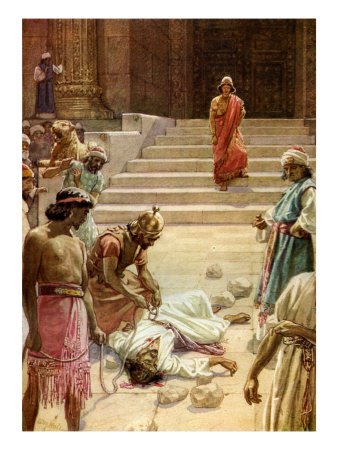

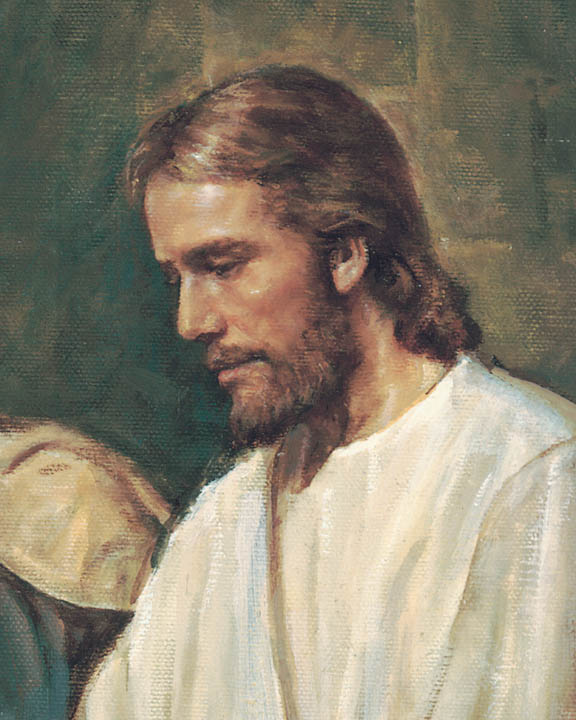



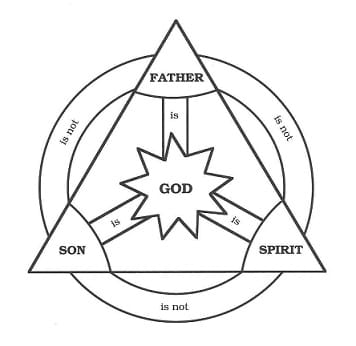
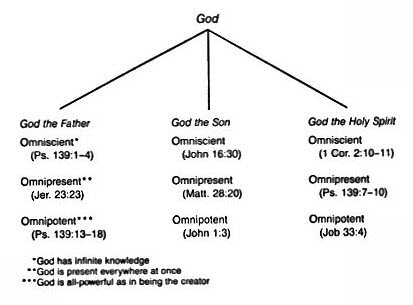

.jpg "Contradictions In The Bible")