الكتاب المقدس والتقليد

الكتاب المقدس والتقليد
الكتاب المقدس والتقليد

الكتاب المقدس والتقليد

المقالة السابقة: سلطة الكتاب المقدس وطريقة استخدامه

المقالة التالية: طرق استعمال الكتاب المقدس في الكنيسة

لعصور اعتبر المسيحيّون الكتاب والتقليد وجودين مختلفين ومتناغمين أوّلاً. شكّل الكتاب المقدّس مجموع عدد الكتب الرسميّة بحسب اللائحة القانونيّة للجماعة الدينيّة. تكوَّن التقليد في كلّ ما عدا ذلك من خارج قانون الكتاب بما فيه الكتابات، التعاليم، الليتورجيّات، دساتير الإيمان، الممارسات والعادات. تشديد حركة الإصلاح على سلطة الكتاب (sola scriptura) خلق تشنجًا وحتّى مواجهة بين الكتاب والتقليد.

الردّ الكاثوليكيّ كان بتأكيد سلطة التقليد كمصدر ثانٍ للوحي. ليس إلى زمن بعيد، كان اللاهوتيّون الأرثوذكس يتكلّمون بتأثير من المناقشة على الكتاب والتقليد كمصدرين للوحي الإلهيّ.

في أيّ حال، سلّط النقد الكتابيّ في القرن العشرين ضوءًا جديدًا على الموضوع وأحدث ثورة في فهمه. أظهرت الدراسات التحليليّة التاريخيّة والأدبيّة بإسهاب رباطًا عضويًّا بين الكتاب والتقليد والجماعة المؤمنة. لقد سبق وأشرنا إلى أنّه قبل تكوِّن الكتب اليهوديّة والمسيحيّة، عاش اليهود والمسيحيّون ومارسوا العبادة بحسب القوي المحرِّكة لكلّ من تقليدهم.

قبل أن تتكوّن سلطة الكلمة المكتوبة، كانت هناك سلطة قادة الجماعة، الكهنة والأنبياء والرسل والمعلّمين، الذين حملوا كلمة الله وفسّروها بالصوت الحيّ. قبل تجميع الكتب المقدّسة في قانون، وكما يظهر من القانون، كانت هناك حقيقة فاعلة لدى الجماعة الدينيّة حيث التعاليم الشفويّة، كتابة النصوص وتحريرها، والاستعمال المَرِن للتقاليد الشفوية والمكتوبة ونقلها، كلّ هذه كانت تعمل بحسب ظروف شعبَ الله المتغيّرة وحاجاته.

كانت النتيجة أنّه عبر الدراسة التاريخيّة الدقيقة، اعترف الدارسون بالحقيقة الشاملة بأنّ الجماعة المؤمنة والتقليد هما تكوُّن الكتاب. التقليد كحقيقة حيّة فيه تغذّت حياة الإيمان، لم يتدّم على الكتاب ورسمه وحسب إنّما أيضًا تبعه كإطار رسميّ لتقبُّل كلمة الله وتفسيرها ونقلها. التقليد فقط (sola scriptura). أيضًا عُرف أنّ القوى المحرِّكة للجماعة والتقليد تضمنّا تغييرات مهمّة وبداءة جديدة على مدى الطريق. بدون هذه الإمكانيات خسارة أن تُشرح التطوّرات الخلاّقة في تاريخ اليهوديّة وليس أقلّها نشوء المسيحيّة.

أمثلة عديدة من العهدين القديم والجديد سوف تصوّر التفاعل العضويّ بين الكتاب والتقليد. لاحظ باحثو العهد القديم منذ زمن أنّ أوّل كتاب تمّ الاعتراف به جماعيًّا في تاريخ إسرائيلهو كتاب تثنيّة الاشتراع، الوثيقة المحوريّة للإصلاح الدينيّ لدى الملك يوشيا (2ملوك23-22، حوالي 620 ق.م). “لوح الشريعة” (2ملوك8:22) هو الكتاب الوحيد المنسوب علنًا إلى موسى (تثنيّة9:31) والأكثر ترجيحًا أنّه أعطى عنوان “الشريعة” (التوراة) للكتب الخمسة Pentateuch، وهو يسجّل بدء قانون الكتاب اليهوديّ، كما أنّه نقطة لولبيّة[1] في تاريخ الدين اليهوديّ.

لم يخدم تثنيّة الاشتراع فقط ككلمة الربّ (2ملوك15:22)، بل أعطى يوشيا تفويضًا بالمركزيّة وإعادة تفسير العبادة، الأمر أثّر لوقت طويل على كلّ الحياة اليهوديّة. كما أنّه كان له دور “حجر الزاويّة للقانون النهائيّ.. مع مفعول رجعيّ في التأثير حتّى التكوين وإلى الأمام عبر باقي القانون، سواء MT أو السبعينيّة”[2]. في أيّ حال، كتاب تثتيّة الاشتراع كان له أن يعمل بهذه الطريقة الجازمة في الجماعة فقط بسبب وظيفته السابقة في التقليدات الرسميّة التي كانت فاعلة في الجماعة نفسها.

ظاهرة intertextuality هذه، أي النصوص والتقليدات بناءً على نصوص وتقليدات سابقة، تظهر التفاعل الحميم بين تشكُّل الكتاب وتقليد الجماعة الحيّ حيث يتمّ تلقّي الوحي الموثوق وتطبيقه ونقله إلى الأجيال اللاحقة.

مَثَلآخر على تفاعل الكتاب والتقليد في العهد القديم هم الأنبياء الذين ادّعوا الوحي المباشَر من الله وأعلنوا كلمة الربّ ورفضهم في زمانهم الملوك والكهنة والأنبياء الكذبة. لكنّ تقليد الجماعة الأوسع برّأهم واعترف بأقوالهم كجزء من الكتاب المقدّس. إرمياء الذي عاش في أيّام يوشيا وغيره من الملوك، يمثّل التفاعل بين الخدمة النبويّة والتقلِّبات التاريخيّة لشعب الله. إرمياء دعم بشكل كامل إصلاحات يوشيا، وفي الوقت ذاته أدان بشدة الثقة الشكليّة بِـ “هيكل الربّ” (إرمياء4:7) على أنّها ضمانة سياسيّة ضدّ الأعداء الذين يهدّدون (إرمياء7). اضطهده الملوك والكهنة بسبب أقواله المدينة واعتبروها مسيئة بحقّ الأمّة.

في النهاية، اختطفته مجموعة إلى مصر حيث استشهد بحسب أحد التقليدات. أقواله الموحى بها من الله كانت قد حفظها باروخ أحد كتّابه ومحرّرون آخرون لاحقون أعطوا الشكل النهائيّ لكتابه. أقوال الأنبياء الآخرين عاشت بطرائق مماثلة وصارت الكتابات النبويّة تدريجيًّا تُوَقَّر في التقليد اليهوديّ. مع هذا، في زمن متأخّر أي في زمن يسوع، الصدوقيّون “المحافظون”، قادة اليهوديّة الكهنوتيّون وحَفَظة الهيكل، اعترفوا فقط بكتب موسى الخمسة على أنّها قانونيّة. رغم سنوات الاستعمال الكثيرة في الجماعة، فقد احتاجت إلى أجيال عديدة وربّما إلى مبادرات رسميّة من القادة الربانيّين في جمنيا أو ما بعد، قبل أن تكتسب الكتب النبويّة وضعيّة قانونيّة كاملة عند كلّ الجماعة اليهوديّة.

عندما نلتفت إلى العهد الجديد، نجد توازيات مشابهة حول التبادليّة بين الكلمة الإلهيّة والتقليد، إضافةً إلى تغييرات مهمّة عن التجديد والإبداع داخل التقليد[3]. معروف أنّ يسوع لم يكتب شيئًا، وقد وجّه رسالته إلى الشعب بالآراميّة العاميّة. ممتلئًا بالروح، تحدّى معاصريه بالدعوة إلى التجدّد في اليهودية. انتشرت تعاليمه شفويًّا لجيل كامل قبل ظهور الأناجيل المكتوبة. الأناجيل الإزائيّة، وهي الأقرب تاريخيًّا إلى يسوع، مكتوبة باليونانيّة.

هذه بدورها تعتمد على تقاليد مسيحيّة سابقة ونصوص حول أعمال يسوع وكلماته، تمّت ترجمتها إلى اليونانيّة واستُعملَت لحاجات الجماعات المسيحيّة (لوقا1:1-4). ليس عندنا أي وصول واقعيّ تَاريخيًا أو لاهوتيًّا إلى الربّ المتجسّد وبشارته إلاّ عبر هذه الوثائق المكتوبة التي تجسّد التقليدات الشفويّة المكتوبة للمسيحيّة الأولى. بكلام آخر، كما يعلّمنا النقد الشكليّ، رغم التخمينات الجذريّة لهؤلاء النقّاد ورداءة سمعتهم، كلمات يسوع وأعماله الموثوقة كانت موضع تأمّل عبر القوى المحرّكة للجماعة المسيحيّة وتيّار تقليدها الجاري[4].

الأناجيل نفسها، كتقاليد مكتوبة، كانت محتَرَمة واستُعملَت في العبادة والتعليم بين الجماعة قبل وقت طويل من بلوغها وضعيّة القانونيَّة العالميّة في الكنيسة القديمة عند نهايّة القرن الثاني.

لقد نشأت جماعة كاملة حول شخص يسوع وعمله، وهذه الجماعة أنتجت تقاليدها الخاصّة التي سُميّت رسوليّة بحقّ. الرسوليّة تتضمّن بشكل واسع تقاليد الليتورجيا، الوعظ، التعليم وممارسة المجموعات المسيحيّة الأولى المتمحورة حول شهادة الاثنى عشر وقيادتهم، القدّيس بولس ورفاقهم الرئيسيّين وعدد من الآخرين الذين شاركوا في الخدم المسيحيّة الأولى (أعمال1:6-6، 1 كورنثوس5:15-11، روما16).

الحالة الأكثر إخبارًا هي الرسول بولس الذي يُعتَبَر صورة أساسيّة ومثيرة للجدل خلال العمليّة المؤلمة للتعايش والانفصال بين المسيحيّة الناشئة واليهوديّة القائمة. يعكس الرسول بولس بطريقة شخصيّة ودراميّة الصراع البنّاء بين الأمانة للتراث الدينيّ المسلَّم والانفتاح على تطوّرات جديدة حاسمة في دعوة الله[5]. إنه يلخّص نقطة لولبيّة أخرى في التقليد اليهوديّ الدينيّ الذي منه تطهر القوى المحرِّكة المتفاعلة للكتاب والتقليد والتطوّرات الخلاّقة، بخاصّة في دعوته إلى إدخال الأمم في شعب الله كجزء من البشريّة الجديدة في المسيح.

عبرانيّ لا غشّ فيه، فريسيّ بلا لوم أمام الشريعة، ومدافع غيور عن التقليد اليهوديّ، وضع الرسول بولس طوعيًّا وبشجاعة امتيازاته السابقة جانبًا، كما يكتب هو، لكي يعرف سيّده يسوع المسيح وليعلن الإنجيل للأمم (فيلبّي4:3-11، غلاطيّة13:1-17). في أيّ حال، مهما كانت النتائج الخلاّقة لدعوته وتحوّله، فالرسول لا يرى بعمق الحالة الجديدة في المسيح كتتمّة وإتمام كامل للتقليد اليهوديّ، وليس كانفصال طائفيّ عن اليهود، أو بشكل أقلّ كدين جديد.

الإله الذي أرسل ابنه (غلاطية4:4، 2كورنثوس19:5) والذي أفرّز بولس كرسول للأمم (غلاطية15:1-16)، هو إله إبراهيم وإسحق ويعقوب. يسوع المسيا/ المسيح، ابن الله والمشارك في المجد الإلهيّ (فيليبّي6:3-11، 1كورنثوس8:2) هو التحقيق الأخير للتقليد اليهوديّ، لأنَّ مهما كانت مواعيد الله فهو فيه النَعَمْ (2كورنثوص20:1، روما4:9-5، 8:15-9).

الكتاب المقدّس ليس سوى كتاب اليهوديّ المُوحَى به الذي يحمل شهادة للعصر الخلاصيّ الجديد (روما21:3، 2كورنثوس1:6-2). الجماعات المسيحيّة الشابّة التي تأصلّت في أماكن مختلفة من الإمبراطوريّة الرومانيّة شكّلت كنيسة الله (1كورنثوس2:1، غلاطيّة13:1، 1تسالونيكي1:1) أي ضمّ المؤمنين من الأمم إلى شعب الله هو تطعيم لشجرة الزيتون اليهوديّة العنيّة (روما17:11) أي دمج تامّ واستمراريّة كاملة للتقليد اليهوديّ المقدّس بحسب مخطّط الله (روما24:9-29، 32:11).

من جهة أخرى، الانقطاع بين موقف الرسول بولس والتقليد اليهوديّ المعاصر له كان لافتًا ومثيرًا للجدل. بخاصّة في ما يتعلّق بالناموس الموسويّ الذي هو مركز الحياة اليهوديّة. في موضع سلطة الدعوة الإلهيّة التي تتمّ عبر “وحي المسيح” الشخصيّ (غلاطية12:1-15، 1كورنثوس1:9)، فقد كان الرسول بولس مقتنعًا بشدة بأن دور الناموس كمعيار للخلاص قد انتهى (روما4:10، غلاطيّة23:3-29).

فهو قد يلجأ إلى الإرشادات الأخلاقيّة في الوصايا العشر (روما8:14-10، 1كورنثوس19:7) ويستنتج دروسًا من تاريخ الخلاص (1كور11:10). ولكن من حيث المبدأ هو مدافع عنيد عن تبرير المسيحيّين الأمميّين بمعزل عن الناموس بشكل شامل، وبخاصّة الناموس الطقسيّ الذي يحكم بالختان، المآكل الشرعيّة، الأعياد الدينيّة وما شابه (روما28:2-29؛ 21:3؛ 14-16؛ 9:4=10؛ 1:5-6). بالنسبة إليه، مركز الحياة والفكر الجديد لم يعد قطّ الناموس الموسويّ إنّما هو يسوع المسيح. القوّة المنشِّطة والموجِّهة كانت الروح (روما9:8-17؛ 1كور10:2-16؛ غلاطيّة6:4).

“كلمة الربّ” الحاسمة كانت عندها إنجيل المسيح الوحيد الذي صار للقدّيس بولس “كل شيء للكلّ” (1كورنثوس19:9-23؛ غلاطيّة6:1-9). عندما يفتكر المرء كيف توصّل هذا الفريسيّ الملتزم سابقًا إلى تكييف نفسه “تحت ناموس المسيح” (1كو21:9) مع الأممِّيين النجسين طقسيًّا وعاداتهم، بما فيها القبول الشرعيّ لأكل لحوم الوثنيّين (1كورنثوس25:10-33)، يستطيع عندها تقدير الطبيعة المذهلة للمعاني الخلاّقة التي يتضمّنها الإنجيل.

في موضوع السلطة، الرسول بولس هو مثال يروي التفاعل الديناميكيّ بين الكلمة الإلهيّة والتقليد كما بين القيادة الملهَمة والجماعة[6]. كتاباته تشهد على أنّ دعونه وسلطته تأتيان مباشرة من الله بطريقة الرسول إشعياء الذي يتكلّم بلغته (غلاطيّة15:1). الإنجيل الذي أعلنه لم يكن مجرّد كلمة بشريّة بل كلمة الله (غلاطية11:1-12؛ 1تسالونيكي13:29).

بناءً على سلطته الرسوليّة وكمَن له “فكر المسيح” (1كورنثوس16:2) قد وضع جانبًا تقاليد يهوديّة مهمّة وصار ناقل تقاليد حاسمة جديدة، مثل عشاء الربّ والإنجيل التي يشير إليها بلغة التقليد المعلّنة (1كورنثوس3:11؛ 1:15). اتحاده الشخصيّ مع المسيح والحسّ الناتج منه بالتكلّم باسم المسيح كانا إلى درجة أنَّه، في الكلام على الطلاق، لجأ إلى تعليم المسيح ذي السلطة الذي يمنع الطلاق، من ثمَّ يلطّفه نوعًا ما بالسماح بافتراق من دون الزواج ثانية (1كورنثوس10:7-11).

مع هذا، لم يتلقَّ الرسول بولس الوحي وحسب إنّما أيضًا فسّره في علاقته الحواريّة مع الجماعتين اليهوديّة والمسيحيّة. بمعزل عمّا كان يراه أمورًا مبدئية، وهذه لم تكن دائمًا شديدة الوضوح، فقد كان دائمًا على استعداد لأن يكون يهوديًّا لليهود ويونانيًّا لليونانيّين (1كورنثوس20:9). هناك سمتان تميّزان رسائله: الإقناع والعرض الحواريّ الذي يعبّر به أحيانًا عن رأيه (1كورنثوس25:7) وفي أماكن أخرى يترك الأمور للحكم الشخصيّ لكلّ فرد من المسيحيّين (روما5:14؛ 22-23).

قبل كلّ شيء، عرف أنّ دعوته كانت فعّالة في دعوة الله الواسعة إلى الجماعة بأكملها التي قالت الـ”آمين” والتي لم يكن الرسول يسود عليها (2كورنثوس20:1-24). جماعاته كانت بالواقع “ختم” مهمّته الرسوليّة (1كورنثوس2:9؛ 1 تسالونيكي19:2-20؛ 8:3). ليس مفاجئًا أن يقبل بالتوجّه إلى أورشليم ليضع أمام سلطة مجمع الرسل الجماعيّة طلب المسيحيّين اليهود فرض الختان على الأمميّين، ذلك من أجل وحدة الكنيسة مع أنّه كان يعارض هذا الطلب بشدّة (غلاطية1:2؛ أعمال1:15).

قبول كتابات الرسول بولس في الكنيسة القديمة يظهر بشكل مساوٍ دور سلطة الجماعة الكبيرة وتقليدها. انتشرت رسائله بين الجماعات المسيحيّة المختلفة (كولوسي16:4). فكانت أوّل مجموعة من الكتابات الرسوليّة التي جُمعت وكانت تُقرأ لكثرة من الناس، ولكن ليس بدون سوء فهم (2بطرس15:3-16؛ يعقوب20:2-24). أصبح الرسول بولس خلال القرن الثاني بطل ماركيون وغيره من الغنوصيّين الذين شوّهوا رسالته واستعملوا كتاباته لتحقير الكنيسة العظيمة التي كانت في طور النموّ.

سلطة بولس ورسائله صارت موضع تساؤل، هذا ما يفسِّر صمت القدِّيس يوستينوس الشهيد حيال بولس في وقت متأخِّر حوالي منتصف القرن الثاني. رغم هذا، اكتسبت رسائل الرسول بولس سلطة جامعة في التقليد المسيحيّ عبر تأثير قادة الكنيسة وكنائسهم المحليّة، أمثال القدّيسين إقليمس الروماني، أغناطيوس الأنطاكيّ، بوليكربوس أسقف أزمير، إيريناوس أسقف ليون، الذين استعانوا جميعًا بكتاباته وقدّروها. فحقّقت هذه الرسائل قانونيّة كاملة وأصبحت جزءًا من الكتاب المقدّس المسيحيّ على أساس استعمالها في التقليد، وهذا أكثر ممّا توقَّعه الرسول.

ما هي النتائج الممكن الوصول إليها في ما يخصّ العلاقة بين الكتاب المقدّس، التقليد والجماعة؟ من جهة، يجب أن لا نشدّد كثيرًا على سلطة الكنيسة والتقليد لطمس سلطة الكتاب المقدّس الجوهريّة ككلمة الله. اللاهوتيّون الأرثوذكسيّون، في تحسّسهم من ادعاءات الإصلاح واهتمامهم بالردّ عليه، روّجوا أحيانًا لسلطة الكنيسة والتقليد على الكتاب.

مثلاً، بانتيوس براتسيوتيس يميط أطروحته المقنعة إلى أقصى الحدود في ما يخصّ وحدة الكنيسة والكتاب والتقليد بادعائه أنّ الكتاب المقدّس يستمدّ صحّته من الكنيسة[7] يفتقد هذا الادعاء خطأ إلى عامل أساس هو مبادرة الله من وراء الإعلان، أي قوّة الكلمة الإلهية وسلطتها المعطاة عبر الأنبياء والرسل وبالواقع عبر يسوع نفسه.

حتّى لو اعتبر المرء أنّ الكتاب ككلمة الله المكتوبة هو جزء من التقليد المقدّس يأخذ شكلهٍ وينبثق من حياة الكنيسة، فمع هذا يشير قانون الكتاب بوضوح إلى السلطة الفريدة لما تمّ تلقيه كإعلان إلهيّ وتلياً سلطة الكتاب العليا في التقليد العامّ. هذا يتوافق كلياً مع نظرات آباء الكنيسة الذين حمل لهم الكتاب سلطة عليا لا شكّ فيها كحقيقة إلهيّة كاتبها الحقيقيّ هو الله[8] بدون أن نغضّ النظر عن التلازم بين التقليد والكتاب، أساس إذاً الاعتراف بسلطة الكتاب بالنسبة إلى التقليد.

يقول اللاهوتيّ الأرثوذكسيّ توماس هوبكو: “إذ يشرَّع الكتاب ككتاب الكنيسة، تصبح سلطته الرئيسة المكتوبة في الكنيسة وليس فوقها أو بمعزل عنها. كلّ ما في الكنيسة يُحكم عليه بالكتاب. لا شيء في الكنيسة يخالفه. كلّ ما في الكنيسة يجب أن يكون كتاباً. فالكنيسة حتّى تكون الكنيسة، يجب أن تعبّر بشكل كليّ عن الكتاب، وبشكل أدقّ، يجب أن تكون مخلصة كليّاً ومعبّرة عن الحقيقة التي يشهد لها الكتاب المقدّس نفسه كتابيّاً”[9].

من جهة أخرى، يجب أن لا نشدّد على سلطة الكتاب على الكنيسة بطرائق تقلّل من سلطة التقليد والجماعة المتفاعلة في أصول الكتاب المقدّس، نموه وجعله قانونياً. مثلاً، قد يدّعي البعض أنّ قانون الكتاب المقدّس نشأ ولم يُصنِع لأنّه تضمن عمليّة تدريجية في التقليد[10]. ولكن لا يمكن إنكار أنّه كان ضرورياً اختيار الكتب التي يحدّدها القادة المسيحيّون للكنائس المحليّة وبالطبع المجامع. دعماً للسلطة المتابيّة، قد يدّعي آخرون أنّ تعليم الكتاب “أنشأ الكنيسة”[11].

لكن لا يمكن إنكار أنّه كان ضرورياً اختيار الكتب التي يحدّدها القادة المسيحيّون للكنائس المحلّية وبالطبع المجامع. دعماً للسلطة المتابيّة، قد يدّعي آخرون أنّ تعليم الكتاب” أنشأ الكنيسة”[12]. لكنّ العلاقة المتبادلة بين الكلمة الإلهيّة، التقاليد الشفويّة، النصوص، القانون والجماعة تشكل جزءاً لا يتجزأ من الحياة الإيمانيّة الديناميكيّة عينها، تقليدًا نابضًا ليس لا هامدًا ولا تقبليًّا إنّما سريع التجاوب ومتطلّب. الكلام على الكنيسة على أنَّها “وُلدت من سماع الكلمة” أو “إعطاء أفضليّة على الكنيسة بحسب تسلسل الوحي”، بدون أهليّات إضافيّة هو كلام غير دقيق وعلى أساس من “المفارقة التاريخيّة… المبينّة على… التمييز القديم بين الكتاب والتقليد”[13].

“المصدر الواحد” للوحي في إطار الجماعة هو الروح نفسه، الحامل الأوّل للتقليد وخالقه[14].الكلمة الإلهيّة والجماعة، الكتاب والكنيسة، لا يمكن وضعهما في مباراة فاصلة أنّهما نتاجان أساسيَّان للروح نفسه، تمامًا كما يستحيل أن تكون هناك كنيسة بلا إنجيل، يستحيل أن يكون هناك إنجيل بلا كنيسة.

أخيرًا، سوف يستمر كثيرون بالترويج لمبدأ “الكتاب فقط” (sola scriptura) غير المنصف بحقّ الكنيسة والتقليد. في أيّ حال، فقد توصّل عدد من الإنجيليّين إلى الاعتراف بأنّ هذا الموقف لم يعد ممكنًا الاحتفاظ به تاريخيًّا أو لاهوتيًّا[15]. الدراسات التاريخيّة أظهرت ما سماه Harry Y. Gamble “العلاقة العضويّة” بين الكتاب والتقليد[16]. J. N. D. Kelly وHenry Chadwick، بين كثيرين، أظهرا أن التقليد في الكنيسة الأولى كان إشارة إلى مجمل حياة الكنيسة الخلاصيّة متضمنّة الليتورجيا، الوعظ، التبشير، النظام الكنسيّ، والممارسة المحدّدة بالرسوليّة[17].

إنّ تكوين العهد الجديد كان في هذا التيار من التقليد بدون أيّ حسّ بالتوتر بين التقليدين الشفويّ والمكتوب، أو بين الكتاب المقدّس والتقليد. كانت للأسفار الكتابيّة سلطة لأنَّها كانت جزءًا من التقليد، أي بسبب قبولها واستعمالها في الكنائس المحليّة. ردًّا على الغنوصيّين الذين أنتجوا عددًا من الكتب المنحولة apocryphal، لجأت الكنيسة الجامعة إلى العقيدة الأرثوذكسيّة، “دستور الإيمان”، كمعيار لقانونيّة الكتب. بعد الخطر الغنوصيّ، عندما اكتسب الإنجيل سلطة عليا بحسب آباء الكنيسة، بقي معناه وقيمته دائمًا مرتبطين عضويًّا بحياة الكنيسة المستمرّة وعبادتها، وليس بمعزل عن تقليد الكنيسة الحيّ المتقدِّم باستمرار.

الدراسات الأخيرة حول قانون الكتاب لعلماء أمثال James Sanders[18] و James Barr[19] وHarry Y. Gamble[20] أكّدت الدور الأساس والجازم للتقليد والجماعة في صنع الكتاب. Gamble بوجه خاصّ يشدّد على وسائل الأمان التاريخيّة لقانون الكتاب، أكثر من مجرّد القوة الخلاّقة لـ”كلمة الله” المجرّدة السطحيّة خلف الكتاب.

اللجوء إلى الوحي غائب بشكل مميّز كمعيار للقانونيّة لأنّ مجمل حياة الكنيسة في كلّ تقليداتها ووظائفها يُنظَر إليها كموحى بها وموجّهة من الروح القدس. بالنسبة إلى Gamble، المقرّران الرئيسان لتكوّن قانون العهد الجديد يجب إيجادهما في الأصول التاريخيّة لإيمان الكنيسة واستعمال أسفار العهد الجديد بشكل تقليديّ في عبادة الكنيسة وتعليمها.

يعزل Gamble أربعة معايير للقانونية: الرسوليّة، الجامعيّة، الأرثوذكسيّة (صحّة الإيمان) والاستعمال التقليديّ[21]. بحسب نظرة المؤلّف التقليديّة، كانت الوثيقة تُعتبر رسوليّة إذا ارتبط مصدرها برسول أو بزمان الرسل. كي تكون الوثيقة جامعة يجب أن تكون معروفة ووثيقة الصلة بالكنيسة الكبرى. كي تكون أرثوذكسيّة يجب أن تتوافق مع ما تفهمه الكنيسة على أنّه التعليم الصحيح، والتي تفترض أنّ العقيدة الصحيحة ممكن أن تُعرَف بمعزل عن الكتاب وأنّ الكتاب يجب أن يُقاس بتقليد رسميّ ولكن غير مكتوب. بحسب Gamble، المعيار الأكثر فعاليّة، حتّى بمعزل عن المعنى الداخلىّ للكتابة الإنجيليّة، كان الاستعمال التقليديّ بخاصّة في المراكز الكنسيّة المسيحيّة القديمة الكبرى. يلخّص Gamble هذه العلاقة المتبادلة بين الكتاب والتقليد كما يلي:

يظهر تاريخ القانون أنّ محتوياته حدّدها بشكل أساس التقليد الكنسيّ (الاستعمال التقليديّ، الأفكار التقليديّة عن العبادة واللجوء إلى التعليم التقليديّ) حتّى إنّ الاعتراف بسلطة القانون هو اعتراف بسلطة التقليد الذي أنشأه. هذه النقطة يُسلّم بها العلماء البروتوستانت بحريّة… إذًا ممكن القول إنّ التقليد يتقدّم على الكتاب، يسلِّم به الكتاب، ويثبت في الكتاب… لهذه الأسباب أصبح مستحيلاً بعد الآن وضع الكتاب بجانب التقليد كبديل الواحد من الآخر. بالأحرى هما في علاقة عضويّة تحول دون رفع الواحد منهما ضدّ الآخر كسلطة لاهوتيّة”[22].

في أيّ حال، بعد التسليم بالتبادليّة العضويّة بين الكتاب والتقليد، حريّ الملاحظة أنّ الجماعة وتقليدها المستمرّ مارست نوعًا من التقدميّة الوظيفيّة بقدر ما تصرّفت كعوامل مفسّرة أساسيّة في مجمل عمليّة تكوين الكتاب وقوننته وتطبيقه. كما أنّ الوحي ليس معزولاً عن الإطار البشريّ، كذلك الكلمة الإلهيّة غير محرّرة عن الجسد، أي غير معزولة عن الفهم والتواصل البشريّين. دور التفسير قبل الكتاب وخلاله وبعده جليّ في المسيحيّة واليهوديّة وهو تاليًّا دور أساسي وتوجيهيّ في الجماعة والتقليد الحيّ. Jacob Newsner أشار بشكل مفحم إلى وظيفة الناموس الشفويّ والتقليد الربانيّ في إعطاء الصوت إلى نصّ مقدّس صامت بدونهما[23].

Neusner يعتبر أنّه من المُضِّل النظر إلى اليهوديّة الربانيّة على أنّها مجرد نتاج “للعمليّة التفسيريّة أو الكشف العضويّ للكتاب المقدس”[24]. هو يصرّ على أنّ الحكماء الربانيّين عبر إيدولوجيّة واعية ومجموعة من القوانين خارج الكتاب، مارسوا أيضًا “رئاسة” على الكتابة المقدّسة كي تتكلّم بثقة ووضوح مع الجماعة. بهذا المعنى، هؤلاء العلماء القدماء جعلوا الكتاب يتكلّم “بصوتهم، بلهجتهم ولأجلهم”[25]. بحسب Neusner:

بتوجيه الكتاب كنتاج مقدّس من صنع الإنسان وكنصّ فكريّ، أمّن الحكماء أنّه سوف يشير دائمًا إلى اهتماماتهم وهمومهم، وأنّه سوف يشرّع ويبرّر ولن يخالف ال هالاكا والإيدولوجيّة الدينيّة التي تبنّتها”[26].

ركّب المفكرون المسيحيّون والقادة في الكنيسة القديمة بطريقة موازية تقليدًا تفسيريًّا كاملاً في قبولهم الكتاب المسيحيّ واستعماله بحسب حاجات الجماعة. نشأ الإنجيل المسيحيّ مع تقليده التفسيريّ بمواجهة اليهوديّة، الغنوصيّة والمونتانيّة. الإنجيل القانونيّ كان بطبيعته إنجيلاً مفَسَّرًا بحسب ما حدّده التقليد التفسيريّ الرسوليّ والآبائيّ وفهمه. ارتكزت حياة الكنيسة الأولى وهويّتها على ما كان قد أصبح أكيدًا أنّه تقليد الإيمان المشترك العالميّ، الليتورجيا، القانون الكتابيّ، دستور الإيمان، نظام الكنيسة، والممارسة. كلّ المجموعات التي اختلفت بشكل ملموس مع التقليد الجامع المتنامي مضت وحدها ببساطة كجماعات منفصلة.

ليست النقطة أنّ التقليد الجامع كانت تنقصه الحريّة والتنوع، والعكس صحيح، لكن التنوّع تطوّر في إطار من الوحدة بحسب حسّ الكنيسة العقائديّ الذي يشير إليه الالتجاء إلى “دستور الإيمان” أو “قانون الحقّ”. ركّزت المجامع المسكونيّة اللاحقة والقوانين العقائديّة التي أرستها حول الكتاب والتقليد، على سلطة الكنيسة الفعليّة في تفسير الكتاب ونشر اعترافات إيمان مجمعيّة معياريّة حول أمور أساسيّة ولكن غير متّفق عليها.

بهذا المنظار، ارتبط عضويًّا التكوّن التدريجيّ للإنجيل المسيحيّ كمعيار للحياة والفكر المسيحيّين، بتقليد تفسيريّ متجانس توجّهه الممارسة العقائديّة الرئيسية للكنيسة العالميّة. هذا الإنجاز المزدوج، تكوين قانون الكتاب والتقليد التفسيريّ الكبير المرافق له، فيما سمح لإبداعيّة كبيرة وتنوّع غني، أنتج وحدة كلاسيكيّة بين الكتاب والتقليد والكنيسة وتاليًا أسّس قياسًا معياريًا لكلّ الأجيال المسيحيّة[27].

[1]العبارة لـ: Moshe Weinfeld في ABD, Vol. 2, p. 174 “Deuteronomy, Book of,”.

[2] يميّز ساندَرز بين القانون كعمليّة سلطويّة في داخل التقليد والقانون كصورة نهائيّة لسلطة الكتاب أيضًا داخل التقليد، والأرجح أنّه بهذا هو أوّل مفسّرين التلازم بين القوننة والتقليد الحيّ للجماعة المستمرّة. أنظر:

James A. Sanders, “Canon, Hebrew Bible” in ABD, Vol. 1, p. 847. See further his books From Sacred Story to Sacred Text (Philadelphia: Fortress, 1987) and Canon and Community (Philadelphia: Fortress, 1984).

[3] بعض الأفكار الإضافيّة حول هذه الأمور موجودة في مقالاتي:

Tradition in the New Testament, GOTR 15 (1, 1970), 99, 7-21.

[4] ممكن اكتساب نظرة واضحة حول النقد الشكلي من:

Martin Dibelius, Form Tradition to Gospel, Trans. B.L. Woolf (New York: Scribner’s, n. d.); Rudolf Bultmann and Karl Kundsin, Form Criticism, trans. F. C. Grant (New York: Harper & Row, 1962); Klaus Koch, The Growth of the Biblical Tradition: the Form-Critical Method, trans. S. M. Cupitt (New York: Scribner’s, 1969); and Edgar V. McKnight, What is Form Criticism? (Philadelphia: Fortress, 1969).

[5]See Theodore Stylianopoulos, “Faith and Culture in Saint Paul: Continuity and Discontinuity,” in Rightly Teaching the Word of Your Truth: Studies in Honor of Archbishop Ialovas, ed. Nomikos Michael Vaporis (Brookline: Holy Cross Orthodox press, 1995), pp. 39-52, and by the same, “Faithfulness to the Roots and Commitment toward the Future: An Orthodox View,” Orthodox Christians and Jews on Community and Renewal: The Third Academic Meeting between Orthodoxy and Judaism, ed. Malcolm Lowe and published in  Immanuel 26/27 (1194), pp. 142-159.

[6]  كتاب عمليّ وشامل في هذا الموضوع:

Helen Doohan, Leadership in Paul (Wilmington: Michael Glazier, 1984).

[7] P. Bratsiotis, “The Authority of the Bible: An Orthodox Contribution,” in A. Richardson and W. Schweitzer, eds., Biblical Authority for Today, p, 21. Bratsiotis was a respected Old testament scholar at the University of Athens, Greece.

[8] Bruce Vawter, “The Bible in the Roman Church,” in Scripture in Jewish and Christian Traditions, ed. Federick E. Greenspahn, p. 117.

يير فاوتر إلى أنّ آباء الكنيسة لم يكونوا مرتاحين لمفهوم الكتاب وحده  Sola Scriptura لأنهم رأوا الكتاب ضمن تقليد كنسي معلوم. أنظر لاحقاً، الفصل الرابع، القسم حول سلطة الكتاب وآباء الكنيسة.

[9] Thomas Hopko, The Bible in the Orthodox Church, pp. 66-67.

[10] هكذا أيضاً ويلهلم شنيملخر في المقدّمة حول قانون العهد الجديد في عمل ادغار هاناك، New Testament Apocrypha, Vol.1, p. 36.  مترجم النسخة الإنجليزية هو R. McL. Wilson، فيما مترجم شنيملخر هو جورج أوغ. يسجّل شنيملخر ما يرى أنّه نقطة مصيريّة سبق وأن أشار إليها A. Julicher ومع هذا فهي تؤكد أنّ القانون هو بالتأكيد عمل الكنيسة وأنّه يجب عدم التقليل من قيمة دور اللاهوتيين والأساقفة في نشوء القانونْ، المصدر ذاته.

[11] Eduart Lohse, The Formation of the New Testament, trans. M. Eugene Boring (Nashville: Abingdon, 1981).  هذا عمل مهمّ جداً ولمنّه يعكس أحياناً تشديدات بروتستنانتية: يتحدث Lohse عن إعلان المسيحية الأولى التي أسست الكنيسة. وقد يتساءل المرء: هل كان هناك وقت كانت فيه المسيحيّة من دون المنيسة؟

[12] Bruce M. Metzger in his piece introducing the New Testament in The New Oxford Annotated Bible: The New Revised Standard Version, p. vi, See further B. M. Metzger, The Canon of the New Testament.

يرى ماتزغر أنّ الرؤيّة البديهيّة أو كشف كلمة الله من قَبل أشخاص في التقليد تعني فرض الكلمة والقانون على الكنيسة. على أي حال، هذا الخط من التحليل يؤدّي إلى الجدال الخاطيء حول مَن يأتي قبل الآخر: البيضة أو الدجاجة، وكما أشرنا تكراراً، الوحي هو دوماً وحي يتمّ تلقّيه حيث يشترك العنصران، الإلهيّ والبشريّ، معاً بدون انفصال. لاهوتياً، إنّه لسؤال حول معنى أن يفرض قبولاً إيجابياً لكلمته على متلقين في حين أنّه بالتأكيد يفرض حكمه.

[13] James Barr, Holy Scripture: Canon, Authority, Criticism (Philadelphia: Westminster, 1983), p. 28.

[14]  هذه النظرة المتأصّلة في التقليدين الكتابيّ والآبائيّ قد سبق وأشار إليها، قبل هذا الوقت بكثير، اللاهوتي الكاثوليكيّ جوهان آدم موهلر وكرّرها بشكل أو بآخر لاهوتيّون كاثوليك وأرثوذكس أمثال إيف كونغار وهنري دو لوباك وفلاديمير لوسكي وجورج فلوروفسكي. أنظر مؤخرًا؛

Avery Dulles, “Tradition and Creativity in Theology”, FT 28 (Nov. 1992), pp. 20-27.

[15] مثلاً: Clark H. Pinnok, The Scripture Prinipel, pp. 80-81, 150 and 218, and Donald G. Bloesch, Holy Scripure, 99. 12-13, 154-156. وبخاصة الأوّل منهما الذي يشدّد على أنّ الكتاب المقدّس هو كتاب الكنيسة، وأنّه لم ينسحب منهما بعد نشوء القانون (ص.163)، وأنّ التقليد والجماعة يقدّمان الضوابط في تفسير الكتاب (ص.217).

[16] Harry Y. Gamble, “Canon: The New Testament,” in ABD, Vol/ I, p. 589.

[17] See J. N. D. Kelly, Early Christian Doctrines (New York: Harper & Brothers, 190). pp. 29-51, a section he entitles “Tradition and Scripture” reversing the terms to reflect his thesis; and Henry Chadwick, “The Bible and the Greek Fathers;” in The Church’s use of the Bible: Past and Present, ed. E. E. Nineham (London: SPCK, 1963), pp/25-39.

[18]  أنظر الحاشيّة رقم 4.

[19] James Barr, Holy Scripture: Canon, Authority, Criticism.

[20]  أنظر مقالته المذكورة أعلاه وكتابه:

The New Testament Canon (Philadelphia: Fortress, 1985)

[21]  الإشارات إلى Gamble هي من مساهماته حول القانون في ABD, Vol. 1, pp. 857-859.

[22]  المرجع السابق، ص. 858-859.

[23] Jacob Neusner, Rabbinic Judaism: Scripture and System (Minneapolis: Fortress, 1995), especially pp. 31-43.

[24]  المرجع السابق، ص. 34.

[25]  المرجع السابق، ص. 43.

[26]  المرجع السابق، ص. 42.

[27] Theodore Stylianopoulos, “Scriptural Authority (Eastern Orthodoxy),” ABD, Vol. 5, pp. 1021-1023.

الكتاب المقدس والتقليد

Psalm 110 does not say the Messiah is Lord.

Psalm 110 does not say the Messiah is Lord


Also, the psalm is not written by David about the Messiah. Our traditions indicate it may have been written by Eliezer about his master, Abraham, and then added to the collection of the Psalms by David many years later. Or David wrote it for the Levites to recite about him (or a court poet wrote it about David). This much is sure: It does not teach that the Messiah is God!

Psalm 110 is an important Messianic psalm pointing to the highly exalted status of the Messiah (to the right hand of God!) and to his priestly and royal nature. For these reasons, it is quoted frequently in the New Testament with reference to Yeshua. Yeshua even quotes it himself, pointing out how the Messiah was greater than David, since David called him “my lord.” However, you are mistaken in thinking that the New Testament (or Christian translations of the Hebrew Bible) makes the claim that the opening verse of this psalm means that Jesus is Lord (Yahweh).

According to anti-missionary rabbi Tovia Singer,

Psalm 110 represents one of the New Testament’s most stunning, yet clever mistranslations of the Jewish scriptures. Moreover, the confusion created by the Christianization of this verse was further perpetuated and promulgated by numerous Christian translators of the Bible as well.…

The story of the church’s tampering with Psalm 110 is so old that it begins in the Christian canon itself.265

These are startling claims indeed. On what basis does Singer make such serious charges? On the basis of Yeshua’s use of this psalm to point to his own exalted status, and on the basis of subsequent Christian translations that allegedly perpetuate this misunderstanding of the text.What is startling is not the wrongness of the “Christian” interpretation but the wrongness of Singer’s arguments, in particular his claim that the New Testament’s usage of this psalm represents one of its “most stunning, yet clever mistranslations of the Jewish scriptures.”266 This claim is absolutely without foundation.

Let’s take a look at the words of Jesus himself as recorded by one of his disciples:

While the Pharisees were gathered together, Jesus asked them, “What do you think about the [Messiah]? Whose son is he?”

“The son of David,” they replied.

He said to them, “How is it then that David, speaking by the Spirit, calls him ‘Lord’? For he says,

“ ‘The Lord said to my Lord:

“Sit at my right hand

until I put your enemies

under your feet.” ’

If then David calls him ‘Lord,’ how can he be his son?” No one could say a word in reply, and from that day on no one dared to ask him any more questions.

Matthew 22:41–46

Rabbi Singer is confident that this event not only reflects a wrong interpretation of the text but that it never even took place:

Although the above conversation could never have occurred, I am certain this narrative has been replayed over and over again in the imagination of countless Christians for nearly 1,900 years.

It’s an inspiring story to the Christian believer. Jesus really showed those Pharisees how little they knew! Yet, this is precisely why this story could never have transpired. No Jew who had even a superficial knowledge of the Jewish scriptures would have ever found Jesus’ argument compelling, let alone a conversation stopper. The depth of knowledge that the Pharisees possessed of Tanach was astounding.267

Notice carefully Singer’s words: “No Jew who had even a superficial knowledge of the Jewish scriptures would have ever found Jesus’ argument compelling, let alone a conversation stopper.” To the contrary, it is because Jesus knew that his hearers were so familiar with the Scriptures that he raised this compelling argument. Of course, they had no answer. You see, some of the earliest Rabbinic interpretation of Psalm 110 understood the psalm to be speaking of the Messiah, and if David in fact wrote the psalm, then Yeshua’s question is well taken: If the Messiah is merely David’s son—and it was universally agreed that the Messiah was the son of David—how can David call him his lord?

“But that’s the whole problem,” you object. “The Christian translations claim that the Messiah is Lord—meaning God himself—whereas the Hebrew Bible says no such thing.” This, in fact, is another of Rabbi Singer’s points, and he argues that the second “Lord” in the text “never refers to God anywhere in the Bible. It is only used for the profane, never the sacred.”268

But where did Jesus say “Lord” was referring to God? He simply stated that the text indicated David called the Messiah his lord—which is exactly what Singer claims that laʾdoni means: “The correct translation… is ‘to my master’ or ‘to my lord.’ ”269 Precisely. That was Yeshua’s whole point.

Unfortunately, Singer has gotten his information completely wrong, failing to read correctly the Christian translation he cites and completely ignoring well-known Jewish translation customs. Simply stated, a tradition developed among the Jewish people that the Hebrew name for God, yhwh, was too sacred to pronounce.270 Thus, whenever a Jew would read this name in the Bible, he would not say Yahweh (which is the most likely original pronunciation; the more common Jehovah is not correct). Rather, he would say, ʾadonai, meaning “Lord.”271 Thus, the opening verse of Psalm 110 would have been recited out loud as “ʾadonay (or ʾadonai) said to ʾadoni” (ʾadoni meaning “my lord” or “my Lord”).272

When Jesus quoted this verse to the Pharisees, this would have been the way he said it, referring to Yahweh as ʾadonai. There were no tricks here, no sleight of hand, no cover-up, no deception, no mistranslation. Just a straightforward recitation of the Hebrew text. No one would have thought that Jesus was claiming to be Yahweh, since his hearers certainly knew the text by heart as well, and since they distinctly heard two different words for Lord and lord: ʾadonai, meaning Yahweh, and ʾadoni, meaning “my Lord” or “my lord.”273 And that was Jesus’ whole point: How can the Messiah be merely a son of David if David calls him his lord?274 He must not only be David’s son; he must also be greater than David.

How then does Singer claim that the New Testament and later Christian translations of Psalm 110 are guilty of intentional mistranslation? It is simply because (1) he has not handled the Christian translations fairly, and (2) he has not realized how the very first Jewish translation of the Tanakh into Greek rendered Psalm 110:1.

Using the King James Version as an example, we see that Psalm 110:1 was rendered: “The Lord said unto my Lord, Sit thou at my right hand, until I make thine enemies thy footstool.” Virtually all modern Christian translations follow a similar translation pattern, rendering the opening Hebrew word yhwh as “Lord” and then rendering the second Hebrew word ʾadoni as “my Lord” or “my lord.” As we have seen, the custom of translating the Hebrew yhwh as “Lord” goes back to Jewish practice, not Christian practice. And just as Jewish readers distinguished between ʾadonai and ʾadon (meaning Yahweh, as opposed to any lord or the Lord), so also Christian translations into English distinguished between Lord (Hebrew, yhwh) and Lord (Hebrew, ʾadon). This is also the custom most commonly followed by Jewish translations of the Bible into English: Whenever yhwh occurs in the original text, it is written as Lord (all uppercase).

In keeping with this practice, Christian translations (and many Jewish translations as well) distinguish between yhwh and ʾadoni in Psalm 110:1 by rendering these words as Lord and my Lord (or my lord). Amazingly, Singer claims that the NASB (a twentieth-century Christian translation that also renders Psalm 110:1 with Lord and Lord) fails to distinguish between the two words, inviting the readers to “look at the first word ‘Lord’ in the verse. Now look at the second word ‘Lord’ (they are only three words apart). Did you notice any difference between them? You didn’t because the Christian translator carefully masked what it actually says in the text of the original Hebrew.” Thus, he claims, “the two English words in the NASB translation are carefully made to appear identical, in the original Hebrew text they are entirely different.”275 Absolutely not! These two words are not the same, as you would immediately see even at first glance: The first is all uppercase letters (you’ll find this in just about any Christian translation); the second is lowercase after the initial capital L.

Rabbi Singer, however, takes serious issue with the fact that many Christian versions translate the second ʾadon (ʾadoni, representing the noun followed by the first-person pronominal suffix) as “my Lord” instead of “my lord,” arguing that every single time ʾadoni is found in the Tanakh, it is speaking of a human being, not God (who would always be referred to as ʾadonai rather than ʾadoni). He states:

The Hebrew word adonee [a phonetic spelling of adoni] never refers to God anywhere in the Bible. It is only used for the profane, never the sacred. That is to say, God, the Creator of the universe, is never called adonee in the Bible. There are many words reserved for God in the Bible; adonee, however, is not one of them.276

There are at least three problems with his argument: First, he is incorrect in stating that “my lord” is reserved “for the profane, never the sacred.” Just look in Joshua 5:14, where Joshua addresses the angel of the Lord as “my lord” (ʾadoni). Yet this divine messenger is so holy that Joshua is commanded to remove the shoes from his feet because he is standing on holy ground, just as Moses was commanded when the angel of the Lord—representing Yahweh himself—appeared to him (Exod. 3:1–6). This is hardly a “profane” rather than “sacred” usage! Similar examples can be found in Judges 6:13 and Zechariah 1:9, among other places. In each of these, angels are addressed as “my lord,” and in some of these cases, the angels bear the divine presence. Second, Singer’s whole argument hinges on the Masoretic vocalization, which did not reach its final form until the Middle Ages. As every student of Hebrew knows, biblical Hebrew was written with consonants and “vowel letters” only; the vowel signs were added hundreds of years later. Yet both ʾadonai (used only for Yahweh) and ʾadoni (used for men and angels, as we just noted) are spelled identically in Hebrew, consisting of the four consonants ʾ-d-n-y. How then can Rabbi Singer make such a dogmatic statement about the differences between these two forms in the Bible? His argument stands only if we accept the absolute authority of the Masoretic vocalization, which in some cases follows the original writing by almost two thousand years.277 Third, it is not really important whether we translate with “my Lord” or “my lord,” since Yeshua’s whole argument was simply that David called the Messiah “lord,” meaning that the Messiah had to be more than David’s son. While many Christian translations do render ʾadoni as “my Lord” in Psalm 110:1, they are careful to distinguish between the first Lord (i.e., Lord) and the second.

“But,” you say, “I understand that the New Testament is written in Greek. Are you telling me that the writers of the New Testament followed Jewish practice and spelled the two words differently? That was not the custom in Greek, and therefore readers of the Gospels would be misled into thinking that the two ‘Lords’ were the same person, both referring to God.”

That’s a good observation. But once again, this is not a “Christian” problem but rather a “Jewish” problem dating back to the Septuagint, which was completed more than two hundred years before the writing of the New Testament. The New Testament only follows the practice of the Jewish Septuagint. It is the Greek Septuagint that first rendered yhwh with the Greek word kyrios, “Lord” or “lord.” Thus, Psalm 110:1 is rendered by the Septuagint as, “The kyrios said to my kyrios,278 and the writers of the New Testament—themselves almost all Jews—merely quoted the Jewish translation of their day into Greek. It’s that simple!279

To review: (1) When Jesus quoted this verse in Hebrew, he would have said, neʾum ʾadonai laʾadoni. He would not have spoken the name Yahweh, but he would have distinguished between the Lord God and David’s Lord/lord. (The same would apply to Aramaic if Yeshua quoted the verse in a Targumic form.) (2) Christian translations of Psalm 110:1 into English also distinguish between Yahweh and David’s Lord/lord, representing the former with Lord and the latter with Lord/lord. (3) The Septuagint, not the New Testament, was the first example of a translation in which yhwh and ʾadon were both translated with kyrios. From this we can see that Singer’s charges are totally erroneous and without any support in the text. We need not trouble ourselves with this for another moment.

The real questions that deserve attention are, Is this really a Messianic psalm, and, Was Yeshua correct in referring it to himself? Let’s look at the whole psalm as rendered in the NIV:

Of David. A psalm.

The Lord says to my Lord:

“Sit at my right hand

until I make your enemies

a footstool for your feet.”

The Lord will extend your mighty scepter from Zion;

you will rule in the midst of your enemies.

Your troops will be willing

on your day of battle.

Arrayed in holy majesty,

from the womb of the dawn

you will receive the dew of your youth.

The Lord has sworn

and will not change his mind:

“You are a priest forever,

in the order of Melchizedek.”

The Lord is at your right hand;

he will crush kings on the day of his wrath.

He will judge the nations, heaping up the dead

and crushing the rulers of the whole earth.

He will drink from a brook beside the way;

therefore he will lift up his head.

Psalm 110

It is clear that this is a royal psalm, spoken to a Judean king about his promised worldwide reign. But what is meant by “Of David. A psalm.”? We know that these opening words (called the superscription) are not necessarily part of the original text. But we also know that Jewish readers in Yeshua’s day accepted this as a psalm of David. What then does this mean? Was the psalm written by David or for David (or for the Davidic king)?

An ancient Jewish interpretation, as fascinating as it is far-fetched, claims that this psalm was originally written by Eliezer, the servant of Abraham, and that David added this psalm to his collection centuries later. According to this view, the psalm was written after Abraham returned from his victorious battle with the four kings of the plain (see Genesis 14) and Melchizedek, king of Salem (Jerusalem) came out to meet him. As written in Genesis 14:19–20, Melchizedek, the priest-king of Jerusalem, greeted Abraham (still called Abram at that time) with the words: “Blessed be Abram by God Most High, Creator of heaven and earth. And blessed be God Most High, who delivered your enemies into your hand.” Abraham then gave a tithe of the spoils to Melchizedek, a definite sign of honor and respect (Gen. 14:20a).

Surprisingly, some of the ancient rabbis had a problem with Melchizedek’s greeting, saying that God was displeased with Melchizedek since he blessed Abram before he blessed the Lord, as a result of which the priesthood was taken from Melchizedek and given to Abram (meaning to his descendants; see b. Nedarim 32b). This is how Psalm 110:4 is explained: “The Lord has sworn and will not change his mind: ‘You are a priest forever, in the order of Melchizedek.’ ” There is little, however, to commend this interpretation and several serious objections that can be raised against it: (1) As Ibn Ezra notes, after giving due regard to the ancient midrash just cited, it is quite difficult to explain the reference to Zion in verse 2 (“The Lord will extend your mighty scepter from Zion”) with reference to Abraham. Zion is the city of David!280 (2) Abraham himself was not called a priest by the Lord, even if the priesthood ultimately came through the tribe of his great-grandson Levi. (3) Abraham was not a royal figure in the Torah, nor was he primarily a triumphant ruler; yet that is what Psalm 110 explicitly describes and promises. (4) There is not a shred of evidence to support the midrashic interpretation. It is simply a creative reading of the text, apparently inspired by the reference to Melchizedek in Genesis 14 and Psalm 110, the only two times his name appears in the Hebrew Bible. (5) Even some midrashic evidence is against this interpretation, since elsewhere it is said that Abraham sits at the left hand of God, while it is the Messiah who sits at the Lord’s right hand.281

Some scholars have even argued that the interpretation of this psalm with reference to Abraham is a direct reaction to Christian interpretations that pointed to the Messiah.282 This is certainly possible, although it is far from certain. But the extreme unlikelihood of the Abrahamic interpretation is beyond dispute.

A much more likely view is that a court poet wrote this psalm for David, perhaps when he moved his throne to Jerusalem (2 Sam. 5–6).283 Thus, speaking prophetically, this poet declared that Yahweh said to his lord (David), “Sit at my right hand.…” And, as we learned previously (vol. 1, 2.1), David served as a prototype of the priestly king, a Messianic figure who himself was both priest and king. The fact that David ruled out of Jerusalem would associate him with Melchizedek, the priest-king of Salem (= Jerusalem) spoken of in Genesis 14.

There are, however, serious problems with this view as well: (1) Was David actually called a priest by the Lord? It is one thing to say that David was a priestly king; it is another thing to say that he was called “a priest forever” by God himself. Clearly, David was not.284 (2) When was David told to sit at God’s right hand until his enemies were made a footstool for his feet? It is true that the Lord granted David victory over his enemies while he was alive. But this psalm presents a call from God to sit at his right hand (i.e., by his heavenly throne) until all of David’s enemies were defeated. When did this happen? (3) The closing verses of this psalm seem to indicate that the king spoken of here would have a worldwide reign. This cannot apply to David.285

Not surprisingly, a number of the ancient rabbis applied this psalm to the Messiah,286 and it is this Messianic interpretation that is actually presupposed by Jesus in the New Testament. As Franz Delitzsch rightly observed:

… if those who were interrogated [meaning the Pharisees and other Jewish teachers] had been able to reply that David does not there speak of the future Messiah, but puts into the mouth of the people words concerning himself, or … concerning the Davidic king in a general way, then the question would lack the background of cogency as an argument. Since, however, the prophetico-Messianic character of the Psalm was acknowledged at that time (even as the later synagogue, in spite of the dilemma into which this Psalm brought it in opposition to the church, has never been able entirely to avoid this confession), the conclusion to be drawn from this Psalm must have been felt by the Pharisees themselves, that the Messiah, because the Son of David and Lord at the same time, was of human and at the same time of superhuman nature; that it was therefore in accordance with Scripture if this Jesus, who represented Himself to be the predicted Christ [Messiah], should as such profess to be the Son of God and of divine nature.287

Simply stated, if the most common interpretation of the day did not understand this psalm to speak of the Messiah, then any of the Jewish leaders with whom Yeshua spoke could have simply said, “But this doesn’t speak of the Messiah! It speaks of David.” The fact that no such reply was given indicates just how widely the psalm was understood to be Messianic.

“But you’re not being fair,” you say. “You’re basing everything on the New Testament account. How do we know that it is true?”

First, the very nature of Jesus’ question points to the widespread Messianic understanding of the psalm. After all, Matthew (whom we cited above) wrote his book of good news (= Gospel) to his own Jewish people, many of whom were thoroughly versed in the Scriptures, and if Jesus’ point had no relevance at all—if, indeed, it was as ludicrous and impossible as Rabbi Singer claims—then Matthew (not to mention Mark and Luke) would not have put the wool over anyone’s eyes. Rather, the question posed by Yeshua would be like someone asking, “Do you believe that President Kennedy’s assassination was the work of one man or part of a larger conspiracy?” The fact of his assassination is not in dispute, only the details. In the same way, the fact of the Messianic interpretation of the psalm was not in dispute, only the specific meaning of the verses. Second, despite the fact that the New Testament refers to Psalm 110 more than any other portion of Scripture in the Hebrew Bible, Talmudic rabbis still interpreted the psalm messianically. In other words (as noted above by Delitzsch), since followers of Jesus were so quick to point to Psalm 110 with reference to him as Messiah, it would only be natural to think that the later rabbis would not interpret this psalm as Messianic. And yet they did, with frequency. There can be no doubt, then, that this Messianic interpretation was not only ancient; it was also natural. Third, as far as we can tell, for a first-century Jewish reader “A psalm of David” would most naturally be taken to mean “A psalm written by David” unless there were good reasons to interpret it as a psalm written for David. This would mean that David wrote this psalm about the Messianic King rather than about himself.288 Fourth, even if the psalm was originally written by a court poet for his lord, King David, it would still point to David’s priestly calling (as a prototype of the Messiah) as well as to his worldwide reign, fulfilled only through David’s greater descendant, King Messiah. This would mean, then, that Jesus was pointing to Jewish interpretation of the day, interpretation that attributed the authorship of this psalm to David, thereby proving that Messiah had to be greater than David, but without making a definitive statement about the authorship of the psalm.

These observations, coupled with the reasons listed above, argue for the Messianic interpretation of Psalm 110. At the least, such an interpretation makes very good sense, and therefore the New Testament writers were not out of line in frequently citing this psalm with reference to Jesus.289

In support of this Messianic interpretation we can also point to the comments on Daniel 7:13 attributed to the influential medieval Jewish leader, Rabbi Sa‘adiah Gaon. Explaining the words “And behold, [coming] with the clouds of heaven, one like a son of man,” he stated, “This is Messiah our righteousness,” contrasting this description with the Messianic prophecy found in Zechariah 9:9, where it is written that the Messiah will come meek and lowly, riding on a donkey.290 He interpreted the clouds of heaven to mean the host of heavenly angels, noting that this is the glorious splendor that the Creator will grant to the Messiah. And how does Gaon explain the end of verse 13, where it is stated that they will bring the Messiah to the Ancient of Days (a title for the Lord)? He simply quotes the opening line of Psalm 110, “The utterance of the Lord to my lord, ‘Sit at My right hand’ ” (translated literally). He got that exactly right!

There is one final point to be made, and it is extremely significant. We noted in vol. 1, 2.1, that two thousand years ago, many Jews were looking for two Messiahs, one priestly and one royal. This is reflected in the Dead Sea Scrolls in the references to the Messiahs of Aaron and David. It is also reflected in what is called the Testament of the Twelve Patriarchs, a writing of great importance in the ancient Jewish world. Reference is made there to a Messiah from the tribe of Judah and a Messiah from the tribe of Levi. The concept of a priestly and royal Messiah came directly from the Hebrew Scriptures, but it was misunderstood by the Jewish teachers in Yeshua’s day. Some of these teachers were expecting two Messianic figures, one priestly and one royal, whereas the Tanakh only spoke of one Messianic figure, descended from David, who was both priestly (in function) and royal (in function and lineage).

After Yeshua’s death and resurrection, his first followers, all of them Jews, began to understand his priestly role, and an important letter to these Jewish believers (called the Letter to the Hebrews in the New Testament) speaks of his priestly work at length (see above, 4.1). They understood that the divine son of David was, like David, a royal priest. Perhaps it was in reaction to this that Rabbinic literature, which postdates the writing of the New Testament, makes virtually no reference to the Messiah’s priestly role. That’s right: In literally millions of words of teaching and instruction, thousands of which discuss the Messiah, there is not a single reference to the priestly Messiah. Yet the scriptural hints—really, they are more than hints—were totally clear. In the person of the Messiah, identified as “the Branch” in the Tanakh, priest and king would be combined as one.

Along with Psalm 110, Zechariah 3–6 provides the clearest references to this, and some of the Rabbinic comments to these passages are striking, especially when you consider that the obvious deduction was not made, namely, if these passages are Messianic in content, then the Messiah should be both a priest and king. Let’s focus in on Zechariah 3:8, “Listen, O high priest Joshua and your associates seated before you, who are men symbolic of things to come: I am going to bring my servant, the Branch.” The Targum renders this closing phrase as, “Behold I bring my servant the Messiah.” The Branch—understood to be the Branch of David—is the Messiah.

Abraham Ibn Ezra provides an interesting interpretation on the identity of the Branch:

He is Zerubbabel, as it is said, “His name is branch” [Zech. 6:12], and the end of the passage proves it, [stating] “before Zerubbabel” [Zech. 4:7]. And many interpreters say that this branch is the Messiah, and he is called Zerubbabel because he is from his seed, as in, “and David my servant will be their prince forever” [Ezek. 37:25]. And I too can interpret this homiletically [derek derash], for tsemach [branch] by Gematria [i.e., numerically interpreted] equals Menachem, that is, Ben Ammiel [in the Talmud, Menachem Ben Ammiel is a name for the Messiah; see b. Sanhedrin 99b, and notes of Ibn Ezra that the numeric values for the Hebrew words branch and Menachem are identical, both equal to 138].291

One question, however, was not adequately addressed in this interpretation: Why was Joshua the high priest, along with his companions, singled out immediately before reference was made to the Branch? Why not single out Zerubbabel, the Davidic governor, rather than single out the high priest? Many interpreters believe that Zechariah 4:14 points to Zerubbabel and Joshua as the two anointed ones who will serve in this world, but no reference is made to the Branch in this passage. Zechariah 6:9–15, however, is explicit: Joshua the high priest is to be crowned—remember that only kings were crowned—and it is he who symbolizes the Branch: “Take the silver and gold and make a crown, and set it on the head of the high priest, Joshua son of Jehozadak. Tell him this is what the Lord Almighty says: ‘Here is the man whose name is the Branch [once again, the Targum calls him the Messiah], and he will branch out from his place and build the temple of the Lord’ ” (Zech. 6:11–12).292 So, it is Joshua, not Zerubbabel, who is called the Branch, a high priest, wearing the crown, representing the Davidic Messiah.293

Why then did both Rashi and Ibn Ezra state that the Branch here was actually Zerubbabel? It was because they missed the priestly role of the Messiah.294 Otherwise, the passage is perfectly clear: Joshua the high priest, not Zerubbabel the governor, is identified with the Branch. In fact, the text is so clear that some liberal interpreters actually believe that the text was changed and that it originally referred to Zerubbabel being crowned, not Joshua.295 This, however, is similar to the claim of the PLO in 2002 when the Israeli forces discovered documents directly linking Yasser Arafat to terrorist activities: PLO officials claimed that the documents were forged! There is no forgery here, nor has the text been altered: It is the high priest Joshua, crowned and sitting on a throne, who is symbolic of the Branch, thus emphasizing the priestly role of the Messiah—making atonement for Israel and the nations—who is elsewhere known in the Scriptures as the royal son of David.

What makes this all the more interesting is that this man Joshua is normally known by a shortened name in the Tanakh, just as someone named Michael could be called Mike. And what is that shortened name? Yeshua! And so, the one and only man directly singled out in the Bible as a symbol of the Messiah was called Yeshua. The Lord knew exactly what he was doing when he laid this all out in advance, giving enough clues along the way that, once discovered, the evidence would be indisputable. Is the picture becoming clearer to you?296

[1]

265 Singer, ;

266 Rabbi Singer also claims that “the original Hebrew text was masked” in Christian translations, ibid.

267 Ibid.

268 Singer, as posted on his web site (see n. 265, above).

269 Ibid.

270 This (yhwh) is the so-called tetragrammaton, which occurs more than six thousand times in the Tanakh.

271 Literally, “my lords”; see vol. 2, 2.1.

272 The Hebrew is literally, “The utterance of YHWH to my lord.”

273 If Jesus quoted the verse in Aramaic, he could well have said marya (meaning Yahweh) said to mari (“my lord/Lord”), following the exact same custom as in Hebrew. The Targum to Psalm 110 is more paraphrastic and expansive.

274 Although anti-missionaries strenuously object to the translation of ʾadoni in Psalm 110:1 as “my Lord” instead of “my lord,” this matter is actually of no importance at all in Yeshua’s argument. He is simply stressing that David, the greatest king in Israel’s history, calls the Messiah his lord.

275 Singer, as posted on his web site (see n. 265, above). Oddly enough, Rabbi Singer later reverses himself on this point, noting that “the King James Version and a few other Bibles still render the second ‘Lord’ as if it were sacred; however, they translate the first ‘Lord’ in upper case. This is a helpful hint to the keen observer that there is a distinction between them. Of course, it’s up to the curious Bible student to then look up the second ‘Lord’ in a Hebrew Bible. Only such a deliberate and thorough investigation would uncover how the text was doctored.” Needless to say, any biblical scholar—Jewish or Christian—could not countenance the possibility of intentionally mistranslating a text or “doctoring” it to hide its true meaning. Rather, different translations arise from different translational convictions.

276 Singer, ibid.

277 Genesis 18 provides the classic example of interpretive issues arising because of the varying Masoretic vocalizations for the two words ʾadonai (with the short vowel patah, which could mean “my lords”) and ʾadoni (with the long vowel qametz, which refers to Yahweh), both of which are spelled with the identical consonants (see vol. 2, 3.1). Interestingly, ʾadonai (with qametz) in Judg. 6:15 is rendered with “my lord” in the LXX (kyrie mou) as opposed to simply Lord (kyrie, as it is usually rendered with reference to Yahweh), a rendering possibly reinforced by Judg. 6:13, with ʾadoni. This, then, could point to a change in the Masoretic vocalization of ʾadoni.

278 To repeat, there is no such ambiguity in English translations, since the English custom for more than five hundred years has been to render yhwh with Lord (all uppercase) and ʾadon with lord or Lord.

279 Once again, Rabbi Singer completely misses this point, claiming that it was the New Testament that started this translation custom: “If we look at the original Greek of Matthew 22:44 we find the same doctoring of the text in later Christian translations of the Book of Psalms. When Matthew has Jesus quote Psalm 110:1 to the Pharisees, the identical Greek word kyrios (pronounced koo-re-os) is used both times the word ‘Lord’ appears in Matthew 22:44” (as posted on his web site [see n. 265, above]).

280 Rashi’s explanation here, following the midrash, is weak (namely, that “from Zion” means that Melchizedek came from Zion/Jerusalem with bread and wine for Abram and his men when they returned from battle).

281 Cf. Midrash Tehillim (Psalms) 18:29.

282 Cf. Hermann L. Strack and Paul Billerbeck, Kommentar zum Neuen Testament aus Talmud und Midrasch (München: C. H. Beck, 1922–1961), Vol. 4/1:452–465; see also David M. Hay, Glory at the Right Hand: Psalm 110 in Early Christianity (Nashville: Abingdon, 1973).

283 According to Ibn Ezra, it was written when David’s men swore to him, “You will not go out with us in battle.”

284 Both Ibn Ezra and Radak claim that priest here simply means “servant,” pointing to 2 Samuel 8:18, where David’s sons are called “priests.” This strained interpretation (see vol. 1, 2.1), provides eloquent testimony to the difficulties presented by this verse when it is applied to David rather than the Messiah.

285 According to D. A. Carson, “Psalm 110 uses language so reckless and extravagant (“forever,” v. 4; the mysterious Melchizedek reference, v. 4; the scope of the king’s victory, v. 6) that one must either say the psalm is using hyperbole or that it points beyond David. That is exactly the sort of argument Peter uses in Acts 2:25–31 concerning another Davidic psalm (Ps 16),” “Matthew,” EBC, 8:467.

286 Although some rabbinic commentaries dispute that David wrote this about the Messiah, other rabbinic sources (e.g., Midrash Tehillim 2:9; 18:29) follow the Messianic interpretation, indicating that they had no trouble with David calling the Messiah “lord” (this interpretation was so common that it is presupposed by the New Testament). There are also rabbinic traditions that speak of the Messiah’s preexistence and his heavenly dialogs with God, indicating again that he was not merely a physical descendant of David. Cf. Patai, Messiah Texts, 17–22.

287 Delitzsch, Psalms, 1664–65.

288 Very farfetched is the view of Nachmanides (in his classic Barcelona debate of 1263), followed recently by Tovia Singer, namely, that David wrote this psalm for his court poets to recite about him. This not only sounds strange, it could well be called egotistical. Still, Singer argues, “King David composed Psalm 110 for liturgical recitation by the Levites in the Temple years after his death. Therefore, the Levites would read this lyric, The Lord [God] said to my master [King David] ‘Sit thou at my right hand… .’ For the church, however, the Psalmist’s original intent was superseded by its interest in Christianizing this verse. Thus, the opening verse in Psalm 110 was altered in order to paint Jesus into the Jewish scriptures,” <http://www.outreachjudaism.org/psalm110.html>

289 Carson, “Matthew,” EBC, 8:468, makes a good point for the historicity of the New Testament interpretation: “Even the fact that Jesus’ use of Psalm 110:1 was susceptible to an interpretation denying that the Messiah must be of Davidic descent argues strongly for the authenticity of this exegesis of the psalm, for it is unlikely that Christians would have placed this psalm on Jesus’ lips when his Davidic sonship is taught throughout the NT (in addition to Matthew, cf. Mark 10:47–48; 11:10; Luke 1:32; 18:38–39; Rom 1:3; 2 Tim 2:8; Rev 3:7; 5:5; 22:16). Jesus’ question (v. 45) is not a denial of Messiah’s Davidic sonship but a demand for recognizing how Scripture itself teaches that Messiah is more than David’s son.”

290 For more on this, including the Talmudic explanation for these two apparently contradictory descriptions, see vol. 1, 2.1. The answer, of course, is that the prophecies are not either/or, but both/and. The Messiah first came riding on a donkey; he will return in the clouds of heaven.

291 Remember that Zerubbabel was of Davidic descent.

292 According to Kenneth L. Barker, “Zechariah,” EBC, 7:639–40, this is Messianically applied in the Targum, the Jerusalem Talmud, and the Midrash.

293 Cf. the insightful comments of Barker (ibid., 7:638–39) on Zechariah 6:9–10: “The position of this actual ceremony after the eight visions is significant. The fourth and fifth visions, at the center of the series, were concerned with the high priest and the civil governor in the Davidic line. Zechariah here linked the message of those two visions to the messianic King-Priest. In the fourth vision (chap. 3), Joshua was priest; here (v. 13) the Branch was to officiate as priest. In the fifth vision (chap. 4), Zerubbabel was the governing civil official; here (v. 13) the Branch was to rule the government. In 4:9 Zerubbabel was to complete the rebuilding of the temple; here (v. 12) the Branch would build the temple. In 4:14 Zerubbabel and Joshua represented two separate offices; here the Branch was to hold both offices (v. 13). Thus restored Israel is seen in the future under the glorious reign of the messianic King Priest. The passage is typical-prophetical. Joshua served as a type of the Messiah, but at certain points the language transcends the experience of the type and becomes more directly prophetical of the antitype.”

294 Commenting on Zechariah 6:12, Rashi states, “And some interpret [the passage] with reference to King Messiah, but all the content speaks [only] of the Second Temple.”

295 Cf. Barker, “Zechariah,”EBC, 7:639, “Some interpreters argue that the original reading at the end of the verse was ‘Zerubbabel son of Shealtiel’ instead of ‘Joshua son of Jehozadak.’ But Eichrodt ([Theology of the Old Testament] 2:343, n.1) rightly considers ‘that the interpretation of this passage in terms of Zerubbabel, which can only be secured at the cost of hazardous conjecture, is mistaken and that a reference to a hoped-for messianic ruler after Zerubbabel’s disappearance is more in accordance with the evidence.’ Furthermore, no Hebrew MSS or ancient versions have the Zerubbabel reading.”

296 There are a number of relevant articles in John Day, ed., King and Messiah in Israel and the Ancient Near East: Proceedings of the Oxford Old Testament Seminar (JSOTSup 270; Sheffield, England: Sheffield Academic Press, 1998).

[1]Brown, M. L. (2003). Answering Jewish objections to Jesus, Volume 3: Messianic prophecy objections (133). Grand Rapids, Mich.: Baker Books.

Psalm 110 does not say the Messiah is Lord

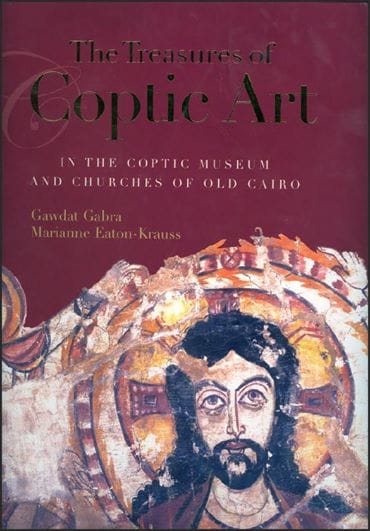
The Treasures of Coptic Art in the Coptic Museum and Churches of Old Cairo Hardcover – Dr. Gawdat Gabra

The Treasures of Coptic Art in the Coptic Museum and Churches of Old Cairo Hardcover – Dr. Gawdat Gabra


Egypt’s Coptic Church is one of the oldest in the world, with a cultural tradition dating back two millennia, during which time churches have been built and a variety of distinctive art forms have flourished. The world’s largest and most exquisite collection of Coptic artifacts is now housed in the Coptic Museum, founded in Old Cairo in 1908. Here for the first time, in this lavishly illustrated book, more than one hundred of the greatest treasures of the Coptic Museum have been beautifully photographed to present an overview of this rich artistic heritage. Objects from churches and monasteries across Egypt include some of the finest examples of Coptic icons, stelae, sculptures, wall paintings, wooden altar screens, metal crosses, censers, liturgical implements and vestments, chandeliers, and bible caskets. Besides being objects of great craftsmanship and beauty, these artifacts, which range in date from the third to the nineteenth centuries, represent indispensable material for the study of the origins and development of Coptic art, as well as its relations with the ancient Egyptian, Byzantine, and Islamic traditions. Textiles, ceramics, terracotta, ivory and bone carvings, and documents (including the famous Nag Hammadi Gnostic library from the fourth century, one of the most valuable collections of papyri in the world) provide invaluable insights into the economic and social life of Egypt over the past two thousand years. In addition to objects from the Coptic Museum, this book also includes photographs of surrounding churches, some of Egypt’s oldest, that illustrate the architectural legacy of the Copts. The accompanying text and captions provide a description of Coptic civilization in general and Coptic art in particular.


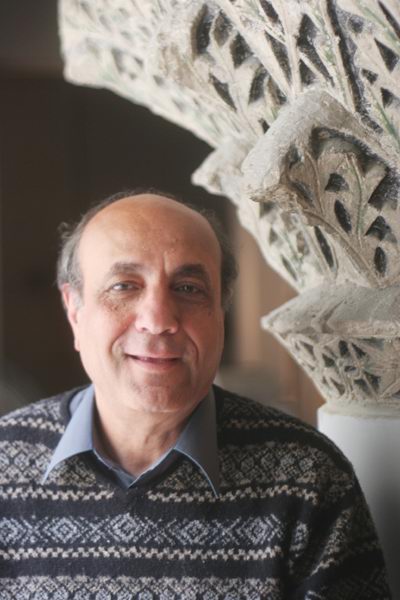
Dr. Gawdat Gabra

Dr. Gawdat Gabra is an independent scholar specializing in Coptic studies, and former director of the Coptic Museum in Cairo (1985). He is also a member of the board of the Society of Coptic Archaeology and chief editor for the St. Mark Foundation for Coptic History Studies 

He is the author and editor of numerous books related to the literary and material culture of Egyptian Christianity, including Coptic Monasteries: Egypt’s Monastic Art and Architecture and Christian Egypt: Coptic Art and Monuments through Two Millennia (both AUC Press 2002). He is also the co-editor of the three volumes of The Popes of Egypt (vol. I: AUC Press, 2004
 
Dr Gabra was born in Luxor, Egypt, but spend a great deal of his childhood in Aswan. He subsequently gained his LIC in Egyptian Antiquities at Cairo University in 1967, obtaining his PhD in Coptic Antiquities at Munster University, Germany.

Gawdat is currently resident in Southern California and a visiting lecturer at Claremont Graduate University.


Click Here To Download

Exit mobile version