Does Jesus want us to love ourself first or others? MATTHEW 22:39

MATTHEW 22:39—Does Jesus want us to love ourself first or others?


PROBLEM: Jesus says in Matthew that we are to love our neighbor as ourselves. But, if we love ourselves first, before we love our neighbor, then this would be putting self before neighbor. Is Jesus teaching that we should be selfish?

SOLUTION: Loving others as we love ourselves can be understood in different ways, but in no way is Jesus implying that we should be selfish. The Bible condemns “lovers of themselves” (2 Tim. 3:2). It exhorts us not to consider only our own interests, but also the interest of others (Phil. 2:4). There are three ways to understand the phrase, “love others as yourself.”

First, some believe that Jesus is saying that we ought to love others as we ought to love ourselves, namely, unselfishly. This, however, seems far too subtle and dialectical for Jesus’ normally straight-forward moral assertions. It would have been more forthright to simply say do not be selfish than the tangled command of loving oneself unselfishly.

Second, Jesus could have meant that we should love others as we ought to love ourselves, namely, properly. There is a legitimate self-respect or self-love. Ephesians tells us to care for our own bodies, “for no one ever hated his own flesh, but nourishes and cherishes it” (5:28–29). There is nothing wrong with a legitimate self-care and self-respect. The Bible condemns someone for “thinking of himself more highly than he ought,” but urges him to think “soberly” (Rom. 12:3). In this sense, Jesus may be saying love others as you ought to love yourselves.

Third, Jesus could have meant that we should love others as much as we do love ourselves. That is, He might have been saying that we should measure how we ought to love others by how we actually do love ourselves without implying that the way we love ourselves is correct. Rather, God may be simply pointing to love for self as the standard by which we should judge how much to love others. In this way, there would be an automatic check on our selfish love, since we would have to love others this much too.

Geisler, N. L., & Howe, T. A. (1992). When critics ask : A popular handbook on Bible difficulties (355). Wheaton, Ill.: Victor Books.

When was the fig tree cursed by Jesus, before or after the temple was cleansed? MATTHEW 21:12–19 (cf. Mark 11:12–14, 20–24)

MATTHEW 21:12–19 (cf. Mark 11:12–14, 20–24)—When was the fig tree cursed by Jesus, before or after the temple was cleansed?

PROBLEM: Matthew places the cursing of the fig tree after the cleansing of the temple. But Mark places the cursing before the temple was cleansed. But, it cannot be both. Did one Gospel writer make a mistake?

SOLUTION: Jesus actually cursed the fig tree on His way to the temple as Mark said, but this does not mean that Matthew’s account is mistaken. Christ made two trips to the temple, and He cursed the fig tree on His second trip.

Mark 11:11 says that Christ entered the temple the day of His triumphal entry. When Christ enters the temple, Mark does not mention Christ making any proclamations against any wrongdoing. Verse 12 says “Now the next day,” referring to the trip to the fig tree on the way to the temple on the second day. On this day, Christ threw out those buying and selling in the temple. Matthew, however, addresses the two trips of Christ to the temple as though they were one event. This gives the impression that the first day Christ entered the temple He drove out the buyers and sellers as well. Mark’s account, however, gives more detail to the events, revealing that there were actually two trips to the temple. In view of this, we have no reason to believe that there is a discrepancy in the accounts.

[1]


[1]Geisler, N. L., & Howe, T. A. (1992). When critics ask : A popular handbook on Bible difficulties (354). Wheaton, Ill.: Victor Books.

Did Jesus heal the blind man coming into or going out of Jericho? MATTHEW 20:29–34 (cf. Mark 10:46–52; Luke 18:35–43)

MATTHEW 20:29–34 (cf. Mark 10:46–52; Luke 18:35–43)—Did Jesus heal the blind man coming into or going out of Jericho?

PROBLEM: According to Luke, a blind man was healed as Jesus entered the city of Jericho (18:35), but Matthew and Mark declare that the healing took place as Jesus left the city of Jericho. Again, the accounts do not seem to be harmonious.

SOLUTION: Some believe that the healing in Luke may have actually taken place as Jesus left Jericho, claiming that it was only the initial contact that took place as “He was coming near Jericho” (Luke 18:35) and the blind man may have followed Him through the city, since he was continually begging Jesus to heal him (vv. 38–39). But this seems unlikely, since even after the healing (v. 43) the very next verse (19:1) says, “then Jesus entered and passed through Jericho.”

Others respond by noting there were two Jerichos, the old and the new, so that as He went out of one He came into the other.

Still others suggest that these are two different events. Matthew and Mark clearly affirm the healing occurred as Jesus left the city (Matt. 20:29; Mark 10:46). But Luke speaks of healing one blind man as He entered the city. This is supported by the fact that Luke refers only to a “multitude” of people being present as Jesus entered the city (18:36), but both Matthew (20:29) and Mark (10:46) make a point to say there was a “great multitude” of people there by the time Jesus left the city. If the word spread of the miraculous healing on the way into the city, this would account for the swelling of the crowd. It might also explain why two blind men were waiting on the other side of the city to plead for Jesus to heal them. Perhaps the first blind man who was healed went quickly to tell his blind friends what happened to him. Or maybe the other blind men were already stationed at the other end of the city in their customary begging position. At any rate, there is no irresolvable difficulty in the passage. The two accounts can be understood in a completely compatible way.

Geisler, N. L., & Howe, T. A. (1992). When critics ask : A popular handbook on Bible difficulties (353). Wheaton, Ill.: Victor Books.
Who came to talk with Jesus, the mother of James and John or James and John? MATTHEW 20:20 (cf. Mark 10:35)

MATTHEW 20:20 (cf. Mark 10:35)—Who came to talk with Jesus, the mother of James and John or James and John?

PROBLEM: In Matthew, the mother of James and John made a request of Jesus. However, Mark states that it was James and John who came to Jesus to make their request.

SOLUTION: It is clear that both the mother and her sons came to Jesus to make the request, since the text declares “the mother … came to Him with her sons” (v. 20). It is possible that the mother spoke first with the two sons closely following to reiterate the request. This is supported by Matthew’s account because when Jesus responds “are you able to drink the cup that I am about to drink?” the Bible says “they said to Him, `we are able’ ” (v.22). So, there is no unsolvable conflict here. The two accounts are harmonious.

[1]


[1]Geisler, N. L., & Howe, T. A. (1992). When critics ask : A popular handbook on Bible difficulties (352). Wheaton, Ill.: Victor Books.

Are rewards the same for all, or do they differ in degree? MATTHEW 20:1ff

MATTHEW 20:1ff—Are rewards the same for all, or do they differ in degree?

PROBLEM: Jesus told a parable of His kingdom in which each servant got the same pay even though each had worked a different number of hours. Yet in other places, the Bible speaks of different degrees of reward for working in God’s kingdom (cf. 1 Cor. 3:11–15; 2 Cor. 5:10; Rev. 22:12).

SOLUTION: There are different degrees of reward in heaven, depending on our faithfulness to Christ on earth. Jesus said, “I am coming quickly, and My reward is with Me, to give to every one according to his work” (Rev. 22:12). Paul said each believer’s work will be tried by fire and “if anyone’s work which he has built on it endures, he will receive a reward” (1 Cor. 3:14). In 2 Corinthians 5, he says we must all appear before the judgment seat of Christ “that each one may receive the things done in the body, according to what he has done, whether good or bad” (v. 10, emphasis added).

The point of the parable in Matthew 20 is not that all rewards will be the same, but that all rewards are by grace. It is to show that God rewards on the basis of opportunity, not simply on accomplishment. Not all the servants had the opportunity to work for the master the same amount of time, but all, nevertheless, were given the same pay. God looks at our disposition as well as our actions and judges accordingly.

Geisler, N. L., & Howe, T. A. (1992). When critics ask : A popular handbook on Bible difficulties (351). Wheaton, Ill.: Victor Books.
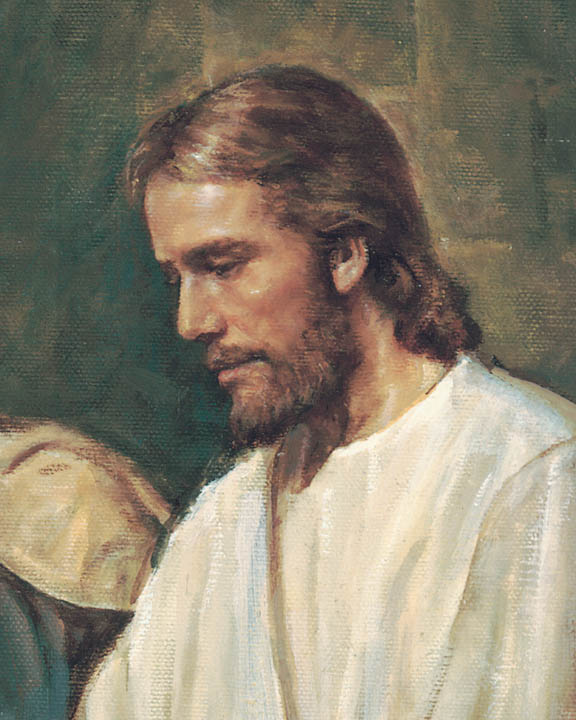
Did Jesus make a mistake about His disciples seeing the kingdom come in their lifetimes? MATTHEW 16:28

MATTHEW 16:28—Did Jesus make a mistake about His disciples seeing the kingdom come in their lifetimes?

PROBLEM: Jesus told His disciples that some of them would not see death until they saw Him coming in His kingdom. Yet during the life of the apostles, Jesus never returned to set up His kingdom.

SOLUTION: This is a question of when this was going to take place, not whether it would. There are three possible solutions.

First, some have suggested that this may be a reference to the Day of Pentecost where Christ’s Helper, the Holy Spirit, came to descend upon the apostles. In John’s Gospel (14:26), Jesus promised to send the Holy Spirit, and, in the beginning of Acts (1:4–8), He tells them not to leave Jerusalem until they have received the Holy Spirit. But this hardly seems to fit the description of seeing Christ coming in His kingdom (Matt. 16:28).

Second, others believe this might be a reference to the destruction of Jerusalem and the temple in a.d. 70. This would mean that He would return to bring judgment upon the city that rejected Him and crucified Him. While this is a possible explanation, it does not seem to account for the fact that Jesus appears to be coming for believers (those “standing there” with Him), not simply coming in judgment on unbelievers. Nor does the judgment on Jerusalem in a.d. 70 adequately express seeing the “Son of Man coming in His kingdom” (v. 28), a phrase reminiscent of His second coming (cf. 26:64). Nor does it explain why Jesus never appeared in a.d. 70.

A third and more plausible explanation is that this is a reference to the appearance of Christ in His glory on the Mount of Transfiguration which begins in the very next verse (17:1). Here Christ does literally appear in a glorified form, and some of His apostles are there to witness the occasion, namely Peter, James, and John. This transfiguration experience, of course, was only a foretaste of His Second Coming when all believers will see Him come in power and great glory (cf. Acts 1:11; Rev. 1:7).

[1]


[1]Geisler, N. L., & Howe, T. A. (1992). When critics ask : A popular handbook on Bible difficulties (349). Wheaton, Ill.: Victor Books.

Is Peter the rock on which the church is built? MATTHEW 16:18

MATTHEW 16:18—Is Peter the rock on which the church is built?

PROBLEM: Roman Catholics use this passage to support their belief in the primacy of Peter, that is, that he is the rock on which the church is built. But Paul said the church is built on Christ, not Peter (1 Cor. 3:11). Is Peter the “rock” in this passage?

SOLUTION: There are different ways to understand this passage, but none of them support the Roman Catholic view that the church is built on St. Peter, who became the first Pope—infallible in all his official pronouncements on faith and doctrine. This is evident for many reasons.

First of all, Peter was married (Matt. 8:14), and Popes do not marry. If the first Pope could marry, why later pronounce that no priest (or Pope) can marry.

Second, Peter was not infallible in his views on the Christian life. Even Paul had to rebuke him for his hypocrisy, because he was not “straightforward about the truth of the Gospel” (Gal. 2:14).

Third, the Bible clearly declares that Christ is the foundation of the Christian church, insisting that “no other foundation can anyone lay than that which is laid, which is Jesus Christ” (1 Cor. 3:11).

Fourth, the only sense in which Peter had a foundational role in the church, all the other apostles shared in the same way. Peter was not unique in this respect. For Paul declared that in this sense the church is “built on the foundation of the apostles and prophets, Jesus Christ Himself being the chief cornerstone” (Eph. 2:20). Indeed, the early church continued steadfastly in the apostles’ doctrine [not just Peter’s]” (Acts 2:42). Even “keys of the kingdom” given to Peter (Matt. 16:19) were also given to all the apostles (cf. Matt. 18:18).

Fifth, there is no indication that Peter was the head of the early church. When the first council was held at Jerusalem, Peter played only an introductory role (Acts 15:6–11). James seems to have a more significant position, summing up the conference and making the final pronouncement (cf. Acts 15:13–21). In any event, Peter is never referred to as the “pillar” in the church. Rather, Paul speaks of “pillars” (plural), such as, “James, Cephas, and John” (Gal. 2:9). Peter (Cephas) is not even listed first among the pillars.

Sixth, many Protestant interpreters believe that Jesus’ reference to “this rock” (Matt. 16:18) upon which His church would be built was to Peter’s solid (rock-like) testimony that Jesus was “the Christ, the son of the living God” (Matt. 16:16). But even if this rock has reference to Peter (Petros, rock), which is certainly a possible interpretation, he was only a rock in the apostolic foundation of the church (Matt. 16:18), not the rock. Nor is he the only apostolic rock. Even Peter himself admitted that Christ is the chief rock (“cornerstone,” 1 Peter 2:7). And Paul notes that the other apostles are all part of the “foundation” (Eph. 2:20).

[1]


[1]Geisler, N. L., & Howe, T. A. (1992). When critics ask : A popular handbook on Bible difficulties (347). Wheaton, Ill.: Victor Books.

How can God’s sovereign and peaceful kingdom be entered by force? MATTHEW 11:12

MATTHEW 11:12—How can God’s sovereign and peaceful kingdom be entered by force?

PROBLEM: Paul declared that the kingdom (rule) of God is “peace and joy in the Holy Spirit” (Rom. 14:17). However, Matthew says “the kingdom of heaven suffers violence, and the violent take it by force.” How can one enter God’s kingdom by force?

SOLUTION: This is a difficult passage, and it has been interpreted several ways. Some take it to mean that the kingdom is violently taken by its enemies. That is, the forceful religious leaders of Jesus’ day were resisting the kingdom introduced by John. They wanted a kingdom, but not the kind that was being offered by John and Jesus (cf. Rom. 10:3). However, some object that this is opposed to the context that is expressing the greatness of John the Baptist and the contrast between his day and Christ’s.

Others see the “violence” as a figure of speech meaning, first, that the kingdom breaks through or intrudes itself with great power and abruptness. Then, the intense endeavors of people who on the preaching of John were taking the kingdom by storm. On this view, it is speaking of the response to John’s preaching as a great popular uprising, a storming of the kingdom of God by people rushing with eagerness to get in it with a violent zeal. This explains the use of the term “violence” and fits the overall context.

[1]


[1]Geisler, N. L., & Howe, T. A. (1992). When critics ask : A popular handbook on Bible difficulties (340). Wheaton, Ill.: Victor Books.

Are believers the light of the world, or is Jesus? MATTHEW 5:14

MATTHEW 5:14—Are believers the light of the world, or is Jesus?

PROBLEM: In this passage, Jesus said to His disciples, “You are the light of the world.” However, in John 9:5, Jesus declared, “I am the light of the world.” Who is the light of the world, Jesus or His disciples?

SOLUTION: Both. Jesus is the primary light, and we are the secondary light. As the light of the sun is to the moon, so Jesus is the source of the light, and we are the reflectors of the light. Jesus said, “as long as I am in the world, I am the light of the world” (John 9:5). Now that He is no longer here, we are His reflected light in the world.

[1]


[1]Geisler, N. L., & Howe, T. A. (1992). When critics ask : A popular handbook on Bible difficulties (329). Wheaton, Ill.: Victor Books.

Why does Matthew incorrectly quote Isaiah? MATTHEW 4:14–16

MATTHEW 4:14–16—Why does Matthew incorrectly quote Isaiah?

PROBLEM: Matthew does not seem to quote Isaiah 9:1–2 accurately. Rather, he seems to have changed it.

SOLUTION: It is not necessary to quote a passage verbatim to cite it accurately. Matthew does not distort the meaning of this passage. He simply condenses or summarizes it. To paraphrase accurately is not to distort. Otherwise, no news report or historical account was ever accurate, since summary is essential to history.

[1]


[1]Geisler, N. L., & Howe, T. A. (1992). When critics ask : A popular handbook on Bible difficulties (329). Wheaton, Ill.: Victor Books.

Exit mobile version