أكاذيب_ديدات (4): رامبو RAMBO في الكتاب المقدس؟! شاهد مستوى إستيعاب أسد الدعوة الشيح أحمد ديدات!

أكاذيب_ديدات (4): رامبو RAMBO في الكتاب المقدس؟! شاهد مستوى إستيعاب أسد الدعوة الشيح أحمد ديدات!
[gview file=”http://www.difa3iat.com/wp-content/uploads/2015/07/004.pdf” save=”0″]

للتحميل

مقدمة:
على طاولتنا شبهة اخرى من شبهات الشيخ الهندي أحمد ديدات. التي كان يلقيها بتهور ضد كتابنا المقدس، دون تفكر بعواقب بما يمكن ان يجلبه هذا المسلك عليه عندما ينكشف أمام الجميع مستوى تفكير الشيخ (أسد الدعوة!)، ومستوى فهمه للنصوص إذ ينتشر على الشبكة الالكترونية، وخاصة على موقع اليوتيوب YouTube مقطع مرئي لديدات بعنوان: (رامبوفي الكتاب المقدس) Rambo in the bible !!،هنا:http://www.youtube.com/watch?v=aJEGPHvRWGI

وفيه يسخر ديدات مهاجماً حادثتين في سفر القضاة من العهد القديم، عن شمجر الذي ضرب 600 رجل بمنساس بقر، وعن شمشون الذي ضرب 1000 رجُل بفك حمار طري. وسينقسم بحثنا إلى محورين، كالتالي:
المحور الأول: شمجر ومنساس البقر
المحور الثاني: شمشون والألف رجل

المحور الأول:
شمجر ومنساس البقر

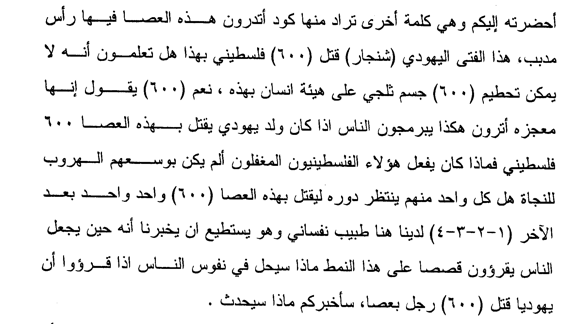
يقول ديدات:


وقد اقتبس ديدات من سفر القضاة:
“وَكَانَ بَعْدَهُ شَمْجَرُ بْنُ عَنَاةَ، فَقتل مِنَ الْفِلِسْطِينِيِّينَ سِتَّ مِئَةِ رَجُل بِمِنْسَاسِ الْبَقَر” (قضاة 3: 31).

تفنيد الشبهة:
وسأقسم ردي على هذه الشبهة بخمسة نقاط كالتالي:

أولاً: ما معنى كلمة “ضرب” بالعبرية؟
ثانياً: هل ضرب شمجر وحده أم كان معه مجموعة يقودها؟
ثالثاً: هل حدث الضرب في يوم واحد وموقعة واحدة ؟!
رابعاً: هل منساس البقر يمكن استعماله كسلاح؟
خامساً: لماذا استعملوا منساس البقر بدلاً من السيوف؟

أولاً: ما معنى كلمة “ضرب” بالعبرية؟

كلمة “ضرب” في العبرانية هي: (נכה) ناخاه.Kأما كلمة “قتل” في العبرانية هي: (הרג) هاوراج.
فالآية (قضاة31:3) لم تستخدم لفظة القتل (הרג)، انما لفظة (נכה) التي تعني ضرب! والضرب لا يعني دوماً القتل قطعاً، انما لها معاني الضرب الاخرى. لنقرأ من القاموس العبري \ الانجليزي المسمى قاموس سترونج ليتضح لنا المعنى لسليم لكلمة ضرب العبرية נכה:

נכה
H5221
naw-kaw

A primitive root; to strike)lightly or severely, literally or figuratively): – beat, cast forth, clap, give [wounds], X go forward, X indeed, kill, make [slaughter], murderer, punish, slaughter, slay (-er, -ing),smite (-r, -ing), strike, be stricken, (give) stripes, X surely,wound.
http://www.bibletools.org/index.cfm/…D/h5221/page/2

فالكلمة من معانيها: الضرب بقوة أو خفة، صفع، يعاقب، يقتل، يجرح الخ! فالكلمةالمستخدمة في الآية عن شمجر (قضاة 31:3) قد تعني ضرب، هاجم، أصاب، وانتصر عليهم، هزمهم. وليس حتما ولزاماً انه قتلهم وأماتهم حرفياً، فهذا فِهم عجيب للنص!

ثانياً: هل ضرب شمجر وحده أم كان معه مجموعة يقودها؟

حين يقال فلان “ضرب”، لا يعني بالضرورة انه ضرب وحده دون مساعدين معه. حين يستخدم فعل مفرد لا يعني انه قام به وحده.

مثال (1): حين يقال: “سليمان بنى الهيكل“، فهل معنى هذا ان سليمان “وحده” وبيديه المجردتين قد بنى الهيكل حجراً فوق حجر؟! أم يقال هذا لأن سليمان كان هو الملك والقائد والآمر لعماله بالبناء، فنسب البناء اليه وحده.

مثال (2):
حين يقال “قاتل الخليفة أبو بكر كل قبائل العرب التي إرتدت بعد موت رسول الإسلام“. فلن يفهم العاقل ان أبي بكر قد حمل سيفه وركب حصانه وذهب إليهم وحده وقاتلهم منفرداً. انما يُفهم انه كان الأمير والقائد على السرايا التي قاتلت كل المرتدين عن الإسلام بحد السيف، بأمر مباشر منه.

على غرار ذلك نفهم قول الوحي بأن “شمجر” ضرب 600 رجل، بأنه كان هو “القائد” والآمر بشكل مباشر للهجوم المباغت على الفلسطينيين وضربهم.

وكثيراً ما استخدمت كلمة “يضرب” بصيغة المفرد للضارب، ويقصد بها جيشه ككل. ففي سفر القضاة ذاته، نقرأ كلمة “ضرب” ترد بالمفرد في حين يقصد بها الجمع. اذ نقرأ عن جدعون:“وَصَعِدَ جِدْعُونُ فِي طَرِيقِ سَاكِنِيالْخِيَامِ شَرْقِيَّ نُوبَحَ وَيُجْبَهَةَ، وَضَرَبَ الْجَيْشَ وَكَانَ الْجَيْشُمُطْمَئِنًّا ” (القضاة 11:8). فهل جدعون “ضرب” الجيش منفرداً دون معونة من جيشه…؟ 

وفي سفر التكوين نقرأ عن عيسو: “إِنْجَاءَ عِيسُو إِلَى الْجَيْشِ الْوَاحِدِ وَضَرَبَهُ،يَكُونُ الْجَيْشُ الْبَاقِينَاجِيًا” (التكوين 32: 8).
“ضربه” بالمفرد، فهل عنى بذلك ان عيسو كان لوحده ليضرب، أم كان معه 400 رجل…؟

ونقرأ ايضاً عن موسى:
” كُلَّ مَمْلَكَةِ عُوجٍ فِي بَاشَانَالَّذِي مَلَكَ فِي عَشْتَارُوثَ وَفِيإِذْرَعِي. هُوَ بَقِيَ مِنْبَقِيَّةِ الرَّفَائِيِّينَ،وَضَرَبَهُمْ مُوسَى وَطَرَدَهُمْ” (يشوع 13: 12)
“ضربهم” موسى بصيغة المفرد، فهل يعني هذا ان موسى كان لوحده يحاربهم ويضربهم دون أي مساعد معه؟ أين ذهب إذن جيش اسرائيل؟

ونقرأ عن يشوع:” حِينَئِذٍ صَعِدَ هُورَامُ مَلِكُجَازَرَ لإِعَانَةِ لَخِيشَ،وَضَرَبَهُ يَشُوعُمَعَ شَعْبِهِ حَتَّى لَمْيُبْقِ لَهُ شَارِدًا” (يشوع 3:10). قرأنا ان يشوع “ضربه”، فهل فعل هذا بمفرده دون وجود أحد معه؟

وعن شاول الملك نقرأ:
“فَسَمِعَ جَمِيعُ إِسْرَائِيلَ قَوْلاً: قَدْ ضَرَبَ شَاوُلُ نَصَبَ الْفِلِسْطِينِيِّينَ، وَأَيْضًا قَدْ أَنْتَنَ إِسْرَائِيلُ لَدَى الْفِلِسْطِينِيِّينَ. فَاجْتَمَعَ الشَّعْبُ وَرَاءَ شَاوُلَ إِلَى الْجِلْجَالِ ” (صموئيل الأول 13: 4). “ضرب” شاول، وردت بالمفرد، انما لا يعني انه ضربهم بمفرده بشخصه وحيداً دون شعبه الذي كان وراءه.

وعن داود الملك نقرأ:” وَعَادَتِ الْحَرْبُ تَحْدُثُ، فَخَرَجَ دَاوُدُ وَحَارَبَ الْفِلِسْطِينِيِّينَ وَضَرَبَهُمْ ضَرْبَةًعَظِيمَةً فَهَرَبُوا مِنْ أَمَامِهِ ” (صموئيل الأول 8:19). فداود “ضربهم” بالمفرد، فهل نفهمها انه كان وحيداً دون معين من أحد؟ وعبارة هربوا من “أمامه” جاءت بالمفرد فهل الفلسطينيين قد هربوا من أمام شخص واحد فقط. ؟! أم يقصد بها انهم هربوا من أمام جيش داود الذي كان هو قائده، فينسب اليه فعل الضرب والانتصار.
كذلك حين يقال عن “شمجر” انه “ضرب”، فيعني انه ضرب مع مجموعة من أتباعه المقاتلين لكونه قائدهم.
ولا يفوتنا ان نُذكّر الشيخ ديدات ان شمجر كان “قاضياً ” لإسرائيل أي رجلاً بالغاً ولم يكن “صبياً” كما يزعم متوهماً!

ثالثاً: هل حدث الضرب في يوم واحد وموقعة واحدة؟!

نتحدى الشيخ ديدات وأتباعه بأن يقدموا لنا دليلاً واحداً ان ضرب شمجر للفلسطينيين كان في موقعة واحدة ؟!
فالنص الكتابي لم يقل هذا، ولا يحق لأحد ان يسقط استنتاجاته المسبقة على النص.

بل على العكس، فإن سفر القضاة يؤكد بأن الفلسطينيين كانوا يقطعون الطرق على بني اسرائيل وينهبونهم، فكان شمجر قائداً على سرية مدافعة لمقاومة الغزاة قاطعي الطرق. فكلما هجم عليهم قاطعوا الطرق كان شمجر ورفاقه المقاتلين يضربونهم ويصدونهم. اذ نقرأ كلام دبورة:”فِي أَيَّامِ شَمْجَرَبْنِ عَنَاةَ،فِي أَيَّامِ يَاعِيلَ، اسْتَرَاحَتِ الطُّرُقُ، وَعَابِرُو السُّبُلِ سَارُوا فِي مَسَالِكَ مُعْوَجَّةٍ”. (القضاة 6:5).

لاحظ استخدام كلمة “أيام” وليس يوم واحد. فشمجر لم يضرب 600 رجل في يوم واحد ولا في موقعة واحدة، انما كانت على ايام عديدة. اذ ان قطاع الطرق لا يهجمون في يوم واحد. لذا كان شمجر ورفاقه الشجعان ينتظرونهم وكأنهم يحرثون البقر ومعهم المناسيس، فلا يخشاهم الفلسطينيين اذ يعتقدون أنهم مجرد فلاحين دون سلاح، فيفاجئهم شمجر ورفاقه الحاملين المناسيس كرماح حادة بالضرب الفتاك اذ استعملوها كسلاح فعال، حتى “استراحت الطرق” (قضاة 6:5).
وهذا يصل بنا الى النقطة الرابعة. عن سلاح المنساس!!

رابعاً: هل منساس البقر يمكن استعماله كسلاح؟
منساس البقر ببساطة ليس هو مجرد عصا كما كان ديدات يحاول خداع جمهوره! إنما رأسه يحوي قطعة معدنية مدببة (كما اعترف ديدات بنفسه في المناظرة، وكلامه المترجم موجود في المقطع)، اليس هذا يجعل من المنساس تعمل عمل الرمح القاتل ؟!
كلمة منخاس بالعبرية هي (מלמד) مالمود. ولو راجعنا القاموس لمعرفة معناها سنكتشف انها تستخدم ايضاً كسلاح !!

Dictionary of Biblical Languages with Semantic Domains
4913 מַלְמָדmǎl cattle-goad, i.e., a pointed stick, often with a ****l point, used to prod cattle, but could be used as a weapon(Jdg 3:31).

فليست هي مجرد “عصا” كما زعم ديدات (!!) وهذه صور للمنساس، ولاحظوا رأسها المعدني المدبب كالحربة القاتلة:


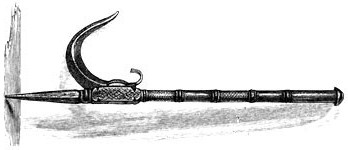
خامساً: لماذا استعملوا منساس البقر بدلاً من السيوف؟

السبب ان الفلسطينيين كانوا هم المحتلين والمتسلطين على اسرائيل في أيام القضاة، وكانوا يجردون كل اسرائيل من اسلحته! اذ نقرأ في ذات سفر القضاة: “اِخْتَارَ آلِهَةً حَدِيثَةً. حِينَئِذٍ حَرْبُ الأَبْوَابِ.هَلْ كَانَ يُرَى مِجَنٌّ أَوْ رُمْحٌ فِي أَرْبَعِينَ أَلْفًا مِنْ إِسْرَائِيلَ” (القضاة 8:5).فلم يكونوا يتركون لهم مجناً ولا رمحاً. لهذا استعمل “شمجر” ورفاقه المقاتلين مناسيس البقر كسلاح يشبه الحربة القاتلة لمقاومتهم.

اذ نقرأ في هذا النص الأمرين معاً:
“وَلَمْ يُوجَدْ صَانِعٌ فِي كُلِّ أَرْضِ إِسْرَائِيلَ، لأَنَّ الْفِلِسْطِينِيِّينَ قَالُوا: «لئلا يَعْمَلَ الْعِبْرَانِيُّونَ سَيْفًا أَوْ رُمْحًا». بَلْ كَانَ يَنْزِلُ كُلُّ إِسْرَائِيلَ إِلَى الْفِلِسْطِينِيِّينَلِيُحَدِّدَ كُلُّ وَاحِدٍ سِكَّتَهُ وَمِنْجَلَهُ وَفَأْسَهُ وَمِعْوَلَهُ. عِنْدَمَا كَلَّتْ حُدُودُ السِّكَكِ وَالْمَنَاجِلِ وَالْمُثَلَّثَاتِ الأَسْنَانِ وَالْفُؤُوسِ وَلِتَرْوِيسِ الْمَنَاسِيسِ” (1 صموئيل 19:13-21).

الأمر الأول: الفلسطينيين كانوا يمنعون عن اسرائيل كل انواع الاسلحة من سيوف ورماح.
الأمر الثاني: ان المناسيس كانوا يحدونها مما يثبت انها كانت ذو رؤوس مدببة كالرماح.

نستخلص: ان شمجر كان قاضياً لإسرائيل أي كالقائد، وكونه “ضرب” 600 رجل، فلا يعني انه ضربهم بمفرده دون مساعدة رفاقه الحاملين ايضاً لمناسيس حادة استخدموها كرماح، في مباغتتهم لقطاع الطرق من الفلسطينيين.
فلم يكن ضرب 600 رجل في موقعة واحدة انما في مواقع وعلى أيام.

وحتى لو اعتبرناها موقعة واحدة فهذا ليس خيالاً، اذ ان شمجر لم يكن وحده، إضافة الى ايماننا بقوة الرب في نصرة عبيده على اعداءه حتى ولو بالوسائل الضعيفة، كما نصر الرب عبده جدعون على جيش عرمرم، بثلاثمائة جندي معهم جرار !!

المحور الثاني:
شمشون والألف رجل!!

شبهة ديدات التالية تتعلق بشمشون قاضي اسرائيل الجبار. وفيها يسخر ديدات والعوام الهائج من جمهوره المسلم في القاعة من رواية الكتابالمقدس بأن شمشون قد قتل 1000 فلسطيني بفك حمار.. معتبرينها رواية منافية للعقل! اذ يقول ديدات:


الإجابة بنعمة الرب:
ليس في الامر مبالغة ولا خيال كما يزعم ديدات.. اذ كعادته لم يقرأ النص جيداً، علاوة على اقتطاعه من سياقه. وسنطرح هذه النقاط لتوضيح الأمر..

أولاً: قوة شمشون كانت معجزة إلهية!
ثانياً: ضرب لا تعني انه قتل!
ثالثاً: فك الحمار.. سلاح!
رابعاً: هل وقفوا طابوراً ليقتلهم شمشون؟!

أولاً: قوة شمشون كانت معجزة إلهية!

فشمشون القاضي من الناحية الجسدية كان جباراً مفتول العضلات كالجبلالمنيع. وكانت قدرته الجسديةهذه احدى نعم الرب عليه. فقوته كانت مؤازرة له من قبل روح الرب.

ولوقرأنا النص لوجدنا ان الرب هو الذي ساعده على ذلك المجهود. لا بل اجترح معه معجزةانقاذ من العطش،ليثبت له بأن جبروته وقوتهمهما بلغ مداها الا انه بدون الرب فسيهلك لأبسط الأسباب.

لنقرأ:
“9 وَصَعِدَ الْفِلِسْطِينِيُّونَ وَنَزَلُوا فِي يَهُوذَا وَتَفَرَّقُوا فِي لَحْيٍ. 10 فَقَالَ رِجَالُ يَهُوذَا: «لِمَاذَا صَعِدْتُمْ عَلَيْنَا؟» فَقَالُوا: «صَعِدْنَا لِكَيْ نُوثِقَ شَمْشُونَ لِنَفْعَلَ بِهِ كَمَا فَعَلَ بِنَا». 11 فَنَزَلَ ثَلاَثَةُ آلاَفِ رَجُل مِنْ يَهُوذَا إِلَى شَقِّ صَخْرَةِ عِيطَمَ، وَقَالُوا لِشَمْشُونَ: «أَمَا عَلِمْتَ أَنَّ الْفِلِسْطِينِيِّينَ مُتَسَلِّطُونَ عَلَيْنَا؟ فَمَاذَا فَعَلْتَ بِنَا؟» فَقَالَ لَهُمْ: «كَمَا فَعَلُوا بِي هكَذَا فَعَلْتُ بِهِمْ». 12 فَقَالُوا لَهُ: «نَزَلْنَا لِكَيْ نُوثِقَكَ وَنُسَلِّمَكَ إِلَى يَدِ الْفِلِسْطِينِيِّينَ». فَقَالَ لَهُمْ شَمْشُونُ: «احْلِفُوا لِي أَنَّكُمْ أَنْتُمْ لاَ تَقَعُونَ عَلَيَّ». 13 فَكَلَّمُوهُ قَائِلِينَ: «كَلاَّ. وَلكِنَّنَا نُوثِقُكَ وَنُسَلِّمُكَ إِلَى يَدِهِمْ، وَقَتْلاً لاَ نَقْتُلُكَ». فَأَوْثَقُوهُ بِحَبْلَيْنِ جَدِيدَيْنِ وَأَصْعَدُوهُ مِنَ الصَّخْرَةِ. 14 وَلَمَّا جَاءَ إِلَى لَحْيٍ، صَاحَ الْفِلِسْطِينِيُّونَ لِلِقَائِهِ. فَحَلَّ عَلَيْهِ رُوحُ الرَّبِّ، فَكَانَ الْحَبْلاَنِ اللَّذَانِ عَلَى ذِرَاعَيْهِ كَكَتَّانٍ أُحْرِقَ بِالنَّارِ، فَانْحَلَّ الْوِثَاقُ عَنْ يَدَيْهِ. 15 وَوَجَدَ لَحْيَ حِمَارٍ طَرِيًّا، فَمَدَّ يَدَهُ وَأَخَذَهُ وَضَرَبَ بِهِ أَلْفَ رَجُل. 16 فَقَالَ شَمْشُونُ: «بِلَحْيِ حِمَارٍ كُومَةً كُومَتَيْنِ. بِلَحْيِ حِمَارٍ قَتَلْتُ أَلْفَ رَجُل». 17 وَلَمَّا فَرَغَ مِنَ الْكَلاَمِ رَمَى اللَّحْيِ مِنْ يَدِهِ، وَدَعَا ذلِكَ الْمَكَانَ «رَمَتَ لَحْيٍ». 18 ثُمَّ عَطِشَ جِدًّا فَدَعَا الرَّبَّ وَقَالَ: «إِنَّكَ قَدْ جَعَلْتَ بِيَدِ عَبْدِكَ هذَا الْخَلاَصَ الْعَظِيمَ، وَالآنَ أَمُوتُ مِنَ الْعَطَشِ وَأَسْقُطُ بِيَدِ الْغُلْفِ». 19 فَشَقَّ اللهُ الْكِفَّةَ الَّتِي فِي لَحْيِ، فَخَرَجَ مِنْهَا مَاءٌ، فَشَرِبَ وَرَجَعَتْ رُوحُهُ فَانْتَعَشَ. لِذلِكَ دَعَا اسْمَهُ «عَيْنَ هَقُّورِي» الَّتِي فِي لَحْيٍ إِلَى هذَا الْيَوْمِ. 20 وَقَضَى لإِسْرَائِيلَ فِي أَيَّامِ الْفِلِسْطِينِيِّينَ عِشْرِينَ سَنَةً”
(القضاة اصحاح 15اية 9-20).
إذن المسألة كلها كانت قدرة الهية وعون اعجازي، بدليل قول الكتاب:
فحلّ عليه روح الرب فكانالحبلان اللذان على ذراعيه ككتان احرق بالنار فانحلّ الوثاق عن يديه“. إذن الرب هو من عضده وأيده في اجتراح هذه المعجزات القوية في حربهضد اهل الأوثان!وبعد أن سنده الرب في ضرب الف رجل (دون ان يحدد النصالفترة الزمنية التي استغرقت ذلك)..
عطش شمشون وكاد انيموت عطشاً.. وطلب الى الرب الذي اعطاه ذلك الخلاص العظيم من يد اهل الوثن بقوله:

“ثم عطش جدا فدعا الرب وقال إنك قدجعلت بيد عبدك هذا الخلاص العظيم والآن اموت من العطش” !!
فالرب (باعتراف شمشون) هو من جعل بيده هذا الخلاص العظيموقد أنقذه من العطشبمعجزة عظيمة.
فترون ان الحدث كله اعجاز إلهي عظيم سند به عبده شمشونفليس في الامر أي خرافةكما هرف ديدات من كيسه!

ثانياً: ضرب لا تعني انه قتل!
كما درسنا في الشبهة الأولى عن شمجر، اكتشفنا أن كلمة “ضرب” العبرية التي استخدمها الوحي المقدس، لا تعني بالضرورة “قتل”!

وإن قيل كيف اذن نقرأ قول شمشون بأنه قتل:
وَوَجَدَ لَحْيَ حِمَارٍ طَرِيًّا، فَمَدَّ يَدَهُ وَأَخَذَهُ وَضَرَبَ بِهِ أَلْفَ رَجُل. “فَقَالَ شَمْشُونُ: «بِلَحْيِ حِمَارٍ كُومَةً كُومَتَيْنِ. بِلَحْيِ حِمَارٍ قَتَلْتُ أَلْفَ رَجُل» “.

قلنا:
ان الاصل العبراني هو ذاته كلمة ناخاه أي “ضرب” في كلتا الآيتين!
فالترجمة العربية لم تكن دقيقة في الآية 16، اذ كان الأصح ان تترجمها “ضربت” وليس “قتلت”.
فالترجمة الانجليزية اليهودية للآيتين هي هكذا بذات الكلمة “ضربت”:

15 And he found a new jawbone of an ass, and put forth his hand, and took it, and smotea thousand men therewith. 16 And Samson said: With the jawbone of an ass, heaps upon heaps, with the jawbone of an ass have I smittena thousand men.
http://www.mechon-mamre.org/e/et/et0715.htm

“ضرب “، “ضربت”. وليس قتل!
لأن النص العبراني يقول ذلك مستخدماً كلمة “ضربت ” وليس قتلت:

قضاة 15: 15
וימצאלחי־חמורטריהוישׁלחידוויקחה ויך־בה אלףאישׁ׃
قضاة 15: 16
ויאמרשׁמשׁוןבלחיהחמורחמורחמרתיםבלחיהחמורהכיתי אלףאישׁ׃

فشمشون “ضرب”، ولا مستوجب يجبرنا على ان نفهم أنه “قتل”. وحتى لو كان قد قتل، فهذا أؤمن به، لأن الكتاب قال صراحة ان قوة شمشون كان اعجازية إلهية من عند الرب.
ثالثاً: فك الحمار.. سلاح!

من جهة النصمن سفر القضاة.. فالنص قد قال بأن شمشون قد استخدم فك حمار في تلك المعركةالحربية.. وكان كسلاح فتاك بيده. والنتيجة ان شمشون بالسلاح الذي استخدمه وبقوةالرب قد ضرب ما مجموعه الف رجل.. بعضهم قُتل وبعضهم جرح وهرب. ولا ادري ما هو صعب الهضم في هذ الحادثة ؟!
ففك الحمار يمكن استخدامه كأداة قاتلة وكسلاح، اذ يزن ما يقارب أربعة كيلوجرامات، وتصميمه يشابه “البلطة” التي كان يستخدمها الهنود الحمر.. اضافة الى بقاء الاضراس المدببة عليه.



رابعاً: هل وقفوا طابوراً ليقتلهم شمشون؟!

(1)تعليق على ألفاظ ديدات قوله المنفر: ” لو بصق الفلسطينيون دفعة واحدة لأغرقوه“!
صحيح ان “المرء مخبوء تحت لسانه”، اذ “كل إناء بما فيه ينضح”!فالشخص المتكلم يُظهر اسلوب كلامه، طبيعة بيئته وتربيته ومهنته. فالفيلسوف يضرب أمثلة تتناسب مع حكمته، والمهندس يضرب أمثلة حسابية تناسب مع مهنته، والطبيب يشرح بأمثلة تتوائم مع طبيعة عمله، وهكذا الى كل أصحاب المهن والمواهب، فكيف كان الأجدر بـ “شيخ!” وعلاّمة عصره أن يضرب الأمثلة؟

(2) لم يكونوا طابوراً! النص لم يحدد المدة التي ضرب فيها شمشون أعداءه الألف.فقد تكون تلك المعركة قد استمرت ساعات طوال، أو اياماً. فهم لم يقفوا في طابور ليقتلوا تباعاً. بل ان نص الكتاب يقول ان شمشون كوم كومتين!
” فَقَالَ شَمْشُونُ: بِلَحْيِ حِمَارٍ كُومَةً كُومَتَيْنِ ” (قضاة 16:15). أي ان المعركة حدثت في أماكن مختلفة على الأقل مكانين.
كما ان الكومة لا يقصد بها 500 رجل !! انما عدد محدود قد لا يبلغ الدزينة منهم.. فهو قتل البعض وكوّمهم وجرح الآخرين، وقد بلغ مجموعهم الألف، بين قتيل وجريح.فالنص قد اختصر الواقعة. ولا يجب ان يتفلسف لا ديدات أو غيره لكي يُحمل النص ما لا يحتمل.

في النهاية، إننا نتساءل، كيف لشيخ يلقبه المسلمون بأسد الدعوة، ويصفونه بأنه “عالِم” أن يسقُط في هذه الأخطاء الساذجة أثناء قراءة النص وفهمه؟ هل تُرى الشيخ حقاً لم يفهم مقصود النص أم أنه قد فهمه ويتعمد إظهار عقله بهذا المستوى الضعيف، فقط ليهاجم الكتاب المقدس؟ وإن كان هذا أو ذاك، فكيف يثق فيه الإخوة المسلمون؟


Did Jesus make a mistake about His disciples seeing the kingdom come in their lifetimes? MATTHEW 16:28

MATTHEW 16:28—Did Jesus make a mistake about His disciples seeing the kingdom come in their lifetimes?

PROBLEM: Jesus told His disciples that some of them would not see death until they saw Him coming in His kingdom. Yet during the life of the apostles, Jesus never returned to set up His kingdom.

SOLUTION: This is a question of when this was going to take place, not whether it would. There are three possible solutions.

First, some have suggested that this may be a reference to the Day of Pentecost where Christ’s Helper, the Holy Spirit, came to descend upon the apostles. In John’s Gospel (14:26), Jesus promised to send the Holy Spirit, and, in the beginning of Acts (1:4–8), He tells them not to leave Jerusalem until they have received the Holy Spirit. But this hardly seems to fit the description of seeing Christ coming in His kingdom (Matt. 16:28).

Second, others believe this might be a reference to the destruction of Jerusalem and the temple in a.d. 70. This would mean that He would return to bring judgment upon the city that rejected Him and crucified Him. While this is a possible explanation, it does not seem to account for the fact that Jesus appears to be coming for believers (those “standing there” with Him), not simply coming in judgment on unbelievers. Nor does the judgment on Jerusalem in a.d. 70 adequately express seeing the “Son of Man coming in His kingdom” (v. 28), a phrase reminiscent of His second coming (cf. 26:64). Nor does it explain why Jesus never appeared in a.d. 70.

A third and more plausible explanation is that this is a reference to the appearance of Christ in His glory on the Mount of Transfiguration which begins in the very next verse (17:1). Here Christ does literally appear in a glorified form, and some of His apostles are there to witness the occasion, namely Peter, James, and John. This transfiguration experience, of course, was only a foretaste of His Second Coming when all believers will see Him come in power and great glory (cf. Acts 1:11; Rev. 1:7).

[1]


[1]Geisler, N. L., & Howe, T. A. (1992). When critics ask : A popular handbook on Bible difficulties (349). Wheaton, Ill.: Victor Books.

If Jesus is the Jewish Messiah, why don’t more Jews believe in him? | Brown, M. L

If Jesus is the Jewish Messiah, why don’t more Jews believe in him?

Actually, there are tens of thousands of Jews who have believed and do believe in him. The problem is that most Jews have not bothered to check into the facts about Jesus, and the only Jesus most of them know is either the baby Jesus of Christmas, an emaciated figure hanging on a cross in churches, or the Jesus of the Crusades and Inquisitions. The question is, Why don’t you believe Jesus is the Messiah? Do you really know who he is?

I encourage you to consider the following points.

1. Most Jews have never seriously studied the issue. Many of those who have decided to find out who Jesus is have been quite surprised by what they have learned. The greatest scholars and scientists in the world once believed the earth was flat—until firsthand investigation and discovery altered their outlook. It’s the exact same thing with Jews who honestly investigate the Messianic claims of Jesus. Everything changes—to put it mildly.

2. If most religious Jews learn anything about Jesus in their traditional studies, it is quite biased and negative. 22 Thus, they do not entertain even the possibility of the messiahship of Jesus.

3. Many so-called Christians have committed atrocities against Jews in the name of Jesus, helping to drive Jews away from their true Messiah. (See below, 2.7, for more on this, along with my book Our Hands Are Stained with Blood.)

4. These same Christians have often put forth a distorted picture of Jesus that bears little resemblance to the real Messiah who walked the earth two thousand years ago. Can Jews be blamed for thinking that Christians worshiped idols when the churches were filled with worshipers bowing before large, beautiful statues depicting Jesus as a babe in his mother’s lap?

5. There is often great pressure on those Jews—especially religious Jews—who put their faith in Jesus the Messiah. Some succumb to the fear, the pressure, the intimidation, the separation, and the loneliness, and they deny with their lips what they know to be true in their hearts.

6. Traditional Jewish teaching gives a slanted portrayal of who the Messiah is and what he will do. Since the description is faulty, people are looking in the wrong direction for the wrong person. No wonder relatively few have found him.

7. Once a learned Jew does believe in Yeshua, he is discredited, and so his name is virtually removed from the rolls of history. It’s almost as if such people ceased to exist. (Do you remember reading the novel Animal Farm in school? Revisionist history goes on to this day—even in traditional Jewish circles.) The story of Max Wertheimer provides one case in point. In the last century, Wertheimer came to the States as an Orthodox Jew, but over the course of time, he became a Reform Jew and was ordained a rabbi upon graduating from Hebrew Union College in Cincinnati in 1889. (He also received a Ph.D. from the University of Cincinnati the same year.) He then served as the greatly loved rabbi of B’Nai Yeshurun synagogue in Dayton, Ohio, for the next ten years. When he became a fervent believer in Jesus, however, pastoring a church as well, his name was literally removed from the rolls of the school—a school of alleged tolerance at that. Why was his name dropped? According to Alfred A. Isaacs, cited in the November 25, 1955, edition of the National Jewish Post, Wertheimer was disowned by Hebrew Union College solely because of his Christian faith. 23 And to think, this happened in a “liberal” Reform Jewish institution!

8. Although this may be hard for you to accept, because our leadership rejected Jesus the Messiah when he came, God judged us as a people (just as he judged us as a people for rejecting his law and his prophets in previous generations), and as a result, our hearts have become especially hardened toward the concept of Jesus as Messiah. 24 Paul explained this in his important letter to the believers in Rome: “What Israel sought so earnestly it did not obtain, but the elect did. The others were hardened, as it is written: ‘God gave them a spirit of stupor, eyes so that they could not see and ears so that they could not hear, to this very day’ ” (Rom. 11:7–8; the quote here is taken from Deut. 29:4 in our Torah and Isa. 29:10 in our Prophets).

If you stop to think about it, isn’t it strange that as a people we have almost totally lost sight of the fact that Jesus-Yeshua is one of us, actually, the most influential Jew ever to walk the earth? 25 Yet most of us think of him as if he were some fair-skinned, blue-eyed European. The good news is that Israel’s hardening was only partial: There have always been Jews who followed Jesus the Messiah, and in the end, our people will turn back to him on a national scale. Paul explains this a few verses later:

I do not want you [Gentiles] to be ignorant of this mystery, brothers, so that you may not be conceited: Israel has experienced a hardening in part until the full number of the Gentiles has come in. And so all Israel will be saved, as it is written: “The deliverer will come from Zion; he will turn godlessness away from Jacob. And this is my covenant with them when I take away their sins.”

Romans 11:25–27; the quote is taken from Isaiah 59:20–21; 27:9; and Jeremiah 31:33–34, all in our Prophets

Hopefully, you will be one of those Jews who is determined to find out the truth about the Messiah right now, determining to follow him at any cost. In the end, you must decide for yourself, and the bottom line question is one that only you can answer: Why don’t you believe Jesus is our promised Messiah?

What if more Jews—including your rabbi—did believe in him? Would you? Of course, that wouldn’t change the facts. Either Jesus is or is not the Messiah of Israel. Public opinion can’t affect the truth. But many times, when people find out that it’s okay to hold to a certain opinion, they come out of the closet.

Maybe it would help you to know that many of us in Jewish work have spoken with Orthodox and even ultra-Orthodox Jews who have told us in private that they believe Jesus is the Messiah, but they are afraid to go public for fear of what could happen to them. Maybe if a number of these religious Jews—some of whom are rabbis—showed up one day on your doorstep and told you their views, it would get you to think seriously about the matter.

As we grow and mature—from infants to children to teens to adults—we find out that not everything we have been told is true. Sometimes we just have to learn for ourselves. And even as adults, we often have skewed perspectives on many things. Just look at what Democrats believe about Republicans (and vice versa) or what Palestinians believe about Israelis (and vice versa) or what Black Muslims believe about Jews (and vice versa). Our perspectives, opinions, and convictions are not always right—no matter how strenuously we argue for our position. Common sense tells us that all of us can’t be right about everything all the time.

Even on an interpersonal level, how often have you met someone only to find out that all the bad things you heard about that person were greatly exaggerated or false? It happens all the time. As for the matter at hand, I assure you in the strongest possible terms: As a Jew, most everything you have heard about Jesus has been untrue. You owe it to yourself to find out just who this Jesus really is—and I say this to you whether you are an ultra-Orthodox rabbi reading this book in secret or you are a thoroughly secular, wealthy Jewish businessman who was given this book by a friend.

This much is certain: We have carefully investigated the claims of Jesus and can testify firsthand that Yeshua is who he said he was. What do you say?

[1]


22 The infamous Rabbinic collection of anti-Jesus fables, called Toledot Yeshu, is still studied in some ultra-Orthodox circles, although virtually all other Jewish scholars have long since repudiated the Toledot. These scurrilous writings, based in part on some Talmudic references, accusing Mary of fathering Jesus through a Roman soldier (or by rape), and portraying Jesus as an idolater, magician, and Israel’s arch-deceiver, were the primary source of information about Jesus for many traditional Jews, especially in the Middle Ages. Of course, as noted by the Oxford Dictionary of Jewish Religion, ed. Geoffrey Wigoder (New York: Oxford, 1997), 695, “the work is an expression of vulgar polemics written in reaction to the no less vulgar attacks on Judaism in popular Christian teaching and writing.” But as I have stated before, just as many Gentiles around the world have had a biased and inaccurate view of the Jewish people, so also have many Jews had a biased and inaccurate view of Jesus, the Jewish Messiah. For a representative sampling from the Toledot, see the excellent study of Walter Riggans, Yeshua ben David: Why Do the Jewish People Reject Jesus as Their Messiah? (Crowborough, England: Marc, 1995), 127–32. Interested readers of this present volume would do well to read Riggans as well.

23 For more on this, see Nahum Brodt, “The Truth about the Rabbi,” in Would I? Would You?, ed. Henry and Marie Einspruch (Baltimore: Lederer, 1970), 8–10. For a fuller account of Wertheimer’s faith, see Jacob Gartenhaus, Famous Hebrew Christians (Grand Rapids: Baker, 1979), 191–97.

24 This is not the first time in our history that God has hardened our hearts because we sinned against him. This is what God said to the prophet Isaiah more than twenty-five hundred years ago: “Go and tell this people: ‘Be ever hearing, but never understanding; be ever seeing, but never perceiving.’ Make the heart of this people calloused; make their ears dull and close their eyes. Otherwise they might see with their eyes, hear with their ears, understand with their hearts, and turn and be healed” (Isa. 6:9–10). The prophet was actually called to a ministry of hardening his people’s hearts! It was as if God were saying, “Fine. If you want to be hard-hearted, refusing to believe me or obey me, I will give you over to your hardness and make you even harder.” This is exactly what has happened to us regarding the Messiah: When so many of our people refused to follow him, God gave us over to our unbelief and obduracy to the point that through the centuries, we have become especially resistant to Jesus.

25 This well-known, anonymous tribute to Jesus, known as “One Solitary Life,” puts things in perspective: “He was born in an obscure village. He worked in a carpenter shop until He was thirty. He then became an itinerant preacher. He never held an office. He never had a family or owned a house. He didn’t go to college. He had no credentials but himself. He was only thirty-three when the public turned against him. His friends ran away. He was turned over to his enemies and went through the mockery of a trail. He was nailed to a cross between two thieves. While he was dying, his executioners gambled for his clothing, the only property he had on earth. He was laid in a borrowed grave. Nineteen centuries have come and gone, and today he is the central figure of the human race. All the armies that ever marched, all the navies that ever sailed, all the parliaments that ever sat, and all the kings that ever reigned have not affected the life of man on this earth as much as that one solitary life.”

[1]Brown, M. L. (2000). Answering Jewish objections to Jesus, Volume 1: General and historical objections. (21). Grand Rapids, Mich.: Baker Books.

How Can One God Be Three?

How Can One God Be Three?

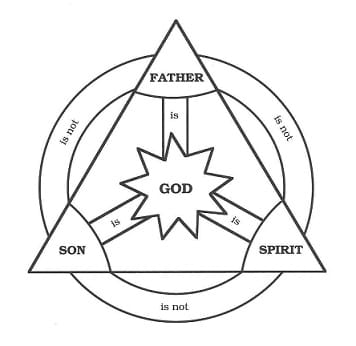
Speaking through the prophet Isaiah, God said, “My thoughts are not your thoughts, / Nor are your ways My ways … / For as the heavens are higher than the earth, / So are My ways higher than your ways, / And My thoughts than your thoughts” (Isa. 55:8–9). God is infinite, man is finite, so there are mysteries about God that man cannot fully understand. One of these mysteries is the Trinity, the tri-personality of God. According to Christian orthodoxy, God is one God in essence, power, and authority, and also eternally exists as three distinct co-equal persons. These three persons are the Father, the Son (Jesus), and the Holy Spirit. This does not mean that Christians believe in three gods (polytheism). Rather, the doctrine of the Trinity is that there is only one God who exists in three distinct persons, and all three share the exact same divine nature or essence.

Understanding this fully is beyond human comprehension and has no human parallels, although various analogies have been offered. One of these analogies is the three physical states of water. Water is not only a liquid but also a solid (ice) and a gas (vapor), yet its chemical composition (substance) never changes in all three forms (two parts hydrogen and one part oxygen—H2O). Although such analogies help us visualize the concept of the Trinity, they all fall short in some way. In the case of the water analogy, although the molecule H2O can be liquid, solid, or gas, it is never all three at one time. The Trinity, on the other hand, is all three persons as one God.

The word Trinity is not used in Scripture, but it has been adopted by theologians to summarize the biblical concept of God. Difficult as it is to understand, the Bible explicitly teaches the doctrine of the Trinity, and it deserves to be explained as clearly as possible, especially to non-Christians who find the concept a stumbling-block to belief. So let’s dig into this topic by addressing four key questions.

IS THE DOCTRINE OF THE TRINITY IRRATIONAL?

The doctrine of the Trinity is certainly a mystery but that doesn’t mean it’s irrational. The concept cannot be known by human reason apart from divine revelation, and, as we’ll soon see, the Bible definitely supports the idea of the Trinity. But for now, I want to demonstrate that the doctrine of the Trinity, although beyond human comprehension, is nevertheless rational. Our acceptance of it is congruous with how we respond to other data about the known world.

There are many things about the universe we don’t understand today and yet accept at face value simply because of the preponderance of evidence supporting their existence. The scientific method demands that empirical evidence be accepted whether or not science understands why it exists or how it operates. The scientific method does not require that all data be explained before it is accepted.

Contemporary physics, for instance, has discovered an apparent paradox in the nature of light. Depending on what kind of test one applies (both of them “equally sound”), light appears as either undulatory (wave-like) or corpuscular (particle-like). This is a problem. Light particles have mass, while light waves do not. How can light have mass and not have it, apparently at the same time? Scientists can’t yet explain this phenomenon, but neither do they reject one form of light in favor of the other, nor do they reject that light exists at all. Instead, they accept what they’ve found based on the evidence and press on.

Like physicists, we are no more able to explain the mechanics of the Trinity than they can explain the apparent paradox in the nature of light. In both cases, the evidence is clear that each exists and harbors mystery. So we must simply accept the facts and move on. Just because we cannot explain the Trinity, how it can exist, or how it operates does not mean that the doctrine must be rejected, so long as sufficient evidence exists for its reality. So let’s now explore this evidence.

HOW DOES THE BIBLE PRESENT THE DOCTRINE OF THE TRINITY?

THE OLD TESTAMENT

Although the doctrine of the Trinity is fully revealed in the New Testament, its roots can be found in the Old Testament.

In several places, God refers to Himself in plural terms. For example, “Then God said, ‘Let Us make man in Our image’” (Gen. 1:26; see 3:22; 11:7; Isa. 6:8).

The Messiah was prophesied in the Old Testament as being divine. Isaiah 9:6 states that the Messiah will be called “Mighty God,” a term applied in the Old Testament specifically to Yahweh (see Mic. 5:2).

Isaiah 48:16 refers to all three members of the Godhead: “Come near to Me, listen to this: From the first I have not spoken in secret, from the time it took place, I was there. And now the Lord God [Father] has sent Me [Jesus], and His Spirit [the Holy Spirit]” (nasv).

The Old Testament also makes numerous references to the Holy Spirit in contexts conveying His deity (Gen. 1:2; Neh. 9:20; Ps. 139:7; Isa. 63:10–14).

THE NEW TESTAMENT

The New Testament provides the most extensive and clear material on the Trinity. Here are just a few of the texts that mention all three members of the Godhead and imply their co-equal status.

•     Matthew 28:19, the baptismal formula: “Go therefore and make disciples of all the nations, baptizing them in the name [not ‘names’] of the Father and of the Son and of the Holy Spirit.”

•     Matthew 3:16, at the baptism of Christ in the Jordan: “And after being baptized, Jesus went up immediately from the water; and behold, the heavens were opened, and He saw the Spirit [Holy Spirit] of God [Father] descending as a dove, and coming upon Him [Jesus]” (nasv).

•     Luke 1:35, the prophetic announcement to Mary of Jesus’ birth: “And the angel answered and said to her, ‘The Holy Spirit will come upon you, and the power of the Highest [Father] will overshadow you; therefore, also, that Holy One who is to be born will be called the Son of God [Jesus].’”

•     The trinitarian formula is also found in 1 Peter 1:2, 2 Corinthians 13:14, and 1 Corinthians 12:4–6.

DIGGING DEEPER

To explain the doctrine of the Trinity, I will take an inductive (scientific) approach. By this I mean I will accumulate general facts in Scripture that lead to a specific conclusion—that the nature of God is triune. The argument will go like this:

1. The Bible teaches that God is one (monotheism) and that He possesses certain attributes that only God can have.

2. Yet when we study the attributes of the Father, the Son, and the Holy Spirit, we discover that all three possess the identical attributes of deity.

3. Thus we can conclude that there is one God eternally existing as three distinct persons.

God Is One (Monotheism)

The Hebrew Shema of the Old Testament is “Hear, O Israel: The Lord our God, the Lord is one!” (Deut. 6:4; see Isa. 43:10; 44:6; 46:9). Some people have argued that this passage actually refutes the concept of the triune nature of God because it states that God is one. But the Hebrew word for “one” in this text is echod, which carries the meaning of unity in plurality. It is the same word used to describe Adam and Eve becoming “one flesh” (Gen. 2:24). Scripture is not affirming that Adam and Eve literally become one person upon marriage. Rather, they are distinct persons who unite in a permanent relationship.

The New Testament confirms the teaching of the Old: “You believe that God is one. You do well; the demons also believe, and shudder” (James 2:19, nasv; see 1 Tim. 2:5; 1 Cor. 8:4; Eph. 4:4–6).

God Has a Certain Nature

Both the Old and New Testaments list the attributes of God. We won’t consider all of them here, but what follows are some of the clearest expressions of what constitutes deity.

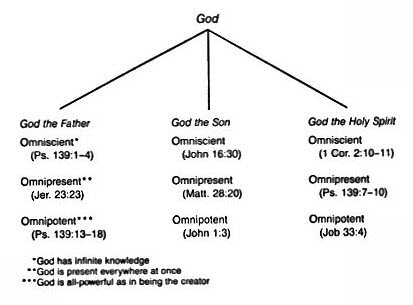
•     God is omnipresent (present everywhere at once): Psalm 139:7–10; Jeremiah 23:23–24.

•     God is omniscient (possesses infinite knowledge): Psalms 139:1–4; 147:4–5; Hebrews 4:13; 1 John 3:20.

•     God is omnipotent (all-powerful): Psalm 139:13–18; Jeremiah 32:17; Matthew 19:26.

The Father Is God

To the Jews, who do not accept the Trinity, God is Yahweh. In the Old Testament, Yahweh is to the Hebrews what Father is in the New Testament and to Christians. The attributes of God (Yahweh) listed above are the same for Yahweh and Father because both names apply to the one God. Although the concept of God as Father is not as explicit in the Old Testament as it is in the New, nevertheless, it has its roots in the Old (see Pss. 89:26; 68:5; 103:13; Prov. 3:12).

In the New Testament, the concept of the Father as a distinct person in the Godhead becomes clear (Mark 14:36; 1 Cor. 8:6; Gal. 1:1; Phil. 2:11; 1 Pet. 1:2; 2 Pet. 1:17). God is viewed as Father over creation (Acts 17:24–29), the nation of Israel (Rom. 9:4; see Exod. 4:22), the Lord Jesus Christ (Matt. 3:17), and all who believe in Jesus as Lord and Savior (Gal. 3:26).

The Son Is God

Like the Father, Jesus possesses the attributes of God. He is omnipresent (Matt. 18:20; 28:20). He is also omniscient: He knows people’s thoughts (Matt. 12:25), their secrets (John 4:29), the future (Matt. 24:24–25), indeed all things (John 16:30; 21:17). His omnipotence is also taught. He has all power over creation (John 1:3; Col. 1:16), death (John 5:25–29; 6:39), nature (Mark 4:41; Matt. 21:19), demons (Mark 5:11–15), and diseases (Luke 4:38–41).

In addition to these characteristics, Jesus exhibits other attributes that the Bible acknowledges as belonging only to God. For example, He preexisted with the Father from all eternity (John 1:1–2), accepted worship (Matt. 14:33), forgave sins (Matt. 9:2), and was sinless (John 8:46).

The Holy Spirit Is God

The Holy Spirit is also omnipresent (Ps. 139:7–10), omniscient (1 Cor. 2:10), and omnipotent (Luke 1:35; Job 33:4).

Like Jesus, the Holy Spirit exhibits other divine attributes that the Bible ascribes to God. For instance, He was involved in creation (Gen. 1:2; Ps. 104:30), inspired the authorship of the Bible (2 Pet. 1:21), raised people from the dead (Rom. 8:11), and is called God (Acts 5:3–4).

The upshot of all this is that God is triune. In a formal argument, we can put it this way:

Major Premise:

Only God is omnipresent, omniscient, and omnipotent.

Minor Premise:

The Father, the Son, and the Holy Spirit are omnipresent, omniscient, and omnipotent.

Conclusion:

Therefore, God is triune as Father, Son, and Holy Spirit.

THE TRINITY

HOW DOES JESUS TEACH THE DOCTRINE OF THE TRINITY?

In the Bible, Jesus claims to be God and then demonstrates this claim by displaying the attributes of God and by raising Himself from the dead. So what Jesus has to say about God must be true. And Jesus clearly teaches that God is triune.

Jesus Is Equal with the Father and Holy Spirit

In Matthew 28:19, Jesus tells His followers to “make disciples of all the nations, baptizing them in the name of the Father and of the Son and of the Holy Spirit.” He uses the singular word name but associates it with three persons. The implication is that the one God is eternally three co-equal persons—Father, Son, and Holy Spirit.

Jesus Is One with the Father

In John 14:7 and 9, Jesus identifies Himself with the Father by saying to His disciples, “If you had known Me, you would have known My Father also; and from now on you know Him and have seen Him … He who has seen Me has seen the Father” (see John 5:18). Jesus is not claiming to be the Father; rather, He is saying that He is one with the Father in essence.

Jesus Is One with the Holy Spirit

Continuing in John 14, Jesus tells His disciples that, after He is gone, He will send them “another Helper” who will be with them forever and will indwell them (vv. 16–17). The “Helper” is the Holy Spirit. The trinitarian implication lies with the word another. The apostle John, as he wrote this passage, could have chosen one of two Greek words for another. Heteros denotes “another of a different kind,” while allos denotes “another of the same kind as myself.” The word chosen by John was allos, clearly linking Jesus in substance with the Holy Spirit, just as He is linked in substance with the Father in verses 7 and 9. In other words, the coming Holy Spirit will be a different person than Jesus, but He will be the same with Him in divine essence just as Jesus and the Father are different persons but one in their essential nature. Thus, in this passage, Jesus teaches the doctrine of the Trinity.

So far we have seen that the authors of Scripture and Jesus Christ teach the triune nature of God. Therefore, the only way the doctrine of the Trinity can be rejected is if one refuses to accept the biblical evidence. Some groups, such as the Jehovah’s Witnesses, do this by reinterpreting and altering Scripture. Others, such as the Unitarians (who claim that Jesus is just a man), arbitrarily and without any evidence deny anything supernatural or miraculous in the Bible. Both the Jehovah’s Witnesses and the Unitarians are guilty of the very same thing of which they accuse Christians—irrationality. They refuse to accept the evidence for the Trinity regardless of how legitimate it is. This is unscientific and irrational. If one approaches Scripture without bias, he will clearly discover what the church has maintained for centuries: God is triune—one God in essence but eternally existing in three persons as Father, Son, and Holy Spirit.

A COMMON OBJECTION

Perhaps you’ve wondered or heard someone say, “If Jesus is one in essence with the Father, an equal member of the triune Godhead, why does He say, ‘the Father is greater than I’” (John 14:28)? This question actually moves away from the doctrine of the Trinity and launches us into the doctrine of the incarnation, the process whereby Jesus, as the eternal Son of God, came to earth as man. Nevertheless, because this question is frequently raised as an objection, it needs to be answered.

Numerous passages in Scripture teach that Jesus, although fully God, is also fully man (John 1:14; Rom. 8:3; Col. 2:9; 1 Tim. 3:16). However, Philippians 2:5–8 states that, in the process of taking on humanity, Jesus did not give up any of His divine attributes. Rather, He gave up His divine glory (see John 17:5) and voluntarily chose to withhold or restrain the full use of His divine attributes. There are numerous instances in Scripture where Jesus, although in human form, exhibits the attributes of deity. If Jesus had surrendered any of His divine attributes when He came to earth, He would not have been fully God and thus could not have revealed the Father as He claimed to do (John 14:7, 9).

The key to understanding passages such as John 14:28 is that Jesus, like the Father and the Holy Spirit, has a particular position in the triune Godhead. Jesus is called the Son of God, not as an expression of physical birth, but as an expression of His position in relationship to the Father and Holy Spirit. This in no way distracts from His equality with the Father and the Holy Spirit or with His membership in the Godhead. As man, Jesus submits to the Father and acts in accordance to the Father’s will (see John 5:19, 30; 6:38; 8:28). So when we read passages such as Mark 14:36 where Jesus submits to the Father’s will, His submission has nothing to do with His divine essence, power, or authority, only with His position as the Incarnate Son.

Perhaps an illustration will help to explain this. Three people decide to pool their money equally and start a corporation. Each are equal owners of the corporation, but one owner becomes president, another vice-president, and the third secretary/treasurer. Each are completely equal so far as ownership, yet each has his own particular function to perform within the corporation. The president is the corporate head, and the vice-president and secretary/treasurer are submissive to his authority and carry out his bidding.

So when Jesus the God-man submits to the Father’s will or states that the Father is greater than He or that certain facts are known only by the Father (e.g., Matt. 24:36), it does not mean that He is less than the other members of the Godhead but that in His incarnate state He did and knew only that which was according to the Father’s will. The Father did not will that Jesus have certain knowledge while in human form. Because Jesus voluntarily restrained the full use of His divine attributes, He was submissive to the Father’s will.

Why did Jesus choose to hold back from fully using His divine powers? For our sake. God willed that Jesus feel the full weight of man’s sin and its consequences. Because Jesus was fully man, He could fulfill the requirements of an acceptable sacrifice for our sins. Only a man could die for the sins of mankind. Only a sinless man could be an acceptable sacrifice to God. And it is only because Jesus is an equal member of the triune Godhead, and thus fully God, that He was able to raise Himself from the dead after dying on the cross and thereby guarantee our eternal life.

When all the evidence is accounted for and the verdict read, the Bible clearly teaches that the Father, the Son, and the Holy Spirit are three distinct, co-equal, co-eternal members of the Godhead, yet one in essence, power, and authority. All three are one God. Were this not the case, if the Trinity were not a reality, there would be no Christianity.

[1]


[1]Story, D. (1997). Defending your faith. Originally published: Nashville : T. Nelson, c1992. (99). Grand Rapids, MI: Kregel Publications.

Why Interpret the Bible Literally?

Why Interpret the Bible Literally?

Have you ever heard comments like these?

•     “Accept the story about Adam and Eve and a talking snake? You’ve got to be kidding! That’s a nice children’s tale, but no one really believes it actually happened.”

•     “If you think the world was created in six twenty-four-hour days, you might as well join the Flat Earth Society too. Neither theory has any scientific credibility.”

•     “The story about Jonah is a whale-of-a-tale if I ever heard one. That anyone could survive three days in the belly of a whale is so incredible that it’s impossible.”

•     “Right … God told Noah to build an ark, load it up with animals, then shut the ship’s doors so God could drown the rest of the world with a heavenly downpour. Children shouldn’t even be taught such a cruel story, much less told it’s true.”

•     “You don’t take the Bible literally do you? Everyone knows that the Bible is mostly myth and that most of its stories are scientifically and historically inaccurate.”

All these comments have one thing in common: they challenge the inerrancy of the Bible; they question whether the Bible is without error not only in matters of faith and practice (spiritual and moral truths) but also in its historical, geological, and scientific information.

They undermine how the Bible should be interpreted by assuming it’s not entirely true because some of its stories don’t fit with a modern mindset that tends to reject the supernatural. People who make such comments don’t believe the Bible should be taken literally. “The ancients,” so they say, “had a more primitive view of the world. They readily accepted the unusual and fantastic because they were not as scientifically astute and highly educated as we are. Today we know better. We know much of what they believed was really myth, with perhaps vague resemblances to what actually happened. There wasn’t a worldwide flood, but maybe a local one that did a lot of damage and killed scores of people. The Adam-and-Eve myth was created to explain how the presence of evil can be reconciled with belief in an all-good God.” And so the explanations go.

Are these people right? Is the Bible pockmarked by myth? Are there good reasons to interpret it less than literally?

The first step in dealing with these questions of inerrancy is to clarify what a literal interpretation of the Scriptures really means.

As we’ve seen, the original manuscripts of the Bible are unavailable to us, but the science of textual criticism has proven beyond doubt that the copies we currently possess are nearly 100 percent accurate to the autographs. Although this in itself does not prove that the Bible is inerrant, it does guarantee that the Bible contains few errors due to textual transmission.

Christians believe that the Bible is the inspired word of God. This means that the Holy Spirit, working in the hearts and minds of chosen men, authored the Bible so that what God wanted recorded was recorded. However, this doesn’t mean that God acted as a divine stenographer, dictating the Bible word for word. Rather, God superintended the writing of Scripture, retaining the authors’ own writing styles and personalities, so that the end product was God’s.

Taking the Bible literally, then, like believing it is inerrant, does not mean that every word or phrase denotes only its exact literal meaning. The human authors of Scripture used the same literary techniques as other authors. Figures of speech in the Bible should be treated the same as figures of speech found in any other piece of literature. In John 16:25, 29–30, for example, Jesus states that He speaks in “figurative language” (nasv). When Jesus says “I am the door,” common sense and normal language usage tells us He is not literally calling Himself a door. When Peter calls Satan a “roaring lion, seeking someone to devour,” we know from other passages that Satan is not really a lion and that he doesn’t really eat people. People do not always communicate to each other in an exact literal fashion, and we shouldn’t expect God to speak to us differently. God used normal modes of language in the Bible. He spoke to us as we speak to each other.

Actually, it is common sense that God would inspire the authors of the Bible to use normal language. To claim otherwise is to question the ability of God to communicate truthfully and accurately. God created man to love and to have fellowship with Him. This requires communication between them. If God wishes to convey to us important truths (e.g., how to receive eternal life), He would unquestionably do so in a way we could easily understand. He would use normal human language. Thus, figures of speech used in Scripture, such as metaphors and personifications, would be easily recognized and understood, which is what we find to be true.

The Bible is also a historical document because God chose to reveal Himself within a historical context. It would be inconsistent with revelation if the Bible contained inaccurate historical information.

Inerrancy, then, simply means that the Bible contains truthful information revealed through normal methods of communication, and what it relates is without error. This applies not only to spiritual truths, such as salvation through Jesus Christ, but to historical, geological, and scientific matters (e.g., the fall of Adam is a true historical account of sin entering humanity; the Noahic flood resulted in catastrophic changes seen in the geological record; creation was by divine mandate rather than naturalistic evolution).

But why should biblical inerrancy be accepted as true? I could cite numerous reasons, but I’ll simply focus on six here. Although all of these would not convince every skeptic, they do show the extreme importance of inerrancy to the Christian faith.

THE CASE FOR BIBLICAL INERRANCY

INERRANCY PRESERVES THE BIBLE’S AUTHORITY

Christians claim the Bible is God’s written Word, and as such, it is their primary source of authority. Why? Because God is the Bible’s ultimate author (2 Tim. 3:16; 2 Pet. 1:21), and in it He has revealed Himself and His plan for mankind.

The reason inerrancy is so vital to the Bible’s authority is that without inerrancy, this authority is baseless. For example, if the Bible contains error, how do we know that the gospel message (salvation through Jesus) is true? Perhaps some of the errors in the Bible are found in the teachings ascribed to Jesus. You can’t have any assurance that an inerrant gospel appears in an errant Bible.

Moreover, if the Bible contains error, who determines where the error lies? The answer has to be human beings. Therefore man becomes an authority over Scripture because it is up to him to decide what’s true and what’s false. Man, not God, becomes the determining factor of what is divine revelation. But because man is fallible and makes mistakes, he might judge wrongly. He might even interpret the Bible heretically. In fact, church history stands as a witness that this has sometimes happened.

So if man becomes the authority over Scripture, the Bible loses its authority and we lose our moorings. We end up adrift in a dangerous sea of fluctuating opinions, ulterior motives, and half-truths.

Another problem arises if inerrancy is rejected. The Jehovah’s Witnesses and other false religions make the same claim as Christianity, that they are the only true religion. But the truth of Christianity does not rest on the subjective, personal experience of men independent of objective (testable) revelation. Christianity is a historical religion grounded on objective, verifiable facts. No other religion or cult in the world can make this claim and then substantiate it. For this reason, Christianity stands elevated above all other religions as the one true faith. But if we admit to error and allow human beings to become the determining factor of what is truth in Scripture, we reduce Christianity to the same level as all other religions. Its authority becomes human subjectivity and opinion. On the other hand, if the Bible is God’s inerrant Word, we have an objective and absolute standard for judging and rejecting the claims of false religions and their false prophets.

INERRANCY RESTS ON THE BIBLE’S HISTORICAL RELIABILITY

The historical reliability of the Bible is the foundation for the inerrancy of Scripture. The Bible claims to be inerrant, as we’ll see in a few moments. However, no matter what the Bible claims about itself, if it is not reliable, we could not trust what it says in any area, including inerrancy. On the other hand, if the Bible is a reliable, trustworthy document, then what it says about itself can be trusted. And we saw this fact verified in Chapter 3.

Therefore, since we found the Bible inerrant in all areas in which it can be checked out, we are logically consistent to insist that problem passages (i.e., passages that appear to contain historical or scientific error due to the current unavailability of extra-biblical verification) will eventually be settled in favor of inerrancy. Over the past hundred years, scores of so-called problem passages have been resolved in favor of Scripture. Clark Pinnock reports that “in 1800 the French Institute in Paris issued a list of 82 errors in the Bible which they believed would destroy Christianity. Today none of these ‘errors’ remain! With further reflection and new discoveries, these ‘errors’ were cleared away.”1 So it’s perfectly reasonable to believe that as additional evidence surfaces, those remaining problem texts will also be validated by nonbiblical sources.

INERRANCY IS TAUGHT IN SCRIPTURE OVERALL

In 2 Timothy 3:16 and 2 Peter 1:21, we’re told that what the biblical authors wrote did not flow from their own opinion or theology. Rather, “all Scripture” is inspired by God—it did not ultimately come from a human mind. It is absurd to think that all Scripture is divinely inspired and valuable for teaching and spiritual growth yet can give faulty information. God would not breathe out (which is what inspire literally means) error.

Revelation 22:18–19 and Deuteronomy 4:2 come at the inerrancy issue from a different angle. They teach that God’s Word should not be added to or subtracted from. Take note that this command occurs in both the Old and New Testaments. Also observe that Deuteronomy is the concluding book of the Old Testament Law, and Revelation is the last book of the New Testament as well as of the entire Bible. There is little doubt that this injunction covers the entire Bible. Unless God’s Word is without error, a command not to add to or subtract from Scripture loses its significance.

Consider Psalm 119:105, 130, which teaches that Scripture is designed to give understanding even to the “simple.” It would be contradictory to claim that something containing error can lead to understanding. Similarly, in 2 Timothy 3:15, God’s Word is said to give wisdom, which would be impossible if it contained mistakes.

Many other passages (such as Isa. 55:10–11; John 17:17; Titus 1:2; Heb. 4:12; 6:18) say that God cannot lie; He inspired the writing of Scripture through the Holy Spirit; Scripture was written clearly and contains specific, truthful information; it should not be changed in any way; and it is adequate for guidance in all matters of Christian living. These claims are totally inconsistent with an errant Bible, but they do support inerrancy.

INERRANCY IS EMBEDDED IN THE OLD TESTAMENT

When we turn to examine the Old Testament, we find inerrancy supported throughout. Texts such as Exodus 4:10–15, Deuteronomy 18:18, 2 Samuel 23:2, and Jeremiah 1:9 tell us that God selected certain individuals, called “prophets,” to speak His Word. Some were selected even before they were born (see Jer. 1:5; Luke 1:11–15, John the Baptist is considered the last of the Old Testament prophets). These men were God’s mouthpieces. What they spoke was what God wanted communicated. The prophets themselves recognized that they conveyed God’s words, not their own (e.g., Jer. 30:2). As God’s mouthpieces, they must have spoken inerrantly because God would not have allowed them to speak error in His name.

Not only did God select His spokespersons, but, to ensure that His words were passed on to future generations accurately, He commanded His prophets to record them (Exod. 34:27–28; Isa. 8:1; Jer. 30:2). Now why would God select His own mouthpieces and command them to write His words, then allow them to record error?

God instructed these same prophets to preserve the recorded Word and pass it on as an everlasting testimony (Exod. 17:14; 40:20; Deut. 10:5; 31:24–26; Isa. 30:8; Hab. 2:2). In Romans 15:4, the apostle Paul states that “whatever was written in earlier times was written for our instruction, that through perseverance and the encouragement of the Scriptures we might have hope” (nasv). If God insisted that the Old Testament be recorded and preserved for future instruction, we can be certain that God would have prevented the contamination of error.

Or consider Psalms 105 and 106. In these and other passages, the human authors recall historical events from Israel’s past. These texts are examples of the Old Testament validating its own historicity. The Old Testament was written over a thousand-year time span. When newer books in the Old Testament acknowledge historical events in older books, it shows that the later authors believed in the historical inerrancy of the older books. The Psalms noted above were written hundreds of years after the events they acknowledge occurred. The psalmists praise God for the plagues on Egypt that resulted in their people’s release from bondage and for parting the Red Sea during their exodus. Obviously, the Israelites alive at the time Psalms 105 and 106 were written did not consider these events as myths or legends. If the Old Testament writers did not believe in the inerrancy of the Old Testament (their Bible), it would be meaningless for them to recount historical data as factual.

It’s beyond doubt, then, that the Old Testament claims to be inerrant, and the Israelites accepted it as so. It was written by individuals personally selected by God and instructed in what to write, how to record it, and how to preserve it. It contains not only spiritual truths (matters of faith) and moral truths (matters of practice) but also trustworthy historical facts.

INERRANCY IS EMBRACED IN THE NEW TESTAMENT

Passages such as 2 Timothy 3:15, 2 Peter 1:21, and 1 Thessalonians 2:13 echo what the Old Testament teaches: all of Scripture is inspired by God, the Holy Spirit superintended the writing of Scripture, and the Bible contains the words of God, not of men. These texts also lay a foundation for other New Testament passages that teach biblical inerrancy.

The apostles acknowledged that the Old Testament authors wrote under the authority of the Holy Spirit (Acts 1:16; 4:24–25). The New Testament writers also acknowledged that what they wrote originated with God, not with them (1 Cor. 14:37; 2 Pet. 1:21).

The New Testament authors frequently demonstrated their belief in the truthfulness of the Old Testament by referring to fulfilled prophecy (John 12:37–41; Acts 1:16; Rom. 3:1–2). This is nowhere more evident than in their many references to the prophetic passages concerning Christ’s coming ministry (see Matt. 1:22; 2:5, 15, 23; 13:35; 21:4; 27:9). It’s unlikely that the apostles would place such a heavy emphasis on Old Testament prophecy if they thought it was less than truthful.

A compelling evidence demonstrating that the New Testament writers considered the Bible to be inerrant is that they referred to Old Testament characters and events as fully historical, with no hint that they were legendary (Luke 3:38; Rom. 5:12–21; 1 Tim. 2:13–14; Heb. 11:4–11; 2 Pet. 3:6). If the New Testament writers considered the Old Testament as anything other than inerrant historically, it would make no sense for them to refer to it in such a fashion. There are many passages throughout the New Testament that refer to events in the Old Testament as literal history. People and events in Genesis are mentioned or quoted at least 160 times by the New Testament writers—and more than 100 of these pertain to the most controversial passages. For example, in the above passages, Peter refers to the Noahic flood, and Paul refers to Adam and Eve. In Romans 5:12–21, Paul uses the historical event of the Fall as the reference point for his teaching on Christ’s work of redemption. He states that just as sin entered the world due to the single act of one man (Adam), so too is the effect of this sin undone by the one act of righteousness when Jesus died on the cross. It is impossible to sustain the parallel between the work of Adam and the work of Christ if Adam was not a historical person and if the fall was not a historical event.

Altogether, such passages demonstrate that the New Testament writers believed their Bible (the Old Testament) was inerrant. They staked their lives on it. Believing Jesus Christ was the prophesied Messiah, many of them died under religious persecution. Like the Old Testament prophets, the New Testament authors recognized they wrote under the inspiration and guidance of the Holy Spirit. To them, all of the Bible was God’s inerrant Word.

INERRANCY WAS TAUGHT BY JESUS

The most compelling evidence supporting the inerrancy of the Bible is the testimony of Jesus Christ. To all Christians, Jesus is God and the final and supreme authority in all things. If this is true, then His opinion on the inerrancy of Scripture must be accepted as truth. Jesus believed and taught that the Hebrew Bible was inerrant, not only in matters of faith and practice, but in its prophetic, historical, geographical, and scientific data. Jesus also predicted the writing of the New Testament under the power of the Holy Spirit, therefore putting a stamp of approval on its inerrancy. The following is a summary of Jesus’ teaching on the Bible’s inerrancy.

Now some people may argue that because Jesus’ teaching on inerrancy is recorded in the Bible, it’s circular reasoning to use the Bible to prove Jesus’ view of inerrancy and then use Jesus to prove the inerrancy of the Bible. However, this is not what we’re doing here. In Chapter 3, we established the historical reliability of the Bible independently of Jesus’ testimony by relying on nonbiblical evidences. So we are not guilty of the fallacy of circular reasoning.

Jesus on the Scriptures

Matthew 4:4

In this and many other passages, Jesus either quotes or refers to the Old Testament (His Bible) to teach religious truth or resolve issues. Jesus considered the Hebrew Old Testament completely authoritative; He never questioned its truthfulness. He taught that whatever the Old Testament pronounced was the last word on the subject at hand, and He used it to rebuke the Jewish leaders when they misapplied Scripture (see Matt. 22:29). For Him to use Scripture in this manner would be meaningless unless He considered it inerrant.

Luke 24:27, 44; John 5:39

Jesus knew He was the Son of God and the Messiah. He also knew the Old Testament was a witness to Him. Thus, in His communication with both His disciples and the Jewish people, He referred to Scripture to validate who He was. If Scripture was not accurate and truthful, this would have been a futile exercise. Jesus would have been a hypocrite and worse if He knew that the Old Testament was false and yet tried to use it to validate His claims. Clearly, Jesus believed the Hebrew Scriptures spoke inerrantly of Him.

John 14:26; 16:12–13

In these passages, Jesus certifies the inerrancy of the New Testament by predicting it will be written and that the Holy Spirit will superintend its authorship. By this He confirmed the inerrancy of the soon-to-be-written New Testament just as convincingly as He confirmed the divine authorship of the Old Testament.

Matthew 5:17–19

Jesus implied in this text that every letter and word in the Old Testament Law was put there for a purpose. What the Bible claims as truth is truth, and what the Bible says will happen will happen. The only way Jesus could guarantee that everything recorded in the Old Testament will come to pass is if He knew that it was inerrant.

John 10:35

Again, referring to His Bible, Jesus stated that “Scripture cannot be broken,” confirming its reliability and authority. If Scripture is reliable and authoritative, it must be inerrant. A reliable and authoritative Bible would not contain error.

Jesus on the Old Testament as History

The most compelling evidence that Jesus considered the Old Testament to be inerrant was His reference to Old Testament passages in a historical sense. Although the Scriptures use figurative language to illustrate spiritual truths (e.g., John 10:1–6), it is easy to identify those instances as figurative. To use an earlier example, saying that Satan goes around like a roaring lion seeking someone to devour (1 Pet. 5:8) is an accurate figurative description of Satan’s desire to destroy people, but it is obviously not saying Satan is a real lion that eats people. But Jesus did not refer to Old Testament people and events as allegories or myths. He took them literally and historically and thereby clearly endorsed their inerrancy. The following passages illustrate this.

Matthew 19:3–6 (see Genesis 1:27; 2:24)

In this passage, Jesus authenticates the literal creation of Adam and Eve and confirms their historicity in His teaching on divorce. If Adam and Eve were not real people, Jesus’ instruction would be hollow. The divorce issue was raised by the Pharisees, and Jesus stated His position by referring to the historical event on which His doctrinal stand rests.

Matthew 12:38–41 (see Jonah 1:17)

In Jesus’ mind, Jonah was a real person who really spent three days in the belly of a “great fish” (the Hebrew word used here can be applied to any large creature, including an animal specifically created by God for the purpose it served). It is impossible to draw any other conclusion than that Jesus regarded the experience of Jonah as an historical parallel to His own forthcoming experience between His death and resurrection. If these events in Jesus’ life are factual, so too must Jonah’s experience, or the comparison would be meaningless. A myth cannot be used to validate a fact. The historicity of this event is further reinforced in Matthew 12:41, where Jesus claims that the people of Nineveh repented at the preaching of Jonah. They would not have done so if Jonah never lived. Thus Jesus aligned the historical events surrounding His resurrection with the historical events in Nineveh and the historical person of Jonah.

Luke 17:26–30 (see Genesis 6, 19)

Here Jesus refers to Noah, the worldwide flood, Lot, and the city of Sodom—all within an historical framework. Although many people have rejected the Noahic flood as scientifically unacceptable, Jesus obviously accepted it as fact. His prediction of a future historical event (His second coming) rests on the literal occurrence of a past event (the Noahic flood). If the flood was myth, then Jesus’ prediction would be absurd.

John 6:49 (see Exodus 16)

Skeptics scorn the Exodus account of the supernatural feeding of about two million Israelites during their forty years of wandering in the wilderness. But once again, this passage illustrates that Jesus accepted Old Testament history as completely truthful and accurate.

Luke 20:37–38 (see Exodus 3:1–6)

In this passage, Jesus acknowledges the historical reality of Abraham, Isaac, Jacob, and Moses. He also defends the doctrine of the resurrection. But even more controversial, Jesus speaks of these people in connection with the burning bush, a supernatural occurrence rejected by Bible critics. It is irrational to think that Jesus would refer to historical people, an historical event (the resurrection), and another historical event (the burning bush) all in the same sentence if part of what He was talking about was factual and part (e.g., the burning bush) was not. The entire statement would lose its credibility.

THE LITERAL TRUTH

Jesus accepted and taught the inerrancy of Scripture. The authors of the Old and New Testaments believed the same. The early church fathers accepted the Bible as the inerrant Word of God and treated it as such in their sermons and writings. Augustine, Thomas Aquinas, Martin Luther, John Calvin, and countless other theologians and scholars from other disciplines have embraced the inerrancy of Scripture. For two thousand years, the church has accepted the Bible, as originally inspired and recorded, to be free from error in all that it says. God condemns hypocrisy and false testimony on all fronts. It is unthinkable that a sovereign and holy God would allow error to infiltrate the Bible.

Since the Bible is God’s inerrant record of what He wants us to know and do, what it says about moral standards, the human condition, the remedy for sin, the path to salvation and eternal life, the way to a more abundant life here … everything it affirms, we should accept as true. What the Bible says, God says. And when God speaks, we better listen.

The Bible Is Inerrant

Old Testament

New Testament

God selects men as prophets to speak His Word (Deut. 18:18)

God inspired all Scripture (2 Tim. 3:16)

God instructed the prophets to record His Word (Isa. 8:1)

The NT authors claim they wrote the words of God (1 Cor. 14:37)

God instructed the prophets to preserve His Word (Isa. 30:8)

The NT authors acknowledge the truthfulness of OT prophecy (Acts 1:16)

The Israelites saw Scripture as historical information (Ps. 105, Ps. 106)

The NT authors accepted OT prophecy concerning Jesus Christ (Matt. 1:22–23)

The NT authors accepted OT people and events as factual (1 Tim. 2:13)

Jesus

Jesus uses the OT to resolve issues (Matt. 4:4)

Jesus says that all OT prophecy will come to pass (Matt. 5:17–18)

Jesus taught that the OT prophesied of Him (Luke 24:27)

Jesus says that Scripture cannot be broken (John 10:35)

Jesus certifies the inerrancy of the soon-to-be-written NT (John 14:26; 16:13)

Jesus referred to OT events and people as factual history (Matt. 12:38–41; Luke 17:26–30)

Conclusion:

The Israelites accepted the OT as the inerrant Word of God; Jesus and the authors of the NT accepted the OT (their Bible) as the inerrant Word of God; Jesus announced the soon-to-be-written NT, thereby certifying its inerrancy. The Bible claims to be the inerrant Word of God. It contains truthful information, and what it relates is without error.

[1]


1 Clark H. Pinnock, SET FORTH YOUR CASE (Nutley, NJ: The Craig Press, 1968), 71.

[1]Story, D. (1997). Defending your faith. Originally published: Nashville : T. Nelson, c1992. (49). Grand Rapids, MI: Kregel Publications.

Exit mobile version