نبوات حددت زمن التجسد والفداء بأحداث تاريخية وسنوات محددة
القمص عبد المسيح بسيط
نبوات حددت زمن التجسد والفداء بأحداث تاريخية وسنوات محددة
1- خلفيات النبوة:
عندما أعطى الله بني إسرائيل الشريعة عن طريق موسى النبي شدد عليهم أن يطيعوا وصاياه لتكون لهم بركات الرب ويبقوا في الأرض الموعودة ولكن أن عصوه فستكون النتيجة اللعنات والجلاء عن الأرض (تث28). وبرغم ذلك فقد خالف هذا الشعب الله وفعلوا كل الشرور وعلى رأسها عبادة الأصنام فتنبأ أرميا النبي أن الله سيعاقبهم بسبب خطاياهم بالسبي إلى بابل مدة سبعين سنة ” لذلك هكذا قال رب الجنود. من أجل أنكم لم تسمعوا لكلامي هاأنذا أرسل فآخذ كل عشائر الشمال يقول الرب 000 وتصير كل هذه الأرض خراباً ودهشاً وتخدم هذه الشعوب ملك بابل سبعين سنة ” (ار25 :8و11). وتم تحقيق هذه النبوّة عندما جاء نبوخذ نصر إلى أورشليم لينفذ ما قررته إرادة الله ومشيئته وحاصر أورشليم ثلاث مرات حتى دمرها وأحرق الهيكل.
الأولى في سنة 605 ق م أحتل المدينة وسمح للملك يهوياقيم أن يحكم باسمه كتابع له وخاضع لسلطانه وأخذ بعض كنوز الهيكل وعددا من الفتيان “من بني إسرائيل ومن نسل الملك ومن الشرفاء ” (ع3). وكان من ضمنهم دانيال ورفاقه الفتية الثلاثة (2أخ36 :6و7).
والثانية في سنة 597 ق م عندما جاء نبوخذ نصر ثانية وأخذ بقية أواني الهيكل وكنوزه ونقلهم إلى بابل وأخذ الملك يهوياقيم 10.000 أمير وضابط ورجل شرطة وجميع الصناع والمهرة ولم يترك في يهوذا إلا مساكين الشعب. وكان من بين الذين أخذهم حزقيال الكاهن والنبي (2مل24 :14–16).
وفي سنة 586 ق م جاء للمرة الثالثة ليعاقب صدقيا الملك على تمرده عليه، فحاصر المدينة ثم كسر الأسوار ” وأحرق بيت الرب وبيت الملك وكل بيوت أورشليم وكل بيوت العظماء احرقها بالنار ” (2مل25 :9)، وبعد أن أحرق المدينة بالكامل قتل أبناء صدقيا الملك وأخر ملوك يهوذا، وقلع عيني صدقيا نفسه وقاده إلى بابل مقيداً بالسلاسل والأغلال 2مل25).
ولكن فيما بعد هزم الفرس مملكة بابل واستولوا على بابل وكل البلاد التي كانت تحتلها ومن ضمنها اليهودية وترقي فيها دانيال النبي إلى فوصل إلى درجة رئيس وزراء بابل. وفي السنة الأولى لبداية الإمبراطورية الفارسية، أي سنه (539 – 538 ق م)، كان دانيال النبي قد تجاوز الخامسة والثمانين من العمر وكان له في السبي حوالي 68 سنه (605 – 538 ق م). فأخذ يقرأ في أسفار الأنبياء السابقين عليه ويدرس ما جاء فيها (دا9 :2)، وقد فهم من نبوّات سفر ارميا النبي ” عدد السنين التي كانت عنها كلمة الرب إلى أرميا النبي لكماله سبعين سنه على خراب أورشليم (أر25: 12؛29: 10 – 14). وعندما تأكد دانيال النبي من أن مدة السبي قد وصلت إلى نهايتها وجه وجهه إلى الله ” طالباً بالصلاة والتضرعات بالصوم والمسح والرماد ” (دا9 :3) معترفاً بخطايا شعبه الذي حاد عن وصايا الله ولم يسمع للأنبياء الذين أرسلهم، ومن ثم، صلى دانيال ” يا سيد لنا خزي الوجوه ” (دا9 :18)، وذكر الله بعهوده لإبراهيم وداود، وأنهم نالوا ما سبق أن حذرهم الله منه، وتضرع إلى الله أن يصرف غضبه عنهم ليس لأجلهم هم لأنهم خطاه ” لأنه لا لأجل برنا نطرح تضرعاتنا أمام وجهك بل لأجل مراحمك العظيمة ” (دا9 :18).
وقبل أن ينتهي دانيال النبي من صلاته كانت الاستجابة قد وصلت من السماء، وحاملها هو الملاك جبرائيل، الملاك الذي أعلن لزكريا الكاهن عن مجيء يوحنا المعمدان بروح إيليا وقوته ليتقدم الطريق أمام الرب المسيح (لو1 :11-17)، والذي بشر العذراء القديسة مريم بحبلها بالمسيح بالروح القدس وولادتها للقدوس (لو1 :26-35).
ولم يكن الإعلان الذي حمله الملاك جبرائيل عن نهاية مدة السبي فحسب بل كان نبوّة، من أعظم نبوّات الكتاب المقدس عن المسيح، كانت نبوّة بتحديد المدة التي سيأتي في نهايتها المسيح، نبوه بتحديد زمن مجيء المسيح. فقد أعطى للأنبياء الآخرين كثيراً من علامات مجيء المسيح، أما دانيال النبي فقد أعطى له، تحدد له، الزمن الذي سيأتي فيه المسيح. قال الملاك جبرائيل لدانيال النبي: ” سبعون أسبوعا قضيت على شعبك وعلى مدينتك المقدسة لتكميل المعصية وتتميم الخطايا ولكفارة الأثم وليؤتى بالبر الأبدي ولختم الرؤيا والنبوة ولمسح قدوس القدوسين. فأعلم وأفهم أنه من خروج الأمر لتجديد أورشليم وبنائها إلى المسيح الرئيس سبعة أسابيع واثنان وستون أسبوعا يعود ويبنى سوق وخليج في ضيق الأزمنة. وبعد اثنين وستين أسبوعا يقطع المسيح وليس له وشعب رئيس آت يخرب المدينة والقدس وانتهاؤه بغماره وإلى النهاية حرب وخرب قضى بها. ويثبت عهداً مع كثيرين في أسبوع واحد وفي وسط الأسبوع يبطل الذبيحة والتقدمة وعلى جناح الأرجاس مخرب حتى يتم ويصب المقضي على المخرب ” (دا9 :24-27).
ولدراسة هذه النبوّة في ضوء الكتاب المقدس ومعرفة جوهرها ومغزاها يجب أن نضع أمامنا النقاط التالية:
(1) ماذا تعنى الأسابيع في هذه النبوّة؟
V وما هي مدتها الفعلية؟
V متى تبدأ؟
V ومتى تنتهي؟
V كيف فُسرت، هذه النبوّة، عبر التاريخ اليهودي؟
V وكيف فُسرت عبر التاريخ المسيحي؟
(2) تقسيم محتويات النبوة وشرح كيفية إتمامها لغوياً وكتابياً.
(3) تفسير النبوة كتابيا ولغوياً عبر التاريخ اليهودي والمسيحي.
(4) الخلاصة التي يقدمها لنا محتوى النبوّة نبوياً وعملياً.
– 82 –
2 – معنى الأسابيع ومدتها الفعلية:
كلمة ” أسبوع ” المذكورة هنا، هي في العبرية ” [;Wbv (Shabua) = شبوع “، وفي اليونانية ” a,doj = ados “، ولا تعنى مجرد أسبوع من سبعة أيام، بل تعنى رقم سبعة، وحده من سبعة، كما أن جمعها، هنا، ” شبوعيم – Shabu’im = “، ليس هو الشكل المؤنث المعتاد من أسابيع، وفي اليونانية ” e`bdoma,j = ebdomas “[1]، وتعطي نفس المعنى، ومن ثم تعنى ” وحدات أو فترات من سبعه – Heptads “[2]، وقد وردت في فهرس يونج Young ” أسبوع أو سبعه “[3]، كما وردت في قاموس ” Gesenius للمفردات العبرية والكلدانية “؛ ” سبعه، عدد سبعي “[4]. أي وحده من سبعه، مثل دسته والتي تعنى وحده من اثنى عشر[5].
ومن ثم فقد اجمع جميع علماء اليهودية والمسيحية، في تفسيرهم لهذه النبوّة، بجميع اتجاهاتهم، على أن عبارة ” سبعون أسبوعا “، تعنى ” سبعون سبعات أو ” سبعون وحدة سبعات “[6]. أي 70×7 = 490، وتعنى في مفهوم النبوّة وجوهرها “سبعون أسبوعا من السنين[7]. ومن ثم فقد ترجمت في العربية المشتركة ” سبعين مرة سبع سنوات “، كما ترجمت في بقية الترجمات العربية ” سبعون أسبوعا “، وفي غالبية الترجمات الإنجليزية ” Seventy weeks ” وفي بعضها ” Seventy sevens ” و ” Seven times seventy year ” و ” Seventy sets of seven time periods “. وكلها تعني سبعين وحدة من سبعة.
والسؤال هنا: لماذا تعنى هذه المدة سبعات سنين؟
لأنها لا تصلح أن تكون مدة ثواني (= 16,8 دقائق)، ولا مدة دقائق (= 16،8 ساعات)، ولا مدة ساعات (= 41،20يوم)، ولا مدة أيام ( = سنه وثلاثة شهور)، ولا مده أسابيع (= حوالي 9 سنوات ونصف)، ولا مدة شهور (= حوالي 41سنه). وذلك لأن الأحداث المتضمنة في النبوّة، كما فسرها المسيحيون واليهود والليبراليون والنقاد تحتاج تحقيقها وإتمامها إلى مئات السنين، يتطلب عدة قرون، فمن إعادة تجديد أورشليم وبنائها بعد السبي إلى مجيء المسيح وصلبه ودمار الهيكل سنة 70م (حسب التفسير المسيحي واليهودي) حوالي خمسه قرون، ومن تلك البداية إلى الملك السوري انيتوخس ابيفانس الذي احتل اليهودية ودنس الهيكل سنه 167 ق م أو إلى موت أونيا الكاهن، كما يرى النقاد والليبراليون حوالي ثلاثة قرون ونصف على الأقل.
كما أن دانيال النبي نفسه قد ميز بين هذه السبعات ذات المدد الطويلة وبين الأسبوع المكون من سبعة أيام فيقول في الإصحاح العاشر ” كنت نائحاً ثلاثة أسابيع أيام 000 ولم أدهن حتى تمت ثلاثة أسابيع أيام ” (دا10 :3). ولو كان المقصود هنا مجرد أسابيع، أيام، عادية لكان الملاك قد قال سبعون أسبوعا من الأيام، وهذا لم يحدث.
تقسم النبوّة الأسبوع الأخير إلى نصفين كل نصف منها يتكون من ثلاث سنوات ونصف متساوية مع المدة المذكورة في (دا7 :25 و7 :11) والمعبر عنها بـ ” زمان وزمانين ونصف زمان “، أي ثلاث سنوات ونصف، كما بينا في الفصل السابق.
كان دانيال النبي يقرأ في سفر ارميا النبي ويفكر في انقضاء مدة السبعين سنه على السبي، كان يفكر في تدبير الله بلغة السنين، ومن ثم فقد أعطى الله مده جديدة يعيش فيها الشعب في فلسطين إلى دمار الهيكل نهائياً والعودة إلى الشتات من جديد ومجيء الملك، المسيح المنتظر، المسيح الرئيس، ابن داود، وقد تحددت هذه المدة من إعادة تجديد أورشليم وبنائها إلى مجيء المسيح ودمار الهيكل بـ 490 سنه ” سبعون أسبوعا من السنين “.
يقول أوتو زوكلر Otto Zocklelr أستاذ اللاهوت في جامعه جريفزولد في بروسيا (بألمانيا) في القرن التاسع عشر ” أن مثل هذا التحول النبوي والروحي إلى فترات كثيرة من سبع سنوات لكل منها له ما يوازيه في استخدامات القدماء “[8]. وكان ذلك ملحوظا بين يهود فتره ما بين العهدين فيقسم كتاب اليوبيلات كل يوبيل إلى أسابيع سنين متعاقبة[9]. وكان لدى اليونان والرومان أيضا ما يعرف بـ ” أسبوع سنه – Week Year “[10].
ويذكر الكتاب المقدس أن هناك ثلاثة أنواع من الأسابيع أو السبعات وهي سبعات أيام وسبعات سنين وأسبوع من سبعة أزمنة كل منها سبع سنوات، أي 49 سنه. أي أسبوع من سبعة أيام وأسبوع من سبع سنين وأسبوع من 49سنه.
هناك أسبوع مكون من سبعة أيام يحسب من السبت إلى السبت الذي يليه، أي ستة أيام + السبت (خر20 : 11 – 18). وهناك أسبوع من سبع سنوات ” ست سنين تزرع حقلك ” وأما السنة السابعة ففيها يكون للأرض سبت عطله ” (لا25 :3-7). هذا الأسبوع الذي من سبع سنوات كان مألوفا للآباء البطاركة، فعندما اتفق لابان مع يعقوب أن يخدمه ” سبع سنين براحيل ” كانوا ينظرون إلى هذه السنوات السبع كأسبوع ” أكمل أسبوع هذه 000 بالخدمة التي تخدمني سبع سنين ” (تك29 :15-28). وكان هناك أيضا أسبوع من 49 سنه ” سبعة سبوت سنين. سبع سنين سبع مرات. فتكون لك أيام السبعة السنوية تسعا وأربعين سنه ” (لا25 :8).
وبناء على ما سبق فقد أجمع جميع علماء اليهودية والمسيحية سواء القدماء أو المعاصرين على أن الـ ” السبعن أسبوعا ” تعنى 490 سنه نبوية. تبدأ من القرن الخامس قبل الميلاد وتنتهي في القرن الأول للميلاد. وقد أجمعت الغالبية، كما سنرى، على أنها تبدأ فيما بين (سنة 457 و 445 ق م) وتنتهي فيما بين (26/27و33و70م).
3 – جوهر النبوّة وغايتها:
قال الملاك جبرائيل لدانيال النبي ” سبعون أسبوعا قضيت على شعبك وعلى مدينتك المقدسة “. وكلمة ” قُضيت = حُدِّدَت ” أو ” قُطعت ” من مجرى الزمن لأن الله يعامل أورشليم بكيفية خاصة وكان دانيال النبي يصلى من اجل شعبه ومن اجل أورشليم مدينته والتي دعاها الوحي بـ ” مدينه القدس “، و ” مدينه الحق ” ومن ثم فقد جاءت الإجابة من أجل شعبه بالدرجة الأولى.
(1) لتكميل المعصية:
كلمه ” تكميل ” هنا في أصلها تعنى، المنع أو التقييد (تك8 :2؛23 :1)، والإزالة، أي إزالة الخطية، إزالة المعصية ” لِإفْناءِ المَعصِيَةِ ” من أمام وجه الله ” أستر وجهك عن خطاياي وأمح كل آثامي ” (مز51 :9)، ومن ثم فقد ترجمت في الكاثوليكية: ” لإفناء المعصية “، وفي المشتركة: ” لِلقضاءِ على المَعصيَة “. وكلمه المعصية، هنا معرفة بالـ ” المعصية ” وتشمل الرفض والارتداد، رفض اليهود للمسيح سواء في مجيئه الأول أو قبل التوبة والرجوع في مجيئه الثاني. كان تمردهم وعصيانهم الذي صلى دانيال من أجله سيستمر إلى النهاية.
كان بنو إسرائيل يقدمون لله ذبائح تكفيراً عن خطاياهم، كما كانوا يجتمعون في يوم (عيد) الكفارة كل عام ويقدمون ذبائح دموية تكفيراً عن هذه الخطايا، حيث يقول الكتاب: ” لأنه في هذا اليوم يكفّر عنكم لتطهيركم، من جميع خطاياكم أمام الرب تطهرون ” (لا16 :30). ولكن هذه الكفارة كانت مؤقتة ورمزيه ولم يكن لها الكفاية، القدرة الكافية، على محو الخطية والقضاء على المعصية وإزالتها أو إفنائها تماماً، إنما كانت ترمز للمسيح حمل الله الحقيقي، الذي شاءت إرادة الله ومشورته الأزلية، أن يقدم المسيح ذاته فدية وكفارة عن خطايا العالم. لذا يقول الكتاب: ” لأن الناموس إذ له ظل الخيرات العتيدة لا نفس صورة الأشياء لا يقدر أبدا بنفس الذبائح كل سنة التي يقدمونها على الدوام أن يكمّل الذين يتقدمون. وإلا أفما زالت تقدم. من اجل أن الخادمين وهم مطهرون مرة لا يكون لهم أيضا ضمير خطايا. لكن فيها كل سنة ذكر خطايا. لأنه لا يمكن أن دم ثيران وتيوس يرفع خطايا. لذلك عند دخوله إلى العالم يقول ذبيحة وقربانا لم ترد ولكن هيأت لي جسدا. بمحرقات وذبائح للخطية لم تسرّ. ثم قلت هانذا أجيء في درج الكتاب مكتوب عني لأفعل مشيئتك يا الله. إذ يقول آنفا انك ذبيحة وقربانا ومحرقات وذبائح للخطية لم ترد ولا سررت بها.التي تقدّم حسب الناموس. ثم قال هانذا أجيء لأفعل مشيئتك يا الله. ينزع الأول لكي يثبت الثاني. فبهذه المشيئة نحن مقدّسون بتقديم جسد يسوع المسيح مرة واحدة ” (عب10 :1-10).
فقد جاء المسيح في ملء الزمان وقدم نفسه ذبيحة عن خطايا العالم كله في كل مكان وزمان (1يو2 :1و2). يقول الكتاب أيضاً” ” متبررين مجانا بنعمته بالفداء الذي بيسوع المسيح الذي قدمه الله كفارة بالإيمان بدمه لإظهار بره من اجل الصفح عن الخطايا السالفة بإمهال الله ” (رو3 :24و25). ” لكن أحزاننا حملها وأوجاعنا تحملها ونحن حسبناه مصاباً مضروباً من الله ومذلولاً. وهو مجروح لأجل معاصينا مسحوق لأجل آثامنا تأديب سلامنا عليه وبحبره (جروحه) شفينا. كلنا كغنم ضللنا ملنا كل واحد إلى طريقه والرب وضع عليه أثم جميعناً ” (اش53 :4-6).
(2) وتتميم الخطايا:
تعنى كلمة ” تتميم ” هنا، ختم (1مل21 :8)، أي ” ختم الخطايا ” أو كما يقول أيوب ” معصيتي مختوم عليها ” (أي14 :17)، كما تعنى الغلق، والغلق على الأشياء بمعنى إخفائها (أي9 :7)، كما تعنى الإنهاء والإزالة ” وإنهاءِ الخطيئَةِ “، ” وإِزالَةِ الخَطيئة “. أي أن الله سيضع نهاية للخطية بغفرانها على الصليب بدم المسيح الذي قدم ذاته كفارة عنها وقد وصفت بأنها ختمت لأنها أزيلت بدم المسيح، فقد ” أخذ المسيح على نفسه ملاشاتها وأبادتها بمعنى أنه كسر شوكتها وأبطل نفوذها وسيطرتها بحيث لم تعد لها قائمه فيما بعد “[11]. وقد رفض جزء من بني إسرائيل، التي كانت النبوّة موجهه إليهم، المسيح، فأكملوا معصيتهم وختموا على خطاياهم برفضهم للمسيا، ملكهم (يو19 :15و16)، وتقديمه للصلب والموت.
(3) ولكفارة الأثم:
ولكفارة الأثم أو ” وتكفير الإثم “، أو ” واَلتَّكْفيرِ عنِ الإِثْمِ “. وهنا يعنى الفعل ” يكفر ” يغطى، أو يكفر عن، أو ” يغفر، يصفح ” (ار28 :11) و ” يمحو ” (مز79 :9) و ” يحجب ” (تك6 :4) ويطهر ” تطهر المذبح بتكفيرك عليه ” (خر29 :36)، وذلك بمعنى يتخلص من حمل الخطية بالدم أو التوسط (حز32 :3). وكفارة الأثم تعنى إزالة الذنب أو العقاب الذي ينبع من الذنب. والفداء لا يمكن أن يتم إلا بصليب المسيح ” الذي بذل نفسه لأجلنا لكي يفدينا من كل أثم ويطهر لنفسه شعبا خاصّا غيورا في أعمال حسنة ” (2تي2 :14)، كما سبق أن تنبأ عنه العهد القديم، أيضاً، قائلاً: ” وهو يفدي إسرائيل من كل آثامه ” (مز130 :8)، فالمسيح وحده هو الذي يغطى خطيئة الإنسان ويحجبها عن نظر الله بتقديم جسده كفارة عن الخطايا وإيفاء العدل الإلهي حقه[12].
(4) وليؤتى بالبر الأبدي:
أي ” البر أو البار الأبدي = والإِتيانِ بِالبِرِّ الأَبَدِيّ = وإحلالِ الحَقِّ الأبديِّ، ” أو كما يقول القديس أثناسيوس الرسولي ” إلى أن يأتي البر الحقيقي المزمع أن يكون فديه عن الجميع “[13]. والبر هنا مرتبط بالفداء والخلاص، كقول اشعياء النبي بالروح ” أما خلاصي إلى الدهر يكون وبرى لا ينقض 000 أما برى إلى الأبد يكون وخلاصي إلى دور الأدوار ” (اش51 :6و8). وهذا البر لا يتم إلا بالمسيح وحده البار، والذي دعي بالروح ” غصن بر ” و ” الرب برنا ” (ار23 :6؛33 :16؛51 :10)، وكما يقول بولس الرسول بالروح: ” المسيح يسوع الذي صار لنا حكمة من الله وبر وقداسة ” (1كو1 :30)، ” متبررين مجاناً بنعمته بالفداء الذي بيسوع المسيح ” (رو3 :24). وقد بررنا بدمه وحمله لخطايانا، وتنبأ عنه اشعياء النبي كعبد الرب البار الذي يبرر الكثيرين بحمله آثامهم: ” وعبدي البار بمعرفته يبرر كثيرين وآثامهم هو يحملها ” (اش53 :11).
(5) وختم الرؤيا والنبوة:
وتترجم أيضاً ” وتَمامِ الرُّؤيا والنُّبوءَة “، فقد ختم الرب يسوع المسيح وتمم كل رؤى ونبوات العهد القديم التي سبق جميع الأنبياء وتنبؤا بها عنه، وأكمل كل ما هو مكتوب عنه، كقوله هو نفسه ” لأبد أن يتم جميع ما هو مكتوب عنى في ناموس موسى والأنبياء والمزامير ” (لو24 :44). وتعنى الآية أيضاً وضع النهاية للرؤى والإعلانات بمجيء المسيح الذي تمت فيه جميع الوعود والنبوّات والذي كان هو محورها وهدفها، كقوله ” ليتم كل ما هو مكتوب ” (لو21 :26). يقول Young ” عندما يأتي المسيح لن يكون هناك حاجه أخرى للنبوّة بمفهوم العهد القديم “[14]، وهذا ما أكده الوحي في قوله ” الله بعدما كلم الآباء بالأنبياء قديماً بأنواع وطرق كثيرة كلمنا في هذه الأيام الأخيرة في ابنه الذي جعله وارثا لكل شيء الذي به أيضاً عمل العالمين الذي وهو بهاء مجده ورسم جوهره وحامل كل الأشياء بكلمه قدرته ” (عب1 :1-3). فقد تكلم الله بواسطة الأنبياء الذين أعطاهم رؤى ونبوات ” لأن جميع الأنبياء والناموس إلى يوحنا تنبأوا ” (مت11 :13)، وهذا كله تم وختم بمجيء المسيح وصلبه.
يقول القديس أثناسيوس الرسولي متسائلاً: ” متى بطلت النبوّة والرؤيا من بني إسرائيل إلا عندما أتى المسيح قدوس القدوسين؟ لأنه من ضمن العلامات والبراهين القوية على مجيء كلمة الله أن أورشليم لا تكون قائمه فيما بعد، ولا يكون نبي قائماً فيهم، ولا تعلن لهم رؤيا وهذا أمر طبيعي “[15].
” فعندما جاء قدوس القدوسين ” كان طبيعياً أن تختم الرؤيا والنبوة، وتبطل مملكه أورشليم. لأن الملوك كان يجب أن يمسحوا بينهم إلى أن يمسح ” قدوس القدوسين “. ويعقوب تنبأ بأن مملكه اليهود تبقى حتى مجيئه “[16].
” وقد هتف المخلص نفسه قائلاً ” الناموس والأنبياء إلى يوحنا تنبأوا “. فلو كان بين اليهود الآن نبي أو ملك أو رؤيا، لجاز لهم أن ينكروا المسيح الذي أتى (مت11 :13؛لو16 :16). أما أن لم يوجد ملك ولا رؤيا، بل من ذلك الوقت إلى الآن ختمت كل نبوه، وأخذت المدينة والهيكل “[17].
(6) ولمسح قدوس القدوسين:
عندما بشر الملاك العذراء بميلاد المسيح قال لها: ” القدوس المولود (منك) يدعي ابن الله ” (لو1 :35)، ودعي الرب أيضاً بـ ” قدوس الله ” (مر1 :33) و ” القدوس البار ” (أع3 :14) و” قدوس بلا شر ولا دنس ” (عب7 :26)، كما دعي بـ ” القدوس الحق ” (رؤ3 :7). وأكد آباء الكنيسة أنه هو المقصود في عبارة دانيال، هذه، يقول هيبوليتوس ” قدوس القدوسين ليس سوى ابن الله وحده “، ويقول اكليمندس الإسكندري ” جاء المسيح ربنا قدوس القدوسين “[18]، ويقول القديس أثناسيوس الرسولي ” المسيح قدوس القدوسين “[19].
وقد وردت كلمه ” قدوس القدوسين ” في العبرية ” قدش قدشيم = ~yvi(d”q”) vd<qoï “، وترجمت في اليونانية السبعينية ” a[gion a`gi,wn = قدوس القديسين “، واستخدمت حوالي 40 مرة معرفة بأداة التعريف ” قدش ها قدشيم ” لتعنى ” قدس أقداس ” وطبقت على خيمة الاجتماع وأدواتها والذبائح والتقدمات المختلفة “[20]. وعندما استخدمت بدون أداة تعريف ” قدش قدشيم ” فقد استخدمت لهارون وبنيه (1أخ23 :13)، واستخدمت هنا عن الرب يسوع المسيح بالتوازي مع قول النبوّة عنه ” المسيح الرئيس ” وهذا ما اجمع عليه آباء الكنيسة وعلماؤها[21].
وقد رأي البعض انه إذا كانت العبارة تشير إلى مكان، فتكون الإشارة إلى دخول المسيح المقام إلى السموات ذاتها ” الذي بدم نفسه دخل مره واحدة إلى الأقداس فوجد فداء أبدياً ” (عب9 :12). وذلك لأجل مختاريه “[22]. كما رأي بعض آخر أنها تشير إلى الكنيسة المسيحية ” فالمراد بقوله قدوس القدوسين الكنيسة المسيحية باعتبار أن مؤمنيها هم هيكل الله الحي ” والمراد بقوله لمسحها هو انسكاب الروح القدس كما حدث في يم الخمسين “[23]. ولكن أقدم الآباء وسياق الكلام وروح الكتاب يؤكدون أن الرب يسوع المسيح هو ” قدوس القدوسين “. ومن ثم فقد ترجمت في السريانية القديمة بـ ” مسيا قدوس القدوسين “[24]. وما يؤكد أن لقب ” قدوس القدوسين ” هذا خاص بالرب يسوع المسيح هو استخدام الفعل ” مسح ” والتي جاء منها ” المسيح، المسيا، الممسوح ” ويعنى التكريس أو التعيين كاهن أو نبي أو ملك، وبرغم أن فعل المسح ينطبق على خيمة الاجتماع كعلامة تكريس (خر30 :26؛40 :9-11)، لكنه لم يطبق قط على قدس الأقداس، إنما طبق على كهنة وملوك وأنبياء كهارون وشاول وداود (خر40 :13؛1صم10 :1؛16 :3) كمسحاء للرب. وبالتالي طبق على الرب يسوع باعتبار كونه كاهناً ورئيس الكهنة الأعظم (عب5 :5و6)، ونبي (تث18 :15-18؛ لو1 :70 ؛ أع3 :22) ، وملكاً (رؤ17 :4). ومن ثم يقول فيه المرنم بالروح ” كرسيك يا الله إلى دهر الدهور قضيب استقامة قضيب ملكك 000 أحببت البر وأبغضت الإثم من اجل ذلك مسحك الله إلهك بدهن الابتهاج أكثر من رفقائك ” (مز45 :7و8)؛ (عب1 :8و9). وقد مسح الرب يسوع المسيح ككاهن وملك ونبي بالروح القدس الذي حل عليه في المعمودية (مت3 :16 ؛يو1 :32). يقول بطرس الرسول بالروح ” يسوع الذي من الناصرة كيف مسحه الله بالروح القدس والقوه ” (أع10 :38).
1 Biblework. V. 7.
2 Encyclopedia Biblical Prophecy. P. 383.
3 Young An. Conc. P. 1041.
4 Gesenius Heb. Chal.
5 Lehman Strauss Commentary of Daniel, p. 268.
6 Ibid.
7 ترجمت هكذا في عدة ترجمات مثل الترجمة العربية الجديدة.
MATTHEW 28:9—To whom did Christ appear first, the women or His disciples?
PROBLEM: Both Matthew and Mark list women as the first ones to see the resurrected Christ. Mark says, “He appeared first to Mary Magdalene” (16:9). But Paul lists Peter (Cephas) as the first one to see Christ after His resurrection (1 Cor. 15:5).
SOLUTION: Jesus appeared first to Mary Magdalene, then to the other women, and then to Peter. The order of the twelve appearances of Christ goes as follows:
Paul was not giving a complete list, but only the important one for his purpose. Since only men’s testimony was considered legal or official in the 1st century, it is understandable that the apostle would not list the women in his defense of the resurrection here.
MATTHEW 24:34—Did Jesus err by affirming that the signs of the end time would be fulfilled in His era?
PROBLEM: Jesus spoke of signs and wonders regarding His second coming. But Jesus said “this generation” would not end before all these events took place. Did this mean that these events would occur in the lifetime of His hearers?
SOLUTION: These events (e.g., the Great Tribulation, the sign of Christ’s return, and the end of the age) did not occur in the lifetime of Christ’s hearers. Therefore, it is reasonable to understand their fulfillment as something yet to come. This calls for a closer examination of the meaning of “generation” for meanings other than that of Jesus’ contemporaries.
First, “generation” in Greek (genea) can mean “race.” In this particular instance, Jesus’ statement could mean that the Jewish race would not pass away until all things are fulfilled. Since there were many promises to Israel, including the eternal inheritance of the land of Palestine (Gen. 12; 14–15; 17) and the Davidic kingdom (2 Sam. 7), then Jesus could be referring to God’s preservation of the nation of Israel in order to fulfill His promises to them. Indeed, Paul speaks of a future of the nation of Israel when they will be reinstated in God’s covenantal promises (Rom. 11:11–26). And Jesus’ response to His disciples’ last question implied there would yet be a future kingdom for Israel, when they asked: “Lord, will You at this time restore the kingdom to Israel?” Rather than rebuking them for their misunderstanding, He replied that “It is not for you to know times or seasons which the Father has put in His own authority” (Acts 1:6–7). Indeed, Paul in Romans 11 speaks of the nation of Israel being restored to God’s promised blessings (cf. vv. 25–26).
Second, “generation” could also refer to a generation in its commonly understood sense of the people alive at the time indicated. In this case, “generation” would refer to the group of people who are alive when these things come to pass in the future. In other words, the generation alive when these things (the abomination of desolation [v.15], the great tribulation such as has never been seen before [v. 21], the sign of the Son of Man in heaven [v. 30], etc.) begin to come to pass will still be alive when these judgments are completed. Since it is commonly believed that the tribulation is a period of some seven years (Dan. 9:27; cf. Rev. 11:2) at the end of the age, then Jesus would be saying that “this generation” alive at the beginning of the tribulation will still be alive at the end of it. In any event, there is no reason to assume that Jesus made the obviously false assertion that the world would come to an end within the lifetime of His contemporaries.
Isaiah 7:14 does not prophesy a virgin birth! And it has nothing whatsoever to do with Jesus, since it dealt with a crisis seven hundred years before he was born.
Isaiah 7:14 does not prophesy a virgin birth! And it has nothing whatsoever to do with Jesus, since it dealt with a crisis seven hundred years before he was born.
Although biblical scholars of varied religious backgrounds continue to debate the precise significance of Isaiah 7:14 (Jewish scholars disagree among themselves, as do Christian scholars), the overall meaning is clear: The prophet speaks of a supernatural event of great importance to the house of David, apparently the birth of a royal child. When read in the larger context of Isaiah 7–11, it is not difficult to see how Isaiah 7:14 was taken to be Messianic. Matthew, therefore, had good reason to cite this passage with reference to the birth of Jesus the Messiah. But you have raised some fair questions, so let’s look at them in a little more detail.
Isaiah 7:14 is often attacked by the anti-missionaries as a “central” prophecy of the New Testament, as if it were quoted dozens of times by the New Testament authors and as if it were grossly misinterpreted there. In fact, it is quoted only once in the entire New Testament, and when understood properly—in terms of Isaiah’s original prophecy and Matthew’s quotation—you will see that the Messianic interpretation makes good scriptural sense.
Let’s begin by looking back to the original context, dating to more than seven hundred years before the birth of Jesus. The people of Judah had a crisis on their hands. They were being attacked by their brothers in the north, the Israelites, who were joined by the Arameans. These enemy armies were heading toward Jerusalem, and their goal was to take the city, remove the reigning king (remember that in Judah, the king was always a descendant of David), and place their own man on the throne.
How real was the threat? So real that it is the “house of David” that is addressed twice in Isaiah 7 (vv. 2 and 13), something that takes on real significance when we realize that outside of this chapter of Isaiah, the phrase occurs only three other times in the remaining 165 chapters of the Major Prophets (two other times in Isaiah, namely, 16:5; 22:22; once in Jeremiah, namely, 21:12; not at all in Ezekiel). This attack was nothing less than a frontal assault on God’s established dynasty, the dynasty from which the Messiah would come. Unfortunately, the current king in David’s line, Ahaz, was a faithless man who was more prepared to hire a foreign army to help him fight than to rely on God. And so it was that the Lord sent the prophet Isaiah to speak to this weak Davidic king, urging him to put his trust in Yahweh alone and assuring him that Judah’s enemies would be defeated:
Yet this is what the Sovereign Lord says:
“It will not take place,
it will not happen,
for the head of Aram is Damascus,
and the head of Damascus is only Rezin.
Within sixty-five years
Ephraim will be too shattered to be a people.
The head of Ephraim is Samaria,
and the head of Samaria is only Remaliah’s son.
If you do not stand firm in your faith,
you will not stand at all.”
Isaiah 7:7–9
But Ahaz refused to stand firm in his faith, even when the Lord offered to give him a sign of supernatural proportions: “Ask the Lord your God for a sign, whether in the deepest depths or in the highest heights” (Isa. 7:11). Faithless Ahaz wanted nothing to do with this. So the Lord rebuked him with these words: “Hear now, you house of David! [Notice that Ahaz is not simply addressed as the king, but rather as the representative of the house of David; the Hebrew here and in the next verse is in the plural, so Ahaz is not being addressed alone.] Is it not enough to try the patience of men? Will you try the patience of my God also? Therefore the Lord himself will give you a sign: The virgin (ʿalmah)will be with child [or “is with child”] and will give birth to a son, and will call him Immanuel” (Isa. 7:13–14).31
That is the famous prophecy! The following verses, which clearly contain elements of judgment as well as deliverance, are not quoted as often but are certainly relevant:
He [namely, Immanuel] will eat curds and honey when he knows enough to reject the wrong and choose the right. But before the boy knows enough to reject the wrong and choose the right, the land of the two kings you dread will be laid waste. The Lord will bring on you and on your people and on the house of your father a time unlike any since Ephraim broke away from Judah—he will bring the king of Assyria. [Bear in mind that Ahaz was looking to this very same Assyria, rather than to the Lord, to deliver him from the present military threat; how ironic!]
Isaiah 7:15–17
Who is this Immanuel? Some say a child to be born to Isaiah; some say a child to be born to Ahaz; some say a child to be born to one particular Judean woman at that time, although she is not specifically named in the context; some say a child to be born to an unidentified Judean woman at that time. The context does not make this matter clear (in spite of Isaiah 8:8; cf. also 8:10; both verses have the words ʿimmanu ʾel in the Hebrew text).32 It would be fair to say, however, that the birth of the child has something to do with the future of the house of David, since (1) the main threat of Israel and Aram, Judah’s enemies in this chapter, was that they would oust the Davidic king and put their own man on the throne; (2) the Lord specifically says he will give a sign to the unbelieving house of David, and that sign has to do with the birth of a son; and (3) the following chapters, especially 9 and 11, contain some of the most significant Messianic prophecies in the Bible, focusing on the birth and supernatural reign of a new Davidic king. We will return to the larger context of this passage after addressing several more questions.33
What is the supernatural sign given by God?34 Some say Isaiah is simply predicting that the child born will be a boy (not the most supernatural sign, since the chances of being right are fifty-fifty); some say the sign is to be found in the name Immanuel, which means “God is with us” (and will deliver us); some say the sign is that the mother would prophesy for the first time (giving her son the name Immanuel by divine inspiration, which, of course, is hardly a sign if she already knew about this prophecy!); some say the nature of the sign is found in verses 14 to 17—in other words, a child will be born soon, bearing a significant name, and before he reaches a certain age, God will defeat Judah’s enemies; some say the nature of the sign is exactly the opposite, namely, that before the promised child reaches a certain age, Judah will be devastated; some say the sign consists in the supernatural nature of the birth, since the woman who will conceive Immanuel will be a virgin.35 This much is obvious from the context: The sign must clearly bear the marks of divine activity and intervention, since Ahaz grieved the Lord by refusing to ask for a sign, “whether in the deepest depths or in the highest heights,” as a result of which the Lord said that he himself would give Ahaz a sign. What a sign it needed to be!36
This leads to a question that has received almost endless discussion for close to twenty centuries: Does the word ʿalmah mean “virgin”? My answer—as a committed believer in Yeshua the Messiah—may surprise you: While the word ʿalmah can refer to a virgin, it does not specifically mean “virgin.” Its basic meaning is primarily related to adolescence, not sexual chastity.37 The evidence is actually fairly clear: (1) There is a masculine equivalent to ʿalmah, namely, ʿelem, occurring twice in the Hebrew Scriptures (1 Sam. 17:56; 20:22). It simply means “youth, young man,” with no reference to virginity at all. Just substitute “male virgin” in either of these two passages, and the absurdity of such a translation will be seen at once. (Cf., e.g., 1 Sam. 17:56, where Saul wants to learn more about David after he killed Goliath. Did Saul say, “Find out whose son this male virgin is”? Hardly! He simply said, “Find out whose son this young man is”—because ʿelem meant “young man,” not “male virgin.”)38 (2) The words ʿelem (masc.) and ʿalmah (fem.) should be derived from a Semitic root meaning “to come into puberty, to come into heat (for an animal),” not from a Semitic root meaning, “to hide, be hidden” (with a supposed reference to virginity).39 (3) In the other Semitic languages, ʿalmah does not specifically mean “virgin.”40 (4) Within the Tanakh, ʿalmah does not, in and of itself, clearly and unambiguously mean “virgin.” Outside of Isaiah 7:14, ʿalmah occurs six times in the Old Testament, and in four of these cases, the NIV—a conservative Christian translation—does not render the word as “virgin.” Why? Because that is not the primary meaning of the word.41 (5) The related noun ʿalumim, occurring in Isaiah 54:4 and Psalm 89:45[46], is correctly translated as “youth” (not “virginity”) in the KJV, the NKJV, the NASB, and the NIV, all of which translate ʿalmah in Isaiah 7:14 as “virgin.”42 Again, youthfulness, not sexual chastity, is the basic meaning of the word. (6) In Aramaic, ʿalmah (i.e., ʿulemtaʾ) sometimes refers to women who have been sexually active.43
To put it simply, there are women who are fifty years old and have never been with a man, making them fifty-year-old virgins, and this is perfectly acceptable English usage, since virginity has to do with sexual chastity, not age. But it would be incorrect to speak of a fifty-year-old ʿalmah in biblical Hebrew usage, since the root ʿ-l-m has more to do with age and sexual development (i.e., adolescence) than with sexual chastity.44
“Exactly!” you say. “If Isaiah wanted to speak of a virgin birth, he would have used the Hebrew word betulah, a word that clearly and unequivocally means ‘virgin.’ ”45
Not at all! Actually, there is no single word in biblical Hebrew that always and only means “virgin” (called in Latin virgo intacta).46 As for the Hebrew word betulah, while it often refers to a virgin in the Hebrew Scriptures, more often than not it has no reference to virginity but simply means “young woman, maiden.”47 In fact, out of the fifty times the word betulah occurs in the Tanakh, the NJPSV translates it as “maiden”—rather than “virgin”—thirty-one times!48 This means that more than three out of every five times that betulah occurs in the Hebrew Bible, it is translated as “maiden” rather than “virgin” by the most widely used Jewish translation of our day.49 Not only so, but the Stone edition of the Tanakh, reflecting traditional Orthodox scholarship, frequently translates betulah as “maiden” as well.50 Even in verses where the translation of “virgin” is appropriate for betulah, a qualifying phrase is sometimes added, as in Genesis 24:16: “The maiden (naʿarah) was very beautiful, a virgin (betulah) whom no man had known.” Obviously, if betulah clearly and unequivocally meant “virgin” here, there would be no need to explain that this betulah never had intercourse with a man.51 Just think of normal English usage; we would never say, “The young woman was a virgin, and she never had sexual intercourse in her life.” How redundant!52 What other kind of virgin is there?
Just consider the absurdity of translating betulah with the word “virgin” instead of “maiden” in some of the following verses. (Note that all of the verses cited here use “maiden” or the like—rather than “virgin”—in both the NJPSV and the Stone edition, which are leading Jewish, not Christian, translations.)
“Be ashamed, O Sidon, for the sea has spoken, the fortress of the sea, saying: ‘I have neither labored nor given birth, I have neither reared young men nor brought up young women’ ” (Isa. 23:4 NRSV). Could you imagine translating this with “brought up virgins”? What parent says, “I’ve raised young men and virgins”?)
“ ‘Slaughter old men, young men and maidens, women and children, but do not touch anyone who has the mark. Begin at my sanctuary.’ So they began with the elders who were in front of the temple” (Ezek. 9:6; cf. 2 Chron. 36:17. It is very common for betulah to be parallel with bahur, “young man”—not young male virgin—as it is in this verse. There is no thought here about virgins being a special category of those who would be slain. Rather, the command is comprehensive: Slay the old men, the young men and young women, the mothers and children. Virginity is not an issue here.)
“I made a covenant with my eyes not to look lustfully at a girl” (Job 31:1; this was Job’s personal pledge of piety. Obviously, he was not promising never to look lustfully at a virgin. How could he know which attractive young lady was a virgin and which was not? Rather, he had promised not to lust after a young woman.).53
In Joel 1:8 betulah refers to a widow: “Lament—like a maiden girt with sackcloth for the husband of her youth” (NJPSV). A widow is hardly a virgin!54
Even more clear is Isaiah 47:1, rendered in the NIV as, “Go down, sit in the dust, Virgin Daughter of Babylon; sit on the ground without a throne, Daughter of the Babylonians. No more will you be called tender or delicate.” Yet a few verses later we read that this “Virgin” will lose her husband and her children on the very same day! “Now then, listen, you wanton creature, lounging in your security and saying to yourself, ‘I am, and there is none besides me. I will never be a widow or suffer the loss of children.’ Both of these will overtake you in a moment, on a single day: loss of children and widowhood. They will come upon you in full measure, in spite of your many sorceries and all your potent spells” (Isa. 47:8–9).
Of course, Israel, Zion, or the surrounding nations could be referred to as a betulah, always translated as “Maiden” in such contexts by the NJPSV (see n. 55).55 The point, however, is clear: Betulah did not immediately convey the image or meaning of “virgin.” Otherwise, the usage would be totally inappropriate in these verses in which the betulah is married and with children. Once again, virginity was not the issue.56 In fact, an ancient Aramaic text even makes reference to a betulah who is pregnant but cannot bear!57
All this is of great importance when we remember that anti-missionaries commonly tell us that if Isaiah had intended to prophesy a virgin birth clearly, he would have used betulah rather than ʿalmah.58 Not so! Rather, neither word in and of itself would clearly and unequivocally convey the meaning of virgin.59
“Well then,” you say, “you’ve shot yourself in the foot with your own argument! Even if you’re right about betulah not always meaning ‘virgin,’ you’ve said that ʿalmah doesn’t necessarily mean ‘virgin’ either. What then has happened to your major Messianic prophecy? What has become of the prophecy of the virgin birth of Jesus?”
That’s a very good question, and it leads me to explain the real meaning of Isaiah’s prophecy, especially as Matthew looked back at it more than seven hundred years later. It’s a lot deeper and more profound than you may have realized! In reality, it is the very fact that the original prophecy is so obscure and difficult that provides the key to understand the depth of Matthew’s insight. Let me take a few minutes and explain all of this to you.
For almost thirty years now, I have been reading commentaries on the Book of Isaiah, often with the goal of seeking to understand the meaning of this famous prophecy found in chapter 7. At this very moment, as I write these words in my office, I am surrounded by commentaries and special studies dealing with Isaiah 7:14, including the classic Jewish commentaries in Hebrew (Rashi, Ibn Ezra, Radak, Metsudat David, Metsudat Zion, among others, along with the later commentary of Samuel David Luzzatto, known as Shadal, and also Targum Jonathan in Aramaic) and Christian commentaries from every perspective, both conservative and liberal (J. A. Alexander, F. Delitzsch, B. Duhm, G. A. Smith, G. B. Gray, G. Fohrer, O. Kaiser, H. W. Wildberger, J. W. Watts, J. N. Oswalt, E. J. Young, B. S. Childs, J. Blenkinsopp, and others); studies on Messianic prophecy (including E. W. Hengstenberg, C. A. Briggs, E. Riehm, F. Delitzsch, F. F. Bruce, J. Smith, A. W. Kac, R. Santala, G. Van Groningen, W. Riggans, A. Fruchtenbaum, and others); and whole books or articles written just on this subject (E. A. Hinson, A. H. Bartlett, J. B. Payne, J. H. Walton, G. Miller, R. Niessen, and many others)—not to mention the treatment of this passage in biblical dictionaries and encyclopedias. I have really thought about this prophecy and considered carefully what others have written.60
What is my conclusion? Simply this: From our current vantage point, it is impossible to determine exactly what the prophecy meant to the original hearers when it was delivered, other than that it was a promise of a supernatural sign, a birth of great importance to the house of David, a token of divine intervention and deliverance, and a rebuke to unbelief and apostasy.61 Many commentators also point out that the wording of the birth announcement in Isaiah 7:14 follows the pattern of several other major birth announcements in the Hebrew Bible, underscoring the importance of the announcement here:
To Hagar, Abram’s concubine: “The angel of the Lord also said to her: ‘You are now with child and you will have a son. You shall name him Ishmael, for the Lord has heard of your misery’ ” (Gen. 16:11).
Regarding the birth of Samson: “The angel of the Lord appeared to her and said, ‘You are sterile and childless, but you are going to conceive and have a son.’ … ‘you will conceive and give birth to a son.’… He said to me, ‘You will conceive and give birth to a son’ ” (Judg. 13:3, 5, 7).
All three of these birth announcements—concerning Ishmael, Samson, and Immanuel—are of great significance in the Hebrew Bible, and all three are introduced with similar words and phrases. Also relevant is an ancient pagan text from the city of Ugarit (north of Israel, in modern-day Syria), written roughly five hundred years before Isaiah and announcing the birth of a god to a goddess in words very similar to those used in Isaiah 7:14: “Behold, the maiden [Ugaritic ġalmatu, the equivalent of Hebrew ʿalmah] will bear a son.”62
All this points to the fact that a birth of great importance was being announced by the prophet, especially for David’s house. It was God’s answer to the attack on the Davidic dynasty, and it was meant as a demonstration of his power and reality. As Matthew looked back at this prophecy in context, this is what he saw: The birth of Immanuel is highly significant in Isaiah 7–8; there are two major Messianic prophecies found in Isaiah 9 and 11;63 Yeshua’s birth truly was a supernatural sign (part of the sign being that the ʿalmah was in fact a virgin, yet she gave birth to a son); and Yeshua was Immanuel—a name found nowhere else in the Bible or the Ancient Near East (see n. 32)—in the literal sense of the name (God is with us!), as seen clearly in Isaiah 9:5–6[6–7] (see below, 4.4).64 Therefore Matthew could say that this prophecy reached its “fulfillment” with the birth of Jesus the Messiah since (1) the meaning of the text in its original historical context is somewhat veiled from our eyes, and not enough is said in the context to interpret the verses in a definite and dogmatic way; and (2) as a prophecy regarding the line of David and the coming Davidic king, and as part of Israel’s ongoing sacred Scriptures, we can see that its full and complete meaning was reached with the birth of the Messiah.65
But this is not only true of Isaiah 7:14. This is also true of other Messianic prophecies that were originally spoken regarding the birth or reign of Davidic kings who lived at those times—in other words, contemporaries of the prophets who were delivering the messages. It was only decades or even centuries later, when the writings were recognized as Holy Scripture, that these prophecies were understood to be still unfulfilled Messianic prophecies (see principles 2 and 4 in the appendix for further explanation).
Put another way, Isaiah 7:14, when read in the context of Isaiah 7–11—one of the key Messianic sections in the prophetic books—ultimately pointed to Jesus/Yeshua, our Messiah and King. In Isaiah 7 he is about to be born; in Isaiah 9 he is already born and declared to be the divine king (see below, 4.5, and see also vol. 2, 3.3); in Isaiah 11 he is ruling and reigning (in the supernatural power of the Spirit, at that). As Matthew looked back at these prophecies hundreds of years later, it would have been apparent to him that (1) these chapters were clearly linked together, and (2) the promises of a worldwide, glorious reign of the promised Davidic king were not yet realized. Something must have happened in Isaiah’s day relative to the birth of an Immanuel figure, but its greater promise—elaborated more fully in chapters 9 and 11—did not reach fulfillment in any sense of the word.66
And how do we know that Matthew had these other chapters of Isaiah in mind? He cited them or made reference to them elsewhere in the first four chapters of his book! So, in Matthew 1:23 he quotes Isaiah 7:14; in 4:15–16 he quotes Isaiah 9:1–2[8:23–9:1]; and in 2:23 he makes reference to Isaiah 11:1 (see vol. 4, 5.3). This means Matthew was not looking at Isaiah 7:14 in isolation, but rather in the larger context of the Messianic prophecies of Isaiah 7–11 (some would also include chapter 12 in this Messianic section).
We ask again, Who was this Immanuel? He was a king promised to the line of David—with an important, symbolic name—whose birth would serve as a divine sign. And if Immanuel is also the king spoken of in Isaiah 9 and 11, he was to be the Messiah, seen prophetically as emerging on the immediate horizon of history (see again principle 4 in the appendix). In that light, it is interesting to note that the promise of yet another child of promise, Maher-Shalal-Hash-Baz in chapter 8, seems to take the place of the Immanuel prophecy in chapter 7 in terms of the immediate historical context spoken of there. In other words, Isaiah declares that before Immanuel reaches a certain age, Judah’s enemies would be destroyed, and then God would bring judgment on Judah as well. But the birth in Isaiah 8 seems to repeat this very same promise, with one important exception: The text indicates the child was actually born, whereas there is no record of Immanuel being born in Isaiah’s day.
The Catholic Old Testament scholar, Joseph Blenkinsopp, even suggested that
the very close structural parallel between 7:10–17 and 8:1–4 would suggest the hypothesis … of alternative accounts of one sign-act, the first addressed to the dynasty, the second to the Judean public. The parallelism may be set out as follows:
Immanuel
Maher-shalal-hash-baz (8:1, 3)
The Young Woman
The Prophetess (8:3)
“the young woman is pregnant and about to give birth to a son”
“she became pregnant and bore a son”
“she will give him the name Immanuel”
“call him Maher-shalal-hash-baz”
“before the child knows how to reject what is bad and choose what is… good”
“before the child is able to say, ‘my father’ or ‘my mother’ ”
“the king of Assyria” (7:17)
“the king of Assyria” (8:4)
To round it off, the declaration of the meaning of the sign-act is followed in both cases by a threat of punishment for Judah to be administered by the Assyrians as agents of Yahveh (7:18–25; 8:5–10). I conclude, then, that within the prophetic world view, Immanuel and Maher-shalal-hash-baz represent different aspects of the divine intervention in human affairs at that critical juncture. They are, so to speak, the recto and verso of the same coin.67
How interesting! Two birth prophecies with similar subject matter and similar time frames following one after the other, but with different names for the boys to be born (Immanuel and Maher-Shalal-Hash-Baz) and with the birth of the latter actually described (as would be expected), while the birth of the former is not. It seems, then, that for Isaiah’s contemporaries, the birth of Maher-Shalal-Hash-Baz virtually took the place of the birth of Immanuel, leaving this important prophetic announcement without any record of fulfillment for more than seven hundred years.
I am fully aware of the standard, quite logical, Jewish argument against any fulfillment of the Immanuel prophecy hundreds of years after Isaiah’s day. As summarized in the Encyclopedia Judaica:
The medieval Jewish commentator David Kimḥi (on Isa. 7:14) comments that the sign was to strengthen Ahaz’s conviction in the truth of the prophet’s message. This would imply that the sign be contemporary with Ahaz and not a symbol for a future occurrence. The birth of Immanuel therefore could not take place, as Christianity has it, in the distant future after the period of Isaiah.68
However, this argument fails to take into account that (1) it was a promise to the house of David as a whole (addressed, significantly, in the plural in verses 13–14), and the promises to the Davidic kings often had meaning beyond their own generations (see appendix); (2) the Maher-Shalal-Hash-Baz prophecy becomes the more prominent in terms of Isaiah’s own day, serving as the time setter; (3) the prophecy is shrouded in some degree of obscurity, allowing Matthew to look at it afresh and inquire as to its deeper meaning.69
It is also fair to point out that Matthew’s interpretive method, throughout his writings, is quite typical of the best of ancient Jewish interpretation, reflecting literal interpretations, allegorical interpretations, plays on words, and midrashic allusions.70 Thus, in the first two chapters alone, he cites Micah 5:1–2 (in Matt. 2:5–6), interpreted as a direct prophecy of the birth of the Messiah in Bethlehem; Hosea 11:1 (in Matt. 2:15), interpreted as a prophetic parallel (in other words, as it happened to Israel in its infancy, so also did it happen to Yeshua in his infancy; see vol. 4, 5.2); Jeremiah 31:15 (in Matt. 2:18), where Rachel is heard allegorically and poetically weeping for her children once again; and then, in all probability, Isaiah 11:1 and several other prophetic passages (in Matt. 2:23) as a play on words related to a title of the Messiah in the Tanakh (see vol. 4, 5.3).
For Matthew—rightly so—the Hebrew Bible was the Messiah’s Bible, and therefore, given that (1) Yeshua was literally Immanuel, God with us, (2) the Immanuel prophecy was clearly directed to the house of David, (3) Miriam, Yeshua’s mother was an ʿalmah who had never known a man, and (4) the surrounding context in Isaiah contained highly significant Messianic prophecies, it is no wonder that Matthew pointed to Isaiah 7:14 as being “fulfilled” in the birth of Jesus the Messiah.71 Who else fulfilled it? Or put another way, since Matthew knew beyond a doubt that Jesus was the Messiah and since he knew that Yeshua was born of a virgin, was he wrong to quote Isaiah 7:14 in reference to Yeshua’s miraculous birth? Was it not another important link in the chain of promises and prophecies given to David and his line?
It is also interesting (and extremely well known) that the Septuagint translated the Hebrew ʿalmah with the Greek parthenos (normally rendered “virgin”) more than two hundred years before the time of Jesus. This has been cited for the last two millennia as a further proof that ʿalmah really meant “virgin.” Otherwise, why would the Jewish translators of the Septuagint render the Hebrew in that way before Jesus was born? Anti-missionaries have recently countered by pointing out that parthenos does not always mean “virgin” either, as evidenced by the Septuagint’s rendering of Genesis 34:3, where Dinah is still called a parthenos even after being raped.72
Actually, I agree in part with this anti-missionary argument. While it is not absolutely decisive (for a number of reasons), we cannot, as I have stated, argue that Hebrew ʿalmah would have clearly and unequivocally conveyed the meaning of “virgin” to Isaiah’s hearers and (later) readers.73 Yet I believe there is something of importance in the Septuagint’s rendering, leading me to the fascinating comment on this passage made by none other than Rashi himself.
Am I saying that Rashi claimed that ʿalmah meant “virgin”? Actually, he has been misquoted to this effect, as Rabbi Tovia Singer points out quite passionately:
One of the most well known missionary books to flagrantly misquote Rashi in this manner is David Stern’s Jewish New Testament Commentary. On pages six and seven of his book, Stern writes,
The most famous medieval Jewish Bible commentator, Rabbi Shlomo Yitzchaki (“Rashi,” 1040–1105), who determinedly opposed christological interpretation of the Tanakh, nevertheless wrote on Isaiah 7:14, “Behold, the ʿalmah shall conceive and bear a son and shall call his name Immanuʾel.” This means that our Creator will be with us. This is the sign: The one who will conceive is a girl (naʿarah) who never in her life has had intercourse with any man. Upon this one shall the Holy Spirit have power.” (Mikraʾot Gʾdolot, ad loc.)
The fact is Stern’s quote of Rashi simply does not exist. What Stern has done is deliberately change the words of Rashi in order to provide his readers with a completely distorted, christological version of Rashi’s commentary. In essence, these missionaries are walking in the path of Matthew who tampered with the text of Isaiah 7:14 in order to present his readers with a christological rendition of the prophet’s words.
Here is what Rashi actually says on this verse.
Immanuel… Meaning, that our Rock will be with us, and this is the sign: She is a young girl and has never prophesied (nitneviet), yet in this instance, Divine inspiration shall rest upon her …
Missionaries have mistranslated the Hebrew word nitneviet in Rashi’s commentary to mean “sex” or “intercourse.” This is a preposterous translation. This Hebrew word means “prophesied,” not “intercourse.” The Hebrew word nitneviet is a common word in the Hebrew language. It is related to the Hebrew word navie which means “a prophet,” a word with which most students of the Bible are familiar.
It is unfortunate, yet predictable, that missionaries do to the words of Rashi what Matthew did to the words of Isaiah. 74
Now, Rabbi Singer is completely right to point out the serious error in Dr. Stern’s extremely valuable commentary, although Stern did not deliberately alter a single word of Rashi’s commentary. (He would no more deliberately mistranslate a text than he would bow down to Buddha.) Rather, the source that he used in this one particular case was not accurate, and Dr. Stern, being a serious scholar and a man of the highest integrity, promptly corrected this error when it was brought to his attention. Thus, beginning with the 1996 printing, his commentary reads:
Victor Buksbazen, a Hebrew Christian, in his commentary The Prophet Isaiah, quoted Rashi as writing that in Isa 7:14 “ʿalmah” means “virgin.” In the first four editions of the Jewish New Testament Commentary I cited this Rashi. It has been pointed out to me that Rashi did not write what I represented him as having written, so I have removed the citation from the main body of the JNTC and herewith apologize for not checking the original source.75
To his credit, Stern not only corrected this erroneous citation, but he actually added an appendix in which he translated Rashi’s commentary to Isaiah 7:14 in full, even stating candidly, “I am embarrassed by a mistake uncorrected in the first four editions of this Commentary, in which I misquoted Rashi. … I regret misrepresenting Rashi.”76
There is, however, something Rabbi Singer failed to tell his readers. It is he who has not been totally forthcoming. He actually left out Rashi’s closing comments on verse 14, in which that illustrious Jewish commentator said something of great interest to Christians. As rendered by Rashi’s “official” English translator, Rabbi A. J. Rosenberg: “And some interpret that this is the sign, that she was a young girl [ʿalmah] and incapable of giving birth.” So the birth itself was unusual and perhaps even supernatural!77
Does Rashi say that ʿalmah means “virgin” here? Absolutely not. Does he say that Isaiah prophesied a virgin birth? Not at all. Does he apply the text to Jesus? Of course not. Yet despite his strong dislike for Christian interpretation of Messianic prophecy, he acknowledges that some Jewish commentators interpret the text to indicate that God’s sign to Ahaz had to do with the highly unusual nature of the birth: She would be only an ʿalmah—a young girl!—and for such a woman to give birth would not be normal.78 How interesting! Not only so, he also notes that the plural ʿalamot in Song of Solomon 1:3 means “virgins” (betulot).
With this in mind, we return to the Septuagint’s rendering of Isaiah 7:14, where no less an authoritative source than the Theological Dictionary of the New Testament states that
on purely lexical grounds it is impossible to say whether the translator is expressing true virginity when he uses parthenos at Is. 7:14. The total picture of LXX usage demands no more than the sense of a “woman untouched by man up to the moment of the conception (of Immanuel).” … [However o]n the basis of LXX usage it is also possible that the translator of Is. 7:14 envisaged a non-sexual origin of the virgin’s son.79
In other words, while the evidence is not entirely clear, it is possible that the Septuagint rendering indicated an expectation that the birth spoken of in Isaiah 7:14 would be virginal (and, hence, supernatural), just as the Hebrew could point to the unusual nature of the birth. In the fullness of time—to use a New Testament expression (see Gal. 4:4)—it became apparent that the ʿalmah of whom the prophet spoke, this unnamed maiden, was in fact a parthenos—a virgin—bearing the very Son of God. If a different word had been used (e.g., a specifically designated woman/wife, rather than just “the ʿalmah”), then a later virginal conception would have been impossible. The miraculous nature of the sign ultimately becomes clear in light of its fulfillment, whatever the original expectations and overall understanding might have been.80
To reiterate: Rashi’s closing comment is of importance, since some Jewish interpreters felt that it was striking to read of an ʿalmah being pregnant and soon to bear a child. Centuries after Isaiah’s day, this uniqueness came to the fore, quite possibly reflected in the Septuagint’s parthenos, and then certainly reflected in Matthew’s Greek text. So, the deepest meaning of the prophecy became apparent as the fullness of time dawned. This is the kind of thing where you look back at the Word and say, “This is amazing. It was hidden in the Scriptures all along.”
There are some who still claim that Yeshua did not fulfill the prophecy because he was never called Immanuel (in particular, by his mother, as spelled out in Isaiah 7:14). But this objection can be easily refuted: (1) According to 2 Samuel 12:24–25, Solomon was to be called Jedidiah, but he was never referred to by this name once in the Tanakh.81 (2) The Talmud and a number of Rabbinic commentaries claim that the birth of Hezekiah fulfilled Isaiah 9:6, referring all the names of the child to him (see below, 4.4). But when was he ever called by any of these names, let alone called by all of them? Yet that did not stop these traditional Jewish sources from claiming that this passage referred to him. How then can the argument be made that Isaiah 7:14 cannot refer to Jesus because he was not called Immanuel in the New Testament? (3) The fact is that Yeshua the Lord is praised and adored as Immanuel by millions of his followers around the world. Many of the great hymns of the church center in on that one key name, including the medieval classic beginning with the words, “O come, O come, Emmanuel, and ransom captive Israel.”82
To conclude, then, there is no substance to the argument that Matthew misinterpreted Isaiah 7:14 when he claimed that the prophecy was fulfilled in Yeshua’s virgin birth. To the contrary, his interpretation reflects genuine insight into a difficult passage of Scripture, an insight that bears the mark of the inspiration of the Holy Spirit.83
31 Matthew 1:23 agrees with the Septuagint here, reading, “will be with child” (Greek, en gastri exei); other translations understand the text to say, “The ʿalmah is pregnant and about to give birth to a son.” Both views are supportable by the grammar and context, the primary question being how one renders the participial harah (“is pregnant” versus “will conceive”). Delitzsch recognizes the grammatical issues but argues for a future understanding of the prophecy (the virgin conceives and bears a son) because, he claims, the Hebrew word hinneh, “behold,” “is always used by Isaiah [seventy-eight times in total] to introduce a future occurrence.” See F. Delitzsch, Isaiah, in C. F. Keil and F. Delitzsch, Commentary on the Old Testament, trans. James Martin and others, CD ROM ed. (Albany, Ore.: AGES Software, 1997), 183. Note that the Orthodox Jewish Stone edition renders the verbs as future: “Therefore, my Lord Himself will give you a sign: Behold, the maiden will become pregnant and bear a son, and she will name him Immanuel.” The grammatical explanation for this rendering is that a predicate adjective and/or participle derives its tense from the surrounding verbal context, and in this verse, that context seems to be future (the Lord will give you a sign). See further Hans Wildberger, Isaiah 1–12, trans. Thomas H. Trapp (Minneapolis: Fortress, 1991), 286, n. 14d, where Wildberger notes, “Whether the participle is to be translated in a present or a future sense can be determined only on the basis of a full treatment of the entire section” (referring to the Septuagint and other Greek recensions). G. B. Gray, The Book of Isaiah, 1–27, International Critical Commentary (Edinburgh: T. & T. Clark, 1912), 127, presents both translations (“is with child and shall bear” and “shall be with child and bring forth”) as possible.
32 There is dispute whether either or both of these occurrences are proper names (“Immanuel”) or rather the words “God is with us”; for discussion, see the standard commentaries and cf. Jacob Licht, “Immanuel,” Encyclopedia Miqra’it (in Hebrew), (Jerusalem: Bialik Institute, 1950–82), 6:292, where it is pointed out that the name Immanuel is unique, found only here in the Scriptures, and otherwise unattested in ancient Near Eastern sources.
33 It is interesting to note that the Haftorah (or Haphtarah) selection from these chapters (meaning the weekly reading in the synagogues from the prophetic Scriptures) links chapters 7 and 9 together with the Torah portion called Yitro (i.e., Jethro, consisting of Exodus 18:1–20:26). The specific passages from Isaiah are 6:1–7:6; 9:5–6[6–7]. A cursory reading of these verses would indicate that God’s answer to the threat to remove the Davidic king in Isaiah 7 is the birth oracle in Isaiah 9. How interesting! I would only add that God’s first answer to the threat is found in Isaiah 7 itself, the Immanuel prophecy, which then ties in with the birth oracle in chapter 9. We will take this up in more detail in our ongoing discussion.
34 According to Delitzsch (Isaiah, 179–80, on Isa. 7:10–12), “A sign …was something, some occurrence, or some action, which served as a pledge of the divine certainty of something else. This was secured sometimes by visible miracles performed at once (Ex 4:8–9), or by appointed symbols of future events (Isa 8:18; 20:3); sometimes by predicted occurrences, which, whether miraculous or natural, could not possibly be foreseen by human capacities, and therefore, if they actually took place, were a proof either retrospectively of the divine causality of other events (Ex 3:12), or prospectively of their divine certainty (Isa 37:30; Jer 44:29–30). The thing to be confirmed on the present occasion was what the prophet had just predicted in so definite a manner, viz., the maintenance of Judah with its monarchy, and the failure of the wicked enterprise of the two allied kingdoms. If this was to be attested to Ahaz in such a way as to demolish his unbelief, it could only be effected by a miraculous sign.”
35 This, of course, represents the traditional Christian view. For statements to this effect from early Christian leaders, see David W. Bercot, ed., A Dictionary of Early Christian Belief: A Reference Guide to More Than 700 Topics Discussed by the Early Church (Peabody, Mass.: Hendrickson, 1998).
36 One of the most respected Jewish scholars of the last generation, H. L. Ginsberg, longtime professor of Bible at the Jewish Theological Seminary, actually questioned the Hebrew text in its current form, since in his judgment there was no real sign recorded. “Immanuel,” in the Encyclopedia Judaica, CD ROM ed. (Israel: Judaica Multimedia, 1997), states Ginsberg’s views as follows: “It will become obvious, on reflection, that where the sign stands in the received text, between verses 10–14a and 17, it is inapposite, for two reasons: first, verse 11 leads us to expect here a sign ‘down in Sheol or up in the sky’; and second, the tone of verses 13–14a and verse 17 leads us to expect an omen that bodes ill for Judah, not for Aram and Israel. The [Talmudic sage] R. Johanan (Sanh. 96a) rightly inferred from Isaiah 38:8 that prior to abruptly receding ten steps in the reign of Hezekiah the shadow has abruptly advanced ten steps in the reign of Ahaz (for us that involves regarding be-maʿalot, ‘on the steps of’ before Ahaz as a contamination, due to the four other occurrences of maʿalot in the same verse, of an original bi-Yme, ‘in the days of’). Taking a hint from R. Johanan, Ginsberg inferred that this is the ‘sign’ that was originally related between 7:14a and 7:17. In summary, Ginsberg claims “the Immanuel sign is unhistorical.” This again indicates the thorny problems of interpretation that surround Isaiah 7:14.
37 For a scholarly evangelical perspective on the evidence, cf. John H. Walton, “Isaiah 7:14: What’s in a Name?” Journal of the Evangelical Theological Society 30 (1987): 289–306; idem, “ ʿalûmîm,” New International Dictionary of Old Testament Theology and Exegesis, ed. Willem VanGemeren (Grand Rapids: Zondervan, 1997), 3:415–419 (henceforth cited as NIDOTTE). For full citations from lexical and theological articles, arguing for the meaning of “virgin,” cf. Glen Miller, “Response to ‘The Fabulous Prophecies of the Messiah,’ part 2, The Isaiah 7:14 Passage,” <http://www.christian-thinktank.com/fabprof2.html>.
38 The masculine noun is also common in various Semitic languages; cf. B. Dohmen, “ʿalmâ,” in Theological Dictionary of the Old Testament, ed. G. Johannes Botterweck and Helmer Ringgren, trans. David E. Green and others (Grand Rapids: Eerdmans, 1974), 11:155–56 (henceforth cited as TDOT). Referring primarily to evangelical writing on this subject, Walton rightly asks, “Why is it never mentioned that there are two masculine occurrences of this noun (ʿelem)? In 1 Sam 17:56 David is described as an ʿelem, and the same term is applied to Jonathan’s servant in 20:22. In neither of these cases is the sexual chastity of the individual a viable issue” (“Isaiah 7:14,” 292). Walton, however, may have overlooked the fairly thorough 1980 article by Richard Niessen, “The Virginity of the ʿAlmah in Isaiah 7:14,” Biblotheca Sacra 137 (1980): 133–50 (see 135, where he notes that “the masculine derivative ʿelem ‘young man,’ is used in 1 Samuel 17:42, 56, and possibly 16:12. … First Samuel 20:22 uses ʿelem to describe the servant whom Jonathan sent out to chase arrows”).
39 The derivation from the root ʿ-l-m, “to hide, be hidden,” has been suggested for centuries and remains popular to this day. However, there is no compelling reason to connect the concept of “being hidden” with that of being a virgin, especially since some of the ʿalmah’s referred to in the Tanakh went about freely in public and were anything but hidden (see, e.g., Gen. 24:43 and esp. Ps. 68:25[26]; I am aware, of course, that there were other alleged aspects of the ʿalmah’s “hiddenness,” but none are worthy of serious consideration). More importantly, there is a strong reason to connect Hebrew ʿelem/ʿalmah with the Arabic root ġ-l-m, since both the verbal and nominal forms occur there (relating to coming into puberty and/or adolescence; or for animals, being in heat), and the nominal forms correspond to this root in Ugaritic (a Northern Canaanite language very close to Hebrew), in which the noun ġlmt (probably pronounced ġalmatu) occurs in the context of a goddess giving birth to a son (see below, n. 62, for further discussion), as well as in the context of the marriage of a king (the masculine form of this noun, ġlm, occurs frequently and simply means “young man”). Readers who have studied the Semitic languages know that in ancient Hebrew, the letter ʿayin (which is the first letter of the words ʿelem/ʿalmah) represented two distinct phonemes, namely, ʿayin and ġayin, just as several letters in our English alphabet represent two distinct phonemes (e.g., the letter c can be pronounced as s or k even in the same word, like “circus,” while the letter g can be pronounced g or j as in the word “garage”). So, e.g., the Philistine city of Gaza is spelled ʿazzah in Hebrew and would be pronounced azzah, not gazzah, by any Hebrew reader today. However, we know that it was originally pronounced ġazzah, as evidenced by its transliteration in the Septuagint as gazza (the Greek gamma being the closest sound available to represent Semitic ġ). So, based on the fairly clear evidence of the Semitic languages, we should recognize that the Hebrew ʿayin in ʿalmah was originally a ġayin, and is to be derived from the root ġ-l-m rather than ʿ-l-m, ruling out even the possibility of a connection between ʿalmah and the root ʿ-l-m, “to hide, be hidden” (although, as stated, there is no good semantic reason to connect ʿalmah to ʿ-l-m). According to G. B. Gray, a careful Semitic scholar writing before the discovery of Ugaritic (The Book of Isaiah, 126–27), ʿalmah means “a girl, or young woman, above the age of childhood and sexual immaturity … , a person of the age at which sexual emotion awakens and becomes potent; it asserts neither virginity nor the lack of it; it is naturally in actual usage often applied to women who were as a matter of fact certainly (Gn 24:43, Ex 2:8), or probably (Ca 1:3, Ps 68:26), virgins. On the other hand, it is also used in Pr 30:19 where the marvels of procreation and embryology (cp. Ps 139:13–16, Ec 11:5) seem to be alluded to, and the corresponding term (or terms) is used in Aramaic of persons certainly not virgin, as, e.g., in [Targum] Jg 19:5 of a concubine who had proved unfaithful; in Palmyrene [an Aramaic dialect] it is used of harlots, and in a bi-lingual inscription ʿlwmt’ [Aramaic for the ʿalmah] apparently corresponds to [Greek] [hē]tairo[n].” Despite this detailed analysis, however, Gray oversimplifies his next statement by claiming, “The Hebrew word for virgin is btwlh …” (ibid., 127). For further treatment of betulah, see nn. 47–59, below. The section on the etymology of ʿalmah by Dohmen, TDOT, 11:158–59, is supplemented and rightly corrected by H. Ringgren, ibid., 11:159.
40 Of relevance is the fact that ancient Semitic legal documents never use the equivalent of ʿalmah for “virgin.”
41 Note the use of ʿalmah in these verses: “See, I am standing beside this spring; if a maiden (ʿalmah) comes out to draw water …” (Gen. 24:43); “ ‘Yes, go,’ she answered. And the girl (ʿalmah) went and got the baby’s mother” (Exod. 2:8); “In front are the singers, after them the musicians; with them are the maidens (ʿalamot) playing tambourines” (Ps. 68:25[26]); “There are three things that are too amazing for me, four that I do not understand: the way of an eagle in the sky, the way of a snake on a rock, the way of a ship on the high seas, and the way of a man with a maiden (ʿalmah)” (Prov. 30:18–19); “Pleasing is the fragrance of your perfumes; your name is like perfume poured out. No wonder the maidens (ʿalamot) love you!” (Song of Songs 1:3); “Sixty queens there may be, and eighty concubines, and virgins (ʿalamot) beyond number” (Song of Songs 6:8). Could ʿalmah mean virgin in each of these verses? Quite possibly (in some cases, quite certainly, although there is much dispute about Proverbs 30:19), and the fine Messianic scholar Walter Riggans expresses the predominant evangelical view in his Yeshua ben David (349–62), also noting, “In Hebrew legal documents and contracts …the term ʿalmah is never used of married women.” He argues, “If we cannot find any places in the Hebrew Bible where this term is used of non-virgins, then we have a very strong case for arguing that indeed a virgin birth is being prophesied by Isaiah” (356–57). However, John Walton points out, “In English a fiancée is often also a virgin (though the percent of semantic overlapping of these two words is in sad decline). That does not mean that the word ‘fiancée’ means ‘virgin.’ Someone could show me a thousand passages where ‘fiancée’ was used to refer to a virgin, but that would not change the meaning. It is the same with ʿalmah: The word primarily describes an adolescent, or a young woman of marriageable age, who is presumably a virgin, but who is not by semantic definition a virgin” (“Isaiah 7:14,” 292).
42 According to Walton, “Isaiah 7:14,” 292, ʿalmah in Isaiah 54:4 “is used to describe a rejected barren wife.” Niessen, however, comes to the opposite conclusion, stating that the “most significant and illuminating usage” of ʿalmah “is in Isaiah 54:4–5 where the word essentially means to be ‘unmarried’ and ‘without children’. The term ʿalûmîm is placed in a position of contrasting parallelism with ʿalmanût, ‘widowhood,’ so that it can only mean ‘maidenhood,’ and is further opposed to ‘marriage’ and ‘many children’ in the preceding context of 53:1–3” (“The Virginity of the ʿAlmah,” 135). Both arguments, however, may be overstated, since ʿalmah in Isaiah 54:4 simply means “youth, youthfulness,” referring back to the widow’s younger years, but without specifying whether or not she was married and therefore not proving or disproving virginity.
43 See the discussion of Gray, above, n. 39; cf. further the comments of Harry Orlinsky, below, n. 47.
44 It is often argued that in the culture of that time, a woman who was an ʿalmah—in particular one who was the subject of a prophecy concerning a significant child she was to bear—was presumed to be a virgin, since, it is argued, there is no record of a married ʿalmah in the Bible. There are, however, several problems with this argument, including: (1) If the goal of the prophecy was to clearly and unambiguously declare that there would be a virgin birth, a qualifying statement would need to be made (see the comments of J. A. Alexander, n. 46, below); (2) The cognate evidence (i.e., the word ʿalmah in other Semitic languages) does not support this premise (see below, n. 39); (3) Many scholars believe that Proverbs 30:19 speaks of an ʿalmah having sexual intercourse (although this interpretation is disputed; cf. Niessen, “The Virginity of the ʿAlmah,” and Miller, “The Isaiah 7:14 Passage,” for good arguments to the contrary; see also above, n. 41).
45 This is the standard anti-missionary position, raised almost without exception when Isaiah 7:14 and the virgin birth of Yeshua are being discussed.
46 More than 150 years ago, Joseph Addison Alexander, one of the leading Christian scholars of his day, expressed the possibility that in Hebrew “the idea of a virgin could not be expressed except by a periphrasis” (J. A. Alexander, Isaiah [repr., Grand Rapids: Zondervan, 1974], 1:168). According to the Israeli biblical scholar Matityahu Tsevat (“betûlâ,” TDOT, 2:340), in the ancient Near Eastern and Mediterranean world, “in early linguistic stages the concept of virginity, with all the meaning that belongs to it in early linguistic associations, can frequently be expressed only negatively,” hence, “it is best to conjecture that there was an original common Semitic word batul(t), and that it meant a young girl at the age of puberty and the age just after puberty. Then very gradually this word assumed the meaning ‘virgo intacta’ in Hebrew and Aramaic, a development that ended in Middle Hebrew, to which the German ‘Jungfrau’ offers an instructive parallel. It is not surprising that this process of narrowing the meaning and of making it more precise is discernible in legal language.”
47 In the words of the respected Jewish biblical scholar Harry M. Orlinsky, “Although the term btwlh basically means ‘maiden,’ it is often used in contexts whose intent is to specify virginity,” see “Virgin,” in Keith R. Crim, ed., Interpreter’s Dictionary of the Bible, supp. vol. (Nashville: Abingdon, 1976), 939. Orlinsky concurs with the observation of the Assyriological scholar J. J. Finkelstein, namely, that the Akkadian term batultu (equivalent to Hebrew betulah) denotes “an age distinction …and only implicitly, therefore, untouched. She is then more explicitly described as not yet having been deflowered, nor taken in marriage.” In other words, in the ancient Near Eastern culture, it would be expected that a maiden would be a virgin simply because of her age. But this observation would also apply to Hebrew usage of ʿalmah. According to Orlinsky, ʿalmah “means simply ‘young woman, girl, maiden’ ” (ibid., 940).
48 In the NJPSV, betulah is translated as “maiden” in Deut. 32:25; Isa. 23:4; 62:5; Jer. 31:13; 51:22; Ezek. 9:6; Amos 8:13; Zech. 9:17; Ps. 78:63; 148:12; Lam. 1:18; 2 Chron. 36:17 (all the previous verses contain bahur, “young man, youth”); 2 Kings 19:21 (= Isa. 37:22); Isa. 23:12; 47:1; Jer. 14:17 (fn.); 18:13; 31:4; 31:21; 46:11; Amos 5:2; Lam. 1:15; 2:13 (the preceding twelve verses contain betulat bat, “Fair Maiden”; or simply betulat, “Maiden”); Jer. 2:32; Joel 1:8; Ps. 45:15; Job 31:1; Lam. 1:4; 2:10; 5:11.
49 Note that virtually all of the translations of betulah as “virgin” in the NJPSV occur in (1) specific legal contexts (e.g., Exod. 22:15–16), (2) verses with explanatory comments (e.g., Gen. 24:16), or (3) contexts in which the meaning is certain because of the nature of the narrative in question (e.g., Esther 2:2–3, 17, 19). According to Tsevat (“betûlâ,” TDOT, 2:341), “Out of the 51 times that bethulah occurs in the OT, 3 times it clearly means ‘virgin’ (Lev. 21:13f.; Dt. 22:19; Ezk. 44:22), and once it certainly does not [referring to Joel 1:8]. … In 12 passages, almost all of which are poetic, it is connected (both in the sing. and in the pl.) with bachur(im), and the two expressions together mean the same thing as ‘young people’; here virginity plays no discernible role.”
51 Messianic Jewish scholar Daniel Gruber notes that even in Talmudic language and law, there are discussions about the precise meaning of betulah. See his God, the Rabbis, and the Virgin Birth (Hanover, N.H.: Elijah Publishing, n.d.), 8–16, for extensive references. In keeping with this, classical scholar Adam Kamesar pointed out that “the possibility that a woman might conceive with her virginity intact, though by means of normal fertilization, is an occurrence which is conceded in the Talmud” (quotation is taken from <http://www.jfjonline.org/apol/qa/almah.htm>). See Kamesar’s important article, especially in terms of ancient Christian polemics, “The Virgin of Isaiah 7:14: The Philological Argument from the Second to the Fifth Century,” Journal of Theological Studies, n.s., 41, part 1 (1990): 51.
52 The rendering of the English Standard Version (Wheaton: Crossway, 2001) is therefore an improvement on most other English versions: “The young woman was very attractive in appearance, a maiden [the footnote reads, “or a woman of marriageable age”] whom no man had known. She went down to the spring and filled her jar and came up” (Gen. 24:16).
53 Some commentators have suggested that Job pledged never to gaze at one particular virgin, meaning “the virgin Anat” (a Canaanite goddess), thus he was committing himself to never engage in idolatry; see, e.g., Norman C. Habel, The Book of Job, Old Testament Library (Philadelphia: Westminster, 1985), 431–32, for discussion and refutation of this view.
54 Some have argued that the betulah spoken of here was only espoused to be married, and thus there would have been no sexual consummation of the marriage (cf., e.g., Radak; see further John H. Walton, bətûlâ,” NIDOTTE, 1:782–83). But this argument, which is purely speculative, is only necessary if one first assumes that a betulah cannot be married. Tsevat, TDOT, 2:341, correctly notes that “this interpretation [namely, that betulah does not mean “virgin” at Joel 1:8] can be avoided only by the singular assumption that baʾal means not only ‘husband,’ but also ‘fiancé.’ ”
56 As is commonly noted, in the Ugaritic language (closely related to biblical Hebrew), the goddess known as Betulat Anat, “the Maiden Anat,” is infamous for her promiscuity. Her description as “Betulah” hardly signifies a virgin.
57 The text comes from Nippur and was originally published by James A. Montgomery (Aramaic Incantation Texts from Nippur [Philadelphia: University Museum, 1913]). This text is discussed by Shalom Paul, the highly respected Israeli scholar of Semitics and the Bible, in his article on “Virgin” in the Encyclopedia Judaica. He makes a number of important observations, including the fact that “the biblical betulah … usually rendered ‘virgin,’ is in fact an ambiguous term which in nonlegal contexts may denote an age of life rather than a physical state. Cognate Akkadian batultu (masculine, batulu) and Ugaritic btlt refer to ‘an adolescent, nubile, girl.’ That the woman who is so called need not necessarily be a virgo intacta is shown by the graphic account in a Ugaritic myth of the sexual relations of Baal with the goddess Anath, who bears the honorific epithet btlt (see Pritchard, Texts, 142). Moreover, in an Aramaic incantation text from Nippur there is a reference to a betultaʾ who is ‘pregnant but cannot bear’ (Montgomery, Aramaic Incantation Texts, in bibl. 13:9, 178). The male counterpart to betulah in the Bible is often bahur. … ‘young man,’ e.g., Jeremiah 31:12[13] and Amos 8:13 (cf. Joel 1:8, where a betulah moans for her bridegroom); and the word betulah interchanges with the somewhat synonymous age term ʿalmah … which also describes a young woman. Thus, in Genesis 24:16, 43, Rebekah is first called a betulah and then an ʿalmah. (Exactly the same interchange of the two words appears in a Ugaritic text.)” Paul also discusses the usage of ʿalmah, noting that “despite a two-millennium misunderstanding of Isaiah 7:14, ‘Behold a young woman [LXX: parthenos, “virgin”] shall conceive and bear a son,’ indicates nothing concerning the chastity of the woman in question. The only way that the term ‘virgin’ can be unambiguously expressed is in the negative: thus, Sumerian and Akkadian, ‘undeflowered,’ and Akkadian, ‘not experienced,’ ‘unopened,’ and ‘who has not known a male.’ The description of Rebekah (Gen. 24:16), who is first called a betulah, ‘young woman,’ and then ‘whom no man had known’ (cf. Judg. 21:12), is similar. In legal contexts, however, betulah denotes a virgin in the strict sense (as does batultu in certain Akkadian legal contexts).” See further Walton, NIDOTTE, 1:781–84 (who defines betulah as a “girl under the guardianship of her father”; note also the oft-cited article of Gordon J. Wenham, “Bətulah, ‘A Girl of Marriageable Age,’ ” Vetus Testamentum 22 (1972): 326–48. Wenham points out, among other things, that in Esther 2:17–19, the young women who are chosen to spend the night with the king are referred to as betulah both before and after they have sexual relations with the king.
58 On the flip side—actually, the exact opposite of the anti-missionary view—I find insupportable the common evangelical argument that if Isaiah intended to prophesy a virgin birth in clear and unambiguous terms, he would have used ʿalmah rather than betulah. A simple reading of the relevant verses in the Tanakh (see above, n. 41)—as translated in leading Christian versions—demonstrates that ʿalmah did not clearly and unequivocally mean “virgin.”
59 Walton, NIDOTTE, 1:783, makes the following distinctions between the two words: “The lexical relationship between bətûlâ and ʿalmâ is that the former is a social status indicating that a young girl is under the guardianship of her father, with all the age and sexual references that accompany that status. The latter is to be understood with regard to fertility and childbearing potential. Obviously there are many occasions where both terms apply to the same girl. A girl ceases to be a bətûlâ when she becomes a wife; she ceases to be an ʿalmâ when she becomes a mother.” As nuanced as his argument is, in my opinion some of the biblical evidence would seem to challenge his conclusions. According to Delitzsch (Isaiah, 184), “The two terms could both be applied to persons who were betrothed, and even to such as were married (Joel 2:16; Prov. 30:19: see Hitzig on these passages). It is also admitted that the idea of spotless virginity was not necessarily connected with ʿalmâh (as in Gen 24:43, cf., 16), since there are passages—such, for example, as Song of Sol. 6:8—where it can hardly be distinguished from the Arabic surrîje; and a person who had a very young-looking wife might be said to have an ʿalmah for his wife. But it is inconceivable that in a well-considered style, and one of religious earnestness, a woman who had been long married, like the prophet’s own wife, could be called hâʿalmâh without any reserve. … On the other hand, the expression itself warrants the assumption that by hâʿalmâh the prophet meant one of the ʿalâmoth of the king’s harem (Luzzatto); and if we consider that the birth of the child was to take place, as the prophet foresaw, in the immediate future, his thoughts might very well have been fixed upon Abijah (Abi) bath-Zechariah (2 Kings 18:2; 2 Chron. 29:1), who became the mother of King Hezekiah, to whom apparently the virtues of the mother descended, in marked contrast with the vices of his father. This is certainly possible.” The next comments of Delitzsch (Isaiah, 184–85), turning to the Messianic significance of Isaiah 7:14, should also be cited: “At the same time, it is also certain that the child who was to be born was the Messiah, and not a new Israel (Hofmann, Schriftbeweis, ii. 1, 87, 88); that is to say, that he was no other than that ‘wonderful’ heir of the throne of David, whose birth is hailed with joy in ch. 9, where even commentators like Knobel are obliged to admit that the Messiah is meant. It was the Messiah whom the prophet saw here as about to be born, then again in ch. 9 as actually born, and again in ch. 11 as reigning—an indivisible triad of consolatory images in three distinct states, interwoven with the three stages into which the future history of the nation unfolded itself in the prophet’s view. If, therefore, his eye was directed toward the Abijah mentioned, he must have regarded her as the future mother of the Messiah, and her son as the future Messiah. Now it is no doubt true, that in the course of the sacred history Messianic expectations were often associated with individuals who did not answer to them, so that the Messianic prospect was moved further into the future; and it is not only possible, but even probable, and according to many indications an actual fact, that the believing portion of the nation did concentrate their Messianic wishes and hopes for a long time upon Hezekiah; but even if Isaiah’s prophecy may have evoked such human conjectures and expectations, through the measure of time which it laid down, it would not be a prophecy at all, if it rested upon no better foundation than this, which would be the case if Isaiah had a particular maiden of his own day in his mind at the time.”
60 For good bibliographies on Isaiah 7:14, cf. the Isaiah commentaries of Wildberger, Watts, Blenkinsopp, Childs, and Oswalt, along with the works cited in the article of Niessen. Cf. also Tan Kim Huat, “Christmas in Isaiah 7:14—Sensus Literalis, Sensus Plenior aut Felix Culpa?” Trinity Theological Journal 9 (2000): 5–33, arguing for the sensus plenior approach, which is similar to, although not identical with, the approach that I advocate here.
61 Cf. Riggans, Yeshua ben David, 337. Wildberger, Isaiah 1–12, 310, notes that while the prophecy may be obscure to our ears, it was probably not obscure to the original hearers (although Martin Buber called Isaiah 7:14 the “most controversial passage in the Bible,” cited in ibid., 307). This, of course, is presumably correct, since as Wildberger states (310), “it is not normal for prophetic oracles that they would not have an understandable meaning.” The issue, however, is whether there is a purpose to the Immanuel prophecy as part of Scripture. If so, what is that purpose? Also, if it is an oracle concerning a child born to the house of David, then by its very nature, it takes on greater meaning in the larger picture of the Messianic hope.
62 When this Ugaritic text was first discovered, there was a misreading of this line due to its poor preservation, and it was thought that for the first time, the Semitic equivalents of betulah and ʿalmah occurred in parallelism. This was then taken as evidence that ʿalmah meant “virgin,” and Christian and Messianic Jewish writers have often pointed to an article of the influential Semitic scholar, Cyrus H. Gordon, “Almah in Isaiah 7:14,” Journal of Bible and Religion 21 (1953): 106, to buttress this view (see, e.g., <http://www.christiancourier.com/questions/virginProphecyQuestion.htm> [15 January 2002]). A more careful analysis of the Ugaritic tablets, however, indicated that this reading was clearly in error, and scholars since then have transcribed the lines as hl ġlmt tld bn, the translation of which I have cited in the text. For examples of scholars who pointed to Gordon’s article in defense of the virgin birth interpretation of Isaiah 7:14, cf. Edward E. Hindson, Isaiah’s Immanuel: A Sign of His Times or the Sign of the Ages (Grand Rapids: Baker, 1979); David H. Stern, Jewish New Testament Commentary 7 (henceforth cited as JNTC) in editions up to 1996; Stern subsequently corrected his discussion as soon as the matter was brought to his attention; Riggans, Yeshua ben David, 356–57, although, as expected, his conclusions are sober. For discussion of the Ugaritic text, see Wolframm von Hermann, Yariḫ und Nikkal und der Preis der Kuṯarāt-Göttinen, ein Kultisch-Magischer Text aus Ras Schamra, Beihefte zur Zeitschrift fur die alttestamentliche Wissenschaft, 106 (Berlin: A. Topelman, 1968).
63 Gruber points out that “the ancient Rabbis found at least 16 Messianic prophecies in chapters 7 to 12 of the book of Isaiah. Some of these are transparently Messianic, others are embedded in the context. All of these rabbinically acknowledged Messianic references are part of the scriptural context of Is. 7:14” (God, the Rabbis, and the Virgin Birth, 23–24). He adds, quite tellingly, that the ancient rabbis “considered this a very Messianic portion. In fact, the only portion of Scripture in which the ancient Rabbis found more Messianic prophecies is Isaiah chapters 49–54” (ibid., 24). For all who know the content of those chapters in Isaiah, this is a highly significant observation.
64 I should emphasize here that it is possible that Isaiah’s sign was understood by the original hearers as a prophetic announcement of a virgin birth, however: (1) The word ʿalmah in and of itself does not prove that point, even if it was argued that an ʿalmah, by presumption, was a virgin (being unmarried) and that it is certain God would not give a sign through an illegitimate birth (i.e., an unmarried ʿalmah being pregnant). While that reasoning is logical, we simply do not have sufficient textual or linguistic evidence to argue that an ʿalmah had to be an unmarried, never pregnant, young woman. (2) If, in fact, Isaiah indisputably prophesied a virgin birth, would that not mean that a virgin birth was expected at that time? (Kaiser, The Messiah in the Old Testament, counters this argument by suggesting that the first fulfillment—in Isaiah’s day—was a partial one, meaning a child who was not truly Immanuel born to a nonvirgin, whereas the true fulfillment—the birth of Jesus—was the complete one. But this is hardly compelling.) If so, were there two virgin births? The only way around this is to understand the Hebrew grammatical structure (predicate adjective + participle) in light of an apparently still-future sign, hence, “The ʿalmah will conceive and give birth to a son,” as reflected in the (Jewish) Septuagint and many translations, both Christian and Jewish. While this is possible (see above, n. 31, with the observation of Delitzsch, that hinneh, “behold,” in Isaiah always introduces a future event), a strong argument can be made that the words announce an imminent birth.
65 According to John D. W. Watts, Isaiah 1–33, Word Biblical Commentary (Dallas: Word, 1985), 102, who interprets the sign with reference to the days of Ahaz (i.e., not with future reference to Jesus), “The entire setting shows a positive attitude toward the House of David. hʿlmh must be someone in sight to whom Isaiah points. The most likely women to have been present with the King would have been the Queen and her escort. If this is true, the son that is to be born would be the heir apparent to the throne, i.e., the Anointed One. In this sense, at least, the passage is ‘messianic.’ It related to the fulfillment of God’s promises to David and his dynasty.… It is significant that all the passages that explicitly deal with messianic themes related to the Davidic dynasty occur in the Ahaz section of the Vision (7:1–16; 9:5–6[6–7]; and 11:1–5, 10)” (my emphasis). Note also that Dohmen, whose attempt to define ʿalmah in the Hebrew Bible as an “alien woman” is quite forced, is still able to observe that with a reinterpretation of this prophetic oracle beginning in the days of Hezekiah, “the sign described in v. 14 becomes a symbol, and Immanuel becomes a savior figure expected in this sense. In the postexilic period Isaiah 7:14 was interpreted messianically in this sense” (TDOT, 11:162; the entire article, with a massive bibliography, runs from 11:154–63).
66 Note again Delitzsch on the progression from Isaiah 7–11: “The Messianic prophecy, which turns its darker side towards unbelief in ch. 7, and whose promising aspect burst like a great light through the darkness in Isa 8:5–9:6, is standing now upon its third and highest stage. In ch. 7 it is like a star in the night; in Isa 8:5–9:6, like the morning dawn; and now [approaching Isa 11] the sky is perfectly cloudless, and it appears like the noonday sun” (Isaiah, 235).
67 Joseph Blenkinsopp, Isaiah 1–39: A New Translation with Introduction and Commentary, Anchor Bible (New York: Doubleday, 2000), 238–39. According to Orlinsky (speaking of Isaiah 7:14), the text indicates that “before the baby that the pregnant woman will soon bear has grown significantly [7:16] the invaders will themselves be invaded. This is related to what the prophet says in the next chapter (8:1–4),” see “Virgin,” in Crim, ed., Interpreter’s Dictionary of the Bible, supp. vol., 940.
68 “Immanuel,” Encyclopedia Judaica; the force of this is recognized by Alexander, Isaiah, 166–73.
69 According to Delitzsch (Isaiah, 187), “the sign in question was, on the one hand, a mystery glaring in the most threatening manner upon the house of David; and, on the other hand, a mystery smiling with which consolation upon the prophet and all believers, and couched in these enigmatical terms, in order that those who hardened themselves might not understand it, and that believers might increasingly long to comprehend its meaning.”
70 Cf. the standard work of Robert H. Gundry, The Use of the Old Testament in St. Matthew’s Gospel, with Special Reference to the Messianic Hope, Supplements to Novum Testamentum, vol. 18 (Leiden: E. J. Brill, 1967); more broadly, cf. Richard N. Longenecker, Biblical Exegesis in the Apostolic Period, 2d ed. (Grand Rapids: Eerdmans, 1999); see also the comments throughout Stern’s JNTC on Matthew; and cf. further Craig S. Keener, A Commentary on the Gospel of Matthew (Grand Rapids: Eerdmans, 1999), which contains extensive references to the primary sources.
71 It is also possible that Matthew considered the fact that the prophecies contained in Isaiah 7:14–25 were also fulfilled (namely, that before Immanuel reached a certain age, the lands of those who were attacking Ahaz and Judah would be abandoned), and since he read the prophecy as future (the virgin will conceive …), and since the Maher-Shalah-Hash-Baz sign took the place of the Immanuel sign as a time setter, he might well have felt fully justified in citing Isaiah’s prophecy with reference to Yeshua. It is also fair to ask why Isaiah declared that “within sixty-five years Ephraim will be too shattered to be a people” (7:8) if the sign later given by God was to be immediate, reaching total fulfillment just a few years later (“before the boy knows enough to reject the wrong and choose the right, the land of the two kings you dread will be laid waste” [Isa. 7:16]). Cf. J. Barton Payne, “Right Questions about Isaiah 7:14,” in Morris Inch and Ronald Youngblood, eds., The Living and Active Word of God: Studies in Honor of Samuel H. Schultz (Winona Lake, Ind.: Eisenbrauns, 1983), 74–85.
72 According to Greek scholar Gerhard Delling, “In a special instance parthenos can even be a girl who has been raped, Gn. 34:3 for naʿarah [Hebrew],” Delling, “parthenos,” in Theological Dictionary of the New Testament, ed. Gerhard Kittel for Gerhard Friedrich, trans. Geoffrey W. Bromiley (Grand Rapids: Eerdmans, 1976), 5:833 (henceforth cited as TDNT). Note also that the Septuagint renders ʿalmah with parthenos at Genesis 24:43.
73 It could be argued that the meaning of parthenos was developing and becoming more narrow, so that when the Torah was translated into Greek, the word still carried meanings beyond that of virgin, but by the time Isaiah was translated—several decades later—the meaning had become more narrow. This, however, is somewhat tenuous (although anti-missionaries would certainly argue that by Matthew’s day, parthenos meant “virgin”—otherwise, where is the controversy about Matthew’s alleged misinterpretation of ʿalmah if parthenos did not clearly mean “virgin” even in his day? Another possibility is that Genesis 34:3 is making reference to the situation before the rape recorded in 34:2, but this is certainly not the most natural reading of the text. Also, it fails to explain why the Septuagint would translate the Hebrew naʿarah, “girl, young woman”—with no reference to virginity—as parthenos. Most interesting is the statement of Bruce Chilton, a New Testament and Aramaic scholar, who claimed that neither the Hebrew ʿalmah (in Isa. 7:14) nor the Greek parthenos (in the Septuagint to Isa. 7:14 and in Matt. 1:23) meant “virgin”! See his Rabbi Jesus: An Intimate Biography (New York: Doubleday, 2000), 23. If that is the case, then most of this objection, along with some of my answer, has no relevance at all!
76 Ibid., 929–30. He further notes (930), “A friend says that Rashi did write the paragraph as quoted, but it is not in Mikraʾot Gʾdolot. However, until someone directs me to a genuine Rashi source for it, the matter remains as I have left it in this Appendix note.” This speaks volumes for the integrity of Dr. Stern as both a scholar and a Messianic Jew, and one can only ask why Rabbi Singer still claims Stern deliberately misrepresented Rashi. Since Stern made his corrections in 1996, what else but a deliberate attempt to misrepresent Stern would motivate Singer to fail to update the discussion on his web site?
77 Unless otherwise noted, all quotes from Rashi’s Bible commentary are from Rabbi A. J. Rosenberg, Judaica Press Complete Tanach with Rashi, CD ROM ed. (New York: Davka Corporation and Judaica Press, 1999). Stern, JNTC, 930, is actually more conservative in his translation of Rashi, translating the key word rʾuyah as “appropriate”: “she was an ʿalmah for whom it was inappropriate that she give birth,” noting that “some interpret this to mean either that it was improper for her to give birth (presumably because she was unmarried, in which case what would be proper is that she would be a virgin), or that she was too young to be physically capable of giving birth (in which case, unless she had been abused, she would be a virgin).”
78 When Rashi simply says, “Some say” (literally, “some interpret,” potrin), he is citing a possible interpretation, otherwise he would not quote it at all (or he would quote it to refute it). In this case, he offers no refutation, but rather closes with this comment. For more on Rashi’s methodology, see the series by Avigdor Bonchek, What’s Bothering Rashi? 5 vols. to date (Jerusalem and New York: Feldheim, 1997–).
79 Delling, “parthenos,”TDNT, 5:833. The discussion concludes with, “Historically, even in his narrow circle [i.e., the narrow circle of the Septuagint translator of Isaiah], this might arise if historical value can be accorded to the stricter statements of [Plutarch] … about Egypt.”
80 Riggans, Yeshua ben David, 355, is correct in rejecting Fruchtenbaum’s argument here, namely, that the reference to the ʿalmah in Isaiah’s prophecy specifically had in mind Genesis 3:15.
82 The words were originally composed in Latin by an unknown author in the ninth century (“Veni Emmanuel”); the first English translation was by John M. Neale in 1851. The words of the first stanza are: “O come, O come, Emmanuel / And ransom captive Israel / That mourns in lonely exile here / Until the Son of God appear,” followed by the refrain, “Rejoice! Rejoice! / Emmanuel shall come to thee, O Israel.”
83 According to Dohmen, a critical—as opposed to evangelical—Old Testament scholar, “The NT taking up of Isa. 7:14 … is not a piece of theologizing inspired by the LXX translation of the verse; on the contrary, it stands solidly in the tradition of the uses made of this verse within the OT itself, which lead up to a messianic interpretation” (TDOT, 11:163).
[1]Brown, M. L. (2003). Answering Jewish objections to Jesus, Volume 3: Messianic prophecy objections (17). Grand Rapids, Mich.: Baker Books.
Isaiah 7:14 does not prophesy a virgin birth! And it has nothing whatsoever to do with Jesus, since it dealt with a crisis seven hundred years before he was born.
By: Jay Smith, Alex Chowdhry, Toby Jepson, James Schaeffer and edited by Craig Winn
“The first to present his case seems right, till another comes forward and questions him.” (Proverbs 18:17)
The Charge of Contradiction
Muslims talk often about the many contradictions in the Bible. The number of contradictions vary depending on whom you are talking to. Kairanvi’s Izhar-ul-Haq presents 119 contradictions, while others such as Shabbir Ally have supposedly found 101. The problem as they see it concerns their supposition that any religious book claiming absolute divine authority must not include any contradictions, as a message emanating from an Omniscient being must be consistent with itself.
The Muslims quote from the Qur’an (4:82) which says “do they not consider the Qur’an (with care). Had it been from any other than Allah, they would have found there-in many a discrepancy.”
A Definition of Revelation:
In order to respond to this challenge it is important we understand the presupposition and thinking that underlies such a challenge. The principle of non-contradiction has been elevated to the status of an absolute criterion, capable of being applied by human beings in judging the authenticity of God’s word. This is not a proposition to which Christians can or should give assent. The Christian will gladly admit that scripture is ultimately non-self-contradictory. But the Christian cannot agree that the principle of non-contradiction is given to men as a criterion by which they are to judge God’s word. It is this criterion which the Muslims have imposed upon the discussion of revelation. And it is a criterion which is lethal to Islam as the QurÕan is filled with internal contradictions as well as errors of fact, history, and science.
Setting a false standard is a mistake which many of us fall into; measuring that which is unfamiliar to us by a standard which is more familiar; in this case measuring the Bible with the standard which they have borrowed from the Qur’an. Their book, the Qur’an, is falsely believed to have been ‘sent down’ from heaven unfettered by the hands of men. It is this misconception of scripture which they then impose upon the Bible. But it is wrong for Muslims to assume that the Bible can be measured using the same criteria as that imposed on the Qur’anÑa criterion upon which the QurÕan itself fails miserably.
The Bible is not simply one book compiled by one man as the Muslims errantly claim for their Qur’an, but a compilation of 66 books, written by more than 40 authors, over a period of 1500 years! For that reason Christians have always maintained that the entire Bible shows the imprint of human hands. Evidence of this can be found in the variety of human languages used, the varying styles of writing, the differences in the author’s intellects and temperaments, as well as the apparent allusions to the author’s contemporary concepts of scientific knowledge, without which the scriptures would not have been understood by the people of that time. That does not mean, however, that the Bible is not authoritative, for each of the writers received their revelation by means of inspiration.
A Definition of Inspiration:
In 2 Timothy 3:16, we are told that all Scripture is inspired. The word used for inspiration is theopneustos which means “God-breathed,” implying that what was written had its origin in God Himself. In 2 Peter 1:21 we read that the writers were “carried along” by God. Thus, God used each writer, including his personality to accomplish a divinely authoritative work, for God cannot inspire error.
The Bible speaks many times of its inspiration: In Luke 24:27,44; John 5:39; and Hebrews 10:7, Yahshua says that what was written about him in the Old Testament would come to pass. Romans 3:2 and Hebrews 5:12 refer to the Old Testament as the Word of God. We read in 1 Corinthians 2:13, “This is what we speak, not in words taught us by human wisdom but in words taught by the Spirit.” This is corroborated in 2 Timothy 3:16, as we saw above. In 1 Thessalonians 2:13, Paul when referring to that which he had written says, “…you accepted it not as the word of men, but as it actually is, the Word of God…” Peter speaks of the inspiration of Paul’s writings in 2 Peter 3:15-16, where he maintains that, “…Paul also wrote to you with the wisdom that God gave him. He writes the same way in all his letters…” Earlier, in 2 Peter 1:21 Peter writes, “For prophecy never had its origin in the will of man, but men spoke from God as they were carried along [moved] by the Holy Spirit.” And then finally in Revelation 22:18,19 the writer John, referring to the book of Revelation states, “…if anyone adds anything to them, God will add to him the plagues described in this book. And if anyone takes words away from this book of prophecy, God will take away from him his share in the tree of life…”
Charles Wesley summarizes this high view of inspiration brilliantly when he says, “The Bible must be the invention either of good men or angels, bad men or devils, or of God. However, it was not written by good men, because good men would not tell lies by saying ‘Thus saith the Lord;’ it was not written by bad men because they would not write about doing good, while condemning sin, and themselves to hell; thus, it must be written by divine inspiration” (McDowell 1990:178).
How does God inspire the writers? Does He simply move the writers by challenging their heart to reach new heights, much like we find in the works of Shakespeare, Milton, Homer and Dickens, all of which are human literary masterpieces? Or does that which He inspire contain the words of God-along with myths, mistakes and legends, thus creating a book in which portions of the Word of God can be found, along with those of finite and fallible men? Or are the scriptures the infallible Word of God in their entirety? In other words, how, Muslims will ask, is this inspiration carried out? Does God use mechanical dictation, similar to that which we find erroneously claimed for the Qur’an, or does He use the writersÕ own minds and experiences?
The simple answer is that God’s control was always with them in their writings, such that the Bible is nothing more than “The Word of God in the words of men” (McDowell 1990:176). This means that God utilized the culture and conventions of his penman’s milieu. Thus history must be treated as history, poetry as poetry, hyperbole and metaphor as hyperbole and metaphor, and generalization and approximation as what they are. Differences between literary conventions in Bible times and in ours must also be observed: Since, for instance, nonchronological narration and imprecise citation were conventional and acceptable in those days, we must not regard these things as faults when we find them in Bible writers. When total precision of a particular kind was not expected nor aimed at, it is no error not to have achieved it. Scripture is inerrant, not in the sense of being absolutely precise by modern standards, but in the sense of making good its claims and achieving that measure of focused truth at which its authors aimed.
The truthfulness of Scripture is not negated by the appearance in it of irregularities of grammar or spelling, phenomenal descriptions of nature, reports of false statements (for example, the lies of Satan), or seeming discrepancies between one passage and another if they can be explained or if they are minor. It is not right to set the so-called ‘phenomena’ of Scripture against the teaching of Scripture about itself. Apparent inconsistencies should not be ignored. Solution of them, where this can be convincingly achieved (as we have attempted in this paper), will encourage our faith. However, where for the present no convincing solution is at hand we shall not pretend to create one, but instead hope for future enlightenment. For example, not too long ago the OT was considered false because there was no evidence that the Hittites existed. Today, proof abounds.
This is not a blind hope in other areas either. For instance, a century ago there were about 100 parts of the body whose function were mysterious to doctors, and people would say “This is proof of evolution as these are left over parts which we don’t need anymore”. However, because of on-going and diligent research we are now left with only one organ in the body which appears to be redundant. In time, perhaps we will find a use for that organ as well. This principle can also be seen with the Bible. So many ‘discrepancies’ have also been cleared up due to greater research and understanding. Had Shabbir been around a century or even 25 years ago his list could easily have been 1001 contradictions. As new data is uncovered, we are continually finding answers to many of the historical mysteries. Therefore we have every reason to believe that, in God’s time, the rest will be solved as well.
We are fully aware that the Christian criteria for revelation is not acceptable to Muslims, as it is in seeming conflict with their erroneous view of the QurÕan. Yet, by simply measuring the Bible against the ‘sent down’ concept which they wrongly claim for their Qur’an, Muslims condemn themselves of duplicity, since they demand of the New Testament that which they do not demand of the previous revelations, the Taurat and Zabuur, though both are revered as equally inspired revelations by all Muslims. Muslims believe that Moses wrote the Taurat and David the Zabuur. However, neither claimed to have received their revelations by a means of a nazil (‘sent down’) transmission. So why insist on such for the New Testament, especially since the document makes no such claim itself? Especially since, the QurÕan fails miserably in this regard.
The underlying reason perhaps lies in the misguided belief by Muslims that the Qur’an, because it is the only revelation which came “unfettered” by human intervention, is thus the truest and clearest statement of Allah’s word, and therefore supersedes all previous revelations, even annulling those revelations, as they have supposedly been corrupted by the limitations of their human authors.
Left unsaid is the glaring irony that the claim for a nazil revelation for the Qur’an comes from one source alone, the man to which it was supposedly revealed, Muhammad. Yet there are no external witnesses both before or at the time who can corroborate Muhammad’s testimony. Not even miracles are provided to substantiate his claims, nor are there any known documents of such a Qur’an from the century in which it is claimed to have been revealed (see the paper on the historicity of the Qur’an versus the Bible.)
Even if we were to disregard the historical problems for early Qur’ans, a further problem concerns the numerous Muslim traditions which speak of the many differing copies of Qur’anic codices which were prevalent during the unverified collating of the Uthmanic recension in the mid-seventh century. Since the conflicting copies were allegedly destroyed, we cannot know today whether the Qur’an in our possession was even similar to that which was first revealed.
What Muslims must understand is that Christians have always maintained that the Word of God, the Bible, was indeed written by men, but that these men were always under the direct inspiration of the Holy Spirit (2 Peter 1:20-21). Further, the QurÕan was recited by a man who claimed to have forgotten much of it. Not only was it ultimately written down by men, it had to be passed along orally for decades. WhatÕs more, the resulting book is a jumbled mess, often plagiarized, and very poorly written. Even when one takes the worst passage of the Bible and contrasts it with the best of the QurÕan, the comparison is shocking.
God in the Bible deliberately chose to reveal His Word through inspired prophets and apostles, so that His Word would not only be conveyed to humanity correctly, and comprehensively but would be communicated to their understanding and powers of comprehension as well. This may be why the Qur’an says that only Allah understands portions of it.
There are other problems with the contention maintained by Muslims that the Bible is full of contradictions. For instance, what then will Muslims do with the authority which their own Qur’an gives towards the Bible? How can a book which the QurÕan says its God inspired not measure up to the standards it imposes?
The Qur’an gives authority to the Bible:
The Qur’an, itself, the highest authority for all Muslims, gives divine authority to the Bible and claims itÕs authentic, at least up to the seventh-ninth Centuries. Consider the following Suras:
Sura Baqara 2:136 points out that there is no difference between the scriptures which preceded and those of the Qur’an, saying, “…the revelation given to us…and Jesus…we make no difference between one and another of them.” Sura Al-I-Imran 3:2-3 continues, “Allah…He sent down the Law (of Moses) and the Gospel (of Jesus)…as a guide to mankind.” Sura Nisaa 4:136 carries this farther by admonishing the Muslims to, “…Believe…and the scripture which He sent before him.” In Sura Ma-ida 5:47,49,50,52 we find a direct call to Christians to believe in their scriptures: “…We sent Jesus, the son of Mary, confirming the Law that had come before him. We sent him the Gospel… Let the people of the Gospel judge by what Allah hath revealed therein, if any do fail to judge by the light of what Allah hath revealed, they are (no better than) those who rebel…” Again, in Sura Ma-ida 5:68 we find a similar call: “People of the Book!…Stand fast by the law, the Gospel, and all revelation that hath come to you from YOUR LORD. It is the revelation that has come to thee from THY LORD.”
To embolden this idea of the New and Old Testament’s authority we find in Sura 10:94 that Muslims are advised to confer with these scriptures if in doubt about their own, saying: “If thou wert in doubt as to what We have revealed unto thee, then ask those who have been reading the Book from before thee. The truth had indeed come to thee from thy Lord.” And as if to emphasize this point the advice is repeated in Sura 21:7, “…the apostles We sent were but men, to whom We granted inspiration. If ye realize this not, Ask of those who possess the message.” This is crucial as it doesnÕt say: Òthose who possessed the message.Ó That means according to the QurÕan at the time of this revelation in the seventh century the Bible was the uncorrupted Word of God.
Finally, in Sura Ankabut 29:46 Muslims are asked not to question the authority of the scriptures of the Christians, saying, “And dispute ye not with the people of the book but say: We believe in the revelation which has come down to us and that which came down to you.” This in itself is devastating to Islam as the ÒrevelationsÓ are mutually exclusive and completely incompatable.
If there is anything in these Suras which is clear, it is that the Qur’an emphatically endorses the Torah and the Gospel as authentic and authoritative revelations from God. In fact, nowhere is there any warning in the Qur’an that the former scriptures had been corrupted, nor that they were contradictory. If the Qur’an was indeed the final and complete revelation, if it was the seal of all former revelations the Muslims claim, than certainly the author of the Qur’an would have included a warning against that which had been corrupted in the earlier scriptures. But nowhere do we find even a hint that the Bible was contradictory, or indeed that it was corrupted.
There are some Muslims, however, who contend that according to sura 2:140 the Jews and Christians had corrupted their scriptures. This aya says (referring to the Jews), “…who is more unjust than those who conceal the testimony they have from Allah…?”Yet, nowhere does this aya state that the Jews and Christians corrupted their scriptures. It merely mentions that certain Jews have concealed “the testimony they have from Allah.” In other words the testimony is still there (thus the reason the afore-mentioned suras admonish Muslims to respect the former scriptures), though the adherents of that testimony have chosen to conceal it. If anything this aya is a ringing endorsement to the credibility of those former scriptures, as it assumes a testimony from Allah does exist amongst the Jewish community.
God does not change His Word
Furthermore, the Muslim Qur’an holds to the premise that God does not change His word and that it cannot be changed. Sura Yunus 10:64 says, “No change can there be in the words of Allah.” This is repeated in Sura Al An’am 6:34: “There is none that can alter the words of Allah,” found also in Sura Qaf 50:28,29. The QurÕanÕs law of abrogation found in Sura 2:106 contradicts these verses, but thatÕs just one of many QurÕanic anomalies.
In the Bible we, likewise, have a number of references which speak of the unchangeableness of God’s word; such as, Deuteronomy 4:1-2; Isaiah 8:20; Matthew 5:17-18; 24:35; and Revelation 22:18-20. If this is the recurring theme in both the Bible and the Qur’an, it is hardly likely that we would find a scripture with such a multiplicity of contradictions which Muslims claim are found in the Bible. What then should we do with the contradictions which the Muslims claim are there? If they are there, such an attack is suicidal for Islam.
Contradictions analyzed:
When we look at the contradictions which Muslims point out we find that many of these supposed errors are not errors at all but either a misunderstanding of the context or nothing more then a copyist mistake or translation error. The former can easily be explained, while the latter needs a little more attention. It is quite clear that the books of the Old Testament were written between the 17th and the 5th century BC on the only parchments available at that time, pieces of Papyrus, which decayed rather quickly, and so needed continual copying. We now know that much of the Old Testament was copied by hand for 3,000 years, while the New Testament was copied for another 1,400 years, in isolated communities in different lands and on different continents, yet they still remain basically unchanged.
Today many older manuscripts have been found which we can use to corroborate those earlier manuscripts. In fact we have an enormous collection of manuscripts available to which we can go to corroborate the textual credibility of our current document. Concerning the New Testament manuscripts (MSS) we have in our possession 5,300 Greek manuscripts or fragments thereof, 10,000 Latin Vulgate manuscripts and at least 10,000 other early translations. In all we now have more than 25,000 manuscript copies or portions of the New Testament from which to use! Obviously this gives us much more material with which to delineate any variant verses which may exist. Where there is a variant reading, these have been identified and expunged and noted as footnotes on the relevant pages of the texts. In no way does this imply any defects with our Bible (as found in the original autographs).
Christians readily admit, however, that there have been ‘scribal errors’ in the copies of the Old and New Testament. It is beyond the capability of anyone to avoid any and every slip of the pen in copying page after page from any book, sacred or secular. Although Muslims are wont to deny it, these scribal errors have been proven to exist in their book as the earliest QurÕan fragments differ significantly from todayÕs text. Yet we may be sure that the original manuscript (better known as autograph) of each book of the Bible, being directly inspired by God, was free from all error. Those originals, however, because of the early date of their inception no longer exist as they all preceded the invention of paper, which is more durable, in the fourth century A.D.
The individuals responsible for the copying (scribes or copyists) were prone to making two types of scribal errors, well known and documented by those expert in the field of manuscript analysis. One concerned the spelling of proper names (especially unfamiliar foreign names), and the other had to do with numbers. The fact that it is mainly these type of errors in evidence gives credence to the argument for copyist errors. If indeed the originals were in contradiction, we would see evidence of this within the content of the stories themselves. (Archer 1982:221-222) In Hebrew numbers are a significant problem because they were designated by letters, not numerals.
What is important to remember, however, is that no well-attested variation in the manuscript copies that have come down to us alter any doctrine or teaching of the BibleÑnot one. To this extent, at least, the Holy Spirit has exercised a restraining influence in superintending the transmission of the text.
Since God has nowhere promised an inerrant transmission of Scripture, it is necessary to affirm that only the autographic text of the original documents were inspired. For that reason it is essential that we maintain an ongoing textual criticism as a means of detecting any slips that may have crept into the text in the course of its transmission. The verdict of this science, however, is that the Hebrew and Greek text appears to be amazingly well preserved, so that we are amply justified in affirming, with the Westminster Confession, a singular providence of God in this matter and in declaring that the authority of Scripture is in no way jeopardized by the fact that the copies we possess are not entirely error-free.
Similarly, no translation is or can be perfect, and all translations are an additional step away from the autograph. This is even true if the language is the same as time significantly alters the meaning of words. For example, the Religious Arabic of the QurÕan is so dated, it is no longer written or spoken apart from the QurÕan. And there are many words in which no one knows their meaning. Moreover, language itself is an imprecise tool. Meanings are heavily influenced by time, culture, circumstance, and even inflection. Often, the context of a passage is often as important to the meaning as the words themselves.
Yet the verdict of linguistic science is that English-speaking Christians are served with a host of translations and Hebrew and Greek dictionaries so they have no cause for hesitating to conclude that the true Word of God is within their reach. Indeed, in view of the frequent repetition in Scripture of the main matters with which it deals and also of the Holy Spirit’s constant witness to and through the Word, no serious translation of Holy Scripture will so destroy its meaning as to render it unable to make its reader “wise for salvation through faith in Christ.” (2 Tim. 3:15)
With that in mind let’s look at the examples forwarded by Shabbir Ally in his pamphlet to better ascertain whether or not the scriptures can stand the test of authority espoused above?
While answering these challenges it became obvious that Shabbir made a number of errors in his reasoning which could easily have been rectified had he simply looked at the context. This may offer us an idea as to why Muslims in general seem so fond of looking for, and apparently finding “contradictions” in the BibleÑmost of which are very easily explained by appealing to the context. When we look at the Qur’an we are struck with the reverse situation, for the Qur’an has very little context as such to refer to. There is little narration, and passages interject other passages with themes which have no connection. A similar theme is picked up and repeated in another Sura, though with variations and even at times contradictory material (i.e. the differing stories of Abraham and the idols found in Suras 21:51-59 and 6:74-83; 19:41-49). It stands to reason, then, that Muslims fail to look in their Holy Book with a critical eye. Is it no wonder that they decline to do the same with the Bible.
On the second page of his booklet “101 Clear Contradictions in the Bible”, Shabbir Ally states “Permission Granted! Please copy this booklet and spread the truth.”
We, the authors of this paper, have been delighted to fulfill this request. Although we have not directly copied all his words, we have reproduced his alleged contradictions in this booklet and replied to them. Therefore, through these rebuttals we are doing what Shabbir requested, spreading the truth! Showing the firm foundation of the Bible, which is the truth. Please weigh the words of Mr. Ally against the rebuttals found herein.
1. Does God incite David to conduct the census of his people (2 Samuel 4:1), or does Satan (1 Chronicles 21:1)? (Category: misunderstood how God works in history)
This seems an apparent discrepancy unless of course both statements are true. It was towards the end of David’s reign, and David was looking back over his career, which had brought the Canaanite, Syrian, and Phoenician kingdoms into a state of vassalage and dependency on Israel. He had an attitude of pride and self-admiration for his achievements, and was thinking more in terms of armaments and troops than in terms of the mercies of Yahweh.
Yahweh, therefore, decided that it was time that David be brought to his knees. So he let him go ahead with his census, in order to find out just how much good it would do him, as the only thing this census would accomplish would be to inflate the national ego (intimated in Joab’s warning against carrying out the census in 1 Chronicles 21:3). As soon as the numbering was completed, a disastrous plague struck Israel bringing about an enormous loss of life (70,000 Israelites according to 2 Samuel 24:15).
What about Satan? Why would he get himself involved in this affair (according to 1 Chronicles 21:1)? It seems SatanÕs reasons were entirely malicious, knowing that a census would displease Yahweh (1 Chronicles 21:7-8), and so Satan incited David to carry it through.
Yet this is nothing new, for there are a number of other occurrences in the Bible where both Yahweh and Satan were involved in tests and trials:
In the book of Job, chapters one and two we find a challenge to Satan from Yahweh allowing Satan to bring upon Job his calamities. Yahweh ‘s purpose was to purify Job’s faith, and to strengthen his character by means of discipline through adversity, whereas Satan’s purpose was purely malicious, wishing Job as much harm as possible so that he would recant his faith in his God.
Similarly both Yahweh and Satan are involved in the sufferings of persecuted Christians according to 1 Peter 4:19 and 5:8. Yahweh’s purpose is to strengthen their faith and to enable them to share in the sufferings of Christ in this life, that they may rejoice with Him in the glories of heaven to come (1 Peter 4:13-14), whereas Satan’s purpose is to ‘devour’ them (1 Peter 5:8), or rather to draw them into self-pity and bitterness, and thus down to his level.
Both Yahweh and Satan allowed Yahshua the three temptations during his ministry on earth. Yahweh ‘s purpose for these temptations was for him to triumph completely over the tempter who had lured the first Adam to his fall, whereas Satan’s purpose was to deflect the savior from his Messianic mission.
In the case of Peter’s three denials of Yahshua in the court of the high priest, it was Christ himself who points out the purposes of both parties involvement when he says in Luke 22:31-32, “Simon, Simon, Satan has asked to sift you as wheat. But I have prayed for you Simon, that your faith may not fail. And when you have turned back, strengthen your brothers.“
And finally the crucifixion itself bears out yet another example where both Yahweh and Satan are involved. Satan exposed his purpose when he had the heart of Judas filled with treachery and hate (John 13:27), causing him to betray Yahshua. YahwehÕs reasoning behind the crucifixion, however, was that Christ, the Lamb slain from the foundation of the world should give his life as a ransom for many, so that once again sinful man could relish in the relationship lost at the very beginning, in the garden of Eden, and thereby enter into a relationship which is now eternal.
Thus we have five examples where both Yahweh and Satan were involved for different reasons and with entirely different motives. Satan’s motive in all these examples, including the census by David was driven by malicious intent, while Yahweh in all these cases showed a view to eventual victory, while simultaneously increasing the usefulness of the person tested. In every case Satan’s success was limited and transient; while in the end Yahweh’s purpose was well served furthering His cause substantially. (Archer 1982:186-188)
2. 2 Samuel 24:9 gives the total population for Israel as 800,000, whereas 1 Chronicles 21:5 says it was 1,100,000. (Category: misunderstood the historical context or misunderstood the author’s intent)
There are a number of ways to understand not only this problem but the next challenge as well, since they both refer to the same passages and to the same census.
It is possible that the differences between the two accounts are related to the unofficial and incomplete nature of the census (which will be discussed later), or that the book of Samuel presents rounded numbers, particularly for Judah.
The more likely answer, however, is that one census includes categories of men that the other excludes. It is quite conceivable that the 1 Chronicles 21:5 figure included all the available men of fighting age, whether battle-seasoned or not, whereas the 2 Samuel 24:9 account is speaking only of those who were ready for battle. Joab’s report in 2 Samuel 24 uses the word ‘is hayil, which is translated as “mighty men,” or battle-seasoned troops, and refers to them numbering 800,000 veterans. It is reasonable that there were an additional 300,000 men of military age who were neither trained nor ready to fight. The two groups would therefore make up the 1,100,000 men in the 1 Chronicles 21 account which does not employ the Hebrew term ‘is hayil to describe them. (Archer 1982:188-189 and Light of Life II 1992:189-190)
3. 2 Samuel 24:9 gives the round figure Of 500,000 fighting men in Judah, which was 30,000 more than the corresponding item in 1 Chronicles 21:5. (Category: misunderstood the historical context)
Observe that 1 Chronicles 21:6 clearly states that Joab did not complete the numbering, as he had not yet taken a census of the tribe of Benjamin, nor that of Levi’s either, due to the fact that David came under conviction about completing the census at all. Thus the different numbers indicate the inclusion or exclusion of particular unspecified groups in the nation. We find another reference to this in 1 Chronicles 27:23 where it states that David did not include those twenty years old and younger, and that since Joab did not finish the census the number was not recorded in King David’s Chronicle.
The procedure for conducting the census had been to start with the trans-Jordanian tribes (2 Samuel 24:5) and then shift to the northern most tribe of Dan and work southward towards Jerusalem (verse 7). The numbering of Benjamin, therefore, would have come last. Hence Benjamin would not be included with the total for Israel or of that for Judah, either. In the case of 2 Samuel 24, the figure for Judah included the already known figure of 30,000 troops mustered by Benjamin. Hence the total of 500,000 included the Benjamite contingent which causes the numbers to mesh perfectly.
Observe that after the division of the United Kingdom into the North and the South following the death of Solomon in 930 BC, most of the Benjamites remained loyal to the dynasty of David and constituted (along with Simeon to the south) thekingdom of Judah. Hence it was reasonable to include Benjamin with Judah and Simeon in the sub-total figure of 500,000, even though Joab may not have itemized it in the first report he gave to David (1 Chronicles 21:5). Therefore the completed grand total of fighting forces available to David for military service was 1,600,000 (1,100,000 of Israel, 470,000 of Judah-Simeon, and 30,000 of Benjamin). (Archer 1982:188-189 and Light of Life II 1992:189)
4. 2 Samuel 24:13 mentions that there will be seven years of famine whereas 1 Chronicles 21:12 mentions only three. (Category: misunderstood the author’s intent, and misunderstood the wording)
There are two ways to look at this. The first is to assume that the author of 1 Chronicles emphasized the three-year period in which the famine was to be most intense, whereas the author of 2 Samuel includes the two years prior to and after this period, during which the famine worsened and lessened respectively.
Another solution can be noticed by observing the usage of words in each passage. When you compare the two passages you will note that the wording is significantly different in 1 Chronicles 21 from that found in a 2 Samuel 24. In 2 Samuel 24:13 the question is “shell seven years of famine come to you?” In 1 Chronicles 21:12 we find an alternative imperative, “take for yourself either three years of famine…” From this we may reasonably conclude that 2 Samuel records the first approach of the prophet Gad to David, in which the alternative prospect was seven years; whereas the Chronicles account gives us the second and final approach of Nathan to the King, in which the Lord (doubtless in response to David’s earnest entreaty in private prayer) reduced the severity of that grim alternative to three years rather than an entire span of seven. As it turned out, however, David opted for a third option, and thereby received three days of severe pestilence. (Archer 1982:189-190 and Light of Life II 1992:190)
5. Was Ahaziah 22 (2 Kings 8:26) or 42 (2 Chronicles 22:2) when he began to rule over Jerusalem? (Category: copyist error)
Because we are dealing with accounts which were written thousands of years ago, we would not expect to have the originals in our possession today, as they would have disintegrated long ago. We are therefore dependent on the copies taken from copies of those originals, which were in turn continually copied out over a period of centuries. Those who did the copying were prone to making two types of scribal errors. One concerned the spelling of proper names, and the other had to do with numbers due to the fact that they were represented by letters and the convention changed over time.
The two examples of numerical discrepancy here have to do with a decade in the number given. Ahaziah is said to have been 22 in 2 Kings 8:26; while in 2 Chronicles 22:2 Ahaziah is said to have been 42. Fortunately there is enough additional information in the Biblical text to show that the correct number is 22. Earlier in 2 Kings 8:17 the author mentions that Ahaziah’s father Joram ben Ahab was 32 when he became King, and he died eight years later, at the age of 40. Therefore Ahaziah could not have been 42 at the time of his father’s death at age 40! Such scribal errors do not change Jewish or Christian beliefs in the least. In such a case, another portion of scripture often corrects the mistake (2 Kings 8:26 in this instance). We must also remember that the scribes who were responsible for the copies were meticulously honest in handling Biblical texts. They delivered them as they received them, without changing even obvious mistakes, which are few indeed. (Refer to the next question for a more in-depth presentation on how scribes could misconstrue numbers within manuscripts) (Archer 1982:206 and Light of Life II 1992:201)
6. Was Jehoiachin 18 years old (2 Kings 24:8) or 8 years old (2 Chronicles 36:9) when he became king of Jerusalem? (Category: copyist error)
Once again there is enough information in the context of these two passages to tell us that 8 is wrong and 18 right. The age of 8 is unusually young to assume governmental leadership. However, there are certain commentators who contend that this can be entirely possible. They maintain that when Jehoiachin was eight years old, his father made him co-regent, so that he could be trained in the responsibilities of leading a kingdom. Jehoiachin then became officially a king at the age of eighteen, upon his father’s death.
A more likely scenario, however, is that this is yet another case of scribal error, evidenced commonly with numbers. It may be helpful to interject here that there were three known ways of writing numbers in Hebrew. The earliest, a series of notations used by the Jewish settlers in the 5th century BC Elephantine Papyri (described in more detail below) was followed by a system whereby alphabetical letters were used for numbers. A further system was introduced whereby the spelling out of the numbers in full was prescribed by the guild of so-perim. Fortunately we have a large file of documents in papyrus from these three sources to which we can refer.
As with many of these numerical discrepancies, it is the decade number that varies. It is instructive to observe that the number notations used by the Jewish settlers in the 5th century BC Elephantine Papyri, during the time of Ezra and Nehemiah, from which this passage comes, evidences the earlier form of numerical notation. This consisted of a horizontal stroke ending in a downward hook at its right end to represent the numbers in tens (thus two horizontal strokes one above the other would be 20). Vertical strokes were used to represent anything less than ten. Thus eight would be /III IIII, but eighteen would be virtually identical: /III IIII with the addition of a horizontal line and downward hook above it. Similarly twenty-two would be /I followed by two horizontal hooks, and forty-two would be /I followed by two sets of horizontal.
If, then, the primary manuscript from which a copy was being carried out was old, if the papyrus parchment became frayed, the dye blurred or smudged, one or more of the decadal notations could be missed by the copyist. It is far less likely that the copyist would have mistakenly seen an extra ten stroke that was not present in his original then that he would have failed to observe one that had been smudged, faded, or been lost in the weaving of the papyrus.
In the New International Version (NIV) of the Bible, the corrections have been included in the texts. However, for clarity, footnotes at the bottom of the page mention that earlier Hebrew MSS include the scribal error, while the Septuagint MSS from 275 B.C. and Syriac as well as one Hebrew MSS include the correct numerals. It only makes sense to correct the numerals once the scribal error has been noted. This, however, in no way negates the authenticity nor the authority of the scriptures which we have.
Confirmation of this type of copyist error is found in various pagan writers as well. For example in the Behistun rock inscription set up by Darius 1, we find that number 38 gives the figure for the slain of the army of Frada as 55,243, with 6,572 prisoners, according to the Babylonian column. Copies of this inscription found in Babylon itself, records the number of prisoners as 6,973. However in the Aramaic translation of this inscription discovered at the Elephantine in Egypt, the number of prisoners was only 6,972. Similarly in number 31 of the same inscription, the Babylonian column gives 2,045 as the number of slain in the rebellious army of Frawartish, along with 1,558 prisoners, whereas the Aramaic copy has over 1,575 as the prisoner count. (Archer 1982:206-207, 214-215, 222, 230; Nehls pg.17-18; Light of Life II 1992:204-205)
7. Did king Jehoiachin rule over Jerusalem for three months (2 Kings 24:8), or for three months and ten days (2 Chronicles 36:9)? (Category: misunderstood the author’s intent)
Here again, as we found in challenge number 2 and 4, the author of the Chronicles has been more specific with his numbering, whereas the author of Kings is simply rounding off the number of months, assuming that the additional ten days is not significant enough to mention.
8. Did the chief of the mighty men of David lift up his spear and killed 800 men (2 Samuel 23:8) or only 300 men (1 Chronicles 11:11)? (Category:misunderstood the historical context or misunderstood the author’s intent)
It is quite possible that the authors may have described two different incidents, though by the same man. One author may have only mentioned in part what the other author mentions in full. ItÕs even possible that the chief is being credited with the work of his soldiers in one account and not in the other. (Light of Life II 1992:187)
9. Did David bring the Ark of the Covenant to Jerusalem after defeating the Philistines (2 Samuel 5 and 6), or before (1 Chronicles chapters 13 and 14)? (Category: didn’t read the entire text)
Shabbir Ally should have continued reading on further to 1 Chronicles 15, as he would then have seen that David brought the Ark after defeating the Philistines. The reason for this is that the Israelites moved the Ark of the covenant twice. The first time, they moved it from Baal, prior to the defeat of the Philistines, as we see in 2 Samuel 5 and 6 and in 1 Chronicles 15. Once the prophet Samuel narrates David’s victory over the Philistines, he tells us about both times when the Ark was moved. However in 1 Chronicles, the order is as follows: the Ark was first moved from Baal; then David defeated the Philistines; and finally, the Ark was moved from the House of Obed-Edom.
Therefore the two accounts are not contradictory at all. What we have here is simply one prophet choosing to give us the complete history of the Ark at once (rather than referring to it later). In both cases the timing of events is the same.
While the BibleÕs chronologies are accurate in this regard, same cannot be said of the Qur’an. In Sura 2 we are introduced to the fall of Adam, then we jump thousands of years ahead to God’s mercy to the Israelites, followed by a giant leap backwards to Pharaoh’s drowning, followed by Moses and the Golden calf, followed by the Israelites complaint about food and water, and then we are introduced to the account of the golden calf again. Following this, we read about Moses and Jesus, then we read about Moses and the golden calf, and then about Solomon and Abraham. If one wants to talk about chronology, what does Moses have to do with Yahshua, or Solomon with Abraham? Chronologically the sura should have begun with Adam’s fall, then moved to Cain and Abel, Enoch, Abraham, Lot, Isaac, Jacob and Esau, Joseph, the sons of Israel and Moses, in that order. If such a blatant chronological mix-up can be found in this sura of the Qur’an, then Shabbir would do well to explain it before errantly criticizing the Bible. (Light of Life II 1992:176)
10. Was Noah supposed to bring 2 pairs of all living creatures (Genesis 6:19-20), or was he to bring 7 pairs of ‘clean’ animals (Genesis 7:2; see also Genesis 7:8,9)? (Category: misquoted the text)
This indeed is an odd question to raise. It is obvious that Shabbir Ally has misquoted the text in the 6th chapter of Genesis, which makes no mention of any ‘clean’ animals in its figure, while the 7th chapter specifically delineates between the clean and unclean animals. Genesis 7:2 says Noah was to bring in 7 pairs of ‘clean’ animals and 2 pairs of every kind of ‘unclean’ animal. Why did Shabbir not mention the second half of this verse which stipulates 2 pairs in his challenge? It is obvious that there is no discrepancy between the two accounts. The problem is the question itself.
The reason for including seven of the clean species is perfectly evident: they were to be used for sacrificial worship after the flood had receded (as indeed they were, according to Genesis 8:20). Obviously if there had not been more than two of each of these clean species, they would have been rendered extinct by their being sacrificed on the altar. But in the case of the unclean animals and birds, a single pair would suffice, since they would not be needed for blood sacrifice. (Archer 1982:81-82)
11. Did David capture 1,700 of King Zobah’s horsemen (2 Samuel 8:4), or was it 7,000 (1 Chronicles 18:4)? (Category: copyist error)
There are two possible solutions to these differing figures. The first by Keil and Delitzsh (page 360) is a most convincing solution. They maintain that the word for chariotry (rekeb) was inadvertently omitted by the scribe in copying 2 Samuel 8:4, and that the second figure, 7,000 (for the parasim “cavalrymen”), was necessarily reduced to 700 from the 7,000 he saw in his Vorlage for the simple reason that no one would write 7,000 after he had written 1,000 in the recording the one and the same figure. The omission of rekeb might have occurred with an earlier scribe, and a reduction from 7,000 to 700 would have then continued with the successive copies by later scribes. But in all probability the Chronicles figure is right and the Samuel numbers should be corrected to agree with that.
A second solution starts from the premise that the number had been reduced to 700 as it refers to 700 rows, each consisting of 10 horse men, making a total of 7,000. Either way, this like all of the numerical disunions is immaterial to the message and ultimately meaningless. (Archer 1982:184: Keil & Delitzsch 1949:360; Light of Life II 1992:182)
12. Did Solomon have 40,000 stalls for his horses (1 Kings 4:26), or 4,000 stalls (2 Chronicles 9:25)? (Category: copyist error, or misunderstood the historical context)
There are a number of ways to answer these puzzling differences. The most plausible is analogous to what we found earlier in challenge numbers five and six above, where the decadal number has been rubbed out or distorted due to constant use. The horizontal lines and downward hooks used to designate decadal numbers were easily lost in the grooves inherent in parchment fiber, especially as it aged.
Others believe that the stalls mentioned in 2 Chronicles were large ones that housed 10 horses each (that is, a row of ten stalls). Therefore 4,000 of these large stalls would be equivalent to 40,000 small ones. Another commentator maintains that the number of stalls recorded in 1 Kings was the number at the beginning of Solomon’s reign, whereas the number recorded in 2 Chronicles was the number of stalls at the end of his reign. We know that Solomon reigned for 40 years; no doubt, many changes occurred during this period. It is quite likely that he reduced the size of the military machine his father David had left him. (Light of Life II 1992:191)
13. According to the author, did Baasha, the king of Israel die in the 26th year of king Asa’s reign (1 Kings 15:33), or was he still alive in the 36th year (2 Chronicles 16:1)? (Category: misunderstood the historical context, or copyist error)
There are two possible solutions to this problem. To begin with, scholars who have looked at these passages have concluded that the 36th year of Asa should be calculated from the withdrawal of the 10 tribes from Judah and Benjamin which brought about the division of the country into Judah and Israel. If we look at it from this perspective, the 36th year of the divided monarchy would be in the 16th year of Asa. This is supported by the Book of the Kings of Judah and Israel, as well as contemporary records, which follow this convention. (note: for a fuller explanation of this theory, see Archer, page 225-116).
Keil and Delitzsch (pp. 366-367) preferred to regard the number 36 in 2 Chronicles 16:1 and the number 35 in 15:19 as a copyist’s error for 16 and 15, respectively. This problem is similar to question numbers five and six above. In this case, however, the numbers were written using Hebrew alphabetical type (rather than the Egyptian multiple stroke type used in the Elephantine Papyri, referred to in questions 5 and 6). It is therefore quite possible that the number 16 could quite easily be confused with 36. The reason for this is that up through the seventh century BC the letter yod (10) greatly resembled the letter lamed (30), except for two tiny strokes attached to the left of the main vertical strokes. It required only a smudge or fiber separation from excessive wear on this scroll-column to result in making the yod look like a lamed. It is possible that this error occurred first in the earlier passage, in 2 Chronicles 15:19 (with its 35 wrongly copied from an original 15); then to make it consistent in 16:1, the same scribe (or perhaps a later one) concluded that 16 must be an error for 36 and changed it accordingly on his copy. (Archer 1982:226: Keil & Delitzsch 1949:366-367; Light of Life II 1992:194)
14. Did Solomon appoint 3,600 overseers (2 Chronicles 2:2) to build the temple, or was it only 3,300 (1 Kings 5:16)? (Category: misunderstood the author’s intent)
This is not a problem. The most likely solution is that the author of 2 Chronicles included the 300 men who were selected as reservists to take the place of supervisors who become ill, injured or died, while the author of the 1 Kings 5:16 passage includes only the engaged supervisory force. With the group as large as the 3,300, sickness, injury and death occured, requiring reserves who would be called up as the need arose. (Light of Life II 1992:192)
15. Did Solomon build a facility containing 2,000 baths (1 Kings 7:26), or over 3,000 baths (2 Chronicles 4:5)? (Category: misunderstood the author’s intent, or copyist error)
The Hebrew verb rendered “contained” and “held” is different from that translated “received”; and the meaning may be that the sea ordinarily contained 2,000 baths. But when filled to its utmost capacity it received and held 3,000 baths. Thus the chronicler simply mentions the amount of water that would make the sea like a flowing spring rather than a still pool. This informs us that 3,000 gallons of water were required to completely fill the sea which usually held 2,000 gallons.
Another solution follows a theme mentioned earlier, that the number in Hebrew lettering for 2,000 has been confounded by the scribe with a similar alphabetical number for the number 3,000.
It should be noted that Shabbir (in his debate on 25th February 1998 against Jay Smith in Birmingham, UK) quoted this “contradiction” and added to it saying that if the bath had a diameter of 10 cubits it cannot possibly have had a circumference of 30 cubits as the text says (since ‘pi’ dictates that it would have a circumference of 31.416 or a 9.549 diameter). Shabbir made the humorous comment “Find me a bath like that and I will get baptized in it!” But Shabbir did not read the text properly or was more interested in a cheap laugh than truth. Why? Because the text says that it was about 8cm thick and had a rim shaped like a lily. Therefore it depends on where you measure. The top or bottom of the rim or the inside or outside of the vessel. Each would all give a different diameter; and depending on whether you measure at the top of the rim or at the narrower point, you would get a different circumference. In other words, Shabbir would get baptized if he were a man of his word. (Haley pg. 382; Light of Life II 1992:192)
16-21. Are the numbers of Israelites freed from Babylonian captivity correct in Ezra (Ezra 2:6, 8, 12, 15, 19, 28) or in Nehemiah (Nehemiah 7:11, 13, 17, 20, 22, 32)? (note: because numbers 16-21 deal with the same census, I have included them as one) (Category: misunderstood the historical context)
In chapter 2 of Ezra and in chapter 7 of Nehemiah there are thirty-three family units that appear in both lists of Israelites returning from Babylon to Judea. Of these 33 family units listed in Ezra and Nehemiah, nineteen family units are identical, while fourteen show discrepancies in the number of members within the family units (though Shabbir only lists six of them). Two of the discrepancies differ by 1, one differs by 4, two by 6, two differ by 9, another differs by 11, another two by 100, another by 201, another differs by 105, a further family differs by 300, and the largest difference is the figure for the sons of Azgad, a difference of 1,100 between the accounts of Ezra 2 and Nehemiah 7.
How, then, are we to account for the 14 discrepancies? The answer is quite simple, and Shabbir, had he done any study into the history of these two accounts would never have bothered to waste his time in asking these questions. The fact that there are both similarities and discrepancies side-by-side should have pointed him to the solution as well (as you who are reading this are probably even now concluding).
There are two important factors to bear in mind when looking at these discrepancies between the two lists. The first is the probability that though members of the units or families had enrolled their names at first as intending to go; in the interval of preparation, some possibly died, others were prevented by sickness or other insurmountable obstacles, so that the final number who actually went was not the same as those who had intended to go. Anyone who has planned a school trip to the beach can understand how typical a scenario this really is.
A second and more important factor are the different circumstances in which the two registers were taken, an important fact of which Shabbir seems to be acutely unaware. Ezra’s register was made up while still in Babylon (in the 450s BC), before the return to Jerusalem (Ezra 2:1-2), whereas Nehemiah’s register was drawn up in Judea (around 445 BC), after the walls of Jerusalem had been rebuilt (Nehemiah 7:4-6). The lapse of so many years between the two lists (between 5-10 years) would certainly make a difference in the numbers of each family through death or by other causes.
Most scholars believe that Nehemiah recorded those people who actually arrived at Jerusalem under the leadership of Zerubbabel and Jeshua in 537 or 536 BC (Nehemiah 7:7). Ezra, on the other hand, uses the earlier list of those who originally announced their intention to join the caravan of returning colonists back in Babylon, in the 450s BC.
The discrepancies between these two lists point to the fact that there were new factors which arose to change their minds. Some may have fallen into disagreement, others may have discovered business reasons to delay their departure until later, whereas in some cases there were certainly some illnesses or death, and in other cases there may have been some last-minute recruits from those who first decided to remain in Babylon. Only clans or city-group’s came in with a shrunken numbers. All the rest picked up last-minute recruits varying from one to 1,100.
When we look at the names we find that certain names are mentioned in alternate forms. Among the Jews of that time (as well as those living in the East), a person had a name, title, and surname. Thus, the children of Hariph (Nehemiah 7:24) are the children of Jorah (Ezra 2:18), while the children of Sia (Nehemiah 7:47) are also the children of Siaha (Ezra 2:44). When we take all these factors into consideration, the differences in totals that do appear in these two tallies should occasion no surprise whatsoever. The same sort of arbitration and attrition has featured every large migration in human history. (Archer 1982:229-230 and Light of Life II 1992:219-220)
22. Both Ezra 2:64 and Nehemiah 7:66 agree that the totals for the whole assembly was 42,360, yet when the totals are added, Ezra – 29,818 and Nehemiah – 31,089? (Category: copyist error)
There are possibly two answers to this seeming dilemma. The first is that this is most likely a copyist’s error. The original texts had the correct totals, but somewhere along the line of transmission, a scribe made an error in one of the lists, and changed the total in the other so that they would match, without first totaling up the numbers for the families in each list. There is the suggestion that a later scribe upon copying out these lists purposely put down the totals for the whole assembly who were in Jerusalem at his time, which because it was later would have been larger.
The other possibility is forwarded by the learned Old Testament scholar R.K. Harrison, who suggests that at any rate the figure of 42,000 may be metaphorical, following “...the pattern of the Exodus and similar traditions, where the large numbers were employed as symbols of the magnitude of Yahweh, and in this particular instance indicating the triumphant deliverance that Yahweh achieved for His captive people” (Harrison 1970:1142-1143).
Such errors do not change the historicity of the account, since in such cases another portion of Scripture usually corrects the mistake (the added totals in this instance). As the well-known commentator, Matthew Henry once wrote, “Few books are printed without minor errors and typographical mistakes; yet, authors do not disown them on account of this, nor are the errors by the press imputed to the author. The candid reader amends them by the context or by comparing them with some other part of the work.” (Light of Life II 1992:201, 219)
23. Did 200 singers (Ezra 2:65) or 245 singers (Nehemiah 7:67) accompany the assembly? (Category: rounding)
As in question 7, a scribe copying the numbers in the Ezra account simply rounded off the figure of 245 to 200. That was acceptable at the time and remains so today.
24. Was King Abijah’s mother’s name Michaiah, daughter of Uriel of Gibeah (2 Chronicles 13:2) or Maachah, daughter of Absalom (2 Chronicles 11:20 & 2 Samuel 13:27)? (Category: misunderstood the Hebrew usage)
This apparent contradiction rests on the understanding of the Hebrew word bat, equivalent to the English daughter. Although usually used to denote a first generation female descendant, it can equally refer to more distant kinship. An example of this is 2 Samuel 1:24, which states: ‘O daughters of Israel, weep for Saul…’ As this is approximately 900 years after Israel (also called Jacob) actually lived, it is clear that this refers to the Israelite women, his distant female descendants.
When seen in this light, the ‘contradiction’ vanishes. 2 Chronicles 13:2 correctly states that Michaiah is a daughter of Uriel. We can assume that Uriel married Tamar, Absalom’s only immediate daughter. Together they had Michaiah who then married king Rehoboam and became the mother of Abijah. 2 Chronicles 11:20 and 1 Kings 15:2, in stating that Maachah was a daughter of Absalom, simply link her back to her more famous grandfather, instead of her lesser known father, to indicate her royal lineage. Abishalom is a variant of Absalom and Michaiah is a variant of Maachah. Therefore, the family tree looks like this:
Absalom/Abishalom
|
Tamar-----Uriel
|
Rehoboam-----Maachah/Michaiah
|
Abijah
25. Joshua and the Israelites did (Joshua 10:23,40) or did not (Joshua 15:63) capture Jerusalem? (Category: misread the text)
The short answer is, not in this campaign. The verses given are in complete harmony and the confusion arises solely from misreading the passage concerned.
In Joshua 10, it is the king of Jerusalem that is killed: his city is not captured (verses 16-18 and 22-26). The five Amorite kings and their armies left their cities and went to attack Gibeon. Joshua and the Israelites routed them and the five kings fled to the cave at Makkedah, from which Joshua’s soldiers brought them to Joshua, who killed them all. Concerning their armies, verse 20 states: ‘the few who were left reached their fortified cities’, which clearly indicates that the cities were not captured. So it was the kings, not their cities, who were captured.
Joshua 10:28-42 records the rest of this particular military campaign. It states that several cities were captured and destroyed, these being: Makkedah, Libnah, Lachish, Eglon, Hebron and Debir. All of these cities are south-west of Jerusalem. The king of Gezer and his army were defeated in the field whilst helping Lachish (v.33) and in verse 30 comparison is made to the earlier capture of Jericho, but neither of these last two cities were captured at this time. Verses 40 & 41 delineate the limits of this campaign, all of which took place to the south and west of Jerusalem. Importantly, Gibeon, the eastern limit of this campaign, is still approximately 10 miles to the north-west of Jerusalem.
Jerusalem is, therefore, not stated as captured in Joshua 10. This agrees completely with Joshua 15:63, which states that Judah could not dislodge the Jebusites in Jerusalem.
26. Was Jacob (Matthew 1:16) or Heli (Luke 3:23) the father of Joseph and husband of Mary? (Category: misunderstood the Hebrew usage)
The answer to this is simple but requires some explanation. Matthew gives the genealogy of Joseph and Luke gives that of Mary, making Jacob the father of Joseph and Heli the father of Mary. This is shown by the two narrations of the virgin birth. Matthew 1:18-25 tells the story only from Joseph’s perspective, while Luke 1:26-56 is told wholly from Mary’s point of view. Both are important as one establishes the legal lineage to David while the other the blood lineage, fulfilling a Messianic requirement.
A logical question to ask is why Joseph is mentioned in both genealogies? The answer is again simple. Luke follows strict Hebrew tradition in mentioning only males. Therefore, in this case, Mary is designated by her husband’s name.
This reasoning is clearly supported by two lines of evidence. In the first, every name in the Greek text of Luke’s genealogy, with the one exception of Joseph, is preceded by the definite article (e.g. ‘the’ Heli, ‘the’ Matthat). Although not obvious in English translations, this would strike anyone reading the Greek, who would realize that it was tracing the line of Joseph’s wife, even though his name was used. The second line of evidence is the Jerusalem Talmud, a Jewish source. This recognizes the genealogy to be that of Mary, referring to her as the daughter of Heli (Hagigah 2:4). (Fruchtenbaum 1993:10-13)
27. Did Jesus descend from Solomon (Matthew 1:6) or from Nathan (Luke 3:31), both of whom are sons of David? (Category: misunderstood the Hebrew usage)
This is directly linked to ‘contradiction’ 26. Having shown that Matthew gives Joseph’s genealogy and Luke gives that of Mary, it is clear that Joseph was descended from David through Solomon and Mary through Nathan again fulfilling prophecy.
28. Was Jechoniah (Matthew 1:12) or Neri (Luke 3:27) the father of Shealtiel? (Category: misunderstood the Hebrew usage)
Once again, this problem disappears when it is understood that two different genealogies are given from David to Yahshua, those of both Mary and Joseph (see #26). Two different genealogies mean two different men named Shealtiel, a common Hebrew name. Therefore, it is not surprising to recognize that they both had different fathers!
29. Which son of Zerubbabel was an ancestor of Jesus Christ, Abiud (Matthew 1:13) or Rhesa (Luke 3:27), and what about Zerubbabel in (1 Chronicles 3:19-20)? (Category: misunderstood the Hebrew usage)
As with #28, two different Shealtiels necessitates two different Zerubbabels, so it is not surprising that their sons had different names. There was a Zerubbabel son of Shealtiel in both Mary’s and Joseph’s ancestry. Matthew tells us that Joseph’s father was named Jacob. Of course, the Bible records another Joseph son of Jacob, who rose to become the second most powerful ruler in Egypt (Genesis 37-47). We see no need to suggest that these two men are one and the same, so we should have no problem with two men named Zerubbabel son of Shealtiel.
The Zerubbabel mentioned in 1 Chronicles 3:19,20 could easily be a third. Again, this causes no problem: there are several Marys mentioned in the Gospels, because it was a common name. The same may be true here. This Zerubbabel would then be a cousin of the one mentioned in Matthew 1:12,13.
30. Was Joram (Matthew 1:8) or Amaziah (2 Chronicles 26:1) the father of Uzziah? (Category: misunderstood the Hebrew usage)
This answer is of a similar nature to that in #24. Just as the Hebrew bat (daughter) can be used to denote a more distant descendant, so can the Hebrew ben (son). Yahshua is referred to in Matthew 1:1 as the son of David, the son of Abraham. Both the genealogies trace Yahshua’s ancestry through both these men, illustrating the usage of ‘son’. Although no Hebrew manuscripts of Matthew’s gospel are extant today, it is clear that he was a Jew writing from a Hebrew perspective and therefore completely at home with the Hebrew concept of son ship.
With this in mind, it can easily be shown that Amaziah was the immediate father of Uzziah (also called Azariah). Joram/Jehoram, on the other hand, was Uzziah’s great-great-grandfather and a direct ascendant. The line goes Joram/Jehoram – Ahaziah – Joash – Amaziah – Azariah/Uzziah (2 Chronicles 21:4-26:1).
Matthew’s telescoping of Joseph’s genealogy is acceptable, as his purpose is simply to show the route of descent. He comments in 1:17 that there were three sets of fourteen generations. This reveals his fondness for numbers and links in directly with the designation of Yahshua as the son of David. In the Hebrew language, each letter is given a value. The total value of the name David is fourteen and this is probably the reason why Matthew only records fourteen generations in each section, to underline Yahshua’ position as the son of David.
31. Was Josiah (Matthew 1:11) or Jehoiakim (1 Chronicles 3:16) the father of Jechoniah? (Category: misunderstood the Hebrew usage)
This question is essentially the same as #30. Jehoiakim was Jeconiah’s father and Josiah his grandfather. This is quite acceptable and results from Matthew’s aesthetic telescoping of the genealogy, not from any error.
32. Were there fourteen (Matthew 1:17) or thirteen (Matthew 1:12-16) generations from the Babylonian exile until Christ? (Category: misunderstood the Hebrew usage)
As Matthew states (1:17), there were fourteen. In the first section there are fourteen names, in the second fifteen and in the third, fourteen. The simplest way of resolving the matter is that in the first and third sections, the first and last person is included as a generation, whereas not in the second. Either way of counting is acceptable.
33. Who was the father of Shelah; Cainan (Luke 3:35-36) or Arphaxad (Genesis 11:12)? (Category: misunderstood the Hebrew usage)
The most probable answer to this is that the genealogy in the Masoretic text of Genesis telescopes the generations as does Matthew in his list. When we look at the Septuagint (LXX), we find the name of Cainan included as the father of Shelah, echoing what we find in Luke. Luke, writing in Greek, would have used the Septuagint as his authority.
On that same note, if we refer to the Septuagint, when we look at Genesis 11:12 we find that Apharxad was 135 years old, rather than 35 (which would allow more time for him to be Shelah’s grandfather). ItÕs reassuring to know that the Septuagint, the oldest surviving copy of the OT, is the most accurate in numerical details, especially as they relate to decimal positions.
34. John the Baptist was (Matthew 11:14; 17:10) or was not Elijah to come (John 1:19)? (Category: misunderstood the historical context)
An unenlightened reading of Matthew would suggest that Yahshua is saying that John the Baptist was the Elijah who was to come, while John records John the Baptist denying it. The reason for this apparent inconsistency is a lack of awareness and context.
The priests and Levites came to John the Baptist and asked him if he was Elijah. Quite a funny question to ask someone, unless you know the Jewish Scriptures. For Yahweh says through the prophet Malachi: “See, I will send you the prophet Elijah before the great and dreadful day of Yahweh comes. He will turn the hearts of the fathers to their children, and the hearts of the children to their fathers.” Therefore as the Jewish people were expecting Elijah, and the question was quite logical.
John was about 30 years when he was asked this question. His parents were already dead; he was the only son of Zechariah from the tribe of Levi. So when asked if he was Elijah who ascended up into heaven about 878 years earlier, the answer was obviously “No, I am not Elijah.” Yahshua also testifies, albeit indirectly, to John not being Elijah in Matthew 11:11 where he says that John is greater than all people who have ever been born. Moses was greater than Elijah, but John was greater than them both.
When Yahshua says to the priests of John “If you are willing to accept it, he is the Elijah who was to come,” he is demonstrating that he is God because he knows the future. He knows that the priests will reject JohnÕs message and thus his first coming begins quietly and benignly; itÕs hardly Ògreat and dreadful.Ó And it ends with the cross, resurrection, and the indwelling of his spirit in men.
The angel Gabriel (Jibril in Arabic) speaks to Zechariah of his son, John, who was not yet born, saying “he will go on before the Lord, in the spirit and power of Elijah, to turn the hearts of the fathers to their children and the disobedient to the wisdom of the righteous – to make ready a people prepared for the Lord.” (Luke 1:17) He correctly says that John will go Òin the spirit and power of ElijahÓ which is YahwehÕs spirit and power. Gabriel doesnÕt say that John is Elijah.
The Angel refers to two prophecies, Isaiah 40:3 (see Luke 3:4 to see this applied again to John the Baptist) and Malachi 4:5 mentioned above, which says “See, I will send you the prophet Elijah before the great and dreadful day of the Lord comes. He will turn the hearts of the fathers to their children, and the hearts of the children to their fathers”.“Elijah” whom Yahweh foretold through Malachi the prophet will return to usher in the Ògreat and dreadful dayÓ of Yahweh. At the second coming, Yahshua, who is Yahweh in the flesh, returns in great power and the day is dreadful as he obliterates the hundreds of millions of soldiers who have amasses in Medigo, ready to destroy Jerusalem and wipe out the Jewish people.
So, John wasnÕt Elijah, yet he spoke with the same spirit and power. His mission is the same, too, as both usher in the Messiah. Had the priests and Levites accepted his message, the first coming wouldnÕt have ended with a crucifixion.
Yahshua in Matthew 17:11 says that the prophecy of Malachi is true, and it is. He says that this “Elijah” will suffer, like he, will suffer, and he did. “The disciples understood that he was talking to them about John the Baptist.” Therefore, once we understand the context it is clear; John was not the literal Elijah, but he was performing ElijahÕs role and was speaking with the same power and authorityÑpreparing the way for the Messiah, “the Lamb of God who takes away the sins of the world.” John 1:29.
35. Jesus would (Luke 1:32) or would not (Matthew 1:11; 1 Chronicles 3:16 & Jeremiah 36:30) inherit David’s throne? (Category: misunderstood the Hebrew usage)
This answer follows on directly from that to #26. Having shown that Matthew’s genealogy is that of Joseph, it is obvious from Jeremiah 36:30 that none of Joseph’s physical descendants were qualified to sit on David’s throne as he himself was descended from Jeconiah. However, as Matthew makes clear, Yahshua was not a physical descendant of Joseph. After having listed Joseph’s genealogy with the problem of his descendance from Jeconiah, Matthew narrates the story of the virgin birth. Thus he shows how Yahshua avoids the Jeconiah problem and remains able to sit on David’s throne. Luke, on the other hand, shows that Yahshua’s true physical descendance was from David apart from Jeconiah, thus fully qualifying him to inherit the throne of his father David. The announcement of the angel in Luke 1:32 completes the picture: ‘the Lord God will give him the throne of his father David’. This divine appointment, together with his physical descendance, make him the only rightful heir to David’s throne. (Fruchtenbaum 1993:12)
36. Jesus rode into Jerusalem on a colt (Mark 11:7; cf. Luke 19:35), or a colt and an ass (Matthew 21:7)? (Category: misread the text & misunderstood the historical context)
The accusation is that the Gospels contradict about how many donkeys Yahshua rode into Jerusalem on. It is based on not reading the text of Matthew properly and ignoring his point regarding this event.
It first should be noted that all four Gospel writers refer to this event. Shabbir Ali omitted the reference in John 12:14. Mark, Luke and John are all in agreement that Yahshua sat on a colt. Logic shows that there is no “contradiction” as Yahshua cannot ride on two animals at once. So, why does Matthew mention two animals? The reason is clear.
Even by looking at Matthew in isolation, we can see from the text that Yahshua did not ride on two animals, but only on the colt. For in the two verses preceding the quote in point (b) above by Shabbir, we read Matthew quoting two prophecies from the Old Testament (Isaiah 62:11 and Zechariah 9:9) together. Matthew says: “Say to the Daughter of Zion, ‘See, your king comes to you, gently and riding on a donkey, on a colt, the foal of a donkey’.” Matthew 21:5
By saying “a donkey” and then “on a colt, the foal of a donkey” Zechariah is using classic Hebrew sentence structure and poetic language known as “parallelism,” simply repeating the same thing again in another way, as a parallel statement. Couplets are very common in the Bible (i.e. Psalm 119:105 mentions, “Your word is a lamp to my feet and a light to my path,” saying the same thing twice in succession). It is clear that there is only one animal referred to. Therefore Matthew clearly says Yahshua rode only on a colt, in agreement with the other three Gospel writers.
So why does Matthew say that the colt and its mother were brought along in verse seven? The reason is simple. Matthew, who was an eyewitness, emphasizes the immaturity of the colt, too young to be separated from its mother. As the colt had never been ridden the probability was that it was still dependent on its mother. It would have made the entry to Jerusalem easier if the mother donkey were led along down the road, as the foal would naturally follow her, even though he had never before carried a rider and had not yet been trained to follow a roadway. Here again we see that there is no contradiction between the synoptic accounts, but only added detail on the part of Matthew as one who viewed the event while it was happening.
This is just one of many of the prophecies that Yahshua fulfilled. He fulfilled ones that were in his control as well as ones which he could not manipulate, such as the time and place of his birth (Daniel 9:24-26, Micah 5:1-2, Matthew 2:1-6), and his resurrection (Psalm 16:10, Acts 2:24-32) to name but two of hundreds.
Muslims are told to believe that in the Taurat or Torah, there is reference to a prophecy which the Qur’an speaks of in Sura 7:157 and 61:6 concerning Muhammad. However, Muslims yet have to come up with one, confirming that the QurÕan is errant regarding one of its most crucial doctrines.
37. Simon Peter finds that Jesus was the Christ by a revelation from heaven (Matthew 16:17), or by His brother Andrew (John 1:41)? (Category: too literalistic)
The emphasis of Matthew 16:17 is that Simon did not just hear it from someone else; Yahweh had made it clear to him. That does not preclude him being told by other people. Yahshua’s point is that he was not simply repeating what someone else had said. He had lived and worked with Yahshua and he understood that Yahshua was none other than the Christ (Messiah), and thus Yahweh. Yahshua did not ask, “Who have you heard that I am?” but, “Who do you say I am?” There is all the difference in the world between these two questions, and Peter was not in doubt.
38. Jesus first met Simon Peter and Andrew by the Sea of Galilee (Matthew 4:18-22), or on the banks of the river Jordan (John 1:42-43)? (Category: misread the text)
The accusation is that one Gospel records Yahshua meeting Simon Peter and Andrew by the Sea of Galilee, while the other says he met them by the river Jordan. However this accusation falls flat on its face as the different writers pick up the story in different places. Both are true.
John 1:35 onwards says Yahshua met them by the river Jordan and that they spent time with him there. Andrew (and probably Peter too) were disciples of John the Baptist. They left this area and went to Galilee, in which region was the village of Cana where Yahshua then performed his first recorded miracle. “After this he went down to Capernaum with his mothers and brothers and disciples. There they stayed for a few days.” John 2:12.
Peter and Andrew were originally from a town named Bethsaida (John 2:44) but now lived in Capernaum (Matthew 8:14-15, Mark 1:30-31, Luke 4:38-39), a few miles from Bethsaida. They were fishermen by trade, so it was perfectly normal for them to fish when they were home during these few days (for at this time Yahshua was only just beginning public teaching or healing).
This is where Matthew picks up the story. As Peter and Andrew fish in the Lake of Galilee, Yahshua calls them to follow himÑto leave all they have behind and become his disciples. Before this took place, he had not asked them, but they had followed him because of John the Baptist’s testimony of him (John 1:35-39). Now, because of this testimony, plus the miracle in Cana, as well as the things Yahshua said (John 1:47-51), as well as the time spent with the wisest and only perfect man who ever lived, it is perfectly understandable for them to leave everything and follow him. It would not be understandable for them to just drop their known lives and follow a stranger who appeared and asked them to, like children after the pied piper! Yahshua did not enchant anyoneÑthey followed as they realized who he wasÑthe one all the prophets spoke of, the MessiahÑGod.
39. When Jesus met Jairus, his daughter ‘had just died’ (Matthew 9:18), or was ‘at the point of death’ (Mark 5:23)? (Category: too literalistic)
When Jairus left his home, his daughter was very sick, and at the point of death, or he wouldn’t have gone to look for Yahshua. When he met Yahshua he was not sure whether his daughter had already succumbed. Therefore, he could have uttered both statements; Matthew mentioning her death, while Mark speaking about her sickness. However, it must be underlined that this is not a detail of any importance to the story, or to us. The crucial points are clear: Jairus’s daughter had a fatal illness.All that could have been done would already have been. She was as good as dead if not already dead. Jairus knew that Yahshua could both heal her and bring her back from the dead. As far as he was concerned, there was no difference. Therefore it is really of no significance whether the girl was actually dead or at the point of death when Jairus reached Yahshua.
40. Jesus allowed (Mark 6:8), or did not allow (Matthew 10:9; Luke 9:3) his disciples to keep a staff on their journey? (Category: misunderstood the Greek usage)
It is alleged that the Gospel writers contradict each other concerning whether Yahshua allowed his disciples to take a staff on their journey or not. The problem is one of translation.
In Matthew we read the English translation of the Greek word “ktesthe,” which is rendered in the King James translation as “Provide neither gold, nor silver nor yet staves.” According to a Greek dictionary this word means “to get for oneself, to acquire, to procure, by purchase or otherwise” (Robinson, Lexicon of the New Testament). Therefore in Matthew Yahshua is saying “Do not procure anything in addition to what you already have. Just go as you are.”
Matthew 10 and Mark 6 agree that Yahshua directed his disciples to take along no extra equipment. Luke 9:3 agrees in part with the wording of Mark 6:8, using the verb in Greek, (“take“); but then, like Matthew adds “no staff, no bag, no bread, no money”. But Matthew 10:10 includes what was a further clarification: they were not to acquire a staff as part of their special equipment for the tour. Mark 6:8 seems to indicate that this did not involve discarding any staff they already had as they traveled the country with Yahshua.
This trivial difference does not effect the substantial agreement of the Gospels. We would not be troubled if this were a contradiction, for we do not have the same view of these Gospels as a Muslim is erroneously taught about the Qur’an. If indeed Christian scribes and translators had wished to alter the original Gospels, this “contradiction” would not have been here. It is a sign of the authenticity of the text as a human account of what took place, and is a clear sign that it has not been deliberately corrupted.
41. Herod did (Matthew 14:2; Mark 6:16) or did not (Luke 9:9) think that Jesus was John the Baptist? (Category: misread the text)
There is no contradiction here. In Luke 9:9, Herod asks who this incredible person could be, as John was now dead. In Matthew 14:2 and Mark 6:16 he gives his answer: after considering who Yahshua could be, he concluded that he must be John the Baptist, raised from the dead. By the time Herod actually met Yahshua, at his trial, he no longer thought that he was John (Luke 23:8-11). He had heard more about him and understood John’s claims about preparing for one who was to come (John 1:15-34). He may well have heard that Yahshua had been baptized by John, obviously ruling out the possibility that they were the same person.
42. John the Baptist did (Matthew 3:13-14) or did not (John 1:32-33) recognize Jesus before his baptism? (Category: misunderstood the author’s intent)
John’s statement in John 1:33 that he would not have known Yahshua except for seeing the Holy Spirit alight on him and remain, can be understood to mean that John would not have known for sure without this definite sign. John was filled with the Holy Spirit from before his birth (Luke 1:15) and we have record of an amazing recognition of Yahshua even while John was in his mother’s womb. Luke 1:41 relates that when Mary visited John’s mother, the sound of her greeting prompted John, then still in the womb, to leap in recognition of Mary’s presence, as the mother of the Lord.
From this passage we can also see that John’s mother had some knowledge about who Yahshua would be. It is very likely that she told John something of this as he was growing up (even though it seems that she died while he was young).
In the light of this prior knowledge and the witness of the Holy Spirit within John, it is most likely that this sign of the Holy Spirit resting on Yahshua was simply a confirmation of what he already thought. Yahweh removed any doubt so that he could be.
43. John the Baptist did (John 1:32-33) or did not (Matthew 11:2) recognize Jesus after his baptism? (Category: misread the text)
In the passage of John 1:29-36 it is abundantly clear that John recognized Yahshua. We should have no doubt at all about this.
Matthew 11:2 takes place later on, and many things have happened in the interim. John’s original knowledge of Yahshua was limited to a brief encounter and like all humans under extreme duress, he had become somewhat disillusioned. He did not know exactly what form Yahshua’s ministry would take during the first coming, or that he himself would be hauled off to prison. We are told from Matthew 3:11 some of what John knew: “He will baptize you with the Holy Spirit and with fire. His winnowing fork is in his hand, and he will clear his threshing-floor, gathering his wheat into the barn and burning up the chaff with unquenchable fire.” This is the classic portrayal of the Messiah as the conquering king who would bring Yahweh’s judgment on all those who reject him, bringing peace and justice to those who follow him. John obviously understood this, but it relates to the second coming, not the first.
However, the Messiah was also portrayed in the scriptures as a suffering servant, in the first coming, who would suffer on behalf of His people. This is shown clearly in Isaiah 53, especially verse 12: “For he bore the sin of many, and made intercession for the transgressors.” John also understood this, as shown by his statement in John 1:29: “Look, the Lamb of God, who takes away the sin of the world!”
What was sometimes not so well understood was how the two portrayals of the Messiah (i.e., the first and second coming) interacted. Many thought that the Messiah would bring his terrible judgment as soon as he came. In fact, this will occur when he returns (his return is alluded to in Acts 1:11, for example). Some were confused, therefore, by Yahshua’s reluctance to act as a military leader and release the nation of Israel from Roman oppression at that time as he will do at the battle of Armageddon upon his return.
This confusion is illustrated by Luke 24:13-33, where Yahshua spoke with two of his followers on the road to Emmaus after his resurrection. They were initially kept from recognizing him (v.16). They told him how they “had hoped that he was the one who was going to redeem Israel” (v.21). They were correct in this hope, but failed to understand the first stage in Yahweh’s redemptive process. Yahshua corrected their misunderstanding in v. 25,26: “How foolish you are, and how slow of heart to believe all that the prophets have spoken! Did not the Christ have to suffer these things and then enter his glory?“
It is most likely that a similar misunderstanding prompted John the Baptist’s question in Matthew 11:2. Despite having been so sure of Yahshua’s identity as the Messiah, pacifist and hellish events had clouded his certainty. After expecting Yahshua to oust the Romans and restore the kingdom of Israel, instead he had seen Yahshua ‘teach and preach in the towns of Galilee’ (Matthew 11:1), with no mention of a military campaign and ultimately he saw him attacked and crucified. John surely wondered what had gone wrong: had he misunderstood the Messiah’s role? Yahshua’s answer in Matthew 11:4-6 makes it clear: “Go back and report to John what you hear and see: The blind receive sight, the lame walk, those who have leprosy are cured, the deaf hear, the dead are raised, and the good news is preached to the poor.”
These activities were Messianic prerogatives, as foretold by Isaiah 29:18; 35:5; 61:1. Although John’s disillusionment was a natural human reaction, he had been right all along. The Messiah was here and all would be revealed in its proper time. The Bible is showing us genuine human reactions and reporting them as the occurred because the Bible is YahwehÕs way of dealing with humans.
44. When Jesus bears witness to himself, is his testimony not true (John 5:31) or is his testimony true (John 8:14)? (Category: misunderstood the historical context)
“If I testify about myself, my testimony is not valid” (John 5:31) compared with “Even if I testify on my own behalf, my testimony is valid” (John 8:14). It appears to be a contradiction, but only if the context is ignored.
In John 5 Yahshua is speaking about how he cannot claim on his own to be the Messiah nor Yahweh, unless he is in line with Yahweh’s revealed word. That is, without fulfilling the prophecies spoken in the Old Testament. But as Yahshua did fulfill them and was proclaimed to be the Messiah by John the Baptist who the prophets also spoke of as heralding the way for the Messiah (see #34), then Yahshua was indeed who he claimed to be, God. Yahshua says of the Jewish scriptures which his listeners studied diligently, “These are the Scriptures that testify about me”.
We read of a somewhat different setting in John 8. Yahshua has just claimed to be the Messiah by quoting Old Testament Messianic prophecies and applying them to himself (John 8:12, Isaiah 9:2, Malachi 4:2). “Then some Pharisees challenged him, ‘Here you are, appearing as your own witness; your testimony is not valid’.” Verse 13.
It is to this statement that Yahshua responds “Yes it is”. Why? Because the Pharisees were using a law from Deuteronomy 19:15 which says “One witness is not enough to convict a man accused of any crime or offense he may have committed. A matter must be established by the testimony of two or three witnesses. If a malicious witness takes the stand.” Therefore they broadened the law to mean more that it does actually say. Indeed, the testimony of one man was validÑhowever not enough to convict, but enough when used in defense to bring an acquittal. This law is not speaking about anyone making a claim about himself, only in a court when accused of a crime.
So when Yahshua says in reply to them “Even if I testify on my own behalf, my testimony is valid” he is right to do so according to the laws the Pharisees had come to judge him by. He also says that he knew exactly who he was, whereas they did not. He was God. Therefore his word could be trusted.
However, it is a good principle not to believe just anyone who claims to be the Messiah. Any claimant must have proof. Therefore the second thing Yahshua goes on to state in John 8 is that he has these witnesses too, the witnesses that the Pharisees were asking for. “I am one who testifies for myself; my other witness is the Father who sent me.” Verse 18. The same proclamation as in John 5 that he was fulfilling the prophecies that they knew (see just before this incident in John 7:42 for further proof of this point).
There is no contradiction, simply clarity and great depth which can be seen when Yahshua’s answers are viewed in the context of the scripture, Jewish culture and law.
45. When Jesus entered Jerusalem he cleansed (Matthew 21:12) or did not cleanse (Mark 11:1-17) the temple that same day, but the next day? (Category: misunderstood the author’s intent)
The key to understanding may be found in Matthew’s use of narrative. At times he can be seen to arrange his material in topical order rather than strict chronological sequence as do many writers. This is done for clarity, especially when related issues are more revealing combined than they are set in a chronology.
With this in mind, it is probable that Matthew relates the cleansing of the temple along with the triumphal entry, even though the cleansing occurred the next day. Verse 12 states that ‘Yahshua entered the temple’ but does not say clearly that it was immediately following the entry into Jerusalem. Verse 17 informs us that he left Jerusalem and went to Bethany, where he spent the night. Mark 11:11 also has him going out to Bethany for the night, but this is something that he did each night of that week in Jerusalem.
Matthew 21:23 states: “Yahshua entered the temple courts” in a similar fashion to verse 12, yet Luke 20:1 says that the following incident occurred “one day,” indicating that it may not have been immediately after the fig tree incident.
According to this interpretation, Yahshua entered the temple on the day of his triumphal entry, looked around and retired to Bethany. The next morning he cursed the fig tree on the way to Jerusalem (at which time it started to wither) and cleansed the temple when he got there. Returning to Bethany that evening, as it was getting dark, the withered fig tree may not have been noticed by the disciples. It was only the following morning in the full light of day that they saw what had happened to it. (Archer 1994:334.335)
46. Matthew 21:19 says the tree which Jesus cursed withered at once, whereas Mark 11:20 maintains that it withered overnight. (Category: misunderstood the author’s intent)
The differences found between the accounts of Matthew and Mark concerning the fig tree have much to do with the order both Matthew and Mark used in arranging their material. When we study the narrative technique of Matthew, we find (as was noted in #45 above) that he sometimes arranges his material in a topical order rather than in strict chronology, that is more characteristic of Mark and Luke.
For instance, if we look at chapters 5-7 of Matthew which deal with the sermon on the Mount, it is quite conceivable that portions of the sermon on the Mount teachings are found some times in other settings, such as in the sermon on the plain in Luke (6:20-49). Matthew’s tendency was to group his material in themes so that timeless truths could be assimilated more easily. We find another example of this exhibited in a series of parables of the kingdom of heaven that make up chapter 13. Once a theme has been broached, Matthew prefers to carry it through to its completion, as a general rule.
When we see it from this perspective it is to Mark that we look to when trying to ascertain the chronology of an event. In Mark’s account we find that Yahshua went to the temple on both Palm Sunday and the following Monday. But in Mark 11:11-19 it is clearly stated that Yahshua did not expel the tradesmen from the temple until Monday, after he had cursed the barren fig tree (verses 12 to 14). Matthew followed his topical approach, whereas Mark preferred to follow a strict chronological sequence. These differences are not contradictory, but show merely a different style in arranging material. Both are valid. (Archer 1982:334-335 and Light of Life III 1992:96-97)
It is interesting to note that they QurÕan uses neither chronological nor topical organization. It is a complete jumble of haphazardly repeated and conflicting stories, threats, torments, and violent demands. Its lack of organization is proof that it was not divinely inspired.
47. In Matthew 26:48 Judas came up and kissed Jesus, whereas in John 18:3 Judas could not get close enough to Jesus to kiss him. (Category: misquoted the text)
This is rather an odd discrepancy by Shabbir, for nowhere in the John account does it say (as Shabbir forthrightly maintains) that Judas could not get close enough to Yahshua to kiss him. Not being able to get close to him had nothing, therefore, to do with whether he kissed him or not. It seems that Shabbir imagines this to be the problem and so imposes it onto the text. The fact that John does not mention a kiss does not mean Judas did not use a kiss. Many times we have seen where one of the gospel writers includes a piece of information which another leaves out. That does not imply that either one is wrong, only that, as witnesses, they view an event from different perspectives, and so include into their testimony that which they deem to be important. (Light of Life III 1992:107)
48. Did Peter deny Christ three times before the cock crowed (John 13:38), or three times before the cock crowed twice (Mark 14:30, 72)? (Category: discovery of earlier manuscripts)
This accusation is that Yahshua says to Peter “the cock will not crow till you have denied me three times” (John 13:38) and also “Before the cock crows twice you will deny me three times” (Mark 14:30). However, as the King James translation has it the cock crowed prior to Peter’s third denial in Mark, while the prediction in John failed. This problem is one of manuscript evidence. Matthew 26:33-35, 74-75 “before the cock crows you will disown me three times” Luke 22:31-34, 60-62 “before the cock crows today, you will deny three times that you know me” John 13:38 “before the cock crows, you will disown me three times.“
Mark is therefore the odd one out. This is due to the second crow being a later addition to the original Gospel for some unknown reason. Early manuscripts of Mark do not have the words “a second time” and “twice” in 14:72, nor the word “twice” in 14:30, or the cock crowing a first time in verse 14:68 as in the King James translation. Therefore an erroneous addition is spotted by the clarity of having 4 accounts of the event and many early manuscripts of the Gospel of Mark. As a relatively early English translation, the King James translators did not have nearly as many early Greek manuscripts to work with as we do today and they were considerably more reliant on the Latin Vulgate, which was itself a translation.
Another explanation is plausible, although not necessary as the issue does not arise in the oldest copies of Mark. If the first crow verse (68 in the King James) was not in the original but the others (“twice” in 30 and 72) were, as in the New International translation. For as a cock can (and often does) crow more than once in a row, there would be no contradiction (the first and second crows being together, with Peter remembering Yahshua’s prediction on the second crow), for since we may be very sure that if a rooster crows twice, he has at least crowed once. Mark therefore just included more information in his account than the other gospel writers.
49. Jesus did (John 19:17) or did not (Matthew 27:31) bear his own cross? (Category: misread the text or the texts are compatible with a little thought)
John 19:17 states that he went out carrying his own cross to the place of the skull. Matthew 27:31 tells us that he was led out to be crucified and that it was only as they were going out to Golgotha that Simon was forced to carry the cross.
Mark 15:20 agrees with Matthew and gives us the additional information that Yahshua started out from inside the palace (Praetorium). As Simon was on his way in from the country, it is clear that he was passing by in the street. This implies that Yahshua carried his cross for some distance, from the palace into the street. Weak from his floggings and torture, it is likely that he either collapsed under the weight of the cross or was going very slowly. In any case, the soldiers forced Simon to carry the cross for him. Luke 23:26 is in agreement, stating that Simon was seized as they led Yahshua away. Thus the contradiction vanishes. Yahshua started out carrying the cross and Simon took over at some point during the journey.
50. Did Jesus die before (Matthew 27:50-51; Mark 15:37-38), or after (Luke 23:45-46) the curtain of the temple was torn? (Category: misread the text)
After reading the three passages Matthew 27:50, Mark 15:37 and Luke 23:45, it is not clear where the apparent contradictions are that Shabbir has pointed out. All three passages point to the fact that at the time of Yahshua’s death the curtain in the temple was torn. It does not stand to reason that because both Matthew and Mark mention the event of Christ’s death before mentioning the curtain tearing, while Luke mentions it in reverse order, that they are therefore in contradiction, as Matthew states that the two events happened, ‘At that moment’, and the other two passages nowhere deny this.
They all agree that these two events happened simultaneously for a very good reason; for the curtain was there as a barrier between God and man. Its destruction coincides with the death of the Messiah, thereby allowing man the opportunity for the first time since Adam’s expulsion from God’s presence at the garden of Eden, to once again be reunited with Him. There is no discrepancy here, only good news and profound truth.
51. Did Jesus say everything openly (John 18:20) or did he speak secretly to his disciples (Mark 4:34, Matthew 13:10)? (Category: misunderstood the historical context)
The reason people say that Yahshua contradicts himself about saying things secretly or not, especially in relation to parables, is due to a lack of textual and cultural information. This answer requires significant background, some of which I hope to give briefly here.
Firstly a parable is a story given in order to clarify, emphasize or illustrate a teaching, not a teaching within itself. Yahshua was a Jewish Rabbi. In Rabbinical literature there are approximately 4000 parables recorded. It was thought by Rabbis to be good practice to divide their instruction of the people into three parts, the latter third typically being two parables representative to the first two thirds. Yahshua carries on in this tradition with just over one third of his recorded instruction being in the form of parables. He drew upon a wealth of images that the Israelis of his day knew, using common motifs such as plants, animals, and relationships. Therefore the point of each of Yahshua’s parables was clear to all the listeners, which can be seen from the Gospels too. Parables were so rich and also so subtle that not only could they drive home a clear and simple point to the ordinary listener, but the scholars could turn them over and over in their mind, deriving greater and greater meaning from them. So, Yahshua often expanded on the meaning of a parable to his disciples, his close students, in response to their inquiry or to instruct them further as any Jewish Rabbi would.
This can be seen from reading Mark 4:34 in context. For it says, “With many similar parables Yahshua spoke the word to them [the crowds], as much as they could understand. He did not say anything to them without using a parable [to clarify, emphasize or illustrate the teaching]. But when he was alone with his own disciples he explained everything [taught them more, for they could understand more than the crowds].”Mark 4:33-34.
Therefore parables were not secret teachings. They are not esoteric knowledge given only to the initiated. It makes no sense (nor has any historical basis) to say that Yahshua went around confusing people. He went around in order to teach and instruct people. So when Yahshua was asked while on trial in court (John 18:20) about his teaching, he says something to the words of “I taught publiclyÑeveryone heard my words. You know what I taught. I did not teach in secret.” He was right.
As all this is true, what are these “secrets of the kingdom of heaven” which Yahshua speaks of? The only ‘secret’ (“the mystery hidden for long ages past, but now revealed and made known through the prophetic writing by the command of the eternal God, so that the nations might believe and obey him” (Romans 16:25-26) is that Yahshua is God!
This secret was that Yahshua’s mission was foretold by the prophets, that he was the fulfillment of these prophecies and the greatest revelation that would ever be given to mankind. His words were not only for the saving of people, but also for the judging of people because they were “ever hearing but never understanding, ever seeing but never perceiving” (Matthew 13:14) as many of the hearers of the parables were unwilling to accept the truth and form an eternal relationship with him.
Many people enjoyed Yahshua’s teaching, came for the nice moral discourses and the excellent parables, but not many followed him as the perceived cost was too great (see Luke 9:57, 14:25, 33). But it was these things his disciples were beginning to understand because they trusted Yahshua. The secrets of the kingdom of heaven were revealed to them and then to us through these disciples following (and explaining) Matthew 13:10: “But blessed are your eyes because they see, and your ears because they hear [unlike the crowds]. For I tell you the truth, many prophets and righteous men longed to see what you see but did not see it, and to hear what you hear but did not hear it” [as they did not live during the lifetime of Yahshua-all the prophets were before him].
The secret which was revealed is Yahshua is Yahweh, Yahshua is the one all the prophets spoke of, the salvation of mankind, God’s greatest revelation, the Alpha and the Omega (Revelation 21:6-8, 22:12-16), the only way to be right with Yahweh (John 3:36, Romans 6:23).
52. Was Jesus on the cross (Mark 15:23) or in Pilate’s court (John 19:14) at the sixth hour the day of the crucifixion? (Category: misunderstood the historical context)
The simple answer to this is that the synoptic writers (Matthew, Mark and Luke) employed a different system of numbering the hours of day to that used by John. The synoptics use the traditional Hebrew system, where the hours were numbered from sunrise (approximately 6:00am in modern reckoning), making the crucifixion about 9:00am, the third hour by this system.
John, on the other hand, uses the Roman civil day. This reckoned the day from midnight to midnight, as we do today. Pliny the Elder (Natural History 2.77)and Macrobius (Saturnalia 1.3) both tell us as much. Thus, by the Roman system employed by John, Yahshua’s trial by night was in its end stages by the sixth hour (6:00am), which was the first hour of the Hebrew reckoning used in the synoptics. Between this point and the crucifixion, Yahshua underwent a brutal flogging and was repeatedly mocked and beaten by the soldiers in the Praetorium (Mark 15:16-20). The crucifixion itself occurred at the third hour in the Hebrew reckoning, which is the ninth in the Roman, or 9:00am by our modern thinking.
This is not just a neat twist to escape a problem, as there is every reason to suppose that John used the Roman system, even though he was just as Jewish as Matthew, Mark and Luke. John’s gospel was written after the other three while he was living in Ephesus. This was the capital of the Roman province of Asia, so John would have become used to reckoning the day according to the Roman usage. Further evidence of him doing so is found in John 21:19: ‘On the evening of that first day of the week‘. This was Sunday evening, which in Hebrew thinking was actually part of the second day, each day beginning at sunset. (Archer 1994:363-364)
53. The two thieves crucified with Jesus either did (Mark 15:32) or did not (Luke 23:43) mock Jesus? (Category: too literalistic an interpretation)
This apparent contradiction asks did both thieves crucified with Yahshua mock him or just one. Mark 15:23 says both did. Luke 23:43 says one mocked and one defended Yahshua. It isn’t too difficult to see what it going on here. The obvious conclusion is that both thieves mocked Yahshua initially. However after Yahshua had said, “Father, forgive them, for they do not know what they are doing,” one of the robbers seems to have had a change of heart and repented on the cross, while the other continued in his mocking.
There is a lesson here which shouldn’t be overlooked; that the Lord allows us at any time to repent, no matter what crime or sin we have committed. These two thieves are symptomatic of all of us. Some of us when faced with the reality of Christ continue to reject him and mock him, while others accept our sinfulness and ask for forgiveness. The good news is that like the thief on the cross, we can be exonerated from that sin at any time, even while ‘looking at death in the face’.
54. Did Jesus ascend to Paradise the same day of the crucifixion (Luke 23:43), or two days later (John 20:17)? (Category: misunderstood how God works in history)
The idea that Yahshua contradicts himself (or the Gospels contradict themselves) concerning whether he had ascended to Paradise or not after his death on the cross is due to misunderstandings about the nature of Yahshua, time and paradise as well as the need to contextualize the nature of Yahweh and eternity in the fourth dimension. To fully appreciate the truths contained in these passages, one would need an entire book.
Yahshua says to the thief on the cross “Truly I say to you, today you will be with me in Paradise.” Since there is no punctuation in Greek, linguistically the argument can be made that the comma is in the wrong place. Thus: “Truly I say to you today, you will be with me in Paradise.” The statement is true either way. Paradise is outside of time. And even inside the constraints of time itÕs true as Yahshua is Yahweh so the thief would indeed be with God in paradise immediately upon his death as a result of his trusting Yahshua.
Yahshua says to Mary Magdalene, according to the rendering of the King James translation, that he had not yet “ascended” to his Father. However, this should be rendered “returned” to his Father. In Luke, Yahshua dies, and his spirit ascended to Paradise (see vs. 46). In John, Yahshua has been bodily resurrected, and in that state, he had not yet ascended to the Father.
Yahshua was with God, and was God, before the beginning of the world (John 1 and Philippians 2:6-11). Yahshua saying “for I have not yet returned to the Father” does not mean he wasnÕt in heaven between his death and resurrection in “our time.” By way of parallel (albeit an imperfect one), I do go to my original home and the area where I grew up without returning there. Returning as in myself being restored to what was and remaining there.
However, a more likely understanding of the text has to do with the context. Another way to say, “Do not hold on to me, for I have not ascended to my Father. Go instead to my brothers…”, would be, “Do not hang on to me MaryÑI have not left you physically yet. You will see me again. But now, I want you to go and tell my disciples that I am going to heaven soon.”
The complexity of time as a dimension and the fact that Yahshua is Yahweh is the Father makes this somewhat difficult to fully understand but the texts are not mutually exclusive. There is no contradiction.
55. When Paul was on the road to Damascus he saw a light and heard a voice. Did those who were with him hear the voice (Acts 9:7), or did they not (Acts 22:9)? (Category: misunderstood the Greek usage or the text is compatible with a little thought)
Although the same Greek word is used in both accounts (akouo), it has two distinct meanings: to perceive sound and to understand. Therefore, the explanation is clear: they heard something but did not understand what it was saying. Paul, on the other hand, heard and understood. There is no contradiction. (Haley p.359)
56. When Paul saw the light and fell to the ground, did his traveling companions fall (Acts 26:14) or did they not fall (Acts 9:7) to the ground? (Category: misunderstood the Greek usage or the text is compatible with a little thought)
There are two possible explanations of this point. The word rendered ‘stood’ also means to be fixed, to be rooted to the spot. This is something that can be experienced whether standing up or lying down.
An alternative explanation is this: Acts 26:14 states that the initial falling to the ground occurred when the light flashed around, before the voice was heard. Acts 9:7 says that the men ‘stood speechless’ after the voice had spoken. There would be ample time for them to stand up whilst the voice was speaking to Saul, especially as it had no significance or meaning to them. Saul, on the other hand, understood the voice and was no doubt transfixed with fear as he suddenly realized that for so long he had been persecuting and killing those who were following Yahshua. He had in effect been working against the God whom he thought he was serving. This terrible realization evidently kept him on the ground longer than his companions. (Haley p.359) When Muslims come to recognize that Allah was modeled after Satan, they have a similar response.
57. Did the voice tell Paul what he was to do on the spot (Acts 26:16-18), or was he commanded to go to Damascus to be told what to do (Acts 9:7; 22:10)? (Category: misunderstood the historical context)
Paul was told his duties in Damascus as can be seen from Acts 9 and 22. However in Acts 26 the context is different. In this chapter Paul doesn’t worry about the chronological or geographical order of events because he is talking to people who have already heard his story. In Acts 9:1-31 Luke, the author of Acts, narrates the conversion of Saul.
In Acts 22:1-21 Luke narrates Paul speaking to Jews, who knew who Paul was and had actually caused him to be arrested and kept in the Roman Army barracks in Jerusalem. He speaks to the Jews from the steps of the barracks and starts off by giving his credentials as a Jew, before launching into a detailed account of his meeting with Yahshua and his conversion.
In Acts 26:2-23 Luke, however, narrates the speech given by Paul, (who was imprisoned for at least two years after his arrest in Jerusalem and his speech in Acts 22,). This was given to the Roman Governor Festus and King Herod Agrippa, both of whom were already familiar with the case. (Read the preceding Chapters). Therefore they did not require a full blown explanation of Paul’s case, but a summary. Which is exactly what Paul gives them. This is further highlighted by Paul reminding them of his Jewish credentials in one part of a sentence, “I lived as a Pharisee,” as opposed to two sentences in Acts 22:3. Paul also later in the Chapter is aware that King Agrippa is aware of the things that have happened in verses 25-27.
58. Did 24,000 Israelites die in the plague in ‘Shittim’ (Numbers 25:1, 9), or was it only 23,000 Israelites who died (1 Corinthians 10:8)? (Category: confused this incident with another)
This apparent contradiction asks how many people died from the plague that occurred in Shittim (which incidentally is misspelt ‘Shittin’ in Shabbir’s pamphlet). Numbers 25:1-9 and 1 Corinthians 10:8 are contrasted. Shabbir is referring to the wrong plague here.
If he had looked at the context of 1 Corinthians 10, he would have noted that Paul was referring to the plague in Exodus 32:28, which takes place at Mt. Sinai in Western Arabia and not to that found in Numbers 25, which takes place in Shittim, amongst the Moabites. If there is any doubt refer to verse 7 of 1 Corinthians 10, which quotes from Exodus 32:6, “Afterwards they sat down to eat and drink and got up to indulge in revelry.”
Now there are those who may say that the number killed in the Exodus 32 account were 3,000 (Exodus 32:28) another seeming contradiction, but one which is easily rectified once you read the rest of the text. The 3,000 killed in verse 28 account for only those killed by men with swords. This is followed by a plague which the Lord brings against those who had sinned against him in verse 35, which says, “And the Lord struck the people with a plague because of what they did with the calf Aaron had made.” It is to this plague which Paul refers to in 1 Corinthians 10:8. (Geisler/Howe 1992:458-459)
Yahweh has no tolerance for false prophets, false gods, or false doctrines. Those who accept false religions have made their choice and have therefore damned themselves. To keep them from damning others, especially in proximity to his chosen people, he exterminates them. This is a lesson for Christians and Jews. We are not called to be tolerant of false prophets like Muhammad, false gods like Allah, or false religions like Islam. By tolerating them, their clerics and kings kill millions and damn billions.
59. Did 70 members of the house of Jacob come to Egypt (Genesis 46:27), or was it 75 members (Acts 7:14)? (Category: misunderstood the historical context)
This apparent contradiction asks how many members of the house of Jacob went to Egypt. The two passages contrasted are Genesis 46:27 and Acts 7:14. However both passages are correct. In the Genesis 46:1-27 the total number of direct descendants that traveled to Egypt with Jacob were 66 in number according to verse 26. This is because Judah was sent on ahead in verse 28 of Chapter 46 and because Joseph and his two sons were already in Egypt. However in verse 27 all the members of the family are included, including Joseph and his sons and Judah making a total number of 70, referring to the total number of Jacob’s family that ended up in Egypt not just those that traveled with him to Egypt.
In the older Septuagint and Dead Sea Scroll manuscripts the number given in verse 27 is 75. This is because they also include Joseph’s three grandsons and two great grandsons listed in Numbers 26:28-37, and in at least the Septuagint version their names are listed in Genesis 46:20. Therefore the Acts 7:14 quotation of Stephen’s speech before his martyrdom is correct because he was quoting from the Septuagint.
60. Did Judas buy a field (Acts 1:18) with money from betraying Jesus, or did he throw it into the temple (Matthew 27:5)? (Category: misunderstood the author’s intent)
This apparent contradiction asks, ‘What did Judas do with the money he received for betraying Yahshua? In Acts 1:18 it is claimed that Judas bought a field. In Matthew 27:5 it was thrown into the Temple from where the priests used it to buy a field. However, upon closer scrutiny it appears one passage is just a summary of the other.
Matthew 27:1-10 describes in detail the events that happened in regard to Judas betrayal of Yahshua, and their significance in terms of the fulfillment of the Scriptures. In particular he quotes from the prophet Zechariah 11:12-13 which many think are clarifications of the prophecies found in Jeremiah 19:1-13 and 32:6-9.
In the Acts 1:18 passage however, Luke is making a short resume of something that people already knew, as a point of clarification to the speech of Peter, among the believers (the same situation as we found in question number 57 earlier). This is illustrated by the fact that in verse 19 he says, “Everyone in Jerusalem heard about this.” Also it is more than probable that the Gospel record was already being circulated amongst the believers at the time of Luke’s writing. Luke, therefore, was not required to go into detail about the facts of Judas’ death.
61. Did Judas die by hanging himself (Matthew 27:5) or by falling headlong and bursting open with all his bowels gushing out (Acts 1:18)?(Category: the texts are compatible with a little thought)
This alleged contradiction is related to the fact that Matthew in his Gospel speaks of Judas hanging himself but in Acts 1:18 Luke speaks about Judas falling headlong and his innards gushing out. However both of these statements are true.
Matthew 27:1-10 mentioned the fact that Judas died by hanging himself in order to be strictly factual. Luke, however in his report in Acts1:18-19 wants to cause the feeling of revulsion among his readers, for the field spoken about and for Judas, and nowhere denies that Judas died by hanging. According to tradition, it would seem that Judas hanged himself on the edge of a cliff, above the Valley of Hinnom. The rope snapped, was cut or untied and Judas fell upon the field below as described by Luke.
62. Is the field called the ‘field of blood’ because the priest bought it with blood money (Matthew 27:8), or because of Judas’s bloody death (Acts 1:19)? (Category: misunderstood the wording)
Once again, looking at the same two passages, Shabbir asks why the field where Judas was buried called the Field of Blood? Matthew 27:8 says that it is because it was bought with blood-money, while, according to Shabbir Acts 1:19 says that it was because of the bloody death of Judas.
However both passages agree that it was due to it being bought by blood-money. Acts 1:18 starts by saying, “With the reward he got for his wickedness, Judas bought a field”. So it begins with the assumption that the field was bought by the blood-money, and then the author intending to cause revulsion for what had happened describes Judas bloody end on that piece of real estate.
63. How can the ransom which Christ gives for all, which is good (Mark 10:45; 1 Timothy 2:5-6), be the same as the ransom of the wicked (Proverbs 21:18)? (Category: misunderstood how Yahweh works in history)
This contradiction asks, ‘Who is a ransom for whom?’ Shabbir uses passages from Mark 10:45 and 1 Timothy 2:5 to show that it is Yahshua that is a ransom for all. This is compared to Proverbs 21:18 which speaks of “The wicked become a ransom for the righteous, and the unfaithful for the upright.”
There is no contradiction here as they are talking about two different types of ransom. A ransom is a payment by one party to another. It can be made by a good person for others, as we see Christ does for the world, or it can be made by evil people as payment for the evil they have done, as we see in the Proverbs passage and throughout the Islamic Hadith and QurÕan.
The assumption being made by Shabbir in the Mark and 1 Timothy passages is that Yahshua was good and could therefore not be a ransom for the unrighteous. In this premise he reflects the Islamic denial that someone can pay for the sins of another, or can be a ransom for another. In Islam there is no savior, no cross, no redemption, and no choice. Islam is based upon predestination and good works which are invariably bad. It is obviously wrong to impose IslamÕs capricious and irrational criterion to Biblical interpretation. Despite the QurÕanÕs denials, Christ as a ransom for the many is clearly taught in the Bible.
Again Shabbir’s supposition relies upon quotations being taken out of their context. The Mark 10:45 passage starts off by quoting Yahshua as saying, “For even the Son of Man did not come to be served, but to serve, and to give his life as a ransom for many.” This was spoken by Yahshua because the disciples had been arguing over the fact that James and John had approached Yahshua about sitting at his right and left side when Christ came into his glory. Here Yahshua is again prophesying his death which is to come and the reason for that death, that he would be the ransom payment that would atone for all people’s sin.
In 1 Timothy 2:5-6 Paul is here speaking, saying, “For there is one God and one mediator between God and men, Christ Yahshua, who gave himself as a ransom for all men-the testimony given in its proper time.”
This comes in the middle of a passage instructing the Early Church on worshiping Yahweh. These two verses give the reason and the meaning of worshiping Yahweh. The redemptive ransom given by Yahweh, that through Yahshua’s atoning work on the Cross, Yahweh may once again have that saving relationship with man.
The Proverbs 21:18 passage speaks however of the ransom that Yahweh paid through Egypt in the Exodus of Israel from Egypt, as is highlighted in the book of Isaiah, but particularly in Chapter 43:3: “For I am Yahweh, your God, the Holy One of Israel, your Savior; I give Egypt for your ransom, Cush and Seba in your stead.”
This picture is further heightened in verses 16 and 17 of the same Chapter. This also has some foundation from the book of Exodus 7:5; 8:19; 10:7; 12:33. Chapters 13 and 14 particularly point to this. As history records for us in the Bible it was through this action that the Old Covenant was established between God and the Kingdom of Israel.
64. Is all scripture profitable (2 Timothy 3:16) or not profitable (Hebrews 7:18)?(Category: misunderstood how God works in history)
The accusation is that the Bible says all scripture is profitable as well as stating that a former commandment is weak and useless, and therein lies the contradiction. This is a contextual problem and arises through ignorance of what Yahweh promised to do speaking through the Prophets, concerning the two covenants which He instituted.
Muslims think that this is a contradiction only because they donÕt understand the central message of the BibleÑOld and New TestamentsÑwhich revolves around the Old and New Covenants, or old and new relationship between Yahweh and his creation, man. There is no choice in Islam and thus no love. With no love, there is no relationship between Allah and man in Islam and therefore no covenant. Further, in Islam, perverse deeds like murder and thievery are called good, and they from the basis for forgiveness of sin or bad deeds like not fighting or tolerance. In the Bible good deeds (which are defined quite differently from IslamÕs criterion) have no influence on the forgiveness of sin. Only sacrifice accomplishes that. ItÕs not unlike our legal system. Not murdering ten people does not serve as an offset for a murder nor free one from having to sacrifice oneÕs freedom or life as the just punishment for the crime. Not robbing a hundred banks will not free one from the sacrifice of time and money that the judge will require if you rob the bank on the second block.
Due to space this wonderful issue cannot be looked at in depth here. However, some background information will have to be given in order for a reader, unfamiliar with the Bible, to understand.
Yahweh’s word originates from him, and is indeed useful for teaching, rebuking, correcting and training as 2 Timothy states. That is a general statement which refers to all that which comes from Yahweh.
Hebrews chapter 7 speaks of a particular commandment given to a particular people at a specific time; under the old covenant, the sacrificial system in the Tabernacle and later the Temple in Jerusalem. Yahweh established in the covenant with His people Israel a system where they would offer sacrifices, animals to be killed, in order for him to forgive them of their sins; particularly what God calls in Leviticus chapters 4 to 6, the “sin offering” and the “guilt offering”.
This concept of substitutional death is foreign to Islam, but is fundamental to Biblical Judaism and Christianity. Sacrificial offerings in Islam are designed to appease Allah and other idols rather than for the forgiveness of sin. In Judeo-Christianity, atonement must take place for sin. The penalty of sin is death, and someone has to pay that price. There is no forgiveness for sin without the shedding of blood, for Yahweh is just. He cannot ignore the crime of sin any more than an earthly judge can ignore the crimes of theft, murder, or rape. Anarchy would result.
Yahweh established this system of atonement as the Old Testament shows by referring to the need for atonement 79 times! However, it also records Yahweh saying “The time is coming, declares Yahweh, when I will make a new covenant with the house of Israel and with the house of Judah. It will not be like the covenant I made with their forefathers when I took them by the hand and led them out of Egypt” [i.e. at Mount Sinai where He gave the first covenant to the people of Israel just after he saved them from Egypt] (Jeremiah 31:31). The reason Yahweh gives for the change in covenants is that his people did not remain faithful to the old one and something needed to be done to resolve a broken relationship. He says that this new covenant will necessitate a once-for-all payment for their sins, unlike the previous covenant (Jeremiah 31:34, Daniel 9:24).
Yahweh also speaks in the Old Testament of the Messiah who would bring this about. A Messiah not from the Levitical priesthood, but a perfect man from the tribe of Judah. He, the MessiahÑYahweh in the fleshÑwould be the sacrifice that would pay for all sin in one go, and approach Yahweh not on the merit of his ancestry (as with the Levitical priests), but on his own merit, being like God, perfect, because he is God. If people follow this Messiah and accept his payment of the penalty for sin for them, then Yahweh will forgive their sin as His justice has been satisfied. He himself made the sacrifice. Those who accept this gift can draw near to Yahweh, for Yahweh wants to be in relationship with His creation (Genesis 3:8-11) and the sin which stops that, is now forgiven.
Obviously this is quite involved and only a comprehensive reading of the Old and New Testaments will explain it adequately. All scripture is profitable, including that concerning the sacrificial system as it is fulfilled in the sacrifice of Christ on the cross. ItÕs the essence of the promised renewed covenant with His people. Clean animals, especially sheep and doves, in the original system were replaced with the perfect lamb and peace sacrifice of the Messiah, Yahshua, in the new covenant or relationship. ItÕs that simple. ItÕs that magnificent. ItÕs the Gospel.
Many scriptures describe the Messiah who would bring about the new covenant. In this Yahweh “makes his life a guilt offering” and we are told “Surely he took up our infirmities [sins] and carried our sorrows, he was pierced for our transgressions, he was crushed for our iniquities; the punishment that brought us peace [with Yahweh] was upon him.” See Isaiah chapter 53. It is the best presentation of the Gospel message in the Bible.
You can pay the price for your sin if you wish, but it will cost you your life eternally. You will die for your own sin and go to hell. Or, because of the love of Yahweh and trust that the Messiah paid that price for you, and was pierced” in substitution for you, bringing you peace with God. Then Yahweh will permit you to enter heaven for eternity as His justice is satisfied. For as John the Baptist when seeing Yahshua mentioned, “Look, the Lamb of God, who takes away the sins of the word!” He also said, “Whoever believes in the Son [Yahshua] has eternal life, but whoever rejects the Son will not see life, for God’s wrath remains on him.” John 1:29, 3:36.
God teaches that He will do this. It was fulfilled in the death and resurrection of the Messiah, Yahshua, EXACTLY as the Old Testament said it would happen, and the new covenant was established. Sin was paid for once for all by the “Lamb of God who takes away the sins of the world” as John the Baptist announced upon seeing Yahshua. He is the one Yahweh promised. So through his death the old system of sacrifices, offering animals over and over again, became unnecessary. Yahweh’s ultimate solution is equal parts consistent, just, superior and comprehensive. (Hebrews 8:7-13).
So, like clarification #92, Yahweh did not change His mind on His plan for enabling people to be right with Him. He simply provided the ultimate solution. It was His intention all along to use the new covenant to fulfill the old, as the Old Testament shows.
A further point needs to be addressed a here. These ceremonial laws were required of the Israelites alone, as they were the ones who operating within the stipulations, ordinances and decrees of the Mosaic covenant. Any Gentile, or non-Israelite, who wished to convert to Judaism, was obligated to observe these covenantal ordinances as well. But Christians are not converts to Old Covenant. They are believers in Yahshua, Yahweh, the Savior. They operate within the context of a “new covenant,” the one established in Yahshua’s blood by his atoning sacrifice, not the old covenant which God made with Israel at Sinai. Within this new covenant, Christians can learn a great deal about the nature of Yahweh, his desired relationship with us, and how to live from what is written in the Old Testament. So there is a clear line of continuity, revelation and renewal between the covenants, new and oldÑbecause both Israel and Christianity share the same scriptures, Messiah, and most importantly, God. Therefore all those Scriptures are profitable for studying, to know where we have come from, and where we are going. But not every commandment, ordinance or decree in the Old Testament is applicable to Christians in the same way it was (or is) to Israel. Though we have much in common, we have a new covenant, which present Jews need to read about and acquiesce to, as it fulfills all that they look for and continue to hope for.
65. Was the wording on the cross, as ( Matthew 27:37, Mark 15:26, Luke 23:38, and John 19:19) all seem to have different wordings? (Category: misread the text)
This seeming contradiction takes on the question, ‘What was the exact wording on the cross?’ It is argued that Matthew 27:37, Mark 15:26, Luke 23:38, and John 19:19 all use different words posted above Yahshua’s head while hanging on the cross. This can be better understood by looking at John 19:20 which says; “Many of the Jews read this sign, for the place where Yahshua was crucified was near the city, and the sign was written in Aramaic, Latin and Greek.”
It is interesting that Pilate is said to have written the sign and may have written different things in each of the languages according to Pilate’s proficiency in each of the languages. The key charge brought against Yahshua in all of the Gospels is that he claimed to be ‘King of the Jews.’ If this had been missing from any of the accounts then there may have been a possible concern for a contradiction here; but this is not the case. For a further explanation of this see Archer’s explanation. (Archer 1982:345-346).
66. Did Herod want to kill John the Baptist (Matthew 14:5), or was it his wife Herodias (Mark 6:20)?(Category: misunderstood the author’s intent)
The supposed contradiction pointed out by Shabbir is, ‘Did Herod want to kill John the Baptist?’ The passages used by Shabbir to promote his conjecture are Matthew 14:5 where it appears to say that Herod did and Mark 6:20 where Shabbir suggests that Herod did not want to kill him. However the passages in question are complimentary passages.
When we look at the whole story we see that Matthew 14:1-11 and Mark 6:14-29, as far as I have been able to see nowhere contradict each other. This seems to be a similarly weak attempt to find a contradiction within the Bible to that of contradiction 50. In both passages Herod has John imprisoned because of his wife Herodias. Therefore it is the underlying influence of Herodias on Herod that is the important factor in John’s beheading. Mark’s account is more detailed than Matthew’s, whose Gospel is thought to have been written later, because Matthew does not want to waste time trampling old ground when it is already contained within Mark’s Gospel. Notice also that Mark does not anywhere state that Herod did not want to kill John, but does say that Herod was afraid of him, because of John’s righteousness and holiness, and, as Matthew adds, the factor of John’s influence over the people.
67. Was the tenth disciple of Jesus in the list of twelve Thaddaeus (Matthew 10:1-4; Mark 3:13-19) or Judas, son of James (Luke 6:12-16)? (Category: misunderstood the historical context)
Both are correct. It was not unusual for people of this time to use more than one name. Simon, or Cephas was also called Peter (Mark 3:16), and Saul was also called Paul (Acts 13:9). In neither case is there a suggestion that either was used exclusively before changing to the other. Their two names were interchangeable.
68. Was the man Jesus saw sitting at the tax collector’s office whom he called to be his disciple named Matthew (Matthew 9:9) or Levi (Mark 2:14; Luke 5:27)? (Category: misunderstood the historical context)
The answer to this question is exactly the same as the previous one in that both scriptures are correct. Matthew was also called Levi, as the scriptures here attest.
It is somewhat amusing to hear Shabbir drawing so much attention to this legitimate custom. In the run-up to a debate in Birmingham, England in February 1998, he felt free to masquerade under an alternative name (Abdul Abu Saffiyah, meaning ‘Abdul, the father of Saffiyah’, his daughter’s name) in order to gain an unfair advantage over Mr Smith, his opponent. By disguising his identity he denied Mr. Smith the preparation to which he was entitled. Now here he finds it contradictory when persons in 1st century Judea uses one or the other of their names, a practice which is neither illegal nor duplicitous. There are perfectly legitimate reasons for using an alternative name. However, in the light of Mr. Ally’s unfair and deceitful practice outlined above, there is a ring of hypocrisy to these last two questions raised by himÑas there is to all of Islam.
69. Was Jesus crucified on the daytime after the Passover meal (Mark 14:12-17) or the daytime before the Passover meal ( John 13:1, 30, 29; 18:28; 19:14)?(Category: misunderstood the historical context)
Yahshua was crucified in the daytime before the Passover meal. The reason why Mark seems to say it was after is one of culture and contextualising.
The evidence from the Gospels that Yahshua died on the eve of the Passover, when the Passover meal would be eaten after sunset, is very solid. Before we delve (albeit briefly) into this issue, it is worth noting that Mark 14 records that Yahshua does not eat the Passover with his disciples.
Luke 14:12 says it was “the Feast of Unleavened Bread”, which is also called “Passover.” As the name suggests, part of the Passover meal was to eat bread without yeast. It is a commandment which Jewish people keep even today for the meal, for Yahweh makes it clear for reasons of prophecy and revelation that at Passover: “eat bread without yeast And whoever eats bread with yeast in it must be cut off from the community of Israel. Eat nothing made with yeast. Wherever you live, you must eat unleavened bread.” See also Exodus 12:1-20.
The Greek word for “unleavened bread” is ‘azymos’. This is the word used by Mark in “the Feast of Unleavened Bread”, chapter 14 verse 12. The Greek word for normal bread (with yeast) is ‘artos’. All the Gospel writers, including Mark, agree that in this last meal with his disciples the bread they ate was artos, in other words a bread with yeast. “While they were eating, Yahshua took bread [artos], gave thanks and broke it, and gave it to his disciples, saying Take it; this is my body.” Mark 14:22. Therefore, this meal was not a Passover meal. The use of the different words in the same passage confirms this. For it would be unthinkable to them to eat something that Yahweh had commanded them not to eat (bread with yeast – artos), and not to eat something that they were commanded to eat (unleavened bread – azymos).
So what does Mark mean in verses 12-17? Firstly, we read, “when it was customary to sacrifice the Passover lamb.” Exodus 20:1-8 says that this must happen on the 14th day of the Jewish month of Nisan. However, there was dispute as to when this day was, due to the debate on separate calendars which were used for calculating feast-days. It is possible that separate traditions were in vogue in Yahshua life. So, indeed it may have been “customary” to sacrifice the lamb on that day for some, although many, probably most, recognized the Passover as being the next evening.
Secondly, the disciples ask Yahshua “Where do you want us to go and make preparations for you to eat the Passover?” They had no idea that Yahshua was going to give his life for the sins of the world like the Passover lamb of Exodus 20 did to save the Israelites from God’s wrath upon Egypt. Yahshua had explained to them, but they did not grasp it for many reasons, including the hailing of Yahshua by the people as Messiah in the Triumphal Entry, which was still ringing in their ears. He does not state that he would eat it with them. He wanted to, but he knew he would not. There is no room for any dogmatic statement that the Passover must be eaten on the same day the room was hired or prepared. Indeed, Jewish people, because of Exodus 12, thoroughly prepared their houses for the Feast of Unleavened Bread in advance.
Thirdly, the Gospels couch the last supper in terms of fulfillment. Luke 22 records Yahshua saying that he had longed to eat “this” Passover meal with them. So, does Luke say it was the Passover meal? It is doubtful, due to the same use of artos and azymos, amongst other reasons. Yahshua did make this last supper a time of special fellowship with his disciples, his friends, being painfully aware of the agony he would go through, only a few hours later. He also wanted to show his disciples that the Passover spoke of him; that he was the sacrifice that would bring in the New Covenant He had promised (see questions #64 and #34) just like the lambs that was killed 1500 years earlier to save the people if Israel from His wrath. He illustrated through the meal that he is the “Lamb of God who takes away the sins of the world” as John the Baptist called Yahshua (John 1:29). He wanted to eat it with them for he says, “I will not eat it again until it finds fulfillment in the Kingdom of God” (Luke 22:16). His coming death was its fulfillment, “For Christ, our Passover Lamb, has been sacrificed” (1 Corinthians 5:7).
So, there is no contradiction. Yahshua died before the Passover meal as he himself became the ultimate Òpassover.Ó
70. Did Jesus both pray (Matthew 26:39; Mark 14:36; Luke 22:42) or not pray (John 12:27) to the Father to prevent the crucifixion? (Category: misread the text)
This apparent contradiction asks: ‘Did Yahshua pray to the Father to prevent the crucifixion?’ Matthew 26:39; Mark 14:36 and Luke 22:42 are supposed to imply that he does. John 12:27, however, seems to say that he doesn’t.
This is a rather weak attempt at a contradiction and again wholly relies upon the ignorance of the reader. Matthew 26:39, Mark 14:36, and Luke 22:42 are parallel passages which take place in the Garden of Gethsemane just before the arrest of Yahshua. In all of these passages Yahshua never asks for the Crucifixion to be prevented but does express his anguish over the pain and suffering that he is going to encounter over the next few hours, in the form of his trials, beatings, whippings, and alienation from people on the Cross, the ordeal of crucifixion itself and the upcoming triumph over Satan. He does, however, more importantly ask for YahwehÕs will to be carried out over the next few hours knowing that this is the means by which he will die and rise again, and by doing so atone for all the sins of the world.
John 12:27 comes from a totally different situation, one which takes place before the circumstances described above. It is said while Yahshua is speaking to a crowd of people during the Passover Festival at the Temple in Jerusalem (in fact even before the gathering of the Twelve with Yahshua at the Upper Room). On this occasion Yahshua again says something very similar to the other passages above: “Now my heart is troubled, and what shall I say? ‘Father save me from this hour’? No it was for this very reason that I came to this hour. Father, glorify your name!”
Again we are reminded that he is feeling anguish. He knows events are fast unfolding around him. He knows exactly what is to come. Yet, this statement is said in reply to some Greeks who have just asked something of Yahshua through his disciples. Were they there to offer him a way out of his upcoming troubles? Perhaps, but Yahshua does not go to meet them and indeed replies to their request to meet him in this way.
71. Did Jesus move away three times (Matthew 26:36-46; Mark 14:32-42) or once (Luke 22:39-46) from his disciples to pray? (Category: the texts are compatible with a little thought)
Shabbir asks how many times Yahshua left the disciples to pray alone at the Garden of Gethsemane on the night of his arrest. Matthew 26:36-46 and Mark 14:32-42, show three but Luke 22:39-46 only speaks of one. However once again there is no contradiction once you realize that the three passages are complementary.
Note that the Luke passage nowhere states that Yahshua did not leave the disciples three times to go and pray. Because he does not mention all three times does not imply that Yahshua did not do so. Obviously Luke did not consider that fact to be relevant to his account. We must remember that Luke’s Gospel is thought of as the third Gospel to have been put to paper chronologically, therefore it would make sense for him not to regurgitate information found in the other two gospels.
72. When Jesus went away to pray, were the words in his two prayers the same (Mark 14:39) or different (Matthew 26:42)? (Category: imposes his own agenda)
This apparent contradiction comparing Matthew 26:36-46 with Mark 14:32-42, and in particular verses 42 and 39 respectively, is not a contradiction at all. Shabbir asks the question: ‘What were the words of the second prayer?’ at the Garden of Gethsemane. It relies heavily once again upon the reader of Shabbir’s book being ignorant of the texts mentioned, and his wording of the supposed contradiction as contrived and misleading.
Shabbir maintains that in the passage in Mark, “that the words were the same as the first prayer (Mark 14:39).” Let’s see what Mark does say of the second prayer in 14:39: “Once more he went away and prayed the same thing.”
Nowhere in this verse does Mark say that Yahshua prayed the same words as the previous prayer, but what he does imply by the words used in the sentence is that the gist of the prayer covers the same thing. Unlike Islam, there are no meaningless and repetitive rituals in ChristÕs example. Prayer is a conversation with Yahweh, not a ritual to be preformed.
When we compare the first two prayers in Matthew (39 and 42) we see that they are essentially the same prayer, though not exactly the same wording. Then in verse 44 Matthew says that Christ prayed yet again “saying the same thing!” Yet according to Shabbir’s thinking the two prayers were different; so how could Yahshua then be saying the same thing the third time?
It seems that Shabbir is simply imposing a Muslim formula of prayer on the passages above which he simply cannot do. You would expect this to be the case if this was a rigidly formulated prayer that had to be repeated daily, as we find in Islam. But these prayers were prayers of the heart that were spoken by Yahshua because of the enormity of the situation before him. Ultimately that situation was secondary to the gravity, power, and loving bond that Yahshua had with the Father. ItÕs too bad Muslims are prevented from having a meaningful conversation with God.
73. Did the centurion say that Jesus was innocent (Luke 23:47), or that he was the Son of God (Mark 15:39)? (Category: the texts are compatible with a little thought)
The question being forwarded is what the centurion at the cross said when Yahshua died. The two passages quoted are Mark 15:39 and Luke 23:47. However as has been said before with other apparent contradictions these passages are not contradictory but complementary. Matthew 27:54 and Mark 15:39 agree that the centurion exclaimed that Yahshua, “was the Son of God!” Luke 23:47 however mentions that the centurion also refers to Yahshua as, “a righteous man.” Is it so hard to understand that the centurion said both?
74. Did Jesus say “My God, my God, why hast thou forsaken me?” in Hebrew (Matthew 27:46) or in Aramaic (Mark 15:34)? (Category: misunderstood the Hebrew usage)
The question of whether Yahshua spoke Hebrew or Aramaic on the cross is answerable. However, the reason for Matthew and Mark recording it differently is due to the way the event was spoken of in Aramaic after it happened, and due to the recipients of the Gospel. However, the whole issue is not a valid criticism.
Mark 15:34 is probably the most quoted Aramaism in the New Testament, being “Eloi, Eloi, lama sabakthani.” However, it is doubtful that Yahshua spoke in the language that Mark records them in. The reason is simple; the people hearing Yahshua’s words thought he was calling Elijah (Matthew 27:47 and Mark 15:35). In order for the onlookers to have made this mistake, Yahshua would have to have cried “Eli, Eli,” not “Eloi, Eloi.” Why? Because in Hebrew Eli can be either “My God” or the shortened form of Eliyahu which is Hebrew for Elijah. However, in Aramaic Eloi can be only “My God.”
It is also worth noting that lama (“why”) is the same word in both languages, and sabak is a verb which is found not only in Aramaic, but also in Mishnaic Hebrew.
Therefore Yahshua probably spoke it in Hebrew. Why therefore is it recorded in Aramaic as well? Yahshua was part of a multilingual society. He spoke Greek (the common language of Greece and Rome), Aramaic (the common language of the Ancient Near East) and Hebrew, the sacred tongue of Judaism, which had been revived in the form of Mishnaic Hebrew in Second Temple times. Hebrew and Aramaic are closely related Semitic languages. That Hebrew and Aramaic terms show up in the Gospels is, therefore, not at all surprising.
That one Gospel writer records it in Hebrew and another in extremely similar Aramaic in a trilingual and multi-literate society is no problem to Christians, nor is it a criticism of the Bible. If Mark recorded his words in Arabic, then we would worry because Arabic wouldnÕt even be developed as a written language for another six centuries.
75. Were the last words that Jesus spook “Father into thy hands I commit my spirit” (Luke 23:46), or “It is finished” (John 19:30)? (Category: the texts are compatible with a little thought)
What were the last words of Yahshua before he died is the question asked by Shabbir in this supposed contradiction. This does not show a contradiction any more than two witnesses to an accident at an intersection will come up with two different descriptions of that accident, depending on where they stood. Neither witness would be incorrect, as they describe the event from a different perspective. Luke was not a witness to the event, and so is dependent on those who were there. John was a witness. What they are both relating, however, is that at the end Yahshua gave himself up to death.
It could be said that Luke used the last words that he felt were necessary for his gospel account, which concentrated on the humanity of Christ (noted in the earlier question), while John, as well as quoting the last words of Yahshua, was interested in the fulfillment of the salvific message, and so quoted the last phrase “it is finished.”
John 17:4 records Yahshua’s prayer in the light of his forthcoming crucifixion, stating that He had completed the work of revelation (John 1:18), and since revelation is a particular stress of the Gospel of John, and the cross is the consummation of that commission (John 3:16), it is natural that this Gospel should centre on tetelestai. At any rate, if Yahshua said ‘It is finished; Father into your hands I commit my spirit’ or vice versa, it would be quite in order to record either clause of this sentence, as his last words. Luke-Acts reaches its conclusion without any climax, because the continuing ministry of the exalted Christ through the Holy Spirit and the Church has no ending prior to the Parousia, and to record tetelestai might have undermined this emphasis, or it could have been taken the wrong way. At any rate, no contradiction is involved; purely a distinction of emphasis.
76. Did the Capernaum centurion come personally to ask Jesus to heal his slave (Matthew 8:5), or did he send elders of the Jews and his friends (Luke 7:3,6)? (Category: the text is compatible with a little thought & misunderstood the author’s intent)
This is not a contradiction but rather a misunderstanding of sequence, as well as a misunderstanding of what the authors intended. The centurion initially delivered his message to Yahshua via the elders of the Jews. It is also possible that he came personally to Yahshua after he had sent the elders. Matthew mentions the centurion because he was the one in need, while Luke mentions the efforts of the Jewish elders because they were the ones who made the initial contact.
We know of other instances where the deed which a person tells others to do is in actuality done through him. A good example is the baptism done by the disciple’s of Yahshua, yet it was said that Yahshua baptized (John 4:1-2).
We can see why each author chose to relate it differently by understanding the reason they wrote the event. Matthew’s reason for relating this story is not the factual occurrence but to relate the fact of the importance of all nations to Christ. This is why Matthew speaks of the centurion rather than the messengers of the centurion. It is also the reason why Matthew spends less time relating the actual story and more on the parable of the kingdom of heaven. Matthew wants to show that Yahshua relates to all people.
Luke in his telling of the story does not even relate the parable that Yahshua told the people, but concentrates on telling the story in more detail, thereby concentrating more on the humanity of Yahshua by listening to the messengers, the fact that he is impressed by the faith of the centurion and the reason why he is so impressed; because the centurion does not even consider himself ‘worthy’ to come before Yahshua. Ultimately this leads to the compassion shown by Yahshua in healing the centurion’s servant without actually going to the home of the centurion.
77. Did Adam die the same day (Genesis 2:17) or did he continue to live to the age of 930 years (Genesis 5:5)? (Category: misunderstood how God works in history)
The Scriptures describe death in three ways; 1) Physical death which ends our life on earth, 2) spiritual death which is separation from God, and 3) eternal death in hell. The death spoken of in Genesis 2:17 is the second death mentioned in our list, that of complete separation from Yahweh, while the death mentioned in Genesis 5:5 is the first death, a physical death which ends our present life.
For obvious reasons Shabbir will see this as a contradiction because he does not understand the significance of spiritual death which is a complete separation from Yahweh, since he will not admit that Adam had any relationship with Yahweh to begin with in the garden of Eden. The spiritual separation (and thus spiritual death) is shown visibly in Genesis chapter 3 where Adam was thrown out of the Garden of Eden and away from God’s presence.
Ironically Adam being thrown out of the garden of Eden is also mentioned in the Qur’an (Sura 2:36), though there is no reason for this to happen, if (as Muslims believe) Adam had been forgiven for his sin. Here is an example of the Qur’an borrowing a story from the earlier scriptures without understanding its meaning or significance, and therein lies the assumption behind the supposed contradiction.
(For a clearer understanding of the significance of spiritual death and how that impinges on nearly every area of disagreement Christians have with Islam, read the paper entitled “The Hermeneutical Key” by Jay Smith.)
78. Did God decide that the lifespan of humans was to be only 120 years (Genesis 6:3), or longer (Genesis 11:12-16)? (Category: misread the text)
In Genesis 6:3 we read: “Then the LORD said, ‘My Spirit will not contend with man forever, for he is mortal; his days will be a hundred and twenty years.'” This is contrasted with ages of people who lived longer than 120 years in Genesis 11:12-16. However this is based, on a misreading or misunderstanding of the text.
The hundred and twenty years spoken of by Yahweh in Genesis 6:3 cannot mean the life span of human beings as you do find people older than that mentioned more or less straight away a few Chapters on into the book of Genesis (including Noah himself). The more likely meaning is that the Flood that Yahweh had warned Noah about doesn’t happen until 120 years after the initial warning to Noah. This is brought out further in 1Peter 3:20 where we read, “God waited patiently in the days of Noah while the ark was being built.” Therefore looking at the context of the Genesis 6:3 passage it would agree with what we find in chapter 11 of the same book. (Geisler/Howe 1992:41)
79. Apart from Jesus there was no-one else (John 3:13) or there were others (2 Kings 2:11) who ascended to heaven? Category: misunderstood the wording)
There were others who went to heaven without dying, such as Elijah and Enoch (Genesis 5:24). In John 3:13 Yahshua is setting forth his superior knowledge of heavenly things. Essentially what he is saying, “no other human being can speak from first hand knowledge about these things, as I can, since I came down from heaven.” He is claiming that no one has ascended to heaven to bring down the message. In no way is he denying that anyone else is in heaven, such as Elijah and Enoch. Rather, Yahshua is simply claiming that no one on earth has gone to heaven and returned with a message.
80. Was the high priest Abiathar (Mark 2:26), or Ahimelech (1 Samuel 21:1; 22:20) when David went into the house of God and ate the consecrated bread? (Category: misunderstood the Hebrew usage & misunderstood the historical context)
Yahshua states that the event happened in the days of Abiathar the high priest and yet we know from 1 Samuel that Abiathar was not actually the high priest at that time; it was his father, Ahimelech.
If we were to introduce an anecdote by saying, ÒWhen king David was a shepherd-boy…Ó, it would not be incorrect, even though David was not king at that time. In the same way, Abiathar was soon to be high priest and this is what he is most remembered for, hence he is designated by this title. Moreover, the event did happen in the days of Abiathar, as he was alive and present during the incident. We know from 1 Samuel 22:20 that he narrowly escaped when his father’s whole family and their town was destroyed by Saul’s men. Therefore, Yahshua’s statement is quite acceptable. (Archer 1994:362)
81. Was Jesus’ body wrapped in spices before burial in accordance with Jewish burial customs (John 19:39-40), or did the women come and administer the spices later (Mark 16:1)? (Category: the texts are compatible with a little thought)
John 19:39,40 clearly states that Joseph and Nicodemus wrapped the body in 75 pounds of myrrh and aloes, along with strips of linen. We also know from the synoptic writers that the body was placed in a large shroud. There is no contradiction here. The fact that the synoptics do not mention the spices during the burial does not mean that they were not used.
If Mark 16:1 is taken to mean that the women were hoping to do the whole burial process themselves, they would need the strips of linen as well, which are not mentioned. They simply wished to perform their last act of devotion to their master by adding extra spices to those used by Joseph.
As Yahshua died around the ninth hour (Mark 15:34-37), there would have been time (almost three hours) for Joseph and Nicodemus to perform the burial process quickly before the Sabbath began. We need not suppose that there was only time for them to wrap his body in a shroud and deposit it in the tomb.
82. Did the women buy the spices after (Mark 16:1) or before the Sabbath (Luke 23:55 to 24:1)? (Category: the texts are compatible with a little thought)
Several details in the accounts of the resurrection suggest that there were in fact two groups of women on their way to the tomb, planning to meet each other there. See question 86 for more details of these two groups.
Now it becomes clear that Mary Magdalene and her group bought their spices after the Sabbath, as recorded by Mark 16:1. On the other hand, Joanna and her group bought their spices before the Sabbath, as recorded by Luke 23:56. It is significant that Joanna is mentioned only by Luke, thereby strengthening the proposition that it was her group mentioned by him in the resurrection account.
83. Did the women visit the tomb “toward the dawn” (Matthew 28:1), or “When the sun had risen” (Mark 16:2)? (Category: the texts are compatible with a little thought)
A brief look at the four passages concerned will clear up any misunderstanding. Matthew 28:1: ÒAt dawn…went to look at the tomb.Ó Mark 16:2 ÒVery early…just after sunrise, they were on their way to the tomb.Ó Luke 24:1: ÒVery early in the morning…went to the tomb.Ó John 20:1: ÒEarly…while it was still dark…went to the tomb.Ó
Thus we see that the four accounts are easily compatible in this respect. It is not even necessary for this point to remember that there were two groups of women, as the harmony is quite simple. From Luke we understand that it was very early when the women set off for the tomb. From Matthew we see that the sun was just dawning, yet John makes it clear that it had not yet done so fully. The darkness was on its way out but had not yet gone. Mark’s statement that the sun had risen comes later, when they were on their way. It is perfectly reasonable to assume that the sun had time to rise during their journey across Jerusalem.
84. Did the women go to the tomb to anoint Jesus’ body with spices (Mark 16:1; Luke 23:55-24:1), or to see the tomb (Matthew 28:1), or for no reason (John 20:1)? (Category: the texts are compatible with a little thought)
This answer links in with number 81 above. We know that they went to the tomb in order to put further spices on Yahshua’s body, as Luke and Mark tell us. The fact that Matthew and John do not give a specific reason does not mean that there was not one. They were going to put on spices, whether or not the Gospel authors all mention it. We would not expect every detail to be included in all the accounts, otherwise there would be no need for four of them!
85. When the women arrived at the tomb, was the stone “rolled back” (Mark 16:4), “rolled away” (Luke 24:2), “taken away” (John 20:1), or did they see an angel do it (Matthew 28:1-6)? (Category: misread the text)
Matthew does not say that the women saw the angel roll the stone back. This accusation is indeed trivial. After documenting the women setting off for the tomb, Matthew relates the earthquake, which happened while they were still on their way. Verse 2 begins by saying there was a violent earthquake, the Greek of which carries the sense of, now there had been a violent earthquake. When the women speak to the angel in verse 5, we understand from Mark 16:5 that they had approached the tomb and gone inside, where he was sitting on the ledge where Yahshua’s body had been. Therefore, the answer to this question is that the stone was rolled away when they arrived: there is no contradiction.
86. In (Matthew 16:2; 28:7; Mark 16:5-6; Luke 24:4-5; 23), the women were told what happened to Jesus’ body, while in (John 20:2) Mary was not told. (Category: the texts are compatible with a little thought)
The angels told the women that Yahshua had risen from the dead. Matthew, Mark and Luke are all clear on this. The apparent discrepancy regarding the number of angels is cleared up when we realize that there were two groups of women. Mary Magdalene and her group probably set out from the house of John Mark, where the Last Supper had been held. Joanna and some other unnamed women, on the other hand, probably set out from Herod’s residence, in a different part of the city. Joanna was the wife of Cuza, the manager of Herod’s household (Luke 8:3) and it is therefore highly probable that she and her companions set out from the royal residence.
With this in mind, it is clear that the first angel (who rolled away the stone and told Mary and Salome where Yahshua was) had disappeared by the time Joanna and her companions arrived. When they got there (Luke 24:3-8), two angels appeared and told them the good news, after which they hurried off to tell the apostles. In Luke 24:10, all the women are mentioned together, as they all went to the apostles in the end.
We are now in a position to see why Mary Magdalene did not see the angels. John 20:1 tells us that Mary came to the tomb and we know from the other accounts that Salome and another Mary were with her. As soon as she saw the stone rolled away, she ran to tell the apostles, assuming that Yahshua had been taken away. The other Mary and Salome, on the other hand, satisfied their curiosity by looking inside the tomb, where they found the angel who told them what had happened. So we see that the angels did inform the women, but that Mary Magdalene ran back before she had chance to meet them.
87. Did Mary Magdalene first meet the resurrected Jesus during her first visit (Matthew 28:9) or on her second visit (John 20:11-17)? And how did she react? (Category: the texts are compatible with a little thought)
We have established in the last answer that Mary Magdalene ran back to the apostles as soon as she saw the stone had been rolled away. Therefore, when Matthew 28:9 records Yahshua meeting them, she was not there. In fact, we understand from Mark 16:9 that Yahshua appeared first to Mary Magdalene, which was after she, Peter and John had returned to the tomb the first time (John 20:1-18). Here, we see that Peter and John saw the tomb and went home, leaving Mary weeping by the entrance. From here, she saw the two angels inside the tomb and then met Yahshua himself.
As all this happened before Yahshua appeared to the other women, there was some delay in them reaching the apostles. We may understand what happened by comparing the complementary accounts. Matthew 28:8 tells us that the women (Mary the mother of James and Salome) ran away afraid yet filled with joy…to tell his disciples. Their fear initially got the better of them, for they said nothing to anyone. (Mark 16:8) It was at this time that Yahshua met them. (Matthew 28:9,10) Here, he calmed their fears and told them once more to go and tell the apostles.
There is a lot to the harmonization of the resurrection accounts. It has not been appropriate to attempt a full harmonization in this short paper, as we have been answering specific points. A complete harmonization has been done by John Wenham inEaster Enigma (most recent edition 1996, Paternoster Press). Anyone with further questions is invited to go this book.
It must be admitted that we have in certain places followed explanations or interpretations that are not specifically stated in the text. This is permissible, as the explanations must merely be plausible. It is clear that the Gospel authors are writing from different points of view, adding and leaving out different details. This is to be expected from four authors writing independently. Far from casting doubt on their accounts, it gives added credibility, as those details which at first appear to be in conflict can be resolved with some thought, yet are free from the hallmarks of obvious collusion, either by the original authors or any subsequent editors.
88. Did Jesus instruct his disciples to wait for him in Galilee (Matthew 28:10), or that he was ascending to God (John 20:17)? (Category: misread the text)
This apparent contradiction asks, ÒWhat was Yahshua’s instruction for his disciples?Ó Shabbir uses Matthew 28:10 and John20:17 to demonstrate an apparent contradiction. However the two passages occur at different times on the same day and there is no reason to believe that Yahshua would give his disciples only one instruction.
This ÒcontradictionÓ depends upon the reader of Shabbir’s book being ignorant of the biblical passages and the events surrounding the resurrection. The two passages, in fact, are complementary not contradictory. This is because the two passages do not refer to the same point in time. Matthew 28:10 speaks of the group of women encountering the risen Yahshua on their way back to tell the disciples of what they had found. An empty tomb! And then receiving the first set of instructions from him to tell the disciples.
The second passage from John 20:17 occurs some time after the first passage, (to understand the time framework read from the beginning of this Chapter) and takes place when Mary is by herself at the tomb grieving out of bewilderment, due to the events unraveling around about her. She sees Yahshua and he gives her another set of instructions to pass on to the disciples.
89. Upon Jesus’ instructions, did the disciples return to Galilee immediately (Matthew 28:17), or after at least 40 days (Luke 24:33, 49; Acts 1:3-4)? (Category: didn’t read the entire text and misquoted the text)
This supposed contradiction asks when the disciples returned to Galilee after the crucifixion. It is argued from Matthew 28:17 that they returned immediately, and from Luke 24:33 and 49, and Acts 1:4 that it was after at least 40 days. However both of these assumptions are wrong.
It would appear that Yahshua appeared to them many times; sometimes individually, sometimes in groups, as the whole group gathered together, and also at least to Paul and Stephen after the Ascension (see 1 Corinthians 15:5, and Acts 7:55). He appeared in Galilee, Jerusalem and other places. Matthew 28:16 is a summary of all the appearances of Christ, and it is for this reason that it is not advisable to overstress chronology in this account, as Shabbir seems to have done.
The second argument in this seeming contradiction is an even weaker argument than the one I have responded to above. This is because Shabbir has not fully quoted Acts 1:4 which says: ÒOn one occasion, while he was eating with them, he gave them this command: ÔDo not leave Jerusalem, but wait for the gift my Father promised, which you have heard me speak about.ÕÓ Now the author of Acts, Luke in this passage does not specify when Yahshua said this. However, it is apparent from the Gospels of Matthew and John that some of the disciples at least did go to Galilee and encounter Yahshua there; presumably after the first encounter in Jerusalem and before the end of the forty day period before Christ’s Ascension into Heaven.
90. Did the Midianites sell Joseph “to the Ishmaelites” (Genesis 37:28), or to Potiphar, an officer of Pharoah (Geneis 37:36)? (Category: misunderstood the historical context)
This apparent contradiction is a very strange one because it shows a clear misunderstanding of the text in Genesis 37:25. The question is asked, ÒTo whom did the Midianites sell Joseph?Ó Verse 28 is used to say the Ishmaelites, and verse 36 Potiphar.
The traveling merchants were comprised of Ishmaelite and Midianite merchants who bought Joseph from his brothers, and they in turn sold him to Potiphar in Egypt. The words Ishmaelite and Midianite are used interchangeably. This would seem obvious once you read verses 27 and 28 together. A clearer usage for these two names can also be found in Judges 8:24.
91. Did the Ishmaelites bring Joseph to Egypt (Genesis 37:28), or was it the Midianites (Genesis 37:36), or was it Joseph’s brothers (Genesis 45:4)? (Category: misunderstood the historical context)
This supposed contradiction follows on from the last one and again illuminates Shabbir’s problem with the historical context, as well as his inability to understand what the text is saying. This time the question asked is, ÒWho brought Joseph to Egypt?Ó From the last question we know that both the Ishmaelites and the Midianites were responsible for physically taking him there (as they are one and the same people), while the brother’s of Joseph are just as responsible, as it was they who sold him to the merchants, and thus are being blamed for this very thing by Joseph in Genesis 45:4. Consequently, as we saw in the previous question all three parties had a part to play in bringing Joseph to Egypt.
92. Does God change his mind (Genesis 6:7; Exodus 32:14; 1 Samuel 15:10-11, 35), or does he not change his mind (1 Samuel 15:29)? (Category: misunderstood how God works in history & misunderstood the Hebrew usage)
This “contradiction” appears only in older English translations of the Biblical manuscripts. The accusation arises from translation difficulties and is solved by looking at the context of the event.
God knew that Saul would fail in his duty as King of Israel. Nevertheless, Yahweh allowed Saul to be king and used him to do His will. Saul was highly effective as leader, in stirring his people to have courage and take pride in their nation, and in coping with Israel’s enemies during times of war.
However, God made it clear long before this time (Genesis 49:8) that he would establish the kings that would reign over Israel, from the tribe of Judah. Saul was from the tribe of Benjamin. Therefore there was no doubt that Saul or his descendants were not God’s permanent choice to sit on the throne of Israel. His successor David, however, was from the tribe of Judah, and his line was to continue. Therefore God, who knows all things, did not change his mind about Saul, for he knew Saul would turn away from Him and that the throne would be given to another.
The word in Hebrew that is used to express what Yahweh thought and how he felt concerning the turning of Saul from him is “niham” which is rendered “repent” in the above. However, as is common in languages, it can mean more than one thing. For example, English has only one word for “love.” Greek has at least 4 and Hebrew has more. A Hebrew or Greek word for love cannot always simply be translated “love” in English if more of the original meaning is to be retained. This is a problem that translators have.
Those who translated the Bible under the order of King James (hence the King James translation, which Shabbir quotes from) translated this word niham 41 times as “repent,” out of the 108 occurrences of the different forms of niham in the Hebrew manuscripts. These translators were dependent on far fewer manuscripts than were available to the more recent translators; the latter also having access to far older manuscripts as well as a greater understanding of the Biblical Hebrew words contained within. Therefore, the more recent translators have rendered niham far more accurately into English by conveying more of its Hebrew meaning (such as relent, grieve, console, comfort, change His mind, as the context of the Hebrew text dictates).
With that in mind, a more accurate rendering of the Hebrew would be that Yahweh was “grieved” that he had made Saul king. God does not deceive or change his mind (unlike Allah which does both). Yahweh was grieved that he had made Saul king. God shows in the Bible that He has real emotions. He has compassion on people’s pain and listens to people’s pleas for help. His anger and wrath are roused when He sees the suffering of people from others’ deeds.
As a result of Saul’s disobedience pain was caused to God and to the people of Israel. But also, God had it in His plan from the beginning that Saul’s family, though not being from the tribe of Judah, would not stay on the throne. Therefore when Saul begs the prophet Samuel in verses 24 to 25 to be put right with God and not be dethroned, Samuel replies that Yahweh has said it will be this way. He is not going to change His mind. It was spoken that it would be this way hundreds of years before Saul was king.
There is no contradiction here. The question was “Does God change his mind?” The answer is, “No.” But He does respond to peopleÕs situations and conduct, in compassion and in wrath, and therefore can be grieved when they do evil. (Archer 1994)
93. How could Egyptian magicians convert water into blood (Exodus 7:22), if all the available water had been already converted by Moses and Aaron (Exodus 7:20-21)? (Category: didn’t read the entire text & Imposes his own agenda)
This is a rather foolish question. To begin with Moses and Aaron did not convert all available water to blood, as Shabbir quotes, but only the water of the Nile (see verse 20). There was plenty of other water for the magicians of Pharaoh to use. We know this because just a few verses later (verse 24) we are told, “And all the Egyptians dug along the Nile to get drinking water, because they could not drink the water of the river.” Not only has Shabbir not read the entire text, he has imposed on the text he has read that which simply is not there.
94. Did David (1 Samuel 17:23, 50) or Elhanan (2 Samuel 21:19) kill Goliath? (Category: copyist error)
The discrepancy as to who killed Goliath (David or Elhanan) was caused by copyist or scribal error, which can be seen clearly. The text of 2 Samuel 21:19 reads as follows: “In another battle with the Philistines at Gob, Elhanan son of Jaare-Oregim the Bethlehemite killed Goliath the Gittite, who had a spear with a shaft like a weaver’s rod.”
As this stands in the Hebrew Masoretic text, this is a certainly a clear contradiction to 1 Samuel and its account of David’s slaying of Goliath. However, there is a very simple and apparent reason for this contradiction, as in the parallel passage of 1 Chronicles 20:5 shows. It describes the episode as follows: “In another battle with the Philistines, Elhanan son of Jair killed Lahmi the brother of Goliath the Gittite, who had a spear with a shaft like a weaver’s rod.”
When the Hebrew for these sentences is examined, the reason for the contradiction becomes quite obvious and the latter 1 Chronicles is seen to be the correct reading. This is not simply because we know David killed Goliath, but also because of the language.
When the scribe was duplicating the earlier manuscript, the fibers must have been frayed or the die faded at this particular verse in 2 Samuel. The result was that he made two or three mistakes (see Gleason L. Archer, Encyclopedia of Bible Difficulties, page 179). The sign of the direct object in 1 Chronicals was ‘-t which comes just before “Lahmi” in the sentence order. The scribe mistook it for b-t or b-y-t (“Beth”) and thus got BJt hal-Lahmi (“the Bethlehemite”) out of it. He misread the word for “brother” (‘-h , the h having a dot underneath it) as the sign of the direct object (‘-t) right before g-l-y-t (“Goliath”). Therefore he made “Goliath” the object of “killed” instead of “brother” of Goliath, as in 1 Chronicles. The copyist misplaced the word for “weavers” (‘-r-g-ym) so as to put it right after “Elhanan” as his family name (ben Y-‘-r-y’-r–g-ym, ben ya’arey ‘ore–gim, “the son of the forest of weavers”, a most improbable name for anyone’s father). In Chronicles the ore–gim (“weavers”) comes straight after menr (“a beam of”)Ñthus making perfectly good sense.
To conclude: the 2 Samuel passage is an entirely traceable error on the part of the copyist in the original wording, which has been preserved in 1 Chronicles 20:5. David killed Goliath. This testifies to the honesty and openness of the scribes and translators (both Jewish and Christian). Although it would be easy to change this recognized error, this has not been done in favor of remaining true to the manuscripts. Although it leaves the passage open to shallow criticism as Shabbir Ally has shown, it is criticism which we are not afraid of. An excellent example of human copying error resulting from the degeneration of papyrus.
95. Did Saul take his own sword and fall upon it (1 Samuel 31:4-6), or did an Amalekite kill him (2 Samuel 1:1-16)? (Category: misread the text)
It should be noted that the writer of 1 & 2 Samuel does not place any value on the Amalekite’s story. Thus, in all reality it was Saul who killed himself, though it was the Amalekite who took credit for the killing. The writer relates how Saul died and then narrates what the Amalekite said. The Amalekite’s statement that he happened to be on Mount Gilboa (2 Samuel 1:6) may not be an innocent one. He had quite possibly come to loot the dead bodies. In any case, he certainly got there before the Philistines, who did not find Saul’s body until the next day (1 Samuel 31:8). We have David’s own testimony that the Amalekite thought he was bringing good news of Saul’s death (2 Samuel 4:10). It is likely, therefore, that he came upon Saul’s dead body, took his crown and bracelet and made up the story of Saul’s death in order that David might reward him for defeating his enemy. The Amalekite’s evil plan, however, backfired dramatically on him.
96. Is it that everyone sins (1 Kings 8:46; 2 Chronicles 6:36; Proverbs 20:9; Ecclesiastes 7:20; 1 John 1:8-10), or do some not sin (1 John 3:1, 8-9; 4:7; 5:1)? (Category: misunderstood the Greek usage & Imposes his own agenda)
This apparent contradiction asks: ÒDoes every man sin?Ó Then a number of Old Testament passages that declare this are listed followed by one New Testament passage from 1 John 1:8-10: “If we claim to be without sin, we deceive ourselves and the truth is not in us. If we confess our sins, he is faithful and just and will forgive us our sins and purify us from all unrighteousness. If we claim we have not sinned, we make him out to be a liar and his word has no place in our lives.”
After this it is claimed by Shabbir that: ÒTrue Christians cannot possibly sin, because they are children of God.Ó This is followed by a number of passages from the First Epistle of John showing that Christians are children of God. Shabbir is imposing his view on the text, assuming that those who are children of God, somehow suddenly have no sin. It is true that a person who is born of God should not habitually practice sin (James 2:14), but that is not to say that they will not occasionally fall into sin, as we live in a sinful world and impinged by it.
The last of the verses quoted is from 1 John 3:9 which says: “No-one who is born of God will continue to sin, because God’s seed remains in him; he cannot go on sinning, because he has been born of God.” Shabbir in his quote uses an older translation for 1 John 3:9 and so states, “No one born of God commits sin…and he cannot sin…,” which is not a true translation of the Greek. In the newer translations, such as the NIV they translate correctly using the present continuous in this verse, as it is written that way in the Greek. Thus those born of God will not continue to sin, as they cannot go on sinning…, the idea being that this life of sinning will die out now that he has the help of the Holy Spirit in him or her.
It is interesting how Shabbir jumps around to make his point. He begins with 1 John 1, then moves to 1 John 3, then returns to the 1 John 1 passage at the beginning of the Epistle and re-quotes verse 8, which speaks of all men sinning, with the hope of highlighting the seeming contradiction. There is no contradiction in this as Shabbir obviously hasn’t understood the apostle’s letter or grasped the fact that the letter develops its theme as it goes on. Therefore quoting from the beginning of the letter, then moving to the middle of the letter, and finally returning to the beginning of the letter is not the way to read a letter.
The Scriptures clearly teach that all men have sinned except for one, Christ, therefore we have no quarrel with Shabbir on this point. As to Shabbir’s second point I am glad he has come to realize that Christians are children of God therefore we have no quarrel with him on this subject. It is Shabbir’s third point, however, which is a contentious one because it does not take on board the development of the themes of the letter, of which the one pointed out here is the call to holiness and righteousness because of the forgiveness of sins by Yahshua Christ’s atoning death. It is for that reason that we are called not to continue in our sinful ways but to be changed into Christ’s sinless likeness. In his attempt to show a contradiction Shabbir has mischievously rearranged the order in which the verses were intended to be read in order to force a contradiction, which doesn’t exist.
97. Are we to bear one another’s burdens (Galatians 6:2), or are we to bear only our own burdens (Galatians 6:5)? (Category: misread the text)
There is no contradiction here at all. This is not a case of ‘either/or’ but of ‘both/and’. When you read Galatians 6:1-5 properly you will notice that believers are asked to help each other in times of need, difficulty or temptation; but they are also called to account for their own actions. There is no difficulty or contradiction in this, as the two are mutually inclusive.
98. Did Jesus appear to twelve disciples after his resurrection (1 Corinthians 15:5), or was it to eleven (Matthew 27:3-5; 28:16; Mark 16:14; Luke 24:9,33; Acts 1:9-26)? (Category: misread the text)
There is no contradiction once you notice how the words are being used. In all the references given for eleven disciples, the point of the narrative account is to be accurate at that particular moment of time being spoken of. After the death of Judas there were only eleven disciples, and this remained so until Matthias was chosen to take Judas’ place. In 1 Corinthians 15:5 the generic term ‘the Twelve’ is therefore used for the disciples because Matthias is also counted within the Twelve, since he also witnessed the Death and Resurrection of Yahshua Christ, as the passage pointed out by Shabbir records in Acts 1:21-22.
99. Did Jesus go immediately to the desert after his baptism (Mark 1:12-13), or did he first go to Galilee, see disciples, and attend a wedding (John 1:35, 43; 2:1-11)? (Category: misread the text)
This apparent contradiction asks: ÒWhere was Yahshua three days after his baptism?Ó Mark 1:12-13 says he went to the wilderness for forty days. But John ‘appears’ to have Yahshua the next day at Bethany, the second day at Galilee and the third at Cana (John 1:35; 1:43; 2:1-11), unless you go back and read the entire text starting from John 1:19. The explanation about the baptism of Yahshua in John’s Gospel is given by John the Baptist himself. It was “John’s testimony when the Jews of Jerusalem sent priests and Levites to ask him who he was” (vs. 19). It is he who is referring to the event of the baptism in the past. If there is any doubt look at the past tense used by John when he sees Yahshua coming towards him in verses 29-30 and 32. While watching Yahshua he relates to those who were listening the event of the baptism and its significance. There is no reason to believe that the baptism was actually taking place at the time John was speaking, and therefore no reason to imply that this passage contradicts that of Mark.
100. Did Joseph flee with the baby Jesus to Egypt (Matthew 2:13-23), or did he calmly present him at the temple in Jerusalem and return to Galilee (Luke 2:21-40)? (Category: misunderstood the historical context)
These are complementary accounts of Yahshua’s early life, and not contradictory at all. It would take some time for Herod to realize that he had been outsmarted by the magi. Matthew’s Gospel says that he killed all the baby boys that were two years old and under in Bethlehem and its vicinity. That would be enough time to allow Joseph and Mary the opportunity to do their rituals at the temple in Jerusalem and then return to Nazareth in Galilee, from where they went to Egypt, and then returned after the death of Herod
101. When Jesus walked on the water, did his disciples worship him (Matthew 14:33), or were they utterly astounded due to their hardened hearts (Mark 6:51-52)? (Category: didn’t read the entire text)
This is not a contradiction but two complementary passages. If Shabbir had read the entire passage in Matthew he would have seen that both the Matthew account (verses 26-28) and the Mark account mention that the disciples had initially been astounded, thinking he was a ghost. This was because they had not understood from the previous miracle who he was. But after the initial shock had warn off the Matthew account then explains that they worshiped him.
Conclusion:
In conclusion, once we have weighed the evidence, all of the seeming contradictions posed by Shabbir Ally can be adequately explained. When we look over the 101 supposed contradictions we find that they fall into 15 broad categories or genres of errorsÑmost all of which are his. Listed below are those categories, each explaining in one sentence the errors behind Shabbir’s contradictions. Alongside each category is a number informing us how many times he could be blamed for each category. You will note that when you add up the totals they are larger than 101. The reason is that, as you may have already noticed, Shabbir many times makes more than one error in a given question. Rather than impuning the Bible, Shabbir simply enabled us to demonstrate how miraculous YahwehÕs Book really is.
Categories of the errors evidenced by Shabbir in his pamphlet:
-he misunderstood the historical context – 25 times
-he misread the text – 15 times
-he misunderstood the Hebrew usage – 13 times
-the texts are compatible with a little thought – 13 times
-he misunderstood the author’s intent – 12 times
-these were merely copyist error – 9 times
-he misunderstood how God works in history – 6 times
-he misunderstood the Greek usage – 4 times
-he didn’t read the entire text – 4 times
-he misquoted the text – 4 times
-he misunderstood the wording – 3 times
-he had too literalistic an interpretation – 3 times
-he imposed his own agenda – 3 times
-he confused an incident with another – 1 time
-we now have discovered an earlier manuscript – 1 time
In Shabbir’s booklet, he puts two verses on the bottom of each page. It would seem appropriate that we give an answer to these quotes. First, “God is not the author of confusion…” (1 Corinthians 14:33) True. There is very little that is confusing in the Bible. When we understand all the original readings and the context behind them, any confusion disappears. Of course we need to think and read to understand everything in there, as we are 2,000 to 3,500 years and a translation removed from the original hearers.
The same could not be said for the Qur’an. It is hopelessly confused. Without chronology or context AllahÕs Book is a jumbled and chaotic mess. Worse, the historical Biblical characters stories upon which it is dependant, do not parallel the Bible but instead originate in second century Talmudic apocryphal writings. And because we can go to the historical context of those writings we now know that they could not have been authored by God, but were created by men, centuries after the authentic revelation of Yahweh had been canonized. Therefore, the best parts of the QurÕan are plagiarized from the worst possible source.
Second, “…A house divided against itself falls.” (Luke 11:17)The Bible is not divided against itself. Yahshua was talking about Satan destroying his own demonsÑthe very cast of characters that possessed Muhammad and ÒinspiredÓ his to recite the most vulgar ÒscriptureÓ known to man.
Shabbir not only found nothing material, he demonstrated that it was Islam that was a house divided. Shabbir was unable to understand the Bible because its message is the antithesis of the QurÕan, as is its god, and prophet. And thatÕs an impossible position for Islam because Allah claims that he inspired the Bible. Yet thatÕs irrational.
We conclude with two quotes of our own: “The first to present his case seems right… till another comes forward and questions him” (Proverbs 18:17) AndÉ”…our dear brother Paul also wrote to you with the wisdom that God gave him…. His letters contain some things that are hard to understand which ignorant and unstable people distort, as they do the other Scriptures, to their own destruction.” (2 Peter 3:15-16)
Bibliography:
Archer, Gleason, L., Encyclopedia of Bible Difficulties, 1994 Revised Edition, 1982, Zondervan Publishing House
Bivin, David, & Blizzard, Roy, Jr., Understanding the Difficult Words of Jesus, Revised Edition, Destiny Image Publishers, 1994
Blomberg, Craig, The Historical Reliability of the Gospels, IVP, Leicester, 1987
France, R.T., Matthew, Tyndale IVP, 1985
Fruchtenbaum, A. ‘The Genealogy of the Messiah’. The Vineyard, November 1993, pp.10-13.
Geisler, Norman & Howe, Thomas, When Critics Ask, Victor Books, Wheaton, Illinois, 1992
Haley, John, W., Alleged Discrepancies of the Bible, Whitaker House, Pennsylvania
Harrison, R.K., Old Testament Introduction, Tyndale Press, London, 1970
Keil, C.F., and Delitzsch, F., Biblical Commentary on the Old Testament, 20 vols. Reprint, Grand Rapids: Eerdmans, 1949
McDowell, Josh, Christianity; A Ready Defence, Harpendon, Scripture Press Foundation, 1990
Morris, Leon, Luke, Tyndale Press, 1974 (1986 reprint) The True Guidance, Part Two, (‘False Charges against the Old Testament’), Light of Life, Austria, 1992 The True Guidance, Part Three, (‘False Charges against the New Testament’), Light of Life, Austria, 1992


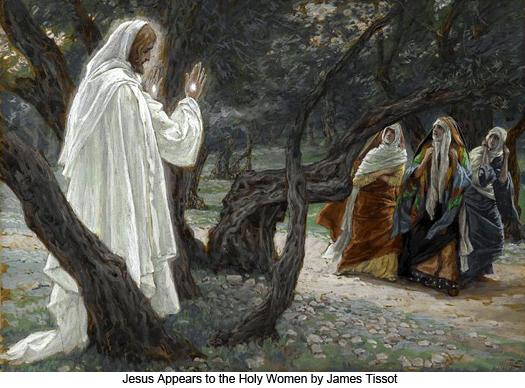



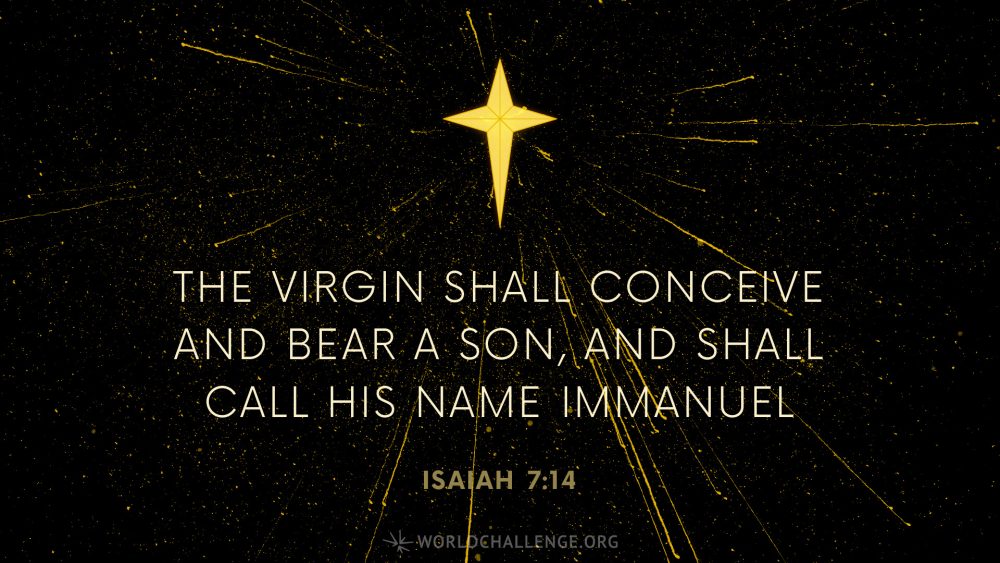


.jpg "Contradictions In The Bible")