اللاهوت فى فكر البابا اثناسيوس الرسولى

اللاهوت فى فكر البابا اثناسيوس الرسولى
اللاهوت فى فكر البابا اثناسيوس الرسولى

اللاهوت في فكر البابا أثناسيوس الرسولي
يُعتبر البابا أثناسيوس الرَّسولي المركز الذي كانت تدور حوله الكنيسة واللاهوت في العصر النيقاوي ، لذلك لُقِب بأبو الأرثوذُكسية ، ودُعِيَ بالمِنبر الأعظم وحجر الزاوية في الكنيسة المُقدسة، وأسقف الأساقِفة رأس العالم رأس كنيسة الأسكندرية .

فهو الذي جعل للتعليم اللاهوتي الأرثوذُكسي قانون مُتكامِل ، جاهد واضطُهِد ونُفِيَ لكي يُرسيه ، وكان اللاهوت يتدفق من قلب أثناسيوس فجاء قوياً أمام الفلسفات والأفكار الذاتية ، ولا يندرِج المنهج اللاهوتي عنده تحت مفهوم المعارِف والعلوم والثقافات ، بعد أن أصبح الكتاب المُقدس عنده خبرة حيَّة مُعاصِرة للكنيسة في زمانه ، لذا تغيَّر مفهوم الخلاص في تقليد الأسكندرية ذاتها ، بعد أن شابته المعرِفة والثقافة اليونانية على يد إكليمنضُس وأوريجانوس السكندريين .

تميَّز اُسلُوب أثناسيوس الرَّسولي بكونهِ تعليمياً أكثر منه جَدَلِياً هجومياً ، لأنه راعِ يعلم رعيته ، وإن كان من البيِّن أنَّ البابا أثناسيوس كان يستخدِم الاُسلُوب الهجومي الجَدَلي ضد الأريوسيين بهدف تعليم الشعب، لذلك نقرأ كِتابات لاهوتي عظيم يتكلَّم بأبسط اُسلُوب يتناسب مع شعبه .

اعتقد أنَّ الأسفار المُقدسة كفيلة بحد ذاتها أن تُعلِن الحق (1) ، وأنها كافية جداً لنا ، وحوَّل كل فِكْر وثقافة لخدمِة أبحاثه اللاهوتية ، بعد أن تسلَّم حياة وتراث الآباء والعُلماء السابقين له ورأى استشهاد البابا بطرُس خاتِم الشُّهداء ، فأي تعليم لاهوتي هذا الذي تسلَّمه لينمو في وُجدانه الروحي والإيماني واللاهوتي ، على مستوى العِشرة بالخبر والإيمان والعيان والتلمذة والحق والاعتراف وشهادِة الدم .

وكما ارتبطت الكلِمة ( كيريجما ) باللاهوت الأثناسياني ، كذلك ارتبطت الشهادة ( مارتيريا ) أيضاً به ، لكي يشهد ويُدافِع أثناسيوس عن ما رأى وما سمع ، وارتبطت الثيولوچيا عنده بالتلمذة بعد أن تتلمذ للبابا ألكسندروس وعاين اعتراف وشهادِة البابا بطرس خاتِم الشُّهداء ، ليشهد بضمير صالِح مُتوهِج ويعترِف في نيقية ضد الأرواح المُضِلَّة والهرطقة الآريوسية .

تشكَّل لاهوت أثناسيوس الرَّسولي على أساس التلمذة النُّسكية على يدي العظيم الأنبا أنطونيوس أبو الرهبان في العالم كله فكان لاهوت أثناسيوس مبنياً على الإنجيل والآباء والنُسك وشهادِة الدم والتلمذة ، إنها رسالِة حب لا رسالِة تعليم ، وهكذا كان تأثير الرهبنة والنُّسك على شخصيِة البابا أثناسيوس تأثيراً عميقاً….

فاتسمت حياته بالفضيلة والجهاد ، وارتبط اللاهوت عنده بالذُّكصولوجيا أي التَّسبيح ، حتى صار الاتجاه النُّسكي البتولي وحياة التَّسبيح والعِفة خطاً رئيسياً في كِتاباته ، لا كلاهوتي يشرح عقيدة بل كمؤمِن يشهد لِمُخلِصه ، ومن أشهر كِتاباته اللاهوتية ” ضد الوثنيين “ و” تجسُّد الكلِمة “ .

كان أثناسيوس في نيقية ( 325م ) أعظم المُرافقين للأساقِفة ، وهو الذي انتصر بصورة أساسية في ثِقته بالمسيح الذي كان يُدافِع عنه ، فكان يملُك الحقيقة لا في عقله ولا في لِسانه فحسب بل في قلبه ، في شخص يسوع المسيح الذي كان يتكلَّم فيه بروحه القدوس عند افتتاح فمه .

وضع مُصطلحات لاهوتية لقطع خط الرجعة على الهراطِقة ، وهو صاحِب اصطلاح Homoousion ( أي واحِد مع الآب في الجوهر ) ، فنادى به على مستوى الإيمان والأمانة ولا يمكن أن نفصِل اسم أثناسيوس الخالِد أبداً عن عقيدِة الثَّالوث ( التريادولوچا ) التي كرَّس حياته لأجلها .

إنَّ أخر مفهوم أوريجاني في الثيولوچيا كان التريادولوچا ( الثَّالوث ) ، وبالنسبة للقديس أثناسيوس كانت التريادولوچا هي الكلِمة الأولى ، إذ كان تعليم الثَّالوث هو أساس وركيزة اللاهوت الذي دافع عنه البابا أثناسيوس وعمَّقه ، انطلاقاً من مقولته الشهيرة :

الله نفسه قد دخل بشريتنا

وهذه الركيزة اللاهوتية جاءت نتيجة الظروف التاريخية لقيام الجدل اللاهوتي الذي أثاره الأريوسيون وأصحاب بِدعِة ” مقاومة الروح القدس “ أبوليناريوس ومقدونيوس .
وكانت المقولة الحاسِمة في تعليم القديس أثناسيوس اللاهوتي ، والتي صارت من أقواله المأثورة في العقيدة المسيحية على مر الدُّهور ، هي تلك التي وردت في مبحثه الأوَّل ضد الأريوسيين حيث أعلن قائِلاً :

” يكمُل اللاهوت في الثَّالوث “
وهذه هي فقط ” التقوى الحقيقية “ بلهذا هو ” الصَّلاح والحق “ (2) .

وكان يُعرِّف التقوى من خلال موقِف اليهودية العبرانية ، أمَّا اشارته إلى الصَّلاح والحق فتتضمن موقِف الفلسفة الهيلِّينية أو اللاهوت الفلسفي Philosophical Theology .
اعتبر القديس أثناسيوس أنَّ الثيولوچيا التريادولوچية هي نقطة البدء ، لذلك رأى أنها ” قاعدة وأساس إيمان الكنيسة “ (3) .
إنه ” الإيمان الذي أعطاه الرب نفسه والذي كرز به الرُّسُل لذلك حفظهُ الآباء الإيمان الذي عليه قد بُنِيَت الكنيسة “ .

وفي رسالته إلى الأسقف سِرابيون يُعلِن :
” الرب يسوع المسيح نفسه علَّم تلاميذه كمال الثَّالوث القدوس ، القائِم بلا انقسام في اللاهوت الواحِد “ (4) .
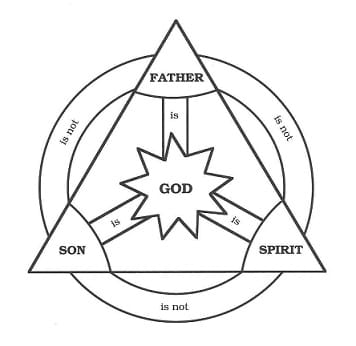
وفي لاهوته الثَّالوثي يُؤكِد على وِحدانيِة الثَّالوث ( ثالوث في واحِد وواحِد في ثالوث ) .

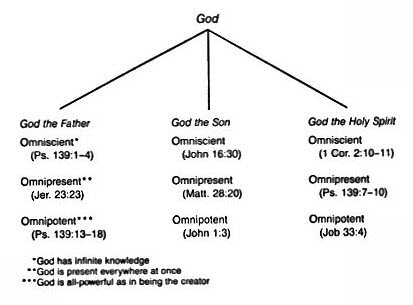
ويُؤكِد على ثالوث أقانيم الآب والابن والروح القدس ووحدِة الكيان والعمل ( أنرچيا )
للأقانيم الثَّلاثة ، وكانت انطلاقته الأولى في استعلان الثَّالوث في الإيكونوميا الخلاصية ، والتي تعني مفهوم لاهوت التدبير الخلاصي الذي أتمُّه الثَّالوث القدوس وأيضاً تُشير إلى استعلان الله في المسيح .

وفي الإيكونوميا يشترِك الثَّالوث في تناغُم وانسجام ووحدة Unison :

فالآب يُخلِّص
والابن يُخلِّص
والروح القدس يُخلِّص
بمعنى أنَّ الثَّالوث القدوس قد استُعلِن في عملٍ واحِد ، ووحدِة العمل هذه تُشير إلى وحدِة كيان الله .

فالله لا تحِدُّه مفاهيم ولا تحصُره ادراكات العقول البشرية ، لكنه يُعرف بأعماله واعلانه ، فنحن نعرِف أنَّ الله كائِن لأننا نعرِف أنَّ الله يعمل ، أباً وابناً وروح قدس ، لكننا نعرِف أيضاً أنَّ الآب والابن والروح القدس ليسوا ثلاثة آلهة بل إله واحِد ، لأنَّ عمل الآب لا يختلِف عن عمل الابن ولا عن عمل الروح القدس ، أخيراً لا الآب ولا الابن ولا الروح القدس يختلِفون في الكيان أو الجوهر ، فليس الآب أعظم من الابن أو الروح القدس ، ولا الابن أدنى من الآب ( فليس كل اُقنوم أدنى من الآخر أو أنَّ الأقانيم هي مجرد حالات أو ظواهِر مختلِفة ) ( حسب قول المُبتدِع سابيليوس ) .

قاوم البابا أثناسيوس الأفلاطونية بنظريتها في الثَّالوث المُتدرِج ( غير المُتساوي ) (5)، فكل من يفصِل الابن عن الآب ، أو من يُدنِّي الروح القدس لا يكون له الآب ولا الابن ، وهو بلا إله ، ويكون أشر من غير المُؤمِن ، ولا يُحسب أنه مسيحي ، لأنَّ الإيمان بالثَّالوث المُسلَّم إلينا يُوحِّدنا بالله (6) .

ومن ثمَّ فلتأكيد وحدِة الأقانيم الثَّلاثة ولتأكيد ثالوثيِة الجوهر الواحِد لا يليق أن يُعرف أو يُحدَّد اُقنوم باُقنوم آخر ، لكن الإنسان قد يتساءل حينما يقرأ مقولِة القديس أثناسيوس والتي قد يُفهم منها أنَّ الابن أدنى من الآب كقوله ” الآب هو الأصل أو المبدأ الأوَّل للابن بينما
الآب لا مبدأ له “ أو حينما يقول ” الروح القدس ينبثِق من الآب ويستقِر في الابن أو أنه روح الابن أو أرسله الابن “ .

ويُؤكِد البابا أثناسيوس أنَّ هذه المقولات غير انعكاسية أي لا يمكن الرجوع فيها ، لأنَّ الاجابة على زعم البعض بأنَّ أقوال القديس تتضمن ولو شُبهِة التدني أو التدرُّج أو المرؤوسيةSubordinationism، هي بالقطع النفي التام للأسباب التالية :

الآب هو مبدأ الابن ( Ẩρχή ) بسبب الاستعلان ، لأنَّ الآب لا بِداية له ، فهو بحسب تعبير القديس أثناسيوس ” آنارخوس آرخي “ (Ẩναρχοσάρχή ) ” أي البدء الذي لا بدء له “ .
الابن غير مخلوق أي ” أجنيتوجنيس “ ( Ẩγενητογενήσ ) وهي صِفة يعود استخدامها إلى البابا ألكسندر بطريرك الأسكندرية ألـ 19 ، الذي خَلَفَهُ البابا أثناسيوس الرَّسولي على الكرسي المرقُسي الأسكندري .

ونرى نفس الفِكر مُتعمِقاً في الإبنڤماتولوچيا ( لاهوت الروح القدس ) ، فالروح القدس ليس أقل Inferiorمن الابن لأنه مُرسل من الابن ، أيضاً ليس الابن أقل من الآب لأنه أرسله وفي الحقيقة الروح القدس يُعطى للابن من الآب ، وهو ينبثِق من الآب ليستقر في الابن ، ولكنه ليس أقل من الآب أو الابن ، لأنه يُعلِن الابن ويُعلِن الآب حقاً ، فالروح القدس يُكمِل لاهوت الثَّالوث He Completes the Theology of the Trinity .

وفي رسالِة القديس الأولى إلى سِرابيون الأسقف يقول :
” إذاً يوجد ثالوث قدوس وكامِل ، نعترِف بأنه الله الذي هو الآب والابن والروح القدس ، لا شئ فيه غريب أو خارِج عن طبيعته ، لا يتألَّف من واحِد يخلِق وواحِد مخلوق بل كله خالِق ، جوهره بسيط وغير مُنقسِم وعمله واحِد “ ( Consistent and in nature indivisible and its activity is ONE ) .

فالآب يصنع كل شئ بالابن اللوغوس في الروح القدس ، هكذا تظِل وحدِة الثَّالوث القدوس محفوظة ، والكنيسة تكرِز بإله واحِد : الذي هو فوق الجميع وبالجميع وفي الجميع : هو فوق الجميع أباً فهو البداية وهو الأصل ، وبالجميع باللوغوس الكلِمة ، وفي الجميع في الآب لا مبدأ له “ أو حينما يقول ” الروح القدس ينبثِق من الآب ويستقِر في الابن أو أنه روح الابن أو أرسله الابن “ .

ويُؤكِد البابا أثناسيوس أنَّ هذه المقولات غير انعكاسية أي لا يمكن الرجوع فيها ، لأنَّ الاجابة على زعم البعض بأنَّ أقوال القديس تتضمن ولو شُبهِة التدني أو التدرُّج أو المرؤوسيةSubordinationism، هي بالقطع النفي التام للأسباب التالية :

الآب هو مبدأ الابن ( Ẩρχή ) بسبب الاستعلان ، لأنَّ الآب لا بِداية له ، فهو بحسب تعبير القديس أثناسيوس ” آنارخوس آرخي “ (Ẩναρχοσάρχή ) ” أي البدء الذي لا بدء له “ .
الابن غير مخلوق أي ” أجنيتوجنيس “ ( Ẩγενητογενήσ ) وهي صِفة يعود استخدامها إلى البابا ألكسندر بطريرك الأسكندرية ألـ 19 ، الذي خَلَفَهُ البابا أثناسيوس الرَّسولي على الكرسي المرقُسي الأسكندري .

ونرى نفس الفِكر مُتعمِقاً في الإبنڤماتولوچيا ( لاهوت الروح القدس ) ، فالروح القدس ليس أقل Inferiorمن الابن لأنه مُرسل من الابن ، أيضاً ليس الابن أقل من الآب لأنه أرسله وفي الحقيقة الروح القدس يُعطى للابن من الآب ، وهو ينبثِق من الآب ليستقر في الابن ، ولكنه ليس أقل من الآب أو الابن ، لأنه يُعلِن الابن ويُعلِن الآب حقاً ، فالروح القدس يُكمِل لاهوت الثَّالوث He Completes the Theology of the Trinity .

وفي رسالِة القديس الأولى إلى سِرابيون الأسقف يقول :
” إذاً يوجد ثالوث قدوس وكامِل ، نعترِف بأنه الله الذي هو الآب والابن والروح القدس ، لا شئ فيه غريب أو خارِج عن طبيعته ، لا يتألَّف من واحِد يخلِق وواحِد مخلوق بل كله خالِق ، جوهره بسيط وغير مُنقسِم وعمله واحِد “ ( Consistent and in nature indivisible and its activity is ONE ) .

فالآب يصنع كل شئ بالابن اللوغوس في الروح القدس ، هكذا تظِل وحدِة الثَّالوث القدوس محفوظة ، والكنيسة تكرِز بإله واحِد : الذي هو فوق الجميع وبالجميع وفي الجميع : هو فوق الجميع أباً فهو البداية وهو الأصل ، وبالجميع باللوغوس الكلِمة ، وفي الجميع في بين سِر اللاهوت Theology والتدبير Economy …..

فالله كائِن بذاته موجود وغير مُتغيِر وغير خاضِع للزمن وغير قابِل للموت أو الفساد ، أمَّا العالم فمخلوق مُستمَدْ من إرادِة الله مُتغيِر ومُعرَّض للفساد ، وكلِمة الله هي عِلِّة الخلق ، وهناك صِفات ذاتية كيانية في الله وهي الصِفات الجوهرية : الآب والابن والروح القدس ، إنه سِر العِبادة الأعظم ( ثلاثة في واحِد ) وهنا يُؤكِد البابا أثناسيوس على علاقِة الثيولوچيا بالتريادولوچيا .

ولاهوت الابن هو لاهوت الآب ، لذلك فهو غير مُنقسِم ، لأنه يوجد إله واحِد ، والأُبوة والبُّنوة في الله ليست مُرتبطة بالمادة ولا بالتصورات الزمنية ولكنها حقيقة دينامية إينارچية ، لها قُدرة وتواجُد معاً ، الابن غير مُفترِق عن الآب ، ولم يكن زمان قط كان فيه الابن غير موجود ، ولكنه دائِماً أبداً صورِة الآب وشُعاعه وله أزليِة الآب .

ويرى البابا أثناسيوس أنَّ من يُؤمِن بالآب يعرِف الابن في الآب ، وهو لا يعرِف الروح القدس بدون الابن ، وذلك يُؤمِن أيضاً بالابن والروح القدس لأنَّ لاهوت الثَّالوث واحِد وقد اُعلِنَ من واحِد ، أي من الآب …. فالإيمان بالثَّالوث يُوحدنا بالله ، لأنَّ المعمودية تتم باسم الثَّالوث ، ويوجد إيمان واحِد في الثَّالوث ، هكذا أيضاً الثَّالوث القدوس مُتساوي مع ذاته ، ومُتحِد بنفسه في وِحدة غير مُتجزِئة ، والإيمان به إيمان واحِد .

وهذه الأقوال الدقيقة الشارِحة للاَّهوت الثَّالوثي تتكرر بمضمونها وإن لم يكن حرفياً في كل أقوال الآباء الذينَ أقامهم الله آباء ورُعاة ومُعلِّمين في الكنيسة المُقدسة بعد نياحِة القديس العظيم الأنبا أثناسيوس الرَّسولي حامي الإيمان .

واللاهوت الثَّالوثي يختلِف تماماً بل ويُضاد ذلك الفِكر اللاهوتي الوحداني الصِرف Monistic Theology ( الفِكْر الأُحادي ) ، مثل بِدعِة السبليانية التي تعتبِر الآب والابن والروح القدس ثلاثة مظاهِر أو أشكال لإله واحِد Modelism أو مِثْل ما يُسمَّى باللاهوت التَّعدُدي الجموعي Pluralistic Theology مثل الفلسفة الهيلينية التي تخلِط بين الله وعناصِر العالم ، فينشأ عن هذا الخلط ” تأليه الكون “ ، وهو مذهب وحدِة الوجود ( أي أنَّ الله والطبيعة شئ واحِد ) .

لكن لاهوتنا الثَّالوثي الذي نُؤمِن به يُقرِّر أنَّ كل اُقنوم من أقانيم الثَّالوث إله كامِل ، والأقانيم الثَّلاثة إله واحِد وليسوا ثلاثة آلِهة ( بل لاهوت واحِد أزلي في الثَّالوث ومجد واحِد للثَّالوث ) (11) .
والأقانيم الثَّلاثة مُتميِزة Distinct ومع هذا فإنَّ تمايُزها ليس عائِقاً لوحدانيِة جوهرها .

ويليق بنا أن نعرِض هنا النص التالي بغرض توضيح مفهوم تمايُز الأقانيم الثَّلاثة في الثَّالوث القدوس ، في منظور القديس أثناسيوس اللاهوتي ، وهو نص وَرَدْ في ردُّه الأوَّل على الأريوسيين ، يدحض التثليث الأريوسي المرفوض الذي قام على اعتبارات عقلانية وقياسات منطِقية ( Syllogisms ) :

” إن قُلنا أنَّ اللوغوس كان منذ الأزل مع الآب ، لكنه ليس ابنه ، فإنَّ شُكوك الأريوسيين المزعومة قد تبدو مقبولة بحسب ظاهِرها ، لكن بينما نحن نقول أنه أزلي ، نعترِف أيضاً إنه ابن من الآب فكيف يكون المولود أخاً لمن ولده ؟ ..

ما هذا إلاَّ زعم يهودي المنشأ … لأنَّ الآب والابن لم يُولدا من أصل سابِق الوجود حتى نعتبرهُما أخين ، لكن الآب وَلَدَ الابن ، والآب هو الآب ، والابن هو الابن ليس أخاً بل دُعِيَ ابن الآب الأزلي ، وحقاً قد دُعِيَ كذلك لأنَّ جوهر الآب لم يكن أبداً ناقِصاً ، ليس كما في حالِة ميلاد إنسان من إنسان قد وُلِدَ الابن الوحيد من الآب ، حتى يبدو لاحقاً للآب في الوجود بل هو مولود الآب بالطبيعة منذ الأزل “ (12) .

وهكذا أكَّد القديس أثناسيوس على الثَّالوث الأزلي ( Eternal Trinity ) في مواجهة ذلك الفِكْر الأريوسي الذي يخضع لمقاييس وأبعاد الزمن ، فيصير لاهوتاً ناقِصاً تحكمه معايير التدني والتَّبعية والمرؤوسية (Subordinationist ) (13) .

فأريوس يُعلِّم ويزعُم أنَّ الله في البدء كان واحِداً وحيداً ( موناد Monad ) ، لكنه فيما بعد خلق الابن !! وفيما بعد أيضاً أوجد الروح القدس !! وهكذا تحدَّدت معالِم فِكْر أريوس الهرطوقي والمُبتدِع عن تلك الوحدانية الأنطولوچية الإغريقية .

لكن الله هو الواحِد الغير مخلوق البِدء الأزلي وأصل كل الأشياء الذي لا يتغيَّر ، الأبدي ، ولا صيرورة فيهBecoming .

يزعم أريوس أنه : حينما نقول أنَّ الابن مولود والروح القدس مُنبثِق ، فكإننا نقول أنَّ كيان الله ” يصيرBecomes “ ، والصيرورة دائِماً ما تكون في الزمان وتقبل التغيير ، وعلى هذه المُقدمات المنطِقية العقلانية رفض الأريوسيون تعليم الكنيسة المُستقيم عن الابن الأزلي ، وعن انبثاق الروح القدس الأزلي ، وقد أعاقهم مفهومهم الأفلاطوني الجامِد ( الإستاتيكي ) عن الكيان الإلهي عن رؤيِة أيَّة ” حركِة حياة “ داخل الله ، بمعنى أي سِر شخصس ( Personal mystery ) .

وقد اعتاد القديس أثناسيوس أن يُشكِّل إيمان الكنيسة افتراضاته الفلسفية ويصيغ تعليمه ، فدحض هرطقِة المُبتدِع أريوس ، والتي تتعلَّق بأزليِة الابن ، والتي حصرها أريوس الهرطوقي في بُنوة لها معنى الصيرورة والمخلوقية (14) .
ويُحاجج القديس أثناسيوس ليُميِز بين :

الميلاد
Generation
والخلق
Creation

مُستنِداً إلى التعليم الإنجيلي للكتاب المُقدس ، فحال كون الابن مولوداً لا تُساوي على الاطلاق كونهِ مخلوقاً ، فالمولود ميلاداً إلهياً مولود بالطبيعة ، بينما المخلوق خُلِق من عدم ، وميلاد الابن يخُص الطبيعة الإلهية ، ولهذا يختلِف عن أي ميلاد بشري ، فالطبيعة الإلهية أزلية ومن ثمَّ وَجَبْ أن يكون الميلاد الإلهي أزلياً ، أمَّا الميلاد البشري فلا يمكن أن يحدُث إلاَّ في الزمن ، لأنَّ الطبيعة البشرية قد خُلِقت وتوجد في الزمن ، أيضاً الطبيعة البشرية يحكُمها المكان لأنها توجد في المكان ولها مظهر جِسداني محدود..

لكن الكيان الإلهي غير جسداني وبسيط لا يحِدُّه زمان ولا مكان ، وهو غير مُدرك ومن ثمَّ فكيفية الميلاد الأزلي غير مُدركة ، وِدفاع الكنيسة عن الميلاد الأزلي للابن ليس دِفاعاً مبنياً على أُسُس عقلانية كما لو كانت الكنيسة تقدِر أن تُدرِك كيفية هذا الميلاد الإلهي أو تُثبِته ، لكنه دِفاع قد قام في الكنيسة لأنها قد تسلمته من الرب نفسه من خلال رُسُله القديسين ، وقد استُعلِن في الاختبار التاريخي لاستيعاب الكنيسة لحق الاستعلان الإلهي (15) .

وفي ( ضد الريوسيين 2 : 58 ) ، يقول القديس أثناسيوس :
” يُحدِّد الكتاب المُقدس الفارِق بين ميلاد الابن وخلقِة الأشياء ويكشِف أنَّ وحيد ” الآب ” هو ابن لم يبدأ من أي بِدء لكنه أزلي ، لكن الشئ المخلوق ، إذ هو عمل خارجي من أعمال الخارِج ، يبدأ في أن يكون له وجود من لا وجود ، ولهذا فإنَّ القديس يوحنا حينما سلَّمنا التعليم الإلهي اللاهوتي عن الابن – وهو مُدرِك للفارِق في العبارات والمُسميات –

لم يقُل ” في البدء صار ” أو ” خلق ” ، لكنه قال ” في البدء كان اللوغوس “، حتى نفهم ” الميلاد ” بواسطة لفظِة ” كان ” لا بمفهوم وجود مسافة زمنية تفصِل الابن عن الآب لكن حتى نُؤمِن أنَّ الابن كائِن أزلياً وعلى الدوام “ .

وفي ( ضد الأريوسية 2 : 57 ) ، يتحدَّث القديس بطريقة مُماثِلة :
” للأعمال بِداية عند خلقها أو عملها ، وبِدايتها تسبِق صيرورتها ، لكن اللوغوس ليس من الأشياء التي خُلِقت أو صارت بل هو ذاته خالِق كل الأشياء التي لها بِداية ، أيضاً تُقاس كينونِة المخلوقات بمعيار صيرورتها ، لأنَّ الله قد بدأ في خلقها باللوغوس من بدايِة ما حتى نعرِف أنها لم تكن موجودة قبل خلقِها ، لكن اللوغوس لا يستمِد كيانه من بِدء آخر غير الآب ، الذي هو بلا بِداية ومن ثمَّ كينونِة الابن بلا بِداية في الآب ، لأنه وحيده وليس مخلوقه “ .

وبالنسبة للبابا أثناسيوس كان نُكران أريوس الهرطوقي للاهوت الابن يتضمن أيضاً بالتبعية نُكران لاهوت الثَّالوث ، الذي لا يقِل أبداً عن الالحاد ونُكران الله !! لأنَّ لاهوت الثَّالوث هو الحق (16) The Theology of the Trinity is the truth .

وفي رِسالته الأولى إلى سِرابيون الأسقف يقول : ” أنَّ الأريوسيين بنُكرانهم للابن يُنكِرون يُنكِرون الآب وأيضاً هؤلاء المُبتدِعون مُقاوِمو الروح القدس بحديثهم الشِّرِّير عن الروح القدس يتحدَّثون بالشَّر عن الابن ، وقد وزَّع الفريقان فيما بينهما الضَّلالة ضد الحق ، ففريق منهم يُقاوِم الابن والآخر يُقاوِم الروح القدس وصار كلاهما يُجدِّف نفس التجديف ضد الثَّالوث “ .

ثم يستخدِم القديس أثناسيوس لغة قوية فيما بعد : ” ظهر الثَّالوث كامِل وغير منظور ، القدوس الأزلي الواحِد ذو الطبيعة التي لا تتغيَّر ، والإيمان بالثَّالوث الذي سُلِّمَ إلينا يُشرِكنا بالله ، وذاك الذي ينفصِل عن الثَّالوث مُعتمِداً باسم الآب والابن دون الروح القدس لا ينال شيئاً، بل يبقى كما هو خامِلاً بلا مفاعيل هو والذي يُحاكيه …

ومن يفصِل الابن عن الآب أو الذي ينزِل بمستوى الروح القدس إلى الخليقة ، ليس له الابن ولا الآب بل هو مُلحِداً وأسوأ من غير المُؤمِن بل هو شئ آخر غير صِفة ” مسيحي ”، هو بالحق كذلك لأنه كما أنَّ المعمودية المُعطاه في الآب والابن والروح القدس هي معمودية واحِدة ، وكما أنَّ الإيمان في الثَّالوث كما قال بولس الرسول هو إيمان واحِد ، هكذا أيضاً الثَّالوث القدوس حال كونه مُماثِلاً لذاته مُتحِداً بذاته ليس فيه شئ من الذي يخُص المخلوقات ، وهذه هي وحدِة الثَّالوث التي لا تنفصِم ، وهذا هو الإيمان الواحِد “ (17) .

ومن أساسيات تعليم القديس أثناسيوس عن الثَّالوث القدوس ، هو الاعتراف النيقاوي بوحدانِيِة الجوهرỎμοουσιοστώConsubstantiality ، والتي تأكدت أوَّلاً من جهة الابن مع الآب ( خاصة في ضد الأريوسية وكتاب المجامِع De Synodis وكتاب الإيمان (( العقيدة )) De Decretis والأعمال الأخرى ضد الأريوسيين ) ثم من جهة الروح القدس مع الابن ومن ثمَّ مع الآب .

وكان جهاد القديس أثناسيوس الأساسي ضد الأريوسيين ومُقاوِمي الروح القدس Pnevmatomachiansفي دِفاعه عن وحدانِيِة الجوهر homoousion . فاللاهوت الذي يخلِط غير المخلوق بالمخلوق ليس لاهوتاً .. لذلك يرتكِز الدِفاع عن وحدانِيِة الجوهر ( هوموآوسيون ) على الاستعلان الكِتابي ، وخصوصاً على إيكونوميِة المسيح ( تدبيره الخلاصي ).

والمبدأ الذي يحكم استعلان الله في العهد القديم والتدبير المسيحي هو الفِعْل الثُّلاثي الغير مُنقَسِم للثَّالوث القدوس ، ويستعلن التدبير ( الإيكونوميا ) عمل الله الذي بدأ بالآب وتأسَّس بالابن وكَمُل في الروح القدس ، وهذا العمل الواحِد يتطلب ” الجوهر الواحِد “ Ousia ( اُوسيا ) ووحدانِيِة الجوهر .

والتأكيد على وحدِة العمل والجوهر هو تأكيد في غايِة الأهمية إذ يكشِف عن أنَّ اللاهوت لا ينفصِل عن الإيكونوميا ( التدبير الخلاصي ) ، وليس لاهوت الثَّالوث مُطلقاً جامِداً بلا دِيناميكية ، لكنه لاهوت اختباري في عمل الثَّالوث الخلاصي التدبيري نحونا ، وتدبير تجسُّد الله اللوغوس هو الركيزة الحقيقية لهذا اللاهوت التريادولوچي ( الثَّالوثي )، ومن خلال اتحادنا وشَرِكتنا مع المسيح ، نختبِر الثَّالوث ونعرِفه ..

لذلك يُؤكِد القديس أثناسيوس على أنَّ الكنيسة هي المجال الذي فيه يُختبر لاهوت الثَّالوث ويُعرف ، فالكريستولوچيا ( طبيعِة المسيح ) والسوتيريولوچيا ( لاهوت الخلاص ) والتريادولوچيا ( لاهوت الثَّالوث ) لا تُفهم فهماً صحيحاً إلاَّ من خلال الإكلسيولوچيا ( حياة الكنيسة ) .

لذلك نرى القديس أثناسيوس وقد رضع اللاهوت وأحس بكيان الله الواحِد من خلال العِبادة الليتورچية ، وأيضاً من خلال التلمذة Discipline للبابا ألكسندروس وللبابا بطرس خاتِم الشُّهداء الذي اعترف بأنَّ الذي بطبيعته إله صار بطبيعة البشر ، والسيف مُسلطاً على رقبته .

لم يرَ البابا أثناسيوس أنَّ اللاهوت فلسفة عقلانية ومنطِق يخضع للنِقاش والجِدال والتحليل ، لكنه رأى أنَّ اللاهوت تقوى وعِشق الثَّالوث ، لذلك جاهد ضد الأريوسية مُجاهدة النور مع الظُلمة والحياة مع الموت ، حتى سقطت الأريوسية بلاهوتها العقلاني المُلفق ومنهجها الفلسفي ، بعد أن عاش أثناسيوس حياة استشهاد مُتواصِل ، عاش في الحق الذي لا يموت ظلَّ يزرع أشجاراً طوال حياته حتى تستطيع الأجيال القادِمة أن تستظِل تحتها (18) .

اقتنى أثناسيوس حياة الفضيلة ، لأنه كان يربُط بين معرِفة الله ” الثيولوچيا “ وبين الفضيلة ، لذلك قيل أنَّ من يمدح أثناسيوس يمدح الفضيلة ، إنه ذلك الرجل الإلهي الذي عَشَق الإلهيات وعاشها وكلَّمنا ودافع عنها ، مُعتبِراً أنَّ الإلهيات بعيدة عن الأشرار ، لذلك صار هو بحق معيار الأرثوذُكسية الحي ، الذي وجد فيه الروح القدس من سيتنفس لحسابه !! (19) .

إنَّ المنهج اللاهوتي للبابا أثناسيوس الرَّسولي يرتكِز على علاقته الشخصية بالمسيح ، لذلك لُقِب ” فيلوخريستو “ ، فلا يستطيع أن يتكلَّم عن الثيولوچيا إلاَّ من أحب المسيح واشتعل بنار العِشق الإلهي ، وفي ربط لاهوتي حياتي يربُط البابا أثناسيوس بين الثيولوچيا والكريستولوچيا ، مُثبِّتاً نظره على المسيح المُخلِّص الذي لم يُعلِّم الفضيلة فقط بل مارسها كمِثال حي وعملي ..

تعلَّق البابا أثناسيوس بوسائِط النِعمة (20) التي شكِّلِت فكره اللاهوتي ، فاعتبر الإفخارستيا مأكل فائِق سمائي وطعام روحاني به نتحِد بالإلهيات ، ونتناول من جسد الكلِمة نفسه فيكون لنا في أنفسنا الرب الواحِد ، وهنا نلمس رَبْط القديس أثناسيوس بينالثيولوچيا والإكلسيولوچي ، فنحن نتذوق ونعرِف اللاهوت ونتلامس معه في الكنيسة مُستودع النِعمة ، لذلك أخذ القديس على عاتِقه أن لا يُقدِّم المسيح إلاَّ مُتحِداً بكنيسته من الداخِل ، وفي كلمة واحدة كان المسيح هو نفسه الكنيسة .

كان الإنجيل والتأمُّل في كلِمة الله من أهم الأساسات التي تأسَّس عليها لاهوت القديس أثناسيوس ، فكان الإنجيل شهوِته المُفضلة ، مُعتبِراً أنَّ الكُتُب المُقدسة كافية للثيولوچيا والإعلان الإلهي ، وبذلك أمكنه أن يُنقِذ التعليم اللاهوتي من الانحراف وراء الهرطقات أو النظريات الفلسفية واليونانية ، فصارت الأرثوذُكسية الجامِعة مُتجسِدة في شخصه (21) .

رَبَطْ القديس بين الثيولوچيا والذُّكصولوجيا ، لأنَّ النَّفْس التي لها فِكْر المسيح تتوافق مع هذا الفِكْر كتوافُق القِيثارة مع من يُحرِّك أوتارها ، وهكذا النَّفْس حينما لا تصنع الباطِل تُدعى بحق قِيثارة روحية ، التي ينبغي أن تتمثَّل بالسيرافيم والشاروبيم ولا تكُف عن التَّسبيح المُتواصِل ، لأنَّ كل معرِفة ثيولوچية حقة تمتزِج بالتَّسبيح والتَّمجيد .

تمسَّك البابا أثناسيوس في منهجه اللاهوتي بالتقليد الكنسي ، ففهم اللاهوت فهماً كنسياً بعيداً عن التلوث الفلسفي اليوناني الذي أسقط أريوس الهرطوقي وأتباعه .. ، وربط القديس بين الثيولوچيا والباترولوچيامُعتبِراً أنَّ شَطَطْ الهراطِقة كان في عدم حِفظِهِم للمسيحية التقليدية ، أمَّا إيماننا نحن فمستقيم ونابِع من تعليم الإنجيل وكرازِة الرُّسُل وتقليد الآباء ومشهود له من العهدين القديم والجديد .

رَبَطْ القديس دائِماً بين الثيولوچيا والتقوى أي بين المعرِفة اللاهوتية والحياة العملية ، مُعتبِراً أنَّ العقيدة والتقوى أُختان ، فعاش ناسِكاً تقياً ، بعد أن رأى أنَّ من يريد أن يُدرِك فِكْر الناطقين بالإلهيات (Θεολόγων ) يجِب عليه أن يُقدِّم حياته ويُعاشِر القديسين (22).

ومن بين الركائِز الأثناسيانية كانت الاهتمامات المُركزة على التريادولوچيا ( الثَّالوث ) والتي أسماها القديس” اللاهوت الكامِلPerfect Theology “ ، وأيضاً أسماها ” التقوى الوحيدة “ (23) .
والنُّصرة في حرب الإيمان ودحض الهرطقات ليست نِزاع ومنطِق كلام بل إيمان وإنجيل وتقليد وتقوى والتزام عملي وسلوكي ، لذلك اعتبر القديس أنَّ الثَّالوث هو اللاهوت الكامِل وأنه التقوى الوحيدة ، بالتأمُّل في الثيولوچيا لا كدِراسة فِكرية نظرية وبُرهانات ، ولكنكممارسة عملية تقوية للفضيلة ولِشَرِكَة الثَّالوث القدوس .

وعِلْم اللاهوت Θεολογία عند البابا أثناسيوس مُرتبِط بحياة القداسة فهو يقوم على قداسِة السيرة مع الالهام والاعلان من الله ، ونقاوِة النَّفْس تُؤهِلها لتتأمَّل في الإلهيات لأنَّ أنقياء القلب يُعاينونه ..
وأثناسيوس قَبَلْ أن يكون اللاهوتي البارِع بطل مجمع نيقية وبطريرك الأسكندرية ، هو إنسان يحيا ” الثيولوچيا “ الحياة الإلهية ، هذه هي شهوِته الأولى فربط بين الأسقيطولوچيا والثيولوچيا ، أي النُّسك باللاهوت (24) .

أكَّد القديس على أولويِة الإيمان على العقل ، فتسليم المعرِفةالثيولوچية لا يمكن أن يكون بالبراهين الكلامية بل بالإيمان وأفكار التقوى والوقار ، لذلك لم يترك لنا مُؤلِفات ذات طابِع بُنائي أو تثقيفي لأنَّ حياته كلها كانت جهاد ودِفاع ، وبالرغم من خِصبه الفكري وكثافته اللاهوتية ، إلاَّ أنَّ اُسلُوبه سهل واقعي تلقائي بسيط ، يشرح الحق فقط مُكرراً ممُؤكِداً ، ويُصحِّح أفكار السابقين له ، فكان لاهوته ثابِت الأصول والاتجاه من البِداية إلى النهاية (25) .

ولم يكن لاهوت الثَّالوث الكامِل عنده نتيجة نظرة عقلانية من جانِب الإنسان بل هو عطية الله ، ونِعمة من الله ، فمعرفِة الثَّالوث قائِمة على نِعمِة الثَّالوث ، وكثيراً ما يتحدَّث البابا أثناسيوس عن اللاهوتيين بأنهم ” اللاهوتيون القديسون “ الذينَ علَّمهم الله نفسه اللاهوت الكامِل ، وسجَّله بأقلامهم في الكِتاب المُقدس ، ويتحدَّث أيضاً عن المُعلِّمين المُلهمين من الله ، ويرى أنَّ الذينَ يقرأون الإنجيل قراءة صحيحة تعبُدية يفهمونه فهماً صادِقاً ويشهدون بلاهوت المسيح .

وعلى يد اللاهوتيين الذينَ علَّمهم الله ، وعلى يدي الآباء المُعلِّمين والمُفسرين الذينَ ألهمهم الله تعلَّمنا نحن اللاهوت ، هكذا يرى القديس أثناسيوس الرَّسولي .
ففي كِتابه ” ضد الأُمم “ (26) يذكُر القديس بولس الرَّسول كواحِد من هؤلاء اللاهوتيين مُشيراً إلى مقولته الرَّسولية في ( رو 1 : 2 ) أنَّ أمور الله الغير منظورة تُرى بالمخلوقات من خلال تأمُّل العقل منذ تأسيس العالم ، وهذا يُوضِح أنَّ البابا أثناسيوس يقبل مفهوم ”لاهوت الطبيعة Theology of Nature“ .

ويقول أنَّ الحقيقة الأولى التي يُعلِّمها هؤلاء اللاهوتيون هي أنَّ الله هو الخالِق وحافِظ كل الأشياء (27) ، ويتأكد هذا التعليم في مقدمة إنجيل القديس يوحنا اللاهوتي ” كل شيء به كان وبغيرهِ لم يكن شيء مِمَّا كان “ (28) .

فهؤلاء اللاهوتيون يُعلِّموننا إذن أنَّ لوغُوس الله الذي خلق كل الأشياء هو في نفس الوقت حافِظها … وتعليم التدبير والعِناية أو نِعمة العِناية الإلهية هو تعليم مُتلازِم تماماً مع نِعمة الخلق الأولى .

ثم – أنَّ اللاهوتيين يتحدَّثون عن ظهور الله الكلِمة اللوغُوس مُتجسِداً الذي أباد الموت والفساد ، لذلك صار اللاهوتيون هم لاهوتيو المُخلِّص ، الله اللوغُوس الذي يُؤكِد لاهوته وناسوته ، ومن ثمَّ فإنَّ وحدِة أو اتحاد الله بالإنسان تتحقق وتُكتمل فيه إلى الأبد ، ومن الواضِح أنَّ اللاهوتي في رأي البابا أثناسيوس هو الذي يُعلِن ( يكشِف عن ) لوغُوس الله ، لأنَّ هذا اللوغُوس قد استُعلِن أولاً له ، واستعلان اللوغُوس هو نِعمة من اللوغُوس .

وللقديس أثناسيوس الرَّسولي مفهومه ذو الثَّلاثة أبعاد ، فهو يختص :0
بالخلقCreation
والتدبيرProvidence
والخلق الجديدRenew creation
وبمعنى آخر ، يستوعِب تاريخ الخلاص كله منذ بِداياته عند تأسيس العالم وحتى نهايته في قيامِة المسيح وإبادِة الموت والفساد ، أي تأليه الطبيعة ، وهنا مكمن مجد وفخر اللاهوت .
واللاهوتي الحقيقي هو الذي يتيقن ويُستعلن في وجوده تلك الأسرار العظيمة الثَّلاثة لعمل الله والاستعلان في آنٍ واحِد ، أعني :

الخلق ، وتدبير الخلق ، وتجديد الخلق أي الكمال

وليس الكِتاب المُقدس غاية لاهوتية !! بل هو فقط وسيلة ، أمَّا الغاية فهي الإنسان ، الشخص Person ، الذي فيه تمَّم الله كل مقاصِده جاعِلاً إياه اللاهوتي في الأيقونة والشَبَه بحسب الله ذاته .
والقديس أثناسيوس يجِد الأيقونة في الأنبياء والرُّسُل والقديسين في الكِتاب المُقدس .

أخيراً – يُؤكِد القديس على الطهارة Purity كسابِقة وضرورة للاَّهوت ، ففي كتاب ” تجسُّد الكلِمة “ يقول : ” من أجل تفتيش الكِتاب المُقدس والمعرِفة الحقيقية له نحتاج إلى حياة مُكرَّسة ونفس طاهِرة لأنه بدون فِكْر نقي طاهِر ، وبدون حياة نمتثِل فيها بالقديسين لا يستطيع الإنسان أن يُدرِك ويستوعِب كلام اللاهوتيين ، لأنه إن أراد الإنسان أن يرى نور الشمس ، يمسح عينيهِ ويُنقيهِما مًطهِّراًَ نفسه ، حتى تقدِر العين المُبصِرة أن ترى نور الشمس ..

أو كما لو كان الإنسان يريد أن يرى مدينة أو بلدة يأتي بنفسه إليها ليراها ، هكذا أيضاً الذي يشتاق أن يُدرِك فِكْر اللاهوتيين عليه أن يبدأ يغسِل ويُطهِّر نفسه بسلوكه في حياته ، وأن يقترِب من القديسين أنفسهم بالامتثال بأعمالِهِم ، والاشتراك في سيرِة حياتِهِم ليفهم ما استُعلِن لهم من الله ، وإذ يرتبِط ارتباطاً صميمياً بهم ينجو من هلاك الخُطاة ونارهم في يوم الدينونة “ .

وجاءت هذه المقولة في أُولى أعمال البابا أثناسيوس لتكشِف عن سِر حياته وعَظَمَته ، وإذا أردنا الايجاز فإنَّ القديس يقول إن الإنسان بحاجة إلى تطهير نفسه في حياته ليكون مُستحِقاً للاَّهوت .
وإذا نظرنا إلى الأمر من جهة الله ، فاللاهوت نِعمة الثَّالوث ، ومن جهة الإنسان ، فاللاهوت تلمذة غالية ونفيسة .
واللاهوت لن يُعلن لنا بإيضاحات كلامية بل بالإيمان ، ولن يُعلن لنا بالعقل إنما بروح التقوى وحاسة الوقار …
فالإيمان بالله يسبِق المسير نحو الثيولوچيا ، لأننا في البِداية نُؤمِن وبعد ذلك نعرِف وأخيراً نتكلَّم ونشهد …

إنَّ اللاهوت لا يقوم على فهم شخصي

ولا على مشيئة شخصية

بل هو تعليم إنجيلي وإعلان كِتابي

بحسب الله ذاته .
والقديس أثناسيوس يجِد الأيقونة في الأنبياء والرُّسُل والقديسين في الكِتاب المُقدس .
أخيراً – يُؤكِد القديس على الطهارة Purity كسابِقة وضرورة للاَّهوت ، ففي كتاب ” تجسُّد الكلِمة “ يقول : ” من أجل تفتيش الكِتاب المُقدس والمعرِفة الحقيقية له نحتاج إلى حياة مُكرَّسة ونفس طاهِرة لأنه بدون فِكْر نقي طاهِر ، وبدون حياة نمتثِل فيها بالقديسين لا يستطيع الإنسان أن يُدرِك ويستوعِب كلام اللاهوتيين ، لأنه إن أراد الإنسان أن يرى نور الشمس ، يمسح عينيهِ ويُنقيهِما مًطهِّراًَ نفسه ، حتى تقدِر العين المُبصِرة أن ترى نور الشمس …

أو كما لو كان الإنسان يريد أن يرى مدينة أو بلدة يأتي بنفسه إليها ليراها ، هكذا أيضاً الذي يشتاق أن يُدرِك فِكْر اللاهوتيين عليه أن يبدأ يغسِل ويُطهِّر نفسه بسلوكه في حياته ، وأن يقترِب من القديسين أنفسهم بالامتثال بأعمالِهِم ، والاشتراك في سيرِة حياتِهِم ليفهم ما استُعلِن لهم من الله ، وإذ يرتبِط ارتباطاً صميمياً بهم ينجو من هلاك الخُطاة ونارهم في يوم الدينونة “ .

وجاءت هذه المقولة في أُولى أعمال البابا أثناسيوس لتكشِف عن سِر حياته وعَظَمَته ، وإذا أردنا الايجاز فإنَّ القديس يقول إن الإنسان بحاجة إلى تطهير نفسه في حياته ليكون مُستحِقاً للاَّهوت .
وإذا نظرنا إلى الأمر من جهة الله ، فاللاهوت نِعمة الثَّالوث ، ومن جهة الإنسان ، فاللاهوت تلمذة غالية ونفيسة .
واللاهوت لن يُعلن لنا بإيضاحات كلامية بل بالإيمان ، ولن يُعلن لنا بالعقل إنما بروح التقوى وحاسة الوقار …
فالإيمان بالله يسبِق المسير نحو الثيولوچيا ، لأننا في البِداية نُؤمِن وبعد ذلك نعرِف وأخيراً نتكلَّم ونشهد …

إنَّ اللاهوت لا يقوم على فهم شخصي

ولا على مشيئة شخصية

بل هو تعليم إنجيلي وإعلان كِتابي

وتسليم رسولي وتقليد كنسي

يوصَّلنا إلى معرِفة لاهوتية صحيحة

هي الأمانة والوديعة

هي قانون الإيمان النيقاوي

ولنُصلِّي جميعاً

بالحقيقة نُؤمِن بإله واحِد ……

+++

مراجِع الفصل

1) Cont., Gen., 1.
2) CAR 1, P.G. 26, 49 A.
3) SER 1, P.G. 26, 596 C.
4) Ibid. 605 (CD).
5) Harnak, History of Dogma of The Spirit & of Trinity. P, 199.
6) Athanas, ad, Serap, 1, 30.
7) Ch. 28.
8) Harnack, Op, Cit, p. 284.
9) Ibid. P. 250.
10) Athanas, Incar, 19.
11) CAR 1, 18.
12) CAR 1, 14.
13) Athanas., C, Ar, IV, 29.
14) F. A. Staudenmeier, cited by Florovsky, Op, Cit, P. 60.
15) Athanas. Contra Arian., 1: 9.
16) Athanas. To Serapion, 11. 5.
17) Ser 1, 30.
18) P.G. 26, 577.
19) Bouyer, L’incarnation et l´Eglise – Corps du Christ dans la Theologie de St. Ath., 1943, P. 22.
20) Quasten, Patrology, vol. III, P. 66.
21) N.P.N.F. 172 & 224.
22) P.G. 26, 656.
23) SER 1, 29.

1) N.P.N.F. 103.
2) P.G. 26, 577 & Quasten, Op. Cit. P. 66.
3) Contra Gen., P.G. 26, 698 C..
4) Ibid. 84 AB.
5) Ibid. 84 CD.

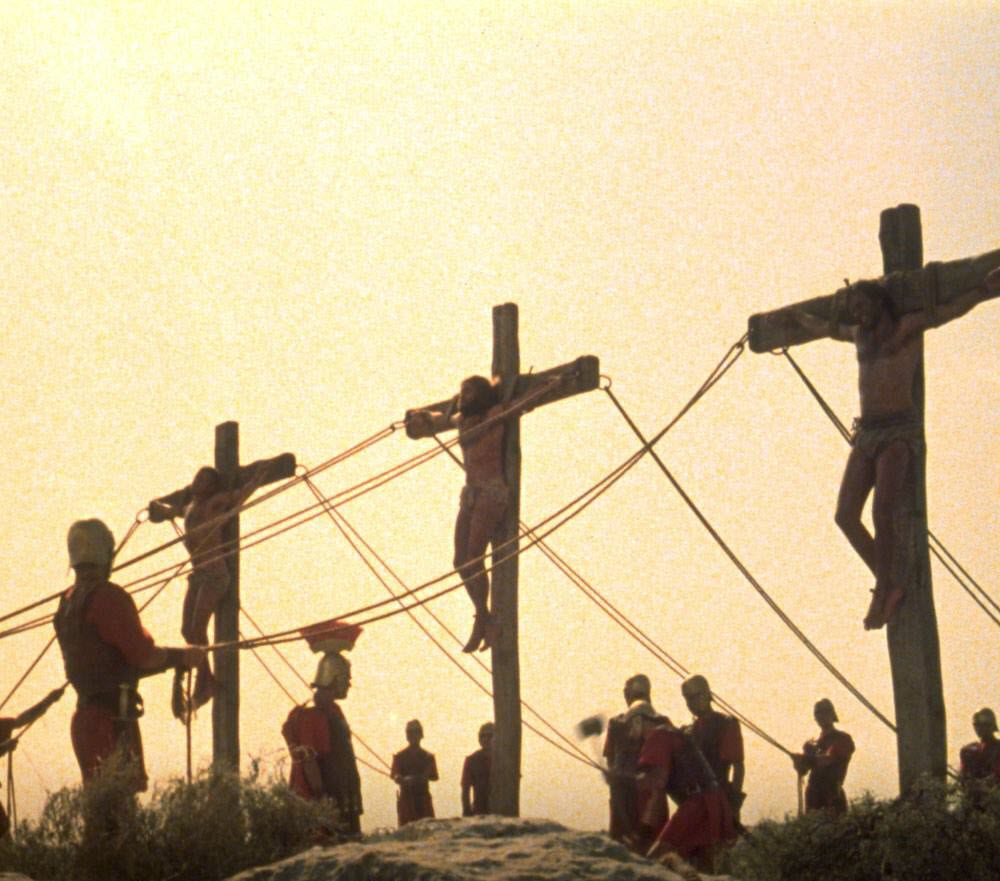
 

اللاهوت فى فكر البابا اثناسيوس الرسولى

لماذا مات المسيح على الصليب ؟ سؤالاً يبدو بسيطاً ولكن قد لا تكون تعرف أعماق الإجابة

لماذا مات المسيح على الصليب ؟ سؤالاً يبدو بسيطاً ولكن قد لا تكون تعرف أعماق الإجابة

لماذا مات المسيح على الصليب ؟ سؤالاً يبدو بسيطاً ولكن قد لا تكون تعرف أعماق الإجابة

بدون هذا الموت لصار سرّ التدبير بالجسد بلا منفعة لنا. القديس كيرلس السكندري[1]


لم يمت المسيح لأنه كان مضطراً أن يموت. لقد فعل كل شيءباختياره طِوعاً. موت المسيح وقيامته أدَّيا إلي: 1 – غفران الخطايا والمصالحة مع الله؛ 2 – التحرر من سلطان الموت؛3 – الوعد بتجديد العالم كله؛ 4 – القيامة العامة؛ 5 – النُصرة علي الشيطان وكل أسلحته؛ 6 – سحق الجحيم.

د / عدنان طرابلسي[2]


لو لم يكن قد وُضع المسيح للموت، ما كان يُمكن للموت أن يموت. لقد انهزم الشيطان بذات نصرته، لأن الشيطان فرح عندما خدع الإنسان الأول فطرحه في الموت. بخداعة الإنسان الأول قتله. وبقتله الإنسان (آدم) الأخير فقد الأول الذي في شباكه.

القديس أغسطينوس[3]


طبيعتنا البشرية منذ السقوط دخل إليها الموت وانتشر في كل طبيعتنا كسلطان وسلاح الخطية، فيقول الكتاب (النفس التي تخطئ هي تموت.. حزقيال 18: 4) ويقول القديس باسيليوس: إن الطبيعة البشرية هي حائط وقد هزته صدمة الخطية، فمال إلي السقوط، ولا يمكن إعادة بنائه إلا بهدم ونقض بنيانه، لذلك سمح الله أن يكون الموت الحسي ناقضاً للحائط المُزعزع ليُعيد بناءه بالقيامة العامة إعادة وثيقه ومؤيده[4].

ولكي يرفع الله حكم الموت هذا عن البشرية – التي حكمت به علي نفسها – فبتجسده وكابن الله جمع البشرية في ذاته، كما سبق وقلنا، فقد ترك جسده هكذا بحيث يمكنه أن يعاني الآلام البريئة والموت، لأنه كما قلنا أراد أن يحسم أمر هزيمتنا بعدل، وكأول يبدأ بقيامته بالجسد الذي وحده بعدم التألم وعدم الموت وعدم القابلية للفساد، من أجل الجنس البشري كله هذا الذي صار هو باكورته،كما يقول ساويرس الانطاكي[5] .

ويُضيف أثناسيوس الرسولي: وهكذا إذ اتخذ جسداً مماثلاً لطبيعة أجسادنا، وإذ كان الجميع خاضعين للموت والفساد، فقد بذل نفسه للموت عوضاً عن الجميع، وقدمه للآب. كل هذا فعله من أجل محبته للبشر، أولاً: لكى إذ كان الجميع قد ماتوا فيه، فإنه يُبطل عن البشر ناموس الموت والفناء، ذلك لأن سلطان الموت قد استُنفد في جسد الرب، فلا يعود للموت سلطان على أجساد البشر (المماثلة لجسد الرب). ثانياً: وأيضًا فإن البشر الذين رجعوا إلى الفساد بالمعصية يعيدهم إلى عدم الفساد ويحييهم من الموت بالجسد الذى جعله جسده الخاص، وبنعمة القيامة يبيد الموت منهم، كما تبيد النار القش[6] .

ويقول إيريناؤس: ولأن الجميع اقتيدوا إلى الموت بسبب عصيان أبونا الأول، آدم، كان مناسباً وضرورياً أن يَبُطل نير الموت بواسطة طاعة ذاك، الذي صار إنساناً من أجلنا. وبسبب أن الموت ساد على الجسد، كان من الضروري أن يُهزم الموت بواسطة الجسد ويَخلُّص الإنسان من سطوته. وهكذا صار الكلمة جسداً لكى بواسطة الجسد الذى استعبدته الخطية، يُخلّصنا (المسيح) من الخطية كي لا نعود نُستعبد من الخطية. لذلك أخذ ربنا جسداً شبيهاًبجسد أبينا الأول، لكى بجهاده –عوضاً عن أبوينا الأولين – ينتصر على ذاك الذي في آدم جرحنا جرحاً مُميتاً[7]. [8]

فدخول الرب إلي جسد وموته بهذا الجسد أصبح فخاً للموت به هزم الرب الموت وسلب كل قوته، ويقول كيرلس الأورشليمي: الرب تألم من أجلنا، وما كان الشيطان ليتجرأ أن يظهر له لو كان قد عرفه انه ابن الله. لذلك فالجسد صار الصنارة التي اصطاد بها الموت، حتي أن الحيه التي كانت تُريد أن تبتلع هذا الجسد، تقيأت ما سبق أن ابتلعته (أي الناس الذين ماتوا قبل مجيء المخلص وانتهاء سلطان الموت )[9].

ويضيف أمبروسيوس: (إذ تشارك الأولاد في اللحم والدم اشترك هو أيضاً في نفس الشيء لكي يبيد بالموت ذاك الذي له سلطان الموت .. عبرانيين 2: 14)… وكيف يكون ذلك إلا بواسطة الجسد الذي به قد صار مشاركاً لنا ؟، وبماذا شاركنا إلا بالموت الجسدي؟، إنه كسر سلاسل الموت لأنه باحتمال المسيح للموت حدث موت للموت[10]. وهذا أيضاً ما قاله أغسطينوس: لقد هُزم الشيطان بذات نصرته… بخداعة الإنسان الأول ذبحه، وبذبحه للإنسان الأخير فقد الإنسان الأول من شبكته![11].

ويُضيف القديس يوحنا فم الذهب: “جرد الرئاسات والقوات بنفسه“، معناه أنه جرد قوات الشيطان، لأن الطبيعة البشرية كانت قد خضعت لها، أو إن صح التعبير كان مفروضًا عليها دَين (صك)، فعندما صار إنساناً لم يكن مديناً بهذا الصك – لكن ما معنى “شَّهر بهم”؟ معناه أنه حقا قد شُهر بالشيطان الذي جعل من نفسه هُزءً وخزياً. لأنه إذ توقع أن يظفر بالرب، خسر حتى ما كان لديه، وحينما سُمِّر الجسد (المقدس) على الصليب، قام الموتى. هكذا تلقى الموت نفسه ضربة قاصمة من جسد ميت. وكبطلٍ مقدام، وحينما عرف أنه طرح عدوه أرضاً، وأمسك به بقبضة مميتة، (مات الموت) هكذا كان موت المسيح إنما هو خزي للشيطان.

لم يختبر الملائكة شيئا من هذا القبيل، فقد قام هو بكل شيء لأجل هذا القصد، مُظهِراً أن لموته إنجاز عظيم وقدير – وكان إن صح التعبير – ثمة صراع واحد: فقد جرحَ الموتُ المسيحَ – لكن المسيح المجروح أمات الموت[12].


ويقول القديس مارإفرام: لقد جعل نفسه خاضعًا للموت حسب الجسد، محتملاً إيَّاه بإرادته، حتى يكسر سلطان الموت بغير إرادته (أي إرادة الموت)! حمل صليبه وسلك هكذاكما يريد الموت، وعلى الصليب إذ صرخ أحضر الموت بغير إرادته من الجحيم! حمل النصرة على الموت، في نفس اللحظة التي فيها قتل الموت الرب، وبنفس الوسيلة (الصليب)![13]… هذه هي الثمرة التي حطمت الموت، فإذ اِبتلعها مزقته، وقدمت حياة لمن أُرسلت إليهم!. وكما أنه متى اِضطربت معدة إنسان، تقيَّأ ما بها من حلو ومرّ، هكذا إذ اِضطربت معدة الموت، تقيأ “دواء الحياة” الذي اِشمئز الموت منه، كما خرج معه أولئك الذين تلذذ الجحيم بوجودهم فيه![14].

وبموت المُخَلِّص بالجسد أعطانا عربون القيامة في قيامته أيضاً من الموت وهي العلامة الصارخة علي موت الموت وانقضاء سلطانه علي البشرية، ويقول أغسطينوس:نتمتع في آلام الرب وقيامته بالعبور من هذه الحياة القابلة للموت إلى الحياة الأخرى الخالدة، أي من الموت إلى الحياة[15]. ويضيف القديس كيرلس السكندري: إن موت المسيح قلب الأمور بصورة غير متوقعه. لأن آلامه قد أُعدت كفخ لاصطياد الموت، وموت الرب صار مصدر تجديد الجنس البشري إلي عدم الفساد وجدة الحياة[16].


ولأن الموت كان هو سلاح الخطية الفتاك، فبموته بطل سلطان الخطية– نعم نخطئ – لكن لم نعد نموت بخطايانا بل بمجرد العودة إلي الله المُعلن في وجه يسوع يُمحي كل أثر لخطايانا، كما يقول القديس كيرلس السكندري: ماذا كان الأمر المملوء بالحكمة بالنسبة لنا وماذا كانت مشيئة الآب المُخلصة؟ كان هذا الآمر وتلك المشيئةأن يموت الموت بموت المسيح عنا، وهكذا تبطل الخطية ويهلك كل من تسبب فيها منذ خلقة الإنسان، أي الشيطان، ويصير الخلاص الكل بواسطة دم المسيح الكريم. ولهذا نجد أن الرسول يضيف قائلاً عن الابن: (وَلأَجْلِ هَذَا هُوَ وَسِيطُ عَهْدٍ جَدِيدٍ، لِكَيْ يَكُونَ الْمَدْعُّوُونَ – إِذْ صَارَ مَوْتٌ لِفِدَاءِ التَّعَدِّيَاتِ الَّتِي فِي الْعَهْدِ الأَوَّلِ – يَنَالُونَ وَعْدَ الْمِيرَاثِ الأَبَدِيِّ. لأَنَّهُ حَيْثُ تُوجَدُ وَصِيَّةٌ يَلْزَمُ بَيَانُ مَوْتِ الْمُوصِي. لأَنَّ الْوَصِيَّةَ ثَابِتَةٌ عَلَى الْمَوْتَى، إِذْ لاَ قُوَّةَ لَهَا الْبَتَّةَ مَا دَامَ الْمُوصِي حَيّاً.)[17].

و يضيف القديسإكليمندس السكندري: الإنسان كان حراً ببساطته، أصبح مقيداً بالخطايا. لذلك أراد الرب أن يحرره من القيود (رباطات الظلم). وبالتحافه بالجسد… هزم الحيه وأسر الموت المستبد، و أروع شيء عمله هو فك أسر الإنسان وتحريره بعد أن كان أسيراً للفساد. ياللسرّالعظيم! لقد تنازل الرب وارتفع الإنسان، الذي سقط من الفردوس يربح مكافأة أعظم، إنها السماء عينها !! [18].

ويضيف القديس أثناسيوس: وحينما صارت مشيئة الآب السمائي أن تُدفع الفدية – الكفارة – عن الجميع، لكي تُمنح النعمة للجميع، لذلك أخذ الكلمة بالحق… جسداً ترابياً… لكي كرئيس كهنة يستطيع أن يقدِّم نفسه (بجسده) إلى الآب ويطهِّرنا من الخطايا جميعاً في دمه[19]. ويكمل قائلاً: فالعالم كان في ما سبق مُداناً، وكان تحت القضاء والدينونة من قِبَل الناموس، وأمَّا الآن فقد وضع “الكلمة” على نفسه عقاب الدينونة هذه، وإذ تألَّم في الجسد من أجل الجميع منح الخلاص للجميع[20].

وأخيراً فقد تساءل البعض قائلين: كيف يُمكن لجسد بشري أن يهب لنا كل هذه الخيرات أو يغلب الموت؟ ويجيب ق . كيرلس عمود الدين قائلاً : يا أحبائي لتعلموا أن لجسم المسيح تأثير في خلاص الإنسان، لأن جسد الكلمة، المسيح العظيم، هو جسم الحياة المتسربل بالقوّة والسلطان، وكما أن الحديد إذا ما لمس النار بدت فيه مظاهر الناروقام بوظائف النار، كذلك جسد الكلمة المسيح تجلَّت فيه الحياة، وكان له السلطان على محو الموت والفساد[21].

لقد صلب الموت بإعطاء الحياه، وجذب بذلك الإنسان بعيداً عن الدمار ورفعه إلي السموات.

القديس إكليمندس السكندري[22]


[1]sur la l aux cor ., xv , 12 , pg . 74 , 897 . دراسات في آباء الكنيسة للراهب باسيليوس المقاري . ص 611

[2]سألتني فأجبتك ج1 ص 547

[3]The Ascension, 263 الحب الإلهي. للأب تادرس يعقوب . ص 689

[4]القديس باسيليوس الكبير. ج2 الرهبنة والنسك والحياة الفاضلة المقدسة. الأب تادرس يعقوب مالطي . ص 610 . m.a.orphanos; creation and salvation according to st. basil of caesarea , Athens 1957

[5] مجمع خلقيدونيةإعادة فحص، مرجع سابق. ص 413 . lapolemique …. I , p. 70

[6] تجسد الكلمة 4:8 ترجمة د/ جوزيف موريس فلتس؛ إصدار المركز الأرثوذكسي للدراسات الآبائية. ص22

[7] في هذه الفقرة لخص إيريناؤس جوهر تعليمه عن المسيح والخلاص. فتجسد المسيح له المجد كان ضرورياً لكى ينقل عدم الفساد إلى البشر ولكى يَبطُل الشر الآتي من عصيان آدم. وهذا الأمر قد شرحه فيما بعد القديس أثناسيوس في كتابه “تجسد الكلمة”: [ لأن المخلّص تمّم بتأنسه عمليتي المحبة: (أولاً): أنه أباد الموت من داخلنا وجدّدنا ثانية. (ثانيًا): أنه إذ هو غير ظاهر ولا منظور، فقد أعلن نفسه وعرّف ذاته بأعماله في الجسد، بأنه كلمة الآب، ومدّبر وملك الكون ] تجسد الكلمة، المرجع السابق، 5:16. والقديس أمبروسيوس أسقف ميلان يصف لنا المسيح بأوصاف توضح نتائج التجسد بالنسبة لنا: [ المسيح هو لنا كل شيء… إذا أردت أن تبرئ جرحك، فهو الطبيب الشافي؛ إذا أردت أن تروى عطشك الشديد، فهو ينبوع الماء الحي؛ إذا كنت في حاجة إلى معونة، فهو القوة الحية الفعّالة؛ إذا كنت ترهب الموت، فهو الحياة القاهرة للموت؛ إذا كنت تخشى الظلام، فهو “النور الحقيقي”؛ إذا كنت جوعانًا، فهو قوت الحياة ] (PL16, 305).

[8]الكرازة الرسولية. ترجمة د/ نصحي عبد الشهيد؛ د/ جورج عوض ابراهيم. فقره 31

[9] دراسات في آباء الكنيسة. للراهب باسيليوس المقاري . ص 313

[10] القديس أمبروسيوس أسقف ميلان شرح الإيمان المسيحي مترجم عن: N & PN Fathers 2 sertes vol. 10 p199. ج2 . 3 : 85 . ص 46

[11]Sermon 261:1. الشيطان ونصرتنا عليه. الأب تادرس يعقوب مالطي . ص 304 

[12]Homilies on Colossians, homily 6.المرجع السابق. ص 305

[13]الحب الالهي. للأب تادرس يعقوب مالطي ص 689 

[14]المرجع السابق. ص 690

[15]Letters, 55 المرجع السابق ص 305 

[16]شرح انجيل يوحنا ترجمة د/ نصحي عبد الشهيد، د/ جوزيف موريس فلتس، إصدار المركز الأرثوذكسي للدراسات الآبائية. ج2 ص 467

[17]حوار حول الثالوث. الجزء الرابع الحوار الخامس. ترجمة د/ جوزيف موريس فلتس. مترجم عن EIIE ., VOL .8 , P. 402 : 505 . إصدار المركز الأرثوذكسي للدراسات الآبائية ص 10، 11 

[18]grenstead , A short history of the doctrine of the atonement . p 28

[19]حقبه مضيئه في تاريخ الكنيسة، مرجع سابق ص 656 نسخه الكترونيه .. Athanas., C. Ar., II, 7.

[20]المرجع السابقص 658 نسخه الكترونيه.. Athanas.,C. Ar., I, 60.

[21]عظه 36 . عن كتاب الحب الالهي للاب تادرس يعقوب

[22]grenstead , A short history of the doctrine of the atonement . p 27

لماذا مات المسيح على الصليب ؟ سؤالاً يبدو بسيطاً ولكن قد لا تكون تعرف أعماق الإجابة

Why does the Bible commend the Magi for following the star, when it condemns astrology? MATTHEW 2:2

MATTHEW 2:2—Why does the Bible commend the Magi for following the star, when it condemns astrology?

PROBLEM: The Bible condemns the use of astrology (see Lev. 19:26; Deut. 18:10; Isa. 8:19), yet God blessed the wise men (Magi) for using a star to indicate the birth of Christ.

SOLUTION: First, we need to ask what astrology is. Astrology is a belief that the study of the arrangement and movement of the stars can enable one to foretell events—whether they will be good or bad.

Second, the star used in the biblical account was to announce the birth of Christ, not to foretell this event. God gave the star to the Magi to proclaim to them that the child had already been born. We know the child was already born, because in Matthew 2:16, Herod gives a command to kill all the boys in Bethlehem and vicinity that are two years old or younger in accordance with “the time which he had ascertained from the Magi” (nasb).

Third, there are other cases in the Bible in which the stars and planets are used by God to reveal His desires. Psalm 19:1–6 affirms that the heavens declare God’s glory, and Romans 1:18–20 teaches that creation reveals God’s existence. Christ refers to what will happen to the sun, moon, and stars in connection with His second coming (Matt 24:29–30), as did the prophet Joel (2:31–32). The star guiding the Magi was not used to predict, but to proclaim the birth of Christ.

[1]


[1]Geisler, N. L., & Howe, T. A. (1992). When critics ask : A popular handbook on Bible difficulties (326). Wheaton, Ill.: Victor Books.

How can we explain the difference in the order of creation events


How can we explain the difference in the order of creation events

 ?

PROBLEM: Genesis 1 declares that animals were created before humans, but Genesis

2:19 seems to reverse this, saying, “the Lord God formed every beast of the field…

and brought them to Adam to see what he would call them,” implying Adam was

created before they were.

SOLUTION: Genesis 1 gives the order of events; Genesis 2 provides more content

about them. Genesis 2 does not contradict chapter 1 , since it does not affirm exactly

when God created the animals. He simply says He brought the animals (which He had

previously created) to Adam so that he might name them. The focus in chapter 2 is on

the naming of the animals, not on creating them. Genesis 1 provides the outline of

events, and chapter 2 gives details. Taken together, the two chapters provide a

harmonious and more complete picture of the creation events. The differences,


GENESIS 1:1—How could the author of Genesis know what happened at creation before he was even created?

GENESIS 1:1—How could the author of Genesis know what happened at creation before he was even created?

PROBLEM: Traditional Christian scholarship has maintained that the first five books of the Bible were written by Moses. The first two chapters of the Book of Genesis read as an eyewitness account of the events of creation. However, how could Moses, or any man for that matter, write these chapters as if he were an eyewitness since he would not have existed at the time?

SOLUTION: Of course, there was an eyewitness of creation—God, the Creator. These chapters are obviously a record of creation which God specifically reported to Moses by way of special revelation. The tendency to ask questions like, “How did the chronicler know that minerals preceded plants and plants preceded animals?” betrays an antisupernatural bias and a refusal to consider alternative explanations other than those proposed by naturalistic science.

[1]


[1]Geisler, N. L., & Howe, T. A. (1992). When critics ask : A popular handbook on Bible difficulties (30). Wheaton, Ill.: Victor Books.

How could the author of Genesis know what happened at creation


How could the author of Genesis know what happened at creation


before he was even created?

PROBLEM: Traditional Christian scholarship has maintained that the first five books of

the Bible were written by Moses. The first two chapters of the Book of Genesis read

as an eyewitness account of the events of creation. However, how could Moses, or

any man for that matter, write these chapters as if he were an eyewitness since he

would not have existed at the time?

SOLUTION: Of course, there was an eyewitness of creation—God, the Creator. These

chapters are obviously a record of creation which God specifically reported to Moses

by way of special revelation. The tendency to ask questions like, “How did the

chronicler know that minerals preceded plants and plants preceded animals?” betrays

an antisupernatural bias and a refusal to consider alternative explanations other than

those proposed by naturalistic science


Should Creation be Taught as Science in Public Schools | Norman L. Geisler, Ph.D.

Should Creation be Taught as Science in Public Schools

Norman L. Geisler, Ph.D.

Norman L. Geisler is Professor of Theology and Apologetics at Southern Evangelical Seminary in Charlotte, NC.

The creation evolution controversy has been raging in the courts for over eighty years now, and it shows no signs of subsiding. In recent decisions, including the Edwards 1987 Supreme Court Case, creation has lost all the battles. Two main reasons have been given by the Courts for not allowing the teaching of creation alongside of evolution in public school science classes: (1) Creation is not science and, therefore, has no more place in a science class than astrology or the Flat Earth view. (2) Creation and intelligent design (hereafter ID) are essentially religious and, therefore, violate the First Amendment prohibition against establishing religion.

It is noteworthy that most of the court’s objections were answered in my Scopes II testimony in 1981. But mysteriously the Arkansas court refused to type up my testimony until five years later, just after the Supreme Court ruled on the issue. Hence, it was not available for the Justice to review before they made their decision. Now, for the first time my word–for–word testimony is available in our recent book, Creation in the Courts (Crossway, 2007). But before the court’s objections to creation can be addressed, we must define some crucial terms of the debate.

Definitions

Creation: For the purposes of this discussion “creation” or “ID,” as many now call it, is defined as it was in the McLean (1982) case: “‘Creation science’ means the scientific evidence for creation and inferences from these scientific evidences” (Section 4). In contrast to evolution which allows only natural causes, creation allows for a supernatural cause. Likewise, creation affirms a common Creator of all basic forms of life, in contrast to evolution which affirms a common ancestry of all forms of life. While opposed to macro–evolution, creation allows for micro–evolution by natural processes that can account for some variation within basic kinds of life.

Evolution: By “evolution” is meant macro–evolution or the view of common ancestry. All higher forms of life are said to have evolved by purely natural processes without intelligent intervention from lower forms which Darwinians believe came ultimately from one simple form of life which came into existence by spontaneous generation from non–living material. So defined, creation and evolution are mutually exclusive views at every level.

A Response to Reasons Given for not Teaching Creation

The two basic reasons given by the Courts for not allowing the teaching of creation are that it is not science and it is religious. Both of these have been used to exclude creation from science curriculum in public schools. McLean (1982) used both, Edwards (1987) used only the latter, but Dover used both (2005).

A Response to the Scientific Arguments Against

Teaching Creation

The McLean court argued that creation is not science,as did Dover, though they defined “science” differently. This sentiment that creation is not science is commonly echoed in the scientific community.

Creation Does Not Meet the Criteria of Science

The difficulty with this objection is that there is no universally agreeable definition of science. Even Dover and McLean do not agree on the definition of science, and Edward declined defining science in ruling on this point. Dover and McLean agree that science is observable, repeatable, and involves only natural causes. McLean added that it must also be tentative and falsifiable. However, both Dover and McLean incorrectly assume that science about origin events must be observable and repeatable. For origin events are by nature unobserved and unrepeated past events. They can only be approached by way of forensic science that uses the principles of causality and uniformity to reconstruct events they did not observe and cannot repeat.

Furthermore, the Courts that attempt to define science do so only in terms of natural laws, which beg the question in favor of evolution. This is not true since many sciences use intelligent causes, as for example cryptology, archaeology, or the SETI (Search for Extraterrestrial Intelligence) program. Why then should an intelligent cause be ruled out in origin science? Only an incurable commitment to naturalism (i.e., anti–supernaturalism) can account for this arbitrary mis–definition of a scientific approach to origins.

Creation is Rejected by the Scientific Community

Another reason sometimes given for not teaching creation in schools is that the majority in the scientific community rejects it. But it is also true that the majority in the scientific community once rejected evolution. If minority views were not allowed a hearing, then students would never have heard about evolution in the first place. In fact, this is precisely what evolutionists argued at the 1925 Scopes trial when evolutionists’ view was being excluded, namely, that their minority view of evolution should be taught.

Further, using current majority opinion to define science is tantamount to saying “science is what current scientists say it is.” But this is simply to determine what is right by majority vote, and it will only add to an already painful history of unacceptable consequences. Science, of all disciplines, should have learned by now to tolerate minority views. In fact, virtually all scientific views now accepted by the majority of scientists were once minority views.

What is more, almost all the founders of modern science were creationists. This includes Kepler, Pascal, Boyle, Newton, Farraday, Agassiz, Maxwell, Pastuer, and Kelvin. So, if creation is disallowed in our schools, then we must disregard the scientific views on origins of the very founders of modern science. But it is a strange logic by which the views of the very founders of science are not considered scientific.

Creation is Not Observable or Repeatable

Evolutionists often insist that creation is not science because it is not observable or repeatable. They believe that allowing creation to be taught in schools is like permitting the Flat Earth view to be taught. But this argument is based on a misunderstanding of two different kinds of science: empirical science and origin science. Admittedly, creation or ID is not an empirical science which is based on the two principles of observation and repetition, but then again neither is macro–evolution an empirical science. For the criteria of empirical science is that one’s theories can be measured over against some observable and regularly recurring pattern of events in the empirical world. But since both creation and macro–evolution are unobserved events that occurred in the past and are not being repeated in the present, it follows that neither of them is an empirical science. So, if evolutionists insist on this narrow definition of all science as empirical science, then they have also eliminated macro–evolution from the realm of science as well. And if they broaden it to include forensic–like science of origins, then creation is also scientific. This is not unusual for dealing with past events have long been given the name “science” by scientists, as is evident from the sciences of paleontology, archaeology, and astrophysics.

What is more, some sciences deal with intelligent causes such as archaeology, cryptology, information theory, and the SETI program. Hence, if naturalistic evolutionists wish to eliminate all intelligent causes from science, then they must disqualify claims that all these sciences are not really sciences either.

To disallow an intelligent cause of origins is clearly mistaken because to insist on a natural cause in the face of evident marks of intelligence is as absurd as a geology teacher insisting that her class must explain the presidential faces on Mt. Rushmore by some process of natural erosion!

Creation is a “God–of–the–Gaps” View

Naturalistic scientists often appeal to what they call a “God–of–the gaps” fallacy in creationists’ thinking they argue that simply because we cannot now explain the origin of the eye or blood–clotting mechanisms in a strict naturalistic, step by step fashion does not mean that we should invoke a God to fill in the gap with a miracle.1 They point to numerous things for which science once had no natural explanation but now does, including meteors, eclipses, earthquakes, and the flight of the bumble bee. Hence, they believe that, given enough time, they will eventually be able to explain the gaps between non–life and life and the missing links between lower forms of life and higher ones.

But here again there is a serious flaw in their thinking for several reasons. First, it is not the absence of evidence that is the occasion of creationists inferring an intelligent cause of first life. Rather, it is the presence of evidence—very strong evidence—that calls for an intelligent cause. In a similar way, it is not the absence of evidence for a natural cause for the Lincoln Memorial that leads foreign visitors to believe there was a sculptor of it. Rather, it is the presence of clear evidence that it was sculpted by someone (which is based in turn on their uniform experience that only intelligent beings can produce that kind of effect).

Second, while naturalistic evolutionists wrongly criticize creationists for a “God–of–the– gaps” fallacy, they are themselves guilty of a “Nature–of–the–gap” view. For even when there is more than sufficient evidence that something is designed by an intelligent being, they assume a natural cause (like “a blind watchmaker”2 ) must have produced it. Nowhere is this naturalistic assumption more evident than in Harvard’s Richard Lewontin view when he wrote: We take the side of science in spite of the patent absurdity of some of its constructs because we have a prior commitment to materialism. It is not that the methods and institutions of science somehow compel us to accept a materialistic explanation of the phenomenal world but, on the contrary, that we are forced by our a priori adherence to material causes. Moreover that materialism is absolute for we cannot allow a divine foot in the door.3

Science Deals Only With Natural Causes

While it is true that in empirical science all causes of present repeated events are natural causes, neither macro–evolution nor creation is an empirical science; they do not deal with regular, repeatable, and observable events in the present. But this is not true of origin events since they are unobserved and unrepeated events of the past. Thus, the claim that a scientific understanding of origin science must involve only natural causes lacks cogency for many reasons.

First, it begs the question in favor of naturalistic evolution by assuming that every event must have a natural cause. This is precisely what is to be proven and cannot be assumed to be true up front.

Second, if the term “natural” excludes an intelligent cause, then it is contrary to accepted disciplines of science. For the sciences of archaeology, cryptology, and the SETI program all allowed intelligent causes as explanations.

Third, if “natural” is meant to exclude a supernatural cause (which is the normal reading of the term), then it is contrary to history, logic, and to the scientific evidence. It is contrary to history since this is exactly what most of the founders of modern science did, namely, held that a Creator of the universe and first life was a reasonable inference from the scientific evidence. Further, it is contrary to sound logic, for there are only two basic kinds of explanations, natural or non–natural (or supernatural). But eliminating any reasonable possibility is unscientific by its very nature since scientists should be open to whatever direction the evidence leads. It is also contrary to the evidence of modern astrophysics which affirms (in the Big Bang theory) that the universe had a beginning. This is based on multiple evidence such as the II Law of Thermodynamics, an expanding universe, the radiation echo of the same wavelength of that expected from a gigantic explosion, and Einstein’s General Theory of Relativity. All of these point to a beginning of the entire material space–time universe at a definite moment in the past. If this is so, then there must have been a supernatural cause of the universe since it was beyond the natural universe. As agnostic astronomer, Robert Jastrow put it:

Astronomers now find they have painted themselves into a corner because they have proven, by their own methods, that the world began abruptly in an act of creation to which you can trace the seeds of every star, every planet, every living thing in this cosmos and on the earth. And they have found that all this happened as a product of forces they cannot hope to discover.4

Indeed, Jastrow went on to say “that there are what I or anyone would call supernatural forces at work is now, I think, a scientifically proven fact.”5 Thus, not only should the supernatural not be eliminated from science, but it has also exploded back onto the scientific scene with a Big Bang!”

Speculation about Supernatural Causes is Philosophy, Not Science

Some scholars insist that once one infers a cause beyond the natural world, he has left the realm of science and has entered into the realm of philosophy. In response, we note several things. First, he certainly has left the realm of empirical science, but he has not left the realm of forensic science.

Second, it is not unscientific to ask the causal question wherever it may lead, as long as it is about what caused the physical world and physical life. The principle of causality has been at the basis of science from the very beginning. The Father of modern science, Sir Francis Bacon declared that true knowledge is “knowledge by causes.”6 Pierre Laplace spoke of “the evident principle that a thing cannot occur without a cause which produces it.7 Even the great British skeptic, David Hume, declared: “I never asserted so absurd a proposition as that a thing could arise without a cause.”8 So, there is nothing unscientific about pursuing the causal question as far as it will go. Indeed, as already noted, the founders of almost every area of modern science felt that there is no contradiction with their discipline to posit a Creator of the world.

Third, if positing an unobserved supernatural cause of the universe goes beyond the realm of science, then so does positing an unseen natural cause of evolutionary origins. In this sense, both views are metaphysical since they are opposing views in the same domain. In short, if the affirmation of a supernatural cause is not science but philosophy, then neither is the denial of one. If one view is philosophical, then so is the other. In which case, naturalistic macro–evolution would also have to be taken from the science class and put in philosophy classes, and creationists would happily accompany the evolutionists down the hall to the philosophy class room.

Teaching Creation Would Necessitate Teaching Other Pseudo–Scientific Views as Well

Some evolutionists liken creation to the Flat Earth view and conclude that allowing creation into science classes would also demand that other outmoded and pseudo–scientific views like the Flat Earth or alchemy be allowed as well. However, this is not the case because these views are subjects of empirical science where observability and repeatability are the operating principles. And there are no observable and repeatable bases in the world or in the laboratory that support these views. Hence, they are not the proper domain of empirical science. Thus, they have no place in a public school science class except to be noted as non–scientific views that do not come under the purview of empirical scientific methodology.9 Not so, however, with macro–evolution or creation science which are properly scientific in the forensic sense, as shown above.


Allowing Creation Necessitates Allowing the Views of Origin of Other Religions

According to this objection, once the Judeo–Christian view of creation is allowed, then public schools would also have to make room for Buddhist, Hindu, Muslim, and numerous other religious views as well. However, this is clearly not the case for two basic reasons.

First, the public schools should not allow any religious view as such into the science classroom. There are other classes, like history, sociology, and literature, where one can legitimately teach about religion without engaging in the teaching of religion (see below). But science classes should stick to scientific evidences and reasonable inferences drawn from that evidence.

Second, there are only two scientific views on all the major points of origin. For the origin of the universe, life, and new life form can be explained in only two ways: either each is a result of purely natural causes or else intelligent intervention was involved. So, allowing creation would not open the door to a vast number of views. There are only two possible kinds of cause for all the events of origin. Hence, religious views based strictly on religious sources should not be allowed

A Response to the Religious Arguments Against Creation

Two Federal courts, McLean [1982) and Edwards (1987), ruled that teaching creation is a violation of the First Amendment forbidding the establishment of religion. But these are clearly flawed decisions for many reasons. Let’s consider the arguments used to pronounce creation a religious view and, thus, outlaw it from public school science classes.

A First Cause or Creator is Inherently Religious Object

The Courts objected that since creation implies a Creator and since the Creator is the object of religion, then to teach creation is to teach religion which violates the First Amendment. However, this does not follow for several reasons.

First, not every first cause or creator is necessarily an object of religion. As I testified in the Arkansas McLean case, Aristotle’s First Cause was not an object of religion; it was simply the result of a reasoned process. He never worshiped his Unmoved Mover. The same is true of Plato’s Creator (Demiurgos); he functioned as a world’s Designer but not as the object of ultimate worth as the Good (the Agathos) did. Other religions such as Gnosticism and many preliterate religions did not worship the Creator of the universe either, even though they acknowledged there was one. So, the concept of a first cause or creator need not function in a religious sense.

Second, almost anything has been an object of religion at some time to some people. Some have worshiped rocks. Crystals have religious significance in many New Age religions. Should we then forbid students to study them in geology classes because they have religious meaning to many? Likewise, if the Court is right, then we must not present any historical evidence for the existence of either Buddha or Christ in history classes. For both are the objects of religious devotion to millions. And presenting this evidence might have the effect of encouraging their follower’s religious devotion to them.

Third, used by the 1961 Torcaso court to help define religion, Paul Tillich affirmed that one and the same Creator can be approached in a scientific detached way as the first cause of the universe. Or, this creator can be approached as an object of ultimate commitment or worship.10 There is nothing religious about positing a first cause of the world as an objective object of detached scientific or philosophical inquiry. One only oversteps his constitutional bounds when he asks the students to consider this cause an object of ultimate commitment or worship.

Fourth, our Founding Fathers never considered it a violation of the First Amendment (which forbids the establishment of religion) to posit a Creator. Indeed, our founding legal document, The Declaration of Independence, speaks of a “Creator” and humans being “created” without violating the First Amendment.11 So, reference to a Creator as the first cause of the universe or of life, or even as the giver of “Nature’s Laws” does not thereby establish religion. It is simply the result of a reasoned process beginning with the scientific evidence and following the principles of origin science (causality and uniformity) to their logical conclusion. To forbid this is to forbid scientific inquiry in the proper forensic and origin senses of the terms.

Fifth, even using the term “God” need not be a religious violation of the First Amendment. The Declaration of Independence uses the term “God,” and our National Birth Certificate has never officially been declared to be unconstitutional by the courts! Nor has the phrase “under God” in the National Anthem, on our coins, or on the front wall of the House of Representatives. As shown above, the same object (God) can be approached in an objective way as the ultimate cause of the world and life without calling on the students to make a religious commitment or to worship this first cause.12

Sixth, even if the use of the term “God” or “Creator” is considered religious, it does not mean that public school teachers cannot refer to it as one of two possible theories which some people believe. For allowing a view of origins, religious or not, which is only one of two possible views on the subject, to be taught along with its only alternative does not thereby prefer that view over another. On the contrary, allowing only one view to be taught rather than both possible views is to give preference to beliefs of one religion over another. Certainly, it is a twisted logic to conclude that teaching a balance of two views should never be viewed as preferring or establishing one view.

Seventh, even if referring to a Creator is held to be religious, it does not necessarily mean it is a violation of the Establishment Clause. One must claim that it is the true view in order to violate the First Amendment. For only the teaching of religion is a violation of the First Amendment, not teaching about religion (see Abington, 1963). In this way, one could teach about the theory that there is a Creator of the world and of life, without engaging in the teaching of religion. For it would not be teaching that one view is the truth on the matter but simply offering the teaching of two views about origins. Further, as noted above, it is a twisted logic to claim that even the teaching of one religious view along with the only other view would be preferring one view over another.

Creation Comes from a Religious Book (the Bible)

The essence of this argument, which was given by the judge in the McLean case, is that if the source of a theory is religious, then the theory is religious and cannot be allowed in public schools. However, this logic does not follow for a number of reasons.

First, evolution is also found in religious books. Indeed, it is part of a self–confessed religion of Humanism.13 Does that thereby disqualify evolution from being taught as a scientific view in public schools? Certainly not.

Second, the Bible has been the source that prompted numerous archaeological findings in the Holy Land. That does not make these findings unscientific or religious and thereby disqualify them as being part of the science of archaeology.

Third, many scientific and philosophical pursuits had a religious source. Socrates was inspired in his philosophical pursuits from the Oracle of Delphi. The founder of modern rationalistic philosophy, Rene Descartes, began his philosophical pursuits when inspired by some dreams. We would also have to reject Kekule’s model of the benzene molecule since he got it from a vision of a snake biting it’s tail!14 And we must also consider the alternating current motor unscientific because Nikolai Tesla received the idea for it in a vision while reading a pantheistic poet.15 Should all these scientific and philosophical views be rejected because their source was religious? Indeed, Herbert Spencer, whom Charles Darwin called “our great philosopher,” came up with the idea of Cosmic Evolution while he was meditating on the ripples in a pond one Sunday morning. Finally, it is widely acknowledged that the belief in a supernatural Cause played a vital role in the very origin of modern science.16 Indeed, for the first two and a half centuries of modern science (1620–1860), most of the leading lights in science believed the universe and life gave evidence of a supernatural Creator. Indeed, it is widely acknowledged that the biblical doctrine of creation played a significant role in the origin of modern science. In a landmark article on this point in the prestigious philosophy journal Mind (1934), M. B. Foster stated that the Christian doctrine of creation is the source of modern science.17 It is strange, indeed, to hear evolutionists and the courts argue that the foundation of science was based on a supernatural cause, but science today only allows natural causes of origin events.

Teaching Creation in Schools is Inspired by Religious Motives

The above discussion shows repeatedly that creation laws and teaching are inspired by religious motivation. On this ground it is ruled unconstitutional. But the fallacy of this has already been clearly shown.

First, as just noted, many scientific views were inspired by religious motives, including evolutionary beliefs themselves. But no evolutionists would eliminate these because they are religiously motivated.

Second, this confuses purpose and motive. It is a given in the courts that a law must have a secular purpose. And the secular purposes for teaching both views have been repeatedly stated by creationists. They include enhancing student choice, encouraging critical thinking, providing a balanced education, promoting scientific understanding, prompting scientific discovery, etc. These secular purposes are sufficient to justify the laws proposed. So, when the court goes beyond this and judges these laws unconstitutional because those who proposed and/or voted for them were religiously motivated, they go beyond a proper way to judge a law. For most laws exist in part because people from variously religious backgrounds were religiously motivated to see them enacted. Certainly all laws dealing with moral actions, and most are, were religiously motivated. But should we get rid of all laws—including those against perjury, stealing, spouse abuse, child abuse, pedophilia, and murder because they are the result, in part or in whole, of religious motivation.

One and the same law—including a creation/evolution law—can be religiously motivated and still have a good secular, non–sectarian, purpose. And what law promotes a non–sectarian secular purpose better than the creation laws since McLean (1982) that has been open, fair, and balanced to both opposing points of view

Finally, the same High Courts that point to religiously motivated laws as unconstitutional sometimes argue it is a good thing. For example, the McCollum decision (1948) praises the motives of Horace Mann, a primary forefather of current secular public school education of which the denial of creation in schools has become an essential part. McCollum noted with pride that “Horace Mann was a devout Christian, and the deep religious feelings of James Madison are stamped upon the Remonstrance. The secular public school did not imply indifference to the basic role of religion in the life of the people, nor rejection of religious education as a means of fostering it.”18 Apparently it is all right for secularists and evolutionists to be religiously motivated without being unconstitutional but not for creationists whose views are expressed in The Declaration of Independence!

Creation is Part of Judeo–Christian Religions

The courts are fond of noting the religious beliefs and alleged motivations of those who want creation taught in public schools (see chap. 3). However, this is an unsound conclusion both logically and constitutionally.

First, if the court pronounces a view religious because it is consistent with some religions, then most cosmological and ethical beliefs ever held by mankind, including evolution, are religious and thereby unconstitutional. For most of such beliefs and laws inspired by them have been parts of some religion. Surely we do not want to forbid teaching school children that intolerance, rape, murder, and cruelty are wrong simply because many religions also prohibit these activities. Why, then, should one claim that creation is religious simply because some religions believe in it? Teaching what is compatible with certain religious beliefs or motivations is not necessary to teach that religion, let alone to establish its priority over others.

Furthermore, macro–evolution is compatible with the beliefs of religious humanists and other non–theists. But in teaching the scientific evidence for biological macro– evolution in origin science is not necessarily to teach the religion of Secular Humanism or the like. Likewise, simply because creation is compatible with certain other forms of Christian and non–Christian religions does not mean that to teach the scientific evidences for creation in origin science is to teach those religions.

What is more, as already noted, it is not the reference to an object which some people worship that makes something religious but whether it is presented as an object of worship or ultimate commitment. We do not forbid the study of natural forces in science classes (such as rain, wind, and sun) because some native religions have worshiped these forces. We simply insist that these forces be studied in an objective way, without attempting to evoke a religious response or commitment to them from the students. Indeed, as note above, we don’t forbid the teaching of scientific evidence for macro–evolution simply because some have made evolution into a religion or religious object19 or because some religions hold that evolution is part of their beliefs. Hence, as long as a Creator is posited as a causal explanation for origins, and not an object of worship, there should be no religious objection to presenting creationist views in public school science classes. Indeed, as noted, the courts have never ruled that studies about religion or study about religious beings are unconstitutional. It is the teaching of religion which is considered illegal, not teaching about religion or religious objects (see Abington, 1963). Otherwise, it would be illegal to study religious art such as those of Michelangelo, one of which was the famous painting of God creating Adam.

Dr. Langdon Gilkey (who testified for teaching only evolution in the McLean case) notes that it is like two climbers scaling a mountain from different sides. They are not approaching two different peaks. There is only one summit. But there is more than one way this same ultimate can be approached.20

In view of this distinction, we would conclude that if one approaches a Creator from the objective, detached vantage point of scientific inference, he has not thereby taught religion. But this is exactly what creationists propose should be done with regard to positing a Creator as a possible scientific explanation of origins. But the proper domain for a Creator is origin science. The idea of a Cause or Designer of the universe is religiously innocuous when presented as an explanation of origins in origin science. This is even more so when creation must be presented as only one of two possible ways to explain the data. How can balanced teaching about two possible explanations in origin science be favoring or establishing only one? Indeed, it can be argued that allowing only evolution to be taught is establishing a religion of naturalistic evolution. For evolution is an essential part of many naturalistic (non–theistic) religions, and by the Court’s disallowing any opposing view to be taught, the Courts have thereby established that religious view.

Summary and Conclusion

There are two main arguments leveled against allowing creationists’ views of origin to be taught in public school science classes. It is argued that (1) it is not science, and (2) it is really teaching religion. The first of these objections against teaching creation is based on a failure to distinguish operation science and origin science. The former is empirical science, but the latter is more like a forensic science. Operation science deals with observed regularities in the present. In this sense of the word, neither special creation nor macro–evolution is science. Origin science, which includes both special creation and macro–evolution, deals with unobserved singularities in the past. So while only natural (secondary) causes are to be allowed in operation science, a primary supernatural cause is possible in origin science.

Second, to insist that to posit a primary cause of creation is religious because that view is compatible or congruent with certain religious beliefs about the supernatural (such as are found in traditional Judaism, Islam, and Christianity), is no more fair than claiming macro–evolution is religious because it is compatible or congruent with certain naturalistic cause religions (such as Hinduism, Buddhism, and Secular Humanism). To insist that since the idea of creation should be rejected because it comes from a religious source (e.g., the Bible) we must, for consistency’s sake, also reject the idea for the Benzene molecule model or the alternating current motor because they too came from a religious source. If a primary cause of the origin of life is presented simply as one possible (or plausible) explanation of the origin of living things, then it has no more religious significance than presenting natural forces or even “evolution,” to which some people have given religious significance.

A Summary of Reasons for Teaching Creation in Public School

Most of these reasons have been stated or implied in the above discussion. They will be spelled our here for simplicity and clarity.

  1. Creation as defined in the McLean (1982), Edwards (1987), and Dover (2005) court cases is properly science in both a historic and contemporary sense. It was defined in McLean as “the scientific evidences for creation and inferences from those scientific evidences.” But the founders of modern science and contemporary scientists engage in science, particularly forensic–type sciences, in this same manner.
  2. Science has been in general and should always be open to minority views. In fact, if science had not been open to minority views among scientists, then evolution would never have taken a foothold since evolution was once a minority view. Indeed, minority views are what make progress in science possible since all new views are in the minority when they are first presented.
  3. Forbidding creation views in schools, which are held by over the vast majority of Americans (up to 90%),21 is a violation of the First Amendment right to freedom of speech to a majority of our citizens. Indeed, in Thomas Jefferson’s words, “Taxation without representation is tyranny.” In these terms, forbidding the teaching of creation is a form of tyranny!
  4. Even an ACLU attorney at the 1925 Scopes Trial claimed that both views should be taught. Here are his words from the Trial transcript: “For God’s sake let the children have their minds kept open––close no doors to their knowledge; shut no door from them. Make the distinction between theology and science. Let them have both. Let them both be taught.”22

This raises an important question: If the ACLU wanted both evolution and creation to be taught at Scopes I in 1925 when only creation was being taught, then why in 1981 at “Scopes II” did the ACLU argue that only one view should be taught when only evolution is being taught? If it is bigotry (a word use repeatedly by the ACLU of creationists at the Scopes Trial) in 1925 when only creation was being taught, why was it not bigotry in 1981 (and today) when only evolution is being taught?

  1. John Scopes, the teacher found guilty of teaching evolution contrary to the laws of Tennessee in 1925, declared: “If you limit a teacher to only one side of anything, the whole country will eventually have only one thought, be one individual.” But is this not precisely what is happening by the exclusion of creation from of classrooms? Likewise, even the Secular Humanist Declaration (1981) affirmed that “a pluralistic, open democratic society allows all points of view to be heard.” Why then cannot our children hear about creation in their classes?
  2. If, as even many evolutionists admit, it is possible that creation is true, then by excluding creation are we not thereby declaring, in effect, that we do not want our children exposed to what may be true and the vast majority of their tax–paying parents believe is true? With the exception of some vocal zealots for evolution,23 most serious–minded scientists recognize that it is at least possible that creation may be true and evolution may be false. If this is so, then any court decision, which forbids teaching creation, will have the consequence of legislating the impossibility of teaching what admittedly may be true. It is difficult to believe that fair–minded scientists are willing to say in effect: “Creation may be true, but we will not allow it to be taught anyway!” Certainly, we do not want to legislate the possibility of the truth out of the science class room.
  3. Insisting that only natural causes count as a scientific explanation (which naturalistic evolutionists claim) is akin to demanding that science teachers not allow any explanation other than physical erosion for the faces on Mt. Rushmore. Or it is like forbidding the SETI program to proclaim that an intelligible message from outer space cannot be anything but the result of natural laws. Or, that the writing on a newly discovered ancient manuscript must be explained by natural processes and not by an intelligent cause.
  4. Legally, to insist that only natural causes can be discussed in science classes dealing with origins is to unconstitutionally favor one religious point of view—the one embracing a naturalistic cause over other religions that favor a supernatural cause of origins. That is to say, by denying a hearing for supernatural causes (such as Judaism, Christianity, and Islam hold), the courts have favored (and thereby established the tenets of non–theistic religions like Hinduism, Buddhism, and Secular Humanism. So, contrary to popular misconception, by disallowing creation the courts have not established Judeo–Christian beliefs but anti–Judeo–Christian beliefs. For example, in 1933 Secular Humanism declared itself a religion and the Supreme Court noted that it is a religion protected by the First Amendment (Torcaso, 1961). But three of the essential beliefs of the religion of Secular Humanism are: (1) there is no Creator, (2) there was no creation, and (3) there are no supernaturally caused events.24 Therefore, to insist that only these points of view can be taught in schools is to “establish” (that is, to prefer) these essential tenets of the religion of Secular Humanism in the public schools.
  5. The founder of the evolutionary revolution in modern science called evolution only a “theory” alongside the “theory of creation.”25 But to allow only one view to be taught is to treat it like a fact, not merely one theory. Indeed, in his “Introduction” to his famous On the Origin of Species Darwin wrote words worth pondering:

For I am well aware that scarcely a single point is discussed in this volume on which facts cannot be adduced, often apparently leading to conclusions directly opposite to those at which I have arrived. A fair result can be obtained only by fully stating and balancing the facts and arguments on both sides of each question; and this cannot possibly be here done.

What is this but precisely what creationists have expressed in their attempt to have creation or intelligent design presented in our public school science classrooms.

In summation, the naturalistic arguments against allowing creationists views in science classes are baseless. They are in fact rooted in a metaphysical and/or methodological naturalistic assumption. Thus, they beg the question in favor of naturalistic explanations. As such, they are opposed to the history of science, the nature of science as an open inquiry, fail to distinguish empirical and forensic science, and are contrary to strong scientific evidence to the contrary. Therefore, there is no basic in the history or nature of modern science to rule out creationist or intelligent design explanations of origins.

[1]


1 . See Michael Behe, Darwin’s Black Box (New York: Free Press, 1996).

2 . A case in point is Richard Dawkins, The Blind Watchmaker (New York: Norton, 1987).

3 . Richard Lewontin, “Billions and Billions of Demons,” New York Review of Books (January 9, 1996), [emphasis added].

4 . Robert Jastrow, “A Scientist Caught Between Two Faiths,” Christianity Today (August 6, 1982): 15, [emphasis added].

5 . Ibid.

6 . See Francis Bacon, Novum Organum (New York: Colonial Press, 1899).

7 . Pierre Laplace, A Philosophical Essay on Probabilities, trans. A. I. Dale (New York: Springer–Verlage, 1995), 4.

8 . David Hume, The Letters of David Hume, ed. J. Y. T. Greig (New York: Garland, 1983), 1:187.

9 . Of course, science as such cannot deny the possibility of the supernormal since by its very nature empirical science is limited to observable and repeatable events. Making statements about the impossibility of such events is not science but scientism.

10 . See Paul Tillich, Ultimate Concern, 7–8, 12.

11 . Furthermore, as Supreme Court Justice Antony Scalia has pointed out, the simple belief that there is a God—which is common to almost all religions before modern times—does not thereby violate the First Amendment by establishing one religion over others.

12 . See Anthony Kenny, The Five Ways: St. Thomas Aquinas’ Proofs of God’s Existence (New York: Schocken, 1969).

13 . Julian Huxley called it the religion of “Evolutionary Humanism” in his book, Religion Without Revelation (New York: Harper, 1957), chap. 9.

14 . Ian Barbour, Issues in Science and Religion (New York: Harper and Row, 1965), 158.

15 . See O’Neill, John Jacob, Prodigal Genius: The Life of Nikola Tesla (1944; repr., Blue Ridge Summit, PA: Brotherhood of Life, 1994).

16 . Langden Gilkey, Maker of Heaven and Earth (1965; repr., Lanham, MD: University Press of America, 1985), 35.

17 . See M. B. Foster, “The Christian Doctrine of Creation and the Rise of Modern Natural Science,” Mind 42/172 (1934): 448. In this British journal he stated that the Christian doctrine of creation is the source of modern science.

18 . See McCollum v. Board of Education (1948).

19 . Henri Bergson, in his Creative Evolution, trans. Arthur Mitchell (New York: Macmillan, 1911), sees evolution as a divine Life Force within nature.

20 . See Gilkey, Maker of Heaven and Earth, 35.

21 . Multiple surveys and polls reveal that around 90% of Americans believe in some form of creation (see Jerry Bergman, “Teaching Creation and Evolution in Public Schools” (www.answersingenesis.og/docs/4178). Also, some 70% of attorneys believe that both views should be taught in schools.

22 . See, Million Hilleary, The World’s Most Famous Trial, 187. It matters not that He called creation “theology.” Whatever the name, he still wanted it taught in the public schools alongside evolution.

23 . See Isaac Asimov, “Asimov on Science Fiction,” Science Digest (Oct. 1981): 85.

24 . Paul Kurtz, ed. Humanist Manifestos I (Buffalo, NY: Prometheus, 1973), 8.

25 . See Charles Darwin, On the Origin of Species, 6th ed. (1872; repr., New York: University Press, 1988), chap. 15.

[1]Christian Apologetics Journal Volume 6. 2007 (vnp.6.1.127-6.2.20). Matthews, NC: Southern Evangelical Seminary.

كتاب القضية الخالق لي ستروبل، صحفي يتحرى البرهان العلمي الذي يؤيد الله

كتاب القضية الخالق لي ستروبل، صحفي يتحرى البرهان العلمي الذي يؤيد الله

كتاب القضية الخالق لي ستروبل، صحفي يتحرى البرهان العلمي الذي يؤيد الله


كتاب القضية الخالق لي ستروبل، صحفي يتحرى البرهان العلمي الذي يؤيد الله

محتوى الكتاب

العلماء ذوي الملابس البيضاء ضد الوعاظ ذوي الملابس السوداء

شكوك حول الداروينيّة

حيث يلتقي العلم بالإيمان

برهان علم الكونيات: البدء بإنفجار

برهان علم الفلك: الكوكب المتميز

برهان الكمياء الحيوية: تعقيد الآلات الجزينية

برهان المعلومات الحيوية: تحدي الـ DNA وأصل الحياة

برهان الوعي: لغز العقل

التجميع للقضية … الخالق

ملحق: ملخص كتاب “القضية .. المسيح”

مشاورات: أسئلة للتأمل ومجموعات الدراسة

للتحميل اضغط هنا 

How Can One God Be Three?

How Can One God Be Three?

Speaking through the prophet Isaiah, God said, “My thoughts are not your thoughts, / Nor are your ways My ways … / For as the heavens are higher than the earth, / So are My ways higher than your ways, / And My thoughts than your thoughts” (Isa. 55:8–9). God is infinite, man is finite, so there are mysteries about God that man cannot fully understand. One of these mysteries is the Trinity, the tri-personality of God. According to Christian orthodoxy, God is one God in essence, power, and authority, and also eternally exists as three distinct co-equal persons. These three persons are the Father, the Son (Jesus), and the Holy Spirit. This does not mean that Christians believe in three gods (polytheism). Rather, the doctrine of the Trinity is that there is only one God who exists in three distinct persons, and all three share the exact same divine nature or essence.

Understanding this fully is beyond human comprehension and has no human parallels, although various analogies have been offered. One of these analogies is the three physical states of water. Water is not only a liquid but also a solid (ice) and a gas (vapor), yet its chemical composition (substance) never changes in all three forms (two parts hydrogen and one part oxygen—H2O). Although such analogies help us visualize the concept of the Trinity, they all fall short in some way. In the case of the water analogy, although the molecule H2O can be liquid, solid, or gas, it is never all three at one time. The Trinity, on the other hand, is all three persons as one God.

The word Trinity is not used in Scripture, but it has been adopted by theologians to summarize the biblical concept of God. Difficult as it is to understand, the Bible explicitly teaches the doctrine of the Trinity, and it deserves to be explained as clearly as possible, especially to non-Christians who find the concept a stumbling-block to belief. So let’s dig into this topic by addressing four key questions.

IS THE DOCTRINE OF THE TRINITY IRRATIONAL?

The doctrine of the Trinity is certainly a mystery but that doesn’t mean it’s irrational. The concept cannot be known by human reason apart from divine revelation, and, as we’ll soon see, the Bible definitely supports the idea of the Trinity. But for now, I want to demonstrate that the doctrine of the Trinity, although beyond human comprehension, is nevertheless rational. Our acceptance of it is congruous with how we respond to other data about the known world.

There are many things about the universe we don’t understand today and yet accept at face value simply because of the preponderance of evidence supporting their existence. The scientific method demands that empirical evidence be accepted whether or not science understands why it exists or how it operates. The scientific method does not require that all data be explained before it is accepted.

Contemporary physics, for instance, has discovered an apparent paradox in the nature of light. Depending on what kind of test one applies (both of them “equally sound”), light appears as either undulatory (wave-like) or corpuscular (particle-like). This is a problem. Light particles have mass, while light waves do not. How can light have mass and not have it, apparently at the same time? Scientists can’t yet explain this phenomenon, but neither do they reject one form of light in favor of the other, nor do they reject that light exists at all. Instead, they accept what they’ve found based on the evidence and press on.

Like physicists, we are no more able to explain the mechanics of the Trinity than they can explain the apparent paradox in the nature of light. In both cases, the evidence is clear that each exists and harbors mystery. So we must simply accept the facts and move on. Just because we cannot explain the Trinity, how it can exist, or how it operates does not mean that the doctrine must be rejected, so long as sufficient evidence exists for its reality. So let’s now explore this evidence.

HOW DOES THE BIBLE PRESENT THE DOCTRINE OF THE TRINITY?

THE OLD TESTAMENT

Although the doctrine of the Trinity is fully revealed in the New Testament, its roots can be found in the Old Testament.

In several places, God refers to Himself in plural terms. For example, “Then God said, ‘Let Us make man in Our image’” (Gen. 1:26; see 3:22; 11:7; Isa. 6:8).

The Messiah was prophesied in the Old Testament as being divine. Isaiah 9:6 states that the Messiah will be called “Mighty God,” a term applied in the Old Testament specifically to Yahweh (see Mic. 5:2).

Isaiah 48:16 refers to all three members of the Godhead: “Come near to Me, listen to this: From the first I have not spoken in secret, from the time it took place, I was there. And now the Lord God [Father] has sent Me [Jesus], and His Spirit [the Holy Spirit]” (nasv).

The Old Testament also makes numerous references to the Holy Spirit in contexts conveying His deity (Gen. 1:2; Neh. 9:20; Ps. 139:7; Isa. 63:10–14).

THE NEW TESTAMENT

The New Testament provides the most extensive and clear material on the Trinity. Here are just a few of the texts that mention all three members of the Godhead and imply their co-equal status.

•     Matthew 28:19, the baptismal formula: “Go therefore and make disciples of all the nations, baptizing them in the name [not ‘names’] of the Father and of the Son and of the Holy Spirit.”

•     Matthew 3:16, at the baptism of Christ in the Jordan: “And after being baptized, Jesus went up immediately from the water; and behold, the heavens were opened, and He saw the Spirit [Holy Spirit] of God [Father] descending as a dove, and coming upon Him [Jesus]” (nasv).

•     Luke 1:35, the prophetic announcement to Mary of Jesus’ birth: “And the angel answered and said to her, ‘The Holy Spirit will come upon you, and the power of the Highest [Father] will overshadow you; therefore, also, that Holy One who is to be born will be called the Son of God [Jesus].’”

•     The trinitarian formula is also found in 1 Peter 1:2, 2 Corinthians 13:14, and 1 Corinthians 12:4–6.

DIGGING DEEPER

To explain the doctrine of the Trinity, I will take an inductive (scientific) approach. By this I mean I will accumulate general facts in Scripture that lead to a specific conclusion—that the nature of God is triune. The argument will go like this:

1. The Bible teaches that God is one (monotheism) and that He possesses certain attributes that only God can have.

2. Yet when we study the attributes of the Father, the Son, and the Holy Spirit, we discover that all three possess the identical attributes of deity.

3. Thus we can conclude that there is one God eternally existing as three distinct persons.

God Is One (Monotheism)

The Hebrew Shema of the Old Testament is “Hear, O Israel: The Lord our God, the Lord is one!” (Deut. 6:4; see Isa. 43:10; 44:6; 46:9). Some people have argued that this passage actually refutes the concept of the triune nature of God because it states that God is one. But the Hebrew word for “one” in this text is echod, which carries the meaning of unity in plurality. It is the same word used to describe Adam and Eve becoming “one flesh” (Gen. 2:24). Scripture is not affirming that Adam and Eve literally become one person upon marriage. Rather, they are distinct persons who unite in a permanent relationship.

The New Testament confirms the teaching of the Old: “You believe that God is one. You do well; the demons also believe, and shudder” (James 2:19, nasv; see 1 Tim. 2:5; 1 Cor. 8:4; Eph. 4:4–6).

God Has a Certain Nature

Both the Old and New Testaments list the attributes of God. We won’t consider all of them here, but what follows are some of the clearest expressions of what constitutes deity.

•     God is omnipresent (present everywhere at once): Psalm 139:7–10; Jeremiah 23:23–24.

•     God is omniscient (possesses infinite knowledge): Psalms 139:1–4; 147:4–5; Hebrews 4:13; 1 John 3:20.

•     God is omnipotent (all-powerful): Psalm 139:13–18; Jeremiah 32:17; Matthew 19:26.

The Father Is God

To the Jews, who do not accept the Trinity, God is Yahweh. In the Old Testament, Yahweh is to the Hebrews what Father is in the New Testament and to Christians. The attributes of God (Yahweh) listed above are the same for Yahweh and Father because both names apply to the one God. Although the concept of God as Father is not as explicit in the Old Testament as it is in the New, nevertheless, it has its roots in the Old (see Pss. 89:26; 68:5; 103:13; Prov. 3:12).

In the New Testament, the concept of the Father as a distinct person in the Godhead becomes clear (Mark 14:36; 1 Cor. 8:6; Gal. 1:1; Phil. 2:11; 1 Pet. 1:2; 2 Pet. 1:17). God is viewed as Father over creation (Acts 17:24–29), the nation of Israel (Rom. 9:4; see Exod. 4:22), the Lord Jesus Christ (Matt. 3:17), and all who believe in Jesus as Lord and Savior (Gal. 3:26).

The Son Is God

Like the Father, Jesus possesses the attributes of God. He is omnipresent (Matt. 18:20; 28:20). He is also omniscient: He knows people’s thoughts (Matt. 12:25), their secrets (John 4:29), the future (Matt. 24:24–25), indeed all things (John 16:30; 21:17). His omnipotence is also taught. He has all power over creation (John 1:3; Col. 1:16), death (John 5:25–29; 6:39), nature (Mark 4:41; Matt. 21:19), demons (Mark 5:11–15), and diseases (Luke 4:38–41).

In addition to these characteristics, Jesus exhibits other attributes that the Bible acknowledges as belonging only to God. For example, He preexisted with the Father from all eternity (John 1:1–2), accepted worship (Matt. 14:33), forgave sins (Matt. 9:2), and was sinless (John 8:46).

The Holy Spirit Is God

The Holy Spirit is also omnipresent (Ps. 139:7–10), omniscient (1 Cor. 2:10), and omnipotent (Luke 1:35; Job 33:4).

Like Jesus, the Holy Spirit exhibits other divine attributes that the Bible ascribes to God. For instance, He was involved in creation (Gen. 1:2; Ps. 104:30), inspired the authorship of the Bible (2 Pet. 1:21), raised people from the dead (Rom. 8:11), and is called God (Acts 5:3–4).

The upshot of all this is that God is triune. In a formal argument, we can put it this way:

Major Premise:

Only God is omnipresent, omniscient, and omnipotent.

Minor Premise:

The Father, the Son, and the Holy Spirit are omnipresent, omniscient, and omnipotent.

Conclusion:

Therefore, God is triune as Father, Son, and Holy Spirit.

THE TRINITY

HOW DOES JESUS TEACH THE DOCTRINE OF THE TRINITY?

In the Bible, Jesus claims to be God and then demonstrates this claim by displaying the attributes of God and by raising Himself from the dead. So what Jesus has to say about God must be true. And Jesus clearly teaches that God is triune.

Jesus Is Equal with the Father and Holy Spirit

In Matthew 28:19, Jesus tells His followers to “make disciples of all the nations, baptizing them in the name of the Father and of the Son and of the Holy Spirit.” He uses the singular word name but associates it with three persons. The implication is that the one God is eternally three co-equal persons—Father, Son, and Holy Spirit.

Jesus Is One with the Father

In John 14:7 and 9, Jesus identifies Himself with the Father by saying to His disciples, “If you had known Me, you would have known My Father also; and from now on you know Him and have seen Him … He who has seen Me has seen the Father” (see John 5:18). Jesus is not claiming to be the Father; rather, He is saying that He is one with the Father in essence.

Jesus Is One with the Holy Spirit

Continuing in John 14, Jesus tells His disciples that, after He is gone, He will send them “another Helper” who will be with them forever and will indwell them (vv. 16–17). The “Helper” is the Holy Spirit. The trinitarian implication lies with the word another. The apostle John, as he wrote this passage, could have chosen one of two Greek words for another. Heteros denotes “another of a different kind,” while allos denotes “another of the same kind as myself.” The word chosen by John was allos, clearly linking Jesus in substance with the Holy Spirit, just as He is linked in substance with the Father in verses 7 and 9. In other words, the coming Holy Spirit will be a different person than Jesus, but He will be the same with Him in divine essence just as Jesus and the Father are different persons but one in their essential nature. Thus, in this passage, Jesus teaches the doctrine of the Trinity.

So far we have seen that the authors of Scripture and Jesus Christ teach the triune nature of God. Therefore, the only way the doctrine of the Trinity can be rejected is if one refuses to accept the biblical evidence. Some groups, such as the Jehovah’s Witnesses, do this by reinterpreting and altering Scripture. Others, such as the Unitarians (who claim that Jesus is just a man), arbitrarily and without any evidence deny anything supernatural or miraculous in the Bible. Both the Jehovah’s Witnesses and the Unitarians are guilty of the very same thing of which they accuse Christians—irrationality. They refuse to accept the evidence for the Trinity regardless of how legitimate it is. This is unscientific and irrational. If one approaches Scripture without bias, he will clearly discover what the church has maintained for centuries: God is triune—one God in essence but eternally existing in three persons as Father, Son, and Holy Spirit.

A COMMON OBJECTION

Perhaps you’ve wondered or heard someone say, “If Jesus is one in essence with the Father, an equal member of the triune Godhead, why does He say, ‘the Father is greater than I’” (John 14:28)? This question actually moves away from the doctrine of the Trinity and launches us into the doctrine of the incarnation, the process whereby Jesus, as the eternal Son of God, came to earth as man. Nevertheless, because this question is frequently raised as an objection, it needs to be answered.

Numerous passages in Scripture teach that Jesus, although fully God, is also fully man (John 1:14; Rom. 8:3; Col. 2:9; 1 Tim. 3:16). However, Philippians 2:5–8 states that, in the process of taking on humanity, Jesus did not give up any of His divine attributes. Rather, He gave up His divine glory (see John 17:5) and voluntarily chose to withhold or restrain the full use of His divine attributes. There are numerous instances in Scripture where Jesus, although in human form, exhibits the attributes of deity. If Jesus had surrendered any of His divine attributes when He came to earth, He would not have been fully God and thus could not have revealed the Father as He claimed to do (John 14:7, 9).

The key to understanding passages such as John 14:28 is that Jesus, like the Father and the Holy Spirit, has a particular position in the triune Godhead. Jesus is called the Son of God, not as an expression of physical birth, but as an expression of His position in relationship to the Father and Holy Spirit. This in no way distracts from His equality with the Father and the Holy Spirit or with His membership in the Godhead. As man, Jesus submits to the Father and acts in accordance to the Father’s will (see John 5:19, 30; 6:38; 8:28). So when we read passages such as Mark 14:36 where Jesus submits to the Father’s will, His submission has nothing to do with His divine essence, power, or authority, only with His position as the Incarnate Son.

Perhaps an illustration will help to explain this. Three people decide to pool their money equally and start a corporation. Each are equal owners of the corporation, but one owner becomes president, another vice-president, and the third secretary/treasurer. Each are completely equal so far as ownership, yet each has his own particular function to perform within the corporation. The president is the corporate head, and the vice-president and secretary/treasurer are submissive to his authority and carry out his bidding.

So when Jesus the God-man submits to the Father’s will or states that the Father is greater than He or that certain facts are known only by the Father (e.g., Matt. 24:36), it does not mean that He is less than the other members of the Godhead but that in His incarnate state He did and knew only that which was according to the Father’s will. The Father did not will that Jesus have certain knowledge while in human form. Because Jesus voluntarily restrained the full use of His divine attributes, He was submissive to the Father’s will.

Why did Jesus choose to hold back from fully using His divine powers? For our sake. God willed that Jesus feel the full weight of man’s sin and its consequences. Because Jesus was fully man, He could fulfill the requirements of an acceptable sacrifice for our sins. Only a man could die for the sins of mankind. Only a sinless man could be an acceptable sacrifice to God. And it is only because Jesus is an equal member of the triune Godhead, and thus fully God, that He was able to raise Himself from the dead after dying on the cross and thereby guarantee our eternal life.

When all the evidence is accounted for and the verdict read, the Bible clearly teaches that the Father, the Son, and the Holy Spirit are three distinct, co-equal, co-eternal members of the Godhead, yet one in essence, power, and authority. All three are one God. Were this not the case, if the Trinity were not a reality, there would be no Christianity.

[1]


[1]Story, D. (1997). Defending your faith. Originally published: Nashville : T. Nelson, c1992. (99). Grand Rapids, MI: Kregel Publications.

What Was God Doing Before Creation? by Ken Ham

What Was God Doing Before Creation?

by Ken Ham on September 6, 2012


One reason people give for rejecting a young universe is that they think it somehow limits God. After all, what was He doing all that time before creation?

Because of my stand on a young universe, a man approached me and said, “But it makes no sense to believe in a young universe. After all, what was God doing all that time before He created?”

I answered, “What time do you mean?”

The person answered, “Well, it doesn’t make sense to say that God has always existed, and yet He didn’t create the universe until just six thousand years ago.” Apparently, he was worried that God once had a lot of time on His hands with nothing to do.

I then went on to explain that because God has always existed, then it is meaningless to ask, “What was God doing all that time before He created?” No matter how far you were to go back in time, you would still have an infinite amount of time before He created! So even if the universe were billions or trillions or quadrillions of years old, you could still ask the same question.

Time Was Created with the Universe

I then answered, “But you are missing the fact that there was no time before God created.”

Time is actually a created entity. The first verse of the Bible reads: “In the beginning God created the heavens and the earth” (Genesis 1:1, emphasis added).

A study of this verse reveals that God created time, space, and matter on the first day of Creation Week. No one of these can have a meaningful existence without the others. God created the space-mass-time universe. Space and matter must exist in time, and time requires space and matter. Time is only meaningful if physical entities exist and events transpire during time.

“In the beginning . . .” is when time began! There was no time before time was created!

God Is Separate from Both Time and the Universe

When I’m teaching children, I like to explain it this way. There was no “before” God created. There was not even “nothing”! There was God existing in eternity.

This is something humans, as finite created beings, can never really understand. That’s why the Bible makes it clear there is always a “faith” aspect to our understanding of God. Now, biblical faith is not against reason, but such things go beyond our understanding.

“Without faith it is impossible to please Him, for he who comes to God must believe that He is, and that He is a rewarder of those who diligently seek Him” (Hebrews 11:6).

In Psalm 90:2 we read: “Before the mountains were brought forth, or ever You had formed the earth and the world, even from everlasting to everlasting, You are God.”

So what was “before” creation? God existing from everlasting to everlasting—God existing in eternity.

Do you remember what God said to Moses when he asked God who he should say sent him to lead his people out of Egypt’s oppression?

“And God said to Moses, ‘I AM WHO I AM.’ And He said, ‘Thus you shall say to the children of Israel, “I AM has sent me to you”’” (Exodus 3:14).

God is the great “I AM.” He exists in eternity. He was not created.

In Revelation 1:8 we read, “‘I am the Alpha and the Omega, the Beginning and the End,’ says the Lord, ‘who is and who was and who is to come, the Almighty.’”


Isaiah 43:10 records these words from God: “‘You are My witnesses,’ says the Lord, ‘and My servant whom I have chosen, that you may know and believe Me, and understand that I am He. Before Me there was no God formed, nor shall there be after Me.’”

In other words, it’s a mistake to talk about what God was doing “before creation” because the concept of time (before, during, and after) did not come to be until Day One of Creation Week. God exists—He is—He is the eternal self-existent One. He is outside of time.

God Wanted Us to Know His Plan for History, from Beginning to End

The Bible makes it clear that God’s existence is completely separate from the history of this universe, which began inGenesis 1:1. In other words, there is no such thing as “prehistoric.” History began when it was first recorded—the first verse of Genesis.

Now when we understand this and then also understand that the whole of creation, including Genesis 1:1, was accomplished in six days, we can begin to calculate how long ago God created the world.

Exodus 20:11 makes it clear that the heavens and the earth (Genesis 1:1) and everything else (all that is listed inGenesis 1) were created in six days: “For in six days the Lord made the heavens and the earth, the sea, and all that is in them, and rested the seventh day. Therefore the Lord blessed the Sabbath day and hallowed it.”

Based on the way the word day is used in Genesis 1, creation had to be six ordinary (approximately 24-hour) days. Many technical and popular articles show that the context requires this meaning.1

Then the Bible lists very specific genealogies of the Messiah’s line in Genesis 5 and Genesis 11. We are told that Adam was 130 years old when he begat Seth. When Seth was 105 years old, he begat Enosh—and so these lists continue. When one adds up all the dates and other time references throughout Scripture, then it is clear that “In the beginning . . .” was about six thousand years ago.2

Now some Christian leaders have claimed that the Bible doesn’t give an absolute date for creation, so we can’t know how old the creation really is. But of course the Bible doesn’t give a date for creation. You see, if the Bible recorded that creation was six thousand years ago, then because the Bible was completed about 2,000 years ago, the creation would be 8,000 years old! And the Bible doesn’t use terms like BC or AD because they are man-made conventions based around the birth of Jesus.

However, the Bible does give us something much better than a date—a very specific history that allows us not only to determine the age of the universe but also to know all the essential details about God’s plan of redemption from the beginning of time, including the line of the promised Messiah.

One final point: Nowhere in the Bible do we find any suggestion of millions or billions of years. Belief in millions of years is really part of secular man’s religion, which attempts to explain life without God, instead of believing the true account of origins in Genesis that begins “In the beginning . . . .”

Our ability to trust God’s promise of salvation relies upon our ability to trust everything He says about history, from beginning to end. If we can’t trust His claims about the past, how can we trust His promises about the future?

Thankfully, we serve a God we can trust in every detail. Though He is beyond space and time, He humbled Himself to become a man and die on the Cross for our sins. He also has given us a record of this history in His Word so that we can know it’s really true.

Exit mobile version