Did Jesus err by affirming that the signs of the end time would be fulfilled in His era? MATTHEW 24:34

MATTHEW 24:34—Did Jesus err by affirming that the signs of the end time would be fulfilled in His era?

PROBLEM: Jesus spoke of signs and wonders regarding His second coming. But Jesus said “this generation” would not end before all these events took place. Did this mean that these events would occur in the lifetime of His hearers?

SOLUTION: These events (e.g., the Great Tribulation, the sign of Christ’s return, and the end of the age) did not occur in the lifetime of Christ’s hearers. Therefore, it is reasonable to understand their fulfillment as something yet to come. This calls for a closer examination of the meaning of “generation” for meanings other than that of Jesus’ contemporaries.

First, “generation” in Greek (genea) can mean “race.” In this particular instance, Jesus’ statement could mean that the Jewish race would not pass away until all things are fulfilled. Since there were many promises to Israel, including the eternal inheritance of the land of Palestine (Gen. 12; 14–15; 17) and the Davidic kingdom (2 Sam. 7), then Jesus could be referring to God’s preservation of the nation of Israel in order to fulfill His promises to them. Indeed, Paul speaks of a future of the nation of Israel when they will be reinstated in God’s covenantal promises (Rom. 11:11–26). And Jesus’ response to His disciples’ last question implied there would yet be a future kingdom for Israel, when they asked: “Lord, will You at this time restore the kingdom to Israel?” Rather than rebuking them for their misunderstanding, He replied that “It is not for you to know times or seasons which the Father has put in His own authority” (Acts 1:6–7). Indeed, Paul in Romans 11 speaks of the nation of Israel being restored to God’s promised blessings (cf. vv. 25–26).

Second, “generation” could also refer to a generation in its commonly understood sense of the people alive at the time indicated. In this case, “generation” would refer to the group of people who are alive when these things come to pass in the future. In other words, the generation alive when these things (the abomination of desolation [v.15], the great tribulation such as has never been seen before [v. 21], the sign of the Son of Man in heaven [v. 30], etc.) begin to come to pass will still be alive when these judgments are completed. Since it is commonly believed that the tribulation is a period of some seven years (Dan. 9:27; cf. Rev. 11:2) at the end of the age, then Jesus would be saying that “this generation” alive at the beginning of the tribulation will still be alive at the end of it. In any event, there is no reason to assume that Jesus made the obviously false assertion that the world would come to an end within the lifetime of His contemporaries.

[1]


[1]Geisler, N. L., & Howe, T. A. (1992). When critics ask : A popular handbook on Bible difficulties (358). Wheaton, Ill.: Victor Books.

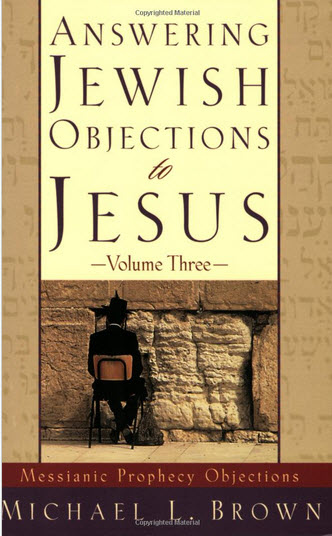
ANSWERING JEWISH OBJECTIONS to JESUS : What would happen to a Nazi murderer who believed in Jesus before he died? Would he go to heaven, while the Jewish God-fearing people, would go to hell

What would happen to a Nazi murderer who believed in Jesus before he died? Would he go to heaven, while the Jewish God-fearing people, would go to hell
 
Based on the teaching of the Hebrew Bible, if the Nazi could truly repent before he died, then God would accept him as righteous, but merely “believing”—without true repentance—is meaningless. As for the Jews killed by that Nazi, if they died in right relationship with God, then they would go to heaven; if they died out of favor with him, they would perish. One thing is very important to remember: The fact that these Jews died in the Holocaust does not necessarily make them “saints” (even though we often speak of the six million Jewish “martyrs” of the Holocaust). Our people were indiscriminately exterminated by the Nazis simply because of their ethnic background—even if they were atheists or God-haters. Their tragic suffering in the Holocaust did not, in and of itself, transform them into godly people. To the contrary, many actually lost their faith during that time, while a large number of secular and ir-religious Jews became overtly hostile to God.
I know that any question regarding the Holocaust can be charged with emotion, but it’s important that we think through the issues calmly and with clear heads. It will also be useful to treat the different aspects of the above questions one by one. Let’s look first at the larger issue of true repentance for the worst of sinners before we deal with the specific relationship between “believing in Jesus” and “repenting.”
Over twenty-five hundred years ago, the Lord spoke these words to our people through the Jewish prophet Ezekiel:
Say to them, “As surely as I live, declares the Sovereign LORD, I take no pleasure in the death of the wicked, but rather that they turn from their ways and live. Turn! Turn from your evil ways! Why will you die, O house of Israel?”
Therefore, son of man, say to your countrymen, “The righteousness of the righteous man will not save him when he disobeys, and the wickedness of the wicked man will not cause him to fall when he turns from it. The righteous man, if he sins, will not be allowed to live because of his former righteousness.” If I tell the righteous man that he will surely live, but then he trusts in his righteousness and does evil, none of the righteous things he has done will be remembered; he will die for the evil he has done. And if I say to the wicked man, “You will surely die,” but he then turns away from his sin and does what is just and right—if he gives back what he took in pledge for a loan, returns what he has stolen, follows the decrees that give life, and does no evil, he will surely live; he will not die. None of the sins he has committed will be remembered against him. He has done what is just and right; he will surely live.
Ezekiel 33:11–16 33
According to the Hebrew Scriptures, if a wicked man truly turns from his wicked ways, God will completely forgive him. Of course, this doesn’t mean there are no consequences for his actions. For example, a rapist who truly repents will still have to go to jail for his crime; however, God will forgive him if his repentance is real. In the same way, a Nazi could be forgiven should he genuinely turn back to God, asking God for mercy and turning from his wicked ways, although he would still be accountable for his deeds on a human level.
The Lord also spoke these words of exhortation through Ezekiel:
Repent! Turn away from all your offenses; then sin will not be your downfall. Rid yourselves of all the offenses you have committed, and get a new heart and a new spirit. Why will you die, O house of Israel? For I take no pleasure in the death of anyone, declares the Sovereign LORD. Repent and live!
Ezekiel 18:30–32
Commenting on this text, the revered medieval rabbi Jonah of Gerondi—known especially for his books on repentance—wrote that these words applied to
a man who transgressed and sinned and then came to take refuge under the wings of the divine Presence [i.e., the Shekinah] and to enter into the paths of repentance [as God said in Ps. 32:8], “I will instruct you and teach you in the way you should go.” On that day he will cast away all the transgressions he has committed and he will make himself as if he were born on that very day, with neither guilt nor merit in his hand.
Yesod HaTeshuvah, 1:1, my translation
And lest he say, “I have sinned and sinned over and over again and my guilt is beyond counting. I’m too ashamed to appear before God and ask for mercy, and I could never keep his commandments,” Rabbi Jonah strongly urges him not to speak that way. Rather, he should recognize that it is the nature of the Creator to receive penitent ones with open arms, and therefore, he should be encouraged to repent and reform his ways. Such is the teaching of the Hebrew Bible and Jewish tradition.
In fact, the Talmud contains an extraordinary statement to which a leading authority on Rabbinic Judaism, Professor Jacob Neusner, draws attention: “Grandsons of Haman studied Torah in Bene Beraq [a well-known city of Torah study in Israel]. Grandsons of Sisera taught children in Jerusalem. Grandsons of Sennacherib taught Torah in public. And who were they? Shemaiah and Abtalion [teachers of Hillel and Shammai]” (b. Gittin 57b).
Neusner then comments:
to understand the power of this statement, we have only to say, “Hitler’s grandson teaches Torah in a yeshiva of Bene Beraq,” or “Eichmann’s grandson sits in a Jerusalem yeshiva, reciting prayers and psalms and learning Talmud.” Not only so, but, to go onward with Sennacherib—who can stand for Himmler—and Shemaiah and Abtalion, the greatest authorities of their generation—who can stand for the heads of the great yeshivas and theological courts of the State of Israel—Himmler’s grandsons are arbiters of the Torah, that is to say, Judaism, in the State of Israel… . The message declares that sinners who repent and seek reconciliation are to be forgiven. The nation that repents is to be welcomed back into the company of civilization, as Germany has regained its honor in our day. 34
Our Scriptures also give us examples of two extraordinarily wicked men, Ahab king of Israel, and Manasseh king of Judah, both of whom repented and were accepted by God. Of Ahab the Bible says: “There was never a man like Ahab, who sold himself to do evil in the eyes of the LORD, urged on by Jezebel his wife. He behaved in the vilest manner by going after idols, like the Amorites the LORD drove out before Israel” (1 Kings 21:25–26).
Because of Ahab’s sins, God promised to utterly destroy him, saying, “I am going to bring disaster on you. I will consume your descendants and cut off from Ahab every last male in Israel—slave or free” (1 Kings 21:21). However, Ahab repented and grieved when he heard the Lord’s sentence of judgment:
When Ahab heard these words, he tore his clothes, put on sackcloth and fasted. He lay in sackcloth and went around meekly. Then the word of the LORD came to Elijah the Tishbite: “Have you noticed how Ahab has humbled himself before me? Because he has humbled himself, I will not bring this disaster in his day, but I will
bring it on his house in the days of his son.”

1 Kings 21:27–29
God accepted his repentance!
The case of Manasseh is also dramatic:
He sacrificed his sons in the fire in the Valley of Ben Hinnom, practiced sorcery, divination and witchcraft, and consulted mediums and spiritists. He did much evil in the eyes of the LORD, provoking him to anger… . Manasseh led Judah and the people of Jerusalem astray, so that they did more evil than the nations the LORDhad destroyed before the Israelites. The LORD spoke to Manasseh and his people, but they paid no attention. So the LORDbrought against them the army commanders of the king of Assyria, who took Manasseh prisoner, put a hook in his nose, bound him with bronze shackles and took him to Babylon. In his distress he sought the favor of the LORD his God and humbled himself greatly before the God of his fathers. And when he prayed to him, the LORDwas moved by his entreaty and listened to his plea; so he brought him back to Jerusalem and to his kingdom. Then Manasseh knew that the LORD is God.
2 Chronicles 33:6, 9–13
I encourage you not to read these accounts lightly. Ahab and Manasseh were among the most notorious sinners spoken of in the Bible. In fact, not only were they both idol worshipers, leading the nation astray by their example, but they were both murderers! And as if Manasseh’s sin of sacrificing his own sons in the fire was not awful enough, consider the fact that “Manasseh also shed so much innocent blood that he filled Jerusalem from end to end” (2 Kings 21:16). This man was wicked! He was responsible for mass murder. Yet the Lord had mercy on him. 35
And so, if the Lord could accept the repentance of murderous, wicked men such as Ahab and Manasseh, could he not accept the repentance of a murderous, wicked Nazi?
At this point, you might say to me, “To tell you the truth, I don’t really disagree with what you are saying. The problem is that you keep talking about repentance—which is the hallmark of traditional Jewish spirituality—whereas my question had to do with believing in Jesus, which is the hallmark of traditional Christian spirituality.” 36 Well, you’ve made a good point. The only problem is that it is not valid, since both repentance and faith are hallmarks of true Chris-tian spirituality. 37 In fact, repent is really the first word of the gospel message.
When John the Immerser (known in Christian circles as John the Baptist) came preaching in the wilderness of Judea, his message began with the call to repent (see Matt. 3:2). Jesus began his public preaching with the very same message of repentance (Matt. 4:17), and when he sent his disciples out to preach, they too called people to repent (Mark 6:12). After his resurrection, Jesus taught his apostles (i.e., emissaries) that repentance and forgiveness of sins formed the heart of the message they were to bring to the world, beginning at Jerusalem (Luke 24:47), and this is exactly what they declared to their Jewish people (see Acts 2:38; 3:19; 5:31; 11:18; 17:30; see also Heb. 6:1; 2 Peter 3:9). Paul—famous for his teaching on “justification by faith”—summarized his message as follows:
I have declared to both Jews and Greeks that they must turn to God in repentance and have faith in our Lord Jesus… . First to those in Damascus, then to those in Jerusalem and in all Judea, and to the Gentiles also, I preached that they should repent and turn to God and prove their repentance by their deeds.
Acts 20:21; 26:20
It is true there is a tremendous emphasis on faith (i.e., genuine trust) in the New Testament (see vol. 2, 3.7 and vol. 3, 4.2 for more on this), but this goes hand in hand with repentance. To repeat Paul’s words, God calls all men to “turn to God in repentance”—meaning they must turn away from their disobedient ways and turn back to him—“and have faith in our Lord Jesus”—meaning they must believe in him as Savior and Messiah, trusting that his death in our place paid the penalty for our sins, just as the sacrificial animals offered up on the Day of Atonement paid for the sins of our people. 38
Such teaching is not new or strange. Just read the Torah and the Prophets. The former emphasized the sacrificial system of atonement, the latter emphasized repentance. They are two sides of the same coin, and both called for explicit faith in the Lord as well as total obedience to his commands. The New Testament makes these very same points, adding the distinctive emphasis that our Messiah has come and provided both Jews and Gentiles with complete atonement through his blood. That’s why the call to believe in him is so pronounced (see also vol. 3, 4.2). It is utterly impossible from a New Testament standpoint, however, to separate true faith from true repentance just as it is impossible to separate faith in the one true God from obedience to his laws from an Old Testament standpoint.
All of this means that this entire objection is based on a gross misunderstanding of the New Testament teaching on faith. Jacob, Yeshua’s brother, 39 wrote about this in his letter to other Jewish believers, stating that it was pure folly to claim that one could have faith without accompanying action: “As the body without the spirit is dead, so faith without deeds is dead” (see James 2:18–26).
Simply stated: Neither Jesus nor the writers of the New Testament ever taught that someone could be saved by simply repeating a little prayer or reciting some formula. 40 Rather, they stressed that putting one’s faith in Jesus meant asking God to forgive the sinner through the death and resurrection of the Messiah, thereby setting him free from bondage to sin, giving him a new heart, and starting him on a brand-new life with God as his Father and Yeshua as his Master. To “confess Jesus as Lord” (Rom. 10:9–10) without following him as Lord is as useless as reciting the Shema—that Yahweh alone is our God—without serving him as God. True faith in God and his Messiah means a true relationship with God and his Messiah.
So, back to the first part of your question (“What would happen to a Nazi murderer who believed in Jesus before he died?”), the answer is clear. If by “believing in Jesus” you simply mean, “believing that he is the Lord and Savior,” then that Nazi would be judged for his sins and condemned to hell. If, however, by “believing in Jesus” you mean putting his trust in the Lord Jesus to cleanse him from his sin and guilt, repudiating his evil deeds with his whole heart and turning to God in true repentance, asking for mercy and pardon, then he would be forgiven, just as Ezekiel declared. The only difference—according to your scenario—is that he would have died before he was able to demonstrate the reality of his repentance and faith (the New Testament calls this “producing fruit in keeping with repentance”; see Matt. 3:8; Acts 26:18), so only God would have known the condition of his heart. If he truly had a change of heart, however, heaven would be his home.
However, lest you get the idea that deathbed repentance is something worth waiting for (in other words, why not sin now and repent later?) I remind you of the counsel of Rabbi Eliezer in the Mishnah: “Repent one day before you die!” This means, of course, that since you don’t know the day of your death, you should repent every day (cf. m. Avot 2:10; Avot d’Rabbi Nathan 15, end; see also Ben Sira 5:7). De
ath may overtake you suddenly, before you have the opportunity to get right with God, or, by the time of your death, you might have become so hard-hearted that repentance is the farthest thing from your mind. The more we sin, the harder we get!

Thus, in the case of a resolute, murderous Nazi, it is doubtful that someone who had hardened his heart so deeply by slaughtering so many people could spontaneously, at will, bring about some last minute change, although God has, on occasion, granted this kind of deathbed repentance. Thank the Lord that such a slender thread of mercy exists, but don’t hang your eternal well-being on it! As Augustine, the early church leader, wisely remarked (with reference to the thief who was crucified next to Jesus and repented before he died): “There is one case of death-bed repentance recorded [in the Bible], that of the penitent thief, that none should despair; and only one that none should presume.”
As for the Jews killed by that Nazi, obviously, I am not their judge, and, of course, I can give you only my educated opinion. It is God alone who determines their final destiny. Still, I would reiterate that just because one of our people suffered the terrible tragedy of dying in the Holocaust doesn’t automatically make him or her a saint. 41 Many of our people were irreligious before and during the Holocaust, right up to the time of their deaths. Does simply dying because one is a Jew—especially when that one would have gladly ceased to be Jewish—atone for one’s godless life up to that moment? If so, do traditional Jews believe that the Jewish Christians who died in the Holocaust are guaranteed a place in heaven—in spite of their so-called idolatry?
But there’s something more: Some Jews (both traditional and Messianic) believe that the Holocaust had at least some elements of divine judgment in it. In other words, our terrible corporate suffering was partly due to corporate sin. This would be similar to the destruction of Jerusalem in the years 586 B.C.E. and 70 C.E. At those times, our city was destroyed and people mercilessly butchered because we had sinned against God (read Lamentations for more on this, and see below, 1.17). Would a sinful Jew who was killed then by the Babylonians or Romans automatically become a saintly martyr? Why then should Jews who died in the Holocaust automatically be considered martyrs? I know the parallels are inexact (especially because of the specifically racial dimensions of the Holocaust), but they are similar.
Some ultra-Orthodox rabbis would tell us today that the Holocaust occurred because of our people’s apostasy, and if we don’t repent, the same thing could occur again, even in America. 42 (As to the question of traditional Jews who died in the Holocaust, faithful to their traditions, and, to the best of their knowledge, faithful to their God, I refer you back to 1.10).
This much is sure: While we cannot go back in time to the horrific days of the Shoa—as the Holocaust is known among many Jews today—or sit here and pronounce judgment on people whose lives ended more than a generation ago, we know that our God will accept those who come to him according to his terms—and we might be surprised to see some of those whom he accepts and some of those whom he rejects.

If Jesus is the Jewish Messiah, why don’t more Jews believe in him? | Brown, M. L

If Jesus is the Jewish Messiah, why don’t more Jews believe in him?

Actually, there are tens of thousands of Jews who have believed and do believe in him. The problem is that most Jews have not bothered to check into the facts about Jesus, and the only Jesus most of them know is either the baby Jesus of Christmas, an emaciated figure hanging on a cross in churches, or the Jesus of the Crusades and Inquisitions. The question is, Why don’t you believe Jesus is the Messiah? Do you really know who he is?

I encourage you to consider the following points.

1. Most Jews have never seriously studied the issue. Many of those who have decided to find out who Jesus is have been quite surprised by what they have learned. The greatest scholars and scientists in the world once believed the earth was flat—until firsthand investigation and discovery altered their outlook. It’s the exact same thing with Jews who honestly investigate the Messianic claims of Jesus. Everything changes—to put it mildly.

2. If most religious Jews learn anything about Jesus in their traditional studies, it is quite biased and negative. 22 Thus, they do not entertain even the possibility of the messiahship of Jesus.

3. Many so-called Christians have committed atrocities against Jews in the name of Jesus, helping to drive Jews away from their true Messiah. (See below, 2.7, for more on this, along with my book Our Hands Are Stained with Blood.)

4. These same Christians have often put forth a distorted picture of Jesus that bears little resemblance to the real Messiah who walked the earth two thousand years ago. Can Jews be blamed for thinking that Christians worshiped idols when the churches were filled with worshipers bowing before large, beautiful statues depicting Jesus as a babe in his mother’s lap?

5. There is often great pressure on those Jews—especially religious Jews—who put their faith in Jesus the Messiah. Some succumb to the fear, the pressure, the intimidation, the separation, and the loneliness, and they deny with their lips what they know to be true in their hearts.

6. Traditional Jewish teaching gives a slanted portrayal of who the Messiah is and what he will do. Since the description is faulty, people are looking in the wrong direction for the wrong person. No wonder relatively few have found him.

7. Once a learned Jew does believe in Yeshua, he is discredited, and so his name is virtually removed from the rolls of history. It’s almost as if such people ceased to exist. (Do you remember reading the novel Animal Farm in school? Revisionist history goes on to this day—even in traditional Jewish circles.) The story of Max Wertheimer provides one case in point. In the last century, Wertheimer came to the States as an Orthodox Jew, but over the course of time, he became a Reform Jew and was ordained a rabbi upon graduating from Hebrew Union College in Cincinnati in 1889. (He also received a Ph.D. from the University of Cincinnati the same year.) He then served as the greatly loved rabbi of B’Nai Yeshurun synagogue in Dayton, Ohio, for the next ten years. When he became a fervent believer in Jesus, however, pastoring a church as well, his name was literally removed from the rolls of the school—a school of alleged tolerance at that. Why was his name dropped? According to Alfred A. Isaacs, cited in the November 25, 1955, edition of the National Jewish Post, Wertheimer was disowned by Hebrew Union College solely because of his Christian faith. 23 And to think, this happened in a “liberal” Reform Jewish institution!

8. Although this may be hard for you to accept, because our leadership rejected Jesus the Messiah when he came, God judged us as a people (just as he judged us as a people for rejecting his law and his prophets in previous generations), and as a result, our hearts have become especially hardened toward the concept of Jesus as Messiah. 24 Paul explained this in his important letter to the believers in Rome: “What Israel sought so earnestly it did not obtain, but the elect did. The others were hardened, as it is written: ‘God gave them a spirit of stupor, eyes so that they could not see and ears so that they could not hear, to this very day’ ” (Rom. 11:7–8; the quote here is taken from Deut. 29:4 in our Torah and Isa. 29:10 in our Prophets).

If you stop to think about it, isn’t it strange that as a people we have almost totally lost sight of the fact that Jesus-Yeshua is one of us, actually, the most influential Jew ever to walk the earth? 25 Yet most of us think of him as if he were some fair-skinned, blue-eyed European. The good news is that Israel’s hardening was only partial: There have always been Jews who followed Jesus the Messiah, and in the end, our people will turn back to him on a national scale. Paul explains this a few verses later:

I do not want you [Gentiles] to be ignorant of this mystery, brothers, so that you may not be conceited: Israel has experienced a hardening in part until the full number of the Gentiles has come in. And so all Israel will be saved, as it is written: “The deliverer will come from Zion; he will turn godlessness away from Jacob. And this is my covenant with them when I take away their sins.”

Romans 11:25–27; the quote is taken from Isaiah 59:20–21; 27:9; and Jeremiah 31:33–34, all in our Prophets

Hopefully, you will be one of those Jews who is determined to find out the truth about the Messiah right now, determining to follow him at any cost. In the end, you must decide for yourself, and the bottom line question is one that only you can answer: Why don’t you believe Jesus is our promised Messiah?

What if more Jews—including your rabbi—did believe in him? Would you? Of course, that wouldn’t change the facts. Either Jesus is or is not the Messiah of Israel. Public opinion can’t affect the truth. But many times, when people find out that it’s okay to hold to a certain opinion, they come out of the closet.

Maybe it would help you to know that many of us in Jewish work have spoken with Orthodox and even ultra-Orthodox Jews who have told us in private that they believe Jesus is the Messiah, but they are afraid to go public for fear of what could happen to them. Maybe if a number of these religious Jews—some of whom are rabbis—showed up one day on your doorstep and told you their views, it would get you to think seriously about the matter.

As we grow and mature—from infants to children to teens to adults—we find out that not everything we have been told is true. Sometimes we just have to learn for ourselves. And even as adults, we often have skewed perspectives on many things. Just look at what Democrats believe about Republicans (and vice versa) or what Palestinians believe about Israelis (and vice versa) or what Black Muslims believe about Jews (and vice versa). Our perspectives, opinions, and convictions are not always right—no matter how strenuously we argue for our position. Common sense tells us that all of us can’t be right about everything all the time.

Even on an interpersonal level, how often have you met someone only to find out that all the bad things you heard about that person were greatly exaggerated or false? It happens all the time. As for the matter at hand, I assure you in the strongest possible terms: As a Jew, most everything you have heard about Jesus has been untrue. You owe it to yourself to find out just who this Jesus really is—and I say this to you whether you are an ultra-Orthodox rabbi reading this book in secret or you are a thoroughly secular, wealthy Jewish businessman who was given this book by a friend.

This much is certain: We have carefully investigated the claims of Jesus and can testify firsthand that Yeshua is who he said he was. What do you say?

[1]


22 The infamous Rabbinic collection of anti-Jesus fables, called Toledot Yeshu, is still studied in some ultra-Orthodox circles, although virtually all other Jewish scholars have long since repudiated the Toledot. These scurrilous writings, based in part on some Talmudic references, accusing Mary of fathering Jesus through a Roman soldier (or by rape), and portraying Jesus as an idolater, magician, and Israel’s arch-deceiver, were the primary source of information about Jesus for many traditional Jews, especially in the Middle Ages. Of course, as noted by the Oxford Dictionary of Jewish Religion, ed. Geoffrey Wigoder (New York: Oxford, 1997), 695, “the work is an expression of vulgar polemics written in reaction to the no less vulgar attacks on Judaism in popular Christian teaching and writing.” But as I have stated before, just as many Gentiles around the world have had a biased and inaccurate view of the Jewish people, so also have many Jews had a biased and inaccurate view of Jesus, the Jewish Messiah. For a representative sampling from the Toledot, see the excellent study of Walter Riggans, Yeshua ben David: Why Do the Jewish People Reject Jesus as Their Messiah? (Crowborough, England: Marc, 1995), 127–32. Interested readers of this present volume would do well to read Riggans as well.

23 For more on this, see Nahum Brodt, “The Truth about the Rabbi,” in Would I? Would You?, ed. Henry and Marie Einspruch (Baltimore: Lederer, 1970), 8–10. For a fuller account of Wertheimer’s faith, see Jacob Gartenhaus, Famous Hebrew Christians (Grand Rapids: Baker, 1979), 191–97.

24 This is not the first time in our history that God has hardened our hearts because we sinned against him. This is what God said to the prophet Isaiah more than twenty-five hundred years ago: “Go and tell this people: ‘Be ever hearing, but never understanding; be ever seeing, but never perceiving.’ Make the heart of this people calloused; make their ears dull and close their eyes. Otherwise they might see with their eyes, hear with their ears, understand with their hearts, and turn and be healed” (Isa. 6:9–10). The prophet was actually called to a ministry of hardening his people’s hearts! It was as if God were saying, “Fine. If you want to be hard-hearted, refusing to believe me or obey me, I will give you over to your hardness and make you even harder.” This is exactly what has happened to us regarding the Messiah: When so many of our people refused to follow him, God gave us over to our unbelief and obduracy to the point that through the centuries, we have become especially resistant to Jesus.

25 This well-known, anonymous tribute to Jesus, known as “One Solitary Life,” puts things in perspective: “He was born in an obscure village. He worked in a carpenter shop until He was thirty. He then became an itinerant preacher. He never held an office. He never had a family or owned a house. He didn’t go to college. He had no credentials but himself. He was only thirty-three when the public turned against him. His friends ran away. He was turned over to his enemies and went through the mockery of a trail. He was nailed to a cross between two thieves. While he was dying, his executioners gambled for his clothing, the only property he had on earth. He was laid in a borrowed grave. Nineteen centuries have come and gone, and today he is the central figure of the human race. All the armies that ever marched, all the navies that ever sailed, all the parliaments that ever sat, and all the kings that ever reigned have not affected the life of man on this earth as much as that one solitary life.”

[1]Brown, M. L. (2000). Answering Jewish objections to Jesus, Volume 1: General and historical objections. (21). Grand Rapids, Mich.: Baker Books.


Handling an Objection: “I love the moral teachings of Jesus but I don’t think He is divine.”

Handling an Objection: “I love the moral teachings of Jesus but I don’t think He is divine.”

 
This past week I was doing some outreach on a major college campus. When it came time to talk about the identity of Jesus, I heard two similar responses. Granted, I have heard this objection many, many, times. It goes like this:

“I really like the moral teachings of Jesus, but I don’t think he is divine.”

I could respond to this by using the C.S. Lewis argument that Jesus is either Lord, Lunatic, or Liar. I tend to not use that one a lot. While it still has some value it generally begs the question of the reliability of the New Testament. After all, some skeptics assume the deity of Jesus is a later invention of the Church. As I have noted elsewhere, this is incorrect. The Christology is Jesus was at the very start of the formation of the early Jesus movement.

Jesus is the Message

Anyway, how do I respond to this? First, since the person already admires the teachings of Jesus, I point to the blind spot in their thinking. First, it is not the moral teachings of Jesus that is the message. Rather, Jesus is the message!

Probably the most pertinent examples of how Jesus in the message is in the Gospel of John where we see the “I AM” (Gk. ego eimi,) statements. I am well aware that all these passages need to be studied in context. But we see clearly that Jesus is emphasizing He is the message. For example:

Then Jesus declared, “I am the bread of life. He who comes to me will never go hungry, and he who believes in me will never be thirsty. (John 6:35)

When Jesus spoke again to the people, he said, “I am the light of the world. Whoever follows me will never walk in darkness, but will have the light of life.” (John 8:12)

I am the gate; whoever enters through me will be saved. He will come in and go out, and find pasture. (John 10:9)

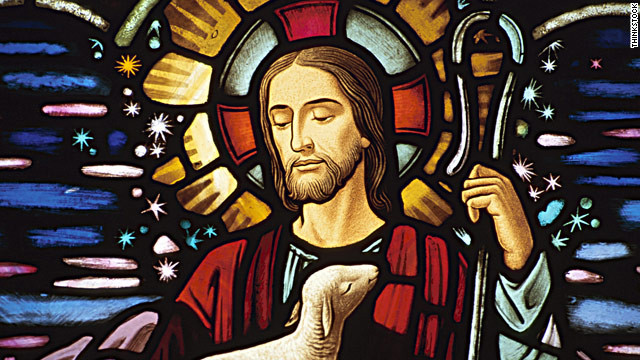
“I am the good shepherd. The good shepherd lays down his life for the sheep.” (John 10:11)

Jesus said to her, “I am the resurrection and the life. He who believes in me will live, even though he dies; and whoever lives and believes in me will never die.” (John 11:25-26)

Jesus answered, “I am the way and the truth and the life. No one comes to the Father except through me.” (John 14:6)

“I am the vine; you are the branches. If a man remains in me and I in him, he will bear much fruit; apart from me you can do nothing.” (John 15:5)

From a tactical perspective, when people say they only like the teachings of Jesus, it can allow you the opportunity to share these passages from John and ask them if they might rethink their position.

Why Was Jesus Crucified?

Second, I ask the person is why was Jesus crucified? One issue that can tend to be overlooked is that we can minimize the issue of blasphemy in a Jewish setting. by the way, none of the above figures were accused of blasphemy. According to Jewish law, the claim to be the Messiah was not a criminal, nor capital offense. Therefore, the claim to be the Messiah was not even a blasphemous claim. (1)

If this is true, why was Jesus accused of blasphemy? According to Mark 14:62, Jesus affirmed the chief priests question that He is the Messiah, the Son of God, and the Coming Son of Man who would judge the world. This was considered a claim for deity since the eschatological authority of judgment was for God alone. Jesus provoked the indignation of his opponents because of His application of Daniel 7:13 and Psalm 110:1 to himself.

Also, many parables, which are universally acknowledged by critical scholars to be authentic to the historical Jesus, show that Jesus believed himself to be able to forgive sins against God (Matt. 9:2; Mark 2: 1-12). Forgiving sins was something that was designated for God alone (Exod. 34: 6-7; Neh.9:17; Dan. 9:9) and it was something that was done only in the Temple along with the proper sacrifice. So it can be seen that Jesus acts as if He is the Temple in person. In Mark 14:58, it says, “We heard him say, ‘I will destroy this man-made temple and in three days will build another, not made by man.’ The Jewish leadership knew that God was the one who was responsible for building the temple (Ex. 15:17; 1 En. 90:28-29).(2)

Also, God is the only one that is permitted to announce and threaten the destruction of the temple (Jer. 7:12-13; 26:4-6, 9;1 En.90:28-29). (3) It is also evident that one reasons Jesus was accused of blasphemy was because He usurped God’s authority by making himself to actually be God (Jn. 10:33, 36). Not only was this considered by the Jews to be blasphemous, it was worthy of the death penalty (Matt. 26:63-66; Mk. 14:61-65; Lk. 22:66-71; Jn. 10:31-39; 19:7)

As the late Martin Hengal said:

“Jesus’ claim to authority goes far beyond anything that can be adduced as prophetic prototypes or parallels from the field of the Old Testament and from the New Testament period. [Jesus] remains in the last resort incommensurable, and so basically confounds every attempt to fit him into categories suggested by the phenomenology of sociology of religion.” (4)

Remember that there was a Jewish leader named Bar Kohba who made an open proclamation to be the real Messiah who would take over Rome and enable the Jewish people to regain their self-rule (A.D. 132-135). Even a prominent rabbi called Rabbi Akiba affirmed him as the Messiah. Unfortunately, the revolt led by Bar Kohba failed and as a result and both he and Rabbi Akiba were slain. And remember, Bar Kohba was not accused of blasphemy. He never claimed to have the authority to forgive sins or claim to be the Son of Man (as referring to Daniel 7).

Conclusion

In the end, I think the reason some people like the moral teachings of Jesus and avoid the divinity issue is an issue of autonomy. A non- divine Jesus is really not very threatening and doesn’t ask much of us.

Sources:

1. See Darrell L. Bock. Blasphemy and Exaltation in Judaism: The Charge Against Jesus in Mark 14:53-65. Grand Rapids, MI: Baker Books, 1998.
2. William Lane Craig. Reasonable Faith: Third Edition. Wheaton, Illinois: Crossway Books, 2008, 307.
3. Martin Hengel, The Charismatic Leader and His Followers. New York: Crossroad, 1981. 68-69; Cited in Edwards, 96.
4. Jacob Immanuel Schochet. Mashiach: The Principle of Mashiach and the Messianic Era in Jewish Law and Tradition. New York: S.I.E. 1992, 93-101.
5. Ibid.

Using Inference to the Best Explantion: What Caused the Birth of Christology?

Using Inference to the Best Explantion: What Caused the Birth of Christology?

Using Inference to the Best Explantion: What Caused the Birth of Christology?
 
Anyone who studies historical method is familiar with what is called historical causation. Historians seek out the causes of a certain events. As historian Paul Barnett says, “The birth of Christianity and the birth of Christology are inseparable both as to time and essence.” (1) One thing for sure: the birth of Christology was very early and not something that was invented much later in Church history.

We must not forget that within Judaism there is a term called “avodah zara” which is defined as the formal recognition or worship as God of an entity that is in fact not God i.e., idolatry. In other words, the acceptance of a non-divine entity as your deity is a form of avodah zara. (2) As of today, traditional or Orthodox Judaism still upholds the position that Jewish people are forbidden to pray and worship anyone other than the God of Israel (Ex. 20:1–5; Deut. 5:6–9).

Paul’s Letters are the earliest records we have for the life of Jesus. We know that from about AD 48 until his death (60 to 65 AD) Paul wrote at least 13 of the New Testament’s books. They are also the earliest letters we have for the Christology of Jesus. To read any objections to Paul’s Letters, see here.

As pointed out by Richard Bauckham in his work on this topic, Paul believed that Jesus was God by attributing attributes to him that were distinctly reserved for God. And he did so in a distinctly Jewish manner while also preserving monotheism. There were three attributes that first century Jews uniquely assigned to God:

1. God is the Sole Ruler of all things

2. God is the Sole Creator of all things

3. God is the only being deserving of worship

So let’s look at how Paul matches up the data here:

1. Jesus participates in God’s sole rule over all things

Phil: 3:20-21: “For our citizenship is in heaven, from which also we eagerly wait for a Savior, the Lord Jesus Christ; who will transform the body of our humble state into conformity with the body of His glory, by the exertion of the power that He has even to subject all things to Himself.”

Eph. 1:21-22: Paul speaks of Jesus being ”far above all rule and authority and power and dominion, and every name that is named, not only in this age but also in the one to come. And He put all things in subjection under His feet…”

Here, Jesus is clearly given the authority to rule above every one of God’s created beings.

2. Jesus as the Creator of all things

Jesus is clearly thought by Paul to have been the creator of the universe. This attribute is reserved only to God in Second Temple Judaism. Paul makes it clear that Jesus created all things.

Col. 1:15-16: “He is the image of the invisible God, the firstborn over all creation. For by him all things were created: things in heaven and on earth, visible and invisible, whether thrones or powers or rulers or authorities; all things were created by him and for him.”

3. Jesus as worthy of worship

As discussed above, only God was worthy of worship in Second Temple Judaism. Nevertheless, Paul discusses the worship of Jesus. Since God is the sole Creator and Ruler of all things He alone should be worshiped. Even within the Roman Empire, Jews worshiped God alone. No other entity was worthy of worship. Here is one of the earliest Christological texts:

Philippians 2:6-11: “Who, being in very nature God, did not consider equality with God something to be grasped, but made himself nothing, taking the very nature of a servant, being made in human likeness. And being found in appearance as a man, he humbled himself and became obedient to death even death on a cross! Therefore God exalted him to the highest place and gave him the name that is above every name, that at the name of Jesus every knee should bow, in heaven and on earth and under the earth, and every tongue confess that Jesus Christ is Lord, to the glory of God the Father.”

In their book The Jesus Legend, The: A Case for the Historical Reliability of the Synoptic Jesus Tradition, Gregory Boyd and Paul Eddy say,

“During the reign of Pilate and Herod, when Caiaphas was high priest, we find a Jewish movement arising that worships a recent contemporary alongside and in a similar manner as Yahweh-God. To call this development “novel” is a significant understatement. In truth, it constitutes nothing less than a massive paradigm shift in the first century Palestinian Jewish religious worldview.” (3)

Explanations try to show how something happened. That is, what is the cause for something that has happened. So let’s weight the options on the table and see if we can come up with an explanation that explains the data at hand:

#1: Religious Syncretism

While there were various Jewish sects during the time of Jesus, religious syncretism is a form of idolatry. First, the Jewish Scriptures forbids worshiping anyone other than the God of Israel (Ex. 20:1–5; Deut. 5:6–9). Following the exile and subsequent intertestamental struggles, it can asked whether Jews still fell prey to physical idolatry. Some skeptics assert that since Israel always had problems with idolatry in their early formation, it would not be a challenge to assert they could fall into idolatry again by worshiping one of their own countrymen as God. But this is problematic; To assert that Israel’s previous problems with idolatry which would lead to further into idolatry in the Second Temple period leads me to cry “anachronism.” Remember, idolatry is rarely mentioned in the Gospels. But there are warnings about idolatry in other portions of the New Testament( 1 Cor. 6:9-10 ; Gal 5:20 ; Eph. 5:5 ; Col 3:5 ; 1 Peter 4:3 ; Rev 21:8). Paul instructs believers not to associate with idolaters ( 1 Cor .5:11 ; 10:14 ) and even commends the Thessalonian for their turning from the service of idols “to serve the living and true God” ( 1 Thess1:9) (see Walter A. Elwell’s Baker’s Evangelical Dictionary of Biblical Theology, pgs 364-365). So I guess my question is the following: Why would Paul or the early disciples commit an idolatrous act (by saying Jesus is divine) and but then later speak against idolatry? It seems rather inconsistent.

#2 Hellenism or Polytheism?

The syncretism objection is related to the Hellenism/Polytheism possibility. The first followers of Jesus were exclusively Jews. The book of Acts gives a reference to the early followers of Jesus as “the sect of Nazarenes” (Acts 24:5). However, it is asserted that as the Christian faith spread, it became a predominately Gentile based religion. By the time of Jesus, Jews had encountered the impact of Hellenistic culture for three hundred years. The word “Hellenistic” was given to describe the period of history that started with the death of Alexander the Great in 323 B.C. and ended when Rome conquered Alexander’s empire in 30 B.C .It is also safe to say that several forms of Jewish culture during the Roman period were somewhat Hellenized. This is why it is often argued that the incarnation grew out of Hellenistic presuppositions. But as Paul Eddy points out in his articleWas Christianity Corrupted by Hellenism? from the middle of the third century BC, while Jewish Palestine had already experienced the effects of Hellenism we need to remember that Hellenism did not tend to infiltrate and ‘corrupt’ the local religious traditions of the ancient world. Rather, people maintained their religious traditions in spite of Hellenistic influence in other areas of their lives. Also, there are also references to the negative views of gentile polytheism (Acts 17: 22-23; 1 Cor 8:5). Gentiles were regarded as both sinful (Gal 2:5) and idolatrous (Rom 1:23).

#3: The Deity of Jesus is Legend?

As I already said, the earliest documents for the Christology of Jesus are Paul’s Letters. In them, we have one of the earliest confessions of the deity of Jesus in 1 Corinthians 8: 5-6:

“For though there are things that are called gods, whether in the heavens or on earth; as there are many gods and many lords; yet to us there is one God, the Father, of whom are all things, and we for him; and one Lord, Jesus Christ, through whom are all things, and we live through him.”

Here is a distinct echo of the Shema, a creed that every Jew would have memorized from a very early age. When we read Deuteronomy 6:4-9, which says, “Hear O Israel! The Lord our God is our God, the Lord is one,” Paul ends up doing something extremely significant in the history of Judaism.

A glance at the entire context of the passage in 1 Corinthians 8:5-6 shows that according to Paul’s inspired understanding, Jesus receives the “name above all names,” the name God revealed as his own, the name of the Lord. In giving a reformulation of the Shema, Paul still affirms the existence of the one God, but what is unique is that somehow this one God now includes the one Lord, Jesus the Messiah. Therefore, Paul’s understanding of this passage begets no indication of abandoning Jewish monotheism in place of paganism.

For a Jewish person, when the title “Lord” (Heb. Adonai) was used in place of the divine name YHWH, this was the highest designation a Jewish person could use for deity. Furthermore, it would have been no problem to confess Jesus as prophet, priest, or king since these offices already existed in the Hebrew Bible. After all, these titles were used for a human being. There was nothing divine about them.

#4: The Christology of Jesus can be explained by the disciples experience with Jesus before the resurrection and the post-resurrection appearances

I have already pointed out that the resurrection of Jesus is the best explanation for many historical issues within the New Testament.. So at this point, I would have to assume that skeptics can only say that the birth of Christology is simply false because of their metaphysical starting points (e.g., Jesus can’t be divine because the natural world is all there is, etc).

For those that are still hung up on the reliability of the New Testament, see our resource page.

Sources:
1. 1. Paul Barnett, The Birth of Christianity: The First Twenty Years (Grand Rapids: Wm. B. Eerdmans Publishing Co. 2005), 8.

2. David Berger, The Rebbe, The Messiah And The Scandal Of Orthodox Difference, 160-174.

3. Gregory A. Boyd and Paul R. Eddy, The Jesus Legend: A Case For The Historical Reliability of the Synoptic Tradition (Grand Rapids: MI: Baker Books, 2007), 132.

Exit mobile version