دليل على قيامة الرب يسوع مقبول من علماء غير مؤمنين – ترجمة توماس نبيل

دليل على قيامة الرب يسوع مقبول من علماء غير مؤمنين – ترجمة توماس نبيل

دليل على قيامة الرب يسوع مقبول من علماء غير مؤمنين – ترجمة توماس نبيل

دليل على قيامة الرب يسوع مقبول من علماء غير مؤمنين – ترجمة توماس نبيل

اشراف فريق اللاهوت الدفاعي

هذه المقالة تتحدث عن حجة تسمى “حجة الحد الأدنى من الحقائق” والتي تثبت قيامة الرب يسوع ويقدمها لنا د. جاري هابرماس وهي واحدة من أقوي الحجج علي قيامة الرب يسوع.

د. هابرماس هو مؤرخ أمريكي ودارس للعهد الجديد وأحد فلاسفة الدين، وقد درس القيامة لمدة أربعين سنة إلى الان. خلال هذا الوقت كان يصنع قائمة بحقائق القيامة المقبولة من قبل علماء العهد الجديد بصرف النظر عن معتقداتهم.

د. هابرماس يقول الآتي عن حجة الحد الأدنى من الحقائق:

“حجة الحد الأدنى من الحقائق والتي هي حجة لصالح قيامة يسوع تم تطويرها قبل عدة سنوات خلال كتابتي لرسالة الدكتوراه. هذه الحجة تحتاج لأمرين من أجل اثبات حقائق تاريخية معينة: أن تكون هذه الحقائق مؤكدة بواسطة عدد من الحجج القوية والمستقلة، ويجب ان الغالبية العظمي من العلماء حتي علماء النقد يعترفوا بصحة الحدث تاريخياً. علماء النقد هؤلاء من الممكن ان يكونوا ليبراليين أو شكوكيين أو لا أدريين أو حتي ملحدين

هذا لا يهم طالما انهم متخصصون في مجال دراسة ذو صلة بالموضوع كدراسة العهد الجديد. بخصوص هذين المطلبين، من المهم ان ندرك ان المعيار الأول بخصوص دليل قوي يأتيمن أكثر شيء مصيري.

لذا لماذا يسمح أو يعترف حتي علماء النقد بهذه الحقائق التاريخية الفردية؟ الإجابة ان كلاً منها غير قابل للإنكار. معظم الحقائق القليلة المستخدمة مؤكد بواسطة عشرة اعتبارات تاريخية أو اكثر. هذا ببساطة أساس رائع خاصة بالنسبة للأحداث التي وقعت في القرن الأول الميلادي.”

لو كان احد الفيزيائيين يكتب عن حقيقة القيامة، اذاً لن يقبل الناس هذه الحقائق التي كتبها لأن الدكتوراه الخاصة بالفيزيائي ليس لها علاقة بالموضوع. لكن حتي لو احد علماء العهد الجديد الملحدين كان يكتب عن القيامة، ثم قام بإحصاء الحقائق التي قبلها الناس. فقد جمع هذا العالم ما يزيد علي 3000 مرجع باللغات الإنجليزية والفرنسية والألمانية، ثم قام بعمل قائمة بالحد الأدنى من الحقائق المقبولة والتي بينها شيء مشترك. في الواقع الحقائق التالية مقبولة من قبل كل المؤرخين والشكوكيين والمؤمنين:

  1. أن المسيح مات علي الصليب.
  2. رسل المسيح وتلاميذه اختبروا ما قد آمنوا أنه ظهورات للمسيح المُقام (لقد ادّعوا هذا وآمنوا به).
  3. ان يعقوب أخا الرب والذي آمن قبلاً ان يسوع كان مجنوناً، فجأة اصبح مسيحياً.
  4. بولس، والذي كان قبلاً مضطهداً للمسيحية، فجأة أصبح مسيحياً.
  5. أن القبر وُجد فارغاً بعدها بثلاثة أيام.

الحقيقة الوحيدة المُتنازع عليها هي القبر الفارغ، ولكن حتي مع هذا، لديك %75 من المؤرخين يقبلون هذه الحقيقة، ولكن هناك ثلاث حجج لدعم حقيقة القبر الفارغ:

  1. أن يسوع صُلب في أورشليم، المكان الذي بدأت منه الكرازة، كل ما احتاجت اليه السلطات لكي تقضي علي المسيحية كان اظهار الجسد للجموع.
  2. شهادة الأعداء. فاتهام النقاد الأوائل (اليهود) رسل المسيح بسرقة جسده، كان اعتراف منهم بأن الجسد لم يكن موجوداً.
  3. شاهد العيان الأول علي القبر الفارغ كان مجموعة نساء، وهذا له صلة بالموضوع لان شهادة النساء في القرن الأول في كلاً من الثقافة اليهودية والرومانية كانت تعتبر محل شك وغير مستحقة للثقة.

هناك ايضاً حقائق آخري مقبولة مثل:-

  1. أنه دُفن علي الأرجح في قبر خاص.
  2. أن رسل المسيح تحولوا من متشككين إلى مُعلنين (مبشرين) شجعان وكانوا حتي مستعدين أن يموتوا من اجل ذلك الايمان.
  3. أصل الكنيسة المسيحية.
  4. كيف أن القيامة كانت أساس البشارة.
  5. الكرازة بدأت مبكراً.

وغيرها الكثير….

ولكن في الحقيقة أنت فقط تحتاج اول خمس حقائق لكي تُصيغ هذه الحجة. فبما ان هذه الحقائق مقبولة، حتي من قبل الشكوكيين والمؤرخين الملحدين، كل فرد منا يحتاج ان يحاول ويفسّر هذه الحقائق، حتي الان معظم هذه التفسيرات يفشل في تفسير كل هذه البيانات.

اكثر النظريات شيوعاً والتي ستسمعها لمحاولة تفسير هذه الحقائق الهامة هي:

  • نظرية المؤامرة.
  • نظرية الموت الظاهري.
  • نظرية الجسد المسروق.
  • نظرية الهلوسة.

نظرية المؤامرة :

بشكل أساسي تنص علي أن الرسل تآمروا لبدء الديانة المسيحية. ولكن هذا يفشل عندما نأخذ في الاعتبار شروط نجاح أي مؤامرة. وايضاً يفشل في تفسير القبر الفارغ وتحول كلاً من يعقوب أخا الرب وبولس للمسيحية.

نظرية الموت الظاهري:

تنص علي أن يسوع لم يمت فعلاً علي الصليب، وأنهم فقط اعتقدوا أنه مات عندما اُنزل من علي الصليب ووضع في القبر، ثم بعد ثلاثة أيام خرج يسوع من القبر “بأعجوبة”. هذا يفشل عندما ندرك كيف كانت عقوبات الصلب ناجحة، أحد مؤرخي اليهود في القرن الأول سجل أنه خلال احدي عقوبات الصلب، لاحظ أن ثلاثة من أصدقائه كان يتم صلبهم.

لذا ذهب إلى الحاكم الروماني وقام بعمل استئناف، وبناء عليه أمر الحاكم الروماني ان يتم إنزال هؤلاء الثلاثة من علي الصليب واعطاءهم افضل رعاية طبية ممكنة. ورغم هذا مات اثنان منهم. لو لم يمت يسوع فعلاً علي الصليب لكنه دُفن حياً، لم يكن وقتها سيخرج بأعجوبة من القبر بعدها بثلاثة أيام ويُظن خطأ انه قام، كان الرسل بمجرد رؤيتهم له سيخبروه “انه يحتاج طبيباً”.

نظرية الموت الظاهري أيضاً تفشل عندما ندرك كيف كان الرومان بارعين (ضليعين) في اعدام الناس، أو المسئولية حيث لو أن انساناً كان من المفترض ان يموت ولم يمت، لكان الجنود المُشرفين علي الحكم قد اُعدموا، وايضاً هذا لا يفسر تحول يعقوب أخا الرب وبولس.

نظرية الجسد المسروق :

تنص علي ان الجسد إما تم تحريكه (سرقته) او انهم ذهبوا للقبر الخطأ، ولكن هذه النظرية تفشل في تفسير تحول كلاً من يعقوب وبولس، وايضاً تفشل في تفسير ادعاءات الرسل ان يسوع القائم ظهر لهم. ايضاً، جميع السلطات الحاكمة، التي حاربت المسيحية، الشيء الوحيد الذي احتاجوا أن يفعلوه هو اظهار الجسد للجموع ولكنهم لم يفعلوا.

نظرية الهلوسة :

هذه النظرية قد تكون أقوي نظرية تمت صياغتها، لكنها ايضاً تفشل، بسبب أن الهلوسة تشبه الاحلام، وهي بطبيعتها فردية، ولا يتم مشاركتها. في كورنثوس الاولي 15: 3-8 وهي تحويأقدم عقيدة تؤرخ لفترة في خلال ستة أشهر من القيامة. نقرأ ان يسوع ظهر للاثني عشر، لأكثر من خمسمائة أخ دفعة واحدة، ثم لجميع الرسل. (هذه العقيدة هي واحدة من الأدلة التي يقبلها الدارسين الشكوكيين). كما ان نظرية الهلوسة تفشل في تفسير القبر الفارغ وايضاً تحول كلاً من يعقوب وبولس.

عندما تأخذ في الاعتبار كل هذه الحقائق الهامة الخاصة بالقيامة، ستجد ان وحدها نظرية القيامة، أن يسوع المسيح قام حقاً من الموت، تفسّر كل البيانات التي بين أيدينا.

المرجع

Evidence of the Resurrection Accepted Even by Atheist New Testament Scholars

دليل على قيامة الرب يسوع مقبول من علماء غير مؤمنين – ترجمة توماس نبيل

القديس متى كان يعرف اليونانية والارامية

القديس متى كان يعرف اليونانية والارامية

“The Gospel also contains clear evidence that the author possessed a strong command of both Aramaic and Greek, something that would be a prerequisite for most tax collectors. Furthermore, the author of Matthew used the more precise term nomisma for the coin used in the dispute over tribute (Mt 22:19) than Mark’s and Luke’s denarion (Mk 12:15; Lk 20:24).”

المحتوي الداخلي لانجيل متي يشير الي ان كاتبه يمتلك خلفية بكلا من الآرمية واليونانية . وهذا الامر كان شرطاً اساسياً لجامعي الضرائب .وايضاً استخدم متي مصطلح nomisma المصطلح الاكثر دقة لوصف العملة في الجدل الدائر حول الجزية في انجيل متي 19 : 22 اكثر من الاناجيل الاخري مثل انجيل مرقس ولوقا الذين استخدموا denarion في انجيل مرقس 12 : 15 و لوقا 20 : 24

المرجع:

Ted Cabal et al., The Apologetics Study Bible: Real Questions, Straight Answers, Stronger Faith(Nashville, TN: Holman Bible Publishers, 2007), 1402.

ترتيب ظهورات القيامة وتفسير التناقضات حول الظهورات | أ/ أمجد بشارة

ترتيب ظهورات القيامة وتفسير التناقضات حول الظهورات | أ/ أمجد بشارة

ترتيب ظهورات القيامة وتفسير التناقضات حول الظهورات | أ/ أمجد بشارة


(مت28: 1- 15، مر16: 1- 11، لو24: 1- 12، يو20: 1- 18)

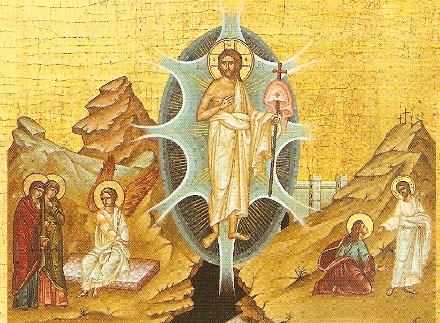
يصف الكتاب علي الاقل عشرة ظهورات مختلفة للمسيح، بين قيامته وصعوده. فقد ظهر: 1) لمريم المجدلية عند القبر (مر16: 9، يو20: 11- 18)، 2) للنساء علي الطريق (مت 28: 9، 10)، 3) لتلميذين منطلقين إلي عمواس (لو24: 13- 32)، 4) لبطرس (لو24: 34)، 5) لعشرة من التلاميذ لان توما كان غائباً (لو24: 36- 43، مر16: 14، يو20: 19- 25)، 6) بعد ثمانية ايام ظهر للاحد عشر حيث كان معهم توما (يو20: 26- 31)، 7) سبعة تلاميذ علي شاطئ بحر الجليل (يو21: – 25)[1].ومن القراءة لنصوص للعهد الجديد التي ذكرت حدث القيامة والظهورات نري ان التشديد علي قيامة يسوع في الاناجيل الاربعة ليس مُركزاً علي دليل واقعي للعالم غير المسيحي، بل علي تأثير هذه الحقيقة العجيبة علي تلاميذ يسوع المذهولين المبتهجين وعلي خوفهم وفرحهم، شكوكهم ويقينهم[2]. 

ولذلك يجب علي كل قارئ أن لا يُعثر من الاختلافات التي تبدو للوهلة الاولي في قصة القيامة، لأن الذي يتحدَّث عن القيامة إنما يتحدَّث عن أمور ليست تحت ضبط العقل والفكر والحواس والعين والتمييز البصري، فالقيامة بكل ظهوراتها وأقوالها وتسجيلاتها تمَّت بسبب انفتاح خاص في الوعي الروحي ليُرى ما لا يُرى، ولكل إنسان وعي خاص بإمكانيات خاصة، وكل وعي يختلف في القدرة والدقة والانفتاح والشمول عن الوعي الآخر، حتى أن القيامة نفسها يوجد من عاينها ويوجد مَنْ لم يعاينها لأنها تعتمد على قطبين:

الأول: إرادة المسيح في أن يُعلن أو لا يُعلن نفسه، وبوضوح كامل أو بوضوح أقل كما حصل لتلميذي عمواس.

والقطب الثاني: قدرة الذي يتلقَّى الاستعلان كما قلنا. لذلك يوجد مَنْ يحكي بإسهاب ومَنْ يحكي باختصار شديد، ومَنْ يقول كثيراً ومَنْ يقول قليلاً، ومَنْ يقول اثنين ومَنْ يقول بل واحداً. وهكذا فكل ما يخص القيامة لا يدخل تحت النقد أو الفحص أو التحقيق أو الإيضاح.

ولكن لمرَّة واحدة أراد المسيح حقـًّا وبالفعل أن يُدخل نفسه كيسوع المسيح القائم من الأموات لتحقيق التلاميذ العقلي والحسِّي والنظري حتى باللمس: (ما بالكم مضطربين، ولماذا تخطر أفكار في قلوبكم (شك)؟ انظروا يديَّ ورجليَّ (أثر المسامير): إني أنا هو (المصلوب). جسُّوني وانظروا فإن الروح ليس له لحم وعظام كما ترون لي (قيامة بالجسد كما كان). وحين قال لهم هذا أراهم يديه ورجليه. وبينما هم غير مصدِّقين من الفرح، ومتعجِّبون، قال لهم: أعندكم ههنا طعام؟ فناولوه جزءًا من سمكٍ مشويٍّ وشيئاً من شهد عسل. فأخذ وأكل قدَّامهم (ولكن ليس معناه أن في القيامة يأكلون ويشربون) «(لو 24: 38- 43)، » ثم قال لتوما هات إصبعك إلى هنا وأبصر يديَّ، وهات يدك وضعها في جنبي، ولا تكن غير مؤمنٍ بل مؤمناً. « (يو 27:20).

ويقرِّر العالِم بورنكام هكذا: [إن قيامة المسيح حقيقة تفوق الواقع التاريخي، ولا يستطيع التاريخ أن يفحص كيفيتها، ولكنه يتيقَّن من حدوثها كحقيقة أُومن بها بواسطة التلاميذ بيقين راسخ يسجِّله التاريخ، وبدونه لا يكون إنجيل ولا خبر ولا حرف في العهد الجديد. لأنه لا إيمان ولا كنيسة ولا عبادة ولا صلاة ولا مسيحية حتى هذا اليوم بدون قيامة يسوع المسيح من الأموات. وبالرغم من ذلك فإنه مستحيل أن نصل إلى قناعة عن فحص كيف تمَّت القيامة. وكل ما نعرفه أن القيامة كانت أعظم تدعيم وأعظم شهادة قدَّمها الله الآب لشخص يسوع المسيح إزاء رفض العالم له والشكوك الأُولى لتلاميذه[3]].

ولكن قد سبق أعلاه وأن شرحنا للقارئ لماذا هو عدم اليقين العقلي والحسِّي بمنتهى الوضوح. فالأمر يتخطَّى الإمكانيات البشرية ليدخل في الهبة البسيطة والعظمى التي أسكنها الله قلوب أولاده “الإيمان”!! فهو المسئول عن فتح وعي الإنسان لإدراك ما لا يُدرك:  آمن بالرب يسوع المسيح فتخلص أنت وأهل بيتك!  (أع 31:16)[4].

فالرؤية تتعلَّق بإمكانيات الانفتاح للوعي وهي موهبة لا يشترك في درجتها اثنان. لذلك لا ينبغي إطلاقاً عمل موازنات بين ما قيل وما رؤي وما سُمع بالنسبة للقيامة التي قامها المسيح. لذلك بكل وضوح لا نجد الجميع يشتركون في رواية بحذافيرها، فكل إنجيل يصف ما سمع أو رأى أو استلم من التقليد. بل والتقليد نفسه يستحيل أن يقدِّم حادثة واحدة من عدة زوايا الأناجيل الأربعة بنفس الكلام أو الوصف أو التأثر. وحتى قارئ الإنجيل أو مَنْ يسمعه بالنسبة للقيامة فهو يسمع ويفهم ويتحقَّق بقدر انفتاح وعيه ولا يشترك اثنان في تحقيق فعل واحد أخروي.

لذلك حينما ندخل إلى حقيقة القيامة نجد الأناجيل تقدِّم خبرات متعددة تشترك في حقيقة واحدة وهي قيامة المسيح من الأموات ولكن بلغة ووصف وتحقيق متعدد المستويات. ولكن تعدد الخبرات والرؤى والتحقيق يجمع في النهاية كل زوايا حقيقة قيامة الرب من بين الأموات في أكمل صورة لها دون الأخذ برواية وترك الأخرى[5].

ولا يجب ان نخلط النقد الفلسفي وهو من المفترض ان يكون مختصاً بالميتافيزيقا (اي ما وراء الطبيعة او العلوم الغير محسوسة او مدركة اومادية كتلك الخاصة بالاديان واللاهوت)، وبين النقد التاريخي، والذي يبحث بحيادية تاريخية عن الحدث مُقارناً إياه بأساليب البحث التاريخية للوصول إلي اقرب صورة للحقيقة، فبينما يري الفيلسوف قصتين بينهما اختلاف فيقول ان القصص المختلفة لا يمكن ان تعبر عن الحقيقة، فنجد المؤرخ عندما ينظر الي الروايات المتضاربة عن حدث تاريخي، يقول: اري بعض التضارب لكني الاحظ شيئاً فيها، انها جميعاً في التفاصيل الثانوية، لان هُناك جوهر أساسي اعتمدت عليه هذه القصص يمكن الاعتماد عليه وتصديقه مهما كانت التفاصيل الثانوية متناقضة[6].

فصحيح ان اكتشافات القبر الفارغ توصف بطرق مختلفة في الاناجيل المختلفة، لكن لو طبقنا نفس المعايير التي نطبقها علي اي مصادر ادبية قديمة اخري، فسنجد الادلة حاسمة ومقبولة لدرجة انها تستلزم الاستنتاج بأن القبر في الحقيقة وجد فارغاً[7].

ولعالم الاحياء التطوري د. ريتشارد داوكينز قول يجب ان نستخدمه هُنا، إذ هو أكثر تناسباً مع الآحداث التاريخية التي ذُكِرَت عرضاً في النصوص الدينية ومحاولاتنا لفهمها والبحث عن حقيقتها عن إستخدامه مع العلوم المعملية، فيقول: اننا مثل المُحققين الذين جائوا إلي مسرح الجريمة بعد إرتكابها. لقد تلاشت افعال المجرم في الماضي. ليس لدي المُحققق أمل في مشاهدة الجريمة الفعلية بعينيه الخاصة. علي أي حال، فما لدي المُحقق فعلياً هو الأثار التي بقيت، وهُناك مقدار عظيم من الثقة هنا. هُناك أثار اقدام، بصمات اصابع لطخات دم، رسائل، دفاتر يومية. وهذا هو السبيل لتحديد معالم تاريخ العالم وصولاً إلي الحاضر[8].

ولذلك فلا مجال ابداً للتشكيك في حدث القيامة ذاته نتيجة الإختلاف الظاهري بين الروايات الإنجيلية، فتكرار رروايات كثيرة حول حدث واحد يؤكد ان هذا الحدث حصل فعلاً، وهكذا يُنظر ايضاً إلي كل رواية تاريخية فمستحيل ان نجد رواية واحدة لم يختلف حولها المؤرخون، ومع ذلك فنجدهم جميعاً مُتفقين ان الحدث الذي يدور حوله جدلهم هذا قد حدث بالفعل وغير مقبول التشكيك في ذلك.

وكما قلنا هُناك صعوبة في ترتيب الأحداث، لأن كل إنجيل اٍنفرد بذكر بعض الأحداث دون الأخرى، والصعوبة لا تتصل بحقيقة القيامة ولكن في ترتيب الأحداث. والصعوبة تنشأ لو تصورنا أن الأحداث كلها حدثت في وقت واحد. ولكن:-

1- الأحداث لم تحدث كلها في وقت واحد.

2- نفس الحدث يراه كل إنجيلي ويرويه بطريقة مختلفة، ولكن الحقيقة واحدة[9].

فلا عجب إذاً من الاختلاف في القصص التي تسرد ما حدث يوم الاحد عند قيامة يسوع، فمشهد خلو المقبرة منه ورسل السماء يبدون ردود افعال مختلطة، والفرح والقلق والخوف والتعجب، وايضاً بعض التشويش عندما اسرع الناس لاخبار غيرهم، حيث قام احد الكتبة بتسجيل ما سمعه من شخص بينما كتب آخر ما سمعه من شخص آخر، ولكن الحقائق لا خلاف عليها، فكان القبر خالي ويسوع قام، وفي هذا الجزء سنلخص الاحداث وترتيبها كما امكن:

1- المشهد الاول يضم مجموعتين من النساء قد اتيا من اماكن متفرقة ومعهم العطر لمسح جسد يسوع، فالمجموعة الاولي تضم: (مريم المجدلية، ومريم ام يعقوب ويوسي، وسالومة ام الرسولين يعقوب ويوحنا)، والمجموعة الآخري تتكون من يونا وبعض الاصدقاء (مت28: 1، مر16: 1- 3، لو24: 1).

2- تصل القديسة مريم المجدلية وحدها وقبل الجميع بكثير. اما رفيقاتها، فتأخرن بسبب شراء الحنوط ولحقا بها حين بزوغ الشمس. الارض تزلزلت ونزل ملاك من السماء ورفع الحجر عن باب القبر. ولكن ق. يوحنا لا يذكر سوي القديسة الاشد حباً. فقد ابتدأت الجماعة سيرها ليلاً، وكان لكل من في الجماعة دوافعه، ولكل منهم درجة لشجاعته تختلف من واحد لآخر، والحب القوى يعطى دفعة للشجاعة الضعيفة. لذلك فغالباً بدأت الجماعة سيرها كمجموعة واحدة ولكنها سرعان ما أصبحت صفاً، ومع الإستمرار في السير ما لبثت أن تفرقت إلي مجموعات، في المقدمة مجموعة تكاد تركض ركضاً (حب قوى) وأخرى تلحق بها في عجلة وهكذا. وفي المجموعة الأولى كانت مريم المجدلية هذه التي أحبت كثيراً لأن المسيح غفر لها كثيراً (لو47:7). فالمجدلية ظلت بجانب القبر تراقب الدفن، وها هي أول من يصل، لذلك رأت الزلزلة وكل ما حدث لحظة القيامة، فإرتعبت ولم تستطع الكلام هي ومن معها.

3- تأخذ مريم المجدلية الدهشة والحيرة عند رؤيتها القبر مفتوحاً. تقدمت بسرعة نحو القبر وسعت مفتشة عن الجسد في البستان ولم تجد يسوعها، فارتبكت مريم المجدلية ودون ان تري ملاكاً او تسمع صوتاً تركت رفيقاتها وركضت الي بطرس ويوحنا تخبرهما بأن الجسد قد سُرق (يو20: 1- 2)، ولكن مريم وسالومة بقيا مكانهما، فرأيا ملاك يجلس عند الحجر خارج القبر، وملاك آخر داخل القبر وبمجرد سماع قيامة يسوع وانضمام تلاميذه في الجليل اسرع الجميع إلي المكان لينقلوا هذه الاخبار والفرحة تغمرهم (مت 28: 2- 7، مر16: 4- 8).

4- في الوقت نفسه هرع الجنود الرومانيون للكهنة ليخبروهم بما حدث، كان هؤلاء الكهنة ممن طلبوا وضع حراسة علي قبر يسوع حتي يمنعوا تابعيه من سرقة جسده، فقام الكهنة برشوة الحرس حتي يذيعوا خبر سرقة تلاميذ يسوع لجسده اثناء نوم الحرس، كان الكهنة في السابق يخشون ان يخدع تلاميذ يسوع الناس اما الآن فهم انفسهم من يخدع الناس (مت28: 11- 13، 27: 62- 66)، ولكن ان سمع بيلاطس بنوم حرسه اثناء خدمتهم سيقوم الكهنة بحمايتهم برشوة بيلاطس نفسه (مت28: 14- 15).

5- بالرجوع للقبر، فبعد دقائق قليلة من رحيل المجموعة الاولي من النساء اتت يونا واصدقاؤها ودخلن المقبرة فوجدن ملاكين لكن من الملائم اشد الملائمة لطبيعة الحال ان يُترك الكلام لواحد منهما، واستمعن لاخبار قيامة يسوع فأسرعن ليخبرن التلاميذ (لو24: 2- 8).

6- وبمجرد رحيل النساء اتي بطرس ويوحنا ودخلن المقبرة ورأيا القماش الذي لُفَّ به يسوع موضوع علي الارض، فأمنوا ان هذا دليل علي قيامة يسوع من موته، ولكنهما تركا القبر وهما في حيرة ولا يفهمانما هي اهمية هذا الحدث (يو20: 3- 10، لو24: 12). فلوقا يريد ان ينهي كلامه عن النسوة، قبل ان يبدأ التكلم عن بطرس، فالزيارة التي ينسبها الي بطرس هي اذاً عين الزيارة التي قام بها بطرس ويوحنا معاً.

7- بعد ان تغلبت النسوة القديسات علي هلعهن الاول عزمن اخيراً علي اعلان الخبر، ليس لاحد عشر فقط، بل لجميع التلاميذ، اما القديسة المجدلية فترجع اليه وفكرة ان اليهود اخذوا الجسد ليدنسوه بإلقائه خارج القبر تخالط عقلها. ورجعت المجدلية والتي كانت تتبع بطرس ويوحنا للقبر بعد رحيلهما ومكثت هُناك بمفردها وهي تبكي فرأت الملاكين بالداخل، ثم رأت رجلاً لم تتعرف عليه في الحال (مر16: 9، يو20: 11- 15)، وعندما اكتشفت انه يسوع امسكت به وكأنها لا تريده أن يرحل، فقال لها يسوع لا حاجة لك للإمساك بيهكذا فهو لن يصعد الآن للسماء (سيكون معهم لاسابيع قليلة)، ولا يجب عليها ان تعتمد علي حضوره المادي وإلا ستحبط ثانية، فعليها الذهاب لتلاميذه لتخبرهم بما قال لها (يو20: 16، 17).

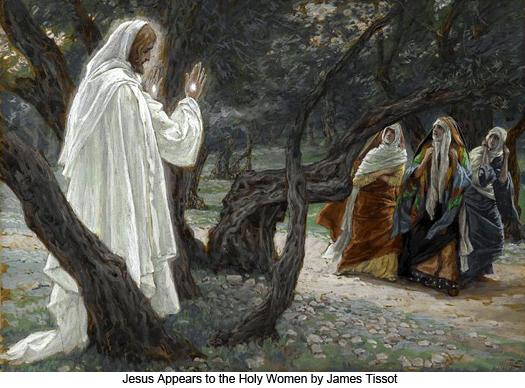
8- بعد فترة وجيزة جداً من مقابلته لمريم المجدلية ظهر يسوع لمجموعة النساء الآخريات (المريمات وسالومة)، وهن في طريقهن للتلاميذ ليخبروهن بما حدث (مت28: 8- 10).

9- مجموعتي النساء وصلتا لمنزل الرسل في نفس الوقت وتبعتهما مريم المجدلية حيث أخبرن الرسل بما حدث لهن في مقابلتين منفصلتين في آن واحد مع يسوع، ولكن الرسل لم يصدقوا أي من القصتين (مر16: 10- 11، لو24: 9- 11، يو20: 18).

وجميع هذه الاحداث المذكورة في التسع نقاط لم تتجاوز الساعة من الزمان بقليل[10].

 ــــــــــــــــــــــــــــــــــــــــــــــــــــــــــــــــــــــــ

[1] John Jr MacArthur, The MacArthur Study Bible, electronic ed. (Nashville: Word Pub., 1997, c1997), Lk 24:34.

[2] R. T. France, vol. 1, Matthew: An Introduction and Commentary, Tyndale New Testament Commentaries (Nottingham, England: Inter-Varsity Press, 1985), p. 411.

[3] Bruner, Frederick Dale, Matthew, A Commentary, 2 vols., Word Publishing, 1987, 1990. P. 1076.

[4] الاب متي المسكين، الانجيل بحسب متي، مت28: 5- 7 ص 819

[5] الاب متي المسكين، الانجيل بحسب مرقس، مر16: 5، ص 693

[6] وليم لين كريج، القضية المسيح، لي ستروبل، ص 288

[7] Michael Grant, Jesus: An Historians Review Of The Gospels, p. 176.

[8] The Greatest Show on The Earth-The Evidence for Evolution, ch 1, p. 15.

[9] آلام وقيامة السيد المسيح في الاناجيل الاربعة، الاب انطونيوس فكري، ص 259

[10] التفسير المُعاصر للكتاب المقدس، دون فليمنج، ص 639، 640، انظر ايضاً: آلام وقيامة السيد المسيح في الاناجيل الاربعة، الاب انطونيوس فكري، ص 259: 262.. و الازائية الإنجيلية، الابوان لاكرانج ولافيرن الدومنيكان، ص 304: 306.
  see also: John G. Butler, Jesus Christ: His Resurrection (Clinton, IA: LBC Publications, 2006), p. 327.

ترتيب ظهورات القيامة وتفسير التناقضات حول الظهورات | أ/ أمجد بشارة

Did Jesus Exist? Searching for Evidence Beyond the Bible

Lawrence Mykytiuk’s feature article from the January/February 2015 issue ofBAR with voluminous endnotes


I thought about following up with a similar article on people in the New Testament, but I soon realized that this would be so dominated by the question of Jesus’ existence that I needed to consider this question separately. This is that article:1

Did Jesus of Nazareth, who was called Christ, exist as a real human being, “the man Christ Jesus” according to 1 Timothy 2:5?

The sources normally discussed fall into three main categories: (1) classical (that is, Greco-Roman), (2) Jewish and (3) Christian. But when people ask whether it is possible to prove that Jesus of Nazareth actually existed, as John P. Meier pointed out decades ago, “The implication is that the Biblical evidence for Jesus is biased because it is encased in a theological text written by committed believers.2What they really want to know is: Is there extra-Biblical evidence … for Jesus’ existence?”c

Therefore, this article will cover classical and Jewish writings almost exclusively.3

Interested in learning about the birth of Jesus? Learn more about the history of Christmas and the date of Jesus’ birth in the free eBook The First Christmas: The Story of Jesus’ Birth in History and Tradition.

Tacitus’s last major work, titled Annals, written c. 116–117 C.E., includes a biography of Nero. In 64 C.E., during a fire in Rome, Nero was suspected of secretly ordering the burning of a part of town where he wanted to carry out a building project, so he tried to shift the blame to Christians. This was the occasion for Tacitus to mention Christians, whom he despised. This is what he wrote—the following excerpt is translated from Latin by Robert Van Voorst:

[N]either human effort nor the emperor’s generosity nor the placating of the gods ended the scandalous belief that the fire had been ordered [by Nero]. Therefore, to put down the rumor, Nero substituted as culprits and punished in the most unusual ways those hated for their shameful acts … whom the crowd called “Chrestians.” The founder of this name, Christ [Christus in Latin], had been executed in the reign of Tiberius by the procurator Pontius Pilate … Suppressed for a time, the deadly superstition erupted again not only in Judea, the origin of this evil, but also in the city [Rome], where all things horrible and shameful from everywhere come together and become popular.5

Tacitus’s terse statement about “Christus” clearly corroborates the New Testament on certain historical details of Jesus’ death. Tacitus presents four pieces of accurate knowledge about Jesus: (1) Christus, used by Tacitus to refer to Jesus, was one distinctive way by which some referred to him, even though Tacitus mistakenly took it for a personal name rather than an epithet or title; (2) this Christus was associated with the beginning of the movement of Christians, whose name originated from his; (3) he was executed by the Roman governor of Judea; and (4) the time of his death was during Pontius Pilate’s governorship of Judea, during the reign of Tiberius. (Many New Testament scholars date Jesus’ death to c. 29 C.E.; Pilate governed Judea in 26–36 C.E., while Tiberius was emperor 14–37 C.E.6)

Tacitus, like classical authors in general, does not reveal the source(s) he used. But this should not detract from our confidence in Tacitus’s assertions. Scholars generally disagree about what his sources were. Tacitus was certainly among Rome’s best historians—arguably the best of all—at the top of his game as a historian and never given to careless writing.

Earlier in his career, when Tacitus was Proconsul of Asia,7 he likely supervised trials, questioned people accused of being Christians and judged and punished those whom he found guilty, as his friend Pliny the Younger had done when he too was a provincial governor. Thus Tacitus stood a very good chance of becoming aware of information that he characteristically would have wanted to verify before accepting it as true.8

The other strong evidence that speaks directly about Jesus as a real person comes from Josephus, a Jewish priest who grew up as an aristocrat in first-century Palestine and ended up living in Rome, supported by the patronage of three successive emperors. In the early days of the first Jewish Revolt against Rome (66–70 C.E.), Josephus was a commander in Galilee but soon surrendered and became a prisoner of war. He then prophesied that his conqueror, the Roman commander Vespasian, would become emperor, and when this actually happened, Vespasian freed him. “From then on Josephus lived in Rome under the protection of the Flavians and there composed his historical and apologetic writings” (Gerd Theissen and Annette Merz).9 He even took the name Flavius, after the family name of his patron, the emperor Vespasian, and set it before his birth name, becoming, in true Roman style, Flavius Josephus. Most Jews viewed him as a despicable traitor. It was by command of Vespasian’s son Titus that a Roman army in 70 C.E. destroyed Jerusalem and burned the Temple, stealing its contents as spoils of war, which are partly portrayed in the imagery of their gloating triumph on the Arch of Titus in Rome.10 After Titus succeeded his father as emperor, Josephus accepted the son’s imperial patronage, as he did of Titus’s brother and successor, Domitian.

Yet in his own mind, Josephus remained a Jew both in his outlook and in his writings that extol Judaism. At the same time, by aligning himself with Roman emperors who were at that time the worst enemies of the Jewish people, he chose to ignore Jewish popular opinion.

Josephus stood in a unique position as a Jew who was secure in Roman imperial patronage and protection, eager to express pride in his Jewish heritage and yet personally independent of the Jewish community at large. Thus, in introducing Romans to Judaism, he felt free to write historical views for Roman consumption that were strongly at variance with rabbinic views.

The shorter of these two references to Jesus (in Book 20)11is incidental to identifying Jesus’ brother James,12 the leader of the church in Jerusalem. In the temporary absence of a Roman governor between Festus’s death and governor Albinus’s arrival in 62 C.E., the high priest Ananus instigated James’s execution. Josephus described it:

Being therefore this kind of person [i.e., a heartless Sadducee], Ananus, thinking that he had a favorable opportunity because Festus had died and Albinus was still on his way, called a meeting [literally, “sanhedrin”] of judges and brought into it the brother of Jesus-who-is-called-Messiah … James by name, and some others. He made the accusation that they had transgressed the law, and he handed them over to be stoned.13

James is otherwise a barely noticed, minor figure in Josephus’s lengthy tome. The sole reason for referring to James at all was that his death resulted in Ananus losing his position as high priest. James (Jacob) was a common Jewish name at this time. Many men named James are mentioned in Josephus’s works, so Josephus needed to specify which one he meant. The common custom of simply giving the father’s name (James, son of Joseph) would not work here, because James’s father’s name was also very common. Therefore Josephus identified this James by reference to his famous brother Jesus. But James’s brother Jesus (Yehoshua) also had a very common name. Josephus mentions at least 12 other men named Jesus.14 Therefore Josephus specified which Jesus he was referring to by adding the phrase “who is called Messiah,” or, since he was writing in Greek,Christos.15 This phrase was necessary to identify clearly first Jesus and, via Jesus, James, the subject of the discussion. This extraneous reference to Jesus would have made no sense if Jesus had not been a real person.


This phrase—“who is called Christ”—is very unlikely to have been added by a Christian for two reasons. First, in the New Testament and in the early Church Fathers of the first two centuries C.E., Christians consistently refer to James as “the brother of the Lord” or “of the Savior” and similar terms, not “the brother of Jesus,” presumably because the name Jesus was very common and did not necessarily refer to their Lord. Second, Josephus’s description in Jewish Antiquities of how and when James was executed disagrees with Christian tradition, likewise implying a non-Christian author.18

This short identification of James by the title that some people used in order to specify his brother gains credibility as an affirmation of Jesus’ existence because the passage is not about Jesus. Rather, his name appears in a functional phrase that is called for by the sense of the passage. It can only be useful for the identification of James if it is a reference to a real person, namely, “Jesus who is called Christ.”

This clear reference to Jesus is sometimes overlooked in debates about Josephus’s other, longer reference to Jesus (to be treated next). Quite a few people are aware of the questions and doubts regarding the longer mention of Jesus, but often this other clear, simple reference and its strength as evidence for Jesus’ existence does not receive due attention.

The longer passage in Josephus’s Jewish Antiquities (Book 18)19 that refers to Jesus is known as theTestimonium Flavianum.

If it has any value in relation to the question of Jesus’ existence, it counts as additional evidence for Jesus’ existence. The Testimonium Flavianum reads as follows; the parts that are especially suspicious because they sound Christian are in italics:20

Around this time there lived Jesus, a wise man, if indeed one ought to call him a man.21 For he was one who did surprising deeds, and a teacher of such people as accept the truth gladly. He won over many Jews and many of the Greeks. He was the Messiah. When Pilate, upon hearing him accused by men of the highest standing among us, had condemned him to be crucified, those who in the first place came to love him did not give up their affection for him,for on the third day, he appeared to them restored to life. The prophets of God had prophesied this and countless other marvelous things about him. And the tribe of Christians, so called after him, have still to this day not died out.22

All surviving manuscripts of the Testimonium Flavianum that are in Greek, like the original, contain the same version of this passage, with no significant differences.

The main question is: Did Flavius Josephus write this entire report about Jesus and his followers, or did a forger or forgers alter it or possibly insert the whole report?23 There are three ways to answer this question:24

Alternative 1: The whole passage is authentic, written by Josephus.

Alternative 2: The whole passage is a forgery, inserted into Jewish Antiquities.

Alternative 3: It is only partly authentic, containing some material from Josephus, but also
some later additions by another hand(s).

Regarding Alternative 1, today almost no scholar accepts the authenticity of the entire standard Greek Testimonium Flavianum. In contrast to the obviously Christian statement “He was the Messiah” in the Testimonium, Josephus elsewhere “writes as a passionate advocate of Judaism,” says Josephus expert Steve Mason. “Everywhere Josephus praises the excellent constitution of the Jews, codified by Moses, and declares its peerless, comprehensive qualities … Josephus rejoices over converts to Judaism. In all this, there is not the slightest hint of any belief in Jesus”25 as seems to be reflected in the Testimonium.

The bold affirmation of Jesus as Messiah reads as a resounding Christian confession that echoes St. Peter himself!26 It cannot be Josephus. Alternative 1 is clearly out.

Regarding Alternative 2—the whole Testimonium Flavianum is a forgery—this is very unlikely. What is said, and the expressions in Greek that are used to say it, despite a few words that don’t seem characteristic of Josephus, generally fit much better with Josephus’s writings than with Christian writings.27 It is hypothetically possible that a forger could have learned to imitate Josephus’s style or that a reviser adjusted the passage to that style, but such a deep level of attention, based on an extensive, detailed reading of Josephus’s works and such a meticulous adoption of his vocabulary and style, goes far beyond what a forger or a reviser would need to do.

Even more important, the short passage (treated above) that mentions Jesus in order to identify James appears in a later section of the book (Book 20) and implies that Jesus was mentioned previously.


Alternative 3—that the Testimonium Flavianum is based on an original report by Josephus29 that has been modified by others, probably Christian scribes, seems most likely. After extracting what appear to be Christian additions, the remaining text appears to be pure Josephus. As a Romanized Jew, Josephus would not have presented these beliefs as his own. Interestingly, in three openly Christian, non-Greek versions of the Testimonium Flavianum analyzed by Steve Mason, variations indicate changes were made by others besides Josephus.30 The Latin version says Jesus “was believed to be the Messiah.” The Syriac version is best translated, “He was thought to be the Messiah.” And the Arabic version with open coyness suggests, “He was perhaps the Messiah concerning whom the prophets have recounted wonders.” Alternative 3 has the support of the overwhelming majority of scholars.

We can learn quite a bit about Jesus from Tacitus and Josephus, two famous historians who were not Christian. Almost all the following statements about Jesus, which are asserted in the New Testament, are corroborated or confirmed by the relevant passages in Tacitus and Josephus. These independent historical sources—one a non-Christian Roman and the other Jewish—confirm what we are told in the Gospels:31

1. He existed as a man. The historian Josephus grew up in a priestly family in first-century Palestine and wrote only decades after Jesus’ death. Jesus’ known associates, such as Jesus’ brother James, were his contemporaries. The historical and cultural context was second nature to Josephus. “If any Jewish writer were ever in a position to know about the non-existence of Jesus, it would have been Josephus. His implicit affirmation of the existence of Jesus has been, and still is, the most significant obstacle for those who argue that the extra-Biblical evidence is not probative on this point,” Robert Van Voorst observes.32 And Tacitus was careful enough not to report real executions of nonexistent people.

2. His personal name was Jesus, as Josephus informs us.

3. He was called Christos in Greek, which is a translation of the Hebrew word Messiah, both of which mean “anointed” or “(the) anointed one,” as Josephus states and Tacitus implies, unaware, by reporting, as Romans thought, that his name was Christus.

4. He had a brother named James (Jacob), as Josephus reports.

5. He won over both Jews and “Greeks” (i.e., Gentiles of Hellenistic culture), according to Josephus, although it is anachronistic to say that they were “many” at the end of his life. Large growth
in the number of Jesus’ actual followers came only after his death.

6. Jewish leaders of the day expressed unfavorable opinions about him, at least according to some versions of the Testimonium Flavianum.

7. Pilate rendered the decision that he should be executed, as both Tacitus and Josephus state.

8. His execution was specifically by crucifixion, according to Josephus.

9. He was executed during Pontius Pilate’s governorship over Judea (26–36 C.E.), as Josephus implies and Tacitus states, adding that it was during Tiberius’s reign.

Some of Jesus’ followers did not abandon their personal loyalty to him even after his crucifixion but submitted to his teaching. They believed that Jesus later appeared to them alive in accordance with prophecies, most likely those found in the Hebrew Bible. A well-attested link between Jesus and Christians is that Christ, as a term used to identify Jesus, became the basis of the term used to identify his followers: Christians. The Christian movement began in Judea, according to Tacitus. Josephus observes that it continued during the first century. Tacitus deplores the fact that during the second century it had spread as far as Rome.

As far as we know, no ancient person ever seriously argued that Jesus did not exist.33 Referring to the first several centuries C.E., even a scholar as cautious and thorough as Robert Van Voorst freely observes, “… [N]o pagans and Jews who opposed Christianity denied Jesus’ historicity or even questioned it.”34

Nondenial of Jesus’ existence is particularly notable in rabbinic writings of those first several centuries C.E.: “… [I]f anyone in the ancient world had a reason to dislike the Christian faith, it was the rabbis. To argue successfully that Jesus never existed but was a creation of early Christians would have been the most effective polemic against Christianity … [Yet] all Jewish sources treated Jesus as a fully historical person … [T]he rabbis … used the real events of Jesus’ life against him” (Van Voorst).35

Thus his birth, ministry and death occasioned claims that his birth was illegitimate and that he performed miracles by evil magic, encouraged apostasy and was justly executed for his own sins. But they do not deny his existence.36


It was then that he learned the marvelous wisdom of the Christians, by associating with their priests and scribes in Palestine. And— what else?—in short order he made them look like children, for he was a prophet, cult leader, head of the congregation and everything, all by himself. He interpreted and explained some of their books, and wrote many himself. They revered him as a god, used him as a lawgiver, and set him down as a protector—to be sure, after that other whom they still worship, the man who was crucified in Palestine because he introduced this new cult into the world.37

For having convinced themselves that they are going to be immortal and live forever, the poor wretches despise death and most even willingly give themselves up. Furthermore, their first lawgiver persuaded them that they are all brothers of one another after they have transgressed once for all by denying the Greek gods and by worshiping that crucified sophist himself and living according to his laws.38

Although Lucian was aware of the Christians’ “books” (some of which might have been parts of the New Testament), his many bits of misinformation make it seem very likely that he did not read them. The compound term “priests and scribes,” for example, seems to have been borrowed from Judaism, and indeed, Christianity and Judaism were sometimes confused among classical authors.

Lucian seems to have gathered all of his information from sources independent of the New Testament and other Christian writings. For this reason, this writing of his is usually valued as independent evidence for the existence of Jesus.

This is true despite his ridicule and contempt for Christians and their “crucified sophist.” “Sophist” was a derisive term used for cheats or for teachers who only taught for money. Lucian despised Christians for worshiping someone thought to be a criminal worthy of death and especially despised “the man who was crucified.”

▸ Celsus, the Platonist philosopher, considered Jesus to be a magician who made exorbitant claims.39

▸ Pliny the Younger, a Roman governor and friend of Tacitus, wrote about early Christian worship of Christ “as to a god.”40

▸ Suetonius, a Roman writer, lawyer and historian, wrote of riots in 49 C.E. among Jews in Rome which might have been about Christus but which he thought were incited by “the instigator Chrestus,” whose identification with Jesus is not completely certain.41

▸ Mara bar Serapion, a prisoner of war held by the Romans, wrote a letter to his son that described “the wise Jewish king” in a way that seems to indicate Jesus but does not specify his identity.42

Other documentary sources are doubtful or irrelevant.43

One can label the evidence treated above as documentary (sometimes called literary) or as archaeological. Almost all sources covered above exist in the form of documents that have been copied and preserved over the course of many centuries, rather than excavated in archaeological digs. Therefore, although some writers call them archaeological evidence, I prefer to say that these truly ancient texts are ancient documentary sources, rather than archaeological discoveries.

Some ossuaries (bone boxes) have come to light that are inscribed simply with the name Jesus (Yeshu or Yeshua‘ in Hebrew), but no one suggests that this was Jesus of Nazareth. The name Jesus was very common at this time, as was Joseph. So as far as we know, these ordinary ossuaries have nothing to do with the New Testament Jesus. Even the ossuary from the East Talpiot district of Jerusalem, whose inscription is translated “Yeshua‘, son of Joseph,” does not refer to him.44

As for the famous James ossuary first published in 2002,d whose inscription is translated “Jacob, son of Joseph, brother of Yeshua‘,” more smoothly rendered, “James, son of Joseph, brother of Jesus,” it is unprovenanced, and it will likely take decades to settle the matter of whether it is authentic. Following well established, sound methodology, I do not base conclusions on materials whose authenticity is uncertain, because they might be forged.45 Therefore the James ossuary, which is treated in many other publications, is not included here.46

As a final observation: In New Testament scholarship generally, a number of specialists consider the question of whether Jesus existed to have been finally and conclusively settled in the affirmative. A few vocal scholars, however, still deny that he ever lived.47


Notes:

a. Lawrence Mykytiuk, “Archaeology Confirms 50 Real People in the Bible,” BAR, March/April 2014.

b. See biblicalarchaeology.org/50.

c. John P. Meier, “The Testimonium,” Bible Review, June 1991.

d. See André Lemaire, “Burial Box of James the Brother of Jesus,” BAR, November/December 2002; Hershel Shanks, “‘Brother of Jesus’ Inscription Is Authentic!” BAR, July/August 2012.

1. I gratefully dedicate this article to my brother, Thomas S. Mykytiuk, to the memory of his wife, Nancy E. Mykytiuk, and to their growing tribe of descendants. I wish to thank Dr. Stuart D. Robertson of Purdue University, a Josephus scholar who studied under the great Louis H. Feldman, for kindly offering his comments on an early draft of this article. As the sole author, I alone am responsible for all of this article’s errors and shortcomings.

The previous BAR article is supplemented by two more persons, officials of Nebuchadnezzar II, mentioned in the “Queries and Comments” section, BAR, July/August 2014, bringing the actual total to 52. That previous article is based on my own research, because few other researchers had worked toward the twin goals I sought: first, developing the necessary methodology, and second, applying that methodology comprehensively to archaeological materials that relate to the Hebrew Bible. In contrast, this article treats an area that has already been thoroughly researched, so I have gleaned material from the best results previously obtained (may the reader pardon the many quotations).

Another contrast is that the challenge in the research that led to the previous article was to determine whether the inscriptions (down to 400 B.C.E.) actually referred to the Biblical figure. In the present article, most of the documents very clearly refer to the Jesus of the New Testament. Only in relatively few instances, such as some rabbinic texts, is the reference very unclear. The challenge in this article has been to evaluate the relative strength of the documents about Jesus as evidence, while keeping in mind whether they are independent of the New Testament.

2. Of course, the New Testament is actually a small library of texts, as is the Hebrew Bible.

3. Because Meier only covered writings of the Jewish historian Flavius Josephus, his article stays within the first century. This article covers writings that originated in the first several centuries C.E. These non-Christian sources deserve to be welcomed and examined by anyone interested in the historical aspect of Scripture. At the same time, Christian sources found in the New Testament and outside of it have great value as historical evidence and are not to be discounted or dismissed.

The Gospels, for example, are loosely parallel to writings by members of a Prime Minister’s or President’s cabinet, in that they are valuable for the firsthand information they provide from inner circles (F. F. Bruce, Jesus and Christian Origins Outside the New Testament, Knowing Christianity [London: Hodder & Stoughton, 1974], pp. 14–15). While allowance must be made for human limitations (at least lack of omniscience) and bias (such as loyalty to a particular person or deity), no good historian would completely discard them.

An example that is more to the point is Bart D. Ehrman’s strong affirmation of Jesus’ existence in his Did Jesus Exist? (New York: HarperOne, 2012), pp. 142–174. It is based on New Testament data and is noteworthy for its down-to-earth perception. Ehrman bases his conclusion that Jesus existed on two facts: first, that the apostle Paul was personally acquainted with Jesus’ brother James and with the apostle Peter; and second, that, contrary to Jewish messianic expectation of the day, Jesus was crucified (Did Jesus Exist?, p. 173).

In the last analysis, all evidence from all sources must be considered. Both Biblical and non-Biblical sources “are in principle of equal value in the study of Jesus” (Gerd Theissen and Annette Merz, The Historical Jesus: A Comprehensive Guide [Minneapolis: Fortress, 1998], p. 23). An excellent, up-to-date resource on both Christian and non-Christian sources is Craig A. Evans, ed., Encyclopedia of the Historical Jesus (New York: Routledge, 2008).

4. “As Norma Miller delightfully remarks, ‘The well-intentioned pagan glossers of ancient texts do not normally express themselves in Tacitean Latin,’ and the same could be said of Christian interpolators” (Norma P. Miller, Tacitus: Annals XV [London: Macmillan, 1971], p. xxviii, quoted in Robert E. Van Voorst, Jesus Outside the New Testament: An Introduction to the Ancient Evidence[Grand Rapids, MI: Eerdmans, 2000], p. 43).

5. Annals XV.44, as translated in Van Voorst, Jesus Outside, pp. 42–43. Instead of the better-documented reading, “Chrestians,” the word “Christians” appears in a more traditional translation by Alfred J. Church and William J. Brodribb, Annals of Tacitus (London: Macmillan, 1882), pp. 304–305, and in an even earlier edition, which appears atwww.princeton.edu/~achaney/tmve/wiki100k/docs/Tacitus_on_Christ.html.

6. Along with these corroborations, Tacitus’s statement also contains difficulties that might cause concern. Three that I consider the most important are treated in this note. Although debates will continue, proper use of historical background offers reasonable, tenable solutions that we may hold with confidence while remaining open to new evidence and new interpretations if they are better. Every approach has difficulties to explain. I prefer those that come with this article’s approach, because I consider them smaller and more easily resolved than the problems of other approaches.

First, it is common for scholars to observe that Pontius Pilate’s official title when he governed Judaea (26/27–36 C.E.) was not procurator, as in the quotation from Tacitus above, but praefectus(in Latin, literally, “placed in charge”; in English, prefect), as stated on the “Pilate stone” discovered in 1961. This stone was lying in the ruins of the theater in the ancient city of Caesarea Maritima, on Israel’s northern seacoast. The stone had been trimmed down to be re-used twice, so the first part of the title is broken off, but the title is not in doubt. With square brackets marking missing letters that scholars have filled in, two of its four lines read “[Po]ntius Pilate . . . [Pref]ect of Juda[ea]”:

line 2 […PO]NTIUS PILATUS
line 3 […PRAEF]ECTUS IUDA[EA]E

The inscription could potentially be dated to any time in Pilate’s career, but a date between 31 and 36 C.E. seems most likely. See Clayton Miles Lehmann and Kenneth G. Holum, The Greek and Latin Inscriptions of Caesarea Maritima, Joint Expedition to Caesarea Excavation Reports V (Boston: American Schools of Oriental Research, 2000), pp. 67–70, no. 43, p. 249 Pl. XXVI.

The family name Pontius was common in some parts of Italy during that era, but the name Pilatuswas “extremely rare” (A. N. Sherwin-White, “Pilate, Pontius,” in International Standard Bible Encyclopedia, vol. 3 [Grand Rapids, MI: Eerdmans, 1986], p. 867). Because of the rarity of the name Pilatus and because only one Pontius Pilatus was ever the Roman governor of Judea, this identification should be regarded as completely certain.

It is possible that “procurator” in the quotation above is a simple error, but the historical background reveals that it is not so much an error as it is an anachronism—something placed out of its proper time, whether intentionally or by accident. As emperor until 14 C.E., Augustus gave governors of western and southern Judea the title praefectus. But later, Claudius (r. 41–54 C.E.) began conferring the title procurator pro legato, “procurator acting as legate” on new provincial governors. A procurator, literally, “caretaker,” was a steward who managed financial affairs on behalf of the owner. Roman governmental procurators managed taxes and estates on behalf of the emperor and had administrative duties. The English verb to procure is derived from the same root.

From then on, the title procurator replaced praefectus in many Roman provinces, including Judea. “So the early governors of western and southern Judea, after it became a Roman province in A.D. 6, were officially entitled praefecti. Later writers, however, usually referred to them anachronistically as procurators or the Greek equivalent …” (A. N. Sherwin-White, “Procurator,” in International Standard Bible Encyclopedia, p. 979.)

Writing in 116 or 117 C.E., Tacitus, who was above all a careful writer, might have intentionally chosen to use the then-current title procurator in keeping with the anachronistic way of speaking that was common in his day. Even today, we accept titles used anachronistically. One might read comparable statements about “U.S. Secretaries of Defense from Henry Stimson during World War II to Chuck Hagel,” even though Stimson’s actual title was Secretary of War, and the current title is Secretary of Defense. Readers who are unfamiliar with Stimson’s title would nevertheless understand which position he held in the government.

Whether procurator was used intentionally or not, in effect this anachronistic term helped readers quickly understand Pilate’s official position and avoided confusing people who were not familiar with the older title.

The second difficulty is that Tacitus’s word for “Christians” is spelled two different ways in existing Latin manuscripts of Annals: both Christianoi and Chrestianoi. The name Chrestus, meaning “good, kind, useful, beneficent,” was commonly given to slaves who served Roman masters. In spoken conversation, people in Rome could easily have mistakenly heard the Latinized foreign wordChristus as the familiar name Chrestus. Chrestianoi, “good, kind, useful ones,” is found in the oldest surviving manuscript of this passage in Tacitus.

[T]he original hand of the oldest surviving manuscript, the Second Medicean (eleventh century), which is almost certainly the source of all other surviving manuscripts, readsChrestianoi, “Chrestians.” A marginal gloss “corrects” it to Christianoi. Chrestianoi is to be preferred as the earliest and most difficult reading and is adopted by the three current critical editions and the recent scholarship utilizing them. It also makes better sense in context. Tacitus is correcting, in a way typical of his style of economy, the misunderstanding of the “crowd” (vulgus) by stating that the founder of this name (auctor nominis eius) is Christus, not the name implicitly given by the crowd, Chrestus. Tacitus could have written auctor superstitionis, “the founder of this superstition,” or something similar, but he calls attention by his somewhat unusual phrase to the nomen [name] of the movement in order to link it directly—and correctly—to the name of Christ (Van Voorst, Jesus Outside, pp. 43–44. See also John P. Meier, A Marginal Jew: Rethinking the Historical Jesus, vol. 1: The Roots of the Problem and the Person, Anchor Bible Reference Library [New York: Doubleday, 1991], p. 100, note 7.).

It is very common for ancient classical writings to be represented by manuscripts that were copied many centuries later. For example, the earliest manuscript of the Odyssey is from the 900s C.E., yet it is traditionally ascribed to the blind Greek poet Homer, who is dated variously from about the 800s to the 500s B.C.E., roughly 1,400 to 1,700 years earlier. Similarly, it is not unusual for the earliest surviving manuscripts of various works of the Greek philosopher Plato to date from over 1,000 years after he wrote.

For a technical, critical discussion of Christus and Chrestus in English, see Robert Renahan, “Christus or Chrestus in Tacitus?” Past and Present 23 (1968), pp. 368–370.

The third difficulty is more apparent than real: Why did it take about 85 years for a classical author such as Tacitus to write about Jesus, whose crucifixion occurred c. 29 C.E.? (The A.D. system, devised by the Christian Scythian monk Dionysius Exiguus [“Dennis the Small”] in the 525 C.E. and used in our present-day calendar, was not perfectly set on the exact year of Jesus’ birth, though it was close. As a result, Jesus was born within the years we now refer to as 6 to 4 B.C.E. That would put the beginning of his ministry, around age 30 (Luke 3:23), at c. 25 C.E. In the widely held view that Jesus’ ministry lasted 3.5 years before his death, a reasonable date for the crucifixion is c. 29 C.E.)

The following two observations made by F. F. Bruce are relevant to works by Tacitus and by several other classical writers who mention Jesus:

1. Surprisingly few classical writings, comparatively speaking, survive from the period of about the first 50 years of the Christian church (c. 29 to 80 C.E.). (Bruce, Jesus and Christian Origins, p. 17.)

2. Roman civilization paid almost no attention to obscure religious leaders in faraway places, such as Jesus in Judea—just as today’s Western nations pay almost no attention to religious leaders in remote parts of the world, unless the national interest is involved. Rome became concerned only when Christians grew numerous. (Bruce, Jesus and Christian Origins, pp. 17–18. For thorough discussion, see Van Voorst, Jesus Outside, pp. 68–71.)

A time factor that affects Tacitus in particular is:

3. In the Annals, the reference to Jesus appears only in connection with the cruel treatment of Christians in Rome by Nero, as part of a biography of Nero (d. 68 C.E.). By happenstance, Tacitus did not get around to composing Nero’s biography until the last group of narratives he wrote before he died. A writer for most of his life, Tacitus began with works on oratory, ethnography of German tribes and other subjects. His book Histories, written c. 100–110, which covers the reigns of later Roman emperors after Nero, was actually written before his book Annals, which covers the earlier reigns of Tiberius, Caligula, Claudius and Nero. Thus Tacitus wrote his biography of Nero at the end of his career.

7. Asia was the name of a Roman province in what is now western Turkey (Asia Minor).

8. Perhaps he compared it to Roman records, whether in general governmental archives or in records concerning various religions. I have read one analysis by an author who arbitrarily assumes that Tacitus got his information only from Christians—no other source. Then, on the sole basis of the author’s own assumption, the analysis completely dismisses Tacitus’s clear historical statement about “Christus.” This evaluation is based on opinion, not evidence. It also undervalues Tacitus’s very careful writing and his discernment as a historian. He likely had access to some archives through his status, either as Proconsul of Asia, as a senator—or, as is often overlooked, from his connections as a high-ranking priest of Roman religion. In 88 C.E., he became “a member of the Quindecimviri Sacris Faciundis [“The Board of Fifteen for Performing Sacrifices”], the priestly organization charged, among other things, with … supervising the practice of officially tolerated foreign cults in the city … [and facing] the growing necessity to distinguish illicit Christianity from licit Judaism” (Van Voorst, Jesus Outside, p. 52), or, given Jewish resistance to oppressive measures taken by Rome, at least to keep a close watch on developments within Judaism. Indeed, “a Roman archive … is particularly suggested by the note of the temporary suppression of the superstition, which indicates an official perspective” (Theissen and Merz, Historical Jesus, p. 83). Membership in this priestly regulatory group very likely gave Tacitus access to at least some of the accurate knowledge he possessed about Christus. With characteristic brevity, he reported the facts as he understood them, quickly dismissing the despised, executed Christus from the Annals (see Meier,Marginal Jew, vol. 1, p. 90).

Tacitus himself tells us … that in 88 [C.E.] both in his capacity as priest of the college ofquindecimviri sacris faciundis and as a praetor he had been present at and had paid close attention to the ludi saeculares [“secular games”] celebrated by Domitian in that year… [Annals, XI.11, 3–4]. It rather sounds as if he took his religious office seriously …

Tacitus presents himself as a man concerned to preserve traditional Roman religious practice, convinced that when religious matters are allowed to slide or are completely disregarded, the gods will vent their anger on the Roman people to correct their error. What on his view angers the gods is not so much failure to observe the niceties of ritual practice, as disdain for the moral order that the gods uphold” (Matthew W. Dickie, “Magic in the Roman Historians,” in Richard Lindsay Gordon and Francisco Marco Simón, eds., Magical Practice in the Latin West: Papers from the International Conference Held at the University of Zaragoza, 30 Sept. – 1st Oct. 2005, Religions in the Greco-Roman World, vol. 168 [Leiden: Brill, 2010], pp. 82, 83).

Tacitus was in his twenties in 79 C.E., when an eruption of Mt. Vesuvius annihilated the city of Pompeii. One can reasonably suppose how he might have interpreted this disaster in relation to the Roman gods.

9. Quoted from Theissen and Merz, Historical Jesus, p. 64.

10. Titus’s troops captured and treated as war booty the sacred menorah that had stood in the holy place inside the Temple. See articles on the menorah as depicted on the Arch of Titus, in Yeshiva University’s Arch of Titus Digital Restoration Project, etc., atyeshiva.academia.edu/StevenFine/Menorah-Arch-of-Titus-Digital-Restoration-Project.

11. Jewish Antiquities, XX.200 (or, in Whiston’s translation of Jewish Antiquities, XX.9.1).

12. James’s name was actually Jacob. Odd as it may seem, the English name James is ultimately derived from the Hebrew name Jacob.

13. Jewish Antiquities, XX.9.1 in Whiston’s translation (§200 in scholarly editions), as translated by Meier, Marginal Jew, vol. 1, p. 57. Meier’s original passage includes the phrases in square brackets [ ]. The omitted words indicated by the ellipsis (…) are in Greek, to let scholars know what words are translated into English.

14. Winter asserts that Josephus mentions about twelve others named Jesus. Feldman puts that number at 21. See Paul Winter, “Excursus II: Josephus on Jesus and James: Ant. xviii 3, 3 (63–64) and xx 9,1 (200–203),” in Emil Schürer, The History of the Jewish People in the Age of Jesus Christ, 3 vols., rev. and ed. by Geza Vermes, Fergus Millar, Matthew Black and Martin Goodman (Edinburgh: Clark, 1973–1987), vol. 1, p. 431; Louis H. Feldman, “Introduction,” in Louis H. Feldman and Gohei Hata, eds., Josephus, Judaism, and Christianity (Detroit: Wayne State Univ. Press, 1987), p. 56.

15. See Meier, Marginal Jew, vol. 1, pp. 57–58. Messiah, the Hebrew term for “anointed (one),” came through Greek translation (Christos) into English as Christ.

16. See Meier, Marginal Jew, vol. 1, p. 59, note 12; pp. 72–73, note 12.

17. Richard T. France, The Evidence for Jesus, The Jesus Library (London: Hodder and Stoughton, 1986), p. 26.

18. Josephus says James was executed by stoning before the Jewish War began, but Christian tradition says he was executed during the Jewish War by being thrown from a height of the Temple, then, after an attempt to stone him was prevented, finally being clubbed to death. See Meier,Marginal Jew, vol. 1, p. 58.

19. XVIII.63–64 (in Whiston’s translation: XVIII.3.1).

20. It was modern scholar John P. Meier who put these passages in italics.

21. Christians believe that Jesus was fully human, but also fully Divine, having two natures in one person. To refer to him as “a wise man,” as the earlier part of the sentence does, would seem incomplete to a Christian. This clause seems intended to lead toward the two boldly Christian statements that come later.

22. This straightforward translation from Greek, in which I have italicized three phrases, is by Theissen and Merz, Historical Jesus, pp. 65–66.

In his Bible Review article (Meier, “The Testimonium,” Bible Review, June 1991, p. 23), John P. Meier subtracts these three apparently Christian portions from the Testimonium. What remains is a very plausible suggestion, possibly the authentic, smoothly flowing report written by Flavius Josephus—or very close to it. Here is the remainder:

Around this time there lived Jesus, a wise man. For he was one who did surprising deeds, and a teacher of such people as accept the truth gladly. He won over many Jews and many of the Greeks. When Pilate, upon hearing him accused by men of the highest standing among us, had condemned him to be crucified, those who in the first place came to love him did not give up their affection for him. And the tribe of Christians, so called after him, have still to this day not died out (Theissen and Merz, Historical Jesus, pp. 65–66, after deleting the apparent Christian additions as Meier would).

23. Regarding differing religious convictions of readers that have generated disagreements about this passage at least since medieval times, see Alice Whealey, Josephus on Jesus: The Testimonium Flavianum Controversy from Late Antiquity to Modern Times, Studies in Biblical Literature, vol. 36 (New York: Peter Lang, 2003). Whealey’s observations in her conclusion, pp. 203–207, may be summarized as follows:

In the High Middle Ages (c. 1050–1350), Jewish scholars claimed it was a Christian forgery that was inserted into Josephus’s text, and Christians simply claimed it was entirely authentic. The problem was that with few exceptions, both sides argued from a priori assumptions with no critical examination of evidence. In the late 1500s and the 1600s, some Protestant scholars made the public charge of forgery. By the mid-1700s, based on textual evidence, scholarly opinion had rejected the authenticity of the Testimonium Flavianum and the controversy largely ended for over two centuries.

Twentieth-century scholars, however, revived the controversy on the basis of “new” variations of the text and whole works from ancient times that had been overlooked. Instead of the generally Protestant character of the earlier controversy, the controversy that began in the twentieth century is “more academic and less sectarian … marked by the presence of Jewish scholars for the first time as prominent participants on both sides of the question, and in general the attitudes of Protestant, Roman Catholic, Jewish, and secular scholars towards the text have drawn closer together” (p. 206).

24. Theissen and Merz, Historical Jesus, p. 65–69. Meier, “The Testimonium,” Bible Review, June 1991, gives the third answer.

25. Steve Mason, Josephus and the New Testament, 2nd ed. (Peabody, MA: Hendrickson, 2003), p. 229.

26. Matthew 16:16; Mark 8:29; Luke 9:20.

27. According to Theissen and Merz, Historical Jesus, pp. 66–67, unless otherwise noted, these phrases that are characteristic of Josephus include: 1) Calling Jesus “a wise man” and calling his miracles “surprising deeds”; 2) Use of one of Josephus’s favorite phrases, “accept the truth gladly,” that in the “gladly” part includes the Greek word for “pleasure” which for Christian writers of this era, as a rule, had a bad connotation; 3) The reference to attracting “many of the Greeks” (meaning Hellenistic Gentiles), which fits better with Rome in Josephus’s time than with the references to Gentiles in the Gospels, which are few (such as John 12:20–22). On the style being that of Josephus, see also Van Voorst, Jesus Outside, pp. 89–91; 4) “The execution of Jesus by Pilate on the denunciation of the Jewish authorities shows acquaintance with legal conditions in Judaea and contradicts the tendency of the Christian reports of the trial of Jesus, which incriminate the Jews but play down Pilate’s responsibility” (Theissen and Merz, Historical Jesus, p. 67); 5) Calling Christians a “tribe” tends to show a Jewish perspective.

28. On whether the Testimonium Flavianum interrupts the structure of its literary context, see Theissen and Merz, Historical Jesus, pp. 67–68, under “The interpolation hypothesis.” They describe E. Norden’s analysis (in German) of the context in Jewish Antiquities. Also see France,Evidence for Jesus, pp. 27–28, which mentions that Josephus’s typical sequencing includes digressions. Josephus’s key vocabulary regarding revolts is absent from the section on Jesus, perhaps removed by a Christian copyist who refused to perpetuate Josephus’s portrayal of Jesus as a real or potential rebel political leader.

29. Various scholars have suggested that Josephus’s original text took a hostile view of Jesus, but others, that it took a neutral to slightly positive view of him. See Theissen and Merz, Historical Jesus, pp. 68–71 (hostile views) and pp. 71–74 (neutral to slightly positive views).

30. Josephus scholar Steve Mason observes, “Long after Eusebius, in fact, the text of thetestimonium remained fluid. Jerome (342–420), the great scholar who translated the Bible and some of Eusebius into Latin, gives a version that agrees closely with standard text, except that the crucial phrase says of Jesus, ‘He was believed to be the Messiah’” (Mason, Josephus and the New Testament, p. 230, italics his. A decades-long, simmering debate continues about whether Jerome’s translation accurately represents what Josephus wrote.).

Besides Jerome’s Latin version, other examples of variation in manuscripts that are mentioned by Mason include an Arabic rendering and a version in Syriac. The Syriac language developed from Aramaic and is the (or an) official language of some branches of Orthodox Christianity.

A passage in a tenth-century Arabic Christian manuscript written by a man named Agapius appears to be a version of the Testimonium Flavianum. Shlomo Pines gives the following translation from the Arabic:

Similarly Josephus [Yūsīfūs] the Hebrew. For he says that in the treatises that he has written on the governance [?] of the Jews: ‘At this time there was a wise man who was called Jesus. His conduct was good, and [he] was known to be virtuous. And many people from among the Jews and the other nations became his disciples. Pilate condemned him to be crucified and to die. But those who had become his disciples did not abandon his discipleship. They reported that he had appeared to them three days after his crucifixion and that he was alive; accordingly, he was perhaps the Messiah concerning whom the prophets have recounted wonders.

This is what is said by Josephus and his companions of our Lord the Messiah, may he be glorified (Shlomo Pines, An Arabic Version of the Testimonium Flavianum and Its Implications [Jerusalem: The Israel Academy of Sciences and Humanities, 1971), pp. 8–10).

Feldman thinks that Agapius mixed in source material from writers besides Josephus and provided “a paraphrase, rather than a translation” (Louis H. Feldman, Josephus and Modern Scholarship, 1937–1980 [New York: Walter de Gruyter, 1984], p. 701). John P. Meier tends not to attribute much significance to Agapius’s description of the Testimonium Flavianum; see Meier, Marginal Jew, vol. 1, pp. 78–79, note 37.

Of the three apparently Christian portions that are italicized in the translation of the Greek text above, the first is missing, and the other two are phrased as neutral statements (“they reported” he was alive, “he was perhaps” the Messiah), rather than as affirmations of Christian faith, such as, “He was” the Messiah, “He appeared” alive again.

Mason also refers to Pines’s translation of a version in Syriac found in the writings of Michael, the Patriarch of Antioch:

The writer Josephus also says in his work on the institutions of the Jews: In these times there was a wise man named Jesus, if it is fitting for us to call him a man. For he was a worker of glorious deeds and a teacher of truth. Many from among the Jews and the nations became his disciples. He was thought to be the Messiah. But not according to the testimony of the principal [men] of [our] nation. Because of this, Pilate condemned him to the cross, and he died. For those who had loved him did not cease to love him. He appeared to them alive after three days. For the prophets of God had spoken with regard to him of such marvelous [as these]. And the people of the Christians, named after him, has not disappeared till [this] day” (Pines, Arabic Version, pp. 26–27).

Pines adds a note about the Syriac text of the sentence “He was thought to be the Messiah”: “This sentence may also be translated Perhaps he was the Messiah.”

These Latin, Arabic and Syriac versions most likely represent genuine, alternative textual traditions. “The Christian dignitaries who innocently report these versions as if they came from Josephus had no motive, it seems, to weaken their testimony to Jesus” (Mason, Josephus and the New Testament, p. 231). Actually, Christians tended to make references to Jesus more glorious. Nor is there any indication that anti-Christian scribes reduced the references to Jesus from glorious to mundane, which would likely have been accompanied by disparagement. “It seems probable, therefore, that the versions of Josephus’s statement given by Jerome, Agapius and Michael reflect alternative textual traditions of Josephus which did not contain” the bold Christian confessions that appear in the standard Greek version (Mason, Josephus and the New Testament, p. 231). They contain variations that exhibit a degree of the fluidity that Mason emphasizes (Mason, Josephus and the New Testament, pp. 230–231). But these versions are not so different that they are unrecognizable as different versions of the Testimonium Flavianum. They use several similar phrases and refer to the same events, presenting phrases and events in a closely similar order, with few exceptions. Thus, along with enough agreement among the standard Greek text and the non-Greek versions to reveal a noteworthy degree of stability, their differences clearly exhibit the work of other hands after Josephus. (It is by this stability that we may recognize many lengthy additions and disagreements with the manuscript texts of the Testimonium Flavianum that are found in a passage sometimes called the Testimonium Slavianum that was apparently inserted into the Old Russian translation, called the Slavonic version, of Josephus’s other major work, The Jewish War.)

In the process of finding the similarities of phrases and references in extant manuscripts, one can come to recognize that the standard Greek form of the Testimonium Flavianum is simply one textual tradition among several. On balance, the Greek version is not necessarily supreme over all other textual traditions (Mason, Josephus and the New Testament, pp. 234–236). Despite a degree of stability in the text, the fluidity that is evident in various textual traditions is plain evidence that what Josephus wrote was later altered. When viewed from the standpoint of the Latin, Arabic and Syriac versions, the Greek text looks deliberately altered to make Josephus seem to claim that Jesus was the Messiah, possibly by omitting words that indicated that people called him Christos or thought, said, reported or believed that he was. Also, although of course the evidence is the crucial factor, alternative 3 also happens to have the support of the overwhelming majority of scholars, far more than any other view.

31. Almost all of the following points are listed and elaborated in Van Voorst, Jesus Outside, pp. 99–102.

32. Van Voorst, Jesus Outside, p. 99.

33. “The non-Christian testimonies to Jesus … show that contemporaries in the first and second century saw no reason to doubt Jesus’ existence” (Theissen and Merz, Historical Jesus, p. 63).

34. Van Voorst, Jesus Outside, p. 15. His footnote attached to this sentence states, with reference to Justin Martyr:

The only possible attempt at this argument known to me is in Justin’s Dialogue with Trypho, written in the middle of the second century. At the end of chapter 8, Trypho, Justin’s Jewish interlocutor, states, “But [the] Christ—if indeed he has been born and exists anywhere—is unknown, and does not even know himself, and has no power until Elijah comes to anoint him and make him known to all. Accepting a groundless report, you have invented a Christ for yourselves, and for his sake you are unknowingly perishing.” This may be a faint statement of a nonexistence hypothesis, but it is not developed or even mentioned again in the rest of theDialogue, in which Trypho assumes the existence of Jesus (Van Voorst, Jesus Outside, p. 15, note 35).

Even in this statement, in which Trypho tries to imply that an existing report of Jesus as the Christ is erroneous, his reason is not necessarily that Jesus did not exist. Rather, he might well have wanted to plant the doubt that—although Jesus existed, as Trypho consistently assumes throughout the rest of the dialogue— the “report” that Jesus was the Christ was “groundless,” and that later on, someone else might arise who would prove to be the true Christ. Trypho was attempting to raise hypothetical doubt without here stating any actual grounds for doubt. These suggestions, more likely taunts, from Trypho, which he immediately abandons, cannot be regarded as an argument, let alone a serious argument. They are simply an unsupported doubt, apparently regarding Jesus’ being the Messiah.

35. Van Voorst, Jesus Outside, pp. 133–134.

36. The chief difficulty in working with rabbinic writings that might be about Jesus is that

it is not always clear if Jesus (variously called Yeshua or Yeshu, with or without the further designation ha-Noṣri [meaning “the Nazarene”]) is in fact the person to whom reference is being made, especially when certain epithets are employed (e.g. Balaam, Ben Pandira, Ben Stada, etc. … Another serious problem in making use of these traditions is that it is likely that none of it is independent of Christian sources (Craig A. Evans, “Jesus in Non-Christian Sources,” in Bruce Chilton and Craig A. Evans, eds., Studying the Historical Jesus: Evaluations of the State of Current Research, 2nd impression, New Testament Tools and Studies, vol. 6 (Boston: Brill, 1998, 1994), pp. 443–444).

Thus Van Voorst finds that “most passages alleged to speak about him in code do not in fact do so, or are so late as to have no value” (Van Voorst, Jesus Outside, p. 129).

From among the numerous rabbinic traditions, many of which seem puzzling in their potential references to Jesus, a fairly clear example is as follows:

And it is tradition: On the eve of the Passover they hanged Yeshu ha-Noṣri. And the herald went forth before him for forty days, “Yeshu ha-Noṣri is to be stoned, because he has practiced magic and enticed and led Israel astray. Anyone who knows anything in his favor, let him come and speak concerning him.” And they found nothing in his favor. And they hanged him on the eve of the Passover. Ulla says, “Would it be supposed that Yeshu ha-Noṣri was one for whom anything in his favor might be said? Was he not a deceiver? And the Merciful has said, ‘Thou shalt not spare, neither shalt thou conceal him’ [Deuteronomy 13:8]. But it was different with Yeshu ha-Noṣri, for he was near to the kingdom’” (Babylonian Talmud, Sanhedrin 43a; compare Sanhedrin 67a).

The following paragraph summarizes Craig A. Evans’s comments on the above quotation from the Babylonian Talmud, Sanhedrin 43a:

According to John 18:28 and 19:14, Jesus’ execution occurred during Passover. The phrase “near to the kingdom” might refer to the Christian tradition that Jesus was a descendant of King David (Matthew 1:1; Mark 10:47, 48), or it could refer to Jesus’ proclamation that the kingdom of God was at hand (Mark 1:15). Deuteronomy 13:1–11 prescribes death by stoning for leading other Israelites astray to serve other gods, giving a sign or wonder, and Deuteronomy 21:21–22 requires that “when a man has committed a sin worthy of death, and he is put to death, you shall hang him on a tree” (compare the Mishnah, Sanhedrin 6:4, “All who have been stoned must be hanged”). When Judea came under Roman rule, which instituted crucifixion as a legal punishment, apart from the question of whether it was just or unjust, Jews roughly equated it with hanging on a tree. (Evans, “Jesus in Non-Christian Sources,” p. 448)

The passage above simultaneously implies the rabbis’ view that Jesus really existed and encapsulates the rabbis’ uniformly negative view of his miracles as magic and his teachings as deceit (Van Voorst, Jesus Outside, p. 120).

37. Passing of Peregrinus, §11, as translated in Evans, “Jesus in Non-Christian Sources,” p. 462.

38. This paragraph is a separate quotation from Passing of Peregrinus, §11, again as translated in Evans, “Jesus in Non-Christian Sources,” p. 462.

39. On Celsus: in c. 176 C.E., Celsus, a Platonist philosopher in Alexandria, wrote The True Word(this title is also translated as The True Doctrine, or The True Discourse, or The True Account, etc.) to lodge his severe criticisms of Judaism and Christianity. Although that work has not survived, it is quoted and paraphrased in Origen’s reply in defense of Christianity, Against Celsus (c. 248 C.E.). Prominent among his many accusations to which Origen replies is as follows:

Next he makes the charge of the savior that it was by magic that he was able to do the miracles which he appeared to have done, and foreseeing that others also, having learned the same lessons and being haughty to act with the power of God, are about to do the same thing, such persons Jesus would drive away from his own society.

For he says, “He was brought up in secret and hired himself out as a workman in Egypt, and having tried his hand at certain magical powers he returned from there, and on account of those powers gave himself the title of God” (Origen, Against Celsus, 1.6, 38, as translated in Evans, “Jesus in Non-Christian Sources,” p. 460).

It is unknown whether Celsus became aware of information about Jesus, including reports of his miracles, from the Gospel tradition(s) or independently of them. Thus it cannot be said that Celsus adds any new historical material about Jesus, though it is clear that in accusing Jesus of using magic for personal gain, Celsus assumed his existence.

Charges that Jesus was a magician are common in ancient writings, and Christian replies have been published even very recently. Evans refers readers to “an assessment of the polemic that charges Jesus with sorcery”: Graham N. Stanton, “Jesus of Nazareth: A Magician and a False Prophet Who Deceived God’s People?” in Joel B. Green and Max Turner, eds., Jesus of Nazareth: Lord and Christ: Essays on the Historical Jesus and New Testament Christology, I. Howard Marshall Festschrift (Grand Rapids, MI: Eerdmans, 1994), pp. 166–182 (Evans, “Jesus in Non-Christian Sources,” p. 460, note 45).

40. On Pliny the Younger: A friend of Tacitus, and like him the governor of a Roman province (in 110 C.E.), Gaius Plinius Caecilius Secundus (c. 61–113 C.E.), known as Pliny, seems to have been excessively dependent on the Emperor Trajan for directions on how to govern. In his lengthy correspondence with Trajan, titled Epistles, X.96, along with his inquiries about how to treat people accused of being Christians, Pliny wrote:

They [the Christians] assured me that the sum total of their error consisted in the fact that that they regularly assembled on a certain day before daybreak. They recited a hymn antiphonally to Christus as to a god and bound themselves with an oath not to commit any crime, but to abstain from theft, robbery, adultery, breach of faith, and embezzlement of property entrusted to them. After this, it was their custom to separate, and then to come together again to partake of a meal, but an ordinary and innocent one (Evans, “Jesus in Non-Christian Sources,” p. 459)

The things that Pliny wrote about Christians can be found in or deduced from the New Testament. He reveals nothing new about Jesus himself, nor can his letters be considered evidence for Jesus’ existence, only for Christian belief in his existence. One may note what seems to have been early second century Christian belief in Jesus as deity, as well as the sizable population of Christians worshiping him in Pliny’s province, Bithynia, in Asia Minor, despite Roman prohibition and punishments.

41. On Suetonius: In c. 120 C.E., the Roman writer, lawyer and historian Gaius Suetonius Tranquillus (c. 70–140 C.E.), a friend of Pliny, wrote the following in his history, On the Lives of the Caesars, speaking of an event in 49 C.E.: “He [Claudius] expelled the Jews from Rome, because they were always making disturbances because of the instigator Chrestus” (Van Voorst, Jesus Outside, p. 30).

In the first place, the term “the Jews” could refer to Christians, whom Romans viewed as members of a Jewish sect. So the “disturbances” could be understood as riots among Jews, among Christians viewed as Jews, or, most likely, between those whom we would call Jews and Christians.

The use of the name “Chrestus” creates more ambiguity in this passage than the term “Chrestians” did in the passage in Tacitus treated above. Tacitus implicitly corrected the crowd. Here, with Suetonius speaking of events in 49 C.E., we have two options to choose from. The first option is that it’s a spelling of a mispronunciation of Christus, which Romans thought was Jesus’ name. If so, then Suetonius misunderstood Christus, whom he called “Chrestus,” to be an instigator. Suetonius’s key appositive phrase, “impulsore Chresto,” is much more accurately translated “the instigator Chrestus” (Van Voorst, Jesus Outside, p. 31) than the usual “at the instigation of Chrestus” (Van Voorst, Jesus Outside, p. 29). Another logical result would be that the uproarious disputes in 49 C.E. were actually disturbances sparked by disagreement about who Jesus was and/or what he said and did. Considering the two sides, namely, the rabbinic view that he was a magician and deceitful teacher, versus early Christians whose worship was directed to him “as to a god” (as described from the Roman perspective of Pliny the Younger), one can see how synagogues could become deeply divided.

The second option is that it refers to an otherwise unknown “instigator” of disturbances who bore the common name of slaves and freedmen, Chrestus. Actually, among hundreds of Jewish names in the catacombs of Rome, there is not one instance of Chrestus being the name of a Jew (Van Voorst,Jesus Outside, p. 33). For this and other reasons, it seems more likely that Suetonius, who often uncritically repeated errors in his sources, was referring to Christus, that is, Jesus, but misunderstood him to be an agitator who lived in Rome in 49 C.E. (Van Voorst, Jesus Outside, pp. 29–39).

42. On Mara bar Serapion: In the last quarter of the first century C.E., a prisoner of war following the Roman conquest of Samosata (see under Lucian), Mara bar Serapion wrote a letter to his son, Serapion. In Stoic fashion, he wanted his son to seek wisdom in order to handle life’s misfortunes with virtue and composure.

For what advantage did the Athenians gain by the murder of Socrates, the recompense of which they received in famine and pestilence? Or the people of Samos by the burning of Pythagoras, because in one hour their country was entirely covered in sand? Or the Jews by the death of their wise king, because from that same time their kingdom was taken away? God justly avenged these three wise men: the Athenians died of hunger; the Samians were overwhelmed by the sea; the Jews, ruined and driven from their land, live in complete dispersion. But Socrates did not die for good; he lived on in the teaching of Plato. Pythagoras did not die for good; he lived on in the statue of Hera. Nor did the wise king die for good; he lived on in the teaching which he had given (Evans, “Jesus in Non-Christian Sources,” pp. 455–456)

All we know of the author comes from this letter. Mara does not seem to have been a Christian, because he does not refer to a resurrection of Jesus and because his terminology, such as “wise king,” is not the usual Christian way of referring to Jesus. It is entirely possible that Mara received some knowledge of Jesus from Christians but did not name him for fear of displeasing his own Roman captors. His nameless reference makes the identification of “the wise king” as Jesus, though reasonable, still somewhat uncertain.

43. Doubtful sources contain “second- and third-hand traditions that reflect for the most part vague acquaintance with the Gospel story and controversies with Christians. These sources offer nothing independent” (Evans, “Jesus in Non-Christian Sources,” p. 443). Doubtful sources include the following:

Many rabbinic sources, including the Sepher Toledot Yeshu, “The Book of the Generations of Jesus” (meaning his ancestry or history; compare Matthew 1:1). It might be generally datable to as early as the eighth century C.E. but “may well contain a few oral traditions that go back to the third century.” It is “nothing more than a late collection of traditions, from Christian as well as from Jewish sources … full of fictions assembled for the primary purpose of anti-Christian polemic and propaganda,” and has no historical value regarding the question of Jesus’ existence (Evans, “Jesus in Non-Christian Sources,” p. 450).

The Slavonic (or Old Russian) Version of Josephus’s Jewish War “contains numerous passages … [which] tell of Jesus’ amazing deeds, of the jealousy of the Jewish leaders, of bribing Pilate,” etc. (Evans, “Jesus in Non-Christian Sources,” p. 451). These additions have no demonstrated historical value. The Yosippon (or Josippon) is a medieval source which appears in many versions, often with many additions. Its core is a Hebrew version of portions of Josephus’s writings that offers nothing from before the fourth century C.E. The Dead Sea Scrolls contain no contemporary references to Jesus or his followers. Islamic traditions either depend on the New Testament or are not clearly traceable to the early centuries C.E.

44. Regarding archaeological discoveries, along with many other scholars, I do not find that the group of ossuaries (bone boxes) discovered in the East Talpiot district of Jerusalem can be used as a basis for any conclusions about Jesus of Nazareth or his family. See the variety of views presented in James H. Charlesworth, ed., The Tomb of Jesus and His Family? Exploring Ancient Jewish Tombs Near Jerusalem’s Walls (Grand Rapids, MI: Eerdmans, 2008), especially the essay by Rachel Hachlili, “What’s in a Name?” pp. 125–149. She concludes, “In light of all the above the East Talpiot tomb is a Jewish family tomb with no connection to the historical Jesus family; it is not the family tomb of Jesus and most of the presented facts for the identification are speculation and guesswork” (p. 143).

45. See Nili S. Fox, In the Service of the King: Officialdom in Ancient Israel and Judah, Monographs of the Hebrew Union College (Cincinnati: Hebrew Union College, 2000), pp. 23–32; Christopher A. Rollston, “Non-Provenanced Epigraphs I: Pillaged Antiquities, Northwest Semitic Forgeries, and Protocols for Laboratory Tests,” Maarav 10 (2003), pp. 135–193, and his “Non-Provenanced Epigraphs II: The Status of Non-Provenanced Epigraphs within the Broader Corpus of Northwest Semitic,” Maarav 11 (2004), pp. 57–79.

46. See Craig A. Evans, Jesus and the Ossuaries (Waco, TX: Baylor Univ. Press, Markham Press Fund, 2003), pp. 112–115. Regarding identification of the people named in the James ossuary inscription, even if it is authentic, the question as to whether it refers to Jesus of Nazareth has not been clearly settled. It is worth observing that its last phrase, “the brother of Jesus,” whose authenticity is disputed, is not the characteristic Christian way of referring to Jesus, which would be “the brother of the Lord,” but this observation hardly settles the question.

47. On G. A. Wells and Michael Martin, see Gary R. Habermas, The Historical Jesus: Ancient Evidence for the Life of Christ (Joplin, MO: College Press, 1996), pp. 27–46. On others who deny Jesus’ existence, see Ehrman, Did Jesus Exist? , especially pp. 61–64, 177–264.

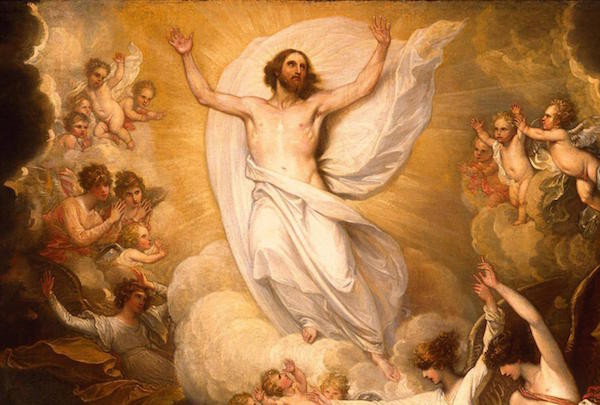


To whom did Christ appear first, the women or His disciples? MATTHEW 28:9

MATTHEW 28:9—To whom did Christ appear first, the women or His disciples?

PROBLEM: Both Matthew and Mark list women as the first ones to see the resurrected Christ. Mark says, “He appeared first to Mary Magdalene” (16:9). But Paul lists Peter (Cephas) as the first one to see Christ after His resurrection (1 Cor. 15:5).

SOLUTION: Jesus appeared first to Mary Magdalene, then to the other women, and then to Peter. The order of the twelve appearances of Christ goes as follows:

THE ORDER OF THE TWELVE APPEARANCES OF CHRIST

PERSON(S)

SAW

HEARD

TOUCHED

OTHER EVIDENCE

1.

Mary
(John 20:10–18)

X

X

X

Empty tomb

2.

Mary & Women
(Matt. 28:1–10)

X

X

X

Empty tomb

3.

Peter
(1 Cor. 15:5)

X

X*

Empty tomb, Clothes

4.

Two Disciples
(Luke 24:13–35)

X

X

Ate with Him

5.

Ten Apostles
(Luke 24:36–49; John 20:19–23)

X

X

X**

Saw wounds, Ate food

6.

Eleven Apostles
(John 20:24–31)

X

X

X**

Saw wounds

7.

Seven Apostles
(John 21)

X

X

Ate food

8.

All Apostles
(Matt. 28:16–20; Mark 16:14–18)

X

X

9.

500 Brethren
(1 Cor. 15:6)

X

X*

10.

James
(1 Cor. 15:7)

X

X*

11.

All Apostles
(Acts 1:4–8)

X

X

Ate with Him

12.

Paul
(Acts 9:1–9; 1 Cor. 15:8)

X

X

Paul was not giving a complete list, but only the important one for his purpose. Since only men’s testimony was considered legal or official in the 1st century, it is understandable that the apostle would not list the women in his defense of the resurrection here.

[1]


* Implied

** Offered Himself to be touched

** Offered Himself to be touched

* Implied

* Implied

[1]Geisler, N. L., & Howe, T. A. (1992). When critics ask : A popular handbook on Bible difficulties (365). Wheaton, Ill.: Victor Books.

The Evidence of Archaeology | Robert J. Morgan

The Evidence of Archaeology


In addition to the archaeological discoveries mentioned in the last chapter, there are thousands of other artifacts, inscriptions, sites, and excavations that help confirm the historical reliability of the Bible. Due to space limitations, we will discuss only ten of them.

The Silver Scrolls (Amulets)

The Dead Sea Scrolls pushed back the date for the oldest extant copies of Old Testament Scripture from a.d. 980 to about 150 b.c., but a more recent discovery has now pushed the date back even further. In 1979 archaeologists in the Hinnom Valley of Jerusalem discovered nine burial caves that had been carved in the rock over 2,600 years ago, during the days when the descendants of David still sat on Israel’s throne. Inside these tombs were two silver scrolls, rolled up and very tiny, designed to be worn on a necklace. They were caked with dirt and so fragile that no one dared unroll them.

Finally, the Israel Museum rinsed the scrolls in a solution of salt and acid to remove the corrosion and sprayed them with a film-like substance. Researchers started unrolling the tiny scrolls millimeter by millimeter. Faint scratches on one of them were recognized as coming from Scripture, from Numbers 6: “The Lord bless you and keep you; the Lord make his face shine upon you and be gracious to you; the Lord turn his face toward you and give you peace” (vv. 24–26). This is the oldest fragment of Scripture known to man, dating back 2,600 years.

Hezekiah’s Tunnel

Modern biblical archaeology had its beginnings with a man named Edward Robinson, born in Connecticut in 1793. His father was a Congregationalist minister, and Edward grew up studying the Bible. He excelled in theological studies in America and Europe and in 1838 visited Palestine in the company of a missionary named Eli Smith. Robinson and Smith walked across the Holy Land with a Bible in one hand and a compass in the other, searching for the ruins and sites of ancient towns.

Among Robinson’s discoveries—perhaps the first great archaeological find in modern history—was one that confirmed 2 Kings 20:20: “As for the other events of Hezekiah’s reign, all his achievements and how he made the pool and the tunnel by which he brought water into the city, are they not written in the book of the annals of the kings of Judah?”

As Robinson poked about Jerusalem, he went to the Pool of Siloam. The water level was lower than usual, and Robinson took off his shoes and examined the pool. He discovered an entrance to a tunnel and followed the passage about eight hundred feet under the city. He had discovered the very water system designed by King Hezekiah and referred to in 2 Kings 20:20. Robinson eventually made it all the way through the subterranean channel, sometimes having to lie flat and push himself along with his elbows. By studying the chisel marks, he determined that men had started on both ends, tunneling toward each other and meeting in the middle.

A few years later, a Jewish school child playing in the Pool of Siloam felt markings of some kind on the walls of the pool. Archaeologists lowered the water level again and found this inscription, dating from the days of Hezekiah himself, inscribed on the stone in purest biblical Hebrew: “While there were still three cubits to be cut through, there was heard the voice of a man calling to his fellow, for there was an overlap in the rock on the right and on the left. And when the tunnel was driven through, the quarrymen hewed the rock, each man toward his fellow, ax against ax; and the water flowed from the spring toward the reservoir for 1,200 cubits, and the height of the rock above the heads of the quarrymen was 100 cubits.”1

This is generally considered the most famous inscription ever found in Jerusalem. Because it was discovered in the nineteenth century while Jerusalem was under Turkish rule, the inscription was cut from the tunnel and taken to Istanbul where it now resides in the Istanbul Archaeological Museum.

The House of David

Amazingly, many scholars of the nineteenth and twentieth centuries doubted the existence of King David. Their objections centered on two things. First, the stories attributed to him are fantastic—maintaining that he was a young shepherd boy who killed a giant with his slingshot and later established a royal dynasty. Second, there had never been historical confirmation outside the Bible of a king named David.

But in 1993 a discovery among the ruins of the northern Israeli town of Dan changed that. We now have a monument from antiquity inscribed with references to the “House of David.” The inscription refers to the fact that the king of the house of David was defeated by the king of Damascus in a battle like the one in 1 Kings 15:20: “Ben-Hadad [King of Syria] agreed with King Asa and sent the commanders of his forces against the towns of Israel. He conquered … Dan.” This is the first reference to the personage of David outside the Bible, but it confirms his existence (and confounds the critics).

Hot on the heels of that discovery came a new edition of the text of the Moabite Stone by Andre Lemaire. The Moabite Stone (the Mesha Stela) was uncovered in 1868 and dates to just after the death of King Ahab. It gives the Moabite account of its wars with Israel. The content of the Moabite Stone describes the king of Moab, Mesha, who led his people to break away from bondage to Israel. Omri, a king of Israel, is mentioned by name, thus giving extra-biblical evidence to his existence. The Moabite rebellion is mentioned in 2 Kings 1:1 and 3:5. Some of the text is hard to translate, for the stone was broken in unfortunate places. But Lemaire, professor at the Institute of Semitic Studies of the College de France, has prepared a reconstruction of its text. He published his findings in Biblical Archaeology Review, and, comparing his discovery with the inscription from Dan, he said:

The recent discovery at Tel Dan of a fragment of a stela containing a reference to the “House of David” (that is, the dynasty of David) is indeed sensational. The inscription easily establishes the importance of Israel and Judah on the international scene at this time—no doubt to the chagrin of those modern scholars who maintain that nothing in the Bible before the Babylonian exile can lay claim to any historical accuracy. This fragment from the Tel Dan stela has been hailed because it contains the name “David,” supposedly for the first time in ancient Semitic epigraphy. But this claim is not true—or at least not quite true; I believe these same words—the “House of David”—appear on the famous Moabite inscription known as the Mesha stela, also from the 9th century (b.c.). While for most scholars the reference to the “House of David” on the Tel Dan fragment was quite unexpected, I must confess I was not surprised at all. I have been working on the Mesha stela for the past seven years, and I am now preparing a detailed edition of the text. Nearly two years before the discovery of the Tel Dan fragment, I concluded that the Mesha stela contains a reference to the “house of David.” Now the Tel Dan fragment tends to support this conclusion.2

Caiaphas

A similar story involves Caiaphas, Israel’s high priest during the time of Jesus. Critics charged that no such man ever existed. His name had never been found in ancient documentation apart from the Bible. But in 1990 a burial cave excavated in Jerusalem contained a tomb marked with the family name of Caiaphas. Coins in the tombs proved they were from the first part of the first century. U. S. News and World Report began their cover story on biblical archaeology by saying:

From the fertile valley of the Euphrates to the desolate sands of the Sinai, it is a land of ancient civilizations whose material history lies buried in the rocky hills and deserts but whose stories of patriarchs and prophets have survived the centuries in sacred Scriptures. Now the sands of the Middle East are yielding secrets hidden for thousands of years that shed surprising new light on the historical veracity of those sacred writings. In this decade alone, archaeologists in Israel have unearthed amazing artifacts pertaining to two important figures from the Bible: a 9th century b.c. stone inscription bearing the name of David, the ancient Israelite warrior-king who killed the giant Goliath, and a first century a.d. tomb believed to be that of Caiaphas, the Jerusalem high priest who presided over the trial of Jesus. In both cases, it was the first archaeological evidence ever discovered suggesting that the two existed beyond the pages of the Bible. “These finds are tremendously important finds,” says James K. Hoffmeier, chairman of archaeology and biblical studies at Wheaton College in Illinois. “They will certainly cause anxiety for the skeptics.”3

The Patriarchs

One of the frustrating areas of archaeological studies for biblical scholars has been the period of the patriarchs. Abraham, Isaac, and Jacob lived in tents as desert nomads. They left few archaeological traces. For years skeptics have questioned the historicity of the book of Genesis and the biblical story of Israel’s beginnings. But consider these factors:

  1. The ruins of many of the cities of Genesis have been found, and those ruins are consistent with the biblical story. For example, we have excavations at Ur, city of Abraham, showing it to be a huge, thriving city with an advanced civilization during the days of Abraham. The citizens lived in comfortable homes, and the children attended school to learn reading, writing, arithmetic, and religion. The cities of Shechem, Ai, Bethel, and Hebron have also been found. The book of Genesis says that when Abraham left Ur, he traveled toward the Promised Land, stopping in the city of Haran in upper Mesopotamia where his father died. Excavations now underway by archaeologists from the University of Chicago have shown Haran to be a thriving city during the days of the patriarchs. Shortly after, it was abandoned and remained uninhabited until the seventh century b.c. One archaeologist said, “It’s highly improbable that someone inventing the story later would have chosen Haran as a key location when the town hadn’t existed for hundreds of years.”4
  2. The very name Abraham has been discovered in ancient clay tablets dating from the sixteenth century b.c.
  3. In the ruins of ancient Nuzi (near modern Baghdad), a library of clay tablets was uncovered that demonstrates many of the customs we read about in the patriarchal stories. For example, in Genesis 15 a childless Abraham laments that his servant Eliezer would inherit all his property. The Nuzi tablets shed light on this passage. In those days if a couple was childless, a trusted friend or servant would become that couple’s heir, almost like an adopted son. But if the couple later conceived and gave birth to a son, the agreement with the servant was nullified, and the natural son became the heir. There are also several incidents described in the Nuzi tablets in which a barren woman asked her husband to take her slave as a sort of surrogate wife to produce an heir, much as Abraham did with Hagar.

The critics who asserted that the Genesis stories were late-dated fables have had to abandon many of their beliefs because it is not reasonable that so much authentic local color and customs could be injected into stories written centuries after the fact. Tablets at Nuzi (as well as those found at Ebla and Mari) confirm the cultural climate and customs of the Genesis accounts.

The Exodus

Another frustrating area for evangelical archaeologists has been the Exodus, for most scholars have consistently asserted that archaeological evidence for the Exodus of Israel from Egypt is lacking. After all, nomads wandering through the desert do not leave many ruins.

But recently some skeptics have been questioning their assumptions. For example, Charles Krahmalkov, Professor of Ancient Near East Languages at the University of Michigan, had always believed that the Exodus account was a fabrication. But while studying the inscriptions on the Temple of Amon at Karnak, dating from the reign of Thutmose III (c. 1504–1450 b.c.), he was astonished to find a listing of cities that corresponds remarkably to the cities listed in Numbers 33. Based on that and other evidence, Krahmalkov has changed his mind.5 He said, “In short, the Biblical story of the invasion of Transjordan that set the stage for the conquest of all Palestine is told against a background that is historically accurate.” He added, “I am not a conservative believer. I am a scholar of the old school who believes we try to let our data speak to us. We don’t force it into a preconceived idea. I find myself astonished at the results. [The ancient historians of Israel] preserved in the Bible true historical sources of a very early age. They cannot possibly have invented them.”6

The Conquest of Hazor

Joshua 11 says that the king of Hazor mobilized the northern kings to fight against the Israelites during the conquest of the Promised Land. Verses 10 and 11 say, “At that time Joshua turned back and captured Hazor and put its king to the sword. (Hazor had been the head of all these kingdoms.) … he burned up Hazor itself.” The next book, Judges, says that Hazor, having rebuilt itself to an extent, was again destroyed, this time by Deborah and Barak (Judges 4).

In 1955 Israeli archaeologist Yigael Yadin was excavating this bottle-shaped site ten miles north of the Sea of Galilee. He found a Canaanite worship site that had been deliberately defiled. He found a tiny statue, a false god whose head had been cut off. Yadin immediately thought of Deuteronomy 12, the passage in which the Israelites were instructed to defile and destroy pagan worship sites. Further studies showed that Hazor had been a teeming city, population of about 20,000, that had been suddenly destroyed by fire during the days of Joshua and the Judges. Yadin’s discovery corresponded exactly to the Old Testament accounts.

The Clay Seal of Gemariah

Ever heard of Gemariah? He was an obscure figure in Scripture who lived in Jerusalem during the days of Jeremiah, an official in Solomon’s temple with his office on an upper level of the temple itself. According to Jeremiah 36, the prophet Jeremiah wrote a sermon condemning the corruption of the national leaders. His servant read the scroll to the people in the office chamber of Gemariah. When King Jehoiakim heard of it, he sent for the scroll and hacked it to pieces. Among those who warned the king of his foolishness and begged him not to destroy the scroll was Gemariah. Shortly afterward, the Babylonians burned down the city of Jerusalem.

In 1980 the Jewish archaeologist Yagil Shiloh, excavating in Jerusalem near the temple mount, found a room containing fifty-one clay seals (bullae) that had originally been affixed to important documents. These seals bore the names of various officials during the days of the monarchy. Most remarkable of all of them was one bearing the name of a scribe named Gemariah, the son of Shaphan, who was employed in the royal court of King Jehoiakim toward the end of the seventh century b.c.—the very Gemariah mentioned in Jeremiah 36. The condition of the seal told its story. It had originally been affixed to a papyrus document, but a terrible fire had burned out of control, destroying the document and baking the clay seal as hard as brick, thus preserving it.

Capernaum

Of all the ruins and sites in the Holy Land, perhaps the most interesting is Capernaum, where Jesus Himself lived. When Christ left Nazareth, he settled down in this lakeside village, home of Peter and Andrew. In the centuries that followed, the village disappeared from notice, and scholars had no idea where it had been. But archaeologists have been excavating Capernaum for the past one hundred years, and we have a village along the Roman Road, the Via Maris, with lined streets, the foundations of houses and shops, and the ruins of a magnificent synagogue.

Of particular interest is a house, evidently the home of a fisherman, which became a meeting place for early Christians and was later expanded into a church. Here archaeology and tradition merge to give us reasonable certainty that this is the very house of Peter himself, the house in which Jesus stayed, the house in which the invalid was lowered through the roof. Archaeologists have confirmed that this house was a single-story dwelling dating from the first century. Fishhooks were even found among the ruins. But toward the middle of the first century, it started receiving special treatment, becoming a house-church and then being enlarged as a gathering place for Christians.

Nearby are the ruins of a synagogue. Excavations have shown it to have been built on a first-century foundation, the foundation of the very synagogue commissioned, built, and paid for by the Roman centurion of Luke 7. This is the foundation of the same synagogue in which Jesus began His ministry. Visitors can go there today, walk down the street from Peter’s house to the synagogue, and stand at the very spot where Jesus stood and taught the people near Galilee’s shore.

The “Jesus Boat”

Almost as interesting as Capernaum is the ancient boat buried in the mud, discovered in 1986. A terrific drought had befallen Galilee that year, and the water level of the Sea of Galilee dropped dramatically. Local inhabitants noticed the oval outline of a boat buried deep in the mud, and Israeli archaeologists immediately began excavating it. The boat dates from the time of Jesus. Today the fragile remains of the “Jesus Boat” are housed in a museum and submerged in preserving solutions. The vessel measures twenty-six feet long and seven feet wide and would have carried about fifteen men. It could be, in fact, the very boat Jesus used when sailing across the Sea of Galilee. It was likely sailing the Sea of Galilee when Jesus was there, exactly as described in the Gospels.

Summary

Admittedly, the jury of archaeological evidence is still out, especially as it relates to the world of the patriarchs, the nature of the Exodus under Moses, and the extent of the conquest under Joshua. But the eminent American archaeologist William Dever said that a century and a half of exploration “has for all time demolished the notion that the Bible is pure mythology. The Bible is about real, flesh-and-blood people, in a particular time and place, whose actual historical experience led them irrevocably to a vision of the human condition and promise that transcended anything yet conceived in antiquity.”7

Nelson Glueck, the Jewish archaeologist, stated it even more plainly: “It may be stated categorically that no archaeological discovery has ever controverted a biblical reference.”8 On the contrary, archaeology has debunked the charges of one skeptic after another and has confirmed to a large extent the historical reliability of the Bible.

The critics, it seems, keep trying to bury the Bible. But the archaeologists bury the critics and keep digging the Bible back up.

For Further Discussion

  1. Can archaeology “prove” the Bible? If not, what role can a study of archaeology play in the believer’s faith and knowledge of Scripture?
  2. Is making a pilgrimage to the Holy Land worth the time and money?

For Application

  1. Perhaps a member of your group has visited the Middle East or even participated in an archaeological dig. Ask him or her to share impressions. Locate a travel video of Israel and view it together.
  2. Visit your church or school library and examine copies of the magazine Biblical Archaeological Review. You might not agree with every article or interpretation in the magazine, but become familiar with the general field of archaeology and study the pictures carefully. Share some of the best pictures with the group.
  3. Consider going on an archaeological dig. You will have to pay your own way, and the work is hard. But the costs are less than most other overseas trips, and the experience is invaluable. Biblical Archaeological Review provides a listing of digs each year.


1 Lost Civilizations: The Holy Land, ed. Time-Life Books (Alexandria, Va.: Time-Life Books, 1992), 24.

2 Andre Lemaire, “ ‘House of David’ Restored in Moabite Inscription,” Biblical Archaeology Review, May/June 1994, 31-32.

3 Jeffery L. Sheler, “The Mysteries of the Bible,” U.S. News and World Report, April 17, 1995, 60-61. Also see the article “ ‘David’ Found at Dan,” in Biblical Archaeology Review, March/April 1994.

4 Ibid., 63.

5 Charles R. Krahmalkov, “Exodus Itinerary Confirmed by Egyptian Evidence,” Biblical Archaeology Review, September/October 1994, 58.

6 Gordon Grovier, “New Evidence for Israeli Exodus,” Christianity Today, April 3, 1995, 87.

7 Lost Civilizations: The Holy Land, ed. Time-Life Books, 37.

8 Quoted in Josh McDowell, Evidence That Demands a Verdict (San Bernardino: Here’s Life Publishers, 1986), 65.

Faith, Evidence, and the Scriptures Paul Helm

Faith, Evidence, and the Scriptures

Paul Helm

Let us consider the following situation. Mrs. Jones is worried about her husband’s loss of weight and his lassitude. With some difficulty (for her husband has never needed a doctor before) she persuades him to have a series of medical tests. The tests strongly support the view, the consultant tells her, that Mr. Jones has cancer. Mr. Jones says he has never felt fitter and that the consultant is probably incompetent.

In this situation there are three different kinds of questions that arise and need separate treatment: the question of whether or not Jones has cancer, the question of what evidence there is that he has cancer, and the question of what would persuade him to accept the diagnosis that he has cancer. These three questions are connected, but they are not the same question. Let us see why not.

The first question concerns what the facts are. If someone has cancer, this means that he has growths of a certain sort in his body, the presence of cancerous cells. This is what having cancer is. The second question concerns evidence. Cancer generally gives evidence of its presence, such as the development of certain lumps, loss of weight, and in certain cases the findings of x-rays or exploratory surgery. The two issues, whether someone has cancer and what the evidence for his having cancer is, are connected in the following way: Cancer normally or generally gives evidence of itself, and evidence of a certain sort is normally taken to be evidence for cancer. Cancer normally provides such evidence of itself; but it is necessary to allow for the possibility that there might be cancer but no evidence of it, or that there should be atypical evidence, or that there should be evidence of cancer but no cancer.

The third question concerns what will rationally convince someone that certain data are evidence for a certain condition—presumably such factors as attentiveness to the evidence, a willingness to accept its verdict however unpalatable, and so on. What should convince a person that he has cancer is enough evidence of the right kind. But often other nonrational factors (e.g., wants and predispositions of certain kinds) intervene to prevent this.

I

Exactly the same three questions arise about the Bible. Is the Bible the Word of God? What evidence is there for the Bible’s being the Word of God? What evidence ought to persuade people that the Bible is the Word of God? These three questions, again, are distinct yet related. The first question is about the causal origins of the Bible. Does it come from God in a sense in which the Times or Who’s Who do not come from God? In this chapter I am not going to dwell on what exactly is meant by the divine authorship of the Bible except to notice that the issue is basically a theological or metaphysical matter, bespeaking a relationship of a rather special kind between God, the Creator and ground of all being, and some aspect of His creation. The truth conditions of this are truths about God and His special relationship to certain human authors and not merely about the thought processes or literary habits of human authors. Perhaps it is fortunate that exploring the exact character of these truth conditions is not a matter that has to concern us.

What is going to concern us directly is the question, What evidence is there that the Bible is the Word of God? And also, though to a lesser extent, the question, What ought rationally to persuade someone to believe that the Bible is the Word of God? But although I will look at these questions directly I will not try to answer them directly by attempting to provide the evidence. Rather I will be concerned to ask what sort of questions these are and what sort of evidence might provide adequate answers.

The main thesis of this chapter is that the chief reasons for believing the Bible to be the Word of God are religious reasons. But “religious” here does not mean “subjective” or “irrational,” but “concerning a person’s bounden allegiance to God.” Further, the evidence on which the Scriptures are to be considered to be the Word of God is chiefly internal evidence. The main part of the chapter will be concerned with setting out this thesis and defending it against certain objections. But first let us glance at certain other views, both in order to gain some perspective and to indicate the main deficiencies of such views.

The first view we can call externalism, which can be expressed as follows: the evidence of certain data that make no essential reference to the content of the Scriptures is logically necessary for the Bible’s being accepted as the Word of God. The stress on logical necessity should be noted. External data are required to validate the Scriptures as the Word of God but they are not themselves sufficient to validate the Scriptures. Such a view does not hold that no attention needs to be paid to internal data but that such internal data are of no value unless they first meet certain tests.

The historical roots of this outlook, which has been very deeply entrenched in Anglo-American theology (to look no further), go back a long way. It was prominent in the writings of the eighteenth-century opponents of deism such as Joseph Butler and William Paley and even earlier in Thomas Aquinas.1 But the actual example of this position that we will examine is that of Archibald Alexander (1772–1851), an influential Princeton theologian.

Alexander’s approach, it must be remembered, is presupposed by what are, in his view, the convincing arguments of natural theology. Having established the existence and character of God by argument, the Christian apologist must then go on to establish that the Scriptures alone among all the books of the world are a credible revelation from God.

That a revelation is possible, will not be called in question by any who believe in the existence of a God; nor can it be believed that there is anything in the notion of a revelation repugnant to the moral attributes of the Supreme Being. It cannot be inconsistent with the wisdom, goodness or holiness of God, to increase the knowledge of his intelligent creatures. The whole end of a revelation is to make men wiser, better, and happier; and what can be conceived more accordant with our ideas of divine perfection than this?2

Let us grant, for the sake of argument, both the legitimacy of the program of natural theology and its success. We can also grant the point made by Alexander in this quotation that the idea of revelation is logically consistent with the concept of God. Alexander goes on:

Supposing a revelation to be given, what would be a satisfactory attestation of its divine origin? It must be some sign or evidence not capable of being counterfeited; something by which God should in some way manifest himself. And how could this be effected, but by the exertion of his power or the manifestation of his infinite knowledge; that is, by miracles, or by prophecies, or by both?3

Alexander is here considering the question of what sort of evidence there ought to be and he argues that initially at least the evidence ought to be external—miracles and prophecies. But notice the number of assumptions, which Alexander seems to regard as self-evident or at least perfectly reasonable, on which his argument rests:

  1. The only satisfactory attestations of divine revelation are signs.
  2. Such signs must be incapable of being counterfeited.
  3. Only manifestations of divine power or infinite knowledge are sufficient to produce noncounterfeitable signs.
  4. Miracles and prophecies are not counterfeitable.
  5. Miracles and prophecies are the only noncounterfeitable signs and so they are the only satisfactory attestations of divine revelation.

None of these five propositions seems to be convincing, much less obviously true, and yet Alexander offers them as if they are unquestionable. Take 1, for example. May it not be true that great cheerfulness in the face of adversity, or financial prosperity, or inventiveness, or physical beauty are equally good attestations of divine revelation? And what about 2? It seems to be straightforwardly false, since miracles and prophecies have been and are counterfeited. And what about 3? May it not be the case that what is needed to produce noncounterfeitable signs is not infinite power, but just very great power?

The point of raising these questions is not to provide an alternative set of candidates to those Alexander produces and to argue that these are more reasonable than his, but to suggest two things about externalism. The first is that Alexander’s argument relies on an extremely dubious appeal to what is obvious or reasonable; and second, that the form of the argument is badly conceived. The form of the argument—the strategy that Alexander, in common with all other externalists, uses—is that there is some obvious, unquestionable test or criterion of what is appropriate for a divine revelation and that the Bible, and only the Bible, meets it. But is this a properly conceived form of argument for the task in hand? Alexander does not argue that it is, but he assumes that it is. But, as we have seen, this form of argument is far from being self-evident.

We can see that a more general defect of externalism is the supposition that there is some a priori standard of reasonableness that the Scriptures must meet and do meet. But who is to decide what this standard is? And supposing that a standard can be agreed on, what is the force of calling it reasonable? The answer may be that what justifies our calling it reasonable is that there is some a priori likelihood that anything that will count as a revelation will meet this standard. But this would be ludicrous, for such a revelation is by definition (and by Alexander’s own understanding of it) unique and unparalleled, a supernatural thing. Now some event or complex of events can be probable or improbable only with respect to a given body of evidence. So we say that the day is likely to be wet and windy on the evidence provided by other relevantly similar days.

But to what body of evidence is appeal being made when it is said that it is reasonable that anything counting as the Word of God must meet certain standards? We have not had experience of other revelations from God that would enable us to form a rule of generalization in the light of which we might judge that the next revelation has occurred. The trouble, then, lies with the form of the argument that gives rise to externalism; for it means that any criterion formulated in accordance with this form of argument is bound to be Procrustean. The air of reasonableness about such a position is totally spurious.

II

The other example of a type of argument that may be used to establish that the Scriptures are the Word of God is a version of fideism. But it is important to remember that “fideism” is the name of a family of positions. There are many differences between different members of the family. But broadly, as applied to the problem we are considering, the view is that the proof or evidence that the Bible is the Word of God is not to be found in a set of external criteria, but elsewhere. The contrast established by fideism is not necessarily between faith and reason but between faith and external proof. In order to see this more clearly it is necessary to distinguish between the following three positions:

  1. The view that the Bible is the Word of God cannot be rationally defended. Accepting the Bible as the Word of God is a leap of faith.
  2. The view that the Bible is the Word of God is not irrational as is shown by the inadequacy of arguments aiming to show that it is irrational.
  3. The view that the Bible is the Word of God is a matter of its own evidence, and there are external arguments leading to this view.

These three positions (and others that we do not have space to consider) can be thought of as members of the fideistic family. But there are important differences between them. We shall not consider (1) any further, but concentrate on (2) and (3).

These positions may seem to be paradoxical, even self-contradictory. For, it may be asked, how can there be external arguments or reasons that lead to the conclusion that the Bible is God’s Word and this not be what we have called externalism? Surely the whole point of something being self-justified is that it derives its justification from itself. If so, then what part can external reasons or arguments play? Have we not already considered and dismissed the view that acceptance of the Bible’s being the Word of God is founded on external considerations?

But this question is based on a confusion, the confusion between

  1. The only convincing reasons for accepting the Bible as God’s Word are internal ones.

and

  1. The Bible is God’s Word.

The considerations that support a are not necessarily the same considerations that support b. Thus there may well be external reasons for accepting a that are not reasons for accepting b. For example, one reason for accepting a might be that any external considerations that are offered are empirically weak or logically flawed or theologically inadequate in some way. But these weaknesses or flaws are not positive reasons for accepting b, as they are of a wholly negative character. And so it may be argued that there are general considerations of an external kind, considerations that allow that the Scriptures may be their own evidence for being the Word of God.

One example of this sort of argument is that provided by Alvin Plantinga is his paper “Is Belief in God Rational?”4 In this paper, he is concerned with the rationality of believing in the existence of God, whereas we are concerned with the rationality of accepting the Scriptures as God’s Word; but the general issues are the same. Plantinga argues that classical natural theology—for example, the “Five Ways” of Thomas Aquinas (and also, incidentally, the natural theology of Archibald Alexander)—is foundationalistic. That is to say, classical natural theology is based on a view of human knowledge that claims that it has a foundation of self-evident beliefs, propositions that we all know, or can know, without having further evidence for them. The stock of such beliefs provides the foundations for knowledge. It is by reference to such foundational truths, propositions “evident to the senses” as Aquinas put it, that the existence of God may be rationally established.

Plantinga criticizes foundationalism on familiar grounds,5 particularly on the ground that the notion of self-evidence on which foundationalism rests is suspect; for it may happen that what appears self-evident is not in fact true, and hence cannot be self-evident. And so the idea of knowledge being based on a self-evident foundation is dubious. But this is not to say, according to Plantinga, that knowledge is totally without foundations, but it is to deny that knowledge rests on a foundation of self-evident propositions. Knowledge has foundations, but not self-evident foundations, in Plantinga’s view. Certain propositions are basic (but not self-evident) because a person commits himself to the truth they express and makes them the rational basis of all other propositions to which he rationally commits himself.

If, with an older tradition, we think of reason as an organ, or power or faculty—the faculty whereby we discern what is self-evident—then the foundationalist commits himself to the basic reliability of reason. He doesn’t do so, of course, as a result of (broadly speaking) scientific or rational investigation; he does so in advance of such investigation.6

If basic propositions are those propositions that a person commits himself to (and are not self-evidently true propositions) then there is no reason why a person should not commit himself to the existence of God as part of his intellectual foundations. “There is a God” would then be foundational for him.

To accept belief in God as basic is clearly not irrational in the sense of being proscribed by reason or in conflict with the deliverances of reason. The dictum that belief in God is not basic in a rational noetic structure (structure of belief) is neither apparently self-evident nor apparently incorrigible. Is there, then, any reason at all for holding that a noetic structure including belief in God as basic is irrational? If there is, it remains to be specified.7

The form of Plantinga’s argument might be expressed in this way:

  1. There is no reason to suppose that p is not true (i.e., there is no reason to suppose that the proposition “God exists” may not form part of a person’s foundational beliefs).
  2. Therefore, p may be true (i.e., it is rational to hold that the proposition “God exists” may form part of a person’s foundational beliefs).

Notice that on this argument there are and can be no positive reasons for accepting 2. There cannot be such reasons because otherwise the proposition that God exists could not be foundational in the required sense, for a proposition can be foundational only if in order rationally to believe it there need be no evidence for it. There could of course be motives for committing oneself foundationally to the proposition “God exists,” but no reasons.

Interesting questions arise at this point. Are there any limits to the possibilities to which a person can commit himself foundationally? Could he commit himself foundationally to the existence of fairies and hobgoblins? Could he commit himself foundationally to the proposition that God does not exist? Presumably he could. Unfortunately we cannot go further into such questions here.

What we must consider are the consequences of someone taking this line of argument with respect to the proposition “The Bible is the Word of God.” It seems possible that a person could commit himself to the Bible in this way. There appears to be nothing logically inconsistent in his doing so. But, once again, he would have no positive reason for doing so, and the idea that certain considerations might strengthen his confidence in the Scriptures as God’s Word, and other considerations might weaken it, would be logically impossible. The only reply that the question, “Why do you accept the Bible as the Word of God?” could be met with is “For no reason … I have committed myself to the view that the Scriptures are the Word of God basically.” And there seems nothing to stop others from doing exactly the same with Science and Health, The Book of Mormon, or The Thoughts of Chairman Mao.

This line of argument seems perfectly consistent, but it is awfully thin. What is thin is the idea that there are and can be no reasons for the view that God exists or that the Scriptures are the Word of God, only poor and inadequate reasons against.

III

Having looked at two types of argument or strategy that are unsatisfactory, we now come to the main thesis of this chapter: There are reasons for accepting the Scriptures as the Word of God and these reasons are chiefly to be found within the Scriptures themselves. This is a fideistic position of type 3, mentioned on page 307.

Perhaps we could express this more precisely as follows: It is a necessary condition of properly accepting the Bible to be the Word of God that one’s main reasons for doing so arise out of the Scriptures themselves. In my defense of this position I hope to avoid, on the one hand, the externalism of Archibald Alexander and on the other hand the strong fideism of Alvin Plantinga. For all their obvious differences, what both arguments have in common is that they defend the divine authority of the Scriptures (in Plantinga’s argument wholly, and in Alexander’s partly) in abstraction from the actual content of the Scriptures.

The basic approach to the question of the origin and authority of the Scriptures must be a posteriori. It is wrong to decide such questions, either for or against, without considering the content of the Scriptures themselves. “Considering the content of the Scriptures” means not merely looking at what the Scriptures say about themselves but examining the force or impact of the Scriptures. Part of the reason for believing that a person is a king may be that he says that he is a king. But the evidence that he is a king is much stronger if he is seen exercising the prerogatives of a king. It is not simply that the Scriptures say that they are the revelation of God that is the evidence for their being so, but also that they function as the Word of God. Let us try to look at this in a little more detail.

We need, in the first place, to examine the basic “logic” of the meaning of the Scriptures. Though the Bible purports to provide its readers with information not available to them elsewhere, its basic stance is not merely that of an information-provider but that of a document that, on the basis of the information that it provides, makes claims on and offers invitations to its readers. Basic here is the idea of God’s personal address to people, an address that calls for a response.

It is possible to break this down into a number of different elements. One element is the idea that the Bible purports to give an analysis or diagnosis of the reader. The Scriptures offer this diagnosis as the truth about the reader. Now if the Scriptures are what they claim to be, the Word of God, then one would expect that careful examination and self-scrutiny would reveal that the diagnosis “holds good” in the life of the reader. Connected with this is the power of the Scriptures to raise and satisfy certain distinctive needs in the reader, particularly the recognition of his sin before God and the enjoyment of forgiveness and reconciliation to God through Christ. Connected with this is the displaying in Scripture of excellent moral standards that focus and integrate the life of the reconciled person. And connected with this is the provision of new motivations to reach out for the newly set standards.

These ideas, briefly and inadequately expressed here, arise out of the meaning of the words and sentences of the Scriptures. They are briefly and inadequately expressed in that they need to be set in a fuller theological context than we are able to provide here and to be shown to be grounded in the data of Scripture. These are complex and never-finished tasks.

The peculiar logic of the situation might be expressed as follows: What has to be known in order for these biblical claims to be established is not merely something about the claims but also something about oneself. This may be partly what Augustine and especially John Calvin meant when they said that the knowledge of God and the knowledge of ourselves are conceptually intertwined.8

The data of Scripture, in which the divine authority of Scripture is grounded and which provide evidence for the Bible being the Word of God, are known a posteriori. Fundamental, therefore, to accepting the Bible as the Word of God is considering the relevant evidence for that claim honestly and seriously. This point cannot be overstressed, for it is common to find on both sides of this debate those who tell us what the Scriptures must be like without stopping to look and see if the Scriptures actually are like this.

The kinds of consideration that we have been discussing are not the only sort of internal evidence for the divine authority of the Scriptures, but they are the chief sort of evidence. I must now attempt to clarify this further by taking up additional aspects of the claim and then by trying to meet some objections. But there is one initial objection that arises, and that must be dispatched at once.

Someone may say that even if what has been said so far is acceptable, it is far from establishing the conclusion that the Scriptures are God’s Word, for by “the Scriptures” is presumably meant the sixty-six canonical books of the Old and New Testaments. How do we get to the sixty-six books from the slender base that has been established? The short answer to this is that we get to it through the authority of Christ. It is because He endorses the Old Testament and makes provision for the New that both Old and New have this authority. He endorses these writings and sets the boundaries of what is authoritative, but of course these writings become authoritative in the sense of practically influencing the thinking and the conduct of those who accept them only when their teaching is actually submitted to and responded to. Perhaps we need to draw a distinction at this point between accepting the Bible as God’s revelation and practically experiencing the “weight” of that authority. One may recognize the authority of the Scriptures in the first sense without recognizing it in the second sense in respect of some particular passage or book of Scripture either because one has not paid sufficient attention to it or because its “relevance” to one’s situation is not apparent.

Would it be fair to say, on the view that is being defended, that the Scriptures are self-evident? “Self-evident” is an ambiguous expression, for it may mean, when applied to a proposition or set of propositions, that the proposition(s) are accepted as true on their own evidence, or it may mean that the evidence reaches a certain standard, that of being so evidently true that no other evidence could either make it more evident or less evident than it is. It has been argued that certain propositions such as 2 plus 2 equals 4, propositions that are believed to be true by everyone who understands them, and sincere utterances such as “I am in pain” are self-evidently true. Whether or not there are such self-evident truths, it is not the case that the previous argument about the Scriptures being the Word of God requires that there are. And so no claim is being made that the Scriptures are self-evident in the sense that it is impossible, rationally, to doubt their truth. For it is clearly possible to entertain doubts of a rational kind, doubts about the meaning and implications of the text, for example.

Similarly with the idea of self-witness. What I am arguing is not that Scripture witnesses to itself about its divine origin and that this witness rules out any rational doubt, but that Scripture witnesses about itself to us and that this witness may find confirmation or validation in experience, in the diagnostic and other work mentioned earlier. Emphasis does not fall on proving the existence of God and then proving by miracle and prophecy that this book of all books is God’s revelation (the Alexander strategy) but it falls on proving God in experience and a fortiori establishing that He exists. God is proved by hearing and obeying Him and finding that He is as good as His word.

Thus the certainty of the Scriptures as revelatory documents lies in their being confirmed in experience and what this entails or renders probable. The experience is not a further revelation. To suppose that it were would lead to an infinite regress, for if it were a further revelation, it would need credentials for it to be rationally acceptable. But what could these credentials be other than a further revelation? And so on ad infinitum. Rather, the experience has to do with the impact of the revelation on the lives of those who receive it.

To clarify still further, the experience is not a different sort of evidence, ineffable or indescribable, that makes up for the inadequacy of the biblical evidence, but rather the discovery that the claims of the Scriptures bear the weight of experience.

“Self-evident” is also sometimes used as a rough equivalent to “axiomatic,” and there is a sense in which our argument requires that the Scriptures be axiomatic, namely, theologically or religiously axiomatic; i.e., they provide the basic data and the basic set of “controls” from which theological conclusions are to be derived. They are theologically sufficient for such reflection.

How does what we have been arguing tie in with the theological doctrine of the internal testimony of the Holy Spirit? In the following way: What we have been describing, the power of the Scriptures to diagnose and “speak” is, in more theological language, the Spirit’s internal testimony. The two are not different things but two different characterizations of the same thing. The internal testimony of the Spirit is not to be thought of as in some way short-circuiting the objective evidence or making up for the deficiencies in external scriptural evidence, nor as providing additional evidence, nor as merely acting as a mechanical stimulus, but as making the mind capable of the proper appreciation of the evidence, seeing it for what it is, and in particular heightening the mind’s awareness of the marks of divinity present in the text in such a way as to produce the conviction that this text is indeed the product of the divine mind and therefore to be relied on utterly.

It is for this reason that our position cannot be ruled out as mere subjectivism, the idea that so-called religious or theological truth is merely about the believer’s own state of mind. For while there is a subjective side of things, a believer, there is an objective side, the text and its meaning, something public and verifiable.

IV

Having tried to clarify what is meant by the self-evident truth of the Scriptures, we are now in a position to consider certain objections. (Incidentally, the very fact that I am taking objections seriously and am defending this view by contrast with the inadequacies of other views shows that the type of fideism I am defending is the type that argues for the existence of external arguments that lead to the conclusion that the proper evidence for the Bible’s being the Word of God is the Bible’s own evidence.)

  1. The first objection is that this position is irrationalistic. If by this charge is meant that this view does not proceed from self-evident first principles by inductive or deductive argument, then the point is granted. By that austere standard the view being defended is irrational. The proper reply to this is not to say that few, if any, other views reach the same standard (for two wrongs do not make a right) but to doubt the truth of this brand of foundationalism. And there is plenty of reason to do this.9 And if there are reasons for doubting the truth of foundationalism, it cannot be the mark of rationality in epistemology.

But to say that this position does not conform to the pattern of foundationalism is not to say that it is totally without reason. If anything, it conforms to a coherentist pattern of justification, for it is coherence with experience that forms the justification. Furthermore, in the face of doubts about the genuineness or reasonableness of the claim that the Bible is the Word of God there are ways in which such doubts may be met, by the clarification of meaning and the presentation of evidence, ways that are perfectly familiar from other rationally conducted disciplines. Thus, though the pattern of justification being offered is not foundationalistic, it does conform to that which obtains in interpersonal situations that each of us is familiar with.

A connected kind of irrationalism would be that the text simply causes or triggers some experience, as, for example, being in a crowded elevator might cause a claustrophobic to panic. But the words or propositions of the revelation are not the cause or occasion of the experience; rather, they engender it through the meaning of the propositions and their force (as commands, questions, invitations, or whatever) being appreciated.

  1. The second objection that I wish to consider is that this view is logically circular. I am attempting to conclude that the Scriptures are the Word of God by appealing to the words of Christ as authoritative and so the words of Christ are already being taken to be, or are assumed to be, scriptural. Is this not to argue in a circle?

Certain arguments of this type would be circular. For example, it would be arguing in a circle to claim that the Scriptures are the Word of God because the Bible says so and the Bible is the Word of God and so must be believed. However, it is not clear that our argument is circular in this sense, nor indeed circular at all. For what is being argued is that the evidence for the Bible’s being the Word of God is that the claims that the Bible makes are found to hold good. But these claims are not primarily, and certainly not only, that the Bible is the Word of God, but that certain promises, invitations, etc., hold good, and that the holding good of these in experience provides good inductive evidence for other claims, for example, the claims of Christ and His apostles that the Scriptures of the Old and New Testaments are the Word of God.

There is a logically contingent connection between the authority of Christ and the Old and New Testaments’ being the Word of God in that it is possible for Christ to have been the Savior in circumstances in which only parts of the Old and New Testaments were the Word of God, or in which the Old Testament as a whole or large parts of it had not survived until the present day. Accepting the authority of Christ does not entail accepting the authority of the Old and New Testaments. What it does entail is the conclusion that there is good evidence that Christ is who He says He is, and hence is to be trusted in His teaching in general. And if He teaches that certain documents are the Word of God and are therefore to be trusted as He is to be trusted, then that is an additional matter.

But is not the Christ who is believed in the Christ of the Scriptures? No, He is (at best) the Christ of some of the Scriptures and also partly the Christ of human make-believe and tradition. Part of any Christian’s task is to reform his ideas of Christ, to make them more and more consistently biblical.

  1. Someone might argue that to base one’s acceptance of the Scriptures on one’s ability to diagnose the human condition and to provide new goals and new motivations in regard to the Scriptures is to build on a very slender base. For might there not have been a gigantic mistake or systematic self-deception? How can one be sure that one has been told the truth about oneself, given genuine promises and invitations? Could it not be that these are the product of one’s imagination or of some source other than God? May they not be the effects of psychological weakness or, as Marx suggested, the product of adverse economic and social circumstances?

The answer to these questions is yes, such misconceptions are possible. Furthermore it is true that many people have come to believe that they are not merely possible, but actually so, and that the religion of their youth was make-believe. But the question is not whether there is the abstract possibility that the whole thrust of the Bible has been misunderstood, nor whether certain people have regarded themselves as having been duped, but whether I have reason to believe this. The history of thought is peppered with skepticisms of various kinds, both global and particular. Some have held, and do hold, that it is likely that we know nothing at all about anything, or exceedingly little. And it is logically possible that the whole of life is a dream, that I am not sitting at my desk typing this paper but that in fact my brain is being stimulated by some malicious superscientist into believing that I am typing when in fact I am eating (and should be enjoying) a very large chocolate nut sundae. These things are possible, but the relevant question is, have we reason to suppose that they are true? If it is said that it is impossible to defend our position against such possibilities, then the point must be granted, but it must also be granted that all other nonskeptical positions are in exactly the same boat.

So the general appeal to skepticism, if it proves anything at all, proves too much, consigning not only the view we are defending but all other claims to knowledge to the philosophical lumber room.

Yet it may be said that the fact that many have regarded the claims of Christ and of the Bible as fraudulent is surely some reason for caution. It is—in just the way in which the fact that some human friendships have been found to collapse when put under strain is a reason for caution about this friendship. But though caution is proper, doubt about the friendship of someone who shows every sign of being my friend would be neurotic and improper.

But surely this appeal to religious experience is purely subjective, isn’t it? Not necessarily. If an engineer predicts the collapse of a bridge and it collapses, his prediction has physically objective confirmation. But physical objectivity is not the only kind of objectivity. Suppose Smith wonders whether Robinson really dislikes him. If Robinson does dislike Smith, then in a sense this is subjective, something about Robinson’s state of mind. But in another sense it has objectivity. It has objectivity if, for example, it is sustained in varied sets of circumstances, if it is expressed in different ways. In the case of religious experience similar sorts of tests apply, and a person may become rationally convinced of the objectivity (i.e., the reality) of God’s love, even though God does not have objective physical reality.

  1. A fourth objection might be that we have left no place at all for the external evidence of the truth and trustworthiness of the Scriptures. For it might be said the Bible is a very diverse library of books, diverse in the sense that it contains not only moral and religious (in some narrow sense) claims, but also historical and metaphysical claims. Further, it might be said, not only are such claims made, but they are not incidental, but central, to Christianity, which insists that God has acted in a decisive way in history. To say that God has acted in history makes the metaphysical claim that it is God who has acted, and it makes the historical claim that certain events have occurred as a result of divine agency. Surely these matters need to be investigated as a part of any project to validate the claims of the Bible to be the Word of God.

At this point it is necessary to use our earlier distinction between the truth conditions of certain claims and their evidence conditions. It is undoubtedly the case that as normally understood the central claims of the Christian faith involve the truth of certain historical propositions. (If someone objects to the use of “historical” in this connection because it implies certain things about historical method, then we can substitute the phrase “propositions expressing witnessable events.”) If these claims are false, then Christianity is false. And further, in some sense these propositions form a part of the total evidence of Christianity, the set of propositions about the world that are true if Christianity is true.

But it does not follow from this that because a proposition is part of the total evidence for some claim that it has to be part of my evidence for this claim if my evidence is to be good evidence. Consider again the case of Mr. Jones, the victim of cancer. Part of the total evidence of Jones’s being the victim of cancer is that there is some condition that causes or allows the growth of cancerous cells in his body. But it does not follow from this that in order for Jones or anyone else to have good evidence that he has cancer he has to know what causes or allows these growths. Nor does it follow that the cancer must be seen, for an expert might know by looking at Jones’s history, together with certain tests, that he has cancer. He need not actually have direct evidence of the cancer itself.

The kind of “hold” the Scriptures have when they are understood in a certain way that implies the truth of certain historical happenings is prima facie evidence for the truth of the happenings in much the same way that the outcome of certain tests is prima facie evidence for cancer or a press report that a source near to the government has predicted a devaluation, followed by the devaluation, is good evidence that the source near to the government had predicted it.

But what if there is a conflict between the claims of the Scriptures and the findings of history? What happens if what has to be true, historically, for Scripture to be true is denied to be true by the consensus of competent historians? They might argue either in a straightforward way that the events did not happen or in a more a priori manner that the documents are not to be taken at face value but are imaginative reconstructions by a group impressed by Jesus.

In the first of these circumstances it would be a legitimate strategy to investigate the historical evidence, to examine the data produced by the competent historians, to consider new evidence, and the like. In the second set of circumstances it would be legitimate to ask for the reasons that have led someone to take up the a priori view about the status of the documents.

What this shows about the place of historical evidence and research is that in order to establish that the Scriptures are the Word of God it is not necessary for one to investigate the historical reliability and trustworthiness of the Scriptures before placing confidence in them. Rather, if the one who accepts the God-givenness of the Scriptures is presented with prima facie damning evidence against his position, he or some competent person in the field is duty-bound to investigate it. At the very least, such an examination is relevant to the calling into question and to the ultimate overthrow of his position. So there is an important asymmetry here: historical evidence cannot by itself establish the divine authority of the Scriptures, but it could overthrow it. And the reason why it cannot establish it has already been given in our discussion of externalism.

Similarly with questions of logical consistency. If the Scriptures are the Word of God, then, properly interpreted, the sentences of Scripture will be at least logically consistent with each other. This follows from the fact that if the Scriptures are the Word of God, then, properly interpreted, the sentences are true. And if a set of propositions is true, the propositions must be consistent with each other. It follows from this that if anyone were plausibly to show that there is a self-contradiction in the Scriptures, or in some set of propositions implied by the Scriptures, then this is directly relevant to their truth and hence to their God-givenness. For if there is a genuine contradiction, then not both of the contradictory propositions can be true. In a parallel way, if it is alleged that there is a conflict between some properly interpreted sentence of Scripture and what is known on nonscriptural evidence, this also demands investigation. So, once again, though it is not the case that the consistency of Christianity has to be proved before it can be accepted as true, if its inconsistency were proved, this would be sufficient to sound its death knell, and if the charge of inconsistency is leveled against it, this represents a prima facie difficulty, requiring investigation.

These comments underline what has been said previously—that the position being defended is not mere subjectivism. Nor is it some form of reductionism according to which Christianity is really about something that is not dependent either on history or logic. History and logic are both relevant aspects of the complex web that makes up Christianity because the Christian revelation offers itself as something that is consistent and is essentially rooted in history. But this does not mean, as I have stressed, that all logical and historical problems ought to be solved before Christianity is credible or before the status of the Bible as the Word of God is credible any more than that all historical and logical problems about Napoleon ought to be solved before anything about Napoleon’s military career is credible. The existence of my wife does not have to be established independently before I can be sure that she loves me. Her existence is implied by her love for me. This is not to say however, that there are no conceivable circumstances in which I might have to go about trying to establish that she did in fact exist, as for example, if she had disappeared or I was suffering from loss of memory.

  1. It might be said that the view that I am defending, that the evidence for the Scriptures being the Word of God is primarily internal evidence, leaves that position formally similar to the position of the truth claims of the myriad other religions and ideologies. In a sense this is perfectly true. Christianity is in this position. There is no line of argument that will prove to all, once and for all, that Christianity is true and all other religions false. On this at least we must side with Plantinga against Alexander. It is an inevitable consequence of the denial of natural theology and externalism.

However, in saying that Christianity is in a formally similar position to other religions and religious claims I am not saying that nothing can happen to break the deadlock. True, all empirical theories are in a logically similar position with respect to the evidence, since the evidence does not entail any one of them in preference to any other, but this is not to say that there cannot be a rationally preferred theory, one that is the simplest and most economical explanation of the data, that generates correct predictions, and the like. In a parallel way the Scriptures make promises and claims, offer diagnoses, etc., as we have seen. And if a person is going to be rational in his approach to Christianity, he is going to have to do justice to these claims, to investigate them, to allow himself to be open to them, and so forth. In a sense if what the person who rejects Christianity has rejected is something that does not contain these elements, then he cannot have rejected Christianity, since these elements are vital to it and vital to a consideration of the God-givenness of the Scriptures on which Christianity ultimately rests.

  1. It might be objected from the theological side, which stresses the importance for the authority of the Scriptures as the Word of God of the Scriptures’ “engaging” in the life and experience of the reader or hearer, that we are in effect saying that under certain circumstances the Bible becomes the Word of God.

This objection is based on fundamental misunderstanding. What I have been exploring in the main part of this chapter are the conditions under which a person may properly accept something as being the revelation of God. I have not been concerned with what makes something the revelation of God, but with what evidence there is to conclude that it is the Word of God. To put the point theologically, it is necessary to distinguish between revelation and illumination.10

There is a further point. In setting out the conditions under which someone might properly accept the Bible as God’s Word, a distinction needs to be drawn between recognizing the evidence and accepting it. It does not follow from a person’s recognizing the evidence that he accepts it. Otherwise it would follow that one person could not accept the same evidence rejected by another, and the idea of religious rejection and rebellion would have no application.

  1. Finally, it might be said that the view being put forward here is different from that used by the apostles of Christ and therefore marks a degeneracy from primitive and pure Christianity.

There is a sense in which this can be granted, while in another sense it must be rejected. The basic pattern of justification is the same, but the details of the pattern are different, and necessarily so. The basic New Testament appeal is to the character of the work of God. The apostles do not appeal to the internal evidence of the entire canonical Scriptures, for this was not available to them; the arguments of the apostles are part of our evidence. We do not find them appealing to miracles or prophecies in abstraction, however, but to the coherence of both with the teaching and history of the Messiah and with their own experience of His power in their own lives and in the formation and life of the church.

Nevertheless, there are differences, but they are the sort of differences we might expect, because they arise out of their different epistemic positions. They were contemporaries or near-contemporaries of certain crucial divine acts. Therefore it is natural that they should appeal to eyewitnesses, as Paul does in 1 Corinthians 15. But it is impossible for us to do the same because no eyewitness of the resurrected Christ is available to us. It is implausible to suppose that in order for us to be justified in believing certain things it is necessary for us to have evidence available to us that cannot be available, for this would mean that we can never be justified in believing anything about the past more remote than a human lifetime. But we may do the next best thing: appeal to reports of the eyewitnesses, yet not, as I have stressed, to these reports in isolation, but to them as part of a web of history, prophecy, argument, claim and invitation, and human recognition and response.

V

I have been trying to argue that the chief evidence or reason for taking the Scriptures to be the Word of God is their own evidence, found to hold good in the life and experience of those who are serious and “open.” Thus, in a sense, my approach is basically a fideistic one. Yet while I have distinguished it from externalism, I have also sought to distinguish it from two other kinds of fideism, the kind that says that no evidence or reason of any kind can or ought to be given for taking the Scriptures to be the Word of God, and the kind that says that since there are no convincing general arguments that force us to conclude we may not rationally take the Scriptures to be the Word of God, it follows that we may.

One final matter that needs to be appreciated is that I have been offering a theory or an account of why the Scriptures have had the place they have occupied in the life and experience of the Christian church. It is not a part of this exercise to make the further claim that in order for someone properly to appreciate the Scriptures as the Word of God that person must endorse my account, any more than that in order to be justified in thinking that the kettle is hot we need to know about and endorse theories about molecules. A person may be blissfully ignorant of this account (and of any of its rivals) and still exemplify in his life the state of affairs for which the theory is offered as an account.

1 Joseph Butler, The Analogy of Religion (New York: Ungar, n.d.); John Locke, Essay Concerning Human Understanding, Book IV, chaps. 18–19; Thomas Aquinas, Summa Contra Gentiles, Book I, chap. 6.

2 Archibald Alexander, Evidences of the Authenticity, Inspiration, and Canonical Authority of the Holy Scriptures (1836; reprint ed., New York: Arno, 1972), p. 61.

3 Ibid., p. 64.

4 Alvin Plantinga, “Is Belief in God Rational?” in C. F. Delaney, ed., Rationality and Religious Belief (Notre Dame, Ind.: University of Notre Dame Press, 1979). In a later version of this paper Professor Plantinga develops his views in a direction that appears to be more in accord with the argument of the present chapter. See section III of his “Rationality and Religious Belief” in Contemporary Philosophy of Religion, ed. Steven M. Cahn and David Shatz (New York: Harper and Row, 1982).

5 For similar criticisms from a contemporary philosopher see Keith Lehrer, Knowledge (New York: Oxford University Press, 1979).

6 Plantinga, “Is Belief in God Rational?” pp. 24–25.

7 Ibid., p. 26.

8 Augustine, Confessions; John Calvin, Institutes of the Christian Religion, Book I, chap. 1.

9 Lehrer, Knowledge.

How Can One God Be Three?

How Can One God Be Three?

Speaking through the prophet Isaiah, God said, “My thoughts are not your thoughts, / Nor are your ways My ways … / For as the heavens are higher than the earth, / So are My ways higher than your ways, / And My thoughts than your thoughts” (Isa. 55:8–9). God is infinite, man is finite, so there are mysteries about God that man cannot fully understand. One of these mysteries is the Trinity, the tri-personality of God. According to Christian orthodoxy, God is one God in essence, power, and authority, and also eternally exists as three distinct co-equal persons. These three persons are the Father, the Son (Jesus), and the Holy Spirit. This does not mean that Christians believe in three gods (polytheism). Rather, the doctrine of the Trinity is that there is only one God who exists in three distinct persons, and all three share the exact same divine nature or essence.

Understanding this fully is beyond human comprehension and has no human parallels, although various analogies have been offered. One of these analogies is the three physical states of water. Water is not only a liquid but also a solid (ice) and a gas (vapor), yet its chemical composition (substance) never changes in all three forms (two parts hydrogen and one part oxygen—H2O). Although such analogies help us visualize the concept of the Trinity, they all fall short in some way. In the case of the water analogy, although the molecule H2O can be liquid, solid, or gas, it is never all three at one time. The Trinity, on the other hand, is all three persons as one God.

The word Trinity is not used in Scripture, but it has been adopted by theologians to summarize the biblical concept of God. Difficult as it is to understand, the Bible explicitly teaches the doctrine of the Trinity, and it deserves to be explained as clearly as possible, especially to non-Christians who find the concept a stumbling-block to belief. So let’s dig into this topic by addressing four key questions.

IS THE DOCTRINE OF THE TRINITY IRRATIONAL?

The doctrine of the Trinity is certainly a mystery but that doesn’t mean it’s irrational. The concept cannot be known by human reason apart from divine revelation, and, as we’ll soon see, the Bible definitely supports the idea of the Trinity. But for now, I want to demonstrate that the doctrine of the Trinity, although beyond human comprehension, is nevertheless rational. Our acceptance of it is congruous with how we respond to other data about the known world.

There are many things about the universe we don’t understand today and yet accept at face value simply because of the preponderance of evidence supporting their existence. The scientific method demands that empirical evidence be accepted whether or not science understands why it exists or how it operates. The scientific method does not require that all data be explained before it is accepted.

Contemporary physics, for instance, has discovered an apparent paradox in the nature of light. Depending on what kind of test one applies (both of them “equally sound”), light appears as either undulatory (wave-like) or corpuscular (particle-like). This is a problem. Light particles have mass, while light waves do not. How can light have mass and not have it, apparently at the same time? Scientists can’t yet explain this phenomenon, but neither do they reject one form of light in favor of the other, nor do they reject that light exists at all. Instead, they accept what they’ve found based on the evidence and press on.

Like physicists, we are no more able to explain the mechanics of the Trinity than they can explain the apparent paradox in the nature of light. In both cases, the evidence is clear that each exists and harbors mystery. So we must simply accept the facts and move on. Just because we cannot explain the Trinity, how it can exist, or how it operates does not mean that the doctrine must be rejected, so long as sufficient evidence exists for its reality. So let’s now explore this evidence.

HOW DOES THE BIBLE PRESENT THE DOCTRINE OF THE TRINITY?

THE OLD TESTAMENT

Although the doctrine of the Trinity is fully revealed in the New Testament, its roots can be found in the Old Testament.

In several places, God refers to Himself in plural terms. For example, “Then God said, ‘Let Us make man in Our image’” (Gen. 1:26; see 3:22; 11:7; Isa. 6:8).

The Messiah was prophesied in the Old Testament as being divine. Isaiah 9:6 states that the Messiah will be called “Mighty God,” a term applied in the Old Testament specifically to Yahweh (see Mic. 5:2).

Isaiah 48:16 refers to all three members of the Godhead: “Come near to Me, listen to this: From the first I have not spoken in secret, from the time it took place, I was there. And now the Lord God [Father] has sent Me [Jesus], and His Spirit [the Holy Spirit]” (nasv).

The Old Testament also makes numerous references to the Holy Spirit in contexts conveying His deity (Gen. 1:2; Neh. 9:20; Ps. 139:7; Isa. 63:10–14).

THE NEW TESTAMENT

The New Testament provides the most extensive and clear material on the Trinity. Here are just a few of the texts that mention all three members of the Godhead and imply their co-equal status.

•     Matthew 28:19, the baptismal formula: “Go therefore and make disciples of all the nations, baptizing them in the name [not ‘names’] of the Father and of the Son and of the Holy Spirit.”

•     Matthew 3:16, at the baptism of Christ in the Jordan: “And after being baptized, Jesus went up immediately from the water; and behold, the heavens were opened, and He saw the Spirit [Holy Spirit] of God [Father] descending as a dove, and coming upon Him [Jesus]” (nasv).

•     Luke 1:35, the prophetic announcement to Mary of Jesus’ birth: “And the angel answered and said to her, ‘The Holy Spirit will come upon you, and the power of the Highest [Father] will overshadow you; therefore, also, that Holy One who is to be born will be called the Son of God [Jesus].’”

•     The trinitarian formula is also found in 1 Peter 1:2, 2 Corinthians 13:14, and 1 Corinthians 12:4–6.

DIGGING DEEPER

To explain the doctrine of the Trinity, I will take an inductive (scientific) approach. By this I mean I will accumulate general facts in Scripture that lead to a specific conclusion—that the nature of God is triune. The argument will go like this:

1. The Bible teaches that God is one (monotheism) and that He possesses certain attributes that only God can have.

2. Yet when we study the attributes of the Father, the Son, and the Holy Spirit, we discover that all three possess the identical attributes of deity.

3. Thus we can conclude that there is one God eternally existing as three distinct persons.

God Is One (Monotheism)

The Hebrew Shema of the Old Testament is “Hear, O Israel: The Lord our God, the Lord is one!” (Deut. 6:4; see Isa. 43:10; 44:6; 46:9). Some people have argued that this passage actually refutes the concept of the triune nature of God because it states that God is one. But the Hebrew word for “one” in this text is echod, which carries the meaning of unity in plurality. It is the same word used to describe Adam and Eve becoming “one flesh” (Gen. 2:24). Scripture is not affirming that Adam and Eve literally become one person upon marriage. Rather, they are distinct persons who unite in a permanent relationship.

The New Testament confirms the teaching of the Old: “You believe that God is one. You do well; the demons also believe, and shudder” (James 2:19, nasv; see 1 Tim. 2:5; 1 Cor. 8:4; Eph. 4:4–6).

God Has a Certain Nature

Both the Old and New Testaments list the attributes of God. We won’t consider all of them here, but what follows are some of the clearest expressions of what constitutes deity.

•     God is omnipresent (present everywhere at once): Psalm 139:7–10; Jeremiah 23:23–24.

•     God is omniscient (possesses infinite knowledge): Psalms 139:1–4; 147:4–5; Hebrews 4:13; 1 John 3:20.

•     God is omnipotent (all-powerful): Psalm 139:13–18; Jeremiah 32:17; Matthew 19:26.

The Father Is God

To the Jews, who do not accept the Trinity, God is Yahweh. In the Old Testament, Yahweh is to the Hebrews what Father is in the New Testament and to Christians. The attributes of God (Yahweh) listed above are the same for Yahweh and Father because both names apply to the one God. Although the concept of God as Father is not as explicit in the Old Testament as it is in the New, nevertheless, it has its roots in the Old (see Pss. 89:26; 68:5; 103:13; Prov. 3:12).

In the New Testament, the concept of the Father as a distinct person in the Godhead becomes clear (Mark 14:36; 1 Cor. 8:6; Gal. 1:1; Phil. 2:11; 1 Pet. 1:2; 2 Pet. 1:17). God is viewed as Father over creation (Acts 17:24–29), the nation of Israel (Rom. 9:4; see Exod. 4:22), the Lord Jesus Christ (Matt. 3:17), and all who believe in Jesus as Lord and Savior (Gal. 3:26).

The Son Is God

Like the Father, Jesus possesses the attributes of God. He is omnipresent (Matt. 18:20; 28:20). He is also omniscient: He knows people’s thoughts (Matt. 12:25), their secrets (John 4:29), the future (Matt. 24:24–25), indeed all things (John 16:30; 21:17). His omnipotence is also taught. He has all power over creation (John 1:3; Col. 1:16), death (John 5:25–29; 6:39), nature (Mark 4:41; Matt. 21:19), demons (Mark 5:11–15), and diseases (Luke 4:38–41).

In addition to these characteristics, Jesus exhibits other attributes that the Bible acknowledges as belonging only to God. For example, He preexisted with the Father from all eternity (John 1:1–2), accepted worship (Matt. 14:33), forgave sins (Matt. 9:2), and was sinless (John 8:46).

The Holy Spirit Is God

The Holy Spirit is also omnipresent (Ps. 139:7–10), omniscient (1 Cor. 2:10), and omnipotent (Luke 1:35; Job 33:4).

Like Jesus, the Holy Spirit exhibits other divine attributes that the Bible ascribes to God. For instance, He was involved in creation (Gen. 1:2; Ps. 104:30), inspired the authorship of the Bible (2 Pet. 1:21), raised people from the dead (Rom. 8:11), and is called God (Acts 5:3–4).

The upshot of all this is that God is triune. In a formal argument, we can put it this way:

Major Premise:

Only God is omnipresent, omniscient, and omnipotent.

Minor Premise:

The Father, the Son, and the Holy Spirit are omnipresent, omniscient, and omnipotent.

Conclusion:

Therefore, God is triune as Father, Son, and Holy Spirit.

THE TRINITY

HOW DOES JESUS TEACH THE DOCTRINE OF THE TRINITY?

In the Bible, Jesus claims to be God and then demonstrates this claim by displaying the attributes of God and by raising Himself from the dead. So what Jesus has to say about God must be true. And Jesus clearly teaches that God is triune.

Jesus Is Equal with the Father and Holy Spirit

In Matthew 28:19, Jesus tells His followers to “make disciples of all the nations, baptizing them in the name of the Father and of the Son and of the Holy Spirit.” He uses the singular word name but associates it with three persons. The implication is that the one God is eternally three co-equal persons—Father, Son, and Holy Spirit.

Jesus Is One with the Father

In John 14:7 and 9, Jesus identifies Himself with the Father by saying to His disciples, “If you had known Me, you would have known My Father also; and from now on you know Him and have seen Him … He who has seen Me has seen the Father” (see John 5:18). Jesus is not claiming to be the Father; rather, He is saying that He is one with the Father in essence.

Jesus Is One with the Holy Spirit

Continuing in John 14, Jesus tells His disciples that, after He is gone, He will send them “another Helper” who will be with them forever and will indwell them (vv. 16–17). The “Helper” is the Holy Spirit. The trinitarian implication lies with the word another. The apostle John, as he wrote this passage, could have chosen one of two Greek words for another. Heteros denotes “another of a different kind,” while allos denotes “another of the same kind as myself.” The word chosen by John was allos, clearly linking Jesus in substance with the Holy Spirit, just as He is linked in substance with the Father in verses 7 and 9. In other words, the coming Holy Spirit will be a different person than Jesus, but He will be the same with Him in divine essence just as Jesus and the Father are different persons but one in their essential nature. Thus, in this passage, Jesus teaches the doctrine of the Trinity.

So far we have seen that the authors of Scripture and Jesus Christ teach the triune nature of God. Therefore, the only way the doctrine of the Trinity can be rejected is if one refuses to accept the biblical evidence. Some groups, such as the Jehovah’s Witnesses, do this by reinterpreting and altering Scripture. Others, such as the Unitarians (who claim that Jesus is just a man), arbitrarily and without any evidence deny anything supernatural or miraculous in the Bible. Both the Jehovah’s Witnesses and the Unitarians are guilty of the very same thing of which they accuse Christians—irrationality. They refuse to accept the evidence for the Trinity regardless of how legitimate it is. This is unscientific and irrational. If one approaches Scripture without bias, he will clearly discover what the church has maintained for centuries: God is triune—one God in essence but eternally existing in three persons as Father, Son, and Holy Spirit.

A COMMON OBJECTION

Perhaps you’ve wondered or heard someone say, “If Jesus is one in essence with the Father, an equal member of the triune Godhead, why does He say, ‘the Father is greater than I’” (John 14:28)? This question actually moves away from the doctrine of the Trinity and launches us into the doctrine of the incarnation, the process whereby Jesus, as the eternal Son of God, came to earth as man. Nevertheless, because this question is frequently raised as an objection, it needs to be answered.

Numerous passages in Scripture teach that Jesus, although fully God, is also fully man (John 1:14; Rom. 8:3; Col. 2:9; 1 Tim. 3:16). However, Philippians 2:5–8 states that, in the process of taking on humanity, Jesus did not give up any of His divine attributes. Rather, He gave up His divine glory (see John 17:5) and voluntarily chose to withhold or restrain the full use of His divine attributes. There are numerous instances in Scripture where Jesus, although in human form, exhibits the attributes of deity. If Jesus had surrendered any of His divine attributes when He came to earth, He would not have been fully God and thus could not have revealed the Father as He claimed to do (John 14:7, 9).

The key to understanding passages such as John 14:28 is that Jesus, like the Father and the Holy Spirit, has a particular position in the triune Godhead. Jesus is called the Son of God, not as an expression of physical birth, but as an expression of His position in relationship to the Father and Holy Spirit. This in no way distracts from His equality with the Father and the Holy Spirit or with His membership in the Godhead. As man, Jesus submits to the Father and acts in accordance to the Father’s will (see John 5:19, 30; 6:38; 8:28). So when we read passages such as Mark 14:36 where Jesus submits to the Father’s will, His submission has nothing to do with His divine essence, power, or authority, only with His position as the Incarnate Son.

Perhaps an illustration will help to explain this. Three people decide to pool their money equally and start a corporation. Each are equal owners of the corporation, but one owner becomes president, another vice-president, and the third secretary/treasurer. Each are completely equal so far as ownership, yet each has his own particular function to perform within the corporation. The president is the corporate head, and the vice-president and secretary/treasurer are submissive to his authority and carry out his bidding.

So when Jesus the God-man submits to the Father’s will or states that the Father is greater than He or that certain facts are known only by the Father (e.g., Matt. 24:36), it does not mean that He is less than the other members of the Godhead but that in His incarnate state He did and knew only that which was according to the Father’s will. The Father did not will that Jesus have certain knowledge while in human form. Because Jesus voluntarily restrained the full use of His divine attributes, He was submissive to the Father’s will.

Why did Jesus choose to hold back from fully using His divine powers? For our sake. God willed that Jesus feel the full weight of man’s sin and its consequences. Because Jesus was fully man, He could fulfill the requirements of an acceptable sacrifice for our sins. Only a man could die for the sins of mankind. Only a sinless man could be an acceptable sacrifice to God. And it is only because Jesus is an equal member of the triune Godhead, and thus fully God, that He was able to raise Himself from the dead after dying on the cross and thereby guarantee our eternal life.

When all the evidence is accounted for and the verdict read, the Bible clearly teaches that the Father, the Son, and the Holy Spirit are three distinct, co-equal, co-eternal members of the Godhead, yet one in essence, power, and authority. All three are one God. Were this not the case, if the Trinity were not a reality, there would be no Christianity.

[1]


[1]Story, D. (1997). Defending your faith. Originally published: Nashville : T. Nelson, c1992. (99). Grand Rapids, MI: Kregel Publications.

Signature in the Cell: DNA and the Evidence for Intelligent Design | Stephen C. Meyer

Signature in the Cell: DNA and the Evidence for Intelligent Design


Signature in the Cell: DNA and the Evidence for Intelligent Design | Stephen C. Meyer

Signature in the Cell is a defining work in the discussion of life’s origins and the question of whether life is a product of unthinking matter or of an intelligent mind. For those who disagree with ID, the powerful case Meyer presents cannot be ignored in any honest debate. For those who may be sympathetic to ID, on the fence, or merely curious, this book is an engaging, eye-opening, and often eye-popping read” — American Spectator

Named one of the top books of 2009 by the Times Literary Supplement (London), this controversial and compelling book from Dr. Stephen C. Meyer presents a convincing new case for intelligent design (ID), based on revolutionary discoveries in science and DNA. Along the way, Meyer argues that Charles Darwin’s theory of evolution as expounded in The Origin of Species did not, in fact, refute ID. If you enjoyed Francis Collins’s The Language of God, you’ll find much to ponder—about evolution, DNA, and intelligent design—in Signature in the Cell.


Signature in the Cell: DNA and the Evidence for Intelligent Design | Stephen C. Meyer

Click Here To Download

What solid evidence is there for the Mosaic authorship of the Pentateuch? Gleason L. Archer

What solid evidence is there for the Mosaic authorship of the Pentateuch?

What solid evidence is there for the Mosaic authorship of the Pentateuch?

It is common in liberal or neoorthodox circles to deny that Moses had anything to do with the composition of the Pentateuch. Most critics of that persuasion feel that the so-called Books of Moses were written by several different, anonymous authors beginning in the ninth century and concluding with the final portion, the “Priestly Code,” around 445 B.C.—just in time for Ezra to read it aloud at the Feast of Tabernacles (cf. Neh. 8).

Still, other scholars, especially those of the form-critical school, feel that rather little of the Pentateuch was actually written down until the time of Ezra, even though some portions of it may have existed as oral tradition for several centuries previous—perhaps even to the period of Moses himself. In view of the general consensus among non-Evangelical scholars that all claims to Mosaic authorship are spurious, it is well for us to review at least briefly the solid and compelling evidence, both internal and external, that the entire Pentateuch is the authentic work of Moses, under the inspiration of God the Holy Spirit.

Biblical Testimony to Mosaic Authorship

The Pentateuch often refers to Moses as its author, beginning with Exodus 17:14: “And Yahweh said to Moses, ‘Write for me a memorial in a book … that I will utterly blot out the remembrance of Amalek.’ ” In Exodus 24:4 we read, “And Moses wrote all the words of Yahweh.” In v.7 we are told, “And he took the book of the covenant, and read it in the hearing of the people.” Other references to Moses’ writing down the Pentateuch are found in Exodus 34:27, Numbers 33:1–2, and Deuteronomy 31:9, the last of which says, “And Moses wrote this law and delivered it to the priests.” Two verses later it is made a standing requirement for the future that when “all Israel has come to appear before Yahweh, you shall read this law before all Israel in their hearing.” This provision apparently comprises all of Exodus, Leviticus, Numbers, and most of Deuteronomy (at least through chap. 30).

Later on, after the death of Moses, the Lord gives these directions to Joshua, Moses’ successor: “This book of the Law shall not depart from your Mouth, but you are to meditate in it day and night, in order that you may be careful to do according to all that is written in it” (Josh. 1:8). The denial of Mosaic authorship would mean that every one of the above-cited verses is false and unworthy of acceptance.

Joshua 8:32–34 records that with the congregation of Israel stationed outside the city of Shechem, on the slopes of Mount Ebal and Mount Gerizim, Joshua read aloud from the Law of Moses inscribed on stones the passages in Leviticus and Deuteronomy referring to the blessings and curses, as Moses earlier had Deut. 27–28). If the Documentary Hypothesis is correct, then this account must also be rejected as a sheer fabrication. Other Old Testament references to the Mosaic authorship of the Pentateuch are 1 Kings 2:3; 2 Kings 14:6; 21:8; Ezra 6:18; Nehemiah 13:1; Daniel 9:11–13; and Malachi 4:4. All these testimonies must also be rejected as totally in error.

Christ and the apostles likewise gave unequivocal witness that Moses was the author of the Torah (law). In John 5:46–57, Jesus said, “If you believed Moses, you would believe me, for he wrote about me. But if you do not believe his writings, how can you believe my words?” How indeed! Likewise, in John 7:19, Jesus said, “Did not Moses give you the Law? And yet none of you does the Law.” If Christ’s confirmation of Moses as the real author of the Pentateuch is set aside—as it is by the modern critical theory—it inescapably follows that the authority of Christ Himself is denied.

For if He was mistaken about a factual, historical matter like this, then He might be mistaken about any other belief He held or doctrines He taught. In Acts 3:22, Peter said to his countrymen, “Moses indeed said, ‘A Prophet shall the Lord God raise up to you’ ” (cf. Deut. 18:15). Paul affirmed in Romans 10:5 that “Moses writes that the man who practices righteousness based on the law will live by that righteousness.” But the JEDP theory of Wellhausen and the rationalistic modern critics deny that Moses ever wrote any of those things. This means that Christ and the apostles were totally mistaken in thinking that he did.

Such an error as this, in matters of historical fact that can be verified, raises a serious question as to whether any of the theological teaching, dealing with metaphysical matters beyond our powers of verification, can be received as either trustworthy or authoritative. Thus we see that the question of Mosaic authenticity as the composer of the Pentateuch is a matter of utmost concern to the Christian. The authority of Christ Himself is involved in this issue.

Internal Evidence of Mosaic Composition

In addition to the direct testimonies of the Pentateuchal passages quoted above, we have the witness of the incidental allusions to contemporary events or current issues, to social or political conditions, or to matters of climate or geography. When all such factors are fairly and properly weighed, they lead to this conclusion: the author of these books and his readers must originally have lived in Egypt. Furthermore, these factors indicate that they had little or no firsthand acquaintance with Palestine and knew of it only by oral tradition from their forefathers. We cite the following evidences.

  1. The climate and weather referred to in Exodus are typically Egyptian, not Palestinian (cf. the reference to crop sequence in connection with the plague of hail, Exod. 9:31–32).
  2. The trees and animals referred to in Exodus through Deuteronomy are all indigenous to Egypt or the Sinai Peninsula, but none of them are peculiar to Palestine. The shittim or acacia tree is native to Egypt and the Sinai, but it is hardly found in Canaan except around the Dead Sea. This tree furnished the wood for much of the tabernacle furniture. The skins for its outer covering were the hide of the taḥaš, or dugong, which is foreign to Palestine but is found in the seas adjacent to Egypt and the Sinai. As for the lists of clean and unclean animals found in Leviticus 11 and Deuteronomy 14, these include some that are peculiar to the Sinai Peninsula, such as the dîśōn, or pygarg (Deut. 14:5); the yaʿanāh, or ostrich (Lev. 11:16); and the teʾô, or wild antelope (Deut. 14:5). It is difficult to imagine how a list of this sort could have been made up nine hundred years later, after the Hebrew people had been living in a country not possessing any of these beasts.
  3. Even more conclusive are the geographical references that betray the perspective of one who is personally unfamiliar with Palestine but is well acquainted with Egypt. (1) In Genesis 13:10, where the author wishes to convey to his readers how verdant the vegetation of the Jordan Valley was, he compares it to a well-know locality in the eastern part of the Egyptian Delta region, lying near Mendes, between Busiris and Tanis. He states that the Jordan Valley was like “the land of Egypt, as you go toward Zoar” (Egyp.T-;-r). Nothing could be plainer from this casual reference than that the author was writing for a readership unfamiliar with the appearance of regions in Palestine but personally acquainted with the scenery of Lower Egypt. Such could only have grown up in Egypt, and this fits in only with a Mosaic date of composition for the Book of Genesis. (2) The founding of Kirjath-arba (the pre-Israelite name of Hebron in southern Judah) is stated in Numbers 13:22 to have taken place “seven years before Zoan in Egypt.” This clearly implies that Moses’ readers were well aware of the date of the founding of Zoan but unfamiliar with when Hebron—which became one of the foremost cities in Israel after the Conquest—was first founded. (3) In Genesis 33:18, there is a reference to “Salem, a city of Shechem in the land of Canaan.” To a people who had been living in Palestine for over seven centuries since the Conquest (according to the date given this passage by the Wellhausen School), it seems rather strange that they would have to be told that so outstanding a city as Shechem was located “in the land of Canaan.” But it would be perfectly appropriate to a people who had not yet settled there—as was true of the congregation of Moses.
  4. The atmosphere and setting of the desert prevails all through the narrative, from Exodus 16 to the end of Deuteronomy (though there are some agricultural references looking forward to settled conditions in the land that they were soon to conquer). The prominence accorded to a large tent or tabernacle as the central place of worship and assembly would hardly be relevant to a readership living in Palestine for over seven centuries and familiar only with the temple of Solomon or Zerubbabel as their central sanctuary. The Wellhausen explanation for this, that the tabernacle was simply an artificial extrapolation from the temple, does not fit the facts; the temple was much different in size and furnishings from those described for the tabernacle in the Torah. But even this theory of historical fiction furnishes no explanation of why Ezra’s contemporaries would have been so interested in a mere tent as to devote to it so many chapters in Exodus (Ex. 25–40) and to refer to it in nearly three-fourths of Leviticus and very frequently also in Numbers and Deuteronomy. No other example can be found in all world literature for such absorbing attention to a structure that never really existed and that had no bearing on the generation for which it was written.
  5. There are many evidences of a technical, linguistic nature that could be adduced to support an Egyptian background for the text of the Torah. Detailed examples of this may be found in my Survey of Old Testament Introduction (pp. 111–114). Suffice it to say that a far greater number of Egyptian names and loan words are found in the Pentateuch than in any other section of Scripture. This is just what we would expect from an author who was brought up in Egypt, writing for a people who were reared in the same setting as he.
  6. If the Pentateuch was composed between the ninth and fifth centuries B.C., as the Documentary school maintains, and if it extrapolated the religious practices and political perspectives of the fifth and sixth centuries back to the times of Moses (by way of a pious fraud), it is reasonable to expect that this spurious document, concocted long after Jerusalem had been taken over as the capital of the Israelite kingdom, would surely have referred to Jerusalem by name on many occasions. It would certainly have included some prophecy of the future conquest of that city and its coming status as the location of the permanent temple of Yahweh. But a careful examination of the entire text of Genesis through Deuteronomy comes up with the astonishing result that Jerusalem is never once mentioned by name. To be sure, Mount Moriah appears in Genesis 22 as the location of Abraham’s attempted sacrifice of Isaac, but there is no suggestion that it was to be the future location of the temple.

In Genesis 14 there is a reference to Melchizedek as the “King of Salem”—not “Jerusalem”—but again without any hint that it would later become the religious and political capital of the Hebrew Commonwealth. In Deuteronomy 12:5–18 there are references to a “place that Yahweh your God shall choose from all your tribes, to establish His name there for His dwelling.”

While these references are general enough to include such places as Shiloh and Gibeon, where the tabernacle was kept for extended periods of time before the erection of Solomon’s temple, it is fair to assume that Deuteronomy 12:5 was mainly intended as a prediction of the establishment of the Jerusalem temple. Yet it is almost impossible to account for the failure of this allegedly late and spurious work of Moses to mention Jerusalem by name, when there was every incentive to do so. Only the supposition that the Torah was genuinely Mosaic, or at least composed well before the capture of Jerusalem in 1000 B.C., can account for its failure to mention the city at all by name.

  1. In dating literary documents, it is of greatest importance to take stock of the key terms that are apparently current at the time the author did his work. In the case of a religious book, the titles by which God is characteristically referred to are of pivotal significance. During the period between 850–450 B.C., we find increasing prominence given to the title YHWH ṣeḇaʾóṯ (most frequently rendered in English versions by “the LORD of Hosts”). This appellation, which lays particular stress on the omnipotence of Israel’s Convenant-God, occurs about sixty-seven times in Isaiah (late eight century), eighty three times in Jeremiah (late seventh and early sixth centuries), thirteen times in the two chapters of Haggai (late sixth century), and fifty-one times in the fourteen chapters of Zechariah (late sixth to early fifth century). These prophets cover nearly the whole span of time during which the Pentateuchal corpus was being composed by Messrs. J, E, D, and P; yet amazingly enough, the title “Yahweh of Hosts” is never once to be found in the entire Pentateuch. From the standpoint of the science of comparative literature, this would be considered the strongest kind of evidence that the Torah was composed at a period when the title “Yahweh of Hosts” was not in use—therefore, all of it, even the so-called Priestly Code, must have been composed before the eighth century B.C. If this is a valid deduction, then the entire Documentary Hypothesis must be altogether abandoned.
  2. If the Priestly Code portion of the Pentateuch was truly composed in the sixth and fifth centuries B.C., it would be expected that distinctively Levitical institutions and enrichments of public worship introduced from the time of David onward would find frequent mention in the Pentateuch. Such distinctives would surely include the guilds of temple singers, who were divided into twenty-four courses by King David (1 Chron. 25) and were often referred to in the titles of the Psalms. Yet no organized guilds of Levitical singers are ever once referred to in the Torah.

The order of scribes (sōp̱ērîm) should certainly have received mentioned as the great chief of scribes, Ezra himself, was finalizing large portions of the Pentateuch in time for the 445 B.C. celebration of the Feast of Tabernacles—according to the Wellhausen hypothesis. But for some strange reason there is no reference whatever to the scribal order or function, nor any prophetic hint that there will some day be such a class of guardians of the sacred text.

From the time of Solomon and onward, there was a very important class of temple servants known as the Nethinim (“those who have given,” i.e., to the service of the Lord in the temple). The number of Nethinim (392) who joined the 42,000 returnees from Babylon in 538 B.C. is included in the statistics of Ezra 2:58 and Nehemiah 7:60, along with the count of the Levites and priests. But there is no reference to them or prediction of them to be found in “Document P.” Very strange!

From the time of David, “the sweet psalmist of Israel” (2 Sam 23:1), liberal use was made of various musical instruments (stringed, wind, percussion—all three types) in connection with public worship before the Lord. Certainly a Mosaic sanction for this important feature of Levitical worship ought to have been included in the Torah if it had been composed as late as the tenth century or thereafter.

But surprisingly enough, it fails to contain a single reference to musical accompaniment in connection with tabernacle worship. This is impossible to reconcile with a composition date in the fifth century B.C. It is beyond debate that a professional priestly group such as the Documentarians describe would have had the strongest motivation for including such cherished institutions as these among the ordinances of “Moses.”

  1. The Pentateuch, especially in Deuteronomy, contains several references to the future conquest of Canaan by the descendants of Abraham. The Deuteronomic speaker is filled with confidence that the Hebrew host will overwhelm all opposition within the land of Canaan, defeat every army, and storm every city they decide to attack. This is clearly reflected in the repeated exhortations to destroy every Canaanite temple or shrine with complete thoroughness (Deut. 7:5; 12:2–3; cf. Exod. 23:24; 34:13).

Since every nation defends its religious shrines with the utmost resistance of which it is capable, the assumption that Israel will be able to destroy every pagan sanctuary throughout the land assumes the military supremacy of Yahweh’s people after their invasion of the land. At what other juncture in the career of the Hebrew nation could such a confidence have been entertained except in the days of Moses and Joshua?

Here again, internal evidence points very strongly to a Mosaic date of composition. Nothing could be more unrealistic than to suppose that Josiah back in 621 B.C., when Judah was a tiny vassal state under the Assyrian Empire, could have expected to break down every idolatrous altar, destroy every pillar (maṣṣēḇāh) and cultic tree (ʾašērāh), and smash every temple structure to rubble throughout the length and breadth of Palestine. Or how could the struggling little colony of post-Exilic fifth-century Judea expect to make a clean sweep of every heathen shrine from Dan to Beer-Sheba?

The only conclusion to draw from these Pentateuchal commands to destroy all traces of idolatry is that it was within Israel’s military capabilities to carry out this program throughout the whole region. But nothing could have been more inappropriate in the time of Zechariah, Ezra, and Nehemiah than to contemplate such a thorough extirpation of idol worship throughout Palestine. For them it was a battle just to survive, so repeated were their crop failure and so serious was the opposition of all the nations surrounding them. Neither “Document P” in the time of Ezra nor Deuteronomy in the days of Josiah could possibly be harmonized with such passages as these.

  1. Deuteronomy 13:2–11 provides the penalty of death by stoning for any idolater or false prophet, even for a brother, wife, or child. Deut. 13:12–17 go on to say that even if it is an entire city that has turned to idolatry, every inhabitant within it is to be put to death, all houses are to be reduced to rubble and ashes, and all property is to be put under the ban. This is no visionary theory but a serious ordinance with inbuilt investigative procedures, reflecting a program that is meant to be carried out within contemporary Israel. But as we examine the account of Judah’s religious situation in the seventh century B.C. (or, indeed, in the eighth century from the time of Ahaz on), we find that idol worship was tolerated and practiced in almost every municipality throughout the kingdom—except during the reforms of Hezekiah and Josiah. This would have meant the destruction of every city and town throughout the realm, even including Jerusalem itself. No one devises laws that are completely impossible to carry out in the light of contemporary conditions. The only period in Israel’s history when such legislation could have been enacted and enforced was back in the days of Moses and Joshua—or possibly in the time of David. (Already by Solomon’s time shrine worship on the “high places” was practiced.)

Moses’ Qualifications for Authorship of the Pentateuch

From all the biblical references to Moses’ background and training, it is apparent that he had just the right qualifications to compose just such a work as the Torah.

  1. He had a fine education as a prince reared in the Egyptian court (Acts 7:22), in a land that was more literate than any other country in the Fertile Crescent. Even the mirror handles and toothbrushes were adorned with hieroglyphic inscriptions, as well as the walls of every public building.
  2. From his Israelite ancestors, he must have received a knowledge of the oral law that was followed in Mesopotamia, where the patriarchs had come from.
  3. From his mother and blood relations, Moses must have received a full knowledge of the experiences of the patriarchs, all the way from Adam to Joseph; and from this wealth of oral tradition, he would have been equipped with all the information contained in Genesis, being under the sure guidance of the Holy Spirit as he composed the inspired text of the Torah.
  4. As a longtime resident of Egypt and also of the land of Midian in the Sinai, Moses would have acquired a personal knowledge of the climate, agricultural practices, and geographical peculiarities of both Egypt and the Sinai Peninsula, such as is obvious throughout the text of these four books (Exodus through Deuteronomy), which deal with the fifteenth-century world in the vicinity of the Red Sea and the Nile.
  5. As the divinely appointed founder of a new nation to be governed by the revealed law of God, Moses would have had every incentive to compose this monumental work, including Genesis, with its full account of God’s gracious dealings with Israel’s ancestors before the migration of Jacob’s family to Egypt. And since this young nation was to be governed by the Law of God rather than by some royal despot like the pagan nations around them, it was incumbent on Moses to compose (under God’s inspiration and guidance) a carefully detailed listing of all the Laws God had given to guide His people in the ways of justice, godliness, and worship. Over the forty-year period of the wilderness wanderings, Moses had ample time and opportunity to lay out the entire system of civil and religious law that God had revealed to him to serve as the constitution for the new theocratic commonwealth.

Moses had, then, every incentive and every qualification to compose this remarkable production.

The Basic Fallacy Underlying the Documentary Hypothesis

The most serious of the false assumptions underlying the Documentary Hypothesis and the form-critical approach (the former assumes that no part of the Torah found in written form until the mid-ninth century B.C., the latter defers all writing down of the received Hebrew text of the Pentateuch until the time of the Exile) is that the Israelites waited until many centuries after the foundation of their commonwealth before committing any part of it to written form.

Such an assumption flies in the face of all the archaeological discoveries of the last eighty years, that all of Israel’s neighbors kept written records relating to their history and religion from before the time of Moses. Perhaps the massive accumulation of inscriptions on stone, clay, and papyrus that have been exhumed in Mesopotamia and Egypt might have been questioned as necessarily proving the extensive use of writing in Palestine itself—until the 1887 discovery of the archive of Palestinian clay tablets in Tell el-Amarna, Egypt, dating from about 1420 to 1380 B.C. (the age of Moses and Joshua).

This archive contained hundreds of tablets composed in Babylonian cuneiform (at that time the language of diplomatic correspondence in the Near East), which were communications to the Egyptian court from Palestinian officials and kings. Many of these letters contain reports of invasions and attacks by the Ha-bi-ru and the so-called SA.GAZ (the oral pronunciation of this logogram may well have been Habiru also) against the city-states of Canaan.

Wellhausen himself chose to ignore this evidence almost completely after the earliest publications of these Amarna Tablets came out in the 1890s. He refused to come to terms with the implications of the now-established facts that Canaan even before the Israelite conquest was completed contained a highly literate civilization (even though they wrote in Babylonian rather than their own native tongue). The later proponents of the Documentary Hypothesis have been equally closed-minded toward the implications of these discoveries.

The most serious blow of all, however, came with the deciphering of the alphabetic inscriptions from Serabit el-Khadim in the region of Sinai turquoise mines operated by the Egyptians during the second millennium B.C. These consisted of a new set of alphabetic symbols resembling Egyptian hieroglyphs but written in a dialect of Canaanite closely resembling Hebrew.

They contained records of mining quotas and dedicatory inscriptions to the Phoenician goddess Baalat (who was apparently equated with the Egyptian Hathor). The irregular style of execution precludes all possibility of attributing these writings to a select group of professional scribes. There is only one possible conclusion to draw from this body of inscriptions (published by W.F. Albright in The Proto-Sinaitic Inscriptions and Their Decipherment [Cambridge: Harvard University, 1966]): Already back in the seventeenth or sixteenth centuries B.C., even the lowest social strata of the Canaanite population, slave-miners who labored under Egyptian foremen, were well able to read and write in their own language.

A third important discovery was the library of clay tablets discovered in the North Syrian site of Ras es-Shamra, anciently known as Ugarit, in which were many hundreds of tablets written around 1400 B.C. in an alphabetic cuneiform dialect of Canaanite, closely related to Hebrew. Along with business letters and government documents (some of which were written in Babylonian cuneiform), these tablets contained a great deal of religious literature.

They related the loves and wars and exciting adventures of various deities of the Canaanite pantheon, such as El, Anath, Baal, Asherat, Mot, and many others, composed in a poetic form resembling parallelistic Hebrew poetry as found in the Pentateuch and in the Psalms of David. Here again we have indisputable proof that the Hebrew conquerors under Joshua, having emigrated from a highly literate culture down in Egypt, came into another civilization that made liberal use of writing.

Furthermore, the high percentage of religious literature found at both Ras Shamra and Serabit el-Khadim utterly negate the supposition that, of all the ancient Near Eastern peoples, only the Hebrews did not contrive to put their religious records into written form until a thousand years later. Only the most unalterable form of bias in the minds of liberal scholars can account for their stubborn avoidance of the overwhelming mass of objective data that now support the proposition that Moses could have written, and in all probability did write, the books ascribed to him.

An even more fundamental fallacy underlies the modern Documentary approach, not only in regard to the authorship of the Pentateuch, but also to the composition of Isaiah 40–66 as an authentic work of the eighth-century Isaiah himself and the sixth-century date for the Book of Daniel. Basic to all these rationalist theories about the late and spurious nature of the composition of these Old Testament books is one firmly held assumption: the categorical impossibility of successful predictive prophecy.

It is taken for granted that there is no authentic divine revelation to be found in Scripture and that all apparently fulfilled prophecies were really the result of pious fraud. In other words, the predictions were not written down until they had already been fulfilled—or were obviously about to be fulfilled. The result is a logical fallacy known as petitio principii, or reasoning in a circle. That is to say, the Bible offers testimony of the existence of a personal, miracle-working God, who revealed His future purposes to chosen prophets for the guidance and encouragement of His people.

Through the abundance of fulfilled predictions, the Scripture furnishes the most compelling evidence of the supernatural, as exhibited by a personal God who cares for His people enough to reveal to them His will for their salvation. But the rationalist approaches all these evidences with a completely closed mind, assuming that there is no such thing as the supernatural and that fulfilled prophecy is per se impossible. With this kind of bias, it is impossible to give honest consideration to evidence pertaining directly to the matter under investigation.

After a careful study of the history of the rise of modern higher criticism as practiced by the Documentarians and the form-criticism school, this writer is convinced that the basic reason for the refusal to face up to objective archaeological evidence hostile to the antisupernaturalist theories of the critics must be found in a self defensive mentality that is essentially subjective. Thus it becomes absolutely essential for Documentarians to assign predictions of the Babylonian captivity and subsequent restoration (such as are found in Lev. 26 and Deut. 28) to a time after these events had already taken place.

This is the real philosophical basis for assigning such portions (included in the “Priestly Code” or “Deuteronomic school”) to the fifth century B.C., a thousand years later than the purported time of authorship. For, obviously, no mortal can successfully predict what lies even a few years in the future.

Since a fifteenth-century Moses would have to have foreseen what was going to happen in 587 and 537 B.C. in order to compose such chapters as these, he could never have composed them. But the Pentateuch says that Moses merely wrote down what almighty God revealed to him, rather than the product of his own unaided prophetic foresight.

Hence, there is absolutely no logical difficulty in supposing that he could have predicted, under divine inspiration, events that far in the future—or that Isaiah in the early seventh century could have foreknown the Babylonian captivity and the subsequent return to Judah, or that Daniel could have predicted the major events of history between his own day (530 B.C.) and the coming of Antiochus Epiphanes in 170 B.C. In each case the prophecy comes from God, the Lord of history, rather than from man; so there is no logical reason why God should be ignorant of the future that He Himself brings to pass.

Furthermore, the prophetic horizon of Daniel in Daniel 9:24–27 in actuality goes far beyond the Maccabean date assigned to it by rationalist scholars, for it pinpoints A.D. 27 as the exact year of Christ’s appearing (Dan. 9:25–26).

The same is true of the Deuteronomy 28:68 prediction of the aftermath of the fall of Jerusalem in A.D. 70 and of the Isaiah 13:19–20 prediction of the total and permanent desolation of Babylon, which did not take place until after the Muslim conquest in the seventh century A.D. It is hopeless to attempt to account for such late fulfillments as these by alleging that the books that contained them were not written until after the predictions had actually come to pass.

Thus we see that this guiding principle, which underlies the entire fabric of the Documentary Hypothesis, cannot be successfully maintained on objective or scientific grounds. It should, therefore, be abandoned in all our institutions of higher learning in which it is still being taught.

(As for the passages that are allegedly non-Mosaic on the basis of internal evidence, see the article on Exod. 6:26–27.)

[1]


[1]Archer, G. L. (1982). New International Encyclopedia of Bible Difficulties. Originally published: Encyclopedia of Bible difficulties. 1982. Zondervan’s Understand the Bible Reference Series (45). Grand Rapids, MI: Zondervan Publishing House.

What solid evidence is there for the Mosaic authorship of the Pentateuch?

Exit mobile version