النبوات تحدد أنساب المسيح ومكان ميلاده وزمن تجسده وصلبه – القمص عبد المسيح بسيط
القمص عبد المسيح بسيط
النبوات تحدد أنساب المسيح ومكان ميلاده وزمن تجسده وصلبه – القمص عبد المسيح بسيط
حددت نبوات العهد القديم، وبكل دقة، أنساب المسيح الذين تناسل منهم من آدم وحتى داود النبي، كما حددت ميلاده من عذراء ومكان ميلاده في بيت لحم، وحددت، وبكل دقة، زمن مجيئه وتجسده وصلبه (قطعه حسب تعبير الملاك جبرائيل لدانيال النبي)، سواء بالحكم الذي سيتجسد في زمنه أو بعدد سنوات محددة تبدأ من تاريخ معلوم وتنتهي بتاريخ معلوم وترتبط بأحداث معلومة لم يخطئها لا علماء اليهود (الراباي – الرابيين – Rabbi) ولا آباء الكنيسة المسيحية وعلمائها، من بعدهم، بل عرفها علماء اليهود وعلى ضوئها انتظروه وكانوا متوقعين مجيئه أثنائها، كما سنبين حالا من أقوال علماء اليهود (الربيين):
1- مجيئه كنسل المرأة:
النبوّة
إتمامها
” فقال الرب الإله للحيّة لأنك فعلت هذا ملعونة أنت من جميع البهائم ومن جميع وحوش البرية. على بطنك تسعين وترابا تأكلين كل أيام حياتك. وأضع عداوة بينك وبين المرأة، وبين نسلك ونسلها هو يسحق رأسك، وأنت تسحقين عقبه ” (تكوين 3: 14و15).
” ولكن لما جاء ملء الزمان أرسل الله ابنه مولوداً من امرأة، مولوداً تحت الناموس ” (غل4: 4).
” وها أنت ستحبلين وتلدين ابنا وتسمينه يسوع 000 الروح القدس يحل عليك وقوة العلي تظللك فلذلك أيضا القدوس المولود منك يدعى ابن الله ” (لو1 :34و35).
وعبارة ” نسلها = H[‘_r>z: = seed (offspring) “، في النبوّة تشير إلى نسل يأتي من المرأة فقط دون مشاركة من الرجل، أي من عذراء وبدون زرع بشر، كما تنبأ بذلك اشعياء النبي، بعد ذلك (اش7 :14). حيث تقول النبوّة أن نسل المرأة سيولد، فقط، من المرأة من دون الرجل، وهذا النسل هو الذي سيسحق رأس الحية، والحية هي إبليس نفسه؛ فيقول القديس بولس: ” ولكن لما جاء ملء الزمان أرسل الله ابنه مولودا من امرأة مولودا تحت الناموس ليفتدي الذين تحت الناموس لننال التبني ” (غل4 :4و5). ويشرح عملية التجسد بقوله: ” فإذ قد تشارك الأولاد في اللحم والدم اشترك هو أيضاً كذلك فيهما لكي يبيد بالموت ذاك الذي له سلطان الموت أي إبليس ويعتق أولئك الذين خوفا من الموت كانوا جميعا كل حياتهم تحت العبودية ” (عب2 :14و15). ويقول القديس يوحنا: ” من يفعل الخطية فهو من إبليس لأن إبليس من البدء يخطئ. لأجل هذا أظهر ابن الله لكي ينقض أعمال إبليس ” (1يو3 :8)
ويشرح لنا الإنجيل القديس متى كيفية الحبل بالمسيح من المرأة، العذراء، من دون الرجل، وبدون زرع بشر، فيقول بالروح: ” أما ولادة يسوع المسيح فكانت هكذا. لما كانت مريم أمه مخطوبة ليوسف قبل أن يجتمعا وجدت حبلى من الروح القدس. فيوسف رجلها إذ كان بارا ولم يشأ أن يشهرها أراد تخليتها سرّا. ولكن فيما هو متفكر في هذه الأمور إذا ملاك الرب قد ظهر له في حلم قائلا يا يوسف ابن داود لا تخف أن تأخذ مريم امرأتك. لأن الذي حبل به فيها هو من الروح القدس ” (مت1 :18-20).
كما يقدم لنا سفر الرؤيا وصفا تصويرياً لتطبيق هذه النبوّة في شخص الرب يسوع المسيح، فيقول: ” وظهرت آية عظيمة في السماء امرأة (إسرائيل = العذراء مريم) متسربلة (مُلتَحِفَةٌ) بالشمس (المسيح شمس البر) والقمر تحت رجليها وعلى رأسها إكليل من اثني عشر كوكبا (أسباط إسرائيل) وهي حبلى (بالنبوات والمسيح) تصرخ متمخضة (مِن أَلَمِ المَخاض) ومتوجعة لتلد. وظهرت آية أخرى في السماء. هوذا تنين عظيم احمر له سبعة رؤوس وعشرة قرون وعلى رؤوسه سبعة تيجان. وذنبه يجر ثلث نجوم السماء فطرحها إلى الأرض. والتنين وقف أمام المرأة العتيدة أن تلد حتى يبتلع ولدها متى ولدت. فولدت ابنا ذكرا عتيدا أن يرعى جميع الأمم بعصا من حديد. واختطف ولدها إلى الله والى عرشه 000 فطرح التنين العظيم الحية القديمة المدعو إبليس والشيطان (الَّذي يُقالُ لَه إِبْليسُ والشَّيطان) الذي يضل العالم كله طرح إلى الأرض وطرحت معه ملائكته. وسمعت صوتا عظيما قائلا في السماء الآن صار خلاص إلهنا وقدرته وملكه وسلطان مسيحه لأنه قد طرح المشتكي على أخوتنا الذي كان يشتكي عليهم أمام إلهنا نهارا وليلا ” (رؤ12 :1-10).
والمرأة المتسربلة بالشمس هنا هي رمز لمملكة إسرائيل التي كانت تحمل نبوات العهد القديم وسيأتي منها المسيح المنتظر، شمس البر ” شمس البرّ والشفاء في أجنحتها ” (ملا4 :2)، كما ترمز للعذراء التي تجسد منها الرب يسوع المسيح وولدته، والتنين هو الشيطان أو الحية القديمة الذي سحقه المسيح وطرده من السماء، كقول الكتاب: ” واله السلام سيسحق الشيطان تحت أرجلكم سريعا ” (رو16 :20)،
وقد أكد علماء اليهود (الراباي – Rabbi)، خاصة في ترجوم يوناثان المنحول وترجوم أورشليم، أن هذه النبوة، نبوة نسل المرأة، خاصة بالمسيح المنتظر، ويسبقها ما جاء في (تك1 :2) ” وروح الله يرف على وجه المياه “، والتي ربطوها بقول النبوة في اشعياء عن المسيح ” ويحل عليه روح الرب روح الحكمة والفهم روح المشورة والقوة روح المعرفة ومخافة الرب ” (اش11 :2)، وقالوا أن روح الله يتحرك على وجه عمق التوبة. ويقولون أنها روح الملك المسيا. كما يربطون نبوة نسل المرأة بما جاء (راعوث4 :18) ” وهذه مواليد فارص. فارص ولد حصرون “. ويركزون على فارص باعتباره أحد أجداد المسيح من راعوث الموآبية لدرجة أن سفر راعوث له كتاب كبير يسمى مدراش راعوث.
ويقول ترجوم يوناثان (Jonathan Ben Uzziel): ” الملك المسيا (المسيح) الذي جرح ليشفي “، ويربط الرابي ديفيد كيمي (rabbi David Kimchi) هذه البنوة بالمسيح الذي من نسل داود ويقول: ” أنت جلبت الخلاص لشعبك بالمسيا (المسيح)، بيد ابن داود الذي سيجرح الشيطان الذي هو رأس وملك وأمير الشر “.
وفي مدراش شيموت راباه (Shemot Rabbaa 30) يوضح أن مجيء المسيح من فارص من سبط يهوذا بعد سقوط الإنسان وفساد كل الشعوب سيصحح حالة الإنسان النهائية ويدمر الموت للأبد، كما قال القديس بولس: ” آخر عدو يبطل هو الموت ” (1كو 15 :26)، وما جاء في رؤيا ” وسمعت صوتا عظيما من السماء قائلا هوذا مسكن الله مع الناس وهو سيسكن معهم وهم يكونون له شعبا والله نفسه يكون معهم إلها لهم. وسيمسح الله كل دمعة من عيونهم والموت لا يكون فيما بعد ولا يكون حزن ولا صراخ ولا وجع فيما بعد لان الأمور الأولى قد مضت ” (رؤ21 :3و4)، فيقول ” هذا هو تاريخ فارص وله مغزى عميق (000) عندما خلق روح الله عالمه، لم يكن هناك ملاك الموت بعد (000)، ولكن عندما سقط آدم وحواء في الخطية، فسدت كل القبائل. وعندما نهض فارص بدأ التاريخ يكون صحيحا بواسطته، لأنه منه سيتناسل المسيا (المسيح)، وأثناء أيامه سيختطف الله القدوس الموت، كما قيل: أنه سيدمر الموت إلى الأبد “.
ويقول ترجوم يوناثان أيضاً: ” وأضع عداوة بينك وبين المرأة، وبين نسلك ونسلها. وعندما يحفظ نسل المرأة وصايا الناموس فإنهم يصوبون نحوك تصويباً صحيحاً، ويضربونك على رأسك، ولكن عندما يتركون وصايا الناموس فإنك تصوبين نحوهم تصويباً صحيحاً وتجرحين عقبهم. لكن هناك علاجاً لهم، أما لك أنت فلا علاج. وفي المستقبل يصنعون سلاماً مع العقب، في أيام الملك المسيح “[1].
ويقول ترجوم على التوراة: ” وسيكون عندما يدرس نسل المرأة التوراة باجتهاد ويطيعون وصاياها، سيضربونك على الرأس ويقتلونك؛ ولكن عندما يهجر نسل المرأة وصايا التوراة ولا يطيعون أوامرها، فستوجهين نفسك للدغهم في العقب وتؤلميهم، وعلى أية حال فهناك علاج لأبناء المرأة، ولكن بالنسبة لك، أيتها الحية، فلا علاج، سيعملون سلام مع احد آخر في النهاية، في نهاية الأيام، في أيام الملك المسيا “[2].
ويقول ترجوم أونكيلوس على (تكوين 3: 15): ” وأضع عداوة بينك وبين المرأة، وبين ابنك وابنها وهو سيذكر ما فعلته معه منذ البدء، وأنت ستراقبينه حتى النهاية “[3].
2 – ولادته من عذراء:
النبوّة
إتمامها
” ولكن يعطيكم السيد نفسه آية ها العذراء تحبل وتلد ابناً وتدعو اسمه عمانوئيل ” (أش7:14). وعذراء في العبرية هنا (עלמה- عُلماْه)، وتعني عذراء بكر وفتاه. وقد ترجمت في اليونانية السبعينية (παρθενος -Parthenos)،أي عذراء.
” فقالت مريم للملاك كيف يكون هذا وأنا لست اعرف رجلا. فأجاب الملاك وقال لها. الروح القدس يحل عليك وقوة العلي تظللك فلذلك أيضا القدوس المولود منك يدعى ابن الله ” (لو1 :34و35).
يقول القديس متى بالروح: أما ولادة يسوع المسيح فكانت هكذا. لما كانت مريم أمه مخطوبة ليوسف قبل أن يجتمعا وجدت حبلى من الروح القدس. فيوسف رجلها إذ كان بارا ولم يشأ أن يشهرها أراد تخليتها سرّا. ولكن فيما هو متفكر في هذه الأمور إذا ملاك الرب قد ظهر له في حلم قائلا يا يوسف ابن داود لا تخف أن تأخذ مريم امرأتك.لان الذي حبل به فيها هو من الروح القدس. فستلد ابنا وتدعو اسمه يسوع لأنه يخلّص شعبه من خطاياهم. وهذا كله كان لكي يتم ما قيل من الرب بالنبي القائل. هوذا العذراء تحبل وتلد ابنا ويدعون اسمه عمانوئيل الذي تفسيره الله معنا ” (مت1 :18-23).
والنبوة هنا تركز على أربعة نقاط هامة:
1 – آية ” يعطيكم السيد نفسه آية “.
2 – العذراء 00 من هي؟
3 – العذراء تحبل وتلد ابناً.
4 – المولود هو عمانوئيل.
1 – الآية: والآية المقصودة في هذا الفصل الإلهي أو المعجزة مزدوجة، فهي أولا: تعنى أن ” عذراء ” أو ” العذراء ” ستحبل وتلد ومع ذلك تظل ” عذراء ” لأنه يتكلم عنها كعذراء سواء قبل الحبل أو إثناؤه أو بعد الميلاد ” ها العذراء تحبل وتلد ” فالآية تنص على أن العذراء ستحبل وان العذراء ستلد وبذلك تنص ضمناً على أنها ستظل بعد الحبل والولادة عذراء أيضاً لأنه يدعوها ” بالعذراء ” معرفة بأداء التعريف.
والآية ليست معطاة من بشر أو بواسطة بشر ولكن معطاة من الله ذاته ” ولكن السيد نفسه يعطيكم آية “، السيد نفسه وليس مخلوق هو معطى الآية. ولكن كيف تتم هذه الآية؟ وهذا ما سألته العذراء مريم نفسها للملاك قائله: ” كيف يكون لي هذا وأنا لست اعرف رجلاً “؟ (لو1 :34). أي كيف أحبل وأنا عذراء وقد نذرت البتولية وليس في نيتي التراجع؟ ويجيب الملاك أن هذا الحبل لن يمس بتوليتك ولن يضطرك للتراجع عما نذرتيه وسوف تظلين بتول إلى الأبد. وأما عن الكيفية فهذا عمل الله وحده: ” الروح القدس يحل عليك وقوة العلى تظللك فلذلك أيضاً القدوس المولود منك يدعى ابن الله ” (لو1 :35).
الروح القدس هو الذي سيتولى هذه المهمة الإلهية لأن المولود هو القدوس ذاته. وقوه الله هي التى تظللها أي تحل عليها، تسكن فيها، لذلك لن تحتاج إلى رجل، لن يكون المولود من زرع بشر لأنه القدوس، بل لابد أن يولد من عذراء بحلول الروح القدس على العذراء. وكان برهان المعجزة، معجزة حبل العذراء، هو حبل اليصابات العاقر المتقدمة في الأيام وزوجها الشيخ (لو1 :18) والتي لم تنجب في شبابها ولكن أراد الرب أن تحبل وتنجب في شيخوختها عبر هنا على قدرته التى ليست لها حدود.
2 – العذراء: وكلمه ” العذراء ” المستخدمة هنا فضلاً عن أنها تشير إلى دوام البتولية جاءت في اللفظ العبري ” hm’ªl.[;h’ = ها عُلماه = Alma ” وال – ” h’ = ها = ال = the “، أي أداة التعريف، أي العذراء، وتعنى فتاه ناضجة، وهي مشتقة من أصل بمعنى ” ناضج جنسياً ” كما يعنى عذراء كاملة الأنوثة، كما تشير إلى امرأة في سن الزواج (of marriageable age) ويرادفها في اليونانية (neanis) نيانيس = فتاه)[4]. وقد تكررت هذه ألكلمه سبع مرات في الكتاب المقدس وكلها ترجمت بمعنى فتاه (أو عذراء) غير متزوجة. وهى كالأتي:
(1) جاء في (تك24 :43و44) ” فها أنا واقف على عين الماء وليكن أن الفتاه (عُلماه = hm’ªl.[;h’ = of marriageable age) التى تخرج 000 هي المرأة التى عينها الرب لأبن سيدي “. والفتاه المقصودة هنا هي التى ستكون عروس لأسحق، أي أنها عذراء غير متزوجة.
(2) وجاء في (نش1: 3) ” 00 أسمك دهن مهراق لذلك أحبتك العذارى “، والعذارى هنا جمع (عُلماه = tAmïl'[] = عُلموت).
(3) وجاء في (نش8 :5) ” أحلفكنّ يا بنات (tAmïl'[] = عالموت = al-maw) أورشليم أن وجدتنّ حبيبي “. وبنات هنا جمع (عُلماه = tAmïl'[] = عُلموت) والمقصود عذارى في مرحله الحب قبل الزواج.
(4) وقيل عن أخت موسى العذراء ” فذهبت الفتاه (عُلماه = hm’ªl.[;h’) ودعت أم الولد ” (خر8:2) والفتاه هنا (عُلماه).
(5) وجاء في (أم 30: 19) ” وطريق رجل بفتاة (hm'(l.[;. = عُلماه) “، والفتاه هنا (عُلماه) والمقصود بها العروس التى أحضرت توا[5] ولم يدخل بها العريس ” أي ما زالت عذراء.
(6) وجاء في مزمور(68 :25) عن ضاربات الدفوف أثناء التسبيح للرب ” في الوسط فتيات (tAmªl'[]÷ = عالموت = al-maw) ضاربات الدفوف ” والفتيات هنا جمع (عُلماه) والمقصود بهن العذارى[6] أو الفتيات غير المتزوجات.
والكلمة السابعة هي ما جاء عن العذراء نفسها في نبوّة أشعياء النبي. وهذا يدل على أن كلمة ” hm’ªl.[;h = عُلماه ” المقصود بها في اللغة العبرية على الأقل في زمن الآيات المذكورة والتي يرجع تاريخ أحداثها إلى ما قبل سنة 1000 قبل الميلاد – الفتاة العذراء غير المتزوجة ولكنها في سن النضوج والزواج كرفقة عروس اسحق وعذارى سفر النشيد وأخت موسى العذراء التى لم تكن قد تزوجت بعد وعروس النشيد وضاربات الدفوف في فريق التسبيح للرب.
وهناك لفظ عبري أخر هو ” בּתוּלה = بتوله ” وهو مشتق من لفظ عبري بمعنى يفصل، وتعنى عذراء منفصلة لم تعرف رجلاً قط، ومرادفها باليونانية ” παρθένος = parthenos = بارثينوس “[7]. ولكن استخدمت عدة مرات لتعبر عن امرأة متزوجة، أو غير عذراء، مثلما جاء في ” نوحي يا ارضي كعروس (hl’îWtb.Ki) مؤتزرة بمسح من اجل بعل صباها ” (يوئيل1 :8)، والتي ترجمت في اليونانية السبعينية (nu,mfhn) كعروس، متزوجة من بعل صباها، عذراء لم تتزوج.
وقد اختار الوحي الكلمة الأولى ” عُلماه ” للعذراء مريم في سفر اشعياء النبي للدلالة على أنها كانت فتاة ناضجة وفي سن الزواج، كما إنها كانت ستكون تحت وصاية خطيب – وذلك حسب الترتيب الإلهي – لحمايتها عند الحمل والولادة.
ولكن الوحي الإلهي أيضاً ألهم مترجمي الترجمة السبعينية فترجموا كلمة ” ها العذراء (hm’ªl.[;h = عُلماه) 00 ” إلى ” ها العذراء (παρθένος =parthenos = بارثينوس)00 ” أي ترجموها ” παρθένος = بارثينوس ” أي عذراء منفصلة لم تعرف رجلاً قط ولم يترجموها ” نيانيس ” للدلالة على أنها ستكون عذراء دائماً ولن تعرف رجلاً قط لأن محتوى الآية يدل ويؤكد على هذا المعنى وأن الفتاة المقصودة وإن كانت ستكون ناضجة وتحت وصايا خطيب إلا إنها ستكون عذراء لم ولن تعرف رجلاً قط ” παρθένος = بارثينوس ” رغم خطبتها ليوسف.
3 – العهد الجديد والعذراء: وقد سار العهد الجديد على هذا النهج وأطلق على العذراء لقب ” بارثينوس ” واقتبس القديس متى فصل نبوّة اشعياء النبي وكتبها هكذا: ” هوذا العذراء (παρθένος = بارثينوس) تحبل وتلد ” (مت1 :23). وكذلك القديس لوقا لم يستخدم عن العذراء مريم سوى ” العذراء = παρθένος = بارثينوس “، فيقول بالروح: ” أرسل جبرائيل إلى عذراء (παρθένος = بارثينوس) مخطوبة لرجل من بيت داود اسمه يوسف. وأسم العذراء (παρθένος = بارثينوس) مريم ” (لو1 :27).
وهكذا أيضاً دعا آباء الكنيسة القديسة مريم بالعذراء ” παρθένος = بارثينوس ” والدائمة البتولية ” إيبارثينوس “. وهذا يبطل ما زعمه اليهود ومن سار على دربهم بقولهم لم يكتب في نبوّة اشعياء ” عذراء ” بل كتب ” فتاة ” محاولين النيل من بتولية العذراء سواء قبل الحبل أو بعده.
1 Bowker, TRL, 122 – Webster, William. “Behold Your King: Prophetic Proofs that Jesus is the Messiah.” Christian Resources Inc. 2003.
2 Fragmentary Targum to the Pentateuch; emphasis added) [Webster (4): 156.
3 Ethridge, TOJ,41
4 The new Bible Dic. P. 1312.
5 Theo. Dic. Of The New Test. Vol. 5:831.
6 أنظر قض 34:11.
7 The New B. Dic. P. 1312.
النبوات تحدد أنساب المسيح ومكان ميلاده وزمن تجسده وصلبه – القمص عبد المسيح بسيط
إنجيل يهوذا الأبوكريفي النص الكامل – القمص عبد المسيح بسيط
إنجيل يهوذا الأبوكريفي النص الكامل – القمص عبد المسيح بسيط
النص الكامل لإنجيل يهوذا الأبوكريفي – القمص عبد المسيح بسيط
الترجمة الكاملة لنص إنجيل يهوذا الأبوكريفي، المنحول، من الإنجليزية مع مراجعة على النص القبطي كما نشرته مجلة ناشيونال جيوجرافيكس العلمية في أول إبريل 2006م. على موقعها في النت:
بعد أن سبقته حملة دعاية هائلة. ووصفته بأنه احد الوثائق التاريخية التي قد تقلب الوثائق التاريخية التي قد تقلب المسيحية كلها رأساً علي عقب!!
مقدمة
الحديث السري ليسوع مع يهوذا
” الرواية(1) السرية للإعلان الذي تكلم به يسوع في حديث مع يهوذا الاسخريوطي لمدة أسبوع(2) خلال ثلاثة أيام قبل الاحتفال بالفصح. عندما ظهر يسوع على الأرض عمل معجزات وعجائب عظيمة لخلاص البشرية. ولأن البعض سلك في طريق البر بينما سلك البعض الآخر في طريق الآثام، دعُا تلاميذه الأثنى عشر(3). وبدأ الحديث معهم عن أسرار ما وراء العالم وما سيحدث في النهاية. وغالباً لم يظهر لتلاميذه كما هو، ولكنه وُجد بينهم كطفل “(*).
المشهد الأول
(1) يسوع يحاور تلاميذه؛ صلاة الشكر أو الأفخارستيا:
” وكان (يسوع) يوما ما مع تلاميذه في اليهودية فوجدهم وقد تجمعوا معاً وجالسين يتأملون بتقوى. وعندما [اقترب] من تلاميذه الذين كانوا مجتمعين معاً يصلون صلاة الشكر علي الخبز, فضحك منهم، قال له التلاميذ: ” يا معلم, لماذا تضحك من صلاة شكرنا (أفخارستيتنا)(4)؟ لقد فعلنا ما هو صواب “(5).
فأجاب وقال لهم: ” أنا لا اضحك منكم, < فأنتم > لا تفعلون ذلك لأنكم تريدون, ولكن لأنه بذلك سُيمجد إلهكم “(6).
فقالوا: ” يا معلم, أنت […] ابن إلهنا “(7).
قال لهم يسوع: ” كيف تعرفونني؟ الحق [أنا] أقول لكم, ليس بينكم جيل من الناس سيعرفني “(8).
(2) التلاميذ يغضبون:
وعندما سمع تلاميذه ذلك بدأوا يغضبون ويحنقون وبدأوا يجدفون عليه في قلوبهم. ولما رأى يسوع قلة [معرفتهم، قال] لهم: ” لماذا أدت بكم هذه الإثارة إلى الغضب؟ إلهكم الذي بداخلكم و […](9) [37] هو من دفعكم إلى الغضب [داخل] نفوسكم. فليأت أي واحد منكم [قوى بما يكفى] بين الكائنات البشرية، ليخرج الإنسان الكامل ويقف أمام وجهي “(10).
فقالوا جميعا: ” نحن نملك القوة “.
لكن أرواحهم(11) لم تجرؤ على الوقوف [أمامه] فيما عدا يهوذا الاسخريوطي , الذي كان قادراً على الوقوف أمامه, لكنه لم يقدر أن ينظر إليه في عينيه فأدار وجه بعيدا(12).
[وقال] له يهوذا: ” أنا اعرف من أنت ومن أين أتيت, أنت من العالم (الأيون – Aeon) الخالد لباربيلو Barbelo(13) وأنا لست مستحقاً بان انطق باسم ذلك الذي أرسلك “(14).
(3) يسوع يتحدث إلى يهوذا حديثاً خاصاً:
ولمعرفته أن يهوذا كان يتأمل في شيء ما كان مرتفعاً، قال له يسوع: ” تعالَ بعيدا عن الآخرين وسأخبرك بأسرار الملكوت(15). فمن الممكن لك أن تصل إلى ذلك. ولكنك ستحزن كثيراً، [36] لأن آخر سيحل محلك ليصل الأثنا عشر إلى الكمال مع إلههم(16) “. فقال له يهوذا: ” ومتي ستخبرني بهذه الأشياء؟ و[متي (أو كيف)] يشرق يوم النور العظيم علي الجيل؟ “. ولكن عندما قال هذا تركه يسوع(17).
المشهد الثاني
(1) يسوع يظهر لتلاميذه ثانية:
وفي الصباح التالي(18)، وبعد أن حدث ذلك [ظهر] يسوع ثانية لتلاميذه. فقالوا له: ” يا سيد إلى أين ذهبت؟ وماذا فعلت عندما تركتنا؟ فقال لهم يسوع: ” ذهبت إلى جيل(19) أخر عظيم ومقدس “. قال له تلاميذه ” يا رب:
ما هو هذا الجيل الأسمى والأقدس منا والذي ليس هو الآن في هذه العوالم؟ “(20).
وعندما سمع يسوع ذلك, ضحك وقال لهم: ” لماذا تفكرون في قلوبكم في الجيل القوي والمقدس؟ [37] الحق [أنا] أقول لكم: ” ليس أحد ولد في ذلك الايون (الدهر – aeon) سيرى ذلك [الجيل], ولا جيش من ملائكة النجوم سيحكم على ذلك الجيل, ولا إنسان ذو مولد فان يمكن أن يشارك فيه لأن ذلك الجيل لا يأتي من […] الذي أصبح […] جيل الناس الذين بين[كم] هو من جيل البشرية […] القوى، التي [… الـ] القوى الأخرى [التي] بها تحكمون “(21).
وعندما سمع تلاميذ[ه] ذلك اضطرب كل منهم بالروح. ولم يستطيعوا النطق بكلمة.
وفى يوم أخر عندما جاءهم يسوع قالوا له: ” يا سيد لقد رأيناك في [رؤيا], لأننا رأينا [أحلاما …] عظيمة ليلاً […] “(22).
[قالوا: ” رأينا] منزلاً عظيماً(24) فيه مذبح كبير، وأثنى عشر رجلا – وكان علينا أن نقول هم الكهنة – واسم(25), وجموع من الناس كانت تنتظر عند ذلك المذبح [حتى] الكهنة [… ويتسلموا] التقدمات. لكننا ظللنا منتظرين “.
[قال يسوع]: ” وماذا كان شكل الكهنة؟ “.
[قالوا: بعضهم(26) …] أسبوعين: [البعض] يضحون بأطفالهم وغيرهم يضحون بزوجاتهم، في تسبيح وأتضاع مع بعضهم البعض, البعض ينامون مع الرجال بعضهم تورط في [الذبح]؛ والبعض ارتكب خطايا عديدة وأعمال أثم, وكان الواقفون أمام المذبح يتوسلون بـ [اسمك], وفي كل أعمال عجزهم(27) فقد وصلت ذبائحهم للكمال […] “.
وبعد أن قالوا ذلك, هدأت نفوسهم, لأنهم كانوا مضطربين.
(3) يسوع يقدم تفسيراً مجازياً لرؤيا الهيكل:
قال لهم يسوع: ” لماذا انتم مضطربون؟ الحق أقول لكم: أن كل الكهنة الواقفين أمام المذبح يتوسلون باسمي, أقول لكم ثانية. أن اسمي مكتوب على هذه […] لأجيال النجوم عبر أجيال البشر. [وهم] غرسوا أشجاراً بدون ثمر، باسمي بطريقة مخزية(28) “.
قال لهم يسوع: ” هؤلاء الذين رأيتموهم يتسلمون التقدمات عند المذبح – هؤلاء هم انتم(29). هذا هو الإله الذي تخدمونه، وانتم هؤلاء الرجال الأثنا عشر الذين رأيتموهم. والجموع التي ُحضرت للتضحية هم الناس الذين تقودونهم [40] أمام ذلك المذبح. […](30) سيقف ويستخدم اسمي بهذه الطريقة, وستبقى أجيال من الأتقياء أوفياء له, وبعده(31) سيقف رجل أخر هناك من(32) [ الزناة] وأخر سيقف هناك من الذين يذبحون الأطفال(33), وأخر من الذين ينامون مع الرجال(34), وواحد من الذين يمتنعون او يصومون)(35)، وبقية الناس الذين يتدنسون والأثمة والمخطئين، وهؤلاء الذين يقولون ” نحن مثل الملائكة “. أنهم هم النجوم التي تأتي بكل شيء إلى نهايته. لأنه قيل لأجيال البشر: ” انظروا لقد قبل الله تقدماتكم من أيدي كاهن ” – هذا هو خادم الخطية, لكن الرب, رب الكون(36)، هو الذي يوصي: ” في اليوم الأخير سيعيشون في العار(37)” [41].
قال [لهم] يسوع: ” كفاكم تض[حية …] التي لكم […] على المذبح، لأنهم فوق نجومكم وملائكتكم وجاءوا حالا لنهايتهم هناك(38). لذا دعوهم يقعون في الشرك أمامكم ودعوهم يمضون […حوالي 15 سطر مفقوداً من المخطوط …] أجيال […] الخباز لا يمكن أن يغذي كل البشرية [42] تحت [ السماء] و […] لهم […] و […] لنا و […].
قال لهم يسوع: ” كفاكم عراك معي, كل واحد منكم له نجمه(39), وكل [جسد – حوالي 17 سطر مفقود ] [43] في […] الذي أتي إلى [… نبع] للشجرة(40) […] لهذا الأيون […] لوقت […] ولكن الذي أتى إلى ماء جنة الله والـ [جيل](41) الذي لن يزول، لأنه [هو] لن يفسد [جريان حياة] ذلك الجيل، ولكن […] لكل الأبدية(42) “.
(4) يهوذا يسأل يسوع عن ذلك الجيل وأجيال البشر:
وقال له يهوذا [يا معلم – (43)Rabbi], أي ثمار يخرجها ذلك الجيل؟(44)
قال يسوع أرواح جيل البشر سوف تموت وعندما يتم هؤلاء الناس زمن الملكوت ويغادرهم الروح(45) ستفني أجسادهم ولكن ستظل حية, وسيتم رفعهم إلى السماء قال يهوذا: وماذا ستفعل باقي أجيال البشر.
قال يسوع: من المستحيل [44] أن تغرس البذور في الصخر ثم تجني ثماراً(46), هذا هو أيضاً سبيل الجيل المدنس, والحكمة الفاسدة(47), أن اليد التي خلقت الناس ليفنوا, تصعد أرواحهم إلى الأعالي الخالدة, الحق أقول لكم أن قوة الملائكة ستقدر علي أن تري هؤلاء الذين من اجلهم [….] الأجيال المقدسة وبعد أن قال يسوع ذلك رحل.
المشهد الثالث
(1) يهوذا يصف رؤيا ويسوع يرد:
قال يهوذا: يا سيد, كما استمعت إليهم جميعاً, استمع الآن إلى لأنني رأيت رؤيا عظيمة.
عندما سمع يسوع ذلك, ضحك وقال له: ” أنت أيها الروح الثالثة عشرة(48) لماذا تحاول بكل هذا الجهد؟ تكلم أذن وسأحتمل أنا معك “.
قال له يهوذا: ” في الرؤيا رأيت نفسي, وكأن الأثنى عشر تلميذاً يرجمونني, ويضطهدون[ني بقسوة], وجئت أيضاً إلى المكان حيث […] بعدك، رأيت [بيتاً …](49), ولم تقدر عيناي أن [تدرك] حجمه. وكان شعب كثير يحيط به, وكان لهذا البيت سقف من السعف، وفي منتصف البيت كانت [هناك جموع … سطرين مفقودين …]، قائلاً: ” يا سيد خذني مع هذا الشعب “.
أجاب [يسوع] وقال له: ” يا يهوذا, لقد أضلك نجمك “، ثم واصل ” لا يوجد شخص ذو مولد فانٍ يستحق أن يدخل البيت الذي رأيته, لأن هذا المكان محفوظ فقط للمقدسين (للقديسين)(50), فلا الشمس ولا القمر يحكمان هناك, ولا النهار, ولكن المقدس يبقي (يقف) هناك دائماً: في العوالم الأبدية مع الملائكة القديسين. [46] انظر لقد شرحت لك أسرار الملكوت, وعلمتك خطأ النجوم: و […] أرسلتها […] إلى الايونات الأثنى عشر.
(2) يهوذا يسأل عن مصيره:
وقال يهوذا: يا سيد, أيمكن أن يكون نسلي(51) تحت سيطرة الحكام؟(52) أجاب يسوع وقال له: ” تعالَ، أنه أنا [… سطرين مفقودين …] لكنك ستحزن كثيراً عندما تري الملكوت وكل أجياله “.
وعندما سمع ذلك قال له يهوذا: ” ما الخير الذي تسلمته أنا؟ لأنك أنت الذي أبعدتني عن ذلك الجيل؟ “. أجاب يسوع وقال: ” ستكون أنت الثالث عشر(53), وستكون ملعوناً من الأجيال الأخرى – ولكنك ستأتي لتسود عليهم. وفي الأيام الأخيرة سيلعنون صعودك [47](54) إلى الجيل المقدس.
(3) يسوع يعلم يهوذا عن الكون: الروح والمولود الذاتي:
قال يسوع: ” [تعال]: حتى أعلمك [أسرار](55) لم يرها أحد قط، لأنه يوجد عالم عظيم ولا حد له، الذي لم ير وجوده جيل من الملائكة قط [ الذي فيه] يوجد [روح] عظيم غير مرئي(56) “.
الذي لم تره عين ملاك قط.
ولم يدركه فكر قلب قط.
ولم يدع بأي اسم قط.
” وظهرت سحابة منيرة(57) هناك، فقال (الروح): ” ليأت ملاك إلى الوجود في حضوري “.
” وانبثق من السحابة ملاك عظيم، الروح الإلهي المنير المولود الذاتي(58). وبسببه، جاء إلى الوجود أربع ملائكة أخري من سحابة أخرى. وصاروا حاضرين للمولود الذاتي الملائكي. فقال المولود الذاتي [48]: ليأت […] إلى الوجود […]، وجاء إلى الوجود […] . و [خلق] هو المنير الأول(59) ليحكم عليه. وقال ” ليأت ملائكة إلى الوجود لتخدم[ه]، وجاء إلى الوجود ربوات لا تعد. وقال هو ليأت أيون منير إلى الوجود، وجاء (الأيون المنير) إلى الوجود. وخلق المنير الثاني ليحكم عليه، ليقدم خدمة مع ربوات الملائكة غير المحصاة. وهكذا خلق بقية الأيونات المنيرة. وجعلهم يحكمون
عليهم. وخلق لهم ربوات من الملائكة بلا عدد لتساعدهم(60).
(4) آداماس والمنيرون:
” وكان آداماس(61) في السحابة المنيرة(62) الأولى التي لم يرها ملاك قط بين كل أولئك الذين يدعون ” إله “. هو [49] […] الذي […] الصورة […] وعلى صورة [هذا] الملاك. وعمل [الجيل] الغير فاسد لشيث(63) يظهر […] الأثنا عشر […] الأربعة وعشرون […]. وعمل اثنان وسبعون منيراً يظهرون في الجيل غير الفاسد بحسب إرادة الروح. والاثنان وسبعون منيراً أنفسهم عملوا ثلاثمائة وستون منيراً ظهروا في الجيل الغير الفاسد، بحسب إرادة الروح، وأن عددهم يجب أن يكون خمسة لكل منهم.
ويشكل الأثنا عشر أيوناً للأثنا عشر منيراً والدهم، مع ست سموات لكل أيون، لدرجة أنه يوجد أثنين وسبعين سماء لأثنين وسبعبن منيراً، [50] ولكل منها خمس طبقات من الجلد [بأجمالي] ثلاثمائة وستين [جلد …]. وهناك أعطيت سلطة وجمهور [عظيم] من الملائكة [بلا عدد] للمجد والتوقير، [وبعد ذلك أيضاً] أرواح عذراء(64)، لمجد [وتوقير] كل الأيونات والسموات وجلدها(65).
(5) العالم والفوضى والعالم السفلي:
” وجموع هؤلاء الفانين تدعى العالم – هذا هو الهلاك(66) الروحي – بواسطة الآب والاثنين والسبعين منيراً الذين مع المولود الذاتي وأيوناته الاثنين والسبعين. وفيه ظهر الإنسان الأول بقواته غير الفاسدة. والأيون الذي ظهر مع جيله، الأيون الذي فيه سحابة المعرفة(67) والملاك، يدعي إيل(68) […] أيون […] بعد ذلك[…] قال: ” ليأت اثنا عشر ملاكاً إلى الوجود ليحكموا على الفوضى [والعالم السفلي] “. وأنظر: ” من السحابة ظهر [ملاك] أضاء وجهه بالنيران, وتلوث ظهوره بالدماء. وكان اسمه هو ” نبرو – (69) Nebro” الذي يعني المتمرد, ودعاه أحرون ” يالدابوث – (70)Yaldabaoth” وجاء ملاك أخر من السحابة هو سكالاس (Skalas)(71)، وهكذا خلق نبرو ستة ملائكة – وأيضاً سكالاس (Skalas) – ليكونوا مساعدين, وهؤلاء أنتجوا اثني عشر ملاكاً في السموات, وكل واحد منهم تسلم نصيباً في السموات.
(6) الحكام والملائكة:
” وتكلم الأثنا عشر حاكماً مع الاثني عشر ملاكاً:دع كل منكم [52] […] ودعهم […] جيل [… سطر واحد مفقود …] ملائكة “. الأول هو شيث, الذي يدعى المسيح(72).
و[الثاني] هو هارماثوث Harmathoth, الذي هو […].
و[الثالث] هو جليلا Galila.
والرابع هو يوبيل Yobel.
والخامس هو آدونايوس Adonaios.
وهؤلاء الخمسة هم الذين يحكمون على العالم الأسفل، وأول الكل على الفوضى(73).
(7) خلق البشرية:
وبعدها قال سكالاس (Skalas) لملائكته: لنخلق كائناً بشرياً على شكل وعلى صورة(74), فشكلوا آدم وزوجته حواء، التي تدعى في السحاب زوي ” Zoe- الحياة(75) “. لأنه بهذا الاسم تبحث كل الأجيال عن الإنسان, وكل منهم يدعو المرأة بهذه الأسماء, والآن لم [53] يأمر […] سكالاس (Skalas) فيما عدا […] الأج[يال …] هذا […]. وقال [الحاكم] لآدم: ” سوف تعيش طويلاً مع أطفالك “.
(8) يهوذا يسأل عن مصير آدم والإنسانية:
وقال يهوذا ليسوع: ” [ما] هو مدى الزمن الذي سيعيشه الكائن البشري؟ “.
قال يسوع: ” ولماذا تتساءل عن ذلك؟ لقد عاش آدم وجيله مدى الحياة في المكان الذي تسلم فيه مملكته التي طالت بطول وجود حاكمها؟ “.
قال يهوذا ليسوع: ” وهل تموت الروح الإنسانية؟ “.
قال يسوع: ” لهذا السبب أمر الله ميخائيل أن يعطي البشر أرواحاً كإعارة, ليقدموا خدمة، ولكن الواحد العظيم أمر جبرائيل أن يمنح أرواحاً للجيل العظيم دون حاكم عليها(76) – هذا هو الروح والنفس. ولذا [فبقية] النفوس [54] [ … سطر واحد مفقود … ]
(9) يسوع يناقش دمار الأشرار مع يهوذا والآخرين:
” […] نور [ … حوالي سطرين مفقودين …] حول […] دع […] الروح [التي] بداخلك تسكن في هذا [الجسد] بين أجيال الملائكة ولكن الله سبب المعرفة لتعطى لآدم وأولئك الذين معه(77),حتى لا يحكم عليهم ملوك الفوضى والعالم السفلي “.
قال يهوذا ليسوع: ” وما الذي ستفعله هذه الأجيال أذن ؟”.
قال يسوع: ” الحق أقول لك, ستحضر النجوم لهم كلهم الأمور إلى الكمال. عندما يكمل ساكلاس (Skalas) مدى الزمن المعين له سيظهر نجمهم الأول مع الأجيال, وسيتمون ما قالوا أنهم سيكّملونه, وبعدها سيزنون باسمي ويذبحون أبناءهم [55] وسوف […] و [… حوالي ستة سطور ونصف مفقودة …]، اسمي ، وسوف […] نجمكم فوق على الأيون الثالث عشر “.
وبعد ذلك [ضحك] يسوع.
[قال يهوذا]: يا سيد، [لماذا تضحك منا]؟ “.
أجاب [يسوع وقال]: أنا لا اضحك [منكم] ولكن على خطأ النجوم، لأن هذه النجوم الستة تهيم ومعها هؤلاء المحاربون الخمسة. وسيدمرون جميعاً
مع مخلوقاتهم “.
(10) يسوع يتكلم عن الذين اعتمدوا وعن خيانة يهوذا:
قال يهوذا ليسوع: ” انظر, ما الذي سيفعله الذين اعتمدوا باسمك؟ “.
قال يسوع: الحق أقول [لك]. هذه المعمودية [56] […] باسمي [ … حوالي تسعة سطور مفقودة …] لي. الحق [أنا] أقول لك يا يهوذا: [هؤلاء الذين] يقدمون تضحياتهم سكالاس (Skalas) […] الله [… ثلاثة سطور مفقودة …], كل شيء شرير.
” ولكنك ستفوقهم جميعاًَ لأنك ستضحي بالإنسان الذي يرتديني(78).
ويرتفع قرنك حالاً.
ويضرم عقابك الإلهي.
ويظهر نجمك ساطعاً
وقلبك(79) […] [57]
” الحق […] أخرك […] سيصبح [… حوالي سطرين ونصف مفقودين …] الحاكم، حيث أنه سيدمر، وسترتفع صورة الجيل العظيم لآدم، لأنه يوجد قبل السموات والأرض والملائكة(80)، ذلك الجيل الذي من العوالم الروحية. أنظر، لقد أُخبرت بكل شيء، ارفع عينيك وانظر إلى السحابة والنور بداخلها والنجوم المحيطة بها. النجم الذي يقود الطريق هو نجمك(81) “.
ورفع يهوذا عينيه ورأي السحابة المنيرة ودخل فيها(82). وهؤلاء الواقفون على الأرض سمعوا صوتاً آتياً من السحابة، قائلاً: [58] […] جيل عظيم […] … صورة [… حوالي خمسة سطور مفقودة …]
(11) الخلاصة: يهوذا يخون يسوع:
” […] كان رؤساء كهنتهم يتمتمون لأنه دخل حجرة الضيوف للصلاة, لكن بعض الكتبة كانوا يراقبون بحذر كي يقبضوا عليه أثناء الصلاة, لأنهم كانوا خائفين من الشعب, لأن الكل كان ينظر إليه كنبي.
فأجابهم يهوذا كما أرادوا منه واستلم بعض المال وأسلمه لهم(83).
انجيل يهوذا(84).
(1) أو الحديث السري. أو الكلمة (اللوجوس – logos) السرية الموحى بها.
(2) حرفياً ” أثناء ثمانية أيام “.
(3) لا يذكر الكاتب هنا كيفية دعوة التلاميذ الأثنى عشر ويبدو أنه يعتمد على ما جاء في الإنجيل الموحى به بالروح القدس بأوجهه الأربعة (مت10 :1-4؛مر3 :13-19؛لو6 :12-16)، وهذا ما أكده القديس إيريناؤس في قوله أن جميع الهراطقة كانوا يعترفون بها ويبدأون منها فقال ” الأرض التي تقف عليها هذه الأناجيل (الأربعة) هي أرض صلبة حتى أن الهراطقة أنفسهم يشهدون لها ويبدأون من هذه الوثائق وكل منهم يسعى لتأييد عقيدته الخاصة منها ” (Ag. Haer. 3:11,8.).
(*) أنظر الفصل الرابع فقرة (2).
(4) حرفيا الأفخارستيا.
(5) أو ” ألم نفعل الصواب؟ “.
(6) الإله الموصوف هنا بإله التلاميذ، في فكر الكاتب، ليس هو الإله السامي المرتفع، الإله الحقيقي، بل المقصود هنا هو الإله الذي خلق العالم، وهو أقل من الإله السامي، كما أنه إله شرير بحسب فكر بعض الفرق الغنوسية ومنها الفرقة التي كتبت هذا الإنجيل المنحول.
(7) وهنا وبحسب فكر الفرقة التي كتبت هذا الإنجيل المنحول فالمسيح أبن الإله السامي، الحقيقي، المرتفع غير المعروف وغير المدرك وليس ابن إله التلاميذ وخالق العالم الشرير.
(8) الغنوسيين يرون أنه لا يقدر أحد أن يعرف طبيعة المسيح إلا هم فقط.
(9) يحتمل أن تكون العبارة المفقودة هنا ” وقواته ” أو ما يشبه ذلك.
(10) يرى كُتّاب هذا الكتاب المنحول أن يسوع يوضح أن الذي أشعل الغضب في قلوب التلاميذ هو إلههم. ويتحداهم بأن يظهروا الشخص الحقيقي في ذاتهم، أي الإنسان الروحي، ليعبر عن نفسه ويقف أمام يسوع.
(11) يستخدم كلمة ” الروح ” بوضوح للتعبير عن ” الكائن الحي “.
(12) ويزعم هنا أن الوحيد من التلاميذ الذي كان قادراً على الوقوف أمام المسيح هو يهوذا، ولكنه لا يقدر أن ينظر في عيني يسوع.
(13) بخصوص باربيلو أنظر الفصل الرابع. وهنا يزعم أن يهوذا وحده هو الذي يعرف حقيقة ” من هو المسيح ” ومن أين أتى “. على عكس بقية التلاميذ!!!
(14) وهنا يقول أن الإله الذي أرسل يسوع أو جاء منه أو من عنده هو الإله، الحقيقي، الغير المدرك والذي لا يعرفه أحد ولا يعرف اسمه، أو كما يصفه، بعد ذلك، وكما تصفه بقية الكتب الغنوسية، بالروح العظيم غير المرئي ولا المدرك، وفي إنجيل توما المنحول 13 يقول عن المسيح نفسه ” يا معلم, يعجز فمي أن يقول من أنت ” .
(15) أو ” حكم ” أي ملكوت حكم الله “.
(16) وهنا يشير لما ورد في سفر أعمال الرسل (1 :15-26) لاختيار متياس بدلا من يهوذا ليظل عدد التلاميذ كاملاً 12 كما أختارهم الرب يسوع المسيح.
(17) هنا يسأل يهوذا أسئلة عن الإعلان الموعود من يسوع والتمجيد النهائي لذلك الجيل ولكن يسوع يتركه ويغادر بشكل مفاجيء بدون إيضاح السبب.
(18) أو في فجر اليوم التالي.
(19) أي ما وراء هذا العالم، إلى عالم آخر، من الواضح أنه يقصد العالم الروحي لذلك الجيل.
(20) العوالم أو الأيونات هنا هي الانعكاس للعوالم أو الأيونات التي فوق.
(21) في هذه الفقرة يزعم أن يسوع يقول، أن الجيل العظيم يأتي من فوق ولا يقهر وأن الناس الآخرين الذين هم جزء من هذا العالم الأسفل يعيشون في فناء ولا يمكن أن يصلوا لذلك الجيل.
(22) يرى المترجمون أن النص هنا يمكن أن تعاد ترجمته ويترجم كالآتي: ” لأنه كان لنا أحلام ليل عظيمة والتي فيها جاءوا للقبض عليك “، وفي هذه الحالة فربما يشير التلاميذ إلى توجسهم من القبض على يسوع في بستان جيسثماني.
(23) وإذا صحت الترجمة أعلاه تكون الإشارة هنا إلى هروب التلاميذ وقت القبض علي المسيح في البستان (أنظر مت26 :56؛مر14 :50-52).
(24) وهنا يفترض النص أن التلاميذ رأوا رؤيا للهيكل اليهودي في أورشليم، أو أنهم على الأقل ذهبوا لزيارة الهيكل، ثم يخبرونه بما رأوه. وفي القسم الذي يلي ذلك يشير يسوع بوضوح لما رآه التلاميذ.
(25) الاسم هنا يُقصد به اسم يسوع كما يتبين من الفقرة التالية ” اسمك ” و ” أسمي “، وذلك في سياق الكلام عن الهيكل اليهودي في أورشليم. والإشارة إلى اسم يمكن أن يفهم أنه اسم يهوه السامي الذي لا ينطق به في اليهودية.
(26) هنا، في هذا القسم، يقدم وصفا جدليا عنيفا لقادة الكنيسة الأرثوذكسية في تفسير مجازي لرؤيا الهيكل.
(27) ” عجز ” هنا عبارة تكتيكية في النصوص الشيثية (السيزيان) وغيرها للتعبير عن نقص النور الإلهي والمعرفة التي أثرت في سقوط الأم والمقصود بها صوفيا أو الحكمة، حكمة الله، والخسارة التالية للاستنارة. كما سنوضح في الفصول التالية.
(28) الإشارة هنا إلى الأشجار المزروعة، باسم يسوع، بلا ثمر، وتبدو أنها اتهام للذين يبشرون باسم يسوع ولكن ينادون بإنجيل بلا محتوى مثمر، وهذا الفكر نجده في كتب الغنوسية الأخرى مثل رؤيا آدم (76و85).
(29) في هذا القسم يستخدم الكاتب الغنوسي تفسير يسوع لما رآه التلاميذ في رؤيا الهيكل ككناية عن التعليم الديني الذي يصور للقاريء أنه تعليم خاطيء، بحسب الفكر الغنوسي، والذي من الواضح أنه يقصد به تعليم الكنيسة الأرثوذكسية المسلم من تلاميذ المسيح وخلفائهم، وذلك بسبب رؤيتهم القائلة بأن يهوذا وحده هو الذي يعرف الحق، والكهنة هنا يقصد بهم بقية التلاميذ الأثنى عشر وخلفائهم، والذي يرى الكاتب أنهم لا يعرفون الإله الحقيقي الذي منه يسوع المسيح، والحيوانات المساقة للذبح يصور بها الضحايا من الشعب الذي اتبع ما يزعم أنه التعليم الخاطيء لتلاميذ المسيح وخلفائهم.
(30) ربما يقصد هنا رئيس أو حاكم هذا العالم.
(31) وربما بعد ذلك.
(32) يبدو أن الكاتب هنا يقصد بالذين يقفون قادة الكنيسة الأرثوذكسية القائمة على التسليم الرسولي، والذي يدينهم في هذا القسم ويصورهم كمساعدين لحكام هذا العالم.
(33) يحاول النص هنا التلميح المضاد لقادة الكنيسة الأرثوذكسية بأنهم غير خالدين في حياتهم ويعرضون أبناء الله ويقودونهم للموت الروحي!!
(34) يقصد بالذين ينامون مع الرجال أتهام خصومهم بالشذوذ!! فقد كانوا دائماً يتهمون خصومهم في جدالهم معهم سواء الدفاعي أو الهجومي بأنهم بدون أخلاق.
(35) فقد كانت لهم نظرة سلبية تجاه الصوم.
(36) يقصد رب الكون = الكل، الذي هو ملء العالم الروحي، فوق.
(37) يزعم أن قادة الكنيسة الأرثوذكسية سيعاقبون بسبب ما يزعم أنه عدم تقواهم.
(38) يدعي الكاتب هنا أن يسوع يشير إلى أن قادة الكنيسة الأرثوذكسية أقوياء ولكن زمنهم سيأتي إلى نهايته.
(39) يعلم إنجيل يهوذا أن لكل إنسان نجم وهذا الفكر يبدو أنه مأخوذ مما قاله أفلاطون في كتابه Timaeus والذي يقول فيه أن الخالق ” عين لكل نفس نجم “؛ ” الإنسان الذي يعيش حسناً أثناء وقته المعين كان عليه أن يرجع ويقطن في نجمة في نجمه الموطن “. ثم يتكلم عن نجم يهوذا.
(40) الإشارة هنا إلى شجرة ولكن الجزء المفقود من المخطوط قد يكون الحديث فيه عن إحدى أشجار الفردوس، خاصة وأن النصوص الغنوسية تتكلم عن أشجار الجنة كثيراً، بل ويزعمون، في كتابهم يوحنا السري، أن شجرة المعرفة (gnosis)، هي في الأغلب مصدر معرفة الله!!
(41) جيل هنا وفي بقية إنجيل يهوذا تعني جيل أو سلالة.
(42) حرفياً من الأزل وإلى الأبد.
(43) رابي Rabbi لفظ عبري يعني معلم أو سيد.
(44) قابل مع يهوذا [39] عن هؤلاء الذين يزرعون أشجار بلا ثمر.
(45) الروح هنا تعني النفس أو نسمة الحياة أنظر يهوذا [53].
(46) وهو هنا يشير إلى مثل الزارع في (مت13 :1-13؛مر4 :1-12؛ لو8 :4-15)، وكذلك في إنجيل توما المنحول 9.
(47) صوفيا أو الحكمة هنا وفي الفكر الغنوسي، بصفة عامة، هي جزء من اللاهوت، ولكنها تسقط وتنحرف ثم تعود مرة ثانية إلى ملء اللاهوت (البليروما). ويصورها الفكر الغنوسي دائما كمؤنثة، ويشرح كتاب يوحنا السري قصة سقوطها وإنجابها أو بثقها لمولود هو الديميورج(الصانع – نصف الخالق) أو سكالاس أو يلدابوث، أنظر يهوذا [51].
(48) يدعو هذا الكتاب المنحول يهوذا بالثالث عشر إشارة إلى خيانته وخروجه من دائرة التلاميذ الأثنى عشر وتعيين متياس بدلا منه، ولكن يصفه بالروح ويزعم أن كينونته الحقيقية روحية وأسمى من التلاميذ الأثنى عشر.
(49) يصور الإنجيل المنحول هنا يهوذا وهو يرى رؤيا ويقول أنه رأى فيها معارضة التلاميذ الشديدة لموقفه من خيانة المسيح، ويزعم أن هناك منزل سماوي عظيم سيدخله يهوذا مع الداخلين، وأنه سيصعد ويرتفع، كما يشير إلى ذلك أيضا في فقرات [57و58].
(50) تقول النصوص الغنوسية، وخاصة يوحنا السري وكتاب الروح العظيم غير المرئي، أن مسكن القديسين في العالم الروحاني الثالث مع المنير الثالث Daveithai الذي هو موطن نسل شيث.
(51) النسل هنا في الفكر الغنوسي يعني الجزء الروحي من الإنسان، الشعلة اللاهوتية، داخله، وفي فكر أتباع شيث المقصود به نسل شيث.
(52) الحكام هنا وفي بقية نصوص هذا الكتاب المنحول تعني حكام هذا العالم، الأيونات، خاصة القوى الكونية المتعاونة مع الديميورج خالق العالم المادي الشرير. ويمكن أن تترجم العبارة ” أن نسلي سيخضع الحكام “.
(53) يصف هذا الكتاب المزيف يهوذا بالروح الثالث عشر هنا وفي فقرة [44] بسبب خيانته للمسيح وخروجه من دائرة التلاميذ الأثنى عشر.
(54) أو ” عودتك لأعلى “، ويقصد صعوده إلى مكان أسمى من بقية التلاميذ بكثير.
(55) أو ” أشياء خفية “. هذه الأسرار تختص بفكر الجماعات الغنوسية الخاص بالآلهة؛ كيفية وجودها ونوعياتها … الخ وهذا مشروح تفصيليا في كتابهم يوحنا السري وكتابهم الروح غير المرئي العظيم.
(56) تشترك جميع الفرق الغنوسية في الإيمان بوجود روح مطلق غير مرئي أو معروف، يسمونه باللاهوت الفائق، وهذا الفكر مأخوذ أصلا من كتاب أفلاطون Timaeus، والفكرة نفسها مشروحة في النصوص الشيثية تفصيلا في كتابي يوحنا السري والروح غير المرئي العظيم.
(57) أو ” سحابة النور “.
(58) المولود الذاتي يساوي ويتطابق مع ابن الله في النصوص الشيثية، خاصة يوحنا السري والروح غير المرئي العظيم وألوجينيس وZorostians.
(59) يسمى المنيرون الأربعة في يوحنا السري Harmozel,Oroiael,Daveithai and Eleleth ويقول أنهم جاءوا إلى الوجود بواسطة الإله المولود الذاتي.
(60) بحسب نص هذا الكتاب الأبوكريفي المنحول يمتلىء عالم اللاهوت بالمنيرين والأيونات والملائكة الذين جاءوا إلى الوجود بكلمة المولود الذاتي الخلاقة، ليخدموا اللاهوت ويمجدوه.
(61) آداماس هنا هو آدم، أول كائن إنساني، كما جاء في سفر التكوين الذي يعول عليه الشيثيون كثيراً، ويرون أنه الإنسان النموذجي لعالم اللاهوت.
(62) السحابة المنيرة الأولى هنا تعني الظهور الأول للاهوت، أنظر فقرة [47].
(63) شيث هنا هو نفسه شيث الابن الثالث لآدم، كما هو مذكور في سفر التكوين(تك4 :25-5 :8)، وهو الجد الأعلى لجيل شيث في عالم اللاهوت. أنظر فقرة [52].
(64) تعبير عذراء مستخدم في النصوص الشيثية كصفة تشير إلى طهارة أنواع من الظهورات والقوات، وعلى سبيل المثال يذكر كتاب الروح غير المرئي العظيم، أن الروح غير المرئي باربيلو وYouel وPlesithea عذارى.
(65) تمثل الأيونات والمنيرين والقوات الروحية للكون، بالنسبة لكاتب هذا الكتاب المنحول، مظاهر العالم الزمنية ووحدات الزمن؛ فمثلا الأيونات الأثنا عشر تتماثل مع شهور السنة الأثنى عشر أو علامات الأبراج الفلكية، كما تتماثل الـ 72 سماء والمنيرين مع العدد التقليدي للأمم الذي كان معروفاً قديماً، وتتماثل الـ 360 جلد الخاصة بالسماء مع عدد أيام السنة الشمسية بمعدل 30 يوماً لكل شهر. وهذا الجزء من إنجيل يهوذا يتماثل مع ما جاء في كتاب Eugonostos The Blessed 111 : 83-84. والذي يقول كاتبه نفس ما قاله كاتب إنجيل يهوذا عن عدد الأيونات والسموات والجلد.
(66) يقصد هنا الكون Cosmos الذي على عكس عالم اللاهوت، فوق، فهو قابل للانحلال ولذا يعبر عنه بعالم الهلاك.
(67) المعرفة هنا هي gnosis .
(68) لقب إيل El هو أحد ألقاب الله في العهد القديم، ويعني الإله، ويستخدمه الكاتب هنا كاسم لأحد الملائكة أو القوات الروحية.
(69) نابرو موجود في كتاب الشيثيين ” الروح غير المرئي العظيم ” Nebruel وهو موصوف كروح عظيم ورفيق لسكالاس Skalas .
(70) يلدابوث اسم أخر للديميورج، الصانع، نصف الخالق الذي يقولون عنه أنه خلق عالم المادة فقط.
(71) Skalas أو Skala كما في الفقرة [52] هو اسم أخر للديميورج في النصوص الشيثية. ويعني الأحمق.
(72) يوصف المسيح هنا وفي نصوص شيثية أخرى بالظهور الأول لشيث في هذا العالم، كما يوصف في كتاب الروح غير المرئي العظيم بـ ” غير الفاسد الذي حبل به بالكلمة (لوجوس)، يسوع الحي الذي فيه ارتدى (حل) شيث العظيم ” ويصور في ثلاثة أشكال للفكر الأول والكلمة أو اللوجوس، ويعلن ” أنا ارتديت (أي حللت في) يسوع، لقد حملته من الشجرة الملعونة (أي الصليب) وثبته في أماكن إقامة الآب ” أنظر فقرة [56] هنا في يهوذا.
(73) يتفق كاتب يهوذا هنا مع ما جاء في كتابهم ” الروح غير المرئي العظيم ” في خلق 12 ملاك عن طريق نابرويل Nabruel وسكالا Skala وقد سمي بعضهم بنفس الأسماء المذكورة هنا.
(74) يحول الكاتب هنا، بحسب فكره الغنوسي الشيثي، ما جاء في سفر التكوين (1 :26) عن خليق الله للإنسان على صورته ويقول أن الإله سكالاس هو الذي خلق الإنسان بالاشتراك مع ملائكته حكام العالم.
(75) Zoe كلمة يونانية تعني الحياة.
(76) المملكة التي لا حكام لها هي، بحسب فكر هذا الكاتب الغنوسي الشيثي، هي سلالة أو جيل شيث، والذي تصوره النصوص الشيثية بأنه شعب لا يقهر.
(77) تصور هذه الفقرة المعرفة وكأنها معطاة لآدم ومن خلاله للبشرية، كما تصور النصوص الشيثية الأخرى بالتفصيل الأيونات حكام هذا العالم، المصابين بجنون العظمة، بأنهم لا يملكون هذه المعرفة التي يملكها آدم والبشرية.
(78) حرفياً ” الذي يحملني “. وهنا يزعم الكاتب أن المسيح طلب من يهوذا أن يساعده ليضحي بجسده اللحمي ” الإنسان ” الذي يرتدي أو يحمل نفس يسوع الروحية أو اللاهوت، أي أن موت يسوع على الصليب بمساعدة يهوذا يعني في نظر هذا الكاتب تحرير الشخص الروحي بداخل يسوع.
(79) يصور الكاتب في هذه السطور الشعرية يهوذا بأنه مُعد من قبل لمهمة خيانة المسيح.
(80) يقول الكاتب هنا، بحسب فكره الغنوسي الشيثي، أن جيل شيث موجود سابقا وأنه أتى من الله، الروح العظيم الغير مدرك، مباشرة.
(81) يقصد الكاتب أن يهوذا حرفيا هو نجم النص هنا.
(82) قد تفسر هذه الفقرة، بناء على فكر الكاتب، على أنها نوع من التجلي ليهوذا، بهدف تبرئته من فعل الخيانة، التي صورها الكاتب على أنها قمة الطاعة والتضحية وإنكار الذات، وتصويره على أنه دخل في سحابة منيرة وتحدث إليه صوت من الأعالي.
(83) والإشارة واضحة هنا لما جاء في الإنجيل القانوني بأوجهه الأربعة، أنظر الفصل الأول.
(84) عنوان الكتاب هنا هو ” إنجيل يهوذا ” وليس الإنجيل بحسب أو كما كتبه يهوذا ، كما هو الحال في الإنجيل القانوني الموحى به بأوجهه الأربعة، مما يؤكد أنه مكتوب عن يهوذا ومكانة يهوذا وليس إنجيل عن المسيح.
إنجيل يهوذا الأبوكريفي النص الكامل – القمص عبد المسيح بسيط
نبوات المسيح في سفر المزامير – القمص روفائيل البرموسي
نبوات المسيح في سفر المزامير – القمص روفائيل البرموسي
المزامير تأخذ مكانها لدى اليهود، نظراً للأهمية الخاصة التي تتعلّق بمجيء المسيا لديهم، وإمكانية استكشاف شخصية هذا المسيا من خلالها. هذا ولقد استشهد السيد المسيح وتلاميذه بالمزامير كثيراً في عملهم التبشيري، فعلى سبيل المثال، يقول السيد المسيح لتلاميذه بعد القيامة “وَقَالَ لَهُمْ: «هذَا هُوَ الْكَلاَمُ الَّذِي كَلَّمْتُكُمْ بِهِ وَأَنَا بَعْدُ مَعَكُمْ: أَنَّهُ لاَ بُدَّ أَنْ يَتِمَّ جَمِيعُ مَا هُوَ مَكْتُوبٌ عَنِّي فِي نَامُوسِ مُوسَى وَالأَنْبِيَاءِ وَالْمَزَامِيرِ».” لوقا 24: 44. ولو دققنا البحث في أسفار العهد الجديد، وتتبعنا الإقتباسات المأخوذة من سفر المزامير لاندهشنا.
فنجد أن العهد الجديد يقتبس 224 مقطع من بين 103 مزمور، هذه المقاطع تحتوي على 280 آية من مختلف المزامير. ومن هذه الآيات حوالي 50 آية تختص بآلام وموت وقيامة الرب يسوع، والبشارة بالإنجيل للأمم. أما بقية الاقتباسات فيه تعليمية وللعزاء الداخلي وتقوية الإيمان.
التقليد ينسب 73 مزمور من جملة الـ150 مزمور إلى الملك داود. وفي كتابات الرابيين، المسيا يُشار إليه ك “ابن داود” لهذا السبب، فإنه في أن موضع من سفر المزامير فيه وصف للبركات التي ستأتي على بيت داود، يعتبرها الرابيون نبوة عن المسيا. لدرجة أن المعاني الجميلة في المزمور 45، التي يصف فيها داود النبي علاقة العريس بعروسه – روحياً – وافتتانه الشديد بها، يعتبرها الرابيون صورة سرّية لعلاقة المسيا بشعب إسرائيل، واعتبروا المزمور كله مزمور مسياني.
وعندما رأت الكنيسة حب المسيح لكنيسته، اعتبرت علاقة المسيح بالكنيسة كعلاقة العريس بعروسه، وعلى ذلك يكون مزمور 45 كله يتحدث عن حب المسيح العريس للكنيسة عروسه (راجع يو 3: 29/ متى 22/ متى 25/ 2كو 11: 2/ رؤ 19: 7).
أيضاً وجد اليهود في مزامير خاصة سموها مزامير النواح، والتي فيها رجل الله البار والتقي، يتألم من بُغض الشعب له، إشارة إلى المسيا ابن يوسف.. حتى آلام المخاض التي وردت في بعض المزامير، قالوا أنها آلام من أجل مملكة المسيا. وفي مدراش على سفر المزامير، يرى راشي רש”י RaSHI، أن مزمور 21، يتحدث عن المسيا الملك، خاصة الآية 1-4-7، أما الترجوم فيضيف إليهم الآية الثامنة “يَا رَبُّ، بِقُوَّتِكَ يَفْرَحُ الْمَلِكُ، وَبِخَلاَصِكَ كَيْفَ لاَ يَبْتَهِجُ جِدًّا! … وَضَعْتَ عَلَى رَأْسِهِ تَاجًا مِنْ إِبْرِيزٍ. حَيَاةً سَأَلَكَ فَأَعْطَيْتَهُ. طُولَ الأَيَّامِ إِلَى الدَّهْرِ وَالأَبَدِ. عَظِيمٌ مَجْدُهُ بِخَلاَصِكَ، جَلاَلاً وَبَهَاءً تَضَعُ عَلَيْهِ…..تُصِيبُ يَدُكَ جَمِيعَ أَعْدَائِكَ. يَمِينُكَ تُصِيبُ كُلَّ مُبْغِضِيكَ.” مزمور 21.
يقول المدراش معلقاً على هذا المزمور [… هذا هو المسيا، ابن داود، الذين سيظهر في آخر الأيام. رابي تنحوما רבי תנחומא Rabbi Tanhuma يقول: المسيا الملك سيأتي ويُعطي العالم ست وصايا فقط، مثل الوصية الخاصة بعيد المظال واستعمال سعف النخيل والتمائم، ….. لكن كل إسرائيل سيتعلّم التوارة… لماذا؟ لأن كل الأمم ستطلبه]. بعد ذلك مباشرة يسأل هذا المدراش قائلاً [… من هو هذا الملك؟… الله لا يُتوج ملكاً من لحمٍ ودمٍ، ولكن القدوس – مبارك هو – سيُعطي تاجه للمسيا الملك، لأن قيل عنه “وَضَعْتَ عَلَى رَأْسِهِ تَاجًا مِنْ إِبْرِيزٍ.” … كذلك الله لا يُلبس ملكاً أرضياً ثوبه الذي من برفير، ولكن القدوس – مبارك هو – يُلبسه للمسيا الملك، لأنه قيل “جَلاَلاً وَبَهَاءً تَضَعُ عَلَيْهِ” . وسيدعو المسيا باسمه، لأنه قيل عنه “وهذا هو اسمه الرب برنا” ] Midrash Tehilim מדרש תהלים.
وفي مدراش على سفر الخروج، يقول [… لم يأخذ موسى من الله سوى عصا “فأخذ موسى عصا الله في يده” خروج 17: 9.. أما المسيا الملك… فالقدوس – مبارك هو – سيضع تاجه على رأس المسيا الملك، في حين أن الله لا يُتوّج ملكاً أرضياً بتاجه] Midrash Shemoth 8 מדרש שמות ח. أما الترجوم فيُعلق في الهامش على المزمور قائلاً [المسيا الملك سيتكل على الرب من أجل هذا سوف لا يتزعزع. وتاجه الذي وضع على رأسه، وثوب البهاء والجلال الذي وضع عليه…. يبقى ولا يزول].
وفي مدراش آخر على سفر المزامير، يقول في تعليقه على المزمور 16[هؤلاء الذين يؤمنون بالمسيا الآتي، يوماً ما سيُمجدون بهاء حضور الله ولا يتألمون، من أجل قداسته، كما هو مكتوب “أَمَامَكَ شِبَعُ سُرُورٍ. فِي يَمِينِكَ نِعَمٌ إِلَى الأَبَدِ.” آية 11.سيسأل شعب إسرائيل: متى ستُخلّصنا؟ سيُحيب: عندما تعانون من هول الظلم والاضطهاد، عندئذ سأخلصكم، كما هو مكتوب “وَيُجْمَعُ بَنُو يَهُوذَا وَبَنُو إِسْرَائِيلَ مَعًا وَيَجْعَلُونَ لأَنْفُسِهِمْ رَأْسًا وَاحِدًا” هوشع 1: 11… وقال “لأَنَّ أَنْفُسَنَا مُنْحَنِيَةٌ إِلَى التُّرَابِ. لَصِقَتْ فِي الأَرْضِ بُطُونُنَا. قُمْ عَوْنًا لَنَا وَافْدِنَا مِنْ أَجْلِ رَحْمَتِكَ.” مزمور 44: 25-26. وكما تتفتح الزهرة ونكشف قلبها إلى أعلى، هكذا معكم يا شعب إسرائيل، عندما تتوبون أمامي وترجع قلوبكم إلى أعلى كالزهرة، في هذه اللحظة سأُرسل المسيا إليكم، لأنه قال “أَكُونُ لإِسْرَائِيلَ كَالنَّدَى. يُزْهِرُ كَالسَّوْسَنِ” هوشع 14: 5].
وفي مدراش يُعلّق على مزمور 44 […. “لأَنَّ أَنْفُسَنَا مُنْحَنِيَةٌ إِلَى التُّرَابِ. لَصِقَتْ فِي الأَرْضِ بُطُونُنَا” مزمور 44: 25… هذه نبوة عن شخص ما سيأتي، ربما يكون المسيا. رابي حنينا רבי חנינא Rabbi Hanniah أيضاً قال: أن الرب يُحدِر إلى الموت ثم يُعيد إلى الحياة…. يُحدر إلى القبر ويُقيم…. هل هوالمسيا ابن يوسف. وبنفس هذه الطريقة سيُحدرنا الرب إلى أسفل تحت أقدام الأمم حتى إلى القبر، لكن في الحال سيُقيمنا، كما هو مكتوب” يُحدر إلى القبر ويقيم”] Sanhedrin 97a – בבלי, סנהדרין צ”ז א. وتُوجد صورة مشابهة في التلمود ولتفسير بعض المزامير التي تتحدث عن خلاص إسرائيل في آخر الأزمنة، من عمق آلامهم. هذا وقد اعتبر العديد من الرابيين أن هذه المزامير تُعد تاريخاً هاماً يُسجل أحداثاُ مستقبلية تخص شعب إسرائيل عندما يأتي المسيا.
وفي مدراش على مزمور 72 يقول […. “اَلَّلهُمَّ، أَعْطِ أَحْكَامَكَ لِلْمَلِكِ، وَبِرَّكَ لابْنِ الْمَلِكِ…..يَكُونُ اسْمُهُ إِلَى الدَّهْرِ. قُدَّامَ الشَّمْسِ يَمْتَدُّ اسْمُهُ” مزمور 72: 1، 17… مبارك ومُمجد هو المسيا الملك، ويكون اسمه ينّون ינון Yinnon الذي معناه ليته يخرج، لأن كُتِب عنه “وَيَخْرُجُ قَضِيبٌ مِنْ جِذْعِ يَسَّى، وَيَنْبُتُ غُصْنٌ مِنْ أُصُولِهِ” إشعياء 11: 1. هذا الذي من قبل أن يُخلق العالم…] Mikraoth Gedoloth מקראות גדולות.
ويُشير راشي רש”י RASHI، إلى نفس هذا المزمور في تفسيره لنبة ميخا 5: 5، حيث يقول [إن المتسلّط على إسرائيل، والذي سيُولد في بيت لحم، أصوله منذ القديم منذ أيام الأزل، هو المسيا ابن داود، وكما يقول مزمور 118 “هو الْحَجَرُ الَّذِي رَفَضَهُ الْبَنَّاؤُونَ”. ومخارجه منذ الدهر، لأنه قبل أن تكون الشمس، اسمه ينّون Yinnon] מקראות גדולות Mikraoth Gedoloth. ويقول رابي دافيد كمحي רד”ק Rabbi David Qimhi في تعليقه على مزمور 78 [بدون المسيا لا يوجد تفسير صحيح للأسفار المقدسة.
فعندما يقول داود الملك “أفتح بمثل فمي” فهو يُشير إلى المسيا، من أجل هذا سُمّي داود. وسيكون هو معلّم الشعوب، كما قيل عنه في إشعياء “هَلُمَّ نَصْعَدْ إِلَى جَبَلِ الرَّبِّ، إِلَى بَيْتِ إِلهِ يَعْقُوبَ، فَيُعَلِّمَنَا مِنْ طُرُقِهِ وَنَسْلُكَ فِي سُبُلِهِ». لأَنَّهُ مِنْ صِهْيَوْنَ تَخْرُجُ الشَّرِيعَةُ، وَمِنْ أُورُشَلِيمَ كَلِمَةُ الرَّبِّ. فَيَقْضِي بَيْنَ الأُمَمِ ” إشعياء 2: 3-4].
المزمور الثاني كله ، يتكلّم عن المجيء الأول للمسيا، وما يُصاحبه من أحداث، يحصرها في الآيات من 7 حتى 12. إنها تعلن بصراحة وقل كل شيء أن هذه الآيات تخص فقط المسيا ولا تخص داود النبي. فبينما داود كان ملكاً عظيماً، لكن لم يعطه الله السلطان على كل شعوب الأرض ” اسْأَلْنِي فَأُعْطِيَكَ الأُمَمَ مِيرَاثًا لَكَ…” ولا يُملك داود إلى أقاصي الأرض “وَأَقَاصِيَ الأَرْضِ مُلْكًا لَكَ”. ويعتبر الرابيون أن المزمور الثاني كله مزموراً مسيانياً، فعلى سبيل المثال:
1 –تلمود بابل:Babulonian Talmud, Sukka 52a، يقول [معلمونا الكبار Rabbis، قالوا: القدوس – مبارك هو – سيقول للمسيا ابن داود (ليت يُظهر نفسه قريباً، في أيامنا هذه) اسألني أي شيء وأنا أُعطيه لك، كما قيل إني “ِإنِّي أُخْبِرُ مِنْ جِهَةِ قَضَاءِ الرَّبِّ: قَالَ لِي: «أَنْتَ ابْنِي، أَنَا الْيَوْمَ وَلَدْتُكَ. اسْأَلْنِي فَأُعْطِيَكَ الأُمَمَ مِيرَاثًا لَكَ” مزمور 2: 7-8… إنه المسيا الملك] Soncino Talmud Edition
2 –مدراش رباه على سفر التكوين: Midrash Genesis Rabbah 44: 8 يقول [رابي يوناثان Rabbi Yonathan قال: ثلاثة أشخاص طُلب منهم أن يسألوا، هم: سليمان – آحاز – المسيا الملك. سليمان “فِي جِبْعُونَ تَرَاءَى الرَّبُّ لِسُلَيْمَانَ فِي حُلْمٍ لَيْلاً، وَقَالَ اللهُ: «اسْأَلْ مَاذَا أُعْطِيكَ».” ملوك الأول 3: 5 – آحاز “ثُمَّ عَادَ الرَّبُّ فَكَلَّمَ آحَازَ قَائِلاً: «اُطْلُبْ لِنَفْسِكَ آيَةً مِنَ الرَّبِّ إِلهِكَ. عَمِّقْ طَلَبَكَ أَوْ رَفِّعْهُ إِلَى فَوْق».” إشعياء 7: 11 – المسيا الملك “اسْأَلْنِي فَأُعْطِيَكَ الأُمَمَ مِيرَاثًا لَكَ” مزمور 2: 8 Soncino Midrash Rabbah – Vol.1, P.365- 366
3 –رابي إليعازر Rabbi Eliezer (من القرن التاسع)، يقول [كل الأمم والشعوب سيجمعون معاً ويقاومون المسيا الملك – ابن داود – كما قيل “قَامَ مُلُوكُ الأَرْضِ، وَتَآمَرَ الرُّؤَسَاءُ مَعًا عَلَى الرَّبِّ وَعَلَى مَسِيحِهِ” مزمور 2: 2 Prike de – Rav Eliezer, Section 28, Vol.2, P.123
4 –راشي RaSHI (القرن الحادي عشر)، يقول […. فسّر الرابيون الكبار Rabbis أمور هذا المزمور كونها إشارة إلى المسيا الملك، ولكن أنا بحسب رأي أرى أن المعنى العام يمكن أن ينطبق على داود الملك نفسه] A Manual of Christian – Evidences for Jewish People (London: Vol.2. P.122 – 123) – Cited in Lukym Willians. يتبين لنا من هذا القول – بصورة غير مباشرة – أ، راشي يعترف بأن رأيه مخالفاً لرأي أغلب العلماء من الرابيين.
5 –مدراش على المزامير (من القرن الحادي عشر)، يقول […. “أَنَا الْيَوْمَ وَلَدْتُكَ” مزمور 2: 7، رابي حُنا Rabbi Huna يقول: الآلام قُسّمت إلى ثلاثة أجزاء: جزء أخذه البطاركة ابراهيم وإسحق ويعقوب، وأجيال البشرية من بعدهم. جزء آخر، أخذه الجيل الذي عاش في أيام إضطهاد هادريان. والجزء الأخير سيأخذه المسيا الرب. عندما يحين الوقت، القدوس – مبارك هو – سيقول: سأخلق المسيا، خليقة جديدة. كما تقول الأسفار عنه “أَنَا الْيَوْمَ وَلَدْتُكَ”.
هذا معناه، أنه في يوم الخلاص العظيم، الله سيخلق المسيا… أما عن قوله “اسْأَلْنِي فَأُعْطِيَكَ الأُمَمَ مِيرَاثًا لَكَ، وَأَقَاصِيَ الأَرْضِ مُلْكًا لَكَ.”…. فالله سيقول للمسيا: لو سألتني أن تخضع كل أمم الأرض لك، فسأعطيهم ميراثاً لك. وإن طلبت أن يمتد سلطانك على الأرض كلها، دفعتها ليدك] Midrash on Psalms, Translator: Willians G. Brande (Yale University Press, 1987, vol.1 – P.41 -44).
6 –رابي موشي بن ميمون (الشهير ب Maimonides – القرن الحادي عشر)، يقول [الأنبياء والأبراء تاقوا مدة طويلة إلى أيام المسيا، وتمنوا أن يكون مجيئه على الأبواب، كي يجمعهم معه، وينعموا بالبر الملوكي والعدل، وتسود الحكمة الحسنة. لأن الله قال له “أَنْتَ ابْنِي، أَنَا الْيَوْمَ وَلَدْتُكَ” ] Manimonkeds Introduction to SangedrinK Vol.2 – Chapter 10, P.122(London:1919)
7 –رابي دافيد كمحي Rabbi David Kimchi (القرن الثالث عشر)، يقول [هناك من يفسّر هذا الجزء “قَامَ مُلُوكُ الأَرْضِ، وَتَآمَرَ الرُّؤَسَاءُ مَعًا عَلَى الرَّبِّ وَعَلَى مَسِيحِهِ” عن جوج وماجوج، أما “مسيحه” فهو المسيا الملك. أما عن قوله “قبلوا الابن” فلكي يخضعوا للمسيا. هذا هو تفسير معلمينا الكبار Rabbis، مبارك هو ذكرهم] Midrash on Psalms – Rich Robinson , Vol2, P.121 – (London).
8 –كتاب Yalkut (القرن الثالث عشر)، تعليقه على هذا المزمور يُشابه إلى حد كبير مدراش على سفر المزامير، حيث ورد في الكتاب الآتي […”إِنِّي أُخْبِرُ مِنْ جِهَةِ قَضَاءِ الرَّبِّ: قَالَ لِي: «أَنْتَ ابْنِي”. رابي حُنا Rabbi Huna قال بالنيابة عن رابي عيدي Rabbi Idi، قُسّمت الآلام إلى ثلاثة أقسام، واحدة منها من نصيب المسيا الملك، عندما تأتي ساعته، فالقدوس – مبارك هو – سيقول: ها أنا أصنع عهداً جديداً معه، ولهذا قال له “أَنَا الْيَوْمَ وَلَدْتُكَ”. أما قوله “تُحَطِّمُهُمْ بِقَضِيبٍ مِنْ حَدِيدٍ” الآية 9 فهذا هو المسيا ابن يوسف] “Yalkut”, Section 621 A.Lukym Willians – Vol2, P.122 (London).
” أَنْتَ ابْنِي….قَبِّلُوا الابْنَ “
من بين الاسماء التي أُعطيت للمسيا لقب (ابن الله). وهذا اللقب طُبق على المسيا في هذا المزمور مرتين:
هذا المسيا، الذي يجلس ملكاً على أورشليم، وملكه يمتد إلى أقاصي المسكونة، هو فريد من نوعه، إنه ابن الله، وهذا اللقب يختلف كل الاختلاف عن التعبير (أبناء الله) التي تُعبر إما عن الملائكة أو أبناء الله من البشر بالمعنى الروحي… الفرق هو: أن التعبير (ابن الله) في صيغة المُفرد، تُستعمل دائماً – وفقط – للتعبير عن المسيا. أما التعبير أبناء الله فهي دائماً تأتي في صيغة الجمع لتعبّر عن الملائكة أو أبناء الله من البشر، وهي لا تأتي أبداً في صيغة المفرد.
ومن جهة أخرى، فالمتكلم هنا هو الابن (المسيا)، حيث يقول “قَالَ (الله) لِي: أَنْتَ ابْنِي، أَنَا الْيَوْمَ وَلَدْتُكَ” … إن الجزء الأول من هذه الآية يُشير إلى بنوة المسيح الأزلية، بنوته في اللاهوت أزلياً قبل الزمان “أَنْتَ ابْنِي”، بينما الجزء الثاني “أَنَا الْيَوْمَ وَلَدْتُكَ” فهو يُشير إلى ولادته من العذراء مريم في ملء الزمان (غلاطية 4: 4)… وإلا لجاء الترتيب عكسياً وقال “أنا اليوم ولدتك. فأنت ابني”.
وكلمة الابن التي وردت في هذا المزمور مرتين، فقد استخدم الوحي الإلهي كلمتين مختلفتين، وكليهما بمعنى الابن:
في الآية 7 “أَنْتَ ابْنِي” أُستعملت الكلمة العبرية “בן ب ن” مثل: يشوع بن نون – داود بن يسّى… إلخ
في الآية 12 “قَبِّلُوا الابْنَ ” أُستعملت الكلمة الآرمية “בר ب ر” مثل يوسف بار سابا (أي يوسف ابن سابا) أعمال 1: 12 – يهوذا بار سابا (أي يهوذا ابن سابا) أعمال 15: 21- بارنابا (أي ابن الوعظ) أع 11 :22 – بار يشوع (أي ابن يشوع) أعمال 13: 6-8
والشيء الجميل أن التعبير الأول “أَنْتَ ابْنِي” وردت بالعبرية، لأن المسيح في مجيئه الأول وُلد تحت الناموس وجاء أساساً ليفتدي الذين هم تحت الناموس أي اليهود. أما في المرة الثانية “قَبِّلُوا الابْنَ” يرد اللفظ الآرامي الشائع بين الأمم، لأن المطلوب الآن من كل الشر – يهوداً وأمماً – أن يقبّلوا الابن، أي يتصالحوا مع الله الابن يسوع المسيح. ويُمكن القول أيضاً إن المرنم استخدم اللغة العبرية، لغة الوحي في الحديث عن البنوة في اللاهوت، بينما استخدم المرنم اللغة الآرامية، لغة الأمم للتعبير عن البنوة. كما سيراها العالم عندما يظهر المسيح بالجسد.
ونُلاحظ أن هذه الآية “أَنْتَ ابْنِي”، لا تُعلّم بأن الله جعل المسيا ابنه، ولا تقول إنه صار ابناً عندما تجسد… حاشا! فهو الابن الأزلي. ولقد اقتبس بولس الرسول هذه الآية ثلاث مرات، للتعبير عن شخص الرب يسوع:
وهنا يبين بولس الرسول، بكل وضوح، سمو السيد المسيح وتفوقه عن الملائكة. نعم أي ملاك قيل له بصيغة المفرد “أنت ابني”!! وهذا من أقوى الأدلة على مساواة الابن للآب.
كذلك قول المزمور “أَمَّا أَنَا فَقَدْ مَسَحْتُ مَلِكِي عَلَى صِهْيَوْنَ جَبَلِ قُدْسِي.” الآية 6 بمعنى أقمت أو عيّنت…. لاحظ الفرق بين القولين: لكن لا يقول – قط – إنه قد عيّن ابنه أو أقام ابنه، ذلك لأنه هو الابن الأزلي… إن التعبير (الملك) يوضح لنا ما هو المسيح، بينما التعبير (الابن) يُوضح لنا من هو المسيح في ذاته. الأولى تحدثنا عن مجده الوظيفي كملك، اما الثانية فتحدثنا عن مجده الشخصي كابن.
ونلاحظ أن المسيح دُعي ليكون رئيس كهنة (عبرانيين 5: 4)، والله جعله “رَأْسًا فَوْقَ كُلِّ شَيْءٍ لِلْكَنِيسَةِ” أفسس 1: 22، هذه كلها وغيرها أمجاد وظيفية للمسيح، لكننا لا نجد ولا مرة أن الله دعاه ليكون ابنه، أو أنه جعله ابناً له. فما أريد أن أُوصله إلى القارئ العزيز، أن البنوة ليست وظيفة. من كل ما سبق نخلُص إلى أنه كما أن الآب هو أزلي، فهكذا الابن الوحيد هو الابن من الأزل.
تفسير الرابيين لكلمة “ابن”
“قَبِّلُوا الابْنَ”، بعض الرابيين، اعترضوا على الكلمة الآرمية ” בר بَ ر”، والتي تُترجم إلى العربية ابن، وقالوا أنها لا تعني ابن. وحجتهم في ذلك تعتمد على نقطتين:
1 – يقولون لماذا كل المزمور كُتب باللغة العبرية، ما عدا هذه الكلمة كُتبت بالآرامية.
2 – كلمة “בר” تعني نقاوة أو طهارة أكثر مما تعني ابن، حيث يُمكن أن تكون الكلمة عبرية وليست آرامية.
وللرد على هذين الادعائين، نقول:
1 – الترجمة السبعينية: Septuagint
تمت هذه الترجمة في عهد بطليموس فيلادلفوس ( 285- 246 ق.م.)، فقد تُرجمت الأسفار المقدسة للعهد القديم من اللغة الأصلية العبرية إلى اللغة اليونانية… أي كانت قبل ظهور السيد المسيح بحوالي 300 سنة. وقد ترجم علماء اليهود بالاجماع هذا المزمور “قَبِّلُوا الابْنَ” واعتمدت الترجمة باليونانية هكذا، ومنها تمت الترجمة بكل اللغات: ففي العربي: قَبِّلُوا الابْنَ – وفي الإنجليزية “Kiss the son” – وفي الألمانية “KuBt dem Sohn “. فليس لهؤلاء الرابيين أية حجة في أن يتهموا بأن هذه الترجمة هي من عندياتهم… أين كانوا هؤلاء الرافضون طوال هذه القرون.
2 – رابي ابن عزرا: Rabbi Ibn Ezra ראב”ע (القرن الثاني عشر):
يقول [… أنا أرفض قبول إمكانية أن تكون كلمة בר تعني نقاوة أو طهارة، ولكن أميل إلى الترجمة التي اعتمدها مُعلمونا الكبار Rabbis، على كونها تعني الابن.. وهذا يتفق مع سياق الحديث، حيث أنها تعود على الشخص الممسوح المذكور في الآية الثانية، والابن المذكور في الآية السابقة أنت ابني] J. SarachekK “The Doctrine of the Messiah in Mediebal
Jewish Literature” (New York: Harmon Perss, 1968).
3 – رابي دافيد كمحي: Rabbi David Kimchi (القرن الثالث عشر):
يقول [الكلمة בר هي شائعة الاستعمال بين الشعب اليهودي، رغم أنها آرامية، إلا أنها على قدم المساواة مع الكلمة (בן ب ن) وكليهما بمعنى ابن. وذلك كما ورد في سفر الأمثال “مَاذَا يَا ابْنِي؟ ثُمَّ مَاذَا يَا ابْنَ رَحِمِي؟ ثُمَّ مَاذَا يَا ابْنَ نُذُورِي؟” أمثال 31: 2. وعلى ذلك فالقراءة قبّلوا الابن يكون معناها مقبولاً، إذ يُقصد بها: قبّلوا الابن الذي دعاه الله ابن في قوله (أنت ابني)، أما الفعل قبّلوا فينبغي أن يُشرح على خلفية العادة الشائعة، في تقبيل العبيد ليد سادتهم أو التلميذ ليد مُعلمه.
لكن إذا أخذنا القراءة بمعنى نقاوة فهذا يعني: ماذا ينبغي أن أفعل معك؟ لأني نقي ، وليس فيّ جور أو ظلم حتى تأتي وتقاومني، ولكن هذا نصيبك أن تُقبلني وتعترف بأني الملك بقضاء إلهي. ولكن المعنى الأول أوقع]: “The Book of Psalms” A New Translation with Introductions (Grand Rapids: Zondervan, 1975) P.119 -120
4 – ترجمة Isaac Lesser: (القرن التاسع عشر):
ترجم Isaac Lesser 24 سفراً من أسفار العهد القديم، مع هوامش…. تُعتبر ترجمته من أدق الترجمات التي اعتمدها كبار علماء اليهود في هذا القرن. وفي هوامشه استعان بالمفسرين المعتبرين أعمدة تفسير العهد القديم لعلماء يهود. وكانت تعتبر معيار يُقاس عليها أي ترجمة أخرى منذ 1845 ميلادية، حتى ظهرت ترجمة أخرى سنة 1917 ميلادية. وفي مقدمة الترجمة التي وضعها Isaac Lesser كتبت دار النشر التي تولت إعادة طباعة الترجمة: (Now York Hebrew Publishing Company): Leeser’s Translation Was The standard American Jish translation from 1845 until the Jewish Publication Society translation of 1917.
هذا ولقد ترجم Leeser، الآية 12 من المزمور الثاني قبلّوا الابن Kiss the son
5 – بروفيسور Willen A. Van Gemeren، أستاذ العهد القديم:
(Professor of old Testament and Chairman, Dept. of O.T. studies Reformed Theological Seminary)
يقول [أنا أنحاز للترجمة التقليدية (الابن)… فمن سياق الحدث في المزمور (الخضوع للرب وللشخص الممسوح)، فإن الرأي بأن الترجمة “قَبِّلُوا الابْنَ لِئَلاَّ ….” هي أكثر واقعية في إنسجام المعنى، مما لو تُرجمت (نقي). ويبدو ا، المرنم قد استخدم الكلمة الآرامية בר بَ ر عمداً كونها موجهة مباشرة إلى الأمم الأجنبية الأخرى. هذا بالإضافة إلى أن استعمال المرنم בר (وتنطق bar penK، أي كلمة الابن بالآرامية + كلمة خشية أو لئلا) ليتفادى عدم انسجام النغم الشعري، لو قال בן (وتنطق ben pen أي كلمة الابن بالعبرية + كلمة خشية أو لئلا)]، “In the Expositor’s Bible Commentary” Frank E. Gaebelein, Vol.5 (Grand Rapids: Zondervan, 1991),p.72.
6 – كتاب “Zohar“:
يقول […. إنه الابن، الذي كُتب عنه “قَبِّلُوا الابْنَ”، “أنت ابني” و”الراعي الصالح”. وقد قال من أجله “قَبِّلُوا الابْنَ” لأنك أنت هو حاكم المسكونة، رأس إسرائيل، سيد الملائكة المُرسلة، ابن العلي، ابن القدوس والمبارك والمجد العظيم Shechinah].
الأسئلة الأربعة الأُول، هي أسئلة تُطرح لمجرد جذب الانتباه والتأثير في النفوس، لا ابتغاء الحصول على إجابة. وإجابة هذه الأسئلة واضحة، حيث أن الله وحده هو القادر لإنجاز هذه الأشياء. السؤال الخامس، سهل أيضاً، حيث أن اسم الله قد كُشف للناس في أسفار موسى، وقبل أن يُكتب سفر الأمثال بفترة طويلة. اسم الله هو “يهوه יהוה ي ه و ه” ومعناه “أنا هو الكائن والذي كان – أنا هو”.
حيث جاء في سفر الخروج “فَقَالَ مُوسَى للهِ: «هَا أَنَا آتِي إِلَى بَنِي إِسْرَائِيلَ وَأَقُولُ لَهُمْ: إِلهُ آبَائِكُمْ أَرْسَلَنِي إِلَيْكُمْ. فَإِذَا قَالُوا لِي: مَا اسْمُهُ؟ فَمَاذَا أَقُولُ لَهُمْ؟» فَقَالَ اللهُ لِمُوسَى: «أَهْيَهِ الَّذِي أَهْيَهْ». وَقَالَ: «هكَذَا تَقُولُ لِبَنِي إِسْرَائِيلَ: أَهْيَهْ أَرْسَلَنِي إِلَيْكُمْ». وَقَالَ اللهُ أَيْضًا لِمُوسَى: «هكَذَا تَقُولُ لِبَنِي إِسْرَائِيلَ: يَهْوَهْ إِلهُ آبَائِكُمْ، إِلهُ إِبْرَاهِيمَ وَإِلهُ إِسْحَاقَ وَإِلهُ يَعْقُوبَ أَرْسَلَنِي إِلَيْكُمْ. هذَا اسْمِي إِلَى الأَبَدِ وَهذَا ذِكْرِي إِلَى دَوْرٍ فَدَوْرٍ. ” خروج 3: 13-15. (راجع رؤيا 1: 4-8/ 4: 8/ 11: 17/ 16: 5). وفي الترجمات الحديثة سواء العربية أو الإنجليزية تُرجمت “يهوه” ب “الرب”، “Lord”.
أما السؤال السادس، والذي هو في الحقيقة عسير على اليهود في هذا العصر أن يعرفوا الإجابة عليه “ما اسم ابنه؟”. هذا ولقد أخبرتنا الأسفار المقدسة في العهد القديم مسبقاً أن لله ابناً. وقد ورد ذلك صراحة مرتين، في المزمور الثاني، وفي هذه النبوة من سفر الأمثال. وقد تعرّفنا على أسماء عديدة للمسيا، كنا قد درسناها من قبل في العديد من النبوات مثل : عمانوئيل – الرب برّنا – الغصن – … إلخ.
هذا وقد كشف لنا العهد الجديد صراحة عن اسم ابن الله، وهو يسوع “وتدعو اسمه يسوع. لأنه يُخلص شعبه من خطاياهم” متى 1: 21. وقد جاهر بطرس الرسول باسمه قائلاً: “يَسُوعَ الْمَسِيحِ النَّاصِرِيِّ، الَّذِي صَلَبْتُمُوهُ أَنْتُمُ، الَّذِي أَقَامَهُ اللهُ مِنَ الأَمْوَاتِ، بِذَاكَ وَقَفَ هذَا أَمَامَكُمْ صَحِيحًا. هذَا هُوَ: الْحَجَرُ الَّذِي احْتَقَرْتُمُوهُ أَيُّهَا الْبَنَّاؤُونَ، الَّذِي صَارَ رَأْسَ الزَّاوِيَةِ. وَلَيْسَ بِأَحَدٍ غَيْرِهِ الْخَلاَصُ. لأَنْ لَيْسَ اسْمٌ آخَرُ تَحْتَ السَّمَاءِ، قَدْ أُعْطِيَ بَيْنَ النَّاسِ، بِهِ يَنْبَغِي أَنْ نَخْلُصَ”. أعمال 4: 10-12.
نبوات المسيح في سفر المزامير – القمص روفائيل البرموسي
“واضع عداوة بينك وبين المراة وبين نسلك ونسلها. هو يسحق راسك وانت تسحقين عقبه. “
ليست مفاجأة أن أولى النبوءات المسيانيّة، تظهر ضمن سياق الحديث عن السقوط، فلو لم تدخل الخطيّة الى العالم، فلا حاجة إذاً الى مسيّا مُخلّص. فبعد السقوط لعن الله الحيّة التي احتالت على الجنس البشري، وكشف عن العداوة بين الحيّة والمرأة، وأنّ هذه العداوة امتدّت بين نسل المرأة ونسل الحيّة … نسل المرأة، يُشير الى المسيح – المسيّا – وأمّا نسل الحيّة فيُشير الى الشيطان ضد المسيح ومن يستخدمهم لمقاومة المسيح.
في هذه النّبوّة الأولى، نفهم أنّ أصل المسيّا ونسبه، يُنسب الى المرأة وليس الى الرّجُل … رغم أنّ هذا يتعارض مع ما هو مُتّبع في العهد القديم. ففي أسعار العهد القديم، توجد سلسلة أنساب عديدة: تبدأ من سفر التكوين الإصحاح الخامس والإصحاح العاشر، ثم الإصحاحات التسعة الأولى من سفر اخبار الأيام الأولى، علاوة عن باقي الأسفار المطوّلة سواء من كُتُب موسى او الأنبياء، نجد العديد من سجلاّت الأنساب … يُدرج فيها أسماء الرّجال فقط دون النساء. فالعادة المتّبعة أنّ النسب الشرعي والقومي وتماثل السبط، يُؤخذ عن طريق الأب وليس عن طريق الأم (الاستثناء الوحيد لذلك، هو ما ورد في عزرا 61:2، ونحميا 63:7).
فمن النادر جدّاً إدراج إسماء نساء في سلسلة الأنساب ما لم تكن ذات شأنٍ خاص وبارز في التاريخ اليهودي … وحتّى في هذه الحالة يُشار اليها بطريقة عابرة.
وحقيقة الأمر أنّ موسى النبي – في سفر التكوين – يعزو نسب المسيّا الى “نسل المرأة، ليُخبرنا بأنّ شيئاً ما يحدث بخصوص المسيّا … شيئاً يُحتّم أن يُنسب المسيّا من خلال أمّه وليس من خلال أبيه. وهنا لا يُعطينا موسى النبيّ سبباً واضحاً لذلك، ولا أحد طوال قرونٍ عديدةٍ فسّر ذلك، حتّى جاء إشعياء النّبيّ، وتنبّأ في الإصحاح السابع، عن ميلاد المسيّا من عذراء بلا أبٍ جسدي.
وفي هذه النبوءة أيضاً، نرى المسيّا يسحق رأس الحيّة “الشيطان”، الذي بدأ بموت المسيح وقيامته، والذي يُشير اليه معلّمنا بولس الرسول قائلا “فاذ قد تشارك الاولاد في اللحم والدم اشترك هو ايضا كذلك فيهما لكي يبيد بالموت ذاك الذي له سلطان الموت اي ابليس” (عب 14:2). ويوحنا الحبيب يؤكد على ذلك بقوله “طرح التنين العظيم الحية القديمة المدعو ابليس والشيطان الذي يضل العالم كله طرح الى الارض وطرحت معه ملائكته.” (رؤ 9:12)، “فقبض على التنين الحية القديمة الذي هو ابليس والشيطان وقيده ألف سنة” (رؤ 2:20).
أمّا التلميح بالميلاد العذراوي، بقوله “نسل المرأة”، فهذا إشارة الى طبيعة المسيح الناسوتيّة. وفي هذا تمهيد للجنس البشري، بأن المسيّا سيكون في صورة إنسان.
الترجوم المنسوب ليوناثان TPsJ، يسترعي الانتباه في تفسيره لهذه النبوءة: فهو يربط بين الكلمة “عقب Aqev עקב” والكلمة “نهاية Iqvah עיקבא”، لذا يقول في تفسيره الآية “سينعم إسرائيل بالسلام في النهاية، في نهاية الأيام، في أيام المسيّا الملك” Bereshith Rabbah 23 – בראשית רבה כ”ג.
أما ترجوم يوناثان، فيربط بين الكلمة الآراميّة “يصنع سلاماً Shefiyuta שפיותא” والكلمة العبريّة “يسحق Yeshufach ישופך”، لأنّ جذر كل من الكلمتين واحد، ولذا يترجمون هذه الآية هكذا “في النهاية، في أيام المسيّا الملك، سيُجرح في قدمه، كي ينعم شعب إسرائيل بالسلام والرّاحة، كما كُتب عنه في مزمور 16:22 “لأنه قد احاطت بي كلاب. جماعة من الاشرار اكتنفتني. ثقبوا يدي ورجلي”.
وأغلب العُلماء من الرابيين شرحوا هذه الآية، بنفس أسلوب ترجوم يوناثان وقالوا: إن شعب إسرائيل في نهاية الأيام، في أيام الملك الممسوح، سيشفون من عضّة الحيّة وينعمون بالسلام والرّاحة. أما رابي دافيد كمحي רד”ק Rabbi David Qimhi فيقول في تفسيره لهذه الآية (إنّ المسيّا في نهاية الأيّام سيأتي ليسحق رأس الحيّة. وبدون المسيّا لا يوجد تفسير صحيح للأسفار المُقدّسة).
2- تكوين 1:4
“وعرف ادم حواء امراته فحبلت وولدت قايين. وقالت اقتنيت رجلا من عند الرب.”
نقرأ في الترجمة العربيّة الموجودة لدينا المقطع (رجلاً من عند الرّب)، أمّا الأصل العبري، يُترجم حرفيّاً، … اقتنيت رجل: يهوه، وتُكتب بالعبرية: איש את-יהוה. قليلون من مُترجمي الأسفار المُقدّسة، فهموا حقيقة ما قالته حوّاء في هذه الآية، وللأسف، الترجمة العربيّة لا تُعبّر بدقّة عن النّص في العبريّة. لقد فَهمَت حوّاء جيّداً وبوضوح من كلمات الله في تكوين 15:3، إن الحيّة ستُسحق بواسطة “الله-الإنسان”.
على نحوٍ بيَّن اعتقدت حوّاء أنّ قايين هو “يهوه”، وبحسب مفهومها “الله – الإنسان”. اعتقادها من ناحية المبدأ اللاهوتي، صحيح – اذ أنّ المسيّا سيكون الهاً وإنساناً معاً – لكن خطأها الذي وقعت فيه، هو من جهة التطبيق فقط. لقد افترضت أنّ قايين، مولودها الأول، هو الموعود به “الله – الإنسان”، ولقد أدركت بسرعة خطأها، وهذا يتّضح عند ولادة أخٍ لقايين ودعت اسمه هابيل، الذي معناه بخّار أو نسمة.
ولقد قام العديد من الباحثين، في مختلف الأزمنة بوضع ترجمة لتكون أقرب ما يكون للنصّ العبري، فمثلا “اقتنيت رجلاً من عند الرّب” – “اقتنيت رجلاً بمعونة الرّب” …. حيث أُضيفت الكلمات: “من عند – من قبل – بمعونة”، لتفادي القراءة غير المقبولة لهم او القراءة المبهمة لديهم (نفس هذا الشيء في الترجمات الإنجليزية والألمانيّة). غالبيّة الترجمات الموجودة لدينا من عربيّة انجليزية – المانية …. الخ، لم تعتمد على النص الأصلي العبري، بل على الترجمة السبعينيّة اليونانيّة، التي ترجمت الآية “من عند”. ونفس الشيء إتُّبِعَ في الترجمة اللاتينّية (الفولجاتا Vulgate)، والتي تقول “من قِبل”.
الترجوم المنسوب ليوناثان TPsJ، وهو ترجمة آراميّة للنصّ العبري، يقول “اقتنيت رجلا: ملاك يهوه”. وهنا الرابيون يعطون ترجمة هي أقرب ما يكون للنّص العبري. أمّا ترجوم يوناثان “Targum Pseudo – Janathan”، يترجمها “اقتنيت الرجل ملاك الربّ”. في ترجمة آراميّة أخرى هو ترجوم أونكيلوس Targum Onqelos يقول “اقتنيت رجلاً من أمام يهوه” هذه الترجمات الآراميّة والصّيغ تُظهر أنّ الأصل العبري يتضمّن مفهوماً يفوق العقل البشري، تعجز الترجمة عن نقله حرفيّاً، هذا من جهة … من جهة أخرى كل المترجمين الذين أخذوا من النصّ العبريّ، لم يتخيلوا أنّ حوّاء ستقتني الربّ نفسه.
على أنّ “ملاك الربّ” أو “ملاك يهوه”، حسب اللاهوت المسيحي هو الأقنوم الثاني في الثالوث القدّوس … لكن بالطبع، ليست هذه هي نظرة مُترجمي التراجيم اليهوديّة. (سنناقش هذا الموضوع فيما بعد).
وفي تعليق مدراش رباه Midrash Rabbah מדרש רבה، على تكوين 1:4 “من عند الرب”. يقول (رابي يشماعيل רבי ישמעאל Rabbi Ismael سأل رابي عكيڤا רבי עקיבא Rabbi Akiba، قائلا: حيث أنّك خدمت رابي ناحوم الجمزو Nahum of Gimzo لمُدّة 22 سنة. وما هو سبب وضع أداة النصب، “את – ات” في هذه الآية “את-יהוה”.
فأجاب لو قال “اقتنيت رجل: الله، سيكون هذا صعب الفهم او التفسير، لهذا تطلب الحاجة الى استعمال את وهي أداة نصب تتقدّم المفعول به إذا كان الاسم معروفاً إذا كان الاسم معروفاً. فتكون الترجمة لأي لغة أخرى هي “من قِبل” او “من عند” وبالتالي تكون الآية “اقتنيت رجلاً من قبل يهوه”. وفي الهامش المُدوّن صفحة 181 من هذا المدراش، يقول: ⌡الى حدّ بعيد تدل الآية على أنّها (حوّاء) ستقتني الرّب نفسه⌠. والرابيون فهموا مضمون معنى الآية، ولهذا عملوا بقدر طاقتهم أن تكون ترجماتهم دقيقة.
3- تكوين 21:5-31
“وعاش اخنوخ خمسا وستين سنة وولد متوشالح. وسار اخنوخ مع الله بعدما ولد متوشالح ثلث مئة سنة وولد بنين وبنات. فكانت كل ايام اخنوخ ثلث مئة وخمسا وستين سنة. وسار اخنوخ مع الله ولم يوجد لان الله اخذه وعاش متوشالح مئة وسبعا وثمانين سنة وولد لامك. وعاش متوشالح بعدما ولد لامك سبع مئة واثنتين وثمانين سنة وولد بنين وبنات. فكانت كل ايام متوشالح تسع مئة وتسعا وستين سنة ومات وعاش لامك مئة واثنتين وثمانين سنة وولد ابنا.
ودعا اسمه نوحا. قائلا هذا يعزينا عن عملنا وتعب ايدينا من قبل الارض التي لعنها الرب. وعاش لامك بعدما ولد نوحا خمس مئة وخمسا وتسعين سنة وولد بنين وبنات. فكانت كل ايام لامك سبع مئة وسبعا وسبعين سنة ومات”
في هذا المقطع نقرأ عن أخنوخ البار، الذي قيل عنه (ولم يوجد لأن الله أخذه). وفي رسالة يهوذا نقرأ عن أخنوخ. أيضا أنه كان مُبشِراً بالبِرّ ونبيّاً “وتنبأ عن هؤلاء ايضا اخنوخ السابع من ادم قائلا هوذا قد جاء الرب في ربوات قديسيه ليصنع دينونة على الجميع ويعاقب جميع فجارهم على جميع اعمال فجورهم التي فجروا بها وعلى جميع الكلمات الصعبة التي تكلم بها عليه خطاه فجار.” (يه 14-15). والاسم الذي أعطاه أخنوخ لابنه متوشالح، يُضيف إشارة نبويّة قويّة.
فالاسم (متوشالح) اسم عبري معناه حرفيّاً (عندما يموت سيأتي). فهذه النبوءة تُشير الى مجيء الطوفان. ولقد فهم لامك أن اسم أبيه متوشالح يحمل نبوءة، ولكنّه أخطأ حين ظنّ في أنّ الاسم يُشير الى زمن ولادة ابنه نوح. حقّاً إنّ نوح سيكون رجلاً ذو أهمّيّة قصوى في التاريخ البشري، لكن ليس بالطريقة التي فكّر بها لامك.
واضح أنّ لامك كان يأمل أنّ نوحاً، والذي معناه [الرّاحة] او [المُعزّي]، سيكون الى حدٍّ بعيد هو المسيّا. ويتّضح من الأعمار والسنين المدوّنة في تكوين 5، أنّ لامك كان عمره 56 سنة حين مات آدم. بناء على ذلك، فإنّه من المؤكد أنّ لامك عرف وتسلّم بدقة ما حدث في جنّة عدن، وكل الكلمات التي نطق بها الله، لذا، فمن المشوق جدا أن نرى في الآية (تك 29:5)، كيف عبّر لامك عن رجائه المسياني بأن سمّى ابنه (نوحاً).
قائلاً (هذا يُعزّينا عن عملنا وتعب أيدينا من قبل الأرض التي لعنها الرب). فقد رأى لامك، المسيّا كمخلّص ينزع ويمحو لعنة سقوط آدم وحوّاء، وكلّ نتائجها …. تماماً، كما ظنّت حواء في قايين، أنّه المسيّا هكذا لامك من ناحية المبدأ اللاهوتي كان صائباً، لكن أخطأ التطبيق. كان في ذهن لامك، أنه في يوم ما، تتحقق فيه الوعود التي وردت في تكوين 15:3، يسحق رأس الحية، لكن لم يكن نوحاً هذا الإنسان.
أما عن الاسم (متوشالح) وما فيه من نبوة، فهي تخص مجيء الطوفان فالاسم معناه (عندما يموت سيأتي) أي عندما يموت متوشالح سيجيئ الطوفان. فبطريقة حسابية بسيطة، بحسب التواريخ الواردة في سفر التكوين 3:5-32 / 6:7-11 / 28:9-29، نرى أن الطوفان جاء سنة 1656 لخلقة الإنسان، وهي نفس السنة التي مات فيها متوشالح، أنظر الجدول التالي:
سلسلة أنساب نوح
كان عمره حين ولد
ثم عاش
العمر بالكامل
سنة خلقه الإنسان حين مات
1) آدم
130
800
930
930
2) شيث
105
807
912
1042
3) آنوش
90
815
905
1140
4) قيدان
70
5) مهلليئل
65
6) يارد
162
7) أخنوخ
65
8) متوشالح
178
9) لامك
182
10) نوح
500
عندما كان نوح في عمر 500 سنة ولد مما وجاما وثافث.
الطوفان
+
100
عندما كان نوح ابن 600 سنة صار الطوفان
=
1656 خلق الإنسان
4- تكوين 1:6-4
“وحدث لما ابتدأ الناس يكثرون على الارض وولد لهم بنات ان ابناء الله راوا بنات الناس انهن حسنات. فاتخذوا لأنفسهم نساء من كل ما اختاروا فقال الرب لا يدين روحي في الانسان الى الابد. لزيغانه هو بشر وتكون ايامه مئة وعشرين سنة كان في الارض طغاة في تلك الايام. وبعد ذلك ايضا اذ دخل بنو الله على بنات الناس وولدن لهم اولادا. هؤلاء هم الجبابرة الذين منذ الدهر ذوو اسم”
ليست الخليقة البشريّة وحدها، هي التي فهمت معنى ومعزى كلمات الله في سفر التكوين 15:3. أيضا، الشيطان الذي وجّه له الرب هذه الكلمات “واضع عداوة بينك وبين المرأة وبين نسلك ونسلها. هو يسحق راسك وانت تسحقين عقبه.”…… وقد فهمها جيّداً. ولذا، ففي تكوين 1:6-4، نرى بوضوح المحاولة الأولى للشيطان في مقاومة خطّة الله بخصوص المسيّا. وبما أنّ المسيّا سيكون من نسل المرأة، إذاً يكون هدف الشيطان: كيف يُفسد هذا الخط من النسل.
طبقاً لمُحاولة إفساد نسل المرأة، قاد الشيكان وملائكته الأشرار الساقطين، أولاد الله كي يتزوجوا من بنات الناس …. كانت نتيجة هذا التزاوج أن نشأ الجبابرة 1 Nephilim ….. هذا النسل الوحشي الشرير كان سبباً في جلب [1] دينونة الله بالطوفان، إذ محا الله كلّ الجبابرة، وأبقى له بقيّة والتي سيأتي منها المسيّا. هذه البقيّة تمثلت في نوح البار. أبو البشريّة الجديدة بعد الطوفان.
ثانيا: نسل إبراهيم
تكوين 18:22
“ويتبارك في نسلك جميع امم الارض. من اجل أنك سمعت لقولي.”
يحوي الإصحاح 22 من سفر التكوين على العديد من الآيات التي تخبرنا عن العهد مع إبراهيم، وهو أحد العهود الثمانية المذكورة في أسفار العهد القديم والمصطلح العبري لكلمة (نسل) يستعمل عادة للدلالة على المفرد… على أنه يستعمل بطريقتين مختلفتين: يمكن أن يستخدم بالمفرد على الإطلاق بمعنى شخص واحد متميّز – أو يستعمل بالمفرد الدال على الجمع، بمعنى جماعة واحدة.
ففي سياق الحديث عن العهد مع إبراهيم، استُعمِلت كلمة (نسل) في صيغة المفرد الدال على الجمع، ليعبِّر عن جماعة بني إسرائيل ” ثم اخرجه الى خارج وقال انظر الى السماء وعد النجوم ان استطعت ان تعدها. وقال له هكذا يكون نسلك.” (تكوين 5:15) “اباركك مباركة وأكثر نسلك تكثيرا كنجوم السماء وكالرمل الذي على شاطئ البحر. ويرث نسلك باب اعدائه” (تكوين 17:22).
أمّا حين تُستعمل كلمة (نسل) كمُفرد على الإطلاق، كما في النبوّة التي ندرسها الآن، فهي تُشير الى شخص واحد محدّد هو المسيّا “ويتبارك في نسلك جميع امم الارض. من اجل أنك سمعت لقولي” (تكوين 18:22).
في مدراش رباه Bereshith Rabbah 23 בראשית רבה כ”ג، في تعليقه على هذه النبوة يقول <“النسل” هو المسيّا الملك، الذي سيأتي من المرأة. وقد جاءت في صيغة المفرد، حيث أنّ المقصود هو وحده. تماماً كما جاء عنه في تكوين 15:3 “واضع عداوة بينك وبين المرأة وبين نسلك ونسلها. هو הוא يسحق راسك وانت تسحقين عقبه.” فالضمير الشخصي هنا مفرد hû הוא، ولذلك استعمل معه ايضاً الصيغة بالمفرد في قوله “نسل” المرأة، لتُشير الى المسيّا (الملك).
هذا ولقد كشف معلّمنا يولس الرسول عن هذه الحقيقة، في تعليقه على الآية ” واما المواعيد فقيلت في ابراهيم وفي نسله. لا يقول: «وفي الانسال» كأنه عن كثيرين، بل كأنه عن واحد: «وفي نسلك» الذي هو المسيح.” (غلاطية 16:3). وعليه، ففي تكوين 15:3، عرفنا أن المسيّا سيكون من نسل المرأة، أي سيأخذ طبيعة بشريّة كاملة. ومن خلال العهد مع إبراهيم في تكوين 18:22، قد حصر المسيّا بأنّه سيكون من نسل واحد خاص، ألا وهو نسل إبراهيم.
أمّا النقطة الأخرى في هذه النبوة، فهي تخص الأمم أي الشعوب الوثنيّة. فهذه الأمم الوثنيّة ستتبارك من خلال نسل إبراهيم، أي أنّه سيكون لها نصيباً في هذا المسيّا. وبالتالي، فإنّ المسيح قد جاء من أجل اليهود والأمم على حدٍّ سواء “لأنه هكذا أحب الله العالم حتى بذل ابنه الوحيد، لكي لا يهلك كل من يؤمن به، بل تكون له الحياة الابدية. ” (يوحنا 16:3). وهذا يتفق مع “ويتبارك في نسلك جميع أمم الأرض”.
ثالثا: نسل يهوذا
1- تكوين 27:38-29
” وفي وقت ولادتها إذا في بطنها توأمان، وكان في ولادتها أن أحدهما أخرج يدا فأخذت القابلة وربطت على يده قرمزا، قائلة: هذا خرج أولا، ولكن حين رد يده، إذا أخوه قد خرج. فقالت: لماذا اقتحمت؟ عليك اقتحام. فدعي اسمه فارص”
مرّة أخرى نعود الى نسل المرأة.. فالمرأة هنا هي (ثامار)، أمّا النسل الذي يأتي منها فهو (فارص)، الذي يأتي من يهوذا. ومن الأسماء عُرف بها المسيّا في التراجيم والتلمود هو “المسيّا بن فارص”.
ونُلخّص شرح هذه النبوة في ثلاث نقاط:
أوّلاً: في مدراش راعوث Midrash Rauth מדרש רות، يربط بين مفهوم (النسل)، (المسيّا) حين يتحدّث عن الولي. ففي اللغة العبريّة كلمة (وليّ) تُعطي نفس معنى (فادي او مُخلّص). فيقول هذا الميدراش في تعليقه على راعوث 12:4-14 “وليكن بيتك كبيت (يقصد بوعز) فارص الذي ولدته ثامار ليهوذا من النسل الذي يعطيك الرب من هذه الفتاة (راغوث) 13 فاخذ بوعز راعوث امرأة ودخل عليها فأعطاها الرب حبلا فولدت ابنا.
14 فقالت النساء لنعمي مبارك الرب الذي لم يعدمك وليا اليوم لكي يدعى اسمه في اسرائيل. “هذا هو فارص نسل المسيّا الملك. هذا هو فارص الذي قيل عنه: الله اعدّ نسلاً آخر، من مكان آخر، يأتي منه المسيّا بن فارص Rauth Rabbah 8 רות רבה ח.
ماذا يقصد المدراش السابق بقوله (الله أعدّ نسلاً آخر، من مكان آخر).
هذا القول جاء في مدراش قديم على سفر التكوين لشرح الآية التي تقول “وعرف ادم امراته ايضا. فولدت ابنا ودعت اسمه شيثا. قائلة لان الله قد وضع لي نسلا اخر عوضا عن هابيل.لان قايين كان قد قتله.” (تكوين 25:4). ويسأل هذا المدراش قائلاً: (إنّه يتكلّم عن نسل آخر، من مكانٍ آخر. من يكون هو؟؟؟ هو المسيّا الملك) Bereshith Rabbah 23 בראשית רבה כ”ג.
ثانيا: فارص هذا هو الذي ورد اسمه في سلسلة أنساب السيد المسيح، بحسب إنجيل متى “ويهوذا ولد فارص وزارح من ثامار. وفارص ولد حصرون. وحصرون ولد ارام.” (متى 3:1). ليُنبّه ذهن القارئ أنّ الربّ يسوع، هو المسيّا الذي جاء من نسل فارص بن يهوذا، وهذا هو نسل المرأة، حيث يذكر الإنجيل متعمّداً القول “……… من ثامار”.
وبدقّة متناهية، يرصد مدراش فارص Midrash Perez، عمل المسيّا بن فارص، بقوله (إنّ المسيّا بن فارص سيعالج آثار الدمار الناتج عن السقوط). ومدراش رباه Midrash Rabbah מדרש רבה، يصف السابق بأسلوب جديد، بدأه بفارص، قائلاً (هذا هو تاريخ فارص، الذي له مغزى عميق…. فعندما خلق القدوس عالمه، لم يكن الى ذلك الحين، يوجد ملاك الموت بعد. لكن بعدما سقطا آدم وحوّاء في العصيان، كل الأجيال فسدت.
وعندما ظهر فارص، بدأ التاريخ أن يتحقق من خلاله، لأن منه سيظهر المسيّا. وفي أيّامه سينزع القُدّوس لعنه الموت، كما هو مكتوب “يبلع الموت الى الابد ويمسح السيد الرب الدموع عن كل الوجوه وينزع عار شعبه عن كل الارض لان الرب قد تكلم” (إشعياء 8:25) Shemoth Rabbah שמות רבה (مدراش رباه لسفر الخروج).
من الصعب الحصول على مصدر يهودي، يلتقي نصّه مع ما قدّمه بولس الرسول في رسالة روميّة، عن المسيح الغالب الموت، مثل النص السابق. يقول بولس الرسول “من اجل ذلك كأنما بإنسان واحد دخلت الخطية الى العالم، وبالخطية الموت، وهكذا اجتاز الموت الى جميع الناس، اذ أخطأ الجميع. ” (روميّة 12:5) أيضاً في كورنثوس الأولى، يقول “لأنه كما في ادم يموت الجميع هكذا في المسيح سيحيا الجميع. ” كورنثوس الأولى 22:15.
إذاً، جذور سرّ تاريخ الخلاص هذا، يرجع الى بداية سقوط الجنس البشري. ولقد كتب البروفيسور Gottleib Klein في بداية القرن العشرين، معلقاً على ذلك بقوله (بمفهوم النظام الذي يُعرف بـ }التوقيع بالأحرف الأولى{، وهو مظهر يتعلّق باحترام كلّ حرف موجود في الكلمة. إذ كل حرف في الكلمة يُشير الى حرف أوّل لكلمة أخرى. فالحروف العبريّة الثلاثة لكلمة آدم هي אדם، التوقيع هو:
א ◄ אדם ד ◄ דוד ם ◄ משיח ا ◄ ادم د ◄ دود (دڤيد – داود) م ◄ م ش ي ح (مسيح)
بهذه الكيفيّة سيُعالج المسيّا – المسيح – نسل داود، سقوط آدم. ومما هو جدير بالذّكر أنّ Dr. Gottleib Klein، يعتبر من أكبر علماء الكتاب المقدّس في العصر الحديث، آمين بالسيد المسيح، وكان قبلاً يهوديّاً.
كذلك أشهر الأعمال التي يقوم بها المسيّا – حسب الترجوم – إنّه سيصنع سلاماً حيث كانت العداوة. ويُشير بولس الرسول الى ذلك قائلاً “لانه هو سلامنا، الذي جعل الاثنين واحدا، ونقض حائط السياج المتوسط 15 اي العداوة. مبطلا بجسده ناموس الوصايا في فرائض، لكي يخلق الاثنين في نفسه انسانا واحدا جديدا، صانعا سلاما،” (أفسس 14:2-16).
ثالثا: المسيّا ينقض حاجز الناموس: نقرأ في سفر التكوين عن فارص بن يهوذا وثامار “ولكن حين رد يده، اذ اخوه قد خرج. فقالت: لماذا اقتحمت؟ عليك اقتحام. فدعي اسمه فارص.” (تكوين 29:38). كُنّا قد تكلّمنا سابقاً عن اسم فارص وعلاقته بالمسيّا كغالب الموت. أمّا عن علاقة فارص بالمسيّا فيما يتعلق بإرجاع العلاقة مع الله، فنقرأ في المشناه (يُدعى المسيّا بن فارص، الذي يُرجع ما فقدته البشريّة بسقطة آدم) Megillath ha – Shabath 113.
وفي ميدراش آخر، يتحدث رابي تنحوما Rabbi Tanhuma bar Abba רבי תנחומא בר אבא مرّات عديدة عن المسيّا وارتباطه بفارص، فيقول (هناك خطأة يتكبّدون بسبب سقوطهم خسارة عظيمة، وهناك من يستفيدون من أخطائهم. هكذا، استفدنا نحن من يهوذا، حيث جاء منه فارص، ومنه ينحدر داود والمسيّا الملك الذي سينقذ إسرائيل.
أنظروا كم هي عظيمة المتاعب التي يتكبدها القدّوس، حتّى يظهر المسيّا الملك من يهوذا، والذي كُتب عنه “روح السيد الرب علي لان الرب مسحني لأبشر المساكين ارسلني لأعصب منكسري القلب لأنادي للمسبيين بالعتق وللمأسورين بالإطلاق. لأنادي بسنة مقبولة للرب وبيوم انتقام لإلهنا لأعزي كل النائحين لأجعل لنائحي صهيون لأعطيهم جمالا عوضا عن الرماد ودهن فرح عوضا عن النوح ورداء تسبيح عوضا عن الروح اليائسة فيدعون اشجار البر غرس الرب للتمجيد ” (إشعياء 1:61-3) Midrash Tanhuma, Bereshith מדרש תנחומא, בראשית.
أمّا مدراش رباه Midrash Rabbah מדרש רבה, فيناقش هذه النبوّة، فيقول (المخلّص الأخير هو المسيّا الملك ابن داود الذي من نسل فارص بن يهوذا ….. هذا هو المسيّا الملك الذي كُتب عنه “يرسل الرب قضيب عزك من صهيون. تسلط في وسط اعدائك” (مزمور 2:110).
وتضيف شروحات الرابيين، الآتي – هذا هو المسيّا الذي ظهوره أصبح قريباً، لأنّه قد كُتب عنه “قد صعد الفاتك امامهم. يقتحمون ويعبرون من الباب ويخرجون منه ويجتاز ملكهم امامهم والرب في راسهم” (ميخا 13:2) -.
رمبان Nahmanides רמב”ן (رمبان: هو اختصار لرابي موشي بن نحمان)، عاش في نهاية القرن الثالث عشر، يصف ميلاد فارص كالتالي (…. فارص أحاط به سياج وحوصر داخله، لكن اقتحم هذا السياج قبل أخيه فخرج اوّلاً وصار بِكراً. لهذا قيل عنه – لماذا اقتحمت -، أي كيف نقضت الحاجز وخرجت منه … فارص هو الابن البكر بقوّة العليّ، كما هو مكتوب – سأعطيه إبناً يكون هو الابن البكر-. الحكماء فقط هم سيفهمون) Mikraoth Gedoloth מקראות גדולות (Corresponding Section). ما هو الذي سيفهمه الحكماء؟؟!! وماذا يقصد بـ (كيف نقضت الحاجز وخرجت منه)؟؟!!. نُجيب على هذه الأسئلة، نقول:
(أ) <كيف نقضت الحاجز وخرجت منه>، تاريخيّاً هذا وصف لما حدث بالفعل حين حطّمت المسيحية القالب اليهودي والسياج الحديدي لحرفيّة الناموس وطقوسه، وخرجت منه …. كما يخرج الجنين الحيّ من بين فلقتيّ الحبوب البقوليّة، محطماً القشرة الخارجيّة الصلبة، او كما يطلع نور الفجر ويشق سياج الظلمة القاتم. هذا من جهة …. من جهة اخرى: أمّا فيما يتعلق بتمزيق هذا الحاجز، فنقول، يوجد حسب تعاليم الرابيين، رسميّاً 613 أمر ونهي …. هذه الأوامر والنواهي بدأت مبكراً، ففي سفر إشعياء (كتب حوالي سنة 700 ق.م)، يقول “لأنه امر على امر.
امر على امر. فرض على فرض. فرض على فرض. هنا قليل هناك قليل” (إشعياء 10:28). ويبدو أنّ هذه الأوامر والنواهي، تنامت مع مرور الوقت حتى أصبحت 613 أمر ونهي. قد حوّلها قادة اليهود الدينيين من كلمة <عزاء وراحة> الى ديانة تُطالب وتحاكم، وخوف الله لم يعد إلاّ قوانين تعلم للناس، من ينفذ هذه القوانين يعتبر نفسه بارّاً ومن يهملها يصير مجرما ويعاقب. من أجل هذا، يلومهم الرب، بعد قوله السابق مباشرة، قائلاً “فقال السيد لان هذا الشعب قد اقترب الي بفمه وأكرمني بشفتيه واما قلبه فابعده عني وصارت مخافتهم مني وصية الناس معلمة ” (إشعياء 13:29).
فترجوم يوناثان Targum Jonathan תרגום יונתן, يقول {خلق الله للإنسان 248 عظمة، 365 وتراً – على عدد أيّام السنة -، فيكون جملة عدد النواهي والأوامر هي 613 أمراً ونهياً: وهي عبارة عن 248 أمراً + 365 نهياً}. من هذا نتبيّن أنّهم أي الرابيين أضافوا من عندهم وصايا وأوامر ونواهي، إلى وصايا الرب، أي أقاموا سياجاً حول الناموس، وبداخل هذا السياج، يعيش اليهودي الورع.
ولذا، فالرب يسوع نفسه، في تعاليمه وبّخهم بشدة على هذا الفهم السيئ للناموس، مُستشهداً بكلمات إشعياء النبي، قائلاً “فقد أبطلتم وصية الله بسبب تقليدكم (هذه الترجمة خاطئة، ولكن الأصح) بسبب تعاليمكم، كما هي في اليونانيّة”، “فقد ابطلتم وصية الله بسبب تقليدكم! يا مراؤون! حسنا تنبا عنكم إشعياء قائلا: يقترب الي هذا الشعب بفمه ويكرمني بشفتيه واما قلبه فمبتعد عني بعيدا. وباطلا يعبدونني وهم يعلمون تعاليم هي وصايا الناس.” (متى 6:15-9).
هنا – بالفعل – الرب يسوع ينقض ويُزيل السياج الذي وضعه علماء الدين اليهود، حول الناموس. وموسى نفسه عندما استلم الوصايا والشريعة من الله، حذّر الشعب قائلاً “فالان يا اسرائيل اسمع الفرائض والاحكام التي انا اعلمكم لتعملوها لكي تحيوا وتدخلوا وتمتلكوا الارض التي الرب إله ابائكم يعطيكم. 2 لا تزيدوا على الكلام الذي انا اوصيكم به ولا تنقصوا منه لكي تحفظوا وصايا الرب الهكم التي انا اوصيكم بها.” (تثنية 1:4-2).
ومما هو جدير بالذكر، أنّ هذا السياج من القوانين والأحكام التي وضعها علماء اليهود من الرابيين، ولم يرد ذكرها مباشرة في الأسفار المقدّسة، جُمعت في كتاب يسمّى هلخا Halakha הלכה, وهو جزء من التلمود. هذه القوانين تُمثّل مُشكلة شديدة الصعوبة لغالبيّة اليهود في عدم قدرتهم في الإيفاء بتنفيذ هذه القوانين، بالإضافة الى انّها جعلتهم ينصرفون عن روحانيّة الناموس، والغاية منه، بسبب انشغالهم بحرفيّته. فالمتأمّل في هذه القوانين التي حوتها كتبهم يُصاب باليأس والإحباط.
أمّا الاقتحام الأخير الذي قام به السيد المسيح، لهذا السياج الحديدي حول الناموس، فتمّ على الصليب “وإذا حجاب الهيكل قد انشق الى اثنين من فوق الى أسفل. والارض تزلزلت والصخور تشققت” (متى 51:27). وفي تعبير جميل ورائع لبولس الرسول، يُشير الى نقض وإزالة هذا السياج، يقول “لأنه هو سلامنا، الذي جعل الاثنين واحدا، ونقض حائط السياج المتوسط 15 اي العداوة.
مبطلا بجسده ناموس الوصايا في فرائض، لكي يخلق الاثنين في نفسه انسانا واحدا جديدا، صانعا سلاما، 16 ويصالح الاثنين في جسد واحد مع الله بالصليب، قاتلا العداوة به.” (أفسس 14:2-16). هذا هو فارص الجديد، المسيح الذي اقتحم اقتحاماً، وأزال لعنة الناموس في فرائض. “ليفتدي الذين تحت الناموس، لننال التبني. ” (غلاطية 5:4)
– “فاثبتوا إذا في الحرية التي قد حررنا المسيح بها، ولا ترتبكوا ايضا بنير عبودية. ها انا بولس اقول لكم: انه ان اختتنتم لا ينفعكم المسيح شيئا! 3 لكن اشهد ايضا لكل انسان مختتن انه ملتزم ان يعمل بكل الناموس. قد تبطلتم عن المسيح ايها الذين تتبررون بالناموس. سقطتم من النعمة. 5 فإننا بالروح من الايمان نتوقع رجاء بر. لأنه في المسيح يسوع لا الختان ينفع شيئا ولا الغرلة، بل الايمان العامل بالمحبة. كنتم تسعون حسنا.
فمن صدكم حتى لا تطاوعوا للحق؟ هذه المطاوعة ليست من الذي دعاكم. «خميرة صغيرة تخمر العجين كله». ولكنني اثق بكم في الرب انكم لا تفتكرون شيئا اخر. ولكن الذي يزعجكم سيحمل الدينونة اي من كان. واما انا ايها الاخوة فان كنت بعد اكرز بالختان، فلماذا اضطهد بعد؟ إذا عثرة الصليب قد بطلت. يا ليت الذين يقلقونكم يقطعون ايضا! فأنكم انما دعيتم للحرية ايها الاخوة.
غير انه لا تصيروا الحرية فرصة للجسد، بل بالمحبة اخدموا بعضكم بعضا. لان كل الناموس في كلمة واحدة يكمل: «تحب قريبك كنفسك». فاذا كنتم تنهشون وتأكلون بعضكم بعضا، فانظروا لئلا تفنوا بعضكم بعضا.
وانما اقول: اسلكوا بالروح فلا تكملوا شهوة الجسد. لان الجسد يشتهي ضد الروح والروح ضد الجسد، وهذان يقاوم أحدهما الاخر، حتى تفعلون ما لا تريدون. ولكن إذا انقدتم بالروح فلستم تحت الناموس. ” (غلاطية 1:5-18). هنا فقط نستطيع أن نقول: الحكماء سيفهمون!! كما طالب الرامبان.
(ب) عندما اقتحم فارص السياج، وخرج قبل أخيه زارح، حُسب فارص هو الابن البكر ليهوذا. تماماً قد حدث هذا بالفعل، فعندما عجز إسرائيل وفشل في ان يكون الابن البكر لله “فتقول لفرعون هكذا يقول الرب. اسرائيل ابني البكر.” (خروج 22:4) فالمسيح اقتحم وصار هو الابن البكر بين إخوة كثيرين، بالصليب والقيامة “ولكن الان قد قام المسيح من الاموات وصار باكورة الراقدين. فانه اذ الموت بإنسان بإنسان ايضا قيامة الاموات.
لأنه كما في ادم يموت الجميع هكذا في المسيح سيحيا الجميع. ولكن كل واحد في رتبته. المسيح باكورة ثم الذين للمسيح في مجيئه. ” (كورنثوس الأولى 20:15-23) – “لان الذين سبق فعرفهم سبق فعينهم ليكونوا مشابهين صورة ابنه، ليكون هو بكرا بين اخوة كثيرين.” (رومية 29:8) – ” وهو راس الجسد: الكنيسة. الذي هو البداءة، بكر من الاموات، لكي يكون هو متقدما في كل شيء.” (كولوسي 18:1)
– “وايضا متى ادخل البكر الى العالم يقول ولتسجد له كل ملائكة الله.” (عبرانيين 6:1) – “ومن يسوع المسيح الشاهد الامين البكر من الاموات ورئيس ملوك الارض. الذي احبنا وقد غسلنا من خطايانا بدمه” (رؤيا 5:1). ولوقا الرسول، لا يغفل المسيح كونه بكراً فيقول عن ميلاده “وبينما هما هناك تمت ايامها لتلد. فولدت ابنها البكر وقمطته واضجعته في المذود اذ لم يكن لهما موضع في المنزل.” (لوقا 6:2-7).
والشيء العجيب، أن الرمبان רמב”ן، كما ذكرنا سابقاً، قال {…. هذا هو فارص، قد صالا الإبن البكر بقوّة العليّ ……} لأنّه قد خرج، قبل أخيه زارح الذي ربطت القابلة خيطاً قرمزياً في يده، ودون أن تمسك به القابلة، وهو ما يقصده رامبان من قوله (بقوة العليّ). هذا يُذكرنا ببشارة الملاك جبرائيل “فاجاب الملاك: «الروح القدس يحل عليك وقوة العلي تظللك فلذلك ايضا القدوس المولود منك يدعى ابن الله.” (لوقا 35:1).
وفي مدراش رباه Midrash Rabbah מדרש רבה، يربط بين المسيّا بن فارص، ونبوّة (ميخا 13:2) فيقول فالمسيّا بن فارص هو الملك، الذي جاء ليقتحم، كما قيل عنه “قد صعد الفاتك امامهم. يقتحمون ويعبرون من الباب ويخرجون منه ويجتاز ملكهم امامهم والرب في راسهم”. فالكلمات يقتحمون – يجتاز أمامهم، كلها تُشير الى <المسيّا بن فارص>. فكما قيل عن فارص ” ولكن حين رد يده اذ اخوه قد خرج. فقالت: لماذا اقتحمت؟ .عليك اقتحام. فدعي اسمه فارص. ” (تكوين 29:38)، هكذا المسيّا قبل عنه “اجتاز أمامهم”. فعندما أرادوا أن يقتحموا، اقتحم هو. أمّا قوله “إنّ روح الله يقودهم” Mikraoth Gedoloth 24:13 מקראות גדולות.
أمّا راشي Rashi רש”י (وهو اختصار لـRabbi Sholomo Yitshak)، الذي عاش من سنة 1040 حتى 1105 ميلادية، يُقلّق لي نفس نبوءة (ميخا 13:2) ” قد صعد الفاتك امامهم. يقتحمون ويعبرون من الباب ويخرجون منه ويجتاز ملكهم امامهم والرب في راسهم “. أمّا رابي دافيد كمحي Rabbi David Qimhi רד”ק، يقول <إنّ الشخص الذي سيفتح الطريق هو إيليا، أمّا الملك الذي سيجتاز أمامهم هو المسيّا الملك، ابن داود. وفي نبوة ميخا هذه، نرى أن الكلمة العبريّة Porets פֹּרֵץ ومعناها الفاتك، لها نفس جذور الاسم العبري Parets פָּֽרֶץ أي فارص ومعناها المقتحم>. بناء على ذلك نقول، حتى مجرد الاسم فارص يساعدنا على فهم النبوة.
2- تكوين 49: 10
” لا يزول قضيب من يهوذا ومشترع من بين رجليه حتى يأتي شيلون وله يكون خضوع شعوب.”
هذه النبوّة نطق بها أبينا يعقوب، فيما يتعلق بابنه يهوذا. والمعنى الرئيسي لهذه النبوّة، يتمثّل في أنّ سِبط يهوذا لا يزول وسوف يلعب دوراً هاماً في الحكم، دون بقيّة الأسباط، حتى يأتي شخص ما.
تنوّعت شروحات هذه النبوّة، تِبعاً لتنوّع الترجمات التي قُدِّمت … لكن للأسف، أغلب الترجمات قدّمت صورة باهتة للمعنى الحقيقي، خاصّة فيما يتعلّق بالكلمة العِبريّة “شيلوه שילה” ش ي ل ه / او שִׁיל֔וֹ وكاسم خاص للمسيّا. وفي الحقيقة، هذه الكلمة – حسب تفسير كبار علماء اليهود – تُستعمل للدلالة على ضمير المُلكيّة، لذا، فأفضل ترجمة لها هي “حتّى يأتي الذي له”.
وتوجد ترجمة أخرى – حرفية – لهذه الآية وردت في كتابات الرابيين هي “لا يزول قضيب من يهوذا ومشترع من بين رجليه حتّى يأتي الذي هو بحق يكون له. ويخضع جميع الشعوب له”. بمعنى: هويّة سبط يهوذا، ودوره الهامّ في الحكم، سوف لا يزول حتّى يأتي صاحب الحق الكامل في هذا السبط او كامل الحق للحكم (جاء هذا في حاشية الترجمة السبعيّة والترجمة الآراميّة). هذه القراءة للآية يُعزّزها ما يُضاهيه في (سفر حزقيال 25:21-27) ” وَأَنْتَ أَيُّهَا النَّجِسُ الشِّرِّيرُ، رَئِيسُ إِسْرَائِيلَ، الَّذِي قَدْ جَاءَ يَوْمُهُ فِي زَمَانِ إِثْمِ النِّهَايَةِ، هكَذَا قَالَ السَّيِّدُ الرَّبُّ: انْزِعِ الْعَمَامَةَ. ارْفَعِ التَّاجَ. هذِهِ لاَ تِلْكَ. ارْفَعِ الْوَضِيعَ، وَضَعِ الرَّفِيعَ. مُنْقَلِبًا، مُنْقَلِبًا، مُنْقَلِبًا أَجْعَلُهُ! هذَا أَيْضًا لاَ يَكُونُ حَتَّى يَأْتِيَ الَّذِي لَهُ الْحُكْمُ فَأُعْطِيَهُ إِيَّاهُ. ”
ففي آيات سفر حزقيال السابقة، نرى أنّه يتكلم عن: مجيء المسيّا – وفي الآية 25 يُشير الى الرئيس الشرير الذي يحكم على إسرائيل أي الأمّة الوثنيّة التي تحكُم إسرائيل في ذلك الزمان – في الآية 26 يتحدّث عن العمامة والتاج: فالعمامة هي عمامة الكاهن (راجع خروج 4:28-39 / 6:29 / 28:39-31 / لاويين 9:8 / 4:16)، أمّا التاج فهو تاج الملوكيّة والحكم. وإذا رجعنا مرّة أخرى الى تكوين 10:49 (آية النبوّة)، نجد استعمال لفظ (قضيب الملك او الصولجان) ليُعبّر عن نفس الشيء.
إذاً، استعمال نفس التعبير “حتّى يأتي الذي له” فكلٍّ من الكهنوت والملوكيّة سيسقطان عندما يأتي الذي هو بحق له، أي يُقيم ملوكيّة أخرى وكهنوت آخر. ونُلاحظ في الآيات التي أوردها حزقيال، إنّه يتكلّم عن عمامة الكهنوت، ليُدلّل على أنّ المسيّا سيكون كاهناً، وإكليل أو تاج الملوكيّة، ليدلّل على أنّ المسيّا سيكون ملكاً.
نفس هذا الشيء – الكهنوت والملوكيّة – تحدّث عنهما داود النبي في مزمور واحد، وجمعهما في شخص واحد ” يرسل الرب قضيب عزك من صهيون. تسلط في وسط اعدائك. شعبك منتدب في يوم قوتك في زينة مقدسة من رحم الفجر لك طل حداثتك، اقسم الرب ولن يندم. انت كاهن الى الابد على رتبة ملكي صادق. ” (مزمور 2:110-4) فالكهنوت والملوكيّة سيزولان من إسرائيل، حينما يأتي المسيّا، ومن ثم فالكهنوت والملوكيّة سيعطيان له. فهو الملك الحقيقي – ملك الملوك – وهو رئيس الكهنة الى الأبد.
من هذه النبوّة نخلص بنتيجة مفادها: أنّ المسيّا سيكون من نسل يهوذا – سيكون ملكاً – المسيّا سيأتي قبل أن يزول سبط يهوذا مباشرة. وبهذا، يمكننا بسهولة تعيين زمن مجيء المسيّا، بحسب ما جاء بالنبوّة. فكلّ السجلات الخاصة بهويّة كل سبط كانت تُحفظ بعناية شديدة في سجلات وتُوضع في الهيكل. فكما نعرف من التاريخ أن اليهود اتسموا بتمسكهم في تسجيل الأجيال المتعاقبة بعناية ودقّة، ويبدو هذا واضحاً في أخبار الأيام الأول 9:1 سفر عزرا 2، سفر نحميا5:7-67، فعلى سبيل المثال “فالهمني إلهي ان اجمع العظماء والولاة والشعب لأجل الانتساب.
فوجدت سفر انتساب الذين صعدوا اولا ووجدت مكتوبا فيه ” (نحميا 5:7) وكان على كل يهودي أن يعرف نسبه ” وانتسب كل اسرائيل وها هم مكتوبون في سفر ملوك اسرائيل. وسبي يهوذا الى بابل لأجل خيانتهم. ” (أخبار الأيام الأول 1:9). وكانت تُحفظ هذه القوائم في الهيكل اليهودي كمُلكيّة عامّة. وكان سجلّ كل إسرائيلي يشتمل على اسمه وسبطه وعنوان منزله ومزرعته. وظلت هذه السجلات القوميّة محفوظة في الهيكل حتى دمار مدينة أورشليم والهيكل وذبح اليهود في عام 70 ميلاديّة، وحُرقت كل سجلات النسب مع الهيكل.
وبعد سنة 70 ميلادية، لم يستطع أحد أن يُثبت الى أي سبط ينتمي لعدم وجود سجلات، وفي خلال عقود قليلة، كل أسباط إسرائيل فقدوا هويتهم. وقد حاول بعض القادة اليهود من الرابيين الحفاظ على هويّة سبط لاوي الكهنوتي او سبط يهوذا الملوكي، لكن باءت كل محاولاتهم بالفشل. وحيث إن سبط يهوذا فقد امتيازه وهويّته في سنة 70 ميلاديّة، يكون من الضروري حسب النبّوة أن يأتي المسيّا قبل سنة 70 ميلاديّة مباشرة …. ولا يمكن باي حال من الأحوال أن يأتي بعد سنة 70 ميلادية، فحسب النبوّة “لا يزول قضيب من يهوذا …. حتى يأتي الذي له”.
من جهة أخرى، أثناء الرب يسوع على الأرض لم يحتج أحد على أنّه، ابن داود الملك، من نسل يهوذا، لوجود سجلات في ذلك الوقت تثبت ذلك. وبالتأكيد بعد الشهرة الواسعة للرب يسوع في أورشليم وكل المدن المجاورة، قد رجع القادة اليهود الى سجلات الأنساب.
وقد اعترفوا هم أنفسهم بذلك:
“وفيما كان الفريسيون مجتمعين سألهم يسوع: «ماذا تظنون في المسيح؟ ابن من هو؟» قالوا له: «ابن داود».” متى (41:22-42) –
” كتاب ميلاد يسوع المسيح ابن داود ابن ابراهيم ” (متى 1:1)
” عن ابنه. الذي صار من نسل داود من جهة الجسد، ” (رومية 3:1)
” فانه واضح ان ربنا قد طلع من سبط يهوذا الذي لم يتكلم عنه موسى شيئا من جهة الكهنوت. ” (عبرانيين 14:7)
” فقال لي واحد من الشيوخ لا تبك. هوذا قد غلب الاسد الذي من سبط يهوذا أصل داود ليفتح السفر ويفك ختومه السبعة ” (رؤيا 5:5)
وكان الناس ينادونه، يا ابن داود ” وفيما يسوع مجتاز من هناك تبعه اعميان يصرخان ويقولان: «ارحمنا يا ابن داود». ” (متى 27:9).
إذاً، من المحتم أن يكون مجيء المسيّا في الفترة ما قبل سنة 30 ميلادية وحتى سنة 70 ميلادية (حيث أن الرب يسوع ظهر للجموع في سنة 30 ميلادية، حينما بدأ خدمته الجهارية).
ماذا قال الرابيون عن هذه النبوة؟:
هذه النبوة اخذت اهتمام كبير من الرابيين، كونها نبوة مسيانية. فعلى سبيل المثال:
+ ترجوم اونكيلوس Targum Onqelos، الذي هو عبارة عن ترجمة آراميّة للأسفار المقدّسة (وهي ترجمة تفسيريّة الى حدّ ما)، قد ترجمها كالآتي <انتقال الملوكيّة والسيادة لا ينقطع من بيت يهوذا، ولا يُخدش من جيل الى جيل والى الأبد، حتى يأتي المسيّا، الذي ستكون له المملكة، وكل الشعوب ستخضع له>.
+ فسّر الرابيّونهذه الآية، على أنّ كلمة Shiloh שילו، هي أحد أسماء المسيّا، فقالوا <إنّ المسيّا سيُدعى Shiloh שילו، دلالة على أنه سيُولد من إمرأة، ولهذا فهو لا يحمل صفة لاهوتيّة. فالكيسي الأمينوسي الذي يتشكّل بداخله الجنين يُسمّى بالعبريُة שִׁלְיָה Shilyah، وهي تُماثل Sheloh שילו، المقاربة للكلمة العبريّة שילו Shiloh>. هذه واحدة من الحجج التي يُقدّمها الرابيون، لنفي عن المسيّا أيّة صفة لاهوتيّة. فبحسب اعتقادهم، كون أنّ المسيّا سيُدعى Shiloh שילו، فهذا دليل واضح أنّه سيولد من رحم إمرأة Shilyah שִׁלְיָה، فهو مجرّد إنسان.
+ أمّا راشي רש”י RaSHi، فيقول <الى أن يأتي الملك المسيّا، الذي سيُعطى له كل المُلكْ، فإنّ كل الشعوب ستترجى قدومه>.
+ مدراش رباه Midrash Rabbah 97 מדרש רבה צ”ז، في تعليقه على هذه النبوّة يقول <المسيّا الملك سيأتي من سبط يهوذا كما هو مكتوب في أشعياء (10:11) “ويكون في ذلك اليوم ان أصل يسى القائم راية للشعوب اياه تطلب الامم ويكون محله مجدا”. وكما جاء سليمان من سبط يهوذا، الذي بنى الهيكل الأوّل، وزربابل الذي بنى الهيكل الثاني، هكذا سيجيئ المسيّا الملك من سبط يهوذا ليُعيد بناء الهيكل، هذا المسيّا كُتب عنه في (المزمور 34:89-37) “لا انقض عهدي ولا اغير ما خرج من شفتي. 35 مرة حلفت بقدسي اني لا اكذب لداود. 36 نسله الى الدهر يكون وكرسيه كالشمس امامي. 37 مثل القمر يثبت الى الدهر. والشاهد في السماء امين. سلاه”.
+ رابي حوما بن رابي حنينا רבי חמא בר רבי חנינא Rabbi Humah ben R. Hanina، يقول {هذه تلميحات عن المسيّا بن داود، الذي ينحدر من سبطين: أبوه من سبط يهوذا وأمه من سبط دان ….. والذي يربط بينهما الأسد. كما هو مكتوب عن سبط يهوذا “هوذا جرو اسد. من فريسة صعدت يا ابني. جثا وربض كاسد وكلبوة. من ينهضه.” (تكوين 9:49)، وعن دان يقول “ولدان قال. دان شبل اسد يثب من باشان.” (تثنية 22:33).
امّا عن قضيب الملك، فهذه إشارات بأنّ المسيّا بن داود، هو الذي سيؤدب الأمم بقضيب سلطانه، ليتم قول المزمور عنه “تحطمهم بقضيب من حديد. مثل اناء خزاف تكسرهم” (مزمور 9:2). أمّا عن قوله {حتّى يأتي شيلوه Shiloh} فهذه دلالة على أنّ كل الشعوب والأمم سيقدّمون هدايا للمسيّا الملك ابن داود، كما قيل عنه في (إشعياء 7:18) “في ذلك اليوم تقدم هدية لرب الجنود من شعب طويل واجرد ومن شعب مخوف منذ كان فصاعدا من امة ذات قوة وشدة ودوس قد خرقت الانهار ارضها الى موضع اسم رب الجنود جبل صهيون”.
+ في تعليق على هذه النبوّة نقرأ في Mikraoth Gedoloth מקראות גדולות، {هو المسيّا الملك، وإسمه شيلوه Shiloh، كونه سيحكم على جميع الشعوب. كما أنّ الكلمة مُكوّنة من مقطعين (Shai) وتعني (شيء)، (loh) تعني (له)، أي تُقدّم له هدية كما هو مكتوب في (المزمور 12:76) “يقطف روح الرؤساء. هو مهوب لملوك الارض”}.
+ ميدراش راباه Midrash Rabbah 98 מדרש רבה צ”ח، يقول الآتي {التلميح بالمسيّا الملك، في قوله “وستخضع الشعوب له”. فالمسيّا سيأتي ويجلس ليُحاكم شعوب العالم}.
+ ميدراش رباه Midrash Rabbah 99 מדרש רבה צ”ט، يقول {الذي له الملك أي المسيّا الملك، ويستخدم ضمير المُلكيّة “Shil-loh”، التي تعود الى المسيّا}.
1 الجبابرة Nephilim: يقول عنهم مار أفرام السرياني (أبناء الله هم أبناء شيث، وبنات الناس هنّ بنات قايين …. وكان أبناء شيث رجالاً أشدّاء فاشتهوا جمال بنات قايين … فلمّا اجتمعت القوّة بالرذيلة تكوّن شعب الجبابرة، وامتلأت الأرض فساداً أ.هـ
المسيح في أسفار الناموس جـ1- القمص روفائيل البرموسي
“اراه ولكن ليس الان. أبصره ولكن ليس قريبا. يبرز كوكب من يعقوب ويقوم قضيب من اسرائيل فيحطم طرفي مؤاب ويهلك كل بني الوغى. ” (سفر العدد 17:24)
الإصحاحات 22، 23 و 24 من سفر العدد، تقدّم لنا قصة بلعام، والنبوّة التي نطق بها. يقول التقليد القديم عن بلعام: إنّه عرّاف وثني، من وادي الفرات (آرام)، ويعبد إلهاً خاصاً به، ولكنّه يعرف يهوه إله شعب إسرائيل. وكان بلعام – رغم أنه وثنيّاً – يرى أن يهوه له دورٌ بارز في حياة بقيّة من الشعوب الأخرى وفي حياته هو شخصيّاً (يبدو أنّ بلغام كان يعبد آلهة وثنيّة بجانب عبادته لله).
كان ينظر اليه باحترام كبير وبتبجيل، وهذا ما نفهمه من قول بالاق – ملك مؤاب – “فالان تعال والعن لي هذا الشعب. لانه اعظم مني. لعله يمكننا ان نكسره فاطرده من الارض. لأني عرفت ان الذي تباركه مبارك والذي تلعنه ملعون. ” (العدد 6:22).
بعد خروج شعب إسرائيل من مصر، وصلوا الى حدود مؤاب، في طريق دخولهم الى أرض الميعاد. وخاف بالاق، ملك مؤآب، من بني إسرائيل لئلا يأخذوا الأرض منه، إذ علم أنّ إله إسرائيل، يقودهم في كل انتصاراتهم. ولذا، فقد أرسل بالاق هدايا مع شيوخ بني مديان، الى بلعام، ليأتي ويلعن شعب إسرائيل فيطردهم من أمامه. حاول بلعام أكثر من مرّة، بارك ولم يلعن ….. فهو يُلقي قولاً أَمرَه الله أن يقوله، ويُعلِن نبوّة عن مملكة داود وعن المسيّا.
يصوِّر التاريخ اليهودي المتأخّر بلعام على أنّه: رجل شرير، وهو الذي أشار الى النسيار المديانيّات بإغواء بني إسرائيل الى الشر والرذيلة، ولهذا استحق الموت مع كل أعداء شعب الله. ولقد قَبِل بلعام دعوة بالاق طعماً وإستكباراً، وأراد أن يلعن الشعب إرضاء لرغبة في قلبه. أعمته شهواته فلم يفهم ما نهاه الله عنه ….. ولم تستطع مُعجزة الأتان التي نطقت ولا رؤية الملاك أن تفتح له عقله وقلبه، وبارك الشعب مرغماً. هو عدو بني إسرائيل الأكبر، وهو الشر بكل معنى الكلمة.
ما يهمنا نحن في هذا البحث، هو أنّ الأقوال النبوة التي نطق بها بلعام، والتي وضعها الله على فمه، لها دلالة واضحة على مجيء المسيّا وتأسيس مملكته. يقول العلاّمة أوريجانوس في ضوء هذه النبّوة {إذا كانت نبوّة بلعام قد دخلت في الكتب المقدّسة، فكم بالأحرى حفظها سكان بلاد الرافدين. وقد كان بلعام مشهوراً عندهم، وقد علّمهم فن العرافة. لذا، يُعتبر بلعام أباً للعرّافين في أرض المشرق، وبالتأكيد كان لديهم نصّ كل أقواله ومنها: سيخرج كوكب من يعقوب، سيطلع رجل من إسرائيل.
أجل، لقد كان هذا النصّ معرُوفاً عند المجوس أيضاً. ويُقال أنّ المجوس كانوا علماء أيضا في الفلك، فلما شاهدوا النجم، عرفوا أن النبوّة قد تمت، وفاقوا فهماً على بني إسرائيل، الذين أهملوا سماع كلمات أنبيائهم القدّيسين. أمّا المجوس فعرفوا، إنطلاقاً من الكتابات التي ورثوها عن بلعام. إنّ الزمان قد حلّ، فأسرعوا وبحثوا عنه ليسجدوا له، ودلّوا على عظمة إيمانهم عندما كرّموا طفلاً صغيراً مُعتبرينه ملكاً} أ.هـ
شرح النبوّة
إنّه لشيء عجيب أن تكون هذه النبوّة التي نطق بها عرّاف وثني، مُطابقة الى حدّ كبير لما جاء في نبوّة (سفر التكوين 10:49) “لا يزول قضيب من يهوذا ومشترع من بين رجليه حتى ياتي شيلون وله يكون خضوع شعوب. “ألعلّ الله يريد أن يقول لشعب إسرائيل، ما دمت لا تُصدّق الأنبياء باللامبالاة من الشعب. وقد كشف لهم السيّد المسيح ذلك، بقوله “فكانوا يعثرون به. واما يسوع فقال لهم: «ليس نبي بلا كرامة الا في وطنه وفي بيته.” (متى 57:13).
قد فسّر الكثير من الرابيين هذه الآية كونها نبوّة مسيانيّة. فالكوكب الذي يبرز من يعقوب إسرائيل، ويُقرن هذا بـ {قضيب}، الذي يُشير الى الملك، وله السلطان أن يحكم، معناه أن المسيّا، سوف يجمع في عمله ثلاث وظائف: الملك – الكاهن – النبي.
ويبدأ بلعام نبوّته بالتشدّد على شعب واحد محدد، هو شعب إسرائيل. وبالتالي، يُنبه ذهن البشريّة إنّ المسيّا الذي سيملك على العالم سيخرج من الشعب اليهودي. ,إذا تتبعنا أقوال بلعام في إصحاحين قبل ورود هذه النبوّة نفهم، بأنّ شعب إسرائيل سوف يتشتت اولاً، ثمّ يأتي ملك واحد قويّ، يجمعهم ويحكم لهم.
ويُنهي بلعام نبوّته، بأنّ هذا الملك سيكون له سلطان مهيب، وعلامة قدوم هذا الملك هو ظهور الكوكب. أمّا اللفظة العبريّة {درك} بمعنى برز في قوله “يبرز كوكب من ……”، فهذا الفعل يعني أيضا {سار فوق}. فنحن هنا أمام صورة المنتصر الذي يدوس أعداءه (راجع: هوشع 13:10 / إرميا 13:3).
ثانيا: نبيّ مثلك
تثنية 18:18-19 ” اقيم لهم نبيا من وسط اخوتهم مثلك واجعل كلامي في فمه فيكلمهم بكل ما اوصيه به، ويكون ان الانسان الذي لا يسمع لكلامي الذي يتكلم به باسمي انا اطالبه. “
بالطبع، أول سؤال يقفز الى ذهن القارئ لهذه النبوّة، هو: من هو هذا النبيّ الذي مثل موسى، والذي وعد الرب أن يُقيمه من إسرائيل؟؟؟ بعض الشراح اليهود، قالوا: إنّه يشوع ….. لكن بالتأكيد لم يكن هو يشوع، لسبب أنّ يشوع لم ينصّب ليشغل وظيفة موسى، خلفاُ له.
وهذا ما يؤكده سفر التثنية بقوله “ويشوع بن نون كان قد امتلأ روح حكمة اذ وضع موسى عليه يديه فسمع له بنو اسرائيل وعملوا كما اوصى الرب موسى ولم يقم بعد نبي في اسرائيل مثل موسى الذي عرفه الرب وجها لوجه ” (تثنية 9:34-10).
يتضح من الآيات السابقة، بالرغم من أنّ موسى وضع يديه على يشوع، الاّ انّه بعد أن مات موسى، يقول الكتاب “ولم يقم بعد نبيّ في إسرائيل مثل موسى”. فموسى عيّن يشوع بن نون ليقود الشعب الى أرض كنعان …. لكن، ما زال النبيّ الذي مثل موسى لم يأت بعد … من إذن هذا النبي؟؟؟
اقترح ابرافانيل Isaac Abravanel יצחק אברבנאל، إن ارميا النبيّ، هو ذلك النبيّ، هو ذلك النبيّ المقصود، وقد قدّم 14 نقطة لمطابقة ارميا على مثيل موسى …. ورغم هذا، فهي ليست متميّزة على الإطلاق. يقول على سبيل المثال: كان موسى دائماً يوبّخ شعب إسرائيل عل خطاياهم، وهكذا فعل ارميا النبيّ. نعم، وقد فعل نفس الشي كل من إشعياء وحزقيال، وأنبياء آخرين.
أيضا يقول: موسى أخبر شعب إسرائيل، بخصوص عبوديتهم وتحريرهم منها، وهكذا فعل ارميا. ولكن، اليس أيضاً إشعياء وحزقيال وعاموس وأغلب الأنبياء، فعلوا نفس الشيء؟؟!! في الحقيقة، لم يكن اختيار ابرافانيل Abravanel، مناسباً، لمطابقة نصّ النبوّة على ارميا النبي …. أيضاً، كان موسى: مُخلصاً لشعب بني إسرائيل من العبوديّة – كان أول من بدأ في جعل إسرائيل، شعباً مستقلاًّ – صاحب نشيد وترنيمة النصرة – وحكم الشعب بسلطان إلهي.
أمّا ارميا: كان منهمكاً في نكبات وبؤس الشعب في السبي – شاهداً على دمار الأُمّة اليهوديّة – صاحب المراثي – كان هو أيضاً مثلهم ضحيّة اضطهاد وظلم. ولذلك، لا يمكن أن يكون ارميا هو النبيّ المقصود في النبوّة.
رابي إبن عزرا Rabbi Ibn Ezra ראב”ע، قال” أنّ النبيّ المقصود في النبوّة، هو يشوع، لكن لم يكن يشوع موسى. حيث إنّه لم يكن وسيطاً بين الله وشعبه مثل موسى – لم يكن مثل موسى في تقبّل الإعلانات والرؤى من الله. أمّا راشي רש”י Rashi، ورابي كمحي רד”ק Rabbi Qimhi، يقولان: إنّ النبيّ الشبيه بموسى، لا يُقصد به شخصاً واحداً، بل يدل على تعاقب الأنبياء، واحدٍ تلو الآخر. وهم بذلك يُقرّون بأنّهم لا يجدون أي صفة متميّزة من نوعها، يُمكن أن تُنسب للشخص الشبيه لموسى. لكن هناك حقائق تثبت عكس ذلك، هي:
كلمة نبيّ جاءت في العبريّة ” נביא ن ب ي اً” في صيغة المفرد …. الله لم يقل “أنبياء بل “نبيّاً”
هذه الكلمة “נביא” لا تدل على جماعة، ولا الأنبياء في أي مكان تكلموا إجماليّاً عن جماعة أنبياء.
التاريخ الديني، لا يُشير أبداً الى توارث الأنبياء.
هذا التفسير، هو عكس ما ورد في الأسفار المقدسة تماما، ففي (سفر العدد 6:12-8) يقول “فقال اسمعا كلامي.
ان كان منكم نبي للرب فبالرؤيا استعلن له في الحلم أكلمه. واما عبدي موسى فليس هكذا بل هو امين في كل بيتي. فما الى فم وعيانا اتكلم معه لا بالألغاز. وشبه الرب يعاين. فلماذا لا تخشيان ان تتكلما على عبدي موسى”. فحتّى مع عظماء الأنبياء، مثل إيليّا – إليشع – حزقيال – إرميا …. الخ، كان الله لا يكشف نفسه لهم مباشرة، ولكنّه استخدم الأحلام – الرؤى – وطرق أخرى. الوحيد الذي كان يتلقى كلمات الله من فم الله مباشرة، هو موسى النبي.
ولذا فإنّ موسى له وضع خاص عند اليهود. موسى يتفرّد بميزة كبرى عن بقيّة الأنبياء هي (سفر التثنية 10:34-12)، يقول “ولم يقم بعد نبي في اسرائيل مثل موسى الذي عرفه الرب وجها لوجه 11 في جميع الآيات والعجائب التي ارسله الرب ليعملها في ارض مصر بفرعون وبجميع عبيده وكل ارضه 12 وفي كل اليد الشديدة وكل المخاوف العظيمة التي صنعها موسى امام اعين جميع اسرائيل”. أعتقد أنّ هذه الآيات، هي أبلغ ردّ على حجج رابي أبن عزرا.
أما الحقيقة فهي: منذ حوالي 2000 سنة ظهر في اليهوديّة شخص عجيب، كانت شهادة الجموع الذين إلتفّوا حوله ورأوا معجزاته الخارقة التي صنعها، هي “فلما رأى الناس الآية {معجزة الخمس خبزات وسمكتين} التي صنعها يسوع قالوا: «ان هذا هو بالحقيقة النبي الاتي الى العالم!» ” (يوحنا 14:6). لم تشهد الجموع أبدا لأيّ شخص بمثل هذه الشهادة، الاّ للرب يسوع المسيح. بل أيضاً، الأسفار المقدسة كلها شهدت له.
والآن، ليس هدفي أن ادخل في أدقّ تفاصيل حياة موسى، لنرى أنّ كل منها تتقابل مع تاريخ الرب يسوع، ولكن باختصار سوف أحاول أن اوضّح الخطوط العريضة لأهمّ الصفات المتميزة التي تجمع بين موسى والسيد المسيح، وهي:
أولاً: كان موسى نبيّاً له وضع خاص
وكان لموسى مقاماً رفيعاً، يفوق كافة الأنبياء، الذين أتوا بعده، سواء في اليهوديّة او في إسرائيل. وهذا يظهر في أسلوب تبليغ الوحي الإلهي له، وامانته هو في تبليغ وحي الله للبشر، حتّى أن السيد المسيح نفسه شهد بذلك “فاني الحق اقول لكم: الى ان تزول السماء والارض لا يزول حرف واحد او نقطة واحدة من الناموس حتى يكون الكل.” متى 18:5).
أيضاً، الله نفسه يتدخل بقوّة ليدافع عنهن عندما تكلّم هرون ومريم على أخيهما موسى، بسبب زواجه من المرأة الكوشيّة (سفر العدد 1:12-12). والنبيّ، هو الشخص الممتلئ بروح الله، ويُكلّف برسالة خاصة يقوم بها، من قبل الله، ويمثّل وكيلاً لله بين الشعب المرسل اليه. توحد ثلاث مهام رئيسية يقوم بها النبيّ:
مهمة التعليم: ففي سفر التثنية 1:4، يقول موسى النبيّ للشعب “فالان يا اسرائيل اسمع الفرائض والاحكام التي انا اعلمكم لتعملوها لكي تحيوا وتدخلوا وتمتلكوا الارض التي الرب إله ابائكم يعطيكم.” – فكتب موسى هذا النشيد ذلك اليوم وعلم بني إسرائيل إياه (تثنية 23:31). ليس فقط يبلغ الشعب مشيئة وارادة الله، بل يعلمهم كيف يحيون في توافق مع إرادة الله.
يُخبر بأحداث مستقبليّة، ويكون النبيّ في حالة خاصة من الإلهام والوحي، خاضعاً لتأثير روح الله، ففي (سفر التثنية 18:18) “اقيم لهم نبيا من وسط اخوتهم مثلك واجعل كلامي في فمه فيكلمهم بكل ما اوصيه به”.
يقضي ويحكم بالعدل: “وحدث في الغد ان موسى جلس ليقضي للشعب. فوقف الشعب عند موسى من الصباح الى المساء.” (خروج 13:18) – “ودبورة امرأة نبية زوجة لفيدوت هي قاضية اسرائيل في ذلك الوقت. وهي جالسة تحت نخلة دبورة بين الرامة وبيت ايل في جبل افرايم. وكان بنو اسرائيل يصعدون اليها للقضاء.” (قضاة 4:4-5).
والأن، بحسب أسفار للعهد القديم، المسيّا أيضاً، هو مُعلّم … الذي من نمط فريد من نوعه، مملوء من روح الحكمة والفهم والمشورة والقوّة …. قال عنه إشعياء “الشعب السالك في الظلمة أبصر نورا عظيما. الجالسون في ارض ظلال الموت أشرق عليهم نور.” (إشعياء 2:9) – “وتسير شعوب كثيرة ويقولون هلم نصعد الى جبل الرب الى بيت إله يعقوب فيعلمنا من طرقه ونسلك في سبله لأنه من صهيون تخرج الشريعة ومن اورشليم كلمة الرب.”
(إشعياء 3:2) – “لا يكل ولا ينكسر حتى يضع الحق في الارض وتنتظر الجزائر شريعته ” (إشعياء 4:42) ويخبرنا القديس متى في إنجيله عن عمل السيد المسيح في مجال التعليم بقوله “هذا كله كلم به يسوع الجموع بأمثال وبدون مثل لم يكن يكلمهم لكي يتم ما قيل بالنبي: “سأفتح بأمثال فمي وانطق بمكتومات منذ تأسيس العالم” (متى 34:13-35).
– “فأرسلوا اليه تلاميذهم مع الهيرودسيين قائلين: «يا معلم نعلم أنك صادق وتعلم طريق الله بالحق ولا تبالي بأحد لأنك لا تنظر الى وجوه الناس.” (متى 16:22)
أمّا بالنسبة للمهمة الثانية للنبي، وهي أن يتنبأ بأمور مستقبليّة، فيوجد تشابه كبير بين الأمور التي تنبأ عنها موسى، والأمور التي تنبأ عنها الرب يسوع: موسى تنبأ عن تشتت شعب إسرائيل – وانحلاله الروحي والنكبات التي ستأتي على الشعب أثناء اختلاطه بالشعوب الوثنيّة (راجع تثنية إصحاح 28 و 29). حتى النشيد الذي كتبه موسى وعلّمه للشعب يشمل هذه النبوات (تثنية 19:31)
أمّا ما تنبأ به السيد المسيح، فهو: تشتت شعب إسرائيل – اضطهاد الأمم لهم – خراب الهيكل وأورشليم “«يا اورشليم يا اورشليم يا قاتلة الانبياء وراجمة المرسلين اليها كم مرة اردت ان اجمع اولادك كما تجمع الدجاجة فراخها تحت جناحيها ولم تريدوا. 38 هوذا بيتكم يترك لكم خرابا! 39 لأني اقول لكم: انكم لا ترونني من الان حتى تقولوا: مبارك الاتي باسم الرب!” (متى 23: 37-39)
– “فقال لهم يسوع: «اما تنظرون جميع هذه؟ الحق اقول لكم انه لا يترك ههنا حجر على حجر لا ينقض!».” (متى 2:24)
– “فمتى جاء صاحب الكرم ماذا يفعل بأولئك الكرامين؟» 41 قالوا له: «اولئك الاردياء يهلكهم هلاكا رديا ويسلم الكرم الى كرامين اخرين يعطونه الاثمار في اوقاتها». قال لهم يسوع: «اما قرأتم قط في الكتب: الحجر الذي رفضه البناؤون هو قد صار راس الزاوية. من قبل الرب كان هذا وهو عجيب في اعيننا؟ لذلك اقول لكم: ان ملكوت الله ينزع منكم ويعطى لامة تعمل اثماره.” (متى 40:21-43)
– “6 وسوف تسمعون بحروب واخبار حروب. انظروا لا ترتاعوا. لأنه لا بد ان تكون هذه كلها. ولكن ليس المنتهى بعد. 7 لأنه تقوم امة على امة ومملكة على مملكة وتكون مجاعات واوبئة وزلازل في اماكن. ولكن هذه كلها مبتدأ الاوجاع. 9 حينئذ يسلمونكم الى ضيق ويقتلونكم وتكونون مبغضين من جميع الامم لأجل اسمي.
10 وحينئذ يعثر كثيرون ويسلمون بعضهم بعضا ويبغضون بعضهم بعضا. 11 ويقوم انبياء كذبة كثيرون ويضلون كثيرين. 12 ولكثرة الاثم تبرد محبة الكثيرين. 13 ولكن الذي يصبر الى المنتهى فهذا يخلص. 14 ويكرز ببشارة الملكوت هذه في كل المسكونة شهادة لجميع الامم. ثم يأتي المنتهى.
15 «فمتى نظرتم «رجسة الخراب» التي قال عنها دانيال النبي قائمة في المكان المقدس – ليفهم القارئ – 16 فحينئذ ليهرب الذين في اليهودية الى الجبال 17 والذي على السطح فلا ينزل ليأخذ من بيته شيئا 18 والذي في الحقل فلا يرجع الى ورائه ليأخذ ثيابه.19 وويل للحبالى والمرضعات في تلك الايام! 20 وصلوا لكي لا يكون هربكم في شتاء ولا في سبت 21 لأنه يكون حينئذ ضيق عظيم لم يكن مثله منذ ابتداء العالم الى الان ولن يكون. 22 ولو لم تقصر تلك الايام لم يخلص جسد. ولكن لأجل المختارين تقصر تلك الايام. 23 حينئذ ان قال لكم احد: هوذا المسيح هنا او هناك فلا تصدقوا.
24 لأنه سيقوم مسحاء كذبة وانبياء كذبة ويعطون آيات عظيمة وعجائب حتى يضلوا لو امكن المختارين ايضا. 25 ها انا قد سبقت واخبرتكم. 26 فان قالوا لكم: ها هو في البرية فلا تخرجوا! ها هو في المخادع فلا تصدقوا! 27 لأنه كما ان البرق يخرج من المشارق ويظهر الى المغارب هكذا يكون ايضا مجيء ابن الانسان. 28 لأنه حيثما تكن الجثة فهناك تجتمع النسور.
29 «وللوقت بعد ضيق تلك الايام تظلم الشمس والقمر لا يعطي ضوئه والنجوم تسقط من السماء وقوات السماوات تتزعزع. 30 وحينئذ تظهر علامة ابن الانسان في السماء. وحينئذ تنوح جميع قبائل الارض ويبصرون ابن الانسان اتيا على سحاب السماء بقوة ومجد كثير. 31 فيرسل ملائكته ببوق عظيم الصوت فيجمعون مختاريه من الاربع الرياح من اقصاء السماوات الى اقصائها.
32 فمن شجرة التين تعلموا المثل: متى صار غصنها رخصا واخرجت اوراقها تعلمون ان الصيف قريب. 33 هكذا انتم ايضا متى رأيتم هذا كله فاعلموا انه قريب على الابواب. 34 الحق اقول لكم: لا يمضي هذا الجيل حتى يكون هذا كله. 35 السماء والارض تزولان ولكن كلامي لا يزول. 36 واما ذلك اليوم وتلك الساعة فلا يعلم بهما احد ولا ملائكة السماوات الا ابي وحده. 37 وكما كانت ايام نوح كذلك يكون ايضا مجيء ابن الانسان.
38 لأنه كما كانوا في الايام التي قبل الطوفان يأكلون ويشربون ويتزوجون ويزوجون الى اليوم الذي دخل فيه نوح الفلك39 ولم يعلموا حتى جاء الطوفان واخذ الجميع كذلك يكون ايضا مجيء ابن الانسان. 40حينئذ يكون اثنان في الحقل يؤخذ الواحد ويترك الاخر. 41 اثنتان تطحنان على الرحى تؤخذ الواحدة وتترك الاخرى.” (متى 6:24-41).
وهنالك العديد من النبوات. يقول الشخص اليهودي: أعطني برهاناً واحداً، من كتب موسى الخمسة، عن مسيانيّة يسوع المسيح، وأنا أومن به؟؟!! هذه واحدة من البراهين! بحسب موسى، أي شخص يعلن عن نفسه إنّه نبيّاً، يُختبر بهذا المحك: ” فما تكلم به النبي باسم الرب ولم يحدث ولم يصر فهو الكلام الذي لم يتكلم به الرب بل بطغيان تكلم به النبي فلا تخف منه” (تثنية 22:18).
ولقد أثبت لنا التاريخ بأنّ كل ما نطق به الرب يسوع تحقق وصار، وبمنتهى الدقة. أين هو الهيكل طوال 2000 سنة؟؟ كتب التاريخ تشهد على دمار أورشليم وحريق الهيكل عن اخرى …. كم مرة حاول اليهود إعادة بناء الهيكل وفشلوا، كشهادة صادقة لنبوّة الرب يسوع. أما عن نبوات الرب يسوع والتي أخبر بها تلاميذه عن آلامه وموته وقيامته في اليوم الثالث، فلا حصر لها، وقد تمت بالكامل.
أما عن المهمة الثالثة للنبي، هوي أن يقضي بالعدل، فقد قال الرب يسوع نفسه “لان الاب لا يدين احدا، بل قد اعطى كل الدينونة للابن،” (يوحنا 22:5) – ” لأنه لا بد اننا جميعا نظهر امام كرسي المسيح لينال كل واحد ما كان بالجسد بحسب ما صنع خيرا كان ام شرا” (كورنثوس الثانية 10:5) – “«ومتى جاء ابن الانسان في مجده وجميع الملائكة القديسين معه فحينئذ يجلس على كرسي مجده. ويجتمع امامه جميع الشعوب فيميز بعضهم من بعض كما يميز الراعي الخراف من الجداء فيقيم الخراف عن يمينه والجداء عن اليسار.
ثم يقول الملك للذين عن يمينه: تعالوا يا مباركي ابي رثوا الملكوت المعد لكم منذ تأسيس العالم. لأني جعت فأطعمتموني. عطشت فسقيتموني. كنت غريبا فأويتموني. عريانا فكسوتموني. مريضا فزرتموني. محبوسا فأتيتم إليَّ. فيجيبه الابرار حينئذ: يارب متى رأيناك جائعا فأطعمناك او عطشانا فسقيناك؟ ومتى رأيناك غريبا فأويناك او عريانا فكسوناك؟ ومتى رأيناك مريضا او محبوسا فأتينا اليك؟ فيجيب الملك: الحق اقول لكم: بما انكم فعلتموه بأحد اخوتي هؤلاء الاصاغر فبي فعلتم. «ثم يقول ايضا للذين عن اليسار: اذهبوا عني يا ملاعين الى النار الابدية المعدة لابليس وملائكته، لأني جعت فلم تطعموني.
عطشت فلم تسقوني. كنت غريبا فلم تأووني. عريانا فلم تكسوني. مريضا ومحبوسا فلم تزوروني. حينئذ يجيبونه هم ايضا: يارب متى رأيناك جائعا او عطشانا او غريبا او عريانا او مريضا او محبوسا ولم نخدمك؟ فيجيبهم: الحق اقول لكم: بما انكم لم تفعلوه بأحد هؤلاء الاصاغر فبي لم تفعلوا. فيمضي هؤلاء الى عذاب أبدى والابرار الى حياة ابدية.” (متى 31:25-46).
ثانيا: كان موسى مخلّصاً
الله في حكمته غير المحدودة، سمح بأن يستعبد شعب إسرائيل لفرعون وللمصريين ….. ويصف سفر الخروج حالة الشعب، في قوله “استعبد المصريون بني اسرائيل بعنف. ومرروا حياتهم بعبودية قاسية في الطين واللبن وفي كل عمل في الحقل. كل عملهم الذي عملوه بواسطتهم عنفا ” (خروج 13:1-14). لكن الله في حبّه غير المحدود، نظر الى مذلتهم، وشاء ان ينقذهم من هذه العبوديّة “فقال الرب أنى قد رأيت مذلة شعبي الذي في مصر وسمعت صراخهم من اجل مسخريهم.
أنى علمت اوجاعهم. فنزلت لأنقذهم من ايدي المصريين واصعدهم من تلك الارض الى ارض جيدة وواسعة الى ارض تفيض لبنا وعسلا. الى مكان الكنعانيين والحثيين والاموريين والفرزيين والحويين واليبوسيين. ” (خروج 7:3-8). فدعا الله موسى، وقال له “فالان هلم فأرسلك الى فرعون وتخرج شعبي بني اسرائيل من مصر” (خروج 10:3).
وفي سفر أعمال الرسل، نجد القديس استفانوس، يتكلّم بوضوح عن وظيفة موسى كمخلص وفادي، ويربط ذلك بالنبي الذي وعد الله بإرساله، بقوله “هذا موسى الذي أنكروه قائلين: من اقامك رئيسا وقاضيا؟ هذا ارسله الله رئيسا وفاديا بيد الملاك الذي ظهر له في العليقة. هذا اخرجهم صانعا عجائب وآيات في ارض مصر، وفي البحر الاحمر، وفي البرية اربعين سنة. «هذا هو موسى الذي قال لبني اسرائيل: نبيا مثلي سيقيم لكم الرب الهكم من اخوتكم. له تسمعون. ” (أعمال الرسل 35:7-37).
لكن توجد عبودية من نوع آخر، هي أقسى من عبوديّة فرعون والمصريين ….. عبوديّة الخطيئة “الشتم تعلمون ان الذي تقدمون ذواتكم له عبيدا للطاعة، أنتم عبيد للذي تطيعونه: اما للخطية للموت او للطاعة للبر؟” (رومية 16:6) – “اجابهم يسوع: الحق الحق اقول لكم: ان كل من يعمل الخطية هو عبد للخطية.” (يوحنا 34:8).
وهذا النبي الذي مثل موسى، والذي سيخلص البشرية من عبودية الخطيئة، تقول البنوة عنه “يقيم لك الرب إلهك نبيا من وسطك من اخوتك مثلي. له تسمعون” (تثنية 15:18). معنى هذا، إن هذا النبي يأتي من وسط جماعة بني إسرائيل، لأنّ الله وعد لإبراهيم، كان في إسحق “ويتبارك في نسلك جميع امم الارض. من اجل أنك سمعت لقولي.” (تكوين 18:22) – “فقال الله بل سارة امراتك تلد لك ابنا وتدعو اسمه اسحق. واقيم عهدي معه عهدا ابديا لنسله من بعده. ” (تكوين 19:17).
إذاً، العهد الذي قطعه الله مع إبراهيم ينحصر فقط في إسحق وليس في أخيه. ثم بعد ذلك، يؤكد الله بأن الوعد هو لإسحق “فقال الله لإبراهيم لا يقبح في عينيك من اجل الغلام ومن اجل جاريتك. في كل ما تقول لك سارة اسمع لقولها. لأنه بإسحق يدعى لك نسل.” (تكوين 12:21). ولا يفوت على معلمنا بولس أن يشدد على هذه النقطة فيقول “بالإيمان قدم ابراهيم اسحق وهو مجرب. قدم الذي قبل المواعيد وحيده” (عبرانيين 17:11).
من هذا النسل، جاء السيد المسيح مخلّص العالم، الذي يقول عنه بولس الرسول “فاذ قد تشارك الاولاد في اللحم والدم اشترك هو ايضا كذلك فيهما لكي يبيد بالموت ذاك الذي له سلطان الموت اي ابليس ويعتق اولئك الذين خوفا من الموت كانوا جميعا كل حياتهم تحت العبودية. لأنه حقا ليس يمسك الملائكة بل يمسك نسل ابراهيم من ثم كان ينبغي ان يشبه اخوته في كل شيء لكي يكون رحيما ورئيس كهنة امينا في ما لله حتى يكفر خطايا الشعب. ” (عبرانيين 14:2-17)
وهذا ما أراد الله أن يقوله على فم إشعياء النبي “فقال قليل ان تكون لي عبدا لإقامة اسباط يعقوب ورد محفوظي اسرائيل. فقد جعلتك نورا للأمم لتكون خلاصي الى اقصى الارض هكذا قال الرب فادي اسرائيل قدوسه للمهان النفس لمكروه الامة لعبد المتسلطين. ينظر ملوك فيقومون. رؤساء فيسجدون. لأجل الرب الذي هو امين وقدوس اسرائيل الذي قد اختارك” (إشعياء 6:49-7).
ثالثا: كان موسى وسيطاً بين الله والشعب
نحن لا نقدر، ولا نجرؤ على الدنو من الله، كما نحن. لأنّ الله هو كليّ القداسة ونحن خطاه …. وهو النور الذي لا يُدنى منه، ونحن ظلمة بسبب حاجز الإثم الذي حجب نور الله عن قلوبنا … والظلمة تختفي دائماً أمام النور. بالطبع، أولئك الذين يختفون من الله لا يُدركون طبيعة عمل الوسيط، الذي كان موسى واحداً منهم. “فقال يشوع للشعب لا تقدرون ان تعبدوا الرب لأنه إله قدوس واله غيور هو.
لا يغفر ذنوبكم وخطاياكم. 20 واذا تركتم الرب وعبدتم الهة غريبة يرجع فيسيء اليكم ويفنيكم بعد ان احسن اليكم. ” (يشوع 19:24-20) – “هل يسير اثنان معا ان لم يتواعدا.” (عاموس 3:3) – “ليس بيننا مصالح يضع يده على كلينا.” (أيوب 33:9)- “وطلبت من بينهم رجلا يبني جدارا ويقف في الثغر امامي عن الارض لكي لا اخربها فلم اجد.” (حزقيال 30:22).
بهذا المفهوم، كان موسي وسيطاً بين الله والشعب، فاذا اقتربنا من جبل سيناء يتكشف لنا هذا بوضوح “فانحدر موسى من الجبل الى الشعب وقدس الشعب وغسلوا ثيابهم. وقال للشعب كونوا مستعدين لليوم الثالث. لا تقربوا امرأة. وحدث في اليوم الثالث لما كان الصباح انه صارت رعود وبروق وسحاب ثقيل على الجبل وصوت بوق شديد جدا. فارتعد كل الشعب الذي في المحلة. واخرج موسى الشعب من المحلة لملاقاة الله. فوقفوا في أسفل الجبل. وكان جبل سيناء كله يدخن من اجل ان الرب نزل عليه بالنار. وصعد دخانه كدخان الاتون وارتجف كل الجبل جدا.
فكان صوت البوق يزداد اشتدادا جدا وموسى يتكلم والله يجيبه بصوت ونزل الرب على جبل سيناء الى راس الجبل. ودعا الله موسى الى راس الجبل. فصعد موسى. فقال الرب لموسى انحدر حذر الشعب لئلا يقتحموا الى الرب لينظروا فيسقط منهم كثيرون.” (خروج 14:19-21) – “وكان جميع الشعب يرون الرعود والبروق وصوت البوق والجبل يدخن. ولما رأى الشعب ارتعدوا ووقفوا من بعيد. وقالوا لموسى تكلم انت معنا فنسمع. ولا يتكلم معنا الله لئلا نموت.” (خروج 18:20-19) – “تقدم انت واسمع كل ما يقول لك الرب الهنا وكلمنا بكل ما يكلمك به الرب الهنا فنسمع ونعمل.” (تثنية 27:5).
هكذا أيضا الرب يسوع المسيح، كان وما زال وسيطاً بين الله والناس، هو النبي الوسيط مثل موسى …. ولكن وسيطاً لعهد جديد “ولكنه الان قد حصل على خدمة أفضل بمقدار ما هو وسيط ايضا لعهد أعظم قد تثبت على مواعيد أفضل” (عبرانيين 6:8) – “ولأجل هذا هو وسيط عهد جديد لكي يكون المدعوون اذ صار موت لفداء التعديات التي في العهد الاول ينالون وعد الميراث الابدي.” (عبرانيين 15:9)
– “والى وسيط العهد الجديد يسوع والى دم رش يتكلم افضل من هابيل” (عبرانيين 24:12) – “لأنه يوجد اله واحد ووسيط واحد بين الله والناس: الانسان يسوع المسيح،” (تيموثاوس الأولى 5:2). ولهذا قال الرب يسوع بفمه الطاهر “قال له يسوع: «انا هو الطريق والحق والحياة. ليس أحد يأتي الى الاب الا بي.” (يوحنا 6:14).
رابعا: كان موسى شفيعاً
لقد تشفع موسى للشعب عند الله، عندما عبدوا العجل الذهبي، وطلب من الله أن يغفر لهم “فتضرع موسى امام الرب إلهه. وقال لماذا يا رب يحمى غضبك على شعبك الذي اخرجته من ارض مصر بقوة عظيمة ويد شديدة. لماذا يتكلم المصريون قائلين اخرجهم بخبث ليقتلهم في الجبال ويفنيهم عن وجه الارض. ارجع عن حمو غضبك واندم على الشر بشعبك. اذكر ابراهيم واسحق واسرائيل عبيدك الذين حلفت لهم بنفسك وقلت لهم أكثر نسلكم كنجوم السماء واعطي نسلكم كل هذه الارض الذي تكلمت عنها فيملكونها الى الابد. فندم الرب على الشر الذي قال انه يفعله بشعبه. ” (خروج 11:32-14)
– “فقال موسى للرب لماذا اسئت الى عبدك ولماذا لم أجد نعمة في عينيك حتى أنك وضعت ثقل جميع هذا الشعب علي. العلي حبلت بجميع هذا الشعب او لعلي ولدته حتى تقول لي احمله في حضنك كما يحمل المربي الرضيع الى الارض التي حلفت لآبائه.” (عدد 11:11-12)، وعمل القائد أن يسير بالخراف الى المراعي “كراع يرعى قطيعه. بذراعه يجمع الحملان وفي حضنه يحملها ويقود المرضعات” (إشعياء 11:40).
الآن، المسيح أيضاً، يقودنا ي موكب نصرته، هو الراعي الصالح “انا هو الراعي الصالح، والراعي الصالح يبذل نفسه عن الخراف” (يوحنا 11:10) – “وانت يا بيت لحم ارض يهوذا لست الصغرى بين رؤساء يهوذا لان منك يخرج مدبر يرعى شعبي اسرائيل».” (متى 6:2)
– “ولي خراف اخر ليست من هذه الحظيرة، ينبغي ان اتي بتلك ايضا فتسمع صوتي، وتكون رعية واحدة وراع واحد. ” (يوحنا 16:10) – “واله السلام الذي اقام من الاموات راعي الخراف العظيم ربنا يسوع بدم العهد الابدي 21 ليكملكم في كل عمل صالح لتصنعوا مشيئته عاملا فيكم ما يرضي امامه بيسوع المسيح الذي له المجد الى ابد الابدين. امين” (عبرانيين 20:13-21) – “لأنكم كنتم كخراف ضالة لكنكم رجعتم الان الى راعي نفوسكم وأسقفها” (بطرس الأولى 25:2).
والجدير بالذكر إن الكلمة العبريّة، “רעה ر ع هـ” لها معنيان هما” “راعي” و “قائد”. وفي الحقيقة تُستعمل الكلمة كمرادف للمعنيين. ففي الشرق، الراعي لا يقود الخراف من الخلف – كما في البلاد الغربيّة – بل يسير في الأمام، والخراف تتبعه: ” ومتى اخرج خرافه الخاصة يذهب امامها، والخراف تتبعه، لأنها تعرف صوته.” (يوحنا 4:10).
في ختام شرح هذه النبوة، أريد أن أورد نقاط سريعة (دون شرح)، لعمل مقابلة بين حياة موسى وحياة السيد المسيح:
1) موسى وُلد من أبوين فقيرين، تحت حكم فرعون، وهو حاكم أممي، هكذا السيد المسيح وُلد فقيراً، تحت حكم الرومان (وهم من الأمم).
2) موسى اضطُهدَ وحُكم عليه بالموت في طفولته (قتل ذكور العبرانيين)، هكذا السيد المسيح (في هروبه من هيرودس).
3) موسى حفظ في طفولته من الموت، في حين قُتل الأطفال الآخرين، هكذا نجا السيد المسيح من الموت، في حين قُتل أطفال بيت لحم.
4) موسى أعلن لشعب إسرائيل بالمعجزات والآيات الخارقة، هكذا السيد المسيح على نفس النمط، ولكن برهن على سلطان لاهوته.
5) صام موسى في بريّة سيناء أربعين يوماً وأربعين ليلة، هكذا ايضاً السيد المسيح صام أربعين يوما وأربعين ليلة في برّية اليهوديّة.
6) موسى أبى أن يُدعى ابناً لابنة فرعون مُفضّلاً أن يُذل مع شعب الله على أن يكون له تمتع وقتي بالخطية، هكذا السيد المسيح هرب عندما أرادوا أن يمسكوه ويجعلوه ملكاً أرضيّاً عليهم.
7) موسى كان خادماً أميناً لله، هكذا الرب يسوع، كان طعامه وشرابه أن يفعل مشيئة أبيه الذي في السماوات.
8) موسى حرّر شعب إسرائيل من عبوديّة فرعون ومصر، هكذا السيد المسيح حرّر البشريّة كلّها من عبوديّة الخطية والفساد.
9) البحر أطاع موسى وانشقّ بأمرٍ منه، هكذا السيد المسيح أسكت العاصفة وهياج البحر بكلمة واحدة منه “أسكت”.
10) سُمح لموسى أن يُكلّم الله فماً لفم، ووجهاً لوجه، هكذا السيد المسيح كان له علاقة – شخصيّة ومباشرة في شركة مع الآب – وهذا ما لم يتوفّر لأيّ نبيٍّ على الإطلاق.
11) كان وجه موسى ليمع جدّاً كنتيجة للشركة مع الله، هكذا السيد المسيح على جبل التجلّي كان وجهه يُضيء كالشمس وثيابه بيضاء كالنور.
12) موسى تنبّأ عن أحداث مستقبليّة تمت كلها، هكذا السيد المسيح تنبّأ بأحداث القبض عليه – آلامه – موته – قيامته – خراب ودمار الهيكل ومدينة أورشليم.
13) موسى أطعم الشعب الذي كان يقوده في البرّية، من المنِّ والسلوى، هكذا السيد المسيح أطعم الجموع أكثر من مرّة، وما زال يُطعمنا جسده المقدّس ودمه الكريم.
14) موسى أعطى لإسرائيل ماءً من الصخر ليشربوا، هكذا المسيح صخر الدهور يعطي ماء الحياة لكلِّ العِطاش (الصخرة كانت المسيح).
15) موسى كان وسيطاً بين الله والشعب، للعهد القديم، هكذا السيد المسيح هو سيط لعهد جديد.
16) تذمّر الشعب كثيراً على موسى، هكذا السيد المسيخ تذمّر عليه الكتبة والفرنسيين وكثير من الجموع.
17) موسى علّم الشعب شريعة العهد القديم، والسيد المسيح علّمنا شريعة العهد الجديد.
المسيح في أسفار الناموس جـ2- القمص روفائيل البرموسي
كنا قد درسنا بعض النبوات التي فيها إشارات صريحة للاهوت المسيا، الذي تمت فيه وبدقة ما نطق به الأنبياء بالروح القدس. يرافق التفسير المسيحي لهذه النبوات، تعاليم ثابتة ومؤكدة، والتي تنظر إليها اليهودية برفض شديد، كونها ضد الأسفار المقدسة. من هذه التعاليم: أن المسيا هو الله – الله واحد في الثالوث.
هاتان الحقيقتان مترابطتان بإحكام شديد. والإمكانية الوحيدة للإيمان بأن المسيح هو الله، لو اعتبرنا إنه واحد من الثالوث القدوس. ومن الثابت طوال قرون عديدة أن هذا الاعتقاد مرفوض تماماً لدى اليهود، ويعتبرنه من البدع التي اخترعتها الكنيسة المسيحية وسجلتها في العهد الجديد. وهؤلاء اليهود يتجاهلون تماماً ويتعامون عن حقيقة هامة إلا وهي، أن الذين دونوا العهد الجديد كلهم كانوا رجالًا يهودًا. واحد من هؤلاء الكتاب العظام للعهد الجديد، هو الرابي شاول، والذي عُرف بعد ذلك ببولس الرسول، والذي تعلّم على يدي الرابي غمالائيل، وهو يقول عن نفسه “أَنَا رَجُلٌ يَهُودِيٌّ وُلِدْتُ فِي طَرْسُوسَ كِيلِيكِيَّةَ، وَلكِنْ رَبَيْتُ فِي هذِهِ الْمَدِينَةِ مُؤَدَّبًا عِنْدَ رِجْلَيْ غَمَالاَئِيلَ عَلَى تَحْقِيقِ النَّامُوسِ الأَبَوِيِّ. وَكُنْتُ غَيُورًا للهِ كَمَا أَنْتُمْ جَمِيعُكُمُ الْيَوْمَ.” أعمال الرسل 2:22 –
يقول اليهود، أن أي فكرة عن الأقانيم الثلاثة في الإله الواحد، هو شيء مُنفر. ومع ذلك وجدنا ضمن كتب الأدب اليهودي القديم، كتاب شهيد يُسمى، “Zohar” يتجه نحو حقيقة الثالوث في شرحه للحروف الأربعة للاسم الشخصي لله. فكتب الآتي (تعال وأنظر السر العظيم لكلمة “يهوه יְהֹוָה“: توجد ثلاث درجات كل واحدة قائمة بذاتها، ومع ذلك هم واحد، ومتحدين لدرجة لا يمكن فصل الواحدة عن الأخرى. القدوس قديم الأيام، يظهر وكأن له ثلاث رؤوس، ومتحدة في واحد، والرأس الواحدة لها نفس مجد الثلاث. قديم الأيام يُوصف وكأنه ثلاث، لأن النور المنبثق منه يشمل الثلاثة. ولكن كيف أن الثلاثة واحد!! لا يُمكن أن يُعرف هذا إلا بإعلان الروح القدس) من كتاب Zohar vol. III, 288/ vol. II, 43.
في هذا الفصل، سوف ندرس بعض التلميحات التي تُشير إلى أُلوهية المسيا، وإثبات صحة الاعتقاد في الله كثالوث. سنرى أن التعليم بعقيدة الثالوث لها جذورها الثابتة في أسفار العهد القديم، وفي نفس الوقت أن كل أسفار العهد القديم تُشدد على وحدانية الله “يهوه”….و اليهودي أسهل عليه أن يموت من أن يُفرط في حرف واحد من أسفار العهد القديم.
ـــــــــــــــــــــــــــ
Zohar: كُتب في القرن الثالث عشر، وهو يبحث في الأسرار اليهودية Jewish Mysticism، ومقتطفات من العهد القديم، بأسلوب أدبي.
أولاً: الاسم الجمع “إلوهيم Elohim” אלוהים إ ل وه ي م
للتعبير عن الله في العهد القديم، عادةً يُستعمل الاسم العبري “إلوهيم Elohim”. وما هو معروف في اللغة العبرية، أن “إلوهيم” اسم جمع، له نهاية الجمع المذكر، أي אלוהים” ים – يم “. وهذا الاسم يُستعمل في العهد القديم للتعبير عن الإله الحقيقي، كما في: تكوين 1:1، ويُستعمل أيضاً للآلهة الكاذبة، كما في سفر الخروج 3:20، سفر التثنية 2:13
-“في البدء خلق الله (إلوهيم) السماوات والأرض” تكوين 1:1
-“لا يكن لك آلهة (إلوهيم) أخرى أمامي” خروج 3: 20
-“ولو حدثت الآية او الأعجوبة التي كلمك عنها قائلاً لنذهب وراء آلهة (إلوهيم) أخرى لم تعرفها ونعبدها فلا تسمع…” تثنية 2:13
بينما استخدم اسم الجمع “إلوهيم” ليُثبت عقيدة الثالوث القدوس، إلا أنه بلا شك يفتح باب التعليم بعقيدة الأقانيم الثلاثة في الإله الواحد، حيث أن نفس الكلمة تُستعمل لكل من: الإله الواحد الحقيقي، والآلهة الكاذبة العديدة. وهذه الكلمة سببت بعض المشاكل للرابيين. ففي كتاب “Siddur”، وهو كتاب يُستعمل لصلوات يوم السبت، والذي جمعه الرابي هيرتز Rabbi Herz يقول في تعليقه على تكوين 1:1 الآتي ] الجمع هنا يدل على كمال القدرة الإلهية، فالله يُدرك ويُوحد اللامحدودية واللانهائية، فهو أبدي وأزلي[. أحياناً يقولون – للتبرير – أن هذا الاسم “إلوهيم” يستعمل للدلالة عن كلا المعنين (الإله الواحد الحقيقي، والآلهة الكاذبة)، حيث لا تُوجد كلمة أخرى بديلة في اللغة العبرية. وهذا في الواقع غير صحيح على الإطلاق، لأن مفرد كلمة “إلوهيم” هو “إلوه Eloah” وتكتب بالعبرية “אלוה إ ل و ه”. وقد استعملت أكثر من مرة في العهد القديم، مثل:
صيغة المفرد “إلوه Eloah” اُستعملت كثيراً، ولكن ليس بنفس القدر لصيغة الجمع “Elohim”. فمثلاً، نجد أن صيغة المفرد اُستعملت 250 مرة مقابل 2,500 مرة بصيغة الجمع. والميل لاستخدام صيغة الجمع بكثرة، يأتي كبرهان واضح لصالح مبدأ الأقانيم الثلاثة في الإله الواحد، أكثر من عكس ذلك.
ثانياً: أفعال الجمع المستعملة مع الاسم إلوهيم
يقول الرابيون أيضاً، بالرغم من أن “إلوهيم” اسم جمع، إلا ان الأفعال المستخدمة معه دائمًا مفرد، في حالة تعبير عن الإله الواحد الحقيقي، دائماً جمع في حالة التعبير عن الآلهة الكاذبة. ونحن نرد عليم بقول، إنه بحسب قواعد اللغة العبرية، يتحتم أن الأفعال تتدفق مع الأسماء المرافقة لها، في كل من الجنس والعدد… جرت العادة في الأسفار المقدسة للعهد القديم، عندما يُستعمل الاسم “إلوهيم” للدلالة على الآلهة الوثنية، في هذه الحالة يتبعها دائماً الفعل في صيغة الجمع…ولكن يُستعمل الاسم “إلوهيم” للدلالة على الإله الواحد الحقيقي، في هذه الحالة نجد أن الفعل الذي يتبعه دائماً في صيغة المفرد… وهذا كسر للقاعدة المروضة للنحو في اللغة العبرية، إذ أن “إلوهيم” اسم جمع… كسر القاعدة النحوية لا يُمكن تفسيره إلا بتعدد الأقانيم في الإله الواحد.
وبالرغم من أن هذا الوضع – حقيقي – في أحوال كثيرة، ولكن ليس دائماً هكذا. فقد نجد في مواضيع عديدة في العهد القديم، الاسم “إلوهيم” الذي يُقصد به الإله الواحد – إله إسرائيل – يتبعه أحياناً فعل في صيغة الجمع، فمثلاً:
تكوين 12:20 “وَحَدَثَ لَمَّا أَتَاهَنِي اللهُ مِنْ بَيْتِ أَبِي أَنِّي قُلْتُ لَهَا: هذَا مَعْرُوفُكِ الَّذِي تَصْنَعِينَ إِلَيَّ: فِي كُلِّ مَكَانٍ نَأْتِي إِلَيْهِ قُولِي عَنِّي: هُوَ أَخِي”. هذه هي كلمات إبراهيم، الذي يعبد الإله الواحد الحقيقي، حرفياً يقول “وحدث لما أتاهوني إلوهيم”.
تكوين 7:35 “وبنى هناك مذبحاً ودعا المكان إيل بيت إيل. لأنه هناك ظهر له الله حين هرب من وجه أخيه”. هذه هي كلمات يعقوب، وهو أيضاً يعبد الإله الواحد الحقيقي، حرفياً يقول “…لأنه هناك ظهروا له إلوهيم…”.
صموئيل الثاني 23:7 “وأية أُمّة على الأرض مثل شعبك إسرائيل الذي سار الله ليفتديه لنفسه شعباً ويجعل له اسماً ويعمل لكم العظائم والتخاويف…” هذه كلمات داود النبي، الذي يعبد الإله الواحد الحقيقي – إله إسرائيل – حرفياً يقول “…شعب إسرائيل الذي ساروا إلوهيم ليفتديه لأنفسهم…”. هو نفسه داود يقول قبل هذه الآية “، لأَنَّهُ لَيْسَ مِثْلُكَ وَلَيْسَ إِلهٌ غَيْرَكَ ” صموئيل الثاني 22:7.
” يَقُولُ الإِنْسَانُ: «إِنَّ لِلصِّدِّيقِ ثَمَرًا. إِنَّهُ يُوجَدُ إِلهٌ قَاضٍ فِي الأَرْضِ» “. مزمور 11:58 يقول داود النبي حرفياً” … يُوجد إلوهيم يقضوا…”.
هذه الآيات السابقة، مجرد أمثلة، يٌستعمل فيها الفعل في صيغة الجمع للدلالة على الإله الواحد الحقيقي… لتدعيم مبدأ الأقانيم في الإله الواحد.
ثالثاً: الاسم إلوهيم أطبق على المسيا
كما أن الدليل بوجود أقانيم في الإله الواحد، قوي، في آيات عديدة من أسفار العهد القديم…هكذا أيضاً، نجد أن الاسم “إلوهيم” يُستعمل للإشارة إلى المسيا، وفي نفس الوقت للدلالة على الإله الواحد الحقيقي، وفي نفس الآية.
فعلى سبيل المثال:
مزمور 6:45-7 ” كُرْسِيُّكَ يَا اَللهُ (إلوهيم) إِلَى دَهْرِ الدُّهُورِ. قَضِيبُ اسْتِقَامَةٍ قَضِيبُ مُلْكِكَ. أَحْبَبْتَ الْبِرَّ وَأَبْغَضْتَ الإِثْمَ، مِنْ أَجْلِ ذلِكَ مَسَحَكَ اللهُ (إلوهيم) إِلهُكَ (إلوهيم) بِدُهْنِ الابْتِهَاجِ أَكْثَرَ مِنْ رُفَقَائِكَ. “. نلاحظ هنا، ان “إلوهيم” الأولى هو المخاطب (داود يخاطب المسيا بالإسم إلوهيم) … مسحك الله (تعود إلى أقنوم الآب، واستعمل أيضاً له الاسم إلوهيم) إلهك (أي “إلوهيم” الثانية هو “إلوهيم” للأول). فيكون معني الآية حرفياً: أن إلوهيم الجالس على كُرسيه إلى دهر الدهور، قد مسحه إلوهيم إلهه بزيت الفرح.
هوشع 7،2:1 “أَوَّلَ مَا كَلَّمَ الرَّبُّ هُوشَعَ، قَالَ الرَّبُّ لِهُوشَعَ: «اذْهَبْ خُذْ لِنَفْسِكَ امْرَأَةَ زِنًى وَأَوْلاَدَ زِنًى، لأَنَّ الأَرْضَ قَدْ زَنَتْ زِنًى تَارِكَةً الرَّبَّ … وَأَمَّا بَيْتُ يَهُوذَا فَأَرْحَمُهُمْ وَأُخَلِّصُهُمْ بِالرَّبِّ إِلهِهِمْ ( إلوهيم) “. المتكلم هو “إلوهيم” الذي يقول إنه سيرحم بيت يهوذا بواسطة يهوه “إلوهيم”. أي أن إلوهيم رقم 1 وعد أن يُخلص شعب إسرائيل بواسطة إلوهيم رقم 2. هنا نرى مرة أخرى أن الاسم “إلوهيم” استعمل للإشارة إلى المسيا والإله الواحد الحقيقي، في نفس الوقت.
رابعاً: الاسم “يهوه” يستعمل للدلالة على الأقانيم في الإله الواحد
“יהוה يـ هـ ـو ه “
ليس فقط الاسم “إلوهيم” يُستعمل للدلالة على وجود أقانيم في الإله الواحد، بل أبضًا، الاسم المستعمل كثيرًا في العهد القديم لله “يهوه”. فعلى سبيل المثال:
تكوين 24:19-27 ” فَأَمْطَرَ الرَّبُّ (يهوه) عَلَى سَدُومَ وَعَمُورَةَ كِبْرِيتًا وَنَارًا مِنْ عِنْدِ الرَّبِّ (يهوه) مِنَ السَّمَاءِ … وَبَكَّرَ إِبْرَاهِيمُ فِي الْغَدِ إِلَى الْمَكَانِ الَّذِي وَقَفَ فِيهِ أَمَامَ الرَّبِّ (يهوه) وَتَطَلَّعَ نَحْوَ سَدُومَ وَعَمُورَةَ … “. “يهوه” رقم 1 كان على الأرض، وقال إنه سيمطر كبريتاً وناراً من عند “يهوه” رقم 2 الذي هو في السماء. إذا هناك شخصان متميزان دُعيا باسم “يهوه” وفي نفس الآية.
زكريا 8:2-9 ” لأَنَّهُ هكَذَا قَالَ رَبُّ الْجُنُودِ (يهوه صاباؤوت): بَعْدَ الْمَجْدِ أَرْسَلَنِي إِلَى الأُمَمِ الَّذِينَ سَلَبُوكُمْ، لأَنَّهُ مَنْ يَمَسُّكُمْ يَمَسُّ حَدَقَةَ عَيْنِهِ. لأَنِّي هأَنَذَا أُحَرِّكُ يَدِي عَلَيْهِمْ فَيَكُونُونَ سَلَبًا لِعَبِيدِهِمْ. فَتَعْلَمُونَ أَنَّ رَبَّ الْجُنُودِ (يهوه صاباؤوت) قَدْ أَرْسَلَنِي. “. مرة أخرى، نقرأ أن “يهوه” رقم 1 المتكلم في هذه الآيات، أرسل “يهوه” آخر ليُنجز عملاً محدداً.
خامساً: استعمال الضمير الشخصي الجمع لله الواحد
فالله يستخدم الضمير الشخصي الجمع “نحن” حينما يتكلم عن نفسه. فعادة في الأسفار المقدسة، الله يستخدم الضمير الشخصي المفرد “أنا”، ولكن – أيضاً – في أماكن عديدة يستخدم الله الضمير الشخصي الجمع “نحن”، عند التحدث عن نفسه. مع العلم أن في اللغة العبرية، لا يُستعمل الضمير الشخصي الجمع – أبداً – للدلالة على التعظيم أو التفخيم. وهذه نقطة هامة جدًا ينبغي أن نُلفت إليها ذهن القارئ العزيز… أما في بعض اللغات الأخرى كالعربية مثلاً، يمكن أن يستخدم الشخص الواحد (المفرد)، الضمير الشخصي “نحن” للدلالة على التعظيم والتفخيم.
تكوين 26:1 ” وَقَالَ اللهُ: «نَعْمَلُ الإِنْسَانَ عَلَى صُورَتِنَا كَشَبَهِنَا …”. واضح جداً في هذه الآية تعدد الأقانيم في الإله الواحد. ويحاول الرابيون إيجاد مبرر في هذه الآية بالذات، بالقول: أن هذه التعبيرات “لنعمل … صورتنا… كشبهنا…” تُشير إلى حديث بين الله والملائكة، لكن للأسف، هذا التفسير بعيد كل البعد عن الحقيقة فالله وحده هو الذي خلق، ولا ذِكر للملائكة في هذا النص على الإطلاق. كما أنه من غير المعقول أن يستشير الله الملائكة في عملية الخلق – كما قال البعض – لأن النص لا يقول بذلك. كما أن التعبير ” على صورتنا كشبهنا” لا يمكن أن تُشير إلى الملائكة، حيث أن الإنسان خُلق على صورة الله وليس صورة الملائكة، والدليل على ذلك، أن النص يعود فيقول “فخلق الله الإنسان على صورته. على صورة الله خلقه”. فيكرر الأمر مرتين.
رابي راشي RaSHi، يأتي بتفسير خاطئ لم يقل به أحد من قبله ]الإنسان خُلق على صورة الملائكة. ومع أن الملائكة لم تساعد الله الخلق، إلا أنه قال “نعمل …. كصورتنا كشبهنا”. وليعلمنا السلوك الحسن والتواضع.. كيف أن الشخص العظيم – هو أيضاً – يستأذن من الشخص الصغير[. هذه الفقرة توضح الإنكار الشنيع، إلى حد أن الرابي راشي يحاول أن يتفادى مبدأ الأقانيم، فيأتي بمبرر ضعيف وضد الكتاب المقدس نفسه.
ميدراش رباه على سفر التكوين: (8:8) Midrash Rabbah
]رابي صموئيل بن حانمان Rabbi Samuel bar Hanman بالنيابة عن رابي يوناثان Rabbi Jonathan يقول: في الوقت الذي كتب فيه موسى التوراه، كتب كل يوم جزء. وعندما وصل إلى الآية التي تقول “وقال إلوهيم نعمل الإنسان على صورتنا كشبهنا، قال موسى لله: يا سيد الخليقة كلها، لماذا تُعطي العذر لهؤلاء المتعصبين هكذا (يقصد الذين يؤمنون بالله الواحد في ثلاثة أقانيم)، فأجاب الله موسى: اكتب، وكل من يريد أن يخطئ أتركه يخطئ[ من كتاب rash Rabbah on Genesis 1:25 – New York : NOP Press)
ويقصد بالمتعصبين او “الهراطقة” هم اليهود الذين آمنوا بالمسيح ويعتقدون بالثالوث القدوس. واضح أن ميدراش رباه، يحاول جاهداً أن يدور حول المشكلة، ويعجز عن شرح لماذا أشار الله إلى نفسه بصيغة الجمع.
ميدراش رباه على سفر التثنية: (9:8) Middrash Rabbah
[سأل الهراطقة رابي سيملاى Rabbi Simlai كم إله اشتركوا في خلق العالم؟. أجاب: لقد كُتب في التوراة “فأسال عن الأيام الأولى التي كانت قبلك من اليوم الذي خلق (ברא ب ر أ) الله (إلوهيم) فيه الإنسان” تثنية 32:4. فالفعل هنا في صيغة المفرد، ولم يقل “خلقوا Baru” في صيغة الجمع. فسألوه مرة ثانية: لماذا كُتب “في البدء خلق (bara) في صيغة المفرد، وهذا عكس قواعد اللغة العبرية. فأجاب: إنه لم يقل “خلقوا baru” بل “خلق bara”]
واضح أن الحديث بين مسيحيين – من أصل يهودي – وأحد الرابيين.
الآية الأخيرة بالذات، نلاحظ أن الله يتكلم بصيغة المفرد في قوله ” من أُرسل” ثم يعود ويتكلم بصيغة الجمع في قوله “من أجلنا”. هذا يبين بكل يقين عقيدة الأقانيم في الإله الواحد: إله واحد (صيغة المفرد) في ثلاثة أقانيم (صيغة الجمع).
سادساً: الصفات في صيغة الجمع
نقطة هامة أخرى، تؤكد مبدأ الأقانيم في الإله الواحد، وهي: في أحوال كثيرة، الأسماء والصفات، المستعملة للحديث عن الله، تأتي في صيغة الجمع. عادة، عند التكلم عن الإله الواحد، تكون الصفات في صيغة المفرد…. لكن – رغم ذلك – قد نجدها في صيغة الجمع، فعلى سبيل المثال.
يشوع 19:24 ” فَقَالَ يَشُوعُ لِلشَّعْبِ: «لاَ تَقْدِرُونَ أَنْ تَعْبُدُوا الرَّبَّ لأَنَّهُ إِلهٌ قُدُّوسٌ وَإِلهٌ غَيُورٌ هُوَ. لاَ يَغْفِرُ ذُنُوبَكُمْ وَخَطَايَاكُمْ. “. في النص العبري، الكلمة “قدوس – קְדֹשִׁ֖ים” صفة جمع وليس مفرد كما في الترجمة العربية. حرفيا بالعبري تترجم “قدوسة”، كما أن كلمة “إله” في النص العبري “إلوهيم” وهو اسم جمع كما قلنا سابقاً.
مزمور 2:149 ” لِيَفْرَحْ إِسْرَائِيلُ بِخَالِقِهِ. لِيَبْتَهِجْ بَنُو صِهْيَوْنَ بِمَلِكِهِمْ.”. في النص العبري، الكلمة “خالقه – בְּעֹשָׂ֑יו ” صفة جمع، وحرفياً تترجم “خالقيه”. من جهة أخرى، في اللغة العربية، الكلمة “خالق” هي أسم، أما في اللغة العبرية فهي صفة.
جامعة 2:12 “فأذكر خالقك في أيام شبابك…”. في هذه الآية، كلمة “خالقك – בּ֣וֹרְאֶ֔יךָ ” صفة جمع، وحرفياً تترجم “فأذكر خالقيك…”.
إشعياء 5:54 “لأن بعلك هو صانعك رب الجنود اسمه ووليك قدوس إسرائيل إلى كل الأرض”. في هذه الآية: كل من “بعلك בֹעֲלַ֙יִךְ֙ ” ” صانعك עֹשַׂ֔יִךְ ” صفة (وليس اسم) في صيغة الجمع.
سابعا: وحدانية الله
كل الحقائق التي ناقشناها سابقاً، تستند بثبات على آيات العهد القديم، وعلى اللغة العبرية التي دونت بها أسفاره، مع العلم بأن العهد القديم كله يشدد على وحدانية الله. هذا أمر لا جدال فيه. ويُقر أيضاً الرابيون بوحدانية الله، بينما في نفس الوقت يتجهون نحو مبدأ الوحدة المركبة، مقرين بصيغة الجمع للاسم الذي للإله الواحد.
كما قلنا سابقاً، أن فكرة تعدد الأقانيم في الإله الواحد، مرفوضة تماماً في اليهودية، بل ويزدرون بها. وعندما يناقشهم المسيحيون في ذلك الأمر، يقدمون لهم ما جاء في سفر التثنية 4:6، كبرهان مضاد لفكرة الأقانيم. في حين اننا نحن كمسيحيين نؤمن أيضاً بإله واحد، وبما جاء في سفر التثنية.
“الشــــيمــــع Shema”
الآية الواردة في سفر التثنية 4:6، تسمى عند اليهود “شيمع Shema” وهي بمثابة قانون الإيمان لدى اليهود (في مقابل قانون الإيمان المسيحي لدينا). “Shema” أي “اسمع”. – تثنية 4:6 “اسمع يا إسرائيل الرب إلهنا. رب واحد”. وتكتب بالعبرية هكذا:”Shema Yisroel Adonai Elohenu Adonai Echad”
هذه الآية يستعملها اليهود أكثر من غيرها لإثبات وحدانية الله – الذي لا جدال فيه – ولأنكار مسألة وجود مبدأ تعدد الأقانيم في الإله الواحد. في حين أن هذه الآية – أيضاً – تثبت مبدأ تعدد الأقانيم في الإله الواحد، وعلى قدم المساواة مع إثبات مبدأ وحدانية الله.
ينبغي أن نُشير وقبل كل شيء، أن الكلمة الخطيرة “إلهنا” هي في الحقيقة في صيغة الجمع، كما في النص العبري للتوراة. وحرفياً تترجم “آلهتنا”. وكما قلنا سابقاً أن الاسم “أدوناي” وهو أحد أسماء الله، يأتي فقط في صيغة الجمع ولا يأتي أبدأ في صيغة المفرد، وهذا ما نراه – أيضاً – في هذه الآية. أما عن البرهان الرئيسي لإثبات وحدانية الله – رغم ذلك – فهو يكمن في الكلمة العبرية الوارد في الآية، وهي “واحد Echad” وهي تكتب بالعبرية “אֶחָד أ خ د ” وبإلقاء نظرة على إيات عديدة في العهد القديم بالعبرية، تستخدم الكلمة “واحد Echad”، سنرى أن هذه الكلمة تُستخدم للتعبير عن “واحد مطلق”، وأيضاً “واحد مركب”. وهذا أيضاً واضح في اللغة اليونانية: حيث أن كل من “Mono”، “’ Mai” تعني “واحد”، لكن هنالك فرق، فإن كلمة “Mono” تعني “واحد مطلق” أما كلمة “Mai” تعني “واحد مركب”. للأسف هذه التعابير غير واضحة في اللغة العربية. ولكي أسهل على القارئ العزيز فهم تلك الحقيقة، أُورد هذه الأمثلة:
في تكوين 5:1 ” وَدَعَا اللهُ النُّورَ نَهَارًا، وَالظُّلْمَةُ دَعَاهَا لَيْلاً. وَكَانَ مَسَاءٌ وَكَانَ صَبَاحٌ يَوْمًا وَاحِدًا. (Echad) “.
في تكوين 24:2 ” لِذلِكَ يَتْرُكُ الرَّجُلُ أَبَاهُ وَأُمَّهُ وَيَلْتَصِقُ بِامْرَأَتِهِ وَيَكُونَانِ جَسَدًا وَاحِدًا. (Echad) “
(تنبيه: هذه الآيات السابقة مجرد أمثلة لتسهيل الفهم، لكن من حيث طبيعة الله، فهو: إله واحد مثلث الأقانيم – جوهر واحد في ثلاثة أقانيم – ثلاثة أقانيم في جوهر واحد. وحاشا أن تكون طبيعة الله مُركبة).
وبالتالي، استعمال الكلمة العبرية “Echad” بمعني “واحد” في الأسفار المقدسة، يُمكن أن تعبر أيضاً عن “واحد مركب” وليس فقط “واحد على وجه الإطلاق”. أما الكلمة العبرية التي تعني “واحد فقط على وجه الإطلاق” فهي كلمة “Yachid”. وهذه الكلمة استعملت كثيراً في العهد القديم، للتأكيد على معني “فقط واحد مطلق”. لو كان موسى يريد أن يعلم بأن الله “واحد مطلق” لاستعمال الكلمة العبرية “Yachid”، وليس كلمة “Echad” التي تعني “واحد مركب”.
السجل المبكر لموت وقيامة المسيح في كرونثوس الاولي 15 :3-7 والتقليد الشفوي والمقارنة بالمصدر المتأخر في القرآن.
تم تقييم المصادر المتاحة لقيامة المسيح من قبل المؤرخين. لكن السؤال الهام ماهو تاريخ تلك المصادر. بالنسبة بما يتعلق بالشهادات المبكرة من المسيحية. قال المؤرخ “ديفيد فيشر “David Hacket Fisher:”المؤرخ لا يجب ان تتوافر لديه ادلة قوية فحسب. لكن ان تتوافر لديه افضل الادلة القوية وثيقة الصلة. وافضل الادلة القوية ذات الصلة. هي مع الاخذ بعين الاعتبار ,ان هذه الادلة تكون اقرب مباشرتاً من الحدث نفسة. ” (1)
المفتاح الرئيسي في دراسة المصادر المبكرة في حياة المسيح هو ان تضع في الحسبان الثقافة والبيئة اليهودية التي ولَّد بها يسوع. كما يلاحظ “بول بارنيت Paul Barnett“ان وسط المسيحية المبكرة التي كانت مكتوب بها رسائل بولس والاناجيل كان مناخ رباني rabbinic ” (2)(متعلق بالمعلمين من حيث التعاليم واللغة ووجهات النظر). ونظراً للتشديد علي التعليم في المجمع. والمنزل. والتعليم الأولي. فانه ليس من المستغرب انه كان من الممكن للشعب اليهودي اعادة سرد(بالاسلوب الشفوي) وحكي كميات كبيرة من المواد التي كانت ايضاً اكبر بكثير من الاناجيل نفسها.
يذكر العهد الجديد المسيح بكونه رابي “Rabbi” في المواضع الاتية:(- متي 8 : 19 , 9 : 11 , 12: 28 , مرقس 4: 28 , 5: 35 , 9: 17 , 10 :17-20 ,12 :14 ,19, 32 ولوقا 19: 39 , ويوحنا 1 :38 , 3 :2 ) والكلمة تعني معلم او سيد. “وهناك العديد من العبارات التي من خلالها نستطيع ان نشاهد ونعرف معني جزء من مصطلح rabbinic في هذه الايام. حينما ذكر العهد الجديد تلك العبارات :وكان التلاميذ ” “تأتي ” اليه “تتبعه” “تتعلم منه” “وحمل النيره”(متي 11 :28- 30 مرقس 1 ).
(3) وبالتالي يبدو ان الانجيل في بداية انتشاره كان في شكل او قالب تراتيل وعقائد شفوية. بامكانك الرجوع لتلك المواضع:(لوقا 24 :34 ,اعمال الرسل 2 :22-24 ,30 -32 ; 3: 13-15 و 4 :10-12 و5 :29-32 ,10 :39 -41 ,13: 37- 39 , رومية 1: 3-4 ,4 :25 ,10 :9 , كورنثوس الاولي 11 :23 ,15: 3-8 وفليبي 26-11,وتيميثاوس الاولي 2 : 6 ,3: 16 ,6: 13 ,تيميثاوس الثانية 2 :8 وبطرس الاولي 3 :18 ويوحنا الاولي 4: 2 ) فكان هناك عناية هائلة وعظيمة “بالتسليم delivering”أي التقاليد المستلمة. فنجد ان يسوع استخدم التوازي parallelism و الايقاع والقافيةوالجناس والسجع. حيث مَكنة كلمات يسوع ليس فقط الحفظ من خلال الذاكرة بل السهولة في المحافظة علي تلك الكلمات.
(4) حتي بولس الرسول ,استخدمها. حيث دُرب علي يد رابي مختص في مدرسة رابانية تدعي هليل وهو الرابي” غمالئيل ” وهو رئيس وعضو في السنهدريم. يمكن ملاحظة ان كُتاب العهد الجديد وظفوا مصطلحات التقاليد الشفوية مثل: “تسليم” “تلقي” “يمر علي” “التعلم” “التمسك ” فالتعليم التقليدي يظهر في العهد الجديد بالقاء نظرة علي الفقرات الاتية:-
يطبق بولس الرسول التقليد الشفوي في رسالة 1 كورنثوس 15: 3-7 التي تعد واحده من أقدم السجلات التاريخية لمضمون الأنجيل لعقيدة –موت وقيامة المسيح. العالم اليهودي الارثوزكسي الراحل” بنحاس لبيد Pinchas Lapide” كان معجباً جداً بالعقيدة التي في كورنثوس الاولي 15 و خلص الي ان “يمكن اعتبارها كصيغة ايمان كبيان من شهود العيان” (5) أستخدَام بولس لمصطلحات ربانية مثل “استلمت received ” “ما قبلته” يمكن مشاهدتها في رسالة كورنثوس الاولي 15 :3-8. . في الفقرات الاتية:-
3 فإنني سلمت إليكم في الأول ما قبلته أنا أيضا: أن المسيح مات من أجل خطايانا حسب الكتب 4 وأنه دفن، وأنه قام في اليوم الثالث حسب الكتب 5 وأنه ظهر لصفا ثم للاثني عشر 6 وبعد ذلك ظهر دفعة واحدة لأكثر من خمسمئة أخ، أكثرهم باق إلى الآن. ولكن بعضهم قد رقدوا 7 وبعد ذلك ظهر ليعقوب، ثم للرسل أجمعين 8 وآخر الكل – كأنه للسقط – ظهر لي أنا من المثير بالاهتمام اننا نجد بالتوازي ما صرح به وقاله بولس في اعمال يوسيفوس المؤرخ اليهودي يقول يوسيفوس ما يلي بشأن الفريسيين: “احب ان اوضح هنا ان الفريسيين نقلوا الي الناس بعض الأوامر من سلسلة متتاليه من الاباء.
التي لم تُكتب في ناموس موسي. لهذا السبب رفضت فئة الصدوقيين هذه الاوامر. علي المستوي المتوسط الواحد يحتاج الي التعرف علي الاوامر المكتوبة فقط. في حين ان هذا من تقاليد الاباء التي ليس من الضروري التقيد بها”. (6) يشير ريتشارد بيكهام. Richard Bauckham الي “نقطة مهمة لموضوعنا الي ان يوسيفوس المؤرخ اليهودي استخدم في لغتة تعبيرات مثل:-. الانتقال او التسليم” passing on” وايضاً تقليد التسليم من معلم الي اخر وايضاً التسليم من الفريسيين الي الشعب. ” (7) فيلاحظ بيكهام في كتابة يسوع وشهود العيان. والاناجيل وشهادة شهود العيان. ان الكلمة اليونانية ل شاهد العيان “eyewitness” (autoptai), ليس لها قصد قانوني.
فالمعني من الكلمة الانجليزية eyewitnesses يشير الي استعارة من المحاكم القانونية. وهذا غير صحيح قليلاً فكلمة autoptai تستخدم ببساطة للمراقبين للاحداث. وقد تابع بيكهام عمل “Samuel Byrskog صموئيل بيرسكوج “في حجتة بانه علي الرغم من ان الاناجيل في بعض النواحي تبدو شكلاً مميزة جداً وجذاباً للتاريخ. ألا انهما يشتركان علي نطاق واسع في موقف شهادة شهود العيان الذي كان ايضاً شائعاً بين المؤرخين في العصر الروماني واليوناني. هؤلاء المؤرخين كانوا موضع احترام كبير ,فجميع التقارير تعبر عن خبرة مباشرة عن الاحداث التي روت.
فأفضلهم من كان هو نفسه هو احد المشاركين في الاحداث. ويسمي هذا (الفحص المباشر)في حالة تعذر ذالك وكان المؤرخ غير حاضر في كل الاحداث التي تحتاج الي سرد. علي الاقل لسبب حدوث الاحداث في وقت واحد متزامنة. فالسعي وراء المبلغين الذين قد تكلموا عن معرفة مباشرة والذين استطاعوا اجراء مقابلات ورؤية الاحداث هو امر طبيعي ويسمي.
(فحص غير مباشر) وبعبارة اخري ل بيرسكوج تعرف “الفحص”بأنه وسيلة مرئية لجمع المعلومات حول موضوع معين. يمكن ان تتضمن وسائل اما ان تكون وسائل مباشرة (شهود عيان) او غير مباشر (الحصول علي شهود عيان) بيرسكوج يدعي ايضاً بانه يمكن القول ان هذا الفحص اسخدم في العهد الجديد بواسطة بولس في المواضع الاتية :(كورنثوس الاولي 9 :1 ,15 :5-8 ,وغلاطية 1 :16 )ولوقا في المواضع الاتية(اعمال الرسل 1: 21-22 ,10 :39 -41 ) ويوحنا في المواضع الاتية(19: 35 ,21 :24 ,ويوحنا الاولي 1:1 -4) فالكلمة “تسلمت” παραλαμβάνω (هو مصطلح يهودي)يعني استقبال شيئ ينتقل من شخص الي اخر. يمكن ان يحدث ذالك من خلال النقل الشفوي او عن طريق الاخرين ومنهم تواصل التقاليد.
مما يترتب علي ما قلناه نفهم ان بولس تلقي هذه المعلومات من خلال شخص اخر في وقت سابق. فكرونثوس الاولي تؤرخ بين 50 : 55 بعد الميلاد. منذ كان يسوع مصلوب تقريباً سنة 30 : 33 ورسالة كرونثوس مكتوبة بحوالي 20 : 25 سنة ميلادية من موت المسيح. لكن العقيدة الحقيقية موجودة في كورنثوس الاولي 15 استقبلها بولس في وقت سابق بكثير من سنة 55 ميلادية.
كما يلاحظ غاري هابرماس ان معظم علماء النقد يوافقون عادتاً ان تلك العقيدة لها أصل في وقت سابق للغاية. اوليرش ولكنيس. يعلن ان هذه العقيدة بلا شك تذهب بنا للخلف باعتبارها اقدم مرحلة من جميع تاريخ المسيحية المبكرة. (8) يواقيم ارميا يسميها. “التقليد الاقرب من الكل” (9)اي الأقرب من تاريخ المسيحية الاولي حتي العالم الغير مسيحي “جيرد ليدمان Gerd Ludemann” قال هذا “أنا اصر بان اكتشاف الاسس العقائدية قبل الرسول بولس هي وواحده من احدي انجازات العهد الجديد الدراسية”. (10) فجمهور العلماء الذين علقوا علي هذا الامر. اعتقدوا ان بولس ربما تلقي وتسلم هذه المعلومات بعد التحول للمسيحية بثلاث سنين.
التي حدثة ربما من سنة 1 الي 4 بعد الصلب. فيذكر الكتاب المقدس ان بولس زار اورشاليم للتحدث مع بطرس ويعقوب ,وكل واحد منهم تم ادراجة في قائمة ظهورات يسوع بعد القيامة. وظهر ذالك في المواضع الاتية من الكتاب المقدس (كورنثوس الاولي 15: 5 -7وغلاطية 1: 18-19 ) فتعود معرفتة تقريباً الي سنة 32-38 بعد الميلاد. حتي احدي المؤسسين وعضو في سيمينار يسوع “جون دومينك كروسان John Dominic Crossan” كتب قائلاً.
كتب بولس من افسس رسالة اهل كورنثوس في اوائل سنة 50 بعد الميلاد لكنة قال في كرونثوس الاولي 15 :3فإنني سلمت إليكم في الأول ما قبلته أنا أيضا: أن المسيح مات من أجل خطايانا حسب الكتب. ان المصدر الاكثر احتمالاً والوقت لاستلامه هذا التقليد كان في اورشاليم في وقت مبكر من سنة 30. كما قلنا مسبقاً وجاءة زيارتة لاورشاليم في الرسالة غلاطية 1 :18 ثم بعد ثلاث سنين صعدت الى اورشليم لاتعرف ببطرس فمكثت عنده خمسة عشر يوما (11) يقول ساندرز E. P. Sanders ايضاً : تم كتابة رسائل بولس في وقت مبكر من الاناجيل.
وذلك لاشارته الي الاثني عشر وهو اقرب الادلة. يتعلق الامر في الاعداد الاولي كرونثوس الاولي 15 ان بولس يكرر استخدامة للتقليد. وبالتالي اذا تتبعنا الايام الاولي لتحركاته. سنجد انه يعطي قائمة لظهورات القيامة التي جري تداولها. ٍ في كرنثوس الاولي 15. (12) وقال “كروسان بارتنر روبرت فنك Crossan’s partner Robert Funk” ان الاقتناع بان يسوع قد قام من بين الاموات كان قد له جذور في الوقت الذي تم تحول بولس حوالي سنة 33 بعد الميلاد. علي افتراض ان المسيح مات حوالي سنة 30 ميلادية. والوقت اللازم لنمو بولس كان سنتين او ثلاث سنين علي الاكثر. (13)
Robert Funk co-founder of the Jesus Seminar
هذه التعليق من كروسان واخرين يبدوا منطقيا لانه ضمن العقيدة المذكوره في كرنثوس الاولي 15 يشير بولس الي بطرس باسمة الارامي. , Cephasصفا. وبالتالي اذا كان هذا التقليد كان متداول باللغة الارامية. فكان الموقعين الذي يتحدث الناس فيهم بالارامية هم الجليل واليهودية. (14) المصطلح اليوناني historeo” ” تترجم في الانجليزية لزيارة to visit اولمقابلة to interview. (15) ومن هنا الغرض من رحلة القديس بولس ربما كان يهدف الي التأكد من قصة القيامة من بطرس نفسة الذي كان شاهد عيان فعلي علي قيامة يسوع كرنثوس الاولي 15 :5 لماذا هذا الموضوع؟
يقول “ايرك شابوت Eric Chabot “(16) كنت اتحدث مرة مع احد المسلمين عن تاريخ القرآن والعهد الجديد. فالاسلام ينص ان المسيح ما صلبوه لكن شبة لهم. وقد كتب القرآن بعد 600 سنة من حياة يسوع وهذا يجعله مصدر متأخر جداً للمعلومات بالمقارنة بالعهد الجديد. يبدو ان الادلة التي سبق لنا مناقشتها تخبرنا بان المحتوي التاريخي للأنجيل هو (موت يسوع وقيامتة)تم تداولها في وقت مبكر جداً بين المجتمع المسيحي.
كما قلنا للتو ان المؤرخين يبحثون عن السجلات الاقرب لتاريخ الحدث. بالنظر الي الوقت المبكر من كرونثوس الاولي 15 : 3-8 فمن الواضح تماماً ان هذه الوثيقة هي مصدر أكثر موثوقية من القرآن. وعلاوة علي ذلك. القول بان قصة المسيح تم اختلاقها في وقت لاحق يناقض الادلة المقدمة.
اغريغوريوس
aghroghorios
المراجع
1. Hacket Fisher, D. H. , Historians’ Fallacies: Toward a Logic of Historical Thought. New York: Harper Torchbooks. 1970, 62.
2. Barnett, P. W. , Jesus and the Logic of History. Downers Grove, IL: InterVarsity Press. 1997, 138.
3. Ibid.
4. Ibid.
5. Lapide, P. E. , The Resurrection of Jesus: A Jewish Perspective. Minneapolis: Ausburg. 1983, 98-99.
6. Bauckham, R. Jesus and the Gospels: The Gospels as Eyewitness Testimony. Grand Rapids, MI: Eerdmans Publishing Company. 2006.
7. Ibid.
8. Wilckens, U. , Resurrection, trans. A. M. Stewart. Edinburgh: St. Andrew, 1977, 2
9. Jeremias, J. New Testament Theology: The Proclamation of Jesus, trans. John Bowden. New York: Scribner’s, 1971, 306.
10. Ludemann, G, The Resurrection of Jesus Christ: A Historical Inquiry (Amherst, NY: Promethus, 2004), 37.
11. Crossan, J. D. & Jonathan L. Reed. Excavating Jesus: Beneath the Stones, Behind the Texts. New York: HarperSanFrancisco, A Division of HarperCollins Publishers, 2001, 254.
12. E. P. Sanders, The Historical Figure of Jesus (New York: Penguin Books), 1993
13. Roy W. Hoover, and the Jesus Seminar, The Acts of Jesus, 466.
14. Jones, T. P. , Misquoting Truth: A Guide to the Fallacies of Bart Ehrman’s Misquoting Jesus. Downers Grove, IL: InterVarsity Press. 2007, 89-94.
15. Ibid.
16. The Earliest Record for The Death and Resurrection of Jesus: 1 Corinthians 15: 3-7
If Jesus is the Jewish Messiah, why don’t more Jews believe in him?
Actually, there are tens of thousands of Jews who have believed and do believe in him. The problem is that most Jews have not bothered to check into the facts about Jesus, and the only Jesus most of them know is either the baby Jesus of Christmas, an emaciated figure hanging on a cross in churches, or the Jesus of the Crusades and Inquisitions. The question is, Why don’t you believe Jesus is the Messiah? Do you really know who he is?
I encourage you to consider the following points.
1. Most Jews have never seriously studied the issue. Many of those who have decided to find out who Jesus is have been quite surprised by what they have learned. The greatest scholars and scientists in the world once believed the earth was flat—until firsthand investigation and discovery altered their outlook. It’s the exact same thing with Jews who honestly investigate the Messianic claims of Jesus. Everything changes—to put it mildly.
2. If most religious Jews learn anything about Jesus in their traditional studies, it is quite biased and negative. 22 Thus, they do not entertain even the possibility of the messiahship of Jesus.
3. Many so-called Christians have committed atrocities against Jews in the name of Jesus, helping to drive Jews away from their true Messiah. (See below, 2.7, for more on this, along with my book Our Hands Are Stained with Blood.)
4. These same Christians have often put forth a distorted picture of Jesus that bears little resemblance to the real Messiah who walked the earth two thousand years ago. Can Jews be blamed for thinking that Christians worshiped idols when the churches were filled with worshipers bowing before large, beautiful statues depicting Jesus as a babe in his mother’s lap?
5. There is often great pressure on those Jews—especially religious Jews—who put their faith in Jesus the Messiah. Some succumb to the fear, the pressure, the intimidation, the separation, and the loneliness, and they deny with their lips what they know to be true in their hearts.
6. Traditional Jewish teaching gives a slanted portrayal of who the Messiah is and what he will do. Since the description is faulty, people are looking in the wrong direction for the wrong person. No wonder relatively few have found him.
7. Once a learned Jew does believe in Yeshua, he is discredited, and so his name is virtually removed from the rolls of history. It’s almost as if such people ceased to exist. (Do you remember reading the novel Animal Farm in school? Revisionist history goes on to this day—even in traditional Jewish circles.) The story of Max Wertheimer provides one case in point. In the last century, Wertheimer came to the States as an Orthodox Jew, but over the course of time, he became a Reform Jew and was ordained a rabbi upon graduating from Hebrew Union College in Cincinnati in 1889. (He also received a Ph.D. from the University of Cincinnati the same year.) He then served as the greatly loved rabbi of B’Nai Yeshurun synagogue in Dayton, Ohio, for the next ten years. When he became a fervent believer in Jesus, however, pastoring a church as well, his name was literally removed from the rolls of the school—a school of alleged tolerance at that. Why was his name dropped? According to Alfred A. Isaacs, cited in the November 25, 1955, edition of the National Jewish Post, Wertheimer was disowned by Hebrew Union College solely because of his Christian faith. 23 And to think, this happened in a “liberal” Reform Jewish institution!
8. Although this may be hard for you to accept, because our leadership rejected Jesus the Messiah when he came, God judged us as a people (just as he judged us as a people for rejecting his law and his prophets in previous generations), and as a result, our hearts have become especially hardened toward the concept of Jesus as Messiah. 24 Paul explained this in his important letter to the believers in Rome: “What Israel sought so earnestly it did not obtain, but the elect did. The others were hardened, as it is written: ‘God gave them a spirit of stupor, eyes so that they could not see and ears so that they could not hear, to this very day’ ” (Rom. 11:7–8; the quote here is taken from Deut. 29:4 in our Torah and Isa. 29:10 in our Prophets).
If you stop to think about it, isn’t it strange that as a people we have almost totally lost sight of the fact that Jesus-Yeshua is one of us, actually, the most influential Jew ever to walk the earth? 25 Yet most of us think of him as if he were some fair-skinned, blue-eyed European. The good news is that Israel’s hardening was only partial: There have always been Jews who followed Jesus the Messiah, and in the end, our people will turn back to him on a national scale. Paul explains this a few verses later:
I do not want you [Gentiles] to be ignorant of this mystery, brothers, so that you may not be conceited: Israel has experienced a hardening in part until the full number of the Gentiles has come in. And so all Israel will be saved, as it is written: “The deliverer will come from Zion; he will turn godlessness away from Jacob. And this is my covenant with them when I take away their sins.”
Romans 11:25–27; the quote is taken from Isaiah 59:20–21; 27:9; and Jeremiah 31:33–34, all in our Prophets
Hopefully, you will be one of those Jews who is determined to find out the truth about the Messiah right now, determining to follow him at any cost. In the end, you must decide for yourself, and the bottom line question is one that only you can answer: Why don’t you believe Jesus is our promised Messiah?
What if more Jews—including your rabbi—did believe in him? Would you? Of course, that wouldn’t change the facts. Either Jesus is or is not the Messiah of Israel. Public opinion can’t affect the truth. But many times, when people find out that it’s okay to hold to a certain opinion, they come out of the closet.
Maybe it would help you to know that many of us in Jewish work have spoken with Orthodox and even ultra-Orthodox Jews who have told us in private that they believe Jesus is the Messiah, but they are afraid to go public for fear of what could happen to them. Maybe if a number of these religious Jews—some of whom are rabbis—showed up one day on your doorstep and told you their views, it would get you to think seriously about the matter.
As we grow and mature—from infants to children to teens to adults—we find out that not everything we have been told is true. Sometimes we just have to learn for ourselves. And even as adults, we often have skewed perspectives on many things. Just look at what Democrats believe about Republicans (and vice versa) or what Palestinians believe about Israelis (and vice versa) or what Black Muslims believe about Jews (and vice versa). Our perspectives, opinions, and convictions are not always right—no matter how strenuously we argue for our position. Common sense tells us that all of us can’t be right about everything all the time.
Even on an interpersonal level, how often have you met someone only to find out that all the bad things you heard about that person were greatly exaggerated or false? It happens all the time. As for the matter at hand, I assure you in the strongest possible terms: As a Jew, most everything you have heard about Jesus has been untrue. You owe it to yourself to find out just who this Jesus really is—and I say this to you whether you are an ultra-Orthodox rabbi reading this book in secret or you are a thoroughly secular, wealthy Jewish businessman who was given this book by a friend.
This much is certain: We have carefully investigated the claims of Jesus and can testify firsthand that Yeshua is who he said he was. What do you say?
[1]
22 The infamous Rabbinic collection of anti-Jesus fables, called Toledot Yeshu, is still studied in some ultra-Orthodox circles, although virtually all other Jewish scholars have long since repudiated the Toledot. These scurrilous writings, based in part on some Talmudic references, accusing Mary of fathering Jesus through a Roman soldier (or by rape), and portraying Jesus as an idolater, magician, and Israel’s arch-deceiver, were the primary source of information about Jesus for many traditional Jews, especially in the Middle Ages. Of course, as noted by the Oxford Dictionary of Jewish Religion, ed. Geoffrey Wigoder (New York: Oxford, 1997), 695, “the work is an expression of vulgar polemics written in reaction to the no less vulgar attacks on Judaism in popular Christian teaching and writing.” But as I have stated before, just as many Gentiles around the world have had a biased and inaccurate view of the Jewish people, so also have many Jews had a biased and inaccurate view of Jesus, the Jewish Messiah. For a representative sampling from the Toledot, see the excellent study of Walter Riggans, Yeshua ben David: Why Do the Jewish People Reject Jesus as Their Messiah? (Crowborough, England: Marc, 1995), 127–32. Interested readers of this present volume would do well to read Riggans as well.
23 For more on this, see Nahum Brodt, “The Truth about the Rabbi,” in Would I? Would You?, ed. Henry and Marie Einspruch (Baltimore: Lederer, 1970), 8–10. For a fuller account of Wertheimer’s faith, see Jacob Gartenhaus, Famous Hebrew Christians (Grand Rapids: Baker, 1979), 191–97.
24 This is not the first time in our history that God has hardened our hearts because we sinned against him. This is what God said to the prophet Isaiah more than twenty-five hundred years ago: “Go and tell this people: ‘Be ever hearing, but never understanding; be ever seeing, but never perceiving.’ Make the heart of this people calloused; make their ears dull and close their eyes. Otherwise they might see with their eyes, hear with their ears, understand with their hearts, and turn and be healed” (Isa. 6:9–10). The prophet was actually called to a ministry of hardening his people’s hearts! It was as if God were saying, “Fine. If you want to be hard-hearted, refusing to believe me or obey me, I will give you over to your hardness and make you even harder.” This is exactly what has happened to us regarding the Messiah: When so many of our people refused to follow him, God gave us over to our unbelief and obduracy to the point that through the centuries, we have become especially resistant to Jesus.
25 This well-known, anonymous tribute to Jesus, known as “One Solitary Life,” puts things in perspective: “He was born in an obscure village. He worked in a carpenter shop until He was thirty. He then became an itinerant preacher. He never held an office. He never had a family or owned a house. He didn’t go to college. He had no credentials but himself. He was only thirty-three when the public turned against him. His friends ran away. He was turned over to his enemies and went through the mockery of a trail. He was nailed to a cross between two thieves. While he was dying, his executioners gambled for his clothing, the only property he had on earth. He was laid in a borrowed grave. Nineteen centuries have come and gone, and today he is the central figure of the human race. All the armies that ever marched, all the navies that ever sailed, all the parliaments that ever sat, and all the kings that ever reigned have not affected the life of man on this earth as much as that one solitary life.”
[1]Brown, M. L. (2000). Answering Jewish objections to Jesus, Volume 1: General and historical objections. (21). Grand Rapids, Mich.: Baker Books.
By: Jay Smith, Alex Chowdhry, Toby Jepson, James Schaeffer and edited by Craig Winn
“The first to present his case seems right, till another comes forward and questions him.” (Proverbs 18:17)
The Charge of Contradiction
Muslims talk often about the many contradictions in the Bible. The number of contradictions vary depending on whom you are talking to. Kairanvi’s Izhar-ul-Haq presents 119 contradictions, while others such as Shabbir Ally have supposedly found 101. The problem as they see it concerns their supposition that any religious book claiming absolute divine authority must not include any contradictions, as a message emanating from an Omniscient being must be consistent with itself.
The Muslims quote from the Qur’an (4:82) which says “do they not consider the Qur’an (with care). Had it been from any other than Allah, they would have found there-in many a discrepancy.”
A Definition of Revelation:
In order to respond to this challenge it is important we understand the presupposition and thinking that underlies such a challenge. The principle of non-contradiction has been elevated to the status of an absolute criterion, capable of being applied by human beings in judging the authenticity of God’s word. This is not a proposition to which Christians can or should give assent. The Christian will gladly admit that scripture is ultimately non-self-contradictory. But the Christian cannot agree that the principle of non-contradiction is given to men as a criterion by which they are to judge God’s word. It is this criterion which the Muslims have imposed upon the discussion of revelation. And it is a criterion which is lethal to Islam as the QurÕan is filled with internal contradictions as well as errors of fact, history, and science.
Setting a false standard is a mistake which many of us fall into; measuring that which is unfamiliar to us by a standard which is more familiar; in this case measuring the Bible with the standard which they have borrowed from the Qur’an. Their book, the Qur’an, is falsely believed to have been ‘sent down’ from heaven unfettered by the hands of men. It is this misconception of scripture which they then impose upon the Bible. But it is wrong for Muslims to assume that the Bible can be measured using the same criteria as that imposed on the Qur’anÑa criterion upon which the QurÕan itself fails miserably.
The Bible is not simply one book compiled by one man as the Muslims errantly claim for their Qur’an, but a compilation of 66 books, written by more than 40 authors, over a period of 1500 years! For that reason Christians have always maintained that the entire Bible shows the imprint of human hands. Evidence of this can be found in the variety of human languages used, the varying styles of writing, the differences in the author’s intellects and temperaments, as well as the apparent allusions to the author’s contemporary concepts of scientific knowledge, without which the scriptures would not have been understood by the people of that time. That does not mean, however, that the Bible is not authoritative, for each of the writers received their revelation by means of inspiration.
A Definition of Inspiration:
In 2 Timothy 3:16, we are told that all Scripture is inspired. The word used for inspiration is theopneustos which means “God-breathed,” implying that what was written had its origin in God Himself. In 2 Peter 1:21 we read that the writers were “carried along” by God. Thus, God used each writer, including his personality to accomplish a divinely authoritative work, for God cannot inspire error.
The Bible speaks many times of its inspiration: In Luke 24:27,44; John 5:39; and Hebrews 10:7, Yahshua says that what was written about him in the Old Testament would come to pass. Romans 3:2 and Hebrews 5:12 refer to the Old Testament as the Word of God. We read in 1 Corinthians 2:13, “This is what we speak, not in words taught us by human wisdom but in words taught by the Spirit.” This is corroborated in 2 Timothy 3:16, as we saw above. In 1 Thessalonians 2:13, Paul when referring to that which he had written says, “…you accepted it not as the word of men, but as it actually is, the Word of God…” Peter speaks of the inspiration of Paul’s writings in 2 Peter 3:15-16, where he maintains that, “…Paul also wrote to you with the wisdom that God gave him. He writes the same way in all his letters…” Earlier, in 2 Peter 1:21 Peter writes, “For prophecy never had its origin in the will of man, but men spoke from God as they were carried along [moved] by the Holy Spirit.” And then finally in Revelation 22:18,19 the writer John, referring to the book of Revelation states, “…if anyone adds anything to them, God will add to him the plagues described in this book. And if anyone takes words away from this book of prophecy, God will take away from him his share in the tree of life…”
Charles Wesley summarizes this high view of inspiration brilliantly when he says, “The Bible must be the invention either of good men or angels, bad men or devils, or of God. However, it was not written by good men, because good men would not tell lies by saying ‘Thus saith the Lord;’ it was not written by bad men because they would not write about doing good, while condemning sin, and themselves to hell; thus, it must be written by divine inspiration” (McDowell 1990:178).
How does God inspire the writers? Does He simply move the writers by challenging their heart to reach new heights, much like we find in the works of Shakespeare, Milton, Homer and Dickens, all of which are human literary masterpieces? Or does that which He inspire contain the words of God-along with myths, mistakes and legends, thus creating a book in which portions of the Word of God can be found, along with those of finite and fallible men? Or are the scriptures the infallible Word of God in their entirety? In other words, how, Muslims will ask, is this inspiration carried out? Does God use mechanical dictation, similar to that which we find erroneously claimed for the Qur’an, or does He use the writersÕ own minds and experiences?
The simple answer is that God’s control was always with them in their writings, such that the Bible is nothing more than “The Word of God in the words of men” (McDowell 1990:176). This means that God utilized the culture and conventions of his penman’s milieu. Thus history must be treated as history, poetry as poetry, hyperbole and metaphor as hyperbole and metaphor, and generalization and approximation as what they are. Differences between literary conventions in Bible times and in ours must also be observed: Since, for instance, nonchronological narration and imprecise citation were conventional and acceptable in those days, we must not regard these things as faults when we find them in Bible writers. When total precision of a particular kind was not expected nor aimed at, it is no error not to have achieved it. Scripture is inerrant, not in the sense of being absolutely precise by modern standards, but in the sense of making good its claims and achieving that measure of focused truth at which its authors aimed.
The truthfulness of Scripture is not negated by the appearance in it of irregularities of grammar or spelling, phenomenal descriptions of nature, reports of false statements (for example, the lies of Satan), or seeming discrepancies between one passage and another if they can be explained or if they are minor. It is not right to set the so-called ‘phenomena’ of Scripture against the teaching of Scripture about itself. Apparent inconsistencies should not be ignored. Solution of them, where this can be convincingly achieved (as we have attempted in this paper), will encourage our faith. However, where for the present no convincing solution is at hand we shall not pretend to create one, but instead hope for future enlightenment. For example, not too long ago the OT was considered false because there was no evidence that the Hittites existed. Today, proof abounds.
This is not a blind hope in other areas either. For instance, a century ago there were about 100 parts of the body whose function were mysterious to doctors, and people would say “This is proof of evolution as these are left over parts which we don’t need anymore”. However, because of on-going and diligent research we are now left with only one organ in the body which appears to be redundant. In time, perhaps we will find a use for that organ as well. This principle can also be seen with the Bible. So many ‘discrepancies’ have also been cleared up due to greater research and understanding. Had Shabbir been around a century or even 25 years ago his list could easily have been 1001 contradictions. As new data is uncovered, we are continually finding answers to many of the historical mysteries. Therefore we have every reason to believe that, in God’s time, the rest will be solved as well.
We are fully aware that the Christian criteria for revelation is not acceptable to Muslims, as it is in seeming conflict with their erroneous view of the QurÕan. Yet, by simply measuring the Bible against the ‘sent down’ concept which they wrongly claim for their Qur’an, Muslims condemn themselves of duplicity, since they demand of the New Testament that which they do not demand of the previous revelations, the Taurat and Zabuur, though both are revered as equally inspired revelations by all Muslims. Muslims believe that Moses wrote the Taurat and David the Zabuur. However, neither claimed to have received their revelations by a means of a nazil (‘sent down’) transmission. So why insist on such for the New Testament, especially since the document makes no such claim itself? Especially since, the QurÕan fails miserably in this regard.
The underlying reason perhaps lies in the misguided belief by Muslims that the Qur’an, because it is the only revelation which came “unfettered” by human intervention, is thus the truest and clearest statement of Allah’s word, and therefore supersedes all previous revelations, even annulling those revelations, as they have supposedly been corrupted by the limitations of their human authors.
Left unsaid is the glaring irony that the claim for a nazil revelation for the Qur’an comes from one source alone, the man to which it was supposedly revealed, Muhammad. Yet there are no external witnesses both before or at the time who can corroborate Muhammad’s testimony. Not even miracles are provided to substantiate his claims, nor are there any known documents of such a Qur’an from the century in which it is claimed to have been revealed (see the paper on the historicity of the Qur’an versus the Bible.)
Even if we were to disregard the historical problems for early Qur’ans, a further problem concerns the numerous Muslim traditions which speak of the many differing copies of Qur’anic codices which were prevalent during the unverified collating of the Uthmanic recension in the mid-seventh century. Since the conflicting copies were allegedly destroyed, we cannot know today whether the Qur’an in our possession was even similar to that which was first revealed.
What Muslims must understand is that Christians have always maintained that the Word of God, the Bible, was indeed written by men, but that these men were always under the direct inspiration of the Holy Spirit (2 Peter 1:20-21). Further, the QurÕan was recited by a man who claimed to have forgotten much of it. Not only was it ultimately written down by men, it had to be passed along orally for decades. WhatÕs more, the resulting book is a jumbled mess, often plagiarized, and very poorly written. Even when one takes the worst passage of the Bible and contrasts it with the best of the QurÕan, the comparison is shocking.
God in the Bible deliberately chose to reveal His Word through inspired prophets and apostles, so that His Word would not only be conveyed to humanity correctly, and comprehensively but would be communicated to their understanding and powers of comprehension as well. This may be why the Qur’an says that only Allah understands portions of it.
There are other problems with the contention maintained by Muslims that the Bible is full of contradictions. For instance, what then will Muslims do with the authority which their own Qur’an gives towards the Bible? How can a book which the QurÕan says its God inspired not measure up to the standards it imposes?
The Qur’an gives authority to the Bible:
The Qur’an, itself, the highest authority for all Muslims, gives divine authority to the Bible and claims itÕs authentic, at least up to the seventh-ninth Centuries. Consider the following Suras:
Sura Baqara 2:136 points out that there is no difference between the scriptures which preceded and those of the Qur’an, saying, “…the revelation given to us…and Jesus…we make no difference between one and another of them.” Sura Al-I-Imran 3:2-3 continues, “Allah…He sent down the Law (of Moses) and the Gospel (of Jesus)…as a guide to mankind.” Sura Nisaa 4:136 carries this farther by admonishing the Muslims to, “…Believe…and the scripture which He sent before him.” In Sura Ma-ida 5:47,49,50,52 we find a direct call to Christians to believe in their scriptures: “…We sent Jesus, the son of Mary, confirming the Law that had come before him. We sent him the Gospel… Let the people of the Gospel judge by what Allah hath revealed therein, if any do fail to judge by the light of what Allah hath revealed, they are (no better than) those who rebel…” Again, in Sura Ma-ida 5:68 we find a similar call: “People of the Book!…Stand fast by the law, the Gospel, and all revelation that hath come to you from YOUR LORD. It is the revelation that has come to thee from THY LORD.”
To embolden this idea of the New and Old Testament’s authority we find in Sura 10:94 that Muslims are advised to confer with these scriptures if in doubt about their own, saying: “If thou wert in doubt as to what We have revealed unto thee, then ask those who have been reading the Book from before thee. The truth had indeed come to thee from thy Lord.” And as if to emphasize this point the advice is repeated in Sura 21:7, “…the apostles We sent were but men, to whom We granted inspiration. If ye realize this not, Ask of those who possess the message.” This is crucial as it doesnÕt say: Òthose who possessed the message.Ó That means according to the QurÕan at the time of this revelation in the seventh century the Bible was the uncorrupted Word of God.
Finally, in Sura Ankabut 29:46 Muslims are asked not to question the authority of the scriptures of the Christians, saying, “And dispute ye not with the people of the book but say: We believe in the revelation which has come down to us and that which came down to you.” This in itself is devastating to Islam as the ÒrevelationsÓ are mutually exclusive and completely incompatable.
If there is anything in these Suras which is clear, it is that the Qur’an emphatically endorses the Torah and the Gospel as authentic and authoritative revelations from God. In fact, nowhere is there any warning in the Qur’an that the former scriptures had been corrupted, nor that they were contradictory. If the Qur’an was indeed the final and complete revelation, if it was the seal of all former revelations the Muslims claim, than certainly the author of the Qur’an would have included a warning against that which had been corrupted in the earlier scriptures. But nowhere do we find even a hint that the Bible was contradictory, or indeed that it was corrupted.
There are some Muslims, however, who contend that according to sura 2:140 the Jews and Christians had corrupted their scriptures. This aya says (referring to the Jews), “…who is more unjust than those who conceal the testimony they have from Allah…?”Yet, nowhere does this aya state that the Jews and Christians corrupted their scriptures. It merely mentions that certain Jews have concealed “the testimony they have from Allah.” In other words the testimony is still there (thus the reason the afore-mentioned suras admonish Muslims to respect the former scriptures), though the adherents of that testimony have chosen to conceal it. If anything this aya is a ringing endorsement to the credibility of those former scriptures, as it assumes a testimony from Allah does exist amongst the Jewish community.
God does not change His Word
Furthermore, the Muslim Qur’an holds to the premise that God does not change His word and that it cannot be changed. Sura Yunus 10:64 says, “No change can there be in the words of Allah.” This is repeated in Sura Al An’am 6:34: “There is none that can alter the words of Allah,” found also in Sura Qaf 50:28,29. The QurÕanÕs law of abrogation found in Sura 2:106 contradicts these verses, but thatÕs just one of many QurÕanic anomalies.
In the Bible we, likewise, have a number of references which speak of the unchangeableness of God’s word; such as, Deuteronomy 4:1-2; Isaiah 8:20; Matthew 5:17-18; 24:35; and Revelation 22:18-20. If this is the recurring theme in both the Bible and the Qur’an, it is hardly likely that we would find a scripture with such a multiplicity of contradictions which Muslims claim are found in the Bible. What then should we do with the contradictions which the Muslims claim are there? If they are there, such an attack is suicidal for Islam.
Contradictions analyzed:
When we look at the contradictions which Muslims point out we find that many of these supposed errors are not errors at all but either a misunderstanding of the context or nothing more then a copyist mistake or translation error. The former can easily be explained, while the latter needs a little more attention. It is quite clear that the books of the Old Testament were written between the 17th and the 5th century BC on the only parchments available at that time, pieces of Papyrus, which decayed rather quickly, and so needed continual copying. We now know that much of the Old Testament was copied by hand for 3,000 years, while the New Testament was copied for another 1,400 years, in isolated communities in different lands and on different continents, yet they still remain basically unchanged.
Today many older manuscripts have been found which we can use to corroborate those earlier manuscripts. In fact we have an enormous collection of manuscripts available to which we can go to corroborate the textual credibility of our current document. Concerning the New Testament manuscripts (MSS) we have in our possession 5,300 Greek manuscripts or fragments thereof, 10,000 Latin Vulgate manuscripts and at least 10,000 other early translations. In all we now have more than 25,000 manuscript copies or portions of the New Testament from which to use! Obviously this gives us much more material with which to delineate any variant verses which may exist. Where there is a variant reading, these have been identified and expunged and noted as footnotes on the relevant pages of the texts. In no way does this imply any defects with our Bible (as found in the original autographs).
Christians readily admit, however, that there have been ‘scribal errors’ in the copies of the Old and New Testament. It is beyond the capability of anyone to avoid any and every slip of the pen in copying page after page from any book, sacred or secular. Although Muslims are wont to deny it, these scribal errors have been proven to exist in their book as the earliest QurÕan fragments differ significantly from todayÕs text. Yet we may be sure that the original manuscript (better known as autograph) of each book of the Bible, being directly inspired by God, was free from all error. Those originals, however, because of the early date of their inception no longer exist as they all preceded the invention of paper, which is more durable, in the fourth century A.D.
The individuals responsible for the copying (scribes or copyists) were prone to making two types of scribal errors, well known and documented by those expert in the field of manuscript analysis. One concerned the spelling of proper names (especially unfamiliar foreign names), and the other had to do with numbers. The fact that it is mainly these type of errors in evidence gives credence to the argument for copyist errors. If indeed the originals were in contradiction, we would see evidence of this within the content of the stories themselves. (Archer 1982:221-222) In Hebrew numbers are a significant problem because they were designated by letters, not numerals.
What is important to remember, however, is that no well-attested variation in the manuscript copies that have come down to us alter any doctrine or teaching of the BibleÑnot one. To this extent, at least, the Holy Spirit has exercised a restraining influence in superintending the transmission of the text.
Since God has nowhere promised an inerrant transmission of Scripture, it is necessary to affirm that only the autographic text of the original documents were inspired. For that reason it is essential that we maintain an ongoing textual criticism as a means of detecting any slips that may have crept into the text in the course of its transmission. The verdict of this science, however, is that the Hebrew and Greek text appears to be amazingly well preserved, so that we are amply justified in affirming, with the Westminster Confession, a singular providence of God in this matter and in declaring that the authority of Scripture is in no way jeopardized by the fact that the copies we possess are not entirely error-free.
Similarly, no translation is or can be perfect, and all translations are an additional step away from the autograph. This is even true if the language is the same as time significantly alters the meaning of words. For example, the Religious Arabic of the QurÕan is so dated, it is no longer written or spoken apart from the QurÕan. And there are many words in which no one knows their meaning. Moreover, language itself is an imprecise tool. Meanings are heavily influenced by time, culture, circumstance, and even inflection. Often, the context of a passage is often as important to the meaning as the words themselves.
Yet the verdict of linguistic science is that English-speaking Christians are served with a host of translations and Hebrew and Greek dictionaries so they have no cause for hesitating to conclude that the true Word of God is within their reach. Indeed, in view of the frequent repetition in Scripture of the main matters with which it deals and also of the Holy Spirit’s constant witness to and through the Word, no serious translation of Holy Scripture will so destroy its meaning as to render it unable to make its reader “wise for salvation through faith in Christ.” (2 Tim. 3:15)
With that in mind let’s look at the examples forwarded by Shabbir Ally in his pamphlet to better ascertain whether or not the scriptures can stand the test of authority espoused above?
While answering these challenges it became obvious that Shabbir made a number of errors in his reasoning which could easily have been rectified had he simply looked at the context. This may offer us an idea as to why Muslims in general seem so fond of looking for, and apparently finding “contradictions” in the BibleÑmost of which are very easily explained by appealing to the context. When we look at the Qur’an we are struck with the reverse situation, for the Qur’an has very little context as such to refer to. There is little narration, and passages interject other passages with themes which have no connection. A similar theme is picked up and repeated in another Sura, though with variations and even at times contradictory material (i.e. the differing stories of Abraham and the idols found in Suras 21:51-59 and 6:74-83; 19:41-49). It stands to reason, then, that Muslims fail to look in their Holy Book with a critical eye. Is it no wonder that they decline to do the same with the Bible.
On the second page of his booklet “101 Clear Contradictions in the Bible”, Shabbir Ally states “Permission Granted! Please copy this booklet and spread the truth.”
We, the authors of this paper, have been delighted to fulfill this request. Although we have not directly copied all his words, we have reproduced his alleged contradictions in this booklet and replied to them. Therefore, through these rebuttals we are doing what Shabbir requested, spreading the truth! Showing the firm foundation of the Bible, which is the truth. Please weigh the words of Mr. Ally against the rebuttals found herein.
1. Does God incite David to conduct the census of his people (2 Samuel 4:1), or does Satan (1 Chronicles 21:1)? (Category: misunderstood how God works in history)
This seems an apparent discrepancy unless of course both statements are true. It was towards the end of David’s reign, and David was looking back over his career, which had brought the Canaanite, Syrian, and Phoenician kingdoms into a state of vassalage and dependency on Israel. He had an attitude of pride and self-admiration for his achievements, and was thinking more in terms of armaments and troops than in terms of the mercies of Yahweh.
Yahweh, therefore, decided that it was time that David be brought to his knees. So he let him go ahead with his census, in order to find out just how much good it would do him, as the only thing this census would accomplish would be to inflate the national ego (intimated in Joab’s warning against carrying out the census in 1 Chronicles 21:3). As soon as the numbering was completed, a disastrous plague struck Israel bringing about an enormous loss of life (70,000 Israelites according to 2 Samuel 24:15).
What about Satan? Why would he get himself involved in this affair (according to 1 Chronicles 21:1)? It seems SatanÕs reasons were entirely malicious, knowing that a census would displease Yahweh (1 Chronicles 21:7-8), and so Satan incited David to carry it through.
Yet this is nothing new, for there are a number of other occurrences in the Bible where both Yahweh and Satan were involved in tests and trials:
In the book of Job, chapters one and two we find a challenge to Satan from Yahweh allowing Satan to bring upon Job his calamities. Yahweh ‘s purpose was to purify Job’s faith, and to strengthen his character by means of discipline through adversity, whereas Satan’s purpose was purely malicious, wishing Job as much harm as possible so that he would recant his faith in his God.
Similarly both Yahweh and Satan are involved in the sufferings of persecuted Christians according to 1 Peter 4:19 and 5:8. Yahweh’s purpose is to strengthen their faith and to enable them to share in the sufferings of Christ in this life, that they may rejoice with Him in the glories of heaven to come (1 Peter 4:13-14), whereas Satan’s purpose is to ‘devour’ them (1 Peter 5:8), or rather to draw them into self-pity and bitterness, and thus down to his level.
Both Yahweh and Satan allowed Yahshua the three temptations during his ministry on earth. Yahweh ‘s purpose for these temptations was for him to triumph completely over the tempter who had lured the first Adam to his fall, whereas Satan’s purpose was to deflect the savior from his Messianic mission.
In the case of Peter’s three denials of Yahshua in the court of the high priest, it was Christ himself who points out the purposes of both parties involvement when he says in Luke 22:31-32, “Simon, Simon, Satan has asked to sift you as wheat. But I have prayed for you Simon, that your faith may not fail. And when you have turned back, strengthen your brothers.“
And finally the crucifixion itself bears out yet another example where both Yahweh and Satan are involved. Satan exposed his purpose when he had the heart of Judas filled with treachery and hate (John 13:27), causing him to betray Yahshua. YahwehÕs reasoning behind the crucifixion, however, was that Christ, the Lamb slain from the foundation of the world should give his life as a ransom for many, so that once again sinful man could relish in the relationship lost at the very beginning, in the garden of Eden, and thereby enter into a relationship which is now eternal.
Thus we have five examples where both Yahweh and Satan were involved for different reasons and with entirely different motives. Satan’s motive in all these examples, including the census by David was driven by malicious intent, while Yahweh in all these cases showed a view to eventual victory, while simultaneously increasing the usefulness of the person tested. In every case Satan’s success was limited and transient; while in the end Yahweh’s purpose was well served furthering His cause substantially. (Archer 1982:186-188)
2. 2 Samuel 24:9 gives the total population for Israel as 800,000, whereas 1 Chronicles 21:5 says it was 1,100,000. (Category: misunderstood the historical context or misunderstood the author’s intent)
There are a number of ways to understand not only this problem but the next challenge as well, since they both refer to the same passages and to the same census.
It is possible that the differences between the two accounts are related to the unofficial and incomplete nature of the census (which will be discussed later), or that the book of Samuel presents rounded numbers, particularly for Judah.
The more likely answer, however, is that one census includes categories of men that the other excludes. It is quite conceivable that the 1 Chronicles 21:5 figure included all the available men of fighting age, whether battle-seasoned or not, whereas the 2 Samuel 24:9 account is speaking only of those who were ready for battle. Joab’s report in 2 Samuel 24 uses the word ‘is hayil, which is translated as “mighty men,” or battle-seasoned troops, and refers to them numbering 800,000 veterans. It is reasonable that there were an additional 300,000 men of military age who were neither trained nor ready to fight. The two groups would therefore make up the 1,100,000 men in the 1 Chronicles 21 account which does not employ the Hebrew term ‘is hayil to describe them. (Archer 1982:188-189 and Light of Life II 1992:189-190)
3. 2 Samuel 24:9 gives the round figure Of 500,000 fighting men in Judah, which was 30,000 more than the corresponding item in 1 Chronicles 21:5. (Category: misunderstood the historical context)
Observe that 1 Chronicles 21:6 clearly states that Joab did not complete the numbering, as he had not yet taken a census of the tribe of Benjamin, nor that of Levi’s either, due to the fact that David came under conviction about completing the census at all. Thus the different numbers indicate the inclusion or exclusion of particular unspecified groups in the nation. We find another reference to this in 1 Chronicles 27:23 where it states that David did not include those twenty years old and younger, and that since Joab did not finish the census the number was not recorded in King David’s Chronicle.
The procedure for conducting the census had been to start with the trans-Jordanian tribes (2 Samuel 24:5) and then shift to the northern most tribe of Dan and work southward towards Jerusalem (verse 7). The numbering of Benjamin, therefore, would have come last. Hence Benjamin would not be included with the total for Israel or of that for Judah, either. In the case of 2 Samuel 24, the figure for Judah included the already known figure of 30,000 troops mustered by Benjamin. Hence the total of 500,000 included the Benjamite contingent which causes the numbers to mesh perfectly.
Observe that after the division of the United Kingdom into the North and the South following the death of Solomon in 930 BC, most of the Benjamites remained loyal to the dynasty of David and constituted (along with Simeon to the south) thekingdom of Judah. Hence it was reasonable to include Benjamin with Judah and Simeon in the sub-total figure of 500,000, even though Joab may not have itemized it in the first report he gave to David (1 Chronicles 21:5). Therefore the completed grand total of fighting forces available to David for military service was 1,600,000 (1,100,000 of Israel, 470,000 of Judah-Simeon, and 30,000 of Benjamin). (Archer 1982:188-189 and Light of Life II 1992:189)
4. 2 Samuel 24:13 mentions that there will be seven years of famine whereas 1 Chronicles 21:12 mentions only three. (Category: misunderstood the author’s intent, and misunderstood the wording)
There are two ways to look at this. The first is to assume that the author of 1 Chronicles emphasized the three-year period in which the famine was to be most intense, whereas the author of 2 Samuel includes the two years prior to and after this period, during which the famine worsened and lessened respectively.
Another solution can be noticed by observing the usage of words in each passage. When you compare the two passages you will note that the wording is significantly different in 1 Chronicles 21 from that found in a 2 Samuel 24. In 2 Samuel 24:13 the question is “shell seven years of famine come to you?” In 1 Chronicles 21:12 we find an alternative imperative, “take for yourself either three years of famine…” From this we may reasonably conclude that 2 Samuel records the first approach of the prophet Gad to David, in which the alternative prospect was seven years; whereas the Chronicles account gives us the second and final approach of Nathan to the King, in which the Lord (doubtless in response to David’s earnest entreaty in private prayer) reduced the severity of that grim alternative to three years rather than an entire span of seven. As it turned out, however, David opted for a third option, and thereby received three days of severe pestilence. (Archer 1982:189-190 and Light of Life II 1992:190)
5. Was Ahaziah 22 (2 Kings 8:26) or 42 (2 Chronicles 22:2) when he began to rule over Jerusalem? (Category: copyist error)
Because we are dealing with accounts which were written thousands of years ago, we would not expect to have the originals in our possession today, as they would have disintegrated long ago. We are therefore dependent on the copies taken from copies of those originals, which were in turn continually copied out over a period of centuries. Those who did the copying were prone to making two types of scribal errors. One concerned the spelling of proper names, and the other had to do with numbers due to the fact that they were represented by letters and the convention changed over time.
The two examples of numerical discrepancy here have to do with a decade in the number given. Ahaziah is said to have been 22 in 2 Kings 8:26; while in 2 Chronicles 22:2 Ahaziah is said to have been 42. Fortunately there is enough additional information in the Biblical text to show that the correct number is 22. Earlier in 2 Kings 8:17 the author mentions that Ahaziah’s father Joram ben Ahab was 32 when he became King, and he died eight years later, at the age of 40. Therefore Ahaziah could not have been 42 at the time of his father’s death at age 40! Such scribal errors do not change Jewish or Christian beliefs in the least. In such a case, another portion of scripture often corrects the mistake (2 Kings 8:26 in this instance). We must also remember that the scribes who were responsible for the copies were meticulously honest in handling Biblical texts. They delivered them as they received them, without changing even obvious mistakes, which are few indeed. (Refer to the next question for a more in-depth presentation on how scribes could misconstrue numbers within manuscripts) (Archer 1982:206 and Light of Life II 1992:201)
6. Was Jehoiachin 18 years old (2 Kings 24:8) or 8 years old (2 Chronicles 36:9) when he became king of Jerusalem? (Category: copyist error)
Once again there is enough information in the context of these two passages to tell us that 8 is wrong and 18 right. The age of 8 is unusually young to assume governmental leadership. However, there are certain commentators who contend that this can be entirely possible. They maintain that when Jehoiachin was eight years old, his father made him co-regent, so that he could be trained in the responsibilities of leading a kingdom. Jehoiachin then became officially a king at the age of eighteen, upon his father’s death.
A more likely scenario, however, is that this is yet another case of scribal error, evidenced commonly with numbers. It may be helpful to interject here that there were three known ways of writing numbers in Hebrew. The earliest, a series of notations used by the Jewish settlers in the 5th century BC Elephantine Papyri (described in more detail below) was followed by a system whereby alphabetical letters were used for numbers. A further system was introduced whereby the spelling out of the numbers in full was prescribed by the guild of so-perim. Fortunately we have a large file of documents in papyrus from these three sources to which we can refer.
As with many of these numerical discrepancies, it is the decade number that varies. It is instructive to observe that the number notations used by the Jewish settlers in the 5th century BC Elephantine Papyri, during the time of Ezra and Nehemiah, from which this passage comes, evidences the earlier form of numerical notation. This consisted of a horizontal stroke ending in a downward hook at its right end to represent the numbers in tens (thus two horizontal strokes one above the other would be 20). Vertical strokes were used to represent anything less than ten. Thus eight would be /III IIII, but eighteen would be virtually identical: /III IIII with the addition of a horizontal line and downward hook above it. Similarly twenty-two would be /I followed by two horizontal hooks, and forty-two would be /I followed by two sets of horizontal.
If, then, the primary manuscript from which a copy was being carried out was old, if the papyrus parchment became frayed, the dye blurred or smudged, one or more of the decadal notations could be missed by the copyist. It is far less likely that the copyist would have mistakenly seen an extra ten stroke that was not present in his original then that he would have failed to observe one that had been smudged, faded, or been lost in the weaving of the papyrus.
In the New International Version (NIV) of the Bible, the corrections have been included in the texts. However, for clarity, footnotes at the bottom of the page mention that earlier Hebrew MSS include the scribal error, while the Septuagint MSS from 275 B.C. and Syriac as well as one Hebrew MSS include the correct numerals. It only makes sense to correct the numerals once the scribal error has been noted. This, however, in no way negates the authenticity nor the authority of the scriptures which we have.
Confirmation of this type of copyist error is found in various pagan writers as well. For example in the Behistun rock inscription set up by Darius 1, we find that number 38 gives the figure for the slain of the army of Frada as 55,243, with 6,572 prisoners, according to the Babylonian column. Copies of this inscription found in Babylon itself, records the number of prisoners as 6,973. However in the Aramaic translation of this inscription discovered at the Elephantine in Egypt, the number of prisoners was only 6,972. Similarly in number 31 of the same inscription, the Babylonian column gives 2,045 as the number of slain in the rebellious army of Frawartish, along with 1,558 prisoners, whereas the Aramaic copy has over 1,575 as the prisoner count. (Archer 1982:206-207, 214-215, 222, 230; Nehls pg.17-18; Light of Life II 1992:204-205)
7. Did king Jehoiachin rule over Jerusalem for three months (2 Kings 24:8), or for three months and ten days (2 Chronicles 36:9)? (Category: misunderstood the author’s intent)
Here again, as we found in challenge number 2 and 4, the author of the Chronicles has been more specific with his numbering, whereas the author of Kings is simply rounding off the number of months, assuming that the additional ten days is not significant enough to mention.
8. Did the chief of the mighty men of David lift up his spear and killed 800 men (2 Samuel 23:8) or only 300 men (1 Chronicles 11:11)? (Category:misunderstood the historical context or misunderstood the author’s intent)
It is quite possible that the authors may have described two different incidents, though by the same man. One author may have only mentioned in part what the other author mentions in full. ItÕs even possible that the chief is being credited with the work of his soldiers in one account and not in the other. (Light of Life II 1992:187)
9. Did David bring the Ark of the Covenant to Jerusalem after defeating the Philistines (2 Samuel 5 and 6), or before (1 Chronicles chapters 13 and 14)? (Category: didn’t read the entire text)
Shabbir Ally should have continued reading on further to 1 Chronicles 15, as he would then have seen that David brought the Ark after defeating the Philistines. The reason for this is that the Israelites moved the Ark of the covenant twice. The first time, they moved it from Baal, prior to the defeat of the Philistines, as we see in 2 Samuel 5 and 6 and in 1 Chronicles 15. Once the prophet Samuel narrates David’s victory over the Philistines, he tells us about both times when the Ark was moved. However in 1 Chronicles, the order is as follows: the Ark was first moved from Baal; then David defeated the Philistines; and finally, the Ark was moved from the House of Obed-Edom.
Therefore the two accounts are not contradictory at all. What we have here is simply one prophet choosing to give us the complete history of the Ark at once (rather than referring to it later). In both cases the timing of events is the same.
While the BibleÕs chronologies are accurate in this regard, same cannot be said of the Qur’an. In Sura 2 we are introduced to the fall of Adam, then we jump thousands of years ahead to God’s mercy to the Israelites, followed by a giant leap backwards to Pharaoh’s drowning, followed by Moses and the Golden calf, followed by the Israelites complaint about food and water, and then we are introduced to the account of the golden calf again. Following this, we read about Moses and Jesus, then we read about Moses and the golden calf, and then about Solomon and Abraham. If one wants to talk about chronology, what does Moses have to do with Yahshua, or Solomon with Abraham? Chronologically the sura should have begun with Adam’s fall, then moved to Cain and Abel, Enoch, Abraham, Lot, Isaac, Jacob and Esau, Joseph, the sons of Israel and Moses, in that order. If such a blatant chronological mix-up can be found in this sura of the Qur’an, then Shabbir would do well to explain it before errantly criticizing the Bible. (Light of Life II 1992:176)
10. Was Noah supposed to bring 2 pairs of all living creatures (Genesis 6:19-20), or was he to bring 7 pairs of ‘clean’ animals (Genesis 7:2; see also Genesis 7:8,9)? (Category: misquoted the text)
This indeed is an odd question to raise. It is obvious that Shabbir Ally has misquoted the text in the 6th chapter of Genesis, which makes no mention of any ‘clean’ animals in its figure, while the 7th chapter specifically delineates between the clean and unclean animals. Genesis 7:2 says Noah was to bring in 7 pairs of ‘clean’ animals and 2 pairs of every kind of ‘unclean’ animal. Why did Shabbir not mention the second half of this verse which stipulates 2 pairs in his challenge? It is obvious that there is no discrepancy between the two accounts. The problem is the question itself.
The reason for including seven of the clean species is perfectly evident: they were to be used for sacrificial worship after the flood had receded (as indeed they were, according to Genesis 8:20). Obviously if there had not been more than two of each of these clean species, they would have been rendered extinct by their being sacrificed on the altar. But in the case of the unclean animals and birds, a single pair would suffice, since they would not be needed for blood sacrifice. (Archer 1982:81-82)
11. Did David capture 1,700 of King Zobah’s horsemen (2 Samuel 8:4), or was it 7,000 (1 Chronicles 18:4)? (Category: copyist error)
There are two possible solutions to these differing figures. The first by Keil and Delitzsh (page 360) is a most convincing solution. They maintain that the word for chariotry (rekeb) was inadvertently omitted by the scribe in copying 2 Samuel 8:4, and that the second figure, 7,000 (for the parasim “cavalrymen”), was necessarily reduced to 700 from the 7,000 he saw in his Vorlage for the simple reason that no one would write 7,000 after he had written 1,000 in the recording the one and the same figure. The omission of rekeb might have occurred with an earlier scribe, and a reduction from 7,000 to 700 would have then continued with the successive copies by later scribes. But in all probability the Chronicles figure is right and the Samuel numbers should be corrected to agree with that.
A second solution starts from the premise that the number had been reduced to 700 as it refers to 700 rows, each consisting of 10 horse men, making a total of 7,000. Either way, this like all of the numerical disunions is immaterial to the message and ultimately meaningless. (Archer 1982:184: Keil & Delitzsch 1949:360; Light of Life II 1992:182)
12. Did Solomon have 40,000 stalls for his horses (1 Kings 4:26), or 4,000 stalls (2 Chronicles 9:25)? (Category: copyist error, or misunderstood the historical context)
There are a number of ways to answer these puzzling differences. The most plausible is analogous to what we found earlier in challenge numbers five and six above, where the decadal number has been rubbed out or distorted due to constant use. The horizontal lines and downward hooks used to designate decadal numbers were easily lost in the grooves inherent in parchment fiber, especially as it aged.
Others believe that the stalls mentioned in 2 Chronicles were large ones that housed 10 horses each (that is, a row of ten stalls). Therefore 4,000 of these large stalls would be equivalent to 40,000 small ones. Another commentator maintains that the number of stalls recorded in 1 Kings was the number at the beginning of Solomon’s reign, whereas the number recorded in 2 Chronicles was the number of stalls at the end of his reign. We know that Solomon reigned for 40 years; no doubt, many changes occurred during this period. It is quite likely that he reduced the size of the military machine his father David had left him. (Light of Life II 1992:191)
13. According to the author, did Baasha, the king of Israel die in the 26th year of king Asa’s reign (1 Kings 15:33), or was he still alive in the 36th year (2 Chronicles 16:1)? (Category: misunderstood the historical context, or copyist error)
There are two possible solutions to this problem. To begin with, scholars who have looked at these passages have concluded that the 36th year of Asa should be calculated from the withdrawal of the 10 tribes from Judah and Benjamin which brought about the division of the country into Judah and Israel. If we look at it from this perspective, the 36th year of the divided monarchy would be in the 16th year of Asa. This is supported by the Book of the Kings of Judah and Israel, as well as contemporary records, which follow this convention. (note: for a fuller explanation of this theory, see Archer, page 225-116).
Keil and Delitzsch (pp. 366-367) preferred to regard the number 36 in 2 Chronicles 16:1 and the number 35 in 15:19 as a copyist’s error for 16 and 15, respectively. This problem is similar to question numbers five and six above. In this case, however, the numbers were written using Hebrew alphabetical type (rather than the Egyptian multiple stroke type used in the Elephantine Papyri, referred to in questions 5 and 6). It is therefore quite possible that the number 16 could quite easily be confused with 36. The reason for this is that up through the seventh century BC the letter yod (10) greatly resembled the letter lamed (30), except for two tiny strokes attached to the left of the main vertical strokes. It required only a smudge or fiber separation from excessive wear on this scroll-column to result in making the yod look like a lamed. It is possible that this error occurred first in the earlier passage, in 2 Chronicles 15:19 (with its 35 wrongly copied from an original 15); then to make it consistent in 16:1, the same scribe (or perhaps a later one) concluded that 16 must be an error for 36 and changed it accordingly on his copy. (Archer 1982:226: Keil & Delitzsch 1949:366-367; Light of Life II 1992:194)
14. Did Solomon appoint 3,600 overseers (2 Chronicles 2:2) to build the temple, or was it only 3,300 (1 Kings 5:16)? (Category: misunderstood the author’s intent)
This is not a problem. The most likely solution is that the author of 2 Chronicles included the 300 men who were selected as reservists to take the place of supervisors who become ill, injured or died, while the author of the 1 Kings 5:16 passage includes only the engaged supervisory force. With the group as large as the 3,300, sickness, injury and death occured, requiring reserves who would be called up as the need arose. (Light of Life II 1992:192)
15. Did Solomon build a facility containing 2,000 baths (1 Kings 7:26), or over 3,000 baths (2 Chronicles 4:5)? (Category: misunderstood the author’s intent, or copyist error)
The Hebrew verb rendered “contained” and “held” is different from that translated “received”; and the meaning may be that the sea ordinarily contained 2,000 baths. But when filled to its utmost capacity it received and held 3,000 baths. Thus the chronicler simply mentions the amount of water that would make the sea like a flowing spring rather than a still pool. This informs us that 3,000 gallons of water were required to completely fill the sea which usually held 2,000 gallons.
Another solution follows a theme mentioned earlier, that the number in Hebrew lettering for 2,000 has been confounded by the scribe with a similar alphabetical number for the number 3,000.
It should be noted that Shabbir (in his debate on 25th February 1998 against Jay Smith in Birmingham, UK) quoted this “contradiction” and added to it saying that if the bath had a diameter of 10 cubits it cannot possibly have had a circumference of 30 cubits as the text says (since ‘pi’ dictates that it would have a circumference of 31.416 or a 9.549 diameter). Shabbir made the humorous comment “Find me a bath like that and I will get baptized in it!” But Shabbir did not read the text properly or was more interested in a cheap laugh than truth. Why? Because the text says that it was about 8cm thick and had a rim shaped like a lily. Therefore it depends on where you measure. The top or bottom of the rim or the inside or outside of the vessel. Each would all give a different diameter; and depending on whether you measure at the top of the rim or at the narrower point, you would get a different circumference. In other words, Shabbir would get baptized if he were a man of his word. (Haley pg. 382; Light of Life II 1992:192)
16-21. Are the numbers of Israelites freed from Babylonian captivity correct in Ezra (Ezra 2:6, 8, 12, 15, 19, 28) or in Nehemiah (Nehemiah 7:11, 13, 17, 20, 22, 32)? (note: because numbers 16-21 deal with the same census, I have included them as one) (Category: misunderstood the historical context)
In chapter 2 of Ezra and in chapter 7 of Nehemiah there are thirty-three family units that appear in both lists of Israelites returning from Babylon to Judea. Of these 33 family units listed in Ezra and Nehemiah, nineteen family units are identical, while fourteen show discrepancies in the number of members within the family units (though Shabbir only lists six of them). Two of the discrepancies differ by 1, one differs by 4, two by 6, two differ by 9, another differs by 11, another two by 100, another by 201, another differs by 105, a further family differs by 300, and the largest difference is the figure for the sons of Azgad, a difference of 1,100 between the accounts of Ezra 2 and Nehemiah 7.
How, then, are we to account for the 14 discrepancies? The answer is quite simple, and Shabbir, had he done any study into the history of these two accounts would never have bothered to waste his time in asking these questions. The fact that there are both similarities and discrepancies side-by-side should have pointed him to the solution as well (as you who are reading this are probably even now concluding).
There are two important factors to bear in mind when looking at these discrepancies between the two lists. The first is the probability that though members of the units or families had enrolled their names at first as intending to go; in the interval of preparation, some possibly died, others were prevented by sickness or other insurmountable obstacles, so that the final number who actually went was not the same as those who had intended to go. Anyone who has planned a school trip to the beach can understand how typical a scenario this really is.
A second and more important factor are the different circumstances in which the two registers were taken, an important fact of which Shabbir seems to be acutely unaware. Ezra’s register was made up while still in Babylon (in the 450s BC), before the return to Jerusalem (Ezra 2:1-2), whereas Nehemiah’s register was drawn up in Judea (around 445 BC), after the walls of Jerusalem had been rebuilt (Nehemiah 7:4-6). The lapse of so many years between the two lists (between 5-10 years) would certainly make a difference in the numbers of each family through death or by other causes.
Most scholars believe that Nehemiah recorded those people who actually arrived at Jerusalem under the leadership of Zerubbabel and Jeshua in 537 or 536 BC (Nehemiah 7:7). Ezra, on the other hand, uses the earlier list of those who originally announced their intention to join the caravan of returning colonists back in Babylon, in the 450s BC.
The discrepancies between these two lists point to the fact that there were new factors which arose to change their minds. Some may have fallen into disagreement, others may have discovered business reasons to delay their departure until later, whereas in some cases there were certainly some illnesses or death, and in other cases there may have been some last-minute recruits from those who first decided to remain in Babylon. Only clans or city-group’s came in with a shrunken numbers. All the rest picked up last-minute recruits varying from one to 1,100.
When we look at the names we find that certain names are mentioned in alternate forms. Among the Jews of that time (as well as those living in the East), a person had a name, title, and surname. Thus, the children of Hariph (Nehemiah 7:24) are the children of Jorah (Ezra 2:18), while the children of Sia (Nehemiah 7:47) are also the children of Siaha (Ezra 2:44). When we take all these factors into consideration, the differences in totals that do appear in these two tallies should occasion no surprise whatsoever. The same sort of arbitration and attrition has featured every large migration in human history. (Archer 1982:229-230 and Light of Life II 1992:219-220)
22. Both Ezra 2:64 and Nehemiah 7:66 agree that the totals for the whole assembly was 42,360, yet when the totals are added, Ezra – 29,818 and Nehemiah – 31,089? (Category: copyist error)
There are possibly two answers to this seeming dilemma. The first is that this is most likely a copyist’s error. The original texts had the correct totals, but somewhere along the line of transmission, a scribe made an error in one of the lists, and changed the total in the other so that they would match, without first totaling up the numbers for the families in each list. There is the suggestion that a later scribe upon copying out these lists purposely put down the totals for the whole assembly who were in Jerusalem at his time, which because it was later would have been larger.
The other possibility is forwarded by the learned Old Testament scholar R.K. Harrison, who suggests that at any rate the figure of 42,000 may be metaphorical, following “...the pattern of the Exodus and similar traditions, where the large numbers were employed as symbols of the magnitude of Yahweh, and in this particular instance indicating the triumphant deliverance that Yahweh achieved for His captive people” (Harrison 1970:1142-1143).
Such errors do not change the historicity of the account, since in such cases another portion of Scripture usually corrects the mistake (the added totals in this instance). As the well-known commentator, Matthew Henry once wrote, “Few books are printed without minor errors and typographical mistakes; yet, authors do not disown them on account of this, nor are the errors by the press imputed to the author. The candid reader amends them by the context or by comparing them with some other part of the work.” (Light of Life II 1992:201, 219)
23. Did 200 singers (Ezra 2:65) or 245 singers (Nehemiah 7:67) accompany the assembly? (Category: rounding)
As in question 7, a scribe copying the numbers in the Ezra account simply rounded off the figure of 245 to 200. That was acceptable at the time and remains so today.
24. Was King Abijah’s mother’s name Michaiah, daughter of Uriel of Gibeah (2 Chronicles 13:2) or Maachah, daughter of Absalom (2 Chronicles 11:20 & 2 Samuel 13:27)? (Category: misunderstood the Hebrew usage)
This apparent contradiction rests on the understanding of the Hebrew word bat, equivalent to the English daughter. Although usually used to denote a first generation female descendant, it can equally refer to more distant kinship. An example of this is 2 Samuel 1:24, which states: ‘O daughters of Israel, weep for Saul…’ As this is approximately 900 years after Israel (also called Jacob) actually lived, it is clear that this refers to the Israelite women, his distant female descendants.
When seen in this light, the ‘contradiction’ vanishes. 2 Chronicles 13:2 correctly states that Michaiah is a daughter of Uriel. We can assume that Uriel married Tamar, Absalom’s only immediate daughter. Together they had Michaiah who then married king Rehoboam and became the mother of Abijah. 2 Chronicles 11:20 and 1 Kings 15:2, in stating that Maachah was a daughter of Absalom, simply link her back to her more famous grandfather, instead of her lesser known father, to indicate her royal lineage. Abishalom is a variant of Absalom and Michaiah is a variant of Maachah. Therefore, the family tree looks like this:
Absalom/Abishalom
|
Tamar-----Uriel
|
Rehoboam-----Maachah/Michaiah
|
Abijah
25. Joshua and the Israelites did (Joshua 10:23,40) or did not (Joshua 15:63) capture Jerusalem? (Category: misread the text)
The short answer is, not in this campaign. The verses given are in complete harmony and the confusion arises solely from misreading the passage concerned.
In Joshua 10, it is the king of Jerusalem that is killed: his city is not captured (verses 16-18 and 22-26). The five Amorite kings and their armies left their cities and went to attack Gibeon. Joshua and the Israelites routed them and the five kings fled to the cave at Makkedah, from which Joshua’s soldiers brought them to Joshua, who killed them all. Concerning their armies, verse 20 states: ‘the few who were left reached their fortified cities’, which clearly indicates that the cities were not captured. So it was the kings, not their cities, who were captured.
Joshua 10:28-42 records the rest of this particular military campaign. It states that several cities were captured and destroyed, these being: Makkedah, Libnah, Lachish, Eglon, Hebron and Debir. All of these cities are south-west of Jerusalem. The king of Gezer and his army were defeated in the field whilst helping Lachish (v.33) and in verse 30 comparison is made to the earlier capture of Jericho, but neither of these last two cities were captured at this time. Verses 40 & 41 delineate the limits of this campaign, all of which took place to the south and west of Jerusalem. Importantly, Gibeon, the eastern limit of this campaign, is still approximately 10 miles to the north-west of Jerusalem.
Jerusalem is, therefore, not stated as captured in Joshua 10. This agrees completely with Joshua 15:63, which states that Judah could not dislodge the Jebusites in Jerusalem.
26. Was Jacob (Matthew 1:16) or Heli (Luke 3:23) the father of Joseph and husband of Mary? (Category: misunderstood the Hebrew usage)
The answer to this is simple but requires some explanation. Matthew gives the genealogy of Joseph and Luke gives that of Mary, making Jacob the father of Joseph and Heli the father of Mary. This is shown by the two narrations of the virgin birth. Matthew 1:18-25 tells the story only from Joseph’s perspective, while Luke 1:26-56 is told wholly from Mary’s point of view. Both are important as one establishes the legal lineage to David while the other the blood lineage, fulfilling a Messianic requirement.
A logical question to ask is why Joseph is mentioned in both genealogies? The answer is again simple. Luke follows strict Hebrew tradition in mentioning only males. Therefore, in this case, Mary is designated by her husband’s name.
This reasoning is clearly supported by two lines of evidence. In the first, every name in the Greek text of Luke’s genealogy, with the one exception of Joseph, is preceded by the definite article (e.g. ‘the’ Heli, ‘the’ Matthat). Although not obvious in English translations, this would strike anyone reading the Greek, who would realize that it was tracing the line of Joseph’s wife, even though his name was used. The second line of evidence is the Jerusalem Talmud, a Jewish source. This recognizes the genealogy to be that of Mary, referring to her as the daughter of Heli (Hagigah 2:4). (Fruchtenbaum 1993:10-13)
27. Did Jesus descend from Solomon (Matthew 1:6) or from Nathan (Luke 3:31), both of whom are sons of David? (Category: misunderstood the Hebrew usage)
This is directly linked to ‘contradiction’ 26. Having shown that Matthew gives Joseph’s genealogy and Luke gives that of Mary, it is clear that Joseph was descended from David through Solomon and Mary through Nathan again fulfilling prophecy.
28. Was Jechoniah (Matthew 1:12) or Neri (Luke 3:27) the father of Shealtiel? (Category: misunderstood the Hebrew usage)
Once again, this problem disappears when it is understood that two different genealogies are given from David to Yahshua, those of both Mary and Joseph (see #26). Two different genealogies mean two different men named Shealtiel, a common Hebrew name. Therefore, it is not surprising to recognize that they both had different fathers!
29. Which son of Zerubbabel was an ancestor of Jesus Christ, Abiud (Matthew 1:13) or Rhesa (Luke 3:27), and what about Zerubbabel in (1 Chronicles 3:19-20)? (Category: misunderstood the Hebrew usage)
As with #28, two different Shealtiels necessitates two different Zerubbabels, so it is not surprising that their sons had different names. There was a Zerubbabel son of Shealtiel in both Mary’s and Joseph’s ancestry. Matthew tells us that Joseph’s father was named Jacob. Of course, the Bible records another Joseph son of Jacob, who rose to become the second most powerful ruler in Egypt (Genesis 37-47). We see no need to suggest that these two men are one and the same, so we should have no problem with two men named Zerubbabel son of Shealtiel.
The Zerubbabel mentioned in 1 Chronicles 3:19,20 could easily be a third. Again, this causes no problem: there are several Marys mentioned in the Gospels, because it was a common name. The same may be true here. This Zerubbabel would then be a cousin of the one mentioned in Matthew 1:12,13.
30. Was Joram (Matthew 1:8) or Amaziah (2 Chronicles 26:1) the father of Uzziah? (Category: misunderstood the Hebrew usage)
This answer is of a similar nature to that in #24. Just as the Hebrew bat (daughter) can be used to denote a more distant descendant, so can the Hebrew ben (son). Yahshua is referred to in Matthew 1:1 as the son of David, the son of Abraham. Both the genealogies trace Yahshua’s ancestry through both these men, illustrating the usage of ‘son’. Although no Hebrew manuscripts of Matthew’s gospel are extant today, it is clear that he was a Jew writing from a Hebrew perspective and therefore completely at home with the Hebrew concept of son ship.
With this in mind, it can easily be shown that Amaziah was the immediate father of Uzziah (also called Azariah). Joram/Jehoram, on the other hand, was Uzziah’s great-great-grandfather and a direct ascendant. The line goes Joram/Jehoram – Ahaziah – Joash – Amaziah – Azariah/Uzziah (2 Chronicles 21:4-26:1).
Matthew’s telescoping of Joseph’s genealogy is acceptable, as his purpose is simply to show the route of descent. He comments in 1:17 that there were three sets of fourteen generations. This reveals his fondness for numbers and links in directly with the designation of Yahshua as the son of David. In the Hebrew language, each letter is given a value. The total value of the name David is fourteen and this is probably the reason why Matthew only records fourteen generations in each section, to underline Yahshua’ position as the son of David.
31. Was Josiah (Matthew 1:11) or Jehoiakim (1 Chronicles 3:16) the father of Jechoniah? (Category: misunderstood the Hebrew usage)
This question is essentially the same as #30. Jehoiakim was Jeconiah’s father and Josiah his grandfather. This is quite acceptable and results from Matthew’s aesthetic telescoping of the genealogy, not from any error.
32. Were there fourteen (Matthew 1:17) or thirteen (Matthew 1:12-16) generations from the Babylonian exile until Christ? (Category: misunderstood the Hebrew usage)
As Matthew states (1:17), there were fourteen. In the first section there are fourteen names, in the second fifteen and in the third, fourteen. The simplest way of resolving the matter is that in the first and third sections, the first and last person is included as a generation, whereas not in the second. Either way of counting is acceptable.
33. Who was the father of Shelah; Cainan (Luke 3:35-36) or Arphaxad (Genesis 11:12)? (Category: misunderstood the Hebrew usage)
The most probable answer to this is that the genealogy in the Masoretic text of Genesis telescopes the generations as does Matthew in his list. When we look at the Septuagint (LXX), we find the name of Cainan included as the father of Shelah, echoing what we find in Luke. Luke, writing in Greek, would have used the Septuagint as his authority.
On that same note, if we refer to the Septuagint, when we look at Genesis 11:12 we find that Apharxad was 135 years old, rather than 35 (which would allow more time for him to be Shelah’s grandfather). ItÕs reassuring to know that the Septuagint, the oldest surviving copy of the OT, is the most accurate in numerical details, especially as they relate to decimal positions.
34. John the Baptist was (Matthew 11:14; 17:10) or was not Elijah to come (John 1:19)? (Category: misunderstood the historical context)
An unenlightened reading of Matthew would suggest that Yahshua is saying that John the Baptist was the Elijah who was to come, while John records John the Baptist denying it. The reason for this apparent inconsistency is a lack of awareness and context.
The priests and Levites came to John the Baptist and asked him if he was Elijah. Quite a funny question to ask someone, unless you know the Jewish Scriptures. For Yahweh says through the prophet Malachi: “See, I will send you the prophet Elijah before the great and dreadful day of Yahweh comes. He will turn the hearts of the fathers to their children, and the hearts of the children to their fathers.” Therefore as the Jewish people were expecting Elijah, and the question was quite logical.
John was about 30 years when he was asked this question. His parents were already dead; he was the only son of Zechariah from the tribe of Levi. So when asked if he was Elijah who ascended up into heaven about 878 years earlier, the answer was obviously “No, I am not Elijah.” Yahshua also testifies, albeit indirectly, to John not being Elijah in Matthew 11:11 where he says that John is greater than all people who have ever been born. Moses was greater than Elijah, but John was greater than them both.
When Yahshua says to the priests of John “If you are willing to accept it, he is the Elijah who was to come,” he is demonstrating that he is God because he knows the future. He knows that the priests will reject JohnÕs message and thus his first coming begins quietly and benignly; itÕs hardly Ògreat and dreadful.Ó And it ends with the cross, resurrection, and the indwelling of his spirit in men.
The angel Gabriel (Jibril in Arabic) speaks to Zechariah of his son, John, who was not yet born, saying “he will go on before the Lord, in the spirit and power of Elijah, to turn the hearts of the fathers to their children and the disobedient to the wisdom of the righteous – to make ready a people prepared for the Lord.” (Luke 1:17) He correctly says that John will go Òin the spirit and power of ElijahÓ which is YahwehÕs spirit and power. Gabriel doesnÕt say that John is Elijah.
The Angel refers to two prophecies, Isaiah 40:3 (see Luke 3:4 to see this applied again to John the Baptist) and Malachi 4:5 mentioned above, which says “See, I will send you the prophet Elijah before the great and dreadful day of the Lord comes. He will turn the hearts of the fathers to their children, and the hearts of the children to their fathers”.“Elijah” whom Yahweh foretold through Malachi the prophet will return to usher in the Ògreat and dreadful dayÓ of Yahweh. At the second coming, Yahshua, who is Yahweh in the flesh, returns in great power and the day is dreadful as he obliterates the hundreds of millions of soldiers who have amasses in Medigo, ready to destroy Jerusalem and wipe out the Jewish people.
So, John wasnÕt Elijah, yet he spoke with the same spirit and power. His mission is the same, too, as both usher in the Messiah. Had the priests and Levites accepted his message, the first coming wouldnÕt have ended with a crucifixion.
Yahshua in Matthew 17:11 says that the prophecy of Malachi is true, and it is. He says that this “Elijah” will suffer, like he, will suffer, and he did. “The disciples understood that he was talking to them about John the Baptist.” Therefore, once we understand the context it is clear; John was not the literal Elijah, but he was performing ElijahÕs role and was speaking with the same power and authorityÑpreparing the way for the Messiah, “the Lamb of God who takes away the sins of the world.” John 1:29.
35. Jesus would (Luke 1:32) or would not (Matthew 1:11; 1 Chronicles 3:16 & Jeremiah 36:30) inherit David’s throne? (Category: misunderstood the Hebrew usage)
This answer follows on directly from that to #26. Having shown that Matthew’s genealogy is that of Joseph, it is obvious from Jeremiah 36:30 that none of Joseph’s physical descendants were qualified to sit on David’s throne as he himself was descended from Jeconiah. However, as Matthew makes clear, Yahshua was not a physical descendant of Joseph. After having listed Joseph’s genealogy with the problem of his descendance from Jeconiah, Matthew narrates the story of the virgin birth. Thus he shows how Yahshua avoids the Jeconiah problem and remains able to sit on David’s throne. Luke, on the other hand, shows that Yahshua’s true physical descendance was from David apart from Jeconiah, thus fully qualifying him to inherit the throne of his father David. The announcement of the angel in Luke 1:32 completes the picture: ‘the Lord God will give him the throne of his father David’. This divine appointment, together with his physical descendance, make him the only rightful heir to David’s throne. (Fruchtenbaum 1993:12)
36. Jesus rode into Jerusalem on a colt (Mark 11:7; cf. Luke 19:35), or a colt and an ass (Matthew 21:7)? (Category: misread the text & misunderstood the historical context)
The accusation is that the Gospels contradict about how many donkeys Yahshua rode into Jerusalem on. It is based on not reading the text of Matthew properly and ignoring his point regarding this event.
It first should be noted that all four Gospel writers refer to this event. Shabbir Ali omitted the reference in John 12:14. Mark, Luke and John are all in agreement that Yahshua sat on a colt. Logic shows that there is no “contradiction” as Yahshua cannot ride on two animals at once. So, why does Matthew mention two animals? The reason is clear.
Even by looking at Matthew in isolation, we can see from the text that Yahshua did not ride on two animals, but only on the colt. For in the two verses preceding the quote in point (b) above by Shabbir, we read Matthew quoting two prophecies from the Old Testament (Isaiah 62:11 and Zechariah 9:9) together. Matthew says: “Say to the Daughter of Zion, ‘See, your king comes to you, gently and riding on a donkey, on a colt, the foal of a donkey’.” Matthew 21:5
By saying “a donkey” and then “on a colt, the foal of a donkey” Zechariah is using classic Hebrew sentence structure and poetic language known as “parallelism,” simply repeating the same thing again in another way, as a parallel statement. Couplets are very common in the Bible (i.e. Psalm 119:105 mentions, “Your word is a lamp to my feet and a light to my path,” saying the same thing twice in succession). It is clear that there is only one animal referred to. Therefore Matthew clearly says Yahshua rode only on a colt, in agreement with the other three Gospel writers.
So why does Matthew say that the colt and its mother were brought along in verse seven? The reason is simple. Matthew, who was an eyewitness, emphasizes the immaturity of the colt, too young to be separated from its mother. As the colt had never been ridden the probability was that it was still dependent on its mother. It would have made the entry to Jerusalem easier if the mother donkey were led along down the road, as the foal would naturally follow her, even though he had never before carried a rider and had not yet been trained to follow a roadway. Here again we see that there is no contradiction between the synoptic accounts, but only added detail on the part of Matthew as one who viewed the event while it was happening.
This is just one of many of the prophecies that Yahshua fulfilled. He fulfilled ones that were in his control as well as ones which he could not manipulate, such as the time and place of his birth (Daniel 9:24-26, Micah 5:1-2, Matthew 2:1-6), and his resurrection (Psalm 16:10, Acts 2:24-32) to name but two of hundreds.
Muslims are told to believe that in the Taurat or Torah, there is reference to a prophecy which the Qur’an speaks of in Sura 7:157 and 61:6 concerning Muhammad. However, Muslims yet have to come up with one, confirming that the QurÕan is errant regarding one of its most crucial doctrines.
37. Simon Peter finds that Jesus was the Christ by a revelation from heaven (Matthew 16:17), or by His brother Andrew (John 1:41)? (Category: too literalistic)
The emphasis of Matthew 16:17 is that Simon did not just hear it from someone else; Yahweh had made it clear to him. That does not preclude him being told by other people. Yahshua’s point is that he was not simply repeating what someone else had said. He had lived and worked with Yahshua and he understood that Yahshua was none other than the Christ (Messiah), and thus Yahweh. Yahshua did not ask, “Who have you heard that I am?” but, “Who do you say I am?” There is all the difference in the world between these two questions, and Peter was not in doubt.
38. Jesus first met Simon Peter and Andrew by the Sea of Galilee (Matthew 4:18-22), or on the banks of the river Jordan (John 1:42-43)? (Category: misread the text)
The accusation is that one Gospel records Yahshua meeting Simon Peter and Andrew by the Sea of Galilee, while the other says he met them by the river Jordan. However this accusation falls flat on its face as the different writers pick up the story in different places. Both are true.
John 1:35 onwards says Yahshua met them by the river Jordan and that they spent time with him there. Andrew (and probably Peter too) were disciples of John the Baptist. They left this area and went to Galilee, in which region was the village of Cana where Yahshua then performed his first recorded miracle. “After this he went down to Capernaum with his mothers and brothers and disciples. There they stayed for a few days.” John 2:12.
Peter and Andrew were originally from a town named Bethsaida (John 2:44) but now lived in Capernaum (Matthew 8:14-15, Mark 1:30-31, Luke 4:38-39), a few miles from Bethsaida. They were fishermen by trade, so it was perfectly normal for them to fish when they were home during these few days (for at this time Yahshua was only just beginning public teaching or healing).
This is where Matthew picks up the story. As Peter and Andrew fish in the Lake of Galilee, Yahshua calls them to follow himÑto leave all they have behind and become his disciples. Before this took place, he had not asked them, but they had followed him because of John the Baptist’s testimony of him (John 1:35-39). Now, because of this testimony, plus the miracle in Cana, as well as the things Yahshua said (John 1:47-51), as well as the time spent with the wisest and only perfect man who ever lived, it is perfectly understandable for them to leave everything and follow him. It would not be understandable for them to just drop their known lives and follow a stranger who appeared and asked them to, like children after the pied piper! Yahshua did not enchant anyoneÑthey followed as they realized who he wasÑthe one all the prophets spoke of, the MessiahÑGod.
39. When Jesus met Jairus, his daughter ‘had just died’ (Matthew 9:18), or was ‘at the point of death’ (Mark 5:23)? (Category: too literalistic)
When Jairus left his home, his daughter was very sick, and at the point of death, or he wouldn’t have gone to look for Yahshua. When he met Yahshua he was not sure whether his daughter had already succumbed. Therefore, he could have uttered both statements; Matthew mentioning her death, while Mark speaking about her sickness. However, it must be underlined that this is not a detail of any importance to the story, or to us. The crucial points are clear: Jairus’s daughter had a fatal illness.All that could have been done would already have been. She was as good as dead if not already dead. Jairus knew that Yahshua could both heal her and bring her back from the dead. As far as he was concerned, there was no difference. Therefore it is really of no significance whether the girl was actually dead or at the point of death when Jairus reached Yahshua.
40. Jesus allowed (Mark 6:8), or did not allow (Matthew 10:9; Luke 9:3) his disciples to keep a staff on their journey? (Category: misunderstood the Greek usage)
It is alleged that the Gospel writers contradict each other concerning whether Yahshua allowed his disciples to take a staff on their journey or not. The problem is one of translation.
In Matthew we read the English translation of the Greek word “ktesthe,” which is rendered in the King James translation as “Provide neither gold, nor silver nor yet staves.” According to a Greek dictionary this word means “to get for oneself, to acquire, to procure, by purchase or otherwise” (Robinson, Lexicon of the New Testament). Therefore in Matthew Yahshua is saying “Do not procure anything in addition to what you already have. Just go as you are.”
Matthew 10 and Mark 6 agree that Yahshua directed his disciples to take along no extra equipment. Luke 9:3 agrees in part with the wording of Mark 6:8, using the verb in Greek, (“take“); but then, like Matthew adds “no staff, no bag, no bread, no money”. But Matthew 10:10 includes what was a further clarification: they were not to acquire a staff as part of their special equipment for the tour. Mark 6:8 seems to indicate that this did not involve discarding any staff they already had as they traveled the country with Yahshua.
This trivial difference does not effect the substantial agreement of the Gospels. We would not be troubled if this were a contradiction, for we do not have the same view of these Gospels as a Muslim is erroneously taught about the Qur’an. If indeed Christian scribes and translators had wished to alter the original Gospels, this “contradiction” would not have been here. It is a sign of the authenticity of the text as a human account of what took place, and is a clear sign that it has not been deliberately corrupted.
41. Herod did (Matthew 14:2; Mark 6:16) or did not (Luke 9:9) think that Jesus was John the Baptist? (Category: misread the text)
There is no contradiction here. In Luke 9:9, Herod asks who this incredible person could be, as John was now dead. In Matthew 14:2 and Mark 6:16 he gives his answer: after considering who Yahshua could be, he concluded that he must be John the Baptist, raised from the dead. By the time Herod actually met Yahshua, at his trial, he no longer thought that he was John (Luke 23:8-11). He had heard more about him and understood John’s claims about preparing for one who was to come (John 1:15-34). He may well have heard that Yahshua had been baptized by John, obviously ruling out the possibility that they were the same person.
42. John the Baptist did (Matthew 3:13-14) or did not (John 1:32-33) recognize Jesus before his baptism? (Category: misunderstood the author’s intent)
John’s statement in John 1:33 that he would not have known Yahshua except for seeing the Holy Spirit alight on him and remain, can be understood to mean that John would not have known for sure without this definite sign. John was filled with the Holy Spirit from before his birth (Luke 1:15) and we have record of an amazing recognition of Yahshua even while John was in his mother’s womb. Luke 1:41 relates that when Mary visited John’s mother, the sound of her greeting prompted John, then still in the womb, to leap in recognition of Mary’s presence, as the mother of the Lord.
From this passage we can also see that John’s mother had some knowledge about who Yahshua would be. It is very likely that she told John something of this as he was growing up (even though it seems that she died while he was young).
In the light of this prior knowledge and the witness of the Holy Spirit within John, it is most likely that this sign of the Holy Spirit resting on Yahshua was simply a confirmation of what he already thought. Yahweh removed any doubt so that he could be.
43. John the Baptist did (John 1:32-33) or did not (Matthew 11:2) recognize Jesus after his baptism? (Category: misread the text)
In the passage of John 1:29-36 it is abundantly clear that John recognized Yahshua. We should have no doubt at all about this.
Matthew 11:2 takes place later on, and many things have happened in the interim. John’s original knowledge of Yahshua was limited to a brief encounter and like all humans under extreme duress, he had become somewhat disillusioned. He did not know exactly what form Yahshua’s ministry would take during the first coming, or that he himself would be hauled off to prison. We are told from Matthew 3:11 some of what John knew: “He will baptize you with the Holy Spirit and with fire. His winnowing fork is in his hand, and he will clear his threshing-floor, gathering his wheat into the barn and burning up the chaff with unquenchable fire.” This is the classic portrayal of the Messiah as the conquering king who would bring Yahweh’s judgment on all those who reject him, bringing peace and justice to those who follow him. John obviously understood this, but it relates to the second coming, not the first.
However, the Messiah was also portrayed in the scriptures as a suffering servant, in the first coming, who would suffer on behalf of His people. This is shown clearly in Isaiah 53, especially verse 12: “For he bore the sin of many, and made intercession for the transgressors.” John also understood this, as shown by his statement in John 1:29: “Look, the Lamb of God, who takes away the sin of the world!”
What was sometimes not so well understood was how the two portrayals of the Messiah (i.e., the first and second coming) interacted. Many thought that the Messiah would bring his terrible judgment as soon as he came. In fact, this will occur when he returns (his return is alluded to in Acts 1:11, for example). Some were confused, therefore, by Yahshua’s reluctance to act as a military leader and release the nation of Israel from Roman oppression at that time as he will do at the battle of Armageddon upon his return.
This confusion is illustrated by Luke 24:13-33, where Yahshua spoke with two of his followers on the road to Emmaus after his resurrection. They were initially kept from recognizing him (v.16). They told him how they “had hoped that he was the one who was going to redeem Israel” (v.21). They were correct in this hope, but failed to understand the first stage in Yahweh’s redemptive process. Yahshua corrected their misunderstanding in v. 25,26: “How foolish you are, and how slow of heart to believe all that the prophets have spoken! Did not the Christ have to suffer these things and then enter his glory?“
It is most likely that a similar misunderstanding prompted John the Baptist’s question in Matthew 11:2. Despite having been so sure of Yahshua’s identity as the Messiah, pacifist and hellish events had clouded his certainty. After expecting Yahshua to oust the Romans and restore the kingdom of Israel, instead he had seen Yahshua ‘teach and preach in the towns of Galilee’ (Matthew 11:1), with no mention of a military campaign and ultimately he saw him attacked and crucified. John surely wondered what had gone wrong: had he misunderstood the Messiah’s role? Yahshua’s answer in Matthew 11:4-6 makes it clear: “Go back and report to John what you hear and see: The blind receive sight, the lame walk, those who have leprosy are cured, the deaf hear, the dead are raised, and the good news is preached to the poor.”
These activities were Messianic prerogatives, as foretold by Isaiah 29:18; 35:5; 61:1. Although John’s disillusionment was a natural human reaction, he had been right all along. The Messiah was here and all would be revealed in its proper time. The Bible is showing us genuine human reactions and reporting them as the occurred because the Bible is YahwehÕs way of dealing with humans.
44. When Jesus bears witness to himself, is his testimony not true (John 5:31) or is his testimony true (John 8:14)? (Category: misunderstood the historical context)
“If I testify about myself, my testimony is not valid” (John 5:31) compared with “Even if I testify on my own behalf, my testimony is valid” (John 8:14). It appears to be a contradiction, but only if the context is ignored.
In John 5 Yahshua is speaking about how he cannot claim on his own to be the Messiah nor Yahweh, unless he is in line with Yahweh’s revealed word. That is, without fulfilling the prophecies spoken in the Old Testament. But as Yahshua did fulfill them and was proclaimed to be the Messiah by John the Baptist who the prophets also spoke of as heralding the way for the Messiah (see #34), then Yahshua was indeed who he claimed to be, God. Yahshua says of the Jewish scriptures which his listeners studied diligently, “These are the Scriptures that testify about me”.
We read of a somewhat different setting in John 8. Yahshua has just claimed to be the Messiah by quoting Old Testament Messianic prophecies and applying them to himself (John 8:12, Isaiah 9:2, Malachi 4:2). “Then some Pharisees challenged him, ‘Here you are, appearing as your own witness; your testimony is not valid’.” Verse 13.
It is to this statement that Yahshua responds “Yes it is”. Why? Because the Pharisees were using a law from Deuteronomy 19:15 which says “One witness is not enough to convict a man accused of any crime or offense he may have committed. A matter must be established by the testimony of two or three witnesses. If a malicious witness takes the stand.” Therefore they broadened the law to mean more that it does actually say. Indeed, the testimony of one man was validÑhowever not enough to convict, but enough when used in defense to bring an acquittal. This law is not speaking about anyone making a claim about himself, only in a court when accused of a crime.
So when Yahshua says in reply to them “Even if I testify on my own behalf, my testimony is valid” he is right to do so according to the laws the Pharisees had come to judge him by. He also says that he knew exactly who he was, whereas they did not. He was God. Therefore his word could be trusted.
However, it is a good principle not to believe just anyone who claims to be the Messiah. Any claimant must have proof. Therefore the second thing Yahshua goes on to state in John 8 is that he has these witnesses too, the witnesses that the Pharisees were asking for. “I am one who testifies for myself; my other witness is the Father who sent me.” Verse 18. The same proclamation as in John 5 that he was fulfilling the prophecies that they knew (see just before this incident in John 7:42 for further proof of this point).
There is no contradiction, simply clarity and great depth which can be seen when Yahshua’s answers are viewed in the context of the scripture, Jewish culture and law.
45. When Jesus entered Jerusalem he cleansed (Matthew 21:12) or did not cleanse (Mark 11:1-17) the temple that same day, but the next day? (Category: misunderstood the author’s intent)
The key to understanding may be found in Matthew’s use of narrative. At times he can be seen to arrange his material in topical order rather than strict chronological sequence as do many writers. This is done for clarity, especially when related issues are more revealing combined than they are set in a chronology.
With this in mind, it is probable that Matthew relates the cleansing of the temple along with the triumphal entry, even though the cleansing occurred the next day. Verse 12 states that ‘Yahshua entered the temple’ but does not say clearly that it was immediately following the entry into Jerusalem. Verse 17 informs us that he left Jerusalem and went to Bethany, where he spent the night. Mark 11:11 also has him going out to Bethany for the night, but this is something that he did each night of that week in Jerusalem.
Matthew 21:23 states: “Yahshua entered the temple courts” in a similar fashion to verse 12, yet Luke 20:1 says that the following incident occurred “one day,” indicating that it may not have been immediately after the fig tree incident.
According to this interpretation, Yahshua entered the temple on the day of his triumphal entry, looked around and retired to Bethany. The next morning he cursed the fig tree on the way to Jerusalem (at which time it started to wither) and cleansed the temple when he got there. Returning to Bethany that evening, as it was getting dark, the withered fig tree may not have been noticed by the disciples. It was only the following morning in the full light of day that they saw what had happened to it. (Archer 1994:334.335)
46. Matthew 21:19 says the tree which Jesus cursed withered at once, whereas Mark 11:20 maintains that it withered overnight. (Category: misunderstood the author’s intent)
The differences found between the accounts of Matthew and Mark concerning the fig tree have much to do with the order both Matthew and Mark used in arranging their material. When we study the narrative technique of Matthew, we find (as was noted in #45 above) that he sometimes arranges his material in a topical order rather than in strict chronology, that is more characteristic of Mark and Luke.
For instance, if we look at chapters 5-7 of Matthew which deal with the sermon on the Mount, it is quite conceivable that portions of the sermon on the Mount teachings are found some times in other settings, such as in the sermon on the plain in Luke (6:20-49). Matthew’s tendency was to group his material in themes so that timeless truths could be assimilated more easily. We find another example of this exhibited in a series of parables of the kingdom of heaven that make up chapter 13. Once a theme has been broached, Matthew prefers to carry it through to its completion, as a general rule.
When we see it from this perspective it is to Mark that we look to when trying to ascertain the chronology of an event. In Mark’s account we find that Yahshua went to the temple on both Palm Sunday and the following Monday. But in Mark 11:11-19 it is clearly stated that Yahshua did not expel the tradesmen from the temple until Monday, after he had cursed the barren fig tree (verses 12 to 14). Matthew followed his topical approach, whereas Mark preferred to follow a strict chronological sequence. These differences are not contradictory, but show merely a different style in arranging material. Both are valid. (Archer 1982:334-335 and Light of Life III 1992:96-97)
It is interesting to note that they QurÕan uses neither chronological nor topical organization. It is a complete jumble of haphazardly repeated and conflicting stories, threats, torments, and violent demands. Its lack of organization is proof that it was not divinely inspired.
47. In Matthew 26:48 Judas came up and kissed Jesus, whereas in John 18:3 Judas could not get close enough to Jesus to kiss him. (Category: misquoted the text)
This is rather an odd discrepancy by Shabbir, for nowhere in the John account does it say (as Shabbir forthrightly maintains) that Judas could not get close enough to Yahshua to kiss him. Not being able to get close to him had nothing, therefore, to do with whether he kissed him or not. It seems that Shabbir imagines this to be the problem and so imposes it onto the text. The fact that John does not mention a kiss does not mean Judas did not use a kiss. Many times we have seen where one of the gospel writers includes a piece of information which another leaves out. That does not imply that either one is wrong, only that, as witnesses, they view an event from different perspectives, and so include into their testimony that which they deem to be important. (Light of Life III 1992:107)
48. Did Peter deny Christ three times before the cock crowed (John 13:38), or three times before the cock crowed twice (Mark 14:30, 72)? (Category: discovery of earlier manuscripts)
This accusation is that Yahshua says to Peter “the cock will not crow till you have denied me three times” (John 13:38) and also “Before the cock crows twice you will deny me three times” (Mark 14:30). However, as the King James translation has it the cock crowed prior to Peter’s third denial in Mark, while the prediction in John failed. This problem is one of manuscript evidence. Matthew 26:33-35, 74-75 “before the cock crows you will disown me three times” Luke 22:31-34, 60-62 “before the cock crows today, you will deny three times that you know me” John 13:38 “before the cock crows, you will disown me three times.“
Mark is therefore the odd one out. This is due to the second crow being a later addition to the original Gospel for some unknown reason. Early manuscripts of Mark do not have the words “a second time” and “twice” in 14:72, nor the word “twice” in 14:30, or the cock crowing a first time in verse 14:68 as in the King James translation. Therefore an erroneous addition is spotted by the clarity of having 4 accounts of the event and many early manuscripts of the Gospel of Mark. As a relatively early English translation, the King James translators did not have nearly as many early Greek manuscripts to work with as we do today and they were considerably more reliant on the Latin Vulgate, which was itself a translation.
Another explanation is plausible, although not necessary as the issue does not arise in the oldest copies of Mark. If the first crow verse (68 in the King James) was not in the original but the others (“twice” in 30 and 72) were, as in the New International translation. For as a cock can (and often does) crow more than once in a row, there would be no contradiction (the first and second crows being together, with Peter remembering Yahshua’s prediction on the second crow), for since we may be very sure that if a rooster crows twice, he has at least crowed once. Mark therefore just included more information in his account than the other gospel writers.
49. Jesus did (John 19:17) or did not (Matthew 27:31) bear his own cross? (Category: misread the text or the texts are compatible with a little thought)
John 19:17 states that he went out carrying his own cross to the place of the skull. Matthew 27:31 tells us that he was led out to be crucified and that it was only as they were going out to Golgotha that Simon was forced to carry the cross.
Mark 15:20 agrees with Matthew and gives us the additional information that Yahshua started out from inside the palace (Praetorium). As Simon was on his way in from the country, it is clear that he was passing by in the street. This implies that Yahshua carried his cross for some distance, from the palace into the street. Weak from his floggings and torture, it is likely that he either collapsed under the weight of the cross or was going very slowly. In any case, the soldiers forced Simon to carry the cross for him. Luke 23:26 is in agreement, stating that Simon was seized as they led Yahshua away. Thus the contradiction vanishes. Yahshua started out carrying the cross and Simon took over at some point during the journey.
50. Did Jesus die before (Matthew 27:50-51; Mark 15:37-38), or after (Luke 23:45-46) the curtain of the temple was torn? (Category: misread the text)
After reading the three passages Matthew 27:50, Mark 15:37 and Luke 23:45, it is not clear where the apparent contradictions are that Shabbir has pointed out. All three passages point to the fact that at the time of Yahshua’s death the curtain in the temple was torn. It does not stand to reason that because both Matthew and Mark mention the event of Christ’s death before mentioning the curtain tearing, while Luke mentions it in reverse order, that they are therefore in contradiction, as Matthew states that the two events happened, ‘At that moment’, and the other two passages nowhere deny this.
They all agree that these two events happened simultaneously for a very good reason; for the curtain was there as a barrier between God and man. Its destruction coincides with the death of the Messiah, thereby allowing man the opportunity for the first time since Adam’s expulsion from God’s presence at the garden of Eden, to once again be reunited with Him. There is no discrepancy here, only good news and profound truth.
51. Did Jesus say everything openly (John 18:20) or did he speak secretly to his disciples (Mark 4:34, Matthew 13:10)? (Category: misunderstood the historical context)
The reason people say that Yahshua contradicts himself about saying things secretly or not, especially in relation to parables, is due to a lack of textual and cultural information. This answer requires significant background, some of which I hope to give briefly here.
Firstly a parable is a story given in order to clarify, emphasize or illustrate a teaching, not a teaching within itself. Yahshua was a Jewish Rabbi. In Rabbinical literature there are approximately 4000 parables recorded. It was thought by Rabbis to be good practice to divide their instruction of the people into three parts, the latter third typically being two parables representative to the first two thirds. Yahshua carries on in this tradition with just over one third of his recorded instruction being in the form of parables. He drew upon a wealth of images that the Israelis of his day knew, using common motifs such as plants, animals, and relationships. Therefore the point of each of Yahshua’s parables was clear to all the listeners, which can be seen from the Gospels too. Parables were so rich and also so subtle that not only could they drive home a clear and simple point to the ordinary listener, but the scholars could turn them over and over in their mind, deriving greater and greater meaning from them. So, Yahshua often expanded on the meaning of a parable to his disciples, his close students, in response to their inquiry or to instruct them further as any Jewish Rabbi would.
This can be seen from reading Mark 4:34 in context. For it says, “With many similar parables Yahshua spoke the word to them [the crowds], as much as they could understand. He did not say anything to them without using a parable [to clarify, emphasize or illustrate the teaching]. But when he was alone with his own disciples he explained everything [taught them more, for they could understand more than the crowds].”Mark 4:33-34.
Therefore parables were not secret teachings. They are not esoteric knowledge given only to the initiated. It makes no sense (nor has any historical basis) to say that Yahshua went around confusing people. He went around in order to teach and instruct people. So when Yahshua was asked while on trial in court (John 18:20) about his teaching, he says something to the words of “I taught publiclyÑeveryone heard my words. You know what I taught. I did not teach in secret.” He was right.
As all this is true, what are these “secrets of the kingdom of heaven” which Yahshua speaks of? The only ‘secret’ (“the mystery hidden for long ages past, but now revealed and made known through the prophetic writing by the command of the eternal God, so that the nations might believe and obey him” (Romans 16:25-26) is that Yahshua is God!
This secret was that Yahshua’s mission was foretold by the prophets, that he was the fulfillment of these prophecies and the greatest revelation that would ever be given to mankind. His words were not only for the saving of people, but also for the judging of people because they were “ever hearing but never understanding, ever seeing but never perceiving” (Matthew 13:14) as many of the hearers of the parables were unwilling to accept the truth and form an eternal relationship with him.
Many people enjoyed Yahshua’s teaching, came for the nice moral discourses and the excellent parables, but not many followed him as the perceived cost was too great (see Luke 9:57, 14:25, 33). But it was these things his disciples were beginning to understand because they trusted Yahshua. The secrets of the kingdom of heaven were revealed to them and then to us through these disciples following (and explaining) Matthew 13:10: “But blessed are your eyes because they see, and your ears because they hear [unlike the crowds]. For I tell you the truth, many prophets and righteous men longed to see what you see but did not see it, and to hear what you hear but did not hear it” [as they did not live during the lifetime of Yahshua-all the prophets were before him].
The secret which was revealed is Yahshua is Yahweh, Yahshua is the one all the prophets spoke of, the salvation of mankind, God’s greatest revelation, the Alpha and the Omega (Revelation 21:6-8, 22:12-16), the only way to be right with Yahweh (John 3:36, Romans 6:23).
52. Was Jesus on the cross (Mark 15:23) or in Pilate’s court (John 19:14) at the sixth hour the day of the crucifixion? (Category: misunderstood the historical context)
The simple answer to this is that the synoptic writers (Matthew, Mark and Luke) employed a different system of numbering the hours of day to that used by John. The synoptics use the traditional Hebrew system, where the hours were numbered from sunrise (approximately 6:00am in modern reckoning), making the crucifixion about 9:00am, the third hour by this system.
John, on the other hand, uses the Roman civil day. This reckoned the day from midnight to midnight, as we do today. Pliny the Elder (Natural History 2.77)and Macrobius (Saturnalia 1.3) both tell us as much. Thus, by the Roman system employed by John, Yahshua’s trial by night was in its end stages by the sixth hour (6:00am), which was the first hour of the Hebrew reckoning used in the synoptics. Between this point and the crucifixion, Yahshua underwent a brutal flogging and was repeatedly mocked and beaten by the soldiers in the Praetorium (Mark 15:16-20). The crucifixion itself occurred at the third hour in the Hebrew reckoning, which is the ninth in the Roman, or 9:00am by our modern thinking.
This is not just a neat twist to escape a problem, as there is every reason to suppose that John used the Roman system, even though he was just as Jewish as Matthew, Mark and Luke. John’s gospel was written after the other three while he was living in Ephesus. This was the capital of the Roman province of Asia, so John would have become used to reckoning the day according to the Roman usage. Further evidence of him doing so is found in John 21:19: ‘On the evening of that first day of the week‘. This was Sunday evening, which in Hebrew thinking was actually part of the second day, each day beginning at sunset. (Archer 1994:363-364)
53. The two thieves crucified with Jesus either did (Mark 15:32) or did not (Luke 23:43) mock Jesus? (Category: too literalistic an interpretation)
This apparent contradiction asks did both thieves crucified with Yahshua mock him or just one. Mark 15:23 says both did. Luke 23:43 says one mocked and one defended Yahshua. It isn’t too difficult to see what it going on here. The obvious conclusion is that both thieves mocked Yahshua initially. However after Yahshua had said, “Father, forgive them, for they do not know what they are doing,” one of the robbers seems to have had a change of heart and repented on the cross, while the other continued in his mocking.
There is a lesson here which shouldn’t be overlooked; that the Lord allows us at any time to repent, no matter what crime or sin we have committed. These two thieves are symptomatic of all of us. Some of us when faced with the reality of Christ continue to reject him and mock him, while others accept our sinfulness and ask for forgiveness. The good news is that like the thief on the cross, we can be exonerated from that sin at any time, even while ‘looking at death in the face’.
54. Did Jesus ascend to Paradise the same day of the crucifixion (Luke 23:43), or two days later (John 20:17)? (Category: misunderstood how God works in history)
The idea that Yahshua contradicts himself (or the Gospels contradict themselves) concerning whether he had ascended to Paradise or not after his death on the cross is due to misunderstandings about the nature of Yahshua, time and paradise as well as the need to contextualize the nature of Yahweh and eternity in the fourth dimension. To fully appreciate the truths contained in these passages, one would need an entire book.
Yahshua says to the thief on the cross “Truly I say to you, today you will be with me in Paradise.” Since there is no punctuation in Greek, linguistically the argument can be made that the comma is in the wrong place. Thus: “Truly I say to you today, you will be with me in Paradise.” The statement is true either way. Paradise is outside of time. And even inside the constraints of time itÕs true as Yahshua is Yahweh so the thief would indeed be with God in paradise immediately upon his death as a result of his trusting Yahshua.
Yahshua says to Mary Magdalene, according to the rendering of the King James translation, that he had not yet “ascended” to his Father. However, this should be rendered “returned” to his Father. In Luke, Yahshua dies, and his spirit ascended to Paradise (see vs. 46). In John, Yahshua has been bodily resurrected, and in that state, he had not yet ascended to the Father.
Yahshua was with God, and was God, before the beginning of the world (John 1 and Philippians 2:6-11). Yahshua saying “for I have not yet returned to the Father” does not mean he wasnÕt in heaven between his death and resurrection in “our time.” By way of parallel (albeit an imperfect one), I do go to my original home and the area where I grew up without returning there. Returning as in myself being restored to what was and remaining there.
However, a more likely understanding of the text has to do with the context. Another way to say, “Do not hold on to me, for I have not ascended to my Father. Go instead to my brothers…”, would be, “Do not hang on to me MaryÑI have not left you physically yet. You will see me again. But now, I want you to go and tell my disciples that I am going to heaven soon.”
The complexity of time as a dimension and the fact that Yahshua is Yahweh is the Father makes this somewhat difficult to fully understand but the texts are not mutually exclusive. There is no contradiction.
55. When Paul was on the road to Damascus he saw a light and heard a voice. Did those who were with him hear the voice (Acts 9:7), or did they not (Acts 22:9)? (Category: misunderstood the Greek usage or the text is compatible with a little thought)
Although the same Greek word is used in both accounts (akouo), it has two distinct meanings: to perceive sound and to understand. Therefore, the explanation is clear: they heard something but did not understand what it was saying. Paul, on the other hand, heard and understood. There is no contradiction. (Haley p.359)
56. When Paul saw the light and fell to the ground, did his traveling companions fall (Acts 26:14) or did they not fall (Acts 9:7) to the ground? (Category: misunderstood the Greek usage or the text is compatible with a little thought)
There are two possible explanations of this point. The word rendered ‘stood’ also means to be fixed, to be rooted to the spot. This is something that can be experienced whether standing up or lying down.
An alternative explanation is this: Acts 26:14 states that the initial falling to the ground occurred when the light flashed around, before the voice was heard. Acts 9:7 says that the men ‘stood speechless’ after the voice had spoken. There would be ample time for them to stand up whilst the voice was speaking to Saul, especially as it had no significance or meaning to them. Saul, on the other hand, understood the voice and was no doubt transfixed with fear as he suddenly realized that for so long he had been persecuting and killing those who were following Yahshua. He had in effect been working against the God whom he thought he was serving. This terrible realization evidently kept him on the ground longer than his companions. (Haley p.359) When Muslims come to recognize that Allah was modeled after Satan, they have a similar response.
57. Did the voice tell Paul what he was to do on the spot (Acts 26:16-18), or was he commanded to go to Damascus to be told what to do (Acts 9:7; 22:10)? (Category: misunderstood the historical context)
Paul was told his duties in Damascus as can be seen from Acts 9 and 22. However in Acts 26 the context is different. In this chapter Paul doesn’t worry about the chronological or geographical order of events because he is talking to people who have already heard his story. In Acts 9:1-31 Luke, the author of Acts, narrates the conversion of Saul.
In Acts 22:1-21 Luke narrates Paul speaking to Jews, who knew who Paul was and had actually caused him to be arrested and kept in the Roman Army barracks in Jerusalem. He speaks to the Jews from the steps of the barracks and starts off by giving his credentials as a Jew, before launching into a detailed account of his meeting with Yahshua and his conversion.
In Acts 26:2-23 Luke, however, narrates the speech given by Paul, (who was imprisoned for at least two years after his arrest in Jerusalem and his speech in Acts 22,). This was given to the Roman Governor Festus and King Herod Agrippa, both of whom were already familiar with the case. (Read the preceding Chapters). Therefore they did not require a full blown explanation of Paul’s case, but a summary. Which is exactly what Paul gives them. This is further highlighted by Paul reminding them of his Jewish credentials in one part of a sentence, “I lived as a Pharisee,” as opposed to two sentences in Acts 22:3. Paul also later in the Chapter is aware that King Agrippa is aware of the things that have happened in verses 25-27.
58. Did 24,000 Israelites die in the plague in ‘Shittim’ (Numbers 25:1, 9), or was it only 23,000 Israelites who died (1 Corinthians 10:8)? (Category: confused this incident with another)
This apparent contradiction asks how many people died from the plague that occurred in Shittim (which incidentally is misspelt ‘Shittin’ in Shabbir’s pamphlet). Numbers 25:1-9 and 1 Corinthians 10:8 are contrasted. Shabbir is referring to the wrong plague here.
If he had looked at the context of 1 Corinthians 10, he would have noted that Paul was referring to the plague in Exodus 32:28, which takes place at Mt. Sinai in Western Arabia and not to that found in Numbers 25, which takes place in Shittim, amongst the Moabites. If there is any doubt refer to verse 7 of 1 Corinthians 10, which quotes from Exodus 32:6, “Afterwards they sat down to eat and drink and got up to indulge in revelry.”
Now there are those who may say that the number killed in the Exodus 32 account were 3,000 (Exodus 32:28) another seeming contradiction, but one which is easily rectified once you read the rest of the text. The 3,000 killed in verse 28 account for only those killed by men with swords. This is followed by a plague which the Lord brings against those who had sinned against him in verse 35, which says, “And the Lord struck the people with a plague because of what they did with the calf Aaron had made.” It is to this plague which Paul refers to in 1 Corinthians 10:8. (Geisler/Howe 1992:458-459)
Yahweh has no tolerance for false prophets, false gods, or false doctrines. Those who accept false religions have made their choice and have therefore damned themselves. To keep them from damning others, especially in proximity to his chosen people, he exterminates them. This is a lesson for Christians and Jews. We are not called to be tolerant of false prophets like Muhammad, false gods like Allah, or false religions like Islam. By tolerating them, their clerics and kings kill millions and damn billions.
59. Did 70 members of the house of Jacob come to Egypt (Genesis 46:27), or was it 75 members (Acts 7:14)? (Category: misunderstood the historical context)
This apparent contradiction asks how many members of the house of Jacob went to Egypt. The two passages contrasted are Genesis 46:27 and Acts 7:14. However both passages are correct. In the Genesis 46:1-27 the total number of direct descendants that traveled to Egypt with Jacob were 66 in number according to verse 26. This is because Judah was sent on ahead in verse 28 of Chapter 46 and because Joseph and his two sons were already in Egypt. However in verse 27 all the members of the family are included, including Joseph and his sons and Judah making a total number of 70, referring to the total number of Jacob’s family that ended up in Egypt not just those that traveled with him to Egypt.
In the older Septuagint and Dead Sea Scroll manuscripts the number given in verse 27 is 75. This is because they also include Joseph’s three grandsons and two great grandsons listed in Numbers 26:28-37, and in at least the Septuagint version their names are listed in Genesis 46:20. Therefore the Acts 7:14 quotation of Stephen’s speech before his martyrdom is correct because he was quoting from the Septuagint.
60. Did Judas buy a field (Acts 1:18) with money from betraying Jesus, or did he throw it into the temple (Matthew 27:5)? (Category: misunderstood the author’s intent)
This apparent contradiction asks, ‘What did Judas do with the money he received for betraying Yahshua? In Acts 1:18 it is claimed that Judas bought a field. In Matthew 27:5 it was thrown into the Temple from where the priests used it to buy a field. However, upon closer scrutiny it appears one passage is just a summary of the other.
Matthew 27:1-10 describes in detail the events that happened in regard to Judas betrayal of Yahshua, and their significance in terms of the fulfillment of the Scriptures. In particular he quotes from the prophet Zechariah 11:12-13 which many think are clarifications of the prophecies found in Jeremiah 19:1-13 and 32:6-9.
In the Acts 1:18 passage however, Luke is making a short resume of something that people already knew, as a point of clarification to the speech of Peter, among the believers (the same situation as we found in question number 57 earlier). This is illustrated by the fact that in verse 19 he says, “Everyone in Jerusalem heard about this.” Also it is more than probable that the Gospel record was already being circulated amongst the believers at the time of Luke’s writing. Luke, therefore, was not required to go into detail about the facts of Judas’ death.
61. Did Judas die by hanging himself (Matthew 27:5) or by falling headlong and bursting open with all his bowels gushing out (Acts 1:18)?(Category: the texts are compatible with a little thought)
This alleged contradiction is related to the fact that Matthew in his Gospel speaks of Judas hanging himself but in Acts 1:18 Luke speaks about Judas falling headlong and his innards gushing out. However both of these statements are true.
Matthew 27:1-10 mentioned the fact that Judas died by hanging himself in order to be strictly factual. Luke, however in his report in Acts1:18-19 wants to cause the feeling of revulsion among his readers, for the field spoken about and for Judas, and nowhere denies that Judas died by hanging. According to tradition, it would seem that Judas hanged himself on the edge of a cliff, above the Valley of Hinnom. The rope snapped, was cut or untied and Judas fell upon the field below as described by Luke.
62. Is the field called the ‘field of blood’ because the priest bought it with blood money (Matthew 27:8), or because of Judas’s bloody death (Acts 1:19)? (Category: misunderstood the wording)
Once again, looking at the same two passages, Shabbir asks why the field where Judas was buried called the Field of Blood? Matthew 27:8 says that it is because it was bought with blood-money, while, according to Shabbir Acts 1:19 says that it was because of the bloody death of Judas.
However both passages agree that it was due to it being bought by blood-money. Acts 1:18 starts by saying, “With the reward he got for his wickedness, Judas bought a field”. So it begins with the assumption that the field was bought by the blood-money, and then the author intending to cause revulsion for what had happened describes Judas bloody end on that piece of real estate.
63. How can the ransom which Christ gives for all, which is good (Mark 10:45; 1 Timothy 2:5-6), be the same as the ransom of the wicked (Proverbs 21:18)? (Category: misunderstood how Yahweh works in history)
This contradiction asks, ‘Who is a ransom for whom?’ Shabbir uses passages from Mark 10:45 and 1 Timothy 2:5 to show that it is Yahshua that is a ransom for all. This is compared to Proverbs 21:18 which speaks of “The wicked become a ransom for the righteous, and the unfaithful for the upright.”
There is no contradiction here as they are talking about two different types of ransom. A ransom is a payment by one party to another. It can be made by a good person for others, as we see Christ does for the world, or it can be made by evil people as payment for the evil they have done, as we see in the Proverbs passage and throughout the Islamic Hadith and QurÕan.
The assumption being made by Shabbir in the Mark and 1 Timothy passages is that Yahshua was good and could therefore not be a ransom for the unrighteous. In this premise he reflects the Islamic denial that someone can pay for the sins of another, or can be a ransom for another. In Islam there is no savior, no cross, no redemption, and no choice. Islam is based upon predestination and good works which are invariably bad. It is obviously wrong to impose IslamÕs capricious and irrational criterion to Biblical interpretation. Despite the QurÕanÕs denials, Christ as a ransom for the many is clearly taught in the Bible.
Again Shabbir’s supposition relies upon quotations being taken out of their context. The Mark 10:45 passage starts off by quoting Yahshua as saying, “For even the Son of Man did not come to be served, but to serve, and to give his life as a ransom for many.” This was spoken by Yahshua because the disciples had been arguing over the fact that James and John had approached Yahshua about sitting at his right and left side when Christ came into his glory. Here Yahshua is again prophesying his death which is to come and the reason for that death, that he would be the ransom payment that would atone for all people’s sin.
In 1 Timothy 2:5-6 Paul is here speaking, saying, “For there is one God and one mediator between God and men, Christ Yahshua, who gave himself as a ransom for all men-the testimony given in its proper time.”
This comes in the middle of a passage instructing the Early Church on worshiping Yahweh. These two verses give the reason and the meaning of worshiping Yahweh. The redemptive ransom given by Yahweh, that through Yahshua’s atoning work on the Cross, Yahweh may once again have that saving relationship with man.
The Proverbs 21:18 passage speaks however of the ransom that Yahweh paid through Egypt in the Exodus of Israel from Egypt, as is highlighted in the book of Isaiah, but particularly in Chapter 43:3: “For I am Yahweh, your God, the Holy One of Israel, your Savior; I give Egypt for your ransom, Cush and Seba in your stead.”
This picture is further heightened in verses 16 and 17 of the same Chapter. This also has some foundation from the book of Exodus 7:5; 8:19; 10:7; 12:33. Chapters 13 and 14 particularly point to this. As history records for us in the Bible it was through this action that the Old Covenant was established between God and the Kingdom of Israel.
64. Is all scripture profitable (2 Timothy 3:16) or not profitable (Hebrews 7:18)?(Category: misunderstood how God works in history)
The accusation is that the Bible says all scripture is profitable as well as stating that a former commandment is weak and useless, and therein lies the contradiction. This is a contextual problem and arises through ignorance of what Yahweh promised to do speaking through the Prophets, concerning the two covenants which He instituted.
Muslims think that this is a contradiction only because they donÕt understand the central message of the BibleÑOld and New TestamentsÑwhich revolves around the Old and New Covenants, or old and new relationship between Yahweh and his creation, man. There is no choice in Islam and thus no love. With no love, there is no relationship between Allah and man in Islam and therefore no covenant. Further, in Islam, perverse deeds like murder and thievery are called good, and they from the basis for forgiveness of sin or bad deeds like not fighting or tolerance. In the Bible good deeds (which are defined quite differently from IslamÕs criterion) have no influence on the forgiveness of sin. Only sacrifice accomplishes that. ItÕs not unlike our legal system. Not murdering ten people does not serve as an offset for a murder nor free one from having to sacrifice oneÕs freedom or life as the just punishment for the crime. Not robbing a hundred banks will not free one from the sacrifice of time and money that the judge will require if you rob the bank on the second block.
Due to space this wonderful issue cannot be looked at in depth here. However, some background information will have to be given in order for a reader, unfamiliar with the Bible, to understand.
Yahweh’s word originates from him, and is indeed useful for teaching, rebuking, correcting and training as 2 Timothy states. That is a general statement which refers to all that which comes from Yahweh.
Hebrews chapter 7 speaks of a particular commandment given to a particular people at a specific time; under the old covenant, the sacrificial system in the Tabernacle and later the Temple in Jerusalem. Yahweh established in the covenant with His people Israel a system where they would offer sacrifices, animals to be killed, in order for him to forgive them of their sins; particularly what God calls in Leviticus chapters 4 to 6, the “sin offering” and the “guilt offering”.
This concept of substitutional death is foreign to Islam, but is fundamental to Biblical Judaism and Christianity. Sacrificial offerings in Islam are designed to appease Allah and other idols rather than for the forgiveness of sin. In Judeo-Christianity, atonement must take place for sin. The penalty of sin is death, and someone has to pay that price. There is no forgiveness for sin without the shedding of blood, for Yahweh is just. He cannot ignore the crime of sin any more than an earthly judge can ignore the crimes of theft, murder, or rape. Anarchy would result.
Yahweh established this system of atonement as the Old Testament shows by referring to the need for atonement 79 times! However, it also records Yahweh saying “The time is coming, declares Yahweh, when I will make a new covenant with the house of Israel and with the house of Judah. It will not be like the covenant I made with their forefathers when I took them by the hand and led them out of Egypt” [i.e. at Mount Sinai where He gave the first covenant to the people of Israel just after he saved them from Egypt] (Jeremiah 31:31). The reason Yahweh gives for the change in covenants is that his people did not remain faithful to the old one and something needed to be done to resolve a broken relationship. He says that this new covenant will necessitate a once-for-all payment for their sins, unlike the previous covenant (Jeremiah 31:34, Daniel 9:24).
Yahweh also speaks in the Old Testament of the Messiah who would bring this about. A Messiah not from the Levitical priesthood, but a perfect man from the tribe of Judah. He, the MessiahÑYahweh in the fleshÑwould be the sacrifice that would pay for all sin in one go, and approach Yahweh not on the merit of his ancestry (as with the Levitical priests), but on his own merit, being like God, perfect, because he is God. If people follow this Messiah and accept his payment of the penalty for sin for them, then Yahweh will forgive their sin as His justice has been satisfied. He himself made the sacrifice. Those who accept this gift can draw near to Yahweh, for Yahweh wants to be in relationship with His creation (Genesis 3:8-11) and the sin which stops that, is now forgiven.
Obviously this is quite involved and only a comprehensive reading of the Old and New Testaments will explain it adequately. All scripture is profitable, including that concerning the sacrificial system as it is fulfilled in the sacrifice of Christ on the cross. ItÕs the essence of the promised renewed covenant with His people. Clean animals, especially sheep and doves, in the original system were replaced with the perfect lamb and peace sacrifice of the Messiah, Yahshua, in the new covenant or relationship. ItÕs that simple. ItÕs that magnificent. ItÕs the Gospel.
Many scriptures describe the Messiah who would bring about the new covenant. In this Yahweh “makes his life a guilt offering” and we are told “Surely he took up our infirmities [sins] and carried our sorrows, he was pierced for our transgressions, he was crushed for our iniquities; the punishment that brought us peace [with Yahweh] was upon him.” See Isaiah chapter 53. It is the best presentation of the Gospel message in the Bible.
You can pay the price for your sin if you wish, but it will cost you your life eternally. You will die for your own sin and go to hell. Or, because of the love of Yahweh and trust that the Messiah paid that price for you, and was pierced” in substitution for you, bringing you peace with God. Then Yahweh will permit you to enter heaven for eternity as His justice is satisfied. For as John the Baptist when seeing Yahshua mentioned, “Look, the Lamb of God, who takes away the sins of the word!” He also said, “Whoever believes in the Son [Yahshua] has eternal life, but whoever rejects the Son will not see life, for God’s wrath remains on him.” John 1:29, 3:36.
God teaches that He will do this. It was fulfilled in the death and resurrection of the Messiah, Yahshua, EXACTLY as the Old Testament said it would happen, and the new covenant was established. Sin was paid for once for all by the “Lamb of God who takes away the sins of the world” as John the Baptist announced upon seeing Yahshua. He is the one Yahweh promised. So through his death the old system of sacrifices, offering animals over and over again, became unnecessary. Yahweh’s ultimate solution is equal parts consistent, just, superior and comprehensive. (Hebrews 8:7-13).
So, like clarification #92, Yahweh did not change His mind on His plan for enabling people to be right with Him. He simply provided the ultimate solution. It was His intention all along to use the new covenant to fulfill the old, as the Old Testament shows.
A further point needs to be addressed a here. These ceremonial laws were required of the Israelites alone, as they were the ones who operating within the stipulations, ordinances and decrees of the Mosaic covenant. Any Gentile, or non-Israelite, who wished to convert to Judaism, was obligated to observe these covenantal ordinances as well. But Christians are not converts to Old Covenant. They are believers in Yahshua, Yahweh, the Savior. They operate within the context of a “new covenant,” the one established in Yahshua’s blood by his atoning sacrifice, not the old covenant which God made with Israel at Sinai. Within this new covenant, Christians can learn a great deal about the nature of Yahweh, his desired relationship with us, and how to live from what is written in the Old Testament. So there is a clear line of continuity, revelation and renewal between the covenants, new and oldÑbecause both Israel and Christianity share the same scriptures, Messiah, and most importantly, God. Therefore all those Scriptures are profitable for studying, to know where we have come from, and where we are going. But not every commandment, ordinance or decree in the Old Testament is applicable to Christians in the same way it was (or is) to Israel. Though we have much in common, we have a new covenant, which present Jews need to read about and acquiesce to, as it fulfills all that they look for and continue to hope for.
65. Was the wording on the cross, as ( Matthew 27:37, Mark 15:26, Luke 23:38, and John 19:19) all seem to have different wordings? (Category: misread the text)
This seeming contradiction takes on the question, ‘What was the exact wording on the cross?’ It is argued that Matthew 27:37, Mark 15:26, Luke 23:38, and John 19:19 all use different words posted above Yahshua’s head while hanging on the cross. This can be better understood by looking at John 19:20 which says; “Many of the Jews read this sign, for the place where Yahshua was crucified was near the city, and the sign was written in Aramaic, Latin and Greek.”
It is interesting that Pilate is said to have written the sign and may have written different things in each of the languages according to Pilate’s proficiency in each of the languages. The key charge brought against Yahshua in all of the Gospels is that he claimed to be ‘King of the Jews.’ If this had been missing from any of the accounts then there may have been a possible concern for a contradiction here; but this is not the case. For a further explanation of this see Archer’s explanation. (Archer 1982:345-346).
66. Did Herod want to kill John the Baptist (Matthew 14:5), or was it his wife Herodias (Mark 6:20)?(Category: misunderstood the author’s intent)
The supposed contradiction pointed out by Shabbir is, ‘Did Herod want to kill John the Baptist?’ The passages used by Shabbir to promote his conjecture are Matthew 14:5 where it appears to say that Herod did and Mark 6:20 where Shabbir suggests that Herod did not want to kill him. However the passages in question are complimentary passages.
When we look at the whole story we see that Matthew 14:1-11 and Mark 6:14-29, as far as I have been able to see nowhere contradict each other. This seems to be a similarly weak attempt to find a contradiction within the Bible to that of contradiction 50. In both passages Herod has John imprisoned because of his wife Herodias. Therefore it is the underlying influence of Herodias on Herod that is the important factor in John’s beheading. Mark’s account is more detailed than Matthew’s, whose Gospel is thought to have been written later, because Matthew does not want to waste time trampling old ground when it is already contained within Mark’s Gospel. Notice also that Mark does not anywhere state that Herod did not want to kill John, but does say that Herod was afraid of him, because of John’s righteousness and holiness, and, as Matthew adds, the factor of John’s influence over the people.
67. Was the tenth disciple of Jesus in the list of twelve Thaddaeus (Matthew 10:1-4; Mark 3:13-19) or Judas, son of James (Luke 6:12-16)? (Category: misunderstood the historical context)
Both are correct. It was not unusual for people of this time to use more than one name. Simon, or Cephas was also called Peter (Mark 3:16), and Saul was also called Paul (Acts 13:9). In neither case is there a suggestion that either was used exclusively before changing to the other. Their two names were interchangeable.
68. Was the man Jesus saw sitting at the tax collector’s office whom he called to be his disciple named Matthew (Matthew 9:9) or Levi (Mark 2:14; Luke 5:27)? (Category: misunderstood the historical context)
The answer to this question is exactly the same as the previous one in that both scriptures are correct. Matthew was also called Levi, as the scriptures here attest.
It is somewhat amusing to hear Shabbir drawing so much attention to this legitimate custom. In the run-up to a debate in Birmingham, England in February 1998, he felt free to masquerade under an alternative name (Abdul Abu Saffiyah, meaning ‘Abdul, the father of Saffiyah’, his daughter’s name) in order to gain an unfair advantage over Mr Smith, his opponent. By disguising his identity he denied Mr. Smith the preparation to which he was entitled. Now here he finds it contradictory when persons in 1st century Judea uses one or the other of their names, a practice which is neither illegal nor duplicitous. There are perfectly legitimate reasons for using an alternative name. However, in the light of Mr. Ally’s unfair and deceitful practice outlined above, there is a ring of hypocrisy to these last two questions raised by himÑas there is to all of Islam.
69. Was Jesus crucified on the daytime after the Passover meal (Mark 14:12-17) or the daytime before the Passover meal ( John 13:1, 30, 29; 18:28; 19:14)?(Category: misunderstood the historical context)
Yahshua was crucified in the daytime before the Passover meal. The reason why Mark seems to say it was after is one of culture and contextualising.
The evidence from the Gospels that Yahshua died on the eve of the Passover, when the Passover meal would be eaten after sunset, is very solid. Before we delve (albeit briefly) into this issue, it is worth noting that Mark 14 records that Yahshua does not eat the Passover with his disciples.
Luke 14:12 says it was “the Feast of Unleavened Bread”, which is also called “Passover.” As the name suggests, part of the Passover meal was to eat bread without yeast. It is a commandment which Jewish people keep even today for the meal, for Yahweh makes it clear for reasons of prophecy and revelation that at Passover: “eat bread without yeast And whoever eats bread with yeast in it must be cut off from the community of Israel. Eat nothing made with yeast. Wherever you live, you must eat unleavened bread.” See also Exodus 12:1-20.
The Greek word for “unleavened bread” is ‘azymos’. This is the word used by Mark in “the Feast of Unleavened Bread”, chapter 14 verse 12. The Greek word for normal bread (with yeast) is ‘artos’. All the Gospel writers, including Mark, agree that in this last meal with his disciples the bread they ate was artos, in other words a bread with yeast. “While they were eating, Yahshua took bread [artos], gave thanks and broke it, and gave it to his disciples, saying Take it; this is my body.” Mark 14:22. Therefore, this meal was not a Passover meal. The use of the different words in the same passage confirms this. For it would be unthinkable to them to eat something that Yahweh had commanded them not to eat (bread with yeast – artos), and not to eat something that they were commanded to eat (unleavened bread – azymos).
So what does Mark mean in verses 12-17? Firstly, we read, “when it was customary to sacrifice the Passover lamb.” Exodus 20:1-8 says that this must happen on the 14th day of the Jewish month of Nisan. However, there was dispute as to when this day was, due to the debate on separate calendars which were used for calculating feast-days. It is possible that separate traditions were in vogue in Yahshua life. So, indeed it may have been “customary” to sacrifice the lamb on that day for some, although many, probably most, recognized the Passover as being the next evening.
Secondly, the disciples ask Yahshua “Where do you want us to go and make preparations for you to eat the Passover?” They had no idea that Yahshua was going to give his life for the sins of the world like the Passover lamb of Exodus 20 did to save the Israelites from God’s wrath upon Egypt. Yahshua had explained to them, but they did not grasp it for many reasons, including the hailing of Yahshua by the people as Messiah in the Triumphal Entry, which was still ringing in their ears. He does not state that he would eat it with them. He wanted to, but he knew he would not. There is no room for any dogmatic statement that the Passover must be eaten on the same day the room was hired or prepared. Indeed, Jewish people, because of Exodus 12, thoroughly prepared their houses for the Feast of Unleavened Bread in advance.
Thirdly, the Gospels couch the last supper in terms of fulfillment. Luke 22 records Yahshua saying that he had longed to eat “this” Passover meal with them. So, does Luke say it was the Passover meal? It is doubtful, due to the same use of artos and azymos, amongst other reasons. Yahshua did make this last supper a time of special fellowship with his disciples, his friends, being painfully aware of the agony he would go through, only a few hours later. He also wanted to show his disciples that the Passover spoke of him; that he was the sacrifice that would bring in the New Covenant He had promised (see questions #64 and #34) just like the lambs that was killed 1500 years earlier to save the people if Israel from His wrath. He illustrated through the meal that he is the “Lamb of God who takes away the sins of the world” as John the Baptist called Yahshua (John 1:29). He wanted to eat it with them for he says, “I will not eat it again until it finds fulfillment in the Kingdom of God” (Luke 22:16). His coming death was its fulfillment, “For Christ, our Passover Lamb, has been sacrificed” (1 Corinthians 5:7).
So, there is no contradiction. Yahshua died before the Passover meal as he himself became the ultimate Òpassover.Ó
70. Did Jesus both pray (Matthew 26:39; Mark 14:36; Luke 22:42) or not pray (John 12:27) to the Father to prevent the crucifixion? (Category: misread the text)
This apparent contradiction asks: ‘Did Yahshua pray to the Father to prevent the crucifixion?’ Matthew 26:39; Mark 14:36 and Luke 22:42 are supposed to imply that he does. John 12:27, however, seems to say that he doesn’t.
This is a rather weak attempt at a contradiction and again wholly relies upon the ignorance of the reader. Matthew 26:39, Mark 14:36, and Luke 22:42 are parallel passages which take place in the Garden of Gethsemane just before the arrest of Yahshua. In all of these passages Yahshua never asks for the Crucifixion to be prevented but does express his anguish over the pain and suffering that he is going to encounter over the next few hours, in the form of his trials, beatings, whippings, and alienation from people on the Cross, the ordeal of crucifixion itself and the upcoming triumph over Satan. He does, however, more importantly ask for YahwehÕs will to be carried out over the next few hours knowing that this is the means by which he will die and rise again, and by doing so atone for all the sins of the world.
John 12:27 comes from a totally different situation, one which takes place before the circumstances described above. It is said while Yahshua is speaking to a crowd of people during the Passover Festival at the Temple in Jerusalem (in fact even before the gathering of the Twelve with Yahshua at the Upper Room). On this occasion Yahshua again says something very similar to the other passages above: “Now my heart is troubled, and what shall I say? ‘Father save me from this hour’? No it was for this very reason that I came to this hour. Father, glorify your name!”
Again we are reminded that he is feeling anguish. He knows events are fast unfolding around him. He knows exactly what is to come. Yet, this statement is said in reply to some Greeks who have just asked something of Yahshua through his disciples. Were they there to offer him a way out of his upcoming troubles? Perhaps, but Yahshua does not go to meet them and indeed replies to their request to meet him in this way.
71. Did Jesus move away three times (Matthew 26:36-46; Mark 14:32-42) or once (Luke 22:39-46) from his disciples to pray? (Category: the texts are compatible with a little thought)
Shabbir asks how many times Yahshua left the disciples to pray alone at the Garden of Gethsemane on the night of his arrest. Matthew 26:36-46 and Mark 14:32-42, show three but Luke 22:39-46 only speaks of one. However once again there is no contradiction once you realize that the three passages are complementary.
Note that the Luke passage nowhere states that Yahshua did not leave the disciples three times to go and pray. Because he does not mention all three times does not imply that Yahshua did not do so. Obviously Luke did not consider that fact to be relevant to his account. We must remember that Luke’s Gospel is thought of as the third Gospel to have been put to paper chronologically, therefore it would make sense for him not to regurgitate information found in the other two gospels.
72. When Jesus went away to pray, were the words in his two prayers the same (Mark 14:39) or different (Matthew 26:42)? (Category: imposes his own agenda)
This apparent contradiction comparing Matthew 26:36-46 with Mark 14:32-42, and in particular verses 42 and 39 respectively, is not a contradiction at all. Shabbir asks the question: ‘What were the words of the second prayer?’ at the Garden of Gethsemane. It relies heavily once again upon the reader of Shabbir’s book being ignorant of the texts mentioned, and his wording of the supposed contradiction as contrived and misleading.
Shabbir maintains that in the passage in Mark, “that the words were the same as the first prayer (Mark 14:39).” Let’s see what Mark does say of the second prayer in 14:39: “Once more he went away and prayed the same thing.”
Nowhere in this verse does Mark say that Yahshua prayed the same words as the previous prayer, but what he does imply by the words used in the sentence is that the gist of the prayer covers the same thing. Unlike Islam, there are no meaningless and repetitive rituals in ChristÕs example. Prayer is a conversation with Yahweh, not a ritual to be preformed.
When we compare the first two prayers in Matthew (39 and 42) we see that they are essentially the same prayer, though not exactly the same wording. Then in verse 44 Matthew says that Christ prayed yet again “saying the same thing!” Yet according to Shabbir’s thinking the two prayers were different; so how could Yahshua then be saying the same thing the third time?
It seems that Shabbir is simply imposing a Muslim formula of prayer on the passages above which he simply cannot do. You would expect this to be the case if this was a rigidly formulated prayer that had to be repeated daily, as we find in Islam. But these prayers were prayers of the heart that were spoken by Yahshua because of the enormity of the situation before him. Ultimately that situation was secondary to the gravity, power, and loving bond that Yahshua had with the Father. ItÕs too bad Muslims are prevented from having a meaningful conversation with God.
73. Did the centurion say that Jesus was innocent (Luke 23:47), or that he was the Son of God (Mark 15:39)? (Category: the texts are compatible with a little thought)
The question being forwarded is what the centurion at the cross said when Yahshua died. The two passages quoted are Mark 15:39 and Luke 23:47. However as has been said before with other apparent contradictions these passages are not contradictory but complementary. Matthew 27:54 and Mark 15:39 agree that the centurion exclaimed that Yahshua, “was the Son of God!” Luke 23:47 however mentions that the centurion also refers to Yahshua as, “a righteous man.” Is it so hard to understand that the centurion said both?
74. Did Jesus say “My God, my God, why hast thou forsaken me?” in Hebrew (Matthew 27:46) or in Aramaic (Mark 15:34)? (Category: misunderstood the Hebrew usage)
The question of whether Yahshua spoke Hebrew or Aramaic on the cross is answerable. However, the reason for Matthew and Mark recording it differently is due to the way the event was spoken of in Aramaic after it happened, and due to the recipients of the Gospel. However, the whole issue is not a valid criticism.
Mark 15:34 is probably the most quoted Aramaism in the New Testament, being “Eloi, Eloi, lama sabakthani.” However, it is doubtful that Yahshua spoke in the language that Mark records them in. The reason is simple; the people hearing Yahshua’s words thought he was calling Elijah (Matthew 27:47 and Mark 15:35). In order for the onlookers to have made this mistake, Yahshua would have to have cried “Eli, Eli,” not “Eloi, Eloi.” Why? Because in Hebrew Eli can be either “My God” or the shortened form of Eliyahu which is Hebrew for Elijah. However, in Aramaic Eloi can be only “My God.”
It is also worth noting that lama (“why”) is the same word in both languages, and sabak is a verb which is found not only in Aramaic, but also in Mishnaic Hebrew.
Therefore Yahshua probably spoke it in Hebrew. Why therefore is it recorded in Aramaic as well? Yahshua was part of a multilingual society. He spoke Greek (the common language of Greece and Rome), Aramaic (the common language of the Ancient Near East) and Hebrew, the sacred tongue of Judaism, which had been revived in the form of Mishnaic Hebrew in Second Temple times. Hebrew and Aramaic are closely related Semitic languages. That Hebrew and Aramaic terms show up in the Gospels is, therefore, not at all surprising.
That one Gospel writer records it in Hebrew and another in extremely similar Aramaic in a trilingual and multi-literate society is no problem to Christians, nor is it a criticism of the Bible. If Mark recorded his words in Arabic, then we would worry because Arabic wouldnÕt even be developed as a written language for another six centuries.
75. Were the last words that Jesus spook “Father into thy hands I commit my spirit” (Luke 23:46), or “It is finished” (John 19:30)? (Category: the texts are compatible with a little thought)
What were the last words of Yahshua before he died is the question asked by Shabbir in this supposed contradiction. This does not show a contradiction any more than two witnesses to an accident at an intersection will come up with two different descriptions of that accident, depending on where they stood. Neither witness would be incorrect, as they describe the event from a different perspective. Luke was not a witness to the event, and so is dependent on those who were there. John was a witness. What they are both relating, however, is that at the end Yahshua gave himself up to death.
It could be said that Luke used the last words that he felt were necessary for his gospel account, which concentrated on the humanity of Christ (noted in the earlier question), while John, as well as quoting the last words of Yahshua, was interested in the fulfillment of the salvific message, and so quoted the last phrase “it is finished.”
John 17:4 records Yahshua’s prayer in the light of his forthcoming crucifixion, stating that He had completed the work of revelation (John 1:18), and since revelation is a particular stress of the Gospel of John, and the cross is the consummation of that commission (John 3:16), it is natural that this Gospel should centre on tetelestai. At any rate, if Yahshua said ‘It is finished; Father into your hands I commit my spirit’ or vice versa, it would be quite in order to record either clause of this sentence, as his last words. Luke-Acts reaches its conclusion without any climax, because the continuing ministry of the exalted Christ through the Holy Spirit and the Church has no ending prior to the Parousia, and to record tetelestai might have undermined this emphasis, or it could have been taken the wrong way. At any rate, no contradiction is involved; purely a distinction of emphasis.
76. Did the Capernaum centurion come personally to ask Jesus to heal his slave (Matthew 8:5), or did he send elders of the Jews and his friends (Luke 7:3,6)? (Category: the text is compatible with a little thought & misunderstood the author’s intent)
This is not a contradiction but rather a misunderstanding of sequence, as well as a misunderstanding of what the authors intended. The centurion initially delivered his message to Yahshua via the elders of the Jews. It is also possible that he came personally to Yahshua after he had sent the elders. Matthew mentions the centurion because he was the one in need, while Luke mentions the efforts of the Jewish elders because they were the ones who made the initial contact.
We know of other instances where the deed which a person tells others to do is in actuality done through him. A good example is the baptism done by the disciple’s of Yahshua, yet it was said that Yahshua baptized (John 4:1-2).
We can see why each author chose to relate it differently by understanding the reason they wrote the event. Matthew’s reason for relating this story is not the factual occurrence but to relate the fact of the importance of all nations to Christ. This is why Matthew speaks of the centurion rather than the messengers of the centurion. It is also the reason why Matthew spends less time relating the actual story and more on the parable of the kingdom of heaven. Matthew wants to show that Yahshua relates to all people.
Luke in his telling of the story does not even relate the parable that Yahshua told the people, but concentrates on telling the story in more detail, thereby concentrating more on the humanity of Yahshua by listening to the messengers, the fact that he is impressed by the faith of the centurion and the reason why he is so impressed; because the centurion does not even consider himself ‘worthy’ to come before Yahshua. Ultimately this leads to the compassion shown by Yahshua in healing the centurion’s servant without actually going to the home of the centurion.
77. Did Adam die the same day (Genesis 2:17) or did he continue to live to the age of 930 years (Genesis 5:5)? (Category: misunderstood how God works in history)
The Scriptures describe death in three ways; 1) Physical death which ends our life on earth, 2) spiritual death which is separation from God, and 3) eternal death in hell. The death spoken of in Genesis 2:17 is the second death mentioned in our list, that of complete separation from Yahweh, while the death mentioned in Genesis 5:5 is the first death, a physical death which ends our present life.
For obvious reasons Shabbir will see this as a contradiction because he does not understand the significance of spiritual death which is a complete separation from Yahweh, since he will not admit that Adam had any relationship with Yahweh to begin with in the garden of Eden. The spiritual separation (and thus spiritual death) is shown visibly in Genesis chapter 3 where Adam was thrown out of the Garden of Eden and away from God’s presence.
Ironically Adam being thrown out of the garden of Eden is also mentioned in the Qur’an (Sura 2:36), though there is no reason for this to happen, if (as Muslims believe) Adam had been forgiven for his sin. Here is an example of the Qur’an borrowing a story from the earlier scriptures without understanding its meaning or significance, and therein lies the assumption behind the supposed contradiction.
(For a clearer understanding of the significance of spiritual death and how that impinges on nearly every area of disagreement Christians have with Islam, read the paper entitled “The Hermeneutical Key” by Jay Smith.)
78. Did God decide that the lifespan of humans was to be only 120 years (Genesis 6:3), or longer (Genesis 11:12-16)? (Category: misread the text)
In Genesis 6:3 we read: “Then the LORD said, ‘My Spirit will not contend with man forever, for he is mortal; his days will be a hundred and twenty years.'” This is contrasted with ages of people who lived longer than 120 years in Genesis 11:12-16. However this is based, on a misreading or misunderstanding of the text.
The hundred and twenty years spoken of by Yahweh in Genesis 6:3 cannot mean the life span of human beings as you do find people older than that mentioned more or less straight away a few Chapters on into the book of Genesis (including Noah himself). The more likely meaning is that the Flood that Yahweh had warned Noah about doesn’t happen until 120 years after the initial warning to Noah. This is brought out further in 1Peter 3:20 where we read, “God waited patiently in the days of Noah while the ark was being built.” Therefore looking at the context of the Genesis 6:3 passage it would agree with what we find in chapter 11 of the same book. (Geisler/Howe 1992:41)
79. Apart from Jesus there was no-one else (John 3:13) or there were others (2 Kings 2:11) who ascended to heaven? Category: misunderstood the wording)
There were others who went to heaven without dying, such as Elijah and Enoch (Genesis 5:24). In John 3:13 Yahshua is setting forth his superior knowledge of heavenly things. Essentially what he is saying, “no other human being can speak from first hand knowledge about these things, as I can, since I came down from heaven.” He is claiming that no one has ascended to heaven to bring down the message. In no way is he denying that anyone else is in heaven, such as Elijah and Enoch. Rather, Yahshua is simply claiming that no one on earth has gone to heaven and returned with a message.
80. Was the high priest Abiathar (Mark 2:26), or Ahimelech (1 Samuel 21:1; 22:20) when David went into the house of God and ate the consecrated bread? (Category: misunderstood the Hebrew usage & misunderstood the historical context)
Yahshua states that the event happened in the days of Abiathar the high priest and yet we know from 1 Samuel that Abiathar was not actually the high priest at that time; it was his father, Ahimelech.
If we were to introduce an anecdote by saying, ÒWhen king David was a shepherd-boy…Ó, it would not be incorrect, even though David was not king at that time. In the same way, Abiathar was soon to be high priest and this is what he is most remembered for, hence he is designated by this title. Moreover, the event did happen in the days of Abiathar, as he was alive and present during the incident. We know from 1 Samuel 22:20 that he narrowly escaped when his father’s whole family and their town was destroyed by Saul’s men. Therefore, Yahshua’s statement is quite acceptable. (Archer 1994:362)
81. Was Jesus’ body wrapped in spices before burial in accordance with Jewish burial customs (John 19:39-40), or did the women come and administer the spices later (Mark 16:1)? (Category: the texts are compatible with a little thought)
John 19:39,40 clearly states that Joseph and Nicodemus wrapped the body in 75 pounds of myrrh and aloes, along with strips of linen. We also know from the synoptic writers that the body was placed in a large shroud. There is no contradiction here. The fact that the synoptics do not mention the spices during the burial does not mean that they were not used.
If Mark 16:1 is taken to mean that the women were hoping to do the whole burial process themselves, they would need the strips of linen as well, which are not mentioned. They simply wished to perform their last act of devotion to their master by adding extra spices to those used by Joseph.
As Yahshua died around the ninth hour (Mark 15:34-37), there would have been time (almost three hours) for Joseph and Nicodemus to perform the burial process quickly before the Sabbath began. We need not suppose that there was only time for them to wrap his body in a shroud and deposit it in the tomb.
82. Did the women buy the spices after (Mark 16:1) or before the Sabbath (Luke 23:55 to 24:1)? (Category: the texts are compatible with a little thought)
Several details in the accounts of the resurrection suggest that there were in fact two groups of women on their way to the tomb, planning to meet each other there. See question 86 for more details of these two groups.
Now it becomes clear that Mary Magdalene and her group bought their spices after the Sabbath, as recorded by Mark 16:1. On the other hand, Joanna and her group bought their spices before the Sabbath, as recorded by Luke 23:56. It is significant that Joanna is mentioned only by Luke, thereby strengthening the proposition that it was her group mentioned by him in the resurrection account.
83. Did the women visit the tomb “toward the dawn” (Matthew 28:1), or “When the sun had risen” (Mark 16:2)? (Category: the texts are compatible with a little thought)
A brief look at the four passages concerned will clear up any misunderstanding. Matthew 28:1: ÒAt dawn…went to look at the tomb.Ó Mark 16:2 ÒVery early…just after sunrise, they were on their way to the tomb.Ó Luke 24:1: ÒVery early in the morning…went to the tomb.Ó John 20:1: ÒEarly…while it was still dark…went to the tomb.Ó
Thus we see that the four accounts are easily compatible in this respect. It is not even necessary for this point to remember that there were two groups of women, as the harmony is quite simple. From Luke we understand that it was very early when the women set off for the tomb. From Matthew we see that the sun was just dawning, yet John makes it clear that it had not yet done so fully. The darkness was on its way out but had not yet gone. Mark’s statement that the sun had risen comes later, when they were on their way. It is perfectly reasonable to assume that the sun had time to rise during their journey across Jerusalem.
84. Did the women go to the tomb to anoint Jesus’ body with spices (Mark 16:1; Luke 23:55-24:1), or to see the tomb (Matthew 28:1), or for no reason (John 20:1)? (Category: the texts are compatible with a little thought)
This answer links in with number 81 above. We know that they went to the tomb in order to put further spices on Yahshua’s body, as Luke and Mark tell us. The fact that Matthew and John do not give a specific reason does not mean that there was not one. They were going to put on spices, whether or not the Gospel authors all mention it. We would not expect every detail to be included in all the accounts, otherwise there would be no need for four of them!
85. When the women arrived at the tomb, was the stone “rolled back” (Mark 16:4), “rolled away” (Luke 24:2), “taken away” (John 20:1), or did they see an angel do it (Matthew 28:1-6)? (Category: misread the text)
Matthew does not say that the women saw the angel roll the stone back. This accusation is indeed trivial. After documenting the women setting off for the tomb, Matthew relates the earthquake, which happened while they were still on their way. Verse 2 begins by saying there was a violent earthquake, the Greek of which carries the sense of, now there had been a violent earthquake. When the women speak to the angel in verse 5, we understand from Mark 16:5 that they had approached the tomb and gone inside, where he was sitting on the ledge where Yahshua’s body had been. Therefore, the answer to this question is that the stone was rolled away when they arrived: there is no contradiction.
86. In (Matthew 16:2; 28:7; Mark 16:5-6; Luke 24:4-5; 23), the women were told what happened to Jesus’ body, while in (John 20:2) Mary was not told. (Category: the texts are compatible with a little thought)
The angels told the women that Yahshua had risen from the dead. Matthew, Mark and Luke are all clear on this. The apparent discrepancy regarding the number of angels is cleared up when we realize that there were two groups of women. Mary Magdalene and her group probably set out from the house of John Mark, where the Last Supper had been held. Joanna and some other unnamed women, on the other hand, probably set out from Herod’s residence, in a different part of the city. Joanna was the wife of Cuza, the manager of Herod’s household (Luke 8:3) and it is therefore highly probable that she and her companions set out from the royal residence.
With this in mind, it is clear that the first angel (who rolled away the stone and told Mary and Salome where Yahshua was) had disappeared by the time Joanna and her companions arrived. When they got there (Luke 24:3-8), two angels appeared and told them the good news, after which they hurried off to tell the apostles. In Luke 24:10, all the women are mentioned together, as they all went to the apostles in the end.
We are now in a position to see why Mary Magdalene did not see the angels. John 20:1 tells us that Mary came to the tomb and we know from the other accounts that Salome and another Mary were with her. As soon as she saw the stone rolled away, she ran to tell the apostles, assuming that Yahshua had been taken away. The other Mary and Salome, on the other hand, satisfied their curiosity by looking inside the tomb, where they found the angel who told them what had happened. So we see that the angels did inform the women, but that Mary Magdalene ran back before she had chance to meet them.
87. Did Mary Magdalene first meet the resurrected Jesus during her first visit (Matthew 28:9) or on her second visit (John 20:11-17)? And how did she react? (Category: the texts are compatible with a little thought)
We have established in the last answer that Mary Magdalene ran back to the apostles as soon as she saw the stone had been rolled away. Therefore, when Matthew 28:9 records Yahshua meeting them, she was not there. In fact, we understand from Mark 16:9 that Yahshua appeared first to Mary Magdalene, which was after she, Peter and John had returned to the tomb the first time (John 20:1-18). Here, we see that Peter and John saw the tomb and went home, leaving Mary weeping by the entrance. From here, she saw the two angels inside the tomb and then met Yahshua himself.
As all this happened before Yahshua appeared to the other women, there was some delay in them reaching the apostles. We may understand what happened by comparing the complementary accounts. Matthew 28:8 tells us that the women (Mary the mother of James and Salome) ran away afraid yet filled with joy…to tell his disciples. Their fear initially got the better of them, for they said nothing to anyone. (Mark 16:8) It was at this time that Yahshua met them. (Matthew 28:9,10) Here, he calmed their fears and told them once more to go and tell the apostles.
There is a lot to the harmonization of the resurrection accounts. It has not been appropriate to attempt a full harmonization in this short paper, as we have been answering specific points. A complete harmonization has been done by John Wenham inEaster Enigma (most recent edition 1996, Paternoster Press). Anyone with further questions is invited to go this book.
It must be admitted that we have in certain places followed explanations or interpretations that are not specifically stated in the text. This is permissible, as the explanations must merely be plausible. It is clear that the Gospel authors are writing from different points of view, adding and leaving out different details. This is to be expected from four authors writing independently. Far from casting doubt on their accounts, it gives added credibility, as those details which at first appear to be in conflict can be resolved with some thought, yet are free from the hallmarks of obvious collusion, either by the original authors or any subsequent editors.
88. Did Jesus instruct his disciples to wait for him in Galilee (Matthew 28:10), or that he was ascending to God (John 20:17)? (Category: misread the text)
This apparent contradiction asks, ÒWhat was Yahshua’s instruction for his disciples?Ó Shabbir uses Matthew 28:10 and John20:17 to demonstrate an apparent contradiction. However the two passages occur at different times on the same day and there is no reason to believe that Yahshua would give his disciples only one instruction.
This ÒcontradictionÓ depends upon the reader of Shabbir’s book being ignorant of the biblical passages and the events surrounding the resurrection. The two passages, in fact, are complementary not contradictory. This is because the two passages do not refer to the same point in time. Matthew 28:10 speaks of the group of women encountering the risen Yahshua on their way back to tell the disciples of what they had found. An empty tomb! And then receiving the first set of instructions from him to tell the disciples.
The second passage from John 20:17 occurs some time after the first passage, (to understand the time framework read from the beginning of this Chapter) and takes place when Mary is by herself at the tomb grieving out of bewilderment, due to the events unraveling around about her. She sees Yahshua and he gives her another set of instructions to pass on to the disciples.
89. Upon Jesus’ instructions, did the disciples return to Galilee immediately (Matthew 28:17), or after at least 40 days (Luke 24:33, 49; Acts 1:3-4)? (Category: didn’t read the entire text and misquoted the text)
This supposed contradiction asks when the disciples returned to Galilee after the crucifixion. It is argued from Matthew 28:17 that they returned immediately, and from Luke 24:33 and 49, and Acts 1:4 that it was after at least 40 days. However both of these assumptions are wrong.
It would appear that Yahshua appeared to them many times; sometimes individually, sometimes in groups, as the whole group gathered together, and also at least to Paul and Stephen after the Ascension (see 1 Corinthians 15:5, and Acts 7:55). He appeared in Galilee, Jerusalem and other places. Matthew 28:16 is a summary of all the appearances of Christ, and it is for this reason that it is not advisable to overstress chronology in this account, as Shabbir seems to have done.
The second argument in this seeming contradiction is an even weaker argument than the one I have responded to above. This is because Shabbir has not fully quoted Acts 1:4 which says: ÒOn one occasion, while he was eating with them, he gave them this command: ÔDo not leave Jerusalem, but wait for the gift my Father promised, which you have heard me speak about.ÕÓ Now the author of Acts, Luke in this passage does not specify when Yahshua said this. However, it is apparent from the Gospels of Matthew and John that some of the disciples at least did go to Galilee and encounter Yahshua there; presumably after the first encounter in Jerusalem and before the end of the forty day period before Christ’s Ascension into Heaven.
90. Did the Midianites sell Joseph “to the Ishmaelites” (Genesis 37:28), or to Potiphar, an officer of Pharoah (Geneis 37:36)? (Category: misunderstood the historical context)
This apparent contradiction is a very strange one because it shows a clear misunderstanding of the text in Genesis 37:25. The question is asked, ÒTo whom did the Midianites sell Joseph?Ó Verse 28 is used to say the Ishmaelites, and verse 36 Potiphar.
The traveling merchants were comprised of Ishmaelite and Midianite merchants who bought Joseph from his brothers, and they in turn sold him to Potiphar in Egypt. The words Ishmaelite and Midianite are used interchangeably. This would seem obvious once you read verses 27 and 28 together. A clearer usage for these two names can also be found in Judges 8:24.
91. Did the Ishmaelites bring Joseph to Egypt (Genesis 37:28), or was it the Midianites (Genesis 37:36), or was it Joseph’s brothers (Genesis 45:4)? (Category: misunderstood the historical context)
This supposed contradiction follows on from the last one and again illuminates Shabbir’s problem with the historical context, as well as his inability to understand what the text is saying. This time the question asked is, ÒWho brought Joseph to Egypt?Ó From the last question we know that both the Ishmaelites and the Midianites were responsible for physically taking him there (as they are one and the same people), while the brother’s of Joseph are just as responsible, as it was they who sold him to the merchants, and thus are being blamed for this very thing by Joseph in Genesis 45:4. Consequently, as we saw in the previous question all three parties had a part to play in bringing Joseph to Egypt.
92. Does God change his mind (Genesis 6:7; Exodus 32:14; 1 Samuel 15:10-11, 35), or does he not change his mind (1 Samuel 15:29)? (Category: misunderstood how God works in history & misunderstood the Hebrew usage)
This “contradiction” appears only in older English translations of the Biblical manuscripts. The accusation arises from translation difficulties and is solved by looking at the context of the event.
God knew that Saul would fail in his duty as King of Israel. Nevertheless, Yahweh allowed Saul to be king and used him to do His will. Saul was highly effective as leader, in stirring his people to have courage and take pride in their nation, and in coping with Israel’s enemies during times of war.
However, God made it clear long before this time (Genesis 49:8) that he would establish the kings that would reign over Israel, from the tribe of Judah. Saul was from the tribe of Benjamin. Therefore there was no doubt that Saul or his descendants were not God’s permanent choice to sit on the throne of Israel. His successor David, however, was from the tribe of Judah, and his line was to continue. Therefore God, who knows all things, did not change his mind about Saul, for he knew Saul would turn away from Him and that the throne would be given to another.
The word in Hebrew that is used to express what Yahweh thought and how he felt concerning the turning of Saul from him is “niham” which is rendered “repent” in the above. However, as is common in languages, it can mean more than one thing. For example, English has only one word for “love.” Greek has at least 4 and Hebrew has more. A Hebrew or Greek word for love cannot always simply be translated “love” in English if more of the original meaning is to be retained. This is a problem that translators have.
Those who translated the Bible under the order of King James (hence the King James translation, which Shabbir quotes from) translated this word niham 41 times as “repent,” out of the 108 occurrences of the different forms of niham in the Hebrew manuscripts. These translators were dependent on far fewer manuscripts than were available to the more recent translators; the latter also having access to far older manuscripts as well as a greater understanding of the Biblical Hebrew words contained within. Therefore, the more recent translators have rendered niham far more accurately into English by conveying more of its Hebrew meaning (such as relent, grieve, console, comfort, change His mind, as the context of the Hebrew text dictates).
With that in mind, a more accurate rendering of the Hebrew would be that Yahweh was “grieved” that he had made Saul king. God does not deceive or change his mind (unlike Allah which does both). Yahweh was grieved that he had made Saul king. God shows in the Bible that He has real emotions. He has compassion on people’s pain and listens to people’s pleas for help. His anger and wrath are roused when He sees the suffering of people from others’ deeds.
As a result of Saul’s disobedience pain was caused to God and to the people of Israel. But also, God had it in His plan from the beginning that Saul’s family, though not being from the tribe of Judah, would not stay on the throne. Therefore when Saul begs the prophet Samuel in verses 24 to 25 to be put right with God and not be dethroned, Samuel replies that Yahweh has said it will be this way. He is not going to change His mind. It was spoken that it would be this way hundreds of years before Saul was king.
There is no contradiction here. The question was “Does God change his mind?” The answer is, “No.” But He does respond to peopleÕs situations and conduct, in compassion and in wrath, and therefore can be grieved when they do evil. (Archer 1994)
93. How could Egyptian magicians convert water into blood (Exodus 7:22), if all the available water had been already converted by Moses and Aaron (Exodus 7:20-21)? (Category: didn’t read the entire text & Imposes his own agenda)
This is a rather foolish question. To begin with Moses and Aaron did not convert all available water to blood, as Shabbir quotes, but only the water of the Nile (see verse 20). There was plenty of other water for the magicians of Pharaoh to use. We know this because just a few verses later (verse 24) we are told, “And all the Egyptians dug along the Nile to get drinking water, because they could not drink the water of the river.” Not only has Shabbir not read the entire text, he has imposed on the text he has read that which simply is not there.
94. Did David (1 Samuel 17:23, 50) or Elhanan (2 Samuel 21:19) kill Goliath? (Category: copyist error)
The discrepancy as to who killed Goliath (David or Elhanan) was caused by copyist or scribal error, which can be seen clearly. The text of 2 Samuel 21:19 reads as follows: “In another battle with the Philistines at Gob, Elhanan son of Jaare-Oregim the Bethlehemite killed Goliath the Gittite, who had a spear with a shaft like a weaver’s rod.”
As this stands in the Hebrew Masoretic text, this is a certainly a clear contradiction to 1 Samuel and its account of David’s slaying of Goliath. However, there is a very simple and apparent reason for this contradiction, as in the parallel passage of 1 Chronicles 20:5 shows. It describes the episode as follows: “In another battle with the Philistines, Elhanan son of Jair killed Lahmi the brother of Goliath the Gittite, who had a spear with a shaft like a weaver’s rod.”
When the Hebrew for these sentences is examined, the reason for the contradiction becomes quite obvious and the latter 1 Chronicles is seen to be the correct reading. This is not simply because we know David killed Goliath, but also because of the language.
When the scribe was duplicating the earlier manuscript, the fibers must have been frayed or the die faded at this particular verse in 2 Samuel. The result was that he made two or three mistakes (see Gleason L. Archer, Encyclopedia of Bible Difficulties, page 179). The sign of the direct object in 1 Chronicals was ‘-t which comes just before “Lahmi” in the sentence order. The scribe mistook it for b-t or b-y-t (“Beth”) and thus got BJt hal-Lahmi (“the Bethlehemite”) out of it. He misread the word for “brother” (‘-h , the h having a dot underneath it) as the sign of the direct object (‘-t) right before g-l-y-t (“Goliath”). Therefore he made “Goliath” the object of “killed” instead of “brother” of Goliath, as in 1 Chronicles. The copyist misplaced the word for “weavers” (‘-r-g-ym) so as to put it right after “Elhanan” as his family name (ben Y-‘-r-y’-r–g-ym, ben ya’arey ‘ore–gim, “the son of the forest of weavers”, a most improbable name for anyone’s father). In Chronicles the ore–gim (“weavers”) comes straight after menr (“a beam of”)Ñthus making perfectly good sense.
To conclude: the 2 Samuel passage is an entirely traceable error on the part of the copyist in the original wording, which has been preserved in 1 Chronicles 20:5. David killed Goliath. This testifies to the honesty and openness of the scribes and translators (both Jewish and Christian). Although it would be easy to change this recognized error, this has not been done in favor of remaining true to the manuscripts. Although it leaves the passage open to shallow criticism as Shabbir Ally has shown, it is criticism which we are not afraid of. An excellent example of human copying error resulting from the degeneration of papyrus.
95. Did Saul take his own sword and fall upon it (1 Samuel 31:4-6), or did an Amalekite kill him (2 Samuel 1:1-16)? (Category: misread the text)
It should be noted that the writer of 1 & 2 Samuel does not place any value on the Amalekite’s story. Thus, in all reality it was Saul who killed himself, though it was the Amalekite who took credit for the killing. The writer relates how Saul died and then narrates what the Amalekite said. The Amalekite’s statement that he happened to be on Mount Gilboa (2 Samuel 1:6) may not be an innocent one. He had quite possibly come to loot the dead bodies. In any case, he certainly got there before the Philistines, who did not find Saul’s body until the next day (1 Samuel 31:8). We have David’s own testimony that the Amalekite thought he was bringing good news of Saul’s death (2 Samuel 4:10). It is likely, therefore, that he came upon Saul’s dead body, took his crown and bracelet and made up the story of Saul’s death in order that David might reward him for defeating his enemy. The Amalekite’s evil plan, however, backfired dramatically on him.
96. Is it that everyone sins (1 Kings 8:46; 2 Chronicles 6:36; Proverbs 20:9; Ecclesiastes 7:20; 1 John 1:8-10), or do some not sin (1 John 3:1, 8-9; 4:7; 5:1)? (Category: misunderstood the Greek usage & Imposes his own agenda)
This apparent contradiction asks: ÒDoes every man sin?Ó Then a number of Old Testament passages that declare this are listed followed by one New Testament passage from 1 John 1:8-10: “If we claim to be without sin, we deceive ourselves and the truth is not in us. If we confess our sins, he is faithful and just and will forgive us our sins and purify us from all unrighteousness. If we claim we have not sinned, we make him out to be a liar and his word has no place in our lives.”
After this it is claimed by Shabbir that: ÒTrue Christians cannot possibly sin, because they are children of God.Ó This is followed by a number of passages from the First Epistle of John showing that Christians are children of God. Shabbir is imposing his view on the text, assuming that those who are children of God, somehow suddenly have no sin. It is true that a person who is born of God should not habitually practice sin (James 2:14), but that is not to say that they will not occasionally fall into sin, as we live in a sinful world and impinged by it.
The last of the verses quoted is from 1 John 3:9 which says: “No-one who is born of God will continue to sin, because God’s seed remains in him; he cannot go on sinning, because he has been born of God.” Shabbir in his quote uses an older translation for 1 John 3:9 and so states, “No one born of God commits sin…and he cannot sin…,” which is not a true translation of the Greek. In the newer translations, such as the NIV they translate correctly using the present continuous in this verse, as it is written that way in the Greek. Thus those born of God will not continue to sin, as they cannot go on sinning…, the idea being that this life of sinning will die out now that he has the help of the Holy Spirit in him or her.
It is interesting how Shabbir jumps around to make his point. He begins with 1 John 1, then moves to 1 John 3, then returns to the 1 John 1 passage at the beginning of the Epistle and re-quotes verse 8, which speaks of all men sinning, with the hope of highlighting the seeming contradiction. There is no contradiction in this as Shabbir obviously hasn’t understood the apostle’s letter or grasped the fact that the letter develops its theme as it goes on. Therefore quoting from the beginning of the letter, then moving to the middle of the letter, and finally returning to the beginning of the letter is not the way to read a letter.
The Scriptures clearly teach that all men have sinned except for one, Christ, therefore we have no quarrel with Shabbir on this point. As to Shabbir’s second point I am glad he has come to realize that Christians are children of God therefore we have no quarrel with him on this subject. It is Shabbir’s third point, however, which is a contentious one because it does not take on board the development of the themes of the letter, of which the one pointed out here is the call to holiness and righteousness because of the forgiveness of sins by Yahshua Christ’s atoning death. It is for that reason that we are called not to continue in our sinful ways but to be changed into Christ’s sinless likeness. In his attempt to show a contradiction Shabbir has mischievously rearranged the order in which the verses were intended to be read in order to force a contradiction, which doesn’t exist.
97. Are we to bear one another’s burdens (Galatians 6:2), or are we to bear only our own burdens (Galatians 6:5)? (Category: misread the text)
There is no contradiction here at all. This is not a case of ‘either/or’ but of ‘both/and’. When you read Galatians 6:1-5 properly you will notice that believers are asked to help each other in times of need, difficulty or temptation; but they are also called to account for their own actions. There is no difficulty or contradiction in this, as the two are mutually inclusive.
98. Did Jesus appear to twelve disciples after his resurrection (1 Corinthians 15:5), or was it to eleven (Matthew 27:3-5; 28:16; Mark 16:14; Luke 24:9,33; Acts 1:9-26)? (Category: misread the text)
There is no contradiction once you notice how the words are being used. In all the references given for eleven disciples, the point of the narrative account is to be accurate at that particular moment of time being spoken of. After the death of Judas there were only eleven disciples, and this remained so until Matthias was chosen to take Judas’ place. In 1 Corinthians 15:5 the generic term ‘the Twelve’ is therefore used for the disciples because Matthias is also counted within the Twelve, since he also witnessed the Death and Resurrection of Yahshua Christ, as the passage pointed out by Shabbir records in Acts 1:21-22.
99. Did Jesus go immediately to the desert after his baptism (Mark 1:12-13), or did he first go to Galilee, see disciples, and attend a wedding (John 1:35, 43; 2:1-11)? (Category: misread the text)
This apparent contradiction asks: ÒWhere was Yahshua three days after his baptism?Ó Mark 1:12-13 says he went to the wilderness for forty days. But John ‘appears’ to have Yahshua the next day at Bethany, the second day at Galilee and the third at Cana (John 1:35; 1:43; 2:1-11), unless you go back and read the entire text starting from John 1:19. The explanation about the baptism of Yahshua in John’s Gospel is given by John the Baptist himself. It was “John’s testimony when the Jews of Jerusalem sent priests and Levites to ask him who he was” (vs. 19). It is he who is referring to the event of the baptism in the past. If there is any doubt look at the past tense used by John when he sees Yahshua coming towards him in verses 29-30 and 32. While watching Yahshua he relates to those who were listening the event of the baptism and its significance. There is no reason to believe that the baptism was actually taking place at the time John was speaking, and therefore no reason to imply that this passage contradicts that of Mark.
100. Did Joseph flee with the baby Jesus to Egypt (Matthew 2:13-23), or did he calmly present him at the temple in Jerusalem and return to Galilee (Luke 2:21-40)? (Category: misunderstood the historical context)
These are complementary accounts of Yahshua’s early life, and not contradictory at all. It would take some time for Herod to realize that he had been outsmarted by the magi. Matthew’s Gospel says that he killed all the baby boys that were two years old and under in Bethlehem and its vicinity. That would be enough time to allow Joseph and Mary the opportunity to do their rituals at the temple in Jerusalem and then return to Nazareth in Galilee, from where they went to Egypt, and then returned after the death of Herod
101. When Jesus walked on the water, did his disciples worship him (Matthew 14:33), or were they utterly astounded due to their hardened hearts (Mark 6:51-52)? (Category: didn’t read the entire text)
This is not a contradiction but two complementary passages. If Shabbir had read the entire passage in Matthew he would have seen that both the Matthew account (verses 26-28) and the Mark account mention that the disciples had initially been astounded, thinking he was a ghost. This was because they had not understood from the previous miracle who he was. But after the initial shock had warn off the Matthew account then explains that they worshiped him.
Conclusion:
In conclusion, once we have weighed the evidence, all of the seeming contradictions posed by Shabbir Ally can be adequately explained. When we look over the 101 supposed contradictions we find that they fall into 15 broad categories or genres of errorsÑmost all of which are his. Listed below are those categories, each explaining in one sentence the errors behind Shabbir’s contradictions. Alongside each category is a number informing us how many times he could be blamed for each category. You will note that when you add up the totals they are larger than 101. The reason is that, as you may have already noticed, Shabbir many times makes more than one error in a given question. Rather than impuning the Bible, Shabbir simply enabled us to demonstrate how miraculous YahwehÕs Book really is.
Categories of the errors evidenced by Shabbir in his pamphlet:
-he misunderstood the historical context – 25 times
-he misread the text – 15 times
-he misunderstood the Hebrew usage – 13 times
-the texts are compatible with a little thought – 13 times
-he misunderstood the author’s intent – 12 times
-these were merely copyist error – 9 times
-he misunderstood how God works in history – 6 times
-he misunderstood the Greek usage – 4 times
-he didn’t read the entire text – 4 times
-he misquoted the text – 4 times
-he misunderstood the wording – 3 times
-he had too literalistic an interpretation – 3 times
-he imposed his own agenda – 3 times
-he confused an incident with another – 1 time
-we now have discovered an earlier manuscript – 1 time
In Shabbir’s booklet, he puts two verses on the bottom of each page. It would seem appropriate that we give an answer to these quotes. First, “God is not the author of confusion…” (1 Corinthians 14:33) True. There is very little that is confusing in the Bible. When we understand all the original readings and the context behind them, any confusion disappears. Of course we need to think and read to understand everything in there, as we are 2,000 to 3,500 years and a translation removed from the original hearers.
The same could not be said for the Qur’an. It is hopelessly confused. Without chronology or context AllahÕs Book is a jumbled and chaotic mess. Worse, the historical Biblical characters stories upon which it is dependant, do not parallel the Bible but instead originate in second century Talmudic apocryphal writings. And because we can go to the historical context of those writings we now know that they could not have been authored by God, but were created by men, centuries after the authentic revelation of Yahweh had been canonized. Therefore, the best parts of the QurÕan are plagiarized from the worst possible source.
Second, “…A house divided against itself falls.” (Luke 11:17)The Bible is not divided against itself. Yahshua was talking about Satan destroying his own demonsÑthe very cast of characters that possessed Muhammad and ÒinspiredÓ his to recite the most vulgar ÒscriptureÓ known to man.
Shabbir not only found nothing material, he demonstrated that it was Islam that was a house divided. Shabbir was unable to understand the Bible because its message is the antithesis of the QurÕan, as is its god, and prophet. And thatÕs an impossible position for Islam because Allah claims that he inspired the Bible. Yet thatÕs irrational.
We conclude with two quotes of our own: “The first to present his case seems right… till another comes forward and questions him” (Proverbs 18:17) AndÉ”…our dear brother Paul also wrote to you with the wisdom that God gave him…. His letters contain some things that are hard to understand which ignorant and unstable people distort, as they do the other Scriptures, to their own destruction.” (2 Peter 3:15-16)
Bibliography:
Archer, Gleason, L., Encyclopedia of Bible Difficulties, 1994 Revised Edition, 1982, Zondervan Publishing House
Bivin, David, & Blizzard, Roy, Jr., Understanding the Difficult Words of Jesus, Revised Edition, Destiny Image Publishers, 1994
Blomberg, Craig, The Historical Reliability of the Gospels, IVP, Leicester, 1987
France, R.T., Matthew, Tyndale IVP, 1985
Fruchtenbaum, A. ‘The Genealogy of the Messiah’. The Vineyard, November 1993, pp.10-13.
Geisler, Norman & Howe, Thomas, When Critics Ask, Victor Books, Wheaton, Illinois, 1992
Haley, John, W., Alleged Discrepancies of the Bible, Whitaker House, Pennsylvania
Harrison, R.K., Old Testament Introduction, Tyndale Press, London, 1970
Keil, C.F., and Delitzsch, F., Biblical Commentary on the Old Testament, 20 vols. Reprint, Grand Rapids: Eerdmans, 1949
McDowell, Josh, Christianity; A Ready Defence, Harpendon, Scripture Press Foundation, 1990
Morris, Leon, Luke, Tyndale Press, 1974 (1986 reprint) The True Guidance, Part Two, (‘False Charges against the Old Testament’), Light of Life, Austria, 1992 The True Guidance, Part Three, (‘False Charges against the New Testament’), Light of Life, Austria, 1992
Handling an Objection: “I love the moral teachings of Jesus but I don’t think He is divine.”
This past week I was doing some outreach on a major college campus. When it came time to talk about the identity of Jesus, I heard two similar responses. Granted, I have heard this objection many, many, times. It goes like this:
“I really like the moral teachings of Jesus, but I don’t think he is divine.”
I could respond to this by using the C.S. Lewis argument that Jesus is either Lord, Lunatic, or Liar. I tend to not use that one a lot. While it still has some value it generally begs the question of the reliability of the New Testament. After all, some skeptics assume the deity of Jesus is a later invention of the Church. As I have noted elsewhere, this is incorrect. The Christology is Jesus was at the very start of the formation of the early Jesus movement.
Jesus is the Message
Anyway, how do I respond to this? First, since the person already admires the teachings of Jesus, I point to the blind spot in their thinking. First, it is not the moral teachings of Jesus that is the message. Rather, Jesus is the message!
Probably the most pertinent examples of how Jesus in the message is in the Gospel of John where we see the “I AM” (Gk. ego eimi,) statements. I am well aware that all these passages need to be studied in context. But we see clearly that Jesus is emphasizing He is the message. For example:
Then Jesus declared, “I am the bread of life. He who comes to me will never go hungry, and he who believes in me will never be thirsty. (John 6:35)
When Jesus spoke again to the people, he said, “I am the light of the world. Whoever follows me will never walk in darkness, but will have the light of life.” (John 8:12)
I am the gate; whoever enters through me will be saved. He will come in and go out, and find pasture. (John 10:9)
“I am the good shepherd. The good shepherd lays down his life for the sheep.” (John 10:11)
Jesus said to her, “I am the resurrection and the life. He who believes in me will live, even though he dies; and whoever lives and believes in me will never die.” (John 11:25-26)
Jesus answered, “I am the way and the truth and the life. No one comes to the Father except through me.” (John 14:6)
“I am the vine; you are the branches. If a man remains in me and I in him, he will bear much fruit; apart from me you can do nothing.” (John 15:5)
From a tactical perspective, when people say they only like the teachings of Jesus, it can allow you the opportunity to share these passages from John and ask them if they might rethink their position.
Why Was Jesus Crucified?
Second, I ask the person is why was Jesus crucified? One issue that can tend to be overlooked is that we can minimize the issue of blasphemy in a Jewish setting. by the way, none of the above figures were accused of blasphemy. According to Jewish law, the claim to be the Messiah was not a criminal, nor capital offense. Therefore, the claim to be the Messiah was not even a blasphemous claim. (1)
If this is true, why was Jesus accused of blasphemy? According to Mark 14:62, Jesus affirmed the chief priests question that He is the Messiah, the Son of God, and the Coming Son of Man who would judge the world. This was considered a claim for deity since the eschatological authority of judgment was for God alone. Jesus provoked the indignation of his opponents because of His application of Daniel 7:13 and Psalm 110:1 to himself.
Also, many parables, which are universally acknowledged by critical scholars to be authentic to the historical Jesus, show that Jesus believed himself to be able to forgive sins against God (Matt. 9:2; Mark 2: 1-12). Forgiving sins was something that was designated for God alone (Exod. 34: 6-7; Neh.9:17; Dan. 9:9) and it was something that was done only in the Temple along with the proper sacrifice. So it can be seen that Jesus acts as if He is the Temple in person. In Mark 14:58, it says, “We heard him say, ‘I will destroy this man-made temple and in three days will build another, not made by man.’ The Jewish leadership knew that God was the one who was responsible for building the temple (Ex. 15:17; 1 En. 90:28-29).(2)
Also, God is the only one that is permitted to announce and threaten the destruction of the temple (Jer. 7:12-13; 26:4-6, 9;1 En.90:28-29). (3) It is also evident that one reasons Jesus was accused of blasphemy was because He usurped God’s authority by making himself to actually be God (Jn. 10:33, 36). Not only was this considered by the Jews to be blasphemous, it was worthy of the death penalty (Matt. 26:63-66; Mk. 14:61-65; Lk. 22:66-71; Jn. 10:31-39; 19:7)
As the late Martin Hengal said:
“Jesus’ claim to authority goes far beyond anything that can be adduced as prophetic prototypes or parallels from the field of the Old Testament and from the New Testament period. [Jesus] remains in the last resort incommensurable, and so basically confounds every attempt to fit him into categories suggested by the phenomenology of sociology of religion.” (4)
Remember that there was a Jewish leader named Bar Kohba who made an open proclamation to be the real Messiah who would take over Rome and enable the Jewish people to regain their self-rule (A.D. 132-135). Even a prominent rabbi called Rabbi Akiba affirmed him as the Messiah. Unfortunately, the revolt led by Bar Kohba failed and as a result and both he and Rabbi Akiba were slain. And remember, Bar Kohba was not accused of blasphemy. He never claimed to have the authority to forgive sins or claim to be the Son of Man (as referring to Daniel 7).
Conclusion
In the end, I think the reason some people like the moral teachings of Jesus and avoid the divinity issue is an issue of autonomy. A non- divine Jesus is really not very threatening and doesn’t ask much of us.
Sources:
1. See Darrell L. Bock. Blasphemy and Exaltation in Judaism: The Charge Against Jesus in Mark 14:53-65. Grand Rapids, MI: Baker Books, 1998. 2. William Lane Craig. Reasonable Faith: Third Edition. Wheaton, Illinois: Crossway Books, 2008, 307. 3. Martin Hengel, The Charismatic Leader and His Followers. New York: Crossroad, 1981. 68-69; Cited in Edwards, 96. 4. Jacob Immanuel Schochet. Mashiach: The Principle of Mashiach and the Messianic Era in Jewish Law and Tradition. New York: S.I.E. 1992, 93-101. 5. Ibid.

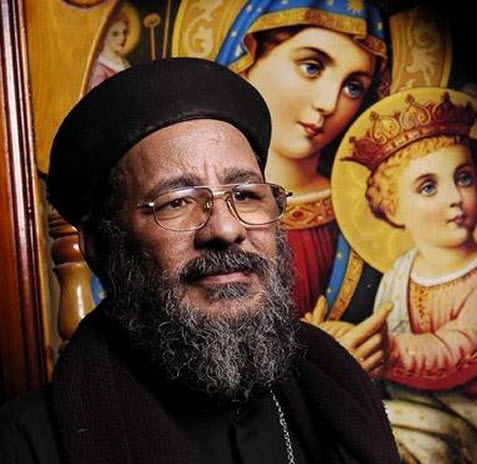

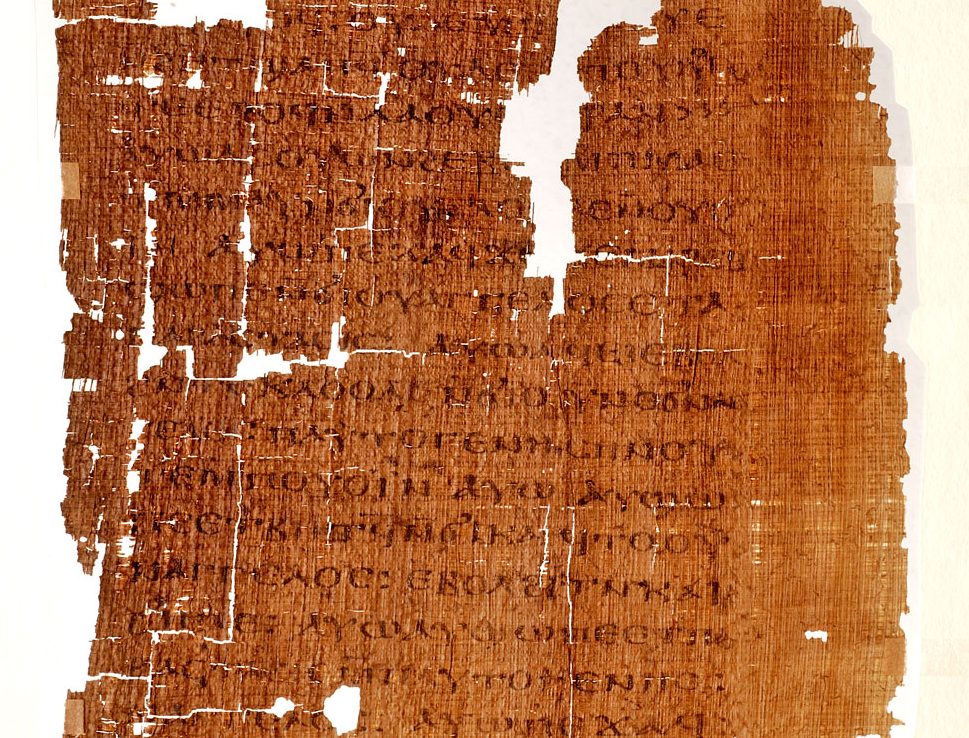


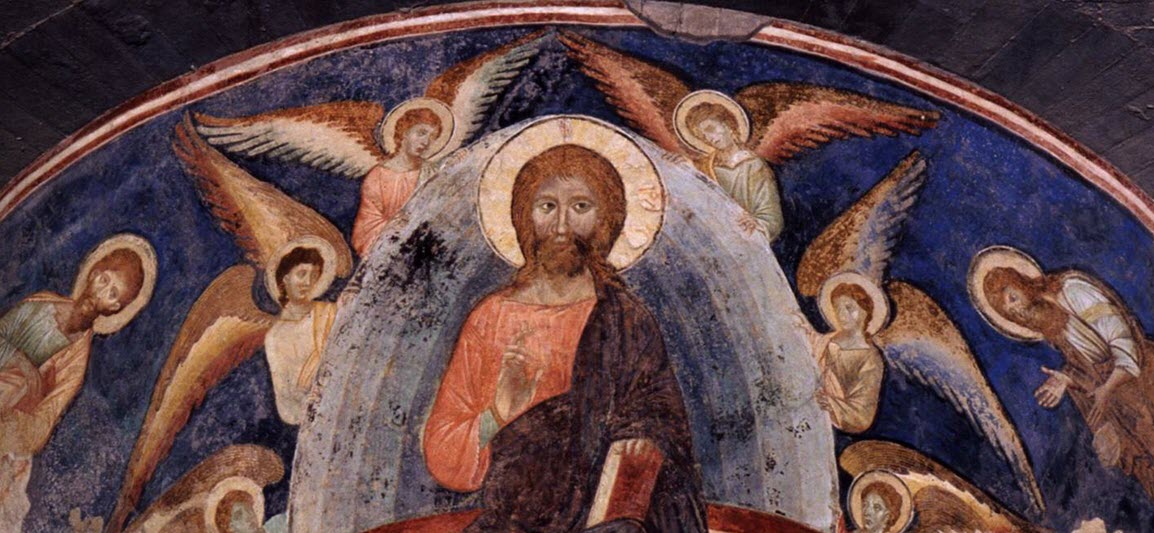


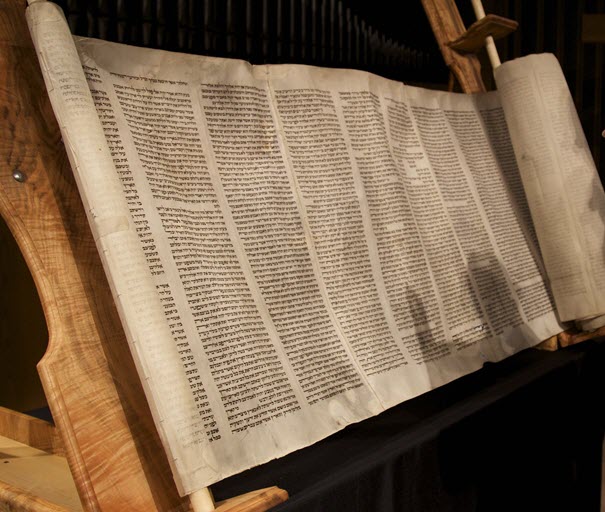

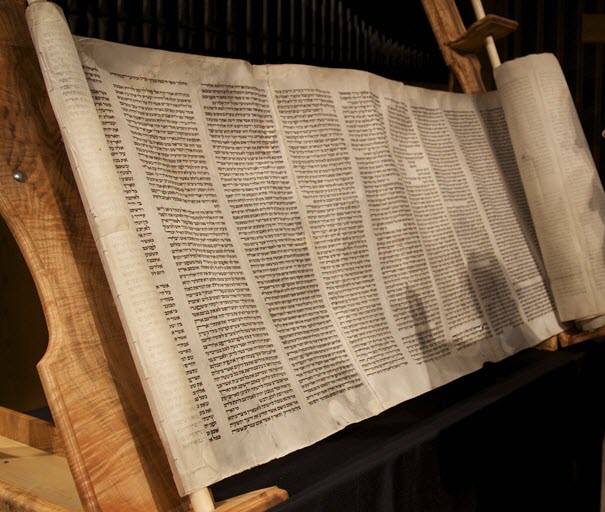

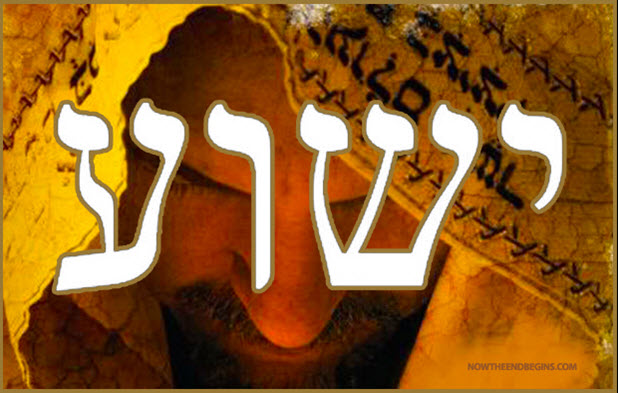




.jpg "Contradictions In The Bible")