المنهج فوق الطبيعي لتفسير الكتاب المقدس

المنهج فوق الطبيعي لتفسير الكتاب المقدس

المنهج فوق الطبيعي لتفسير الكتاب المقدس

المنهج فوق الطبيعي لتفسير الكتاب المقدس

كما رأينا، لقد وضع يسوع النموذج الذي اتبعه من كتبوا العهد الجديد، في التعامل مع الكتاب المقدس على أنه كتاب فوق طبيعي. فأمور مثل الحية النحاسية، وأحداث مثل الخروج من مصر، وكلمات مثل التنبؤ بأن إشعياء سيكون له ابن؛ وأشخاص مثل ملكي صادق – يتم فهمهم جميعاً على أنهم إشارات ليسوع المسيح.

بعض الشواهد تكون واضحة بما يكفي بحيث أن المفسرين اليهود للعهد القديم – قبل زمن المسيح – كانوا يرون باستمرار إشارات للمسيا. لكن العديد من الشواهد، مثل تلك التي أشرنا إليها أعلاه، لن ترد إلى ذهن الشخص الذي يبحث عن المعنى الذي كان يقصده المؤلف. فغير المؤمنين قد يقولون إن هناك معنى معين تم فرضه على النص.

أما المؤمنون فيقولون إن المعنى يظل مخفي إلى أن يكشفه المسيح أو رسله. ففي أي حدث، يتم رؤية الكتاب المقدس على أنه كتاب فوق طبيعي، هذا لأن الأحداث المستقبلية لا يمكن التنبؤ بها بدقة وتفصيل زمني، قبل حدوثها بسنوات كثيرة، بواسطة الحكمة البشرية وحدها.

المفسرون اليهود وآباء الكنيسة

لم تكن الطريقة التي فهم بها يسوع الكتب المقدسة وفسرها طريقة غريبة بالنسبة لسامعيه من اليهود. فعلى الرغم من أن بعض المفسرين اليهود تعاملوا مع العهد القديم على أنه وثيقة يتم فهمها بمعناها الواضح، إلا أن معظم المفسرين في زمن المسيح وضعوا على عاتقهم مسؤولية أن يكتشفوا المعاني والفروق الدقيقة والمخفية في الكتب المقدس.

كان المفهوم المحوري في تفسير أحبار اليهود، وربما في تفسير الفريسيين الأوائل كذلك، هو مفهوم “Midrash”، بمعنى أنه مفهوم يحدد “التفسير الذي إذ يتعمق فيما هو أبعد من مجرد المعنى الحرفي، يحاول أن يتغلغل في روح الكتب المقدسة، لكي يفحص النص من جميع الجهات، وبذلك يستخرج تفسيرات لا تكون واضحة مباشرة”[1].

توجد بعض التشابهات الموجودة بين فكرة المجاز اليهودية (التي تعتقد أنه بين طيات “الحرف”، أو المعنى الواضح، يوجد المعنى الحقيقي) وبين الطريقة التي تعامل بها من كتبوا العهد الجديد مع العهد القديم. لكن العهد الجديد لم يتعامل مع كل مقطع في العهد القديم بتلك الطريقة، كما رأينا.  الأكثر من ذلك، لا توجد في العهد الجديد الاستنتاجات المتطرفة والخيالية، التي تعتبر نموذجاً لتفسيرات أحبار اليهود.

كان علماء الكتاب المقدس في حقبة الكنيسة ما بعد الرسولية يميلون لاتباع مثال اليهود، بل والمجازيين اليونانيين، أكثر من مثال من كتبوا العهد الجديد. وعلى الرغم من وجود مجموعة من العلماء في أنطاكية (كريزوستوم، وتيودور من موبسيويستيا، وتيودوريت) الذين سعوا لتحديد المعنى الحرفي الذي كان يقصده المؤلفون، إلا أن تلك المدرسة الفكرية لم تنتشر في الكنيسة.

كليمينت، وهو واحد من آباء الكنيسة الأولين العظام من شمال أفريقيا، وتلميذه أوريجن الاسكندري، وضعا نموذجاً لفهم الكتب المقدس منذ القرون الأولى للكنيسة وحتى الإصلاح.

كان أوريجن يعتقد أن المعنى الروحي لمجيء رفقة لاستقاء ماء لعبيد إبراهيم وجماله هو أننا يجب أن نأتي إلى ينابيع الكتب المقدسة لكي نلتقي مع يسوع. كما علم كليمنت أن الخمسة خبزات التي أطعم بها يسوع الجموع كانت تشير إلى التدريب الإعدادي لليونانيين واليهود الذي كان يسبق حصاد القمح. أما السمكتان فتشيران إلى الفلسفة الهلينية: منهج الدراسة، والفلسفة نفسها.

في قصة الدخول الانتصاري، كان الجحش يشير إلى حرف العهد القديم، وأن الأتان، الذي ركبه يسوع كان هو العهد الجديد. كما أن التلميذان اللذان أحضرا الحيوانين إلى يسوع يمثلان المعنى الأخلاقي والمعنى الروحي: لكن رغم أن كليمنت كان يعتقد أنه يمكن أن يكون هناك معنى حرفي ومعنى روحي معاً في النص، إلا أن أوريجن كان يعتقد أن كل شيء في الكتاب المقدس له معنى مجازي رمزي.

هذا الاتجاه في التعامل مع الكتب المقدسة والذي يطلق عليه “the quadriga”، أو “الوسيلة الرباعية في التفسير”، تم تأسيسه بقوة منذ القرن الرابع وحتى القرن السادس عشر. قامت هذه الوسيلة بفحص كل نص من ناحية أربعة معان: حرفية، وأخلاقية، وباطنية (مجازية)، ونبوية. وقد تم تعليم ذلك المنهج بواسطة ترنيمة شهيرة:

الحرف يوضح لنا ما فعله الله وآباؤنا؛

المجاز يوضح لنا أين يكمن إيماننا؛

والمعنى الأخلاقي يعطينا قواعد للحياة اليومية؛

والمعنى النبوي يوضح لنا أين ينتهي جهادنا.

مثال على ذلك كلمة “أورشليم” حرفياً، تمثل أورشليم مدينة بذلك الاسم؛ ومجازياً، تعني أورشليم الكنيسة. أما نبوياً، فهي المدينة السماوية؛ وأدبياً، هي النفس البشرية.[2]

لقد اتخذ المصلحون موقفاً قوياً تجاه ذلك النوع من التفسير. فكان اهتمام لوثر، وكالفن، وزوينجلي هو أن يجدوا المعنى الذي قصده المؤلفون، وأن يجعلوا هذا المعنى هو السلطة للإيمان والأعمال. وقد اتحد هؤلاء المصلحون الثلاثة في رفض زعم الكنيسة في أن تكون هي المفسرة؛ وأكدوا على حرية وقدرة ومسؤولية الفرد في فهم معاني الكتب المقدسة. كما اتفق هؤلاء الثلاثة على سلطة كلمة الله باعتبار أنها فوق كل السلطات الأخرى.

واتفقوا على أن الكتاب المقدس بأكمله جدير بالثقة، وبالتالي، أن الكتب المقدسة يمكنها بل ويجب أن تفسر نفسها بنفسها. الأكثر من ذلك، لقد اتفقوا على أن استنارة الروح القدس هي أمر ضروري لفهم الكتب المقدسة، وأن الدراسة الجادة والقوية هي أمر مطلوب كذلك. لكنهم لم يتفقوا من جميع النواحي على كيفية تفسير الكتب المقدسة.

اختلف المصلحون في أن كالفن كان أكثر ثباتاً وتمسكاً في اتباعه لهذه المبادئ. فقد تمسك بشدة بالمعنى الواحد الواضح لنص الكتب المقدسة. أما لوثر فقد كان أقل تدقيقاً، وكان في بعض الأحيان يستخدم المعنى الرمزي لتفسير المقطع بطريقة تدعم لاهوته الخاص.

وكان تفسيره عقائدياً، يحكمه النظام اللاهوتي الذي كان منتمياً له – وهو الخلاص بالنعمة من خلال الإيمان وحده. أكثر من ذلك، كان تفسيره في بعض الأوقات على أسس ذاتية، أو يزعم أنه تلقاه عن طريق الاستنارة المباشرة بالروح القدس.[3]

لكن على الرغم من اختلاف المصلحين في تلك الطرق، إلا أنهم اتحدوا في التزامهم بالافتراضات المسبقة التي كان يعتنقها من كتبوا العهد الجديد:

1 – بأن الكتاب المقدس هو من الله، وأنه كتب بواسطة البشر.

2 – بأنه نقل مباشرة لمشيئة الله للبشر.

3 – أنه يمكن فهمه باللغة البشرية العادية.

لقد قدم المصلحون جسراً يعبر من المجهودات التفسيرية التي كانت في كثير من الأحيان خيالية ولا يمكن توقعها دائماً في القرون الأولى والمتوسطة للكنيسة، إلى الحقبة البروتستانتية، التي فيها أصبح المعنى الذي يقصده المؤلف هو موضوع البحث لمن يرغبون في فهم كلمة الله.

وإذ قام المصلحون بكسر قبصة التفسير المجازي الرمزي، كانت هناك نتيجة أخرى، وهي أن العقلانيين الآن قد أصبحوا أحراراً في التعبير عن وجهات نظرهم. وفي الحال، أصبح هناك من يرون الكتاب المقدس على أنه كتاب طبيعي صرف. في النهاية، أصبح المنهج الطبيعي سائداً في التفسير البروتستانتي للكتاب المقدس.

المُروحنون المعاصرون

(أي إعطاء روحانية للنص أكثر مما هي فيه)

بقولنا أن المصلحين قد جاهدوا لكي يقربوا الكنيسة أكثر إلى النظرة التي كان يعتنقها الكتاب المقدس نفسه، وأن المصلحين قد حرروا الكنيسة من أولئك الذين كانوا ينظرون للكتاب المقدس على أنه كتاب فوق طبيعي خالص أو حتى سحري، سيكون من الخطأ الكبير أن نفترض أن التفسير الرمزي قد توقف.

فالحقيقة أن هذا الاتجاه في تفسير الكتاب المقدس لا يزال سارياً ومزدهراً، خاصة في الدوائر الإنجيلية. فكر مثلاً في الاستخدام التالي للكتاب المقدس بواسطة أحد المفسرين المشهورين واسعي الانتشار:

ثالثاً، الصمت المطلوب من “الشعب” في هذه المناسبة قدم خطاً مهماً آخر في الصورة النموذجية التي أوردتها هذه الحادثة – رغم أنه خط لا يجذب بالتأكيد الكثيرين من المسيحيين في العصر الحاضر. إن احتلال إسرائيل لأريحا بلا شك سبق تصوير الانتصارات التي حققوها تحت قيادة الله، بواسطة الإنجيل. فالكهنة الذين كانوا ينفخون في الأبواق المصنوعة من قرون الكباش يصورون خدام الله وهم يبشرون بالكلمة.

إن منع “الشعب” من فتح أفواههم تكمن أهميته في أنه يصور أن الأفراد العاديين من المسيحيين لا يجب أن يكون لهم دور في التبشير الشفهي بالحق – فهم غير مؤهلين لذلك، وليسوا مدعوين لخدمة الكلمة. فلا يوجد في أي مكان في الرسائل حث واحد لهؤلاء القديسين على أن يشتركوا في التبشير العلني، وليس حتى على أن يقوموا “بالعمل الفردي” ويسعوا “لربح النفوس”.

كما أنه ليس مطلوب منهم أن “يشهدوا للمسيح” بسلوكهم اليومي في العمل وفي المنزل. بل عليهم فقط أن “يظهروا تسابيح الله”، أكثر من أن “يخبروا” بها. عليهم أن يدعوا نورهم يضيء. فشهادة الحياة هي أكثر تأثيراً من كلام الشفتين السطحي. فالأفعال صوتها أعلى من الكلمات.[4]

لن ينفع لتبرير تلك الطريقة في التعامل مع الكتاب المقدس أن نقول إن هناك معنى واحد فقط لكن تطبيقات كثيرة. صحيح أن المقطع يمكن أن يتم تطبيقه بعدة طرق بالنسبة للخلفيات المعاصرة، لكن أن نتعامل مع الكتاب المقدس بهذه الطريقة، ونستخرج منه رسالة تبعد كثيراً عما يقصده المؤلف، فهذا نموذج للتفسير الذي لا يتعامل مع المؤلف وقصده بمحمل الجد.

في مثل هذا المنهج، لا يكون للكتاب المقدس سلطته الخاصة، ولا يكون حراً في أن يذكر هدفه المعين ويطلب الطاعة لتعاليمه، بل بدلاً من ذلك، فإنه يُستخدم لهدف آخر يكون في ذهن المفسر من خلال عملية الروحنة – والعثور على معنى خفي في النص.

تكون براعة دارس الكتاب المقدس هي القيد الوحيد لتفسيراته المثيرة للكتاب المقدس في مثل هذا المنهج. فعندما يقوم واعظ بالتعامل مع حدث تاريخي مباشر على أن له مضامين خفية وحقائق روحية مثيرة، فلا عجب في أن الكثيرين من المسيحيين الإنجيليين يتعاملون مع الكتاب المقدس بنفس الطريقة في الاستخدام التعبدي وفي طلب المشورة.

كثيرون من المسيحيين المخلصين في قراءة الكتاب المقدس بطريقة تعبدية يشعرون “بالبركة” فقط عندما يجدون فكرة مدهشة مفاجئة يوحي بها النص، وتكون فكرة ليس لها علاقة بقصد وهدف المؤلف. فبالنسبة لهم، يبدو السعي لمعرفة مشيئة الله من خلال الدراسة المتأنية وفهم قصد المؤلف، عملاً جافاً ومملاً.

وبنفس الطريقة، يستخدم كثيرون من المسيحيين الكتاب المقدس بطريقة “سحرية” للحصول على إرشاد معين للقرارات التي يجب أن يتخذوها، مثل، إلى أين يذهبون، وماذا يشترون، وما الوظيفة التي يقبلونها – والتي يتم اكتشافها جميعاً من خلال مقاطع الكتاب المقدس التي، بالمصادفة العجيبة، يكون لها معنى مزدوج. لكن أولاً، هناك الرسالة التي يقصدها المؤلف، ثم هناك المصادفة غير المرتبطة بالموضوع الذي لا يتشابه مع خبرتهم الشخصية الحالية.

على سبيل المثال، قد يسعى زوجين شابين لطلب مشيئة الرب بشأن وظيفتهما الحالية في منطقة جبلية في الولايات المتحدة، ورغبتهما في أن يذهبا عبر البحار لخدمة إرسالية في إحدى الجزر. وأثناء قراءتهما في الكتاب المقدس يكتشفان الأمر القائل: “كفاكم دوران بهذا الجبل” (تثنية 2: 3).

ويلي ذلك اكتشافهما لنبوة كتابية أخرى تقول: “وتنظر الجزائر شريعته” (إشعيا 42: 4). فماذا يمكن أن يكون توجيهاً أوضح لحياتهما الشخصية من تلك الكلمات ذات السلطان من الكتاب المقدس؟ فلا يهم عندها إن كانت الرسالة التي تلقوها ليست لها أية علاقة بالرسالة التي كان يقصد الكاتب توصيلها.

إنني لا أقول إن الله لم يقدم إرشادات مطلقاً من خلال مثل هذه المصادفات الجيدة، فهو ربما يستخدمها، كما يحدث في ظروف الحياة، مثل لقاء شخص بطريق “المصادفة”، والذي يصبح جزءًا مكملاً لإرشاد الله. لكن الكتاب المقدس لم يُعط لأجل هذا الغرض، وعندما نستخدمه بهذه الطريقة، زاعمين السلطة الكتابية أو تصديق الله على قراراتنا الشخصية، فإننا بذلك نسيء استخدامه.

كما يمكن للمصادفة أن تحدث كذلك كترتيب من العناية الإلهية من خلال الصحف اليومية، مفترضة مساراً ما للسلوك للشخص الذي يسعى لمعرفة مشيئة الله. لكن لا يمكن للمرء أن يزعم، في كلتا الحالتين، إعلاناً معصوماً من الخطأ لمشيئة الله، كمثل ما يمكنه أن يزعم بالنسبة لتعاليم مقطع كتابي قصد المؤلف توصيلها.

بل أن الكتاب المقدس يساء استخدامه بصورة أكبر إذا كانت هذه “الرسالة” السرية من الله تم استخدامها لاستبعاد تعليم واضح للكتاب المقدس – أو مبدأ كتابي، على سبيل المثال، يحظر المسار المقترح للسلوك. لأن الروح القدس لن يقول مطلقاً شيئاً من خلال كاتبي الكتاب المقدس، ثم يقوم بمناقضته أو تغييره بالنسبة للقارئ.

بكلمات أخرى، لن يقوم الله بإرشاد المسيحي من خلال فهم أو تطبيق للكتاب المقدس يبتعد بأي حال من الأحوال عما هو مكتوب. فإن لو قام بذلك، لن تكون هناك طريقة لمعرفة إن كان تفسيرنا هذا من الروح القدس، أم من ميولنا الخاطئة، أم من الشيطان، أم من باعث نفسي أو مادي آخر.

يجب أن يكون واضحاً أن الانطباعات الذاتية لا يمكن أن تتناقض مع تعاليم الكتاب المقدس، إن كنا نريد أن يكون الكتاب المقدس هو السلطة الوظيفية لتفكيرنا وسلوكنا.

لكن الخطر الأساسي من الاعتماد على الانطباعات الذاتية التي يثيرها الكتاب المقدس ليس أن تتناقض مع الكتاب المقدس، بل أن تمضي لمعان أكثر مما يقصده الكتاب المقدس، فتجد معاني لم يقصدها المؤلف على الإطلاق، خاصة فيما يتعلق بالمشورة والإرشاد الشخصي، ثم استخدام هذه الانطباعات بسلطة إلهية كما لو كانت كلمة الله المعصومة من الخطأ.

بمعنى أن استخدام الكتاب المقدس كوسيلة عادية للإرشاد الشخصي يروج لوهم “الحق المعلن” الذي يكون مستوى سلطته أعلى من سلطة ظروف العناية الإلهية الأخرى في الحياة، لمجرد أن هذا “الإرشاد” موجود في الكتاب المقدس.

لكن الكتاب المقدس يجب أن يستخدم للإرشاد “بطرق صحيحة”. وهذه الطرق الصحيحة تتكون من مشيئة الله المعلنة للسلوك البشري، التي تتفق مع المعنى الذي كان يقصده المؤلف. فعندما يكون للنص علاقة عرضية بالظروف الشخصية الحالية والقرار المبني على مثل هذا “الإعلان”، يمكن عندها للشخص أن ينادي فقط بانطباعه الذاتي الخاص عن إرشاد الروح القدس من خلال ظروف غير معتادة، وليس بسلطة الإعلان الكتابي.

إن الخطأ الأساسي في كل المناهج الأربع الخاطئة في التعامل مع الكتاب المقدس هو صفة الذاتية. ففي خاصية الذاتية، يصبح المفسر هو السلطة المطلقة النهائية للتفسير. وقد رأينا أن المنهج الطبيعي لتفسير الكتاب المقدس هو ذاتي، لأن المفسر يقرر مسبقاً ما هو المقبول في الكتاب المقدس، بحسب افتراضاته الطبيعية المسبقة. على أن النوع الأقل ظهوراً للذاتية، خاصة بالنسبة للذين يتأثرون به، هو الروحنة الذاتية.

يعتبر الإنجيليون أكثر عرضة لهذا الخطأ، ربما لأنهم يتعاملون بجدية مع العلاقة بين الروح القدس وكلمة الله. لا يمكن الاستغناء عن عمل روح الله في التفسير الكتابي السليم. فقد ألهم الروح القدس الأشخاص الذين كتبوا الكتاب المقدس، وهو الذي ينير أذهان المسيحيين الذين يقرأون هذه الكلمات بعد ذلك بقرون.

فالوحي أو الإلهام يعني أن الله كان يراقب تدوين الكتاب المقدس حتى آخر كلمة فيه. والاستنارة تعني أن الروح القدس يعمل الآن في المسيحي لكي يساعده على فهم ما هو موجود بالفعل في الكلمة، ويساعده على تطبيق الكلمة بطريقة أصيلة وصحيحة.

أعطانا الوحي إعلاناً لمشيئة الله بدون خطأ، بحسب ما يقر الكتاب نفسه. ولكن الكتاب المقدس لا يقر بمثل هذا الوعد بالنسبة للإستنارة أو الفهم أو التطبيق الذي يساعد عليه الروح القدس. فكما يعمل الروح القدس فينا لكي يجعلنا قديسين، ولكننا لسنا قديسين بعد، هكذا يعمل فينا أيضاً لكي ينير أذهاننا من خلال الكتاب المقدس، لكن نتيجة هذه الاستنارة ليست فهماً كاملاً، لأنها لو كانت كذلك، لاتفق جميع المفسرين الأتقياء معاً في تفسيراتهم.

فعندما يتعامل المفسر مع الاستنارة كأمر معصوم من الخطأ، تماماً كما يتعامل مع نص الكتاب المقدس، يكون عندئذ قد سقط في الذاتية. لأنه عندما يدعى شخص ما مثل هذه السلطة في تفسيره لمعاني الكتاب المقدس يكون أمراً سيئاً بما يكفي، لكنه عندما يدعي مثل هذا المستوى من السلطة في انطباعه الذاتي بخصوص الإرشاد الشخصي، فإنه يخطئ أكثر، لأنه يتجاوز معنى النص الموحى به.

هل هذا يعني أن التفسير السليم و”البركة” الذاتية هما أمران متبادلان؟ بالتأكيد! لأن استخدام مبادئ التفسير لفهم وتطبيق الكتاب المقدس بصورة أصيلة، وإدراك المعنى الذي يقصده الله، سوف يسر الله بالتأكيد، ولكنه سيأتي أيضاً بالبركة الشخصية لحياتنا. فالكتاب المقدس يجب أن يكون له علاقة موضوعية بحياتنا، وإلا لن يتحقق هدفه في تغييرها. لكن التشبه بالمسيح لن يتحقق عندما نجعل الله وكلمته يتفقان معنا. لكن عندما نكون نحن أنفسنا متفقين مع الله ومع كلمته.

هل يوجد أكثر من معنى واحد؟

هل لكل مقطع كتابي معنى واحد، أم أن هناك معان خفية يجب استخراجها من خلال اتباع قواعد خاصة في التفسير، أم من خلال الحدس المباشر بالروح القدس؟ يقدم لنا الكتاب المقدس أمثلة لكلمات تم إعلانها لشخص، ومعنى هذه الكلمات تم إعلانها لشخص آخر. فعلى سبيل المثال، في اختبار كل من يوسف ودانيال، أعطيت الرسالة اللفظية أو الرؤية لشخص، بينما التفسير قد أعطي لشخص آخر (تكوين 41؛ دانيال 2).

فهل هذا هو ما حدث في حالة الكتاب الذين كتبوا العهد الجديد وبالنسبة ليسوع نفسه؟ هل كان لمؤلفي العهد القديم معنى واحد في ذهنهم، بينما كان المؤلف (الله) الذي هو خلف أولئك المؤلفين يقصد معنى آخر أو إضافياً، كشفه لشخص آخر في العهد الجديد؟

يوجد على الأقل رأيان في هذا المسألة. يعتقد البعض أنه يمكن أن يكون هناك معنى واحداً فقط للمقطع الكتابي إذا كانت اللغة يعتمد عليها وكان إيصالها للمعنى ممكن. هؤلاء الناس لا ينكرون احتمال أن يكون هناك عدة تطبيقات للمعنى الواحد. بل الأكثر من ذلك، فهم لا ينكرون احتمال أن يكون هناك معنا آخر أشمل محتوى داخل الإعلان الأصلي.

على سبيل المثال، في المشكلة الصعبة الخاصة باقتباس متى بشأن دعوة ابن الله من مصر (متى 2: 14-15)، يشير هذا الاقتباس بوضوح إلى خروج إسرائيل من مصر (هوشع 11: 1). فكيف إذاً يشير متى بذلك إلى إقامة مريم ويوسف والطفل يسوع في مصر؟ ألا يوجد هنا معنى مزدوج؟ لذلك فإن من يعتقدون بأن هناك معنى واحد فقط، وأن ذلك المعنى كان هو القصد الواعي للمؤلف، يفهمون المقطع على أنه تصريح عن قصد الله تجاه الرب يسوع منذ البداية.

وأثناء عملية الإعداد لهذا الأمر، وكرمز لحقيقة أن يسوع المسيح كان سيأتي من مصر، سمح الله لشعبه إسرائيل أن تكون لهم إقامة هم أيضاً في مصر. فالحقيقة أنه في البداية، دعا الله أول شخص اختاره، إبراهيم، من مكان اقامته في مصر. لذلك فإنه منذ البداية، كان هناك معنى واحد هو المقصود. لكن التحقيق التام لذلك المعنى انتظر حتى مجيء الشخص الذي حققه بالكامل.

هناك آخرون يجدون صعوبة في مثل هذا الاتجاه, إذ أنهم يؤمنون أن هناك مقاطع معينة في الكتاب المقدس لا يمكن تفسيرها على أن لها معنى واحد؛ فمثل هذه المقاطع يمكن أن يكون لها أكثر من معنى واحد مقصود. فالمعنى الثاني (الخفي أو الأقل ظهوراً) كان يمكن أن يكون في ذهن المؤلف أو ربما كان فقط في ذهن الروح القدس، الذي أوحى للمؤلف.

في كلتا الحالتين، فإنهم يعتقدون أن المعاني الإضافية موجودة هناك بواسطة القصد الإلهي. فالروح القدس قام بترميز الرسالة، ثم قام في وقت لاحق بإعلان المعنى الثاني لها من خلال متحدث آخر ملهم من الله. (معظم الكتب المقدسة التي يوجد جدل حاد بشأنها تتضمن نبوات). لكن سنقوم بالتعامل مع هذه المشكلة بتعمق أكثر في الفصل 18.

لكن لا بد من التسليم بأنه أمر مشروع بالنسبة لمؤلف أن يكون له معنى ثاني أو خفي. فإن كان أوليفر ويندل هولمز، مؤلف “The One-Hoss Shay”، قصد أن يكتب بيت شعري ليس فقط عن تحطم عربة تجرها الخيول، لكن لكي يسخر من النظام الكالفيني، فقد كان هذا حقه. وإن قصد كاتب فكاهي أن يخفي رسالة سياسية في مؤلفه الفكاهي، فإن له الحق الكامل في أن يقوم بذلك. فالحقيقة أن هذه تقنية أدبية شائعة.

لكن هناك قاعدة واحدة يجب مراعاتها، وهي أنه إذا تنصل المؤلف عن معنى خفي، لا يمكن لشخص آخر بمنتهى الثقة أو السلطة أن ينسب له هذا المعنى الخفي. بكلمات أخرى، أن المؤلف نفسه هو الوحيد الذي يستطيع بصورة شرعية أن يعرف ذلك المعنى الثانوي. هذه هي الحال مع الكتاب المقدس. إذا تم التسليم بأن هناك معنى ثانوي في مقاطع معينة. فالروح القدس هو الذي أوحى للمؤلف وهو الذي أوحى فيما بعد بالتفسير لذلك المؤلف.

إن مسألة ما إذا كان المؤلف لديه معنى مباشر ومعنى آخر أشمل في ذهنه هي أمر معقد وشديد الأهمية بالنسبة لغرضنا هنا من إقامة افتراض أساسي لفهم الكتاب المقدس، أعتقد أن هذه المسألة تحتاج أن يتم حسمها. لأنه حتى لو اعتقد المرء أن هناك معنى واحداً فقط في المقطع، وأن المؤلف كان على وعي بهذا المعنى في البداية وفي المضمون النهائي، إلا أنه يجب علينا أن نتفق أن ليس أي إنسان يمكنه أن يميز ذلك المضمون الأشمل أو النهائي.

ومن ناحية أخرى، إذا اعتقد الإنسان أن هناك مقاطع معينة في الكتاب المقدس تم ترميزها عن عمد بمعنى مزدوج – أحدهما واضح والآخر سيتم التعرف عليه في وقت لاحق – مرة أخرى، ليس أي شخص يمكنه أن “يفك الشفرة” أو يجد ذلك المعنى الخفي.

هذه نقطة مهمة، فمهما كان الوضع الذي لدى الشخص فيما يخص بمسألة المعنى الخفي أو الثانوي في النبوات، أو المعنى الأشمل المقصود منذ البداية، فإن يسوع المسيح أو كتاب الكتاب المقدس الموحى لهم هم الأشخاص الوحيدون الذين يمكنهم أن يحددوا ذلك المعنى الثانوي أو الأشمل. فعندما تحدث المسيح، كان له كل الحق في تفسير المؤلف. نفس هذا الأمر يمكن أن يقال عن أولئك الرسل الذين خول لهم أن يعلنوا عن مشيئة الله من خلال العهد الجديد.

فأن ينسب الشخص معان خفية للكتاب المقدس، فإنه بذلك يفترض لنفسه سلطة مساوية أو لاغية لسلطة ذلك المؤلف. فالمفسر، سواء كان فرداً أو كنيسة، يعني بذلك أنه سلطة تعلو فوق سلطة الكتاب المقدس. لكن الكتاب المقدس يجب أن يكون هو السلطة النهائية المستقلة لما يقوله الله لشعبه.

صحيح أن الإعلان هو فوق طبيعي في محتواه وفي الطريقة التي أعطي بها، وأن الكتاب المقدس له تأثيرات فوق طبيعة في حياة الذين يقرأونه ويسمعونه. لكن الأداة في توصيل تلك الرسالة فوق الطبيعة هي طبيعة، فهي اللغة البشرية التي توصل كلمات مفهومة لما هو في فكر الله.

فإن كان هناك معنى خفي، فإن المؤلف البشري أو الله نفسه هما الوحيدان اللذان لديهما السلطة لتأكيد ذلك. لذلك فإن أبناء الله الذين يرغبون في معرفة مشيئته وعملها يجب أن يدرسوا باجتهاد لك يتمكنوا من التعامل بطريقة سليمة مع كلمة الحق. فيجب عليهم أن يبذلوا كل اجتهاد لكي يتعرفوا على المعنى الواحد المقصود للمؤلف، وليس أن يبحثوا عن معان خفية.

وعندما يقوم الرب يسوع نفسه أو أحد مؤلفي الكتب المقدسة بإظهار معنى خفي في النص الكتابي، فإننا نفرح بذلك، ولا نندهش، لأن الكتاب المقدس هو كتاب فوق طبيعي، وهناك مؤلف واحد (الله) خلف كل هؤلاء المؤلفين له. لكننا يجب أن نترك مثل هذا النوع من التفسير لمؤلفي الأسفار المقدسة، إذ أننا غير مخولين من الله لأن نكون متحدثين باسمه معصومين من الخطأ بإعلان إضافي.

مراجع مختارة لمزيد من الدراسة

أكرويد، بي آر، وسي إفي إفانز، محرران. The Cambridge History of the Bible Cambridge: U. Press 1970.

فارار، فريدريك دبليو. History of Interpretation. 1886 reprint. Grand Rapids: Baker, 1961.

جرانت، روبرت إم. A Short History of the Interpretation of the Bible. مع ديفي تريسي طبعة ثانية منقحة Philadelphia: Fortress, 1984.

“History of the Interpretation of the Bible” The Interpreter’s Bible.

 New York: Abingdon-Cokesbury, 1952. 1:106-41.

سمولي، بيريل. The Study of the Bible in the Middle Ages. Notre Dame: U. of Nortre Dame, 1964.

وود، جيمس دي. The Interpretation of the Bible: A Historical Introduction. London: Duckworth, 1958.

[1] إس هوروفيتز، Midrash, Jewish Encyclopedia، 12 مجلد (New York: Ktav, 1904)، 8: 548.

[2] جيمس دي وود، The Interpretation of the Bible: A Historical Introduction (London: Ducworht, 1958)، صفحة 72.

[3] نفس المرجع. صفحة 87. انظر أيضاً بيمارد رام، Protestant Biblical Interpretation (Grand Rapids: Baker, 1870)، صفحة 54.

[4] آرثر دبليو بينك، Gleanings in Joshua (Chicago: Moody, 1978)، صفحة 102.


المنهج فوق الطبيعي لتفسير الكتاب المقدس

اللوجوس عند فيلو الفيلسوف اليهودي – القمص عبد المسيح بسيط

اللوجوس عند فيلو الفيلسوف اليهودي – القمص عبد المسيح بسيط

اللوجوس عند فيلو الفيلسوف اليهودي – القمص عبد المسيح بسيط

اللوجوس عند فيلو الفيلسوف اليهودي – القمص عبد المسيح بسيط

منذ عهد بطليموس الأول (323-285ق.) كان هناك يهود يعيشون بكثرة في مصر. وكانت الإسكندرية مركزهم الرئيسي ولقد دعت الحاجة إلى ترجمة العهد القديم من اللغة العبرية إلى اللغة اليونانية، وهى التي تعرف بالترجمة السبعينية. وقد أدى هذا إلى الربط بين الثقافة الغربية واليهودية، وبين إيمان العهد القديم والفلسفة اليونانية.

وكان الفكر اليهودي في الإسكندرية يميل إلى تفسير العهد القديم تفسيرا رمزيا، وحول علماؤهم الحقائق الكتابية إلى رموز لمبادئ عقلية، وزعموا أن الفلاسفة اليونانيين قد اخذوا فلسفتهم أصلاً عن كتابات موسى النبي. وأشار ارسطوبولس (150ق. م) لوجود هذه الترجمة اليونانية المعروفة بالسبعينية والتي يقول التقليد اليهودي أنها ترجمت فيما بين (280 – 150 ق م). ونظرا لوجود معظم المدارس الفلسفية اليونانية بالإسكندرية، فقد تأثر بها اليهود وكانوا يفضلون المدرسة الأفلاطونية، وكان فيلو الفيلسوف اليهودي المعاصر للمسيح (20 ق م – المتوفى فيما بين 40 – 50م) متأثراً بهذه المدارس الفلسفة خاصة الأفلاطونية والأرسطوطالية والرواقية وغيرها. ومن ثم فقد خلط بين أفكار كل هذه المدارس بالفكر اليهودي، ولأن اعتقد مثل يهود عصره ومدينته أن هذه الفلسفات ترجع في أصولها إلى كتابات موسى النبي، لذا فقد جمع بين الفكر الكتابي اليهودي والفكر اليوناني، وهكذا تشكل مفهومه عن اللوجوس، الذي هو في مفهومه وكيل الله ” والوسيط بين الأبدي والزائل، واللوجوس الذي، من وجهة نظره، يعكس نوراً من مظاهر لا تحصى “(34).

ولأن فيلو اليهودي جمع ما بين فكر العهد القديم والتقليد اليهودي والفلسفة اليونانية إلى جانب بعض العناصر الشرقية، لذا فكان فكره وعقيدته خليط بين اليهودية والفلسفة اليونانية. فكيهودي آمن بالله كما هو في العهد القديم، ونظرا لأن الفلسفة اليونانية ترى أن المادة أزلية مثل الله وأنها شر، وأن الله لا يتصل بهذه المادة التي هي شر، لذا فصل فيلو بين الله والعالم تماماً، وجعل الله بدون أي صلة بالعالم، وقال أنه لا توجد أي صلة بين الروح المحض (الله) والعالم المحسوس. ونظرا لأن هذا الفكر أوجد فجوة وهوة لا قرار لها بين اللاهوت السامي والفائق وغير المدرك وبين العالم المادي المحسوس، لذا فكر فيلو في إيجاد كوبري، وسيط، يعبر هذه الفجوة أو الهوة، وسيط يربط بين الله والمادة، ولكن لا بحسب الكتاب المقدس أو التقليد اليهودي بل بحسب فكرة القوات الوسيطة والمُثل الأفلاطونية. ونتيجة لذلك فقد قدم فكرة مصغرة لهذه القوات الفاعلة هي اللوجوس (Logos). هذا المصطلح الذي يحتمل أنه أخذه من العهد القديم ولكن بمحتوى وأسلوب وفكر غنوسي يوناني كما هو في فكر أفلاطون في الُمثل وفكر الرواقيين عن الأسباب والقوات.

ومن ثم يعني اللوجوس عند فيلو ويشير للمثال الأولي، الفكرة الأولية، التي تتفق مع عقل الله، العقل الملازم لله، وأيضاً مبدأ الإعلان في الطبيعة الإلهية. ويعتبر اللوجوس عنده هو العقل الجوهري الذي يوصل الفكر الغير منطوق به في الإنسان، هذا اللوجوس فائق وغير مدرك مثل الله نفسه، ولكن في وجهه الآخر فهو القوة والنشاط وموصل للفكر المنطوق به في الإنسان. اللوجوس هو وسيط الله الذاتي الذي يكشف به الله عن نفسه وعن عنايته الإلهية. هذا اللوجوس أو الكلمة المنطوقة هو الخالق الذي خلق به الله العالم وهو العامل في الكون باستمرار والفاعل فيه دائماً، وفيه توجد كل الحكمة الإلهية والخير الإلهي، بل هو الابن البكر لله، الملاك الأعلى والإله الثاني في الكون(35).

يقول في كتابه: ” De Plant Noe “: ” لأن أولئك الذين لا يستطيعون أن ينظروا للابن نفسه، ينظرونه في نوره المنعكس، حتى لو باعتباره صورة الله، الذي هو ملاكه، فاللوجوس (logos- Memra) كالله (Elohim) نفسه “.

ويقول في كتابه ” On The Confusion Of Tongues p. 247 “(36): ” حتى لو لم يكن هناك من هو مستحق ليسمى بابن الله، ومع ذلك فهو يعمل بلا كلل ليكون مزيناً بحسب كلمته البكر [Logos]، أقدم ملائكته، كرئيس الملائكة العظيم ذو الأسماء الكثيرة؛ لأنه يدعى ذو السيادة واسم الله والكلمة [Logos]، وإنسان بحسب صورة الله والذي يرى إسرائيل “.

ويقول في كتابه ” Allegorical Interpretation, III. “(37): ” ظل الله هو كلمته [Logos] الذي استخدمه كوسيلة عندما خلق العالم. وهذا الظل، وكما كان، نموذجاً، النموذج الأولي للأشياء الأخرى، لأنه كما أن الله نفسه النموذج لهذه الصورة الذي يدعى الآن الظل، هكذا أيضاً هذه الصورة هو النموذج للأشياء الأخرى. وكما بين عندما أوصى معطيا الناموس للإسرائيليين، وقال: ” وعمل الله الإنسان على صورة الله (تك1 :26)، لأن الصورة كانت على نموذج الله، ولأن الإنسان كان على نموذج الصورة التي أُخذت، هكذا، قوة وصورة النموذج “. 

كما قال في كتاب: ” On Dreams, 1, “(38): ” لأنه يوجد، كما يبدو، هيكلان لله؛ واحد هو العالم، الذي فيه الكاهن الأعلى الذي هو الكلمة الإلهي [Logos]، ابنه البكر ..”.

وقال في كتاب ” On The Migration Of Abraham. P. 253 “(39): ” كيف نتوقع الكلمة [Logos]، الذي هو أقدم من كل الأشياء التي كانت موضوعات الخليقة، وبأي وسيلة هو حاكم الكون ..”(40).

ولكن النقطة التي لم يتفق فيها الدرسون هي؛ هل كان اللوجوس عنده، كشخص، منفصل تماما عن الله أم لا؟

وعموما فقد شكل اللوجوس بالنسبة له محورا جوهريا حيث استخدمه في كتاباته أكثر من 300 مرة، وأن كان بمعاني متناقضة ومتعارضة!! ويرى البعض أنه أخذه عن المفهوم الكتابي اليهودي ومن ثم فهو بالنسبة له هو ” كلمة الله “، وقال البعض الآخر أنه تأثر بلوجوس الرواقيينlo,goj qeou/ وبنفس معنى ” العقل الإلهي ” مثال الحكمة الإلهية(41). وقد لخص لنا بعض الدارسين أفكاره كالآتي:

1 – أن الله هو الموجود المطلق ” الذي يكون “. وهو وحده الموجود بذاته، بدون خليط وبدون تعدد، الواحد والكل. وليس هناك اسم يمكن أن يناسبه وهو الموجود المطلق، أو ببساطة ” يكون “. وهو غير معروف في طبيعته.

وتقول دائرة المعارف اليهودية نقلا عن كتاباته أنه فيما يختص بعقيدته في الله فهو يتكلم في اتجاهين؛ سلبي وإيجابي، فمن الناحية السلبية يحاول أن يحدد طبيعة الله بالتضاد مع العالم. فهو، فيلو، يمكن أن يأخذ من العهد القديم نظرات محددة فيما يختص بسمو الله على العالم ” لأن أفكاري ليست أفكاركم ولا طرقكم طرقي يقول الرب. لأنه كما علت السموات عن الأرض هكذا علت طرقي عن طرقكم وأفكاري عن أفكاركم ” (اش55 :8و9)، وعدم استطاعة الإنسان رؤية الله ” لأن الإنسان لا يراني ويعيش ” (خر33 :20). ولكن بحسب المفهوم السائد في العهد القديم فالله يعمل باستمرار في العالم، ومليء بالغيرة ويتحرك بالتوبة ويأتي لمساعدة شعبه؛ ولذا فهو مختلف كلية عن الإله الذي يقدمه فيلو. وفيلو لا يعتبر أن الله مثيل بالسماء ولا بالعالم ولا بالإنسان؛ فالله بالنسبة له لا يوجد لا في الزمان ولا في الفراغ؛ وليس له صفات إنسانية ولا عواطف. حقا فهو بدون صفات وبالتالي فلا اسم له ولهذا السبب لا يمكن أن يدركه الإنسان، وهو لا يمكن أن يتغير ودائما على نفس حاله، ولا يحتاج لكائن آخر، ومكتف بنفسه، ولا يمكن أن يزول وهو ببساطة الموجود، وليس له أي علاقة مع أي كائن آخر(42).

2 – وخارج الله توجد المادة وهى لا شكل لها، في حالة لا تكون، وجوهرها شر. ولا يمكن لله الكائن الكامل أن يوجد في صلة مباشر مع الفساد وعدم الإحساس، مع المادة التي لا شكل لها ولذلك فهو لم يخلق العالم بشكل مباشر.

ومن هنا جاءت فكرة المبدأ المتوسط بين الله والمادة – العقل الإلهي، اللوجوس الذي تتضمن فيه كل الأشياء المحدودة، والذي خلق العالم المحسوس بأن جعل هذه الأفكار تتخلل المادة وتنفذ فيها. 

وتقول دائرة المعارف اليهودية: ” ولأن فيلو وصف المادة والعالم المادي كشر فقد وضع الله خارج العالم. ومن هنا أضطر أن يفصل من الكائن الإلهي الأنشطة التي كان من الواجب أن تكون في العالم وحولها إلى قوات إلهية، هذه القوات كان يقال أنها داخل الله وفي أحيان أخرى يقال أنها خارج الله. هذا الفكر تشكل من العناصر المختلفة التي للفلسفة اليونانية والمفاهيم الكتابية بل النظرات الوثنية إلى جانب اليهودية المتأخرة. وكان فيلو قد استعار من الفلسفة الأفلاطونية مُثل القوات الإلهية والتي عُرفت كأنماط أو نماذج لأشياء حقيقة (المُثل الأولية)، كما أخذ بعض أفكار الفلسفة الرواقية مثل القوات التي اعُتبرت كالأسباب الضرورية والتي لا تمثل النماذج فقط بل تنتجها وتأتي بها أيضاً. فقد ملئت هذه القوات كل العالم وفي داخلهم أحتوى كل كائن وكل الأشياء المتفردة.

وحاول فيلو أن يعمل تناغم وانسجام بين هذه المفاهيم والكتاب المقدس بتوصيفه هذه القوات كملائكة. كما تأثر فيلو بما جاء في أسفار الأنبياء وكتابات ما بين العهدين الرؤوية بما فيها من ظهورات لله جالسا على العرش وحوله الكاروبيم، قوات الله الجوهرية.

وقد اعتبر فيلو هذه القوات في مجموعها أيضاً وعاملها ككائن مفرد مستقل وصفه باللوجوس. وكان مفهوم فيلو عن اللوجوس متأثرا بهذه المدارس الفلسفية، فقد استعار من هيراقليطس مفهوم ” اللوجوس الإلهي ” الذي يدعو كل المواضيع المختلفة للوجود وذلك بمزج المتضادات. واستعار من الرواقيين وصف اللوجوس كالقوة الفاعلة والحيوية، واستعار من العناصر الأفلاطونية ” مثال المثُل Idea of Ideas ” والفكرة الأولية.

وذلك إلى جانب العناصر الكتابية حيث توجد فقرات كتابية فيها كلمة يهوه التي تعمل كقوة مستقلة وموجودة بذاتها مثل ” هكذا تكون كلمتي التي تخرج من فمي. لا ترجع إليّ فارغة بل تعمل ما سررت به وتنجح فيما أرسلتها له ” (اش55 :11)، ومثل هذه الآياتكشفت عن عقيدة الكلمة الإلهي خالق الكون، كما بينا أعلاه. كما استعار فيلو من الأسفار النبوية الرؤوية صورة العرش الإلهي ومركباته والبهاء والمجد الإلهي والشاروبيم واسم الله وأسماء الملائكة أيضاً، وذلك في تفصيل وإحكام عقيدته في اللوجوس. ومن ثم فقد دعى اللوجوس بـ “رئيس الملائكة ذو الأسماء الكثيرة “، والقائد، و ” اسم الله ” أيضاً، و “أدم السمائي ” والإنسان، وكلمة الإله الأبدي. كما وصف اللوجوس أيضاً بـ ” الكاهن الأعلى ” وذلك في إشارة إلى المكانة العالية التي كان يحتلها رئيس الكهنة بعد السبي كالمركز الحقيقي للولاية اليهودية. فاللوجوس عنده مثل رئيس الكهنة، مكفر الخطايا والوسيط والمدافع.

ولكي يربط فيلو عقيدته هذه بأسفار العهد القديم فقد بني فكره أولياً على ما جاء في (تك1 :27) ” فخلق الله الإنسان على صورته.على صورة الله خلقه “، ليصور العلاقة بين الله واللوجوس. وقد ترجم هذه الآية كالآتي: ” فعمل الإنسان على صورة الله “. مستنتجا من ذلك أن لله صورة موجودة، وقال أن صورة الله هي نموذج لكل الأشياء الأخرى ” الفكرة الأولية – لأفلاطون “، ختم طبع على كل الأشياء. وقال أن اللوجوس نوع من الظل منبعث بواسطة الله، له كل الخطوط العريضة ولكن ليس النور المحتجب للكائن الإلهي(43).

وتلخص لنا الدكتورة أميرة حلمي جوهر تعليمه كالآتي: أن يهوه اله اليهود الذي امن به فيلو هو الإله المفارق للعالم المحسوس وهو الإله المتعالي اللامتناهى في صفات الكمال التي لا يمكن أن تحدد أو تحصر في عدد معين، لذلك فهو لا يمكن وصفه إلا بالسلب. غير أنه لفرط علوه عن العالم ولعظم الهوة التي تفصله عنه، لا يؤثر مباشرة في العالم، بل يؤثر عن طريق وسائط أو قوى إلهية. هذه الوسائط يختلف بعضها عن بعض بحسب الأعمال التي تقوم بها ولها أنواع أربعة، أولها وأهمها هي: الكلمة أو ” اللوجوس “(44).

كما يوضح لنا البير ريفو فكره أيضا بقوله: أن الله واحد، وأنه قادر تام القدرة، وأنه لا نهاية له، وأنه الموجد لجميع الخلائق، وعنه تصدر بنوع من الإشعاع المنتشر في الكون، السلسة الهائلة الشاملة لشتى الخلائق، من ملائكة وجن وبشر وحيوان ونبات. وفيه نفسه المبدأ الأول لكل حياة، وبه يرتبط برباط الضرورة، كل ما هو كائن. والابتعاد عنه أنما هو ذهاب نحو العدم والموت. والاقتراب منه معناه الفوز بالحياة والوجود والكمال. وفي كل شيء جزئي خاص يوجد، حينئذ، شبه شرارة صغيرة أو كبيرة من مركز الضوء الإلهي. ومجموع هذه الأضواء الجزئية المنتشرة في الكون هي العقل أو ” اللوجوس ” التي تكون تحت مرتبة الله شبكة متشعبة معقدة من الإدراك الواضح ومن الحياة(45).

أي أنه إلى جانب الله فقد تحدث فيلو عن وجود وسيط بين الله والعالم هو العقل الإلهي أو اللوجوس الذي يحتوى على مثل أو أفكار الأشياء المحدودة. وقال أن الله المطلق محاط بقواته (dunamies) كما يحاط الملك بحاشيته. هذه القوات في لغة أفلاطون هي ” المُثل “، وفي لغة اليهود هي ” الملائكة “، ولكن جميعها في جوهرها واحد، ووحدتها من حيث هي توجد في الله وجميعها تصدر عنه، وهى تنتشر في العالم، ويعبر عنها باللوجوس. وعلى ذلك، فاللوجوس يبدو على وجهين:

1 – من حيث هو عقل الله الباطن، ويحوى في داخله مثال العالم، وهو – بينما لا وجود خارجي له – يشبه العقل الباطن في الإنسان، ويدعوه فيلو Logos endiathetos.

2 – من حيث هو الكلمة المقولة الصادرة عن الله وتظهر في العالم، وذلك عندما خرج اللوجوس من الله في خلقه العالم، ويدعوه فيلو Logos prophorikos أي اللوجوس المنطوق أو المسموع، كما هو الحال عند الإنسان، فأن الكلمة المقولة هي إظهار الفكر.

وبالنسبة للوجه الأول للوجوس، فأن اللوجوس يكون واحدا مع الكيان الإلهي غير المرئي. وبالنسبة للوجه الثاني، فأن اللوجوس يحيط بكل أعمال وإعلانات الله في العالم، ويقدم من نفسه الأفكار والقوى التي بها تمت صياغة العالم وتدعيمه. وهو الذي يملأ جميع الأشياء بالنور الإلهي والحياة، ويحكم الأشياء بالحكمة والمحبة والعدالة. أنه بداية الخليفة وهو الابن الأكبر للآب الأزلي (والعالم هو الابن الأصغر). هو صورة الله والوسيط بين الله والعالم، وهو الملاك الأعلى والإله الثاني.

وعلى ذلك فأن فكرة فيلو عن اللوجوس، تتبلور في أن اللوجوس هو الممارسة الحرة للقوة الإلهية جميعها. وهكذا فأن الله، إلى هذا الحد الذي يكشف فيه عن نفسه، يسمى ” لوجوس ” ثم أن اللوجوس، إلى هذا الحد الذي يعبر فيه عن الله، يسمى الله.

ونظرا لغموض فكر فيلو هذا فقد تناول كثير من الباحثين شرح مفهوم اللوجوس عنده، مع محاولة تحديد المصدر الذي يمكن أن يرد إليه فكر فيلو هذا عن اللوجوس، فمنهم من التمس المصدر عند هيراقليطس ومنهم من رده إلى أصول فيثاغورية أو رواقية أو أفلاطونية.

ومن دراسة الدارسين لفكر فيلو أتضح لهم أنه من المحال أن تكوّن أقواله هذه مذهبا منسجما، لأنها زئبقية لا ثبات فيها ولا استقرار، على ما فيها من جفاء وجدب، وعلى الخصوص مسألة اللوجوس التي تظهر في مجموعة من المناظر المختلفة التي تتعارض مع عقلنا: فتارة تبدو وكأنها شخصية متمايزة وكـ ” ابن ” الله، وتارة تبدو كأنها مجموعة من العقول الخاصة، وتارة تنطبق على الحكمة الإلهية التي تفيض عنه. وأيضاً مسالة الله عند فيلو، فهو مرة يصوره، لنا مساويا للمبدأ الخالد الذي لا يدنو منه شيء ولا يحاكيه في علمه شيء، ومرة يصوره لنا مساويا للرحمة السامية، وأخرى مساويا للخالق اللامتناهى القدرة. أنها أقوال مجردة من كل نظرة شاملة ومن كل تلخيص محدد. أنها أراء متوالية متفككة تثير الضجر، يتخللها بين الحين والحين برق خاطف من العاطفة والتقوى(46).

ويمكن أن نخرج من فكر فيلو بما يلي:

U أن اللوجوس أشبه بمثل أفلاطون إذ هو النموذج الذي يخلق الله العالم على مثاله. ويصفه بكل صفات الكمال من حق وخير وجمال.

U أما عن صلته بالله، فهو واسطة إلى الخلق ورسول إلى الناس، وهو أيضاً الذي ينقل إليه تضرعاتهم، فهو ابن الله ورسوله، وهو وسيلة في خلق العالم.

U أما الوسائط الأخرى التي تصورها فيلو بين الله والعالم إلى جانب اللوجوس، فهي القوى الإلهية: قوة الخير في الله التي يتم بها إيجاد العالم. وقوة القدرة التي يسيطر بها على العالم فهي قوة خيرة خلاقة، وهى أيضاً قوة حاكمة تنزل العقاب لتحقيق سيادة الله على خلقة، وهى أيضاً الحكمة التي يتحد بها الله لينتج عن اتحاده بها العالم. وكثيرا ما يرمز لهذه الحكمة الإلهية بأنها أم العالم، وقد تتصف بأنها زوج الإله.

ومن هذه الوسائط أيضاً الملائكة، وهى فكرة أخذها فيلو من اليهودية. وكذلك الجن والأرواح، فمنها النارية والأثيرية، وكلها تنفذ أوامر الله.

(34) Vencent,s Word Studies Of The New Testament. Vol.ii. pp.24-30.

Kittel Theological Dictionary Of The New Testament. Vol. iv. Pp88-90.

(35) George B. Stevens. The Johannine Theology. P. 83, 84.

(36) http://www.earlyjewishwritings.com/text/philo/book16.html

(37) http://www.earlyjewishwritings.com/text/philo/book4.html

(38) http://www.earlyjewishwritings.com/text/philo/book21.html

(39) http://www.earlyjewishwritings.com/text/philo/book16.html

(40) http://www.thevineone.org/download/rico/The_Memra_of_YHVH_English.ppt

(41) Kittel vol. iv. Pp. 88-89.

(42) Jewish Encyclopedia, Philo Judaeus.

(43) Jewish Encyclopedia. Philo Judaeus.

(44) د. موريس تاوضروس، اللوجوس ص 72.

(45) المرجع السابق.

(46) د. موريس تاوضروس، اللوجوس، والفلسفة اليونانية، أصولها وتطوراتها – ترجمة الدكتور عبد الحليم محمود وأبو بكر زكرى ص 259، 260.

اللوجوس عند فيلو الفيلسوف اليهودي – القمص عبد المسيح بسيط

Did Jesus err by affirming that the signs of the end time would be fulfilled in His era? MATTHEW 24:34

MATTHEW 24:34—Did Jesus err by affirming that the signs of the end time would be fulfilled in His era?

PROBLEM: Jesus spoke of signs and wonders regarding His second coming. But Jesus said “this generation” would not end before all these events took place. Did this mean that these events would occur in the lifetime of His hearers?

SOLUTION: These events (e.g., the Great Tribulation, the sign of Christ’s return, and the end of the age) did not occur in the lifetime of Christ’s hearers. Therefore, it is reasonable to understand their fulfillment as something yet to come. This calls for a closer examination of the meaning of “generation” for meanings other than that of Jesus’ contemporaries.

First, “generation” in Greek (genea) can mean “race.” In this particular instance, Jesus’ statement could mean that the Jewish race would not pass away until all things are fulfilled. Since there were many promises to Israel, including the eternal inheritance of the land of Palestine (Gen. 12; 14–15; 17) and the Davidic kingdom (2 Sam. 7), then Jesus could be referring to God’s preservation of the nation of Israel in order to fulfill His promises to them. Indeed, Paul speaks of a future of the nation of Israel when they will be reinstated in God’s covenantal promises (Rom. 11:11–26). And Jesus’ response to His disciples’ last question implied there would yet be a future kingdom for Israel, when they asked: “Lord, will You at this time restore the kingdom to Israel?” Rather than rebuking them for their misunderstanding, He replied that “It is not for you to know times or seasons which the Father has put in His own authority” (Acts 1:6–7). Indeed, Paul in Romans 11 speaks of the nation of Israel being restored to God’s promised blessings (cf. vv. 25–26).

Second, “generation” could also refer to a generation in its commonly understood sense of the people alive at the time indicated. In this case, “generation” would refer to the group of people who are alive when these things come to pass in the future. In other words, the generation alive when these things (the abomination of desolation [v.15], the great tribulation such as has never been seen before [v. 21], the sign of the Son of Man in heaven [v. 30], etc.) begin to come to pass will still be alive when these judgments are completed. Since it is commonly believed that the tribulation is a period of some seven years (Dan. 9:27; cf. Rev. 11:2) at the end of the age, then Jesus would be saying that “this generation” alive at the beginning of the tribulation will still be alive at the end of it. In any event, there is no reason to assume that Jesus made the obviously false assertion that the world would come to an end within the lifetime of His contemporaries.

[1]


[1]Geisler, N. L., & Howe, T. A. (1992). When critics ask : A popular handbook on Bible difficulties (358). Wheaton, Ill.: Victor Books.

الدليل الاقدم لموت وقيامة المسيح

الدليل الاقدم لموت وقيامة المسيح

الدليل الاقدم لموت وقيامة المسيح


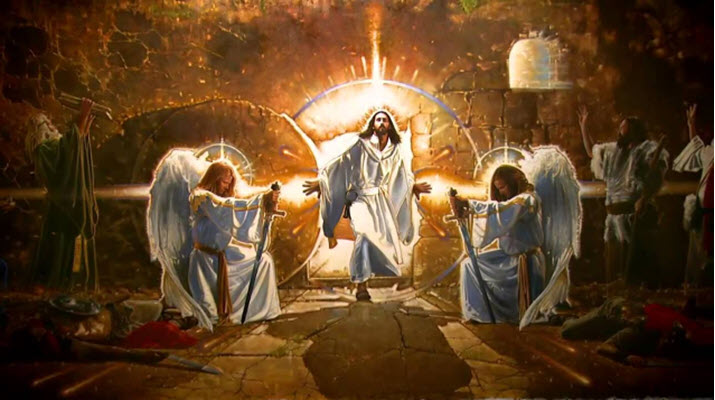
السجل المبكر لموت وقيامة المسيح في كرونثوس الاولي 15 :3-7 والتقليد الشفوي والمقارنة بالمصدر المتأخر في القرآن.

تم تقييم المصادر المتاحة لقيامة المسيح من قبل المؤرخين. لكن السؤال الهام ماهو تاريخ تلك المصادر. بالنسبة بما يتعلق بالشهادات المبكرة من المسيحية. قال المؤرخ “ديفيد فيشر “David Hacket Fisher:”المؤرخ لا يجب ان تتوافر لديه ادلة قوية فحسب. لكن ان تتوافر لديه افضل الادلة القوية وثيقة الصلة. وافضل الادلة القوية ذات الصلة. هي مع الاخذ بعين الاعتبار ,ان هذه الادلة تكون اقرب مباشرتاً من الحدث نفسة. ” (1)

المفتاح الرئيسي في دراسة المصادر المبكرة في حياة المسيح هو ان تضع في الحسبان الثقافة والبيئة اليهودية التي ولَّد‏ بها يسوع. كما يلاحظ “بول بارنيت Paul Barnett“ان وسط المسيحية المبكرة التي كانت مكتوب بها رسائل بولس والاناجيل كان مناخ رباني rabbinic ” (2)(متعلق بالمعلمين من حيث التعاليم واللغة ووجهات النظر). ونظراً للتشديد علي التعليم في المجمع. والمنزل. والتعليم الأولي. فانه ليس من المستغرب انه كان من الممكن للشعب اليهودي اعادة سرد(بالاسلوب الشفوي) وحكي كميات كبيرة من المواد التي كانت ايضاً اكبر بكثير من الاناجيل نفسها.

يذكر العهد الجديد المسيح بكونه رابي “Rabbi” في المواضع الاتية:(- متي 8 : 19 , 9 : 11 , 12: 28 , مرقس 4: 28 , 5: 35 , 9: 17 , 10 :17-20 ,12 :14 ,19, 32 ولوقا 19: 39 , ويوحنا 1 :38 , 3 :2 ) والكلمة تعني معلم او سيد. “وهناك العديد من العبارات التي من خلالها نستطيع ان نشاهد ونعرف معني جزء من مصطلح rabbinic في هذه الايام. حينما ذكر العهد الجديد تلك العبارات :وكان التلاميذ ” “تأتي ” اليه “تتبعه” “تتعلم منه” “وحمل النيره”(متي 11 :28- 30 مرقس 1 ).

(3) وبالتالي يبدو ان الانجيل في بداية انتشاره كان في شكل او قالب تراتيل وعقائد شفوية. بامكانك الرجوع لتلك المواضع:(لوقا 24 :34 ,اعمال الرسل 2 :22-24 ,30 -32 ; 3: 13-15 و 4 :10-12 و5 :29-32 ,10 :39 -41 ,13: 37- 39 , رومية 1: 3-4 ,4 :25 ,10 :9 , كورنثوس الاولي 11 :23 ,15: 3-8 وفليبي 26-11,وتيميثاوس الاولي 2 : 6 ,3: 16 ,6: 13 ,تيميثاوس الثانية 2 :8 وبطرس الاولي 3 :18 ويوحنا الاولي 4: 2 ) فكان هناك عناية هائلة وعظيمة “بالتسليم delivering”أي التقاليد المستلمة. فنجد ان يسوع استخدم التوازي parallelism و الايقاع والقافيةوالجناس والسجع. حيث مَكنة كلمات يسوع ليس فقط الحفظ من خلال الذاكرة بل السهولة في المحافظة علي تلك الكلمات.

(4) حتي بولس الرسول ,استخدمها. حيث دُرب علي يد رابي مختص في مدرسة رابانية تدعي هليل وهو الرابي” غمالئيل ” وهو رئيس وعضو في السنهدريم. يمكن ملاحظة ان كُتاب العهد الجديد وظفوا مصطلحات التقاليد الشفوية مثل: “تسليم” “تلقي” “يمر علي” “التعلم” “التمسك ” فالتعليم التقليدي يظهر في العهد الجديد بالقاء نظرة علي الفقرات الاتية:-

رومية ١٦ : ١٧ ١٧‏وَأَطْلُبُ إِلَيْكُمْ أَيُّهَا الإِخْوَةُ أَنْ تُلاَحِظُوا الَّذِينَ يَصْنَعُونَ الشِّقَاقَاتِ وَالْعَثَرَاتِ، خِلاَفًا لِلتَّعْلِيمِ الَّذِي تَعَلَّمْتُمُوهُ، وَأَعْرِضُوا عَنْهُمْ. كورنثوس الاولى ١١ : ٢٣ ٢٣‏لأَنَّنِي تَسَلَّمْتُ مِنَ الرَّبِّ مَا سَلَّمْتُكُمْ أَيْضًا: إِنَّ الرَّبَّ يَسُوعَ فِي اللَّيْلَةِ الَّتِي أُسْلِمَ فِيهَا، أَخَذَ خُبْزًا فيلبى ٤ : ٩ ٩‏وَمَا تَعَلَّمْتُمُوهُ، وَتَسَلَّمْتُمُوهُ، وَسَمِعْتُمُوهُ، وَرَأَيْتُمُوهُ فِيَّ، فَهذَا افْعَلُوا، وَإِلهُ السَّلاَمِ يَكُونُ مَعَكُمْ. تسالونيكى الثانية ٢ : ١٥ ١٥‏فَاثْبُتُوا إِذًا أَيُّهَا الإِخْوَةُ وَتَمَسَّكُوا بِالتَّعَالِيمِ الَّتِي تَعَلَّمْتُمُوهَا، سَوَاءٌ كَانَ بِالْكَلاَمِ أَمْ بِرِسَالَتِنَا. رسالة 1 كورنثوس 15: 3-7 والموثوقية المبكرة لعقيدة صلب وموت المسيح:

يطبق بولس الرسول التقليد الشفوي في رسالة 1 كورنثوس 15: 3-7 التي تعد واحده من أقدم السجلات التاريخية لمضمون الأنجيل لعقيدة –موت وقيامة المسيح. العالم اليهودي الارثوزكسي الراحل” بنحاس لبيد Pinchas Lapide” كان معجباً جداً بالعقيدة التي في كورنثوس الاولي 15 و خلص الي ان “يمكن اعتبارها كصيغة ايمان كبيان من شهود العيان” (5) أستخدَام بولس لمصطلحات ربانية مثل “استلمت received ” “ما قبلته” يمكن مشاهدتها في رسالة كورنثوس الاولي 15 :3-8. . في الفقرات الاتية:-

3 فإنني سلمت إليكم في الأول ما قبلته أنا أيضا: أن المسيح مات من أجل خطايانا حسب الكتب 4 وأنه دفن، وأنه قام في اليوم الثالث حسب الكتب 5 وأنه ظهر لصفا ثم للاثني عشر 6 وبعد ذلك ظهر دفعة واحدة لأكثر من خمسمئة أخ، أكثرهم باق إلى الآن. ولكن بعضهم قد رقدوا 7 وبعد ذلك ظهر ليعقوب، ثم للرسل أجمعين 8 وآخر الكل – كأنه للسقط – ظهر لي أنا من المثير بالاهتمام اننا نجد بالتوازي ما صرح به وقاله بولس في اعمال يوسيفوس المؤرخ اليهودي يقول يوسيفوس ما يلي بشأن الفريسيين: “احب ان اوضح هنا ان الفريسيين نقلوا الي الناس بعض الأوامر من سلسلة متتاليه من الاباء.

التي لم تُكتب في ناموس موسي. لهذا السبب رفضت فئة الصدوقيين هذه الاوامر. علي المستوي المتوسط الواحد يحتاج الي التعرف علي الاوامر المكتوبة فقط. في حين ان هذا من تقاليد الاباء التي ليس من الضروري التقيد بها”. (6) يشير ريتشارد بيكهام. Richard Bauckham الي “نقطة مهمة لموضوعنا الي ان يوسيفوس المؤرخ اليهودي استخدم في لغتة تعبيرات مثل:-. الانتقال او التسليم” passing on” وايضاً تقليد التسليم من معلم الي اخر وايضاً التسليم من الفريسيين الي الشعب. ” (7) فيلاحظ بيكهام في كتابة يسوع وشهود العيان. والاناجيل وشهادة شهود العيان. ان الكلمة اليونانية ل شاهد العيان “eyewitness” (autoptai), ليس لها قصد قانوني.

فالمعني من الكلمة الانجليزية eyewitnesses يشير الي استعارة من المحاكم القانونية. وهذا غير صحيح قليلاً فكلمة autoptai تستخدم ببساطة للمراقبين للاحداث. وقد تابع بيكهام عمل “Samuel Byrskog صموئيل بيرسكوج “في حجتة بانه علي الرغم من ان الاناجيل في بعض النواحي تبدو شكلاً مميزة جداً وجذاباً للتاريخ. ألا انهما يشتركان علي نطاق واسع في موقف شهادة شهود العيان الذي كان ايضاً شائعاً بين المؤرخين في العصر الروماني واليوناني. هؤلاء المؤرخين كانوا موضع احترام كبير ,فجميع التقارير تعبر عن خبرة مباشرة عن الاحداث التي روت.

فأفضلهم من كان هو نفسه هو احد المشاركين في الاحداث. ويسمي هذا (الفحص المباشر)في حالة تعذر ذالك وكان المؤرخ غير حاضر في كل الاحداث التي تحتاج الي سرد. علي الاقل لسبب حدوث الاحداث في وقت واحد متزامنة. فالسعي وراء المبلغين الذين قد تكلموا عن معرفة مباشرة والذين استطاعوا اجراء مقابلات ورؤية الاحداث هو امر طبيعي ويسمي.

(فحص غير مباشر) وبعبارة اخري ل بيرسكوج تعرف “الفحص”بأنه وسيلة مرئية لجمع المعلومات حول موضوع معين. يمكن ان تتضمن وسائل اما ان تكون وسائل مباشرة (شهود عيان) او غير مباشر (الحصول علي شهود عيان) بيرسكوج يدعي ايضاً بانه يمكن القول ان هذا الفحص اسخدم في العهد الجديد بواسطة بولس في المواضع الاتية :(كورنثوس الاولي 9 :1 ,15 :5-8 ,وغلاطية 1 :16 )ولوقا في المواضع الاتية(اعمال الرسل 1: 21-22 ,10 :39 -41 ) ويوحنا في المواضع الاتية(19: 35 ,21 :24 ,ويوحنا الاولي 1:1 -4) فالكلمة “تسلمت” παραλαμβάνω (هو مصطلح يهودي)يعني استقبال شيئ ينتقل من شخص الي اخر. يمكن ان يحدث ذالك من خلال النقل الشفوي او عن طريق الاخرين ومنهم تواصل التقاليد.

مما يترتب علي ما قلناه نفهم ان بولس تلقي هذه المعلومات من خلال شخص اخر في وقت سابق. فكرونثوس الاولي تؤرخ بين 50 : 55 بعد الميلاد. منذ كان يسوع مصلوب تقريباً سنة 30 : 33 ورسالة كرونثوس مكتوبة بحوالي 20 : 25 سنة ميلادية من موت المسيح. لكن العقيدة الحقيقية موجودة في كورنثوس الاولي 15 استقبلها بولس في وقت سابق بكثير من سنة 55 ميلادية.

كما يلاحظ غاري هابرماس ان معظم علماء النقد يوافقون عادتاً ان تلك العقيدة لها أصل في وقت سابق للغاية. اوليرش ولكنيس. يعلن ان هذه العقيدة بلا شك تذهب بنا للخلف باعتبارها اقدم مرحلة من جميع تاريخ المسيحية المبكرة. (8) يواقيم ارميا يسميها. “التقليد الاقرب من الكل” (9)اي الأقرب من تاريخ المسيحية الاولي حتي العالم الغير مسيحي “جيرد ليدمان Gerd Ludemann” قال هذا “أنا اصر بان اكتشاف الاسس العقائدية قبل الرسول بولس هي وواحده من احدي انجازات العهد الجديد الدراسية”. (10) فجمهور العلماء الذين علقوا علي هذا الامر. اعتقدوا ان بولس ربما تلقي وتسلم هذه المعلومات بعد التحول للمسيحية بثلاث سنين.

التي حدثة ربما من سنة 1 الي 4 بعد الصلب. فيذكر الكتاب المقدس ان بولس زار اورشاليم للتحدث مع بطرس ويعقوب ,وكل واحد منهم تم ادراجة في قائمة ظهورات يسوع بعد القيامة. وظهر ذالك في المواضع الاتية من الكتاب المقدس (كورنثوس الاولي 15: 5 -7وغلاطية 1: 18-19 ) فتعود معرفتة تقريباً الي سنة 32-38 بعد الميلاد. حتي احدي المؤسسين وعضو في سيمينار يسوع “جون دومينك كروسان John Dominic Crossan” كتب قائلاً.

كتب بولس من افسس رسالة اهل كورنثوس في اوائل سنة 50 بعد الميلاد لكنة قال في كرونثوس الاولي 15 :3فإنني سلمت إليكم في الأول ما قبلته أنا أيضا: أن المسيح مات من أجل خطايانا حسب الكتب. ان المصدر الاكثر احتمالاً والوقت لاستلامه هذا التقليد كان في اورشاليم في وقت مبكر من سنة 30. كما قلنا مسبقاً وجاءة زيارتة لاورشاليم في الرسالة غلاطية 1 :18 ثم بعد ثلاث سنين صعدت الى اورشليم لاتعرف ببطرس فمكثت عنده خمسة عشر يوما (11) يقول ساندرز E. P. Sanders ايضاً : تم كتابة رسائل بولس في وقت مبكر من الاناجيل.

وذلك لاشارته الي الاثني عشر وهو اقرب الادلة. يتعلق الامر في الاعداد الاولي كرونثوس الاولي 15 ان بولس يكرر استخدامة للتقليد. وبالتالي اذا تتبعنا الايام الاولي لتحركاته. سنجد انه يعطي قائمة لظهورات القيامة التي جري تداولها. ٍ في كرنثوس الاولي 15. (12) وقال “كروسان بارتنر روبرت فنك Crossan’s partner Robert Funk” ان الاقتناع بان يسوع قد قام من بين الاموات كان قد له جذور في الوقت الذي تم تحول بولس حوالي سنة 33 بعد الميلاد. علي افتراض ان المسيح مات حوالي سنة 30 ميلادية. والوقت اللازم لنمو بولس كان سنتين او ثلاث سنين علي الاكثر. (13)

Robert Funk co-founder of the Jesus Seminar

هذه التعليق من كروسان واخرين يبدوا منطقيا لانه ضمن العقيدة المذكوره في كرنثوس الاولي 15 يشير بولس الي بطرس باسمة الارامي. , Cephasصفا. وبالتالي اذا كان هذا التقليد كان متداول باللغة الارامية. فكان الموقعين الذي يتحدث الناس فيهم بالارامية هم الجليل واليهودية. (14) المصطلح اليوناني historeo” ” تترجم في الانجليزية لزيارة to visit اولمقابلة to interview. (15) ومن هنا الغرض من رحلة القديس بولس ربما كان يهدف الي التأكد من قصة القيامة من بطرس نفسة الذي كان شاهد عيان فعلي علي قيامة يسوع كرنثوس الاولي 15 :5 لماذا هذا الموضوع؟

يقول “ايرك شابوت Eric Chabot “(16) كنت اتحدث مرة مع احد المسلمين عن تاريخ القرآن والعهد الجديد. فالاسلام ينص ان المسيح ما صلبوه لكن شبة لهم. وقد كتب القرآن بعد 600 سنة من حياة يسوع وهذا يجعله مصدر متأخر جداً للمعلومات بالمقارنة بالعهد الجديد. يبدو ان الادلة التي سبق لنا مناقشتها تخبرنا بان المحتوي التاريخي للأنجيل هو (موت يسوع وقيامتة)تم تداولها في وقت مبكر جداً بين المجتمع المسيحي.

كما قلنا للتو ان المؤرخين يبحثون عن السجلات الاقرب لتاريخ الحدث. بالنظر الي الوقت المبكر من كرونثوس الاولي 15 : 3-8 فمن الواضح تماماً ان هذه الوثيقة هي مصدر أكثر موثوقية من القرآن. وعلاوة علي ذلك. القول بان قصة المسيح تم اختلاقها في وقت لاحق يناقض الادلة المقدمة.

اغريغوريوس

aghroghorios

المراجع


1. Hacket Fisher, D. H. , Historians’ Fallacies: Toward a Logic of Historical Thought. New York: Harper Torchbooks. 1970, 62.

2. Barnett, P. W. , Jesus and the Logic of History. Downers Grove, IL: InterVarsity Press. 1997, 138.

3. Ibid.

4. Ibid.

5. Lapide, P. E. , The Resurrection of Jesus: A Jewish Perspective. Minneapolis: Ausburg. 1983, 98-99.

6. Bauckham, R. Jesus and the Gospels: The Gospels as Eyewitness Testimony. Grand Rapids, MI: Eerdmans Publishing Company. 2006.

7. Ibid.

8. Wilckens, U. , Resurrection, trans. A. M. Stewart. Edinburgh: St. Andrew, 1977, 2

9. Jeremias, J. New Testament Theology: The Proclamation of Jesus, trans. John Bowden. New York: Scribner’s, 1971, 306.

10. Ludemann, G, The Resurrection of Jesus Christ: A Historical Inquiry (Amherst, NY: Promethus, 2004), 37.

11. Crossan, J. D. & Jonathan L. Reed. Excavating Jesus: Beneath the Stones, Behind the Texts. New York: HarperSanFrancisco, A Division of HarperCollins Publishers, 2001, 254.

12. E. P. Sanders, The Historical Figure of Jesus (New York: Penguin Books), 1993

13. Roy W. Hoover, and the Jesus Seminar, The Acts of Jesus, 466.

14. Jones, T. P. , Misquoting Truth: A Guide to the Fallacies of Bart Ehrman’s Misquoting Jesus. Downers Grove, IL: InterVarsity Press. 2007, 89-94.

15. Ibid.

16. The Earliest Record for The Death and Resurrection of Jesus: 1 Corinthians 15: 3-7

القديسة مريم العذراء – دراسة في الكتاب المقدس

تاريخ النور المقدس والرد على الأسئلة والتشكيكات المُثارة ضده | بيشوي مجدي


الدليل الاقدم لموت وقيامة المسيح

I can find prophecies in the Bible that point to Muhammad just as easily as you can find prophecies that point to Jesus..

I can find prophecies in the Bible that point to Muhammad just as easily as you can find prophecies that point to Jesus. That’s because all of your so-called proofs are either distortions, make-believe creations, or Jewish midrash—free, homiletical interpretations—of the worst kind.

Really? Then why didn’t the Muslims find Muhammad everywhere in the Hebrew Bible? Why did they have to completely rewrite their own version of the Scriptures (i.e., the Koran) instead of referring back to the Hebrew Bible—the Word of God accepted by both Christians and Jews? And where does the Tanakh point to Muhammad’s place of birth, or the time of his coming, or the manner of his death, or his alleged ascension to heaven? (Remember, the Hebrew Scriptures point to the place of Yeshua’s birth, the time of his coming, the manner of his death, and his resurrection!) I also remind you that modern scholars—both Jewish and Christian—recognize that the authors of the New Testament were highly sophisticated in their interpretive techniques (see vol. 4, 5.1). Sorry, but you’ll have to do better. Objections like this are hardly worthy of the name.

I want to appeal to you, Jewish reader, in the words of the Lord as spoken through the prophet Isaiah: “Come now, let us reason together” (Isa. 1:18a). Can I ask you to hear me out?

Maybe you’ve had many objections to the Messiahship of Jesus, believing that he really didn’t fulfill the Messianic prophecies. But now you’ve seen each of these objections answered, systematically and comprehensively. Still, you’re hesitant to believe. After all, generations of our people have rejected Jesus as Messiah, and it has only been a small Jewish minority that has acknowledged him as our promised Redeemer and King. But what if the minority is right? This would not be the first time such a thing has happened in our history! And what if God has not given us eyes to see and ears to understand until this day? What if now, in this day, the light is beginning to dawn, and little by little, more and more of our people are putting their faith in Yeshua as God’s anointed one? What if this very thing was prophesied in the new covenant Scriptures? Well, it is!

The Jewish teacher Saul of Tarsus (known to most of the world as the apostle Paul) explained to Gentile followers of Jesus who were living in Rome that “Israel has experienced a hardening in part until the full number of the Gentiles has come in” (Rom. 11:25). In other words, for the better part of two thousand years, most of our Jewish people have experienced a degree of spiritual blindness when it comes to recognizing the Messiah. This is similar to what happened to our people when the nation of Israel came out of Egypt: We saw God’s miracles, we heard God’s voice, but we really didn’t understand. As Moses said to that generation, “But to this day the Lord has not given you a mind that understands or eyes that see or ears that hear” (Deut. 29:4). And then the light went on, and God opened the eyes of a nation. At last they saw and understood!

This will happen again to the people of Israel before the Messiah returns. As Paul explained to the Roman believers, “the full number of Gentiles [will] come in” (meaning that a vast number of Gentiles from every tribe and language and people will turn to God and put their faith in Yeshua), and then “all Israel will be saved, as it is written: ‘The deliverer will come from Zion; he will turn godlessness away from Jacob. And this is my covenant with them when I take away their sins’ ” (Rom. 11:26–27, citing Isa. 59:20–21). There will be a mass turning of the Jewish people to Yeshua the Messiah, and just as there has been a national, Jewish rejection of Jesus, there will be a national, Jewish acceptance of Jesus.

You see, many of our forefathers were guilty of rejecting Yeshua the Messiah when he came—despite his miracles, despite his sinless character, despite his atoning death, despite his glorious resurrection. And this set the pattern for the generations to come, as the children followed in the footsteps of their fathers, rejecting Yeshua because “Jews don’t believe in Jesus.” To make matters even worse, many hypocritical Gentiles who claimed to be Messianic believers (= Christians) were terrible examples, living compromised lifestyles and even persecuting Jews who didn’t believe in Jesus. This only confirmed to our Jewish people that this Jesus was not for them.

Yet in spite of all this, there has always been a remnant of our people who have rightly recognized our Messiah, sometimes numbering more than one hundred thousand Jews in a generation. That is the case today, and the number of Jews who believe in Jesus is rising every year, even among the Orthodox and ultra-Orthodox. And in direct parallel to this is the ever-increasing number of Gentiles who are genuinely turning to Jesus—and I mean genuinely. (One of the clearest signs that these Gentiles are becoming true followers of Jesus is the fact that many of them are deeply devoted to the people of Israel, praying for them, fasting for them, supporting them in the Land, and standing with them when much of the world stands against them.)

Now the time has come for us to stop and think. Could it be that this Jesus Christ is really Yeshua our Messiah? Could it be that we have been wrong in rejecting him as our anointed leader? Could it be that now, in our generation, that great turning back will begin to take place, and our eyes will be opened en masse? I close this volume with A PLEA TO THE JEWISH COMMUNITY TO RECONSIDER THE POSSIBILITY THAT YESHUA (JESUS) OF NAZARETH IS OUR PROMISED MESSIAH AND REDEEMER. Consider the facts:

  • No other worthy Messianic candidates have arisen in the last two thousand years. The positive world influence of Yeshua the Jew totally dwarfs the positive world influence of every other alleged Messianic candidate, including the most recent candidate, Menachem Schneerson, the Lubavitcher Rebbe.
  • Yeshua fulfilled the essential prophecies that had a definite time frame and that had to be completed before the Second Temple was destroyed. This is not a matter of speculation. It is a matter of historical fact. And since he fulfilled the past prophecies (coming as our great High Priest, making atonement for our sins), we can be sure that he will fulfill the future prophecies (reigning as the worldwide King and bringing peace to the earth).
  • He identifies with us in our suffering. For most of our history, we have been cast out, despised, rejected, and misunderstood. That is a picture of our Messiah too! Yeshua is the ultimate example of the suffering, persecuted Jew. He is not only one of us; he is one with us.
  • More than one hundred thousand Jews around the world recognize Yeshua as the Messiah, including a rapidly growing underground movement of Orthodox and Hasidic Jews who are convinced by the Scriptures that he is the one. Messianic Jews can no longer be ignored or disregarded, and we are merely the firstfruits of something much larger—the national turning of Israel to our Messiah and King.
  • Every day, thousands of people around the world are coming to the God of Israel through Yeshua. The fullness of the Gentiles is coming in, and on the heels of that, all Israel shall be saved. So it is written, and so it shall be.

And so I appeal to my Jewish people to take time to reconsider the Messianic claims of Yeshua of Nazareth. And I appeal to every individual Jew reading this book to seek God, study the Scriptures, put all biases and fears aside, and decide for yourself: Who is this man Jesus? This is a question you can’t avoid.

I leave you with the words of Isaiah. Of whom does the prophet speak?

See, my servant will act wisely;

he will be raised and lifted up and highly exalted.

Just as there were many who were appalled at him—

his appearance was so disfigured beyond that of any man

and his form marred beyond human likeness—

so will he sprinkle many nations,

and kings will shut their mouths because of him.

For what they were not told, they will see,

and what they have not heard, they will understand.

Who has believed our message

and to whom has the arm of the Lord been revealed?

He grew up before him like a tender shoot,

and like a root out of dry ground.

He had no beauty or majesty to attract us to him,

nothing in his appearance that we should desire him.

He was despised and rejected by men,

a man of sorrows, and familiar with suffering.

Like one from whom men hide their faces

he was despised, and we esteemed him not.

Surely he took up our infirmities

and carried our sorrows,

yet we considered him stricken by God,

smitten by him, and afflicted.

But he was pierced for our transgressions,

he was crushed for our iniquities;

the punishment that brought us peace was upon him,

and by his wounds we are healed.

We all, like sheep, have gone astray,

each of us has turned to his own way;

and the Lord has laid on him

the iniquity of us all.

He was oppressed and afflicted,

yet he did not open his mouth;

he was led like a lamb to the slaughter,

and as a sheep before her shearers is silent,

so he did not open his mouth.

By oppression and judgment he was taken away.

And who can speak of his descendants?

For he was cut off from the land of the living;

for the transgression of my people he was stricken.

He was assigned a grave with the wicked,

and with the rich in his death,

though he had done no violence,

nor was any deceit in his mouth.

Yet it was the Lord’s will to crush him and cause him to suffer,

and though the Lord makes his life a guilt offering,

he will see his offspring and prolong his days,

and the will of the Lord will prosper in his hand.

After the suffering of his soul,

he will see the light of life and be satisfied;

by his knowledge my righteous servant will justify many,

and he will bear their iniquities.

Therefore I will give him a portion among the great,

and he will divide the spoils with the strong,

because he poured out his life unto death,

and was numbered with the transgressors.

For he bore the sin of many,

and made intercession for the transgressors.

Isaiah 52:13–53:12

[1]


[1]Brown, M. L. (2003). Answering Jewish objections to Jesus, Volume 3: Messianic prophecy objections (184). Grand Rapids, Mich.: Baker Books.

Isaiah 53 contains the words of the repentant kings of the nations rather than the words of the Jewish people.

Isaiah 53 contains the words of the repentant kings of the nations rather than the words of the Jewish people.
This is not possible. The servant of the Lord in Isaiah 53 was smitten for the sins of his people, while he himself was guiltless. In complete contrast to this, the Torah promised that the people of Israel would be smitten for their own sins, not for the sins of the nations. Even more importantly, the sufferings of the servant of the Lord in Isaiah 53 bring healing to those for whom he suffered, whereas when Israel was smitten by its enemies because of its sins, God subsequently judged those nations for overdoing the punishment. Israel’s suffering brought judgment rather than healing to Assyria, Babylon, Greece, and Rome—to name just a few of the nations used by God to judge his people Israel. (For more on these points, see above, 4.5–4.6.) At any rate, the text plainly says that the servant was suffering for the sins of “my people,” which in context must refer to Israel, with either God speaking (“My people”) or the prophet speaking (“my people”).
Although this objection may seem odd at first glance, it appears to have some textual support, since Isaiah 52:15 says, “Kings will shut their mouths because of him [i.e., the servant of the Lord]. For what they were not told, they will see, and what they have not heard [from the root sh-m-ʿ], they will understand.” The very next verse, 53:1, opens with the question, “Who has believed our message [also from the root sh-m-ʿ] and to whom has the arm of the Lord been revealed?” Doesn’t this indicate that these kings are the ones raising this question, asking who has believed their report? Certainly not; the rest of the chapter simply does not support this thesis.135
Now, I could simply point out that it is somewhat ludicrous to put one of the loftiest theological statements in the Bible into the mouths of pagan, idol-worshiping kings. This is not only illogical; it is without precedent. Even the case of God speaking through the pagan prophet Balaam (Numbers 22–24) does not offer a true parallel to this, since (1) Isaiah 53 is presented as thoughtful reflection whereas Balaam’s prophecies are divinely inspired utterances delivered contrary to his own desires, and (2) the Balaam oracles do not present deep redemptive truths, such as the theology of vicarious suffering outlined in Isaiah 53, but rather messages concerning God’s choosing of Israel out of the nations.
But there are more substantial arguments that invalidate this objection. First, there is a fundamental theological flaw in the interpretation that the Gentile kings are the speakers in Isaiah 53. According to Jeremiah 30:11, God would completely destroy the nations among whom he scattered his people. While he promised to discipline his people—hence their scattering among these nations—he would eventually judge those nations for their sins against Israel. So, God’s people would suffer for their own sins, often at the hands of their enemies, but then the Lord would destroy those enemies. This is the opposite of what Isaiah 53 states: The servant was guiltless, suffering for the sins of his guilty people, who are then healed by his suffering. How then can the Gentile kings—kings who are promised judgment, not blessing, for inflicting pain on the Jewish people—be pictured as the speakers in this chapter? If they were the speakers, they should have said, “We inflicted great suffering on the people of Israel, who were guilty of great sin against God, but we went too far in our punishments, and now Israel’s God will utterly destroy us.” There’s quite a difference!
Look at Isaiah 10:5–34. God used Assyria to judge his sinning people (Israel and Judah), but Assyria was full of pride and was especially vicious. As a result, God said he would bring devastating destruction on that proud nation, which is exactly what he did. Similarly, in Habakkuk 1 the Lord said he would use the Babylonians (literally, Chaldeans) to judge Judah, but then in the next chapter the prophet is told that the Lord would judge godless Babylon for its treatment of the Jewish people. This is also a prominent theme in Jeremiah, where Nebuchadnezzar, Babylon’s greatest leader, is actually called the Lord’s servant (e.g., Jer. 27:6). Yet Babylon itself would be judged and utterly destroyed (see Jeremiah 50–51). It is abundantly clear, then, that the kings of these nations would hardly be declaring that they were healed through Israel’s innocent suffering at their hands. Not at all! Israel’s suffering was because of national sin, and the nations that inflicted that suffering were then destroyed by the Lord.136 Therefore, from a theological, scriptural perspective, it is not possible that the Gentile kings are speaking in this passage.
Second, there is a serious contextual and grammatical flaw in this viewpoint. Look carefully at the consistent language of the entire passage. First person singular is only used by God: my servant (52:13), my righteous servant (53:11), therefore I will … (53:12). The same holds true for my people in 53:8.137 God himself is speaking about his servant suffering for his people Israel, rather than the kings speaking of their people individually. This becomes even more clear when we realize that the onlookers in this passage (according to this objection, the Gentile kings) always express themselves in the first person plural: our message (53:1); to attract us … that we should desire him (53:2); we esteemed him not (53:3); our infirmities … our sorrows … we considered him (53:4); our transgressions … our iniquities … brought us peace … we are healed (53:5); we all … each of us … the iniquity of us all (53:6)—and then this language stops in verse 6. No more “we, us, our”—not once—indicating that whatever group is speaking, be it the people of Israel as a whole or the alleged kings of the nations, they are no longer speaking after verse 6. The narrator must be either the prophet or (much more likely) God, speaking in the first person singular and describing the sufferings of the servant in the third person singular. And this means that the only possible meaning of my people in Isaiah 53:8 is that the servant of the Lord suffered for the people of Israel, not that the servant was actually the people of Israel themselves.138
So then, even if someone tried to make the (highly unlikely) case that foreign kings were actually speaking in the first six verses of Isaiah 53, it is clear that their words stop right there, God (or possibly the prophet) stating clearly that the servant was suffering for the sins of his people Israel (and by extension, for the sins of the nations). So, even if the opening verses described the words of the astonished kings (again, an interpretation with little support), the verses describe their words of astonishment when they recognize Yeshua, the despised and rejected one, as the highly exalted servant of the Lord.139
In concluding the answer to this objection, I’d like you to consider something of great importance: If the subject of this chapter—the righteous, suffering servant of the Lord who was mocked, rejected, despised, and killed—is actually Jesus of Nazareth, who then are the speakers in this chapter who say, “We didn’t understand that he was suffering for our sins. We thought God had rejected him and he was suffering for his own disobedience. We didn’t realize he was dying for us!” Read these words carefully:
He was despised and rejected by men,
a man of sorrows, and familiar with suffering.
Like one from whom men hide their faces
he was despised, and we esteemed him not.
Surely he took up our infirmities
and carried our sorrows,
yet we considered him stricken by God,
smitten by him, and afflicted.
But he was pierced for our transgressions,
he was crushed for our iniquities;
the punishment that brought us peace was upon him,
and by his wounds we are healed.
We all, like sheep, have gone astray,
each of us has turned to his own way;
and the Lord has laid on him
the iniquity of us all.
Isaiah 53:3–6
Is the picture coming into focus for you now? These are not the words of the Gentile kings, the great majority of whom had no idea what was happening in Judea two thousand years ago. These are the words of our own people! These are the words of the Messiah’s blood brothers: “We thought he was dying a criminal’s death. We had no idea he was dying for us!” And this continues to be the attitude of most of our people to this day: “We don’t know why Jesus was crucified. Apparently he was some kind of threat to the Roman government. Or maybe he was just a false prophet. Obviously, he did something wrong and paid for it.” Not so! Rather, we did something wrong—every one of us born into this world—and he paid for that. That is good news!
But the story doesn’t end there. A careful reading of the passage from Isaiah 53 quoted above tells us something else: Although our people did not initially realize why Yeshua the Messiah was dying, and although to this very day most of our people continue to misunderstand the nature and purpose of his sacrifice for our sins, eventually our people will see it clearly. Remember, according to the text, they are the ones who declare, “We all, like sheep, have gone astray, each of us has turned to his own way; and the Lord has laid on him the iniquity of us all” (Isa. 53:6). Suddenly, the light went on, the revelation came, and the incredibly rich spiritual confession was made by our people. So be it!
Who was it who failed to understand why Yeshua was suffering, believing that Yeshua was suffering for his own sins and not for the sins of the world? Historically, it is clear that my people Israel—including some who are even now reading this book—have done exactly what Isaiah prophesied. And this leads to only one conclusion: Jewish friend, your healing comes from him!

135 Allan A. MacRae, a staunch evangelical Old Testament scholar, believed that the Gentile kings spoke the opening verses of Isaiah 53. However, in his view, this actually enhanced, not detracted from, the Messianic application of this chapter to Jesus. See his study on Isaiah 40–55, The Gospel of Isaiah (Chicago: Moody Press, 1977).
136 According to Ibn Ezra, the Jewish people brought healing to the nations in which they were scattered by praying for the peace and prosperity of those nations (as per Jer. 29:7). While this is certainly a noble thought, and while it is no doubt true that Jews have, at times, prayed for the welfare of the nations among whom they were scattered, this is not what Isaiah 53 states. Rather, it is the servant of the Lord’s actual suffering that brings healing (see esp. vv. 4–6; only v. 12 partially supports Ibn Ezra’s view). Does anyone imagine that during the horrors of the Holocaust, our people were praying for God’s blessings on Germany, Poland, Ukraine, and the other nations that were slaughtering them? This is not meant to criticize the actions or reactions of our people toward their persecutors and oppressors; it is simply to say that the picture painted in Isaiah 53 did not accurately apply to them.
137 It is interesting to note that in the first edition of the NJPSV Isaiah (1972; the translation was attributed to H. L. Ginsberg), Isaiah 53:8 was rendered with “My people,” the uppercase M indicating that deity was speaking. In the second edition (1986 or later), this phrase is changed to “my people,” lowercase, indicating that the prophet was speaking. In either case, whether the Lord or the prophet is speaking, it is clear that this is not the voice of the Gentile kings.
138 I would encourage you to read through the Book of Lamentations and ask these two questions: For whose sins were the people of Israel suffering? Does the author of Lamentations fully acknowledge his people’s guilt? The answers are self-evident.
139 Cf. the position of MacRae, cited above, n. 135.
Brown, M. L. (2003). Answering Jewish objections to Jesus, Volume 3: Messianic prophecy objections (62). Grand Rapids, Mich.: Baker Books.

If you want to know what Isaiah 53 is talking about, just read Isaiah 52 and 54. The context is the return of the Jewish people from Babylonian exile, 550 years before Jesus.

If you want to know what Isaiah 53 is talking about, just read Isaiah 52 and 54. The context is the return of the Jewish people from Babylonian exile, 550 years before Jesus.
There is some truth to what you are saying. The prophet saw the future glory of Israel and the work of the Messiah against the backdrop of the end of the exile. But the context is larger—beginning in Isaiah 40. It spells a new beginning for Israel, a new creation and a new exodus, a time when all the world will ultimately see the glory of the Lord. The events predicted in Isaiah 53 are far greater than the return of about forty-five thousand Jews from Babylon in the sixth century B.C.E. Rather, in these passages in Isaiah, the exile serves as a symbol of the spiritual bondage of the Jewish people, while the return from exile serves as a figure of their redemption. These prophecies of redemption culminate in the glorious Messianic prophecy found in Isaiah 52:13–53:12.
Isaiah 52:13–53:12 is one of the most important Messianic prophecies in the entire Hebrew Bible, and I would not be exaggerating to say that more Jews have put their faith in Jesus as Messiah after reading this passage of Scripture than after reading any other passage in the Tanakh. To the unbiased reader, it clearly speaks about the death and resurrection of the righteous servant of the Lord on behalf of his sinful people. It speaks of Yeshua! Not surprisingly, anti-missionaries have raised numerous arguments to this interpretation, frequently claiming that the passage speaks of the people of Israel as opposed to the Messiah (that is to say, they argue for a national interpretation rather than an individual interpretation).
Interestingly, the national interpretation is not found once in the Talmuds, the Targums, or the midrashim (in other words, not once in all the classical, foundational, authoritative Jewish writings). In fact, it is not found in any traditional Jewish source until the time of Rashi, who lived in the eleventh century C.E.105 That is saying something! For almost one thousand years after the birth of Yeshua, not one rabbi, not one Talmudic teacher, not one Jewish sage, left us an interpretation showing that Isaiah 53 should be interpreted with reference to the nation of Israel (as opposed to a righteous individual, or righteous individuals, within Israel), despite the fact that these verses from Isaiah are quoted in the New Testament and were often used in Jewish-Christian debate.
We will take up the subject of the national interpretation of this passage more fully when we deal with the next objection, below, 4.6. For now, we will answer two important questions: (1) In the preceding chapters of Isaiah (namely, 40–51), is “the servant of the Lord” always speaking of thenation of Israel as opposed to an individual who represents Israel? (2) Does the surrounding context speak only of the exile of the Jewish people from Babylon?
The servant of the Lord (Hebrew, ʿebed) is mentioned a total of seventeen times in Isaiah 40–51, sometimes with reference to the nation of Israel as a whole (41:8–9; twice in 42:19; 43:10; twice in 44:21; 45:4; 48:20), and sometimes with reference to a righteous individual within the nation (49:3, 5–7; 50:10). In several verses, it is not clear whether an individual or the nation (or a righteous remnant within the nation) is referred to, although a good case can be made for the individual interpretation (42:1; 44:1–2).106 Significantly, the most personal, specific, individual language is found in Isaiah 52:13 and 53:11, roughly the beginning and the end of this glorious prophetic passage. Reviewing the data just presented, we can see something very important: The references to the servant as a people actually end with Isaiah 48:20, while the references to the servant as an individual come into indisputable focus beginning with Isaiah 49 and continuing through the end of chapter 53. Thus, by the time we reach Isaiah 52:13, the spotlight is on a person, not a people. The picture is becoming clearer! (We will take up this discussion again in the next objection.)
Let’s look at the evidence in a little more depth. There are some unmistakable national references to the servant in Isaiah 41–48. In the following verses, the “servant” refers to the Jewish people:
     “But you, O Israel, my servant, Jacob, whom I have chosen, you descendants of Abraham my friend, I took you from the ends of the earth, from its farthest corners I called you. I said, ‘You are my servant’; I have chosen you and have not rejected you” (Isa. 41:8–9). Notice that here the servant consists of the descendants (plural) of Abraham.
     “ ‘You are my witnesses,’ declares the Lord, ‘and my servant whom I have chosen, so that you may know and believe me and understand that I am he. Before me no god was formed, nor will there be one after me’ ” (Isa. 43:10). God clearly identifies his servant as his witnesses (plural).
At times, however, this servant is nonresponsive to the purposes of God:
     “Hear, you deaf; look, you blind, and see! Who is blind but my servant, and deaf like the messenger I send? Who is blind like the one committed to me, blind like the servant of the Lord? You have seen many things, but have paid no attention; your ears are open, but you hear nothing” (Isa. 42:18–20).
In fact, even as God’s servant—the Jewish people—is being led out of Babylonian exile, the servant is still deaf and blind: “Lead out those who have eyes but are blind, who have ears but are deaf” (Isa. 43:8). This hardly sounds like the righteous servant of the Lord who elsewhere opens the eyes of the blind. The contrast is quite stark:
     “Here is my servant, whom I uphold, my chosen one in whom I delight; I will put my Spirit on him and he will bring justice to the nations.… I, the Lord, have called you in righteousness; I will take hold of your hand. I will keep you and will make you to be a covenant for the people and a light for the Gentiles, to open eyes that are blind, to free captives from prison and to release from the dungeon those who sit in darkness” (Isa. 42:1, 6–7).
This servant is obedient and righteous, setting captives free, and according to the Targum, this servant is none other than the Messiah.107 This is confirmed by Rabbi David Kimchi—one of the so-called “big three” medieval Rabbinic commentators—who also interpreted the words “Behold my servant” in Isaiah 42:1 with specific reference to “King Messiah.”108 And this image occurs even more plainly in Isaiah 49, where the servant is called Israel and yet is sent on a mission to redeem Israel. The servant is a righteous individual who represents the nation.109 The servant, as in Isaiah 42, is the Messiah!110
Listen to me, you islands; hear this, you distant nations: Before I was born the Lord called me; from my birth he has made mention of my name. He made my mouth like a sharpened sword, in the shadow of his hand he hid me; he made me into a polished arrow and concealed me in his quiver. He said to me, “You are my servant, Israel, in whom I will display my splendor.” But I said, “I have labored to no purpose; I have spent my strength in vain and for nothing. Yet what is due me is in the Lord’s hand, and my reward is with my God.” And now the Lord says—he who formed me in the womb to be his servant to bring Jacob back to him and gather Israel to himself, for I am honored in the eyes of the Lord and my God has been my strength—he says: “It is too small a thing for you to be my servant to restore the tribes of Jacob and bring back those of Israel I have kept. I will also make you a light for the Gentiles, that you may bring my salvation to the ends of the earth.” This is what the Lord says—the Redeemer and Holy One of Israel—to him who was despised and abhorred by the nation, to the servant of rulers: “Kings will see you and rise up, princes will see and bow down, because of the Lord, who is faithful, the Holy One of Israel, who has chosen you.”111
Isaiah 49:1–7
According to the next verses, it is the servant who actually leads the people out of captivity—quite supernaturally. This is because the Babylonian captivity is a type and symbol of the nation’s spiritual captivity and exile from God. Their return from exile typifies their deliverance from all bondage, a time of new creation, a new—and in some ways, greater—exodus, and the servant who leads the way functions in some ways as a new Moses.112
How do we explain the fact that the servant is called Israel in Isaiah 49:3 if, in fact, the text is speaking of an individual rather than the nation? This is actually not just a “Christian” problem, since (as stated in n. 110) the three leading medieval Jewish commentators interpret the servant of Isaiah 49 as referring to an individual (namely, the prophet) rather than to the nation. Thus, they too must explain why the servant (a person) is called Israel. But this is really not an obstacle at all, as indicated by the interpretation offered by Metsudat David, another leading medieval Jewish commentator: “Behold, before Me, you [meaning the prophet] are like the entire multitude of Israel [hamon yisraʾel], and I glory in you as in all of them.” If this could be said about a prophet of Israel (as interpreted by these medieval rabbis), how much more could it be said about the Messiah of Israel, who both represents and fulfills the destiny of the people of Israel? It simply means that Israel realizes its goals through her greatest King and Leader, the Messiah; therefore it should come as no surprise to us if, at times, the Messiah is referred to as “Israel.” This presents no problem at all. In fact, it reinforces the connection between the Messiah and his people.
How then do we put this all together in the immediate scriptural context, which constantly refers to the Babylonian exile? If the prophet was announcing the end of the exile and the release of the Jewish people from bondage, then in some of these passages the national interpretation makes good sense, as if to say, “Behold God’s servant, Israel, marching out of exile and back to the Promised Land.” But if the prophet was only speaking of an individual—either himself or the Messiah—in some passages, the reference to the exile seems to make less sense. Yet this is clearly the backdrop to several of the chapters in Isaiah under discussion here (e.g., Isa. 48:20).
This also seems to be the context in the verses immediately preceding Isaiah 52:13, namely, 52:11–12: “Depart, depart, go out from there! Touch no unclean thing! Come out from it and be pure, you who carry the vessels of the Lord. But you will not leave in haste or go in flight; for the Lord will go before you, the God of Israel will be your rear guard.” Wouldn’t this suggest that the very next verse would be speaking about the same time frame, namely, the deliverance of the Jewish people from Babylonian exile more than five hundred years before the time of Jesus? Not necessarily!
First, we must remember that many traditional Jewish interpreters—from the Targum until today—had no problem reading Isaiah 52:13–53:12 with reference to the Messiah, thus reading this section of Isaiah as a distinct passage in its own right. In other words, the passage was interpreted independent of the preceding context of the return from the Babylonian exile. Otherwise, how could followers of the Lubavitcher Rebbe in our day interpret this passage with reference to their leader who lived and died twenty-five hundred years after the return from exile? Or how could the Targum paraphrase this passage to reflect the events of the Bar Kochba War, which took place more than six hundred years after the return of the exiles?113 And why did Rashi begin his comments on Isaiah 52:13 by stating that the passage applied to the righteous remnant within Jacob who would prosper at the end of days?114
Second, those traditional Jewish commentators—from Rashi, Ibn Ezra, and Radak to contemporary Orthodox commentators—who interpret the passage with reference to Israel as a whole (as opposed to the Messiah as the chief representative of Israel) generally do so with reference to Israel’s sufferings through the ages, right up to the Holocaust in the twentieth century. Therefore, the context of the exile from Babylon has long since been forgotten.
Third, the universal glory that was to follow Israel’s release from Babylonian captivity simply did not take place as a result of Israel coming out of captivity. Consider what Isaiah prophesied:
A voice of one calling:
“In the desert prepare
the way for the Lord;
make straight in the wilderness
a highway for our God.
Every valley shall be raised up,
every mountain and hill made low;
the rough ground shall become level,
the rugged places a plain.
And the glory of the Lord will be revealed,
and all mankind together will see it.
For the mouth of the Lord has spoken.”
Isaiah 40:3–5
The Lord will lay bare his holy arm
in the sight of all the nations,
and all the ends of the earth will see
the salvation of our God.
Isaiah 52:10
Many similar verses in Isaiah could be cited (see, e.g., Isa. 41:17–20; 43:16–21; 51:9–11), but there is no avoiding the obvious conclusion: The return from exile of less than forty-five thousand Jews (see Nehemiah 7) was hardly an earth-shattering, heaven-opening, miraculous event of cosmic proportions. It did not reveal the glory of the Lord and all the earth did not witness his salvation. Therefore, being true to the larger context and carefully interpreting the specific verses, the following picture emerges with clarity: It is the Messiah as the servant of the Lord who leads the way for his people, the Messiah as the new Moses who liberates them in a new exodus, but this time it is not from Egypt or even from Babylon. Rather, he leads his people out of spiritual bondage—symbolized here by the Babylonian exile—and into the fulfillment of their spiritual destiny. As stated above, the exile serves as the backdrop for these Messianic prophecies, and marching out of the exile, fulfilling the mission of God’s servant Israel, is God’s servant the Messiah, the ideal representative of the people, setting the captives free and bringing salvation to the ends of the earth.
It is with good reason, therefore, that the New Testament authors cited Isaiah 40 with reference to John the Immerser, who came to prepare the way for the Messiah (see Matt. 3:1–3). This means that the Lordhimself in the person of Yeshua the Messiah would come to Zion, as Isaiah also prophesied in chapter 52: “Listen! Your watchmen lift up their voices; together they shout for joy. When the Lord returns to Zion, they will see it with their own eyes” (Isa. 52:8)—and this would be the cause of great rejoicing and victory. God would come to deliver his people!
You could picture it like this: Out of the Babylonian exile the prophet sees a mighty deliverance, as Yahweh makes a way in the desert, a highway for the redeemed (Isaiah 35), a new exodus. In prophetic vision, a people marches out from the exile, and as this people draws closer, it becomes clear that it is actually a person, not a nation; an ideal Israelite, not the people as a whole; the Messiah and true Redeemer, not a sinful brood who always falls short of the mark (Isa. 57:3–13a; 59:1–8). Out of the shadows of the exile, the light of God’s redemption begins to dawn, and as the sun reaches its zenith, we can see clearly that Israel’s salvation does not center on a partial, national deliverance from exile but on a true and lasting deliverance from sin. The Messianic interpretation makes perfect sense!
The Messiah, the righteous servant of the Lord, fulfills the destiny of his people and nation. In his triumph, Israel triumphs; in his obedience, Israel—along with the nations—becomes obedient. In fact, this is the only fair, logical, and consistent way to interpret Isaiah 52:13–53:12 in context.115 If it is not Messianic, then Isaiah prophesied falsely, since the glorious salvation and deliverance he prophesied did not come to pass. If it is Messianic, then we see how the Messiah—a Jew, an Israelite, one of his own people—enables Israel to fulfill its calling. Just consider how literally these verses have come to pass (or continue in their process of coming to pass):
     According to Isaiah 42:4, “he will not falter or be discouraged till he establishes justice on earth. In his law [torah] the islands will put their hope.” We can watch this progressive prophecy being fulfilled before our eyes, as Yeshua the Messiah, through his followers on earth and by the power of the Spirit, continues to bring justice and liberty and equality to more and more peoples of the earth (see vol. 1, 2.1). And at this very hour, in the most distant, formerly godforsaken places on the earth, on scattered islands in the middle of vast oceans, multitudes of people eagerly await and embrace Yeshua’s teaching, revealing the one true God, the God of Israel.
     According to Isaiah 49:1–7, the servant of the Lord would first be rejected by his own people, Israel, before bringing salvation to the nations. As proclaimed by the Lord himself in verse 6: “It is too small a thing for you to be my servant to restore the tribes of Jacob and bring back those of Israel I have kept. I will also make you a light for the Gentiles, that you may bring my salvation to the ends of the earth.” How perfectly this speaks of Jesus!
     According to Isaiah 50:4–10, the servant of the Lord, most definitely an individual,116 would suffer rejection and beating. This is how the servant described his sufferings (because of his obedience to God): “I offered my back to those who beat me, my cheeks to those who pulled out my beard; I did not hide my face from mocking and spitting” (v. 6). This accurately describes some of the sufferings endured by Jesus because of his obedience to God.
     Finally, Isaiah 52:13–53:12 describes in great detail the glorious exaltation of the servant of the Lord after suffering rejection and death at the hands of his people. Yet his very death provided atonement and redemption for the world! (Because of the importance of this passage, the next twelve objections will deal with specific points raised against the standard Christian and Messianic Jewish interpretation, which applies the prophecy to Yeshua.)
Israel, as the national servant of the Lord, failed in its mission, often being unrighteous. But through the Messiah—the ideal Israelite and the righteous servant of the Lord—the servant’s mission was fulfilled, culminating in the grand announcement of Isaiah 53:12, where God says: “Therefore I will give him a portion among the great, and he will divide the spoils with the strong, because he poured out his life unto death, and was numbered with the transgressors. For he bore the sin of many, and made intercession for the transgressors.” What a wonderful Savior! And this leads right into the joyful proclamation of Isaiah 54, where the salvation and blessing and prosperity of Jerusalem are announced.
If Isaiah 54 was interpreted in terms of Israel’s coming out of exile (as claimed in this objection), we can safely say that the prophecies of this chapter of Isaiah were not fulfilled. Many of the Jewish people did indeed return from exile, but Jerusalem was not gloriously rebuilt (see vv. 11–12), nor was it established in righteousness and peace (vv. 13–14), nor was it supernaturally protected from its enemies (see vv. 15–17 in light of the wars with Rome in 67–70 and 132–135 C.E. that devastated Jerusalem, just to mention two major examples of bloody conflicts endured by the city and its people). Once again, the salvation and glory depicted here are far greater than that which the exiles experienced when they returned to their land more than twenty-five hundred years ago. There really is no comparison. But when we read the text rightly—in other words, in light of the Messianic prophecies of the preceding chapters—everything becomes clear: Salvation has come! For a time, Israel has rejected her Messiah, but soon her day will come and Jerusalem will be delivered and established as the praise of all the earth (see Isa. 62:1–7), the center of God’s kingdom (see Isa. 2:1–4), the place of Messiah’s return (see Zech. 14:1–4).
We can see, then, that it is the Messianic interpretation of these critically important “servant of the Lord” passages that is in harmony with the larger context and true to both the letter and spirit of the words. Those interpreting these prophecies with reference to Jesus have every reason to be totally confident in the soundness of their interpretation.

105 As we will see in 4.8, the Christian scholar Origen in the second century made reference to Jewish leaders who interpreted Isaiah 53 with regard to the people of Israel as a whole, and there is one midrashic reference to Isaiah 53:10 being applied to the righteous in general.
106 Regarding Isaiah 42:1–7, note that the servant is given as a covenant to/for the people (meaning the people of Israel) and as a light for the nations (meaning the Gentiles). This would clearly point to the servant as an individual. A further “servant” reference is found in Isaiah 44:26, which seems to refer to God’s prophetic servants in general, not to one particular servant or to the nation of Israel as a whole.
107 The Aramaic reads, “Behold my servant the Messiah.”
108 Note also that Metsudat David interprets Isaiah 42:1 with reference to King Messiah.
109 Craig Keener’s comments on Mark 10:45 (“For even the Son of Man did not come to be served, but to serve, and to give his life as a ransom for many”) are simple, to the point, and relevant to our discussion: “By calling himself a ‘servant’ and defining his mission as ‘giving his life a ransom for the many,’ Jesus identifies himself with the suffering servant of Isaiah 53:10–12 (despite the contrary view of some interpreters today). Although the servant’s mission had been given to Israel as a whole (Isaiah 41:8; 43:10; 44:2, 21; 49:3), Israel through disobedience could not fulfill it (42:19), so that the one who would fulfill it had to restore Israel as well as bring light to the Gentiles (49:5–7; 52:13–53:12). Because hardly anyone else had yet applied this passage to the Messiah, Jesus is trying to redefine their expectation about his messianic mission.” See Craig S. Keener, IVP Bible Background Commentary (Downers Grove, Ill.: InterVarsity Press, 1993), 163–64.
110 According to Rashi, Ibn Ezra, Radak, and some of the other classic commentaries, the servant here is the prophet, rather than the Messiah or Israel. This means that these important Rabbinic commentaries do not interpret this passage in a national sense, recognizing the individual nature of the servant. This completely undercuts the whole anti-missionary argument—a major argument of the anti-missionaries, given the importance of Isaiah 53—that the servant in Isaiah 40–55 is always Israel. This is simply not so!
111 The marginal rendering suggested in the NJPSV footnotes is possible but highly unlikely.
112 Cf. Klaus Baltzer, Deutero–Isaiah: A Commentary on Isaiah 40–55, trans. Margaret Kohl, Hermeneia (Philadelphia: Fortress, 2001).
113 See Samson H. Levey, The Messiah, an Aramaic Interpretation: The Messianic Exegesis of the Targum (Cincinnati: Hebrew Union College/Jewish Institute of Religion, 1974), 63–67.
114 Note also Rashi’s comment on Isaiah 53:8: “For because of the transgression of my people [this is allegedly a Gentile king speaking] this plague came to the righteous among them.”
115 It is clear that the text cannot be speaking of a still future deliverance from exile, since, in particular, masses of Jews are not in exile in Babylon today.
116 Rashi interprets the clear, noncollective language of Isaiah 50:4–8 with reference to Isaiah himself (he explains verses 10–11 with reference to the prophets in general—specifically, the reference to “the word of his servant” in verse 10—and therefore not as pertaining to the nation as a whole). Joseph Blenkinsopp, Isaiah 40–55: A New Translation with Introduction and Commentary, Anchor Bible (New York: Doubleday, 2002), 82, commenting on the Septuagint’s translation of some key servant passages in Isaiah 40–55, noted that “maintaining the collective interpretation of the Servant became more difficult with the detailed allusions to rejection, physical abuse, disfigurement, and eventually death, in 50:4–9 and 52:13–53:12.”
Brown, M. L. (2003). Answering Jewish objections to Jesus, Volume 3: Messianic prophecy objections (40). Grand Rapids, Mich.: Baker Books.

ANSWERING JEWISH OBJECTIONS to JESUS : What would happen to a Nazi murderer who believed in Jesus before he died? Would he go to heaven, while the Jewish God-fearing people, would go to hell

What would happen to a Nazi murderer who believed in Jesus before he died? Would he go to heaven, while the Jewish God-fearing people, would go to hell
 
Based on the teaching of the Hebrew Bible, if the Nazi could truly repent before he died, then God would accept him as righteous, but merely “believing”—without true repentance—is meaningless. As for the Jews killed by that Nazi, if they died in right relationship with God, then they would go to heaven; if they died out of favor with him, they would perish. One thing is very important to remember: The fact that these Jews died in the Holocaust does not necessarily make them “saints” (even though we often speak of the six million Jewish “martyrs” of the Holocaust). Our people were indiscriminately exterminated by the Nazis simply because of their ethnic background—even if they were atheists or God-haters. Their tragic suffering in the Holocaust did not, in and of itself, transform them into godly people. To the contrary, many actually lost their faith during that time, while a large number of secular and ir-religious Jews became overtly hostile to God.
I know that any question regarding the Holocaust can be charged with emotion, but it’s important that we think through the issues calmly and with clear heads. It will also be useful to treat the different aspects of the above questions one by one. Let’s look first at the larger issue of true repentance for the worst of sinners before we deal with the specific relationship between “believing in Jesus” and “repenting.”
Over twenty-five hundred years ago, the Lord spoke these words to our people through the Jewish prophet Ezekiel:
Say to them, “As surely as I live, declares the Sovereign LORD, I take no pleasure in the death of the wicked, but rather that they turn from their ways and live. Turn! Turn from your evil ways! Why will you die, O house of Israel?”
Therefore, son of man, say to your countrymen, “The righteousness of the righteous man will not save him when he disobeys, and the wickedness of the wicked man will not cause him to fall when he turns from it. The righteous man, if he sins, will not be allowed to live because of his former righteousness.” If I tell the righteous man that he will surely live, but then he trusts in his righteousness and does evil, none of the righteous things he has done will be remembered; he will die for the evil he has done. And if I say to the wicked man, “You will surely die,” but he then turns away from his sin and does what is just and right—if he gives back what he took in pledge for a loan, returns what he has stolen, follows the decrees that give life, and does no evil, he will surely live; he will not die. None of the sins he has committed will be remembered against him. He has done what is just and right; he will surely live.
Ezekiel 33:11–16 33
According to the Hebrew Scriptures, if a wicked man truly turns from his wicked ways, God will completely forgive him. Of course, this doesn’t mean there are no consequences for his actions. For example, a rapist who truly repents will still have to go to jail for his crime; however, God will forgive him if his repentance is real. In the same way, a Nazi could be forgiven should he genuinely turn back to God, asking God for mercy and turning from his wicked ways, although he would still be accountable for his deeds on a human level.
The Lord also spoke these words of exhortation through Ezekiel:
Repent! Turn away from all your offenses; then sin will not be your downfall. Rid yourselves of all the offenses you have committed, and get a new heart and a new spirit. Why will you die, O house of Israel? For I take no pleasure in the death of anyone, declares the Sovereign LORD. Repent and live!
Ezekiel 18:30–32
Commenting on this text, the revered medieval rabbi Jonah of Gerondi—known especially for his books on repentance—wrote that these words applied to
a man who transgressed and sinned and then came to take refuge under the wings of the divine Presence [i.e., the Shekinah] and to enter into the paths of repentance [as God said in Ps. 32:8], “I will instruct you and teach you in the way you should go.” On that day he will cast away all the transgressions he has committed and he will make himself as if he were born on that very day, with neither guilt nor merit in his hand.
Yesod HaTeshuvah, 1:1, my translation
And lest he say, “I have sinned and sinned over and over again and my guilt is beyond counting. I’m too ashamed to appear before God and ask for mercy, and I could never keep his commandments,” Rabbi Jonah strongly urges him not to speak that way. Rather, he should recognize that it is the nature of the Creator to receive penitent ones with open arms, and therefore, he should be encouraged to repent and reform his ways. Such is the teaching of the Hebrew Bible and Jewish tradition.
In fact, the Talmud contains an extraordinary statement to which a leading authority on Rabbinic Judaism, Professor Jacob Neusner, draws attention: “Grandsons of Haman studied Torah in Bene Beraq [a well-known city of Torah study in Israel]. Grandsons of Sisera taught children in Jerusalem. Grandsons of Sennacherib taught Torah in public. And who were they? Shemaiah and Abtalion [teachers of Hillel and Shammai]” (b. Gittin 57b).
Neusner then comments:
to understand the power of this statement, we have only to say, “Hitler’s grandson teaches Torah in a yeshiva of Bene Beraq,” or “Eichmann’s grandson sits in a Jerusalem yeshiva, reciting prayers and psalms and learning Talmud.” Not only so, but, to go onward with Sennacherib—who can stand for Himmler—and Shemaiah and Abtalion, the greatest authorities of their generation—who can stand for the heads of the great yeshivas and theological courts of the State of Israel—Himmler’s grandsons are arbiters of the Torah, that is to say, Judaism, in the State of Israel… . The message declares that sinners who repent and seek reconciliation are to be forgiven. The nation that repents is to be welcomed back into the company of civilization, as Germany has regained its honor in our day. 34
Our Scriptures also give us examples of two extraordinarily wicked men, Ahab king of Israel, and Manasseh king of Judah, both of whom repented and were accepted by God. Of Ahab the Bible says: “There was never a man like Ahab, who sold himself to do evil in the eyes of the LORD, urged on by Jezebel his wife. He behaved in the vilest manner by going after idols, like the Amorites the LORD drove out before Israel” (1 Kings 21:25–26).
Because of Ahab’s sins, God promised to utterly destroy him, saying, “I am going to bring disaster on you. I will consume your descendants and cut off from Ahab every last male in Israel—slave or free” (1 Kings 21:21). However, Ahab repented and grieved when he heard the Lord’s sentence of judgment:
When Ahab heard these words, he tore his clothes, put on sackcloth and fasted. He lay in sackcloth and went around meekly. Then the word of the LORD came to Elijah the Tishbite: “Have you noticed how Ahab has humbled himself before me? Because he has humbled himself, I will not bring this disaster in his day, but I will
bring it on his house in the days of his son.”

1 Kings 21:27–29
God accepted his repentance!
The case of Manasseh is also dramatic:
He sacrificed his sons in the fire in the Valley of Ben Hinnom, practiced sorcery, divination and witchcraft, and consulted mediums and spiritists. He did much evil in the eyes of the LORD, provoking him to anger… . Manasseh led Judah and the people of Jerusalem astray, so that they did more evil than the nations the LORDhad destroyed before the Israelites. The LORD spoke to Manasseh and his people, but they paid no attention. So the LORDbrought against them the army commanders of the king of Assyria, who took Manasseh prisoner, put a hook in his nose, bound him with bronze shackles and took him to Babylon. In his distress he sought the favor of the LORD his God and humbled himself greatly before the God of his fathers. And when he prayed to him, the LORDwas moved by his entreaty and listened to his plea; so he brought him back to Jerusalem and to his kingdom. Then Manasseh knew that the LORD is God.
2 Chronicles 33:6, 9–13
I encourage you not to read these accounts lightly. Ahab and Manasseh were among the most notorious sinners spoken of in the Bible. In fact, not only were they both idol worshipers, leading the nation astray by their example, but they were both murderers! And as if Manasseh’s sin of sacrificing his own sons in the fire was not awful enough, consider the fact that “Manasseh also shed so much innocent blood that he filled Jerusalem from end to end” (2 Kings 21:16). This man was wicked! He was responsible for mass murder. Yet the Lord had mercy on him. 35
And so, if the Lord could accept the repentance of murderous, wicked men such as Ahab and Manasseh, could he not accept the repentance of a murderous, wicked Nazi?
At this point, you might say to me, “To tell you the truth, I don’t really disagree with what you are saying. The problem is that you keep talking about repentance—which is the hallmark of traditional Jewish spirituality—whereas my question had to do with believing in Jesus, which is the hallmark of traditional Christian spirituality.” 36 Well, you’ve made a good point. The only problem is that it is not valid, since both repentance and faith are hallmarks of true Chris-tian spirituality. 37 In fact, repent is really the first word of the gospel message.
When John the Immerser (known in Christian circles as John the Baptist) came preaching in the wilderness of Judea, his message began with the call to repent (see Matt. 3:2). Jesus began his public preaching with the very same message of repentance (Matt. 4:17), and when he sent his disciples out to preach, they too called people to repent (Mark 6:12). After his resurrection, Jesus taught his apostles (i.e., emissaries) that repentance and forgiveness of sins formed the heart of the message they were to bring to the world, beginning at Jerusalem (Luke 24:47), and this is exactly what they declared to their Jewish people (see Acts 2:38; 3:19; 5:31; 11:18; 17:30; see also Heb. 6:1; 2 Peter 3:9). Paul—famous for his teaching on “justification by faith”—summarized his message as follows:
I have declared to both Jews and Greeks that they must turn to God in repentance and have faith in our Lord Jesus… . First to those in Damascus, then to those in Jerusalem and in all Judea, and to the Gentiles also, I preached that they should repent and turn to God and prove their repentance by their deeds.
Acts 20:21; 26:20
It is true there is a tremendous emphasis on faith (i.e., genuine trust) in the New Testament (see vol. 2, 3.7 and vol. 3, 4.2 for more on this), but this goes hand in hand with repentance. To repeat Paul’s words, God calls all men to “turn to God in repentance”—meaning they must turn away from their disobedient ways and turn back to him—“and have faith in our Lord Jesus”—meaning they must believe in him as Savior and Messiah, trusting that his death in our place paid the penalty for our sins, just as the sacrificial animals offered up on the Day of Atonement paid for the sins of our people. 38
Such teaching is not new or strange. Just read the Torah and the Prophets. The former emphasized the sacrificial system of atonement, the latter emphasized repentance. They are two sides of the same coin, and both called for explicit faith in the Lord as well as total obedience to his commands. The New Testament makes these very same points, adding the distinctive emphasis that our Messiah has come and provided both Jews and Gentiles with complete atonement through his blood. That’s why the call to believe in him is so pronounced (see also vol. 3, 4.2). It is utterly impossible from a New Testament standpoint, however, to separate true faith from true repentance just as it is impossible to separate faith in the one true God from obedience to his laws from an Old Testament standpoint.
All of this means that this entire objection is based on a gross misunderstanding of the New Testament teaching on faith. Jacob, Yeshua’s brother, 39 wrote about this in his letter to other Jewish believers, stating that it was pure folly to claim that one could have faith without accompanying action: “As the body without the spirit is dead, so faith without deeds is dead” (see James 2:18–26).
Simply stated: Neither Jesus nor the writers of the New Testament ever taught that someone could be saved by simply repeating a little prayer or reciting some formula. 40 Rather, they stressed that putting one’s faith in Jesus meant asking God to forgive the sinner through the death and resurrection of the Messiah, thereby setting him free from bondage to sin, giving him a new heart, and starting him on a brand-new life with God as his Father and Yeshua as his Master. To “confess Jesus as Lord” (Rom. 10:9–10) without following him as Lord is as useless as reciting the Shema—that Yahweh alone is our God—without serving him as God. True faith in God and his Messiah means a true relationship with God and his Messiah.
So, back to the first part of your question (“What would happen to a Nazi murderer who believed in Jesus before he died?”), the answer is clear. If by “believing in Jesus” you simply mean, “believing that he is the Lord and Savior,” then that Nazi would be judged for his sins and condemned to hell. If, however, by “believing in Jesus” you mean putting his trust in the Lord Jesus to cleanse him from his sin and guilt, repudiating his evil deeds with his whole heart and turning to God in true repentance, asking for mercy and pardon, then he would be forgiven, just as Ezekiel declared. The only difference—according to your scenario—is that he would have died before he was able to demonstrate the reality of his repentance and faith (the New Testament calls this “producing fruit in keeping with repentance”; see Matt. 3:8; Acts 26:18), so only God would have known the condition of his heart. If he truly had a change of heart, however, heaven would be his home.
However, lest you get the idea that deathbed repentance is something worth waiting for (in other words, why not sin now and repent later?) I remind you of the counsel of Rabbi Eliezer in the Mishnah: “Repent one day before you die!” This means, of course, that since you don’t know the day of your death, you should repent every day (cf. m. Avot 2:10; Avot d’Rabbi Nathan 15, end; see also Ben Sira 5:7). De
ath may overtake you suddenly, before you have the opportunity to get right with God, or, by the time of your death, you might have become so hard-hearted that repentance is the farthest thing from your mind. The more we sin, the harder we get!

Thus, in the case of a resolute, murderous Nazi, it is doubtful that someone who had hardened his heart so deeply by slaughtering so many people could spontaneously, at will, bring about some last minute change, although God has, on occasion, granted this kind of deathbed repentance. Thank the Lord that such a slender thread of mercy exists, but don’t hang your eternal well-being on it! As Augustine, the early church leader, wisely remarked (with reference to the thief who was crucified next to Jesus and repented before he died): “There is one case of death-bed repentance recorded [in the Bible], that of the penitent thief, that none should despair; and only one that none should presume.”
As for the Jews killed by that Nazi, obviously, I am not their judge, and, of course, I can give you only my educated opinion. It is God alone who determines their final destiny. Still, I would reiterate that just because one of our people suffered the terrible tragedy of dying in the Holocaust doesn’t automatically make him or her a saint. 41 Many of our people were irreligious before and during the Holocaust, right up to the time of their deaths. Does simply dying because one is a Jew—especially when that one would have gladly ceased to be Jewish—atone for one’s godless life up to that moment? If so, do traditional Jews believe that the Jewish Christians who died in the Holocaust are guaranteed a place in heaven—in spite of their so-called idolatry?
But there’s something more: Some Jews (both traditional and Messianic) believe that the Holocaust had at least some elements of divine judgment in it. In other words, our terrible corporate suffering was partly due to corporate sin. This would be similar to the destruction of Jerusalem in the years 586 B.C.E. and 70 C.E. At those times, our city was destroyed and people mercilessly butchered because we had sinned against God (read Lamentations for more on this, and see below, 1.17). Would a sinful Jew who was killed then by the Babylonians or Romans automatically become a saintly martyr? Why then should Jews who died in the Holocaust automatically be considered martyrs? I know the parallels are inexact (especially because of the specifically racial dimensions of the Holocaust), but they are similar.
Some ultra-Orthodox rabbis would tell us today that the Holocaust occurred because of our people’s apostasy, and if we don’t repent, the same thing could occur again, even in America. 42 (As to the question of traditional Jews who died in the Holocaust, faithful to their traditions, and, to the best of their knowledge, faithful to their God, I refer you back to 1.10).
This much is sure: While we cannot go back in time to the horrific days of the Shoa—as the Holocaust is known among many Jews today—or sit here and pronounce judgment on people whose lives ended more than a generation ago, we know that our God will accept those who come to him according to his terms—and we might be surprised to see some of those whom he accepts and some of those whom he rejects.

If Jesus is the Jewish Messiah, why don’t more Jews believe in him?

If Jesus is the Jewish Messiah, why don’t more Jews believe in him?

Actually, there are tens of thousands of Jews who have believed and do believe in him. The problem is that most Jews have not bothered to check into the facts about Jesus, and the only Jesus most of them know is either the baby Jesus of Christmas, an emaciated figure hanging on a cross in churches, or the Jesus of the Crusades and Inquisitions. The question is, Why don’t you believe Jesus is the Messiah? Do you really know who he is?

I encourage you to consider the following points.

1. Most Jews have never seriously studied the issue. Many of those who have decided to find out who Jesus is have been quite surprised by what they have learned. The greatest scholars and scientists in the world once believed the earth was flat—until firsthand investigation and discovery altered their outlook. It’s the exact same thing with Jews who honestly investigate the Messianic claims of Jesus. Everything changes—to put it mildly.

2. If most religious Jews learn anything about Jesus in their traditional studies, it is quite biased and negative. 22 Thus, they do not entertain even the possibility of the messiahship of Jesus.

3. Many so-called Christians have committed atrocities against Jews in the name of Jesus, helping to drive Jews away from their true Messiah. (See below, 2.7, for more on this, along with my book Our Hands Are Stained with Blood.)

4. These same Christians have often put forth a distorted picture of Jesus that bears little resemblance to the real Messiah who walked the earth two thousand years ago. Can Jews be blamed for thinking that Christians worshiped idols when the churches were filled with worshipers bowing before large, beautiful statues depicting Jesus as a babe in his mother’s lap?

5. There is often great pressure on those Jews—especially religious Jews—who put their faith in Jesus the Messiah. Some succumb to the fear, the pressure, the intimidation, the separation, and the loneliness, and they deny with their lips what they know to be true in their hearts.

6. Traditional Jewish teaching gives a slanted portrayal of who the Messiah is and what he will do. Since the description is faulty, people are looking in the wrong direction for the wrong person. No wonder relatively few have found him.

7. Once a learned Jew does believe in Yeshua, he is discredited, and so his name is virtually removed from the rolls of history. It’s almost as if such people ceased to exist. (Do you remember reading the novel Animal Farm in school? Revisionist history goes on to this day—even in traditional Jewish circles.) The story of Max Wertheimer provides one case in point. In the last century, Wertheimer came to the States as an Orthodox Jew, but over the course of time, he became a Reform Jew and was ordained a rabbi upon graduating from Hebrew Union College in Cincinnati in 1889. (He also received a Ph.D. from the University of Cincinnati the same year.) He then served as the greatly loved rabbi of B’Nai Yeshurun synagogue in Dayton, Ohio, for the next ten years. When he became a fervent believer in Jesus, however, pastoring a church as well, his name was literally removed from the rolls of the school—a school of alleged tolerance at that. Why was his name dropped? According to Alfred A. Isaacs, cited in the November 25, 1955, edition of the National Jewish Post, Wertheimer was disowned by Hebrew Union College solely because of his Christian faith. 23 And to think, this happened in a “liberal” Reform Jewish institution!

8. Although this may be hard for you to accept, because our leadership rejected Jesus the Messiah when he came, God judged us as a people (just as he judged us as a people for rejecting his law and his prophets in previous generations), and as a result, our hearts have become especially hardened toward the concept of Jesus as Messiah. 24 Paul explained this in his important letter to the believers in Rome: “What Israel sought so earnestly it did not obtain, but the elect did. The others were hardened, as it is written: ‘God gave them a spirit of stupor, eyes so that they could not see and ears so that they could not hear, to this very day’ ” (Rom. 11:7–8; the quote here is taken from Deut. 29:4 in our Torah and Isa. 29:10 in our Prophets).

If you stop to think about it, isn’t it strange that as a people we have almost totally lost sight of the fact that Jesus-Yeshua is one of us, actually, the most influential Jew ever to walk the earth? 25 Yet most of us think of him as if he were some fair-skinned, blue-eyed European. The good news is that Israel’s hardening was only partial: There have always been Jews who followed Jesus the Messiah, and in the end, our people will turn back to him on a national scale. Paul explains this a few verses later:

I do not want you [Gentiles] to be ignorant of this mystery, brothers, so that you may not be conceited: Israel has experienced a hardening in part until the full number of the Gentiles has come in. And so all Israel will be saved, as it is written: “The deliverer will come from Zion; he will turn godlessness away from Jacob. And this is my covenant with them when I take away their sins.”

Romans 11:25–27; the quote is taken from Isaiah 59:20–21; 27:9; and Jeremiah 31:33–34, all in our Prophets

Hopefully, you will be one of those Jews who is determined to find out the truth about the Messiah right now, determining to follow him at any cost. In the end, you must decide for yourself, and the bottom line question is one that only you can answer: Why don’t you believe Jesus is our promised Messiah?

What if more Jews—including your rabbi—did believe in him? Would you? Of course, that wouldn’t change the facts. Either Jesus is or is not the Messiah of Israel. Public opinion can’t affect the truth. But many times, when people find out that it’s okay to hold to a certain opinion, they come out of the closet.

Maybe it would help you to know that many of us in Jewish work have spoken with Orthodox and even ultra-Orthodox Jews who have told us in private that they believe Jesus is the Messiah, but they are afraid to go public for fear of what could happen to them. Maybe if a number of these religious Jews—some of whom are rabbis—showed up one day on your doorstep and told you their views, it would get you to think seriously about the matter.

As we grow and mature—from infants to children to teens to adults—we find out that not everything we have been told is true. Sometimes we just have to learn for ourselves. And even as adults, we often have skewed perspectives on many things. Just look at what Democrats believe about Republicans (and vice versa) or what Palestinians believe about Israelis (and vice versa) or what Black Muslims believe about Jews (and vice versa). Our perspectives, opinions, and convictions are not always right—no matter how strenuously we argue for our position. Common sense tells us that all of us can’t be right about everything all the time.

Even on an interpersonal level, how often have you met someone only to find out that all the bad things you heard about that person were greatly exaggerated or false? It happens all the time. As for the matter at hand, I assure you in the strongest possible terms: As a Jew, most everything you have heard about Jesus has been untrue. You owe it to yourself to find out just who this Jesus really is—and I say this to you whether you are an ultra-Orthodox rabbi reading this book in secret or you are a thoroughly secular, wealthy Jewish businessman who was given this book by a friend.

This much is certain: We have carefully investigated the claims of Jesus and can testify firsthand that Yeshua is who he said he was. What do you say?


22 The infamous Rabbinic collection of anti-Jesus fables, called Toledot Yeshu, is still studied in some ultra-Orthodox circles, although virtually all other Jewish scholars have long since repudiated the Toledot. These scurrilous writings, based in part on some Talmudic references, accusing Mary of fathering Jesus through a Roman soldier (or by rape), and portraying Jesus as an idolater, magician, and Israel’s arch-deceiver, were the primary source of information about Jesus for many traditional Jews, especially in the Middle Ages. Of course, as noted by the Oxford Dictionary of Jewish Religion, ed. Geoffrey Wigoder (New York: Oxford, 1997), 695, “the work is an expression of vulgar polemics written in reaction to the no less vulgar attacks on Judaism in popular Christian teaching and writing.” But as I have stated before, just as many Gentiles around the world have had a biased and inaccurate view of the Jewish people, so also have many Jews had a biased and inaccurate view of Jesus, the Jewish Messiah. For a representative sampling from the Toledot, see the excellent study of Walter Riggans, Yeshua ben David: Why Do the Jewish People Reject Jesus as Their Messiah? (Crowborough, England: Marc, 1995), 127–32. Interested readers of this present volume would do well to read Riggans as well.

23 For more on this, see Nahum Brodt, “The Truth about the Rabbi,” in Would I? Would You?, ed. Henry and Marie Einspruch (Baltimore: Lederer, 1970), 8–10. For a fuller account of Wertheimer’s faith, see Jacob Gartenhaus, Famous Hebrew Christians (Grand Rapids: Baker, 1979), 191–97.

24 This is not the first time in our history that God has hardened our hearts because we sinned against him. This is what God said to the prophet Isaiah more than twenty-five hundred years ago: “Go and tell this people: ‘Be ever hearing, but never understanding; be ever seeing, but never perceiving.’ Make the heart of this people calloused; make their ears dull and close their eyes. Otherwise they might see with their eyes, hear with their ears, understand with their hearts, and turn and be healed” (Isa. 6:9–10). The prophet was actually called to a ministry of hardening his people’s hearts! It was as if God were saying, “Fine. If you want to be hard-hearted, refusing to believe me or obey me, I will give you over to your hardness and make you even harder.” This is exactly what has happened to us regarding the Messiah: When so many of our people refused to follow him, God gave us over to our unbelief and obduracy to the point that through the centuries, we have become especially resistant to Jesus.

25 This well-known, anonymous tribute to Jesus, known as “One Solitary Life,” puts things in perspective: “He was born in an obscure village. He worked in a carpenter shop until He was thirty. He then became an itinerant preacher. He never held an office. He never had a family or owned a house. He didn’t go to college. He had no credentials but himself. He was only thirty-three when the public turned against him. His friends ran away. He was turned over to his enemies and went through the mockery of a trail. He was nailed to a cross between two thieves. While he was dying, his executioners gambled for his clothing, the only property he had on earth. He was laid in a borrowed grave. Nineteen centuries have come and gone, and today he is the central figure of the human race. All the armies that ever marched, all the navies that ever sailed, all the parliaments that ever sat, and all the kings that ever reigned have not affected the life of man on this earth as much as that one solitary life.”

If Jesus is the Jewish Messiah, why don’t more Jews believe in him? | Brown, M. L

If Jesus is the Jewish Messiah, why don’t more Jews believe in him?

Actually, there are tens of thousands of Jews who have believed and do believe in him. The problem is that most Jews have not bothered to check into the facts about Jesus, and the only Jesus most of them know is either the baby Jesus of Christmas, an emaciated figure hanging on a cross in churches, or the Jesus of the Crusades and Inquisitions. The question is, Why don’t you believe Jesus is the Messiah? Do you really know who he is?

I encourage you to consider the following points.

1. Most Jews have never seriously studied the issue. Many of those who have decided to find out who Jesus is have been quite surprised by what they have learned. The greatest scholars and scientists in the world once believed the earth was flat—until firsthand investigation and discovery altered their outlook. It’s the exact same thing with Jews who honestly investigate the Messianic claims of Jesus. Everything changes—to put it mildly.

2. If most religious Jews learn anything about Jesus in their traditional studies, it is quite biased and negative. 22 Thus, they do not entertain even the possibility of the messiahship of Jesus.

3. Many so-called Christians have committed atrocities against Jews in the name of Jesus, helping to drive Jews away from their true Messiah. (See below, 2.7, for more on this, along with my book Our Hands Are Stained with Blood.)

4. These same Christians have often put forth a distorted picture of Jesus that bears little resemblance to the real Messiah who walked the earth two thousand years ago. Can Jews be blamed for thinking that Christians worshiped idols when the churches were filled with worshipers bowing before large, beautiful statues depicting Jesus as a babe in his mother’s lap?

5. There is often great pressure on those Jews—especially religious Jews—who put their faith in Jesus the Messiah. Some succumb to the fear, the pressure, the intimidation, the separation, and the loneliness, and they deny with their lips what they know to be true in their hearts.

6. Traditional Jewish teaching gives a slanted portrayal of who the Messiah is and what he will do. Since the description is faulty, people are looking in the wrong direction for the wrong person. No wonder relatively few have found him.

7. Once a learned Jew does believe in Yeshua, he is discredited, and so his name is virtually removed from the rolls of history. It’s almost as if such people ceased to exist. (Do you remember reading the novel Animal Farm in school? Revisionist history goes on to this day—even in traditional Jewish circles.) The story of Max Wertheimer provides one case in point. In the last century, Wertheimer came to the States as an Orthodox Jew, but over the course of time, he became a Reform Jew and was ordained a rabbi upon graduating from Hebrew Union College in Cincinnati in 1889. (He also received a Ph.D. from the University of Cincinnati the same year.) He then served as the greatly loved rabbi of B’Nai Yeshurun synagogue in Dayton, Ohio, for the next ten years. When he became a fervent believer in Jesus, however, pastoring a church as well, his name was literally removed from the rolls of the school—a school of alleged tolerance at that. Why was his name dropped? According to Alfred A. Isaacs, cited in the November 25, 1955, edition of the National Jewish Post, Wertheimer was disowned by Hebrew Union College solely because of his Christian faith. 23 And to think, this happened in a “liberal” Reform Jewish institution!

8. Although this may be hard for you to accept, because our leadership rejected Jesus the Messiah when he came, God judged us as a people (just as he judged us as a people for rejecting his law and his prophets in previous generations), and as a result, our hearts have become especially hardened toward the concept of Jesus as Messiah. 24 Paul explained this in his important letter to the believers in Rome: “What Israel sought so earnestly it did not obtain, but the elect did. The others were hardened, as it is written: ‘God gave them a spirit of stupor, eyes so that they could not see and ears so that they could not hear, to this very day’ ” (Rom. 11:7–8; the quote here is taken from Deut. 29:4 in our Torah and Isa. 29:10 in our Prophets).

If you stop to think about it, isn’t it strange that as a people we have almost totally lost sight of the fact that Jesus-Yeshua is one of us, actually, the most influential Jew ever to walk the earth? 25 Yet most of us think of him as if he were some fair-skinned, blue-eyed European. The good news is that Israel’s hardening was only partial: There have always been Jews who followed Jesus the Messiah, and in the end, our people will turn back to him on a national scale. Paul explains this a few verses later:

I do not want you [Gentiles] to be ignorant of this mystery, brothers, so that you may not be conceited: Israel has experienced a hardening in part until the full number of the Gentiles has come in. And so all Israel will be saved, as it is written: “The deliverer will come from Zion; he will turn godlessness away from Jacob. And this is my covenant with them when I take away their sins.”

Romans 11:25–27; the quote is taken from Isaiah 59:20–21; 27:9; and Jeremiah 31:33–34, all in our Prophets

Hopefully, you will be one of those Jews who is determined to find out the truth about the Messiah right now, determining to follow him at any cost. In the end, you must decide for yourself, and the bottom line question is one that only you can answer: Why don’t you believe Jesus is our promised Messiah?

What if more Jews—including your rabbi—did believe in him? Would you? Of course, that wouldn’t change the facts. Either Jesus is or is not the Messiah of Israel. Public opinion can’t affect the truth. But many times, when people find out that it’s okay to hold to a certain opinion, they come out of the closet.

Maybe it would help you to know that many of us in Jewish work have spoken with Orthodox and even ultra-Orthodox Jews who have told us in private that they believe Jesus is the Messiah, but they are afraid to go public for fear of what could happen to them. Maybe if a number of these religious Jews—some of whom are rabbis—showed up one day on your doorstep and told you their views, it would get you to think seriously about the matter.

As we grow and mature—from infants to children to teens to adults—we find out that not everything we have been told is true. Sometimes we just have to learn for ourselves. And even as adults, we often have skewed perspectives on many things. Just look at what Democrats believe about Republicans (and vice versa) or what Palestinians believe about Israelis (and vice versa) or what Black Muslims believe about Jews (and vice versa). Our perspectives, opinions, and convictions are not always right—no matter how strenuously we argue for our position. Common sense tells us that all of us can’t be right about everything all the time.

Even on an interpersonal level, how often have you met someone only to find out that all the bad things you heard about that person were greatly exaggerated or false? It happens all the time. As for the matter at hand, I assure you in the strongest possible terms: As a Jew, most everything you have heard about Jesus has been untrue. You owe it to yourself to find out just who this Jesus really is—and I say this to you whether you are an ultra-Orthodox rabbi reading this book in secret or you are a thoroughly secular, wealthy Jewish businessman who was given this book by a friend.

This much is certain: We have carefully investigated the claims of Jesus and can testify firsthand that Yeshua is who he said he was. What do you say?

[1]


22 The infamous Rabbinic collection of anti-Jesus fables, called Toledot Yeshu, is still studied in some ultra-Orthodox circles, although virtually all other Jewish scholars have long since repudiated the Toledot. These scurrilous writings, based in part on some Talmudic references, accusing Mary of fathering Jesus through a Roman soldier (or by rape), and portraying Jesus as an idolater, magician, and Israel’s arch-deceiver, were the primary source of information about Jesus for many traditional Jews, especially in the Middle Ages. Of course, as noted by the Oxford Dictionary of Jewish Religion, ed. Geoffrey Wigoder (New York: Oxford, 1997), 695, “the work is an expression of vulgar polemics written in reaction to the no less vulgar attacks on Judaism in popular Christian teaching and writing.” But as I have stated before, just as many Gentiles around the world have had a biased and inaccurate view of the Jewish people, so also have many Jews had a biased and inaccurate view of Jesus, the Jewish Messiah. For a representative sampling from the Toledot, see the excellent study of Walter Riggans, Yeshua ben David: Why Do the Jewish People Reject Jesus as Their Messiah? (Crowborough, England: Marc, 1995), 127–32. Interested readers of this present volume would do well to read Riggans as well.

23 For more on this, see Nahum Brodt, “The Truth about the Rabbi,” in Would I? Would You?, ed. Henry and Marie Einspruch (Baltimore: Lederer, 1970), 8–10. For a fuller account of Wertheimer’s faith, see Jacob Gartenhaus, Famous Hebrew Christians (Grand Rapids: Baker, 1979), 191–97.

24 This is not the first time in our history that God has hardened our hearts because we sinned against him. This is what God said to the prophet Isaiah more than twenty-five hundred years ago: “Go and tell this people: ‘Be ever hearing, but never understanding; be ever seeing, but never perceiving.’ Make the heart of this people calloused; make their ears dull and close their eyes. Otherwise they might see with their eyes, hear with their ears, understand with their hearts, and turn and be healed” (Isa. 6:9–10). The prophet was actually called to a ministry of hardening his people’s hearts! It was as if God were saying, “Fine. If you want to be hard-hearted, refusing to believe me or obey me, I will give you over to your hardness and make you even harder.” This is exactly what has happened to us regarding the Messiah: When so many of our people refused to follow him, God gave us over to our unbelief and obduracy to the point that through the centuries, we have become especially resistant to Jesus.

25 This well-known, anonymous tribute to Jesus, known as “One Solitary Life,” puts things in perspective: “He was born in an obscure village. He worked in a carpenter shop until He was thirty. He then became an itinerant preacher. He never held an office. He never had a family or owned a house. He didn’t go to college. He had no credentials but himself. He was only thirty-three when the public turned against him. His friends ran away. He was turned over to his enemies and went through the mockery of a trail. He was nailed to a cross between two thieves. While he was dying, his executioners gambled for his clothing, the only property he had on earth. He was laid in a borrowed grave. Nineteen centuries have come and gone, and today he is the central figure of the human race. All the armies that ever marched, all the navies that ever sailed, all the parliaments that ever sat, and all the kings that ever reigned have not affected the life of man on this earth as much as that one solitary life.”

[1]Brown, M. L. (2000). Answering Jewish objections to Jesus, Volume 1: General and historical objections. (21). Grand Rapids, Mich.: Baker Books.

Exit mobile version