Observance of the Sabbath has been the hallmark of the Jewish people, separating us from other nations and identifying us with the covenant of God. Since Christianity changed the Sabbath, Christianity is obviously not for the Jewish people.


5.32. Observance of the Sabbath has been the hallmark of the Jewish people, separating us from other nations and identifying us with the covenant of God. Since Christianity changed the Sabbath, Christianity is obviously not for the Jewish people.

Hundreds of years after the death and resurrection of Jesus, when the official “church” had separated itself from its biblical roots, Christendom did, indeed, change the Sabbath from Saturday to Sunday. But that has absolutely nothing to do with the teachings of the New Testament, which is why it is common for Messianic Jews today to hold worship service on Saturday rather than Sunday and to celebrate Shabbat with newfound meaning through the teaching and example of the Messiah. As for Gentile Christians setting aside Sunday as a special day of rest and worship, what is wrong with this?

Without question, traditional Jews have led the way in Sabbath observance for many centuries, and they are to be commended for it. No one has developed more beautiful traditions or made more sacrifices to honor this day than observant Jews. This is in keeping with my position that Judaism is the greatest religion man has ever made, in many ways a living faith but still one that has not obtained what it has sought (see vol. 5, 6.7–6.8). “I can testify about them,” Paul wrote of his own people who had rejected the Messiah, “that they are zealous for God, but their zeal is not based on knowledge” (Rom. 10:2) and that they “pursued a law of righteousness” without attaining righteousness (Rom. 9:31). And even when rebuking the hypocritical leaders among our people, Yeshua referred to their punctilious observance of certain laws (e.g., Matt. 23:23). So, often with good motives and at times with mixed motives, traditional Jews have faithfully observed the Sabbath for hundreds and hundreds of years, just as they have sought to observe many other Torah commandments. This is certainly praiseworthy, even though their very best efforts still fall short of obtaining righteousness. I would also point out that God promised that he would preserve the Jewish people as a people, regardless of our sins or shortcomings (see Jer. 31:35–37), and so, even in our dispersion from the Land—an ongoing sign of judgment—God has been at work in our midst to preserve us as a people. (It has often been stated that it is not so much that the Jews kept the Sabbath as much as it is that the Sabbath has kept the Jews.)

But the objection here is not focused on Jewish observance of the Sabbath, something we discuss at some length elsewhere in this volume and in volume 5 (see 5.29; vol. 5, 6.3), critiquing some of the traditions that developed over the centuries. Rather, this objection claims that “Christianity” changed the Sabbath and that, therefore, “Christianity” is not for the Jewish people. Is there any truth to this?

If by “Christianity” you mean the religion of the Tanakh and the New Covenant Scriptures, the religion of Yeshua and his emissaries, the answer is absolutely, categorically “No.” As we demonstrated at length, above (5.28), Yeshua did not abolish the observance of the Sabbath (or change it to another day). To the contrary, he exposed faulty human traditions that took away from the meaning of the Sabbath and instead opened up the deepest, most spiritual aspects of the Sabbath. We also demonstrated that Paul himself was a Sabbath-observant Jew (5.29) and that he too did not teach Jewish believers in the Messiah to abandon the practice of the Sabbath. (At the same time, he did not require Gentile believers to observe the Sabbath, nor would he allow an issue to be made over this.) In keeping with this, for several hundred years after the New Testament period, despite the increasing hostility of the Rabbinic community and the increasing Gentilization of the church, there were Jewish believers in Yeshua who continued to observe the Sabbath, just as many do today.

On the other hand, if by “Christianity” you mean the decisions and councils of later church leaders, hundreds of years after Jesus’ death and resurrection, then the answer is, “Yes,” Christendom did change the Sabbath from Saturday to Sunday—but there is no scriptural mandate for this decision, as has often been demonstrated. (See, in particular, Samuele Bacchiocci, From Sabbath to Sunday: A Historical Investigation of the Rise of Sunday Observance in Early Christianity [Rome: Pontifical Gregorian Press, 1977], with interaction in D. A. Carson, ed., From Sabbath to Lord’s Day: A Biblical, Historical, and Theological Investigation [Grand Rapids: Zondervan, 1982]. More recently, see Daniel Gruber’s treatment of this in The Separation of Church and Faith, Copernicus and the Jews, Volume 1 [Hanover, NH: Elijah Publishing, 2005].)

There is limited evidence that some of Yeshua’s early followers celebrated his resurrection, which took place on a Sunday, in early morning gatherings for prayer or worship on that day.487 But we must not see that through the lens of later church practice, since there was not a five-day work week in that culture, and so Jewish believers who continued to observe the Sabbath did not set aside Sunday as an additional day of worship (or change their Saturday observance to Sunday). At most, they added another time of worship and prayer to their weekly schedule on Sunday mornings (or, possibly, evenings). But, to repeat: These Jewish followers of Yeshua did not change the Sabbath to Sunday.

Eventually, due to the massive influx of Gentiles into Messiah’s community, followed by the institutionalizing of the church and the eventual severing of some of its biblical and Jewish roots, it was decreed in the fourth century that the Sabbath had now been changed to Sunday, but this was not what Yeshua taught, and it is not found anywhere in the New Testament.

Is it wrong, then, for Gentile Christians around the world to worship on Sunday and to set this day aside as a Sabbath to the Lord? Certainly not, since the seventh-day Sabbath was something specifically given as a sign to Israel (see, e.g., Ezek. 20:12–21), although some groups, such as Seventh Day Adventists (or many Messianic Jews), would argue that since the seventh-day Sabbath was instituted at creation (Gen. 2:1–3), given to Israel before Sinai (Exod. 16:22–30), offered to Gentiles through the prophets (Isa. 56:4–7), and spoken of in the still-to-come millennial kingdom (Isa. 66:22–24), it should be observed by all.

This much is sure: There is no question that observance of the Sabbath was strongly emphasized in the Hebrew Scriptures, beginning with God’s “Sabbath rest” after creation, and continuing through the rest of the Torah, historical books, and prophets. Yeshua emphasized it as well! But, to repeat, if you as a traditional Jew believe that the seventh-day Sabbath was specifically given to the Jewish people, why should it be an issue to you if Christians around the world from a Gentile background set aside Sunday as a day of Sabbath rest and worship of the Lord? How does this disprove the Messiahship of Jesus?

As for Jewish believers in Jesus who feel no obligation to observe the seventh-day Sabbath, numerous perspectives and convictions exist: some Messianic Jews would argue that these other believers are missing out on a divine blessing; others would argue that they are falling short of their covenantal obligations as Jews; certain others would argue that, to the contrary, with the coming of Messiah, their relationship to the Torah has changed and they are no longer under its obligation (e.g., there is no death penalty today for failure to keep the Sabbath); others would argue that many of them should be treated as though they were Gentiles (the Rabbinic term for Jews who were not raised in traditional homes is tinoq shenishbah, a child that was born in captivity) for whom the Sabbath has different significance, since they were not raised in observant homes; yet others would argue that engaging in ministry to and for the Lord is the best expression of the Sabbath, and still others would argue that they have now entered into the meaning of Sabbath through Yeshua, and that is greater than the day itself. (You will find almost as much diversity in beliefs about this subject among Jewish believers in Jesus as you will among Jews who do not believe in him—ranging from the most nontraditional to the most traditional—although it could be argued that Messianic Jewish congregations take the Sabbath more seriously than their Reform or Conservative Jewish counterparts.)488

On the other hand, if you are a traditional Jew and you come to faith in Yeshua as Messiah, you will step forward into an even greater experience of Sabbath rest, something that transcends just one day a week. As for your weekly Sabbath observance, you will probably keep some of your old traditions while casting off others and adding some new expressions before the Lord. For good reason Yeshua said,

Come to me, all you who are weary and burdened, and I will give you rest. Take my yoke upon you and learn from me, for I am gentle and humble in heart, and you will find rest for your souls. For my yoke is easy and my burden is light.

Matthew 11:28–30

In him we find ultimate Sabbath rest (see Heb. 4:8–11)

487 See the relevant studies in Carson, From Sabbath to Lord’s Day; cf. also J. C. Laansma, “Lord’s Day,” in Ralph P. Martin and Peter H. Davids, eds., Dictionary of the Later New Testament and Its Developments (Downers Grove, IL: InterVarsity, 1997), 679–87, with further bibliography. Laansma notes that, “From a very early point, at least some believers recognized the ‘first day of the week’ as a special day for the celebration of the Eucharist.… There is no indication in the NT evidence that the day displaced or rivaled the sabbath, that it was a day of rest, that it had anything to do with the Fourth Commandment or that it involved any sort of transfer theology. If the NT evidence for it gives any explanation for the fact of the day’s observance and of its significance, it is in the resurrection” (683).

488 See David J. Rudolph, “Messianic Jews and Christian Theology: Restoring an Historical Voice to the Contemporary Discussion,” Pro Ecclesia 14.1 (2005): 58–84.

Brown, M. L. (2007). Answering Jewish objections to Jesus, Volume 4: New Testament objections. (269). Grand Rapids, Mich.; Baker Books.


Did Christ come to earth immediately following the Tribulation or sometime later? MATTHEW 24:29

MATTHEW 24:29—Did Christ come to earth immediately following the Tribulation or sometime later?

PROBLEM: In Matthew, Jesus represents His coming as “immediately after” (24:29) the Great Tribulation. But Luke seems to separate it by the “times of the Gentiles” (Luke 21:24, 27).

SOLUTION: The interval referred to by Luke is the time between the destruction of Jerusalem (a.d. 70), which began God’s judgment on Jerusalem (cf. Matt. 24:2), and the return of Christ to earth “with power and great glory” (Matt. 24:30). So, when Matthew affirms that Christ’s coming is “immediately after the tribulation of those days” (24:29), he is referring to the end of the “times of the Gentiles” mentioned by Luke (21:24). Hence, there is no irresolvable conflict between the two accounts.

Geisler, N. L., & Howe, T. A. (1992). When critics ask : A popular handbook on Bible difficulties (358). Wheaton, Ill.: Victor Books.

Did Jesus come only for Jews or also for Gentiles? MATTHEW 10:5–6

MATTHEW 10:5–6—Did Jesus come only for Jews or also for Gentiles?

PROBLEM: Jesus told His disciples to “make disciples of all the nations” (Matt. 28:19), because He had “other sheep … which are not of this fold” (John 10:16). Even the OT prophets declared that Jesus would be “a light to the Gentiles” (Isa. 49:6). However, Jesus Himself instructed His disciples, “Do not go into the way of the Gentiles, and do not enter a city of the Samaritans” (Matt. 10:5). Later, He affirmed, “I was not sent except to the lost sheep of the house of Israel” (Matt. 15:24).

SOLUTION: These apparently contradictory commands refer to two different periods. It is true that Jesus’ original mission was to the Jews. But, the Scriptures testify that “He came to His own, and His own did not receive Him” (John 1:11). The official Jewish position was to reject Him as their Messiah and to crucify Him (Matt. 27; Mark 14; Luke 22; John 18).

Therefore, it was after His crucifixion and resurrection that the mission of the disciples was to go to the nations. This was in fulfillment of prophecies about the Gentiles. Thus, the Apostle Paul could tell the Roman Christians that the Gospel was “for the Jew first and also for the Greek” (Rom. 1:16). Because of their rejection of Jesus, the nation of Israel was cut off (Rom. 11:19), but, when the subsequent “fullness of the Gentiles” (11:25) has been completed, then Israel will be grafted in again (11:23, 26). Of course, even though Jesus’ mission was officially to the Jews, He did not neglect Gentiles. He healed the Syro-Phoenician woman’s daughter (Mark 7:24–30). He went out of His way to minister to the woman of Samaria (John 4). He told His disciples of His anticipated work (through them) among the Gentiles (John 10:16), and His Great Commission was to “make disciples of all the nations” (Matt. 28:18–20). But, both in order of priority and time, the message of Christ came first to the Jew and then to the Gentile. The difference, then, between the two sets of verses can be contrasted in this way:

JESUS CAME FOR THE JEWS

JESUS CAME FOR THE GENTILES ALSO

Officially

Actually

Initially

Subsequently

Primarily

Secondarily

Before His rejection

After His rejection

Geisler, N. L., & Howe, T. A. (1992). When critics ask : A popular handbook on Bible difficulties (338). Wheaton, Ill.: Victor Books.

If Jesus is the Jewish Messiah, why don’t more Jews believe in him? | Brown, M. L

If Jesus is the Jewish Messiah, why don’t more Jews believe in him?

Actually, there are tens of thousands of Jews who have believed and do believe in him. The problem is that most Jews have not bothered to check into the facts about Jesus, and the only Jesus most of them know is either the baby Jesus of Christmas, an emaciated figure hanging on a cross in churches, or the Jesus of the Crusades and Inquisitions. The question is, Why don’t you believe Jesus is the Messiah? Do you really know who he is?

I encourage you to consider the following points.

1. Most Jews have never seriously studied the issue. Many of those who have decided to find out who Jesus is have been quite surprised by what they have learned. The greatest scholars and scientists in the world once believed the earth was flat—until firsthand investigation and discovery altered their outlook. It’s the exact same thing with Jews who honestly investigate the Messianic claims of Jesus. Everything changes—to put it mildly.

2. If most religious Jews learn anything about Jesus in their traditional studies, it is quite biased and negative. 22 Thus, they do not entertain even the possibility of the messiahship of Jesus.

3. Many so-called Christians have committed atrocities against Jews in the name of Jesus, helping to drive Jews away from their true Messiah. (See below, 2.7, for more on this, along with my book Our Hands Are Stained with Blood.)

4. These same Christians have often put forth a distorted picture of Jesus that bears little resemblance to the real Messiah who walked the earth two thousand years ago. Can Jews be blamed for thinking that Christians worshiped idols when the churches were filled with worshipers bowing before large, beautiful statues depicting Jesus as a babe in his mother’s lap?

5. There is often great pressure on those Jews—especially religious Jews—who put their faith in Jesus the Messiah. Some succumb to the fear, the pressure, the intimidation, the separation, and the loneliness, and they deny with their lips what they know to be true in their hearts.

6. Traditional Jewish teaching gives a slanted portrayal of who the Messiah is and what he will do. Since the description is faulty, people are looking in the wrong direction for the wrong person. No wonder relatively few have found him.

7. Once a learned Jew does believe in Yeshua, he is discredited, and so his name is virtually removed from the rolls of history. It’s almost as if such people ceased to exist. (Do you remember reading the novel Animal Farm in school? Revisionist history goes on to this day—even in traditional Jewish circles.) The story of Max Wertheimer provides one case in point. In the last century, Wertheimer came to the States as an Orthodox Jew, but over the course of time, he became a Reform Jew and was ordained a rabbi upon graduating from Hebrew Union College in Cincinnati in 1889. (He also received a Ph.D. from the University of Cincinnati the same year.) He then served as the greatly loved rabbi of B’Nai Yeshurun synagogue in Dayton, Ohio, for the next ten years. When he became a fervent believer in Jesus, however, pastoring a church as well, his name was literally removed from the rolls of the school—a school of alleged tolerance at that. Why was his name dropped? According to Alfred A. Isaacs, cited in the November 25, 1955, edition of the National Jewish Post, Wertheimer was disowned by Hebrew Union College solely because of his Christian faith. 23 And to think, this happened in a “liberal” Reform Jewish institution!

8. Although this may be hard for you to accept, because our leadership rejected Jesus the Messiah when he came, God judged us as a people (just as he judged us as a people for rejecting his law and his prophets in previous generations), and as a result, our hearts have become especially hardened toward the concept of Jesus as Messiah. 24 Paul explained this in his important letter to the believers in Rome: “What Israel sought so earnestly it did not obtain, but the elect did. The others were hardened, as it is written: ‘God gave them a spirit of stupor, eyes so that they could not see and ears so that they could not hear, to this very day’ ” (Rom. 11:7–8; the quote here is taken from Deut. 29:4 in our Torah and Isa. 29:10 in our Prophets).

If you stop to think about it, isn’t it strange that as a people we have almost totally lost sight of the fact that Jesus-Yeshua is one of us, actually, the most influential Jew ever to walk the earth? 25 Yet most of us think of him as if he were some fair-skinned, blue-eyed European. The good news is that Israel’s hardening was only partial: There have always been Jews who followed Jesus the Messiah, and in the end, our people will turn back to him on a national scale. Paul explains this a few verses later:

I do not want you [Gentiles] to be ignorant of this mystery, brothers, so that you may not be conceited: Israel has experienced a hardening in part until the full number of the Gentiles has come in. And so all Israel will be saved, as it is written: “The deliverer will come from Zion; he will turn godlessness away from Jacob. And this is my covenant with them when I take away their sins.”

Romans 11:25–27; the quote is taken from Isaiah 59:20–21; 27:9; and Jeremiah 31:33–34, all in our Prophets

Hopefully, you will be one of those Jews who is determined to find out the truth about the Messiah right now, determining to follow him at any cost. In the end, you must decide for yourself, and the bottom line question is one that only you can answer: Why don’t you believe Jesus is our promised Messiah?

What if more Jews—including your rabbi—did believe in him? Would you? Of course, that wouldn’t change the facts. Either Jesus is or is not the Messiah of Israel. Public opinion can’t affect the truth. But many times, when people find out that it’s okay to hold to a certain opinion, they come out of the closet.

Maybe it would help you to know that many of us in Jewish work have spoken with Orthodox and even ultra-Orthodox Jews who have told us in private that they believe Jesus is the Messiah, but they are afraid to go public for fear of what could happen to them. Maybe if a number of these religious Jews—some of whom are rabbis—showed up one day on your doorstep and told you their views, it would get you to think seriously about the matter.

As we grow and mature—from infants to children to teens to adults—we find out that not everything we have been told is true. Sometimes we just have to learn for ourselves. And even as adults, we often have skewed perspectives on many things. Just look at what Democrats believe about Republicans (and vice versa) or what Palestinians believe about Israelis (and vice versa) or what Black Muslims believe about Jews (and vice versa). Our perspectives, opinions, and convictions are not always right—no matter how strenuously we argue for our position. Common sense tells us that all of us can’t be right about everything all the time.

Even on an interpersonal level, how often have you met someone only to find out that all the bad things you heard about that person were greatly exaggerated or false? It happens all the time. As for the matter at hand, I assure you in the strongest possible terms: As a Jew, most everything you have heard about Jesus has been untrue. You owe it to yourself to find out just who this Jesus really is—and I say this to you whether you are an ultra-Orthodox rabbi reading this book in secret or you are a thoroughly secular, wealthy Jewish businessman who was given this book by a friend.

This much is certain: We have carefully investigated the claims of Jesus and can testify firsthand that Yeshua is who he said he was. What do you say?

[1]


22 The infamous Rabbinic collection of anti-Jesus fables, called Toledot Yeshu, is still studied in some ultra-Orthodox circles, although virtually all other Jewish scholars have long since repudiated the Toledot. These scurrilous writings, based in part on some Talmudic references, accusing Mary of fathering Jesus through a Roman soldier (or by rape), and portraying Jesus as an idolater, magician, and Israel’s arch-deceiver, were the primary source of information about Jesus for many traditional Jews, especially in the Middle Ages. Of course, as noted by the Oxford Dictionary of Jewish Religion, ed. Geoffrey Wigoder (New York: Oxford, 1997), 695, “the work is an expression of vulgar polemics written in reaction to the no less vulgar attacks on Judaism in popular Christian teaching and writing.” But as I have stated before, just as many Gentiles around the world have had a biased and inaccurate view of the Jewish people, so also have many Jews had a biased and inaccurate view of Jesus, the Jewish Messiah. For a representative sampling from the Toledot, see the excellent study of Walter Riggans, Yeshua ben David: Why Do the Jewish People Reject Jesus as Their Messiah? (Crowborough, England: Marc, 1995), 127–32. Interested readers of this present volume would do well to read Riggans as well.

23 For more on this, see Nahum Brodt, “The Truth about the Rabbi,” in Would I? Would You?, ed. Henry and Marie Einspruch (Baltimore: Lederer, 1970), 8–10. For a fuller account of Wertheimer’s faith, see Jacob Gartenhaus, Famous Hebrew Christians (Grand Rapids: Baker, 1979), 191–97.

24 This is not the first time in our history that God has hardened our hearts because we sinned against him. This is what God said to the prophet Isaiah more than twenty-five hundred years ago: “Go and tell this people: ‘Be ever hearing, but never understanding; be ever seeing, but never perceiving.’ Make the heart of this people calloused; make their ears dull and close their eyes. Otherwise they might see with their eyes, hear with their ears, understand with their hearts, and turn and be healed” (Isa. 6:9–10). The prophet was actually called to a ministry of hardening his people’s hearts! It was as if God were saying, “Fine. If you want to be hard-hearted, refusing to believe me or obey me, I will give you over to your hardness and make you even harder.” This is exactly what has happened to us regarding the Messiah: When so many of our people refused to follow him, God gave us over to our unbelief and obduracy to the point that through the centuries, we have become especially resistant to Jesus.

25 This well-known, anonymous tribute to Jesus, known as “One Solitary Life,” puts things in perspective: “He was born in an obscure village. He worked in a carpenter shop until He was thirty. He then became an itinerant preacher. He never held an office. He never had a family or owned a house. He didn’t go to college. He had no credentials but himself. He was only thirty-three when the public turned against him. His friends ran away. He was turned over to his enemies and went through the mockery of a trail. He was nailed to a cross between two thieves. While he was dying, his executioners gambled for his clothing, the only property he had on earth. He was laid in a borrowed grave. Nineteen centuries have come and gone, and today he is the central figure of the human race. All the armies that ever marched, all the navies that ever sailed, all the parliaments that ever sat, and all the kings that ever reigned have not affected the life of man on this earth as much as that one solitary life.”

[1]Brown, M. L. (2000). Answering Jewish objections to Jesus, Volume 1: General and historical objections. (21). Grand Rapids, Mich.: Baker Books.

Using Inference to the Best Explantion: What Caused the Birth of Christology?

Using Inference to the Best Explantion: What Caused the Birth of Christology?

Using Inference to the Best Explantion: What Caused the Birth of Christology?
 
Anyone who studies historical method is familiar with what is called historical causation. Historians seek out the causes of a certain events. As historian Paul Barnett says, “The birth of Christianity and the birth of Christology are inseparable both as to time and essence.” (1) One thing for sure: the birth of Christology was very early and not something that was invented much later in Church history.

We must not forget that within Judaism there is a term called “avodah zara” which is defined as the formal recognition or worship as God of an entity that is in fact not God i.e., idolatry. In other words, the acceptance of a non-divine entity as your deity is a form of avodah zara. (2) As of today, traditional or Orthodox Judaism still upholds the position that Jewish people are forbidden to pray and worship anyone other than the God of Israel (Ex. 20:1–5; Deut. 5:6–9).

Paul’s Letters are the earliest records we have for the life of Jesus. We know that from about AD 48 until his death (60 to 65 AD) Paul wrote at least 13 of the New Testament’s books. They are also the earliest letters we have for the Christology of Jesus. To read any objections to Paul’s Letters, see here.

As pointed out by Richard Bauckham in his work on this topic, Paul believed that Jesus was God by attributing attributes to him that were distinctly reserved for God. And he did so in a distinctly Jewish manner while also preserving monotheism. There were three attributes that first century Jews uniquely assigned to God:

1. God is the Sole Ruler of all things

2. God is the Sole Creator of all things

3. God is the only being deserving of worship

So let’s look at how Paul matches up the data here:

1. Jesus participates in God’s sole rule over all things

Phil: 3:20-21: “For our citizenship is in heaven, from which also we eagerly wait for a Savior, the Lord Jesus Christ; who will transform the body of our humble state into conformity with the body of His glory, by the exertion of the power that He has even to subject all things to Himself.”

Eph. 1:21-22: Paul speaks of Jesus being ”far above all rule and authority and power and dominion, and every name that is named, not only in this age but also in the one to come. And He put all things in subjection under His feet…”

Here, Jesus is clearly given the authority to rule above every one of God’s created beings.

2. Jesus as the Creator of all things

Jesus is clearly thought by Paul to have been the creator of the universe. This attribute is reserved only to God in Second Temple Judaism. Paul makes it clear that Jesus created all things.

Col. 1:15-16: “He is the image of the invisible God, the firstborn over all creation. For by him all things were created: things in heaven and on earth, visible and invisible, whether thrones or powers or rulers or authorities; all things were created by him and for him.”

3. Jesus as worthy of worship

As discussed above, only God was worthy of worship in Second Temple Judaism. Nevertheless, Paul discusses the worship of Jesus. Since God is the sole Creator and Ruler of all things He alone should be worshiped. Even within the Roman Empire, Jews worshiped God alone. No other entity was worthy of worship. Here is one of the earliest Christological texts:

Philippians 2:6-11: “Who, being in very nature God, did not consider equality with God something to be grasped, but made himself nothing, taking the very nature of a servant, being made in human likeness. And being found in appearance as a man, he humbled himself and became obedient to death even death on a cross! Therefore God exalted him to the highest place and gave him the name that is above every name, that at the name of Jesus every knee should bow, in heaven and on earth and under the earth, and every tongue confess that Jesus Christ is Lord, to the glory of God the Father.”

In their book The Jesus Legend, The: A Case for the Historical Reliability of the Synoptic Jesus Tradition, Gregory Boyd and Paul Eddy say,

“During the reign of Pilate and Herod, when Caiaphas was high priest, we find a Jewish movement arising that worships a recent contemporary alongside and in a similar manner as Yahweh-God. To call this development “novel” is a significant understatement. In truth, it constitutes nothing less than a massive paradigm shift in the first century Palestinian Jewish religious worldview.” (3)

Explanations try to show how something happened. That is, what is the cause for something that has happened. So let’s weight the options on the table and see if we can come up with an explanation that explains the data at hand:

#1: Religious Syncretism

While there were various Jewish sects during the time of Jesus, religious syncretism is a form of idolatry. First, the Jewish Scriptures forbids worshiping anyone other than the God of Israel (Ex. 20:1–5; Deut. 5:6–9). Following the exile and subsequent intertestamental struggles, it can asked whether Jews still fell prey to physical idolatry. Some skeptics assert that since Israel always had problems with idolatry in their early formation, it would not be a challenge to assert they could fall into idolatry again by worshiping one of their own countrymen as God. But this is problematic; To assert that Israel’s previous problems with idolatry which would lead to further into idolatry in the Second Temple period leads me to cry “anachronism.” Remember, idolatry is rarely mentioned in the Gospels. But there are warnings about idolatry in other portions of the New Testament( 1 Cor. 6:9-10 ; Gal 5:20 ; Eph. 5:5 ; Col 3:5 ; 1 Peter 4:3 ; Rev 21:8). Paul instructs believers not to associate with idolaters ( 1 Cor .5:11 ; 10:14 ) and even commends the Thessalonian for their turning from the service of idols “to serve the living and true God” ( 1 Thess1:9) (see Walter A. Elwell’s Baker’s Evangelical Dictionary of Biblical Theology, pgs 364-365). So I guess my question is the following: Why would Paul or the early disciples commit an idolatrous act (by saying Jesus is divine) and but then later speak against idolatry? It seems rather inconsistent.

#2 Hellenism or Polytheism?

The syncretism objection is related to the Hellenism/Polytheism possibility. The first followers of Jesus were exclusively Jews. The book of Acts gives a reference to the early followers of Jesus as “the sect of Nazarenes” (Acts 24:5). However, it is asserted that as the Christian faith spread, it became a predominately Gentile based religion. By the time of Jesus, Jews had encountered the impact of Hellenistic culture for three hundred years. The word “Hellenistic” was given to describe the period of history that started with the death of Alexander the Great in 323 B.C. and ended when Rome conquered Alexander’s empire in 30 B.C .It is also safe to say that several forms of Jewish culture during the Roman period were somewhat Hellenized. This is why it is often argued that the incarnation grew out of Hellenistic presuppositions. But as Paul Eddy points out in his articleWas Christianity Corrupted by Hellenism? from the middle of the third century BC, while Jewish Palestine had already experienced the effects of Hellenism we need to remember that Hellenism did not tend to infiltrate and ‘corrupt’ the local religious traditions of the ancient world. Rather, people maintained their religious traditions in spite of Hellenistic influence in other areas of their lives. Also, there are also references to the negative views of gentile polytheism (Acts 17: 22-23; 1 Cor 8:5). Gentiles were regarded as both sinful (Gal 2:5) and idolatrous (Rom 1:23).

#3: The Deity of Jesus is Legend?

As I already said, the earliest documents for the Christology of Jesus are Paul’s Letters. In them, we have one of the earliest confessions of the deity of Jesus in 1 Corinthians 8: 5-6:

“For though there are things that are called gods, whether in the heavens or on earth; as there are many gods and many lords; yet to us there is one God, the Father, of whom are all things, and we for him; and one Lord, Jesus Christ, through whom are all things, and we live through him.”

Here is a distinct echo of the Shema, a creed that every Jew would have memorized from a very early age. When we read Deuteronomy 6:4-9, which says, “Hear O Israel! The Lord our God is our God, the Lord is one,” Paul ends up doing something extremely significant in the history of Judaism.

A glance at the entire context of the passage in 1 Corinthians 8:5-6 shows that according to Paul’s inspired understanding, Jesus receives the “name above all names,” the name God revealed as his own, the name of the Lord. In giving a reformulation of the Shema, Paul still affirms the existence of the one God, but what is unique is that somehow this one God now includes the one Lord, Jesus the Messiah. Therefore, Paul’s understanding of this passage begets no indication of abandoning Jewish monotheism in place of paganism.

For a Jewish person, when the title “Lord” (Heb. Adonai) was used in place of the divine name YHWH, this was the highest designation a Jewish person could use for deity. Furthermore, it would have been no problem to confess Jesus as prophet, priest, or king since these offices already existed in the Hebrew Bible. After all, these titles were used for a human being. There was nothing divine about them.

#4: The Christology of Jesus can be explained by the disciples experience with Jesus before the resurrection and the post-resurrection appearances

I have already pointed out that the resurrection of Jesus is the best explanation for many historical issues within the New Testament.. So at this point, I would have to assume that skeptics can only say that the birth of Christology is simply false because of their metaphysical starting points (e.g., Jesus can’t be divine because the natural world is all there is, etc).

For those that are still hung up on the reliability of the New Testament, see our resource page.

Sources:
1. 1. Paul Barnett, The Birth of Christianity: The First Twenty Years (Grand Rapids: Wm. B. Eerdmans Publishing Co. 2005), 8.

2. David Berger, The Rebbe, The Messiah And The Scandal Of Orthodox Difference, 160-174.

3. Gregory A. Boyd and Paul R. Eddy, The Jesus Legend: A Case For The Historical Reliability of the Synoptic Tradition (Grand Rapids: MI: Baker Books, 2007), 132.

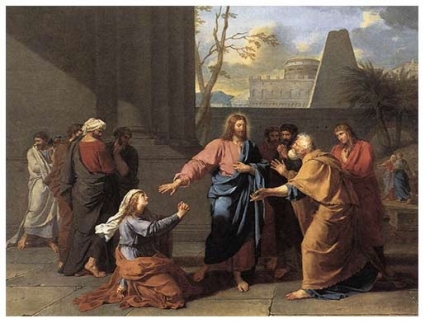
هل شتم المسيح المرأه الكنعانية ودعاها بالكلبة؟ ( مت 15 : 26 )

هل شتم المسيح المرأه الكنعانية ودعاها بالكلبة؟ ( مت 15 : 26 )

هل شتم المسيح المرأه الكنعانيه و دعاها بالكلبة؟ ( مت 15 : 26 )
هل شتم المسيح المرأه الكنعانية ودعاها بالكلبة؟ ( مت 15 : 26 )

هل شتم المسيح المرأه الكنعانية ودعاها بالكلبة؟ ( مت 15 : 26 )

فَأَجَابَ: «لَيْسَ حَسَناً أَنْ يُؤْخَذَ خُبْزُ الْبَنِينَ وَيُطْرَحَ لِلْكِلاَبِ». مت 15 : 26

في البدايه يجب ان نلاحظ ان السيد المسيح لم يشتمها كإمرأه او لانها امرأه .. بل ان المسيح لم يشتمها من الاساس فهو لم يقل لها انت كلبه .. بل قال لها ( ليس جيد ان يؤخذ ما للبنين و يُعطي للكلاب ) ..

و نحن نستضدم امام هذا التعبير و ذلك لانه غريب علي شخصية يسوع الذي نراه في الاناجيل . فلم نعتاد ان نراه يتحدث مع احد بهذه اللهجه و هو الذي قال عنه الكتاب :
الَّذِي إِذْ شُتِمَ لَمْ يَكُنْ يَشْتِمُ عِوَضاً وَإِذْ تَأَلَّمَ لَمْ يَكُنْ يُهَدِّدُ بَلْ كَانَ يُسَلِّمُ لِمَنْ يَقْضِي بِعَدْلٍ. .. 1 بط 2 : 26
الَّذِي وَإِنْ لَمْ تَرَوْهُ تُحِبُّونَهُ. ذَلِكَ وَإِنْ كُنْتُمْ لاَ تَرَوْنَهُ الآنَ لَكِنْ تُؤْمِنُونَ بِهِ، فَتَبْتَهِجُونَ بِفَرَحٍ لاَ يُنْطَقُ بِهِ وَمَجِيدٍ، … 1 بط 1 : 8

فلماذا تحدث معها يسوع بهذه الطريقه ؟

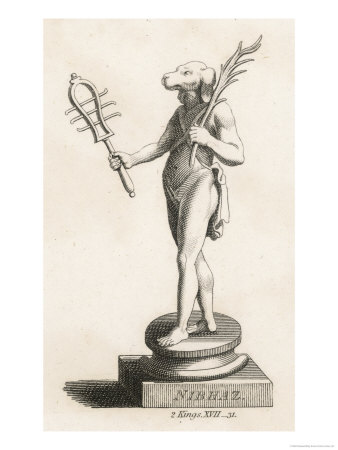
اولاً : المرأه الكنعانيه هي من شعب كنعان الذي يسكن حول سوريا في بلاد ما بين النهرين و كان احد الهة هذا الشعب هو الاله ( نبحز = nibhaz ) و هو بهيئة رجل برأس كلب

nibhaz


و هذه بعض المعلومات عنه :
http://en.wikipedia.org/wiki/Nibhaz
مكتوب انه كان بيعبد في مناطق سوريا و بيروت و طرابلس و دي اماكن سكن اهل بلاد ما بين النهرين اللي منهم شعب كنعان .. و كان في الشعوب دي العبادات قريبه جداً من بعض و الالهه مشتركه
زي مثلاً الاله هدد و ده كان برده بيعبده شعب كنعان و لكن مكتوب عنه انه كان يعبد في سوريا :

http://ar.wikipedia.org/wiki/هدد

و زوجته عنات من الهة كنعان:

http://ar.wikipedia.org/wiki/عنات

و داجون ايضاً ابوه هو من الهة كنعان:

http://ar.wikipedia.org/wiki/داجون

فالكنعانيون كانوا يقدسون الكلاب و لهذا اراد الرب ان يلفت نظرها إلي عبادتها الوثنيه

ثانياً :ان الرب كان يتحدث معها بعقلية اليهود .. فاليهود كانوا ينظرون إلي الامم علي انهم كلاب مثلما نجد في المقطع التالي من كتاب الزوهار :

A king provides a dinner for the children of his house; whilst they do his will they eat their meat with the king, and he gives to the dogs the part of bones to gnaw; but when the children of the house do not do the king’s pleasure, he gives the dogs the dinner, and the bones to them: even so: while the Israelites do the will of their Lord, they eat at the king’s table, and the feast is provided for them, and they of their own will give the bones to the Gentiles; but when they do not do the will of their Lord, lo! the feast is “for the dogs”, and the bones are their’s.” (1)

الملك يجهز العشاء لابناء بيته , عندما يفعلون مشيئته سيأكلون اللحم مع الملك , و الملك يعطي للكلاب العظام . لكن عندما لا يسمع البنين للملك فإنه يعطي اللحم للكلاب , و العظام للبنين , و حينما يُحقق إسرائيل إرادة الرب سيأكلون مع الملك في مائدته ….. و يعطون العظام للامم .

فأراد المسيح ان يظهر موقف اليهود العدائي تجاه الامم و يُعلن ايمان واحده من الامم و هو اعظم من ايمان اليهود الذي هو من خاصتهم و هو عالم بكل شئ و عارف خفايا القلوب و يعلم جيداً ان للمرأه ثقه عظيمه بقدراته و انها ستظل في إلحاح شديد لاجل ابنتها .. و قد اعلن ايماناه عندما قال لها : ( يَا امْرَأَةُ عَظِيمٌ إِيمَانُكِ! … مت 15 : 28 ) و هذا التعبير لم يقوله السيد لاي شخص طوال حياته علي الارض .

ثالثاً : استخدم السيد المسيح في الكلمه التي تُرجمت ب ( الكلاب ) الكلمه اليونانيه ( κυνάριον – كوناريون ) و التي تعني بحسب قاموس strong و قاموس thayer كلاب صغيره او كلب اليف و هي تلطيف لكلمة كلاب التي تُعتبر مسبه . و ذلك كان تخفيفاً من السيد المسيح للتعبير الذي كان دارجاً عند اليهود عند الحديث عن الامم .(2)

رابعاً : متي كاتب الانجيل كان يهودي و كتب انجيله لليهود العبرانيين و قصد بدقه انه يظهر هذه القصه بتفاصيلها بهذا الشكل و وضع قبلها رفض المسيح لتعاليم الفريسيين و ده لهدفين :
1 – ان يظهر ان خلاص الله انفتح علي الامم و بكده يعالج مشكلة تهود المسيحيين اللي كانت موجوده في العصر الرسولي .
2- ان يظهر محبة واحده امميه و ثقتها في المسيح في مقابل رفض الكتبه و الفريسيين بتكبر له .

و اخيراً بعض الشروحات من التفاسير المسيحيه :

إن كان يبدو هذا مذعجاً و مؤلماً بالنسبة لنا , فعلينا ان نتذكر انه كان مثل مشرط الجراح الذي لم يكن يقصد منه الاذي بل الشفاء . فقد كانت المرأه امميه , و كان اليهود ينظرون إلي الامم ككلاب القمامه التي تطوف في الشوارع من اجل فضلات الطعام .(3)
وليم ماكدونالد

هكذا كان يسوع يعبر عن موقف اليهود الذي يحتقر الامم كي يفسر السبب في ان طلبها لا يتتناسب مع ارساليته الي بيت اسرائيل . و لكن الكلمات المكتوبه لا تعبر عن ملامح وجه يسوع فربما كان يتعامل معها باللغه التي كانت تتوقعها من شخص يهودي حتي يري رد فعلها .(4)
d . t . france

قد كانن اليهود يصفون الامم بانهم ( كلاب ) لتحقيرهم و الإقلال من شأنهم , لكن استخدام يسوع للفظ التصغير لكلمة ( كللاب ) و الطريق الهادئه الرزينه المبتسمه التي نطق بها هذا القول , يغير كثيراً من الموقف …. ففي كل اللغات تستخدم بعض الكلمات ذات المدلول الردئ , لوصف بعض من هم اهل للمحبه , كقولنا انه طفل ( شقي)
و لعلنا نلاحظ ان المرأه و قد لمست القصد الصالح في لهجة يسوع ردت عليه سريعاً بقولها ( نعم يا سيد و الكلاب ايضاً تأكل من الفتات الساقط من مائدة اربابها ) .(5)
وليم باركلي

لذلك لما انتقل يسوع في دعوته إلي تخوم صور و صيدا , و تظاهر بمعاملة الكنعانيه بلهجة اليهود المتعصبين , فإنما كان ذلك منه خطه بارعه لإظهار ( إيمانها العظيم ) و إعطائه مثلاً لبني إسرائيل الجاحدين . و ليس لحصر دعوته في بني قومه .(6)
الارشمندريت يوسف دره الحداد

بعد أن شرح يسوع تصرّفه للتلاميذ، حاول أن يفهم المرأة أيضًا لماذا فعل ما فعل. جعل نفسه على مستواها، وكلّمها لغة بسيطة، لغة الصور. ونحن لا نفهم المقابلة بين الاولاد والكلاب إلا على خلفيّة العهد القديم. اليهود هم الابناء، والوثنيون هم الكلاب. الكلب يكون خارج البيت. أما الابن فيقيم في البيت. وهكذا استعادت هذه العبارة بشكل واضح التعارض الذي ذُكر في القسم الأول بين العالم اليهوديّ والعالم الوثنيّ.
واستعمل النصّ التصغير “الكلاب الصغيرة” (التي تدلّل) فخفّف بعض الشيء من حدّة التعارض، وتعاطف مع الوثنيّين، وهيّأ القارئ للنعمة التي ستنالها هذه الوثنيّة في آخر المطاف. إن التصغير يشدّد على الطابع الذي يعامل “الكلاب الصغار” وكأنهم من البيت. إذا وضعنا هذه الحاشية جانبًا، يبقى جواب يسوع في معنى مسيحيّ متهوّد متشدّد.

لقد عالج متّى مسألة الرسالة إلى الوثنيين منطلقًا من وجهة مسيحيّة متهوّدة. انطلق من حياة كنيسته وما فيها من انغلاق، وأظهر ما فيها من احتقار لاخوتهم الآتين من الامم الوثنيّة. هل يقبل المسيحي بهذا بعد أن عرف أنه ليس يهودي ولا أمميّ، لا عبد ولا حرّ، لا رجل ولا امرأة، بل كلهم واحد في المسيح. أخذ متّى النصّ من مرقس وأعاد تفسيره فقال: رغم امتيازات الشعب المختار، فطريق الخلاص بالايمان مفتوحة للوثنيّين. تحدّث مرقس إلى الوثنيّين في رومة، فبيّن لهم الوضع المميّز للشعب اليهوديّ. يُعطى لهم أولاً خبز البنين. ويعطى ثانيًا إلى الوثنيين. وتحدّث متى إلى يهود متشدّدين دخلوا إلى المسيحيّة، فبيّن أن الايمان لا الشريعة، هو الذي يفتح للمسيحيّين الطريق إلى المسيح. (7)
الخوري بولس الفغالي


And cast it to the κυναριοις, little dogs – to the curs; such the Gentiles were reputed by the Jewish people, and our Lord uses that form of speech which was common among his countrymen. What terrible repulses! and yet she still perseveres!

و يُطرح لل (κυναριοις ) الكلاب الصغيره . كما يدعو اليهود الشعوب الامميه , و استخدم الرب هذا التعبير الذي كان شائعاً بين مواطنيه . و رغم هذه الصده الرهيبه هي مازالت مثابره و مُلحه في طلبها(8)
ادم كلارك

ــــــــــــــــــــــــــــــــــــــــــــــــــ ــــــــــــــــــــــــــــــــــــــــــــــــــ ـــــ
1 – Zohar in Exod. fol. 63. 1, 2. Vid
الزوهار : كتاب يهودي معناه بالعبريه ( الاشراق او الضياء ) مكتوب بالاراميه و يفسر العهد القديم تفسير رمزي و يُنسب إلي احد معلمي المشناه الحاخام شمعون بن يوحاي . و يحتل المكانه الثانيه بعد التلمود عند الحاخامات

2 – http://biblehub.com/greek/2952.htm

3 – الانجيل بحسب متي . وليم ماكدونالد . ص 112

4 – التفسير الحديث للكتاب المقدس . د – ر . ت . فرانس . ص 274
5 – تفسير العهد الجديد . متي و مرقس . وليم باركلي . ص 304

6 – الدفاع عن المسيحيه في انجيل متي . الارشمندريت يوسف دره الحداد . ص 256

7 – تفسير الانجيل بحسب متي . الخوري بولس الفغالي

8 – Clarke’s Commentary on the Bible

http://biblehub.com/commentaries/clarke/matthew/15.htm

Exit mobile version