Why Interpret the Bible Literally?

Why Interpret the Bible Literally?

Have you ever heard comments like these?

•     “Accept the story about Adam and Eve and a talking snake? You’ve got to be kidding! That’s a nice children’s tale, but no one really believes it actually happened.”

•     “If you think the world was created in six twenty-four-hour days, you might as well join the Flat Earth Society too. Neither theory has any scientific credibility.”

•     “The story about Jonah is a whale-of-a-tale if I ever heard one. That anyone could survive three days in the belly of a whale is so incredible that it’s impossible.”

•     “Right … God told Noah to build an ark, load it up with animals, then shut the ship’s doors so God could drown the rest of the world with a heavenly downpour. Children shouldn’t even be taught such a cruel story, much less told it’s true.”

•     “You don’t take the Bible literally do you? Everyone knows that the Bible is mostly myth and that most of its stories are scientifically and historically inaccurate.”

All these comments have one thing in common: they challenge the inerrancy of the Bible; they question whether the Bible is without error not only in matters of faith and practice (spiritual and moral truths) but also in its historical, geological, and scientific information.

They undermine how the Bible should be interpreted by assuming it’s not entirely true because some of its stories don’t fit with a modern mindset that tends to reject the supernatural. People who make such comments don’t believe the Bible should be taken literally. “The ancients,” so they say, “had a more primitive view of the world. They readily accepted the unusual and fantastic because they were not as scientifically astute and highly educated as we are. Today we know better. We know much of what they believed was really myth, with perhaps vague resemblances to what actually happened. There wasn’t a worldwide flood, but maybe a local one that did a lot of damage and killed scores of people. The Adam-and-Eve myth was created to explain how the presence of evil can be reconciled with belief in an all-good God.” And so the explanations go.

Are these people right? Is the Bible pockmarked by myth? Are there good reasons to interpret it less than literally?

The first step in dealing with these questions of inerrancy is to clarify what a literal interpretation of the Scriptures really means.

As we’ve seen, the original manuscripts of the Bible are unavailable to us, but the science of textual criticism has proven beyond doubt that the copies we currently possess are nearly 100 percent accurate to the autographs. Although this in itself does not prove that the Bible is inerrant, it does guarantee that the Bible contains few errors due to textual transmission.

Christians believe that the Bible is the inspired word of God. This means that the Holy Spirit, working in the hearts and minds of chosen men, authored the Bible so that what God wanted recorded was recorded. However, this doesn’t mean that God acted as a divine stenographer, dictating the Bible word for word. Rather, God superintended the writing of Scripture, retaining the authors’ own writing styles and personalities, so that the end product was God’s.

Taking the Bible literally, then, like believing it is inerrant, does not mean that every word or phrase denotes only its exact literal meaning. The human authors of Scripture used the same literary techniques as other authors. Figures of speech in the Bible should be treated the same as figures of speech found in any other piece of literature. In John 16:25, 29–30, for example, Jesus states that He speaks in “figurative language” (nasv). When Jesus says “I am the door,” common sense and normal language usage tells us He is not literally calling Himself a door. When Peter calls Satan a “roaring lion, seeking someone to devour,” we know from other passages that Satan is not really a lion and that he doesn’t really eat people. People do not always communicate to each other in an exact literal fashion, and we shouldn’t expect God to speak to us differently. God used normal modes of language in the Bible. He spoke to us as we speak to each other.

Actually, it is common sense that God would inspire the authors of the Bible to use normal language. To claim otherwise is to question the ability of God to communicate truthfully and accurately. God created man to love and to have fellowship with Him. This requires communication between them. If God wishes to convey to us important truths (e.g., how to receive eternal life), He would unquestionably do so in a way we could easily understand. He would use normal human language. Thus, figures of speech used in Scripture, such as metaphors and personifications, would be easily recognized and understood, which is what we find to be true.

The Bible is also a historical document because God chose to reveal Himself within a historical context. It would be inconsistent with revelation if the Bible contained inaccurate historical information.

Inerrancy, then, simply means that the Bible contains truthful information revealed through normal methods of communication, and what it relates is without error. This applies not only to spiritual truths, such as salvation through Jesus Christ, but to historical, geological, and scientific matters (e.g., the fall of Adam is a true historical account of sin entering humanity; the Noahic flood resulted in catastrophic changes seen in the geological record; creation was by divine mandate rather than naturalistic evolution).

But why should biblical inerrancy be accepted as true? I could cite numerous reasons, but I’ll simply focus on six here. Although all of these would not convince every skeptic, they do show the extreme importance of inerrancy to the Christian faith.

THE CASE FOR BIBLICAL INERRANCY

INERRANCY PRESERVES THE BIBLE’S AUTHORITY

Christians claim the Bible is God’s written Word, and as such, it is their primary source of authority. Why? Because God is the Bible’s ultimate author (2 Tim. 3:16; 2 Pet. 1:21), and in it He has revealed Himself and His plan for mankind.

The reason inerrancy is so vital to the Bible’s authority is that without inerrancy, this authority is baseless. For example, if the Bible contains error, how do we know that the gospel message (salvation through Jesus) is true? Perhaps some of the errors in the Bible are found in the teachings ascribed to Jesus. You can’t have any assurance that an inerrant gospel appears in an errant Bible.

Moreover, if the Bible contains error, who determines where the error lies? The answer has to be human beings. Therefore man becomes an authority over Scripture because it is up to him to decide what’s true and what’s false. Man, not God, becomes the determining factor of what is divine revelation. But because man is fallible and makes mistakes, he might judge wrongly. He might even interpret the Bible heretically. In fact, church history stands as a witness that this has sometimes happened.

So if man becomes the authority over Scripture, the Bible loses its authority and we lose our moorings. We end up adrift in a dangerous sea of fluctuating opinions, ulterior motives, and half-truths.

Another problem arises if inerrancy is rejected. The Jehovah’s Witnesses and other false religions make the same claim as Christianity, that they are the only true religion. But the truth of Christianity does not rest on the subjective, personal experience of men independent of objective (testable) revelation. Christianity is a historical religion grounded on objective, verifiable facts. No other religion or cult in the world can make this claim and then substantiate it. For this reason, Christianity stands elevated above all other religions as the one true faith. But if we admit to error and allow human beings to become the determining factor of what is truth in Scripture, we reduce Christianity to the same level as all other religions. Its authority becomes human subjectivity and opinion. On the other hand, if the Bible is God’s inerrant Word, we have an objective and absolute standard for judging and rejecting the claims of false religions and their false prophets.

INERRANCY RESTS ON THE BIBLE’S HISTORICAL RELIABILITY

The historical reliability of the Bible is the foundation for the inerrancy of Scripture. The Bible claims to be inerrant, as we’ll see in a few moments. However, no matter what the Bible claims about itself, if it is not reliable, we could not trust what it says in any area, including inerrancy. On the other hand, if the Bible is a reliable, trustworthy document, then what it says about itself can be trusted. And we saw this fact verified in Chapter 3.

Therefore, since we found the Bible inerrant in all areas in which it can be checked out, we are logically consistent to insist that problem passages (i.e., passages that appear to contain historical or scientific error due to the current unavailability of extra-biblical verification) will eventually be settled in favor of inerrancy. Over the past hundred years, scores of so-called problem passages have been resolved in favor of Scripture. Clark Pinnock reports that “in 1800 the French Institute in Paris issued a list of 82 errors in the Bible which they believed would destroy Christianity. Today none of these ‘errors’ remain! With further reflection and new discoveries, these ‘errors’ were cleared away.”1 So it’s perfectly reasonable to believe that as additional evidence surfaces, those remaining problem texts will also be validated by nonbiblical sources.

INERRANCY IS TAUGHT IN SCRIPTURE OVERALL

In 2 Timothy 3:16 and 2 Peter 1:21, we’re told that what the biblical authors wrote did not flow from their own opinion or theology. Rather, “all Scripture” is inspired by God—it did not ultimately come from a human mind. It is absurd to think that all Scripture is divinely inspired and valuable for teaching and spiritual growth yet can give faulty information. God would not breathe out (which is what inspire literally means) error.

Revelation 22:18–19 and Deuteronomy 4:2 come at the inerrancy issue from a different angle. They teach that God’s Word should not be added to or subtracted from. Take note that this command occurs in both the Old and New Testaments. Also observe that Deuteronomy is the concluding book of the Old Testament Law, and Revelation is the last book of the New Testament as well as of the entire Bible. There is little doubt that this injunction covers the entire Bible. Unless God’s Word is without error, a command not to add to or subtract from Scripture loses its significance.

Consider Psalm 119:105, 130, which teaches that Scripture is designed to give understanding even to the “simple.” It would be contradictory to claim that something containing error can lead to understanding. Similarly, in 2 Timothy 3:15, God’s Word is said to give wisdom, which would be impossible if it contained mistakes.

Many other passages (such as Isa. 55:10–11; John 17:17; Titus 1:2; Heb. 4:12; 6:18) say that God cannot lie; He inspired the writing of Scripture through the Holy Spirit; Scripture was written clearly and contains specific, truthful information; it should not be changed in any way; and it is adequate for guidance in all matters of Christian living. These claims are totally inconsistent with an errant Bible, but they do support inerrancy.

INERRANCY IS EMBEDDED IN THE OLD TESTAMENT

When we turn to examine the Old Testament, we find inerrancy supported throughout. Texts such as Exodus 4:10–15, Deuteronomy 18:18, 2 Samuel 23:2, and Jeremiah 1:9 tell us that God selected certain individuals, called “prophets,” to speak His Word. Some were selected even before they were born (see Jer. 1:5; Luke 1:11–15, John the Baptist is considered the last of the Old Testament prophets). These men were God’s mouthpieces. What they spoke was what God wanted communicated. The prophets themselves recognized that they conveyed God’s words, not their own (e.g., Jer. 30:2). As God’s mouthpieces, they must have spoken inerrantly because God would not have allowed them to speak error in His name.

Not only did God select His spokespersons, but, to ensure that His words were passed on to future generations accurately, He commanded His prophets to record them (Exod. 34:27–28; Isa. 8:1; Jer. 30:2). Now why would God select His own mouthpieces and command them to write His words, then allow them to record error?

God instructed these same prophets to preserve the recorded Word and pass it on as an everlasting testimony (Exod. 17:14; 40:20; Deut. 10:5; 31:24–26; Isa. 30:8; Hab. 2:2). In Romans 15:4, the apostle Paul states that “whatever was written in earlier times was written for our instruction, that through perseverance and the encouragement of the Scriptures we might have hope” (nasv). If God insisted that the Old Testament be recorded and preserved for future instruction, we can be certain that God would have prevented the contamination of error.

Or consider Psalms 105 and 106. In these and other passages, the human authors recall historical events from Israel’s past. These texts are examples of the Old Testament validating its own historicity. The Old Testament was written over a thousand-year time span. When newer books in the Old Testament acknowledge historical events in older books, it shows that the later authors believed in the historical inerrancy of the older books. The Psalms noted above were written hundreds of years after the events they acknowledge occurred. The psalmists praise God for the plagues on Egypt that resulted in their people’s release from bondage and for parting the Red Sea during their exodus. Obviously, the Israelites alive at the time Psalms 105 and 106 were written did not consider these events as myths or legends. If the Old Testament writers did not believe in the inerrancy of the Old Testament (their Bible), it would be meaningless for them to recount historical data as factual.

It’s beyond doubt, then, that the Old Testament claims to be inerrant, and the Israelites accepted it as so. It was written by individuals personally selected by God and instructed in what to write, how to record it, and how to preserve it. It contains not only spiritual truths (matters of faith) and moral truths (matters of practice) but also trustworthy historical facts.

INERRANCY IS EMBRACED IN THE NEW TESTAMENT

Passages such as 2 Timothy 3:15, 2 Peter 1:21, and 1 Thessalonians 2:13 echo what the Old Testament teaches: all of Scripture is inspired by God, the Holy Spirit superintended the writing of Scripture, and the Bible contains the words of God, not of men. These texts also lay a foundation for other New Testament passages that teach biblical inerrancy.

The apostles acknowledged that the Old Testament authors wrote under the authority of the Holy Spirit (Acts 1:16; 4:24–25). The New Testament writers also acknowledged that what they wrote originated with God, not with them (1 Cor. 14:37; 2 Pet. 1:21).

The New Testament authors frequently demonstrated their belief in the truthfulness of the Old Testament by referring to fulfilled prophecy (John 12:37–41; Acts 1:16; Rom. 3:1–2). This is nowhere more evident than in their many references to the prophetic passages concerning Christ’s coming ministry (see Matt. 1:22; 2:5, 15, 23; 13:35; 21:4; 27:9). It’s unlikely that the apostles would place such a heavy emphasis on Old Testament prophecy if they thought it was less than truthful.

A compelling evidence demonstrating that the New Testament writers considered the Bible to be inerrant is that they referred to Old Testament characters and events as fully historical, with no hint that they were legendary (Luke 3:38; Rom. 5:12–21; 1 Tim. 2:13–14; Heb. 11:4–11; 2 Pet. 3:6). If the New Testament writers considered the Old Testament as anything other than inerrant historically, it would make no sense for them to refer to it in such a fashion. There are many passages throughout the New Testament that refer to events in the Old Testament as literal history. People and events in Genesis are mentioned or quoted at least 160 times by the New Testament writers—and more than 100 of these pertain to the most controversial passages. For example, in the above passages, Peter refers to the Noahic flood, and Paul refers to Adam and Eve. In Romans 5:12–21, Paul uses the historical event of the Fall as the reference point for his teaching on Christ’s work of redemption. He states that just as sin entered the world due to the single act of one man (Adam), so too is the effect of this sin undone by the one act of righteousness when Jesus died on the cross. It is impossible to sustain the parallel between the work of Adam and the work of Christ if Adam was not a historical person and if the fall was not a historical event.

Altogether, such passages demonstrate that the New Testament writers believed their Bible (the Old Testament) was inerrant. They staked their lives on it. Believing Jesus Christ was the prophesied Messiah, many of them died under religious persecution. Like the Old Testament prophets, the New Testament authors recognized they wrote under the inspiration and guidance of the Holy Spirit. To them, all of the Bible was God’s inerrant Word.

INERRANCY WAS TAUGHT BY JESUS

The most compelling evidence supporting the inerrancy of the Bible is the testimony of Jesus Christ. To all Christians, Jesus is God and the final and supreme authority in all things. If this is true, then His opinion on the inerrancy of Scripture must be accepted as truth. Jesus believed and taught that the Hebrew Bible was inerrant, not only in matters of faith and practice, but in its prophetic, historical, geographical, and scientific data. Jesus also predicted the writing of the New Testament under the power of the Holy Spirit, therefore putting a stamp of approval on its inerrancy. The following is a summary of Jesus’ teaching on the Bible’s inerrancy.

Now some people may argue that because Jesus’ teaching on inerrancy is recorded in the Bible, it’s circular reasoning to use the Bible to prove Jesus’ view of inerrancy and then use Jesus to prove the inerrancy of the Bible. However, this is not what we’re doing here. In Chapter 3, we established the historical reliability of the Bible independently of Jesus’ testimony by relying on nonbiblical evidences. So we are not guilty of the fallacy of circular reasoning.

Jesus on the Scriptures

Matthew 4:4

In this and many other passages, Jesus either quotes or refers to the Old Testament (His Bible) to teach religious truth or resolve issues. Jesus considered the Hebrew Old Testament completely authoritative; He never questioned its truthfulness. He taught that whatever the Old Testament pronounced was the last word on the subject at hand, and He used it to rebuke the Jewish leaders when they misapplied Scripture (see Matt. 22:29). For Him to use Scripture in this manner would be meaningless unless He considered it inerrant.

Luke 24:27, 44; John 5:39

Jesus knew He was the Son of God and the Messiah. He also knew the Old Testament was a witness to Him. Thus, in His communication with both His disciples and the Jewish people, He referred to Scripture to validate who He was. If Scripture was not accurate and truthful, this would have been a futile exercise. Jesus would have been a hypocrite and worse if He knew that the Old Testament was false and yet tried to use it to validate His claims. Clearly, Jesus believed the Hebrew Scriptures spoke inerrantly of Him.

John 14:26; 16:12–13

In these passages, Jesus certifies the inerrancy of the New Testament by predicting it will be written and that the Holy Spirit will superintend its authorship. By this He confirmed the inerrancy of the soon-to-be-written New Testament just as convincingly as He confirmed the divine authorship of the Old Testament.

Matthew 5:17–19

Jesus implied in this text that every letter and word in the Old Testament Law was put there for a purpose. What the Bible claims as truth is truth, and what the Bible says will happen will happen. The only way Jesus could guarantee that everything recorded in the Old Testament will come to pass is if He knew that it was inerrant.

John 10:35

Again, referring to His Bible, Jesus stated that “Scripture cannot be broken,” confirming its reliability and authority. If Scripture is reliable and authoritative, it must be inerrant. A reliable and authoritative Bible would not contain error.

Jesus on the Old Testament as History

The most compelling evidence that Jesus considered the Old Testament to be inerrant was His reference to Old Testament passages in a historical sense. Although the Scriptures use figurative language to illustrate spiritual truths (e.g., John 10:1–6), it is easy to identify those instances as figurative. To use an earlier example, saying that Satan goes around like a roaring lion seeking someone to devour (1 Pet. 5:8) is an accurate figurative description of Satan’s desire to destroy people, but it is obviously not saying Satan is a real lion that eats people. But Jesus did not refer to Old Testament people and events as allegories or myths. He took them literally and historically and thereby clearly endorsed their inerrancy. The following passages illustrate this.

Matthew 19:3–6 (see Genesis 1:27; 2:24)

In this passage, Jesus authenticates the literal creation of Adam and Eve and confirms their historicity in His teaching on divorce. If Adam and Eve were not real people, Jesus’ instruction would be hollow. The divorce issue was raised by the Pharisees, and Jesus stated His position by referring to the historical event on which His doctrinal stand rests.

Matthew 12:38–41 (see Jonah 1:17)

In Jesus’ mind, Jonah was a real person who really spent three days in the belly of a “great fish” (the Hebrew word used here can be applied to any large creature, including an animal specifically created by God for the purpose it served). It is impossible to draw any other conclusion than that Jesus regarded the experience of Jonah as an historical parallel to His own forthcoming experience between His death and resurrection. If these events in Jesus’ life are factual, so too must Jonah’s experience, or the comparison would be meaningless. A myth cannot be used to validate a fact. The historicity of this event is further reinforced in Matthew 12:41, where Jesus claims that the people of Nineveh repented at the preaching of Jonah. They would not have done so if Jonah never lived. Thus Jesus aligned the historical events surrounding His resurrection with the historical events in Nineveh and the historical person of Jonah.

Luke 17:26–30 (see Genesis 6, 19)

Here Jesus refers to Noah, the worldwide flood, Lot, and the city of Sodom—all within an historical framework. Although many people have rejected the Noahic flood as scientifically unacceptable, Jesus obviously accepted it as fact. His prediction of a future historical event (His second coming) rests on the literal occurrence of a past event (the Noahic flood). If the flood was myth, then Jesus’ prediction would be absurd.

John 6:49 (see Exodus 16)

Skeptics scorn the Exodus account of the supernatural feeding of about two million Israelites during their forty years of wandering in the wilderness. But once again, this passage illustrates that Jesus accepted Old Testament history as completely truthful and accurate.

Luke 20:37–38 (see Exodus 3:1–6)

In this passage, Jesus acknowledges the historical reality of Abraham, Isaac, Jacob, and Moses. He also defends the doctrine of the resurrection. But even more controversial, Jesus speaks of these people in connection with the burning bush, a supernatural occurrence rejected by Bible critics. It is irrational to think that Jesus would refer to historical people, an historical event (the resurrection), and another historical event (the burning bush) all in the same sentence if part of what He was talking about was factual and part (e.g., the burning bush) was not. The entire statement would lose its credibility.

THE LITERAL TRUTH

Jesus accepted and taught the inerrancy of Scripture. The authors of the Old and New Testaments believed the same. The early church fathers accepted the Bible as the inerrant Word of God and treated it as such in their sermons and writings. Augustine, Thomas Aquinas, Martin Luther, John Calvin, and countless other theologians and scholars from other disciplines have embraced the inerrancy of Scripture. For two thousand years, the church has accepted the Bible, as originally inspired and recorded, to be free from error in all that it says. God condemns hypocrisy and false testimony on all fronts. It is unthinkable that a sovereign and holy God would allow error to infiltrate the Bible.

Since the Bible is God’s inerrant record of what He wants us to know and do, what it says about moral standards, the human condition, the remedy for sin, the path to salvation and eternal life, the way to a more abundant life here … everything it affirms, we should accept as true. What the Bible says, God says. And when God speaks, we better listen.

The Bible Is Inerrant

Old Testament

New Testament

God selects men as prophets to speak His Word (Deut. 18:18)

God inspired all Scripture (2 Tim. 3:16)

God instructed the prophets to record His Word (Isa. 8:1)

The NT authors claim they wrote the words of God (1 Cor. 14:37)

God instructed the prophets to preserve His Word (Isa. 30:8)

The NT authors acknowledge the truthfulness of OT prophecy (Acts 1:16)

The Israelites saw Scripture as historical information (Ps. 105, Ps. 106)

The NT authors accepted OT prophecy concerning Jesus Christ (Matt. 1:22–23)

The NT authors accepted OT people and events as factual (1 Tim. 2:13)

Jesus

Jesus uses the OT to resolve issues (Matt. 4:4)

Jesus says that all OT prophecy will come to pass (Matt. 5:17–18)

Jesus taught that the OT prophesied of Him (Luke 24:27)

Jesus says that Scripture cannot be broken (John 10:35)

Jesus certifies the inerrancy of the soon-to-be-written NT (John 14:26; 16:13)

Jesus referred to OT events and people as factual history (Matt. 12:38–41; Luke 17:26–30)

Conclusion:

The Israelites accepted the OT as the inerrant Word of God; Jesus and the authors of the NT accepted the OT (their Bible) as the inerrant Word of God; Jesus announced the soon-to-be-written NT, thereby certifying its inerrancy. The Bible claims to be the inerrant Word of God. It contains truthful information, and what it relates is without error.

[1]


1 Clark H. Pinnock, SET FORTH YOUR CASE (Nutley, NJ: The Craig Press, 1968), 71.

[1]Story, D. (1997). Defending your faith. Originally published: Nashville : T. Nelson, c1992. (49). Grand Rapids, MI: Kregel Publications.

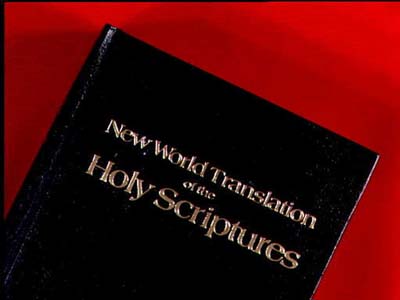
The Bible That Jehovah’s Witnesses Use

The Bible That Jehovah’s Witnesses Use
Christians embarking on discussions with Jehovah’s Witnesses should be aware that the so-called Bible the Witnesses use contains a number of changes introduced to the text for the sole purpose of supporting Watchtower doctrines.
The apostle Peter said concerning Paul’s inspired letters that “There are some things in them hard to understand, which the ignorant and unstable twist to their own destruction, as they do the other scriptures” (2 Peter 3:16, rsv). Usually such “twisting” of Scripture is confined to interpretation—and that is what the Watchtower Society did for three-quarters of a century. They issued followers copies of the King James Version (or, later on, the American Standard Version, because it features the name “Jehovah” throughout the Old Testament), along with detailed instructions on how to make the Scriptures appear to teach that God outlawed vaccinations, that Abraham and the faithful prophets would be resurrected to this earth in 1925, that God inspired the Great Pyramid of Egypt, and so on. But there were some doctrines that were very difficult to derive from the King James Version and the American Standard Version, no matter how much twisting was applied to the text.
So, during the 1950s, Watchtower leaders went beyond interpretation by producing their own version of the Bible, with hundreds of verses changed to fit Watchtower doctrines. And, their New World Translation of the Holy Scriptures continues to be rewritten every few years, with additional changes made to bring God’s Word into closer agreement with what the organization teaches.
For example, instead of “the cross,” the New World Translation substitutes “the torture stake”—to support the JW teaching that Jesus was nailed to an upright pole without a crossbeam. Instead of “the Holy Spirit,” we find reference to “holy spirit” or “active force,” in agreement with their denial of the deity and personality of the Holy Spirit. Christ speaks, not of his “coming” again, but of his “presence” (which Witnesses believe to be invisible).
The New World Translation systematically sets out to eliminate evidence for the deity of Christ. Instead of falling at Jesus’ feet to “worship” him, people did “obeisance” to him. John 1:1 no longer says that “the Word was God”; here it reads, “the Word was a god.” Jesus did not say, “Before Abraham was, I am.” Rather, to avoid association with the “I AM” of Exodus 3:14, Jesus’ statement becomes: “Before Abraham came into existence, I have been.”
But the most widespread change in the Watchtower Bible is the insertion of the name Jehovah 237 times in the New Testament. Of course, it is appropriate for a translator to choose to use the divine name Jehovah or Yahweh in the Old Testament where the Tetragrammaton YHWH actually appears in the Hebrew text. But the Watchtower has gone beyond this by inserting the name Jehovah in the New Testament, where it does not appear in Greek manuscripts. One need only look at the word-for-word English that appears under the Greek text in the Society’s own Kingdom Interlinear Translation, to see that the name Jehovah is not there in the Greek.
To find specific examples of the distortions outlined above, consult the Subject-Matter Index. Two outstanding cases that are useful in demonstrating the doctrinal bias of the JW Bible are Romans 14:8–9 (where the insertion of “Jehovah” produces a logical non sequitur in the English text) and Hebrews 1:6 (where early editions say the angels “worship” the Son of God, but later editions change this to “obeisance”).
For a more detailed discussion, see The Jehovah’s Witnesses’ New Testament by Robert H. Countess (1982, Presbyterian and Reformed Publishing Co., 136 pages).

Reed, D. A. (1997, c1986). Jehovah’s Witnesses : Answered verse by verse. Includes indexes. (electronic ed.) (17). Grand Rapids: Baker Book House.

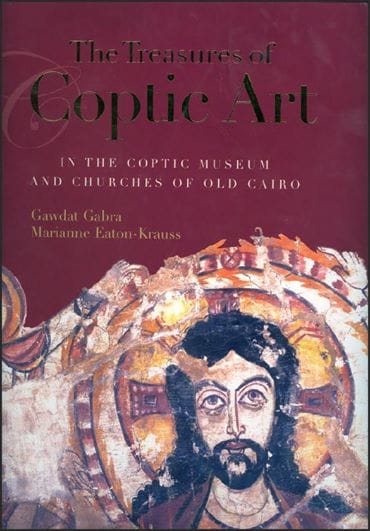
The Treasures of Coptic Art in the Coptic Museum and Churches of Old Cairo Hardcover – Dr. Gawdat Gabra

The Treasures of Coptic Art in the Coptic Museum and Churches of Old Cairo Hardcover – Dr. Gawdat Gabra


Egypt’s Coptic Church is one of the oldest in the world, with a cultural tradition dating back two millennia, during which time churches have been built and a variety of distinctive art forms have flourished. The world’s largest and most exquisite collection of Coptic artifacts is now housed in the Coptic Museum, founded in Old Cairo in 1908. Here for the first time, in this lavishly illustrated book, more than one hundred of the greatest treasures of the Coptic Museum have been beautifully photographed to present an overview of this rich artistic heritage. Objects from churches and monasteries across Egypt include some of the finest examples of Coptic icons, stelae, sculptures, wall paintings, wooden altar screens, metal crosses, censers, liturgical implements and vestments, chandeliers, and bible caskets. Besides being objects of great craftsmanship and beauty, these artifacts, which range in date from the third to the nineteenth centuries, represent indispensable material for the study of the origins and development of Coptic art, as well as its relations with the ancient Egyptian, Byzantine, and Islamic traditions. Textiles, ceramics, terracotta, ivory and bone carvings, and documents (including the famous Nag Hammadi Gnostic library from the fourth century, one of the most valuable collections of papyri in the world) provide invaluable insights into the economic and social life of Egypt over the past two thousand years. In addition to objects from the Coptic Museum, this book also includes photographs of surrounding churches, some of Egypt’s oldest, that illustrate the architectural legacy of the Copts. The accompanying text and captions provide a description of Coptic civilization in general and Coptic art in particular.


Dr. Gawdat Gabra

Dr. Gawdat Gabra is an independent scholar specializing in Coptic studies, and former director of the Coptic Museum in Cairo (1985). He is also a member of the board of the Society of Coptic Archaeology and chief editor for the St. Mark Foundation for Coptic History Studies 

He is the author and editor of numerous books related to the literary and material culture of Egyptian Christianity, including Coptic Monasteries: Egypt’s Monastic Art and Architecture and Christian Egypt: Coptic Art and Monuments through Two Millennia (both AUC Press 2002). He is also the co-editor of the three volumes of The Popes of Egypt (vol. I: AUC Press, 2004
 
Dr Gabra was born in Luxor, Egypt, but spend a great deal of his childhood in Aswan. He subsequently gained his LIC in Egyptian Antiquities at Cairo University in 1967, obtaining his PhD in Coptic Antiquities at Munster University, Germany.

Gawdat is currently resident in Southern California and a visiting lecturer at Claremont Graduate University.


Click Here To Download

Using Inference to the Best Explantion: What Caused the Birth of Christology?

Using Inference to the Best Explantion: What Caused the Birth of Christology?

Using Inference to the Best Explantion: What Caused the Birth of Christology?
 
Anyone who studies historical method is familiar with what is called historical causation. Historians seek out the causes of a certain events. As historian Paul Barnett says, “The birth of Christianity and the birth of Christology are inseparable both as to time and essence.” (1) One thing for sure: the birth of Christology was very early and not something that was invented much later in Church history.

We must not forget that within Judaism there is a term called “avodah zara” which is defined as the formal recognition or worship as God of an entity that is in fact not God i.e., idolatry. In other words, the acceptance of a non-divine entity as your deity is a form of avodah zara. (2) As of today, traditional or Orthodox Judaism still upholds the position that Jewish people are forbidden to pray and worship anyone other than the God of Israel (Ex. 20:1–5; Deut. 5:6–9).

Paul’s Letters are the earliest records we have for the life of Jesus. We know that from about AD 48 until his death (60 to 65 AD) Paul wrote at least 13 of the New Testament’s books. They are also the earliest letters we have for the Christology of Jesus. To read any objections to Paul’s Letters, see here.

As pointed out by Richard Bauckham in his work on this topic, Paul believed that Jesus was God by attributing attributes to him that were distinctly reserved for God. And he did so in a distinctly Jewish manner while also preserving monotheism. There were three attributes that first century Jews uniquely assigned to God:

1. God is the Sole Ruler of all things

2. God is the Sole Creator of all things

3. God is the only being deserving of worship

So let’s look at how Paul matches up the data here:

1. Jesus participates in God’s sole rule over all things

Phil: 3:20-21: “For our citizenship is in heaven, from which also we eagerly wait for a Savior, the Lord Jesus Christ; who will transform the body of our humble state into conformity with the body of His glory, by the exertion of the power that He has even to subject all things to Himself.”

Eph. 1:21-22: Paul speaks of Jesus being ”far above all rule and authority and power and dominion, and every name that is named, not only in this age but also in the one to come. And He put all things in subjection under His feet…”

Here, Jesus is clearly given the authority to rule above every one of God’s created beings.

2. Jesus as the Creator of all things

Jesus is clearly thought by Paul to have been the creator of the universe. This attribute is reserved only to God in Second Temple Judaism. Paul makes it clear that Jesus created all things.

Col. 1:15-16: “He is the image of the invisible God, the firstborn over all creation. For by him all things were created: things in heaven and on earth, visible and invisible, whether thrones or powers or rulers or authorities; all things were created by him and for him.”

3. Jesus as worthy of worship

As discussed above, only God was worthy of worship in Second Temple Judaism. Nevertheless, Paul discusses the worship of Jesus. Since God is the sole Creator and Ruler of all things He alone should be worshiped. Even within the Roman Empire, Jews worshiped God alone. No other entity was worthy of worship. Here is one of the earliest Christological texts:

Philippians 2:6-11: “Who, being in very nature God, did not consider equality with God something to be grasped, but made himself nothing, taking the very nature of a servant, being made in human likeness. And being found in appearance as a man, he humbled himself and became obedient to death even death on a cross! Therefore God exalted him to the highest place and gave him the name that is above every name, that at the name of Jesus every knee should bow, in heaven and on earth and under the earth, and every tongue confess that Jesus Christ is Lord, to the glory of God the Father.”

In their book The Jesus Legend, The: A Case for the Historical Reliability of the Synoptic Jesus Tradition, Gregory Boyd and Paul Eddy say,

“During the reign of Pilate and Herod, when Caiaphas was high priest, we find a Jewish movement arising that worships a recent contemporary alongside and in a similar manner as Yahweh-God. To call this development “novel” is a significant understatement. In truth, it constitutes nothing less than a massive paradigm shift in the first century Palestinian Jewish religious worldview.” (3)

Explanations try to show how something happened. That is, what is the cause for something that has happened. So let’s weight the options on the table and see if we can come up with an explanation that explains the data at hand:

#1: Religious Syncretism

While there were various Jewish sects during the time of Jesus, religious syncretism is a form of idolatry. First, the Jewish Scriptures forbids worshiping anyone other than the God of Israel (Ex. 20:1–5; Deut. 5:6–9). Following the exile and subsequent intertestamental struggles, it can asked whether Jews still fell prey to physical idolatry. Some skeptics assert that since Israel always had problems with idolatry in their early formation, it would not be a challenge to assert they could fall into idolatry again by worshiping one of their own countrymen as God. But this is problematic; To assert that Israel’s previous problems with idolatry which would lead to further into idolatry in the Second Temple period leads me to cry “anachronism.” Remember, idolatry is rarely mentioned in the Gospels. But there are warnings about idolatry in other portions of the New Testament( 1 Cor. 6:9-10 ; Gal 5:20 ; Eph. 5:5 ; Col 3:5 ; 1 Peter 4:3 ; Rev 21:8). Paul instructs believers not to associate with idolaters ( 1 Cor .5:11 ; 10:14 ) and even commends the Thessalonian for their turning from the service of idols “to serve the living and true God” ( 1 Thess1:9) (see Walter A. Elwell’s Baker’s Evangelical Dictionary of Biblical Theology, pgs 364-365). So I guess my question is the following: Why would Paul or the early disciples commit an idolatrous act (by saying Jesus is divine) and but then later speak against idolatry? It seems rather inconsistent.

#2 Hellenism or Polytheism?

The syncretism objection is related to the Hellenism/Polytheism possibility. The first followers of Jesus were exclusively Jews. The book of Acts gives a reference to the early followers of Jesus as “the sect of Nazarenes” (Acts 24:5). However, it is asserted that as the Christian faith spread, it became a predominately Gentile based religion. By the time of Jesus, Jews had encountered the impact of Hellenistic culture for three hundred years. The word “Hellenistic” was given to describe the period of history that started with the death of Alexander the Great in 323 B.C. and ended when Rome conquered Alexander’s empire in 30 B.C .It is also safe to say that several forms of Jewish culture during the Roman period were somewhat Hellenized. This is why it is often argued that the incarnation grew out of Hellenistic presuppositions. But as Paul Eddy points out in his articleWas Christianity Corrupted by Hellenism? from the middle of the third century BC, while Jewish Palestine had already experienced the effects of Hellenism we need to remember that Hellenism did not tend to infiltrate and ‘corrupt’ the local religious traditions of the ancient world. Rather, people maintained their religious traditions in spite of Hellenistic influence in other areas of their lives. Also, there are also references to the negative views of gentile polytheism (Acts 17: 22-23; 1 Cor 8:5). Gentiles were regarded as both sinful (Gal 2:5) and idolatrous (Rom 1:23).

#3: The Deity of Jesus is Legend?

As I already said, the earliest documents for the Christology of Jesus are Paul’s Letters. In them, we have one of the earliest confessions of the deity of Jesus in 1 Corinthians 8: 5-6:

“For though there are things that are called gods, whether in the heavens or on earth; as there are many gods and many lords; yet to us there is one God, the Father, of whom are all things, and we for him; and one Lord, Jesus Christ, through whom are all things, and we live through him.”

Here is a distinct echo of the Shema, a creed that every Jew would have memorized from a very early age. When we read Deuteronomy 6:4-9, which says, “Hear O Israel! The Lord our God is our God, the Lord is one,” Paul ends up doing something extremely significant in the history of Judaism.

A glance at the entire context of the passage in 1 Corinthians 8:5-6 shows that according to Paul’s inspired understanding, Jesus receives the “name above all names,” the name God revealed as his own, the name of the Lord. In giving a reformulation of the Shema, Paul still affirms the existence of the one God, but what is unique is that somehow this one God now includes the one Lord, Jesus the Messiah. Therefore, Paul’s understanding of this passage begets no indication of abandoning Jewish monotheism in place of paganism.

For a Jewish person, when the title “Lord” (Heb. Adonai) was used in place of the divine name YHWH, this was the highest designation a Jewish person could use for deity. Furthermore, it would have been no problem to confess Jesus as prophet, priest, or king since these offices already existed in the Hebrew Bible. After all, these titles were used for a human being. There was nothing divine about them.

#4: The Christology of Jesus can be explained by the disciples experience with Jesus before the resurrection and the post-resurrection appearances

I have already pointed out that the resurrection of Jesus is the best explanation for many historical issues within the New Testament.. So at this point, I would have to assume that skeptics can only say that the birth of Christology is simply false because of their metaphysical starting points (e.g., Jesus can’t be divine because the natural world is all there is, etc).

For those that are still hung up on the reliability of the New Testament, see our resource page.

Sources:
1. 1. Paul Barnett, The Birth of Christianity: The First Twenty Years (Grand Rapids: Wm. B. Eerdmans Publishing Co. 2005), 8.

2. David Berger, The Rebbe, The Messiah And The Scandal Of Orthodox Difference, 160-174.

3. Gregory A. Boyd and Paul R. Eddy, The Jesus Legend: A Case For The Historical Reliability of the Synoptic Tradition (Grand Rapids: MI: Baker Books, 2007), 132.

Does the Bible Contain Errors? by Paul D. Feinberg

Does the Bible Contain Errors? by Paul D. Feinberg


[gview file=”http://www.difa3iat.com/wp-content/uploads/2014/06/Does-the-Bible-Contain-Errors.pdf” save=”0″]
 
“Why do you believe the Bible? It is an ancient book full of errors and contradictions.” We have all heard this many times. However, most conservative evangelical Christians disagree with this claim. They hold to a doctrine called the inerrancy of Scripture.
The place to start our discussion is with a definition of inerrancy and error. By inerrancy, we mean that when all the facts are known, the Bible—in its original manuscripts and properly interpreted—will be shown to be true and never false in all that it affirms, whether related to doctrine, ethics, or the social, physical, or life sciences. Three matters in this definition are noteworthy. First, there is the recognition that we do not possess all the information to demonstrate the truth of the Bible. Much data has been lost due to the passing of time. It simply no longer exists. Other data await archaeological excavation. Second, inerrancy is defined in terms of truth that most philosophers today take to be a property of sentences, not words. This means that all the indicative sentences, or statements, of the Bible are true. Therefore, on this definition, an error in the Bible would require that it made a false statement. Finally, all information in the Bible, whatever the subject, is true. That is, it accurately records events and conversations, including the lies of men and Satan. It teaches truly about God, the human condition, and heaven and hell.
The belief in inerrancy rests on at least four lines of argument: the biblical, the historical, the epistemological, and the slippery slope arguments.
The biblical argument is drawn from what the Bible has to say about itself and is the most important. This argument may be formulated in a circular and a noncircular way. It is circular when one claims that the Bible says it is inspired and inerrant and that this is true because it is found in an inspired and inerrant Scripture. It is not circular when claims are made that are verifiable outside the document. This is possible because the Bible makes historical and geographical statements that are verifiable independently. Inerrancy follows from what the Bible has to say about its inspiration. It is the exhaled breath of God (2 Tm 3:16) and is the result of the Holy Spirit’s guidance of human authors (2 Pt 1:21). It is a divine-human book. Moreover, the accreditation of a prophet in the OT requires nothing less than complete truthfulness (Dt 13:1–5; 18:20–22). Can God’s written communication meet any less a standard? It should be noted that both these oral and written forms of communication involve the human element. This shows that human agency does not necessarily imply the presence of error. The Bible teaches its own authority as well. Matthew 5:17–20 teaches that heaven and earth will pass away before the smallest detail of the law fails to be fulfilled. John 10:34–35 teaches that Scripture cannot be broken. Furthermore, the way Scripture uses Scripture supports its inerrancy. At times arguments in Scripture rest on a single word (Ps 82:6; Jn 10:34–35), the tense of a verb (Mt 22:32), or the number of a noun (Gl 3:16). Finally, the character of God stands behind His word, and He cannot lie (Nm 23:19; 1 Sm 15:29; Ti 1:2; Heb 6:18).
A second argument is historical. While there have been those who disagree, inerrancy has been the normative Christian view throughout history. Augustine writes, “I have learned to yield this respect and honor only to the canonical books of Scripture: of these alone do I most firmly believe that the authors were completely free from error.” Luther says, “Everyone, indeed, knows that at times they [the fathers] have erred as men will; therefore I am ready to trust them only when they prove their opinions from Scripture, which has never erred.” John Wesley gave a similar opinion: “Nay, if there be any mistakes in the Bible, there may as well be a thousand. If there be one falsehood in that book, it did not come from the God of truth.”
A third argument is epistemological (based on what and how we know something). A helpful way to formulate this argument is to recognize that if the Bible is not entirely true, then any of it may be false. This is particularly problematic when some of the most important information communicated is not verifiable through independent facts. It teaches about an invisible God, angels, and heaven. Inerrancy requires that those claims of the Bible that are testable will be shown to be true once all relevant information is available. Critics of the Bible’s full truthfulness point out numerous alleged errors. But in these cases, the passage in question may have been misinterpreted by the critic or not all relevant facts are brought to light. During the twentieth century, numerous claims of the Bible, thought to be in error, were shown to be true in the light of more information. If that is so, why should anyone believe what is unverifiable? Only an inerrant Bible assures us that what we read is true.
The fourth argument is the slippery slope (not a fallacy in this case). The argument states that inerrancy is so fundamental that those admitting errors into the Bible will soon surrender other central doctrines like the deity of Christ and/or the substitutionary atonement. The denial of inerrancy leads to greater doctrinal error. This does not happen in every case, but it is demonstrable as a trend.
Each of these arguments has been criticized. However, a common and fundamental objection to them contends this doctrine is meaningless since it is true only of nonexistent autographs (the original manuscripts). But is it meaningless? Not if two conditions are met: (1) we possess a sufficient number of high-quality copies of the autographs, and (2) there is a sophisticated discipline of textual criticism to use these copies in determining what the original must have said. Both of these conditions are met in the case of the Bible.
The fundamental issue is the Bible’s teaching of its own inerrancy. And for those who are skeptical, evidence from science, archaeology, and history has supported this claim over and over again.

Cabal, T., Brand, C. O., Clendenen, E. R., Copan, P., Moreland, J., & Powell, D. 2007. The Apologetics Study Bible: Real Questions, Straight Answers, Stronger Faith (1412). Holman Bible Publishers: Nashville, TN

Ten Principles When Considering Alleged Bible Contradictions


As a detective, I’ve learned to accept the variation I see between eyewitness accounts. I’ve interviewed witnesses of crimes (occurring just hours earlier), only to find what appeared to be significant “contradictions” between the accounts. It’s my job, as the investigator, to determine why the eyewitnesses appear to contradict one another, even though there is no doubt the event occurred and the witnesses were telling the truth. There are times when similar variations (or alleged “contradictions”) are observed in the Biblical accounts. It’s our job, as Christian Case Makers, to apply a few simple investigative principles to determine whether or not these differences impact the reliability of the accounts. I want to offer a few investigative principles and filters for investigating these alleged Bible contradictions. These principles are not outrageous or unusual. They’re not specific to the Bible. They’re not Christian tricks or devices used to cover up inadequacies. They are straightforward tools and approaches useful when examining any ancient document or piece of evidence. If we objectively examine the Scriptures with these principles in mind, we’ll not only grow in our understanding of the Bible, but we’ll better comprehend and resolve the difficulties:

Principle #1: Begin With A Fair Attitude
Imagine you’re driving down the street and you come to a stop sign. You don’t assume the sign is wrong. Even if you don’t see opposing traffic or you don’t understand the reason for the sign being at that particular corner, you still stop for the sign. Even if no other car shows up at the intersection, you don’t simply blow through the sign. You give the sign the benefit of the doubt. In essence, you don’t assume a street sign is wrong until proven right. When you begin to read the Bible and examine what it says, it’s important to start off with a fair attitude. You don’t need to treat it as something unquestionable and beyond examination, but you do need to afford it at least as much consideration as you would afford a street sign, a box of macaroni or a friend. Before you jump up and call it a liar, take a second to examine what it says fairly.

The Example of Biblical Genealogies 
As an example, let’s examine Biblical genealogies. Some have tried to use the Biblical genealogical lists with a particular attitude about why God included the lists in the first place. Were they given to us to determine the chronological dating of the account or were they given to establish the rich heritage of the readers and their connection to God’s covenant? Our attitude will determine how we read the text. If they were written to provide dating information, we might determine the age of the earth, for example, by examining the genealogies in Genesis Chapter 5 and 10 and the lifespans offered by the text related to people in the genealogical lists. If this is the purpose of the lists, we would expect them to provide us with the proper, accurate genealogical sequences necessary to accomplish their goal. But what if our attitude about the purpose of the genealogies is wrong? Upon closer investigation, it’s clear Biblical genealogies are not as comprehensive as some would like to think they are. Biblical genealogies contain gaps. When someone is said to be a “father” of someone else, it often simply means he is an “ancestor”. In a similar way, when someone is said to be a “son” of someone else, it often simply means he is a “descendant”. This is why Jesus is called the “Son of David” when He is actually a distant descendant. This can also be seen in Matthew 1:8, where the Scripture says Jehoram is the father of Uzziah. If we look at 1 Chronicles 3:11-12, we can see three generations actually separate Jehoram from Uzziah. Clearly the word “father” is used to indicate “ancestor”. In addition to this, if we compare Genesis 10:24 to Luke 3:36, we discover Cainan has been omitted from the Genesis genealogy. There are undoubtedly other gaps as well, as the list of names is meant to paint the genealogy broadly without concern for chronological precision. It was God’s desire for us to understand the genealogical roots of our heritage, not the precise chronological age of the text or the planet on which we live.

Principle #2: Examine the Text in Its Context 
Sometimes we need to look at every account of a specific statement or event in the Scripture to understand what actually happened. When we do this, we are reading the account in its proper context. Remember, “Any text taken out of context is a pretext (an effort or strategy intended to conceal something or prove a point not really there). So never read a single Bible verse, always read the entire chapter and all the other accounts available to us.

The Example of the Mustard Seed
As an example, many critics and botanists claim the Bible contains an error and this error actually came from the lips of Jesus Himself. They refer to the statement Jesus made related to the famous mustard seed:

Mark 4:30-32
Again he said, “What shall we say the kingdom of God is like, or what parable shall we use to describe it? It is like a mustard seed, which is the smallest seed you plant in the ground. Yet when planted, it grows and becomes the largest of all garden plants, with such big branches that the birds of the air can perch in its shade.”

Critics look at this statement and criticize the claim the mustard seed is the “smallest seed you plant in the ground”. They are quick to argue the mustard seed is not the smallest seed on earth. In fact, there are many seeds smaller than a mustard seed. So how can Jesus, Lord and God over all, not know this? Well, the critics aren’t reading carefully and they aren’t trying to understand what the original text is saying. Jesus was talking to a group of people living in an agricultural society. His listeners were farmers. He didn’t say the mustard seed was the smallest seed on earth. He said the mustard seed “is the smallest seed you plant in the ground”. He is referring directly to the seeds they were using in their day to plant their gardens: “it grows and becomes the largest of all garden plants…” As a further demonstration of this reference to garden seeds, look at a parallel account in another Gospel:

Matthew 13:31-32
He told them another parable: “The kingdom of heaven is like a mustard seed, which a man took and planted in his field. Though it is the smallest of all your seeds, yet when it grows, it is the largest of garden plants and becomes a tree, so that the birds of the air come and perch in its branches.”

Careful reading (with an effort to understand what the original text truly says) will resolve the lion’s share of apparent “contradictions” or “errors” in the Bible.

Principle #3: Let the Bible Clarify the Bible
Most modern translations of the Bible include Scripture references in the margin of the Bible to help us make sense of difficult passages. Allow the Bible to explain itself by reading these additional passages. Allow the Bible to clarify itself:

The Example of the “Spiritual” Body
For years there has been some confusion over passages dealing with the Resurrection. In fact, many cults have taken errant positions on some of these passages. Some deny the physical resurrection of Jesus, for example, based on the following passage:

1 Corinthians 15:42-44
So will it be with the resurrection of the dead. The body that is sown is perishable, it is raised imperishable; it is sown in dishonor, it is raised in glory; it is sown in weakness, it is raised in power; it is sown a natural body, it is raised a spiritual body.

Some look at this passage and argue the resurrected body is not a physical body, but a “raised a spiritual body” as the passage appears to say. Therefore, the argument goes, Jesus was not raised as a physical man, but was only “spirit” when He appeared to His disciples after the resurrection. But is that really what Paul was saying here? Is there some way to better understand what he meant? One approach would be to see if Paul talks about the “spiritual body” anywhere else in the same paragraph somewhere else in the same letter:

1 Corinthians 2:15
The spiritual man makes judgments about all things, but he himself is not subject to any man’s judgment…

In this passage, is Paul talking about men who have no body, or is he talking about men who have submitted their lives to spiritual guidance and obedience (rather than material guidance and obedience)? When we read how Paul uses the word elsewhere in the letter, we come to understand spiritual men and women are not ghostlike vapors without a material body, but men and women who have been transformed by the power of God and have now submitted themselves to God’s direction and life. They still have bodies. You and I can be spiritual people today. Bible difficulties can often be understood if we will allow the Bible to clarify itself.

Principle #4: Don’t Confuse “Imprecision” with “Error”
The Bible was written at a time when the culture commonly used general figures or descriptions to discuss more specific issues. This is particularly true when the Bible discusses numbers. As a matter of cultural device, specific numbers are often rounded off. Instead of saying 998, the Bible may simply say 1000. It’s not that the writer was a blockhead who didn’t understand the math, the writer was simply employing a common cultural device (also used in non-Biblical writings of the time) to describe a general truth.

The Example of the Pool of Metal
Let’s take a look at a specific example of this type of generalized description in the Old Testament. One can be found in the description of a pool that Solomon built at the temple of the Lord:

2 Chronicles 4:2-3
He made the Sea of cast metal, circular in shape, measuring ten cubits from rim to rim and five cubits high. It took a line of thirty cubits to measure around it.

This passage seems to advance the notion a circular pool could measure 10 units in diameter and 30 units in circumference, but we know the ratio of circumference to diameter of any circle is not 3 to 1, but is Pi (3.14…) to 1. So doesn’t this prove the Scripture is wrong? No, it doesn’t actually prove an error at all. The common cultural device of the Jewish people was always to round off figures, particularly when these figures were insignificant to the story or the passage. And this is still a device we employ today. After all, Pi is not actually 3.14. We are rounding this figure off so we can discuss it easily. In reality, Pi is an infinite fraction we could never write with complete accuracy. Even if we wrote it to 20 decimal places (3.14159265358979323846), we still haven’t captured the true value of the number. So why are we surprised when the Bible doesn’t try to capture its precise value? There is not error here, simply the common cultural device of rounding numbers for the sake of simplicity.

Principle #5: Old Testament Quotes Aren’t Meant to be “Verbatim”
There are often times when New Testament writers quote a passage from the Old Testament to show a prophecy is being fulfilled. We’ve all seen these quotes, but seldom do we ever compare the New Testament quote to the Old Testament passage. If we were to do this occasionally, we might discover some of the quotes are not perfect “verbatim” quotes from the Old Testament. Does this mean the New Testament writers were in error?

The Example of the Prophecy of Zechariah
Let’s take a look at one such example of an Old Testament quote. As Jesus hung on the cross, John observed an Old Testament prophecy was being fulfilled:

John 19:37
…and, as another Scripture says, “They will look on the one they have pierced.”

Zechariah 12:10-11
And I will pour out on the house of David and the inhabitants of Jerusalem a spirit of grace and supplication. They will look on me, the one they have pierced, and they will mourn for him as one mourns for an only child, and grieve bitterly for him as one grieves for a firstborn son.

John appears to be misquoting Zechariah. John says that the Scripture says, “They will look on the one they have pierced”, but Zechariah says, “They will look on me, the one they have pierced”. Is there a “misquote” here? Well, we’ve got to begin by understanding in our modern translations we have added the quotation marks to the New Testament Scriptures. Remember the original manuscripts did not contain the punctuation, paragraph delineations, or chapter divisions existing in the later versions we presently use. These conventions have been added by men following the original writing. So we must be careful how we view quotations. John never meant his reference to the Old Testament Scripture to be a precise quote. John was simply saying he stood there, before the cross, and observed Jesus was fulfilling the prophecy of Zechariah.

Principle #6: Perspectives Are Different Than Contradictions 
Sometimes when we read parallel accounts of the same event we seem to find minor contradictions in the way the event is described. We’ve got to be careful not to confuse differences in perspective with Biblical “error”. Remember, no two witnesses to the same event will ever describe the event in exactly the same way. If the witnesses did describe the event in exactly the same way, you would probably question their honesty. The original assemblers of the Scriptures could easily have changed the differing accounts after the fact so they all said the same thing. Or they could simply have formed one large Gospel including a single story of Jesus, and then destroyed all the competing accounts. But that’s not what they did. Instead, they left us with all four eyewitness accounts so we could get all the differing perspectives. These differences are not the result of error; they are simply the result of perspective.

The Example of Judas
Let’s take a look at three examples of perspective found in the New Testament Gospel accounts. The first example can be seen in the description of Judas’ death. Matthew records the way Judas killed himself following his betrayal of Jesus, but this account seems to contradict Luke’s description in the Book of Acts:

Matthew 27:5
So Judas threw the money into the temple and left. Then he went away and hanged himself.

Acts 1:18-19
With the reward he got for his wickedness, Judas bought a field; there he fell headlong, his body burst open and all his intestines spilled out.

Now if these accounts are taken very strictly, there does appear to be a contradiction. Did Judas give back the money or spend it to buy a field? Did Judas hang himself or did he fall to his death? Well, remember whenever you see two “competing” versions of an event, you need to ask yourself, “Am I reading two different perspectives of the same event? Is it possible both accounts are accurate and each eyewitness is only recording the part of the event particularly interesting to him (or the part helping him to make a specific point about the event)? When we apply this approach to the story of Judas, the differences fade away. First, we need to spend a minute doing a little research in the Gospel of Matthew. The very next verse gives us a little more information:

Matthew 27:6-8
The chief priests picked up the coins and said, “It is against the law to put this into the treasury, since it is blood money.” So they decided to use the money to buy the potter’s field as a burial place for foreigners.

Now things are becoming a little clearer for us. Put the two eyewitness accounts together and see what they say. Judas threw the money into the temple and left. The chief priests picked up the coins and said, “It is against the law to put this into the treasury, since it is blood money.” So they decided to use the money to buy the potter’s field as a burial place for foreigners. Judas later went away and hanged himself in this very field purchased with his money. After he was dead, his body eventually fell from the noose. He fell headlong, his body burst open and all his intestines spilled out. There is no contradiction or error here. When you have two separate accounts of the same event, one witness may only provide a portion; it does not mean the writer is not aware of the other account.

Principle #7: Consider the Viewpoint of “Earthbound” People.
Sometimes critics read the Scriptures and complain primitive language is used to describe natural phenomena. They argue this is somehow evidence of the human origin of the Bible and also evidence God is not the author of the Scriptures. But, when I described an event to my daughter when she was still very young, I often described it with language relative to her perspective of the world. The Bible was also written from the perspective of common human standing on the surface of the planet.

The Example of the Four Corners of the Earth
Critics point to this passage from Isaiah in an effort to demonstrate the primitive nature of the Bible and its writers. They argue these early Jews were not privy to the knowledge of God, just because they wrote in common language:

Isaiah 11:12
He will raise a banner for the nations and gather the exiles of Israel; he will assemble the scattered people of Judah from the four quarters of the earth.

Does this Scripture teach the earth is actually flat? That’s what critics would have you believe. But this expression is simply a cultural expression (and one we still use today); it has little to say about the true shape of the earth. In fact, an argument can be made the Bible is the only ancient Scripture consistently correct about scientific discoveries. Remember, it’s common for scientists to use the language of regular people as well. For example, the National Oceanic and Atmospheric Administration’s Climate Diagnostics Center website lists the times of “sunrise” and “sunset” for any city in the nation. But the terms “sunrise” and “sunset” are not accurate scientific terms because they assume the sun is rising and setting as it travels around the earth and not the earth turning to create the appearance of rising and setting. A more accurate expression would be “the time at which the earth rotation reveals (or obscures) the sun”. Even scientific communities resort to common language to describe events in the simplest of terms.

Principle #8: Description is Different Than Approval
Sometimes critics of the Bible (or critics of Christianity in general) point to an evil or corrupt situation described in the Bible to argue God (or Christianity) approves of the situation (or is the source of the evil). Remember, just because a Biblical author writes about something, this does not mean God condones it or supports it. A condition described in the lives of Biblical characters isn’t always a condition God would want for those same Biblical figures.

The Example of Polygamy in the Bible
There are certainly a number of Old Testament men who were married to more than one wife at a time. These men were described in the Scriptures and many of them seem to have been blessed by God. David and Solomon both had large harems, and were often blessed by God in one way or another. Do these examples of polygamy on the part of revered patriarchs indicate God accepts or endorses the behavior? No, the fact something is described in the Bible (even without open condemnation) does not mean it is endorsed by God. We’ve got to do enough reading to understand the true desire of God on any particular issue. The Bible says that God’s original intention was for one man to be married to only one woman, (as seen in Genesis 2:24). But men quickly perverted the concept of marriage to allow for multiple wives (by the time of Genesis 4:19). And while the Bible does not specifically condemn the practice of polygamy until the New Testament (see 1 Timothy 3:2), this doesn’t mean God approved of polygamy before this time. Early in the Old Testament, God said kings were not supposed to take multiple wives (Deuteronomy 17:14-20) and these kings were to be the example for other believers as well (1 Timothy 3:2 & 12, and Titus 3:12). From the very beginning, anyone who had more than one wife was in sin and was living in opposition to God’s will. If you take a close look at the lives of David and Solomon, you will see their sin of polygamy did not come without a price. Look at what happened to Solomon:

1 Kings 11:3-4
He had seven hundred wives of royal birth and three hundred concubines, and his wives led him astray. As Solomon grew old, his wives turned his heart after other gods, and his heart was not fully devoted to the LORD his God…

Just because something is described in the Scripture s, don’t be fooled into thinking God endorses it. Even when the Scriptures seem silent on an issue, a careful reading will reveal the nature of sin and the heart of God.

Principle #9: Don’t Fret Copyist Variants
I’ve addressed the variations we see between the Biblical copies we presently have. We can trust our Scriptures for several reasons, however, even in spite of these variations. None of these variations change the theology or content of the Bible. In addition, the variations existing in the ancient manuscripts can be found in the margins of the modern translations so you can investigate them for yourself (to see how important or unimportant they really are). The vast majority of these variations are single letter or number variations, and the copyists were extremely honest in the way they transmitted these errors down through the ages. As a result, the variations come down to us in complete honesty.

The Example of “Number” Variations
Most variations take the form of number discrepancies and these are generally resolved by comparing passages and using a little common sense. Let’s just take a quick look at one such variant as it relates to David’s conquering of Hadadezar described in both 2 Samuel and 1 Chronicles:

2 Samuel 8:3-4
David smote also Hadadezer, the son of Rehob, king of Zobah, as he went to recover his border at the river Euphrates. And David took from him a thousand chariots, and seven hundred horsemen, and twenty thousand footmen: and David houghed all the chariot horses, but reserved of them for an hundred chariots.

1 Chronicles 18:3-4
And David smote Hadarezer king of Zobah unto Hamath, as he went to stablish his dominion by the river Euphrates. And David took from him a thousand chariots, and seven thousand horsemen, and twenty thousand footmen: David also houghed all the chariot horses, but reserved of them an hundred chariots.

So exactly how many horsemen did David take? 2 Samuel tells us that it was 700 horsemen while 1 Chronicles says it was 7000. Obviously, we have a copyist variant here, and more times than not, copyist variants of this nature involve the addition of a letter or number, leading us to lean toward 700 as the correct number. If we compare this with the number of chariots mentioned (1000), the 700 number does appear more reasonable. But we may never know for sure how many horsemen were captured. And just like all the other copyist variants, it doesn’t really matter. Nothing here changes the doctrine of the Scriptures, nothing challenges the nature of God, nothing contradicts the teaching in the Bible about our own need for a Savior. In essence, copyist variants are not a stumbling block for Christians.

Principle #10: Remember Who’s Boss
As we wrap up our assessment of simple rules for reading the Scriptures, we’ve got to remember the Bible describes the work of God here on planet earth and the history of God’s people. Sometimes we’ll read something in the Old Testament and wonder how God could act in such a way. Sometimes the God of the Old Testament can seem pretty harsh. Critics look at certain passages and argue the judgment seen in God’s nature in the Old Testament contradicts the mercy seen in God’s nature in the New Testament.But we need to read the Scriptures carefully and remember God alone is God. He knows the end from the beginning, and He is the source of all morality. He gets to make decisions over life and death, even when we don’t understand all the details.

The Example of the Amalekites
Let’s take a look at one of the passages offered by critics who claim that our God is actually brutal and immoral:

1 Samuel 15:1-3
This is what the LORD Almighty says: “I will punish the Amalekites for what they did to Israel when they waylaid them as they came up from Egypt. Now go, attack the Amalekites and totally destroy everything that belongs to them. Do not spare them; put to death men and women, children and infants, cattle and sheep, camels and donkeys.”

Critics point to this passage and others to argue God is cruel. After all, God is seen here slaughtering people left and right. Is there an ethical contradiction here? Moral judgments require a standard of some sort, and this standard, if it is to be applied across cultures and time to look at the behaviors of the ancient Israelites, is going to have to be an objective standard transcending all humanity. Objective, transcendent standards require an objective, transcendent standard giver. This standard giver is the source of moral truth, and He alone therefore, gets to define the standard for the rest of us. Without an objective law giver, there can be no apparent injustice. In addition, the Creator of something gets to make decisions about its future. If you create a piece of art, you have the right to destroy it, even though I do not. After all, it is your creation and, therefore, it is your property. You can do with it as you will. God is the Creator and Master Artist. Only He gets to determine the fate of His creations:

Job 1:21
“Naked I came from my mother’s womb, and naked I will depart. The LORD gave and the LORD has taken away; may the name of the LORD be praised.”

Deuteronomy 32:39
“See now that I myself am He. There is no god besides me. I put to death and I bring to life, I have wounded and I will heal, and no one can deliver out of my hand.

God has a reason for everything He does, even when we may not see it as clearly as we would like. Many critics point to the Amalekites and claim God was taking innocent life in his call for their destruction. But the Bible tells us these people were already guilty in the eyes of the Lord:

Leviticus 18:24-25
Do not defile yourselves in any of these ways, because this is how the nations that I am going to drive out before you became defiled. Even the land was defiled; so I punished it for its sin, and the land vomited out its inhabitants.

According to God, the land the Israelites were about to inhabit was already an abomination. The people of this land were already involved in offensive practices. God was already displeased with them. Unless they were removed, His children would eventually succumb to their practices and lifestyle. God created the Amalekites. He alone had the moral and ethical authority to order their removal.

In the final analysis, all of us have to ask an important question. As a reader of the Bible, am I going to stand as its critic, or I am going to allow the Bible stand as a critic over me? Either I am going to decide what’s true or false in the Bible, or the Bible is going to decide what is true or false in me:

Hebrews 4:12-13
For the word of God is living and active. Sharper than any double-edged sword, it penetrates even to dividing soul and spirit, joints and marrow; it judges the thoughts and attitudes of the heart. Nothing in all creation is hidden from God’s sight. Everything is uncovered and laid bare before the eyes of him to whom we must give account.

Matthew 5:17-18
“Do not think that I have come to abolish the Law or the Prophets; I have not come to abolish them but to fulfill them. I tell you the truth, until heaven and earth disappear, not the smallest letter, not the least stroke of a pen, will by any means disappear from the Law until everything is accomplished.”

So, who is right, Christ or the critics? Who are you going to trust; the Divine Lordship of Jesus or Modern Scholarship of skeptics? These simple rules of engagement will help you evaluate apparent Biblical “contradictions” and have confidence in the reliability of the Biblical account.

– See more at: http://coldcasechristianity.com/2014/ten-principles-when-considering-alleged-bible-contradictions/#sthash.PVBW27JZ.dpuf

The Rabbinic Messiah By: Rev. Tom Huckel

 
 The Rabbinic Messiah
 
The Rabbinic Messiah


Braude, William G. The Midrash on Psalms. Two Volumes. New Haven: Yale University Press, 1959.
Braude, William G. and Israel J. Kapstein. Pəsiqtâ də-Raḇ Kahănâ. 2nd ed., Philadelphia: Jewish Publication Society of America, 1978.
Danby, Herbert, D.D. The Mishnah. Oxford: Oxford University Press, 1933; reprint, Thetford, Norfolk: Lowe and Brydone Printers Limited, 1980.
Epstein, Rabbi Dr. I., ed. The Babylonian Talmud. 4th ed., London: The Soncino Press, 1978.
Freedman, Rabbi Dr. H., B.A., Ph.D. Midrash Rabbah. trans. by Rabbi Dr. H. Freedman B.A., Ph.D. and Maurice Simon, M.A., 3rd ed., New York: The Soncino Press, 1983.
Hammer, Reuven. Sifre A Tannaitic Commentary on the Book of Deuteronomy. New Haven: Yale University Press, 1986.
Klausner, Joseph, Ph.D. The Messianic Idea in Israel. trans. by W. F. Stinespring, Ph.D., New York: The Macmillan Company, 1955.
Landman, Leo. Messianism in the Talmudic Era. New York: KTAV Publishing House, Inc., 1979.
Levertoff, Rev. Paul P. Midrash Sifre on Numbers. London: The Macmillan Co., 1926.
Levey, Samson H. The Messiah: An Aramaic Interpretation The Messianic Exegesis of the Targum. Cincinnati: Hebrew Union College Press, 1974.
Neusner, Jacob Messiah in Context. Philadelphia: Fortress Press, 1984.
Visotzky, Burton L. The Midrash on Proverbs. New Haven: Yale University Press, 1992.
 
Introduction
 
Rabbinic Messiah is a collection of traditional Jewish Messianic belief quotes, as proclamated by the Rabbis down through the centuries. The quotes are taken from the most commonly used Jewish literature resources. These Messianic belief statements are arranged in canonical order, i.e. according to the traditional Canon of the Christian Bible. Since this is simply a collection of the quotes themselves with very little commentary by the author (only where he felt it was needed), this work then can be a helpful reference tool that can be useful to both Jewish and Christian scholars alike.
The author intends to add additional references in the future. He also hopes to compile a summarized portrait of the Jewish Messiah and the Messianic Era by gathering these texts into a unified picture.
I trust that you will find this tool a help in your Bible and Messianic studies.
 
Rev. Tom Huckel,
Director of Hananeel House
PO Box 11527
Philadelphia, Pa. 19116-0527

[gview file=”http://www.difa3iat.com/wp-content/uploads/2014/05/The-Rabbinic-Messiah.pdf” save=”0″]


هل شتم المسيح المرأه الكنعانية ودعاها بالكلبة؟ ( مت 15 : 26 )

هل شتم المسيح المرأه الكنعانية ودعاها بالكلبة؟ ( مت 15 : 26 )

هل شتم المسيح المرأه الكنعانيه و دعاها بالكلبة؟ ( مت 15 : 26 )
هل شتم المسيح المرأه الكنعانية ودعاها بالكلبة؟ ( مت 15 : 26 )

هل شتم المسيح المرأه الكنعانية ودعاها بالكلبة؟ ( مت 15 : 26 )

فَأَجَابَ: «لَيْسَ حَسَناً أَنْ يُؤْخَذَ خُبْزُ الْبَنِينَ وَيُطْرَحَ لِلْكِلاَبِ». مت 15 : 26

في البدايه يجب ان نلاحظ ان السيد المسيح لم يشتمها كإمرأه او لانها امرأه .. بل ان المسيح لم يشتمها من الاساس فهو لم يقل لها انت كلبه .. بل قال لها ( ليس جيد ان يؤخذ ما للبنين و يُعطي للكلاب ) ..

و نحن نستضدم امام هذا التعبير و ذلك لانه غريب علي شخصية يسوع الذي نراه في الاناجيل . فلم نعتاد ان نراه يتحدث مع احد بهذه اللهجه و هو الذي قال عنه الكتاب :
الَّذِي إِذْ شُتِمَ لَمْ يَكُنْ يَشْتِمُ عِوَضاً وَإِذْ تَأَلَّمَ لَمْ يَكُنْ يُهَدِّدُ بَلْ كَانَ يُسَلِّمُ لِمَنْ يَقْضِي بِعَدْلٍ. .. 1 بط 2 : 26
الَّذِي وَإِنْ لَمْ تَرَوْهُ تُحِبُّونَهُ. ذَلِكَ وَإِنْ كُنْتُمْ لاَ تَرَوْنَهُ الآنَ لَكِنْ تُؤْمِنُونَ بِهِ، فَتَبْتَهِجُونَ بِفَرَحٍ لاَ يُنْطَقُ بِهِ وَمَجِيدٍ، … 1 بط 1 : 8

فلماذا تحدث معها يسوع بهذه الطريقه ؟

اولاً : المرأه الكنعانيه هي من شعب كنعان الذي يسكن حول سوريا في بلاد ما بين النهرين و كان احد الهة هذا الشعب هو الاله ( نبحز = nibhaz ) و هو بهيئة رجل برأس كلب

nibhaz


و هذه بعض المعلومات عنه :
http://en.wikipedia.org/wiki/Nibhaz
مكتوب انه كان بيعبد في مناطق سوريا و بيروت و طرابلس و دي اماكن سكن اهل بلاد ما بين النهرين اللي منهم شعب كنعان .. و كان في الشعوب دي العبادات قريبه جداً من بعض و الالهه مشتركه
زي مثلاً الاله هدد و ده كان برده بيعبده شعب كنعان و لكن مكتوب عنه انه كان يعبد في سوريا :

http://ar.wikipedia.org/wiki/هدد

و زوجته عنات من الهة كنعان:

http://ar.wikipedia.org/wiki/عنات

و داجون ايضاً ابوه هو من الهة كنعان:

http://ar.wikipedia.org/wiki/داجون

فالكنعانيون كانوا يقدسون الكلاب و لهذا اراد الرب ان يلفت نظرها إلي عبادتها الوثنيه

ثانياً :ان الرب كان يتحدث معها بعقلية اليهود .. فاليهود كانوا ينظرون إلي الامم علي انهم كلاب مثلما نجد في المقطع التالي من كتاب الزوهار :

A king provides a dinner for the children of his house; whilst they do his will they eat their meat with the king, and he gives to the dogs the part of bones to gnaw; but when the children of the house do not do the king’s pleasure, he gives the dogs the dinner, and the bones to them: even so: while the Israelites do the will of their Lord, they eat at the king’s table, and the feast is provided for them, and they of their own will give the bones to the Gentiles; but when they do not do the will of their Lord, lo! the feast is “for the dogs”, and the bones are their’s.” (1)

الملك يجهز العشاء لابناء بيته , عندما يفعلون مشيئته سيأكلون اللحم مع الملك , و الملك يعطي للكلاب العظام . لكن عندما لا يسمع البنين للملك فإنه يعطي اللحم للكلاب , و العظام للبنين , و حينما يُحقق إسرائيل إرادة الرب سيأكلون مع الملك في مائدته ….. و يعطون العظام للامم .

فأراد المسيح ان يظهر موقف اليهود العدائي تجاه الامم و يُعلن ايمان واحده من الامم و هو اعظم من ايمان اليهود الذي هو من خاصتهم و هو عالم بكل شئ و عارف خفايا القلوب و يعلم جيداً ان للمرأه ثقه عظيمه بقدراته و انها ستظل في إلحاح شديد لاجل ابنتها .. و قد اعلن ايماناه عندما قال لها : ( يَا امْرَأَةُ عَظِيمٌ إِيمَانُكِ! … مت 15 : 28 ) و هذا التعبير لم يقوله السيد لاي شخص طوال حياته علي الارض .

ثالثاً : استخدم السيد المسيح في الكلمه التي تُرجمت ب ( الكلاب ) الكلمه اليونانيه ( κυνάριον – كوناريون ) و التي تعني بحسب قاموس strong و قاموس thayer كلاب صغيره او كلب اليف و هي تلطيف لكلمة كلاب التي تُعتبر مسبه . و ذلك كان تخفيفاً من السيد المسيح للتعبير الذي كان دارجاً عند اليهود عند الحديث عن الامم .(2)

رابعاً : متي كاتب الانجيل كان يهودي و كتب انجيله لليهود العبرانيين و قصد بدقه انه يظهر هذه القصه بتفاصيلها بهذا الشكل و وضع قبلها رفض المسيح لتعاليم الفريسيين و ده لهدفين :
1 – ان يظهر ان خلاص الله انفتح علي الامم و بكده يعالج مشكلة تهود المسيحيين اللي كانت موجوده في العصر الرسولي .
2- ان يظهر محبة واحده امميه و ثقتها في المسيح في مقابل رفض الكتبه و الفريسيين بتكبر له .

و اخيراً بعض الشروحات من التفاسير المسيحيه :

إن كان يبدو هذا مذعجاً و مؤلماً بالنسبة لنا , فعلينا ان نتذكر انه كان مثل مشرط الجراح الذي لم يكن يقصد منه الاذي بل الشفاء . فقد كانت المرأه امميه , و كان اليهود ينظرون إلي الامم ككلاب القمامه التي تطوف في الشوارع من اجل فضلات الطعام .(3)
وليم ماكدونالد

هكذا كان يسوع يعبر عن موقف اليهود الذي يحتقر الامم كي يفسر السبب في ان طلبها لا يتتناسب مع ارساليته الي بيت اسرائيل . و لكن الكلمات المكتوبه لا تعبر عن ملامح وجه يسوع فربما كان يتعامل معها باللغه التي كانت تتوقعها من شخص يهودي حتي يري رد فعلها .(4)
d . t . france

قد كانن اليهود يصفون الامم بانهم ( كلاب ) لتحقيرهم و الإقلال من شأنهم , لكن استخدام يسوع للفظ التصغير لكلمة ( كللاب ) و الطريق الهادئه الرزينه المبتسمه التي نطق بها هذا القول , يغير كثيراً من الموقف …. ففي كل اللغات تستخدم بعض الكلمات ذات المدلول الردئ , لوصف بعض من هم اهل للمحبه , كقولنا انه طفل ( شقي)
و لعلنا نلاحظ ان المرأه و قد لمست القصد الصالح في لهجة يسوع ردت عليه سريعاً بقولها ( نعم يا سيد و الكلاب ايضاً تأكل من الفتات الساقط من مائدة اربابها ) .(5)
وليم باركلي

لذلك لما انتقل يسوع في دعوته إلي تخوم صور و صيدا , و تظاهر بمعاملة الكنعانيه بلهجة اليهود المتعصبين , فإنما كان ذلك منه خطه بارعه لإظهار ( إيمانها العظيم ) و إعطائه مثلاً لبني إسرائيل الجاحدين . و ليس لحصر دعوته في بني قومه .(6)
الارشمندريت يوسف دره الحداد

بعد أن شرح يسوع تصرّفه للتلاميذ، حاول أن يفهم المرأة أيضًا لماذا فعل ما فعل. جعل نفسه على مستواها، وكلّمها لغة بسيطة، لغة الصور. ونحن لا نفهم المقابلة بين الاولاد والكلاب إلا على خلفيّة العهد القديم. اليهود هم الابناء، والوثنيون هم الكلاب. الكلب يكون خارج البيت. أما الابن فيقيم في البيت. وهكذا استعادت هذه العبارة بشكل واضح التعارض الذي ذُكر في القسم الأول بين العالم اليهوديّ والعالم الوثنيّ.
واستعمل النصّ التصغير “الكلاب الصغيرة” (التي تدلّل) فخفّف بعض الشيء من حدّة التعارض، وتعاطف مع الوثنيّين، وهيّأ القارئ للنعمة التي ستنالها هذه الوثنيّة في آخر المطاف. إن التصغير يشدّد على الطابع الذي يعامل “الكلاب الصغار” وكأنهم من البيت. إذا وضعنا هذه الحاشية جانبًا، يبقى جواب يسوع في معنى مسيحيّ متهوّد متشدّد.

لقد عالج متّى مسألة الرسالة إلى الوثنيين منطلقًا من وجهة مسيحيّة متهوّدة. انطلق من حياة كنيسته وما فيها من انغلاق، وأظهر ما فيها من احتقار لاخوتهم الآتين من الامم الوثنيّة. هل يقبل المسيحي بهذا بعد أن عرف أنه ليس يهودي ولا أمميّ، لا عبد ولا حرّ، لا رجل ولا امرأة، بل كلهم واحد في المسيح. أخذ متّى النصّ من مرقس وأعاد تفسيره فقال: رغم امتيازات الشعب المختار، فطريق الخلاص بالايمان مفتوحة للوثنيّين. تحدّث مرقس إلى الوثنيّين في رومة، فبيّن لهم الوضع المميّز للشعب اليهوديّ. يُعطى لهم أولاً خبز البنين. ويعطى ثانيًا إلى الوثنيين. وتحدّث متى إلى يهود متشدّدين دخلوا إلى المسيحيّة، فبيّن أن الايمان لا الشريعة، هو الذي يفتح للمسيحيّين الطريق إلى المسيح. (7)
الخوري بولس الفغالي


And cast it to the κυναριοις, little dogs – to the curs; such the Gentiles were reputed by the Jewish people, and our Lord uses that form of speech which was common among his countrymen. What terrible repulses! and yet she still perseveres!

و يُطرح لل (κυναριοις ) الكلاب الصغيره . كما يدعو اليهود الشعوب الامميه , و استخدم الرب هذا التعبير الذي كان شائعاً بين مواطنيه . و رغم هذه الصده الرهيبه هي مازالت مثابره و مُلحه في طلبها(8)
ادم كلارك

ــــــــــــــــــــــــــــــــــــــــــــــــــ ــــــــــــــــــــــــــــــــــــــــــــــــــ ـــــ
1 – Zohar in Exod. fol. 63. 1, 2. Vid
الزوهار : كتاب يهودي معناه بالعبريه ( الاشراق او الضياء ) مكتوب بالاراميه و يفسر العهد القديم تفسير رمزي و يُنسب إلي احد معلمي المشناه الحاخام شمعون بن يوحاي . و يحتل المكانه الثانيه بعد التلمود عند الحاخامات

2 – http://biblehub.com/greek/2952.htm

3 – الانجيل بحسب متي . وليم ماكدونالد . ص 112

4 – التفسير الحديث للكتاب المقدس . د – ر . ت . فرانس . ص 274
5 – تفسير العهد الجديد . متي و مرقس . وليم باركلي . ص 304

6 – الدفاع عن المسيحيه في انجيل متي . الارشمندريت يوسف دره الحداد . ص 256

7 – تفسير الانجيل بحسب متي . الخوري بولس الفغالي

8 – Clarke’s Commentary on the Bible

http://biblehub.com/commentaries/clarke/matthew/15.htm

Exit mobile version