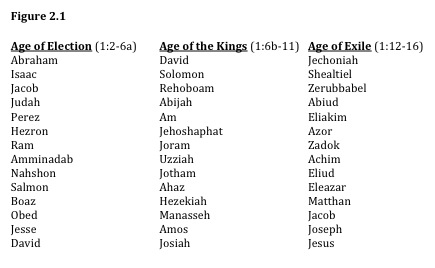
MATTHEW 1:17—How many generations were listed between the captivity and Christ, 14 or 13?
PROBLEM: Matthew says the generations “from the captivity in Babylon until the Christ are fourteen generations” (1:17). However, he lists only 13 names after the captivity is counted. So, which is correct, 13 or 14 ?
SOLUTION: Both are correct. Jeconiah is counted in both lists, since he lived both before and after the captivity. So, there are literally 14 names listed “from the captivity in Babylon until the Christ,” just as Matthew says. There are also literally 14 names listed between David and the captivity, just as Matthew claims (Matt. 1:6–12). There is no error in the text at all.
MATTHEW 1:17—How many generations were listed between the captivity and Christ, 14 or 13?
PROBLEM: Matthew says the generations “from the captivity in Babylon until the Christ are fourteen generations” (1:17). However, he lists only 13 names after the captivity is counted. So, which is correct, 13 or 14 ?
SOLUTION: Both are correct. Jeconiah is counted in both lists, since he lived both before and after the captivity. So, there are literally 14 names listed “from the captivity in Babylon until the Christ,” just as Matthew says. There are also literally 14 names listed between David and the captivity, just as Matthew claims (Matt. 1:6–12). There is no error in the text at all.
السجل المبكر لموت وقيامة المسيح في كرونثوس الاولي 15 :3-7 والتقليد الشفوي والمقارنة بالمصدر المتأخر في القرآن.
تم تقييم المصادر المتاحة لقيامة المسيح من قبل المؤرخين. لكن السؤال الهام ماهو تاريخ تلك المصادر. بالنسبة بما يتعلق بالشهادات المبكرة من المسيحية. قال المؤرخ “ديفيد فيشر “David Hacket Fisher:”المؤرخ لا يجب ان تتوافر لديه ادلة قوية فحسب. لكن ان تتوافر لديه افضل الادلة القوية وثيقة الصلة. وافضل الادلة القوية ذات الصلة. هي مع الاخذ بعين الاعتبار ,ان هذه الادلة تكون اقرب مباشرتاً من الحدث نفسة. ” (1)
المفتاح الرئيسي في دراسة المصادر المبكرة في حياة المسيح هو ان تضع في الحسبان الثقافة والبيئة اليهودية التي ولَّد بها يسوع. كما يلاحظ “بول بارنيت Paul Barnett“ان وسط المسيحية المبكرة التي كانت مكتوب بها رسائل بولس والاناجيل كان مناخ رباني rabbinic ” (2)(متعلق بالمعلمين من حيث التعاليم واللغة ووجهات النظر). ونظراً للتشديد علي التعليم في المجمع. والمنزل. والتعليم الأولي. فانه ليس من المستغرب انه كان من الممكن للشعب اليهودي اعادة سرد(بالاسلوب الشفوي) وحكي كميات كبيرة من المواد التي كانت ايضاً اكبر بكثير من الاناجيل نفسها.
يذكر العهد الجديد المسيح بكونه رابي “Rabbi” في المواضع الاتية:(- متي 8 : 19 , 9 : 11 , 12: 28 , مرقس 4: 28 , 5: 35 , 9: 17 , 10 :17-20 ,12 :14 ,19, 32 ولوقا 19: 39 , ويوحنا 1 :38 , 3 :2 ) والكلمة تعني معلم او سيد. “وهناك العديد من العبارات التي من خلالها نستطيع ان نشاهد ونعرف معني جزء من مصطلح rabbinic في هذه الايام. حينما ذكر العهد الجديد تلك العبارات :وكان التلاميذ ” “تأتي ” اليه “تتبعه” “تتعلم منه” “وحمل النيره”(متي 11 :28- 30 مرقس 1 ).
(3) وبالتالي يبدو ان الانجيل في بداية انتشاره كان في شكل او قالب تراتيل وعقائد شفوية. بامكانك الرجوع لتلك المواضع:(لوقا 24 :34 ,اعمال الرسل 2 :22-24 ,30 -32 ; 3: 13-15 و 4 :10-12 و5 :29-32 ,10 :39 -41 ,13: 37- 39 , رومية 1: 3-4 ,4 :25 ,10 :9 , كورنثوس الاولي 11 :23 ,15: 3-8 وفليبي 26-11,وتيميثاوس الاولي 2 : 6 ,3: 16 ,6: 13 ,تيميثاوس الثانية 2 :8 وبطرس الاولي 3 :18 ويوحنا الاولي 4: 2 ) فكان هناك عناية هائلة وعظيمة “بالتسليم delivering”أي التقاليد المستلمة. فنجد ان يسوع استخدم التوازي parallelism و الايقاع والقافيةوالجناس والسجع. حيث مَكنة كلمات يسوع ليس فقط الحفظ من خلال الذاكرة بل السهولة في المحافظة علي تلك الكلمات.
(4) حتي بولس الرسول ,استخدمها. حيث دُرب علي يد رابي مختص في مدرسة رابانية تدعي هليل وهو الرابي” غمالئيل ” وهو رئيس وعضو في السنهدريم. يمكن ملاحظة ان كُتاب العهد الجديد وظفوا مصطلحات التقاليد الشفوية مثل: “تسليم” “تلقي” “يمر علي” “التعلم” “التمسك ” فالتعليم التقليدي يظهر في العهد الجديد بالقاء نظرة علي الفقرات الاتية:-
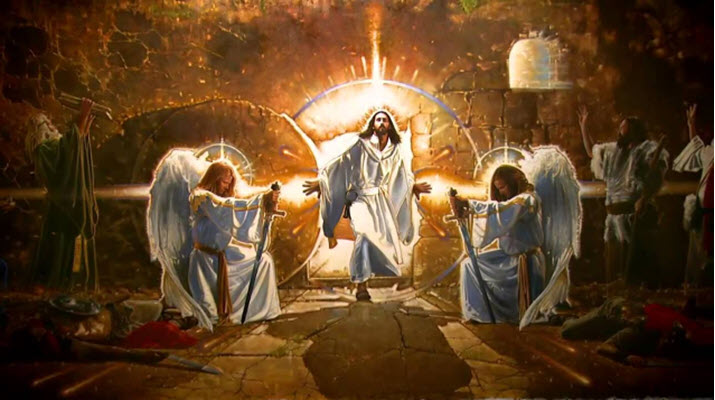
يطبق بولس الرسول التقليد الشفوي في رسالة 1 كورنثوس 15: 3-7 التي تعد واحده من أقدم السجلات التاريخية لمضمون الأنجيل لعقيدة –موت وقيامة المسيح. العالم اليهودي الارثوزكسي الراحل” بنحاس لبيد Pinchas Lapide” كان معجباً جداً بالعقيدة التي في كورنثوس الاولي 15 و خلص الي ان “يمكن اعتبارها كصيغة ايمان كبيان من شهود العيان” (5) أستخدَام بولس لمصطلحات ربانية مثل “استلمت received ” “ما قبلته” يمكن مشاهدتها في رسالة كورنثوس الاولي 15 :3-8. . في الفقرات الاتية:-
3 فإنني سلمت إليكم في الأول ما قبلته أنا أيضا: أن المسيح مات من أجل خطايانا حسب الكتب 4 وأنه دفن، وأنه قام في اليوم الثالث حسب الكتب 5 وأنه ظهر لصفا ثم للاثني عشر 6 وبعد ذلك ظهر دفعة واحدة لأكثر من خمسمئة أخ، أكثرهم باق إلى الآن. ولكن بعضهم قد رقدوا 7 وبعد ذلك ظهر ليعقوب، ثم للرسل أجمعين 8 وآخر الكل – كأنه للسقط – ظهر لي أنا من المثير بالاهتمام اننا نجد بالتوازي ما صرح به وقاله بولس في اعمال يوسيفوس المؤرخ اليهودي يقول يوسيفوس ما يلي بشأن الفريسيين: “احب ان اوضح هنا ان الفريسيين نقلوا الي الناس بعض الأوامر من سلسلة متتاليه من الاباء.
التي لم تُكتب في ناموس موسي. لهذا السبب رفضت فئة الصدوقيين هذه الاوامر. علي المستوي المتوسط الواحد يحتاج الي التعرف علي الاوامر المكتوبة فقط. في حين ان هذا من تقاليد الاباء التي ليس من الضروري التقيد بها”. (6) يشير ريتشارد بيكهام. Richard Bauckham الي “نقطة مهمة لموضوعنا الي ان يوسيفوس المؤرخ اليهودي استخدم في لغتة تعبيرات مثل:-. الانتقال او التسليم” passing on” وايضاً تقليد التسليم من معلم الي اخر وايضاً التسليم من الفريسيين الي الشعب. ” (7) فيلاحظ بيكهام في كتابة يسوع وشهود العيان. والاناجيل وشهادة شهود العيان. ان الكلمة اليونانية ل شاهد العيان “eyewitness” (autoptai), ليس لها قصد قانوني.
فالمعني من الكلمة الانجليزية eyewitnesses يشير الي استعارة من المحاكم القانونية. وهذا غير صحيح قليلاً فكلمة autoptai تستخدم ببساطة للمراقبين للاحداث. وقد تابع بيكهام عمل “Samuel Byrskog صموئيل بيرسكوج “في حجتة بانه علي الرغم من ان الاناجيل في بعض النواحي تبدو شكلاً مميزة جداً وجذاباً للتاريخ. ألا انهما يشتركان علي نطاق واسع في موقف شهادة شهود العيان الذي كان ايضاً شائعاً بين المؤرخين في العصر الروماني واليوناني. هؤلاء المؤرخين كانوا موضع احترام كبير ,فجميع التقارير تعبر عن خبرة مباشرة عن الاحداث التي روت.
فأفضلهم من كان هو نفسه هو احد المشاركين في الاحداث. ويسمي هذا (الفحص المباشر)في حالة تعذر ذالك وكان المؤرخ غير حاضر في كل الاحداث التي تحتاج الي سرد. علي الاقل لسبب حدوث الاحداث في وقت واحد متزامنة. فالسعي وراء المبلغين الذين قد تكلموا عن معرفة مباشرة والذين استطاعوا اجراء مقابلات ورؤية الاحداث هو امر طبيعي ويسمي.
(فحص غير مباشر) وبعبارة اخري ل بيرسكوج تعرف “الفحص”بأنه وسيلة مرئية لجمع المعلومات حول موضوع معين. يمكن ان تتضمن وسائل اما ان تكون وسائل مباشرة (شهود عيان) او غير مباشر (الحصول علي شهود عيان) بيرسكوج يدعي ايضاً بانه يمكن القول ان هذا الفحص اسخدم في العهد الجديد بواسطة بولس في المواضع الاتية :(كورنثوس الاولي 9 :1 ,15 :5-8 ,وغلاطية 1 :16 )ولوقا في المواضع الاتية(اعمال الرسل 1: 21-22 ,10 :39 -41 ) ويوحنا في المواضع الاتية(19: 35 ,21 :24 ,ويوحنا الاولي 1:1 -4) فالكلمة “تسلمت” παραλαμβάνω (هو مصطلح يهودي)يعني استقبال شيئ ينتقل من شخص الي اخر. يمكن ان يحدث ذالك من خلال النقل الشفوي او عن طريق الاخرين ومنهم تواصل التقاليد.
مما يترتب علي ما قلناه نفهم ان بولس تلقي هذه المعلومات من خلال شخص اخر في وقت سابق. فكرونثوس الاولي تؤرخ بين 50 : 55 بعد الميلاد. منذ كان يسوع مصلوب تقريباً سنة 30 : 33 ورسالة كرونثوس مكتوبة بحوالي 20 : 25 سنة ميلادية من موت المسيح. لكن العقيدة الحقيقية موجودة في كورنثوس الاولي 15 استقبلها بولس في وقت سابق بكثير من سنة 55 ميلادية.
كما يلاحظ غاري هابرماس ان معظم علماء النقد يوافقون عادتاً ان تلك العقيدة لها أصل في وقت سابق للغاية. اوليرش ولكنيس. يعلن ان هذه العقيدة بلا شك تذهب بنا للخلف باعتبارها اقدم مرحلة من جميع تاريخ المسيحية المبكرة. (8) يواقيم ارميا يسميها. “التقليد الاقرب من الكل” (9)اي الأقرب من تاريخ المسيحية الاولي حتي العالم الغير مسيحي “جيرد ليدمان Gerd Ludemann” قال هذا “أنا اصر بان اكتشاف الاسس العقائدية قبل الرسول بولس هي وواحده من احدي انجازات العهد الجديد الدراسية”. (10) فجمهور العلماء الذين علقوا علي هذا الامر. اعتقدوا ان بولس ربما تلقي وتسلم هذه المعلومات بعد التحول للمسيحية بثلاث سنين.
التي حدثة ربما من سنة 1 الي 4 بعد الصلب. فيذكر الكتاب المقدس ان بولس زار اورشاليم للتحدث مع بطرس ويعقوب ,وكل واحد منهم تم ادراجة في قائمة ظهورات يسوع بعد القيامة. وظهر ذالك في المواضع الاتية من الكتاب المقدس (كورنثوس الاولي 15: 5 -7وغلاطية 1: 18-19 ) فتعود معرفتة تقريباً الي سنة 32-38 بعد الميلاد. حتي احدي المؤسسين وعضو في سيمينار يسوع “جون دومينك كروسان John Dominic Crossan” كتب قائلاً.
كتب بولس من افسس رسالة اهل كورنثوس في اوائل سنة 50 بعد الميلاد لكنة قال في كرونثوس الاولي 15 :3فإنني سلمت إليكم في الأول ما قبلته أنا أيضا: أن المسيح مات من أجل خطايانا حسب الكتب. ان المصدر الاكثر احتمالاً والوقت لاستلامه هذا التقليد كان في اورشاليم في وقت مبكر من سنة 30. كما قلنا مسبقاً وجاءة زيارتة لاورشاليم في الرسالة غلاطية 1 :18 ثم بعد ثلاث سنين صعدت الى اورشليم لاتعرف ببطرس فمكثت عنده خمسة عشر يوما (11) يقول ساندرز E. P. Sanders ايضاً : تم كتابة رسائل بولس في وقت مبكر من الاناجيل.
وذلك لاشارته الي الاثني عشر وهو اقرب الادلة. يتعلق الامر في الاعداد الاولي كرونثوس الاولي 15 ان بولس يكرر استخدامة للتقليد. وبالتالي اذا تتبعنا الايام الاولي لتحركاته. سنجد انه يعطي قائمة لظهورات القيامة التي جري تداولها. ٍ في كرنثوس الاولي 15. (12) وقال “كروسان بارتنر روبرت فنك Crossan’s partner Robert Funk” ان الاقتناع بان يسوع قد قام من بين الاموات كان قد له جذور في الوقت الذي تم تحول بولس حوالي سنة 33 بعد الميلاد. علي افتراض ان المسيح مات حوالي سنة 30 ميلادية. والوقت اللازم لنمو بولس كان سنتين او ثلاث سنين علي الاكثر. (13)
Robert Funk co-founder of the Jesus Seminar
هذه التعليق من كروسان واخرين يبدوا منطقيا لانه ضمن العقيدة المذكوره في كرنثوس الاولي 15 يشير بولس الي بطرس باسمة الارامي. , Cephasصفا. وبالتالي اذا كان هذا التقليد كان متداول باللغة الارامية. فكان الموقعين الذي يتحدث الناس فيهم بالارامية هم الجليل واليهودية. (14) المصطلح اليوناني historeo” ” تترجم في الانجليزية لزيارة to visit اولمقابلة to interview. (15) ومن هنا الغرض من رحلة القديس بولس ربما كان يهدف الي التأكد من قصة القيامة من بطرس نفسة الذي كان شاهد عيان فعلي علي قيامة يسوع كرنثوس الاولي 15 :5 لماذا هذا الموضوع؟
يقول “ايرك شابوت Eric Chabot “(16) كنت اتحدث مرة مع احد المسلمين عن تاريخ القرآن والعهد الجديد. فالاسلام ينص ان المسيح ما صلبوه لكن شبة لهم. وقد كتب القرآن بعد 600 سنة من حياة يسوع وهذا يجعله مصدر متأخر جداً للمعلومات بالمقارنة بالعهد الجديد. يبدو ان الادلة التي سبق لنا مناقشتها تخبرنا بان المحتوي التاريخي للأنجيل هو (موت يسوع وقيامتة)تم تداولها في وقت مبكر جداً بين المجتمع المسيحي.
كما قلنا للتو ان المؤرخين يبحثون عن السجلات الاقرب لتاريخ الحدث. بالنظر الي الوقت المبكر من كرونثوس الاولي 15 : 3-8 فمن الواضح تماماً ان هذه الوثيقة هي مصدر أكثر موثوقية من القرآن. وعلاوة علي ذلك. القول بان قصة المسيح تم اختلاقها في وقت لاحق يناقض الادلة المقدمة.
اغريغوريوس
aghroghorios
المراجع
1. Hacket Fisher, D. H. , Historians’ Fallacies: Toward a Logic of Historical Thought. New York: Harper Torchbooks. 1970, 62.
2. Barnett, P. W. , Jesus and the Logic of History. Downers Grove, IL: InterVarsity Press. 1997, 138.
3. Ibid.
4. Ibid.
5. Lapide, P. E. , The Resurrection of Jesus: A Jewish Perspective. Minneapolis: Ausburg. 1983, 98-99.
6. Bauckham, R. Jesus and the Gospels: The Gospels as Eyewitness Testimony. Grand Rapids, MI: Eerdmans Publishing Company. 2006.
7. Ibid.
8. Wilckens, U. , Resurrection, trans. A. M. Stewart. Edinburgh: St. Andrew, 1977, 2
9. Jeremias, J. New Testament Theology: The Proclamation of Jesus, trans. John Bowden. New York: Scribner’s, 1971, 306.
10. Ludemann, G, The Resurrection of Jesus Christ: A Historical Inquiry (Amherst, NY: Promethus, 2004), 37.
11. Crossan, J. D. & Jonathan L. Reed. Excavating Jesus: Beneath the Stones, Behind the Texts. New York: HarperSanFrancisco, A Division of HarperCollins Publishers, 2001, 254.
12. E. P. Sanders, The Historical Figure of Jesus (New York: Penguin Books), 1993
13. Roy W. Hoover, and the Jesus Seminar, The Acts of Jesus, 466.
14. Jones, T. P. , Misquoting Truth: A Guide to the Fallacies of Bart Ehrman’s Misquoting Jesus. Downers Grove, IL: InterVarsity Press. 2007, 89-94.
15. Ibid.
16. The Earliest Record for The Death and Resurrection of Jesus: 1 Corinthians 15: 3-7
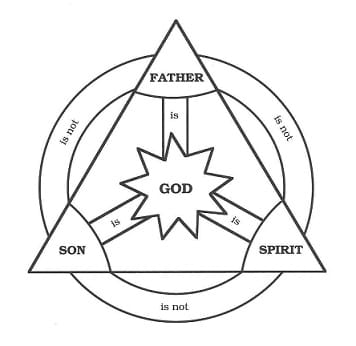
Speaking through the prophet Isaiah, God said, “My thoughts are not your thoughts, / Nor are your ways My ways … / For as the heavens are higher than the earth, / So are My ways higher than your ways, / And My thoughts than your thoughts” (Isa. 55:8–9). God is infinite, man is finite, so there are mysteries about God that man cannot fully understand. One of these mysteries is the Trinity, the tri-personality of God. According to Christian orthodoxy, God is one God in essence, power, and authority, and also eternally exists as three distinct co-equal persons. These three persons are the Father, the Son (Jesus), and the Holy Spirit. This does not mean that Christians believe in three gods (polytheism). Rather, the doctrine of the Trinity is that there is only one God who exists in three distinct persons, and all three share the exact same divine nature or essence.
Understanding this fully is beyond human comprehension and has no human parallels, although various analogies have been offered. One of these analogies is the three physical states of water. Water is not only a liquid but also a solid (ice) and a gas (vapor), yet its chemical composition (substance) never changes in all three forms (two parts hydrogen and one part oxygen—H2O). Although such analogies help us visualize the concept of the Trinity, they all fall short in some way. In the case of the water analogy, although the molecule H2O can be liquid, solid, or gas, it is never all three at one time. The Trinity, on the other hand, is all three persons as one God.
The word Trinity is not used in Scripture, but it has been adopted by theologians to summarize the biblical concept of God. Difficult as it is to understand, the Bible explicitly teaches the doctrine of the Trinity, and it deserves to be explained as clearly as possible, especially to non-Christians who find the concept a stumbling-block to belief. So let’s dig into this topic by addressing four key questions.
IS THE DOCTRINE OF THE TRINITY IRRATIONAL?
The doctrine of the Trinity is certainly a mystery but that doesn’t mean it’s irrational. The concept cannot be known by human reason apart from divine revelation, and, as we’ll soon see, the Bible definitely supports the idea of the Trinity. But for now, I want to demonstrate that the doctrine of the Trinity, although beyond human comprehension, is nevertheless rational. Our acceptance of it is congruous with how we respond to other data about the known world.
There are many things about the universe we don’t understand today and yet accept at face value simply because of the preponderance of evidence supporting their existence. The scientific method demands that empirical evidence be accepted whether or not science understands why it exists or how it operates. The scientific method does not require that all data be explained before it is accepted.
Contemporary physics, for instance, has discovered an apparent paradox in the nature of light. Depending on what kind of test one applies (both of them “equally sound”), light appears as either undulatory (wave-like) or corpuscular (particle-like). This is a problem. Light particles have mass, while light waves do not. How can light have mass and not have it, apparently at the same time? Scientists can’t yet explain this phenomenon, but neither do they reject one form of light in favor of the other, nor do they reject that light exists at all. Instead, they accept what they’ve found based on the evidence and press on.
Like physicists, we are no more able to explain the mechanics of the Trinity than they can explain the apparent paradox in the nature of light. In both cases, the evidence is clear that each exists and harbors mystery. So we must simply accept the facts and move on. Just because we cannot explain the Trinity, how it can exist, or how it operates does not mean that the doctrine must be rejected, so long as sufficient evidence exists for its reality. So let’s now explore this evidence.
HOW DOES THE BIBLE PRESENT THE DOCTRINE OF THE TRINITY?
THE OLD TESTAMENT
Although the doctrine of the Trinity is fully revealed in the New Testament, its roots can be found in the Old Testament.
In several places, God refers to Himself in plural terms. For example, “Then God said, ‘Let Us make man in Our image’” (Gen. 1:26; see 3:22; 11:7; Isa. 6:8).
The Messiah was prophesied in the Old Testament as being divine. Isaiah 9:6 states that the Messiah will be called “Mighty God,” a term applied in the Old Testament specifically to Yahweh (see Mic. 5:2).
Isaiah 48:16 refers to all three members of the Godhead: “Come near to Me, listen to this: From the first I have not spoken in secret, from the time it took place, I was there. And now the Lord God [Father] has sent Me [Jesus], and His Spirit [the Holy Spirit]” (nasv).
The Old Testament also makes numerous references to the Holy Spirit in contexts conveying His deity (Gen. 1:2; Neh. 9:20; Ps. 139:7; Isa. 63:10–14).
THE NEW TESTAMENT
The New Testament provides the most extensive and clear material on the Trinity. Here are just a few of the texts that mention all three members of the Godhead and imply their co-equal status.
• Matthew 28:19, the baptismal formula: “Go therefore and make disciples of all the nations, baptizing them in the name [not ‘names’] of the Father and of the Son and of the Holy Spirit.”
• Matthew 3:16, at the baptism of Christ in the Jordan: “And after being baptized, Jesus went up immediately from the water; and behold, the heavens were opened, and He saw the Spirit [Holy Spirit] of God [Father] descending as a dove, and coming upon Him [Jesus]” (nasv).
• Luke 1:35, the prophetic announcement to Mary of Jesus’ birth: “And the angel answered and said to her, ‘The Holy Spirit will come upon you, and the power of the Highest [Father] will overshadow you; therefore, also, that Holy One who is to be born will be called the Son of God [Jesus].’”
• The trinitarian formula is also found in 1 Peter 1:2, 2 Corinthians 13:14, and 1 Corinthians 12:4–6.
DIGGING DEEPER
To explain the doctrine of the Trinity, I will take an inductive (scientific) approach. By this I mean I will accumulate general facts in Scripture that lead to a specific conclusion—that the nature of God is triune. The argument will go like this:
1. The Bible teaches that God is one (monotheism) and that He possesses certain attributes that only God can have.
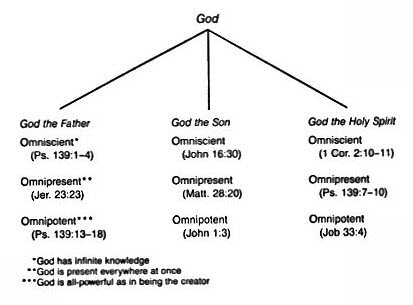
2. Yet when we study the attributes of the Father, the Son, and the Holy Spirit, we discover that all three possess the identical attributes of deity.
3. Thus we can conclude that there is one God eternally existing as three distinct persons.
God Is One (Monotheism)
The Hebrew Shema of the Old Testament is “Hear, O Israel: The Lord our God, the Lord is one!” (Deut. 6:4; see Isa. 43:10; 44:6; 46:9). Some people have argued that this passage actually refutes the concept of the triune nature of God because it states that God is one. But the Hebrew word for “one” in this text is echod, which carries the meaning of unity in plurality. It is the same word used to describe Adam and Eve becoming “one flesh” (Gen. 2:24). Scripture is not affirming that Adam and Eve literally become one person upon marriage. Rather, they are distinct persons who unite in a permanent relationship.
The New Testament confirms the teaching of the Old: “You believe that God is one. You do well; the demons also believe, and shudder” (James 2:19, nasv; see 1 Tim. 2:5; 1 Cor. 8:4; Eph. 4:4–6).
God Has a Certain Nature
Both the Old and New Testaments list the attributes of God. We won’t consider all of them here, but what follows are some of the clearest expressions of what constitutes deity.
• God is omnipresent (present everywhere at once): Psalm 139:7–10; Jeremiah 23:23–24.
• God is omniscient (possesses infinite knowledge): Psalms 139:1–4; 147:4–5; Hebrews 4:13; 1 John 3:20.
• God is omnipotent (all-powerful): Psalm 139:13–18; Jeremiah 32:17; Matthew 19:26.
The Father Is God
To the Jews, who do not accept the Trinity, God is Yahweh. In the Old Testament, Yahweh is to the Hebrews what Father is in the New Testament and to Christians. The attributes of God (Yahweh) listed above are the same for Yahweh and Father because both names apply to the one God. Although the concept of God as Father is not as explicit in the Old Testament as it is in the New, nevertheless, it has its roots in the Old (see Pss. 89:26; 68:5; 103:13; Prov. 3:12).
In the New Testament, the concept of the Father as a distinct person in the Godhead becomes clear (Mark 14:36; 1 Cor. 8:6; Gal. 1:1; Phil. 2:11; 1 Pet. 1:2; 2 Pet. 1:17). God is viewed as Father over creation (Acts 17:24–29), the nation of Israel (Rom. 9:4; see Exod. 4:22), the Lord Jesus Christ (Matt. 3:17), and all who believe in Jesus as Lord and Savior (Gal. 3:26).
The Son Is God
Like the Father, Jesus possesses the attributes of God. He is omnipresent (Matt. 18:20; 28:20). He is also omniscient: He knows people’s thoughts (Matt. 12:25), their secrets (John 4:29), the future (Matt. 24:24–25), indeed all things (John 16:30; 21:17). His omnipotence is also taught. He has all power over creation (John 1:3; Col. 1:16), death (John 5:25–29; 6:39), nature (Mark 4:41; Matt. 21:19), demons (Mark 5:11–15), and diseases (Luke 4:38–41).
In addition to these characteristics, Jesus exhibits other attributes that the Bible acknowledges as belonging only to God. For example, He preexisted with the Father from all eternity (John 1:1–2), accepted worship (Matt. 14:33), forgave sins (Matt. 9:2), and was sinless (John 8:46).
The Holy Spirit Is God
The Holy Spirit is also omnipresent (Ps. 139:7–10), omniscient (1 Cor. 2:10), and omnipotent (Luke 1:35; Job 33:4).
Like Jesus, the Holy Spirit exhibits other divine attributes that the Bible ascribes to God. For instance, He was involved in creation (Gen. 1:2; Ps. 104:30), inspired the authorship of the Bible (2 Pet. 1:21), raised people from the dead (Rom. 8:11), and is called God (Acts 5:3–4).
The upshot of all this is that God is triune. In a formal argument, we can put it this way:
Major Premise:
Only God is omnipresent, omniscient, and omnipotent.
Minor Premise:
The Father, the Son, and the Holy Spirit are omnipresent, omniscient, and omnipotent.
Conclusion:
Therefore, God is triune as Father, Son, and Holy Spirit.
THE TRINITY
HOW DOES JESUS TEACH THE DOCTRINE OF THE TRINITY?
In the Bible, Jesus claims to be God and then demonstrates this claim by displaying the attributes of God and by raising Himself from the dead. So what Jesus has to say about God must be true. And Jesus clearly teaches that God is triune.
Jesus Is Equal with the Father and Holy Spirit
In Matthew 28:19, Jesus tells His followers to “make disciples of all the nations, baptizing them in the name of the Father and of the Son and of the Holy Spirit.” He uses the singular word name but associates it with three persons. The implication is that the one God is eternally three co-equal persons—Father, Son, and Holy Spirit.
Jesus Is One with the Father
In John 14:7 and 9, Jesus identifies Himself with the Father by saying to His disciples, “If you had known Me, you would have known My Father also; and from now on you know Him and have seen Him … He who has seen Me has seen the Father” (see John 5:18). Jesus is not claiming to be the Father; rather, He is saying that He is one with the Father in essence.
Jesus Is One with the Holy Spirit
Continuing in John 14, Jesus tells His disciples that, after He is gone, He will send them “another Helper” who will be with them forever and will indwell them (vv. 16–17). The “Helper” is the Holy Spirit. The trinitarian implication lies with the word another. The apostle John, as he wrote this passage, could have chosen one of two Greek words for another. Heteros denotes “another of a different kind,” while allos denotes “another of the same kind as myself.” The word chosen by John was allos, clearly linking Jesus in substance with the Holy Spirit, just as He is linked in substance with the Father in verses 7 and 9. In other words, the coming Holy Spirit will be a different person than Jesus, but He will be the same with Him in divine essence just as Jesus and the Father are different persons but one in their essential nature. Thus, in this passage, Jesus teaches the doctrine of the Trinity.
So far we have seen that the authors of Scripture and Jesus Christ teach the triune nature of God. Therefore, the only way the doctrine of the Trinity can be rejected is if one refuses to accept the biblical evidence. Some groups, such as the Jehovah’s Witnesses, do this by reinterpreting and altering Scripture. Others, such as the Unitarians (who claim that Jesus is just a man), arbitrarily and without any evidence deny anything supernatural or miraculous in the Bible. Both the Jehovah’s Witnesses and the Unitarians are guilty of the very same thing of which they accuse Christians—irrationality. They refuse to accept the evidence for the Trinity regardless of how legitimate it is. This is unscientific and irrational. If one approaches Scripture without bias, he will clearly discover what the church has maintained for centuries: God is triune—one God in essence but eternally existing in three persons as Father, Son, and Holy Spirit.
A COMMON OBJECTION
Perhaps you’ve wondered or heard someone say, “If Jesus is one in essence with the Father, an equal member of the triune Godhead, why does He say, ‘the Father is greater than I’” (John 14:28)? This question actually moves away from the doctrine of the Trinity and launches us into the doctrine of the incarnation, the process whereby Jesus, as the eternal Son of God, came to earth as man. Nevertheless, because this question is frequently raised as an objection, it needs to be answered.
Numerous passages in Scripture teach that Jesus, although fully God, is also fully man (John 1:14; Rom. 8:3; Col. 2:9; 1 Tim. 3:16). However, Philippians 2:5–8 states that, in the process of taking on humanity, Jesus did not give up any of His divine attributes. Rather, He gave up His divine glory (see John 17:5) and voluntarily chose to withhold or restrain the full use of His divine attributes. There are numerous instances in Scripture where Jesus, although in human form, exhibits the attributes of deity. If Jesus had surrendered any of His divine attributes when He came to earth, He would not have been fully God and thus could not have revealed the Father as He claimed to do (John 14:7, 9).
The key to understanding passages such as John 14:28 is that Jesus, like the Father and the Holy Spirit, has a particular position in the triune Godhead. Jesus is called the Son of God, not as an expression of physical birth, but as an expression of His position in relationship to the Father and Holy Spirit. This in no way distracts from His equality with the Father and the Holy Spirit or with His membership in the Godhead. As man, Jesus submits to the Father and acts in accordance to the Father’s will (see John 5:19, 30; 6:38; 8:28). So when we read passages such as Mark 14:36 where Jesus submits to the Father’s will, His submission has nothing to do with His divine essence, power, or authority, only with His position as the Incarnate Son.
Perhaps an illustration will help to explain this. Three people decide to pool their money equally and start a corporation. Each are equal owners of the corporation, but one owner becomes president, another vice-president, and the third secretary/treasurer. Each are completely equal so far as ownership, yet each has his own particular function to perform within the corporation. The president is the corporate head, and the vice-president and secretary/treasurer are submissive to his authority and carry out his bidding.
So when Jesus the God-man submits to the Father’s will or states that the Father is greater than He or that certain facts are known only by the Father (e.g., Matt. 24:36), it does not mean that He is less than the other members of the Godhead but that in His incarnate state He did and knew only that which was according to the Father’s will. The Father did not will that Jesus have certain knowledge while in human form. Because Jesus voluntarily restrained the full use of His divine attributes, He was submissive to the Father’s will.
Why did Jesus choose to hold back from fully using His divine powers? For our sake. God willed that Jesus feel the full weight of man’s sin and its consequences. Because Jesus was fully man, He could fulfill the requirements of an acceptable sacrifice for our sins. Only a man could die for the sins of mankind. Only a sinless man could be an acceptable sacrifice to God. And it is only because Jesus is an equal member of the triune Godhead, and thus fully God, that He was able to raise Himself from the dead after dying on the cross and thereby guarantee our eternal life.
When all the evidence is accounted for and the verdict read, the Bible clearly teaches that the Father, the Son, and the Holy Spirit are three distinct, co-equal, co-eternal members of the Godhead, yet one in essence, power, and authority. All three are one God. Were this not the case, if the Trinity were not a reality, there would be no Christianity.
[1]
[1]Story, D. (1997). Defending your faith. Originally published: Nashville : T. Nelson, c1992. (99). Grand Rapids, MI: Kregel Publications.
المرجع من كتاب: The Quest for the Real Jesus Radboud Prestige Lectures by Prof. Dr. Michael Wolter Edited by Jan van der Watt -Leiden • boston 2013-pp.87-98
Using Inference to the Best Explantion: What Caused the Birth of Christology?
Using Inference to the Best Explantion: What Caused the Birth of Christology?
Anyone who studies historical method is familiar with what is called historical causation. Historians seek out the causes of a certain events. As historian Paul Barnett says, “The birth of Christianity and the birth of Christology are inseparable both as to time and essence.” (1) One thing for sure: the birth of Christology was very early and not something that was invented much later in Church history.
We must not forget that within Judaism there is a term called “avodah zara” which is defined as the formal recognition or worship as God of an entity that is in fact not God i.e., idolatry. In other words, the acceptance of a non-divine entity as your deity is a form of avodah zara. (2) As of today, traditional or Orthodox Judaism still upholds the position that Jewish people are forbidden to pray and worship anyone other than the God of Israel (Ex. 20:1–5; Deut. 5:6–9).
Paul’s Letters are the earliest records we have for the life of Jesus. We know that from about AD 48 until his death (60 to 65 AD) Paul wrote at least 13 of the New Testament’s books. They are also the earliest letters we have for the Christology of Jesus. To read any objections to Paul’s Letters, see here.
As pointed out by Richard Bauckham in his work on this topic, Paul believed that Jesus was God by attributing attributes to him that were distinctly reserved for God. And he did so in a distinctly Jewish manner while also preserving monotheism. There were three attributes that first century Jews uniquely assigned to God:
1. God is the Sole Ruler of all things
2. God is the Sole Creator of all things
3. God is the only being deserving of worship
So let’s look at how Paul matches up the data here:
1. Jesus participates in God’s sole rule over all things
Phil: 3:20-21: “For our citizenship is in heaven, from which also we eagerly wait for a Savior, the Lord Jesus Christ; who will transform the body of our humble state into conformity with the body of His glory, by the exertion of the power that He has even to subject all things to Himself.”
Eph. 1:21-22: Paul speaks of Jesus being ”far above all rule and authority and power and dominion, and every name that is named, not only in this age but also in the one to come. And He put all things in subjection under His feet…”
Here, Jesus is clearly given the authority to rule above every one of God’s created beings.
2. Jesus as the Creator of all things
Jesus is clearly thought by Paul to have been the creator of the universe. This attribute is reserved only to God in Second Temple Judaism. Paul makes it clear that Jesus created all things.
Col. 1:15-16: “He is the image of the invisible God, the firstborn over all creation. For by him all things were created: things in heaven and on earth, visible and invisible, whether thrones or powers or rulers or authorities; all things were created by him and for him.”
3. Jesus as worthy of worship
As discussed above, only God was worthy of worship in Second Temple Judaism. Nevertheless, Paul discusses the worship of Jesus. Since God is the sole Creator and Ruler of all things He alone should be worshiped. Even within the Roman Empire, Jews worshiped God alone. No other entity was worthy of worship. Here is one of the earliest Christological texts:
Philippians 2:6-11: “Who, being in very nature God, did not consider equality with God something to be grasped, but made himself nothing, taking the very nature of a servant, being made in human likeness. And being found in appearance as a man, he humbled himself and became obedient to death even death on a cross! Therefore God exalted him to the highest place and gave him the name that is above every name, that at the name of Jesus every knee should bow, in heaven and on earth and under the earth, and every tongue confess that Jesus Christ is Lord, to the glory of God the Father.”
In their book The Jesus Legend, The: A Case for the Historical Reliability of the Synoptic Jesus Tradition, Gregory Boyd and Paul Eddy say,
“During the reign of Pilate and Herod, when Caiaphas was high priest, we find a Jewish movement arising that worships a recent contemporary alongside and in a similar manner as Yahweh-God. To call this development “novel” is a significant understatement. In truth, it constitutes nothing less than a massive paradigm shift in the first century Palestinian Jewish religious worldview.” (3)
Explanations try to show how something happened. That is, what is the cause for something that has happened. So let’s weight the options on the table and see if we can come up with an explanation that explains the data at hand:
#1: Religious Syncretism
While there were various Jewish sects during the time of Jesus, religious syncretism is a form of idolatry. First, the Jewish Scriptures forbids worshiping anyone other than the God of Israel (Ex. 20:1–5; Deut. 5:6–9). Following the exile and subsequent intertestamental struggles, it can asked whether Jews still fell prey to physical idolatry. Some skeptics assert that since Israel always had problems with idolatry in their early formation, it would not be a challenge to assert they could fall into idolatry again by worshiping one of their own countrymen as God. But this is problematic; To assert that Israel’s previous problems with idolatry which would lead to further into idolatry in the Second Temple period leads me to cry “anachronism.” Remember, idolatry is rarely mentioned in the Gospels. But there are warnings about idolatry in other portions of the New Testament( 1 Cor. 6:9-10 ; Gal 5:20 ; Eph. 5:5 ; Col 3:5 ; 1 Peter 4:3 ; Rev 21:8). Paul instructs believers not to associate with idolaters ( 1 Cor .5:11 ; 10:14 ) and even commends the Thessalonian for their turning from the service of idols “to serve the living and true God” ( 1 Thess1:9) (see Walter A. Elwell’s Baker’s Evangelical Dictionary of Biblical Theology, pgs 364-365). So I guess my question is the following: Why would Paul or the early disciples commit an idolatrous act (by saying Jesus is divine) and but then later speak against idolatry? It seems rather inconsistent.
#2 Hellenism or Polytheism?
The syncretism objection is related to the Hellenism/Polytheism possibility. The first followers of Jesus were exclusively Jews. The book of Acts gives a reference to the early followers of Jesus as “the sect of Nazarenes” (Acts 24:5). However, it is asserted that as the Christian faith spread, it became a predominately Gentile based religion. By the time of Jesus, Jews had encountered the impact of Hellenistic culture for three hundred years. The word “Hellenistic” was given to describe the period of history that started with the death of Alexander the Great in 323 B.C. and ended when Rome conquered Alexander’s empire in 30 B.C .It is also safe to say that several forms of Jewish culture during the Roman period were somewhat Hellenized. This is why it is often argued that the incarnation grew out of Hellenistic presuppositions. But as Paul Eddy points out in his articleWas Christianity Corrupted by Hellenism? from the middle of the third century BC, while Jewish Palestine had already experienced the effects of Hellenism we need to remember that Hellenism did not tend to infiltrate and ‘corrupt’ the local religious traditions of the ancient world. Rather, people maintained their religious traditions in spite of Hellenistic influence in other areas of their lives. Also, there are also references to the negative views of gentile polytheism (Acts 17: 22-23; 1 Cor 8:5). Gentiles were regarded as both sinful (Gal 2:5) and idolatrous (Rom 1:23).
#3: The Deity of Jesus is Legend?
As I already said, the earliest documents for the Christology of Jesus are Paul’s Letters. In them, we have one of the earliest confessions of the deity of Jesus in 1 Corinthians 8: 5-6:
“For though there are things that are called gods, whether in the heavens or on earth; as there are many gods and many lords; yet to us there is one God, the Father, of whom are all things, and we for him; and one Lord, Jesus Christ, through whom are all things, and we live through him.”
Here is a distinct echo of the Shema, a creed that every Jew would have memorized from a very early age. When we read Deuteronomy 6:4-9, which says, “Hear O Israel! The Lord our God is our God, the Lord is one,” Paul ends up doing something extremely significant in the history of Judaism.
A glance at the entire context of the passage in 1 Corinthians 8:5-6 shows that according to Paul’s inspired understanding, Jesus receives the “name above all names,” the name God revealed as his own, the name of the Lord. In giving a reformulation of the Shema, Paul still affirms the existence of the one God, but what is unique is that somehow this one God now includes the one Lord, Jesus the Messiah. Therefore, Paul’s understanding of this passage begets no indication of abandoning Jewish monotheism in place of paganism.
For a Jewish person, when the title “Lord” (Heb. Adonai) was used in place of the divine name YHWH, this was the highest designation a Jewish person could use for deity. Furthermore, it would have been no problem to confess Jesus as prophet, priest, or king since these offices already existed in the Hebrew Bible. After all, these titles were used for a human being. There was nothing divine about them.
#4: The Christology of Jesus can be explained by the disciples experience with Jesus before the resurrection and the post-resurrection appearances
For those that are still hung up on the reliability of the New Testament, see our resource page.
Sources: 1. 1. Paul Barnett, The Birth of Christianity: The First Twenty Years (Grand Rapids: Wm. B. Eerdmans Publishing Co. 2005), 8.
2. David Berger, The Rebbe, The Messiah And The Scandal Of Orthodox Difference, 160-174.
3. Gregory A. Boyd and Paul R. Eddy, The Jesus Legend: A Case For The Historical Reliability of the Synoptic Tradition (Grand Rapids: MI: Baker Books, 2007), 132.